
Miami Beach City Zoning Code
CHAPTER 7
ZONING DISTRICTS AND REGULATIONS
ARTICLE I: GENERAL TO ALL ZONING DISTRICTS
ARTICLE II: DISTRICT REGULATIONS
ARTICLE III: OVERLAY DISTRICTS
ARTICLE IV: NEIGHBORHOOD CONSERVATION DISTRICTS
ARTICLE V: SUPPLEMENTARY DISTRICT REGULATIONS
7.1.1 INTENT
This section sets forth regulations that are common to all districts, or which apply to certain building types or uses that are found across multiple zoning districts. Resilience, Adaptation and Mitigation standards are the most prominent sections in this article but are also accompanied by other regulations that affect the quality of the public realm.
7.1.2 RESILIENCE AND ADAPTATION STANDARDS
7.1.3 ENVIRONMENTAL MITIGATION STANDARDS
7.1.4 FRONTAGES
7.1.5 UNIT SIZES
7.1.6 PARKING SCREENING STANDARDS
7.1.7 COLOR OF EXTERIOR SURFACES
7.1.8 PROHIBITED USES
7.1.9 FAR INCREASES
7.1.10 PROCEDURES FOR INCREASING ALLOWABLE FLOOR AREA AND FLOOR AREA RATIO (FAR)
7.1.11 RESIDENTIAL USE INCENTIVES
Eligible Development. These provisions are hereby adopted as voluntary zoning incentives for non-transient residential development. Where authorized in the underlying zoning district or overlay district, and in accordance with al applicable regulations set forth in such zoning district or overlay district, residential developments consisting solely of non-transient residential units and allowable accessory uses shall be eligible for applicable incentives set forth in such zoning district or overlay district, subject to the property owner's agreement to be bound by the following conditions:
Lodging Use Conversion and Prohibition. In order to be eligible for the residential use incentives, the property shall be required to fully vacate any and all existing transient uses including, but not limited to, bed & breakfast inn, hostel, hotel, apartent hotel, suite hotel or rooming house. Such transient uses shall be prohibited throughout the development and at all times, in order to maintain the residential use incentives authorized for the applicable zoning district or overlay district.
Short Term Rental Conversion and Prohibition. In order to be eligible for the voluntary residential use incentives authorized for the applicable zoning district or overlay district, the property owner(s) shall first be required to vacate any and all existing approvals for the short-term rental of any apartment units on the property.
Covenant. As a condition of eligibility for the voluntary residential use incentives authorized for the applicable zoning district or overlay district, the property owner(s) shall first be required to execute a restrictive covenant running with the land, in a form approved by the City Attorney, affirming that throughout the building and at all times, no residential units on the property shall be leased or rented for a period of less than six months and one day, and that no transient uses including, but not limited to, bed & breakfast inn, hostel, hotel, apartment hotel, suite hotel or rooming house, shall be permitted on the property. The covenant shall expressly provide that an affirmative vote of six-sevenths of all members of the city commission shall be required in order to release the covenant or to modify the covenant in such a manner as to impose a less stringent restriction after it is executed.
Certificate of Appropriateness. If the property is located within a local historic district or site, as a condition of eligibility for the voluntary residential use incentives authorized for the applicable zoning district or overlay district, the property owner(s) shall be required to retain, preserve and restore all contributing structures on the site, as may be required by the historic preservation board and subject to certificate of appropriateness approval in accordance with chapter 2, article VIII of the land development regulations of the city code.
There shall be no variances from the requirements of this section for eligible developments.
7.1.12 AMENDMENT OR RELEASE OF COVENANTS RESTRICTING TRANSIENT USES SUBMITTED BY PROPERTY OWNERS
- Legislative intent. The City Commission has adopted and may, from time to time, adopt future voluntanr zoning incentives to encourage non- transient residential development, subject to a property owner's agreement to strictly comply with certain conditions. These conditions may include, without limitation, the recording of a declaration of restrictive covenants, in a form approved by the City Attorney, requiring the abandonment of existing transient uses on the property, as well as a prohibition of future transient uses on the property. At a minimum, these declarations provide that throughout the property and at all times, no residential units on the property shall be leased or rented for a period of less
than six months and one day, and that no transient uses including, but not limited to, bed breakfast inn, hostel, hotel, apartment hotel, suite hotel, or rooming house shall be permitted on the property. For purposes of this section, each such covenant shall be referred to as a " non- transient use covenant." This section is intended to implement
additional safeguards to ensure the use of the property remains consistent with the purpose of the zoning incentives. - Amendment or release of restrictive covenants. In all instances where a property owner(s), as a condition of eligibility for an applicable non-transient residential zoning incentive, is required to record a non-transient use covenant, the covenant shall expressly provide that an affirmative vote of six-sevenths of all members of the city commission shall be required
in order to release the covenant or to modify the covenant in such a manner as to impose a less stringent restriction after it is executed.
7.1.13 SCHOOL USE INCENTIVES
Where authorized in the underlying zoning district or overlay district, the following incentives shall be applicable to school developments, including colleges, elementary schools, high schools, kindergarten schools, middle schools, pre-schools, or universities, that are public schools or are designated by the Internal Revenue Service as tax-exempt pursuant to section 501( c)( 3) of the Internal Revenue Code.
- Eligible development shall be limited to educational facilities located south of 63rd Street.
- Eligible educational facilities shall have no minimum off-street parking requirement. Such facilities may, however, provide off-street parking without such parking counting as allowable floor area.
- Eligible educational facilities may request a Commission Warrant pursuant to section 2.7.1 to exceed the maximum allowable FAR within the underlying zoning district or overlay district by up to 10 percent, not to exceed a total of 5,000 additional square feet.
- Eligible educational facilities may request a Commission Warrant pursuant to section 2.7.1 to reduce the required setbacks, open space, and lot coverage requirements within the underlying zoning district or overlay district by 50 percent.
- Eligible educational facilities located within commercial and high intensity zoning districts shall not require a conditional use permit.
- The following shall apply to eligible educational facilities that do not exceed 25,000 square feet of floor area or the maximum allowable floor area within the underlying zoning or overlay district, whichever is less, and do not exceed 50'- 0" in height or the maximum allowable height within the underlying zoning or overlay district, whichever is less:
- For properties not located within a local historic district, mandatory Design Review Board approval for the design of eligible educational facilities shall not be required.
- For properties located within a local historic district, mandatory Historic Preservation Board approval for the design of eligible educational facilities shall not be required. This provision shall not apply to any proposed demolition associated with the development of an eligible educational facility.
7.2.1 GENERALLY
7.2.2 RS-1, RS-2, RS-3, RS-4 SINGLE-FAMILY RESIDENTIAL DISTRICTS
7.2.3 TH TOWNHOME RESIDENTIAL DISTRICT
7.2.4 RM-1 RESIDENTIAL MULTIFAMILY LOW INTENSITY
7.2.5 RM-2 RESIDENTIAL MULTIFAMILY, MEDIUM INTENSITY
7.2.6 RM-3 RESIDENTIAL MULTIFAMILY, HIGH INTENSITY
7.2.7 RM-PRD MULTIFAMILY, PLANNED RESIDENTIAL DEVELOPMENT DISTRICT
7.2.8 RM-PRD-2 MULTIFAMILY, PLANNED RESIDENTIAL DEVELOPMENT
7.2.9 RO RESIDENTIAL/OFFICE DISTRICT
7.2.10 CD-1 COMMERCIAL, LOW INTENSITY DISTRICT
7.2.11 CD-2 COMMERCIAL, MEDIUM INTENSITY DISTRICT
7.2.12 CD-3 COMMERCIAL, HIGH INTENSITY DISTRICT
7.2.13 MIXED USE ENTERTAINMENT DISTRICT
7.2.14 NORTH BEACH TOWN CENTER-CORE DISTRICT (TC)
7.2.15 PERFORMANCE STANDARD DISTRICT (PS)
7.2.16 GU GOVERNMENT USE DISTRICT
7.2.17 CCC CIVIC AND CONVENTION CENTER DISTRICT
7.2.18 SPE SPECIAL PUBLIC FACILITIES EDUCATIONAL DISTRICT
7.2.19 HD HOSPITAL DISTRICT
7.2.20 MR MARINE RECREATION DISTRICT
7.2.21 WD WATERWAY DISTRICT
7.2.22 GC GOLF COURSE DISTRICT
7.2.23 I-1 LIGHT INDUSTRIAL DISTRICT
7.3.1 DUNE PRESERVATION AND OCEANFRONT OVERLAYS
7.3.2 CONVENTION HOTEL OVERLAY
7.3.3 WEST AVENUE BAYFRONT OVERLAY
7.3.4 COLLINS PARK ARTS DISTRICT OVERLAY
7.3.5 FAENA DISTRICT OVERLAY
7.3.6 OCEAN TERRACE OVERLAY
7.3.7 ART DECO MIMO COMMERCIAL CHARACTER OVERLAY DISTRICT
7.3.8 NORTH BEACH NATIONAL REGISTER CONSERVATION DISTRICT OVERLAY
7.3.9 SUNSET HARBOUR MIXED-USE NEIGHBORHOOD OVERLAY DISTRICT
7.3.10 NORTH BEACH COMMERCIAL CHARACTER OVERLAY DISTRICT
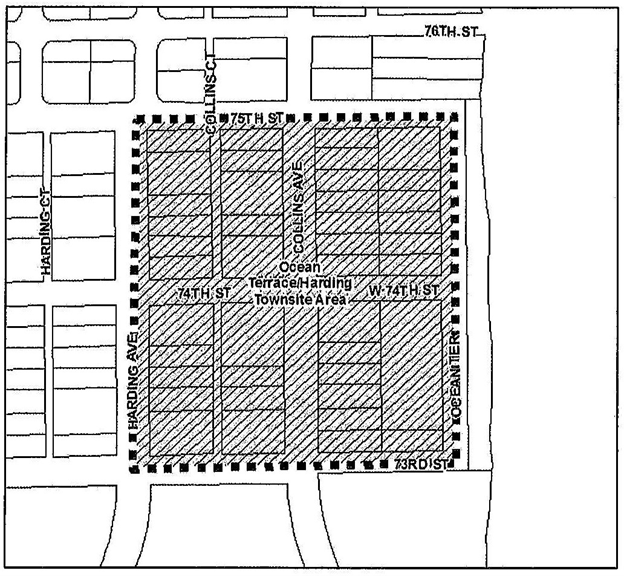
There is hereby created the North Beach Commercial Character Overlay District (the "overlay district"). The overlay district consists of the properties located to the north of 63rd Street, identified in the map below in this subsection (a). and the properties identified in the Ocean Terrace/Harding Townsite Area described in subsection (b) below: map 2024-4673 a
The Ocean Terrace/Harding Townsite Area is identified in the map below and is generally located between Harding Avenue to the west and Ocean Terrace to the east, between 73rd and 75th Streets:
The purpose of this overlay district is to limit the proliferation of uses which may diminish the character of historic commercial areas within the city. This overlay district is designed based on and intended to achieve the following:
The North Beach area of the City is located to the north of 63rd Street;
A large portion of the North Beach area is located within the North Shore National Register District and the Normandy Isles National Register District;
A large portion of the North Beach area is located within the locally designated Normandy Isles Historic District, North Shore Historic District, Harding Townsite Historic District, Altos Del Mar Historic District, and the North Beach Resort Historic District;
Properties fronting Ocean Terrace and Collins Avenue between 73rd and 75th Streets are within the Harding Townsite historic district and the North Shore National Register historic district;
Properties fronting Harding Avenue between 73rd and 75th Streets are within North Shore National Register historic district;
The City of Miami Beach has undertaken a master planning process for the North Beach area that includes the Harding Townsite historic district and North Shore National Register district, in order to encourage the revitalization of the area by improving cultural, retail, and dining experiences for residents and vistors to the area;
Formula commercial establishments and formula restaurants are establishments with multiple locations and standardized features or a recognizable appearance, where recognition is dependent upon the repetition of the same characteristics of one store in multiple locations;
Formula commercial establishments and formula restaurants are increasing in number within many historic districts;
The sameness of formula commercial establishments, while providing clear branding for retailers, conflicts with the city's Vision Statement which includes creating "A Unique Urban and Historic Environment";
Notwithstanding the marketability of a retailer's goods or services or the visual attractiveness of the storefront, the standardized architecture, color schemes, decor and signage of many formula commercial establishments detract from the distinctive character and aesthetics of the historic districts;
The increase of formula commercial establishments hampers the unique cultural, retail, and dining experience in commercial and mixed-use areas of the city's historic districts;
Specifically, the proliferation of formula commercial establishments may unduly limit or eliminate business establishment opportunities for unique businesses, thereby decreasing the diversity of cultural, retail, and dining services available to residents and visitors;
The homogenizing effect of formula commercial establishments, based on their reliance on standardized branding, increases if the size of the establishment, the number of locations or size or use of branded elements is greater;
The increased level of homogeneity detracts from the uniqueness of the City's historic districts, which thrive on a high level of interested maintained by a mix of cultural, retail, and dining experiences that are not found elsewhere in the country;
It is not the intent of the city to limit interstate commerce, but rather to maintain the historic character of neighborhoods and promote their unique cultural, retail, and dining experiences that are vital to the city's economy;
It is the intent of the city that if an establishment that has multiple locations and standardized features or a recognizable appearance seeks to locate within certian areas affected by this division that such establishment provide a distinct array of merchandise, facade, decor, color scheme, uniform apparel, signs, logos, trademarks, and service marks;
Convenience stores, pharmacy stores and formula eating establishments have similar impacts to the unique character of this important area of the city as formula stores;
Check cashing stores, pawnshops, souvenir and t-shirt shops, tattoo studios, fortune tellers (occult science establishments), massage therapy center, and package liquor stores are uses which negatively affect surrounding areas; and
It is the intent of the city to limit the number of establishments which may negatively affect surrounding areas.
7.3.11 DEVELOPMENT REGULATIONS FOR THE NORTH BEACH OCEANFRONT OVERLAY DISTRICT
7.3.12 DEVELOPMENT REGULATIONS FOR ALTON BEACH BAYFRONT OVERLAY
- Location and Purpose (Alton Beach Bayfront Overlay District).
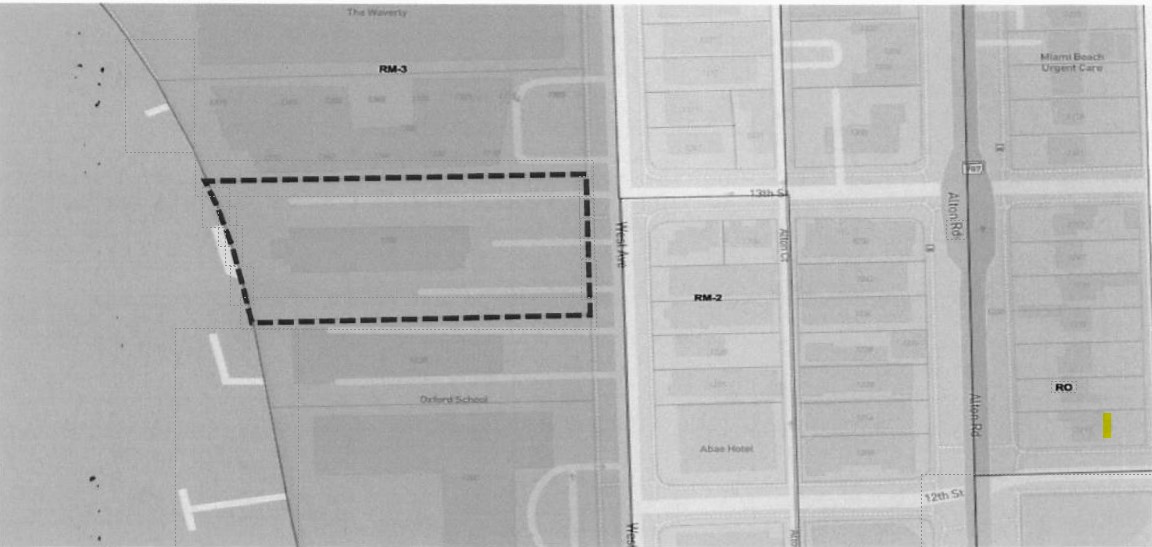
The overlay regulations of this section shall apply to the following properties:
Lot 3, Block 80 of the Bay Garden Manor Condo, according to the plat thereof, recorded in PLat Book 6, Page 12, of the Public Records of Miami-Dade County.
b.Development Regulations - Underlying RM-3 Zoning
Notwithstanding the development regulations contained in Section 7.2.6, the following regulations shall govern proposed development within the boundaries of this overlay district on properties with an underlying zoning classification of RM-3. In the event of any conflict between the overlay regulations and the requirements of the Resiliency Code, these regulations shall control:
- Main Permitted Uses: Only residential uses and associated accessory uses permitted by the underlying RM- 3 regulations shall be permitted. Additionally, the following regulations shall be applicable to development utilizing FAR and height incentives within the overlay:
- Bars and entertainment establishments shall be prohibited.
- Accessory restaurant uses that are open to the public shall be subject to the following restrictions:
- Outdoor seating in connection with any restaurant use that is open to the public shall be prohibited.
- The restaurant shall not exceed 4,000 square feet in size.
- The restaurant shall not serve alcoholic beverages and shall not hold an alcoholic beverage license of any kind.
- The restaurant shall be limited to a maximum of 80 seats.
- The restaurant shall close by 8:00 PM each night.
- Floor Area Bonuses: As a voluntary development incentive, subject to the property owner' s strict compliance with conditions of this subsection, a project within the overlay shall be eligible for the following floor area bonuses, not to exceed a cumulative bonus FAR of 3.0.
- The base floor area in the Alton Beach Bayfront OVerlay shall be 2.75.
- New construction limiting density to a maximum of 75 units per acre shall be eleigible for a floor area ration bonus of 0.25; and
- A property owner that elects, at the owner's sole discretion, to voluntarily execute a restrictive covenant running with the land, in a form approved by the city attorney, affirming that no residential unit on the property shall be leased or rented for a period of less than six months and one day, shall receive a floor area bonus of 0.25. The covenant shall expressly provide that an affirmative vote of six-sevenths of all members of the City Commission shall be required in order to release the covenant or to modify the covenant in such a manner as to impose a less stringent restriction after it is executed; and
- A property owner that enters into a development agreement for capital improvements along the West Avenue corridor, defined as the area bounded by 5th Street on the south, 17th Street on the north, Alton Court on the east, and Biscayne Bay on the west, and other public benefits that could be applied on a City-wide basis, shall receive a floor area ratio bonus of up to 2.5, based on the following capital improvements or public benefits:
- Acquisition of property containing a transient use within the West Avenue corridor and conveyance of the property to the City: 2.0.
- Design, permitting, and construction of the portions of the Bay Walk located at 800 West Avenue, 1228 West Avenue, and 1450 Lincoln Road or, in the event the requisite easements from upland owners cannot be obtained, contribution of funds to the City for construction of the Bay Walk or any other capital improvement project: 0.50.
- The total FAR for an eligible site, including base FAR and cumulative bonus FAR, shall not exceed 5.75.
- Building Height Bonus: As a voluntary development incentive, subject to the property owner's strict compliance with conditions of this subsection, a project that implements all of the floor area bonuses provided in subsections 2.a-d above shall receive a height bonus of up to 180 feet. The maximum building height for an eligible site, including bonus height, shall not exceed 330 feet.
- Setbacks:
- Front Setback;
- Subterranean and Pedestal: 20 feet
- Tower: 150 feet
- There shall be no variances from the minimum tower front setback requirements.
- Side Interior Setback
- Subterranean: 16 feet
- Pedestal:
- North Side:
- Ground Floor: 16 feet
- Second Floor: 19 feet
- South Side:
- Ground Floor: 26 feet
- North Side:
- Tower: 26 feet
- Sum of Side Yards: 42 feet
- Rear Setback:
- Pedestal: 42 feet
- Tower: 63 feet
- There shall be no variances from the minimum tower rear setback requirement.
- Front Setback;
- Allowable encroachment into required yards:
- Architectural overhangs, ledges, or terraces may project up to 10 feet into a required side yard setback.
- Columns at the first two levels of the pedestal may encroach up to 8 feet into the required side yard setback.
- Pedestrian pathways for access to the Bay Walk may be located entirely in required yards.
- Parking Requirements:
- Within the overlay, all required parking shall be located within subterranean levels, except for off-street loading spaces, valet circulation space, and a maximum of ten (10) visitor parking spaces. There shall be no variances from this provision.
- Within the overlay the minimum off-street parking requirements may be satisfied using mechanical or robotic parking systems fully enclosed within a parking structure. Such mechanical or robotic parking systems shall be exempt from the requirements of Section 5.2.11, and Planning Board approval shall not be required for the use of mechanical or robotic parking systems within the overlay.
- Notwithstanding the exemption in subsection b, the mechanical/robotic parking system must satisfy the conditions provided in Section 5.2.11( f), and a restrictive covenant stipulating that a valet service or operator must be provided for as long as the mechanical/robotic system remains in use.
7.4.1 GILBERT M. FEIN NEIGHBORHOOD CONSERVATION OVERLAY DISTRICT (NCD-1/RM-2)
7.5.1 GENERALLY (SUPPMEMENTARY DISTRICT REGULATIONS)
7.5.2 HEIGHT REGULATIONS EXCEPTIONS (SUPPLEMENTARY DISTRICT REGULATIONS)
7.5.3 SUPPLEMENTARY YARD REGULATIONS
7.5.4 SUPPLEMENTARY USE REGULATIONS
7.5.5 SPECIALIZED USE REGULATIONS
7.1.2.1 Purpose
This section describes regulations that are intended to promote adaptation to rising sea levels, storm surge, king tide and fair-weather flooding.
7.1.2.2 Resilience and Adaptation Standards for Buildings
- Purpose
In order to ensure that buildings have a long life and ‘loose fit’ and so that they may be retrofitted to accommodate the raising of streets, certain dimensions can be established that will ease the process of retrofitting them. The lowest levels of a building bear the brunt of this need to be flexible enough for a changing grade over time. These lower levels can be divided into Subterranean, Understory, and First Habitable Level (FHL) Standards. Furthermore, First Habitable Level (FHL) standards can be divided into strategies for residential FHLs and nonresidential FHLs.LOWER LEVELS OF A BUILDING DEFINITION’S TABLE SUBTERRANEAN LEVEL (SL) Subterranean means that portion of a building or structure which is equal to or less than Grade.
Subterranean levels shall only be permitted in the event that the space is purposed and designed as part of a stormwater management plan, including, but not limited to, stormwater collection and cisterns for reuse of captured water.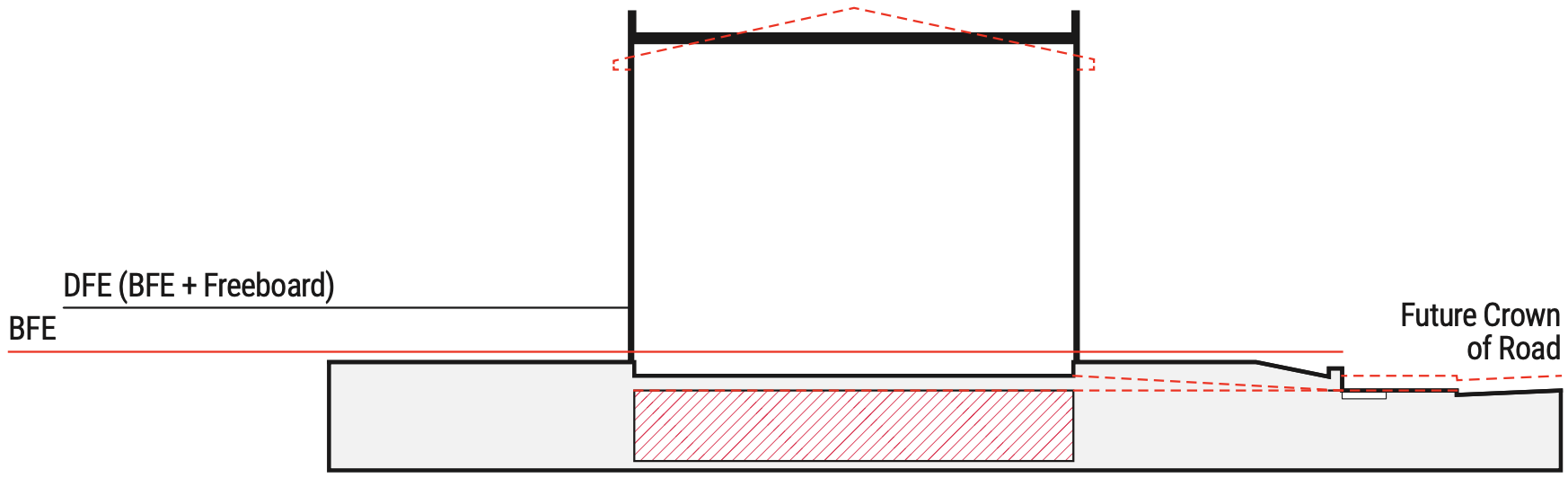
UNDERSTORY LEVEL (UL) Understory means the non-air-conditioned space(s) located below the First Habitable Level (FHL). Notwithstanding the foregoing access to the First Habitable Level (FHL) may be air-conditioned.
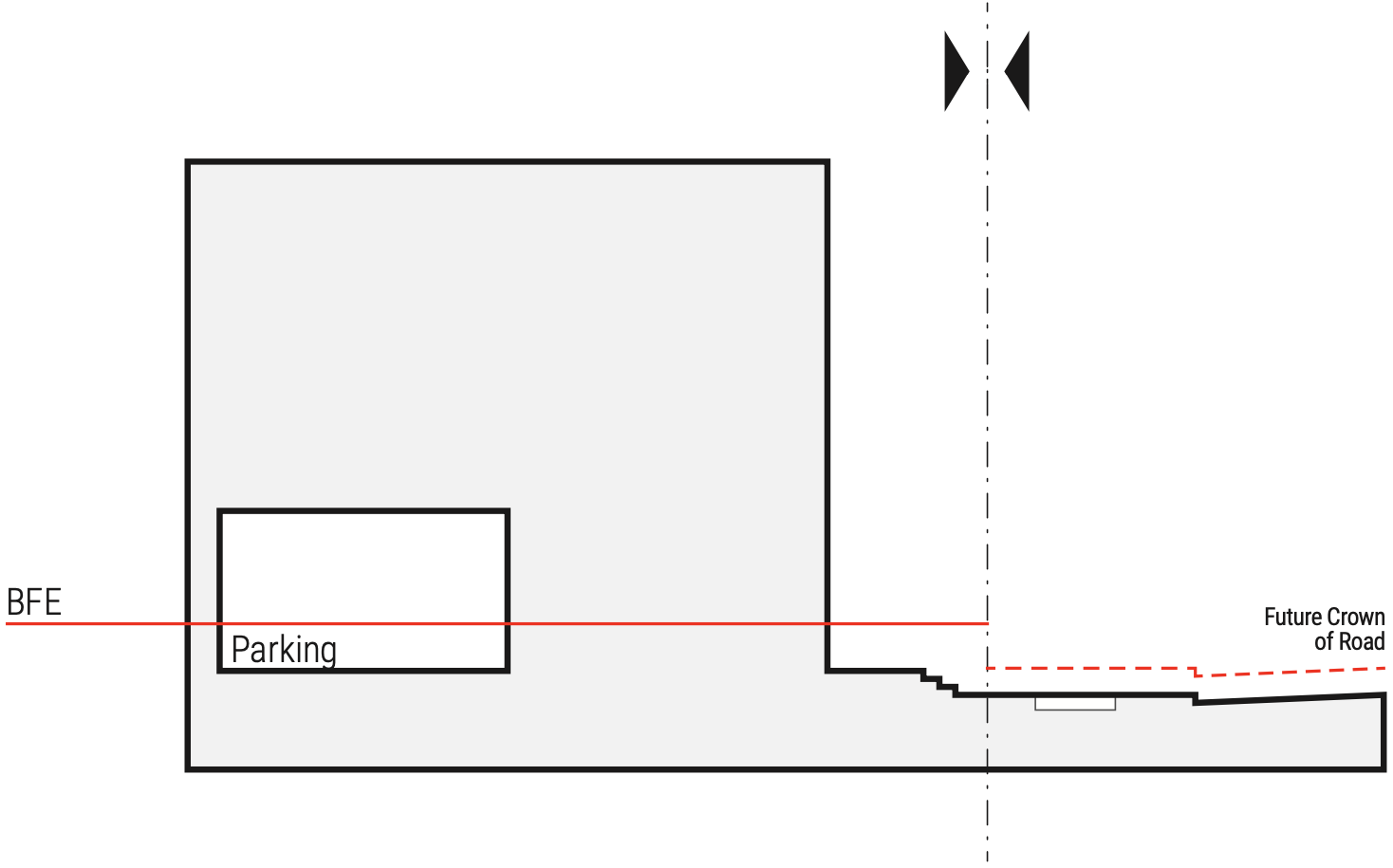
The Understory ground level should not be lower than the Future Crown of the Road for single-family residential structures and Base Flood Elevation (BFE) plus minimum Freeboard for multi-family residential structures.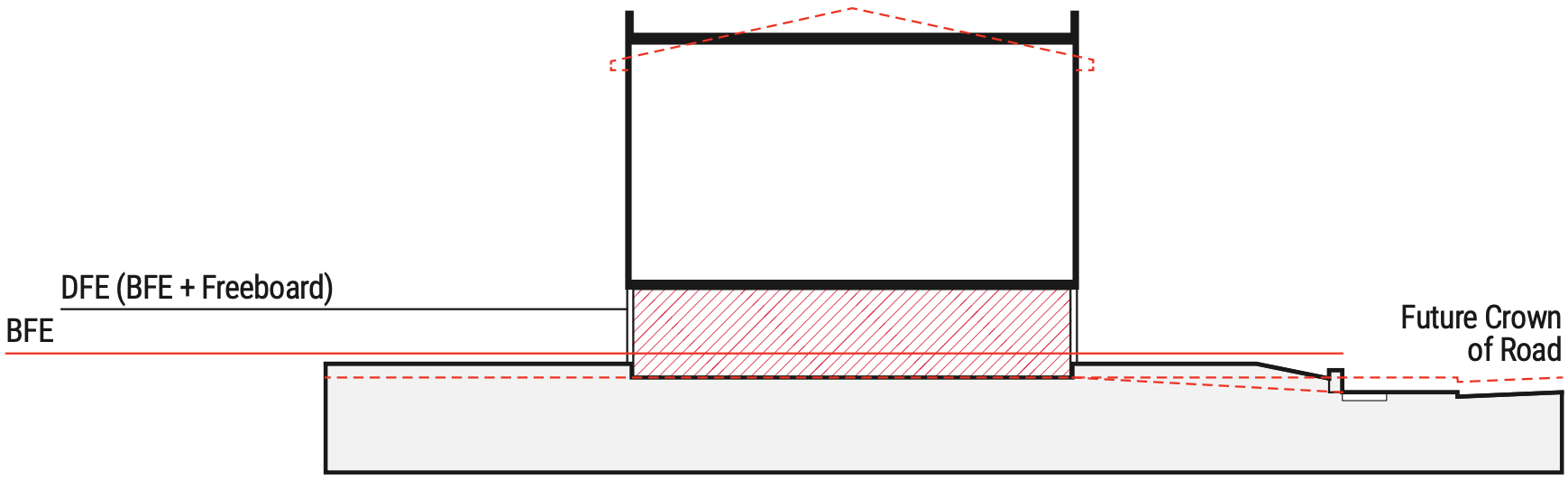
RESIDENTIAL FIRST HABITABLE LEVEL (FHL) (NEW CONSTRUCTION) First Habitable Level above the Design Flood Elevation (DFE)
Design Flood Elevation (DFE) = BFE + Freeboard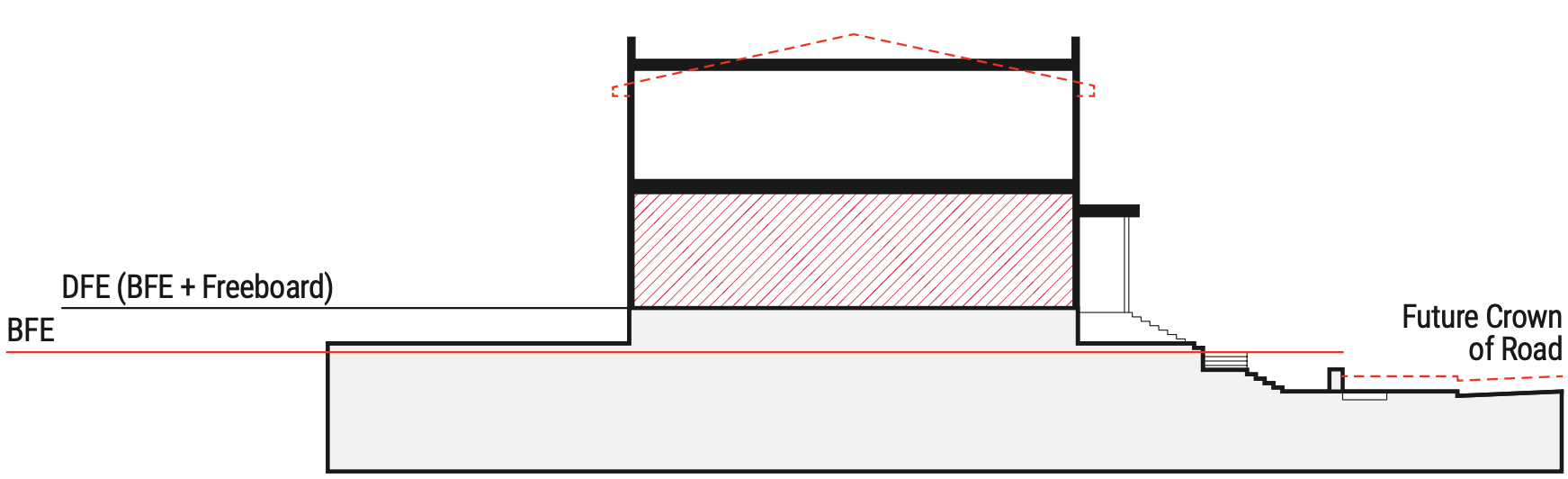
NON-RESIDENTIAL FIRST HABITABLE LEVEL (FHL) Non-Residential First Habitable Level (FHL)
First Habitable Level above the Future Crown of the Road (frontages of 150 feet or less) or
First Habitable Level above the Future Crown of the Road + 14 inches (frontages greater than 150 feet)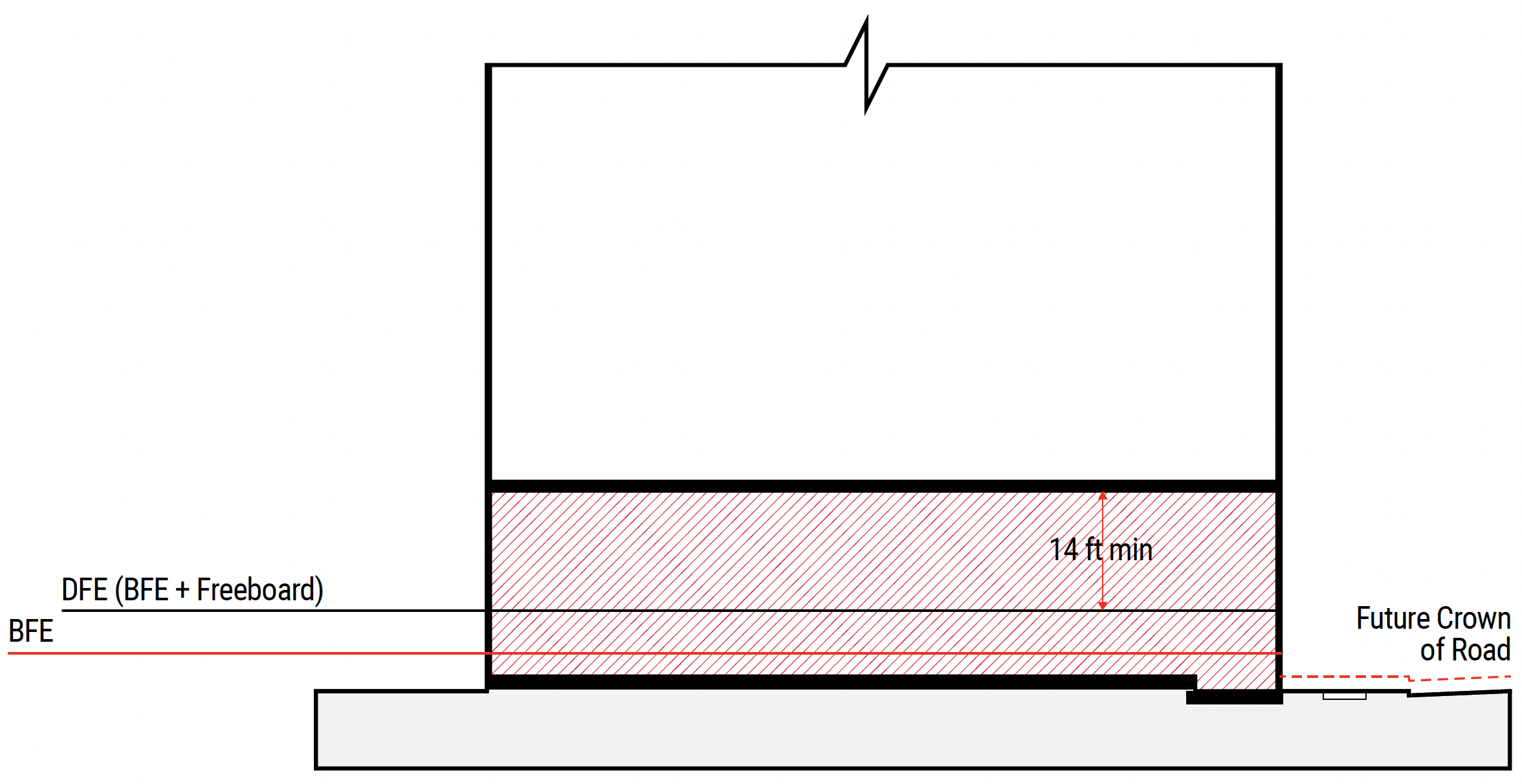
- Subterranean Level Standards for Buildings
Subterranean levels shall only be permitted in the event that the space is purposed and designed as part of a stormwater management plan, including, but not limited to, stormwater collection, vaults and cisterns for reuse of captured water. - Understory Level Standards for Buildings
- The use of the Understory shall be allowed in RS Districts for non-habitable purposes and subject to section 7.2.2.3 b.6.
In RM Districts, in order to avoid the appearance of a dingbat, the following applies:- Where a commercial First Habitable Level (FHL) is allowed, the Understory Level (UL) shall be screened by non-residential uses according to section 7.1.6
- For a multifamily building the Understory Level (UL) below the First Habitable Level (FHL) shall be screened by the lobby and other features described in section 7.1.6.
- New Construction. In RM Districts, when parking or amenity areas are provided at the Understory Level (UL) below the First Habitable Level (FHL), the following requirements shall apply:
- A minimum height of 12 feet shall be provided, as measured from Base Flood Elevation plus minimum Freeboard to the underside of the first floor slab. The design review board or historic preservation board, as applicable, may waive this height requirement by up to two feet, in accordance with the design review of certificate of appropriateness criteria, as applicable.
- All ceiling and sidewall conduits shall be internalized or designed in such a manner as to be part of the architectural language of the building in accordance with the design review or certificate of appropriateness criteria, as applicable.
- All parking and driveways shall substantially consist of permeable materials.
- Active outdoor spaces that promote walkability, social integration, and safety shall be provided at the ground level, in accordance with the design review or certificate of appropriateness criteria, as applicable.
- At least one stair shall be visible and accessible from the building's main lobby (whether interior or exterior), shall provide access to all upper floors, shall be substantially transparent at the ground level and shall be located before access to elevators from the main building lobby along the principal path of travel from the street. Such stair, if unable to meet minimum life-safety egress requirements, shall be in addition to all required egress stairs. Single-family detached houses are exempt from this requirement.
- The use of the Understory shall be allowed in RS Districts for non-habitable purposes and subject to section 7.2.2.3 b.6.
- Residential First Habitable Level (FHL) Standards
- New Construction
- The floor of the first habitable level for residential uses shall be located no lower than the Design Flood Elevation (DFE). With the exception of understory homes in the RS districts, the first habitable level shall have a minimum floor-to-ceiling height of 12 feet in order to allow for the future retrofit and raising of the first habitable level, or if Design Flood Elevation (DFE) is adjusted upward in the future.
- For residential lobbies and enclosed stairwells that screen parking and that are also located below DFE, these shall have floodproofing for all facades below DFE extending 36 inches above DFE.
- New Construction
- Non-residential First Habitable Level (FHL) Standards
- Existing Structures
Existing buildings with nonresidential uses on the ground floor that are repaired or rehabilitated, pursuant to section 2.12.7, by more than 50 percent (50%) of the building, as determined by the building official, shall be subject to the following standards:- Where feasible, the ground floor shall be located at a minimum elevation of 1 foot above the highest sidewalk elevation adjacent to the frontage. Ramping and stairs from the sidewalk elevation to the ground floor elevation shall occur inside the property and shall not encroach into the public sidewalk
- Except where there are doors, facades shall have a knee wall with a minimum height of 2 feet, 6 inches above the sidewalk elevation. Such knee walls shall include any required flood barrier protection. The planning director or designee may waive this knee wall requirement if the applicant can substantiate that the proposed glass storefront system satisfies all applicable Florida Building Code requirements for flood barrier protection, or if the finished floor meets the minimum freeboard requirements of the city Code
- Where feasible, ground floors, wall systems, partitions, doors and finishes shall utilize waterflood damage resistant materials in accordance with all applicable requirements of the Florida Building Code, FEMA regulations, and American Society of Civil Engineer (ASCE) - Flood Resistant Design and Construction Standards, for a minimum of the first 2 feet and 6 inches above the floor elevation
- Flood panels for doorways shall be permanently stored adjacent to all doorways, except when in use
- Where implementation of the regulations in this section is unfeasible or incompatible with the environment and adjacent structures, they may be waived to the minimum extent necessary by the historic preservation board (HPB) or design review board (DRB), in accordance with the certificate of appropriateness review criteria or design review criteria, as applicable; however, an applicant may be required to implement alternative approaches for adequate mitigation of flooding.
- Existing Structures
- New Construction
The nonresidential First Habitable Level (FHL) shall have a minimum floor-to-ceiling height of 14 feet above DFE in order to allow for the future retrofit and raising of the first habitable level.
For lobbies and non-residential uses that screen parking and that are also located below DFE, these shall have floodproofing for all facades below DFE extending 36 inches above DFE.- Short Frontage Standard
The following regulations shall apply to new construction with nonresidential uses on the ground floor on frontages with a width of 150 feet or less:- Sidewalk standards. Where feasible, sidewalks shall be constructed as follows:
- Circulation zone. The sidewalk shall contain a "circulation zone" with a minimum dimension of 10 feet in width, pursuant to the following standards:
- The circulation zone shall be fully illuminated, consistent with the city's street and sidewalk lighting requirements and subject to the review and approval of the public works director.
- The design of the circulation zone shall be consistent with the city's public sidewalk requirements.
- The circulation zone may be constructed in areas of the public right-of-way and required yards that are in front of a building facade.
- The circulation zone shall remain free from obstructions created by landscaping, signage, utilities, and lighting fixtures.
- Pedestrians shall have 24-hour access to the circulation zone.
- The circulation zone shall include a minimum 5 foot wide "clear pedestrian path," free from obstructions, including, but not limited to, stairs, ramping, handrails, outdoor cafés, sidewalk cafés, and door swings. The clear pedestrian path shall be delineated by in-ground markers that are flush with the path, including differing pavement tones, differing pavement type, or by another method approved by the planning director.
- An easement providing for perpetual public access shall be provided to the city for portions of the circulation zone that are constructed within the setback area on private property.
- Landscape area. A "landscape area" between the circulation zone and the adjacent automobile parking or vehicle travel lanes shall be provided as follows:
- The landscape area shall be predominantly landscaped, except where there are access paths, public transit stops, valet parking stands, lighting fixtures, pedestrian crossings, or driveways.
- The landscape area shall have a minimum width of 5 feet.
- Street trees shall be planted within the landscape area.
- Where the landscape area is adjacent to on-street parking, access paths shall be provided between parking spaces so that each parking space has access to the circulation zone generally from either the front end or rear end of the vehicle. Access paths shall be no wider than 36 inches.
- Street and pedestrian lighting fixtures shall be located within the landscape area.
- The circulation zone may encroach into the landscape area in order to meet adjacent sidewalks and street crossings.
- Circulation zone. The sidewalk shall contain a "circulation zone" with a minimum dimension of 10 feet in width, pursuant to the following standards:
- Setbacks. The building's ground floor façade, parking areas, and loading areas shall be set back a minimum of 15 feet from the back of curb to provide sufficient area to accommodate the required circulation zone and landscape area in cases where the public right-of-way is not sufficiently wide. If the underlying zoning regulations require a larger setback, the larger setback shall be required.
- Ground floor elevation. The ground floor shall be located no lower than the future crown of road elevation.
- Ramping and stairs. Ramping and stairs from the sidewalk elevation to 14 inches below the ground floor elevation may occur on the exterior of the building and encroach into the circulation zone only if within 5 feet of the façade of the building. Ramping and stairs shall not encroach into the clear pedestrian path. Ramping above 14 inches below the ground floor elevation shall occur within the property and shall not encroach into the public sidewalk or setback areas.
- Knee wall. Except where there are doors, facades shall have a knee wall with a minimum height of two feet, 6 inches above the sidewalk elevation. Such knee walls shall include any required flood barrier protection. The planning director or designee may waive this knee wall requirement if the applicant can substantiate that the proposed glass storefront system satisfies all applicable Florida Building Code requirements for flood barrier protection or if the finished floor meets the minimum freeboard requirements of the city Code.
- Flood panels. Flood panels for doorways shall be permanently stored next to doorways, except when in use.
- Multiple frontages. For developments that contain more than one frontage, and where one such frontage is greater than 150 feet, the requirements of (editor) section 7.1.2.2.e.2.B. shall apply.
- Waivers. Where implementation of the regulations in this section is unfeasible or incompatible with the environment and adjacent structures, they may be waived to the minimum extent necessary by the historic preservation board (HPB) or design review board (DRB), in accordance with the certificate of appropriates review criteria or design review criteria, as applicable; however, an applicant may be required to consider alternative approaches for adequate mitigation of flooding.
SHORT FRONTAGE STANDARDS TABLE 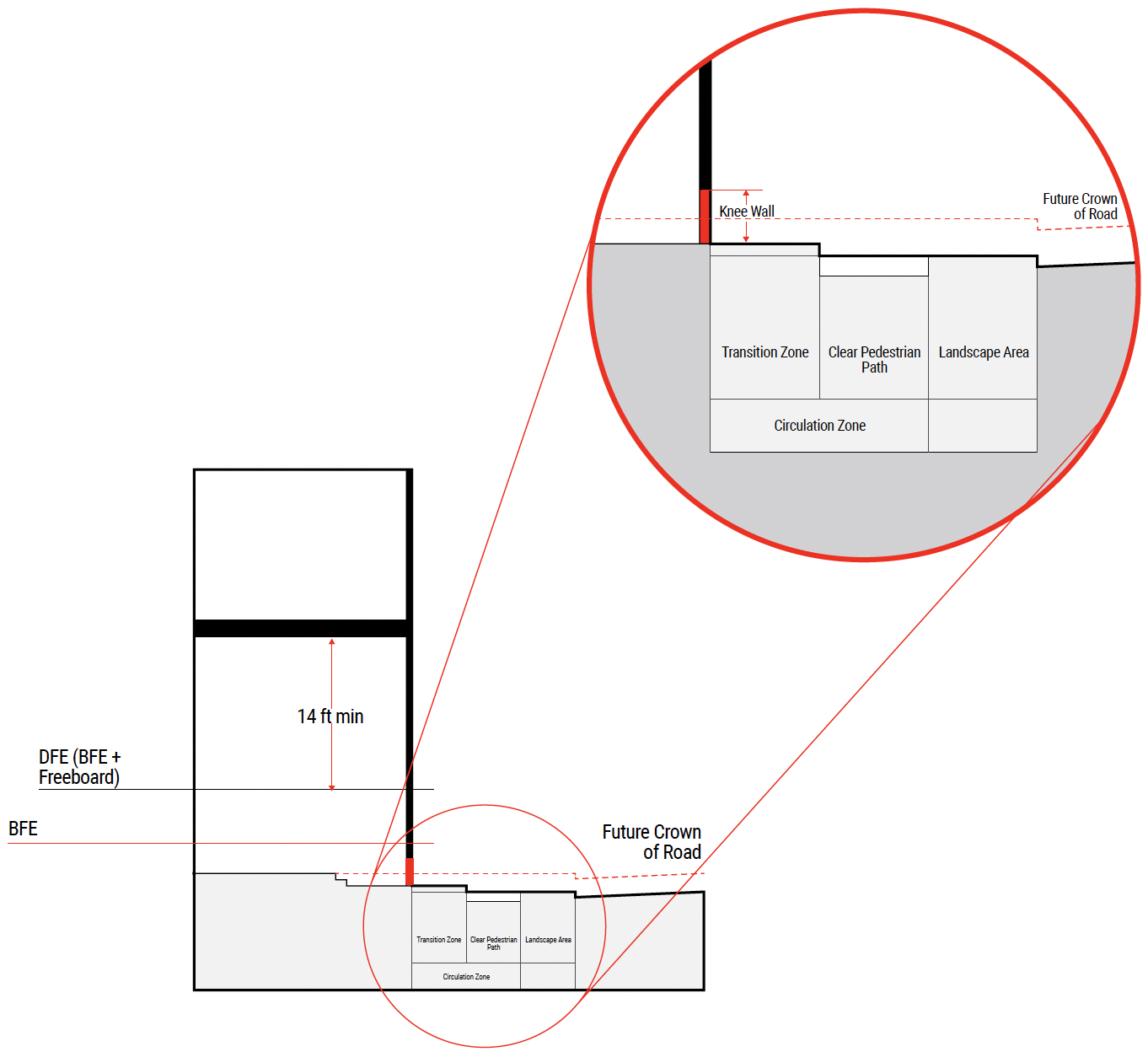
- Sidewalk standards. Where feasible, sidewalks shall be constructed as follows:
- Long Frontage Standards
The following regulations shall apply to new construction with nonresidential uses on the ground floor on frontages with a width greater than 150 feet- Sidewalk standards. The sidewalk shall be raised to the future crown of road elevation, except for transition areas and where there are street crossings, intersections, or driveways, as follows
- Circulation zone. The sidewalk shall contain a "circulation zone" with a minimum dimension of 10 feet wide, pursuant to the following standards:
- The "circulation zone" shall be fully illuminated, consistent with the city's street and sidewalk lighting requirements and subject to the review and approval of the public works director.
- The design of the circulation zone shall be consistent with the city's public sidewalk requirements.
- The circulation zone may be constructed in areas of the public right-of-way and required yards that are in front of a building facade.
- The circulation zone shall remain free from obstructions created by landscaping, signage, utilities, stairs, ramping, handrails, and lighting fixtures.
- Pedestrians shall have 24-hour access to the circulation zone.
- The circulation zone shall include a minimum 5-foot wide "clear pedestrian path," free from obstructions, including, but not limited to, outdoor cafés, sidewalk cafés, handrails, and door swings. The clear pedestrian path shall be delineated by in-ground markers that are flush with the path, including differing pavement tones, differing pavement type, or by another method approved by the planning director.
- An easement providing for perpetual public access shall be provided to the city for portions of the circulation zone that are constructed within the setback area on private property.
- Parallel transition areas. "Parallel transition areas" between the raised circulation zone and lower level sidewalks, street crossings, intersections, and driveways shall be accommodated within the frontage adjacent to the new development as follows
- The parallel transition areas shall not contain steps, switchback ramps, or handrails.
- The parallel transition areas shall be of the minimum length necessary so as to not require the use of steps, switchback ramps, and handrails between the higher future crown of road elevation and the lower level sidewalk, pedestrian crossing, or driveway elevation.
- Landscape transition areas. "Landscape transition areas" between the raised circulation zone and the adjacent automobile parking or vehicle travel lanes shall be provided as follows
- The landscape transition area shall be predominantly landscaped, except where there are access steps, lighting fixtures, pedestrian crossings, or driveways.
- The landscape transition area shall have a minimum width of 5 feet.
- Street trees shall be planted within the landscape transition area in raised planters or stabilized planting areas that at a minimum match the elevation of the circulation zone.
- Where the landscape transition area is adjacent to on-street parking, access steps shall be provided between parking spaces so that each parking space has access to the circulation zone generally from either the front end or rear end of the vehicle. Steps shall be no wider than 36 inches, not included handrails.
- Handrails shall only be permitted for access steps to on-street parking.
- Street and pedestrian lighting fixtures shall be located within the landscape transition area.
- The circulation zone may encroach into the landscape transition area in order to meet adjacent sidewalks and street crossings. The encroachment shall be the minimum necessary to comply with the requirements for and shall comply with the requirements of parallel transition areas.
Notwithstanding the standards in subsections (1) to (2) above, public transit stops and valet parking stands, may be located within the landscape transition area. In the event of a conflict, the provisions in this section shall be superseded by any requirement in the city Code, Miami-Dade County Code, or state law that is applicable to public transit stops or valet parking stands.
- Setbacks. The building's ground floor facade, parking areas, and loading areas shall be set back a minimum of 15 feet from the back of curb to provide sufficient area to accommodate the required circulation zone and landscape transition areas in cases where the public right-of-way is not sufficiently wide. If the underlying zoning regulations require a larger setback, the larger setback shall be required.
- Circulation zone. The sidewalk shall contain a "circulation zone" with a minimum dimension of 10 feet wide, pursuant to the following standards:
- Driveways. Driveways to access off-street parking, drop-off, and loading areas shall comply with the following:
- Where a development has more than one frontage, driveways should be located facing the street with the lowest traffic volumes.
- The number of driveways should be minimized to the greatest extent possible.
- Where the circulation zone passes through a driveway, the surface shall be fully horizontal in a direction perpendicular to the facade of a building, so as to provide a safe and comfortable pedestrian environment.
- Mountable curbs shall be utilized, where feasible.
- Ground floor elevation. The ground floor shall be located a minimum elevation of 14 inches above the future crown of road elevation. Ramping and stairs from the sidewalk circulation zone to the ground floor elevation shall occur within the property and not encroach into the circulation zone or setback areas, unless adequate space exists on the exterior.
- Knee wall. Except where there are doors, facades shall have a knee wall with a minimum height of 2 feet, 6 inches above the future crown of road elevation. Such knee walls shall include any required flood barrier protection. The planning director or designee may waive this knee wall requirement if the applicant can substantiate that the proposed glass storefront system satisfies all applicable Florida Building Code requirements for flood barrier protection.
- Flood damage-resistant materials. Ground floors, walls system, partitions and doors shall utilize water flood damage resistant materials in accordance with all applicable Florida Building Code, FEMA regulations and American Society of Civil Engineer (ASCE) - Flood Resistant Design and Construction Standard, for a minimum of the first 2 feet, 6 inches above the ground floor elevation.
- Flood panels. Flood panels for doorways shall be permanently stored adjacent to all doorways, except when in use.
- Waivers. Where implementation of the regulations in this section is unfeasible or incompatible with the environment and adjacent structures, they may be waived to the minimum extent necessary by the historic preservation board (HPB) or design review board (DRB), in accordance with the certificate of appropriateness review criteria or design review criteria, as applicable; however, an applicant may be required to implement alternative approaches for adequate mitigation of flooding.
Long Frontage Standards Table 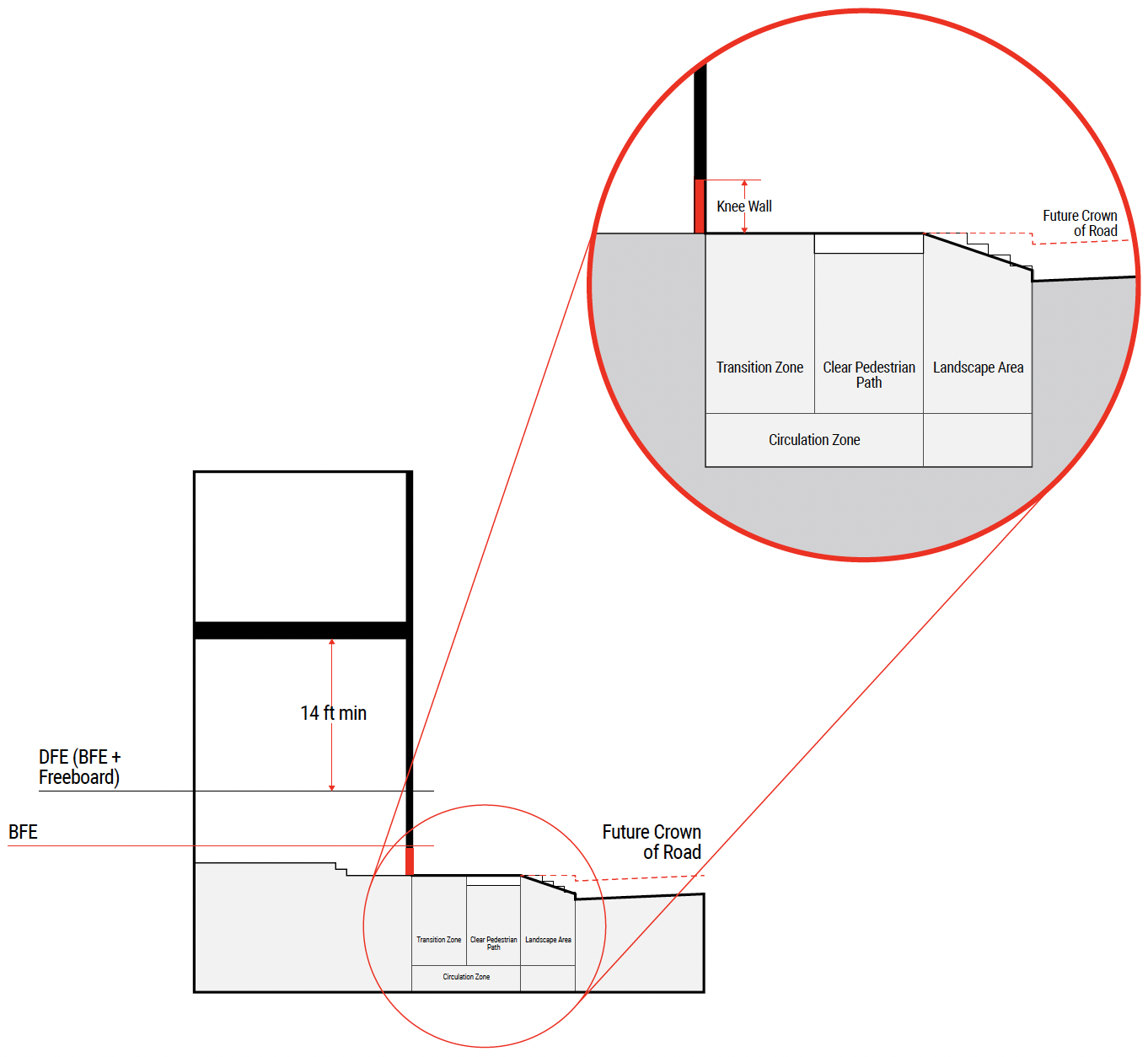
- Sidewalk standards. The sidewalk shall be raised to the future crown of road elevation, except for transition areas and where there are street crossings, intersections, or driveways, as follows
- Short Frontage Standard
7.1.2.3 Resilience and Adaptation Standards for Exterior Building and Lot
- Purpose
- To encourage the incremental raising of grade on private parcels that accompanies and anticipates the future raising of rights-of-way. These design standards, when bolstered by ecological restoration at water’s edge, can reduce wave energy from storm surge as well as make properties less vulnerable to flooding.
- New Construction
- Minimum and maximum Yard Elevation Requirements. The following shall apply to all residential building types that have required yards. Requirements for RS-1, RS-2, RS-3 and RS-4 are located in section 7.2.2.3.b.10.B.
MINIMUM AND MAXIMUM YARD ELEVATION REQUIREMENTS Minimum Maximum Front Yard Future Adjusted Grade (1) (2) (4) Base Flood Elevation (BFE) (1) (3) (4) Side, Facing a street Yard Side, Interior Yard Base Flood Elevation (BFE) (1) (3) Rear Yard - Non Waterfront Rear Yard - Waterfront Base Flood Elevation (BFE) plus maximum freeboard (1) (3)
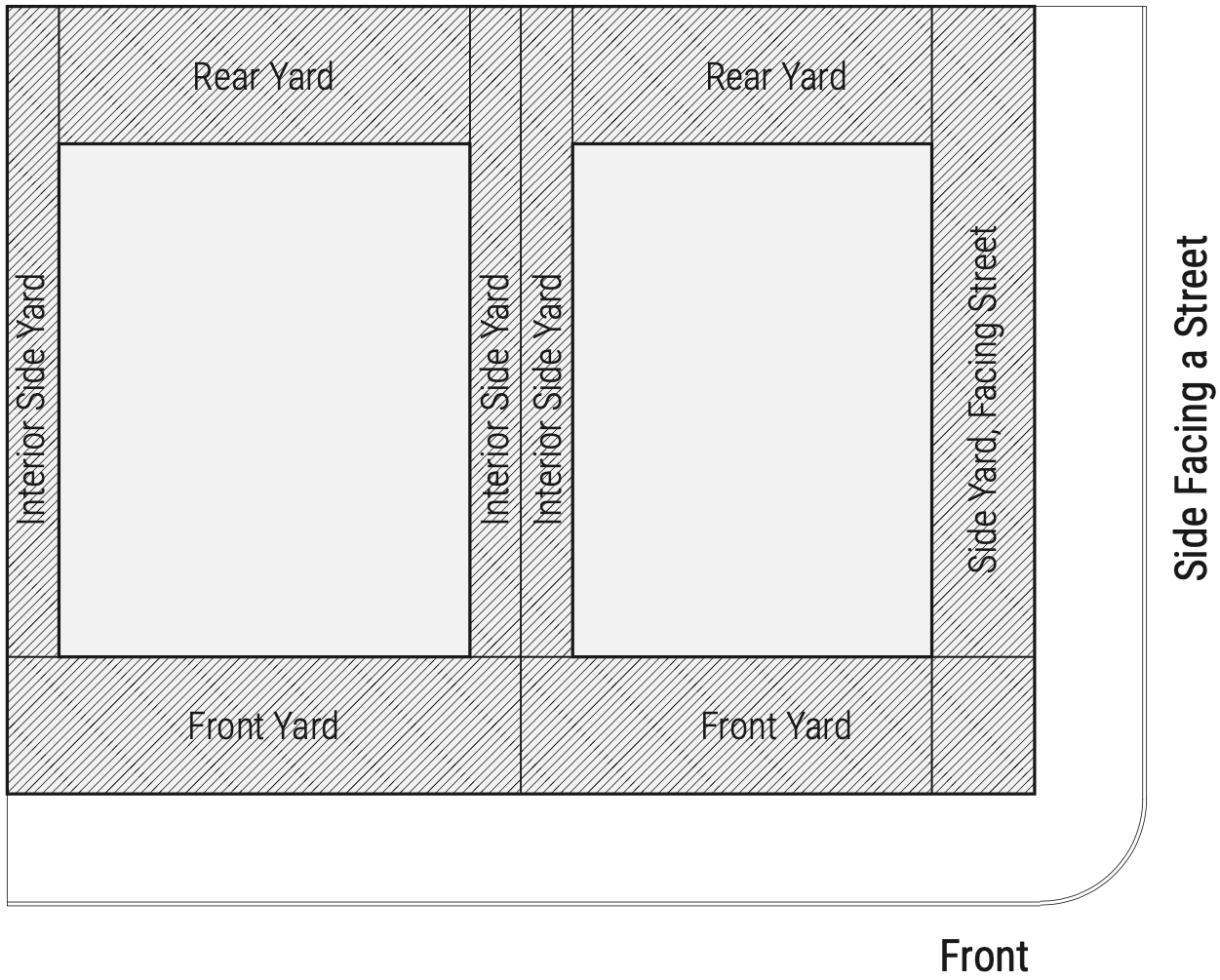
YARD LOCATIONS (FOR REQUIREMENTS ONLY)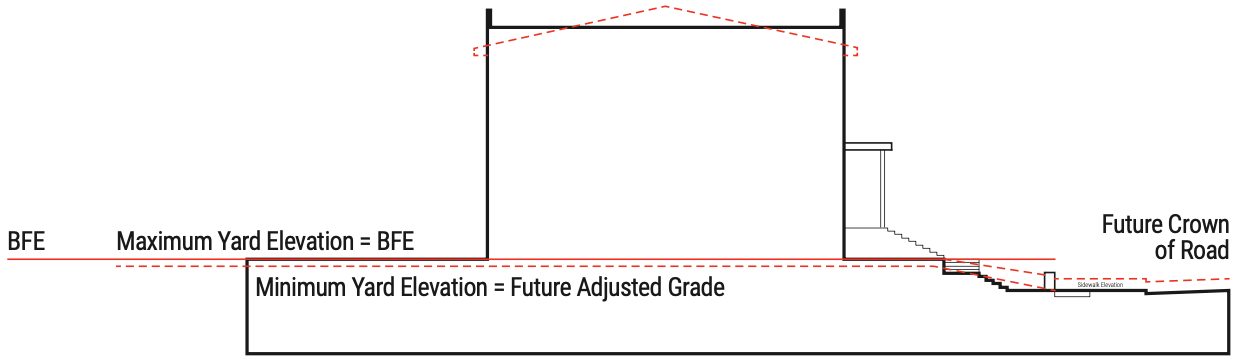
MINIMUM AND MAXIMUM YARD ELEVATIONS
- With the exception of driveways, walkways, transition areas, green infrastructure (e.g., vegetated swales, permeable pavement, rain gardens, and rainwater/stormwater capture and infiltration devices), and areas where existing landscaping is to be preserved, which may have a lower elevation. When in conflict with the maximum elevation requirements as outlined in this table, the minimum elevation requirements shall still apply.
- The minimum yard elevation requirements shall not apply to existing structures.
- In no instance shall the elevation of a required yard exceed the Design Flood Elevation (DFE).
- The maximum height of any fence(s) or wall(s) in the required front yard, shall be measured from existing grade.
- Stormwater retention. In all instances where the existing elevation of a site is modified, a site shall be designed with adequate infrastructure to retain all stormwater on site in accordance with all applicable state and local regulations.
- Retaining wall and yard slope requirements. The following shall apply to all residential building types that have required yard. Within the required front yard, required side yard facing a street and rear and side interior yards the following shall apply (Requirements for RS-1, RS-2, RS-3 and RS-4 are located in section 7.2.2.3.b.10.D.):
- Minimum and maximum Yard Elevation Requirements. The following shall apply to all residential building types that have required yards. Requirements for RS-1, RS-2, RS-3 and RS-4 are located in section 7.2.2.3.b.10.B.
| RETAINING WALL REQUIREMENTS | |
|---|---|
| Maximum Height of Retaining Wall | |
| Front | 30 inches above sidewalk elevation, or adjacent grade if no sidewalk is present (1) (3) |
| Side, Facing a Street | |
| Side, Interior | At the property line, the maximum height of retaining walls shall not exceed BFE. (2) (3) |
| Rear | |
| |
| |
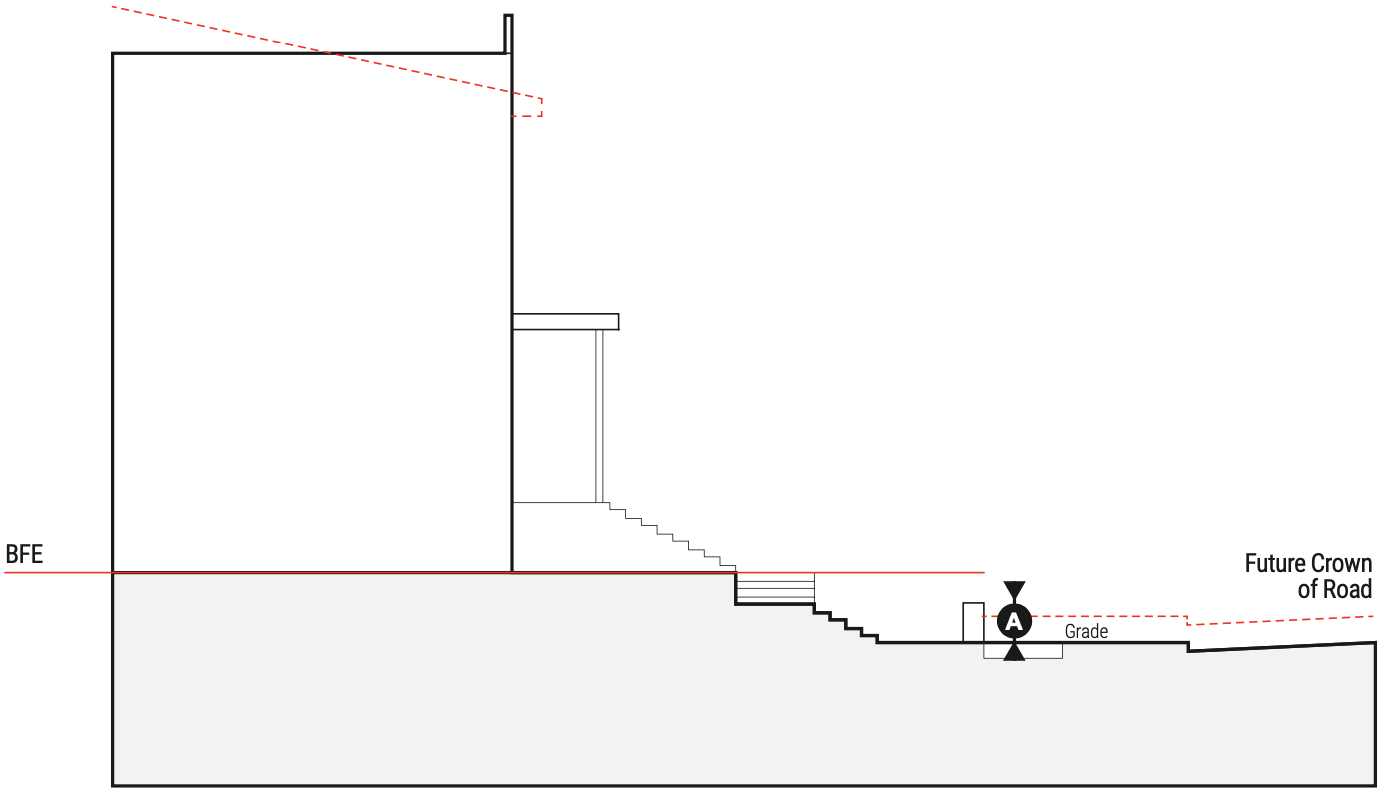
7.1.2.4 Sea Level Rise and Resiliency Review Criteria
- Criteria
The city's land use boards shall consider the following when making decisions within their jurisdiction, as applicable:- Criteria for development orders
- A recycling or salvage plan for partial or total demolition shall be provided.
- Windows that are proposed to be replaced shall be hurricane proof impact windows.
- Where feasible and appropriate, passive cooling systems, such as operable windows, shall be provided.
- Resilient landscaping (salt tolerant, highly water-absorbent, native, or Florida-friendly plants) shall be provided, in accordance with chapter 4 in Land Development Regulations.
- The project applicant shall consider the adopted sea level rise projections in the Southeast Florida Regional Climate Action Plan, as may be revised from time-to-time by the Southeast Florida Regional Climate Change Compact. The applicant shall also specifically study the land elevation of the subject property and the elevation of surrounding properties.
- The ground floor, driveways, and garage ramping for new construction shall be adaptable to the raising of public rights-of-way and adjacent land, and shall provide sufficient height and space to ensure that the entry ways and exits can be modified to accommodate a higher street height of up to 3 additional feet in height.
- As applicable to all new construction, all critical mechanical and electrical systems shall be located above base flood elevation. All redevelopment projects shall, whenever practicable and economically reasonable, include the relocation of all critical mechanical and electrical systems to a location above base flood elevation.
- Existing buildings shall, wherever reasonably feasible and economically appropriate, be elevated up to base flood elevation, plus City of Miami Beach Freeboard.
- When habitable space is located below the base flood elevation plus City of Miami Beach Freeboard, wet or dry flood proofing systems will be provided in accordance with chapter 54 in General Ordinances.
- As applicable to all new construction, stormwater retention systems shall be provided.
- Cool pavement materials or porous pavement materials shall be utilized.
- The design of each project shall minimize the potential for heat island effects on-site.
- Criteria for ordinances, resolutions, or recommendations:
- Whether the proposal affects an area that is vulnerable to the impacts of sea level rise, pursuant to adopted projections.
- Whether the proposal will increase the resiliency of the city with respect to sea level rise.
- Whether the proposal is compatible with the city’s sea level rise mitigation and resiliency efforts.
- Criteria for development orders
7.1.3.1 Purpose
Whereas resilience and adaptation are the response to threats posed by climate change, environmental mitigation represents the strategies that reduce greenhouse gas emissions and ecological degradation that is often associated with the built environment.
Sustainable building practices will promote the economic and environmental health of the city, and ensure that the city continues to become environmentally resilient to combat sea level rise and help curb climate change. This chapter is designed to achieve the following objectives:
- Increase energy efficiency in buildings;
- Encourage water and resource conservation;
- Reduce waste generated by construction projects;
- Reduce long-term building operating and maintenance costs;
- Improve indoor air quality and occupant health;
- Contribute to meeting state and local commitments to reduce greenhouse gas production and emissions; and
- Encourage sound urban planning principles.
7.1.3.2 Green Building
Mandatory compliance with the requirements of this section shall be required for all applicants with building permit applications that meet the following criteria (hereinafter "eligible participants"):
- All new construction that proposes over 7,000 square feet of construction of a structure; or
- Ground floor additions (whether attached or detached) to existing structures that encompass over 10,000 square feet of additional floor area.
- Notwithstanding the foregoing, non- elderly and elderly low and moderate income and workforce housing developments shall be exempt from the requirements of this article. However, such developments are encouraged to incorporate green building elements that further the intent and purpose of section 7.1.3.1.
- Original Green’ Standards
Purpose. The purpose of Original Green Standards is to promote design principles that do not rely upon advanced technology in order to deliver sustainability. These principles may include passive cooling techniques and design features that encourage cross-ventilation, the provision of higher ceilings to increase the comfort of building occupants, and other measures to reduce the reliance upon mechanical systems. - USGBC or International Living Institute Based Standards
Purpose: The city's intent is to establish a certification compliance schedule that incentivizes all qualifying projects to attain at a minimum LEED Gold certification, or similar green building program recognized in this chapter.
This section shall be administered using standards developed for and standards developed by the United States Green Building Council (USGBC) or the International Living Future Institute. All eligible participants who are certified as having satisfied all of the requirements of the green building certification agency, including, but not limited to, any monetary or certification requirements, are eligible for a partial or full refund of the sustainability fee identified in section 7.1.3.2.b.1.B., herein based upon the level of compliance with the regulations in this chapter.- Sustainability Fee Program
Generally. A sustainability fee will be assessed for all eligible participants. The calculation of the fee, provisions for refunding all or portions of the fee, its purpose, and eligible uses are detailed within this division.- Sustainability fee calculation.
- In order to obtain a certificate of occupancy (CO), or certificate of completion (CC), whichever comes first, the eligible participant must first post a sustainability fee payment bond or issue full payment of the sustainability fee to the city. The sustainability fee shall be valued at 5 percent (5%) of the total construction valuation of the building permit. However, the eligible participant may be entitled to a refund or partial refund, of the bond, or payment of the sustainability fee, based upon achieving the program certification levels in the compliance schedule below:If the proof of green building certification is provided prior to the obtaining a TCO, CO, or CC, the "sustainability fee" shall be in the full amount identified above, minus the refund for the level of green building certification achieved identified in the certification compliance schedule.
CERTIFICATION COMPLIANCE SCHEDULE Level of Certification Achieved Sustainability Fee Reimbursement to Participant for Meeting Certain Green Building Certification Levels Failure to obtain Certification 0% refund of bond or payment of Sustainability fee LEED Certified 50% refund of bond or payment of Sustainability fee LEED Silver Certified 66% refund of bond or payment of Sustainability fee LEED Gold Certified or International Living Future Institute Petals or Net Zero Energy Certified 100% refund of bond or payment of Sustainability fee LEED Platinum Certified or International Living
Future Institute Living Building Challenge Certified100% refund of bond or payment of Sustainability fee - The sustainability fee shall be valuated upon the eligible participant's submittal at time of application for certificate of occupancy (CO), or certificate of completion (CC), whichever comes first, upon review by the planning department during zoning review of the certificate. The sustainability fee bond or full payment shall be provided by participant prior to obtaining a certificate of occupancy (CO) or certificate of completion, whichever comes first.
- Refund of the sustainability fee or bond to the eligible participant may occur as provided for in subsection (A), above, provided the eligible participant complies with the certification compliance schedule within the timeframe identified in section 7.1.3.2.b.1.B.II.
- The entirety of the sustainability fee shall be forfeited to the city based upon participant's failure achieve the applicable green building certification levels identified in section 7.1.3.2.b.1.A. within the timeframe identified in section 7.1.3.2.b.1.B.II.
- In order to obtain a certificate of occupancy (CO), or certificate of completion (CC), whichever comes first, the eligible participant must first post a sustainability fee payment bond or issue full payment of the sustainability fee to the city. The sustainability fee shall be valued at 5 percent (5%) of the total construction valuation of the building permit. However, the eligible participant may be entitled to a refund or partial refund, of the bond, or payment of the sustainability fee, based upon achieving the program certification levels in the compliance schedule below:
- Review procedures.
- Prior to obtaining a certificate of occupancy (CO) or certificate of completion (CC), whichever comes first, the qualifying projects shall post a bond with the city, or in the alternative, provide a payment to the city, in the amount of the "sustainability fee" identified in section 7.1.3.2.b.1.A.I.
- Within one year from the receipt of a certificate of occupancy (CO) or certificate of completion (CC), the owner shall submit proof of green building certification for the development from the green building certification agency.
- The bond or payment provided, or percentage thereof, shall be refunded to program participants that have achieved a level of green building certification identified in the certification compliance schedule in 7.1.3.2.b.1.
- The planning director may approve, upon the request of the eligible participant, a one-time one year extension, provided proof that the green building certification agency's review remains pending to determine final certification.
- Building permit applications for a green building project submitted or resubmitted for review shall be given priority review over projects that are not green building projects by the city's departments reviewing such applications.
- All building inspections requested for green building projects shall be given priority over projects that are not green building projects.
Deposit of funds; account.
The city has established a sustainability and resiliency fund. The revenue generated through the sustainability fee program shall be deposited in the sustainability and resiliency fund.
- Interest earned under the account shall be used solely for the purposes specified for funds of such account.
- Sustainability fees deposited and credited to the sustainability and resiliency fund account, and credited to the eligible participant, pursuant to section 7.1.3.2.b.1.B, shall be identified, within the city's sustainability and resiliency fund.
- Appropriation of deposited funds in the sustainability and resiliency fund shall not be permitted until the applicable refund period, established in section 7.1.3.2.b.1.B.II, for those funds has lapsed.
- Should the eligible participant provide a bond, rather than pay the sustainability fee, then, the city shall safeguard the bond, to ensure compliance with this chapter. The city shall return the bond, or make a claim for a portion of the bond, depending on the eligible participant's compliance with section 7.1.3.2.b.1.B.II and section 7.1.3.2.b.1.A.I.
- Earned fees in the sustainability and resiliency fund shall be utilized to provide public improvements that increase the sustainability and resiliency of the city. Expenditures from these funds shall require prior city commission approval. Prior to any expenditure, the city manager shall provide a recommendation to the city commission.
- Such improvements that increase the resiliency of the city may include:
- Environmental restoration projects;
- Environmental remediation projects;
- Environmental monitoring;
- Green infrastructure;
- Enhanced stormwater quality and quantity improvements; and/or
- Sustainability planning efforts.
- Sustainability fee calculation.
- Sustainability Fee Program
7.1.4.1 Purpose
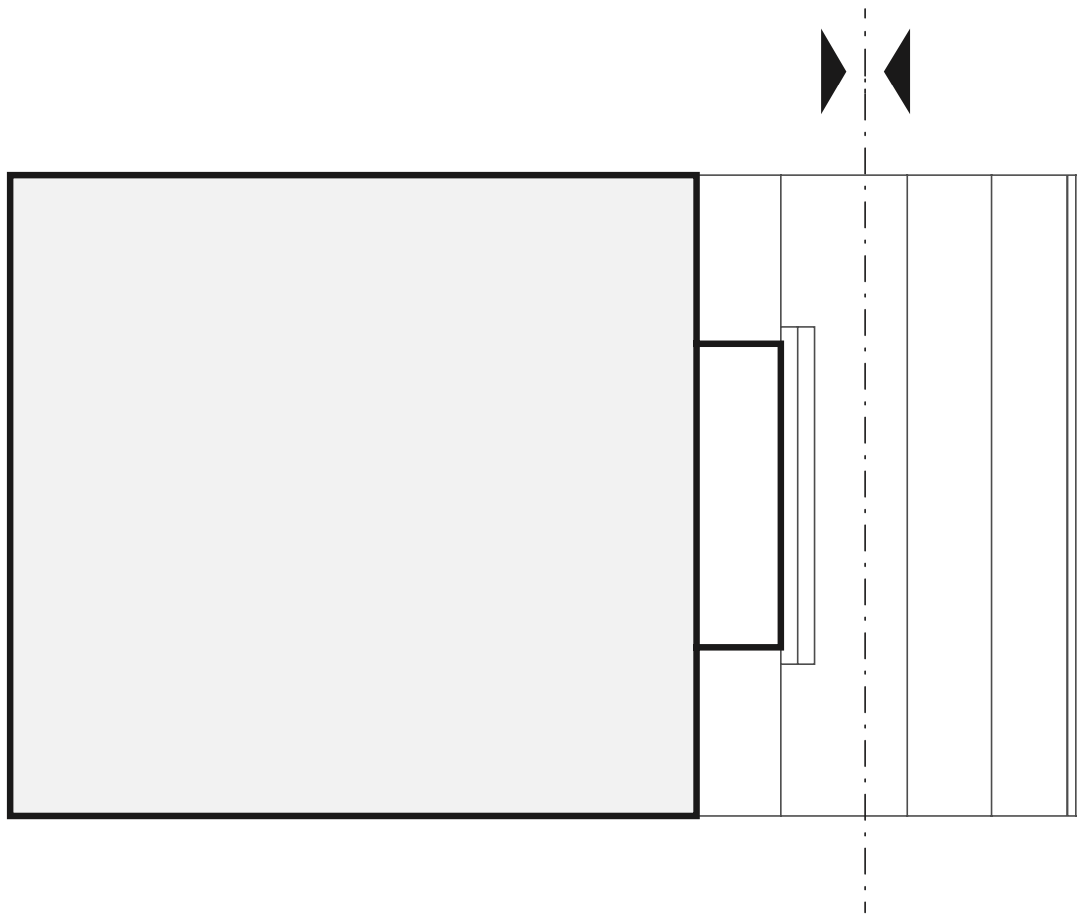
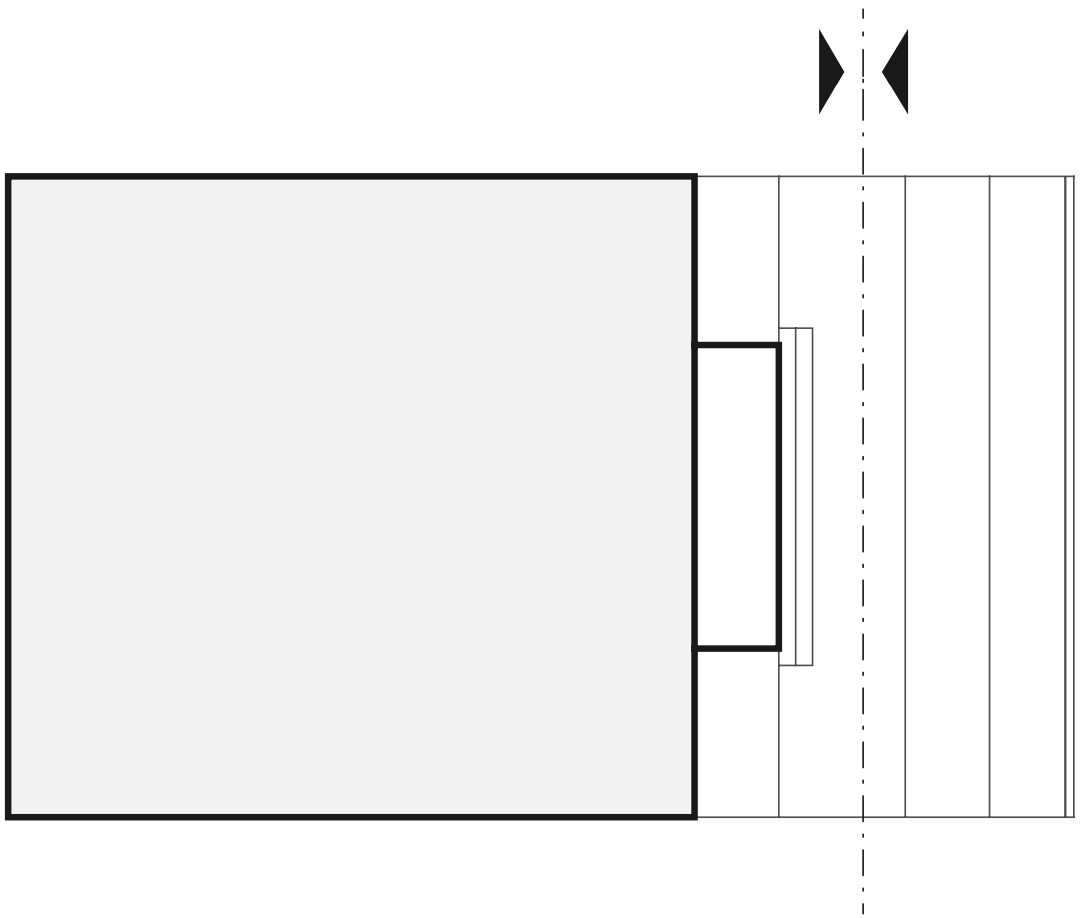
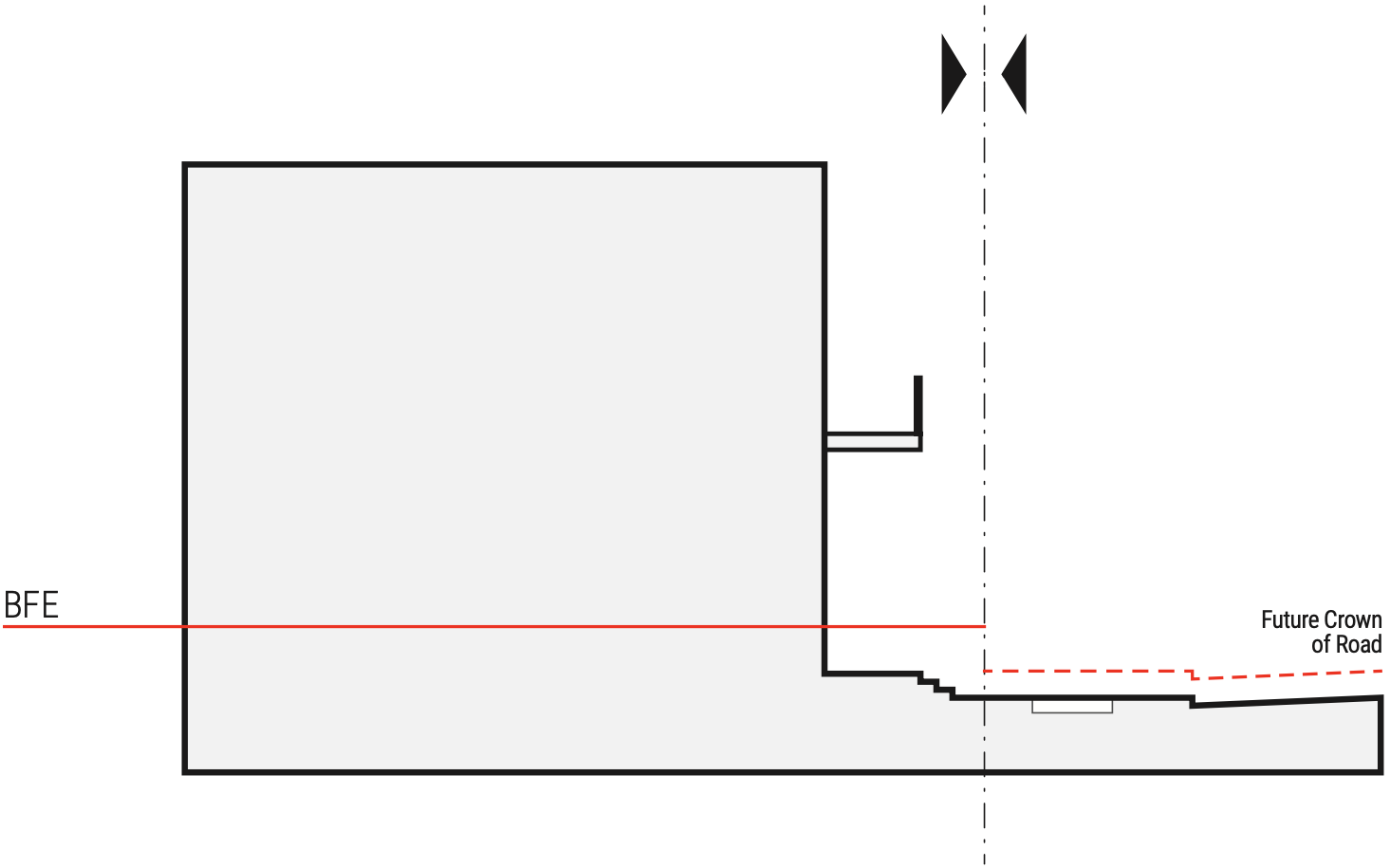
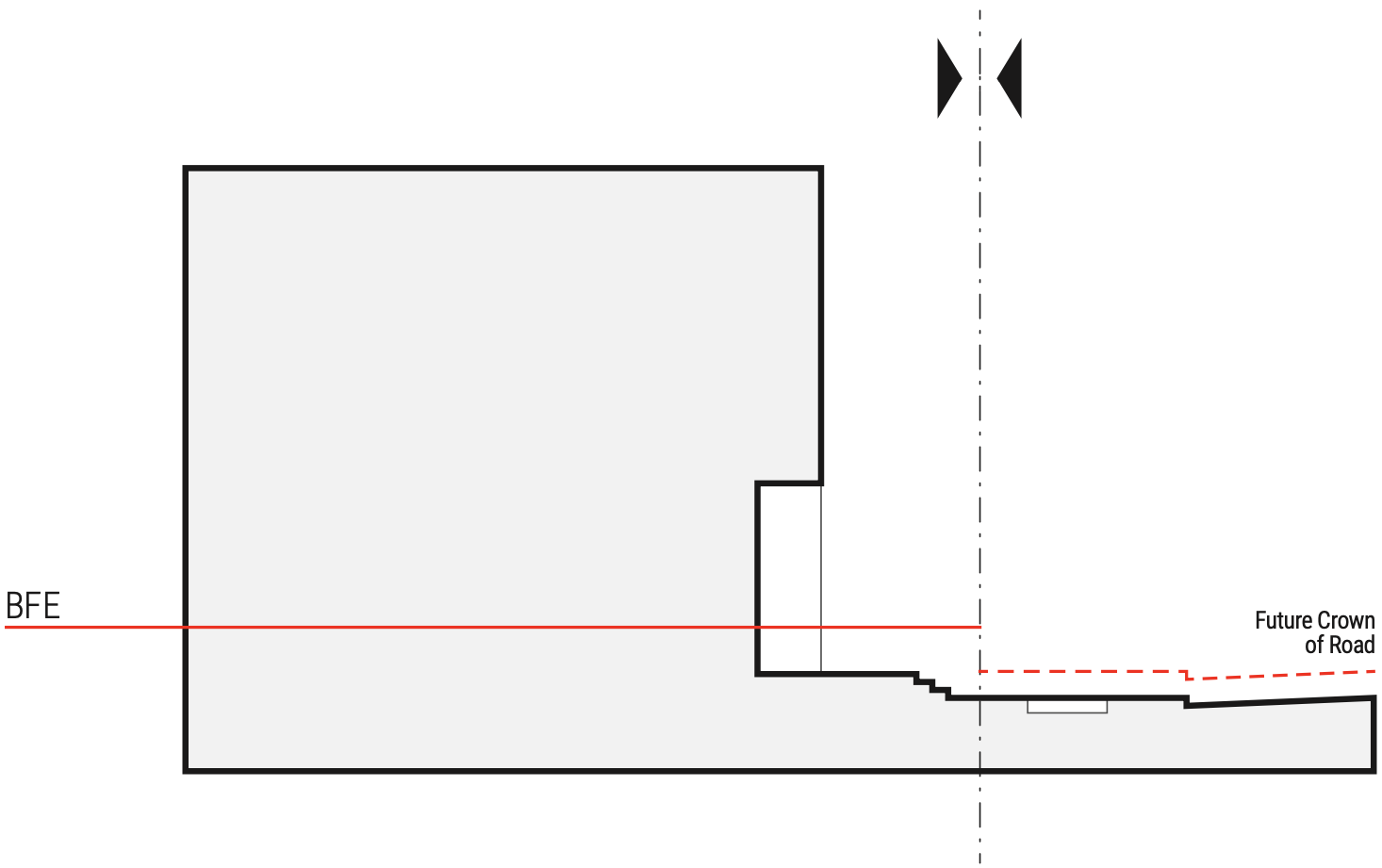
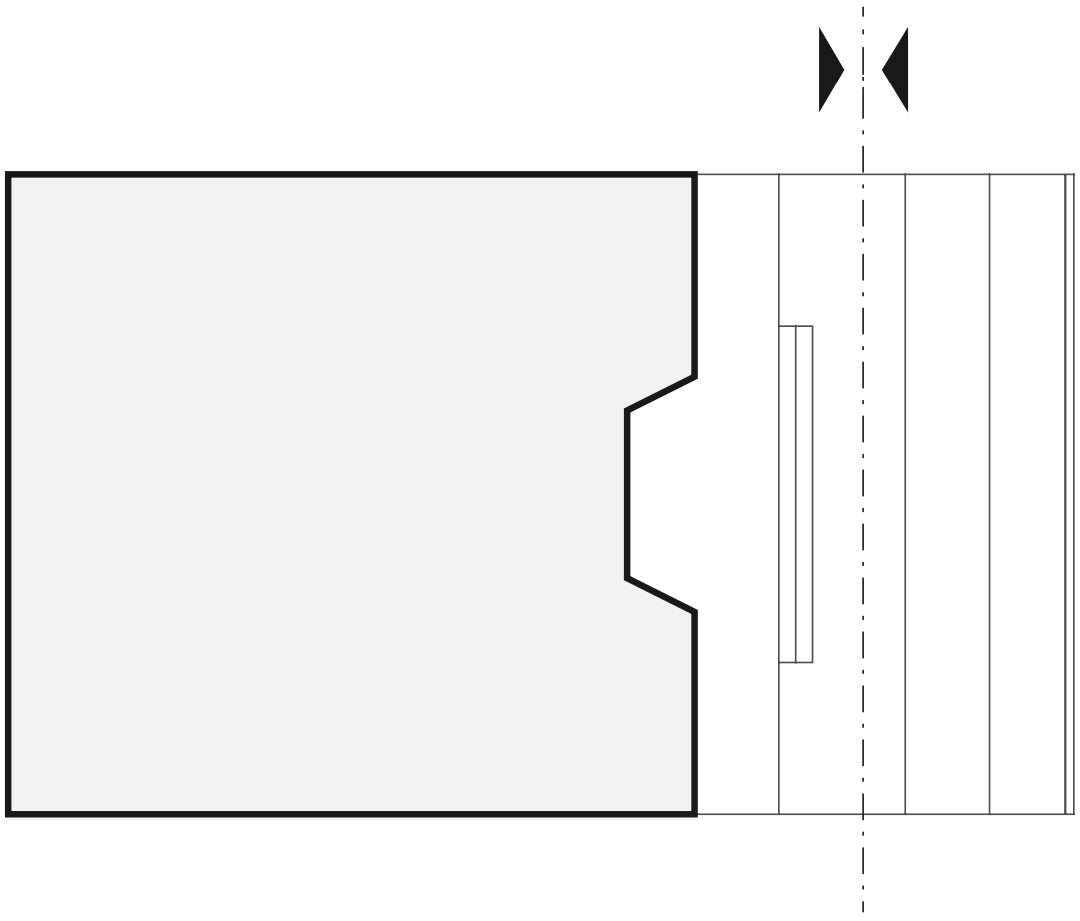
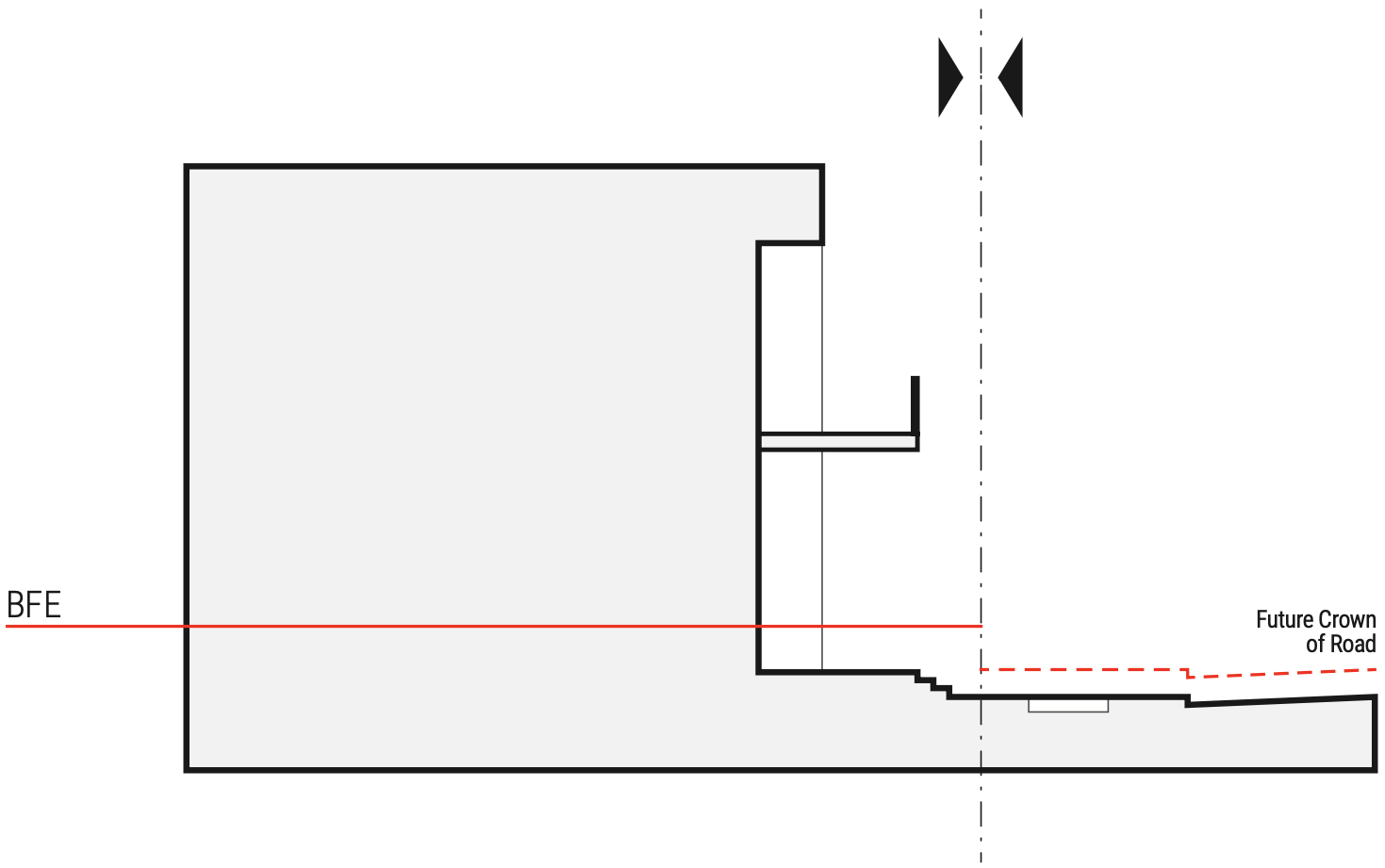
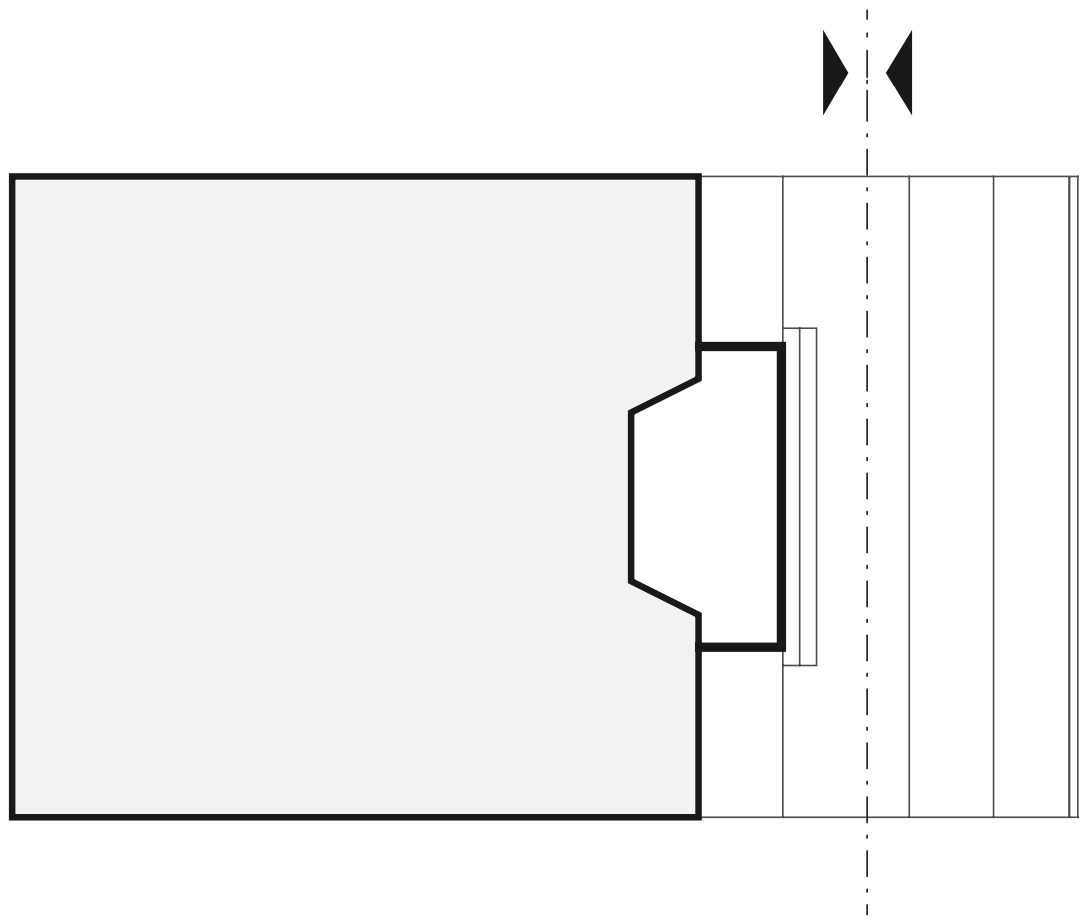
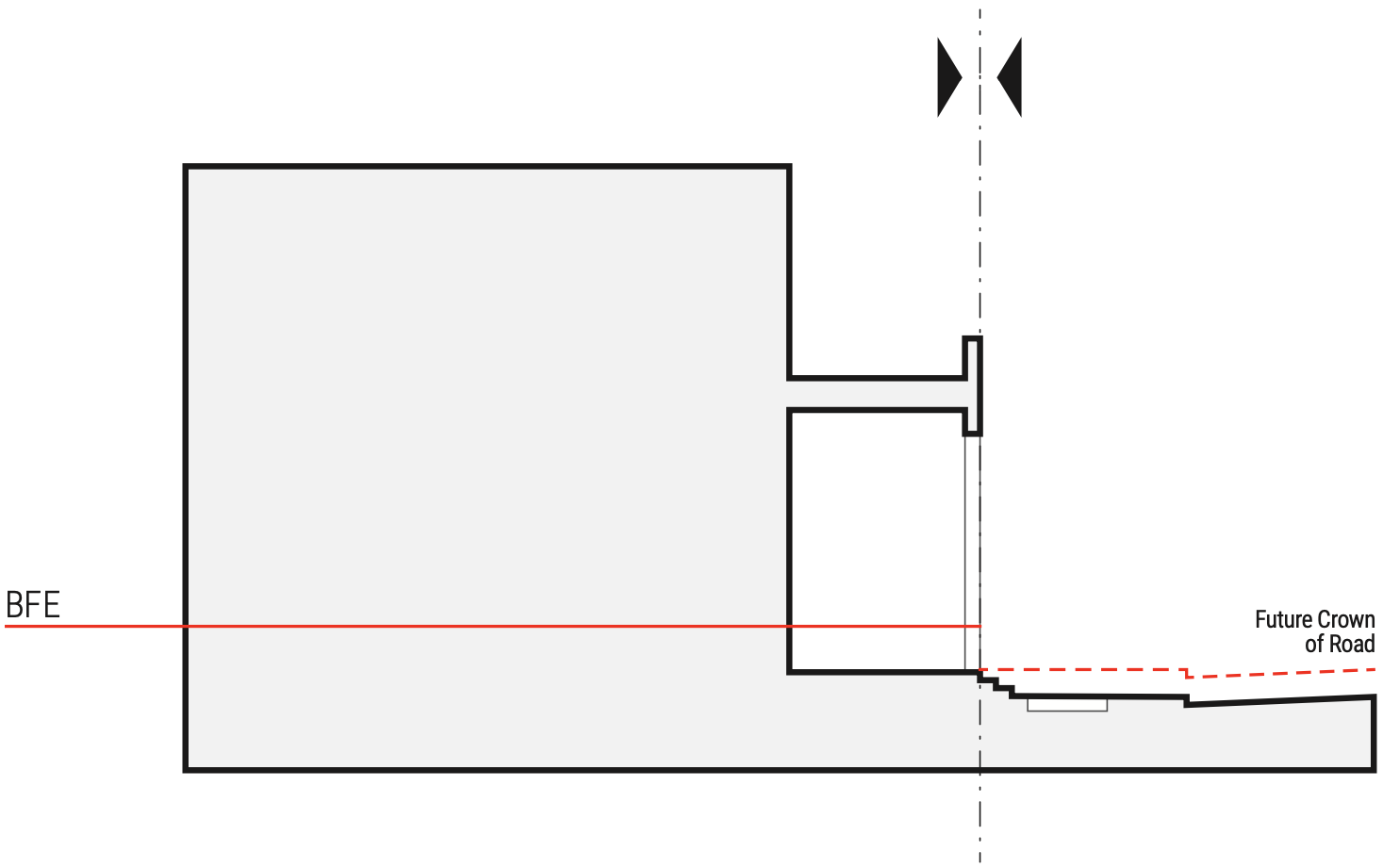
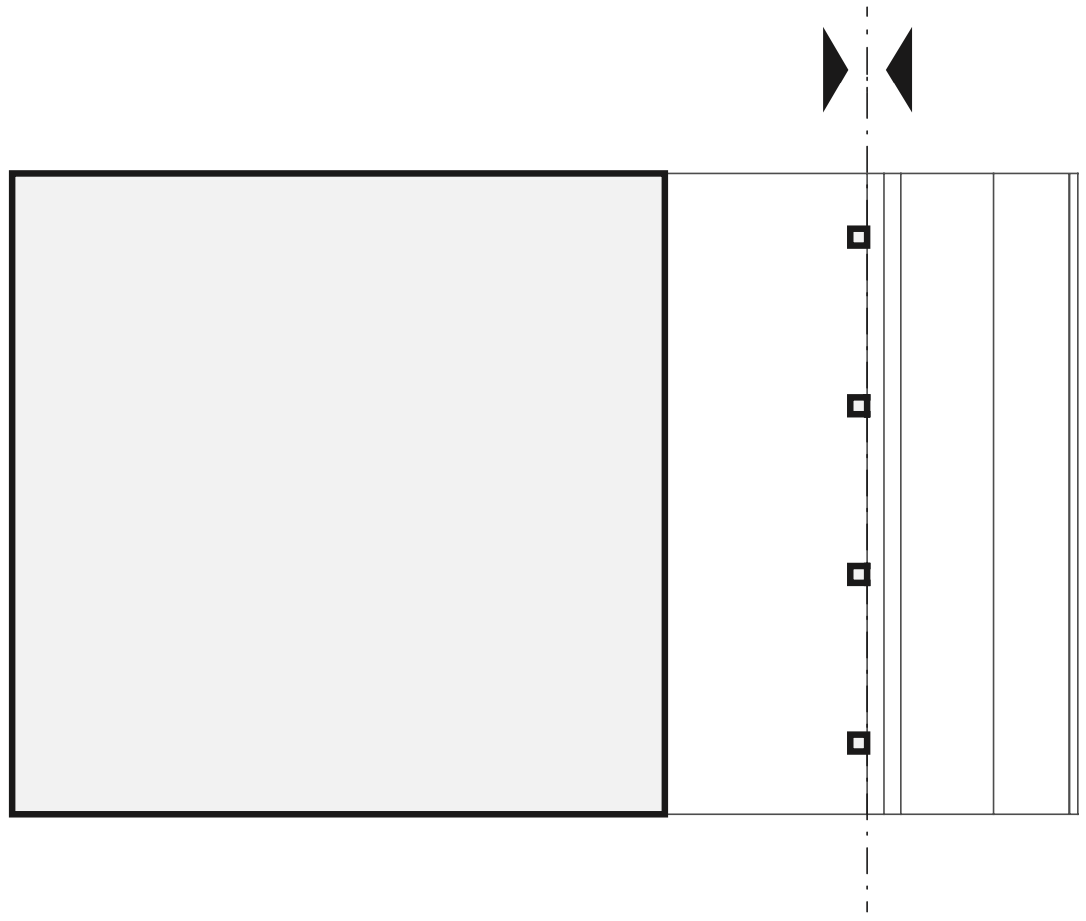
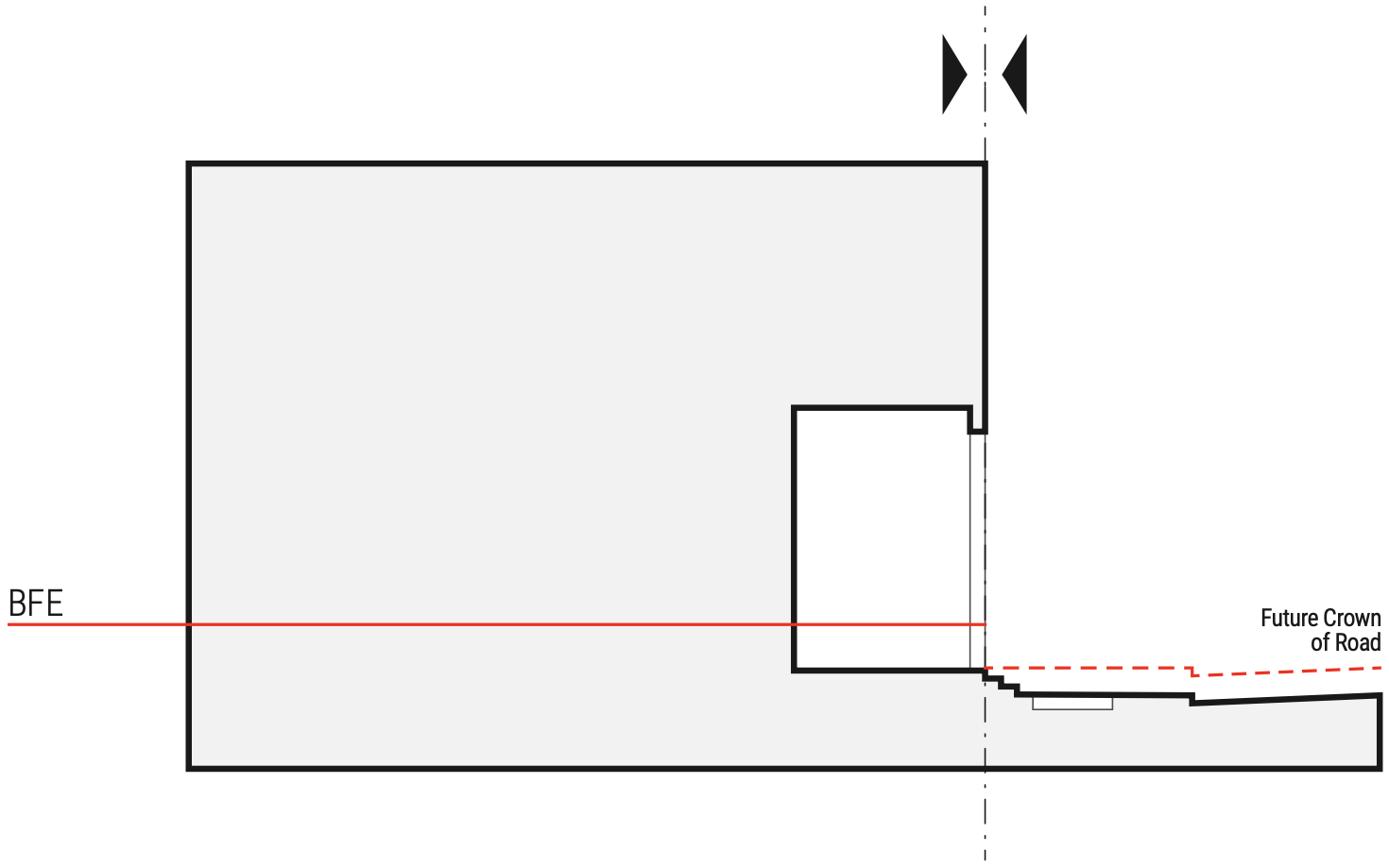
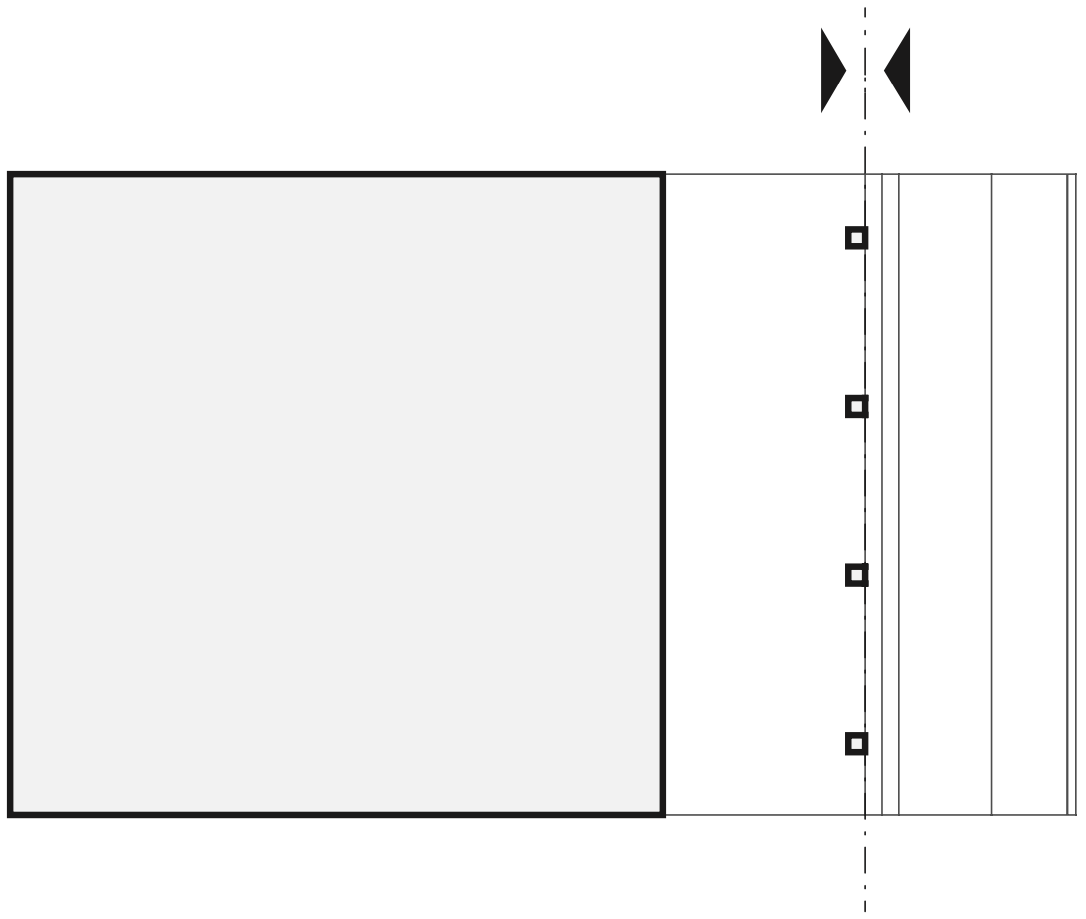
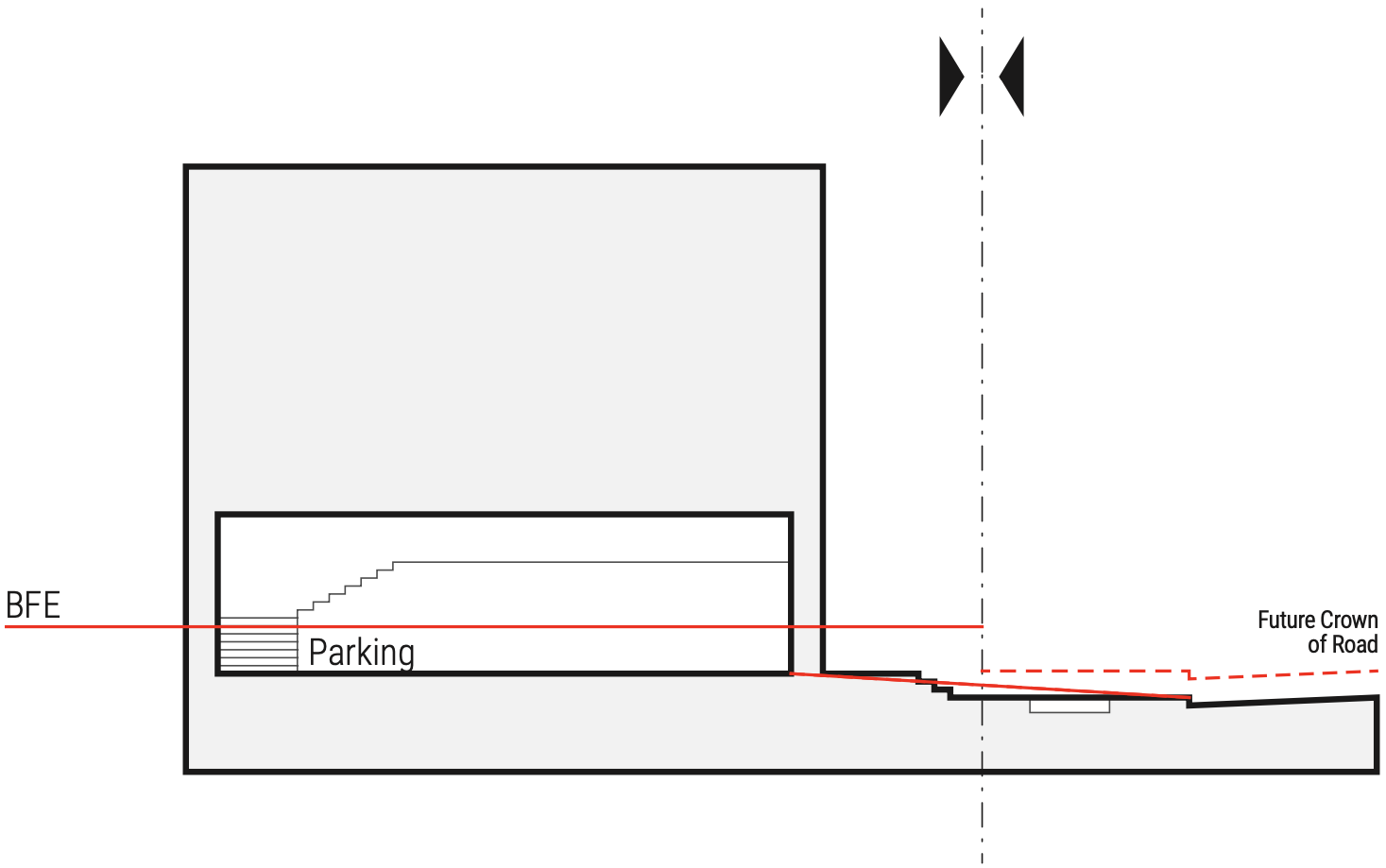
A walkable environment is created by unifying design of the public realm with private frontages that shape the public realm. There are a variety of frontage types, which vary depending on the zoning district and the uses at the eye-level of the pedestrian. This section illustrates how these frontages ought to be designed in order to accommodate future raising of the street.
7.1.4.2 Frontage Standards
| FRONTAGES STANDARDS TABLE | ||
|---|---|---|
| Buildings should provide cover for main entrances and doors that open onto the sidewalk, using at least one of the following: | ||
| Front Yard with Stoop or Porch. A stoop or porch is used only when the main entrance is used to access a residential unit or lobby and is not used for storefronts. A stoop or porch has a landing that is elevated above the sidewalk and above the crown of the roadway with stairs and/or ramps that access the sidewalk. It is often covered by a roof, eyebrow, or upper floor balcony. It may be combined with a recessed entrance. |
|
|
| Terrace/ Stoop. A terrace is a flat usable surface in front of the building, usually elevated above the sidewalk. In Miami Beach, the Terrace may be covered by upper floors, an eyebrow or be partially or wholly exposed to the sky. This feature can be seen in many of the Art Deco and Streamlined Moderne Era buildings, especially hotels. The terrace is often used for outdoor dining, seating and /or lounging. |
| 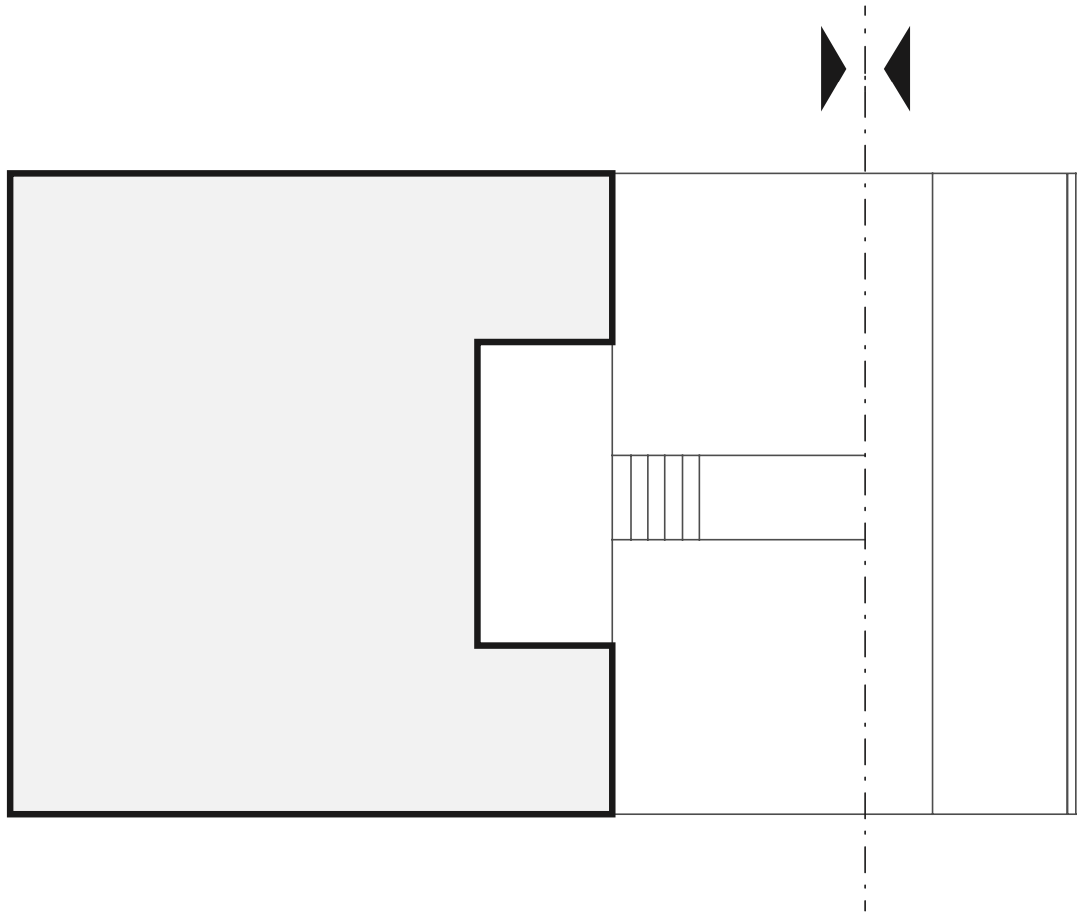 |
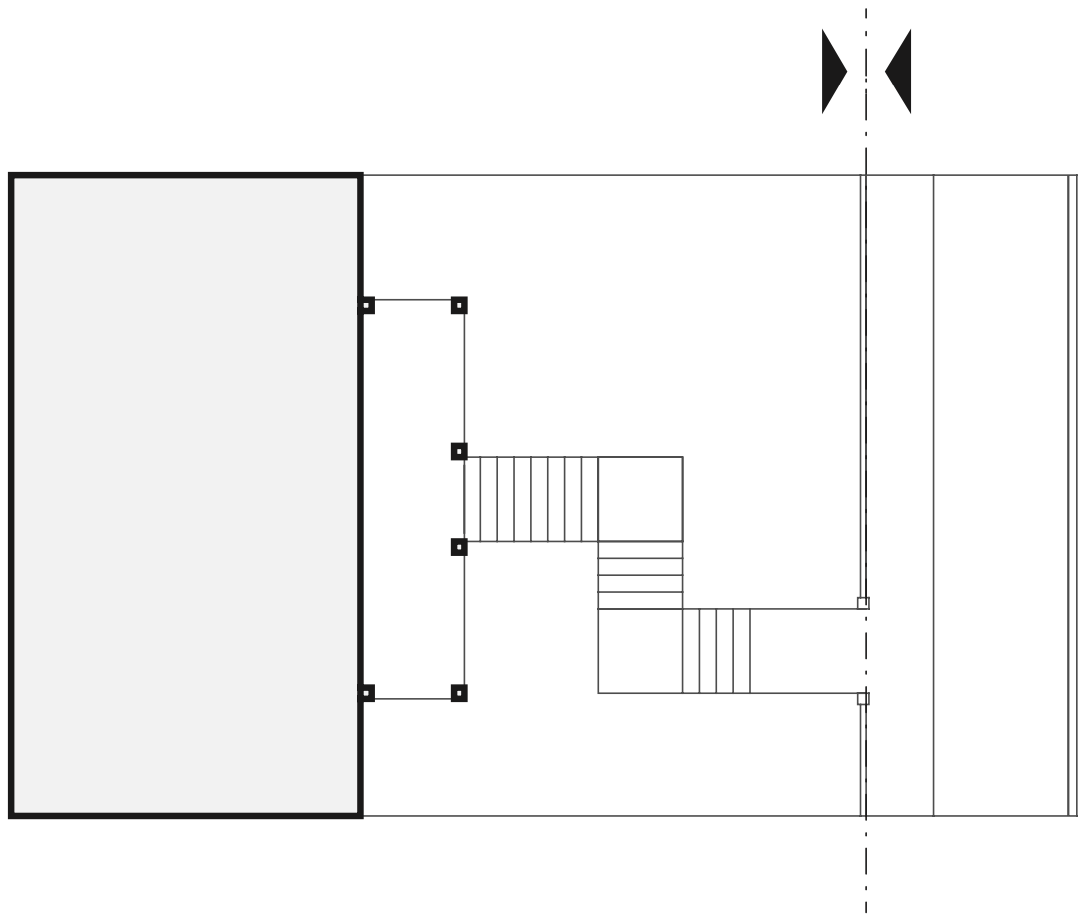
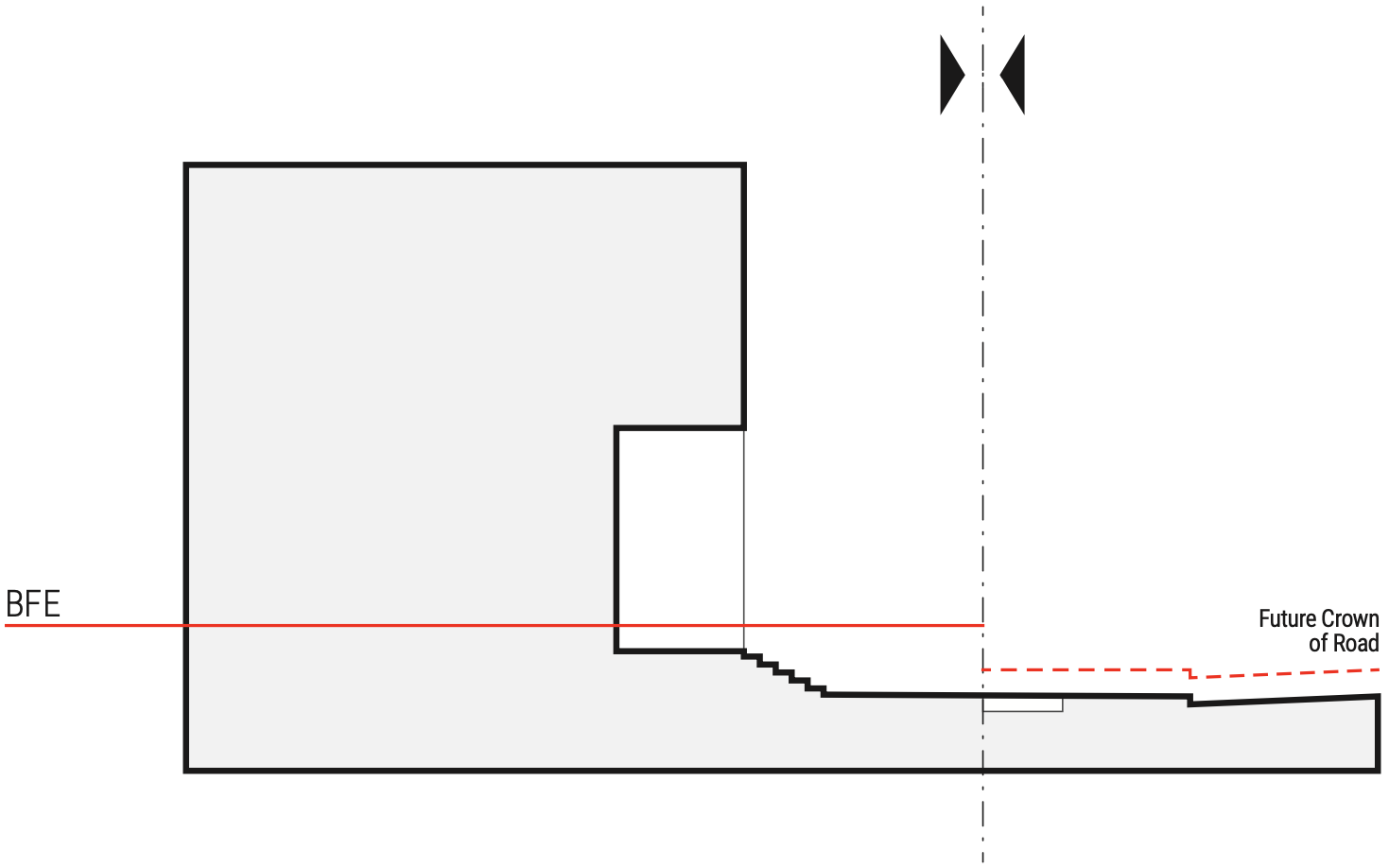
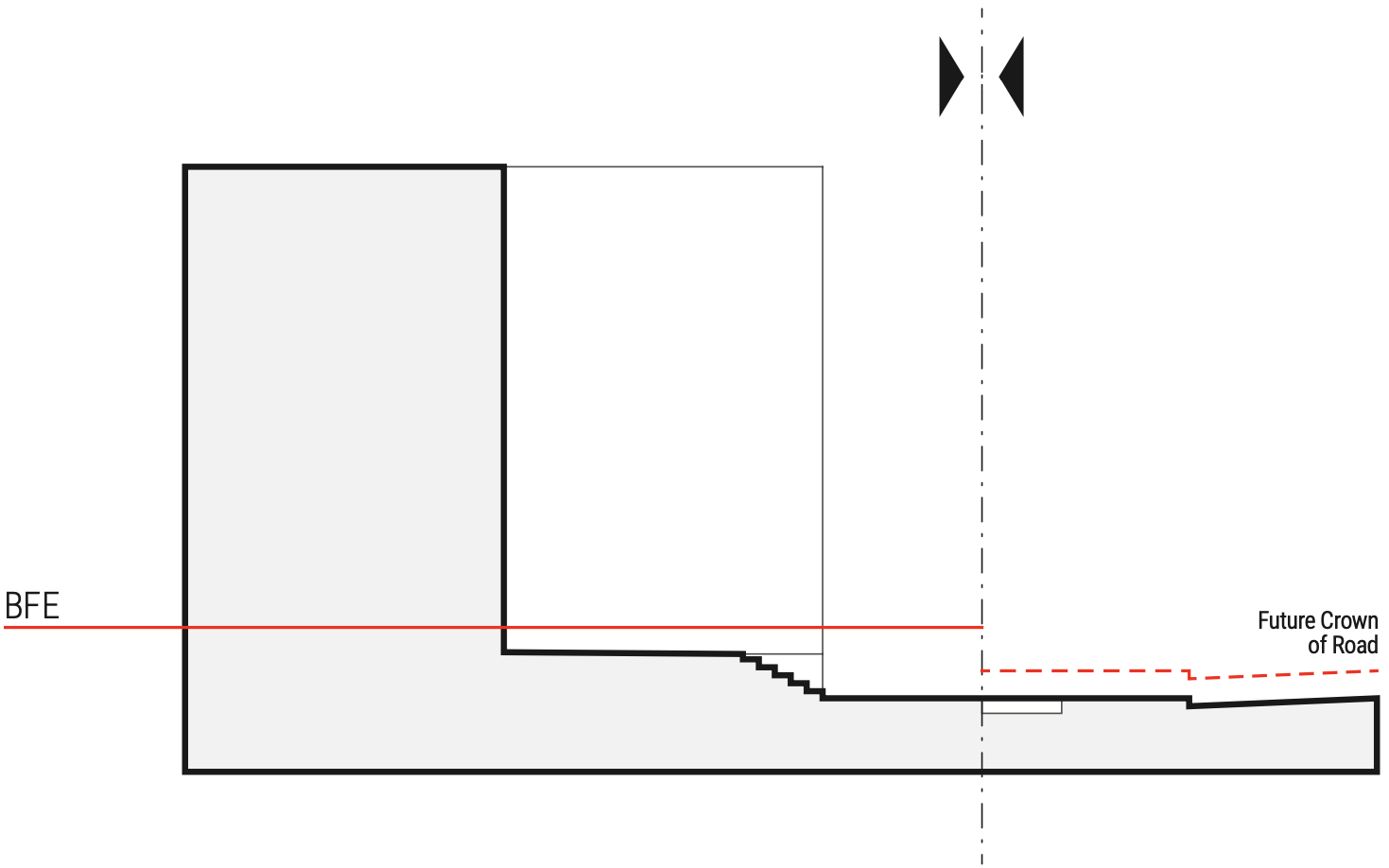
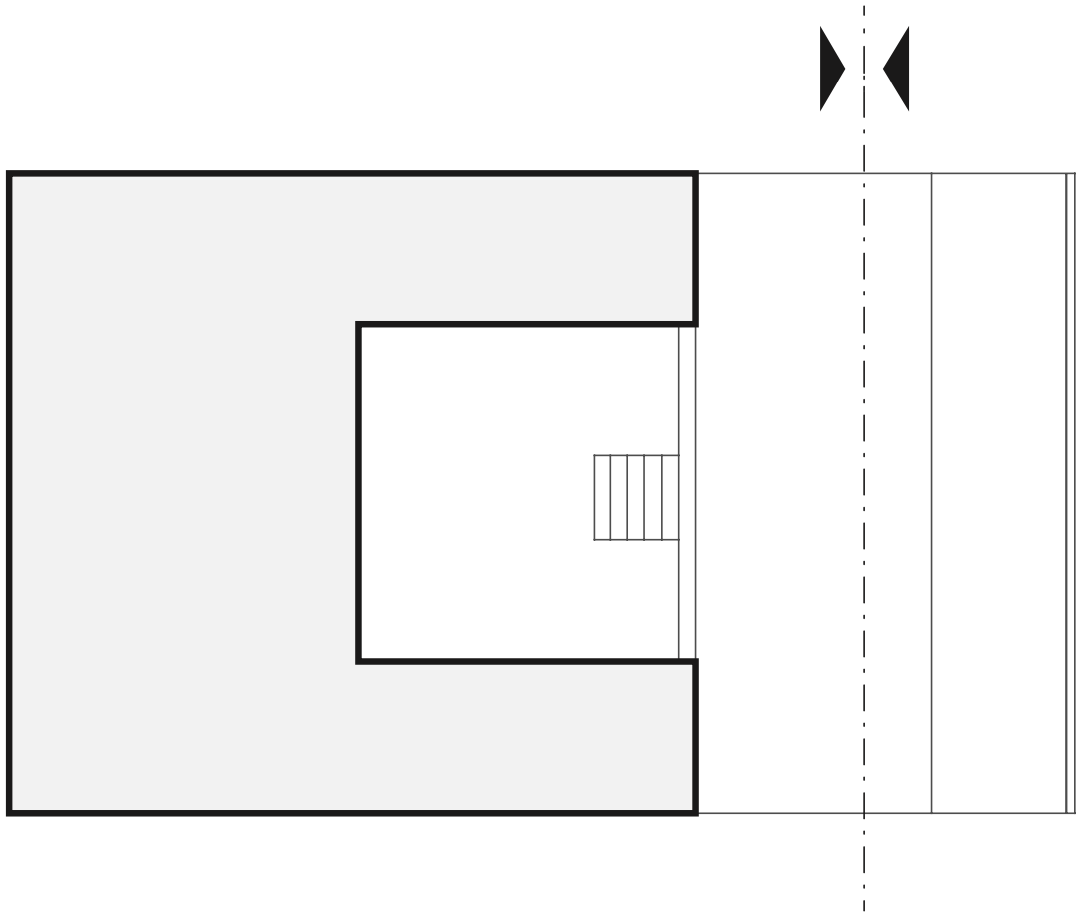
| Forecourt. A forecourt is an open to the sky patio that faces the street, and from which building residents usually access their units. This often results in a ‘U’ shape or ‘parallel bar’ building configuration. This frontage type can be found in many of the multifamily buildings on Meridian Avenue and in other areas of Miami Beach. In some cases, as is typical in Normandy Isle and North Beach, the forecourt may be located towards the rear, facing Biscayne Bay or one of the Waterways, to maximize views of the water and in order to funnel breezes to the various units. |
|
|
| Awning. Awning is a structure that shelters the pedestrian with a canvass, cloth, or other membrane that is stretched over a frame and which extends across a storefront. An awning may shade the glazing of the storefront from harsh sunlight but also provides refuge from rain for customers and building occupants. An awning may be retractable and is considered less permanent than a marquis. Awnings may be found on Lincoln Road Mall, Washington Avenue, Española Way, and other areas where storefronts are abundant. |
|
|
| Marquis. Marquis is a rigid, permanent structure which extends from the building façade and shelters the main entrance. It is usually metallic and may be cantilevered or be partially or wholly supported by tension rods. A marquis often has signs or letters incorporated into the surface that is visible to the sidewalk. It is often used in theaters and entertainment venues but may also be used to shelter storefronts as an alternative to an Awning. |
|
|
| Eyebrow. Eyebrow is a masonry cantilevered element that shelters an entrance, storefront, window or portions of a wall. Eyebrows are associated with Art Deco, Streamlined Moderne, and Mid-century Modern Architecture of the 1930s, 1940s, and 1950s. An eyebrow may be used to shelter storefronts as an alternative to an awning or marquis and is considered more permanent and solid than either awning or marquis. |
|
|
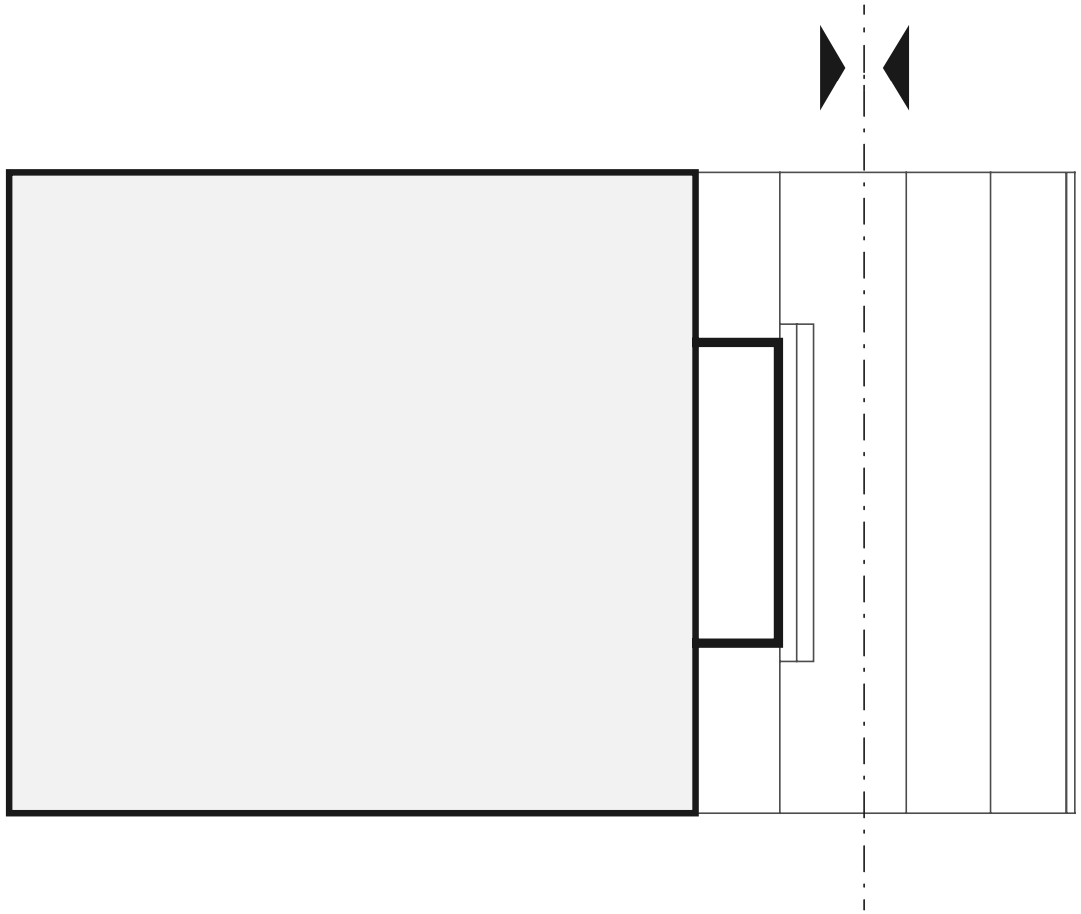
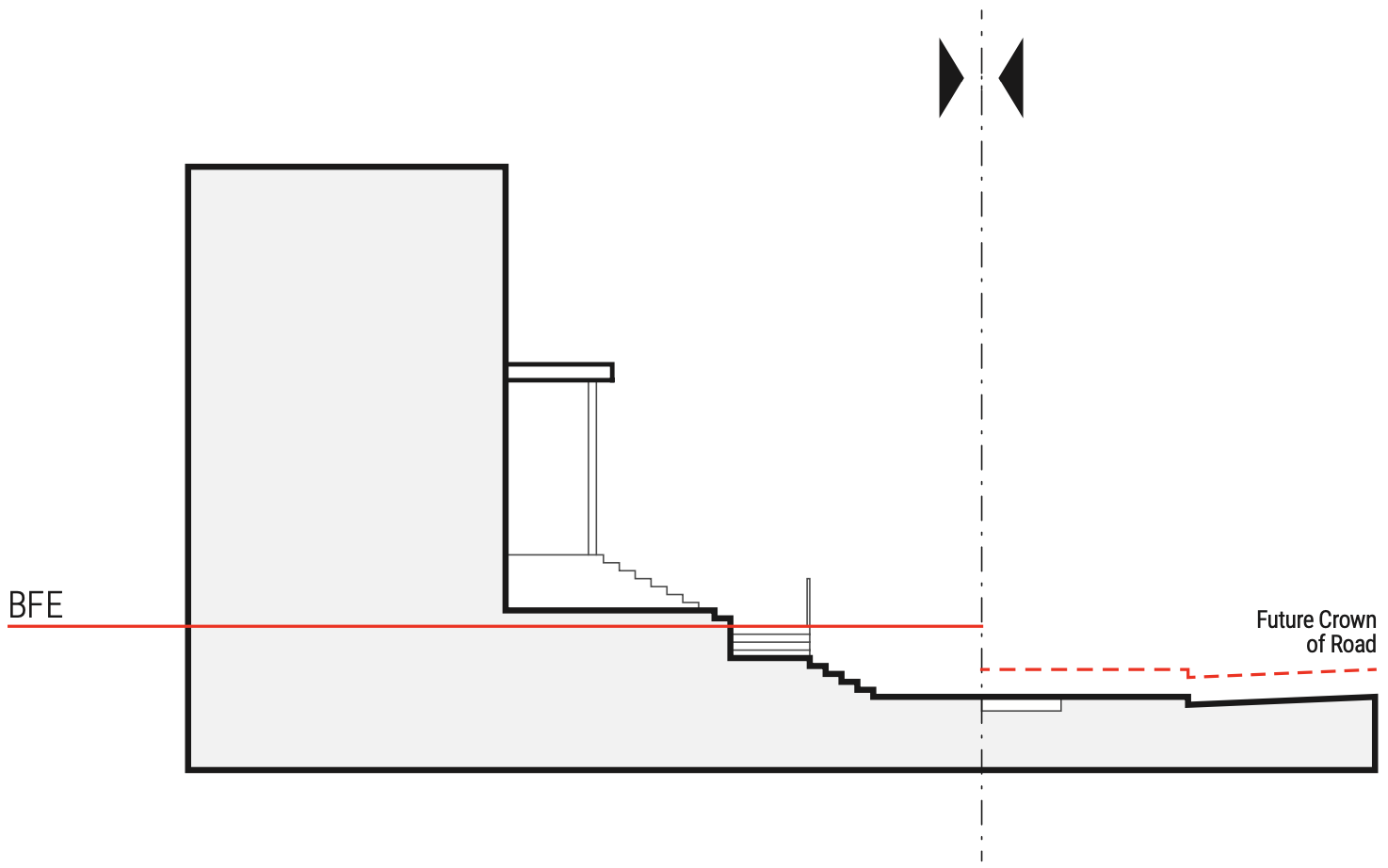
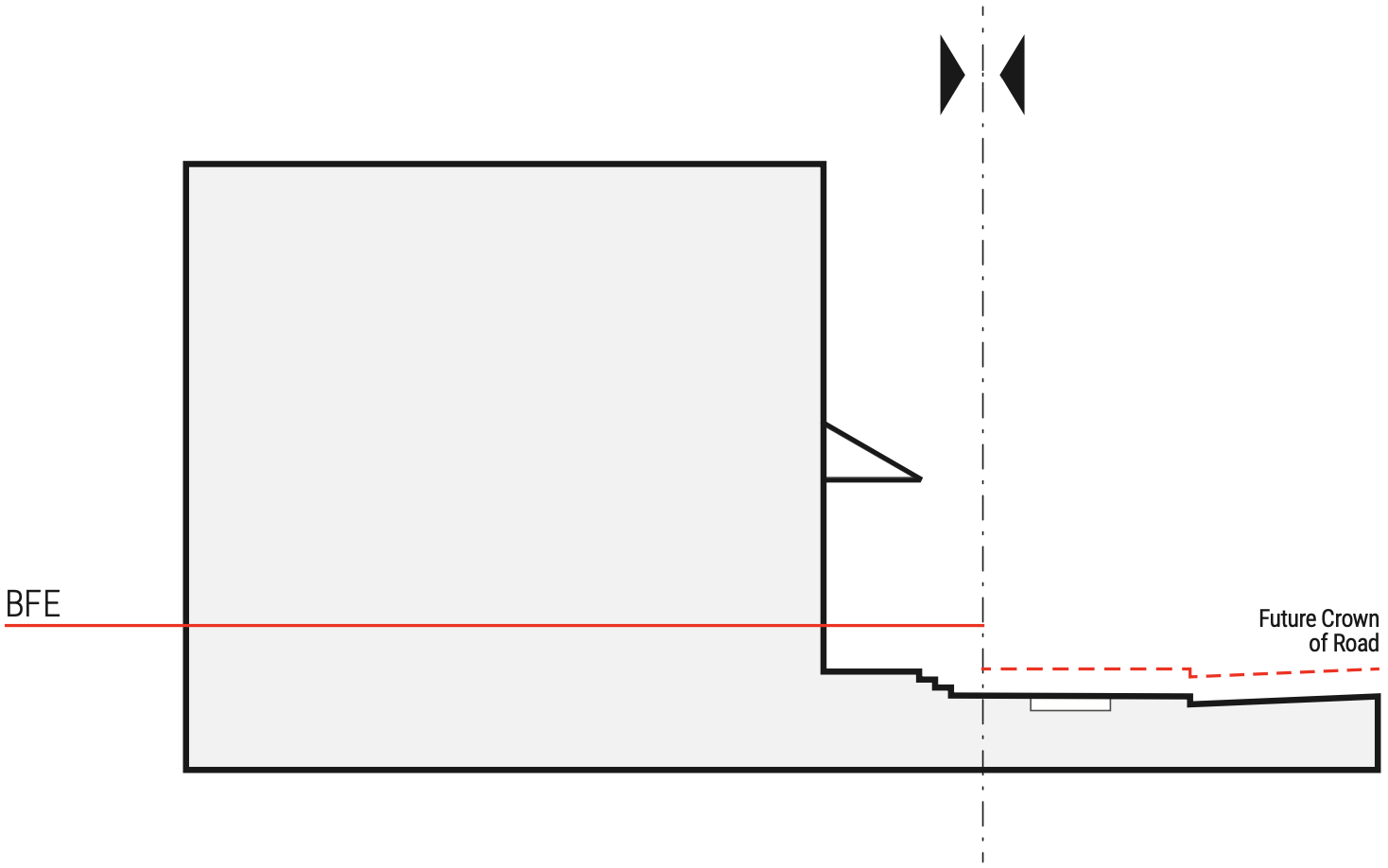
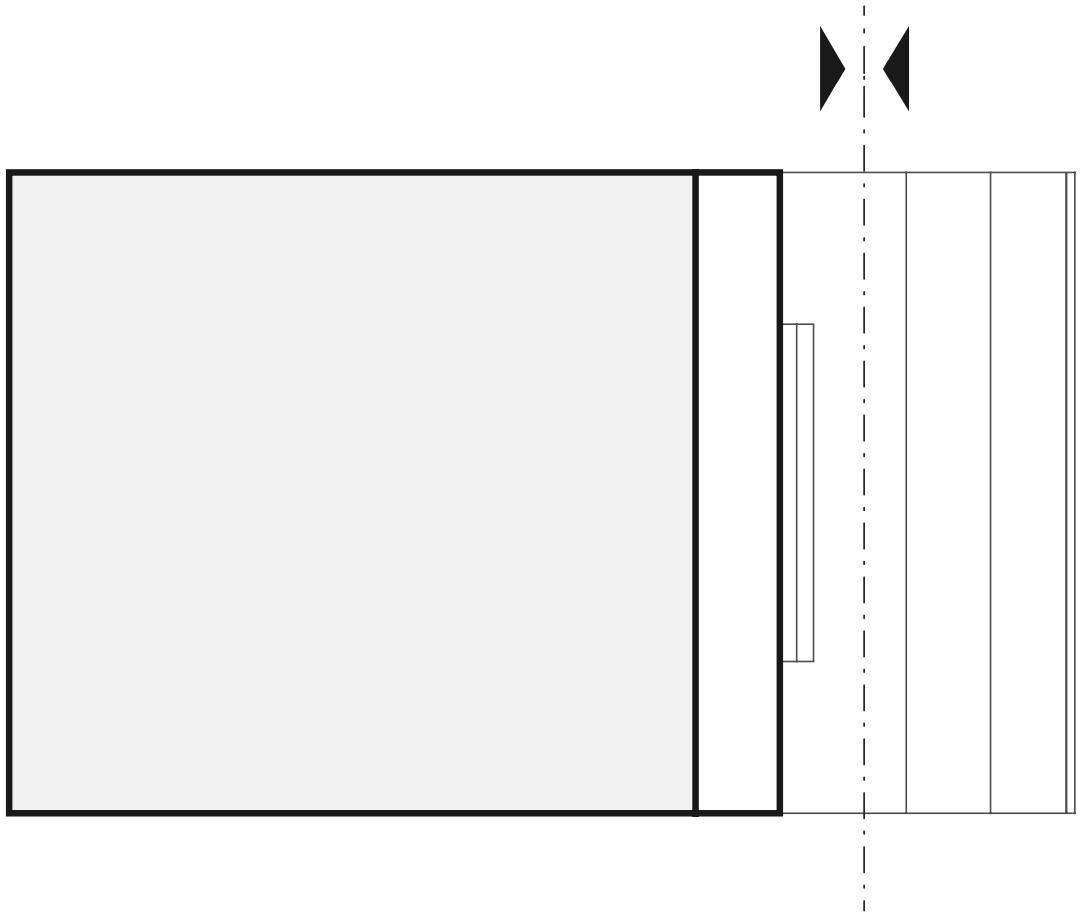
| Balcony as Eyebrow. The main entrance or storefront may be sheltered by a cantilevered balcony extending from the floor above. In this case, an awning, marquis, or eyebrow would be redundant if the balcony provides sufficient shelter for the pedestrian or building occupant. |
|  |
| Recessed entrance. A recessed entrance can maximize window display area in storefronts and may provide shelter from rain and sun. A recessed entrance may be used as an alternative to an awning, marquis, or eyebrow for storefronts. |
|
|
| Recessed entrance combined with awning, marquis, eyebrow or balcony as eyebrow. Recessed entrance combined with awning, marquis, eyebrow or balcony as eyebrow is used in order to maximize the shelter provided to customers and building occupants. |
|
|
| Gallery. A gallery is supported on posts and has a roof that extends from the building façade to shelter storefronts. Where permitted by public works department, a gallery may encroach upon the sidewalk or the front setback. |
|
|
| Arcade. An arcade is similar to a gallery, but it has thicker posts that support not a roof but rather upper floors that extend forward from the storefront in order to shelter it. Where allowed by the public works department, an arcade may encroach upon the sidewalk or front setback. |
|
|
| Dingbat. A building type and frontage in which the First Habitable Floor (FHL) is supported entirely upon a grid of columns, otherwise know as “pilotis”. Parking is often placed in the understory or area sheltered by the upper floors. Dingbat’s tend to create a lack of natural surveillance for pedestrians as they remove habitable space from pedestrians’ eye level. This building type was prevalent in the 1960s -1980s in Miami Beach. |
|
|
| Improved Dingbat. Buildings in which the First Habitable Floor (FHL) is located above a parking floor or understory, the lobby should line the parking/storage in the understory, thereby avoiding the appearance of a dingbat, and masking parking from the sidewalk. |
|
|


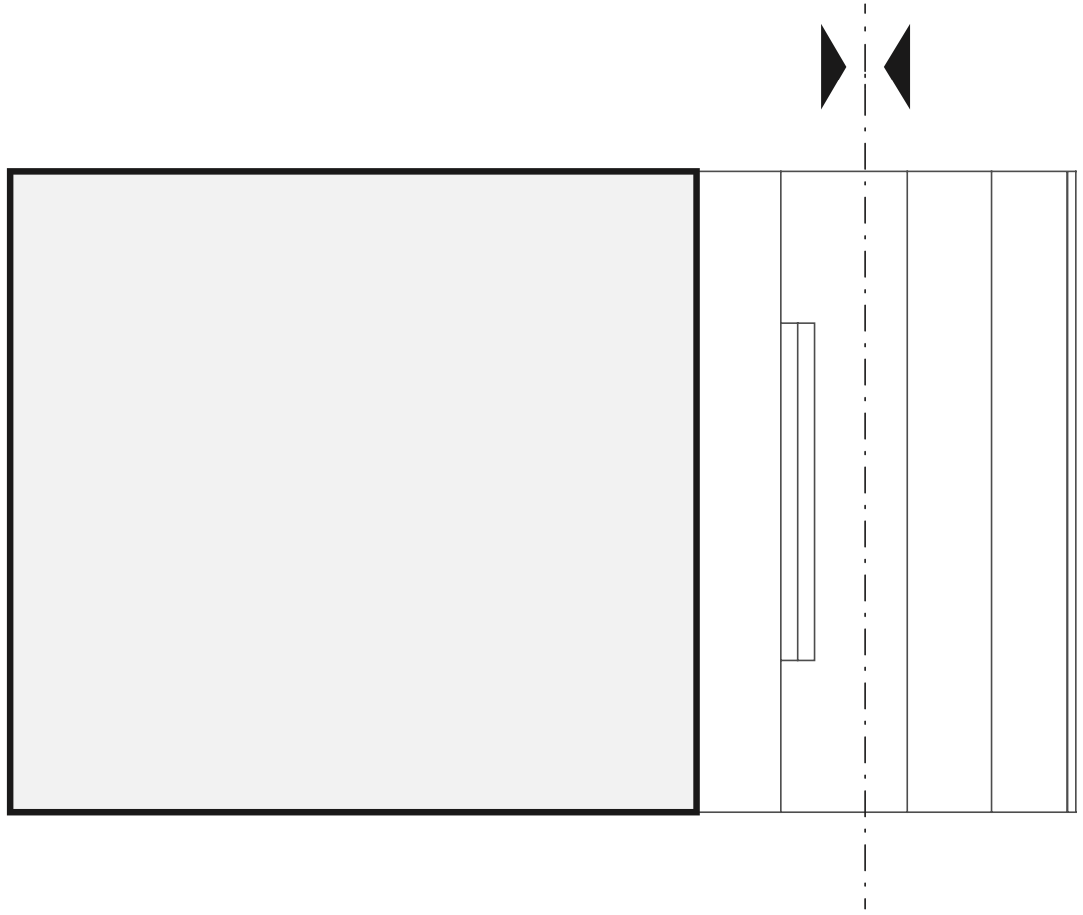
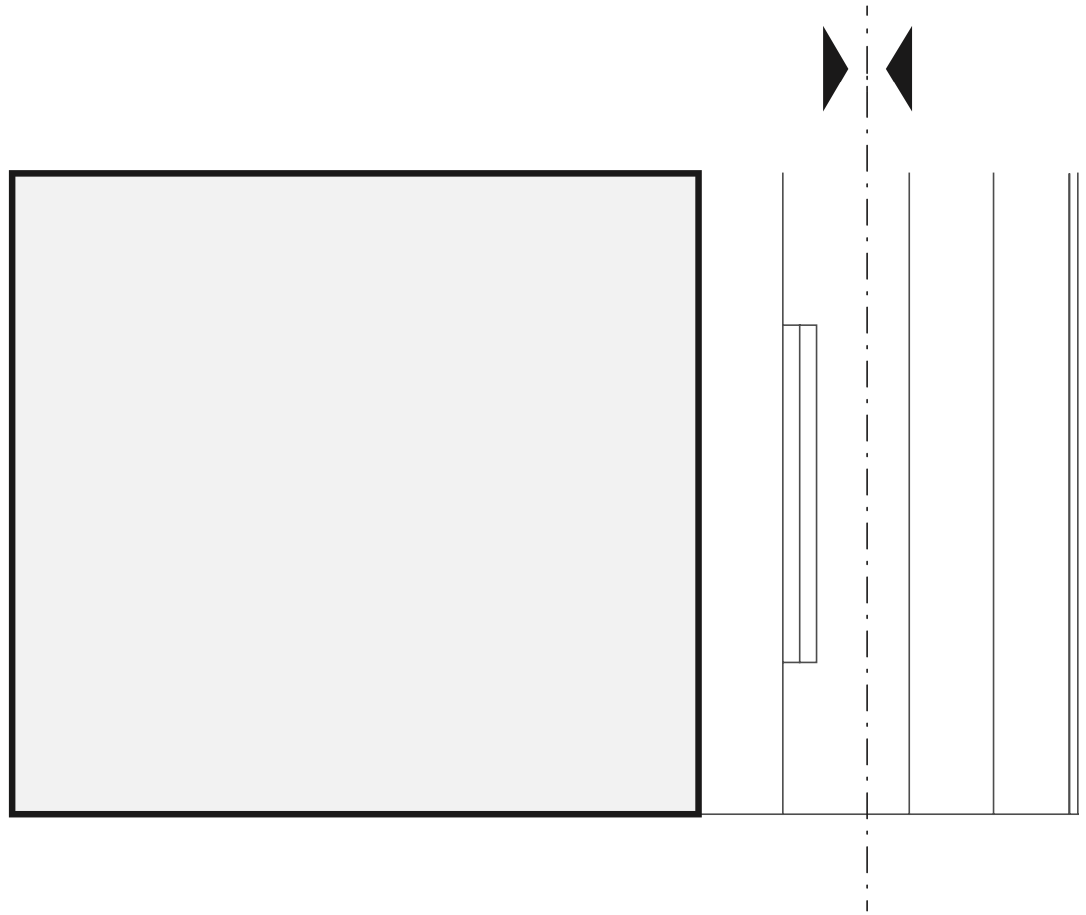
7.1.5.1 Purpose
To encourage spaciousness within residential and hotel units while discouraging units sizes associated with transiency and short term rentals.
7.1.5.2 Unit Size Standards
The following unit sizes shall apply. Where these units sizes are in conflict with those associated with a specific zoning district or overlay district, then those associated with the zoning district or overlay district shall prevail.
| UNIT SIZE TABLE | ||
|---|---|---|
| UNIT TYPE | MINIMUM UNIT SIZE (Square Feet) | MINIMUM AVERAGE UNIT SIZE (Square Feet) |
| Single Family Detached House | 1,800 SF (1) | N/A |
| Apartments/Multi-family Units | ||
New Construction | 550 SF | 800 SF (3) (4) |
Non-elderly and elderly low and moderate income housing | 400 SF | 400 SF (3) (4) |
Workforce Housing | 400 SF | 400 SF (3) (4) |
Rehabilitated Buildings | 400 SF | 550 SF (3) (4) |
| Lodging and Hotel Units | 335 SF + (2) | N/A |
| ||
7.1.6.1 Purpose
By screening parking lots and garages, or by lining them with habitable space, pedestrian comfort, and safety as well as visual interest are optimized, contributing to the walkability of a district.
7.1.6.2 Standards
- Parking at the Understory Level (below the First Habitable Level). Parking at the Understory Level shall be lined along a minimum of 50 percent (50%) of the built frontage with non-residential uses, lobbies or stoops that provide access to the First Habitable Level (FHL).
- All floors at the first habitable level (FHL) and above of a building containing parking spaces shall incorporate the following as applicable.
- Habitable space, as applicable, at the first habitable level along every facade facing a street, sidewalk or waterway. For properties not having access to an alley, the required habitable space may accommodate entrance and exit drives. The total width of the entrance and exit drives shall not exceed 22 feet. For habitable space that screen parking and that are also located below DFE, these shall have floodproofing for all facades below DFE extending 36 inches above DFE.
- Habitable space above the first habitable level along every façade facing a waterway. In RM-2 and RM-3 Residential uses are required facing a waterway.
- For properties less than 60 feet in width, the total amount of habitable space at the first habitable level along a street side shall be determined by the design review or historic preservation board, as applicable. All facades above the first habitable level, facing a street or sidewalk, shall include a substantial portion of habitable space; the total amount of habitable space shall be determined by the design review or historic preservation board, as applicable, based upon their respective criteria.
- Where parking is not lined with habitable space it should be screened by fenestration, vegetation or other such treatment.
- Notwithstanding the provisions of Section 5.3.10, "Parking Garage Design Standards", main use parking garages within the I-1 district on Terminal Island are not required to be lined with habitable space along every facade facing a waterway, but may be screened.
7.1.7.1 Purpose
- The purpose of this section is to enhance the unique architectural environment of the city by establishing guidelines for the choice of primary colors for the exterior surfaces of buildings and structures, including courtyards accessible to the public.
- The enforcement of this section 7.1.7, including subsections 7.1.7.1 through 7.1.7.3, shall be suspended from December 27, 2025 through March 31, 2026, as it pertains to exterior colors on stucco, plaster and similar surfaces on buildings located in commercial and multi-family zoning districts only. This subsection b. shall sunset and stand automatically repealed on March 31, 2026.
7.1.7.2 Applicability
- The painting of all public and private development, including, but not limited to, new buildings, structures, additions or alterations and the repainting of existing buildings and structures, shall be subject to these regulations and shall be reviewed under the certificate of appropriateness or design review procedures as set forth in chapter 2.
- The reflectance, tinting and coloration of glass on the elevations of a building or structure shall be subject to these regulations and shall be reviewed under the certificate of appropriateness or design review procedures as set forth in chapter 2.
- The color of unpainted natural or manufactured materials applied to the exterior facade of buildings or structures shall be subject to these regulations and shall be reviewed under the certificate of appropriateness or design review procedures as set forth in chapter 2.
- The color of roof tiles or roof finishes shall be subject to these regulations and shall be reviewed under the certificate of appropriateness or design review procedures as set forth in chapter 2.
7.1.7.3 Color selection procedures and review criteria
- The city exterior color review chart (color chart).
- A pre-approved color chart shall be available in the planning department. An applicant for a building permit for paint or the application of a building surface material shall select a color of equal or lesser intensity than a color intensity from the color chart.
- The city exterior color review chart shall consist of the following components:
- City-wide color intensities. These intensities shall be applicable to all structures, except for contributing structures, buildings, improvements in locally designated historic districts and historic sites.
- Historic district color intensities. These intensities shall be applicable to contributing structures, buildings and improvements in locally designated historic districts and to historic sites.
- Mediterranean revival architecture colors. These colors are applicable only to Mediterranean revival architecture buildings and structures and are limited to natural earth tones as represented by examples on the color chart. For purposes of this section 7.1.7.3.a.2.C, Mediterranean revival architecture shall be defined as those structures built between 1915 through 1940. This style is generally characterized by, but not limited to, stucco walls, low pitch terra cotta or historic Cuban tile roofs, arches, scrolled or tile capped parapet walls and articulated door surrounds, or Spanish baroque decorative motifs and classical elements.
- Colors commonly described with terms such as neon, fluorescent, day-glo, iridescent and similar terms shall not be permitted to be applied to the exterior surface of any structure unless such color has been approved by the design review board or joint design review board/historic preservation board, as applicable.
- Permit required.
- A building or structure shall not be painted or have applied a natural or manufactured material as an exterior facade without first receiving a building permit or paint permit pursuant to the applicable requirements of the Florida Building Codeand the city’s land development regulations. No building or structure shall be painted or have a material applied to the exterior facade, except in a paint color or material approved pursuant to the provisions of this section 7.1.7.3.b.
- Permits for repainting of existing structures or painting of new structures, or applying a natural or manufactured material to an exterior facade, shall not be issued until either: (a) the applicant selects a color from the approved color chart for approval of paint permit application, or (b) has a specific color, not represented in the color chart, or a specific color which may require approval of the design review board or historic preservation board as applicable. This provision does not apply to single family homes unless designated historic or located in a historic district.
- If the building or structure to be painted, or surfaced with a natural or manufactured material, requires a permit or approval in addition to a paint or material approval from a board or the planning, design and historic preservation division, the applicant may submit an application for a building permit or board approval simultaneously with an application for paint or material color approval. However, a certificate of occupancy, certificate of completion, or certificate of use, whichever is requested earlier, shall not be issued until the planning, design and historic preservation division or design review or historic preservation board, as applicable, approves the color selection. The planning director shall have the authority to approve or deny the color selection based upon the criteria as set forth in section 7.1.7.3.c. The criteria listed in section 7.1.7.3.c may be utilized for projects being reviewed by the design review or historic preservation board, as applicable.
- Review criteria.
- The exterior of each wall of a building or structure shall be in a color of equal or less intensity than one of the colors on the city exterior color review chart.
- Color intensities greater than those represented on the city exterior color review chart may be utilized only for purposes of emphasizing trim and accenting architectural features of a structure and shall be limited to the trim.
- Color intensities listed in neighborhood plans or, to the extent applicable, listed in exterior design guidelines adopted by the city commission may be used, in the neighborhoods or areas defined in such plans or guidelines, in lieu of those specified in the city exterior color review chart.
- Colors selected shall be appropriate to the architectural style, ornamentation, massing and scale of the structure.
7.1.8.1 Gambling and casinos are prohibited uses in the City of Miami Beach
The playing or engaging in any game of cards, keno, roulette, faro, or other game of chance, at any place, by any device, whatever, for money or other thing of value, shall be considered to be "gambling." An establishment in which gambling occurs is a casino.
"Fantasy contest" shall include, but not be limited to, a fantasy or simulation sports game or contest in which contest participants manage a fantasy or simulation sports team for prizes or money in any gambling or casino use in the city.
Gambling and casinos are prohibited in the City of Miami Beach. Gambling and casino uses shall include all uses authorized pursuant to F.S. chs. 550 and 551, as may be amended from time to time: and "fantasy contests." as defined above. These uses are prohibited in any zoning category within the city, whether as a main, conditional, or accessory use. No business tax receipt shall issue for the aforementioned uses, which may also include, but not be limited to: any machine of chance (device) regulated by the state compact or F.S. chs. 550 and 551, as may be amended from time to time, pari-mutuel uses, horse racing, dog racing, jai alai, fantasy contests and associated gambling or casino related uses. The terms "gambling" and "casino" shall be provided the broadest definition despite any amendments the state legislature may make to the above referenced chapters of the Florida Statutes.
The following uses are exempt from the city's definition of gambling:
- The lottery regulated under F.S. ch. 24.
- Penny-ante games pursuant to F.S. § 849.085.
- Condominium associations, cooperatives, homeowners associations, charitable, nonprofit or veteran organizations authorized to hold drawings by chance, drawings, or raffles pursuant to F.S. § 849.0931(2) through (9), and § 849.0935.
- Game promotion in connection with the sale of consumer products or services pursuant to F.S. § 849.094.
- Bowling tournaments pursuant to F.S. § 849.141.
Any amendment to this section 7.1.8.1 (including the repealer thereof), which would create a less stringent regulation on gambling or any of the uses listed herein, shall require an affirmative vote of 6/7ths of the city commission.
7.1.8.2 Rentals or leases of mopeds, motorcycles, and motorized bicycles are prohibited uses in the City of Miami Beach
The following definitions are applicable to this section:
Golf cart means a motor vehicle designed and manufactured for operation on a golf course for sporting or recreational purposes.
Low-speed vehicle means any four-wheeled vehicle whose top speed is greater than 20 miles per hour but not greater than 25 miles per hour, including, but not limited to, neighborhood electric vehicles.
Moped means any vehicle with pedals to permit propulsion by human power, having a seat or saddle for the use of the rider and designed to travel on not more than three wheels, with a motor rated not in excess of two brake horsepower and not capable of propelling the vehicle at a speed greater than 30 miles per hour on level ground and with a power-drive system that functions directly or automatically without clutching or shifting gears by the operator after the drive system is engaged. If an internal combustion engine is used, the displacement may not exceed 50 cubic centimeters. The term does not include an electric bicycle.
Motorcycle means any motor vehicle having a seat or saddle for the use of the rider and designed to travel on not more than three wheels in contact with the ground (including those vehicles commonly known as motor scooters). The term includes an autocycle, but does not include a tractor, a moped, an electric bicycle, or any vehicle in which the operator is enclosed by a cabin unless it meets the requirements set forth by the National Highway Traffic Safety Administration for a motorcycle.
Motorized bicycle means a bicycle propelled by a combination of human power and an electric helper motor capable of propelling the vehicle at a speed of not more than 20 miles per hour on level ground, having two tandem wheels, and including any device generally recognized as a motorized bicycle though equipped with two front or two rear wheels. The term does not include such a vehicle with a seat height of no more than 25 inches from the ground when the seat is adjusted to its highest position or a scooter or similar device.
Motorized scooter means any vehicle or micromobility device that is powered by a motor with or without a seat or saddle for the use of the rider, which is designed to travel on not more than three wheels, and which is not capable of propelling the vehicle at a speed greater than 20 miles per hour on level ground. The term does not include an electric bicycle.
- The rental or lease of golf carts, low-speed vehicles, mopeds, motorcycles that are powered by a motor with a displacement of 50 cubic centimeters or less, motorized bicycles, and motorized scooters is prohibited in the City of Miami Beach. These uses are prohibited in any zoning category within the city, whether as a main, conditional, or accessory use.
- Notwithstanding the foregoing, golf courses shall be exempt from the prohibition herein concerning the rental or lease of golf carts.
- Any amendment to this section 7.1.8.2 (including the repealer thereof), which would create a less stringent regulation on the rentals or lease of any golf carts, low-speed vehicles, mopeds, motorcycles that are powered by a motor with a displacement of 50 cubic centimeters or less, motorized bicycles, and motorized scooters, or any of the uses listed herein, shall require an affirmative vote of five-sevenths of the city commission.
7.1.8.3 Neighborhood and Retail Fulfillment Centers
7.1.9.1 Requirements for proposed increases in allowable floor area ratio (FAR)
The following shall apply to any proposal to increase the maximum allowable FAR within any zoning district.
- Prior to approval of a ballot question, if required pursuant to the City Charter, or in advance of first reading of the applicable amendment to the Land Development Regulations, whichever comes first, the maximum square footage associated with the proposed increase in FAR shall be identified, to the greatest extent possible.
- The requirements of this section may be waived by the City Commission, at its sole discretion on a 5/7ths vote.
7.1.10.1 Intent
7.1.10.2 Eligible applicants
- Private applications. For FAR increases specific to a private property, unified development site or other development, the property owner shall first be required to file an application directly with the planning board. Subsequent to filing, a copy of the application and all exhibits shall be transmitted to all registered neighborhood association(s) in the affected area. Additionally, for applications for FAR increases within a local historic district, a copy of the application and exhibits shall be transmitted to the Miami Design Preservation League (MDPL).
- City Commission referrals. For FAR increases that are not limited to a specific private property, unified development site, or other development, and which apply more broadly (e.g. citywide or within defined overlays), as well as modifications to floor area exceptions or new FAR incentives tied to specific uses or benchmarks, an amendment to the Land Development Regulations shall be initiated through a referral by the City Commission to the Planning Board. Any referral to the Planning Board initiated under this paragraph shall require an affirmative 5/7ths vote of the City Commission.
7.1.10.3 Planning Board review
Any ordinance subject to this Section 7.1.10 shall require a 3-step review process before the Planning Board, as follows:
- Step One— Planning Board Preliminary Review.
The Planning Board, at a duly noticed public hearing, shall perform an initial review of the proposed ordinance. Notice of the Planning Board preliminary review hearing shall be given in accordance with the applicable provisions in Chapter 2, Article IV of the Land Development Regulations. If the proposed ordinance involves less than ten ( 10) contiguous acres, the notice requirements for the preliminary Planning Board review shall also include a minimum 30- day mail notice for all properties within 375 feet of the properties subject to the proposed floor area or FAR increase, and a 30- day published notice.
Prior to the Planning Board' s preliminary review stage, the Administration, either internally or with the assistance of an outside consultant, will perform an impact analysis of the proposed FAR increase; and such impact analysis shall include, but not be limited to, the following:- Calculation of the actual square footage increase for affected properties such as, for example, the maximum allowable square footage for residential, office, retail, hotel or other uses resulting from the FAR increase.
- An infrastructure analysis regarding potential impacts on traffic/mobility, parking, water, sewer, resiliency, parks and open space, as well as any other area of concern identified by the City Commission or the Administration.
- Massing studies, which illustrate the volume and location of the area associated with the proposed increase in FAR.
For private applications, the applicant shall be required to provide all data and exhibits related to the above noted impact analysis as part of the application submission. The findings of this impact analysis shall be presented to the Planning Board at the preliminary review stage.
- Step Two— Community Outreach Meeting:
Subsequent to the Planning Board' s preliminary review meeting, the City shall facilitate a public meeting for all affected stakeholders, in order to solicit additional input and feedback, as well as for City staff to address any outstanding issues or questions. A reasonable effort shall be made to ensure that such public meeting is held no later than 45 days from the date of the preliminary review by the Planning Board. Courtes notice of the meeting shall be given by the applicable City department, in coordination with the Planning Department, in a manner consistent with the City' s courtesy notices for other community meetings, workshops, or presentations. - Step Three— Planning Board Transmittal:
At a second duly noticed public hearing, which is separate and apart from the preliminary review hearing, the Planning Board shall consider and transmit the proposed ordinance to the City Commission with a recommendation. Notice of this transmittal hearing shall be given in accordance with the applicable provisions in Chapter 2, Article IV of the Land Development Regulations.
7.1.10.4 City Commission review
Any ordinance subject to this section 7.1.10 shall require a 3-step review process before the City Commission, as follows:
- Step One - First Reading Public Hearing:
After transmittal of the ordinance by the planning board, the City Commission shall hold a first reading public hearing. Notice of the first reading shall be given in accordance with the applicable provisions in chapter 2, article IV of the Land Development Regulations. If the proposed ordinance involves less than ten (10) contiguous acres, the notice requirements for first reading shall also include a minimum 30-day mail notice for all properties within 375 feet of the properties subiect to the proposed floor area or FAR increase, and a 30-day published notice. - Step Two - Community Workshop:
Subsequent to the approval of the ordinance at first reading, and prior to second reading, at least one additional community workshop, which is separate and apart from the first reading public hearing, shall be held. This additional community workshop shall be considered a courtesy meeting, and open to participation by all affected stakeholders, including residents, property owners, or businesses in the surrounding area that may be affected by the proposed floor area or FAR increase, as determined by the City Commission. Such community workshops may be held in a virtual, in- person or hybrid formats, at the discretion of the City Commission, and shall be noticed in a manner to be determined by the City Commission. - Step Three - Second Reading / Adoption Public Hearing:
After the community workshop described above, the City Commission shall hold a second reading public hearing to consider final adoption of the proposed ordinance. Notice of the second reading shall be given in accordance with the applicable provisions in chapter 2, article IV of the Land Development Regulations.
7.1.10.5 Exceptions
The city commission, by an affirmative five-sevenths vote, may waive the requirements set forth in sections 7.1.10.1, 7.1.10.2, 7.1.10.3, and 7.1.10.4 for the following types of amendments:
- An FAR increase or modification to a floor area exception resulting in an increase in floor area that is no more than 10% of the allowable floor area for an individual property or site. not to exceed a total of 5.000 additional square feet of floor area per property or site.
- A modification to a floor area exception that applies citywide and would not result in a substantial increase in allowable floor area, as determined by the City Commission at the City Commission's sole discretion.
If the city commission waives the requirements set forth in sections 7.1.10.1, 7.1.10.2, 7.1.10.3, and 7.1.10.4 the amendment shall otherwise be subject to the applicable notice and amendment provisions in chapter 2, article IV of the Land Development Regulations.
7.2.1.1 Districts established
- Districts and symbols. To achieve the purposes of these land development regulations, the Code of the city, and regulate the use of land, water and buildings, height and bulk of buildings and other structures, and population density and open space, the city is hereby divided into the following districts:
Symbol District RS-1 Single-family residential RS-2 Single-family residential RS-3 Single-family residential RS-4 Single-family residential TH Townhome residential RM-1 Residential multifamily, low intensity RM-2 Residential multifamily, medium intensity RM-3 Residential multifamily, high intensity RM-PRD Multifamily, planned residential development RM-PRD 2 Multifamily, planned residential development RO Residential/office CD-1 Commercial, low intensity CD-2 Commercial, medium intensity CD-3 Commercial, high intensity MXE Mixed use entertainment TC-1 North Beach Town Center core TC-2 North Beach Town Center mixed-use TC-3 North Beach Town Center residential/office TC-C North Beach Town Center-Central Core R-PS1 Residential medium-low density R-PS2 Residential medium density R-PS3 Residential medium-high density R-PS4 Residential high density C-PS1 Commercial limited mixed use C-PS2 Commercial general mixed use C-PS3 Commercial intensive mixed use C-PS4 Commercial intensive phased bayside RM-PS1 Residential mixed-use development GU Government use CCC Convention center district SPE Special public facilities educational HD Hospital district MR Marine recreational WD-1 Waterway district WD-2 Waterway district GC Golf course district I-1 Industrial, light - Zoning map designations.
- Zoning map. Designation of zoning districts and overlay zones shall be on the official zoning map. The official zoning map shall indicate the location of zoning districts as described in section 7.2.1.1.a of this section and overlay zones as described in section 7.3.1.
- GU properties. Except as otherwise provided in section 7.2.16 all city-owned properties are zoned GU although they may not be designated on the map.
- Explanation of overlay districts and sites.
Dune preservation and Oceanfront
Convention Hotel West Avenue Bay Front
Collins Park Arts District
Faena District
Ocean Terrace
Art Deco Mimo Commercial Character
North Beach National Register Conservation
Sunset Harbor Mixed-Use Neighborhood
Historic preservation
Historic preservation site - Explanation of Neighborhood Conservation Districts
Gilbert M. Fein Neighborhood Conservation Overlay District
- Additional map designations.
- The designation of parking impact fee districts shall be on an official map entitled parking impact fee districts.
- The official zoning map and the parking impact fee district map shall be on file and available to the public in the office city clerk and the planning, design and historic preservation division.
- All lots in Fisher Island which do not have a zoning district assignment are considered to be in the GC golf course district classification.
7.2.1.2 District map
The locations of the districts are shown on a map designated as the city zoning district map, dated and signed by the mayor and city clerk upon adoption. This zoning district map, together with all notations, dimensions, references and symbols shown thereon, pertaining to such districts, is hereby adopted by reference and declared to be as much a part of these land development regulations as if fully described herein. Such map shall be available for public inspection in the office of the planning, design and historic preservation division and any later alterations to this map, adopted by amendment as provided in these land development regulations, shall be similarly dated, filed, and made available for public reference.
7.2.1.3 Interpretation of district boundaries
A district name or symbol shown on the district map indicates that the regulations pertaining to the district designated by that name or letter-number combination extend throughout the whole area in the municipality bounded by the district boundary lines within which such name or symbol is shown or indicated, except as otherwise provided by this section. Where uncertainty exists with respect to the boundaries of the various districts as shown on the map accompanying and made a part of these land development regulations, the following rules apply:
- In cases where a boundary line is given a position within a street or alley, easement, canal, navigable or nonnavigable stream, it will be deemed to be in the center of the right-of-way of the street, alley, easement, canal, or stream, and if the actual location of such street, alley, easement, canal, or stream varies slightly from the location as shown on the district map, then the actual location controls.
- The boundary line adjacent to Biscayne Bay is the established bulkhead line.
- The boundary line adjacent to the Atlantic Ocean is the erosion control line as determined in accordance with Florida Statutes. Structures located east of the bulkhead line and extending to the erosion control line shall be considered similar to an accessory use to the upland property and allowed only pursuant to the provisions of section 7.3.1, Dune Preservation Overlay regulations. In the event there is no bulkhead, then a line shall be extended from the adjacent properties' bulkhead line. This line shall be determined to be the bulkhead line for the property until one is constructed.
- The east boundary line of the dune overlay zone shall be the erosion control line as established by the appropriate regulatory agencies and the west boundary line shall be the bulkhead line as set forth in section 7.2.1.3.c. The north and south boundary line shall be the city limits.
- Where the district boundaries are not otherwise indicated and where the property has been or may hereafter be divided into blocks and lots, the district boundaries will be construed to be the lot lines, and where bounded approximately by lot lines, the lot lines will be construed to be the boundary of such districts unless the boundaries are otherwise indicated on the map or by ordinance.
- If a parcel of property is crossed by a zoning district boundary and thus lies in two zoning districts, the district boundary shall be treated as if it were a lot line separating the two separately zoned parcels. However, in accordance with section 2.2.3.4, the maximum floor area ratio (FAR), inclusive of bonus FAR, for a unified development site may be located over multiple zoning districts.
- The boundary line between the Atlantic Ocean and Biscayne Bay shall be a constant projected line 152.20 feet south of the extension of the southerly end of Biscayne Street.
7.2.2.1 Purpose (RS)
The RS-1, RS-2, RS-3, RS-4 single-family residential districts are designed to protect and preserve the identity, image, environmental quality, privacy, attractive pedestrian streetscapes, and human scale and character of the single-family neighborhoods and to encourage and promote new construction that is compatible with the established neighborhood context. In order to safeguard the purpose and goals of the single-family districts, mandatory review criteria are hereby created to carry out the provisions of these land development regulations.
7.2.2.2 Uses (RS)
| USES TABLE (RS) | |
|---|---|
| RESIDENTIAL | |
| Single-family detached dwellings | P |
| Accessory Dwelling Unit | A* |
| LODGING | |
| OFFICE | |
| Home Based Business Office | A* |
| COMMERCIAL | |
| Commercial use of single-family home | Pro * |
| Gambling and Casinos pursuant to section 7.1.8 | Pro |
| Rentals or leases of mopeds, motorcycles, and motorized bicycles pursuant to section 7.1.8 | Pro |
| Neighborhood and Retail Fulfillment Centers pursuant to section 7.1.8 | Pro |
| CIVIC | |
| Religious Institution | C* |
| CIVIL SUPPORT | |
| EDUCATIONAL | |
| Day Care Facility | A* |
| INDUSTRIAL | |
| OTHER | |
| At-grade parking lot | C* |
Key P – Main Permitted Use C - Conditional Use A - Accessory Use Pro - Prohibited Use * See supplemental use regulations below | |
- Supplemental Main permitted uses Regulations (RS)
None - Supplemental Conditional uses Regulations (RS)
The Supplemental Conditional Uses are as follows:- An at-grade parking lot in the RS-4 district when located immediately adjacent, without a gap due to alley, road, waterway or any other cause, to a CD-3 district. See section 7.2.2.3.
- Religious institutions for those properties located in the 40th Street Overlay. (MAP EXHIBIT-1). See section 7.2.2.6
- Supplemental Accessory uses Regulations (RS)
The Supplemental Accessory Uses are as follows:- The accessory uses in the RS-1, RS-2, RS-3, RS-4 single-family residential districts are those uses customarily associated with single-family homes. See section 7.5.4.13.
- Supplemental Prohibited uses Regulations (RS)
The Supplemental Prohibited Uses are as follows:- Commercial use of single-family homes prohibited (RS)
- Intent and purpose. The land development regulations restrict residential properties to residential and compatible accessory uses. Commercial uses on residential properties are prohibited, with limited exceptions. While residents are entitled to enjoy the use of their property consistent with the applicable regulations, in order to ensure and protect the enjoyment, character and value of residential neighborhoods and buildings, the provisions herein are established.
- Definitions.
- Use of residential property or use of the property in this section shall mean occupancy of residential property for the purpose of holding commercial parties, events, assemblies or gatherings on the premises.
- Regulations: Determination of commercial use.
- Accessory use of residential property shall be deemed commercial and not permitted, except as otherwise provided for in the Code, if:
- Compensation to owner. The owner, lessee or resident receives payment or other consideration, e.g., goods, property or services, for the commercial use of the property, including payment by any means, direct or indirect, including security deposits; or
- Goods, property or services offered or sold; donations solicited or accepted. Goods, property or services are offered for sale or sold on or at the property, or donations are solicited or accepted, during use of the property; however, this subsection shall not apply, if:
- All of the goods, property or services offered, or donations that are solicited or accepted, are donated to or for charitable, religious or political organizations or candidates for public office, that have received 501(c)(3) or other tax exempt status under the U.S. Internal Revenue Code, as amended, or in accordance with applicable election laws; or
- All of the proceeds from any sales or donations are directly payable and paid to charitable, religious or political organizations or candidates for public office, that have received 501(c)(3) or other tax exempt status under the U.S. Internal Revenue Code, as amended, or in accordance with applicable election laws. An organization or candidate may reimburse donors for goods or property donated; or
- The sale is of the property itself or personal property of the owner or resident (excluding property owned by a business), and if publicly advertised, comply with section 7.2.2.2.d.1.C.III below;
- Notwithstanding the restrictions in section 7.2.2.2.d.1.C.I.(2).[i]-[iii], limited commercial use of the property by the owner or resident for the sale of goods, property or services shall be allowed under the following criteria. The event:
- Is by private invitation only, not publicly advertised;
- Creates no adverse impacts to the neighborhood;
- The activity and its impacts are contained on the property;
- Parking is limited to that available on-site, plus 11 vehicles legally self-parked near the property, with no busing or valet service; and
- Frequency is no greater than one event per month;
- The owner or resident must provide the city manager an affidavit that identifies the limited commercial use of the residential property at least 72 hours before the applicable limited commercial use is scheduled to commence pursuant to section 7.2.2.2.d.1.C.I.(2)., and the affidavit must include the applicable information set forth within section 7.2.2.2.d.1.C.I.(2).[i]-[iv], setting forth detailed information supporting the exempted limited commercial use provided there. The submission of a false affidavit is a misdemeanor of the second degree, punishable as provided in sections 775.082 or 775.083 of the Florida Statutes; or
- Admittance fees. Use of the property by attendees requires an admittance or membership fee or a donation, excluding donations directly payable and paid by attendees to charitable, religious or political organizations or candidates for public office, that have received 501(c)(3) or other tax exempt status under the U.S. Internal Revenue Code, as amended, or in accordance with applicable election laws; or
- Any advertising that promotes the occupancy or use of the residential property for the purpose of holding commercial parties, events, assemblies, gatherings, or advertisement that promotes the occupancy of a residence for less than six months and one day, as provided herein, or use of the residential premises in violation of this section.
- Any advertising, marketing, or promotion of any party, event, assembly, or gathering n any print, film, social networking platform, or any other media occurs; or
- Any party, event, assembly, or gathering is sponsored, managed, or promoted by any entity other than a charitable, religious or policital organization(s) or candidate(s) for public office, that has recieved 501(c)(3) or other tax exempt status under the U.S. Internal Revenue Code, as amended, or in accordance with applicable election laws.
- Signs or advertising. Signs or other forms of advertising in connection with goods, property or services offered in connection with commercial use of the property, including the actual goods, property (except real property and structures thereon) or services, shall not be visible from the public right-of-way. This section shall not be construed to prohibit the display of real estate for sale or lease signs for the property.
- Real estate open houses. The following events are permitted: Open houses (open to the public) organized for the purpose of promoting the sale or lease of the residence where the open house is located, to potential buyers or renters, or events organized by the listing agent limited to licensed real estate brokers and/or agents, subject to the following:
- No sale or display of goods, property or services by sponsoring businesses unrelated to the property; and
- No charging admittance fees.
- Events described in this subsection must end by 8:00 p.m.
- Enforcement.
- Violations of this section shall be subject to the following fines. The special magistrate shall not waive or reduce fines set by this section.
- If the violation is the first violation $1,000 per day, per violation.
- If the violation is the second or greater violation, $5,000 per day per violation.
- However, if the special magistrate finds the violation to be irreparable or irreversible in nature, the special magistrate may imposes a fine not to exceed $15,000.00 per violation.
The director of the code compliance department must remit a letter to the Miami-Dade Property Appraiser and Miami-Dade Tax Collector, with a copy of the special magistrate order adjudicating the violation, that notifies these governmental agencies that the single-family residential property was used for the purpose of holding a commercial party, event, assembly or gathering at the premises.
- The advertising or advertisement for the commercial use of a residential property for the purpose of holding commercial parties, event, assemblies or gatherings on the residential premises is direct evidence that there is a violation of section 7.2.2.2.d.1.C, which is admissible in any proceeding to enforce section 7.2.2.2.d.1.The advertising or advertisement evidence raises a rebuttable presumption that the residential property named in the notice of violation or any other report or as identified in the advertising or advertisement is direct evidence that the residential property was used in violation of section 7.2.2.2.d.1.
- In addition to or in lieu of the foregoing, the city must close down the commercial use of the property pursuant to section 7.2.2.2.d.1, or may seek an injunction against activities or uses prohibited under this section.
- Any city police officer or code compliance officer may issue notices for violations of this section, with alternative enforcement as provided in chapter 1 of this Code. Violations shall be issued to the homeowner, and/or to any realtor, real estate agent, real estate broker, event planner, promoter, caterer, or any other individual or entity that facilitates or organizes the prohibited activities. In the event the record owner of the property is not present when the violation occurred, a copy of the violation shall be provided to such owner.
- Charitable, religious or political organizations or candidates for public office shall receive one courtesy notice in lieu of the first notice of violation only, after which fines will accrue starting with the first violation as prescribed. No courtesy notice in lieu of first notice of violation shall be available if a courtesy notice in lieu of first notice of violation has already been granted in the preceding 18 month period, regardless of location.
- The city recognizes peoples' rights of assembly, free expression, religious freedom, and other rights provided by the state and federal constitutions. It is the intent of the city commission that no decision under this section shall constitute an illegal violation of such rights, and this section shall not be construed as such a violation.
- The city manager or designee may adopt administrative rules and procedures to assist in the uniform enforcement of this section.
- Violations of this section shall be subject to the following fines. The special magistrate shall not waive or reduce fines set by this section.
- No variances shall be granted from this section. This section does not authorize commercial activities in residential neighborhoods that are otherwise prohibited or regulated by applicable law, unless expressly provided for herein
- Enhanced penalties. The following enhanced penalties must be imposed, in addition to any mandatory fines set forth in (editor) section 7.2.2.2.d.1.D above, for violations of section 7.2.2.2.d.1:
- Enhanced penalties for this section:
- The commercial use must be immediately terminated, upon confirming a violation has occurred, by the Miami Beach Police Department and the code compliance department.
- A certified copy of an order imposing the civil fines and penalties must be recorded in the public records, and thereafter shall constitute a lien upon any other real or personal property owned by the violator and it may be enforced in the same manner as a court judgment by the sheriffs of this state, including levy against the personal property, but shall not be deemed to be a court judgment except for enforcement purposes. The certified copy of an order must be immediately recorded in the public records, and the city may foreclose or otherwise execute upon the lien.
- Enhanced penalties for this section:
- Accessory use of residential property shall be deemed commercial and not permitted, except as otherwise provided for in the Code, if:
- Commercial use of single-family homes prohibited (RS)
7.2.2.3 Development Regulations (RS)
- The review criteria and application requirements for the RS-1, RS-2, RS-3, RS-4 single family residential districts are as follows:
- Compliance with regulations and review criteria.
- Permits for new construction, alterations or additions to existing structures shall be subject to administrative (staff level) review by the planning director or designee, the design review board (DRB), or historic preservation board (HPB) as applicable, in order to determine consistency with the review criteria listed in this section.
- In complying with the review criteria located in this section, the applicant may choose either to adhere to the development regulations identified in section 7.2.2.3 administratively through staff level review or seek enhancements of the applicable development regulations as specified therein, where permitted, through approval from the historic preservation board (HPB) or design review board (DRB), in accordance with the applicable design review or appropriateness criteria.
- Notwithstanding the foregoing, for those structures located within a locally designated historic district, or individually designated as an historic structure or site, the review and approval of the historic preservation board (HPB) may be required.
- Notwithstanding the foregoing, for those structures determined architecturally significant or constructed prior to 1966 and determined to be architecturally significant, in accordance with section 7.2.2.4.a herein, the review and approval by the planning director or designee shall be required.
- Review criteria. Staff level review shall encompass the examination of architectural drawings for consistency with the review criteria below:
- The existing conditions of the lot, including, but not limited to, topography, vegetation, trees, drainage, and waterways shall be considered in evaluating the proposed site improvements.
- The design and layout of the proposed site plan inclusive of the location of all existing and proposed buildings shall be reviewed with particular attention to the relationship to the surrounding neighborhood, impact on contiguous and adjacent buildings and lands, and view corridors. In this regard, additional photographic, and contextual studies that delineate the location of adjacent buildings and structures shall be required in evaluating compliance with this criterion.
- The selection of landscape materials, landscaping structures and paving materials shall be reviewed to ensure a compatible relationship with and enhancement of the overall site plan design and the surrounding neighborhood.
- The dimensions of all buildings, structures, setbacks, height, lot coverage and any other information that may be reasonably necessary to determine compliance with the requirements of the underlying zoning district.
- The design and construction of the proposed structure, and/or additions or modifications to an existing structure, indicates sensitivity to and compatibility with the environment and adjacent structures and enhances the appearance of the surrounding neighborhood.
- The proposed structure is located in a manner that is responsive to adjacent structures and the established pattern of volumetric massing along the street with regard to siting, setbacks and the placement of the upper floor and shall take into account the established single family home context within the neighborhood.
- The construction of an addition to main existing structure shall be architecturally appropriate to the original design and scale of the main existing structure; the proposed addition may utilize a different architectural language or style than the main existing structure, but in a manner that is compatible with the scale and massing of the main existing structure.
- The construction shall be in conformance with the requirements of section 7.1.7 with respect to roof and exterior facade paint and material colors.
- Application requirements for DRB or HPB review.
- DRB or HPB applications shall follow the application procedures and review criteria, specified in section 2.5.3 design review or chapter 2, article XIII historic preservation, of these land development regulations (as applicable), board by-laws, or as determined by the planning director, or designee.
- Compliance with regulations and review criteria.
- The development regulations for the RS-1, RS-2, RS-3, RS-4 single-family residential districts are as follows:
- The FAR, density, lot area, lot width, lot coverage, unit size, setbacks, and building height requirements for the RS-1, RS-2, RS-3, RS-4 single-family residential districts are as follows:
DEVELOPMENT REGULATIONS TABLE (RS) RS-1 RS-2 RS-3 RS-4 Maximum FAR N/A Maximum Density (Dwelling Units per Acre)
7 DUA Minimum Unit Size (Square Feet) 1,800 SF Maximum Unit Size (% of Lot Area) 50% LOT OCCUPATION RS-1 RS-2 RS-3 RS-4 Minimum Lot Area (square feet) 30,000 SF 18,000 SF 10,000 SF 6,000 SF Minimum Lot Width (feet) 100 feet (1) 75 feet (1) 50 feet - Oceanfront lots (1)
60 feet - All others (1)50 feet (1) Maximum Lot Coverage for a single-story Home (% of lot area) 40% (2) Maximum Lot Coverage for a 2story Home (% of lot area) 30% BUILDING SETBACKS RS-1 RS-2 RS-3 RS-4 Front Setback Ⓐ 20 feet -1 Story Structure (5)(6) - provided that any future addition of a two-story attached structure shall be setback a minimum of 40 feet
30 feet - 2 Story Structures - (5)(6)Side, facing a street Setback Ⓑ 10% of the lot width or 15 feet, whichever is greater (5)(6) and the sum of the required side yards shall be at least 25% of the lot width Side, Interior Setback Ⓒ
Lots 65 feet in width or less7.5 feet
and the sum of the required side yards shall be at least 25% of the lot widthSide, Interior Setback Ⓒ
Lots greater than 65 feet in width10% of the lot width or 10 feet, whichever is greater
and the sum of the required side yards shall be at least 25% of the lot widthRear Setback Ⓓ 15 % of the lot depth (6)
20 feet minimum
50 feet maximum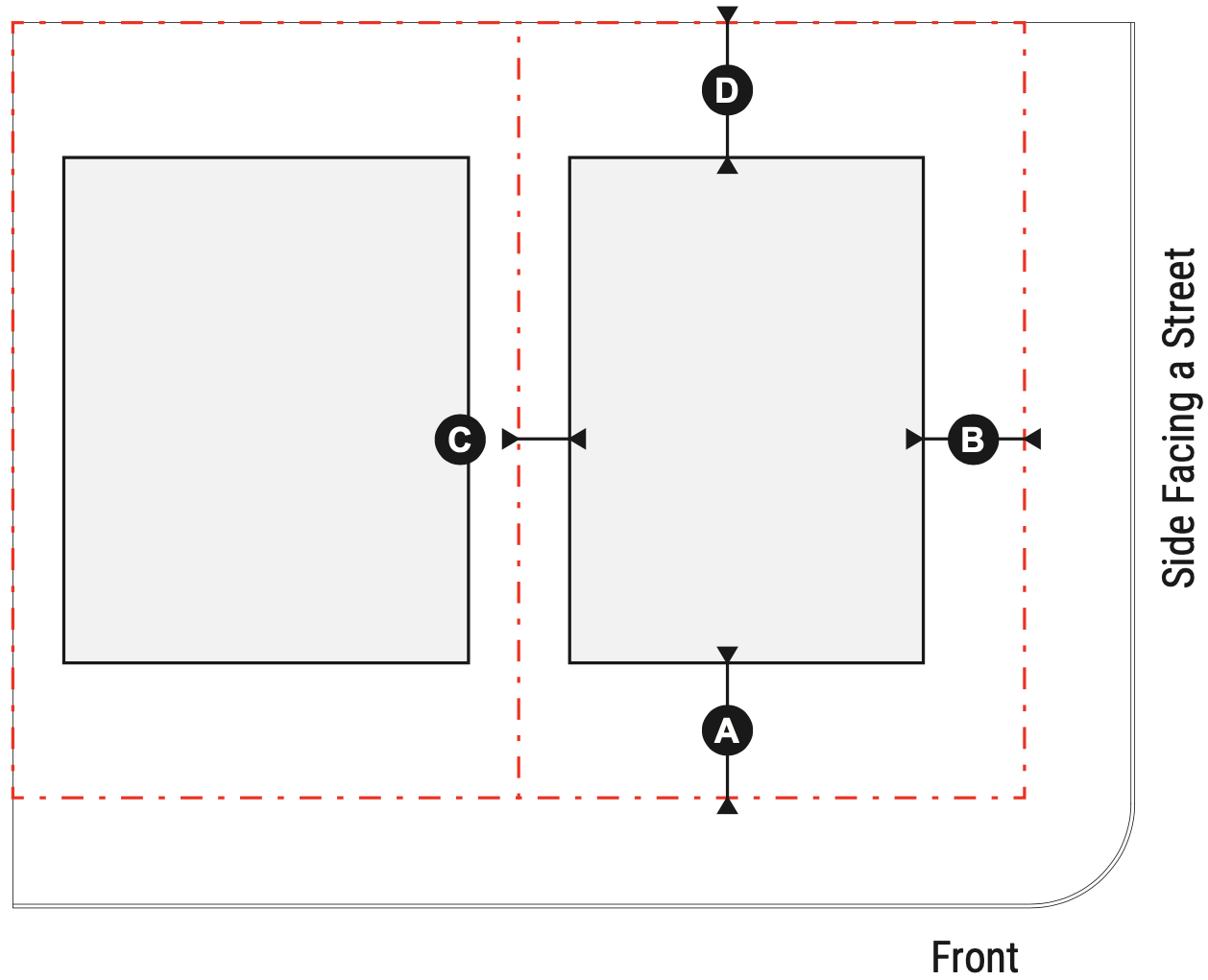
BUILDING HEIGHT RS-1 RS-2 RS-3 RS-4 Maximum Height (stories) 2 stories Maximum Height (feet) Ⓔ (3)(4)
No Understory
28 ft - flat roofs
31 ft – sloped roofs
24 ft – flat roofs
27 feet – sloped roofs
(4)24 ft – flat roofs
27 feet – sloped roofsMaximum Height (feet) (3)(4)
Understory Home
31 feet - flat roofs
34 feet - sloped roofs (8)
28 feet - flat roofs (7)
31 feet - sloped roofs (7)(8)
28 feet - flat roofs
31 feet - sloped roofs
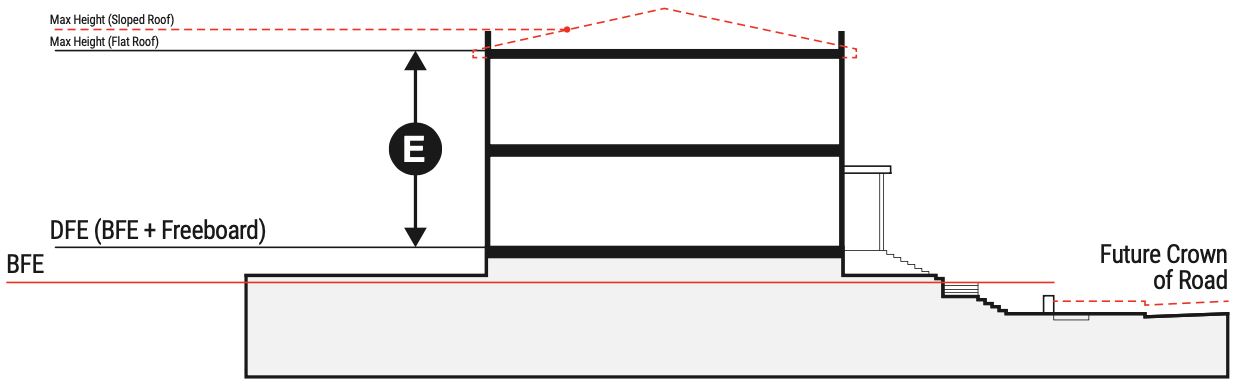
NO UNDERSTORY
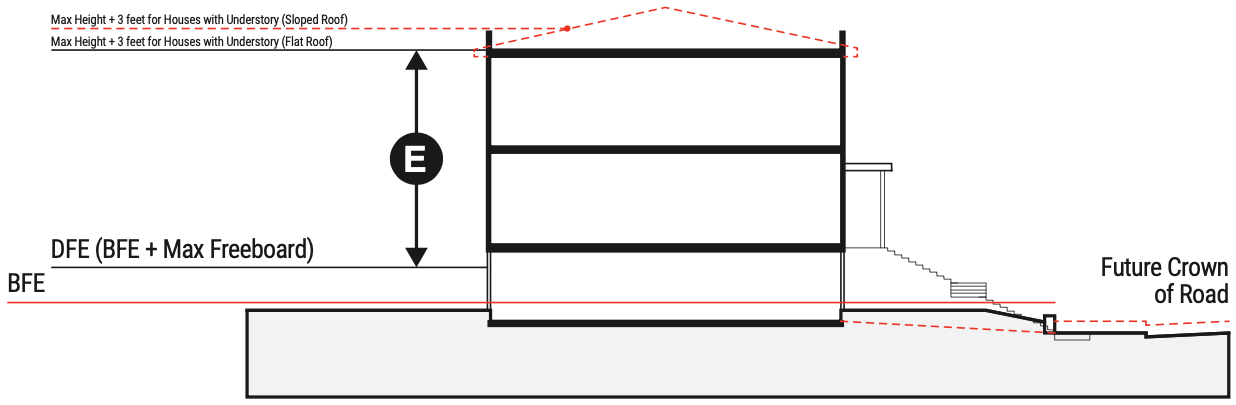
WITH UNDERSTORY
(1). Except those lots fronting on a cul-de-sac or circular street as defined in lot width.
(2). Single story homes shall follow the requirements of section 7.2.2.3.b.7.B.
(3). Height shall be measured from the required base flood elevation for the lot, plus freeboard. (See Height of Building definition). Single story homes shall follow the requirements of section 7.2.2.3.b.7.B.
(4). Height variances shall be prohibited. However, an additional three (3) feet in overall height, above the maximum permitted height above, may be approved by the Design Review Board (DRB) or Historic Preservation Board (HPB), in accordance with the applicable design review or appropriateness criteria.
(5). If an Understory is not provided, at least 50 percent (50%) of the required front yard and side facing a street yard areas (including portions of the rear and front yards) shall be sodded or landscaped pervious open space. With the exception of driveways and paths leading to the building, paving may not extend any closer than 5 feet to the front of the building. When a pool is located in the side yard, facing a street the area of the water may count as part of the open space. Understory homes shall comply with the Understory Level Standards as outlined in subsection 7.2.2.3 (b)(6).
In the event that an existing single-family home has an abutting street raised pursuant to an approved city project, and such home was previously permitted with less than 50 percent (50%) of the required front yard area consisting of sodded or landscaped pervious open space, such property may retain the most recent, previously permitted pervious open space configuration, provided the front yard is raised to meet the new street elevation. However, in no instance shall less than 30 percent (30%) of the required front yard be sodded or landscaped pervious open space.
Notwithstanding the above, for homes issued a certificate of occupancy or certificate of completion prior to October 30, 2024, the addition of one accessible ramp/walkway, not to exceed five feet (5') in width, leading from the front or street side property line to the first habitable level, shall be an allowable exemption to the minimum 50% pervious open space requirement.
(6). At least 70 percent (70%) of the required rear yard shall be sodded or landscaped pervious open space; the water portion of a swimming pool may count toward this requirement, when located above adjusted grade, the water portion of a swimming pool may count towards 50 percent of this requirement, provided adequate infrastructure is incorporated into the design of the pool to fully accommodate on-site stormwater retention.
(7).For RS-3 zoned properties, with a minimum lot size of 18,000 square feet, the maximum height is increased to 31 feet for flat roofs and 34 feet for sloped roofs.
(8). For single family homes utilizing an understory, if any portion of the home or any accessory structure utilizes a sloped roof, approval of the home by the DRB or HPB, as applicable, shall be required, regardless of building height.
- Two Story Houses Standards.
- Two-story side elevations located parallel to a side property line shall not exceed 50 percent (50%) of the lot depth, or 60 feet, whichever is less, without incorporating additional open space, in excess of the minimum required side yard, directly adjacent to the required side yard. The additional open space shall be regular in shape, open to the sky from grade, and at least 8 feet in depth, measured perpendicular from the minimum required side setback line. The square footage of the additional open space shall not be less than one percent (1%) of the lot area. The elevation (height) of the open space provided shall not exceed the elevation of the first habitable floor, and at least 50 percent (50%) of the required interior open space area shall be sodded or landscaped previous open space. The additional open space may contain mechanical equipment. The intent of this regulation shall be to break up long expanses of uninterrupted two-story volume at or near the required side yard setback line and exception from the minimum requirements of this provision may be granted only through historic preservation board, or design review board approval, as may be applicable, in accordance with the applicable design review or appropriateness criteria.
- For two story homes with an overall lot coverage of 25 percent (25%) or greater, the following additional requirements shall apply to the second floor (including any portion of the home above a height of 18 feet as measured from base flood elevation plus freeboard):
- At least 35 percent (35%) of the second floor along the front elevation shall be set back a minimum of 5 feet from the minimum required setback.
- At least 50 percent (50%) of the second floor along a side elevation facing a street shall be set back a minimum of 5 feet from the minimum required setback.
The DRB or HPB may forego these requirements, in accordance with the applicable design review or appropriateness criteria.
- Nonconforming yards.
- If a single-family structure is renovated in excess of 50 percent (50%) of the value determination, as determined by the building official pursuant to the standards set forth in the Florida Building Code, any new construction in connection with the renovation shall meet all setback regulations existing at the time, unless otherwise exempted under chapter 2, article XII of these Land Development Regulations (Section 2.12.8.c).
- When an existing single-family structure is being renovated less than 50 percent (50%) of the value determination, as prescribed by the building official pursuant to the standards set forth in the Florida Building Code, and the sum of the side yards is less than 25 percent (25%) of the lot width, any new construction, whether attached or detached, including additions, may retain the existing sum of the side yards, provided that the sum of the side yards is not decreased.
- When an existing single-family structure is being renovated less than 50 percent (50%) of the value determination, as prescribed by the building official pursuant to the standards set forth in the Florida Building Code, and has a nonconforming interior side yard setback of at least 5 feet, the interior side yard setback of new construction in connection with the existing building may be allowed to follow the existing building lines. The maintenance of this nonconforming interior side yard setback shall only apply to the linear extension of a single story building, provided such linear extension does not exceed 20 feet in length and does not exceed 18 feet in height for a flat roof structure and 21 feet for a sloped roof structure (See Height of Building definition in section 1.2.1), as measured from the minimum flood elevation.
- Limitation on contiguous lots. No more than two (2) contiguous lots may be aggregated, with the exception of the following:
- Lot aggregation for the purpose of expanded yards, or for the construction of accessory pools, cabanas, tennis courts, and similar accessory structures, when detached from the main home with a minimum separation of 15 feet, which may be aggregated to no more than three (3) contiguous lots; or
- Lot aggregation for the construction of a new home located in the middle of a site consisting of three (3) lots, provided the sum of the side yard setbacks of the main structure are equivalent to the width of the smallest of the three (3) aggregated lots, and the overall unit size and lot coverage of the main home shall be based upon the combined size of the largest two (2) lots.
- For the purpose of this subsection lots aggregated prior September 24th 2013, shall be considered one lot.
- Unit size requirements.
- For purposes of this subsection, unit size means the sum of the gross horizontal areas of the floors of a single-family home, measured from the exterior faces of exterior walls. However, the unit size of a single-family home shall not include the following, unless otherwise provided for in these land development regulations:
- Uncovered steps.
- Attic space, providing structural headroom of less than 7 feet 6 inches.
- Open breezeways, connected to more than one structure, which consist of roof protection from the elements and are open on all sides.
- Covered terraces and porches, which are unenclosed and open on at least one side, with the exception of roof supports and required safety railing.
- Enclosed floor space used for required off-street parking spaces (maximum 500 square feet).
- Covered exterior unenclosed private balconies.
- Non-air-conditioned areas located directly below the first habitable floor shall not count in the unit size calculations subject to section 7.2.2.3.b.6 below.
- For purposes of this subsection, unit size means the sum of the gross horizontal areas of the floors of a single-family home, measured from the exterior faces of exterior walls. However, the unit size of a single-family home shall not include the following, unless otherwise provided for in these land development regulations:
- Understory Level Standards
Non-airconditioned Understory space located below minimum flood elevation, plus freeboard. Except as otherwise provided in this Code, homes with understories may be approved administratively, as provided herein:- Understory area(s) shall be used only for open air activities, parking, building access, mechanical equipment, non-enclosed restrooms and storage. Such areas shall be designed and maintained to be free of obstructions and shall not be enclosed and/or air-conditioned at any time, with the exception of limited access areas to the first habitable floor. However, understory area(s) below the lowest habitable floor can utilize non-supporting breakaway walls, open-wood lattice work, louvers or similar architectural treatments, provided they are open a minimum of 50 percent (50%) on each side.
- All unenclosed, non-air-conditioned areas located directly below the first habitable floor shall not count in the unit size calculations.
- Understory building access. Enclosed, air-conditioned elevator and stair vestibules, for access to the first habitable level of the home, shall be permitted under the first habitable floor and shall be located as close to the center of the floor plan as possible and be visually recessive such that they do not become vertical extensions of exterior building elevations. The total area of enclosed and airconditioned building access shall be limited to no greater than 5 percent (5%) of the lot area. All airconditioned floor space located directly below the first habitable floor shall count in the total unit size calculations.
- Enclosed, non-air-conditioned areas, for parking and storage, may be permitted and shall not count in the unit size calculations, provided such areas do not exceed 600 square feet. Any portion of such enclosed parking and storage area exceeding 600 square feet shall count in the unit size calculations.
- All parking, including required parking, shall be provided within the understory area, and shall be clearly delineated by a different surface finish or bollards. No parking or vehicle storage shall be permitted within a required yard, unless approved by the DRB or HPB, in accordance with the applicable design review or certificate of appropriateness criteria.
- A continuous soffit shall be lowered a minimum of 2 feet from the lowest slab of the first level above the understory area in order to screen from view all lighting, sprinkler, piping, plumbing, electrical conduits, and all other building services, unless concealed by other architectural method(s).
- Understory ground elevation and minimum height. The minimum elevation of the understory ground shall be constructed no lower than future crown of road as defined in chapter 54, of the city Code. Additionally, a minimum height of nine (9) feet to the bottom of the first habitable floor of the home shall be required. All portions of the understory area that are not air-conditioned shall consist of pervious or semi-pervious material, such as wood deck, gravel or pavers set in sand. Concrete, asphalt and similar material shall be prohibited within the non-air-conditioned portions of the understory area.
- Understory edge. All allowable decking, gravel, pavers, non-supporting breakaway walls, open-wood lattice work, louvers or similar architectural treatments located in the understory area shall be set back a minimum of 5 feet from each side of the underneath of the walls of the first habitable floor above, with the exception of driveways and walkways leading to the property, and access walkways and/or steps or ramps for the front and side area. The front and side understory edge shall be designed to accommodate on-site water capture from adjacent surfaces and expanded landscaping opportunities from the side yards.
- Roof insulation, For flats roofs, up to twelve (12") inches of insulation shall be an allowable height exception and may be located above the roof slab. Portions of insulation exceeding twelve (12") inches above the roof slab shall be included in the overall height of the home.
- At least 70 percent of the required front yard and street side yard areas shall consist of sodded or landscaped pervious open space. For purposes of this section, the required front yard shall be the same as the required front setback of the principal structure. All allowable exterior walkways and driveways within the front and street side yards shall consist of pavers set in sand or other semi-pervious material. The use of concrete, asphalt or similar material within the required front or street side yards shall be prohibited.
- For single family homes utilizing an understory, the applicant shall mount a laminated posting, in a form prescribed by the planning director, at the front of the property in a manner and location clearly visible from the public right-of-way, indicating that an application for a home utilizing an understory has been filed. At a minimum, such posting shall included a description of the application, as well as contact information for the property owner. The applicant shall provide evidence to the planning director that the posting has been installed on site prior to the issuance of a building permit. The posting shall be for informational purposes only and the validity of any buiding permit shall not be affected by any failure to mount or continuously maintain the posting.
- Lot coverage.
- General. For lots aggregated after September 24, 2013, when a third lot is aggregated, as limited by section 7.2.2.3.b.4, the calculation of lot coverage shall be determined by the two lots on which the house is located.
- One-story structures. One-story structures may exceed the maximum lot coverage noted in subsection 7.2.2.3.b.1 above, through staff level review and shall be subject to the setback regulations outlined in 7.2.2.3.b.1, but in no instance shall the lot coverage exceed 40 percent (40%) of the lot area. The DRB or HPB may waive this requirement and allow up to 50 percent (50%) lot coverage for a one-story structure, in accordance with the applicable design review or appropriateness criteria. Notwithstanding the foregoing, for existing one-story structures constructed prior to 1965, the maximum lot coverage shall not exceed 50 percent (50%).
- Calculating lot coverage. Lot coverage shall be as defined in section 1.2.1, subject to the following additional regulations:
- Internal courtyards, which are open to the sky, but which are substantially enclosed by the structure on four or more sides, shall be included in the lot coverage calculation.
- Eyebrows, roof overhangs, covered porches and terraces, projecting a maximum of 5 feet from an exterior wall, shall not be included in the lot coverage calculation. All portions of such covered areas exceeding a projection of 5 feet shall be included in the lot coverage calculation.
- Garages. A maximum of 500 square feet of garage space shall not be counted in lot coverage if the area is limited to garage, storage and other non-habitable uses and the garage conforms to the following criteria:
- The garage is one story in height and not covered by any portion of enclosed floor area above. Portions of the garage which are covered by enclosed floor area above shall count toward lot coverage. Enclosed floor area shall be as defined in section 1.2.1.
- The vehicular entrance(s) of the garage is not part of the principal facade of the main house.
- The garage is constructed with a vehicular entrance(s) perpendicular to and not visible from the right-of-way, or the entrance(s) is set back a minimum of 5 feet from the principal facade of the main house when facing a right-of-way.
- Nonconforming structures. Existing single-family structures nonconforming with respect to section 7.2.2.3.b, may be repaired, renovated, rehabilitated regardless of the cost of such repair, renovation or rehabilitation, notwithstanding the provisions of chapter 2, article XII of these Land Development Regulations, "nonconformities." Should such an existing structure constructed prior to October 1, 1971, be completely destroyed due to fire or other catastrophic event, through no fault of the owner, such structure may be replaced regardless of the above-noted regulations existing at the time of destruction.
- Demolition of architecturally significant single-family homes. Proposed new construction that exceeds the original building footprint of a demolished architecturally significant single-family home shall follow the provisions of section 7.2.2.4.a.
- Roof decks. Roof decks shall not exceed 6 inches above the highest point of the proposed flat roof and shall not exceed a combined deck area of 25 percent (25%) of the enclosed floor area immediately one floor below, regardless of deck height. Roof decks shall be setback a minimum of 10 feet from each side of the exterior outer walls, when located along a front or side elevation, and from the rear elevation for nonwaterfront lots. Built in planters, gardens or similar landscaping areas, not to exceed 3 feet, 6 inches above the finished roof deck height, may be permitted immediately abutting the roof deck area. All landscape material shall be appropriately secured. The DRB or HPB may forego the required rear deck setback, in accordance with the applicable design review or appropriateness criteria.
- Height exceptions. The height regulation exceptions contained in section 7.5.2 shall not apply to the RS-1, RS-2, RS-3 and RS-4 zoning districts. The following exceptions shall apply, and unless otherwise specified in terms of height and location, shall not exceed 10 feet above the highest point of the proposed roof. In general, height exceptions that have not been developed integral to the design intent of a structure shall be located in a manner to have a minimal visual impact on predominant neighborhood view corridors as viewed from public rights-of-way and waterways.
- Chimneys and air vents, not to exceed 5 feet in height measured from the point at which they emerge from the roof.
- Decorative structures used only for ornamental or aesthetic purposes such as spires, domes, and belfries.
- Radio and television antennas, satellite, and internet dishes.
- Parapet walls, only when associated with a habitable roof deck or when used to screen roof top mechanical equipment. When associated with a habitable roof deck, the parapet shall not exceed 3 feet, 6 inches above the finished roof deck height, and shall be set back a minimum of 10 feet from the perimeter of the enclosed floor below. When used to screen mechanical equipment, the parapet walls shall not exceed the height of the equipment being screened.
- Rooftop curbs, not to exceed 3 feet in height.
- Elevator bulkheads shall be located as close to the center of the roof as possible and be visually recessive such that they do not become vertical extensions of exterior building elevations.
- Skylights, not to exceed 5 feet above the point at which they emerge from the roof, and provided that the area of skylight(s) does not exceed 10 percent (10%) of the total roof area of the roof in which it is placed.
- Air conditioning and mechanical equipment not to exceed 5 feet above the point at which they emerge from the roof and shall be required to be screened in order to ensure minimal visual impact as identified in the general section description above.
- Rooftop wind turbines, not to exceed 10 feet above the highest point of the roof,
- Solar panels, not to exceed 5 feet in height above the point at which they emerge from the roof.
- Covered structures, which are open on all sides, and do not extend interior habitable space. Such structures shall not exceed a combined area of 20 percent (20%) of the enclosed floor area immediately one floor below, and shall be set back a minimum of 10 feet from the perimeter of the enclosed floor below.
- Exterior building and lot standards. The following shall apply to all buildings and properties in the RS-1, RS-2, RS-3, RS-4 single-family residential districts:
- Exterior bars. Exterior bars on entryways, doors and windows shall be prohibited on front and side elevations, which face a street or right-of-way.
- Minimum and maximum yard elevation requirements.
MINIMUM AND MAXIMUM YARD ELEVATION REQUIREMENTS (RS) Minimum Maximum Front Yard Future Adjusted Grade (1) (2) (4) Base Flood Elevation (BFE) (1) (3) (4) Side, Facing a street Yard Side, Interior Yard Base Flood Elevation (BFE) (1) (3) (5) (6) Rear Yard - Non Waterfront Rear Yard - Waterfront Base Flood Elevation (BFE) plus maximum freeboard (1) (3)
YARD LOCATIONS (FOR YARD ELEVATION REQUIREMENTS ONLY)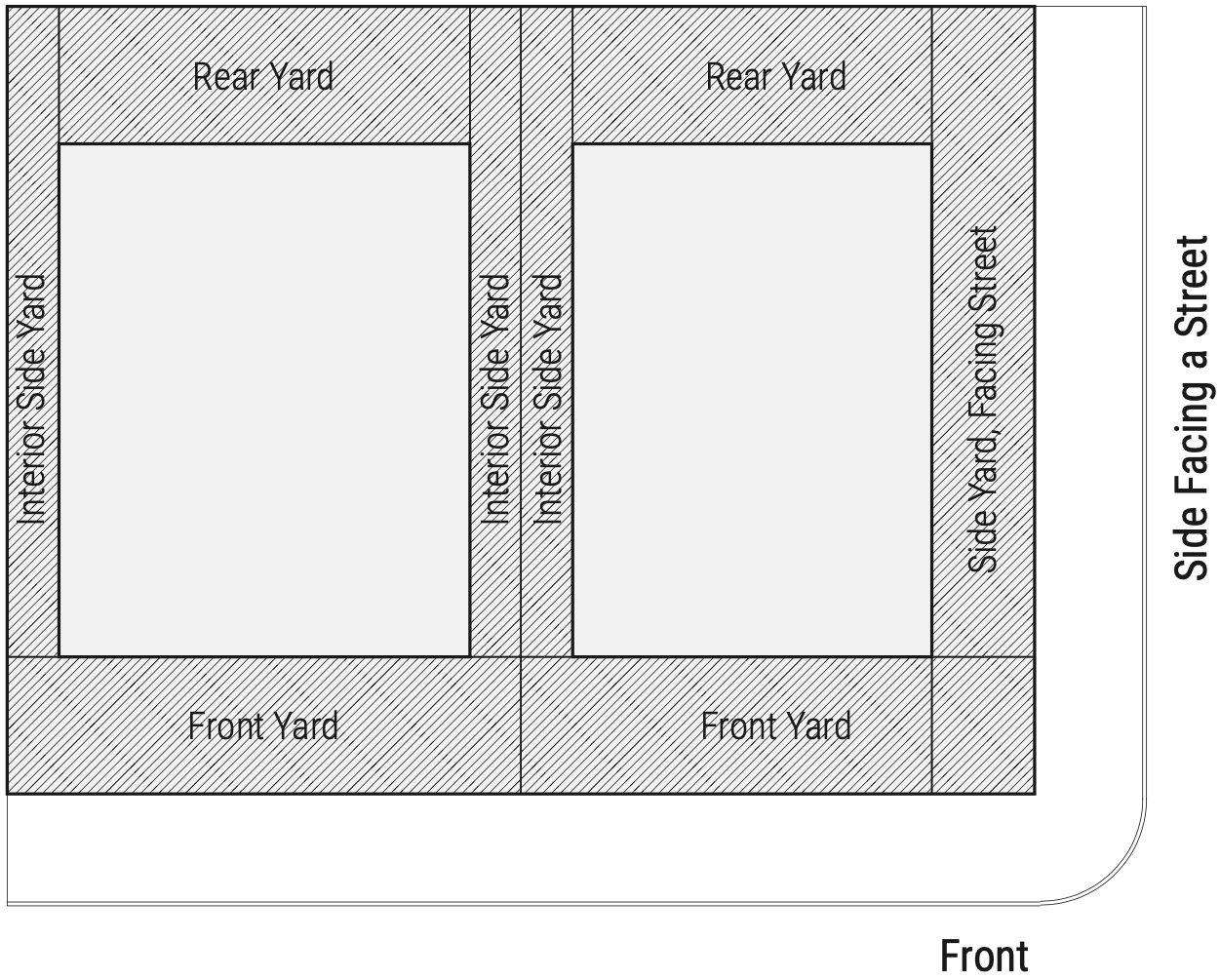
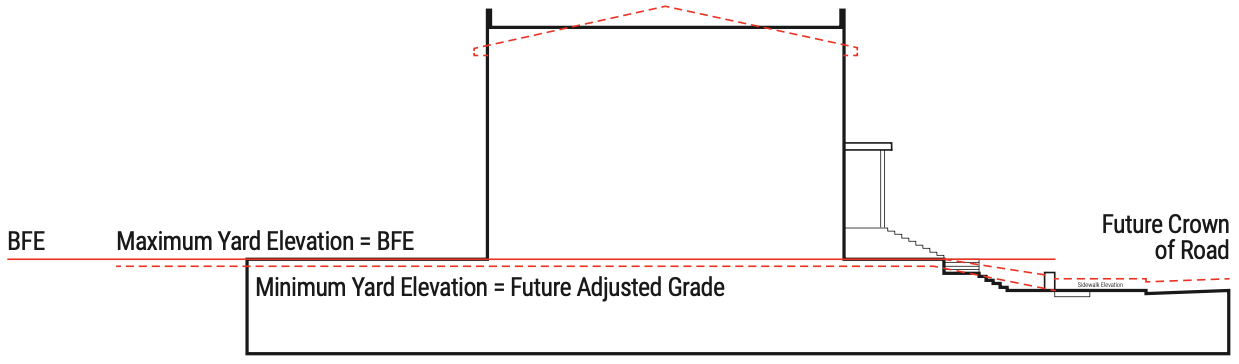
MINIMUM AND MAXIMUM YARD ELEVATIONS
(1). With the exception of driveways, walkways, transition areas, green infrastructure (e.g., vegetated swales, permeable pavement, rain gardens, and rainwater/stormwater capture and infiltration devices), and areas where existing landscaping is to be preserved, which may have a lower elevation. When in conflict with the maximum elevation requirements as outlined in this table, the minimum elevation requirements shall still apply.
(2). The minimum yard elevation requirements shall not apply to existing structures or properties containing single-family homes individually designated as historic structures, or to properties with single-family homes designated as "contributing" within a local historic district.
(3). In no instance shall the elevation of a required yard exceed DFE.
(4). The maximum height of any fence(s) or wall(s) in the required front yard, shall be measured from existing grade.
(5). When the average grade of an adjacent lot along the abutting side yard is equal or greater than adjusted grade, or when abutting a vacant property, the maximum elevation within the required side yard shall not exceed BFE plus 1 foot.
(6). Notwithstanding the above, when abutting property owners have jointly agreed to a higher elevation, both side yards may be elevated to the same higher elevation through the submission of concurrent building permits, not to exceed the minimum required flood elevation.
- Stormwater retention. In all instances where the existing elevation of a site is modified, a site shall be designed with adequate infrastructure to retain all stormwater on site in accordance with all applicable state and local regulations, as determined by the public works department.
- Retaining wall and yard slope requirements. Within the required front yard, required side yard facing a street and rear and side interior yards the following shall apply:
RETAINING WALL REQUIREMENTS Maximum Height of Retaining Wall Front 30 inches above sidewalk elevation, or adjacent grade if no sidewalk is present (1) (3) (4) Side, Facing a Street Side, Interior At the property line, the maximum height of retaining walls shall not exceed 3 feet above sidewalk elevation, or adjacent grade if no sidewalk is present. (2) (3) (4) Rear 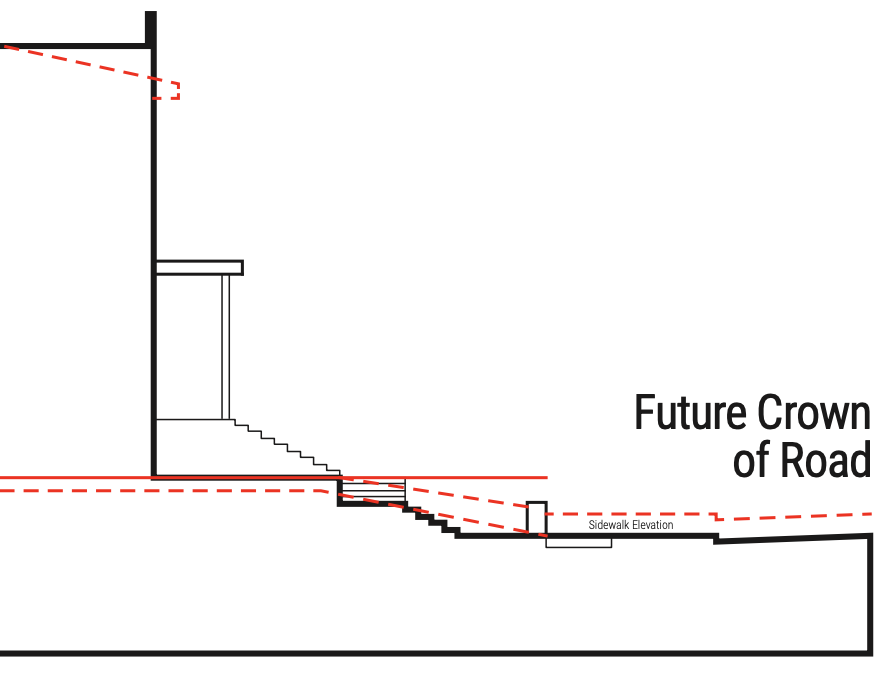
(1). The maximum slope of the required front and side yard facing a street shall not exceed 11 percent (11%) (5:1 horizontal:vertical)
(2). For properties in which the required yard elevation is greater than the yard elevation of the neighboring lot, either a retaining wall at the perimeter of the property or a slope of maximum (5:1 horizontal: vertical), or a combination of both, shall be provided. (See section 7.2.2.3.b.11.G)
(3). Retaining walls shall be finished with stucco, stone, or other high quality materials, in accordance with the applicable design review or appropriateness criteria of section 7.2.2.3.b.
(4). Retaining walls shall be consistent with the requirements for fences and walls in subsection 12.H. below.
- Lot split. All new construction for homes on lots resulting from a lot split application approved by the planning board shall be subject to the review and approval of the design review board (DRB) or historic preservation board (HPB), as applicable. The following shall apply to all newly created lots, when the new lots created do not follow the lines of the original platted lots .
- The maximum lot coverage for a new one-story home shall not exceed 40 percent (40%) of the lot area, and the maximum lot coverage for a new two-story home shall not exceed 25 percent (25%) of the lot area, or such lesser number, as determined by the planning board.
- The maximum unit size shall not exceed 40 percent (40%) of the lot area for both one story, and two-story structures, or such less numbers, as determined by the planning board.
- Allowable encroachments within required yards.
- Accessory buildings. In all single-family districts, the following regulations shall apply to accessory buildings within a required rear yard:
- Uses. Accessory buildings shall be limited to uses that are accessory to the main use, including, but not limited to:
- garage
- carport
- pergola
- cabana
- gazebo
- maid's or guest's quarters
- Accessory Dwelling Units (ADU)
- Components of the main structure, such as detached bedrooms or any habitable area of the single-family structure, shall not be considered accessory uses.
- Utilities. Accessory buildings may contain heating and air conditioning, washers and dryers, toilets, bar sinks and showers, but may not have full kitchen facilities, except when it contains an Accessory Dwelling Unit (ADU). An outdoor built-in barbecue grill or similar cooking equipment shall be allowed as an accessory use, as may be permitted by the fire marshal and in accordance with the regulations contained in any applicable safety code or the Florida Building Code.
- Uses. Accessory buildings shall be limited to uses that are accessory to the main use, including, but not limited to:
-
ACCESSORY BUILDING STANDARDS TABLE (RS) Maximum Lot Coverage (%) 25% of the area of the required rear yard (1) Size Calculations The area of enclosed accessory buildings shall be included in the overall unit size calculation for the site. ACCESSORY BUILDING SETBACKS Side facing a street Setback Ⓑ 1 Story Structures
15 feet 2 Story Structures
15 feet Side interior Setback Ⓒ 1 Story Structures
7.5 feet 2 Story Structures
10 feet or the required side yard setback, whichever is greater Rear Setback Ⓓ 1 Story Structures
7.5 feet
One-half (1/2) of the required rear setback - When facing a waterway2 Story Structures
15 feet
One-half (1/2) of the required rear setback or 15 feet, whichever is greater - When facing a waterwayBuilding Separation Building Separation Ⓕ Accessory buildings shall be separated from the main home by a minimum of 5 feet, open to the sky with no overhead connections. 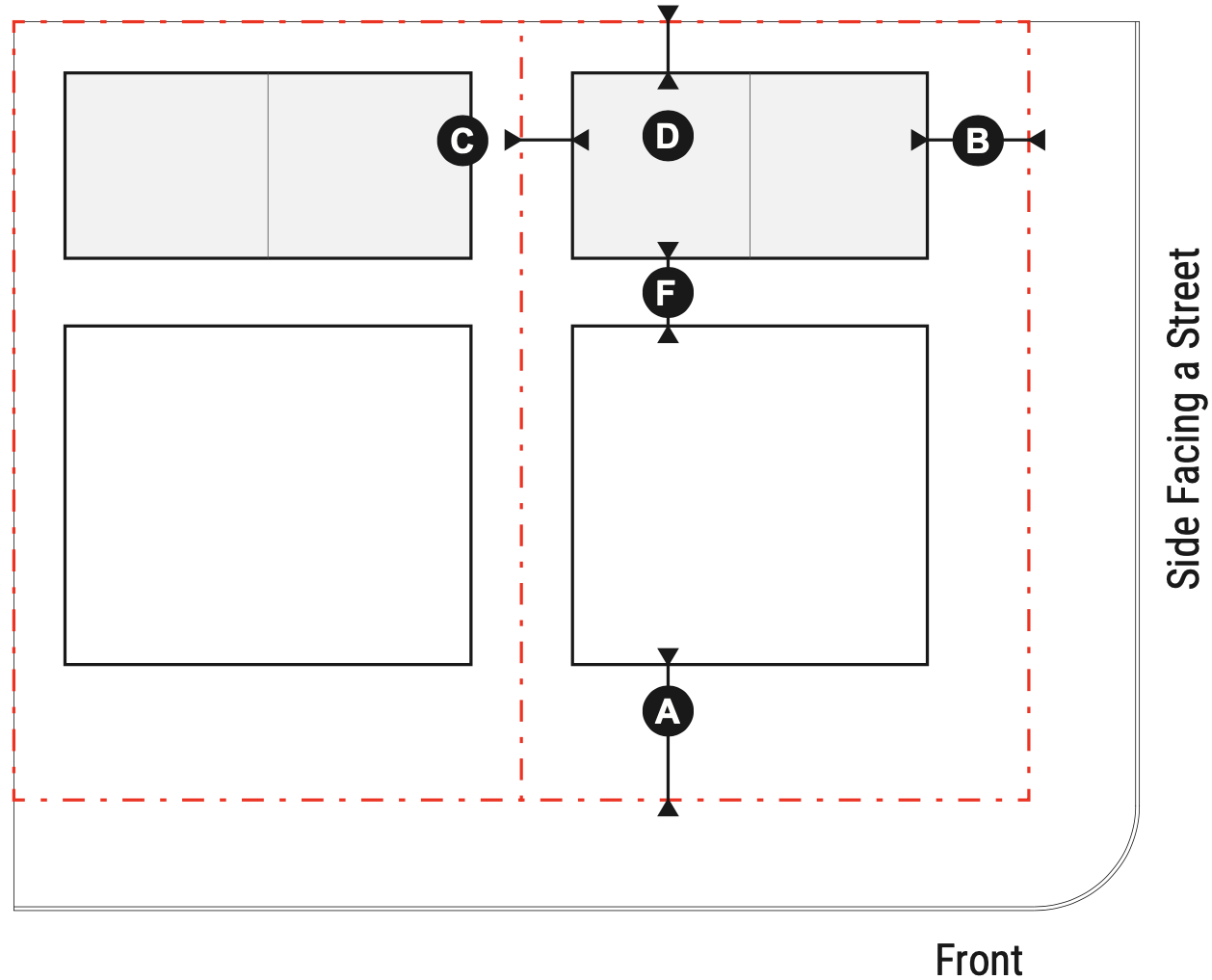
ACCESSORY BUILDING HEIGHT Maximum Height (stories) 2 stories Maximum Height (feet) 1 story structure
12 feet (2) (3) 2 story structure
20 feet (2) (3) 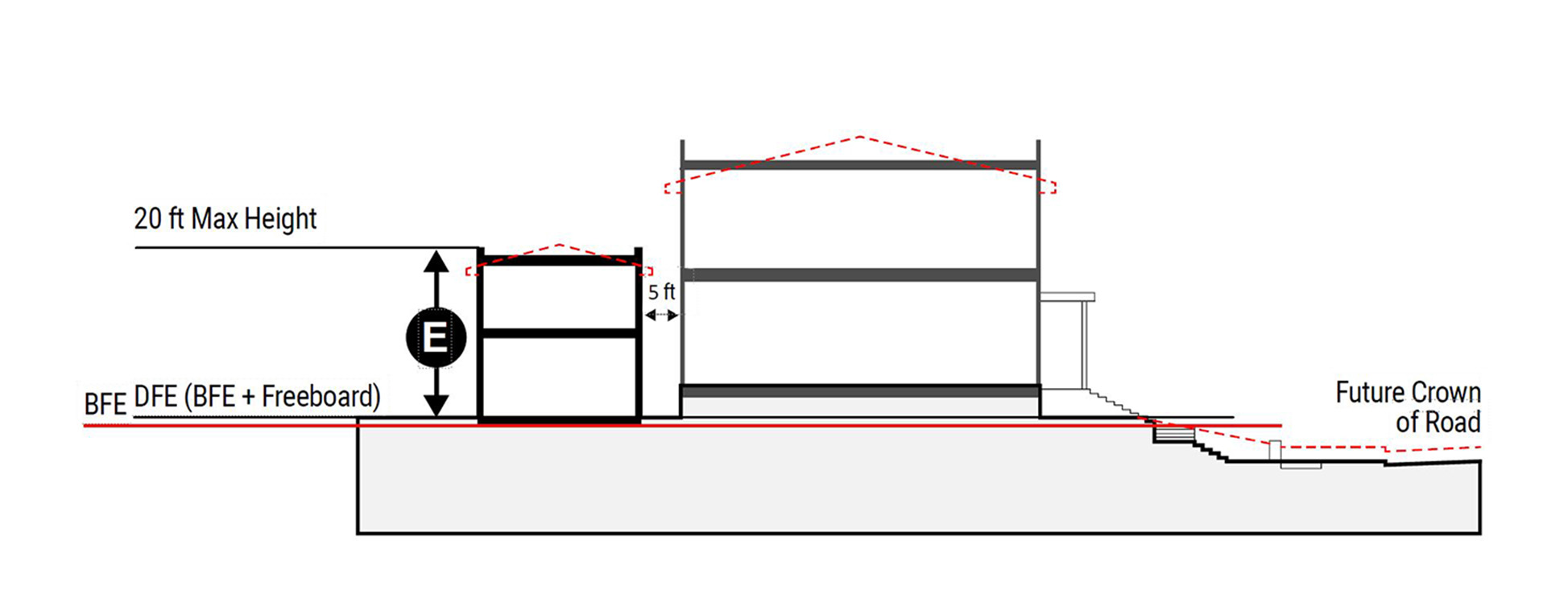
(1). Accessory buildinng s that are not part of the main building, shall be included in the overall lot coverage calculations for the site and may be constructed in a rear yard, provided such accessory building (or accessory buildings) does not occupy more than 25 percent 25% of the area of the required rear yard. Areas enclosed by screen shall be included in the computation of area occupied in a required rear yard lot, but an open uncovered swimming pool shall not be included.
(2). Height for accessory buildings shall be measured from the Base Flood Elevation (BFE) plus freeboard of 1 foot.
(3). The allowable height exceptions set forth in section 7.5.2 shall not apply to accessory buildings in single-family districts.
- Awnings. Awnings attached to and supported by a building wall may be placed over doors or windows in any required yard, but such awnings shall not project closer than 3 feet to any lot line.
- Boat, boat trailer, camper trailer or recreational vehicle storage. Accessory storage of such vehicles shall be limited to a paved, permanent surface area within the interior side or rear yards. No such vehicle shall be utilized as a dwelling, and any such vehicles shall be screened from view from any right-of-way or adjoining property when viewed from 5 feet, 6 inches above grade.
Notwithstanding the foregoing, during a state of emergency declared by the city, a camper trailer or recreational vehicle may be used as a temporary dwelling, subject to the following conditions:- The principal residence on the property where the vehicle is located has been deemed by the city to be uninhabitable as a result of the emergency.
- A temporary certificate of use (TCU) is obtained prior to the use of the vehicle as a dwelling. The TCU shall be valid for up to 120 days, but may be extended for up to an additional 120 days if an applicant demonstrates progress toward repairing the principal structure.
- The application for the TCU must be made while the declaration of a state of emergency is in effect.
- The vehicle may be located in the interior side or rear yard or, provided it does not encroach into a public right-of-way, in the front yard. The vehicle need not be parked on a paved or permanent surface, nor screened from view from a right-of-way. Upon the expiration of the TCU, the vehicle must be relocated to comply with all applicable provisions in the city Code and may no longer be used as a dwelling. Alternatively, the vehicle must be removed from the property.
- The vehicle is fully licensed, in good condition, and ready for highway use.
- Carports and solar carports. Only one carport or solar carport shall be erected within a required yard of a single-family home, subject to the following requirements, as may be applicable:
- Carports and solar carports shall be subject to the following requirements:
- Carports shall be constructed of canvas and pipe for the express purpose of shading automobiles.
- Carports or solar carports constructed prior to the adoption of this section shall be considered legal nonconforming structures. Such nonconforming canopies may be repaired or replaced; however, the degree of their nonconformity shall not be increased thereby.
CARPORTS AND SOLAR CARPORTS STANDARDS TABLE (RS) Maximum Carport and Solar Carport Size 20 feet width
20 feet lengthSETBACKS Car Port Solar Car Port Front Setback Ⓐ 18 inches min (1) 15 feet min (1) Side, Facing a Street Setback Ⓑ 5 feet min (1) Side, Interior Setback Ⓒ 4 feet min 4 feet min Rear Setback Ⓓ 5 feet min (2) 5 feet min (2) 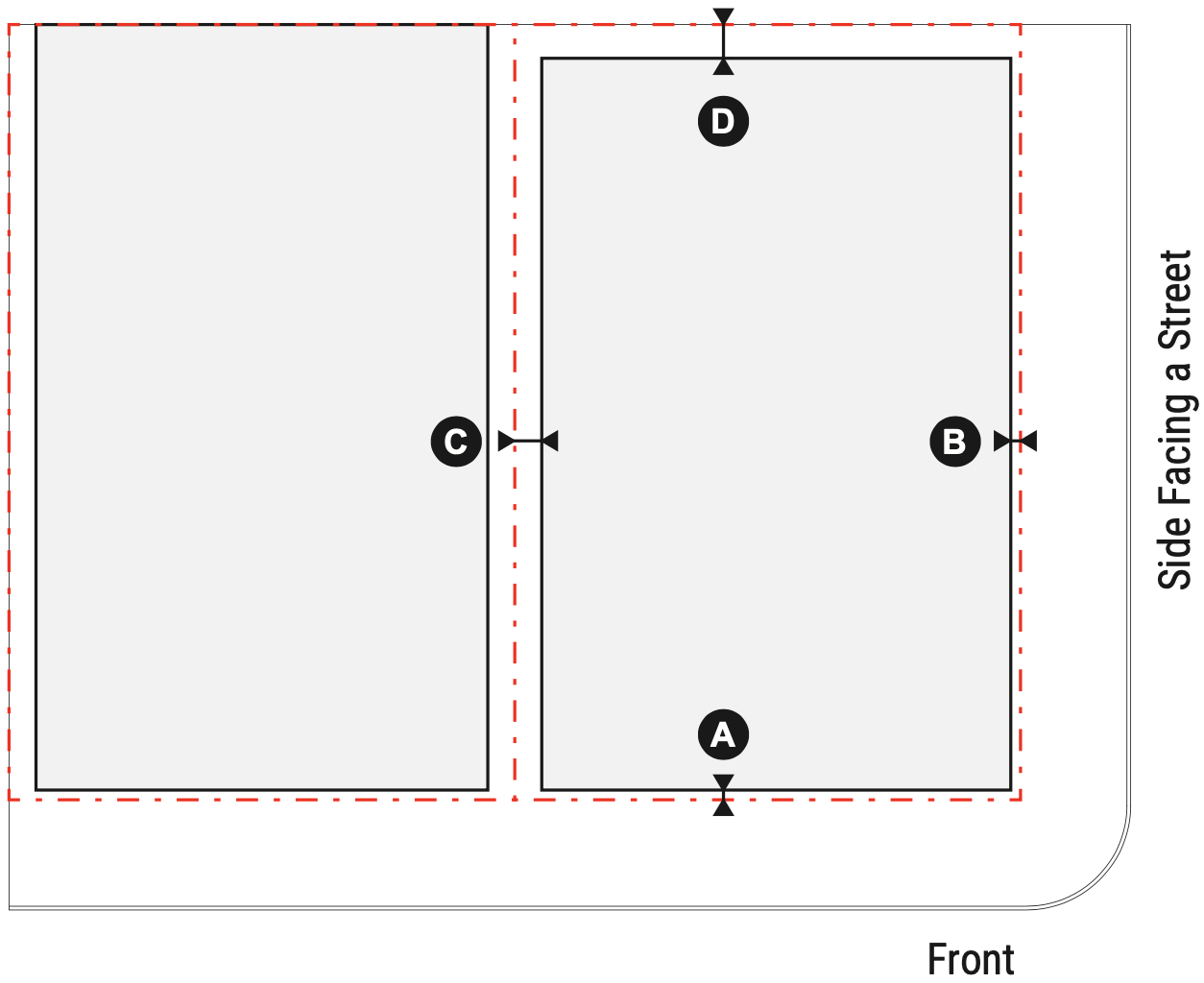
CARPORT
SOLAR CARPORT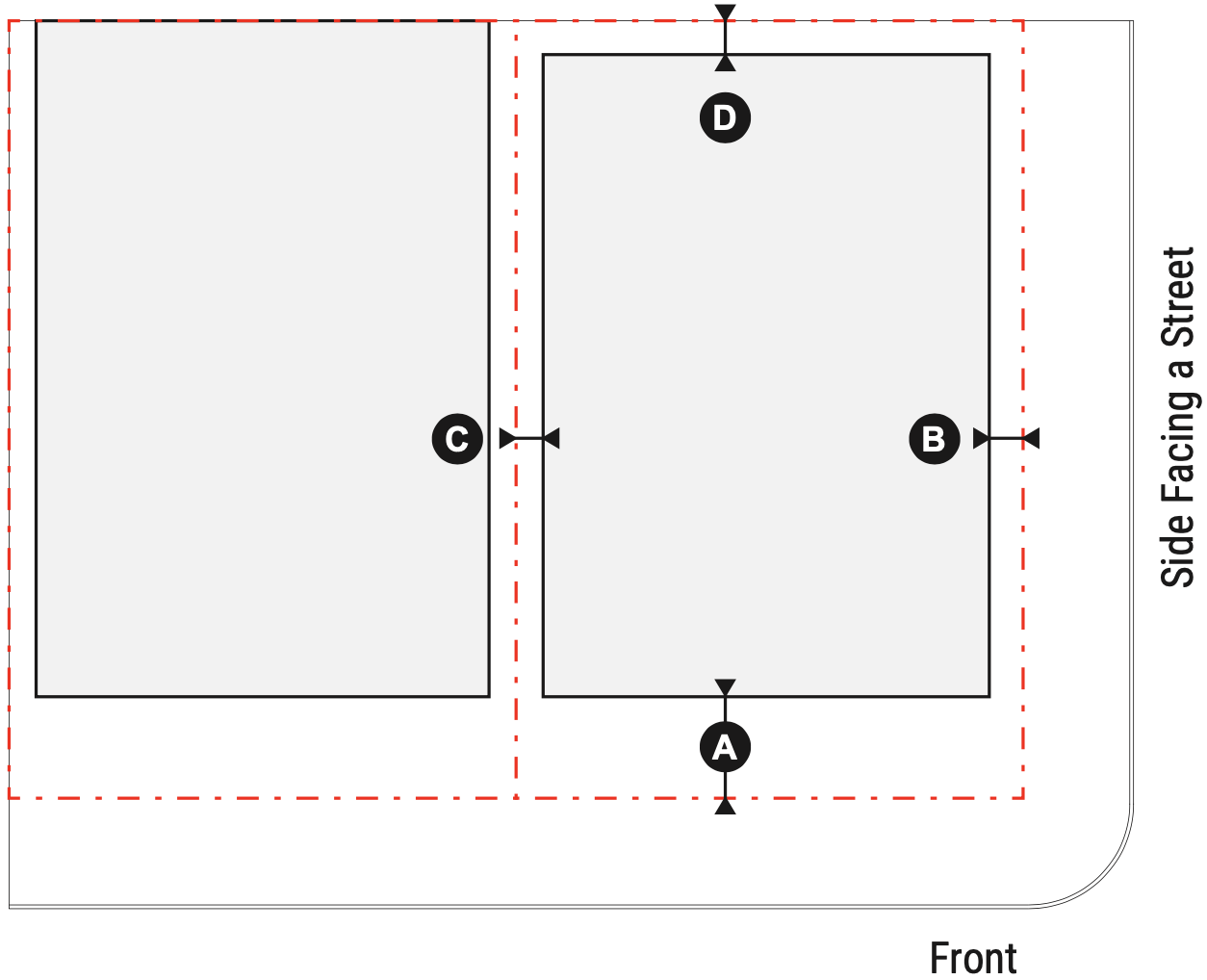
Minimum Height 7 feet (Unobstructed view between grade and lower edge of the carport or solar carport) (1). Provided the carport or solar carport is attached to or immediately adjacent to the main building. When a carport or solar carport is detached and located more than 12 inches from the main home it shall not be located in the required front or side-facing-the-street yards.
(2). The sides of the carport or solar carport that face the required rear yard may be permitted to align with the walls of the existing residence, provided the residence is located a minimum of 5 feet from the rear property line.
- Carports and solar carports shall be subject to the following requirements:
- Central air conditioners, emergency generators, swimming pool equipment, gas tanks solar panels, home battery systems and other similar mechanical equipment. Accessory central air conditioners, generators, swimming pool equipment, solar panels, home battery systems and other similar mechanical equipment, including attached screening elements, may occupy a required side or rear yard, provided that:
- They are not closer than 5 feet to a rear or interior side lot line, or 10 feet to a side lot line facing a street.
- The maximum height of the equipment, including attached screening elements, shall not exceed 5 feet above current flood elevation, with a maximum height not to exceed 10 feet above grade, as defined in section 1.2.1, of the lot on which it is located.
- If visible from the right-of-way, physical and/or landscape screening shall be required.
- Any required sound buffering equipment shall comply with the setback requirements established in section 7.2.2.3.b.12, above.
- If the equipment does not conform to section 7.2.2.3.b.11.F.I-IV above, then such equipment shall follow the setbacks of the main structure.
- Driveways. Driveways and parking spaces leading into a property are subject to the following requirements:
- Driveways and parking areas that are open to the sky within any required yard shall be composed of porous pavement or shall have a high albedo surface consisting of a durable material or sealant, as defined in section 1.2.1 of this Code.
- Driveways and parking areas composed of asphalt that does not have a high albedo surface, as defined in section 1.2.1 of this Code, shall be prohibited.
- The maximum width of all driveways at the front or side facing a street property line including access driveways from the Right of Way shall not exceed 30 percent (30%) of the lot width, and in no instance shall be less than 9 feet in width and greater than 18 feet in width.
DRIVEWAY AND PARKING SPACES STANDARDS TABLE (RS) Minimum Setback Front
5 feet min (1) Side, Facing a Street
5 feet min (1) Side, Interior
4 feet min Rear
5 feet min 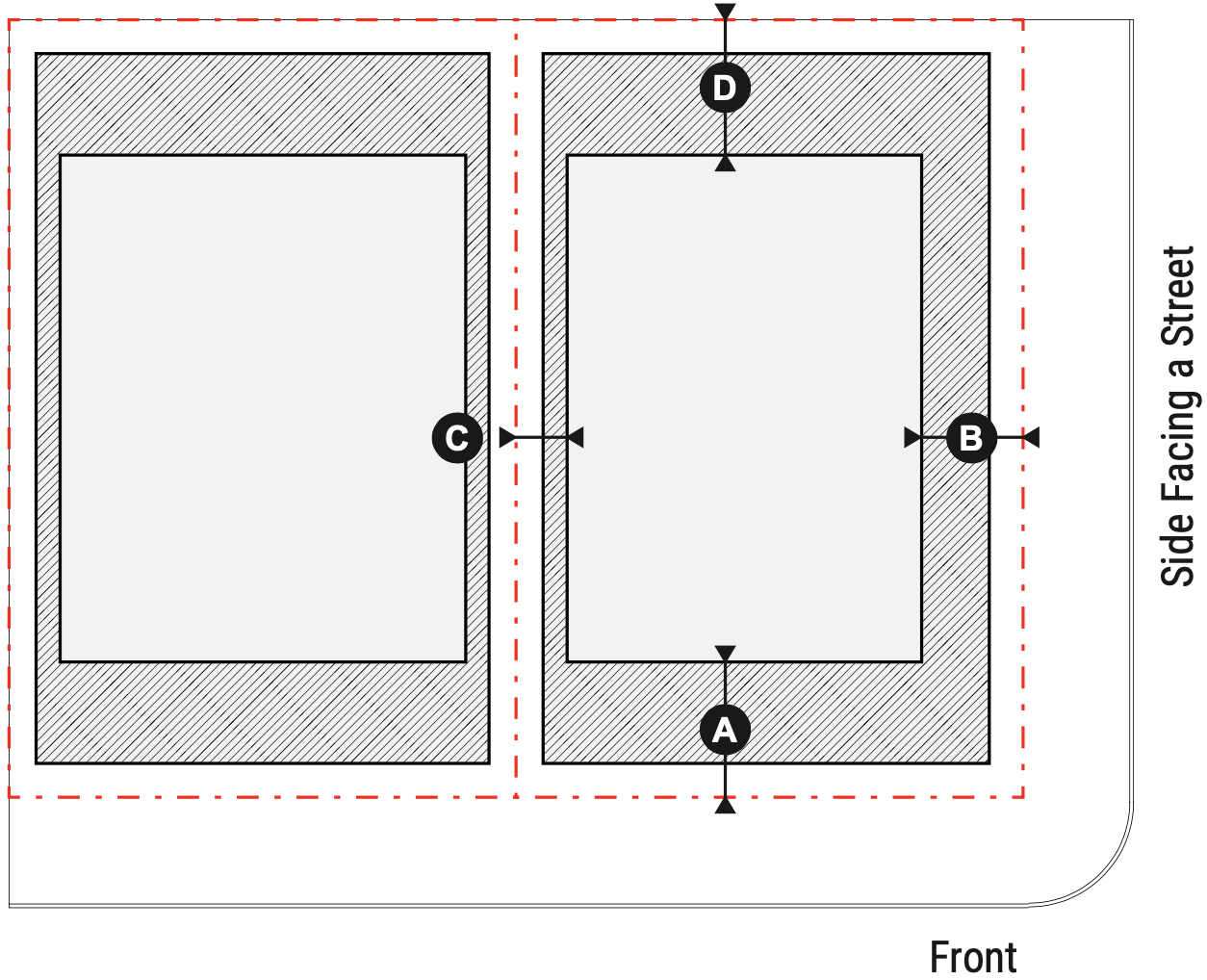
(1). Driveways and parking spaces parallel to the front property line.
- Fences, walls, and gates. Regulations pertaining to materials and heights for fences, walls and gates are as follows:
FENCES, WALLS AND GATES STANDARDS TABLE (RS) Maximum Height at the Front Yard Ⓐ At the property line
5 feet, as measured from grade Set back from the property line
5 feet plus 1 foot for every 2 feet of setback up to a maximum of 7 feet, as measured from grade Maximum Height at the Side Facing a Street Yard, Waterway or Golf Course Ⓐ Side Facing a Street, Waterway or Golf Course Yard
5 feet, as measured from grade (1) 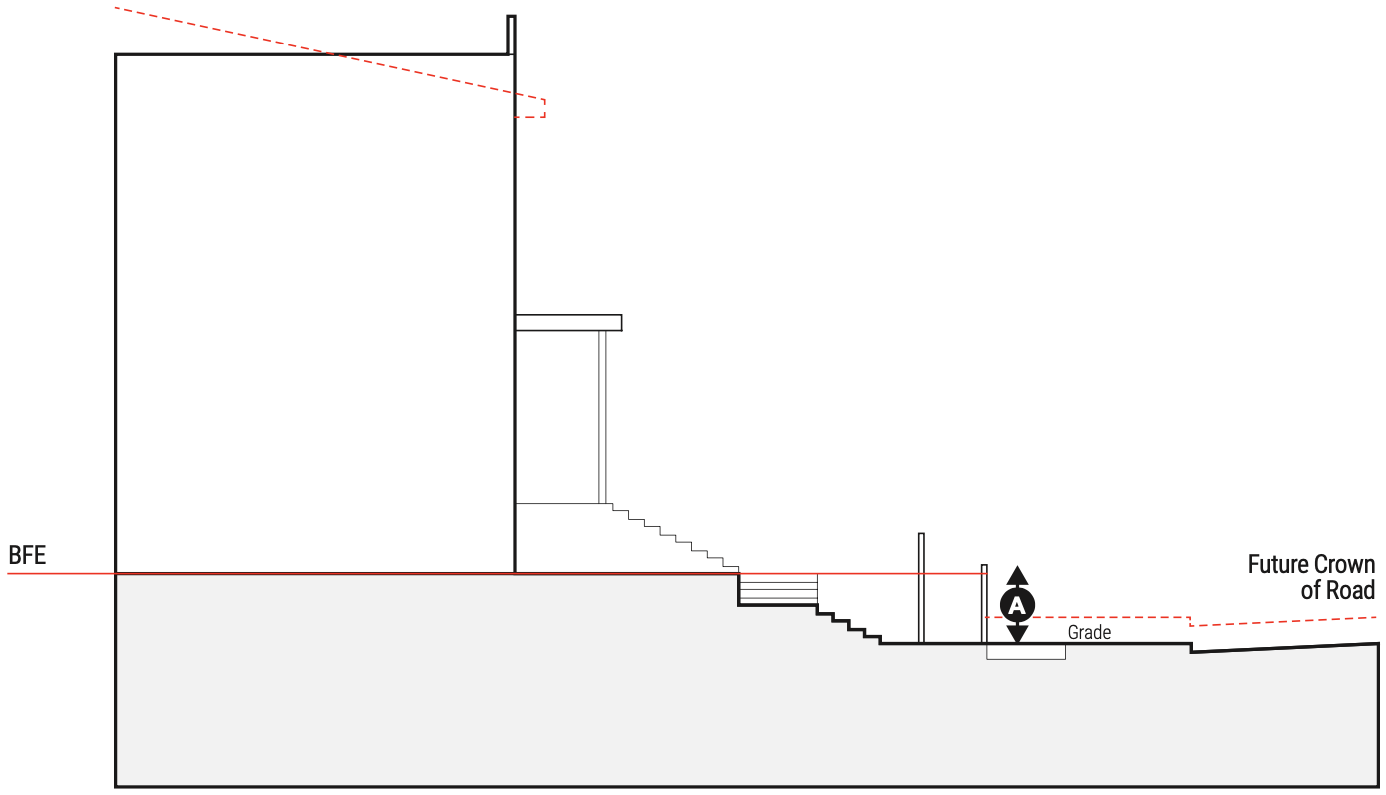
Maximum Height at the Side Interior and Rear Yards Side Interior Yard
7 feet, as measured from grade Ⓑ
7 feet, as measured from future adjusted grade Ⓒ (1) (2)Rear Yard
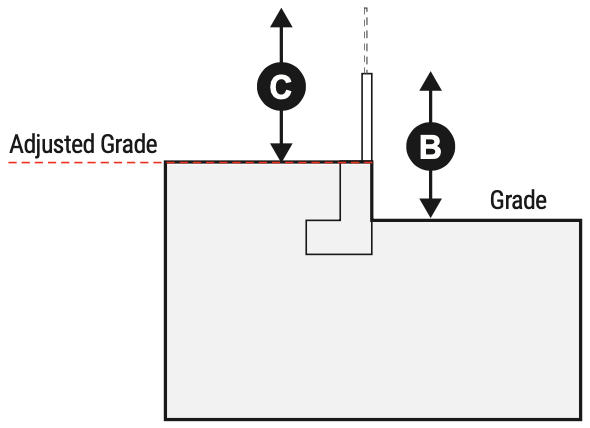
(1). In the event that a property has approval to be improved at future adjusted grade, the overall height of fences, walls and gates may be measured from future adjusted grade, provided that the portion of such fences, walls or gates above 4 feet in height consists of open pickets with a minimum spacing of 3 inches, unless otherwise approved by the Design Review Board (DRB) or Historic Preservation Board (HPB), as applicable.
(2). Pre-1966 exemption. Notwithstanding the above, for properties containing a pre-1966 architecturally significant home, where a substantial portion of the existing rear yard and/or side yard is located at least 12 inches above grade, the overall height of fences, walls and gates may be measured from the elevation of the existing yard, provided that the portion of such fences, walls or gates above 4 feet in height consists of open pickets with a minimum spacing of 3 inches, unless otherwise approved by the design review board or historic preservation board, as applicable.
- Materials. All surfaces of masonry walls and wood fences shall be finished in the same manner with the same materials on both sides to have an equal or better quality appearance when seen from adjoining properties. The structural supports for wood fences, walls or gates shall face inward toward the property.
- Chain link fence prohibition. Chain link fences are prohibited in the required front yard, and any required yard facing a public right-of-way, waterway or golf course (except side yards facing on the terminus of a dead-end street in single-family districts) except as provided in this section and in section 7.5.3.4.
- Other materials prohibited. Barbed wire or materials of similar character shall be prohibited.
- Hedges. There are no height limitations on hedges. Hedge material must be kept neat, evenly trimmed and properly maintained. Corner visibility regulations are set forth in section 7.5.3.5.
- Hot tubs, showers, saunas, whirlpools, toilet facilities, decks. Hot tubs, showers, whirlpools, toilet facilities, decks and cabanas are structures which are not required to be connected to the main building but may be constructed in a required rear yard, provided such structure does not occupy more than 30 percent (30%) of the area of the required rear yard and provided it is not located closer than 7 feet and 6 inches to a rear or interior side lot line. Freestanding, unenclosed facilities including surrounding paved or deck areas shall adhere to the same setback requirements as enclosed facilities.
- Light poles. The following regulations shall apply to light poles:
- Light poles shall have a maximum height of 10 feet. Light poles shall be located 7 feet and 6 inches from any property line except that, when such property line abuts a public right-of-way or waterway, there shall be no required setback.
- All light from light poles shall be contained on-site or on any public right-of-way as required by the city Code.
- Marine structures. Seaward side yard setbacks for boat slips, decks, wharves, dolphin poles, mooring piles, davits, or structures of any kind shall not be less than 7 feet and 6 inches. This requirement pertains to the enlargement of existing structures as well as to the construction of new structures. It is further provided that any boat, ship, or vessel of any kind shall not be docked or moored so that its projection extends into the required seaward side yard setback, and the mooring of any type of vessel or watercraft shall be prohibited along either side of the walkway leading from the seawall to a boat dock. Land-side decks may extend to the deck associated with the marine structure. Lighting associated with, but not limited to, the deck, or marine structure shall be installed in such a manner to minimize glare and reflection on adjacent properties and not to impede navigation. The maximum projection of a marine structure shall be determined by the county department of environmental resource management. If a dock or any kind of marine structure/equipment, whether or not it is attached to a dock, projects more than 40 feet into the waterway or extends beyond the maximum projection permitted under section 66-113 in General Ordinances, the review and approval of the applicable state and county authorities shall be required.
- Ornamental fixtures or lamps. Requirements for ornamental fixtures and lamps shall be as follows:
- Ornamental fixtures and lamps are permitted to be placed on walls or fences when they are adjacent to a public street, alley, golf course, or waterway. The total height of the combined structure shall not exceed the required fence or wall height by more than 2 feet.
- Ornamental fixtures and lamps shall be located with a minimum separation of 8 feet on center with a maximum width of 2 feet.
- Projections. Every part of a required yard shall be open to the sky, except as authorized by these land development regulations. The following may project into a required yard for a distance not to exceed 25 percent (25%) of the required yard up to a maximum projection of 6 feet, unless otherwise noted.
- Belt courses
- Chimneys
- Cornices.
- Exterior unenclosed private balconies.
- Ornamental features Including water features, such as ponds with ornamental elements limited to the maximum height allowed of 30 inches above proposed yard elevation
- Porches, platforms and terraces up to 30 inches above the yard elevation of the lot, as defined in section 1.2.1. Such projections and encroachments may be located up to the first habitable floor elevation and include stairs, steps, ADA-compliant ramps and related walkways, not exceeding 5 feet in width, which provide access to all porches, platforms, terraces and the first floor when elevated to meet minimum flood elevation requirements, including freeboard.
- Roof overhangs.
- Sills.
- Window or wall air conditioning units.
- Bay windows (not extending roof or upper floor slab and composed of fenestration on all sides).
Walkways: Maximum 44 inches. May be increased to a maximum of 5 feet for those portions of walkways necessary to provide Americans with Disabilities Act (ADA)-required turn-around areas and spaces associated with doors and gates. Walkways in required yards may exceed these restrictions when approved through the design review or certificate of appropriateness procedure, as applicable, and pursuant to section 2.5.3, of this Code. Notwithstanding the foregoing, when required to accommodate ADA access to a single-family home in the RS district that was issued a certificate of occupancy or certificate of completion prior to October 30, 2024, or an existing contributing building within a local historic district, or National Register District, an ADA walkway and ramp may be located within a front street side or interior side yard, with no minimum setback, provided all of the following are adhered to:
- The maximum width of the walkway and ramp shall not exceed 44 inches, and 5 feet for required ADA landings;
- The height of the proposed ramp and landing shall not exceed the finished first floor of the building(s); and
- The slope and length of the ramp shall not exceed that which is necessary to meet the minimum building code requirements.
- Additionally, subject to the approval of the design review board or historic preservation board, as applicable, an awning may be provided to protect users of the ADA walkway and ramp from the weather.
Electric vehicle charging stations and fixtures, located immediately next to an off-street parking space, shall be permitted where driveways and parking spaces are located.
Electrical transformers and associated concrete pads, as required by Florida Power and Light (FPL) may be located up to the front or street side property line.
Planters, not to exceed 4 feet in height when measured from the finished floor of any floor of the primary structure.
- Satellite dish antennas. Satellite dish antennas are only permitted in the rear yard. Antennas shall be located and sized where they are not visible from the street. Satellite dish antennas shall be considered as an accessory structure; however, the height of the equipment measured from its base to the maximum projection of the antenna, based upon maximum operational capabilities, and including the top part of the antenna, shall not exceed 15 feet. If it is attached to the main structure it may not project into a required yard.
- Swimming pools. Accessory swimming pools, open and enclosed, or covered by a screen enclosure, or a screen enclosure not covering a swimming pool, may only occupy a required rear, interior side yard or sideyard facing a street, subject to the following:
SWIMMING POOLS STANDARDS TABLE SWIMMING POOL SETBACKS To the swimming pool deck or platform, the exterior face of an infinity edge pool catch basin, or screen enclosure associated or not associated with a swimming pool. To the water's edge of the swimming pool or to the waterline of the catch basin of an infinity edge pool. Front Setback Ⓐ Principal building setback minimum Side facing a street Setback Ⓑ 10 feet (1) 11.5 feet Side, Interior Setback Ⓒ 7.5 feet (1) 9 feet Rear Setback Ⓓ 6 feet (1) (2) (3) 7.5 feet (2) 
(1). For properties containing a pre-1942 architecturally significant home, an individually designated historic home, or a contributing single-family home located in a local historic district, a 5 foot setback shall be required from the property line to the swimming pool, deck or platform, the exterior face of an infinity edge pool catch basin, or screen enclosure.
(2). For oceanfront properties, the setback shall be measured from the old city bulkhead line.
(3). Swimming pool decks may extend to the property line and be connected to a dock and its related decking when abutting upon any bay or canal.
- Additional Regulations pertaining to swimming pools:
- Walk space. A walk space at least 18 inches wide shall be provided between swimming pool walls and fences or screen enclosure walls. Every swimming pool shall be protected by a sturdy non-climbable safety barrier and by a self-closing, self-locking gate approved by the building official.
- The safety barrier shall be not less than 4 feet in height and shall be erected either around the swimming pool or around the premises or a portion thereof, thereby enclosing the area entirely, and prohibiting unrestrained admittance to the swimming pool area.
- Where a wooden-type fence is to be provided, the boards, pickets, louvers, or other such members shall be spaced, constructed, and erected so as to make the fence not climbable and impenetrable.
- The walls, whether of the stone or block type, shall be so erected to make them nonclimbable.
- Where a wire fence is to be used and not visible from the streets or waterway or golf course, it shall be composed of two-inch chainlink or diamond weave non-climbable type, or of an approved equal, with a top rail and shall be constructed of heavy galvanized material.
- Gates, where provided, shall be of the spring-lock type so that they shall automatically be in a closed and fastened position at all times. They shall also be equipped with a gate lock and shall be locked when the swimming pool is not in use.
- Corner properties. For corner lots with a home built prior to 2006, a 10 foot setback shall be required from the front property line and from the side lot line facing the street to the swimming pool, deck, platform or screen enclosure. For corner lots with radial corners, the front setback and the side setback facing the street shall be taken from the midpoint of the curve of the corner of the property.
- Homes with two fronts, or through lots, within single-family districts. Lots with two fronts, or through lots (double frontage), as defined by section 1.2.1 of this Code, shall be permitted to place a pool and pool deck, with a minimum 10 foot setback from the front property line, at the functional rear of the house. At least 50 percent (50%) of the required yard facing any street shall be sodded or landscaped pervious open space. The water of the pool may count as part of the open space.
- Walk space. A walk space at least 18 inches wide shall be provided between swimming pool walls and fences or screen enclosure walls. Every swimming pool shall be protected by a sturdy non-climbable safety barrier and by a self-closing, self-locking gate approved by the building official.
- Additional Regulations pertaining to swimming pools:
- The following regulations shall apply for fences, lightpoles or other accessory structures associated with court games.
- In a required front yard the maximum height of fences shall be 10 feet and the fences shall be set back at least 20 feet from the front property line.
- In a required side and required rear yard, the maximum height of fences shall be 10 feet measured from the elevation of the finish surface on the edges and the fences shall be set back at least 7 feet, 6 inches from the interior side or rear property line. When the fence faces a street, the maximum height shall be 10 feet measured from the elevation of the finish surface on the edges and the fence shall be set back at least 15 feet from the property line. For oceanfront properties, the rear lot line shall be the old city bulkhead line.
- Accessory lighting fixtures, when customarily associated with the use of court games, shall be erected so as to direct light only on the premises on which they are located. The maximum height of light fixtures shall not exceed 10 feet when located in a required yard; otherwise, the maximum height shall not exceed 20 feet. Light is permitted to be cast on any public right-ofway.
- All chainlink fences shall be coated with green, brown, or black materials.
- When fences are located in required yards, they shall be substantially screened from view from adjacent properties, public rights-of-way, and waterways by landscape materials within the property limits.
- Any play surface, whether paved or unpaved, when associated with such court games, shall have the following minimum required yards:
- Front—20 feet;
- Any side facing a street—15 feet;
- Interior side—7 feet and 6 inches;
- rear—7 feet and 6 inches.
- Landscaping, when associated with tennis courts, shall be allowed to equal the height of the fence. The area between the tennis court fence and the front lot line shall be landscaped and approved by the planning director prior to the issuance of a building permit.
- Accessory buildings. In all single-family districts, the following regulations shall apply to accessory buildings within a required rear yard:
- The FAR, density, lot area, lot width, lot coverage, unit size, setbacks, and building height requirements for the RS-1, RS-2, RS-3, RS-4 single-family residential districts are as follows:
7.2.2.4 Additional Regulations (RS)
- Provisions to incentivize the retention of single-family homes.
- Criteria for the determination of an architecturally significant home. Pursuant to the request of a property owner of a home constructed prior to 1966, the planning director, or designee, may make a determination whether the home is architecturally significant according to the following criteria:
- The subject structure is characteristic of a specific architectural style constructed in the city prior to 1966, including, but not limited to, Vernacular, Mediterranean Revival, Art Deco, Streamline Moderne, post-war moder, mid-century modern, brutalist, or a variation thereof.
- The exterior of the structure is recognizable as an example of its style and/or period, and its architectural design integrity has not been modified in a manner that cannot be reversed without unreasonable expense.
- Significant exterior architectural characteristics, features, or details of the subject structure remain intact.
- The subject structure embodies the scale, character and massing of the built context of its immediate area.
The date of construction shall be the date on which the original building permit for the existing structure was issued, according to the City of Miami Beach Building Permit Records. If no city building permit record exists, the date of construction shall be as determined by the Miami-Dade County Property Appraiser.
Any applicant requesting a determination as to the architectural significance of any single-family home constructed prior to 1966 shall pay upon submission of such request all applicable fees in section 2.2.3.5. No application shall be considered complete until all requested information has been submitted and all applicable fees paid.
- Appeals. The decision of the planning director, or designee, which shall bear the presumption of correctness, pertaining to the architectural significance of a single-family home, may be appealed to the board of adjustment, pursuant to the requirements of section 2.2.4.7.
- Pre-application conference. An applicant may have a pre-application conference with the planning director, or designee, to discuss any aspect of this section. Such pre-application conference and any statements by the planning director, or designee, shall not create any waiver of, or estoppel on, the requirements of, or any determination to be made, under this section.
- Regulations for additions to architecturally significant homes that are substantially retained and preserved. In addition to the development regulations and area requirements of section 7.2.2.3, of the land development regulations of the City Code, the following shall apply in the event an architecturally significant single-family home constructed prior to 1966 is substantially retained and preserved. In the event of a conflict between the provisions of section 7.2.2.3 and section 2.5.3.2, and the regulations below, the provisions herein shall control.
- Review criteria. The proposed addition and modifications to the existing structure may be reviewed at the administrative level, provided that the review criteria in section 7.2.2.3 have been satisfied, as determined by the planning director or designee. The design of any addition to the existing structure shall take into consideration the scale, massing, building orientation and siting of the original structure on the subject site. Additionally, the following shall apply:
- Lot coverage. The total lot coverage may be increased to, but shall not exceed 40 percent (40%), and may be approved at the administrative level, provided that the review criteria in section 7.2.2.3 have been satisfied, as determined by the planning director or designee. In the event the lot coverage of the existing structure exceeds 40 percent (40%), no variance shall be required to retain and preserve the existing lot coverage and a second level addition shall be permitted, provided it does not exceed 60 percent (60%) of the footprint of the existing structure; no lot coverage variance shall be required for such addition.
- Unit size. The total unit size may be increased to, but shall not exceed 60 percent (60%), and may be approved at the administrative level, provided that the review criteria in section 7.2.2.3 have been satisfied, as determined by the planning director or designee.
- Heights for RS-3 and RS-4. For lots zoned RS-4 with a minimum lot width of 60 feet, or lots zoned RS-3, the height for ground level additions not to exceed 50 percent (50%) of the lot coverage proposed, may be increased up to 26 feet for a flat roofed structure and 29 feet for a sloped roof structure (See Height of Building definition ) above the minimum required flood elevation, and may be approved at the administrative level, provided that the review criteria in section 7.2.2.3 have been satisfied, as determined by the planning director or designee.
- Heights for RS-1 and RS-2. For lots zoned RS-1 or RS-2, the height for ground level additions not to exceed 50 percent (50%) of the lot coverage proposed may be increased up to 30 feet for a flat roofed structure and 33 feet for a sloped roof structure (See Height of Building definition ) above the minimum required flood elevation, and may be approved at the administrative level, provided that the review criteria in section 7.2.2.3 have been satisfied, as determined by the planning director or designee.
- Courtyards. The minimum courtyard requirements specified in section 7.2.2.3.b.2.A may be waived at the administrative level, provided that the review criteria in section 7.2.2.3 have been satisfied, as determined by the planning director or designee.
- Front setback. Two-story structures or the second floor may encroach forward to the 20-foot front setback line, and may be approved at the administrative level, provided that the review criteria in section 7.2.2.3 have been satisfied, as determined by the planning director or designee.
- Two-story ground level additions. The construction of a ground floor addition of more than one story shall be allowed to follow the existing interior building lines, provided a minimum side setback of 5 feet is met, and may be approved at the administrative level, provided that the review criteria in section 7.2.2.3 have been satisfied, as determined by the planning director or designee.
- Projections. Habitable additions to, as well as the relocation of, architecturally significant structures, may project into a required rear or side yard for a distance not to exceed 25 percent (25% ) of the required yard, up to the following maximum projections:
- Interior side yard: 5 feet.
- Street side yard: 7 feet 6 inches.
- Rear yard: 15 feet.
- Fees. The property owner shall not be required to pay any city planning or public works department fees associated with the renovation and restoration of the existing single-family home; except that any and all non-city impact fees and other fees shall still be required.
- Applicability. The above regulations shall also be applicable to:
- Any single-family home designated as an historic structure by the historic preservation board.
- Anv single-family home classified as contributing within a local historic district. However, contributing single- family homes shall not be eligible for the unit size incentive.
- Appeals. Any decision of the planning director pertaining to these regulations may be appealed to the board of adjustment, pursuant to the requirements of section 2.2.3.7. Thereafter review shall be by certiorari to the circuit court.
- Review criteria. The proposed addition and modifications to the existing structure may be reviewed at the administrative level, provided that the review criteria in section 7.2.2.3 have been satisfied, as determined by the planning director or designee. The design of any addition to the existing structure shall take into consideration the scale, massing, building orientation and siting of the original structure on the subject site. Additionally, the following shall apply:
- Issuance of demolition permits for single-family homes.
- Emergency demolition orders. This section shall not supersede the requirements of the applicable building code with regard to unsafe structures and the issuance of emergency demolition orders, as determined by the building official.
- A demolition permit for the total demolition of any single-family home shall not be issued unless one of the criteria below are satisfied:
- Obtain a building permit process number, which shall require:
- The building permit application and all required plans for the new construction, shall be submitted and in the review process;
- A tree survey, if required, shall be submitted and a replacement plan, if required, shall be reviewed, and approved by the urban forestry in the environment and sustainability department.
- A construction fence permit conforming to an applicable Board order and /or provisions from section 7.5.1.6.b shall be submitted.
- Or, alternatively, the issuance of a demolition permit shall be required to comply with the following:
- A tree survey, if required, shall be submitted and a replacement plan, if required, shall be reviewed, and approved by the urban forestry in the environment and sustainability department.
- The demolition permit shall indicate that the entire property, with the exception of areas surrounding trees to be retained and preserved, shall be raised to sidewalk grade, or the crown of the road, upon the completion of demolition, with approved base material.
- The demolition permit shall indicate that drought and salt tolerant sod, such as bahia sod or seashore paspalum sod shall be installed on the entire site and hedge material shall be installed along the entire perimeter of the property.
- Fencing for the property shall be required, and shall only consist of aluminum picket along the entire perimeter of the property. The maximum height of the fence shall not exceed 7 feet.
- The raising of the site to sidewalk grade and the installation of all required landscaping shall be completed within ten days of the completion of demolition.
- All landscaping required herein shall be installed and maintained as required by the demolition permit and the city's landscaping code, until such time as new construction is authorized and commences.
- Obtain a building permit process number, which shall require:
- Penalties and enforcement. The code compliance department is empowered and authorized to require compliance with this section within 30 days of written notice to violators.
- The following civil fines shall be imposed for a violation of section 7.2.2.4.a.5.B.II:
- First violation within a 12-month period: $2.500.00;
- Second violation within a 12-month period: $5,000.00;
- Third violation within a 12-month period: $7,500.00;
- Fourth or subsequent violation within a 12-month period: $10.000.00.
- Enforcement of section 7.2.2.4.b. The code compliance department shall enforce section 7.2.2.4.b. The notice of violation shall inform the violator of the nature of the violation, amount of fine for which the violator is liable, instructions and due date for paying the fine, that the violation may be appealed by requesting an administrative hearing before a special magistrate within ten days after service of the notice of violation, and that the failure to appeal the violation within ten days of service shall constitute an admission of the violation and a waiver of the right to a hearing.
- Rights of violators of section 7.2.2.4.b; payment of fine; right to appear; failure to pay civil fine or to appeal; appeals from decisions of the special magistrate.
- A violator who has been served with a notice of violation must elect to either:
- Pay the civil fine in the manner indicated on the notice of violation; or
- Request an administrative hearing before a special magistrate to appeal the notice of violation, which must be requested within ten days of the service of the notice of violation.
- The procedures for appeal by administrative hearing of the notice of violation shall be as set forth in sections 30-72 and 30-73 of the General Ordinances. Applications for hearings must be accompanied by a fee as approved by a resolution of the city commission, which shall be refunded if the named violator prevails in the appeal.
- The failure to pay the civil fine, or to timely request an administrative hearing before a special magistrate, shall constitute a waiver of the violator's right to an administrative hearing before the special magistrate, and shall be treated as an admission of the violation, for which fines and penalties shall be assessed accordingly.
- A certified copy of an order imposing a fine may be recorded in the public records, and thereafter shall constitute a lien upon any real or personal property owned by the violator, which may be enforced in the same manner as a court judgment by the sheriffs of this state, including levy against the violator's real or personal property, but shall not be deemed to be a court judgment except for enforcement purposes. Three months after the recording of any such lien which remains unpaid, the city may foreclose or otherwise execute upon the lien, for the amount of the lien plus accrued interest.
- The special magistrate shall be prohibited from hearing the merits of the notice of violation or considering the timeliness of a request for an administrative hearing if the violator has failed to request an administrative hearing within ten days of the service of the notice of violation.
- The special magistrate shall not have discretion to alter the penalties prescribed in this section.
- Any party aggrieved by a decision of a special magistrate may appeal that decision to a court of competent jurisdiction.
- A violator who has been served with a notice of violation must elect to either:
7.2.2.5 Altos del Mar Historic District (RS)
- Location and Purpose (Altos del Mar Historic District – RS)
Altos del Mar Historic District is bounded by 79th Street to the north, 77th Street to the south, Collins Avenue to the west and the Atlantic Ocean to the east (MAP EXHIBIT-2). The purpose of this subdistrict is to preserve the character of the existing neighborhood. - Development Regulations (Altos del Mar Historic District – RS)
Notwithstanding the development regulations contained in sections 7.2.2.1 above, the following development regulations shall apply to those portions of the RS-3 and RS-4 zoning districts located within the Altos Del Mar Historic District (MAP EXHIBIT-2):ALTOS DEL MAR HISTORIC DISTRICT DEVELOPMENT REGULATIONS TABLE (RS) LOT OCCUPATION RS-3 RS-4 Minimum Lot Width (feet) 50 feet Maximum Lot Width (feet) 100 feet (two adjoining lots) (1) RS-3 RS-4 Maximum Unit Size (square feet) 4,700 SF for habitable major structures.
1,700 square feet for the understructure and nonhabitable major structures. An additional 600 square feet shall be allowed for the garage.3,250 SF
No variances shall be granted with regard to the maximum square footage of structures. An additional 400 square feet shall be allowed for the garage.Maximum Unit Size for two adjoining 50 foot lots (square feet) 7,000 SF for habitable major structures.
3,400 square feet for the understructure and nonhabitable major structures. An additional 600 square feet shall be allowed for the garage.3,750 SF
An additional 400 square feet shall be allowed for the garage.BUILDING SETBACKS RS-3 RS-4 Atlantic Way Setback Ⓐ 12 feet - Up to 25 feet in building height
75 feet - Greater than 25 feet in height5 feet Ocean Setback Ⓐ 130 feet from Miami Beach Bulkhead Line for principal and accessory buildings - Up to 25 feet in building height
140 feet from the Miami Beach Bulkhead Line; - Greater than 25 feet in height: 80 feet from Miami Beach Bulkhead Line for pools, decks, and any other structures: 30 inches or less above grade.N/A Collins Avenue Setback Ⓐ N/A 20 feet (for principal and accessory buildings) Side, facing a street Setback Ⓑ 5 feet Side, Interior Setback Ⓒ 5 feet or 10% of lot width, whichever is greater. 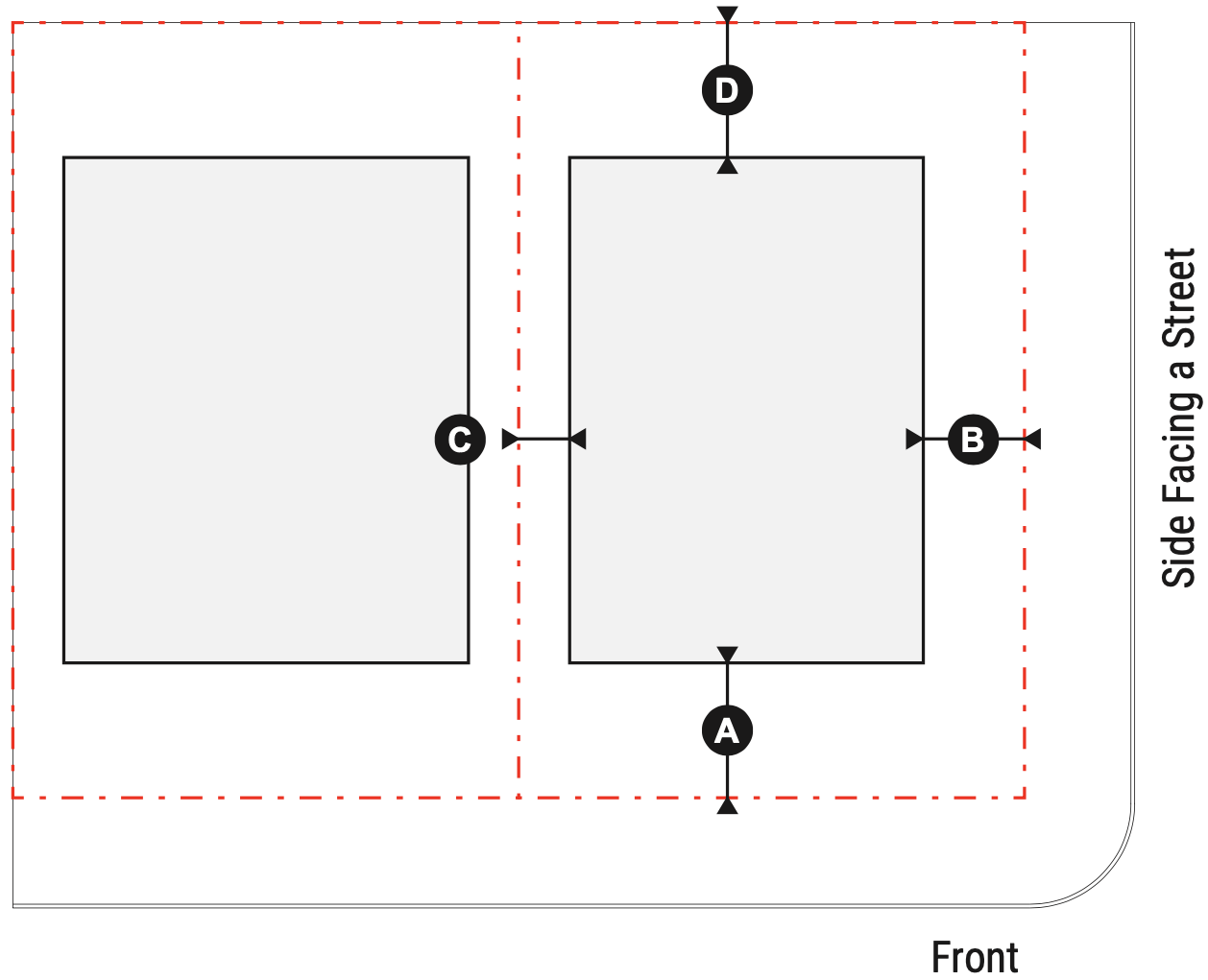
BUILDING HEIGHT Ⓔ RS-3 RS-4 Maximum Height (stories) 3 2 Maximum Height (feet) 37 feet above grade (2) - Only ⅓ of the floor area of habitable major structures may be located above 25 feet in height.
- For every one square foot of floor area above 25 feet in height, there shall be one square foot of courtyard or garden space, open to the sky, at ground level within the buildable area of the lot.
- The understructure of habitable major structures shall be designed to be contiguous with perimeter walls above and shall enhance the experience of courtyard and exterior spaces directly adjacent.
25 feet above grade (2) 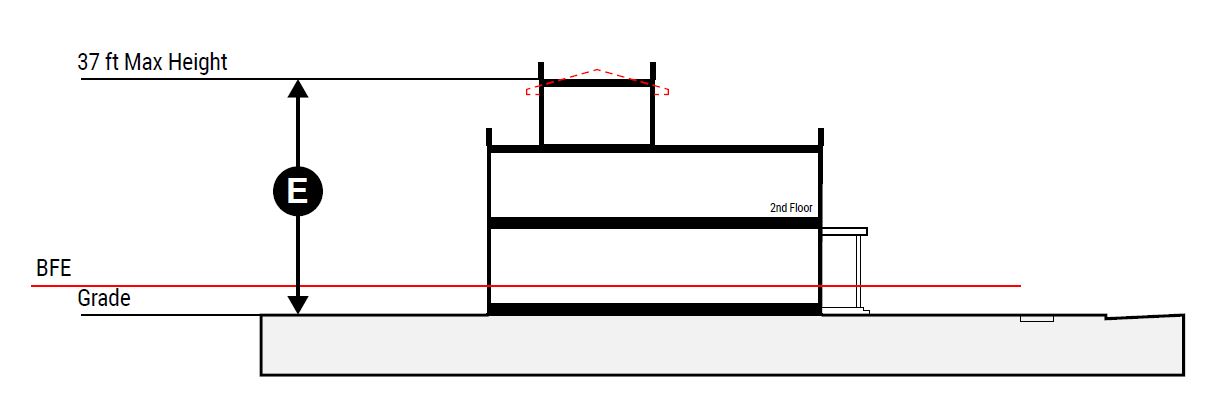
RS-3
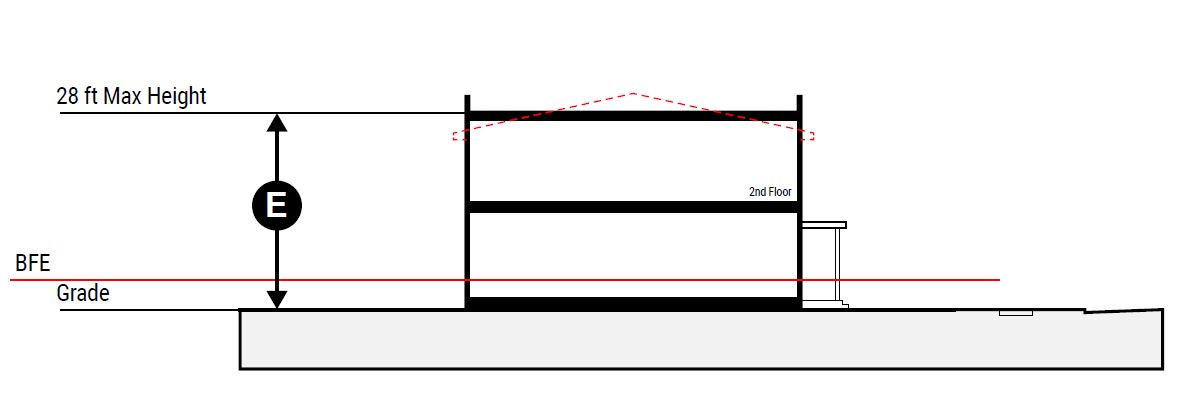
RS-4
(1). No variance from this provision shall be granted.
(2). The height regulation exceptions contained in section 7.5.2 shall not apply except chimneys and air vents are permitted.
- Supplementary yard regulations. Notwithstanding the regulations contained in section 7.5.3, the following supplementary yard regulations shall apply:
- Accessory buildings are not permitted in required yards.
- Fences, walls and gates shall not be permitted eastward of the Miami Beach Bulkhead Line and shall not exceed 42 inches in height within 130 feet west of the Miami Beach Bulkhead Line.
- Hot tubs, showers, saunas, whirlpools, toilet facilities, swimming pool equipment, and decks shall not be permitted more than the yard elevation within required yard areas. An exception may be made for swimming pool equipment with approval by the historic preservation board.
- Satellite dish antennas shall not be permitted in required yard areas.
- Swimming pools may only occupy a required yard if open and unobstructed to the sky, and elevated no more than the yard elevation. An exception may be made for swimming pools with approval by the historic preservation board. Swimming pool decks shall be set back a minimum of 5 feet from side yards, 5 feet from side yards facing a street, 5 feet from Collins Avenue, and 80 feet from the Miami Beach Bulkhead Line on oceanfront lots.
- The terms habitable major structures, non-habitable major structures and understructure shall be as defined in section 161.053, Florida Statutes and chapter 62B-33, Florida Administrative Code.
7.2.2.6 40TH Street Overlay (RS)
- Location and Purpose (40th Street Overlay – RS)
The overlay regulations of this division shall apply to the properties, as they are configured as of January 1, 2010, with lot lines adjacent to the south right-of-way line of 40th Street between Chase Avenue to the west and Pine Tree Drive to the east (MAP EXHIBIT-1).
The purpose of this overlay district is to provide pedestrian-friendly religious institutional uses through the conditional use permit process at the properties to serve the surrounding residential uses. Any expansion of the overlay district shall only be permitted by amendment to these regulations. - Compliance with Regulations (40th Street Overlay – RS)
The following overlay regulations shall apply within the 40th Street Overlay District. All development regulations for the underlying zoning district shall apply, except as follows provided in 7.2.2.6:DEVELOPMENT REGULATIONS TABLE (For Development Consisting of 2 or More Platted Lots in the 40th Street Overlay) Maximum Unit Size (% of Lot Area) 100% Maximum Lot Coverage (% of lot area) 50% BUILDING SETBACKS Front Setback 20 feet Side, Facing a Street Setback 5 feet BUILDING HEIGHT Maximum Height (stories) 3 stories Maximum Height (feet) 36 ft - flat roofs
39 ft - sloped roofs
Religious institutions and standalone schools, in existing rehabilitated structures or new construction, shall be conditional uses, subject to regulations in section 2.5.2, conditional use procedure.
All new construction or additions to existing structures shall be compatible with the scale of the surrounding residential neighborhood and shall be designed to maintain a residential character, as determined by the planning director or designee, or the design review board, as applicable.
Permits for new construction, alterations or additions to existing structures shall be subject to design review by the planning director or designee. For those sites consisting of two or more platted lots, the review and approval of the design review board shall be required.
The following regulations shall apply to sites consisting of two or more platted lots:
Dormitories associated with religious institutions shall be a conditional use, subject to the regulations in section 2.5.2, conditional use procedure. Thwe number of individual dormitories shall not exceed an aggregate of 4 dormitory units per platted lot, and there shall be a maximum of up 4 beds in each dormitory unit.
Covered stairs and walkways shall be exempt from unit size and lot coverage calculations.
Roof top access and roof top uses shall not be permitted.
The overlay district shall be exempt from the following regulations applicable to the underlying zoning district:
Section 7.2.2.3(b)(2): Two Story Houses Standards.
Section 7.2.2.3(b)(3): Nonconforming yards, for developments consisting of two or mor platted lots.
7.2.2.3(b)(4): Limitation on contiguous lots, not to exceed three platted lots.
7.2.2.3(b)(7)A: The general statement shall not apply to the 40th Street Overlay District.
- Off-street Parking Regulations (40th Street Overlay – RS)
For religious institutions in the 40th Street Overlay District (MAP EXHIBIT-1) , the following off-street parking regulations shall apply:- For adaptive reuse of existing buildings, including expansions or additions thereto less than 50 percent (50%) of the size of the existing structure, there shall be no parking requirement provided that there is one or more public parking lot(s) and/or garage(s) within 500 feet of the subject property. Existing required parking spaces on site shall remain or be replaced on-site.
- For new construction, and expansions or additions of more than 50 percent (50%) of the size of an existing structure, the parking requirement shall be the same as for a single-family detached dwelling pursuant to chapter 5 of the Land Development Regulations, entitled off-street parking, article II; "Vehicle parking, bicycle parking and off-street loading requirements," provided that there is one or more public parking lot(s) and/or garage(s) within 500 feet of the subject property.
- Existing parking spaces on a property may be discontinued, provided that there is one or more public parking lot(s) and/or garage(s) within 500 feet of the subject property. In the event that a religious institution converts back to a single family residence, the previously discontinued parking spaces shall be re-activated.
7.2.3.1 PURPOSE (TH)
The TH townhome residential district is designed to accommodate townhome developments.
7.2.3.2 USES (TH)
| USES TABLE (TH) | |
|---|---|
| RESIDENTIAL | |
| Single-family detached dwellings | P |
| Townhomes | P |
| LODGING | |
| OFFICE | |
| COMMERCIAL | |
| Retail | A * |
| Alcoholic beverage establishments | Pro * |
| Gambling and Casinos pursuant to section 7.1.8 | Pro |
| Rentals or leases of mopeds, motorcycles, and motorized bicycles pursuant to section 7.1.8 | Pro |
| Neighborhood and Retail Fulfillment Centers pursuant to section 7.1.8 | Pro |
| CIVIC | |
| CIVIL SUPPORT | |
| EDUCATIONAL | |
| INDUSTRIAL | |
| OTHER | |
Key P – Main Permitted Use C - Conditional Use A - Accessory Use Pro - Prohibited Use * See supplemental use regulations below | |
- Supplemental main permitted uses (TH)
None - Supplemental Conditional uses Regulations (TH)
None - Supplemental Accessory uses Regulations (TH)
The supplemental accessory uses are as follows:- Those noncommercial uses customarily associated with townhome developments, including floor area associated with public uses that are open to the general public.
- However, projects that exceed 200 units may have 10 percent (10%) of the floor area of the project as retail uses. See section 7.5.4.13.
- Supplemental Prohibited uses Regulations (TH)
The supplemental prohibited uses are:- Alcoholic beverage establishments pursuant to the regulations set forth in chapter 6 in General Ordinances.
7.2.3.3 DEVELOPMENT REGULATIONS (TH)
- The development regulations in the TH townhome residential district are as follows:
| DEVELOPMENT REGULATIONS TABLE (TH) | |
|---|---|
| Maximum FAR | 0.70 |
| Maximum Density (Dwelling Units Per Acre) | 30 DUA (80% bonus for workforce or affordable units) |
| MINIMUM UNIT SIZE (SQUARE FEET) | |
| Unit | 900 SF |
| MINIMUM AVERAGE UNIT SIZE (SQUARE FEET) | |
| Unit | N/A -The number of units may not exceed the maximum density set forth in thecomprehensive plan. |
| LOT OCCUPATION | |
| Minimum Lot Area (square feet) | 5,000 SF |
| Minimum Lot Width (feet) | 50 feet |
| Maximum Lot Coverage (% of lot area) | N/A |
| BUILDING SETBACKS | |
| Front Setback Ⓐ | 20 feet |
| Side, Facing a Street Setback Ⓑ | 15 feet |
| Side, Interior Setback Ⓒ | 7.5 feet (1) |
| Rear Setback Ⓓ | 20 feet |
| |
| BUILDING HEIGHT | |
| Maximum Height (feet) Ⓔ | 40 feet (except as provided in section 7.5.2) |
| |
| |
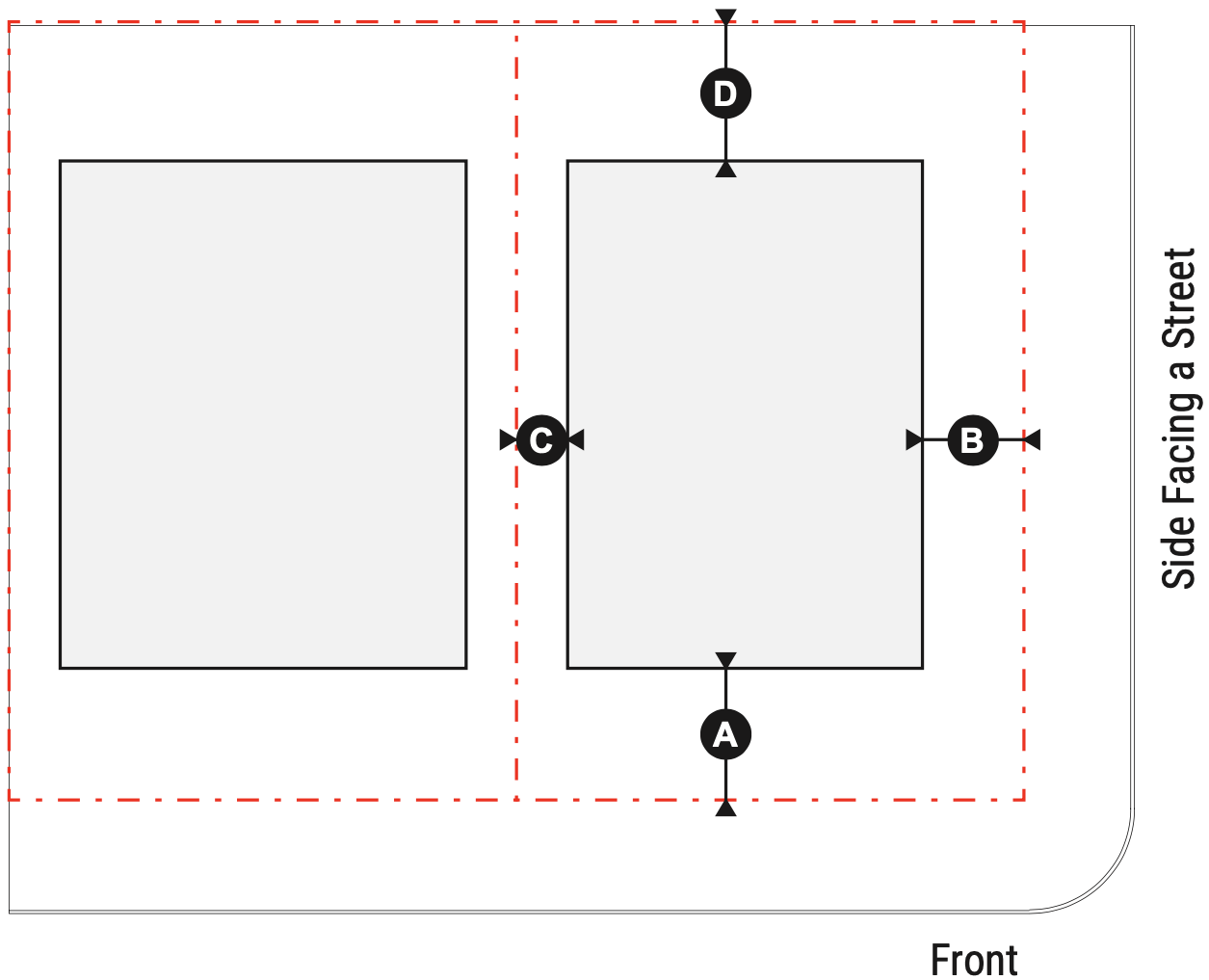
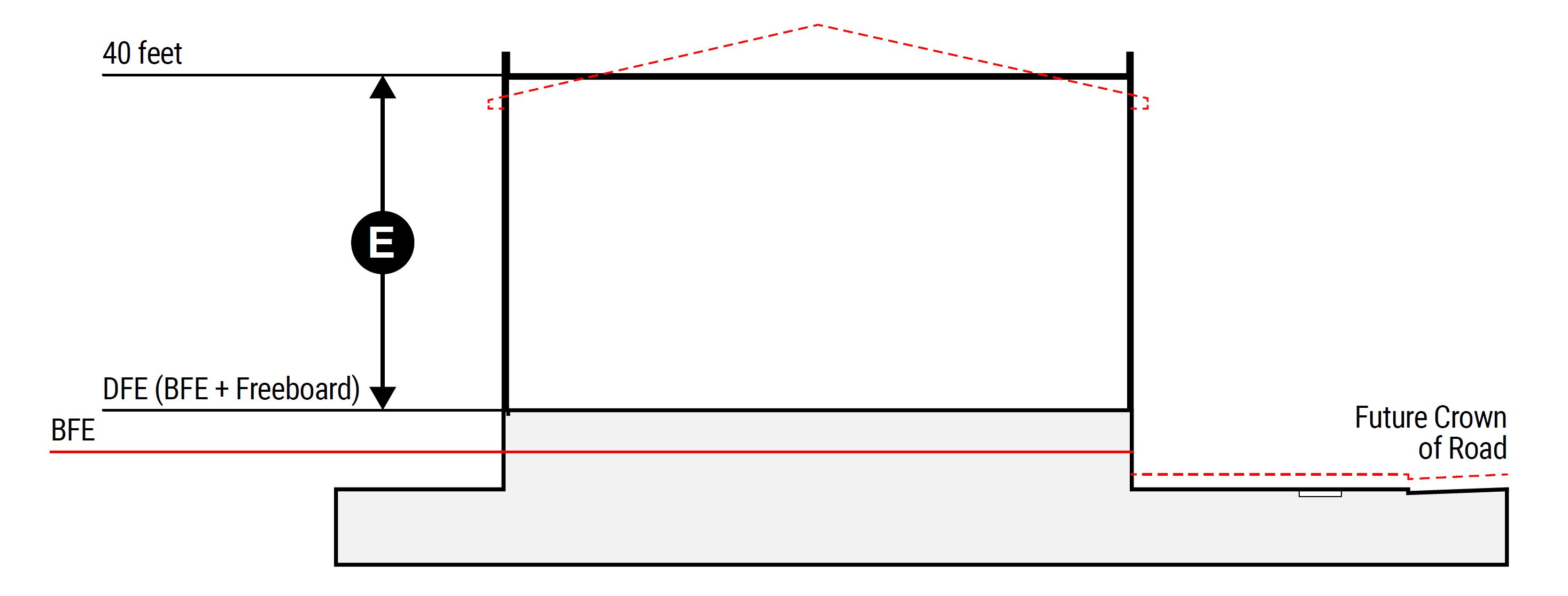
- Design review (TH)
All townhome projects shall be reviewed pursuant to the design review procedures as set forth in section 2.5.3.
7.2.3.4 ADDITIONAL REGULATIONS (TH)
a. Public-Private Parking Agreement.
In cases where the city commission approves after public hearing a public-private parking agreement for a neighborhood based upon an approved street improvement plan, the minimum front yard setback for parking subject to the agreement shall be 0 feet. The street improvement plan must be approved by the design review board if outside an historic district, or the historic preservation board if inside an historic district.
7.2.4.1 PURPOSE (RM-1)
The RM-1 residential multifamily, low density district is designed for low intensity, low rise, single-family and multiple-family residences.
7.2.4.2 USES (RM-1)
| USES TABLE (RM-1) | |
|---|---|
| RESIDENTIAL | |
| Single-family detached dwellings | P |
| Townhomes | P |
| Apartments | P |
| LODGING | |
| Apartment Hotels | Pro* |
| Hotels | Pro* |
| Suite Hotels | Pro* |
| Bed and Breakfast Inn | Pro* |
| Hostels | Pro* |
| OFFICE | |
| Administrative Offices | A* |
| COMMERCIAL | |
| Accessory Commercial Use | Pro* |
| Hall for Hire | Pro* |
| Restaurant serving alcoholic beverages | Pro* |
| Accessory outdoor bar counters | Pro* |
| Accessory outdoor open air entertainment establishment | Pro* |
| Entertainment establishment | Pro* |
| Retail | Pro* |
| Restaurants with or without accessory bars, and personal services | Pro* |
| Alcoholic beverage establishments | Pro * |
| Gambling and Casinos pursuant to section 7.1.8 | Pro* |
| Rentals or leases of mopeds, motorcycles, and motorized bicycles pursuant to section 7.1.8 | Pro* |
| Neighborhood and Retail Fulfillment Centers pursuant to section 7.1.8 | Pro* |
| CIVIC | |
| Religious Institutions with occupancy of 199 persons or less | C |
| Religious Institutions with occupancy of more than 199 persons | C |
| CIVIL SUPPORT | |
| Private and Public Institutions | C |
| Accessory neighborhood impact establishments | C* |
| EDUCATIONAL | |
| Day Care Facility | C |
| Schools | C |
| Family Day Care Center | A* |
| INDUSTRIAL | |
| OTHER | |
| Commercial or noncommercial parking lots and garages | C |
| Parking lots or garages | Pro* |
Key P – Main Permitted Use C - Conditional Use A - Accessory Use Pro - Prohibited Use * See supplemental use regulations below | |
- Supplemental main permitted uses Regulations (RM-1)
The supplemental main permitted uses are as follows:- Apartment hotels, hotels, and suite hotels for properties fronting Harding Avenue or Collins Avenue, from the city line on the north, to 73rd Street on the south (MAP EXHIBIT-1) (pursuant to sections 2.7.2 which requires a Commission warrant, and 7.5.4.5)
- Bed and breakfast inn (pursuant to section 7.5.5.5)
- Apartment hotels, hotels, and suite hotels for properties abutting Lincoln Lane South, between Drexel Avenue and Lenox Avenue (MAP EXHIBIT-2), subject to the following regulations:
- The lot width of the property shall not exceed 100 feet;
- The lobby from which the property is accessed shall be located within a building fronting Lincoln Road, which is located directly across Lincoln Lane South from the RM-1 property;
- The hotel shall be operated by a single operator; and
- No accessory uses associated with a hotel shall be located or permitted within the RM-1 district.
- Properties located north of Normandy Drive having a lot area greater than 30,000 square feet, which are individually designated as an historic site, shall be entitled to have
- hotels,
- apartment hotels, and
- suite hotels
- Supplemental Conditional uses Regulations (RM-1)
The supplemental conditional uses are as follows:- For properties located in the Collins Waterfront Historic District, which are designated as a Local Historic Site, a hall for hire use within the interior of an existing building shall require conditional use approval and shall comply with the following:
- The conditional use shall only be permitted within an existing structure that is on a property designated as a "Historic Site" and such limitation shall be recorded in the Public Records;
- Dance halls, entertainment establishments and neighborhood impact establishments may only be permitted as part of a hall for hire;
- The hall for hire use shall close by 11:00 p.m. Sunday through Thursday, and by 12:00 a.m. Friday and Saturday;
- Events at the hall for hire shall be for the exclusive use of the property owner (and its subsidiaries) and invited guests. Events at the hall shall not be for the general public, with the exception of adjacent schools and community organizations within the Collins Park and Flamingo Drive areas, which may use the hall until 9:00 p.m.;
- Restaurants, stand-alone bars and alcoholic beverage establishments, not functioning as a hall-forhire, shall be prohibited;
- Outdoor dining, outdoor entertainment and open-air entertainment uses shall be prohibited;
- Private or valet parking for any event at the hall shall be prohibited from using Flamingo Drive, Flamingo Place or Lake Pancoast Drive to facilitate access to the site.
- For apartment buildings located north of 41st Street with a minimum of 100 apartment units, a restaurant serving alcoholic beverages shall require conditional use approval and shall comply with the following:
- The restaurant shall only be open to residents of the apartment building and their invited guests. All invited guests shall be required to park on the subject property.
- The kitchen shall be limited to a maximum size of 500 square feet.
- The conditional use application for a restaurant with outdoor seating and outdoor dining areas shall specify the proposed maximum number of seats, and locations of seating in the outdoor areas, which shall be subject to planning board review and approval.
- A hall for hire, dance hall, open-air entertainment establishment, outdoor entertainment establishment or entertainment establishment shall be prohibited.
- There shall only be one restaurant on the subject property.
- The hours of operation of the restaurant may be from 8:00 a.m. to midnight (no orders to be taken after 11:00 p.m.), and for any exterior areas only until 11:00 p.m. (no order to be taken after 10:00 p.m.).
- Without limiting the foregoing, in the outdoors areas of the restaurant there shall not be any entertainment or special events.
- There shall be no variances from the provisions of section 7.2.4.2.b.1.
- For properties located north of Normandy Drive (MAP EXHIBIT-4) having a lot area greater than 30,000 square feet, which are individually designated as an historic site, additional conditional uses are:
- Accessory outdoor bar counters, provided that an accessory outdoor bar counter is only permitted to be utilized during the hours of operation of the restaurant of which it is a part.
- Accessory outdoor and open air entertainment establishment consisting of ambient performances only. For purposes of this subsection, ambient performances shall be defined as any live or recorded, amplified or nonamplified performance played or conducted at a volume that does not interfere with normal conversation. Ambient performances shall only take place between the hours of 10:00 a.m. and 10:00 p.m., unless otherwise approved by the planning board through the conditional use process.
- Accessory neighborhood impact establishments.
- Qualifying educational facilities shall be eligible for the School Use Incentives as identified in section 7.1.13 of these land development regulations.
- For properties located in the Collins Waterfront Historic District, which are designated as a Local Historic Site, a hall for hire use within the interior of an existing building shall require conditional use approval and shall comply with the following:
- Supplemental Accessory uses Regulations (RM-1)
The supplemental accessory uses are as follows:- The accessory uses in the RM-1 residential multifamily, low density district are as required in section 7.5.4.13 .
- Notwithstanding the foregoing, accessory uses that are customarily associated with the operation of a hotel are permitted as provided in section 7.2.4.2.
- Additionally, properties located north of Normandy Drive (MAP EXHIBIT-4) having a lot area greater than 30,000 square feet, which are individually designated as an historic site are permitted to have the following accessory uses associated with the operation of a hotel:
- retail
- restaurants with or without accessory bars, and personal services.
- Supplementary Prohibited uses Regulations (RM-1)
The supplemental prohibited uses are as follows:- Alcoholic beverage establishments pursuant to the regulations set forth in chapter 6 in General Ordinances, are prohibited uses
- Parking lots or garages when a main use are prohibited on lots fronting Española Way.
- Hours for the sale and consumption of alcoholic beverages.
- West Avenue. As applicable to alcoholic beverage establishments between Bay Road on the west, the southern boundary line of properties fronting the south side of Lincoln Road on the north, Alton Court on the east, and 13th Street on the south, alcoholic beverages shall not be offered for sale or on-premises consumption indoors between the hours of 2:00a.m. and 8:00 a.m. each night, or outdoors between the hours of 12:00a.m. and 8:00a.m. each night, notwithstanding sections 2.4.3 or 2.12.5 of this Code. For purposes of this section, the term "outdoors" shall mean any area of an alcoholic beverage establishment that is not completely enclosed and located entirely within a building. Any operable windows or doors shall remain closed at all times, except for purposes of ingress and egress.
- Determination of vested rights. The owner or operator of any alcoholic beverage establishment claiming a vested right to conduct alcohol sales for on-premises consumption for hours greater that the hours permitted under subsection (e)(1) may so operate only after applying for a determmination of its vested right(s) and having those rights confirmed by the chief special magistrate as follows:
- Appointment; qualifications; term. The chief special magistrate shall adjudicate applications for determinations of vested rights under this subsection (e)(2). The special magistrate shall be an attorney in good standing with the Florida Bar, with expertise in the areas of local government law, business licensing, vested rights, and/or property law.
- Filing period. Any application for a determination of vested rights must be filed with the city manager, city attorney, and city clerk no later than October 31, 2024.
- Standard for finding of a vested right. A vested right to conduct alcohol sales for on-premises consumption later that the hours prescribed in subsection (e)(1) shall be found to exist only where:
- An active order of the Planning Board, an active order of the Board of Adjustment, or other active development order issued by the City, expressly authorizes the alcoholic beverage establishment to conduct alcohol sales for on-premises consumption during specified hours;
- In good faith reliance upon such prior order, the applicant has made a substantial change in position or incurred extensive contractual obligations and financial expenses; and
- It would be highly inequitable to interfere with the acquired right.
In accordance with Florida law, no right to conduct alcohol sales at certain hours may be determined to have vested as a result of the adoption of an ordinance by the city commission. The chief special magistrate shall dismiss any application that relies solely upon a previously enacted ordinance of the city commission.
- Procedure. Applications for vested rights determinations shall be heard in accordance with the procedures for hearings before the special magistrate specified in Chapter 30 of the City Code except that;
- Applications for a vested rights determination shall be made in writing and filed with the city manager, city attorney, and city clerk.
- At a minimum, applications shall;
- Identify all prior orders from which the alleged vested right arises;
- Include a copy of each such prior order;
- Specify how the adoption of this ordinance adversely affected the alleged vested right including how the standard in subsection (e)(2)(C) is satisfied;
- Specify the applicant's requested relief; and
- Be sworn to by the applicant.
- The signature of the applicant or the applicant's attorney shall constitute a certificate that the person signing has read the applicant's written submissions and, to the best of their knowledge, the application is made in good faith and not for purposes of delay. The applicant or its attorney shall have a continuing obligation to correct any statement or representation found to have been incurred when made or which becomes incorrect by virtue of changed circumstances. If a claim of taking or abrogation of vested rights is; (1) based upon facts that the claimant or the attorney for the claimant knew or should have known were not true; or (2) frivolous or filed solely for the purpose of delay, the chief special magistrate shall make such findings in writing and deny the application.
- The city clerk shall acknowledge receipt of an application for vested rights within three business days of receipt of the application, and shall promptly schedule a hearing before the chief special magistrate.
- Effect of filing application for vested rights determination. During the pendency of an application for a vested rights determination, the applicant shall comply with all requirements of this section. The filing of an application shall not be construed to stay enforcement of this section against the applicant.
- Appeals. An aggrieved party, including the city administration, may appeal a final administrative order of the special magistrate to the circuit court by petition for writ of certiorari, pursuant to the Florida Rules of Appellate Procedure.
7.2.4.3 DEVELOPMENT REGULATIONS (RM-1)
a. The development regulations in the RM-1 residential multifamily, low density district are as follows:
| DEVELOPMENT REGULATIONS TABLE (RM-1) | |
|---|---|
| Maximum FAR | 1.25 |
west side of Collins Avenue between 76th and 79th Streets (MAP EXHIBIT-5) | 1.4 |
Public and private institutions: | 1.25 |
Public and private institutions: | 1.4 |
| Maximum Density (Dwelling Units per Acre) | 60 DUA (80% bonus for workforce or affordable units) |
| MINIMUM UNIT SIZE (SQUARE FEET) | |
| Single Family Detached House | 1,800 SF (4) |
| Apartments/Multi-family Units | |
New Construction | 550 SF |
Non-elderly and elderly low and moderate income housing | 400 SF |
Workforce Housing | 400 SF |
Rehabilitated Buildings | 400 SF |
| Lodging and Hotel Units | 335 SF + (5) |
Hotel units within rooftop additions to contributing structures in a historic district and individually designated historic buildings | 335 SF |
| MINIMUM AVERAGE UNIT SIZE (SQUARE FEET) | |
| Single Family Detached House | N/A |
| Apartments/Multi-family Units | |
New Construction | 800 SF (6)(7) |
Non-elderly and elderly low and moderate income housing | 400 SF (6)(7) |
Workforce Housing | 400 SF (6)(7) |
Rehabilitated Buildings | 550 SF (6)(7) |
| Lodging and Hotel Units | N/A |
| LOT OCCUPATION | |
| Minimum Lot Area (square feet) | 5,600 SF |
| Minimum Lot Width (feet) | N/A |
| Maximum Lot Coverage (% of lot area) | |
For lots equal to or greater than 65 feet in width | 45% (3) |
For lots less than 65 feet in width | N/A |
| BUILDING SETBACKS | |
| Front Setback Ⓐ | |
Subterranean | 20 feet 50 feet (For lots A and 1-30 of the Amended Plat Indian Beach Corporation Subdivision and lots 231-237 of the Amended Plat of First Ocean Front Subdivision) |
Pedestal | |
Tower | 20 feet + 1 foot for every 1 foot increase in height above the pedestal, to a maximum of 50 feet, then shall remain constant. 50 feet (For lots A and 1-30 of the Amended Plat Indian Beach Corporation Subdivision and lots 231-237 of the Amended Plat of First Ocean Front Subdivision) |
| Side, Facing a Street Setback Ⓑ Lots less than 65 feet in width | |
Subterranean | 7.5 feet |
Pedestal | |
Tower | 10 feet or 8% of lot width, whichever is greater, and Sum of the side yards shall equal 16% of the lot width |
| Side, Facing a Street Setback Ⓑ Lots equal or greater than 65 feet in width | |
Subterranean | 10 feet or 8% of lot width, whichever is greater, and sum of the side yards shall equal 16% of lot width |
Pedestal | |
Tower | |
| Side, Interior Setback Ⓒ Lots less than 65 feet in width | |
Subterranean | 7.5 feet (1) |
Pedestal | |
Tower | 7.5 feet plus 10% of the height of the tower portion of the building (1) 50 feet maximum |
| Side, Interior Setback Ⓒ Lots equal or greater than 65 feet in width | |
Subterranean | 10 feet or 8% of lot width, whichever is greater, and sum of the side yards shall equal 16% of lot width (1) |
Pedestal | |
Tower | 10 feet plus 10% of the height of the tower portion of the building. The total required setback shall not exceed 50 feet. (1) |
| Rear Setback Ⓓ | |
Subterranean | 10 % of lot depth (1) |
Pedestal | |
Tower | 15 % of lot depth (1) |
| |
| BUILDING HEIGHT | |
| Maximum Height Ⓔ | 50 feet |
For properties outside a local historic district with a ground level consisting of non-habitable parking and/or amenity uses | 55 feet |
Historic District | 40 feet |
Flamingo Park Local Historic District (MAP EXHIBIT-6) | 35 feet (2) |
For properties located north of Normandy Drive (MAP EXHIBIT-4) having a lot area greater than 30,000 square feet, which are individually designated as an historic site. | 80 feet |
| |
| |
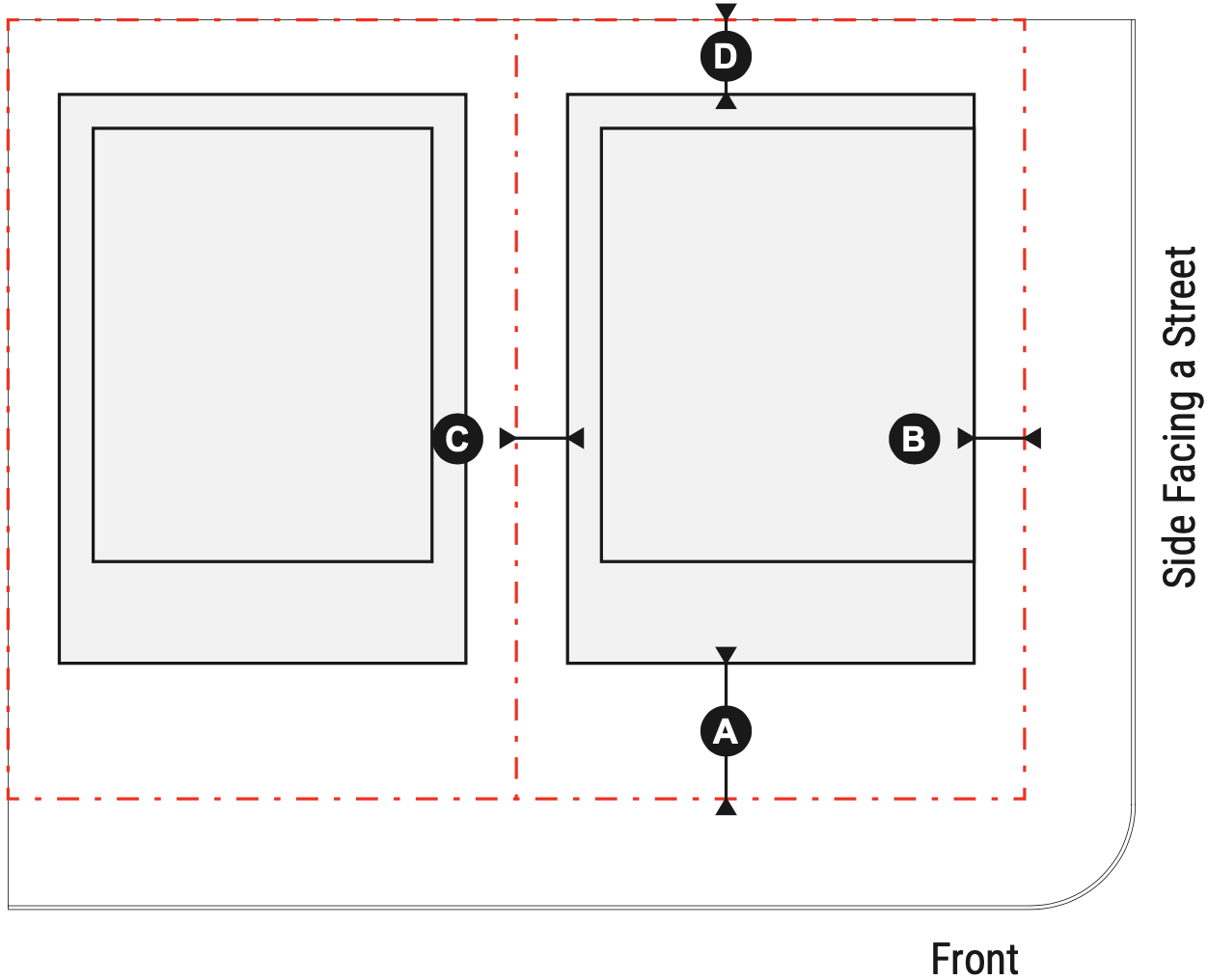
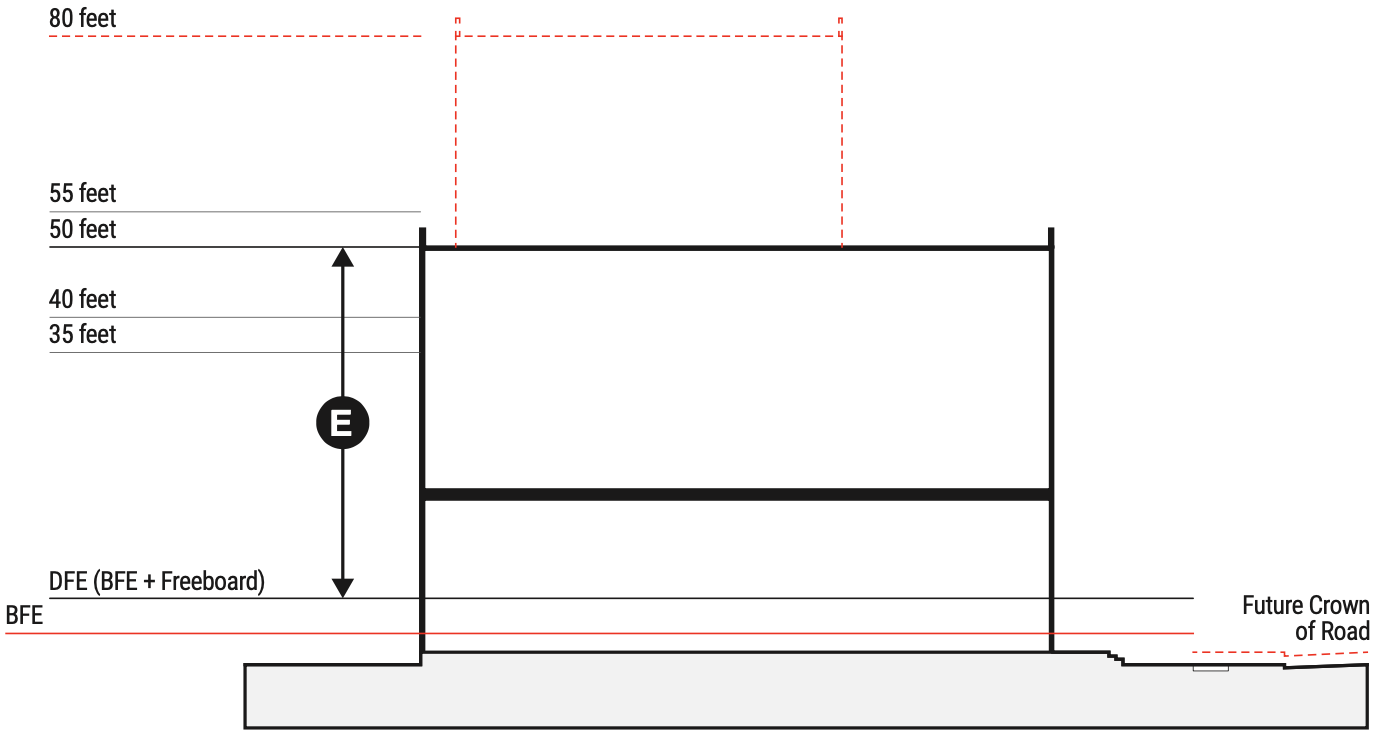
b. Exterior building and lot standards (RM-1)
See section 7.1.2.3
c. Ground floor requirements (RM-1)
When parking or amenity areas are provided at the Understory Level below the first habitable level section 7.1.2.2.c shall apply.
e. Regulations for new construction (RM-1)
All floors of a building containing parking spaces shall follow Parking Screening Standards in section 7.1.6.
f. Lot aggregation (RM-1)
No more than two (2) contiguous lots may be aggregated for development purposes, with the exception of projects classified as affordable and/or workforce housing.
g. Public-Private Parking Agreement (RM-1)
In cases where the city commission approves after public hearing a public-private parking agreement for a neighborhood based upon an approved street improvement plan, the minimum front yard setback for parking subject to the agreement shall be 0 feet. The street improvement plan must be approved by the design review board if outside an historic district, or the historic preservation board if inside an historic district.
7.2.4.4 ADDITIONAL REGULATIONS (RM-1)
- In the Flamingo Park Local Historic District (MAP EXHIBIT-6), the following shall apply:
- Notwithstanding the provisions of section 7.5.2 of these land development regulations, roof-top additions shall not be permitted on any contributing building and any stairwell or elevator bulkhead shall meet the line-of-sight requirements of section 7.5.2, but not to exceed allowable building heights. The historic preservation board reserves the right to re-classify the contributing status of any structure in the district, prior to rendering a decision on any application that may contemplate a rooftop addition.
- Ground level additions shall be detached and separated from the main structure(s) on the site by a distance of at least 10 feet. The historic preservation board may, on a case-by-case basis, allow a ground level addition to attach to the rear of an existing structure that has a flat roof and parapet, provided such addition does not exceed the height of the existing structure and that the attachment does not result in the demolition, obscuring or removal of any significant architectural features and/or finishes from the existing structure.
- The height of any ground level addition to an existing structure, whether attached or detached, shall be limited to one (1) story, not to exceed 12 feet above the height of the main roof of the existing structure. In the event the existing structure is two (2) stories in height or higher, the proposed addition shall not exceed a total of three (3) stories and 35 feet.
- Ground level additions, whether attached or detached, shall follow the established lines of the interior side setbacks of the main existing structure on the site. For the first two (2) floors of the addition, any non-conforming interior side setback may be extended, provided the minimum interior and/or street side setback is 5 feet; the third floor of the addition, if permitted, shall meet the minimum side yard requirements. Notwithstanding the foregoing, the historic preservation board may, on a case-by-case basis, allow ground level additions to exceed one side of the established interior side setbacks of the main existing structure on the site, provided the sum of the interior side setbacks is a minimum of 15 feet.
- No more than two (2) contiguous lots may be aggregated for development purposes.
- For any new construction or additions, whether attached or detached, on multiple or aggregated lots, a minimum building separation of 10 feet at the center of the aggregated lots shall be required. The historic preservation board may, on a case-by-case basis, allow for a connection in the rear of the property, provided the depth of such connection does not exceed 25 percent (25%) of the lot depth and that the connection does not contain any parking spaces.
- Only those portions of a contributing building that were not part of the original structure on site, or that have not acquired any type of architectural significance, as determined by staff or the historic preservation board, may be proposed to be demolished.
- For contributing buildings or properties, no building or structure shall be permitted within an existing historic courtyard. For purposes of this subsection, an historic courtyard shall be defined as a grade level space, open to the sky, which is enclosed on at least two sides by an existing building or structure on the same property and is an established architectural or historic component of the site or building design by virtue of significant features and/or finishes, including, but not limited to, paving patterns, fountains, terraces, walkways or landscaping.
- Each level of new construction or additions, whether attached or detached, shall have a maximum floor to floor height of 12 feet. The historic preservation board may, on a case-by-case basis, waive the maximum floor to floor height requirement and allow for loft or mezzanine space within the allowable volume of the building, provided the total floor area of any such loft space or mezzanine does not exceed one-third (1/3) the total floor area in that room or story in which the loft space or mezzanine occurs.
- Stairwell bulkheads shall not be permitted to extend above the maximum building height.
- Elevator bulkheads extending above the main roofline of a building shall be required to meet the line-of-sight requirements set forth in section 7.5.2 herein and such line-of-sight requirement cannot be waived by the historic preservation board.
- If an alley exists, no front curb cut shall be permitted. If no alley exists, any curb-cut required shall not exceed 12 feet in width.
- No variances from these provisions shall be granted.
- For properties located in the North Shore and Normandy Isles National Register Historic Districts (MAP EXHIBIT-7)
See section 7.3.8.
7.2.4.5 NORTH BEACH PRIVATE AND PUBLIC SCHOOL OVERLAY DISTRICT (RM-1)
- Location and Purpose (North Beach Private and Public School Overlay District – RM-1).
- The overlay regulations in this division shall apply to all new and existing schools located in that portion of the RM-1 residential multifamily low intensity zoning district which is bounded on the north by the south side of 78th Street; on the east by the west side of Carlyle Avenue; on the west by the east side of Tatum Waterway; and on the south by the north side of 75th Street (MAP EXHIBIT-8).
- In the event of a conflict between the overlay regulations in this division and the regulations for the underlying RM-1 zoning district and/or North Beach National Register Conservation District Overlay, these overlay regulations shall control.
- The purpose of this overlay district is to:
- Provide land-use regulations that encourage the retention and preservation of existing public and private schools within the overlay;
- Promote enhancements to educational facilities for children that improve academic offerings, campus security, vehicle circulation. parking, and student access; and
- Ensure that the scale and massing of new development is consistent with the established context of the existing residential neighborhoods, and maintain the low-scale, as-built character of the surrounding neighborhoods.
- Development Regulations (North Beach Private and Public School Overlay District- RM-1)
The following overlay regulations shall apply to the North Beach Private and Public School District Overlay:- The lot area, lot width, and lot aggregation requirements for properties zoned RM-1 within the North Beach Private and Public School District Overlay district are as follows:
DEVELOPMENT REGULATIONS (NORTH BEACH PRIVATE AND PUBLIC SCHOOL OVERLAY DISTRICT – RM-1) Minimum Developable Lot Area (Square Feet) 5,000 SF Minimum Developable Lot Width (Feet) 50 feet Maximum Developable Lot Width (Feet) N/A Maximum Developable Aggregation (Platted Lots) Schools: Up to nine (9) lots may be aggregated
- The height requirements for RM-1 properties within the North Beach Private and Public School Overlay District are as follows:
- The maximum building height for new construction shall be 32 feet for the first 10 feet of building depth as measured from the minimum required front setback, and a maximum of 60 feet for the remainder of the building depth when the building includes a gymnasium: otherwise. The maximum building height shall be 45 feet.
- In the event that the existing building exceeds 32 feet in height that existing height shall control.
- Elevator and stairwell bulkheads extending above the main roofline of a building shall be required to meet the line-of-sight requirements set forth in section 7.5.2. unless waived by either the historic preservation board or design review board. as may be applicable.
- Exterior building and lot standards.
- There shall be no minimum or maximum yard elevation requirements or maximum lot coverage requirements within the North Beach Private and Public School District Overlay.
- The setback requirements for all buildings located in the RM-1 district within the North Beach Private and Public School Overlay District are as follows:
SETBACK REQUIREMENTS (NORTH BEACH PRIVATE AND PUBLIC SCHOOL OVERLAY DISTRICT – RM-1) Front 10 feet Side, Facing a Street Lot width of 60 feet or less 5 feet (non-waterfront) Lot width greater than 60 feet 7.5 feet or 8% of lot width, whichever is greater (non-waterfront) Side, Interior 5 feet Rear 5 feet (non-waterfront) - No additional setback requirements shall be imposed for landscaping.
- For development of school sites consisting of nine platted lots or fewer, there shall be no specific restriction on the width of any new building.
- For development of school sites consisting of nine platted lots or fewer, there shall be no minimum distance separation between buildings on a single site.
- For development of school sites, a courtyard or semi-public outdoor area shall not be required.
- Notwithstanding the provisions in section 7.5.3.2, within the required front yard, rear yard, or side yards facing a street or interior, fences, walls, and gates shall not exceed 8 feet in height, as measured consistent with the definition of "adjusted future grade" in section 1.2.1.
- The lot area, lot width, and lot aggregation requirements for properties zoned RM-1 within the North Beach Private and Public School District Overlay district are as follows:
- Additional Parking Standards (North Beach Private and Public School Overlay District- RM-1).
- Notwithstanding the provisions of section 5.2.4, there shall be no minimum parking requirement associated with the redevelopment of an existing school.
- All exterior parking and driveway surface areas shall be composed of semi-pervious or pervious material such as concrete or grass pavers, set in sand.
- Required wheel stops shall have a low profile, and shall not exceed 5 feet in width.
- All parking lots for schools shall meet the following minimum setback requirements, notwithstanding any other requirement in the land development regulations:
Front: 5 feet;
Rear: 5 feet;
Side interior: 5 feet; and
Side facing a street: 5 feet. - For schools, a maximum of five one-way driveway curb cuts per platted lot within a development site shall be permitted. The maximum width of each driveway curb cut shall not exceed 15 feet.
- Notwithstanding the provisions of section 5.2.6, no new loading spaces shall be required in connection with the expansion of an existing school (including the construction of a new building or structure, or an increase to the floor area of the school).
- Notwithstanding the requirements of section 4.2.8, as applicable to landscaped areas in permanent parking lots, when reconfiguring existing parking for a school, the minimum landscape requirements shall be subject to the review and approval of the design review board.
7.2.5.1 Purpose (RM-2)
The RM-2 residential multifamily, medium intensity district is designed for medium intensity multiple-family residences.
7.2.5.2 Uses (RM-2)
| USES TABLE (RM-2) | ||
|---|---|---|
| RESIDENTIAL | ||
| Single-family detached dwellings | P | |
| Townhomes | P | |
| Apartments | P | |
| LODGING | ||
| Apartment Hotels | P* Pro* | |
| Hotels | P* Pro* | |
| Suite Hotels | P* | |
| Hostels | Pro* | |
| OFFICE | ||
| Offices | P* A* | |
| Non-medical office uses | C* | |
| COMMERCIAL | ||
| Accessory Commercial Use | A* | |
| Hall for Hire | C* | |
| Personal service uses | C* | |
| Restaurants, cafes and/or eating and drinking establishments, which include entertainment | C* A* | |
| Retail Uses | A* | |
| Outdoor bar counters | C* A* | |
| Alcoholic beverage establishments | A* | |
| Accessory outdoor entertainment establishment | Pro* | |
| Accessory open air entertainment establishment | Pro* | |
| Entertainment establishment | Pro* C* A* | |
| Accessory outdoor bar counter | Pro* | |
| Health Clubs | A* | |
| Gambling and Casinos pursuant to section 7.1.8 | Pro | |
| Rentals or leases of mopeds, motorcycles, and motorized bicycles pursuant to section 7.1.8 | Pro | |
| Neighborhood and Retail Fulfillment Centers pursuant to section 7.1.8 | Pro | |
| CIVIC | ||
| Stand-alone religious Institutions | C | |
| Religious Institutions with occupancy of 199 persons or less | C | |
| CIVIL SUPPORT | ||
| Private and Public Institutions | C | |
| Accessory neighborhood impact establishments | C* | |
| EDUCATIONAL | ||
| Day Care Facility | C | |
| Schools | C | |
| Family Day Care Centers | A* | |
| INDUSTRIAL | ||
| OTHER | ||
| Commercial or noncommercial parking lots and garages | C | |
Key | ||
- Supplemental main permitted uses regulations (RM-2)
The supplemental main permitted uses are as follows:- Apartment hotels, hotels, hostels, and suite hotels (pursuant to sections 2.7.2 which requires a Commission warrant, and 7.5.4.5).
- Except that in the Palm View corridor, defined in this subsection as all properties abutting the west side of Meridian Avenue between 17th Street and Collins Canal (MAP EXHIBIT-1), apartment hotel or hotel uses are only permitted if issued a building permit or occupational license prior to May 28, 2013, or are approved by the design review board pursuant to a complete application filed and pending prior to May 28, 2013, in which event they shall be considered a “legal conforming use.” A property that has a “legal conforming use” as used in this subsection prior to May 28, 2013, may retain all, and apply for new, expansions and modifications to, permitted, conditional and/or accessory uses permitted in the zoning category as of May 28, 2013, and apply for building permits to add, improve and/or expand existing structures, or construct new structures for permitted, conditional and/or accessory uses permitted in the zoning category, if FAR remains available.
- In the West Avenue corridor, defined in this subsection as that area bordered by Collins Canal to the north, Alton Road to the east, Biscayne Bay to the west, and 6th Street to the south (MAP EXHIBIT-2), apartment-hotel or hotel uses are only permitted if issued a building permit or occupational license prior to May 28, 2013, or are approved by the design review board pursuant to a complete application filed and pending prior to May 28, 2013, in which event they shall be considered a “legal conforming use.” A property that has a “legal conforming use” as used in this subsection prior to May 28, 2013, may retain all, and apply for new, expansions and modifications to, permitted, conditional and/or accessory uses permitted in the zoning category as of May 28, 2013, and apply for building permits to add, improve and/or expand existing structures, or construct new structures for permitted, conditional and/or accessory uses permitted in the zoning category, if FAR remains available.
- Offices that are incidental and customary to a hotel in the RM-3 district fronting Collins Avenue located no more than 1,200 feet from the RM-3 hotel property . For purposes of this section, the distance between the RM-3 hotel property and the RM-2 office property shall be measured by following a straight line between the properties’ boundaries; further that office property shall be governed by a restrictive covenant approved as to form by the city attorney, recorded in the public records, stipulating that the office use may only remain as long as the hotel use continues.
- Apartment hotels, hotels, hostels, and suite hotels (pursuant to sections 2.7.2 which requires a Commission warrant, and 7.5.4.5).
- Supplemental Conditional Uses Regulations (RM-2)
The supplemental conditional uses are as follows:- Hall For Hire when associated with a hotel located in the RM-3 district (subject to the requirement that such hotel property be located within 100 feet of the ballroom and meeting room property); and
- Accessory neighborhood impact establishment; as set forth in section 7.2.5.2.b.4. below.
- Museum Historic Preservation District (MAP EXHIBIT-3). In addition to the conditional uses specified in section 7.2.5.2, existing religious institutions located on properties in the Museum Historic Preservation District, which contain a contributing structure, may obtain conditional use approval for a separate hall for hire use within the interior of the existing religious institution. Any such hall for hire use shall comply with the following additional regulations:
- Entertainment may only be permitted in the hall for hire;
- The hall for hire use shall cease operations by 11:00 p.m. on Sunday through Thursday, and by 12:00 a.m. on Friday and Saturday;
- Only the property owner, its subsidiaries, and its invited guests may hold events at the hall for hire;
- Restaurants, stand-alone bars, and alcoholic beverage establishments, shall be prohibited;
- Outdoor dining, outdoor entertainment, open-air entertainment uses, outdoor speakers and outdoor music shall be prohibited;
- There shall be no variances from the provisions of section 7.2.5.2.b.3.
- West Avenue Bayfront Overlay District. In addition to the conditional uses specified in section 7.2.5.2, the conditional uses within the West Avenue Bayfront Overlay District shall include the following:
- Non-medical offices and personal service uses, either of which may only be located on the lobby level of bayfront apartment buildings.
- Washington Avenue. In addition to the conditional uses specified in section 7.2.5.2, and notwithstanding the provisions of the prohibited uses in section 7.2.5.2, the following regulations shall apply to properties that front Washington Avenue between 6th Street and 7th Street, including those properties between 6th Street and 7th Street that have frontage on Pennsylvania Avenue (MAP EXHIBIT-5):
- Restaurants, cafes and/or eating and drinking establishments, which include entertainment, as an accessory use to a hotel shall require conditional use approval. This may include establishments that qualify as a neighborhood impact establishment, subject to all applicable approvals under the neighborhood impact establishment requirements and provided that any sound associated with outdoor entertainment shall be limited to a volume that does not interfere with normal conversation (i.e. at an ambient level).
- Outdoor bar counters shall require conditional use approval, with hours of operation to be determined by the planning board.
- Qualifying educational facilities shall be eligible for the School Use Incentives as identified in section 7.1.13 of these land development regulations.
- Supplemental Accessory Uses Regulations (RM-2)
The supplemental accessory uses are as follows:- The accessory uses in the RM-2 residential multifamily, medium intensity district are as required in section 7.5.4.13
- Alcoholic beverage establishments pursuant to the regulations set forth in chapter 6 of the General Ordinances.
- Notwithstanding the foregoing, a property that had a legal conforming use as of May 28, 2013, shall have the right to apply for and receive special event permits that contain entertainment uses.
- Entertainment uses shall be subject to the requirements in section 7.5.5.4.
- Supplemental Prohibited Uses Regulations (RM-2)
The supplemental prohibited uses are as follows:- Accessory outdoor entertainment establishment, accessory open air entertainment establishment, as set forth in section 7.5.5.5.
- Accessory outdoor bar counter.
- For properties located within the Palm View and West Avenue corridors, (MAP EXHIBIT-6):
- hostels; and
- hotels apartment-hotels, except to the extent preempted by F.S. § 509.032(7), and unless they are a legal conforming use. Properties that voluntarily cease to operate as a hotel for a consecutive three-year period shall not be permitted to later resume such hotel operation. Without limitation, (a) involuntary hotel closures due to casualty, or (b) cessation of hotel use of individual units of a condo-hotel, shall not be deemed to be ceasing hotel operations pursuant to the preceding sentence.
- Hours for the sale and consumption of alcoholic beverages.
- West Avenue. As applicable to alcoholic beverage establishments between Biscayne Bay on the west, the Lincoln Road right-of-way on the north, Alton Court on the east, and the southern boundary of properties fronting 8th Street on the south, alcoholic beverages shall not be offered for sale or on-premises consumption indoors between the hours of 2:00a.m. and 8:00 a.m. each night, or outdoors between the hours of 12:00a.m. and 8:00a.m. each night, notwithstanding sections 2.4.3 or 2.12.5 of this Code. For purposes of this section, the term "outdoors" shall mean any area of an alcoholic beverage establishment that is not completely enclosed and located entirely within a building. Any operable windows or doors shall remain closed at all times, except for purposes of ingress and egress.
- Determination of vested rights. The owner or operator of any alcoholic beverage establishment claiming a vested right to conduct alcohol sales for on-premises consumption for hours greater that the hours permitted under subsection (e)(1) may so operate only after applying for a determmination of its vested right(s) and having those rights confirmed by the chief special magistrate as follows:
- Appointment; qualifications; term. The chief special magistrate shall adjudicate applications for determinations of vested rights under this subsection (e)(2). The special magistrate shall be an attorney in good standing with the Florida Bar, with expertise in the areas of local government law, business licensing, vested rights, and/or property law.
- Filing period. Any application for a determination of vested rights must be filed with the city manager, city attorney, and city clerk no later than October 31, 2024.
- Standard for finding of a vested right. A vested right to conduct alcohol sales for on-premises consumption later than the hours prescribed in subsection (e)(1) shall be found to exist only where:
- An active order of the Planning Board, an active order of the Board of Adjustment, or other active development order issued by the City, expressly authorizes the alcoholic beverage establishment to conduct alcohol sales for on-premises consumption during specified hours;
- In good faith reliance upon such prior order, the applicant has made a substantial change in position or incurred extensive contractual obligations and financial expenses; and
- It would be highly inequitable to interfere with the acquired right.
In accordance with Florida law, no right to conduct alcohol sales at certain hours may be determined to have vested as a result of the adoption of an ordinance by the city commission. The chief special magistrate shall dismiss any application that relies solely upon a previously enacted ordinance of the city commission.
- Procedure. Applications for vested rights determination shall be heard in accordance with the procedures for hearings before the special magistrate specified in Chapter 30 of the City Code except that;
- Applications for a vested rights determination shall be made in writing and filed with the city manager, city attorney, and city clerk.
- At a minimum, applications shall;
- Identify all prior orders from which the alleged vested right arises;
- Include a copy of each such prior order;
- Specify how the adoption of this ordinance adversely affected the alleged vested right including how the standard in subsection (e)(2)(C) is satisfied;
- Specify the applicant's requested relief; and
- Be sworn to by the applicant.
- The signature of the applicant or the applicant's attorney shall constitute a certificate that the person signing has read the applicant's written submissions and, to the best of their knowledge, the application is made in good faith and not for purposes of delay. The applicant or its attorney shall have a continuing obligation to correct any statement or representation found to have been incurred when made or which becomes incorrect by virtue of changed circumstances. If a claim of taking or abrogation of vested rights is; (1) based upon facts that the claimant or the attorney for the claimant knew or should have known were not true; or (2) frivolous or filed solely for the purpose of delay, the chief special magistrate shall make such findings in writing and deny the application.
- The city clerk shall acknowledge receipt of an application for vested rights within three business days of receipt of the application, and shall promptly schedule a hearing before the chief special magistrate.
- Effect of filing application for vested rights determination. During the pendency of an application for a vested rights determination, the applicant shall comply with all requirements of this section. The filing of an application shall not be construed to stay enforcement of this section against the applicant.
- Appeals. An aggrieved party, including the city administration, may appeal a final administrative order of the special magistrate to the circuit court by petition for writ of certiorari, pursuant to the Florida Rules of Appellate Procedure.
7.2.5.3 Development Regulations (RM-2)
- The development regulations in the RM-2 residential multifamily, medium intensity district are as follows:
| DEVELOPMENT REGULATIONS TABLE (RM-2) | ||
|---|---|---|
| Maximum FAR | 2.0 | |
| Maximum Density (Dwelling Units Per Acre) | 100 DUA (80% bonus for workforce or affordable units) | |
| MINIMUM UNIT SIZE (SQUARE FEET) | ||
| Single Family Detached House | 1,800 SF (2) | |
| Apartments/Multi-family Units | ||
New Construction | 550 SF | |
Non-elderly and elderly low and moderate income housing | 400 SF | |
Workforce Housing | 400 SF | |
Rehabilitated Buildings | 400 SF | |
| Lodging and Hotel Units | 335 SF + (3) | |
For hotel structures located within the Collins Park District generally bounded by the erosion control line on the east, the east side of Washington Avenue on the west, 23rd Street on the north, and 17th Street on the south (MAP EXHIBIT-11) | 335 SF | |
Hotel units within rooftop additions to contributing structures in a historic district and individually designated historic buildings | 335 SF | |
| MINIMUM AVERAGE UNIT SIZE (SQUARE FEET) | ||
| Single Family Detached House | N/A | |
| Apartments/Multi-family Units | ||
New Construction | 800 SF (4)(5) | |
Non-elderly and elderly low and moderate income housing | 400 SF (4)(5) | |
Workforce Housing | 400 SF (4)(5) | |
Rehabilitated Buildings | 550 SF (4)(5) | |
| Lodging and Hotel Units | N/A | |
| LOT OCCUPATION | ||
| Minimum Lot Area (square feet) | 7,000 SF | |
| Minimum Lot Width (feet) | 50 feet | |
| Maximum Lot Coverage (%) | N/A | |
| BUILDING SETBACKS | ||
| Front Setback Ⓐ | OCEANFRONT | NON-OCEANFRONT |
Subterranean | 20 feet | |
Pedestal | ||
Tower | 20 feet + 1 foot for every 1 foot increase in height above 50 feet, to a maximum of 50 feet, then shall remain constant. | |
| Side, Facing a Street Setback Ⓑ Lots less than 65 feet in width | OCEANFRONT | NON-OCEANFRONT |
Subterranean | 7.5 feet | |
Pedestal | ||
Tower | 10 feet or 8% of lot width, whichever is greater, and the minimum sum of the side yards shall equal 16% of lot width. | |
| Side, Facing a Street Setback Ⓑ Lots equal or greater than 65 feet in width | OCEANFRONT | NON-OCEANFRONT |
Subterranean | 10 feet or 8% of lot width, whichever is greater, and the minimum sum of the side yards shall equal 16% of lot width. | |
Pedestal | ||
Tower | ||
| Side, Interior Setback Ⓒ Lots less than 65 feet in width | OCEANFRONT | NON-OCEANFRONT |
Subterranean | 7.5 feet (1) | |
Pedestal Up to 60 feet in height | ||
Tower above 60 feet in height | 7.5 feet plus 10% of the height of the tower portion of the building. (1) 50 feet maximum | |
| Side, Interior Setback Ⓒ Lots equal or greater than 65 feet in width | OCEANFRONT | NON-OCEANFRONT |
Subterranean | 10 feet or 8% of lot width, whichever is greater, and the minimum sum of the side yards shall equal 16% of lot width. (1) | |
Pedestal Up to 60 feet in height | ||
Tower | The required pedestal setback plus 10% of the height of the tower portion of the building. (1) 50 feet maximum. | |
| Rear Setback Ⓓ | OCEANFRONT | NON-OCEANFRONT |
Subterranean | 10% of lot depth (1) | |
Pedestal | 20 % of lot depth, 50 feet from the bulkhead line whichever is greater (1) | |
Tower | 25% of lot depth, 75 feet minimum from the bulkhead line whichever is greater (1) | 15% of lot depth (1) |
| ||
| BUILDING HEIGHT | ||
| Maximum Height Ⓔ | 60 feet | |
Historic district (except as provided in section 7.5.2) (MAP EXHIBIT-7) | 50 feet | |
Area bounded by Indian Creek Dr., Collins Ave., 26th St., and 44th St. (MAP EXHIBIT-8) | 75 feet | |
Area fronting west side of Collins Ave. between 76th St. and 79th St. | 75 feet | |
Area fronting west side of Alton Rd. between Arthur Godfrey Rd. and W. 34th St. (MAP EXHIBIT-9) | 85 feet | |
For properties outside a local historic district with a ground level consisting of non-habitable parking and/or amenity uses | 65 feet | |
Lots fronting Biscayne Bay less than 45,000 square feet | 100 feet | |
Lots fronting Biscayne Bay over 45,000 square feet | 140 feet | |
Lots fronting Atlantic Ocean over 100,000 square feet. | 140 feet | |
Lots fronting Atlantic Ocean with a property line within 250 feet of North Shore Open Space Park Boundary (MAP EXHIBIT-10) | 200 feet | |
| ||
| ||
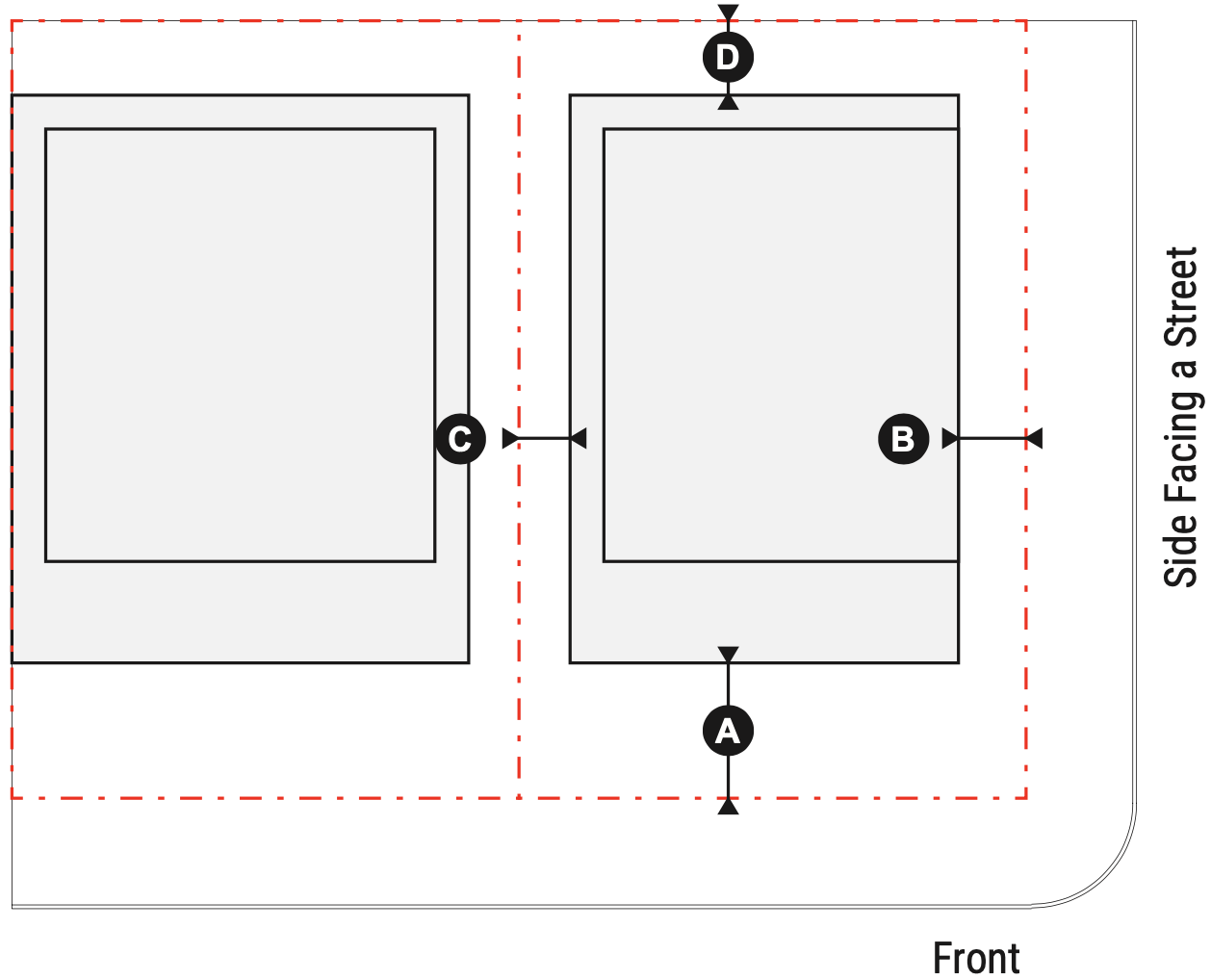
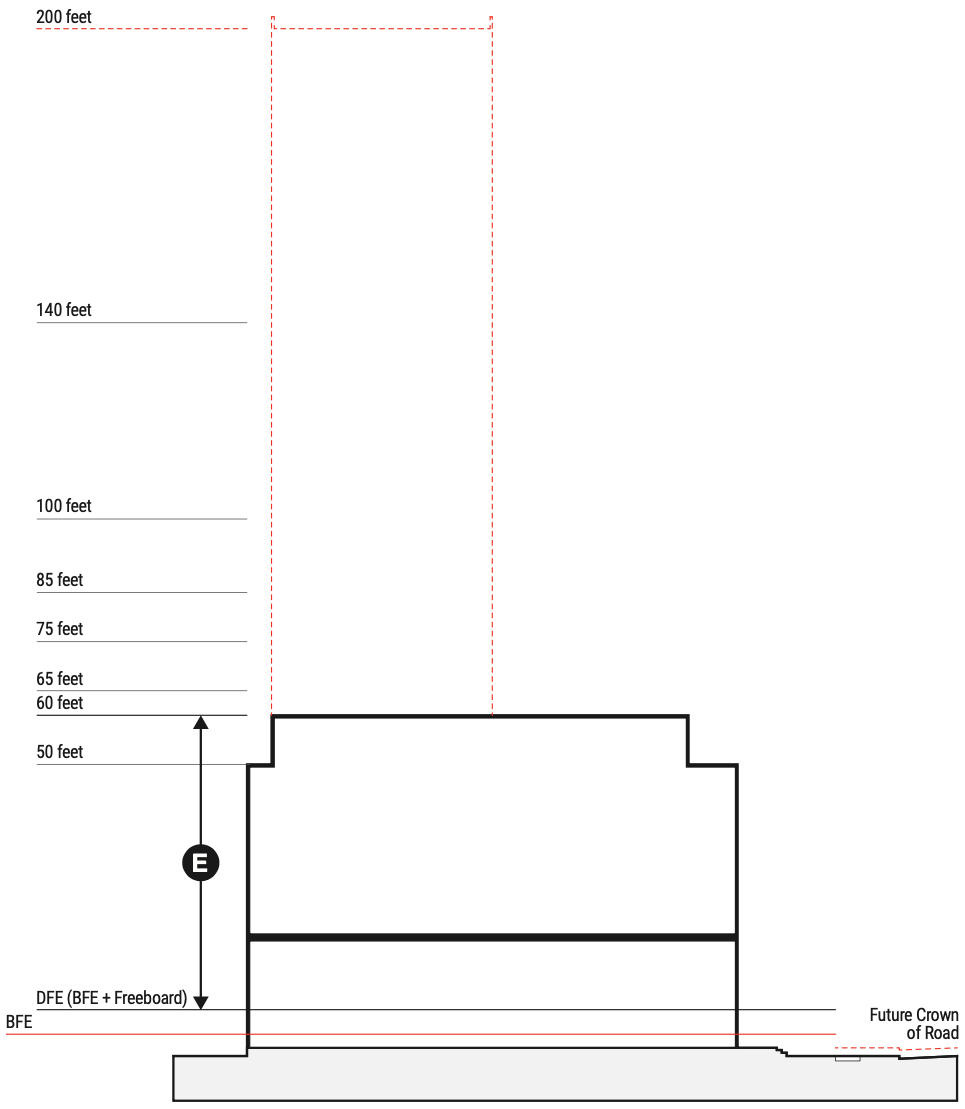
- Regulations for New Construction (RM-2)
In the RM-2, residential district, all floors of a building containing parking spaces shall comply with section 7.1.6.
7.2.5.4 Additional Regulations (RM-2)
a. For properties that front the west side of Alton Road and the Julia Tuttle Causeway (RM-2)
The following regulations shall apply to properties that front the west side of Alton Road and that front 41st Street/Interstate 195 (MAP EXHIBIT-12). In the event of a conflict within this division, the following regulations shall control:
1. The setback requirements shall be as follows:
| SETBACK REQUIREMENTS - PROPERTIES THAT FRONT THE WEST SIDE OF ALTON ROAD AND THE JULIA TUTTLE CASEWAY (RM-2) | |
|---|---|
| Front Setback | N/A |
| Side, facing a street Setback | N/A |
| Interior Side Setback | |
Pedestal | 10 feet (1) |
Tower | 15 feet (1) |
| Rear Setback | |
Pedestal | 10 feet (1) |
Tower | 15 feet (1) |
| |
2. The regulations for new construction provided in section 7.2.5.3.b shall only apply to the eastern frontage of a building, along Alton Road. However, the requirement provided in section 7.1.6.2.b.1. for the eastern frontage along Alton Road shall not apply to a structure that is set back 50 feet or more from Alton Road.
The regulations set forth in this section shall only apply to those properties that are larger than 60,000 square feet in size as of the effective date of the ordinance codified in this section.
7.2.5.5 MID BEACH RESIDENTIAL USE INCENTIVE AREA (RM-2)
- Location and Purpose (Mid Beach Residential Incentive Area - RM-2)
The following regulations shall apply to properties that front Collins Avenue between 47th Street on the south and 63rd Street on the north. The purpose of the overlay shall be to incentivize the development of non-transient residential uses. - Development Regulations (Mid Beach Residential Use Incentive Area (RM-2)
For developments that comply with the requirements for "Residential Use Incentives" in section 7.1.11 of the Resiliency Code, the following regulations shall apply:DEVELOPMENT REGULATIONS TABLE: Maximum FAR 2.3 BUILDING HEIGHT Maximum Height 75 Historic District 65 For properties outside a local historic district with a ground level consisting of non-habitable parking and/or amenity uses 80
7.2.6.1 Purpose (RM-3)
The RM-3 residential multifamily, high intensity district is designed for high intensity multiple-family residences and hotels.
7.2.6.2 Uses (RM-3)
| USES TABLE (RM-3) | |
|---|---|
| RESIDENTIAL | |
| Single-family detached dwellings | P |
| Townhomes | P |
| Apartments | P |
| LODGING | |
| Apartment Hotels | P |
| Hotels | P* |
| Suite Hotels | P* |
| Hostels | P* Pro* |
| OFFICE | |
| Office | A* |
| COMMERCIAL | |
| Commercial | A* |
| Eating or drinking uses | A* |
| Retail | A* |
| Personal service establishment | A* |
| Alcoholic beverage establishments | A* |
| Kennel | A* |
| Accessory outdoor entertainment establishment | C |
| Accessory open air entertainment establishment | C* |
| Accessory outdoor bar counter | A* Pro* |
| Health Clubs | A* |
| Gambling and Casinos pursuant to section 7.1.8 | Pro |
| Rentals or leases of mopeds, motorcycles, and motorized bicycles pursuant to section 7.1.8 | Pro |
| Neighborhood and Retail Fulfillment Centers pursuant to section 7.1.8 | Pro |
| CIVIC | |
| Stand-alone religious institutions | C |
| Religious Institutions with occupancy of 199 persons or less | C |
| CIVIL SUPPORT | |
| Private and Public Institutions | C |
| Accessory neighborhood impact establishments | C |
| EDUCATIONAL | |
| Day Care Facility | C |
| Schools | C P* |
| Family Day Care Facility | A* |
| INDUSTRIAL | |
| OTHER | |
| Commercial or noncommercial parking lots and garages | C |
| Key P - Main Permitted Use C - Conditional Use A - Accessory Use Pro - Prohibited Use * See Supplemental use regulations below | |
- Supplemental Main permitted uses Regulations (RM-3)
The supplemental main permitted uses are as follows: - Supplemental Conditional uses Regulations (RM-3)
The supplemental conditional uses are as follows:- accessory open air entertainment establishment as set forth in section 7.5.5.4 of this chapter.
- Supplemental Accessory uses Regulations (RM-3)
The supplemental accessory uses are as follows:- Those uses permitted in section 7.5.4.13.
- Alcoholic beverage establishments pursuant to the regulations set forth in chapter 6 of the General Ordinances.
- Accessory outdoor bar counters, pursuant to the regulations set forth in chapter 6 of the General Ordinances, provided that the accessory outdoor bar counter is not operated or utilized between midnight and 8:00 a.m.; however, for an accessory outdoor bar counter which is located on a property that is abutting a property with an apartment unit, the accessory outdoor bar counter may not be operated or utilized between 8:00 p.m. and 8:00 a.m.
- Oceanfront hotels with at least 100 hotel units may operate and utilize an accessory outdoor bar counter, notwithstanding the above restriction on the hours of operation, provided the accessory outdoor bar counter is (i) located in the rear yard, and (ii) set back 20 percent (20%) of the lot width (50 feet minimum) from any property line adjacent to a property with an apartment unit thereon.
- RM-3 properties within the "West Avenue Corridor"(MAP EXHIBIT-1) may not have accessory outdoor entertainment establishments. Notwithstanding the foregoing, a property that had a Legal Conforming Use as of May 28, 2013, shall have the right to apply for and receive special event permits that contain entertainment uses.
- Kennels shall only be for animals belonging to building residents only, and would not be a general boarding facility for people who do not reside in the building.
- Entertainment uses shall be subject to the requirements in Section 7.5.5.4.
- Supplemental Prohibited uses Regulations (RM-3)
The supplemental prohibited uses are as follows:- Accessory outdoor bar counter, except as provided in section 7.2.6.2.c.3.
- For properties located within the Sunset Harbour neighborhood, generally bounded by Purdy Avenue, 20th Street, Alton Road, and Dade Boulevard,
- hostels;
- for property located within the West Avenue corridor (MAP EXHIBIT-1),
- hostels;
- apartment hotels, except to the extent preempted by F.S. § 509.032(7), and unless a legal conforming use. Properties that voluntarily cease to operate as a hotel for a consecutive three-year period shall not be permitted to later resume such hotel operation. Without limitation, (a) involuntary hotel closures due to casualty, or (b) cessation of hotel use of individual units of a condo-hotel, shall not be deemed to be ceasing hotel operations pursuant to the preceding sentence.
- Hours for the sale and consumption of alcoholic beverages.
- Upper Collins Avenue. As applicable to alcoholic beverage establishments between Collins Avenue on the west, 72nd Street on the north, the eastern boundary line of properties fronting the east side of Collins Avenue on the east, and 53rd Street on thesouth, alcoholic beverages shall not be offered for sale or on-premises consumption outdoors between the hours of 12:00a.m. and 8:00a.m. each night, notwithstanding section 2.4.3 or 2.12.5 of this Code. For alcoholic beverage establishment that is not completely enclosed and located entirely within a building. Any operable windows or doors shall remain closed at all times, except for purposes of ingress and egress.
- West Avenue. As applicable to alcoholic beverage establishments between Biscayne Bay on the west, 15th Terrace on the north, West Avenue on the east, and 6th Street on the south, alcoholic beverages shall not be offered for sale or on-premises consumption indoors between the hours of 2:00a.m. and 8:00 a.m. each night, or outdoors between the hours of 12:00a.m. and 8:00a.m. each night, notwithstanding sections 2.4.3 or 2.12.5 of this Code. For purposes of this section, the term "outdoors" shall mean any area of an alcoholic beverage establishment that is not completely enclosed and located entirely within a building. Any operable windows or doors shall remain closed at all times, except for purposes of ingress and egress.
- Determination of vested rights. The owner or operator of any alcoholic beverage establishment claiming a vested right to conduct alcohol sales for on-premises consumption for hours greater that the hours permitted under subsection (e)(1) may so operate only after applying for a determmination of its vested right(s) and having those rights confirmed by the chief special magistrate as follows:
- Appointment; qualifications; term. The chief special magistrate shall adjudicate applications for determinations of vested rights under this subsection (e)(2). The special magistrate shall be an attorney in good standing with the Florida Bar, with expertise in the areas of local government law, business licensing, vested rights, and/or property law.
- Filing period. Any application for a determination of vested rights must be filed with the city manager, city attorney, and city clerk no later than October 31, 2024.
- Standard for finding of a vested right. A vested right to conduct alcohol sales for on-premises consumption later than the hours prescribed in subsection (e)(1) shall be found to exist only where:
- An active order of the Planning Board, an active order of the Board of Adjustment, or other active development order issued by the City, expressly authorizes the alcoholic beverage establishment to conduct alcohol sales for on-premises consumption during specified hours;
- In good faith reliance upon such prior order, the applicant has made a substantial change in position or incurred extensive contractual obligations and financial expenses; and
- It would be highly inequitable to interfere with the acquired right.
In accordance with Florida law, no right to conduct alcohol sales at certain hours may be determined to have vested as a result of the adoption of an ordinance by the city commission. The chief special magistrate shall dismiss any application that relies solely upon a previously enacted ordinance of the city commission.
- Procedure. Applications for vested rights determinations shall be heard in accordance with the procedures for hearings before the special magistrate specified in Chapter 30 of the City Code except that;
Applications for a vested rights determination shall be made in writing and filed with the city manager, city attorney, and city clerk.
- At a minimum, applications shall;
- Identify all prior orders from which the alleged vested right arises;
- Include a copy of each such prior order;
- Specify how the adoption of this ordinance adversely affected the alleged vested right including how the standard in subsection (e)(2)(C) is satisfied;
- Specify the applicant's requested relief; and
- Be sworn to by the applicant.
- The signature of the applicant or the applicant's attorney shall constitute a certificate that the person signing has read the applicant's written submissions and, to the best of their knowledge, the application is made in good faith and not for purposes of delay. The applicant or its attorney shall have a continuing obligation to correct any statement or representation found to have been incurred when made or which becomes incorrect by virtue of changed circumstances. If a claim of taking or abrogation of vested rights is; (1) based upon facts that the claimant or the attorney for the claimant knew or should have known were not true; or (2) frivolous or filed solely for the purpose of delay, the chief special magistrate shall make such findings in writing and deny the application.
- The city clerk shall acknowledge receipt of an application for vested rights within three business days of receipt of the application, and shall promptly schedule a hearing before the chief special magistrate.
- Effect of filing application for vested rights determination. During the pendency of an application for a vested rights determination, the applicant shall comply with all requirements of this section. The filing of an application shall not be construed to stay enforcement of this section against the applicant.
- Appeals. An aggrieved party, including the city administration, may appeal a final administrative order of the special magistrate to the circuit court by petition for writ of certiorari, pursuant to the Florida Rules of Appellate Procedure.
7.2.6.3 Development Regulations (RM-3)
- The development regulations in the RM-3 residential multifamily, medium intensity district are as follows:
DEVELOPMENT REGULATIONS TABLE (RM-3) Maximum FAR Lot area equal to or less than 45,000 square feet
2.25 (1) (2) Lot area greater than 45,000 square feet
2.75 (1) (2) Oceanfront lots with lot area greater than 45,000 square feet
3.0 (1) (2) (11) (12) Maximum Density (Dwelling Units per acre) 150 DUA (80% bonus for workforce or affordable units) (11) MINIMUM UNIT SIZE (SQUARE FEET) Single Family Detached House 1,800 SF (7) Apartments/Multi-family Units New Construction
550 SF Non-elderly and elderly low and moderate income housing
400 SF Workforce Housing
400 SF Rehabilitated Buildings
400 SF Lodging and Hotel Units 335 SF + (8) Hotel units within rooftop additions to contributing structures in a historic district and individually designated historic buildings
335 SF MINIMUM AVERAGE UNIT SIZE (SQUARE FEET) Single Family Detached House N/A Apartments/Multi-family Units New Construction
800 SF (9)(10) Non-elderly and elderly low and moderate income housing
400 SF (9)(10) Workforce Housing
400 SF (9)(10) Rehabilitated Buildings
550 SF (9)(10) Lodging and Hotel Units N/A LOT OCCUPATION Minimum Lot Area (square feet) 7,000 SF Minimum Lot Width (feet) 50 feet Maximum Lot Coverage (%) N/A BUILDING SETBACKS Front Setback Ⓐ OCEANFRONT NON-OCEANFRONT Subterranean
20 feet
50 feet (For lots A and 1-30 of the Amended Plat Indian Beach Corporation Subdivision and lots 231-237 of the Amended Plat of First Ocean Front Subdivision) (MAP EXHIBIT-4) (11)Pedestal
Tower
20 feet + 1 foot for every 1 foot increase in height above 50 feet, to a maximum of 50 feet, then shall remain constant.
50 feet (For lots A and 1-30 of the Amended Plat Indian Beach Corporation Subdivision and lots 231-237 of the Amended Plat of First Ocean Front Subdivision) (MAP EXHIBIT-4) (11)Side, Facing a Street Setback Ⓑ OCEANFRONT NON-OCEANFRONT Subterranean
7.5 feet or 8% of lot width, whichever is greater
Sum of the side yards shall equal 16% of lot width Minimum (11)Pedestal
Tower
Side, Interior Setback Ⓒ OCEANFRONT NON-OCEANFRONT Subterranean
7.5 feet or 8% of lot width, whichever is greater
Sum of the side yards shall equal 16% of lot width Minimum (4)(11)Pedestal
Tower
The required pedestal setback plus 10% of the height of the tower portion of the building. The total required setback shall not exceed 50 feet. (4)(11) Rear Setback Ⓓ OCEANFRONT NON-OCEANFRONT Subterranean
20% of lot depth or 50 feet from the bulkhead line whichever is greater. (4)(11) 10% of lot depth (4) Pedestal
Tower
25% of lot depth or 75 feet minimum from the bulkhead line whichever is greater. (4)(11) 15% of lot depth (4) 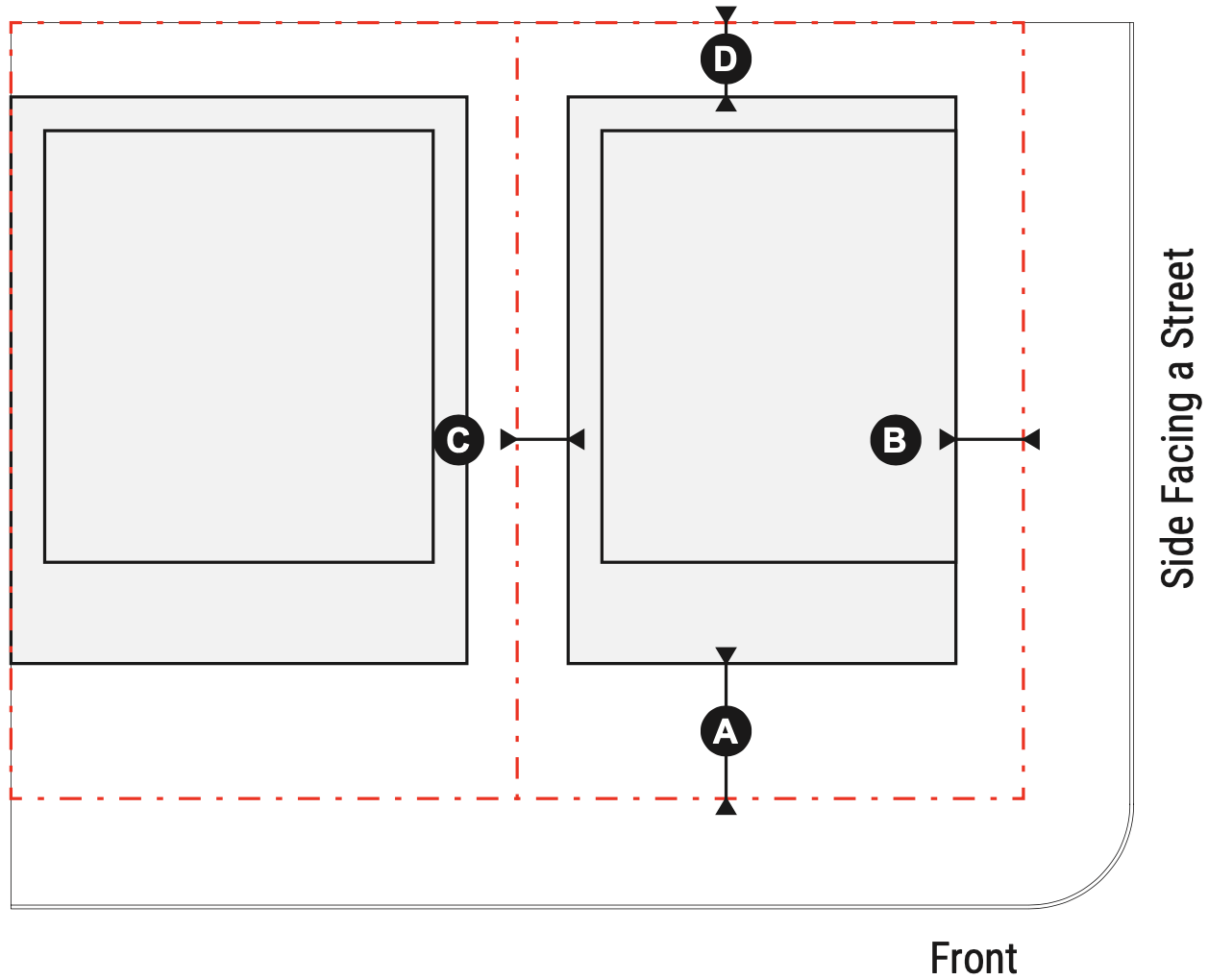
BUILDING HEIGHT Maximum Height Ⓔ 150 feet (5) (6) Oceanfront lots
200 feet north of 23rd Street; 150 feet south of 23rd Street Architectural district, New Construction
120 feet (5)(11) Ground floor additions (whether attached or detached) to existing structures on oceanfront lots
50 feet (3)(11) 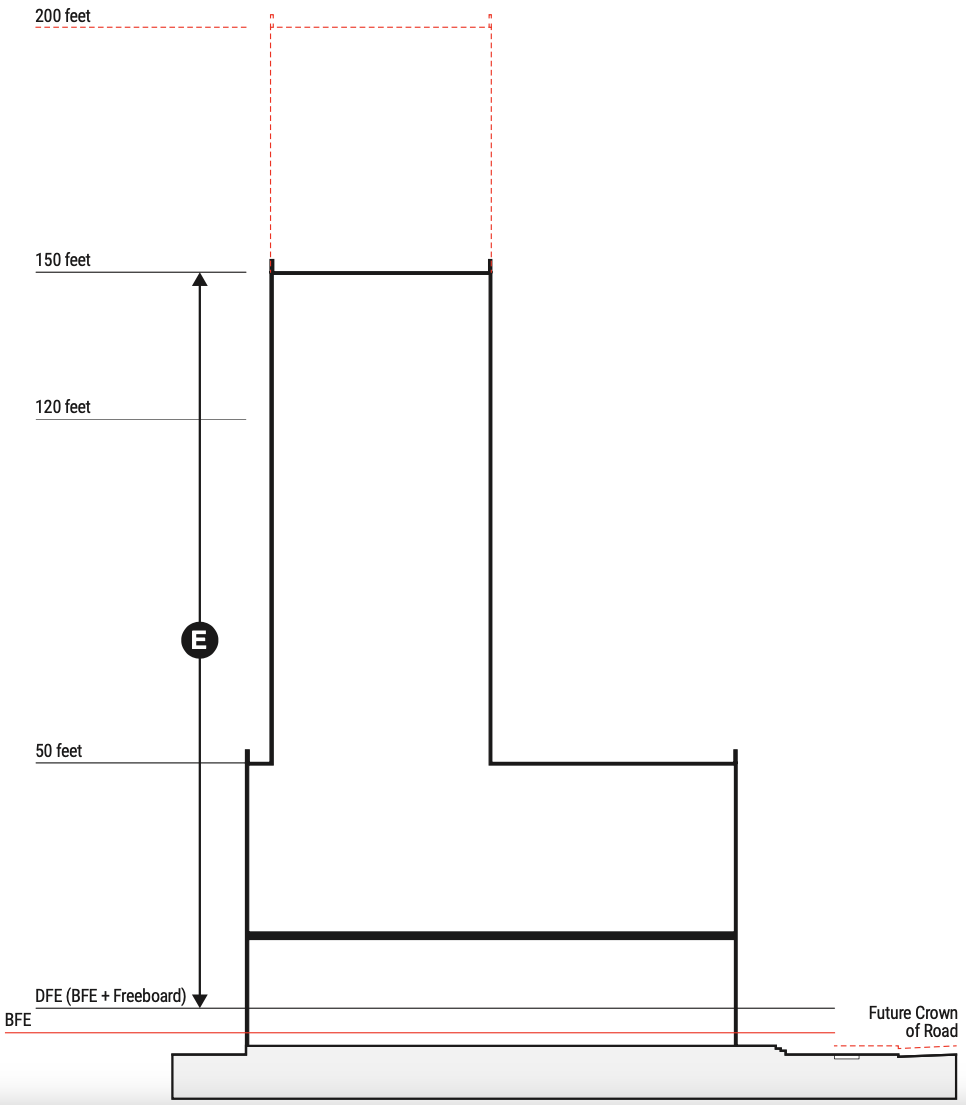
(1) Notwithstanding the above, oceanfront lots in architectural district shall have a maximum FAR of 2.0
(2) Notwithstanding the above, lots which, as of the effective date of this ordinance (November 14, 1998), are oceanfront lots with a lot area greater than 100,000 square feet with an existing building, shall have a maximum FAR of 3.0; however, additional FAR shall be available for the sole purpose of providing hotel amenities as follows: the lesser of 0.15 FAR or 20,000 square feet.
(3) Except as provided in section 7.5.2.
(4) Notwithstanding the foregoing, rooftop additions to contributing structures in a historic district and individually designated historic district buildings may follow existing nonconforming side, interior pedestal setbacks.
(5) Notwithstanding the above, oceanfront lots located in the Miami Beach Architectural District shall be permitted to construct detached additions at a height not to exceed 25 feet and shall have setback requirements as follows:
- Side, interior: 5 feet.
- Side, street: 5 feet.
- Rear: 10 percent (10%) of lot depth or the western edge of the Oceanfront Overlay, whichever is greater.
(6) In the Morris Lapidus/Mid-20th Century Historic District the following shall apply: Roof-top additions, whether attached or detached, may follow the established lines of the interior side setbacks of the existing structure on the site, subject to the review of the historic preservation board.
(7) Excluding Accessory Building.
(8) For contributing hotel structures, located within an individual historic site, a local historic district or a national register district, which are renovated in accordance with the Secretary of the Interior Standards and Guidelines for the Rehabilitation of Historic Structures as amended, retaining the existing room configuration and sizes of at least 200 square feet shall be permitted. Additionally, the existing room configurations for the above described hotel structures may be modified to address applicable life-safety and accessibility regulations, provided the 200 square feet minimum unit size is maintained, and provided the maximum occupancy per hotel room does not exceed 4 persons.
(9) The number of units may not exceed the maximum density set forth in the comprehensive plan.
(10) See section 7.1.5.2 for eligibility for average unit size exception.
(11) See section 7.3.11 North Beach Oceanfront Overlay regulations.
(12) See section 7.3.12, establishing the Alton Beach Overlay regulations.
- Notwithstanding the above, for oceanfront lots located within a locally designated historic district or site, but not within the architectural district, with less than 400 feet of lineal frontage along Collins Avenue and containing at least one contributing structure, the maximum building height for ground floor additions to existing structures, whether attached or detached, shall be as follows:
- For existing structures greater than 5 stories in height, the maximum height shall be limited to 10 stories or the height of the roof line of the main structure on site, whichever is less. At the discretion of the historic preservation board, the maximum height of the ground floor addition may exceed 10 stories if the existing and surrounding structures are greater than 5 stories in height, provided the addition is consistent with the scale and massing of the existing structure.
- For existing structures 5 stories or less in height, the maximum height shall be limited to 5 stories.
- Additionally, the proposed addition shall not substantially reduce existing or established view corridors, nor impede the appearance or visibility of architecturally significant portions of an existing structure, as determined by the historic preservation board.
- Notwithstanding the above, for oceanfront lots with a contributing structure and with no frontage on Collins Avenue that are located in the architectural district, the overall height of ground floor additions may exceed 5 stories and 50 feet, but shall not exceed the height of the existing contributing structure plus the height of any rooftop addition approved by the historic preservation board in accordance with section 7.5.2.1.d.5, up to a maximum of 120 feet, if the following conditions are satisfied:
- The proposed addition shall not be attached to front or street side elevations, nor along any other principal elevations or facades, as determined by the historic preservation board.
- The proposed additions shall not impede the appearance or visibility of architecturally significant portions of an existing structure, as determined by the historic preservation board.
- Notwithstanding the above, for oceanfront lots located in the architectural district (MAP EXHIBIT-2), with a lot area greater than 115,000 square feet, a ground floor addition, whether attached or detached, may exceed 50 feet in height, but shall not exceed 200 feet in height, in accordance with the following provisions:
- Placement of the structure. The ground floor addition shall be located internal to the site, and shall be set back a minimum of 100 feet from the front property line, 75 feet from the street side property lines, and 100 feet from the rear (oceanfront) property line.
Limits on the floorplate of additions exceeding 50 feet in height. The maximum floor plate size for the portion of an addition that exceeds 50 feet in building height is 15,000 square feet per floor, excluding projecting balconies. The historic preservation board may approve an increase in this overall floor plate, up to a maximum of 20,000 square feet per floor, excluding balconies, in accordance with the certificate of appropriateness criteria in chapter 2, article XIII of these land development regulations.
- Placement of the structure. The ground floor addition shall be located internal to the site, and shall be set back a minimum of 100 feet from the front property line, 75 feet from the street side property lines, and 100 feet from the rear (oceanfront) property line.
- Regulations for New Construction (RM-3)
In the RM-3, residential district, all floors of a building containing parking spaces shall comply with section 7.1.6
7.2.6.4 MID BEACH RESIDENTIAL USE INCENTIVE AREA (RM-3)
- Location and Purpose (Mid Beach Residential Incentive Area - RM-3)
The following regulations shall apply to properties that front Collins Avenue between 47th Street on the south and 63rd Street on the north. The purpose of the overlay shall be to incentive the development of non-transient residential uses. - Development Regulations (Mid Beach Residential Incentive Area (RM-3)
For developments that comply with the requirements for "Residential Use Incentives" in section 7.1.11 of the Resiliency Code, the following regulations shall apply:DEVELOPMENT REGULATIONS TABLE Maximum FAR Lot area equal to or less than 45,000 square feet 2.6 Lot area greater than 45,000 square feet 3.2 Oceanfront lots with lot area greater than 45,000 square feet 3.5 BUILDING HEIGHT Maximum Height 170 Oceanfront Lots 220 Ground floor additions (whether attached or detached) to existing structures on oceanfront lots 60
7.2.7.1 Purpose (RM-PRD)
The RM-PRD multifamily, planned residential development district is designed for new construction of low intensity multiple-family planned residential development.
7.2.7.2 Uses (RM-PRD)
| USES TABLE (RM-PRD) | |
|---|---|
| RESIDENTIAL | |
| Single-family detached dwellings | P |
| Townhomes | P |
| Apartments | P |
| LODGING | |
| OFFICE | |
| Office | A* |
| COMMERCIAL | |
| Accessory Commercial Use | A* |
| The sale of alcoholic beverages as an accessory use to a dining facility within apartment buildings | A* |
| Health Clubs | A* |
| Alcoholic beverage establishments | Pro* |
| Gambling and Casinos pursuant to section 7.1.8 | Pro |
| Rentals or leases of mopeds, motorcycles, and motorized bicycles pursuant to section 7.1.8 | Pro |
| Neighborhood and Retail Fulfillment Centers pursuant to section 7.1.8 | Pro |
| CIVIC | |
| CIVIL SUPPORT | |
| Family Day Care Facility | A |
| EDUCATIONAL | |
| OTHER | |
Key P – Main Permitted Use C - Conditional Use A - Accessory Use Pro - Prohibited Use * See Supplemental use regulations below | |
- Supplemental main permitted uses Regulations (RM-PRD)
None - Supplemental conditional uses Regulations (RM-PRD)
None - Supplemental Accessory uses Regulations (RM-PRD)
The supplemental accessory uses are as follows:- The accessory uses in the RM-PRD multifamily, planned residential development district are as required in section 7.5.4.13.
- The sale of alcoholic beverages as an accessory use to a dining facility within apartment buildings within this district shall be permitted.
- Supplemental Prohibited Uses Regulations (RM-PRD)
The supplemental prohibited uses are as follows:- All alcoholic beverage establishments pursuant to the regulations set forth in chapter 6 of the General Ordinances, are prohibited uses.
7.2.7.3 Development Regulations (RM-PRD)
- The development regulations in the RM-PRD multifamily, planned residential development district are as follows:
- Lots, plots, and parcels of land that were designated RM-PRD under this section on October 1, 1989 (the "parent tract"), whether improved or unimproved or building site, as defined under the land development regulations of this Code, designated by number, letter or other description in a plat of a subdivision, may be further divided or split under this section, as long as all development on the parent tract collectively is in compliance with this section. Such division or split shall be considered to be in compliance with the regulations of this section, and shall not be reviewed under city land development regulations section 2.5.4. Development under this section shall be subject to review under the design review procedures pursuant to section 2.5.3. The design review board, in reviewing projects proposed for this district, shall take into consideration the contextual relationship of existing and approved projects, and the buildout of the remainder of the district. This section shall be retroactive to include all parcels and buildings existing as of March 18, 2003.
| BUILDING STANDARDS TABLE (RM-PRD) | ||
|---|---|---|
| Maximum FAR | 1.6 | |
| Maximum Density (Dwelling Units per Acre) | 25 DUA (80% bonus for workforce or affordable units) | |
| MINIMUM UNIT SIZE (SQUARE FEET) | ||
| New Construction | 750 SF | |
| MINIMUM AVERAGE UNIT SIZE (SQUARE FEET) | ||
| New Construction | N/A (2) | |
| LOT OCCUPATION | ||
| Minimum Lot Area (acres) | 10 | |
| Minimum Lot Width (feet) | N/A | |
| Maximum Lot Coverage (% of lot area) | N/A | |
| BUILDING SETBACKS For lots over 10 acres that are contiguous to Government Cut and/or the Atlantic Ocean on at least two sides. (No variances shall be permitted from this section) | ||
| Front Setback Ⓐ | ||
Subterranean | 20 feet | |
Pedestal | ||
Tower | ||
| Side, Oceanfront Setback Ⓑ | ||
Subterranean | 50 feet from mean high water line | |
Pedestal | ||
Tower | ||
| Side, interior Setback Ⓒ | ||
Subterranean | 15 feet (1) | |
Pedestal | ||
Tower | ||
| Rear Setback Ⓓ | ||
Subterranean | 50 feet (1) | |
Pedestal | ||
Tower | ||
| ||
| BUILDING SETBACKS For all other lots a lots, development shall meet the residential setback requirements as follows | ||
| Front Setback Ⓐ | OCEANFRONT | NON-OCEANFRONT |
Subterranean | 20 feet | |
Pedestal | 20 feet 50 feet (For lots A and 1-30 of the Amended Plat Indian Beach Corporation Subdivision and lots 231-237 of the Amended Plat of First Ocean Front Subdivision) (MAP EXHIBIT-4) (11) | |
Tower | 20 feet + 1 foot for every 1 foot increase in height above 50 feet, to a maximum of 50 feet, then shall remain constant. 50 feet (For lots A and 1-30 of the Amended Plat Indian Beach Corporation Subdivision and lots 231-237 of the Amended Plat of First Ocean Front Subdivision) (MAP EXHIBIT-4) (11) | |
| Side, Facing a Street Setback Ⓑ | OCEANFRONT | NON-OCEANFRONT |
Subterranean | 5 feet or 5% of lot width, whichever is greater | |
Pedestal | 7.5 feet or 8% of lot width, whichever is greater And Sum of the side yards shall equal 16% of lot width Minimum (11) | |
Tower | ||
| Side, Interior Setback Ⓒ | OCEANFRONT | NON-OCEANFRONT |
Subterranean | 5 feet, or 5% of lot width, whichever is greater 0 feet - If lot width is 50 feet or less | |
Pedestal | 7.5 feet min or 8% of lot width, whichever is greater And Sum of the side yards shall equal 16% of lot width | |
Tower | The required pedestal setback plus 0.10 of the height of the tower portion of the building 50 feet maximum And Sum of the side yards shall equal 16% of lot width | |
| Rear Setback Ⓓ | OCEANFRONT | NON-OCEANFRONT |
Subterranean | 50 feet from bulkhead line | 0 feet |
Pedestal | 20% of lot depth, 50 feet from the bulkhead line whichever is greater | 10% of lot depth |
Tower | 25% of lot depth, 75 feet minimum from the bulkhead line whichever is greater | 15% of lot depth |
| ||
| BUILDING HEIGHT | ||
| Maximum Height Ⓔ | 120 feet | |
| ||
| ||
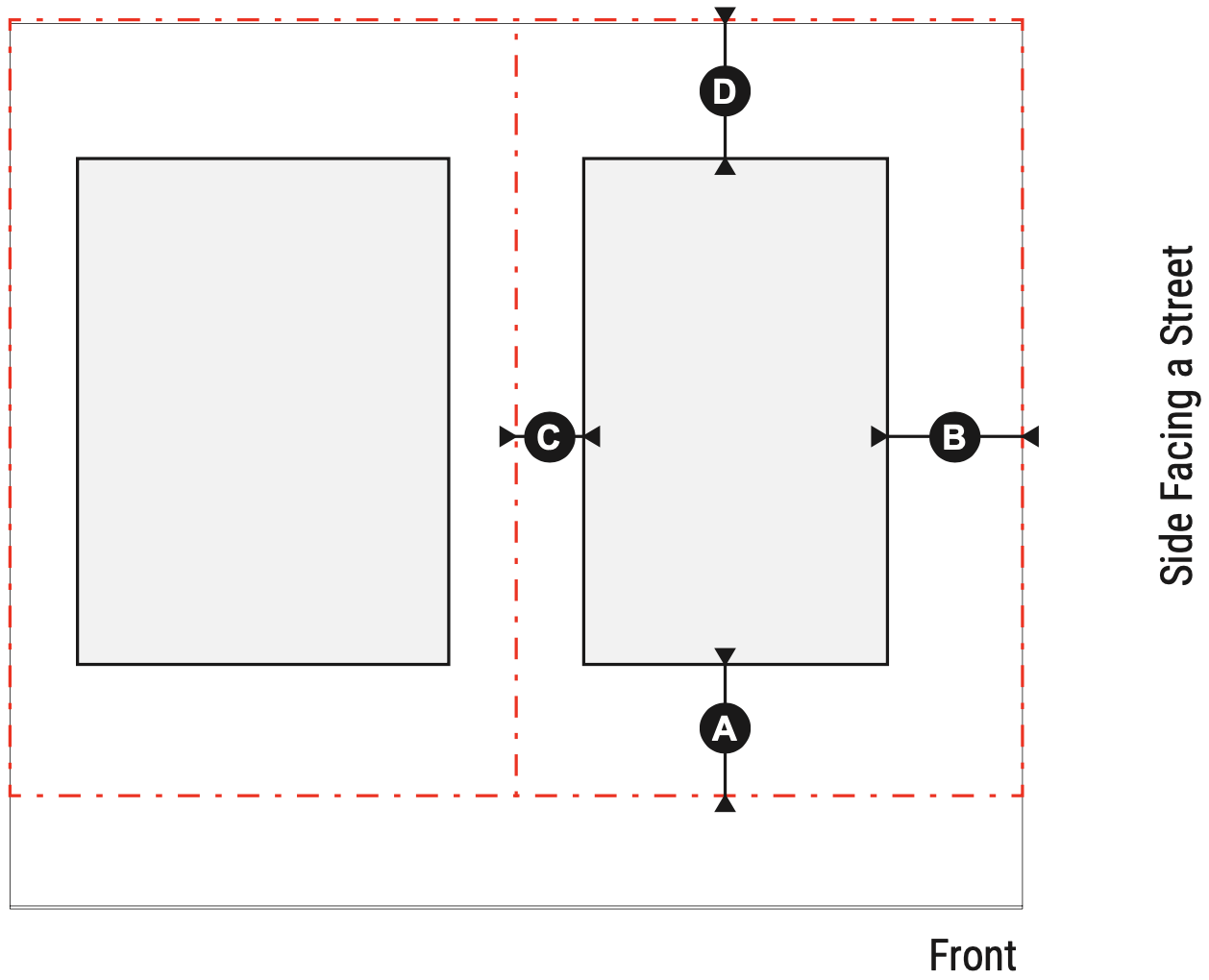
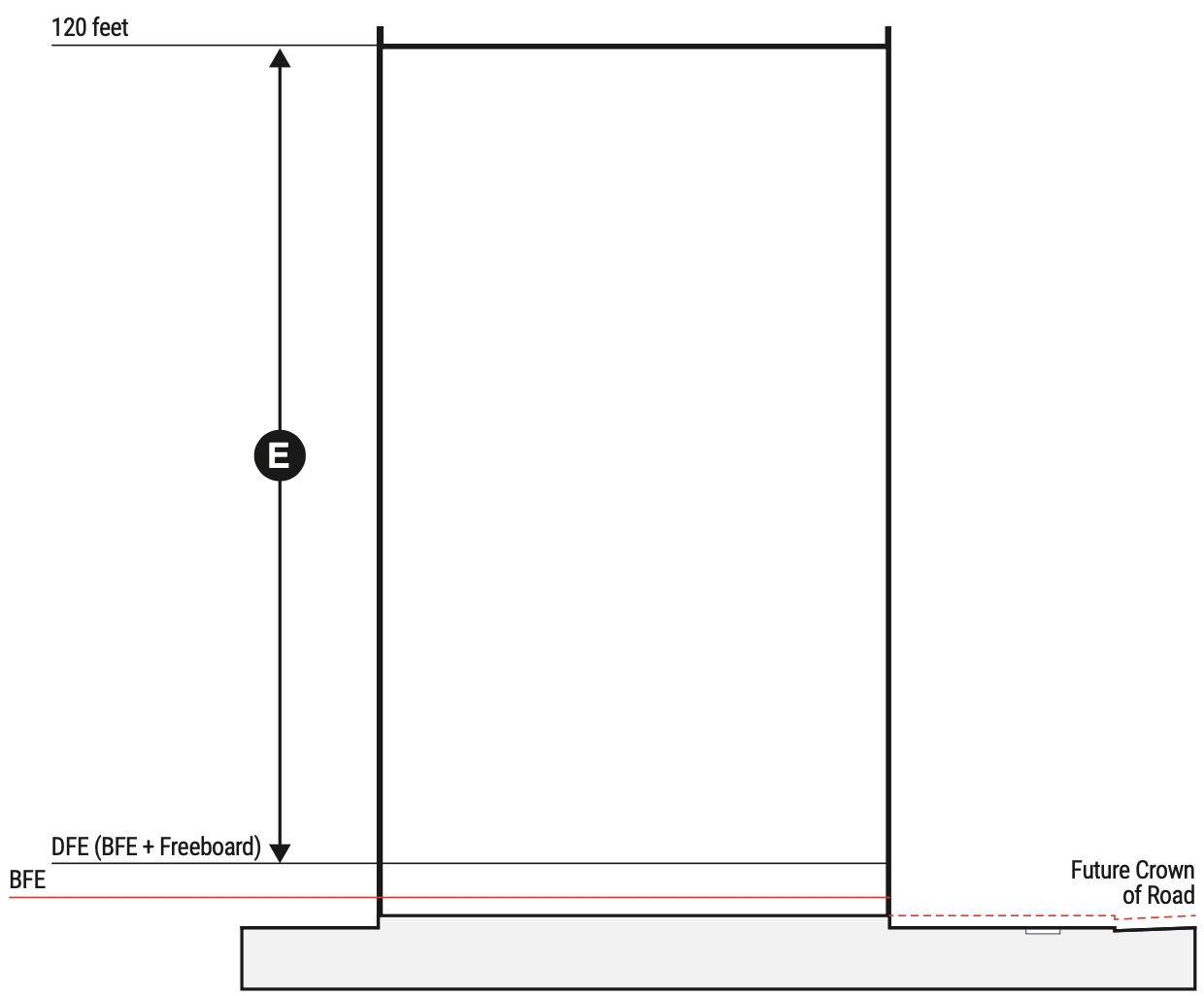
7.2.8.1 Purpose (RM-PRD-2)
This district is designed to provide for low intensity multiple-family planned residential development, with limited accessory commercial use.
7.2.8.2 Uses (RM-PRD-2)
| USES TABLE (RM-PRD-2) | |
|---|---|
| RESIDENTIAL | |
| Single-family detached dwellings | P* |
| Townhomes | P* |
| Apartments | P |
| LODGING | |
| OFFICE | |
| Professional offices | A* |
| COMMERCIAL | |
| Ground floor retail uses | A* |
| Ground floor commercial uses | A* |
| Health Clubs | A* |
| Alcoholic beverage establishments | Pro |
| Gambling and Casinos pursuant to section 7.1.8 | Pro |
| Rentals or leases of mopeds, motorcycles, and motorized bicycles pursuant to section 7.1.8 | Pro |
| Neighborhood and Retail Fulfillment Centers pursuant to section 7.1.8 | Pro |
| CIVIC | |
| CIVIL SUPPORT | |
| EDUCATIONAL | |
| Family day care faclity | A* |
| INDUSTRIAL | |
| OTHER | |
Key P – Main Permitted Use C - Conditional Use A - Accessory Use Pro - Prohibited Use * See Supplemental use regulations below | |
- Supplemental Main permitted uses Regulations (RM-PRD-2)
The supplemental main permitted uses are as follows:- Single family or townhouse development in accordance with all applicable Master Plans.
- Supplemental Conditional uses Regulations (RM-PRD-2)
None - Supplemental Accessory uses Regulations (RM-PRD-2)
The supplemental accessory uses are as follows: - Supplemental Prohibited uses Regulations (RM-PRD-2)
The supplemental prohibited uses are:- Alcoholic beverage establishments pursuant to the regulations set forth in chapter 6 in General Ordinances, unless otherwise specified.
- St. Francis Hospital Site Supplemental Uses Regulations
The supplemental uses for the St. Francis Hospital Site are as follows:- Apartments, For the St. Francis Hospital Site
- Building use. Building use shall be primarily residential, with commercial and retail space allowed at ground floor locations. For the St. Francis Hospital site , this commercial and retail space is limited to a total maximum of 1,000 square feet. All such commercial uses shall neither be visible from any public streets nor open to persons other than residents of the proposed development and their guests. No exterior signage shall be permitted. Permitted tenant types are listed below.
- Retail uses. Retail space allowed at ground floor shall be limited to the following uses:
- art galleries;
- bakery;
- barber/beauty parlor;
- café;
- confectionery,
- sales of cookies/ice cream;
- convenience store;
- delicatessen;
- dry cleaning (no cleaning on premises);
- sales of newspapers, magazines.
- Commercial uses. Commercial space allowed at ground floor is limited to:
- professional offices, including but not limited to attorney, accountant, architect, etc. Commercial use are limited to the interior of the proposed development.
- For the St. Francis Hospital Site, commercial uses are prohibited from direct frontage on 63rd Street.
- Existing buildings. Existing buildings may be converted to residential use provided they meet all requirements of the Land Development Regulations of this Code.
- Retail uses. Retail space allowed at ground floor shall be limited to the following uses:
- Building use. Building use shall be primarily residential, with commercial and retail space allowed at ground floor locations. For the St. Francis Hospital site , this commercial and retail space is limited to a total maximum of 1,000 square feet. All such commercial uses shall neither be visible from any public streets nor open to persons other than residents of the proposed development and their guests. No exterior signage shall be permitted. Permitted tenant types are listed below.
- Apartments, For the St. Francis Hospital Site
7.2.8.3 Development Regulations (RM-PRD-2)
| DEVELOPMENT REGULATIONS TABLE (RM-PRD-2) | ||
|---|---|---|
| Maximum FAR | 1.45 | |
| Maximum number of total dwelling units within St. Francis Hospital Site | 180 | |
| Maximum Density (Dwelling Units per Acre) | 25 DUA (80% bonus for workforce or affordable units) | |
| MINIMUM UNIT SIZE (SQUARE FEET) | ||
| Townhomes | 1,600 SF | |
| Apartments | 1,000 SF | |
| MINIMUM AVERAGE UNIT SIZE (SQUARE FEET) | ||
| Townhomes | N/A (7) | |
| Apartments | N/A (7) | |
| LOT OCCUPATION | ||
| Minimum Lot Area (Acres) | 7 Acres | |
| Minimum Lot Width (feet) | ||
Up to 20% of the townhouses | 18 feet | |
Remaining townhouses | 24 feet | |
| Maximum Lot Width | ||
Townhouses (feet) | 48 feet (2) | |
| Maximum Lot Coverage (% of lot area) | N/A | |
| Open Space (%) | 9.5 % (1) | |
| BUILDING SETBACKS | Townhouses | Apartment Buildings |
| Front Setback | 6 feet (3) | 20 feet (3) |
| Side, Facing a Street, Setback | 6 feet (3) | 20 feet (3) |
| Side, Interior Setback | 0 | N/A |
| Rear Setback | 0 | N/A |
|
| |
| BUILDING HEIGHT | Townhouses | Apartment Buildings |
| Maximum Number of Stories | 3 | N/A |
| Maximum Height (feet) | 35 feet (4) (5) | 120 feet (6) |
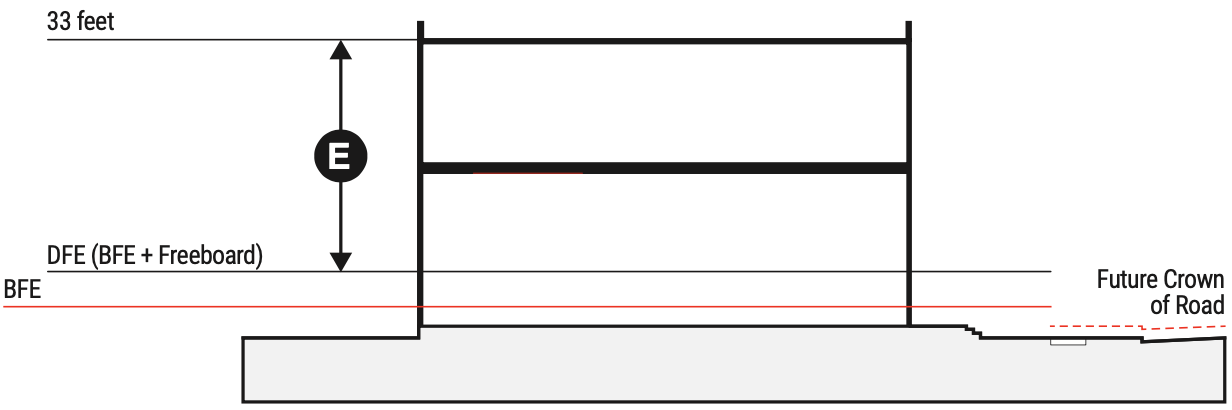 |
| |
| ||
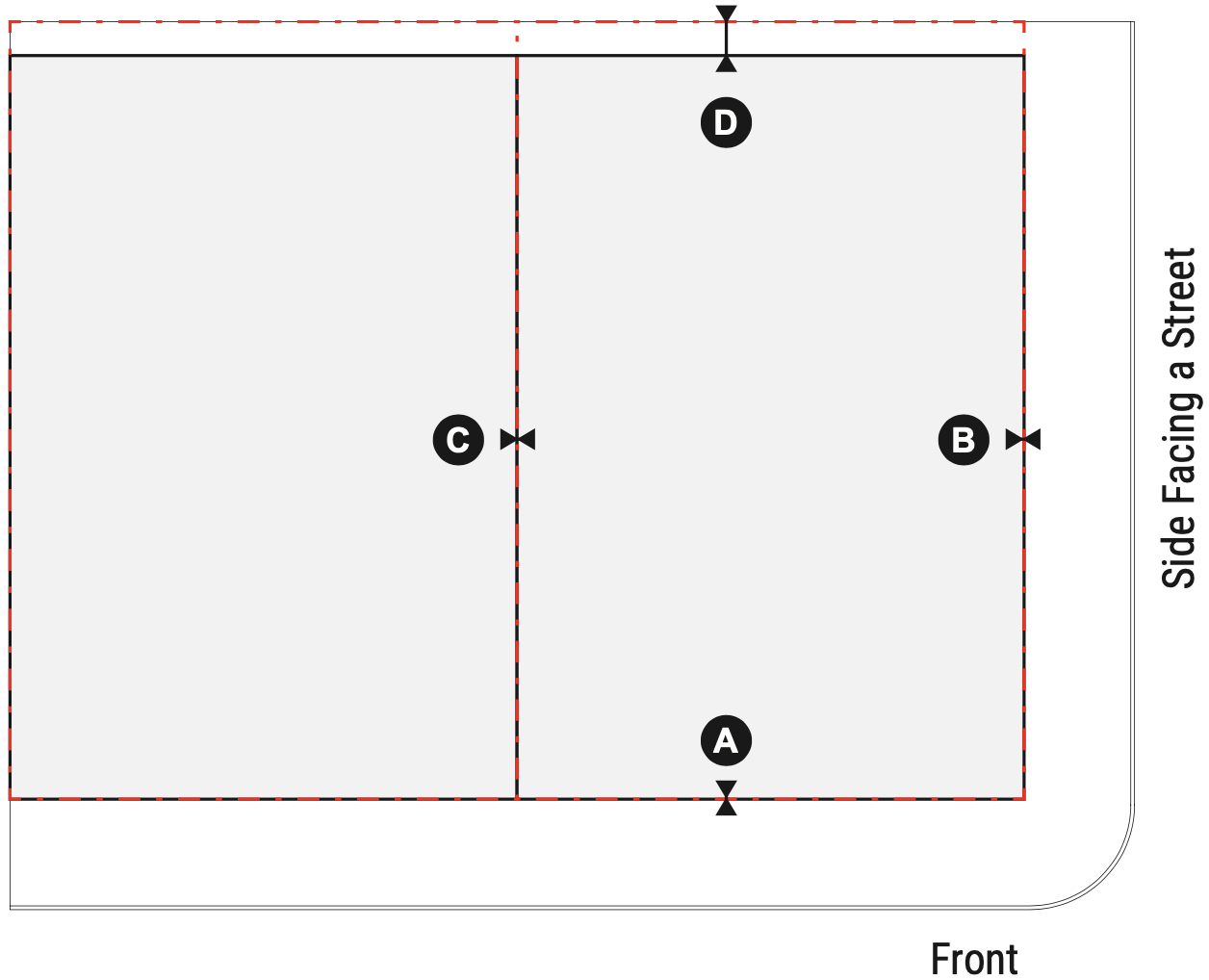
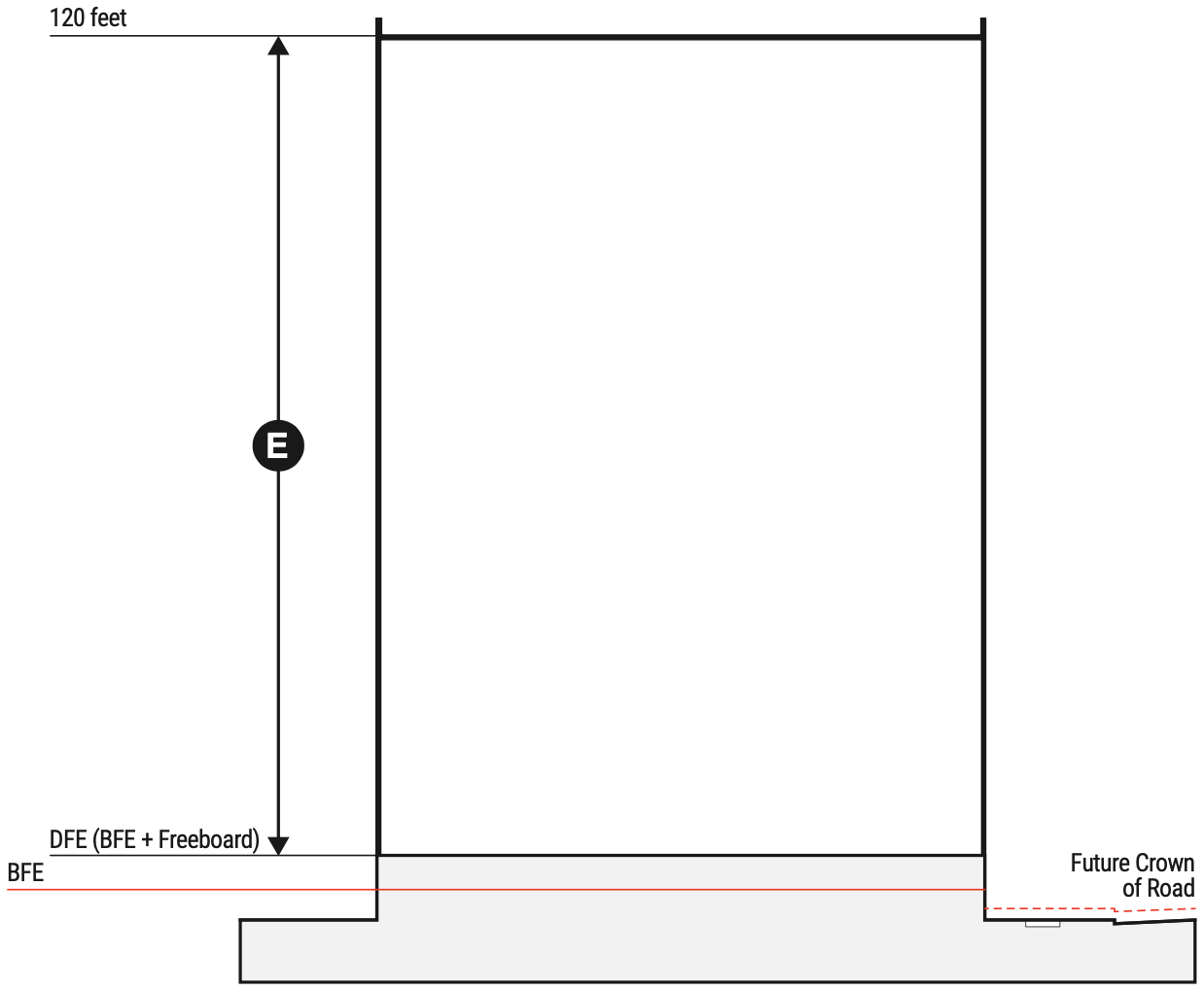
- Existing structures (RM-PRD-2)
For purposes of this section, structures existing as of April 1, 1999, which are demolished subsequently will not be replaced, except as allowed under the provisions of this subdivision. - Lot split (RM-PRD-2)
Lots, plots, and parcels of land under this section, whether improved or unimproved or building site, as defined under the Land Development Regulations of the City Code., designated by number, letter or other description in a plat of a subdivision, may be further divided or split under this section. Such division or split shall be considered to be in compliance with the regulations of this subdivision, and shall not be reviewed under Miami Beach Land Development Regulations section 2.5.4. - Master plan approval (RM-PRD-2)
Development under this Subdivision shall be subject to review under the design review procedures pursuant to section 2.5.3 of this Code. For the St. Francis Hospital Site, development shall be substantially in compliance with the master plan on file with the city planning department, prepared by Duany Plater-Zyberk, which reflects a maximum of 180 allowable residential units. - Nonconforming buildings and uses (RM-PRD-2)
Nonconforming buildings, approved as part of the master site plan, which are damaged, repaired or rehabilitated by more than 50 percent (50%) of the value of the building as determined by the building official pursuant to the standards set forth in the South Florida Building Code may be repaired or rehabilitated if the following conditions are met:- Renovated or repaired units shall meet the minimum floor area as set forth for this zoning district. The number of units in the building shall not be increased.
- Such repairs or reconstruction in the damaged or repaired portion of the building shall meet the requirements of the city property maintenance standards, the South Florida Building Code, and fire prevention and safety code.
Buildings considered legally nonconforming will continue to maintain their legal nonconforming status, except that for the St. Francis Hospital Site, office uses in the Morris Tower building (Northeast building) may be allowed for a period of two years after the effective date of this subdivision, after which they are no longer considered legally nonconforming, and shall be converted to residential use.
- Urban and architecture design guidelines (RM-PRD-2)
- Streets.
- Alleys. There shall be a continuous network of alleys to the rear of building lots.
- Block perimeter. Average perimeter of all blocks shall not exceed 1,200 feet. No block face shall have a length greater than 300 feet without an alley or pedestrian pathway providing through access to another street or alley.
- Sidewalks. Sidewalks shall be a minimum of 5 feet wide. Walks adjacent to commercial uses shall be a minimum of 8 feet wide. Free and public use of the sidewalk beyond the right-of-way shall be protected by a public access easement.
- Street and garden walls. Streetwalls shall be built on the frontage line or aligned with the building walls.
- Utilities. Utilities shall run underground. Utility boxes (transformers, telephone boxes, backflow preventers, etc.) shall be concealed in alleys or other locations.
- Common open space.
- Lighting. Lighting of rights-of-way and pedestrian public spaces shall be achieved with lamps attached to buildings, landscape lighting, or street lights which shall not exceed 16 feet in height. Other lighting may be used in areas that are primarily for service use and are concealed from public pedestrian spaces.
- Plazas. There shall be a minimum of one plaza, whose use is restricted to temporary parking, landscaping, and permanent architecture or water features. Plazas shall have a maximum width to height ratio (width of plaza to height of adjacent building and/or landscaping) of 3 to 1 and shall have continuously defined edges.
- View and access. View corridors within site and pedestrian access to the waterfront shall be maintained as per the site plan to be approved by the design review board. Waterfront access shall be continuous and shall be a minimum of 12 feet wide.
- Landscaping. Those areas of the development fronting on public streets shall be landscaped.
- Buildings.
- General.
- Principal entry. The principal pedestrian entrance of all buildings (except outbuildings) shall be directly from a public space (street or square).
- Setback requirements. All new buildings shall be setback from existing rights of way a minimum of 20 feet.
- Special sites. Special sites, which act as the termination of a vista, a gateway, or a leading corner, shall receive architectural treatment recognizing their position.
- Townhouses.
- Detached accessory structures. One or more accessory structures shall be allowed on each lot. Accessory structures shall not be rentable separate from the main townhome.
- Street wall. Townhouses shall have a streetwall built along the unbuilt frontage of a street, minimum 18 inches high and maximum 6 feet high.
- Unit entry. Townhouses with the minimum setback shall have their entry set to one side of the facade. This is to preserve the possibility or retrofitting a ramp for wheelchair access. Buildings shall have a first floor front elevation minimum of 18 inches above finished sidewalk grade.
- A cornice line shall be used to define the top of the first floor.
- Apartments.
- Maximum building height. Newly constructed apartment buildings as of April 1, 1999, shall not exceed the following:
- For the St. Francis Hospital Site: East of the extension of the centerline of Water View Prado to the southernmost end of Allison Island: 120 feet in height (excluding chimneys and elevator towers) to the cornice.
- A cornice or plinth line shall be used to define the top of the building base.
- Maximum building height. Newly constructed apartment buildings as of April 1, 1999, shall not exceed the following:
- General.
- Streets.
- Parking Standards (RM-PRD-2)
- Parking lots shall be located at the rear or at the side of buildings.
- On street parking directly fronting a lot shall count toward fulfilling the parking requirement of that lot. Attached and detached single family units shall have a minimum of one and a half (1.5) parking spaces. Parking for community related retail and service uses may provide required parking on street or in parking garages accessible within an 800-foot radius of the activity.
7.2.9.1 Purpose (RO)
The RO residential/office district is designed to accommodate an office corridor or development compatible with the scale of surrounding residential neighborhoods. The development shall be designed to maintain a residential character.
7.2.9.2 Uses (RO)
| USES TABLE (RO) | |
|---|---|
| RESIDENTIAL | |
| Single-Family Dwelling | P |
| Apartments | P |
| LODGING | |
| OFFICE | |
| Offices | P |
| COMMERCIAL | |
| Accessory commercial use | A* |
| Health Club | A* |
| Alcoholic Beverage Establishments | Pro* |
| Gambling and Casinos pursuant to section 7.1.8 | Pro |
| Rentals or leases of mopeds, motorcycles, and motorized bicycles pursuant to section 7.1.8 | Pro |
| Neighborhood and Retail Fulfillment Centers pursuant to section 7.1.8 | Pro |
| CIVIC | |
| Religious Institutions with occupancy of 199 persons or less | CA* |
| CIVIL SUPPORT | |
| EDUCATIONAL | |
| Family Day Care Facility | A* |
| INDUSTRIAL | |
| OTHER | |
| Key P – Main Permitted Use C - Conditional Use A - Accessory Use Pro - Prohibited Use *See Supplemental use regulations below | |
- Supplemental main permitted uses (RO)
None - Supplemental Conditional Uses Regulations (RO)
None - Supplemental Accessory Uses Regulations (RO)
The Supplemental Accessory Uses are as follows:- The accessory uses in the RO residential/office district are those uses customarily associated with the district purpose. See section 7.5.4.13.
- Supplemental Prohibited Uses Regulations (RO)
The Supplemental Prohibited Uses Regulations are as follows :- Alcoholic beverage establishments pursuant to the regulations set forth in chapter 6 in General Ordinances, are a prohibited use. Notwithstanding the foregoing, alcohol sales may be permitted for existing cafes meeting the criteria set forth in section 2.12.5.d.
- All uses not listed as a main permitted or conditional use are also prohibited, unless otherwise specified.
7.2.9.3 Development Regulations (RO)
- The development regulations in the RO residential/office district are as follows:
| Development Regulations Table (RO) | |
|---|---|
| Maximum FAR | 0.75 |
| Maximum Density (Dwelling Units Per Acre) | 56 DUA (80% bonus for workforce or affordable units) |
| MINIMUM UNIT SIZE (SQUARE FEET) | |
| Single Family Detached House | 1,800 SF (2) |
| Apartments/Multi-family Units | |
New Construction | 550 SF |
Non-elderly and elderly low and moderate income housing | 400 SF |
Workforce Housing | 400 SF |
Rehabilitated Buildings | 550 SF |
| MINIMUM AVERAGE UNIT SIZE (SQUARE FEET) | |
| Single Family Detached House | N/A |
| Apartments/Multi-family Units | |
New Construction | N/A (3) |
Non-elderly and elderly low and moderate income housing | N/A (3) |
Workforce Housing | N/A (3) |
Rehabilitated Buildings | N/A (3) |
| LOT OCCUPATION | |
| Minimum Lot Area (square feet) | 6,000 SF Residential N/A Office |
| Maximum Lot Coverage (% of lot area) | N/A |
| Minimum Lot Width | 50 Feet Residential N/A Office |
| Maximum Lot Coverage (% of lot area) | N/A |
| BUILDING SETBACKS | |
| Front Setback Ⓐ | 20 feet |
| Side, Facing a Street Setback Ⓑ | 15 feet |
| Side, Interior Setback Ⓒ | 7.5 feet (1) The sum of each side yard shall be at least 25% of the lot width, not to exceed 50 feet |
| Rear Setback Ⓓ | 15 % of the lot depth, 20 feet minimum. |
| |
| BUILDING HEIGHT | |
| Maximum Height Ⓔ | 33 feet |
| |
| |
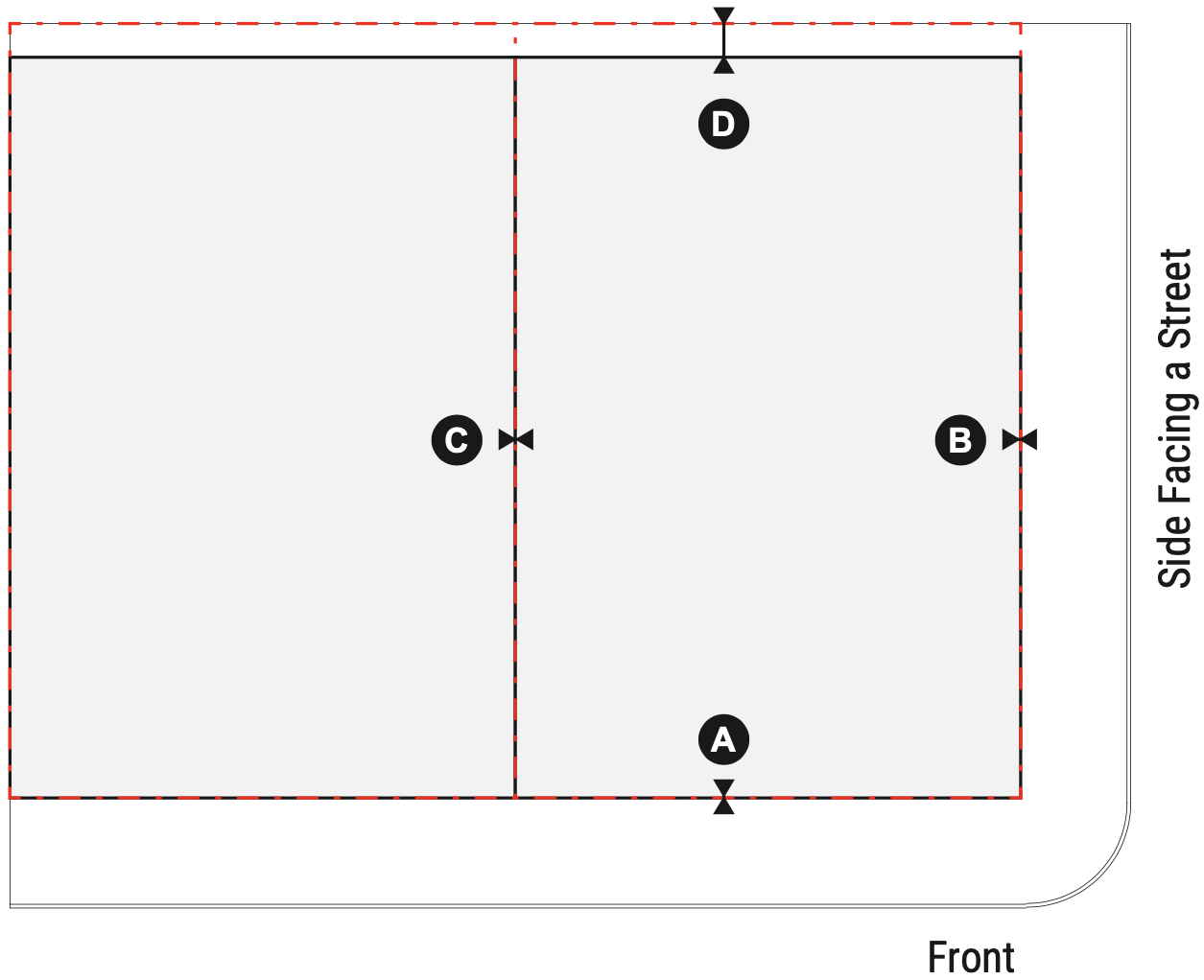
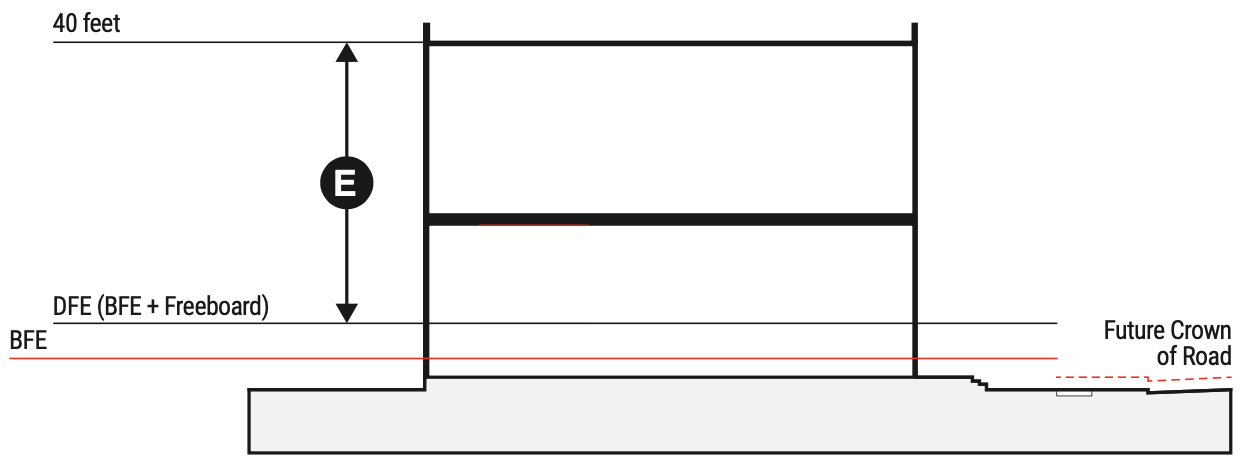
b. Design Review (RO)
- All construction or rehabilitation shall be approved under design review procedures as set forth in section 2.5.3.
7.2.10.1 Purpose (CD-1)
The CD-1 commercial, low intensity district is a retail sales, personal services, shopping district, designed to provide service to surrounding residential neighborhoods.
7.2.10.2 Uses (CD-1)
| USES TABLE (CD-1) | |
|---|---|
| RESIDENTIAL | |
| Apartments | P |
| LODGING | |
| Bed and Breakfast Inn | P* |
| OFFICE | |
| Offices A* | |
| COMMERCIAL | |
| Commercial Uses | P |
| Alcoholic Beverage Establishments | P* C* A* |
| Liquor Store | P*, Pro* |
| Dance Halls | Pro |
| Outdoor Entertainment Establishment | Pro |
| Open Air Entertainment Establishment | Pro |
| Entertainment Establishment | Pro |
| Pawnshops | C |
| Health Clubs | P |
| Accessory outdoor bar counters | Pro |
| Gambling and Casinos pursuant to section 7.1.8 | Pro |
| Rentals or leases of mopeds, motorcycles, and motorized bicycles pursuant to section 7.1.8 | Pro |
| Neighborhood and Retail Fulfillment Centers pursuant to section 7.1.8 | Pro |
| CIVIC | |
| Religious Institutions with occupancy of 199 persons or less | P, A* |
| Religious Institutions with occupancy greater than 199 | C |
| CIVIL SUPPORT | |
| Assisted Living | C* |
| Medical Uses | C* |
| Public and Private Institutions | C |
| Neighborhood Impact Establishment | C |
| EDUCATIONAL | |
| Schools | C P* |
| Day Care Facility | C |
| Family Day Care Facility | A* |
| INDUSTRIAL | |
| Warehouses | C |
| Storage of goods used in, or produced by, permitted industrial uses or related activities | A* |
| Storage of supplies or merchandise normally carried in stock | A* |
| OTHER | |
| Storage and/or parking of commercial vehicles | C* |
| Any use selling gasoline | C |
| Accessory off-street parking and loading spaces | A* |
| Vending machines | A* |
| Solar Panels | A* |
| Neighborhood Impact Structure | C |
Key P – Main Permitted Use C - Conditional Use A - Accessory Use Pro - Prohibited Use *See supplemental use regulations below | |
- Supplemental Main permitted Uses Regulations (CD-1)
The supplemental main permitted uses are as follows:- Bed and breakfast inn (pursuant to section 7.5.5.5)
- Alcoholic beverages establishments pursuant to the regulations set forth in chapter 6 in General Ordinances.
- Alcoholic beverage establishments located in the following geographic areas within the CD-1 commercial, low intensity district shall be subject to the additional requirements set forth in section 7.2.10.2.e:
- Alton Road corridor: Between the west side of Alton Road and the east side of Alton Court, between 11th Street and 14th Street. (MAP EXHIBIT-1)
- 41st Street corridor. Areas adjacent to the CD-3 zoning district along the 41st Street corridor, between 40th Street and 41st Street, and between Alton Road and the Indian Creek waterway. (MAP EXHIBIT-2)
- Qualifying educational facilities shall be eligible for the School Use Incentives as identified in section 7.1.13 of these land development regulations.
- Supplemental Conditional Uses Regulations (CD-1)
The supplemental conditional uses are as follows:- Assisted Living and Medical Uses (Pursuant to section 7.5.5.1)
- Storage and/or parking of commercial vehicles on a site other than the site at which the associated commerce, trade or business is located. See section 7.5.4.3.
- Alcoholic beverage establishments located in the following geographic areas within the CD-1 commercial, low intensity district shall be subject to the additional requirements set forth in section 7.2.10.2.e:
- Alton Road corridor. Between the west side of Alton Road and the east side of Alton Court, between 11th Street and 14th Street. (MAP EXHIBIT-1)
- 41st Street corridor. Areas adjacent to the CD-3 zoning district along the 41st Street corridor, between 40th Street and 41st Street, and between Alton Road and the Indian Creek waterway. (MAP EXHIBIT-2)
- Supplemental Accessory uses Regulations (CD-1)
The supplemental accessory uses are as follows:- The accessory uses in the CD-1 commercial, low intensity district are as required in section 7.5.4.13.
- Alcoholic beverage establishments alcoholic beverage establishments located in the following geographic areas within the CD-1 commercial, low intensity district shall be subject to the additional requirements set forth in section 7.2.10.2.e:
- Alton Road corridor. Between the west side of Alton Road and the east side of Alton Court, between 11th Street and 14th Street. (MAP EXHIBIT-1)
- 41st Street corridor. Areas adjacent to the CD-3 zoning district along the 41st Street corridor, between 40th Street and 41st Street, and between Alton Road and the Indian Creek waterway. (MAP EXHIBIT-2)
- Supplemental Prohibited uses Regulations (CD-1)
The supplemental prohibited uses are as follows:- Except as otherwise provided in these land development regulations, prohibited uses in the CD-1 commercial low intensity district along the Alton Road corridor, generally bounded by West Avenue, Michigan Avenue, 5th Street, and 20th Street include package liquor stores.
- Supplemental Special Regulations for Alcoholic beverage establishments (CD-1)
The following additional regulations shall apply to alcoholic beverage establishments, whether as a main use, conditional use, or accessory use, that are located on the west side of Alton Road and east of Alton Court, between 11th Street and 14th Street: (MAP EXHIBIT-1)- Operations shall cease no later than 2:00 a.m.
- Establishments with sidewalk café permits shall comply with section 82-366 et seq. in the General Ordinances and shall not be permitted to have outdoor speakers.
- Commercial uses on rooftops shall be limited to restaurants only, shall cease operations no later than 11:00 p.m. on weekdays and 12:00 a.m. on weekends, and shall only be permitted to have ambient, background music.
- Entertainment establishments shall be required to obtain conditional use approval from the planning board, in accordance with the requirements and procedures of section 2.5.2. Additionally, if approved as a conditional use, entertainment establishments shall be required to install a double door vestibule at all access points from the sidewalk, with the exception of emergency exits.
- Outdoor bar counters shall be prohibited.
- No special event permits shall be issued.
- This section 7.2.10.2.e.1. shall not apply to any valid, pre-existing permitted use with a valid business tax receipt (BTR) for an alcoholic beverage establishment that (i) is in application status prior to April 14, 2016; or (ii) issued prior to May 21, 2016; or (iii) to an establishment that has obtained approval for an alcoholic beverage establishment from a land use board, and which land use board order is active and has not expired, prior to May 21, 2016. Any increase to the approved hours of operation shall meet the requirements of this section.
- The following additional regulations shall apply to alcoholic beverage establishments, whether as a main use, conditional use, or accessory use, that are located in areas adjacent to the CD-3 zoning district along the 41st Street corridor, between 40th Street and 41st Street, and between Alton Road and the Indian Creek waterway: (MAP EXHIBIT-2)
- Operations shall cease no later than 2:00 a.m.
- Alcoholic beverage establishments with sidewalk café permits shall comply with section 82-366 et seq. in the General Ordinances and shall not be permitted to have outdoor speakers.
- Commercial uses on rooftops shall be limited to restaurants only, shall cease operations no later than 11:00 p.m. on weekdays and 12:00 a.m. on weekends, and shall only be permitted to have ambient, background music.
- Entertainment establishments shall be required to obtain conditional use approval from the planning board, in accordance with the requirements and procedures in section 2.5.2. Additionally, if approved as a conditional use, entertainment establishments shall be required to install a double door vestibule at all access points from the sidewalk, with the exception of emergency exits.
- Outdoor bar counters shall be prohibited.
- No special event permits shall be issued to alcoholic beverage establishments.
- The provisions of this section 7.2.10.2.e.2. shall not apply to any valid, pre-existing permitted use with a valid business tax receipt (BTR) for an alcoholic beverage establishment that was issued prior to August 23, 2016, or to an establishment that has obtained approval for an alcoholic beverage establishment from a land use board, and which land use board order is active and has not expired, prior to August 23, 2016. Any increase to the approved hours of operation shall meet the requirements of this section.
7.2.10.3 Development Regulations (CD-1)
a. The development regulations in the CD-1 commercial, low intensity district are as follows:
- The tower setback shall not be less than the pedestal setback.
- Parking lots and garages: If located on the same lot as the main structure the setbacks below shall apply. If primary use the setbacks are listed in section 7.5.3.2.n.
| DEVELOPMENT REGULATIONS TABLE (CD-1) | |
|---|---|
| Maximum FAR | 1.0 |
Mixed Use Buildings (When more than 25 percent (25%) of the total area of a building is used for residential units) | 1.25 |
| Maximum Density (Dwelling Units per Acre) | 60 DUA (80% bonus for workforce or affordable units) |
| MINIMUM UNIT SIZE (SQUARE FEET) | |
| Apartments/Multi-family Units | |
New Construction | 550 SF |
Non-elderly and elderly low and moderate income housing | 400 SF |
Workforce Housing | 400 SF |
Rehabilitated Buildings | 400 SF |
| MINIMUM AVERAGE UNIT SIZE (SQUARE FEET) | |
| Apartments/Multi-family Units | |
New Construction | N/A (3) |
Non-elderly and elderly low and moderate income housing | N/A (3) |
Workforce Housing | N/A (3) |
Rehabilitated Buildings | N/A (3) |
| Lodging and Hotel Units | N/A |
| LOT OCCUPATION | |
| Minimum Lot Area (square feet) | None |
| Minimum Lot Width (feet) | None |
| Maximum Lot Coverage (% of lot area) | None |
| BUILDING SETBACKS | |
| Front Setback | |
Subterranean | 0 feet See section 7.1.2.2 d-e |
Pedestal | |
| Side, Facing a Street Setback | |
Subterranean | 0 feet See section 7.1.2.2 d-e 10 feet (When abutting a residential district, unless separated by a street or waterway) |
Pedestal | |
| Side, Interior Setback | |
Subterranean | 0 feet 10 feet (when abutting a residential district) |
Pedestal | |
| Rear Setback | |
Subterranean | 5 feet 10 feet (When abutting a residential district) 0 feet (separated by a street or waterway) |
Pedestal | |
| |
| BUILDING HEIGHT | |
| Maximum Height | 40 feet (1) (2) |
| |
| |
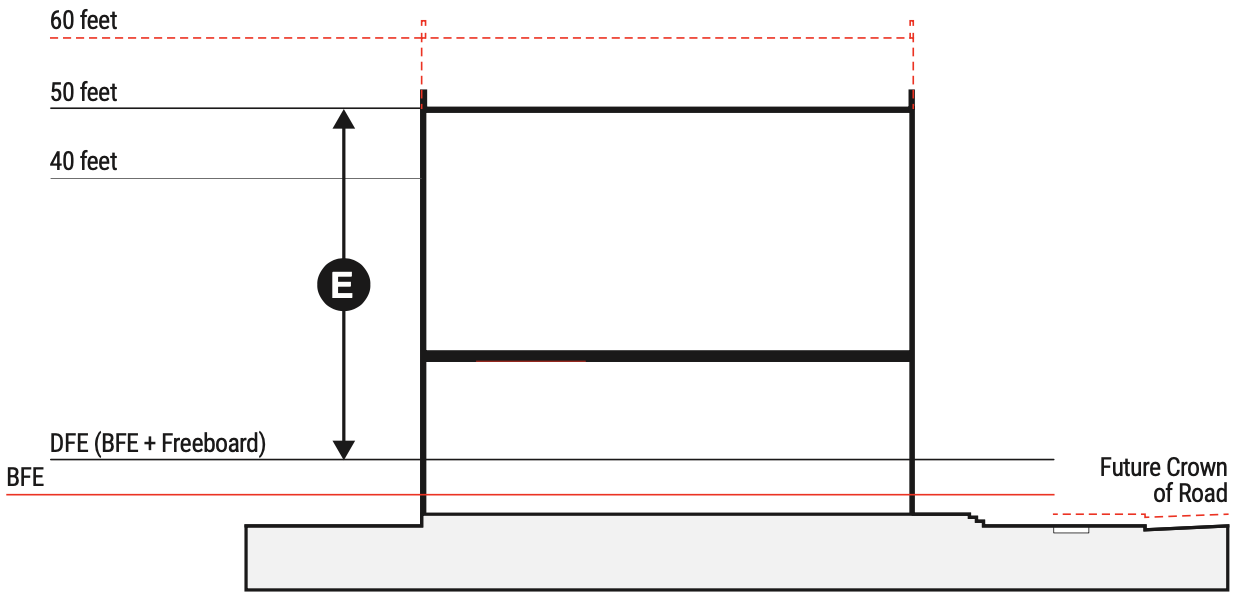
b. Regulations for New Construction
In the CD-1 district, all floors of a building containing parking spaces shall comply with section 7.1.6
7.2.11.1 Purpose (CD-2)
The CD-2 commercial, medium intensity district provides for commercial activities, services, offices and related activities which serve the entire city.
7.2.11.2 Uses (CD-2)
| USES TABLE (CD-2) | |
|---|---|
| RESIDENTIAL | |
| Apartments | P |
| LODGING | |
| Apartment Hotels | P* , Pro* |
| Hotels | P* , Pro* |
| Hostels | P* , Pro* |
| Suite Hotels | P* , Pro* |
| OFFICE | |
| Office | P* |
| COMMERCIAL | |
| Commercial Uses | P |
| Kennel | P |
| Restaurants with alcoholic beverage licenses | P*, C* |
| Alcoholic Beverage Establishments | P* C*A* |
| Dance Halls | C* Pro* |
| Outdoor Entertainment Establishment | C Pro* |
| Open Air Entertainment Establishment | C Pro* |
| Entertainment Establishment | C* Pro* |
| Neighborhood Impact Establishment | C* Pro* |
| Bars | P*, Pro* |
| Pawnshops | C Pro* |
| Funeral Home | C |
| Formula commercial establishment | P*, Pro* |
| Formula restaurant | P*, Pro* |
| Tobacco and Vape Dealers | P*, Pro* |
| Accessory outdoor bar counters | A* Pro* |
| Check Cashing Stores | P*, Pro* |
| Convenience Stores | P*, Pro* |
| Occult Science Establishment | P*, Pro* |
| Souvenir and T-shirt Shops | P*, Pro* |
| Liquor Stores | P*, C* , Pro* |
| Health club | P |
| Tattoo Studios | P*, Pro* |
| Gambling and Casinos pursuant to section 7.1.8 | Pro |
| Rentals or leases of mopeds, motorcycles, and motorized bicycles pursuant to section 7.1.8 | Pro |
| Neighborhood and Retail Fulfillment Centers pursuant to section 7.1.8 | Pro |
| CIVIC | |
| Religious Institutions with occupancy of 199 persons or less | P |
| Religious Institutions with occupancy over 199 persons | C |
| CIVIL SUPPORT | |
| Public and Private Institutions | C |
| EDUCATIONAL | |
| Schools | C P* |
| Family day care facility | A* |
| INDUSTRIAL | |
| OTHER | |
| Storage and/or parking of commercial vehicles | C |
| Any use selling gasoline | C |
| Self-Storage Warehouse | C* |
| Main Use Parking Garage | P*, C* |
| Neighborhood Impact Structure | C |
| Parking lots or garages when a main use | P*, Pro* |
| Key P – Main Permitted Use C - Conditional Use A - Accessory Use Pro - Prohibited Use *See Supplemental Use Regulations below | |
- Supplemental Main Permitted Uses Regulations (CD-2)
The supplemental main permitted uses are as follows:- Apartment hotels, hotels, hostels, and suite hotels (pursuant to sections 2.7.2 which requires a Commission warrant, and 7.5.4.5)
- Alcoholic beverages establishments pursuant to the regulations set forth in chapter 6 of the General Ordinances;
- Alcoholic beverage establishments located in the following geographic areas within the CD-2 commercial, medium intensity district shall be subject to the additional requirements set forth in section 7.2.11.2.e:
- Alton Road corridor. Properties on the west side of Alton Road and east of Alton Court, between 5th Street and 11th Street, and between 14th Street and Collins Canal; and properties on the east side of West Avenue, between Lincoln Road and 17th Street, except alcoholic beverage establishments fronting Lincoln Road between West Avenue and Alton Road. (MAP EXHIBIT-1)
- Sunset Harbour neighborhood. The geographic area generally bounded by Purdy Avenue to the west, 20th Street and the waterway to the north, Alton Road to the east, and Dade Boulevard to the south. (MAP EXHIBIT-2)
- Entertainment uses shall be subject to the requirements in section 7.5.5.4.
- Qualifying educational facilities shall be eligible for the School Use Incentives as identified in section 7.1.13 of these land development requlations.
- Supplemental Conditional Uses Regulations (CD-2)
The supplemental conditional uses are as follows:- Neighborhood impact establishment; however, for properties that front Washington Avenue from 6th Street to 16th Street or properties containing a contributing structure and located in the Espanola Way Local Historic District (MAP EXHIBIT-3), a restaurant supper club may have entertainment without obtaining conditional use approval, subject to the following additional requirements:
- Entertainment shall be restricted to an interior enclosed area; and
- Occupancy shall not exceed 299 persons
- Storage and/or parking of commercial vehicles on a site other than the site at which the associated commerce, trade or business is located. See section 7.5.4.3.
- Sunset Harbour neighborhood. The conditional uses for the Sunset Harbour neighborhood, generally bounded by Purdy Avenue to the west, 20th Street and the waterway to the north, Alton Road to the east, and Dade Boulevard to the south (MAP EXHIBIT-2), shall include those conditional uses listed on the Uses Table in section 7.2.11.2, but shall exclude:
- pawnshops,
- outdoor entertainment establishments,
- neighborhood impact establishments, and
- open air entertainment establishments, as these specific uses are prohibited in the Sunset Harbour neighborhood pursuant to section 7.2.11.2.d.
The following additional uses shall require conditional use approval in the Sunset Harbour neighborhood:- Main use parking garages.
- Restaurants with alcoholic beverage licenses (alcoholic beverage establishments) with more than 100 seats or an occupancy content (as determined by the fire marshal) in excess of 125 persons.
- Restaurants with alcoholic beverage licenses (alcoholic beverage establishments) in excess of 3,500 square feet of floor area, up to a maximum occupancy content of 299 persons (as determined by the fire marshal) and a maximum of 199 indoor seats.
- Liquor Stores
- North Beach neighborhood. All conditional uses shall comply with the conditional use criteria in section 2.5.2.2. The conditional uses for the North Beach neighborhood (located north of 65th Street) shall include those listed on the Table in section 7.2.11.2, and shall also include the following:
- Alcoholic beverage establishments (not also operating as a full restaurant with a full kitchen, serving full meals);
- Dance halls; and
- Entertainment establishments.
- South Alton Road corridor. All conditional uses shall comply with the conditional use criteria in section 2.5.2.2. The conditional uses for the South Alton Road corridor, which includes properties located along Alton Road between 6th and 11th Street (MAP EXHIBIT-4), shall include those listed on the Table in section 7.2.11.2, and shall also include the following:
- Additional requirements. Alcoholic beverage establishments located in the following geographic areas within the CD-2 commercial, medium intensity district shall be subject to the additional requirements set forth in section 7.2.11.2.e:
- Alton Road corridor. Properties on the west side of Alton Road and east of Alton Court, between 5th Street and 11th Street, and between 14th Street and Collins Canal; and properties on the east side of West Avenue, between Lincoln Road and 17th Street (MAP EXHIBIT-1), except alcoholic beverage establishments fronting Lincoln Road between West Avenue, and Alton Road.
- Sunset Harbour neighborhood. The geographic area generally bounded by Purdy Avenue to the west, 20th Street and the waterway to the north, Alton Road to the east, and Dade Boulevard to the south. (MAP EXHIBIT-2)
- Neighborhood impact establishment; however, for properties that front Washington Avenue from 6th Street to 16th Street or properties containing a contributing structure and located in the Espanola Way Local Historic District (MAP EXHIBIT-3), a restaurant supper club may have entertainment without obtaining conditional use approval, subject to the following additional requirements:
- Supplemental Accessory Uses Regulations (CD-2)
The supplemental accessory uses are as follows:- As required in section 7.5.4.13.
- Accessory outdoor bar counters, provided that the accessory outdoor bar counter is not operated or utilized between midnight and 8:00 a.m.; however, for an accessory outdoor bar counter which is located on a property that is abutting a property with an apartment unit, the accessory outdoor bar counter may not be operated or utilized between 8:00 p.m. and 8:00 a.m.
- Alcoholic beverage establishments located in the following geographic areas within the CD-2 commercial, medium intensity district shall be subject to the additional requirements set forth in section 7.2.11.2.e:
- Alton Road corridor. Properties on the west side of Alton Road and east of Alton Court, between 5th Street and 11th Street, and between 14th Street and Collins Canal; and properties on the east side of West Avenue, between Lincoln Road and 17th Street, except alcoholic beverage establishments fronting Lincoln Road between West Avenue and Alton Road. (MAP EXHIBIT-1)
- Sunset Harbour neighborhood. The geographic area generally bounded by Purdy Avenue to the west, 20th Street and the waterway to the north, Alton Road to the east, and Dade Boulevard to the south. (MAP EXHIBIT-2)
- Supplemental Prohibited Uses Regulations (CD-2)
The supplemental prohibited uses are as follows:- Accessory outdoor bar counters, except as provided in section 7.2.11.2.e or in section 7.5.4.13 and in chapter 6 in General Ordinances.
- Parking lots or garages when a main permitted use shall not be permitted on lots fronting on Espanola Way.
- Except as otherwise provided in these land development regulations, prohibited uses in the CD-2 commercial medium intensity district also include the following:
- In the Sunset Harbour Neighborhood, generally bounded by Purdy Avenue, 20th Street, Alton Road and Dade Boulevard (MAP EXHIBIT-2), prohibited uses also include the following:
- Hotels, Apartment Hotels, Suite hotels and Hostels
- Outdoor entertainment establishments;
- Neighborhood impact establishments;
- Open air entertainment establishments;
- Bars;
- Dance halls;
- Entertainment establishments (as defined in section 1.2.2 of this Code);
- Pawnshops;
- Tobacco and vape dealers;
- Check cashing stores;
- Convenience stores;
- Occult science establishments;
- Souvenir and T-shirt shops;
- Tattoo studios.
- Formula commercial establishment (Limited to the ‘Neighborhood Center’ area and pursuant to section 7.3.9.2)
- Formula restaurant (Limited to the ‘Neighborhood Center’ area and pursuant to section 7.3.9.2)
- In the Sunset Harbour Neighborhood, generally bounded by Purdy Avenue, 20th Street, Alton Road and Dade Boulevard (MAP EXHIBIT-2), prohibited uses also include the following:
- Except as otherwise provided in these land development regulations, prohibited uses along Normandy Drive and 71st Street (MAP EXHIBIT-5) are the following:
- Tobacco and vape dealers;
- Liquor stores;
- Check cashing stores;
- Occult science establishments;
- Tattoo studios.
- Except as otherwise provided in these land development regulations, prohibited uses in the CD-2 commercial medium intensity district along the Alton Road corridor, generally bounded by West Avenue, Michigan Avenue, 5th Street, and 20th Street include the following:
- Package liquor stores.
- Special regulations for alcohol beverage establishments (CD-2)
- Alton Road corridor. The following additional requirements shall apply to alcoholic beverage establishments, whether as a main use, conditional use, or accessory use, that are located on the west side of Alton Road and east of Alton Court, between 5th Street and 11th Street, and between 14th Street and Collins Canal; and properties on the east side of West Avenue, between Lincoln Road and 17th Street, except alcoholic beverage establishments fronting Lincoln Road between West Avenue and Alton Road (MAP EXHIBIT-1):
- Operations shall cease no later than 2:00 a.m.
- Establishments with sidewalk cafe permits shall comply with section 82-366 et seq. in the General Ordinances and shall not be permitted to have outdoor speakers.
- Commercial uses on rooftops shall be limited to restaurants only, shall cease operations no later than 11:00 p.m. on weekdays and 12:00 a.m. on weekends, and shall only be permitted to have ambient, background music.
- Entertainment establishments shall be required to obtain conditional use approval from the planning board, in accordance with the requirements and procedures of section 2.5.2. Additionally, if approved as a conditional use, entertainment establishments shall be required to install a double door vestibule at all access points from the sidewalk, with the exception of emergency exits.
- Outdoor bar counters shall be prohibited.
- No special event permits shall be issued.
- This section 7.2.11.2.e.1. above shall not apply to any valid, pre-existing permitted use with a valid business tax receipt (BTR) for an alcoholic beverage establishment that (i) is in application status prior to April 14, 2015; or (ii) issued prior to May 21, 2015; or (iii) to an establishment that has obtained approval for an alcoholic beverage establishment from a land use board, and which land use board order is active and has not expired, prior to May 21, 2015. Any increase to the approved hours of operation shall meet the requirements of this section 7.2.11.2.e.1.
- Notwithstanding the foregoing, for properties located between 16th Street and Collins Canal, outdoor motion picture theaters with accessory outdoor bar counters may be permitted, including on rooftops, subject to conditional use approval pursuant to section 2.5.2, and subject to the following operational limitations:
- The outdoor motion picture theater use shall front on Alton Road.
- No television, radio, and/or recorded background music may exceed an ambient volume level (i.e. a volume that does not interfere with normal conversation). On rooftops, audio from motion picture presentations shall only be delivered to patrons through individually worn headphones.
- Movie projectors and related equipment, as well as all theater screens or displays, shall be oriented away from immediately neighboring residential areas, and projections may not be substantially visible from the right-of-way. The projection system shall be designed so as not to negatively impact adjacent residential areas.
- Outdoor motion picture theaters shall be limited to no more than one (1) screen or display per establishment.
- Outdoor motion picture theaters shall commence operations no earlier than 4:30 p.m. and shall cease operations no later than 12:00 a.m. on weekdays and 1:00 a.m. on weekends. Any accessory bar counter shall commence operations no earlier than 4:30 p.m. and shall cease operations no later than 11:00 p.m. on weekdays and 12:00 a.m. on weekends. The accessory bar counter may be open and operational only during times when the theater use is operational.
- Outdoor motion picture theaters shall have no more than three (3) movie showings per night.
- Any outdoor bar counter shall be located away from immediately neighboring residential areas and shall not be substantially visible from the right-of-way.
- The area surrounding any bar counter in which alcoholic beverages may be served shall be segregated to comply with the applicable requirements of chapter 6 in General Ordinances, and, additionally, this bar area, as well as any area that allows for the congregation of non-seated patrons, shall incorporate sound attenuation devices in order to reduce the level of noise. Such sound attenuation devices must be submitted as part of a sound study prepared by a licensed acoustical engineer, peer reviewed, and presented to the planning board as part of the review of the CUP application. The sound study shall include methods of absorbing and or re-directing sound and noise generated by ambient music and patron conversation.
- Theater seats shall be required at all times and shall not be removed from the movie viewing areas during all times the business is open. This shall not preclude the temporary removal of seats for cleaning and maintenance purposes.
- Sunset Harbour neighborhood. The following additional requirements shall apply to alcoholic beverage establishments, whether as a main use, conditional use, or accessory use, that are located in the Sunset Harbour neighborhood, which is generally bounded by Purdy Avenue to the west, 20th Street and the waterway to the north, Alton Road to the east, and Dade Boulevard to the south. (MAP EXHIBIT-2)
- Operations shall cease no later than 2:00 a.m., except that outdoor operations (including sidewalk cafe operations) shall cease no later than 12:00 a.m.
- Alcoholic beverage establishments may not operate any outside dining areas or accessory bar counters above the ground floor of the building in which they are located; however, outdoor restaurant seating, associated with indoor venues, not exceeding 40 seats, may be permitted above the ground floor until 8:00 p.m. Notwithstanding the foregoing. the provisions of this section 7.2.11.2.e.2.B shall not apply to the following:
- As it pertains to outside dining areas only, but not outdoor bar counters (which are prohibited), restautrants that front Alton Road and are located south of 18th Street, provided the total number of outdoor dining seasts located above the ground floor, which must be associated with an indoor restaurant, shall not exceed 100 seats. Additionally, the combined total number of seats within the outdoor and indoor portions of restaturants above the ground floor shall not exceed 240 seats.
- Any valid, pre-existing permitted use with a valid business tax receipt (BTR) for an alcoholic beverage establishment that was issued prior to August 23, 2016, or to a proposed establishment that has submitted a completed application for an alcoholic beverage establishment to a land use board prior to August 23, 2016, or to an establishment that has obtained approval for an alcoholic beverage establishment from a land use board, and which land use board order is active and has not expired, prior to August 23, 2016.
- Except as may be required by any applicable fire prevention code or building code, outdoor speakers shall not be permitted. Notwithstanding the foregoing. the provisions of this section 7.2.11.2.e.2.B shall not apply to any valid, pre-existing permitted use with a valid business tax receipt (BTR) for an alcoholic beverage establishment that was issued prior to August 23, 2016, or to a proposed establishment that has submitted a completed application for an alcoholic beverage establishment to a land use board prior to August 23, 2016, or to an establishment that has obtained approval for an alcoholic beverage establishment from a land use board, and which land use board order is active and has not expired, prior to August 23, 2016.
- Special events shall not be permitted in any alcoholic beverage establishment.
- East side of Alton Road.As applicable to alcoholic beverage establishments between Alton Road on the west, the southern boundary of properties fronting Lincoln Road on the north, Lenox Court on the east, and 6th Street on the south, alcoholic beverages shall not be offered for sale or on-premises consumption indoors between the hours of 2:00a.m. and 8:00 a.m. each night, or outdoors between the hours of 12:00a.m. and 8:00a.m. each night. For purposes of this section, the term "outdoors" shall mean any area of an alcoholic beverage establishment that is not completely enclosed and located entirely within a building. Any operable windows or doors shall remain closed at all times, except for purposes of ingress and egress.
The provisions of this paragraph (e)(3) shall not apply to any alcoholic beverage establishment with a valid business tax receipt (BTR) or an approved land use board order for an alcoholic beverage establishment that is issued prior to October 31, 2023. - Determination of vested rights. The owner or operator of any alcoholic beverage establishment claiming a vested right to conduct alcohol sales for on-premises consumption for hours greater that the hours permitted under subsection (e)(3) may so operate only after applying for a determmination of its vested right(s) and having those rights confirmed by the chief special magistrate as follows:
- Appointment; qualifications; term. The chief special magistrate shall adjudicate applications for determinations of vested rights under this subsection (e)(4). The special magistrate shall be an attorney in good standing with the Florida Bar, with expertise in the areas of local government law, business licensing, vested rights, and/or property law.
- Filing period. Any application for a determination of vested rights must be filed with the city manager, city attorney, and city clerk no later than October 31, 2024.
- Standard for finding of a vested right. A vested right to conduct alcohol sales for on-premises consumption later than the hours prescribed in subsection (e)(3) shall be found to exist only where:
- An active order of the Planning Board, an active order of the Board of Adjustment, or other active development order issued by the City, expressly authorizes the alcoholic beverage establishment to conduct alcohol sales for on-premises consumption during specified hours;
- In good faith reliance upon such prior order, the applicant has made a substantial change in position or incurred extensive contractual obligations and financial expenses; and
- It would be highly inequitable to interfere with the acquired right.
In accordance with Florida law, no right to conduct alcohol sales at certain hours may be determined to have vested as a result of the adoption of an ordinance by the city commission. The chief special magistrate shall dismiss any application that relies solely upon a previously enacted ordinance of the city commission.
- Procedure. Applications for vested rights determination shall be heard in accordance with the procedures for hearings before the special magistrate specified in Chapter 30 of the City Code except that;
Applications for a vested rights determination shall be made in writing and filed with the city manager, city attorney, and city clerk.
- At a minimum, applications shall;
- Identify all prior orders from which the alleged vested right arises;
- Include a copy of each such prior order;
- Specify how the adoption of this ordinance adversely affected the alleged vested right including how the standard in subsection (e)(2)(C) is satisfied;
- Specify the applicant's requested relief; and
- Be sworn to by the applicant.
- The signature of the applicant or the applicant's attorney shall constitute a certificate that the person signing has read the applicant's written submissions and, to the best of their knowledge, the application is made in good faith and not for purposes of delay. The applicant or its attorney shall have a continuing obligation to correct any statement or representation found to have been incurred when made or which becomes incorrect by virtue of changed circumstances. If a claim of taking or abrogation of vested rights is; (1) based upon facts that the claimant or the attorney fo the claimant knew or should have known were not true; or (2) frivolous or filed solely for the purpose of delay, the chief special magistrate shall make such findings in writing and deny the application.
- The city clerk shall acknowledge receipt of an application for vested rights within three business days of receipt of the application, and shall promptly schedule a hearing before the chief special magistrate.
- Effect of filing application for vested rights determination. During the pendency of an application for a vested rights determination, the applicant shall comply with all requirements of this section. The filing of an application shall not be construed to stay enforcement of this section against the applicant.
- Appeals. An aggrieved party, including the city administration, may appeal a final administrative order of the special magistrate to the circuit court by petition for writ of certiorari, pursuant to the Florida Rules of Appellate Procedure.
- Alton Road corridor. The following additional requirements shall apply to alcoholic beverage establishments, whether as a main use, conditional use, or accessory use, that are located on the west side of Alton Road and east of Alton Court, between 5th Street and 11th Street, and between 14th Street and Collins Canal; and properties on the east side of West Avenue, between Lincoln Road and 17th Street, except alcoholic beverage establishments fronting Lincoln Road between West Avenue and Alton Road (MAP EXHIBIT-1):
7.2.11.3 Development Regulations (CD-2)
a. The development regulations in the CD-2 commercial, medium intensity district are as follows:
- The tower setback shall not be less than the pedestal setback.
- Parking lots and garages: If located on the same lot as the main structure the setbacks below shall apply. If primary use the setbacks are listed in section 7.5.3.2.n.
| DEVELOPMENT REGULATIONS TABLE (CD-2) | |
|---|---|
| Maximum FAR | 1.5 (5) |
Mixed Use Buildings (When more than 25 percent (25%) of the total area of a building is used for residential) | 2.0 (5) |
| Maximum Density (Dwelling Units Per Acre) | 100 DUA (80% bonus for workforce or affordable units) |
| MINIMUM UNIT SIZE (SQUARE FEET) | |
| Apartments/Multi-family Units | |
New Construction | 550 SF |
Non-elderly and elderly low and moderate income housing | 400 SF |
Workforce Housing | 400 SF |
Rehabilitated Buildings | 400 SF |
| Lodging and Hotel Units | 335 SF + (6) |
For hotel structures located within the Collins Park District, generally bounded by the erosion control line on the east, the east side of Washington Avenue on the west, 23rd Street on the north, and 17th Street on the south (MAP EXHIBIT-7) | 335 SF |
Hotel units within rooftop additions to contributing structures in a historic district and individually designated historic buildings | 335 SF |
| MINIMUM AVERAGE UNIT SIZE (SQUARE FEET) | |
| Apartments/Multi-family Units | |
New Construction | 800 SF (7) (8)(9) |
Non-elderly and elderly low and moderate income housing | 400 SF (7) (8)(9) |
Workforce Housing | 400 SF (7) (8)(9) |
Rehabilitated Buildings | 550 SF (7) (8)(9) |
| Lodging and Hotel Units | N/A |
| LOT OCCUPATION | |
| Minimum Lot Area (square feet) | None |
| Minimum Lot Width (feet) | None |
| Maximum Lot Coverage (% of lot area) | N/A |
| BUILDING SETBACKS | |
| Front Setback Ⓐ | |
Subterranean | 0 feet (See section 7.1.2.2) 5 feet (Self-Storage Warehouse) |
Pedestal | |
Tower | |
| Side, Facing a Street Setback Ⓑ | |
Subterranean | 0 feet (See section 7.1.2.2) 10 feet (when abutting a residential district, separated by a street or waterway) 5 feet (Self Storage Warehouse) |
Pedestal | |
Tower | |
| Side, Interior Setback Ⓒ | |
Subterranean | 0 feet (4) 10 feet (when abutting a residential district) (4) 7.5 feet or 8 percent (8%) of the lot width, whichever is greater (Self-Storage Warehouse) |
Pedestal | |
Tower | |
| Rear Setback Ⓓ | |
Subterranean | 5 feet (4) 10 feet (when abutting a residential district) (4) 0 feet (abutting a residential district separated by a street or waterway (4) 25 feet (Self-storage Warehouse (for lots with a rear property line abutting a residential district)) 7.5 feet (Self-storage Warehouse (for lots with a rear property line abutting an alley)) |
Pedestal | |
Tower | |
| |
| BUILDING HEIGHT | |
| Maximum Height Ⓔ | 50 feet (1) (2) |
Self Storage Warehouse | 40 feet (3) |
Mixed-use and commercial buildings that include structured parking for properties on the west side of Alton Road from 6th Street to Collins Canal (MAP EXHIBIT-6) | 60 feet (6) (2) |
| |
| |
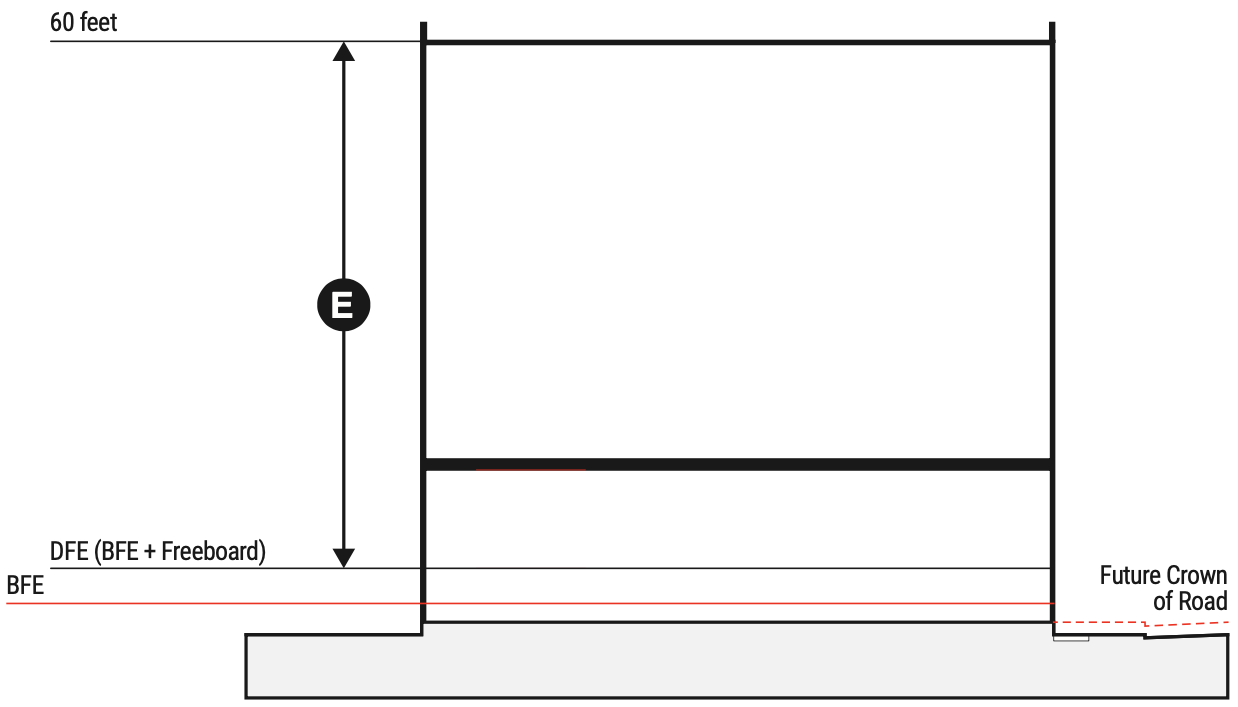
b. Regulations for New Construction
- In the CD-2 district, all floors of a building containing parking spaces shall comply with section 7.1.6.
- In the CD-2 district, each side of the first floor frontage of a self-storage warehouse building facing a street or sidewalk, shall include office, retail or commercial uses. Not less than 60 percent (60%) of each street frontage shall consist of office, retail or commercial uses, and the remaining portion of each street front shall consist of noncommercial, recessed display areas or similar treatment. The design review board or historic preservation board, as applicable, may permit a lesser amount of office, retail or commercial frontage, if it is determined that site conditions warrant a reduction. In the event a lesser portion of office, retail or commercial space is permitted, the remaining portion of each street front shall consist of noncommercial, recessed display areas or similar treatment.
7.2.11.4 RESERVED
7.2.11.5 WASHINGTON AVENUE (CD-2)
- Location and Purpose (Washington Ave – CD-2)
The following regulations shall apply to properties that front Washington Avenue between 6th Street and 16th Street (MAP EXHIBIT-3). - Development Regulations (Washington Ave – CD-2)
The following regulations shall apply to properties that front Washington Avenue between 6th Street and 16th Street, referred to herein as "North Washington Avenue, " (MAP EXHIBIT-3); in the event of a conflict within this division, the regulations below shall apply:DEVELOPMENT REGULATIONS TABLE (WASHINGTON AVE - CD-2) Maximum FAR 1.5 Maximum Density (Dwelling Units Per Acre) 100 DUA Minimum and minimum average Unit Size (square feet) See section 7.2.11.3.a Supplemental Minimum Unit Size See section 7.2.11.5.c. below. LOT OCCUPATION Minimum Lot Area (square feet) None Minimum Lot Width (feet) None Maximum Lot Coverage (% of lot area) None BUILDING SETBACKS Lots with frontage equal or less than 100 feet (Pursuant to section 7.2.11.3.a) BUILDING SETBACKS Lots with frontage greater than 100 feet Front Setback Ⓐ Subterranean
0 feet Ground Level
0 feet (See section 7.1.2.2) Above the ground level up to 35 feet in height
5 feet min (for parking garages with liners)
10 feet min (for parking garages without liners)
15 feet min (for all other uses)Above 35 feet in height up to 75 feet
5 feet min (for parking garages with liners)
10 feet min (for parking garages without liners)
30 feet min (for all other uses)Above 75 feet in height 110 feet Side, Facing a Street Setback Ⓑ Subterranean
0 feet Nonresidential Uses
0 feet (See section 7.1.2.2) Residential and Hotel Uses
7.5 feet (See section 7.1.2.2) Above 75 feet in height for all uses 45 feet Side, Interior Setback Ⓒ Subterranean
0 feet Nonresidential Uses
0 feet Residential and Hotel Uses
7.5 feet or 8% of lot width (whichever is greater, up to 10 feet)
7.5 feet (when abutting a nonresidential or non-hotel use)Above 75 feet for all uses 45 feet Rear Setback Ⓓ Subterranean
0 feet Ground Level
0 feet Above the Ground Level
10 % of lot depth
0 feet (for parking garage floors above the minimum truck clearance)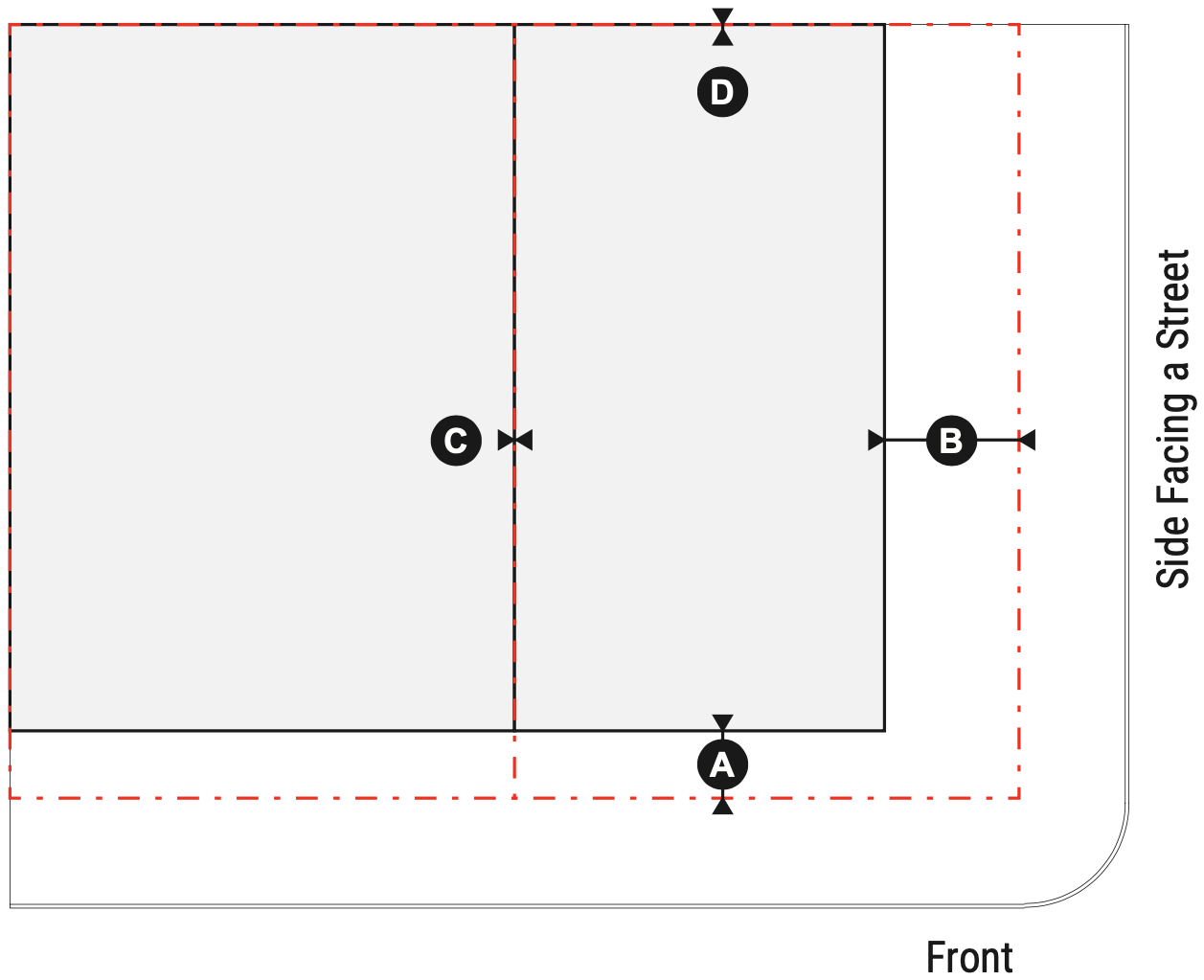
BUILDING HEIGHT Maximum Height Ⓔ 55 feet (unless otherwise specified in section 7.2.11.5.c below) Lots that have frontage equal to or greater than 200 feet
75 feet Main Parking Garages
55 feet (Regardless of frontage) 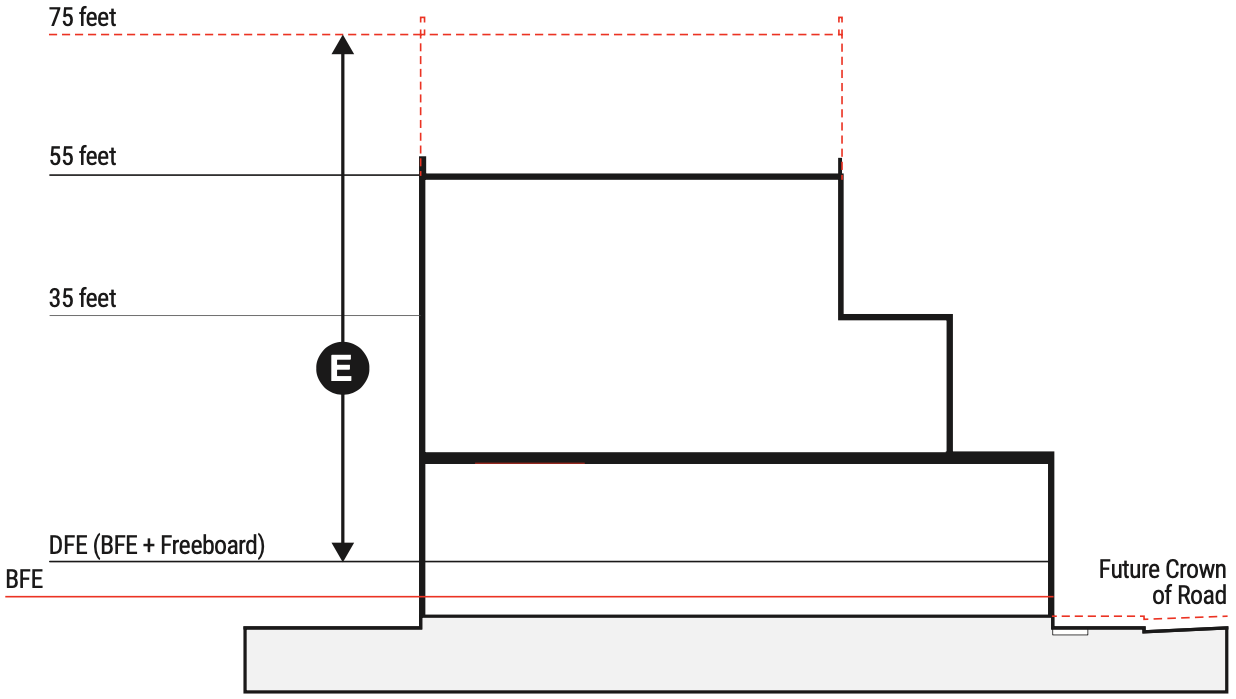
- Additional Regulations (Washington Ave – CD-2)
- The maximum frontage for nightclubs and dance halls, located at the ground level shall not exceed 25 feet in width unless such a space has a certificate of use for nightclub or dance hall, or unless a valid license was issued after January 1, 2011, and before the date of adoption of the ordinance codified in this section for the use of such space as a nightclub or dance hall.
- For lots that have a frontage that is greater than 100 feet, the following shall apply:
- Maximum building length. Unless otherwise approved by the historic preservation board at its sole discretion, no plane of a building, above the ground floor façade facing Washington Avenue, shall continue for greater than 100 feet without incorporating an offset of a minimum 5 feet in depth from the setback line. The total offset widths shall total no less than 20 percent (20%) of the entire building frontage.
- Physical separation between buildings. Unless otherwise approved by the historic preservation board at its sole discretion, a physical separation must be provided between buildings greater than 200 feet in length and at/or above 35 feet in height from the ground floor. Notwithstanding the foregoing, for building sites with a lot frontage in excess of 500 feet, no physical separation is required if:
- the length of the building at/or above 35 feet in height from the ground floor does not exceed 50 percent (50%) of the length of the frontage of the property; and
- the offsets required in section 7.2.11.5.c.4.A, above, are a minimum of 20 feet in depth from the setback line and the combined offset widths total no less than 30 percent (30%) of the entire building frontage.
7.2.11.6 THE WOLFSONIAN ARTS DISTRICT (CD-2)
- Location and Purpose (Wolfsonian Arts District- CD-2)
The following regulations shall apply to properties that front Washington Avenue between 10th Street and 11th Street (MAP EXHIBIT-8).
The purpose of these regulations is to enrich and sustain a long-standing cultural institution that preserves history and offers educational opportunities to the residents of the city. - Development Regulations (Wolfsonian Arts District- CD-2)
The following regulations shall apply to properties that front Washington Avenue between 10th Street and 11th Street (MAP EXHIBIT-8). In the event of a conflict within this section, the criteria below shall apply:
| DEVELOPMENT REGULATIONS TABLE (WOLFSONIAN ARTS DISTRICT - CD-2) | |
|---|---|
| Maximum FAR | 3.25 (for the following properties located on the east side of Washington Avenue: Lots 9, 10, 11, 12, and 13, within Block 30, of the plat of Ocean Beach Addition No. 2, recorded in Plat Book 2, Page 56, of the Public Records of Miami-Dade County) |
| Maximum Density (Dwelling Units Per Acre) | 100 DUA |
| Minimum and minimum average Unit Size (square feet) | See section 7.2.11.3.a |
| LOT OCCUPATION | |
| Minimum Lot Area (square feet) | None |
| Minimum Lot Width (feet) | None |
| Maximum Lot Coverage (% of lot area) | N/A |
| BUILDING SETBACKS | |
| Front Setback | |
Subterranean | 0 feet |
Pedestal | 0 feet |
Tower | 0 feet |
| Side, Facing a Street Setback | |
Subterranean | 0 feet |
Pedestal | 0 feet |
Tower | 0 feet |
| Side, Interior Setback | |
Subterranean | 0 feet |
Pedestal | 0 feet |
Tower | 0 feet |
| Rear Setback | |
Subterranean | 0 feet |
Pedestal | 0 feet |
Tower | 0 feet |
| |
| BUILDING HEIGHT | |
| Maximum Height | 75 feet |
| |
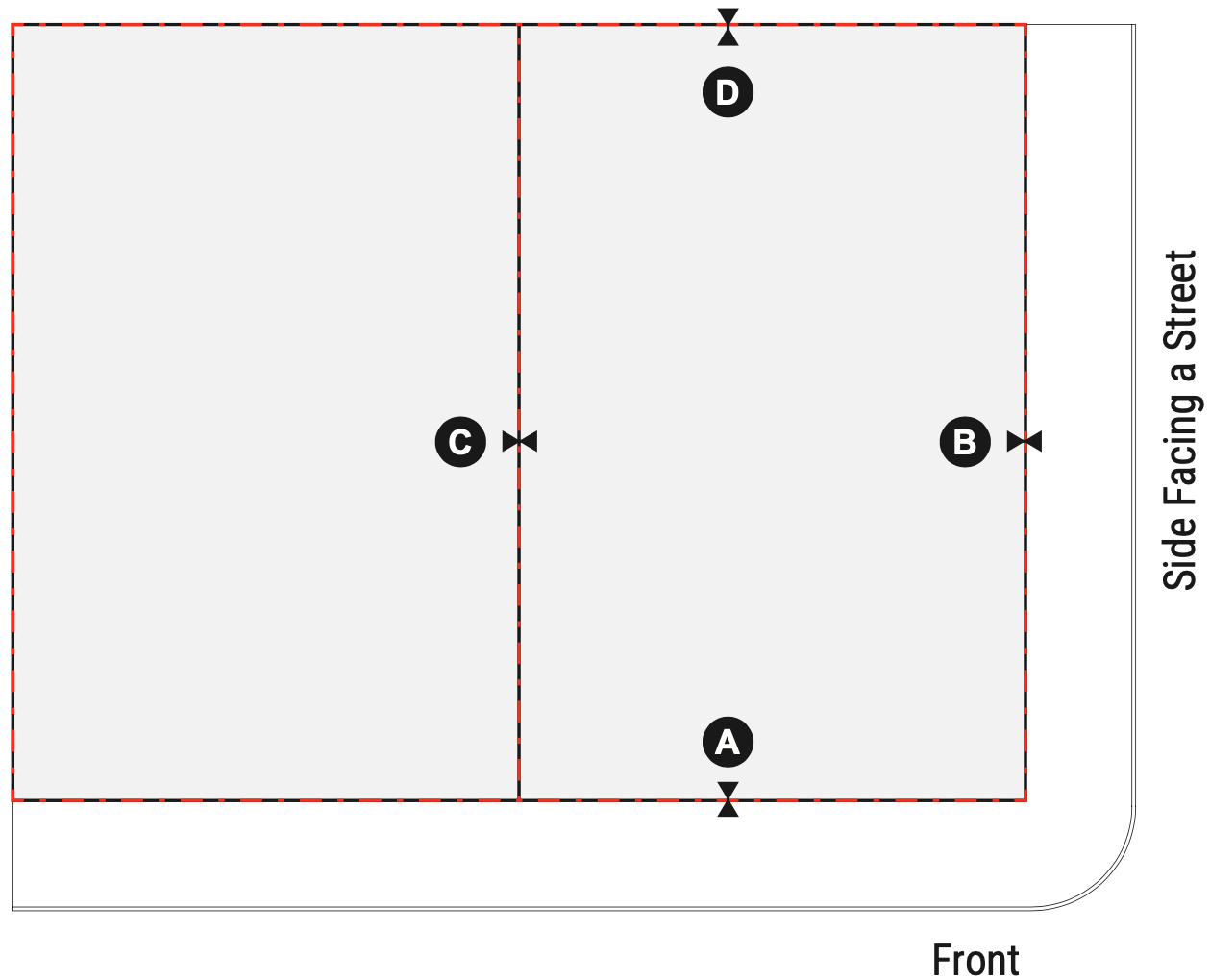
7.2.11.7 ALTON ROAD GATEWAY AREA (CD-2)
- Location and Purpose (Alton Road Gateway Area- CD-2)
The Alton Road Gateway Area incorporates the parcels in the area bounded by 8th Street on the north, Alton Road on the east, 5th Street/MacArthur Causeway/SR A1A on the south, and West Avenue on the west; excluding lots 15 through 22 of the Amended Fleetwood Subdivision, according to the plat thereof recorded in Plat Book 28, page 34 (MAP EXHIBIT-9), of the Public Records of Miami-Dade County, Florida. - Development Regulations (Alton Road Gateway Area- CD-2)
The following regulations shall apply to properties in the Alton Road Gateway Area (MAP EXHIBIT-9).DEVELOPMENT REGULATIONS TABLE (ALTON ROAD GATEWAY AREA - CD-2) Maximum FAR 1.5 (2) Mixed Use Buildings (When more than 25 percent (25%) of the total area of a building is used for residential or hotel units )
2.0 Maximum Density (Dwelling Units Per Acre) 100 DUA Minimum and minimum average Unit Size (square feet) See section 7.2.11.3.a LOT OCCUPATION Minimum Lot Area (square feet) None Minimum Lot Width (feet) None Maximum Lot Coverage (% of lot area) None BUILDING SETBACKS Front Setback Alton Road
10 feet
0 feet (for elevated open walkways)West Avenue
20 feet
0 feet (for elevated open walkways)5th Street / Mac Arthur Causeway
17 feet
0 feet (for elevated open walkways)Side, Facing a Street Setback Subterranean
0 feet
10 feet (when abutting a residential district, separated by a street or waterway)
5 feet (Self Storage Warehouse)Pedestal
Tower
Side, Interior Setback Subterranean
0 feet (3)
10 feet (when abutting a residential district) (3)
7.5 feet or 8 percent (8%) of the lot width, whichever is greater (Self-Storage Warehouse)Pedestal
Tower
Rear Setback Subterranean
5 feet (3)
10 feet (when abutting a residential district) (3)
0 feet (abutting a residential district separated by a street or waterway (3)
25 feet (Self-storage Warehouse (for lots with a rear property line abutting a residential district))
7.5 feet (Self-storage Warehouse (for lots with a rear property line abutting an alley))Pedestal
Tower
BUILDING HEIGHT Maximum Height Main Use Residential
60 feet (1) Non-Residential
40 feet (1) 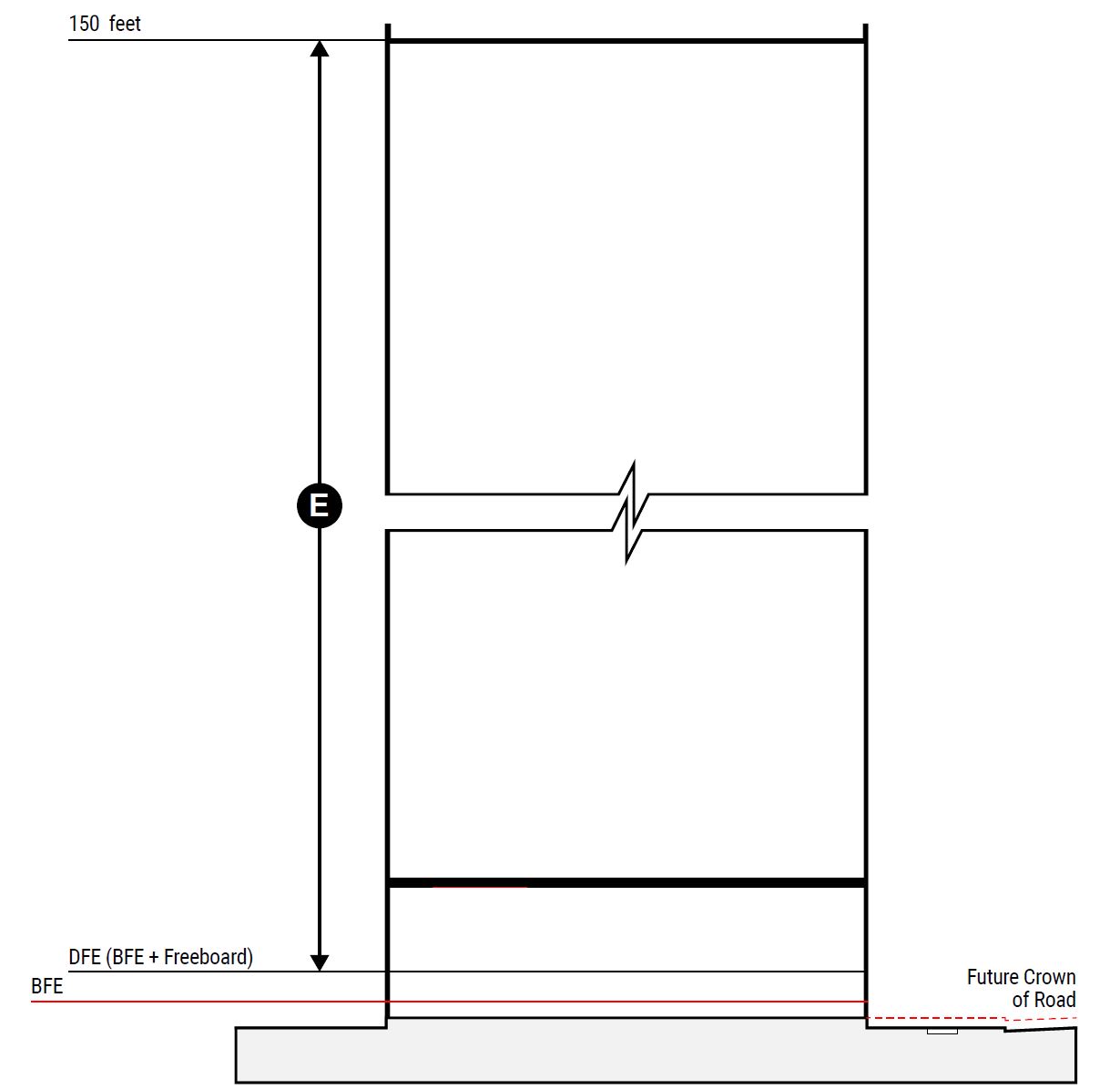
(1) Height shall be measured from the base flood elevation, plus freeboard, provided that the height of the first floor shall be tall enough to allow the first floor to eventually be elevated to base flood elevation, plus freeboard, with a future minimum interior height of at least 14 feet as measured from the height of the future elevated adjacent right-of-way as provided under the city's public works manual.
(2) Notwithstanding the above regulations, the maximum floor area ratio (FAR) for self-storage warehouses shall be 1.5. The floor area ratio provision for mixed use buildings on this table shall not apply to self-storage warehouse development.
(3) Notwithstanding the foregoing, rooftop additions to contributing structures in a historic district and individually designated historic buildings may follow existing nonconforming side and rear pedestal setbacks.
- Additional Regulations (Alton Road Gateway Area- CD-2)
- Clear pedestrian path. A "clear pedestrian path," free from obstructions including, but not limited to, outdoor cafes, sidewalk cafes, landscaping, signage, utilities, and lighting, shall be maintained along all frontages as follows:
- The clear pedestrian path may only utilize public sidewalk and setback areas. The clear pedestrian path shall be a minimum of 10 feet wide, except along the portions of West Avenue, Alton Road, and 5th Street/MacArthur Causeway south of 6th Street, where it shall be a minimum of 5 feet wide. The clear pedestrian path may be reduced by up to 5 feet for the sole purpose of accommodating the trunk diameter of canopy street trees when adjacent to a building.
- Pedestrians shall have 24-hour access to "clear pedestrian paths."
- Clear pedestrian paths shall be well lit and consistent with the city's lighting policies.
- Clear pedestrian paths shall be designed as an extension of the adjacent public sidewalk.
- Clear pedestrian paths shall be delineated by in-ground markers that are flush with the path, differing pavement tones, pavement type, or other method to be approved by the planning director.
- An easement to the city providing for perpetual public access shall be provided for portions of clear pedestrian paths that fall within the setback area.
- Floor plate. The maximum floor plate size for the tower portion of a residential building is 17,500 square feet, including projecting balconies, per floor.
- Residential buildings containing parking. Main use residential buildings containing parking, are not required to provide residential or commercial uses at the first level along every façade facing a street or sidewalk as required in section 7.2.11.3.b.1. However, the first level shall be architecturally treated to conceal parking, loading, and all internal elements, such as plumbing pipes, fans, ducts, and lighting from public view.
- Green space. A minimum of three acres of open green space shall be located within the Alton Road Gateway Area (MAP EXHIBIT-9). For purposes of this section, green space shall mean open areas that are free from buildings, structures, pavilions, driveways, parking spaces, and underground structures (except non-habitable utility structures). However, sun shade structures, open on all sides, and elevated pedestrian walks may be permitted. Open green space areas shall consist primarily of landscaped open areas, pedestrian and bicycle pathways, plazas, playgrounds, and other recreational amenities.
- Clear pedestrian path. A "clear pedestrian path," free from obstructions including, but not limited to, outdoor cafes, sidewalk cafes, landscaping, signage, utilities, and lighting, shall be maintained along all frontages as follows:
- Supplemental Use Regulations (Alton Road Gateway Area- CD-2)
- The following regulations shall apply to the properties located within the Alton Road Gateway Area (MAP EXHIBIT-9); where there is conflict within this section, the regulations below shall apply:
- Prohibited uses. In addition to the prohibited uses identified in section 7.2.11.2.d, the following uses shall also be prohibited:
- accessory outdoor bar counters,
- hostels,
- hotels,
- apartment hotels,
- suite hotels,
- outdoor entertainment establishments,
- neighborhood impact establishments,
- open air entertainment establishments,
- bars,
- dance halls,
- entertainment establishments (as defined in section 1.2.2),
- exterior alcoholic beverage service after 12:00 a.m.,
- interior alcoholic beverage service after 2:00 a.m.,
- liquor stores,
- any use selling gasoline,
- storage and/or parking of commercial vehicles on site other than the site at which the associated trade or business is located (in accordance with section 7.5.4.3)
- pawnshops,
- secondhand dealers of precious metals/precious metals dealers,
- check cashing stores,
- convenience stores,
- occult science establishments,
- souvenir and t-shirt shops,
- tattoo studios, and
- tobacco/vape dealers.
- Prohibited uses. In addition to the prohibited uses identified in section 7.2.11.2.d, the following uses shall also be prohibited:
- The following regulations shall apply to the properties located within the Alton Road Gateway Area (MAP EXHIBIT-9); where there is conflict within this section, the regulations below shall apply:
7.2.11.8 ALTON ROAD - HISTORIC DISTRICT BUFFER OVERLAY (CD-2)
- Location and Purpose (Alton Road Historic District Buffer Overlay-CD-2)
The purpose of this overlay district is to minimize the impacts of development along Alton Road on residential properties located in the Flamingo Park Historic District and the Palm View Historic District. Specifically the overlay district is intended to apply to properties zoned CD-2 Commercial Medium Intensity that are adjacent to lower intensity RS-4 and RM-1 residential buildings in designated local historic districts. The overlay district regulations are intended to achieve a more compatible relationship of scale and massing between the Alton Road corridor and the adjoining residential neighborhoods, to promote mixed-use development that makes efficient use of parking, to minimize the concentration of impacts from intense retail and restaurant development and to encourage smaller neighborhood-oriented uses.- The regulations of this division shall apply to properties within the following boundaries, which shall be known as the Alton Road - Historic District Buffer Overlay:
- Area 1 shall be those properties fronting on the east side of Alton Road from 6th Street to 11th Street. (MAP EXHIBIT-10)
- Area 2 shall be those properties fronting on the east side of Alton Road from 14th Street to 15th Street. (MAP EXHIBIT-11)
- Area 3 shall be those properties fronting on the east side of Alton Road from 17th Street to the Collins Canal. (MAP EXHIBIT-12)
- The regulations of this division shall apply to properties within the following boundaries, which shall be known as the Alton Road - Historic District Buffer Overlay:
- Uses (Alton Road Historic District Buffer Overlay CD-2)
The following overlay regulations shall apply within the Alton Road - Historic District Buffer Overlay. All development regulations applicable to and/or in the underlying zoning district shall apply, except as follows:- Land use. Main permitted uses, conditional uses and accessory uses shall be permissible as set forth in the CD2 district regulations, with the following exceptions:
- Restaurants, bars, entertainment establishments and similar uses shall not be permitted at any level above the ground floor, except that a loft or mezzanine containing these uses may be permitted within the interior of a ground floor commercial space. This subsection shall not apply to such existing and proposed uses in buildings classified as "contributing", and existing in the Flamingo Park Historic District as of the effective date of this section.
- Retail uses at any level above the ground or first floor shall not exceed 2,500 square feet per tenant. This subsection shall not apply to buildings classified as "contributing", and existing in the Flamingo Park Historic District as of the effective date of this section.
- Any individual retail, restaurant, bar, entertainment establishment or similar establishment in excess of 10,000 square feet, inclusive of outdoor seating areas, shall require conditional use approval. This subsection shall not apply to properties containing buildings classified as "contributing" and existing in the Flamingo Park Historic District as of the effective date of this division, provided such property has not been combined or aggregated with adjacent properties. Notwithstanding the foregoing, the regulations in section 7.5.5.4, Entertainment Establishments, shall continue to apply to uses in this overlay district.
- No alcoholic beverage establishment, entertainment establishment or restaurant may be licensed as a main permitted or accessory use in any open area above the ground floor (any area that is not included in the FAR calculations) or at ground level in any open area within 125 feet of a residential district, except that residents of a multifamily (apartment or condominium) building or hotel guests may use these areas, which may include a pool or other recreational amenities, for their individual, personal use with appropriate buffering as determined by the Planning Department or applicable land use board with jurisdiction. This subsection shall not apply to properties containing buildings classified as "contributing" and existing in the Flamingo Park Historic District as of the effective date of this division, provided such property, has not been combined or aggregated with adjacent properties; and conditional use approval is obtained to operate between the hours of 8:00 p.m. and 8:00 a.m.
- Land use. Main permitted uses, conditional uses and accessory uses shall be permissible as set forth in the CD2 district regulations, with the following exceptions:
- Development Regulations (Alton Road Historic District Buffer Overlay CD-2)
DEVELOPMENT REGULATIONS TABLE (ALTON ROAD HISTORIC DISTRICT BUFFER OVERLAY – CD-2) Maximum FAR 1.5 (2) Mixed Use Buildings (When more than 25 percent (25%) of the total area of a building is used for residential or hotel units)
2.0 Maximum Density (Dwelling Units Per Acre) 100 DUA Minimum and minimum average Unit Size (square feet) See section 7.2.11.3.a LOT OCCUPATION Minimum Lot Area (square feet) None Minimum Lot Width (feet) None Maximum Lot Coverage (% of lot area) N/A BUILDING SETBACKS Front Setback 5 feet (1) (See section 7.1.2.2) Side, Facing a Street Setback 5 feet (1) (See section 7.1.2.2) Side, Interior Setback 0 feet (1) Rear Setback 7.5 feet (1) For lots with a rear property line abutting an RM-1 or an RS-4 district
25 feet (1) for lots with a rear property line abutting an alley (Lenox Court)
5 feet (1) 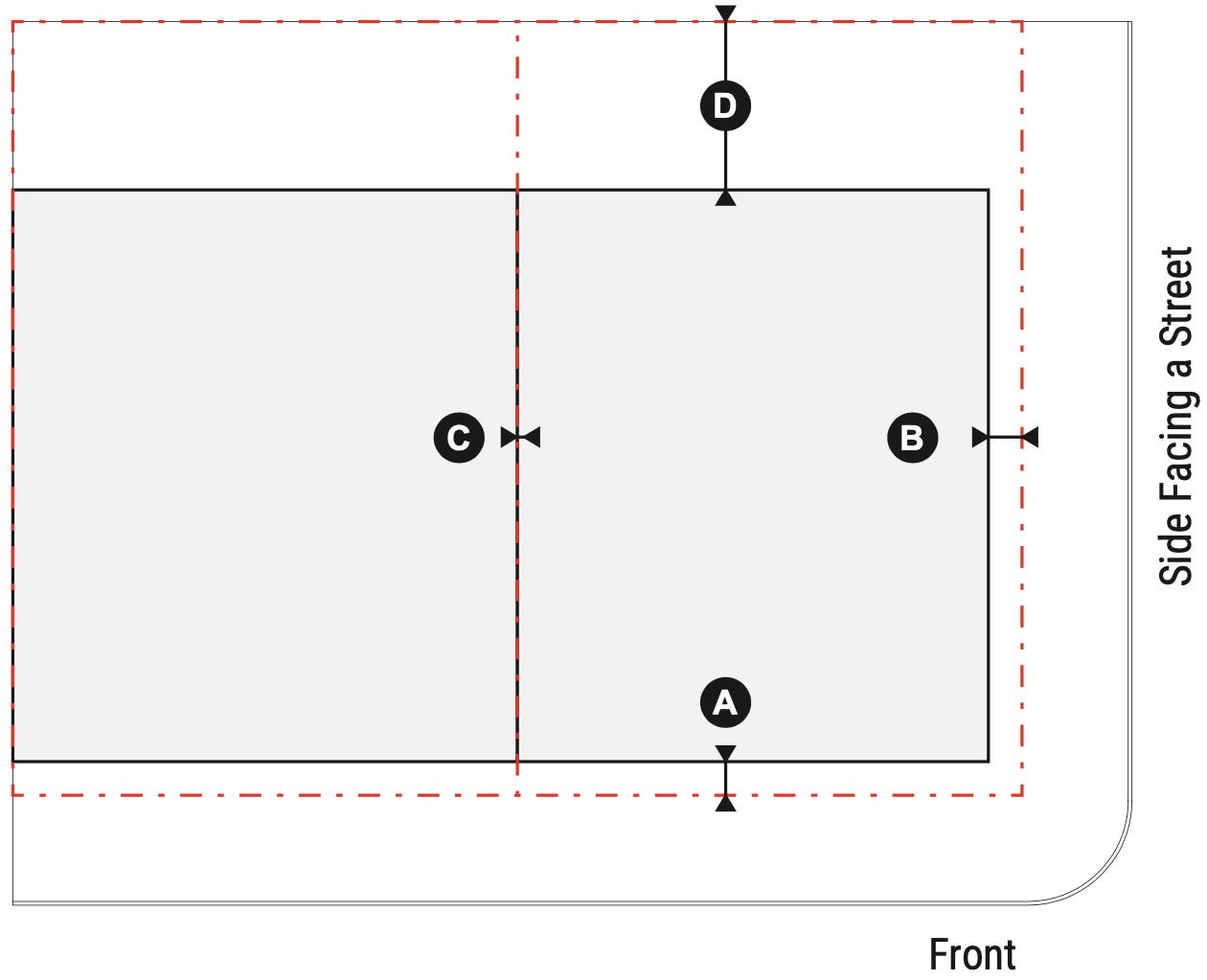
BUILDING HEIGHT Maximum Height 50 feet (3) Within 40 feet from the rear property line for lots abutting and alley (Lenox Court)
28 feet (3) Within 60 feet from the RM-1 district for blocks with no alley, between 8th Street and 11th Street.
28 feet (3) 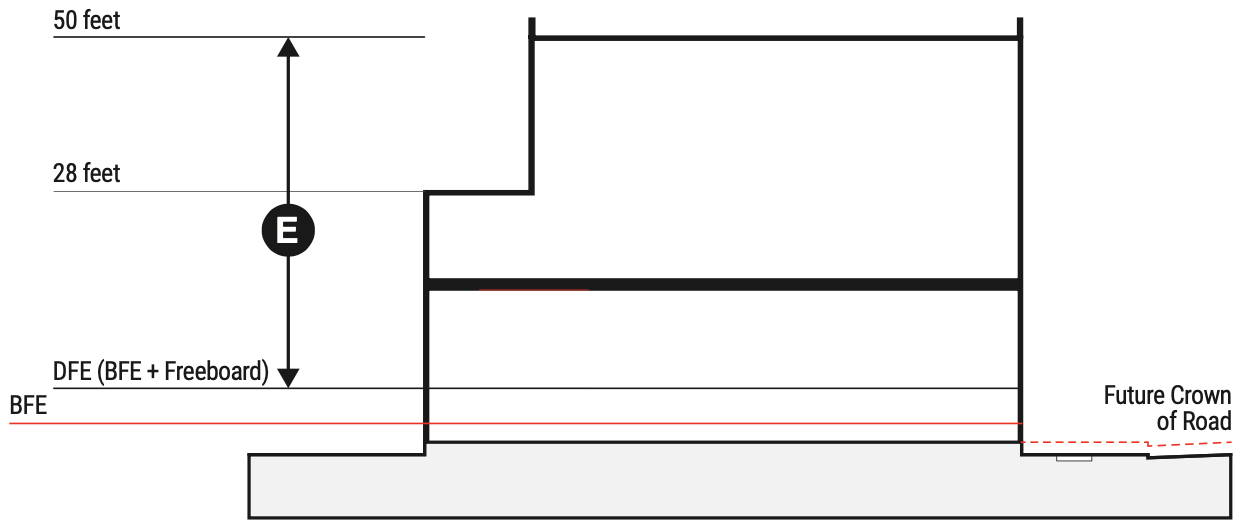
(1) There shall be no variances for building setbacks, except for triangular lots.
(2) Notwithstanding the above regulations, the maximum floor area ratio (FAR) for self-storage warehouses shall be 1.5. The floor area ratio provision for mixed use buildings on this table shall not apply to self-storage warehouse development.
(3) No variances for building height allowed.
- Building separation.
- The east and west facades of any building constructed on more than 50 linear feet of frontage along Alton Road shall be divided into segments with building massing and architectural treatments intended to be reflective of the 50 feet wide lot development pattern that is predominant in the historic district.
- Any building greater than 43 feet in height with a footprint that occupies more than 150 linear feet of frontage along Alton Road shall have a separation between all portions of the building above a height of 28 feet, so that there is a minimum 15 feet wide view corridor running from east to west at least every 150 linear feet along the Alton Road corridor.
- Contributing buildings. The following regulations shall apply to lots containing contributing buildings in the Flamingo Park Historic District within the Alton Road - Historic District Buffer Areas.
- Only those portions of a contributing building that were not part of the original structure on the site, or that have not acquired any type of architectural significance, as determined by staff or the historic preservation board, may be issued a Certificate of Appropriateness for demolition.
- For contributing buildings or properties, no building or substantially enclosed structure shall be permitted within an existing historic courtyard. For purposes of this subsection, an historic courtyard shall be defined as a grade level space, open to the sky, which is enclosed on at least two sides by an existing building or structure on the same property and is an established architectural or historic component of the site or building design by virtue of significant features and/or finishes, including, but not limited to, paving patterns, fountains, terraces, walkways or landscaping.
- Building separation.
7.2.11.9 SUNSET HARBOUR (CD-2)
- Location and Purpose (Sunset Harbour - CD-2)
The Sunset Harbour Neighborhood incorporates the parcels in the area bounded by 20th Street on the north, Alton Road on the east, Dade Boulevard on the south, and Purdy Avenue on the west (MAP EXHIBIT-2). - Development Regulations (Sunset Harbour - CD-2)
The following regulations shall apply to CD-2 properties within the Sunset Harbour Neighborhood (MAP EXHIBIT-2):- Clear pedestrian path. The applicable standards for a "clear pedestrian path" established in section 7.1.2.2.e.2. shall apply to new development, except as follows:
- The clear pedestrian path shall be at least 10 feet wide.
- The design review board may approve the reduction of the clear pedestrian path requirement to no less than 5 feet in order to accommodate street trees, required utility apparatus, or other street furniture, subject to the design review criteria.
- Height. Notwithstanding the requirements of section 7.2.11.3.a, the following maximum building height regulations shall apply to the Sunset Harbour Neighborhood (MAP EXHIBIT-2):
- The maximum building height shall be 55 feet, except as noted below.
- The design review board may approve development at a maximum building height of 65 feet on the following properties:
- Properties fronting Dade Boulevard between Alton Road and Bay Road. (MAP EXHIBIT-13)
- Properties fronting Alton Road between 20th Street and Dade Boulevard. (MAP EXHIBIT-14)
- Properties fronting Purdy Avenue between 18th Street and Dade Boulevard. (MAP EXHIBIT-15)
- The design review board may only approve development at a height greater than 55 feet subject to the design review criteria and the following regulations:
- The property shall have a minimum lot size of 10,000 square feet.
- The development shall consist solely of office use above the ground level of the structure, and provided that residential uses may be permitted on such properties up to a maximum FAR of 2.0 pursuant to section 7.2.11.3.a (Development Regulations Table: Floor Area Ratio), but only if the first 1.5 FAR of development is dedicated to office use and ground floor commercial use.
- The ground floor shall contain retail, personal service, restaurant and similar types of active uses fronting the clear pedestrian path.
- Portions of the building exceeding 55 feet in height that abut a residential use shall be set back a minimum of 10 feet from the residential use.
- Portions of the building exceeding 55 feet in height that are located on Alton Road shall be set back a minimum of 150 feet from 20th Street.
- Portions of the building exceeding 55 feet in height that are located on Dade Boulevard shall be set back a minimum of 100 feet from Bay Road.
- Portions of the building exceeding 55 feet in height that are located along 18th Street between Bay Road and Purdy Avenue shall be set back a minimum of 12 feet from the property line.
- For developments in the Sunset Harbour neighborhood that (i) consist solely of office use above the ground level of the structure, and (ii) are located on lots with a minimum lot size of 10,000 square feet, and (iii) are located within the area bounded by Dade Boulevard on the south, Purdy Avenue on the west, 18th Street on the north, and Bay Road on the east (MAP EXHIBIT-21) - 65 feet, provided that a full building permit for a tower pursuant to this section must be issued no later than December 31, 2022, and provided that residential uses may be permitted on such properties up to a maximum FAR of 2.0 pursuant to section 7.2.11.3.a (Development Regulations Table: Floor Area Ratio), but only if he first 1.5 FAR of development is dedicated to office use and ground floor commercial use.
For office developments that satisfy the applicable requirements in section 7.2.11.2 - 75 feet.
- Height exceptions. In general, rooftop elements that are exempt from a building's maximum building height pursuant to this section 7.2.11.9.b.3 shall be located in a manner to minimize visual impacts on predominant neighborhood view corridors as viewed from public rights-of-way and waterways. The height regulation exceptions contained in section 7.5.2 shall not apply to the Sunset Harbour Neighborhood. Instead, only the following height exceptions shall apply to the Sunset Harbour Neighborhood and, unless otherwise specified, shall not exceed 10 feet above the main roof of the structure:
- Roof-top operational and mechanical equipment. This exception shall be limited to essential, nonhabitable, building elements such as mechanical rooms/devices, air conditioning and cooling equipment, generators, electrical and plumbing equipment, as well as any required screening. The height of such elements shall not exceed 25 feet above the roof slab. The foregoing operational and mechanical equipment shall require the review and approval of the design review board and shall be set back from the building perimeter by no less than 25 feet from roof parapets on street facing facades.
- Roof-top elevator towers, including code required vestibules, and stair towers, with the height of such structures not exceeding 25 feet above the roof slab. Projecting overhangs at the doorways to elevator vestibules and stair towers required by the Florida Building Code may be permitted, provided the projection does not exceed the minimum size dimensions required under the Florida Building Code. The foregoing elements shall require the review and approval of the design review board and shall be set back from the building perimeter by no less than 25 feet from roof parapets on street facing facades. Notwithstanding the foregoing, the requirement for design review board approval, as well as the perimeter setback, shall not apply to private elevator and/or private stairs from a residential unit to a private roof deck.
- Satellite dishes, antennas, sustainable roofing systems, solar panels and similar elements. Such elements shall be set back a minimum of 15 feet from the roof parapets on street-facing facades.
- Decks located more than 6 inches above the top of the roof slab, and not exceeding 3 feet above the roof slab, may be permitted provided the deck area is no more than 50 percent (50%) of the enclosed floor area immediately one floor below.
- Rooftop areas that are accessible only to the owners or tenants of residential units may have trellises, pergolas or similar structures that have an open roof of cross rafters or latticework. Such structures shall not exceed a combined area of 20 percent (20%) of the enclosed floor area immediately one floor below and shall be set back a minimum of 20 feet from the property line and no less than 10 feet from the roof parapets on street-facing facades.
- Roof-top pools, not to exceed 5 feet above the roof slab, shall be limited to main use residential buildings, or mixed use/office buildings where at least 25 percent (25%) of the floor area is dedicated to nontransient residential units. Such pools may have up to a 4-foot-wide walkway around the pool. Additionally, bathrooms required by the Florida Building Code, not to exceed the minimum size dimensions required under the Florida Building Code, may be permitted provided such bathrooms are set back a minimum of 20 feet from the property line and no less than 10 feet from the roof parapets on street-facing facades and shall not exceed 13 feet in height measured from the finished elevation of the roof deck or 16 feet in height measured from the roof slab, whichever is less.
- Parapets shall not exceed 4 feet in height above the main roof.
- Exterior speakers required to meet applicable requirements of the Life Safety or Florida Building Code.
- Allowable height exceptions located within 25 feet of the property line along a street facing façade of the building, or within 20 feet of an interior lot line abutting a residential use, shall not exceed 10 feet in height measured from the finished elevation of the roof deck or 13 feet in height measured from the roof slab, whichever is less. The design review board may waive this minimum setback along a street facing façade of the building, but in no instance shall the setback be less than 15 feet from the property line.
- Lot aggregation. Except for office or residential development, no more than six (6) platted lots may be aggregated.
- Lot size. Except for office or residential development, the maximum lot size shall not exceed 36,000 square feet. Notwithstanding the foregoing, the provisions of this paragraph shall not apply to any lot larger than 36,000 square feet that existed prior to January 1, 2021.
- Number of large establishments and conditional use permit (CUP) requirements. Conditional use approval from the planning board shall be required for retail, personal service, and/or restaurant uses within a development that is greater than 25,000 square feet in size. Additionally, no more than two such developments shall be permitted within the Sunset Harbour Neighborhood.
- Special events. City approved special events shall be prohibited at alcoholic beverage establishments. Notwithstanding the foregoing, permitted special events at venues not meeting the definition of an alcoholic beverage establishment shall cease no later than 9:00 p.m., seven days a week.
- Outdoor speakers. Outdoor speakers shall be prohibited on all levels of the exterior of a building, including roof tops, unless such speakers are required pursuant to the Life Safety or Florida Building Code.
- Clear pedestrian path. The applicable standards for a "clear pedestrian path" established in section 7.1.2.2.e.2. shall apply to new development, except as follows:
7.2.11.10 ALTON ROAD OFFICE DEVELOPMENT OVERLAY (CD-2)
- Location and Purpose (Alton Road Office Development Overlay CD-2)
The Alton Road office development overlay includes the parcels on the west side of Alton Road, between 8th Street and 11th Street, and between 14th Street and 17th Street (MAP EXHIBIT-20). - Development Regulations (Alton Road Office Development Overlay CD-2)
Voluntary office height incentive program. The following regulations shall apply to developments within the Alton Road office development overlay that are proposed to be constructed at a height that exceeds 60 feet:- Minimum office requirement. The development shall consist solely of office use above the ground level of the structure; provided, however, that residential uses, but not hotel units, may be permitted on such properties up to a maximum FAR of 2.0, pursuant to section 7.2.11.3.a (Development Regulations Table: Floor Area Ratio), but only if, at a minimum, the floor area associated with an FAR of 1.5 is dedicated to office use and ground floor commercial use.
- Covenant. New development may only be eligible for the voluntary office height incentive provided in this section 7.2.11.10.b. if the property owner elects, at the owner's sole discretion, to voluntarily execute a restrictive covenant running with the land, in a form approved by the City Attorney, affirming that, for a term of 30 years, none of the residential units on the property shall be leased or rented for a period of less than six (6) months and one day.
- Ground level activation. The ground level of the building shall consist of active retail, restaurant, personal service or similar uses. Office uses, including, but not limited to, professional offices, banks, and financial services, shall not be permitted at the ground level. A lobby may be permitted at the ground level for access to upper floors.
- Clear pedestrian path. The applicable standards for a "clear pedestrian path," as established in section 7.1.2.2.e.2.A and B, shall apply to new development under this section, except as follows:
- The clear pedestrian path shall be at least 10 feet wide.
- The design review board may approve a reduction of the clear pedestrian path requirement to no less than a width of 5 feet in order to accommodate street trees, required utility apparatus, or other street furniture, subject to the design review criteria.
- Height. Notwithstanding the requirements of section 7.2.11.3.a, the maximum building height shall be 75 feet for development permitted under this voluntary office height incentive program. Additionally, all portions of the building above 60 feet in height shall be set back a minimum of 20 feet from the rear property line.
- Height exceptions. In general, rooftop elements that are exempt from a building's height calculations shall be located in a manner to minimize visual impacts on predominant neighborhood view corridors as viewed from public rights-of-way and waterways. The height regulation exceptions contained in section 7.5.2 shall not apply to the Alton Road office development overlay. Instead, only the following rooftop elements shall be excluded from a building's maximum height and, unless otherwise specified, such elements shall not exceed a height of 10 feet above the main roof of the structure:
- Roof-top operational and mechanical equipment. This exception shall be limited to essential, nonhabitable, building elements such as mechanical rooms/devices, air conditioning and cooling equipment, generators, electrical and plumbing equipment, as well as any required screening. The height of such elements shall not exceed 25 feet above the roof slab.
- Roof-top elevator towers, including code required vestibules, and stair towers, with the height of such structures not exceeding 25 feet above the roof slab. Projecting overhangs at the doorways to elevator vestibules and stair towers required by the Florida Building Code may be permitted, provided the projection does not exceed the minimum size dimensions required under the building code.
- Satellite dishes, antennas, sustainable roofing systems, solar panels and similar elements. Such elements shall be set back a minimum of 15 feet from the roof parapets on street-facing facades.
- Decks located more than 6 inches above the top of the roof slab, and not exceeding 3 feet above the roof slab, may be permitted provided the deck area is no more than 50 percent (50%) of the enclosed floor area immediately one floor below.
- Rooftop areas that are accessible only to the owners or tenants of office or residential units may have trellises, pergolas or similar structures that have an open roof of cross rafters or latticework. Such structures shall not exceed a combined area of 20 percent (20%) of the enclosed floor area immediately one floor below and shall be set back a minimum of 15 feet from the roof parapets on street-facing facades.
- Parapets shall not exceed 4 feet in height above the main roof.
- Exterior speakers required to meet applicable requirements of the life safety or building code.
- Outdoor uses and special events. Commercial uses of any kind, including, but not limited to restaurants, bars and entertainment, as well as special events of any kind, shall be prohibited within any outdoor areas above the ground floor.
- Outdoor mechanical equipment. Any outdoor mechanical equipment located above the ground floor including, but not limited to, air conditioning equipment, cooling towers, compressors and generators shall be fully screened with sound attenuating materials on all sides.
- Nothwithstanding the foregoing, within a unified development that is located between Lincoln Road and 17th Street, the provisions of subsections (b)(1) through (8) shall not be applicable to any buildings existing prior to January 1, 2023. Residential and hotel units may be permitted in buildings existing prior to January 1, 2023; however, the floor area associated with an FAR of 1.5 for any unified development site shall consist solely of office use and ground floor commercial.
- Sunset provision. The development regulations in this section 7.2.11.10 shall only apply to projects that have obtained a full building permit on or before December 31, 2031.
7.2.12.1 Purpose (CD-3)
The CD-3 commercial, high intensity district is designed to accommodate a highly concentrated business core in which activities serving the entire city are located.
7.2.12.2 Uses (CD-3)
| USES TABLE (CD-3) | |
|---|---|
| RESIDENTIAL | |
| Apartments | P |
| LODGING | |
| Apartment Hotels | P |
| Hotels | P* |
| Hostels | P* |
| Suite Hotels | P* |
| OFFICE | |
| Offices | P* Pro A* |
| COMMERCIAL | |
| Commercial uses | P |
| Kennel | P |
| Alcoholic beverage establishments | P* C* A* |
| Dance halls | P*, C |
| Outdoor entertainment establishment | C |
| Open air entertainment establishment | C |
| Pawnshops | Pro |
| Accessory outdoor bar counters | A * , Pro* |
| Health club | P |
| Neighborhood impact establishment | C |
| Artisanal retail for on-site sales only | P*, C* |
| Furniture sales establishments larger than 45,000 SF | P* |
| Secondhand dealers of precious metals/precious metals dealers | Pro |
| Tobacco/vape dealers | P*, Pro* |
| Check cashing stores | P*, Pro * |
| Medical cannabis dispensaries | P*, Pro * |
| Convenience stores | P*, Pro* |
| Grocery stores | P*, Pro* |
| Occult science establishments | P*, Pro* |
| Pharmacy stores | Pro* |
| Souvenir and t-shirt shops | P*, Pro* |
| Tattoo studios | P*, Pro* |
Gambling and casinos pursuant to section 7.1.8 | Pro |
| Rentals or leases of mopeds, motorcycles, and motorized bicycles pursuant to section 7.1.8 | Pro |
| Neighborhood and Retail Fulfillment Centers pursuant to section 7.1.8 | Pro |
| CIVIC | |
| Religious Institutions with occupancy of 199 persons or less | P* |
| Religious Institutions with occupancy greater than 199 persons. | C |
| Major cultural institutions | P* |
| CIVIL SUPPORT | |
| Public and private institutions | C |
| EDUCATIONAL | |
| Schools | C P* |
| Major cultural dormitory facilities | C* |
| Family day care facilities | A* |
| INDUSTRIAL | |
| Production studios | P* |
| OTHER | |
| Storage and/or parking of commercial vehicles | P*, Pro* |
Key P –Main Permitted Use C – Conditional Use A – Accessory Use Pro – Prohibited Use *See Supplemental use regulations below | |
- Supplemental Main Permitted Uses Regulations (CD-3)
The supplemental main permitted uses are as follows:- Apartment Hotels, Hotels, Hostels and Suite hotels (Pursuant to sections 2.7.2 which requires a Commission warrant, and 7.5.4.5)
- Alcoholic beverage establishments pursuant to the regulations set forth in chapter 6 of the General Ordinances,
- For those lots fronting that portion of Lincoln Road which is closed to traffic (MAP EXHIBIT-1), office uses may be located in a mezzanine or, when located on the ground floor, shall be set back at least 75 feet from the storefront.
- In addition to the main permitted uses listed in section 7.2.12.2.a , on properties located south of 17th Street, between Lenox Avenue and Meridian Avenue, and properties with a lot line adjoining Lincoln Road, from Collins Avenue to Alton Road, (MAP EXHIBIT-2)
- Dance halls (as defined in section 1.2.2) licensed as alcoholic beverage establishments shall only operate as restaurant supper clubs. Additionally, such dance halls, shall be required to install a double door vestibule at all access points from the sidewalk, with the exception of emergency exits.
- In addition to the main permitted uses listed in section 7.2.12.2.a, the following uses shall be permitted above the ground floor on properties with a lot size greater than 50,000 square feet and with a lot line adjoining Lincoln Road between Collins Avenue and Alton Road:
- Artisanal retail for on-site sales only;
- Production studios;
- Furniture sale establishments larger than 45,000 SF; and
- Major cultural institutions.
- Entertainment uses shall be subject to the requirements in section 7.5.5.4.
- Qualifying educational facilities shall be eligible for the School Use Incentives as identified in section 7.1.13 of these land development regulations.
- Supplemental Conditional Uses Regulations (CD-3)
The supplemental conditional uses are as follows:- Neighborhood Impact Structure (even when divided by a district boundary line);
- Major cultural dormitory facilities as specified in section 7.5.5.3;
- Storage and/or parking of commercial vehicles on a site other than the site at which the associated commerce, trade or business is located, except such storage and/or parking of commercial vehicles shall not be permitted on lots with frontage on Lincoln Road, Collins Avenue, 41st Street and 71st Street (MAP EXHIBIT-3). Storage and/or parking of commercial vehicles shall be subject to Section 7.5.4.3.c;
- Alcoholic beverage establishments located in the area generally bounded by 40th Street to the south, 42nd Street to the north, Alton Road to the west, and the Indian Creek waterway to the east (MAP EXHIBIT-4), shall be subject to the additional requirements set forth in section 7.2.12.2.f;
- When located above the ground floor on properties with a lot size greater than 50,000 square feet and with a lot line adjoining Lincoln Road between Collins Avenue and Alton Road: artisanal retail with off-site sales; and
- Convenience stores, notwithstanding the prohibited uses listed under Section 7.2.12.2.d and Section 7.3.7.2, may be permitted as a conditional use of properties with a lot line on Lincoln Road, east of Washington Avenue, with a storefront located in the interior of the property and with the entire establishment set back a minimum of 75 feet from the property line fronting Lincoln Road, as well as set back 75 feet from Washington Avenue and Collins Avenue. Conditional use approval for a convenience store pursauant to this section must be obtained within 12 monts of the effective date of this section.
- Supplemental Accessory Uses Regulations (CD-3)
The supplemental accessory uses are as follows:- Those uses permitted in section 7.5.4.13.
- Accessory outdoor bar counters, provided that the accessory outdoor bar counter is not operated or utilized between midnight and 8:00 a.m.; however, for an accessory outdoor bar counter which is adjacent to a property with an apartment unit, the accessory outdoor bar counter may not be operated or utilized between 8:00 p.m. and 8:00 a.m.
- Alcoholic beverage establishments located in the area generally bounded by 40th Street to the south, 42nd Street to the north, Alton Road to the west, and the Indian Creek waterway to the east (MAP EXHIBIT-4), shall be subject to the additional requirements set forth in section 7.2.12.2.f.
- Supplemental Prohibited uses Regulations (CD-3)
The supplemental prohibited uses are as follows:- Accessory outdoor bar counter, except as provided in section 7.5.4.13 and in chapter 6;
- The storage and/or parking of commercial vehicles on lots with frontage on Lincoln Road, Collins Avenue, 41st Street or 71st Street.
- For properties with a lot line on Lincoln Road, between Alton Road and Collins Avenue, the following additional uses are prohibited: (MAP EXHIBIT-5)
- Check cashing stores;
- Medical cannabis dispensaries (medical marijuana dispensaries);
- Convenience stores;
- Grocery stores;
- Occult science establishments;
- Pharmacy stores;
- Souvenir and t-shirt shops;
- Tattoo studios.
- Retail establishments larger than 45,000 square feet (except as otherwise provided in section 7.2.12.2.a-b and Uses Table) (note: no variances shall be granted from the regulations in this section 7.2.12.2.d.3.I)
- Offices are prohibited on the ground floor on that portion of Lincoln Road which is closed to traffic (MAP EXHIBIT-1); notwithstanding the foregoing, this prohibition does not include office uses located in a mezzanine, or set back at least 75 feet back from the storefront.
- Vitamin Shops.
- Supplemental Lincoln Road Use Requirements (CD-3)
The following additional regulations shall apply to the portion of Lincoln Road that is closed to vehicular traffic (MAP EXHIBIT-1):- Apartments, apartment/hotels, hotels and the conditional uses, as described in this section, may have first floor entrances and lobbies occupying up to 20 percent (20%) of their total street frontage(s). The remainder of their first floor frontage shall consist solely of commercial uses, extending back at least 75 feet from the street frontage(s).
- The following requirements shall apply to the installation or placement of speakers.
- Restaurant uses may only be permitted to place or install exterior speakers if the following conditions have been met:
- A certificate of appropriateness is granted, in accordance with the applicable requirements of chapter 2, article XIII of these Land Development Regulations.
- Music or any other sound shall be played at or below ambient volume levels at all times.
- If a restaurant use with approved exterior speakers is replaced by a use other than a restaurant, then all exterior speakers shall be removed.
- Interior speakers may be permitted within the first 20 feet of the boundary facing Lincoln Road or within the first 20 feet of the boundary of a side street, provided, however, that any music or other sound that is played does not exceed ambient levels. Additionally, any music or other sound played indoors at a volume above ambient levels must be inaudible from the exterior of the premises at all times.
- In the event that the doors of an establishment remain open to the sidewalk, only ambient music shall be permitted within the premises.
- No variances shall be granted from the requirements of this section 7.2.12.2.e.2.
- Except as provided in this section 7.2.12.2.e.2, no other commercial establishments shall be permitted to place or install exterior speakers.
- Restaurant uses may only be permitted to place or install exterior speakers if the following conditions have been met:
- Penalties and enforcement.
- A violation of section 7.2.12.2.e.2 shall be subject to the following civil fines and penalties:
- If the violation is the first violation, a person or business shall receive a written warning or a civil fine of $250.00;
- If the violation is the second violation within the preceding 12 months, a person or business shall receive a civil fine of $1,000.00;
- If the violation is the third violation within the preceding 12 months, a person or business shall receive a civil fine of $2,000.00;
- If the violation is the fourth violation within the preceding 12 months, a person or business shall receive a civil fine of $3,000.00; and
- If the violation is the fifth or subsequent violation within the preceding 12 months, a person or business shall receive a civil fine of $5,000.00, and the city shall suspend the business tax receipt.
- Enforcement. The code compliance department shall enforce this section. This shall not preclude other law enforcement agencies from any action to assure compliance with this section and all applicable laws. If a violation of this section is observed, the enforcement officer will be authorized to issue a notice of violation. The notice shall inform the violator of the nature of the violation, amount of fine for which the violator is liable, instructions and due date for paying the fine, that the violation may be appealed by requesting an administrative hearing before a special magistrate within ten days after service of the notice of violation, and that the failure to appeal the violation within ten days of service shall constitute an admission of the violation and a waiver of the right to a hearing.
- Rights of violators; payment of fine; right to appear; failure to pay civil fine or to appeal; appeals from decisions of the special magistrate.
- A violator who has been served with a notice of violation must elect to either:
- Pay the civil fine in the manner indicated on the notice of violation; or
- Request an administrative hearing before a special magistrate to appeal the notice of violation, which must be requested within ten days of the service of the notice of violation.
- The procedures for appeal by administrative hearing of the notice of violation shall be as set forth in sections 30-72 and 30-73 in General Ordinances. A request for administrative hearing must be accompanied by a fee as approved by a resolution of the city commission, which shall be refunded if the named violator prevails in the appeal.
- If the named violator, after issuance of the notice of violation, fails to pay the civil fine, or fails to timely request an administrative hearing before a special magistrate, the special magistrate may be informed of such failure by the code compliance officer. The failure of the named violator to appeal the decision of the code compliance officer within the prescribed time period shall constitute a waiver of the violator's right to an administrative hearing before the special magistrate, and shall be treated as an admission of the violation, for which fines and penalties shall be assessed accordingly.
- A certified copy of an order imposing a fine may be recorded in the public records, and thereafter shall constitute a lien upon any real or personal property owned by the violator, which may be enforced in the same manner as a court judgment by the sheriffs of this state, including levy against the violator's real or personal property, but shall not be deemed to be a court judgment except for enforcement purposes. On or after the 61st day following the recording of any such lien that remains unpaid, the city may foreclose or otherwise execute upon the lien.
- Any party aggrieved by a decision of a special magistrate may appeal that decision to a court of competent jurisdiction.
- The special master shall be prohibited from hearing the merits of the notice of violation or considering the timeliness of a request for an administrative hearing if the violator has failed to request an administrative hearing within ten (10) days of the service of the notice of violation.
- The special magistrate shall not have discretion to alter the penalties prescribed in section 7.2.12.2.e.3.
- A violator who has been served with a notice of violation must elect to either:
- A violation of section 7.2.12.2.e.2 shall be subject to the following civil fines and penalties:
- Special regulations for alcohol beverage establishments (CD-3)
The following additional requirements shall apply to alcoholic beverage establishments, whether as a main use, conditional use, or accessory use, that are located in the area generally bounded by 40th Street to the south, 42nd Street to the north, Alton Road to the west, and the Indian Creek waterway to the east: (MAP EXHIBIT-4)- Operations shall cease no later than 2:00 a.m.
- Alcoholic beverage establishments with sidewalk café permits shall only serve alcoholic beverages at sidewalk cafés during hours when food is served in the restaurant, shall cease sidewalk café operations at 12:00 a.m., and shall not be permitted to have outdoor speakers.
- Commercial uses on rooftops shall be limited to restaurants only shall cease operations no later than 11:00 p.m. on weekdays and 12:00 a.m. on weekends, and shall only be permitted to have ambient, background music.
- Entertainment establishments shall be required to obtain conditional use approval from the planning board, in accordance with the requirements and procedures of section 2.5.2. Additionally, if approved as a conditional use, entertainment establishments shall be required to install a double door vestibule at all access points from the sidewalk, with the exception of emergency exits.
- Outdoor bar counters shall be prohibited.
- No special event permits shall be issued to alcoholic beverage establishments.
- The provisions of this section shall not apply to any valid, pre-existing permitted use with a valid business tax receipt (BTR) for an alcoholic beverage establishment that was issued prior to August 23, 2016, or to an establishment that has obtained approval for an alcoholic beverage establishment from a land use board. and which land use board order is active and has not expired, prior to August 23, 2016. Any increase to the approved hours of operation shall meet the requirements of this section.
7.2.12.3 Development Regulations (CD-3)
- The development regulations for the CD-3 commercial, high intensity district are as follows:
- The tower setback shall not be less than the pedestal setback.
- Parking lots and garages: If located on the same lot as the main structure the following setbacks shall apply. If primary use the setbacks are listed in section 7.5.3.2.n.
| DEVELOPMENT REGULATIONS TABLE (CD-3) | |
|---|---|
| Maximum FAR | |
Lot area equal to or less than 45,000 SF | 2.25 |
Lot area greater than 45,000 SF | 2.75 |
Lots located between Drexel Avenue and Collins Avenue and between 16th Street and 17th Street (MAP EXHIBIT-5) | 2.75 |
Residential and hotel development within the architectural district | 2.5 |
| Maximum Density (Dwelling Units per Acre) | 150 DUA (80% bonus for workforce or affordable units) |
| MINIMUM UNIT SIZE (SQUARE FEET) | |
| Apartments/Multi-family Units | |
New Construction | 550 SF |
Non-elderly and elderly low and moderate income housing | 400 SF |
Workforce Housing | 400 SF |
Rehabilitated Buildings | 400 SF |
| Lodging and Hotel Units | 335 SF + (4) |
For hotel structures located within the Collins Park District, generally bounded by the erosion control line on the east, the east side of Washington Avenue on the west, 23rd Street on the north, and 17th Street on the south (MAP EXHIBIT-12) | 335 SF |
For new hotel units within attached or detached additions to contributing buildings on the north side of Lincoln Road, between Pennsylvania Avenue and Lenox Avenue (MAP EXHIBIT-13), with at least 5 percent (5%) of the total floor area dedicated to amenity space | 335 SF |
Hotel units within rooftop additions to contributing structures in a historic district and individually designated historic buildings | 335 SF |
| MINIMUM AVERAGE UNIT SIZE (SQUARE FEET) | |
| Apartments/Multi-family Units | |
New Construction | 800 SF (5) (6)(7) |
Non-elderly and elderly low and moderate income housing | 400 SF (5) (6)(7) |
Workforce Housing | 400 SF (5) (6)(7) |
Rehabilitated Buildings | 550 SF (5) (6)(7) |
| Lodging and Hotel Units | N/A |
| LOT OCCUPATION | |
| Minimum Lot Area (square feet) | None |
| Minimum Lot Width (feet) | None |
| Maximum Lot Coverage (% of lot area) | None |
| BUILDING SETBACKS | |
| Front Setback Ⓐ | |
Subterranean | 0 feet (See section 7.1.2.2) |
Pedestal | |
Tower | |
| Side, Facing a Street Setback Ⓑ | |
Subterranean | 0 feet (See section 7.1.2.2) 10 feet - when abutting a residential district not separated by a street or waterway |
Pedestal | |
Tower | |
| Side, Interior Setback Ⓒ | |
Subterranean | 0 feet 10 feet -when abutting a residential district. (1) |
Pedestal | |
Tower | |
| Rear Setback Ⓓ | |
Subterranean | 5 feet (1) 10 feet - when abutting a residential district not separated by a street or waterway (1) 0 feet - when abutting a residential district separated by a street or waterway (1) |
Pedestal | |
Tower | |
| |
| BUILDING HEIGHT | |
| Maximum Height Ⓔ | 75 feet (3) |
Lots on the north side of Lincoln Road between Pennsylvania Avenue and Lenox Avenue, with a minimum lot area of 30,000 square feet, and which contain a contributing building and an attached addition providing a minimum of 100 hotel units, where the addition is set back at least 75 feet from the Lincoln Road property line, and has a street side setback of no less than 25 feet | 75 feet (2) (3) |
Lots within the architectural district. (MAP EXHIBIT-6) | 50 feet (3) |
Lots fronting on 17th Street (MAP EXHIBIT-7) | 80 feet (3) |
Lots fronting Washington Avenue between Lincoln Road and 17th Street for main use office building | 80 feet (3) |
City Center Area (bounded by Drexel Avenue, 16th Street, Collins Avenue and the south property line of those lots fronting on the south side of Lincoln Road) (MAP EXHIBIT-8) | 100 feet (3) |
Lots fronting on Lincoln Road and 16th Street between Drexel Avenue and Washington Avenue (MAP EXHIBIT-9) | 50 feet for the first 50 feet of lot depth. (3) |
Lots fronting on Drexel Avenue (MAP EXHIBIT-10) | 50 feet for the first 25 feet of lot depth. (except as provided in section 7.5.2) (3) |
| |
| |
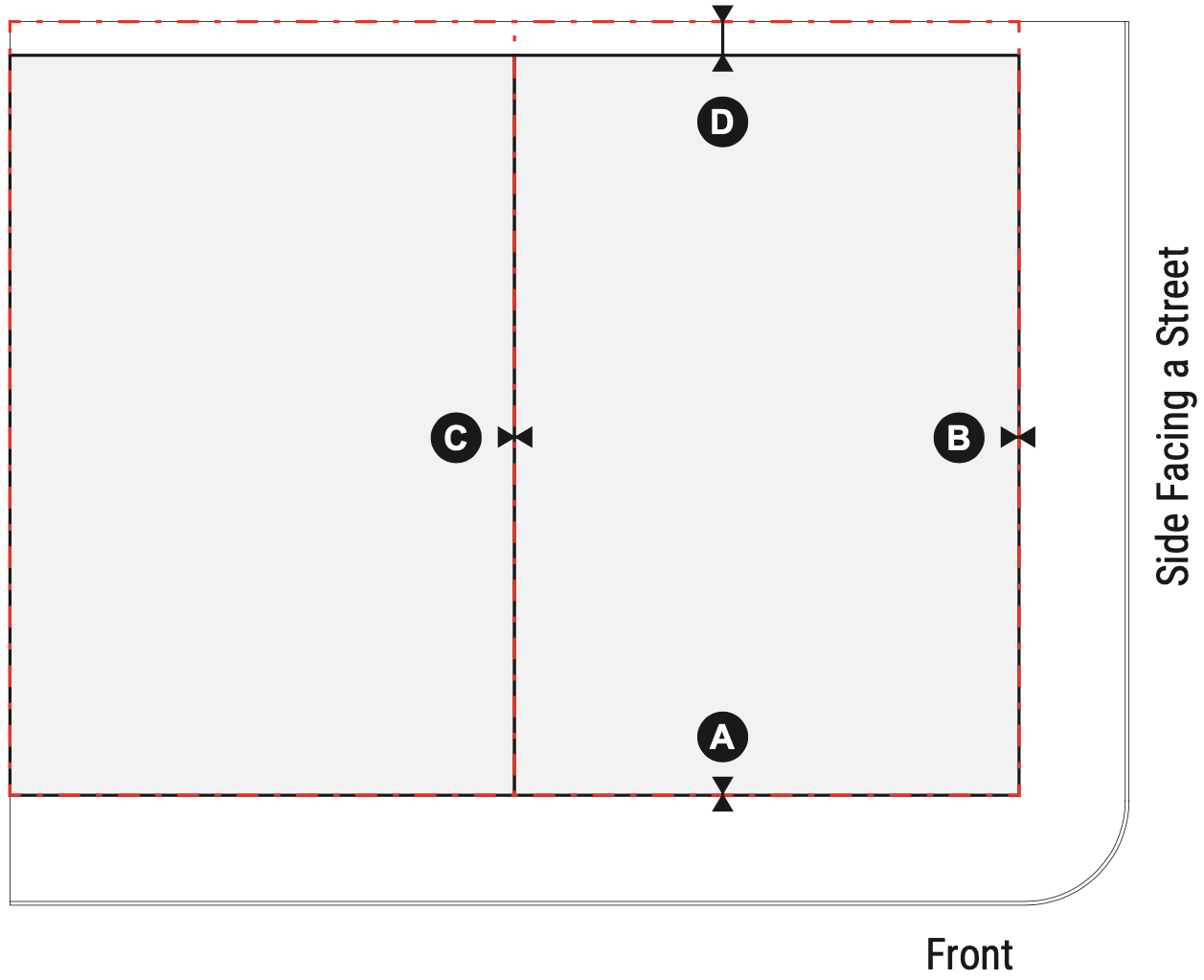
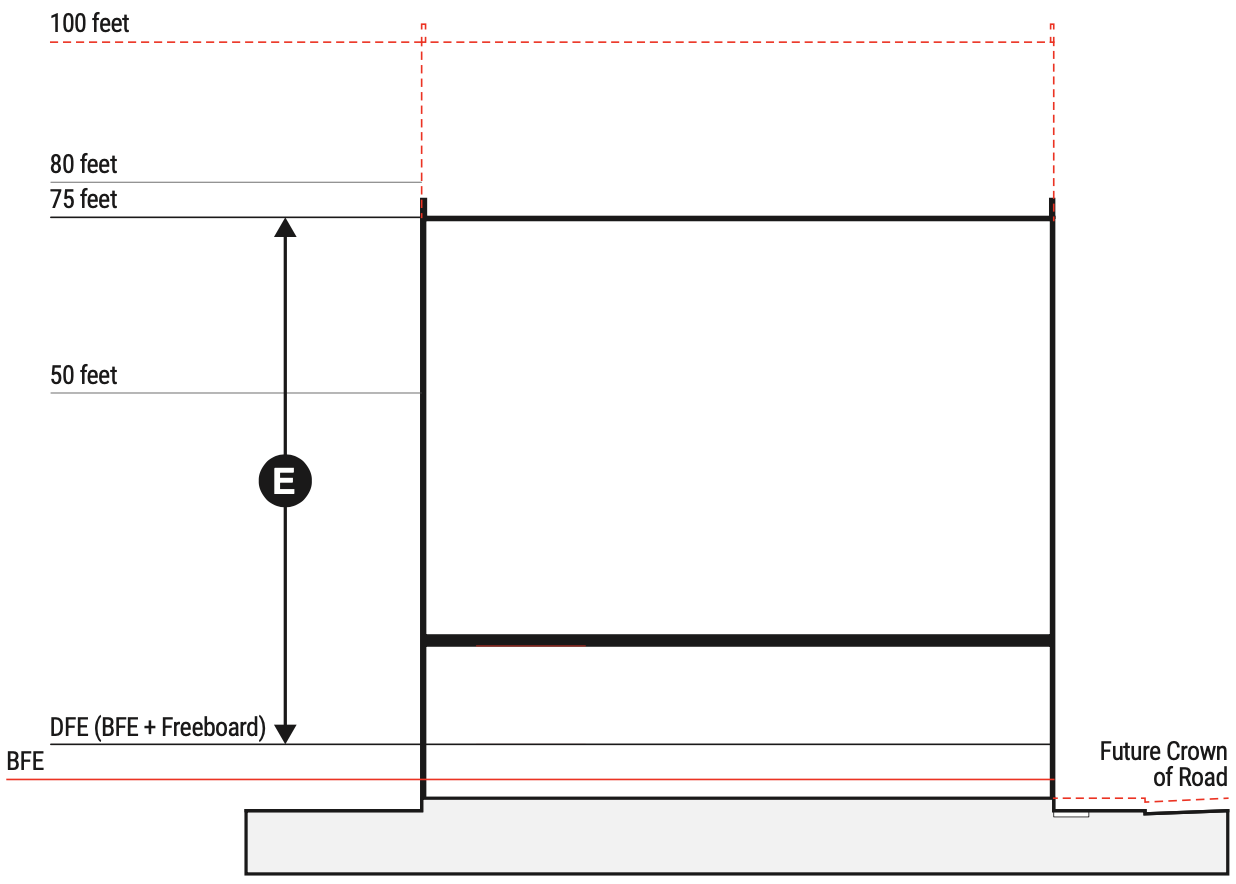
b. Regulations for new construction
In the CD-3 district, all floors of a building containing parking spaces shall comply with section 7.1.6.
7.2.12.4 Additional Regulations (CD-3)
- Lincoln Road hotel incentives and public benefits program.
In order for a hotel on Lincoln Road to be constructed with a minimum unit size of 200 square feet (as applicable to hotels on the north side of Lincoln Road) or a minimum average unit size of 250 square feet (as applicable to hotels on the south side of Lincoln Road), and in order to construct a hotel on Lincoln Road that is taller than 50 feet, the portion of Lincoln Lane abutting the subject property, as well as the remaining portion of Lincoln Lane from block-end to block-end, shall be fully improved subject to the review and approval of the public works department. Additionally, for a hotel to be eligible for the unit size and height incentives set forth herein, participation in a public benefits program, as further set forth below, shall be required:- Provide ground-floor public benefit space. On-site, ground floor space within the building in which the hotel is located shall be provided, with a minimum area of 500 square feet, for use by Miami Beach-based not-for-profit entities and/or artisans, as workshops, or for display or demonstration purposes, either of which shall be open to public view ("public benefit space"). Any required land use board approvals associated with a public benefit space approved pursuant to this paragraph shall be the responsibility of the non-profit entity or artisan, respectively.
- Contribution to Art in Public Places fund. In addition to providing an on-site public benefit space pursuant to section 7.2.12.4.a.1, a hotel shall provide a contribution to the city's Art in Public Places fund, the amount of which shall be equal to 0.5 percent (0.5%) of the total of all construction costs associated with the proposed hotel project, regardless of the number of permits associated with the project or whether the applicant intends to construct the hotel in phases. Full payment of the contribution shall be made prior to the issuance of a certificate of occupancy.
- Final approval. Prior to the issuance of a final certificate of occupancy for the property, a covenant executed by the property owner shall be submitted to the city, in a form approved by the city attorney and city manager, which covenant shall, at a minimum, identify the location of the public benefit space, and require a hotel owner and/or operator to maintain the public benefit space for so long as the hotel use on the subject property remains active, unless a shorter term is approved by resolution of the city commission.
- Limitation. There shall be a limit of 500 hotel units constructed between Pennsylvania Avenue and Lenox Avenue, which utilize the unit size and/or height incentives set forth in this section 7.2.12.4.a.
7.2.13.1 Purpose (MXE)
The MXE mixed use entertainment district is designed to encourage the substantial restoration of existing structures and allow for new construction.
7.2.13.2 Uses (MXE)
| USES TABLE (MXE) | |
|---|---|
| RESIDENTIAL | |
| Apartments | P |
| LODGING | |
| Apartment Hotels | P* |
| Hotels | P* |
| Hostels | P* |
| Suite Hotels | P* |
| OFFICE | |
| Office | A* |
| Medical and Dental Offices | Pro* |
| COMMERCIAL | |
| Commercial Uses | A*, P* |
| Commercial Development | A*, P* |
| Outdoor Entertainment Establishment | C |
| Open Air Entertainment Establishment | C |
| Accessory outdoor bar counters | A*, Pro* |
| Ballroom | C |
| Uses that serve alcoholic beverages | A* |
| Artisanal Retail | C* |
| Neighborhood Impact Establishment | C |
| Liquor Store | Pro |
| Gambling and Casinos pursuant to section 7.1.8 | Pro |
| Rentals or leases of mopeds, motorcycles, and motorized bicycles pursuant to section 7.1.8 | Pro |
| Neighborhood and Retail Fulfillment Centers pursuant to section 7.1.8 | Pro |
| CIVIC | |
| Religious Institutions with occupancy of 199 persons or less | P |
| Religious Institutions with occupancy greater than 199 | C |
| CIVIL SUPPORT | |
| Public and private cultural institutions | C |
| EDUCATIONAL | |
| INDUSTRIAL | |
| OTHER | |
| Major cultural dormitory facilities | C |
| Neighborhood Impact Structures | C |
| Parking lots or garages when a main permitted use | Pro* |
Key P – Main Permitted Use C - Conditional Use A - Accessory Use Pro - Prohibited Use *See Supplemental use regulations below | |
- Supplemental Main Permitted Uses (MXE).
The supplemental main permitted uses in the MXE mixed use entertainment district are as follows: - Supplemental Conditional Uses (MXE).
The supplemental conditional uses are as follows:- Major cultural dormitory facilities as specified in section 7.5.5.3;
- Artisanal retail with off-site sales as an accessory use to a hotel.
- Supplemental Accessory Uses Regulations (MXE).
The Supplemental Accessory Uses are as follows:- Those uses permitted in section 7.5.4.13
- Uses that serve alcoholic beverages are also subject to the regulations set forth in chapter 6 of the General Ordinances.
- Accessory outdoor bar counters, pursuant to the regulations set forth in chapter 6 of the General Ordinances, provided that the accessory outdoor bar counter is not operated or utilized between midnight and 8:00 a.m.; however, for an accessory outdoor bar counter which is located on a property that is abutting a property with an apartment unit, the accessory outdoor bar counter may not be operated or utilized between 8:00 p.m. and 8:00 a.m.
- Oceanfront hotels with at least 100 hotel units may operate and utilize an accessory outdoor bar counter, notwithstanding the restriction on the hours of operation, set forth in section 7.2.13.2.c.3, provided the accessory outdoor bar counter is located in the rear yard and set back 20 percent (20%) of the lot width (50 feet minimum) from any property line adjacent to a property with an apartment unit thereon.
- Accessory uses shall be subject to the supplemental accessory use regulations in section 7.2.13.2.d.
- Entertainment uses shall be subject to the requirements in section 7.5.5.4.
- Supplemental Accessory Use Regulations (MXE).
- General provisions. Accessory uses in the MXE district shall comply with the following mandatory criteria in addition to the regulations contained in sections 7.5.4.13.a and b:
- All structures shall conform to the Florida Building Code, the city's property maintenance standards, the Florida Fire Prevention Code, and the Life Safety Code.
- Both existing buildings and new improvements shall be built in a manner that is substantially consistent with the design recommendations in any applicable neighborhood or master plan, and the Secretary of the Interior's Standards and Guidelines for Rehabilitating Historic Structures, U.S. Department of the Interior, as may be amended from time to time.
- The minimum unit size requirements as set forth in this section shall be satisfied.
- If the building or plans do not indicate compliance with sections 7.2.13.2.d.1-3 , then accessory uses shall not be permitted.
- Permitted accessory uses. The following are permitted accessory uses in the mixed-use entertainment district:
- Permitted accessory uses in hotels.
- Those accessory uses that are customarily associated with the operation of a hotel, as determined by the planning director. A hotel's total amount of retail space shall not exceed 75 square feet per hotel unit.
- Hotels may have offices not associated with the operation of a hotel. The floor space associated with offices shall not exceed 35 square feet per hotel unit; provided, however, that medical and dental offices shall be prohibited.
- Restaurants, outdoor cafes, sidewalk cafes.
- Solarium, sauna, exercise studio, health club or massage service which is operated by an individual licensed by the state (if such a license is required).
- Antiques, bookstore, art/craft galleries, artist studios.
- Sale of alcoholic beverages pursuant to chapter 6 in General Ordinances.
- Uses located on the porch, terrace, or patio of a building are limited to table seating for eating and drinking establishments, which have their fixtures and cooking facilities located in the interior of the building.
- The sale of cigars and cigarettes on the porch, terrace or patio of a building, or in permitted sidewalk café areas to seated patrons, by a vendor licensed on the premises with the consent of the restaurant and sidewalk café permittee, is permitted provided that such sale or transaction shall only occur on such premises, and not on other city rights-of-way. Any solicitation of passersby or obstruction of the right-of-way shall be prohibited. Goods and merchandise transported from one location to another shall be covered and obscured from view. Vendors shall not use flashing lights, signs, markings, or other devices to call attention to themselves or the goods and merchandise, and shall not otherwise violate the provisions of section 74-1 in General Ordinances. The following civil fines and penalties shall be imposed for violations of this section 7.2.12.2:
- If the offense is the first offense, $100.00 fine.
- If the offense is the second offense within six months of the first offense, $250.00 fine.
- If the offense is the third offense within 12 months of the first offense, one sevenconsecutive-day suspension.
- If the offense is the fourth offense within 12 months of the first offense, one 30consecutive-day suspension.
- If the offense is the fifth offense within 12 months of the first offense, the vendor shall be considered a habitual offender, and the city manager shall issue an administrative complaint for suspension or revocation of a business tax receipt as provided in section 102-383 in General Ordinances.
For purposes of this section, suspension or revocation of a business tax receipt shall apply to all business tax receipts held by a principal or all individuals with a controlling financial interest in the business entity. The term "controlling financial interest" shall mean the ownership, directly or indirectly, of ten percent or more of the outstanding capital stock in any corporation or a direct or indirect interest of ten percent or more in a firm.
In the event of a revocation, as a condition of being permitted to resume operation under the business tax receipt, the city manager may impose conditions or restrictions as deemed appropriate to assure compliance with the city Code.
A vendor who has been served with a notice of violation shall be subject to enforcement provisions as set forth in chapter 30 in General Ordinances. If the special master finds that a violation has occurred, the applicable penalty set forth above shall be imposed. - Artisanal retail for on-site sales only.
- Artisanal retail with off-site sales subject to conditional use approval.
- Experiential retail.
- Permitted accessory uses in hotels.
- Permitted accessory uses in apartment buildings. The following are permitted accessory uses in apartment buildings:
- Office, subject to the requirement that office uses must be located at least 50 feet from the front property line;
- Retail;
- Personal services; and
- Restaurants, outdoor cafes, and sidewalk cafés with sale of alcoholic beverages pursuant to chapter 6 in General Ordinances, with access to the street, on the first level, subterranean level or in the highest floor of a building.
No more than 25 percent (25%) of the floor area of the subterranean and/or first level shall be used for accessory uses unless approved by the historic preservation board.
- Permitted accessory uses in apartment hotels. Apartment hotels shall be subject to the same accessory use regulations as apartment buildings. Notwithstanding the foregoing, apartment hotels may be subject to the same accessory use regulations as hotels if a minimum of 75 percent (75%) of the total number of units are hotel units.
- Additional requirements. In addition to the regulations and accessory uses listed in sections 7.2.12.2.d.1-2 of this section, permitted accessory uses for properties on both sides of Collins Avenue from Sixth to 15th Streets, on the west side of Collins Avenue from 15th to 16th Streets, and on Ocean Terrace must additionally comply with the following requirements:
- Medical and dental offices shall be prohibited.
- Offices are only allowed in existing structures, otherwise, they are prohibited.
- If a building has a lobby or was originally constructed with a lobby, the lobby shall be retained or reconstructed. Such lobby may be used for a reception area with no partitions. Offices shall be prohibited in the lobby.
- No variances shall be granted from the requirements of this section.
- General provisions. Accessory uses in the MXE district shall comply with the following mandatory criteria in addition to the regulations contained in sections 7.5.4.13.a and b:
- Supplemental Prohibited Uses. (MXE)
The Supplemental Prohibited Uses in the MXE mixed use entertainment district are as follows:- Accessory outdoor bar counters, except as provided in this chapter;
- Liquor stores; and package sales of alcoholic beverages by any retail store or alcoholic beverage establishment. Additionally, entertainment uses shall be prohibited in liquor stores;
- Stand-alone bars and stand-alone drinking establishments, unless as an accessory use to a hotel and located within a hotel lobby.
- Parking lots or garages when a main permitted use shall not be permitted on lots fronting on Ocean Drive or Espanola Way.
- Additional Use regulations. (MXE)
- In the MXE mixed use entertainment district, permitted uses shall comply with the following regulations:
- Sidewalk café permits shall only be permitted for restaurants and cafes with full kitchen facilities.
- Alcoholic beverage establishments with sidewalk café permits shall only serve alcoholic beverages at sidewalk cafés during hours when food is served in the restaurant and shall not be permitted to have outdoor speakers anywhere within the public right-of-way.
- Commercial uses on rooftops shall be limited to restaurants only and shall only be permitted in accordance with the following:
- The building shall be fully renovated including all guest rooms;
- The building shall have central air conditioning or flush-mounted wall units; however, no air conditioning equipment may face a street;
- All non-impact resistant windows and doors shall be replaced with impact resistant windows and doors;
- Any contributing building shall be renovated in accordance with the Secretary of Interior's Standards for Rehabilitation, including public interior spaces.
- Buildings existing as of October 1, 1989, with two stories or less fronting on Ocean Drive or Ocean Terrace may contain offices, retail, personal service, food service establishments, food service establishments serving alcohol, and residential uses or any combination thereof.
- The entire building shall be substantially renovated and comply with the South Florida Building Code, Fire Prevention Code, Life Safety Code, and the City's property maintenance standards. If the building is a historic structure, the plans shall substantially comply with the Secretary of the Interior Standards and Guidelines for Rehabilitating Historic Structures, U.S. Department of the Interior (revised 1983), as amended.
- Buildings fronting on Collins Avenue from Sixth Street to 16th Street (MAP EXHIBIT–2) may contain offices, retail, food service establishments, personal service, food service establishments serving alcohol, and residential uses or any combination thereof.
- No existing building, constructed prior to December 31, 1966, shall be internally reconstructed to change the number of stories except that 20 percent (20%) of each floor plate may be removed to create an open area or atrium.
- For existing buildings with two stories or less fronting on Ocean Drive or Ocean Terrace (MAP EXHIBIT-3), the addition of a story shall require that commercial uses comply with all provisions of section 7.2.13.2.d for accessory uses. For purposes of example only, in buildings described in the foregoing sentence, the existence of commercial uses on the ground floor which exceed 25 percent (25%) of the floor area shall not, upon the addition of one story, be deemed grandfathered in, and the percentage of commercial uses on the ground floor, upon the addition of one story, must comply with the requirements of section 7.2.13.2.
- No variances shall be granted from the requirements of this section 7.2.13.2.f.
- Speaker regulations.
- Commercial establishments fronting on Ocean Drive (MAP EXHIBIT–4), except retail establishments, may only place or install outdoor speakers within 20 feet of the property boundary facing Ocean Drive or a side street, if such speakers are played at ambient levels.
- Retail establishments shall be prohibited from placing or installing speakers outdoors. Any music played indoors at retail establishments must be inaudible from the exterior of the premises at all times.
- No variances shall be granted from the requirements of this section 7.2.13.2.f.2.
- Penalties and enforcement.
- A violation of section 7.2.13.2.f.2. shall be subject to the following civil fines and penalties:
- If the violation is the first violation, a person or business shall receive a written warning or a civil fine of $250.00;
- If the violation is the second violation within the preceding 12 months, a person or business shall receive a civil fine of $1,000.00;
- If the violation is the third violation within the preceding 12 months, a person or business shall receive a civil fine of $2,000.00;
- If the violation is the fourth violation within the preceding 12 months, a person or business shall receive a civil fine of $3,000.00; and
- If the violation is the fifth or subsequent violation within the preceding 12 months, a person or business shall receive a civil fine of $5,000.00, and the city shall suspend the business tax receipt.
- Enforcement. The code compliance department shall enforce this section. This shall not preclude other law enforcement agencies from any action to assure compliance with this section and all applicable laws. If a violation of this section is observed, the enforcement officer will be authorized to issue a notice of violation. The notice shall inform the violator of the nature of the violation, amount of fine for which the violator is liable, instructions and due date for paying the fine, that the violation may be appealed by requesting an administrative hearing before a special magistrate within ten days after service of the notice of violation, and that the failure to appeal the violation within ten days of service shall constitute an admission of the violation and a waiver of the right to a hearing.
- Rights of violators; payment of fine; right to appear; failure to pay civil fine or to appeal; appeals from decisions of the special magistrate.
- A violator who has been served with a notice of violation must elect to either:
- Pay the civil fine in the manner indicated on the notice of violation; or
- Request an administrative hearing before a special magistrate to appeal the notice of violation, which must be requested within ten days of the service of the notice of violation.
- The procedures for appeal by administrative hearing of the notice of violation shall be as set forth in sections 30-72 and 30-73 of the General Ordinances. A request for administrative hearing must be accompanied by a fee as approved by a resolution of the city commission, which shall be refunded if the named violator prevails in the appeal.
- If the named violator, after issuance of the notice of violation, fails to pay the civil fine, or fails to timely request an administrative hearing before a special magistrate, the special magistrate may be informed of such failure by the code compliance officer. The failure of the named violator to appeal the decision of the code compliance officer within the prescribed time period shall constitute a waiver of the violator's right to an administrative hearing before the special magistrate, and shall be treated as an admission of the violation, for which fines and penalties shall be assessed accordingly.
- A certified copy of an order imposing a fine may be recorded in the public records, and thereafter shall constitute a lien upon any real or personal property owned by the violator, which may be enforced in the same manner as a court judgment by the sheriffs of this state, including levy against the violator's real or personal property, but shall not be deemed to be a court judgment except for enforcement purposes. On or after the 61st day following the recording of any such lien that remains unpaid, the city may foreclose or otherwise execute upon the lien.
- Any party aggrieved by a decision of a special magistrate may appeal that decision to a court of competent jurisdiction.
- The special magistrate shall be prohibited from hearing the merits of the notice of violation or considering the timeliness of a request for an administrative hearing if the violator has failed to request an administrative hearing within ten days of the service of the notice of violation.
- The special magistrate shall not have discretion to alter the penalties prescribed in section 7.2.13.2.f.3.A. Section 46-151 et seq. establishes noise exceptions for a specific area as described in those sections.
- A violator who has been served with a notice of violation must elect to either:
- A violation of section 7.2.13.2.f.2. shall be subject to the following civil fines and penalties:
- In the MXE mixed use entertainment district, permitted uses shall comply with the following regulations:
7.2.13.3 Development Regulations (MXE)
a. The development regulations in the MXE mixed use entertainment district are as follows:
| DEVELOPMENT REGULATIONS TABLE (MXE) | ||
|---|---|---|
| Maximum FAR | 2.0 | |
Convention hotel development | 3.5 | |
| Maximum Density (Dwelling Units per Acre) | 100 DUA (80% bonus for workforce or affordable units) | |
| MINIMUM UNIT SIZE (SQUARE FEET) | ||
| Apartments/Multi-family Units | ||
New Construction | 500 SF | |
Non-elderly and elderly low and moderate income housing | 400 SF | |
Workforce Housing | 400 SF | |
Rehabilitated Buildings | 400 SF | |
| Lodging and Hotel Units | 335 SF + | |
Hotel Units (in a local historic district/site) | 200 SF | |
Hotel Units within rooftop additions or within ground level additions to contributing structures in a historic district and individually designated historic buildings | 335 SF | |
| MINIMUM AVERAGE UNIT SIZE (SQUARE FEET) | ||
| Apartments/Multi-family Units | ||
New Construction | 800 SF (5) (6)(7) | |
Non-elderly and elderly low and moderate income housing | 400 SF (5) (6)(7) | |
Workforce Housing | 400 SF (5) (6)(7) | |
Rehabilitated Buildings (Existing Structures) | 550 SF (5) (6)(7) | |
| Lodging and Hotel Units | N/A | |
| LOT OCCUPATION | ||
| Minimum Lot Area (square feet) | N/A | |
| Minimum Lot Width (feet) | N/A | |
| Maximum Lot Coverage (% of lot area) | N/A | |
| BUILDING SETBACKS | ||
| Front Setback Ⓐ | Oceanfront | Non-Oceanfront |
Subterranean | N/A | N/A |
Pedestal | 50 feet (3) | 10 feet |
Lots 100 feet in width or greater | N/A | 20 feet |
Tower | ||
| Front Setback Ⓐ Lots 100 ft in width or greater with a ten-foot-deep coveredterrace running substantially the full width of the building front. | Oceanfront | Non-Oceanfront |
Pedestal | N/A | 5 feet (4) Furthermore, the front setback shall be extended to include at least one forecourt, open to the sky, with a minimum width of 10 feet and a minimum area of 3 square feet for every linear foot of lot frontage. |
Tower | 110 feet (4) | |
| Side, Facing a Street Setback Ⓑ | Oceanfront | Non-Oceanfront |
Subterranean | N/A | N/A |
Pedestal | 15 % of the lot width + 5 feet (4) | 10 % of the lot width + 5 feet, not to exceed 25 feet. (4) |
Lots less than 100 feet in width | 5 feet (4) | |
Tower | 25 % of the lot width + 5 feet. (4) | |
Lots less than 100 ft in width | 45 feet (4) | |
| Side, Facing a Street Setback Ⓑ Lots 100 feet in width or greater with a ten foot-deep terrace running substantially the full side length of the building, with a minimum floor-toceiling height of 12 feet | Oceanfront | Non-Oceanfront |
Pedestal | N/A | 5 feet (4) Furthermore, the setback shall be extended to include at least one forecourt, open to the sky, with a minimum of 1,000 square feet and a minimum average depth of 20 feet. The long edge of the forecourt shall be along the side property line. The area of the forecourt shall be increased by an additional 50 square feet for every one foot of building height above 30 feet as measured from grade. |
Tower | 45 feet (4) | |
| Side, Interior Setback Ⓒ | Oceanfront | Non-Oceanfront |
Subterranean | N/A | N/A |
Pedestal | 15 % of the lot width (4) | 5 feet (4) |
Tower | 7.5 feet (4) 25 feet (Architectural District) (4) | |
| Rear Setback Ⓓ | Oceanfront | Non-Oceanfront |
Subterranean | N/A | N/A |
Pedestal | 25 percent (25%) of the lot depth or 75 feet minimum from the bulkhead line, whichever is greater (4) | 10 feet (4) 10 feet (In Architectural District if abutting and alley) (4) |
Tower | ||
|
| |
| BUILDING HEIGHT | Oceanfront | Non-Oceanfront |
| Maximum Heigh Ⓔ | 75 feet (1) (2) | |
Architectural District (Oceanfront) | 150 feet (2) | |
Architectural District (NonOceanfront) | 50 feet (1) (2) | |
|
| |
| ||
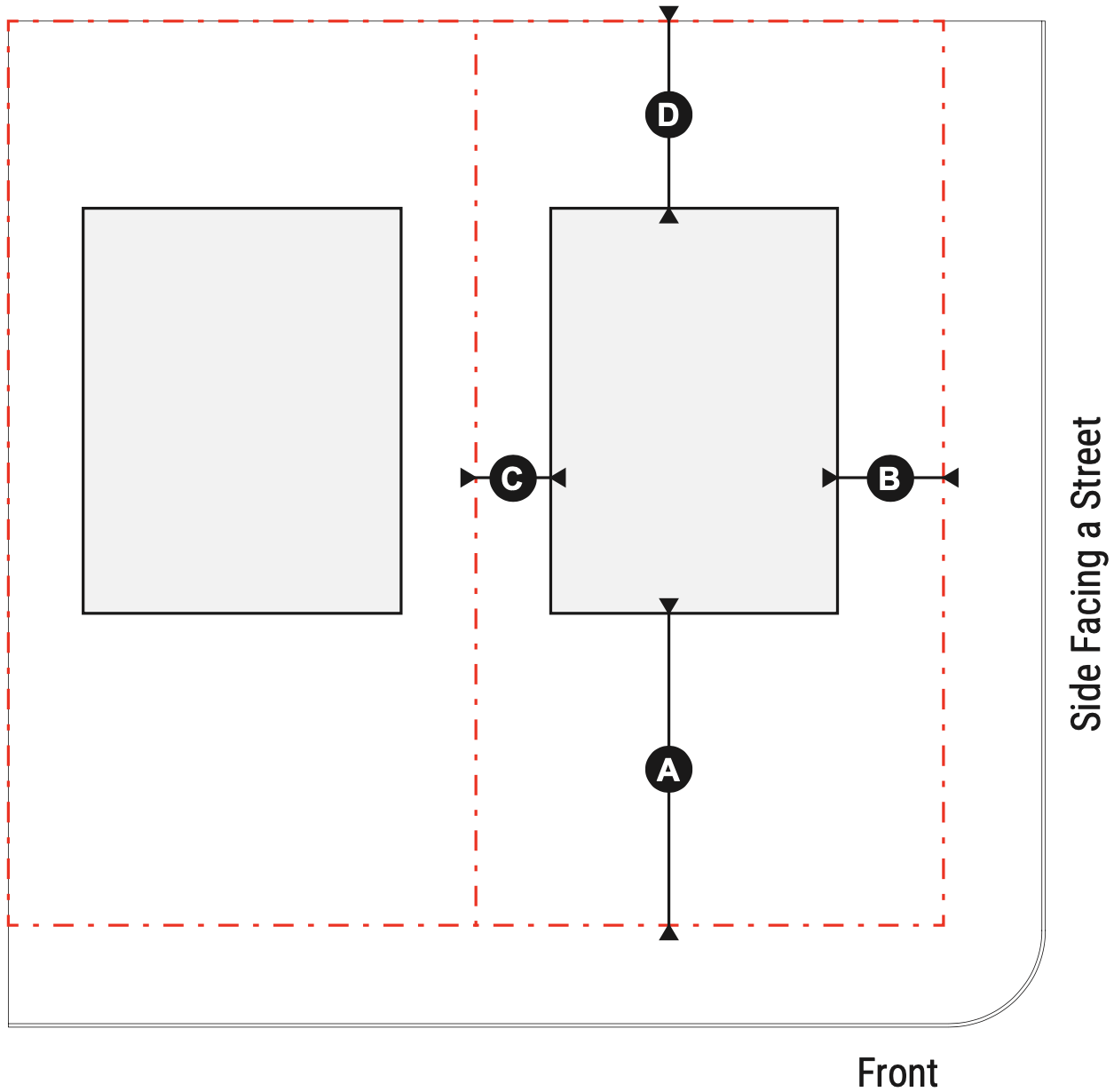
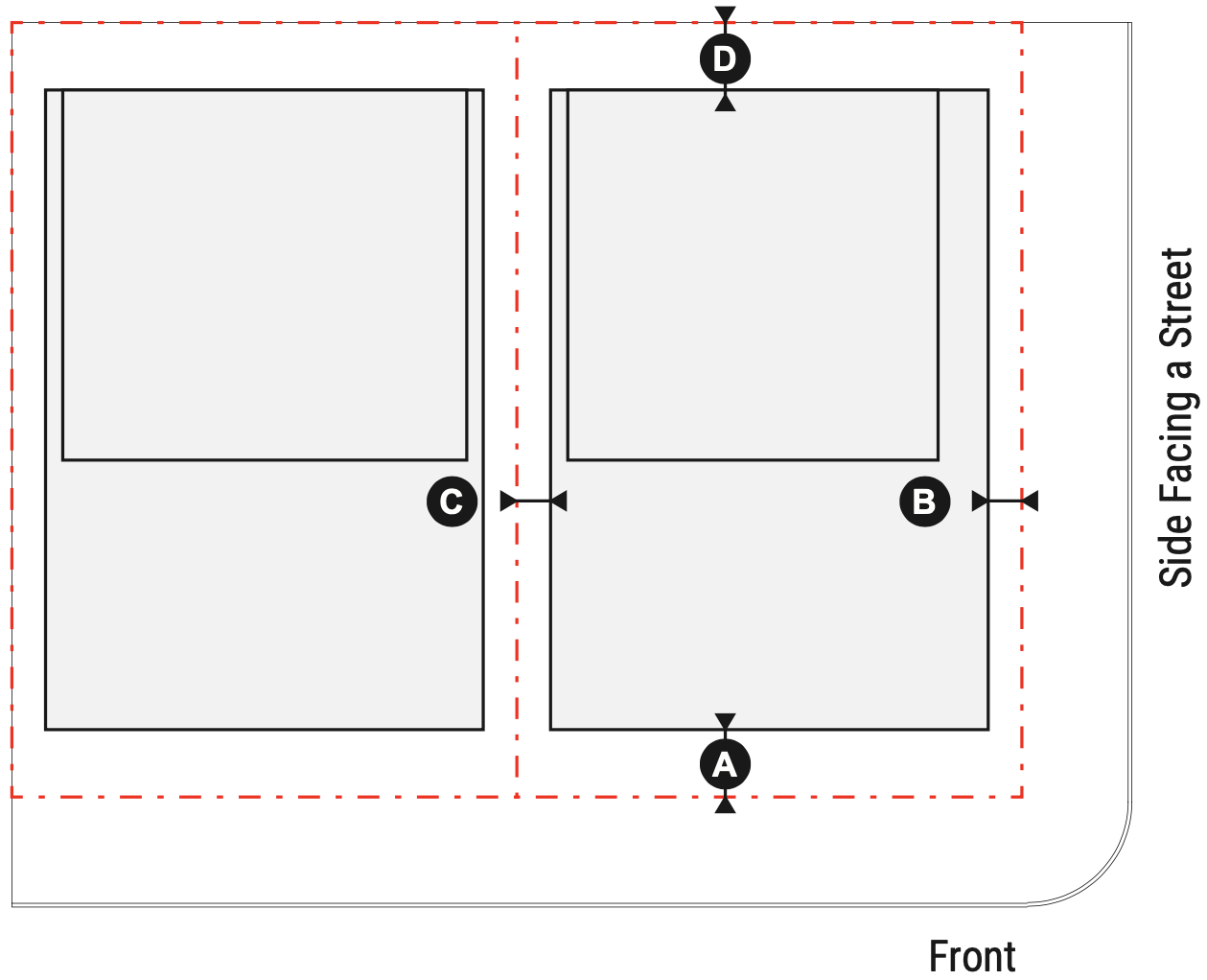
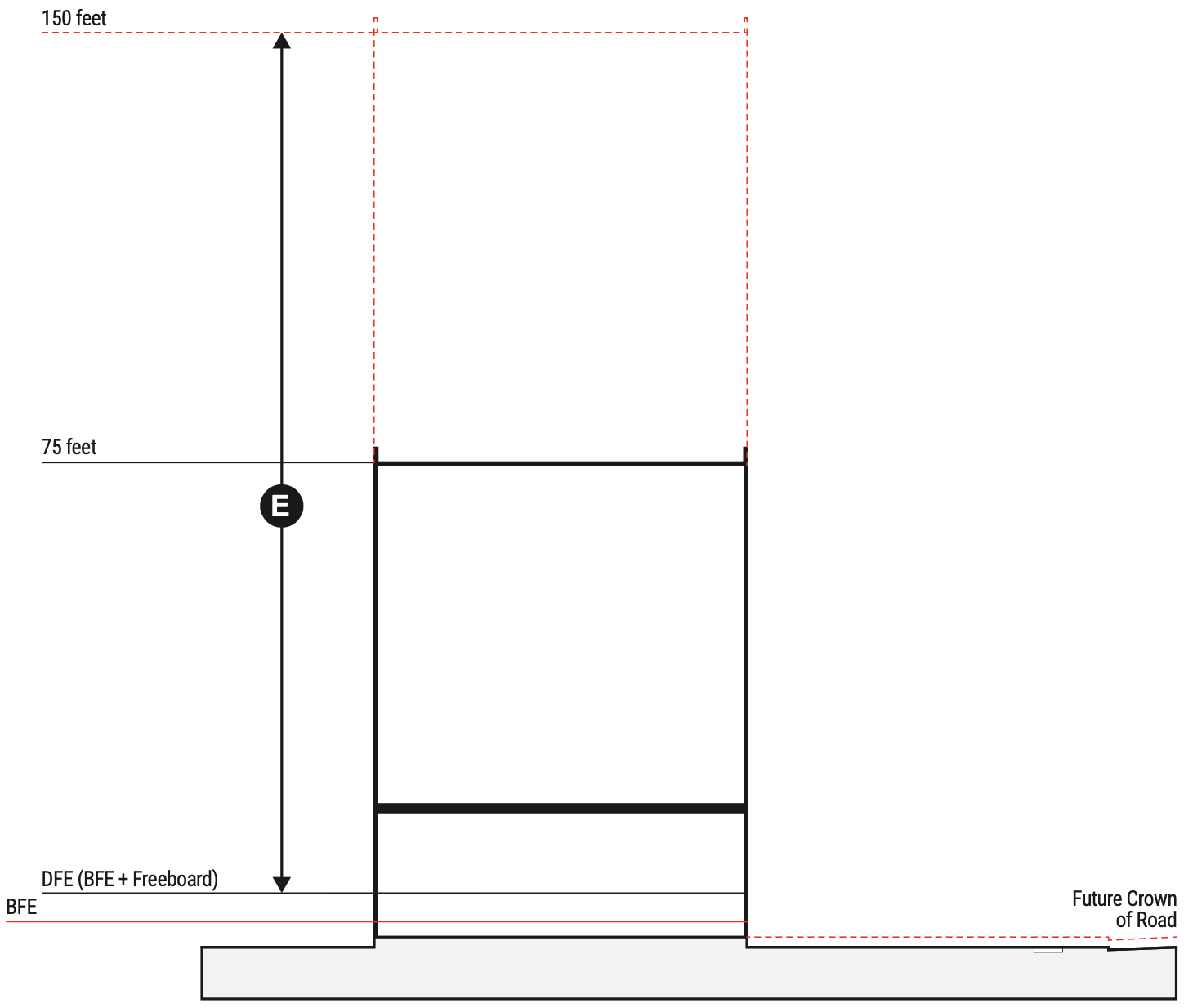
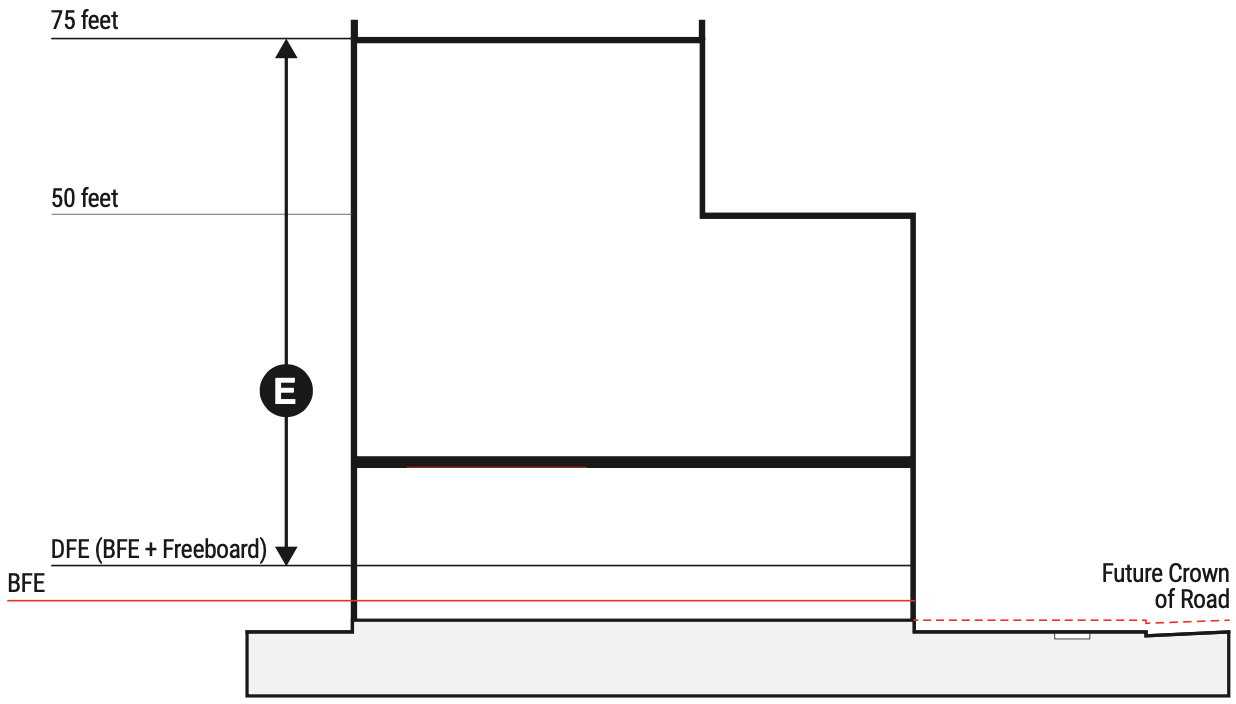
b. Regulations for new construction. (MXE)
In the MXE district, all floors of a building containing parking spaces shall comply with section 7.1.6.
c. Lot aggregation. (MXE)
No more than two (2) contiguous platted lots may be aggregated for development purposes.
7.2.14.1 Purpose (TC)
- The North Beach Town Center districts consist of all land bounded by 72nd Street, Collins Avenue, 69th Street and Indian Creek Waterway (MAP EXHIBIT-1); and consists of three districts: A town center core (TC-1) district; a town center mixed-use (TC-2) district; and a town center residential office (TC-3) district.
- The overall purposes of the North Beach Town Center districts are to:
- Promote development of a compact, pedestrian-oriented town center consisting of a high-intensity employment center, vibrant and dynamic mixed-use areas, and attractive residential living environments with compatible office uses and neighborhood-oriented commercial services;
- Promote a diverse mix of residential, educational, and cultural and entertainment activities for workers, visitors and residents;
- Encourage pedestrian-oriented development within walking distance of transit opportunities at densities and intensities that will help to support transit usage and town center businesses;
- Provide opportunities for live/work lifestyles and increase the availability of affordable office space in the North Beach area.
- Promote the health and well-being of residents by encouraging physical activity, waterfront access, alternative transportation, and greater social interaction;
- Create a place that represents a unique, attractive and memorable destination for residents and visitors;
- Enhance the community's character through the promotion of high-quality urban design.
- The specific purpose and intent of the three districts in the North Beach Town Center are as follows:
- TC-1 town center core district. The TC-1 district is intended to promote high-intensity compact development that will support the town center's role as the hub of community-wide importance for business, office, retail, governmental services, culture and entertainment.
- TC-2 town center mixed-use district. The TC-2 district is intended to support medium-intensity mixed-use projects with active retail ground floor frontage.
- TC-3 town center residential office district. The TC-3 district is intended to be a transition between the high-intensity town center core and the surrounding low-intensity residential multifamily districts, by providing for contextually compatible residential and mixed-use development within an established, pedestrian, bicycle and transit oriented residential environment. Office and tourist lodging facilities are intended to provide a variety of employment opportunities to support the local economy and to reduce the need for long distance home to work vehicle trip. Neighborhood oriented retail and service users are permissible in certain limited areas of this district, identified as TC-3(c) on the zoning map, and are intended to provide opportunities for small business development and to enliven the pedestrian environment. TC-3(c) is intended to be a subset of TC-3 and all regulations applicable to TC-3 are equally applicable to TC-3(c) except as expressly provided in sections 7.2.14.3.c and Uses Table (TC-3).
- Definitions.
The following words, terms and phrases, when used in this section, shall have the meanings ascribed to them in this section, except where the context clearly indicates a different meaning:- Alley means a paved travelway for vehicles within a block that provides access to the rear of buildings, vehicle parking (e.g., garages), deliveries, utility meters, and recycling and garbage bins. The alley is generally a public right-of-way, but in some cases it may be located on private property with a public access easement.
- Street means all public rights-of-way used for vehicular and pedestrian access, but does not include alleys.
7.2.14.2 Uses (TC-1, TC-2)
| USES TABLE (TC-1, TC-2) | |
|---|---|
| RESIDENTIAL | |
| Apartments | P* |
| LODGING | |
| Apartment Hotels | P* |
| Hotels | P* |
| OFFICE | |
| COMMERCIAL | |
| Commercial uses | P |
| Kennel | P* |
| Alcoholic beverage establishments | P* A Pro |
| Outdoor entertainment establishment | C |
| Open air entertainment establishment | C |
| Entertainment establishment | C* A* |
| Pawnshops | Pro |
| Accessory outdoor bar counters | A* |
| Gambling and casinos pursuant to section 7.1.8 | Pro |
| Rentals or leases of mopeds, motorcycles, and motorized bicycles pursuant to section 7.1.8 | Pro |
| Neighborhood and Retail Fulfillment Centers pursuant to section 7.1.8 | Pro |
| CIVIC | |
| Religious institution | C |
| CIVIL SUPPORT | |
| Public and private institutions | C |
| EDUCATIONAL | |
| Schools | C P* |
| Major cultural dormitory facilities | C* |
| INDUSTRIAL | |
| OTHER | |
| Neighborhood Impact Structure | C* |
| Neighborhood Impact Establishment | C |
| Key P – Main Permitted Use C - Conditional Use A - Accessory Use Pro - Prohibited Use * See Supplemental Use Regulations below | |
- Supplemental Main Permitted Uses Regulation (TC-1, TC-2)
The supplemental main permitted uses are as follows:- Alcoholic beverage establishments pursuant to the regulations set forth in chapter 6;
- The ground story frontage along 71st Street and Collins Avenue shall be governed by section 7.2.14.4. The provisions of chapter 6 concerning distance separation for consumption of alcoholic beverages onpremises in restaurants shall not apply to this district.
- Kennels are only allowed in the TC-1 District.
- Apartment hotels and hotels (pursuant to sections 2.7.2, which requires a Commission warrant, and 7.5.4.5).
- Entertainment uses shall be subject to the requirements in section 7.5.5.4.
- Qualifying educational facilities shall be eligible for the School Use Incentives as identified in section 7.1.13 of these land development regulations.
- Supplemental Conditional Uses Regulations (TC-1, TC-2)
The supplemental conditional uses are as follows: - Supplemental Accessory Uses Regulations (TC-1, TC-2)
The supplemental accessory uses are as follows:- Those uses permitted in section 7.5.4.13;
- Alcoholic beverage establishments and accessory outdoor bar counters pursuant to the regulations set forth in chapter 6 in General Ordinances; provided that the accessory outdoor bar counter is not operated or utilized between midnight and 8:00 a.m.; however, accessory outdoor bar counters located within 100 feet of an apartment unit may not be operated or utilized between 8:00 p.m. and 8:00 a.m.
- Supplemental Prohibited Uses Regulations (TC-1, TC-2)
The supplemental prohibited uses are as follows:- Alcoholic beverage establishments located in any open area above the ground floor (any area that is not included in the FAR calculations), except as provided in this division. However, outdoor restaurant seating, not exceeding 40 seats, associated with indoor venues may be permitted in any open area above the ground floor until 8:00 p.m. with no background music (amplified or nonamplified).
- There shall be no variances to these provisions.
Ordinances elsewhere in these land development regulations that refer to the zoning districts that existed prior to this amendment, i.e., RM-1, CD-2, and CD-3, shall remain applicable to the properties lying within these TC-1, -2 and -3 districts, as if each such reference was amended to correspond to the new TC districts (RM-1 as to TC-3; CD2 as to TC-2; and CD-3 as to TC-1), unless a provision in the TC districts expressly addresses the matter, in which case the TC regulation shall control.
7.2.14.3 Uses (TC-3)
| USES TABLE (TC-3) | |
|---|---|
| RESIDENTIAL | |
| Single family detached dwelling | P |
| Townhomes | P |
| Apartments | P |
| LODGING | |
| Apartment hotels | C* |
| Hotels | C* |
| Suite hotels | C* |
| Hostels | Pro |
| OFFICE | |
| Offices | P |
| COMMERCIAL | |
| Commercial uses | |
| Neighborhood oriented retail and services uses | C* |
| Alcoholic beverage establishments | Pro* |
| Accessory outdoor entertainment establishment | Pro |
| Accessory open air entertainment establishment | Pro |
| Entertainment establishment | Pro |
| Accessory dance halls | Pro |
| Accessory entertainment establishment | Pro |
| Accessory outdoor bar counters | Pro |
| Gambling and casinos pursuant to section 7.1.8 | Pro |
| Rentals or leases of mopeds, motorcycles, and motorized bicycles pursuant to section 7.1.8 | Pro |
| Neighborhood and Retail Fulfillment Centers pursuant to section 7.1.8 | Pro |
| CIVIC | |
| Religious institution | C |
| CIVIL SUPPORT | |
| Public and private institutions | C |
| Accessory neighborhood impact establishment | Pro |
| Adult congregate living facility | C |
| Nursing home | C |
| EDUCATIONAL | |
| Day care facility | C |
| Schools | C P* |
| INDUSTRIAL | |
| OTHER | |
| Commercial or noncommercial parking lots and garages (with accessory commercial uses) | C* |
| Key P – Main Permitted Use C - Conditional Use A - Accessory Use Pro - Prohibited Use *See Supplemental Use Regulations below | |
- Supplemental Main Permitted Uses Regulations (TC-3)
- Qualifying educational facilities shall be eligible for the School Use Incentives as identified in section 7.1.13 of these land development regulations.
- Supplemental Conditional Uses Regulations (TC-3)
The supplemental conditional uses are as follows:- Apartment hotel, hotel, and suite hotel (pursuant to sections 2.7.2, which requires a Commission warrant, and 7.5.4.5)
- Commercial or noncommercial parking lots and garages (with accessory commercial uses) in accord with section 5.3.10.b.3.
- In areas designated TC-3(c) (MAP EXHIBIT-2) on the zoning map, the following uses may be permitted as conditional uses in addition to the uses in section 7.2.14.3-Uses Table (TC-3) above:
- Neighborhood-oriented retail and services uses, limited to 2,500 square feet or less per establishment, located on the ground floor of buildings. Such neighborhood-oriented retail and service uses shall be limited to:
- antique stores;
- art/craft galleries;
- artist studios;
- bakery or specialty food stores;
- barber shops and beauty salons;
- coffee shop or juice bar;
- dry cleaner or laundry with off-site processing (dry cleaning receiving station);
- newspapers, magazines and books;
- photo studio;
- shoe repair;
- tailor or dressmaker; and
- food service establishments with 30 seats or less (including outdoor café seating) pursuant to the regulations set forth in chapter 6 of the General Ordinances, with alcohol limited to beer and wine and closing no later than 12 midnight subject to limitations established in the conditional use process. In addition, full service restaurants serving alcoholic beverages pursuant to the regulations set forth in chapter 6 of the General Ordinances, and with 30 seats or more may be permitted only on waterfront properties with a publicly accessible waterfront walkway in the area located south of 71st Street (MAP EXHIBIT-3).
- Neighborhood-oriented retail and services uses, limited to 2,500 square feet or less per establishment, located on the ground floor of buildings. Such neighborhood-oriented retail and service uses shall be limited to:
- Supplemental Accessory Uses Regulations (TC-3)
The supplemental accessory uses are as follows:- Those uses customarily associated with the district purpose, as set forth in section 7.5.4.13, except that apartment hotels, hotels, and suite hotels may have accessory uses based upon the criteria below:
- Hotels, apartment hotels, and suite hotels in the TC-3 district may include a dining room operated solely for registered hotel visitors and their guests, located inside the building and not visible from the street, with no exterior signs, entrances or exits except as required by the Florida Building Code.
- Hotels, apartment hotels, and suite hotels in the TC-3(c) (MAP EXHIBIT-3) district may include accessory restaurants or alcoholic beverage establishments pursuant to the regulations set forth in chapter 6 of the General Ordinances when approved as part of the conditional use. Such accessory restaurants or bars that serve alcohol shall be limited to a maximum of 1.25 seats per hotel or apartment unit for the entire site. The patron occupant load, as determined by the planning director or designee, for all accessory restaurants and alcoholic beverage establishments on the entire site shall not exceed 1.5 persons per hotel and/or apartment unit. For a hotel or apartment property of less than 32 units, the restaurant or bar may have a maximum of 40 seats in the aggregate on the site. The number of units shall be those that result after any renovation. Accessory restaurants and bars shall be permitted to sell alcoholic beverages for consumption only on the premises and shall be limited to closing no later than 12 midnight subject to limitations established in the conditional use process.
- Hotels and suite hotels located in the TC-3 or TC-3(c) (MAP EXHIBIT-3) districts may have other accessory uses customarily associated with the operation of an apartment building, as referenced in section 7.5.4.13.b.2, for the use of registered hotel visitors and their guests only.
- Those uses customarily associated with the district purpose, as set forth in section 7.5.4.13, except that apartment hotels, hotels, and suite hotels may have accessory uses based upon the criteria below:
- Supplemental Prohibited Uses Regulations (TC-3)
The supplemental prohibited uses are:- Accessory open air or outdoor entertainment establishment as set forth in section 7.5.5.4,
- Alcoholic beverage establishments located in any open area above the ground floor (any area that is not included in the FAR calculations). However, outdoor restaurant seating, not exceeding 40 seats, associated with indoor venues may be permitted in any open area above the ground floor until 8:00 p.m. with no background music (amplified or nonamplified).
- There shall be no variances to these provisions.
Ordinances elsewhere in these land development regulations that refer to the zoning districts that existed prior to this amendment, i.e., RM-1, CD-2, and CD-3, shall remain applicable to the properties lying within these TC-1, -2 and -3 districts, as if each such reference was amended to correspond to the new TC districts (RM-1 as to TC-3; CD2 as to TC-2; and CD-3 as to TC-1), unless a provision in the TC districts expressly addresses the matter, in which case the TC regulation shall control.
7.2.14.4 Development Regulations (TC)
- The development regulations in the TC-1, TC-2 and TC-3 town center districts are as follows:
DEVELOPMENT REGULATIONS TABLE (TC-1 TOWN CENTER CORE) Maximum FAR 2.25 - For lots equal to or less than 45,000 square feet
2.75 - For lots greater than 45,000 square feet.
Maximum Density (Dwelling Units per Acre) 150 DUA (80% bonus for workforce or affordable units) MINIMUM UNIT SIZE (SQUARE FEET) Apartments/Multi-family Units New Construction
550 SF Non-elderly and elderly low and moderate income housing
400 SF Workforce Housing
400 SF Rehabilitated Buildings
550 SF Lodging and Hotel Units 335 SF + MINIMUM AVERAGE UNIT SIZE (SQUARE FEET) Apartments/Multi-family Units New Construction
550 SF (2) (3)(4) Non-elderly and elderly low and moderate income housing
400 SF (2) (3)(4) Workforce Housing
400 SF (2) (3)(4) Rehabilitated Buildings
550 SF (2) (3)(4) Lodging and Hotel Units N/A LOT OCCUPATION Minimum Lot Area (square feet) None Minimum Lot Width (feet) None BUILDING SETBACKS Front Setback (feet) Along 71st Street Ⓐ Subterranean
10 feet Pedestal (first 4 stories)
Tower (above 4th story)
25 feet Side, Facing a Street, Setback (feet) Ⓑ Subterranean
5 feet Pedestal
Tower
Side, Interior Setback (feet) Ⓒ Subterranean
0 feet
10 feet when abutting a TC-3 district or a future alley designated on the infill regulating planPedestal
Tower
Rear Setback (feet) Ⓓ Subterranean
10 feet
0 feet abutting an alley or where there is a side lot line abutting 71st Street (1)Pedestal
Tower
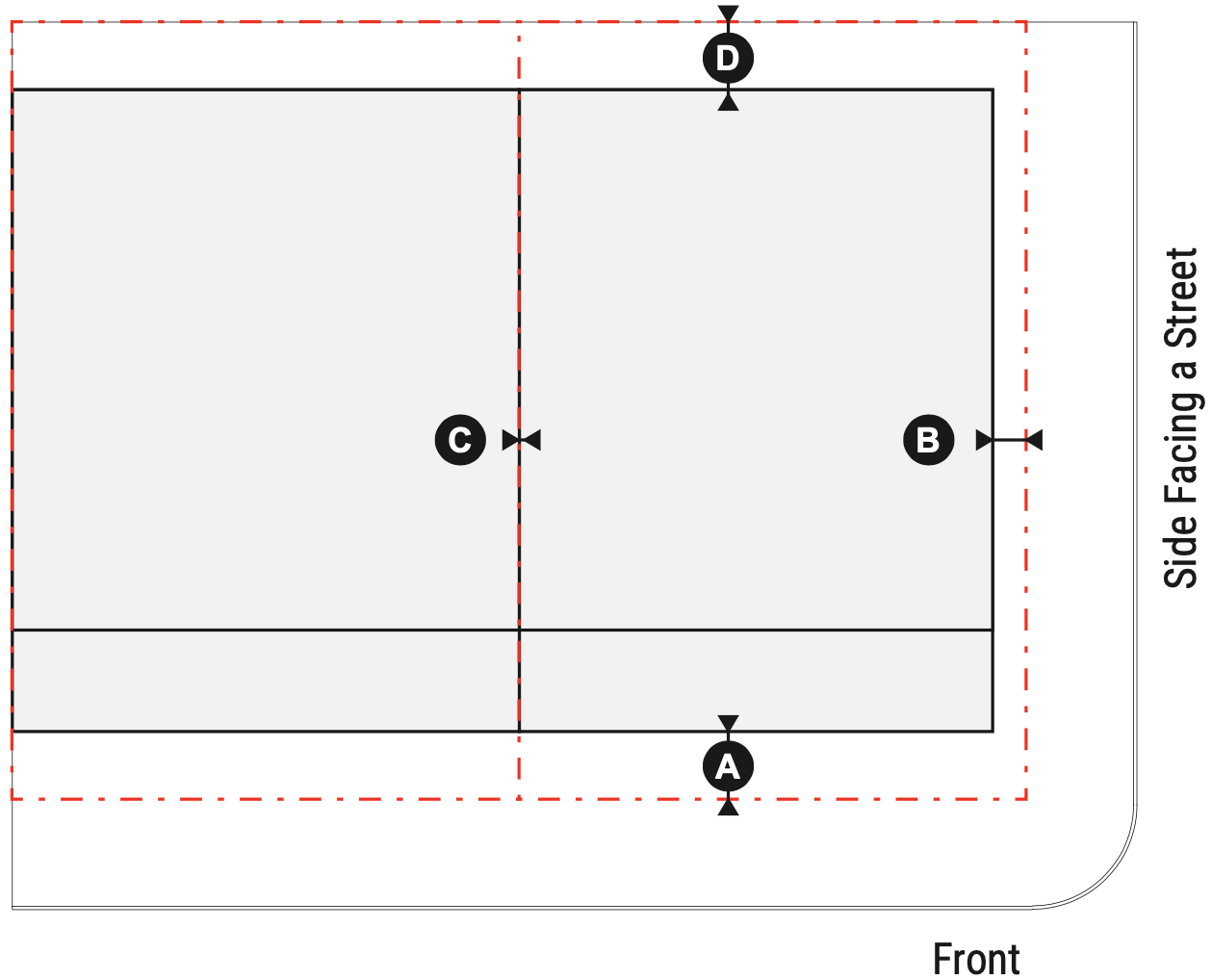
BUILDING HEIGHT Maximum Height Ⓔ 125 feet 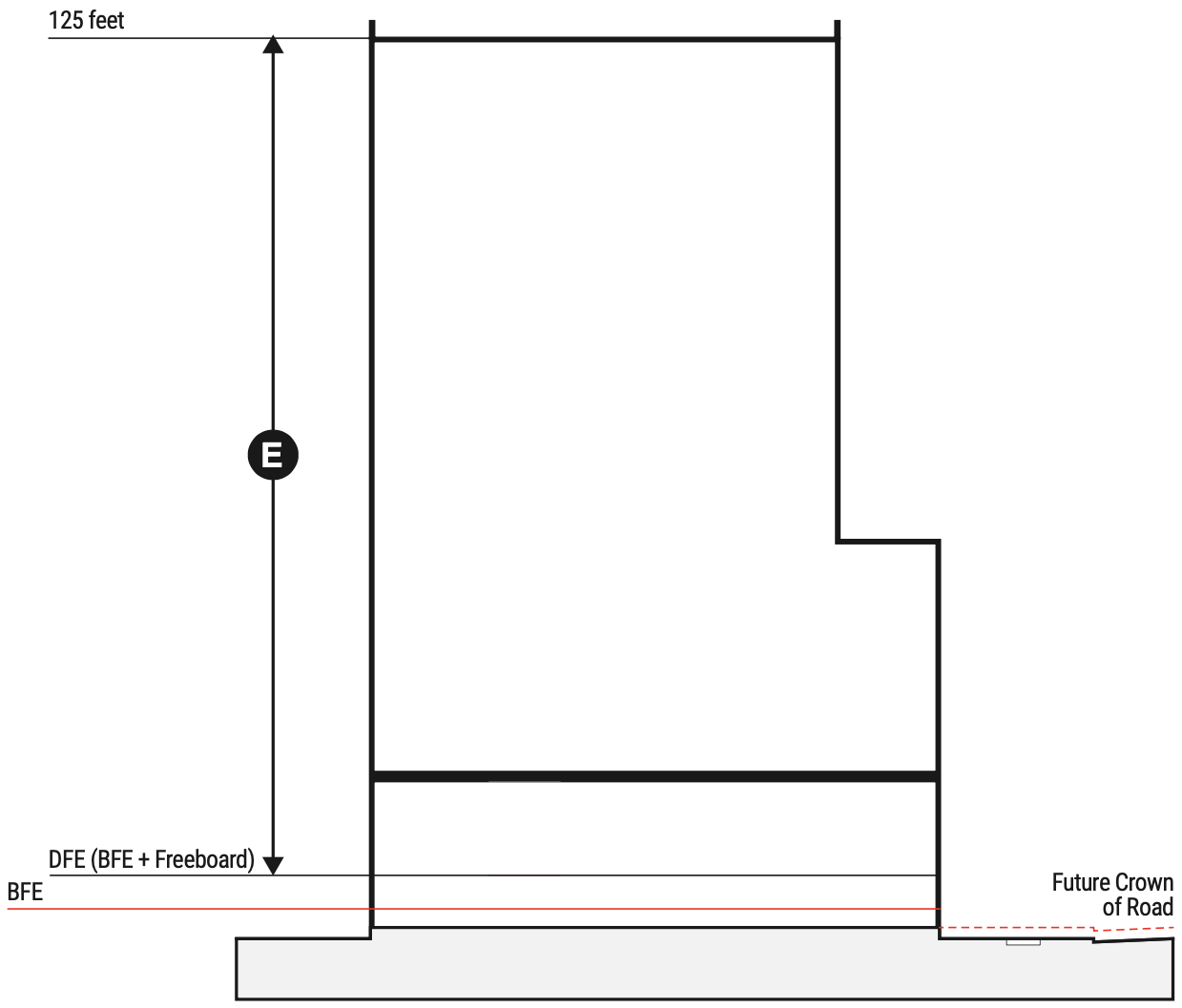
- Properties between Collins Avenue and Harding Avenue must provide access to the interior of the block for service vehicles as determined by the design review process.
- The number of units may not exceed the maximum density set forth in the Comprehensive Plan.
- Developments located in zoning districts that do not prohibit the short-term rental of residential apartment units shall be eligible for an exemption from the average unit size requirements established above, subject to the following conditions:
- Density. The development shall not be permitted to exceed the maximum residential density established in the Comprehensive Plan or Land Development Regulations.
- Minimum Unit Size. This incentive shall not be construed to permit any unit that is smaller than the minimum allowable unit size for the type of unit being proposed.
- Covenant. In order to be eligible for this voluntary average unit size incentive, the property owner, at the owner’s sole discretion, shall voluntarily execute a restrictive covenant running with the land, in a form approved by the City Attorney, affirming that in perpetuity no residential units on the property shall be leased or rented for a period of less than six months and one day.
- See section 7.1.5.2 for eligibility for average unit size exception.
DEVELOPMENT REGULATIONS TABLE (TC-2 TOWN CENTER MIXED-USE) Maximum FAR 1.5 Mixed-Use Buildings (where more than 25 percent (25%) of the total area of a building is used for residential or hotel units)
2.0 Maximum Density (Dwelling Units per Acre) 100 DUA (80% bonus for workforce or affordable units) MINIMUM UNIT SIZE (SQUARE FEET) Apartments/Multi-family Units New Construction
550 SF Non-elderly and elderly low and moderate income housing
400 SF Workforce Housing
400 SF Rehabilitated Buildings
550 SF Lodging and Hotel Units 335 SF + MINIMUM AVERAGE UNIT SIZE (SQUARE FEET) Apartments/Multi-family Units New Construction
800 SF (2) (3)(4) Non-elderly and elderly low and moderate income housing
400 SF (2) (3)(4) Workforce Housing
400 SF (2) (3)(4) Rehabilitated Buildings
800 SF (2) (3)(4) Lodging and Hotel Units N/A LOT OCCUPATION Minimum Lot Area (square feet) 6,250 SF - Residential Minimum Lot Width (feet) 50 feet - Residential BUILDING SETBACKS (3) Front Setback Ⓐ Subterranean
15 feet Pedestal
Tower
Side, Facing a Street, Setback Ⓑ Subterranean
5 feet Pedestal
Tower
Side, Interior Setback Ⓒ Subterranean
0 feet
10 feet (when abutting a TC-3 district or a future alley designated on the infill regulating plan)Pedestal
Tower
Rear Setback Ⓓ Subterranean
10 feet
0 feet (abutting an alley or where there is a side lot line abutting 71st Street (1)Pedestal
Tower
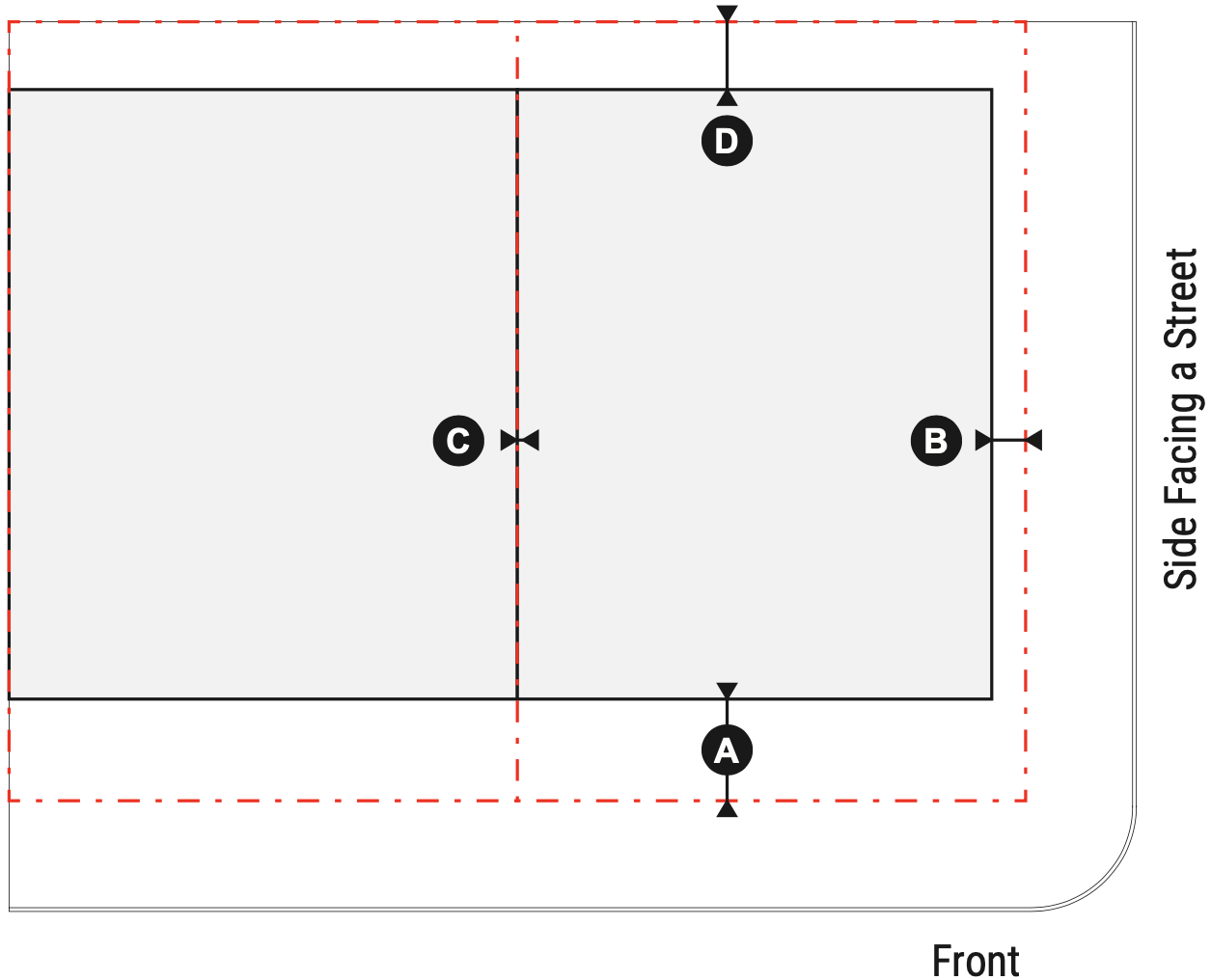
BUILDING HEIGHT Maximum Height Ⓔ 50 feet 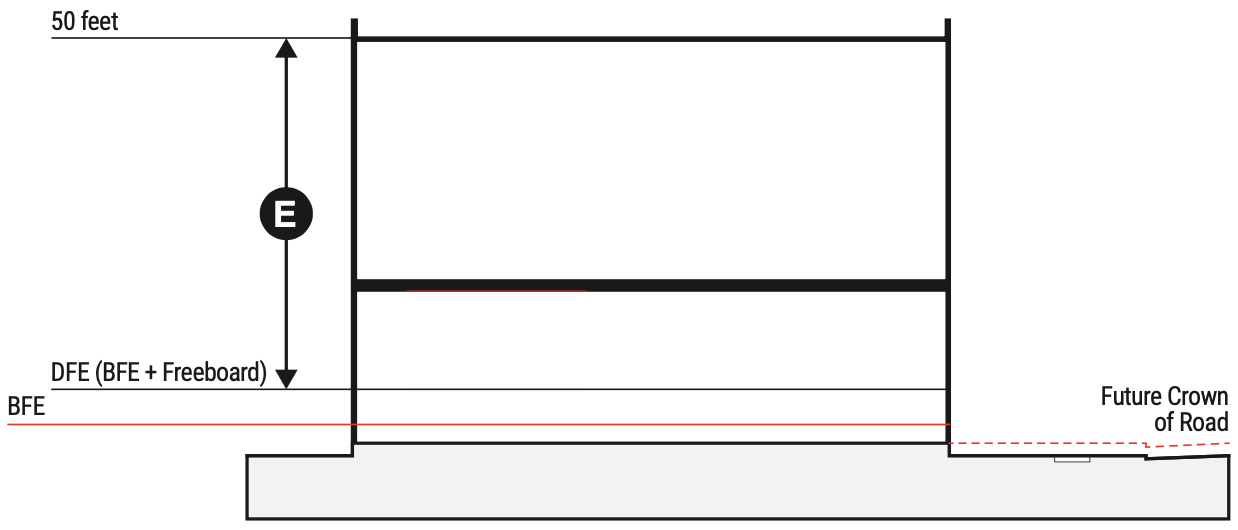
- Properties between Collins Avenue and Harding Avenue must provide access to the interior of the block for service vehicles as determined by the design review process.
- The number of units may not exceed the maximum density set forth in the Comprehensive Plan.
- Developments located in zoning districts that do not prohibit the short-term rental of residential apartment units shall be eligible for an exemption from the average unit size requirements established above, subject to the following conditions:
- Density. The development shall not be permitted to exceed the maximum residential density established in the Comprehensive Plan or Land Development Regulations.
- Minimum Unit Size. This incentive shall not be construed to permit any unit that is smaller than the minimum allowable unit size for the type of unit being proposed.
- Covenant. In order to be eligible for this voluntary average unit size incentive, the property owner, at the owner’s sole discretion, shall voluntarily execute a restrictive covenant running with the land, in a form approved by the City Attorney, affirming that in perpetuity no residential units on the property shall be leased or rented for a period of less than six months and one day.
- See section 7.1.5.2 for eligibility for average unit size exception.
DEVELOPMENT REGULATIONS TABLE (TC-3 TOWN CENTER RESIDENTIAL OFFICE) Maximum FAR 1.25 Maximum Density (Dwelling Units per Acre) 60 DUA (80% bonus for workforce or affordable units) MINIMUM UNIT SIZE (SQUARE FEET) Apartments/Multi-family Units New Construction
550 SF Non-elderly and elderly low and moderate income housing
400 SF Workforce Housing
400 SF Rehabilitated Buildings
400 SF Lodging and Hotel Units 335 SF + MINIMUM AVERAGE UNIT SIZE (SQUARE FEET) Apartments/Multi-family Units New Construction
550 SF (1) (2)(3) Non-elderly and elderly low and moderate income housing
400 SF (1) (2)(3) Workforce Housing
400 SF (1) (2)(3) Rehabilitated Buildings
No Minimum Lodging and Hotel Units N/A LOT OCCUPATION Minimum Lot Area (square feet) N/A Minimum Lot Width N/A BUILDING SETBACKS Front Setback Ⓐ Subterranean
15 feet Pedestal (not to exceed 23 feet in height to the top of the roof deck)
Tower
15 feet + 1 foot for every 1 foot in height above 23 feet Side, Facing a Street, Setback Ⓑ Lots 50 ft wide or less Subterranean
7.5 feet Pedestal (not to exceed 23 feet in height to the top of the roof deck)
Tower
7.5 feet + 1 foot for every 1 foot in height above 23 feet Lots greater than 50 feet wide Subterranean
10 feet Pedestal (not to exceed 23 feet in height to the top of the roof deck)
Tower
10 feet + 1 foot for every 1 foot in height above 23 feet Side, Interior Setback Ⓒ Subterranean
7.5 feet
10 feet (for lots abutting a TC-1 district)Pedestal (up to 33 feet in height)
Tower (33 feet or more in height)
10 feet Rear Setback Ⓓ Subterranean
10 feet Pedestal (up to 33 feet in height)
Tower
10 feet + 1 foot for every 1 foot above 33 feet 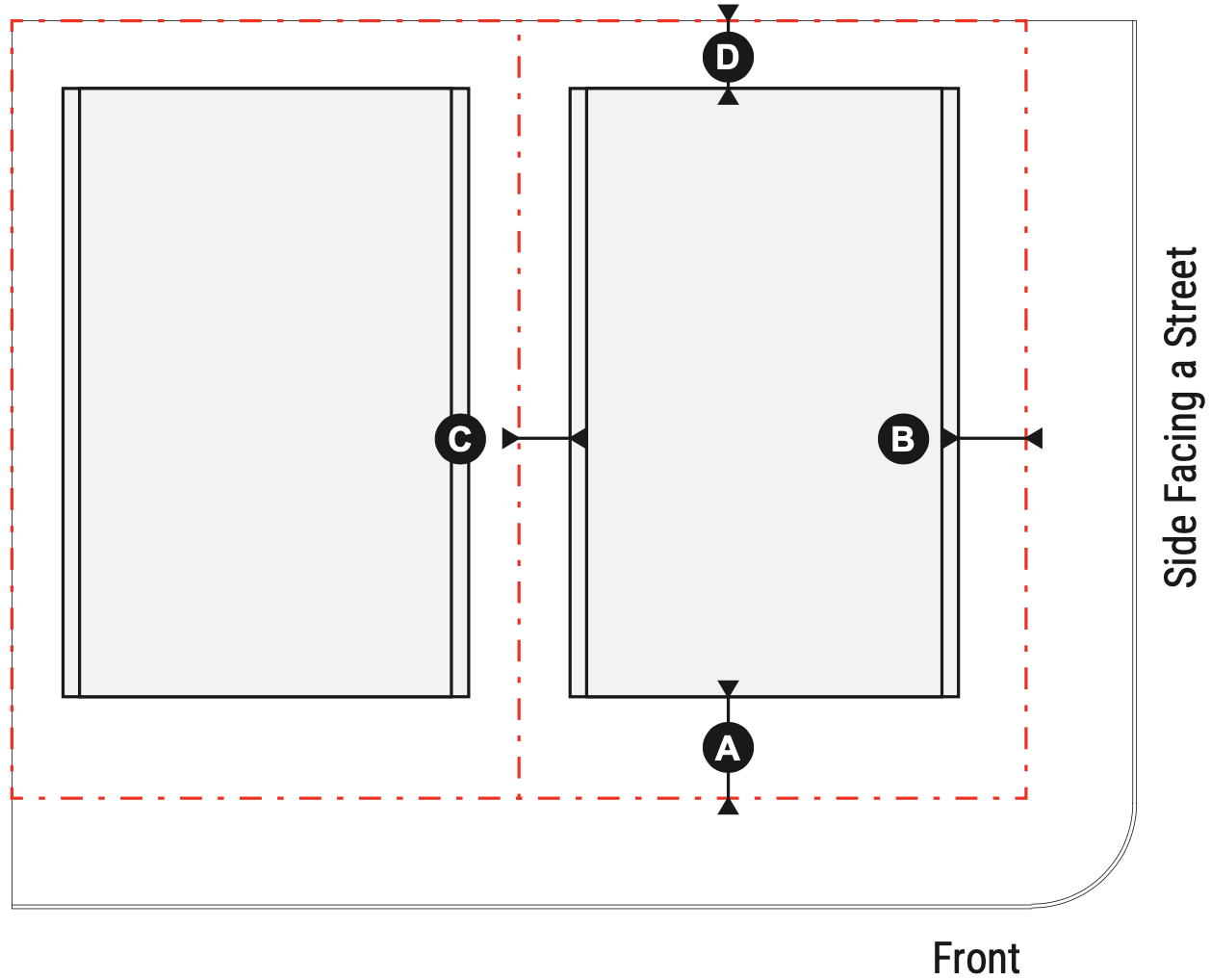
BUILDING HEIGHT Maximum Height Ⓔ 45 feet Waterfront Lots
50 feet Parking Garages as Main Use
See section 5.3.10 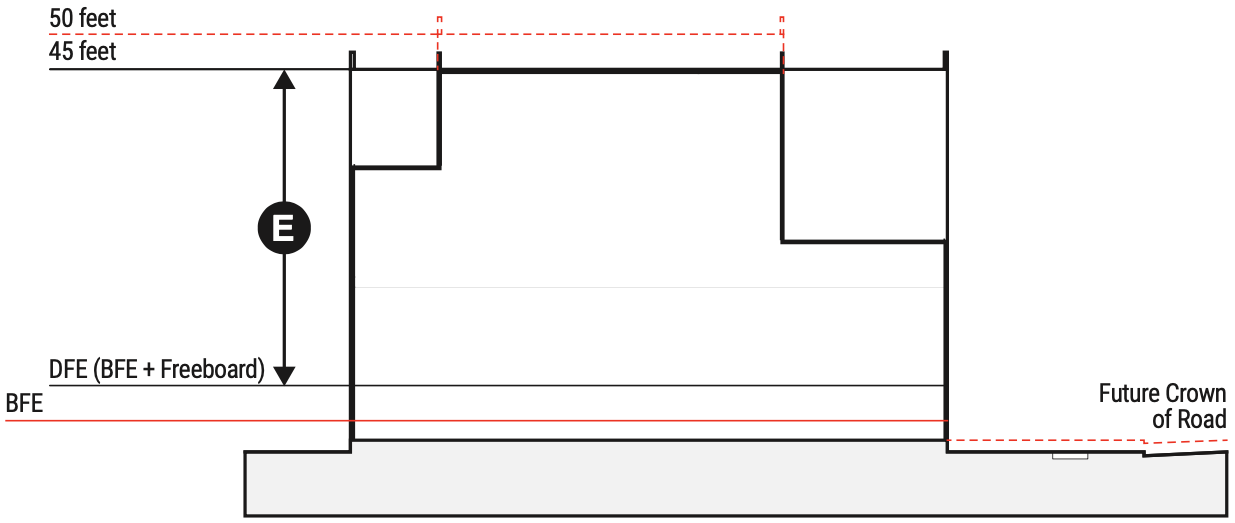
- The number of units may not exceed the maximum density set forth in the Comprehensive Plan.
- Developments located in zoning districts that do not prohibit the short-term rental of residential apartment units shall be eligible for an exemption from the average unit size requirements established above, subject to the following conditions:
- Density. The development shall not be permitted to exceed the maximum residential density established in the Comprehensive Plan or Land Development Regulations.
- Minimum Unit Size. This incentive shall not be construed to permit any unit that is smaller than the minimum allowable unit size for the type of unit being proposed.
- Covenant. In order to be eligible for this voluntary average unit size incentive, the property owner, at the owner’s sole discretion, shall voluntarily execute a restrictive covenant running with the land, in a form approved by the City Attorney, affirming that in perpetuity no residential units on the property shall be leased or rented for a period of less than six months and one day.
- See section 7.1.5.2 for eligibility for average unit size exception.
- Waterfront setbacks. Notwithstanding the above, for waterfront properties the minimum setback shall be 30 feet from the bulkhead. However, if public waterfront walkways are provided, along with covenants and provisions to ensure public use and maintenance of these walkways in perpetuity, then the design review board may allow the waterfront setback to be decreased to not less than 15 feet. Design and use of waterfront walkways shall be in conformance with the NBTC design standards referenced in section 7.2.14.5.a.
- Surface parking lots. In the TC-1 and TC-2 districts, the minimum setback for surface parking lots shall be the same as for buildings plus an additional 5 feet for landscaping adjacent to all streets. In the TC-3 district the minimum setback for surface parking lots shall be 5 feet adjacent to interior side lot lines, 0 feet abutting an alley and the same as for building setbacks on all other sides.
- Rooftop features. In the TC-3 district, stairwell and elevator bulkheads and other rooftop features permissible in section 7.5.2 extending above the roofline of a building shall be required to be set back from the main building one foot for every one foot in height above the top of the roof deck of each level, with the exception of parapet walls which shall not exceed 3.5 feet in height
- Required storefront frontage. The ground story frontage of a building along 71st Street and Collins Avenue shall house active uses that contribute to a daily vibrant street life, including retail uses, eating and drinking establishments or cultural uses, for a minimum depth of 25 feet from the street facade along a minimum of 75 percent (75%) of the building frontage, which shall have glass storefronts. The remaining frontage may be used for lobby and access for upper story uses. Offices and residential uses are prohibited on the ground story street frontage of these streets unless the use is located on a mezzanine or at least 25 feet back from the street facade.
- Retail kiosks. Notwithstanding sections 70-5, 70-41 in General Ordinances and section 7.5.1.4, open air kiosks for retail sales or food service may be placed in or on the edge of surface parking lots or approved urban plazas in the TC-1 district. Such kiosks shall be permanent structures, designed and located to enhance and enliven the pedestrian environment and must receive design review approval. Self-service kiosks and vending machines are prohibited. No storage shall be allowed outside of the kiosks.
- Open space. For lots in the TC-1 and TC-2 district, lot area over 20,000 square feet shall have ground level open space which shall comprise a minimum of 5 percent (5%) of the lot area. Such open space shall be located adjoining the front or side street of the site, or within a central courtyard area that is fully accessible to the public from the front or street side of the property; and shall be designed and maintained according to the urban plaza design standards in the NBTC design standards referenced in section 7.2.14.5.a.
- Alleys. Alleys shall be provided to benefit property owners and the general public by providing parking, service and delivery access to the rear of all lots, thereby improving traffic flow and eliminating driveways that create vehicle/pedestrian conflicts on public sidewalks. Motor vehicle parking, service and delivery access shall be from an alley wherever one exists, or where a new alley or service corridor can be created by dedication or easement. The location of new alleys shall be determined by the design review process with the intent to ensure that all properties within a block will have existing or future service access from the rear. Generally, the alley will be located in the required setback area along the rear or interior side lot line; however, this may be adjusted to optimize vehicular and pedestrian access to the subject property as well as to the surrounding properties. Where an alley does not exist, the property owner shall dedicate sufficient width (the area within the required setback) to provide the alley abutting his property. Where it is not feasible to construct an alley at the time of redevelopment of any property, as determined by the planning director, the developer shall execute and record a covenant effecting such dedication upon certification by the planning director that the construction of an alley has become feasible. The planning director may accept a perpetual access easement for an alley in lieu of dedication of an alley if he determines such would be appropriate under the circumstances of any particular property. The developer shall maintain the area until the city builds the alley.
- Encroachments. No encroachments shall be allowed in the required setback areas except as follows; otherwise, encroachments shall be governed by section 7.5.3.2:
- In the TC-1 and TC-2 districts, no encroachments shall be allowed in the first 7.5 feet above ground level adjacent to all streets.
- In the TC-3 district, no encroachment shall be allowed in the first 5 feet of setback area measured from the property line adjacent to all streets.
- In all districts, no encroachment shall be allowed in the first 18 feet above grade abutting an existing or future alley.
- Signs. Signs shall be regulated by chapter 6 of these Land Development Regulations and by the NBTC design standards referenced in section 7.2.14.5.a.
- Streetscape improvements. In all TC districts, the developer/property owner is required to construct all streetscape improvements substantially in accord with the NBTC design standards referenced in section 7.2.14.5.a. part of any development or redevelopment project.
7.2.14.5 Additional Regulations (TC)
- Design review standards (TC)
All development shall substantially conform to the "Design Review Standards for the North Beach Town Center TC Zoning Districts", also known as the "NBTC design standards", as adopted and amended periodically by the design review board. The NBTC design standards are available from the planning department or on the web at miamibeachfl.gov/planning, by clicking on "Design Review".
7.2.14.6 Town Center-Central Core (TC-C) District
- Purpose (TC-C)
The overall purpose of the town center-central core (TC-C) district is to:- Encourage the redevelopment and revitalization of the North Beach Town Center.
- Promote development of a compact, pedestrian-oriented town center consisting of a high-intensity employment center, mixed-use areas, and residential living environments with compatible office uses and neighborhood-oriented commercial services;
- Permit uses that will be able to provide for economic development in light of changing economic realities due to technology and e-commerce;
- Promote a diverse mix of residential, educational, commercial, and cultural and entertainment activities for workers, visitors and residents;
- Encourage pedestrian-oriented development within walking distance of transit opportunities at densities and intensities that will help to support transit usage and town center businesses;
- Encourage neighborhood-oriented retail and prevent an excessive concentration of large-scale retail that has the potential to significantly increase regional traffic congestion;
- Provide opportunities for live/work lifestyles and increase the availability of affordable office and commercial space in the North Beach area;
- Promote the health and well-being of residents by encouraging physical activity, waterfront access, alternative transportation, and greater social interaction;
- Create a place that represents a unique, attractive and memorable destination for residents and visitors;
- Enhance the community's character through the promotion of high-quality urban design;
- Promote high-intensity compact development that will support the town center's role as the hub of community-wide importance for business, office, retail, governmental services, culture and entertainment;
- Encourage the development of workforce and affordable housing; and
- Improve the resiliency and sustainability of North Beach.
- Uses (TC-C)
- The main permitted, accessory, conditional and prohibited uses are as follows:
USES TABLE (TC-C) RESIDENTIAL Single family detached dwelling
P Apartments P* Townhomes P* Co-living P* Live-work P* LODGING Hotels P* Micro-hotel Pro OFFICE Restaurants P Outdoor Café P Outdoor Bar Counter A Artisanal retail with off-site sales C Outdoor entertainment establishment C* Open air entertainment establishment C* Self Storage Warehouse (in accordance with the requirements set forth in section 7.2.14.6.b.2.A.IX) P Pawnshop Pro Tobacco and vape dealers Pro Package liquor stores Pro Check cashing stores Pro Occult science establishment Pro Tattoo studios Pro Gambling and casinos pursuant to section 7.1.8 Pro Rentals or leases of mopeds, motorcycles, and motorized bicycles pursuant to section 7.1.8 Pro Offices P COMMERCIAL Commercial establishment over 25,000 SF C Retail establishment over 25,000 SF C* Retail P Alcoholic beverage establishments P Artisanal retail for on-site sales only P Grocery store P Kennel P Indoor entertainment establishment P* Neighborhood fulfillment center P* Retail Fulfillment Centers pursuant to section 7.1.8 Pro CIVIC Religious institution C CIVIL SUPPORT Public and private institutions C EDUCATIONAL Day care facility C Schools C P* INDUSTRIAL OTHER Neighborhood impact establishment C* Key
P – Main Permitted Use
C - Conditional Use
A - Accessory Use
Pro - Prohibited Use
*See Supplemental Use Regulations below
- Supplemental Use Regulations (TC-C)
The following supplemental regulations shall apply to specific uses in the TC-C district:
There shall be no variances regarding the regulations for permitted, prohibited, accessory, exception, special exception, and conditional uses in section 7.2.14.6.b.1; and the supplemental regulations of such uses in section 7.2.14.6.b.2.
Apartment hotels, and hotels (pursuant to sections 2.7.2, which requires a Commission warrant, and 7.5.4.5).
Use limitations.
The following limits shall apply for residential and hotel uses:
Hotel rooms. There shall be a limit of 1,762 hotel units within the TC-C district.
Apartments. There shall be a limit of 500 apartment units built within the TC-C district over and above the maximum allowable density and intensity, prior to the adoption of the FAR increase approved on November 7, 2017. This limit shall not authorize exceeding the maximum density authorized within the adopted comprehensive plan.
Workforce and affordable housing and co-living units. There shall be a combined limit of 500 workforce housing, affordable housing, or co-living units built within the TC-C district over and above the maximum allowable density prior to the adoption of the FAR increase approved on November 7, 2017. However, a co-living unit that is less than 550 square feet shall count as half of a unit for the purposes of calculating the maximum number of units. This limit shall not authorize exceeding the maximum density authorized within the adopted comprehensive plan.
Co-living units. Notwithstanding the foregoing limitations, there shall be a limit of 529 coliving units built within the TC-C district. Additionally, co-living units shall only be permitted for projects that have obtained a building permit process number by October 1, 2023.
Units for the uses identified in sections 7.2.14.6.b.2.A.II.(1).i-iii above, shall be applied for and allocated on a first-come, first-served basis concurrent with the earlier of a completed application for land use board approval or completed application for building permit that includes the proposed number of units, and meets all applicable requirements of the land development regulations, as determined by the planning director. Any allocation of units pursuant to this subsection shall be subject to the following additional provisions:
In the event that a land use board application is not approved by the applicable board, or in the event that an applicant with an approved land use board order fails to obtain a building permit before the board order expires, all units allocated pursuant to the filing of the completed land use board application shall be released to the pool and shall become available to new applicants.
Upon the issuance of a building permit for units approved pursuant to a land use board order, the allocation of such units shall remain reserved. If the building permit or building permit application expires or is abandoned, any units allocated pursuant to the building permit application shall be released to the pool; and shall become available to new applicants. Prior to reactivating an expired or abandoned building permit or building permit application, an applicant shall first be required to obtain written confirmation from the planning department that sufficient units remain available.
If the use for which credits are allocated pursuant to a land use board order or building permit changes to a use that does not require an allocation of units, the allocation of units shall be released and shall become available to new applicants.
Units for the uses identified in section 7.2.14.6.b.2.A.II.(1).iv. above, shall be applied for and allocated on a first-come, first-served basis concurrent with a completed application for land use board approval that includes the proposed number of units, and meets all requirements of the land development regulations, as determined by the planning director. Any allocation of units pursuant to this subsection shall be subject to the following additional provisions:
In the event that a land use board application is not approved by the applicable board, or in the event that an applicant with an approved land use board order fails to obtain a building permit before the board order expires. all units allocated pursuant to the filing of the completed land use board application shall be released to the pool and shall become available to new applicants.
Upon the issuance of a building permit for units approved pursuant to a land use board order, the allocation of such units shall remain reserved. In the event that the building permit expires or is abandoned, any units allocated pursuant to the building permit shall be released to the pool, and shall become available to new applicants. Prior to reactivating an expired or abandoned building permit or building permit application, an applicant shall first be required to obtain written confirmation from the planning department that sufficient units remain available.
If the use for which credits are allocated pursuant to a land use board order changes to a use that does not require an allocation of units. the allocation of units shall be released and shall become available to new applicants.
Any such units permitted the boundaries of the TC-C district, after November 7, 2017 shall be counted towards the maximum limit established herein.
Notwithstanding the use limitations in sections 7.2.14.6.b.2.A.II.(1).i-iii. above, the planning director or designee may permit simultaneous increase and decreases in the above described uses, provided that the impacts of the changes will not exceed originally approved impacts, as measured by total weekday peak hour (of adjacent street traffic, one hour between 4:00 p.m. and 6:00 p.m.) vehicle trips, pursuant to the Institute of Transportation Engineers Trip Generation Manual, as may be amended from time to time.
There shall be a limit of two retail establishments over 25,000 square feet within the TC-C district. Credits for such retail establishments shall be allocated on a first-come, first serve basis as part of an application for land use board approval, building permit, or business tax receipt, whichever comes first. If said approval, permit, or receipt expires and the establishment is not built or ceases operations, the credits shall become available to new applicants. Any such establishment permitted in the area of the TC-C district, after November 7, 2017, shall be counted towards the maximum limit established herein.
There shall be a limit of two neighborhood fulfillment centers within the TC-C district. Credits for such establishments shall be allocated on a first-come, first serve basis as part of an application for land use board approval, building permit, or business tax receipt, whichever comes first. If said approval, permit, or receipt expires and the establishment is not built or ceases operations, the credits shall become available to new applicants. Any such establishment permitted in the area of the TC-C district, after November 7, 2017, shall be counted towards the maximum limit established herein.
For the purposes of the TC-C district, the definition for a neighborhood impact establishments established in section 1.2.2 is modified as follows:
"neighborhood impact establishment" means:
An alcoholic beverage establishment or restaurant, not also operating as an entertainment establishment or dance hall (as defined in section 1.2.2), with an area of 10,000 square feet or greater of areas accessible by patrons; or
An alcoholic beverage establishment or restaurant, which is also operating as an entertainment establishment or dance hall (as defined in section 1.2.2), with an area of 5,000 square feet or greater of areas accessible by patrons.
The primary means of pedestrian ingress and egress for alcoholic beverage establishments, entertainment establishments, neighborhood impact establishments, commercial establishment over 25,000 square feet, retail establishment over 25,000, or artisanal retail uses in the TC-C district shall not be permitted within 200 feet of an RM-1 district boundary. This shall not apply to emergency egress.
The following requirements shall apply to indoor entertainment establishments and outdoor and open air entertainment establishments:
Indoor entertainment establishments shall be required to install a double door vestibule at all access points, except for emergency exits.
Indoor entertainment shall cease operations no later than 5:00 a.m. and commence entertainment no earlier than 9:00 a.m.
Open air entertainment shall cease operations no later than 11:00 p.m. on Sunday through Thursday, and 12:00 a.m. on Friday and Saturday; operations shall commence no earlier than 9:00 a.m. on weekdays and 10:00 a.m. on weekends; however, the planning board may establish stricter requirements.
There shall be a maximum of ten alcoholic beverage establishments that are not also operating as a restaurant or entertainment establishment permitted within this zoning district. Credits for entertainment establishments shall be allocated on a first-come, first serve basis as part of an application for land use board approval, building permit, or business tax receipt, whichever comes first. If said approval, permit, or receipt expires and the entertainment establishment is not built or ceases operations, the credits shall become available to new applicants. Any entertainment establishment permitted in the area of the TC-C district, after November 7, 2017, shall be counted towards the maximum limit established herein.
Entertainment establishments shall also be restaurant supper clubs. Such restaurant supper clubs shall be open and able to serve food at a minimum between the hours of 10:00 a.m. and 2:00 p.m. on days in which the entertainment establishment will be open and additionally during hours in which entertainment occurs and/or alcohol is sold.
Entertainment uses shall be subject to the requirements in section 7.5.5.4.
Restaurants with sidewalk café permits or outdoor cafés shall comply with section 82-366 et seq. in the General Ordinances.
Self-storage warehouse use shall only be permitted in accordance with the following:
Only those properties containing an existing self-storage use as of January 1, 2022, shall be permitted to have self-storage as a use in addition to commercial, office, residential, or any combination thereof.
New development on eligible properties described above are only eligible to have a self-storage use if the property owner elects, at the owner's sole discretion, to voluntarily execute a restrictive covenant running with the land, in a form approved by the City Attorney, affirming that, for a term of a minimum of 30 years, none of the residential units on the property shall be leased or rented for a period of less than six months and one day.
Floor area used for self-storage (exclusive of storefront office use for the self--storage facility) shall not exceed 50% of the gross floor area of the building.
All self-storage uses (other than storefront office use for the self-storage facility) shall be located above the ground floor and shall be fully concealed from view at all levels along all street and sidewalk sides of the property.
Qualifying educational facilities shall be eligible for the School Use Incentives as identified in section 7.1.13 of these land development regulations.
- The main permitted, accessory, conditional and prohibited uses are as follows:
Development Regulations (TC-C)
The development regulations for the Town Center Central Core District are as follows:DEVELOPMENT REGULATIONS TABLE (TC-C (TOWN CENTER CENTRAL CORE)) Maximum FAR 3.5 Maximum Density (Dwelling Units per Acre) 150 DUA (80% bonus for workforce or affordable units) (4) (5) MINIMUM UNIT SIZE (SQUARE FEET) Apartments/Multi-family Units New Construction
550 SF Non-elderly and elderly low and moderate income housing
400 SF Workforce Housing
400 SF Rehabilitated Buildings
400 SF Co-living Units
375 SF with a minimum of 20% of the gross floor area of the building consisting of amenity space on the same site. (6) Lodging and Hotel Units Hotel Units
335 SF Minimum Lot Area (square feet) N/A Minimum Lot Width (feet) N/A BUILDING SETBACKS Front Setback (feet) Ⓐ
69th Street (Class B Street)Min setback from property line Allowable Habitable
Encroachments into SetbackSubterranean
10 feet 5 feet Pedestal (Grade to 55 feet)
Tower (55 feet to max height)
125 feet 5 feet Front Setback (feet) Ⓐ
70th Street Alley Line (Class D Street)Min setback from property line Allowable Habitable
Encroachments into SetbackSubterranean
10 feet 3 feet Pedestal (Grade to 55 feet)
Tower (55 feet to max height)
Front Setback (feet) Ⓐ
71st Street (Class A Street)Min setback from property line Allowable Habitable
Encroachments into SetbackSubterranean
10 feet 0 feet Pedestal (Grade to 55 feet)
Tower (55 feet to max height)
25 feet 5 feet Front Setback (feet) Ⓐ
72nd Street (Class A Street)Min setback from property line Allowable Habitable
Encroachments into SetbackSubterranean
20 feet from back of curb line; curb line location shall be at the time of permitting; however, it shall be no less than 5 feet from the property line 5 feet Pedestal (Grade to 55 feet)
Tower (55 feet to max height)
Front Setback (feet) Ⓐ
Collins Avenue (Class A Street)Min setback from property line Allowable Habitable
Encroachments into SetbackSubterranean
10 feet 5 feet Pedestal (Grade to 55 feet)
Tower (55 feet to 125 feet)
20 feet 5 feet Tower (125 feet to max height)
35 feet 5 feet Front Setback (feet) Ⓐ
Indian Creek Drive (Class A Street)Min setback from property line Allowable Habitable
Encroachments into SetbackSubterranean
10 feet 5 feet Pedestal (Grade to 55 feet)
Tower (55 feet to max height)
Front Setback (feet) Ⓐ
Abbot Avenue and Dickens Avenue (Class B Street)Min setback from property line Allowable Habitable
Encroachments into SetbackSubterranean
10 feet 5 feet Pedestal (Grade to 55 feet)
Tower (55 feet to max height)
Side, Interior Setback (feet) Ⓒ Min setback from property line Allowable Habitable
Encroachments into SetbackLots greater than 110 feet wide Subterranean
0 feet 0 feet Pedestal (Grade to 55 feet)
Tower (55 feet to max height)
30 feet 10 feet Lots 110 feet wide or less Subterranean
0 feet 0 feet Pedestal (Grade to 75 feet)
Tower (75 feet to max height)
30 feet 10 feet Rear Setback (feet) Ⓓ Min setback from property line Allowable Habitable
Encroachments into SetbackSubterranean
0 feet
5 feet (abutting an alley)0 feet Pedestal (Grade to 55 feet)
Tower (55 feet to max height)
30 feet
20 feet (abutting and alley)10 feet 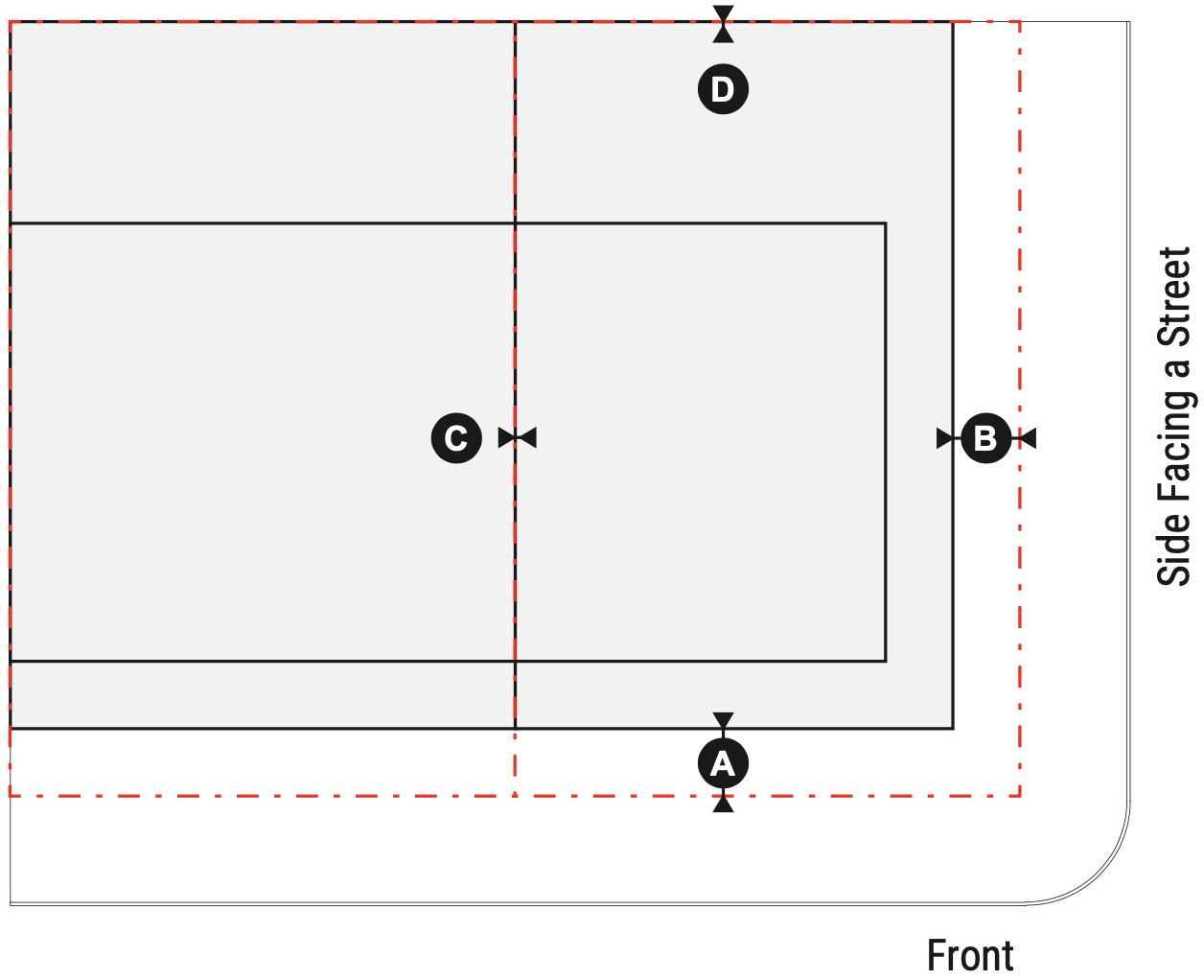
BUILDING HEIGHT Maximum Height Ⓔ 125 feet (3) Public Benefits Program: For lots that are between 20,000 square feet and 45,000 square feet
165 feet (1) (3) For lots that are greater than 45,000 square feet
200 feet (1) (3) For lots that are greater than 50,000 square feet and located north of 71st
Street (MAP EXHIBIT-1)220 feet (1) (2) (3) 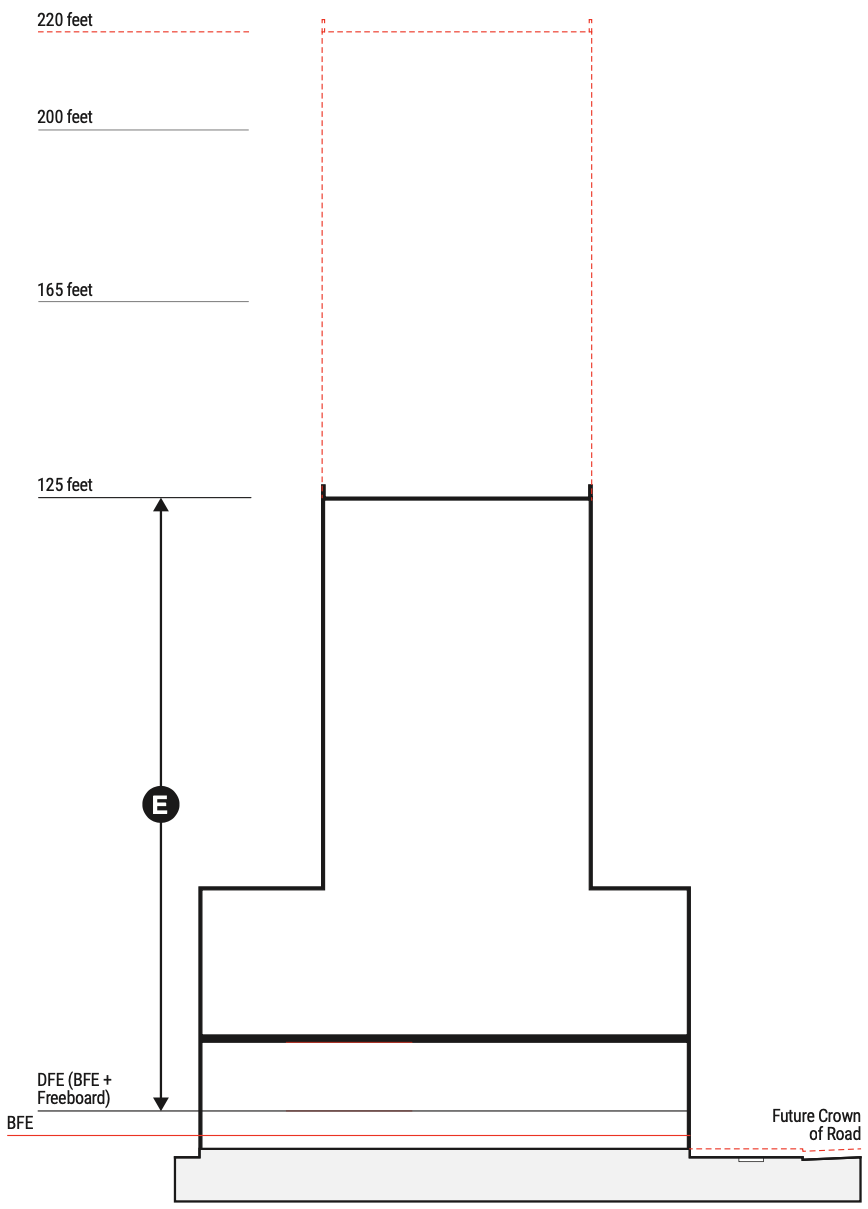
- The maximum height for lots that are 20,000 square feet (SF) or larger may be increased through participation in the public benefits program as outlined in section 7.2.14.6.d.2. (public benefit maximum height).
- The design review board, in accordance with the design review criteria in section 2.5.3 of these land development regulations, may waive the maximum height of 200 feet, in order to authorize up to an additional 20 feet of height, not to exceed 220 feet, based upon the merit of the design.
- For the purposes of new construction in this zoning district, heights shall be measured from the City of Miami Beach Freeboard of 5 feet, unless otherwise noted.
- The maximum residential density may be increased by up to 80 percent (80%) beyond the maximum residential density if the development incorporates certified workforce or affordable housing units. The additional density may only be utilized for workforce or affordable housing units.
- Co-living units that are less than 550 square feet shall count as half of a unit for the purposes of calculating the maximum allowable density.
- Amenity space includes the following types of uses, whether indoor or outdoor, including roof decks: restaurants; bars; cafes; kitchens; club rooms; business center; retail; screening rooms; fitness center; spas; gyms; pools; pool decks; and other similar uses whether operated by the condo or another operator. Bars and restaurants shall count no more than 50 percent (50%) of the total co-living amenity space requirements. No variances are permitted from these provisions.
- Amenity space includes the following types of uses, whether indoor or outdoor, including roof decks: restaurants; bars; cafes; hotel business center; hotel retail; screening rooms; fitness center; spas; gyms; pools; pool decks; and other similar uses customarily associated with a hotel uses whether operated by the hotel or another operator. Bars and restaurants shall count no more than 50 percent (50%) of the total amenity space requirements. These amenities may be combined with the amenities for co-living units, provided residents and hotel guests have access. No variances are permitted from these provisions.
- Street frontage, design, and operations requirements (TC-C)
The development regulations and street frontage requirements for the TC-C district are as follows:- Applicability. The following regulations shall apply to all frontages:
- Tower regulations. The tower shall be considered the portion of a building located above 55 feet, excluding allowable height exceptions as defined in section 7.5.2. Towers shall comply with the following:
- The longest portion of a tower located within 50 feet of a public right-of-way shall not exceed 165 feet in length between the two furthest points of the exterior face of the tower parallel to a single frontage.
- The minimum horizontal separation between multiple towers located on the same site, including balconies, shall be 60 feet.
- Setback design. The minimum setback shall be designed to function as an extension of the adjacent public sidewalk unless otherwise noted in the regulations of this zoning district.
- Clear pedestrian path. A minimum 10 foot wide "clear pedestrian path," free from obstructions, including, but not limited to, outdoor cafés, sidewalk cafés, landscaping, signage, utilities, and lighting, shall be maintained along all frontages as follows:
- The clear pedestrian path may only utilize public sidewalk and setback areas.
- Pedestrians shall have 24-hour access to the clear pedestrian path.
- The clear pedestrian paths shall be well lit and consistent with the city's lighting policies.
- The clear pedestrian paths shall be designed as an extension of the adjacent public sidewalk.
- The clear pedestrian path shall be at a continuous level elevation and delineated by in-ground markers that are flush with the path, differing pavement tones, pavement type, or other method to be approved by the planning director or designee. Should there be a conflict with the elevations and FDOT roadway projects, the DRB may waive the requirement for a continuous level elevation.
- An easement to the city providing for perpetual public access shall be provided for portions of the clear pedestrian path that fall within the setback area.
- Habitable encroachments. Habitable encroachments may encroach into required setbacks above a height of 15 feet up to the applicable distance indicated for allowable habitable encroachments in section 7.2.14.6.c (Development Regulations Table (TC-C)). Habitable encroachments include balconies, bay windows, trellises, pergolas, pool decks, roof top decks, and amenity decks. Notwithstanding the foregoing, allowable encroachments shall be permitted within required yards, as set forth in section 7.5.3.2.
- Articulation. Facades with a length of 240 feet or greater shall be articulated so as to not appear as one continuous facade, subject to design review criteria.
- Windows. All windows shall be a minimum of double-pane hurricane impact glass.
- Street trees. In addition the requirements of chapter 4 of these Land Development Regulations, street trees shall require the installation of an advanced structural soil cells system (Silva Cells or approved equal) and other amenities (irrigation, up lighting, porous aggregate tree place finish) in tree pits.
- Commercial, hotel, and access to upper level frontages. In addition to other requirements for specific frontage types and other requirements in the City Code, frontages for commercial, hotel, and access to upper level frontage shall be developed as follows:
- The habitable space shall be directly accessible from the clear pedestrian path.
- Such frontages shall contain a minimum of 70 percent (70%) clear glass windows with views into the habitable space.
- A shade structure that projects for a minimum depth of 5 feet into the setback beyond the building façade, shall be provided at a height between 15 feet and 25 feet. Said shade structure may consist of an eyebrow or similar structure. Additionally, an allowable habitable encroachment such as balconies or parking deck may take the place of the shade structure. Notwithstanding the foregoing, if the shade structure is not an integral structural component of the building, it may be located at a height between 15 feet measured from grade and 25 feet measured from the required City of Miami Beach Freeboard.
- No more than 35 percent (35%) of the required habitable space along the ground floor of a building frontage shall be for access to upper levels, unless waived by the design review board.
- Residential frontages. In addition to other requirements for specific frontage types and other requirements in the City Code, residential frontages shall be developed as follows:
- Ground floor residential units shall have private entrances from the clear pedestrian path.
- Where there are ground floor residential units, the building may be recessed from the setback line up to an additional to 5 feet in order to provide private gardens or porches that are visible and accessible from the street.
- A shade structure over the private garden or porch may be provided.
- Private access stairs, ramps, and lifts to the ground floor units may be located within the area of the private garden or porches.
- Fencing and walls for such private gardens or porches may encroach into the required setback up to the applicable distance indicated for allowable encroachments in section 7.2.14.6.c (Development Regulations Table (TC-C)) at grade; however, it shall not result in a clear pedestrian path of less than 10 feet. Such fencing and walls shall not be higher than 4 feet from grade.
- Off-street parking facilities. In addition to requirements for specific frontage types and other requirements in the City Code, off-street parking facilities shall be built as follows:
- Parking facilities shall be entirely screened from view from public rights-of-way and clear pedestrian paths. Parking garages shall be architecturally screened or lined with habitable space.
- Parking garages may only encroach into the required setback between a height 25 feet and 55 feet up to the applicable distance indicated for allowable habitable encroachments in section 7.2.14.6.c (Development Regulations Table (TC-C)).
- Habitable space for residential, commercial, or hotel uses may be placed within the allowable habitable encroachment in order to screen the parking garage from view of the public right-ofway.
- Portions of parking decks that encroach into the required setback or that are located in levels directly below habitable space shall have a minimum floor to ceiling height of 9 feet.
- Portions of parking decks that encroach into the required setback or that are located in levels directly below habitable space shall have horizontal floor plates.
- Rooftop and surface parking shall be screened from view from surrounding towers through the use of solar carports or landscaping.
- Utilities. In addition to other requirements for specific frontage types and other requirements in the City Code, facilities for public utilities shall be built as follows:
- For new construction, local electric distribution systems and other lines/wires shall be buried underground. They shall be placed in a manner that avoids conflicts with street tree plantings.
- Long-distance power transmission lines not otherwise buried shall be placed on poles for aboveground distribution pursuant to the following restrictions:
- Poles shall be located in the area of allowable encroachments into setbacks; however, they may not obstruct clear pedestrian paths.
- Poles shall be located no closer than 50 feet from the radius of the intersection of two streets.
- Poles shall be separated by the longest distance possible that allows the lines to operate safely.
- Poles shall be architecturally and artistically treated.
- Loading. Where loading is permitted, it shall be designed as follows, in addition to the requirements for driveways:
- Loading shall at a minimum be setback behind the area required to be habitable for each street class designation.
- Loading for nonresidential uses that are on lots over 45,000 square feet shall provide for loading spaces that do not require vehicles to reverse into or out of the site, unless waived by the design review board.
- Driveways for parking and loading shall be combined, unless waived by the design review board.
- Loading areas shall be closed when not in use.
- Garbage rooms shall be noise-baffled, enclosed, and air-conditioned.
- Trash containers shall be located in loading areas.
- Trash containers shall utilized rubber tired wheels.
- Delivery trucks shall not be allowed to idle in the loading areas
- Loading for commercial and hotel uses and trash pick-ups with vehicles of more than two axles may only commence between the hours of 6:00 a.m. and 7:00 a.m., 9:00 a.m. and 3:00 p.m., and 6:00 p.m. and 9:00 p.m. on weekdays; and 9:00 a.m. and 9:00 p.m. on weekends, unless waived by the planning board with conditional use approval. Notwithstanding the foregoing, hybrid or electric vehicles may commence loading at 5:00 a.m. instead of 6:00 a.m. on weekdays.
- Loading for commercial and hotel uses with vehicles of two axles or less may occur between the hours of 6:00 a.m. and 11:00 p.m. on weekdays and 9:00 a.m. and 11:00 p.m. on weekends. Notwithstanding the foregoing, hybrid or electric vehicles may commence loading at 5:00 a.m. instead of 6:00 a.m. on weekdays.
- Required off-street loading may be provided on another site within the TC-C district or within 1,500 feet of the site, provided it is not located in a residential district.
- Drive-through. The use of driveways for drive-through commercial purposes shall be prohibited.
- Tower regulations. The tower shall be considered the portion of a building located above 55 feet, excluding allowable height exceptions as defined in section 7.5.2. Towers shall comply with the following:
- Applicability. The following regulations shall apply to all frontages:
- 70th Street Frontage. The property line between southern boundary of Lots 6 and 7 of Blocks 11 through 14 (MAP EXHIBIT-2) of “Normandy Beach South” according to the plat thereof as recorded in Plat Book 21 at Page 54 and the northern boundary of Lots 1 and 12 of Blocks D, E, and H (MAP EXHIBIT-3) of “Atlantic Heights Corrected” according to the plat thereof as recorded in Plat Book 9 at Page 54 and of Lots 1 and 6 of Block J (MAP EXHIBIT-4) of “Atlantic Heights” according to the plat thereof as recorded in Plat Book 9 at Page 14, is hereby defined as the “70th Street Frontage.”
- Street class designation. For the purposes of establishing development regulations for adjacent properties and public rights-of-way, streets and frontages shall be organized into classes as follows:
- Class A frontages are the following:
- 71st Street.
- 72nd Street.
- Collins Avenue.
- Indian Creek Drive.
- Class B frontages are the following:
- Abbott Avenue.
- Dickens Avenue.
- 69th Street.
- Class C frontages are the following:
- Carlyle Avenue.
- Harding Avenue.
- Byron Avenue.
- Class D frontages are the following:
- 70th Street Frontage.
- Class A frontages are the following:
- Hierarchy of frontages. For the purposes of conflicts, Class A frontages shall be the highest class frontage; Class B frontages shall be the second highest class frontage; Class C frontages shall be the third highest class frontage; and Class D shall be the fourth highest class frontage. Where requirements for frontages of different classes overlap and conflict, the regulations for the higher class frontage shall control over the regulations for the lower class frontage.
- Class A. In addition to other requirements in the City Code, Class A frontages shall be developed as follows:
- Facades shall have a minimum of height of 35 feet.
- Buildings shall have a minimum of three (3) floors located along a minimum of 90 percent (90%) of the length of the setback line pursuant to the following regulations:
- The building may be recessed from the setback line in order to provide active public plazas that have no floor area located above the plaza.
- Except where required for driveways and utility infrastructure, the ground floor shall contain habitable space with a minimum depth of 50 feet from the building façade.
- The habitable space on the ground floor shall be for commercial and hotel uses, and to provide access to uses on upper floors of the building.
- The second and third floors shall contain habitable space for residential, hotel, or commercial uses with a minimum depth of 25 feet from the building facade.
- Ground floor and surface parking shall be setback a minimum of 50 feet from the building façade and be concealed from view from the clear pedestrian path.
- Driveways and vehicle access to off-street parking and loading shall be prohibited on a Class A frontage, unless it is the only means of egress to the site. Permitted drive-ways on Class A frontages shall be limited by the following:
- If a driveway is permitted it shall be limited to 22 feet in width and be incorporated into the façade of the building.
- Driveways shall be spaced no closer than 60 feet apart.
- Driveways shall consist of mountable curbs that ensure a continuation of the ten-foot clear pedestrian paths.
- If the only means of egress to the site is from a Class A frontage, automobile parking requirements may be waived by the design review board.
- Off-street loading shall be prohibited on a Class A frontage, unless it is the only means of egress to the site. Should the only means of egress to a site be from a Class A frontage, loading requirements may be waived by the design review board.
- On-street loading shall be prohibited on Class A frontages.
- Ground floor utility infrastructure, including as may be required by Florida Power and Light (FPL) shall be prohibited on a Class A frontage, unless it is the only means of egress to the site. Permitted utility infrastructure shall be developed as follows:
- Permitted utility infrastructure shall be concealed from the public view and be placed within or behind the line of the façade if access from the street is required.
- In addition to the requirements of section 4.2.3.a, street trees shall have a minimum clear trunk of eight feet, an overall height of 22 feet, and a minimum caliper of six inches at time of planting. Additionally, the following shall apply:
- Street trees shall be up-lit.
- If such street trees cannot be planted the applicant/property owner shall contribute double the sum required in section 4.2.4.b into the city's tree trust fund.
- Class B. In addition to other requirements in the City Code, Class B frontages shall be developed as follows:
- Facades shall have a minimum of height of 35 feet.
- Buildings shall have a minimum of one floor located along a minimum of 90 percent (90%) of the length of the setback line pursuant to the following regulations:
- The building may be recessed from the setback line in order to provide active public plazas that have no floor area located above the plaza.
- Except where required for driveways and utility infrastructure, the ground floor shall contain habitable space for residential, hotel, or commercial uses with a minimum depth of 45 feet from the building façade for the minimum required length along the setback line.
- Driveways and vehicle access to off-street parking and loading shall be prohibited unless it is the only means of egress to the site or if the only other means of egress is from a Class A street. Permitted driveways on Class B frontages shall be limited by the following:
- The prohibition on driveways may be waived by the design review board on blocks that are over 260 feet in length; however, such driveways shall be limited to 12 feet in width.
- Driveways shall be limited to 22 feet in width and be incorporated into the facade of the building.
- Driveways shall be spaced no closer than 60 feet apart on a single parcel.
- Driveways shall consist of mountable curbs that ensure a continuation of the 10-foot clear pedestrian paths.
- Off-street loading shall be prohibited on Class B frontages, unless it is the only means of egress to the site, or if the only other means of egress is from a Class A street.
- On-street loading shall be prohibited on Class B frontages.
- Ground floor utility infrastructure, including as may be required by Florida Power and Light (FPL) shall be prohibited on a Class B frontage, unless it is the only means of egress to the site or if the only other means of egress is from a Class A street. Permitted utility infrastructure shall be developed as follows:
- Permitted utility infrastructure shall be concealed from the public view and be placed within or behind the line of the façade if access from the street is required.
- In addition to the requirements of section 4.2.3.a, street trees shall have a minimum clear trunk of 6feet, an overall height of 16 feet, and a minimum caliper of 4 inches at time of planting. Additionally, the following shall apply:
- Street trees shall be up-lit.
- If such street trees cannot be planted the applicant/property owner shall contribute 1.5 times the sum required in section 4.2.4.b into the city's tree trust fund.
- Class C. In addition to other requirements in the City Code, Class C frontages shall be developed as follows:
- Facades shall have a minimum of height of 35 feet.
- Buildings shall have a minimum of one floor located along a minimum of 85 percent (85%) of the length of the setback line pursuant to the following regulations:
- The building may be recessed from the setback line in order to provide active public plazas that have no floor area located above the plaza.
- Where there are ground floor residential units, the building may be recessed from the setback line up to 5 feet in order to provide private gardens or porches that are visible and accessible from the street.
- Except where required for driveways and utility infrastructure, the ground floor shall contain habitable space for residential, hotel, or commercial uses with a minimum depth of 20 feet from the building façade for the minimum required length along the setback line.
- Ground floor and surface parking shall be setback a minimum of 20 feet from the building facade and shall be concealed from view from the clear pedestrian path.
- Driveways on Class C frontages shall be limited as follows:
- Driveways shall be limited to 24 feet in width and be incorporated into the facade of the building.
- Driveways shall be spaced no closer than 30 feet apart, unless waived by the design review board.
- Driveways shall consist of mountable curbs that ensure a continuation of the 10-foot clear pedestrian paths.
- Ground floor utility infrastructure, including as may be required by Florida Power and Light (FPL) shall be concealed from the public view and be placed within or behind the line of the façade if access from the street is required.
- Columns to support allowable habitable encroachments are permitted below the encroachment, provided they are no more than 2 feet wide and spaced a minimum of 20 feet apart. The columns may split the "clear pedestrian path" into two narrower "clear pedestrian paths" with a combined width of 10 feet, provided that both paths are in compliance with American with Disabilities Act (ADA) clearance requirements.
- Class D. In addition to other requirements in the City Code, Class D frontages shall be developed as follows:
- The Class D frontage is intended to provide a comfortable pedestrian path that connects Indian Creek Drive to Collins Avenue: therefore, the minimum setback area shall contain clear pedestrian path that provides access from the perpendicular clear pedestrian paths which are intersected.
- Façades shall have a minimum of height of 20 feet.
- Buildings shall have a minimum of one floor located along a minimum of 25 percent (25%) of length of the setback line pursuant to the following regulations:
- The building may be recessed from the setback line in order to provide active public plazas that have no floor area located above the plaza.
- The ground floor shall contain habitable space for residential, hotel, or commercial uses with a minimum depth of 20 feet from the building façade for the minimum required length along the setback line.
- Surface parking shall be setback a minimum of 20 feet from the building facade and shall be concealed from view from the clear pedestrian path.
- Driveways shall be prohibited on Class D frontages.
- Loading shall be prohibited on Class D frontages.
- Ground floor utility infrastructure, including as may be required by Florida Power and Light (FPL) shall be concealed from the public view and be placed within or behind the line of the facade if access from the street is required.
- Buildings on either side of the frontage shall be permitted to provide one elevated pedestrian walkway to connect to the building on the opposite side of the frontage pursuant to the following restrictions: I. The elevated walkway shall be located between a height of 25 feet and 55 feet.
- Elevated walkways shall be setback a minimum 30 feet from Class A, B, or C setbacks.
- Elevated walkways may be enclosed.
- Elevated walkways shall be architecturally treated.
- Elevated walkways shall be no wider than 20 feet, excluding architectural treatments.
- The "clear pedestrian path" may incorporate up to 5 feet from the setback of the adjacent parcel.
- Additional Regulations (TC-C)
- Nonconforming structures within unified development sites (TC-C)
- Buildings within the TC-C district that are nonconforming with the regulations of this division and incorporated into a unified development site as part of a land use board approval shall be made conforming with the development regulations of this division.
- Notwithstanding the requirements of section 7.2.14.6.d.1. above, if said nonconforming building has a tenant with a lease that prevents the structure from being made conforming as part of the land use board approval, then the following shall apply:
- A phased development permit, pursuant to section 2.5.3.5.c, shall be applied for as part of the land use board approval process. The phased development approval shall require the nonconforming building to be redeveloped into a conforming building. The phasing time limit shall be the minimum necessary to allow for the completion of the lease.
- A certified copy of the lease shall be provided as part of the land use board application.
- Notwithstanding the requirements of section 7.2.14.6.d.2. above, buildings constructed prior to 1965 and determined to be architecturally significant by the planning director, or designee, may retain the existing floor area ratio, height, setbacks and parking credits, if the following portions of the building remain substantially intact and are retained, preserved and restored:
- At least 75 percent (75%) of the front and street side façades, exclusive of window openings;
- At least 50 percent (50%) of all upper level floor plates; and
- At least 50 percent (50%) of the interior side walls, exclusive of window openings.
- Public Benefits Program (TC-C)
Participation in the public benefits program shall be required for floor area that is located above 125 feet up to the maximum height. The following options or mix of options are available for participation in the public benefits program:- Contribution to public benefits fund. A contribution to the public benefits fund, in the amount identified in APPENDIX A - Fee Schedule of the City Code, shall be required for each square foot of floor area located above a building height of 125 feet, up to the public benefit maximum height as described in section 7.2.14.6.c (Development Regulations Table (TCC) Maximum Height-Public Benefits Program). The payment shall be made prior to the development obtaining a building permit.
- On-site workforce or affordable housing. Provide on-site workforce housing or housing for low and/or moderate income non-elderly and elderly persons pursuant to the requirements of articles V and VI of chapter 58 of the General Ordinances and certified by the community development department. 2 square feet of floor area may be built above a building height of 125 feet, up to the public benefit maximum height as described in section 7.2.14.6.c (Development Regulations Table (TC-C) Maximum Height-Public Benefits Program), for each square foot of workforce housing or housing for low and/or moderate income non-elderly and elderly persons provided onsite. The following regulations shall apply to such units:
- There shall be no separate entrance or access for such units. Residents of such units shall be permitted to access the building from the same entrances as the market rate units, unless units are on the ground floor, in which case they shall have private entrances from the clear pedestrian path.
- Units shall comply with the minimum unit size requirements for affordable or workforce housing of this division.
- Only the square footage within the unit itself shall count for the square footage above the as of right height.
- Off-site workforce or affordable housing. Provide off-site workforce housing or housing for low and/or moderate income non-elderly and elderly persons pursuant to the requirements of articles V and VI of chapter 58 of the General Ordinances and certified by the community development department within the City of Miami Beach. 1 and 1.5 square feet of floor area may be built above a building height of 125 feet, up to the public benefit maximum height as described in section 7.2.14.6.c (Development Regulations Table (TC-C) Maximum Height-Public Benefits Program), for each square foot of workforce housing or housing for low and/or moderate income non-elderly and elderly persons provided off-site within the City of Miami Beach. The following regulations shall apply to such units:
- Units shall comply with the minimum unit size requirements for affordable or workforce housing of this zoning district.
- Only the square footage within the unit itself shall count for the square footage above the as of right height.
- The housing shall be provided prior to the development obtaining a certificate of occupancy.
- If the housing cannot be provided prior to the development obtaining a certificate of occupancy, a contribution into the public benefits trust fund shall be made in the amount identified in APPENDIX A - Fee Schedule of the City Code for each 1.5 square foot of floor area that is above the as of right height.
- LEED platinum certification. Obtain LEED platinum certification or international living future institute living building challenge certification. Additional height to achieve the public benefit maximum height as described in section 7.2.14.6.c (Development Regulations Table (TC-C) Maximum Height-Public Benefits Program). shall be provided for this option. To exercise this option, a participant must comply with the requirements of the green building program set forth in section 7.1.3.2, subject to the following provision: the exercise of this option requires that the participant post a sustainability fee payment bond or issue full payment of the sustainability fee in the amount of 10 percent (10%) of the total construction valuation of the building permit, as opposed to the 5 percent (5%) as required in section 7.1.3.2.b.1.A.I, and that the following compliance schedule be utilized:If this option is selected and LEED platinum or international living future institute living building challenge certification cannot be achieved prior to the development obtaining a certificate of occupancy (CO), the applicant may choose to provide a contribution into the public benefits trust fund, in the amount identified in APPENDIX A - Fee Schedule of the City Code, for each 1.5 square foot of floor area that is above a building height of 125 feet in height, instead of complying with the revised certification compliance schedule set forth in this section 7.2.14.6.d.2.D. If the applicant elects to provide the contribution into the public benefits fund and the bond has already been posted or the sustainability fee has been paid, the difference between the sustainability fee identified above and the sustainability fee identified in section 7.1.3.2 shall be refunded.
Certification Compliance Schedule Level of Certification Achieved Sustainability Fee Reimbursement to Participant for Meeting Certain Green Building Certification Levels Failure to obtain certification Zero percent refund of bond or payment of sustainability fee LEED certified 30% refund of bond or payment of sustainability fee LEED silver certified 40% refund of bond or payment of sustainability fee LEED gold certified or international living future institute petals or net zero energy certified 60% refund of bond or payment of sustainability fee LEED platinum or international living future institute living building challenge certified 100% refund of bond or payment of sustainability fee - Self-sustaining electrical and surplus stormwater retention and reuse. Provide stormwater retention that is over and above the minimum requirements in order to accommodate offsite stormwater, including the reuse of such stormwater through purple pipes throughout the building, in a manner to be reviewed and approved by public works. Additionally, the entire building shall be fully self-contained in terms of electrical power through the use of solar panels and similar electricity generating devices. Additional height to achieve the public benefit maximum height as described in section 7.2.14.6.c (Development Regulations Table (TC-C) Maximum Height-Public Benefits Program) shall be provided for this option.
- Public recreation facilities. Provide active recreation facilities that are available to the general public. 2 square feet of floor area may be built above a building height of 125 feet, up to the public benefit maximum height as described in section 7.2.14.6.c (Development Regulations Table (TC-C) Maximum Height-Public Benefits Program), for each square foot of recreation facilities provided. The facilities shall serve a recreational need for the North Beach community, and consultation with the city's parks and recreation department shall be required prior to submitting an application for land use board approval in order to determine the types of facilities that are most in need for the area. The facilities can include, but are not limited to, soccer fields, football fields, basketball courts, tennis courts, gyms, pools, and playgrounds. Such facilities can be located on ground levels, rooftops, above parking garages, or within habitable buildings. An operating agreement shall be submitted to the city and approved by the city manager or designee. The operating agreement shall contain minimum hours of operation, cost of admission to cover maintenance and operating costs, organized league information, signage to ensure the public is aware if the public nature of the facility, security requirements, reservation requirements, and other requirements as applicable. The agreement shall also ensure that residents of the building are not prioritized over the general public.
- Expedited development construction. A contribution to the public benefits fund shall not be required for each square foot of floor area located above 125 feet, up to the public benefit maximum height as described in section 7.2.14.6.c (Development Regulations Table (TC-C) Maximum Height-Public Benefits Program), if the following development timeframes are adhered to:
- Obtain a full building permit for a development project consisting of new construction in excess of 100,000 square feet within 21 months of the effective date of this division. The 21-month period shall not be eligible for any extension of time and cannot be tolled by extensions or modifications of board orders or state extension of development orders. If a full building permit is not obtained within 21 months, participation in an alternative option shall be required in order to achieve the additional height. Notwithstanding the foregoing, in the event that, with staffs favorable recommendation, the design review board (DRB) approval of the subject development project is continued by the board or appealed by a party other than the applicant, such 21-month period to obtain a full building permit shall be tolled until the conclusion of such action. Additionally, the city commission may toll the 21-month timeframe, at a duly noticed public hearing, by a four-sevenths affirmative vote for undue hardship. Undue hardship, does not include financial hardship, and shall require a showing by application of due diligence in processing the building permit; that the delays are not caused due to the negligence of the applicant, and/or that the extenuating circumstances are a result of a third party agency that has unduly delayed the issuance of the permit for the project.
- Obtain a temporary certificate of occupancy (TCO) or certificate of occupancy (CO) within 30 months of approval of the building permit; however, state authorized extensions for states of emergency within Miami-Dade County may be utilized for the purposes of tolling of the TCO or CO time limit with notice and proof of the state of emergency provided to the planning department.
Failure to comply with any of the aforementioned timeframes shall require payment of the balance for the full public benefits fee or participation in an alternative public benefits option prior to obtaining a CO.
- North Beach Public Benefits Fund (TC-C)
- The city has established a North Beach Public Benefits Fund. The revenue generated through the public benefits program in section 7.2.14.6.d.2 shall be deposited in the North Beach Public Benefits Fund. Interest earned under the account shall be used solely for the purposes specified for funds of such account.
- Earned fees in the North Beach Public Benefits Fund shall be utilized for the purposes outlined herein:
- Sustainability and resiliency grants for properties in North Beach Historic Districts;
- Uses identified for the sustainability and resiliency fund, as identified in section 7.1.3.2.b.1.C.III for North Beach;
- Improvements to existing parks in North Beach;
- Enhancements to public transportation and alternative modes of travel, including rights-of-way and roadways that improve mobility in North Beach;
- Acquisition of new parkland and environmental and adaptation areas in North Beach;
- Initiatives that improve the quality of life for residents in North Beach.
- For the purposes of this section, North Beach shall be defined as the area of the city located north of 63rd Street, excluding the La Gorce neighborhood, La Gorce Island, and Allison Island (MAP EXHIBIT-5).
- All expenditures from these funds shall require city commission approval and shall be restricted to North Beach. Prior to the approval of any expenditure of funds by the city commission, the city manager or designee shall provide a recommendation.
- Nonconforming structures within unified development sites (TC-C)
7.2.15.1 Purpose (PS)
- Establishment of district and divisions. The PS performance standard district is hereby established as shown on the map designated as the city zoning district map. The PS district consists of all land in the redevelopment area and consists of five districts including: a residential performance standard (R-PS) district, a commercial performance standard (C-PS) district, a residential limited mixed use performance standard (M-PS) district (each of which is further subdivided based upon the type and density or intensity of permitted uses), a GU government use district and MR marine recreation district.
7.2.15.2 Residential Performance Standards Districts (R-PS)
- Purpose (R-PS)
Residential performance standards. (R-PS)- The residential-performance standards districts are designed to accommodate a broad spectrum of medium-low to high density residential development including townhome development and multiplefamily development pursuant to performance standards which control the permissible type and density of residential development. Performance standards development will allow for modification of requirements affecting certain individual lots, greater flexibility, particularly for large-scale development, and incentives for provision of certain amenities and for conformance with specified objectives, thereby encouraging more flexible and innovative design and development, in accordance with the goals and objectives of the comprehensive plan and the redevelopment plan.
- In order to adequately and properly distinguish among the permissible types and densities of residential development, the redevelopment area is divided into the following residential districts:
R-PS1 Medium-Low Density R-PS2 Medium Density R-PS3 Medium-High Density R-PS4 High Density
- Uses (R-PS)
Uses permitted by right, uses permitted by conditional use permit and uses not permitted.
No building, structure or land shall be used or occupied except as a main permitted use, a conditional use, or an accessory use to a main permitted use, in accordance with the table and text of permitted uses. A use in any district denoted by the letter "P" is a use permitted by right in such district or subdistrict, provided that all requirements and performance standards applicable to such uses have been met. A use in any district denoted by the letter "C" is permissible as a conditional use in such district or subdistrict, provided that all requirements and performance standards applicable to such use have been met and provided that all requirements of section 2.5.2, have been met. A use in any district denoted by the letter "Pro," or specifically listed as a use not permitted in the text of section 7.2.15.2.b (Uses Table (R-PS), is not permitted in such district or subdistrict. Uses permitted by right, as a conditional use, or as an accessory use shall be subject to all use regulations and performance standards contained herein and to such other regulations as may be applicable, including site plan review and design review. Uses not listed in the table of permitted uses are not permitted in the district or subdistrict. Notwithstanding any provision of this section, no use is permitted on a parcel, whether listed by right, as a conditional use or as an accessory use in such district, unless it can be located on such parcel in full compliance with all of the performance standards and other requirements of these land development regulations applicable to the specific use and parcel in question. - The following uses are permitted in the residential performance standard districts:
USES TABLE (R-PS) R-PS 1, 2 R-PS 3, 4 RESIDENTIAL Single-family P P Townhome P P Apartment P P LODGING Apartment hotel pursuant to sections 2.7.2, which requires a Commission warrant, and 7.5.4.5 Pro P Hotel pursuant to sections 2.7.2, which requires a Commission warrant, and 7.5.4.5 Pro P Suite hotels pursuant to sections 2.7.2, which requires a Commission warrant, and 7.5.4.5 Pro P Hostel pursuant to sections 2.7.2, which requires a Commission warrant, and 7.5.4.5 Pro Pro OFFICE COMMERCIAL Commercial Pro Pro Accessory outdoor bar counters, provided that the accessory outdoor bar counter is not operated or utilized between midnight and 8:00 a.m.; however, for an accessory outdoor bar counter which is located on a property that is abutting a property with an apartment unit, the accessory outdoor bar counter may not be operated or utilized between 8:00 p.m. and 8:00 a.m. Pro Pro Entertainment establishments Pro* Pro* Outdoor entertainment establishments Pro Pro Open air entertainment establishments Pro Pro Neighborhood Impact establishments Pro Pro
However, in the R-PS4 district, this use is permitted, as an accessory use in oceanfront hotels with 250 or more hotel units, as a conditional use. Access to the establishment entrance shall be only from the interior lobby of the hotel and not from the street. In addition, in the R-PS4 district, this use is also permitted as an accessory use to an oceanfront apartment building with more than 300 units that is adjacent to a park, as a conditional use, provided that the accessory use is located in a separate building from the primary use, and the accessory use is a minimum of 8,000 square feet in size.Alcoholic beverage establishments pursuant to the regulations set forth in chapter 6 of General Ordinances Pro A * Pawnshop Pro* Pro* Dance Hall Pro* Pro* Accessory Restaurant or Bar that serve Alcohol Pro A* Gambling and casinos pursuant to section 7.1.8 Pro Pro Rentals or leases of mopeds, motorcycles, and motorized bicycles pursuant to section 7.1.8 Pro Pro Neighborhood and Retail Fulfillment Centers pursuant to section 7.1.8 Pro Pro CIVIC Religious Institutions with occupancy of 199 persons or less P P Religious Institutions with occupancy of more than 199 persons C C Institutional C C CIVIL SUPPORT EDUCATIONAL Schools C INDUSTRIAL Industrial Uses Pro Pro OTHER Commercial and Noncommercial Parking Lots and Garages C C P—Main Permitted Use
C—Conditional use
A — Accessory use
Pro—Prohibited Use
* See Supplemental Uses Below - Supplemental Use Regulations (R-PS)
- For purposes of this section, a car wash, filling station and any use that sells gasoline, automobiles or automotive or related repair uses are considered as industrial uses and are not permitted within any PS district.
- For purposes of this section, pawnshops, dance halls and entertainment establishments are not permitted as main permitted or accessory use within any PS district.
- In the R-PS 3 and 4 districts, the number of seats for accessory restaurants or bars that serve alcohol shall be limited to a maximum of 1.25 seats per hotel or apartment unit for the entire site. The patron occupant load, as determined by the planning director or designee, for all accessory restaurants and bars that serve alcohol on the entire site shall not exceed 1.5 persons per hotel and/or apartment unit. For a hotel or apartment property of 20 units or more, but less than 32 units, the restaurant or bar may have a maximum of 40 seats in the aggregate on the site. The number of units shall be those that result after any renovation.
- Additional regulations for alcoholic beverage establishments located south of 5th Street
- The following additional regulations shall apply to alcoholic beverage establishments, whether as a main use, conditional use, or accessory use, that are located south of 5th Street :
- Alcoholic beverages shall not be offered for sale or consumed on- premises at alcoholic beverage establishments between the hours of 2: 00 a.m. and 8: 00 a. m. each night.
- Notwithstanding the foregoing, alcoholic beverages shall not be offered for sale or consumed on premises in outdoor or open air areas of an alcoholic beverage establishment between the hours of 12:00 a.m.and 8:00 a.m. each night.
- Alcoholic beverage establishments with sidewalk cafe permits shall only serve alcoholic beverages at sidewalk cafes during hours when food is served, shall cease sidewalk cafe operations no later than 12:00 a.m. (except as otherwise provided herein), and shall not be permitted to have outdoor speakers.
- Outdoor bar counters shall be prohibited.
- No special events permits shall be issued.
- The provisions of this section 7.2.15.2.c.4.A. shall not apply, to the extent the requirements of this subsection are more restrictive, to an alcoholic beverage establishment with a valid business tax receipt that is in application status or issued prior to June 28, 2016; or an establishment that has obtained approval for an alcoholic beverage establishment from a land use board, and which land use board order is active and has not expired prior to June 28, 2016. In order to be eligible for the exception in this paragraph, the establishment must also meet the following criteria:
- The establishment has an occupant content of less than 100 people, as determined by the Chief Fire Marshal.
- The establishment does not have an entertainment license nor contain a dance hall.
- There shall be no outdoor service or consumption past 2: 00 a. m.
- Determination of vested rights. The owner or operator of any alcoholic beverage establishment which, as of February 22, 2023, has a valid business tax receipt for hours greater than the hours permitted under section 7.2.15.2.c.4.(1).I or 7.2.15.2.c.4.(1).II, and which is claiming a vested right to conduct alcohol sales for on- premises consumption for hours greater than the hours permitted under section7.2.15.2.c.4.(1).I or 7.2.15.2.c.4.(1).II may so operate only after applying for a determination of its vested right( s) and having those rights confirmed by an alcohol hours special magistrate as follows:
- Appointment; qualifications; term. The city commission shall appoint a special magistrate for the specific purpose of adjudicating applications for determinations of vested rights under this subsection 7.2.15.c.4.(1).VII. The special magistrate shall be an attorney in good standing with the Florida Bar, with expertise in the areas of local government law, business licensing, vested rights, and/ or property law. The special magistrate shall serve a term of one year. Compensation for the special magistrate shall be determined by the city commission.
- Filing period. Any application for a determination of vested rights must be filed with the city manager, city attorney, and city clerk no later than March 31, 2024.
- Standard for finding of a vested right. A vested right to conduct alcohol sales for on-premises consumption later than the hours prescribed in this sections 7.2.15.c.4.(1).I or 7.2.15.c.4.(1).II shall be found to exist only where:
- An active order of the Planning Board, an active order of the Board of Adjustment, or other active development order issued by the City, expressly authorizes the alcoholic beverage establishment to conduct alcohol sales for on-premises consumption during specified hours;
- In good faith reliance upon such prior order, the applicant has made a substantial change in position or incurred extensive contractual obligations and financial expenses; and
- It would be highly inequitable to interfere with the acquired right.
In accordance with Florida law, no right to conduct alcohol sales at certain hours may be determined to have vested as a result of the adoption of an ordinance by the city commission. The special magistrate shall dismiss any application that relies solely upon a previously enacted ordinance of the city commission.
- Procedure. Applications for vested rights determinations shall be heard in accordance with the procedures for hearings before the special magistrate specified in chapter 30 except that:
- The following additional regulations shall apply to alcoholic beverage establishments, whether as a main use, conditional use, or accessory use, that are located south of 5th Street :
- Applications for a vested rights determination shall be made in writing and filed with the city manager, city attorney, and city clerk.
- At a minimum, applications shall:
- Identify all prior orders from which the alleged vested right arises;
- Include a copy of each such prior order;
- Specify how the adoption of this ordinance adversely affected the alleged vested right including how the standard in section 7.2.15.c.4.(1).VII.(3) is satisfied;
- Specify the applicant' s requested relief; and
- Be sworn to by the applicant.
- The signature of the applicant or the applicant's attorney shall constitute a certificate that the person signing has read the applicant' s written submissions and, to the best of their knowledge, the application is made in good faith and not for purposes of delay. The applicant or its attorney shall have a continuing obligation to correct any statement or representation found to have been incurred when made or which becomes incorrect by virtue of changed circumstances. If a claim of taking or abrogation of vested rights is: (1) based upon facts that the claimant or the attorney for the claimant knew or should have known were not true; or (2) frivolous or filed solely for the purpose of delay, the alcohol hours special magistrate shall make such findings in writing and deny the application.
- The city manager, city attorney, and city clerk shall acknowledge receipt of an application for vested rights within three business days of receipt of the application, and shall promptly schedule a hearing before the special magistrate.
- Effect of filing application for vested rights determination. During the pendency of an application for a "vested rights determination, the applicant shall comply with all requirements of this section. The filing of an application shall not be construed to stay enforcement of this section against the applicant.
- Appeals. An aggrieved party, including the city administration, may appeal a final administrative order of the special magistrate to the circuit court by petition for writ of certiorari, pursuant to the Florida Rules of Appellate Procedure.
- Notwithstanding the uses permitted in section 7.2.15.2.b (Uses Table) and section 7.2.15.2.c.1. above, no alcoholic beverage establishment, or restaurant, may be licensed or operated as a main permitted, conditional, or accessory use in any open area above the ground floor (any area that is not included in the FAR calculations) located south of 5th Street, MAP EXHIBIT-1 Except that:
- Outdoor restaurant seating above the ground floor, not exceeding 40 seats, associated with indoor venues (except as provided under subsection III below) may be permitted until 8:00 p.m.
- Outdoor music, whether amplified or nonamplified, and television sets shall be prohibited.
- Oceanfront hotels in the R-PS4 district. For purposes of this subsection III, eastward-facing oceanfront portions of an open-air seating area shall be limited to the open area 50 feet west of the eastern boundary of the above-ground structure.
- Oceanfront hotels in the R-PS4 district with at least 200 hotel units may have no more than 100 outdoor restaurant seats in open-air seating areas on one level that are located above the ground floor, of which at least half shall be located on eastward-facing oceanfront portions of an open-air seating area, at which patrons shall be seated no later than 12:00 a.m., and the seating area shall be closed to the public no later than 1:30 a.m. Patrons shall not be seated in the remainder of any open-air seating areas in a particular hotel later than 11:00 p.m., and such seating areas shall be closed to the public no later than 12:00 a.m. Seating on the main roof shall not be permitted under any circumstances.
- Oceanfront hotels in the R-PS4 district with at least 100 hotel units, but less than 200 hotel units, may have no more than 50 outdoor restaurant seats in eastward-facing oceanfront portions of open-air seating areas that are located on one level above the ground floor, at which patrons shall be seated no later than 12:00 a.m., and the seating area shall be closed to the public no later than 1:30 a.m. Seating on the main roof shall not be permitted under any circumstances.
- Oceanfront apartment buildings in the R-PS4 district. Accessory uses, with a minimum square footage of 8,000 square feet, approved as a conditional use to oceanfront apartment buildings with more than 300 units, located adjacent to a park and in a separate building from the primary use, shall be permitted subject to the following restrictions:
- A maximum patron-occupant load of no more than 250 individuals may be permitted on an open level above the ground floor. The patron-occupant load shall be determined by the Fire Marshall;
- The hours of operation for the open level above the ground floor shall be no later than 11:00 PM each night on Sunday through Wednesday, and no later than 12:00 AM each night on Thursday through Saturday, with an additional 30 minutes for cessation of operations permitted each night. The additional 30 minutes for cessation of operations shall only be utilized for staff to close and clean up the area. No patrons shall be served later than 11:00 PM each night on Sunday through Wednesday, and no later than 12:00 AM each night on Thursday through Saturday.
- Outdoor music and television sets, whether amplified or nonamplified, shall be prohibited in any open level above the ground floor. Notwithstanding the foregoing, recorded background music, played at a level that does not interfere with normal conversation, may be permitted, provided that a sound system with directional speakers and a digital tamper- resistant sound level limiter is used to minimize impacts to adjacent properties. Nothing in this subparagraph shall be construed to exempt an establishment from, or otherwise limit the applicability of the General Ordinances section 46- 152 to the accessory uses permitted by this subsection.
- Outdoor bar counters shall be prohibited.
- Special event permits are prohibited.
- Notwithstanding the prohibition set forth in section 7.2.15.2.c.4, alcoholic beverages may be served in an open level above the ground floor during the hours of operations permitted under this subsection.
- Any open area above the ground floor shall only be open when the restaurant is open and serving full meals.
- With regard to ground floor outdoor areas the following restrictions shall apply:
- Outdoor bar counters shall be prohibited;
- No special event permits may be issued for this area;
- This area shall not be occupied later than 12:00 a.m. midnight each night.
- With regard to the interior area of a separate accessory use building, as defined herein, the following restrictions shall apply:
- The area shall not be occupied past 2:00 a.m.;
- No special event permits may be issued for this area.
- Other than as permitted in section 7.2.15.2.c.4.B.III and 7.2.15.2.c.4.B.IV, no commercial activity may be permitted on areas as described in this section 7.2.15.2.c.4.B between the hours of 8:00 p.m. and 10:00 a.m.
- Nothing herein shall prohibit residents of a multifamily (apartment or condominium) building, or hotel guests and their invitees to use these areas as described in this section 7.2.15.2.c.4.B, which may include a pool or other recreational amenities, for their individual, personal use.
- Any increase to an alcoholic beverage establishment's approved hours of operation shall meet the requirements of this section.
- Variances from this section 7.2.15.2.c.4 shall not be permitted. Special events shall not be permitted.
- Nonconforming uses, lots and structures.
- Nonconforming uses, lots and structures shall be subject to the regulations contained in chapter 2, article XII of these Land Development Regulations.
- The following regulations shall apply to the conversion of a legally established, non-conforming apartment hotel use located in the R-PS1 or R-PS2 district, to a conforming residential apartment use, notwithstanding the underlying district regulations in section 7.2.15.2.f.
- For those properties located in the R-PS1 district, the maximum floor area ratio (FAR) shall not exceed 1.50 and the maximum building height shall be 55 feet, except for lots that are 50 feet wide or less, in which case the maximum building height shall be 50 feet.
- For those properties located in the R-PS2 district, the maximum floor area ratio (FAR) shall not exceed 1.75 and the maximum building height shall be 65 feet, except for lots 50 feet wide or less, in which case the maximum building height shall be 60 feet.
- The above noted FAR and building height limits shall only apply (i) to those properties that, as of the date of this Ordinance, have legally established apartment hotel as the main permitted use, and (ii) if the entire property is converted to a conforming residential use.
- A property may only be eligible for the FAR and building height incentives set forth herein if the property owner elects, at the owner' s sole discretion, to voluntarily execute a restrictive covenant running with the land, in a form approved by the City Attorney, affirming that, for a term of 30 years, none of the residential units on the property shall be leased or rented for a period of less than six months and one day.
- The above noted FAR and building height limits shall not apply to transient uses of any kind including, but not limited to, hotel, suite hotel, apartment- hotel or the short term rental of apartment units.
- The above noted provisions pertaining to FAR and building height shall only apply to projects that have obtained a full building permit or certificate of use for the conversion to a conforming residential use by December 31, 2025.
- There shall be no variances from any of the above noted provisions.
- Development Regulations (R-PS)
- No building, structure or land shall be used or occupied except in conformance with the performance standards applicable to the use and subdistrict as set forth in the applicable table of performance standards. The purpose of the performance standards are:
- To provide detailed regulations by means of minimum criteria which must be met by all uses in order to ensure development consistent with the goals and objectives of the comprehensive plan and the redevelopment plan;
- To protect the integrity of the comprehensive plan and the redevelopment plan and the relationships between uses and densities that are essential to the viability of these plans and the redevelopment area; and
- To promote and protect the public health, safety, and general welfare by requiring all development to be consistent with the land use, circulation and amenities components of the redevelopment element of the comprehensive plan and the capital improvements program for the area, as specified in the comprehensive plan.
- In the R-PS, all floors of a building containing parking spaces shall comply with Parking Screening Standards section 7.1.6.
- No building, structure or land shall be used or occupied except in conformance with the performance standards applicable to the use and subdistrict as set forth in the applicable table of performance standards. The purpose of the performance standards are:
- Residential Performance Standard Area Requirements (R-PS)
The development standards for residential performance standard districts are as follows:DEVELOPMENT REGULATIONS TABLE (R-PS) R-PS1 R-PS2 R-PS3 R-PS4 Maximum FAR 1.25 1.50 1.75 2.0 (8) Maximum Density (Dwelling Units per Acre) 57 DUA (80% bonus for workforce or affordable units) 70 DUA (80% bonus for workforce or affordable units) 85 DUA (80% bonus for workforce or affordable units) 102 DUA (80% bonus for workforce or affordable units) MINIMUM UNIT SIZES (SQUARE FEET) R-PS1 R-PS2 R-PS3 R-PS4 Apartments/Multi-family Units New Construction
700 SF 650 SF 600 SF 550 SF Non-elderly and elderly low and moderate income housing
400 SF Workforce Housing
400 SF Rehabilitated Buildings
400 SF Lodging and Hotel Units N/A N/A 335 SF + 335 SF + MINIMUM AVERAGE UNIT SIZES (SQUARE FEET) R-PS1 R-PS2 R-PS3 R-PS4 Apartments/Multi-family Units New Construction
N/A (6) N/A (6) 850 SF (6) (7) (8) 800 SF (6) (7)(8) Non-elderly and elderly low and moderate income housing
N/A (6) N/A (6) 400 SF (6) (7)(8) 400 SF (6) (7)(8) Workforce Housing
N/A (6) N/A (6) 400 SF (6) (7)(8) 400 SF (6) (7)(8) Rehabilitated Buildings
N/A (6) N/A (6) 550 SF (6) (7)(8) 550 SF (6) (7)(8) Lodging and Hotel Units N/A LOT OCCUPATION R-PS1 R-PS2 R-PS3 R-PS4 Minimum Lot Area (square feet) 5,750 5,750 5,750 5,750 Minimum Lot Width (feet)
50feet
50 feet
50 feet
50 feet
Required open space ratio 0.60, See section 7.2.15.5 0.65, See section 7.2.15.5 0.70, See section 7.2.15.5 0.70, See section 7.2.15.5 BUILDING SETBACKS Front Setback (feet) Ⓐ R-PS1 R-PS2 R-PS3 R-PS4 Subterranean
5 feet Pedestal
5 feet (1) (2) Tower
50 feet 60 feet – within the Ocean Beach Historic District (however, for residential apartment structures seeking approval under section 7.2.15.2.f.3 below, the tower setback shall be determined by the historic preservation board.) (3) Side, Facing a Street Setback (feet) Ⓑ R-PS1 R-PS2 R-PS3 R-PS4 Subterranean
5 feet Pedestal
5 feet (1) Tower
The required pedestal setback plus 10% the height of the building. (3) Side, Interior Setback (feet) Ⓒ R-PS1 R-PS2 R-PS3 R-PS4 Subterranean
7.5 feet - except when (4) below applies.
5 feet - Lots 50 feet wide or less
15 feet - on lots greater than 50 feet in width - for any portion of the pedestal above 35 feet in height - (for residential apartment structures seeking approval under section 7.2.15.2.f.3 below) (4)Pedestal
Tower
The required pedestal setback plus 10% the height of the building
15 feet - for residential apartment structures seeking approval under section 7.2.15.2.f.3 below (3)Rear Setback (feet) Ⓓ R-PS1 R-PS2 R-PS3 R-PS4 Subterranean
10% of lot depth – Nonoceantront lots
20% of lot depth, 50 feet minimum from bulkhead line – Oceanfront LotsPedestal
Tower
15% of lot depth – Nonoceanfront lots
25% of lot depth, 75 feet minimum from bulkhead line – Oceanfront lots
however, for residential apartment structures seeking approval under section 7.2.15.2.f.3 below, the tower setback shall be the same as the pedestal setback. (3)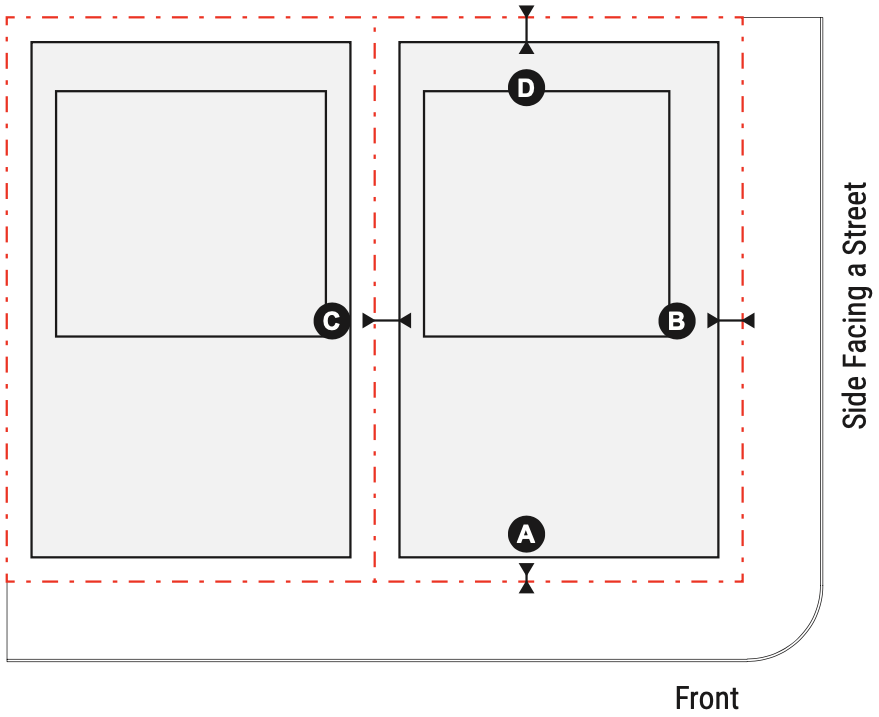
BUILDING HEIGHT R-PS1 R-PS2 R-PS3 RR-PS4 Maximum Height (feet) Ⓔ 45 feet (5)
40 feet - Lots 50 feet wide or less (5)
80 feet-Nonoceanfront Lots (5)
100 feet- Oceanfront Lots (5)(9)
40 feet - Lots 50 feet wide or less (5)
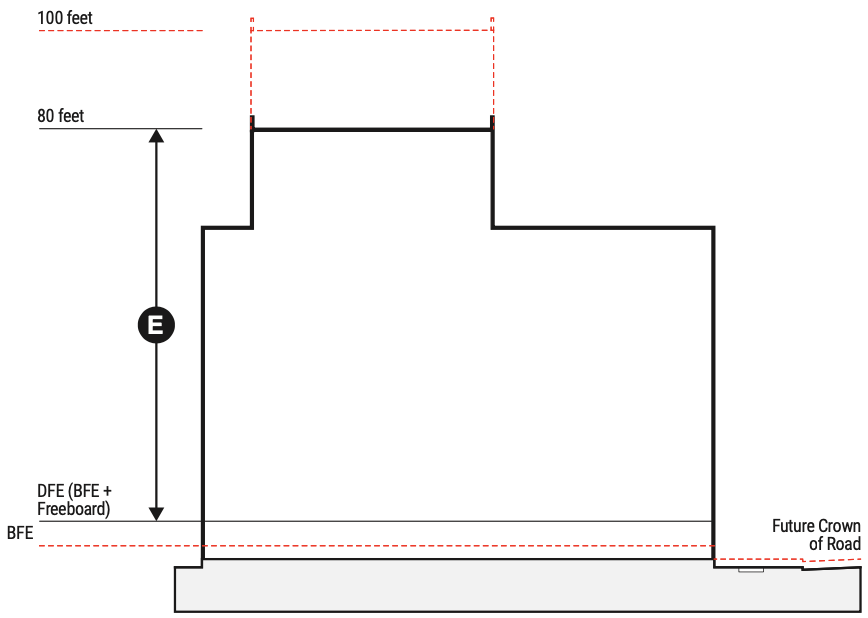
- All required setbacks shall be considered as minimum requirements except for the pedestal front yard setback and pedestal side yard facing a street setback which shall be considered as both minimum and maximum requirements.
- For lots greater than 100 feet in width the front setback shall be extended to include at least one open court with a minimum area of 3 square feet for every linear foot of lot frontage.
- In the R-PS4 zoning district, within the Ocean Beach historic district, the tower portion of ground-floor additions to contributing buildings shall meet a line-of-sight, which for the purpose of this section is defined as not visible when viewed at eye-level (5 feet and 6 inches from grade) from the opposite side of the adjacent right-of-way.
- In the R-PS4 zoning district within the Ocean Beach historic district, when an existing contributing structure has a minimum 5-foot side yard setback, the setback of new construction in connection with the existing building may be allowed to follow the existing building line. The maintenance of the existing setback shall apply to the linear extension of the existing building. Notwithstanding the above, for residential apartment structures seeking approval for the voluntary FAR and height incentive under section 7.2.15.2.f.4 below, with a building height over 100 feet, the minimum pedestal side setback shall be 7.5 feet for any portion of the pedestal below 35 feet in height and shall be 15 feet for any portion of the pedestal above 35 feet in height.
- Notwithstanding the foregoing provisions regarding maximum building height, in the Ocean Beach historic district (MAP EXHIBIT-2), as defined in section 2.13.9.e.2.F, the maximum building height for a lot located in the R-PS1, R-PS2, or R-PS3 zoning districts:
- With a lot exceeding 50 feet, and
- Upon which there exists a contributing structure which has not received a certificate of appropriateness for demolition (or any such approval has expired), shall be 40 feet.
- The number of units may not exceed the maximum density set forth in the comprehensive plan.
- Developments located in zoning districts that do not prohibit the short-term rental of residential apartment units shall be eligible for an exemption from the average unit size requirements established above, subject to the following conditions:
- Density. The development shall not be permitted to exceed the maximum residential density established in the Comprehensive Plan or Land Development Regulations.
- Minimum Unit Size. This incentive shall not be construed to permit any unit that is smaller than the minimum allowable unit size for the type of unit being proposed.
- Covenant. In order to be eligible for this voluntary average unit size incentive, the property owner, at the owner’s sole discretion, shall voluntarily execute a restrictive covenant running with the land, in a form approved by the City Attorney, affirming that in perpetuity no residential units on the property shall be leased or rented for a period of less than six months and one day.
- For developments that comply with the requirements for "Residential Use Incentives" in section 7.1.11 of the Resiliency Code, the maximum FAR shall be 2.25.
- For developments that comply with the requirements for "Residential Use Incentives" in section 7.1.11 of the Resiliency Code, the maximum height shall be 115 feet.
See section 7.1.5.2 for eligibility for average unit size exception.
- Notwithstanding the above height restrictions, existing structures within a local historic district are subject to section 7.5.2.
- In the R-PS4 zoning district, within the Ocean Beach historic district, when an existing contributing structure is nonconforming with respect to the height regulations in section 7.2.15.2.f, such structure may be repaired, renovated or rehabilitated regardless of the cost of such repair, renovation or rehabilitation, notwithstanding the provisions of chapter 2, article XII of these Land Development Regulations "Nonconformities"
- Notwithstanding the above height restrictions, in the R-PS4 zoning district, within the Ocean Beach historic district, for lots 100 feet or more in width, the maximum height shall be 35 feet for the first 60 feet of lot depth, 75 feet thereafter, subject to the line-of-sight analysis of section 7.2.15.2.f (note (3)). However, for residential apartment buildings, on lots 100 feet or more in width, the historic preservation board, in accordance with certificate of appropriateness criteria, may allow an increase in the overall height not to exceed 60 feet for the first 60 feet of lot depth, and 100 feet thereafter, and on lots 50 feet wide or less may allow an increase in overall height not to exceed 35 feet for the first 60 feet of lot depth, 60 feet thereafter, provided all of the following conditions are satisfied:
- The property shall be an oceanfront lot;
- The property shall not contain a contributing building;
- The top level of the front portion of the new construction on lots 100 feet or more in width shall meet a line-of-sight, which for the purpose of this section, is defined as not being visible when viewed at eye-level (5 feet and 6 inches from grade) from the opposite side of the Ocean Drive right-of-way, and on lots 50 feet or less wide shall be subject to the line-of-sight analysis of section 7.2.15.2.f (note (3));
- The proposed building shall be sited and massed in a manner that promotes and protects view corridors. At a minimum, a substantial separation of the tower portion of any structure shall be required;
- For lots greater than 50 feet in width, the front portion of the structure shall incorporate a separation in the center of the structure, which is open to sky, and is at least 10 feet in width and 25 feet in depth; the exact location of such separation shall be subject to the historic preservation board, in accordance with certificate of appropriateness criteria. Alternatively, the massing and architectural design of the front portion of the structure shall acknowledge the historic pattern of residential structures along Ocean Drive;
- The maximum residential density is 60 units per acre;
- All required off-street parking for the building shall be provided on site; required parking may not be satisfied through parking impact fees;
- The owner restricts the property to permit only rentals that are no less than six months and one day per calendar year, through language in its condominium or cooperative documents, and by proffering a restrictive covenant, running with the land, or other similar instrument enforceable against the owner(s), acceptable to and approved as to form by the city attorney, which shall be executed and recorded prior to the issuance of a building permit, to ensure that the building remains solely as a residential apartment building for a minimum of 30 years, and that no uses under section 7.5.4.13.b.1.B.IV. are permitted on the premises during that time period;
- Accepting that the value in the increased height, and the incremental traffic burden and effect on aesthetics in the district are offset by the conveyance of an easement for an extension of the beachwalk east of their structures, the owner provides an easement, acceptable to and approved as to form by the city attorney, for a public beachwalk on the easterly portion of its property, as more specifically provided in the plans on file with the city's public works department.
- Voluntary FAR and height incentive for conversion from hotel to residential use. Notwithstanding the forgoing FAR and height limitations, for a property with a main use of hotel as of January 1, 2022, which, as built, exceeds an FAR of 2.0 and is located within the R-PS4 zoning district, the maximum FAR may be increasd to 2.75 and the maximum height may be increased to 145 feet as a voluntary development incentive, subject to the property owner's voluntary agreement to strictly comply with the following conditions:
- The main use on the property shall be converted to residential and shall remain residential in perpetuity; hostel, hotel, apartment-hotel, and suite-hotel use shall be prohibited.
- A new structure, consisting solely of main-use residential and allowable accessory uses, may be constructed, in accordance with all applicable development regulations, with a maximum FAR of 2.75 and maximum height of 145 feet. Alternatively, the entire existing building may be converted to main-use residential and allowable accessory uses including any repairs, alterations and modifications that may exceed the 50% rule (as set forth in Section 2.12.7 and Section 2.12.8), provided any alterations and modifications do not result in the building exceeding an FAR of 2.75.
- A property shall only be eligible for the FAR and height incentives set forth in this subsection, not to exceed a total FAR of 2.75 and a total height of 145 feet, if the property owner's elects, at the owner's sole discretion, to voluntarily execute a restrictive covenant running with the land, in a form approved by the city attorney, affirming that, in perpetuity, none of the residential units on the property shall be leased or rented for a period of less than six months and one day.
- Any existing contributing building shall be retained in a manner reviewed and approved by the Historic Preservation Board.
- A property shall only be eligible for the FAR and height incentives set forth in this subsection, not to exceed a total FAR of 2.75 and a total height of 145 feet, if a certificate of appropriateness for a land development application that includes the incentives is issued by the Historic Preservation Board no later than December 31, 2027 and the corresponding full building permit is issued no later than June 30, 2030.
- There shall be no variances from this subsection 4(1-6).
7.2.15.3 Commercial Performance Standards Districts (C-PS)
- Purpose (C-PS)
Commercial performance standards. (C-PS)
The commercial performance standards districts are designed to accommodate a range of business, commercial, office and hotel uses, as well as medium to high density residential development pursuant to performance standards which control the permissible type, density or intensity, and mix of development.
Performance standards development will allow for modification of requirements affecting certain individual lots; greater flexibility, particularly for large-scale development; large commercial, medium to high density residential and mixed use developments in phases over time where the overall development at a single point in time or in a single instance by private owners would not be practical; providing incentives for provision of certain amenities and for conformance with specified objectives, thereby encouraging more flexible and innovative design and development in accordance with the goals and objectives of the comprehensive plan and the redevelopment plan.
In order to adequately and properly distinguish between types, densities and intensities of uses and mix of permitted commercial development in the redevelopment area, districts are divided as follows:C-PS1 Limited mixed-use commercial C-PS2 General mixed-use commercial C-PS3 Intensive mixed-use commercial C-PS4 Intensive mixed-use phased bayside commercial - Uses (C-PS)
Uses permitted by right, uses permitted by conditional use permit and uses not permitted.
No building, structure or land shall be used or occupied except as a main permitted use, a conditional use, or an accessory use to a main permitted use, in accordance with the table and text of permitted uses. A use in any district denoted by the letter "P" is a use permitted by right in such district or subdistrict, provided that all requirements and performance standards applicable to such uses have been met. A use in any district denoted by the letter "C" is permissible as a conditional use in such district or subdistrict, provided that all requirements and performance standards applicable to such use have been met and provided that all requirements of section 2.5.2, have been met. A use in any district denoted by the letter "Pro," or specifically listed as a use not permitted in the text of section 7.2.15.2.b, is not permitted in such district or subdistrict. Uses permitted by right, as a conditional use, or as an accessory use shall be subject to all use regulations and performance standards contained herein and to such other regulations as may be applicable, including site plan review and design review. Uses not listed in the table of permitted uses are not permitted in the district or subdistrict. Notwithstanding any provision of this section, no use is permitted on a parcel, whether listed by right, as a conditional use or as an accessory use in such district, unless it can be located on such parcel in full compliance with all of the performance standards and other requirements of these land development regulations applicable to the specific use and parcel in question.
The following uses are permitted in the commercial performance standard districts:USES TABLE (C-PS) C-PS 1, 2, 3, 4 RESIDENTIAL Single-family P Townhome P Apartment P LODGING Apartment hotel pursuant to sections 2.7.2, which requires a Commission warrant, and 7.5.4.5 P* Hotel pursuant to sections 2.7.2, which requires a Commission warrant, and 7.5.4.5 P* Suite hotels pursuant to sections 2.7.2, which requires a Commission warrant, and 7.5.4.5 P* Hostel pursuant to sections 2.7.2, which requires a Commission warrant, and 7.5.4.5 Pro in C-PS1 and C-PS2 P in C-PS3 and C-PS4 OFFICE COMMERCIAL Commercial P Accessory outdoor bar counters, provided that the accessory outdoor bar counter is not operated or utilized between midnight and 8:00 a.m.; however, for an accessory outdoor bar counter which is located on a property that is abutting a property with an apartment unit, the accessory outdoor bar counter may not be operated or utilized between 8:00 p.m. and 8:00 a.m. Pro in C-PS1, C-PS2, C-PS3, and C-PS4 (except as provided below). A in CPS-4 North of 5th Street only. Kennel P in C-PS2 and C-PS4 Pro in C-PS1 and C-PS3 Entertainment establishments Pro
P for properties fronting directly on Washington Avenue as of January 1, 2022 and located north of Fifth Street*
Outdoor entertainment establishments Pro
C for properties fronting directly on Washington Avenue as of January 1, 2022 and located north of Fifth Street*
Open air entertainment establishments Pro
C for properties fronting directly on Washington Avenue as of January 1, 2022 and located north of Fifth Street*
Pawnshops Pro* Dance Halls Pro* Neighborhood Impact Structure C* Gambling and casinos pursuant to section 7.1.8 Pro Rentals or leases of mopeds, motorcycles, and motorized bicycles pursuant to section 7.1.8 Pro Rentals or leases of any motor vehicle not described in section 7.1.8 Pro on properties located north of 5th Street, between the east side of Lenox Avenue and the west side of Washington Avenue, within the C-PS2 district
P elsewhere
Sale of any motor vehicle, including, but not limited to, automobiles, golf carts, low-speed vehicles, mopeds, motorcycles, motorized bicycles, motorized scooters, and others described in section 7.18 Pro on properties located north of 5th Street, between the east side of Lenox Avenue and the west side of Washington Avenue, within the C-PS2 district
P elsewhere
Convenience stores Pro on properties located south of 5th Street and located north of 5th Street, between the east side of Lenox Avenue and the west side of Washington Avenue, within the C-PS2 district
P elsewhere
Tobacco/vape dealers pursuant to section 7.5.5.9 Pro on properties located south of 5th Street and located north of 5th Street, between the east side of Lenox Avenue and the west side of Washington Avenue, within the C-PS2 district
P elsewhere
Liquor store and the retail sale of alcohol for off-premises consumption Pro on properties located south of 5th Street and located north of 5th Street, between the east side of Lenox Avenue and the west side of Washington Avenue, within the C-PS2 district
P elsewhere
Neighborhood and Retail Fulfillment Centers pursuant to section 7.1.8 Pro CIVIC Institutional C Religious Institutions with occupancy of 199 persons or less P Religious Institutions with occupancy of more than 199 persons C CIVIL SUPPORT EDUCATIONAL Schools C P* INDUSTRIAL Industrial Uses Pro OTHER Neighborhood impact establishments C Commercial and Non-Commercial Parking Lots and Garages C Key
P—Main Permitted Use
C—Conditional use
A — Accessory use
Pro—Prohibited Use
*See Supplemental Use Regulations Below
- Supplemental Use Regulations (C-PS)
- For purposes of this section, a car wash, filling station and any use that sells gasoline, automobiles or automotive or related repair uses are considered as industrial uses and are not permitted within any C-PS district.
- For purposes of this section, pawnshops, are not permitted as main permitted or accessory use within any C-PS district.
- For purposes of this section, dance halls and entertainment establishments, including outdoor entertainment establishments and open air entertainment establishments, shall not be permitted as a main permitted or accessory use within any R-PS or C-PS district, except for properties fronting directly on Washington Avenue as of January 1, 2022 and located north of Fifth Street.
- Commercial and noncommercial parking lots and garages shall be a conditional use in all C-PS districts.
- Neighborhood Impact Structure in the C-PS1, 2, 3, and 4 districts (even when divided by a district boundary line) shall be a conditional use, which review by the planning board shall be the first step in the process before the review by any of the other land development boards.
- Additional regulations for alcoholic beverage establishments located south of 5th Street. (MAP EXHIBIT-1)
- The following additional regulations shall apply to alcoholic beverage establishments, whether as a main use, conditional use, or accessory use, that are located south of 5th Street: (MAP EXHIBIT-1)
- Alcoholic beverages shall not be offered for sale or consumed on- premises at alcoholic beverage establishments between the hours of 2:00 a.m. and 8:00 a. m. each night.
- Notwithstanding the foregoing, alcoholic beverages shall not be offered for sale or consumed on premises in outdoor or open air areas of an alcoholic beverage establishment between the hours of 12:00 a.m. and 8:00 a.m. each night.
- Alcoholic beverage establishments with sidewalk cafe permits shall only serve alcoholic beverages at sidewalk cafes during hours when food is served, shall cease sidewalk cafe operations no later than 12:00 a.m. (except as otherwise provided herein), and shall not be permitted to have outdoor speakers.
- Outdoor bar counters shall be prohibited.
- No special events permits shall be issued.
- The provisions of this section 7.2.15.2.c.iv.1 shall not apply, to the extent the requirements of this subsection are more restrictive, to an alcoholic beverage establishment with a valid business tax receipt that is in application status or issued prior to June 28, 2016; or an establishment that has obtained approval for an alcoholic beverage establishment from a land use board, and which land use board order is active and has not expired prior to June 28, 2016. In order to be eligible for the exception in this paragraph, the establishment must also meet the following criteria:
- The establishment has an occupant content of less than 100 people, as determined by the Chief Fire Marshal.
- The establishment does not have an entertainment license nor contain a dance hall.
- There shall be no outdoor service or consumption past 2:00 a.m.
- The following additional regulations shall apply to alcoholic beverage establishments, whether as a main use, conditional use, or accessory use, that are located south of 5th Street: (MAP EXHIBIT-1)
- West Avenue and east side of Alton Road. For purposes of this section, the term "outdoors" shall mean any area of an alcoholic beverage establishment that is not completely enclosed and located entirely within a building. Any operable windows or doors shall remain closed at all times, except for purposes of ingress and egress.
- West Avenue. As applicable to alcoholic beverage establishments on CPS-4 properties north of 5th Street, alcoholic beverages shall not be offered for sale or on-premises comuption indoors between the hours of 2:00 a.m. and 8:00 am each night, or outdoors between the hours of 12:00 a.m. and 8:00 a.m. each night, notwithstanding sections 2.4.3 or 2.12.5 of this Code.
- East side of Alton Road. As applicable to alcoholic beverage establishments on CPS-2 properties fronting the east side of Alton Road between 5th Street and 6th Street, alcoholic beverages shall not be offered for sale or on-premises consumption indoors between the hours of 2:00 a.m. and 8:00 a.m. each night, or outdoors between the hours of 12:00 a.m. and 8:00 a.m. each night.
The provisions of this paragraph (c)(6)(B) shall not apply to any alcoholic beverage establishment with a valid business tax receipt (BTR) for an alcoholic beverage establishment that is issued prior to October 31, 2023.
- Determination of vested rights. The owner or operator of any alcoholic beverage establishment claiming a vested right to conduct alcohol sales for on-premises consumption for hours greater than the hours permitted under subsection (c)(6) may so operate only after applying for a determination of its vested right(s) and having those rights confirmed by the chief special magristrate as follows:
- Appointment; qualifications; term. The chief special magistrate shall adjudicate applications for determinations of vested rights under this subsection (c)(7). The special magistrate shall be an attorney in good standing with the Florida Bar, with expertise in the areas of local government law, business licensing, vested rights, and/ or property law.
- Filing period. Any application for a determination of vested rights must be filed with the city manager, city attorney, and city clerk no later than October 31, 2024.
- Standard for finding of a vested right. A vested right to conduct alcohol sales for on-premises consumption later than the hours prescribed in subsection (c)(6) shall be found to exist only where:
- An active order of the Planning Board, an active order of the Board of Adjustment, or other active development order issued by the City, expressly authorizes the alcoholic beverage establishment to conduct alcohol sales for on-premises consumption during specified hours;
- In good faith reliance upon such prior order, the applicant has made a substantial change in position or incurred extensive contractual obligations and financial expenses; and
- It would be highly inequitable to interfere with the acquired right.
In accordance with Florida law, no right to conduct alcohol sales at certain hours may be determined to have vested as a result of the adoption of an ordinance by the city commission. The special magistrate shall dismiss any application that relies solely upon a previously enacted ordinance of the city commission.
- Procedure. Applications for vested rights determinations shall be heard in accordance with the procedures for hearings before the special magistrate specified in chapter 30 except that:
- Applications for a vested rights determination shall be made in writing and filed with the city manager, city attorney, and city clerk.
- At a minimum, applications shall:
- Identify all prior orders from which the alleged vested right arises;
- Include a copy of each such prior order;
- Specify how the adoption of this ordinance adversely affected the alleged vested right including how the standard in subsection (5)(D)(III) is satisfied;
- Specify the applicant' s requested relief; and
- Be sworn to by the applicant.
- The signature of the applicant or the applicant's attorney shall constitute a certificate that the person signing has read the applicant' s written submissions and, to the best of their knowledge, the application is made in good faith and not for purposes of delay. The applicant or its attorney shall have a continuing obligation to correct any statement or representation found to have been incurred when made or which becomes incorrect by virtue of changed circumstances. If a claim of taking or abrogation of vested rights is: (1) based upon facts that the claimant or the attorney for the claimant knew or should have known were not true; or (2) frivolous or filed solely for the purpose of delay, the alcohol hours special magistrate shall make such findings in writing and deny the application.
- The city clerk shall acknowledge receipt of an application for vested rights within three business days of receipt of the application, and shall promptly schedule a hearing before the chief special magistrate.
- Effect of filing application for vested rights determination. During the pendency of an application for a vested rights determination, the applicant shall comply with all requirements of this section. The filing of an application shall not be construed to stay enforcement of this section against the applicant.
- Appeals. An aggrieved party, including the city administration, may appeal a final administrative order of the special magistrate to the circuit court by petition for writ of certiorari, pursuant to the Florida Rules of Appellate Procedure.
- Notwithstanding the uses permitted in section 7.2.15.3.b (Uses Table) above, no alcoholic beverage establishment, or restaurant, may be licensed or operated as a main permitted, conditional, or accessory use in any open area above the ground floor (any area that is not included in the FAR calculations) located south of 5th Street, MAP EXHIBIT-1. Except that:
- Outdoor restaurant seating above the ground floor, not exceeding 40 seats, associated with indoor venues may be permitted until 8:00 p.m.
- Outdoor music, whether amplified or nonamplified, and television sets shall be prohibited.
- No commercial activity may be permitted on areas as described in this subsection v.2 between the hours of 8:00 p.m. and 10:00a.m.
- Nothing herein shall prohibit residents of a multifamily (apartment or condominium) building, or hotel guests and their invitees to use these areas as described in this subsection 5.B, which may include a pool or other recreational amenities, for their individual, personal use.
- Any increase to an alcoholic beverage establishment's approved hours of operation shall meet the requirements of this section.
- Variances from this section 7.2.15.3.c.5 shall not be permitted. Special events shall not be permitted.
- The following additional regulations shall apply to properties located within the C-PS2 district that are within 100 feet of the north side of 4th Street. In the event of a conflict within this division, the following provisions shall control:
- Outdoor music and television sets shall be prohibited within 100 feet of the north side of 4th Street, unless approved by the Planning Board as a conditional use, pursuant to chapter 2, article 5 section 2.5.2 of this Code. Outdoor music and television sets shall not exceed an ambient volume level ( i.e. a volume that does not interfere with normal conversation).
- Entrances and exits to/ from hotels, apartment hotels, and suite hotels, as well as food and beverage establishments serving alcohol, shall be limited to side streets only, and shall not be permitted on 4th Street. Additionally, a minimum setback of 25 feet from the north side of 4th Street, for all public entrances to the aforementioned uses, shall be required. Notwithstanding the foregoing, this subsection shall not be applicable to existing contributing structures.
- The following additional regulations shall apply to properties located from 5th Street to 6th Street, bewteen the east side of Lenox Avenue and the west side of Washington Avenue, within the C-PS2 district, except for those lots with frontage on Lenox Avenue and the Washington Avenue as of January 1, 2022; in the event of a conflict within this division, the following provisions shall control:
- In the event a lot with frontage on Washington Avenue is unified with a lot that does not have frontage on Washington Avenue, such unified site shall thereafter be subject to the regulations herein.
- In the event a lot with frontage on Lenox Avenue is unified with another lot, such unified site shall thereafter be subject to the regulations herein.
- Hotel, apartment hotel, and suite hotel uses shall be prohibited within 200 feet of the south side of 6th Street.
- The following additional regulations shall apply to alcoholic beverage establishments, whether as a main use, conditional use, or accessory use:
- Operations in outdoor or open-air areas of an alcoholic beverage establishment shall cease no later than 12:00 a.m., except as otherwise provided herein.
- Alcoholic beverage establishments with sidewalk cafe concessions shall not be permitted to have outdoor speakers abutting or adjacent to any public sidewalks.
- Outdoor bar counters shall be prohibited.
- Within 200 feet of the south side of 6th Street, outdoor restaurant and/or bar seating shall not exceed 100 seats and shall only be permitted when associated with an indoor venue.
- Within 200 feet of the south side of 6th Street, outdoor restaurant and/or bar seating located above the ground floor shall be prohibited.
- Outdoor music, whether amplified or nonamplified, and outdoor televisions or similar digital display devices shall be prohibited within 200 feet of the south side of 6th Street. Notwithstanding the foregoing, any existing building with an existing outdoor seating area fronting Jefferson Avenue and 6th Street shall be permitted to have outdoor speakers so long as the existing outdoor seating area and existing building are retained. Any music played from these outdoor speakers shall not exceed an ambient volume level (i.e. a volume that does not interfere with normal conversation) and shall not be audible beyond the center line of any adjacent road.
- For properties with frontage on 6th Street, with the exception of required emergency egress, all entrance and exit doors as well as access points to hotels, apartment hotels, suite hotels, and food and beverage establishments serving alcohol shall not be permitted on 6th Street. Additionally, a minimum setback of 20 feet from the south side of 6th Street, for all such entrance and exit doors as well as access points shall be required. Notwithstanding the foregoing, subject to the approval of the Historic Preservation Board, the location of such entrance and exit doors and access points may be permitted on 6th Street for existing contributing structures.
- For properties with frontage on 6th Street, which contain 200 feet or more of frontage along Euclid, Meridian, Jefferson, Michigan or Lenox Avenues, with the exception of emergency egress, all entrance and exit doors as well as access points to hotels, apartment hotels, suite hotels, and food and beverage establishments serving alcohol shall not be permitted on 6th Street. Additionally, a minimum setback of 100 feet from the south side of 6th Street for all such entrance and exit doors as well as access points shall be required. Notwithstanding the foregoing, subject to the approval of the Historic Preservation Board, the location of such entrance and exit doors and access points may be permitted on 6th Street for existing contributing structures, and the minimum setback of 100 feet from the south side of 6th Street may be waived or modified by the Historic Preservation Board.
- For properties with frontage on 6th Street, the storage or parking of vehicles above the ground level shall be set back a minimum of 100 feet from the south side of 6th Street.
- Qualifying educational facilities shall be eligible for the School Use Incentives as identified in section 7.1.13 of these land development regulations.
- Nonconforming uses, lots and structures. (C-PS)
Nonconforming uses, lots and structures shall be subject to the regulations contained in chapter 2, article XII of these Land Development Regulations. - Development Regulations (C-PS)
- No building, structure or land shall be used or occupied except in conformance with the performance standards applicable to the use and subdistrict as set forth in the applicable table of performance standards. The purpose of the performance standards are:
- To provide detailed regulations by means of minimum criteria which must be met by all uses in order to ensure development consistent with the goals and objectives of the comprehensive plan and the redevelopment plan;
- To protect the integrity of the comprehensive plan and the redevelopment plan and the relationships between uses and densities that are essential to the viability of these plans and the redevelopment area; and
- To promote and protect the public health, safety, and general welfare by requiring all development to be consistent with the land use, circulation and amenities components of the redevelopment element of the comprehensive plan and the capital improvements program for the area, as specified in the comprehensive plan.
- In the C-PS districts, all floors of a building containing parking spaces shall comply with Parking Screening Standards section 7.1.6.
- Parking lots and garages: If located on the same lot as the main structure the following setbacks shall apply, if primary use the setbacks are listed in section 7.5.3.2.n.
- No building, structure or land shall be used or occupied except in conformance with the performance standards applicable to the use and subdistrict as set forth in the applicable table of performance standards. The purpose of the performance standards are:
- Commercial Performance Standard Area Requirements (C-PS)
- Definitions. For purposes of this district, the following parcels are defined as set forth below:
The “Block 51 Properties” shall mean Lots 5-9, 11, 12, 18-30 (and adjacent 10-foot strip of land), Block 51, Ocean Beach Addition No. 3, PB2, Pg81, Public Records of Miami-Dade County. MAP EXHIBIT-3
The “Block 51 Swap Property” shall mean Lot 4, Block 51, Ocean Beach Addition No. 3, PB2, Pg81, Public Records of Miami-Dade County. MAP EXHIBIT-4
The “Block 52 Properties” shall mean Lots 4-11, Block 52, Ocean Beach Addition No. 3, PB2, Pg81, Public Records of Miami-Dade County. MAP EXHIBIT-5
The “Block 1 Properties” shall mean Lots 1-3, 5-13 (and alley adjacent thereto), 17, Block 1, Ocean Beach Florida, PB2, Pg38, Public Records of Miami-Dade County. MAP EXHIBIT-6
The “Goodman Terrace and Hinson Parcels” shall mean those properties commonly known as the Goodman Terrace and Hinson Parcels, located south of South Pointe Drive and West of Washington Avenue, whose legal description is on file in the City Clerk’s Office. MAP EXHIBIT-7
The “Retail Parcel” shall mean the commercial building located south of South Pointe Drive, between Washington Avenue and the theoretical extension of Collins Avenue. MAP EXHIBIT-8
DEVELOPMENT REGULATIONS TABLE (C-PS) C-PS1 C-PS2 C-PS3 C-PS4 Maximum FAR 1.0
1.5 for the Block 51 Properties (MAP EXHIBIT-3) and Block 52 Properties (MAP EXHIBIT-5)
2.0 for the Block 1 Properties (MAP EXHIBIT-6)2.0 2.5 2.5 FAR Residential and/or hotel development
1.5 (4) 1.75 (5) 2.5 (6) (except on the Goodman Terrace and Hinson Parcels (MAP EXHIBIT-7), the FAR shall be that necessary to achieve 305,500 square feet (estimated at 3.2 FAR), and 300 feet height maximum for the Goodman Terrace and Hinson Parcels, and open space ratio 0.60 measured at or above grade) 2.5 (6) (open space ratio shall be 0.60 measured at or above grade) Maximum Density (Dwelling Units per Acre) 80 DUA (80% bonus for workforce or affordable units) 106 DUA (80% bonus for workforce or affordable units) 125 DUA (80% bonus for workforce or affordable units) 125 DUA (80% bonus for workforce or affordable units) MINIMUM UNIT SIZES (SQUARE FEET) C-PS1 C-PS2 C-PS3 C-PS4 Apartments/Multifamily Units New Construction
650 SF 600 SF 550 SF 550 SF Non-elderly and elderly low and moderate income housing
400 SF Workforce Housing
400 SF Rehabilitated
Buildings400 SF Lodging and Hotel Units 335 SF + MINIMUM AVERAGE UNIT SIZES (SQUARE FEET) C-PS1 C-PS2 C-PS3 C-PS4 Apartments/Multifamily Units New Construction
900 SF (9) (10) 850 SF (9) (10) 800 SF (9) (10) 800 SF (9) (10) Non-elderly and elderly low and moderate income housing
400 SF (9) (10) Workforce Housing
400 SF (9) (10) Rehabilitated Buildings
550 SF (9) (10) Lodging and Hotel Units N/A LOT OCCUPATION C-PS1 C-PS2 C-PS3 C-PS4 Minimum Lot Area (square feet) 6,000 SF Minimum Lot Width (feet) 50 feet BUILDING SETBACKS C-PS1 C-PS2 C-PS3 C-PS4 Building setbacks for residential and/or hotel development Pursuant to R-PS2 district regulations except maximum building height for residential and mixed use buildings shall be 75 feet Pursuant to R-PS3 district regulations except maximum building height for residential and mixed use buildings shall be 75 feet Pursuant to R-PS4 district regulations Pursuant to R-PS4 district regulations Front Setback (feet) Ⓐ C-PS1 C-PS2 C-PS3 C-PS4 Subterranean
0 feet Pedestal
0 feet (2) (3)
5 feet – for residential (2) (3)
20 feet from adjacent streets above the first 40 feet in height for the Block 1 Properties (MAP EXHIBIT-6), Block 51 Properties (except lots 11 and 12) (MAP EXHIBIT-3), Block 51 Swap Properties (MAP EXHIBIT-4) and Block 52 Properties (MAP EXHIBIT-5) (2) (3)Tower
Side, Facing a Street Setback (feet) Ⓑ C-PS1 C-PS2 C-PS3 C-PS4 Subterranean
0 feet Pedestal
0 feet (2)
Residential uses shall follow the R-PS1, 2, 3, 4 setbacks (See section 7.2.15.2.f)Tower
Side, Interior Setback (feet) Ⓒ C-PS1 C-PS2 C-PS3 C-PS4 Subterranean
0 feet Pedestal
0 feet
7.5 feet - when abutting a residential district Residential uses shall follow the R-PS1, 2, 3, 4 setbacks (See section 7.2.15.2.f)Tower
Rear Setback (feet) Ⓓ C-PS1 C-PS2 C-PS3 C-PS4 Subterranean
0 feet Pedestal
5 feet
10 feet - when abutting a residential district
3.5 feet for the Block 1 Properties (MAP EXHIBIT-6), Block 51 Properties (except lots 11 and 12) (MAP EXHIBIT-3), Block 51 Swap Properties (MAP EXHIBIT-4) and Block 52 Properties (MAP EXHIBIT-5) 0 feet - separated by a waterwayTower
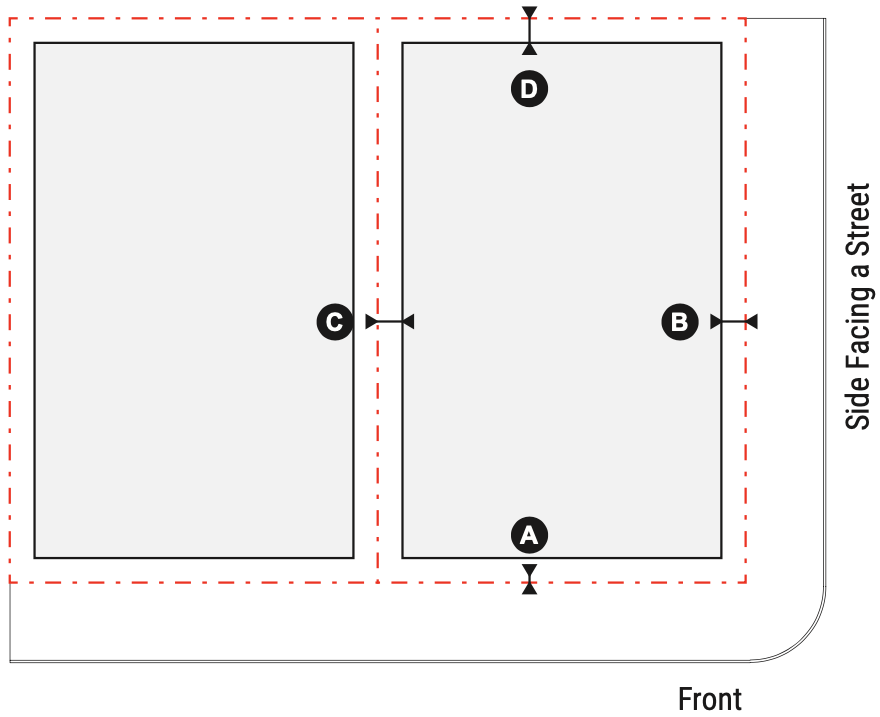
BUILDING HEIGHT C-PS1 C-PS2 C-PS3 C-PS4 Maximum Height
(feet) Ⓔ40 feet (1)
75 feet (1) – for the Block 51 Properties (MAP EXHIBIT-3), the Block 51 Swap Property (MAP EXHIBIT-4). Block 52 Properties (MAP EXHIBIT-5)., and Block 1 Properties (MAP EXHIBIT-6).
75 feet - For residential and mixed use buildings50 feet (1) – East of Lenox Ave (MAP EXHIBIT-9)
75 feet – West of Lenox Ave (MAP EXHIBIT-10) 75 feet - For residential and mixed use buildings
75 feet – office building (7) (8) (11)80 feet (1) 150 feet (1) 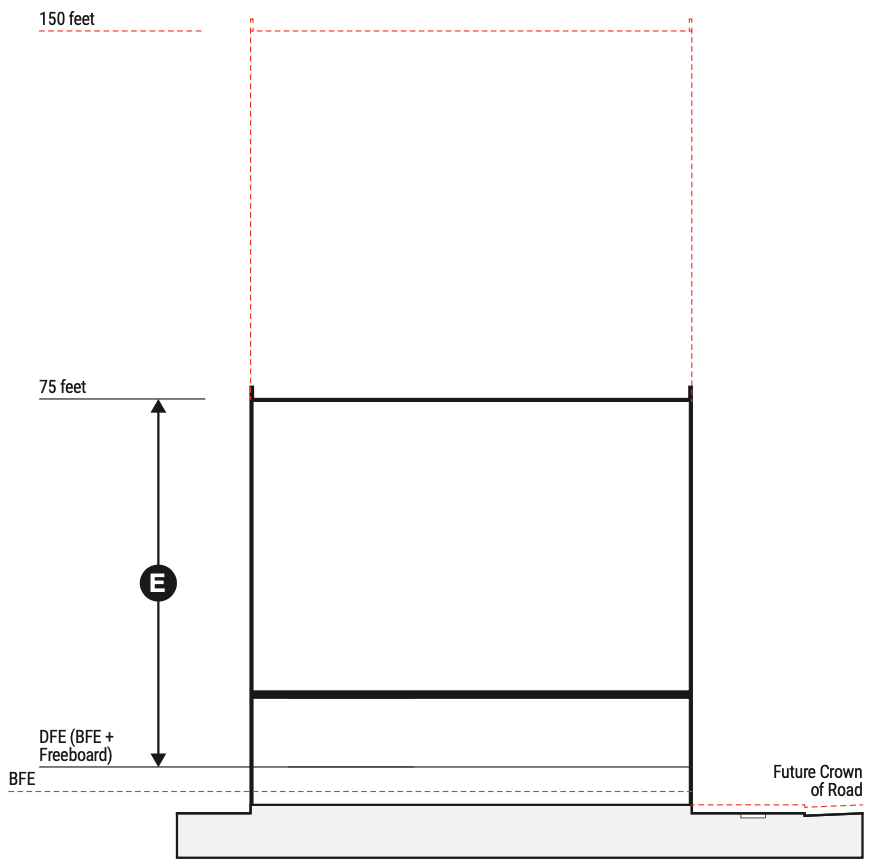
An additional 5 feet of height is allowed if the nonresidential first habitable level is at least 14 feet in height, as measured from DFE to the top of the second floor slab. This provision shall not apply to existing historic districts or existing overlay districts (existing as of 7/26/2017), or commercial buildings immediately adjacent to residential district not separated by a street. However, an applicant may seek approval from the historic preservation board or design review board, as may be applicable, to increase height in accordance with the foregoing within any historic district or overlay district created after 7/26/2017
All required setbacks shall be considered as minimum requirements except for the pedestal front yard setback and the pedestal side yard facing a street setback, which shall be considered as both a minimum and maximum requirements, except for the Goodman Terrace and Hinson Parcels (MAP EXHIBIT-7).
For lots greater than 100 feet in width the front setback shall be extended to include at least one open court with a minimum area of 3 square feet for every linear foot of lot frontage, except for those properties located in the C-PS1 district described in section 7.2.15.3.f.1.
Pursuant to All R-PS2 district regulations.
Pursuant to all R-PS3 district regulations, except maximum height for residential and mixed use buildings shall be 75 feet.
Pursuant to all R-PS 4 district regulations.
Notwithstanding the building height regulations set forth above, for unified development sites in the C-PS2 district with a lot line on the south side of 5th Street, which are located west of Jefferson Avenue, the maximum building height for office buildings is 75 feet.
Notwithstanding the building height regulations set forth above, in the C-PS2 district, the maximum permitted height within 100 feet of the north side of 4th Street shall not exceed 50 feet, regardless of the use of the property. This paragraph shall not apply to unified development sites governed by note 7.) above
The number of units may not exceed the maximum density set forth in the comprehensive plan.
First Street Overlay. The following regulations shall apply to properties that front the east side of Washington Avenue beween 1st Street and 2nd Street. In the event of a conflict within this division, the regulations below shall apply:
- The purpose of these regulations is (i) to sustain and enhance existing office uses (ii) to induce the construction of new office and residential uses and (iii) to provide incentives for the removal of transient uses.
- As a voluntary development incentive, subject to the property owner’s strict compliance with the following conditions, the maximum floor area ratio (“FAR”) for properties within the overlay shall be a base of 2.0 FAR with an additional 0.7 FAR available for developments or redevelopments that include office or residential use. The additional 0.7 FAR shall be used exclusively for either office or residential use, and shall remain as office or residential in perpetuity. The additional 0.7 FAR shall not be used for hostel, hotel, apartment-hotel, or suite-hotel use.
- New development or redevelopment shall only be eligible for the base FAR of 2.0, with an additional 0.7 available for office or residential use, under this subsection, if the property owner elects, at the owner’s discretion, to voluntarily execute a restrictive covenant running with the land, in a form approved by the city attorney, affirming that, in perpetuity, the property shall not be used as a hostel, hotel, apartment-hotel, and/or suite-hotel use, and none of the residential units on the property shall be leased or rented for a period of less than six months and one day.
- Notwithstanding any height regulations contained in these Land Development Regulations, the maximum floor-to-ceiling height of eligible rooftop additions to existing non-contributing buildings within the First Street Overlay shall not exceed 15 feet in height. The overall building height shall not exceed90 feet and shall be subject to the provision regarding line of sight as set forth in Section 7.5.2.1.
Developments located in zoning districts that do not prohibit the short-term rental of residential apartment units shall be eligible for an exemption from the average unit size requirements established above, subject to the following conditions:
Density. The development shall not be permitted to exceed the maximum residential density established in the comprehensive plan or Land Development Regulations.
Minimum Unit Size. This incentive shall not be construed to permit any unit that is smaller than the minimum allowable unit size for the type of unit being proposed.
Covenant. In order to be eligible for this voluntary average unit size incentive, the property owner, at the owner’s sole discretion, shall voluntarily execute a restrictive covenant running with the land, in a form approved by the City Attorney, affirming that in perpetuity no residential units on the property shall be leased or rented for a period of less than six months and one day.
(12) Notwithstanding the building height regulations set forth above, the following regulations shall apply to properties located from 5th Street to 6th Street, between the east side of Lenox Avenue and the west side of Washington Avenue, within the C- PS2 district, except for those lots with frontage on Lenox Avenue and Washington Avenue as of January 1, 2022; in the event of a conflict within this division, the following provisions shall control:
1. In the event a lot with frontage on Washington Avenue as of January 1, 2022, is unified with a lot that does not have frontage on Washington Avenue, such unified site shall thereafter be subject to the regulations herein.
2. In the event a lot with frontage on Lenox Avenue as of January 1, 2022, is unified with another lot, such unified site shall thereafter be subject to the regulations herein.
3. The maximum permitted height within the first four platted lots measured southward from the south side of 6th Street shall be as follows:
A. For development sites consisting solely of the first two platted lots to the south of 6th Street, either as a single lot or a unified development site, the maximum building height shall not exceed 50 feet, regardless of the use of the property.
B. For development sites consisting solely of the first three platted lots to the south of 6th Street, as part of a unified development site, the maximum building height shall not exceed 28 feet within the first two platted lots to the south of 6th Street and 50 feet for the remainder of the development site, regardless of the use of the property. The Historic Preservation Board may allow up to 35 feet within the first platted lot fronting 6th Street and up to 50 feet for the second platted lot to the south of 6th Street; however, an affirmative vote of five members of the Historic Preservation Board shall be required to approve any increase in height authorized in this sentence on the first two platted lots to the south of 6th Street. For a development site consisting solely of the third platted lot south of 6th Street, the maximum building height shall not exceed 50 feet, regardless of the use of the property.
C. For unified development sites consisting of four or more platted lots measured from the south side of 6th Street, the maximum building height shall not exceed 28 feet within the first two platted lots to the south of 6th Street and the maximum permitted height shall not exceed 40 feet within the third platted lot to the south side of 6th Street, regardless of the use of the property. The remainder of the development site shall be subject to the height limits in this section but shall not exceed a maximum height of 75 feet for a residential use.
4. A minimum setback of five (5’) feet shall be required along all front yards and side yards facing a street, in order to provide a clear pedestrian path that exceeds the width of the abutting sidewalk. This requirement may be waived by the Historic Preservation Board for portions of a property containing a contributing building.
5. On properties abutting an alley, no front- or street-side curb cut shall be permitted. If no alley exists, any curb-cut required shall not exceed 12 feet in width.
6. Notwithstanding the provisions of section 7.5.2.1 of these land development regulations, roof-top additions shall not exceed the applicable maximum building height set forth in this table (including footnotes).
- Definitions. For purposes of this district, the following parcels are defined as set forth below:
- Mixed use buildings
The calculation of setbacks and floor area ratio for mixed use buildings shall be as follows:- Setbacks. When more than 25 percent (25%) of the total area of a building in a C-PS district is used for residential or hotel units, any floor containing such units shall follow the R-PS1, 2, 3, 4 setback regulations.
- Floor area ratio. When at least 75 percent (75%) of the linear frontage of the building at the ground floor level is used for commercial uses, the floor area ratio shall follow the range of the commercial district in which the building is located. In all other instances the floor area ratio range shall follow the floor area ratios as follows: In the C-PS1 district, the floor area ratio as set forth in the R-PS1 district; in the C-PS2 district, the floor area ratio as set forth in the R-PS2 district; in the C-PS3 district, the floor area ratio as set forth in the R-PS3 district; in the C-PS4 district, the floor area ratio as set forth in the R-PS4 district.
- Notwithstanding the above, the properties defined in section 7.2.15.3.f.1, except the retail parcel, shall be governed by the development regulations in section 7.2.15.3.f.
7.2.15.4 Residential Limited Mixed Use Performance Standards Districts (RM-PS)
- Purpose
Residential limited mixed use performance standards.(RM-PS)- The residential limited mixed use performance standards district is designed to accommodate the new construction of light commercial, office and public uses, as well as low density residential development pursuant to performance standards which control the permissible type, density or intensity, and mix of development. Performance standards development will allow for modification of requirements affecting certain individual sites; greater flexibility, particularly for large-scale development; light commercial, low density residential and mixed use developments in phases over time where the overall development at a single point in time or in a single instance by private owners would not be practical; providing incentives for provision of certain amenities and for conformance with specified objectives, thereby encouraging more flexible and innovative design and development in accordance with the goals and objectives of the comprehensive plan and the redevelopment plan.
- In order to adequately and properly distinguish between types, densities and intensities of uses and mix of permitted mixed development in the redevelopment area the RM-PS1 residential limited mixed use development is established.
- Uses (RM-PS)
Uses permitted by right, uses permitted by conditional use permit and uses not permitted.
No building, structure or land shall be used or occupied except as a main permitted use, a conditional use, or an accessory use to a main permitted use, in accordance with the table and text of permitted uses. A use in any district denoted by the letter "P" is a use permitted by right in such district or subdistrict, provided that all requirements and performance standards applicable to such uses have been met. A use in any district denoted by the letter "C" is permissible as a conditional use in such district or subdistrict, provided that all requirements and performance standards applicable to such use have been met and provided that all requirements of section 2.5.2, have been met. A use in any district denoted by the letter "Pro," or specifically listed as a use not permitted in the text of section 7.2.15.4.b, is not permitted in such district or subdistrict. Uses permitted by right, as a conditional use, or as an accessory use shall be subject to all use regulations and performance standards contained herein and to such other regulations as may be applicable, including site plan review and design review. Uses not listed in the table of permitted uses are not permitted in the district or subdistrict. Notwithstanding any provision of this section, no use is permitted on a parcel, whether listed by right, as a conditional use or as an accessory use in such district, unless it can be located on such parcel in full compliance with all of the performance standards and other requirements of these land development regulations applicable to the specific use and parcel in question.
The following uses are permitted in the Residential Limited Mixed-Use performance standard district:USES TABLE (RM-PS1) RM-PS1 RESIDENTIAL Single-family P Townhome P Apartment P LODGING Apartment hotel pursuant to section 7.5.4.5 Pro Hotel pursuant to section 7.5.4.5 Pro Suite hotel pursuant to section 7.5.4.5 Pro Hostel pursuant to section 7.5.4.5 Pro OFFICE COMMERCIAL Commercial P (limited to stores and restaurants) (8% of floor area (1)) Accessory outdoor bar counters, provided that the accessory outdoor bar counter is not operated or utilized between midnight and 8:00 a.m.; however, for an accessory outdoor bar counter which is located on a property that is abutting a property with an apartment unit, the accessory outdoor bar counter may not be operated or utilized between 8:00 p.m. and 8:00 a.m. Pro Entertainment establishments Pro* Outdoor entertainment establishments Pro Open air entertainment establishments Pro Neighborhood impact establishments Pro Pawnshops Pro* Dance Halls Pro* Gambling and casinos pursuant to section 7.1.8 Pro Rentals or leases of mopeds, motorcycles, and motorized bicycles pursuant to section 7.1.8 Pro Neighborhood and Retail Fulfillment Centers pursuant to section 7.1.8 Pro CIVIC Institutional C (1.25% of floor area**) CIVIL SUPPORT EDUCATIONAL INDUSTRIAL Industrial Uses Pro* OTHER Key
P—Main Permitted Use
C—Conditional use
A — Accessory use
Pro—Prohibited Use
*See Supplemental Use Regulations below
1. Floor area in the RM-PS1 district refers to total floor area in project.
- Supplemental Use Regulations (RM-PS)
- For purposes of this section, a car wash, filling station and any use that sells gasoline, automobiles or automotive or related repair uses are considered as industrial uses and are not permitted within any PS district.
- For purposes of this section, pawnshops, dance halls and entertainment establishments are not permitted as a main permitted or accessory use within any PS district.
- Additional regulations for alcoholic beverage establishments located south of 5th Street. (MAP EXHIBIT-1)
- The following additional regulations shall apply to alcoholic beverage establishments, whether as a main use, conditional use, or accessory use, that are located south of 5th Street: (MAP EXHIBIT-1)
- Operations shall cease no later than 2:00 a.m., except as otherwise provided herein.
- Operations in outdoor or open air areas of an alcoholic beverage establishment shall cease no later than 12:00 a.m., except as otherwise provided herein.
- Alcoholic beverage establishments with sidewalk cafe permits shall only serve alcoholic beverages at sidewalk cafes during hours when food is served, shall cease sidewalk cafe operations no later than 12:00 a.m. (except as otherwise provided herein), and shall not be permitted to have outdoor speakers.
- Outdoor bar counters shall be prohibited.
- No special events permits shall be issued.
- The provisions of this section 7.2.15.4.c.3.A shall not apply, to the extent the requirements of this subsection are more restrictive, to an alcoholic beverage establishment with a valid business tax receipt that is in application status or issued prior to June 28, 2016; or an establishment that has obtained approval for an alcoholic beverage establishment from a land use board, and which land use board order is active and has not expired prior to June 28, 2016.
- Existing sidewalk cafes issued a sidewalk cafe permit as of June 28, 2016, for alcoholic beverage sales after 12:00 a.m., with food service, may continue to be renewed, but shall not serve alcoholic beverages later than 1:30 a.m., and alcoholic beverages may not be consumed at sidewalk cafes after 2:00 a.m.
- Should an alcoholic beverage establishment with a sidewalk cafe permit under (A), above, be delinquent in a payment obligation to the city, and/or receive two final adjudications of violations of section 12-5 of the General Ordinances (special event permit), section 46-152 of the General Ordinances (noise ordinance), or chapter 82, article IV, division 5 of the General Ordinances (sidewalk cafe ordinance), that alcoholic beverage establishment shall only be allowed to serve alcoholic beverages at its sidewalk cafe until 12:00 a.m. for a 12-month period.
- Notwithstanding the uses permitted in section 7.2.15.3.b (Uses Table) above, in all districts except GU, Government Use District, no alcoholic beverage establishment, or restaurant, may be licensed or operated as a main permitted, conditional, or accessory use in any open area above the ground floor (any area that is not included in the FAR calculations) located south of 5th Street, MAP EXHIBIT-1 Except that:
- Outdoor restaurant seating above the ground floor, not exceeding 40 seats, associated with indoor venues may be permitted until 8:00 p.m.
- Outdoor music, whether amplified or nonamplified, and television sets shall be prohibited.
- No commercial activity may be permitted on areas as described in this section 7.2.15.4.c.3.B between the hours of 8:00 p.m. and 10:00 a.m.
- Nothing herein shall prohibit residents of a multifamily (apartment or condominium) building, or hotel guests and their invitees to use these areas as described in this section 7.2.15.4.c.3.B, which may include a pool or other recreational amenities, for their individual, personal use.
- Any increase to an alcoholic beverage establishment's approved hours of operation shall meet the requirements of this section.
- Variances from this section 7.2.15.4.c.3. shall not be permitted. Special events shall not be permitted.
- The following additional regulations shall apply to alcoholic beverage establishments, whether as a main use, conditional use, or accessory use, that are located south of 5th Street: (MAP EXHIBIT-1)
- Nonconforming uses, lots and structures.
Nonconforming uses, lots and structures shall be subject to the regulations contained in chapter 2, article XII of these Land Development Regulations. - Development Regulations (RM-PS)
- No building, structure or land shall be used or occupied except in conformance with the performance standards applicable to the use and subdistrict as set forth in the applicable table of performance standards. The purpose of the performance standards are:
- To provide detailed regulations by means of minimum criteria which must be met by all uses in order to ensure development consistent with the goals and objectives of the comprehensive plan and the redevelopment plan;
- To protect the integrity of the comprehensive plan and the redevelopment plan and the relationships between uses and densities that are essential to the viability of these plans and the redevelopment area; and
- To promote and protect the public health, safety, and general welfare by requiring all development to be consistent with the land use, circulation and amenities components of the redevelopment element of the comprehensive plan and the capital improvements program for the area, as specified in the comprehensive plan.
- In the R-PS and RM-PS districts, all floors of a building containing parking spaces shall comply with Parking Screening Standards section 7.1.6.
- No building, structure or land shall be used or occupied except in conformance with the performance standards applicable to the use and subdistrict as set forth in the applicable table of performance standards. The purpose of the performance standards are:
- Development Regulations (RM-PS)
Residential limited mixed use performance standards shall be as follows:DEVELOPMENT REGULATIONS TABLE (RM-PS1) Maximum FAR 1.5 Maximum Density (Dwelling Units per Acre) 102 DUA (80% bonus for workforce or affordable units) MINIMUM UNIT SIZES (SQUARE FEET) Apartments/Multi-family Units New Construction
600 SF Non-elderly and elderly low and moderate income housing
400 SF Workforce Housing
400 SF Rehabilitated Buildings
400 SF Lodging and Hotel Units N/A MINIMUM AVERAGE UNIT SIZES (SQUARE FEET) Apartments/Multi-family Units New Construction
1000 SF (1) (2) Non-elderly and elderly low and moderate income housing
400 SF (1) (2) Workforce Housing
400 SF (1) (2) Rehabilitated Buildings
400 SF (1) (2) Lodging and Hotel Units N/A LOT OCCUPATION Minimum Lot Area (square feet) 120,000 SF Minimum Lot Width (feet) 350 feet Maximum Lot Coverage (% of lot area) N/A Required Open Space Ratio 0.60 BUILDING SETBACKS Front Setback Ⓐ Subterranean
2 feet when approved by the design review board;
otherwise follow the R-PS1, 2, 3, 4 setbacks (See section 7.2.15.2.f)Pedestal
Tower
Side, Facing a Street Setback Ⓑ Subterranean
2 feet when approved by the design review board;
otherwise follow the R-PS1, 2, 3, 4 setbacks (See section 7.2.15.2.f)Pedestal
Tower
Side, Interior Setback Ⓒ Subterranean
otherwise follow the R-PS1, 2, 3, 4 setbacks (See section 7.2.15.2.f) Pedestal
Tower
Rear Setback Ⓓ Subterranean
2 feet when approved by the design review board;
otherwise follow the R-PS1, 2, 3, 4 setbacks (See section 7.2.15.2.f)Pedestal
Tower
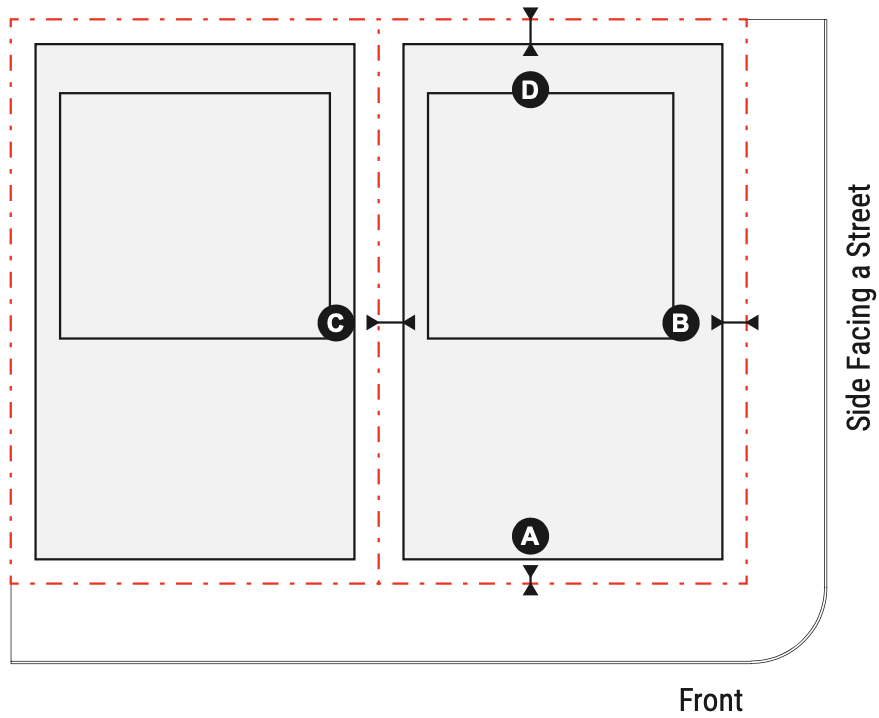
BUILDING HEIGHT Maximum Height Ⓔ 60 feet 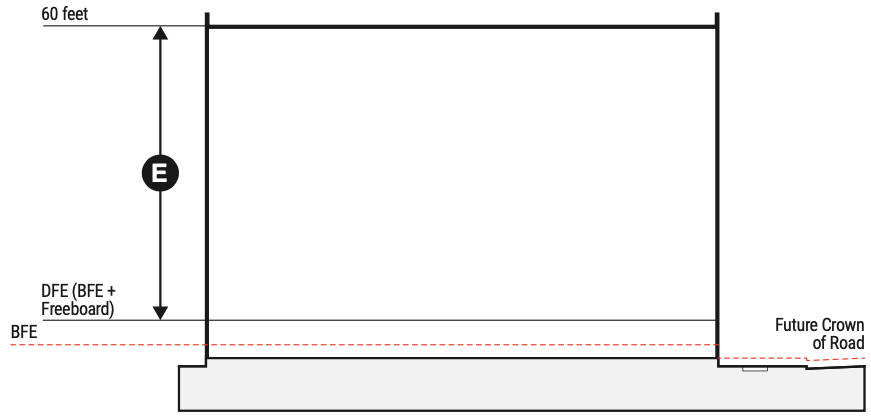
- The number of units may not exceed the maximum density set forth in the comprehensive plan.
- Developments located in zoning districts that do not prohibit the short-term rental of residential apartment units shall be eligible for an exemption from the average unit size requirements established above, subject to the following conditions:
- Density. The development shall not be permitted to exceed the maximum residential density established in the comprehensive plan or Land Development Regulations.
- Minimum Unit Size. This incentive shall not be construed to permit any unit that is smaller than the minimum allowable unit size for the type of unit being proposed.
- Covenant. In order to be eligible for this voluntary average unit size incentive, the property owner, at the owner’s sole discretion, shall voluntarily execute a restrictive covenant running with the land, in a form approved by the City Attorney, affirming that in perpetuity no residential units on the property shall be leased or rented for a period of less than six months and one day.
7.2.15.5 Additional Regulations (PS)
- Minimum required yards in relation to minimum open space ratio.
- Open space.
- Open space ratio in the PS performance standard district refers to a percentage calculated as the area of open space, including required yards, at grade to the gross lot area of a parcel.
- Open space is that part of a lot in the performance standard district, including courts and yards which:
- Is open and unobstructed from its lowest level upward;
- Is generally accessible to all residents of the building on the lot without access restrictions, except as may be required for public safety. However, for lots in the RPS districts that are 60 feet in width or less, private spaces accessible only by residents of individual units, excluding balconies, may be considered open space despite not being generally accessible to all residents; and
- Is not occupied by off-street parking, streets, drives, or other surfaces for vehicles. Open space is, in general, that part of a lot available for entry and use by the occupants of the building or buildings on the premises, but may include space located and treated to enhance the amenity of the development by providing landscaping, screening for the benefit of the occupants or neighboring areas, or a general appearance of openness. Open space may include water surfaces that comprise not more than 10 percent (10%) of total open space, and may include landscaped roofs and decks pursuant to conditions contained in the district regulations.
- Calculation. In all cases, except as otherwise provided herein, an applicant shall comply with both minimum required yard and minimum open space requirements.
- The open space ratio may include open space on roof top decks which are 50 feet or less above grade. At least 25 percent (25%) of the roof top deck shall constitute living landscape material.
- Required yards and open space, whether at or above grade in the C-PS4 and RM-PS1 districts may also be utilized for drives and off-street parking spaces, except that if drives are ramped, they shall be at least 7 feet and 6 inches from the front property line and not more than 10 feet or one level above grade at their highest point; the total length of an elevated drive shall not exceed 40 percent (40%) of that portion of the lot facing the adjacent street.
- Required yards adjacent to Biscayne Bay in the C-PS4 district may be utilized for open and unenclosed decks, platforms, planters, canopies, canvas type awnings, baywalks or removable furniture such as tables and chairs. Required side yards in the C-PS4 district may have public walkways that are partially covered.
- Up to 50 percent (50%) of the open space required by these land development regulations may be fulfilled by payment of an in-lieu-of fee into the Sustainability and Resiliency Fund pursuant to section 7.1.3.2.b.1.C. Notwithstanding the above, in no case shall the open space provided at grade be less than the total area resulting from the required setbacks. The in-lieu-of payment as described above shall be made at the rate as provided in APPENDIX A - Fee Schedule of the City Code per square foot of open space not provided. Such fee shall be paid in full at the time of application for the building permit. The fee shall be refunded if construction does not commence prior to the expiration of the building permit.
- No variances shall be granted from the requirements of this section, except that variances may be sought as to subsection 2.D above, only for major cultural institutions within local historic districts, which only achieve no more than 80 percent (80%) of the total allowable FAR and can demonstrate that the open space cannot be provided on the roof top.
- Open space.
- Alternative parking requirement for multifamily residential development in R-PS districts pursuant to the parking impact fee.
Alternative parking requirements for multifamily residential development in R-PS districts shall be as required in the parking impact fee program as set forth in chapter 5, Article IV of these Land Development Regulations. - Supplemental parking regulations.
- All PS districts. All non-oceanfront and non-bayfront residential development shall be encouraged to have parking with access to and from the alley only and such parking shall be rendered not visible from the street by the building's front facade. However, on corner buildings, the side view may be obscured by a wall.
- Development regulations for specified properties subject to a F.S. ch. 163, development agreement.
The following development regulations shall be applicable to all properties subject to a F.S. ch. 163, development agreement and to all properties of which any portion is located south of Second Street and west of Washington Avenue or west of the southern theoretical extension of Washington Avenue:- The provisions of these land development regulations and the Code of the city shall control with respect to all terms, provisions, matters and issues affected by the F.S. ch. 163, development agreement, or any property affected thereby, except to the extent a term, provision, matter or issue is specifically addressed in the F.S. ch. 163, development agreement (including any design guidelines incorporated therein), in which case the provisions of the F.S. ch. 163, development agreement shall control.
- Calculations, determinations and/or measurements of the floor area, floor area ratio, lot area, setbacks or any other land use and/or zoning criteria of these land development regulations shall include and consider any and all lands adjacent or contiguous to the property as specifically provided in the F.S. ch. 163, development agreement.
- Calculations, determinations and/or measurements of the floor area, floor area ratio, lot area, setbacks or any other land use and/or zoning criteria of these land development regulations shall be based upon and not exceed that provided for in the F.S. ch. 163, development agreement and shall be based upon the total open space, floor area and/or other land use and/or zoning criteria, even if portions of such parcels are not under common ownership, provided that the total permissible open space, floor area and/or other land use and zoning criteria for such parcels (in the aggregate) are not exceeded, and such parcels, as a whole, shall be treated as a single building site for zoning and land use purposes, as described in the F.S. ch. 163, development agreement, despite such separate ownership.
- Additional regulations for public-private marina mixed-use redevelopments.
Public-private marina mixed-use redevelopments incorporating city-owned marina property, and including residential dwelling units and significant publicly accessible green open space, which property is designated as "public facility (PF)" under the city's comprehensive plan, may be developed as provided in this section; in the event of a conflict within this division, the criteria below shall control:- Maximum building height: 385 feet. The maximum height for allowable height regulation exceptions for elevator and mechanical equipment shall be 30 feet above the height of the roofline of the main structure. Notwithstanding the foregoing, the design review board, in accordance with the applicable review criteria. may allow up to an additional 5 feet of height, as measured from the base flood elevation plus maximum freeboard, to the top of the second-floor slab.
- The setback requirements shall be as provided in section 7.2.15.3.f, except that the pedestal shall be subject to the following minimum setbacks:
- Front: 5 feet.
- Interior side: 20 feet.
- Rear: 5 feet.
- All floors of a building containing parking shall incorporate residential or commercial uses along the eastern side fronting Alton Road; all other sides of a building containing parking may incorporate alternative non-use screening such as landscape buffering and physical design elements.
7.2.16.1 Purpose (GU)
Any land or air rights owned by or leased to the city or other governmental agency for no less than an initial term of 20 years shall automatically convert to a GU government use district.
7.2.16.2 Uses (GU)
| USES TABLE (GU) | |
|---|---|
| RESIDENTIAL | |
| LODGING | |
| OFFICE | |
| COMMERCIAL | |
| Alcoholic Beverage Establishment | P* |
| Gambling and Casinos pursuant to section 7.1.8 | Pro |
| Rentals or leases of mopeds, motorcycles, and motorized bicycles pursuant to section 7.1.8 | Pro |
| Neighborhood and Retail Fulfillment Centers pursuant to section 7.1.8 | Pro |
| CIVIC | |
| Parks and associated parking | P |
| Performing arts and cultural facilities | P |
| Monuments and memorials | P |
| CIVIL SUPPORT | |
| EDUCATIONAL | |
| Schools | P |
| INDUSTRIAL | |
| OTHER | |
| Parking lots and garages | P |
Key P – Main Permitted Use C - Conditional Use A - Accessory Use Pro - Prohibited Use * See Supplemental use regulations below | |
- Supplemental Main permitted uses regulations (GU)
The supplemental main permitted uses are as follows:- Alcoholic beverage establishments shall require approval from the city commission.
- Any use not listed above shall only be approved after the city commission holds a public hearing. See section 7.2.16.3.h for public notice requirements.
- Supplemental conditional uses Regulations (GU)
None - Supplemental Accessory uses Regulations (GU)
The supplemental accessory uses are as follows:- As required in section 7.5.4.13.c.
- Supplemental Prohibited uses Regulations (GU)
None - Supplemental Private or joint government/private uses regulations (GU)
Private or joint government/private uses in the GU government use district, including air rights, shall be reviewed by the planning board prior to approval by the city commission. See section 7.2.16.3.e for public notice requirements.
7.2.16.3 Development Regulations (GU)
- The development regulations (setbacks, floor area ratio, signs, parking, etc.) in the GU government use district shall be the average of the requirements contained in the surrounding zoning districts as determined by the planning and zoning director, which shall be approved by the city commission.
- Upon the sale of GU property, the zoning district classification shall be determined, after public hearing with notice pursuant to Florida Statutes, by the city commission in a manner consistent with the comprehensive plan. Upon the expiration of a lease to the city or other government agency, the district shall revert to the zoning district and its regulations in effect at the initiation of the lease.
- Setback regulations for parking lots and garages when they are the main permitted use are listed in section 7.5.3.2.n.
- Following a public hearing, the development regulations required by these land development regulations, except for the historic preservation and design review processes, may be waived by a five-sevenths vote of the city commission for developments pertaining to governmental owned or leased buildings, uses and sites which are wholly used by, open and accessible to the general public, or used by not-for-profit, educational, or cultural organizations, or for convention center hotels, or convention center hotel accessory garages, or city utilized parking lots, provided they are continually used for such purposes.
- Notwithstanding the above, no GU property may be used in a manner inconsistent with the comprehensive plan.
- The following regulations shall apply to the use or development of GU property by entities other than the City:
- In all cases involving the use of GU property by the private sector, or joint government/private use, development shall conform to all development regulations in addition to all applicable sections contained in these land development regulations and shall be reviewed by the planning board prior to approval by the city commission. All such private or joint government/private uses are allowed to apply for any permitted variances but shall not be eligible for a waiver of any regulations as described in this paragraph. However, not-for-profit, educational, or cultural organizations as forth herein, shall be eligible for a city commission waiver of development regulations as described in this paragraph, except for the historic preservation and design review processes.
- In cases involving the use of GU property by the private sector, for developments incorporating public parking spaces within the structure(s), owned by and/or operated by or for the benefit of the City, the permitted building height shall be 100 feet for those sites located within the area bounded by 17t Street on the north, North Lincoln Lane on the south, Alton Road on the west, and Washington Avenue on the east.
- Private uses on the GU lots fronting Collins Avenue between 79th and 87th Streets approved by the city commission for a period of less than ten (10) years shall be eligible for a city commission waiver of the development regulations, as described in this paragraph, for temporary structures only. Such waivers applicable to GU lots fronting Collins Avenue between 79th and 87th Streets may include, but not be limited to, the design review process, provided the city commission, as part of the waiver process, evaluates and considers all applicable design review requirements and criteria in section 2.5.3.
- If a waiver for eligible GU property under this subsection pertains to building height, and the subject property is located within a local historic district. The city commission shall first refer the proposed height waiver to the historic preservation board for the board's review and to obtain an advisory recommendation as to whether the proposed waiver should be approved or denied. The historic preservation board shall review the proposed waiver and provide an advisory recommendation within 45 days of the referral by the city commission. Notwithstanding the foregoing, the requirement set forth in this paragraph shall be deemed to have been satisfied in the event that the board fails, for any reason whatsoever, to review a proposed height waiver and/or provide a recommendation to the city commission within the 45-day period following the referral.
- When a public hearing is required to waive development regulations before the city commission, the public notice shall be advertised in a newspaper of general paid circulation in the city at least 15 days prior to the hearing. Fifteen days prior to the public hearing date, both a description of the request and the time and place of such hearing shall be posted on the property, and notice shall also be given by mail to the owners of land lying within 375 feet of the property. A five-sevenths vote of the city commission is required to approve a waiver or use that is considered under this regulation.
7.2.17.1 Purpose (CCC)
Section 1, Chapter 7, entitled "Zoning Districts and Regulations, Article II, entitled "District Regulations," at Section 7.2.17, "CCC Civic and Convention Center Ditrict," is hereby amended as follows:
The CCC civic and convention center district accommodates the facilities necessary to support the convention center.
7.2.17.2 Uses (CCC)
| USES TABLE (CCC) | |
|---|---|
| RESIDENTIAL | |
| LODGING | |
| Hotels | P |
| OFFICE | |
| Office | P |
| COMMERCIAL | |
| Commercial | P |
| merchandise mart | P |
| Alcoholic Beverage Establishment | P* |
| Gambling and Casinos pursuant to section 7.1.8 | Pro |
| Rentals or leases of mopeds, motorcycles, and motorized bicycles pursuant to section 7.1.8 | Pro |
| Neighborhood and Retail Fulfillment Centers pursuant to section 7.1.8 | Pro |
| CIVIC | |
| landscape open space | P |
| Performing Arts and Cultural facilities | P |
| Parks | P |
| CIVIL SUPPORT | |
| EDUCATIONAL | |
| INDUSTRIAL | |
| OTHER | |
| Parking Lots | P |
| Garages | P |
| Any use that is customarily associated with a convention center or governmental buildings and uses | A |
Key P – Main Permitted Use C - Conditional Use A - Accessory Use Pro - Prohibited Use * See Supplemental use regulations below | |
- Supplemental Main permitted uses Regulations (CCC)
The supplemental main permitted uses are as follows: - Supplemental Conditional uses Regulations (CCC)
None - Supplemental Accessory uses Regulations (CCC)
None - Supplemental Prohibited uses Regulations (CCC)
None
7.2.17.3 Development Regulations (CCC)
- The development regulations for the Civic and Convention Center District are as follows:
DEVELOPMENT REGULATIONS TABLE (CCC) Maximum FAR 2.75 Maximum Density (Dwelling Units Per Acre) N/A Minimum Unit Size (square feet) N/A LOT OCCUPATION Minimum Lot Area (square feet) N/A Minimum Lot Width (feet) N/A BUILDING SETBACKS (3) Front Setback Ⓐ Subterranean
Average of the requirements contained in the surrounding zoning districts as determined by the planning and zoning director. (2) Pedestal
Tower
Front Setback Ⓐ
Fronting 17th Street and Convention Center DriveSubterranean
10 feet at ground level
0 feet above 15 feet, as measured from DFE (1)Pedestal
Tower
Side, Facing a Street, Setback Ⓑ N/A Side, Interior Setback Ⓒ 5 feet Rear Setback Ⓓ 0 feet 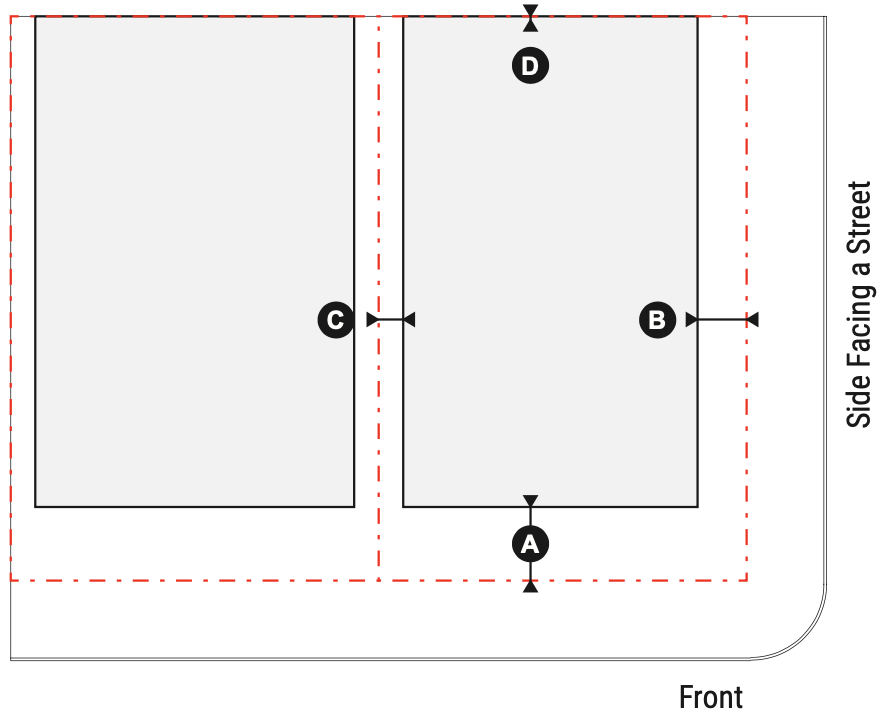
BUILDING HEIGHT Maximum Height Ⓔ 100 feet Hotels
150 feet 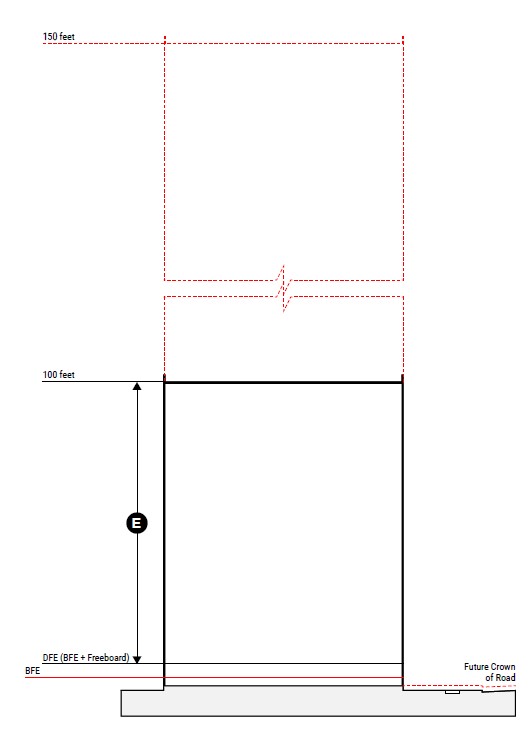
- Additionally, there shall be no permanent encroachments within this 10-foot setback at the ground level, including, but not limited to, columns, raised platforms, raised terraces, and raised porches. This prohibition on encroachments shall not apply to stairs and accessibility ramps, including associated hand rails.
- Other than the minimum setbacks set forth in the table above, the development regulations (setbacks, floor area ratio, signs, parking, etc.) shall be the average of the requirements contained in the surrounding zoning districts as determined by the planning and zoning director. Setback regulations for parking lots and garages when they are the main permitted use are listed in section 7.5.3.2.n.
- Balcony projections setback requirement for a hotel use: 0 feet.
7.2.17.4 Additional Regulations (CCC)
- Notice of public hearing; vote (CCC)
When a public hearing is required before the city commission, the public notice shall be advertised in a newspaper of general paid circulation in the community. Thirty days prior to the public hearing date, a description of the request, the time and place of such hearing shall be posted on the property; notice shall also be given by mail to the owners of land lying within 375 feet of the property and the advertisement shall be placed in the newspaper. A five-sevenths vote of the city commission is required to approve a use that is considered under this subsection. - Off-site parking (CCC)
Required parking provided for performing arts and cultural facilities in this district, located off-site pursuant to section 5.2.8, shall not be included in permitted floor area wherever located, including outside of this district.
7.2.18.1 Purpose (SPE)
The district is designed to accommodate public or private educational facilities.
- Definitions (SPE).
For purposes of this zoning ordinance, the following properties are defined as set forth below and are legally described in the ordinance from which this division is derived:- The "Hebrew Academy Elementary School Parcel" is located at 2400 Pine Tree Drive, Miami Beach, Florida, and comprises approximately 2.3 acres. (MAP EXHIBIT-1)
- The "Fana Holtz High School Parcel" is located at 2425 Pine Tree Drive, Miami Beach, Florida, and comprises approximately 0.3 acres. (MAP EXHIBIT-2)
- The "1.1 Acre Parcel" is located adjacently to the north property line of the Hebrew Academy Elementary School Parcel, and comprises approximately 1.1 acres. (MAP EXHIBIT-3)
- The "Mikveh Parcel" is located at 2530 Pine Tree Drive, Miami Beach, Florida, and comprises approximately 0.35 acres. (MAP EXHIBIT-4)
7.2.18.2 Uses (SPE)
| USES TABLE (SPE) | |
|---|---|
| RESIDENTIAL | |
| Student, faculty or staff housing | A* |
| LODGING | |
| OFFICE | |
| Administrative offices | A* |
| COMMERCIAL | |
| Commercial | Pro* |
| Alcoholic beverage establishments | Pro* |
| Cafeterias | A* |
| Gambling and casinos pursuant to section 7.1.8 | Pro |
| Rentals or leases of mopeds, motorcycles, and motorized bicycles pursuant to section 7.1.8 | Pro |
| Neighborhood and Retail Fulfillment Centers pursuant to section 7.1.8 | Pro |
| CIVIC | |
| Performing arts and cultural facilities | A* |
| art and music facilities | A* |
| CIVIL SUPPORT | |
| Religious facilities | A* |
| EDUCATIONAL | |
| Nursery School | P* |
| Pre-School | P* |
| Kindergarten School | P* |
| Elementary School | P* |
| Middle School | P* |
| High School | P* |
| College | P* |
| University | P* |
| Mikvehs | P* |
| House of Worship | P* |
| Accessory Classrooms | A* |
| Gymnasiums | A* |
| Auditoriums | A* |
| Sports and Recreational Facilities | A* |
| Dormitories | A* |
| INDUSTRIAL | |
| OTHER | |
| Parking lots and garages | A* |
Key P – Main Permitted Use C - Conditional Use A - Accessory Use Pro - Prohibited Use * See Supplemental use regulations below | |
- Supplemental Main permitted uses Regulations (SPE)
The supplemental main permitted uses are as follows:- Any use that is a school or educational or classroom facility, from grades early childhood through graduate, public or private, whether nursery, pre-school, kindergarten, elementary, middle, high school, college or university, including mikvehs and houses of worship, and any combination of any of the aforementioned uses.
- Qualifying educational facilities shall be eligible for the School Use Incentives as identified in section 7.1.13 of these land development regulations.
- Supplemental Conditional uses Regulations (SPE)
The supplemental conditional uses shall only be permitted on the Fana Holtz Parcel (MAP EXHIBIT-2) as follows:- Any main permitted uses or conditional uses in an RM-3 or CD-2 district, except as already permitted as a main permitted use in this section.
- Supplemental Accessory uses Regulations (SPE)
The supplemental accessory uses are as follows:- Any use that is customarily associated with any of the main permitted uses or conditional uses within this district including, without limitation:
- classrooms,
- administrative offices,
- auditoriums,
- cafeterias,
- gymnasiums,
- sports and recreational facilities,
- dormitories, student, faculty or staff housing,
- parking lots,
- garages,
- performing arts and cultural facilities,
- art and music facilities,
- related religious facilities and uses.
- Any use that is customarily associated with any of the main permitted uses or conditional uses within this district including, without limitation:
- Supplemental Prohibited uses Regulations (SPE)
The supplemental prohibited uses are as follows:- Alcoholic beverage establishments pursuant to the regulations set forth in chapter 6 of the City Code, are prohibited use. Moreover, all uses not listed as a main permitted or conditional use are also prohibited, unless otherwise specified.
7.2.18.3 Development Regulations (SPE)
- The development regulations in the Special Public Facilities Educational District are as follows:
DEVELOPMENT REGULATIONS TABLE (SPE) Maximum FAR 2.5 (1) Fana Holtz High School Parcel (MAP EXHIBIT-2)
3.0 Mikveh Parcel (MAP EXHIBIT-4)
1.0 Maximum Density (Dwelling Units per Acre) N/A Minimum Unit Size (square feet) N/A LOT OCCUPATION Minimum Lot Area (square feet) N/A Minimum Lot Width (feet) N/A Maximum Lot Coverage (% of lot area) N/A BUILDING SETBACKS Front Setback Ⓐ average of the requirements contained in the surrounding zoning districts (2) Hebrew Academy School Parcel (MAP EXHIBIT-1) and the 1.1 Acre Parcel (MAP EXHIBIT-3) which is adjacent to municipal owned land or a public right-of-way as of the effective date of the ordinance from which this division is derived
0 feet Side, Facing a Street Setback Ⓑ average of the requirements contained in the surrounding zoning districts (2) Hebrew Academy School Parcel (MAP EXHIBIT-1) and the 1.1 Acre Parcel (MAP EXHIBIT-3) which is adjacent to municipal owned land or a public right-of-way as of the effective date of the ordinance from which this division is derived
0 feet Side, Interior Setback Ⓒ average of the requirements contained in the surrounding zoning districts (2) Hebrew Academy School Parcel (MAP EXHIBIT-1) and the 1.1 Acre Parcel (MAP EXHIBIT-3) which is adjacent to municipal owned land or a public right-of-way as of the effective date of the ordinance from which this division is derived
0 feet Rear Setback Ⓓ average of the requirements contained in the surrounding zoning districts (2) Hebrew Academy School Parcel (MAP EXHIBIT-1) and the 1.1 Acre Parcel (MAP EXHIBIT-3) which is adjacent to municipal owned land or a public right-of-way as of the effective date of the ordinance from which this division is derived
0 feet 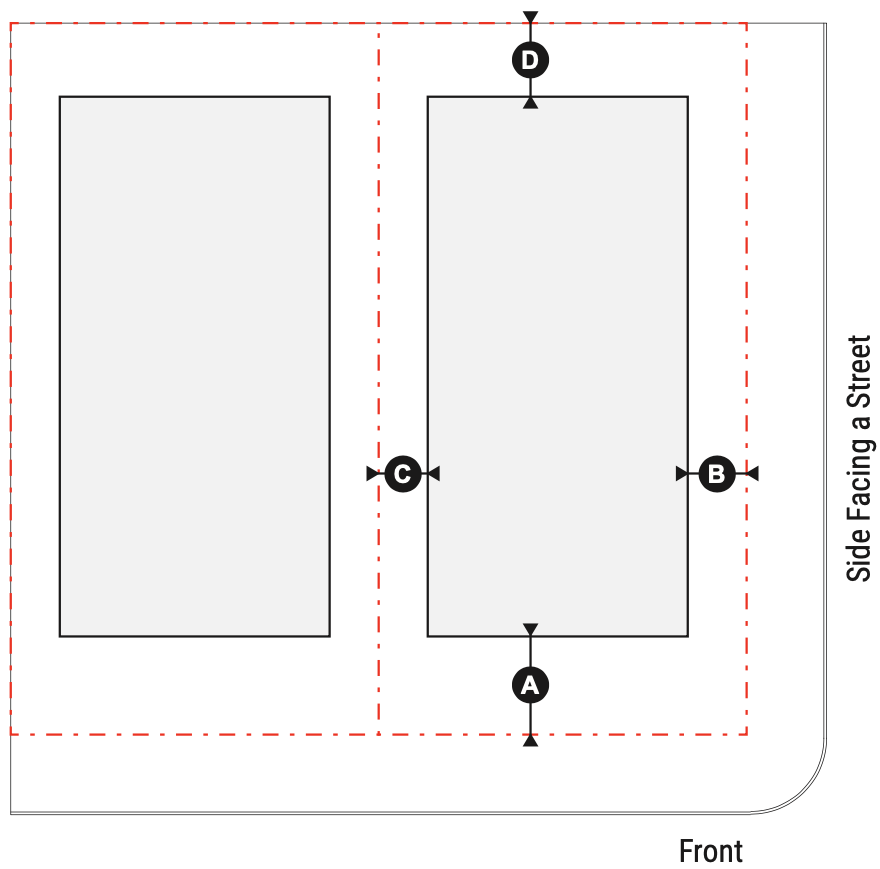
BUILDING HEIGHT Maximum Height Ⓔ Hebrew Academy School Parcel (MAP EXHIBIT-1) and the 1.1 Acre Parcel (MAP EXHIBIT-3)
60 feet 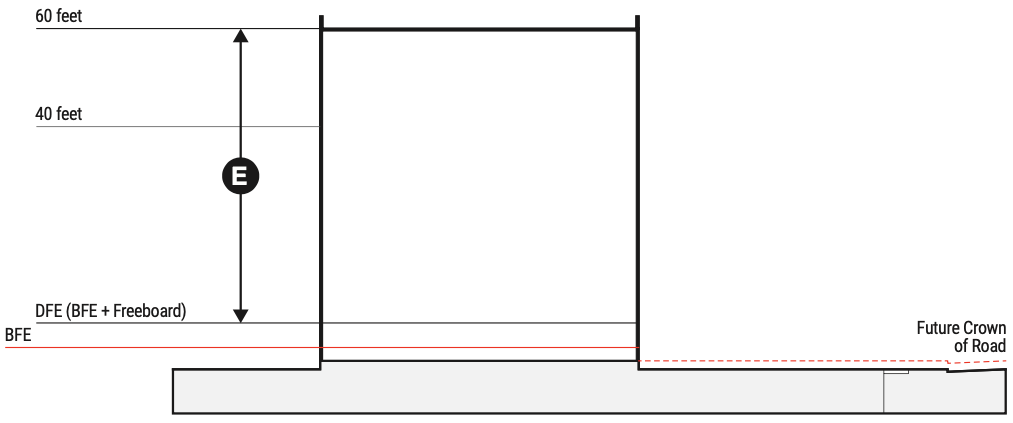
- Provided, however, with respect to those certain portions of the buildings indicated in that certain site plan approved by the city commission of October 17, 1995, (and referenced in section 7.2.18.3.a.6. below) as "three stories," the maximum building height for those portions of buildings shall be 40 feet.
- As determined by the planning and zoning director, which shall be approved by the city commission, except as provided section 7.2.18.3.a.4. below.
- With respect to the Hebrew Academy Elementary School Parcel (MAP EXHIBIT-1) and the 1.1 Acre Parcel (MAP EXHIBIT-3), parking shall be permitted within the public swale adjacent to any public road provided that a minimum 10 feet setback shall be provided from the curb or edge of said road pavement.
Notwithstanding the foregoing, parking in the swale area is only permitted to the extent allowed pursuant to the settlement agreement dated October 17, 1995, and entered into between the city, the Hebrew Academy, the Citizens for Greenspace and the Daughters of Israel, Inc. - To the extent development regulations (setbacks, height, signs, etc.) for SPE lands are not specified in this section, then the applicable development regulations shall be the average of the requirements contained in the surrounding zoning districts as determined by the planning and zoning director, which shall be approved by the city commission, except as provided in section 7.2.18.3.a.4. below.
- The parking ratio for the Hebrew Academy Elementary School Parcel (MAP EXHIBIT-1), the 1.1 Acre Parcel (MAP EXHIBIT-3) and the Fana Holtz High School Parcel (MAP EXHIBIT-2), shall be one parking space per 3,000 square feet of air-conditioned building space. There shall be no impact fees for parking or landscaping, and SPE properties shall be prohibited from participating in the parking impact fee program set forth in chapter 5, article IV of these Land Development Regulations. The parking may be sited below the structures in whole or in part, provided same is in accordance with the development regulations set forth herein.
- Notwithstanding anything to the contrary contained in the land development regulations, the existing improvements as of the effective date of the ordinance from which this division is derived, in any district designated as SPE, shall be permitted as to height, setbacks, parking, landscaping and all other development regulations and ratios, and may be rebuilt in substantially the same building configurations, parking provisions, landscape provisions, setbacks and other applicable development provisions, notwithstanding the provision of chapter 2, article XII of these Land Development Regulations.
- In the event that GU designated property adjacent to an SPE designated property is acquired by the owner of the SPE property, then the zoning designation for the GU land may be designated SPE after approval at a public hearing before the city commission with notice pursuant to Florida Statute, and in a manner consistent with the comprehensive plan.
- That certain site plan and settlement agreement approved by the city commission on October 17, 1995, among the city, Greater Miami Hebrew Academy, Daughters of Israel, Inc., and the Citizens for Greenspace, Inc., shall be used for purposes of permitting development pursuant to these development regulations with respect to the properties identified in section 7.2.18.1.a.
7.2.19.1 Purpose (HD)
The HD hospital district is designed to accommodate hospital facilities.
7.2.19.2 Uses (HD)
| USES TABLE (HD) | |
|---|---|
| RESIDENTIAL | |
| LODGING | |
| OFFICE | |
| Offices | A* |
| Medical offices | A* |
| COMMERCIAL | |
| Laundry | A* |
| Out-patient care facilities including hospital based clinics and ambulatory surgical centers | A* |
| Commercial service facility | A* |
| Gambling and casinos pursuant to section 7.1.8 | Pro |
| Rentals or leases of mopeds, motorcycles, and motorized bicycles pursuant to section 7.1.8 | Pro |
| Neighborhood and Retail Fulfillment Centers pursuant to section 7.1.8 | Pro |
| CIVIC | |
| Place of worship | A* |
| CIVIL SUPPORT | |
| Hospital | P |
| Recreational facilities | A* |
| Accessory hospital facilities | P* |
| EDUCATIONAL | |
| Educational, research and diagnostic facilities | A* |
| Day care facilities | A* |
| INDUSTRIAL | |
| OTHER | |
| Parking structures and lots | A* |
Key P – Main Permitted Use C – Conditional Use A – Accessory Use Pro – Prohibited Use *See Supplemental Use Regulations below | |
- Supplemental Main Permitted uses Regulations (HD)
In the HD hospital district, no land, water or structure may be used, in whole or in part, except for one or more of the following permitted uses. The sale of alcohol within the HD shall be regulated pursuant to the requirements of chapter 6 of the General Ordinances.- All accessory structures and parking facilities shall be subordinate to the main use and incidental to and customarily associated with a hospital, including accessory hospital facilities, consisting of:
- Laundry.
- Centralized services.
- Educational, research and diagnostic facilities.
- Recreational facilities.
- Day care facilities.
- Place of worship.
- Out-patient care facilities including hospital-based clinics and ambulatory surgical centers.
- Offices for:
- Medical students, fellows, and residents; administrative employees; nurses; laboratory personnel; hospital-based physicians; and
- Physicians and hospital employees who perform hospital functions and do not provide private patient care. These include department heads and medical staff responsible for hospital employee health care. The offices described in this section 7.2.19.2.a.1.H. shall not be included in the computation which determines the maximum amount of hospital staff office space allowed under these land development regulations.
- Offices for hospital staff and their employees, which may include examination rooms, excluding those identified in section 7.2.19.2.a.1.H., provided that:
- The maximum permitted amount of hospital staff office space, without bonus, shall not exceed 15 percent (15%) of the hospital's gross floor area, excluding parking structures and other hospital staff office space.
- The maximum permitted amount of hospital staff office space, with bonuses as set forth below, shall not exceed 25 percent (25%) of the hospital's gross floor area, excluding parking structures and other hospital staff office space.
- There shall be a bonus for the provision of charity and indigent care by the hospital. For each 2 percent (2%) of charity and Medicaid care in-patient days as a percentage of total acute care days less Medicare days provided by the hospital and reported to the state department of revenue by the state agency for health care administration for the year preceding the date of application for a building permit for hospital staff offices, there shall be a bonus of 1 percent (1%) in hospital staff office space. The maximum bonus under this provision shall not exceed 3 percent (3%) of the hospital's gross floor area, excluding parking structures and other hospital staff office space.
- There shall be a bonus of 1square foot of hospital staff office space for each 0.25 gross square feet of affordable housing in the city which is constructed, rehabilitated, or operated by: (i) the office space developer; (ii) the hospital; and/or (iii) a hospital affiliated entity. Affordable housing shall be defined as sales housing with a retail sales price not in excess of 90 percent (90%) of monthly median the county new housing sales price, or rental housing rates (project average) not in excess of 30 percent (30%) of the gross median county monthly income. The maximum bonus under this provision shall not exceed 2 percent (2%) of the hospital's gross floor area, excluding parking structures and other hospital staff office space.
- There shall be a bonus of hospital staff office space for the operation of an on-campus hospital teaching program, accredited by nationally recognized professional accreditation boards. The ratio shall be 100 square feet of office space for each student, fellow, and resident enrolled in such program on an average monthly basis during the three years preceding the application for a building permit for hospital staff offices. The maximum bonus under this provision shall not exceed 2 percent (2%) of the hospital's gross floor area, excluding parking structures and other hospital staff office space.
- There shall be a bonus of 1 square foot of hospital staff office space for every $4.00 contributed to the city commercial revitalization fund, the terms and requirements of which shall be established by resolution of the city commission. The maximum bonus under this provision shall not exceed 1 percent (1%) of the hospital's gross floor area, excluding parking structures and other hospital staff office space.
- There shall be a bonus of hospital staff office space for the developer and/or hospital sponsored operation of day care facilities in the city. The ratio shall be 100 square feet of office space per each child, which the day care facility is licensed to admit. The maximum bonus under this provision shall not exceed 1 percent (1%) of the hospital's gross floor area, excluding parking structures and other hospital staff office space.
- There shall be a bonus of hospital staff office space for the operation of an emergency room on the hospital campus which is open to the public 24 hours a day, seven days a week, as regulated by the state. The bonus under this provision shall be 3 percent (3%) of the hospital's gross floor area, excluding parking structures and other hospital staff office space.
- There shall be a bonus for encouraging new physicians and other medical professionals to relocate their offices to the city. New physicians and medical professionals are those individuals who do not have existing offices and occupational licenses in the city one year prior to the issuance of a building permit for hospital staff office space. In order to receive this bonus, the hospital shall execute a written agreement with the planning, design and historic preservation division prior to the issuance of a building permit for the construction of hospital staff offices, which sets forth the amount of space that will be available for new physicians and medical staff. For each 25 percent (25%) of the proposed office space which the hospital agrees to lease to new physicians and medical professionals on the medical staff of the hospital, there shall be a bonus of 1 percent (1%) of the hospital's gross floor area, excluding parking structures and other hospital staff office space. The maximum bonus under this provision shall not exceed 3 percent (3%) of the hospital's gross floor area, excluding parking structures and other hospital staff office space.
- The design review board may grant a bonus of additional hospital staff office space for exceptional achievement in urban design of space which is visible from a public street or causeway and which may be located either on or off the hospital campus or on public property. The amenities listed below are more fully defined in chapter 58, article V of the General Ordinances. For each design review board approved amenity, there shall be a bonus range permitting increased hospital staff office space as a percentage of the hospital gross floor area, excluding parking structures and other hospital staff office space, as shown below:The maximum bonus under this provision shall not exceed 2 percent (2%) of the hospital's gross floor area, excluding parking structures and other hospital staff office space.
Planting/landscaping 0.10% to 0.35% Paving/grading 0.05% to 0.15% Water features 0.05% to 0.15% Signs/graphics 0.10% to 0.25% Street furniture 0.05% to 0.10% Lighting 0.05% to 0.10% Arcades 0.05% to 0.15% Site planning 0.10% to 0.25% Building design 0.20% to 0.50% Total bonus 0.75% to 2.00%
- No building permit shall be issued for hospital staff office space under the bonus provisions of section 7.2.19.2.a.1.I.II. unless the applicant has submitted evidence of compliance with these provisions. Evidence of compliance shall consist of:
- A check to the city in the amount required for contribution to the commercial revitalization fund;
- Issuance of certificate of occupancy for the affordable housing or licensed day care facility or other appropriate evidence;
- Reports of the state agency for health care administration showing hospital's contribution to indigent, charity care;
- Evidence of a teaching program and/or emergency room;
- Evidence that medical staff did not have city occupational licenses or offices earlier than one year prior to the issuance of a building permit for hospital staff offices; or
- Design review board approval of design amenities.
- Hospitals with a valid building permit pursuant to plans and applications for the construction of staff office space at the effective date of these land development regulations shall be permitted to retain and occupy such space. This hospital staff office space shall be considered as an accessory use, and parking shall be provided at the rate of one space per 400 square feet of hospital staff office space. This hospital staff office space shall be included in the computation which determines the maximum amount of hospital staff office space allowed under these land development regulations. This permitted space shall be exempt from the provisions of section 2.5.3. Prior to the issuance of an occupational license, floor plans and other supporting documentation shall be submitted to the planning, design and historic preservation division indicating the dimensions and location of each hospital staff office. All hospital staff with existing offices in the HD hospital district shall obtain city occupational licenses within 90 days of the effective date of these land development regulations.
- Hospitals with existing hospital office space which is occupied by hospital staff at the effective date of these land development regulations but which have not received valid building permits for "staff offices" for such space shall be permitted to retain such space based upon the application of provisions listed in section 7.2.19.2.a.1.I.II. This office space shall be included in the computation which determines the maximum amount of hospital staff office space allowed under these land development regulations. This hospital staff office space shall be considered as an accessory use, and the required parking as set forth in chapter 5 of these Land Development Regulations shall be provided. This space shall be exempt from the provisions of section 2.5.3. Within 60 days of the effective date of these land development regulations, each hospital shall submit to the planning, design and historic preservation division a floor plan and supporting documentation indicating the dimensions and location of each hospital staff office. All hospital staff with offices in the HD hospital district shall obtain city occupational licenses within 90 days of the effective date of these land development regulations.
- Parking structures and lots.
- Related facilities which are incidental to and customarily associated with a hospital.
- Commercial service facilities:
- Service facilities shall be restricted to cafeteria or restaurant, florist shop, gift shop, automatic teller machine, credit union, pharmacy, newspaper and magazine stand.
- Services shall be permitted and available exclusively for use by medical staff, hospital personnel, patients and visitors of the hospital.
- Outside advertising or signs (including wall signs) shall be prohibited.
- Commercial service facilities shall not exceed 3 percent (3%) of the hospital floor area within a hospital, excluding parking structures and hospital staff office space, nor shall they exceed 7 percent (7%) of the office floor area within an office building.
- All accessory structures and parking facilities shall be subordinate to the main use and incidental to and customarily associated with a hospital, including accessory hospital facilities, consisting of:
- Supplemental Conditional uses Regulations (HD)
None - Supplemental Accessory uses Regulations (HD)
None - Supplemental Prohibited uses Regulations (HD)
None - Supplementary Special use Regulations (HD)
The supplemental special uses are as follows:- Uses identified in section 7.5.5.1 as permitted in HD districts, may exist independent of the main hospital use after the main hospital use is discontinued subject to approval by the planning board pursuant to the provisions of section 2.5.2, and provided such uses comply with the provisions contained in section 7.2.19.2.e.2-4 below.
- Such uses shall only occupy buildings and or structures that existed as of (the effective date of this ordinance).
- There shall be no new construction or replacement of demolished structures on the site unless the main permitted hospital use is reinstated by the appropriate agencies.
- Any building existing on the property may be adaptively reused consistent with section 7.2.19.2.e.1 above, while retaining existing nonconforming height, setbacks, floor area ratio and off- street parking, regardless whether the rehabilitation exceeds 50 percent (50%) of the value determination, provided that the repaired or rehabilitated building shall be subject to the regulations in section 2.12.8.a.1 though 4.
7.2.19.3 Development Regulations (HD)
- The development regulations for HD Hospital District are as follows:
| DEVELOPMENT REGULATIONS TABLE (HD) | |
|---|---|
| Maximum FAR | N/A |
| Maximum Density (Dwelling Units Per Acre) | N/A |
| Minimum Unit Size (square feet) | N/A |
| LOT OCCUPATION | |
| Minimum Lot Area (square feet) | N/A |
| Minimum Lot Width (feet) | N/A |
| Minimum Unit Size (square feet) | N/A |
| BUILDING SETBACKS (1) | |
| Mt. Sinai | |
| Front Setback | 25 feet |
| Front, Facing a Street Setback | N/A |
| Side, Interior Setback | 15 feet |
| Rear Setback | 40 feet |
| |
| BUILDING HEIGHT | |
| Maximum Height | 150 feet |
buildings located within a historic district | 50 feet |
building within 500 feet of a single-family or multifamily district | 100 feet |
| |
| |
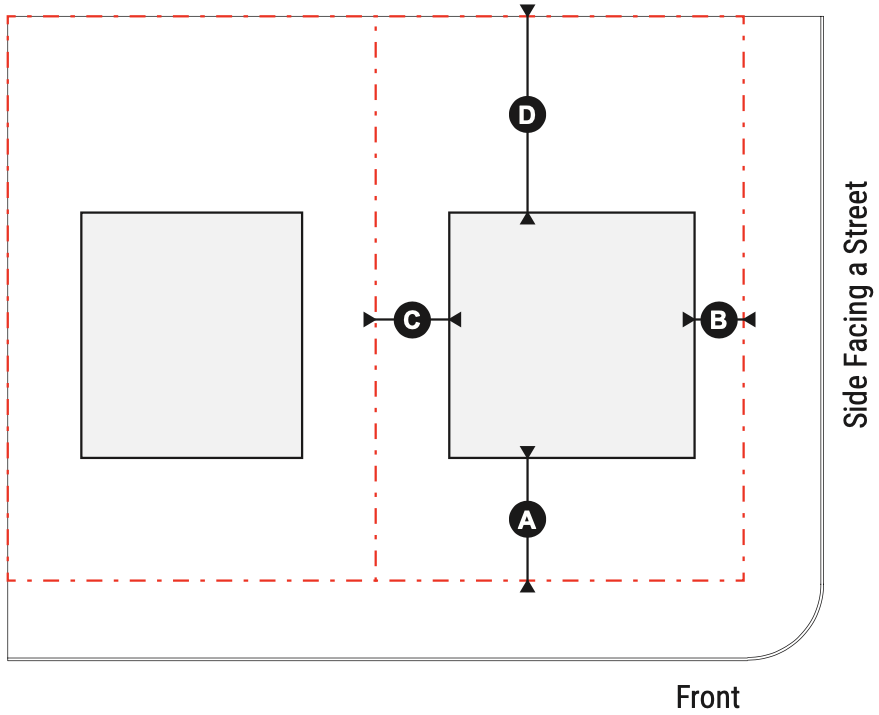
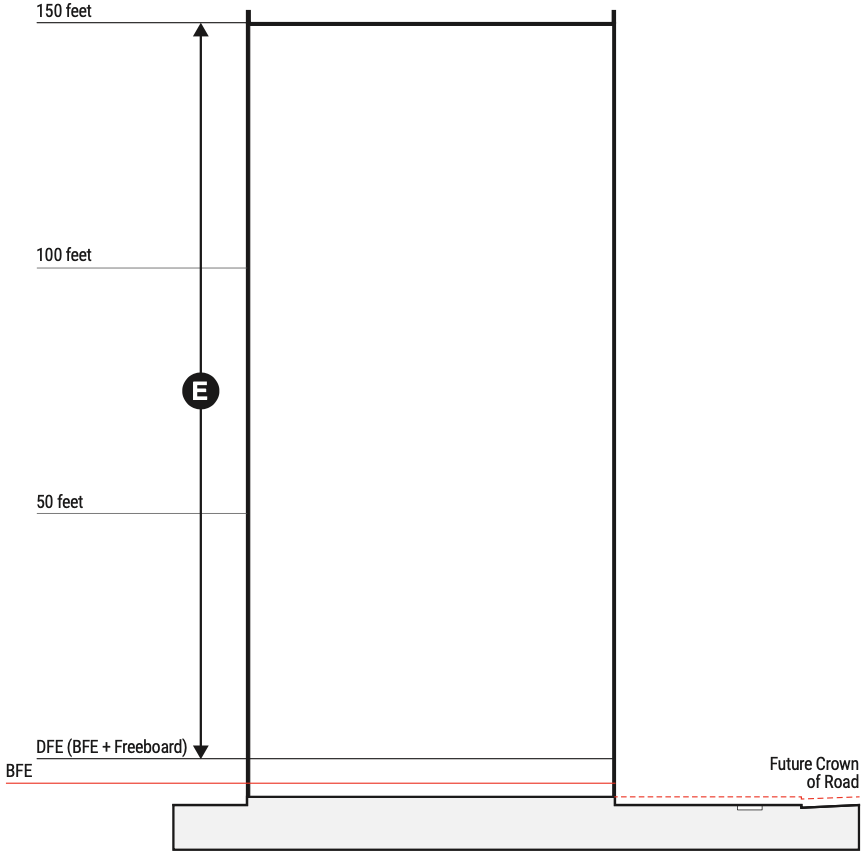
7.2.19.4 Additional Regulations (HD)
- Rezoning of HD district
- If an application is filed pursuant to section 2.5.1 to rezone all or part of an HD district, the rezoning shall be to a district or combination of districts with a floor area ratio no greater than the abutting land (sharing lot line).
- Properties rezoned under this section that exceed 15 acres may be rezoned to allow for a mix of districts, uses and intensities compatible with zoning districts of abutting properties, and may exceed the limitation provided for in section 7.2.19.4.1. above, if adequate buffers are provided to protect less intense abutting and nearby uses, as submitted to and approved by the planning board and city commission.
- Any building existing on the property may be adaptively reused consistent with the underlying zoning regulations retaining existing nonconforming height, setbacks, floor area ratio and off-street parking, regardless whether the rehabilitation exceeds 50 percent (50%) of the value determination, provided that the repaired or rehabilitated building shall be subject to the regulations in section 2.12.8.a.1 though 4.
7.2.20.1 Purpose (MR)
The MR marine recreation district is a waterfront district designed to accommodate recreational boating activities, recreational facilities, accessory uses and service facilities.
7.2.20.2 Uses (MR)
| USES TABLE (MR) | ||
|---|---|---|
| RESIDENTIAL | ||
| LODGING | ||
| OFFICE | ||
| COMMERCIAL | ||
| Commercial uses | P | |
| Restaurant serving alcoholic beverages | P* | |
| Alcoholic beverage establishments | A* | |
| Gambling and casinos pursuant to section 7.1.8 | Pro | |
| Rentals or leases of mopeds, motorcycles, and motorized bicycles pursuant to section 7.1.8 | Pro | |
| Dance halls | Pro | |
| Entertainment establishments | Pro | |
| Neighborhood and Retail Fulfillment Centers pursuant to section 7.1.8 | Pro | |
| CIVIC | ||
| CIVIL SUPPORT | ||
| EDUCATIONAL | ||
| INDUSTRIAL | ||
| OTHER | ||
| Marinas | P | |
| Boat docks | P | |
| Piers, etc. for noncommercial or commercial vessels and related upland structures | P | |
| Aquarium | P | |
| Parks | P | |
| Baywalks | P | |
| Public facilities | P | |
| Required parking for adjacent properties not separated by road or alley | P | |
Key P - Main Permitted Use C - Conditional Use A - Accessory Use Pro - Prohibited Use *See Supplemental Uses below | ||
- Supplemental Main permitted uses (MR)
None - Supplemental Conditional uses Regulations (MR)
None - Supplemental Accessory uses Regulations (MR)
The supplemental accessory uses are as follows:- The accessory uses in the MR marine recreation district are as required in section 7.5.4.13. Accessory uses in this district shall be any use that is customarily associated with a main permitted use, including, but not limited to, alcoholic beverage establishments pursuant to the regulations set forth in chapter 6 of General Ordinances.
- Supplemental Prohibited uses Regulations (MR)
The supplemental prohibited uses are as follows:- Dance Halls and entertainment establishments are not permitted as a main permitted or accessory use.
7.2.20.3 Development Regulations (MR)
- The development regulations for the Marine Recreation District are as follows:
| DEVELOPMENT REGULATIONS TABLE (MR) | |
|---|---|
| Maximum FAR | 0.25 (1) |
| Maximum Density (Dwelling Units Per Acre) | N/A |
| Minimum Unit Size (square feet) | N/A |
| LOT OCCUPATION | |
| Minimum Lot Area (square feet) | N/A |
| Minimum Lot Width (feet) | N/A |
| Maximum Lot Coverage (% of lot area) | N/A |
| BUILDING SETBACKS | Properties facing Waterway, Government Cut, Ocean or Bay |
| Front Setback Ⓐ | |
| Subterranean | 20 feet (2) 50 feet (For any yard facing a waterway, Government Cut, ocean or bay) (2) |
| Pedestal | |
| Side, Facing a Street Setback Ⓑ | |
| Subterranean | 20 feet (2) 50 feet (For any yard facing a waterway, Government Cut, ocean or bay) (2) |
| Pedestal | |
| Side, Interior Setback Ⓒ | |
| Subterranean | 20 feet (2) 50 feet (For any yard facing a waterway, Government Cut, ocean or bay) (2) |
| Pedestal | |
| Rear Setback Ⓓ | |
| Subterranean | 20 feet (2) 50 feet (For any yard facing a waterway, Government Cut, ocean or bay) (2) |
| Pedestal | |
| |
| BUILDING HEIGHT | |
| Maximum Height Ⓔ | 40 feet |
| |
| |
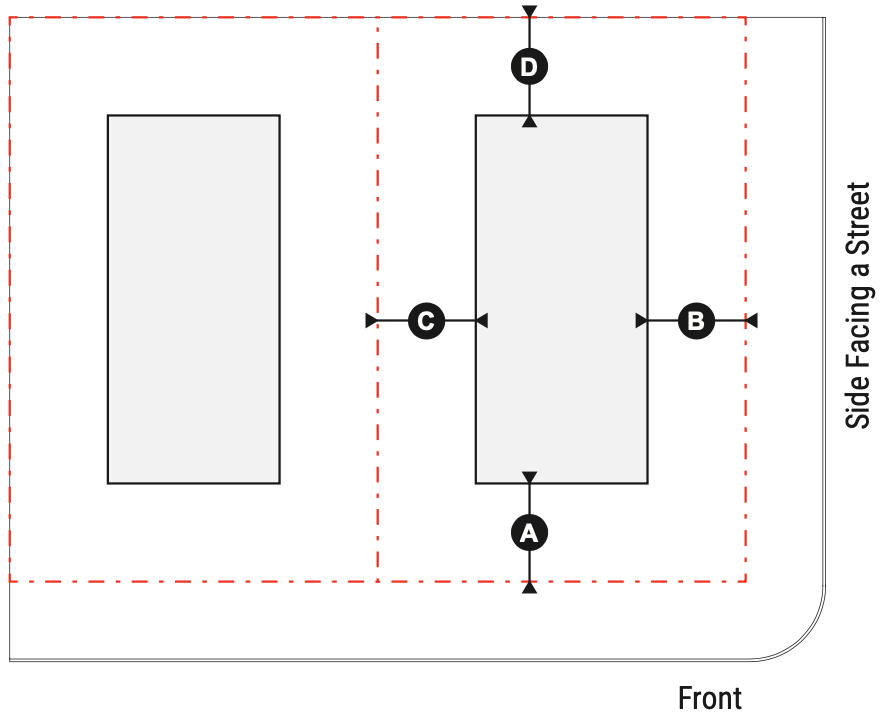
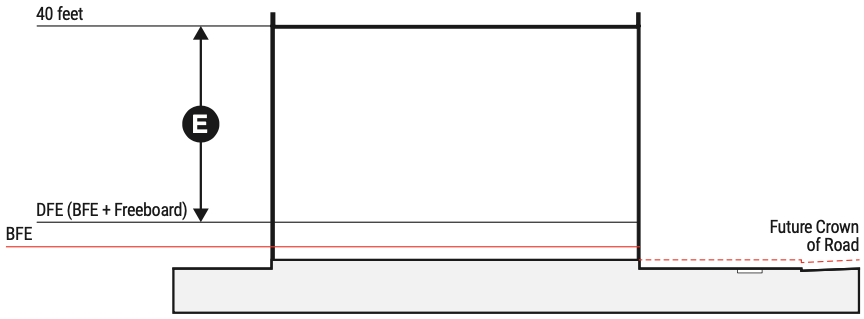
7.2.21.1 PURPOSE (WD-1 / WD-2)
The WD-1 waterway district is designed to create a landscaped environment with uses that area of desirable character and in harmony with the waterway and the upland development.
The WD-2 waterway district is designed to accommodate beach-related accessory uses on the east side of Miami Beach Drive.
Chapter 7, entitled "Zoning Districts and Regulations," Article II, entitled "Zoning District Regulations," section 7.2.21, entitled "WD Waterway District," at subsection 7.2.21.2, entitled "Uses (WD-1)'" is hereby amended as follows:
7.2.21.2 Uses (WD-1)
| USES TABLE (WD-1) | |
|---|---|
| RESIDENTIAL | |
| LODGING | |
| OFFICE | |
| COMMERCIAL | |
| Kiosks | P |
| Alcoholic beverage establishments | Pro * |
| Gambling and Casinos pursuant to section 7.1.8 | Pro |
| Rentals or leases of mopeds, motorcycles, and motorized bicycles pursuant to section 7.1.8 | Pro |
| Neighborhood and Retail Fulfillment Centers pursuant to section 7.1.8 | Pro |
| CIVIC | |
| CIVIL SUPPORT | |
| EDUCATIONAL | |
| INDUSTRIAL | |
| OTHER | |
| Water transportation stops | P |
| Rental of watercraft, including jet skis and similar uses | Pro |
| Wet dockage of pleasure craft | P |
| Walkways and decks | P |
Key P – Main Permitted Use C - Conditional Use A - Accessory Use Pro - Prohibited Use * See Supplemental use regulations below | |
a. Supplemental main permitted uses Regulations (WD-1)
None
b. Supplemental Conditional uses Regulations (WD-1)
None
c. Supplemental Accessory uses Regulations (WD-1)
The accessory uses in the WD-1 waterway district are as follows:
- As required in section 7.5.4.13 and as delineated in chapter 6 of the General Ordinances, as it relates to alcoholic beverage establishments.
d. Supplemental prohibited uses Regulations (WD-1)
None
7.2.21.3 Uses (WD-2)
| USES TABLE (WD-2) | |
|---|---|
| RESIDENTIAL | |
| LODGING | |
| OFFICE | |
| COMMERCIAL | |
| Outdoor cafes | P |
| Alcoholic beverage establishments | Pro * |
| Gambling and Casinos pursuant to section 7.1.8 | Pro |
| Rentals or leases of mopeds, motorcycles, and motorized bicycles pursuant to section 7.1.8 | Pro |
| Neighborhood and Retail Fulfillment Centers pursuant to section 7.1.8 | Pro |
| CIVIC | |
| CIVIL SUPPORT | |
| EDUCATIONAL | |
| INDUSTRIAL | |
| OTHER | |
| Pool decks | P |
| Cabanas and similar recreational uses which are water related or beach related | P |
Key P – Main Permitted Use C - Conditional Use A - Accessory Use Pro - Prohibited Use * See Supplemental use regulations below | |
- Supplemental main permitted uses Regulations (WD-2)
None - Supplemental Conditional uses Regulations (WD-2)
None - Supplemental Accessory uses Regulations (WD-2)
The accessory uses in the WD-2 waterway district are: - Supplemental prohibited uses Regulations (WD-2)
None
7.2.21.4 Development Regulations (WD-1 / WD-2)
- The development regulations in the WD-1 and WD-2 waterway districts are as follows:
| DEVELOPMENT REGULATIONS TABLE (WD-1 WD-2) | ||
|---|---|---|
| WD-1 | WD-2 | |
| Maximum FAR | N/A | 0.01 |
| Maximum Density (Dwelling Units Per Acre) | N/A | N/A |
| Minimum Unit Size (square feet) | N/A | N/A |
| Maximum Floor Area of Building (square feet) | 40 SF | N/A |
| Maximum number of buildings per site | 1 | N/A |
| LOT OCCUPATION | WD-1 | WD-2 |
| Minimum Lot Area (square feet) | N/A | N/A |
| Minimum Lot Width (feet) | N/A | N/A |
| Maximum Lot Coverage (% of lot area) | N/A | N/A |
| BUILDING SETBACKS | WD-1 | WD-2 |
| Front Setback Ⓐ | 0 feet (1) | N/A |
Front Setback (Fronting Miami Beach Drive) Ⓐ | N/A | 5 feet |
| Side, Facing a Street Setback Ⓑ | 10 feet (1) | 0 feet |
| Side, Interior Setback Ⓒ | 20 % of lot width (1) | 0 feet |
| Rear Setback Ⓓ | 0 feet (1) | 50 feet (erosion control line) 10 feet (if development is connected to a project in the Dune Preservation Overlay district) |
|
| |
| BUILDING HEIGHT | WD-1 | WD-2 |
| Maximum Height Ⓔ | 12 feet (2) | 15 feet |
|
| |
| ||
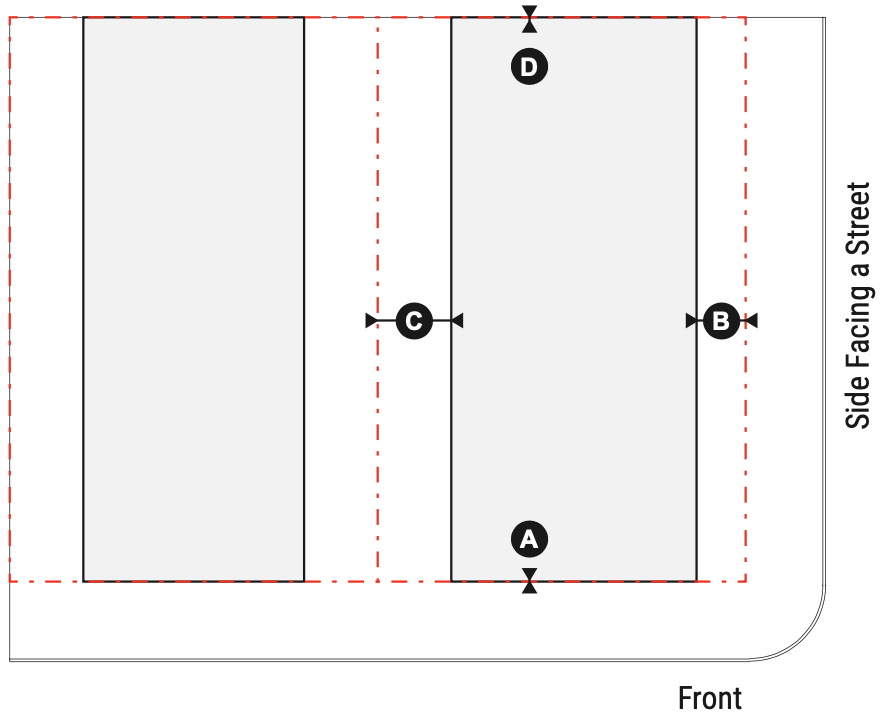
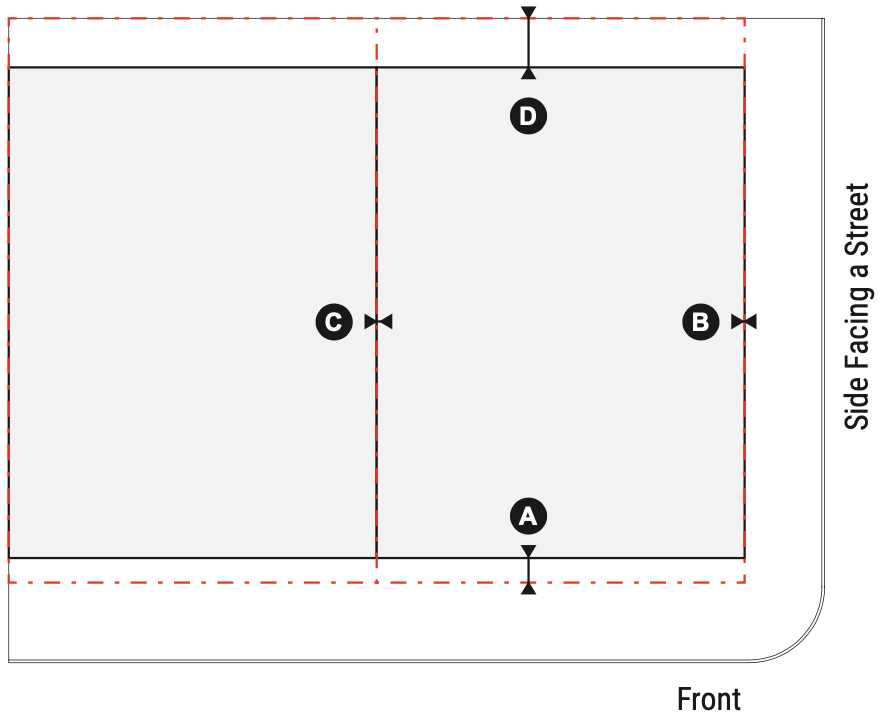
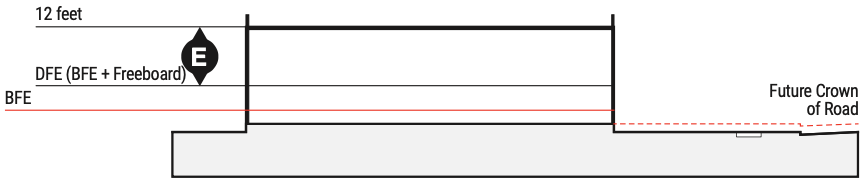
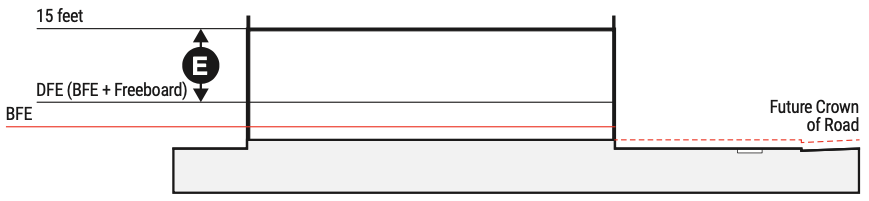
7.2.21.5 Additional Regulations (WD-1)
- Structures in the WD-1 waterway district shall be constructed of concrete block and stucco and have a pitch roof of tile or concrete, and shall be open on all sides. All areas not covered by decks or structures shall be maintained as landscaped area.
- Structures and rentals of watercraft are only permitted if there is at least 10 feet of lot depth and a minimum of 5 feet of public sidewalk.
- Landscaped area not including walkways shall be a minimum of 50 percent (50%).
- The following regulations shall apply to legally established, non-conforming watercraft rental uses;
- The legally nonconforming watercraft rental use must be associated with i. a hotel containing a minimum of 350 units that is located immediately east of the rental location, across Collins Avenue or Indian Creek Drive, as applicable; or ii. located adjacent to Lake Pancoast.
- The rental of motorized personal watercraft, including but not limited to jet skis or other similar vessels, shall be prohibited.
- With the exception of uses adjacent to Lake Pancoast, eligible watercraft shall only be rented to hotel guests and City residents.
- All existing, legally permitted structures shall meet all applicable building, fire, and property maintenance standards.
- For uses adjacent to Lake Pancoast, legally established concessions may continue to operate. However, any such concession shall not be enlarged, relocated or expanded.
- In the event any dock, boat slips, decks, wharves, dolphin poles, mooring piles, davits, or structures of any kind are proposed to extend greater than 40 feet from a seawall adjacent to, or abutting the WD-1 or WD-2 district, conditional use approval from the planning board, in accordance with section 2.5.2 of the Land Development Regulations, shall also be required.
7.2.22.1 Purpose (GC)
The GC golf course district is designed to accommodate golf courses on private property.
7.2.22.2 Uses (GC)
| USES TABLE (GC) | |
|---|---|
| RESIDENTIAL | |
| LODGING | |
| OFFICE | |
| Clubhouses | P |
| Sale and distribution of alcoholic beverages | A* |
| Glambling and Casinos pursuant to section 7.1.8 | Pro |
| Rentals or leases of mopeds, motorcycles, and motorized bicycles pursuant to section 7.1.8 | Pro |
| Neighborhood and Retail Fulfillment Centers pursuant to section 7.1.8 | Pro |
| CIVIC | |
| Golf Courses | P |
| Tennis Courts | P |
| CIVIL SUPPORT | |
| EDUCATIONAL | |
| INDUSTRIAL | |
Key P – Main Permitted Use C - Conditional Use A - Accessory Use Pro - Prohibited Use * See Supplemental use regulations below | |
- Supplemental Main permitted uses Regulations (GC)
The supplemental main permitted uses are as follows:- Those uses normally associated with a golf course, provided that all such uses are under a unified ownership and operation.
- Supplemental Conditional uses Regulations (GC)
None - Supplemental Accessory uses Regulations (GC)
The supplemental accessory uses are as follows: - Supplemental Prohibited uses Regulations (GC)
None
7.2.22.3 Development Regulations (GC)
- The development regulations for GC are as follows:
| DEVELOPMENT REGULATIONS TABLE (GC) | ||
|---|---|---|
| Maximum FAR | N/A | |
| Maximum Density (Dwelling Units Per Acre) | N/A | |
| Minimum Unit Size (square feet) | N/A | |
| Maximum Total Construction (square feet) | 100,000 SF | |
| LOT OCCUPATION | ||
| Minimum Lot Area (square feet) | N/A | |
| Minimum Lot Width (feet) | N/A | |
| Maximum Lot Coverage (% of lot area) | N/A | |
| BUILDING SETBACKS | Main Building | Ancillary Structures |
| Fronting Alton Road | 200 feet (1) | 125 feet (2) |
| Setback abutting single family residences | 170 feet (3) | |
| All other Setbacks | 170 feet (4) | |
Existing At-Grade Parking Lots | 50 feet (from rear lot line) 10 feet (from the side lot line of any abutting single-family residence) | |
| BUILDING HEIGHT | Main Building | Ancillary Structures |
| Maximum Height Ⓔ | 42 feet (5) | 20 feet (2) |
| ||
| ||
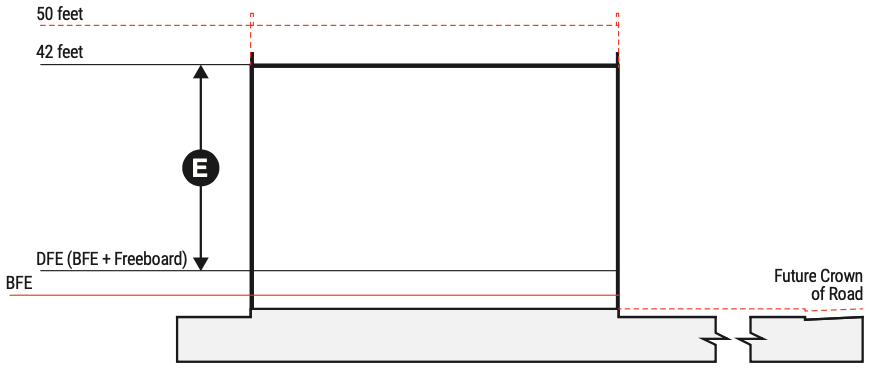
7.2.22.4 Additional Regulations (GC)
- Noise regulations (GC)
At all times, all noise emanating from the clubhouse or accessory structures that is unreasonably loud shall be contained within the property lines of the golf course property. An unreasonably loud noise is defined as a noise that is plainly audible and which interferes with normal conversation. - Garbage, Trash and Vegetative Debris Pick up (GC)
Garbage, trash and vegetative debris pick up shall occur between the hours of 7:00 a.m. and 7:00 p.m., seven days a week from the main access point on Alton Road. All other access points shall be restricted to pick up between 9:00 a.m. and 5:00 p.m. Monday through Saturday only.
7.2.23.1 Purpose (I-1)
The primary purpose of the I-1 urban light industrial district is to permit light industrial uses that are generally compatible with one another and with adjoining residential or commercial districts. Uses that are compatible and complement light industrial uses, such as a limited range of offices, and commercial uses shall also be permitted. This district shall not include any residential uses, except as provided herein.
7.2.23.2 Uses (I-1)
| USES TABLE (I-1) | |
|---|---|
| RESIDENTIAL | |
| Residential Uses | Pro* |
| Live-work units | C* |
| LODGING | |
| Hostels | Pro* |
| OFFICE | |
| Professional, business, research or administrative offices | P* |
| COMMERCIAL | |
| Commercial uses | P* |
| Kennel | P |
| Restaurants with alcoholic beverage licenses | C* |
| Liquor Stores | C* |
| Alcoholic Beverage Establishments | A* |
| Formula commercial establishment | Pro* |
| Formula restaurant | Pro* |
| Dance Halls | Pro* |
| Entertainment Establishments | Pro* |
| Outdoor Entertainment Establishment | Pro* |
| Bars | Pro* |
| Pawnshops | Pro* |
| Tobacco and Vape Dealers | Pro* |
| Check cashing stores | Pro* |
| Convenience stores | Pro* |
| Occult science establishments | Pro* |
| Souvenir and T-shirt shops | Pro* |
| Tattoo studios | Pro* |
| Gambling and Casinos pursuant to section 7.1.8 | Pro |
| Rentals or leases of mopeds, motorcycles, and motorized bicycles pursuant to section 7.1.8 | Pro |
| Neighborhood and Retail Fulfillment Centers pursuant to section 7.1.8 | Pro |
| CIVIC | |
| Religious institutions with an occupancy of 199 persons or less | P |
| Religious institutions with an occupancy greater than 199 persons | C |
| CIVIL SUPPORT | |
| Neighborhood Impact Establishments | Pro |
| EDUCATIONAL | |
| INDUSTRIAL | |
| Assembly or packaging of goods not utilizing heavy machinery | P* |
| Light manufacturing, not utilizing heavy machinery | P* |
| Printing, engraving, lithographing, media services and publishing, not utilizing heavy machinery | P |
| Wholesale businesses and sales, warehouses, mini and other storage buildings, and distribution facilities | P* |
| Artisan Studios | P* |
| Plumbing, electrical, air conditioning and other similar type shops | P* |
| Tailoring Services | P* |
| Landscaping Services | P* |
| Machine, welding, and printing shops, involving heavy machinery | C |
| Recycling receiving stations | C |
| Towing services | C* |
| OTHER | |
| Main use parking garages and parking lots | C |
| Neighborhood Impact Structure | C |
| Neighborhood Impact Lot | C |
Key P – Main Permitted Use C – Conditional Use A – Accessory Use Pro – Prohibited Use *See Supplemental use regulations below | |
- Supplemental Main permitted uses Regulations (I-1)
The supplemental main permitted uses are as follows:- Those uses that are consistent with the district purpose including the following:
- Assembly or packaging of goods not utilizing heavy machinery, including food and beverage products, small electronics, watches, jewelry, clocks, musical instruments, and products from previously prepared materials (cloth, leather, canvas, rubber, etc.);
- Light manufacturing, not utilizing heavy machinery, including: Ceramic products, glass products, hand tools, and electronic equipment;
- Professional, business, research or administrative offices, either as a main permitted use or as part of a permitted light industrial use;
- Wholesale businesses and sales, warehouses, mini and other storage buildings, and distribution facilities, except those storing or distributing flammable or explosive materials;
- Artisan studios, including, but not limited to, crafts, furniture, cabinet and wood working shops, glass blowing and similar shops;
- Plumbing, electrical, air conditioning and other similar type shops, which may wholesale and store parts on site;
- Tailoring services, including dry cleaning;
- Landscaping services, including nursery facilities;
- Commercial uses that provide support services to the light industrial uses and to the adjacent RM-3 residents, including, but not limited to, retail sales, photocopying, coffee shops, video rentals, banks, restaurants, and alcoholic beverage establishments pursuant to the regulations set forth in chapter 6 of the General Ordinances. Alcoholic beverage establishments located in the Sunset Harbour neighborhood, which is generally bounded by Purdy Avenue to the west, 20th Street and the waterway to the north, Alton Road to the east, and Dade Boulevard to the south (MAP EXHIBIT-1) , shall be subject to the additional requirements set forth in section 7.2.23.2.e;
- Any use similar and compatible to the uses described in this district and the district purpose as determined by the planning director.
- Those uses that are consistent with the district purpose including the following:
- Supplemental Conditional uses Regulations (I-1)
The supplemental conditional uses are as follows:- Live-work units, when included in rehabilitation of buildings existing as of October 24, 2009;
- Towing services: Lots reviewed pursuant to the conditional use process shall also comply with the following criteria:
- A schedule of hours of vehicle storage and of hours of operation shall be submitted for review and approval by the planning board.
- If the towing yard is proposed to be within 100 feet of a property line of a lot upon which there is a residential use, the planning board shall analyze the impact of such storage and/or parking on the residential use. The analysis shall include, but not be limited to, visual impacts, noise, odors, effect of egress and ingress and any other relevant factor that may have an impact of the residential use.
- Towing yards must be fully screened from view as seen from any right-of-way or adjoining property, when viewed from five feet six inches above grade, with an opaque wood fence, masonry wall or other opaque screening device not less than six feet in height.
- Parking spaces, backup areas and drives shall be appropriately dimensioned for the type of vehicles being parked or stored.
- Towing yards shall be required to satisfy the landscaping requirements of section 4.2.3.b, and shall be subject to the design review procedures, requirements and criteria as set forth in section 2.5.3.
- Sunset Harbour neighborhood. The conditional uses for the Sunset Harbour neighborhood, generally bounded by Purdy Avenue to the west, 20th Street and the waterway to the north, Alton Road to the east, and Dade Boulevard to the south (MAP EXHIBIT-1), shall include those conditional uses listed in section 7.2.23.2 (Uses Table). The following additional uses shall require conditional use approval in the Sunset Harbour neighborhood:
- Restaurants with alcoholic beverage licenses (alcoholic beverage establishments) with more than 100 seats or an occupancy content (as determined by the fire marshal) in excess of 125, but less than 199 persons, and a floor area in excess of 3,500 square feet. Restaurants with alcoholic beverage licenses (alcoholic beverage establishments) shall also be subject to the additional requirements set forth in section 7.2.23.2.e.
- Liquor stores.
- Supplemental Accessory uses Regulations (I-1)
The supplemental accessory uses are:- Those uses customarily associated with the district purpose. (See section 7.5.4.13)
- Alcoholic beverage establishments located in the Sunset Harbour neighborhood, which is generally bounded by Purdy Avenue to the west, 20th Street and the waterway to the north, Alton Road to the east, and Dade Boulevard to the south (MAP EXHIBIT-1), shall be subject to the additional requirements set forth in section 7.2.23.2.e.
- Supplemental Prohibited uses Regulations (I-1)
The supplemental prohibited uses are:- Dance halls, or entertainment establishments (as defined in section 1.2.2),
- Residential uses, except as provided for in subsection section 7.2.23.2.b.1.
- Except as otherwise provided in these land development regulations, prohibited uses in the I-1 urban light industrial district in the Sunset Harbour Neighborhood, generally bounded by Purdy Avenue, 20th Street, Alton Road and Dade Boulevard (MAP EXHIBIT-1), are the following:
- Hostels;
- Outdoor entertainment establishments;
- Neighborhood impact establishments;
- Open air entertainment establishments;
- Bars;
- Dance halls;
- Entertainment establishments (as defined in section 1.2.2);
- Pawnshops;
- Tobacco and vape dealers;
- Check cashing stores;
- Convenience stores;
- Occult science establishments;
- Souvenir and T-shirt shops;
- Tattoo studios.
- Formula commercial establishment (Limited to the ‘Neighborhood Center’ area and as defined in section 7.3.9.2)
- Formula restaurant (Limited to the ‘Neighborhood Center’ area and as defined in section 7.3.9.2)
- Special regulations for alcohol beverage establishments (I-1)
- Sunset Harbour neighborhood. The following additional requirements shall apply to alcoholic beverage establishments, whether as a main use, conditional use, or accessory use, that are located in the Sunset Harbour neighborhood, which is generally bounded by Purdy Avenue to the west, 20th Street and the waterway to the north, Alton Road to the east, and Dade Boulevard to the south (MAP EXHIBIT-1).
- Operations shall cease no later than 2:00 a.m., except that outdoor operations (including sidewalk cafe operations) shall cease no later than 12:00 a.m.
- Alcoholic beverage establishments may not operate any outside dining areas or accessory bar counters above the ground floor of the building in which they are located; however, outdoor restaurant seating, associated with indoor venues, not exceeding 40 seats, may be permitted above the ground floor until 8:00 p.m. Notwithstanding the foregoing, the provisions of this section 7.2.23.2.e.2. shall not apply to any valid, pre-existing permitted use with a valid business tax receipt (BTR) for an alcoholic beverage establishment that was issued prior to August 23, 2016, or to a proposed establishment that has submitted a completed application for an alcoholic beverage establishment to a land use board prior to August 23, 2016, or to an establishment that has obtained approval for an alcoholic beverage establishment from a land use board, and which land use board order is active and has not expired, prior to August 23, 2016.
- Except as may be required by any applicable fire prevention code or building code, outdoor speakers shall not be permitted. Notwithstanding the foregoing, the provisions of this section 7.2.23.2.e.3. shall not apply to any valid, pre-existing permitted use with a valid business tax receipt (BTR) for an alcoholic beverage establishment that was issued prior to August 23, 2016, or to a proposed establishment that has submitted a completed application for an alcoholic beverage establishment to a land use board prior to August 23, 2016, or to an establishment that has obtained approval for an alcoholic beverage establishment from a land use board, and which land use board order is active and has not expired, prior to August 23, 2016.
- Special events shall not be permitted in any alcoholic beverage establishment.
- Sunset Harbour neighborhood. The following additional requirements shall apply to alcoholic beverage establishments, whether as a main use, conditional use, or accessory use, that are located in the Sunset Harbour neighborhood, which is generally bounded by Purdy Avenue to the west, 20th Street and the waterway to the north, Alton Road to the east, and Dade Boulevard to the south (MAP EXHIBIT-1).
7.2.23.3 Development Regulations (I-1)
- The development regulations for the I-1 Light Industrial District are as follows:
| DEVELOPMENT REGULATIONS TABLE (I-1) | |
|---|---|
| Maximum FAR | 1.0 |
| Maximum Density (Dwelling Units Per Acre) | N/A |
| Minimum Unit Size (square feet) | N/A |
| LOT OCCUPATION | |
| Minimum Lot Area (square feet) | N/A |
| Minimum Lot Width (feet) | N/A |
| Maximum Lot Coverage (% of lot area) | N/A |
| BUILDING SETBACKS | |
| Front Setback Ⓐ | |
Subterranean | 0 feet 20 feet (when abutting a residential district) |
Pedestal | |
Tower | |
| Side, Facing a Street Setback Ⓑ | |
Subterranean | 0 feet 10 feet (when abutting a residential district) |
Pedestal | |
Tower | |
| Side, Interior Setback Ⓒ | |
Subterranean | 0 feet 10 feet (when abutting a residential district) |
Pedestal | |
Tower | |
| Rear Setback Ⓓ | |
Subterranean | 0 feet 10 feet (when abutting a residential district) |
Pedestal | |
Tower | |
| |
| BUILDING HEIGHT | |
| Maximum Height Ⓔ | 40 feet |
On Terminal Island (MAP EXHIBIT-2) for commercial and office buildings | 75 feet |
| |
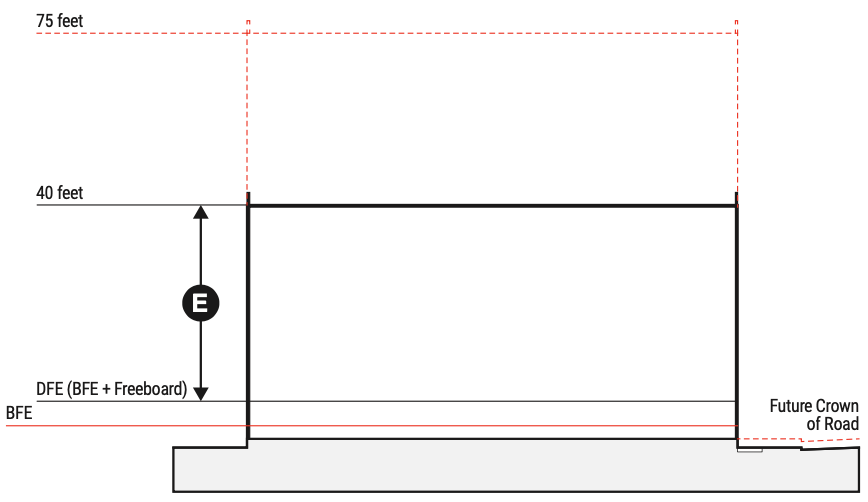

7.2.23.4 Sunset Harbour (I-1)
- Location and Purpose (Sunset Harbour - I-1)
The Sunset Harbour Neighborhood incorporates the parcels in the area bounded by 20th Street on the north, Alton Road on the east, Dade Boulevard on the south, and Purdy Avenue on the west (MAP EXHIBIT-16). - Development Regulations (Sunset Harbour - I-1)
The following regulations shall apply to I-1 properties within the Sunset Harbour Neighborhood (MAP EXHIBIT-16):- Clear pedestrian path. The applicable standards for a "clear pedestrian path" established in section 7.1.2.2.e.2. shall apply to new development, except as follows:
- The clear pedestrian path shall be at least 10 feet wide.
- The design review board may approve the reduction of the clear pedestrian path requirement to no less than 5 feet in order to accommodate street trees, required utility apparatus, or other street furniture, subject to the design review criteria.
- Height. Notwithstanding the requirements of section 7.2.23.3.a, the following maximum building height regulations shall apply to the Sunset Harbour Neighborhood (MAP EXHIBIT-16):
- The maximum building height shall be 55 feet, except as noted below.
- The design review board may approve development at a maximum building height of 65 feet on the following properties:
- Properties fronting Dade Boulevard between Alton Road and Bay Road. (MAP EXHIBIT-17)
- Properties fronting Alton Road between 20th Street and Dade Boulevard. (MAP EXHIBIT-18)
- Properties fronting Purdy Avenue between 18th Street and Dade Boulevard. (MAP EXHIBIT-19)
- The design review board may only approve development at a height greater than 55 feet subject to the design review criteria and the following regulations:
- The property shall have a minimum lot size of 10,000 square feet.
- The development shall consist solely of office use above the ground level of the structure, and provided that residential uses may be permitted on such properties up to a maximum FAR of 2.0 pursuant to section 7.2.23.3.a (Development Regulations Table: Floor Area Ratio), but only if the first 1.5 FAR of development is dedicated to office use and ground floor commercial use.
- The ground floor shall contain retail, personal service, restaurant and similar types of active uses fronting the clear pedestrian path.
- Portions of the building exceeding 55 feet in height that abut a residential use shall be set back a minimum of 10 feet from the residential use.
- Portions of the building exceeding 55 feet in height that are located on Alton Road shall be set back a minimum of 150 feet from 20th Street.
- Portions of the building exceeding 55 feet in height that are located on Dade Boulevard shall be set back a minimum of 100 feet from Bay Road.
- Portions of the building exceeding 55 feet in height that are located along 18th Street between Bay Road and Purdy Avenue shall be set back a minimum of 12 feet from the property line.
- For developments in the Sunset Harbour neighborhood that (i) consist solely of office use above the ground level of the structure, and (ii) are located on lots with a minimum lot size of 10,000 square feet, and (iii) are located within the area bounded by Dade Boulevard on the south, Purdy Avenue on the west, 18th Street on the north, and Bay Road on the east (MAP EXHIBIT-21) - 65 feet, provided that a full building permit for a tower pursuant to this section must be issued no later than December 31, 2022, and provided that residential uses may be permitted on such properties up to a maximum FAR of 2.0 pursuant to section 7.2.23.3.a (Development Regulations Table: Floor Area Ratio), but only if he first 1.5 FAR of development is dedicated to office use and ground floor commercial use. For office developments that satisfy the applicable requirements in section 7.2.23.2 - 75 feet.
- Height exceptions. In general, rooftop elements that are exempt from a building's maximum building height pursuant to this section 7.2.23.4.b.3. shall be located in a manner to minimize visual impacts on predominant neighborhood view corridors as viewed from public rights-of-way and waterways. The height regulation exceptions contained in section 7.5.2 shall not apply to the Sunset Harbour Neighborhood. Instead, only the following height exceptions shall apply to the Sunset Harbour Neighborhood and, unless otherwise specified, shall not exceed 10 feet above the main roof of the structure:
- Roof-top operational and mechanical equipment. This exception shall be limited to essential, nonhabitable, building elements such as mechanical rooms/devices, air conditioning and cooling equipment, generators, electrical and plumbing equipment, as well as any required screening. The height of such elements shall not exceed 25 feet above the roof slab. The foregoing operational and mechanical equipment shall require the review and approval of the design review board and shall be set back from the building perimeter by no less than 25 feet from roof parapets on street facing facades.
- Roof-top elevator towers, including code required vestibules, and stair towers, with the height of such structures not exceeding 25 feet above the roof slab. Projecting overhangs at the doorways to elevator vestibules and stair towers required by the Florida Building Code may be permitted, provided the projection does not exceed the minimum size dimensions required under the Florida Building Code. The foregoing elements shall require the review and approval of the design review board and shall be set back from the building perimeter by no less than 25 feet from roof parapets on street facing facades. Notwithstanding the foregoing, the requirement for design review board approval, as well as the perimeter setback, shall not apply to private elevator and/or private stairs from a residential unit to a private roof deck.
- Satellite dishes, antennas, sustainable roofing systems, solar panels and similar elements. Such elements shall be set back a minimum of 15 feet from the roof parapets on street-facing facades.
- Decks located more than 6 inches above the top of the roof slab, and not exceeding 3 feet above the roof slab, may be permitted provided the deck area is no more than 50 percent (50%) of the enclosed floor area immediately one floor below.
- Rooftop areas that are accessible only to the owners or tenants of residential units may have trellises, pergolas or similar structures that have an open roof of cross rafters or latticework. Such structures shall not exceed a combined area of 20 percent (20%) of the enclosed floor area immediately one floor below and shall be set back a minimum of 20 feet from the property line and no less than 10 feet from the roof parapets on street-facing facades.
- Roof-top pools, not to exceed 5 feet above the roof slab, shall be limited to main use residential buildings, or mixed use/office buildings where at least 25 percent (25%) of the floor area is dedicated to nontransient residential units. Such pools may have up to a 4-foot-wide walkway around the pool. Additionally, bathrooms required by the Florida Building Code, not to exceed the minimum size dimensions required under the Florida Building Code, may be permitted provided such bathrooms are set back a minimum of 20 feet from the property line and no less than 10 feet from the roof parapets on street-facing facades and shall not exceed 13 feet in height measured from the finished elevation of the roof deck or 16 feet in height measured from the roof slab, whichever is less.
- Parapets shall not exceed 4 feet in height above the main roof.
- Exterior speakers required to meet applicable requirements of the Life Safety or Florida Building Code.
- Allowable height exceptions located within 25 feet of the property line along a street facing façade of the building, or within 20 feet of an interior lot line abutting a residential use, shall not exceed 10 feet in height measured from the finished elevation of the roof deck or 13 feet in height measured from the roof slab, whichever is less. The design review board may waive this minimum setback along a street facing façade of the building, but in no instance shall the setback be less than 15 feet from the property line.
- Lot aggregation. Except for office or residential development, no more than six (6) platted lots may be aggregated.
- Lot size. Except for office or residential development, the maximum lot size shall not exceed 36,000 square feet. Notwithstanding the foregoing, the provisions of this paragraph shall not apply to any lot larger than 36,000 square feet that existed prior to January 1, 2021.
- Number of large establishments and conditional use permit (CUP) requirements. Conditional use approval from the planning board shall be required for retail, personal service, and/or restaurant uses within a development that is greater than 25,000 square feet in size. Additionally, no more than two such developments shall be permitted within the Sunset Harbour Neighborhood.
- Special events. City approved special events shall be prohibited at alcoholic beverage establishments. Notwithstanding the foregoing, permitted special events at venues not meeting the definition of an alcoholic beverage establishment shall cease no later than 9:00 p.m., seven days a week.
- Outdoor speakers. Outdoor speakers shall be prohibited on all levels of the exterior of a building, including roof tops, unless such speakers are required pursuant to the Life Safety or Florida Building Code.
- Clear pedestrian path. The applicable standards for a "clear pedestrian path" established in section 7.1.2.2.e.2. shall apply to new development, except as follows:
7.3.1.1 DUNE PRESERVATION
- Location and Purpose (Dune Preservation Overlay).
The regulations of this division shall apply to all uses and structures located west of the erosion control line, east to the edge of the pool deck, if one is present, or the old city bulkhead line.
The regulations of this division are designed to accommodate and promote recreational, open space and related uses. Detailed review of all uses and structures is required because this area functions as a transitional zone between the intensely developed uplands and the dune and beach. It accommodates uses and structures which are compatible and supportive of the beachfront park system and the natural beach environment. - Compliance with regulations (Dune Preservation Overlay).
- As specified in section 2.5.3, design review regulations, applications for a building permit shall be reviewed and approved by the design review board.
- All structures shall comply with all other local, state, and federal regulations governing such uses including but not limited to F.S. ch. 161 and F.A.C. ch. 16B-33. Notwithstanding these requirements, the applicant may receive a city building permit or occupational license prior to receiving approvals pursuant to the above referenced statutes.
- Uses and structures permitted (Dune Preservation Overlay).
Uses and structures permitted under this division shall be designed to accommodate and channel pedestrian movement in such a manner as to protect and enhance vegetation and the beach. No land or structure shall be used, in whole or in part, except for one or more of the following permitted uses:- Shade structures and chickees shall be open on all sides and, with the exception of supporting columns, and shall have an unobstructed, clear space between the edge of the roof covering and finished floor of not more than eight feet.
- Decks and patios constructed of wood materials with or without built-in tables, chairs, lighting, and benches. All structures shall be located a minimum of 10 feet west of the erosion control line.
- Drainage structures as per the requirements of the public works department and applicable regulations of the county, state, and federal agencies.
- Promenade linkage shall be constructed of wood materials and shall conform to the design specifications established in the beachfront park and promenade plan. Sites having less than 300 linear feet of oceanfront frontage shall be limited to one dune crossing and/or promenade linkage. Sites having more than 300 linear feet of oceanfront frontage shall be permitted one crossing or linkage per each additional 100 linear feet of frontage or part thereof. In no instance, however, shall the total aggregate number of crossings and linkages exceed four per site.
- Portable beach furniture such as chaise lounges, chairs, and umbrellas. In no instance shall such furniture be stored east of the bulkhead line.
- Walkways and ramps constructed of wood materials and which are not more than 6 feet in width.
- Landscaping conforming to the specifications of the beachfront park and promenade plan. In up to onehalf of the area required to be open to the sky and landscaped (but not in required side yards), synthetic grass which is fully pervious shall be permitted in high-traffic pedestrian/assembly areas.
- No commercial uses shall be permitted except for beachfront cafes, outdoor cafés and concessions that are associated with the rental of beach or water related products. All food shall be prepared off the premises in the upland structures and brought to the outdoor café or beachfront cafe. However, drinks may be prepared in the outdoor café or beachfront cafe. When food is cooked or reheated on the premises or the café is not associated with an upland restaurant it shall be considered a conditional use.
- Development regulations (Dune Preservation Overlay).
- Minimum open space requirements. At least 80 percent (80%) of the site shall remain open to the sky, landscaped or maintained as sand beach. All areas covered by the uses permitted above, other than portable beach furniture, shall be considered in the lot coverage calculation.
- Size and spacing of chickees, shade structures and outdoor cafes. As the dune overlay regulations are intended to provide a natural beach environment, it is required that individual structures/decks be less than 400 square feet in floor area and that structures be separated by a distance of 10 to 25 feet and that this area be landscaped. Nothing in this division shall be considered to allow development exceeding the maximum stated in this section.
- Minimum lot area. All applications for a building permit shall provide a landscape and development plan for all of the area within the property lines. For purposes of this division, the site shall constitute all of the area within the lot lines.
- Minimum yards Minimum yards in the dune preservation district shall be as follows:
- Zero (0) feet adjacent to any bulkhead line.
- 15 feet adjacent to any side property line, municipal park, street end, or right-of-way.
- 10 feet from the erosion control line when any structure has a finished floor elevation of 3 feet or less than the elevation of the top of the dune. For every additional 1 foot increase in the finished floor elevation of the structure an additional 1 foot of setback is required, to a maximum of 15 feet.
- Finished floor elevation. The finished floor elevation shall have a maximum height of 2 feet and 6 inches above the dune. Notwithstanding the above limit, the planning, design and historic preservation division shall determine the maximum permitted elevation for structures based upon existing site conditions, the proposed construction, the dune and relationship between all structures.
- Maximum building height. The maximum building height shall be one story or 12 feet, whichever is greater. Notwithstanding the above limit, the planning, design and historic preservation division shall determine the maximum permitted elevation for structures based upon existing site conditions, the proposed construction, the dune and relationship between all structures.
- Maximum density. The maximum density is zero (0).
- Parking regulations. There shall be no parking requirement for uses allowed under this division.
7.3.1.2 OCEANFRONT
- Location and Purpose (Oceanfront Overlay)
These regulations apply to buildings and structures located west of the bulkhead line. - Additional regulations for oceanfront lots (Oceanfront Overlay).
Oceanfront lots shall have a minimum required rear yard setback of 50 feet at grade and subterranean levels measured from the bulkhead line in which there shall be no construction of any dwelling, hotel, apartment building, commercial building, seawall, parking areas, revetment or other structure incidental to or related to such structure except in accordance with the following provisions:- All requests for a building permit shall be approved under the design review board process pursuant to the procedures as set forth in section 2.5.3.
- Permitted uses are limited to the following: enclosed structures, not utilized for dwelling purposes, shade structures, outdoor cafes, restaurants, swimming pools, cabanas, hot tubs, showers, whirlpools, toilet facilities, swimming pool equipment, decks, patios, and court games when such games require no fences. Uses under pool deck may include storage and parking if not visible from a street or dune.
- There shall be a minimum required 15-foot setback from a side lot line and a minimum required 10-foot setback from the bulkhead line.
- The maximum height of any habitable space shall not exceed 30 feet above grade.
- The finished floor elevation of decks, patios, platforms, shall have a maximum height of 2 feet and 6 inches above the top of the dune.
- Any permitted enclosed structure shall have a maximum floor area ratio of 0.5 of the setback area.
- Lot coverage shall be at least 50 percent (50%) of the required rear yard setback, open to the sky and landscaped. All areas covered by permitted uses, other than portable beach furniture, shall be considered in the lot coverage calculation.
- A view corridor shall be created by maintaining a minimum of 50 percent (50%) of the required rear yard setback open and unencumbered, apart from landscaping and decorative open picket type fences, from the erosion control line to the rear setback line.
- Comply with F.S. ch. 161 and any governmental agencies having jurisdiction.
- Oceanfront lots shall be required to comply with Section 14-1 of Miami Beach City Code.
7.3.2.1 Location and Purpose (Convention Hotel Overlay)
Convention hotel development as proposed in the city center/historic convention village redevelopment and revitalization area plan and specifically identified as sites 1-A and 1-B in the convention hotel development opportunity (request for proposals).
7.3.2.2 Compliance with Regulations (Convention Hotel Overlay)
- Maximum floor area ratio for convention hotel development city center/historic convention village redevelopment and revitalization area.
Convention hotel development shall conform to the floor area ratio regulations set forth in thisdivision regardless of the underlying zoning district. However, that portion of convention hotel developments located in the MXE district shall have a maximum floor area ratio of 3.50.
Floor area ratio requirements. Floor area ratio requirements are as follows:
| Lot Area Equal to or Less Than 22,499 Square Feet | Lot Area Between 22,500 and 37,499 Square Feet | Lot Area Between 37,500 and 44,999 Square Feet | Lot Area Between 45,000 and 59,999 Square Feet | Lot Area Between 60,000 and 74,999 Square Feet | Lot Area Greater than 75,000 Square Feet | |
| Maximum floor area ratio | 1.25 | 1.85 | 2.45 | 3.05 | 3.65 | 4.25 |
7.3.3.1 Location and purpose (West Avenue Bayfront Overlay).
- The subject overlay district shall be bounded by the south bulkhead line of the Collins Canal on the north, the south side of 11th Street inclusive of Lot 8, Block 84, on the south, and between the centerline of Alton Court on the east and the Biscayne Bay bulkhead line on the west.
- The purpose in identifying this subject overlay district is to provide district specific land development regulations and land-use incentives to property owners and developers who retain existing structures and/or provide new infill structures that maintain the low-scale, as-built character predominant in the existing low intensity (RM-1) and medium intensity (RM-2) underlying residential zoning district of the subject overlay area.
- The intent of the overlay regulations of this division relating to minimum and maximum developable lots within the underlying RM-1 zoning district shall be to bring into conformance existing undersized lot configurations that currently do not meet code and to further regulate new infill development upon aggregated lots to an incremental lot configuration of generally one or two contiguous parcels aggregated along existing side property lines.
- The overlay regulations of this division relating to residential offices shall only apply to existing low scale properties, which were designed and constructed to be no more than three (3) stories in height and are located in the subject overlay district.
7.3.3.2 Compliance with regulations (West Avenue Bayfront Overlay).
- The following overlay regulations shall apply to those areas of the subject district which have an underlying zoning designation of (RM-1) residential multifamily low intensity and (RM-2) residential multifamily medium intensity. In particular, the overlay regulations shall allow the additional main permitted uses specified in this division, in the RM-1 and RM-2 of the subject area only if all the required criteria herein have been satisfied.
- As specified in section 2.5.3, design review regulations, applications for a building permit shall be reviewed and approved in accordance with design review procedures.
- Residential offices may only be permitted in structures that have been rehabilitated in general accordance with the U.S. Secretary of the Interior's standards for rehabilitation of historic buildings as determined by the planning director or his designee, or in buildings that have been substantially rehabilitated or where a request for a building permit will result in the building being substantially rehabilitated.
- All development regulations and setback requirements in the underlying land-use zoning district shall remain. However, a residential office may only be established where:
- Demolition to the original building envelope does not exceed 10 percent (10%) of the area of the original building lot coverage. At-grade additions that demolish or conceal primary facades (i.e., main entry porticoes and facades facing a street) shall not be permitted.
- The area of rooftop additions to existing multi-family structures does not exceed 50 percent (50%) of the area of the original floor immediately below. Such rooftop additions shall be set back a minimum of 15 feet from the facade of the existing building fronting a primary public-right-of-way with an established street wall.
- The area of rooftop additions to existing single-family structures does not exceed 50 percent (50%) of the area of the original lot coverage of the structure. The maximum height of the altered main structure shall not exceed one-half the original lot width up to a maximum of 33 feet.
- On sites where unity of title has combined two or more lots, the original rear setbacks for the main structure shall conform to the underlying zoning regulations. However, building additions may encroach into side setbacks which have become internal to the parcel. In addition to the allowable encroachments as outlined in section 7.5.3.2, loggias (covered walkways), gazebo structures and pools may encroach into original rear and/or side setbacks that have become internal to the assembled lot.
- All development regulations and setback requirements in the underlying (RM-1) zoning district shall remain except that the following regulations regarding minimum and maximum developable lot shall apply:
- The maximum developable lot area shall be limited to no more than two contiguous lots joined along the side property lines.
- The maximum developable lot area shall not be achieved through the assembly of two contiguous lots assembled along the rear property line.
- Minimum and maximum lot dimensions shall be as follows:
| West Avenue Overlay Developable Lot Regulations Within the Existing RM-1 | |||||
|---|---|---|---|---|---|
| Existing Platted Lot Depth | Minimum Developable Lot Width | Maximum Developable Lot Width | Minimum Developable Lot Area | Maximum Developable Lot Area | |
| 100 feet @ Blocks 67-A, 67-B 79-A, 79-B, 79-C | Interior | 50 feet | 100 feet | 5,000 square feet | 10,000 square feet |
| 125 feet @ Blk.67- A | 12,500 square feet @ Blk.67-A | ||||
| Corner | 60 feet | 110 feet | 6,000 square feet | 11,000 sq. ft. | |
| 135 feet @ Blk.67- A | 13,500 square feet @ Blk.67-A | ||||
| 105 feet @ Block 81 | Interior | 50 feet | 100 feet | 5,250 square feet | 15,000 square feet |
| Corner | 65 feet | 115 feet | 6825 square feet | 17,250 square feet | |
| 112 feet @ Block 79-A | Interior | 50 feet | 100 feet | 5,600 square feet | 11,200 square feet |
| Corner | 60 feet | 110 feet | 6,720 square feet | 12,320 square feet | |
| 115 feet @ Block 81 | Corner | 45 feet | 150 feet | 5,175 square feet | 17,250 square feet |
| 150 feet @ Blocks 45, 66, 66-A, 67-B, 78, 78-A, 81 | Interior | 50 feet | 100 feet | 7,500 square feet | 15,000 square feet |
| Corner | 50 feet | 100 feet | 7,500 square feet | 15,000 square feet | |
| 55 feet @ Blk. 78 | 105 feet | 8,250 square feet | 15,750 square feet @ Blk. 78 | ||
| 57 feet @ Blk. 78-A | 107 feet | 8,550 square feet | 16,050 square feet @ Blk. 78-A | ||
| 60 feet @ Blk. 67-B | 110 feet | 9,000 square feet | 16,500 square feet @ Blk. 67-B | ||
| 65 feet @ Blk. 81 | 115 feet | 9,750 square feet | 17,250 square feet @ Blk. 81 | ||
| 160 feet @ Block 44 | Interior | 50 feet | 100 feet | 8,000 square feet | 16,000 square feet |
| Corner | |||||
7.3.3.3 Residential Office Overlay Area (West Avenue Bayfront Overlay).
The Residential Office Overlay Area is designed to accommodate the adaptive reuse of existing single-family and multi-family residential structures as of (the effective date of this ordinance) to allow as main permitted uses such uses permitted in the RO Residential/Office district. All other main permitted uses, conditional uses and accessory uses shall be the same as those provided for in the underlying RM-1 or RM-2 land-use designation.
7.3.3.4 Legal nonconforming and other transient uses (West Avenue Bayfront Overlay).
- Bed and breakfast inns, hotels, apartment hotels, suite hotels and hostels shall be prohibited in the subject overlay area.
- Existing, legal nonconforming suite hotels and bed and breakfast inns, located within the overlay, shall not be permitted to expand any existing structure, operation, or building footprint, in any manner whatsoever. Additionally, such legal nonconforming uses shall adhere to the following regulations:
- Accessory uses, including, but not limited to, dining halls, restaurants, cafes, retail, personal service, alcoholic beverage establishments, dance halls, entertainment establishments, neighborhood impact establishments, outdoor entertainment establishments, and open air entertainment establishments shall be prohibited.
- The building identification sign for a bed and breakfast inn shall be the same as allowed for an apartment building in the underlying zoning district in which it is located.
- The building(s) shall have central air conditioning or flush-mounted wall units; however, no air conditioning equipment may face a street or the Bay. iv. The maximum amount of time that any person other than the owner may stay in a bed and breakfast inn during a one-year period shall not exceed six (6) months.
- Existing, legal nonconforming bed and breakfast inns, inclusive of properties that were issued a building permit process number on or before October 1, 2021 for the conversion of an existing single-family residence to a bed and breakfast inn, and which permit process number and/or subsequent building permit associated with the premit process number for a bed and breakfast inn remains active, shall be subject to the following conditions:
- The owner/operator of the bed and breakfast inn shall permanently reside in the structure.
- The structure shall have originally been constructed as a single-family residence. The structure may have original auxiliary structures such as a detached garage or servant's residence that may or may not be used as part of the inn.
- The structure shall maintain main public rooms (living room/dining room) for use of the guests.
- Original auxiliary structures, such as detached garages and servants' residences, may be converted to guestrooms or other appropriate use. New bedrooms constructed shall have a minimum size of 200 square feet and shall have a private bathroom.
- There shall be no cooking facilities/equipment in guestrooms. One small refrigerator with maximum capacity of 5 cubic feet shall be permitted in each guestroom. All cooking equipment, which may exist, shall be removed from the structure with the exception of the single main kitchen of the house.
- The bed and breakfast inn may serve meals to registered guests and their visitors only. Permitted meals may be served in common rooms, guestrooms or on outside terraces (see section 7.5.5.5.a.9). The meal service is not considered an accessory use and is not entitled to an outside sign.
- Permitted meals may be served in areas outside of the building under the following conditions:
- The area shall be landscaped and reviewed under the design review process. Landscape design shall effectively buffer the outdoor area used for meals from adjacent properties and the street.
- All meals served outdoors shall be prepared for service from inside facilities. Except for the use of a barbecue, all outdoor preparation, cooking as well as outdoor refrigeration and storage of food and beverages shall be prohibited.
- Properties issued a building permit process number on or before October 1, 2021, for the conversion of an existing singe-family residence to a bed and breakfast inn shall only be eligible for the use of bed and breakfast inn if, at the owner's sole discretion, the owner voluntarily executes and records covenant running with the land, in a form acceptable to the planning director and city attorney, agreeing that the bed and breakfast use shall terminate prior to any sale of other transfer of ownership of the property. In the event a permit process number issued on or prior to October 1, 2021 for the conversion of a single-family home to a bed and breakfast inn, and/or the subsequent permit issued pursuant to such permit process number, is abandoned, expires or becomes inactive, for any reason, the bed and breakfast inn use shall no longer be permitted, and the property must convert to a conforming use.
- The following regulations shall apply to the conversion of a legally established, conforming or non-conforming, bed and breakfast inn, hotel, apartment hotel, suite hotel, or hostel located in the RM-1 or RM-2 district, to a comforming residential apartment use, notwithstanding the underlying district regulations in section 7.2.4.3 and 7.2.5.3.
- For those properties located in the RM-1 district, the maximum floor area ration (FAR) shall not exceed 1.6 and the maximum building height shall be 65 feet.
- For those properties located in the RM-2 district, the maximum floor area ration (FAR) shall not exceed 2.5 and the maximum building height shall be as follows:
- Non-oceanfront lots - 75 feet.
- Lots fronting Biscayne Bay less than 45,000 square feet - 125 feet.
- Lots fronting Biscayne Bay over 45,000 square feet - 165 feet.
- In addition to the regulations in section 7.5.4.13, for those properties located in the RM-2 district, the following accessory uses may be permitted for apartment buildings:
- Office, neighborhood-specific retail or neighborhood-specific personal service establishment, with access from the main lobby or from the street. Tattoo studios and massage therapy centers shall be prohibited.
- The development shall comply with the requirements for "Residential Use Incentives" in section 7.1.11 of the Resiliency Code.
7.3.3.5 Off-street parking regulations (West Avenue Bayfront Overlay).
In general, off-street parking within the required front yard setback is discouraged in residential neighborhoods as outlined by the underlying zoning designation, however, in the subject area parking may be permitted in the front yard setback subject to the following regulations:
| Minimum Lot Width | Minimum Building Front Setback | Maximum Driveway Curb Cut Width | Max. No. of Parking Spaces Permitted per Platted Lot | Orientation of Spaces | Fundamental Design Requirements |
| 50 feet | 20 feet | 12 feet | Two (2) spaces | Parallel to street | Buffer parking from street view with landscaping. No asphalt or concrete hardscaping |
| 17 feet | Two (2) spaces | Perpendicular to street | Two (2) 18" tire strips per space, No asphalt | ||
| 50 feet | 30 feet | 12 feet | Three (3) spaces | Parallel to street | Buffer parking from street view with landscaping. No asphalt or concrete hardscaping |
| 17 feet | Two (2) spaces | Perpendicular to street | Two (2) 18" tire strips per space, No asphalt | ||
| 60 feet | 20 feet | 12 feet | Four (4) spaces | Parallel to street | Buffer parking from street view with landscaping. No asphalt or concrete hardscaping |
| 17 feet | Two (2) spaces | Perpendicular to street | Two (2) 18" tire strips per space, No asphalt | ||
| 60 feet | 30 feet | 12 feet | Six (6) spaces | Parallel to street | Buffer parking from street view with landscaping. No asphalt or concrete hardscaping |
| 17 feet | Two (2) spaces | Perpendicular to street | Two (2), 18" tire strips per space, No asphalt |
- Corner lots. The above regulations shall allow off-street parking for only one yard facing a street, generally the secondary or narrow elevation of the building.
- Bay Front culs-de-sac. The regulations as outlined in the chart above shall not apply to those yards facing 16th Street and Lincoln Terrace between Bay Road and Biscayne Bay.
- Parking impact fee program exemption. Residential offices as outlined in section 7.3.3.3 of this section shall be exempt from the off-street parking requirements as outlined in chapter 5, article IV of these Land Development Regulations.
- Curb-cuts. Access driveways shall be setback a minimum of 3 feet from any side property line. Access driveways for corner properties shall be located such that the edge of the drive is either a minimum of 3 feet from the end of the curb return or a minimum of 25 feet from the intersection of two non-arterial streets, whichever is greater. All curb and driveway modifications shall require a driveway permit from the Miami Beach Public Works Department prior to construction.
- Hardscape. All proposed hardscape shall consist of pavers set in sand or a like material of equal quality. Asphalt is prohibited.
- Parking spaces. All permitted parking spaces shall be in compliance with the minimum standards as outlined herein:
- Wheel stops. Each permitted parking space shall require a wheel stop placed at least 18 inches from the edge of landscaped areas as protection from vehicular encroachment.
- Markings. All permitted parking areas shall be bordered in a subtle manner using a different pattern or contrasting color of a like material. Parking spaces shall also be delineated using a different pattern or a contrasting color of a like material of equal quality.
- Wheel strips. All permitted parking areas, which are perpendicular to the street, shall be constructed of no more than two strips per car of a paver material and/or integral color concrete and shall be no more than 18 inches in width and no more than 18 feet in length. Asphalt is prohibited.
- Screening. In order to buffer automobiles from the street, solid evergreen hedges, masonry walls or a combination of the two must be incorporated into the design as follows:
- Hedges. Shrubs shall be planted a minimum of 30 inches in height, not less than 24 inches on center, and branches shall touch at the time of planting. Shrubs shall be planted and maintained so as to form a continuous, unbroken, solid, visual screen within a maximum of one year after time of planting.
- Masonry walls. Masonry walls shall be setback a minimum of 2 feet from the property line in order to provide a landscaped buffer in front of the wall.
- Required landscape material. All permitted parking areas shall be in compliance with the minimum standards as outlined herein:
- One specimen or accent tree shall be planted on site for every proposed off-street parking space.
- Where tire strips are proposed, a durable sod or ground cover shall be planted between the strips.
- All significant trees and shrubs removed in order to construct new off-street parking shall be relocated and/or replaced on site with equivalent trees and shrubs.
- Street trees shall be planted in accordance with the West Avenue/Bay Road Neighborhood Streetscape Master Plan.
7.3.4.1 Location and purpose (Collins Park Arts District Overlay).
- The overlay regulations of this division shall apply to properties within the following boundaries, which shall be known as the Collins Park Arts District Overlay: The southern lot lines of properties fronting the south side of 20th Street on the south; Washington Avenue on the west; the Dade Canal and Lake Pancoast on the north; properties fronting the west side of Collins Avenue on the east; and lots existing as of January 1, 2022 that front both James Avenue and the north side of 17th Street; as depicted in the map below.
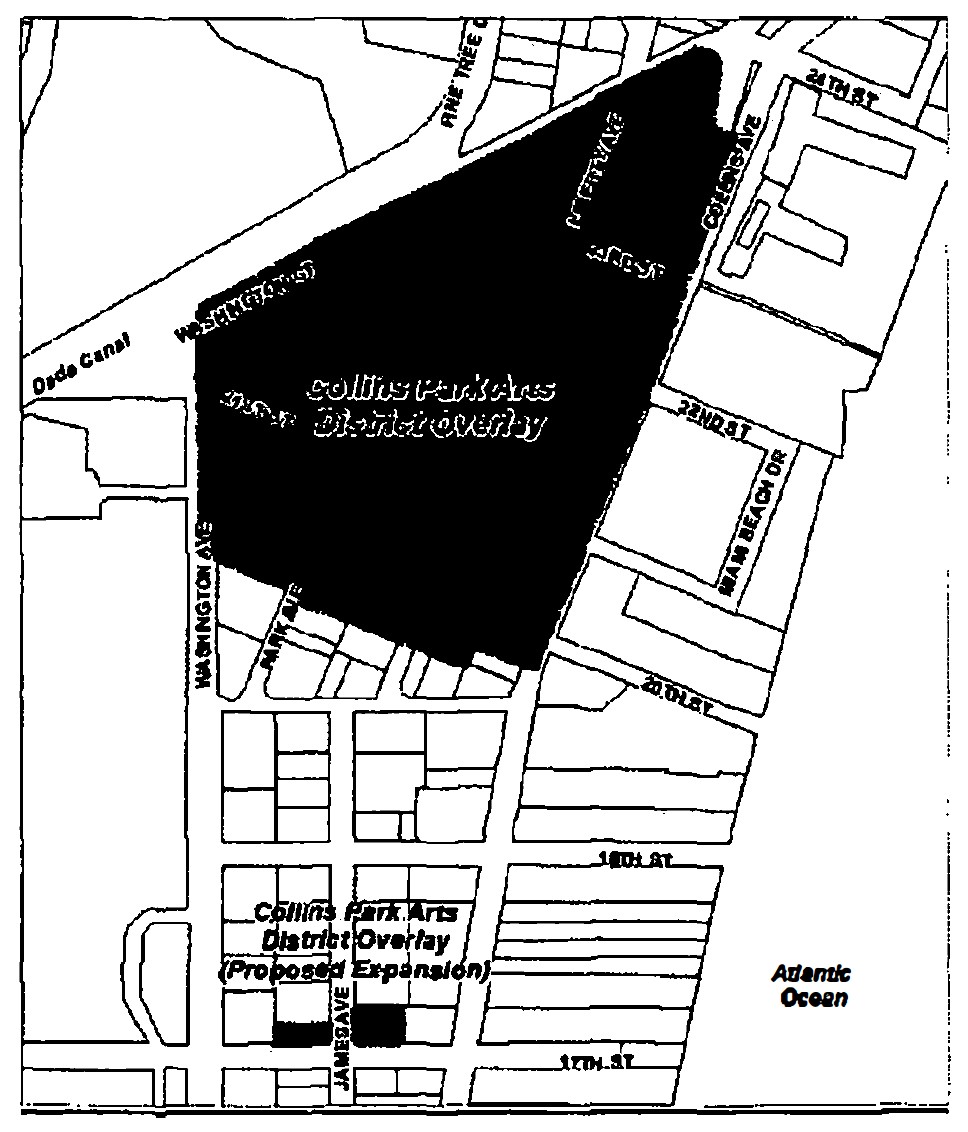
- The purpose of this overlay district is to provide land-use incentives to property owners, developers and commercial businesses to encourage arts-related businesses within the district.
7.3.4.2 Compliance with regulations (Collins Park Arts District Overlay).
The following overlay regulations shall apply to the Collins Park Arts District Overlay. All development regulations in the underlying zoning district shall apply, except as follows, and for any regulations in conflict, the following shall control:
- Outdoor entertainment establishments may be approved as a conditional use by the planning board in areas with an underlying CD-2 or CD-3 zoning designation. and subject to the following additional regulations:
- Outdoor entertainment shall commence no earlier than 10:00 a.m.
- Outdoor entertainment shall cease no later than 10:00 p.m. on Sundays through Thursdays, and midnight on Fridays and Saturdays.
- For purposes of this subsection, outdoor entertainment shall not exceed an ambient, background volume levels (i.e. a volume that does not interfere with normal conversation), unless otherwise approved by the planning board through the conditional use process.
- Outdoor entertainment may be approved as a conditional use by the planning board as an accessory use to a hotel use, in areas of the overlay north of 19th Street with an underlying RM-2 zoning designation, subject to the following regulations:
- Sidewalk cafés shall be limited to 30 seats.
- Restaurants shall not exceed 3,000 square feet.
- Outdoor entertainment shall commence no earlier than 10:00 a.m.
- Outdoor entertainment shall cease no later than 10:00 p.m. on Sundays through Thursdays. and midnight on Fridays and Saturdays.
- For purposes of this subsection. outdoor entertainment shall not exceed an ambient volume level (i.e. a volume that does not interfere with normal conversation).
- Outdoor entertainment shall not be located above the ground floor.
- lndoor entertainment may be approved as a conditional use by the planninq board as an accessory use to a restaurant or hotel, in areas of the overlay with an underlying RM-2 zoning designation.
- Museums, art galleries and related cultural uses shall be permitted the as an accessory use to an apartment, apartment-hotel or hotel in areas of the overlay with an underlying RM-2 zoning designation.
- Notwithstanding the requirements of subsection a above, neighborhood impact establishment occupancy thresholds, as defined in section 1.2.2, shall not be exceeded unless approved by the planning board.
7.3.5.1 Location and purpose (FAENA District Overla).
The overlay regulations of this division shall apply to the properties identified in the Overlay Map below:
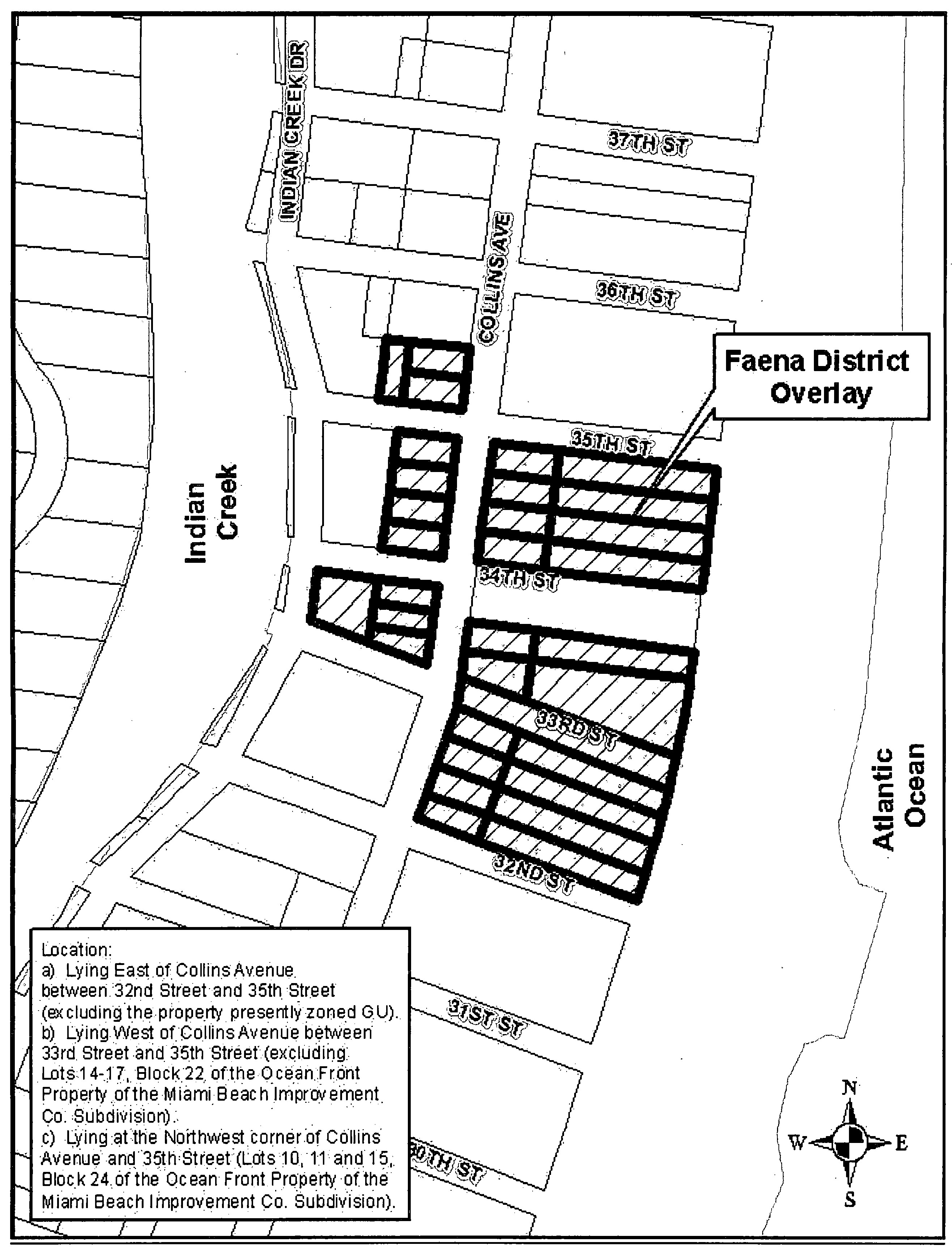
The purpose of this overlay district is to allow limited flexibility of uses, limited increases in heights, and limited flexibility in setbacks because of the common ownership and operation of the properties within the overlay district and the value of preserving historic buildings within the overlay district.
7.3.5.2 Definitions (FAENA District Overla).
For this division, the following definitions shall apply:
- Place of assembly shall mean an establishment that may have fixed seating, that is not used for retail sales and service, restaurant, office or hotel, and may include a “hall for hire” use whether for a private event or a public event.
- Hall for hire shall mean an establishment which rents space and may provide tables, chairs, catering, decor, or sound systems in order to hold or host a private event.
- A place of assembly may provide dancing and serve alcoholic beverages and food associated with an event, but shall not operate or be licensed as a “stand alone” alcoholic beverage establishment, entertainment establishment, bar, dance hall, or restaurant. A single entity may not lease the place of assembly for more than twenty (20) days, per calendar year.
- Works of art means the application of skill and taste to the production of tangible objects, according to aesthetic principles, including, but not limited to, paintings, sculptures, engravings, carvings, frescos, mobiles, murals, collages, mosaics, statues, bas-reliefs, tapestries, photographs and drawings, or combinations thereof.
7.3.5.3 Compliance with regulations (FAENA District Overla).
The following overlay regulations shall apply to the FAENA District Overlay. All development regulations in the underlying district regulations shall apply, except as follows:
- One place of assembly may be permitted as a main permitted use, within the areas that have an underlying zoning designation of RM-2, in accordance with the following minimum requirements:
- There shall be no outdoor live or outdoor amplified music.
- Except as may be required for fire or Florida Building Code/Fire Safety Code purposes, no speakers of any kind shall be affixed to, installed, or otherwise located on the exterior of the place of assembly.
- The interior sound system shall be installed in such a manner as to contain sound levels completely within the facility at all times. The equipment and installation plan for the sound system, including the location of all speakers and sound level controls, shall be submitted for review and approval by the planning department pursuant to the conditional use standards for approval of section 2.5.2.2. Ninety (90) days after obtaining the certificate of occupancy, the sound system(s) in the facility shall be tested by a qualified acoustic professional, and a report shall be submitted to the planning department for review and approval.
- A vestibule, consisting of at least two sets of doors, shall be installed at every exterior access point into the place of assembly.
- Normal operating hours are from 7:30 a.m. to 12:00 a.m., Sundays through Wednesdays; and 7:30 a.m. to 2:00 a.m., Thursdays through Saturdays, unless otherwise approved by the planning board, in accordance with section 2.5.2. After normal operating hours, the place of assembly shall remain closed and no patrons or other persons, other than those employed by the establishment, shall remain therein.
- The place of assembly shall have security staff posted outside of the place of assembly building, on the private property, at least one hour prior to the start time, during, and one hour after the ending time, of any event in excess of 250 persons, which occur prior to 9:00 p.m.; and for all events which occur on or after 9:00 p.m., regardless of the number of persons in attendance;
- After 9:00 p.m., no patrons shall be allowed to queue on any public rights-of-way, or anywhere on the exterior premises of a place of assembly, with the exception of exterior premises fronting Collins Avenue. Security staff shall monitor the crowds to ensure that they do not interfere with the free-flow of pedestrians on the public sidewalk.
- Security staff shall monitor patron circulation and occupancy levels during; and one hour after, the hours of operation for events in excess of 250 persons, which occur prior to 9:00 p.m.; and for all events which occur on or after 9:00 p.m., regardless of the number of persons in attendance.
- Prior to the issuance of a certificate of occupancy, the owner/operator shall submit an operational plan and narrative for the place of assembly, subject to the review and approval of the planning department pursuant to the conditional use review guidelines of section 2.5.2.2. Such plan shall include, but not be limited to: full details of the operation, deliveries, sanitation, security and crowd control.
- Street flyers and handbills shall not be permitted including, but not limited to, those from third-party promotions.
- Deliveries shall only be permitted between 8:00 a.m. and 5:00 p.m. on weekdays (Monday through Friday), and 9:00 a.m. and 5:00 p.m. on weekends (Saturday and Sunday), unless otherwise approved by the planning board, in accordance with section 2.5.2.
- Trash pick-up shall only be permitted between 8:00 a.m. and 5:00 p.m. on weekdays (Monday through Friday) and 9:00 a.m. and 5:00 p.m. on weekends (Saturday and Sunday), unless otherwise approved by the planning board, in accordance with section 2.5.2. Trash pick-up shall take place on a daily basis while the place of assembly is in operation. All trash containers shall utilize rubber wheels, as well as a path consisting of a surface finish that reduces noise, and all trash dumpsters shall be closed at all times except when in use.
- The owner/operator shall be responsible for maintaining the areas adjacent to the facility including, but not limited to, the sidewalk, and public rights-of-way. At a minimum, these areas shall be kept free of trash, debris and odor, and shall be swept and hosed down at the end of each business day.
- All valet parking ramps, vehicles for hire, including, but not limited to, taxis, drop-off and pick-up shall occur within the confines of the private property. Valet parking ramps, vehicles for hire, including, but not limited to, taxis, drop-off and pick-up shall be prohibited on city streets, sidewalks and public rights-ofway, unless otherwise approved by, respectively, the planning and parking departments, with notice to adjacent and across the street property owners, in accordance with the review standards of section 2.5.2. A contract with a valet operator shall be submitted to the parking department for review and approval prior to the city’s issuance of a certificate of occupancy.
- If the owner or operator of the place of assembly is issued six or more valid code enforcement violations within a twelve (12) month consecutive period, or fails to comply with the requirements of these regulations, the place of assembly shall fall under the purview of the planning board and may be reviewed, modified, or terminated for noncompliance after planning board review, in accordance with section 2.5.2.4. The twelve (12) month consecutive period would start upon the date of the issuance of the first valid violation and would renew every twelve (12) months thereafter. A citation that is dismissed, withdrawn or successfully appealed to the special magistrate shall not be considered valid.
- The planning director shall conduct periodic six-month reviews of operations of the place of assembly use, commencing at the issuance of the certificate of occupancy. Should the planning director find a material or substantial violation of these regulations or impact to the community not in compliance with the above regulations, the place of assembly shall be reviewed by the planning board, in accordance with the review standards of section 2.5.2.4.
- The required parking for a place of assembly is one space per 80 square feet of floor area available for seating.
- Within the areas that have an underlying zoning designation of RM-2, the main permitted use within an existing "Contributing" structure or replication of a "contributing" structure are:
- Retail.
- Office.
- Restaurants with an aggregate interior square footage not to exceed 1,750 square footage.
- Within the areas that have an underlying zoning designation of RM-2, restaurants exceeding an aggregate interior square footage of 1,750 square feet, and located within an existing "contributing" structure or replication of a "contributing" structure, shall require conditional use approval, in accordance with section 2.5.2.
- Within the areas that have an underlying zoning designation of RM-2, offices are a permitted accessory use to a place of assembly and a parking garage, whether a main use parking garage (commercial or non-commercial) or an accessory parking garage.
- Within the areas that have an underlying zoning designation of RM-2, there shall not be any open air entertainment establishments or outdoor entertainment establishments.
- Installation of a work of art, whether temporary or permanent, may be placed within required yard of a property located within the Faena District overlay subject to the following:
- It shall not be placed in or overhang above the public right-of-way unless a revocable permit is obtained pursuant to chapter 82, article III, division 2 of the General Ordinances.
- It shall not encroach into the safe sight triangles as depicted in the city public works manual. The 15-foot sides of the safe sight triangle shall be measured from the edges of the pavement of the two intersecting roadways.
- It shall not diminish the clear width of a sidewalk to less than 5 feet. iv. It shall not diminish landscaping to a level that would make the landscaping nonconforming.
- It shall be subject to review and approval of a certificate of appropriateness by the historic preservation board.
- Within areas that have an underlying zoning designation of RM-3, lots which are oceanfront lots with a lot area greater than 70,000 square feet that also contain a contributing historic structure shall have a maximum height of 221 feet.
- Any building with a height exceeding 203 feet shall have a front setback of 75 feet as measured to the closest face of a balcony.
- Within areas that have an underlying zoning designation of RM-3, lots which are oceanfront lots with a lot area greater than 70,000 square feet that also contain a contributing historic structure:
- The required pedestal and tower side street setback for alterations to and extensions of a contributing historic structure shall be equal to the existing setback of the contributing historic structure.
- The required pedestal side street setback for attached or detached additions to a contributing historic structure that are located on the ground is zero (0) feet.
- The subterranean, pedestal, and tower interior side setbacks shall be zero (0) feet for properties abutting a GU zoned parcel, and which also provide a view corridor between an existing contributing building and the construction of a detached ground level addition, subject to the review and approval of the historic preservation board, in accordance with the certificate of appropriateness review criteria.
- There are no required sum of the side yard setbacks for pedestal or tower side setbacks.
- The required subterranean rear setback is 46 feet from the bulkhead line.
- The required subterranean front setback is 15 feet.
- The required front setback for at-grade parking and driveways is 8 feet, 6 inches.
- The maximum permitted width of a porte-cochere for a contributing building may exceed the requirements of allowable encroachments as outlined in city code section 7.5.3.2, not to exceed the width of an original porte-cochere. The maximum permitted height of such porte-cochere shall be 19 feet.
- The term "grade, average existing" which means the average grade elevation calculated by averaging spot elevations of the existing topography taken at 10-foot intervals along the property lines, shall be substituted for the term "grade" for purposes of fence and wall heights and setbacks. However, a fence or wall which faces Collins Avenue shall be measured from grade (the city sidewalk elevation at the centerline of the front of the property).
- Oceanfront lots with a lot area of at least 65,000 square feet that contain a contributing historic structure that is retained and preserved in a manner to be approved by the historic preservation board shall be entitled to bonus floor area of up to 5,000 square feet above the allowable floor-area ratio.
7.3.6.1 Location and purpose (Ocean Terrace Overlay).
- The overlay regulations of this division shall apply to the properties identified in the map below:
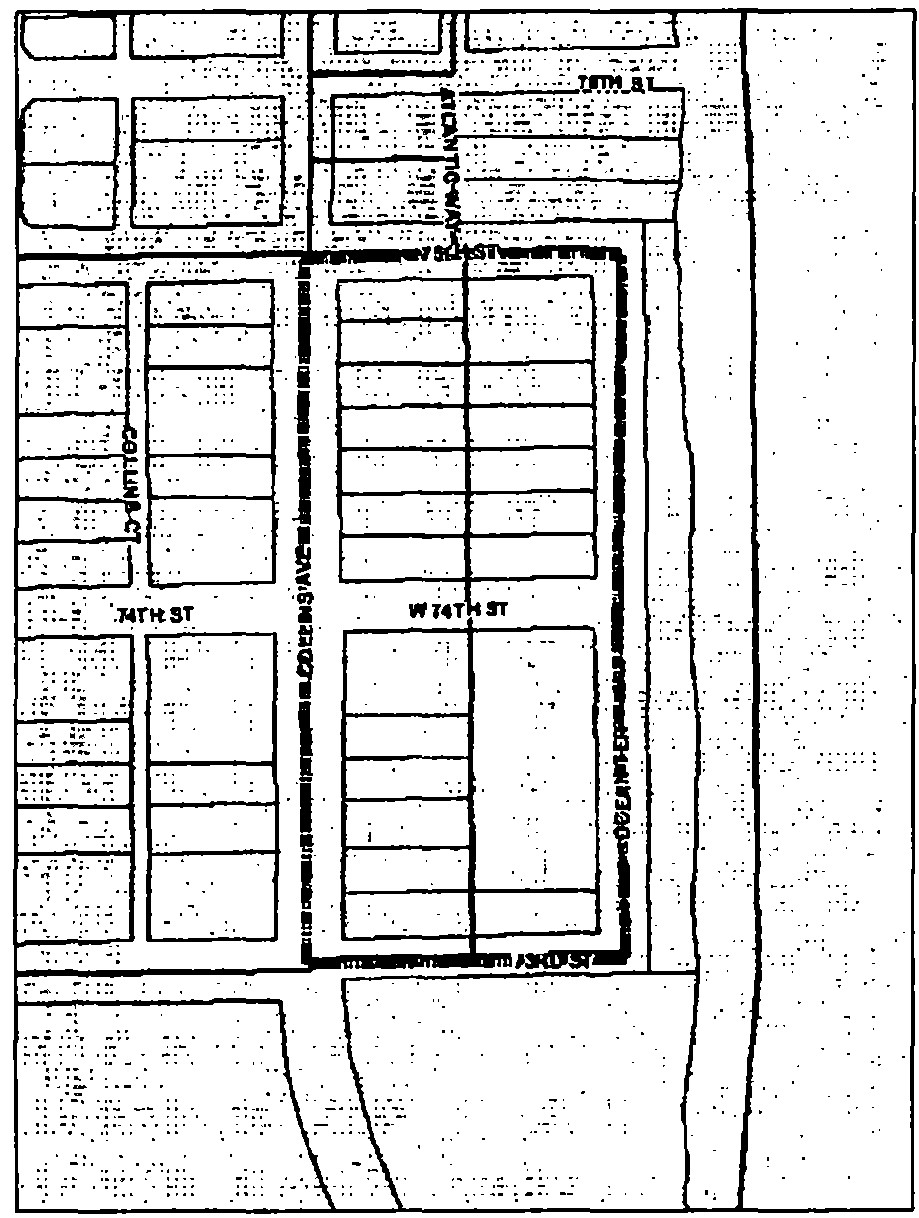
- The purpose of this overlay district is to:
- Stimulate neighborhood revitalization and encourage new development and renovation of important historic buildings within the Ocean Terrace/Collins Avenue corridor.
- Encourage private property owners to assemble and redevelop properties comprehensively rather than in a piecemeal fashion.
- Improve the pedestrian environment of the neighborhood.
- Maintain the scale, massing and character of the existing building typology adjacent to the public sidewalks.
7.3.6.2 Compliance with regulations (Ocean Terrace Overlay).
The following overlay regulations shall apply to the Ocean Terrace Overlay. All development regulations in the underlying regulations shall apply, except as follows:
- Setbacks.
- When a lot or combination of lots abuts two (2) or more streets, the required yards shall be classified as follows:
- Front. The areas abutting Collins Avenue and Ocean Terrace.
- Side, Street. The areas abutting either 73rd, 74th or 75th Streets.
- Side, Interior. The areas abutting an adjacent property. For a lot or combination of lots that have two (2) front setbacks as defined in this section, the remaining yards not facing a street shall be classified as a side interior.
- Pedestal. Pedestal shall means that portion of a building or structure which is equal to or less than 40 feet in height. The Historic Preservation Board may allow for an increase in the pedestal height not to exceed 45 feet in height in accordance with the certificate of appropriateness criteria in chapter 2, article XIII of these land development regulations.
- Front:
- For buildings situated on properties fronting Collins Avenue, 0 feet for the first 25 feet of building height, or the height of the existing building, whichever is greater. 5 feet for those portions of new buildings within the remaining pedestal height.
- For buildings situated on properties fronting Ocean Terrace, 5 feet for the first 20 feet of building height, or the height of the existing building, whichever is greater, 20 feet for those portions of new buildings within the remaining pedestal height.
- Side street. For properties fronting 75th Street, zero (0) feet, regardless of the underlying zoning designation. For properties fronting 73rd or 74th Street, regardless of the underlying zoning designation, zero (0) feet for the first 20 feet of building height, or the height of the existing building, whichever is greater and 20 feet for those portions of new buildings within the remaining pedestal height.
- Side interior.
- For buildings situated on properties fronting Collins Avenue, zero (0)feet.
- For buildings situated on properties fronting Ocean Terrace, 7.5 feet.
- Front:
- Tower. Tower means that portion of a building or structure which exceeds 40 feet in height. Notwithstanding the foregoing, should the Historic Preservation Board allow for an increase in the pedestal height not to exceed 45 feet in height, in accordance with the certificate of appropriateness criteria in chapter 2, article XIII of these land development regulations, the tower height shall be measured from the pedestal height approved by the Historic Preservation Board.
- Front.
- For buildings situated on properties fronting Collins Avenue, 30 feet.
- For buildings situated on properties fronting Ocean Terrace, 55 feet.
- Side street. 25 feet for the first 125 feet of building height, 50 feet for those portions of new buildings within the remaining tower height, regardless of the underlying zoning designation.
- Side interior. 20 feet regardless of the underlying zoning designation.
- Front.
- Subterranean. Zero (0) feet for all yards regardless of the underlying zoning designation.
- [Exceptions.] The historic preservation board may allow for a decrease in the above noted minimum setback requirements, but no less than the minimum setback requirements in the underlying zoning district regulations, in accordance with the certificate of appropriateness criteria in chapter 2, article XIII of these land development regulations.
- When a lot or combination of lots abuts two (2) or more streets, the required yards shall be classified as follows:
- Allowable encroachments and projections, consistent with section 7.5.3.2.o, within required yards.
- Exterior unenclosed private balconies and pool decks.
- For buildings situated on properties fronting Collins Avenue, allowable encroachment is 7 feet and 6 inches into any required yard.
- For buildings situated on properties fronting Ocean Terrace:
- Allowable front yard encroachments are:
- 12 feet for the pedestal, and
- 10 feet for the tower.
- Allowable side interior yard encroachment is 6 feet.
- Allowable front yard encroachments are:
- Ground level porches, platforms and terraces (up to 30 inches above the elevation of the lot) are allowed to project into a required yard for a distance not to exceed 50 percent (50%) of the required yard up to a maximum projection of 5 feet.
- Exterior unenclosed private balconies and pool decks.
- Height.
- For main use residential buildings: Lot area less than 20,000 square feet—The maximum height is based on the underlying zoning regulations; lot area equal to or greater than 20,000 square feet and having frontage on both Collins Avenue and Ocean Terrace—235 feet.
- For main use hotel buildings: Lot area less than 20,000 square feet—The maximum height is based on the underlying zoning regulations; lot area equal to or greater than 20,000 square feet and having frontage on both Collins Avenue and Ocean Terrace—125 feet.
- All other buildings the maximum height is as provided in the underlying zoning regulations.
- Floor plate. The maximum floor plate size for the tower portion of a building is 10,000 square feet, including balconies, per floor. The historic preservation board may allow for an increase in the overall floor plate, up to a maximum of 15,000 square feet, including balconies, per floor, in accordance with the certificate of appropriateness criteria in chapter 2, article XIII of these land development regulations .
- Building separation. All new construction shall comply with the following, as applicable:
- For any portion of new construction greater than 60 feet in height, the minimum horizontal separation between the tower portion of two buildings, including balconies, is 60 feet.
- Two buildings used as a hotel may be connected in the tower portion of the buildings by a one-story, enclosed pedestrian bridge, for circulation purposes only, if approved by the historic preservation board in accordance with the certificate of appropriateness criteria in chapter 2, article XIII of these land development regulations.
- The separation requirement between two existing contributing structures, or between an existing contributing structure and a new building, may be waived by the historic preservation board in accordance with the certificate of appropriateness criteria in chapter 2, article XIII of these land development regulations.
- Permitted uses.
- The main permitted uses in the Ocean Terrace Overlay District are:
- Apartments;
- Apartment/hotels;
- Hotels;
- Commercial;
- Uses that serve alcoholic beverages as listed in chapter 6 (alcoholic beverages) or as specified elsewhere in the land development regulations.
- The conditional uses in the Ocean Terrace Overlay District are:
- Public and private cultural institutions open to the public;
- Banquet facilities, defined as an establishment that provides catering and entertainment to private parties on the premises and are not otherwise accessory to another main use;
- Outdoor entertainment establishments;
- Neighborhood impact establishments;
- Open air entertainment establishments;
- Main use parking garages;
- Public and private institutions;
- Food store selling alcoholic beverages.
- The main permitted uses in the Ocean Terrace Overlay District are:
- Prohibited uses.
- Package alcohol store.
- Hostels.
- Additional development regulations. Buildings with frontage on Collins Avenue shall have either retail or restaurant uses (which may include neighborhood impact establishment uses) on the front 50 feet of depth of the ground floor with an entrance that opens onto Collins Avenue. Buildings with frontage on Ocean Terrace shall have active uses on the ground floor with an entrance that opens onto Ocean Terrace.
7.3.7.1 Location and purpose (Art Deco Commercial Character Overlay District).
- There is hereby created the Art Deco/Mimo Commercial Character Overlay District (the "overlay district"). The overlay district consists of the properties in the South Beach Art Deco Area identified in the map below in this subsection (a) The South Beach Art Deco Area is generally located east of the western lot lines of properties fronting the west side of Washington Avenue between 5th Street on the south and 23rd street on the north and located west of the ocean:

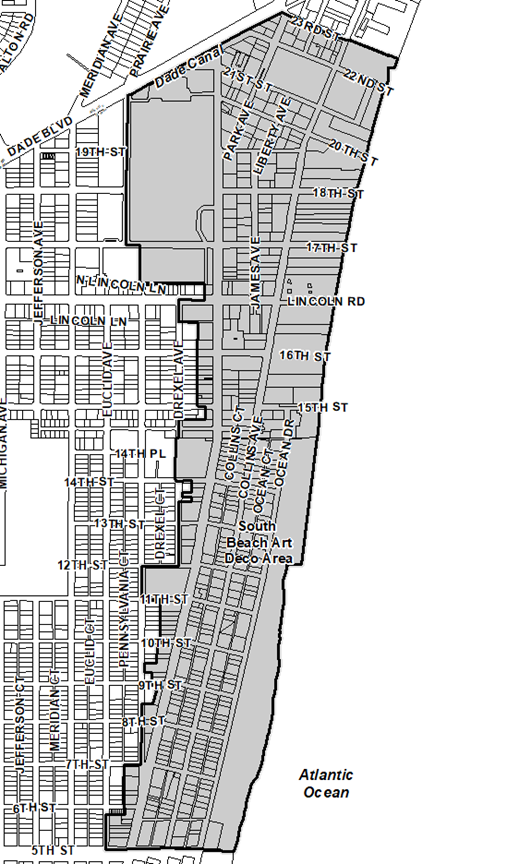
- RESERVED .
- The purpose of this overlay district is to limit the proliferation of uses which may diminish the character of historic commercial areas within the city. This overlay district is designed based on and intended to achieve the following:
- Properties fronting Ocean Drive and Collins Avenue that have a zoning designation of MXE mixed use entertainment are located in the Ocean Drive/Collins Avenue historic district, as well as the Miami Beach Architectural National Register Historic District;
- Properties fronting Washington Avenue that have a zoning designation of CD-2 commercial medium intensity district, are located in the Flamingo Park historic district and the Miami Beach Architectural National Register Historic District;
- Ocean Drive, Collins Avenue, and Washington Avenue are some of the premier streets in Miami Beach and provide residents and visitors with a unique cultural, retail, and dining experience and are vital to Miami Beach's economy, especially the tourism industry;
- Formula commercial establishments and formula restaurants are establishments with multiple locations and standardized features or a recognizable appearance, where recognition is dependent upon the repetition of the same characteristics of one store in multiple locations;
- Formula commercial establishments and formula restaurants are increasing in number along Ocean Drive and within other historic districts;
- The sameness of formula commercial establishments, while providing clear branding for retailers, conflicts with the city's Vision Statement which includes creating "A Unique Urban and Historic Environment";
- Notwithstanding the marketability of a retailer's goods or services or the visual attractiveness of the storefront, the standardized architecture, color schemes, decor and signage of many formula commercial establishments detract from the distinctive character and aesthetics of the historic districts;
- The increase of formula commercial establishments hampers the unique cultural, retail, and dining experience in commercial and mixed-use areas of the city's historic districts;
- Specifically, the proliferation of formula commercial establishments may unduly limit or eliminate business establishment opportunities for non-traditional or unique businesses, thereby decreasing the diversity of cultural, retail, and dining services available to residents and visitors;
- The homogenizing effect of formula commercial establishments, based on their reliance on standardized branding, increases if the size of the establishment, the number of locations or size or use of branded elements is greater;
- The increased level of homogeneity detracts from the uniqueness of the historic districts, which thrive on a high level of interest maintained by a mix of cultural, retail, and dining experiences that are not found elsewhere in the country;
- Sidewalk cafés are central to the economy of Ocean Drive and enhance the pedestrian experience and historic and cosmopolitan character of the street;
- It is not the intent of the city to limit interstate commerce, but rather to maintain the historic character of neighborhoods and promote their unique cultural, retail, and dining experiences that are vital to the city's economy;
- It is the intent of the city that if an establishment that has multiple locations and standardized features or a recognizable appearance seeks to locate within certain areas affected by this division that such establishment provide a distinct array of merchandise, facade, decor, color scheme, uniform apparel, signs, logos, trademarks, and service marks;
- Convenience stores, pharmacy stores and formula eating establishments have similar impacts to the unique character of this important area of the city as formula stores;
- Check cashing stores, pawnshops, souvenir arid t-shirt shops, tattoo studios, fortune tellers (occult science establishments), massage therapy center, and package liquor stores are uses which negatively affect surrounding areas; and
- It is the intent of the city to limit the number of establishments which may negatively affect surrounding areas.
7.3.7.2 Compliance with regulations (Art Deco/Mimo Commercial Character Overlay District).
The following regulations shall apply to the overlay district. There shall be no variances allowed from these regulations. All development regulations in the underlying zoning district and any other applicable overlay regulations shall apply, except as follows:
- The following limitations shall apply to the commercial uses listed below:
- Check cashing stores shall comply with the following regulations:
- Such establishments shall be prohibited on lots fronting Ocean Drive.
- In areas of the overlay district not included in section 7.3.7.1.a above, there shall be no more than two (2) such establishments. Such establishments shall be located no closer than 2,500 feet from any other such establishment.
- Convenience stores shall comply with the following regulations:
- Such establishments shall be prohibited on lots fronting Ocean Drive.
- In areas of the Overlay District not included in section 7.3.7.1. a and b above, there shall be no more than five (5) such establishments. Such establishments shall be located no closer than 2,500 feet from any other such establishment.
- Formula commercial establishments shall comply with the following regulations:
- Such establishments shall be prohibited on lots fronting Ocean Drive.
- This subsection shall not apply to any establishments in the South Beach Art Deco Area other than establishments fronting Ocean Drive.
- Formula restaurants shall comply with the following regulations:
- Such establishments shall be prohibited on lots fronting Ocean Drive.
- This subsection shall not apply to any establishments in the South Beach Art Deco Area other than establishments fronting Ocean Drive .
- Massage therapy centers shall not operate between 9:00 pm and 7:00 am in the overlay district.
- Marijuana dispensaries shall be prohibited in the overlay district.
- Occult science establishments shall be prohibited in the overlay district.
- Package stores shall comply with the following regulations:
- Such establishments shall be prohibited on lots in the South Beach Art Deco Area with an underlying MXE zoning designation.
- In areas of the overlay district not included in section 7.3.7.1.a above, there shall be no more than three (3) such establishments. Such establishments shall be located no closer than 2,500 feet from any other such establishment.
- Pawnshops shall be prohibited in the overlay district.
- Pharmacy stores shall comply with the following regulations:
- Such uses shall be prohibited on lots fronting Ocean Drive.
- In areas of the overlay district not included in section 7.3.7.1. a and b above, there shall be no more than five (5) such establishments. Such establishments shall be located no closer than 2,500 feet from any other such establishment.
- Souvenir and t-shirt shops shall comply with the following regulations:
- Such establishments shall be prohibited on lots fronting Ocean Drive.
- In areas of the overlay district not included in section 7.3.7.1.a above, there shall be no more than five (5) such establishments. Such establishments shall be located no closer than 2,500 feet from any other such establishment.
- Tattoo studios shall comply with the following regulations:
- Such uses shall be prohibited on lots fronting Ocean Drive.
- In areas of the overlay district not included in section 7.3.7.1.a above, there shall be no more than three (3) such establishments. Such establishments shall be located no closer than 2,500 feet from any other such establishment.
- Grocery stores shall comply with the following regulations:
- Such establishments shall be prohibited on lots fronting Ocean Drive. (MAP EXHIBIT-3)
- In areas of the overlay district not included in section 7.3.7.1.a above, there shall be no more than five (5) such establishments. Such establishments shall be located no closer than 2,500 feet from any other such establishment.
- Tobacco/vape dealers shall be prohibited in the overlay district.
- Check cashing stores shall comply with the following regulations:
- Review procedures.
- Commercial establishments in the overlay district that are not identified in section 7.3.7.2.a shall comply with the following regulations:
- A signed affidavit indicating that they are not an establishment that is regulated by section 7.3.7.2.a shall be provided to the city as part of the application for obtaining a business tax receipt and building permit, as applicable.
- If the establishment is found not to be in compliance with the applicable requirements of the signed affidavit, the business tax receipt will be revoked and the establishment shall immediately cease operation.
- Commercial establishments in the overlay district that are identified in section 7.3.7.2.a shall comply with the following regulations:
- If applicable, the applicant shall provide a signed and sealed survey dated not older than six (6) months, indicating the number, location, name, business tax receipt numbers, and separation of the applicable type of establishments within the overlay district. Distance separation shall be measured as a straight line between the principal means of entrance of each establishment and the proposed establishment.
- Establishments existing as of the date of the enactment of this ordinance shall count towards the maximum number of such establishments permitted within section 7.3.7.2.a.
- A signed affidavit indicating compliance with the regulations of section 7.3.7.2.a for the applicable type of establishment shall be provided prior to obtaining a business tax receipt.
- If the establishment is found not to be in compliance with the applicable requirements of the signed affidavit, the business tax receipt will be revoked and the establishment shall immediately cease operation.
- If a particular establishment meets more than one definition (i.e., formula commercial establishment and pharmacy store), it must meet the requirements for each use, and if there is a conflict, the more stringent code requirement shall control.
- Commercial establishments in the overlay district that are not identified in section 7.3.7.2.a shall comply with the following regulations:
7.3.7.3 Applicability (Art Deco/Mimo Commercial Character Overlay District).
Notwithstanding any provision of these regulations to the contrary, the overlay ordinance shall not apply to real property that satisfies all of the foregoing criteria:
- The property fronts Ocean Drive:
- The property has a received an order from the historic preservation board for a substantial rehabilitation, issued between January 1, 2017 and September 13, 2017, provided a full building permit is issued pursuant to such order within the allowable timeframes set forth in chapter 2 of the land development regulations of the City Code.
- Any property described above will become legal nonconforming and, consistent with the city's land development regulations that address nonconformities, shall be permitted to continue as a legal nonconforming use in accordance with the applicable provisions of chapter 2 of the land development regulations of the City Code.
- In the event the above-noted order of the historic preservation board should expire prior to the issuance of a building permit, any property described above shall conform with all the provisions under chapter 1 and chapter 7 of this Code.
7.3.8.1 Location and purpose (North Beach National Register Conservation District Overlay).
- The overlay regulations of this division shall apply to all new and existing properties located in the RM-1 Residential Multifamily Low Intensity zoning district, which are located within the boundaries of either the North Shore National Register Historic District or the Normandy Isles National Register Historic District.
- In the event of a conflict with the regulations of the underlying RM-1 zoning district, the provisions herein shall control.
- The purpose of this overlay district is to:
- Provide land-use regulations that encourage the retention and preservation of existing "contributing" buildings within the National Register Districts.
- To promote walking, bicycling and public transit modes of transportation.
- To ensure that the scale and massing of new development is consistent with the established context of the existing residential neighborhoods and maintains the low-scale, as-built character of the surrounding neighborhoods.
7.3.8.2 Compliance with regulations (North Beach National Register Conservation District Overlay).
- Applications for a building permit shall be reviewed and approved in accordance with all applicable development procedures specified in chapter 2 of these Land Development Regulations.
- Existing structures shall be rehabilitated in general accordance with the Post-War Modern/MiMo Design Guidelines as adopted by the design review board and historic preservation board.
- The demolition of buildings within the North Beach National Register Conservation District Overlay shall comply with the following:
- The demolition of a "contributing" building shall not be permitted for purposes of creating a vacant lot or a surface parking lot.
- No demolition permit for a "contributing" building not located within a local historic district or site, shall be issued prior to the review and approval for the new construction or site improvements by the design review board and until all of the following criteria are satisfied:
- The issuance of a building permit process number for the new construction;
- The building permit application and all required plans for the new construction shall be reviewed and approved by the planning department;
- All applicable fees for the new construction shall be paid, including, but not limited to, building permit and impact fees, as well as applicable concurrency and parking impact fees;
- A tree survey, if required, shall be submitted and a replacement plan, if required, shall be reviewed and approved by the Greenspace Management Division;
- All debris associated with the demolition of the structure shall be recycled, in accordance with the applicable requirements of the Florida Building Code.
- The aforementioned demolition requirements shall not supersede the regulations and requirements set forth in chapter 2, article XIII of these land development regulations. In the event of a conflict, the regulations in chapter 2, article XIII of these land development regulations shall control.
7.3.8.3 Development regulations and area requirements (North Beach National Register Conservation District Overlay).
The following overlay regulations shall apply to the North Beach National Register Conservation District Overlay. All development regulations in the underlying RM-1 regulations shall apply, except as follows:
- There shall be no limitation for properties zoned RM-1 within the North Beach National Register Conservation District Overlay. The lot area, lot width, and lot aggregation requirements for properties zoned RM-1 within the North Beach National Register Conservation District Overlay district are as follows:
| Minimum Developable Lot Area (Square Feet) | Minimum Developable Lot Width (Feet) | Maximum Developable Lot Width (Feet) | Maximum Developable Aggregation (Platted Lots) |
| 5,000 square feet | 50 feet | 200 feet Developments where all residential units consist of workforce or affordable housing shall have no maximum lot width restriction. | Subject to section 7.3.8.4, two (2) lot maximum aggregation; up to three (3) lots may be aggregated, if permitted by the historic preservation or design review board, as applicable, and if all "contributing" buildings on the aggregated site are substantially retained and restored in accordance with section 7.3.8.4; five (5) lot maximum lot aggregation may be permitted if all residential units consist of workforce or affordable housing for a period of no less than fifty (50) years. Educational and religious institutions, existing as of April 21, 2018, and located on lots consisting of more than two (2) platted lots may be retained, provided all existing buildings on the lot are retained. There shall be no variances from these maximum lot aggregation restrictions, except for existing lots where all structures are proposed to be retained, and provided no additional lots are added. |
- The unit size requirements for the North Beach National Register Overlay district are as follows:
| Minimum Unit Size (Square Feet} | Average Unit Size (Square Feet} |
| New construction—400 | New construction—500 |
| Workforce or affordable housing—400 | |
| "Contributing" buildings which are substantially retained and restored—300 | "Contributing" buildings which are substantially retained and restored—400 |
| Additions to "contributing" buildings which are substantially retained and restored—300 | Additions to "contributing" buildings which are substantially retained and restored—400 |
- The height requirements for RM-1 properties within the North Beach National Register Conservation District Overlay are as follows:
- The maximum building height for new construction shall be 32 feet for the first 25 feet of building depth, as measured from the minimum required front setback and a maximum of 45 feet for the remainder of the building depth. The design review or historic preservation board, as applicable, may allow for up to the first 32 feet in height to be located within the first 20 feet of building depth, as measured from the minimum required front setback.
For properties that contain at least one "contributing" building, and provided that at least 50 percent (50%) of all existing "contributing" buildings on site, as measured from the front elevation, are substantially retained and restored a maximum of 55 feet may be permitted by the design review board or historic preservation board, as applicable. The design review board may waive the aforementioned requirement for the 50 percent (50%) retention of existing "contributing" buildings, provided at least 25 percent (25%) of all existing "contributing" buildings on site, as measured from the front elevation, are substantially retained and restored. For properties located within local historic districts, the historic preservation board, at its sole discretion, shall determine the retention requirements for all "contributing" buildings. - In the event that the existing building exceeds 32 feet in height that existing height shall control.
- Rooftop additions to existing "contributing" buildings, not located within a local historic district, may be reviewed and approved at the administrative level, in accordance with the following:
- The roof-top addition shall not exceed one (1) story, with a maximum floor-to-ceiling height of 10 feet.
- There shall be no demolition of original significant architectural features, as determined by the planning director or designee.
- The roof-top addition shall be setback a minimum of 20 feet from the front facade.
- A minimum of 75 percent (75%) of the front and street side building elevations shall be retained.
- Elevator and stairwell bulkheads extending above the main roofline of a building shall be required to meet the line-of-sight requirements set forth in section 7.5.2 herein and such line-of-sight requirement, unless waived by either the historic preservation board or design review board, as may be applicable.
- Shade structures, including awnings, trellises and canopies may be permitted as an allowable height exception, provided they do not exceed 10 feet in height above the associated roof deck, and shall be subject to the review and approval of the historic preservation board or design review board, as applicable.
- The maximum building height for new construction shall be 32 feet for the first 25 feet of building depth, as measured from the minimum required front setback and a maximum of 45 feet for the remainder of the building depth. The design review or historic preservation board, as applicable, may allow for up to the first 32 feet in height to be located within the first 20 feet of building depth, as measured from the minimum required front setback.
- Exterior building and lot standards.
- Ground floor requirements. When parking or amenity areas are provided at the ground floor level below the first habitable level, the following requirements shall apply:
- A minimum height of 12 feet shall be provided, as measured from base flood elevation plus minimum freeboard to the underside of the first floor slab. The design review board or historic preservation board, as applicable, may waive this height requirement by up to 2 feet, in accordance with the design review of certificate of appropriateness criteria, as applicable.
- All ceiling and sidewall conduits shall be internalized or designed in such a manner as to be part of the architectural language of the building in accordance with the design review or certificate of appropriateness criteria, as applicable.
- Active outdoor spaces that promote walkability, social integration, and safety shall be provided at the ground level, in accordance with the design review or certificate of appropriateness criteria, as applicable.
- There shall be no minimum or maximum yard elevation requirements, or maximum lot coverage requirements within the North Beach National Register Overlay.
- Ground floor requirements. When parking or amenity areas are provided at the ground floor level below the first habitable level, the following requirements shall apply:
- The setback requirements for all buildings located in the RM-1 district within the North Beach National Register Conservation District Overlay are as follows:
| Front | Interior Side | Street Side | Rear | |
|---|---|---|---|---|
| North Shore | 10 feet | Non-waterfront: Lot width of 60 feet or less: 5 feet. Lot width of 61 feet or greater: 7.5 feet, or 8% of lot width, whichever is greater. Waterfront: 7.5 feet, or 8% of lot width, whichever is greater. Additionally, regardless of lot width, at least one interior side shall be 10 feet or 10 % of lot width, whichever is greater. | 5 feet | Non-waterfront lots: 5 feet Waterfront lots: 10 % of lot depth |
| Biscayne Beach | 10 feet | Non-waterfront: Lot width of 60 feet or less: 5 feet. Lot width of 61 feet or greater: 7.5 feet, or 8% of lot width, whichever is greater. Waterfront: 7.5 feet, or 8% of lot width, whichever is greater. Additionally, regardless of lot width, at least one interior side shall be 10 feet or 10 % of lot width, whichever is greater. | 5 feet | 10 % of lot depth |
| Normandy Isle and Normandy Shores | 20 feet Waterfront: 25 feet | Non-waterfront: Lot width of 60 feet or less: 5 feet. Lot width of 61 feet or greater: 7.5 feet, | 5 feet | 5 feet Waterfront: |
| or 8% of lot width, whichever is greater. Waterfront: 7.5 feet, or 8% of lot width, whichever is greater. Additionally, regardless of lot width, at least one interior side shall be 10 feet or 10 % of lot width, whichever is greater. | 10 % of lot depth, maximum 20 feet |
- Setbacks for at-grade parking and subterranean levels, if permitted, shall be the same as set forth in section 7.2.4.3.a.
- Notwithstanding the above, for rooftop additions located on "contributing" buildings, such additions may follow any existing nonconforming interior side or rear setbacks. Provided at least 33 percent (33%) of an existing "contributing" building, as measured from the front elevation, is substantially retained and restored, any new ground level addition, whether attached or detached, may also follow any existing nonconforming interior side or rear setbacks. For properties located within local historic districts, the historic preservation board, at its sole discretion, shall determine the retention requirements for all "contributing" buildings.
7.3.8.4 Lot aggregation guidelines (North Beach National Register Conservation District Overlay).
Where a development is proposed on two or more lots, if approved for an aggregation of greater than two (2) lots by the design review board or historic preservation board, as applicable, new construction shall comply with the following:
- For properties located outside of local historic districts, at least 33 percent (33%) of all existing “contributing” buildings, as measured from the front elevation, shall be substantially retained and restored. The design review board may waive this building retention requirement, provided at least 25 percent (25%) of each existing "contributing" buildings on site, as measured from the front elevation, is substantially retained and restored.
- For properties located within local historic districts, the historic preservation board, at its sole discretion, shall determine the retention requirements for all "contributing" buildings within the aggregated site.
- New construction shall acknowledge the original platting of the assembled parcels through separation of buildings and appropriate architectural treatment within the building's facade.
- For development sites consisting of two (2) platted lots or less, the width of any new building shall not exceed 85 feet.
- For development sites consisting of three (3) platted lots, the first 50 feet of building depth shall require a minimum separation of 10 feet for every 85 feet of building width within a single site. The design review or historic preservation board, as applicable, may waive these building width and separation requirements.
- For waterfront developments greater than two (2) lots in width, a view corridor through the parcel, open to the sky, shall be required. The location and dimensions of such view corridor shall be subject to the design review or historic preservation board, as applicable.
- A courtyard or semi-public outdoor area, comprised of at least 500 square feet, shall be required. Private terraces at the ground level may be included within this 500 square feet, provided individual units can be accessed directly from the exterior of the terrace.
The aforementioned requirements listed in section 7.3.8.4.b shall not be applicable to any development where all residential units consist of workforce or affordable housing,
7.3.8.5 Design and resiliency standards (North Beach National Register Conservation District Overlay).
- All levels of an existing structure located below base flood elevation plus one foot (BFE + 1 foot) may be repurposed with non-habitable uses.
- Subterranean levels shall only be permitted in the event that the space is purposed and designed as part of a stormwater management plan, including, but not limited to, stormwater collection and cisterns for reuse of captured water.
- All dwelling units in new construction shall be designed to incorporate exposure to natural light from at least two elevations of the building volume.
- New construction shall be designed to incorporate naturally landscaped areas at the ground level, in addition to the minimum setback requirements, which is equal to or greater than 5 percent (5%) of the total lot area.
- For new construction using common vertical circulation and access corridors, a non-emergency, convenience stair, accessing, at a minimum, the first three residential floors, shall be required. Such stair shall be designed in an open manner, and shall connect directly to the exterior of the building, or to the entrance lobby.
- For raised yards requiring a retaining wall, the exterior of such wall, on all sides, shall be designed and finished in a manner that result in a high quality appearance when seen from adjoining properties.
- Landscaping within view corridors, with the exception of canopy trees, shall be maintained at a height not to exceed 3 feet from sidewalk elevation.
- In all instances where the existing elevation of a site is modified, a site shall be designed with adequate infrastructure to retain all stormwater on site in accordance with all applicable state and local regulations.
7.3.8.6 Additional parking standards (North Beach National Register Conservation District Overlay).
- All parking shall be located no higher than the ground floor level. Ramps or parking above the first floor shall be prohibited. However, mechanical lifts may be proposed at the first level, provided all lifts are fully screened from view and not visible from adjacent properties, the public right-of-way or any waterfront.
- All exterior parking and driveway surface areas shall be composed of semi-pervious or pervious material such as concrete or grass pavers, set in sand.
- Required wheel stops shall be low profile and shall not exceed 5 feet in width.
- All parking areas shall meet minimum front and rear yard setback requirements for buildings.
- A maximum of a single, one-way driveway curb cut per platted lot within a development site shall be permitted, and the maximum width of a driveway curb cuts shall not exceed 10 feet. Additionally, if approved by the design review board or historic preservation board, as applicable, two separate one-way curb cuts may be permitted on a thru-lot, when such lot is accessible from two different roadways, or a corner lot.
- On waterfront lots, parking areas shall only be secured by substantially open, picket fencing within required front yards and rear waterfront yards.
7.3.9.1 Location and purpose (Sunset Harbour Mixed-Use Neighborhood Overlay District).
- There is hereby created the Sunset Harbour Mixed-Use Neighborhood Overlay District (the "overlay district").
The overlay district consists of the properties in the Sunset Harbour Area, which is generally bounded by Purdy Avenue to the west, 20th Street and the waterway to the north, Alton Road to the east, and Dade Boulevard to the south.
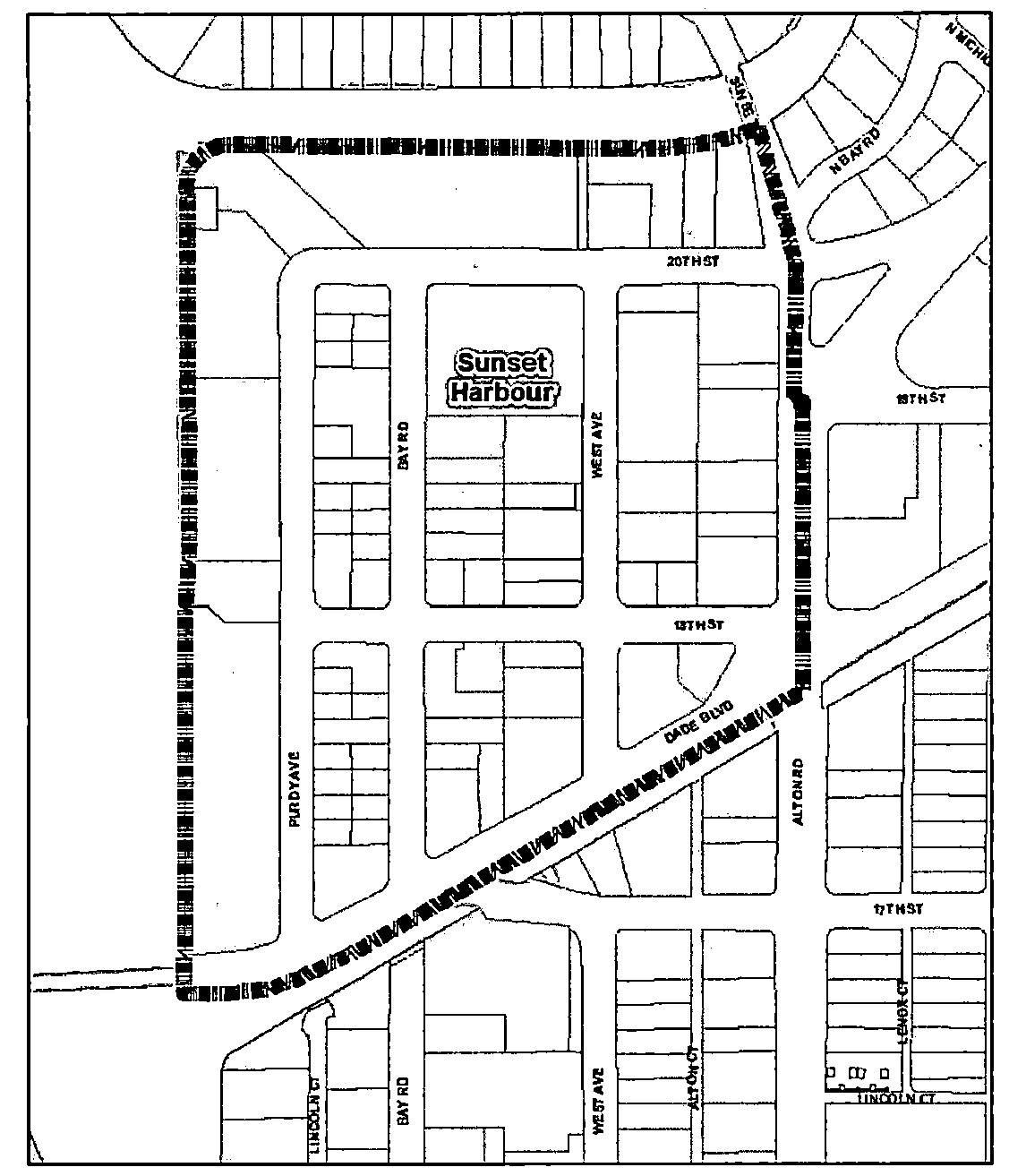
- The Sunset Harbour Mixed-Use Neighborhood Overlay District shall have two areas, as follows:
- Perimeter commercial corridors. The perimeter commercial corridors include the properties fronting Dade Boulevard between Bay Road on the west and Alton Road on the east; and the properties fronting Alton Road between Dade Boulevard on the south and 20th Street on the north.
- Neighborhood center. The neighborhood center includes all properties that are not within the perimeter commercial corridors, as described above.
- The purpose of this overlay district is to limit the proliferation of uses which may diminish the character of a unique mixed-use residential neighborhood within the city. This overlay district is designed based on and intended to achieve the following facts and intents:
- Sunset Harbour has evolved from what started as a primarily industrial and commercial neighborhood, into the present vibrant mixed-use residential neighborhood that provides area residents with a unique retail and dining experience;
- Formula commercial establishments and formula restaurants are establishments with multiple locations and standardized features or a recognizable appearance, where recognition is dependent upon the repetition of the same characteristics of one store or restaurant in multiple locations;
- Formula commercial establishments and formula restaurants are increasing in number in mixed-use and commercial districts within the city;
- The sameness of formula commercial establishments, while providing clear branding for retailers, counters the city's vision statement which includes creating "A Unique Urban and Historic Environment";
- Notwithstanding the marketability of a retailer's goods or services or the visual attractiveness of the storefront, the standardized architecture, color schemes, decor and signage of many formula commercial establishments detract from the distinctive character and aesthetics of unique mixed-use residential neighborhoods like the Sunset Harbour Neighborhood; and
- Specifically, the proliferation of formula commercial establishments may unduly limit or eliminate business establishment opportunities for independent or unique businesses, thereby decreasing the diversity of retail activity and dining options available to local residents; and
- The increased level of homogeneity detracts from the uniqueness of residential and mixed-use neighborhoods, which thrive on a high level of interest maintained by a mix of retail and dining experiences that are not found elsewhere in the city, state, country, or world;
- It is the intent of the city that if an establishment that has multiple locations and standardized features or a recognizable appearance seeks to locate within certain areas affected by this ordinance that such establishment provide a distinct array of merchandise, façade, décor, color scheme, uniform apparel, signs, logos, trademarks, and service marks.
7.3.9.2 Compliance with regulations (Sunset Harbour Mixed-Use Neighborhood Overlay District).
The following regulations shall apply to the overlay district. There shall be no variances allowed from these regulations. All development regulations in the underlying zoning district and any other applicable overlay regulations shall apply, except as follows:
- Definitions. Notwithstanding the provisions of section 1.2.2, the following words, terms, and phrases, when used in this division, shall have the meanings ascribed to them in this section:
- Establishment, as used in the definitions of formula restaurant and formula commercial establishment, means a place of business with a specific store name or specific brand. Establishment refers to the named store or brand and not to the owner or manager of the store or brand. As an example, if a clothing store company owns four brands under its ownership umbrella and each branded store has ten locations, the term "establishment" would refer only to those stores that have the same name or brand.
- Formula commercial establishment means a commercial use, excluding office, restaurant, grocery store, fitness/health facility smaller than 5,000 square feet, and hotel, that has 100 or more retail sales establishments in operation or with approved development orders in the United States of America. In addition to meeting or exceeding the numerical thresholds in the preceding sentence, the definition of formula commercial establishment also means an establishment that maintains four or more of the following features: a standardized (formula) array of merchandise; a standardized facade; a standardized decor or color scheme; uniform apparel; standardized signs, logos, trademarks or service marks. For the purpose of this definition, the following shall apply:
- Standardized (formula) array of merchandise means that 50 percent (50%) or more of in-stock merchandise is from a single distributor and bears uniform markings.
- Trademark means any word, name, symbol, or device, or any combination thereof, used by a person to identify and distinguish the goods of such person, including a unique product, from those manufactured or sold by others, and to indicate the source of the goods, even if the source is unknown. A trademark may be registered with the U.S. Patent and Trademark Office and/or the Florida Department of State. However, an unregistered trademark may also be protected under common law.
- Service mark means any word, name, symbol, or device, or any combination thereof, used by a person to identify and distinguish the services of such person, including a unique service, from the services of others, and to indicate the source of the services, even if that source is unknown. Titles, character names, and other distinctive features of radio or television programs may be registered as service marks notwithstanding that the person or the programs may advertise the goods of the sponsor. A service mark may be registered with the U.S. Patent and Trademark Office and/or the Florida Department of State. However, an unregistered service mark may also be protected under common law.
- Decor means the style of interior or exterior furnishings, which may include, but is not limited to, style of furniture, wall coverings or permanent fixtures.
- Color scheme means the selection of colors used throughout, such as on the furnishings, permanent fixtures, and wall coverings, or as used on the façade.
- Façade means a face (usually the front) of a building, including awnings, that looks onto a street or an open space.
- Uniform apparel means standardized items of clothing including, but not limited to, standardized aprons, pants, shirts, smocks or dresses, hats, and pins (other than name tags) as well as standardized colors of clothing.
- Formula restaurant means a restaurant with 200 or more establishments in operation or with approved development orders in the United States, or a restaurant with more than five (5) establishments in operation or with approved development orders in Miami Beach. With respect to the preceding sentence, in addition to the numerical thresholds, the establishments maintain four or more of the following features: a standardized (formula) array of merchandise; a standardized facade; a standardized decor or color scheme; uniform apparel for service providers, food, beverages or uniforms; standardized signs, logos, trademarks or service marks. For the purpose of this definition, the following shall apply:
- Standardized (formula) array of merchandise or food means that 50 percent (50%) or more of in-stock merchandise or food is from a single distributor and bears uniform markings.
- Trademark means any word, name, symbol, or device, or any combination thereof, used by a person to identify and distinguish the goods of such person, including a unique product, from those manufactured or sold by others, and to indicate the source of the goods, even if the source is unknown. A trademark may be registered with the U.S. Patent and Trademark Office and/or the Florida Department of State. However, an unregistered trademark may also be protected under common law.
- Service mark means any word, name, symbol, or device, or any combination thereof, used by a person to identify and distinguish the services of such person, including a unique service, from the services of others, and to indicate the source of the services, even if that source is unknown. Titles, character names, and other distinctive features of radio or television programs may be registered as service marks notwithstanding that the person or the programs may advertise the goods of the sponsor. A service mark may be registered with the U.S. Patent and Trademark Office and/or the Florida Department of State. However, an unregistered service mark may also be protected under common law.
- Decor means the style of interior or exterior furnishings, which may include, but is not limited to, style of furniture, wall coverings or permanent fixtures.
- Color scheme means the selection of colors used throughout, such as on the furnishings, permanent fixtures, and wall coverings, or as used on the façade.
- Façade means a face (usually the front) of a building, including awnings, that looks onto a street or an open space.
- Uniform food, beverages or apparel/uniforms means standardized items of clothing including, but not limited to, standardized aprons, pants, shirts, smocks or dresses, hats, and pins (other than name tags) as well as standardized colors of clothing, food or beverages listed on the menus of such establishments or standardized uniforms worn by employees.
- Limitations. The following limitations shall apply to the commercial uses listed below:
- Formula commercial establishments and formula restaurants shall be prohibited in the neighborhood center area of the overlay district.
- Review procedures.
- Commercial establishments in the overlay district that are not identified in section 7.3.9.2.b shall comply with the following regulations:
- A signed and notarized affidavit indicating that the establishment is not an establishment that is regulated by section 7.3.9.2.b shall be provided to the city as part of the application for obtaining a business tax receipt, certificate of use, and/or building permit, as applicable.
- If the establishment is found not to be in compliance with the applicable requirements of the signed affidavit, the business tax receipt will be revoked, and the establishment shall immediately cease operation.
- Commercial establishments in the overlay district that are not identified in section 7.3.9.2.b shall comply with the following regulations:
7.3.10.2 Compliance with regulations (North Beach Commercial Character Overlay District).
The following regulations shall apply to the overlay district. There shall be no variances allowed from the provisions of this section. All development regulations in the underlying zoning district and any other applicable overlay regulations shall apply, except as follows:
The following limitations shall apply to the commercial uses listed below:
Check cashing stores shall comply with the following regulations:
Such establishments shall be prohibited in the Ocean Terrace/Harding Townsite Area.
In areas of the overlay district not identified in Section 7.3.10.1.b above, there shall be no more than four (4) such establishments.
Convenience stores shall comply with the following regulations:
In the Ocean Terrace/Harding Townsite Area, there shall be a limit of one (1) such establishment.
In areas of the Overlay District not identified in Section 7.3.10.1.b above, there shall nbe no more than 25 such establishments.
Formula commercial establishments shall comply with the following regulations:
Such establishments shall be prohibited on lots fronting Ocean Terrace.
This subsection shall not apply to any establishment in the Ocean Terrace/Harding Townsite Area, other than those fronting Ocean Terrace.
Formula restaurants shall comply with the following regulations:
Such establishments shall be prohibited on lots fronting Ocean Terrace.
This subsection shall not apply to any establishment in the Ocean Terrace/Harding Townsite Area, other than those fronting Ocean Terrace.
Massage therapy centers shall be subject to the following regulations:
Such establishments shall not operate between 9:00pm and 7:00am in the Overlay Area.
Such establishments shall only be considered a permitted use as part of the following developments:
State certified schools for obtaining a massage therapy license, as a component of the main use.
Multi-family residential buildings, apartment hotels, suite hotels or hotels, with at least 50 units, as an accessory use.
Fitness centers, gyms and wellness centers, as a component of the main use.
State licensed medical offices and clinics, such as physical therapy centers, as a component of the main use.
Such establishments shall only be permitted as a conditional use as follows:
Within office buildings located in commercial district, TC district, or TC-C district.
Within multi-family residential buildings, apartment hotels, suite hotels, or hotels, with less than 50 units.
Occult science establishments shall be prohibited in the overlay district.
Package stores shall comply with the following regulations:
Such establishments shall be prohibited in the Ocean Terrace/Harding Townsite Area.
In areas of the Overlay District not identified in Section 7.3.10.1.b above, there shall be no more than six (6) such establishments.
Pawnshops shall be prohibited in the overlay district.
Souvenir and t-shirts shops shall be prohibited in the overlay district.
Tattoo studios shall comply with the followings regulations:
In areas of the Overlay District not included in Section 7.3.10.1.b above, there shall be no more than nine (9) such establishments.
Tobacco/vape dealers shall be prohibited in the overlay district.
Vitamin stores shall be prohibited in the overlay district.
Review procedures.
Commercial establishments in the overlay district that are not identified in Section 7.3.10.2.a shall comply with the following regulations:
A signed affidavit, in a form approved by the City Attorney and Planning Director, indicating that the business is not an establishment that is regulated by Section 7.3.10.2.a shall be provided to the city as part of the application for a certificate of use and building permit, as applicable.
If the establishment operated in violation of this section, or in a manner that is otherwise inconsistent with the provisions of the signed affidavit, the business tax receipt will be subject to suspension or revocation, as provided in the City Code, and shall immediately cease operation.
Commercial establishments in the overlay district that are identified in Section 7.3.10.2.a shall comply with the following regulations:
If applicable, the applicant shall provide a survey that is signed and sealed on a date no earlier than six (6) months prior to the application date, indicating the number, location, name, business tax reciept numbers, and distance separation of the applicable type of establishments within the overlay district. A distance separation shall be measured as a straight line between the principal means of entrance of each establishment and the proposed establishment.
Establishments existing as of the date of the enactment of this ordinance shall count towards the maximum number of such establishments permitted within Section 7.3.10.2.a.
A signed affidavit, in a form approved by City Attorney and Planning Director, indicating compliance with the regulations of Section 7.3.7.10.a for the applicable type of establishment shall be provided to the city prior to obtaining a business tax reciept.
If the establishment operates in violation of this section, or in manner that is otherwise inconsistent with the provisions of the signed affidavit, the business tax receipt will be subject to suspension or revocation, as provided in the City Code, and shall immediately cease operation.
If a particular establishment meets more than one definition (i.e. formula commercial establishment and pharmacy store), it must meet the requirements for the each use, and if there is a conflict between two or more regulations, the more stringent code requirement shall control.
7.3.11.1 Location and purpose (North Beach Oceanfront Overlay District).
- Location and purpose.The overlay regulations of this section shall apply to oceanfront lots within the North Beach Resort Historic District, which as of January 1, 2025, are oceanfront lots with a lot area greater than 140,000 square feet and a minimum lot width of 450 feet and are proposed to be developed with the partial reconstruction of a previously existing contributing building, as determined by the Historic Preservation Board. Within this Overlay, partial reconstruction shall mean reconstruction of certain contributing architectural elements of the pedestal of the contributing building, as determined by the Historic Preservation Board, and development of a tower that references, even thought it may not precisely reconstruct, elements of the original contributing building such as the tower's orientation, general massing, location within the site, elevations, and other significant exterior architectural features and elements of the original contributing building, as determined by the Historic Preservation Board. For the avoidance of doubt, the term partial reconstruction does not require reconstruction of the original setbacks, height, elevations, floor area, density, or use of the contributing building, and shall be construced liberally to encourage an architecturally and historically appropriate, resilient, and high-quality design.
- Development Regulations. Notwithstanding the development regulations contained in Section 7.2.6. the following regulations shall govern proposed development within the boundaries of this overlay district. These regulations, including, but not limited to bonus FAR and bonus building height, shall require the partial reconstruction of a previously existing contributing building, as defined herein and subject to the review and approval of the Historic Preservation Board. In the event of any conflict between the overlay regulations and the requirements of the Resiliency Code, these regulations shall control:
- Floor Area and Height Bonuses: As a voluntary development incentive, subject to the property owner's strict compliance with the conditions of this subjection, projects within the overlay shall be eligible for the following floor area and height bonuses:
- The base maximum floor area ratio in the overlay shall be 3.0.
- New construction limiting density to a maximum of 200 residential units shall receive a floor area ratio bonus of 0.25.
- New construction limiting hotel unit count to a maximum of 140 hotel units shall receive a floor area ratio bonus of 0.25.
- A property that elects, at the owner's sole discretion, to voluntarily execute a restrictive covenant running with the land, in a form approved by the city attorney, affirming that no residential unit on the property shall be leased or rented for a period of less than six months and one day, shall receive a floor area bonus of 0.50. The covenant shall expressly provide that an affirmative vote of six-sevenths of all members of the City Commission shall be required in order to release the covenant or to modify the covenant in such a manner as to impose a less stringent restriction after it is executed.
- A property that provides pedestrian pathways from Collins Avenue to the beach walk on the north and south sides of the property for public beach access in perpetuity shall receive a floor area bonus of 0.50. Such pathways shall be subject to the review and approval of the Historic Preservation Board, and at least one of the pathways shall be located at ground level. The minimum width of each pathway shallbe no less than 15 feet for the entirety of the pathway, except that stairs or other areas required to access the pathways may be a minimum of 8 feet in width.
- For projects that satisfy all floor area bonus criteria in subsection 1(A)-(E), an additional floor area bonus of 1.0, and not exceeding 166,500 square feet of additional floor area, shall be available for the sole purpose of partially reconstructing the pedestal of a contributing building on the site, in a manner to be approved by the Historic Preservation Board.
- Height Bonus: The maximum building height shall not exceed 200 feet. A project that meets the criteria for floor area bonuses in subsection (1)(A)-(F) shall be permitted a building height bonus of up to 100 additional feet, provided the maximum building height for the property does not exceed 300 feet.
- Setbacks: The setbacks for the partially reconstructed pedestal of the contributing building may follow the same or greater sebacks as the original footprint of the contributing building, except that the pedestal shall be setback a minimum of 30 feet from the north interior side property lines, and a minimum of 20 feet from the south interior side property line.
- New construction located above the partially reconstructed pedestal of the contributing building shall be permitted in accordance with the following setbacks:
- Front Setback:
- Pedestal: 0 feet
- Tower: 40 feet
- Side Interior Setback:
- Tower: 30 feet
- Sum of Side Yards: There shall be no sum of side yard requirement in the overlay.
- Rear Setback:
- Pedestal: 0 feet
- Tower: 50 feet
- Driveways: 0 feet from side property lines.
- An enclosed loading and/or raised public accessway may be setback 0 feet from side property lines. A raised public beach accessway or screened enclosure may be constructed up to 40 feet in heigh5t, as measured from Base Flood Elevation plus freeboard to the top of the required hand railing. Walls, fences, privacy scrfeens, pergolas, or other architectural elements providing privacy or shade, and as approved by the Historic Preservation Board, may be permitted as part of the raised public beach accessway.
- Front Setback:
- New construction located above the partially reconstructed pedestal of the contributing building shall be permitted in accordance with the following setbacks:
- Allowable encroachment into required yards:
- Balconies may project into any required yard for a distance not to exceed 10 feet.
- Fences, walls, and gates along a side property line shall not exceed 7 feet in height, as measured from Design Flood Elevation.
- The entirety of all pathways providing public beach access from Collins Avenue, including elevated pathways and all vertical circulation elements, amy be located within any required yards.
- Architectural projections and supporting columns, pergolas, trellis structures, or other shade structures that are at least 50% open to the sky and located over public beach accessways may encroach the required side yard setback. In addition, streetscape furniture, fixtures, bicycle racks, public art, or other similar streetscape elements may be located within required yards.
- Ground Floor Addition: An attached or detached addition with a rooftop pool not exceeding a height of 30 feet measured from the minimum elevation required by the Florida Building Code shall be permitted. In addition, a canopy at a maximum height of 12 feet from the roof of the addition shall be permitted. The setbacks for the ground floor attached or detached addition are as follows:
- Front: 75 feet
- Side, Interior: 15 feet
- Side, street: 5 feet
- Rear: 10 feet.
- Off-Street Parking:
- Hotel and accessory uses within and above the footprint of the partially reconstructed pedestal of the contributing building, shall be exempt from all applicable off- street parking requirements, including any areas used for outdoor seating or rooftop seating.
- Subterranean parking levels, whether fully or partially below grade, shall be permitted and may follow the same setbacks as the partially reconstructed pedestal. The Historic Preservation Board may waive minimum setback requirements for subterranean parking levels, in accordance with the certificate of appropriateness criteria in chapter 2, article VIII.
- Drive Widths: Drives within the overlay shall have a minimum width of 20 feet for two- way traffic.
- Mechanical Parking:
- Within the overlay the minimum off-street parking requirements may be satisfied using mechanical or robotic parking systems. Such mechanical or robotic parking systems shall be exempt from the requirements of Section 5. 2. 11, and Planning Board approval shall not be required for the use of mechanical or robotic parking systems within the overlay.
- Notwithstanding the exemption in subsection (a), the mechanical/ robotic parking system must satisfy the conditions provided in Section 5. 2. 11( f), and a restrictive covenant stipulating that a valet service or operator must be provided for as long as the mechanical/ robotic system remains in use.
- Resiliency and Adaption Standards: Projects within the overlay shall be exempt from the long frontage standards provided in Section 7. 1. 2. 2( f)(2), except that development within the overlay shall comply with the minimum ground floor elevation requirements in Section 7. 1. 2. 2( f)( 2)( C), and shall, to the greatest extent practicable, provide a circulation zone adjacent to portions of the pedestal of the partially reconstructed contributing building, subject to approval by the Historic Preservation Board in accordance with the certificate of appropriateness criteria in chapter 2, article Vili. Projects within the overlay may seek waivers from the Historic Preservation Board of any applicable requirement of Section 7. 1. 2 of the Resiliency Code. Notwithstanding the foregoing a maximum of 1 750 square
feet of non- residential habitable space fronting Collins Avenue within the pedestal of the partially reconstructed contributing building shall be exempt from the minimum ground floor elevation requirements, provided that the nonresidential habitable space provides a minimum floor to ceiling height of 12 feet, measured from the elevation of the finished floor to the underside of the ceiling slab. - Oceanfront Overlay: Development within the overlay shall be exempt from the requirements of Section 7. 3. 1. 2. However, in order to provide enhanced resiliency and mitigate impacts of development east of the bulkhead line, development within the overlay shall:
- Provide landscaped open space throughout the property. For purposes of this subsection, landscaped open space shall include landscaped areas above a concrete slab and landscaped areas located above the ground floor; and
- Provide resiliency elements for enhanced capture or filtration of stormwaterincluding, but not limited to systems such as:
- cisterns or other rainwater harvesting systems, or
- bioswales, or
- green roofs, or
- rain gardens, or
- Injection wells; or
- Permeable driveways/walkways.
- Maximum floor plate. The maximum tower floor plate size, whether used for hotel or residential purposes, exclusive of projections including unenclosed balconies, is 25,000 square feet per floor. This restriction shall not apply to any part of the partially reconstructed pedestal.
- Floor Area and Height Bonuses: As a voluntary development incentive, subject to the property owner's strict compliance with the conditions of this subjection, projects within the overlay shall be eligible for the following floor area and height bonuses:
7.4.1.1 General boundary description (Gilbert M. Fein Neighborhood Conservation Overlay District).
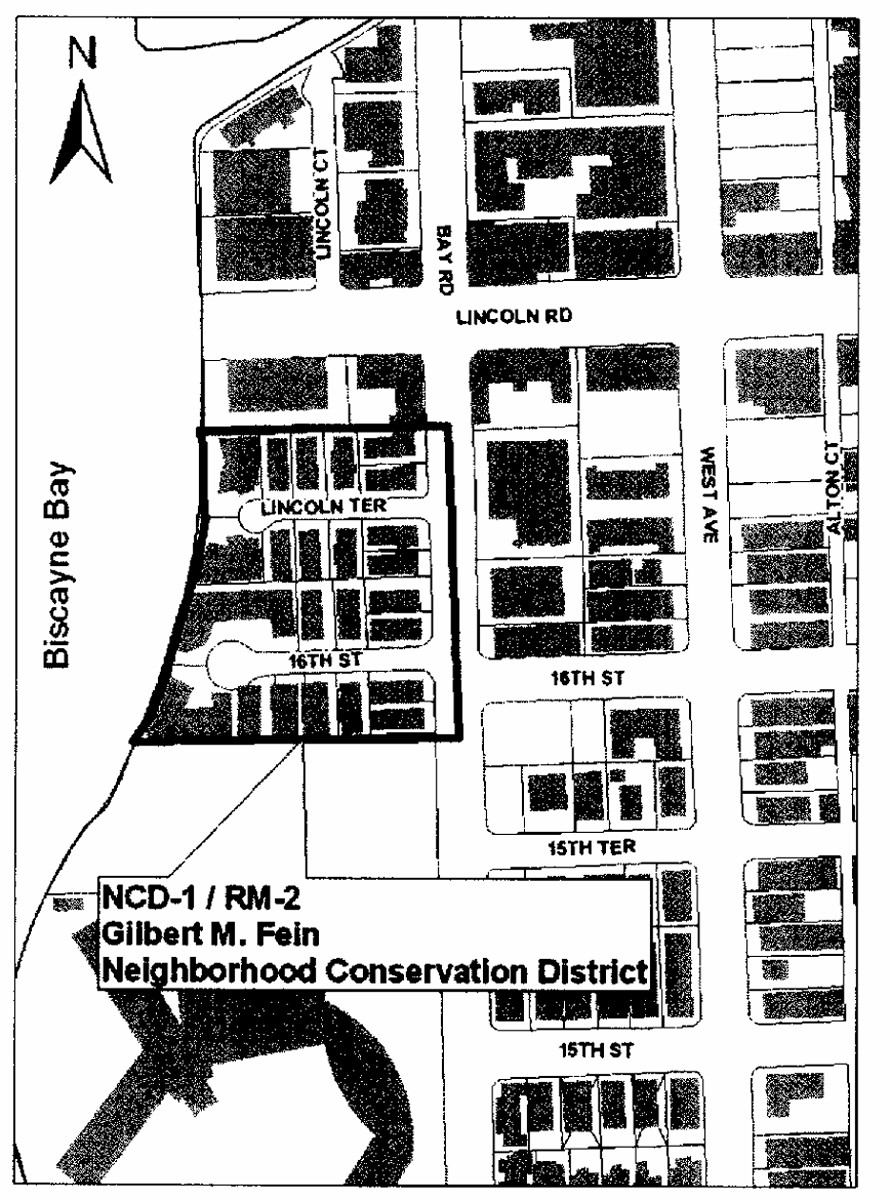
7.4.1.2 Detailed district boundaries (Gilbert M. Fein Neighborhood Conservation Overlay District).
NCD-1/RM-2: The boundaries of the Gilbert M. Fein Neighborhood Conservation District include those properties of Block 43, Alton Beach Bay Front Subdivision, recorded in Plat Book 4, at page 125, public records of Miami-Dade County, Florida, fronting or abutting Bay Road, Lincoln Terrace and 16th Street and commences at the point of intersection of the northern lot line of Lot 1 of the Lincoln Terrace Subdivision, and the bulkhead line of Biscayne Bay as recorded in Plat Book 49, at page 100, public records of Miami-Dade County, Florida. Said point being the point of beginning of the tract(s) of land herein described; thence run easterly, along the northern lot line of Lot 1 and its easterly extension to the point of intersection with the centerline of Bay Road; thence run southerly, along the centerline of Bay Road to the point of intersection with the easterly extension of the south lot line of Lot 15 of the Bay Lincoln Subdivision, recorded in Plat Book 58, at page 86, public records of Miami-Dade County, Florida; thence run westerly, along the south lot line of Lot 15 and its easterly extension to the point of intersection with the bulkhead line of Biscayne Bay; thence run northerly, along the bulkhead line to the point of beginning. Said lands located, lying and being in the City of Miami Beach, Miami-Dade County, Florida.
7.4.1.3 Compliance with regulations (Gilbert M. Fein Neighborhood Conservation Overlay District).
The regulations contained within the District Ordinance (Part III) of the Gilbert M. Fein Neighborhood Conservation District Plan Report shall apply within this district and where more restrictive, control over the general district regulations of the underlying RM-2 zoning district.
7.4.1.4 NCD plan report (Gilbert M. Fein Neighborhood Conservation Overlay District).
The Gilbert M. Fein NCD Plan Report including the Executive Summary (Part I), Designation Report (Part II), District Ordinance (Part III), Streetscape Improvement Plan (Part IV), and (Parts V through VII), shall be available on file at the planning department and online at: http://www.miamibeachfl.gov/WorkArea/DownloadAsset.aspx?id=81047
7.5.1.1 Encroachment; reduction of lot area.
The minimum yards, parking space, open spaces, including lot area per family required by these regulations for each and every building existing at the time of the passage of these regulations or for any building hereafter erected, shall not be encroached upon or considered as required yard or open space for any other building, except as hereinafter provided, nor shall any lot area be reduced below the requirements of these regulations.
7.5.1.2 Accessory buildings, prior construction and use.
Except as provided in section 7.5.4.13.d, no accessory building shall be constructed upon a lot until the construction of the main permitted use building has been actually completed unless construction of the main and accessory buildings is concurrent. No accessory building shall be used unless the main use building on the lot is also being used.
7.5.1.3 Derelict motor vehicles.
No derelict motor vehicles shall be permitted on any parcel of land except as provided in section 7.2.23.1-2. A motor vehicle shall be considered derelict when it is in a wrecked, inoperative or partially dismantled condition, or when it does not have a current registration and license plate as required by F.S. ch. 320.
7.5.1.4 Required enclosures.
Store enclosures. In all use districts designated in these land development regulations, the sale, or exposure for sale or rent, of any personal property, including merchandise, groceries or perishable foods, such as vegetables and fruits, is prohibited, unless such sale, or exposure for sale, is made from a substantially enclosed, permanent building; provided, however, that nothing herein contained shall be deemed applicable to rooftop areas not visible from the right-of-way, filling stations, automobile service stations or repair shops; uses having revocable permits or beach concessions operated or granted by the city, newsracks or newspaper stands, or displays at sidewalk cafés as permitted in Chapter 82 of the General Ordinances, wherever such uses are otherwise permissible. Vehicles for rent or lease utilized in connection with the operation of an automobile rental agency as defined in section 102-356 of the General Ordinances, and not located within a substantially enclosed permanent building, shall require conditional use approval from the planning board, provided that the exposure of the vehicles is on the same site at which the automobile rental agency is located, and that such exposed vehicles are screened from view as seen from any right-of-way or adjoining property when viewed from 5 feet 6 inches above grade, with appropriate landscaping not to exceed 3 feet in height from grade.
Notwithstanding the foregoing, during a state of emergency declared by the city, the requirement that personal property be sold or rented from a substantially enclosed, permanent building may be waived by the city manager subject to the following conditions:- The city manager may, upon a finding that significant building damage has occurred, identify specific areas of the city where personal property may be sold or rented outdoors.
- Items permitted to be sold or rented shall be limited to home improvement products including, but not limited to, hardware, construction supplies, electrical and plumbing fixtures, lumber, tools, and lawn and garden supplies.
- Businesses eligible for a waiver pursuant to this section shall be limited to businesses that engaged in the sale or rental of home improvement products immediately prior to the declaration of a state of emergency.
- All outdoor sales and rentals shall occur on the same property as the primary business.
- All accessible pedestrian circulation shall be maintained.
- Vehicular circulation shall not be interrupted.
- The number of accessible parking spaces shall not be reduced.
- The waiver shall expire upon the termination of the state of emergency.
- Mechanical equipment. All mechanical equipment located above the roof deck shall be enclosed or screened from public view.
7.5.1.5 Roof replacements and new roofs.
- Review and approval of all new roof construction and all replacement roof construction shall be in accordance with the following criteria:
- In single-family residential districts, the style, design, and material of the roof installed on the main structure shall be compatible with all accessory structures.
- The color of the roof shall be neutral and shall not overwhelm or cause the roof to stand out in a significant manner.
- The design, details, dimensions, surface texture, and color of the roof shall be consistent with the architectural design, style, and composition of the structure.
- The design, details, dimensions, surface texture, and color of the roof shall be consistent with the established scale, context, and character of the surrounding area.
- In addition to the regulations in subsection a, above, the following regulations shall apply to new roof construction, including additions to existing structures:
- Roofs should consist of a sustainable roofing system, subject to the review and approval of the planning department; or
- If a sustainable roofing system is not utilized, then the property owner/applicant shall be required to pay a "sustainable roof fee," in the amount set forth in APPENDIX A - Fee Schedule of the City Code, which fee shall be calculated based on the square footage of the enclosed floor area immediately one floor below the roof. Funds generated by the "sustainable roof fee" shall be deposited into the sustainability and resiliency fund established in section 7.1.3.2. The following types of roofs which do not meet the requirements of a sustainable roofing system shall be permitted, subject to the review and approval of the planning department:
- Pitched roofs which do not meet the requirements of a sustainable roofing system, and which may consist of flat tiles, barrel tiles, or glass roofs.
- Flat or non-pitched roofs which do not meet the requirements of a sustainable roofing system.
- Notwithstanding the foregoing, if a development is required to comply with the sustainability requirements in section 7.1.3.2, payment of the "sustainable roof fee" shall not be applicable.
- Notwithstanding the foregoing, if a building or structure is designed in the Mediterranean revival or mission style of architecture, payment of the "sustainable roof fee" shall not be applicable.
- Structures located within a locally designated historic district or site shall additionally comply with the following regulations:
- The use of glass or sustainable roofing systems may be approved bv the planning director if it is determined
that the proposed roof satisfies the certificate of appropriateness criteria outlined in Chapter 2, Article XIII of these land development regulations, and that such roofing system will not negatively impact the established architectural context of the immediate area. - If new construction is eligible for administrative review pursuant to chapter 2, article XIII of the land development regulations, the planning director may approve a metal, glass, or sustainable roofing system if the planning director determines that the scale, massing, and design of the proposed new structure can accommodate a metal, glass, or sustainable roofing system, and that such roofing system will not negatively impact the established architectural context of the immediate area.
- The use of glass or sustainable roofing systems may be approved bv the planning director if it is determined
- Asphalt shingles shall be prohibited.
- No variances from the provisions of this subsection b shall be granted.
- In addition to the regulations in subsection a, above, the following regulations shall apply to the repair or replacement of an existing roof:
- The repair or replacement of an existing roof for a property located outside of a locally designated historic district or site may consist of sustainable roofing systems, flat tiles, barrel tiles, glass roofs, or flat or nonpitched roofs, subject to the review and approval of the planning department.
- In addition to the requirements in subsection c.1., and as applicable to architecturally significant singlefamily homes constructed prior to 1966 and individually designated historic single-family residences that are not located within a local historic district, the planning director may approve a metal, glass, or sustainable roofing system if the planning director determines that the scale, massing, and design of the subject home can accommodate a metal, glass, or sustainable roofing system, and that such roofing system will not negatively impact the established architectural context of the immediate area.
- Notwithstanding the above, for those structures constructed and substantially maintained in the Mediterranean revival or mission style of architecture, the use of roof material other than concrete, clay, or ceramic tile shall be subject to the review and approval of the design review board or historic preservation board, as applicable. For purposes of this subsection, Mediterranean revival or mission architecture shall be defined as those structures built between 1915 through 1966 and characterized by, but not limited to, stucco walls, low pitch terra cotta or historic Cuban tile roofs, arches, scrolled or tile capped parapet walls and articulated door surrounds, or Spanish baroque decorative motifs and classical elements.
- For repair or replacement of existing roofs within any locally designated historic district, site or structure, the following regulations shall apply:
- The repair or replacement of existing roofs shall comply with the criteria set forth in chapter 2, article XIII of these Land Development Regulations.
- For contributing buildings or historic sites, the use of glass or sustainable roofing may be approved by the planning director if it is determined that the proposed roof satisfies the certificate of appropriateness criteria outlined in Chapter 2, Article XIII of these land development regulations, and that such roofing system will not
negatively impact the established architectural context of the immediate area. - For non-contributing buildings, the planning director may approve a metal, glass, or sustainable roofing system if the planning director determines that the scale, massing, and design of the proposed new structure can accommodate a metal, glass, or sustainable roofing system, and that such roofing system will not negatively impact the established architectural context of the immediate area.
- Asphalt shingles shall be prohibited.
- Notwithstanding the provisions in subsection c.5. above, in the event that a material other than those permitted for a pitched roof in any district was legally constructed, such roof may be replaced with the same material.
- Notwithstanding the provisions in subsection c.5. above, in the event that the building official determines that limitations exist regarding the load capacity of an existing roof, a roofing material other than those authorized in this section may be approved by the planning director for any type of structure.
- No variances from the provisions of this subsection c shall be granted.
7.5.1.6 Vacant and abandoned properties and construction sites.
- Vacant and abandoned properties in all districts. The following minimum fence requirements shall apply to all vacant lots, lots containing a structure that is subject to a permit that has been abandoned or that has expired (for more than 90 days in single-family districts and for more than 30 days in all other applicable districts) and which structure is unfit for human habitation, and lots containing buildings unfit for human habitation.
- Applicability. With the exception of city owned properties. Fencing shall be required for all vacant and abandoned lots, as identified more specifically in subsection (a) above.
- Height. The height of all fences identified in subsection (a) above shall be measured from the yard elevation where the fence is installed. The minimum height requirement for fences in single-family districts shall be 4 feet and; the maximum height in single-family districts shall not exceed 7 feet, except for thoses portions of a lot that face a waterway, in which case the maximum height shall be 5 feet. In all other zoning districts, a minimum 7-foot high fence shall be constructed along all property lines, except those facing a waterway, in which case the minimum and maximum height shall be 5 feet. Outside of single-family districts, the planning director may approve a fence height not to exceed 10 feet in height, if the property owner can substantiate that the fence would address security or trespassing issues on the property. If a property contains a building that is setback less than 5 feet from a property line, or there is an existing CBS wall that is at least 5 feet in height, the planning director, or designee, may waive the minimum fence requirements along those property lines, provided that the property is secure from trespassing. In the event that an abutting property has an existing fence along an interior side and/or rear property line, and such fence provides adequate securing of the property, the planning director, or designee, may waive the requirement for a fence along such property lines. Within singlefamily, townhome, and all other residential districts, the fence shall be set back 4 feet from front and side street property lines.
- Materials. Along all of the property lines, including all required front yards, interior side yards, side street yards, and rear yards, an aluminum picket fence shall be required.
- Construction requirements. All fences required herein shall be of permanent-quality construction, including foundations.
- Access. Wherever there is a driveway approach to enter a lot, vehicular access onto the lot shall be required for maintenance purposes, with a locked gate.
- Site conditions,and landscape. The entire site shall be raised to sidewalk grade and sodded, in a. manner to be approved by the Planning Director. Additionally, a landscape plan that includes shrubs and palm trees shall be required, subject to the approval of the Planning Director, and such landscape plan shall allow unimpeded visibility into the site at all times. All landscaping required herein shall be installed and maintained as required by the permit and the city's landscaping code, until such time as new construction is authorized and commences.
- Minimum lighting. For Properties with a lot area greater than 100,000 square feet and located in multi-family residential or commercial districts, perimeter Iighting shall be required in a manner consistent with all applicable city and State regulations
- Construction fences in all districts. As applicable to all properties with active building permits that have been deemed unfit for human habitation, construction fences shall be required to be installed along all property lines:
- Height. In single-family districts, construction fences shall be installed at a minimum height of 6 feet and maximum height of 10 feet, as measured from the adjacent grade. In all other districts, construction fences shall be a minimum height of 6 feet and maximum height of 12 feet, as measured from adjacent grade.
- Materials. In all districts, construction fences located along a front, side facing a street, or waterfront property line, shall consist of an opaque screening, which may include plywood or aluminum panels, or the equivalent solid construction on a wood or metal frame. Alternatively, a chain link fence may be permitted, provided that it contains a horizontal top, opaque screening, and a rolling gate for access. The exterior face of such fencing shall at a minimum consist of a continuous color finish in single-family districts. In all districts, except single-family districts, an artistic mural, which is integral to the fence construction, shall be required, subject to design review approval or a certificate of appropriateness, as applicable.
- Construction requirements. All fences required to be installed pursuant to this section shall be of permanent-quality construction, including applicable foundations to prevent movement and sagging.
- Access. A rolling or rigid folding gate shall be placed at an opening in the fence wherever there is a vehicular access point for construction vehicles to enter the site. The width of the gate shall not be greater than what is required to allow access to construction vehicles; however, the height may be increased as necessary to provide a rigid frame that completely surrounds the vehicular access point. The gate shall not be of a swinging type.
7.5.1.7 Solar Panels.
- Solar panels are a permitted in all districts. Notwithstanding the foregoing, the installation of solar panels shall comply with setback regulations and all other criteria within the land development regulations.
7.5.2.1 Height regulation exceptions and rooftop additions.
For all districts, except RS-1, 2, 3 and 4 (single-family residential districts).
- The height regulations as prescribed in these land development regulations shall not apply to the following when located on the roof of a structure or attached to the main structure. For exceptions to the single-family residential districts, see section 7.2.2.3.b.9.
- Air conditioning, ventilation, electrical, plumbing equipment or equipment rooms.
- Chimneys and air vents.
- Decks, not to exceed 3 feet above the main roofline and not exceeding a combined deck area of 50 percent (50%) of the enclosed floor area immediately one floor below.
- Decorative structures used only for ornamental or aesthetic purposes such as spires, domes, belfries, not intended for habitation or to extend interior habitable space. Such structures shall not exceed a combined area of 20 percent (20%) of the enclosed floor area immediately one floor below.
- Elevator bulkheads or elevator mechanical rooms.
- Flagpoles subject to the provisions of section 6.2.9.
- Parapet walls, not to exceed three feet, 6 inches above the main roofline unless otherwise approved by the design review board up to a maximum of 25 feet in height.
- Planters, not to exceed 3 feet in height above the main roofline.
- Radio, television, and cellular telephone towers or antennas, and rooftop wind turbines.
- Stairwell bulkheads.
- Skylights, not to exceed 5 feet above the main roofline.
- Stage towers or scenery lofts for theaters.
- Swimming pools, whirlpools or similar structures, which shall have a 4-foot wide walkway surrounding such structures, not to exceed 5 feet above the main roofline.
- Trellis, pergolas or similar structures that have an open roof of cross rafters or latticework.
- Water towers.
- Bathrooms required by the Florida Building Code, not to exceed the minimum size dimensions required under the Building Code, provided such bathrooms are not visible when viewed at eye level (5 feet, 6 inches from grade) from the opposite side of the adjacent right-of-way; for corner properties. Such bathrooms shall also not be visible when viewed at eye level (5 feet, 6 inches from grade) from the diagonal corner at the opposite side of the right-of-way and from the opposite side of the side street right-of-way.
- Solar panels.
- Wind turbines on oceanfront properties.
- Sustainable roofing systems.
- Display or screen structures, projection devices, lobby, concession space, and sound attenuation and screening devices, any of which serve an outdoor movie theater fronting on Alton Road as provided in section 7.2.11.2.e of this chapter.
- The height of all allowable items in subsection a of this section, unless otherwise specified, shall not exceed 25 feet above the height of the roofline of the main structure. With the exception of items described in subsection a.17 and subsection a.18 of this section, when any of the above items are freestanding, they shall follow the height limitations of the underlying zoning district (except flagpoles which are section 6.2.9)
- Notwithstanding other provisions of these regulations, the height of all structures and natural growth shall be limited by the requirements of the Federal Aviation Agency and any airport zoning regulations applicable to structure and natural growth.
- Rooftop additions.
- Rooftop additions permitted herein shall not exceed the maximum height set forth in the underlying zoning district unless otherwise noted.
- Restrictions. Unless otherwise noted there shall be no rooftop additions to existing structures in the following areas: oceanfront lots with frontage on Collins Avenue in the Miami Beach Architectural District in the RM-3 zoning district; and non-oceanfront lots fronting Ocean Drive in the MXE zoning district. No variance from this provision shall be granted.
- Additional regulations. Existing structures within an historic district shall only be permitted to have habitable (1) one-story rooftop additions (whether attached or detached), with a maximum floor to ceiling height of 12 feet except as hereinafter provided. No variance from this provision shall be granted. The additions shall not be visible when viewed at eye level (5 feet, 6 inches from grade) from the opposite side of the adjacent right-of-way; for corner properties, said additions shall also not be visible when viewed at eye level from the diagonal corner at the opposite side of the right-of-way and from the opposite side of the side street right-of-way. Notwithstanding the foregoing, the line-of-sight requirement may be modified as deemed appropriate by the historic preservation board based upon the following criteria:
- The addition enhances the architectural contextual balance of the surrounding area;
- The addition is appropriate to the scale and architecture of the existing building;
- The addition maintains the architectural character of the existing building in an appropriate manner; and
- The addition minimizes the impact of existing mechanical equipment or other rooftop elements.
- Lincoln Road hotel additions. Notwithstanding the foregoing, a multistory rooftop addition, for hotel uses only, may be permitted for properties on Lincoln Road, located between Pennsylvania Avenue and Lenox Avenue, in accordance with the following provisions:
- For properties on the north side of Lincoln Road, a multistory rooftop addition shall be set back at least 75 feet from Lincoln Road and at least 25 feet from any adjacent side street. Additionally, the multistory addition may be cantilevered over a contributing building.
- For properties located on the south side of Lincoln Road, a multistory rooftop addition shall be set back at least 65 feet from Lincoln Road.
- The portion of Lincoln Lane abutting the subject property, as well as the remaining portion of Lincoln Lane from block-end to block-end, shall be fully improved subject to the review and approval of the public works department.
- Participation in the public benefits program, pursuant to section 7.2.12.4.a, shall be required in order for a hotel project to avail itself of a multistory rooftop addition.
- There shall be a limit of 500 hotel units for hotel projects including a multistory rooftop addition that are constructed between Pennsylvania Avenue and Lenox Avenue.
- Placement and manner of attachment. The placement and manner of attachment of all additions (including those which are adjacent to existing structures) are subject to historic preservation board approval.
- Collins Waterfront Historic District,Morris Lapidus/Mid-20th Century Historic District, and oceanfront lots with no frontage on Collins Avenue within the Miami Beach Architectural District in the RM-3 zoning district. Notwithstanding the foregoing provisions of section 7.5.2.1.d.2, certain types of existing structures located within the Collins Waterfront Historic District and Morris Lapidus/Mid-20th Century Historic District and oceanfront lots with no frontage on Collins Avenue within the Miami Beach Architectural District may be permitted to have habitable rooftop additions (whether attached or detached) according to the following requirements:
- Height of rooftop additions permitted for structures of five (5) stories or less:
- Existing buildings of five (5) or less stories may not have more than a one-story rooftop addition, in accordance with the provisions of section 7.5.2.1.d.2. Additionally, at the discretion of the historic preservation board, pursuant to certificate of appropriateness criteria, the maximum floor to ceiling height may be increased to 15 feet within the Morris Lapidus/Mid-20th Century Historic District.
- Height of rooftop additions permitted for hotel structures of greater than five (5) stories:
- For those structures determined to be eligible by the historic preservation board for rooftop additions of greater than one (1) story in height according to the provisions of subsection d.7 below, one (1) story is allowed per every three (3) stories of the existing building on which the addition is to be placed, to a maximum of four (4) additional rooftop addition stories, with a maximum floor to floor height of 12 feet, and a maximum floor to roof deck height of 12 feet at the highest new story. The additional stories shall only be placed on the underlying structure creating the eligibility for an addition. Additionally, at the discretion of the historic preservation board, pursuant to certificate of appropriateness criteria, the maximum floor to ceiling height may be increased to 15 feet within the Morris Lapidus/Mid-20th Century Historic District and on oceanfront lots with no frontage on Collins Avenue within the Miami Beach Architectural District, for up to two (2) floors of a permitted roof-top addition.
- Rooftop additions permitted under this subsection, which are greater than one (1) story, shall be for the sole purpose of hotel unit development. A restrictive covenant in a form acceptable to the city attorney committing the property to such hotel use, subject to release by the historic preservation board when such board determines that the restriction is no longer necessary, shall be recorded prior to the issuance of any building permit for a rooftop addition greater than one (1) story.
- Height of rooftop additions permitted for structures of five (5) stories or less:
- North Beach Resort Historic District. Notwithstanding the foregoing provisions of section 7.5.2.1.d.2, existing structures located within the North Beach Resort historic district may be permitted to have habitable rooftop additions (whether attached or detached) according to the following requirements:
- Existing buildings of five (5) or less stories may not have more than a one (1) story rooftop addition, in accordance with the provisions of section 7.5.2.1.d.2.
- For those structure determined to be eligible by the historic preservation board for rooftop additions of greater than one (1) story in height, according to the provisions of subsection d.7 below, existing buildings six (6) or more stories may have a two (2) story rooftop addition with a maximum floor to floor height of 12 feet, and a maximum floor to roof deck height of 12 feet at the highest new story. The additional stories shall only be placed on that portion of the underlying structure creating the eligibility for an addition.
- CD-3 zoned parcels in the area bounded by Collins Avenue on the east, Drexel Avenue on the west, 16 Street on the south, and 17 Street on the north. Notwithstanding the provisions of section 7.5.2.1.d.2, the following shall be permitted for existing structures on sites zoned CD-3 in the area bounded by Collins Avenue on the east, Drexel Avenue on the west, 16th Street on the south, and 17th Street on the north: multistory habitable rooftop additions (whether attached or detached) not to exceed the maximum permitted building height.
- Design and appropriateness guidelines. In determining if existing structures are eligible for rooftop additions, the historic preservation board, in addition to any and all other applicable criteria and guidelines contained in these land development regulations, shall consider whether:
- The design of an existing structure (or part thereof) to which a new rooftop addition is to be attached is of such nature or style that it does not contain any significant original architectural crown element(s) or other designed composition of significant architectural features, nor does the overall profile of the structure including its rooftop design features have a distinctive quality that contributes to the special character of the historic district, as determined by the historic preservation board. Significant rooftop or upper facade elements or features may include but shall not be limited to towers, domes, crowns, ziggurats, masts, crests, cornices, friezes, finials, clocks, lanterns, original signage and other original architectural features as may be discovered.
- The proposed rooftop addition shall be designed, placed and attached to an existing structure in a manner that:
- Does not obscure, detract from, or otherwise adversely impact upon other significant architectural features of the existing structure, inclusive of significant features that are to be, or should be, restored or reconstructed in the future;
- maintains the architectural contextual balance of the surrounding area and does not adversely impact upon or detract from the surrounding historic district;
- Is appropriate to the scale and architecture of the existing building;
- Maintains the architectural character of the existing building in an appropriate manner;
- Does not require major demolition and alterations to existing structural systems in such manner as would compromise the architectural character and integrity of the existing structure; and
- Minimizes the impact of existing mechanical equipment or other rooftop elements.
- The placement and manner of attachment of additions (including those which are adjacent to existing structures) are subject to the historic preservation board granting a certificate of appropriateness for any demolition that may be required as well as for the new construction.
- The entire structure shall be substantially rehabilitated.
- Notwithstanding the foregoing, the overall height of any structure located in the Collins Waterfront Historic District or the North Beach Resort Historic District may not exceed the height limitations of the underlying zoning district. No additional stories may be added under this section through height variances from the underlying zoning district regulations.
- No variance from the provisions of subject section 7.5.2.1.d shall be granted.
7.5.3.1 Generally.
- Determination of side street. Where these regulations refer to side streets, the planning and zoning director shall be guided by the pattern of development in the vicinity of the lot in question in determining which of the two streets is the side street.
- Established right-of-way. Where an official line has been established for the future widening or opening of a street upon which a lot abuts, the depth of a front or side yard shall be measured from such official line to the building line.
- Through lots. Except as otherwise provided in these land development regulations, the required front yard shall be provided on each street.
- Minimum side yards, public and semi-public buildings. The minimum depth of interior side yards for schools, libraries, religious institutions, and other public buildings and private structures which are publicly used for meetings in residential districts shall be 50 feet, except where a side yard is adjacent to a business district, a public street, bay, erosion control line or golf course, and except for properties that have received conditional use approval as a religious institution located in the 40th Street Overlay, in which cases the depth of that yard shall be as required for the district in which the building is located. In all other cases, the side yard facing a street shall be the same as that which is required for the district in which the lot is located.
- Oceanfront lots, boundary line, setbacks and floor area ratio for oceanfront lots. The rear boundary of an oceanfront lot shall be the erosion control line. The rear setback shall be measured from the erosion control line or 50 feet from the old bulkhead line, whichever is greater.
7.5.3.2 Allowable encroachments within required yards for districts other than single-family districts.
The following regulations shall apply to allowable encroachments in all districts except single-family residential districts, unless otherwise specified in this Code.
- Accessory buildings. Accessory buildings which are not a part of the main building may be constructed in a rear yard, provided such accessory building does not occupy more than 30 percent (30%) of the area of the required rear yard and provided it is not located closer than 7 feet and 6 inches to a rear or interior side lot line and 15 feet when facing a street. Areas enclosed by screen shall be included in the computation of area occupied in a required rear yard lot but an open uncovered swimming pool shall not be included.
- Awnings. Awnings attached to and supported by a building wall may be placed over doors or windows in any required yard, but such awnings shall not project closer than 3 feet to any lot line except as follows:
- An awning associated with a commercial use shall be permitted to extend from the entrance door to the street line of any building except those in a townhome district;
- The setbacks for awnings in a locally designated historic district or in the National Register of Historic Places shall be determined under the design review procedures pursuant to section 2.5.3, and shall be based upon the architecture of the building.
- Boat, boat trailer, camper trailer or recreational vehicle storage. In all districts, accessory storage of such vehicles shall be limited to a paved, permanent surface area within the side or rear yards, no such vehicle shall be utilized as a dwelling and such vehicles shall be screened from view from any right-of-way or adjoining property when viewed from 5 feet, 6 inches above grade. Nothing in this subsection shall be construed to prohibit a dry dock facility when such facility is associated with a marina.
- Canopies. A canopy shall be permitted to extend from an entrance door to the street line of any building except those located in a townhome district. Where a sidewalk or curb exists, the canopy may extend to within 18 inches of the curb line. Such canopies shall not exceed 15 feet and 12 feet in height or be screened or enclosed in any manner and shall provide an unobstructed, clear space between the grade and the bottom of the canopy valance of at least 7 feet. The location of vertical supports for the canopy shall be approved by the public works director.
- Central air conditioners, packaged terminal air conditioners ( PTAC) and mini-split air conditioninq units. Accessory central air conditioners, packaged terminal air conditioners ( PTAC) and mini-split air conditioning units, including attached screening elements, may occupy a required interior side or rear yard, in townhome districts and in the RM- 1, RM- 2, R- PS1, R- PS2 and R- PS3 residential multifamily districts only, provided that:
- For buildings existing as of January 1, 2015, the above noted air conditioning units shall not be closer than 18 inches to a rear or interior side lot line, provided all applicable egress requirements for the property are satisfied. For buildings receiving a temporary certificate of occupancy or certificate of occupancy after January 1, 2015, the above noted air conditioning units shall not be closer than 5 feet to a rear or interior side lot line.
- The maximum height of equipment located on the ground, including attached screening elements, shall not exceed 10 feet above current flood elevation.
- If visible from the right- of-way, physical and/or landscape screening shall be required.
- Any required sound buffering equipment shall comply with the setback requirements specified in subsection e. 1 of this section.
- If the air conditioning equipment does not conform to subsections 1, 2, 3, and 4 above,
then such equipment shall follow the setbacks of the main structure.
- Emergency generators, swimming pool equipment, and other mechanical equipment. Accessory generators, swimming pool equipment, and any other mechanical equipment, including attached screening elements, may occupy a required side or rear yard, in townhome or in the RM-1, RM-2, R-PS1 and R-PS2 residential multifamily districts only, provided that:
- They are not closer than 5 feet to a rear or interior side lot line or 10 feet to a side lot line facing a street.
- The maximum height of the equipment including attached screening elements, shall not exceed 5 feet above current flood elevation, with a maximum height not to exceed 10 feet above grade, as defined in section 1.2.1, of the lot at which they are located.
- If visible from the right-of-way, physical and/or landscape screening shall be required.
- Any required sound buffering equipment shall comply with the setback requirements specified in subsection f.1 of this section.
- If the mechanical equipment does not conform to subsections 1, 2, 3, and 4 above, then such equipment shall follow the setbacks of the main structure.
- Washers and dryers located in the RM-1 district, which are abutting and connected to an existing building, shall comply with the following:
- Washers and dryers shall be for the sole use of building residents.
- Washers and dryers may be located closer than 5 feet from a rear or interior side lot line, provided there are not adverse impacts on pedestrian circulation.
- Washers and dryers shall be setback a minimum of 50 feet from the front property line, and shall not be located within any open courtyards.
- Washers and dryers shall be physically screened, so that they are not visible from a public street or sidewalk.
- The overall height of washers and dryers may exceed 10 feet above grade, if required to be located at or above minimum flood elevation.
- Driveways. Driveways and parking spaces leading into a property located in townhome (TH) districts are subject to the following requirements, unless otherwise noted in specific districts:
- Driveways shall have a minimum setback of 4 feet from the side property lines.
- Driveways and parking spaces parallel to the front property line shall have a minimum setback of 5 feet from the front property line.
- Driveways and parking spaces located within the side yard facing the street shall have a minimum setback of 5 feet to the rear property line.
- Driveways and parking areas that are open to the sky within any required yard shall be composed of porous pavement or shall have a high albedo surface consisting of a durable material or sealant, as defined in section 1.2.1 of this Code.
- Driveways and parking areas composed of asphalt that does not have a high albedo surface, as defined in section 1.2.1 of this Code, shall be prohibited.
- Fences, walls, and gates. Regulations and requirements pertaining to materials and heights for fences, walls and gates, excluding for vacant parcels and construction sites, are as follows:
- All districts except I-1 and WD-2:
- Front yard and side yard facing a street. Within the required front yard or required side yard facing a street, fences, walls and gates shall not exceed 5 feet, as measured from grade. The height may be increased up to a maximum total height of 7 feet if the fence, wall or gate is set back from the front and/or side street property line. Height may be increased by 1 foot for every 2 feet of setback. For properties zoned multifamily and located within a locally designated historic district or site, fences shall be subject to the certificate of appropriateness review procedure, and may be approved at the administrative level.
- Rear and side yard. Within the required rear or side yard, fences, walls and gates shall not exceed 7 feet, as measured from grade, except when such yard abuts a public right-of-way, waterway or golf course, in which case the maximum height shall not exceed 5 feet. Within single-family districts, in the event that a property has approval for adjusted grade, the overall height of fences, walls and gates may be measured from adjusted grade, provided that the portion of such fences, walls or gates above 4 feet in height consists of open pickets with a minimum spacing of 3 inches, unless otherwise approved by the design review board or historic preservation board, as applicable.
- Finish. All surfaces of masonry walls and wood fences shall be finished in the same manner with the same materials on both sides to have an equal or better quality appearance when seen from adjoining properties. The structural supports for wood fences, walls or gates shall face inward toward the property. In the event that a masonry wall or wood fence cannot be equally finished on both sides, an affidavit shall be submitted at the time of building permit, signed by the abutting property owner, consenting to a waiver of this requirement. This shall not apply to portions of masonry walls or fences which face the right-of-way or water.
- Chain link fences are prohibited in the required front yard, and any required yard facing a public right-of-way or waterway (except side yards facing on the terminus of a dead end street in single-family districts) except as provided in this section and in section 7.5.3.4.
- Barbed wire or materials of similar character shall be prohibited.
- In I-1 light industrial districts, within the front, rear or side yard a fence shall not exceed 7 feet, as measured from grade, excluding barbed wire or materials of similar character. Barbed wire or materials of similar character shall be elevated 7 feet above grade and be angled towards the interior of the lot. The combined height of a wall or fence plus barbed wire or materials of similar character shall not exceed 9 feet.
- For government facilities in GU and CCC districts, a fence surrounding the property may be located on the property line, not to exceed 6 feet in height, as measured from grade. The height may be increased up to a maximum total height of 8 feet if the fence is set back 1 foot from the property line, subject to design review approval; fence(s) shall be constructed in a manner such that there is substantial visibility through the fence.
- In the WD-2 districts, the following shall apply:
- Fences and gates shall be subject to the certificate of appropriateness review criteria, and may be reviewed for approval at the administrative level.
- Fences and gates shall not exceed 6 feet in height, as measured from the elevation of Miami Beach Drive at the center of the property.
- Fences and gates shall consist only of open aluminum picket, unless otherwise approved by the historic preservation board.
- Wood, chain link, masonry, concrete, barbed wire or materials of similar character shall be prohibited.
- For oceanfront properties, the following shall apply with regard to measurement of maximum height.
- The height of allowable fences, walls and gates located in the front, interior side yard or side yards facing a street (and not also within a rear yard) shall be measured from grade, as defined in section 1.2.1.
- The height of allowable fences, walls and gates located within the required rear yard (including overlapping portions of interior and street side yards) shall be measured from the elevation of the beach walk (not an elevated boardwalk) at the center of the property. Where no beach walk is present, the height of allowable fences, walls, and gates shall be measured from the elevation of the erosion control line at the center of the property.
- All districts except I-1 and WD-2:
- Hedges. There are no height limitations. Hedge material must be kept neat, evenly trimmed and properly maintained. For corner visibility regulations see section 7.5.3.5.
State law reference(s)—Maximum height of hedges in required front yard, § 126-6(1)b. - Hot tubs, showers, saunas, whirlpools, toilet facilities, decks. Hot tubs, showers, whirlpools, toilet facilities, decks and cabanas are structures which are not required to be connected to the main building but may be constructed in a required rear yard, provided such structure does not occupy more than 30 percent (30%) of the area of the required rear yard and provided it is not located closer than 7 feet 6 inches to a rear or interior side lot line. Freestanding, unenclosed facilities including surrounding paved or deck areas shall adhere to the same setback requirements as enclosed facilities.
State law reference(s)—Setback requiremetns in RM-PRD district, § 142-186. - Lightpoles. The following regulations shall apply to lightpoles:
- Lightpoles shall have a maximum height of 10 feet. Lightpoles shall be located 7 feet 6 inches from any property line except that when such property line abuts a public right-of-way, or waterway there shall be no required setback.
- All light from lightpoles shall be contained on-site or on any public right-of-way as required by the city Code.
- Marine structures. Seaward side yard setbacks for boat slips, decks, wharves, dolphin poles, mooring piles, davits, or structures of any kind shall not be less than seven and one-half feet. This requirement pertains to the enlargement of existing structures as well as to the construction of new structures. It is further provided that any boat, ship, or vessel of any kind shall not be docked or moored so that its projection extends into the required seaward side yard setback, and the mooring of any type of vessel or watercraft shall be prohibited along either side of the walkway leading from the seawall to a boat dock. Land side decks may extend to the deck associated with the marine structure. Lighting associated with, but not limited to, the deck, or marine structure shall be installed in such a manner to minimize glare and reflection on adjacent properties and not to impede navigation. The maximum projection of a marine structure shall be determined by the county department of environmental resource management. If a dock or any kind of marine structure/equipment whether it is or is not attached to a dock projects more than 40 feet into the waterway or it extends beyond the maximum projection permitted under section 66-113 of the General Ordinances, the review and approval of the applicable state and county authorities shall be required and any state or local authority as applicable.
- Ornamental fixtures or lamps. Requirements for ornamental fixtures and lamps shall be as follows:
- Ornamental fixtures and lamps are permitted to be placed on walls or fences when they are adjacent to a public street, alley, golf course or waterway. The total height of the combined structure shall not exceed the required fence or wall height by more than 2 feet.
- Ornamental fixtures and lamps shall be located with a minimum separation of 8 feet on center with a maximum width of 2 feet.
- Porte-cochere. A porte-cochere shall be permitted to extend from an entrance door to the street line of any building except that porte-cocheres shall not be permitted in a townhome district. Where a sidewalk or curb exist, the porte-cochere may extend to within 18 inches of the sidewalk. The porte-cochere shall not exceed 30 percent (30%) of building core frontage in width or 16 feet in height or be screened or enclosed in any manner. It shall provide an unobstructed, clear space of not less than 9 feet between the grade and the underside of the roof of the porte-cochere.
- Projections. Every part of a required yard shall be open to the sky, except as authorized by these land development regulations. The following may project into a required yard for a distance not to exceed 25 percent (25%) of the required yard up to a maximum projection of 6 feet, unless otherwise noted.
- Belt courses.
- Chimneys.
- Cornices.
- Exterior unenclosed private balconies.
- Ornamental features.
- Porches, platforms and terraces up to 30 inches above the adjusted grade elevation of the lot, as defined in Chapter 1 of these Land Development Regulations.
- Roof overhangs.
- Sills.
- Window or wall air conditioning units.
- Bay windows (not extending floor slab).
- Walkways: Maximum 44 inches. May be increased to a maximum of 5 feet for those portions of walkways necessary to provide Americans with Disabilities Act (ADA) required turn around areas and spaces associated with doors and gates. Walkways in required yards may exceed these restrictions when approved through the design review or certificate of appropriateness procedures, as applicable, and pursuant to section 2.5.3. Notwithstanding the foregoing, when required to accommodate ADA access to an existing contributing building within a local historic district, or National Register District, an ADA walkway and ramp may be located within a street side or interior side yard, with no minimum setback, provided all of the following are adhered to:
- The maximum width of the walkway and ramp shall not exceed 44 inches and 5 feet for required ADA landings;
- The height of the proposed ramp and landing shall not exceed the finished first floor of the building(s); and
- The slope and length of the ramp shall not exceed that which is necessary to meet the minimum Building Code requirements.
Additionally, subject to the approval of the design review board or historic preservation board, as applicable, an awning may be provided to protect users of the ADA walkway and ramp from the weather.
- Electric vehicle charging stations and fixtures, located immediately next to an off-street parking space, shall be permitted where driveways and parking spaces are located.
- Planters, not to exceed 4 feet in height, when measured from the finished floor of the primary structure.
- Satellite dish antennas. Satellite dish antennas are only permitted in the rear yard or on top of multifamily or commercial buildings. Antennas shall be located and sized where they are not visible from the street. Satellite dish antennas shall be considered as an accessory structure; however the height of the equipment including its base to the maximum projection of the antenna, based upon maximum operational capabilities, to the top part of the antenna shall not exceed 15 feet. If it is attached to the main structure it may not project into a required yard.
7.5.3.3 Swimming pools.
This section applies to swimming pools in all districts, except where specified. Accessory swimming pools, open and enclosed, or covered by a screen enclosure, or screen enclosure not covering a swimming pool, may only occupy a required rear or side yard, provided as follows:
- Rear yard setback.
- A 6 foot minimum setback shall be required from the: rear property line to the swimming pool deck or platform, the exterior face of an infinity edge pool catch basin, or screen enclosure associated or not associated with a swimming pool.
- Swimming pool decks may extend to the property line and be connected to a dock and its related decking when abutting upon any bay or canal.
- There shall be a minimum 7 feet and 6 inches setback from the rear property line to the water's edge of the swimming pool or to the waterline of the catch basin of an infinity edge pool.
- For oceanfront properties, the setback shall be measured from the old city bulkhead line.
- Side yard, interior setback.
- A 7 feet and 6 inches minimum setback shall be required from the side property line to a swimming pool deck or platform, the exterior face of an infinity edge pool catch basin, or screen enclosures associated or not associated with a swimming pool.
- 9-foot minimum required setback from side property line to the water's edge of the swimming pool or to the waterline of the catch basin of an infinity edge pool.
- Side yard facing a street. For a side yard facing a street: A 15-foot setback from the property line to the swimming pool, deck or platform, the exterior face of an infinity edge pool catch basin, or screen enclosure.
- Walk space. A walk space at least 18 inches wide shall be provided between swimming pool walls and fences or screen enclosure walls. Every swimming pool shall be protected by a sturdy non-climbable safety barrier and by a self-closing, self-locking gate approved by the building official.
- The safety barrier shall be not less than 4 feet in height and shall be erected either around the swimming pool or around the premises or a portion thereof thereby enclosing the area entirely, thus prohibiting unrestrained admittance to the swimming pool area.
- Where a wooden type fence is to be provided, the boards, pickets, louvers, or other such members shall be spaced, constructed and erected so as to make the fence not climbable and impenetrable.
- The walls, whether of the stone or block type, shall be so erected to make them non-climbable.
- Where a wire fence is to be used, it shall be composed of 2-inch chainlink or diamond weave nonclimbable type, or of an approved equal, with a top rail and shall be constructed of heavy galvanized material.
- Gates, where provided, shall be of the spring lock type so that they shall automatically be in a closed and fastened position at all times. They shall also be equipped with a gate lock and shall be locked when the swimming pool is not in use.
- Size. The minimum size of all commercial swimming pools shall be 450 square feet with a minimum dimension of 15 feet and all required walkways shall have a minimum width of 4 feet around the swimming pool, exclusive of the coping. Commercial swimming pools shall also satisfy all applicable requirements of any governmental agency having jurisdiction.
- Visual barriers for swimming pools. Accessory swimming pools when located on any yard, facing a public street or alley, shall be screened from public view by a hedge, wall or fence not less than 5 feet in height. The hedge shall be planted and maintained so as to form a continuous dense row of greenery as per the requirements of this division. The maximum height of the visual barrier shall be pursuant to section 7.5.2.
7.5.3.4 Tennis courts and similar court games.
The following regulations shall apply for fences, lightpoles or other accessory structures associated with court games in all districts.
- In a required front yard the maximum height of fences shall be 10 feet and the fences shall be set back at least 20 feet from the front property line.
- In a required side and required rear yard the maximum height of fences shall be 10 feet and the fences shall be set back at least 7 feet 6 inches from the interior side or rear property line. When the fence faces a street, the maximum height shall be 10 feet and the fence shall be set back at least 15 feet from the property line. For oceanfront properties, the rear lot line shall be the old city bulkhead line.
- Accessory lighting fixtures, when customarily associated with the use of court games, shall be erected so as to direct light only on the premises on which they are located. The maximum height of light fixtures shall not exceed 10 feet when located in a required yard; otherwise, the maximum height shall not exceed 20 feet. Light is permitted to be cast on any public right-of-way.
- All chainlink fences shall be coated with green, brown or black materials.
- When fences are located in required yards, they shall be substantially screened from view from adjacent properties, public rights-of-way, and waterways by landscape materials.
- Any play surface, whether paved or unpaved, when associated with such court games, shall have the following minimum required yards:
front—20 feet;
interior side—7 feet and 6 inches;
any side facing on a street—15 feet;
rear—7 feet and 6 inches.
- Landscaping, when associated with tennis courts, shall be allowed to equal the height of the fence. The area between the tennis court fence and the front lot line shall be landscaped and approved by the planning and zoning director prior to the issuance of a building permit.
7.5.3.5 Corner visibility.
On a corner lot, there shall be no structure or planting which obstructs traffic visibility between the height of 2 feet and 10 feet above the street corner grade, within the triangular space bounded by the two intersecting right-ofway lines and a straight line connecting the right-of-way lines 15 feet from their intersection.
7.5.4.1 Commercial and wholesaling use.
- When a commercial use is involved in wholesaling and the property is in a commercial district, the commercial use shall include a display or show room open to the public and 50 percent (50%) of the frontage shall be storefront windows that face a street.
- Commercial and wholesaling uses may assemble prefabricated parts but not manufacture any parts or materials.
7.5.4.2 Motor vehicle storage.
Except as also provided in section 7.5.4.3, storage of motor vehicles shall be permitted only in the I-1 light industrial district, no such stored motor vehicle shall be utilized as a dwelling and such stored motor vehicles shall be fully screened from view as seen from any right-of-way or adjoining property when viewed from 5 feet 6 inches above grade, with an opaque wood fence, masonry wall or other opaque screening device not less than 6 feet in height.
7.5.4.3 Storage or parking of commercial and construction vehicles.
- Location regulations.
- In the I-1 light industrial district and in all commercial districts, commercial vehicles may be stored or parked on the same site at which the associated commerce, trade or business is located.
- Commercial vehicles stored or parked on a site other than the site at which the associated commerce, trade, or business is located shall only be permitted in the I-1 light industrial district, and pursuant to a conditional use permit in the CD-1, CD-2 and CD-3 districts. Notwithstanding the foregoing, a single commercial vehicle that is an automobile, van, pickup truck or similar vehicle with exterior business identification may be parked at the operator's residence, within any zoning district, provided the vehicle is parked in a garage or on a paved, permanent surface in a side or rear yard and is not visible from any right-of-way or adjoining property; however, any automobile, van, pickup truck or similar vehicle without exterior business identification may be parked in accordance with the underlying zoning district regulations and without further restriction.
- Construction vehicles shall only be stored or parked in the I-1 light industrial district or at a construction site upon which a building permit has been obtained and remains active and valid.
- Site design requirements.
- Any storage or parking of commercial and construction vehicles, other than those parked at a construction site, must be fully screened from view as seen from any right-of-way or adjoining property, when viewed from 5 feet 6 inches above grade, with an opaque wood fence, masonry wall or other opaque screening device not less than 6 feet in height.
- Parking spaces, backup areas and drives shall be appropriately dimensioned for the type of vehicles being parked or stored.
- Any lot, except for those in the I-1 light industrial district, which shall be used for the storage or parking of commercial vehicles shall be required to satisfy the landscaping requirements chapter 4 of the Land Development Regulations.
- The storage or parking of commercial vehicles pursuant to this section shall be subject to the design review procedures, requirements and criteria as set forth in section 2.5.3.Criteria for lots subject to conditional use approval. In addition to the site design requirements in subsection b of this section, lots reviewed pursuant to the conditional use process shall also comply with the following criteria:
- A schedule of hours of vehicle storage and of hours of operation for any business occupying the same lot where commercial or construction vehicles are stored or parked shall be submitted for review and approval by the planning board.
- If the storage or parking of commercial vehicles is proposed to be within 100 feet of a property line of a lot upon which there is a residential use, the planning board shall analyze the impact of such storage or parking on the residential use. The analysis shall include, but not be limited to, visual impacts, noise, odors, effect of egress and ingress and any other relevant factor that may have an impact on the residential use.
- An application to permit the storage or parking of commercial vehicles pursuant to this subsection shall be subject to the conditional use procedures and criteria set forth in section 2.5.2.
7.5.4.5 Suites hotel, apartment hotel, hostel, and hotel.
- Suite hotel units and suite hotels, as defined in section 1.2.2 of the land development regulations, shall conform with the following regulations:
- When a hotel unit contains cooking facilities it shall be considered as a suite hotel unit. Suite hotel units may have full cooking facilities, provided the unit is at least 550 square feet in size.
- Notwithstanding the foregoing, suite hotels located within a local historic district, local historic site, or national register district may have full cooking facilities in units with a minimum of 400 square feet.
- A minimum of 10 percent (10%) of the total gross area shall be maintained as common area, however this requirement shall not apply to historic district suites hotels. This provision shall not be waived or affected through the variance procedure.
- The building shall contain a registration desk and a lobby. Any transient guest or occupant for a suite hotel unit must register at the registration desk. Those transient guest(s) or occupant(s) are prohibited from accessing the suite hotel unit without registration.
- The building shall have central air conditioning or flush-mounted wall units; however no air conditioning equipment may face a street, bay or ocean.
- Should the facility convert from a suites hotel to a multifamily residential building, the minimum average unit size and all other zoning requirements for the underlying district shall be met.
- No suite hotel unit may be occupied by more than eight (8) persons. Notwithstanding the foregoing, a suite hotel owner or operator may at its discretion further restrict the maximum occupancy of a suite hotel unit from the maximum occupancy set forth in this section 7.5.4.5.
- Suite hotels shall be prohibited in all zoning districts and overlay districts that do not list suite hotels as a permitted or conditional use.
- Hostels, as defined in section 1.2.2 of the land development regulations, shall conform with the following regulations:
- Hostels shall comply with the minimum unit size requirements for hotels in the underlying zoning district, unless otherwise provided.
- Hostels shall be permitted in the RM-2 and RM-3 zoning districts, provided the occupancy of a hostel shall not exceed the following limits per individual unit:
- For units less than 335 square feet, occupancy shall be limited to four (4) persons.
- For units between 335 and 485 square feet, occupancy shall be limited to six (6) persons.
- For units larger than 485 square feet, occupancy shall be limited to eight (8) persons.
- No hostel unit may be occupied by more than eight (8) persons.
- Notwithstanding the foregoing, a hostel owner or operator may at its discretion further restrict the maximum occupancy of a hostel unit from the maximum occupancy set forth in this section 7.5.4.5.
- Hostels shall be prohibited in all zoning districts and overlay districts that do not list hostels as a permitted or conditional use.
- Hotels and hotel units, as defined in section 1.2.2, shall conform with the following regulations:
- Hotel units shall comply with the minimum unit size requirements in the underlying zoning district.
- Cooking facilities in hotel units shall be limited to one microwave oven, one sink and one five-cubic-foot refrigerator.
- Hotels located in the C-PS2, R-PS3, R-PS4, RM-1, RM-2 and RM-3 zoning districts, as well as the Sunset Harbour neighborhood, generally bounded by Purdy Avenue, 20th Street. Alton Road, and Dade Boulevard, shall not exceed the following occupancy limits per individual unit:
- For units less than 335 square feet, occupancy shall be limited to four (4) persons.
- For units between 335 and 485 square feet, occupancy shall be limited to six (6) persons.
- For units larger than 485 square feet, occupancy shall be limited to eight (8) persons.
- No hotel unit may be occupied by more than eight (8) persons.
- Notwithstanding the foregoing, a hotel owner or operator may at its discretion further restrict the maximum occupancy of a hotel unit from the maximum occupancy set forth in this section 7.5.4.5.
- Hotels shall be prohibited in all zoning districts and overlay districts that do not list hotel as a permitted or conditional use.
- The building shall contain a registration desk and a lobby for any transient quest or occupant for a suite hotel unit or hotel unit. All transient guest(s) or occupant(s) of a suite hotel unit or hotel unit must register at the registration desk and are prohibited from accessing the suite hotel unit or hotel unit without registration.
- Apartment hotels, as defined in section 1.2.2, shall conform with the following regulations:
- All units shall comply with the minimum unit size requirements in the underlying zoning district. In the RPS2 district, the minimum unit size for hotel units shall be 335 square feet.
- Cooking facilities in apartment hotel units shall be limited to one microwave oven, one sink, and one fivecubic-foot refrigerator.
- Apartment hotels located in the C-PS2, R-PS2, R-PS3, R-PS4, RM-2, and RM-3 zoning districts, as well as the Sunset Harbour neighborhood, generally bounded by Purdy Avenue, 20th Street, Alton Road, and Dade Boulevard, shall not exceed the following occupancy limits per individual unit:
- For units less than 335 square feet, occupancy shall be limited to four (4) persons.
- For units between 335 and 485 square feet, occupancy shall be limited to six (6) persons.
- For units larger than 485 square feet, occupancy shall be limited to eight (8) persons.
- No hotel or suite hotel unit may be occupied by more than eight (8) persons.
- Notwithstanding the foregoing, an apartment hotel owner or operator may at its discretion further restrict the maximum occupancy of a hotel unit or suite hotel unit from the maximum occupancy set forth in this section 7.5.4.5.
- Apartment hotels shall be prohibited in all zoning districts and overlay districts that do not list apartment hotel as a permitted or conditional use.
- The building shall contain a registration desk and a lobby for any transient guest or occupant for a suite hotel unit, hotel unit, or the short-term rental of an apartment unit. All transient guest(s) or occupant(s) of a suite hotel unit, hotel unit, or the short-term rental of an apartment unit must register at the registration desk and are prohibited from accessing the suite hotel unit, hotel unit or the apartment unit without registration.
7.5.4.6 Temporary sales buildings.
Temporary sales buildings are permitted with the following conditions:
- Temporary sales buildings shall be prohibited in RS districts.
- Prior to the issuance of a building permit, the temporary sales building shall be approved by the planning director.
- The building shall be considered as a permanent structure and shall comply with all applicable regulations of the underlying zoning district. However, in residential districts if the structure is less than 20 feet in height, the minimum front setback shall be 10 feet and the minimum side setbacks shall be 7 feet and 6 inches. Notwithstanding the foregoing, there shall be no minimum parking requirement.
- The building shall be removed prior to the issuance of the final certificate of occupancy or certificate of completion; however, in no instance shall an occupational license be granted until it is removed from the property.
- The building shall be continuously occupied at least five (5) days a week and five (5) hours each day.
- The building shall be removed if a building permit for the complete construction of the main building is not issued within one (1) year from the date the building permit for the sales building was issued.
7.5.4.7 Parking lots or garages on certain lots.
Parking lots or garages when a main permitted use shall not be permitted on lots fronting on Ocean Drive or Espanola Way.
Cross reference(s)—Parking lots generally, § 18-306 et seq.; traffic and vehicles, ch. 106.
7.5.4.8 Sidewalk cafes.
For regulations pertaining to sidewalk cafes see section 82-366 et seq. in the General Ordinances.
Cross reference(s)—Sidewalk cafés generally, § 82-366 et seq.
7.5.4.9 Accessory outdoor bar counters.
Accessory outdoor bar counters shall be prohibited as a main permitted use in any zoning district. Accessory outdoor bar counters may only be permitted as an accessory use to the following, if not prohibited in the underlying zoning district, and provided all counters shall not be visible from any point along the property line adjacent to a public right-of-way:
- An outdoor motion picture theater fronting on Alton Road as provided in section 7.2.11.2.e.
- An outdoor cafe with a minimum of 30 chairs.
- As an accessory use to a hotel pool deck.
7.5.4.10 Mobile storage containers.
- A mobile storage container is a shipping container typically used to store and ship personal goods or other materials, which is picked up and delivered by truck.
- In single-family residential zoning districts, mobile storage containers are permitted only in driveways of single-family houses up to seven (7) business days. In all other zoning districts, mobile storage containers are permitted anywhere on the site up to seven (7) business days.
- The mobile storage container shall have the date of placement and date of required removal placed visibly on the exterior of the container by the container provider.
- Only the name of the storage container company and its telephone number may appear on the face of the container; no other advertisement shall be permitted.
- Mobile storage containers shall be placed on private property only. No storage container may be placed on any portion of the public right-of-way.
- In the case of the declaration of a hurricane watch for the Miami Beach area, the mobile storage container shall be immediately removed.
7.5.4.11 Short-term rental of apartment units or townhomes.
- Limitations and prohibitions.
- Unless a specific exemption applies below, the rental of apartment or townhome residential properties in districts zoned RM-1, RM-PRD, RM-PRD-2, RPS-1 and RPS-2, CD-1, RO, or TH for periods of less than six (6) months and one day is not a permitted use in such districts.
- Any advertising or advertisement that promotes the occupancy or use of the residential property for the purpose of holding commercial parties, events, assemblies, gatherings, or the occupancy of a residence for less than six (6) months and one (1) day, as provided herein, or use of the residential premises in violation of this section.
- None of the districts identified below shall be utilized as a hotel.
- Previously existing short-term rentals in specified districts. For a period of six (6) months after June 19, 2010, owners of certain properties located in the following districts shall be eligible to apply for approval of a certificate of use permitting short-term rental of apartment and townhome residential units for these properties under the requirements and provisions set forth below.
- Eligibility: Properties within the RM-1 and TH zoning districts in the Flamingo Park and Espanola Way Historic Districts. Those properties that can demonstrate a current and consistent history of shortterm renting, and that such short-term rentals are the primary source of income derived from that unit or building, as defined by the requirements listed below:
- For apartment buildings of four (4) or more units, or for four (4) or more apartment units in one or more buildings under the same City of Miami Beach Resort Tax ("resort tax") account. In order to demonstrate current, consistent and predominant shortterm renting, the property must comply with all of the following:
- Have been registered with the city for the payment of resort tax and made resort tax payments as of March 10, 2010; and
- Have had resort tax taxable room revenue equal to at least 50 percent (50%) of total room revenue over the last two-year period covered by such payments; and
- Have been registered, with the State of Florida as a transient apartment or resort condominium pursuant to F.S. ch. 509, as of March 10, 2010.
For properties containing more than one apartment building, eligibility may apply to an individual building satisfying subsections 7.5.4.11.b.1.A. I-II above.
- For apartment and townhouse buildings of three (3) or less units, or for three (3) or less apartment units in one or more buildings under the same state license. In order to demonstrate current, consistent and predominant short-term renting, the property must:
- Have been registered with the State of Florida as a resort dwelling or resort condominium pursuant to F.S. ch. 509, as of March 10, 2010.
- For apartment buildings of four (4) or more units, or for four (4) or more apartment units in one or more buildings under the same City of Miami Beach Resort Tax ("resort tax") account. In order to demonstrate current, consistent and predominant shortterm renting, the property must comply with all of the following:
- Time periods for the districts identified in subsection b.1 to apply for short-term rental approvals.
- Owners demonstrating compliance with subsection b.1 above, shall apply for a certificate of use permitting short-term rental as detailed in section 7.5.4.11, within a time period of six (6) months from June 19, 2010, or be deemed ineligible to proceed through the process specified herein for legalization of short-term rentals.
- Within three (3) months of June 19, 2010, eligible owners shall apply to obtain all necessary approvals to comply with the Florida Building Code, Florida Fire Prevention Code and with all other applicable life safety standards.
- Compliance with the applicable requirements of the Florida Building Code and Florida Fire Prevention Code shall be demonstrated by October 1, 2011, or rights to engage in short-term rental under this section shall be subject to restrictions or limitations as directed by the building official or fire marshal. This subsection shall not prevent these officials from undertaking enforcement action prior to such date.
- Applications under this section may be accepted until 60 days after April 11, 2012, upon determination to the planning director that a government licensing error prevented timely filing of the application.
- Eligibility within the Collins Waterfront Local Historic District. Owners of property located in the Collins Waterfront Historic District shall be eligible to apply for approval of a certificate of use permitting short-term rental of apartment and townhome residential units under the requirements and provisions set forth below:
- Only those properties located south of West 24th Terrace shall be eligible for shortterm rentals.
- Only buildings classified as "contributing" in the city's historic properties database shall be eligible for short-term rentals. The building and property shall be fully renovated and restored in accordance with the Secretary of the Interior Guidelines and Standards, as well as the certificate of appropriateness criteria in chapter 2, article XIII of these Land Development Regulations.
- The property must have registered with the State of Florida as a transient or condominium pursuant to chapter 509, Florida Statutes, as of February 21st 2015.
- The property must have registered with the city for the payment of resort tax and made resort tax payments as of as of the effective date of this ordinance.
- Residential apartment units and townhomes, as defined in section 1.2.2, legally created pursuant to applicable law, may be rented under this section, not individual rooms or separate portions of apartment units or townhouses. A property owner of an apartment building, townhome or condominium must provide written notification to those long-term tenants (prospective or current tenants with leases of six months and one day or longer), providing affirmative notice that short-term rentals are expressly permitted throughout the building or at the premises.
- Any property seeking to have short-term rental will need to demonstrate that there is on-site management, 24 hours per day, seven (7) days a week.
- The short-term rental use requires at least a seven (7) night reservation.
- Time period to apply for short-term rental approvals for those properties located in the Collins Waterfront Historic District.
- Owners demonstrating compliance with subsection b.3 above, shall apply for a certificate of use permitting short-term rental as detailed in section 7.5.4.11.e within the time period of April 1, 2017 through September 30, 2017, or be deemed ineligible to proceed through the process specified herein for legalization of short-term rentals.
- Within the application time period of this ordinance, eligible owners shall have obtained all the necessary approvals to comply with the Florida Building Code, Florida Fire Prevention Code and with all other applicable life safety standards.
- Compliance with the applicable requirements of the Florida Building Code and Florida Fire Prevention Code, shall be demonstrated by the effective date of this ordinance, or rights to engage in short-term rental under this section shall be subject to restrictions or limitations as directed by the building official or fire marshal. This subsection shall not prevent the building or fire departments from undertaking enforcement action prior to such date.
- In the event a building approved for short-term rentals in accordance with subsections b.3 and b.4, above, is demolished or destroyed, for any reason, the future use of any new or future building on that property shall not be permitted to engage in short-term rentals, nor apply for short-term rental approval.
- Eligibility: Properties within the RM-1 and TH zoning districts in the Flamingo Park and Espanola Way Historic Districts. Those properties that can demonstrate a current and consistent history of shortterm renting, and that such short-term rentals are the primary source of income derived from that unit or building, as defined by the requirements listed below:
- Regulations. For those properties eligible for short-term rental use as per subsection b shall be permitted, provided that the following mandatory requirements are followed:
- Approvals required: applications. Owners, lessees, or any person with interest in the property seeking to engage in short-term rental, must obtain a certificate of use permitting short-term rental under this section. The application for approval to engage in short-term rentals shall be on a form provided for that purpose, and contain the contact information for the person identified in subsection 3 below, identify the minimum lease term for which short-term rental approval is being requested, and such other items of required information as the planning director may determine. The application shall be accompanied by the letter or documents described in subsection 9 below, if applicable.
The application for a certificate of use permitting short-term rentals shall be accompanied by an application fee of $600.00. - Time period. All short-term rentals under this section must be pursuant to a binding written agreement, license or lease. Each such document shall contain, at a minimum: the beginning and ending dates of the lease term; and each lessee's contact information, as applicable. No unit may be rented more frequently than once every seven (7) days.
- Contact person. All rentals must be supervised by the owner, manager, or a local and licensed real estate broker or agent or other authorized agent licensed by the city, who must be available for contact on a 24-hour basis, seven (7) days a week, and who must live on site or have a principal office or principal residence located within the districts identified in subsection b. Each agreement, license, or lease, of scanned copy thereof, must be kept available throughout its lease term and for a period of one year thereafter, so that each such document and the information therein, is available to enforcement personnel. The name and phone number of a 24-hour contact shall be permanently posted on the exterior of the premises or structure or other accessible location, in a manner subject to the review and approval of the city manager or designee.
- Entire unit. Only entire apartment units and townhomes, as defined in section 1.2.2 , legally created pursuant to applicable law, may be rented under this section, not individual rooms or separate portions of apartment units or townhomes.
- Rules and procedures. The city manager or designee may adopt administrative rules and procedures, including, but not limited to, application and permit fees, to assist in the uniform enforcement of this section.
- Signs. No signs advertising the property for short-term rental are permitted on the exterior of the property or in the abutting right-of-way, or visible from the abutting public right-of-way.
- Effect of violations on licensure. Approvals shall be issued for a one-year period, but shall not be issued or renewed, if violations on three or more separate days at the unit, or at another unit in any building owned by the same owner or managed by the same person or entity, of this section, issued to the short-term rental licensee were adjudicated either by failure to appeal from a notice of violation or a special magistrate's determination of a violation, within the twelve (12) months preceding the date of filing of the application.
- Resort taxes. Owners are subject to resort taxes for rentals under this section, as required by city law.
- Association rules. Where a condominium or other property owners' association has been created that includes the rental property, a letter from the association dated not more than sixty (60) days before the filing of the application, stating the minimum rental period and the maximum number of rentals per year, as set forth under the association's governing documents, and confirming that short-term rentals as proposed by the owner's application under subsection c.1 above, are not prohibited by the association's governing documents, shall be submitted to the city as part of the application.
- Variances. No variances may be granted from the requirements of this section.
- Approvals required: applications. Owners, lessees, or any person with interest in the property seeking to engage in short-term rental, must obtain a certificate of use permitting short-term rental under this section. The application for approval to engage in short-term rentals shall be on a form provided for that purpose, and contain the contact information for the person identified in subsection 3 below, identify the minimum lease term for which short-term rental approval is being requested, and such other items of required information as the planning director may determine. The application shall be accompanied by the letter or documents described in subsection 9 below, if applicable.
- Eligibility within North Beach. Properties that have buildings classified as "contributing" in the North Shore National Register Historic District and are zoned RM-1 may be eligible to apply for approval of a certificate of use permitting short-term rental of apartment and townhome residential units. Eligibility set forth herein, is limited to those properties fronting Harding Avenue, including buildings and properties located east of Harding Avenue and west of the alley, from the city line on the north, to 73rd Street on the south, and may be eligible for short-term rentals, provided, the following conditions, requirements, and provisions are satisfied:
- Short-term rentals, for those buildings classified as "contributing" in the North Shore National Register Historic District, must be fully renovated and restored in accordance with the Secretary of the Interior Guidelines and Standards, as well as the certificate of appropriateness criteria in chapter 2, article XII of these land development regulations, prior to the issuance of a business tax receipt permitting short-term rentals at the property.
- Apartment buildings, townhomes or condominiums under the same City of Miami Beach Resort Tax ("resort tax") account must demonstrate current and consistent short-term renting, and the property must comply with all of the following:
- Have registered with the city for the payment of resort tax, or made resort tax payments; and
- Have registered with the State of Florida as a transient apartment or resort condominium pursuant to F.S. ch. 509.
- Property owners demonstrating compliance with subsection d above, must apply for a certificate of use permitting short-term rental, or be deemed ineligible to proceed through the process specified herein for legalization of short-term rentals.
- Eligible property owners must apply to obtain all necessary approvals to comply with the Florida Building Code, Florida Fire Prevention Code and with all other applicable life safety standards.
- Compliance with the applicable requirements of the Florida Building Code and Florida Fire Prevention Code must be demonstrated proper to the issuance of the certificate of use, or rights to engage in short-term rental under this subsection shall be subject to restrictions or limitations as directed by the building official or fire marshal. This subsection shall not prevent these officials from undertaking enforcement action prior to such date.
- The short-term rental use requires at least a seven (7) night reservation.
- In the event a building approved for short-term rentals in accordance with this subsection, is demolished or destroyed, for any reason, the future use of any new or future building on that property shall not be permitted to engage in short-term rentals, nor apply for short-term rental approval.
- Regulations. For those properties eligible for short-term rental use as per d may be permitted to engage in short-term rentals, provided that the following mandatory requirements are followed:
- Approvals required: applications. Property owners seeking to engage in short-term rental, must obtain a certificate of use permitting short-term rental under this section. The application for approval to engage in short-term rentals shall be on a form provided for that purpose, and contain the contact information for the person identified below, identify the minimum lease term for which short-term rental approval is being requested, and such other items of required information, as the planning director may determine. The application shall be accompanied by the letter or documents described below, if applicable.
- The application for a certificate of use permitting short-term rentals shall be accompanied by an application fee of $1,000.00.
- Time period. All short-term rentals under this section must be pursuant to a binding written agreement, license or lease. Each such document shall contain, at a minimum: the beginning and ending dates of the lease term; and each lessee's contact information, as applicable. No unit may be rented more frequently than once every seven (7) days.
- Contact person. All rentals must be supervised by the owner, manager, or a local and licensed real estate broker or agent or other authorized agent licensed by the city, who must be available for contact on a 24-hour basis, seven (7) days a week, and who must live on site or have a principal office or principal residence located within 500 feet of the property that is engaged in short-term rental pursuant to subsection d. Each agreement, license, or lease, of scanned copy thereof, must be kept available throughout its lease term and for a period of one (1) year thereafter, so that each such document and the information therein is available to enforcement personnel.
The name and phone number of a 24-hour contact shall be permanently posted on the exterior of the premises or structure or other accessible location, in a manner subject to the review and approval of the city manager or designee. - Entire unit. Apartment units and townhomes, as defined in section 1.2.2 , legally created pursuant to applicable law, may be rented under this section, not individual rooms or separate portions of apartment units or townhomes.
- A property owner of an apartment building, townhome or condominium must provide written notification to those long-term tenants (prospective or current tenants with leases of six months and one day or longer), providing affirmative notice that shortterm rentals are expressly permitted throughout the building or at the premises.
- Rules and procedures. The city manager or designee may adopt administrative rules and procedures, including, but not limited to, application and permit fees, to assist in the uniform enforcement of this section.
- Signs. No signs advertising the property for short-term rental are permitted on the exterior of the property or in the abutting right-of-way, or visible from the abutting public right-of-way.
- Effect of violations on licensure. Approvals shall be issued for a one-year period, but shall not be issued or renewed, if violations on three or more separate days at the unit, or at another unit in any building owned by the same owner or managed by the same person or entity, of this section, issued to the short-term rental licensee were adjudicated either by failure to appeal from a notice of violation or a special magistrate's determination of a violation, within the twelve (12) months preceding the date of filing of the application.
- Resort taxes. Property owners are subject to resort taxes for rentals under this section, as required by city law.
- Association rules. Where a condominium or other property owners’ association has been created that includes the rental property, a letter from the association dated not more than sixty (60) days before the filing of the application, stating the minimum rental period and the maximum number of rentals per year, as set forth under the association's governing documents, and confirming that short-term rentals as proposed by the owner's application under subsection d above, are not prohibited by the association's governing documents, shall be submitted to the city as part of the application.
- Variances. No variances will be granted from the requirements of this section.
- Enforcement.
- Violations of subsection 7.4.5.11.a shall be subject to the fines as provided in F.S. ch. 162.1
Fines for repeat violations by the same offender shall increase regardless of locations. The director of the code compliance department must remit a letter to the Miami-Dade Property Appraiser and the Miami-Dade Tax Collector, with a copy of the special magistrate order adjudicating the violation, that notifies these governmental agencies that the single-family residential property was used for the transient rental or occupancy at the premises. - In addition to or in lieu of the foregoing, the city may seek an injunction by a court of competent jurisdiction to enforce compliance with or to prohibit the violation of this section.
- Any code compliance officer may issue notices for violations of this section, with procedures for enforcement of subsection 7.5.4.11.a and alternative enforcement of subsection 7.5.4.11.b as provided in chapter 30 of the General Ordinances, subject to fines as provided in F.S. ch. 162.
Violations shall be issued to the owner, manager, real estate broker or agent, or authorized agent, or any other individual or entity that participates in or facilitates the violation of this section. In the event the record owner of the property is not present when the violation occurred or notice of violation issued, a copy of the violation shall be served by certified mail on the owner at its mailing address in the property appraiser's records and a courtesy notice to the contact person identified in subsection c.3 above. - The advertising or advertisement for the transient rental, occupancy or short-term rental of the apartment or townhouse residential property for the purpose of allowing a rental for a period of less than six months and one day at the apartment or townhouse residential premises is direct evidence that there is a violation of subsection 7.5.4.11.a, which is admissible in any proceeding to enforce subsection 7.5.4.11.a. The advertising or advertisement evidence raises rebuttable presumption that the residential property named in the notice of violation or any other report or as identified in the advertising or advertisement is direct evidence that the residential property was used in violation of section 7.5.4.11.a.
- Enhanced penalties. The following enhanced penalties must be imposed, in addition to any mandatory fines set forth in this subsection 7.5.4.11.e, for violations of subsection 7.5.4.11.a:
- Enhanced penalties for violation of subsection 7.5.4.11.a:
- The transient rental or occupancy must be immediately terminated, upon confirmation that a violation has occurred, by the Miami Beach Police Department and the Code Compliance Department.
- A certified copy of an order imposing the civil fines and penalties must be recorded in the public records, and thereafter shall constitute a lien upon any other real or personal property owned by the violator and it may be enforced in the same manner as a court judgment by the sheriffs of this state, including levy against the personal property, but shall not be deemed to be a court judgment except for enforcement purposes. The certified copy of an order must be immediately recorded in the public records, and the city may foreclose or otherwise execute upon the lien.
- Enhanced penalties for violation of subsection 7.5.4.11.a:
- Violations of subsection 7.4.5.11.a shall be subject to the fines as provided in F.S. ch. 162.1
1 "...Such fines shall not exceed $1,000.00 per day per violation for a first violation, $5,000.00 per day per violation for a repeat violation, and up to $15,000.00 per violation if the ... special magistrate finds the violation to be irreparable or irreversible in nature. In addition to such fines, a ... special magistrate may impose additional fines to cover all costs incurred by the local government in enforcing its codes and all costs of repairs ...". F.S. § 162.09(2)(d); see also City of Miami Beach Code sections 30-74 (d) and 114-8.
7.5.4.12 Liquor store design standards.
- No more than 35 percent (35%) of the square footage of storefront windows and doors may contain the display of alcoholic beverage products and the container size of said products shall be no smaller than a standard "fifth of liquor" size bottle.
- Notwithstanding the regulations in chapter 6 of these Land Development Regulations, no more than 2 percent (2%) of storefront windows may be covered with alcoholic beverage products. See chapter 6 – Signs (Land Development Regulations)
- Subject to the approval of the historic preservation board or design review board, as applicable, art display walls may be proposed. The proposed display areas in any storefront windows facing a street or sidewalk shall only contain artwork; retail merchandise or signage shall not be displayed at any time in conjunction with artwork display.
- Prior to the issuance of a building permit, change of use or business tax receipt for a liquor store, an interior floor plan, prepared by a registered architect, shall be submitted to and approved by the planning director or designee; such interior floor plan shall contain the following minimum standards:
- No stacking of boxes within 10 feet of the storefront.
- No shelving within 10 feet of the storefront.
- The interior layout of the cashier and check-out counter shall be located a minimum distance of 10 feet from all storefront glass and the main entrance.
- One 10 square foot table display or case display may be located up to 5 feet from the storefront glass.
- No ATM, currency service, lottery, check cashing services, or other ancillary use signage shall be permitted.
- All coolers or refrigerated cases shall be located a minimum of 20 feet from any storefront glass.
- The approved interior floor plan shall be binding on the space for as long as the liquor store is in operation.
7.5.4.13 Accessory Uses
- General provisions.
Accessory uses shall comply with the following general provisions:- Accessory uses shall be located on the same lot as the main permitted use.
- Accessory uses shall be incidental to and customarily associated with the main permitted use. With the exception of Single Family (RS) districts, the enclosed portions of accessory uses, which constitute floor area, shall not exceed 35 percent (35%) of the floor area of the main permitted use(s). Prohibited uses within a zoning district shall not be permitted as an accessory use within that same zoning district.
- Off-street parking and loading spaces for all accessory uses shall comply with the provisions set forth in chapter 5 of these Land Development Regulations.
- In the event that a proposed accessory use is not prohibited, but also not listed or referenced as a permitted accessory use, the planning director shall evaluate the proposed accessory use to determine whether it is may be permitted and is incidental to and customarily associated with one of the main permitted uses. The planning director shall also find that the proposed accessory use complies with the below mandatory criteria:
- The use complies with subsections 1 and 2 of this section.
- The use is consistent with the purpose of the zoning district in which it is located.
- That the necessary safeguards will be provided for the protection of surrounding property, persons and neighborhood values.
- That the public health, safety, morals and general welfare of the community will not be adversely affected.
- It is consistent with the comprehensive plan and neighborhood plan if one exists.
- A certificate of use or building permit, whichever is being requested, shall only be approved for an accessory use if the accessory use complies with all of the criteria in the subsection above.
- An Appeal of the planning director's decision pertaining to any finding regarding an accessory use shall be to the board of adjustment as and provided in chapter 2118, article IX, shall be considered as an appeal of an administrative decision.
- Permitted accessory uses.
The following are permitted accessory uses:- Hotels located in the districts below:
- Hotels located in the RM-3 or R-PS4 district are permitted to have accessory uses that are customarily associated with the operation of a hotel or apartment building.
- Hotels located in the RM-2 district are permitted to have accessory uses that is are customarily associated with the operation of a hotel or apartment building, except for the following:
- dance halls, entertainment establishments, neighborhood impact establishments, outdoor entertainment establishments or open air entertainment establishments, unless otherwise provided in the RM-2 district regulations set forth in section 7.2.5.
- Outdoor Bar Counters
- Where permitted, hotels located in the RM-1 district shall be limited to the following accessory uses:
- A dining room operated solely for registered hotel visitors and their guests, located inside the building and not visible from the street, with no exterior signs, entrances or exits except as required by the applicable Building Code.
- Mechanical support equipment and administrative offices and uses that maintain the operation of the building.
- Washers and dryers, which shall be located inside a structure or not visible from a right-of-way.
- Hotels located in the RM-1, 2 or 3 districts are permitted to have religious institutions as a matter of right up to 199 occupancy, and over that occupancy shall be a conditional use.
- Apartment buildings shall be limited to the following accessory uses:
- Mechanical support equipment and administrative offices and uses that maintain the operation of the building.
- Washers and dryers, which shall be located inside a structure or not visible from a right-of-way.
- A dining room which is operated solely for the residents in the building shall be located inside the building and shall not be visible from the street with no exterior signs, entrances or exits except for those required by the applicable Building Code. However, a dining room shall not be allowed in the RM-1 district except for those dining rooms associated with adult congregate living facilities.
- One automatic teller machine shall be permitted on the exterior walls of buildings, when associated with an accessory commercial use allowed under section 7.5.4.13.b.2.E, except in historic districts. The exact location and manner of placement for automatic teller machines shall be subject to design review approval.
- Buildings in the RM-3 and R-PS4 districts shall be limited to the following accessory uses:
- Commercial, office, eating or drinking uses with access from the main lobby or from the street.
- Retail or personal service establishments.
- Health clubs, for use by residents or open to the public for buildings in the RM-2 district. A health club for use by building residents only may be permitted in the RM-1 district.
- Any accessory commercial use as permitted herein shall only be located on those levels of a building where there are no apartment units on such levels. This provision shall not apply to home based business offices as provided for in section 7.5.5.6.
- Family day care facilities as defined in section 7.5.4.13.d.2.
- One property management office for the purpose of managing residential units within the building.
- Buildings in the RM-2 district in the area bounded by Indian Creek Drive, Collins Avenue, 41st Street and 44th Street that face the RM-3 district (MAP EXHIBIT-1) may have restaurant, coffee house, sundry shops, or food market uses located in ground floor space not to exceed 70 percent (70%) of the ground floor. These uses may have direct access to the street. Dance halls, entertainment establishments, neighborhood impact establishments, outdoor entertainment establishments, or open air entertainment establishments are not permitted. Outdoor music (including background music) is prohibited. Any outdoor uses on Indian Creek Drive shall be limited to no later than 11:00 p.m. Parking requirements for accessory commercial uses in newly constructed buildings must be satisfied by providing the required parking spaces, and may not be satisfied by paying a fee in lieu of providing parking. There shall be no variances from these provisions.
- Apartment buildings located in the RM-1, 2 or 3 districts are permitted to have religious institutions as a matter of right up to 199 occupancy, and over that occupancy shall be a conditional use.
- An apartment hotel located on an oceanfront or bayfront lot shall be permitted to have any accessory use that is commonly associated with a hotel if the use meets the below criteria and those listed in section 7.5.4.13:
- 75 percent (75%) of the total units shall be hotel rooms or the building shall contain at least one hundred (100) hotel rooms.
- The registration desk shall be staffed 24-hours per day.
- Mail compartments for the hotel units.
- Central telephone directly connected to the hotel units.
- The hotel units shall have independent electrical and water meters from the apartment units.
- The applicant shall provide the city with a listing of the hotel units prior to the issuance of a certificate of use.
- Office, retail and commercial uses shall be permitted to have the following accessory uses:
- Storage of supplies or merchandise normally carried in stock in connection with a permitted use.
- Automatic teller machines may be permitted on the exterior walls of buildings, if approved under the design review or certificate of appropriateness process, as applicable. The exact location, number and manner of placement for automatic teller machines shall be subject to the certificate of appropriateness or design review process, as applicable approval.
- Buildings with office, retail and commercial uses are permitted to contain religious institutions as a matter of right up to 199 occupancy, and over that occupancy shall be a conditional use.
- Hotels located in the districts below:
- Regulation of accessory uses in specialized zoning districts.
- All accessory uses shall comply with the general provisions of this section.
- Permitted accessory uses.
- Permitted accessory uses in single-family districts.
- Generally. Permitted accessory uses in single-family districts are those uses which are customarily associated with single-family houses and limited to the occupants of the home. Such uses include, but are not limited to, marine structures and decks for the storage of watercraft, swimming pools, spas, , tennis courts and, where permitted, accessory dwelling units.
- Permitted accessory uses. The following are permitted accessory uses in single-family districts:
- Family day care facilities for the care of children are permitted, and shall not have any restriction regarding unit size, if the following mandatory criteria are met:
- A family day care facility shall be allowed to provide care for one of the following groups of children:
- A family day care facility may care for a maximum of five (5) preschool children from more than one unrelated family and a maximum of five (5) elementary school siblings of the preschool children in care after school hours. The maximum number of five (5) preschool children includes preschool children in the home and preschool children received for day care who are not related to the resident caregiver. The total number of children in the home may not exceed ten (10) under this subsection.
- When the home is licensed and provisions are made for substitute care, a family day care facility may care for a maximum of five (5) preschool children from more than one unrelated family, a maximum of three (3) elementary school siblings of the preschool children in care after school hours, and a maximum of two (2) elementary school children unrelated to the preschool children in care after school hours. The maximum number of five (5) preschool children includes preschool children in the home and preschool children received for day care who are not related to the resident caregiver. The total number of children in the home may not exceed ten (10) under this subsection.
- When the home is licensed and provisions are made for substitute care, a family day care facility may care for a maximum number of seven (7) elementary school children from more than one unrelated family in care after school hours. Preschool children shall not be in care in the home. The total number of elementary school children in the home may not exceed seven (7) under this subsection.
- Signs on the property advertising the day care facility are prohibited.
- The family day care facility complies with all applicable requirements and regulations of the state department of children and family services and the city's police, fire and building services departments. All of the applicable Building Code, city property maintenance standards and fire prevention and safety code violations shall be corrected prior to the issuance of a city occupational license.
- Play area shall only be located in the rear yard and equipment shall be limited to three (3) pieces of equipment.
- Day care is prohibited on Sundays and the hours of operation are limited to Monday through Friday from 8 am to 8 pm and Saturday from 8 am to 5 pm Hours of operation beyond these shall require conditional use approval.
- The building shall maintain the external appearance of a single-family home.
- Site plan shall be approved by the planning and zoning director. The plan shall include landscaping and a permitted wall or fencing enclosing the rear yard.
- Family day care facilities shall not be located within 400 feet of another such facility; except that this restriction shall not apply to state-licensed family day care homes as defined in F.S. § 402.302(5).
- A family day care facility shall be allowed to provide care for one of the following groups of children:
- The planning director may approve a second set of cooking facilities if the residence contains at least 3,600 square feet of unit size and the arrangement of such facilities or conditions at the property shall not result in the creation of an apartment units. No more than one (1) electric meter shall be placed on the property and that portion of the residence having the second set of cooking facilities shall not be rented. The restrictions set forth in this subsection 7.5.4.13.d.2.B shall not apply to an accessory dwelling unit (ADU).
- An accessory dwelling unit (ADU) is permitted pursuant to the following requirements:
- Maximum number. No more than one ADU shall be permitted per single-family lot.
- Maximum area. The area of an ADU shall be included in the overall unit size calculation for the site. In no instance shall the total size of the ADU exceed 600 square feet or ten percent (10%) of the size of the main home on the subject site, whichever is greater. Notwithstanding the foregoing, the maximum size of an ADU shall not exceed 1,500 square feet.
- Minimum area. An ADU shall be a minimum of 200 square feet in area.
- Existing accessory structures. For existing accessory structures, built prior to January 1, 2019, the aforementioned maximum and minimum areas shall not be applicable to an ADU, unless the unit is expanded in size.
- Location. An ADU may be attached to the primary residence with a separate entrance that is secondary to the entrance to the main home subject to any limitations on the primary structure as set forth in the land development regulations. Additionally, the entire site shall maintain the external appearance of a single-family home. Alternatively, an ADU may be located in an accessory building, subject to the requirements and limitations for accessory buildings in single-family districts identified in section 7.2.2.3.b.11.A
- Kitchens. An ADU may contain a full kitchen facility.
- Utilities. A separate electric meter may be provided for an ADU.
- Lease. Any lease of an ADU shall be subject to the following requirements:
- Unless otherwise provided herein, the use of an ADU shall be limited to the use of the family occupying the primary dwelling, temporary guests, or servants of the occupants of the primary dwelling, and shall not be rented or leased.
- The lease of an ADU to a family unrelated to the family occupying the primary dwelling unit shall only be permitted as follows:
- Within an ADU that (1) was issued a certificate of occupancy on or before October 26, 2019, and (2) is located on a property that is owner-occupied and located between Dade Boulevard on the south and Pine Tree Drive Circle on the north.
- Within an ADU located on a property that is owner-occupied and located in the Palm View Historic District.
- Each year, evidence of a property's ownership shall be provided to the planning director, subject to the director's approval, in order to confirm the property's eligibility for the rental of an ADU. If a property ceases to be owner-occupied, the renewal of a lease for an ADU shall be prohibited, and residents of the ADU shall vacate the premises upon termination of the lease. It shall be the responsibility of the property owner to satisfy the yearly requirement for providing evidence as to ownership and to notify the city of any change to the status of the property's ownership.
- The lease of an ADU to a family (as defined in section 1.2.2) unrelated to the family occupying the primary dwelling unit for a period less than six (6) months and one (1) day, including extensions for lesser periods of leases permitted under section 7.5.4.13.d.2.C.II. to original leaseholders, shall be prohibited.
- Property owners seeking to allow for the lease of an ADU unit to a family unrelated to the family occupying the primary dwelling unit must obtain all applicable fire and building permits, and a certificate of use, as applicable, permitting the lease of the ADU, subject to the requirements listed above. The application shall provide proof of compliance with the requirements of this section 7.5.4.13.d.2.C. Additionally, the applicant shall provide an affidavit agreeing to and affirming the applicant's understanding of the requirements in this section 7.5.4.13.d.2.C.
- A violation of these requirements shall be subject to the enforcement and enhanced penalty provisions for leases of single-family homes set forth in subsection 7.5.4.13.d.2.E.
- Tracking. The planning director shall maintain a database of all approved ADUs in the city, including statistics relating to the number of certificates of use issued, and any violations issued pursuant to this section 7.5.4.13.d.2.C.
- Home based business office, as provided in section 7.5.5.6.
- Leases of single-family homes to a family (as defined in section 1.2.2) for not less than six (6) months and one (1) day, including extensions for lesser periods of leases permitted under this subsection to original leaseholders.
The advertisement, as defined in section 7.2.2.2.d.1.B, of single-family homes for a period of less than six (6) months and one (1) day shall not be permitted for single-family districts, and shall be a violation of this subsection 7.5.4.13.d.2.E.- Enforcement.
- Violations of subsection 7.5.4.13.d.2.E shall be subject to fines as provided in F.S. ch. 162.1 Fines for repeat violations by the same offender shall increase regardless of locations. The director of the code compliance department must remit a letter to the Miami-Dade Property Appraiser and the Miami-Dade Tax Collector, with a copy of the special magistrate order adjudicating the violation, that notifies these governmental agencies that the single-family residential property was used for transient rental or occupancy at the single-family residential premises.
- In addition to or in lieu of the foregoing, the city may seek an injunction by a court of competent jurisdiction to enforce compliance with or to prohibit the violation of this section.
- Any code compliance officer may issue notices for violations of this subsection 7.5.4.13.d.2.E. Violations shall be issued to the owner, manager, real estate broker or agent, or authorized agent, or any other individual or entity that participates in or facilitates the violation of this subsection 7.5.4.13.d.2.E. In the event the record owner of the property is not present when the violation occurred or notice of violation issued, a copy of the violation shall be served by certified mail on the owner at its mailing address in the property appraiser's records.
- The advertising or advertisement for the transient rental or occupancy, short-term rental for period(s) of less than six (6) months and one (1) day of the residential property for the purpose of allowing such transient rental or occupancy, short-term rental or rental for period(s) of less than six (6) months and one (1) day at the residential premises is direct evidence that there is a violation of subsection 7.5.4.13.d.2.E , which is admissible in any proceeding to enforce subsection 7.5.4.13.d.2.E. The advertising or advertising evidence raises a rebuttable presumption that the residential property named in the notice of violation or any other report or as identified in the advertising or advertisement is direct evidence that the residential property was used in violation of subsection 7.5.4.13.d.2.E
- Enhanced penalties. The following enhanced penalties must be imposed, in addition to any mandatory fines set forth in subsection 7.5.4.13.d.2.E.I, above, for violations of subsection 7.5.4.13.d.2.E:
- Enhanced penalties for violation of subsection 7.5.4.13.d.2.E:
- The transient rental or occupancy must be immediately terminated, upon confirmation that a violation has occurred, by the Miami Beach Police Department and the Code Compliance Department.
- A certified copy of an order imposing the civil fines and penalties must be recorded in the public records, and thereafter shall constitute a lien upon any other real or personal property owned by the violator and it may be enforced in the same manner as a court judgment by the sheriffs of this state, including levy against the personal property, but shall not be deemed to be a court judgment except for enforcement purposes. The certified copy of an order must be immediately recorded in the public records, and the city may foreclose or otherwise execute upon the lien.
- Enhanced penalties for violation of subsection 7.5.4.13.d.2.E:
- Enforcement.
- Family day care facilities for the care of children are permitted, and shall not have any restriction regarding unit size, if the following mandatory criteria are met:
- Landing or storage areas for helicopter, or other aircraft.
Landing or storage areas for helicopter, or other aircraft are only permitted in HD District. In no instance shall landing or storage areas for a helicopter, or any other type of aircraft, be permitted as an accessory use.
7.5.5.1 ASSISTED LIVING AND MEDICAL USES
- Purpose.
The purpose of this division is to provide mandatory requirements and review criteria to be used in reviewing requests for assisted living facilities (ALFs) and other medical uses. The city desires to encourage compatible uses within the various zoning districts in order to provide for the needs of the community, and to take into consideration the existing and proposed infrastructure, accessibility to emergency and public service vehicles, and proximity to public safety and public facilities in relation to various medical uses. This division shall delineate the locations for the various types of medical uses and where they are permitted, conditional or prohibited within the various zoning districts. - Medical use classifications.
Medical uses shall be organized into classes for the purpose of determining allowable locations, process of approval, and other zoning regulations. Generally, as the potential for impacts to surrounding areas increase as the class increases. None of the distance separation, size, or length of stay requirements under the various classes of medical uses may be varied, or increased in scope (whether by variance request or conditional use approval. unless specifically authorized in division. The classes and medical sub-uses within each class are as follows:- Class I medical uses. Class I Medical Uses generally have an impact similar to, and often incorporate retail uses. These uses are often seen as a small accessory use to large-scale residential and hotel uses as well. Class I medical sub-uses include the following:
- Optician.
- Retail clinic.
- Adult day care center.
- Electrology facility.
- Medical office.
- Class II medical uses. Class II medical uses generally provide medical care throughout extended working hours, along with diagnostic and testing services. These may involve the generation of higher levels of medical waste than Class I, and generate higher levels of traffic. Class II medical sub-uses include the following:
- Ambulatory surgical center (ASC).
- Laboratory.
- Comprehensive outpatient rehabilitation facility.
- End-stage renal disease center.
- Health care clinic.
- Prescribed pediatric extended care center.
- Urgent care center.
- Women's health clinic.
- Pathologist.
- Rehabilitation agency.
- Veterinary clinic
- Class III medical uses. Class III medical uses generally dispense pharmaceuticals as part of their treatment plan. These may involve frequent visits from patients who may require services from the facility on a daily basis and limited overnight stays. Class III medical sub-uses include the following:
- Detoxification center.
- Intensive outpatient treatment facility.
- Pain management clinic.
- Class IV medical uses. Class IV medical uses generally are those in which assistance is given to permanent residents in daily personal activities including, but not limited to, bathing, dressing, eating, grooming, and dispensing of medicine in a residential setting. Such a facility may have no more than six (6) residents. Class IV medical sub-uses include the following:
- Adult family care home.
- Assisted living facility.
- Community residential home.
- Homes for special services.
- Hospice facility.
- Intermediate care facility developmentally disabled.
- Class V medical uses. Class V medical uses generally are those in which assistance is given to permanent residents with assistance in daily personal activities including, but not limited to, bathing, dressing, eating, grooming, and dispensing of medicine in a residential setting. Such a facility may have no more than fourteen (14) residents. Class V medical sub-uses include the following:
- Adult family care home.
- Assisted living facility.
- Community residential home.
- Homes for special services.
- Hospice facility.
- Intermediate care facility developmentally disabled.
- Residential treatment facility (level V).
- Class VI medical uses. Class VI medical uses generally provide 24-hour medical supervision and may implement medication management and other medical care for its residents. However, the patients do not pose a physical danger to themselves or others. They are typically in a residential setting; however, they may have some institutional components. They may contain recreational amenities to improve the quality of life of patients. Such a facility may have no more than eighty (80) residents and patients. Such facilities are generally intended to assist permanent residents. Class VI medical sub-uses include the following:
- Adult family care home.
- Assisted living facility.
- Birth center.
- Community residential home.
- Day/night treatment community housing.
- Homes for special services.
- Hospice facility.
- Intermediate care facility developmentally disabled.
- Nursing home.
- Residential treatment facility (level IV and V).
- Transitional living facility.
- Class VII medical uses. Class VII medical uses generally provide 24-hour medical supervision and may implement medication management for its residents or patients; however, they treat residents or patients who may pose a physical danger to themselves or others and security is required. They are typically of an institutional nature, though they may take place in a more residential setting. Such a facility may contain recreational amenities to improve the quality of life of patients. Class VIII medical sub-uses include the following:
- Adult family care home.
- Assisted living facility.
- Birth center.
- Community residential home.
- Day/night treatment community housing.
- Homes for special services.
- Hospice facility.
- Prescribed pediatric extended care.
- Intensive inpatient treatment facility.
- Intermediate care facility for the developmentally disabled.
- Nursing home.
- Residential treatment facility (level I, II, III, IV and V).
- Residential treatment facility for children.
- Residential treatment center for children and adolescents.
- Transitional living facility.
- Class VIII medical uses. A medical use that treats a full range of medical related issues. This is the most intense medical use. Class VIII medical sub-uses include the following:
- Hospital.
- Trauma systems.
- Crisis stabilization unit.
- Addiction receiving facility.
- Medication and methadone maintenance treatment facility.
- Detoxification center.
- Organ and tissue procurement facility.
- Intensive inpatient treatment center.
- Prescribed pediatric extended care.
- Other medical uses.
- Medical sub-uses not identified in subsections 1 through 8 above or in section c shall be considered Class VIII medical uses. If an applicant feels that the proposed medical sub-use is of a similar nature or impact as the uses in a differing class, the applicant may provide a description of the proposed medical sub-use and expected impacts from the use to the planning department for a determination of equivalent impact. The planning department may request additional information, as necessary, in order to make a determination. The planning department may require a study to support the descriptions and impacts in the study and that the study be peer reviewed at the expense of the applicant. The study must consider the supplemental conditional use criteria in subsection f, as applicable, in addition to any other information deemed necessary.
- Class I medical uses. Class I Medical Uses generally have an impact similar to, and often incorporate retail uses. These uses are often seen as a small accessory use to large-scale residential and hotel uses as well. Class I medical sub-uses include the following:
- Exempt uses.
The following medical sub-uses, which unless otherwise noted, service individuals in their place of residence, shall be exempt from the regulations of this division:- Health care services pool.
- Home health agency.
- Home medical equipment provider.
- Homemaker and companion services.
- Home hospice service.
- Massage therapist.
- Portable x-ray provider.
- Pharmacies.
- Medical cannabis treatment centers.
- Sexually transmitted infection (STI) testing services, within a place of residence, as well as within multi-family, commercial and mixed-use districts.
- Zoning district regulations.
The following table identifies the zoning districts in which each medical use class is allowed and if conditional use approval is required:Zoning District Class I Class II Class III Class IV Class V Class VI Class VII Class VIII RS-1, 2, 3, 4 P TH P RM-1 P C RM-PRD P RM-2 A P C C C RM-PRD-2 A P RM-3 A P C C C CD-1 P P C C CD-2 P P P C C CD-3 P P C P C C C I-1 P P C MXE P P GU P P P P P HD P P P P P P P P RO P P C C RMPS-1 P C RPS-1 P RPS-2 P RPS-3 A P RPS-4 A P C-PS1* P P C C C-PS2 P P C P C C C-PS3 P P P C C C-PS4 P P C P C C C TC-1 P P P C C C TC-2 P P P C C TC-3 C P C TC-C P P C P C C C P—Main permitted use
A—Permitted as an accessory use
C—Conditional use
Boxes with no designation signify that the use is NOT permitted - Minimum zoning standards.
In addition to the regulations in the underlying zoning district and overlays (as applicable) and other regulations in this division, medical uses shall comply with the following minimum standards:- Standards for all medical use classes:
- Medical uses that allow for overnight stays shall not exceed the maximum density limits, when such limits are established by the underlying future land use designation in the Miami Beach Comprehensive Plan. For the purposes of determining residential density, a medical use in singlefamily districts containing up to six (6) residents shall be deemed one (1) dwelling unit. In other districts, every two (2) beds shall count as one (1) dwelling unit.
- For the determination of minimum distance separation requirements when established in subsection 2 below:
- The minimum distance separation, the requirement shall be determined by measuring a straight line between the property lines of each use.
- When a distance separation is required, a scaled survey drawn by a registered land surveyor shall be submitted attesting to the separation of the uses in question.
- Standards for specific medical use classes:
- Class I medical uses:
- ln zoning districts where Class I medical uses are permitted as an accessory use, such uses shall be treated as a commercial use and shall be subject to the regulations on accessory uses in section 7.5.4.13, as well as any applicable regulations for the underlying zoning district. lf located within a main use parking garage as an allowable accessory use, such uses shall be subject to the applicable regulations in section 5.3.10
- Class I medical uses shall not operate between the hours of 10:00 p.m. and 7:00 a.m. Such hours may be modified with conditional use approval.
- Overnight stays are prohibited.
- Class II medical uses:
- Class II medical uses shall not operate between the hours of 10:00 p.m. and 7:00 a.m. Such hours may be modified with conditional use approval.
- Overnight stays are prohibited.
- Class III medical uses:
- Class III medical uses shall have a minimum distance separation of 1,500 feet from other Class II, III, IV, V, VI, VII, or VIII medical use.
- Class III medical shall have a minimum distance separation of 600 feet from religious institutions, schools, or parks.
- Hotel, residential, or other commercial uses shall be prohibited on lots with Class III medical uses.
- Overnight stays are prohibited in I-1 districts.
- Class III medical uses shall not be open to walk-in patients between the hours of 9:00 p.m. and 7:00 a.m.; notwithstanding the foregoing, if such facility is located within 375 feet of a residential district, such facility shall not be open to walk-in patients between the hours of 7:00 p.m. and 7:00 am. Such hours may be modified with conditional use approval.
- The entire building shall conform with the Florida Building Code, fire prevention and safety code, and with the city property maintenance standards. If it is a historic structure, it shall also conform with the Secretary of the Interior's Standards for Rehabilitation and Guidelines for Rehabilitating Historic Structures. U.S. Department of the Interior, as amended.
- Participation in the fee in lieu of parking program for Class III medical uses shall be prohibited.
- Class IV medical uses:
- Class IV medical uses shall have a minimum distance separation of 1,000 feet from other Class IV medical uses.
- Class IV medical uses shall be the primary place of residence for patients or residents.
- The entire building shall conform with the Florida Building Code, fire prevention and safety code, and with the city property maintenance standards. If it is a historic structure, it shall also conform with the Secretary of the Interior's Standards for Rehabilitation and Guidelines for Rehabilitating Historic Structures, U.S. Department of the Interior, as amended.
- Participation in the fee in lieu of parking program for Class IV medical uses located in residential districts shall be prohibited.
- Class V medical uses:
- Class V medical uses shall have a minimum distance separation of 1,200 feet from other Class V medical uses.
- Class V medical uses shall be the primary place of residence for patients or residents.
- The entire building shall conform with the Florida Building Code, fire prevention and safety code, and with the city property maintenance standards. If it is a historic structure, it shall also conform with the Secretary of the Interior's Standards for Rehabilitation and Guidelines for Rehabilitating Historic Structures, U.S. Department of the Interior, as amended.
- Participation in the fee in lieu of parking program for Class IV medical uses located in residential districts shall be prohibited.
- Class VI medical uses:
- Class VI medical uses shall have a minimum distance separation of 1,500 feet from other Class VI medical uses.
- The entire building shall conform with the Florida Building Code, fire prevention and safety code, and with the city property maintenance standards. If it is a historic structure, it shall also conform with the Secretary of the Interior's Standards for Rehabilitation and Guidelines for Rehabilitating Historic Structures, U.S. Department of the Interior, as amended.
- Participation in the fee in lieu of parking program for Class IV medical uses located in residential districts shall be prohibited.
- Class VII medical uses:
- Class VII medical uses shall have a minimum distance separation of 1,500 feet from other Class III, VI, or VII medical uses. Notwithstanding the foregoing, a class VIII Medical Use may incorporate Class VIII medical sub-uses on the same site; however, the stricter zoning standards shall apply to the combined uses.
- Class VII medical uses shall have a minimum distance separation of 375 feet from parks or schools.
- Other hotel or residential uses shall be prohibited on sites with Class VII medical uses.
- The entire building shall conform with the Florida Building Code, fire prevention and safety code, and with the city property maintenance standards. If it is a historic structure, it shall also conform with the Secretary of the Interior's Standards for Rehabilitation and Guidelines for Rehabilitating Historic Structures, U.S. Department of the Interior, as amended.
- Participation in the fee in lieu of parking program for Class VII medical uses located in residential districts shall be prohibited.
- Class VIII medical uses:
- Class VIII medical uses shall comply with the requirements of the HD district.
- Notwithstanding the foregoing, medical uses located in an HD district shall be exempt from distance separation and hours of operation requirements identified in this section. However, said facilities shall be utilized for determining distance separation requirements for facilities in other zoning districts.
- Notwithstanding the foregoing, medical uses located in an HD district shall be exempt from limitations on hours of operation and uses.
- Class I medical uses:
- Standards for all medical use classes:
- Supplemental conditional use review criteria.
In reviewing an application for a conditional use under section 7.5.5.1 Assisted Living and Medical Uses the planning board shall apply the following supplemental review guidelines criteria in addition to the review guidelines listed in section 2.5.2.2, as applicable:- For medical uses not allowing overnight stays or residence, whether hours of operation are identified in order to limit potential impacts to surrounding properties.
- Whether patients and residents served will pose a danger to themselves or others, and what measures are being taken to ensure their safety and the safety of others in surrounding areas.
- Whether a security plan for the establishment and supporting parking facility has been provided that addresses the safety of the medical use, its users, and surrounding areas, and minimizes impacts on the neighborhood.
- Whether a noise attenuation plan has been provided that addresses how noise will be controlled from emergency vehicles, in the drop off areas, loading zone, parking structures, and delivery and sanitation areas, to minimize adverse impacts to adjoining and nearby properties.
- Whether a sanitation plan has been provided that addresses on-site facilities as well as off-premises issues resulting from the operation of the medical use.
- Smaller scale facilities are encouraged in order to provide a non-institutional environment.
- Where overnight stays or permanent residency is allowed, if the facility is design to minimize its institutional nature.
- Whether the facility will serve various income groups.
- Facilities located in newly constructed buildings are encouraged.
- Whether a plan for the delivery of goods for the medical use has been provided, including the hours of operation for delivery trucks to come into and exit from the neighborhood and how such plan will mitigate any adverse impacts to adjoining and nearby properties, and neighborhood.
- Whether the proximity of the proposed medical uses to residential uses creates adverse impacts and how such impacts are mitigated.
- Whether the scale of the proposed medical use is compatible with the urban character of the surrounding area and create adverse impacts on the surrounding area, and how the adverse impacts are proposed to be addressed.
- Penalties, enforcement and appeals.
- Penalties and enforcement.
- The city manager has the authority to suspend or revoke a business tax receipt following notice and hearing, or to summarily suspend a business tax receipt pending a hearing pursuant to section 102-385 of the General Ordinances.
- A violation of this section 7.5.5.1 Assisted Living and Medical Uses shall be subject to the following fines:
- If the violation is the first offense, a person or business shall receive a civil fine of $5,000.00:
- If the violation is the second violation within the preceding six (6) months, a person or business shall receive a civil fine of $10.000.00;
- If the violation is the third violation within the preceding six (6) months, a person or business shall receive a civil fine of $20,000.00; and
- If the violation is the fourth or subsequent violation within the preceding six (6) months, a person or business shall receive a civil fine of $30,000.00 and the business tax receipt shall be revoked,
- Enforcement. The code compliance department shall enforce this section 7.5.5.1. This shall not preclude other law enforcement agencies from any action to assure compliance with this section 7.5.5.1 and all applicable laws. If a violation of this section 7.5.5.1 is observed, the enforcement officer will be authorized to issue a notice of violation. The notice shall inform the violator of the nature of the violation, amount of fine for which the violator is liable, instructions and due date for paving the fine, that the violation may be appealed by requesting an administrative hearing before a special magistrate within ten days after service of the notice of violation, and that the failure to appeal the violation within ten (10) days of service shall constitute an admission of the violation and a waiver of the right to a hearing.
- Rights of violators; payment of fine; right to appear; failure to pay civil fine or to appeal; appeals from decisions of the special magistrate.
- A violator who has been served with a notice of violation must elect to either:
- Pay the civil fine in the manner indicated on the notice of violation; or
- Request an administrative hearing before a special magistrate to appeal the notice of violation, which must be requested within ten days of the service of the notice of violation.
- The procedures for appeal by administrative hearing of the notice of violation shall be as set forth in sections 30-72 and 30-73 of the General Ordinances. Applications for hearings must be accompanied by a fee as approved by a resolution of the city commission, which shall be refunded if the named violator prevails in the appeal.
- If the named violator, after issuance of the notice of violation, fails to pay the civil fine, or fails to timely request an administrative hearing before a special magistrate, the special magistrate may be informed of such failure by report from the police officer or code compliance officer. The failure of the named violator to appeal the decision of the police officer or code compliance officer within the prescribed time period shall constitute a waiver of the violator's right to an administrative hearing before the special magistrate, and shall be treated as an admission of the violation, for which fines and penalties shall be assessed accordingly.
- A certified copy of an order imposing a fine may be recorded in the public records, and thereafter shall constitute a lien upon any real or personal property owned by the violator, which may be enforced in the same manner as a court judgment by the sheriffs of this state, including levy against the violator's real or personal property, but shall not be deemed to be a court judgment except for enforcement purposes. On or after the 61st day following the recording of any such lien that remains unpaid, the city may foreclose or otherwise execute upon the lien.
- Any party aggrieved by a decision of a special magistrate may appeal that decision to a court of competent jurisdiction.
- The special magistrate shall be prohibited from hearing the merits of the notice of violation or considering the timeliness of a request for an administrative hearing if the violator has failed to request an administrative hearing within ten days of the service of the notice of violation.
- The special magistrate shall not have discretion to alter the penalties prescribed in subsection c.
- A violator who has been served with a notice of violation must elect to either:
- Penalties and enforcement.
- Reasonable accommodation.
The city may receive an application for a reasonable accommodation to accommodate persons with disabilities consistent with federal law. Nor shall the occupancy requirements or hours of operation requirements be varied if it causes undue financial and administrative burdens or requires a fundamental alteration in the nature of the services offered by the city.
7.5.5.2 ADULT ENTERTAINMENT
- Adult entertainment establishments prohibited in certain locations.
- No adult entertainment establishment is permitted on a parcel of land located:
- Within 300 feet of any district designated as RS, on the city's official zoning district map;
- Within 300 feet of any district designated as RM, or RPS on the city's official zoning map;
- Within 300 feet of any parcel of land upon which a house of worship, is located;
- Within 300 feet of any parcel of land upon which a school, public park or playground is located; or
- Within 1,000 feet of any parcel of land upon which another adult entertainment establishment is located.
- The minimum distance separation shall be measured by following a straight line from the main entrance or exit of the adult entertainment establishment to the nearest point of the property designated as RS, RM, or RPS on the city's official zoning district map or used for a house of worship, school, or public park or playground. In cases where a minimum distance is required between an adult entertainment establishment and another adult entertainment establishment, the distance separation shall be determined by measuring a straight line between the principal means of entrance of each use.
- A hotel with a minimum of 300 hotel units shall be exempt from subsections of this section a.1.A. through a.1.E of this section.
- A cosmetics store located in a commercial zoning district and where adult material i. is limited to personal massagers that do not resemble specified anatomical areas as defined in Section 1.2.1 of this Code, ii. constitutes less than 10% of the floor area of the establishment, and iii. are not visible from any storefront, nor visible to minors (persons under 18 years of age) shall be exempt from subsections a.1.B, a.1.C. and a.1.E of this section.
- No adult entertainment establishment is permitted on a parcel of land located:
- Adult bookstores; display rental or sale of adult materials to minors prohibited.
- Adult bookstores are prohibited from displaying adult material in such manner that such material is visible to minors (persons under 17 years of age).
- Adult bookstores are prohibited from knowingly selling or renting adult material to minors. As used in this subsection, "knowingly" shall mean having general knowledge of, reason to know, or a belief or ground for belief which warrants further inspection or inquiry or both.
7.5.5.3 MAJOR CULTURAL DORMITORY FACILITIES
- Purpose.
The purpose of this division is to provide mandatory requirements and review criteria to be used in reviewing requests for a conditional use permit for major cultural dormitory facilities (MCDF). - Mandatory requirements.
- A major cultural dormitory facility must be sponsored by and operated for use by a major cultural institution that meets the following mandatory requirements:
- For the purposes of this division, a major cultural institution is defined in section 1.2.2.
- The institution shall be designated by the Internal Revenue Service as tax exempt pursuant to section 501(c)(3) or (4) of the Internal Revenue Code.
- The institution shall be a not-for-profit corporation established pursuant to F.S. ch. 617.
- The institution shall have an established state corporate charter for at least three (3) years.
- The institution shall provide evidence of an operating budget of at least $2,000,000.00 for each of the previous two (2) years and for the next projected fiscal year.
- The institution shall demonstrate the need for a dormitory facility and why there is a need for it to be located in the city.
- The institution shall demonstrate its audience support and recognition in the city, through awards, subscription or membership.
- In addition to the sponsoring institution meeting all of the above requirements, the major cultural dormitory facilities shall be subject to the following additional mandatory requirements:
- Facilities shall not be located in the Ocean Drive/Collins Avenue Historic District or in the ground floor of properties located on that portion of Lincoln Road which is closed to vehicular traffic.
- The design of the dormitory facility shall be reviewed under the design review process pursuant to Section 2.5.3.
- The dormitory facility shall conform with the South Florida Building Code, fire prevention and safety code, and with the city property maintenance standards. If it is a historic structure, it shall also conform with the Secretary of the Interior's Standards for Rehabilitation and Guidelines for Rehabilitating Historic Structures, U.S. Department of the Interior (revised 1983), as amended.
- The dormitory facility shall be for the sole use and enjoyment of major cultural institution members and their authorized guests and shall not be leased or subleased to the general public.
- No accessory use of a commercial nature shall be permitted in the dormitory building.
- The dormitory facility shall have no less than one common kitchen facility. Dormitory units shall be permitted to have a five-cubic-foot refrigerator and a microwave oven.
- Dormitory units shall have a minimum size of 200 square feet for the first two (2) occupants and an average size of no less than 240 square feet.
- The dormitory facility shall have personnel situated at the front desk at all times for security purposes.
- The dormitory facility shall have a fully operational sprinkler system.
- The major cultural dormitory facility shall only be operated by the major cultural institution initially approved to operate the facility; the major cultural dormitory facility's conditional use permit shall not be transferable except upon a new application, public hearing and approval by the planning board.
- A major cultural dormitory facility must be sponsored by and operated for use by a major cultural institution that meets the following mandatory requirements:
- Review criteria.
Major cultural dormitory facilities should be in substantial compliance with the following review criteria as determined by the planning board:- Smaller scale dormitory facilities (100 units or less) are encouraged in order to provide a noninstitutional environment.
- Dormitory facilities should be within walking distance (2,500 feet or less) from the major cultural institution they serve.
- In order to encourage geographic distribution, dormitory facilities should not be located within 1,000 feet from each other.
- The location of the major cultural dormitory facility should be consistent with the city's comprehensive plan and all other adopted neighborhood plans.
7.5.5.4 ENTERTAINMENT ESTABLISHMENTS
- Locations and minimum requirements. Unless otherwise provided in this Code, entertainment, including, but not limited to, outdoor entertainment establishment, open air entertainment establishment, neighborhood impact establishment, dance hall or after-hours dance hall shall only be permitted within the following designated areas of the city and in accordance with the corresponding requirements for such areas.
- RM-1 District:
- Entertainment, including, but not limited to, outdoor entertainment establishment, open air entertainment establishment, neighborhood impact establishment, dance hall or after-hours dance hall shall not be permitted in the RM-1 district, unless otherwise noted herein.
- For properties located in the Collins Waterfront Historic District, which are individually designated as a Local Historic Site, dance halls, entertainment establishments and neighborhoood impact establishments may only be permitted as a conditional use as part of a hall for hire, in accordance with Section 7.2.4.2.b.1.
- For properties located north of Normandy Drive having a lot area greater than 30,000 square feet, which are individually designated as a Local Historic Site, accessory indoor, outdoor and open air entertainment establishments consisting of ambient performances only, may only be permitted as a conditional use, in accordance with section 7.2.4.2.b.3.
- RM-2 District:
- For properties located on Washington Avenue, from 6th to 7th Street, restaurants, cafes and/or eating and drinking establishments may include entertainment, as an accessory use to a hotel, subject to conditional use approval, and provided that any sound associated with outdoor entertainment shall be limited to a volume that does not interfere with normal conversation (i.e., at an ambient level), in accordance with section 7.2.5.2.b.5.
- Existing religious institutions located on properties in the Museum Historic Preservation District, which contain a contributing structure, entertainment establishments may only be permitted as a conditional use as part of a hall for hire, in accordance with section 7.2.5.2.b.3.
- For eligible properties located in the Collins Park Arts District Overlay, accessory indoor, and outdoor entertainment establishments may only be permitted as a conditional use, in accordance with section 7.3.4.
- For eligible properties located in the FAENA District Overlay, a place of assembly may provide dancing assocated with an event, in accordance with section 7.3.5.
- RM-3 Districts:
- Outdoor and open-air entertainment, regardless of occupational content, shall require conditional use approval, and shall only be permitted as an accessory use to a hotel, if a hotel is permitted. Additionally, outdoor and open-air entertainment shall only be permitted as part of a restaurant supper club.
- Indoor entertainment shall only be permitted as an accessory use to a hotel, if a hotel use is permitted, and only as part of a restaurant supper club or as part of an indoor venue that does not serve alcohol past 2:00a.m. Notwithstanding the foregoing, indoor entertainment may also be permitted as an accessory use to hotel in establishments not operating as a restaurant supper club serving alcohol past 2:00a.m. if (1) the establishment is fully enclosed and located entirely within a hotel, if a hotel use is permitted, (2) the hotel is located in a local historic district or, if the hotel is located outside of a local historic district, the hotel must have 200 or more rooms, and (3) the establishment has no direct access to or from the street and is only accessed from within the confines of the hotel.
- Indoor entertainment, regardless of occupational content, shall require conditional use approval.
- CD-2, CD-3, T-CC, TC-1, TC-2 and MXE Districts:
- Outdoor and open-air entertainment, regardless of occupational content, shall require conditional use aproval, and shall only be permitted as part of a restaurant supper club.
- Indoor entertainment shall be permitted as part of a restaurant supper club or as part of an indoor venue that does not serve alcohol past 2:00a.m.
- With the exception of the TC-C district, indoor entertainment may be permitted in establishments not operating as a restaurant supper club serving alcohol past 2:00a.m. if the establishment (1) is an accessory use to a hotel, if a hotel use permitted, (2) is fully enclosed and located entirely within a hotel that is within a local historic district or, if the hotel is located outside of a local historic district, the hotel must have 200 or more rooms, and (3) the establishment has no direct access to or from the street and is only accessed from within the confines of the hotel.
- Indoor entertainment may be permitted in establishments not operating as a restaurant supper club serving alcohol past 2:00am that are located on the east side of Washington Avenue between the north side of 8th Street and the south side of 14th Street.
- Indoor entertainment, located within an establishment having an occupational content exceeding 199 persons, shall require conditional use approval.
- For eligible properties located in the Collins Park Arts District Overlay, accessory outdoor entertainment establishments may only be permitted as a conditional use, in accordance with section 7.3.4.
- For eligible properties located in the Ocean Terrace Overlay, accessory outdoor entertainment establishments and open air entertainment establishments may only be permitted as a conditional use, in accordance with section 7.3.6.
- For eligible properties that front Washington Avenue from 6th Street to 16th Street, or properties containing a contributing structure and located in the Espanola Way Local Historic District, a restaurant supper club may have entertainment without obtaining conditional use approval, in accordance with section 7.2.11.2.b.1.
- In the Sunset Harbour Neighborhood, generally bounded by Purdy Avenue, 20th Street, Alton Road and Dade Boulevard, outdoor entertainment establishments, open air entertainment establishments, dance halls and entertainment establishments shall be prohibited.
- CCC and GU Districts:
Entertainment, including, but not limited to, indoor entertainment, outdoor entertainment establishment, open air entertainment establishment, dance hall or after-hours dance hall shall be subject to the approval of the City Commission. - All Other Districts:
Unless expressly listed herein, entertainment, including, but not limited to, indoor entertainment, outdoor entertainment establishment, open air entertainment establishment, dance hall or after-hours dance hall shall not be permitted. - Nonconforming Entertainment Establishments:
Legally established entertainment venues, which may or may not have an active conditional use permit (CUP), including, but not limited to, outdoor entertainment establishments, open air entertainment establishments, neighborhood impact establishments, dance halls and after-hours dance halls, may continue to operate in accordance with all other applicable regulations of the city code, as well as the requirements of a current CUP, if applicable. However, any such establishment that is non-conforming shall not be permitted to be enlarged, relocated or expanded, in any way (and no CUP may be modified in such a manner as to permit an enlargement or expansion), and any such establishment shall be subject to all applicable regulations set forth in chapter 2, article XII of these land development regulations, entitled "Nonconformities."
- RM-1 District:
- Planning Board Review guidelines.
- In reviewing an application for an outdoor entertainment establishment, open air entertainment establishment, neighborhood impact establishment, dance hall or after-hours dance hall, the planning board shall apply the following supplemental review guidelines criteria in addition to the standard review guidelines for conditional uses pursuant to Section 2.5.2:
- An operational/business plan which addresses hours of operation, number of employees, menu items, goals of business, and other operational characteristics pertinent to the application.
- A parking plan which fully describes where and how the parking is to be provided and utilized, e.g., valet, selfpark, shared parking, after-hour metered spaces and the manner in which it is to be managed.
- An indoor/outdoor crowd control plan which addresses how large groups of people waiting to gain entry into the establishment, or already on the premises will be controlled.
- A security plan for the establishment and any parking facility, including enforcement of patron age restrictions.
- A traffic circulation analysis and plan which details the impact of projected traffic on the immediate neighborhood and how this impact is to be mitigated.
- A sanitation plan which addresses on-site facilities as well as off-premises issues resulting from the operation of the establishment.
- A noise attenuation plan which addresses how noise will be controlled to meet the requirements of the noise ordinance.
- Proximity of proposed establishment to residential uses.
- Cumulative effect of proposed establishment and adjacent pre-existing uses.
- In reviewing an application for an outdoor entertainment establishment, open air entertainment establishment, neighborhood impact establishment, dance hall or after-hours dance hall, the planning board shall apply the following supplemental review guidelines criteria in addition to the standard review guidelines for conditional uses pursuant to Section 2.5.2:
- Appeal of a determination regarding outdoor entertainment establishment, open air entertainment establishment, neighborhood impact establishment, dance hall or an after-hours dance hall. When it is alleged that there is an error made by an administrative official in the enforcement of these land development regulations with regard to the determination of the use of a property as an outdoor entertainment establishment, open air entertainment, neighborhood impact establishment, or after-hours dance hall, such appeal shall be to the zoning board of adjustment pursuant to chapter 2, article IX of these Land Development Regulations
- Patron age restriction and hours of operation for after-hours dance halls.
After-hours dance halls may not admit patrons under the age of 21, and may only operate between the hours of 10:00 p.m. Friday to 8:00 a.m. Saturday, from 10:00 p.m. Saturday to 8:00 a.m. Sunday, and from 10:00 p.m. on any day preceding a national holiday to 8:00 a.m. on the national holiday. - Minimum distance separation requirements.
- Minimum distance separation.
- The minimum distance separation between entertainment establishments, including, but not limited to, outdoor entertainment establishment, open air entertainment establishment, dance hall or after-hours dance hall, which are licensed to sell alcoholic beverages and not also operating as restaurant supper clubs, shall be 300 feet.
- The minimum distance separation between dance halls not licensed to sell alcoholic beverages shall be 300 feet.
- Determination of minimum distance separation.
- For purposes of determining the minimum distance separation, the requirement shall be determined by measuring a straight line between the principal means of entrance of each use.
- When a distance separation is required, a scaled survey drawn by a registered land surveyor shall be submitted attesting to the separation of the uses in question. This requirement may be waived upon the written certifcation by the planning director that the minimum distance separation has been met.
- Minimum distance separation.
- Variances. Variances from any of the requirements of this section 7.5.5.4 shall be prohibited.
7.5.5.5 BED AND BREAKFAST INNS
- Conditions for bed and breakfast inns.
Bed and breakfast inns are permitted with the following conditions:- The use shall be situated in a contributing building and located in a locally designated historic preservation district. The use may also be situated in a noncontributing building if it is restored to its original historic appearance and re-categorized as "contributing."
- The owner of the bed and breakfast inn shall permanently reside in the structure.
- The structure:
- The structure shall have originally been constructed as a single-family residence; and
- The existing structure is not classified by the city as an apartment building as defined in Section 1.2.2.
The structure may have original auxiliary structures such as a detached garage or servant's residence, but shall not have noncontributing multifamily or commercial auxiliary structures.
- The structure shall maintain public rooms (living room/dining room) for use of the guests.
- The size and number of guestrooms in a bed and breakfast inn shall conform to the following:
- The structure shall be allowed to maintain (or restore) the original number and size of bedrooms which, with the exception of rooms occupied by the owner, may be rented to guests.
- Historic auxiliary structures, such as detached garages and servants' residences, may be converted to guestrooms. New bedrooms constructed shall have a minimum size of 200 square feet and shall have a private bathroom.
- Architecturally compatible additions not exceeding 25 percent (25%) of the floor area of the historic building shall be permitted to accommodate emergency stairs, other fire safety requirements, and new bathrooms. Additions shall be consistent with required setbacks and shall not be located on primary or highly visible elevations.
- If there is evidence of interior alterations and original building plans are not available, the guestrooms shall be restored to the probable size and configuration as proposed by a preservation architect and subject to approval by the historic preservation/design review board.
- There shall be no cooking facilities or cooking equipment in guestrooms. One small refrigerator with maximum capacity of five (5) cubic feet shall be permitted in each guestroom. All cooking equipment which may exist shall be removed from the structure with the exception of the single main kitchen of the house.
- The bed and breakfast inn may serve breakfast or dinner to registered guests only. No other meals shall be provided. The room rate shall be inclusive of meal(s) if they are to be made available; there shall be no additional charge for any meal. Permitted meals may be served in common rooms, guestrooms or on outside terraces (see section 7.5.5.5.a.9). The meal service is not considered an accessory use and is not entitled to an outside sign.
- Permitted meals may be served in areas outside of the building under the following conditions:
- Existing paved patios shall be restored but not enlarged. If no paved surface exists, one consistent with neighboring properties may be installed.
- The area shall be landscaped and reviewed under the design review process. Landscape design shall effectively buffer the outdoor area used for meals from adjacent properties.
- Any meal served outdoors shall be carried out from inside facilities. Outdoor cooking, food preparation, or serving/buffet tables are prohibited.
- Notwithstanding subsections 7 and 8 above, bed and breakfast inns that have had historic assembly use prior to December 18, 2010, for which documentation is accepted and confirmed by the planning director or designee, may be permitted to have limited nonentertainment assembly uses (including, but not limited to: art exhibits, corporate seminars, educational lectures and presentations and similar assembly uses without entertainment as defined in section 1 2.2.9, if approved by the planning board as a conditional use, subject to the following limitations:
- The assembly uses shall consist of private events by invitation only, not open to members of the general public;
- The assembly events shall end no later than 11:30 p.m.;
- Invitations to assembly events must indicate that no street parking is available for the events, and direct guests to city parking lots or licensed private parking lots; and
- No deliveries to the bed and breakfast inn shall occur before 9:00 a.m., or after 5:00 p.m. during weekdays, and before 10:00 a.m., or after 3:00 p.m., during weekends.
- No speakers shall be permitted in outdoor areas.
- The entire building shall be substantially rehabilitated and conform to the South Florida Building Code, property maintenance standards, the fire prevention and life safety code and the U.S. Secretary of the Interior's Standards for Rehabilitation of Historic Buildings, as amended. In addition, the entire main structure shall have central air conditioning and any habitable portion of auxiliary structures shall have air conditioning units.
- Building identification sign for a bed and breakfast inn shall be the same as allowed for an apartment building in the zoning district in which it is located.
- The maximum amount of time that any person other than the owner may stay in a bed and breakfast inn during a one-year period shall not exceed three (3) months.
- The required off-street parking for a licensed bed and breakfast inn shall be the same as for a single-family residence. There shall be no designated loading zones on any public right-of-way and required parking spaces shall not be constructed on swales, public easements or rights-of-way.
7.5.5.6 HOME BASED BUSINESS OFFICE
- Home based business office.
- Notwithstanding any provision to the contrary herein contained, offices for certain businesses, professions or occupations may be maintained within residentially zoned areas as provided herein. Any person engaged in a business, profession or occupation who chooses to conduct said business, profession or occupation from his or her personal, permanent, primary residence shall, prior to conducting such business, profession or occupation, apply for and receive an occupational license for a home based business office. Said applicant shall list his or her home address as a place of business and must, at all times, comply with the following criteria:
- Home based business office activities shall be accessory and clearly incidental to the primary singlefamily residence or apartment unit.
- Home based business office activities shall occur entirely within the single-family residence or apartment unit.
- Employees, in addition to the person engaged in the business, profession or occupation of the home based business office as provided above, shall reside at the subject single-family residence or apartment unit as a permanent resident; for purposes of this section, a "permanent resident" shall mean a person residing in a single-family residence or apartment unit for no less than six (6) months per calendar year.
- No goods or services shall be dispensed, sold, distributed or provided directly from the single-family residence or apartment unit, except for those transmitted by telephone, computer modem, facsimile or other similar electronic means, with the exception of one business pickup by courier per day in addition to regular U.S. Postal Service. Bulk mailing shall not be allowed.
- The aggregate of deliveries of any kind required by, received by, or made in connection with a home based business office at a single-family residence or apartment unit shall not exceed one business delivery by courier per day in addition to regular U.S. Postal Service.
- No inventory or storage of materials, goods, products or supplies shall be permitted at the singlefamily residence or apartment unit, except those minor supplies necessary for the operation of the home based business office.
- No materials, goods, products or supplies shall be displayed for sale or kept as samples at the subject single-family residence or apartment unit, except those which can be readily transported in a hand carried sample case.
- No customer, client, business associate, sales person, assistant or other nonresident shall be permitted to visit the home based business office for purposes of transacting business.
- The exterior of the single-family residence or apartment unit shall not be altered in any manner to attract attention to the home based business office or the residence as a place of business.
- No signs indicating the presence of the home based business office shall be located on or about the single-family residence or apartment unit.
- No noise, odor, smoke, hazard or other nuisance of any type shall arise from the conduct of the home based business office.
- The operation of a home based business office shall not cause any increase in parking at the singlefamily residence or apartment unit or vehicular traffic to and from the single family residence or apartment unit.
- No vehicle with the name of a home based business office business shall be parked or stored on the site, except in a closed garage.
- The conduct of a home based business office shall not result in an increase in demand on city services as compared to the average typical residence of the same size.
- Home based business office activities may be advertised or publicized provided that the address of the single-family residence or apartment unit shall not be referenced, and further provided that any advertisement or publication shall not in any manner invite, attract or draw persons to the single family residence or apartment unit in which the home based business office is located.
- A home based business office which does not satisfy all of the above standards at all times during operation shall be prohibited and no license shall be issued to an applicant whose business operation would violate said standards.
- All home based business offices shall be required to obtain and maintain a business tax receipt from the city.
- The city, upon probable cause to believe that there is a violation of one or more of the provisions of this section, may seek permission from the code compliance special magistrate to inspect a property in order to assist in making a finding as to whether or not there is a violation; the city shall not inspect a property without the afore-described permission.
- A home based business office shall have no parking requirement in addition to the requirement for the single family residence or apartment unit.
- Nothing contained herein shall be deemed to authorize, legalize, or otherwise permit a home-based business office that is otherwise prohibited by a legally enforceable restrictive covenant, association document or other instrument or restriction on such use.
- Notwithstanding any provision to the contrary herein contained, offices for certain businesses, professions or occupations may be maintained within residentially zoned areas as provided herein. Any person engaged in a business, profession or occupation who chooses to conduct said business, profession or occupation from his or her personal, permanent, primary residence shall, prior to conducting such business, profession or occupation, apply for and receive an occupational license for a home based business office. Said applicant shall list his or her home address as a place of business and must, at all times, comply with the following criteria:
7.5.5.7 CONTROLLED SUBSTANCES REGULATIONS AND USE
- Intent.
Section 381.986, Florida Statutes, and Florida Administrative Code chapter 64-4 authorize a limited number of dispensing organizations throughout the State of Florida to cultivate, process, and dispense low-tetrahvdrocannabinol (low-THC) cannabis and medical cannabis for use by qualified patients suffering from cancer, terminal conditions, and certain chronic conditions as defined in F.S. § 381.986(2). The state qualified dispensing organizations must be approved by the Florida Department of Health and, once approved, are subject to state regulation and oversight and zoning approval through the city's procedures.
The intent of this division is to establish the criteria for the location and permitting of establishments that dispense low-THC cannabis, medical cannabis, and medicinal drugs in accordance with F.S. § 381.986, and Florida Administrative Code chapter 64-4. The intent is also to regulate pharmacy stores to better protect the industry, the residents and visitors to the City of Miami Beach from the national emergency, and the State of Florida declared public health emergency due to the opioid epidemic. In 2015, heroin, fentanyl and oxycodone were directly responsible for the deaths of 3,896 Floridians, according to the most recent Florida Department of Law Enforcement statistics, which is about 12 percent (12%) of all the 33,000 people nationwide who died that year of opioid overdoses. The morgues in Palm Beach County were strained to capacity by 525 fatal opioid overdoses, the Sun Sentinel newspaper reported in March 2017. The deadly cocktail of heroin mixed with fentanyl or carfentanil figured in 220 deaths in Miami-Dade County in 2014, the paper reported. And 90 percent (90%) of the fatal drug overdoses in Broward County involved heroin, fentanyl or other opioids. On November 1, 2105, the American Pharmacists Association published the article "Pharmacies in the crosshairs: Prescription drug crime and law enforcement," which advises that the industry is in the cross-hairs. And according to the article on the law enforcement side of prescription drug abuse—there has been a rise in pharmacy crime, such as robberies. On September 30, 2015, Pharmacists Mutual Insurance Company announced publication of a report, Pharmacy Crime: A Look at Pharmacy Burglary and Robbery in the United States and the Strategies and Tactics Needed to Manage the Problem (https://apps.phmic.com/RMNLFIipbook/PharmacvCrime2015/) and recommend enhanced safety measure to protect from the opioid crisis and the City of Miami Beach desires to implement regulations to protect the residents, visitors and pharmacists in the city. - Applicability.
This division shall only be construed to allow the dispensing of low-THC cannabis or medical cannabis by a state qualified dispensing organization for medical use of cannabis. The sale of cannabis or marijuana is prohibited the City of Miami Beach except in a medical cannabis treatment center approved in accordance with this division.
Pharmacy stores shall be required to comply with the provisions of this division to ensure the safety and security of the community, residents and the employees of a pharmacy store from crimes associated with the opioid epidemic. - Zoning districts allowing medical cannabis treatment centers, pharmacy stores, and related uses, prohibited locations, and nonconforming uses.
Any term not specifically defined in these land development regulations shall maintain the meaning provided for in F.S. ch. 381, medical cannabis treatment centers and pharmacy stores shall comply with the following regulations:- Permitted areas. Only in accordance with the requirements of this division and the applicable zoning district, medical cannabis treatment centers and pharmacy stores shall be permitted only in the areas listed below:
- Area 1 shall in include the following subareas:
- Lots zoned CD-2, generally located along Alton Road between 6th Street and 8th Street: lots zoned C-PS2 located north of 5th Street between Ocean Court on the east and West Avenue on the west; as depicted in the map below:
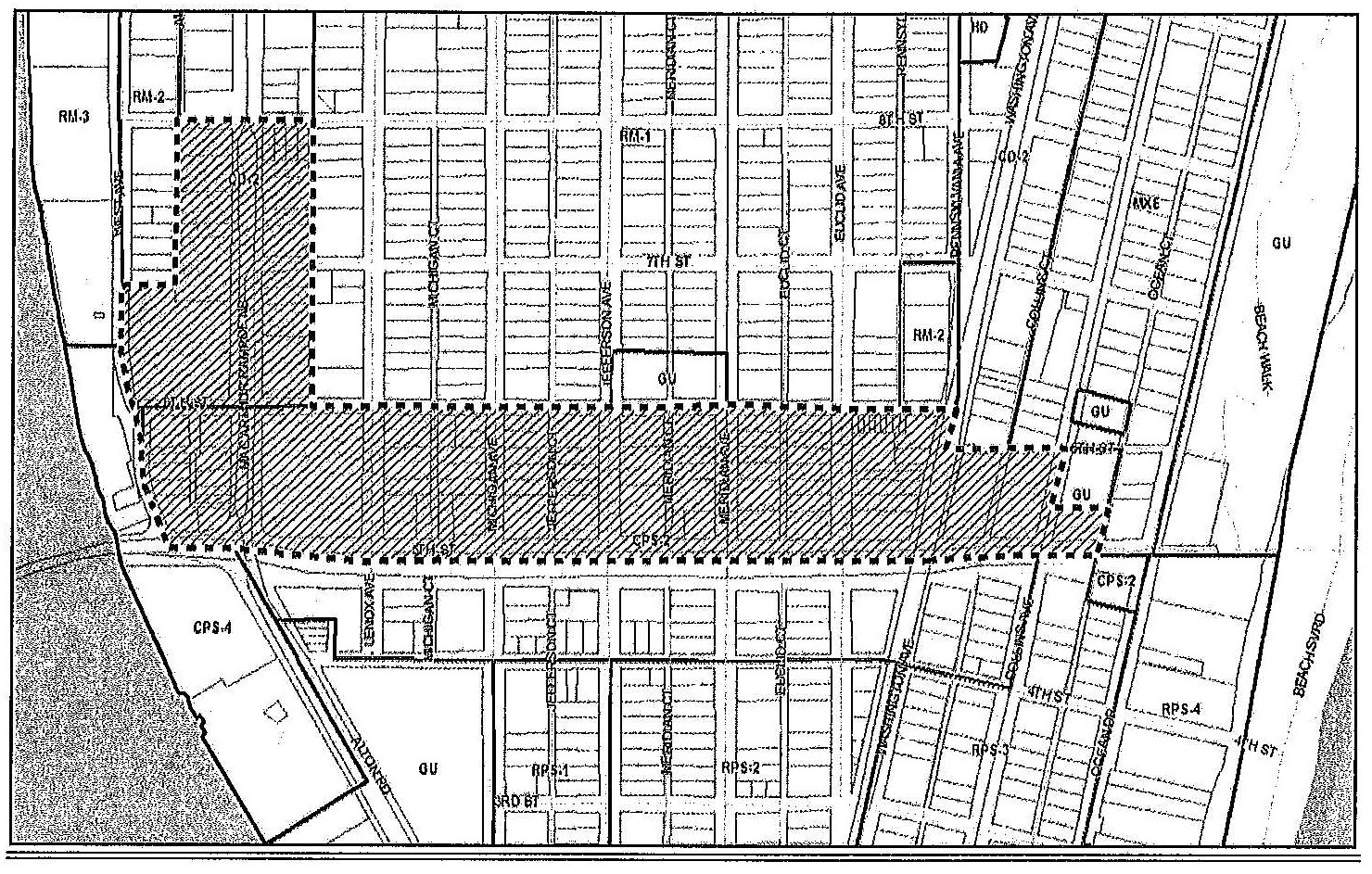
- Lots zoned CD-1 and CD-2 fronting Alton Road between 13th Street and 16th Street, as depicted in the map below:
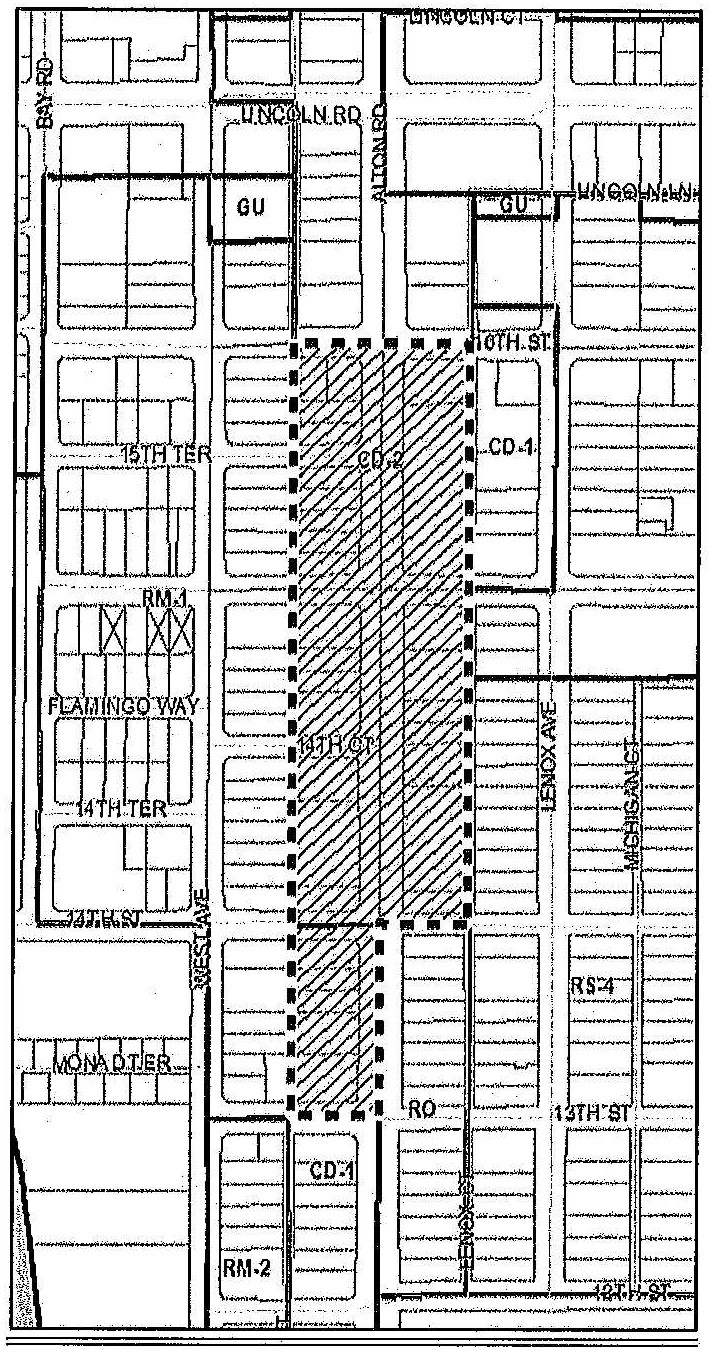
- Lots zoned CD-1, generally located between Alton Road on the east and north, Dade Boulevard on the south, Michigan Avenue on the west, as depicted in the map below:
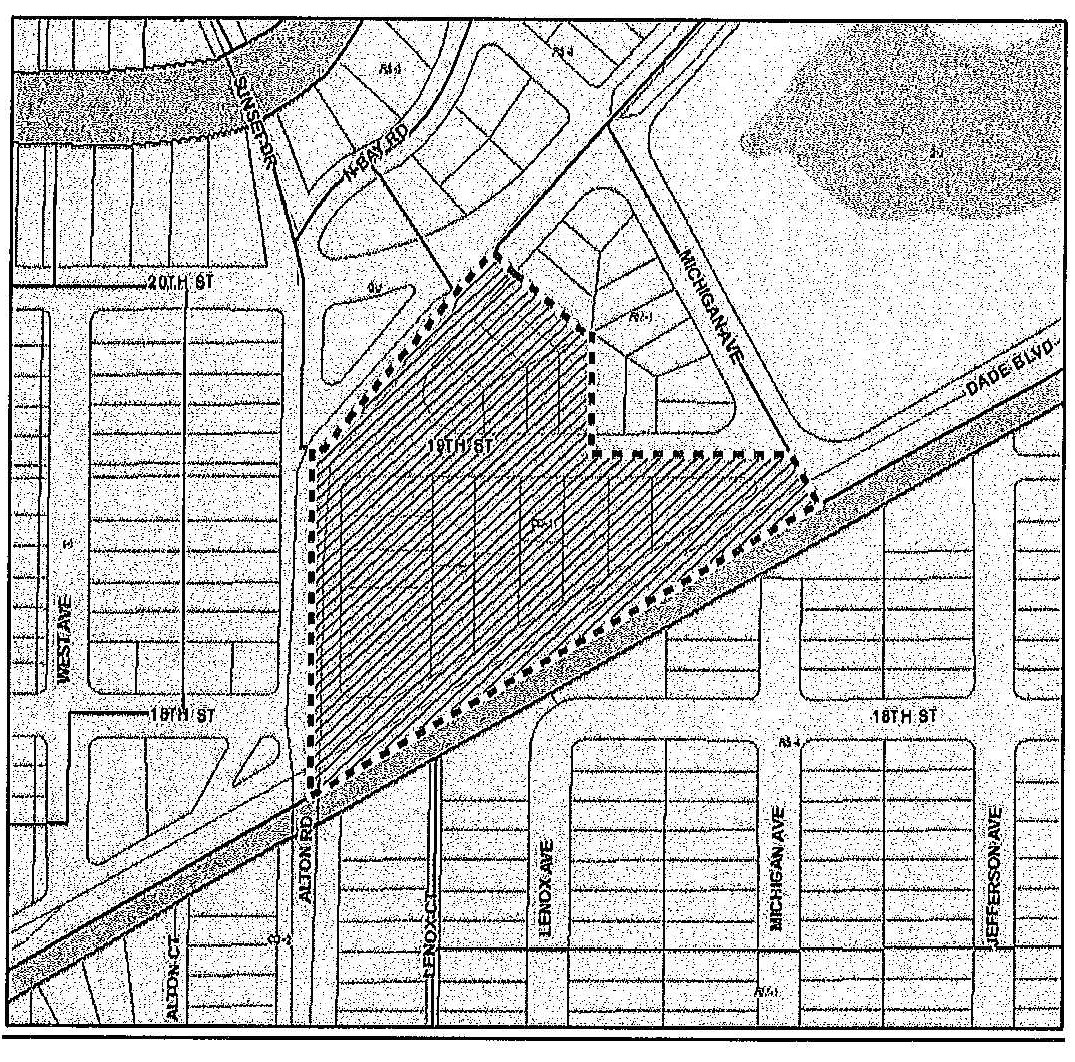
- Lots zoned CD-2, generally located along Alton Road between 6th Street and 8th Street: lots zoned C-PS2 located north of 5th Street between Ocean Court on the east and West Avenue on the west; as depicted in the map below:
- Area 2 shall include the lots zoned HD located north of the Julia Tuttle Causeway - Interstate 195, as depicted in the map below:
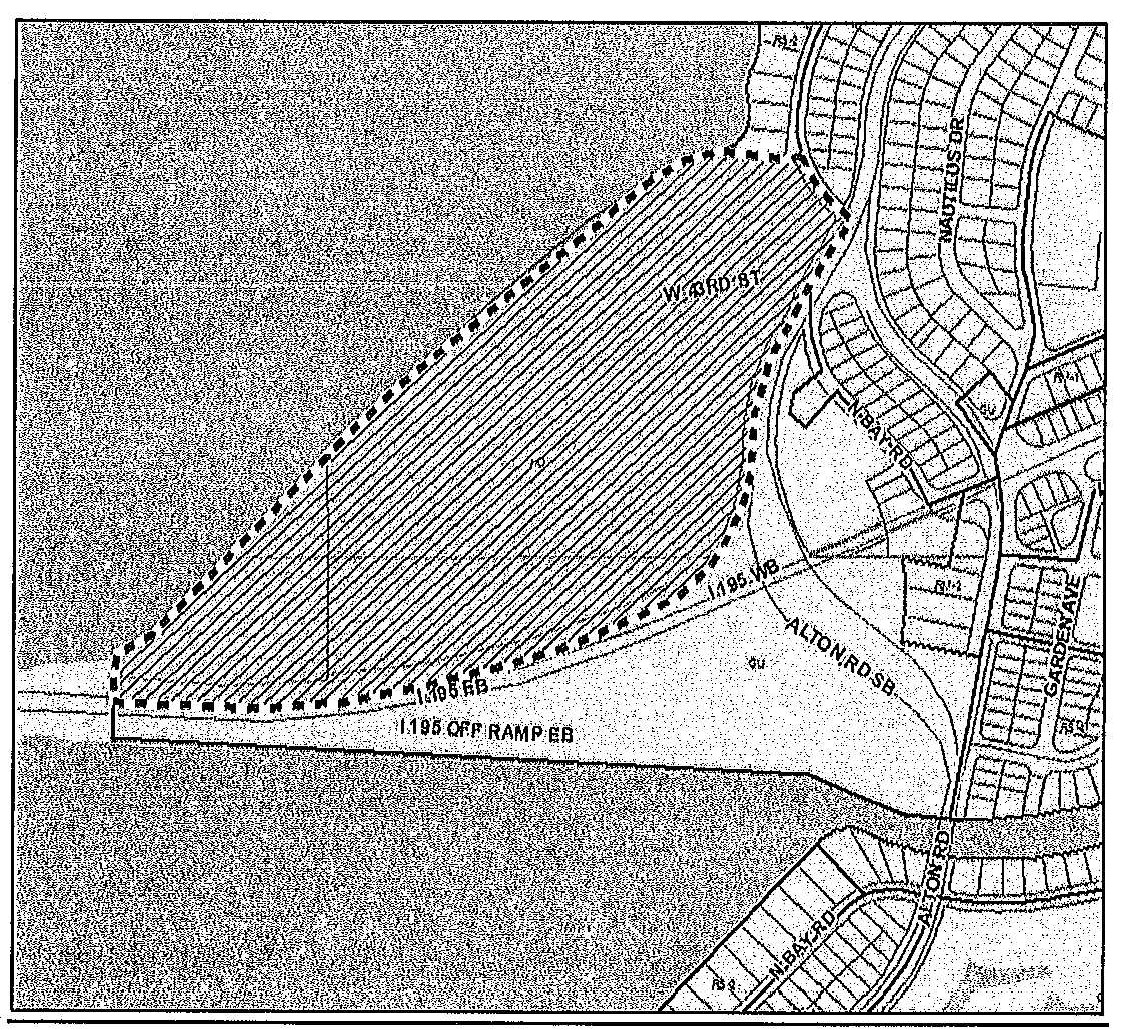
- Area 3 shall include [lots] zoned CD-3 and fronting 41st Street between Sheridan Avenue and the Indian Creek Waterway, as depicted in the map below:
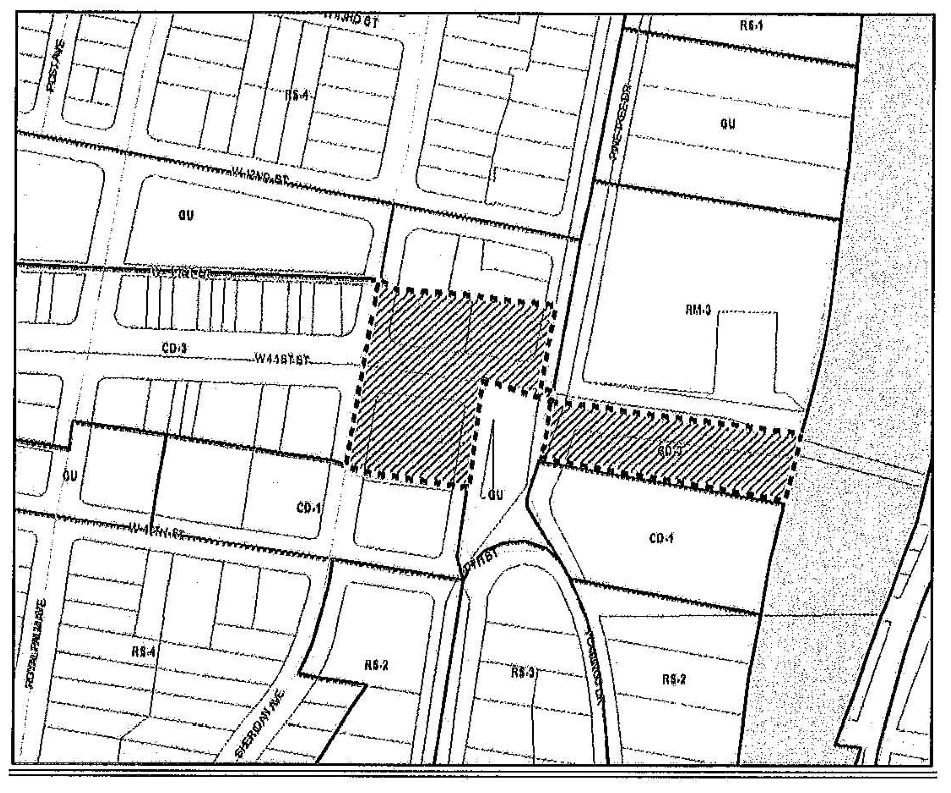
- Area 4 shall include lots zoned TC-1 and TCC south of 71st Street, generally located between Collins Avenue on the east, 71st Street on the north, the west lot line of lots fronting Bonita Avenue on the west, and 69th Street on south, as depicted in the map below:
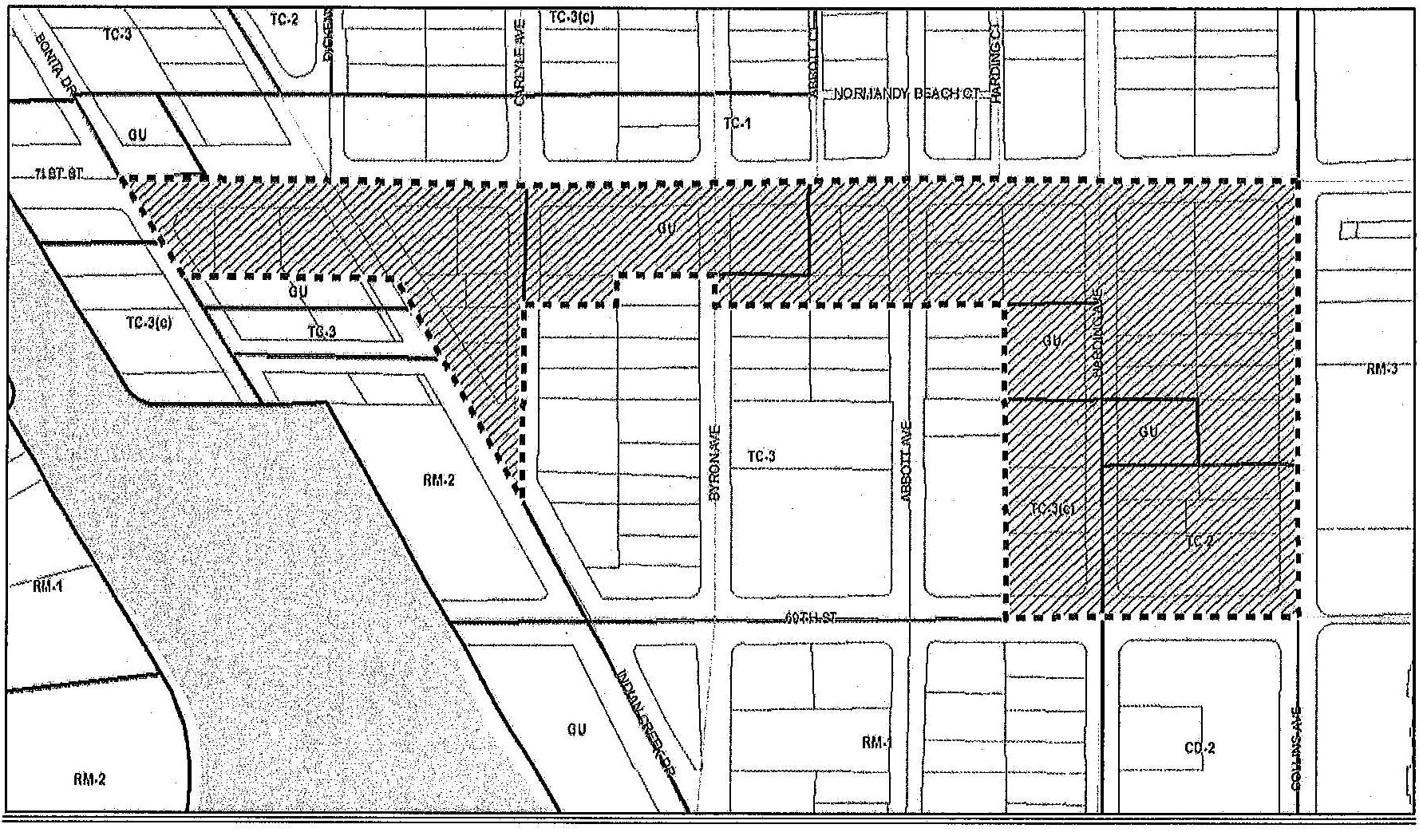
- Area 5 shall include lots zoned CD-3 south of 17th Street, generally located between Michigan Avenue on the east, 17th Street on the north, Lenox Avenue on the west, and the north lot line of City parking lot number P25, as depicted on the below map:
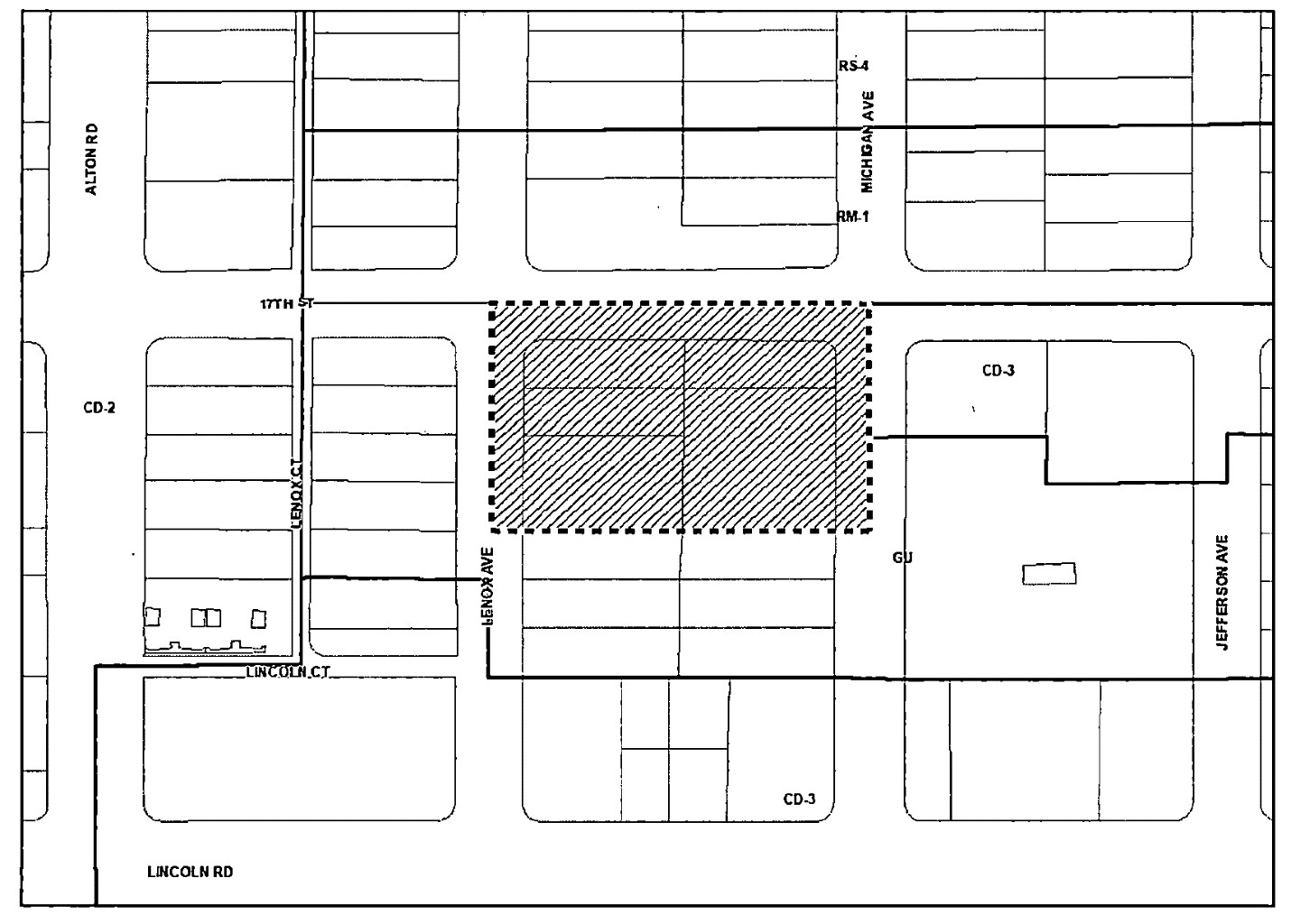
- Area 1 shall in include the following subareas:
- Location of uses.
- Medical cannabis treatment centers or pharmacy stores shall be prohibited in all zoning districts and areas not described in subsection 1, above.
- Medical cannabis treatment centers and pharmacy stores shall be considered prohibited uses on all GU sites.
- No medical cannabis treatment center shall be located within 500 feet of a public or private elementary, middle or secondary school. The minimum distance separation requirement shall be determined by measuring a straight line from the entrance and exit of the medical cannabis treatment center to the nearest point of the property line of the school.
- No medical cannabis treatment canter shall be located within 1,200 feet of another medical cannabis treatment center.
- No pharmacy store shall be located within 1,200 feet of another pharmacy.
- The minimum distance separation requirements set forth in subsections 4 and 5 shall be determined by measuring a straight line from the entrance and exit of each business.
- Prohibited cannabis related uses. The following cannabis related uses and activities shall be prohibited anywhere within the city:
- Cultivation, production, processing, storage, distribution or possession of marijuana plants or cannabis plants.
- Sale of cannabis from any motor vehicle.
- Medical cannabis product and cannabis derivative product manufacturing.
- Medical cannabis testing.
- Storage of cannabis or cannabis-related products off the site of the medical cannabis treatment center.
- Marijuana membership clubs.
- Vapor lounges.
- Prohibited accessory uses within medical cannabis treatment centers and pharmacy stores.
- Entertainment is prohibited within a medical cannabis treatment center or pharmacy store.
- Any medical cannabis treatment center or pharmacy store shall be prohibited from obtaining a special events permit.
- Notwithstanding the foregoing, medical cannabis treatment centers and pharmacy stores in Area 5 shall comply with the following additional regulations, which shall control in the event of a conflict with subsections 2,3 or 4 above:
- Only medical cannabis treatment centers or pharmacy stores that are accessory to a medical office, clinic, or health center, shall be permitted in Area 5. The hours of operation of the pharmacy store or medical cannabis treatment center shall be consistent with the hours of operation of the principal medical office, clinic, or health center, but in no event shall an accessory pharmacy store or medical cannabis treatment center operate past 6:00 PM, except for one (1) night per week during which the pharmacy or medical cannabis treatment center may operate until 7:00 PM. As used in the subsection (5), the term "medical office, clinic, or health center" requires a minimum of two (2) full-time physicians or physician extenders (which shall be defined as physician's assistants or nurse practitioners), and a minimum of five (5) patient examination rooms.
- The building in which the medical cannabis treatment center or pharmacy store is located shall be an existing office building that is a minimum of 25,000 square feet in size on the effective date of this ordinance.
- A medical cannabis treatment center or pharmacy store shall not be located on the ground floor.
- The area dedicated for use as a pharmacy store or medical cannabis treatment center shall not exceed 1,000 square feet. For the purpose of calculating the area of the accessory pharmacy store or medical cannabis treatment center, only the portion of the building that is being used as a pharmacy store or medical cannabis treatment center shall be included, and the portion of the building that serves as the principal medical office, clinic, or health center shall not be included in the maximum area calculation. The pharmacy store or medical cannabis treatment center will use its best efforts to serve only patients of the medical office, clinic, or health center and not the general public.
- Pharmacy stores and medical cannabis treatment centers in Area 5 shall only serve patients from private waiting rooms. Queueing of patients in hallways or common areas of the building in which the use is located is prohibited. Any violation of this subsection shall be subject to the penalties set forth in section 7.5.5.9.c.
- Accessory pharmacy stores and medical cannabis treatment centers in Area 5 are exempt from the wall separation requirement of section 7.5.5.8.d.4.
- Pharmacy stores in Area 5 are prohibited from distributing cannabis or cannabis products.
- Exterior signage is prohibited for pharmacy stores and medical cannabis treatment centers located in Area 5.
- No pharmacy store in Area 5 shall be located within 600 feet of another pharmacy store.
- No medical cannabis treatment center in Area 5 shall be located within 600 feet of another medical cannabis treatment center.
- The minimum distance separation requirements in this subsection 5 shall be measured in accordance with section 7.5.5.8.c.2.F.
- There shall be no variances from the requirements of this subsection 5.
- Nonconforming uses.
- Any pharmacy store (authorized prior to the adoption of this division), any pharmacy store approved after adoption of this division, or a medical cannabis treatment center use, created and established under the land development regulations in a legal manner, which may thereafter become legally nonconforming, may continue until there is an abandonment of said use. Once the legally nonconforming pharmacy store or medical cannabis treatment center use is abandoned, it shall not be re-established unless it conforms to the requirements of this division. Abandonment shall consist of: a change of use or suspension of active business with the public for a period of at least six (6) months: or a lesser time if a written declaration of abandonment is provided by the owner of the premises or, if the property is subject to a lease, by the owner and tenant thereof.
- A lawfully authorized medical cannabis treatment center cannot apply for a change of use or a business tax receipt to become a pharmacy store. A lawfully authorized pharmacy store cannot apply for a change of use or a business tax receipt to become a medical cannabis treatment center without meeting the requirements of this division as if it were a new establishment.
- Permitted areas. Only in accordance with the requirements of this division and the applicable zoning district, medical cannabis treatment centers and pharmacy stores shall be permitted only in the areas listed below:
- Requirements for medical cannabis treatment centers and pharmacy stores.
- Dispensing of, payment for, and receipt of low-THC, medical cannabis, or pharmaceutical drugs administered by a pharmacy is prohibited anywhere outside of the dispensing facility, including, but not limited to, on sidewalks, in parking areas, drive-thrus, or in the rights-of-way surrounding the dispensing facility; provided, however, this provision shall not be construed to prohibit delivery of low-THC, medical cannabis, or pharmaceutical drugs to an eligible patient, as permitted by state law or rule.
- Required parking shall be located on the same parcel or unified development site as the medical cannabis treatment center or pharmacy store, or within 500 feet of the site either in private parking facilities or a public parking facility, not within a residential district, with a lease, unity of title, or covenant-in-lieu of unity of title, or other document of a similar nature. Participation in the fee-in-lieu of parking program and the parking credit program is prohibited.
- The facility shall comply with the following regulations related to signage, advertisement, and display of merchandise:
- Signage visible from public rights-of-way and adjacent establishments and parcels shall be limited to the name of the establishment and signs necessary to comply with the requirements of the State of Florida, Miami-Dade County, and the City of Miami Beach. Depictions of cannabis, cannabis products and pharmaceutical products shall not be visible from public rights-of-way and adjacent establishments and parcels.
- No advertisement for the establishment, cannabis, cannabis derivative product, cannabis delivery devices, cannabis related products, or pharmaceutical products is permitted on signs mounted on vehicles, temporary signs, hand-held or other portable signs, handbills, leaflets or other fivers directly handed to any person in a public place, left upon a motor vehicle or posted upon any public or private property without consent of the property owner. This prohibition shall not apply to (1) any advertisement contained within a newspaper, magazine or other periodical of general circulation within the city or on the Internet; and (2) advertising which is purely incidental to sponsorship of a charitable event not geared to or for the benefit of children or youth.
- Under no circumstances shall activities related to sales of cannabis, cannabis derivatives, cannabis delivery devises, cannabis-infused products and pharmaceutical products be visible from the exterior of the business.
- All cannabis treatment center or pharmacy store establishments shall be divided within a building from floor to ceiling. Unless higher performance is required by applicable law, there must be a minimum of a one-hour fire separation between a medical cannabis treatment center or pharmacy store and any adjacent business.
- Each Individual cannabis treatment center or pharmacy store establishment shall not exceed 7,500 square feet, exclusive of required parking. This limitation shall not apply to establishments located in area 2.
- A business tax receipt (BTR) shall be obtained for the low-THC, medical cannabis dispensing facility, or pharmacy store on an annual basis. The application for the BTR shall be made on a form prescribed by the city.
- The city shall have the right to periodically inspect the premises of any medical cannabis treatment center, or pharmacy store at any reasonable time to ensure that the facility has a current and valid BTR, per employee, and per business and to ensure compliance with the terms and conditions under which it was issued. Violators will be subject to all appropriate penalties, including revocation of the BTR.
- Where a civil violation notice relating to this division has been issued and appealed by the alleged violator, the BTR shall not be renewed where the appeal has been pending for one hundred and eighty (180) days or more and the delay is attributable to the alleged violator. Where, determinations of guilt for three (3) or more violations have been made, or the special magistrate has determined that a nuisance exists at the medical cannabis treatment center facility or pharmacy store, the BTR shall be revoked immediately, and a new application may not be made within a period of twelve (12) months.
- No certificate of use, business tax receipt, or building or other permit shall be issued for a medical cannabis treatment center facility or pharmacy store where the proposed place of business does not conform to the requirements of this division.
- Neither use shall be allowed a drive-thru component.
- Specific additional criteria.
Only state qualified dispensing organizations entitled to a medical cannabis treatment center (as authorized under F.S. ch. 381) business tax receipt, or a dispensing pharmacy store (as authorized under chapter 465) business tax receipt, Florida Statutes, pursuant to the regulations in section 7.5.5.8.f , of these land development regulations, shall be eligible to submit an application for a pharmacy or medical marijuana treatment center.
A general security plan shall be provided. The plan must sufficiently demonstrate enhanced security measures in excess of the minimum requirements set forth in state regulations. The enhanced security measures include, but are not limited to, steel security doors, improved video surveillance system capability, advanced alarm systems, improved fire safety systems, natural disaster security, packaging of dispensed products, procedures for waste removal, and other measures, such as the use of hurricane impact windows. If the facility is located below the base flood elevation plus City of Miami Beach Freeboard, the plan should incorporate floodproofing measures to ensure the continued functioning of security devices in the event of a natural disaster and sea level rise. The plan must be reviewed and approved by the City of Miami Beach Police Department before it can be considered by planning staff. Both uses should protect its window and have an alarm system and strong locks on the doors: To harden the establishment by doing things that make it less attractive to the potential criminal. There should be physical barrier to protect the pharmacist or medical marijuana treatment center employee from the general public and ensure that the narcotics or medical cannabis is not accessible to a person under the influence of opioids or other narcotics. A glass barrier wall shall be installed around the area holding the prescription pharmaceuticals or the medical cannabis and the general public.- A business plan shall be provided. The plan is to demonstrate the applicant's ability to successfully operate in a highly regulated industry over an extended period of time. The plan may include, but is not limited to, the following: Scope of work for the planning and development; scope of work for capital improvements: an estimate of first-year revenues; an estimate of first-year operating expenses and evidence that the applicant will have the resources necessary to pay for those expenses; and a description of the applicant's history of compliance in a highly regulated industry. The plan must be reviewed and approved by the City of Miami Beach Police Department before it can be considered by planning staff.
- An operating plan shall be provided. The operating plan is to enumerate the specific means through which the applicant intends to achieve the business goals and comply with the city and state regulatory requirements. The operating plans may include, but is not limited to, the following: Staffing schedules to ensure adequate coverage and experience during all business hours; employee training programs for security, product knowledge and safety; proactive consumer education and community outreach practices; an operations manual demonstrating compliance with state and city retail marijuana laws or pharmaceutical drug laws, as applicable; and disposal of waste. The plan must be reviewed and approved by the City of Miami Beach Police Department before it can be considered by planning staff.
- An odor management plan shall be provided. It shall be required that the odor of marijuana must not be perceptible at the exterior of the building or at any adjoining use of the property. Facilities shall adopt best management practices with regard to implementing state-of-the-art technologies in mitigating odor, such as air scrubbers, charcoal filtration systems, and sealed walls. The plan must include maintenance of systems, including preventing the buildup of mold.
- Penalties, enforcement and appeals.
- Penalties and enforcement.
The city manager has the authority to suspend or revoke a business tax receipt following notice and hearing, or to summarily suspend a business tax receipt pending a hearing pursuant to section 102-385 of the General Ordinances.
A violation of this section 7.5.5.8 shall be subject to the following fines:
If the violation is the first offense, a person or business shall receive a civil fine of $5,000.00;
If the violation is the second violation within the preceding six (6) months, a person or business shall receive a civil fine of $10.000.00;
If the violation is the third violation within the preceding six (6) months, a person or business shall receive a civil fine of $20,000.00; and
If the violation is the fourth or subsequent violation within the preceding six (6) months, a person or business shall receive a civil fine of $30,000.00 and the business tax receipt shall be revoked.
Enforcement. The code compliance department shall enforce this section 7.5.5.8 Controlled Substances Regulations and Use. This shall not preclude other law enforcement agencies from any action to assure compliance with this section 7.5.5.8 and all applicable laws. If a violation of this section 7.5.5.8 is observed, the enforcement officer will be authorized to issue a notice of violation. The notice shall inform the violator of the nature of the violation, amount of fine for which the violator is liable, instructions and due date for paving the fine, that the violation may be appealed by requesting an administrative hearing before a special magistrate within ten (10) days after service of the notice of violation, and that the failure to appeal the violation within ten (10) days of service shall constitute an admission of the violation and a waiver of the right to a hearing.
Rights of violators; payment of fine; right to appear; failure to pay civil fine or to appeal; appeals from decisions of the special magistrate.
A violator who has been served with a notice of violation must elect to either:
Pay the civil fine in the manner indicated on the notice of violation; or
- Request an administrative hearing before a special magistrate to appeal the notice of violation, which must be requested within ten (10) days of the service of the notice of violation.
- The procedures for appeal by administrative hearing of the notice of violation shall be as set forth in sections 30-72 and 30-73 of the General Ordinances. Applications for hearings must be accompanied by a fee as approved by a resolution of the city commission, which shall be refunded if the named violator prevails in the appeal.
- If the named violator, after issuance of the notice of violation, fails to pay the civil fine, or fails to timely request an administrative hearing before a special magistrate, the special magistrate may be informed of such failure by report from the police officer or code compliance officer. The failure of the named violator to appeal the decision of the police officer or code compliance officer within the prescribed time period shall constitute a waiver of the violator's right to an administrative hearing before the special magistrate, and shall be treated as an admission of the violation, for which fines and penalties shall be assessed accordingly.
- A certified copy of an order imposing a fine may be recorded in the public records, and thereafter shall constitute a lien upon any real or personal property owned by the violator, which may be enforced in the same manner as a court judgment by the sheriffs of this state, including levy against the violator's real or personal property, but shall not be deemed to be a court judgment except for enforcement purposes. On or after the 61st day following the recording of any such lien that remains unpaid, the city may foreclose or otherwise execute upon the lien.
- Any party aggrieved by a decision of a special magistrate may appeal that decision to a court of competent jurisdiction.
- The special magistrate shall be prohibited from hearing the merits of the notice of violation or considering the timeliness of a request for an administrative hearing if the violator has failed to request an administrative hearing within ten days of the service of the notice of violation.
- The special magistrate shall not have discretion to alter the penalties prescribed in subsection I.(b).
- Penalties and enforcement.
7.5.5.9 TOBACCO/VAPE DEALERS
- Intent.
It is the intent of this division to limit access and exposure of tobacco and vaping products to children and adolescents due to their addictive nature and damaging effects on health. It is also the intent to limit the proliferation of tobacco, vaping, and smoking device product dealers in areas where the city encourages tourism, and to minimize the negative implications that these types of businesses may portray to the city's visitors seeking a unique vacation destination. - Locations prohibiting the sale of tobacco and vape products.
- Prohibited locations. Tobacco/vape dealers are prohibited in the following locations:
- Within 500 feet of any property used as a public or private, elementary, middle, or secondary school. The minimum distance separation requirement shall be determined by measuring a straight line from the main entrance or exit of the establishment which contains the tobacco/vape dealer to the nearest point of the property line of the school.
- In those specific areas that have been identified within the underlying zoning district regulations in Articles 2, 3 or 4 of chapter 7 - the Zoning Districts and Regulations in the Land Development Regulations.
- Notwithstanding the foregoing, the prohibitions of this section shall not be applicable to medical cannabis treatment centers permitted pursuant to section 7.5.5.8.
- Distance separation. No tobacco/vape dealer shall be located within 1,200 feet of another tobacco/vape dealer.
- Determination of minimum distance separation. When a distance separation is required, a scaled survey drawn by a registered land surveyor shall be submitted attesting to the separation of the uses in question. This requirement may be waived upon the written certification by the planning director or designee that the minimum distance separation has been properly satisfied.
- [Variances.] Variances from the requirements of this section shall be prohibited.
- Prohibited locations. Tobacco/vape dealers are prohibited in the following locations:
- Penalties, enforcement, and appeals.
- Penalties and enforcement. The following penalties shall be imposed against a person or business for a violation of this section:
- A violation of this division shall be subject to the following fines:
- If the violation is the first offense, a person or business shall receive a civil fine of $1,000.00;
- If the violation is the second violation within the preceding six (6) months, a person or business shall receive a civil fine of $3,000.00;
- If the violation is the third violation within the preceding six (6) months, a person or business shall receive a civil fine of $5,000.00; and
- If the violation is the fourth or subsequent violation within the preceding six (6) months, a person or business shall receive a civil fine of $7,500.00 and the business tax receipt shall be revoked.
- Enforcement. The code compliance department shall enforce this division. This shall not preclude other law enforcement agencies from any action to assure compliance with this division and all applicable laws. If a violation of this division is observed, the enforcement officer will be authorized to issue a notice of violation. The notice shall inform the violator of the nature of the violation, amount of fine for which the violator is liable, instructions and due date for paying the fine, that the violation may be appealed by requesting an administrative hearing before a special magistrate within ten (10) days after service of the notice of violation, and that the failure to appeal the violation within ten (10) days of service shall constitute an admission of the violation and a waiver of the right to a hearing.
- Rights of violators; payment of fine; right to appear; failure to pay civil fine or to appeal; appeals from decisions of the special magistrate.
- A violator who has been served with a notice of violation must elect to either:
- Pay the civil fine in the manner indicated on the notice of violation; or
- Request an administrative hearing before a special magistrate to appeal the notice of violation, which must be requested within ten (10) days of the service of the notice of violation.
- The procedures for appeal by administrative hearing of the notice of violation shall be as set forth in sections 30-72 and 30-73 of the General Ordinances. Applications for hearings must be accompanied by a fee as approved by a resolution of the city commission, which shall be refunded if the named violator prevails in the appeal.
- If the named violator, after issuance of the notice of violation, fails to pay the civil fine, or fails to timely request an administrative hearing before a special magistrate, the special magistrate may be informed of such failure by report from the police officer or code compliance officer. The failure of the named violator to appeal the decision of the police officer or code compliance officer within the prescribed time period shall constitute a waiver of the violator's right to an administrative hearing before the special magistrate and shall be treated as an admission of the violation, for which fines and penalties shall be assessed accordingly.
- A certified copy of an order imposing a fine may be recorded in the public records, and thereafter shall constitute a lien upon any real or personal property owned by the violator, which may be enforced in the same manner as a court judgment by the sheriffs of this state, including levy against the violator's real or personal property, but shall not be deemed to be a court judgment except for enforcement purposes. On or after the 61st day following the recording of any such lien that remains unpaid, the city may foreclose or otherwise execute upon the lien.
- Any party aggrieved by a decision of a special magistrate may appeal that decision to a court of competent jurisdiction.
- The special magistrate shall be prohibited from hearing the merits of the notice of violation or considering the timeliness of a request for an administrative hearing if the violator has failed to request an administrative hearing within ten days of the service of the notice of violation.
- The special magistrate shall not have discretion to alter the penalties prescribed in subsection I.(2).
- A violator who has been served with a notice of violation must elect to either:
- A violation of this division shall be subject to the following fines:
- Penalties and enforcement. The following penalties shall be imposed against a person or business for a violation of this section:
7.5.5.10 VITAMIN SHOPS
- Intent.
It is the intent of this division to limit exposure of products sold by vitamin shops, which are not regulated and do not require a medical prescription, to children and adolescents due to the potential effects on health of certain products. It is also the intent to limit the proliferation of vitamin shops in the city' s commercial districts, particularly the city' s premier retail corridors, which draw both residents and visitors, and to minimize the negative impacts of these businesses on the city's unique brand as a vacation destination. - Compliance with regulations.
- Vitamin shops as a primary use. Where a vitamin shop is the primary use of a site, building or establishment ( i. e., vitamin shop goods occupy 50 percent or more of the establishment' s floor area) the following shall apply:
- Prohibited locations. Such establishments are prohibited in the following locations:
- Within 500 feet of any property used as a public or private elementary, middle, or secondary school. The minimum distance separation requirement shall be determined by measuring a straight line from the main entrance or exit of the establishment which contains the vitamin shop to the nearest point of the property line of the school.
- In those specific areas that have been identified within the underlying zoning district regulations in chapter 7, article II or overlay district regulations in chapter 7, article III of the City Code.
- Distance separation from vitamin shops. Vitamin shops shall not be located within 1, 200 feet of another vitamin shop. The minimum distance separation requirement shall be determined by measuring a straight line from the main entrance or exit of the establishment which contains the vitamin shop to the nearest point of the property line of the other vitamin shop.
- Determination of minimum distance separation. When a distance separation is required, a scaled survey drawn by a registered land surveyor shall be submitted attesting to the separation of the uses in question. This requirement may be waived upon the written certification by the planning director or designee that the minimum distance separation has been properly satisfied.
- Prohibited locations. Such establishments are prohibited in the following locations:
- Vitamin shops as an accessory use. Where vitamin shops are an accessory use to another type of commercial establishment, and not the primary use, the following shall apply:
- No more than 10 percent of the floor area may be used for vitamin shop goods.
- Exterior signage is prohibited related to the accessory vitamin shop use and related products.
- Vitamin shop merchandise shall not be visible from public rights- of-way.
- Variances. Variances from the requirements of this section shall be prohibited.
- Vitamin shops as a primary use. Where a vitamin shop is the primary use of a site, building or establishment ( i. e., vitamin shop goods occupy 50 percent or more of the establishment' s floor area) the following shall apply:

