
Morrow City Zoning Code
ARTICLE VII
EXCEPTIONS, MODIFICATIONS AND ENCROACHMENTS
Section 701 - Height exceptions, general rule.
Any structure hereafter erected or altered shall comply with the height limitations of the district in which it is located except as specified below:
1.
Churches, public schools, public hospitals, sanitariums and other public buildings. There shall be no restriction on the height of these buildings.
(Ord. No. 95-04, § 1(B), 4-11-95; Ord. No. 2005-02, § II, 4-12-05)
Section 702 - Yard space, general rule.
Any building, structure or use hereafter erected, altered or established shall comply with the yard space requirements of the district in which it is located except as specified below. The required yard space for any building, structure, or use shall be contained on the same lot as the building, structure or use and such required yard space shall fall entirely upon land in a district or districts in which the principal use is permitted.
1.
In the case of a double frontage lot, the minimum front yard shall be provided on each fronting street.
(Ord. No. 2005-02, § II, 4-12-05)
Section 703 - Fences, general rule.
As used in this section, "fence" means any structure constructed or installed around a dwelling unit or a principal building to provide a barrier, either physical or visual, for the purpose of protecting property, providing for security and privacy, and properly containing activities on the property.
1.
Fences are permitted in certain zoning districts, subject to the following limitations:
A.
A permit from the department of community development is required to construct or install any proposed fences or repair an existing fence in all zoning districts.
B.
Barbed, chicken or similar-type wire is not allowed in any zoning district, which can be viewed from a public or private right-of-way.
C.
Painted chain link fences are prohibited from being constructed after the effective date of this amendment.
D.
Fences shall not be installed within or allowed to encroach upon an undisturbed buffer.
E.
Fences shall not be included when counting the total number of allowed accessory structures on a property.
F.
A new fence may not be tied or attached to an existing fence for support, but must be installed with separate fence posts to ensure its ability to stand on its own. Fence posts shall be installed on the interior side of the fence, which is the side closest to the dwelling unit or principal building on the property containing the permitted proposed new fence.
G.
Fences shall be installed within the property lines of the property containing the permitted proposed new fences.
2.
Fences in districts zoned residential (RS-80 and other single-family & multi-family residential)
A.
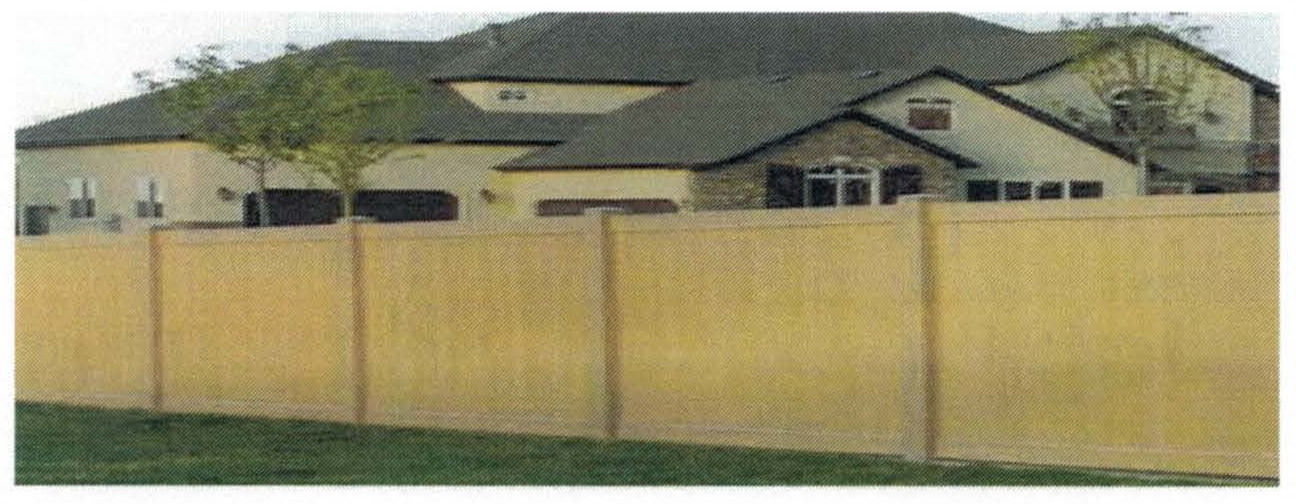
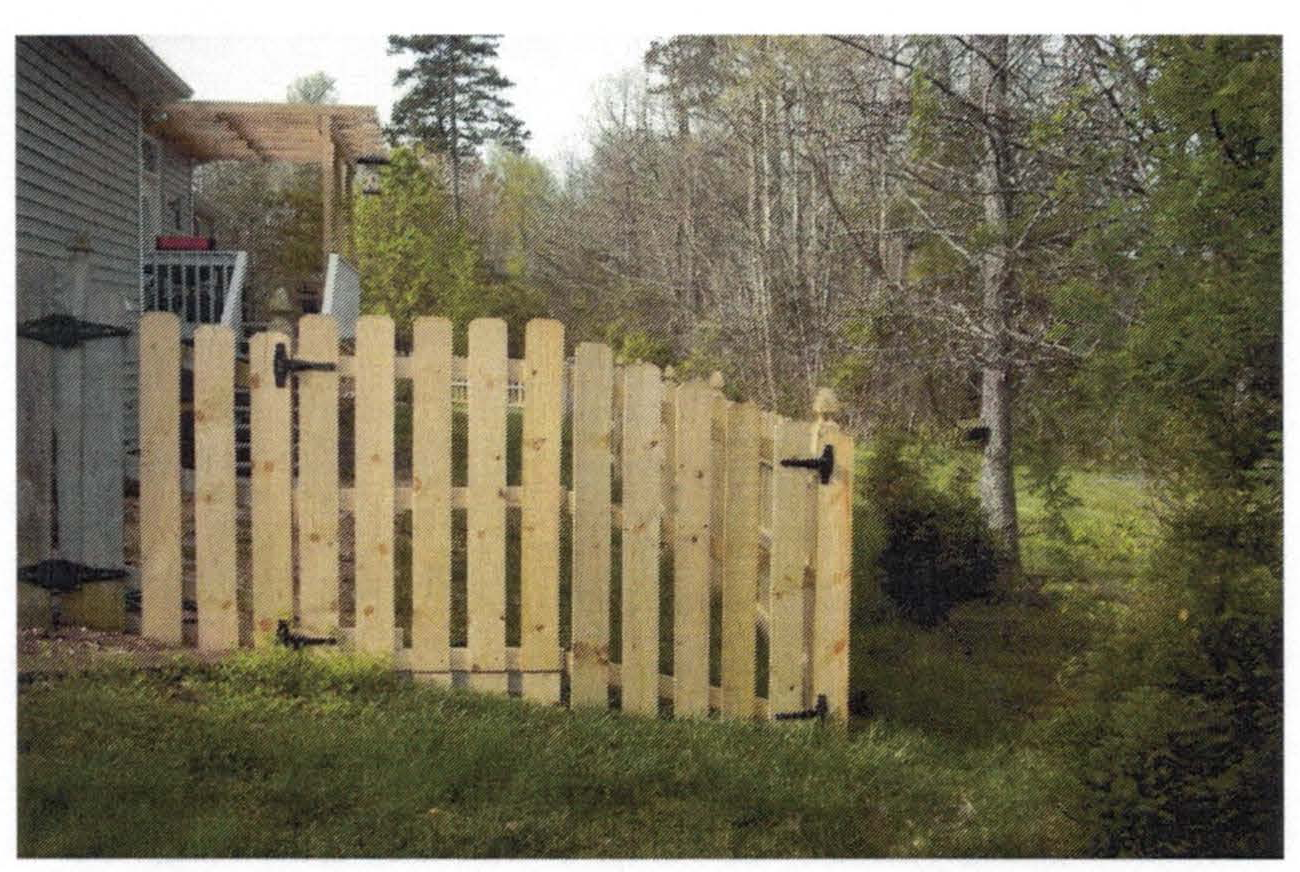
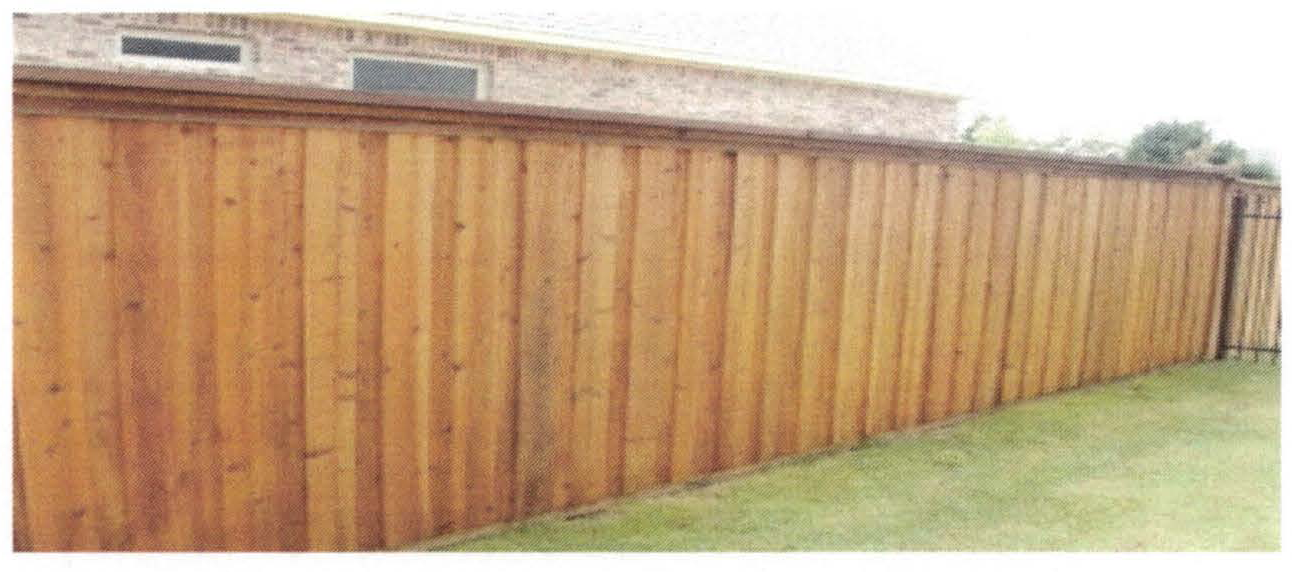
All residential fences installed after the effective date of this amendment shall be constructed from the following materials. See Figure 703(3).
1)
Wood materials shall be pressure-treated. Wood finishes may be natural unfinished, water-resistant sealant or stain. Wood planks shall be a minimum of five-eighths of an inch thick
2)
Vinyl coated chain link (dark brown, green or black)
3)
Vinyl or PVC Composite
4)
Aluminum
5)
Wrought Iron
6)
Split-rail fencing is only allowed on lots with a minimum of three acres
7)
Combination Masonry- Brick, Stone or Stucco with Wrought Iron
B.
Chain link fences constructed before or after the effective date of this amendment must be properly maintained in good condition and free of damage, rust, or debris. In the event that an existing chain link fence needs repair or replacement, a permit must be obtained before any construction is to begin. The repair of an entire existing chain link fence is prohibited; however, a permit may be granted for the repair of a section of an existing chain link fence, provided such section is not greater than 49 percent in length of the total fence area.
C.
All approved fence materials shall be allowed along all sections of a property in which fences are permitted to be constructed.
D.
Fences on side and rear property lines may have a maximum height of eight feet.
E.
Fences on corner lots shall be no closer than ten feet from the curb of the bordering roadways to ensure easements and sidewalks are not impeded. Administrative variances may be obtained, subject to approval by the department of community development. See Figure 703(F).
F.
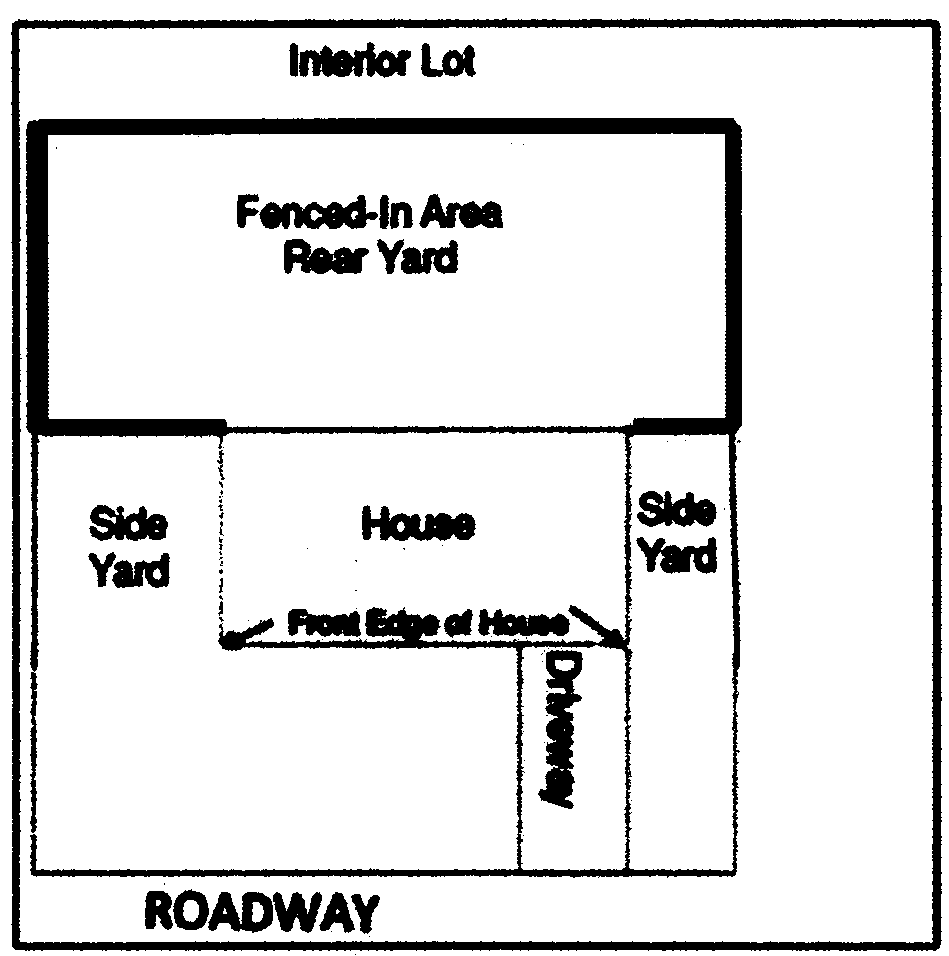
Fences originating from anywhere between the front corner edges of the foundation of the dwelling unit and the rear property line, and extend perpendicular to the side property lines are permitted, and may have a maximum height of eight feet.
G.
Fences shall not be installed beyond the front edge of the foundation of the dwelling unit, such that they approach the front property line abutting the street. See Figure 703 (G).
H.
Vinyl coated chain link fences on corner lots shall be installed with shrubs to provide additional screening along public right-of-ways.
I.
Homeowners Association written approval shall be required with submittal of fence permit application, if applicable.
3.
Fences in districts not zoned residential (commercial, manufacturing, and public institutional)
A.
Fences and gates in districts zoned commercial or public institutional within the City of Morrow, which can be viewed from a public or private right-of-way, shall be constructed of masonry, wrought iron, or aluminum after the effective date of this amendment.
B.
Fences and gates in districts zoned manufacturing shall be constructed of masonry, wrought iron, aluminum, or vinyl coated chain link after the effective date of this amendment. However, chain link fences shall have a vinyl coating of black, brown or green.
C.
The design, type, and material used must be included with a landscape plan and shall be submitted to the department of community development for approval prior to the installation or repair of any proposed fences.
D.
In the event the city council approves any wooden fence in response to a formal variance request, a water-sealing product or paint shall be applied annually to maintain its original appearance. All weathered and warped boards must be replaced and repaired as they become worn or damaged.
E.
Fences may have a maximum height of eight feet.
F.
Except for those in districts zoned manufacturing, fences shall not be installed beyond the front edge of the foundation of the principal building, such that they approach the front property line abutting the street.
Figure 703(3). Allowed fence materials.
Vinyl/PVC
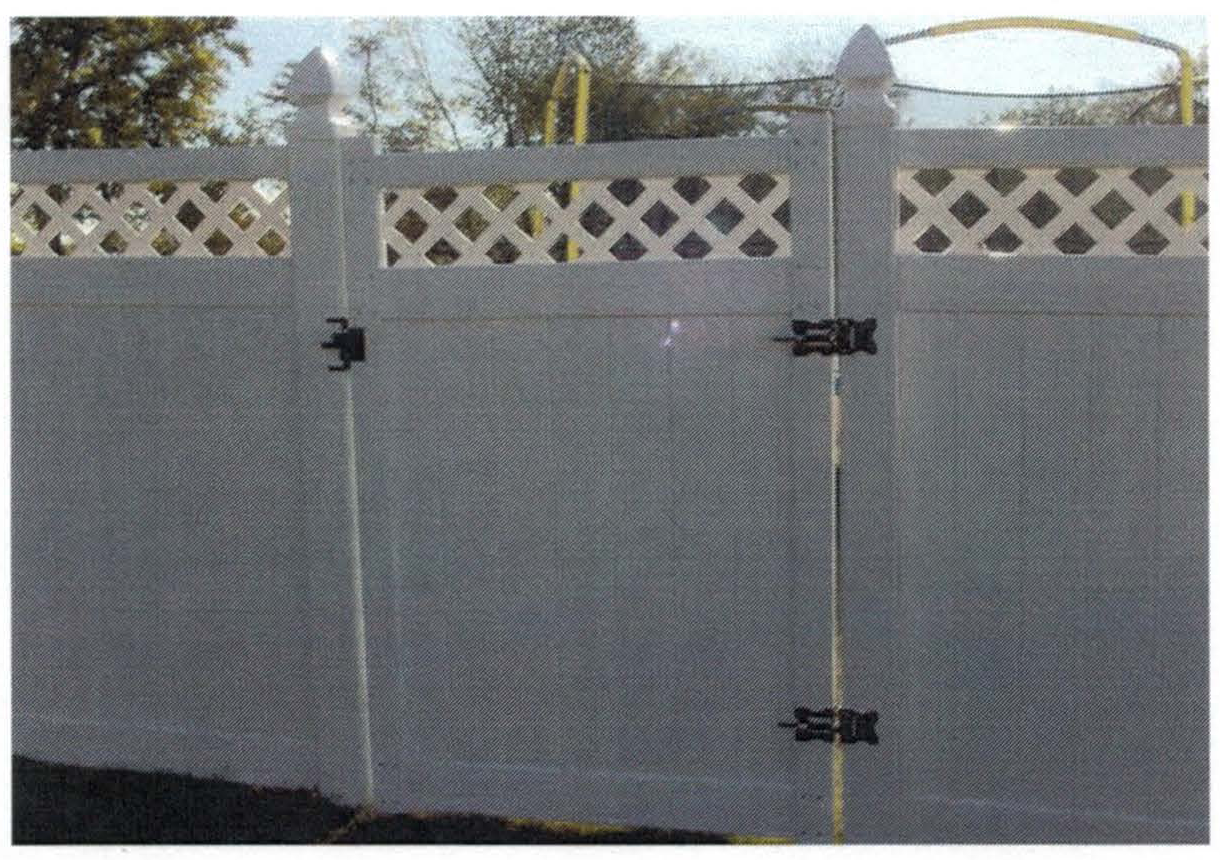
Wood-grain vinyl
Wood with protective sealant
Wood(painted)
Vinyl coated chain link
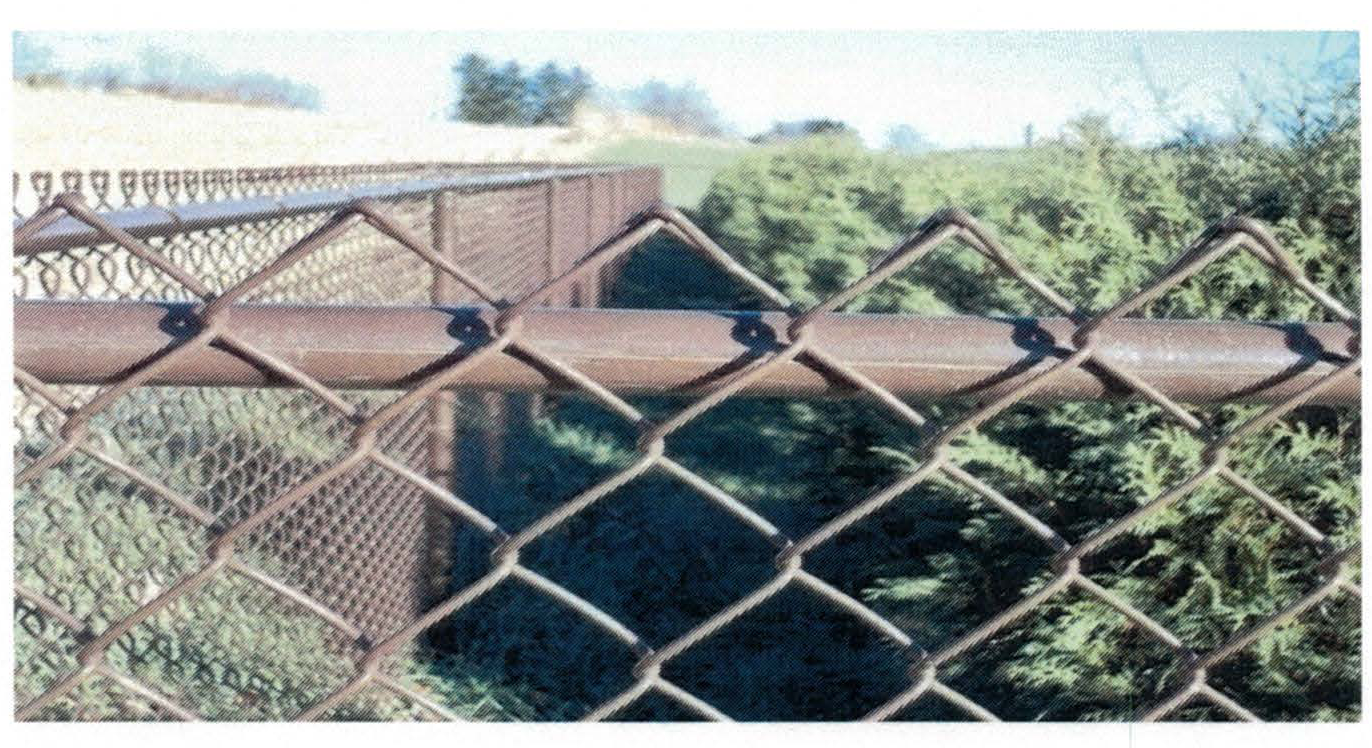
Chain link (existing/repair only)
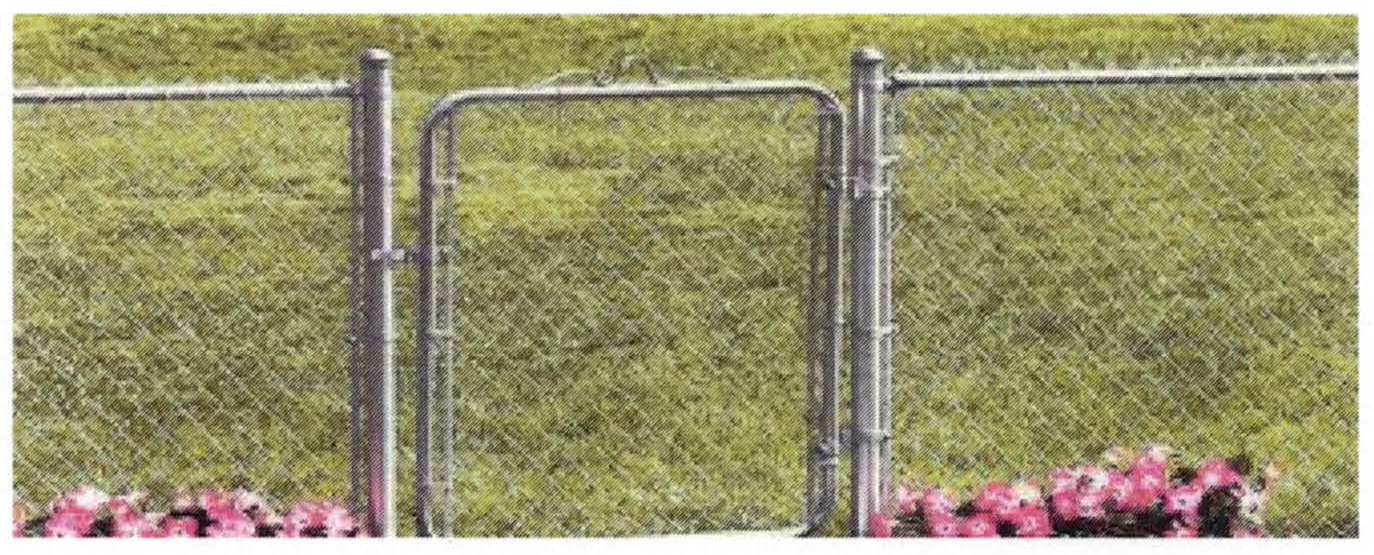
Wrought iron or aluminum
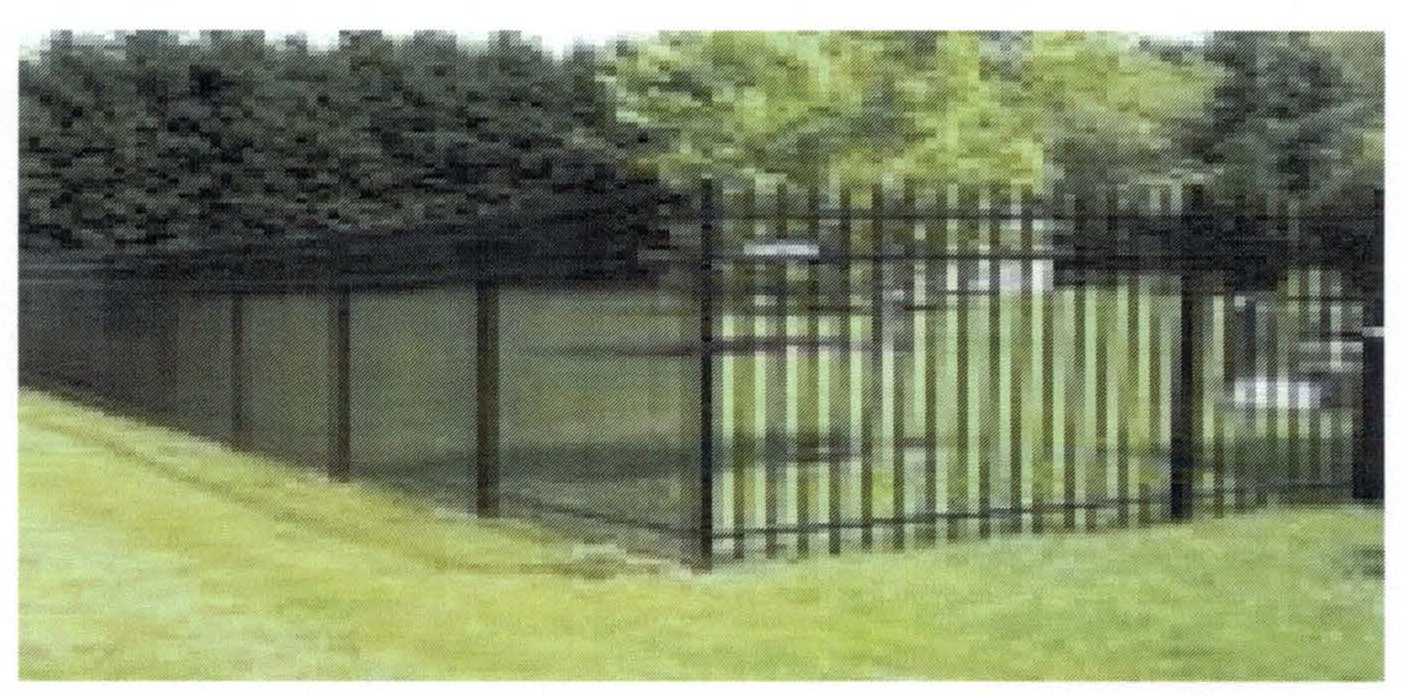
Figure 703(F). Fence location for corner lots.
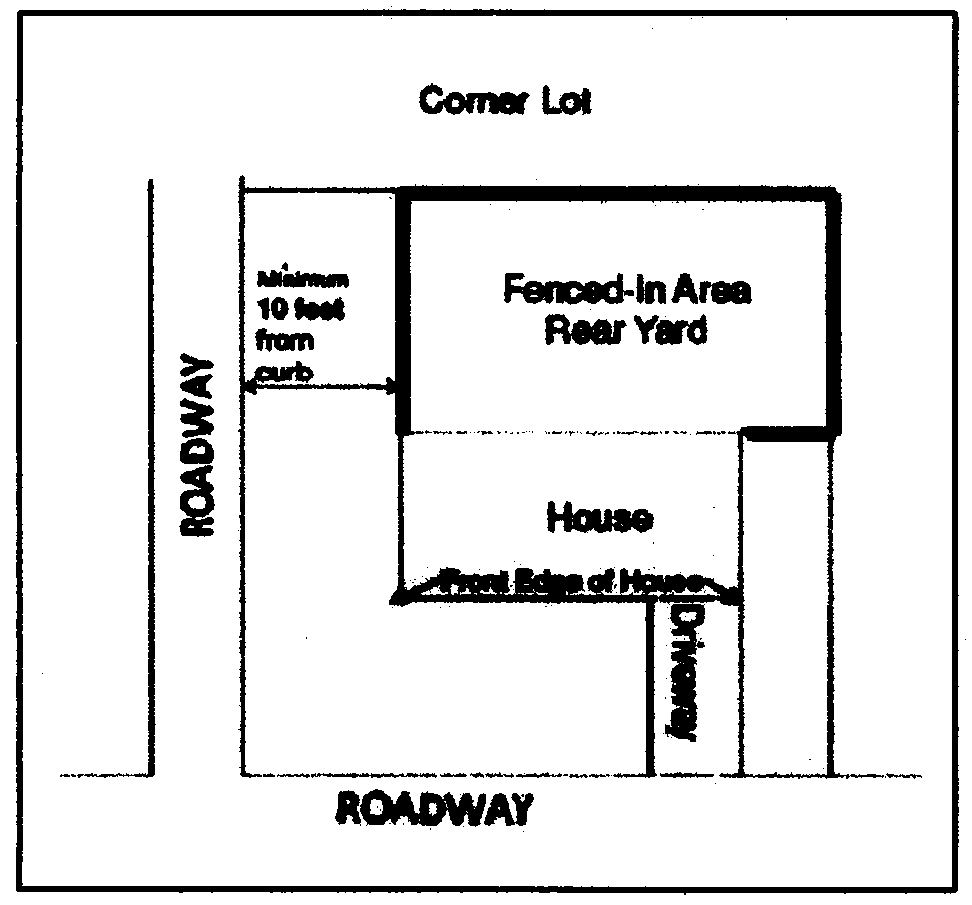
Figure 703(G). Fence location for interior lots.
(Ord. No. 99-01, § 2, 1-12-99; Ord. No. 2005-02, § II, 4-12-05; Ord. No. 2014-07, § 1, 8-12-14; Ord. No. 2018-03, §§ 1—4, 3-27-18)
Section 704 - Open uses in undeveloped areas.
A temporary building, signs, or buildings for use in connection with a construction project or land subdivision development shall be permitted on the land of the project only during the construction period. Temporary buildings and signs related to a subdivision development shall be removed when 100 percent of all lots are occupied by completed homes or within four years, whichever occurs first.
(Ord. No. 2005-02, § II, 4-12-05)
Section 705 - Parking, storage or use of major recreational equipment, and other trailers and equipment.
For the purposes of this section, major recreational equipment is defined as including boats and boat trailers, travel trailers, pick-up campers or coaches (designed to be mounted on automotive vehicles), motorized dwellings, tent trailers, and the like, and cases or boxes used for transporting recreational equipment, whether occupied by such equipment or not. Such major recreational equipment and other recreational trailers may be parked or stored on lots that exceed 15,000 square feet only in side yards behind the front line of the building or in rear yards. Such major recreational equipment and other recreational trailers shall not be parked in driveways in front or side yards in front of the principle building except for temporary loading and unloading operations; such temporary use shall not exceed an accumulated two hours in duration in any 48-hour period. In any residential area except where prohibited by protective covenants, major recreational equipment can be stored in a completely enclosed building. In the case of corner lots, no vehicles may be parked or stored in the side yard on the street side of the lot. No such equipment shall be used for living, sleeping, housekeeping or home occupation purposes when parked or stored on a residential lot, or in any location not approved for such use.
(Ord. No. 99-06, § 1, 2-23-99; Ord. No. 2005-02, § II, 4-12-05; Ord. No. 2010-24, § 1, 9-28-10)
Section 706 - Parking and storage of certain vehicles.
Automotive vehicles or recreational trailers of any kind or type without current license plates and stickers or incapable of immediately being driven shall not be parked or stored on any residentially zoned property; other than in completely enclosed buildings.
(Ord. No. 2005-02, § II, 4-12-05)
Section 707 - Projection into required yards.
Every part of a required yard shall be open to the sky and unobstructed except for the ordinary projections of sills, belt courses, cornices, eaves, chimneys, buttresses and other ornamental and architectural features, provided, however, that these features do not project more than one and one-half feet into any required yard.
An open unroofed porch or paved terrace may project into a required front yard for a distance not to exceed ten feet and into a side yard to a point no closer than five feet from any property line.
(Ord. No. 2005-02, § II, 4-12-05)
Section 708 - Burglar bars, roll up doors and other security devices.
(a)
This section applies to all commercial, residential, retail, office and institutional, CUPD, mixed use and industrial property in the city.
(b)
No permanently installed burglar bars shall be visible from any public street. Burglar bars may be installed on rear doors and windows where a planted buffer or privacy fence screens the view of those bars from the public street and/or neighboring properties. This prohibition does not preclude owners of single-family residences in the city from installing decorative wrought iron screen doors at their residences.
(c)
Businesses, offices and institutions in the city may install fully retractable metal security screening that secures windows and doors when the business, office or institution is not open for business. Such security screening shall be installed only on the interior of the business, above doors and windows, and must retract within a fully enclosed decorative cabinet placed entirely above the doors and windows so that no evidence of such screening is visible from any public street or sidewalk during times the business, office or institution is open. Only open lattice or woven screening that allows a complete view of the interior through all points of the doors and windows is permitted. No solid metal shades, screens or coverings are allowed. Any such security screening, including the cabinet, is required to be maintained in proper working order, free from rust, scratches, and bent or missing elements. Decorative cabinets shall be painted a color that coordinates with the interior of the building.
(d)
The use of internal security devices, such as bullet proof glass, inside businesses, offices and institutions in the city is permitted provided the security devices are clear and well maintained. Such security devices may not be scratched, hazy or discolored. Any business, office or institution utilizing internal security devices shall comply with the key box requirements to ensure public safety personnel have access to all portions of the premises in the event of emergency.
(e)
Security cameras, magnetic security systems and other similar security devices are specifically encouraged.
(Ord. No. 99-01, § 2, 1-12-99; Ord. No. 2003-08, § 1E., 7-22-03; Ord. No. 2005-02, § II, 4-12-05; Ord. No. 2010-24, § 2, 9-28-10)
Section 709 - Kiosks within commercial premises.
(a)
Commercial premises located within the City of Morrow may establish or permit the use of kiosks only in accordance with the provisions of this section.
(b)
"Kiosk," for the purpose of this section, means any portable structure composed of wood, plastic, pipe or other material and designed in such a manner as to form a self-enclosed area for display of merchandise or the offering of services. Kiosks are generally designed to set themselves apart from the surrounding commercial activity and are not built into the underlying commercial structure. The fact that parts of the structure may be kept open for access does not negate the status of the structure as a kiosk.
(c)
Kiosks are only permitted indoors and are limited to retail establishments with publicly accessed areas of 25,000 or more square feet under common ownership or lease.
(d)
Within retail facilities large enough to utilize kiosks, only one kiosk per 25,000 square feet is permitted, subject to a limitation that not more than three kiosks shall be permitted within a single retail premises at any one time.
(e)
No kiosk shall be attached to the floor with bolts, nails, screws or other hardware or adhesive.
(f)
A minimum of eight feet of space shall be maintained between the kiosk and any other display, shelving, merchandise tables, registers or equipment in the retail establishment. Kiosks may be located against and adjacent to permanent walls, provided people are not allowed to walk between the kiosk and the wall.
(g)
All kiosks located within a single retail premises shall be of an identical design.
(h)
No kiosk shall be operated in a manner as to constitute a hazard to the public. If a kiosk is positioned against a permanent wall, there shall be no electrical bank on that wall serving the kiosk. No electrical cords shall be extended across the floor into a kiosk. Signs on the kiosk shall be securely fastened.
(i)
Kiosks which allow staff to enter and interact with the public from a counter or table cannot exceed ten feet by 12 feet in overall size. Cart kiosks which do not allow entry for staff shall not exceed ten feet by six feet in size.
(j)
Enclosed kiosks shall be a minimum of eight feet in height. No kiosk shall exceed ten feet in height.
(k)
Plastic pipes, raw wood and cloth are prohibited as framing material or walls for kiosks.
(l)
Signs on kiosks shall be professionally printed or silk screened. No spray paint, stencils, handwriting, poster board or cotton and polyester fabrics can be utilized to create signage for the kiosk. No signage for kiosks shall be permitted on the exterior of the retail premises.
(m)
No alcoholic beverages or tobacco products shall be sold from a kiosk. No food preparation or handling of foods that are not packaged by a manufacturer is permitted from kiosks.
(n)
Operation of kiosks is limited to the business hours of the host retail establishment.
(o)
Business conducted from a kiosk is subject to all City of Morrow regulations and codes governing commercial enterprises, including but not limited to, signage, business taxes, and fire safety regulations.
(p)
Regional shopping centers are exempt from the three kiosk per premises limit for indoor hallways and corridors not otherwise leased to tenants, provided they adhere to the other requirements of this section. In addition, they shall develop an overall plan for kiosk establishment that leaves ample room for customers to maneuver the hallways without obstruction and submit such plan to the city fire marshal for his safety approval.
(Ord. No. 2010-24, § 3, 9-28-10)
Section 710 - Clear views of business interiors.
Businesses operating in the City of Morrow shall maintain glass windows and doors to such establishments in such manner that allows a clear view of the interior from all windows and doors. All glass shall be cleaned daily. No furniture, packing material, debris, trash receptacles or other fixtures shall be placed in front of or behind windows and doors in such a manner as to reduce window visibility or to block ingress and egress from the premises. Additionally no such material shall be placed against doors and windows in such manner as to appear unsightly from the building's exterior. In the event a business desires to permanently remove any existing windows or doors, such removal and all replacement material shall conform to all applicable building codes adopted by the city and shall be done under applicable city permits.
(Ord. No. 2010-24, § 4, 9-28-10)

