
Mountain House City Zoning Code
DIVISION 3
RESIDENTIAL ZONES
9-3-101 - Title and Intent.
Division 3 constitutes the residential zones. The intent of this Division is to prescribe use, lot, and structure regulations for residential zones within the City of Mountain House, consistent with the Community Development portion of the General Plan. The names and intents of the residential zones are as follows:
(a)
R-VL Zone. The Very Low Density Residential (R-VL) Zone is intended as a transition from rural to urban areas allowing for detached, single-family dwellings on large lots located in areas with existing large lot development, within communities around sensitive natural resources, or on the urban fringes. This zone is intended to implement the Very Low Density Residential land-use category of the General Plan.
(b)
R-L Zone. The Low Density Residential (R-L) Zone is intended to provide for neighborhoods consisting of detached, single-family residences, located within or immediately adjacent to population centers which are served by a public water supply, sanitary sewer system, and similar facilities and services. This zone is intended to implement the Low Density Residential land-use category of the General Plan.
(c)
R-M Zone. The Medium Density Residential (R-M) Zone is intended to accommodate detached single-family dwelling units, mobile homes, and attached units including duplexes, triplexes, and fourplexes in neighborhoods most appropriately situated as buffers between less and more intensively developed residential areas or as transitions from residential to commercial areas. The zone is intended to implement the Medium Density Residential land-use category of the General Plan.
(d)
R-MH Zone. The Medium-High Density Residential (R-MH) Zone is intended to allow for attached housing units such as townhouses and garden apartments in central portions of urban communities, along major transportation routes, and around major commercial areas. This zone is intended to implement the Medium-High Density Residential land-use category of the General Plan.
(e)
R-H Zone. The High Density Residential (R-H) Zone is intended to encompass housing such as apartments, condominiums, and other multifamily housing units, located near central business districts, major commercial areas, and major transportation routes, where hotels and motels may also be appropriate. This zone is intended to implement the High Density Residential land-use category of the General Plan.
(Ord. 2024-18, § 1(Exh. A), 2024)
9-3-201 - Intent.
The intent of this Chapter is to specify the range of uses and structures allowed in the residential zones, consistent with the policies and principles of the General Plan.
(Ord. 2024-18, § 1(Exh. A), 2024)
9-3-202 - Permitted Use Types.
Permitted, not permitted and conditionally permitted use types shall be as provided in Table 9-305.2.
(Ord. 2024-18, § 1(Exh. A), 2024)
9-3-202.5 - Expansion of Uses and Structures.
Uses or structures that require discretionary review, may be expanded with an Improvement Plan, provided the following conditions are met:
(a)
The proposed expansion of a structure involves less than a twenty-five percent (25%) increase in floor area covered by the existing use; and
(b)
The proposed expansion involves less than a ten percent (10%) increase in the overall site area covered by the existing use; and
(c)
The proposed expansion, in the opinion of the Director, will not have a substantial, adverse effect on adjacent property; and
(d)
The proposed expansion will comply with existing requirements of agencies having jurisdiction and any other appropriate regulatory agency; or
(e)
Where conditions in Subsections (a) through (d) of this Section are not met, the level of review for the expansion shall be the same as the level of review required in Table 9-3-2.1.
(Ord. 2024-18, § 1(Exh. A), 2024)
9-3-203 - Accessory Uses and Structures.
Permitted, not permitted, and conditionally permitted accessory uses and structures shall be as provided in Table 9-3-2.1. Accessory uses or structures not specifically listed in Table 9-3-2.2 may be permitted with an Improvement Plan, provided:
(a)
The proposed accessory use or structure involves less than a twenty-five percent (25%) increase in floor area covered by the existing principal use type; and
(b)
The proposed accessory use or structure involves less than a ten percent (10%) increase in the overall site area covered by the existing use type; and
(c)
The proposed accessory use or structure, in the opinion of the Director, will not have a substantial, adverse effect on adjacent property; and
(d)
The proposed accessory use or structure will comply with existing requirements of agencies having jurisdiction and any other appropriate regulatory agency; or
(e)
Where conditions in Subsections (a) through (d) of this Section are not met, the level of review for the accessory use or structure shall be the same as the level of review required for the primary use or structure.
(Ord. 2024-18, § 1(Exh. A), 2024)
9-3-205 - Temporary Uses and Structures.
Permitted, not permitted and conditionally permitted temporary uses and structures shall be as provided in Table 9-3-2.3. Temporary uses or structures not specifically listed in Table 9-3-2.3 may be allowed, subject to approval of an Improvement Plan.
(Ord. 2024-18, § 1(Exh. A), 2024)
9-3-206 - Special Use Regulations.
In addition to the provisions of Section 9-305.2 through Section 9-305.5, the following Special Use Regulations shall apply to those uses or use types specified below:
(a)
Accessory Dwelling Units. An accessory dwelling unit and a junior accessory dwelling unit are permitted, subject to the provisions of Chapter 14 of Division 8, Section 9-8-1401.
(b)
Education Animal Project. In the Rural Residential (R-R) and Very Low Density Residential (R-VL) zones, the number of animals that may be raised for an educational animal project shall not exceed the number permitted under the Family Food Production Use Type, as specified in Section 9-1045, and shall not include the raising of swine.
(c)
Trucks in Residential Zones. No truck exceeding eleven thousand (11,000) pounds gross vehicle weight rating (GVWR), as defined in the California Vehicle Code, shall be parked or stored on private property in any area zoned for residential use and containing a primary dwelling unit.
(d)
Parking. The Automotive Sales and Services-Parking Use Type may be permitted in Low Density Residential (R-L), Medium Density Residential (R-M), Medium-High Density Residential (R-MH) and High Density Residential (R-H) zones if adjacent to a commercial or industrial zone with an approved Use Permit.
(e)
A maximum of eight (8) special outdoor events may be permitted with an approved site approval application in the Low Density Residential (R-L) and Medium Density Residential (R-M) zones.
(f)
Religious Assembly. Regional uses shall have a minimum parcel size requirement of ten (10) acres.
(g)
Permit Type Required for Change in Existing Use. Any change in an existing use to a new use which requires either a Use Permit, a Site Approval, or an Improvement Plan shall be permitted without a Use Permit, Site Approval, or Improvement Plan, provided the Review Authority finds that the proposed use is less detrimental to, or will have no greater impact in, the zone than the existing use.
(h)
Public Display of Fireworks. An Improvement Plan shall be required for all public displays of fireworks and are subject to the following regulations:
(1)
An improvement plan shall be approved a minimum of two (2) weeks prior to the proposed public display of fireworks. An approved Operational Fire permit shall be submitted with every Improvement Plan.
(2)
All property owners of parcels adjacent to the parcel(s) approved by the Improvement Plan shall be notified of the details of the public display of fireworks which shall include the date of the event, time of event, and length of time for the fireworks display. The Community Development Department shall notify property owners in writing a minimum of one (1) week prior to the public display of fireworks date.
(3)
The Community Development Department shall notify the appropriate Municipal Advisory Council in writing a minimum of one (1) week prior to the public display of fireworks date if a public display of fireworks is proposed on a parcel located within a Municipal Advisory Council district.
(Ord. 2024-18, § 1(Exh. A), 2024)
9-3-207 - Design Guidelines.
Design Guidelines shall be submitted for consistency review prior to approval of the final map or parcel map or other Development Permit.
TABLE 9-3-2.1 USES IN RESIDENTIAL ZONES
1 Applies within Specific Plan III area of Mountain House.
TABLE 9-3-2.2 ACCESSORY USES AND STRUCTURES IN RESIDENTIAL ZONES
1 Second Unit Dwelling Permit not required if the second unit dwelling is designated on an approved tentative map.
2 Applies within Specific Plan III area of Mountain House.
TABLE 9-3-2.4 TEMPORARY USES AND STRUCTURES IN RESIDENTIAL ZONES
1 Applies within Specific Plan III area of Mountain House.
(Ord. 2024-18, § 1(Exh. A), 2024)
9-3-301 - Intent.
The intent of this Chapter is to regulate the size and width of lots, the location and height of structures on lots, and the physical character and intensity of lot usage within the residential zones, consistent with the policies and principles of the General Plan.
(Ord. 2024-18, § 1(Exh. A), 2024)
9-3-302 - Planned Developments.
The provisions of this Chapter may be modified pursuant to Chapter 15 of Division 8, Planned Development Zone.
(Ord. 2024-18, § 1(Exh. A), 2024)
9-3-303 - Lot Size.
Minimum lot size by residential zone shall be as set forth in Table 9-3-3.2MCP, as modified by Table 9-6-3.3MCP, for the Specific Plan III area and as set forth in Table 9-3-2.1 unless otherwise specified for other areas of Mountain House.
(a)
Major or Minor Subdivisions. For Major and Minor Subdivision applications, the size of individual lots may be reduced to ninety percent (90%) of the minimum lot size required by Table 9-3-3.2MCP for the Specific Plan III area and by Table 9-3-3.1 for other areas, provided Master Plan density requirements are met.
(b)
Affordable Housing. Lot size exceptions for projects providing affordable housing shall be as specified in the Development Title.
(Ord. 2024-18, § 1(Exh. A), 2024)
9-3-304 - Lot Width.
Unless otherwise specified, lots within residential zones shall have a width as specified in Table 9-3-3.2MCP for the Specific Plan III area and in Table 9-3-3.1 for other areas.
(a)
Major or Minor Subdivision. Minimum lot width for individual lots may be reduced five (5) feet from the required minimum, provided the average lot width in the proposed subdivision is at least equal to the minimum lot width required.
(b)
Affordable Housing. Lot width exceptions for projects providing affordable housing shall be as specified in the Development Title.
(Ord. 2024-18, § 1(Exh. A), 2024)
9-3-305 - Setbacks.
Buildings and structures within the Specific Plan III area of Mountain House shall meet the setback requirements specified in Table 9-3-3.2MCP, except as noted in Table 9-6-3.3MCP. For other areas of Mountain House, unless otherwise specified, buildings and structures shall meet the setback requirements specified in Table 9-3-3.2MCP. For lots located within the R-M zone and within a tract for which a Model Home Master Plan has been approved, the setback and structure standards specified in Table 9-3-3.2MCP for lots within the Specific Plan III area and in Table 9-3-3.1 for other areas for lots with an area of less than thirty-six hundred (3,600) square feet shall be applicable to all lots in the tract if at least one (1) of the residential lots has an area of less than thirty-six hundred (3,600) square feet. The setback requirements and exceptions specified in Table 9-3-3.2MCP and Table 9-6-3.3MCP for the Specific Plan III area and in Table 9-3-2.1 and this Section for other areas of Mountain House shall replace the chapter concerning yards and the general provisions concerning yard dimensions in the Development Title (Chapter 3 of Division 10 and Section 9-3-305, respectively). For court lots, autocourt lots and greencourt lots, see Table 9-3-3.3M for the location of front, side and rear property lines.
(a)
Front, Side, and Rear Setback Exceptions.
(1)
Structures on lots zoned R-MH or R-H, or designated R/MH or R/H on the Master Plan, shall increase the minimum setback by five (5) feet for each story over the first story when adjacent to arterial roads or lots designated R/VL, R/L or R/M on the Master Plan.
(2)
For side yards, the following setbacks shall be applicable, provided coverage requirements and FAR requirements as specified in Table 9-3-2.1 are met:
(A)
The side setback in the R-L, R-M and R-MH zones may be reduced to zero (0) feet along the common wall in a zero lot-line residential project or where the distance between the building on the subject lot and the building on the adjacent lot is at least the minimum building separation as specified in Table 9-3-3.1.
(B)
For lots less than fifty-one (51) feet in width, that are located within a tract for which a Model Home Master Plan has been approved, the side setback shall equal ten percent (10%) of the smallest lot width within said Tract, but in no case shall the side setback be less than three (3) feet.
(3)
For single story accessory buildings located in the rear third of the parcel, the rear setback may be reduced to zero (0) feet where the distance between the accessory structure on the subject lot and the structure on the adjacent lot is at least the minimum building separation as specified in Table 9-3-3.1.
(4)
For corner lots, the following setbacks shall be applicable, provided coverage requirements and FAR requirements as specified in Table 9-3-3.1 are met:
(A)
For corner lots zoned R-L the minimum streetside side setback shall be ten (10) feet.
(B)
For corner lots zoned R-M less than fifty-one (51) feet in width, that are located within a tract for which a Model Home Master Plan has been approved, the minimum streetside side setback shall be five (5) feet, plus an additional ten percent (10%) of the smallest lot width within said Tract, but in no case shall be less than nine (9) feet.
(C)
For corner lots zoned R-M, greater than or equal to fifty-one (51) feet in width, the minimum streetside setback shall be ten (10) feet.
(D)
For reverse corner lots, the side setback requirement shall be applied to the rear setback.
(E)
For corner lots within Tract 3202, the rear setback shall be ten (10) feet.
(5)
For buildings with common automobile or pedestrian access, except where a building is adjacent to a public street, front and rear setbacks may be reduced to zero (0) feet, provided that minimum building separations per Table 9-3-.32.1 are maintained.
(6)
For single-family homes with common automobile or pedestrian access in the R-MH zone, the rear setback for lots backing onto a public street may be reduced to five (5) feet, provided that minimum building separations as specified in Table 9-3-3.1 are maintained.
(7)
For lots located within the R-M zone and within a tract for which a Model Home Master Plan has been approved the minimum building separation for all lots shall be twenty percent (20%) of smallest lot width within the tract, but in no case shall be less than six (6) feet.
(8)
For lots zoned R-L less than one hundred (100) feet in depth, the minimum front and rear setback shall be fifteen (15) feet.
(b)
Setback Exceptions for Specified Streets.
(1)
Marina Boulevard. Dwellings shall maintain a minimum setback of two hundred and ten (210) feet from the Community Boundary.
(2)
I-205. Dwellings shall maintain a minimum setback from I-205 as specified in the Master Plan.
(c)
Setback Exceptions for Garages.
(1)
The minimum front setback for garages with doors facing the local, collector or arterial streets shall be five (5) feet behind the building façade of the main structure.
(2)
The minimum setback for side entry garages, including a side entry garage with a second unit dwelling located over said garage, shall be twenty-five (25) feet in the R-VL zone and ten (10) feet for all other residential zones.
(3)
For garages served by common driveways, auto courts or alleys, garage setbacks may be reduced to zero (0) feet provided that a minimum building separation of twenty (20) feet is maintained between the subject garage and the building across the common driveway, and consistency with Subsection (c)(1) is maintained.
(4)
For single story garages located in the rear third of the parcel that includes either one (1) space of a total three (3) car garage or both spaces of a two (2) car garage, the rear setback may be reduced to zero (0) feet where the distance between said garage on the subject lot and the structure on the adjacent lot is at least the minimum building separation as specified in Table 9-3-3.1.
(5)
On corner lots less than fifty (50) feet in width, garages that are accessed from side streets and that have automatic garage door openers with remote controls may project toward the street up to five (5) feet into the streetside side setback, but must maintain a minimum four (4) feet from the streetside side property line. Second level habitable space above said garage may project two (2) feet into the street side yard setback.
(d)
Setback Exceptions for Off-Street Parking Areas.
(1)
The minimum setback for off-street parking areas for nonresidential use types in the R-VL, R-L and R-M zones shall be ten (10) feet from any adjacent street, and five (5) feet from any side or rear property line not abutting a street.
(2)
The minimum setback for off-street parking areas in the R-MH and R-H zones shall be fifteen (15) feet from any adjacent street; ten (10) feet from any adjacent lot zoned R-VL, R-L or R-M; and five (5) feet from any side or rear property line not abutting a street or lot zoned R-VL, R-L or R-M.
(e)
Setback Exceptions for Other Specified Structures.
(1)
Fire Escapes. Fire escapes shall not extend or project more than four (4) feet beyond the setback line.
(2)
Stairways and Balconies. Open, unenclosed stairways, or balconies not covered by a roof or canopy, shall not extend or project more than four (4) feet beyond the side or rear setback line, and shall not extend or project more than thirty (30) inches beyond the front setback line.
(3)
Porches. Porches, platforms or landing places which do not extend above the level of the first floor of the building may extend six (6) feet in the R-M zone or eight (8) feet in the R-L and R-VL zones into any setback adjacent to a public street, but must maintain a minimum four (4) feet setback from the property line. Any open work railing, no more than thirty (30) inches in height, may be installed or constructed on any such porch, platform or landing place.
(4)
Patio Covers. Patio covers, as defined by Chapter 49 of the Uniform Building Code, may be located within three (3) feet of the rear or side property line.
(5)
Eaves, Roof Overhangs and Similar Features. Eaves, roof overhangs and other similar architectural features may extend or project up to:
(A)
Thirty (30) inches beyond the setback line, provided said architectural feature is no closer than thirty (30) inches to the property line where the setback requirement is ten (10) feet or less;
(B)
Four (4) feet beyond the setback line, where the setback requirement is more than ten (10) feet.
(6)
Fireplaces, Air Conditioning Equipment, Water Softener Units. Fireplaces, air conditioning units and water softening units may extend or project up to thirty (30) inches beyond the setback line, provided said structure is no closer than thirty (30) inches to the property line.
(7)
Pools. Pools shall not be located closer than three (3) feet from any side or rear property line. On corner lots, pools shall be located no closer to the street than the setback specified for that residential zone.
(8)
Non-Habitable Architectural Features. Non-habitable architectural features may project up to thirty (30) inches into any setback or setback exception, but must maintain a minimum of four (4) feet from the property line when fronting on a public street.
(9)
Fences.
(A)
For corner lots that are not reverse corner lots in the Low Density (R-L) and Medium Density (R-M) residential zones: a fence up to six (6) feet in height may be located five (5) feet from the streetside side property line, provided the fence tie-in to the house along said streetside side yard occurs at a point that is approximately one-half the length of the house, or less, as measured from the rear of the house.
(B)
For reverse corner lots in the Low Density (R-L) and Medium Density (R-M) Residential Zones: a fence up to seven (7) feet in height may be permitted in the streetside side yard, provided it is located a minimum of ten (10) feet from the streetside side property line.
(C)
For side yards that are adjacent to the knuckle of a cul-de-sac in the Low Density (R-L) and Medium Density (R-M) residential zones: a fence up to six (6) feet in height may be permitted, provided it is located a minimum of five (5) feet from said side yard property line.
(D)
For front yards in all residential zones except the Very Low Density (R-VL) zone: a fence up to seven (7) feet in height may be permitted, provided it is located a minimum of ten (10) feet from the property line.
(E)
For front yards and streetside side yards in the Medium-High Density (R-MH) and High Density (R-H) residential zones: a fence up to seven (7) feet in height may be permitted, provided it is located a minimum of ten (10) feet from the property line.
(F)
For any required yard in the Very Low Density (R-VL) residential zone: an open fence up to seven (7) feet in height may be permitted.
(G)
For corner lots in which the rear yard is adjacent to a street or an alley, a fence up to six (6) feet in height may be located five (5) feet from the streetside side property line.
(f)
Setback Exceptions for Specified Land Uses or Features.
(1)
County Line. Dwellings shall maintain a minimum setback from the Alameda County Line as specified in the Master Plan.
(2)
Power Line Easements.
(A)
Dwelling units shall maintain a minimum setback of twenty-five (25) feet from the Rio Oso-Tesla powerline easement.
(B)
School sites shall maintain a minimum setback of one hundred (100) feet from a fifty (50) to one hundred thirty-three (133) kV line existing or proposed powerline easement; one hundred fifty (150) feet from a two hundred twenty (220) kV line existing or proposed powerline easement; and three hundred fifty (350) feet from a five hundred (500) to five hundred fifty (550) kV line existing or proposed powerline easement.
(C)
Other nonresidential structures shall maintain a minimum of ten (10) feet from the Rio Oso-Tesla powerline easement.
(3)
Mountain House Creek Corridor. Buildings shall maintain a minimum setback of fifty (50) feet from the Mountain House Creek Corridor.
(4)
Wetlands. Buildings and structures shall maintain a minimum setback from wetlands in accordance with the setback requirements for wetlands specified in the Wetlands Management Plan.
(5)
Delta-Mendota Canal. Dwellings, excluding garages, shall maintain a minimum setback from the Delta-Mendota Canal as specified in the Master Plan.
(g)
Affordable Housing. Setback exceptions for projects providing affordable housing shall be those specified in the Development Title.
(h)
Setback Exceptions for Property Surrounding a Neighborhood Center. The front yard setback for structures on lots zoned R-L may be reduced to fifteen (15) feet, provided said lots surround, or are across from, a Neighborhood Center.
(i)
Setback Exceptions for Residential Lots on Central Parkway. For residential lots in the R-L zone that front on Central Parkway, the front yard setback may be reduced to fifteen (15) feet and the rear yard setback may be reduced to fifteen (15) feet.
(Ord. 2024-18, § 1(Exh. A), 2024)
9-3-306 - Height.
Buildings and structures in residential zones within Specific Plan III shall not exceed the maximum building heights specified in Table 9-3-3.2MCP, except as provided below. Buildings and structures in other Mountain House residential zones shall not exceed the maximum building heights specified in Table 9-3-3.1, except as provided below.
(a)
Parking facilities located below the main structure in the R-H zone. Within the R-H zone, one-half (½) additional story may be permitted for parking facilities located below the main structure;
(b)
Penthouse or roof structures for the housing of elevators, stairways, tanks, ventilating fans or similar equipment required to operate and maintain the building;
(c)
Skylights and chimneys;
(d)
Flagpoles;
(e)
Church towers/steeples;
(f)
Water tanks; and
(g)
Homes may have a 3rd level if it is contained within the 2nd level roof and 2nd level roof eave line. Dormers are permitted through the roof envelope for egress and light.
(Ord. 2024-18, § 1(Exh. A), 2024)
9-3-307 - Building Coverage.
Buildings and structures in residential zones within Specific Plan III shall not exceed the maximum building coverage regulations specified in Table 9-3-3.1, except in the following instances, as applicable. Buildings and structures in other Mountain House residential zones shall not exceed the maximum building coverage regulations specified in Table 9-3-3.1, except in the following instances:
(a)
Single-story porches which wrap from the front to the side of the house in the R-L and R-M zoning districts: an area up to twenty percent (20%) of the total building coverage (excluding garages) shall not be included in the calculation of maximum building coverage.
(b)
Total of all porch coverage exceptions shall not exceed twenty percent (20%) of the total building coverage.
(c)
Single story front porches in the R-L and R-M zoning districts: an area up to ten percent (10%) of the total building coverage (excluding garages) shall not be included in the calculation of maximum building coverage.
(d)
Single story rear and side porches in the R-L and R-M zoning districts: for each, an area up to five percent (5%) of the total building coverage (excluding garages) shall not be included in the calculation of maximum building coverage.
(e)
Homes that front on Central Parkway in the R-L zone are allowed a maximum building coverage of fifty percent (50%).
(f)
Residential developments providing housing affordable to persons of low and very low-incomes may be permitted to increase building coverage over that specified in Table 9-3-3.1 as one of several possible bonus incentives permitted by the Development Title.
(Ord. 2024-18, § 1(Exh. A), 2024)
9-3-308 - Minimum Dimensions of Corner Lots.
For corner lots in the Specific Plan III planning area, corner lot dimensions and setbacks shall be as per Table 9-3-3.2MCP. For corner lots in other areas of Mountain House, the following provisions shall be applicable:
(a)
For corner lots in the R-L zone, the minimum lot width shall be fifty-five (55) feet.
(b)
For corner lots in the R-M zone, the minimum lot width shall be forty-five (45) feet.
(c)
For corner lots in the R-MH zone, the minimum lot width shall be forty-five (45) feet.
(d)
For corner lots in the R-H zone, the minimum lot widths shall be sixty-five (65) feet.
(Ord. 2024-18, § 1(Exh. A), 2024)
9-3-309 - Floor Area Ratio.
All Tracts which contain lots which utilize the FAR standards must apply for a Model Home Master Plan with a minimum of three (3) floor plans. One (1) such plan may not exceed sixty percent (60%) FAR, or one thousand four hundred (1,400) square feet Livable Area, whichever is more. On Model Home Master Plans which have three (3) floor plans, any one (1) plan shall not be used on less than thirty percent (30%) or more than forty percent (40%) of the total lots. On Model Home Master Plans which have four (4) floor plans, any one (1) plan shall not be used on less than twenty percent (20%) or more than thirty-five percent (35%) of the total lots. On Model Home Master Plans which have five (5) or more floor plans, any one (1) plan shall not be used on less than fifteen percent (15%) or more than thirty percent (30%) of total lots. Average FAR is calculated by dividing total Livable Area plus attached garage interior floor area by the total lot area for all lots within a Model Home Master Plan.
TABLE 9-3-3.1 LOT AND STRUCTURE STANDARDS
MINIMUM SETBACK REQUIREMENTS2, 3
1
See Sections 9-3-303 through 9-3-308 for exceptions and modifications.
2
Unless otherwise specified, setbacks shall be measured from the planned ultimate right-of-way width of the roadway, as shown on the Master Plan or on any applicable Specific Plan.
TABLE 9-3-3.2MCP LOT AND STRUCTURE STANDARDS FOR SPECIFIC PLAN III AREA
Key to Land Use Regulations
1
Small lot, lots within subdivision tracts that have a standard lot size of less than 3,600 square feet.
2
Unless otherwise specified, standards are minimums and setbacks shall be measured from the planned ultimate right-of-way width of the roadway as shown on the Master Plan or on any applicable Specific Plan. Setbacks and other Table 9-3-3 criteria shall apply to all new residential lots within the Specific Plan Ill planning area, except where specific lot type/product design criteria have been approved and adopted as part of the College Park Specific Plan Area Design Manual or as part of a Special Purpose Plan.
3
A 15-foot front setback is allowed for single-story homes.
4
A minimum 10-foot front setback is allowed on arterial streets, but the minimum front setback shall be increased by five feet for each story over the first story for structures zoned R-MH and R-H adjacent to arterial roads or adjacent to lots designated R/VL, R/L or R/M in the Master Plan.
5
A 50% maximum building coverage is allowed for single-story homes.
6
Building coverage is not limited, buildings must meet all setbacks. At least one (1) plan of the model home master plan may not exceed the square feet of Livable Area set forth in the table below. Where "Standard Lot Size" may not be applicable, average lot size may be substituted for the purposes of calculating the Maximum Livable Area. The mix of plans on a Model Home Master Plan shall conform to plotting criteria set forth in the table below, but in no case shall the plan(s) required to have a Maximum Livable Area as set forth in the table above be plotted on less than 15% of lots within the Model Home Master Plan.
7
A third level is allowed if contained within 2nd level roof and 2nd level eave line. Dormers are permitted through the roof envelope for light and egress.
8
A residential subdivision or development may be approved at a density which exceeds or falls below the density range specified by the Master Plan, provided the subdivision is within the General Plan density range; and that the Master Plan density range for each land use district will be maintained for the neighborhood, or the developer's aggregate subdivisions for a land use district within Specific Plan III.
9
Table 9-310.3 concerning lot depth to width ratio shall not apply to lots addressed by Table 9-3l0.3MCP.
10
For projects permitted through a Model Home Master Plan, side setback equals ten percent (10%) of lot width for those lots with a lot width less than fifty (50) feet wide, but in no case shall be less than three (3) feet.
11
For projects permitted through a Model Home Master Plan, building separation equals twenty percent (20%) of lot width for those lots with a lot width less than fifty (50) feet wide, but in no case shall be less than six (6) feet.
12
Lots siding on pedestrian paseos, Homeowners' Association (HOA) landscape parcels or street rights-of-way that include a minimum of five (5) feet of landscaping adjacent to the parcel in question shall not be considered corner lots.
TABLE 9-3-3.3M LOCATION OF FRONT, REAR AND SIDES OF COURT-TYPE LOTS
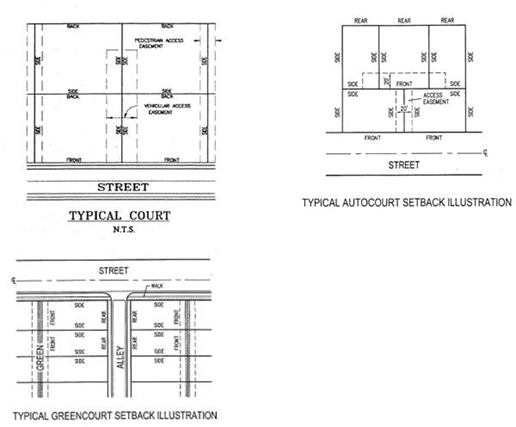
TABLE 9-3-3.3MCP SETBACK EXCEPTIONS FOR SPECIFIC PLAN III AREA
Lot Size and Width Exceptions
For Major and Minor subdivisions the size of individual lots may be reduced to ninety percent (90%) of the minimum lot size provided Master Plan density requirements are met; and minimum lot width for individual lots may be reduced five (5) feet from the required minimum, provided the average lot width in the proposed subdivision is at least equal to the required minimum lot width.
Side and Rear Setbacks Exceptions
The side setback in the R-L, R-M and R-MH zones may be reduced to zero (0) feet along the common wall in a zero lot line residential project or where the distance between the building on the subject lot and the building on the adjacent lot is at least ten (10) feet in the R-L zone and eight (8) feet in the R-M and R-MH zones.
For reverse corner lots, the rear setback shall be the same as the side setback.
For single story garages and accessory buildings located in the rear third of the parcel, the rear setback may be reduced to zero (0) feet where the distance between the garage or accessory structure on the subject lot and the structure on the adjacent lot is at least eight (8) feet.
Rear setbacks on alleys may be reduced to four (4) feet.
Specific Situation Setback Exceptions
Garage Setback Exceptions
The minimum setback for garages with doors facing the street shall be five (5) feet behind the building facade of the main structure. The minimum setback for side entry garages shall be twenty-five (25) feet in the R-VL zone and ten (10) feet for all other residential zones.
Off-Street Parking Area Setback Exceptions
The minimum setback for off-street parking areas for nonresidential use types in the R-VL, R-L and R-M zones shall be ten (10) feet from any adjacent street, and five (5) feet from any side or rear property line not abutting a street. The minimum setback for off-street parking areas in the R-MH and R-H zones shall be fifteen (15) feet from any adjacent street; ten (10) feet from any adjacent lot zoned R-VL, R-L or R-M; and five (5) feet from any side or rear property line not abutting a street or lot zoned R-VL, R-L or R-M.
Structural Feature and Equipment Setback Exceptions
Height Limit Exceptions
Parking facilities located below the main structure in the R-H zone. Within the R-H zone, one-half (½) additional story may be permitted for parking facilities located below the main structure; penthouse or roof structures for the housing of elevators, stairways, tanks, ventilating fans or similar equipment required to operate and maintain the building; and skylights and chimneys; flagpoles; church towers/steeples; and watertanks may exceed maximum building heights.
(Ord. 2024-18, § 1(Exh. A), 2024)
9-3-401 - Intent.
The intent of this Chapter is to provide a method by which residential developments which provide affordable housing shall receive a density bonus and incentive pursuant to Section 65915 of the Government Code.
(Ord. 2024-18, § 1(Exh. A), 2024)
9-3-402 - Eligibility.
A residential development is eligible for a density bonus as follows:
(a)
Very Low and Low-income Housing and Senior Housing. A residential development is eligible for a twenty (20) percent density bonus if the builder seeks and agrees to construct at least one (1) of the following:
(1)
Ten (10) percent of the total units are affordable to low-income households at an affordable rent or affordable ownership cost; or
(2)
Five (5) percent of the total units are affordable to very low-income households at an affordable rent or affordable ownership cost; or
(3)
A senior citizen housing development, or mobile home park that limits residency based on age requirements for housing for older persons.
(b)
Moderate Income Housing. A residential development is eligible for a five (5) percent density bonus if the builder seeks and agrees to construct ten (10) percent of the total units as for sale affordable to moderate income households, if the residential development also meets all of the following additional criteria:
(1)
The residential development is a common interest development;
(2)
All the dwelling units in the residential development are offered to the public for purchase; and
(3)
The density bonus units are offered for sale at affordable ownership cost.
(c)
Density Bonus for Land Donation, Child Care Facility, or Condominium Conversion.
(1)
A residential development may be eligible for a density bonus for land donation pursuant to the requirements set forth in Government Code Section 65915(g).
(2)
A residential development that contains a child care facility as defined in Government Code Section 65915(h) may be eligible for an additional density bonus or incentive pursuant to the requirements set forth in Section 65915(h).
(3)
Condominium conversions may be eligible for a density bonus or incentive pursuant to the requirements set forth in Government Code Section 65915.5.
(Ord. 2024-18, § 1(Exh. A), 2024)
9-3-403 - Additional Density Bonus.
The density bonus for which the residential development is eligible shall increase if the percentage of very low, low, and moderate income units exceeds the base percentage established in Sections 9-3-402(a) and (b), as follows:
(a)
Very Low-income Units. For each one (1) percent increase above five (5) percent in the percentage of density bonus units affordable to very low-income households, the density bonus shall be increased by two and one-half (2.5) percent up to a maximum of thirty-five (35) percent.
(b)
Low-income Units. For each one (1) percent increase above ten (10) percent in the percentage of density bonus units affordable to low-income households, the density bonus shall be increased by one and one-half (1.5) percent up to a maximum of thirty-five (35) percent.
(c)
Moderate Income For Sale Units. For each one (1) percent increase above ten (10) percent in the percentage for sale density bonus units affordable to moderate income households, the density bonus shall be increased by one percent up to a maximum of thirty-five (35) percent.
TABLE 9-3-4.1 DENSITY BONUS SUMMARY
(Ord. 2024-18, § 1(Exh. A), 2024)
9-3-404 - Incentives.
(a)
A builder may request incentives pursuant to this section only when the builder is eligible for and receives a density bonus pursuant to Section 9-3-402. A residential development may receive the following number of incentives:
(1)
One (1) incentive for a project that includes:
(A)
At least five (5) percent of the total units for very low-income households;
(B)
At least ten (10) percent of the total units for low-income households; or
(C)
At least ten (10) percent for persons or families of moderate income in a common interest development.
(2)
Two (2) incentives for a project that includes:
(A)
At least ten (10) percent of the total units for very low-income households;
(B)
At least twenty (20) percent of the total units for low-income households; or
(C)
At least twenty (20) percent for persons and families of moderate income in a common interest development.
(3)
Three (3) incentives for a project that includes:
(A)
At least fifteen (15) percent of the total units for very low-income households;
(B)
At least thirty (30) percent of the total units for low-income households; or
(C)
At least thirty (30) percent for persons or families of moderate income in a common interest development.
(b)
One (1) or more of the following incentives shall be made available to a builder eligible for incentives, per the requirements in Section 9-315.4(a) above, except as provided in Section 9-315.5:
(1)
Reduction in setback;
(2)
Reduction in lot width;
(3)
Reduction in square footage requirements of the lot;
(4)
Reduction in yard dimensions;
(5)
Increase in building height;
(6)
Increase in building intensity;
(7)
Reduction of ratio of vehicular parking spaces per unit;
(8)
Reduction in open space requirements; or
(9)
Reduction in fees.
(c)
In addition to the incentives described above, an applicant for a development that meets the requirements of Section 9-3-402 may request parking standards consistent with Government Code Section 65915.
(Ord. 2024-18, § 1(Exh. A), 2024)
9-3-405 - Written Finding That Incentive Not Necessary.
If the Director concludes that an incentive as specified in Section 9-315.4 is not necessary for affordability of the target units, a written finding stating such shall be made.
(Ord. 2024-18, § 1(Exh. A), 2024)
9-3-406 - Request for Density Bonus.
(a)
If a density bonus is desired by the applicant, the applicant shall submit a written request for a density bonus with the application for residential development, or with a Planned Development Zone application if the affordability bonus is in conjunction with the bonus for planned development (Section 9-8-1511(h)).
(b)
A developer may submit a preliminary written proposal pursuant to this section prior to the submittal of any application for residential development. Within 90 days the City shall notify the developer in writing of any additional procedures necessary to comply with this section and Section 65915 of the Government Code.
(Ord. 2024-18, § 1(Exh. A), 2024)
9-3-407 - Guarantees for Continued Affordability.
(a)
The developer shall agree to ensure continued affordability of all lower income density bonus units for:
(1)
Thirty (30) years, or a longer period of time if required by the construction or mortgage financing assistance program, mortgage insurance program, or rental subsidy program; or
(2)
Ten (10) years if the county does not grant at least one of the additional incentives and government financing with a longer designated preservation period is not used for the project.
(b)
The developer shall enter into an Agreement with City of Mountain House to ensure compliance with the provisions of this section.
(Ord. 2024-18, § 1(Exh. A), 2024)
9-3-501 - Intent.
The intent of this Chapter is to regulate the development and operation of single-room occupancy (SRO) land uses. SRO facilities provide housing opportunities for lower-income individuals, persons with disabilities, seniors, and formerly homeless individuals.
(Ord. 2024-18, § 1(Exh. A), 2024)
9-3-502 - Definitions.
The following definitions apply to this chapter:
(a)
Single-Room Occupancy Facility. "Single-room occupancy facility" means any building containing five (5) or more guest rooms or units intended or designed to be used or occupied for sleeping purposes by residents, which is also the primary residence of those residents. The individual units may or may not lack either cooking facilities or individual sanitary facilities, or both. However, for purposes of this definition, an SRO facility does not include residential care homes, senior housing projects, rooming and boarding houses, hotels and motels, bed and breakfast lodging, extended care facilities, or hospitals.
(b)
Single-Room Occupancy Unit. "Single-room occupancy unit" means the guest rooms or units within the single-room occupancy facility intended or designed to be used or occupied for sleeping purposes by residents.
(Ord. 2024-18, § 1(Exh. A), 2024)
9-3-503 - Standards.
(a)
Single-Room Occupancy Units. The following standards shall apply to SRO units:
(1)
Unit Size. The minimum size of an SRO unit shall be one hundred fifty (150) square feet and the maximum size shall be four hundred (400) square feet.
(2)
Occupancy. Each SRO unit may house no more than two (2) persons.
(3)
Bathroom Facilities. An SRO unit is not required to but may contain partial or full bathroom facilities. A partial bathroom facility shall have at least a toilet and sink; a full facility shall have a toilet, sink, and bathtub, shower, or bathtub/shower combination.
(4)
Kitchen. An SRO unit is not required to but may contain partial or full kitchen facilities. A full kitchen includes a sink, a refrigerator, and a stove, range top, or oven. A partial kitchen is missing at least one (1) of these appliances.
(5)
Closet. Each SRO unit shall have a separate closet.
(b)
Single-Room Occupancy Facilities. The following standards shall apply to SRO facilities:
(1)
Common Area. Ten (10) square feet of interior common space per unit shall be provided, with at least two hundred (200) square feet in area of interior common space, excluding janitorial storage, laundry facilities, and common hallways.
(2)
Bathroom Facilities. If a full bathroom facility is not provided within each SRO unit, common bathroom facilities shall be provided in accordance with the California Building Code for congregate residences with at least one (1) full bathroom per floor. The shared bathroom facility shall be accessible from a common area or hallway.
(3)
Kitchen Facilities. If a full kitchen is not provided within each SRO unit, common kitchen facilities shall be provided with at least one (1) full kitchen per floor.
(4)
Laundry Facilities. Laundry facilities shall be provided in a separate room with at least one (1) washer and dryer per floor.
(5)
Cleaning Supply Room. A cleaning supply room or utility closet with a wash tub with hot and cold running water shall be provided on each floor of the SRO facility.
(Ord. 2024-18, § 1(Exh. A), 2024)

