Design Guidelines Traditional Neighborhood Design
Detached Single-Family Residential
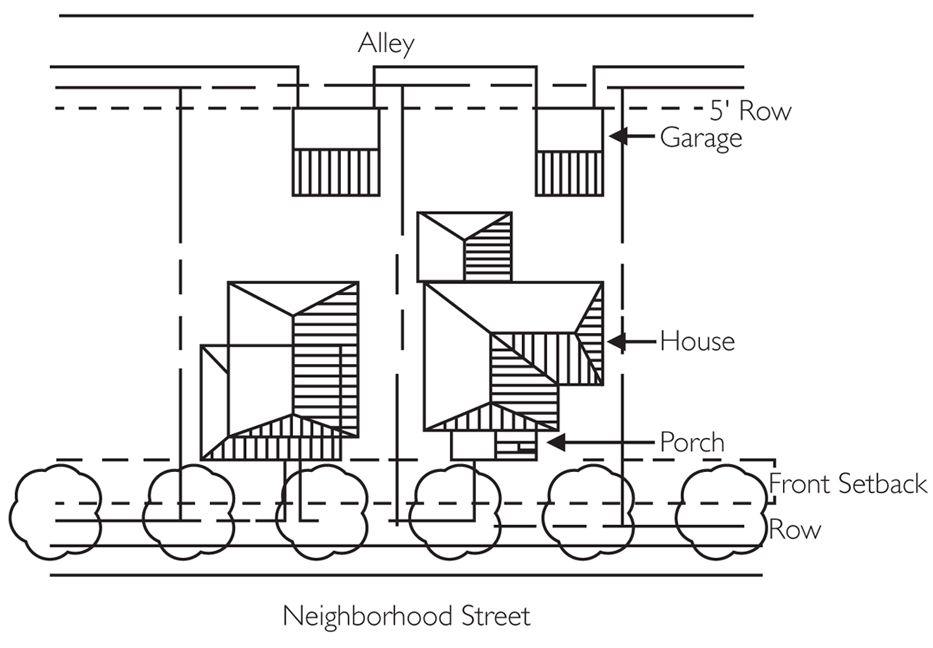
![]() | Detached Garage With Rear Access |
![]() | Detached Garage With Front Access |
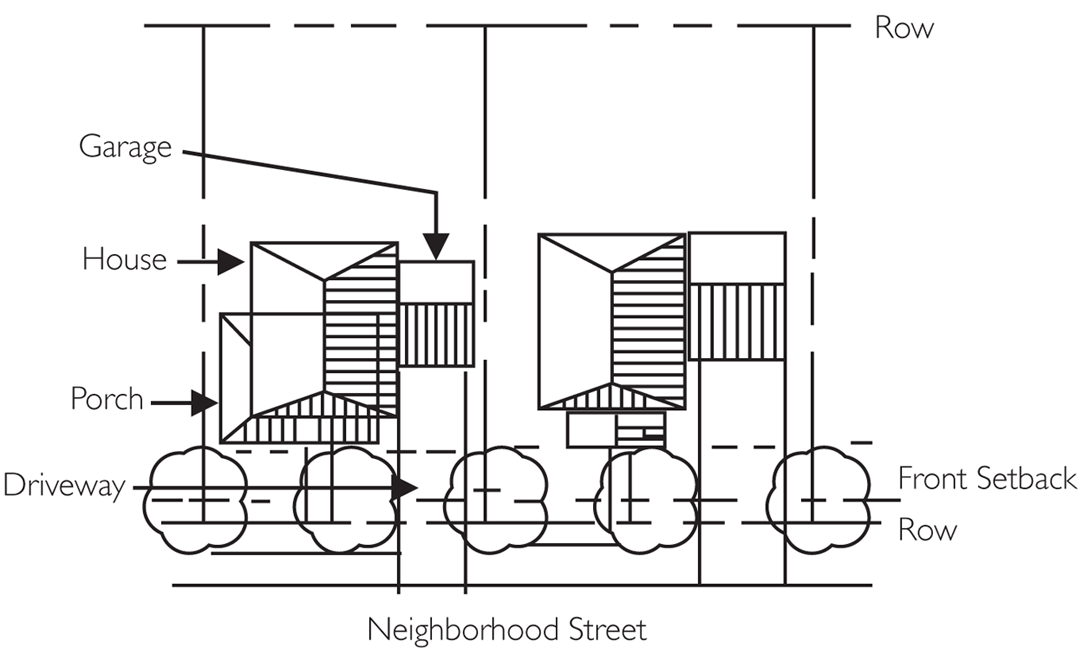
![]() | Attached Garage With Front Access |
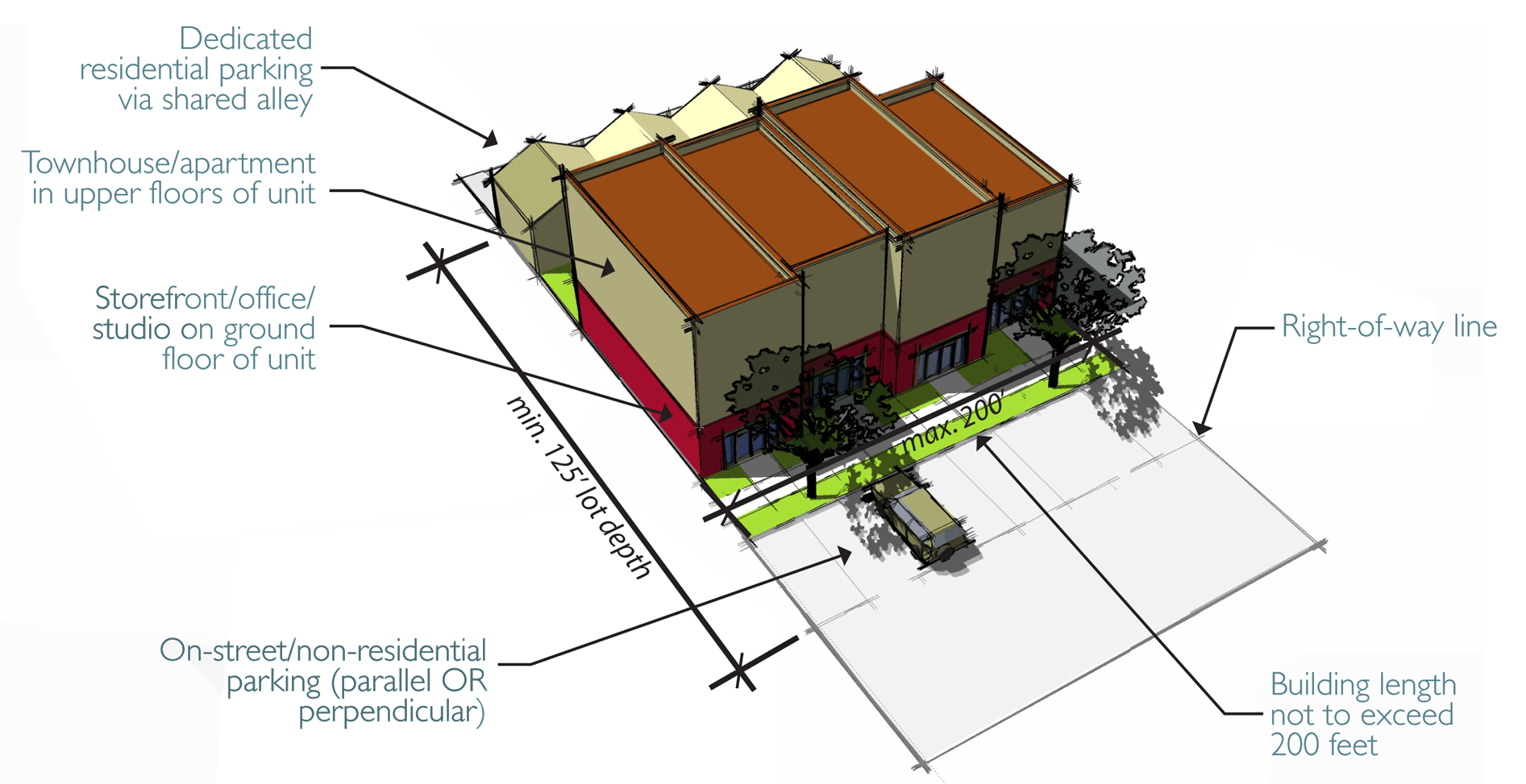
Live-Work Units

Civic Uses
![]() | |
![]() | ![]() |
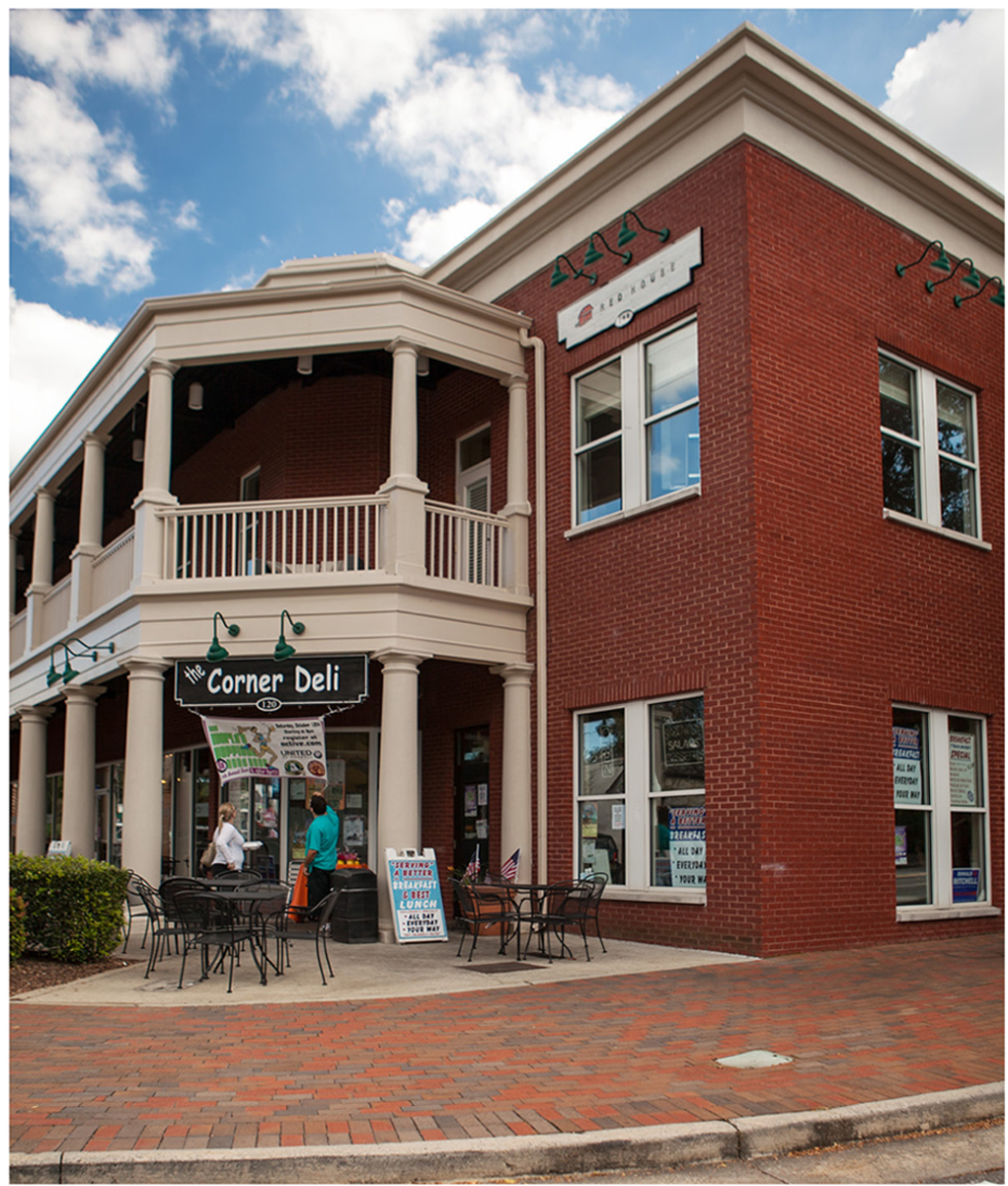
Commercial Uses
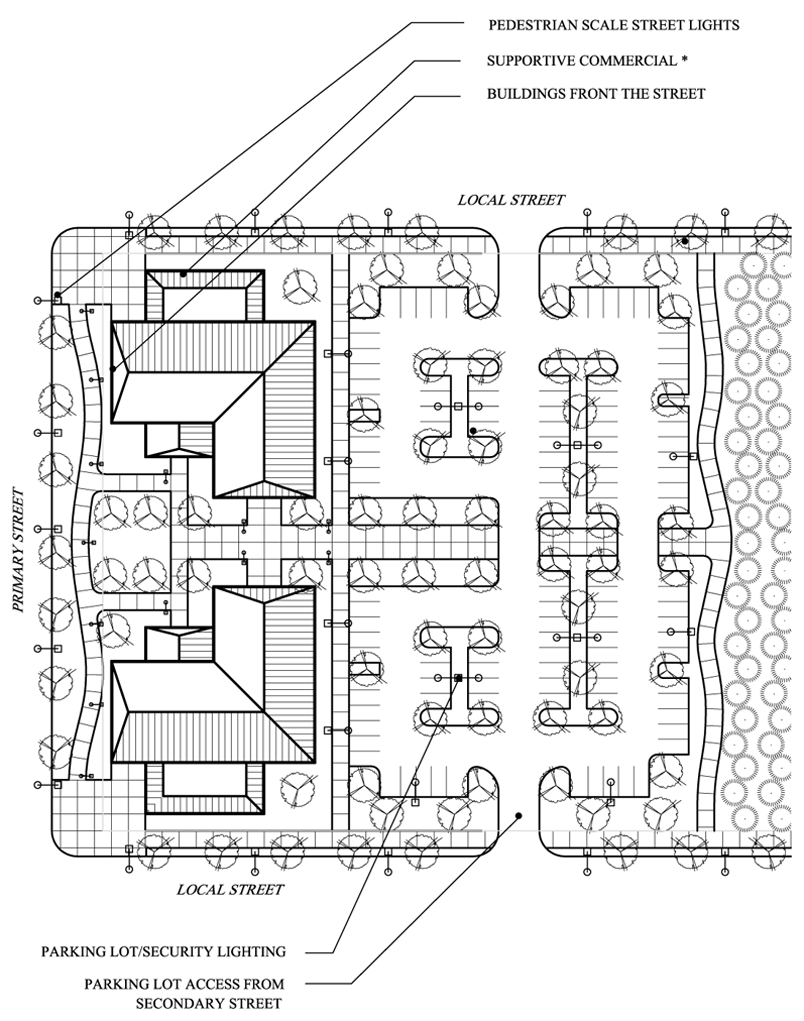
Commercial Corner—Typical Site Plan
|
The following design guidelines should be considered when designing commercial neighborhood
buildings:
• Commercial Uses are small commercial retail and services within residentially-scaled buildings that are located on designated corners within walking distance of adjacent neighborhoods for the convenience of local neighborhood residents. | ![]() |
![]() | ![]() |
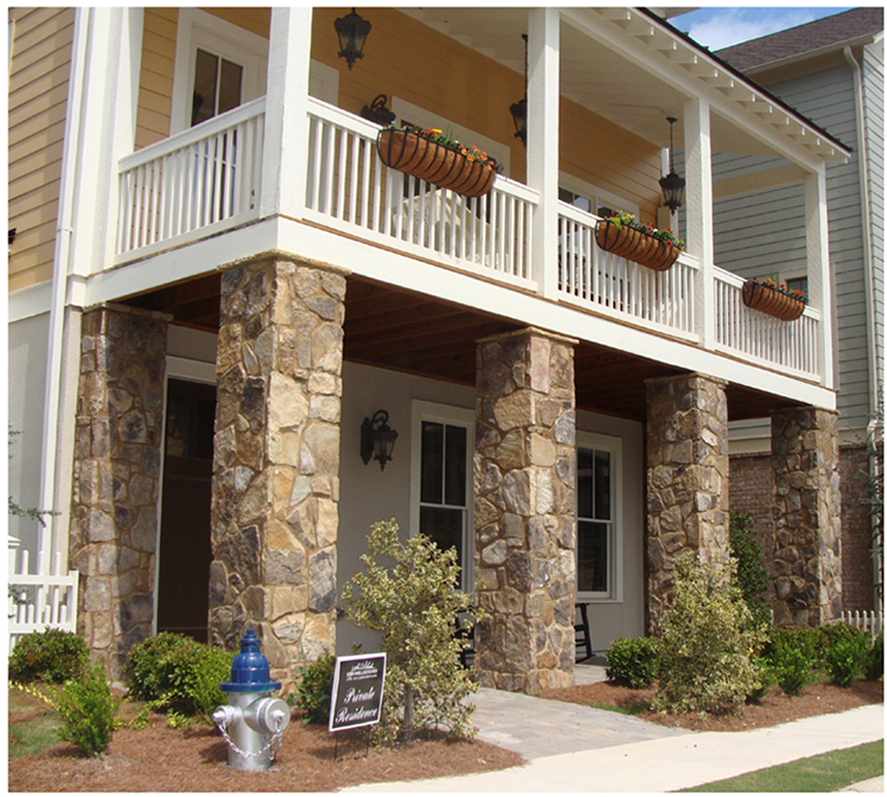
Elements In Residential Design
| The following design guidelines should be considered when designing detached residential buildings: | ![]() |
| • Articulate facades with porch elements and bay windows. | |
| • Provide unique architectural entrance door surround. |
| • Incorporate changes in building material, texture, and color. | ![]() |
| • Provide design elements such as shutters and roof eave brackets. | |
| • Incorporate roof elements such as dormers and gables. |
![]() | ![]() |
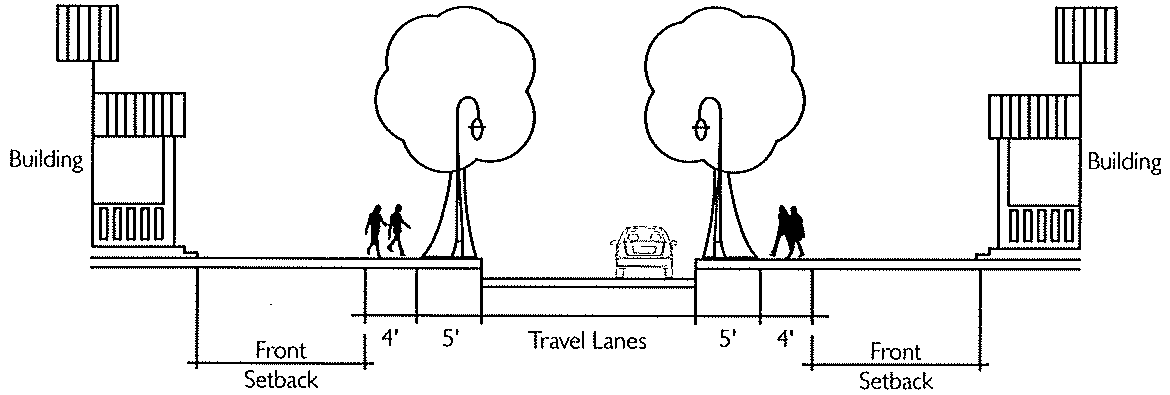
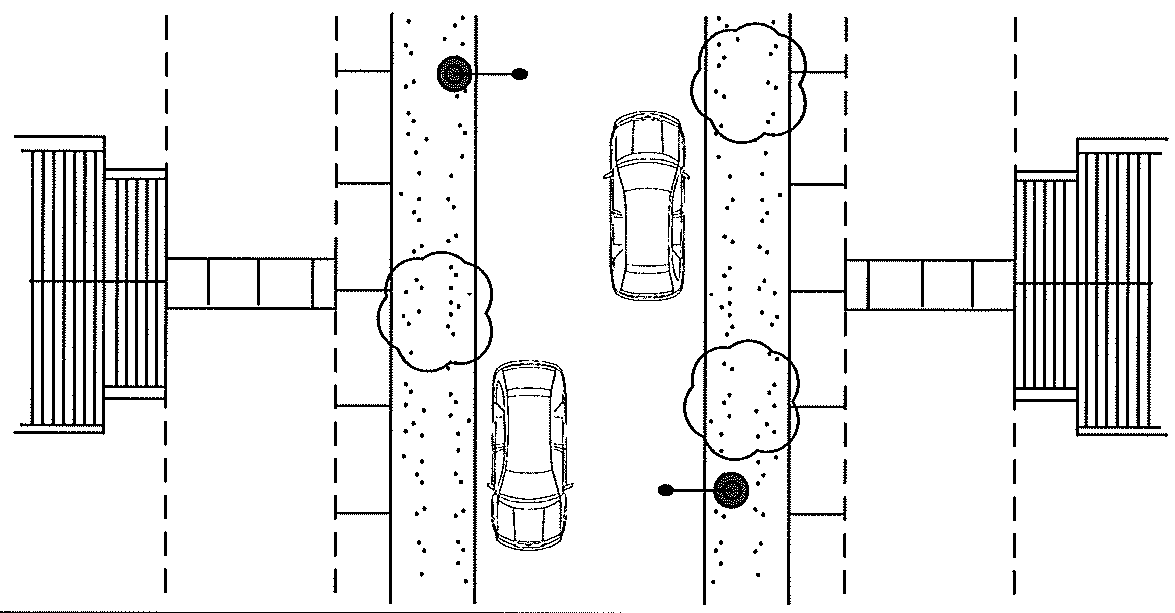
Local Street
| Section | ![]() | |
| Plan View | ![]() | |
| Street Section: Permitted Uses |
Single Family (Detached)
Single Family (Attached) Live/Work Units Neighborhood Commercial Civic Uses | A. Spacing of street trees and street lights may be adjusted to account for driveways, utility poles, fire hydrants and other obstructions and to provide adequate visual clearance for intersections, driveways and traffic control devices. |
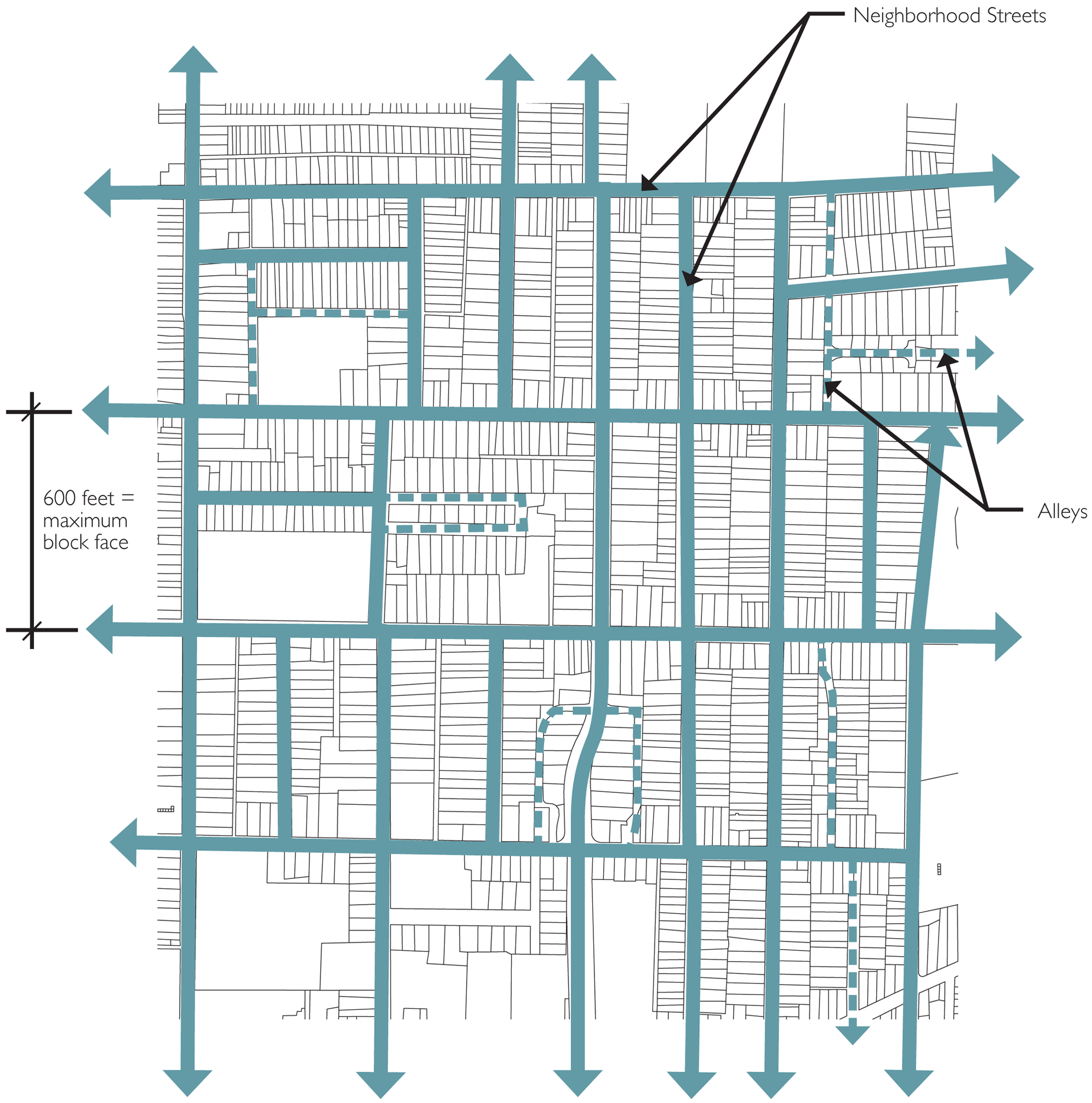
| Block length | 600 feet | B. Underground utility lines are required. Sewer lots only. Septic lots are not permitted. |
| Streetscape: Landscape strip Sidewalk |
5 feet
4 feet | |
Alley

Interconnected Street Grid

Design Guidelines Traditional Neighborhood Design
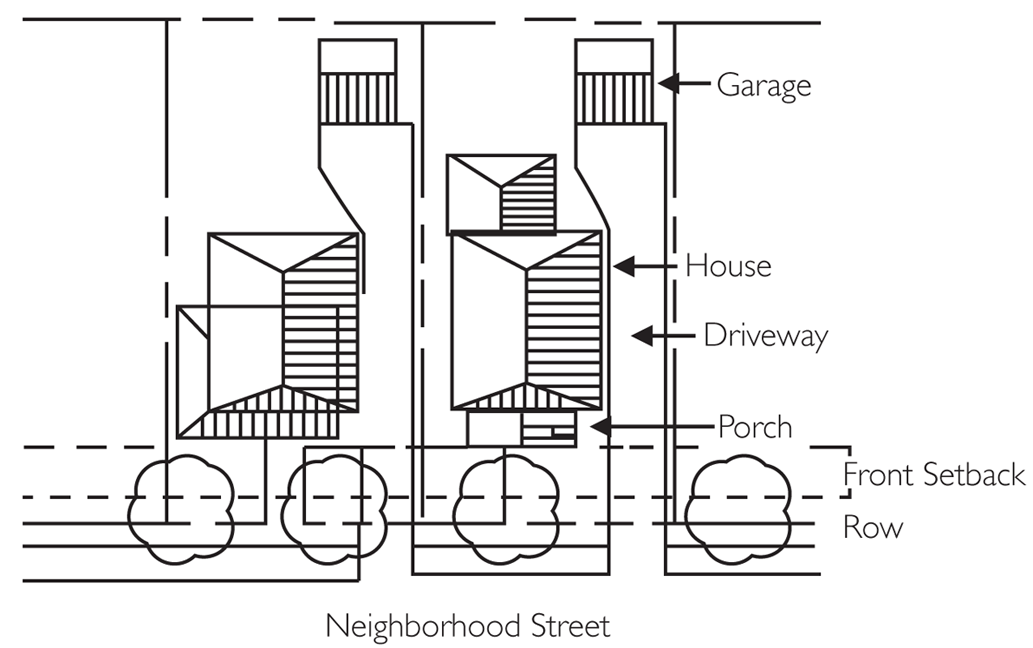
Detached Single-Family Residential
![]() | Detached Garage With Rear Access |
![]() | Detached Garage With Front Access |
![]() | Attached Garage With Front Access |
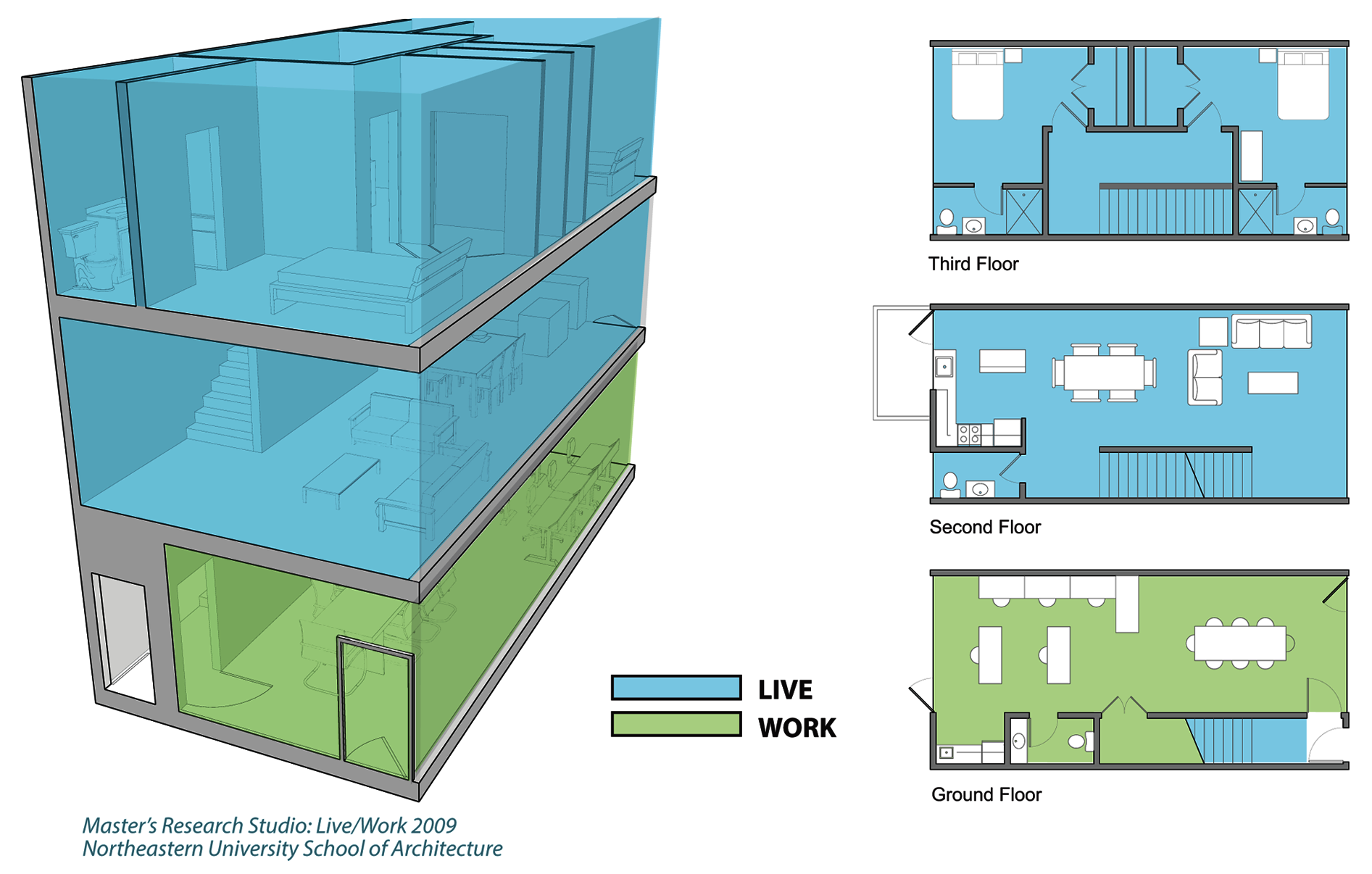
Live-Work Units

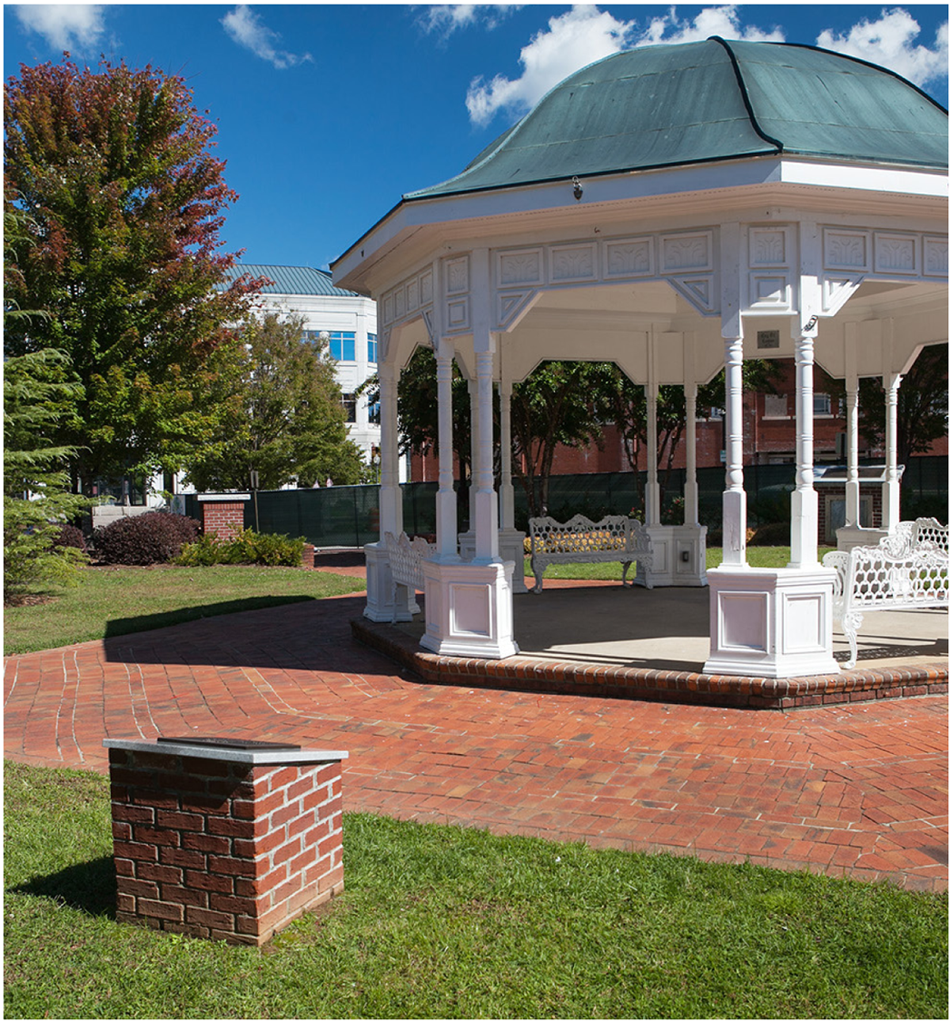
Civic Uses
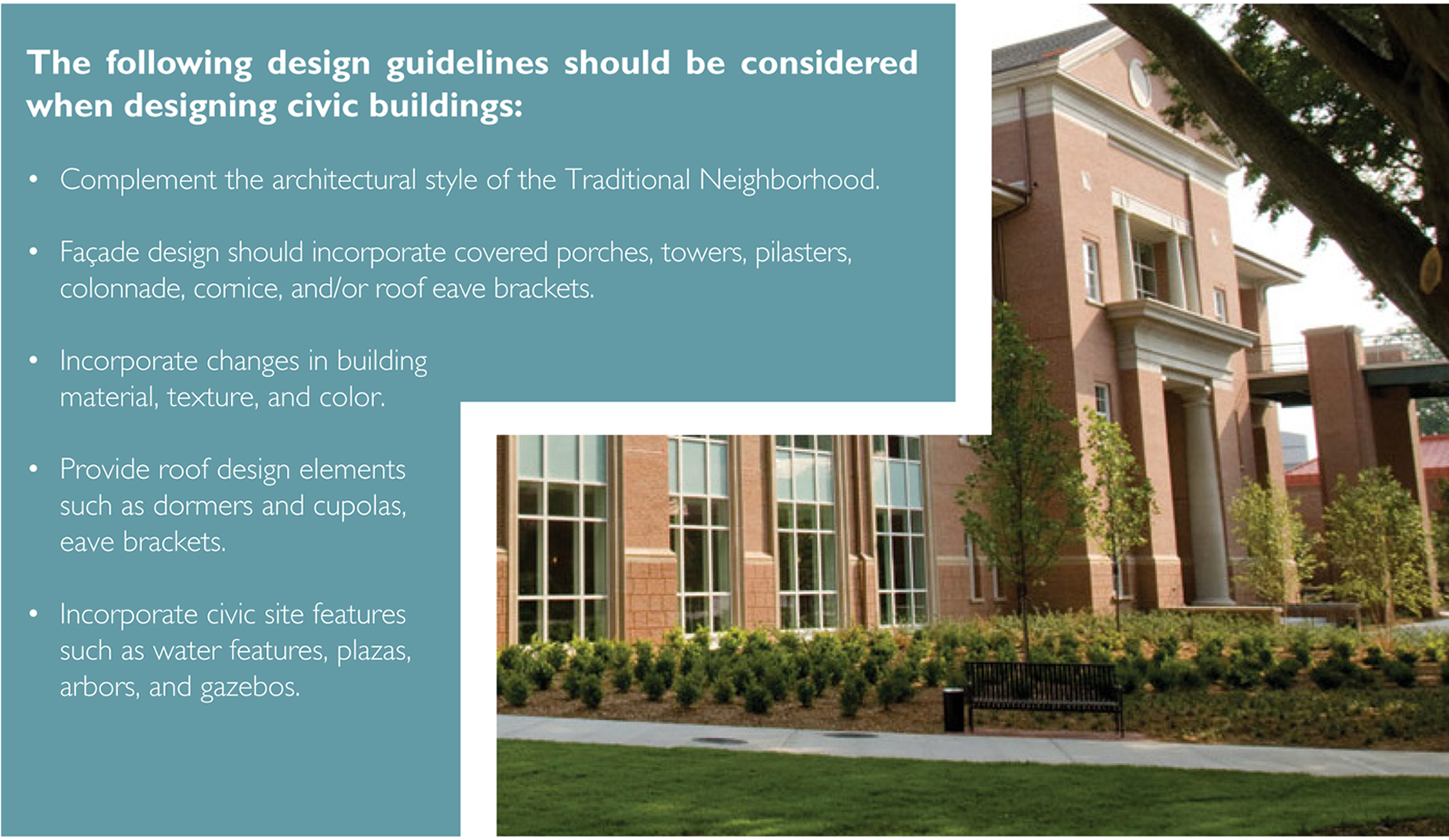
![]() | |
![]() | ![]() |
Commercial Uses
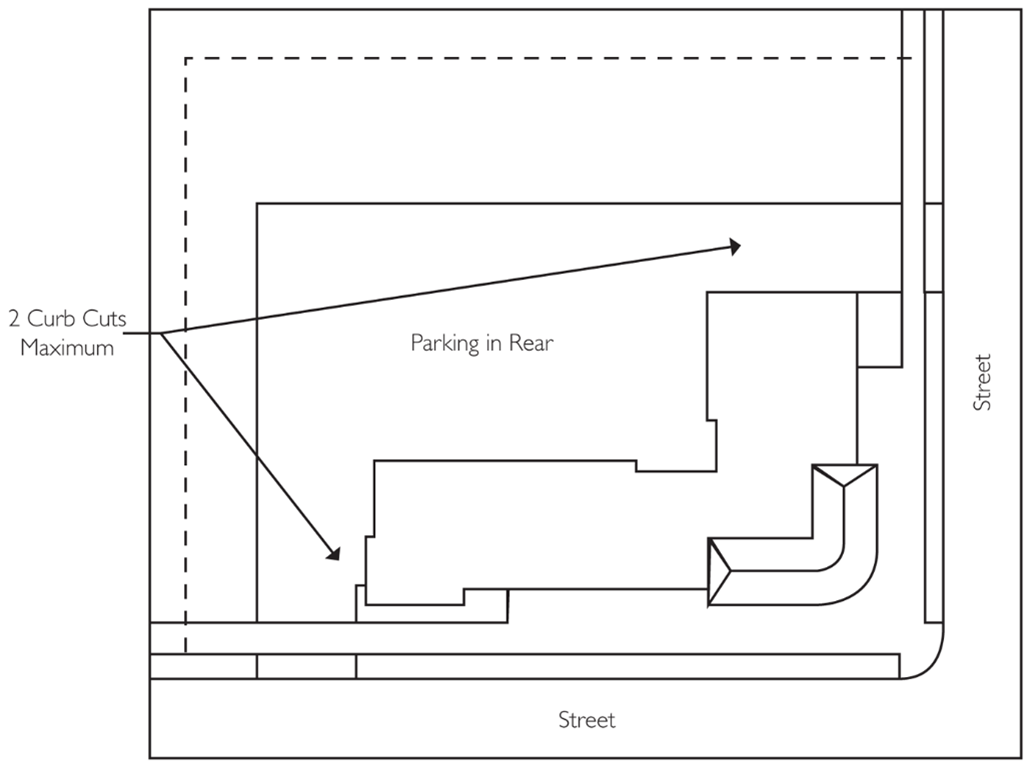
Commercial Corner—Typical Site Plan
|
The following design guidelines should be considered when designing commercial neighborhood
buildings:
• Commercial Uses are small commercial retail and services within residentially-scaled buildings that are located on designated corners within walking distance of adjacent neighborhoods for the convenience of local neighborhood residents. | ![]() |
![]() | ![]() |
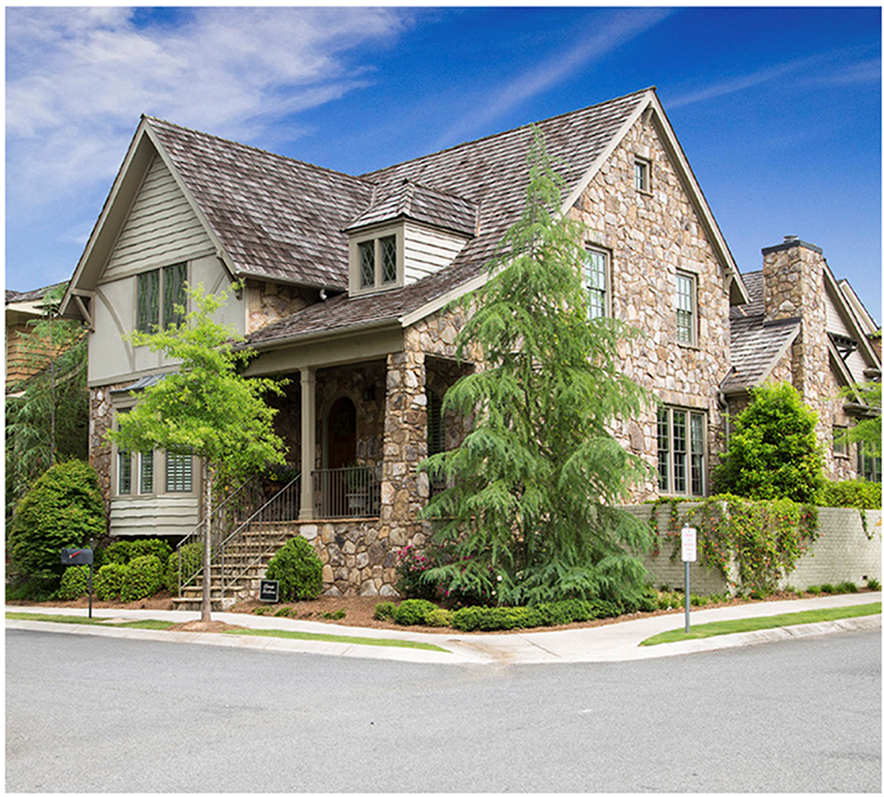
Elements In Residential Design
| The following design guidelines should be considered when designing detached residential buildings: | ![]() |
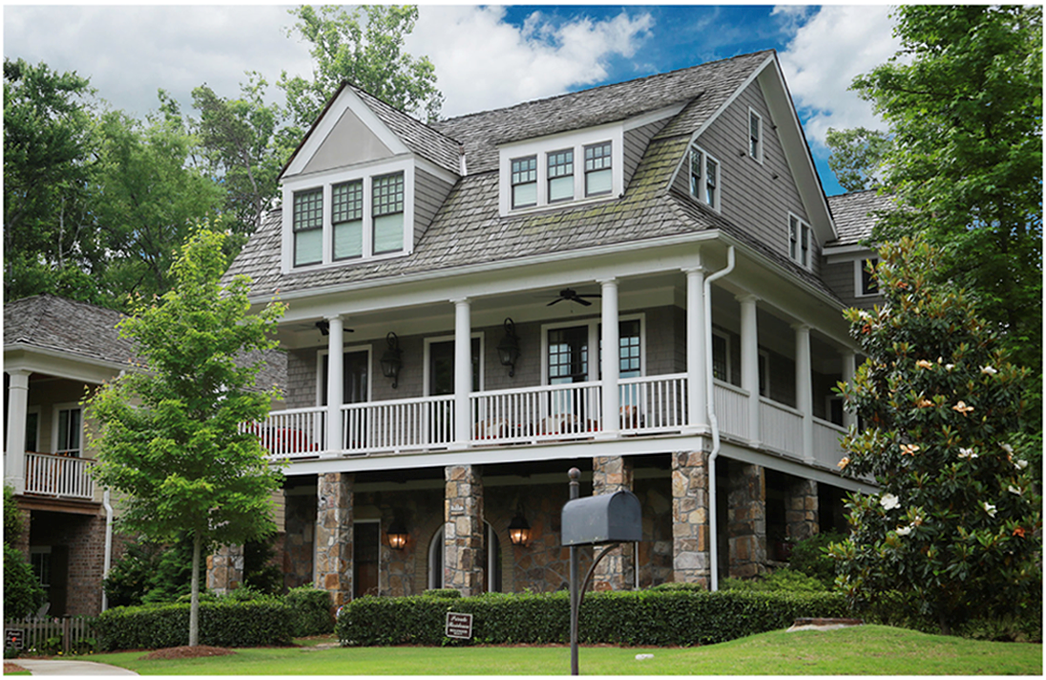
| • Articulate facades with porch elements and bay windows. | |
| • Provide unique architectural entrance door surround. |
| • Incorporate changes in building material, texture, and color. | ![]() |
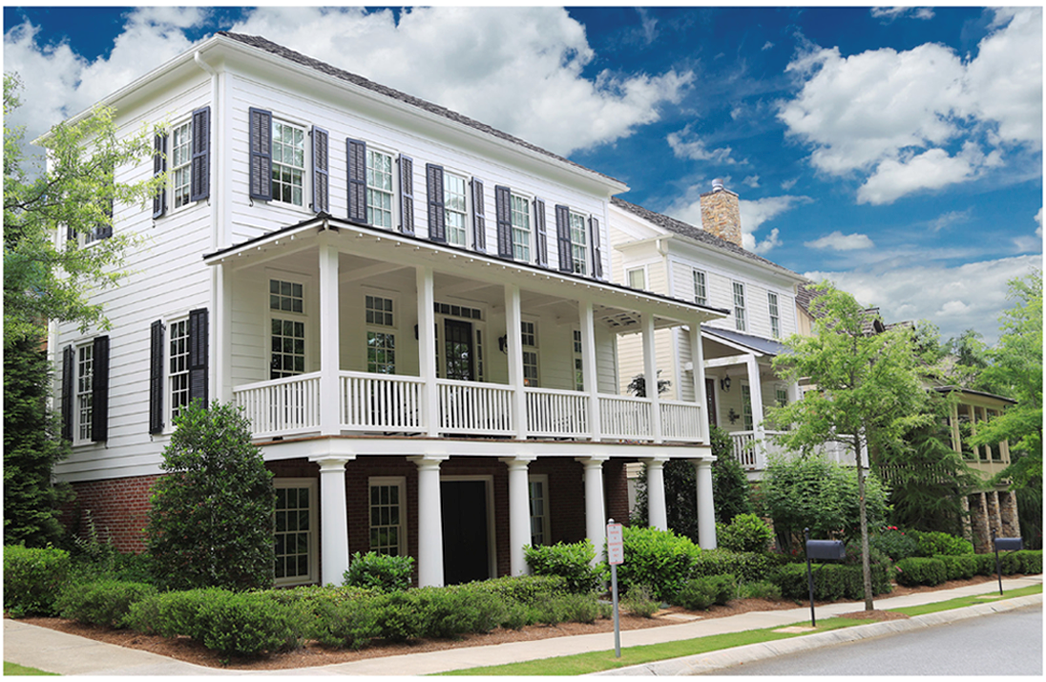
| • Provide design elements such as shutters and roof eave brackets. | |
| • Incorporate roof elements such as dormers and gables. |
![]() | ![]() |
Local Street
| Section | ![]() | |
| Plan View | ![]() | |
| Street Section: Permitted Uses |
Single Family (Detached)
Single Family (Attached) Live/Work Units Neighborhood Commercial Civic Uses | A. Spacing of street trees and street lights may be adjusted to account for driveways, utility poles, fire hydrants and other obstructions and to provide adequate visual clearance for intersections, driveways and traffic control devices. |
| Block length | 600 feet | B. Underground utility lines are required. Sewer lots only. Septic lots are not permitted. |
| Streetscape: Landscape strip Sidewalk |
5 feet
4 feet | |
Alley
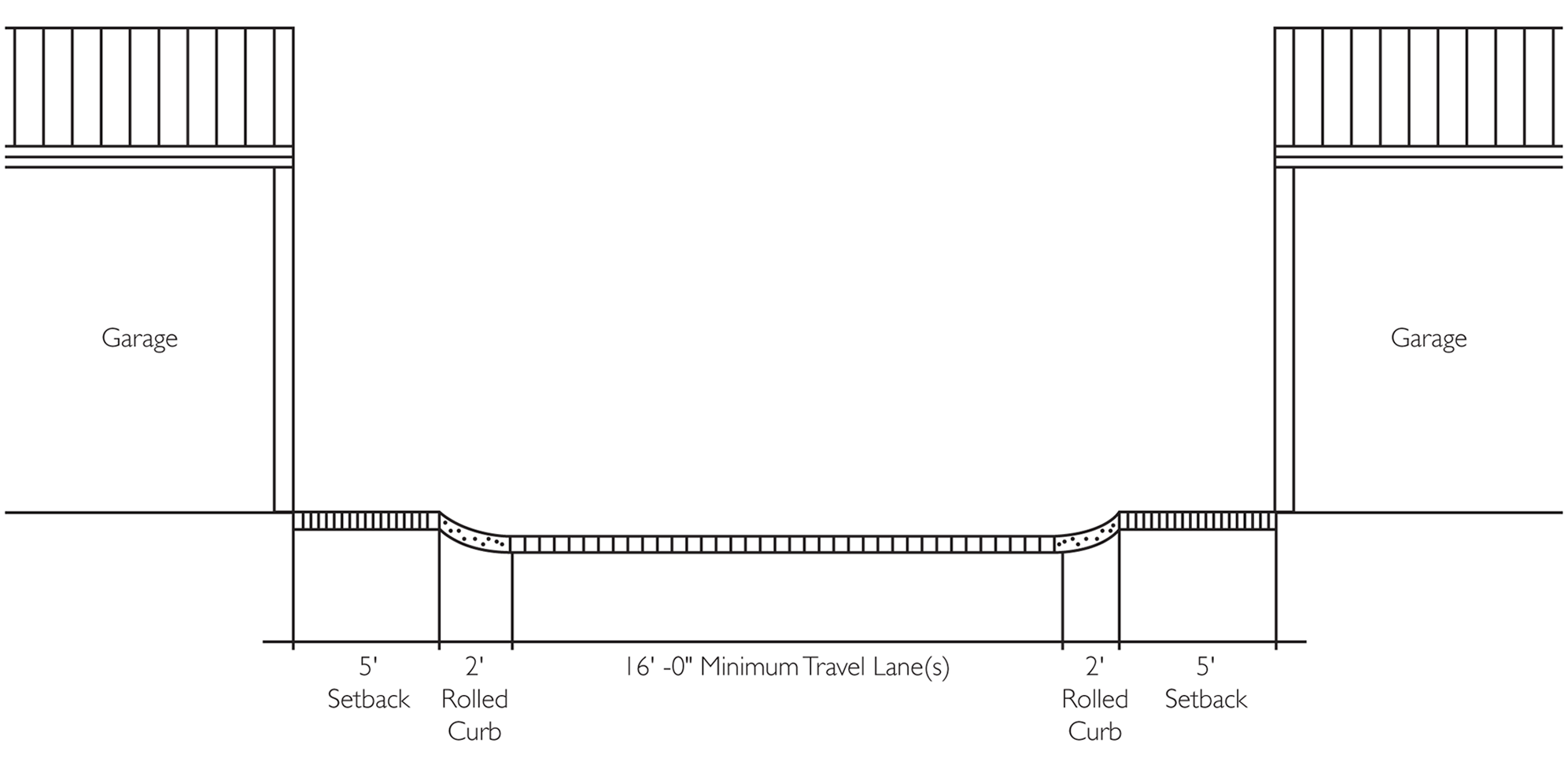
Interconnected Street Grid