
New Albany City Zoning Code
TITLE FIVE
ADDITIONAL ZONING REQUIREMENTS
CHAPTER 1165 - GENERAL DEVELOPMENT STANDARDS[28]
Editor's note— Ord. O-27-2019, passed September 17, 2019, in effect repealed the former Chapter 1165, and enacted a new Chapter 1165 as set out herein. The former Chapter 1165 pertained to similar subject matter and derived from Ord. 20-90. Passed 6-19-90; Ord. 72-92. Passed 12-15-92; Ord. 29-2001. Passed 8-21-01; Ord. 27-2007. Passed 8-21-07; Ord. 06-2009. Passed 3-17-09; Ord. O-08-2011. Passed 5-17-11.
Cross reference— Gasoline service station defined - see P. & Z. 1105.02; Home occupation defined - see P. & Z. 1105.02
CHAPTER 1167 - OFF-STREET PARKING AND LOADING[29]
Cross reference— Off-street parking facilities - see ORC 717.05 et seq.
CHAPTER 1171 - LANDSCAPING[30]
Cross reference— Injury to trees and growing products - see GEN. OFF. 541.06
CHAPTER 1173 - PRIVATE SWIMMING POOLS[31]
Cross reference— Swimming pools - see ORC Ch. 3749; OAC Ch. 3701-31
CHAPTER 1178 - RIGHTS-OF-WAY (Repealed)[32]
Editor's note— Ord. O-06-2014, passed March 18, 2014, repealed Ch. 1178, §§ 1178.01—1178.99 and derived from Ord. 17-97, passed Oct. 6, 1998; Ord. 21-2009, passed June 16, 2009; Ord. 43-2002, passed Dec. 10, 2002; and Ord. 35-2006, passed Nov. 28, 2006. Provisions pertaining to Rights-of-Way are now set forth in Ch. 907, §§ 907.01—907.99.
CHAPTER 1179 - WIRELESS TELECOMMUNICATION FACILITIES[33]
Editor's note— Ord. O-37-2014, passed Dec. 16, 2014, amended Ch. 1179, §§ 1179.01—1179.11, in effect repealing and reenacting said chapter as set out herein. Former Ch. 1179 pertained to similar subject matter and derived from Ord. 18-97, passed Oct. 6, 1998.
1165.01 - DEFINITIONS.
(a)
"Accessory structure" shall be defined as a subordinate structure or surface, located on the same lot as a principal building/structure, which is incidental to the use of the principal building/structure. Accessory structure are categorized into two (2) groups: Detached Structures or Recreational Amenities.
(b)
"Architectural Features" are defined as cornices, canopies, eaves, pilasters, stairs, sills or other similar features.
(c)
"Building Service Features" are defined as egress window pits, mechanical pits, mechanical units and generators, and similar features.
(d)
"Deck" shall be defined as an accessory structure and is further defined as a horizontal platform supported by any combination of posts, beams, foundations, and/or joists with or without handrails, steps or terraces.
(e)
"Detached Structures" are defined as detached garages, enclosed, accessory buildings larger than two hundred (200) square feet, pool houses, and other structures not considered to be Recreational Amenities located in a residentially zoned district.
(f)
"Elevated surface" shall be defined as an artificial rise or elevation above the natural grade of the surrounding ground created with earth, rock, wood or other material.
(g)
"Recreational Amenities" are defined as buildings which are two hundred (200) square feet or less. any sized deck, patio, fireplaces, pergolas, gazebo and similar located in a residentially zoned district.
(h)
"Side Yard" shall be defined as the area measured from a side lot line to the required side yard setback line extending from the front lot line to the rear lot line.
(i)
"Open Sided Structure" shall be defined as a free-standing, unheated structure unenclosed except for a structural system supporting a roof, and screen panels which may be used to enclose the open spaces between structural elements. An open-sided structure includes but may not be limited to a gazebo, tent, pergola, canopy or trellis.
(j)
"Hamlet" or "Hamlet Area" means that area defined as a Hamlet in the Strategic Plan of the City of New Albany.
(Ord. O-27-2019. Passed 9-17-19; Ord. O-23-2022. Passed 7-19-22.)
1165.02 - BUILDING REQUIREMENTS.
(a)
Frontage Required. No building, structure, or improvement shall be constructed or altered unless its lot fronts on a publicly dedicated and improved street or thoroughfare within the Municipality.
(b)
Front Yard Requirements. All front yard space shall be maintained in accordance with at least one (1) of the following provisions:
(1)
Landscaped by lawns, shrubbery, trees or other plantings. Such planting shall be maintained in a neat and orderly state.
(2)
In all districts, driveways may be located in front yards; if needed in rear yards, rear yard access is permitted off of alleys. In districts where single-family residences are not a permitted use, front yard setbacks may also be used for parking areas, consistent with the regulations of Chapter 1167.
(c)
Corner Lots. Lots fronting on more than one street shall provide the required front yard on both streets.
(d)
Architectural Features Encroachment. May project into a setback no more than three (3) feet with a minimum of two (2) feet maintained to any adjoining lot line.
(e)
Building Service Features Encroachment. May project into a setback no more than five (5) feet with a minimum of two (2) feet maintained to any adjoining lot line.
(f)
Rural Setbacks. All buildings should respect the setbacks of all rural designated roads established in the City's Strategic Plan.
(Ord. O-27-2019. Passed 9-17-19; Ord. O-23-2022. Passed 7-19-22.)
1165.03 - HEIGHT.
Height regulations specified in the various zoning districts shall not apply to chimneys, tanks, cupolas, domes, spires, or similar structures attached provided that the height of all structures and buildings, including those mentioned above, shall not constitute a hazard to safe landing and take-off of aircraft from an established airport.
(Ord. O-27-2019. Passed 9-17-19.)
1165.04 - ACCESSORY USES OR STRUCTURES.
(a)
Detached Structures. Shall comply with the following requirements:
(1)
Area. For lots less than one acre, a structure may have an area up to eight hundred (800) square feet; for lots between one (1) acre and two (2) acres, a structure may have an area up to one thousand two hundred (1,200) square feet, and for lots larger than two (2) acres may have an area up to one thousand six hundred (1,600) square feet.
(2)
Location.
A.
Shall not project beyond any front elevation of the primary structure or located within the front yard;
B.
Shall be located at least ten (10) feet from the primary structure and any other detached accessory structures situated on the same lot; and
C.
Shall not be located within an easement.
D.
Shall be located ten (10) feet from any side lot line.
E.
Shall be located thirty (30) feet from any rear lot line.
(3)
Height. Shall not exceed the height of the primary structure and in no case shall exceed twenty-five (25) feet in height.
(4)
Materials. All finished roof surfaces, except for flat roofs, shall be metal, seal-tab asphalt shingles, slate or wood shingles. All other finished surfaces must be complementary to the primary structure and be wood, brick, composite siding, or any combination thereof.
(5)
Number. Only two detached accessory structures shall be permitted as regulated by this section. Recreational Amenities are exempt from the number limitation in this section.
(6)
Lot Coverage. All detached structures shall follow the lot coverage requirements found in the property's PUD or residential zoning district. R-1 zoned districts shall have a maximum twenty percent (20%) lot coverage for accessory structures.
(7)
No detached accessory structure shall be erected or constructed prior to the erection or construction of the principal or main building, except in conjunction with the same.
(8)
Drainage Improvements. Additional drainage improvements and or direct connections to the storm sewer system may be required, subject to the approval of the City Manager or designee.
(b)
Recreational Amenities. Shall comply with the following requirements:
(1)
Materials. All finished roof surfaces, except for flat roofs, shall be metal, seal-tab asphalt shingles, and slate or wood shingles. All other finished surfaces must be wood, brick, stone, composite siding, screen, or any combination thereof.
(2)
Lighting. Illumination of the open-sided structure exterior is prohibited. Illumination within the structure shall not exceed seventy (70) foot-candles measured at a horizontal plane three (3) feet above the finished floor.
(3)
Location.
A.
Shall not project beyond any front elevation of the primary structure or located within the front yard except an open, uncovered porch/paved terrace may project into the required front yard for distance of no greater than fourteen (14) feet.
B.
Shall not be located within an easement.
C.
Shall not be located nearer to any side or rear property line than ten (10) feet, except uncovered porch/paved terrace may be located up to five (5) feet away from any side or rear property line.
(4)
Height. All Recreational Amenities are limited to one (1) story; and the height to the top of the highest roof ridge beam, or to the highest point of any other roof form, from the finished floor shall not exceed fifteen (15) feet.
(5)
No recreational amenities shall be erected or constructed prior to the erection or construction of the principal or main building, except in conjunction with the same.
(6)
Additional Restrictions for Recreational Amenities.
A.
Deck Restrictions. Decks shall comply with the following requirements, in addition to the requirements above in Section 1165.04(b):
1.
The area below a deck which exceeds more than two (2) feet above grade at any point within six (6) feet of the deck's perimeter shall be screened;
(i)
Second story decks, which are decks with a minimum of seven (7) feet of head-room from the ground to the deck, are exempt from this requirement.
2.
Decks which encroach into the required rear yard shall have no walls or roof planes, or permanently attached benches, seats, or other structures of any kind, weatherproof or not, except a guardrail which may be up to forty-two (42) inches in height above the top of the deck. The handgrip portion of the rail shall not be more than three and one-half (3½) inches in width, if the handgrip is flat.
3.
All decks shall be attached or contiguous to the principal structure or principal building;
B.
Open-Sided Structure Restrictions. An open-sided structure must meet the following minimum design criteria, in addition to the requirements above in Section 1165.04(b):
1.
Measurement. The area of all open-sided structures shall be measured post-to-post.
2.
Grading. If the open-sided structure is built on a mound, deck, or other elevated surface, the height of this elevated surface at its highest point above grade shall be added to the height of the structure to determine the overall height of the open-sided structure measured.
3.
Lot Coverage. All open sided structures shall be subject to and included in the lot coverage requirements found in the property's PUD or residential zoning district. R-1 zoned districts shall have a maximum twenty percent (20%) lot coverage for accessory structures.
C.
Drainage Improvements. Additional drainage improvements and or direct connections to the storm sewer system may be required, subject to the approval of the City Manager or designee, if more than fifty percent (50%) of the rear yard buildable area is occupied by Recreational Amenities. For the purposes of this section rear yard buildable area is defined as the interior lot area bounded by the rear yard setback line, the side yard setback lines, and rear of the principle structure.
(Ord. O-27-2019. Passed 9-17-19.)
1165.05 - MINIMUM FLOOR AREA REQUIREMENTS.
No single-family residential dwelling shall have floor area of less than one thousand two hundred (1,200) square feet. No two-family dwelling shall have floor area of less than eight hundred fifty (850) square feet for each family. No multiple family dwelling shall have a floor area of less than eight hundred (800) square feet for each family.
(Ord. O-27-2019. Passed 9-17-19.)
1165.06 - CONNECTIVITY.
The following regulations shall apply to all new development. For the purposes of this section, "new development" shall be any construction involving the replacement of an existing primary structure, construction on a site currently without a primary building or when a commercial parking area is being repaved or constructed.
(a)
Sidewalks.
1.
Sidewalks are required along all public rights-of-way unless a leisure trail is required. The minimum sidewalk width shall be five (5) feet or greater as determined by the width of existing sidewalks.
2.
Sidewalks shall be constructed per the City standard and made of concrete, brick, stone, simulated stone, or simulated brick. The design and installation of sidewalk paving materials other than concrete shall be in accordance with manufacturer recommendations and are subject to City Engineer and Community Development Department approval. Simulated materials shall correctly simulate appearance of brick or stone.
(b)
Leisure Trails.
1.
Leisure trails shall be constructed along streams and roads in accordance with the City's Strategic Plan or as otherwise required.
2.
Leisure trails shall be asphalt and have a minimum width of eight (8) feet unless otherwise specified by the Community Development Department. All leisure trails shall be constructed per the City standard.
(c)
Fees In-Lieu of Sidewalk and Trail Construction. Where special circumstances exist for sidewalk and trail construction as required in divisions (a) and (b) of this section, a fee in-lieu may be considered according to the procedure in Section 1187.18.
(d)
Where there are open spaces between buildings, excluding single-family and town homes, pedestrian connections shall be established between rear parking areas and the sidewalk in front of the building.
(Ord. O-27-2019. Passed 9-17-19; Ord. O-23-2022. Passed 7-19-22.)
1165.07 - HOME OCCUPATIONS.
Home occupations or professions shall be regulated as permitted, accessory, or conditional uses pursuant to Chapters 1129 through 1139. A home occupation shall comply with the following standards:
(a)
The use shall be clearly incidental and secondary to residential use of the dwelling and not more than fifteen (15) percent of dwelling unit floor area is devoted to the home occupation.
(b)
The home occupation shall not generate greater traffic volume than is normal for a residential neighborhood.
(c)
Not more than one person, other than immediate family residing at the premises, shall be employed in such occupation.
(d)
External indication of such home occupation shall be limited to one non-illuminated sign, not more than two (2) square feet, attached flat against the structure.
(e)
The sale of products, stock, or commodities shall be limited to those produced on the premises.
(f)
Any need for parking generated by conduct of the home occupation shall meet off-street parking requirements of this Zoning Code, and shall not be located in any front yard.
(g)
No equipment or process shall be used which creates noise, vibration, glare, fumes, odors, or electrical interference detectable to normal sense off the lot, if the occupation is conducted in a single-family residence; or outside the dwelling unit if conducted in other than a single-family residence.
(h)
No home occupation shall be conducted from any accessory building on the lot.
In particular, a home occupation shall consist primarily of rendering specific personal services, such as those performed by a seamstress, member of the clergy, physician, dentist, lawyer, engineer, architect, accountant, artist, or private teacher. The home occupation shall be performed by the occupant of the premises and shall include employment of not more than one non-resident of the premises.
(Ord. O-27-2019. Passed 9-17-19; Ord. O-23-2022. Passed 7-19-22.)
1165.08 - GASOLINE SERVICE STATION.
Gasoline service stations, or retail establishments selling gasoline as an ancillary activity, are listed as conditional and permitted uses in the C-1, C-2, and C-3 zoning districts. In addition to the requirements of the district in which the gasoline service station is located, and other provisions of this chapter, such establishments shall be subject to the following requirements:
(a)
Minimum Lot Size. Twenty thousand (20,000) square feet.
(b)
Minimum Building or Structure Size. The building shall have an enclosed area of not less than eight hundred (800) square feet if any service is offered on or from the premises other than the delivery of gasoline, diesel fuel or oil for use as vehicle fuel or lubrication. If a gasoline service station offers no service other than the delivery of gasoline, diesel fuel or oil into vehicles, the enclosed area of the building shall not be less than six hundred (600) square feet. No such limited gasoline service station may offer to provide lubrication, oil changes, repairs, or other equipment installation.
(c)
Minimum Frontage. The lot on which a gasoline service station is located shall have frontage of not less than one hundred fifty (150) feet along a dedicated and improved street designated as not less than minor arterial status on the New Albany Thoroughfare Plan. If a gasoline service station is located on the corner of two (2) or more intersection streets, it shall have one hundred fifty (150) feet of frontage on each intersecting streets.
(d)
Location. No gasoline service station shall be located on any lot within two hundred (200) feet of any zoning district where residences are permitted.
(e)
Setbacks. The pump island setback in a gasoline service station, which shall be the minimum location for pumps dispensing fuel or oil products, shall be forty (40) feet from any right-of-way of any street, and forty (40) feet from any adjoining property line. Any building located on such premises shall be located not less than fifty (50) feet from the right-of-way of any street.
(f)
Driveways and Parking Areas. Driveways and parking areas shall be paved and properly drained. The landscaping of areas along the perimeter of the lot is required, pursuant to Chapter 1171.
(g)
Parking. Gasoline service stations shall be subject to the parking and loading provisions of Chapter 1167. In addition, no inoperable or damaged motor vehicle shall be parked outside a gasoline service station building in excess of seventy-two (72) hours. Parking areas shall be located not closer than five (5) feet to the main building.
(h)
Outside Storage. Outside storage shall be in accordance with the following requirements:
(1)
All vending machines, except ice machines and telephone booths, shall be located inside the main building.
(2)
Only one (1) permanent or one (1) portable display rack for oil, antifreeze, or other automotive products shall be permitted on each pump island. No such rack shall be located closer than twenty-five (25) feet to the street right-of-way line or adjoining property line. All other displays or merchandise outside the main building is prohibited.
(3)
All hydraulic hoists, oil pits, lubricants and greasing, and other repair equipment shall be enclosed completely within the main building.
(i)
Signs. All signs used in connection with gasoline service stations shall be in conformance with the regulations for general retail and commercial uses as specified in Chapter 1169.
(Ord. O-27-2019. Passed 9-17-19.)
1165.09 - MODEL HOME STANDARDS.
Residential model homes and temporary lot sales offices are newly-constructed homes or temporary structures placed in a newly-constructed subdivision and used by a homebuilder or developer to display home styles and lot availability in a subdivision to promote the sale of new housing units. The model home or sales office may be staffed and furnished.
(a)
When making its decision to approve, disapprove or approve with conditions an application for a residential model home, the Planning Commission shall consider that the model home:
(1)
Is appropriately located within the community and sited so that it is easily accessible without creating a nuisance or hazard to nearby properties.
(2)
Is integrated into the residential character of the neighborhood with external lighting in conformity with customary residential lighting.
(3)
Is approved with a limited duration which shall be determined by the Planning Commission after consultation with the applicant. Extensions of time may be granted by the Planning Commission, but decisions must be based on the same criteria as outlined in this section.
(4)
Is identified by no more than one sign which shall be in compliance with regulations governing signage.
(5)
Shall not be used as a general real estate brokerage office where the sale of properties not owned or previously owned wholly or in part by the applicant occurs.
(b)
The Planning Commission shall also consider and may set conditions on the following as part of its decision to allow a residential model home:
(1)
Hours of operation.
(2)
Number and types of employees; and maximum number of employees to be on the site at any one (1) time.
(3)
Provisions for parking for employees and customers.
(4)
Size, lighting, content and location of signage (no internally lighted signage shall be permitted).
(5)
Landscaping and screening.
(6)
The use of temporary sales offices (i.e., manufactured homes, mobile homes or trailers) on the site of a newly constructed subdivision shall be discouraged.
(c)
In addition to the above-listed criteria for model homes, permission to occupy a temporary sales office for the purpose of home and lot sales within a newly constructed subdivision shall be granted only if the following conditions are met:
(1)
Such facility is located on a main arterial roadway or highway.
(2)
Such facility is substantially screened by the use of landscaping and/or mounding.
(3)
Such facility shall not create a nuisance to surrounding properties.
(4)
Such other conditions as the Planning Commission deems appropriate.
(5)
Sales offices in trailers or mobile homes are permitted for a duration of twelve (12) months. Users of such facilities may apply to the Planning Commission for an extension of an additional twelve (12) months.
(Ord. O-27-2019. Passed 9-17-19.)
1165.10 - PARKLAND AND OPEN SPACE DEDICATION REQUIREMENTS.
(a)
Land Dedication. The following parkland and open space requirements shall be used to determine basic mandatory land dedication with each type of new development listed below. These requirements shall not apply to existing residential lots and/or homes that are being improved or reconstructed.
Such area shall constitute ground, location facilities/equipment (per requirements of division (c) of this section suitable for municipally-owned and operated parks, recreation facilities and open space as reviewed and approved by the Parks and Trails Advisory Board and the Planning Commission and approved by the Council. Although encouraged, such land dedication need not be located within the area of such proposed development. Where a developer owns multiple parcels of development ground within the Municipality, it shall be permissible for such developer to make open space/parkland dedication for its current and future development. If such dedication is made, no open space/parkland shall be required in future development by such developer, its successors and assigns until such dedication has been utilized through the development of dwelling units at the required a ratios.
Wet and dry stormwater basins shall not be considered parkland or open space.
(b)
Provisions of Private Recreation Facilities. If the resulting parkland or open space dedication is determined to be of insufficient size or inappropriately located, or if public ownership and operation of such recreational areas is not feasible, the Municipality may request that an applicant plan for the provision of privately financed and owned recreational facilities. A public access easement shall be provided to the Municipality. Such privately-owned parkland or open space shall be subject to the technical assessment provision of this section.
(c)
Parkland and Open Space Technical Assessment. The following suitability and quality criteria shall be used to provide an assessment and recommendation relative to the appropriateness of proposed land dedication or area/facility, i.e., playground, park, recreational area/facility, and open space. The criteria to be used shall include, but not be limited to the following:
(1)
Minimum size for each service level:
(2)
Suitability of the following for the proposed use:
A.
Soils and geology.
B.
Topography and drainage.
C.
Location and impact of designated floodways and floodway fringe areas.
D.
Extent of natural vegetation and tree cover. Preservation of wooded areas is a top priority.
E.
The degree of access of proposed area to pedestrians and vehicles, where appropriate. Public accessibility is a top priority.
(3)
The proposed recreational facilities and site improvement to be made.
(4)
A schedule indicating how actual construction of the proposed park/open space and improvements are to be phased in relationship with the overall project.
(5)
How both ownership and maintenance of such areas is to be undertaken.
(6)
Residential development as categorized in C.O. 1165.10(a)(1) must be within one thousand two hundred (1,200) feet of playground equipment and a Pocket Park or a larger size park for development categorized in C.O. 1165.
The Community Development Department will conduct a review of the proposed land dedication or private facility/area or open space and include a recommendation in the staff report.
(7)
Types of open space permitted within Hamlet developments include, but are not limited to, one (1) or more of the following amenities: courtyards, pocket plazas, tennis courts, plazas, greens, squares, or greenways. Where appropriate, open space areas may be constructed of permanent materials and be permanently integrated into the design of the development. Open spaces shall be designed, landscaped, and furnished to be consistent with the character of the development. Conservation easements, wetlands, and similar environmentally sensitive areas may count toward the required open space.
(d)
Fees In-Lieu of Parkland and Open Space Land Dedication. Mandatory land dedications may be waived when Council has adopted a motion establishing a priority for payment in lieu fees instead of accepting land dedications. Such in-lieu fees shall be designated for a specific community wide park, recreational or open space use. Such community wide use shall benefit the current and future residents.
(1)
Nothing in this section or any other section shall preclude the developer from transferring to the Municipality, land for public use, or expending in-lieu funds in excess of the mandatory requirements.
(2)
The in-lieu fees shall be established by resolution of Council as based upon the average value per acre of the total gross site prior to construction or improvements. To calculate this estimate, the total value of the development, as determined by an appraisal, shall be divided by the total gross acreage of the development. The resulting figure shall be the averaged value of the development on a per-acre basis.
(3)
The appraisal shall be conducted, completed and submitted to the Municipality prior to final plat approval. The appraisal shall be prepared by a certified appraiser approved by the Municipality and paid for by the applicant. The appraisal shall be reviewed and approved by Council.
(4)
Should the City have concerns about the appraisal provided by the developer's appraiser, a separate appraiser may be retained by the City to provide the appraisal for the site.
(e)
Prohibition.
(1)
No building permits for construction or improvements of homes will be issued by the Municipality for the subject site or subdivision until such land dedication or payment of fees in-lieu land dedications are accepted by Council and conveyed to the City.
(f)
Effective Period. The land dedication and payment of in-lieu fees required by this section shall be conveyed to the Municipality following approval by Council of the final plat and within sixty (60) days of such approval by Council.
(Ord. O-23-2022. Passed 7-19-22.)
1167.01 - PURPOSE.
The purpose of these requirements for off-street parking and loading facilities is to encourage the orderly development of parking areas within the Municipality and to promote the safety of residents and visitors by ensuring the efficient handling of vehicular traffic.
(Ord. 07-2007. Passed 2-20-07; Ord. 28-2007. Passed 9-18-07.)
1167.02 - PROVISION FOR PARKING AND LOADING REQUIRED.
In all zoning districts, at the time any building, structure or use is changed, established, erected, developed, or is enlarged or increased in capacity, there shall be provided off-street parking and loading spaces in accordance with the provisions of this chapter.
(Ord. 07-2007. Passed 2-20-07; Ord. 28-2007. Passed 9-18-07.)
1167.03 - GENERAL SPECIFICATIONS AND REQUIREMENTS.
(a)
Area and Dimensions - Parking Spaces.
(b)
Area and Dimensions - Loading Spaces. Loading spaces shall conform to the following minimum requirements:
(c)
Access. All off-street parking and loading areas provided in accordance with this section shall have direct access to a publicly dedicated and improved street or alley.
(d)
Driveway Curb Cuts. For all single-family residences, all driveway curb cuts shall be designed to accommodate a maximum 12-foot driveway at the right-of-way line.
(e)
Surfacing. All off-street parking and loading areas, except for parking areas serving single-family residential uses, shall be properly graded, drained, marked and surfaced so as to provide a hard, durable and dustless surface.
(f)
Lighting. Any lighting used to illuminate any off-street parking or loading area shall be so arranged as to reflect light away from any adjoining premises in any zoning district where residences are a permitted use. In addition, such lighting shall be so arranged as to not interfere with traffic on any adjoining street or to be confused with any traffic control lighting.
(g)
Location of Parking and Loading Spaces.
(1)
Proximity to street right-of-way.
A.
For single- and two-family residential uses, no off-street parking space (or portion thereof) shall be located closer than five (5) feet to any established street right-of-way line.
B.
In the R-7 and OR Districts, no off-street parking space, or portion thereof, shall be located closer than twenty-five (25) feet to any established street right-of-way line.
C.
In all other districts, a five (5) foot clear zone shall be maintained between the street right-of-way line, and any vehicle. Parking areas shall be so designed and arranged as to not allow the protruding of any vehicle (or portion thereof) over the clear zone.
(2)
Proximity to use.
A.
In the A, R, OR, CF, LI and GE Districts, required parking and loading spaces shall be provided on the same lot as the principal use which they serve.
B.
In the O and C-3 Districts, required parking and loading spaces shall be provided either on the same lot, or within one hundred (100) feet of the principal use which they serve.
C.
In the C-1 and C-2 Districts, required parking spaces may be located within three hundred (300) feet of the use they serve.
(3)
Location. Parking for commercial structures should be primarily at the rear of the site, behind the buildings.
(4)
Joint provision of parking facilities. Two (2) or more buildings or uses located in the same area may meet parking and loading requirements by the joint provision of parking and loading facilities, provided those facilities are located so as to meet the requirements of this section, and the number of spaces so provided shall not be less than the sum of required spaces as per Section 1167.05. A written agreement between the parties, stating the terms under which the proposed parking shall be developed and maintained, shall be filed with the application for a zoning permit. Such agreement shall be approved by the Law Director prior to issuance of a zoning permit.
(h)
Temporary Parking. In districts where temporary parking is a permitted use, the following regulations shall apply to all temporary parking lots, except for temporary parking areas less than thirty-five (35) spaces provided that they are located on the same lot as the principal use that they serve and are associated with construction activities:
(1)
Land used for temporary parking must be located on the same lot or on a lot whose nearest lot line is within three hundred (300) feet of the nearest lot line of the property that contains the principal use served by the parking area.
(2)
Temporary parking is permitted for a period of time not to exceed three (3) years from date of final zoning inspection, no extension shall be provided. If the owner of the temporary parking area does not use the area according to the policies and procedures as set forth by the Department of Community Development, the parking area shall be immediately removed and returned to vegetation.
(3)
All temporary parking areas shall be properly graded and drained.
(4)
The temporary parking area shall be constructed with a dustless non-porous or semi-porous surface material as approved by the Village Engineer. The use of alternative paving materials is recommended.
(5)
Parking lot lighting for temporary parking areas shall comply with the regulations in division (e) of this section.
(6)
Temporary parking areas must meet all setbacks as required for permanent parking areas.
(7)
Temporary parking areas shall be screened from adjacent residential districts by a three and one-half (3.5) foot minimum evergreen hedge, masonry wall, or other means that block automobile headlights by at least ninety percent (90%).
(8)
Signage for temporary parking areas shall comply with the regulations in Section 1169.08(e) but may contain the name of the business they serve.
(9)
When temporary parking is not specifically addressed in PUD texts, refer to this section, Section 1167.03(h) or similar provisions, for standards regarding buffering, landscape, open space and screening commitments for temporary parking areas.
(10)
Should a temporary parking area be converted into a permanent parking area it must comply with all applicable codes for permanent parking.
(11)
A performance bond shall be posted at time of certificate of appropriateness to ensure removal of temporary parking areas within three (3) years or upon discontinuance of use. Upon removal the area shall be returned to vegetation.
(Ord. 92-92. Passed 12-15-92; Ord. 07-2007. Passed 2-20-07; Ord. 28-2007. Passed 9-18-07.)
1167.04 - PARKING LIMITATIONS IN RESIDENTIAL DISTRICTS.
Travel trailers, motor homes, pick-up campers, folding tent trailers, boats or boat trailers and similar recreational equipment shall not be parked on streets or alleys in any district where residences are a permitted use, for a period of time exceeding twelve (12) hours. The storage of such equipment shall be subject to the following requirements:
(a)
Such recreational equipment shall be stored behind the building line and shall not be stored within a required side and/or rear yard.
(b)
Not more than one piece of recreational equipment shall be permitted to be stored outside on a parcel containing a single family or two-family dwelling. For the purpose of this section, a boat stored on a boat trailer shall be deemed one piece of recreational equipment. For multi-family uses, an area shall be designated for outdoor storage of recreational equipment and shall be limited in area to accommodate no more than one piece of recreational equipment for each fifteen (15) dwelling units.
(c)
Recreational equipment shall not be occupied or used for living, sleeping, housekeeping, storage or business purposes.
(d)
Parking Motor Vehicles on Residential Premises.
(1)
All motor vehicles parked outside an enclosed structure shall be operable and bear current registration. "Operable" in this context means a vehicle capable of being started and driven from the location in question in compliance with all applicable motor vehicle laws.
A.
Not more than one inoperable vehicle shall be allowed per one dwelling unit. Such vehicle may be maintained on the premises of the owner for the purpose of restoration and/or repair only for a period not to exceed fourteen (14) days.
B.
Non-operating or dismantled vehicles and their component parts stored concealed from neighboring parcels and the public right-of-way in a garage or other enclosed building shall be exempt from the requirements of this section.
(2)
In accordance with ORC 4513.65, a "collector's motor vehicle", meaning a vehicle whose variety or excellence makes it worth collecting and whose value is expected to appreciate, may be kept on private property with the permission of the person having the right to possession of the property, except that the vehicle must be concealed by means of buildings, fences, vegetation, terrain or other suitable obstruction.
(e)
Sale of Motor Vehicles, Boats, and Trailers.
(1)
Motor vehicles, boats and trailers may be displayed for sale upon driveways within the front or side yards, provided no more than one item is so displayed at any time and that such displayed item is placed no nearer to the edge of the roadway pavement than twenty (20) feet;
(2)
Not more than two (2) signs, each of which shall not exceed two (2) square feet in area, may be displayed for the sale of such item upon or in the motor vehicle, boat, trailer, motorcycle or motor home;
(3)
Any such motor vehicle, boat, or trailer displayed for sale must be in operating condition and capable of being immediately moved under its own power if self-propelled, or if not self-propelled, by towing by ordinary means available upon the premises.
(Ord. 20-90. Passed 6-19-90; Ord. 27-2001. Passed 8-21-01; Ord. 07-2007. Passed 2-20-07; Ord. 28-2007. Passed 9-18-07.)
1167.05 - REQUIRED NUMBER OF OFF-STREET PARKING SPACES.
Parking spaces shall be provided according to the following schedule of uses. If a use consists of more than one component use (e.g., a school with a stadium), the required number of parking spaces shall be the sum of the required spaces for those component uses.
(f)
Other Uses. The Planning Commission shall determine the number of parking spaces required for any use not mentioned in this section for properties located outside of the Village Center area. For properties located within the Village Center area, refer to Chapters 1140, Urban Center and 1158, Urban Center Overlay Districts.
(g)
Provision of Parking for the Disabled.
(1)
Parking spaces shall be designated for the physically handicapped and may be used to compute the total number of spaces required. The number and location of the designated spaces shall be in compliance with the requirements of the Ohio Building Code.
(2)
All such handicapped parking spaces shall be designated by free-standing signs as provided for pursuant to the Ohio Manual of Uniform Traffic Control Devices.
(Ord. 20-90. Passed 6-19-90; Ord. 72-92. Passed 12-15-92; Ord. 07-2007. Passed 2-20-07; Ord. 28-2007. Passed 9-18-07; Ord. O-08-2011. Passed 5-17-11; ; Ord. O-05-2015. Passed 2-24-15.)
1167.06 - REQUIRED NUMBER OF OFF-STREET LOADING SPACES.
Loading spaces shall be provided for the loading and unloading of merchandise and goods, and may be located within the building, along a drive aisle adjacent to the building where a connected sidewalk is present, service area, or loading dock and shall be located so as not to impede normal vehicular parking according to the following schedule of uses. A building may share loading spaces when it contains multiple uses.
(Ord. 07-2007. Passed 2-20-07; Ord. 28-2007. Passed 9-18-07; Ord. O-05-2015. Passed 2-24-15.)
1169.01 - PURPOSE.
(a)
The purpose of these sign regulations is to ensure the proper development and regulation of signs. These regulations are intended to provide design regulations for sign types so that they may fit harmoniously with structures and their surroundings. It is the intent of these regulations to prevent signs from becoming a distraction or obstruction to the safe flow of pedestrian and vehicular traffic, to prevent signs from becoming a nuisance factor to adjacent properties or uses, to protect and encourage a healthful economic and business environment in the community, and thereby protect the general health, safety, and welfare of the community.
(b)
This chapter shall supersede all previous regulations regarding signs and shall be considered the requirements necessary for promotion of public safety, health, and general welfare through the regulation of signs.
(Ord. O-38-2010. Passed 12-7-10.)
1169.02 - DEFINITIONS.
(a)
As used in this chapter, the following words or phrases shall have the meanings herein:
(1)
"Abandoned sign" means a sign associated with an abandoned use, a sign that remains after the termination of the business, or a sign on its immediate premises not adequately maintained.
(2)
"Address sign" means any street location identifier that integrates with the architecture of the building and is not standard to a typical address marker permitted by code. These address signs are usually larger in scale and meant to be highly visible beyond standard means.
(3)
"Awning" means a non-rigid cloth or canvas hood or cover that projects from the wall of a building.
(4)
"Banner" means a non-rigid cloth, plastic or canvas sign typically related to a special event or promotion. National flags, state flags, municipal flags or corporate flags shall not be considered banners.
(5)
"Bench sign" means any sign painted on, located on, or attached to any part of the surface of a bench, seat, or chair placed on or adjacent to a public roadway.
(6)
"Billboard" means an off-premises sign directing attention to a specific business, product, service, entertainment or other activity sold, offered, or conducted.
(7)
"Blade" means a sign projecting from the face of the building and is oriented such so that it is vertical.
(8)
"Building directory sign" means an exterior building mounted sign intended to provide the identity or name, whether through logo, type, graphics or other symbols, for two (2) or more uses within one building.
(9)
"Building face" means one side of an exposed elevation.
(10)
"Canopy" means a projection from a building made from any material, which is cantilevered, suspended or supported on columns intended only for shelter or ornamentation.
(11)
"Canvas blade" means a cloth or flexible material sign which is not limited by code for the time it is allowed to be displayed.
(12)
"Clearance Zone" means an area not obstructed by objects.
(13)
"Copy" means the lettering or graphics on the face of a sign.
(14)
"Deteriorated" means showing signs of rust, corrosion, exposed wiring, chipped paint or faces, cracked, broken, or missing faces, or loose materials
(15)
"Directional sign" means a sign which locates features within a lot or indicates points of ingress or egress for automobile traffic.
(16)
"Drive-thru/Menu board sign" means a sign which displays the goods and prices available from a business for customers in their automobile.
(17)
"Dual-post sign" means a sign which is supported on two (2) sides by posts that are attached to the ground.
(18)
"Electronic sign" means any sign, or portion of a sign, that displays an electronic image or video, which may or may not include text, where the rate of change is electronically programmed and can be modified by electronic processes. This definition includes television screens, plasma screens, digital screens, LED screens, video boards, holographic displays, and other similar media.
(19)
"Face change" means a change in colors, copy, graphics, or visual image that does not require the installation of a new or modified sign board.
(20)
"Flag" means any fabric or bunting containing distinctive colors, patterns or symbols used as a symbol of a government or political subdivision.
(21)
"Flashing" means a sign or graphic which in any manner, as a whole or in part, physically changes in light intensity or gives the appearance of such change.
(22)
"Freeway oriented business park sign" means a sign announcing general development opportunities in a business park and/or a sign welcoming a new business to the business park, which is located on property adjacent to a freeway, expressway or divided highway.
(23)
"Ground sign" means a sign supported by or suspended from posts, pillars, columns, or other structures and which is wholly independent of any building for support.
(24)
"Hanging sign" means a sign suspended from its top and attached to an architectural piece of a building.
(25)
"Interior sign" means a sign which is not in any manner physically attached to or painted on the glass or any structural component of the window but which is on the interior of the building or structure and is clearly visible through the window from the exterior of the premises.
(26)
"Identification" means the act of specifying the name, address, and number of a building, institution, or person or the activity carried on in the building or institution. "Joint identification sign" means a sign intended to provide the identity or name, for two (2) or more uses within one building or on one property or the name of the building or its address for property occupied by two (2) or more businesses.
(27)
"Monument sign" means a sign incorporated as part of an architectural feature, the base of which rests entirely on the ground and is wholly independent of any building for support.
(28)
"Mounting width" means the length available to suspend a hanging sign from.
(29)
"Moving sign" means any sign, all or any part of which physically moves or is animated so as to give the appearance of movement.
(30)
"Nonconforming sign" means any sign which does not meet the standards set forth in this code document and/or has become abandoned.
(31)
"Pennant" means a triangular shaped banner.
(32)
"Permanent subdivision identification sign" means those signage features specifically relating to the denotation of a major entrance or entrances to a subdivision.
(33)
"Permanent sign" means a sign intended to be erected or used or in fact which is used for a time period in excess of thirty (30) days, other than those temporary signs allowed a longer use period as specifically permitted in Section 1169.10.
(34)
"Political sign" is a sign having reference to a political official, candidate, question, issue or opinion".
(35)
"Portable sign" means a sign that is designed to be transported, however, it also includes a sign that was designed to be transported, but which has had its wheels removed, and a sign with a chassis or support constructed without wheels, designed to be transported by trailer, vehicle, or wheels; a portable sign also includes sidewalk signs.
(36)
"Post-top" means a sign board that is atop a single supporting post.
(37)
"Primary Entrance" means the entrance which faces the public right-of-way, public easement, or is clearly the identifiable way to which the general public would enter a building.
(38)
"Projecting" means a sign which extends outward perpendicular to the building face.
(39)
"Residential For Sale/For Lease Signs" means signs that indicate the sale, rental or lease of a particular structure or land area.
(40)
"Roof line" means the bottom-most portion of a roof that abuts or is adjacent to the supporting exterior walls of a building.
(41)
"Roof sign" means a sign that is mounted on the roof of a building or which is wholly dependent upon a building for support and which projects above the point of a building or eave line of a building with a gambrel, gable or hip roof or the deck line of a building with a mansard roof.
(42)
"Setback" means the distance from the property line and/or right-of-way line to the nearest part of the applicable building, structure or sign, measured perpendicularly to the property line and/or right-of-way line.
(43)
"Sidewalk sign" means a sign placed within the sidewalk and set out daily for the advertisement of products and services at an accompanying business.
(44)
"Sidewalk plaque" means a durable emblem, graphic, or lettering embedded into the sidewalk or a business entry outside of the public right-of-way.
(45)
"Sign" means any name, number, symbol, identification, description, display, illustration, object, graphic, sign structure, or part thereof, whether permanent or temporary, which is affixed to, painted on, represented directly or indirectly upon, or projected onto a building, structure, lot, or other device, whether mobile or affixed to the ground, and which directs attention to any object, product, place, activity, person, institution, organization, or business. This definition includes all signs visible from the right-of-way or adjacent property, including interior signs oriented towards the exterior facade of any building or structure. Signs erected by the local, state or federal government for the purposes of discharging any normal governmental function, such as traffic control or safety, are excluded from the regulations of this chapter.
(46)
"Sign board" means the area of a sign to which the lettering and graphics are applied.
(47)
"Sign relief means a measured dimension created by the materials used for a sign or the thickness of lettering applied to a building face or sign board.
(48)
"Single-post sign" means a sign which hangs from an armature that is attached to the ground and erected by one post.
(49)
"Streamer" means any lightweight plastic, fabric or other material, whether or not containing a message of any kind, suspended from a rope, wire, string or cord, usually in a series, designed to move in the wind. A streamer may have pennants and/or banners attached.
(50)
"Street frontage" means the total length or width of the side and or front of a building, or storefront that faces a principal improved public right-of-way, excluding any extension of a building wall beyond the building itself.
(51)
"Temporary sign" means a sign of a type described in Section 1169.10 intended to be used, or in fact used, for a time period not to exceed thirty (30) days in any calendar year unless otherwise specifically permitted in Section 1169.10.
(52)
"Trailer sign" means a sign that is attached to, supported by, or part of a structure which is designed to move on trailer wheels, skids, or other similar devices, or transported, pushed, or pulled by a motor vehicle.
(53)
"Wall plaque" means a small sign attached to the face of the building and typically is made of very durable materials (etched stone, cast metal) and is integrated with the architectural detailing of the building.
(54)
"Wall sign" means a sign attached to a building face, with the exposed face thereof in a plane parallel to the plane of the wall. Wall signs include painted murals, messages, graphics and other designs painted along with any letters or numerals mounted directly on buildings and any extensions thereon.
(55)
"Window sign" means a sign, graphic, poster, symbol or other identification that is physically affixed to or painted on the glass or other structural component of the window.
(Ord. O-38-2010. Passed 12-7-10.)
1169.03 - SIGN APPROVAL PROCEDURES.
(a)
The following sign approval criteria shall be observed:
(1)
All signs contained in Section 1169.11 (Special Signs), Section 1169.12 (Permanent Signs), and Section 1169.18 (By-Right Signs) require a sign permit issued by the Zoning Officer.
(2)
Existing, conforming signs requiring a sign face change shall require a sign permit issued by the Zoning Officer.
(3)
All new permanent signs within the Village Center Area require a certificate of appropriateness according to Section 1157.06 prior to the issuance of a sign permit.
(4)
All signs contained in Section 1169.10 (Temporary Signs) require a temporary sign permit issued by the zoning officer.
(b)
Application and Permit Procedure. Application for a sign permit shall be made by the owner of the property upon which the sign is proposed, or his agent, on forms provided by the Community Development Department. The Department shall regulate and enforce the requirements of this chapter, and approve or disapprove all requests for sign permits. An application for a sign permit shall include the following information:
(1)
Name, address, and telephone number of the applicant and property owner if different from the applicant.
(2)
Scaled drawings, showing at a minimum:
A.
The width of the building face or faces.
B.
The design and layout of the proposed sign to scale, including the total area of the sign and the size, height, character, material specifications and color of letters, lines, and symbols.
C.
Details of illumination, if applicable.
D.
A scaled site plan of the proposed ground sign location showing the distance from the public right-of-way and relationship to access drives, parking areas and buildings or a face elevation of proposed signs on buildings showing the height and proportions of the signs.
E.
The landscape plan for ground signs, if required.
(3)
Details and specifications for the construction and attachment of the sign.
(4)
Name, address and telephone number of the sign contractor or company.
(5)
Other information as may be required by the Community Development Department to ensure compliance with the provisions of this chapter.
(6)
Any required application fee.
(c)
Variances and waivers. Requests for deviations to the requirements of this chapter for properties located within the Village Center, as defined in the Village Center Strategic Plan, shall be considered to be waivers and shall be heard by the Architectural Review Board as set forth in Chapter 1113 of these Codified Ordinances. Requests for variances to the requirements of this chapter for properties located outside of the Village Center shall be heard by the Board of Zoning Appeals as set forth in Chapter 1113 of these Codified Ordinances.
(Ord. O-38-2010. Passed 12-7-10; Ord. O-8-2011. Passed 5-17-11.)
1169.04 - PROHIBITED SIGNS.
The following signs or similar devices are prohibited: trailer signs, search lights, laser lights, pennants, streamers, spinners, balloons, bench signs, portable signs (except for sidewalk signs), roof signs, billboards, changeable copy (except for gasoline station price signs), flashing signs, projected images and animated signs, signs with moving or moveable parts, electronic signs (except for drive-through menu board signs), and any look-alike version of any of these prohibited sign types. Signs on vending machines, trash bins, or other devices serving any premises, shall be fully screened from view of any public right-of-way and adjoining property. Homemade lettered signs shall also be prohibited with the exception of sidewalk signs as long as they meet the requirements of Section 1169.10(i).
(Ord. O-38-2010. Passed 12-7-10; Ord. O-87-2023. Passed 8-15-23.)
1169.05 - PROHIBITED SIGN LOCATIONS.
Signs may not be installed in any of the following locations:
(a)
In any public easement, right-of-way, or no build zone, except publicly owned signs, such as traffic control signs and directional signs.
(b)
In any public park or other public property, without written authority of the owner of that property;
(c)
On any traffic control signs, construction signs, fences (without written permission from owner), utility poles, street signs, trees or other natural objects;
(d)
No sign shall be located so as to interfere with the safe movement of vehicles or pedestrians entering, leaving, or crossing a public right-of-way or private street;
(e)
On any property without the prior authorization of the owner of the property on which any sign is to be placed.
(Ord. O-38-2010. Passed 12-7-10.)
1169.06 - MAINTENANCE.
(a)
All signs and components thereof shall be subject to the following conditions:
(1)
The property owner shall be solely responsible for maintaining the appearance, safety and structural integrity of the sign at all times;
(2)
Whenever a Community Development Department inspecting official finds a sign in need of repair, support, replacement, cleaning, repainting, or that other action is necessary to maintain reasonable and proper appearance or public safety, he or she shall issue an order to the owner allowing thirty (30) days to effect needed repairs, maintenance or action. If the inspecting official determines that the existing condition of the sign creates an immediate hazard to the health or safety of the general public, he or she shall issue an order to the owner requiring that the sign be removed immediately.
(b)
Failure of an owner to comply with the provisions listed above shall be cause for the inspecting official to order the permit issued for the sign void and issue an order for the sign to be removed. If the sign is not removed by the deadline established by the inspecting official, that official may cause the sign to be removed and the cost assessed to the property owner. If the property owner refuses to pay for removal of the sign, the cost of such removal shall be assessed to the property owner's real property tax assessment.
(Ord. O-38-2010. Passed 12-7-10.)
1169.07 - NONCONFORMING SIGNS.
(a)
Abandonment. Use of an existing sign shall terminate and a sign will be considered abandoned when any of the following conditions exist:
(1)
When the sign is associated with an abandoned use;
(2)
When the sign remains after a business has ceased operations. A business has ceased operations if it is closed to the public for at least thirty (30) consecutive days, or the business has vacated site, whichever comes first;
(3)
When the sign is not maintained or does not conform to the following:
A.
All signs, together with all supports, braces, guys and anchors shall be kept in a proper state of repair;
B.
Every sign and the immediately surrounding premises shall be maintained by the owner, or his agent, in a clean, sanitary and inoffensive condition, free from all obnoxious substances, rubbish and weeds.
Abandoned signs shall be removed by the property owner.
Upon determination by a Community Development Department inspecting official that a sign has been abandoned, but not removed, the inspecting official shall issue an order for its removal by the property owner within fifteen (15) days. Any abandoned sign still standing after fifteen (15) days following an order for removal may be removed by the Village at the property owner's expense. If the property owner refuses to reimburse the Village for removal of the sign, the cost of such removal, as determined by the Village Administrator, will be added to the owner's real property tax assessment.
(b)
Relocation or Replacement. A nonconforming sign shall not be structurally relocated or replaced unless it is brought into compliance with the provisions of this section. Should any replacement or relocation occur without being brought into compliance, the sign shall be existing illegally, and subject to the penalties as specified in Section 1169.99.
(c)
Maintenance. A nonconforming sign shall be maintained or repaired in accordance with the following provisions:
(1)
The size and structural shape of the sign shall not be changed or altered. The copy may be changed provided the size and structural shape of the sign face is not altered.
(2)
In case damage occurs to the sign to the extent that more than fifty percent (50%) of the replacement value is lost, the sign shall be removed within sixty (60) days. Any replacement sign must meet the requirements of this chapter.
(Ord. O-38-2010. Passed 12-7-10.)
1169.08 - SIGN AREA AND OTHER MEASUREMENT CALCULATIONS.
For the purposes of this chapter, the measurement of sign area and other supporting measurements shall comply with the following standards:
(a)
Sign area shall include the face of all the display areas of the sign not including bracing, framing and structural supports of the sign, unless such support members are made part of the message or face of the sign or are determined by the Village Administrator's designee to be intended solely to make the sign more visible rather than serving any aesthetic or structural purpose.
(b)
For a sign that has two (2) display faces and is perpendicular to a public easement, right-of-way or lot line, the total area of the sign shall be determined by the total area of both sign faces unless otherwise specified. For spherical signs, the sphere shall be bisected by an imaginary line through the center of the sphere, and the surface area of the two (2) half spheres shall be counted as the sign face.
(c)
The area of the letters, numbers, or emblems mounted on a building wall or wall extension shall be computed by calculating the perimeter surface area of the individual elements, excluding any background. Only the perimeter of the letters, numbers, and emblems shall be used in determining the total sign area, as shown in the diagram below.

(d)
Measurement of Building Frontage. The frontage of a building shall be the width of the facade of the building, excluding any overhang or non-enclosed cover, that faces the principal street or contains the primary entrance, if a building is divided into units, the building unit frontage shall be the width of that unit, as measured from the party wall centerlines, on the frontage of the building.
(e)
Measurement of Lot Frontage. The frontage of a lot shall be the number of linear feet the lot abuts on the principal street. For structures and uses having no direct frontage on public roads, as within shopping centers, frontage shall be counted as the intersection of the building line onto adjacent drives or parking areas.
(f)
Measurement of Ground Sign. The height of ground signs shall be measured from the base of the sign at its point of attachment to the ground to its topmost element. However, if the support of a ground sign is attached to a wall or other man-made base, including a graded earth mound, the sign height shall be measured from the natural grade of the nearest street, drive or parking area.
(g)
Measurement of Sign Location. In determining the location of signs in relation to lot lines, distances shall be measured from the vertical projection of the lot line to the closest point on the sign.
(Ord. O-38-2010. Passed 12-7-10; Ord. O-38-2025. Passed 9-16-25.)
1169.09 - CUSTOMARY SIGNS.
The following special signs do not require a sign permit but are subject to the following standards:
(a)
Flags. The flag or insignia of any nation, state, city or other political subdivision. Poles for such flags must be no more than thirty-five (35) feet in height as measured from established grade line to the top of the pole. The maximum size of such flags must be determined according to the following table:
(b)
Corporate Flags. Corporate Flags are exempt from this sign code subject to the following conditions:
(1)
No more than one corporate flag may be flown per parcel of land;
(2)
A corporate flag shall not be larger than three (3) feet in height and five (5) feet in length;
(3)
The maximum height for a corporate flag on a separate pole shall be twenty (20) feet as measured from established grade line to top of the pole;
(4)
Corporate flags may display only the name, corporation emblem and/or logo of a given corporation. Slogans and tag lines are not permitted.
(c)
Standard Street Address Markers. New and existing buildings shall have approved numbers, buildings numbers, or approved building identification placed in a position that is plainly legible and visible from the street or road fronting the property. These numbers shall contrast with their background. Address numbers shall be Arabic numerals or alphabet letters. Numbers shall be a minimum of high with a minimum stroke width of one-half (0.5) inch. Addresses which exceed twenty-four (24) inches in height or four (4) square feet in area shall be considered address signs and shall require a sign permit.
(d)
Government Signs. Signs required or authorized for a public purpose by any law, statute or ordinance, including traffic control devices, provided that such signs contain no supplementary advertising.
(e)
Public Information Signs. Public information signs approved and installed by the Village, including "block watch", way-finding, public events and attractions, and other such signs.
(f)
Historical Markers. Signs which describe locations of historical importance and are administered by the Ohio Historical Markers Program.
(g)
Political Signs. Political signs may be erected and displayed with no limitation on time or duration subject to the following limitations: Such signs shall not exceed three (3) square feet in area and shall not exceed four (4) feet in height above the ground level. All political signs are an important and distinct medium of expression and are being regulated, not based on their content, but to the extent they become deteriorated and/or a safety issue. A political sign shall be removed when it becomes deteriorated, as defined in Section 1169.02, or when it is displayed in a non-compliant position. Such signs shall not be illuminated and shall not be located on any public property, street or right-of-way, nor shall such signs be attached to any utility pole, fence, traffic sign or other structure located upon public property, street or right-of-way.
(h)
Residential For Sale/For Lease Signs. Signs that indicate the sale or rental of a particular structure or land area, are limited in size to sixteen (16) square feet total and a maximum of eight (8) square feet per side, with one sign allowed per street front. Signs shall not exceed six (6) feet in height in all residential areas. Such sign may only be located on the property offered for sale or lease. Such signs shall not be located in a public right-of-way and shall not be illuminated. Such sign shall be removed not later than ten (10) days after the closing of the sale of the property or entering of a lease agreement.
(i)
Garage/Yard Sale Signs. A sign which advertises the sale of personal property such as a garage, yard, or moving sate sign provided that it is limited to one sign, not greater than four (4) square feet in size and is located only on the sale premises. Such sign shall be erected for a period not greater than three (3) consecutive days. Such signs shall not be located in public right-of-way. No property shall display a garage, yard, or moving sale sign for more than fifteen (15) days per year.
(j)
Business Open/Close Signs. A sign which indicates that a business is open is permitted for each business. The following criteria shall be met:
(1)
Shall be no more than four (4) square feet in area;
(2)
Shall only be placed within ground floor windows;
(3)
Shall not be associated with any business names or logos;
(4)
Shall only illuminate "open";
(5)
If exposed lighting is used as an illumination method, the approval of the Architectural Review Board is required. The use of exposed lighting shall be appropriate to the design of the sign and location of the building.
(k)
Business Hours. Each business with operating hours shall be permitted to post them as necessary. Signs shall be limited to one and one-half square feet in area, not be associated with any business names or logos, and not be illuminated.
(Ord. O-38-2010. Passed 12-7-10.)
1169.10 - TEMPORARY SIGNS.
Temporary signs shall require a temporary sign permit subject to the following standards:
(a)
Business Event Signs. A sign advertising a business event may not exceed a maximum of sixteen (16) square feet in area unless it is a sign covering all portions of an existing permitted sign. The sign must be located on the premises of the business event. No business shall display such sign for more than thirty (30) days and only three (3) business event signs are permitted per site per year. The date that the sign is first displayed shall be legibly marked on the sign.
(b)
Temporary Window Signs. Signs placed in first floor and storefront windows so as to be visible from the right-of-way, will be considered temporary. Temporary window signs are limited to a maximum of one per window, up to three (3) windows, not to exceed fifteen percent (15%) of the area of the windows in which they are placed. Typical uses for temporary window signs would be to promote limited-time events or retail sales. No business shall display such sign for more than forty-five (45) days.
(c)
Commercial Construction Signs.
(1)
Construction signs may be placed no sooner than sixty (60) days prior to construction and shall be removed within fourteen (14) days after construction is complete. One sign may be displayed for each frontage. Such sign(s) may identify the owner's name, the architect, the contractors, the financing arrangements, and the purpose for which the project is intended. No products or services may be advertised on construction signs.
(2)
Each sign shall be located only on the parcel of land being improved. No sign shall exceed thirty (30) square feet in total area and shall not extend more than seven (7) feet above the grade of the lot on which it is located. The sign shall not be located nearer the right-of-way line than five (5) feet, and on corner lots shall not be nearer the right-of-way line of either street than thirty (30) feet.
(d)
Subdivision Construction Signs. Signs advertising the sale of lots in an undeveloped subdivision may be erected and displayed in the subdivision. A permitted sign package for temporary subdivision construction signs may include a primary signs and additional story-board signs. All signs shall be removed at the expiration of three (3) years after its erection or when sixty percent (60%) of the lots fronting on the street which the sign faces have been built on and occupied as residences, whichever occurs first.
(1)
One primary sign shall be permitted for each new subdivision street that intersects with the previously existing roadway grid. No sign shall be located within the intersection clearance zone. No sign shall be more than six (6) feet in height above the established grade of the abutting street. The sign shall not exceed thirty-six (36) square feet in area or display surface.
(2)
Storyboard signs shall be permitted to display subdivision amenities. Graphics are not permitted on these signs. No sign shall be more than four (4) feet in height and exceed twelve (12) square feet in area or display surface. One sign is permitted for each seventy-five (75) feet of street frontage with a maximum number of three (3).
(e)
Residential Subdivision Model Home Signs. Signs advertising the model home of a builder in an undeveloped subdivision may be displayed provided that only one sign may be located on the property of a model home. No sign shall be located nearer than ten (10) feet (three (3) feet in the Village Center District) to any street right-of-way line. No sign shall exceed two (2) feet by three (3) feet in dimension or six square feet in area. No sign shall extend more than four (4) feet above the grade of the lot on which it is located. Such sign shall not be illuminated.
(f)
Community Event and Program Signs. Community events and programs which last for a time period of thirty (30) days or less and which are sponsored by nonprofit, public, educational, religious and charitable organizations may display up to four (4) signs, not to exceed a total area of twenty (20) square feet, for a period of thirty (30) days immediately preceding the commencement of the event. One sign may be located at the site of the event provided it does not exceed twenty (20) square feet in size. All off-site signs shall be placed at different sites and shall be removed not later than forty-eight (48) hours after the scheduled activity. Additional community event signage may be approved by the City as part of a special event permit.
(g)
Theater, Stadium, Sports Arena, Auditorium and Assembly Hall Banners. Theaters, stadiums, sports arenas, auditoriums and assembly halls may display building mounted banners to promote events and programs. Banners may not be used as an advertising medium for specific commercial products. Such banners must be artistic in nature and must be sized and designed appropriately for the building facade on which they are located.
(h)
Freeway Oriented Business Park Signs. Freeway Oriented Business Park signs are limited to a maximum of four (4) along the State Route 161 freeway frontage and subject to the following standards:
(1)
The area of each sign shall not exceed two hundred twenty-five (225) square feet and is limited to a height of fifteen (15) feet.
(2)
Such sign shall be incorporated into the design of the horse fence if one exists, and shall be located behind the right-of-way.
(3)
Illumination of the sign is prohibited.
(4)
The sign may not advertise the sale/lease of specific parcels.
(5)
Development opportunity signs may be displayed for a period of two (2) years in a single location and business welcome signs may be displayed for a period of sixty (60) days.
(i)
Commercial and Industrial For Sale/For Lease Signs. Signs indicating the sale, rental, or lease of commercial or industrial real estate is permitted and limited to sixteen (16) square feet in area and five (5) feet in height for lots with less than one hundred (100) feet of street frontage. For lots with street frontage of one hundred (100) feet or more a sign of thirty-six (36) square feet in area and eight (8) feet in height is permitted. For lots with greater than two hundred (200) feet with freeway frontage, an additional sign on the freeway frontage, limited to one hundred twenty (120) square feet and ten (10) feet in height, is permitted. Free-standing signs must be located so that they do not interfere with the safe movement of vehicular and pedestrian traffic and must be removed within ten (10) days after the sale, rental, or lease has occurred. Individual tenant spaces within a parcel are allowed a window or wall sign no larger than sixteen (16) square feet in area. Such sign may only be located on the property offered for sale or lease.
(j)
Residential For Sale/For Lease Signs. Signs that indicate the sale of a land area, in excess of five (5) acres for residential development or redevelopment are limited to sixteen (16) square feet in area and five (5) feet in height for lots with less than one hundred (100) feet of street frontage. For lots with street frontage of one hundred (100) feet or more a sign of thirty-six (36) square feet in area and eight (8) feet in height is permitted. Free-standing signs must be located so that they do not interfere with the safe movement of vehicular and pedestrian traffic and must be removed within ten (10) days after the sale has occurred. Such sign may only be located on the property offered for sale or lease.
(k)
Sidewalk. Sidewalks signs shall be designed according to the following diagram and standards:
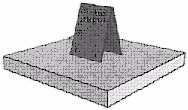
(1)
Must be a durable weatherproof material such as painted wood, metal or plastic.
(2)
A-frame or hanging signs allowed, spinning or spring-mounted signs are prohibited.
(3)
May be located within the right-of-way with approval of the Community Development Department but must not obstruct pedestrian movement along public or private walkways.
(4)
Must be removed after business hours.
(5)
Content may change only on chalkboard, whiteboard, or applied vinyl lettering signs.
(6)
The following specifications shall apply:
(Ord. O-38-2010. Passed 12-7-10; Ord. O-8-2011. Passed 5-17-11.)
1169.11 - SPECIAL SIGNS.
Signs limited to specific functions shall require a sign permit subject to the following standards:
(a)
ATM Signs. Signage for all ATMs (automated teller machines) shall be limited to one square foot of sign area and utilize no more than three (3) colors. ATM signage must have an opaque background. If the ATM contains a logo, it may be internally illuminated. In addition, monochromatic, non-illuminated logos of accepted credit systems (VISA, MasterCard, etc.) are limited to less than one square foot in area.
(b)
Automotive Fuel Station Signs. Automotive fuel stations are permitted two (2) name/logo combinations for each stand-alone pumping station. The area of the name and logo shall not exceed one and one half (1.5) square feet in area. Automotive fuel stations may display the following additional signs without the information contained thereon being treated as items of information: signs showing an affiliation with a motor club or signs indicating the acceptance of designated credit cards. The name/logo or additional information may not be illuminated. Matter appearing on gasoline pumps as purchased or installed shall not be considered a sign for the purposes of this Chapter.
(c)
Drive-through, menu board signs. A drive-through menu board sign is permitted only when all of the following conditions are fulfilled:
(1)
The sign is located on the property to which it refers;
(2)
The sign is not visible from the public right-of-way;
(3)
The sign is single-face only and does not exceed thirty-two (32) square feet in size;
(4)
The sign is not placed in front of the building setback line.
(5)
Electronic drive-through, menu board signs are permitted and shall comply with the following requirements, in addition to the requirements listed above:
A.
The signs must be static and are not permitted to display any flashing, moving or animated graphics;
B.
An automatic dimmer, controlling the sign brightness, must be installed to ensure that the sign is not overly bright throughout the day;
C.
The sign must be turned off when the business is closed.
(d)
Home Occupation Signs. Home occupation signs as regulated by Section 1165.09(d) shall be limited to one non-illuminated sign, not more than two (2) square feet, attached flat against the structure. Such sign shall contain no more than two (2) colors.
(Ord. O-38-2010. Passed 12-7-10; Ord. O-87-2023. Passed 8-15-23.)
1169.12 - PERMANENT SIGNS: GENERAL REQUIREMENTS
All permitted permanent signs shall be subject to the following requirements where applicable:
(a)
Context and Compatibility.
(1)
Signs are consistent with the design/style of the building on which they are located. Signs integrate with the building/site on which they are located and adjacent development in scale, design, and intensity. For example, large signs are best suited for buildings with larger massing.
(2)
Signs do not adversely impact existing and adjacent residential uses in mixed-use settings.
(3)
Signs do not create an appearance of competition between adjacent signs. For example, all signs on a single building have similar scale, placement and proportion as to create harmony among all sign designs.
(4)
Joint identification signs on a single sign face contain consistent or complementary fonts and colors for all tenants.
(5)
Signs are appropriate to their settings. For example, a monument sign is not particularly suitable for a pedestrian-oriented retail environment.
(b)
Execution.
(1)
Signs do not block portions of architectural detailing, windows, entries, or doorways.
(2)
Sign materials are complementary to the building materials and are high quality and durable.
(3)
Signs are well designed using unique materials and combinations, lighting concepts, and progressive forms.
(4)
Multiple sign types should avoid repeated functionality. For example, a blade sign and a projecting sign that are both perpendicular to a building face have very similar visibility perspectives.
(c)
Illumination. Appropriate illumination methods shall be permitted within each sign type as indicated in Section 1169.16 through Section 1169.18 for permanent signs. The following illumination method standards shall apply:
(1)
External. All external lighting sources shall be shielded. For energy conservation, all external light sources shall be LED, fluorescent, compact fluorescent lamps, gas-discharge lamps, or any other lighting technology that delivers fifty (50) or more lumens per watt. Light sources shall use a warm color temperate range of less than five thousand (5,000) Kelvin. Incandescent light sources are prohibited. Ground mounted fixtures shall not exceed a total height of one foot, including base. No mounting base shall exceed a height of four (4) inches from the ground level. All permanent ground-mounted fixtures for external illumination shall be fully landscaped and screened with living plant material to hide any visible fixtures. All shrubs, trees, turf, groundcovers, and other planting shall be well maintained, properly installed, weeded, mulched as needed and kept free of trash and other unsightly material and/or debris.
(2)
Internal. All internal lighting sources shall be shielded behind semi-opaque acrylic lettering or graphics. Only individual lettering or graphics may be illuminated for signs greater than eight (8) square feet. For energy conservation, all internal light sources shall be fluorescent, compact fluorescent lamps, or other lighting technology that is equal or greater to in energy efficiency.
(3)
Exposed. Signs are prohibited from utilizing exposed neon, exposed LED or equivalent exposed light sources without express approval granted by the Architectural Review Board. The Architectural Review Board may only grant approval of signs utilizing exposed neon, exposed LED or equivalent light sources if the use of exposed lighting is appropriate to and consistent with the design and style of the building, the sign, the location of the building and the concerns expressed by the adjacent property owners. If approved, the light source may utilize a range of colors but must meet requirements of Section 1169.12(f) for maximum permitted number of colors. Other exposed light sources and signs with moving or changing words, shall be prohibited.
(4)
Halo. Light sources concealed behind lettering or graphics may utilize white or soft white light sources. The face of characters or graphics utilizing halo lighting shall not be illuminated. For energy conservation, all light sources shall be fluorescent, compact fluorescent lamps, or other lighting technology that is equal or greater to in energy efficiency.
(d)
Joint identification signs. Joint identification signs shall be limited to premises where there are two (2) or more business uses on one property. Any joint identification sign shall not exceed the maximum sign area and measurements for sign types identifying individual occupants.
(e)
Continuity. Signs and their location should be considered in relationship to their surrounding environment and, if seen as a single package of signs, should have a continuity of design. Sign continuity should be achieved for buildings or storefronts with matching architectural composition and detailing. The sign shall be in harmony with the buildings on the site and shall not detract from the appearance of the general neighborhood in which it is located.
(f)
Color. Signs with color shall be limited to four (4) colors. For the purposes of this section, black and white shall be considered colors.
(1)
Color gradation. Gradation from different shades of one color is considered to be one color. Color gradation to a different color is considered to be two (2) colors.
(2)
Joint identification signs. Joint identification signs consisting of multiple sign boards connected by chains or similar materials leaving visible space between sign boards shall be limited to four (4) colors per sign board.
(g)
Materials. Sign materials shall be of good quality, good durability and complementary to the building of which they become part. The following materials design criteria shall apply, unless otherwise noted.
(1)
Nylon or other flexible synthetic materials are limited to only temporary banner signs.
(2)
Any combination of these materials may be used for any permanent sign: wood, stone, brick, glass, metal, acrylic, PVC, medium/high density overlay board, Alumalite™, DiBond™, LusterBoard™ or other similar products.
(3)
Canvas or other colorfast fabric materials for permanent signs shall only be utilized for canvas blade or awning signs.
(4)
Signs shall not be manufactured of synthetic foams (exposed or encased).
(Ord. O-38-2010. Passed 12-7-10.)
1169.13 - PERMANENT SIGNS: STANDARDS DEFINED.
The following shall be observed to define the number of permitted signs:
(a)
Signs within the Village Center. The number and types of permitted signs shall be regulated by the location of the signage within the Village Center District. Sub-districts are established and depicted in the Village Center Sign Code map, as adopted by reference, which has the following area designations:
(1)
Historic Center.
(2)
Village Core.
(3)
Core Residential.
(4)
Village Residential.
(5)
Campus.
(6)
Parks and Preservation
The Village Center Sign Code reference map shall be updated as necessary to reflect rezonings within the Village Center area.
(b)
Signs outside the Village Center Area. The number of permitted signs shall coincide with a land use category for which a permit is being applied. The land use categories are follows:
(1)
Commercial and warehousing.
(2)
Residential Subdivision.
(3)
Retail.
(4)
Institutional.
(c)
Sign types. The term "sign types" refers to a unique set of design standards and criteria for signage as listed in Sections 1169.16 through 1169.18. Each Village Center sub-district or use category outside of the Village Center is permitted a defined number of sign types. The number of permitted sign types may not necessarily correlate to a maximum number of individual signs, For example, the "window" sign type allows for the location of multiple signs in a business' storefront. The application of window signs constitutes as one permitted sign type. Not all sign types are permitted in designated sub-districts or use categories and is noted with each sign type.
(Ord. O-38-2010. Passed 12-7-10; Ord. O-08-2011. Passed 5-17-11.)
1169.14 - PERMITTED SIGNS: WITHIN THE VILLAGE CENTER.
The following shall be observed to determine the number of permitted signs within the Village Center. No more than one sign type may be a ground sign. The examples shown are for example only and applicants are encouraged to choose a sign type that appropriately fits their needs and site conditions.
(a)
Historic Core/Village Core. Each building or structure in either the Historic Core or Village Core sub-districts of shall be allowed three (3) sign types.
Example Sign Package:
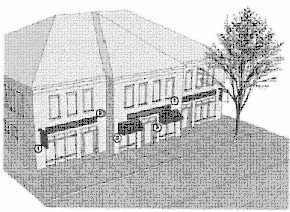
1.
First permitted sign type. Example shown: Projecting
2.
Second permitted sign type. Example shown: Wall
3.
Third permitted sign type. Example shown: Awning
(b)
Core Residential/Village Residential. Each building or structure in either the Core Residential or Village Residential sub-districts shall be allowed one sign type.
Example Sign Package:
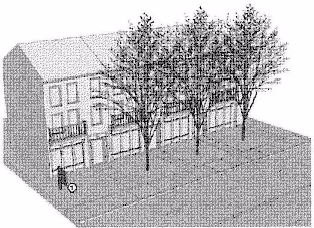
1.
First permitted sign type. Example shown: Single-post
(c)
Campus/Parks and Preservation. Each building or structure in either the Campus or Parks and Preservation sub-district shall be allowed three (3) sign types.
Example Sign Package:
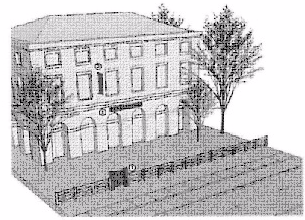
1.
First permitted sign type. Example shown: Dual-post
2.
Second permitted sign type. Example shown: Wall
3.
Third permitted sign type. Example shown: Canvas Blade
(Ord. O-38-2010. Passed 12-7-10.)
1169.15 - PERMITTED SIGNS: OUTSIDE THE VILLAGE CENTER.
The following shall be observed to determine the number of permitted signs outside of the Village Center.
(a)
Commercial and warehousing. Each building or structure for a commercial and warehousing type business shall be allowed three (3) sign types.
Example Sign Package:
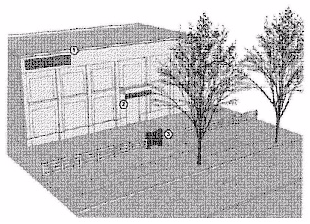
1.
First permitted sign type. Example shown: Wall
2.
Second permitted sign type. Example shown: Hanging
3.
Third permitted sign type. Example shown: Dual-post
(b)
Residential Subdivision. Each residential subdivision shall be allowed one sign type.
Example Sign Package:
1.
First permitted sign type. Example shown: Monument
(c)
Retail. Each building or structure for retail and related businesses shall be allowed three (3) sign types.
Example Sign Package:
1.
First permitted sign type. Example shown: Dual-post
2.
Second permitted sign type. Example shown: Wall
3.
Third permitted sign type. Example shown: Projecting
(d)
Institutional. Each building or structure for institutional and related establishments shall be allowed three (3) sign types.
Example Sign Package:
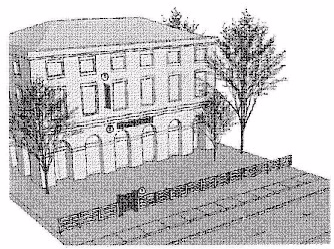
1.
First permitted sign type. Example shown: Dual-post
2.
Second permitted sign type. Example shown: Wall
3.
Third permitted sign type. Example shown: Canvas Blade
(Ord. O-38-2010. Passed 12-7-10.)
1169.16 - PERMANENT SIGNS: BUILDING SIGN TYPES.
The following shall constitute the framework standards and details for the construction of permanent building-mounted signs within and outside the Village Center District. Sign specifications may vary with each Village Center sub-district or use category. Not all sign types are permitted in each sub-district or associated with each use category and are noted as such with each sign type.
(a)
Blade. Blade signs shall be designed according to the following diagram and standards:
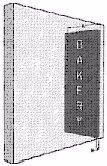
(1)
Must be oriented vertically.
(2)
The following specifications shall apply. These specifications are in addition to the requirements established elsewhere in this Chapter. In addition, board or commission approval may be required:
(b)
Hanging. Hanging signs shall be designed according to the following diagram and standards.
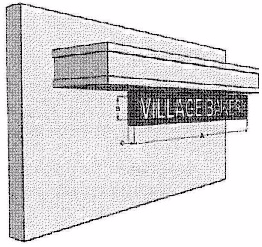
(1)
The following specifications shall apply. These specifications are in addition to the requirements established elsewhere in this Chapter. In addition, board or commission approval may be required:
(c)
Architectural canopy. Architectural canopy signs shall be designed according to the following diagram and standards:
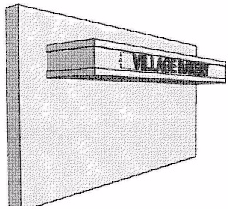
(1)
Signs may be mounted directly to a canopy face or on top of the canopy.
(2)
Signs on the face of the canopy must be mounted directly with individual lettering or have a face that is flush with the canopy face.
(3)
The following specifications shall apply. these specifications are in addition to the requirements established elsewhere in this Chapter. In addition, board or commission approval may be required:
(d)
Wall. Wall signs shall be designed according to the following diagram and standards:
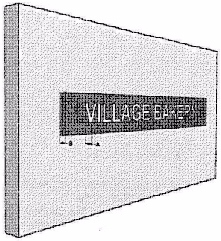
(1)
Single plane sign boxes must be installed so that the sign face is flush with the building facade.
(2)
The following specifications shall apply. These specifications are in addition to the requirements established elsewhere in this Chapter. In addition, board or commission approval may be required:
(e)
Window. Window signs shall be designed according to the following diagram and standards:
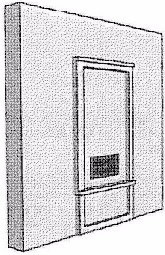
(1)
Only permitted on first floor windows and storefronts.
(2)
Vinyl lettering is permitted.
(3)
The following specifications shall apply. These specifications are in addition to the requirements established elsewhere in this Chapter. In addition, board or commission approval may be required:
(f)
Canvas Blade. Canvas blade signs shall be designed according to the following diagram and standards:
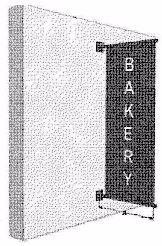
(1)
Must be constructed of a durable, fade resistant canvas fabric and mounted with permanent hardware.
(2)
Must be vertically oriented and placed on architectural pier elements of a building, if present.
(3)
Must be mounted using fixed brackets.
(4)
The following specifications shall apply. These specifications are in addition to the requirements established elsewhere in this Chapter, in addition, board or commission approval may be required:
(g)
Awning. Awning signs shall be designed according to the following diagram and standards:
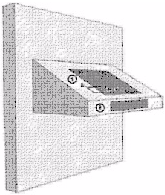
(1)
Must be constructed of a durable, fade resistant canvas fabric.
(2)
Signage should be located either on the main body of the awning or on the overhang, but not on both.
(3)
The following specifications shall apply. These specifications are in addition to the requirements established elsewhere in this Chapter. In addition, board or commission approval may be required:
(h)
Projecting. Projecting signs shall be designed according to the following diagram and standards:
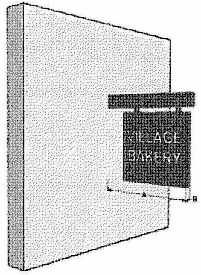
(1)
Shall be located adjacent to an entrance and perpendicular to a public easement, right-of-way, or lot line.
(2)
May hang from an armature, architectural canopy, or mounted directly to the building face.
(3)
The following specifications shall apply. These specifications are in addition to the requirements established elsewhere in this Chapter. In addition, board or commission approval may be required:
(Ord. O-38-2010. Passed 12-7-10; Ord. O-01-2025. Passed 1-21-25.)
1169.17 - PERMANENT SIGNS: GROUND SIGN TYPES.
The following shall constitute the framework standards and details for the construction of permanent ground signs within and outside the Village Center District. Sign specifications may vary with each Village Center sub-district or use category. Not all sign types are permitted in each sub-district or associated with each use category and are noted as such with each sign type. Only one of the maximum permitted number of sign types may be a ground sign.
(a)
Single Post. Single post signs shall be designed according to the following diagram and standards:
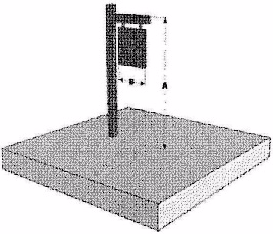
(1)
The following specifications shall apply. These specifications are in addition to the requirements established elsewhere in this Chapter. In addition, board or commission approval may be required:
(b)
Dual post. Dual post signs shall be designed according to the following diagram and standards:
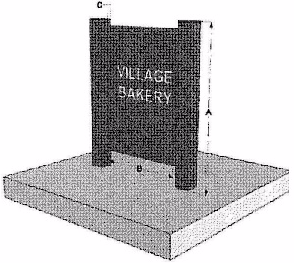
(1)
The following specifications shall apply. These specifications are in addition to the requirements established elsewhere in this Chapter. In addition, board or commission approval may be required:
(c)
Monument. Monument signs shall be designed according to the following diagram and standards:
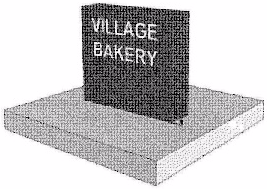
(1)
A defined sign base, if present, may not exceed three (3) feet in height.
(2)
The base of the sign shall be landscaped on all sides with a defined bed and all-season plant material.
(3)
The base of the sign shall be flush with the ground.
(4)
The following specifications shall apply. These specifications are in addition to the requirements established elsewhere in this Chapter. In addition, board or commission approval may be required:
(d)
Post-top. Post-top signs shall be designed according to the following diagram and standards:
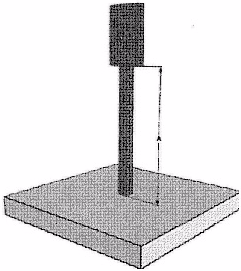
(1)
The following specifications shall apply. These specifications are in addition to the requirements established elsewhere in this Chapter. In addition, board or commission approval may be required:
(Ord. O-38-2010. Passed 12-7-10.)
1169.18 - SIGN TYPES: BY-RIGHT SIGNS.
The following signs shall be permitted in each Village Center sub-district or use category where noted and do not count towards the maximum number of permitted sign types. Sign specifications may vary by each Village Center sub-district or use category. The following framework standards and details for the construction of by-right signs shall be as follows:
(a)
Sidewalk Plaque. Sidewalk plaque signs shall be designed according to the following diagram and standards:
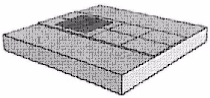
(1)
Must be made of a durable material such as cut or etched stone, tile, or metal.
(2)
May not be made of a temporary or removable material applied to the sidewalk surface.
(3)
Must be located within two (2) feet of the tenant entrance.
(4)
Must not be located within the public right-of-way.
(5)
The following specifications shall apply. These specifications are in addition to the requirements established elsewhere in this Chapter. In addition, board or commission approval may be required:
(b)
Directional sign. Directional signs shall be designed according to the following diagram and standards:
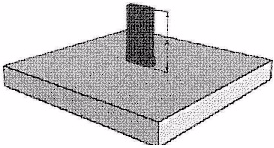
(1)
The base of the sign shall be landscaped on all sides with a defined bed and all-season plant material.
(2)
The following specifications shall apply. These specifications are in addition to the requirements established elsewhere in this Chapter. In addition, board or commission approval may be required:
(c)
Address sign. Address signs shall be designed according to the following diagram and standards:
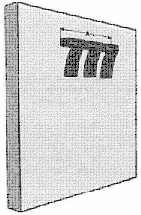
(1)
May not project more than six (6) inches from the building face unless it is integrated with an architectural design feature of the building.
(2)
The following specifications shall apply. These specifications are in addition to the requirements established elsewhere in this Chapter. In addition, board or commission approval may be required:
(d)
Wall Plaque. Wall plaque signs shall be designed according to the following diagram and standards:
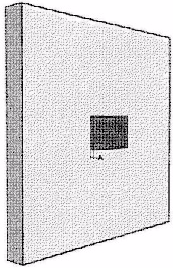
(1)
The sign must be made of a durable material such as cut or etched stone, glass, tile, or metal.
(2)
This sign type may not be located above the first floor.
(3)
The following specifications shall apply. These specifications are in addition to the requirements established elsewhere in this Chapter. In addition, board or commission approval may be required:
(Ord. O-38-2010. Passed 12-7-10.)
1169.99 - PENALTY.
Any person, firm, corporation, partnership or association violating any provision of this Chapter or failing to obey any lawful order issued pursuant to its terms, shall be fined not more than one hundred dollars ($100.00) per violation. Each day during which such violation continues may be deemed a separate violation or offense.
(Ord. O-38-2010. Passed 12-7-10.)
1171.01 - PURPOSE.
The purpose of these landscaping, open space and natural feature requirements is to promote and protect the public health, safety and welfare through the preservation of the environment by recognizing the vital importance of tree growth, green space and sensitive environmental features in the ecological system. It is further the purpose of this section to specifically encourage the preservation and replacement of major trees removed in the course of land development, and to encourage the effective utilization of landscaping as a buffer between particular land uses, and to minimize noise, air and/or visual pollution and artificial light glare.
(Ord. 30-2007. Passed 8-21-07.)
1171.02 - DEFINITIONS.
As utilized in this section, the following words and phrases shall have the meaning ascribed herein:
(a)
"Landscaping" means the use of trees, shrubs, grass, ground covers and other plant materials.
(b)
"Major tree" means a living tree with a trunk diameter of not less than six (6) inches, measured twenty-four (24) inches above ground level.
(c)
"Opaqueness" means the state of being impervious to rays of light measured by observation of any two (2) square yard area lying between two (2) and ten (10) feet from the ground.
(d)
"Riparian area" means a transitional area between flowing water and land covered by terrestrial vegetation that provides a continuous exchange of nutrients and woody debris between land and water. This area is at least periodically influenced by flooding. Riparian areas, if appropriately sized and managed, help to stabilize banks, limit erosion, reduce flood size floes and/or filter and settle out runoff pollutants, or perform other functions consistent with the purposes of these regulations.
(Ord. 30-2007. Passed 8-21-07; Ord. O-08-2025. Passed 3-18-25.)
1171.03 - PRESERVATION OF NATURAL FEATURES.
(a)
Good faith effort shall be made to preserve natural vegetation areas. Streets, lots, structures and parking areas shall be laid out to avoid unnecessary destruction of heavily wooded areas or outstanding tree specimens.
(b)
If an area is determined to be a wetland, it shall be preserved or mitigated in compliance with Federal regulations.
(c)
All streams designated as either perennial or intermittent on a publication of the United States Geological Survey (ex. The National Map) and their riparian area shall be preserved to the extent practicable. Modifications to these areas are prohibited, except as authorized herein.
(1)
Proposed activities to modify existing stream channels under the jurisdiction of state and/or federal agencies shall be subject to permit conditions issued by the applicable agencies and all associated mitigation requirements. The project owner shall submit evidence of all such permits obtained for the proposed work to the City Engineer.
(2)
The riparian area to be preserved shall be established as follows:
A.
A corridor with minimum width of one hundred (100) feet, with at least twenty-five (25) feet on each side of the centerline of the stream.
(3)
The following activities are permissible to occur within the riparian corridor:
A.
Passive uses including hiking, fishing, picnicking, and similar uses. Construction of paved trails to further such passive recreation uses is permitted,
B.
Vegetation removal on existing levees and dikes,
C.
Activities by City personnel that are necessary to maintain the function of any open watercourse,
D.
Removal of damaged or diseased trees,
E.
Revegetation and/or reforestation with plantings of native species,
F.
Public utility crossings (those utilities owned by the City or any entity contracting with the City),
G.
Street crossings that are perpendicular, or as perpendicular to the riparian corridor as feasible,
H.
Private drive crossings,
I.
Excavation for providing compensatory floodplain volume immediately adjacent to the channel,
J.
Storm sewer pipe outfalls where level spreaders located outside of the riparian protected corridor are determined to be not feasible,
K.
Construction activities associated with properly permitted stream restoration projects,
L.
Disturbances resulting from permitted stream and/or wetland mitigation projects provided the mitigation is to offset modifications to local protected wetlands,
M.
Activities related to enhancement of existing wetlands
N.
Encroachments into the riparian corridor that existed prior to April 18, 2025, and
O.
Other activities determined to be in the interests of the City of New Albany, as determined by the City Engineer.
(d)
Floodplain areas should be incorporated into the open spaces and is encouraged to be made publicly accessible.
(Ord. 30-2007. Passed 8-21-07; Ord. O-08-2025. Passed 3-18-25.)
1171.04 - STREET TREE REQUIREMENTS.
The planting of trees along roadways for all new development shall be according to the following Street Tree Requirements:
(a)
Deciduous canopy trees (street trees) shall be planted no less than twenty-four (24) feet and no more than thirty-six (36) feet on center unless otherwise approved by the Village Landscape Architect.
(b)
Street trees must be planted in the tree lawn, between the sidewalk or leisure trail and the road pavement. Tree lawns shall be a minimum width of six (6) feet.
(c)
Street trees shall be a minimum of three (3) inches caliper dbh (trunk diameter at four and one-half (4.5) feet above the ground).
(d)
Any tree on the list of undesirable species in Section 1171.09 shall not be planted as street trees.
(e)
Street trees shall be located so that a twenty-five (25) foot sight triangle is maintained at street intersections.
(f)
Street trees shall be located not less than fifteen (15) feet from fire hydrants and/or utility poles.
(g)
The developer shall be required to maintain all street trees for a period of one year after the tree is planted and to replace any tree which dies within such one year period.
(h)
Street trees should be of the same genus and species planted continuously along the length of each street.
(i)
No person shall, as a normal practice, top any tree within the public right-of-way. "Topping" means the severe cutting back of limbs within the tree's crown to such a degree so as to remove the normal canopy or disfigure the tree.
(j)
Street tree limbs extending over a sidewalk shall be trimmed to such an extent that no portion of the same shall be less than seven (7) feet above the sidewalk. Tree limbs extending over streets shall be trimmed so that no portion of the same shall interfere with the normal flow of traffic.
(k)
The Village, or any licensed utility, shall have the right to plant, prune, maintain and remove trees, plants, and shrubs within the established right-of-way lines of all streets, highways, and alleys as may be necessary to ensure public safety, enhance the symmetry and beauty of such public grounds, or remove such trees as may be injurious to sewers, electric power lines, gas lines, water lines or other public improvements.
(l)
No person shall, by any type of construction, reduce the area of a tree lawn within the street right-of-way.
(m)
On all properties within the Village Center, to avoid interference with pedestrian traffic, only approved street trees may be planted. Such trees shall conform to the size, spacing, and placement of similar trees already in place on adjacent and nearby properties. In addition to the approved street trees, tree wells may also contain flowers or other ground cover plantings.
(Ord. 30-2007. Passed 8-21-07.)
1171.05 - LANDSCAPING SCREENING.
(a)
Screening of Service Areas. For commercial, industrial, office, institutional and multiple-family uses, all areas used for service, loading and unloading activities shall be screened on those portions of the lot which abut districts where residences are a permitted use. Screening shall consist of walls, landscaped earthen mounds, fences, natural vegetation or an acceptable combination of these elements, provided that screening must be at least seven (7) feet in height. Natural vegetation screening shall have a minimum opaqueness of seventy-five percent (75%) during full foliage. The use of year-round vegetation, such as pines or evergreens, is encouraged. Vegetation shall be planted no closer than three (3) feet to any property line.
(b)
Screening of Trash Receptacles. For commercial, industrial, office, institutional, and multiple-family uses, all trash and garbage container systems shall be screened or enclosed by walls, fences, or natural vegetation to screen them from view. Container systems shall not be located in front yards, and shall conform to the side and rear yard pavement setbacks in the applicable zoning district. The height of such screening shall be at least six (6) feet in height. Natural vegetation shall have a maximum opaqueness of seventy-five percent (75%) at full foliage. The use of year-round vegetation, such as pines and evergreens is encouraged.
(c)
Buffering and Screening Requirements. For commercial, industrial, office and institutional uses which abut districts where residences are a permitted use, a buffer zone with a minimum width of twenty-five (25) feet should be created. Such screening within the buffer zone shall consist of natural vegetation planted no closer than three (3) feet to any property line. Natural vegetation shall have an opaqueness of seventy-five percent (75%) during full foliage and shall be a variety which will attain ten (10) feet in height within five (5) years of planting.
(d)
Maintenance of Shrubbery and Hedges. No shrubbery or hedge shall be planted, in any district, in such a manner that any portion of growth extends beyond the property line. The owner or occupant of property on which there is shrubbery, hedges, or trees so located as to affect the vision of drivers on adjacent streets shall keep shrubbery and hedges trimmed to a maximum of thirty (30) inches in height, and keep trees trimmed so as to avoid creating traffic hazards.
(e)
Minimum Trees. The following minimums are required, based upon total ground coverage of structures and vehicular use areas:
(1)
Up to twenty thousand (20,000) square feet: A minimum of one tree per five thousand (5,000) square feet of ground coverage and a total tree planting equal to one inch in tree trunk size for every two thousand (2,000) square feet of ground coverage.
(2)
Between twenty thousand (20,000) and fifty thousand (50,000) square feet: A minimum of one tree for every five thousand (5,000) square feet of ground coverage and a total tree planting equal to ten (10) inches plus one-half inch in tree trunk size for every two thousand (2,000) square feet over twenty thousand (20,000) feet in ground coverage.
(3)
Over fifty thousand (50,000) square feet: A minimum of one tree for every five thousand (5,000) square feet of ground coverage and a total tree planting equal to twenty-five (25) inches plus one-half inch in tree trunk size for every four thousand (4,000) square feet over fifty thousand (50,000) square feet in ground coverage.
(Ord. 20-90. Passed 6-19-90; Ord. 72-92. Passed 12-15-92; Ord. 30-2007. Passed 8-21-07.)
1171.06 - PARKING LOT LANDSCAPING.
(a)
Parking Lot Islands.
(1)
Large, unbroken expanses of parking lot shall be avoided. Large lots should be separated into a series of smaller interconnected lots separated by peninsulas or islands. No individual landscape area shall be smaller than three hundred fifty (350) square feet.
(2)
For each one hundred (100) square feet, or fraction thereof, of parking area, a minimum total of five (5) square feet of landscaped area shall be provided.
(3)
Parking areas should contain a minimum of one deciduous canopy tree for every ten (10) parking spaces.
(4)
Trees used in parking lot islands shall have a clear trunk of at least five (5) feet above the ground, and the remaining areas shall be landscaped with shrubs, or ground cover, not to exceed two (2) feet in height.
(b)
Buffering. Parking lots shall be screened from primary streets, residential areas, and open space by a three and one-half (3.5)-foot minimum height evergreen hedge or masonry wall, or combination of wall and plantings.
(Ord. 30-2007. Passed 8-21-07.)
1171.07 - LANDSCAPE MATERIALS.
Landscape materials utilized in meeting requirements of this section should complement the form of existing trees and plantings, as well as the general design and architecture of the developed area. The type of sun or shade should be considered in selecting plant materials. Artificial plants are prohibited. All landscape materials shall be living plants and shall meet the following requirements:
(a)
Quality. All plant material shall conform to the standards of the American Association of Nurserymen and shall have passed any inspections required under state regulations.
(b)
Type. Added landscape elements shall observe and respect the size, placement, character and type of such materials employed on adjacent or nearby properties.
(c)
Deciduous Trees. Trees which normally shed their leaves in the fall shall be species having an average mature crown spread of greater than fifteen (15) feet and having trunks which can be maintained with over five (5) feet of clear wood in areas where visibility is required, except at vehicular use intersections where the clear wood requirement shall be eight (8) feet. A minimum of ten (10) feet overall height, or a minimum caliper (trunk diameter as measured six (6) inches above ground) of at least two (2) inches immediately after planting shall be required. Trees of undesirable species, as listed in Section 1171.07 are prohibited.
(d)
Evergreen Trees. Evergreen trees shall be a minimum of five (5) feet high with a minimum caliper of one and one-half (1½) inches immediately after planting.
(e)
Shrubs and Hedges. Shrubs shall be planted at least two (2) feet in average height when planted and shall conform to opacity and other requirements within four (4) years after planting.
(f)
Vines. Vines shall be at least twelve (12) inches high at planting and generally used in conjunction with walls or fences.
(g)
Grass or Ground Cover. Grass of the fescue (Gramineae) or bluegrass (Poaceae) family shall be planted in species normally grown as permanent lawns, and may be sodded or seeded. In swales or other areas, reducing net or suitable mulch shall be used; nurse grass shall be sown for immediate protection until complete coverage otherwise is achieved. In certain cases, ground cover consisting of rocks, pebbles, sand or similar materials may be approved.
(h)
Maintenance and Installation. All landscaping materials shall be installed in a sound and competent manner, according to accepted, good construction and planting procedures. The owner of the property shall be responsible for the continued proper maintenance of all landscaping materials, and shall keep them in a proper, neat and orderly appearance, free of refuse and debris at all times. All unhealthy or dead plant material installed pursuant to this section shall be replaced within one year.
(Ord. 30-2007. Passed 8-21-07.)
1171.08 - WET AND DRY STORMWATER BASINS.
In addition to the requirements listed in Chapter 1181, the following regulations shall apply to the design of wet and dry stormwater basins:
(a)
Wet and dry stormwater basins shall be designed by a landscape architect in conjunction with a professional engineer to ensure that the basins have a natural shape and are graded and planted in an attractive manner.
(b)
Wet and dry stormwater basins shall be designed in compliance with the ODNR Rainwater and Land Development Manual, latest edition, to meet water quality requirements.
(c)
For safety, maintenance, and aesthetic purposes, wet and dry stormwater basins shall have side slopes (above normal pool elevation) that are generally no steeper than 6:1 and no more gradual than 20:1 (horizontal:vertical).
(d)
The use of fountains and other plainly visible aeration devices shall be subject to the approval of the Village Landscape Architect.
(e)
Landscape treatments at the perimeter of wet and dry stormwater basins shall be designed either with maintained turf to the pond's edge or a naturalized planting of native landscape material, subject to approval of the Village Landscape Architect. The landscape plantings shall be in large masses and drifts, and shall not include decorative landscape boulders, large mulch beds, or specimen plantings. Under no circumstances shall the landscape design conflict with any of the safety, maintenance, or engineering requirements set forth in the codified ordinances or reference documents.
(f)
Temporary on-site wet or dry stormwater basins shall not be subject to the regulations in divisions (a), (b), (c) and (e) of this section. Temporary basins shall either be removed or replaced with a permanent basin prior to acceptance of infrastructure improvements when installed as part of new subdivisions or completion of the final engineering punch list in the case of single site developments. The time frame in which to install a permanent basin may be extended for good cause by the Village Administrator or his designee. In the case of a time extension, a performance bond must be provided to the Village in an amount to cover removal of the temporary basin and installation of the permanent basin. State and Federal safety and engineering regulations apply to all temporary ponds.
(Ord. 30-2007. Passed 8-21-07; Ord. 07-2009. Passed 3-17-09.)
1171.09 - UNDESIRABLE SPECIES.
In meeting the planting and maintenance requirements of this Ordinance, the following species of trees shall be considered undesirable species, and shall not be utilized.
(a)
Box-Elder (Acer negundo). (Breakage and insect pests)
(b)
Silver Maple (Acer saccharinum). (Breakage; surface roots)
(c)
Catalpa (Catalpa speciosa). (Messy flowers and seed pods; insect pests)
(d)
Tulip Tree (Liriodendrum tulipfera). (Insect pests; leaves drop in dry periods)
(e)
Mulberry (Morus alba). (Fruit objectionable on street)
(f)
Poplars (all kinds) (Populus). (Breakage; insect pests, disease-prone)
(g)
Willows (all kinds) (Salix). (Breakage; insect and disease-prone; surface roots)
(h)
Siberian Elm (Ulmas pumila). (Breakage)
(Ord. 30-2007. Passed 8-21-07.)
1173.01 - PURPOSE AND APPLICABILITY.
This section is enacted to provide regulations for the construction and operation of private swimming pools. It is applicable to bodies of water used for swimming and/or recreational bathing and is not applicable to storm drainage or detention facilities authorized by the Municipality.
1173.02 - PRIVATE SWIMMING POOLS.
A "private swimming pool" as regulated herein, means any pool or open tank not located within a completely enclosed building and containing water to a depth, at any point greater than one and one-half (1.5) feet. No such swimming pool, exclusive of portable swimming pools with an area of less than one hundred (100) square feet, shall be allowed in any Agricultural or Residential District unless the following conditions and requirements are complied with:
(a)
"In-ground pool" means a swimming pool whose sides rest in partial or full contact with earth, no part of which is more than twelve (12) inches above grade.
(b)
The pool is intended and is to be used solely for the occupants of the principal use of the property on which it is located.
(c)
Such pool, including any walks, paved areas, equipment, and appurtenances thereto, shall not be located in any front yard, nor closer than fifteen (15) feet to any property line.
(d)
The area of the swimming pool, exclusive of decks, walks and other appurtenances, shall not exceed ten percent (10%) of the area of the lot or parcel.
(e)
Any private swimming pool, or the property on which the pool is located, shall be enclosed by a wall or fence constructed so as to prevent uncontrolled access. Such wall or fence shall be of such design and construction as to effectively prevent a child from crawling or otherwise passing through or under such fence or barrier. Such wall or fence shall not be less than forty-eight (48) inches in height, maintained in good condition by the property owner, and affixed with an operable gate and lock. Additionally, the provisions of Chapter 1175, Fences, and Chapter 1330, International Property Maintenance Code shall apply.
(f)
All lights used for the illumination of the swimming pool and adjacent areas shall be designed, located and installed so as to confine the direct beams thereof to the lot or parcel on which the pool is located.
(Ord. O-26-2012. Passed 1-22-13; Ord. O-12-2016. Passed 5-17-16.)
1173.03 - COMMUNITY SWIMMING POOLS.
"Community swimming pool" means any pool constructed by an association of property owners, a private club for use and enjoyment of its members; or any individual or organization (including the Municipality) for use by the general public. Such community swimming pools, specified as permitted or conditional uses in the various zoning districts are subject to the following additional conditions:
(a)
The swimming pool, including any walks, paved areas or appurtenances thereto, shall not be located closer than thirty (30) feet to any property line.
(b)
Any community swimming pool, or the property on which it is located, shall be enclosed by a fence or wall constructed so as to prevent uncontrolled access. Such fence or wall shall not be less than six (6) feet in height and maintained in good condition. Each gate in the fence or wall shall be provided with a secure lock and shall be kept locked at all times when the pool is not in use or under immediate control of a responsible person.
1173.04 - ZONING PERMIT REQUIRED.
A zoning permit shall be required for the construction or installation of any private or community pool. The application for the zoning permit shall be evidence that the pool will be constructed, maintained and/or installed in conformance with the above provisions of this Ordinance, as well as all other applicable ordinances in effect at time of the application.
1175.01 - DEFINITION.
"Fence" or "wall" means any structure composed of wood, metal, stone, brick or other material, including hedges or other plants, erected in such a manner and location so as to enclose, partially enclose or divide any premises or part of premises for the purpose of confinement, screening, partitioning, or decoration. Trellises or other structures for the purpose of supporting vines, flowers or other vegetation, when erected in such a position so as to enclose, partially enclose or divide any premises or any part of premises shall also be considered a fence.
1175.02 - APPLICATION.
The provisions of this chapter shall apply to any zoning district where residences are a permitted use.
1175.03 - PERMIT REQUIRED.
No fence or wall, as defined above, may be erected within the Municipality unless a property owner or his agent files application with the Zoning Inspector. Such application shall be on such forms as provided by the Municipality and shall include a drawing of the lot, to scale, showing the actual location of the proposed fence or wall. The Zoning Inspector shall review each application to determine its compliance with the provisions of this Ordinance. Each property owner shall determine property lines and certify that the fence or wall does not encroach upon another lot or parcel of land.
1175.04 - HEIGHT AND LOCATION.
The permitted height of a fence or wall shall be determined by its location on the property as follows:
(a)
A fence or wall not exceeding fifty-four (54) inches in height may be erected between the building setback line and a line three (3) feet toward the building setback line from the street right-of-way line provided the provisions of subsection (c) hereof are met. No fence or wall may be erected within three (3) feet of the street right-of-way line.
(b)
A fence or wall not exceeding seventy-two (72) inches in height may be erected in any area of the lot behind the building setback line.
(c)
No fence, hedge, or wall shall be erected on any lot in such a manner so as to obscure the vision of motorists approaching a street, intersection, within a twenty-five (25) feet clear sight distance along either street approaching said intersection.
1175.05 - PROHIBITED FENCES.
No person shall erect or maintain any fence or wall charged with electrical current, nor shall any person erect or maintain any fence or wall having wire or metal prongs or spikes, or other cutting points or edges. This prohibition shall not apply to fences erected in the A District for the purposes of enclosing livestock.
1177.01 - PURPOSE.
It is the purpose of this chapter to protect the health, safety, welfare and property rights of all property owners within the Municipality by permitting the reasonable use of dish-type satellite signal receiving stations, hereinafter referred to as "satellite dishes."
1177.02 - PERMIT REQUIRED.
No person, firm, or corporation shall erect a satellite dish within New Albany without first securing a permit in accordance with the provisions of this Ordinance.
1177.03 - CONTENTS OF PERMIT.
The owner or occupant of any lot, premises, or parcel of land within the Municipality who desires to erect a satellite dish shall apply to the Zoning Inspector for a permit. Such application shall be made on forms furnished by the Municipality and shall contain, at a minimum, the following information:
(a)
Name, address, and telephone number of the applicant, and owner of the property, if different.
(b)
Name of occupant of the property, if different from above.
(c)
Name, address, and telephone number of contractor or other person who is responsible for erection or construction of the satellite dish.
(d)
Plot plan of the lot, drawn to scale, showing the exact location of the satellite dish.
(e)
Description of the kind and type of satellite dish to be erected.
(f)
Plans and specifications showing the elevations, with sufficient details of the method of assembly and construction to determine compliance with the provisions of this Ordinance.
(g)
An application fee, as established by Council.
1177.04 - APPROVAL OF PERMIT.
Upon receipt of the application, the Zoning Inspector shall issue a permit for a satellite dish, if the application shows the all the requirements of this Ordinance have been met.
If the application is denied, the applicant may follow procedures for appeal and/or variance as specified in Chapter 1113.
1177.05 - LOCATION OF SATELLITE DISH.
(a)
Satellite dishes shall be permitted as an accessory use in those zoning districts where they are so specified.
(b)
All satellite dishes shall be constructed or erected to the rear of the premises where not visible from the street.
(c)
No satellite dish shall be erected within twenty (20) feet from any lot line.
(d)
No satellite dish shall be erected on the roof on any building or structure. Public schools and police/fire stations shall be exempt from this requirement.
(e)
No satellite dish shall be linked to receivers which are not located on the same lot or premises.
(f)
Evergreen or landscaping shall be provided so as to effectively conceal the satellite dish from view of adjacent parcels. Such landscaping shall be installed within thirty (30) days from the date of the erection of the satellite dish.
1177.06 - SIZE AND HEIGHT.
The maximum diameter of any satellite dish shall not exceed twelve (12) feet. The maximum installed height of any satellite dish shall not exceed fifteen (15) feet above natural grade level.
1177.07 - SATELLITE DISH SUPPORT STRUCTURES.
(a)
Only metal supports of galvanized construction, or equal thereto, shall be permitted.
(b)
Only a concrete base or caissons, depending on soil conditions, shall be permitted.
(c)
The installed satellite dish structure shall be capable of withstanding a wind force of up to eighty-five (85) miles per hour.
(d)
Any driving motor shall be limited to one hundred ten (110) volts maximum power and encased with protective guards.
(e)
Any satellite dish must be grounded to an eight (8) foot grounding rod.
1177.99 - PENALTY.
Whoever violates or fails to comply with any of the provisions of this chapter shall be subject to the penalties specified in Section 1109.99.
1179.01 - PURPOSE.
This chapter provides for the regulation of the placement, construction and modification of Towers and Wireless Telecommunications Facilities in order to protect the health, safety and welfare of the public, while at the same time not unreasonably interfering with the development of the competitive wireless telecommunications marketplace in the City. Specifically:
(a)
To direct the location of Towers and Wireless Telecommunications Facilities in the City;
(b)
To protect residential areas and land uses from potential adverse impacts of Towers and Wireless Telecommunications Facilities;
(c)
To minimize adverse visual impacts of Towers and Wireless Telecommunications Facilities through careful design, siting, landscaping and innovative camouflaging techniques;
(d)
To promote and encourage shared use/co-location of Towers and wireless support structures as a primary option rather than construction of additional single use Towers;
(e)
To avoid potential damage to adjacent properties caused by Towers and Wireless Telecommunications Facilities by ensuring such structures are soundly and carefully designed, constructed, modified, maintained and removed;
(f)
To the greatest extent feasible, ensure that Towers and Wireless Telecommunications Facilities are compatible with surrounding land uses;
(g)
To the greatest extent feasible, ensure that proposed Towers and Wireless Telecommunications Facilities are designed in harmony with natural setting and in a manner consistent with current development patterns.
(Ord. O-37-2014. Passed 12-16-14; Ord. O-14-2019. Passed 5-21-19.)
1179.02 - APPLICABILITY.
(a)
The provisions of this chapter shall apply to all Towers, wireless support structures and Wireless Telecommunications Facilities, unless such support structures or facilities are small cell facilities located in the City Rights-of-Way or wireless support structures located in the City Rights-of-Way, in such instance Chapter 907 of the Code shall apply. Nothing herein shall affect the applicability of ORC Ch. 4939 to small cell facilities and wireless support structures in City Rights-of-Way. Wireless Facilities Zoning shall not apply to small cell facilities located in the City Rights-of-Way and wireless support structures located in the City Rights-of-Way.
(b)
Except as provided herein, any use being made of an existing Tower or wireless support structure subject to this chapter on the effective date of this chapter (herein "Non-conforming Structures") shall be allowed to continue, even if in conflict with the terms of this chapter. Any Tower site that has received City approval in the form of either a variance or building permit, but has not yet been constructed or located, shall be considered a Non-conforming Structure so long as such approval is current and not expired.
(Ord. O-37-2014. Passed 12-16-14; Ord. O-14-2019. Passed 5-21-19.)
1179.03 - DEFINITIONS.
For purposes of this chapter, the following terms, phrases and their derivations shall have the meanings given herein. When not inconsistent with the context, words used in the present tense include the future tense, words in the plural number include the singular number, and words in the singular number include the plural number. The words "shall" and "will" are mandatory and "may" is permissive. Words not defined shall be given their common and ordinary meaning.
(a)
"Antenna" means any transmitting or receiving device used in communications that radiates or captures electromagnetic waves, digital signals, analog signals, radio frequencies, wireless communication signals, or other communication signals.
(b)
"Applicant" means any person that applied for a conditional use permit pursuant to Section 1179.07.
(c)
"Application" means the process by which an applicant submits a request and indicates a desire to be granted a conditional use permit under the provisions of this chapter. An application includes all written documentation, verbal statements and representations, in whatever form or forms made by an applicant to the City concerning such a request.
(d)
"Code" means City Codified Ordinances.
(e)
"Co-location" means the use of a Wireless Telecommunications Facility by more than one (1) wireless telecommunications provider.
(f)
"Council" means the Municipal Council.
(g)
"Emergency" means a reasonably unforeseen occurrence with a potential to endanger personal safety or health, or cause substantial damage to property, that calls for immediate action.
(h)
"Engineer" means any engineer licensed by the State of Ohio.
(i)
"Equipment Shelter" means a structure in which the electronic receiving and relay equipment for a Wireless Telecommunications Facility is housed.
(j)
"FCC" means the Federal Communications Commission or any legally appointed, designated or elected agent or successor.
(k)
"Height" means, when referring to a Tower or other wireless support structure, the distance measured from the finished grade at the base of the Tower or wireless support structure structure to the highest point on the Tower or wireless support structure, including the base pad and any Wireless Telecommunications Facilities, but not including lightning arrest devices.
(l)
"Monopole" means a support structure constructed of a single, self-supporting hollow metal tube or other appropriate pole like structure securely anchored to a foundation.
(m)
"City" means the City of New Albany, a municipal corporation, in the State of Ohio, acting by and through its Council.
(n)
"Open Space" means land devoted to conservation of recreational purposes and/or land designated by the City to remain undeveloped (may be specified on a zoning map).
(o)
"Person" means any natural persons, firm, partnership, association, corporation, company or other legal entity, private or public, whether for profit or not for-profit.
(p)
"Right(s)-of-Way" means the public Rights-of-Way within the City as defined by Code Section 907.01(c)62.
(q)
"Small Cell Facility" means the same as defined by Code Section 907.01(c)(67).
(r)
"Tower" means a self-supporting lattice, guyed, monopole, or other structure constructed from grade which is built for the sole or primary purpose of supporting Wireless Telecommunications Facilities. The term "Tower" shall not include amateur radio operators' equipment, as licensed by the FCC or poles (utility poles, light poles or traffic signal poles) then currently in place having been previously constructed for a primary purpose other than supporting Wireless Telecommunications Facilities.
(s)
"Wireless Support Structure" means the same as defined by Code Section 907.01(c)(86).
(t)
"Wireless Telecommunications Facilities" means any cables, wires, lines, wave guides, antennas and any other equipment or facilities associated with the transmission or reception of communications as authorized by the FCC which a person seeks to locate or has installed upon a Tower or wireless support structure. However, the term "Wireless Telecommunications Facilities" shall not include:
(1)
Any satellite earth station antenna two (2) meters in diameter or less which are located in an area zoned industrial or commercial;
(2)
Any satellite earth station antenna one (1) meter or less in diameter, regardless of zoning category; or
(3)
Antennas used by amateur radio operators.
(Ord. O-37-2014. Passed 12-16-14; Ord. O-14-2019. Passed 5-21-19.)
1179.04 - GENERAL REQUIREMENTS.
(a)
Permitted, Conditional and Prohibited Use. Wireless Telecommunications Facilities subject to this Chapter 1179 are either permitted uses, conditional uses or prohibited uses in a variety of zoning districts contingent upon a number of requirements being met. These criteria are in place in an attempt to minimize adverse health, safety, public welfare or visual impacts through buffering, siting, design and construction, and reduction of the need for new Towers.
(b)
Requirements of Wireless Telecommunications Facilities. The following requirements apply to all Wireless Telecommunications Facilities subject to this Chapter 1179 regardless of the zoning district in which they are to be located. These general standards are to be supplemented with the specific regulations for nonresidential districts as set forth in Sections 1179.05 and 1179.06. Small cell facilities and wireless support structures located in City Rights-of-Way and subject to the requirements of Chapter 907 of the Code are not subject to zoning approval and therefore do not require a zoning permit.
(1)
Each Applicant for a Wireless Telecommunications Facility and/or Tower subject to this chapter shall provide to the City an inventory of its existing Towers, Wireless Telecommunications Facilities, or sites planned and/or approved for Towers or Wireless Telecommunications Facilities, including its existing small cell facilities and wireless support structures, that are either within the jurisdiction of the City or within two (2) miles of the border thereof, including specific information about the location, height and design of each Tower and Wireless Telecommunications Facility. The City may share such information with other Applicants seeking to locate antennas within the jurisdiction of the City, provided, however, that the City is not, by sharing such information, in any way representing or warranting that such sites are available or suitable.
(2)
Towers and Wireless Telecommunications Facilities subject to this chapter shall meet the following requirements:
A.
Towers are a prohibited use/structure in the Right(s)-of-Way in all zoning districts within the City.
B.
Tower color and finish. Towers shall either maintain a non-contrasting gray or similar neutral color or have a galvanized steel finish unless otherwise required by the City or any applicable standards of the Federal Aviation Administration ("FAA") or the Ohio Department of Transportation ("ODOT").
C.
Compatible design. At a Tower site, the design of the buildings and related structures shall use materials, colors, textures and screening so as to be aesthetically and architecturally compatible with the surrounding environment, as approved by the City. All equipment shall be within a shelter or be screened by landscaping, subject to staff review and in accordance with Code Section 1171.05, from all public Rights-of-Way and residentially zoned properties.
D.
Antenna color. If a Wireless Telecommunications Facility is installed on a wireless support structure or Tower, the Wireless Telecommunications Facilities and supporting electrical and mechanical equipment must be a neutral color that is identical to, or closely compatible with the color of the wireless support structure or Tower so as to make the Wireless Telecommunications Facilities as visually unobtrusive as possible, as determined by the City.
E.
Fencing. Any fencing shall comply with the City's Code.
F.
Lighting. Towers and Wireless Telecommunications Facilities shall not be artificially lighted, unless required by the FAA or other applicable authority. If lighting is required, the lighting alternatives and design chosen must cause the least disturbance to the surrounding views.
G.
State or federal requirements. All Towers must meet or exceed current standards and regulations for the FAA, the FCC and any other agency of the state or federal government with the authority to regulate Towers and Wireless Telecommunications Facilities. If such standards and regulations are changed, then the owners of the Towers and Wireless Telecommunications Facilities shall bring such Towers and antennas into compliance with such revised standards within six (6) months of the effective date of such standards and regulations, unless a different compliance schedule is mandated by the controlling state or federal agency. Failure to bring Towers and Wireless Telecommunications Facilities into compliance with such revised standards and regulations shall constitute grounds for the removal of the Tower and/or Wireless Telecommunications Facility at the owner's expense.
H.
Building codes; safety standards. To ensure the structural integrity of Towers, the owner of a Tower shall ensure that it is maintained in compliance with standards contained in applicable state or local building codes and the applicable standards for Towers that are published by the Electronics Industries Association, as amended from time to time. If, upon inspection, the City concludes that a Tower fails to comply with such codes and standards and constitutes a danger to persons or property, then upon notice being provided to the owner of the Tower, the owner shall have thirty (30) days to bring such Tower into compliance with such standards. Failure to bring such Tower into compliance within said thirty (30) days shall constitute grounds for the removal of the Tower or antenna at the owner's expense.
I.
Nonessential services. Towers and Wireless Telecommunications Facilities shall be regulated and permitted pursuant to this chapter and shall not be regulated or permitted as essential services, public utilities or private utilities.
J.
License to operate. Owners and operators of Towers or Wireless Telecommunications Facilities shall submit copies of all franchises, certifications, licenses and permits required by law for the design, construction, location and operation of wireless communications in the City. Owners and/or operators shall be required to maintain same and to provide evidence of removal or extension thereof when granted.
K.
Signs. No signs shall be allowed on a Wireless Telecommunications Facility or Tower. A notification sign shall be posted indicating the emergency contact phone number. Any such emergency notification signage shall be non-illuminated and not larger than two (2) feet by three (3) feet.
L.
Historic register/district. Any application to locate a Tower or a Wireless Telecommunications Facility that is subject to this chapter and is on a parcel that contains a building or structure that is listed on a historic register, or is in a historic district, or is attached to building or structure that is listed on a historic register acting as an wireless support structure, shall require the filing of a Certificate of Appropriateness application for review by the City's Architectural Review Board, as such terms are defined in Code Section 1157.03, in addition to any other required review process.
M.
Underground equipment shelters. Underground equipment shelters shall be required where appropriate screening of shelter cannot be accomplished.
N.
Accommodation. All Towers shall be constructed or reconstructed to accommodate multiple users.
O.
Maximum height. No Tower shall exceed two hundred (200) feet, in height.
(c)
Permitted Ancillary Use. Any Wireless Telecommunications Facilities subject to this chapter that are not attached to a Tower shall be a permitted ancillary use (permitted use) to any commercial, industrial, office, community facilities, institutional, or multi-family structure, or other wireless support structure, regardless of the zoning restrictions applicable to the zoning district where the structure is located and without having to obtain any prior authorization from the City; provided that the person making such ancillary use files a written certification with the City establishing the following:
(1)
That the total height of the wireless support structure and Wireless Telecommunications Facility does not exceed the structural height limitations in the applicable zoning district more than twenty (20) feet;
(2)
That the wireless support structure and Wireless Telecommunications Facilities comply with the Ohio Building Code, as incorporated in Code Chapter 1321;
(3)
That any Wireless Telecommunications Facilities and their appurtenances, located on the roof of a building, are set back one (1) foot from the edge of the roof, not including for the penthouse, for each one (1) foot in height of the Wireless Telecommunications Facilities. However, this setback requirement shall not apply to antennas less than two (2) inches in thickness, which are mounted to the sides of wireless support structures, but which do not protrude more than six (6) inches from the side of such a wireless support structure. This requirement is subject to change by the City planning commission upon review of the photo simulation provided in compliance with this subsection.
(4)
That the Wireless Telecommunications Facilities will utilize camouflaging techniques or will be side-mounted to an wireless support structure so that the Wireless Telecommunications Facilities harmonize with the character and environment of the area in which they are located.
(Ord. O-37-2014. Passed 12-16-14; Ord. O-14-2019. Passed 5-21-19.)
1179.05 - NONRESIDENTIAL DISTRICTS.
Towers and wireless telecommunication facilities proposed for the following zoning districts - industrial, commercial and community facilities - with the exception of small cell facilities and wireless support structures governed by Chapter 907, are subject to the following conditions:
(a)
Tower-Sole Use on a Lot. A Tower is permitted as a sole use on a lot subject to the following:
(1)
Minimum yard requirements. Tower: A Tower greater than fifty (50) feet in height shall be set back a minimum distance to any single-family or two-family residential use or district lot line of two hundred (200) feet. A Tower that is equal to or less than fifty (50) feet in height shall be set back a minimum distance to any single-family or two-family residential use or district lot line equal to the height of the Tower plus twenty (20) feet.
(2)
Maximum size of equipment shelter. Four hundred (400) square feet for a single shelter, or, if there is more than one, eight hundred (800) total square feet.
(b)
Tower On a Property with Another Use. A Tower is permitted on a property with another use subject to the following conditions:
(1)
The existing or future use on the property may be any permitted use in the district or any lawful non-conforming use, and need not be affiliated with the wireless telecommunications provider. The Tower will not be considered an addition to the structure or value of a non-conforming use.
(2)
The Tower and all Wireless Telecommunications Facilities shall be fully automated and unattended on a daily basis, and shall be visited only for periodic and necessary maintenance (except during construction or an emergency).
(3)
Minimum lot area. The minimum lot area shall be the area needed to accommodate the Tower (and guy wires, if used), the equipment shelter, security fencing and buffer planting.
(4)
Minimum yard requirements. Tower: A Tower greater than fifty (50) feet in height shall be set back a minimum distance to any single-family or two-family residential use or district lot line of two hundred (200) feet. A Tower that is equal to or less than fifty (50) feet in height shall be set back a minimum distance to any single-family or two-family residential use or district lot line equal to the height of the Tower plus twenty (20) feet.
(5)
Access. The service to the equipment shelter shall, whenever feasible, be provided along the circulation driveways of the existing use.
(6)
Maximum size of equipment shelter. Four hundred (400) square feet for a single shelter, or if there is more than one (1), eight hundred (800) square feet.
(c)
Wireless Telecommunications Facilities Attached to an Existing Structure. A Wireless Telecommunications Facility attached to an existing structure or building shall be permitted subject to the following conditions:
(1)
Maximum height. Twenty (20) feet or twenty percent (20%) of the building height above the existing building or structure, whichever is greater.
(2)
If the Applicant proposes to locate the Wireless Telecommunications Facility in a separate equipment shelter (not located on, or attached to the building or structure), the equipment shelter shall comply with all of the following:
A.
A minimum setback of fifty (50) feet from all property lines.
B.
A buffer yard shall be planted in accordance with this Code.
C.
Vehicular access to the shelter shall not interfere with the parking or vehicular circulation on the site for the principal use.
D.
That maximum size of the equipment shelter shall not exceed four hundred (400) square feet, or, if there is more than one (1), eight hundred (800) square feet.
(Ord. O-37-2014. Passed 12-16-14; Ord. O-14-2019. Passed 5-21-19.)
1179.06 - RESIDENTIAL DISTRICTS AND USES.
(a)
Wireless Telecommunications Facilities that include Towers and are subject to this chapter are not permitted in single-family or two-family residential districts, including single-family and two-family residential districts within Planned Unit Development districts in accordance with Code Chapter 1159, and any property with a residential use, or within mixed-residential districts.
(b)
Wireless Telecommunications Facilities that include Towers, and are subject to this chapter, are permitted as a conditional use on any property with an Agricultural Use, as defined by Code Section 1129.02, or institutional use (e.g., religious, education, recreation, government, utility).
(c)
Wireless Telecommunications Facilities attached to existing buildings or wireless support structures within such residential zoning districts may be allowed as a conditional use. In applying for a conditional use approval in any district, the Applicant must present sufficient evidence as to why it is not technically feasible to locate in a more appropriate nonresidential zone. Once those efforts have been exhausted, a Wireless Telecommunications Facility may be located in a residential district subject to the following conditions:
(d)
The Wireless Telecommunications Facility shall be fully automated and unattended on a daily basis, and shall be visited only for periodic and necessary maintenance. This shall apply to (b), (c), (d) and (e) below.
(e)
Wireless Telecommunications Facilities Attached to an Agricultural or Institutional Use Structure. Wireless Telecommunications Facilities may be attached to an agricultural use structure or institutional use structure (e.g., church, school, library, park) or a wireless support structure with approval of a conditional use application by the City's planning commission that it is a permitted use in the district including, but not limited to, religious, a municipal or governmental building or facility, school building, and a building or structure owned by a utility. In addition, the following conditions shall be met:
(1)
Maximum height: twenty (20) feet above the existing building or structure.
(2)
If the Applicant proposes to locate any Wireless Telecommunications Facilities in a separate equipment shelter, the equipment shelter shall comply with all of the following:
A.
The equipment shelter shall comply with the minimum property line setback of thirty (30) feet from any property line.
B.
The maximum size of the equipment shelter shall not exceed four hundred (400) square feet, or, if there is more than one (1), eight hundred (800) square feet.
C.
A buffer yard shall be planted in accordance with this chapter.
D.
Vehicular access to the equipment shelter shall not interfere with the parking or vehicular circulation on the site for the principal use.
(f)
Tower-Located on an Agricultural Use or Institutional Use Property. A Tower to support a Wireless Telecommunications Facility may be constructed on a property with an agricultural use or institutional use that is a permitted use within the district, including, but not limited to, religious, school, and a municipal or government building, facility or structure, subject to the following conditions and approval of a conditional use application by the City's planning commission:
(1)
A Tower greater than fifty (50) feet in height, Tower shall be set back from any property line abutting a single-family or two-family residential lot by two hundred (200) feet. A Tower that is equal to or less than fifty (50) feet in height shall be set back from any property line abutting a single-family or two-family residential lot by an amount equal to the height of the Tower plus twenty (20) feet.
(2)
The maximum size of the equipment shelter shall not exceed four hundred (400) square feet, or, if there is more than one (1), eight hundred (800) square feet.
(3)
Vehicular access to the Tower and equipment shelter shall, whenever feasible, be provided along the circulation driveway of the existing use.
(4)
In order to locate a Tower on a property that is vacant or with an agricultural use, the tract shall be at least two and one-half (2.5) acres, or as otherwise determined by the planning commission, unless the Tower is equal to or less than fifty (50) feet in height, then the tract shall be at least one-quarter (.25) acre, or as otherwise determined by the planning commission.
(g)
Wireless Telecommunications Facility Attached to a Multi-family Residential Building. A Wireless Telecommunications Facility may be attached to a mid-rise or high-rise multi-family apartment building subject to the following conditions and approval of a conditional use application by the City's planning commission:
(1)
Maximum height: twenty (20) feet above the existing building.
(2)
If the Applicant proposes to locate the Wireless Telecommunications Facility in a separate equipment shelter (not located in, or attached to the building), the equipment shelter shall comply with the all of following:
A.
The shelter shall comply with the minimum property line setback of thirty (30) feet from any property line.
B.
The maximum size of the equipment shelter shall not exceed four hundred (400) square feet, or, if there is more than one (1), eight hundred (800) square feet.
C.
A buffer yard shall be planted in accordance with this chapter.
D.
Vehicular access to the equipment shelter shall, if at all possible, use the existing circulation system.
(h)
Tower Located in Park and Open Space. A Tower is permitted on land that has been established as a permanent Open Space or park subject to the following conditions:
(1)
The Open Space shall be owned by the City, county or state government, a homeowners association, charitable organization, or a private non-profit conservation organization.
(2)
The maximum size of the equipment shelter shall not exceed four hundred (400) square feet, or, if there is more than one (1), eight hundred (800) square feet.
(3)
A Tower greater than fifty (50) feet in height Tower shall be set back from any single-family or two-family property line two hundred (200) feet. A Tower that is equal to or less than fifty (50) feet in height shall be set back from any single-family or two-family property line by an amount equal to the height of the Tower plus twenty (20) feet.
(Ord. O-37-2014. Passed 12-16-14; Ord. O-14-2019. Passed 5-21-19.)
1179.07 - CRITERIA FOR A CONDITIONAL USE.
(a)
Wireless Telecommunications Facility—Tower. A Wireless Telecommunications Facility that includes a Tower and is subject to this chapter may be permitted as a conditional use in a residential or commercial district. In order to be considered for review, the Applicant must prove that a newly constructed Tower is necessary because co-location on an existing Tower is not feasible in accordance with Section 1179.08. The following steps must also be taken for the application to be considered for review in this category:
(1)
The Applicant shall demonstrate that the Tower must be located where it is proposed in order to serve the Applicant's service area. There shall be an explanation of why a Tower and this proposed site is technically necessary.
(2)
Where the Wireless Telecommunications Facility is located on a property with another principal use, the Applicant shall present documentation that the owner of the property supports the application and that vehicular access is provided to the facility.
(3)
The Applicant shall present a site/landscaping plan showing the specific placement of the Wireless Telecommunications Facility on the site; showing the location of existing structure(s), trees and other significant site features; and indicating type and locations of plant materials used to screen the facility, and the proposed color of the facility.
(4)
Applicant shall present a signed statement indicating:
A.
The Applicant agrees to allow for the potential co-location of additional Wireless Telecommunications Facilities by other providers on the Applicant's structure or within the same Wireless Telecommunication Facility location; and
B.
That the Applicant agrees to remove the facility within one hundred eighty (180) days after the Wireless Telecommunication Facility's use is discontinued.
(b)
A conditional use permit must be approved by the City planning commission with a subsequent building permit issued for construction of new Towers in nonindustrial districts. Co-location of antennas on a single Tower, antennas attached to existing structures/buildings, Towers located in industrial districts, or replacement Towers to be constructed at the site of a current Tower are permitted uses and will not be subject to the conditional use permitting process.
(c)
Any decision to deny a request to place, construct or modify a Wireless Telecommunications Facility and/or Tower shall be in writing and supported by evidence contained in a written record of the proceedings of the City planning commission.
(Ord. O-37-2014. Passed 12-16-14; Ord. O-14-2019. Passed 5-21-19.)
1179.08 - CO-LOCATION REQUIREMENTS.
(a)
Public Property First.
(1)
In order to encourage the location of Wireless Telecommunications Facilities on publicly owned property, the City shall undertake an identification of publicly owned properties that the City determines are suitable for such use. The City shall regularly update such identification and make the results of such identification available to the public.
(2)
Persons locating Wireless Telecommunications Facilities upon such identified publicly owned properties shall be exempt from the requirements herein regarding presentation of proof that co-location of facilities on Towers or structures owned by other Persons or in other locations is not available. However, persons locating Wireless Telecommunications Facilities subject to this chapter on publicly owned properties shall continue to be subject to the requirements contained in subsection (b) hereof. Persons locating small cell facilities on publicly owned properties in the City Right-of-way are subject to Chapter 907 of the Code.
(3)
In addition, persons locating Wireless Telecommunications Facilities subject to this chapter on publicly owned properties identified by the City to be suitable for such purposes shall be exempt from the requirements of Sections 1179.01 and 1179.07(a)(2).
(b)
No new Tower, unless the Tower is equal to or less than fifty (50) feet in height, shall be constructed in the City unless such Tower is capable of accommodating at least one (1) additional Wireless Telecommunications Facility owned by other persons.
(c)
A conditional use permit shall be issued only if there is not technically suitable space reasonably available on an existing Tower or structure within the coverage area to be served. With the permit application, the Applicant shall list the location of every Tower or wireless support structure within the coverage area that could support the proposed antenna. The Applicant must demonstrate that a technically suitable location is not reasonably available on an existing Tower or wireless support structure. If another Tower or wireless support structure is technically suitable, Applicant must show that it has reasonably attempted to co-locate the Wireless Telecommunications Facility on the other Tower or wireless support structure within the City Tower but co-location was not reasonably available on the Tower or wireless support structure.
(Ord. O-37-2014. Passed 12-16-14; Ord. O-14-2019. Passed 5-21-19.)
1179.09 - ABANDONMENT OF TOWER.
(a)
All providers utilizing Towers subject to this chapter shall present a report to the city manager or designee notifying him/her of any Wireless Telecommunications Facility located in the City whose use will be discontinued and the date this use will cease. If at any time the use of the Wireless Telecommunications Facility is decommissioned for one hundred eighty (180) days, the city manager or designee may declare the Wireless Telecommunications Facility abandoned (this excludes any dormancy period between construction and the initial use of the Wireless Telecommunications Facility). The Wireless Telecommunications Facility's owner/operator will receive written notice from the city manager and be instructed to either reactivate the Wireless Telecommunications Facility's use within one hundred eighty (180) days, or dismantle and remove the Wireless Telecommunications Facility. If reactivation or dismantling does not occur, the City will remove or will contract to have removed the Wireless Telecommunications Facility and assess the owner/operator the costs.
(b)
The City must provide the Tower owner three-months' notice and an opportunity to be heard before the Council before initiating such action. After such notice has been provided, the City shall have the authority to initiate proceedings to either acquire the Tower and any appurtenances attached thereto at the then fair market value, or in the alternative, order the demolition of the Tower and all appurtenances.
(c)
The City shall provide the Tower owner with the right to a public hearing before Council, which public hearing shall follow the three-months' notice required in Section 1179.09(b). All interested parties shall be allowed an opportunity to be heard at the public hearing.
(d)
After a public hearing is held pursuant to Section 1179.09(c), the Council may order the acquisition or demolition of the Tower. The City may require Licensee to pay for all expenses necessary to acquire or demolish the Tower.
(Ord. O-37-2014. Passed 12-16-14; Ord. O-14-2019. Passed 5-21-19.)
1179.10 - VARIANCES AND SPECIAL EXCEPTIONS.
Any request to deviate from any requirements of this chapter shall require variance approval in conformance with the procedures set forth in the Zoning Code, unless otherwise required by state or federal law, rule or regulation.
(Ord. O-37-2014. Passed 12-16-14.)
1179.11 - MISCELLANEOUS PROVISIONS.
(a)
Non-Waiver. Nothing in this chapter shall preclude the City from exercising any right or remedy it may have in law or equity to enforce the terms and conditions of this chapter.
(b)
Severability. If any provision of this chapter or the application of any provision of this chapter to any person is, to any extent, held invalid or unenforceable by a tribunal of competent jurisdiction, the remainder of this chapter and the application of such provision to other persons or circumstances shall not be affected by such holding. In case of such an event, this chapter and all of its remaining provisions shall, in all other respects, continue to be effective. In the event the law invalidating such a chapter provision subsequently repealed, rescinded, amended or is otherwise changed so that the provision that had previously been held invalid or unenforceable, no longer conflicts with the laws, rules or regulations then in effect, the previously invalid or unenforceable provision shall return to full force and effect.
(c)
Performance Bond.
(1)
All Tower owners subject to this chapter shall purchase for the benefit of the City, a performance bond to assure that the terms and conditions of this chapter are compiled with, including repair and removal. The performance bond shall be in a form approved by the municipal attorney and shall be in an amount no less than ten percent (10%) of the construction value of the Towers as estimated by the City at the time of issuance of a building permit.
(2)
The City may draw upon the performance bond for recovery of any cost or damages it incurs arising from a Tower owner's violation of this chapter, or the abandonment or discontinuance of use of a Tower.
(3)
The requirement to maintain a performance bond under this subsection shall cease only upon a written determination by the City that the maintenance of the bond is no longer necessary.
(Ord. O-37-2014. Passed 12-16-14; Ord. O-14-2019. Passed 5-21-19.)

