
New Brunswick City Zoning Code
CHAPTER 17
04 - ZONING DISTRICTS
Sections:
17.04.010 - Schedule of zones.
The City of New Brunswick is hereby divided into the following zoning districts:
(Ord. No. O-072501, § II, 7-16-25; Ord. No. 112205, § I, 12-21-22; Ord. No. O-052105, § I, 6-16-21; Ord. No. O-032103, § II, 3-17-21; Ord. No. O-050703, 6-6-07)
17.04.020 - Zoning map.
The City of New Brunswick is divided into zoning districts as shown on the attached map entitled "2007 Zoning Map of the City of New Brunswick," dated 2007 and amended most recently in 2022, which is hereby adopted by reference and declared to be part of this title.
(Ord. No. 112205, § I, 12-21-22; Ord. No. O-091107, § 2, 10-5-11; Ord. No. O-050703, 6-6-07)
17.04.021 - Reserved.
Editor's note— Ord. No. O-072501, § III, adopted July 16, 2025, repealed § 17.04.021, which pertained to overlay zoning map and derived from Ord. No. 112205, § I, 12-21-22; Ord. No. O-052105, § II, 6-16-21; Ord. No. O-032103, § III, 3-17-21.
17.04.030 - Determination of district boundaries.
A.
Where uncertainty exists as to the boundaries of districts as shown on the official zoning map, the following rules shall apply:
1.
Boundaries indicated as approximately following the center lines of streets, highways or alleys shall be constructed as following such center lines unless such zone boundary lines are fixed by dimensions shown on the official zoning map;
2.
Boundaries indicated as approximately following platted lot lines, shall be as following such lot lines, unless specifically shown otherwise;
3.
In un-subdivided land where a zone boundary divides a lot, the location of such boundary, unless the same is indicated by dimensions on the map, shall be determined by the use of the scale appearing thereon;
4.
Boundaries indicated as approximately following municipal limits shall be construed as following municipal limits;
5.
Boundaries indicated as following railroad right-of-way lines shall be construed to follow such lines;
6.
Boundaries indicated as following shorelines shall be construed as following such shorelines, and in the event of change in the shoreline, shall be construed as moving with the actual shoreline. Boundaries indicated as approximately following the center lines of streams, rivers or other bodies of water shall be construed as following such center lines, and in the event of change of such bodies of water, shall be construed as moving with the centerline of such bodies of water;
7.
Boundaries indicated as parallel to the extension of features indicated in subsections (A)(1) through (A)(6) of this section shall be so construed. Distances not specifically indicated on the official zoning map shall be determined by the scale of the map. Lands falling within the area generally known as "riparian rights" territory shall be governed by and shall be included within the straight line extensions of the zone boundaries of the zone district to which the riparian right areas are adjoined;
8.
Where a zoning lot is located in part in one zoning district and in part in another zoning district, the zoning regulations of the zoning district which has the larger portion of the lot area shall apply. If the portions of the lot in each zoning district are equal, the zoning regulations of the least intense permitted uses shall apply.
9.
Where physical or other features existing on the ground are at variance with those shown on the official zoning map or in other circumstances not covered by subsections (A)(1) through (A)(8) of this section, the board of adjustment shall interpret the district boundaries, pursuant to N.J.S.A. 40:55D-70b.
(Ord. No. O-050703, 6-6-07)
17.04.040 - Zoning district regulations.
A.
Schedule of Limitations. The restrictions and controls designed to regulate the use of land, concentration of population and traffic generation in each zone are set forth herewith and as further supplemented by this title.
B.
Purpose of Zoning Districts. Zoning districts are established in order to achieve the general goals in Chapter 17.01 of this title and for the following specific purposes:
1.
To protect buildings and property against fire, explosion, noxious fumes, other hazards, offensive noise, vibrations, smoke, dust, odors, heat, glare and other objectionable influences;
2.
To promote the aesthetic compatibility of all development within the community;
3.
To protect residential and neighborhood commercial areas against congestion by regulating the bulk of buildings in relation to the land around them and to provide sufficient space in appropriate locations for development to meet the needs and demands of the anticipated growth in the population;
4.
To maintain and protect existing residential neighborhoods throughout the city and to increase residential land usage through infill, rehabilitation and redevelopment;
5.
To encourage residential development which is compatible in density with the surrounding neighborhood;
6.
To eliminate existing nonconforming uses in residential neighborhoods and prohibit any future intrusive nonconforming uses from occurring;
7.
To prevent increased deterioration and blight of existing residential neighborhoods through a continuation of current rehabilitation programs and the creation of innovative programs to increase home ownership and improve affordability to low and moderate income households;
8.
To protect residential and commercial areas against the intrusion of abnormal vehicular traffic and to provide sufficient space for off-street parking;
9.
To protect quasi-residential uses which require a residential environment to effectively provide essential health and welfare services to the city's residents;
10.
To promote the creation of a service, business and professional oriented commercial environment;
11.
To encourage the tendency of commercial development to cluster to the mutual advantage of both customers and merchants and thus promote and establish prosperity and welfare;
12.
To promote the creation of pedestrian oriented neighborhood commercial environment which encourages maximum pedestrian activity;
13.
To provide sufficient space in appropriate locations for attractive, modern, landscaped industrial complexes which do not create any hazards, nuisances, and other objectionable influences, such as heavy trucking, which would be offensive to adjoining lands that require an environment free from these influences.
C.
Residential Zones. Development controls, limitations and regulations are hereby established for the following residential zones.
1.
Reserved.
2.
R-1B Single-Family Residential District.
a.
Intent. The intent and purpose of these districts is to provide for the expansion and preservation of the integrity of very low-density single-family residential areas within the community.
b.
Permitted Principal Uses.
i.
Single-family detached dwellings;
ii.
Community residences as defined by N.J.S.A. 40:55D-66.1.
c.
Permitted Accessory Uses.
i.
Private garages for automobile storage;
ii.
Storage sheds, greenhouses and similar structures;
iii.
Private swimming pools and tennis courts or other similar private, non-commercial recreational facilities;
iv.
Fences and walls;
v.
Decks.
d.
Conditional uses.
i.
None.
e.
Bulk and Height Regulations. As specified in the bulk schedule of height, area and yard requirements.
f.
Parking. As specified within Chapter 17.05 of this title.
g.
Signage. As specified within Chapter 17.06 of this title.
h.
Prohibited Uses. All uses not specifically permitted as principal, accessory or conditional uses
3.
R-2 Single-Family Residential District.
a.
Intent. The intent and purpose of this district is to provide for the expansion and preservation of the integrity of low and medium density single-family residential areas within the community.
b.
Permitted Principal Uses.
i.
Single-family detached dwellings;
ii.
Community residences as defined by N.J.S.A. 40:55D-66.1.
c.
Permitted Accessory Uses.
i.
Home professional offices and home occupations;
ii.
Private garages for automobile storage;
iii.
Storage sheds, greenhouses and similar structures;
iv.
Private swimming pools and tennis courts or other similar private, non-commercial recreational facilities;
v.
Fences and walls;
vi.
Decks.
d.
Conditional Uses.
i.
None.
e.
Bulk and Height Regulations. As specified in the bulk schedule of height, area and yard requirements.
f.
Parking. As specified within Chapter 17.05 of this title.
g.
Signage. As specified within Chapter 17.06 of this title.
h.
Prohibited Uses. All uses not specifically permitted as principal, accessory or conditional uses.
4.
R-3 Single-Family Residential District.
a.
Intent. The intent and purpose of this district is to provide for the expansion and preservation of the integrity of low and medium density single-family residential areas within the community.
b.
Permitted Principal Uses.
i.
Single-family detached dwellings;
ii.
Community residences as defined by N.J.S.A. 40:55D-66.1.
c.
Permitted Accessory Uses.
i.
Home professional offices and home occupations;
ii.
Private garages for automobile storage;
iii.
Storage sheds, greenhouses and similar structures;
iv.
Private swimming pools and tennis courts or other similar private, non-commercial recreational facilities;
v.
Fences and walls;
vi.
Decks.
d.
Conditional Uses.
i.
None.
e.
Bulk and Height Regulations.
i.
As specified in the bulk schedule of height, area and yard requirements;
ii.
Building line setback for the R-3 zone:
(a)
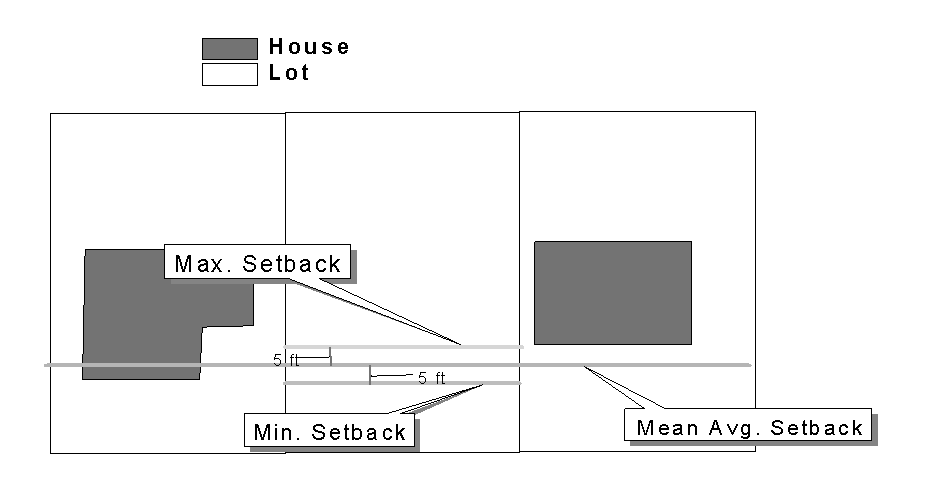
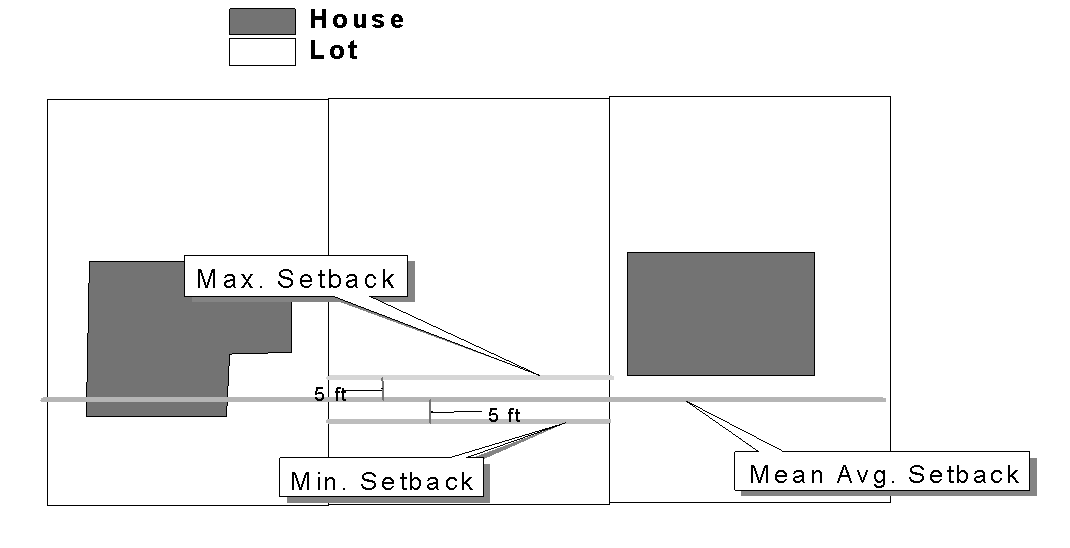
If the block frontage between two intersecting streets is improved with buildings on more than fifty (50) percent of the buildable lots on the block frontage, and new construction is proposed on a lot between two adjacent existing buildings on this block front, the building setback of the new construction shall not deviate more than five feet from the mean average setback line of the two adjoining improved lots and at least fifty (50) percent of the front façade shall be within five feet of the mean average setback line.
f.
Parking. As specified within Chapter 17.05 of this title.
g.
Signage. As specified within Chapter 17.06 of this title.
h.
Prohibited Uses. All uses not specifically permitted as principal, accessory or conditional uses.
5.
R-4 Single-Family Residential District.
a.
Intent. The intent and purpose of this district is to provide for the expansion and preservation of the integrity of medium density single-family residential areas within the community by preventing further intrusion of two-family, multi-family, and non-residential uses, including educational and hospital uses.
b.
Permitted Principal Uses.
i.
Single-family detached dwellings;
ii.
Community residences as defined by N.J.S.A. 40:55D-66.1;
c.
Permitted Accessory Uses.
i.
Home professional office and home occupations;
ii.
Private garages for automobile storage;
iii.
Storage sheds, greenhouses and similar structures;
iv.
Private swimming pools or other similar private recreational facilities;
v.
Fences and walls;
vi.
Decks.
d.
Conditional Uses. Subject to the additional standards and conditions as required by the Municipal Land Use Law and as specified herein:
i.
None.
e.
Bulk and Height Regulations. As specified in the bulk schedule of height, area and yard requirements.
i.
Building Line Setback.
(a)
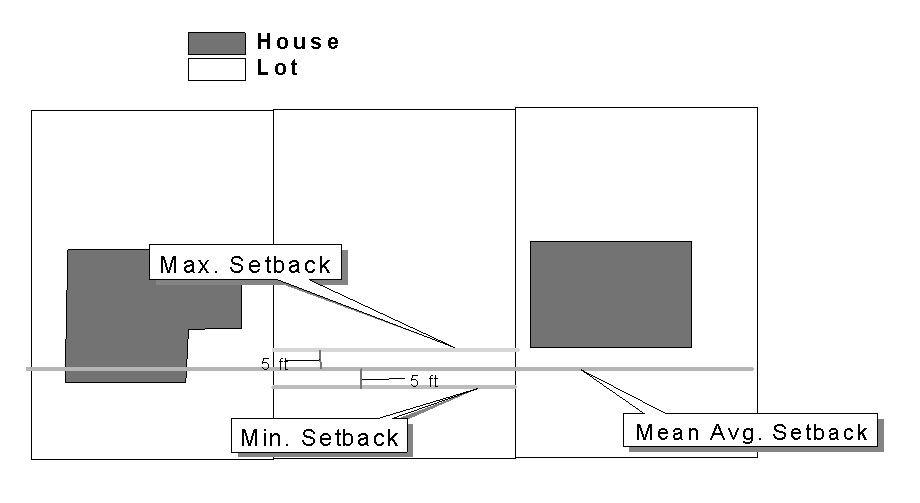
If the block frontage between two intersecting streets is improved with buildings on more than fifty (50) percent of the buildable lots on the block frontage, and new construction is proposed on a lot between two adjacent existing buildings on this block front, the building setback of the new construction shall not deviate more than five feet from the mean average setback line of the two adjoining improved lots and at least fifty (50) percent of the front façade shall be within five feet of the mean average setback line.
f.
Parking. As specified within Chapter 17.05 of this title.
g.
Signage. As specified within Chapter 17.06 of this title.
h.
Prohibited Uses. All uses not specifically permitted as principal, accessory or conditional uses.
6.
R-5A Single-Family and Two-Family Residential District.
a.
Intent. The intent and purpose of this district is to provide for the expansion and preservation of the integrity of medium density single-family and two-family residential areas within the community by prohibiting the further development of garden apartments and apartment buildings and the conversion of single-family and two-family dwellings into multi-family dwellings and preserving the character of the neighborhood.
b.
Permitted Principal Uses.
i.
Detached single-family dwellings;
ii.
Two-family dwellings;
iii.
Private non-profit schools;
iv.
Community residences as defined by N.J.S.A. 40:55D-66.1;
v.
The conversion of existing habitable floor area in a two-family house into one additional dwelling unit is permitted, provided that:
(a)
The existing legally permitted occupancy of the property is fourteen (14) persons or greater;
(b)
No increase in occupancy results from such conversion;
(c)
The existing habitable space is documented as having been legally constructed and occupied;
(d)
No new habitable space is legalized, e.g., the attic or basement is not newly legalized for occupancy as part of the conversion;
(e)
The property conforms to all parking requirements without the need for a variance or design waiver for the number of parking spaces or impervious coverage.
c.
Permitted Accessory Uses.
i.
Home professional offices and home occupations;
ii.
Private garages for automobile storage;
iii.
Storage sheds, greenhouses and similar structures;
iv.
Private swimming pools or other similar private recreational facilities;
v.
Fences and walls;
vi.
Decks.
d.
Conditional Uses. Subject to the additional standards and conditions as required by the Municipal Land Use Law and as specified herein:
i.
Places of Worship.
(a)
The minimum lot area shall be ten thousand (10,000) square feet, the minimum frontage shall be one hundred (100) feet, and maximum lot coverage calculation shall be fifty (50) percent;
(b)
Steeple height shall be limited to the maximum building height permitted in the zone for a single-family residence plus fifteen (15) feet;
(c)
Off-street parking shall be provided at the ratio of one off-street parking space for each five occupants who can occupy the structure during any one time period. The cumulative parking demand of all activity areas within the proposed facility or structure shall be met by on-site, off-street parking needs;
(d)
Driveways shall cross the sidewalk at right angles and shall be no more than twenty-five (25) feet wide at any point. Driveways must be at least ten (10) feet from any side lot line and fifty (50) feet from the intersection of the street lines. No more than two driveways shall be permitted for each one hundred (100) feet of street frontage;
(e)
A minimum buffer of ten (10) feet shall be provided between all parking areas and adjacent residential zoned or used property, with a continuous row of four feet high evergreens, placed on ten (10) foot centers planted within the required residential buffer;
(f)
The required setback dimensions shall comply with the setback requirements of the zone in which the site is situated.
ii.
Attached and Detached Single-family/Townhouses.
(a)
Bulk and Height Standards.
In townhouse development, if townhouse units are to be offered for individual fee simple sale, a subdivision for individual shall be permitted whereby individual lots within the townhouse development are less than the standards specified for each district, except that no individual townhouse lot shall be less than eighteen (18) feet in width;
(b)
No more than two adjacent dwellings units may be constructed with the same front wall setback. Front wall setbacks of dwelling units in a single building shall vary by a minimum of four feet from at least one adjacent dwelling.
(c)
All proposed townhouse projects must provide adequate space on site for an eclosed, screened and landscaped garbage and recycling area. Infill projects that face an existing public street where curbside garbage and recycling pick-ups are currently provided, may seek a waiver from this standard.
(d)
Open Area Standard. Each residential lot shall not less than fifty (50) percent open area.
(e)
The building line setback requirements shall be the same as required for the R-5A zone;
(f)
Off-street parking shall be provided in conformance with New Jersey Residential Site Improvement Standards (NJAC 5:21-4 et seq.);
(g)
A minimum five feet wide landscaped buffer shall be provided along all exterior property lines, supplemented with a six-foot high solid fence provided along all exterior property lines. The five feet wide landscaped buffer shall be planted with six feet high evergreens at planting, located on ten (10) feet centers, placed along the entire site perimeter;
(h)
Landscaping shall be provided on all areas not committed to buildings, walkways, parking areas, driveways or other accessory structures; all open areas shall be landscaped with plant materials;
(i)
All above ground and/or rooftop utility appurtenances shall provided with a screen equal to the height of the appurtenances;
(j)
One freestanding monument or planter style one-sided sign, maximum four feet high, maximum thirty-two (32) square feet area, set back a minimum of ten (10) feet from all property lines and driveways, shall be permitted;
(k)
The traffic impact for the immediate area as well as the increased traffic volume being created by the proposed use shall be analyzed in written form by a qualified traffic engineer and shall document a conclusion that the proposed use satisfies the following standards:
(1)
The additional traffic resulting from the proposed will not exceed a volume/capacity ratio of 0.8 on the adjacent streets;
(2)
The additional traffic resulting from the proposed use will not increase the peak volume by ten (10) percent or more; and
(3)
The additional traffic resulting from the proposed use will not reduce the level of service at significantly impact intersections to "F."
iii.
Corner stores with the following criteria:
(a)
Corner store must meet the following conditions:
(1)
Shall be located on a corner lot.
(2)
No more than two corner parcels of a block shall be utilized for this purpose.
(3)
Stores shall not sell alcohol, new psychoactive substances, cannabis or related paraphernalia such as vaporizers, smoking pipes, water pipes, and cannabis grinders.
(4)
Maximum non-residential gross floor area of three thousand (3,000) square feet.
(b)
Stores may sell tobacco and nicotine products provided they shall occupy less than five percent of the store's gross floor area and no such products are on display within five feet of an exterior window.
(c)
Permitted uses are as follows:
(1)
Mixed-use buildings containing permitted commercial uses on the ground floor, and with residential uses above;
(2)
Hardware and general merchandise stores;
(3)
Barbershops, salons, and nail salons;
(4)
Grocery stores, cafes, and delicatessens;
(5)
Excluding convenience stores.
(6)
Personal services businesses;
(7)
Retail clothing stores;
(8)
General and professional offices.
(d)
Permitted accessory uses:
(1)
Home professional offices and home occupations;
(2)
Private garages for automobile storage;
(3)
Storage sheds, greenhouses and similar structures;
(4)
Fences and walls;
(5)
Automated teller machines.
(e)
Signage:
(1)
Signage shall conform to the standards in 17.06 Signage Requirements for the C-1 zone, except that freestanding signs shall be prohibited.
iv.
Multi-family Developments.
(a)
Subject to the following conditions:
v.
Multi-family Developments near College Avenue Campus.
(a)
Subject to the following conditions:
e.
Bulk and Height Regulations.
i.
As specified in the bulk schedule of height, area and yard requirements;
ii.
Building Line Setback.
(a)
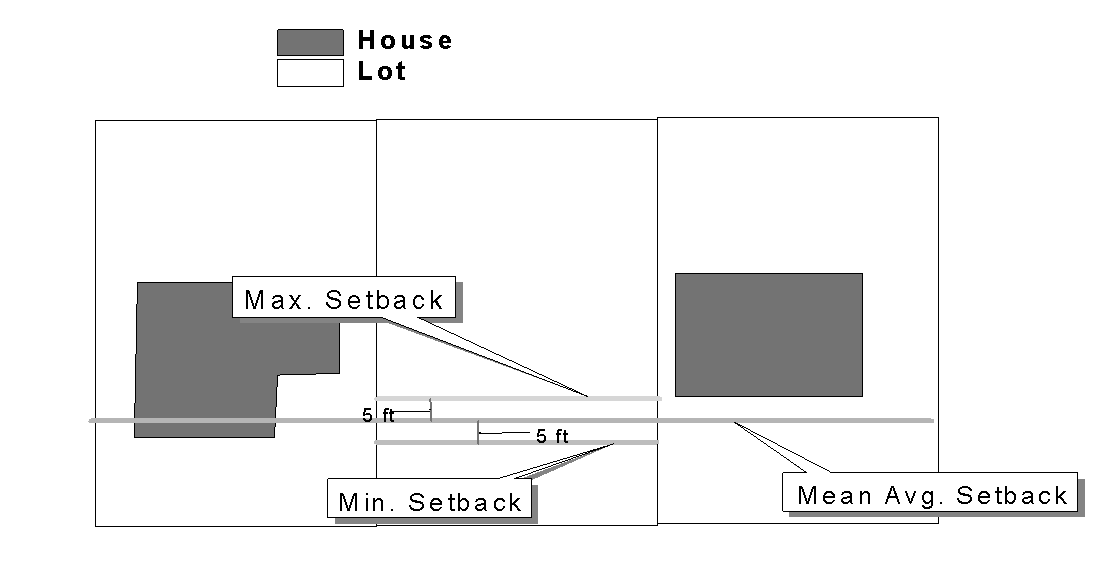
If the block frontage between two intersecting streets is improved with buildings on more than fifty (50) percent of the buildable lots on the block frontage, and new construction is proposed on a lot between two adjacent existing buildings on this block front, the building setback of the new construction shall not deviate more than five feet from the mean average setback line of the two adjoining improved lots and at least fifty (50) percent of the front façade shall be within five feet of the mean average setback line.
f.
Parking. As specified within Chapter 17.05 of this title.
g.
Signage. As specified within Chapter 17.06 of this title.
h.
Prohibited Uses. All uses not specifically permitted as principal, accessory or conditional uses.
7.
R-5B Single-Family and Two-Family Residential District.
a.
Intent. The intent and purpose of this district is to provide for the expansion and preservation of the integrity of high-density single-family and two-family residential areas within the community by prohibiting the further development of garden apartments and apartment buildings and the conversion of single-family and two-family dwellings into multi-family dwellings and preserving the character of the neighborhood.
b.
Permitted Principal Uses.
i.
Detached single-family dwellings;
ii.
Two-family dwellings;
iii.
Private nonprofit schools;
iv.
Community residences as defined by N.J.S.A. 40:55D-66.1.
c.
Permitted Accessory Uses.
i.
Home professional offices and home occupations;
ii.
Private garages for automobile storage;
iii.
Storage sheds, greenhouses and similar structures;
iv.
Private swimming pools or other similar private recreational facilities;
v.
Fences and walls;
vi.
Decks.
d.
Conditional Uses. Subject to the additional standards and conditions as required by the Municipal Land Use Law and as specified herein:
i.
Places of Worship.
(a)
The minimum lot area shall be ten thousand (10,000) square feet, the minimum frontage shall be one hundred (100) feet, and maximum lot coverage calculation shall be fifty (50) percent;
(b)
Steeple height shall be limited to the maximum building height permitted in the zone for a single-family residence plus fifteen (15) feet;
(c)
Off-street parking shall be provided at the ratio of one off-street parking space for each five occupants who can occupy the structure during any one time period. The cumulative parking demand of all activity areas within the proposed facility or structure shall be met by on-site, off-street parking needs;
(d)
Driveways shall cross the sidewalk at right angles and shall be no more than twenty-five (25) feet wide at any point. Driveways must be at least ten (10) feet from any side lot line and fifty (50) feet from the intersection of the street lines. No more than two driveways shall be permitted for each one hundred (100) feet of street frontage;
(e)
A minimum buffer of ten (10) feet shall be provided between all parking areas and adjacent residential zoned or used property, with a continuous row of four feet high evergreens, placed on ten (10) foot centers planted within the required residential buffer;
(f)
The required setback dimensions shall comply with the setback requirements of the zone in which the site is situated.
ii.
Attached Single-family/Townhouses.
(a)
Bulk and Height Standards.
(b)
In townhouse development, if townhouse units are to be offered for individual fee simple sale, a subdivision for individual shall be permitted whereby individual lots within the townhouse development are less than the standards specified for each district, except that no individual townhouse lot shall be less than eighteen (18) feet in width;
(c)
No more than two adjacent dwelling units may be constructed with the same front wall setback. Front wall setbacks of dwelling units in a single building shall vary by a minimum of four feet from at least one adjacent dwelling;
(d)
All proposed townhouse projects must provide adequate space on site for an enclosed, screened and landscaped garbage and recycling area. Infill projects that face an existing public street where curbside garbage and recycling pick-ups are currently provided, may seek a waiver from this standard;
(e)
Open space/open area standard shall be the same as required for the R-5A Zone;
(f)
The building line setback requirements shall be the same as required for the R-5A zone;
(g)
Off-street parking shall be provided in conformance with New Jersey Residential Site Improvement Standards (NJAC 5:21-4 et seq.);
(h)
A minimum ten (10) feet wide landscaped buffer shall be provided along all exterior property lines, supplemented with a six-foot high solid fence provided along all exterior property lines. The ten (10) feet wide landscaped buffer shall be planted with six feet high evergreens at planting, located on ten (10) feet centers, placed along the entire site perimeter;
(i)
Landscaping shall be provided on all areas not committed to buildings, walkways, parking areas, driveways or other accessory structures; all open areas shall be landscaped with plant materials;
(j)
All above ground and/or rooftop utility appurtenances shall be provided with a screen equal to the height of the appurtenances;
(k)
One freestanding monument or planter style one-sided sign, maximum four feet high, maximum thirty-two (32) square feet area, set back a minimum of ten (10) feet from all property lines and driveways, shall be permitted;
(l)
The traffic impact for the immediate area as well as the increased traffic volume being created by the proposed use shall be analyzed in written form by a qualified traffic engineer and shall document a conclusion that the proposed use satisfies the following standards:
(1)
The additional traffic resulting from the proposed use will not exceed a volume/capacity ratio of 0.8 on the adjacent streets;
(2)
The additional traffic resulting from the proposed use will not increase the peak volume by ten (10) percent or more; and
(3)
The additional traffic resulting from the proposed use will not reduce the level of service at significantly impact intersections to "F."
e.
Bulk and Height Regulations.
i.
As specified in the bulk schedule of height, area and yard requirements;
ii.
Building Line Setback.
(a)
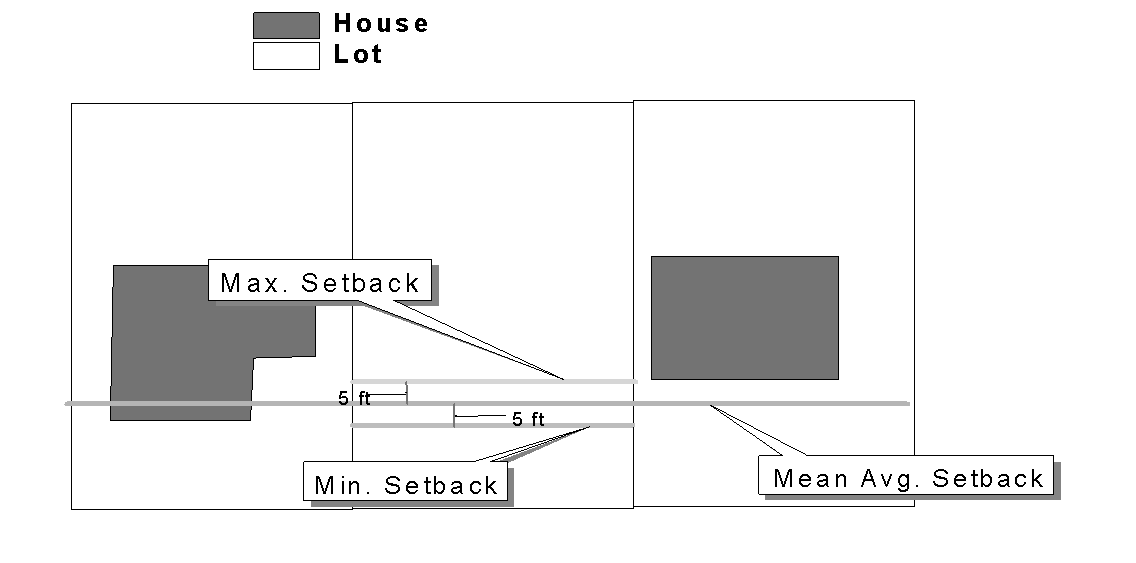
If the block frontage between two intersecting streets is improved with buildings on more than fifty (50) percent of the buildable lots on the block frontage, and new construction is proposed on a lot between two adjacent existing buildings on this block front, the building setback of the new construction shall not deviate more than five feet from the mean average setback line of the two adjoining improved lots and at least fifty (50) percent of the front façade shall be within five feet of the mean average setback line.
f.
Parking. As specified within Chapter 17.05 of this title.
g.
Signage. As specified within Chapter 17.06 of this title.
h.
Prohibited Uses. All uses not specifically permitted as principal, accessory or conditional uses.
8.
R-5C Single-Family and Two-Family Residential District (Lincoln Gardens).
a.
Intent. The intent and purpose of this district is to provide for the expansion and preservation of the integrity of existing unique residential areas within the community by encouraging the rehabilitation of dilapidated structures, and the redevelopment of underutilized buildings and land for residential uses. Non-residential uses are not to be permitted in this district and are to be replaced with residential uses. Further, the intent and purpose of this district is to provide for the expansion and preservation of the integrity of medium and high density single-family and two-family residential areas within the community by prohibiting the further development of garden apartments and apartment buildings and conversion of single-family and two-family dwellings into multi-family dwellings and preserving the character of the neighborhood.
b.
Permitted Principal Uses.
i.
Detached single-family dwellings;
ii.
Two-family dwellings;
iii.
Community residences as defined by N.J.S.A. 40:55D-66.1.
c.
Permitted Accessory Uses.
i.
Home professional offices and home occupations;
ii.
Private garages for automobile storage;
iii.
Storage sheds, greenhouses and similar structures;
iv.
Private swimming pools and tennis courts or other similar private, non-commercial recreational facilities;
v.
Fences and walls;
vi.
Decks.
d.
Conditional Uses. Subject to the additional standards and conditions as required by the Municipal Land Use Law and as specified herein:
i.
Attached Single-family/Townhouses.
(a)
Bulk and Height Standards.
(b)
In townhouse development, if townhouse units are to be offered for individual fee simple sale, a subdivision for individual shall be permitted whereby individual lots within the townhouse development are less than the standards specified for each district, except that no individual townhouse lot shall be less than eighteen (18) feet in width;
(c)
No more than two adjacent dwelling units may be constructed with the same front wall setback. Front wall setbacks of dwelling units in a single building shall vary by a minimum of four feet from at least one adjacent dwelling;
(d)
All proposed townhouse projects must provide adequate space on site for an enclosed, screened and landscaped garbage and recycling area. Infill projects that face an existing public street where curbside garbage and recycling pick-ups are currently provided, may seek a waiver from this standard;
(e)
Open space/open area standard shall be the same as required for the R-5A zone;
(f)
The building line setback requirements shall be the same as required for the R-5A zone;
(g)
Off-street parking shall be provided in conformance with New Jersey Residential Site Improvement Standards (NJAC 5:21-4 et seq.);
(h)
A minimum ten (10) feet wide landscaped buffer shall be provided along all exterior property lines, supplemented with a six-foot high solid fence provided along all exterior property lines. The ten (10) feet wide landscaped buffer shall be planted with six feet high evergreens at planting, located on ten (10) feet centers, placed along the entire site perimeter;
(i)
Landscaping shall be provided on all areas not committed to buildings, walkways, parking areas, driveways or other accessory structures; all open areas shall be landscaped with plant materials;
(j)
All above ground and/or rooftop utility appurtenances shall be provided with a screen equal to the height of the appurtenances;
(k)
One freestanding monument or planter style one-sided sign, maximum four feet high, maximum thirty-two (32) square feet area, set back a minimum of ten (10) feet from all property lines and driveways, shall be permitted;
(l)
The traffic impact for the immediate area as well as the increased traffic volume being created by the proposed use shall be analyzed in written form by a qualified traffic engineer and shall document a conclusion that the proposed use satisfies the following standards:
(1)
The additional traffic resulting from the proposed will not exceed a volume/capacity ratio of 0.8 on the adjacent streets;
(2)
The additional traffic resulting from the proposed use will not increase the peak volume by ten (10) percent or more; and
(3)
The additional traffic resulting from the proposed use will not reduce the level of service at significantly impact intersections to "F."
ii.
Places of Worship.
(a)
The minimum lot area shall be ten thousand (10,000) square feet, the minimum frontage shall be one hundred (100) feet, and maximum lot coverage calculation shall be fifty (50) percent;
(b)
Steeple height shall be limited to the maximum building height permitted in the zone for a single-family residence plus fifteen (15) feet;
(c)
Off-street parking shall be provided at the ratio of one off-street parking space for each five occupants who can occupy the structure during any one time period. The cumulative parking demand of all activity areas within the proposed facility or structure shall be met by on-site, off-street parking needs;
(d)
Driveways shall cross the sidewalk at right angles and shall be no more than twenty-five (25) feet wide at any point. Driveways must be at least ten (10) feet from any side lot line and fifty (50) feet from the intersection of the street lines. No more than two driveways shall be permitted for each one hundred (100) feet of street frontage;
(e)
A minimum buffer of ten (10) feet shall be provided between all parking areas and adjacent residential zoned or used property, with a continuous row of four feet high evergreens, placed on ten (10) foot centers planted within the required residential buffer;
(f)
The required setback dimensions shall comply with the setback requirements of the zone in which the site is situated.
e.
Bulk and Height Regulations.
i.
As specified in the bulk schedule of height, area and yard requirements;
ii.
Building Line Setback.
(a)
If the block frontage between two intersecting streets is improved with buildings on more than fifty (50) percent of the buildable lots on the block frontage, and new construction is proposed on a lot between two adjacent existing buildings on this block front, the building setback of the new construction shall not deviate more than five feet from the mean average setback line of the two adjoining improved lots and at least fifty (50) percent of the front façade shall be within five feet of the mean average setback line.
f.
Parking. As specified within Chapter 17.05 of this title.
g.
Signage. As specified within Chapter 17.06 of this title.
h.
Prohibited Uses. All uses not specifically permitted as principal, accessory or conditional uses.
9.
R-6 Multi-Family Residential District.
a.
Intent. The intent ad purpose of this district is to provide for the expansion and preservation of the integrity of high density single-family, two-family and medium density multi-family residential areas within the community by encouraging the conversion of non-permitted uses to permitted uses within this zone to eliminate conflicts between incompatible uses and preserving the character of conforming properties. The purpose of this district is to function as a transition between commercial areas and less intensive single-family and two-family residential uses. Commercial and other non-residential uses are not to be combined in this district and are to be replaced with multi-family uses.
b.
Permitted Principal Uses.
i.
Single-family dwellings;
ii.
Two-family dwellings;
iii.
Townhouse dwellings;
iv.
Low-rise multi-family;
v.
Private non-profit schools;
vi.
Community residences as defined by N.J.S.A. 40:55D-66.1.
c.
Permitted Accessory Uses.
i.
Home professional offices and home occupations;
ii.
Private garages for automobile storage;
iii.
Storage sheds, greenhouses and similar structures;
iv.
Private swimming pools or other similar recreational facilities;
v.
Fences and walls;
vi.
Decks.
d.
Conditional Uses. Subject to the additional standards and conditions as required by the Municipal Land Use Law and as specified herein:
i.
Quasi-Public, Nonprofit Clubs and Organizations.
(a)
No such use shall be established within two hundred (200) feet of a public or nonprofit school, library, or place of worship except for those uses directly associated or affiliated with any nonprofit school or place of worship.
(b)
Each such use shall provide an access driveway to provide access to a side or rear yard off-street parking area;
(c)
Off-street parking space shall be provided in side and rear yards only, at a rate of one space for each one hundred (100) square feet of gross floor area, or one space per three seats, whichever is greater;
(d)
All off-street parking provided within thirty (30) feet of any adjacent residential property line shall be protected from adverse impact upon adjacent residential properties through a visual screen of evergreen planting area not less than six feet on center, six feet high at planting, with buffer areas designed in conformance with this title, supplemented by six feet high solid fence around the perimeter of all off-street parking areas, to be placed along all property lines adjoining any residential zone or residential use.
(e)
The proposed use is a bona fide nonprofit organization operated solely for the recreation and enjoyment of the members of said organization;
(f)
The property proposed to be occupied by such use shall have a minimum lot area of twenty thousand (20,000) square feet;
(g)
The minimum bulk requirements shall include:
(h)
The traffic impact for the immediate area as well as the increased traffic volume being created by the proposed use shall be analyzed in written form by a qualified Traffic Engineer and shall document a conclusion that the proposed use satisfies the following standards:
(1)
The additional traffic resulting from the proposed use will not exceed a volume/capacity of 0.8 on the adjacent streets;
(2)
The additional traffic resulting from the proposed use will not increase the peak volume by ten (10) percent or more; and
(3)
The additional traffic resulting from the proposed use will not reduce the level of service at significantly impacted intersections to "F."
ii.
Boarding Houses and Rooming Houses.
(a)
Such uses shall be conditional provided that not more than fifty (50) percent of the total net floor area of the building is used for boarding/rooming unit proposes;
(b)
At least one off-street parking space per boarding/rooming unit shall be provided on the same lot that the boarding unit is located;
(c)
There shall be no less than seventy (70) square feet of floor area per individual rooming unit;
(d)
An access driveway shall be provided permitting vehicular access to a rear and/or side yard off-street parking area;
(e)
No more than one rooming unit per one thousand (1,000) square feet of lot area shall be permitted.
iii.
Places of Worship.
(a)
The minimum lot area shall be ten thousand (10,000) square feet, the minimum frontage shall be one hundred (100) feet, and maximum lot coverage calculation shall be fifty (50) percent;
(b)
Steeple height shall be limited to the maximum building height permitted in the zone for a single-family residence plus fifteen (15) feet;
(c)
Off-street parking shall be provided at the ratio of one off-street parking space for each five occupants who can occupy the structure during any one time period. The cumulative parking demand of all activity areas within the proposed facility or structure shall be met by on-site, off-street parking needs;
(d)
Driveways shall cross the sidewalk at right angles and shall be no more than twenty-five (25) feet wide at any point. Driveways must be at least ten (10) feet from any side lot line and fifty (50) feet from the intersection of the street lines. No more than two driveways shall be permitted for each one hundred (100) feet of street frontage;
(e)
A minimum buffer of ten (10) feet shall be provided between all parking areas and adjacent residential zoned or used property, with a continuous row of four feet high evergreens, placed on ten (10) foot centers planted within the required residential buffer;
(f)
The required setback dimensions shall comply with the setback requirements of the zone in which the site is situated.
e.
Bulk and Height Regulations. As specified in the bulk schedule of height, area and yard requirements. Maximum density of twenty (20) dwelling units per acre.
f.
Design Regulations. New multi-family residential development should retain the scale and proportion of the surrounding residential development. A variety of building types should be provided and building façades and setbacks should be provided to promote architectural interests.
g.
Parking. As specified within Chapter 17.05 of this title.
h.
Signage. As specified within Chapter 17.06 of this title.
i.
Prohibited Uses. All uses not specifically permitted as principal, accessory or conditional uses.
10.
R-7 Apartment Residential District.
a.
Intent. The intent and purpose of this district is to provide for the expansion and preservation of the integrity of high-density mid-rise and high-rise apartment residential areas.
b.
Permitted Principal Uses.
i.
High-rise apartment buildings;
ii.
Mid-rise apartment buildings;
iii.
Community residences as defined by N.J.S.A. 40:55D-66.1.
iv.
Single-family homes in existence on January 1, 2023, subject to the zoning standards of the R-3 single-family residential district.
c.
Permitted Accessory Uses.
i.
Home occupations;
ii.
Private garages for automobiles;
iii.
Private swimming pools and other private recreational facilities;
iv.
Fences and walls.
d.
Conditional Uses.
i.
None.
e.
Bulk and Height Regulations. As specified in the bulk schedule of height, area and yard requirements.
f.
Parking. As specified within Chapter 17.05 of this title.
g.
Signage. As specified within Chapter 17.06 of this title.
h.
Prohibited Uses. All uses not specifically permitted as principal, accessory or conditional uses.
D.
Commercial Zones. Development controls, limitations and regulations are hereby established for the following zones.
1.
C-1 Neighborhood Commercial District.
a.
Intent. The intent and purpose of these districts is to provide for the expansion and preserve the integrity of neighborhood oriented commercial uses and mixed multi-family residential uses. The commercial uses should offer convenience goods and services whereas the mixed multi-family residential uses should consist of apartments over the commercial uses and freestanding two-family dwellings or apartment buildings.
b.
Permitted Principal Uses.
i.
One-family dwellings subject to the standards and conditions of the R-5A residential district.
ii.
Two-family dwellings subject to the standards and conditions of the R-5A residential district;
iii.
Hardware and general merchandise store;
iv.
Grocery stores and delicatessen;
v.
Restaurants;
vi.
Packaged goods stores;
vii.
Personal services businesses;
viii.
Retail clothing stores;
ix.
Mixed-use buildings containing permitted commercial uses on the ground floor, and with residential uses above;
x.
General offices.
xi.
Multi-family residential developments.
c.
Permitted Accessory Uses.
i.
Home professional offices and home occupations;
ii.
Private garages for automobile storage;
iii.
Storage sheds, greenhouses and similar structures;
iv.
Fences and walls.
d.
Conditional Uses. Subject to the additional standards and conditions as specified herein:
i.
Quasi-public, Non-profit Clubs and Organizations.
(a)
No such use shall be established within two hundred (200) feet of a public or nonprofit school, library, or church except for those uses directly associated or affiliated with any nonprofit school or church.
(b)
Each such use shall provide an access driveway to provide access to a side or rear yard off-street parking area.
(c)
Off-street parking space shall be provided in side and rear yards only, at the raft [rate] of one space for each one hundred (100) square feet of gross floor area, or one space per three seats, which ever is greater.
(d)
All off-street parking provided within thirty (30) feet of any property line shall be protected from adverse impact upon adjacent residential properties through a visual screen of plantings not less than four feet on center, six feet high at planting, with buffer areas designed in conformance with this title.
ii.
Mixed-Use and Residential Multi-Family Developments.
(a)
Subject to the following conditions:
e.
Bulk and Height Regulations. As specified in the bulk schedule at the end of this section and elsewhere within Section 17.04.050 of this title.
f.
Design Regulations. Commercial uses are to occupy the first floor and residential units are to be located above commercial units.
g.
Parking.
i.
Off-street parking space, together with appropriate access thereto, shall be provided on the same lot as the building it is intended to serve in accordance with the standards and conditions of Chapter 17.05 of this title;
ii.
Off-street parking may be located in the side and/or rear yards; provided, however, that no parking space may be located nearer than three feet to any side or rear lot line, nor shall the end of a parking space be located nearer than five feet to any street line, and further provided that complete building perimeter parking is prohibited;
iii.
In cases where there exists legal nonconforming lots and/or nonconforming structures that have no parking or insufficient off-street parking to meet the zoning standard for parking for the use(s) proposed for the lot or structure and it can be documented to the administrative officer that:
(a)
Additional parking spaces cannot be reasonably accommodated on the subject lot;
(b)
Additional parking spaces cannot be reasonably accommodated at an off-site location within three hundred (300) feet of the property; and
(c)
The proposed use(s) do not create additional parking demand compared to the current or previous use of the lot or structure.
The administrative officer may modify or waive the parking requirements of those parking requirements specified elsewhere within this title, provided that the proposed use is a permitted principal use within the subject zoning district.
h.
Signage. As specified within Chapter 17.06 of this title.
i.
Other Requirements.
i.
Storage. All materials and equipment shall be stored in completely enclosed buildings or shall otherwise be screened by walls, fences, and landscaping adequate to screen such materials and equipment from outside the boundaries of the lot. The height of the materials stored shall not exceed the height of the screening.
2.
C-2A Community Commercial District.
a.
Intent. The intent and purpose of this district is to provide for the expansion and preserve of the integrity of community oriented commercial uses and the mixed multi-family residential uses where appropriate. The commercial uses should offer convenience goods as well as household goods and both personal and local small business services whereas the mixed multi-family residential uses should consist of apartments over the commercial uses and freestanding two-family dwellings and apartment buildings.
b.
Permitted Principal Uses.
i.
One family dwellings subject to the standards and conditions of the R-5A residential district;
ii.
Two-family dwellings subject to the standards and conditions of the R-5A residential district;
iii.
Banks and financial institutions;
iv.
Supermarkets and grocery stores;
v.
Medical clinics;
vi.
Professional and general offices;
vii.
Printing and publishing businesses;
viii.
Graphics and reproduction services;
ix.
Art galleries and music studios and indoor theaters;
x.
Retail stores;
xi.
Bakeries and delicatessens;
xii.
Packaged goods;
xiii.
Convenience stores;
xiv.
Restaurants;
xv.
Taverns;
xvi.
Personal service businesses;
xvii.
Employment agencies with transportation;
xviii.
Transportation and communication offices;
xix.
Mixed-use buildings with ground floor containing permitted commercial uses and with residential uses above.
c.
Permitted Accessory Uses.
i.
Uses and buildings customary and incidental to a principal permitted use;
ii.
Home professional offices and home occupations;
iii.
Private garages for automobile storage;
iv.
Storage sheds, greenhouses and similar structures;
v.
Fences and walls.
d.
Conditional Uses. Subject to the additional standards and conditions as specified herein:
i.
Quasi-public, Non-profit Clubs and Organizations.
(a)
No such use shall be established within two hundred (200) feet of a public or nonprofit school, library, or church except for those uses directly associated or affiliated with any nonprofit school or church.
(b)
Each such use shall provide an access driveway to provide access to a side or rear yard off-street parking area.
(c)
Off-street parking space shall be provided in side and rear yards only, at the raft [rate] of one space for each one hundred (100) square feet of gross floor area, or one space per three seats, which ever is greater.
(d)
All off-street parking provided within thirty (30) feet of any property line shall be protected from adverse impact upon adjacent residential properties through a visual screen of plantings not less than four feet on center, six feet high at planting, with buffer areas designed in conformance with this title.
ii.
Multi-family—Low-rise apartments.
(a)
The minimum lot size shall be one acre;
(b)
No less than four separate dwelling units per structure shall be permitted;
(c)
The maximum calculated density shall not exceed sixteen (16) dwelling units per acre;
(d)
The maximum height of a principal building shall not exceed thirty-five (35) feet, and a maximum of three stories shall be used for living area purposes;
(e)
Off-street parking shall be provided in conformance with the New Jersey Residential Site Improvement Standards (NJAC 5:21-4 et seq.).
(f)
A minimum twenty (20) feet wide landscaped buffer shall be provided along all exterior property lines, supplemented with a six-foot high solid fence provided along all exterior property lines, together with a ten (10) feet wide planting area within the 25-foot wide buffer, which shall be planted with six feet high evergreens of planting, located on ten (10) feet centers;
(g)
Landscaping shall be provided on all areas not committed to buildings, walkways, parking areas, driveways or other accessory structures. All open areas shall be landscaped with plant materials;
(h)
All refuse/recycling storage areas shall be situated so as to maximize distance from all on-site and off-site dwelling units, and shall be provided with a six-foot high masonry screen on three sides with a six-foot high access gate, with six feet high evergreens planted on ten (10) feet centers on three sides;
(i)
All aboveground and/or rooftop utility appurtenances shall be provided with a screen equal to the height of the appurtenances;
(j)
One freestanding monument or planter style one-sided sign, maximum four feet high, maximum thirty-two (32) square feet area, setback a minimum of ten (10) feet from all property lines and driveways, shall be permitted;
(k)
The traffic impact for the immediate area as well as the increased traffic volume being created by the proposed use shall be analyzed in written form by a qualified traffic engineer and shall document a conclusion that the proposed use satisfies the following standards:
(1)
The additional traffic resulting from the proposed use will not exceed a volume/capacity ratio of 0.8 on the adjacent streets;
(2)
The additional traffic resulting from the proposed use will not increase the peak volume by ten (10) percent or more; and
(3)
The additional traffic resulting from the proposed use will not reduce the level of service at significantly impacted intersections to "F."
iii.
Gasoline Stations.
(a)
All service stations shall be so designated and all gasoline pumps shall be so placed as to provide for all services on the premises and not within the public right-of-way, and no gasoline pump shall be placed closer to any property line than fifteen (15) feet. No gasoline pump and/or other service equipment or entrances and exits shall be placed closer to any residential district line than thirty (30) feet.
(b)
The maximum width of driveways shall be thirty (30) feet and minimum distance between driveways on any one site shall be twelve (12) feet.
(c)
The exact location of all buildings and structures, the number of gasoline tanks to be installed, the dimensions and capacity of each tank, the depth at which the tank will be placed below ground, the number of pumps to be installed, the type of structure and accessory building to be constructed, the number of automobiles to be garaged, and a written description of nature and extent of the proposed uses shall be submitted.
(d)
The proposed use shall be located on a lot of not less than ten thousand (10,000) square feet.
(e)
No vehicle shall be permitted to be standing or parked on the premise other than those used by the employees in the indirect or direct operation of the establishment and customer's vehicles awaiting repair.
(f)
Any repair of motor vehicles shall be performed in a fully enclosed building. No parts or partially dismantled motor vehicles may be stored out-of-doors.
(g)
Driveways shall be at least fifteen (15) feet from any side lot line, and twenty-five (25) feet from the intersection of street lines and property liens as measured at the closest point of the access driveway to the intersecting property line. Not more than two driveways shall be permitted for each one hundred (100) feet of street frontage.
(h)
All outdoor vending machines are prohibited, exclusive of two soft drink machines and two (2) newspaper vending machines which are accessory uses provided that they are located no further than three feet from the principal building.
(i)
Outside storage of oil cans, antifreeze and similar products may be displayed on the respective islands if provided for in a suitable metal stand or rack; however, bulk storage display or sale of said petroleum or automotive products, cases of soda or soft drinks, etc. is prohibited.
(j)
The exterior display of new or used tires shall be restricted to single tires displayed on the pump and building islands only and shall be prohibited from the vehicular circulation area;
(k)
An unloading area, for delivery vehicles to the underground storage tanks, shall be identified. This unloading area shall be complete on-site and off-site, and shall not obstruct any on-site circulation aisle.
(l)
The traffic impact for the immediate area as well as the increased traffic volume being created by the proposed use shall be analyzed in written form by a qualified traffic engineer and shall document a conclusion that the proposed use satisfies the following standards:
(1)
The additional traffic resulting from the proposed use will not exceed a volume/capacity ratio of 0.8 on the adjacent streets;
(2)
The additional traffic resulting from the proposed use will not increase the peak volume by ten (10) percent or more; and
(3)
The additional traffic resulting from the proposed use will not reduce the level of service at significantly impacted intersections to "F."
(m)
The applicant shall submit a site circulation plan which graphically portrays the ability of a SU-30 design vehicle (for municipal fire apparatus) and the largest anticipated delivery vehicle to safely maneuver throughout the site.
iv.
Laundromats.
(a)
The minimum building area devoted to the laundromat use shall be at least three thousand (3,000) square feet.
(b)
One off-street parking space shall be provided per each two hundred fifty (250) square feet of floor area, or part thereof.
(c)
No chemicals shall be stored or utilized on the premises which cannot be purchased at a typical supermarket.
v.
Check Cashing Establishments.
(a)
Each check cashing establishment shall annually submit documentation of compliance with all applicable state laws and regulations;
(b)
Each check cashing establishment shall document compliance with all required state locational and special regulations;
(c)
Each check cashing establishment shall submit documentation for the provision of a minimum of one professional security personnel contracted to be on-site during all hours of operation;
(d)
The days and hours of operation shall be detailed;
(e)
One off-street parking space shall be provided for each staff member at maximum shift size.
e.
Bulk and Height Regulations. As specified in the bulk schedule at the end of this section and elsewhere within Section 17.04.050 of this title.
f.
Design Regulations. Commercial uses are to occupy the first floor and residential units are to be located above commercial units.
g.
Parking.
i.
Off-street parking space, together with appropriate access thereto, shall be provided on the same lot as the building it is intended to serve in accordance with the standards and conditions of Chapter 17.05 of this title.
ii.
Off-street parking may be located in the side and/or rear yards; provided, however, that no parking space may be located nearer than three feet to any side or rear lot line, nor shall the end of a parking space be located nearer than five feet to any street line, and further provided that complete building perimeter parking is prohibited.
iii.
In cases where there exists legal nonconforming lots and/or nonconforming structures that have no parking or deficient parking to meet the zoning standard for parking for the proposed use(s) proposed for the lot or structure and it can be documented to the administrative officer that:
(a)
Additional parking spaces cannot be reasonably accommodated on the subject lot;
(b)
Additional parking spaces cannot be reasonably accommodated at an off-site location within three hundred (300) feet of the property; and
(c)
The proposed use(s) do not create additional parking demand compared to the current or previous use of the lot or structure.
The administrative officer may waive the above parking requirements or those parking requirements specified elsewhere within this title, provided that the proposed use is a permitted principal use within the subject zoning district.
h.
Signage. As specified within Chapter 17.06 of this title.
i.
Other Requirements.
i.
Storage. All materials and equipment shall be stored in completely enclosed buildings or shall otherwise be screened by walls, fences, and landscaping adequate to screen such materials and equipment from outside the boundaries of the lot. The height of the materials stored shall not exceed the height of the screening.
3.
C-2B Community Commercial District.
a.
Intent. The intent and purpose of this district is to provide for the expansion and preserve of the integrity of community oriented commercial uses and the mixed multi-family residential uses where appropriate. The commercial uses should offer convenience goods as well as household goods and both personal and local small business services whereas the mixed multi-family residential uses should consist of apartments over the commercial uses and freestanding two-family dwellings and apartment buildings.
b.
Permitted Principal Uses.
i.
One family dwellings subject to the standards and conditions of the R-5A residential district;
ii.
Two-family dwellings subject to the standards and conditions of the R-5A residential district;
iii.
Banks and financial institutions;
iv.
Supermarkets and grocery stores;
v.
Medical clinics;
vi.
Professional and general offices;
vii.
Printing and publishing businesses;
viii.
Graphics and reproduction services;
ix.
Art galleries and music studios and indoor theaters;
x.
Retail stores;
xi.
Bakeries and delicatessens;
xii.
Packaged goods;
xiii.
Convenience stores;
xiv.
Restaurants;
xv.
Taverns;
xvi.
Personal service businesses;
xvii.
Employment agencies;
xviii.
Transportation and communication offices;
xix.
Mixed-use buildings with ground floor containing permitted commercial uses and with residential uses above.
c.
Permitted Accessory Uses.
i.
Home professional offices and home occupations;
ii.
Private garages for automobile use;
iii.
Storage sheds, greenhouses and similar structures;
iv.
Fences and walls;
v.
Uses and buildings customary and incidental to a principal permitted use.
d.
Conditional Uses.
i.
Quasi-public, Non-profit Clubs and Organizations;
(a)
No such use shall be established within two hundred (200) feet of a public or nonprofit school, library, or church except for those uses directly associated or affiliated with any nonprofit school or church.
(b)
Each such use shall provide an access driveway to provide access to a side or rear yard off-street parking area.
(c)
Off-street parking space shall be provided in side and rear yards only, at the raft [rate] of one space for each one hundred (100) square feet of gross floor area, or one space per three seats, which ever is greater.
(d)
All off-street parking provided within thirty (30) feet of any property line shall be protected from adverse impact upon adjacent residential properties through a visual screen of plantings not less than four feet on center, six feet high at planting, with buffer areas designed in conformance with this title.
ii.
Multi-family—Low-rise Apartments.
(a)
The minimum lot size shall be one acre;
(b)
No less than four separate dwelling units per structure shall be permitted;
(c)
The maximum calculated density shall not exceed sixteen (16) dwelling units per acre;
(d)
The maximum height of a principal building shall not exceed thirty-five (35) feet, and a maximum of three stories shall be used for living area purposes;
(e)
Off-street parking shall be provided in conformance with the New Jersey Residential Site Improvement Standards (NJAC 5:21-4 et seq.).
(f)
A minimum twenty (20) feet wide landscaped buffer shall be provided along all exterior property lines, supplemented with a six-foot high solid fence provided along all exterior property lines, together with a ten (10) feet wide planting area within the 25-foot wide buffer, which shall be planted with six feet high evergreens of planting, located on ten (10) feet centers;
(g)
Landscaping shall be provided on all areas not committed to buildings, walkways, parking areas, driveways or other accessory structures. All open areas shall be landscaped with plant materials;
(h)
All refuse/recycling storage areas shall be situated so as to maximize distance from all on-site and off-site dwelling units, and shall be provided with a six feet high masonry screen on three sides with a six-foot high access gate, with six feet high evergreens planted on ten (10) feet centers on three sides;
(i)
All aboveground and/or rooftop utility appurtenances shall be provided with a screen equal to the height of the appurtenances;
(j)
One freestanding monument or planter style one-sided sign, maximum four feet high, maximum thirty-two (32) square feet area, setback a minimum of ten (10) feet from all property lines and driveways, shall be permitted;
(k)
The traffic impact for the immediate area as well as the increased traffic volume being created by the proposed use shall be analyzed in written form by a qualified traffic engineer and shall document a conclusion that the proposed use satisfies the following standards:
(1)
The additional traffic resulting from the proposed use will not exceed a volume/capacity ratio of 0.8 on the adjacent streets;
(2)
The additional traffic resulting from the proposed use will not increase the peak volume by ten (10) percent or more; and
(3)
The additional traffic resulting from the proposed use will not reduce the level of service at significantly impacted intersections to "F."
iii.
Gasoline Service Stations.
(a)
All service stations shall be so designated and all gasoline pumps shall be so placed as to provide for all services on the premises and not within the public right-of-way, and no gasoline pump shall be placed closer to any property line than fifteen (15) feet. No gasoline pump and/or other service equipment or entrances and exits shall be placed closer to any residential district line than thirty (30) feet.
(b)
The maximum width of driveways shall be thirty (30) feet and minimum distance between driveways on any one site shall be twelve (12) feet.
(c)
The exact location of all buildings and structures, the number of gasoline tanks to be installed, the dimensions and capacity of each tank, the depth at which the tank will be placed below ground, the number of pumps to be installed, the type of structure and accessory building to be constructed, the number of automobiles to be garaged, and nature and extent of the proposed uses shall be submitted.
(d)
The proposed use shall be located on a lot of not less than ten thousand (10,000) square feet.
(e)
No vehicle shall be permitted to be standing or parked on the premise other than those used by the employees in the indirect or direct operation of the establishment and customer's vehicles awaiting repair.
(f)
Any repair of motor vehicles shall be performed in a fully enclosed building. No parts or partially dismantled motor vehicles may be stored out-of-doors.
(g)
Driveways shall be at least fifteen (15) feet from any side lot line, and twenty-five (25) feet from the intersection of street lines and property liens as measured at the closest point of the access driveway to the intersecting property line. Not more than two driveways shall be permitted for each one hundred (100) feet of street frontage.
(h)
All outdoor vending machines are prohibited, exclusive of two soft drink machines and two newspaper vending machines which are accessory uses provided that they are located no further than three feet from the principal building.
(i)
Outside storage of oil cans, antifreeze and similar products may be displayed on the respective islands if provided for in a suitable metal stand or rack; however, bulk storage display or sale of said petroleum or automotive products, cases of soda or soft drinks, etc. is prohibited.
(j)
The exterior display of new or used tires shall be restricted to single tires displayed on the pump and building islands only and shall be prohibited from the vehicular circulation area.
(k)
An unloading area, for delivery vehicles to the underground storage tanks, shall be identified. This unloading area shall be complete on-site and off-site, and shall not obstruct any on-site circulation aisle.
(l)
The traffic impact for the immediate area as well as the increased traffic volume being created by the proposed use shall be analyzed in written form by a qualified traffic engineer and shall document a conclusion that the proposed use satisfies the following standards:
(1)
The additional traffic resulting from the proposed use will not exceed a volume/capacity ratio of 0.8 on the adjacent streets;
(2)
The additional traffic resulting from the proposed use will not increase the peak volume by ten (10) percent or more; and
(3)
The additional traffic resulting from the proposed use will not reduce the level of service at significantly impacted intersections to "F".
(m)
The applicant shall submit a site circulation plan which graphically portrays the ability of a SU-30 design vehicle (for municipal fire apparatus) and the largest anticipated delivery vehicle to safely maneuver throughout the site.
iv.
Laundromats.
(a)
The minimum building area devoted to the laundromat use must be at least three thousand (3,000) square feet.
(b)
One parking space must be provided per each two hundred fifty (250) square feet of floor area.
v.
Auto Repair Shops.
(a)
All storage areas, refuse storage facilities, pits, lifts and working areas shall be within a building. All lubrications, repair or similar activities shall be performed in an enclosed building, and no dismantled parts shall be placed outside.
(b)
Minimum lot size — Ten thousand (10,000) square feet.
vi.
Mixed-use commercial with residential above with frontage on Route 27.
(a)
Minimum lot area of five thousand (5,000) square feet.
(b)
Commercial uses only as permitted in the C-2B.
(c)
Maximum height of forty-five (45) feet.
(d)
If lot area less than ten thousand (10,000) square feet, a maximum FAR of 2.4:1
(e)
If lot area not less than ten thousand (10,000) square feet a maximum FAR of 3.0:1
(f)
Parking requirement of RSIS requirement multiplied by 0.8
(g)
Must have frontage on Route 27
e.
Bulk and Height Regulations. As specified in the bulk schedule at the end of this section and elsewhere within Section 17.04.050 of this title.
f.
Design Regulations. Commercial uses are to occupy the first floor ad residential units are to be located above commercial units.
g.
Parking.
i.
Off-street parking together with appropriate access thereto, shall be provided on the same lot as the building it is intended to serve and is required for each use in accordance with the standards and conditions of Chapter 17.05 of this title;
ii.
Off-street parking may be located in the side and/or rear yards; provided, however, that no parking space may be located nearer than three feet to any side or rear lot line, nor shall the end of a parking space be located nearer than five feet to any street line, and further provided that complete building perimeter parking is prohibited;
iii.
In cases where there exists legal nonconforming lots and/or nonconforming structures that have no parking or deficient parking to meet the zoning standard for parking for the proposed use(s) proposed for the lot or structure and it can be documented to the administrative officer that:
(a)
Additional parking spaces cannot be reasonably accommodated on the subject lot;
(b)
Additional parking spaces cannot be reasonably accommodated at an off-site location within three hundred (300) feet of the property; and
(c)
The proposed use(s) do not create additional parking demand compared to the current or previous use of the lot or structure.
The administrative officer may waive the above parking requirements or those parking requirements specified elsewhere within this title, provided that the proposed use is a permitted principal use within the subject zoning district.
h.
Signage. As specified within Chapter 17.06 of this title.
i.
Other Requirements.
i.
Storage. All materials and equipment shall be stored in completely enclosed buildings or shall otherwise be screened by walls, fences, and landscaping adequate to screen such materials and equipment from outside the boundaries of the lot. The height of the material stored shall not exceed the height of the screening.
4.
C-3A Community Office/Professional District.
a.
Intent. The intent and purpose of this district is to provide for the expansion and preserve the integrity of community oriented professional office and mixed density residential uses. This district shall serve as a transition between large-scale office development and residential uses.
b.
Permitted Principal Uses.
i.
Single-family detached dwelling subject to the standards and conditions of the R-5A residential district;
ii.
Two-family dwellings subject to the standards and conditions of the R-5A residential district;
iii.
Medical and dental offices;
iv.
Legal and accounting offices;
v.
Professional engineering, planning and architectural offices;
vi.
Financial, insurance and real estate offices;
vii.
Professional and general offices;
viii.
Funeral homes;
ix.
Public and nonprofit schools;
x.
Mixed use buildings with ground floor containing permitted commercial uses, with residential uses above.
xi.
Conversion to residential apartments without ground floor commercial use, subject to Section 17.03.310, "C-3A Adaptative Re-use Code".
c.
Permitted Accessory Uses.
i.
Home professional office and home occupations;
ii.
Private garages for automobile storage;
iii.
Storage sheds, greenhouses and similar structures;
iv.
Fences and walls.
d.
Conditional Uses. Subject to the additional standards and conditions as specified herein:
i.
Churches and Similar Places of Worship.
(a)
The minimum lot area shall be ten thousand (10,000) square feet and the minimum frontage shall be one hundred (100) feet and the maximum lot coverage shall be fifty (50) percent.
(b)
Steeple height shall be limited to the maximum building height permitted in the zone for a single-family residence plus fifteen (15) feet.
(c)
Off-street parking shall be provided at the ratio of one off-street parking space for each five occupants which can occupy the structure during any one time period. The cumulative parking demand of all activity areas within the proposed facility or structure shall be met by on-site, off-street parking areas.
(d)
Driveways shall cross the sidewalk at right angles and shall be no more than twenty-four (24) feet wide at any point. Driveways must be at least ten (10) feet from any side lot line and fifty (50) feet from the intersection of the street lines. No more than two driveways shall be permitted for each one hundred (100) feet of street frontage.
(e)
A minimum buffer of ten (10) feet shall be provided between all parking areas and adjacent residentially zoned property.
ii.
Community Residences for the Developmentally Disabled and Community Residences for Victims of Domestic Violence.
(a)
No community residence for the developmentally disabled or community shelter for victims of domestic violence shall be located within fifteen hundred (1,500) feet of an existing such residence or shelter.
(b)
No such use or structure shall be permitted if the number of persons, other than resident staff, of existing such community residences or community shelters within the municipality exceeds fifty (50) persons, or one-half of one percent of the population of the municipality, whichever is greater.
(c)
For such uses or structures housing more than six persons, excluding resident staff, the minimum lot size shall be one acre.
(d)
For such uses or structures housing more than six persons, including resident staff, a minimum of two hundred fifty (250) square feet of habitable floor area shall be required for each site occupant inclusive of resident staff personnel.
(e)
No dwelling unit may be occupied or used as a community residential for the developmentally disabled or as a community shelter for victims of domestic violence, unless with any and all requirements for single-family dwelling units otherwise provided for in this zoning chapter.
(f)
No community residence for the developmentally disabled or community shelter for victims of domestic violence housing more than six persons, including resident staff, shall be permitted unless such residence or shelter is occupied or used as a single nonprofit housekeeping unit.
iii.
Nursing, rest, and convalescent homes, subject to additional standards and conditions as specified herein:
(a)
All nursing, rest or convalescent homes shall be constructed in such a manner to comply with the regulations of the state of New Jersey Department of Institutions and Agencies. A certificate of need from the applicable state agency shall be documented;
(b)
No nursing home shall be operated unless licensed and approved by the New Jersey Department of Institutions and Agencies;
(c)
The minimum lot size shall be ten thousand (10,000) square feet;
(d)
The minimum front, rear and side yard setback areas shall be twenty (20) feet or the bulk requirements of the zone in which the site is situated, whichever is greater. All other bulk regulations of the zone in which the site is situated shall apply;
e.
Bulk and Height Regulations. As specified in the bulk schedule at the end of this section and elsewhere within Section 17.04.050 of this title.
f.
Parking. Off-street parking together with appropriate access thereto shall be provided on the same lot as the building it is intended to serve and is required for each use in accordance with the standards and conditions of Chapter 17.05 of this title.
g.
Signage. As specified within Chapter 17.06 of this title.
5.
C-3B Community Commercial/Office District.
a.
Intent and Bulk Standards:
i.
The intent and purpose of these districts is to provide for the expansion and preserve the integrity of community oriented commercial, professional office and mixed multi-family residential uses where appropriate. These districts shall serve as a transition between large-scale office developments and residential uses.
ii.
Bulk and Height Regulations:
b.
Permitted Principal Uses.
i.
Single-family detached dwelling subject to the standards and conditions of the R-5A residential district;
ii.
Two-family dwellings subject to the standards and conditions of the R-5A residential district;
iii.
Medical and dental offices including medical clinics;
iv.
Legal and accounting offices;
v.
Professional engineering, planning and architectural offices;
vi.
Financial, insurance and real estate offices;
vii.
Professional and general offices;
viii.
Funeral homes;
ix.
Public and nonprofit schools;
x.
Banks and financial institutions;
xi.
Transportation and communication offices;
xii.
Printing and publishing businesses;
xiii.
Graphic and reproductive services;
xiv.
Art galleries and music studios;
xv.
Retail stores;
xvi.
Supermarkets and grocery stores;
xvii.
Fish, meat, vegetable and fruit markets;
xviii.
Bakeries and delicatessens;
ix.
Packaged goods and convenience stores;
xx.
Restaurants;
xxi.
Taverns;
xxii.
Personal service businesses;
xxiii.
Mixed use ground floor permitted commercial uses with residential uses above;
xxiv.
Body art establishments;
xxv.
Coffee houses and similar cafes provided that alcoholic beverages cannot be consumed therein.
xxvi.
Multi-family residential developments.
c.
Permitted Accessory Uses.
i.
Home professional offices and home occupations;
ii.
Private garages for automobile storage;
iii.
Storage sheds, greenhouses and similar structures;
iv.
Fences and walls;
v.
Uses and buildings customary and incidental to a principal permitted use.
d.
Conditional Uses. Subject to the additional standards and conditions as specified herein:
i.
Churches and Similar Places of Worship.
(a)
The minimum lot area shall be ten thousand (10,000) square feet and the minimum frontage shall be one hundred (100) feet and the maximum lot coverage shall be fifty (50) percent.
(b)
Steeple height shall be limited to the maximum building height permitted in the zone for a single-family residence plus fifteen (15) feet.
(c)
Off-street parking shall be provided at the ratio of one off-street parking space for each five occupants which can occupy the structure during any one time period. The cumulative parking demand of all activity areas within the proposed facility or structure shall be met by on-site, off-street parking areas.
(d)
Driveways shall cross the sidewalk at right angles and shall be no more than twenty-four (24) feet wide at any point. Driveways must be at least ten (10) feet from any side lot line and fifty (50) feet from the intersection of the street lines. No more than two driveways shall be permitted for each one hundred (100) feet of street frontage.
(e)
A minimum buffer of ten (10) feet shall be provided between all parking areas and adjacent residentially zoned property.
ii.
Community Residences for the Developmentally Disabled and Community Residences for Victims of Domestic Violence.
(a)
No community residence for the developmentally disabled or community shelter for victims of domestic violence shall be located within fifteen hundred (1,500) feet of an existing such residence or shelter.
(b)
No community residence for the developmentally disabled or community shelter for victims of domestic violence shall be permitted if the number of persons, other than resident staff, of existing such community residences or community shelters within the municipality exceeds fifty (50) persons, or one-half of one percent of the population of the municipality, whichever is greater.
(c)
For community residences for the developmentally disabled or community shelters for victims of domestic violence housing more than six persons, excluding resident staff, the minimum lot size shall be one acre.
(d)
For community residences for the developmentally disabled or community shelters for victims of domestic violence housing more than six persons, excluding resident staff, a minimum of two hundred fifty (250) square feet of habitable floor area shall be required for site occupant inclusive of resident staff personnel.
(e)
No dwelling unit may be occupied or used as a community residential for the developmentally disabled or community shelter for victims of domestic violence, unless such occupancy or use as a residence or shelter conforms with any and all requirements for single-family dwelling units otherwise provided for in this zoning for the victims of domestic violence housing more than six persons, excluding resident staff, shall be permitted unless such residence or shelter is occupied or used as a single nonprofit housekeeping unit.
iii.
Multi-family—Low-rise Apartments.
(a)
The minimum lot size shall be one acre;
(b)
No less than four separate dwelling units per structure shall be permitted;
(c)
The maximum calculated density shall not exceed sixteen (16) dwelling units per acre;
(d)
The maximum height of a principal building shall not exceed thirty-five (35) feet, and a maximum of three stories shall be used for living area purposes;
(e)
Off-street parking shall be provided in conformance with the New Jersey Residential Site Improvement Standards (NJAC 5:21-4 et seq.).
(f)
A minimum twenty (20) feet wide landscaped buffer shall be provided along all exterior property lines, supplemented with a six-foot high solid fence provided along all exterior property lines, together with a ten (10) feet wide planting area within the 25-foot wide buffer, which shall be planted with six feet high evergreens of planting, located on ten (10) feet centers;
(g)
Landscaping shall be provided on all areas not committed to buildings, walkways, parking areas, driveways or other accessory structures. All open areas shall be landscaped with plant materials;
(h)
All refuse/recycling storage areas shall be situated so as to maximize distance from all on-site and off-site dwelling units, and shall be provided with a six feet high masonry screen on three sides with a six-foot high access gate, with six feet high evergreens planted on ten (10) feet centers on three sides;
(i)
All aboveground and/or rooftop utility appurtenances shall be provided with a screen equal to the height of the appurtenances;
(j)
One freestanding monument or planter style one-sided sign, maximum four feet high, maximum thirty-two (32) square feet area, setback a minimum of ten (10) feet from all property lines and driveways, shall be permitted;
(k)
The traffic impact for the immediate area as well as the increased traffic volume being created by the proposed use shall be analyzed in written form by a qualified traffic engineer and shall document a conclusion that the proposed use satisfies the following standards:
(1)
The additional traffic resulting from the proposed use will not exceed a volume/capacity ratio of 0.8 on the adjacent streets;
(2)
The additional traffic resulting from the proposed use will not increase the peak volume by ten (10) percent or more; and
(3)
The additional traffic resulting from the proposed use will not reduce the level of service at significantly impacted intersections to "F".
iv.
Quasi-public, Non-profit Clubs and Organizations.
(a)
No such use shall be established within two hundred (200) feet of a public or nonprofit school, library, or church except for those uses directly associated or affiliated with any nonprofit school or church.
(b)
Each such use shall provide an access driveway to provide access to a side or rear yard off-street parking area.
(c)
Off-street parking space shall be provided in side and rear yards only, at the raft [rate] of one space for each one hundred (100) square feet of gross floor area, or one space per three seats, whichever is greater.
(d)
All off-street parking provided within thirty (30) feet of any property line shall be protected from adverse impact upon adjacent residential properties through a visual screen of plantings not less than four feet on center, six feet high at planting, with buffer areas designed in conformance with this title.
v.
Gasoline Stations.
(a)
All service stations shall be so designated and all gasoline pumps shall be so placed as to provide for all services on the premises and not within the public right-of-way, and no gasoline pump shall be placed closer to any property line than fifteen (15) feet. Further, no gasoline pump and/or other service equipment or entrances and exits shall be placed closer to any residential district line than thirty (30) feet.
(b)
The maximum width of driveways shall be thirty (30) feet and minimum distance between driveways on any one site shall be twelve (12) feet.
(c)
The exact location of all buildings and structures, the number of gasoline tanks to be installed, the dimensions and capacity of each tank, the depth at which the tank will be placed below ground, the number of pumps to be installed, the type of structure and accessory building to be constructed, the number of automobiles to be garaged, and a written description of nature and extent of the proposed uses shall be submitted.
(d)
The proposed use shall be located on a lot of not less than ten thousand (10,000) square feet.
(e)
No vehicle shall be permitted to be standing or parked on the premise other than those used by the employees in the indirect or direct operation of the establishment and customer's vehicles awaiting repair.
(f)
Any repair of motor vehicles shall be performed in a fully enclosed building. No parts or partially dismantled motor vehicles may be stored out-of-doors.
(g)
Driveways shall be at least fifteen (15) feet from any side lot line, and twenty-five (25) feet from the intersection of street lines and property lines as measured at the closest point of the access driveway to the intersecting property line. Not more than two driveways shall be permitted for each one hundred (100) feet of street frontage.
(h)
All outdoor vending machines are prohibited, exclusive of two soft drink machines and two newspaper vending machines which are accessory uses provided that they are located no further than three feet from the principal building.
(i)
Outside storage of oil cans, antifreeze and similar products may be displayed on the respective islands if provided for in a suitable metal stand or rack; however, bulk storage display or sale of said petroleum or automotive products, cases of soda or soft drinks, etc. is prohibited.
(j)
The exterior display of new or used tires shall be restricted to single tires displayed on the pump and building islands only and shall be prohibited from the vehicular circulation area.
(k)
An unloading area, for delivery vehicles to the underground storage tanks, shall be identified. This unloading area shall be complete on-site and off-site, and shall not obstruct any on-site circulation aisle.
(l)
The traffic impact for the immediate area as well as the increased traffic volume being created by the proposed use shall be analyzed in written form by a qualified traffic engineer and shall document a conclusion that the proposed use satisfies the following standards:
(1)
The additional traffic resulting from the proposed use will not exceed a volume/capacity ratio of 0.8 on the adjacent streets;
(2)
The additional traffic resulting from the proposed use will not increase the peak volume by ten (10) percent or more; and
(3)
The additional traffic resulting from the proposed use will not reduce the level of service at significantly impacted intersections to "F."
(4)
The applicant shall submit a site circulation plan which graphically portrays the ability of a SU-30 design vehicle (for municipal fire apparatus) and the largest anticipated delivery vehicle to safely maneuver throughout the site.
e.
Bulk and Height Regulations. As specified in the bulk schedule located at Title 17, Chapter 17.04, Section 17.04.040, "Zoning district regulations.," D. "Commercial Zones," 5. "C-3B Community Commercial/Office District.," a. Intent and Bulk Standards and elsewhere within Section 17.04.050 of this title.
f.
Parking.
i.
Off-street parking together with appropriate access thereto, shall be provided on the same lot as the building it is intended to serve and is required for each use in accordance with the standards and conditions of Chapter 17.05 of this title;
ii.
Off-street parking may be located in the side and/or rear yards; provided, however, that no parking space may be located nearer than three feet to any side or rear lot line, nor shall the end of a parking space be located nearer than five feet to any street line, and further provided that complete building perimeter parking is prohibited;
iii.
In cases where there exists legal nonconforming lots and/or nonconforming structures that have no parking or deficient parking to meet the zoning standard for parking for the proposed use(s) proposed for the lot or structure and it can be documented to the administrative officer that:
(a)
Additional parking spaces cannot be reasonably accommodated on the subject lot;
(b)
Additional parking spaces cannot be reasonably accommodated at an off-site location within three hundred (300) feet of the property; and
(c)
The proposed use(s) do not create additional parking demand compared to the current or previous use of the lot or structure.
The administrative officer may waive the above parking requirements or those parking requirements specified elsewhere within this title, provided that the proposed use is a permitted principal use within the subject zoning district. This clause shall only apply to the following areas within the C-3B district: The western side of Easton Avenue from the railroad north to Hamilton Street and from Prosper Street north to Bristol Street; the eastern side of Easton Avenue from the railroad north to the intersection of Wycoff/Stone Streets and Easton Avenue.
g.
Signage. As specified within Chapter 17.06 of this title.
h.
Other Requirements.
i.
Storage. All materials and equipment shall be stored in completely enclosed buildings or shall otherwise be screened by walls, fences, and landscaping adequate to screen such materials and equipment from outside the boundaries of the lot. The height of the material stored shall not exceed the height of the screening.
6.
C-4 Downtown Commercial/Office District.
a.
Intent. The intent and purpose of this district is to provide for the expansion and preserve the integrity of the character and pedestrian scale of the downtown central business district which serves as an urban regional center.
b.
Permitted Principal Uses.
i.
Retail shops;
ii.
Personal service businesses, e.g. hair salons, travel agencies;
iii.
Restaurants, except drive-in or drive-through restaurants;
iv.
Indoor theaters, concert halls and exhibition galleries;
v.
Offices, except that no office shall be permitted on the first floor areas of buildings that front on the portion of George Street between Albany Street, Livingston Avenue/Liberty Street, and on the eastern face of Albany Street (blocks 11, 16, and 17), between Nielson Street and the railroad.
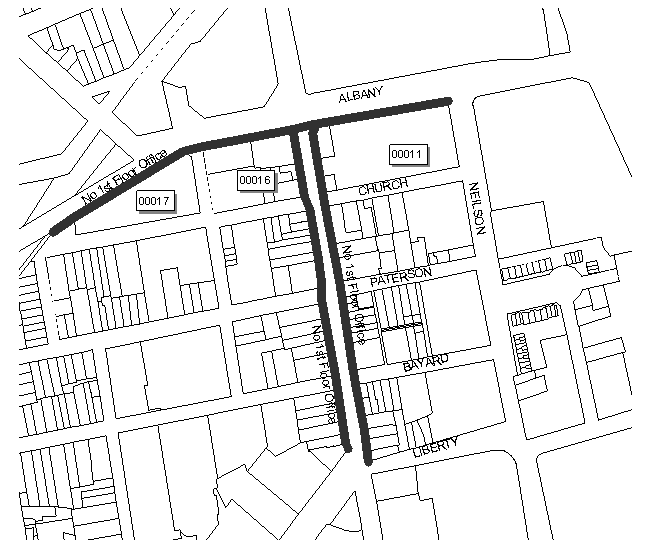
vi.
Medical care centers and clinics;
vii.
City, County, State and Federal government offices and services;
viii.
Hotels;
ix.
Financial, insurance and real estate offices;
x.
Public, private and proprietary schools;
xi.
Transportation and communication offices and public transportation passenger stations;
xii.
Radio and television stations;
xiii.
Public utility offices;
xiv
Taverns;
xv.
Nightclubs;
xvi.
Mixed use ground floor commercial with residential uses above;
xvii.
Internet cafes;
xviii.
Computer and electronic sales and service businesses.
xix.
Research and development offices and laboratories.
xx.
Residential apartment buildings (permitted without ground floor commercial except for properties with a frontage on George Street between Albany Street and Liberty Street).
xxi.
Class 5 Cannabis Retail (permitted only on properties with a frontage on George Street between Albany Street and Liberty Street or with a frontage Easton Avenue between Little Albany Street and Hamilton Street and subject to the regulations and restrictions in Chapter 5.09 Cannabis Licensing and Regulation, Chapter 3.44 Cannabis Taxes, and all applicable State laws).
xxii.
Class 2 Cannabis Manufacturer (only on second floors or higher, cannot be combined with any other license and subject to the regulations and restrictions in Chapter 5.09 Cannabis Licensing and Regulation, Chapter 3.44 Cannabis Taxes, and all applicable State laws).
xxiii.
Body art establishments (only on properties with an Easton Avenue frontage).
xxiv.
Gyms, indoor recreation, libraries and museums.
c.
Permitted Accessory Uses. Uses and buildings customary and incidental to a principal permitted use.
d.
Conditional Uses. Subject to the additional standards and conditions as specified herein:
i.
Reserved.
ii.
Reserved.
iii.
Quasi-public, Nonprofit Clubs and Organizations.
(a)
No such use shall be established within two hundred (200) feet of a public or nonprofit school, library or place of worship except for those uses directly associated or affiliated with any public or nonprofit school or place of worship.
(b)
Each such use shall provide an access driveway to provide access to a side or rear yard off-street parking area.
(c)
Off-street parking requirement of one space per one hundred (100) square feet of gross floor area or one space per three seats, whichever is greater.
(d)
All off-street parking provided within thirty (30) feet of any property line shall be protected from adverse impact upon adjacent residential properties through a visual screen of plantings not less than six feet on center, six feet high at planting, with buffer areas designed in conformance with this title.
iv.
Churches and Places of Worship. The minimum lot area shall be ten thousand (10,000) square feet and the minimum frontage shall be one hundred (100) feet.
v.
Sidewalk Cafes. As defined by the General Police Regulations of the Revised General Ordinances of the city of New Brunswick.
e.
Bulk and Height Regulations. As specified in the bulk schedule at the end of this section and elsewhere within Section 17.04.050 of this title.
f.
Design Guidelines.
i.
General Provisions.
(a)
Overall Design Concept. All new buildings should be related harmoniously to the terrain (natural features) and to existing buildings and other substantial structures in the vicinity that have a visual relationship to the proposed building or buildings. The achievement of such a relationship may include the enclosure of space in conjunction with other existing buildings or other proposed buildings and/or the creation of focal points with respect to avenues of approach, terrain features or other buildings.
(b)
Building Height and Setting. The particular location of new buildings on a site should provide an appropriate harmonious relationship to existing area structures, land forms and water bodies, in terms of height, setback, view preservation and related aspects of its urban context. In particular areas, building height and orientation may have to be adjusted in order to maintain such relationships or to preserve visual access to community focal points either nature, e.g., river, or manmade, e.g. cultural institutions, churches, etc. Where the site slopes, a new building's design should fit within an envelope that follows the lands contours. Stepped designs may be appropriate to preserve light, views, and to reinforce the scale of a particular site or an assemblage of lots, the heights, massing and siting of buildings need special care to reinforce existing relationships.
(c)
Building Design Elements. The selection of building design elements, for example, in the use of materials, fenestration, color, texture, etc., should ensure that such treatment is harmonious with that prevalent in the area, where such prevalence exists and where such harmony is desirable. The building façades should "reflect" the size, scale and setbacks of adjacent buildings and those across the street.
(d)
Building Orientation. New buildings should be oriented to the natural environment; for example, the design and location of pedestrian areas and plazas, with respect to building orientation, should be based on use in all weather conditions at all times of the year. Appropriate uses of outdoor space related to buildings, such as outdoor cafes are encouraged if they conform to all other ordinance requirements.
(e)
Building Additions. Building additions should be designed to reflect the existing building in terms of scale, materials, fenestration and color. A change in scale, for example, may require a transitional design element between the addition and the existing building. Additions are encouraged that are sympathetic to the original building yet contemporary in spirit. Additions to designated historic buildings should conform to the Secretary of Interior's Standards for Historic Preservation.
(f)
Side and Rear Elevations. Appearance of the side and rear elevations of buildings is important in commercial districts, especially if parking is provided next to the buildings. It may be desirable to develop alternate entries. Other guidelines for fronts of buildings shall also apply to the rear and sides.
(g)
Parking Decks. The first level of a parking deck should be oriented to the pedestrian, by incorporating commercial space at sidewalk level or by screening with architectural or landscape material at street level.
(h)
Area Design Features. New buildings should, where appropriate, strengthen the particular urban design features of its locale by, for example, framing a view corridor, enclosing an open space area, or continuing a particular design feature of statement. New construction should respect the existing street pattern to preserve the town plan and reinforce it where possible and appropriate. Existing views should be reinforced with restored or new buildings that serve as termination points or landmarks.
(i)
Façade Composition. Commercial buildings generally consist of a base, shaft and crown. The base is generally more open and accessible than the upper areas of the building. Stability, proportion and visual interest are established by buildings with clear vertical organization and this is the acceptable treatment.
iii.
Specific Standards. Each individual building façade has its own architectural character, scale and style. Aligned along a block, these façades collectively establish a unified pattern by repeating forms, colors, textures and rhythms of doors and windows. If this pattern is respected, it can accommodate individual storefronts and many design variations. The block façade is the base element that the design guidelines seek to address.
(a)
Massing. Large, horizontal buildings of limited height in the commercial zone should be broken down into segments having vertical orientation (bays). Repetition of bays and traditional façade elements creates patterns which help establish a sense of scale while allowing individual identify for each storefront.
(b)
Character of Primary Façades. Buildings with expansive blank walls and all curtain wall structures are prohibited. Blank walls and curtain wall buildings have no relationship to the overall design character of the downtown area and undermine the qualities of human scale that the traditional commercial and residential structures have established.
(c)
Roof Forms. In commercial areas, buildings should be designed to be "wall dominated" in that the roofs are visually less dominant in the total design. Roof forms should be similar to those predominantly found on adjacent buildings.
(d)
Scale. A human scale should be achieved at ground level and along street frontages and entryways through the use of such elements as windows, doors, transoms, sidelines, columns, awnings, stoops, bulkheads, and areaways. The rhythm of entrances and windows on the street contributes to visual continuity and is encouraged on all commercial and residential buildings. Recessed entries on commercial buildings identify the entrance, provide shelter and are also encouraged.
(e)
Building Height. The actual and perceived height of buildings is important. Buildings that are perceived from the pedestrian perspective as departing greatly from the height of their established neighbors can visually disrupt the sense of pedestrian scale. By providing building set backs for new buildings at the cornice line of established buildings and providing design amenities at the street that encourage pedestrian activity, taller buildings can better fit into the neighborhood. Low, one-story structures often cause gaps in urban fabric that is generally a minimum of three stories in height. An additional story (or stories) is an appropriate improvement; or a combination of a higher parapet wall with signage and awnings.
(f)
Relationship to the Street. In infill construction, maintain alignments of façades at the sidewalk edge or uniform set back lines of buildings on a block. In areas of irregular set backs, new construction setbacks shall conform to the ordinance requirement.
(g)
Proportion of Façades. The relationship of the width to the height of the front elevation shall be visually compatible with the buildings and places to which it is related.
(h)
Proportion of Openings. The relationship of the width to the height of window proportions on the front elevation shall be visually compatible with the buildings and places to which it is related. Original window and door sizes and shapes should not be altered in any renovation. If window replacement is required, original masonry or framed window openings shall be filled completely with new windows of the same design as original. Decorative panels or filler strips that reduce the size of the original openings to accommodate standard windows are prohibited. If earlier "improvements" to original window openings were not well done, and are in conflict with the guidelines, it is the intent of the standard to encourage the reversal of such alterations.
(i)
Window and Door Types. Select window and door types that are compatible to original architectural style in existing buildings. In new buildings, use windows and doors that are harmonious to those prevalent in the area or as approved by the technical advisory committee. Glazing shall be transparent with low reflectance, although tinted and coated glass of slight coloration may be used above the first floor for energy conservation.
(j)
Shutters. Use paneled or louvered shutters that when closed will fully cover the window opening.
(k)
Rhythm of Solid (Wall) to Void (Window and Door). The use of vertically proportioned windows is generally encouraged as they reinforce established rhythms. The distinction between upper and lower floor windows should be maintained. The first floor is primarily transparent, whereas the upper floor façades are more traditionally solid with smaller window openings. New construction shall use windows of similar sizes and shapes or incorporate other façade elements that establish the same pattern of other buildings in its content.
(l)
Rhythm. Rhythms which carry through a block such as window spacing, entrances, canopies or awnings, etc., should be incorporated into new or renovated façades.
(m)
Fire Escapes. Fire escapes are prohibited on the principal façade of a building. They may be permitted on the side or rear if not in conflict with zoning, property ownership or code requirements.
(n)
Architectural Style. Façade renovations should be in accordance with the original architectural style of the building. Original details should be retained. When it becomes necessary to introduce new features, they should harmonize with existing features. If windows and doors must be replaced, use new windows and doors that match the original in design.
(o)
Historical Appropriateness. False historical styles that do not have a design relationship to the rest of the building are prohibited.
(p)
Exterior Spaces. Exterior spaces should be related in scale to the building which defines them. Exterior spaces should be organized in sequence. Abrupt changes from very small to very large, without the use of transitional space, should be avoided. Exterior parking areas should be screened from view by walls, fences, buildings or vegetation with a minimum height of thirty-six (36) inches nor shall it exceed any height limits for fences. Screening shall not violate any sight triangles.
(q)
Building Materials. On existing buildings, retain original material wherever possible. Do not cover original materials for cosmetic reasons. In a renovation, incorporate elements of the original façade and its materials by covering it with metal panels or plastic. Aluminum siding, metal panels, EFIS systems on the ground floor and mirrored glass surfaces are prohibited unless already used on the building or adjacent structures. Masonry cleaning should be accomplished by the most gentle cleaning method possible. Masonry intended to be painted should stay painted and unpainted masonry should remain unpainted.
(r)
Lighting of Façades. Façade lighting shall be arranged to reflect the light and glare away from adjoining lots and streets. No façade lights shall be permitted with a beam, beacon or flashing illumination. Façades shall be lighted from the top or bottom with the light source angled no closer to the horizontal than two vertical to one horizontal; and the light source shall be shielded from adjoining lots, streets and interior drives. All façade lights shall be either shielded or shall have a translucent fixture to reduce off-site effects. New lighting shall be prohibited for use around storefront borders or storefront or window outlines.
(s)
Security Gates. Exterior security gates are prohibited. Interior security gates are only permitted provided the storefront or area to be secured remains visible. Solid security gates and exterior doors (roll-ups) are prohibited. "Panelized" gates of an open design that will correspond to individual window or door openings, or will break up a large storefront window into small increments, are permitted. Existing security gates and doors, to be retained in a project renovation, shall be painted in accordance with the color standards specified within this title. Existing solid security gates and exterior doors (roll-ups) are not permitted during any repair or renovation.
(t)
Awnings, Canopies and Marquees.
(1)
Marquees are prohibited.
(2)
Awnings shall consist of only fabric. All fixed or retractable awnings shall be constructed and installed so that the frame and fabric are of an integral part of the design of the structure.
(3)
No awning shall extend more than four feet from the building surface; no awning shall be less than eight feet above grade.
(4)
Awnings shall not be placed so as to conceal or disfigure an architectural feature or detail.
(5)
Awnings shall be coordinated, in terms of design, color and height, with awnings on adjacent buildings.
(u)
Color. The painting of buildings with bold patterns, checks, or using buildings as signs, and the use of fluorescent coloring, is prohibited.
iii.
Signs. All signs shall conform to the requirements as set forth within Chapter 17.06 of this title and the following additional requirements:
(a)
Advertisements painted upon the surface or façade of structures or buildings are prohibited.
(b)
All signs shall be installed so that the method of installation is concealed or made an integral part of the design of the sign.
(c)
Freestanding signs are prohibited.
(d)
Plastic, internally illuminated signs are prohibited.
(e)
Signs shall fit within the existing features of the façade.
(f)
Where possible, signs shall be aligned with other signs on adjacent buildings.
(g)
Sign colors, materials, size, shapes, and methods of illumination shall reinforce the overall composition of the façade.
(h)
If two establishments share a common storefront, then both shall use the same signing format, but only when the existing signage conforms to these standards.
(i)
Second floor businesses may be permitted to display signs which are placed either directly beside or immediately above a related window, but such signs may not extend beyond the building line.
(j)
Except as permitted in this section, signs are prohibited on balconies, roofs, doors or windows, or placed in a way that they disfigure or conceal any architectural feature or detail of the building.
(k)
Banners and similar flag-like devices, regardless of banner materials or absence of an advertising message, shall be considered as signs for the purpose of this section.
(l)
Window Signs. One business sign may be painted on the window and/or door of each business bearing the name, street number and/or type of business of the principal occupant, and the total area of all such signs shall not exceed ten (10) square feet, or twenty (20) square feet for a corner property, with ten (10) square feet per exposure to street front. Window signs designed to promote the sale of an article or business activity shall not exceed in total sign area fifteen (15) percent of the total window area of the first floor or street level of the building involved. Each individual window sign shall not exceed six square feet in area.
(m)
Façade Signs. Façade signs are permitted, and when combined with other signs displayed on or above said façade shall not exceed in the aggregate a total of ten (10) percent of the area of that face of the building used in such business at the location in question.
iv.
Prohibited Signs.
(a)
Billboards, pylon signs and roof signs.
(b)
Signs on trailers, truck trailers or unregistered motor vehicles.
(c)
Internally illuminated, animated, flashing or illusionary signs using mechanical and/or electrical devices to revolve, flash or display movement or the illusion of movement, except time and temperature or barber shop poles.
(d)
Illuminated signs using red, yellow or green light when they are situated within two hundred (200) feet of any street intersection.
(e)
Signs advertising goods and services available at the premises upon which the sign is located.
(f)
Any sign that uses the word "danger" or "stop" or otherwise presents or implies the need or requirement to stopping or caution or the existence of danger or which is likely to be confused with any sign displayed by public authority.
(g)
Pennants, banners, and mobiles, except where allowed with approval of the technical advisory committee and the administrative officer and/or director of planning.
(h)
Temporary, transportable and/or "sandwich" signs are prohibited within all street rights-of-way including sidewalk areas.
(i)
Exterior neon signs and decorative neon lighting is prohibited.
v.
Exemptions from Strict Application of Standards: It shall be the intention of this chapter to encourage property owners to maintain their properties in such a manner as to create, within the downtown commercial/office C-4 district, a coordinated and aesthetically attractive composition of building façades. This chapter shall not be interpreted in a manner that would tend to discourage property owners in the improvement or modification of their properties. In addition to all other remedies provided to property owners by this title for the appeal from any decision or determination by the administrative officer or for the acquisition of any variance or exception provided by law, owners of properties within the downtown commercial/office district shall be entitled to seek an exemption from the strict application of or the strict interpretation of any standard or requirement imposed by this chapter by demonstrating to the administrative officer that:
(a)
An exemption from the strict application of any such standard is necessary to avoid hardship relating to expense or otherwise associated with structural alterations or other building modifications necessary to achieve compliance with said standards; and
(b)
The exemption relates to a fixture regulated by this chapter, the design or location of which constitute an element of an overall plan or proposal for the design or redesign of the structure or façade thereof; and
(c)
The relaxation or modification of the standards would not subvert the intent and purpose of this chapter by substantially detracting from the aesthetic design and composition among the properties within the downtown commercial/office district which is intended to be coordinated, maintained and preserved by this chapter.
g.
Parking.
h.
Other Requirements.
i.
No driveway access to private property shall be permitted to connect to George Street or Albany Street in order that the efficient and safe flow of traffic shall be maintained;
ii.
All materials or equipment shall be stored, displayed and maintained indoors with the exception of all tables, chairs and other materials or equipment usually associated with permitted sidewalk cafes.
7.
C-5 Highway Commercial District.
a.
Intent. The intent and purpose of this district is to provide for the development of regional uses which are appropriate along major arterial highways. Further in order to provide for the safe and efficient flow of traffic within and thorough this district, specific bulk requirements and design standards are also established.
b.
Principal Permitted Uses.
i.
Professional and general offices;
ii.
Restaurants, drive-thru, and drive-in restaurants;
iii.
Retail stores, excluding flea markets;
iv.
Reserved;
v.
Indoor theaters;
vi.
Art galleries;
vii.
Automotive supply stores;
viii.
Supermarkets and retail food stores;
ix.
Body art establishments;
x.
Public and non-profit private schools;
xi.
Automobile dealerships, excluding the sale of used automobiles as a principal use;
xii.
Public passenger transportation stations and parking facilities;
xiii.
Medical care centers and clinics;
xiv.
Hotels and conference centers, and motels;
xv.
Banks;
xvi.
Research and development facilities and laboratories;
xvii.
Educational training centers;
xviii.
Health clubs and spas;
xix.
Family entertainment centers;
xx.
Car washes;
xxi.
Personal service businesses;
xxii.
Communication facilities;
xxiii.
Automotive service facilities;
c.
Permitted Accessory Uses. Uses which are customary and incidental to the principal use of the building or lot.
d.
Conditional Uses. Subject to the additional standards and conditions as specified herein:
i.
Gasoline Stations.
(a)
All service stations shall be so designated and all gasoline pumps shall be so placed as to provide for all services on the premises and not within the public right-of-way, and no gasoline pump shall be placed closer to any property line than fifteen (15) feet. Further, no gasoline pump and/or other service equipment or entrances and exits shall be placed closer to any residential district line than one hundred (100) feet.
(b)
The maximum width of driveways shall be thirty (30) feet and minimum distance between driveways on any one site shall be twelve (12) feet.
(c)
The exact location of all buildings and structures, the number of gasoline tanks to be installed, the dimensions and capacity of each tank, the depth at which the tank will be placed below ground, the number of pumps to be installed, the type of structure and accessory building to be constructed, the number of automobiles to be garaged, and a written description of nature and extent of the proposed uses shall be submitted.
(d)
The proposed use shall be located on a lot of not less than ten thousand (10,000) square feet.
(e)
No vehicle shall be permitted to be standing or parked on the premise other than those used by the employees in the indirect or direct operation of the establishment and customer's vehicles awaiting repair.
(f)
Any repair of motor vehicles shall be performed in a fully enclosed building. No parts or partially dismantled motor vehicles may be stored out-of-doors.
(g)
Driveways shall be at least fifteen (15) feet from any side lot line, and twenty-five (25) feet from the intersection of street lines and property lines as measured at the closest point of the access driveway to the intersecting property line. Not more than two driveways shall be permitted for each one hundred (100) feet of street frontage.
(h)
All outdoor vending machines are prohibited, exclusive of two soft drink machines and two newspaper vending machines which are accessory uses provided that they are located no further than three feet from the principal building.
(i)
Outside storage of oil cans, antifreeze and similar products may be displayed on the respective islands if provided for in a suitable metal stand or rack; however, bulk storage display or sale of said petroleum or automotive products, cases of soda or soft drinks, etc. is prohibited.
(j)
The exterior display of new or used tires shall be restricted to single tires displayed on the pump and building islands only and shall be prohibited from the vehicular circulation area.
(k)
An unloading area, for delivery vehicles to the underground storage tanks, shall be identified. This unloading area shall be complete on-site and off-site, and shall not obstruct any on-site circulation aisle.
(l)
The traffic impact for the immediate area as well as the increased traffic volume being created by the proposed use shall be analyzed in written form by a qualified traffic engineer and shall document a conclusion that the proposed use satisfies the following standards:
(1)
The additional traffic resulting from the proposed use will not exceed a volume/capacity ratio of 0.8 on the adjacent streets.
(2)
The additional traffic resulting from the proposed use will not increase the peak volume by ten (10) percent or more.
(3)
The additional traffic resulting from the proposed use will not reduce the level of service at significantly impacted intersections to "F."
(m)
The applicant shall submit a site circulation plan which graphically portrays the ability of a SU-30 design vehicle (for municipal fire apparatus) and the largest anticipated delivery vehicle to safely maneuver throughout the site.
ii.
Park and Ride Facilities.
(a)
Park and ride facilities may occupy a portion of an existing parking facility for a separate use provided that the parking requirements for said use are met in addition to commuter parking.
(b)
No derelict or junked autos, trucks, trailers, boats or other vehicles shall be stored, displayed or offered for sale in a park and ride facility.
iii.
Shopping Centers.
(a)
The minimum lot area shall be ten (10) acres.
(b)
The minimum road frontage shall be one hundred (100) feet.
(c)
A minimum landscaped buffer area of twenty (20) feet shall be provided between any shopping center and residential zone or residential use. Said buffer area shall include:
(1)
An eight-foot high solid fence around the perimeter of all parking areas adjacent to any residential zone or residential use.
(2)
A continuous row of evergreen trees, minimum eight feet high at planting, spaced at twelve (12) feet centers, with evergreen row to be planted within the ten (10) feet wide area closest and parallel to all lot lines adjacent to a residential zone or residential use.
(3)
A continuous row of salt tolerant deciduous trees, minimum three-inch caliper at planting, spaced on thirty (30) feet centers, shall be planted within the ten (10) feet wide area within the required twenty (20) feet buffer located furthest from and parallel to all lot lines adjacent to a residential zone or residential use.
(4)
All parking, loading, signage and design standards as specified in this title shall be met.
e.
Bulk and Height Regulations. As specified in the bulk schedule at the end of this section and elsewhere within Section 17.04.050 of this title.
f.
Design Regulations. The redevelopment of marginal and/or vacant commercial/industrial properties is encouraged.
g.
Parking.
i.
On-site parking shall be provided in accordance with the requirements of Chapter 17.05:
ii.
Off-street parking space may be located in the front, side and rear yards; provided, however, that no parking space may be located nearer than five feet to any side or rear lot line, and further provided that complete building perimeter parking is prohibited.
h.
Signage. As specified within Chapter 17.06 of this title.
i.
Transition and Buffer Areas.
i.
Twenty-five (25) percent of the gross lot area shall be devoted to transition and buffer areas.
ii.
A minimum twenty-five (25) feet wide buffer shall be provided abutting any residential use. Said buffer shall consist of an eight-foot high board-on-board fence along the common boundary, supplemented by a row of eight feet high evergreen plantings, spaced on eight feet centers, located within the transition buffer area.
iii.
A minimum ten (10) feet wide buffer shall be provided abutting all non-residential uses. Said buffer shall consist of an eight-foot high board-on-board fence along the common boundary.
8.
C-6 Highway Commercial District.
a.
Intent. The intent and purpose of this district is to provide for the development of highway-oriented retail and general business uses which are appropriate along arterial roads. Further, in order to provide for the safe and efficient flow of traffic within and through this district, specific bulk requirements and design standards are also established.
b.
Principal Permitted Uses.
i.
Professional and general offices;
ii.
Restaurants and drive-in, and drive through restaurants;
iii.
Retail stores;
iv.
Taverns;
v.
Indoor theatres;
vi.
Art galleries;
vii.
Automotive supply stores;
viii.
Supermarkets and retail food stores;
ix.
Automobile dealerships;
x.
Public and non-profit private schools;
xi.
Child care centers in accordance with N.J.S.A. 40:55D-66.6 et seq.;
xii.
Hotels and conference centers;
xiii.
Banks;
xiv.
Research and development facilities and laboratories;
xv.
Health clubs and spas;
xvi.
Automotive service facilities;
xvii.
Car washes;
xviii.
Motels;
xix.
Automotive sales and supply stores;
xx.
Medical care centers and clinics;
xxi.
Personal services businesses;
xxii.
Transportation and communication offices and facilities;
xxiii.
Public transportation passenger stations and parking facilities;
xxiv.
Transmission towers and communication facilities.
c.
Permitted Accessory Uses. Uses which are customary and incidental to the principal use of the building or lot.
d.
Conditional Uses. Subject to the additional standards and conditions as specified herein:
i.
Gasoline Stations.
(a)
All service stations shall be so designated and all gasoline pumps shall be so placed as to provide for all services on the premises and not within the public right-of-way, and no gasoline pump shall be placed closer to any property line than fifteen (15) feet. Further, no gasoline pump and/or other service equipment or entrances and exits shall be placed closer to any residential district line than thirty (30) feet.
(b)
The maximum width of driveways shall be thirty (30) feet and minimum distance between driveways on any one site shall be twelve (12) feet.
(c)
The exact location of all buildings and structures, the number of gasoline tanks to be installed, the dimensions and capacity of each tank, the depth at which the tank will be placed below ground, the number of pumps to be installed, the type of structure and accessory building to be constructed, the number of automobiles to be garaged, and a written description of nature and extent of the proposed uses shall be submitted.
(d)
The proposed use shall be located on a lot of not less than ten thousand (10,000) square feet.
(e)
No vehicle shall be permitted to be standing or parked on the premise other than those used by the employees in the indirect or direct operation of the establishment and customer's vehicles awaiting repair.
(f)
Any repair of motor vehicles shall be performed in a fully enclosed building. No parts or partially dismantled motor vehicles may be stored out-of-doors.
(g)
Driveways shall be at least fifteen (15) feet from any side lot line, and twenty-five (25) feet from the intersection of street lines and property lines as measured at the closest point of the access driveway to the intersecting property line. Not more than two driveways shall be permitted for each one hundred (100) feet of street frontage.
(h)
All outdoor vending machines are prohibited, exclusive of two soft drink machines and two machines which are accessory uses provided that they are located no further than three feet from the principal building.
(i)
Outside storage of oil cans, antifreeze and similar products may be displayed on the respective islands if provided for in a suitable metal stand or rack; however, bulk storage display or sale of said petroleum or automotive products, cases of soda or soft drinks, etc. is prohibited.
(j)
The exterior display of new or used tires shall be restricted to single tires displayed on the pump and building islands only and shall be prohibited from the vehicular circulation area.
(k)
An unloading area, for delivery vehicles to the underground storage tanks, shall be identified. This unloading area shall be complete on-site and off-site, and shall not obstruct any on-site circulation aisle.
(l)
The traffic impact for the immediate area as well as the increased traffic volume being created by the proposed use shall be analyzed in written form by a qualified traffic engineer and shall document a conclusion that the proposed use satisfies the following standards:
(1)
The additional traffic resulting from the proposed use will not exceed a volume/capacity ratio of 0.8 on the adjacent streets.
(2)
The additional traffic resulting from the proposed use will not increase the peak volume by ten (10) percent or more.
(3)
The additional traffic resulting from the proposed use will not reduce the level of service at significantly impacted intersections to "F."
(m)
The applicant shall submit a site circulation plan which graphically portrays the ability of a SU-30 design vehicle (for municipal fire apparatus) and the largest anticipated delivery vehicle to safely maneuver throughout the site.
iv.
Park and Ride Facilities.
(a)
Park and ride facilities may occupy a portion of an existing parking facility for a separate use provided that the parking requirements for said use are met in addition to commuter parking.
(b)
No derelict or junked autos, trucks, trailers, boats or other vehicles shall be stored, displayed or offered for sale in a park and ride facility.
v.
Shopping Centers.
(a)
The minimum lot area shall be ten (10) acres.
(b)
The minimum road frontage shall be one hundred (100) feet.
(c)
A minimum landscaped buffer area of twenty (20) feet shall be provided between any shopping center and residential zone or residential use. Said buffer area shall include:
(1)
An eight-foot high solid fence around the perimeter of all parking areas adjacent to any residential zone or residential use.
(2)
A continuous row of evergreen trees, minimum eight feet high at planting, spaced at twelve (12) feet centers, with evergreen row to be planted within the ten (10) feet wide area closest and parallel to all lot lines adjacent to a residential zone or residential use.
(3)
A continuous row of salt tolerant deciduous trees, minimum three-inch caliper at planting, spaced on thirty (30) feet centers, shall be planted within the ten (10) feet wide area within the required twenty (20) feet buffer located furthest from and parallel to all lot lines adjacent to a residential zone or residential use.
(4)
All parking, loading, signage and design standards as specified in this title shall be met.
vi.
Mixed-use commercial with residential above with frontage on Route 27.
(a)
Minimum lot area of five thousand (5,000) square feet.
(b)
Commercial uses only as permitted in the C-6.
(c)
Maximum height of forty-five (45) feet.
(d)
If lot area less than ten thousand (10,000) square feet, a maximum FAR of 2.4:1
(e)
If lot area not less than ten thousand (10,000) square feet a maximum FAR of 3.0:1
(f)
Parking requirement of RSIS requirement multiplied by 0.8
(g)
Must have frontage on Route 27
e.
Bulk and Height Regulations. As specified in the bulk schedule at the end of this section and elsewhere within Section 17.04.050 of this title.
f.
Parking. As specified in Chapter 17.05.
g.
Signage. As specified within Chapter 17.06 of this title.
E.
Office Zones. Development controls, limitations and regulations are hereby established for the following office zones.
1.
O-1 General Office District.
a.
Intent. The intent and purpose of this district is to provide for the expansion and preserve the integrity of the large-scale office development uses.
b.
Principal Permitted Uses.
i.
Professional and general office buildings.
ii.
Research and development offices and laboratories.
c.
Permitted Accessory Uses.
i.
Parking decks and garages;
ii.
Uses and activities that are service-oriented to employees and located within the principal structure, including the following:
(a)
Banks;
(b)
Cafeterias;
(c)
Business services.
d.
Conditional Uses. Subject to the additional standards and conditions as specified within Section 17.04.070 of this title.
i.
Day Care Centers and Nursery Schools in the O-1 District.
(a)
All day care centers, including nursery schools, shall be licensed by the State of New Jersey Department of Human Services;
(b)
Child care center shall meet the requirements set forth in Subchapter 5, Physical Facility Requirements of the Manual of Standards for Childcare Facilities, issued by the state of New Jersey Department of Human Services, Division of Youth and Family Services;
(c)
The minimum lot size is one (1) acre or more;
(d)
Parking areas, driveways and drop off areas shall be screened and buffered from adjoining properties which are zoned or used as residential. This buffer shall include a six-foot high solid fence together with a perimeter that shall be a landscaped or natural buffer, and shall be a minimum of ten (10) feet wide. Vehicles, such as buses and vans must be stored in a garage;
(e)
On-site traffic circulation must be adequate to allow children to be dropped off safely and not cause grid locking, stacking or otherwise impede the flow of traffic on the street which services the site;
(f)
Signage shall not be of a type normally associated with commercial use such as mobile, flashing or neon. Signage shall be limited to one façade sign with a surface area not exceeding eight square feet;
(g)
There shall be a ten (10) feet wide landscaped buffer between the required outdoor play area and any residential dwellings. The outside play area shall be secured with fencing, minimum four feet height, with one lockable emergency access gate provided;
(h)
Child Care Center Parking. One off-street space per two hundred (200) square feet gross floor area, plus two spaces for every employee on the maximum shift; plus a paved unobstructed pick-up space with adequate stacking area shall be provided in addition to standard driveway and parking requirements. A safe pedestrian walkway system through parking areas to the building entrance, with a safety zone a minimum of ten (10) feet in width between parking spaces and the front of the building entrance, shall be provided in addition to standard driveway and parking requirements.
e.
Bulk and Height Regulations. As specified in the bulk schedule at the end of this section and elsewhere within Section 17.04.050 of this title.
f.
Design Regulations.
i.
Compact, dense, vertical office development is recommended for this zone in order to preserve open space and environmentally sensitive lands elsewhere.
g.
Parking.
i.
Off-street parking space, together with appropriate access thereto, shall be provided on the same lot as the building it is intended to serve in accordance with the standards and conditions of Chapter 17.05 of this title;
ii.
Off-street parking space may be located in the front, side and rear yards; provided, however, that no parking space may be located nearer than fifteen (15) feet to any side or rear lot line, nor shall the end of the parking space be within twenty (20) feet of any street line, and further provided that complete building perimeter parking is prohibited.
h.
Signage. As specified within Chapter 17.06 of this title.
2.
HI Hospital Institutional District.
a.
Intent. The intent and purpose of this district is to allow for the planned development and orderly expansion of institutional use and commercial-related facilities to serve the institutional complex and area. Further, the existence of residential, retail and office uses are specifically recognized and the requirements of the zone are also designed to protect said uses from unwarranted, deleterious impacts caused as a result of hospital expansion;
b.
Principal Permitted Uses.
i.
Medical and surgical hospitals, medical centers, health centers, and other medically related facilities;
ii.
Child care facilities;
iii.
Nursing, or convalescent homes;
iv.
Medical offices, clinics or laboratories;
v.
Educational, research and training centers associated with medical facilities;
vi.
Institutional housing units which are owned by a medical or surgical hospital, a medical center or an entity owned by such hospital or medical center and which are utilized for the purpose of providing housing for interns, residents, medical students or other hospital staff;
vii.
Retail uses permitted within the C-1 neighborhood commercial district.
viii.
General and professional offices.
ix.
Research and development offices and laboratories.
c.
Permitted Accessory Uses.
i.
Parking decks and garages;
ii.
Uses customary and/or associated with the operation and administration of the principal permitted use.
d.
Conditional Uses.
i.
None.
e.
Bulk and Height Regulations.
i.
The maximum height of any building or addition to any building shall not exceed fifty (50) feet in height unless the following building setback standards are met:
ii.
Parking garages are exempt from the above height restrictions. However, in no case shall the height of a parking garage exceed ten (10) stories. Existing buildings greater than eight stories in height are exempt from the above setback requirements in the case where an addition is proposed on top of said building. In no case shall any building exceed twelve (12) stories in height;
iii.
The minimum lot size for construction of any hospital related facility shall be ten thousand (10,000) square feet;
iv.
The minimum required front yard and side yard setbacks shall be ten (10) feet, except that in cases where the minimum setbacks are not provided, open space areas shall be provided in accordance with the below provisions of this chapter.
f.
Design Regulations.
i.
Open space areas which provide direct access to pedestrians from the public right-of-way are encouraged to the maximum extent feasible. Said open space areas shall be designed in such a fashion as to encourage pedestrian activity. This shall be accomplished through the provision of certain amenities, including but not limited to benches, tables, fountains, walkways, trees, plants and gardens.
ii.
No building façade which faces a public right-of-way shall have on the ground floor any wall greater than fifty (50) feet in length without providing for variations in said wall by providing glass windows or by providing glass doors which allow general public accessibility to the building from the street. The provision of other architectural features such as cornices, overhangs and like decorative features is also encouraged. Accessibility to the ground floor of buildings in as many locations as is practical and feasible is encouraged;
iii.
Treatment of the façades of all buildings shall be designed to compliment existing building façades and designs as much as possible;
iv.
Skywalks/pedestrian bridges are prohibited. The intent of this regulation is to encourage pedestrian activity to the greatest extent possible on the streets within the HI hospital institutional district.
g.
Parking. As specified within Chapter 17.05 of this title.
h.
Signage. Signage shall be exempt from the provisions of Chapter 17.06 of this title; however, all proposed signage must be approved by the planning board at the time of site plan approval or must be subsequently approved by the technical advisory committee
3.
D-HI Downtown Hospital — Institutional District.
a.
Intent. The intent and purpose of this district is to allow for the planned development and orderly expansion of institutional use and commercial-related facilities to serve the institutional complex and area. Further, the existence of residential, retail and office uses are specifically recognized and the requirements of the district are also designed to protect said uses from unwarranted, deleterious impacts caused as a result of hospital expansion.
b.
Principal Permitted Uses.
i.
Medical and surgical hospitals, medical centers, health centers, and other medically related facilities;
ii.
Child care facilities;
iii.
Nursing, or convalescent homes;
iv.
Medical offices, clinics or laboratories;
v.
Educational, research and training centers associated with medical facilities;
vi.
Institutional housing units which are owned by a medical or surgical hospital, a medical center or an entity owned by such hospital or medical center and which are utilized for the purpose of providing housing for interns, residents, medical students or other hospital staff;
vii.
Retail uses as permitted in the C-1 neighborhood commercial district;
viii.
General and professional offices.
ix.
Research and development offices and laboratories.
c.
Permitted Accessory Uses. Uses customary and/or associated with the operation and administration of the principal permitted use.
d.
Conditional Uses.
i.
None.
e.
Bulk and Height Regulations.
i.
The maximum height of any building or addition to any building shall not exceed fifty (50) feet in height unless the following building setback standards are met:
ii.
Parking garages are exempt from the above height restrictions. However, in no case shall the height of a parking garage exceed ten (10) stories. Existing buildings greater than eight (8) stories in height are exempt from the above setback requirements in the case where an addition is proposed on top of said building. In no case shall any building exceed twelve (12) stories in height;
iii.
The minimum lot size for construction of any hospital related facility shall be forty thousand (40,000) square feet;
iv.
The minimum required front yard and side yard setbacks shall be ten (10) feet, except that in cases where the minimum setbacks are not provided, open space areas shall be provided in accordance with the below provisions of this chapter.
f.
Design Regulations.
i.
Open space areas which provide direct access to pedestrians from the public right-of-way are encouraged to the maximum extent feasible. Said open space areas shall be designed in such a fashion as to encourage pedestrian activity. This shall be accomplished through the provision of certain amenities, including but not limited to benches, tables, fountains, walkways, trees, plants and gardens;
ii.
No building façade which faces a public right-of-way shall have on the ground floor any wall greater than fifty (50) feet in length without providing for variations in said wall by providing glass windows or by providing glass doors which allow general public accessibility to the building from the street. The provision of other architectural features such as cornices, overhangs and like decorative features is also encouraged. Accessibility to the ground floor of buildings in as many locations as is practical and feasible is encouraged;
iii.
Treatment of the façades of all buildings shall be designed to compliment existing building façades and designs as much as possible;
iv.
Skywalks/pedestrian bridges are prohibited. The intent of this regulation is to encourage pedestrian activity to the greatest extent possible on the streets within the D-HI overlay district.
g.
Parking. As specified within Chapter 17.05 of this title.
h.
Signage. Signage shall be exempt from the provisions of 17.06 of this title; however, all proposed signage must be approved by the planning board at the time of site plan approval or must be subsequently approved by the technical advisory committee.
4.
C-R Zone (Corporate Retreat).
a.
Intent. The intent and purpose of this district is to recognize the particular environmental features of land area fronts on the D & R Canal, while providing the opportunity for reasonable, environmentally-sensitive development in character with the existing development in the district.
The district borders the environmentally sensitive D&R Canal and Mile Run Brook. The canal is also a state park and historically significant property.
Significant portions of the area encompassed by the C-R district consist of land which exhibits severe constraints on development. The areas bordering the waterways is susceptible to flooding. A portion of the area along the streamfront possess is characterized by steep slopes (twenty-five (25) percent or greater). In addition, the shallow soil cover and steep slopes are constraints to excavation for basements, underground utilities and septic fields.
Because of the constraints described above and because it is in the public interest to protect environmentally sensitive areas so as to prevent erosion and reduce pollution of the Raritan River and Lawrence Brook, this district shall regulate development in order to accomplish one or more of the following purposes:
i.
To conserve and preserve land to assure that its development will best maintain and enhance the appearance, character and natural beauty of the area;
ii.
To preserve and protect particular areas and terrain which have qualities of natural beauty or which are environmentally sensitive to development;
iii.
To protect streams and rivers as natural resources and to avoid flooding, erosion and water pollution; and
iv.
To preserve wetlands, wildlife habitats and other areas having conservation value. Due to the potential impact of any development within the C-R (Corporate Retreat) district on the environment, an application for site plan approval of a development shall include the submission of an environmental impact assessment prepared by a licensed professional engineer.
b.
Permitted Uses. Private corporate retreat facilities including conference space, overnight guest rooms, residence for caretakers/maintenance personnel and indoor/outdoor dining/food service for guests, including customary support services for such uses.
c.
Conditional Uses.
i.
None.
d.
Accessory Uses.
i.
Private garages for automobile storage;
ii.
Storage sheds, greenhouses, security huts and similar structures;
iii.
Private swimming pools or other similar private recreational facilities;
iv.
Fences and walls;
v.
Decks, patios.
e.
Parking. As specified within Chapter 17.05 of this title except that the maximum number of parking spaces shall be:
i.
Parking Maximum: Fifty (50) parking spaces.
f.
Signage. As specified within Chapter 17.06 of this title.
i.
Wall: One sign up to four square feet;
ii.
Freestanding: One sign per driveway access with up to seventy-two square feet of sign area per property;
Monument: Maximum sign area of forty square feet.
(a)
Freestanding Post: Maximum sign area of twenty-four square feet.
iii.
Height Maximum: Six feet.
iv.
Lighting: External or Halo (no internal illumination). Illumination to be turned off between 11:00 p.m. and 5:00 a.m.
g.
Prohibited Uses. All uses not specifically permitted as principal, accessory or conditional uses.
F.
Industrial Zones. Development controls, limitations and regulations are hereby established for the following industrial zones.
1.
I-1 Light Industrial District.
a.
Intent. The intent and purpose of this district is to provide for the expansion and preserve the integrity of the existing industrial uses through the redevelopment of vacant and underutilized industrial lands and the adaptive reuse of larger, single-user industrial sites.
b.
Principal Permitted Uses.
i.
High-tech light industrial uses;
ii.
Assembly, finishing and packaging of products and materials;
iii.
Warehouse and storage buildings;
iv.
Research and development offices and laboratories;
v.
Building material sales and storage buildings;
vi.
Printing and publishing houses;
vii.
General business and sales offices;
viii.
Public and non-profit private schools;
ix.
Recording studios;
x.
Employment agencies with transportation;
xi.
Gymnasiums, health clubs and other indoor and outdoor recreational facilities;
xii.
Data centers;
xiii.
General offices;
xiv.
Medical offices;
xv.
Laboratories.
c.
Permitted Accessory Uses. Ancillary uses and buildings customary and incidental to the principal use.
d.
Conditional Uses.
i.
None.
e.
Bulk and Height Regulations. As specified in the bulk schedule at the end of this section and elsewhere within Section 17.04.050 of this title.
f.
Design Regulations.
i.
The front yard and outdoor storage of vehicles is prohibited.
g.
Parking. As specified within Chapter 17.05 of this title.
h.
Signage. As specified within Chapter 17.06 of this title.
i.
Other Requirements.
i.
Transitional Requirements. A buffer area shall be provided along any lot line contiguous with any residential district or residential use. The buffer area shall be a minimum of ten (10) feet wide, plus an additional five feet width for each ten (10) feet or fraction thereof of height of the principal building exceeding twenty-five (25) feet. The buffer area shall consist of an eight-foot high architecturally solid fence supplemented by evergreen trees of a minimum eight feet height at planting, planted on ten (10) feet centers;
ii.
Storage. All materials, vehicles and equipment shall be stored in completely enclosed buildings or shall be screened by architecturally solid walls or fences of a height equal to the height of the materials, vehicles and/or equipment to be screened. Said screening shall be supplemented by evergreen plantings of a minimum ten (10) feet height at planting, planted on fifteen (15) feet centers, and said plantings shall be located on the outside perimeter of the screening walls and/or fences.
2.
I-2 General Industrial District.
a.
Intent and Bulk Standards.
i.
Intent. The intent and purpose of this district is to provide for the expansion and preserve the integrity of the existing industrial uses through the redevelopment of vacant and underutilized lands and the adaptive reuse of smaller properties into larger industrial sites.
ii.
Bulk and Height Regulations:
b.
Principal Permitted Uses.
i.
Warehousing and distribution facilities;
ii.
Manufacturing and production plants;
iii.
Research and development offices and laboratories;
iv.
High-tech electronic and industrial uses;
v.
Printing and publishing uses;
vi.
Communication facilities;
vii.
Fabrication, processing and assembling plants;
viii.
Automotive repair and service, excluding the sale of gasoline as a principal use;
ix.
Professional and general office uses;
x.
Sale sand service offices;
xi.
Public and non-profit private schools;
xii.
Flea markets;
xiii.
Building materials sales and storage;
xiv.
Auto body and truck repair;
xv.
Breweries;
xvi.
Meat processing plants;
xvii.
Warehousing;
xviii.
Fish farms and similar uses;
xix.
Garbage and recycling facilities;
xx.
Recording studios;
xxi.
Gymnasiums, health clubs and other indoor and outdoor recreational facilities.
xxii.
Solar farms (not subject to building coverage or impervious coverage maximums);
xxiii.
Fulfilment centers and parcel distribution centers;
xxiv.
Data centers;
xxv.
General offices;
xxvi.
Medical offices;
xxvii.
Laboratories;
xxviii.
Restaurants;
xxix.
Veterinarians and Commercial Kennels;
xxx.
All cannabis licenses except for class 5 retail licenses (subject to the regulations and restrictions in Chapter 5.09 Cannabis Licensing and Regulation, Chapter 3.44 Cannabis Taxes, and all applicable state laws.
c.
Permitted Accessory Uses.
i.
Uses and buildings customary and incidental to the principal use;
ii.
Cafeterias developed as an integral part of a principal use;
iii.
Retail sales of products manufactured/produced on site, subject to compliance with all retail parking requirements, as specified in Chapter 17.05.
d.
Conditional Uses.
i.
Reserved.
ii.
Reserved.
iii.
Transmission Towers and Communication Facilities.
(a)
Minimum lot area shall be three acres;
(b)
Transmission and communications towers shall be set back from the property line two hundred (200) feet for every one hundred (100) feet of tower height or fraction thereof;
(c)
No transmission or communication tower shall be located within one thousand (1,000) feet of school or residential zone;
(d)
Providers shall utilize existing towers and/or structures prior to consideration of new sites, to minimize the total number of towers in the city;
(e)
Providers shall be required to provide for the joint use of new and existing sites for collocation as a primary option rather than construction of additional single use towers;
(f)
Each applicant for a new telecommunications tower shall prove that the telecommunications equipment planned for the proposed tower cannot be accommodated on an existing or approved tower or building or other structure within a one mile search radius of the proposed tower;
(g)
Any proposed commercial wireless telecommunications service towers shall be designed, structurally, electrically, and in all other respects, to accommodate both the applicant's and comparable future collocated antennas;
(h)
The telecommunications towers shall meet all buffer and landscaping requirements of this title;
(i)
All abandoned or unused towers and associated facilities shall be removed by the applicant or its successors and any impacted property shall be returned to its original pre-construction state within six months of cessation of operation at the site, with all removal costs borne by the applicant;
(j)
Aesthetics. Applicants shall minimize the adverse visual impact and the number of such facilities through proper design, siting, screening, material color and finish for towers, antennas, and accessory buildings. Wherever possible, competing provides shall collocate antennas and related facilities. At locations where collocation on an existing structure is impractical, the applicant shall use camouflage structures, such as artificial trees, subject to applicable FAA standards and design review by the board. Where the required height of the tower makes an artificial tree impractical, other camouflage techniques shall be considered. Artificial trees shall be designed to resemble a woody tree with a single trunk and branches on its upper part. They shall be located near existing tree masses to the extent practical.
iv.
Trucking terminals subject to the following conditions:
(a)
Minimum lot area shall be three acres.
(b)
Rooftop solar or a green or white roof shall be installed on the building roof, which shall cover a minimum of seventy (70) percent of the roof area.
(c)
Minimum building coverage shall be twenty-five (25) percent.
(d)
Submission of a traffic report to demonstrate the proposed use will not reduce level of service (LOS) on roads that serve the facility.
(e)
All trucks, trailers, containers, and other equipment must be set back from all property lines by at least twenty-five (25) feet. All other bulk conditions of the zone shall remain in effect.
(f)
The facility must be screened and buffered from view from the street and other parcels by native vegetation with a minimum ten (10) feet deep buffer area containing a minimum ten (10) feet high landscape screen at the time of planting.
(g)
Containers may be stacked not more than twenty (20) feet high and must be set back at least twenty-five (25) feet from all property lines in order to be stacked. Other containers are subject to the same bulk restrictions as accessory structures. When on-site stacking is proposed, the applicant shall submit a written plan and documentation to demonstrate access for emergency vehicles and to address site safety during high-wind events.
(h)
The facility shall not be located within five hundred (500) feet of a residential zone, school, daycare, senior facility, social services or health care facility.
(1)
Residential zones are defined for this purpose as zones with an R-X naming convention where X is typically a number.
(2)
The distance applies to the above uses and zones whether they are inside or outside of the city.
(3)
The distance shall be measured from the exterior property line of the site.
(i)
All trucks that utilize the site are encouraged to be electric-only by 2030.
(j)
Logistics management and security staff shall be present on-site at all hours that the facility is active.
v.
Drayage Terminals subject to the following conditions:
(a)
Minimum lot area shall be three acres.
(b)
Rooftop solar or a green or white roof shall be installed on the building roof, which shall cover a minimum of seventy (70) percent of the roof area.
(c)
Minimum building coverage shall be twenty-five (25) percent.
(d)
Submission of a traffic report to demonstrate the proposed use will not reduce level of service (LOS) on roads that serve the facility.
(e)
All trucks, trailers, containers, and other equipment must be set back from all property lines by at least twenty-five (25) feet. All other bulk conditions of the zone shall remain in effect.
(f)
The facility must be screened and buffered from view from the street and other parcels by native vegetation with a minimum ten (10) feet deep buffer area containing a minimum ten (10) feet high landscape screen at the time of planting.
(g)
Containers may be stacked not more than thirty-eight (38) feet high and must be set back at least one hundred (100) feet from all property lines in order to be stacked. Other containers are subject to the same bulk restrictions as accessory structures. When on-site stacking is proposed, the applicant shall submit a written plan and documentation to demonstrate access for emergency vehicles and to address site safety during high-wind events.
(h)
The facility shall not be located within five hundred (500) feet of a residential zone, school, daycare, senior facility, social services or health care facility.
(1)
Residential zones are defined for this purpose as zones with an R-X naming convention where X is typically a number.
(2)
The distance applies to the above uses and zones whether they are inside or outside of the city.
(3)
The distance shall be measured from the exterior property line of the site.
(i)
All trucks that utilize the site are encouraged to be electric-only by 2030.
(j)
Logistics management and security staff shall be present on-site at all hours that the facility is active.
vi.
Small Wind Energy Systems.
(a)
Minimum lot size of three acres.
(b)
Minimum setback of 1.5 times the height of the system in all directions.
(c)
The noise level of any small wind energy system shall not (1) exceed 55dB(A) measured from any property line, or (2) be in excess of 5 dB(A) above the background noise, whichever is greater, as measured at the closest neighboring inhabited dwelling.
(d)
A small wind energy system that is out-of-service for a continuous 12-month period will be deemed to have been presumptively abandoned.
(e)
Testimony shall be provided showing that no shadow flicker shall impact properties in residential zones or schools.
(f)
Shall be permitted to a building height of one hundred twenty (120) feet.
e.
Bulk and Height Regulations. As specified in the bulk schedule at the end of this section and elsewhere within Section 17.04.050 of this title.
f.
Design Regulations. Supporting conditional uses may occupy a portion of an industrial facility or a freestanding building contingent upon adequate on-site parking being provided.
g.
Parking. As specified within Chapter 17.05 of this title.
h.
Signage. As specified within Chapter 17.06 of this title.
i.
Other Requirements.
i.
Transitional Requirements. A buffer area shall be provided along any lot line contiguous with any residential district or residential use. The buffer area shall be a minimum of ten (10) feet wide, plus an additional five feet width for each ten (10) feet or fraction thereof of height of the principal building exceeding twenty-five (25) feet. The buffer area shall consist of an eight-foot high architecturally solid fence supplemented by evergreen trees of a minimum eight feet height at planting, planted on ten (10) feet centers;
ii.
Storage. All materials, vehicles and equipment shall be stored in completely enclosed buildings or shall be screened by architecturally solid walls or fences of a height equal to the height of the materials, vehicles and/or equipment to be screened. Said screening shall be supplemented by evergreen plantings of a minimum ten (10) feet height at planting, planted on fifteen (15) feet centers, and said plantings shall be located on the outside perimeter of the screening walls and/or fences.
3.
I-2E General / Entertainment Industrial District.
a.
Intent. The intent and purpose of this district is to provide for the expansion and preserve the integrity of the existing industrial uses through the redevelopment of vacant and underutilized lands. Further, this district allows for the development of certain type of entertainment uses subject to reasonable conditions to ensure that such uses do not negatively impact upon the public welfare of the community.
b.
Principal Permitted Uses.
i.
Warehousing and distribution facilities;
ii.
Manufacturing and production plants;
iii.
Research and development offices and laboratories;
iv.
High-tech electronic and industrial uses;
v.
Sales and service offices;
vi.
Printing and publishing uses;
vii.
Wireless communication facilities;
viii.
Fabrication, processing and assembling plants;
ix.
Automotive sales, repair and service, excluding the sale of gasoline as a principal business operation;
x.
Professional and general office uses;
xi.
Transmissions towers and communications facilities;
xii.
Junkyards.
xiii.
Solar farms (not subject to building coverage or impervious coverage maximums);
xiv.
Fulfilment centers and parcel distribution centers;
xv.
Data centers;
xvi.
General offices;
xvii.
Medical offices;
xviii.
Laboratories;
xix.
Restaurants;
xx.
Veterinarians and commercial kennels;
xxi.
All cannabis licenses except for class 5 retail licenses (subject to the regulations and restrictions in Chapter 5.09 Cannabis Licensing and Regulation, Chapter 3.44 Cannabis Taxes, and all applicable state laws
c.
Permitted Accessory Uses. Ancillary uses and buildings customary and incidental to the principal use.
d.
Conditional Uses.
i.
Reserved;
ii.
Reserved;
iii.
Billboards;
iv.
Go-Go Bars;
(a)
The minimum lot size shall be twenty thousand (20,000) square feet;
(b)
There shall be one off-street parking space for every two patrons who can legally occupy the structure at any time, plus one parking space per employee during the peak employment hour;
(c)
All dancing/entertainment must cease at least one hour prior to closing time;
(d)
Separate dressing room facilities for entertainers shall be provided, subject to all applicable codes;
(e)
Each go-go bar shall submit, with the application packages, documentation for the provision of a minimum of one professional security personnel contracted to be on-site during all hours of operation;
(f)
No go-go bar shall be located within two hundred fifty (250) feet of another such establishment, juice bar, tavern, bar, adult entertainment store or adult entertainment theatre;
(g)
No go-go bar shall be located within one thousand (1,000) feet of a school, church, childcare facility or residence;
(h)
No go-go bar shall be open for business before 11:30 a.m. or after 2:00 a.m.
v.
Go-Go Bars — Alcohol Free.
(a)
The minimum lot size shall be twenty thousand (20,000) square feet;
(b)
There shall be one off-street parking space for every two patrons who can legally occupy the structure at any time, plus one off-street parking space for each employee during the peak employment hour;
(c)
All dancing/entertainment must cease at least one hour prior to closing time;
(d)
There must be provided separate dressing room facilities for entertainers subject to all applicable codes;
(e)
No go-go bars — Alcohol free shall be located within two hundred fifty (250) feet of another such establishment or a go-go bar, tavern, bar, adult entertainment store or adult entertainment theatre;
(f)
No go-go bars — Alcohol free shall be located within one thousand (1,000) feet of a school, church, child care facility or residence;
(g)
No go-go bars — Alcohol free shall be open for business before 11:30 a.m. or after 2:00 a.m.;
(h)
Each Go-go bars — Alcohol free shall submit, with application package, documentation for the provision of a minimum of one professional security personnel contracted to be on-site during all hours of operation.
vi.
Telecommunication Towers and Communication Facilities.
(a)
Minimum lot area shall be three acres;
(b)
Transmission and communications towers shall be set back from the property line two hundred (200) feet for every one hundred (100) feet of tower height or fraction thereof;
(c)
No transmission or communication tower shall be located within one thousand (1,000) feet of school or residential zone;
(d)
Providers shall utilize existing towers and/or structures prior to consideration of new sites, to minimize the total number of towers in the city;
(e)
Providers shall be required to provide for the joint use of new and existing sites for collocation as a primary option rather than construction of additional single use towers;
(f)
Each applicant for a new telecommunications tower shall prove that the telecommunications equipment planned for the proposed tower cannot be accommodated on an existing or approved tower or building or other structure within a one mile search radius of the proposed tower;
(g)
Any proposed commercial wireless telecommunications service towers shall be designed, structurally, electrically, and in all other respects, to accommodate both the applicant's and comparable future collocated antennas;
(h)
The telecommunications towers shall meet all buffer and landscaping requirements of this title;
(i)
All abandoned or unused towers and associated facilities shall be removed by the applicant or its successors and any impacted property shall be returned to its original pre-construction state within six months of cessation of operation at the site, with all removal costs borne by the applicant;
(j)
Aesthetics. Applicants shall minimize the adverse visual impact and the number of such facilities through proper design, siting, screening, material color and finish for towers, antennas, and accessory buildings. Wherever possible, competing provides shall collocate antennas and related facilities. At locations where collocation on an existing structure is impractical, the applicant shall use camouflage structures, such as artificial trees, subject to applicable FAA standards and design review by the board. Where the required height of the tower makes an artificial tree impractical, other camouflage techniques shall be considered. Artificial trees shall be designed to resemble a woody tree with a single trunk and branches on its upper part. They shall be located near existing tree masses to the extent practical.
vii.
Trucking Terminals subject to the following conditions:
(a)
Minimum lot area shall be three acres.
(b)
Rooftop solar or a green or white roof shall be installed on the building roof, which shall cover a minimum of seventy (70) percent of the roof area.
(c)
Minimum building coverage shall be twenty-five (25) percent.
(d)
Submission of a traffic report to demonstrate the proposed use will not reduce level of service (LOS) on roads that serve the facility.
(e)
All trucks, trailers, containers, and other equipment must be set back from all property lines by at least twenty-five (25) feet. All other bulk conditions of the zone shall remain in effect.
(f)
The facility must be screened and buffered from view from the street and other parcels by native vegetation with a minimum ten (10) feet deep buffer area containing a minimum ten (10) feet high landscape screen at the time of planting.
(g)
Containers may be stacked not more than twenty (20) feet high and must be set back at least twenty-five (25) feet from all property lines in order to be stacked. Other containers are subject to the same bulk restrictions as accessory structures. When on-site stacking is proposed, the applicant shall submit a written plan and documentation to demonstrate access for emergency vehicles and to address site safety during high-wind events.
(h)
The facility shall not be located within five hundred (500) feet of a residential zone, school, daycare, senior facility, social services or health care facility.
(1)
Residential zones are defined for this purpose as zones with an R-X naming convention where X is typically a number.
(2)
The distance applies to the above uses and zones whether they are inside or outside of the city.
(3)
The distance shall be measured from the exterior property line of the site.
(i)
All trucks that utilize the site are encouraged to be electric-only by 2030.
(j)
Logistics management and security staff shall be present on-site at all hours that the facility is active.
viii.
Drayage terminals subject to the following conditions:
(a)
Minimum lot area shall be three acres.
(b)
Rooftop solar or a green or white roof shall be installed on the building roof, which shall cover a minimum of seventy (70) percent of the roof area.
(c)
Minimum building coverage shall be twenty-five (25) percent.
(d)
Submission of a traffic report to demonstrate the proposed use will not reduce level of service (LOS) on roads that serve the facility.
(e)
All trucks, trailers, containers, and other equipment must be set back from all property lines by at least twenty-five (25) feet. All other bulk conditions of the zone shall remain in effect.
(f)
The facility must be screened and buffered from view from the street and other parcels by native vegetation with a minimum ten (10) feet deep buffer area containing a minimum ten (10) feet high landscape screen at the time of planting.
(g)
Containers may be stacked not more than thirty-eight (38) feet high and must be set back at least one hundred (100) feet from all property lines in order to be stacked. Other containers are subject to the same bulk restrictions as accessory structures. When on-site stacking is proposed, the applicant shall submit a written plan and documentation to demonstrate access for emergency vehicles and to address site safety during high-wind events.
(h)
The facility shall not be located within five hundred (500) feet of a residential zone, school, daycare, senior facility, social services or health care facility.
(1)
Residential Zones are defined for this purpose as zones with an R-X naming convention where X is typically a number.
(2)
The distance applies to the above uses and zones whether they are inside or outside of the city.
(3)
The distance shall be measured from the exterior property line of the site.
(i)
All trucks that utilize the site are encouraged to be electric-only by 2030.
(j)
Logistics management and security staff shall be present on-site at all hours that the facility is active.
ix.
Small Wind Energy Systems.
(a)
Minimum lot size of three acres
(b)
Minimum setback of 1.5 times the height of the system in all directions
(c)
The noise level of any small wind energy system shall not (1) exceed 55dB(A) measured from any property line, or (2) be in excess of 5 dB(A) above the background noise, whichever is greater, as measured at the closest neighboring inhabited dwelling.
(d)
A small wind energy system that is out-of-service for a continuous 12-month period will be deemed to have been presumptively abandoned.
(e)
Testimony shall be provided showing that no shadow flicker shall impact properties in residential zones or schools.
(f)
Shall be permitted to a building height of one hundred twenty (120) feet.
e.
Bulk and Height Regulations. As specified in the bulk schedule at the end of this section and elsewhere within Section 17.04.050 of this title.
f.
Design Regulations. Same as I-2 general industrial district.
g.
Parking. As specified within Chapter 17.05 of this title.
h.
Signage. As specified within Chapter 17.06 of this title.
i.
Other Requirements.
i.
Transitional Requirements. A buffer area shall be provided along any lot line contiguous with any residential district or residential use. The buffer area shall be a minimum of ten (10) feet wide, plus an additional five feet width for each ten (10) feet or fraction thereof of height of the principal building exceeding twenty-five (25) feet. The buffer area shall consist of an eight feet high architecturally solid fence supplemented by evergreen trees of a minimum eight feet height at planting, planted on ten (10) feet centers;
ii.
Storage. All materials, vehicles and equipment shall be stored in completely enclosed buildings or shall be screened by architecturally solid walls or fences of a height equal to the height of the materials, vehicles and/or equipment to be screened. Said screening shall be supplemented by evergreen plantings of a minimum ten (10) feet height at planting, planted on fifteen (15) feet centers, and said plantings shall be located on the outside perimeter of the screening walls and/or fences.
G.
Educational Institutional Zones. Development controls, limitations and regulations are hereby established for the following office zones:
1.
IN-1 Institutional District — College Avenue Campus District.
a.
Intent. The intent and purpose of this district is to provide for the expansion and modernization of existing educational facilities and supporting land uses in the College Avenue district area.
b.
Principal Permitted Uses.
i.
Educational, research, cultural, agricultural research, athletic, library, dormitory, university-owned apartment and classroom buildings developed in accord with an overall master plan;
ii.
Fraternity and sorority houses;
iii.
Single and two-family detached dwellings per the requirements of the R-5A zone;
iv.
Professional offices;
v.
Service and training centers operated by a non-profit institution, corporate body, or foundations for the public benefit;
vi.
Public and non-profit private schools;
vii.
The conversion of existing habitable floor area in a two-family house into one additional dwelling unit is permitted, provided that:
(a)
The existing legally permitted occupancy of the property is fourteen (14) persons or greater;
(b)
No increase in occupancy results from such conversion;
(c)
The existing habitable space is documented as having been legally constructed and occupied;
(d)
No new habitable space is legalized, e.g., the attic or basement is not newly legalized for occupancy as part of the conversion;
(e)
The property conforms to all parking requirements without the need for a variance or design waiver for the number of parking spaces or impervious coverage.
c.
Permitted Accessory Uses.
i.
Ancillary uses and buildings customary and/or associated with the operation and administration of Rutgers — The State University of New Jersey or any of its colleges.
ii.
Rooming Units. Up to two rooming units per single-family structure provided that one off-street parking space per rooming unit is provided in addition to the RSIS parking requirement for the single-family structure.
d.
Bulk and Height Regulations. As specified in the bulk schedule at the end of this section and elsewhere within Section 17.04.050 of this title.
e.
Parking. As specified within Chapter 17.05 of this title.
f.
Signage. As specified within Chapter 17.06 of this title.
g.
Conditional Uses.
i.
Multi-family Developments.
(a)
Subject to the following conditions:
2.
IN-2 Institutional District — Cook/Douglass Campus Area.
a.
Intent. The intent and purpose of this district is to reconcile the extensive land area utilized for college level education and provide for the expansion and modernization of existing educational facilities and supporting land uses in the Cook/Douglass Campus district area. The district also provides for expansion and modernization of middle school and high school facilities for the city.
b.
Principal Permitted Uses.
i.
Educational, research, cultural, agricultural research, athletic, library, dormitory, university-owned apartment and classroom buildings developed in accord with an overall master plan;
ii.
Service and training centers operated by a non-profit institution, corporate body, or foundations for the public benefit;
iii.
Public and non-profit private schools.
c.
Permitted Accessory Uses.
i.
Ancillary uses and buildings customary and/or associated with the operation and administration of Rutgers — The State University of New Jersey or any of its colleges.
d.
Bulk and Height Regulations. As specified in the bulk schedule at the end of this section and elsewhere within Section 17.04.050 of this title.
e.
Design Regulations.
f.
Parking. As specified within Chapter 17.05 of this title.
g.
Signage. As specified within Chapter 17.06 of this title.
H.
Conservation Zone. A conservation district is created for the areas of the city that possess special value in terms of conservation and recreational potential, provide adequate land area for conservation and recreational uses and assure the quality and continuity of land area for conservation and recreational use.
1.
C Conservation District.
a.
Intent. The intent and purpose of this district is to recognize the particular environmental features of land area which lies between the waterfronts of the Raritan River and Lawrence Brook and the uplands adjacent to Route 18, Route 1 and the New Jersey Turnpike, while providing the opportunity for reasonable, environmentally sensitive development which maximizes waterfront views and allows public access to the waterfront.
Significant portions of the area encompassed by the C district consist of land which exhibits sever constraints on development. Much of the area along the riverfront possess either tidal marshes and other wetlands, or steep slopes (twenty-five (25) percent or greater) and bluffs. The land areas which have steep slopes also have a shallow depth-to-bedrock and loose shale parent material which cause a high erosion hazard when vegetative cover is removed. In addition, the shallow soil cover and steep slopes are constraints to excavation for basements, underground utilities and septic fields.
Because of the constraints described above and because it is in the public interest to protect environmentally sensitive areas so as to prevent erosion and reduce pollution of the Raritan River and Lawrence Brook, this district shall regulate development in order to accomplish one or more of the following purposes:
i.
To conserve and preserve land to assure that its development will best maintain and enhance the appearance, character and natural beauty of the area;
ii.
To preserve land for park, recreation or other open space conservation purposes;
iii.
To preserve and protect particular areas and terrain which have qualities of natural beauty or which are environmentally sensitive to development;
iv.
To protect streams and rivers as natural resources and to avoid flooding, erosion and water pollution; and
v.
To preserve wetlands, marshlands, tidelands, wildlife habitats and other areas having conservation value. Due to the potential impact of any development within the C district on the environment, an application for site plan approval of a conservation development shall include the submission of an environmental impact assessment prepared by a licensed professional engineer.
b.
Permitted Uses. No building, structure or lot shall be used and no building or structure shall be erected or structurally altered except for the following uses:
i.
Open space conservation areas;
ii.
River overlook areas accessed from Route 1, Route 18 or the New Jersey Turnpike;
iii.
Bike/pedestrian paths and passive recreational facilities.
iv.
Existing cemeteries.
c.
Permitted Accessory Uses.
i.
Active recreational facilities;
ii.
Structures utilized as outdoor toilet facilities;
iii.
Outdoor shelters, pavilions or gazebos;
iv.
Uses customary and/or associated with the operation and administration of a permitted principal use.
d.
Conditional Uses.
i.
Conservation developments as defined in this title. Said conservation developments shall be limited to:
(a)
Single-family detached dwelling at a maximum height of twenty-five (25) feet and with a minimum lot size of ten thousand (10,000) square feet;
(b)
Patio homes or other forms of semi-attached single-family dwellings at a maximum density of five dwelling units per acre and at a maximum height of twenty-five (25) feet;
(c)
Townhouse developments in accordance with the provisions of this title, except that the maximum floor area ratio shall be 0.5. Further, a maximum of two stories of living space shall be permitted;
(d)
Marinas, boat launches, and other water dependent uses acceptable to the approving board. Marinas shall be used for the mooring and storage of private boats only, and no chartering of boats shall be permitted. In order to prevent the hazard of pollution due to the spillage of fuel, no fuel pumps or tanks will be permitted at a marina in the W-C district. A waste pump-out facility shall be a mandatory amenity;
(e)
A combination of the conditional uses described above.
ii.
Each application for a conservation development shall be in a single ownership, provided that this requirement shall not preclude ownership authorized by N.J.S.A. 46:8A-1 et seq. or N.J.S.A. 46-8B-1 et seq. The arrangement of residential buildings in groups or clusters connected by pedestrian walkways and open space is encouraged. Principal buildings shall be located at least two hundred (200) feet from a street line having frontage on either Route 1 or Route 18. All buildings and their parking areas shall be separated from either the street line or the back of the proposed curbline along any highway frontage, whichever is nearest, by a landscaped buffer or not less than fifty (50) feet in width.
e.
Prohibited Uses.
i.
Any use which is not listed herein as a permitted, accessory or conditional use.
f.
Height, Area and Yard Requirements.
i.
In cases where individual, fee-simply lots are created, said lots shall conform to the following schedule:
ii.
No principal building shall be permitted within fifty (50) feet of:
(a)
A wetland; or
(b)
An area identified as soil group SU or HU as defined in the Soil Survey of Middlesex County, New Jersey, April 1987, prepared by the Soil Conservation Service. Notwithstanding the above, the Department of Environmental Protection may require greater setbacks than those enumerated above.
iii.
A landscaped "greenbelt" of not less than one hundred (100) feet in width shall be provided around the site of a conservation development. The greenbelt should be incorporated into the pedestrian circulation and open space systems of the conservation development and may consist, in whole or in part, of existing or restored conservation land;
iv.
In order to allow land required for vehicular circulation, the maximum number of dwellings of a specific housing type that shall be permitted in a conservation development shall be determined by multiplying the total acreage of the parcel by the maximum density for that housing type in dwelling units per acre and then multiplying the result by .090. A fraction of one-half or more shall be rounded to the next higher whole number.
(a)
Parcels which contain a body of water, a designated wetland watercourse, tidal wetland or an area identified as a soil group SU or HU as defined in the Soil Survey of Middlesex County, New Jersey, April 1987, shall include only fifty (50) percent of said area in arriving at the maximum number of dwelling units permitted above;
(b)
The overall residential density of a conservation development containing more than one housing type shall not exceed five dwelling units per acre of parcel area determined in accordance with this section.
g.
Supplementary Use Regulation for Conservation Developments.
i.
Conservation Land Requirements.
(a)
Land area within a conservation development which is identified as soil group KvE as defined in the Soil Survey of Middlesex County, New Jersey, April 1987, and/or where slopes are in excess of twenty-five (25) percent shall be set aside as conservation land. Land area which is identified as soil group SU or HU as defined in the Soil Survey of Middlesex County, New Jersey, April 1987, shall be set aside as conservation land. The total amount of conservation land of a parcel to be developed as a conservation development shall not be less than fifty (50) percent of the total area of the parcel.
(b)
Conservation land shall be preserved and maintained by one of the following methods:
(1)
The formation of an association of property owners consisting of each owner within the conservation development who shall have an undivided interest in the conservation land. The association shall maintain the conservation land for the purposes intended and shall have the power to assess the members for all necessary costs;
(2)
The offer and transfer of the conservation land to the city of New Brunswick, subject to an agreement by the city to accept the land; or
(3)
The transfer of the land to an institution, organization or other entity to own and maintain the conservation land for the purposes intended in this section;
(4)
The owner of the conservation land shall execute, acknowledge and record upon the land records of the county of Middlesex such maps and documents as, in the opinion of the city attorney, will effectively create a trust, easement or covenant running with the land for the benefit of the adjoining land owners and of the city of New Brunswick. Such maps and documents will be binding on all future owners of the conservation land; will not be affected by any change in zoning, or land use; may be enforced by residents of the conservation development, adjoining property owners or the city of New Brunswick by appropriate action in court for damage or equitable relief; will be perpetual; will assure appropriate maintenance of the conservation land to the satisfaction of the approving board; and shall provide that if maintenance, preservation, and/or use of the conservation land no longer complies with the provisions of the trust, easement or covenant, the city may take all necessary action to assure compliance and assess against the owner all costs incurred by the city for such purposes.
(5)
The applicant for site plan approval of a conservation development shall state the conservation purposes to be accomplished and the proposed method of assuring the preservation and maintenance of the conservation land. The proposed use and/or treatment of the conservation land shall be shown on the site development plans submitted to the approving board as part of the site plan review process.
ii.
Design Requirements for Conservation Developments. Public access to the riverfront, including uses of a recreational (e.g. boating, fishing, etc.) or recreational access nature (e.g. river overlooks and/or walking, jogging, bike paths, etc.) must be included within the site plan drawings for the proposed development. Bulk requirements in this section are designed to establish a close relationship between structures and the street and sidewalk on which they front, thereby encouraging a neighborhood atmosphere, social interaction and a proprietary attitude toward the street or block.
The site plan and/or architectural drawings shall include provisions for the following design elements:
(a)
Pedestrian Access. Pedestrian access shall be provided along the edge of the Raritan River or Lawrence Brook through the use of elevated wooden walkways or other environmentally acceptable means, subject to secural of all necessary permits from all agencies having jurisdiction.
The approving board may grant an exception to this requirement if the environmental assessment submitted as part of the site plan application specifically recommends against such walkways. Where deemed necessary by the approving board to control access for security or management of a use, public access to portions of a water's edge may be restricted provided an alternate route, acceptable to the approving board, is designated for public use.
All interior walkways shall be connected to waterfront walkways and to all public open spaces and facilities.
All walkways shall be designed to be accessible to the handicapped.
(b)
Building Design. Buildings within a conservation development, shall meet the following requirements:
(1)
Buildings shall be arranged with the longest sides perpendicular to the waterfront to allow water views between buildings, and where possible, to otherwise allow views of the waterfront from buildings located further inland.
(2)
All residential clusters shall include buildings which face the street and are set back according to the front yard requirements of this title.
(3)
The scale, height, location and materials of buildings shall be integrated with the physical characteristics of the site with the least possible soil disturbance and loss of vegetative cover. If deemed necessary to achieve the objectives of this section, residential buildings on steeper slopes may be constructed on elevated pilings in accordance with applicable flood hazard and building code requirements and in conformance to a consistent set of design criteria developed for the entire site.
(4)
The roofs of buildings at lower elevations shall be designed to present attractive appearance when viewed from buildings at higher elevations. Architectural elements which provide vantage points for views of the riverfront, such as roof terraces, balconies and sundecks, are encouraged.
(5)
All buildings shall meet building code requirements for barrier-free accessibility for the handicapped.
iii.
Off-street Parking Requirement. Off-street parking shall be provided for conservation developments in accordance with the following:
(a)
Residential Uses. Compliance with the New Jersey Residential Site Improvement Standards.
(b)
Recreational Uses.
(1)
Marina, if open to public, two spaces per slip;
(2)
Active recreational areas, ten (10) spaces maximum;
(3)
Public paths and passive parks, ten (10) spaces maximum.
(c)
Alternative Paving. As part of proposed erosion mitigation measures, the use of pervious paving materials, such as drylaid pavers, grass pavers, granite cobbles, etc. are encouraged as alternatives to asphalt and concrete paving of parking areas and driveways. Such alternative paving methodology shall be so designed to insure all season/all weather passage by the heaviest city emergency response vehicle anticipated by the city to be required.
iv.
Landscaping Requirements. All landscape design elements shall be integrated with the architectural elements of the buildings in the conservation development. Landscape plans shall be included as part of the site plan drawings submitted for site plan review. Landscape plans and specifications shall be prepared by a landscape architect certified by the New Jersey State Board of Architects and Certified Landscape Architects.
v.
Conservation Land. Except where pedestrian and/or bike trails, resting areas and overlooks can be provided without causing a significant permanent erosion hazard, designated conservation land shall be left undisturbed. Existing areas of disturbed soil or wetland may be restored with appropriate plant materials and included within the designated conservation land.
(a)
Developed Open Spaces.
(1)
Developed open spaces shall be revegetated with trees and shrubs which are native to the site and surrounding area. Plant material which is not native to the site and surrounding area may be used in combination with native plant material when the resulting plant association improves the quality of vegetative cover and the performance of the vegetation in preventing erosion, screening undesirable views or incompatible uses, or filtering stormwater runoff;
(2)
Developed open spaces shall be designed and treated to eliminate resultant erosion hazard through vegetative rather than structural means. The approving board may approve structural solutions to erosion problems if, based upon a specific written recommendation by the city engineer, such solutions are considered necessary and appropriate;
(3)
Landscape plans shall include sitting areas within view corridors to the waterfront;
(4)
Appropriate exterior site lighting shall be incorporated into the landscape plans;
(5)
Drainage Requirement. Stormwater runoff generated from developed portions of the site shall be held at predevelopment levels. Prior to discharge into a river, stream, wetland or tidal marsh, stormwater runoff shall be directed through a system of silt and petrochemical traps. The approving board, based upon a specific written recommendation by the city engineer and a finding of no significant impact with respect to the applicant's proposed mitigation measures set forth in the required environmental assessment, may approve a drainage plan which employs other methods for mitigation of siltation and petrochemical pollution caused by stormwater runoff;
(6)
All other public improvements shall be constructed or installed in accordance with the standards set forth within the City's Site Plan Ordinance.
h.
Supplemental Submission Requirements: Environmental Impact Assessment. Due to the potential impact of any development within the C zone on the environment, each application for site plan approval within the C zone shall include the submission of any environmental impact assessment prepared by a licensed professional engineer.
The environmental impact assessment shall include a detailed evaluation of anticipated environmental impacts, proposed mitigation measures and alternative development options, if any. Failure to submit the above mentioned environmental impact assessment will result in the site plan application being deemed incomplete.
The environmental impact assessment shall include, at a minimum, the following:
i.
Project Description. A description of the proposed project including information and technical data adequate to permit a careful assessment of environmental impact including:
(a)
The reason for the project;
(b)
The recommended or favored alternative, mapped and/or described;
(c)
Parks, recreational sites, wildlife refuges and historic sites mapped and described on-site and within two hundred (200) feet of the site;
(d)
Existing land use, zoning and master plan delineation of the project area and within two hundred (200) feet of the site, mapped and described;
(e)
Ambient environmental conditions on-site and within two hundred (200) feet of the site, mapped and described;
(f)
A listing of all licenses, permits or other approvals as required by law and the status of each.
ii.
Investigation and Identification of Environment Impacts. A detailed analysis of the probable impact of the proposed project on the environment including impact on ecological systems such as wildlife, fish and marine life, involving any probable adverse environmental effects which cannot be avoided with respect to:
(a)
Water quality;
(b)
Aquifer recharge analysis;
(c)
Air quality;
(d)
Noise;
(e)
Damage or destruction of significant plant or wildlife systems;
(f)
Aesthetic values;
(g)
Destruction of natural resources such as wetlands, coastal area, floodplains, air quality, water resources, topography and geological features;
(h)
Destruction of manmade resources, including historic and archeological sites.
iii.
Mitigating Measures. A thorough analysis of the steps to be taken before, during and after construction of the project, to minimize the adverse environmental effects as described in subsection (H)(1)(h)(2) of this section, including the effect on the rules, regulations and standards promulgated under state and federal environmental statutes.
iv.
Project Alternatives. A detailed analysis which compares and contrasts alternatives to the proposed project including:
(a)
The no project alternative;
(b)
Description of alternative project designs with an objective evaluation of those alternatives that might avoid some or all of the adverse environmental effects with the rationale for acceptability or non-acceptability of each alternative;
(c)
An analysis of the fiscal and environmental cost and social impact of the alternatives including construction problems and traffic service levels.
v.
Irreversible and Irretrievable Commitment of Resources. A quantifiable identification of any irreversible and irretrievable impacts and/or commitment of resources which would be involved in the project.
vi.
Relationship Between Short-Term and Long-Term Uses of the Environment. An analysis of the relationship between local short-term uses of the site and maintenance and enhancement of long-term productivity, assessing the project for cumulative long-term effects from the perspective that each generation is a trustee of the environment for future generations.
(Ord. No. O-112502, §§ V, VI, 12-17-25; Ord. No. O-072501, §§ IV—XXII, 7-16-25; Ord. No. O-062501, §§ II—VI, 6-18-25; Ord. No. O-012301, §§ II—X, 2-15-23; Ord. No. O-112205, § I, 12-21-22; Ord. No. O-032103, §§ IV—VIII, 3-17-21; Ord. No. O-121601, §§ 1, 2, 12-21-16; Ord. No. O-061403, § 2, 7-16-14; Ord. No. O-011003, §§ 1—3, 2-3-10; Ord. No. O-030804, § 1, 4-2-08; Ord. No. O-050703, 6-6-07; Ord. No. O-112205, § I, 12-21-22)
17.04.045 - Reserved.
Editor's note— Ord. No. O-072501, § XXIII, adopted July 16, 2025, repealed § 17.04.021, which pertained to overlay zones and derived from Ord. No. O-082307, § I, 9-6-23; Ord. No. O-112205, § I, 12-21-22; Ord. No. O-052105, § III, 6-16-21; Ord. No. O-032103, § IX, 3-17-21.
17.04.050 - Bulk schedule of height, area and yard requirements.
Zoning District Standards
C-4 Graduated Density
Sky-Exposure Plane Setback
Height and Setback Illustrations
Min. Lot Size 5,000
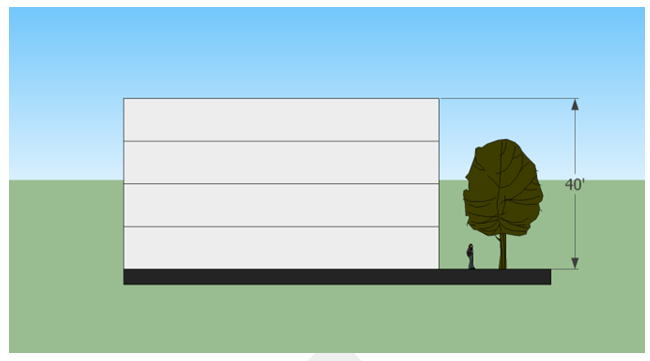
Min. Lot Size 10,000
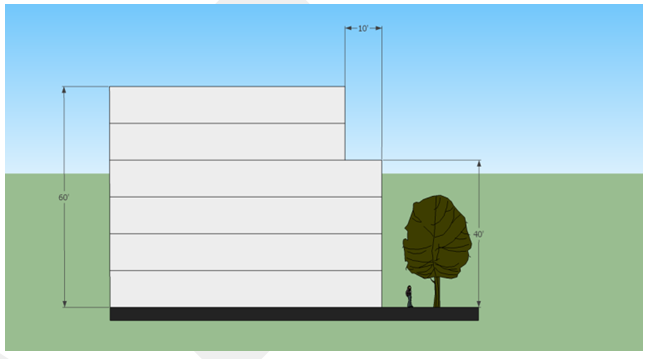
Min. Lot Size 20,000
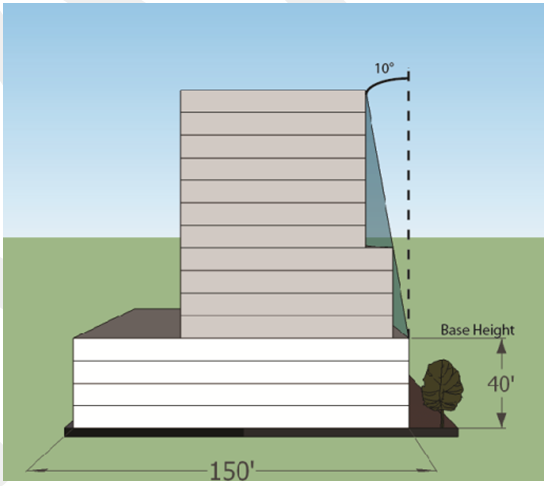
Min. Lot Size 40,000
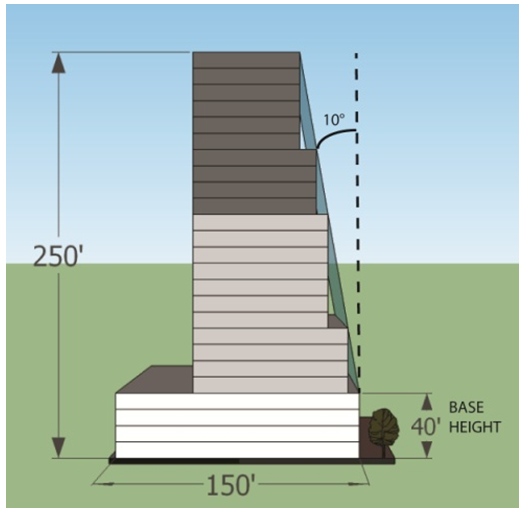
C-4 Sky Exposure Plane [Building Setback]
Illustration
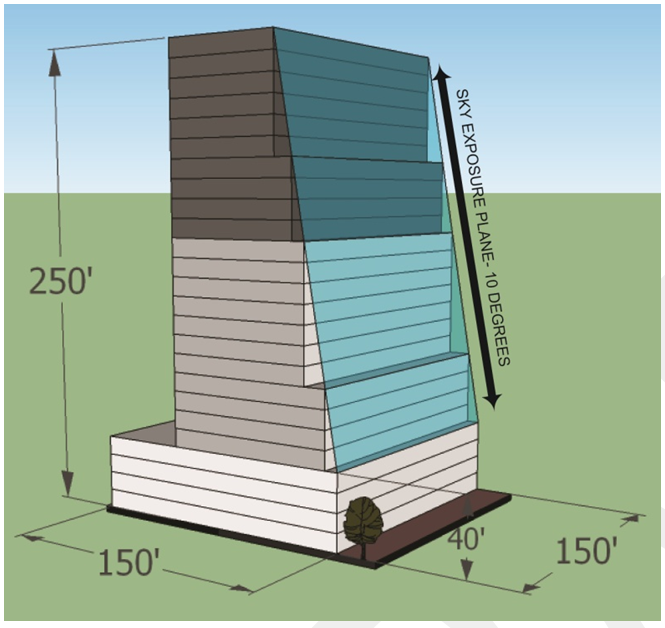
(Ord. No. O-112502, § VII, 12-17-25; Ord. No. O-112205, § I, 12-21-22; Ord. No. O-022201, § VIII, 2-16-22; Ord. No. O-032103, §§ X, XI, 3-17-21; Ord. No. O-121601, §§ 3, 4, 12-21-16; Ord. No. O-091107, § 3, 10-5-11; Ord. No. O-050703, 6-6-07)

