
North Kingstown City Zoning Code
ARTICLE XI
DEVELOPMENT PLAN9
Editor's note— Ord. No. 98-7, adopted May 11, 1998, amended the Code by repealing former article XI, sections 21-276—21-283, and added a new article XI, sections 21-268—21-284. Former article XI pertained to off-street parking and loading, and derived from the Revised Ordinances of 1974, sections 17-11-1—17-11-8; Ord. No. 94-5, adopted March 14, 1994; and Ord. No. 94-12, adopted June 27, 1994.
Cross reference— Subdivision and land development regulations, app. A.
Sec. 21-268.- Purpose and intent.
The intent of the development plan review is to identify certain elements set forth, the standards and requirements for commercial and industrial development and which serve to carry out the goals, visions and policies of the town's comprehensive plan and the policies and requirements of this chapter.
(Ord. No. 98-7, 5-11-1998)
Sec. 21-269. - Village character design guidelines.
The following design guidelines are intended for use by those developing and those reviewing development located within village areas and within areas so delineated by the town's comprehensive plan:
(1)
Purpose and intent. The purpose of these design guidelines is to guide the applicant in the development of site and building design and the reviewing authority in its review of proposed actions. These guidelines shall not be regarded as inflexible requirements. Each guideline could, in fact, generate numerous solutions; creative, imaginative and innovative designs are encouraged. It is the intent that these guidelines will serve in the review of all proposed development plan projects in the neighborhood/village zoning district, and developers and the developers' architects in the design of projects by providing development criteria consistent with the comprehensive plan.
(2)
Administration. Building elevations and renderings addressing the stated guidelines shall be submitted as part of an application for a proposed development plan.
(3)
Guidelines. Guidelines shall be as follows:
a.
Scale. The scale of a building shall be compatible with its architectural design style and character and that of the surroundings. The scale of ground level design elements such as building entryways, windows, porches, plazas, parks, pedestrian furniture, signs, plantings and other street and site elements should be directed toward the use, comprehension and enjoyment of pedestrians.
b.
Continuation of treatment. As a general rule, buildings shall reflect a continuation of treatment found in surrounding buildings by maintaining front yard setbacks at the build-to line, maintaining cornice lines in buildings of the same height, and extending horizontal lines of windows and doors.
c.
Proportions. The proportion, height to width relationship, between windows, doors, signs and other architectural elements shall be compatible with the architectural style and character of the building and that of the surroundings.
d.
Shape. The shape of windows, doors and other design elements shall be compatible with the architectural style and character of the building and that of its surroundings.
e.
Roof types. A flat roof should be avoided on one-story buildings, but may be used on buildings with a minimum of two stories, provided that all visibly exposed walls have an articulated cornice that projects horizontally from the vertical building wall plane. Gable and other roof types are permitted as appropriate to the building's architectural design style. Architectural embellishments that add visual interest and that are compatible with the surroundings such as dormers, belvederes, masonry chimneys, cupolas and other similar elements are encouraged. Heating, ventilation and air conditioning systems should be enclosed with an architectural feature consistent with the building design.
f.
Offsets. Building wall offsets including projections, recesses, changes in materials, colors or textures or changes in floor level shall be used to avoid long, monotonous, uninterrupted ground level walls. Similarly, roofline offsets shall be provided in order to relieve the visual effect of a single, long roof.
g.
Continuation of building façade. The architectural treatment of the front façade shall be continued, in its major features, around all visible sides of a building. Where construction of a blank wall is necessitated by the building code, the wall should be articulated by the provision of blank window openings trimmed with frames, sills and lintels or, if the building is occupied by a commercial use, by using recessed or projecting display window cases.
h.
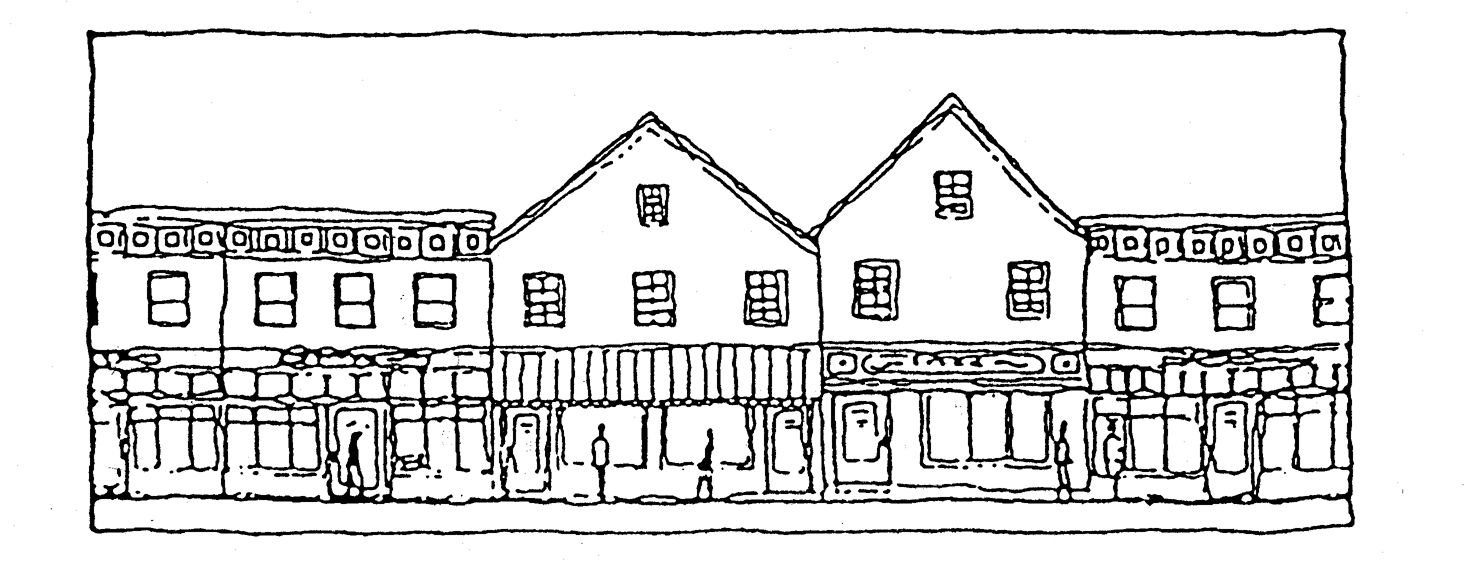
Mixed-use buildings. In mixed-use buildings, the difference between ground floor commercial uses and entrances for upper level commercial or residential uses shall be reflected by distinct but compatible differences in façade treatment. Storefronts are a necessary part of a mixed-use building and shall be integrated in design with the upper floors to be compatible with the building's overall façade character.
i.
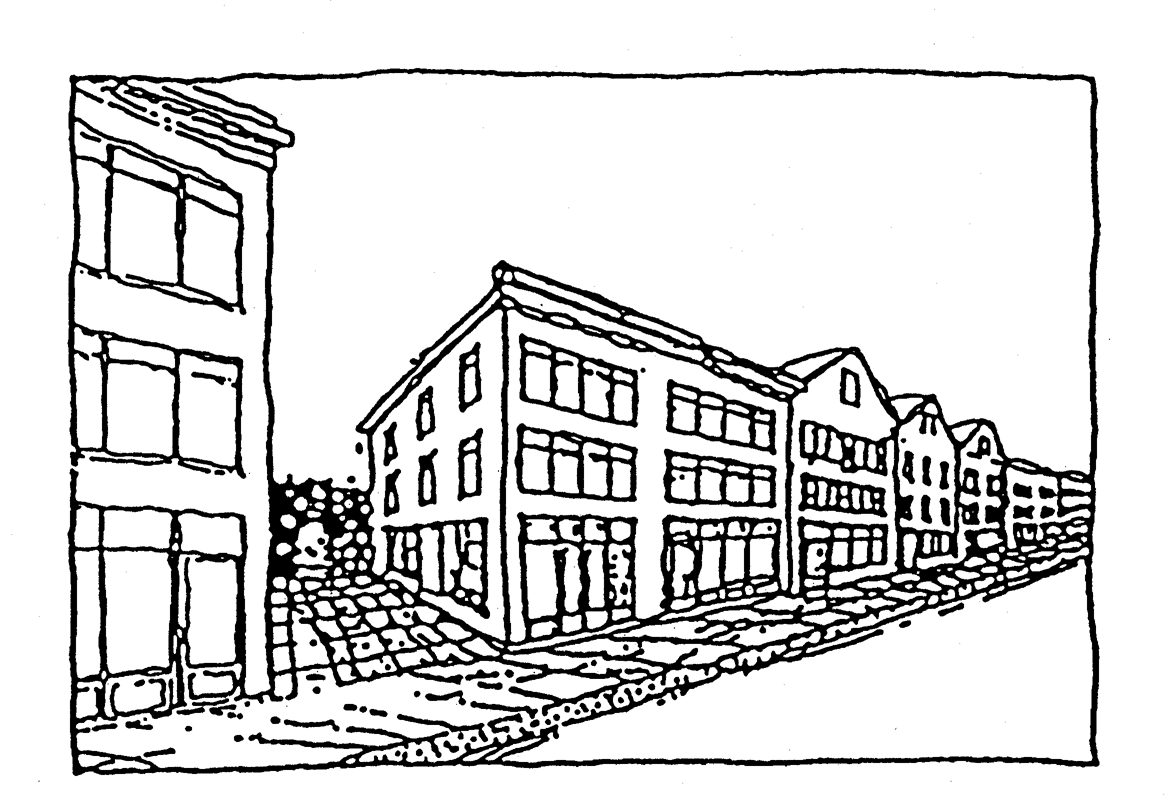
Relation of structures and spaces. The relation of a building to the open space between it and adjoining structures should be compatible with such relations in the surroundings.
j.
Architectural and site details. Architectural styles, design themes and site details including signs, lighting, pedestrian furniture, planting and paving, along with building materials, colors, textures and grade, shall be compatible within the overall site design and shall preserve and enhance the character of the surrounding area. In the neighborhood/village district, these details should blend with the details' own surroundings to create a diverse, yet unified, street composition.
(4)
Guideline examples. Guideline examples are shown in the figures that follow.
(Ord. No. 98-7, 5-11-1998)
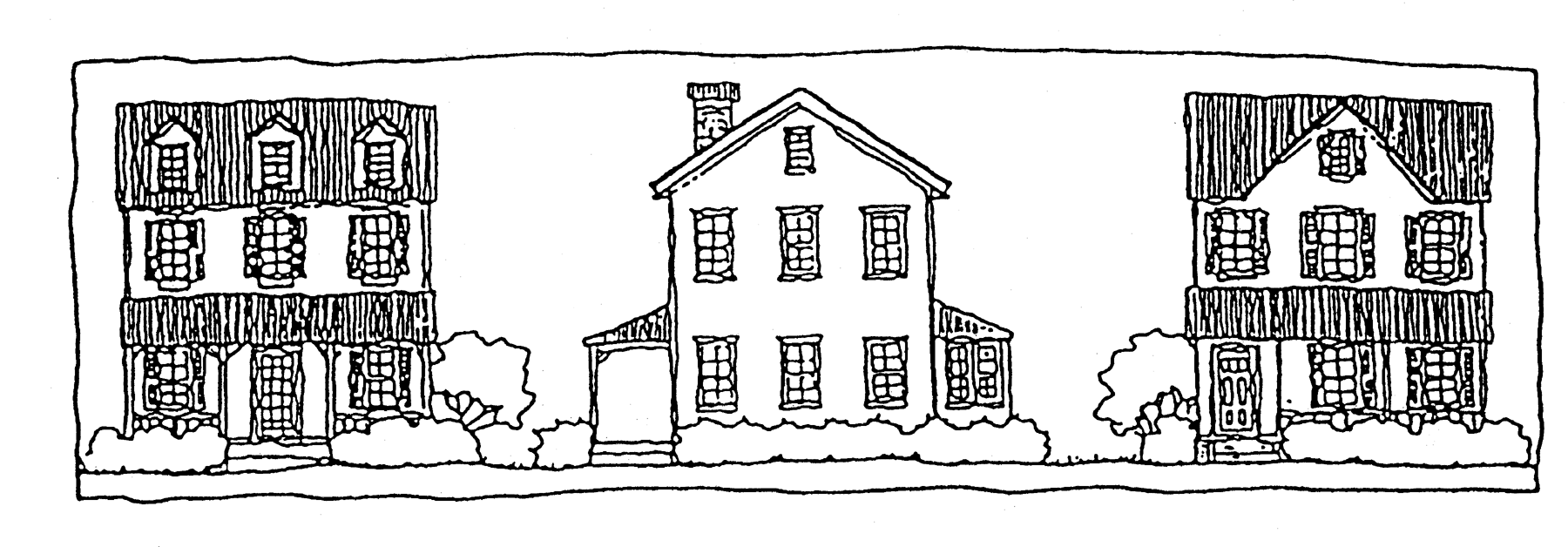
Horizontal Continuation of Elements
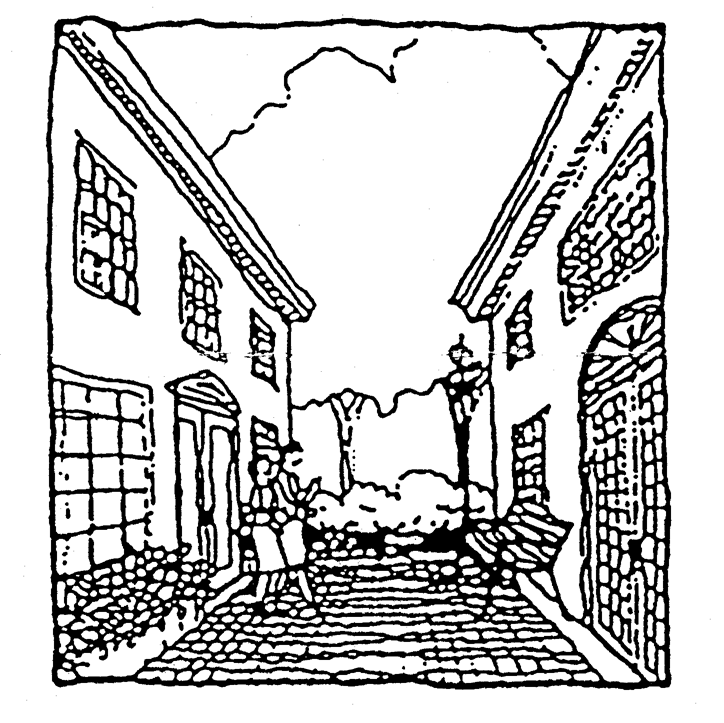
Buildings that Relate to People
Buildings that Relate to Each Other
Wrap Architectural Features Around, Avoiding Blank Walls
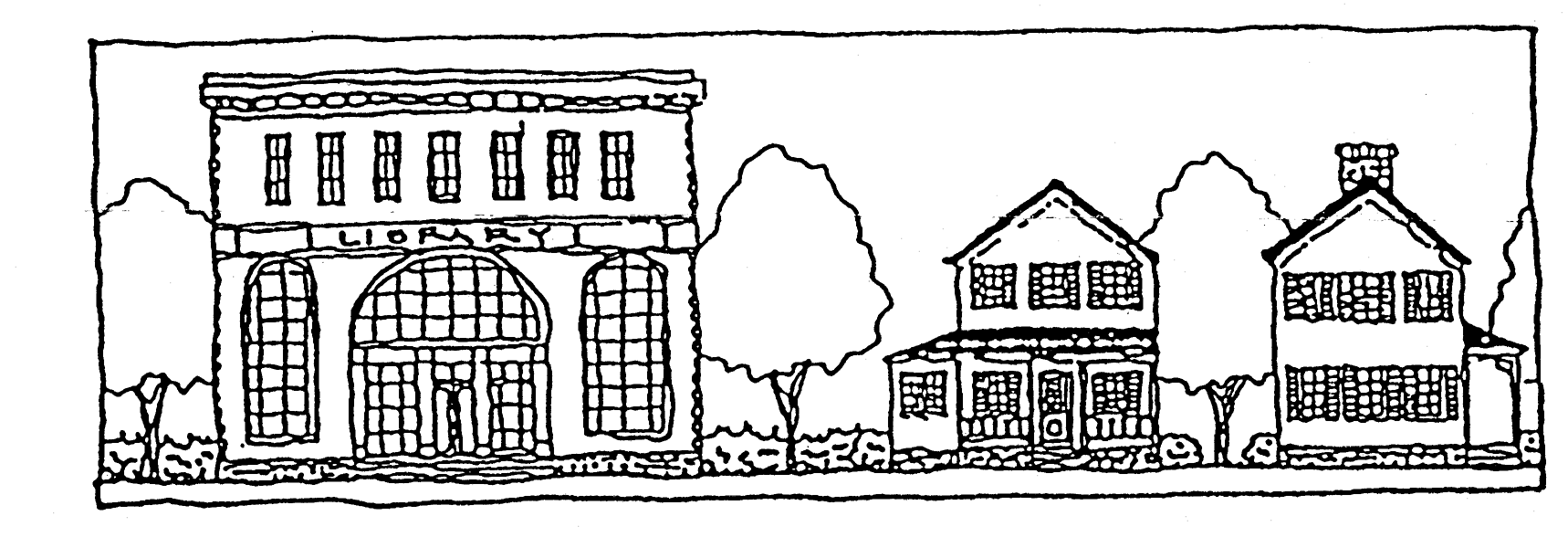
Relate Windows and Doors to Building Style
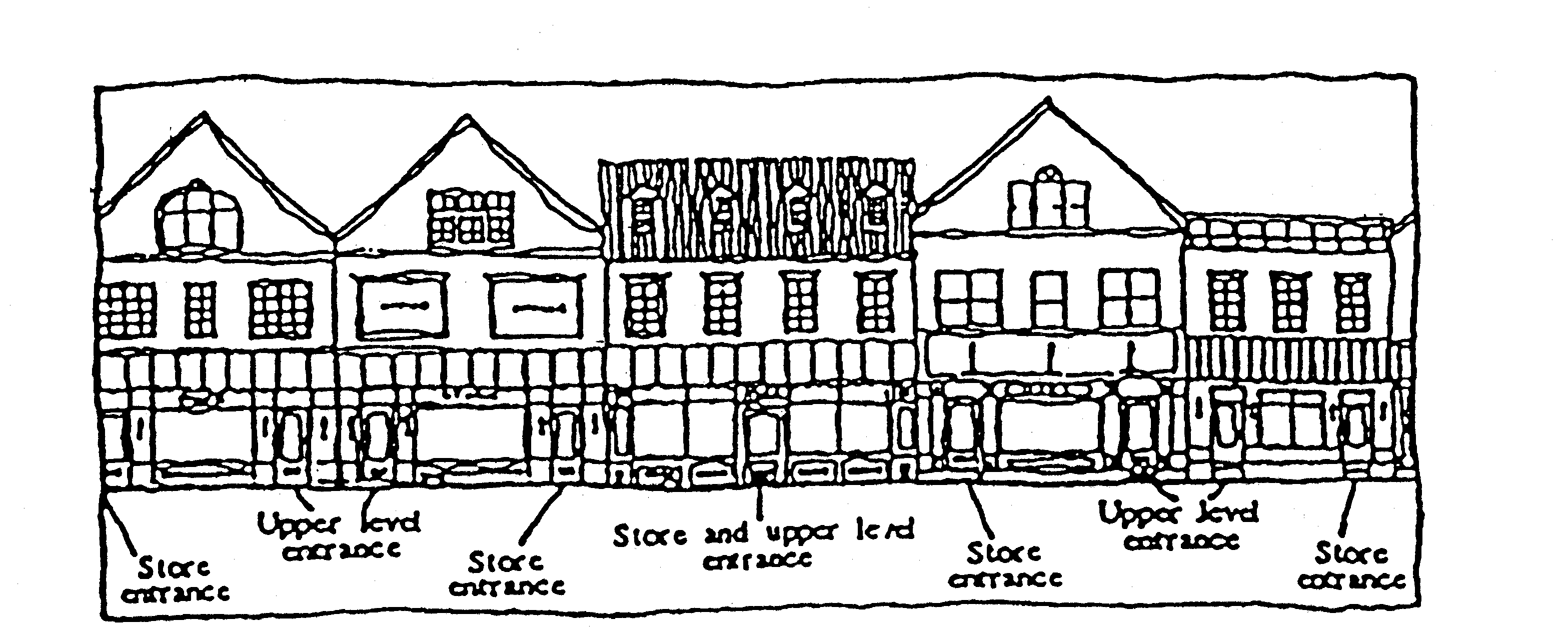
Good Mixed Use Building Design
Sec. 21-270. - Off-street parking and truck loading generally.
In order to minimize traffic congestion, air pollution and the risk of accidents and to promote other elements of sound community planning, off-street parking and truck loading spaces shall be provided and satisfactorily maintained for all permitted uses of buildings, structures or lots as specified in this section. The requirements of this section apply under the following circumstances:
(1)
All new buildings and structures erected for a use that requires off-street parking or loading;
(2)
Any building and/or structure that is altered or enlarged; and
(3)
All new, additional or expanded uses of a property or any change in an existing use which generates additional off-street parking or loading.
(Ord. No. 98-7, 5-11-1998; Ord. No. 08-18, § 7, 7-7-2008; Ord. No. 17-11, § 1, 6-26-2017)
Cross reference— Streets and sidewalks, ch. 17.
Sec. 21-271. - Methods of determining off-street parking requirements.
(a)
Off-street parking requirements for a single use shall be determined from the schedule of such requirements in section 21-272.
(b)
When the required number of spaces results in a fraction, the number shall be rounded in a manner that ensures compliance with the minimum and/or maximum number provided in the parking schedule as applicable.
(c)
If a use is not specifically listed in the schedule of off street parking requirements, the requirements shall be the same as for the most similar use listed as determined by the director of the department of planning and development referencing the Institute of Traffic Engineers Parking Generation Report.
(d)
When the schedule requires the on-site number of spaces to be calculated per employee and employees are on the site in shifts, the off street parking requirement shall be based on the number of employees present during the largest shift (most employees). The intent is to base the requirement on the total number of employees on the site or who will use the site for parking at any one time.
(e)
A garage or carport may be used to meet the requirements of this section. A driveway may only be used to meet the requirements of this section where it serves a one-family or two-family dwelling.
(f)
When any lot contains two or more non-residential uses, the sum of the individual parking demand values shall serve as the baseline parking demand. When deemed appropriate by the director of planning, applicants shall submit a peak use demand analysis to the planning department illustrating the relationship between peak parking demands for the different non-residential uses.
(g)
Where it can be demonstrated, to the satisfaction of the planning department or the planning commission, that less parking would be needed than the minimum requirements and adequate land is available should future uses warrant additional parking, fewer parking spaces may be allowed.
(h)
Where it can be demonstrated that the parking demand may be accommodated, up to 100 percent of on-site parking requirements may be provided off-site provided that parking is located within 500 feet of the property boundary in a walkable route from one property boundary to another and safe, well-lit pedestrian access can be demonstrated by the applicant. In such cases, appropriate legal documentation, as approved by the town solicitor and the town planner, shall be recorded to ensure the permanent use of such parking spaces.
(i)
Delineated on-street parking located directly abutting a lot on which a business use operates may be counted towards fulfilling the off-street parking space requirements of that use.
Wickford Village Center District—Off-street parking shall be located, to the maximum extent feasible, at the rear of the building. No new off-street parking shall be located between the street line and the building face containing the principal entrance.
(Ord. No. 98-7, 5-11-1998; Ord. No. 02-20, § 9, 11-18-2002; Ord. No. 07-02, § 13, 2-5-2007; Ord. No. 08-18, § 7, 7-7-2008; Ord. No. 17-11, § 2, 6-26-2017)
Sec. 21-272. - Parking schedule.
The schedule of off-street parking space requirements shall be as follows:
(Ord. No. 98-7, 5-11-1998; Ord. No. 98-13, § 3, 9-14-1998; Ord. No. 08-18, § 7, 7-7-2008; Ord. No. 12-13, § 6, 10-22-2012; Ord. No. 17-11, § 3, 6-26-2017)
Sec. 21-273. - Off-street loading spaces.
(a)
Number required. Off-street loading spaces shall be provided and maintained by the owner of the property for each building, structure or use which shall be established, erected or enlarged for any business or industrial purpose in accordance with the following schedule:
Where it can be demonstrated and with the approval of the planning commission or the department of planning and development that one or more uses may be generating a demand for loading spaces primarily during periods when other uses are not in peak operation, the total number of required loading spaces may be reduced to equal the peak loading number of spaces.
(b)
Exemption. No off-street loading spaces shall be required for any building or structure used exclusively for office occupancy.
(c)
Dimensional requirements. An accessory off-street truck loading space shall have a minimum width of 12 feet, a minimum length of 25 feet and minimum clear height of 16 feet. Aisles and driveways serving access to loading areas shall have the same minimum width and clear height. Where large vehicles (i.e., tractor trailers) are anticipated delivering to the site, the department of planning and development may require larger spaces and on-site turning areas to accommodate the trucks as per the latest standard promulgated by the institute of traffic engineers.
(Ord. No. 98-7, 5-11-1998; Ord. No. 17-11, § 4, 6-26-2017)
Cross reference— Streets and sidewalks, ch. 17.
Sec. 21-274. - Access to parking and loading.
(a)
Joint access. The sharing of driveway access by two or more properties is encouraged. Such driveways should be located on joint property lines or should be accessible via cross access easements on the private property being served by the joint driveway. The planning commission may waive the setback requirements in subsection 21-275(a) where it finds that such waiver facilitates the coordination of joint access or jointly shared parking areas.
(b)
Access to state roads. All entrance and/or exit driveways onto a state road shall be in accordance with the requirements of the state department of transportation, and all entrance and exit driveways onto a town road shall be in accordance with the requirements of the department of public works.
(c)
Vision clearance. A 30-foot line of sight shall be maintained where a driveway or street intersects with a public street.
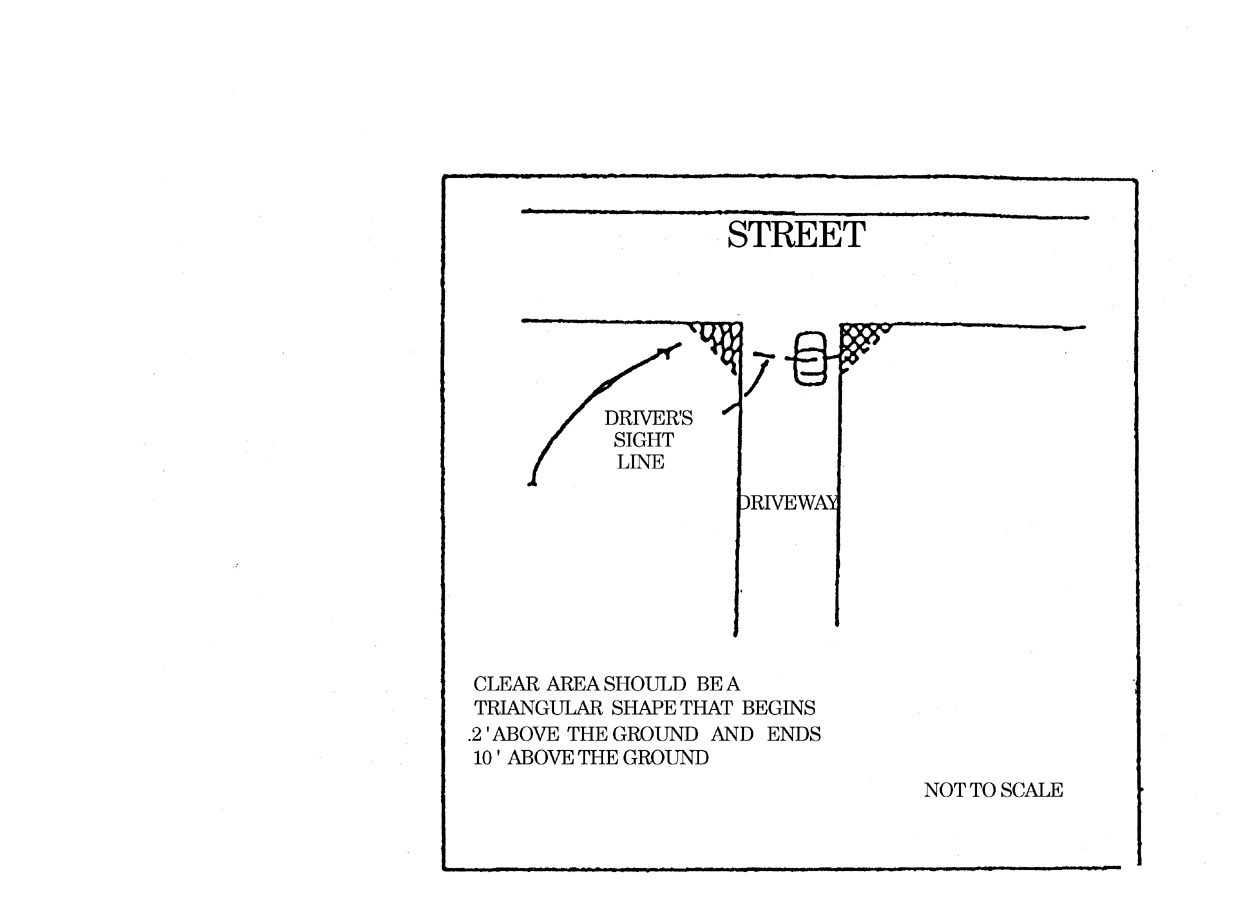
Figure 1. Vision Clearance
(d)
Maximum driveway grade. The gradient of driveways shall have a slope no greater than three percent for the first 100 feet. Driveways that accommodate below-grade loading docks shall be exempt from this subsection.
(e)
Driveway placement. Driveways must be placed such that an exiting vehicle has an unobstructed sight distance according to the following schedule:
(f)
Driveway spacing. At least one curb cut shall be permitted per site. Where it is demonstrated that an additional curb cut is warranted, it may be allowed subject to the approval of the town engineer or state department of transportation. Notwithstanding the limits of lot frontage, driveway spacing, both on site and to a driveway on an adjacent site, should be determined as a function of street speed limit according to the following schedule:
These spacings are based on average vehicle acceleration and deceleration rates and are considered necessary to maintain safe traffic operation. Spacing will be measured from the centerline of each driveway.
(Ord. No. 98-7, 5-11-1998; Ord. No. 17-11, § 5, 6-26-2017)
Cross reference— Stopping, standing and parking, § 11-31 et seq.
Sec. 21-275. - Design requirements for parking and truck loading areas.
(a)
Minimum setbacks and buffers. Accessory off-street parking areas for parking and truck loading may be located in required side or rear yards, provided that the side or rear yards are set back at least ten feet from all boundaries abutting commercially or industrially zoned land, and further provided that such yards do not encroach on required buffers established in accordance with the landscaping sections of this article.
(b)
Parking amenities. The physical improvements of off-street parking and truck loading areas shall include the following, except as may be specifically exempted by the planning commission:
(1)
Curbs.
(2)
Asphaltic, concrete, or gravel paving. The planning commission or planning director, as appropriate, may allow gravel parking or pervious materials in parking areas where the applicant demonstrates such pervious material will have a positive impact on the recharge of the underlying aquifer, provide for a better site design or better handle stormwater run-off. Pervious material in the groundwater recharge and wellhead protection overlay districts shall have the approval of the town director of water supply. In addition, gravel parking may be allowed by the planning commission or administrative officer in the Wickford Village Center District where less than ten parking spaces are required and where adequate provision is demonstrated for compliance with the Americans with Disabilities Act (ADA).
Gravel parking areas shall have drainage facilities as approved by the town engineer and shall provide a means to prevent gravel from spilling onto any state or town roadway or bikeway.
(3)
Sidewalks.
(4)
Provision for drainage facilities.
(5)
Lighting.
(6)
Landscaping and buffering.
(7)
Traffic pavement markings and signs:
a.
All parking spaces shall be striped in accordance with the approved plan, except where relief has been provided for gravel parking lots. All striping shall be four-inch white lines, except handicapped spaces, which shall be four-inch blue lines.
b.
Traffic islands shall be bordered by two four-inch-wide yellow lines and shall be crosshatched with 12-inch-wide yellow bars.
c.
Fire lanes shall be installed in accordance with the requirements of the town fire department.
d.
Snow storage areas shall not encroach upon sidewalks or public areas.
e.
For all gravel or pervious parking areas, spaces shall be marked using stone or other appropriate markings to delineate the individual spaces.
(c)
Minimum aisle width. Minimum aisle width shall be in compliance with the Institute of Traffic Engineers (ITE) standards as indicated on figure 3 and table 1 in this section. Aisles adjoining a building shall be wide enough to accommodate fire lanes/zones as required by the town fire department.
TABLE 1. STALL LAYOUT ELEMENTS
(Source: Parking Principles, Highway Research Board, Special Report No. 125, 1971, p. 99)
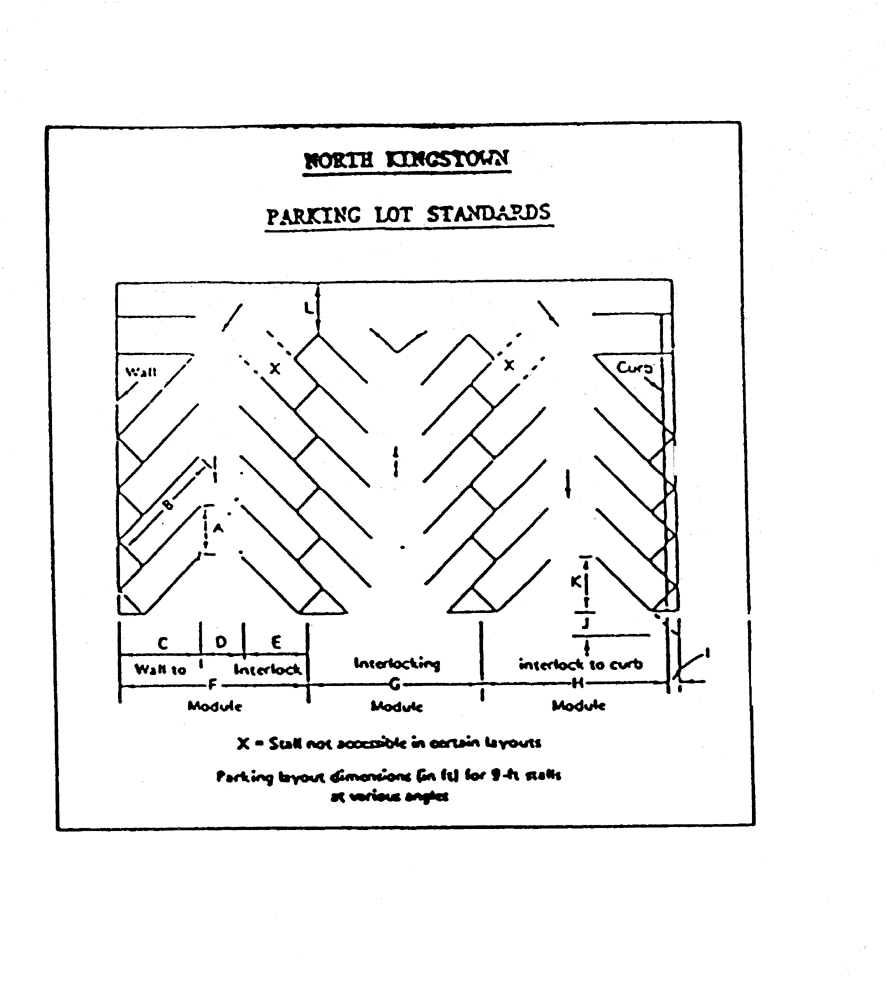
Figure 3. Parking Lot Standards
(d)
Aisles and turning areas. Aisles and turning areas should provide good internal circulation with adequate radii to ensure pedestrian safety, ample clearance and convenient access and egress, in addition to the design requirements enumerated in this section and required by the planning commission. Sufficient area for maneuvering into and out of all parking spaces shall be provided on site.
(e)
Minimum parking space size. Accessory off-street parking areas shall be marked off into spaces with minimum dimensions in accordance with the ITE standards as indicated in table 1 and figure 3 in this section. For parking spaces for trucks or special equipment, the minimum size of the spaces shall be approved by the department of planning and development based on the nature of the parked vehicles.
(f)
Centerline gradients. Centerline gradients of aisles shall not exceed three percent.
(g)
Handicapped parking spaces required. The number, size, location and identification of handicapped spaces shall comply with the standards of title III of the Americans with Disabilities Act (ADA).
(h)
Screening and Landscaping. All open parking areas which abut a public street right-of-way shall provide landscaping as prescribed in subsection 21-277(5) of the zoning ordinance.
(i)
Lighting. Lighting used to illuminate off-street parking areas shall be directed and maintained so as not to interfere with persons using any public street or improvement or to unnecessarily interfere with the use and enjoyment of property of any person. Lighting shall comply with section 21-278 of the zoning ordinance.
(j)
Fencing. A solid fence at least six feet in height shall be required on all common property lines when any nonresidential parking facility abuts a residentially zoned property.
(k)
[Bicycle racks and bus passenger shelters.] Bicycle racks and bus passenger shelters shall be as required by the department of planning and development.
(l)
Prohibited uses. No part of any required setback distance from a public road, other than a driveway in a residential district, shall be used for loading and unloading operations. No part of any parking or loading area shall be used for sales, dead storage, repair work, dismantling or servicing of any kind.
(Ord. No. 98-7, 5-11-1998; Ord. No. 01-14, § 2, 8-6-2001; Ord. No. 02-20, § 10, 11-18-2002; Ord. No. 10-06, § 4, 4-26-2010; Ord. No. 17-11, § 6, 6-26-2017)
Cross reference— Stopping, standing and parking, § 11-31 et seq.
Sec. 21-276. - General landscaping requirements.
(1)
Purpose.
(a)
To improve the physical environment through the provision of open space, street trees and vegetation;
(b)
To provide a transition between land uses through the use of well designed landscaping and/or buffers;
(c)
To reduce noise, dust pollution and glare.
(d)
To reduce impacts from impervious surfaces including heat island effect and disruption to the hydrologic cycle;
(e)
To improve air quality;
(f)
To provide shade for pedestrians and automobiles, and pavement;
(g)
To provide privacy in residential settings;
(h)
Provide for soil conservation, erosion control, flood control and pollutant mitigation; and
(i)
To eliminate or reduce the need for irrigation by providing landscapes that are developed in accordance with best practices and are well-suited to the regional environment and climate.
(2)
General standards.
(a)
In residential developments, applicants shall provide plantings or landscaping elements throughout the development to promote the purposes of this ordinance in addition to the screening and street trees required;
(b)
In nonresidential developments, all areas of the site not occupied by buildings and required improvements shall have been retained in their natural state as part of the site design process. If the property was cleared in the past and the current state of the property does not serve as an adequate buffer or natural area, a planting plan shall be submitted for this area of the site;
(c)
Plant varieties shall be selected for long term resistance to drought, moisture, salt, urban conditions, or insects and other pests depending on the location of landscaping and the specific stressors anticipated for different areas of the site. Plants should be selected so that landscaping can be maintained with minimal care and the need for watering, pesticides, or fertilizers is minimized or eliminated;
(d)
Landscape professionals are encouraged to reference Sustainable Trees and Shrubs, 3rded., 1999 as amended, URI Cooperative Extension - Landscape Horticulture, URI Sustainable Coastal Plant List 2007, URI Cooperative Extension, and Coastal Buffer Zone Planting Guide (CRMC 2008), as amended, Exhibit A in the Subdivisions and Land Development Regulations as well as other current standards for nursery stock/species when selecting plan varieties for landscaping to meet the intent of 21-276 (2) (c);
(e)
Under no circumstances shall any plant be selected that appears on the most recent listing of invasive species as published by the Rhode Island Invasive Species Council.
(Ord. No. 98-7, 5-11-1998; Ord. No. 2010-06, § 5, 4-26-2010)
Sec. 21-277. - Plan requirements and specific standards.
(1)
Landscape plan required. A landscape plan prepared by a Rhode Island registered landscape architect shall be submitted for all projects requiring development plan review, subdivision, or land development approval as specified in the subdivisions and land development regulations. A landscape plan shall contain the elements listed below:
(a)
Existing conditions plan.
(i)
The general extent and types of vegetation, including notable or unique plant communities and mature unfragmented forests or areas of vegetation;
(ii)
Notable natural features such as rock outcrops, and trees having a ten-inch caliper dbh or more;
(iii)
General drainage paths throughout the site;
(iv)
The location of any notable human-made features such as structures, stone walls, fences, utilities, etc.; and
(v)
Planting details and specifications.
(b)
Proposed landscaping.
(i)
Proposed grading at two-foot contour intervals. The director of planning and development or planning commission may waive this requirement if the proposal will clearly not alter on site drainage patterns in a manner that affects adjacent properties or may compromise the performance of on-site stormwater or wastewater infrastructure;
(ii)
Proposed location of retained vegetation;
(iii)
Methods of protection for retained vegetation during the construction phase (limits of disturbance should be clearly shown on plans and delineated in the field using fencing, hay bales, silt fencing, or other means installed prior to land disturbance and maintained throughout the construction period);
(iv)
List of proposed plantings and general locations;
(v)
Identification of any landscaped areas that will be used for stormwater management including details and specifications vegetated practices such as swales, constructed wetlands, rain gardens, etc. (landscaping for rain gardens and other stormwater controls and revegetation of disturbed wetland buffers may be beyond scope of this provision and addressed separately in stormwater management plan and wetland protection standards, respectively);
(vi)
Specifications for cultivation, loaming, seeding, and fertilization that demonstrate compliance with subsections (3) and (4) as applicable;
(2)
Site protection. Protection of the site shall be in accordance with the following:
(a)
Sediment and erosion control shall be addressed as part of the landscaping plan unless a separate soil and erosion control plan is prepared.
(b)
Topsoil suitable for landscaping shall be retained on site in an amount as determined as part of the required landscape plan. To the maximum extent practicable, the developer shall minimize the areas of the site to be regraded or disturbed. Topsoil exposed during construction shall be protected through stabilization measures consistent with the Rhode Island Sediment Control Handbook and approved by the director of planning and development or the planning commission as applicable;
(c)
All organic material, rubbish, potentially harmful materials or debris shall be removed from the site in a timely fashion. Disposal of cleared, grubbed and stripped materials shall be the responsibility of the developer. All roots, stumps, brush, foliage and other vegetation that have been cleared or excavated shall be removed and disposed of by the developer off the project site. This requirement may be modified for the dumping and landfilling of tree stumps as regulated by the subdivisions and land development regulations.
(d)
No filling, excavation, or material storage shall occur within four (4) feet of any shrub or the dripline of any tree that will be retained. Protective barriers shall be installed to protect this area surrounding retained vegetation and shall be a minimum of three (3) feet high and constructed of durable material. Snow fences and silt fences are examples of acceptable barriers.
(e)
Parking of construction vehicles, offices/trailers, stockpiling of equipment/materials, etc. shall take place in areas designated for permanent structures or other impervious surfaces and clearly shown on plans.
(f)
Existing stone walls shall be retained and incorporated into the site design to the maximum extent possible. Where possible, they shall be used as property lines for proposed new interior lots, perimeter property lines or to delineate open space areas from development areas. If existing stone walls are to be moved or disassembled, the director of planning and development or the planning commission may require the stone wall to be reconstructed elsewhere within the proposed development site.
(g)
Landscaping of all cut and fill areas and/or terraces shall be sufficient to prevent erosion, and all roadway side slopes greater than 1:3 shall be planted with vegetated ground cover appropriate for the purpose of erosion control and for the soil conditions and environment. The use of erosion control fabric or mats shall be utilized when appropriate.
(h)
Disturbed areas intended for natural re-growth should be, at a minimum, graded, loamed, and seeded with wildflowers, perennial rye grass, a meadow or "conservation" native grass mix or similar varieties.
(3)
Plant specifications.
(a)
Caliper and height measurements as well as root ball specifications for all trees and shrubs shall conform to the American Standard For Nursery Stock ANSI Z60.1-2004.
(b)
Shade or canopy trees shall not be less than twelve (12) feet in planted height above grade;
(c)
Small or minor shade trees shall not be less than ten (10) feet in planted height above grade;
(d)
Flowering fruit trees shall not be less than ten (10) feet in planted height above grade;
(e)
Evergreen trees used for screening shall not be les than six (6) feet in planted height above grade;
(f)
Lawn seed mixes shall be drought resistant. To achieve a high level of drought tolerance, lawn mixes shall include, but shall not be limited to, a predominance of fine fescues.
(4)
Planting and cultivation.
(a)
Soil.
(i)
In all areas where landscaping is to be provided and topsoil is to be removed for the purposes of site development and/or grading, topsoil shall be restored and shall contain a minimum of five percent organic matter for turf areas and ten percent for trees and shrubs. The minimum depth of any restored topsoil shall be six inches.
(ii)
Where pre-existing topsoil will be used for landscaping, such soil shall be cultivated to a depth of six inches. All areas subject to compaction by vehicles, heavy equipment, materials storage or other activities shall be restored by tilling or plowing before replanting.
(iii)
Cultivated areas shall be covered with not less than a two-inch deep layer of mulch after planting where weed control is required. Mulch should be natural, unpainted, unstained, and designed to retain moisture where applied. Mulching around plantings shall not be done in a manner that encourages damage from excessive moisture. Wood chip mulch shall not be allowed.
(b)
Lawns.
(i)
Lawn area for ornamental purposes in commercial or industrial development shall be limited to yards with frontage and ornamental turf shall be limited to areas within the front yard setback. The use of turf in yards without frontage shall be limited to areas reserved for utilities, grass swales, or alternative parking surfaces.
(ii)
Lawn or turf areas shall not be planted in strips that are less than six feet in width.
(c)
Trees.
(i)
Deciduous shade trees along streets are required as part of all development activity in accordance with the zoning ordinance.
(ii)
Trees shall be spaced approximately 30 to 40 feet on center along streets, but shall not be located within 30 feet of intersecting right-of-way lines.
(iii)
Pits cultivations for all trees shall be 2.5 times the diameter of the root ball and a depth equal to the same. Holes for trees shall be prepared in a manner that facilitates grow-in of new trees through the use of best practices.
(iv)
Trees and other landscaping shall be staked as necessary and provisions shall be made by the developer for adequate watering and maintenance until the plantings are established.
(v)
No street trees shall be located in a manner that interferes with overhead or underground utility lines.
(vi)
When planted closer than seven (7) feet from the edge of any pavement, vertical barriers shall be installed to discourage the growth of tree roots into and immediately under the pavement area. Alternative tree planting methods such as the use of "CU-structural soil TM" to prevent damage to pavements and enhance tree growth are encouraged.
(5)
Landscaping for buffers, parking lots, and loading areas.
(a)
Every development that has a potentially adverse effect on adjacent property or streets due to noise, size or any conditions shall provide sufficient buffering when topography, existing vegetation or other barriers do not provide reasonable screening to shield neighboring properties.
(b)
No building, structure, storage of materials, trash receptacles, or parking shall be permitted within the buffer area unless specifically allowed as an exception elsewhere within the Zoning Ordinance. Buffer areas shall be maintained in a manner commensurate with the approved landscape plan and kept free of all debris, rubbish, and weeds and tall grasses unless they were specifically identified in the planting/landscape plan. A buffer may be intersected by a sidewalk, a driveway, a shared driveway, a driveway used to connect adjacent properties with complementary uses, a pedestrian path, bike path, or utility easement.
(c)
The minimum standards for buffering are provided below. The director of planning and development or the planning commission, as part of development plan review, land development projects or subdivisions, may require applicants to comply with stricter buffer requirements if the project would otherwise create large-scale negative impacts to abutting or adjacent properties such as dust, noise, and glare. The director of planning and development or the planning commission may also reduce these requirements along non-residential property lines within the same zoning district.:
(i)
Unless otherwise specified, a minimum ten-foot wide landscaped strip of vegetation is required around the entire perimeter of a site, except for development in the neighborhood business district, the Wickford Village Center district, and the Post Road district.
(ii)
Where a property zoned or used as a business, commercial or institutional use abuts a property which is zoned or used as a residential, educational, recreational or religious use, a 25-foot wide buffer strip shall be required on the property zoned or used for business, commercial, mixed use or institutional use. This requirement shall not apply to development in the Post Road, neighborhood business, or Wickford Village districts.
(iii)
Buffering shall provide a year-round, dense, and virtually opaque screen of not less than six feet in height in order to minimize adverse impacts and limit visibility and noise. The buffer shall be comprised of a mix of plantings and site elements which may include a mixture of groundcover, understory vegetation and canopy trees, evergreens, berms, walls and/or fences to effectively achieve screening objectives. Earthen berms may be used in the buffer design, provided such side slopes are adequately stabilized by vegetation. Such berms may be used to calculate effective buffer height. The use of tall, monoculture, and uniformly planted rows of evergreens or other similar species shall be discouraged.
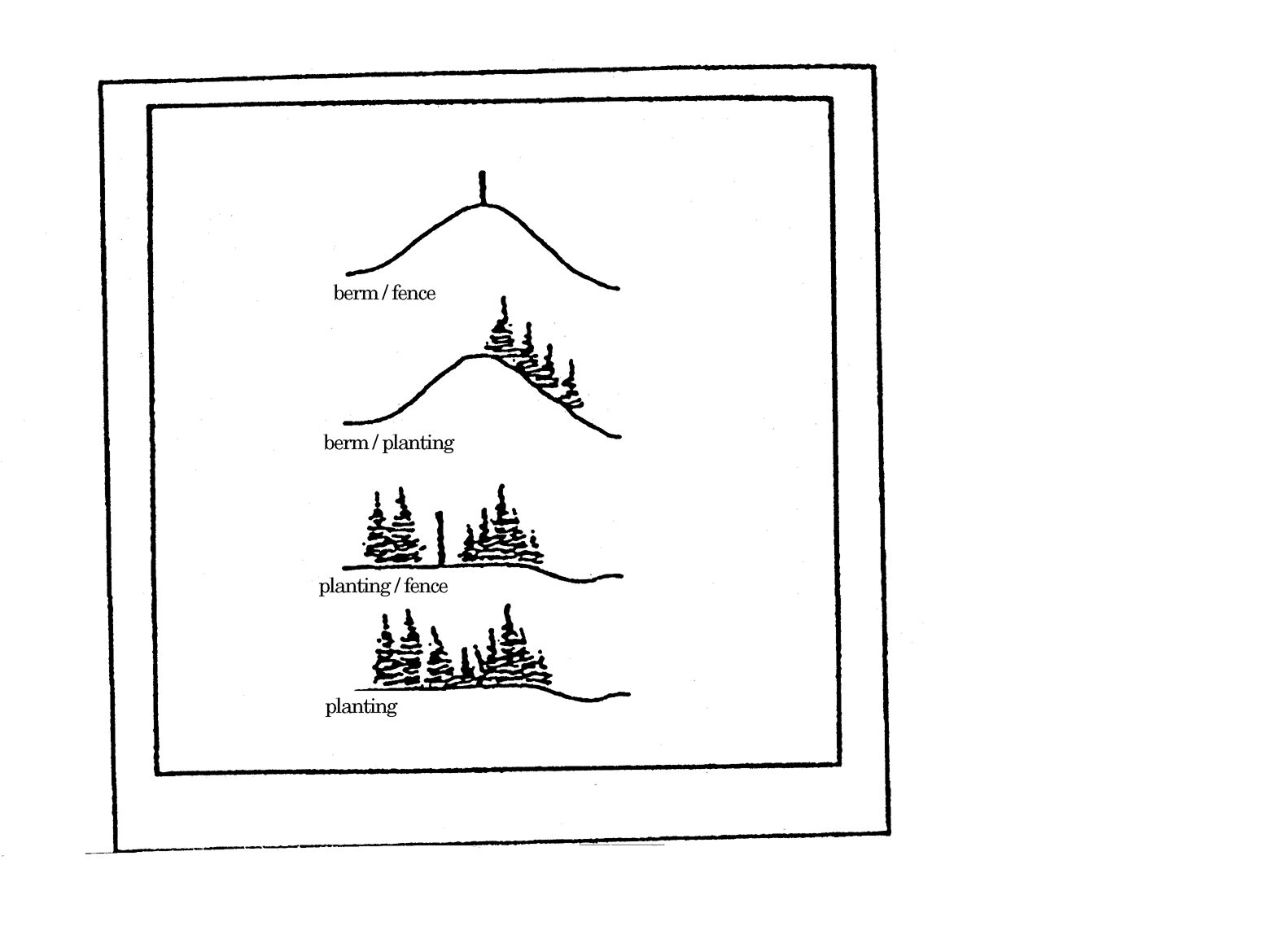
Figure 4. Buffering
(iii)
Plantings shall provide adequate screening but shall not be overcrowded and shall be installed in a manner that provides enough space for shrubs and trees to remain viable at maturity.
(iv)
Where a property contains a stand-alone parking lot and abuts a property zoned or used exclusively as a residential, educational, recreational or religious use, a 25-foot wide buffer shall be required on the property line(s) that abut the residential, educational, recreational or religious use on the property zoned or used for business, commercial, mixed use, or institutional use. This requirement shall not apply to development in the Post Road, neighborhood business, or Wickford Village districts.
(v)
Where a property zoned or used for an industrial use abuts a property zoned for residential, educational, or religious use, a vegetated buffer of 50 feet in width shall be installed and maintained on the industrial use.
(vi)
Where residential development is located on the corner of streets with two different size classifications as defined in the subdivisions and land development regulations (i.e., "local" vs. "collector" vs. "arterial" roads), frontage shall be located along the road with the smaller classification to the extent practicable. A buffer shall be provided between the residential development and the road with the larger street classification. The buffer strip shall be a minimum of 20 feet wide. Additional width may be required where necessary to ensure the health, safety, and welfare of the residents. The director of planning and development or the planning commission may waive these requirements in the Post Road, neighborhood business, or Wickford Village districts in order to further the goals of these districts.
(vii)
Garbage collection, recycling areas, utility areas and any other outside storage areas designated for discarded items shall be screened by a buffer strip with a minimum width of three (3) feet along the sides and back of the area and shall be planted with evergreen trees and shrubs. Where the location of a garbage collection or similar area is effectively screened on any side by another structure such as a building, fence, or retaining wall, the director or the planning commission may waive or reduce this buffering requirement. The director of planning and development or the planning commission may waive these requirements in the Post Road, neighborhood business or Wickford Village districts in order to further the goals of that district. Dumpsters shall not be located in front yards as defined by this zoning ordinance.
(d)
Parking lot and loading area landscaping shall be provided, in addition to the required buffer, to minimize direct views of parked vehicles from streets and public sidewalks, provide the parking area with a reasonable measure of shade and avoid spillover light, glare, noise or exhaust onto adjacent properties. The planning commission and director of planning and development may modify any of the minimum standards associated with parking lot landscaping where deviating from these standards would facilitate an effective use of landscaping to manage stormwater runoff. The following minimum standards shall apply:
(i)
Interior landscaping shall be provided as follows:
i.
The minimum required amount of interior landscaping shall be ten percent of the parking area, which includes driveways, borders, sidewalks, parking stalls, and travel lanes.
Parking lots with 20 or fewer spaces may not require interior landscaping if the planning commission or director of planning and development determines that there is adequate perimeter landscaping and that the objectives of this article have been met.
ii.
Each double row of parking spaces shall be terminated by landscaped islands which measure not less than ten feet in width. For islands with a tapered design, the width shall be measured at the island's widest point. The island shall be designed to border the entire length of the adjacent parking stall.
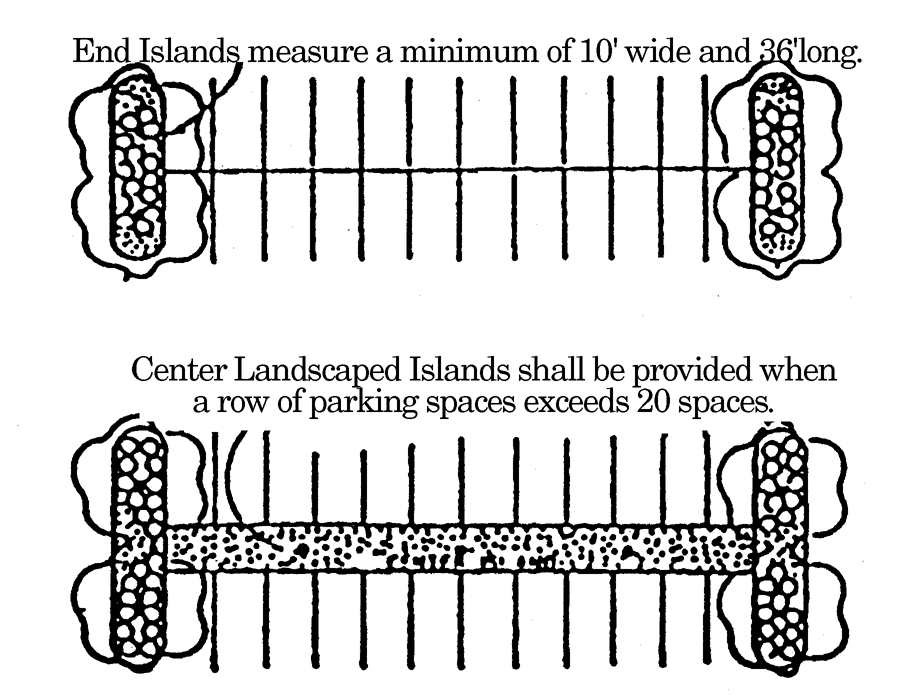
Figure 8. Typical Landscaped Islands
iii.
The interior of parking lots shall have, at a minimum, landscaped center islands at every other double row. Pedestrian paths may be incorporated within center islands provided a minimum width of four feet is maintained for vegetated areas.
iv.
The interior of parking areas and all internal circulation areas to the site shall be shaded by deciduous trees either retained or planted by the developer. At maturity, each tree shall provide a canopy with a radius of at least 15 feet. There shall be a sufficient tree canopy to cover 30 percent of the parking area.
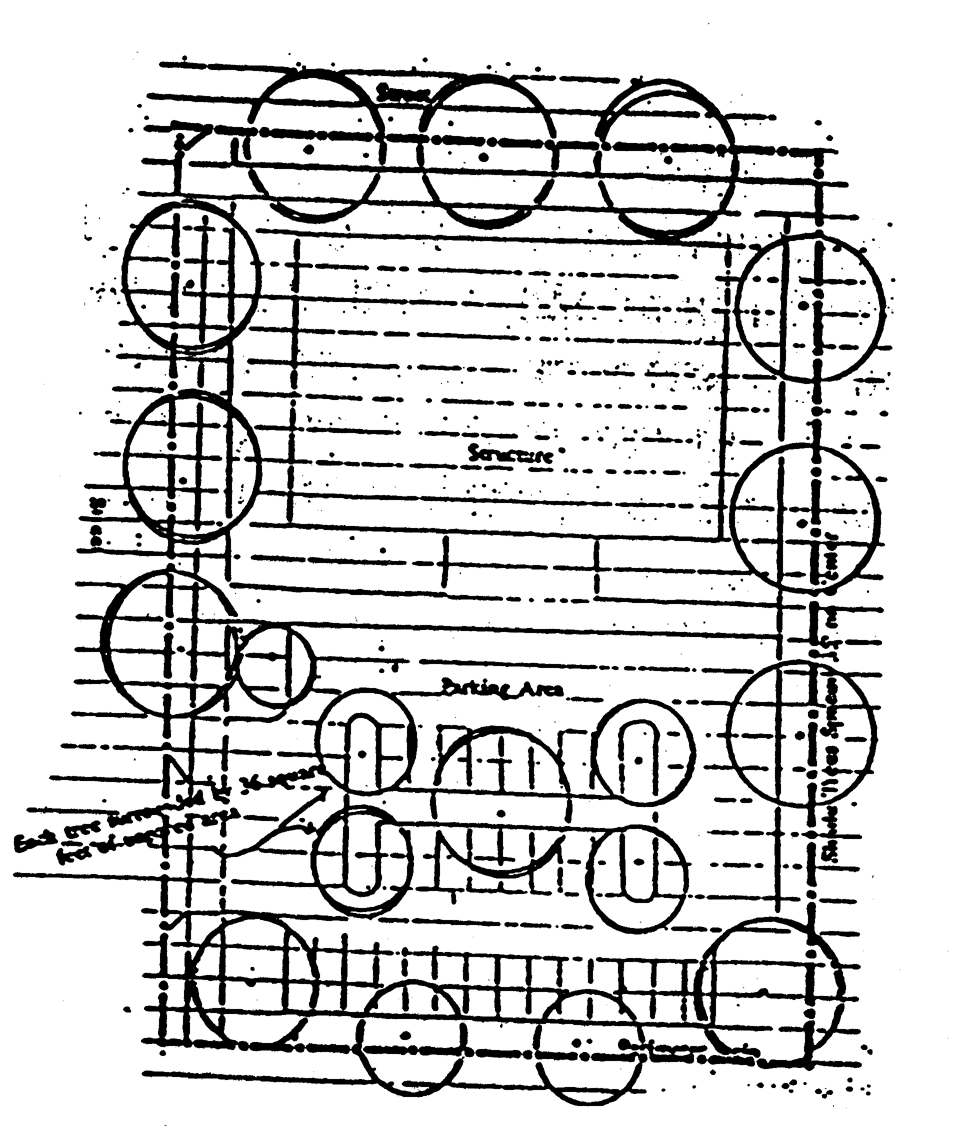
Figure 9. Shade Trees in Commercial Developments
v.
Shade trees shall be located so that they are surrounded by at least 25 square feet of evenly distributed unpaved area, which may be counted towards calculating the required landscaped area. Trees located in sidewalks shall be located in a protected enclosure level with the sidewalk capable of allowing the trunk to grow to maturity.
(Ord. No. 98-7, 5-11-1998; Ord. No. 02-20, §§ 11, 12, 11-18-2002; Ord. No. 03-8, § 10, 6-9-03; Ord. No. 08-18, § 7, 7-7-2008; Ord. No. 10-06, § 6, 4-26-2010)
Sec. 21-278. - Lighting requirements.
(a)
For the purposes of this chapter, lighting for safety shall be provided at intersections, along walkways, at entryways, between buildings and in parking areas and shall be coordinated with stall and aisle layouts.
(b)
The maximum height of standards in commercial and industrial districts shall not exceed 25 feet.
(c)
Where there is a mix of residential and commercial uses, light standards shall not exceed 20 feet in height.
(d)
The height and shielding of lighting standards shall provide proper lighting without hazard to drivers or nuisance to residents.
(e)
The design of lighting standards shall be of a type appropriate to the development and the town.
(1)
Illumination levels within parking lots and on pedestrian walkways should generally not exceed one footcandle. Higher levels should be maintained at vehicular entrances and exits, but typically shall not exceed two footcandles.
(2)
Cutoff luminaries are desirable with at least a 90-degree cutoff.
(3)
Bulbs such as incandescent, halide or halogen which produce white/clear cast are preferred.
(f)
Spotlights, if used, shall be placed on standards, pointing toward the building and positioned so the light will not wash onto residential areas.
(g)
For properties bounding residentially zoned or used properties, light cast by parking and/or security lights shall not exceed one-half footcandle.
(Ord. No. 98-7, 5-11-1998)
Sec. 21-279. - Performance standards.
(a)
Generally. Performance standards shall regulate noise, vibration, smoke, particulate matter, odor, gas, fire and explosive hazards, glare and heat, waste and radiation.
(b)
Application of performance standards. After the effective date of the ordinance from which this section derives, any use established or changed to and any building, structure or land developed or constructed for any permitted principal use or any use permitted as a special use permit or any accessory use shall comply with all of the performance standards set forth in this section for the district involved. If any existing use or building or other structure is expanded or enlarged, the performance standards for the district involved shall apply with respect to such expanded or enlarged portion of such use, building or other structure.
(c)
Enforcement of standards. If there is a determination of a probable violation of the performance standards subsequent to the granting of a permit, the building official shall send a written notice of the probable violation by certified mail to the property owner. The notice shall further state that, upon the continuation of the probable violation, a technical determination as described in this chapter shall be made by the town engineer or other qualified personnel, and that if violations as alleged are found, costs of such determinations, including the costs of hiring qualified experts, shall be charged against those responsible for the violation, in addition to such other penalties as may be appropriate. If it is determined that no violation exists, the cost of the determination will be paid by the town.
(d)
Performance standards. Specific performance standards shall be as follows:
(1)
Noise.
a.
Noise shall be measured from the nearest property line or zone boundary as shown in table 1 of this subsection. At the specified points of measurement, the sound pressure level of noise radiated continuously from other than background noises produced by nonindustrial sources such as vehicular traffic or other transportation shall not exceed the values given in table 1 in octave bands of frequency. The sound pressure level shall be measured by a sound level meter and an octave band analyzer that conform to specifications published by the American Standards Association. American Standard Sound Level Meters for Measurement of Noise and Other Sounds, S1.4-1961 and American Standard Specification for an Octave Band Filter Set for the Analysis of Noise and Other Sounds, Z24.10-1963, American Standards Association, Inc., New York, New York, shall be used.
b.
The maximum permissible sound pressure levels at specified points of measurement for noise radiated continuously from a facility shall conform with the values in table 1.
c.
The limits mentioned in this subsection are intended for normal continuous day-to-day operations. A variance to exceed these limits by a reasonable amount may be granted for temporary and shortterm operations during construction, maintenance or emergency conditions.
TABLE 1. ZONING DISTRICT NOISE STANDARDS
MAXIMUM ALLOWABLE OCTAVE BAND SOUND PRESSURE LEVELS
d.
If the noise is not smooth and continuous and is not radiated between the hours of 7:00 p.m. and 7:00 a.m., one or more of the corrections in table 2 following shall be added to or subtracted from each of the decibel levels given in table 1.
TABLE 2
*Apply one of these corrections only.
e.
If the noise occurs between the hours of 7:00 p.m. and 7:00 a.m. on Monday through Saturday or at any time on Sunday or holidays, seven shall be subtracted from each of the decibel levels given in table 1.
(2)
Vibration. For the purposes of this subsection, certain terms are defined as follows:
Frequency means the number of oscillations per second of a vibration.
Impact vibrations means earthborne oscillations occurring in discrete pulses at or less than 100 per minute.
Steady-state vibrations means continuous earthborne oscillations occurring more than 100 times per minute.
Three-component measuring device means a device for the intensity of any vibration in three mutually perpendicular directions.
a.
Method of measurement generally. For the purpose of measuring vibration, a three-component measuring system recognized as a standard for such purpose shall be used. Location and timing of measurements shall be used. Location and timing of measurements shall be arranged insofar as possible to exclude vibrations emanating from off the premises involved, or a correction factor reasonable under the circumstances shall be applied to compensate for off-premises vibrations.
b.
Method of measurement for industrial districts. In industrial districts, steady-state or impact vibrations from any use shall not exceed at any point at or beyond district boundaries the levels set out in the table in subsection (d)(2)d of this section.
c.
Method of measurement for all other districts. In all other districts, steady-state or impact vibrations from any use shall not exceed at any point at or beyond lot lines the levels set forth in the table in subsection (d)(2)d of this section.
d.
Maximum permitted steady-state and impact vibration displacement. The maximum permitted steady-state and impact vibration displacement (in inches) shall be as follows:
(3)
Smoke. Emissions shall not exceed the standards of the state department of environmental management.
(4)
Particulate matter. Emissions of particulate matter shall meet the minimum standards of the state department of environmental management. Any handling, transfer or storage of materials shall use the best available technology to control fugitive emissions of dust or other particulate matter migrating to off-site locations in any amount which may be injurious to human health, animals, vegetation or other forms of property or which cause any visible deposits or soiling at any point beyond the property lines. Such technology may include dust collection/suppression systems, wind guards and spraying of stockpiles with surfactants.
(5)
Odor. Open storage of materials capable of becoming odoriferous either by bacterial decomposition or chemical reaction in such amounts as to be offensive to abutters shall be prohibited. Any process which may involve the creation or emission of any odors shall be provided with a secondary control system, so that control will be maintained if the primary system should fail. No odorous emission shall be permitted which is determined to be obnoxious or which unduly interferes with or prevents the comfortable enjoyment of life or property. The emission of noxious odorous matter in such manner or quantity as to be detrimental to or endanger the public health, safety, comfort or welfare is declared to be a public nuisance and shall be unlawful.
(6)
Gas. No use shall emit noxious, toxic or corrosive fumes or gases in concentrations or amounts causing discomfort or injury to humans or harmful to vegetation or in excess of the maximum allowable concentrations permitted by the U.S. Environmental Protection Agency or the state department of environmental management.
(7)
Fire and explosive hazards. All industrial uses and storage facilities shall be approved by the town fire marshall with regard to fire and explosive hazards.
(8)
Glare and heat. Any operation or use producing heat or glare, as differentiated from interior illumination, shall be shielded so that no heat or glare can be recorded from the property boundary. Exterior lights shall reflect away from other properties and highways.
(9)
Waste.
a.
Wastewater. Effluent which is discharged into either the ground or sewers shall at all times comply with the standards of the state department of environmental management. Effluent from any industrial or commercial uses shall be collected by the public sewer system when such sewer passes or abuts the property on which the use is located. No effluent can be discharged into the sewer system which will in any way impair the functioning of the sewage treatment plant.
b.
Waste management. All storage and transportation of hazardous waste, as defined by the U.S. EPA, shall be in accordance with the laws, rules and regulations of the state department of environmental management and town ordinances. The applicant shall indicate on development plans materials which will be used, stored, transported or generated which will be controlled by these regulations. Material safety data sheets for each compound shall accompany the application. The application shall indicate the location, amount and chemical composition of all such wastes. All hazardous waste shall be contained in appropriate vessels in fully enclosed structures.
(10)
Temperature. No discharge shall raise the temperature of a receiving water in excess of 83 degrees Fahrenheit or above the normal temperature more than 1.6 degrees Fahrenheit from June 16 through September or more than 4 degrees Fahrenheit from October through June 16. All measurements shall be made at the boundary of the mixing zones, as defined by the state department of environmental management. In no case may a mixing zone cause a loss of or impair any existing or designated use.
(11)
Groundwater, stormwater and surface water. Where deemed necessary by the town engineer, permanent groundwater monitoring wells shall be so specified. Such groundwater monitoring well installation shall include a provision for access, including any dedicated easements required, provided to the town for sampling purposes. The cost of all monitoring, sampling and analysis shall be borne by the property owner.
(12)
Hazardous materials. All use, storage and transportation of extremely hazardous materials as defined by the EPA shall be in accordance with the laws, rules and regulations of the state department of environmental management and town ordinances. The applicant shall indicate on the development plans materials which will be used, stored, transported or generated which will be controlled by these regulations. Material safety data sheets for each compound shall accompany the application. The application shall indicate the location, amount and chemical composition of all such materials. All hazardous materials shall be contained in appropriate vessels in fully enclosed structures.
(13)
Storage.
a.
Generally.
1.
Except where open storage is permitted, storage of all vehicles, equipment, materials, supplies and products shall be stored in a fully enclosed structure complying with this article.
2.
Emergency response plans shall be prepared for all facilities handling or storing hazardous materials or materials deemed by the town to be a threat to the town's drinking water supply.
3.
No commercial buses, vehicles, trailers, cargo containers, or truck bodies shall be used for storage purposes. Motor vehicles or trailers used for temporary loading and unloading purposes, which are removed from the premises within five days from the vehicles' and trailers' arrival date, may be permitted.
4.
Interior storage of chemicals and fuel (stored in tanks, drums or other containers) shall be on an impermeable surface and surrounded by a dike or the floor sloped so that spilled material is collected in a holding tank. The capacity of the dike or tank shall be sufficient to contain 110 percent of the total volume of the containers or the volume of the largest container, whichever is greater.
b.
Open storage. Where the open outdoor storage of vehicles, equipment, materials, supplies and products are permitted, the following shall apply:
1.
The open storage shall not occur within any required minimum front, side or rear setback. This shall not apply in the waterfront industrial district.
2.
The open storage shall not exceed the maximum height limitation of the district.
3.
All open storage areas shall be secured from unauthorized access.
4.
All open storage shall be contained and/or covered as necessary so as to prevent its movement or transport by act of nature, including leaching into the ground. Materials which are subject to erosion by water or leaching shall be contained within an impermeable barrier. Materials which are subject to erosion by wind shall be protected by effective cover or other treatment.
5.
Open storage shall be in such a manner that materials are not attractive to vermin.
6.
All open storage of any substance that can be moved or damaged by water or that is wholly or partly soluble in water shall be prohibited in the special flood hazard overlay district.
c.
Open storage in waterfront industrial district. Open storage in the waterfront industrial district shall also comply with the following conditions:
1.
Open storage shall not exceed 35 feet in height. Stacked containers shall not exceed 35 feet in height. This shall not apply to cranes.
2.
Open storage of the following specific items is a permitted use:
i.
Containers and motor vehicles.
ii.
Construction materials such as lumber, plywood, particle board, wall board, roofing materials, cut stone, brick and other masonry products.
iii.
Primary metal products such as iron or steel plates, beams, coils, rods, ingots and billets; copper or zinc slaps, ingots and wire; aluminum sheet, coils and wire.
iv.
Forest products such as rolled paper, newsprint, Kraft paper, liner board and logs.
v.
Riprap.
vi.
Machinery and industrial equipment.
vii.
Baled wastepaper or scrap paper.
3.
Open storage shall comply with all applicable regulations of the Federal Emergency Management Agency National Flood Insurance Program.
4.
The following materials may be stored in a waterfront industrial district, but must be stored in an enclosed environment and subject to the other sections of this chapter:
i.
Dry bulk cargo, being loose, particulate or granular matter.
ii.
Wood pulp, wood chips and unbaled wastepaper or scrap paper.
iii.
General cargo not otherwise enumerated.
iv.
LNG or LPG, in compliance with the National Fire Protection Association standards.
5.
Bulk storage of the following materials is prohibited in a waterfront industrial district:
i.
Material subject to spontaneous decomposition or combustion.
ii.
Solid waste, as defined by the state department of environmental management.
iii.
Hazardous waste and hazardous substances as established by the United States Department of Transportation.
d.
Exterior aboveground storage of liquid materials.
1.
All bulk storage of liquid materials shall be contained in a tank or vessel designed for the purpose and shall be located within an impervious containment structure and diked area conforming to the following:
i.
The volume of the diked area shall be at least 110 percent of the volume of the largest tank contained therein, excluding the volume below the dike level occupied by any other tanks.
ii.
The dikes and the entire area enclosed by the dikes including the area under the tanks shall be made permanently impervious to the types of products expected to be stored in the tanks. A tank cannot be switched from one product to another unless the containment and diked barrier is impervious to the new material being stored.
iii.
Drainage of precipitation from within the containment and diked area shall be controlled in a manner that will prevent any toxic or hazardous or waste material from entering the ground, groundwaters or surface waters. Containment structures shall be separately drained, where practicable, to prevent accumulation of precipitation within the dike. Where roofing is not practical, the diked area should be designed with an additional capacity that is sufficient to contain precipitation from a 25-year rainfall event.
2.
Containers (e.g., drums) should be stored in a roofed containment structure within an impermeable base and dike. The containment structure should have sufficient capacity to contain 110 percent of the total volume of the containers. The base of the containment structure should be sloped or the containment system should be otherwise designed and operated to safely drain and remove liquids from leaks and spills. Where roofing is not practical, the containment structure should be designed with an additional capacity for accumulated precipitation from a 25-year rainfall event and the containers themselves covered with a weatherproof covering. Materials loading areas shall be inside the facility with drainage from the loading areas directed to the containment system.
3.
Storage of chemicals and fuel products should be in an area secured from vandalism.
(Ord. No. 98-7, 5-11-1998; Ord. No. 02-14, §§ 5, 6, 10-7-2002)
Sec. 21-280. - Other design standards.
(a)
Railroad construction. All construction of rail lines, sidings or switching facilities shall be indicated on the development plans. All construction shall be in accordance with the American Railroad Association, the Federal Railroad Administration, and the state department of transportation specifications. The department of planning and development and/or the town engineer may require additional vehicular and/or pedestrian crossings. Rail crossings shall be signed, and pavement markings shall be provided in accordance with current standards as established in the Manual of Uniform Traffic Control Devices.
(b)
Bulkheads, piers, wharves, jetties, seawalls and riprap construction. All new and all proposed changes to or additions of bulkheads, piers, wharves, jetties, seawalls and riprap shall be indicated on the plans. All such construction shall follow acceptable engineering practices and shall conform to the regulations of the state department of environmental management, the state coastal resources management council, the U.S. Army Corps of Engineers, the U.S. Coast Guard and all other appropriate agencies.
(c)
Water supply system. Plans shall indicate the complete water supply system with estimated daily average and peak water consumption. The plan shall indicate wells, pumping facilities, water tanks, cisterns, water lines, hydrants, fire control siamese connections and sprinkler systems. If private wells or other private water supply is to be used, proof shall be provided as to the quality and quantity of water available. The water supply system shall meet the standards set by the state department of health and the town fire chief and department of water supply. If the water supply is deemed to be inadequate in quantity or quality, an alternative source of supply will be required. If private wells are used, proof shall be supplied that the proposed drawdowns will not adversely impact any existing wells. If the municipal water system is incorporated in the subdivision design, the developer/contractor shall provide the town engineer with accurate as-built drawings showing the water line extensions.
(d)
Site engineering and construction specifications. All site construction shall be in accordance with the state standard details and state standard specifications, as amended, issued by the state department of transportation, division of public works.
(e)
Underground utilities. Electric and communication lines shall be installed underground, where applicable.
(Ord. No. 98-7, 5-11-1998)
Sec. 21-281. - Public access to the water.
Where a recorded, deeded, public right-of-way to the water exists, the town may require public access consistent with safety, parking and pedestrian passage. The access shall be appropriately signed and maintained so that the right-of-way is known and accessible. Where a signage standard has been adopted by the town, such signage shall be erected by any applicant for development approval.
(Ord. No. 98-7, 5-11-1998)
Cross reference— Harbors, wharves and public waters, ch. 7.
Sec. 21-284. - Development plan review.
A.
Purpose. The purpose of the development plan review is to insure compliance with the comprehensive plan and protect the health, safety, convenience and general welfare of the inhabitants of the town by providing a review of plans for uses and structures which may have significant impacts on traffic, municipal and public services and utilities, environmental quality, community economics and public health.
B.
Approval required. Procedures for approval are as follows:
(1)
Administrative approval required. Any construction of a structure, group of structures, alteration, improvement or change of use of a building or property which does not meet the criteria for planning commission review shall require development plan approval by the director of planning and development including:
(a)
Any structure or group of structures proposed for commercial or industrial use containing less than 50,000 square feet of total floor area under the same ownership or contiguous lots;
(b)
Any structure or group of structures proposed for a mixed use development less than 100,000 square feet of total floor area under the same ownership or contiguous lots; and
(2)
Planning commission approval required. Any construction of a structure, group of structures, any alteration or improvement or change of use of property for commercial or industrial use as described in B.(1)(a) of this section which is located in a groundwater recharge and wellhead overlay district shall require development plan review and approval by the planning commission.
(3)
Activities exempt. The administrative officer may determine that developments that meet the following criteria are exempt from the requirements of the development plan review, except where the approval of the zoning board of review is required or for multifamily developments or developments in a groundwater recharge or wellhead area where planning commission approval is required:
(a)
Alterations or enlargements, individually or collectively, of an existing structure where the expansion or change is less than 25 percent of the original footprint as of the date of passage of this ordinance or 2,500 square feet from the original footprint, whichever is less; and
(b)
A change or expansion in use where an increase in required parking results in the addition of no more than five spaces.
(4)
Quonset Business Park. Pursuant to section 21-100(c) of the zoning ordinance, development proposals in the QBP are not subject to development plan review but shall be reviewed under the procedures and standards located in the Quonset Business Park Development Package (September 2005, amended in September 2008, and as subsequently amended) consistent with the memorandum of agreement (dated December 15, 2010, and as subsequently amended).
C.
Approval required prior to building permit. Approval shall be required prior to building permit issuance in accordance with the following:
(1)
No building permit shall be issued for and no person shall undertake any use or improvement subject to this section until development plan approval has been granted by the planning commission or the administrative officer.
(2)
For all properties and uses subject to development plan review, new accessory off-street parking and truck loading areas shall be located and established only as indicated on a development plan duly approved by the planning commission and/or administrative officer. Any changes, alterations, improvements or additions to the parking areas shall require further review by the planning commission and/or administrative officer.
(3)
For uses which require off-street parking and loading provisions where no building is proposed for construction, a development plan showing all other required site elements, as indicated in the submission requirements, shall be provided to the town.
D.
Administration. Administration of this section shall be as follows:
(1)
Application/inspection fee. No application shall be considered complete unless accompanied by the required application fee. If applicable, an inspection fee shall be paid by the applicant as a condition of approval of a development plan. The fee shall be an amount based on the value of improvements as determined by the town engineer.
(2)
Expiration of development plan review approval. A development plan review granted pursuant to this chapter shall be valid for a period of one year from the date of filing of the decision, during which time application for a building permit shall be made. The approving agency may grant up to an additional year as a condition of approval, when such is requested in writing.
(3)
Interpretation. The planning commission or administrative officer, as appropriate, shall be responsible for deciding the meaning and intent of any section of this article which may be unclear or in dispute.
(4)
Appeals. An appeal to a decision by the planning commission or administrative officer with regard to development plan review approval may be taken by an aggrieved party to the zoning board of review in accordance with section 21-17.
(5)
Inspections. Upon the request of the building official, the engineering department shall inspect all site work required as part of the development plan review approval and shall report its findings to the building official.
E.
Application, review and decision procedures. Procedures for the application, review and decisions shall be as follows:
(1)
Applicants for development plan review will follow the procedures and submission requirements set out in the subdivision and land development regulations, appendix A of this Code, as amended.
(2)
In granting development plan approval, the planning commission shall require evidence to the satisfaction of the following standards be entered into the record of the proceedings:
a.
The requested action will not alter the general character of the surrounding area or impair the intent or purpose of this chapter or the comprehensive plan upon which this chapter is based.
b.
The grant of the approval will not pose a threat to the drinking water supply.
c.
The use will not disrupt the neighborhood or the privacy of abutting landowners by noise, light, glare or air pollutants.
d.
Sewage and waste disposal into the ground and the surface water drainage from the proposed use will be handled on site.
e.
The traffic generated by the proposed use will not cause congestion or introduce a traffic hazard to the circulation pattern of the area.
f.
Accessory signs, off-street parking and loading areas and outdoor lights are designed and located in a manner which complements the character of the neighborhood.
(3)
In granting development plan approval, the planning commission or administrative officer, as appropriate, may apply such special conditions that may, in the administrative officer's or planning commission's opinion, be required to promote the intent and purposes of this chapter. Failure to abide by any special conditions attached to a grant shall constitute a zoning violation. Those special conditions shall be based on competent credible evidence on the record, shall be incorporated into the decision, and may include but are not limited to provisions for the following:
a.
Minimizing adverse impact of the development upon adjacent land, including the type, intensity, design and performance of activities;
b.
Controlling the sequence of development, including when it must be commenced and completed;
c.
Controlling the duration of use or development and the time within which any temporary structure must be removed;
d.
Ensuring satisfactory installation and maintenance of required public improvements;
e.
Designating the exact location and nature of development;
f.
Establishing detailed records by submission of drawings, maps, plats or specifications;
g.
Requiring the merger of lots included in the development plan review application; and
h.
Vehicular, bicycle and pedestrian connections where feasible and appropriate.
(4)
If the proposed development may generate 100 or more additional peak hour trips, based on the Institute of Traffic Engineers (ITE) Trip Generation Handbook, or if the department of planning and development determines that a safety or capacity deficiency exists, a traffic impact analysis prepared by a registered professional engineer shall be submitted by the applicant of existing conditions and future conditions with the proposed development.
(5)
Other such material as deemed appropriate by the planning commission or administrative officer, including but not limited to wetland mitigation analysis, water supply analysis (domestic and fire), nitrate loading analysis, environmental impact analysis and municipal service impact analysis may be required. The determination of additional studies by the administrative officer or planning commission shall be made prior to the issuance of a certificate of completion.
(6)
The planning commission or administrative officer is authorized to require an applicant to pay a consultant fee for the reasonable costs and expenses, in an amount not to exceed actual costs incurred by the town, for specific expert engineering and other consultant services deemed necessary by the planning commission or administrative officer to come to a final decision on the application.
(7)
For properties within Quonset Point/Davisville, a letter from the state economic development corporation, indicating that it has reviewed and approved the development plan, shall be presented to the town.
(8)
The planning commission or the administrative officer is authorized to require an applicant to pay a consultant fee for the reasonable costs and expenses, in an amount not to exceed actual costs incurred by the town, for architectural review of plans as deemed necessary by the planning commission or administrative officer to come to a final decision on the application. Such architectural review shall be limited to a determination as to plan consistency and conformance with the design guidelines contained within this section. Applicants are advised to meet with the planning department to discuss design guidelines prior to submitting plans.
(Ord. No. 98-7, 5-11-1998; Ord. No. 01-1, § 15, 2-12-2001; Ord. No. 08-18, § 7, 7-7-2008; Ord. No. 11-01, §§ 4, 5, 1-10-2011)

