
Nucla City Zoning Code
ARTICLE III
LOT, BUILDING, AND STRUCTURE STANDARDS
Sec. 9-3-101. - Purpose and application of division.
(a)
Purpose. The purpose of Division 3-1, Housing Palette, is to set out types of housing that may be developed in the Town, and to establish minimum lot and building standards (and in some cases, other applicable standards) for each housing type. The housing palette provides a range of choices for lot sizes and housing types so that applicants may design projects that promote affordability and diversity, address multiple market demands, and (where appropriate) protect open space and natural resources.
(b)
Application.
(1)
Check the Use Table. Step 1 is to determine which housing types are allowable in the zone by checking the use table. The use table is set out in Table 9-2-202A, Residential and Special Residential Land Uses.
(2)
Check the Site Design Standards and Apply the Housing Palette. Step 2 is to review the applicable design standards in this Article and Article IV, Site Design Standards, and then lay out a development that incorporates the allowable housing types of the applicant's choice. The standards for each housing type are set out in this Division.
(Ord. No. 2023-006, 6-14-2023)
Sec. 9-3-102. - Single-family detached home or manufactured home lot and building standards.
(a)
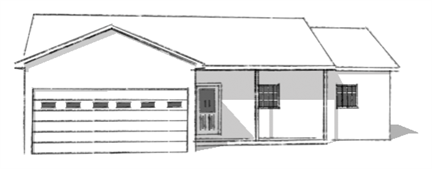
Generally. The single-family detached home housing type consists of one standalone dwelling unit or manufactured home located on a privately-owned lot with private yards on each side of the dwelling unit. An illustrative single-family detached home is shown in Figure 9-3-202A, Illustrative Single-Family Detached Home.
| Figure 9-3-102A Illustrative Single-Family Detached Home |
|---|
 |
(b)
Lot and Building Standards. Table 9-3-102B, Single-Family Detached or Manufactured Home Lot and Building Standards, below, establishes lot and building standards for single family detached and manufactured home lots and buildings.
(Ord. No. 2023-006, 6-14-2023)
Sec. 9-3-103. - Lot and building standards for additional single-family detached homes on a single lot.
(a)
Generally. Two or more single-family detached homes may be constructed, placed, or installed on a single lot in accordance with the provisions and limitations of this subsection.
(b)
Lot and Building Standards. The minimum and maximum standards in Table 9-3-102B, Single-Family Detached Lot and Building Standards apply to each proposed residence. Although subdivision is not required, two or more dwelling units on a single lot shall be accessed, located, spaced, oriented, and served by utilities such that the subject property could be subdivided into a standard subdivision in the future. See Article 5, Site Design Standards, for applicable design standards.
(Ord. No. 2023-006, 6-14-2023)
Sec. 9-3-104. - Duplex lot and building standards.
(a)
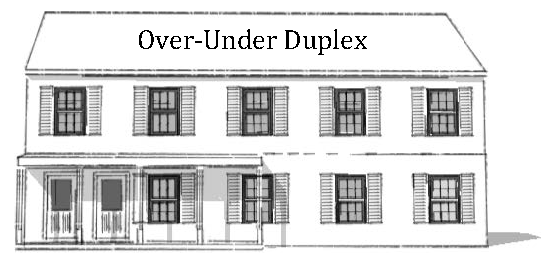
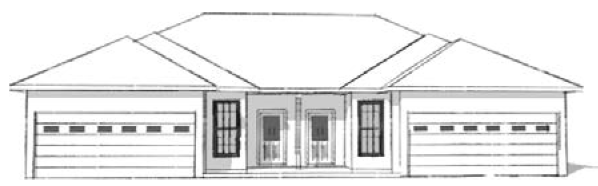
Generally. The duplex housing type consists of two single-family dwelling units located in a single building. Illustrative duplex buildings are shown in Figure 9-3-104A, Illustrative Duplex Buildings.
| Figure 9-3-104A Illustrative Duplex Buildings | |
|---|---|
 |
Side-by-Side Duplex
 |
(b)
Lot and Building Standards. Table 9-3-104B, Duplex Lot and Building Standards, below, establishes lot and building standards for duplex buildings.
(Ord. No. 2023-006, 6-14-2023)
Sec. 9-3-105. - Townhouse lot and building standards.
(a)
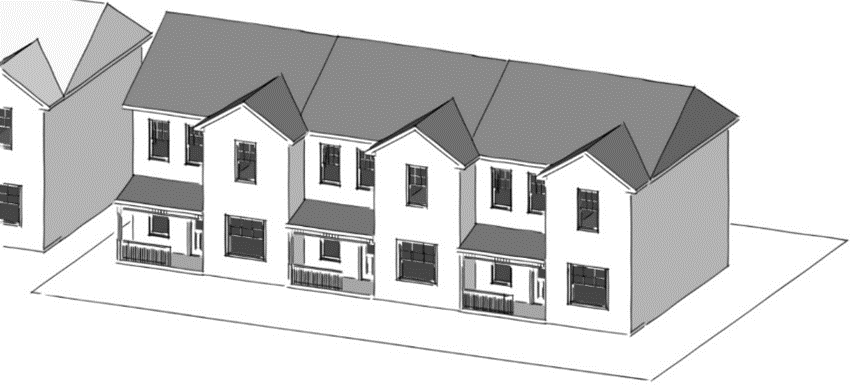
Generally. The townhouse housing type consists of three or more dwelling units located in a single building, in which the individual dwelling units are separated by vertical firewalls. An illustrative townhouse building is shown in Figure 9-3-105A, Illustrative Townhouse Building.
| Figure 9-3-105A Illustrative Townhouse Building |
|---|
 |
(b)
Lot and Building Standards. Table 9-3-105B, Townhouse Lot and Building Standards, below, establishes lot and building standards for townhouse buildings.
(Ord. No. 2023-006, 6-14-2023)
Sec. 9-3-106. - Multifamily lot and building standards.
(a)
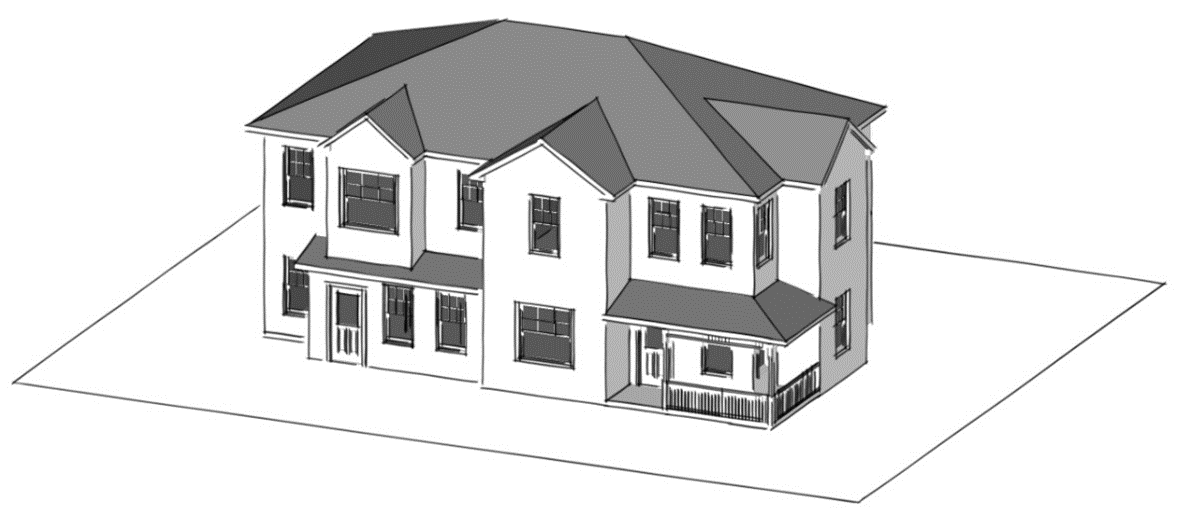
Generally. The multifamily housing type is typically in the form of apartments or condominiums up to two stories in height. Multifamily dwelling units may also be located in the upper floors of vertically mixed-use buildings; however, those buildings are subject to the standards for nonresidential and mixed-use buildings set out in Table 9-3-201A Nonresidential and Mixed-Use Lot and Building Standards, and not the standards of this Section.
| Figure 9-3-106A Illustrative Multifamily Building |
|---|
 |
(b)
Lot and Building Standards. Table 9-3-106B, Multifamily Lot and Building Standards, below, establishes lot and building standards for multiplex and multifamily buildings.
(Ord. No. 2023-006, 6-14-2023)
Sec. 9-3-107. - Tiny home cluster lot and building standards.
(a)
Generally. The tiny home housing type consists of small single-family detached residences that have 400 square feet of floor area or less. These housing types are arranged in a cluster of up to six tiny homes. Vehicular access is provided by a shared parking lot.
(b)
Common Buildings. Each tiny home cluster may include a common building that provides shared kitchen, restroom, storage, and gathering space for residents of the tiny home cluster. The common building shall not be used as a dwelling unit.
(c)
Lot and Building Standards. Table 9-3-107A, Tiny Home Cluster Lot and Building Standards, below, establishes lot and building standards for clusters of tiny homes.
(Ord. No. 2023-006, 6-14-2023)
Sec. 9-3-201. - Nonresidential and mixed-use lot and building standards.
Lot and building standards for nonresidential and mixed-use development are set out in Table 9-3-201, Nonresidential and Mixed-Use Lot and Building Standards.
(Ord. No. 2023-006, 6-14-2023)
Sec. 9-3-301. - Purpose and application of division.
The purpose of this Division is to set out the exceptions to the lot and building standards that are set out in Division 3-1, Housing Palette, and Division 3-2, Nonresidential and Mixed-Use Lot and Building Standards.
(Ord. No. 2023-006, 6-14-2023)
Sec. 9-3-302. - Setback flexibility.
(a)
Generally. In general, the standards of Division 3-1, Housing Palette, including building setbacks apply within all zone districts. However, setback reductions may be granted subject to the standards in this section.
(b)
Individual Lot Setback Reductions for Additions. Setback reductions on individual lots shall be applied only if it is demonstrated that the setback-specific standards below are met, and:
(1)
The proposed construction does not result in interference with a utility easement, drainage easement, or emergency access; and
(2)
The proposed construction does not interfere with planned expansion of right-of-way (if right-of-way expansion is planned, the encroachment shall be evaluated as if the right-of-way has been expanded);
(3)
The proposed addition does not create new or increased nonconformity with respect to the building code or fire code (e.g., fire separation distance) on either the subject property or adjoining property.
(c)
Front Setbacks for New Single-Family Detached and Duplex Dwelling Units. Front yard requirement for single-family detached and duplex dwellings in areas where other lots on the street are developed with existing single-family or duplex dwelling units may be reduced by the Administrator if the Administrator finds that there will be no material impact on public safety as a result of potential obstruction of a street or alley for sight distances or movement of emergency vehicles; and:
(1)
If there are dwelling units on both abutting lots with front yards of less than the required depth, the front yard setback for the lot need not exceed the average front yard of the abutting dwelling units; or
(2)
If there is a dwelling unit on one abutting lot with a front yard of less than the required depth for the district, the front yard for the lot need not exceed a depth one-half (½) way between the depth of the abutting lot and the required front yard depth.
(d)
Rear Setbacks for New Single-Family Detached and Duplex Dwelling Units. Rear setback requirement for single-family detached and duplex dwellings in areas where other lots on the street are developed with existing single-family or duplex dwelling units may be reduced by the Administrator as follows:
(1)
If there are dwelling units on both abutting lots with rear setbacks of less than the required depth for the district, the rear setback for the lot need not exceed the average rear yard setback of the abutting dwellings.
(2)
If there is a dwelling unit on one abutting lot with a rear setback of less than the required depth for the district, the rear setback for the lot need not exceed a depth one-half (½) way between the depth of the abutting building and the required rear yard setback.
(3)
No garage with a garage door that faces an alley shall be set back to create a driveway that is more than 5 ft. but less than 20 ft. long.
(e)
Interior Side Setbacks for New Single-Family Detached and Duplex Dwelling Units. Interior side setbacks may be reduced by the Administrator up to 30 percent, provided that:
(1)
The reduction is necessary due to the existing development of the lot, or specific physical or access constraints justify the reduction;
(2)
There is sufficient space between the buildings for building maintenance and emergency access, or a sufficient easement is provided on the adjacent lot for such access; and
(3)
Buildings on both sides of the reduced setback are constructed to applicable building and fire codes based on their proximity to each other.
(f)
Street Side Setbacks for New Single-Family Detached and Duplex Dwelling Units. Street side setbacks may be reduced by the Administrator by up to 30 percent, provided that:
(1)
The reduction is necessary due to the existing development of the lot, or specific physical or access constraints justify the reduction; and
(2)
There will be no material impact on public safety as a result of potential obstruction of the street for sight distances, or movement of emergency vehicles.
(Ord. No. 2023-006, 6-14-2023)
Sec. 9-3-303. - Projections into required setbacks.
(a)
Generally. Specified structures and architectural features may encroach into required setback areas as provided in Table 9-3-303A, Setback Reductions for Building Elements, Equipment, and Structures. The encroachments authorized by this Section are subject to all applicable building code requirements.
(b)
Limitations. No building, building element, or structure shall cross a lot line:
(1)
Into separately owned property, unless a recorded document provides for access to and maintenance of the projection;
(2)
Into public property or rights-of-way, unless a revocable encroachment permit is issued by the Administrator;
(3)
Into access easements; or
(4)
Into utility easements, unless the design of the improvement and a recorded agreement allows access to the utility and allows the utility or the Town to efficiently remove the encroachment at the property owner's expense.
(Ord. No. 2023-006, 6-14-2023)
Sec. 9-3-304. - Exception to building height regulations.
The height of chimneys, radio and television towers, wind chargers, cooling towers, elevator bulkheads, fire towers, monuments, stacks, stage towers or scenery lofts, tanks, water towers, ornamental towers, spires, grain elevators, and necessary mechanical appurtenances may exceed the building height regulations subject to approval as a conditional use, except that the standards for approval that are set out in Section 9-2-302, General Standards for All Conditional Uses, are replaced with the following:
(1)
The additional height does not materially affect the adequacy of light and air on adjacent properties or public rights-of-way;
(2)
The additional height does not materially affect views from neighboring properties to landmarks or scenic vistas; and
(3)
Adequate firefighting capabilities are available to address the additional height in the event of a fire emergency.
(Ord. No. 2023-006, 6-14-2023)
Sec. 9-3-401. - Purpose of division.
The purpose of this Division is to set out standards for certain accessory buildings, structures, and accessory uses.
(Ord. No. 2023-006, 6-14-2023)
Sec. 9-3-402. - Accessory buildings.
(a)
Generally. Accessory buildings (e.g., detached garages, storage buildings, or accessory dwelling units) shall comply with all requirements for principal buildings except where specifically modified by this Chapter.
(b)
Spacing. No part of any accessory building shall be located closer than 10 feet to any other building, whether on the same lot or on an adjacent lot.
(c)
Construction. All accessory buildings (except greenhouses) that are larger than 200 square feet in floor area shall be installed on a permanent foundation.
(Ord. No. 2023-006, 6-14-2023)
Sec. 9-3-403. - Fences, garden walls, retaining walls, and hedges.
(a)
Generally. A fence, garden wall, retaining wall, column, pier, post, dog run, or any similar type structure, or any combination of such structures, are subject to the standards of this Section.
(b)
Identification of Property Lines. It shall be the responsibility of the property owner to locate all property lines. No fence or wall may extend beyond or across a property line except by agreement with the adjoining property owner.
(c)
Sidewalk Setback. No fence or wall shall be placed nearer than 18 inches to any street right-of-way, alley right-of-way, or public sidewalk, unless by written permission of the Administrator.
(d)
Maximum Height; Exceptions.
(1)
No fence, garden wall, retaining wall, or hedge shall exceed six feet in height in a side yard, rear yard, or street side yard behind the front building line, and four feet in height in a front yard or street side yard in front of the front building line, except that:
a.
A dog run that is located in the interior side yard or rear yard may be enclosed with a fence that is up to ten feet in height.
b.
A deer fence located behind the front building line may be up to ten feet in height.
c.
Posts and pillars may exceed the maximum fence height by up to eight inches.
d.
Open arches, gates, and pergolas may be constructed up to nine feet in height.
e.
Fences that are used for athletic fields (e.g., baseball diamonds), play courts (e.g., tennis), or driving ranges are not subject to the height restriction.
f.
Walls that are used in Class C Bufferyards, and buffers between industrial uses and other uses, may be up to 10 feet in height.
(2)
The Administrator may approve deviations from the standards of this subsection as required to create appropriate buffering or screening, accommodate recreational uses, or provide for specific security requirements.
(Ord. No. 2023-006, 6-14-2023)
Sec. 9-3-404. - Outdoor storage.
(a)
Generally. Outdoor storage areas, whether as a primary use (e.g., outdoor storage yard) or accessory use (e.g., to heavy industry or heavy retail), shall meet the standards of this Section.
(b)
Location.
(1)
The area used for outdoor storage shall be located in a back yard or side yard, except that if the principal use is heavy industry or outdoor storage yard, the location of outdoor storage areas on a subject property is restricted only as provided in subsection (b)(2).
(2)
If the principal use is heavy industry or outdoor storage yard, outdoor storage area shall not be located in areas that are used for parking, bufferyards, or stormwater conveyance or detention areas, or that are environmentally sensitive areas (e.g., a wetland).
(c)
Surfacing. Outdoor storage areas shall be surfaced and maintained in a manner that prevents windblown particulates and soil erosion. If outdoor storage areas are not paved, tracking control is also required at points or ingress and egress.
(d)
Screening and Enclosure. The area used for outdoor storage shall be enclosed by a fence or screen wall that is not less than six feet in height.
(e)
Operation and Maintenance.
(1)
The area used for outdoor storage shall be kept orderly, pest-free, and odor-free.
(2)
The outdoor storage area shall not be used to dispose of inoperable vehicles, inoperable machines, garbage, or other waste.
(3)
If the principal use is single-family or duplex residential, outdoor storage areas shall not be used for storage of materials, products, and equipment used for a home occupation.
(Ord. No. 2023-006, 6-14-2023)
Sec. 9-3-405. - Trash collection.
(a)
Generally. In development in which curbside trash pickup is not provided, centralized facilities shall be provided for solid waste collection.
(b)
Location on Site.
(1)
Centralized solid waste collection facilities shall be set back at least:
a.
10 feet from interior property lines; and
b.
20 feet from any public street or public sidewalk.
(2)
In the alternative, if it is not possible to service the centralized facilities in a location which is at least 10 feet from all property lines, then the facilities may be located closer to the property lines, provided that:
a.
The setback reduction is applied to the front setback as a "last resort," and only if it is demonstrated that no other setback reduction will solve the service problem; and
b.
They are located as far from the property line as is practicable.
(c)
Enclosure Requirements.
(1)
The areas where refuse and recycling containers are stored shall be fully enclosed to the height of the tallest dumpster, using screen walls, privacy fencing, or a landscaped berm.
(2)
The enclosures shall be sized to include the types of solid waste containers that will be necessary to serve the use or uses of the subject property.
(Ord. No. 2023-006, 6-14-2023)
Sec. 9-3-406. - Drive-in or drive-through facilities.
(a)
Generally. Drive-in or drive-through facilities, where allowed, are subject to the standards of this Section.
(b)
Minimization of Circulation Conflicts. Traffic circulation shall be arranged so that internal pedestrian and vehicular movements are compatible and traffic hazards are minimized.
(c)
Minimization of Off-Site Hazards. Traffic circulation, ingress and egress shall be arranged so as to avoid hazardous or adverse effects on adjacent sites and streets.
(Ord. No. 2023-006, 6-14-2023)
Sec. 9-3-407. - Solar energy facilities.
(a)
Photovoltaic Arrays. Photovoltaic arrays convert sunlight into electricity. The following standards apply to photovoltaic arrays:
(1)
Roof-Mounts. Photovoltaic arrays may be roof-mounted on principal and accessory buildings and roofed structures (e.g., covered walkways or covered parking spaces) in all zoning districts.
(2)
Ground-Mounts or Structure-Mounts. Ground or structure-mounted photovoltaic arrays (not mounted on buildings or roofed structures) shall be set back as if they were detached accessory buildings if the highest point on the panels is more than eight feet above grade.
(Ord. No. 2023-006, 6-14-2023)
Sec. 9-3-501. - Applicability, exemptions, and permit exceptions.
(a)
Generally. A sign permit is required prior to the erection, installation or substantial modification of any sign that is not an exempt sign as defined in Subsection (b) below.
(b)
Exempt signs. The following exempt signs do not require a sign permit, but may require a building permit or other related permit (if subject to building or electrical codes):
(1)
Holiday Decorations. Decorations that are clearly incidental, customary, and commonly associated with a holiday.
(2)
Governmental Entities. Signs of any type that are installed or posted by the Federal government, the State of Colorado, Montrose County, the Town, or the School District (collectively, "Governmental Entities"), on property owned or controlled by the Governmental Entity.
(3)
Required Signs. Signs that are required by law or regulation:
a.
In furtherance of the performance of a public duty or function (e.g., temporary or permanent traffic control and street signs);
b.
To give legal notice (e.g., notices of pending action pursuant to this Code or Town ordinances);
c.
To comply with building codes (e.g., address numbers); or
d.
To comply with other laws or regulations.
(4)
Small Signs.
a.
Signs that are affixed to a building or structure and that do not exceed six square feet in sign area, provided that only one such sign is present on each elevation that is visible from public rights-of-way or neighboring property; and
b.
Signs that are less than three-fourths square foot in area that are affixed to machines, equipment, fences, gates, walls, gasoline pumps, public telephones or utility cabinets.
(5)
Interior Signs. Signs that are not visible from residential lots, abutting property or public rights-of-way.
(6)
Temporary Signs. Temporary signs that are in compliance with the applicable requirements of Section 9-3-504, Standards by Type of Sign Allowed.
(c)
Maintenance of or Incidental Changes to Existing Signs. No permit is required for routine sign maintenance, painting, replacing a panel in a cabinet sign (except that the installation of a new manual changeable copy message center or electronic message center does require a permit), or replacing light sources with lighting of comparable brightness.
(d)
Relationship to Other Regulations.
(1)
In addition to the regulations set out in this Division, signs may also be subject to applicable building and electrical codes. Exceptions to the sign permit requirement do not constitute exemptions to other applicable codes or permit requirements.
(2)
Where any provision of this Division covers the same subject matter as other regulations of the Town, the more specific regulation shall control, or if neither regulation is more specific, the more restrictive regulation shall apply.
(3)
The Town does not administer State or Federal law pertaining to signage. However, where any provision of this Division covers the same subject matter as other regulations of the State of Colorado or the United States, the applicant is advised that nothing in this Chapter shall be construed as a defense to a violation of applicable state or federal law except as may be provided in the state or federal law.
(Ord. No. 2023-006, 6-14-2023)
Sec. 9-3-502. - Design standards.
(a)
Prohibited Elements. The following elements and materials shall not be incorporated as an element of any sign or sign structure, whether temporary or permanent:
(1)
Animated or moving signs that are visible from public rights-of-way, including any moving, swinging, rotating, flashing, blinking, scintillating, fluctuating or otherwise animated light, except as specifically permitted in Subsection (f), Electronic Message Centers, contained in this section.
(2)
Motor vehicles, unless:
a.
The vehicles are operational, and either:
i.
Automobile dealer inventory; or
ii.
Regularly used as motor vehicles, with current registration and tags;
b.
The display of signage on the motor vehicle would not interfere with the immediate operation of the motor vehicle (e.g., signs that are held in place by an open hood or trunk are not allowed; signs that cover windows are not allowed; and signs that would fall off of the vehicle if the vehicle were in motion are not allowed); and
c.
The motor vehicle is legally parked in a designated parking space.
(3)
Semi-trailers, shipping containers, or portable storage units, unless:
a.
The trailers, containers, or portable storage units are:
i.
Structurally sound and capable of being transported;
ii.
Used for their primary purpose (e.g., storage, pick-up, or delivery); and
iii.
If subject to registration, have current registration and tags; and
b.
The display of signage is incidental to the primary purpose; and
c.
The semi-trailer, shipping container, or portable storage unit is parked or placed in a designated loading area or on a construction site at which it is being used for its primary purpose.
(4)
Stacked products (e.g., tires, soft drink cases, bagged soil or mulch).
(5)
Materials with a high degree of specular reflectivity, such as polished metal, installed in a manner that creates substantial glare from headlights, street lights, or sunlight. This prohibition does not include retroreflective materials that comply with the standards set forth in the Manual on Uniform Traffic Control Devices ("MUTCD"), published by the U.S. Department of Transportation, Federal Highway Administration.
(6)
Sound, smoke or odor emitters.
(b)
Prohibited Obstructions. In no event shall a sign, whether temporary or permanent, obstruct the use of:
(1)
Building ingress or egress, including doors, egress windows, and fire escapes.
(2)
Equipment, structures, or architectural elements that are related to public safety, building operations, or utility service (e.g., standpipes, downspouts, fire hydrants, electrical outlets, lighting, vents, valves, and meters).
(3)
Any required vision clearance area.
(c)
Prohibited Mounts. No sign, whether temporary or permanent, shall be posted, installed, mounted on, fastened, or affixed to any of the following:
(1)
Any tree or other vegetation.
(2)
Any utility pole or light pole, unless:
a.
The sign is a banner or flag that is not more than 10 square feet in area;
b.
The owner of the utility pole or light pole consents to its use for the display of the banner or flag;
c.
The banner or flag is mounted on brackets or a pole that extend not more than 30 inches from the utility pole or light pole; and
d.
There are at least eight feet of sign clearance.
(3)
Utility cabinets or pedestals (except signs that are applied by or with the consent of the owner of the utility cabinet or pedestal).
(d)
Prohibited Locations. In addition to applicable setback requirements and other restrictions set out in this Division, no sign shall be located in or over public rights-of-way (which, in addition to streets, may include other sidewalks, parkways, trails, multi-use pathways, retaining walls, utility poles, traffic calming devices, medians, and center islands that are within public rights-of-way), except:
(1)
Temporary or permanent signs posted by the Town or governmental entity with jurisdiction over the right-of-way; and
(2)
Temporary signs posted in connection with authorized work within the right-of-way, as authorized or required by the Town or governmental entity with jurisdiction over the right-of-way.
(e)
Illumination. Internal and external illumination of permanent signs is allowed in all nonresidential and mixed-use zones, and for multifamily and nonresidential uses in residential zones, as follows:
(1)
All illumination shall comply with the standards set out in Town of Nucla Municipal Code, Chapter 8, Article X, Outdoor Lighting Regulations.
(2)
External lights, electrical equipment, and wiring shall be concealed from view.
(3)
Flashing, blinking, or chasing lights are not allowed.
(f)
Electronic Message Centers. Electronic message centers are allowed on freestanding permanent signs in the GC, CCC, MU and I zones, as follows:
(1)
Electronic message centers are subject to the requirements of Town of Nucla Municipal Code, Chapter 8, Article X, Outdoor Lighting Regulations.
(2)
Electronic message center displays shall be integrated into a permanent sign, enclosed by durable finish material such as brick, stone, stucco, or finished metal.
(3)
Sign area shall not exceed 32 square feet.
(4)
Not more than one electronic message center is allowed per Subject Property.
(5)
Electronic message centers are not allowed if a changeable copy panel is present on the Subject Property.
(6)
Images (e.g., messages and graphics) shall be static (without motion, flashing, animation, frame effects or transitions).
(7)
Images shall be displayed for a period of not less than six seconds.
(g)
Changeable Copy. Changeable copy panels are allowed as a component of freestanding permanent signs in the GC and CCC zone districts and on lots that contain nonresidential uses in residential zones, as follows:
(1)
Changeable copy panels shall not exceed 75 percent of the sign area of the freestanding permanent sign, and shall be located beneath the permanent sign elements.
(2)
Changeable copy panels shall be secured and protected against weather.
(Ord. No. 2023-006, 6-14-2023)
Sec. 9-3-503. - Standards by type of sign allowed.
(a)
Generally. Standards for each type of sign that is allowed are specified in this section.
(b)
Wall signs. Wall signs are allowed according to the standards in Table 9-3-503A, Wall Signs.
(c)
Projecting signs. Projecting signs are allowed according to the standards in Table 9-3-503B, Projecting Signs.
(d)
Window, awning and under-canopy signs. Window, awning and under-canopy signs are allowed according to the standards in Table 9-3-503C, Window, Awning and Under-Canopy Signs.
(e)
Freestanding signs. Freestanding signs are allowed according to the standards in Table 9-3-504D, Freestanding Signs.
(Ord. No. 2023-006, 6-14-2023)

