
Owensboro City Zoning Code
ARTICLE VIII
SCHEDULE OF ZONES4
(Ord. No. 22-2017, § 3, 8-15-2017; Ord. No. 19-2023, § 3(Exh. B), 8-15-2023; Ord. No. 14-2024, § 2(Exh. A), 9-3-2024; Ord. No. 14-2025, § 2(Exh. A), 9-16-2025)
Editor's note— Ord. No. 36-2010, § 2, adopted Aug. 3, 2010, deleted the former Art. VIII, §§ 8-1—8-6, and enacted a new Art. VIII as set out herein. The former Art. VIII pertained to schedule of zones and derived from Ord. No. 37-2009, § 2, 10-20-2009. For a complete derivation see the Code Comparative Table at the end of this volume.
8.1.- Development and intent of zones.
8.11 Agriculture Zones. The two Agriculture Zones are created from the original A-1 Agriculture Zone. The A-U Urban Agriculture Zone is established to provide for agricultural and related open space uses for portions of the Owensboro Urban Service Area projected for urban development. The A-U Zone is also intended to designate potential development areas surrounding particular rural communities of Daviess County and the area surrounding Whitesville. A zone change from A-U to a more urban classification should be encouraged for projects that promote the objectives of the Comprehensive Plan Land Use Element.
The A-R Rural Agriculture Zone is established to preserve the rural character of the Daviess County Rural Service Area by promoting agriculture and agricultural-related uses, and by discouraging all forms of urban development except for rural residential and limited conditional uses. A zone change from A-R to a more urban classification would deprecate the objectives of the Comprehensive Plan and should be discouraged unless the request involves incidental land uses for which provision is not made or which ordinarily do not occur in urban areas (i.e., land and resource dependent uses - mining, agriculture, forestry, etc.). A zone change from A-R to A-U would normally occur subsequent to projections that the need exists for additional potential urban development area.
The phasing from A-R to A-U, to an urban classification is intended to inform all public and private concerns where coordinated development should occur.
8.12 Single-Family Detached Residential Zones. The single-family residential zones are established to provide primarily for single-family detached residences and supporting uses for urban areas of Daviess County. They include the following zones: R-1A Residential, the new designation for the original R-1 Zone, R-1B Residential, the new designation for the original R-2 Zone, R-1C Residential, new zone derived from the single-family requirements of the original R-3 Zone. These zones provide for a range of lot sizes to meet the needs of single-family development.
8.13 Townhouse Zone. The R-1T Townhouse Zone is a single-family zone which is established to provide development potential in older sections of Owensboro where existing lots of record are inadequate in size to meet the requirements of other residential zones.
8.14 Multi-Family Residential Zones. The multi-family residential zones are established to provide for multi-family residential urban development.
8.141. The R-2MF Low Density Multi-Family Residential Zone is for low-density apartments and two-family dwellings (duplexes).
8.142. The R-3MF Medium Density Multi-Family Residential zone is for medium-density apartments and duplexes; it replaces the multi-family requirements of the original R-3 Zone.
8.143. Both the R-2MF and the R-3MF Zones are intended for use in urban areas outside of redeveloping inner-city neighborhoods of Owensboro.
8.144. Within the Downtown Frame boundary and other inner-city neighborhoods, the R-4DT Inner-city Residential Zone is established. The most flexible residential zone, R-4DT is intended for use in redeveloping older neighborhoods of Owensboro; R-4DT provides a broad range of dwelling-type and density options: from single-family to high rise multi-family structures. It is very similar to the original R-3 Zone.
8.15 Professional/Service Zone. The P-1 Professional/Service Zone is established to provide for professional offices, limited personal service businesses, and for community-oriented public and private facilities in urban areas. (See Article 15 for Business and Professional/Service Areas.)
8.16 Business Zones. The Business Zones are established to provide for community shopping centers and general business services.
8.161. The B-1 Neighborhood Business Center Zone is a new zone established to promote sound, consolidated neighborhood-oriented shopping facilities in newly developing urban areas.
8.162. The B-2 Central Business Zone is a generalized zone, which is intended to accommodate the existing and near-future development of the Central Business District. Article 21 establishes the Downtown Overlay District with specific Character Districts that establish use and development standards for each character district.
8.163. The B-3 Highway Business Center Zone is established for the development of new business centers which require a high volume of vehicular traffic because of the community-wide or regional market from which they draw. All uses in this zone must have controlled access to a designated arterial street or highway.
8.164. The B-4 General Business Zone is derived from the original B-1 Zone and is intended to maintain the existing developed business areas as well as provide for the logical expansion of such areas.
8.165. The B-5 Business/Industrial Zone is a new zoning classification intended to provide for the flexibility of general business or light industrial uses only within the Business/Industrial Land Use Plan Area as designated in the Comprehensive Plan.
8.166. For detailed location, development and expansion standards for the B-1, B-3, B-4 and B-5 Zones see Article 15 - Business and Professional/Service Areas.
8.17 Industrial Zones.
8.171. The I-1 Light Industrial Zone is intended for light manufacturing, warehouses, shops of special trade, heavy equipment dealers, and related uses.
8.172. The I-2 Heavy Industrial Zone is intended for manufacturing, industrial and related uses, which involve potential nuisance factors.
8.18 Special Zones. The following zones and their specific regulations are included as separate articles in this Zoning Ordinance:
8.181. Article 11, the MHP Planned Mobile Home Park Residential Zone is the new name for the "old" R-4 Zone.
8.182. Article 12, the EX-1 Coal Mining Zone is an appendix of the Exclusive Use Zone Article.
8.183. Article 18, the GFP General Flood Plain Overlay District qualifies the potential development permitted in any regular zone upon which it is overlaid.
8.184. Article 19, is reserved for the AZ Airport Zone, which describes the Kentucky Airport Zoning Regulations as well as the development standards for areas surrounding the Owensboro-Daviess County Airport. Note: Article 19 has not been adopted, and the proposed text is not included in this document at this time.
8.19 Other Regulations Affecting Site Development. The following articles and their regulations should be consulted to determine their effects upon the aforementioned zoning regulations:
(Ord. No. 36-2010, § 2, 8-3-2010)
8.2. - ZONES AND USES TABLE
1 Shall only apply to B-2 Zones outside the boundaries of the Downtown Overlay District.
(Ord. No. 36-2010, § 2, 8-3-2010; Ord. No. 30-2014, § 2, 11-18-2014; Ord. No. 22-2017, § 3, 8-15-2017; Ord. No. 6-2019, § 3(Exh. B), 5-7-2019; Ord. No. 6-2022, § 3(Exh. B), 3-15-2022; Ord. No. 19-2023, § 3(Exh. B), 8-15-2023; Ord. No. 14-2024, § 2(Exh. A), 9-3-2024; Ord. No. 14-2025, § 2(Exh. A), 9-16-2025)
8.3. - General index.
(Ord. No. 36-2010, § 2, 8-3-2010)
8.4. - Detailed uses and special conditions of zones and uses table.
1.
A bed and breakfast home, in addition to the limitations defined in Article 14, is limited to the rental of not more than two (2) rooms per property in R-1A, R-1B, R-1C, and R-1T zones, and not more than five (5) rooms per property in A-R, A-U, and R-4DT zones. The Board of Adjustment, in considering approval of a conditional use permit, shall consider and make a finding that the number of rooms granted shall not have an adverse effect on surrounding properties; and the Board shall take into consideration the number of bed and breakfast homes, if any, within the general neighborhood of the property under consideration.
2A.
Dwelling units (not more than four (4) provided that the dwelling unit(s) shall be a part of the principal building and located above or to the rear of the principally permitted use. An unlimited number of dwelling units may be located within the principal building when the dwelling units are located above the principally permitted use(s) provided the principally permitted use(s) occupies the entire first floor of the building, the first floor shall be at least five thousand (5,000) square feet in size and sanitary sewer service shall be available to the property.
2B.
Dwelling units for watchmen or caretakers provided that such facilities shall be located on the same premises as the permitted use.
3.
Provided that residential units are not mixed with non-residential permitted uses on the same floor.
4.
For townhouses, adjacent units with no side yards (zero (0) setback) shall be structurally independent.
5.
Without cooking facilities and not rented, for guests and employees of the premises.
6.
Limited to no more than three (3) roomers or boarders; except where the principal use is a bed and breakfast home, then no roomers or boarders shall be permitted.
6a.
The following criteria shall apply for an application for a Conditional Use Permit for a boarding house, sorority house, fraternity house, dormitory, or seasonal farm worker housing when not allowed as an accessory use to a principally permitted use:
1)
Any person residing in any of the above listed group housing situations shall be subject to all state, federal or local jurisdiction laws.
2)
The facility shall be located within ½-mile of public transit.
3)
The facility shall not be located within an identified historic district recognized by the legislative body.
4)
The facility shall employ an on-site administrator, who is directly responsible for the supervision of the residents and the implementation of house rules.
5)
The applicant shall provide to the Board of Adjustment, the Zoning Administrator, the public and the residents, a phone number and address of the responsible person or agency managing the facility.
6)
A fire exit plan shall be submitted with the conditional use application showing the layout of the premises, escape routes, location, operation of each means of egress, location of portable fire extinguishers, and location of electric main. The fire exit plan shall be prominently displayed within a common area within the facility.
7)
Hallways, stairs and other means of egress shall be kept clear of obstructions.
8)
The facility shall comply will all applicable building and electrical codes.
9)
A list of house rules shall be submitted to the Board of Adjustment with the application for a conditional use permit and shall be prominently displayed in a common area within the facility. The rules should be adequate to address the following:
a.
Noise Control
b.
Disorderly Behavior
[c.]
Proper Garbage Disposal
d.
Cleanliness of sleeping areas and common areas
10)
The Owensboro Board of Adjustment may impose additional conditions as may be necessary for the proper integration of the use into the planning area.
6b.
Criteria listed in 6a shall apply, except item 6a (2) may be waived by the Board Of Adjustment under the following conditions:
1)
The housing for seasonal farm workers is located on the premises where the work is being conducted or is located on the same premises as the home of the provider of the seasonal farm worker housing; and,
2)
Sufficient evidence is presented to demonstrate that transportation is being provided or is available to permit residents to adequately access necessary community services.
7.
Conditionally permitted Class 2 Manufactured Homes must meet all Class 1 Acceptable Installation Standards of Section 14.75211 and must meet, at a minimum, the Class 1 Similarity Appearance Standard of Section 14.75212(1). Manufactured Homes of Classes 1, 2, and 3 are also permitted in Planned Manufactured Housing Park MHP Zones (see Article 11).
8.
See Article 10.
9.
Indoor amusements include such uses as theaters; billiard, pool or pinball halls/video arcades; bowling alleys; dance halls; bingo hails; movie theaters, indoor play places not accessory to a principal use, gaming places or skating rinks.
10.
Outdoor amusements include such uses as drive-in theaters, go-cart facilities, and miniature golf courses.
11.
Circuses and carnivals on a temporary basis, and upon issuance of a permit by the Zoning Administrator, who may restrict the permit in terms of time, parking, access or in other ways to protect the public health, safety, or welfare; or deny such if public health, safety or welfare are adversely affected.
12.
Philanthropic institution or club cannot conduct a business as part of the use.
13.
Public or private indoor recreational activities include indoor basketball, racquetball and handball courts, running tracks, ping pong and other table games, indoor swimming pools, health spas, fitness centers, martial arts facilities, gymnastics and cheer leading instructional facilities, aerobics and weight training facilities.
Commercial indoor recreational activities are prohibited in all Residential Zones. Indoor recreational activities which require buildings of a size and design not compatible with Residential and Business Zones are permitted only in Agricultural or Industrial Zones (such as several tennis courts housed in a pre-fabricated industrial-type building). Parking for indoor recreational activities must consist of the following: one (1) space for each employee, plus one (1) space for every two (2) participants, and one (1) space for every three (3) spectator seats.
14.
A building or structure containing a restaurant or night club with live or recorded entertainment and dancing shall be at least one hundred (100) feet from any Residential Zone and shall require a conditional use permit in the B-1 Zone.
15.
For drive-in restaurants, all outside food service areas of drive through windows shall be at least one hundred (100) feet from any Residential Zone.
16.
Establishments for the retail sale of food products such as supermarkets; bakery, meat, beer, liquor and wine, and other food product stores; and provided that production of food products is permitted only for retail sale on the premises.
17.
Establishments for the retail sale of merchandise including: clothing, shoes, fabrics, yard goods; fixtures, furnishings and appliances such as floor covering, radios, TV, phonograph products and other visual and sound reproduction or transmitting equipment; furniture; kitchen and laundry equipment; glassware and china; and other establishments for the retail sale of hardware and wallpaper; lawn care products; paint and other interior or exterior care products; hobby items, toys, gifts, antiques; newspapers and magazines, stationery and books; flowers; music; cameras, jewelry and luggage; business supplies and machines; drugstores; variety stores.
18.
Commercial greenhouses are prohibited in the B-1 and B-2 Zones. In the B-3, B-4, and B-5 zones, landscaping services may be conducted as an accessory use by establishments primarily engaged in the retail sale of plant, nursery or greenhouse products.
19.
Sale of agricultural products grown by the owner of the premises.
20.
A wholesale supply establishment shall be permitted in the B-3 or B-4 Zone only if indoor or outdoor storage areas of such use contain supplies, parts or other stocks primarily for sale on the premises to the general public. If stored commodities are for sale primarily to purchasing agents and not to the general public, the storage area shall be considered a warehouse or storage yard permitted only in an I-1 or I-2 Zone. Permitted outdoor storage areas must be enclosed on all sides as per #44 of this list.
21.
Provided such use conforms to the requirements of Article 17.
22.
Establishments and lots for the display, rental, sale, service and minor repair of vehicles; boats; recreational vehicles; mobile or modular homes; or supplies for such items.
23.
Vehicle racetracks are prohibited in the A-U Zone.
24.
When accessory to an establishment primarily engaged in the sale of vehicles.
24A.
(Only Unincorporated Daviess County) This provision shall apply only in B-4 General Business zones. Vehicles body shops involve industrial-type activities, which are more intense than the activities usually permitted in business zones. Therefore, when conditionally permitted in B-4, vehicle body shops shall conform with the following requirements:
a.
All work to be performed on vehicles, including removal of parts, shall occur entirely within an enclosed building.
b.
Any outdoor storage area shall be completely screened with a six (6) foot high solid fence or wall from adjoining uses and streets, and shall be landscaped and paved. Such outdoor storage areas shall not be used as vehicle impound yards or junk yards, as defined in this or other local ordinances. Storage of vehicles shall be limited to those vehicles to be repaired on the premises. The Board of Adjustment may establish additional conditions, which it believes are necessary to assure compatibility with neighboring uses. These conditions may include but are not limited to the following:
c.
Limits on the size and location of buildings or land to be used as part of the use.
d.
Limits on the number of vehicles located on the premises at one time.
e.
Limits on operating hours.
25.
Provided that surface water from such use shall not drain onto adjacent property or over a public sidewalk, and that adequate on-site storage lanes and parking facilities shall be provided so that no public way shall be used for such purposes. Drainage shall be approved by the city/county engineer's office. In B-1 and B-2 zones, car washes are permitted as accessory uses only to service stations and convenience stores.
26.
Establishments and lots for the display, rental, sale and repair of farm or contractor equipment.
Conditionally permitted in A-U and A-R zones. This provision shall not be interpreted to provide for the establishment of light or heavy industrial zones or uses which would typically require industrial zoning classification: the intent of this provision is to conditionally permit the display, rental, sale and repair of large agricultural and contractor equipment within agricultural zones. An applicant for such conditional use shall make the board of adjustment aware of the maximum scope of business which will be operated on site. Information submitted to the board should include, but not be limited to, details regarding hours of operation, site of outdoor display areas or outdoor storage yards, dust control measures, lighting, anticipated noise levels, location and type(s) of signs, and access. The board of adjustment should give due consideration to existing residents in the vicinity to assure the use does not inadvertently become undesirable in intensity.
27.
(I-2 conditional uses) Any hazardous uses or occupancies as determined by the Kentucky Building Code, and any vehicle impound yards, salvage or refuse yards, landfills, or tire recycling collection center shall apply for conditional use to the Owensboro Metropolitan Board of Adjustment; provided that any building or outside storage, loading or working areas except for accessory parking areas or structure shall be located at least three hundred (300) feet from any residential zone and one hundred (100) feet from any other zone except an I-1 or A-R zone, with the exception of hazardous materials stored in conjunction with the sale of feed, fertilizer or other agricultural products which shall be allowed as accessory use to the business provided buffer distances as described in note 53 are met.
28.
(I-2 principal uses) Heavy industrial and manufacturing uses are principally permitted except where requiring conditional use permits by this ordinance provided that any building or outside storage, loading or working areas, except for accessory parking areas shall be located at least three hundred (300) feet from any Residential Zone and one hundred (100) feet from any other zone except I-1 or A-R Zone.
Iron storage, sorting, collecting or baling
Leaf Mold and similar plant material processing or manufacturing
29.
Reserved.
30.
Provided that any manufacturing shall be restricted to light manufacturing incidental to a retail business or service where the products are sold on the premises by the producer.
31.
Such as plumbing; heating and air conditioning; carpentry; masonry; painting; plastering; metal work; printing, publishing, lithographing, engraving; electrical; major vehicle repair; sign painting; upholstering; tile, mosaic and terrazzo work; electroplating; drilling; excavating; wrecking; construction; paving; industrial cleaning.
32.
Establishments and lots for the display, rental, sale and repair of farm equipment.
33.
Grain drying when operated in a fully enclosed building at least three hundred (300) feet from the nearest Residential or Commercial Zone.
33a.
In the A-R, B-5, I-1 and I-2 zones, landscaping services shall be a principally permitted use. In the A-U, B-3 and B-4 zone, landscaping services shall be a conditionally permitted use. The Board of Adjustment, in considering approval of a conditional use permit, may require special conditions related to screening, outdoor storage, and other matters to assure neighborhood compatibility.
34.
Animal burial grounds are prohibited in the A-U Zone.
35.
Kennel, animal hospital, office of veterinarian providing that such structure or use, not including accessory parking areas, shall be at least one hundred (100) feet from any Residential Zone.
36.
Laundry, clothes cleaning or dyeing shop, self-service laundry or laundry pick-up station; in Business Zones clothes-cleaning establishments are limited to a forty (40)-pound capacity, closed-system process.
37.
Retail sales or personal services, including facilities for serving food, only for employees or visitors to any permitted use and having no display space or signs visible from the exterior of the building.
38.
Airports are prohibited in the A-U Zone.
39.
Landfills are prohibited in the A-U Zone. Landfills operated by municipal, county or state entities are permitted in any zone in accordance with KRS 100.361(2) exempting political subdivisions from local land use requirements. A public facility review by the OMPC is required for these facilities. Landfills are not exempt from the requirements of the subdivision regulations.
40.
Municipal, county, state, federal and public school boards are defined in Kentucky revised statutes as political subdivisions and are exempted from local land use requirements by KRS 100.361(2) if these uses and buildings are situated on land owned or leased by the political subdivision. A public facility review by the OMPC is required for these facilities. These facilities and uses are not exempt from subdivision regulations.
41.
Reserved.
42.
Major outdoor recreational uses include private parks, playgrounds, archery and shooting ranges, athletic fields, golf courses, skateboard parks, zoological gardens, country clubs, marinas, riding stables, campgrounds, boat ramps, fishing lakes, amusement parks, water parks, driving ranges, and batting cages along with their accessory facilities. Commercial recreation areas are prohibited in all Residential zones.
43.
Accessory outdoor recreational uses include swimming pools, tennis courts, putting greens, and other similar recreational uses.
44.
Land-use buffers for outdoor storage areas or storage yards (except employee or customer parking areas) for manufactured products, materials to be used in manufacturing, wholesale commodities, or vehicles junk yards, salvage and scrap-iron yards shall be provided as per Article 17, Landscape and Land Use Buffers.
45.
Limited sale of hobby items, toys, gifts; antiques; newspaper, magazines, stationery, books, flowers; "flea-market" items; other similar retail sales activities which would not infringe upon the rural nature of the surrounding vicinity by excessive traffic generation, noise or other nuisances. This provision shall not be interpreted to provide for the establishment of general, neighborhood or highway business centers which would typically require business zone classification; the intent of this provision is to permit limited sales uses in rural areas which would not noticeably affect the vicinity, in order to maintain the integrity of business zone intent in rural areas while simultaneously minimizing hardship to limited and geographically scattered community businesses. An applicant for such conditional use should be made aware of the maximum scope of business which the Board of Adjustment and vicinity residents would tolerate to assure the use does not inadvertently become undesirable in intensity.
46.
Conditionally permitted only in the A-R Rural Agriculture Zone; prohibited in the A-U Urban Agriculture Zone.
47.
Particular uses that are classified under the assembly, business, or mercantile use groups in the Zones and Uses Table (Section 8.2 of this Zoning Ordinance) also may be deemed adult entertainment establishments, based on definitions outside of this Zoning Ordinance, but within the code of ordinances of the governmental body of jurisdiction. In addition to any requirements or regulations imposed by other ordinances or by other sections of this Zoning Ordinance, such adult entertainment establishments shall be subject to the following requirements:
a.
No adult entertainment establishment shall be located in any zone other than B-2, B-3, B-4, or B-5; and, an adult entertainment establishment shall be permitted in a B-2, B-3, B-4, or B-5 zone, respectively, only if the particular use of the establishment is specifically permitted within a B-2, B-3, B-4, or B-5 zone, respectively, as classified under the assembly, business or mercantile use groups in the Zones and Uses Table.
b.
No adult entertainment establishment shall be located within five hundred (500) feet of another adult entertainment establishment or within five hundred (500) feet of any residential zone, any school where persons under eighteen (18) years of age are enrolled, any child daycare center, any church facility, or any public park or recreation facility. Distance shall be measured in a straight line, without regard to intervening structures or objects. Distance between any two (2) adult entertainment establishments shall be measured from the nearest entrance door of the first adult entertainment establishment to the nearest entrance door of the second adult entertainment establishment. Distance between any adult entertainment establishment and any residential zone shall be measured from the nearest entrance door of the adult entertainment establishment to the nearest property line of the residential zone. Distance between any adult entertainment establishment and any school where persons under eighteen (18) years of age are enrolled, or any child daycare center, or any church facility, or any public park or recreation facility, shall be measured from the nearest entrance door of the adult entertainment establishment to the nearest property line of the respective school, daycare center, church facility, or park or recreation facility, unless such use occupies only a portion of a property also containing unspecified use(s). In such case, distance shall be measured from the nearest entrance door of the adult entertainment establishment to the nearest boundary of the immediate premises occupied by the school, daycare center, church facility, or park or recreation facility.
c.
Off-street parking requirements for an adult entertainment establishment shall be as required for the applicable zone and particular use of the establishment, as classified under the assembly, business or mercantile use groups in the Zones and Uses Table.
48.
Individual storage uses shall be prohibited in the B-3 zone. Individual storage uses may be conditionally permitted in B-4 zones in unincorporated Daviess County. Individual storage uses are principally permitted in B-5, I-1 and I-2 zones in Owensboro, Whitesville and unincorporated Daviess County.
The storage of items within any individual storage structure shall conform to the limitations contained in the definition of "individual storage" in Article 14 of this Zoning Ordinance.
In the B-4 zone, conditionally permitted individual storage uses also shall be subject to the following restrictions:
a.
Structures to be used as individual storage units shall not be located closer than twenty-five (25) feet to any residential zone.
b.
An eight-foot (8') high solid wall or fence shall be installed and maintained on all sides that adjoin any other property, except those properties zoned B-1, B-2, B-3, B-4, B-5, I-1 or I-2. Tree plantings may also be required as per Article 17 of this Zoning Ordinance.
c.
Building height shall not exceed fifteen (15) feet, measured from the finish grade at the loading door(s), to the top of the roof ridge or edge.
d.
Outdoor storage shall be prohibited on the same property as the individual storage structure(s). This shall include vehicles, boats, personal items, etc.
e.
All uses other than individual storage shall be prohibited within structures while those structures are being used for individual storage, except for one office or caretaker's residence, which, if present, shall be directly related to the management of the individual storage units.
f.
The Owner of the individual storage structure(s) shall be responsible for policing the material and/or items being stored. The Owner shall notify the Zoning Administrator upon discovering any storage not meeting the requirements set forth herein, providing the name, address and phone number of the renter whose storage is in question.
49.
Provided that any furniture repair shall be associated with a retail business or service where furniture or upholstery is sold on the premises.
50.
Animal racetracks shall be prohibited in A-U zones.
51.
Without boarding facilities.
52.
Except for live animal auctions or vehicle auctions.
53.
Storage of hazardous materials such as fertilizers or other materials are allowed in conjunction with the sale of feed, grain or other agricultural supplies provided that the material is located a minimum distance of 100 feet from any commercial zone and a minimum of 300 feet from any residential zone or agricultural zone.
54.
Permitted use in agricultural zones only for timber harvested on the premises.
55.
In conjunction with a distillery or brewery that has obtained, or intends to obtain, a statewide or national accreditation within the distilling or brewing industries.
55.
See ASSEMBLY USES (B) table.
56.
Indoor individual storage uses may be conditionally permitted in the B-3 and B-4 zones. Indoor individual storage uses are principally permitted in B-5, I-1 and I-2 zones.
The storage of items within any indoor individual storage structure shall conform to the limitations contained in the definition of "indoor individual storage" in Article 14 of this Zoning Ordinance.
In the B-3 and B-4 zones, conditionally permitted indoor individual storage uses also shall be subject to the following restrictions:
a.
Indoor individual storage shall be limited to the adaptive reuse of an existing retail storefront of not less than ten thousand (10,000) square feet in size.
b.
Structures to be used as indoor individual storage units shall be fully conditioned and enclosed.
c.
Screening and landscaping shall be required as per Article 17 of this Zoning Ordinance.
d.
Outdoor storage shall be prohibited on the same property as the indoor individual storage structure(s). This shall include vehicles, boats, personal items, etc.
e.
All uses other than indoor individual storage shall be prohibited within structures while those structures are being used for individual storage, except for those accessory uses that are clearly incidental to and would also be permitted in a B-4 zone.
f.
The owner of the indoor individual storage structure(s) shall be responsible for policing the material and/or items being stored. The owner shall notify the zoning administrator upon discovering any storage not meeting the requirements set forth herein, providing the name, address and phone number of the renter whose storage is in question.
57.
Storage of distilled spirits shall be permitted in the A-R and A-U zones only on tracts of at least one hundred (100) acres in size.
Storage of distilled spirits shall be conditionally permitted in the A-R and A-U zones only on tracts of at least twenty (20) acres in size.
Prior to the approval of a conditional use permit hereunder, the OMBA must consider the impact of the proposed use upon surrounding properties and insure that the character of the area is protected. This type of establishment shall not be considered as altering the agricultural or residential character of its particular area and shall not be justification for zoning map amendments.
In the A-R and A-U zones, permitted and conditionally permitted storage of distilled spirits also shall be subject to the following restrictions:
a.
The construction type shall be limited to rack supported structures or pallet storage structures constructed in accordance with the requirements of the current edition of the Kentucky Building Code.
b.
The size, height and separation of any single structure shall be in accordance with the requirements of the current edition of the Kentucky Building Code.
c.
The structures shall be used for the storage of distilled spirits only; any change in the product/material stored shall deem the conditional use permit null and void.
d.
All structures shall be set back at least two hundred feet (200') from all property boundaries.
e.
At least twenty-five (25) percent of the property shall be dedicated to agricultural uses as defined in KRS 100 and/or left as open/natural space.
f.
As part of the application process, the property owner shall agree that if the use ever exceeds the conditions of an approved permit, the property owner must take the necessary steps to come into compliance, cease operations, and/or relocate to an appropriately zoned location.
58.
Agriculture, horticulture and silviculture industries shall be conditionally permitted in A-R and A-U zones located outside of the Urban Service area on parcels of at least twenty-five (25) acres in size. This type of use shall not be considered as altering the agriculture or residential character of its particular area and shall not be justification for zoning map amendments. Conditionally permitted agriculture, horticulture and silviculture industries shall be subject to the following restrictions:
a.
Any structure associated with the use shall not exceed twenty thousand (20,000) square feet in size and all structures associated with the use shall not exceed fifty thousand (50,000) square feet in total.
b.
The operation must not employ more than thirty (30) persons unless it is located on a road that is classified as a state primary or state secondary route or has any section classified as such, no operation shall employ more than one hundred (100) persons.
c.
The operation shall be limited to agriculture, horticulture or silviculture activities and their related accessory uses.
d.
The applicant must submit a full scope of work along with the conditional use permit application showing the operation is limited in size and scope as to not cause a negative impact or nuisance to neighboring properties. If at any time that scope of work changes or any conditions set forth with the approved conditional use permit are not met, the conditional use permit shall be revoked and the operation shall cease.
e.
All applicable building codes for commercial/industrial structures shall be followed. The OMPC Building, Electrical, HVAC Department shall be contacted regarding any required permits or inspections prior to any construction activity taking place.
59.
Solar energy systems (SES) shall comply with the following criteria:
a.
The height of any ground mounted SES shall not exceed twenty feet (20') as measured from the highest natural grade below each solar panel (excludes utility poles and antennas constructed for the project).
b.
Setback requirements for Level 1 and Level 2 SES shall be in compliance with the zoning classification for the parcel.
c.
Setback requirements for Level 3 SES shall be as follows:
1.
All equipment shall be at least seventy-five (75) feet from the perimeter property lines of the project area. Non-participating landowners may waive this setback;
2.
No interior property line setbacks shall be required if the project spans multiple contiguous properties;
3.
All equipment (unless otherwise mentioned) shall be located at least one hundred fifty (150) feet from any residential structure;
4.
All inverters shall be located at least four hundred fifty (450) feet from any residential structure; and
5.
All equipment (unless otherwise mentioned) shall be located at least five hundred (500) feet from any county park.
d.
All Level 3 SES shall be screened with an eight-foot tall fence and a double row of staggered pines planted fifteen (15) feet on center from any public right-of-way or adjacent residential use. The pine trees shall be located outside of the fence. The use of barbed wire or sharp pointed fences shall be prohibited in or along any boundary adjoining residential or MHP zones. Screening shall be installed by the start of commercial operation and shall be maintained until the decommissioning of the SES is completed. All unhealthy, dead, or noncompliant plantings shall be repaired or replaced within ninety (90) days of such occurrence.
e.
There shall be no signs permitted except those displaying emergency information, owner contact information, warning or safety instructions or signs that are required by a federal, state or local agency. Such signs shall not exceed five (5) square feet in area.
f.
Lighting shall be prohibited except that required by federal or state regulations.
g.
Decommissioning of Level 3 SES shall be as follows:
1.
The applicant shall provide security in the form of a performance bond or irrevocable letter of credit in the amount of one hundred ten percent (110%) of the projected decommissioning cost [see 59.g.2.(5)], if the decommissioning cost is a positive number, securing owner's decommissioning obligations. The form and content of surety shall be in accordance with the requirements of KRS 278.706(2)(m)(5) and shall name Daviess County Fiscal Court as secondary beneficiary. The decommissioning security shall be delivered to the county judge/executive of the Daviess County Fiscal Court and the owner shall provide a copy to the planning director. The surety instrument shall be provided prior to commencement of construction. The decommissioning security shall be issued for a period of not less than five (5) years. The surety instrument shall be updated and revised in conjunction with a resubmitted decommissioning plan not less than once every five (5) years. A surety instrument shall be continuously maintained by applicant, their successors in interest and/or assigns, until such time as the large-scale SES is decommissioned and all disturbed areas are reclaimed, revegetated, and restored.
2.
A decommissioning plan shall be submitted at the time of application by the party responsible for decommissioning and the land owner and must include the following:
(1)
Defined conditions upon which the decommissioning will be initiated, i.e. there has been no power production for twelve (12) months, the land lease has ended, or succession of use of abandoned facility, etc.;
(2)
Removal of all non-utility owned equipment, conduit, structures, fencing, roads, and foundations;
(3)
Restoration of the property to its original condition prior to development of the SES;
(4)
The estimated salvage value of the SES;
(5)
The estimated cost to decommission the SES and restore the subject property minus the estimated salvage value of the SES is the decommissioning cost;
(6)
The time frame for completion of decommissioning activities;
(7)
The party currently responsible for decommissioning; and
(8)
Plans for updating the decommissioning plan.
3.
The applicant shall be responsible for a decommissioning plan, prepared by a registered professional engineer familiar with the decommissioning process of a level SES, at the expense of the applicant, and updated not less than once every five (5) years, containing the following:
(1)
The anticipated life of the project and defined conditions upon which decommissioning will be initiated;
(2)
The estimated decommissioning costs, including removal of the solar energy system and related foundations, pads, underground collector lines and roads, transmission lines, and the revegetation and restoration of the property, including soils, to its original condition and all calculations supporting the decommissioning estimate;
(3)
The manner in which the project will be decommissioned, including provision and a timetable (such timetable not to exceed five (5) years) for the removal of all structures and foundations, and for the revegetation and restoration of the property to its original condition;
(4)
A copy of any contract containing specific agreements regarding decommissioning; and
(5)
The manner of SES component disposal including the estimated recycled value of components.
h.
The total number of acres of "prime farmland" (outside Special Flood Hazard Area Zone A) in the unincorporated areas of the county which are permitted to allow Level 3 SES shall be limited to one thousand two hundred (1,200) acres as determined and tracked by Daviess County Fiscal Court. No permits shall be authorized once the total number of permitted acres has been allotted. "Prime farmland" means a map unit identified by the Natural Resources Conservation Service of the United States Department of Agriculture as having the best combination of physical and chemical characteristics for producing food, feed, forage, fiber, and oilseed crops and is available for these uses.
60.
Medical cannabis dispensary shall comply with the following criteria:
a.
A medical cannabis dispensary shall not be located within one thousand feet (1,000') feet of an existing primary or secondary school or daycare for children as measured in a straight line from parcel boundary to parcel boundary. This separation is required by KRS and is not subject to relief by a dimensional variance.
b.
A medical cannabis dispensary shall not be located closer than one (1) mile from another approved medical cannabis dispensary and in unincorporated Daviess County shall be limited to one (1) per rural community.
c.
All business activity must occur indoors, is not permitted in a mobile or temporary building/structure and shall comply with all regulations of KRS and KAR related to medical cannabis.
d.
The hours of operation for a dispensary shall be no earlier than eight o'clock (8:00) a.m. and no later than eight o'clock (8:00) p.m.
e.
A medical cannabis dispensary shall not be located at the same site and location used for growing, cultivating, or processing medicinal cannabis or in the same office space as a medicinal cannabis practitioner or other physician.
f.
A medical cannabis dispensary shall be permitted one (1) monument or pole mounted sign. The sign may be illuminated, but may not be animated, electronic changeable copy, or digital. The sign height shall not exceed thirty feet (30') and the sign face shall not exceed one hundred fifty square feet (150'). Temporary, wall mounted, and window signs are prohibited.
g.
A medical cannabis dispensary shall not operate until it has been issued a license from the Commonwealth of Kentucky pursuant to KRS.
h.
A medical cannabis dispensary is not permitted within the Downtown Overlay Districts as determined by article 21 of this Zoning Ordinance.
61.
Medical cannabis cultivator, processor, producer, and safety compliance facility shall comply with the following criteria:
a.
A medical cannabis cultivator shall be permitted in the A-R and A-U zones only within unincorporated Daviess County.
b.
A medical cannabis cultivator, processor, producer or safety compliance facility shall not be located within one thousand feet (1,000') of an existing primary or secondary school or daycare for children as measured in a straight line from parcel boundary to parcel boundary. This separation is required by KRS and is not subject to relief by a dimensional variance.
c.
All business activity must occur indoors, is not permitted in a mobile or temporary building/structure and shall comply with all regulations of KRS and KAR related to medical cannabis.
d.
The cultivation of medicinal cannabis is not permitted as part of any agriculture use allowed in this Zoning Ordinance unless otherwise exempted from local regulation by state law.
e.
A medical cannabis cultivator, processor, producer or safety compliance facility shall be permitted one (1) monument or pole mounted sign. The sign may be illuminated, but may not be animated, electronic changeable copy, or digital. The sign height shall not exceed thirty feet (30') feet and the sign face shall not exceed one hundred fifty square feet (150'). Temporary and wall mounted, and window signs are prohibited.
f.
A medical cannabis cultivator, processor, or producer shall not operate until it has been issued a license from the Commonwealth of Kentucky pursuant to KRS.
g.
Medical cannabis cultivator, processor, producer or safety compliance facility is not permitted within the Downtown Overlay Districts as determined by article 21 of this Zoning Ordinance.
(Ord. No. 36-2010, § 2, 8-3-2010; Ord. No. 30-2014, § 2, 11-18-2014; Ord. No. 22-2017, § 3, 8-15-2017; Ord. No. 6-2019, § 3(Exh. B), 5-7-2019; Ord. No. 6-2022, § 3(Exh. B), 3-15-2022; Ord. No. 19-2023, § 3(Exh. B), 8-15-2023; Ord. No. 14-2024, § 2(Exh. A), 9-3-2024; Ord. No. 2-2025, § 2(Exh. A), 3-4-2025)
8.5. - Site development requirements.
The following lot, yard, building height, useable open space and other requirements shall apply within each zone as specified in the respective subsection tables that follow, unless adjusted by provisions of articles 3 or 4 of this Zoning Ordinance. The short headings used in the tables are defined as follows:
• Minimum Lot Size. The minimum lot size that is specified by the Site Development Requirements contained in this article.
• Minimum Lot Frontage. The minimum width of a lot at the building setback line that is specified by the Site Development Requirements contained in this article.
• Minimum Front Yard or Street Yard. The minimum building setback that is required from any front lot line, side street lot line, or rear street lot line, or from the centerline of any public right-of-way that adjoins any front lot line, side street lot line, or rear street lot line; except that building setbacks for yards that adjoin alleys shall be the same as for interior side or rear yards, as required by the Site Development Requirements contained in this article.
• Minimum Interior Side Yard. The minimum building setback that is required from any side lot line that adjoins another lot or an alley.
• Minimum Interior Rear Yard. The minimum building setback that is required from any rear lot line that adjoins another lot or an alley.
• Maximum Building Height. The maximum height of a building that is permitted. See "Building, Height of" in the Definitions article of this Zoning Ordinance.
• Minimum Useable Open Space. The minimum "useable open space," as defined in this Zoning Ordinance.
• Maximum Lot Coverage. The maximum area of a lot that can be covered by all principal buildings and accessory structures occupying the lot.
• Other Requirements. Other regulations affecting site development as specified.
(Ord. No. 36-2010, § 2, 8-3-2010)
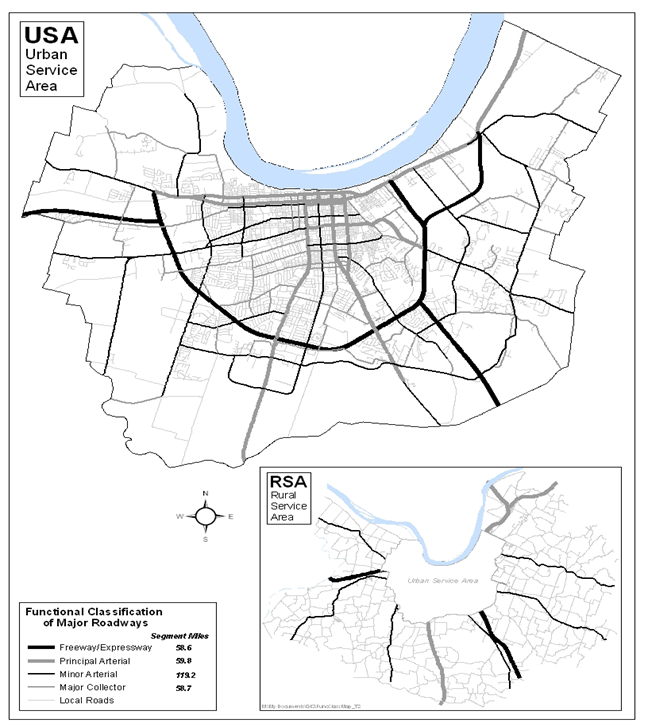
8.6. - Map of major streets.
Major Street Setbacks and Buffers revised by TAC 04/07/2009
(Ord. No. 36-2010, § 2, 8-3-2010)

