
Paw Paw City Zoning Code
ARTICLE I
- IN GENERAL
Sec. 42-1.- Enactments and authority.
The village council of the Village of Paw Paw in the County of Van Buren under the authority of the Michigan zoning enabling act, Public Act No. 110 of 2006 (MCL 125.3101 et seq.), hereby ordains, enacts and publishes this chapter.
(Ord. No. 394, § 1.1, 7-14-2003)
Sec. 42-2. - Short title and purpose.
(a)
This chapter shall be commonly known as the "Village of Paw Paw Zoning Ordinance."
(b)
The village zoning ordinance is hereby established in accordance with the needs of the village. The text, map and schedules contained herein shall constitute this chapter. This chapter is expressly adopted for the following purposes:
(1)
To protect and promote the public health, safety, and general welfare of the village.
(2)
To control and guide the orderly growth and development of the village in accordance with its comprehensive planning program, and to implement the growth and development goals and policies contained therein, some of which are enumerated as follows:
a.
To encourage a wide range of housing opportunities in an orderly manner in the village from single-family to multiple-family and congregate housing for the elderly;
b.
To ensure that the residential housing environment of the village is safe, healthful and free of visual blight;
c.
To preserve the character and value of certain historic areas and structures;
d.
To preserve and enhance the appearance and viability of the central business district;
e.
To ensure the orderly development and operation of industrial uses;
f.
To guard against community impacts which can adversely affect those positive qualities that make up the distinctive character of the village, and which can adversely affect its social and economic climate;
g.
To promote and protect the value of land and buildings which are appropriate to the various districts established by this chapter; and
h.
To prevent conflicts between the use of land and buildings.
(Ord. No. 394, § 1.2, 7-14-2003)
Sec. 42-3. - Definitions.
(a)
For the purpose of this chapter, certain numbers, abbreviations, terms and words used herein shall be used, interpreted and defined as set forth in this section.
(b)
Unless the context clearly indicates the contrary, words used in the present tense include the future tense; words used in the singular number include the plural; and words used in the plural number include the singular; the word "herein" means this chapter; the word "regulation" means the regulations of this chapter; and the words "this chapter" shall mean "the chapter text, tables and maps included herein, as enacted or subsequently amended."
(c)
A "person" includes a corporation, a partnership, a limited liability corporation, and an unincorporated association of persons such as a club; "shall" is always mandatory; a "lot" includes a plot or parcel; a "building" includes a structure; a "building" or "structure" includes any part thereof; "used" or "occupied" as applied to any land or building shall be construed to include the words "intended, arranged or designed to be used or occupied."
(d)
The "village" is the Village of Paw Paw in the County of Van Buren, State of Michigan; and "village council", "board of appeals", and "planning commission" are respectively the village council, board of appeals, and planning commission of the village.
(e)
Any words not defined in this chapter shall be construed as defined in the Housing Law of Michigan, Public Act No. 167 of 1917 (MCL 125.401 et seq.).
(f)
Terms and words in this chapter shall be defined as follows:
Accessory building means an accessory building is a detached subordinate building or structure on the same premises with a main building, occupied or devoted to an accessory use which is appropriate, supplemental and customarily related to the use of the main building or premises. Where an accessory building is attached to a main building in a substantial manner by a wall or roof, such accessory building shall be considered part of the main building, including a carport, covered porch or other roofed structure.
Accessory use means a use subordinate and customarily incidental to the main use of a lot.
Adult businesses. The following definitions shall apply to adult businesses as permitted in the B-1 zoning district:
(1)
Adult bookstore means an establishment having, as a substantial or significant portion of its stock in trade, books, magazines and other periodicals which are distinguished or characterized by their emphasis on matter depicting, describing or relating to specified sexual activities or specified anatomical areas, as hereinafter defined or an establishment with a segment or section devoted to the sale or display of such material.
(2)
Adult mini motion picture theater means an enclosure with a capacity for less than 50 persons used for presenting material distinguished or characterized by an emphasis on matter depicting, describing or relating to specified sexual activities or specified anatomical areas, as hereinafter defined for observation by patrons therein.
(3)
Adult motion picture theater means an enclosure with a capacity of 50 or more persons used for presenting material distinguished or characterized by an emphasis on matters depicting, describing, relating to specified sexual activities or specified anatomical areas as hereinafter defined for observation by patrons therein.
(4)
Adult smoking or sexual paraphernalia store means an establishment having, as a substantial or significant portion of its stock in trade, paraphernalia designed or usable for sexual stimulation or arousal or for smoking, ingesting or inhaling marijuana, narcotics or other stimulating or hallucinogenic drug-related substances.
(5)
Massage parlor means an establishment where persons conduct or permit to be conducted or engaged in, massages of the human body or parts thereof by means of pressure, imposed friction, stroking, kneading, rubbing, tapping, pounding, vibrating or otherwise stimulating the same with hands, or other parts of the human body, mechanical devices, creams, ointments, oils, alcohol or any other means of preparations to provide relaxation or enjoyment to the recipient.
(6)
Host or hostess establishment means establishments or clubs offering socialization with a host or hostess for a consideration to the host or hostess or for an admission or membership fee.
(7)
Open dance hall means an establishment where open public dancing by patrons is available during at least four days per week with or without partners furnished by the establishment.
(8)
Pawnshop means an establishment where merchandise is left as security for a loan of money and abandoned if repayment of the loan has not been made within a specified period.
(9)
Specified sexual activities means:
a.
Acts of human masturbation, sexual intercourse or sodomy;
b.
Fondling or other erotic touching of human genitals, pubic regions, buttocks or female breasts;
c.
Human genitals in a state of sexual stimulation or arousal.
(10)
Specified anatomical areas means:
a.
Less than completely and opaquely covered human genitals, pubic regions, buttocks and female breasts below a point immediately above the top of the areola;
b.
Human male genitals in a discernibly turgid state, even if completely and opaquely covered.
Adult day care service means daytime care of any part of a day but less than 24-hour care for adults.
Adult foster care means a governmental or private facility for adults who are aged, emotionally disturbed, developmentally disabled, or physically handicapped and who require supervision but not continuous nursing care.
Alley means a strip of land over which there is a right-of-way, public or private, on which generally no dwelling or land uses front, serving as a rear entrance to one or more properties.
Alteration means any change, addition, or modification in construction or type of occupancy; and any change in the roof or supporting members of the building structure, such as bearing walls, partitions, columns, beams, girders, or any change which may be referred to herein as "altered" or "reconstructed."
Animal means any dog, cat, bird, reptile, mammal, fish or any other dumb creature.
Automobile or trailer sales area means an area used for the display, sale or rental of new and/or used motor vehicles, snowmobiles, motorcycles, recreational vehicles, boats or trailers in operable condition and where no repair work is done.
Automobile repair, major, means any activity involving the general repair, rebuilding or reconditioning of motor vehicles, engines, or trailers; collision services, such as body, frame, or fender straightening and repair, overall painting and vehicle rust proofing.
Automobile repair, minor, means any activity involving minor repairs to motor vehicles and the incidental replacement of parts of such vehicles. A place where either gasoline or any other fuel or lubricating oil or grease for operating motor vehicles is offered for sale to the public and applied directly into motor vehicles, including the sale of accessories, greasing, oiling and minor automotive repair on the premises.
Automobile wash establishment means a building, or portion thereof, the primary purpose of which is that of washing motor vehicles.
Basement or cellar means a portion of a building having more than one-half of its height below grade.
Bed and breakfast facility means a building, other than a hotel, where lodgings and light breakfasts for persons, other than the family, are regularly provided for compensation.
Board of zoning appeals means the village board of zoning appeals, the members of which have been duly appointed by the village council and is authorized as a body to interpret, hear appeals, and grant variances only in accordance with the provisions of this chapter.
Boardinghouse means a building or part thereof, other than a hotel or motel, where lodgings are provided for remuneration, more or less transiently, and with or without provision for meals.
Building means an edifice, framed or constructed and designed to stand more or less permanently covering an area of land, for use as a dwelling, store, storehouse, factory, sign, shelter or for some other useful purpose. Building in this sense includes a wall, fence, monument, board fence or similar structure, trailer, tent, or vehicle used as a dwelling.
Building, existing, means any building actually constructed or the construction of which was started previous to the effective date of the ordinance from which this chapter is derived provided that the construction of any such building continues uninterruptedly and is completed within six months from such date. Any building damaged by fire, collapse, or decay to the extent of its full assessed value of record at the time of damage shall not be considered an existing building.
Building, height, means the vertical distance from the average elevation of the established finished grade of a lot to the highest point of the roof surface if the roof is flat; to the deck line, if the roof is of the mansard type; or to the average height between the eaves and the ridge if the roof is gable, hip or gambrel type. Where a building is located on sloping terrain, the height may be measured from the average ground level of the grade at the building wall.
Building inspector means the officer charged with the administration and enforcement of the single state construction code, or his duly authorized representative.
Building line means a line parallel to the front lot line, which marks the location of the building.
Building permit means a permit signifying compliance with the provisions of this chapter as to use, activity, bulk and density, and with the requirements of all other development codes and ordinances currently in effect in the village.
Building site means a lot, or a two dimensional condominium unit of land (i.e., envelope, footprint) with or without limited common elements, designed for construction of a principal structure or a series of principal structures plus accessory buildings. All building sites shall have access to a public or private road.
Church means a building used principally for religious worship, but the word "church" shall not include or mean an undertaker's chapel or funeral building.
Clinic means a building or group of buildings where human patients are treated, but not lodged overnight for examination and treatment by more than one professional, such as a physician or dentist.
Commercial vehicle means any motor vehicle other than a motorcycle or private passenger automobile designed or used primarily for the transportation of persons or property.
Common elements means portions of the condominium project other than the condominium sites.
Condominium unit means that portion of the condominium project designed and intended for separate ownership and use, as described in the master deed, regardless of whether it is intended for residential, office, industrial, business, recreational, or any other type of use approved by the state.
Construction means the building, erection, alteration, repair, renovation (or demolition or removal) of any building, structure or structural foundation; or the physical excavation, filling and grading of any lot other than normal maintenance shall constitute construction.
Convalescent or nursing home means a home for the care of children or the aged or infirm, or a place of rest for those suffering bodily disorders wherein seven or more persons are cared for. This home shall conform and qualify for license as required by the state.
Convenience store means a commercial establishment which sells miscellaneous food and nonfood items, and may be constructed in conjunction with another principal use, such as a gasoline station.
Curb level or grade means the mean level of the established curb in front of the building. Where no curb has been established the village engineer shall establish such curb level for the purpose of these regulations.
Day care facilities means as follows:
(1)
Commercial child care center means a facility, other than a private residence, receiving one or more preschool or school-aged children for care for periods of less than 24 hours a day. A commercial child care center includes a facility that provides care for not less than two consecutive weeks regardless of the number of hours of care per day. The facility includes commercial child care centers, nursery schools, preschools, cooperative nurseries or preschool and drop in centers.
(2)
Family day care home means family day care homes that are licensed by the state and permitted in all residential districts.
(3)
Group day care home means group day care homes that are licensed by the state are permitted in all single-family residential districts subject to the requirements of section 42-367.
Domestic pet means any animal commonly kept as a household pet including but not limited to dogs, cats, small animals and birds. Domestic pet shall not include any farm animals, or animals which present a hazard to others.
Dwelling means a house or building, or portion thereof, which is occupied wholly as the home, residence, or sleeping place by one or more human beings, either permanently or transiently, but in no case shall a travel trailer, motor home, automobile/vehicle, tent, or portable building be considered as a dwelling. In case of mixed occupancy where a building is occupied in part as a dwelling, the part so occupied shall be deemed a dwelling for the purpose of this chapter and shall comply with the provisions hereof relative to dwellings. Garage space, whether in an attached or detached garage, shall not be deemed as part of a dwelling for area requirements.
(1)
Dwelling, multiple, means a building used for and as a residence for three or more families living independently of each other and each having their own cooking facilities therein, including apartment houses, townhouses, and apartment hotels, but not including homes.
(2)
Dwelling, one-family, means a building occupied by one family and so designed and arranged as to provide living, cooking, and kitchen accommodations for one family only. Every one-family dwelling shall have a minimum width throughout the entire length of the dwelling of 24 feet measured between the exterior part of the walls having the greatest length.
(3)
Dwelling, two-family, (also known as a duplex) means a dwelling occupied by two families, each provided with separate facilities for each family for living accommodations. Every two-family dwelling shall have a minimum width throughout the entire length of the dwelling of 24 feet measured between the exterior part of the walls having the greatest length.
(4)
Dwelling unit means any building or portion thereof having cooking facilities, which is occupied wholly as the home, residence, or sleeping place of one family, either permanently or transiently, but in no case shall a travel trailer, motor home, automobile/vehicle, tent, or other portable building be considered a dwelling. In cases of mixed occupancy where a building is occupied in part as a dwelling unit, the part so occupied shall be deemed a dwelling unit for the purpose of this chapter and shall comply with the provisions of this chapter relative to dwellings.
Emergency/transitional residences means a facility operated by a government agency or private nonprofit organization which provides temporary accommodations and on-site management for homeless persons or families, or other individuals or families in similar or related circumstances.
Erected means built, constructed, reconstructed, moved upon.
Erecting means and includes any physical operations required for the building on the premises where the building is being constructed, reconstructed, or moved. Excavating, filling, draining, and the like, shall be considered part of erecting.
Essential services means all publicly or privately owned utilities, such as, electrical, gas, water, sewer and communication generation, storage, distribution, collection, supply, and disposal systems; municipal police and fire; the erection, maintenance, alteration and removal of the foregoing; and all personal property and fixtures including poles, wires, pipes and other accessories reasonably necessary for the furnishing of adequate service by such utility or municipal department shall be allowed in all zoning districts.
Family means as follows:
(1)
Domestic family means one or more persons living together and related by the bonds of consanguinity, marriage, or adoption together with servants of the principal occupants and not more than one additional unrelated person, with all of such individuals being domiciled together as a single, domestic housekeeping unit in the dwelling.
(2)
Functional family means persons living together in a dwelling unit whose relationship is of a permanent and distinct character and is the functional equivalent of a domestic family with a demonstrable and recognizable bond that constitutes the functional equivalent of the bonds which render the domestic family a cohesive unit. All persons in the functional equivalent of the domestic family must be cooking and otherwise housekeeping as a single nonprofit unit. This definition shall not include any society, club, fraternity, sorority, association, lodge, coterie, organization, or group where the common living arrangements and/or the basis for the establishment of the functional equivalency of the domestic family is likely or contemplated to exist for a limited or temporary duration. There shall be a rebuttable presumption enforced by the building inspector in the first instance that the number of persons who may reside as a functional equivalent family shall be limited to six.
Farmers' Market means a marketing facility at which multiple local farmers sell fruit and vegetables and often meat, cheese, bakery, and homemade products directly to consumers.
First story means the lowest story of a building, the ceiling of which is more than seven feet above the average surface elevation of the ground, or sidewalk adjacent to its exterior walls.
Frontage means the total length along which a parcel of land fronts on a street, measured along the line where the property abuts the street right-of-way.
Garage, automotive commercial, means any premises available to the public and used solely for the storage of automobile or motor-driven vehicles, for remuneration, hire, or sale, where any such vehicles or engines may also be serviced for operation, or repaired, rebuilt or reconstructed.
Garage, private, means a building or other structure designed for the housing of automobiles.
Garage, public, means any building or premises, other than a gasoline filling station, used for the housing or care of more than three automobiles, or where any such automobiles are equipped for operation, repaired or kept for remuneration, hire, or sale.
Gasoline station means a space, structure, building or part of a building, used for the retail sale, service or supply of motor vehicle fuels, lubricants, air, water, batteries, tires, other accessories, motor vehicle washing or lubricating; or customary facilities for the installation of such commodities in or on such motor vehicles, including special facilities for the painting, repair or similar servicing thereof.
Greenbelt means a planting strip or buffer strip, at least ten feet in width, which shall consist of deciduous and/or evergreen trees spaced not more than 30 feet apart and at least one row of dense shrubs spaced not more than five feet apart and which are five feet or more in height after one full growing season, which shall be planted and maintained in a healthy, growing condition by the property owner.
Gross site area means the total area within and conforming to the legal description of the site.
Hazardous materials means any materials that have been declared to be hazardous to any agency of the state or of the United States, including but not limited to toxic materials and metal hydroxides.
Home occupation means any occupation or profession carried on by one or more members of a family residing on the premises. No commodity other than those customarily associated with the business is sold upon the premises. No more than one person is employed, contracted or subcontracted, other than a member of the immediate family residing on the premises. No mechanical equipment may be installed except such as is normally used for purely domestic or household purposes. No more than 25 percent of the total actual floor area of any story is used for home occupation or professional purposes. Home occupation does not include a family or group day care home licensed by the state.
Honeybees are a domesticated European subspecies of Apis mellifera honeybee with a cooperative temperament historically managed and kept by beekeepers for agricultural purposes.
Household pets means domestic dogs, domestic cats, or other animals commonly classified as pets, which are customarily kept or housed inside dwellings.
Housing for the elderly means a multiple-family development having the following tenant eligibility requirements. At the time of rental application, tenants must be:
(1)
Families or two or more persons, the head of which (or the spouse of which) is 62 years of age or older, or is handicapped; or
(2)
Single persons who are 62 years of age or older or who are handicapped. A handicapped person is one whose impairment:
a.
Is expected to be continued and of indefinite duration;
b.
Substantially impedes his ability to live independently; or
c.
Is such that his ability to live independently could be improved by more suitable housing.
Institutional uses means churches, schools, hospitals, and other similar public or semipublic uses. This excludes nursing homes, convalescent homes, and adult foster care facilities.
Junk or salvage yard means any land area, including buildings thereon, used for the collection, storage, dismantling, disassembly, dumping, display, resale, exchange, baling, cleaning or handling of secondhand, salvaged, recycled or used waste, materials, machinery, vehicles, trailers, equipment, furnishing or parts thereof, or similar items.
Junkyard means any land area including buildings thereon used primarily for the outdoor collecting, storage and abandonment of waste paper, rags, scrap metal or discarded materials which are for sale; or which is used for the outdoor collecting, dismantling, storage or salvaging of machinery or vehicles not in running condition for the sale of parts thereof.
Kennel means any lot or premises on which not more than five domestic pets including more than three dogs or four cats are kept permanently or temporarily boarded.
Laboratory means any place devoted to experimental, routine study or basic study such as testing and analytical operations in which the manufacturing of products, except prototypes for test marketing is not performed.
Land use plan, official, means the official land use plan so designated by the planning commission and incorporated into and made a part of this chapter.
Landscaped area means a portion of land area which has been changed, rearranged, or to which plant materials or scenery have been added to produce an aesthetic effect appropriate for a residential area.
Limited common elements means the portion of the common elements reserved in the master deed for the exclusive use of less than all of the co-owners.
Livestock means an animal raised for slaughter or kept for the purposes of contributing to an agricultural use through labor or the production of milk, eggs, manure, wool, or other animal-based products, for which the proceeds of the animal are used primarily for the use of the owner of the animal and not for commercial farming purposes under generally accepted agricultural management practices issued by the Michigan Department of Agriculture.
Loading berth means an off-street space on the same lot with a building or group of buildings, for temporary parking for a commercial vehicle while loading or unloading merchandise or materials. Off-street loading space is not to be included as off-street parking space in the computation of required off-street parking. A loading space is 528 square feet in area.
Lot means a parcel of land having fixed boundaries, of sufficient size and configuration to meet the requirements of this chapter and having frontage on a public street, or on an approved private street, and separated from other land by legal description, deed, or subdivision plot. The term 'lot' shall include condominium unit (as defined herein), plot, or parcel.
Lot area means the total horizontal area included within the lot lines. Where the front lot line is the center line of a street or lies in part or in whole in the street area, the lot area shall not include that part of the lot in use or to be used as a street.
Lot, corner, means a lot whose lot lines form an interior angle of less than 135 degrees at the intersection of two street lines. A lot abutting on a curved street shall be deemed a corner lot if the tangents to the curve at the points of intersection of the side lot lines with the street lines intersect at an interior angle of less than 135 degrees.
Lot coverage means the amount of a lot, stated in terms of percentage, that is covered by all roofed buildings and/or structures located thereon. This shall be deemed to include all buildings, porches, arbors, breezeways, patio roofs, and the like, whether open box-type and/or lathe roofs, or fully roofed, but shall not be deemed to include fences, walls, or hedges used as fences, or swimming pools.
Lot line means the boundary line of a lot.
Lot line, front, means the line which is parallel or nearly parallel to the rear lot line.
Lot line, rear, means the lot line, other than a front lot line, which is parallel or nearly parallel to the front lot line.
Lot line, side, means any lot line not a front or rear lot line.
Lot of record means a lot which actually exists in a subdivision or plat as shown on the records of the county register of deeds, or a lot or parcel described by metes and bounds, the description of which has been recorded.
Lot width means the average distance between side lot lines measured at the building line, on a line parallel to the street, and measured at right angles to the side lot lines.
Master deed means the condominium document recording the condominium project as approved by the village council to which is attached as exhibits and incorporated by reference the approved bylaws for the project and the approved condominium subdivision plan for the project.
Mobile home/manufactured home means a structure transportable in one or more sections which is built on a chassis and designed to be used with or without a permanent foundation, when connected to the required utilities, and includes the plumbing, heating, air conditioning, and electrical systems contained in the structure. Mobile home/manufactured home does not include a recreational vehicle (Public Act No. 96 of 1987 (MCL 125.2301 et seq.)). All mobile homes/manufactured homes must conform to the U.S. Department of Housing and Urban Development's code for mobile homes/manufactured homes. Mobile home/manufactured home includes a double-wide unit.
Mobile home/manufactured home park means a parcel or tract of land, upon which three or more mobile homes/manufactured homes are located on a continual nonrecreational basis, and which is offered to the public for that purpose regardless of whether a charge is made therefor, together with any building, structure, enclosure, street, equipment, or facility used or intended or used incidental to the occupancy of a mobile home, and which is not intended for use as a recreational vehicle trailer park (Public Act No. 96 of 1987 (MCL 125.2301 et seq.)).
Modular dwelling means a structure which meets the requirements of the single state construction code, and which is transported in one or more sections on a removable chassis, and is designed to be used on a permanent foundation, when connected to the required utilities, such as plumbing, heating, and electrical systems.
Motel or motor hotel means a series of attached, semi-detached, or detached rental units providing long-term or transient lodging with motor vehicle parking in an area contiguous to the building.
Nonconforming lot of record (substandard lot) means a lot lawfully existing at the effective date of the ordinance from which this chapter is derived, or affecting amendment, and which fails to meet the minimum area requirements of the zoning district in which it is located.
Nonconforming structure means a structure, or portion thereof, lawfully existing at the effective date of the ordinance from which this chapter is derived, or affecting amendment, and which fails to meet the minimum yard setback requirements of the zoning district in which it is located.
Nonconforming use means a use lawfully existing in a building or on land at the effective date of the ordinance from which this chapter is derived, or affecting amendment, and which fails to conform to the use regulations of the zoning district in which it is located.
Nuisance shall be held to embrace public nuisance as known at common law or in equity jurisprudence; whatever is dangerous to human life or detrimental to health; any dwelling or building which is overcrowded or is not provided with adequate ingress or egress to or from the same, or is not sufficiently supported, ventilated, sewered, drained, cleaned or lighted in reference to its intended or actual use; and whatever renders the air or human food or drink unwholesome, are also severally, in contemplation of this chapter, nuisances and all such nuisances are hereby declared illegal.
Open-air business means a business, a substantial part of which involves activities or the display, sale, and/or rental of goods outside of a building.
Paved road or street, private, means a right-of-way reserved for the use of the occupants of the abutting structures. Said private street shall not be accepted by the village for maintenance in any form and shall have a minimum 30-foot paved width.
Personal service establishment means a business providing a service to customers including but not limited to hair salon, health spa, and similar businesses but in no case adult businesses as defined in this chapter.
Planning commission means the village planning commission and shall have all powers granted under authority of Public Act No. 285 of 1931 (MCL 125.31 et seq.), and as provided in this chapter.
Public utility means any person, firm, corporation, municipal department or board duly authorized to furnish or furnishing under regulation, to the public, electricity, gas, steam, communication, transportation, drainage or water.
Recreational vehicle means any self-propelled vehicle or towed vehicle intended primarily for recreational purposes and shall be deemed to include, but not be limited to, motor homes, travel trailers, tent trailers, collapsible trailers, expandable trailers, pick-up coach campers, unattached pick-up covers, motorcycle trailers, snowmobile trailers, utility trailers, vehicle transporting trailers, stock car trailers, camping trailers, boat trailers, snowmobiles, trail bikes or cycles, unlicensed motorcycles or motor driven cycles, pontoon boats, rafts, and boats.
Repairs means the rebuilding or renewal of a part of an existing building for the purpose of maintaining its original type and classification.
Research and development facility means any facility that is involved in the inquiry, examination, investigation or experimentation aimed at the discovery and/or interpretation of facts, revision of accepted theories or laws in the light of new facts, or practical application of such new or revised theories or laws and the development thereof. Development may include a limited number of test units of a given product resulting from such research and shall include limited production while a product is being test-marketed which is the interim step between full research and development and ultimate full scale production.
Restaurant means any establishment whose principal business is the sale of food and beverages to the customer in a ready-to-consume state, and whose method of operation is characteristic of a carry-out, drive-in, drive-through, fast food, standard restaurant, or bar/lounge/tavern, or combination thereof, as defined below:
(1)
Carry-out restaurant means a restaurant whose method of operation involves the sale of foods and/or beverages to the customer in a ready-to-consume state for consumption primarily off the premises. Carry-out restaurants include, by way of example, cafes and delis.
(2)
Drive-in restaurant means a restaurant whose method of operation involves the delivery of foods and/or beverages to the customer in a ready-to-consume state for consumption in a motor vehicle or elsewhere on the premises, but outside of an enclosed building.
(3)
Drive-through restaurant means a restaurant whose method of operation involves the delivery of foods and/or beverages to the customer in a ready-to-consume state in a motor vehicle, typically through a drive-through window, for consumption off the premises.
(4)
Fast-food restaurant means a restaurant whose method of operation involves minimum waiting for delivery of food and/or beverages to the customer in a ready-to-consume state for consumption either within the restaurant building or for consumption off the premises, but not in a motor vehicle at the site.
(5)
Standard restaurant means a restaurant whose method of operation involves either:
a.
The delivery of foods to and/or beverages to the customer by a restaurant employee at the same table or counter at which said items are consumed within the restaurant.
b.
A cafeteria-type operation where foods and/or beverages generally are consumed within the restaurant.
c.
Bar/lounge/tavern means a restaurant operated primarily for the dispensing of alcoholic beverages. The selling of food and snacks may also be permitted as an accessory use to the bar/lounge/tavern. If the bar/lounge/tavern is part of a larger dining facility, it shall be defined as that part of the structure so designated or operated.
Road or street, public, means a public right-of-way of 66 feet or more in width which has been dedicated for the purposes of providing access to abutting private lots of land including the space for pavement and sidewalks.
Setback means the minimum horizontal distance a building or structure or any portion thereof is required to be located from the boundaries of a lot or parcel.
Shopping center means a retail commercial establishment or a group of retail establishments which is planned, developed, owned and managed as a unit, with off-street parking provided on the property.
Sign shall mean and include every individual announcement, declaration, demonstration, display, illustration, insignia, surface or space when erected or maintained out of doors in view of the general public for identification, advertisement or promotion of the interests of any person. This definition shall include billboards and signs painted directly on walls or structures.
(1)
Abandoned sign shall mean a sign serving a premises vacant or unoccupied for more than 180 consecutive days.
(2)
Animated sign shall mean a sign which uses moving parts or change of lighting to depict action or create a special effect or scene. This definition includes rotating signs.
(3)
Awning/canopy sign shall mean a sign which is part of or located on a canopy or awning which is attached to and projects from a building wall.
(4)
Balloon sign shall mean a temporary sign consisting of an envelope inflated with pressurized or heated air, or a lighter-than-air gas, and displayed for the purpose of advertising or attracting attention. Unlike inflatables, balloon signs can be suspended in midair, independent of any structure other than that which keeps the device from floating away.

(5)
Banner sign shall mean a temporary sign intended to be hung with or without a frame, possessing character, letters, illustrations or ornamentations applied to paper, plastic or fabric of any kind. A feather banner is a type of banner sign (see illustration). National flags, flags of political subdivisions, and symbolic flags of any institution or business shall not be considered banners for purposes of this article.
(6)
Billboard shall mean a sign which advertises an establishment, service, merchandise, use, entertainment, activity, product or message which is not conducted, sold, produced, manufacture, or furnished upon the site on which the sign is located. It shall also include those signs as regulated by the state pursuant to Public Act 106 of 1972, as amended.
(7)
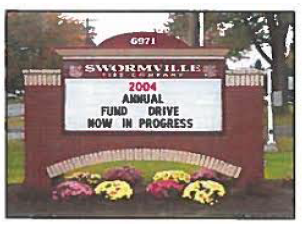
Changeable copy sign shall mean a sign on which the message is changed manually.
(8)
Directional sign shall mean a sign which is located and sized in a manner to safely and efficiently direct the flow of vehicular and pedestrian traffic to, from and within a development site.
(9)
Development sign means a permanent on-site sign that serves to identify the name of a residential, commercial, or industrial subdivision, multi-family development, or a planned development district.
(10)
Electronic display sign shall mean a sign that uses changing lights to form a sign message in text or graphic or video display form wherein the sequence of the messages and the rate of change is electronically programmed. Electronic display signs include the following:
a.
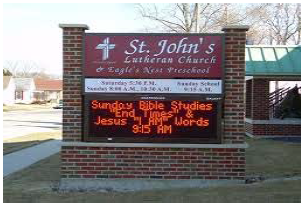
Electronic changeable copy sign shall mean a sign on which the message is changed automatically through the use of electronic display technology.
b.
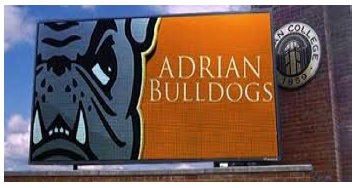
Electronic graphic display sign shall mean a sign that displays static electronic images, including static graphics or pictures, in which the message change sequence is immediate or by means of fade or dissolve modes.
c.
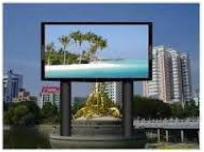
Video display sign shall mean a sign that displays a message characterized by motion, movement or pictorial imagery to depict action or a special effect that imitates movement
d.
Multi-vision or tri-vision sign shall mean a sign composed of a series of vertical or horizontal slats that are designed to rotate at intervals so that each rotation of the slats produces a different image.

(11)
Flashing sign shall mean a sign that contains an intermittent or flashing light source. Electronic display signs shall not constitute a flashing sign for purposes of this article.
(12)
Freestanding sign shall mean a sign not attached to a building or wall which is supported by one or more poles or braces which rest on the ground or on a foundation resting on the ground.
(13)
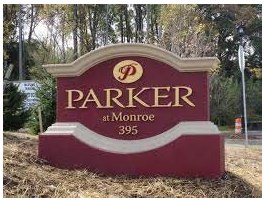
Ground sign shall mean a three-dimensional, self-supporting, base-mounted freestanding sign, consisting of two or more sides extending up from the base, and upon which a message is painted or posted.
(14)
Inflatable sign shall mean a temporary sign consisting of flexible material that takes on a three-dimensional shape when filled with air/gas and is commonly used to draw attention to a site.
(15)
Nameplate shall mean a non-electric sign which identifies the name of the resident of the property, with or without the address.
(16)
Nonconforming sign shall mean any sign that does not conform to the requirements of this article.
(17)
Pennant sign shall mean any geometric shaped cloth, fabric or other lightweight material normally fastened to a stringer and which is secured or tethered so as to allow movement of the sign caused by movement of the atmosphere.
(18)
Portable sign shall mean a sign that is not permanent or affixed to a building or structure and by its nature may be or is intended to be moved from one location to another.
(19)
Projecting sign shall mean a sign attached to and projecting perpendicularly from a building wall, excluding awning/canopy signs, as defined herein.
(20)
Public sign shall mean a noncommercial message sign erected in the public interest by or upon orders from a local, state, county or federal public official. Examples of public signs include, but are not limited to, legal notices, safety signs, traffic signs, memorial signs, signs of historical interest, and similar signs.
(21)
Roof line shall mean the top edge of a roof or building parapet, whichever is higher, excluding any cupolas, pylons, chimneys or minor projections.
(22)
Roof sign shall mean a sign that is erected, constructed and maintained upon or above the roof of a building, or parapet wall, and that is wholly or partially supported by such building.
Exception: For the purposes of this definition, a sign that is mounted on a mansard roof, roof overhang, parapet wall, or on a wall with a roof below, shall not be considered a roof sign but shall instead be considered as a wall sign for that side of the building, provided that no part of such sign extends above the roofline.
(23)
Sign area shall be measured as the area within a single, continuous perimeter composed of any straight line geometric figure which encloses the extreme limits of writing, representation, emblem, logo, or any other figure of similar character, together with any frame of other material or color forming an integral part of the display or used to differentiate the sign from the background against which it is placed, excluding only the pedestal, pole, or other structure necessary to support the sign.
(24)
Sign height shall be measured as the vertical distance from the highest point of the sign to the finished grade of the abutting street.
(25)
Signs with two or more faces. The area of a sign that has two or more faces shall be measured by including the area of all sign faces.
Exception: If two such sign faces are placed back to back and are no more than two feet apart at any point, the area of the two back-to-back faces shall be computed as one face. If the two back-to-back faces are of unequal size, the larger of the two sign faces shall be counted as the face.
(26)
Temporary sign shall mean a sign intended to be displayed for a limited period of time, and which is not permanently attached to a building wall or to the ground.
(27)
Wall sign shall mean a sign that is attached directly to a wall, mansard roof, roof overhang, or parapet wall with the exposed face of the sign in a plane parallel to the building wall or to the surface on which it is mounted, and which projects not more than 12 inches from the building or structure wall and does not extend above the roofline of the building to which it is attached.
(28)
Window sign shall mean a sign attached to the inside or outside surface of a window on a building wall or door and is intended to be viewed from outside the building.
Site condominium project means a plan or project consisting of not less than two single-family units established in conformance with the condominium act (Public Act No. 59 of 1978 (MCL 559.61 et seq.)).
Special use permit means a permit for a use that would not be appropriate generally or without restriction throughout the zoning district, but which, if controlled as to the number, area, location or relation to the village, would not adversely affect the public health, safety, order, comfort, convenience, appearance, prosperity, and general welfare. Such uses shall be permitted when the review criteria provided for them in this chapter are met.
Structural changes or alterations means any change in the supporting members of a building, such as bearing walls, columns, beams, or girders, or any substantial change in the roof.
Structure means any constructed object having footing on the ground, including fences, buildings, sheds and similar constructions.
Swimming pool means any structure or container, either above or below grade, located either in part or wholly outside a permanently enclosed and roofed building, designed to hold water to a depth of greater than 12 inches when filled to capacity, intended for immersion of the human body, whether for swimming or wading or both.
Temporary building or use means a structure or use permitted by the building inspector to exist during periods of construction of the main use or for special events, not to exceed six months. Two extension periods of six months each are allowed.
Variance means a varying or relaxation of the standards of this chapter by the board of zoning appeals; where such variances will not be contrary to the public interest; and where, owing to conditions peculiar to the property and not the result of the actions of the applicant, a literal enforcement of this chapter would result in practical difficulty.
Vehicle means a conveyance which includes automobiles, trucks, and other motorized forms of transportation except motorcycles.
Viewshed means that scenic area which is visible from a specific location on the ground.
Yard means an open space, unoccupied and unobstructed from the ground upwards, except as otherwise provided herein, and on the same lot with a building. The measurement of a yard shall be the minimum horizontal distance between the lot line and the building or structure.
(1)
Required yard means that portion of any lot on which the erection of a main building is prohibited.
(2)
Front yard means a yard on the same lot with a building between the front line of the building and the front lot line and extending from one side lot line to the other side lot line. Corner lots shall have a front yard on each side that abuts a right-of-way.
(3)
Rear yard means a yard on the same lot with a building between the rear line of the building and the rear lot line and extending from one side lot line to the other side lot line.
(4)
Side yard means a yard on the same lot with a building between the side lot line and the nearest side line of the building and extending from the rear yard to the front yard.
(Ord. No. 394, § 1.3, 7-14-2003; Ord. No. 402, 4-11-2005; Ord. No. 425, § 5, 1-10-2011; Ord. No. 430, § 4a, 5-9-2011; Ord. No. 451, § 4, 8-10-2015; Ord. No. 461, § 4, 10-23-2017; Ord. No. 462, § 4, 10-23-2017; Ord. No. 463, § 4, 3-12-2018; Ord. No. 473, § 2, 9-9-2019; Ord. No. 479, § 4, 4-13-2020; Ord. No. 480, § 4, 8-10-2020)
Cross reference— Definitions generally, § 1-2.

