Port Wentworth City Zoning Code
PART VI
DEFINITIONS AND SPECIFICATIONS
This page is intentionally blank.
Section 24.10 - Intent and Purpose.
A.
Applicability. The following listed rules of construction shall apply to the text of this ordinance.
1.
The particular shall control the general.
2.
The headings which title an article, section or subsection are for convenience only and are not to be considered in any construction or interpretation of this ordinance or as enlarging or restricting the terms and provisions of this ordinance in any respect.
3.
The word "shall" is always mandatory and not discretionary. The word "may" is permissive.
4.
Unless the context clearly indicates to the contrary:
a.
Words used in the present tense shall include the future tense;
b.
Words used in the singular number shall include the plural number; and
c.
Words used in the plural number shall include the singular number.
5.
The word "person" includes a firm, association, partnership, joint venture, corporation, trust, municipal or public entity or equivalent entity or a combination of any of them as well as a natural person.
6.
The word "used" or "occupied," as applied to any land, building or structure, shall be construed to include the words "intended," "arranged," "designed to be used," or "occupied."
B.
Common Understanding. For the purpose of their use in this ordinance, the following terms and words are hereinafter defined. Any word or term not defined herein shall be considered to be defined in accordance with its common or standard definition.
(Ord. No. 23-03-0010, § 5(Exh. A), 6-22-23)
Section 24.20 - Definitions A, B, C.
Addition. Any walled and roofed expansion to the perimeter of a building in which the addition is connected by a common load-bearing wall other than a firewall.
Alley. A street affording only secondary means of rear vehicular access to abutting lots and land and which is not intended for general traffic circulation.
Altered or Alteration. Any change, addition, or modification in the construction of any building or structure, including, without limitation, any change in the supporting members, bearing walls, columns, posts, beams, girders or roof structure, any architectural change of the interior or exterior of a building or structure which may affect its structural integrity, or any addition to or diminution of a structure or building.
Animal, Domestic. An animal commonly domesticated as a companion or pet and kept in a home or yard. Examples include dogs, cats, birds, fish, rabbits, small rodents, and similar animals, and are not used for commercial purposes. Household or domesticated animals do not present an unusual risk to a person or property and are not considered farm or wild animals.
Animal, Farm. Any animal or fowl customarily raised on a bonafide commercial farm for the production of income, including but not limited to goats, rabbits, horses, cows, pigs, chickens, turkeys, sheep, ducks, and geese or that are customarily raised for non-commercial consumption or production by the residents of the premises.
Animal, Wild. An animal not domesticated by humans or any animal which a person is prohibited from possessing by law.
Arborist. A professional in the practice of arboriculture and certified by The International Society of Arboriculture.
Awning. A shelter projecting from and supported by the exterior wall of a building and constructed of non-rigid materials on a supporting framework. Awnings are classified as a roof type.
Basement. That portion of a building which is partly or wholly below grade but so located that the vertical distance from the average grade to the floor is greater than the vertical distance from the average grade to the ceiling. A basement is not counted as a story.
Block. All of the property located along one (1) side of a street between two (2) intersecting streets.
Buffer. A strip of land which provides visual separation and aesthetic relief between potentially incompatible uses or provides protection to natural resources through the use of landscaping, preservation of existing vegetation, berms, or screening, or a combination of materials.
Build Out or Built Out. Full completion of the public infrastructure, private infrastructure, structures (residential, commercial, auxiliary, etc.), amenities, lot development, and the like.
Building. A permanent independent structure with a roof, supported by walls, columns or other supports that is designed for the shelter, housing or enclosure of persons, animals, possessions or property of any kind or to conduct business activities. A combination of materials, whether portable or fixed, forming a structure with a roof, affording a facility or shelter for use or occupancy by persons, animals, or property.
Building Coverage. The lot area stated as a percentage of the total, covered by all buildings and areas under roofs.
Building Frontage. The outside wall of a building approximately parallel, nearest, and oriented to a street.
Building Height. The vertical distance from the average adjacent grade at the center of the front of the building to the highest point of the roof surface for a flat roof, to the deck line for a mansard roof and to the mean height level between eaves and ridge for gable, hip and gambrel roofs.
Building, Principal. A building in which is conducted the main or principal use of the lot on which the building is located.
Canopy.
1.
Building Canopy. A permanent roof-like structure projecting from a building and open on at least one (1) side for the purpose of shielding a pedestrian walkway from the elements.
2.
Freestanding Canopy. A freestanding roof-like structure supported by columns intended to shield a vehicular driveway or service area from the elements.
City. Unless the context clearly discloses a contrary intent, the word "city" shall mean the City of Port Wentworth, Georgia.
City Council. The City Council of the City of the City of Port Wentworth, Georgia.
City Manager. The City Manager of the City of Port Wentworth, Georgia.
Commercial Use. An activity involving the sale of goods or services carried out for profit.
Community Development Director. The Community Development Director of the City of Port Wentworth, Georgia.
Construction. The erection of a new building or the alteration of an existing building in connection with its repair or renovation.
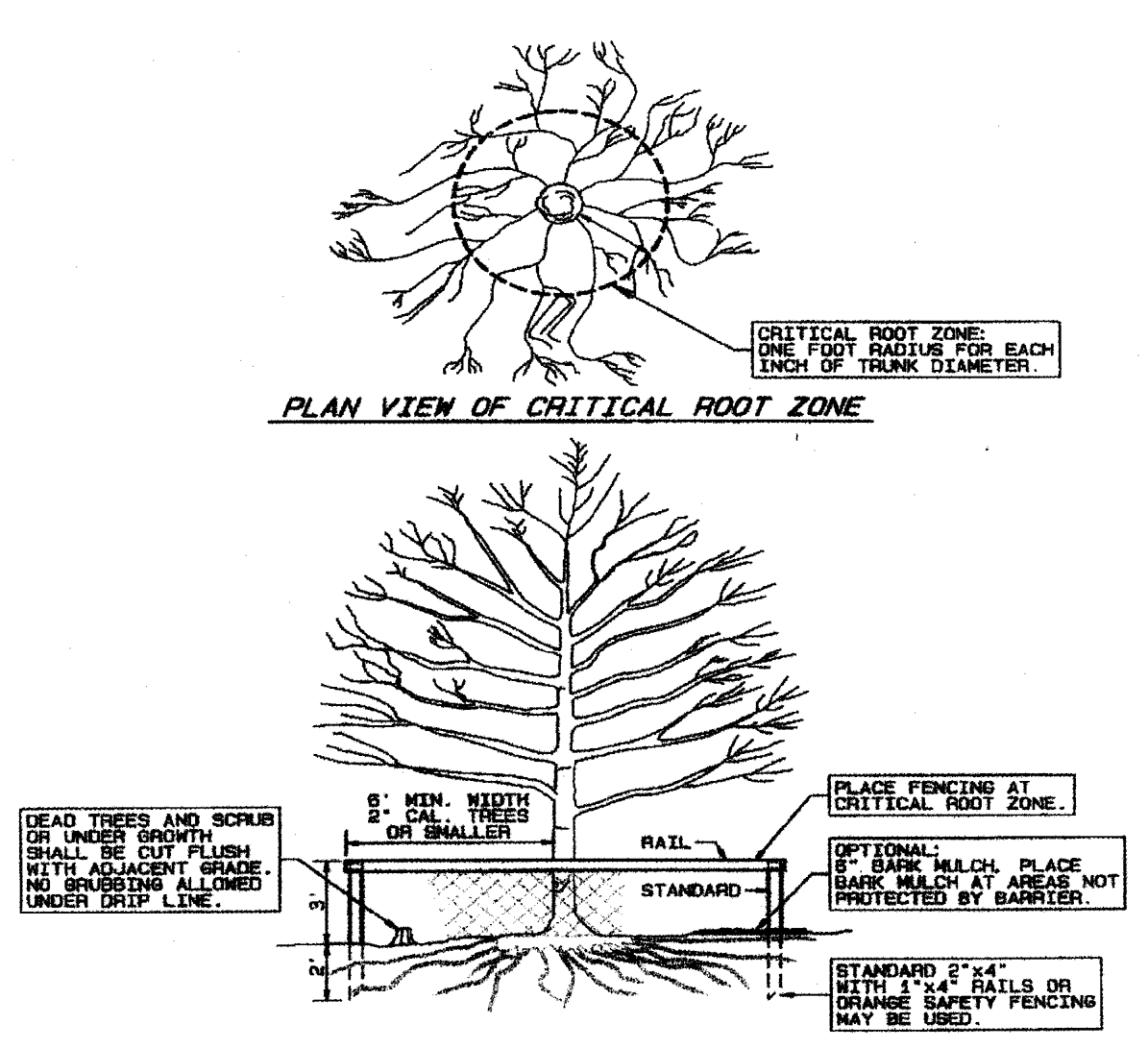
Critical Root Zone. The area around and under a tree, the radius of which measures one (1) foot per one (1) inch of diameter at breast height (DBH) from the trunk outwards and twenty-four (24) inches in depth. For example, for a ten-inch DBH tree, the Critical Root Zone is located at least ten (10) feet out from the trunk and twenty-four (24) inches deep.
Cul-De-Sac. A circular vehicle turn-around area constituting the terminus of a street that has only one (1) outlet to another street.
(Ord. No. 23-03-0010, § 5(Exh. A), 6-22-23)
Section 24.30 - Definitions D, E, F.
Development. Any manmade change to improved or unimproved real estate, including, but not limited to, buildings or other structures, mining, dredging, filling, grading, paving, excavating, drilling operations, and storage of materials or equipment. Shall also mean:
1.
The division of a lot, tract, or parcel of land into two (2) or more lots, plots, sites, tracts, parcels, or other divisions by plat or deed;
2.
The construction, installation, or alteration of a structure, impervious surface, or drainage facility;
3.
Cleaning, scraping, grubbing, or other activities that significantly disturb the soil, vegetation, and trees of a site; or
4.
Adding, removing, exposing, excavating, leveling, grading, digging, burrowing, dumping, piling, dredging, or otherwise disturbing the soil, vegetation, or trees of a site.
Diameter at Breast Height (DBH). The diameter of a tree measured, in inches, at fifty-four (54) inches above natural grade.
Dwelling Unit. A building or portion of a building designed for use and occupancy by one (1) family, having permanent provisions for living, sleeping, cooking, and sanitation. A recreational vehicle, portable building, tent, or other transient residential use, such as hotels/motels and bed and breakfasts, are not considered a dwelling.
Easement. A designated area surveyed, legally described, and recorded, which authorizes a person, government, agency or public utility company to use public or private land owned by another for a specific purpose.
Easement, Private Street. A designated area surveyed, legally described, and recorded, applied to a private street, which authorizes vehicle travel and the installation and maintenance of public utilities.
Exempt. The release of the obligation to comply with specific sections of this ordinance.
Façade. The entire building front including the parapet, typically the front of a building, provided any face given special architectural treatment shall be considered a façade.
Family. An individual or group of two (2) or more persons related by blood, marriage or adoption, together with foster children of the principal occupants, with not more than one (1) additional unrelated person, who are domiciled together within a dwelling, or a collective number of individuals domiciled together in one (1) dwelling whose relationship is of a continuing non-transient domestic character. This definition shall not include any society, club, fraternity, sorority, association, lodge, coterie, organization, or group of students or other individuals whose domestic relationship is of a transitory or seasonal nature or for an anticipated limited duration of a school term or terms or other similar determinable period.
Fence. A constructed barrier intended to prevent access, create an enclosure, or to mark a boundary.
Fill. A portion of land surface to which soil or other solid material has been added; the depth above the original ground surface or an excavation.
Floor Area.
1.
Floor Area, Gross. The sum of all gross horizontal areas of the several floors of a building or buildings, measured from the outside dimensions of the structure or from the centerline of a wall separating two (2) buildings, but excluding any space where the floor-to-ceiling height is less than six (6) feet.
2.
Floor Area, Usable. That area to be used for the sale of merchandise or services, or for use to serve patrons, clients or customers, measured from the interior faces of the exterior walls. Areas used principally for the storage or processing of merchandise, for hallways, stairways, and elevator shafts, or for utilities and sanitary facilities shall be excluded from this computation.
3.
Floor Area, Livable. The finished area of a dwelling unit heated and/or air conditioned, located above ground, but not including garages, covered patios or porches, or other outdoor space.
(Ord. No. 23-03-0010, § 5(Exh. A), 6-22-23)
Section 24.40 - Definitions G, H, I.
Garage. A detached accessory building or portion of a principal building for the parking or temporary storage of automobiles, recreational vehicles and/or incidental personal property of the occupants of the premises.
Grade.
1.
Grade, Average Adjacent. The average of the highest and lowest adjacent grade against a building foundation.
2.
Grade, Finished. The lowest point of elevation between the exterior wall of the structure and a line five (5) feet from the exterior wall of the structure.
3.
Grade, Natural. The elevation of the ground surface in its natural state before man-made alterations.
Grading. Altering the shape of ground surfaces to a predetermined condition; this includes stripping, cutting, filling, stockpiling and shaping or any combination thereof and shall include the land in its cut or filled condition.
Ground Cover. Low growing, spreading plants, other than turf grass, such as but not limited to ivy, liriope, juniper, mondo grass or sedge.
Household. All persons occupying a house, apartment, group of rooms, or a single room occupied as separate living quarters, regardless of their relationship to one (1) another.
Impervious Surface. Any surface composed of any material that greatly impedes or prevents the natural infiltration of water into the underlying native soils. Impervious surfaces include but are not limited to, rooftops, buildings, sidewalks, driveways, streets, and roads.
(Ord. No. 23-03-0010, § 5(Exh. A), 6-22-23)
Section 24.50 - Definitions J, K, L.
Land Development Activity. Any project undertaken to change or improve a site that involves one (1) or more land disturbing activities.
Land Disturbing Activity. Any activity that changes stormwater runoff rates, volumes, and pollutant loads on a site. These activities include but are not limited to, the grading, digging, cutting, scraping, or excavating of soil, the placement of fill materials, paving, construction, substantial removal of vegetation and any activity that bares soil or rock or involves the diversion or piping of any natural or manmade watercourse.
Landscape Materials. Any combination of living plant materials and nonliving materials such as rocks, pebbles, wood chips, mulch and pavers, and decorative features, including sculpture, patterned walks, fountains, and pools.
Loading Space. An off-street portion of a lot of record designated for the temporary parking of commercial vehicles while loading or unloading materials used, sold, or made on the premises.
Lot Area. The area of land included within a lot as defined by lot lines but excluding any public rights-of-way and private street easements.
Lot. A developed or undeveloped parcel or tract of land in one (1) ownership, legally transferable as a single unit of land.
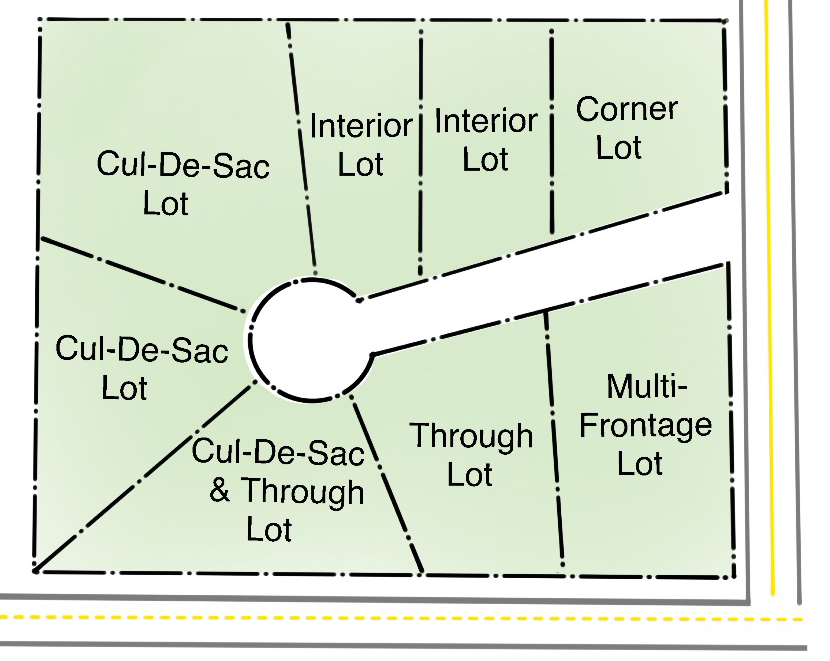
Figure 24-1 Lot Types
1.
Lot, Corner. A lot with at least two (2) contiguous sides abutting two (2) intersecting streets and where the interior angle of the intersecting streets is less than one hundred thirty-five (135) degrees. Also, a lot located on a curved street or streets if tangents of the curve, at the points of beginning with the lot or the points of intersection of the side lot lines with the street line, intersect at an interior angle of less than one hundred thirty-five (135) degrees.
2.
Lot, Interior. A lot other than a corner, multi-frontage, through, or corner lot, bordered on three (3) sides by other lots.
3.
Lot, Multi-Frontage. A lot bordered by streets on three (3) sides.
4.
Lot, Through. An interior lot bordered by two (2), more or less parallel streets. For the purposes of this definition, if one (1) side of the lot is bordered by an alley opposite of a street the lot is not considered a through lot.
5.
Lot, Waterfront. A lot with one (1) or more of its lot lines adjoining a stream, river, or lake.
Lot Depth. The average distance between the front lot line and the rear lot line. The average shall include measurements of the side lot lines if extending from front lot line to rear lot line and the shortest measurement from the front lot line to the farthest point of the rear lot line
Lot Frontage. The length of the front lot line measured at the public street right-of-way or private street easement.
Lot Width. The horizontal distance between side lot lines measured at the two (2) points where the required setback intersects the side lot lines or along the front property line on a curvilinear lot.
Lot Lines. The lines bounding a lot, as defined below:
1.
Lot Line, Front. In the case of an interior lot, the line separating the lot from the street right-of-way or road easement that is not classified as a secondary front lot line.
2.
Lot Line, Secondary Front. On a corner lot or multi-frontage lot, the lot line separating the lot from the street right-of-way or road easement which is not the front lot line, opposite of the side lot line on a corner lot and the side lot line on a multi-frontage lot.
3.
Lot Line, Rear. The lot line opposite and most distant from the front lot line. On a corner lot, the rear lot line is typically opposite the shorter of the two (2) front lot lines. In the case of a triangular lot, the rear lot line shall be an imaginary line parallel to the front lot line, not less than ten (10) feet long, lying furthest from the front lot line and wholly within the lot. On irregularly-shaped lots, the rear lot line is determined based on a line perpendicular to the front lot line extending to the point where a rear lot line would be ten (10) feet in width and parallel to the front lot line. This rear lot line is intended for the purpose of establishing the rear setback and lot depth only.
4.
Lot Line, Side. The lot lines connecting the front and rear lot lines of an interior or corner lot or connecting the front lot lines of a through lot. Any lot line other than a front or rear lot line
(Ord. No. 23-03-0010, § 5(Exh. A), 6-22-23)
Section 24.60 - Definitions M, N, O.
Manufactured Home. A factory-built, single-family structure manufactured under the authority of 42 U.S.C. Section 5401, the National Manufactured Home Construction and Safety Standards Act, is transportable in one (1) or more sections, is built on a permanent chassis, and is designed to be used as a place of human habitation with or without a permanent foundation when connected to the required utilities. It is not constructed with a permanent hitch or other device allowing transportation of the unit other than for the purpose of delivery to a permanent site, and which does not have wheels or axles permanently attached to its body or frame. All manufactured housing must bear a decal issued by the Georgia Department of Community Affairs to certify the unit as to construction and safety standards.
Mobile Food Vending Unit. A mobile food vending unit shall mean any motorized or non-motorized vehicle, trailer or other enclosure designed to be portable and not permanently attached to the ground from which food is vended, served or offered for sale. A mobile food vending unit may include ancillary sales of branded items consistent with the food and beverage offered, such as a t-shirt that bears the name of the organization.
Mulch. Pine straw, pine or cypress bark, pebbles, lava rock, or synthetic landscaping materials.
Nonconforming Building or Structure. A structure or building lawfully constructed that does not conform to the dimensional requirements of the Zoning Ordinance but existed prior to the effective date of this ordinance or any amendment to this ordinance.
Nonconforming Lot. A lot lawfully existing on the effective date of this ordinance, or its subsequent amendment, that does not meet the current area and/or dimensional requirements of the zoning district in which it is located.
Nonconforming Site. A site that does not conform to the regulations of the zoning district in which it is situated, applicable conditional use requirements of Article 7, or any applicable development provisions.
Nonconforming Use. A land use that does not conform to the regulations of the zoning district in which it is situated, or applicable conditional use requirements of Article 7, and lawfully existed on the effective date of this ordinance, or any amendments to the ordinance.
Occupancy. The portion of a building or premises owned, leased, rented, or otherwise occupied for a given use.
Occupied. Arranged, designed, built, altered, converted, rented or leased, or intended to be occupied.
(Ord. No. 23-03-0010, § 5(Exh. A), 6-22-23)
Section 24.70 - Definitions P, Q, R.
Parking. The temporary, transient storage of motor vehicles used for transportation, while their operators are engaged in other activities. It shall not include storage of new or used motor vehicles for sale, services, rental or any other purpose other than specified above.
Parking Space. The space required to park one (1) vehicle, exclusive of driveways and access aisles, in accordance with the requirements of this ordinance.
Permit. An official authorization issued by a representative of the City, to conduct a specific activity under the provisions of this ordinance.
Permitted Use. A use of property specifically allowed within a zoning district wherever that district exists in the City, provided all dimensional and other requirements applicable to that district are satisfied.
Planning Commission. The City of Port Wentworth Planning Commission.
Pond. An outdoor body of standing water, accumulated in a natural or artificially constructed basin or depression in the earth, either above or below or partly above and partly below grade, capable of holding water to a depth of greater than two (2) feet when filled to capacity.
Porch. A roofed-over space attached to the outside of an exterior wall of a building which has no enclosure other than exterior walls of the building.
Principal Use. The primary or predominant use of a lot.
Recreational Vehicle. Any of the following vehicles or equipment: recreation camper, boat, boat trailer, snowmobile, snowmobile trailer, motorcycle or motorcycle trailer, all-terrain vehicle, all-terrain vehicle trailer, enclosed trailers, utility trailers, or similarly licensed vehicles, trailers, or equipment.
Root Barrier. An underground wall or barrier placed to block tree roots from intruding upon or impacting nearby structures or other plants.
(Ord. No. 23-03-0010, § 5(Exh. A), 6-22-23)
Section 24.80 - Definitions S, T, U.
Setback. The minimum horizontal distance that buildings and any structure thirty (30) inches in height or greater shall be separated from a public street right-of-way or private street easement, lot line, shore of a lake, wetland, edge of a stream, or riverbank, to meet the minimum requirements of this ordinance.
1.
Setback, Front. The line marking the required setback from the public street right-of-way or private street easement.
2.
Setback, Rear. The line marking the required setback distance from the rear lot line.
3.
Setback, Side. The lines marking the required setback distance from the side lot lines.
4.
Setback, Street Side. The line marking the required setback from the public street right-of-way or private street easement in the direction of the secondary front yard.
Sewage, Public. A system that is owned, maintained, and operated by the City, a community corporation, or a privately owned system serving a community and approved by the Chatham County Health Department.
Shipping Container. A receptacle designed for the transport of cargo aboard ship and also by truck trailer or rail car, and which exhibits features designed to facilitate the movement of containerized cargo, including but not limited to corner fittings for pins, design for stacking, and which is otherwise designed and constructed in conformance with standards for shipping containers as set forth by the International Standards Organization.
Site Plan. A plan of a proposed project that shows all relevant features necessary to determine if it meets the requirements of this ordinance.
Special Event. A temporary and non-commercial community event, such as a festival, fair, car show, or sporting event.
Special Use. A use identified by this ordinance which may have characteristics of its operation (such as traffic, noise, hours of operation, or other potential nuisance effects) that requires special use permit review and may warrant additional conditions beyond the general requirements of the district in which it is located to mitigate its impacts and ensure its compatibility with its surroundings.
Start of Construction. The date the first placement of permanent construction of the structure such as the pouring of slabs or footings, installation of piles, construction of columns, or any work beyond the stage of excavation, and includes the placement of a manufactured home on a foundation. (Permanent construction does not include initial land preparation, such as clearing, grading and filling; the installation of streets and/or walkways; excavation for a basement, footings, piers or foundations or the erection of temporary forms; installation on the property of buildings appurtenant to the permitted structure, such as garages or sheds not occupied as dwelling units or part of the main structure.) See also, "Substantial Improvement."
Story. The portion of a building included between the surface of any above floor grade and the surface of the floor next above it, or if there is no floor above it, then the space between any floor and the ceiling next above it. A story shall have vertical walls.
Street. Any public or private thoroughfare which affords the principal means of access to abutting property.
1.
Street, Arterial. A road or highway, as shown on the official map maintained by the City of Port Wentworth, which carries large volumes of traffic at relatively high speed between population centers or from one (1) section of the City to another.
2.
Street, Collector. A public way, as shown on the official map maintained by the City of Port Wentworth, designed primarily to connect local streets with arterial streets or to provide access from residential areas to major destination points such as shopping or employment centers and which may be expected to carry a significant volume of traffic. Any street may be declared a collector street by City council at any time and shall be designated as such on the official street map.
3.
Street, Local. These roads serve the final function in destination trips and the initial function at point of origin. They provide direct access to adjacent land as well as serve the purpose of short distance transportation needs. This category encompasses all streets, roads and highways not classified as either arterial or collector streets.
4.
Street, Marginal Access. Those minor streets which are parallel to and adjacent to arterial streets and highways; and which provide access to abutting properties, and protection from through traffic.
5.
Street, Opened. A street shall be deemed to be opened if it is either of the following:
a.
Available for public use prior to the adoption of this ordinance; or
b.
Was constructed to City specifications following the adoption of this ordinance.
6.
Street, Privately Maintained. A street maintained by private parties through use of private funds.
7.
Street, Publicly Maintained. A street maintained by federal, state, county, or local public agencies.
8.
Street, Unopened. A street or any part thereof shall be deemed to be unopened if it is not cleared, graded, and available for public use.
Street Centerline. That line surveyed to be the centerline of a street, or in the event that no centerline has been determined, it shall be that line running midway between and parallel to the outside right-of-way lines of such streets.
Street Frontage. The distance within which a front lot line of a lot adjoins a public street, measured between the two (2) lot lines intersecting the street right-of-way or easement.
Street Intersection. Any street which joins another street at an angle, whether or not it crosses the other.
Street Yard Greenway. A strip of land on a lot or parcel abutting a street right-of-way line that is landscaped and maintained as a visual edge to create a unified appearance along the street frontage and an attractive foreground for the abutting development.
Structure. A combination of materials constructed, erected, or placed in or upon the ground or is attached to something having such a location. Structures may include but are not limited to: buildings, elevated decks, radio towers, signs, and storage bins, but exclude sidewalks and paving on streets, driveways, parking areas, or patios placed at grade.
Subdivider. An individual, firm, association, syndicate, partnership, corporation, trust, or any other legal entity (or agent thereof) that undertakes any activities covered by this ordinance. The word "subdivider" is intended to include the terms "developer" and "builder" even though the persons involved in successive stages of a project may vary.
Subdivision. The division of a single lot, tract or parcel of land into two (2) or more lots, tracts, parcels or other divisions of land for the purpose of sale or development.
Swimming Pool. A structure located inside, outside, or partly in each, designed to hold water to a depth of greater than twenty-four (24) inches when filled, and intended to be used for swimming purposes.
Trailer, Utility. A vehicle with or without its own motive power, which is mounted on wheels or is designed to be so mounted and transported.
Traffic Study. A written report prepared by an transportation engineer or a professional planner, describing in detail the roads and streets which serve an area of the City, furnishing information on ingress and egress to and from lots, providing current traffic counts on existing streets and projected traffic counts on both existing and proposed streets, and additionally containing an impact statement describing the expected impact of the proposed activities on traffic flow and traffic patterns within a specific area of the City.
Tree.
1.
Tree, Canopy. A deciduous shade tree.
2.
Tree, Evergreen. A tree with foliage that persists and remains green throughout the year.
3.
Tree, Ornamental. A small deciduous tree grown for its foliage and/or flowers.
(Ord. No. 23-03-0010, § 5(Exh. A), 6-22-23)
Section 24.90 - Definitions V, W, X, Y, Z.
Variance. An allowed modification to a requirement of this ordinance, as authorized by the Zoning Board of Appeals under the provisions of this ordinance.
Vehicles and Trailers, Commercial. Any vehicle or trailer bearing or required to bear commercial license plates and/or DOT numbers. Examples include, but are not limited to:
1.
Semi-truck tractors;
2.
Semi-truck trailers, which shall include flat beds, stake beds, roll-off containers, tanker bodies, dump bodies, and full or partial box-type enclosures;
3.
Food trucks and vehicles of a type that are commonly used for the delivery of food or vending supplies;
4.
Pickup trucks, vans, and trailers commonly used by construction industry contractors;
5.
Tow trucks and repair service trucks;
6.
Vehicles designed to transport sixteen (16) or more passengers, including the driver; and
7.
Commercial trailers designed to haul heavy equipment, materials, and supplies.
Violation. The failure of a use, structure or other development to be fully compliant with the provisions of this ordinance.
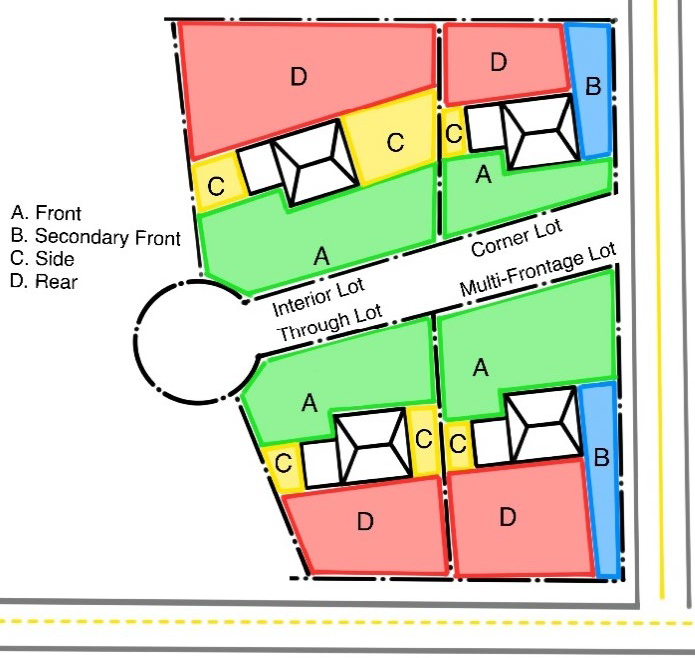
Figure 24-2 Yard Designations by Lot Type
Water, Public. A system that is owned, maintained, and operated by the City, a community corporation, or a privately owned system serving a community and approved by the Chatham County Health Department.
Yard. An open space at grade between a building and the adjoining lot lines.
1.
Yard, Front. An open space between the front of a principal building and the front lot line, generally adjacent to a street and extending the full width of the lot.
2.
Yard, Front. An open space between the front of a principal building and the front lot line Figure 24-2 Yard Designations by Lot Type and extending the full width of the lot. The narrower of the two (2) front lot lines on a corner lot. Where the lot lines are of equal length and/or the primary front yard is not evident, the Zoning Administrator shall determine the front yard. In the case where there is an existing principal building, it is the front yard that the front building elevation faces.
3.
Yard, Rear. An open space between the rear of a principal building and the rear lot line and extending the full width of the lot.
4.
Yard, Secondary Front. A front yard on a corner lot that the front building elevation does not face which extends from the rear of the front yard designation to the rear lot line.
5.
Yard, Side. An open space between the side of a principal building and the side lot line extending from the front yard to the rear yard.
Zoning Administrator. An official authorized by the City Manager to administer, interpret, and enforce the City of Port Wentworth Zoning Ordinance.
Zoning District. A designation on the Official Zoning Map in which requirements for the use and dimensions of the land and buildings are prescribed.
(Ord. No. 23-03-0010, § 5(Exh. A), 6-22-23)
This page is intentionally blank.
Section 25.10. - Intent and Purpose.
This article includes all land use definitions included Tables 3.30 and 4.30.
(Ord. No. 23-03-0010, § 5(Exh. A), 6-22-23)
Section 25.20 - Accessory Uses.
A.
Accessory Building or Structure. A detached building or structure on the same lot with and of a customarily incidental nature that is subordinate to the principal structure and accommodates an accessory use.
B.
Accessory Dwelling Unit. An attached or detached dwelling unit that contains an independent living area, including sleeping quarters, bathroom, living area, and kitchen facilities that is secondary and subordinate to a principal single-family dwelling.
1.
Accessory Dwelling Unit, Attached. An accessory dwelling unit that is physically attached to a principal single-family dwelling as an addition; incorporated internally within a principal dwelling within the basement or attic; or above an attached garage. Except for an accessory dwelling unit above an attached garage, an attached accessory dwelling unit is connected by internal access between separate living spaces. The inclusion of a secondary kitchen or kitchenette within the principal dwelling does not alone result in the classification as an attached accessory dwelling unit.
2.
Accessory Dwelling Unit, Detached. An accessory dwelling unit that is physically detached from a principal single-family dwelling as a standalone and separate building.
C.
Accessory Use. A land use or activity that is customarily and clearly incidental and subordinate to the principal use of the land or building.
D.
Antennas and Over-the-Air Reception Devices.
1.
Amateur Radio Service. A federally licensed radio-communication service for the purpose of self-training, intercommunication, and technical investigations carried out by amateurs, that is, duly authorized persons interested in radio technique solely with a personal aim and without pecuniary interest particularly with respect to providing emergency communications.
2.
Over-The-Air Reception Device and Satellite Dish Antennas. Antennas and dish antennas designed to receive direct broadcast satellite service, including direct-to-home satellite service, to receive or transmit fixed wireless signals via satellite, receive video programming services via broadband radio service (wireless cable), receive or transmit fixed wireless signals other than via satellite, or receive local television broadcast signals.
E.
Day Care Home, Adults. An establishment where care and therapy is provided to elderly persons during normal business hours.
F.
Day Care Home, Children. A private residence certified by the Georgia Department of Human Resources and operated by any person paid to supervise and care for three (3) but not more than six (6) children under eighteen (18) years of age who are not related to such person and whose parents or guardians are not residents in the same private residence. This service may be provided for a duration of less than twenty-four (24) hours per day and does not include and is not limited to residents of the dwelling. Owner or manager shall reside on the premises.
G.
Home Occupation, Major. A business operated on a residential parcel that because of its nature, intensity, and characteristics, is not customary for a residential property and does not qualify as a minor home occupation. A major home occupation is an incidental and secondary use of the property. Business operations include financial advisors, accountants, business services, personal services, making of handcrafted products, accessory retail sales, and independent trucking.
H.
Home Occupation, Minor. A use which includes any activity which is clearly secondary to residential use and carried out for economic gain. It is conducted within a dwelling, carried out by its occupants utilizing equipment typically found in a home, and it is not evident from the outside.
I.
Outdoor Display and Sales, Permanent. The outdoor placement, storage, or keeping, for display purposes, of equipment, vehicles, trailers, and other similar goods for sale on premises.
J.
Outdoor Storage, Commercial. The outdoor placement of goods such as building or construction materials, equipment, vehicles, trailers, and other supplies, for future use, production, assembly, preservation, or disposal, as an accessory function to a principal building and use. This definition does not include materials related to permitted on-site construction projects.
K.
Subdivision Amenity. Improved areas designed and intended for the playing of a game such as basketball, volleyball or tennis, and indoor or outdoor facilities such as community meeting rooms, picnic areas, swimming pools, or playgrounds. These facilities serve dwelling units and are owned and/or controlled by a neighborhood club, homeowner's association, or similar organization. The term includes fences surrounding the recreational amenity and all surface area inside the fences and overhead lighting fixtures.
L.
Solar Energy, Building-Mounted. A solar energy collector attached to the roof or wall of a building.
M.
Solar Energy, Ground-Mounted. A solar energy collector that is mounted directly to a support structure on the ground and is not connected to a building. The system is intended to generate energy for the principal and accessory land uses and buildings on the lot or parcel of land on which the system is located.
(Ord. No. 23-03-0010, § 5(Exh. A), 6-22-23)
Section 25.30 - Accommodations, Hospitality, and Entertainment.
A.
Banquet or Meeting Hall. A use which provides rental space for such functions as, but not limited to: wedding parties, conferences, service club meetings, and other similar gatherings, along with the catering of food services off the premises.
B.
Bed and Breakfast. A house, or portion of a house, where short-term lodging rooms and breakfast and light snacks are provided to overnight guests and where the operator lives on the premises or in adjacent premises.
C.
Campground or Recreational Vehicle Park. A form of temporary lodging where guests bring tents, travel trailers, campers, or other similar forms of shelter to experience the natural environment. Campgrounds rent pads or spaces to guests and may also include accessory uses such as a camp store, shower/bathroom facilities, and recreational facilities.
D.
Commercial Indoor Recreation Facility. A facility, open either to the general public or to members and their guests, located in an enclosed building that is designed to accommodate sports, recreational activities, training, or related enterprises. Also included are accessory uses that are clearly in support of the primary use, such as sporting goods shops, food service and party/banquet facilities serving patrons of the indoor recreation use, spectator accommodations, changing/locker rooms and employee offices.
E.
Commercial Outdoor Recreation Facility.A facility providing a variety of outdoor recreational opportunities and entertainment services, often for a fee, including, but not limited to amusement and theme parks; go-cart tracks; golf driving ranges; miniature golf courses; marinas; watercraft rentals; and water parks. It may also include commercial facilities customarily associated with the above indoor commercial recreational uses, including bars and restaurants, arcades, etc.
F.
Commercial Outdoor Recreation, Low-Intensity. An outdoor venue for nature-based recreation and ecotourism activities, including but not limited to disc golf, ropes courses, eco-challenges, adventure racing and events, zip-line courses, and other activities which rely primarily on the preserved natural environment as a core element of the activity and use.
G.
Golf Course. A use consisting of regulation and par three (3) golf courses having nine (9) or more holes, and accessory facilities and uses, including driving ranges, clubhouses with bar and restaurant; locker and shower facilities; pro shops for on-site sales of golfing equipment and clothing; and golf cart storage facilities.
H.
Hotel or Motel. A building under single management that provides rooms or suites intended primarily as sleeping accommodations for public rental on a daily basis for registered guests. Other supportive facilities may also be included, such as, but not limited to, meeting rooms, incidental retail sales, restaurants, lounges, swimming pools, recreational and fitness facilities, and similar facilities/services intended principally to serve registered guests.
I.
Indoor Theater. A building or part of a building used to show movies or a facility used for drama, dance, musicals, or other live performances. This use may also include accessory concession and retail sales.
J.
Outdoor Theater. An outdoor commercial facility which shows movies on outdoor screens. This use may also include accessory concession and retail sales.
K.
Restaurant. A business establishment whose method of operation involves either the delivery of prepared food by servers to customers seated at indoor or outdoor areas, or prepared food is acquired by customers at a counter or cafeteria line and consumed at tables within a completely enclosed building, but does not include drive-through services, which are separately defined and regulated. Service of alcoholic beverages by the drink is incidental to the service of food, and food receipts exceed fifty (50) per cent of sales.
L.
Restaurant with Drive-Through. A business establishment whose method of operation involves the delivery of prepared food or beverages to the customer in a motor vehicle, typically through a drive-through window, for consumption off the premises. A drive-through restaurant may also have indoor or outdoor seating.
M.
Tavern. A commercial establishment licensed to sell at retail and serve beer, wine, liquor or other alcoholic beverages for consumption on the premises and where the service of food is incidental to the sales and consumption of such beverages. Taverns include nightclubs, lounges, and bars.
(Ord. No. 23-03-0010, § 5(Exh. A), 6-22-23)
Section 25.40 - Agricultural.
A.
Farm. The land, plants, animals, buildings, structures, including ponds used for agricultural or aquacultural activities, machinery, equipment, and other appurtenances used in the commercial production of farm products.
B.
Farm Market. A year-round or seasonal location where transactions and marketing activities between farm market operators and customers take place. At least seventy-five (75) per cent of the products offered must be produced on and by the affiliated farm measured by retail floor space during peak production season, or seventy-five (75) per cent of the average gross sales. Processed products will be considered as produced on and by the farm if at least fifty (50) per cent of the product's primary or namesake ingredient was produced on and by the farm.
C.
Farm-Related Businesses and Agritourism. Agriculturally-oriented commercial and tourism endeavors on farms that are accessory to and have a direct and intrinsic relationship to the principal agricultural use of the subject property, conducted by a farmer or rancher for the enjoyment or education of the public to promote the products of the farm and generate additional farm income, including but not limited to: artisan craft sales, corn mazes, U-Pick operations, petting and feeding zoos, hay rides, demonstration farms; agricultural museums; living history farms; on-farm farmers' markets; winery tours and wine tasting, garden tours and the production and sale of cider, wine, and beer.
D.
Stables, Commercial. A structure designed for the feeding, boarding, breeding, and exercising of horses that are owned by someone other than the owner of the premises and for which the owner of the premises receives compensation. This definition also includes riding stables, riding academies, and horse show facilities.
E.
Stables, Private. A structure designed for the feeding, boarding, breeding, and exercising of horses that are owned by the occupant of a principal dwelling on the premises.
(Ord. No. 23-03-0010, § 5(Exh. A), 6-22-23)
Section 25.50 - Civic and Institutional.
A.
Cemetery. One (1) or a combination of more than one (1) of the following: a burial ground for earth interments, a mausoleum for crypt entombments, or a columbarium for the inurnment of cremated remains. For the purposes of this ordinance, a cemetery does not include a crematorium.
B.
Community-Oriented Cultural Facility. A public or non-profit facility that provides educational and cultural experiences for the general public, examples of which include: aquariums, arboretums, art galleries, botanical gardens, libraries, museums, planetariums, civic centers, and theaters predominantly used for live performances, and zoos. It may also include accessory retail uses such as a gift/book shop, restaurant, etc.
C.
Community-Based Indoor Recreation Facility. A facility providing a variety of indoor recreational opportunities including, but not limited to: gymnasium, swimming pool, tennis, racquetball and/or handball courts, batting cages, and other indoor sports activities. This use includes all public, government, and not-for-profit organizations chartered to provide community-based recreation services.
D.
Government Facility. Buildings, structures, and facilities that may include administrative offices, public works services, law enforcement, fire protection, libraries, museums, cemeteries, recreational centers, and storage areas for public equipment and materials for local, county, state, and federal public adjacencies.
E.
Public Park or Preserve. A facility providing a variety of outdoor recreational opportunities including, but not limited to: playground equipment, playing fields, tennis and basketball courts, swimming pools, boat ramps, and fishing piers, and areas for passive recreation such as hiking trails, picnic areas, and bird blinds.
F.
Place of Worship. A building or structure or group of buildings or structures that, by design and construction, are primarily intended for conducting organized religious worship services. Associated accessory uses include, but are not limited to, classrooms, meeting halls, indoor and outdoor recreational facilities, daycare, counseling, and kitchens.
G.
School.
1.
College or University. A facility for post-secondary education, other than a trade or commercial school, that provides education, whether full-time or part-time, and that grants associates, bachelors, masters, or doctoral degrees, and may include research functions. Includes professional schools (law, medicine, etc.) and technical colleges.
2.
Pre-school to 12. A school that is not a publicly owned or publicly operated school that offers courses of instruction for students in one (1) or more grades from kindergarten through twelfth (12th) grade.
3.
Specialized Training. A specialized instruction establishment that provides individual and group instruction, education, and/or training, including, but not limited to: the arts, dance, music, tutoring, photography, martial arts, health and wellness, business and vocational schools, passenger vehicle driver education schools, barbering, hairdressing, appliance and computer repair, and teaching of industrial or trade skills which machinery is employed as a means of instruction.
4.
Truck Driving. Commercial facilities which provide instruction and education concerning the driving of trucks.
(Ord. No. 23-03-0010, § 5(Exh. A), 6-22-23)
Section 25.60 - Industrial, Infrastructure, and Transportation.
A.
Brewery, Winery, Distillery. The industrial production of beer, wine, and spirits.
B.
Commercial Solar Energy System. A utility-scale facility of solar energy collectors with the primary purpose of wholesale or retail sales of generated electricity. Also known as a solar farm.
C.
Crematorium. A facility consisting of one (1) or more furnaces for cremation services.
D.
Essential Public Services and Utilities. Any person furnishing to the public, transportation, water, gas, electricity, telephone, cable television, communication, steam, telegraph, sewage disposal or other similar service, including the township. The erection, construction, alteration, or maintenance by a public utility, or municipal department, of underground, surface or overhead gas, communication, telephone, electrical, steam, fuel or water, transmission, distribution collection, supply, or disposal systems. This includes related poles, wires, pipes, conduit, cables, public safety alarm and communication equipment, traffic signals, hydrants, and similar accessories that are necessary to furnish adequate service, addressing general public health, safety, convenience, or welfare. These do not include wireless telecommunication towers (unless located on public property and used as part of a municipal emergency communications network); wind energy turbines; offices, utility buildings, substations, or structures that are enclosures or shelters for service equipment; or maintenance depots.
E.
Manufacturing, Processing, and Packaging—Heavy. A facility accommodating manufacturing processes that involve and/or produce basic metals, building materials, chemicals, fabricated metals, paper products, machinery, textiles, and/or transportation equipment, where the intensity and/or scale of operations may cause significant impacts on surrounding land uses or the community. Examples of heavy manufacturing uses include the following: chemical product manufacturing; concrete, gypsum, and plaster product manufacturing; glass product manufacturing; paving and roofing materials manufacturing; petroleum refining and related industries; plastics, other synthetics, and rubber product manufacturing; primary metal industries; pulp and pulp product manufacturing; textile and leather product manufacturing.
F.
Manufacturing, Processing, and Packaging—Light. A facility accommodating manufacturing processes involving less intense levels of fabrication and/or production, such as the assembly, fabrication, and conversion of already processed raw materials into products, where the operational characteristics of the manufacturing processes and the materials used are unlikely to cause significant impacts on surrounding land uses or the community. The premises may include secondary retail or wholesale sales. Examples of light manufacturing uses include: artisan/craft product manufacturing; clothing and fabric product manufacturing; furniture and fixtures manufacturing, cabinet shop, media production, photo/film processing lab not accessory to a retail business, printing & publishing, and food preparation and packaging.
G.
Mineral Extraction. The extraction, by mining, of natural resources from underground.
H.
Outdoor Storage, Principal. The outdoor placement of building or construction materials, landscape materials, equipment, trailers, and other supplies, for future use, production, assembly, preservation, or disposal where there is no other principal use on the site.
I.
Outdoor Container Storage Yard. An outdoor storage area for short-term or long-term placement of containers associated with port operations that are awaiting pick up for land or sea shipping transport.
J.
Propane Gas Sales. An establishment providing LPG dispensing and bulk containers for sale.
K.
Salvage or Impound Operations. Any land or structure used for storing, dismantling, reconditioning, collecting, purchasing or selling of scrap metal or other discarded goods and materials, including the collection, dismantlement, and salvage of two (2) or more inoperative vehicles, boats, trucks, or other types of machinery or equipment, or the impounding of any operable or inoperable vehicle associated with towing or wrecker services.
L.
Sawmill or Planing Mill. A facility where logs are sawn, split, shaved, stripped, chipped, or otherwise processed to produce lumber and other wood products.
M.
Self-Storage. A building or group of buildings in a controlled access and/or fenced compound that contains varying sizes of individualized, compartmentalized, and controlled access rooms, stalls or lockers for the storage of customer's goods or wares.
N.
Truck Terminal. A facility at which freight is consolidated to be shipped or where full load consignments may be loaded and off-loaded, and where vehicles and trailers are regularly maintained and stored.
O.
Warehousing and Distribution. Facilities for redistributing goods from one (1) truck to another that serve as intermediate transfer points and are primarily used for staging loads and temporary storage, where vehicles and trailers are regularly maintained and stored.
P.
Waste Management and Recycling. A facility used for collecting waste and recyclables, sorting, and transferring materials.
Q.
Wholesaling and Distribution. An establishment engaged in selling merchandise in bulk quantities to retailers; to contractors, industrial, commercial, agricultural, institutional, or professional business users; to other wholesalers; or acting as agents or brokers in buying merchandise for or selling merchandise to such persons or companies.
(Ord. No. 23-03-0010, § 5(Exh. A), 6-22-23)
Section 25.70 - Offices and Services.
A.
Animal and Pet Services. Any lot or premises on which six (6) or more dogs or cats or other household pets, six (6) months old or over, are kept temporarily or permanently for sale, boarding, breeding, training, shelter, competition, showing, or day care.
B.
Animal Clinic. An establishment used by a veterinarian where animals are treated.
C.
Child Day Care Center. A facility operated by a person, partnership, association, society, agency, corporation, institution, or group that receives pay for the care of seven (7) or more children, under eighteen (18) years of age, where children remain less than twenty-four (24) hours per day.
D.
Contractor Facility. An office and storage or warehouse facility accommodating a construction, skilled trade, landscaping, extermination, tree care, industrial service contracting business, or other similar trades.
E.
Funeral Home or Mortuary. A building used for the preparation of the deceased for burial or cremation, for the display of the deceased and/or for ceremonies or related services, including the storage of caskets, funeral urns, funeral vehicles, and other funeral supplies. For the purposes of this ordinance, this use does not include a crematorium.
F.
General Offices and Services. Establishments that offer financial, business, business support, medical, personal, professional, and administrative services.
1.
Financial Services. Financial institutions, including, but not limited to: banks, credit agencies, investment companies, security, and commodity exchanges.
2.
Business Services. Establishments providing direct services to consumers, including, but not limited to: employment agencies, insurance agent offices, real estate offices, and travel agencies.
3.
Business Support Services. Establishments providing services to other businesses, including, but not limited to: computer rental and repair, copying, quick printing, mailing and mailbox services.
4.
Medical. A facility other than a hospital where medical, dental, mental health, surgical, and/or other personal health care services are provided on an outpatient basis (for example, chiropractors, medical doctors, psychiatrists, etc., other than nursing staff.
5.
Personal Services. Establishments providing non-medical services to individuals, including, but not limited to: barber and beauty shops, tattoo parlors, dry cleaners pick-up and drop-off, small appliance repair, laundromats, massage therapists, shoe repair shops, and tanning salons. These uses may include incidental retail sales related to the services they provide.
6.
Professional and Administrative Services. Office-type facilities occupied by businesses or agencies that provide professional or government services or are engaged in the production of intellectual property.
G.
General Offices and Services with Drive Through Service. Facilities where services may be obtained by motorists without leaving their vehicles. Examples of drive-through services include bank teller windows and drive-up ATMs, dry cleaners pick-up and drop-off, etc.
H.
Hospital. An institution licensed by the State, where people, including inpatients, receive medical, surgical or psychiatric treatment and nursing care.
I.
Temporary Office.
1.
Temporary Construction Office. An office, typically mobile, established at a permitted construction site to accommodate personnel. A location for outdoor storage of materials and equipment is commonly associated with the use.
2.
Temporary Sales Office. An office, either mobile or located in a model home, used to accommodate real estate agents and associated administrative staff for the purposes of selling or renting real property in subdivisions or other housing developments.
J.
Truck Stop or Truck Fuel Sales. An establishment that is engaged primarily in the fueling, servicing, repair, or parking of semi-trucks and trailers or similar heavy commercial vehicles, and which may include the sale of accessories and equipment for such vehicles, food sales, and other services for truck drivers.
K.
Vehicle Repair, Major. The servicing, repairing, refinishing, equipping, or adjusting of vehicles, or their components, for compensation, including but not limited to powertrain and suspension repair or rebuilding, body work, frame alignment, and other vehicle repair work creating noise, glare, fumes, or smoke; but not including vehicle wrecking, junking or salvaging or fuel sales.
L.
Vehicle Repair, Minor. A business providing general maintenance on motor vehicles such as oil changes and lubrication; servicing and repair of spark plugs, batteries, pumps, belts, hoses, air filters, windshield wipers, and distributors; replacement of mufflers and exhaust systems, brakes and shock absorbers; radiator cleaning and flushing; sale and installation of automobile accessories such as tires, radios, and air conditioners; wheel alignment and balancing; but, excluding tire recapping or grooving or any major mechanical repairs, collision work or painting.
M.
Vehicle Service Station. An establishment where motor vehicle fuel is dispensed for retail sale. This use may also collectively include minor vehicle repair services (see vehicle repair, minor); retail sales of convenience items (see retail), restaurant (see restaurant and restaurant with drive-through) and a single bay vehicle wash (see vehicle wash), but not overnight vehicle storage. This use does not include truck stops or truck fuel sales.
N.
Vehicle Wash, Cars. A building or portion of a building with machine or hand-operated facilities used principally for the cleaning, washing, polishing or waxing of cars and light trucks and vans. This use may also include accessory outdoor vacuums.
O.
Vehicle Wash, Trucks. A building or portion of a building with machine or hand-operated facilities used principally for the cleaning, washing, polishing, or waxing of commercial trucks and vans, and semi-trucks and trailers. This use may also include accessory outdoor vacuums.
(Ord. No. 23-03-0010, § 5(Exh. A), 6-22-23)
Section 25.80 - Residential Group Living.
A.
Personal Care Home. Any dwelling, whether operated for profit or not, which undertakes through its ownership or management to provide or arrange for the provision of housing, food service, and one (1) or more personal services for two (2) or more adults who are not related to the owner or administrator by blood or marriage. The owner or manager shall reside on the premises.
B.
Nursing Home. A home for the aged, chronically ill, or incurable persons in which three (3) or more persons, not of the immediate family, are received, kept, or provided with food and shelter or care for compensation; but not including hospitals, clinics, or similar institutions devoted primarily to the diagnosis and treatment of the sick or injured.
(Ord. No. 23-03-0010, § 5(Exh. A), 6-22-23)
Section 25.90 - Residential Household Living.
A.
Dwelling (note—ascending density, not alphabetical).
1.
Single-Family Dwelling. A freestanding dwelling unit designed and intended for one (1) family that is physically separate from any other dwelling.
2.
Two-Family Dwelling. A building containing two (2) dwelling units on a single lot designed for or used by two (2) families living independently of one another and may also be referred to as a duplex.
3.
Townhome. A Building containing three (3) or more dwelling units arranged side by side, separated from each other by a common walls and having separate direct means of egress and ingress to each unit from the outside
4.
Multiple-Family Dwelling. A building containing three (3) or more dwelling units designed for occupancy by three (3) or more families living independently of one another.
B.
Manufactured Home Community. A property that has been planned, designed, improved, and maintained for the placement of two (2) or more manufactured homes and permitted accessory uses where home sites are leased to individuals who retain customary leasehold rights.
C.
Mixed-Use Residential. A dwelling or dwellings on upper floors over a commercial business.
(Ord. No. 23-03-0010, § 5(Exh. A), 6-22-23)
Section 25.100 - Retail and Other Sales and Rental.
A.
Bakery, Small Scale. An establishment less than five thousand (5,000) square feet primarily engaged in the retail sale of baked products for consumption off-site. The products may be prepared either on or off-site, and the use may include accessory food service.
B.
Construction and Landscape Supply, Outdoor. A commercial establishment that sells supplies for building construction and/or landscaping projects, where such supplies are placed outdoors.
C.
Greenhouse and Nursery. A retail or wholesale business whose principal activity is the display and sales of plants grown on the site within an enclosed building (greenhouse) or outdoors (nursery).
D.
Retail Sales. Stores and shops that sell goods and merchandise to the general public.
E.
Vehicle and Equipment Sales and Rental, Major. An operation selling or renting commercial trucks and vans, boats, recreational vehicles, heavy equipment, manufactured homes, landscaping machinery, trailers, farm equipment, and similar items. It may also include accessory repair shops and the sales of parts and accessories incidental to dealerships.
F.
Vehicle and Equipment Sales and Rental, Minor. An operation selling or renting cars, trucks, vans, and small equipment. It may also include accessory repair shops and the sales of parts and accessories incidental to dealerships.
(Ord. No. 23-03-0010, § 5(Exh. A), 6-22-23)
Section 25.110 - Other Uses.
A.
Adult Establishment. Any adult bookstore, adult entertainment establishment, adult motion picture theater, or adult motion picture arcade.
1.
Adult Bookstore. A commercial establishment or facility in the City that maintains twenty-five (25) per cent or more of its floor area for the display, sale, and/or rental of the following items (aisles and walkways used to access these items shall be included in "floor area" maintained for the display, sale, and/or rental of the items):
a.
Books, magazines, periodicals, or other printed matter, or photographs, films, motion pictures, videocassettes, CDs, DVDs or other video reproductions, or slides or other visual representations which are characterized by their emphasis upon the display of specified sexual activities or specified anatomical areas, as defined herein; or
b.
Instruments, devices, novelties, toys or other paraphernalia that are designed for use in connection with specified sexual activities as defined herein or otherwise emulate, simulate, or represent "specified anatomical areas" as defined herein.
2.
Adult entertainment Establishment. Any establishment or facility in the City of Port Wentworth where adult entertainment is regularly sponsored, allowed, presented, sold, or offered to the public.
3.
Adult motion picture arcade. A commercial establishment to which the public is permitted or invited wherein coin or slug-operated or electronically, electrically or mechanically controlled still or motion picture machines, projectors or other image producing devices are regularly maintained to show images to five (5) or fewer persons per machine at any one (1) time and where the images so displayed are distinguished or characterized by an emphasis upon matter displaying specified sexual activities or specified anatomical areas.
4.
Adult motion picture theater. A commercial establishment where films, motion pictures, videocassettes, slides, or similar photographic reproductions which are characterized by their emphasis upon the display of specified sexual activities or specified anatomical areas are regularly shown to more than five (5) persons for any form of consideration.
B.
Similar Land Use. A land use determined to be similar in nature, character, function, and operation as a land use listed Tables 3.30 or 4.30.
C.
Temporary Land Use. Outdoor sales approved for temporary durations and in temporary locations, including parking lot sales, mobile food units, garage sales, and yard sales.
(Ord. No. 23-03-0010, § 5(Exh. A), 6-22-23)
Section 26.10 - Prohibited Species.
The trees listed in Table 26.10 shall not be used in any planting area required by this ordinance.
(Ord. No. 23-03-0010, § 5(Exh. A), 6-22-23)
Section 26.20 - Planting Details.
A.
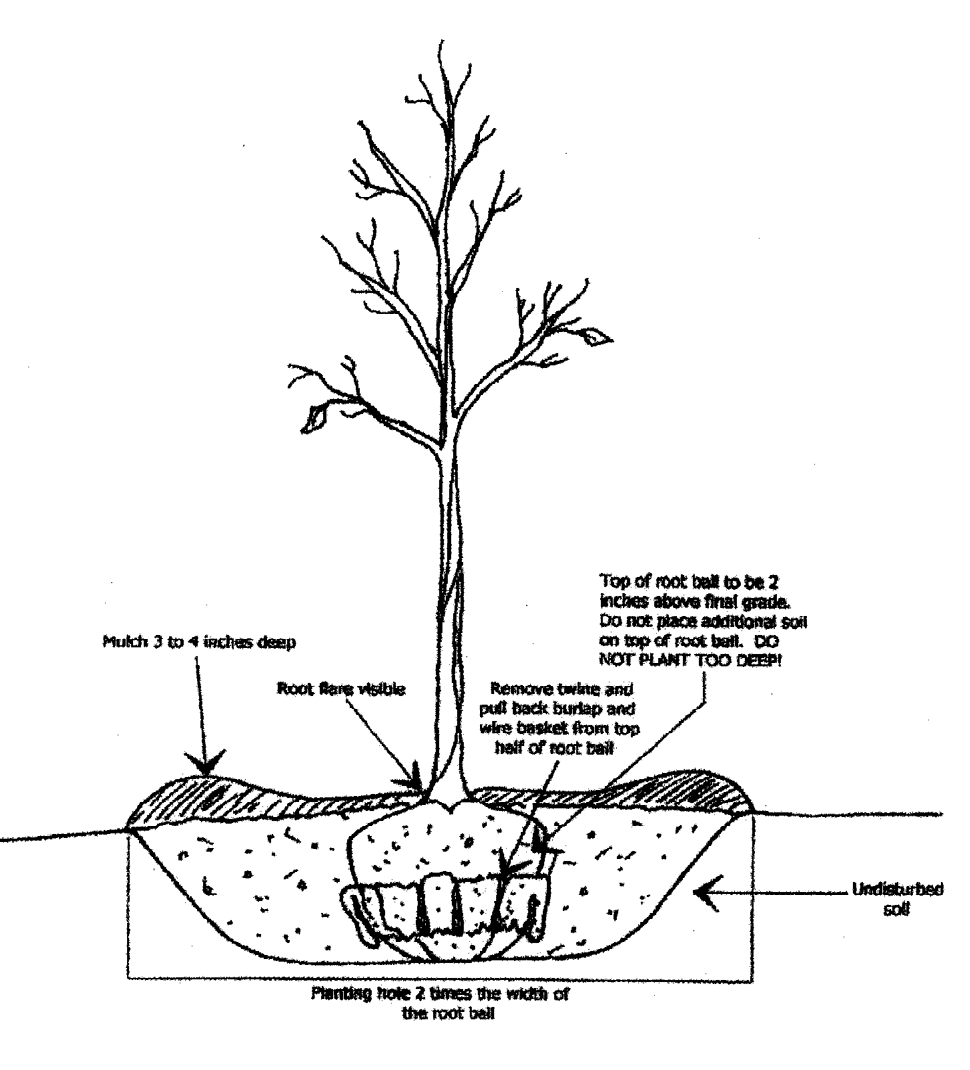
All trees are to be nursery grown and locally adapted, ball and burlap (B&B) preferred. Minimum trees size is two (2) inch caliper.
B.
Remove all treated or plastic-coated burlap, strapping, wire or twine from root ball.
C.
For container grown trees, carefully remove the plant from the container and cut any matted or circling roots.
D.
Water tree after planting. For mulch, use pine needles or seasoned mulch and use no more than three (3) to four (4) inches deep.
E.
Tree wrap is optional.
F.
Staking is optional. Rubber hose and rope or wire for staking is not recommended. Three fourth-inch nylon strap or tree trace strap is preferred. Staking should be removed after one (1) growing season.
(Ord. No. 23-03-0010, § 5(Exh. A), 6-22-23)
Section 26.30 - Tree Protection Details.
A.
See plans for location of all tree protection fences.
B.
All tree protection devises must be installed prior to land disturbance, including the cutting of any trees.
C.
No grading is to occur in the tree conservation areas or tree critical root zones.
D.
Remove all barriers upon completion of project.
E.
Tree protection details: