
Princeton City Zoning Code
ARTICLE X
- OVERLAY DISTRICTS
Sec. 82-49. - Downtown Overlay.
(a)
General purpose and description. The Downtown Overlay is established to protect existing development and to promote future development, while maintaining the unique character within Downtown Princeton. The establishment of the Downtown Overlay is one vital step in implementing the City of Princeton Comprehensive Plan, adopted in January 2019.
(b)
Applicability. The standards detailed in this section correspond to all properties within the Downtown Overlay district as referenced on the zoning map and within the regulating plan of this section.
(c)
Nonconforming uses and substantial modification or destruction.
(1)
Nonconforming uses shall be governed by section 82-39 of the city ordinances.
(2)
All new buildings or additions to existing buildings shall be required to meet the standards of this zoning overlay.
(d)
Applicability of other city ordinances. The development standards under the following sections of the City of Princeton Code of Ordinances, as amended, shall not apply to the Downtown Overlay except as specifically referenced herein. Development standards not addressed in this section shall be governed by the City of Princeton Code of Ordinances to the extent they are not in conflict with the intent or text of the Downtown Overlay.
(e)
Minor modifications. City staff administrative minor modifications are allowed as long as minor modification does not materially change the circulation and building location; increase building area permitted; change relationship between building and the street; does not allow a use otherwise not authorized; does not allow a greater height (in stories) or reduction of any parking requirements.
(1)
Setback range. No more than 20 percent change in the maximum or minimum setback, due to unforeseen obstacles, engineering conditions or to maintain spacing for trees, parks or other important neighborhood assets as determined by city manager, or their designee.
(2)
Parking screening. Parking screening standards may be built during a later phase, if it is part of a phased development strategy, and upon approval by the city manager, or their designee.
(3)
All other nominal dimensions. Any other nominal dimensions may be adjusted up to ten percent of the standard being adjusted.
(f)
Establishment of regulating plan. The regulating plan establishes the subdistricts, street types and building heights within the Downtown Overlay.
(1)
Establishment of subdistricts. The following subdistricts establish development patterns within the Downtown Overlay: Downtown Core (DT-C). Centered around the historic row of structures and around Veterans Memorial Park. The purpose of the subdistrict is to serve as a central downtown core, where mixed-use activity is encouraged to exist and be built as a walkable environment. The intent is to guide development to be mindful of the historic attributes of the area.
(2)
Downtown Core Transition (DT-CT). The area denoted as Downtown Core Transition serves as an adaptive reuse and infill development location to build on the activity of the Downtown Core. The purpose is to allow existing homes to transition to business uses and to expand the development options within this area that leads from the Highway Commercial to the Downtown Core.
(3)
Neighborhood Transition (DT-NT). Neighborhood Transition is established to allow for a variety of housing options near Downtown. This area is intended to be residential only, but also allow a seamless transition between existing single-family neighborhoods to the activity in the Downtown Core and Core Transition.
(4)
Highway Commercial (DT-HC). The Highway Commercial allows for the existence of auto-oriented uses, as befits the highway context, but also allows for this area to serve these needs near the Downtown Core. It is intended that this subdistrict will assist in establishing the entry to the Downtown Core and allow for placemaking at key intersections to highlight the Downtown.
(g)
Use table.
Table 1—Use Table
1
Residential uses shall be permitted by right in the upper floors of all buildings
**
Model homes are limited to a time period until all the homes are sold in the neighborhood.
(h)
Lot development standards. The following table shall establish the development standards for the four different areas in the Downtown Overlay.
Table 2—Development Standards
(i)
Parking.
(1)
Off-street parking shall only be located behind or to the side of buildings. In addition, the number of off-street parking spaces required shall be established in this section.
(2)
On-street parking shall be permitted to count towards the off-street parking requirements. Only the amount of spaces directly adjacent to the lot shall apply.
(3)
For on-street parking to count towards required parking, city staff may require on-street parking to be clear of travel lanes within the roadway. In this instance, the minimum required space for parallel or angled parking shall be required to clear the travel lane.
(4)
Head-in or 90-degree parking shall not be used as on-street parking.
(5)
Off-street parking.
a.
For any parking lot permitted along the side of buildings and a street-screen shall be provided such that the side of the parking bays closest to the streetshall be screened by a wall, fence or landscaped area three feet in height maximum. Materials shall be regulated by fence standards in section 14 of the city ordinances.
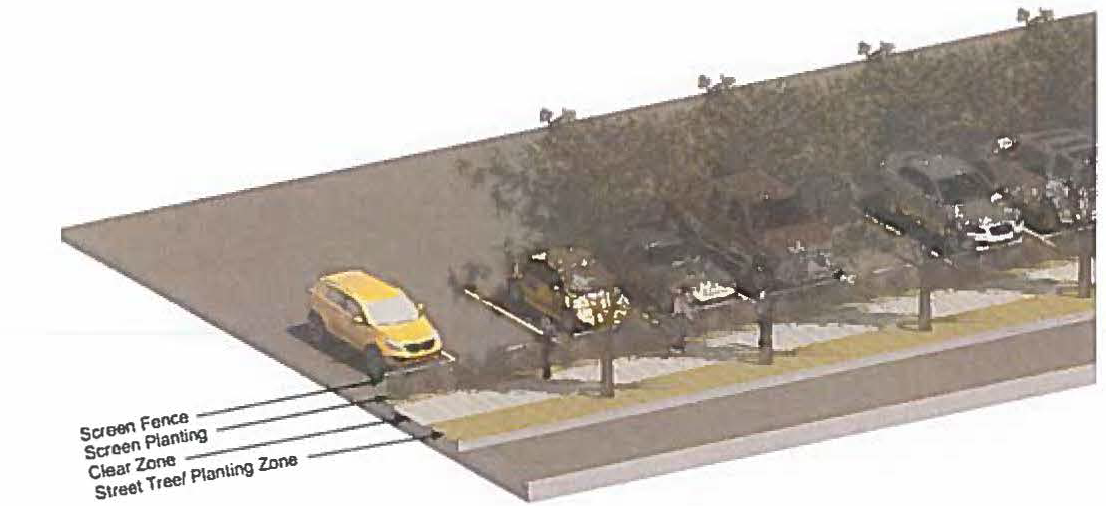
Image showing screening of off-street parking.
b.
When a streetscape improvement program is implemented, existing nonconforming off-street parking spaces within the public right-of-way will be replaced if feasible in terms of design; if particular spaces cannot be replaced, on-street parking spaces will be used as off-street parking credits to replace the loss of the nonconforming off-street parking spaces in order to achieve conformance with off-street parking requirements of this overlay.
(6)
Entertainment, retail, restaurant, civic, service, and office uses (all nonresidential uses). The first 3,000 square feet of gross floor area shall not require parking. The number of parking spaces required shall be one space per 350 square feet of gross floor area.
(7)
Multi-family residential. A minimum of one parking space shall be required for each multi-family residential unit.
(8)
Single-family or townhouse residential. A minimum of two parking spaces shall be required for each residential unit up to three bedrooms. Any additional bedroom shall require an additional parking space.
(9)
Lodging. 0.5 spaces per lodging room.
(10)
Shared parking. Off-street parking requirements for all uses permitted in the overlay may be waived subject to a shared parking agreement or a coordinated parking plan approved by the city manager or his or her designee, subject to appeal to the city council.
(j)
Screening.
(1)
Screening shall be regulated by section 82-6(e)(10) of the city ordinances.
(2)
For uses on lots adjacent to Main Street - Festival Street and Downtown Activity Street, loading and service areas shall be located at the rear of buildings utilizing the alley.
(3)
Any frontage along all streets (except alleys) not defined by a building at the setback range shall be defined by a three-foot high street screen. Furthermore, service areas shall be defined by a street screen that is at least as high as the service equipment being screened.
(4)
The street screen shall be of either the same building material as the principal structure on the lot or masonry or a living screen composed of shrubs planted to be opaque at maturity. Species shall be selected from the City of Princeton's Planting List per chapter 37. The required street screen shall be located at the property line or within the setback range along the corresponding frontage.
(k)
Building design standards and design guidelines.
(1)
Buildings shall be located and designed so that they provide visual interest and create enjoyable, human-scaled spaces. The key design principles are:
a.
New buildings/building facades shall utilize building elements and details to achieve compatibility with existing buildings in the Downtown Overlay.
b.
Compatibility is not meant to be achieved through uniformity, but by using variations in building elements to achieve individual building identity.
c.
Building facades must include appropriate architectural details and ornamentation to create variety and interest.
d.
Buildings shall be built to, or close to, the sidewalk to define and enhance the pedestrian environment.
e.
Open space(s) and outdoor seating/dining should be incorporated to provide usable public areas integral to the walkable environment.
(2)
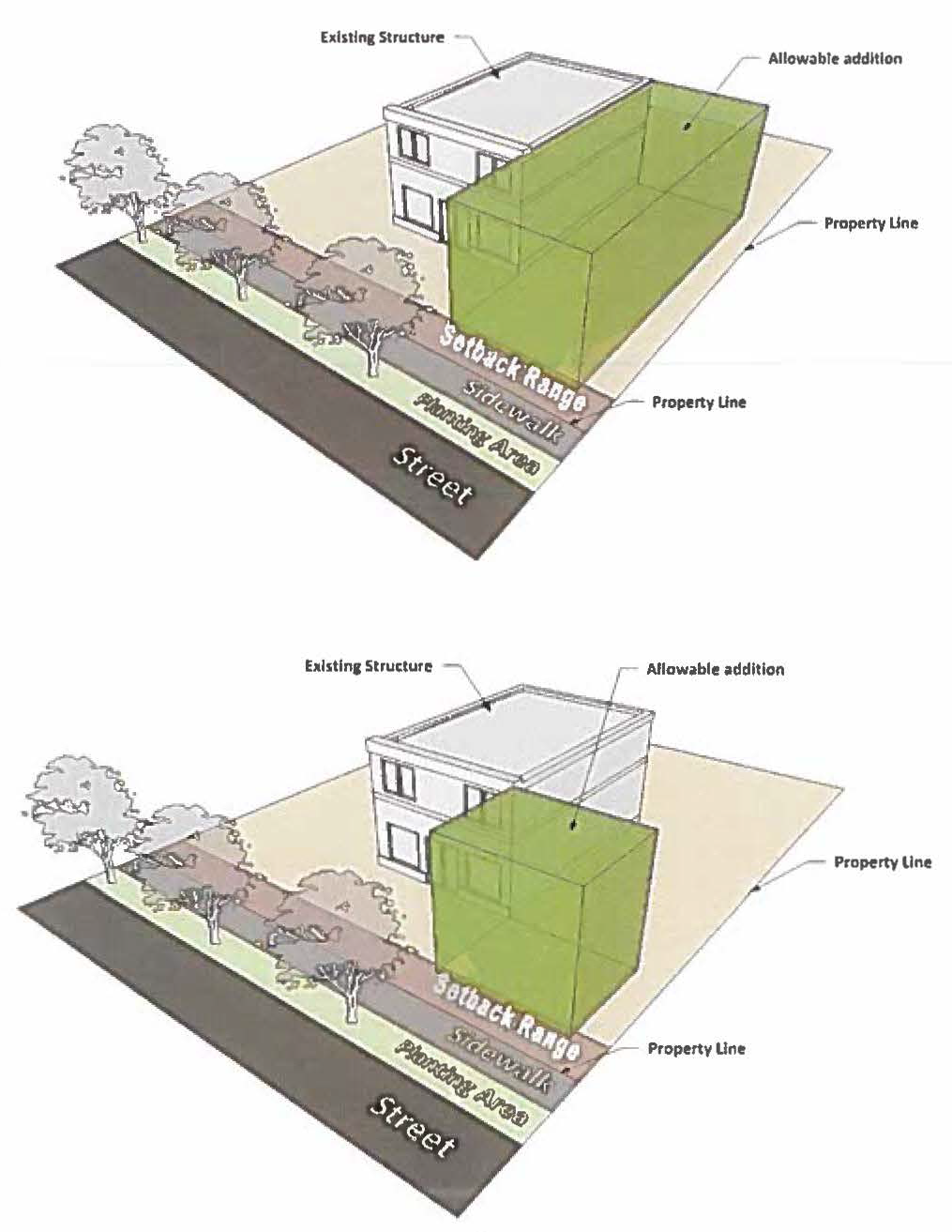
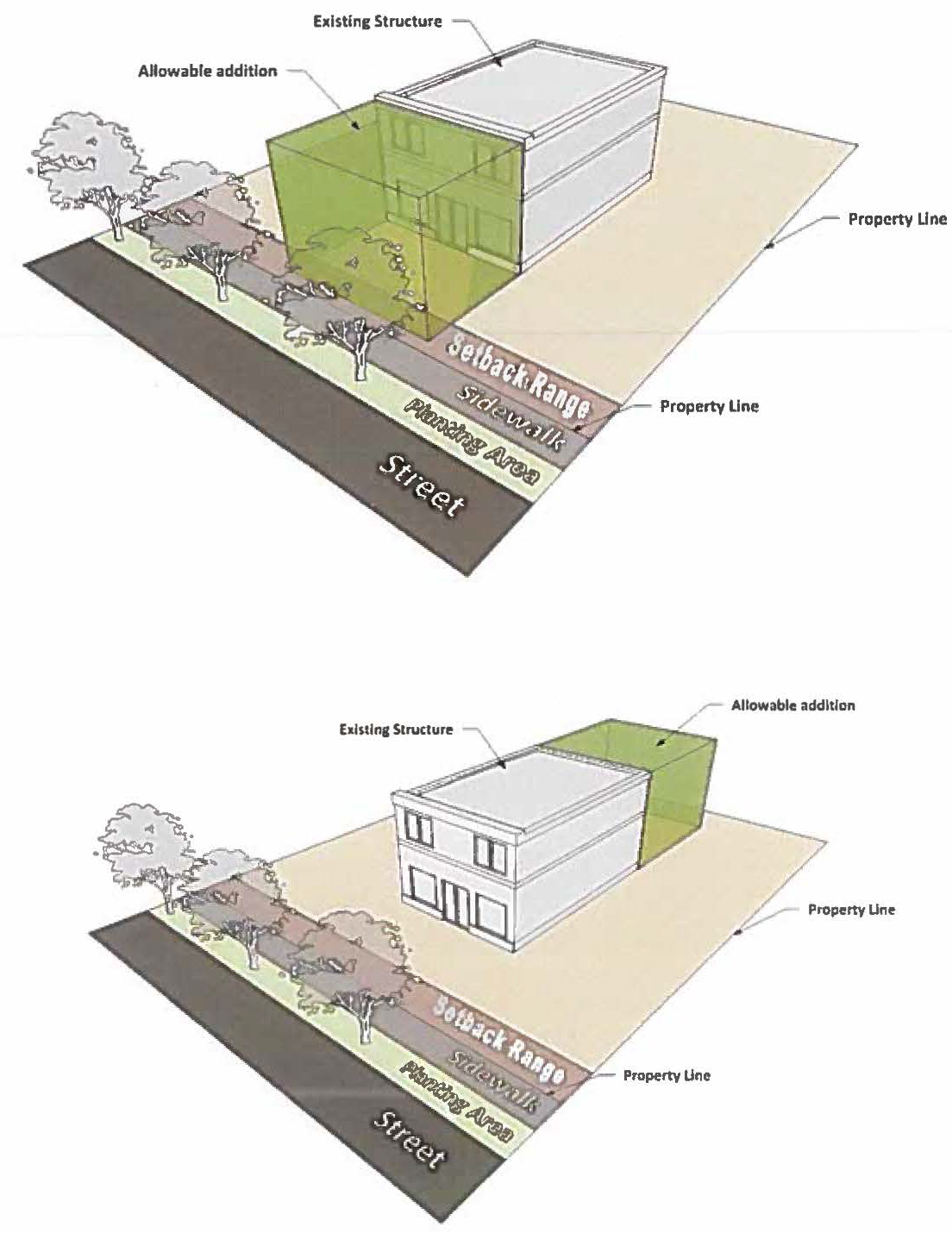
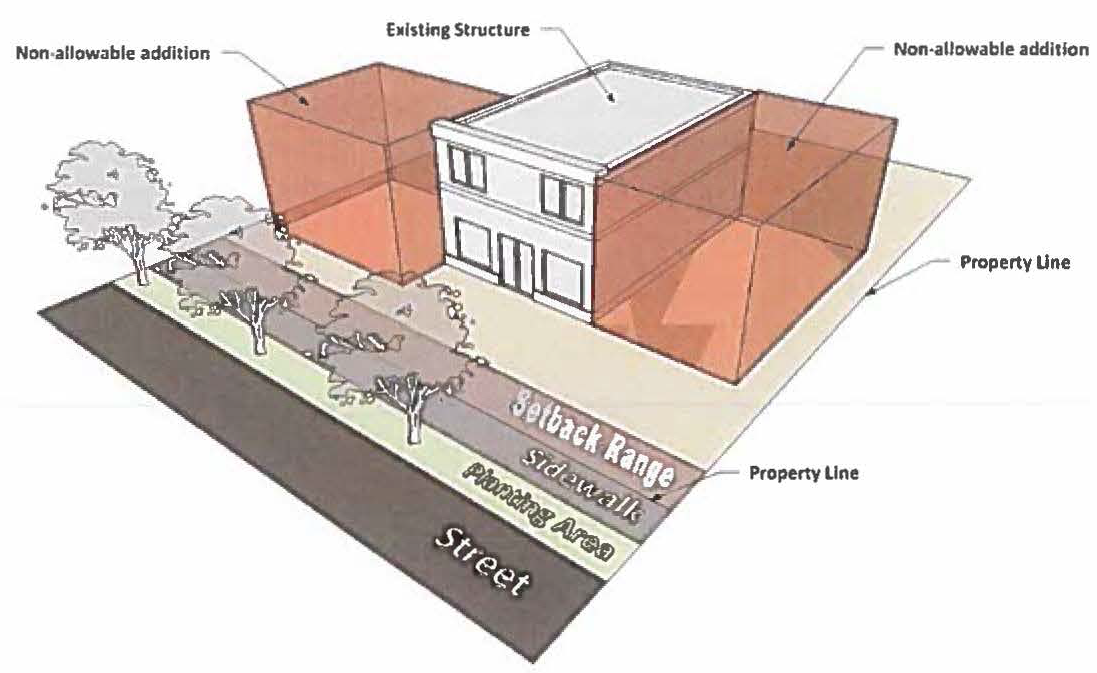
Changes to noncomplying structures. The following illustrations shall provide guidance to property owners on the allowed and prohibited modifications to existing noncomplying structures and sites within the Downtown Overlay.
a.
Allowable additions: The following illustrations show potential allowable additions to noncomplying structures and sites. Additions shall meet the setback range standards of the subdistrict they are located in.
b.
Nonallowable additions: The following illustrations show potential nonallowable additions to noncomplying structures and sites since the additions do not comply with the setback range standards of the subdistrict.
(3)
The following design standards and guidelines shall provide property owners, developers, city staff, and decision makers adequate design guidance for new and existing commercial and mixed-use buildings.
(4)
Location on the street.
a.
Buildings shall be oriented toward the major street front with the primary entrance located on that street. All primary entrances shall be oriented to the public sidewalk for ease of pedestrian access.
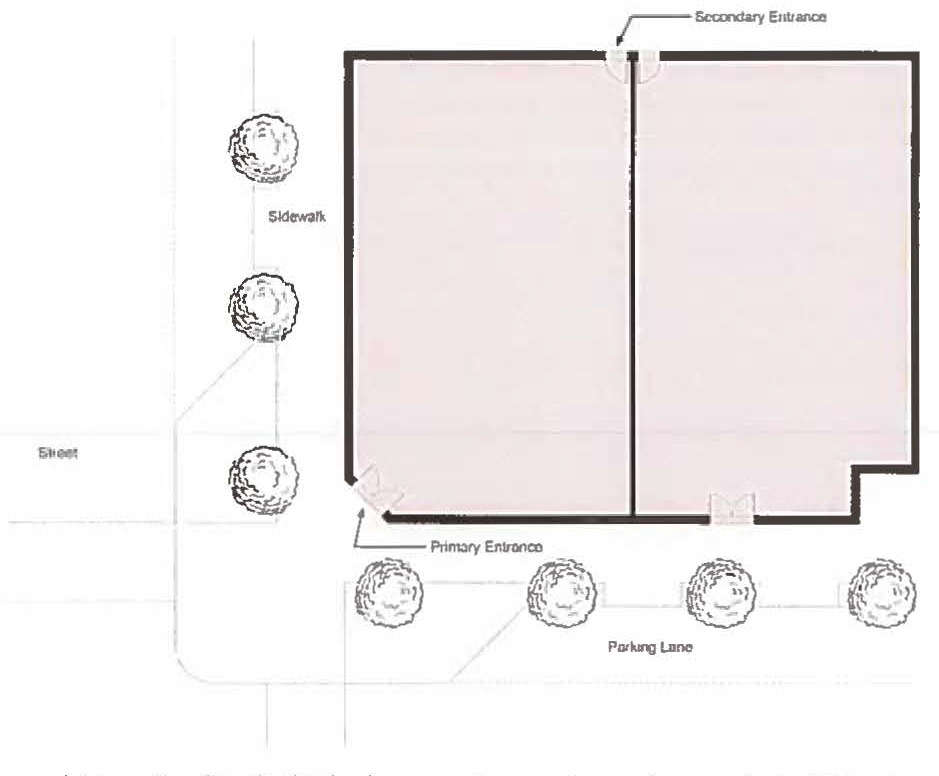
Image showing desired primary and secondary entrances to buildings in the Downtown
Overlay.
b.
At key intersections buildings located on corner lots shall utilize variations in building massing to emphasize street intersections as points of interest in the district. Maximum building heights are permitted to exceed by 25 percent for approximately 25 percent of the building frontage along each street facade.
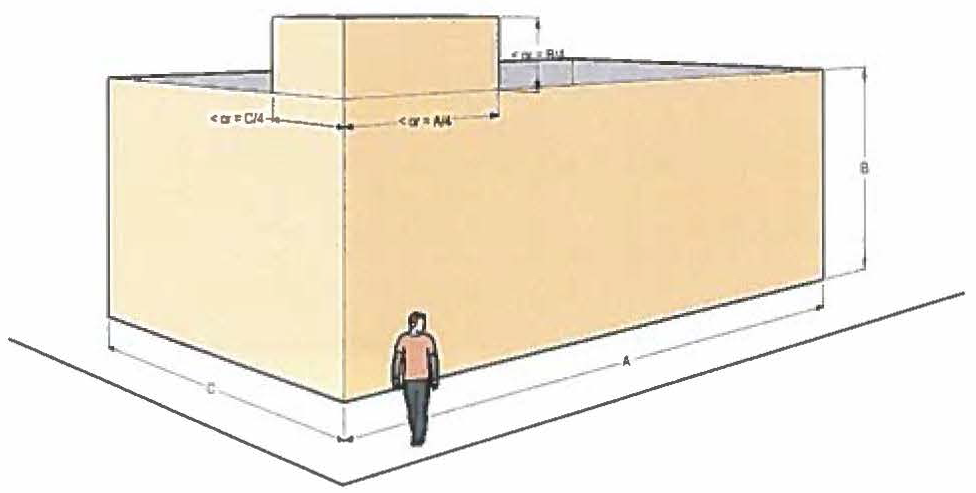
Image showing permitted massing of corner buildings within the Downtown Overlay.
(5)
Pedestrian-friendly building massing and scale.
a.
A building's massing shall serve to define entry points and help orient pedestrians.
b.
Buildings and/or facades shall emphasize and frame or terminate important vistas.
c.
Variations in the rhythms within individual building facades shall be achieved within any block of building facades with architectural elements such as bays, columns, doors, windows, etc.
d.
Breaks in the predominant rhythm may also be used to reinforce changes in massing and important elements such as building entrances, terminated vistas, or corner sites.
e.
Porches, stoops, eaves, awnings, blade signs, arcades, colonnades and balconies should be used along commercial storefronts and they may protrude beyond the setback line provided that they do not inhibit pedestrian movement within the public right-of-way. Balconies shall have external bottom supports.
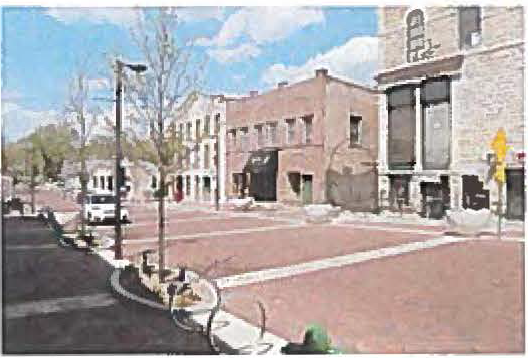 Variations in building rhythm using architectural features
| 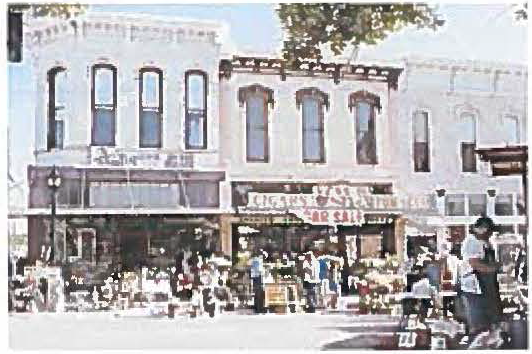 Building massing used to emphasize entrances
|
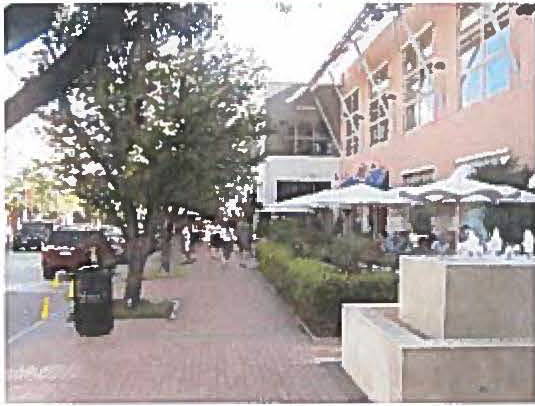 Allowed encroachments into the setback range
| 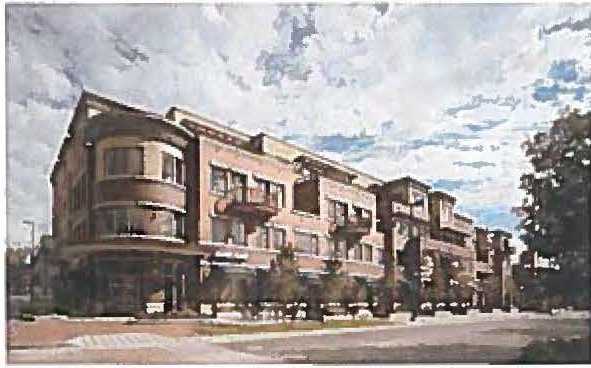 Mixed-use buildings with balconies and architectural details that add interest along
the streetscape.
Mixed-use buildings with balconies and architectural details that add interest along
the streetscape.
|
(l)
Mixed-use and nonresidential architectural design.
(1)
Architectural elements shall be designed to the appropriate scale and proportions of the developer selected architectural style.
(2)
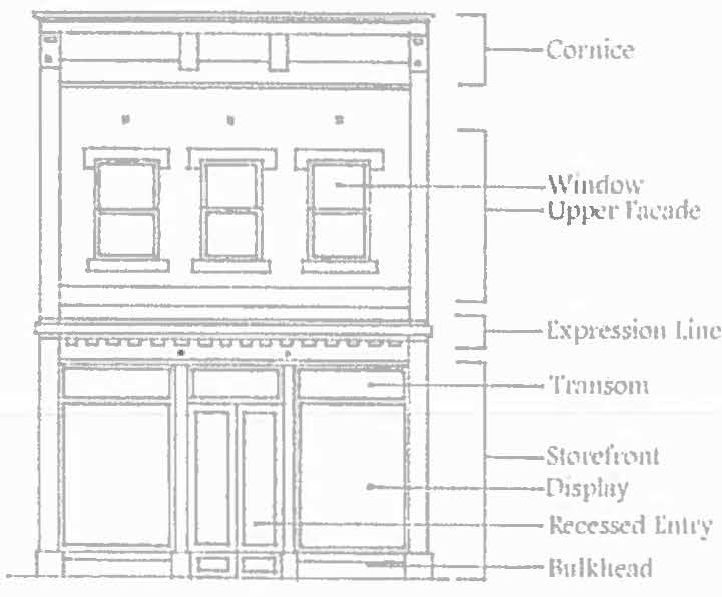
An expression line or equivalent architectural element shall delineate divisions between floors of all buildings, and a cornice shall delineate the tops of facades that do not utilize a pitched roof. These design elements are not required to be a traditional architectural style but are required to support human-scale design characteristics.
(3)
Building entrances may be defined and articulated by architectural elements such as lintels, pediments, pilasters, columns, porticos, porches, overhangs, railings, balustrades, and others as appropriate. All building elements should be compatible with the developer selected architectural style, materials, colors, and details of the building. Entrances to upper level uses may be defined and integrated into the design of the overall building facade.
(4)
Roofs. Flat roofs enclosed by parapets or sloped roofs may be used to screen rooftop mechanical equipment. Flat membrane-type roofs that are visible are prohibited.
(5)
Doors and windows. Generally, windows should be oriented vertically, and bay windows shall have external bottom supports. Dormer windows should also be vertically proportioned and slightly shorter than the windows below.
(6)
Transparency required. For all new mixed-use and nonresidential construction and renovation, the ground-level should have transparent storefront windows covering no less than 50 percent of the facade area. Each floor of all building facades facing a street or plaza should contain transparent windows covering at least 15 percent of the facade area.
(7)
Storefronts. Retailers located at the street level shall primarily use storefronts to orient and advertise merchandise to customers. Retail buildings shall provide street-level pedestrian-oriented uses at the ground floor level. Storefronts on facade treatments that span multiple tenants shall use architecturally compatible materials, colors, details, awnings, signage, and lighting fixtures.
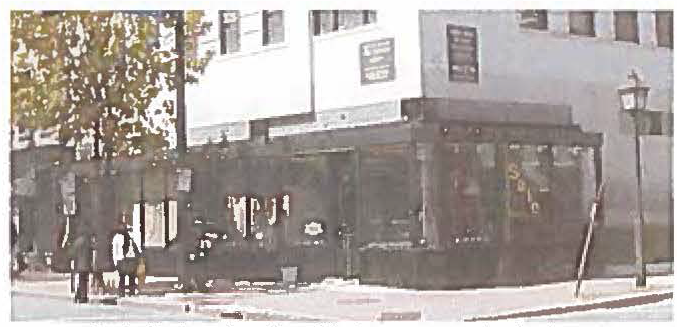 Retail storefronts with transparent windows
| 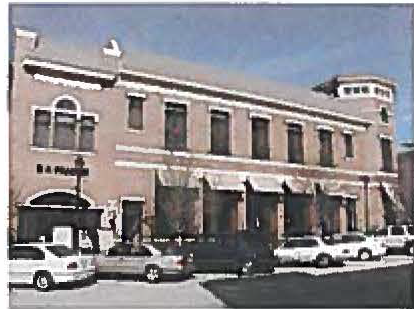 Vertically oriented windows with emphasis on corners and entrances.
|
(8)
Building materials. For nonresidential and mixed-use buildings, all materials are encouraged to be of a masonry product.
a.
Cementitious fiber plank or board should not be used on the ground floor of nonresidential, mixed-use or multi-family residential.
b.
EIFS should not be used on the ground floor of any structure.
(m)
For residential buildings. The following design standards and guidelines shall provide property owners, developers, city staff, and decision makers adequate design guidance:
(1)
Location on the street:
a.
All primary entrances shall address the primary street unless configured as a courtyard building or along a mews or other similar common space.
b.
Garages generally shall be located on alleys at the rear of residential buildings; pull-through garages are allowed if the garage door is set back behind the rear facade of the main structure.
c.
If front-loaded garages are utilized on single-family residential lots, front-loaded garages shall be no greater than 16 feet wide, and set back at least ten feet measured from the face of the main structure closest to the garage or rotated 90 degrees with windows on the wall facing the street.
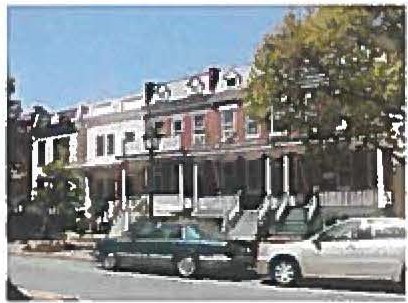 Residential townhomes with primary entrances to the street
| 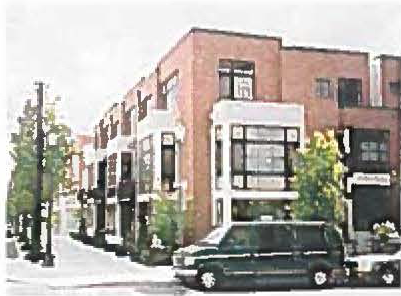 Live-work units with bay windows
|
(2)
Pedestrian-friendly building massing and scale:
a.
On residential buildings, at least one of the following shall be utilized: porches, stoops, bay windows, balconies, masonry clad chimneys, attached pergolas or colonnades. Those architectural elements may encroach beyond the setback line.
b.
The base of a building shall be delineated by a change in color, water mark or different material for at least the first 18 inches of the facade; or where feasible, the grade of the slab or first floor elevation shall be elevated at least 18 inches above the grade of the sidewalk.
(3)
Architectural elements.
a.
Residential buildings should have relatively flat fronts and simple roofs with most building wing articulations set at the rear of the structure. Window projections, stoops, porches, balconies, and similar extensions are exempt from this standard.
b.
Gable roofs, if provided, should have a minimum pitch of 6/12. When hipped roofs are used, the minimum pitch should be 4/12. Other roof types shall be appropriate to the architectural style of the building.
c.
Architectural embellishments that add visual interest to the roofs, such as dormers and masonry chimneys may be provided.
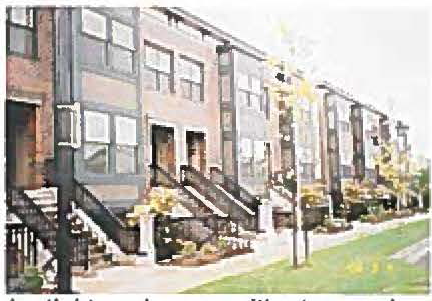 | 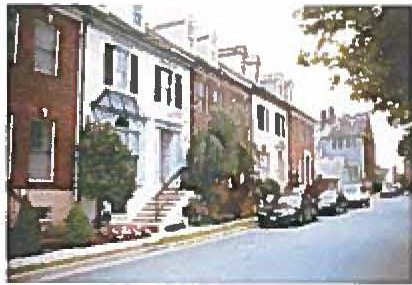 |
| Residential townhomes with stoops, dormers, and other architectural embellishments that add visual interest along the street. | |
(4)
Building materials.
a.
The following are encouraged to be finishes for street fronting facades of all residential buildings and live/work units:
• Cementitious-fiber plank or board with at least a 25-year warranty;
• Masonry (brick; stone; manmade stone and stucco utilizing a three-step process).
b.
The following are encouraged to be limited as an accent material:
• Wood (no plywood or pressboard);
• Architectural metal utilizing detailed finishes (not corrugated metal); or
• Similar material over a cementitious base, rock, glass block and tile.
c.
Side and rear facades share encouraged to be of finished quality and of the same color and durability of materials that blend with the front of the building.
d.
An enclosed garage or carport should be designed and constructed of the same material as the primary.
(Ord. No. 2019-11-12-01, § 2, 11-12-2019)

