
Roanoke City Zoning Code
ARTICLE III
- ZONING DISTRICTS
DIVISION 15. - OAK STREET CORRIDOR ZONING DISTRICT[2]
Editor's note— Ord. No. 2012-129, § 2(Exh. A), adopted Dec. 11, 2012, amended Div. 15 in its entirety to read as herein set out. Former Div. 15, §§ 12.490—12.500, derived from Ord. No. 2009-100, § 2(Exh. A), 2-10-09; Ord. No. 2011-120, § 2, 9-27-2011.
Sec. 12.200.- Zoning Districts Established.
(a)
The City of Roanoke, Texas is hereby divided into the following zoning districts. The use, height, area regulations, and other standards, as set out herein apply to each district. The districts established herein shall be known as:
(b)
A summary of the area regulations for the following zoning districts is included within the Appendix 1.
(c)
Certain terms and definitions used within this chapter can be found in Section 12.6.
Sec. 12.210.- General Purpose and Description.
The AG, Agricultural, district is designed to permit the use of land for the ranching, propagation and cultivation of crops and similar uses of vacant land. Single-family uses on large lot/tracts are also appropriate for this district. Territory that has been newly annexed into the City is initially zoned Agricultural until it is rezoned. It is anticipated that Agricultural zoned land will eventually be rezoned to another more permanent, suburban zoning classification in the future. The Agricultural district is also appropriate for areas where development is premature due to lack of utilities or City services; to preserve areas that are unsuitable for development due to problems that may present hazards such as flooding, in which case the Agricultural zoning designation should be retained until such hazards are mitigated and the land is rezoned; and to provide permanent greenbelts or to preserve open space areas as buffers around uses that might otherwise be objectionable or pose environmental or health hazards.
Sec. 12.211. - Permitted Uses.
Those uses listed for the AG-Agricultural district in article VI of this chapter as "P" or "S" are authorized uses permitted by right or specially permitted uses, respectively. Special uses must be approved utilizing procedures set forth in article V of this chapter.
Sec. 12.212. - Height Regulations.
Maximum height regulations for the agricultural district shall be as follows:
(1)
Three (3) stories, or forty-five feet (45') for the main building/house.
(2)
Forty-five feet (45') for agricultural structures (e.g., barns, silos, water towers, etc.), provided they are no closer than one hundred feet (100') from any residential structure on the premises, and they are set back at least one hundred feet (100') or three (3) times their height (whichever is greater) from any front, side or rear property line.
(3)
Other requirements, see article VII, division 5 of this chapter.
(4)
Eighteen feet (18') for other accessory buildings, including detached garage, accessory dwelling units, etc.
Sec. 12.213. - Area Regulations.
(a)
Size of Lot/tracts.
(1)
Minimum Lot/tract Area. Five (5) acres.
(2)
Minimum Lot/tract Width. One hundred and fifteen feet (115').
(3)
Minimum Lot/tract Depth. One hundred and fifty feet (150').
(b)
Size of Yards.
(1)
Minimum Front Yard. Fifty feet (50').
(2)
Minimum Side Yard. Ten percent (10%) of the lot/tract width, but need not exceed fifteen feet (15'); twenty-five feet (25') from a street right-of way line for a corner lot/tract; fifty feet (50') from a street right-of-way line for a key corner lot/tract.
(3)
Minimum Rear Yard. Twenty percent (20%) of the lot/tract depth for the main building but need not exceed fifty feet (50').
(c)
Maximum Lot/Tract Coverage. Fifteen percent (15%) for main buildings and accessory buildings.
(d)
Parking Regulations.
(1)
Single-Family Dwelling Unit. A minimum of two (2) enclosed parking spaces behind the front building line on the same lot/tract as the main structure, plus four (4) additional parking spaces on a paved driveway (all concrete or a similar paved surface such as turf pavers, brick pavers).
(2)
Other. See article VII, division 2 of this chapter, Off-Street Parking and Loading Requirements.
(e)
Minimum Floor Area per Dwelling Unit. Two thousand (2,400) square feet. (See Section 12.805 for the minimum dwelling unit area).
(f)
Minimum Exterior Construction Standards. See article VII, division 6 of this chapter for exterior construction standards.
Sec. 12.214. - Special Requirements.
(a)
Recreational vehicles, travel trailers, mobile homes or motor homes may not be used for on-site dwelling purposes.
(b)
Above-ground electrical fencing, not including underground "virtual fencing," which is allowed, wire mesh (such as hog wire, chicken wire) and barbed wire are prohibited as perimeter fencing except for containment of farm animals on parcels of five (5) or more acres.
(c)
Open storage is prohibited, except for materials for the resident's personal use or consumption such as firewood, garden materials, farm equipment, etc., which cannot be stored in any required setback and which must be screened from view of public streets and neighboring properties.
(d)
Single-family homes with side-entry garages where lot/tract frontage is only to one street (not a corner lot/tract) shall have a minimum of twenty-four feet (24') from the door face of the garage or carport to the side property line with a paved 6' hammerhead turnaround provided for on site maneuvering of vehicles. The minimum setback from any garage door to a street or alley right-of-way line shall also be twenty-four feet (24').
(e)
The elimination of a garage space by enclosing or converting any portion of the garage space with a stationary building wall shall be prohibited unless another garage of the same size is built on the lot/tract within the proper setbacks, not exceeding the maximum lot/tract coverage, etc.
(f)
Swimming pools (see Chapter 6, article 6.300 of this Code).
(g)
Site plan approval (see article II, division 7 of this chapter) shall be required for any authorized nonresidential use in the AG district.
(h)
Other Regulations—As established by articles VI and VII of this chapter.
Sec. 12.230.- General Purpose and Description.
The SF-22, Single-Family Residential-22, district is intended to provide for development of primarily low-density detached, single-family residences on lot/tracts of not less than 22,000 square feet in size, churches, schools and public parks in logical neighborhood units. Areas zoned for the SF-22 district shall have, or shall make provision for, City of Roanoke water and sewer services. They shall be designed to adequately accommodate storm drainage; they shall have paved concrete streets with logical and efficient vehicular circulation patterns which discourage non-local traffic; they shall be properly buffered from non-residential uses; and they shall be protected from pollution and undesirable environmental and noise impacts.
Sec. 12.231. - Permitted Uses.
Those uses listed for the SF-22 district in article VI of this chapter as "P" or "S" are authorized uses permitted by right or specially permitted uses, respectively. Special uses must be approved utilizing procedures set forth in article V of this chapter.
Sec. 12.232. - Height Regulations.
(a)
Maximum Height.
(1)
Two and one-half (2½) stories, or thirty-five feet (35') for the main building/house.
(2)
One story, or sixteen feet (16') for other accessory buildings, including detached garage, garden shed, accessory dwelling units, gazebo, etc.
(3)
Other requirements (see article VII, division 6 of this chapter).
Sec. 12.233. - Area Regulations.
(a)
Size of Lot/Tracts.
(1)
Minimum Lot/Tract Area. Twenty-two thousand (22,000) square feet.
(2)
Minimum Lot/Tract Width. One hundred and twenty feet (120'). Lots bordering streets on curves or contours or cul-de-sac lots shall be one hundred twenty feet (120') in width at the front building line.
(3)
Minimum Lot/Tract Depth. The average depth of the lot shall not be less than one hundred eighty feet (180'), except that a corner lot, having a minimum width of not less than one hundred forty feet (140'), may have an average depth of less than one hundred eighty feet (180') provided that the minimum depth is not less than one hundred sixty feet (160').
(b)
Size of Yards.
(1)
Minimum Front Yard. Thirty-five feet (35').
(2)
Minimum Side Yard. Twenty feet (20') for an interior side yard; twenty-five feet (25') from a street right-of-way line for a corner lot/tract on a residential or collector street; twenty-five feet (25') for a corner lot/tract on an arterial street; twenty-five feet (25') from a street right-of-way line for a key corner lot/tract.
(3)
Minimum Rear Yard. Thirty-five feet (35') for the main building.
(c)
Maximum Lot/Tract Coverage. Thirty-five percent (35%) including main buildings and accessory buildings.
(d)
Parking Regulations.
(1)
Single-Family Dwelling Unit—A minimum of two (2) attached and enclosed parking spaces behind the front building line on the same lot/tract as the main structure, plus two (2) additional parking spaces on a paved driveway (all concrete or a similar paved surface such as turf pavers, brick pavers).
(2)
Other—See article VII, division 2 of this chapter, Off-Street Parking and Loading Requirements.
(e)
Minimum Floor Area per Dwelling Unit. Two thousand one hundred (2,100) square feet (See Section 12.805 for the minimum dwelling unit area).
(f)
Minimum Exterior Construction Standards. See article VII, division 6 of this chapter for exterior construction standards.
Sec. 12.234. - Special Requirements.
(a)
Recreational vehicles, travel trailers or motor homes may not be used for on-site dwelling purposes.
(b)
Above-ground electrical fencing (does not include underground "virtual fencing," which is allowed), wire mesh (such as hog wire, chicken wire) and barbed wire are prohibited as perimeter fencing except for containment of farm animals on parcels of five (5) or more acres.
(c)
Open storage is prohibited (except for materials for the resident's personal use or consumption such as firewood, garden materials, etc., which cannot be stored in any required setback and which shall be screened from view of public streets and neighboring properties). Acceptable storage buildings are allowed as generally depicted in Illustration 9 of this Code.
(d)
Single-family homes with side-entry garages where lot/tract frontage is only to one street (not a corner lot/tract) shall have a minimum of twenty-four feet (24') from the door face of the garage or carport to the side property line with a paved 6' hammerhead turnaround provided for on site maneuvering of vehicles. The minimum setback from any garage door to a street or alley right-of-way line shall also be twenty-four feet (24'/or build line).
(e)
The elimination of a garage space by enclosing or converting any portion of the garage space with a stationary building wall shall be prohibited unless another garage of the same size is built on the lot/tract within the proper setbacks, not exceeding the maximum lot/tract coverage, etc.
(f)
Swimming pools (see Chapter 6, article 6.300 of this Code, article VII of this Code, the International Residential Code, and the International Property Maintenance Code, as amended).
(g)
Site plan approval shall be required for any authorized non-residential use in the SF-22 district.
(h)
Other Regulations - As established by articles VI and VII of this chapter.
(Ord. No. 2012-113, § 3, adopted 5/8/2012)
Sec. 12.240.- General Purpose and Description.
The SF-15, Single-Family Residential-15, district is intended to provide for development of primarily low-density detached, single-family residences on lot/tracts of not less than 15,000 square feet in size, churches, schools and public parks in logical neighborhood units. Areas zoned for the SF-15 district shall have, or shall make provision for, City of Roanoke water and sewer services. They shall be designed to adequately accommodate storm drainage; they shall have paved concrete streets with logical and efficient vehicular circulation patterns which discourage non-local traffic; they shall be properly buffered from non-residential uses; and they shall be protected from pollution and undesirable environmental and noise impacts.
Sec. 12.241. - Permitted Uses.
Those uses listed for the SF-15 district in article VI of this chapter as "P" or "S" are authorized uses permitted by right or specially permitted uses, respectively. Special uses must be approved utilizing procedures set forth in article V of this chapter.
Sec. 12.242. - Height Regulations.
(a)
Maximum Height.
(1)
Two and one-half (2½) stories, or thirty-five feet (35') for the main building/house.
(2)
One story, or sixteen feet (16') for other accessory buildings, including detached garage, garden shed, gazebo, etc.
(3)
Other requirements (see article VII, division 6 of this chapter).
Sec. 12.243. - Area Regulations.
(a)
Size of Lot/Tracts.
(1)
Minimum Lot/Tract Area. Fifteen thousand (15,000) square feet.
(2)
Minimum Lot/Tract Width. One hundred ten feet (110'). Lots bordering streets on curves or contours or cul-de-sac lots shall be one hundred ten feet (110') in width at the front building line.
(3)
Minimum Lot/Tract Depth. The average depth of the lot shall not be less than one hundred thirty-five feet (135'), except that a corner lot, having a minimum width of not less than one hundred twenty feet (120'), may have an average depth of less than one hundred thirty-five feet (135') provided that the minimum depth is not less than one hundred twenty-five feet (125').
(b)
Size of Yards.
(1)
Minimum Front Yard. Twenty-five feet (25').
(2)
Minimum Side Yard. Twelve feet (12') for an interior side yard; twenty-five feet (25') from a street right-of-way line for a corner lot/tract on a residential or collector street; twenty-five feet (25') for a corner lot/tract on an arterial street; twenty-five feet (25') from a street right-of-way line for a key corner lot/tract.
(3)
Minimum Rear Yard. Thirty feet (30') for the main building.
(c)
Maximum Lot/Tract Coverage. Thirty-five percent (35%) including main buildings and accessory buildings.
(d)
Parking Regulations.
(1)
Single-Family Dwelling Unit—A minimum of two (2) attached and enclosed parking spaces behind the front building line on the same lot/tract as the main structure, plus two (2) additional parking spaces on a paved driveway (all concrete or a similar paved surface such as turf pavers, brick pavers).
(2)
Other—See article VII, division 2 of this chapter, Off-Street Parking and Loading Requirements.
(e)
Minimum Floor Area per Dwelling Unit. One thousand nine hundred (1,900) square feet (See Section 12.805 for the minimum dwelling unit area).
(f)
Minimum Exterior Construction Standards. See article VII, division 6 of this chapter for exterior construction standards.
Sec. 12.244. - Special Requirements.
(a)
Recreational vehicles, travel trailers or motor homes may not be used for on-site dwelling purposes.
(b)
Above-ground electrical fencing (does not include underground "virtual fencing," which is allowed), wire mesh (such as hog wire, chicken wire) and barbed wire are prohibited as perimeter fencing except for containment of farm animals on parcels of five (5) or more acres.
(c)
Open storage is prohibited (except for materials for the resident's personal use or consumption such as firewood, garden materials, etc., which cannot be stored in any required setback and which shall be screened from view of public streets and neighboring properties). Acceptable storage buildings are allowed as generally depicted in Illustration 9 of this Code.
(d)
Single-family homes with side-entry garages where lot/tract frontage is only to one street (not a corner lot/tract) shall have a minimum of twenty-four feet (24') from the door face of the garage or carport to the side property line with a paved 6' hammerhead turnaround provided for on site maneuvering of vehicles. The minimum setback from any garage door to a street or alley right-of-way line shall also be twenty-four feet (24'or build line).
(e)
The elimination of a garage space by enclosing or converting any portion of the garage space with a stationary building wall shall be prohibited unless another garage of the same size is built on the lot/tract within the proper setbacks, not exceeding the maximum lot/tract coverage, etc.
(f)
Swimming pools (see Chapter 6, article 6.300 of this Code, article VII of this Code, the International Residential Code, and the International Property Maintenance Code, as amended).
(g)
Site plan approval shall be required for any authorized non-residential use in the SF-15 district.
(h)
Other Regulations - As established by articles VI and VII of this chapter.
(Ord. No. 2012-113, § 4, adopted 5/8/2012)
Sec. 12.250.- General Purpose and Description.
The SF-11, Single-Family Residential-11, district is intended to provide for development of primarily low-density detached, single-family residences on lot/tracts of not less than 11,000 square feet in size, churches, schools and public parks in logical neighborhood units. Areas zoned for the SF-11 district shall have, or shall make provision for, City of Roanoke water and sewer services. They shall be designed to adequately accommodate storm drainage; they shall have paved concrete streets with logical and efficient vehicular circulation patterns which discourage non-local traffic; they shall be properly buffered from non-residential uses; and they shall be protected from pollution and undesirable environmental and noise impacts.
Sec. 12.251. - Permitted Uses.
Those uses listed for the SF-11 district in article VI of this chapter as "P" or "S" are authorized uses permitted by right or specially permitted uses, respectively. Special uses must be approved utilizing procedures set forth in article V of this chapter.
Sec. 12.252. - Height Regulations.
(a)
Maximum Height:
(1)
Two and one-half (2½) stories, or thirty-five feet (35') for the main building/house.
(2)
One story, or sixteen feet (16') for other accessory buildings, including detached garage, garden shed, gazebo, etc.
(3)
Other requirements (see article VII, division 6 of this chapter).
Sec. 12.253. - Area Regulations.
(a)
Size of Lot/Tracts.
(1)
Minimum Lot/Tract Area. Eleven thousand (11,000) square feet.
(2)
Minimum Lot/Tract Width. Ninety feet (90'). Lots bordering streets on curves or contours or cul-de-sac lots shall be ninety feet (90') in width at the front building line.
(3)
Minimum Lot/Tract Depth. The average depth of the lot shall not be less than one hundred twenty feet (120'), except that a corner lot or cul-de-sac lots, having a minimum width of not less than one hundred and ten feet (110'), may have an average depth of less than one hundred twenty feet (120') provided that the minimum depth is not less than one hundred feet (100').
(b)
Size of Yards.
(1)
Minimum Front Yard. Twenty-five feet (25').
(2)
Minimum Side Yard. Ten feet (10') for an interior side yard; twenty-five feet (25') from a street right-of-way line for a corner lot/tract on a residential or collector street; twenty-five feet (25') for a corner lot/tract on an arterial street; twenty-five feet (25') from a street right-of-way line for a key corner lot/tract.
(3)
Minimum Rear Yard. Twenty-five feet (25') for the main building.
(c)
Maximum Lot/tract Coverage. Thirty-five percent (35%) including main buildings and accessory buildings.
(d)
Parking Regulations.
(1)
Single-Family Dwelling Unit—A minimum of two (2) attached and enclosed parking spaces behind the front building line on the same lot/tract as the main structure, plus two (2) additional parking spaces on a paved driveway (all concrete or a similar paved surface such as turf pavers, brick pavers).
(2)
Other—See article VII, division 2 of this chapter, Off-Street Parking and Loading Requirements.
(e)
Minimum Floor Area per Dwelling Unit. One thousand six hundred (1,600) square feet (See Section 12.805 for the minimum dwelling unit area).
(f)
Minimum Exterior Construction Standards. See article VII, division 6 of this chapter for exterior construction standards.
Sec. 12.254. - Special Requirements.
(a)
Recreational vehicles, travel trailers or motor homes may not be used for on-site dwelling purposes.
(b)
Above-ground electrical fencing (does not include underground "virtual fencing," which is allowed), wire mesh (such as hog wire, chicken wire) and barbed wire are prohibited as perimeter fencing except for containment of farm animals on parcels of five (5) or more acres.
(c)
Open storage is prohibited (except for materials for the resident's personal use or consumption such as firewood, garden materials, etc., which cannot be stored in any required setback and which shall be screened from view of public streets and neighboring properties). Acceptable storage buildings are allowed as generally depicted in Illustration 9 of this Code.
(d)
Single-family homes with side-entry garages where lot/tract frontage is only to one street (not a corner lot/tract) shall have a minimum of twenty-four feet (24') from the door face of the garage or carport to the side property line with a paved 6' hammerhead turnaround provided for on site maneuvering of vehicles. The minimum setback from any garage door to a street or alley right-of-way line shall also be twenty-four feet (24').
(e)
The elimination of a garage space by enclosing or converting any portion of the garage space with a stationary building wall shall be prohibited unless another garage of the same size is built on the lot/tract within the proper setbacks, not exceeding the maximum lot/tract coverage, etc.
(f)
Swimming pools (see Chapter 6, article 6.300 of this Code, article VII of this Code, the International Residential Code, and the International Property Maintenance Code, as amended).
(g)
Site plan approval shall be required for any authorized non-residential use in the SF-11 district.
(h)
Other Regulations—As established by articles VI and VII of this chapter.
(Ord. No. 2012-113, § 5, adopted 5/8/2012)
Sec. 12.260.- General Purpose and Description.
The SF-7, Single-Family Residential-7, district is intended to provide for planned residential development of primarily detached, single-family residences on smaller and more compact lot/tracts of not less than 7,200 square feet in size, churches, schools and public parks in logical neighborhood units. Areas zoned for the SF-7 district shall have, or shall make provision for, City of Roanoke water and sewer services. They shall be designed to adequately accommodate storm drainage; they shall have paved concrete streets with logical and efficient vehicular circulation patterns which discourage non-local traffic; they shall be properly buffered from non-residential uses; and they shall be protected from pollution and undesirable environmental and noise impacts.
Sec. 12.261. - Permitted Uses.
Those uses listed for the SF-7 district in article VI of this chapter as "P" or "S" are authorized uses permitted by right or specially permitted uses, respectively. Special uses must be approved utilizing procedures set forth in article V of this chapter.
Sec. 12.262. - Height Regulations.
(a)
Maximum Height.
(1)
Two and one-half (2½) stories, or thirty-five feet (35') for the main building/house.
(2)
One story, or sixteen feet (16') for other accessory buildings, including detached garage, garden shed, gazebo, etc.
(3)
Other requirements (see article VII, division 6 of this chapter).
Sec. 12.263. - Area Regulations.
(a)
Size of Lot/Tracts.
(1)
Minimum Lot/Tract Area. Seven thousand two hundred (7,200) square feet.
(2)
Minimum Lot/Tract Width. Sixty feet (60'). Lots bordering streets on curves or contours or cul-de-sac lots shall be sixty feet (60') in width at the front building line.
(3)
Minimum Lot/Tract Depth. The average depth of the lot shall not be less than one hundred twenty feet (120'), except that a corner lot or cul-de-sac lots, having a minimum width of not less than eighty feet (80'), may have an average depth of less than one hundred twenty feet (120') provided that the minimum depth is not less than ninety feet (90').
(b)
Size of Yards.
(1)
Minimum Front Yard. Twenty-five feet (25').
(2)
Minimum Side Yard. Seven and one-half feet (7.5') for an interior side yard; fifteen feet (15') from a street right-of-way line for a corner lot/tract on a residential or collector street; fifteen feet (15') for a corner lot/tract on an arterial street; fifteen feet (15') from a street right-of-way line for a key corner lot/tract.
(3)
Minimum Rear Yard. Twenty-five feet (25') for the main building.
(c)
Maximum Lot/tract Coverage. Thirty-five percent (35%) by main buildings and accessory buildings.
(d)
Parking Regulations.
(1)
Single-Family Dwelling Unit. A minimum of two (2) attached and enclosed parking spaces behind the front building line on the same lot/tract as the main structure, plus two (2) additional parking spaces on a paved driveway (all concrete or a similar paved surface such as turf pavers, brick pavers).
(2)
Other. See article VII, division 2 of this chapter, Off-Street Parking and Loading Requirements.
(e)
Minimum Floor Area per Dwelling Unit. One thousand two hundred (1,200) square feet (See Section 12.805 for the minimum dwelling unit area).
(f)
Minimum Exterior Construction Standards. See article VII, division 6 of this chapter for exterior construction standards.
Sec. 12.264. - Special Requirements.
(a)
Recreational vehicles, travel trailers or motor homes may not be used for on-site dwelling purposes.
(b)
Above-ground electrical fencing (does not include underground "virtual fencing," which is allowed), wire mesh (such as hog wire, chicken wire) and barbed wire are prohibited as perimeter fencing except for containment of farm animals on parcels of five (5) or more acres.
(c)
Open storage is prohibited (except for materials for the resident's personal use or consumption such as firewood, garden materials, etc., which cannot be stored in any required setback and which shall be screened from view of public streets and neighboring properties). Acceptable storage buildings are allowed as generally depicted in Illustration 9 of this Code.
(d)
Single-family homes with side-entry garages where lot/tract frontage is only to one street (not a corner lot/tract) shall have a minimum of twenty-four feet (24') from the door face of the garage or carport to the side property line with a paved 6' hammerhead turnaround provided for on site maneuvering of vehicles. The minimum setback from any garage door to a street or alley right-of-way line shall also be twenty-four feet (24').
(e)
The elimination of a garage space by enclosing or converting any portion of the garage space with a stationary building wall shall be prohibited unless another garage of the same size is built on the lot/tract within the proper setbacks, not exceeding the maximum lot/tract coverage, etc.
(f)
Swimming pools (see Chapter 6, article 6.300 of this Code, article VII of this Code, the International Residential Code, and the International Property Maintenance Code, as amended).
(g)
Site plan approval shall be required for any authorized non-residential use in the SF-7 district.
(h)
Other Regulations. As established by articles VI and VII of this chapter.
(Ord. No. 2012-113, § 6, adopted 5/8/2012)
Sec. 12.300.- General Purpose and Description.
The SFA, Single-Family Attached Residential, district is intended to promote stable, quality, attached-occupancy residential development on individual lot/tracts at higher residential densities. Individual ownership of each lot/tract and dwelling unit is encouraged. This district may be included within certain areas of neighborhoods or, when in accordance with the intent of the Comprehensive Plan, may provide a "buffer" or transition district between lower density residential areas and multi-family or nonresidential areas or major thoroughfares. Areas zoned for the SFA district shall have, or shall make provision for, City of Roanoke water and sewer services. They shall be designed to adequately accommodate storm drainage; they shall have paved concrete streets with logical and efficient vehicular circulation patterns which discourage non-local traffic; they shall be properly buffered from non-residential uses; and they shall be protected from pollution and undesirable environmental and noise impacts.
Sec. 12.301. - Permitted Uses.
Those uses listed for the SFA district in article VI of this chapter as "P" or "S" are authorized uses permitted by right or specially permitted uses, respectively. Special uses must be approved utilizing procedures set forth in article V of this chapter.
Sec. 12.302. - Height Regulations.
(a)
Maximum Height:
(1)
Two and one-half (2½) stories, or thirty-five feet (35') for the main building/house; where a structure exceeds twenty-five feet (25') in height, it shall be set back from the front property line one (1) additional foot beyond the required front yard setback for each foot above twenty-five feet (25') in height.
(2)
One story, or sixteen feet (16') for other accessory buildings, including detached garage, carports, garden shed, gazebo, clubhouse, mail kiosks, etc.
(3)
Other requirements (see article VII, division 6 of this chapter).
Sec. 12.303. - Area Regulations.
(a)
Size of Lot/Tracts:
(1)
Minimum Lot/Tract Area. Six thousand (6,000) square feet.
(2)
Maximum Density. Eight (8) units per gross acre of land area within the development.
(3)
Minimum Project Size. The minimum size of a single-family attached residential development shall be five (5) acres.
(4)
Maximum Project Size. The maximum size of a single-family attached residential development shall be twenty (20) acres.
(5)
Minimum Lot/Tract Width. Forty feet (40').
(6)
Minimum Lot/Tract Depth. One hundred feet (100').
(b)
Size of Yards:
(1)
Minimum Front Yard. Fifteen feet (15'); front yard setback shall be staggered in at least five-foot (5') increments such that no more than two (2) units have the same front setback in a row, and such that at least 30% of the lot/tracts along any block face are set back at least twenty-five feet (25'), at least 30% of the lot/tracts are set back at least twenty feet (20'), and no more than 40% of the lot/tracts use the minimum fifteen-foot (15') front setback; no front-entry garages permitted.
(2)
Minimum Side Yard.
(A)
Single-family attached dwellings shall not have an interior side yard; however, a minimum eight-foot (8') side yard is required for a key corner lot/tract or a corner lot/tract adjacent to a residential or collector street, and a minimum fifteen-foot (15') side yard is required for a corner lot/tract adjacent to an arterial street. The ends of any two adjacent building complexes or rows of buildings shall be at least fifteen feet (15') apart. The required side yards shall be designated upon a construction plat approved by the City Council.
(B)
A complex or continuous row of attached single-family dwellings shall have a minimum length of three (3) dwelling units (triplex), a maximum length of eight (8) dwelling units, and shall not exceed two hundred eighty feet (280') in length.
(3)
Minimum Rear Yard. Eight feet (8') for the main building; twenty-four feet (24') for rear garage entry (to the face of the garage doors).
(c)
Maximum Lot/Tract Coverage. Fifty percent (50%) by main and accessory buildings on each individual lot/tract.
(d)
Parking Regulations.
(1)
A minimum of two (2) enclosed parking spaces for each dwelling unit, located behind, beside or incorporated into the dwelling unit, and accessed only from the rear via an alley, and located on the same lot/tract as each dwelling unit (see article VII, division 2 of this chapter, Off-Street Parking and Loading Requirements).
(2)
Designated visitor parking spaces shall be provided in off-street, common areas at a ratio of one (1) guest/visitor space per four (4) units.
(3)
Additional parking shall be required for any recreational uses, clubhouse, office, sales offices and other similar accessory structures and uses.
(4)
All driveways and parking areas shall be concrete or a similar paved surface such as turf pavers, brick pavers.
(5)
Minimum Floor Area per Dwelling Unit. One thousand (1,000) square feet (See Section 12.805 for the minimum dwelling unit area).
(6)
Minimum Exterior Construction Standards. See article VII, division 6 of this chapter for exterior construction standards.
Sec. 12.304. - Special Requirements.
(a)
Usable Open Space Requirements. Except as provided below, any single-family attached subdivision shall provide usable open space which equals or exceeds twenty percent (20%) of the gross platted area, excluding rights-of-way for collector and larger sized streets. Usable open space shall not be required for a single-family attached development if it contains twenty (20) or fewer lot/tracts, and if the property contiguous to the subdivision is either developed for use(s) other than single-family attached homes or is restricted by zoning to not permit single-family attached development. Properties that are separated by thoroughfares larger than a collector street and/or by drainage/utility easements in excess of sixty feet (60') in width shall not be considered as contiguous. Usable open space areas shall be in conformance with Sections 12.274(d) and 12.274(e).
(b)
Maintenance Requirements for Common Areas. A property owners association is required for continued maintenance of common land and facilities.
(c)
Alleys. Each attached dwelling unit within the SFA district shall be rear-entry only from an alley that is constructed along with the rest of the subdivision (i.e., at the same time as the streets, utilities, etc.) and that is in conformance with the City's design standards for alleys.
(d)
Refuse Facilities. Every single-family attached dwelling unit shall be located within one hundred fifty feet (150') of a refuse facility, measured along the designated pedestrian and vehicular travel way. A refuse facility shall be a dumpster or other similar container designed for receiving garbage in bulk for more than one dwelling, and all refuse containers shall be maintained in accordance with local public health and sanitary regulations. Refuse containers shall be located no closer than thirty feet (30') to any adjacent single-family property, shall be located away from any sidewalk, and shall be located so as to provide safe and convenient pickup by refuse collection agencies, and shall be screened in accordance with article VII, division 5 of this chapter of this chapter. The refuse containers shall be visually screened by a minimum six foot (6') solid masonry wall on at least three (3) sides. The fourth (4th) side, which is to be used for garbage pickup service, shall provide a solid gate to secure the refuse storage area, and shall be a minimum of twelve feet (12') wide to allow proper access for servicing of the refuse container. Each additional dumpster add ten feet (10') to allow proper access for servicing of the refuse storage area or dumpster.
(e)
All utilities shall be provided separately to each lot/tract within an SFA district so that each unit is individually metered.
(f)
A swimming pool shall be provided in single-family attached developments of fifty (50) or more units. See Chapter 6, article 6.300 of this Code, article VII of this Code, the International Residential Code, and the International Property Maintenance Code, as amended, for additional requirements for swimming pools.
(g)
Single-family detached dwellings (and their respective lot/tracts) constructed within this district shall conform to the standards as set forth in the SF-11 district.
(h)
Each SFA lot/tract shall contain a private yard with not less than four hundred (400) square feet of area (i.e., a back yard or large side yard). Private yards may include a patio cover, gazebo or other similar non-enclosed structure, which does not cover more than twenty-five percent (25%) of the area of the private yard, and they may also include a swimming pool, swing set, play fort, or other private leisure amenity.
(i)
The elimination of a garage space by enclosing or converting any portion of the garage space with a stationary building wall shall be prohibited unless another garage of the same size is built on the lot/tract within the proper setbacks, not exceeding the maximum lot/tract coverage, etc.
(j)
Recreational vehicles, travel trailers or motor homes may not be used for on-site dwelling purposes.
(k)
Above-ground electrical fencing (does not include underground "virtual fencing," which is allowed), wire mesh (such as hog wire, chicken wire) and barbed wire are prohibited as perimeter fencing except for containment of farm animals on parcels of five (5) or more acres.
(l)
Open storage is prohibited, except for materials for the resident's personal use or consumption such as firewood, garden materials, etc., which cannot be stored in any required setback and which shall be screened from view of public streets and neighboring properties. Acceptable storage buildings are allowed as generally depicted in Illustration 9 of this Code.
(m)
Single-family and two-family homes with side-entry garages where lot/tract frontage is only to one street (not a corner lot/tract) shall have a minimum of twenty-four feet (24') from the door face of the garage or carport to the side property line with a paved 6' hammerhead turnaround provided for on site maneuvering of vehicles. The minimum setback from any garage door to a property line or alley right-of-way line shall also be twenty-four feet (24').
(n)
Site plan approval shall be required for any authorized single-family attached or non-residential use in the SFA district.
(o)
Other Regulations. As established by articles VI and VII of this chapter.
(Ord. No. 2012-104, § 2, adopted 2/14/2012; Ord. No. 2012-113, § 7, adopted 5/8/2012)
Sec. 12.310.- General Purpose and Description.
The MF-12, Multi-Family Residential-12, district is an attached residential district intended to provide the highest residential density of twelve (12) dwelling units per acre. The principal permitted land uses will include low- and mid-rise multiple-family dwellings and garden apartments. Recreational, religious, health and educational uses normally located to service residential areas are also permitted in this district. This district should be located adjacent to a major thoroughfare and serve as a buffer between nonresidential development or heavy automobile traffic and medium- or low-density residential development. Areas zoned for the MF-12 district shall have, or shall make provision for, City of Roanoke water and sewer services. They shall be designed to adequately accommodate storm drainage; they shall have paved concrete drive aisles with logical and efficient vehicular circulation patterns; they shall be properly buffered from non-residential uses; and they shall be protected from pollution and undesirable environmental and noise impacts.
Sec. 12.311. - Permitted Uses.
Those uses listed for the MF-12 district in article VI of this chapter as "P" or "S" are authorized uses permitted by right or specially permitted uses, respectively. Special uses must be approved utilizing procedures set forth in article V of this chapter.
Sec. 12.312. - Height Regulations.
(a)
Maximum Height:
(1)
Two and one-half (2½) stories, or thirty-five feet (35') for the main building(s).
(2)
One story, or sixteen feet (16') for other accessory buildings, including detached garages, carports, clubhouse, gazebo, mail kiosks, laundry rooms, etc.
(3)
Other requirements (see article VII, division 6 of this chapter).
Sec. 12.313. - Area Regulations.
(a)
Size of Lot/Tracts:
(1)
Minimum Lot/Tract Area. Three thousand five hundred (3,500) square feet per dwelling unit, not to exceed twelve (12) dwelling units per acre (calculated on gross acreage). The minimum lot/tract or project size shall be thirty thousand (30,000) square feet; the maximum lot/tract or project size shall be ten (10) acres.
(2)
Minimum Lot/Tract Width. One hundred twenty-five feet (125').
(3)
Minimum Lot/Tract Depth. Two hundred (200').
(b)
Size of Yards.
(1)
Minimum Front Yard. Fifty feet (50'). All areas adjacent to a street shall be deemed front yards. See article VII, division 6 of this chapter for additional setback requirements.
(2)
Minimum Side and Rear Yard. Fifteen feet (15'), unless adjacent to a single-family or single-family attached district then side and rear setbacks shall be according to the height of the multi-family building, as follows:
(A)
One-story building—twenty-five feet (25').
(B)
Two-story building—one hundred feet (100').
(C)
Over two-story building—two hundred feet (200').
(3)
Building Separation:
(A)
One-story buildings. Fifteen feet (15') for buildings without openings; twenty feet (20') for buildings with openings.
(B)
Two-story buildings (or a two-story building adjacent to a one story building). Twenty feet (20') for buildings without openings; twenty-five feet (25') for buildings with openings.
(C)
Over two-story buildings (or an over two-story building adjacent to a one- or two-story building). Twenty-five feet (25') for buildings with or without openings.
(c)
Minimum Floor Area per Dwelling Unit. (See Section 12.805 for the minimum dwelling unit area).
(1)
Efficiency unit. Nine hundred (900) square feet per unit.
(2)
One-bedroom unit. Nine hundred fifty (950) square feet per unit.
(3)
Two- or more bedroom unit. One thousand seventy-five (1075) square feet for the first two bedrooms, plus an additional one hundred seventy five (175) square feet for every bedroom over two.
(d)
Maximum Lot/Tract Coverage. Fifty percent (50%) total, including main and accessory buildings.
(e)
Parking Regulations:
(1)
1.5 spaces for each efficiency or one-bedroom unit.
(2)
2 spaces for each two-bedroom unit.
(3)
2.5 spaces for each three-bedroom unit.
(4)
3 spaces for each four- or more-bedroom unit.
(5)
The average number of parking spaces for the total development shall be no less than two (2) spaces per dwelling unit, at least one (1) of which shall be enclosed for each dwelling unit.
(6)
No parking space may be located closer than six feet (6') from any building, or closer than two feet (2') from any side or rear lot/tract line.
(7)
All parking areas adjacent to public streets shall be screened from view. Screening may be in the form of live plant materials, berms or low masonry walls that match the exterior finish of main buildings, or any combination of the above.
(8)
All driveways and parking areas shall be concrete or a similar paved surface such as turf pavers, brick pavers.
(9)
See article VII, division 2 of this chapter, Off-Street Parking and Loading Requirements, for additional requirements.
(f)
Minimum Exterior Construction Standards. See article VII, division 6 of this chapter for exterior construction standards.
Sec. 12.314. - Special Requirements.
(a)
Usable Open Space Requirements. Except as provided below, any multi-family development shall provide usable open space which equals or exceeds fifteen percent (15%) of the total lot/tract area. Usable open space areas shall be in conformance with Sections 12.274(d) and 12.274(e).
(b)
Landscape Area Requirements. A minimum of twenty percent (20%) of the total lot/tract area shall be devoted to a combination of landscaping and usable open space (see above). See article VII, division 3 of this chapter for landscaping requirements.
(c)
Refuse Facilities. Every multi-family dwelling unit shall be located within one hundred fifty feet (150') of a refuse facility, measured along the designated pedestrian travel way. A refuse facility shall be a dumpster or other similar container designed for receiving garbage in bulk for more than one dwelling, and all refuse containers shall be maintained in accordance with local public health and sanitary regulations. Refuse containers shall be located no closer than thirty feet (30') to any adjacent single-family property, shall be located away from any sidewalk, and shall be located so as to provide safe and convenient pickup by refuse collection agencies, and shall be screened in accordance with article VII, division 5 of this chapter. The refuse containers shall be visually screened by a minimum six foot (6') solid masonry wall on at least three (3) sides. The fourth (4th) side, which is to be used for garbage pickup service, shall provide a solid gate to secure the refuse storage area, and shall be a minimum of twelve feet (12') wide to allow proper access for servicing of the refuse container. Each additional dumpster add ten feet (10') to allow proper access for servicing of the refuse storage area or dumpster.
(d)
Screening Requirements. See article VII, division 5 of this chapter for screening requirements.
(e)
A swimming pool shall be provided in multi-family developments of fifty (50) or more units, plus one (1) additional pool per one hundred (100) units. See Chapter 6, article 6.300 of this Code, article VII of this Code, the International Residential Code, and the International Property Maintenance Code, as amended, for additional requirements for swimming pools.
(f)
One playground area containing at least five (5) pieces of play equipment shall be provided for every one hundred (100) dwelling units, or fraction thereof. The playground equipment shall be of heavy duty construction, such as is normally used in public parks or on public school playgrounds.
(g)
Single-family, duplex, or townhouse residential units constructed in this district shall conform to SF-7 or SFA district standards, respectively.
(h)
Recreational vehicles, travel trailers or motor homes may not be used for on-site dwelling purposes.
(i)
Open storage is prohibited.
(j)
All points on the exterior façades of all buildings shall be within one hundred fifty feet (150') of a dedicated fire lane easement as measured by an unobstructed pathway, or route, for fire hoses, per the City's Fire Code.
(k)
A four-foot (4') wide paved walkway shall connect the front door of each ground floor unit to a parking area. The minimum width of any sidewalk adjacent to head-in parking spaces shall be six feet (6') to accommodate a two-foot (2') bumper overhang for vehicles.
(l)
Buildings shall not exceed two hundred feet (200') in length.
(m)
Boats, campers, trailers and other recreational vehicles shall be prohibited unless oversize parking areas are provided as part of the approved site plan. This parking area shall not be used to meet the minimum parking requirements, shall not be visible from a public street and screened by an 8' fence board on board.
(n)
All buildings containing residential units shall provide signage which clearly identifies the address or building numbers of the units within each building. Signage shall be visible from entrances into the complex and/or from vehicular drive aisles within the complex such that each individual unit is easy to locate by visitors, delivery persons, and/or emergency personnel.
(o)
All parking areas shall have appropriate lighting and shall be positioned such that no light adversely impacts adjacent residential areas and follows the dark sky regulations.
(p)
Site plan approval shall be required for any authorized multi-family or nonresidential use in the MF-12 district.
(q)
Other Regulations. As established by articles VI and VII of this chapter.
(Ord. No. 2012-104, § 3, adopted 2/14/2012; Ord. No. 2012-113, § 8, adopted 5/8/2012)
Sec. 12.330.- General Purpose and Description.
The MH, Manufactured Housing, district is a detached residential district establishing standards for the location of HUD-code manufactured and mobile home ("manufactured housing") in developments specifically designated for manufactured housing parks and subdivisions which shall be allowed as a Planned Development only; no stand-alone MH zoning districts shall be allowed manufactured housing subdivisions include individually platted lot/tracts for sale within the subdivision, for the placement of manufactured housing units. A manufactured housing park offers spaces for the placement of manufactured housing units on a lease or rental basis. The Manufactured Housing district establishes area and design requirements for parks and subdivisions, as well as yard requirements for individual lot/tracts. Both parks and subdivisions provide open space and recreational areas appropriate for the acreage and number of units contained. Areas zoned for the MH district shall have, or shall make provision for, City of Roanoke water and sewer services. They shall be designed to adequately accommodate storm drainage; they shall have paved concrete streets with logical and efficient vehicular circulation patterns which discourage non-local traffic; they shall be properly buffered from non-residential uses; and they shall be protected from pollution and undesirable environmental and noise impacts.
Sec. 12.331. - Permitted Uses.
Those uses listed for the MH district in article VI of this chapter as "P" or "S" are authorized uses permitted by right or specially permitted uses, respectively. Special uses must be approved utilizing procedures set forth in article V of this chapter.
Sec. 12.332. - Area Regulations.
(a)
Size of Yards (for each space within manufactured housing park or subdivision):
(1)
Minimum Front Yard. Twenty-five feet (25') from a dedicated street, private street or drive; See article VII, division 6 of this chapter for additional setback requirements.
(2)
Minimum Side Yard. Ten feet (10'); twenty feet (20') between units; twenty feet (20') from zoning district boundary line; fifteen feet (15') for a corner lot/tract on a residential or collector street, and twenty-five feet (25') for a corner lot/tract on an arterial street.
(3)
Minimum Rear Yard. Twenty feet (20'); twenty-five feet (25') from any zoning district boundary line.
(4)
Garages shall be provided; the entry (i.e., door) side of the garage shall have a twenty-four-foot (24') setback as measured from any property or street right-of-way line. Garage door shall not face the street.
(b)
Size of Space (for each space within a manufactured housing park):
(1)
Minimum Lot/Tract Area. Three thousand five hundred (3,500) square feet per unit.
(2)
Minimum Lot/Tract Width. Forty feet (40').
(3)
Minimum Lot/Tract Depth. Eighty feet (80').
(c)
Minimum Floor Area per Dwelling Unit. Fourteen hundred (1400) square feet. (See Section 12.805 for the minimum dwelling unit area).
(d)
Maximum Lot/Tract Coverage. Fifty percent (50%) for main building/unit plus any accessory buildings.
(e)
Parking Regulations. Two (2) attached and enclosed garage spaces per unit located on the same lot/tract as the unit served (see article VII, division 2 of this chapter, Off-Street Parking and Loading Requirements); all driveways and parking areas shall be concrete or a similar paved surface such as turf pavers, brick pavers.
(f)
Minimum Lot/Tract Area for a Manufactured Housing Subdivision/Park (manufactured housing on undeveloped lot/tracts). Twenty thousand (20,000) square feet per lot/tract.
(g)
Area for Manufactured Housing Subdivision/Park. Minimum project area three (3) acres; maximum project area thirty-five (35) acres.
(h)
Maximum Height Limit.
(1)
Two and one-half (2½) stories, or thirty-five feet (35') for the main building/house.
(2)
One story, or sixteen feet (16') for other accessory buildings, including detached garages, management office, clubhouse, gazebo, mail kiosks, etc.
(3)
Other requirements (see article VII, division 6 of this chapter).
(i)
Minimum Exterior Construction Standards. Consistent with federal and state regulations of HUD-code manufactured and mobile homes.
Sec. 12.333. - Special Requirements for Manufactured Housing Parks.
(a)
Tenant Parking. Each parking space shall be an approved all-weather surface (i.e., concrete or a similar paved surface such as turf pavers, brick pavers), in accordance with City standards, and shall be located to eliminate interference with access to parking areas provided for other manufactured housing and for public parking in the park (see article VII, division 2 of this chapter, Off-Street Parking and Loading Requirements).
(b)
Visitor and Supplemental Parking. In addition to parking spaces required for each manufactured housing unit, there shall be paved parking provided for the manufactured housing community in general (see article VII, division 2 of this chapter, Off-Street Parking and Loading Requirements):
(1)
Two (2) visitor parking space for every three (3) manufactured housing spaces.
(2)
One (1) supplemental parking or vehicle storage space for the parking or storage of boats, campers and similar vehicles or equipment for every four (4) manufactured housing spaces.
(3)
Supplemental spaces may be located anywhere within the manufactured housing community provided that no manufactured housing space shall be situated further than one hundred fifty feet (150') from a visitor space.
(4)
Each parking space will be not less than nine feet by twenty feet (9' x 20'), which is not to be included in the lot/tract size.
(c)
Access. Each manufactured housing community shall have direct access from an improved public street or an internal street. Where an internal private street provides access, the same shall be paved in accordance with City standards for a public street, and it shall be dedicated to the public as an emergency access/fire lane easement to allow for the rapid and safe movement of vehicles used in providing emergency health or public safety services. Each emergency access/fire lane easement shall have a clear unobstructed width of twenty-four feet (24'), shall connect to a dedicated public street, and shall have a turning area and radii of a minimum of fifty feet (50') to permit free movement of emergency vehicles. Dead end streets are not allowed. Cul-de-sac streets shall not exceed four hundred feet (400') in length. Fire lane easements shall be maintained by the manufactured housing park.
(d)
Walkways. Designated concrete walkways four feet (4') in width will be provided on both sides of roadways or streets.
(e)
Street Names and Signs. Within each manufactured housing park, all streets shall be named, and manufactured housing numbered in a logical and orderly fashion. Street signs shall be of a color and size contrasting with those on public streets and roadways so that there is no confusion regarding which are private and which are public streets. These signs and numbers shall be of standard size and placement to facilitate location by emergency vehicles. Street names shall be submitted to the City Manager or his/her designee along with the construction plat application, reviewed by the appropriate City staff with respect to street naming procedures set forth within the Subdivision Ordinance and/or the City's Code of Ordinances, and approved by the Planning and Zoning Commission and the City Council on the construction plat for the subdivision. The street names shall be set with construction plat approval, and shall not be changed on the final plat without City Council approval. All dwelling unit address numbering shall be assigned by the City Manager or his/her designee.
(f)
Other Signs. Along all sections of emergency access easements, the owner or agent shall erect metal signs prohibiting parking. The sign type, size, height and location shall be in accordance with the Manual of Uniform Traffic Control Devices and approved by the City.
(g)
Intersections. Internal streets shall intersect adjoining public streets at approximately ninety degrees (90°) and at locations which will eliminate or minimize interference with traffic on those public streets.
(h)
Street Lighting. Street lighting within the manufactured housing park shall be provided and maintained by the owners of the manufactured housing park.
(i)
Electric and Telephone Service. All electrical distribution lines and all telephone/utility lines shall be underground.
(j)
Drainage and Soil Protection. The ground surface in all parts of the park shall be graded and equipped to drain all surface water in a safe, efficient manner. Each manufactured housing space shall provide adequate drainage for the placement of a manufactured housing. Exposed ground surfaces in all parts of every manufactured housing park shall be paved and/or covered with stone, brick paving, or other similar solid material, or protected with a vegetative growth (such as grass) capable of preventing soil erosion and eliminating dust.
(k)
Fire Fighting.
(1)
Approaches to all manufactured housing shall be kept clear for fire fighting.
(2)
The owner or agent of a manufactured housing park shall be responsible for the instruction of any staff in the use of the park fire protection equipment and in their specific duties in the event of a fire. Owner shall supply standard City fire hydrants located within three hundred feet (300') of all manufactured housing spaces, measured along the drive or street.
(3)
The owner or agent of a manufactured housing park shall be responsible for maintaining the entire area of the park free of dry brush, leaves and weeds in excess of six inches (6") in height.
(l)
Refuse Facilities. Every manufactured housing dwelling unit shall be located within one hundred fifty feet (150') of a refuse facility, measured along the designated pedestrian travel way. A refuse facility shall be a dumpster or other similar container designed for receiving garbage in bulk for more than one dwelling, and all refuse containers shall be maintained in accordance with local public health and sanitary regulations. Refuse containers shall be located no closer than thirty feet (30') to any adjacent single-family property, shall be located away from any sidewalk, and shall be located so as to provide safe and convenient pickup by refuse collection agencies, and shall be screened in accordance with article VII, division 5 of this chapter. The refuse containers shall be visually screened by a minimum six foot (6') solid masonry wall on at least three (3) sides. The fourth (4th) side, which is to be used for garbage pickup service, shall provide a solid gate to secure the refuse storage area, and shall be a minimum of twelve feet (12') wide to allow proper access for servicing of the refuse container. Each additional dumpster add ten feet (10') to allow proper access for servicing of the refuse storage area or dumpster.
(m)
Anchorage of Manufactured Housing. To insure against natural hazards such as tornados, high winds and electrical storms, anchorage for each manufactured housing shall be provided according to the Building Code and State law.
(n)
Skirting.
(1)
All manufactured housing units shall provide skirting from the top of the unit's frame to grade. Skirting shall totally enclose and secure from view the unit's axles and all required anchors, footings, and piers.
(2)
All required skirting shall be masonry, and shall be of a color similar to the materials used in the construction of the manufactured housing unit such that it blends with the overall appearance of the unit.
(o)
Maintenance Requirements for Common Areas. A property owners association is required for continued maintenance of any common land and facilities provided within the manufactured housing park/subdivision.
(Ord. No. 2012-104, § 4, adopted 2/14/2012)
Sec. 12.334. - Special Requirements.
(a)
Single-family, duplex, or townhouse residential units constructed in this district shall conform to SF-7 or SFA district standards, respectively.
(b)
Open storage is prohibited.
(c)
Usable Open Space Requirements. Except as provided below, any manufactured home development shall provide usable open space which equals or exceeds fifteen percent (15%) of the total land area within the development. Usable open space areas shall be in conformance with Sections 12.274(d) and 12.274(e).
(d)
A swimming pool shall be provided in manufactured housing developments of fifty (50) or more units. See Chapter 6, article 6.300 of this Code, article VII of this Code, the International Residential Code, and the International Property Maintenance Code, as amended, for additional requirements for swimming pools.
(e)
One playground area containing at least five (5) pieces of play equipment shall be provided for every one hundred (100) dwelling units, or fraction thereof. The playground equipment shall be of heavy duty construction, such as is normally used in public parks or on public school playgrounds.
(f)
Site plan approval shall be required for any manufactured housing park or authorized non-residential use allowed in the MH district.
(g)
Other Regulations. As established by articles VI and VII of this chapter.
(Ord. No. 2012-113, § 9, adopted 5/8/2012)
Sec. 12.335. - Replacement of HUD-Code Manufactured Homes.
In the event that a HUD-Code manufactured home occupies a lot in the City, the owner of the HUD-Code manufactured home may remove the HUD-Code manufactured home from its location and place another HUD-Code manufactured home on the same property, provided that the replacement is a newer HUD-Code manufactured home, and is at least as large in living space as the prior HUD-Code manufactured home. Except in the case of a fire or natural disaster, the owner of the HUD-Code manufactured home is limited to a single replacement of the HUD-Code manufactured home on the same property.
Sec. 12.350.- General Purpose and Description.
The O, Office, district is established to create an appropriate setting for low intensity office and professional uses. The district can be used as a transition district between residential uses and more intense uses, and with appropriate buffers and landscaping, this district may be located in close proximity to residential districts. Permitted uses should be compatible with adjacent residential areas by limiting heights to one (1) or two (2) stories, and shall not include uses that create excessive amounts of traffic, noise, trash or late-night business operations. Traffic generated by uses in this district shall not be encouraged to travel through residential areas. Adaptive reuse of existing structures is encouraged. Buildings in this district should be compatible and similar in scale with residential uses and adjacent property.
Sec. 12.351. - Permitted Uses.
Those uses listed for the O district in article VI of this chapter as "P" or "S" are authorized uses permitted by right or specially permitted uses, respectively. Special uses must be approved utilizing procedures set forth in article V of this chapter.
Sec. 12.352. - Height Regulations.
(a)
Maximum Height.
(1)
Two (2) stories or thirty-five feet (35') for the main building(s), except maximum height shall be twenty-five feet (25') for any portion of a building that is located within one hundred and fifty feet (150') of a residential zoning district.
(2)
One (1) story, twelve feet (12') for accessory buildings.
(3)
Other (see article VII, division 6 of this chapter).
Sec. 12.353. - Area Regulations.
(a)
Size of Lot/Tracts.
(1)
Minimum Lot/Tract Area. Ten thousand (10,000) square feet.
(2)
Minimum Lot/Tract Width. One hundred feet (100').
(3)
Minimum Lot/Tract Depth. One hundred feet (100').
(b)
Size of Yards.
(1)
Minimum Front Yard. Twenty-five feet (25') from ultimate right-of-way line of roadway; all yards adjacent to a street shall be considered a front yard (see article VII, division 6 of this chapter for additional setback requirements).
(2)
Minimum Side and Rear Yard. Fifteen feet (15') unless adjacent to a residentially zoned property (see below).
(3)
Minimum Side or Rear Yard Adjacent to a Residential District—Fifty feet (50').
(c)
Maximum Lot/Tract Coverage. Forty percent (40%) including main and accessory buildings; maximum eighty percent (80%) impervious coverage (including all buildings, parking areas, sidewalks, etc.).
(d)
Maximum Floor-Area-Ratio (FAR). One to one (1:1).
(e)
Parking Requirements. As established by article VII, division 2 of this chapter, Off-Street Parking and Loading Requirements.
(f)
Minimum Exterior Construction Standards. See article VII, division 6 of this chapter for exterior construction standards.
Sec. 12.354. - Special District Requirements.
(a)
Driveway Spacing (i.e., distance between driveways, measured edge-to-edge):
(1)
Arterial Street—One driveway per two hundred (200) linear feet of frontage.
(2)
Collector Street—One driveway per one hundred (100) linear feet of frontage.
(3)
Local Street—One driveway per fifty (50) linear feet of frontage.
(4)
Minimum distance from driveway to street corner—Fifty feet (50'), as measured from the street corner radius point of tangency.
(b)
Site Plan Review. Review and approval of a site plan by the Planning and Zoning Commission and the City Council (in accordance with article II, division 7 of this chapter) shall be required for any tract/lot/tract within the O district. No certificate of occupancy shall be issued unless all construction and development conforms to the Site Plan as approved by the City Council.
(c)
Landscaping Requirements. See article VII, division 3 of this chapter.
(d)
Screening Requirements. See article VII, division 5 of this chapter.
(e)
Open storage and outside display are prohibited.
(f)
Color Building façade and elevation plans shall be submitted for review and approval along with the Site Plan. Façade and elevation plans shall clearly show how the building(s) will look, especially as viewed from the major thoroughfare upon which the property faces and/or sides, and will portray a reasonably accurate depiction of the materials and colors to be used. The City Manager or his/her designee may, as he/she deems appropriate, require submission of additional information and materials during the Site Plan review process.
(g)
Recreational vehicles, travel trailers or motor homes may not be used for on-site dwelling or nonresidential purposes.
(h)
Maintenance Requirements for Common Areas. A property owners association is required for continued maintenance of any common land and facilities provided within the development.
(i)
Other Regulations. As established in the Development Standards, articles VI and VII of this chapter.
Sec. 12.400.- General Purpose and Description.
The R, Retail district is intended to provide a location for retail and service-related establishments, such as retail product sales, Offices Professional, Banks, Hotel/Motel, Book Stores, Restaurants and other similar retail uses. High intensity retail and service facilities for the retail sales of goods and services. These shopping areas should utilize established landscape and buffering requirements. The uses envisioned for the district will typically utilize larger sites and have operation characteristics which are generally not compatible with residential uses and some nonresidential uses. Convenient access to thoroughfares and collector streets is also a primary consideration.
Sec. 12.401. - Permitted Uses.
Those uses listed for the R district in article VI of this chapter as "P" or "S" are authorized uses permitted by right or specially permitted uses, respectively. Special uses must be approved utilizing procedures set forth in article V of this chapter.
Sec. 12.402. - Height Regulations.
(a)
Maximum Height.
(1)
Three (3) stories or forty-five feet (45') for the main building(s), except maximum height shall be twenty-five feet (25') for any portion of a building that is located within one hundred feet (100') of a residential zoning district.
(2)
One (1) story for accessory buildings.
(3)
Other (article VII, division 6 of this chapter).
Sec. 12.403. - Area Regulations.
(a)
Size of Lot/Tract.
(1)
Minimum Lot/Tract Area. Ten thousand (10,000) square feet.
(2)
Minimum Lot/Tract Width. One hundred feet (100').
(3)
Minimum Lot/Tract Depth. One hundred feet (100').
(b)
Size of Yards.
(1)
Minimum Front Yard. Twenty-five feet (25') from ultimate right-of-way line of roadway; all yards adjacent to a street shall be considered a front yard (see article VII, division 6 of this chapter for additional setback requirements).
(2)
Minimum Side and Rear Yard. Fifteen feet (15') unless adjacent to a residentially zoned property (see below).
(3)
Interior Side Yards. When retail uses are platted adjacent to other retail uses and integrated into an overall shopping center site so that lot/tracts/lease spaces abut one another, no side yard is required provided it complies with the City's Building Code.
(4)
Minimum Side or Rear Yard Adjacent to a Residential District. One hundred feet (100') and shall be open space with heavy landscaping.
(c)
Maximum Lot/Tract Coverage. Forty percent (40%) including main and accessory buildings; maximum eighty percent (80%) impervious coverage (including all buildings, parking areas, sidewalks, etc.).
(d)
Maximum Floor-Area-Ratio (FAR)—One to one (1:1).
(e)
Parking Requirements. As established by article VII, division 2 of this chapter, Off-Street Parking and Loading Requirements.
(f)
Minimum Exterior Construction Standards. See article VII, division 6 of this chapter for exterior construction standards.
Sec. 12.404. - Special Requirements.
(a)
Driveway Spacing (i.e., distance between driveways, measured edge-to-edge).
(1)
Arterial street—One driveway per two hundred (200) linear feet of frontage.
(2)
Collector street—One driveway per one hundred (100) linear feet of frontage.
(3)
Local street—One driveway per fifty (50) linear feet of frontage.
(4)
Minimum distance from driveway to street corner—Seventy-five feet (75'), as measured from the street corner radius point of tangency.
(b)
Site Plan Review. Review and approval of a site plan by the Planning and Zoning Commission and the City Council (in accordance with article II, division 7 of this chapter) shall be required for any tract/lot/tract within the R district. No certificate of occupancy shall be issued unless all construction and development conforms to the Site Plan as approved by the City Council.
(c)
Landscaping Requirements. See article VII, division 3 of this chapter.
(d)
Screening Requirements. See article VII, division 5 of this chapter.
(e)
Outside display of merchandise and seasonal items, such as Christmas trees, pumpkins, etc., shall be limited to the following:
(1)
Shall not be placed/located more than thirty feet (30') from the main building.
(2)
Shall not occupy any of the parking spaces that are required by this chapter for the primary use(s) of the property, except on a temporary basis only, which is a maximum of thirty (30) days per display and a maximum of two (2) displays per calendar year.
(3)
Shall not pose a safety or visibility hazard, nor impede public vehicular or pedestrian circulation, either on-site or off-site, in any way.
(4)
Shall not extend into public right-of-way or onto adjacent property.
(5)
All outside display items shall be removed at the end of business each day, except for large seasonal items such as Christmas trees.
(6)
All merchandise shall be displayed in a neat, orderly manner, and the display area shall be maintained in a clean, litter-free manner.
(f)
Open storage is limited to a maximum of five percent (5%) of the total lot/tract area, shall not be located in front of the building facing the major thoroughfare or on top of the building, and must be screened in accordance with the provisions of article VII, division 5 of this chapter so that it is not visible from any public street or adjacent property. However, periodic display of seasonal items, i.e. Christmas trees, pumpkins, etc., is allowed during the appropriate time periods as set forth herein.
(g)
Color building façade and elevation plans shall be submitted for review and approval along with the Site Plan. Façade and elevation plans shall clearly show how the building(s) will look, especially as viewed from the major thoroughfare upon which the property faces and/or sides, and will portray a reasonably accurate depiction of the materials and colors to be used. The City Manager or his/her designee may, as he/she deems appropriate, require submission of additional information and materials during the Site Plan review process.
(h)
Recreational vehicles, travel trailers, motor homes or temporary buildings may not be used for on-site dwelling or permanent nonresidential purposes.
(i)
Maintenance Requirements for Common Areas. A property owners association is required for continued maintenance of any common land and facilities provided within the development.
(j)
Other Regulations. As established in the Development Standards, articles VI and VII of this chapter.
Sec. 12.430.- General Purpose and Description.
The LC, Light Commercial, district is intended to provide a location for commercial and service-related establishments, such as wholesale product sales, welding/contractors shops, automotive repair services, upholstery shops, and other similar commercial uses. Uses in this district may utilize open storage areas that are screened from public view (see article VII, division 5 of this chapter). Some light manufacturing may also be allowed, in conformity with certain conditions as required herein. The uses envisioned for the district will typically utilize smaller sites and have operation characteristics which are generally not compatible with residential uses and some nonresidential uses. Convenient access to thoroughfares and collector streets is also a primary consideration.
Sec. 12.431. - Permitted Uses.
Those uses listed for the LC district in article VI of this chapter as "P" or "S" are authorized uses permitted by right or specially permitted uses, respectively. Special uses must be approved utilizing procedures set forth in article V of this chapter.
Sec. 12.432. - Height Regulations.
(a)
Maximum Height.
(1)
Two (2) stories or thirty-five feet (35') for the main building(s), except maximum height shall be twenty-five feet (25') for any portion of a building that is located within one hundred and fifty feet (150') of a residential zoning district.
(2)
One (1) story for accessory buildings.
(3)
Other (article VII, division 6 of this chapter).
Sec. 12.433. - Area Regulations.
(a)
Size of Lot/Tract.
(1)
Minimum Lot/Tract Area. Ten thousand (10,000) square feet.
(2)
Minimum Lot/Tract Width. One hundred feet (100').
(3)
Minimum Lot/Tract Depth. One hundred feet (100').
(b)
Size of Yards.
(1)
Minimum Front Yard. Twenty-five feet (25') from ultimate right-of-way line of roadway; all yards adjacent to a street shall be considered a front yard (see article VII, division 6 of this chapter for additional setback requirements).
(2)
Minimum Side and Rear Yard. Fifteen feet (15') unless adjacent to a residentially zoned property (see below).
(3)
Interior Side Yards. When retail uses are platted adjacent to other retail uses and integrated into an overall shopping center site so that lot/tracts/lease spaces abutting one another, no side yard is required provided it complies with the City's Building Code.
(4)
Minimum Side or Rear Yard Adjacent to a Residential District. One hundred feet (100') and shall be open space with heavy landscaping.
(c)
Maximum Lot/Tract Coverage. Forty percent (40%) including main and accessory buildings; maximum eighty percent (80%) impervious coverage (including all buildings, parking areas, sidewalks, etc.).
(d)
Maximum Floor-Area-Ratio (FAR). One to one (1:1).
(e)
Parking Requirements. As established by article VII, division 2 of this chapter, Off-Street Parking and Loading Requirements.
(f)
Minimum Exterior Construction Standards. See article VII, division 6 of this chapter for exterior construction standards.
Sec. 12.434. - Special Requirements.
(a)
Driveway Spacing (i.e., distance between driveways, measured edge-to-edge):
(1)
Arterial street—One driveway per two hundred (200) linear feet of frontage.
(2)
Collector street—One driveway per one hundred (100) linear feet of frontage.
(3)
Local street—One driveway per fifty (50) linear feet of frontage.
(4)
Minimum distance from driveway to street corner—Fifty feet (50'), as measured from the street corner radius point of tangency.
(b)
Site Plan Review. Review and approval of a site plan by the Planning and Zoning Commission and the City Council (in accordance with article II, division 7 of this chapter) shall be required for any tract/lot/tract within the R/LC district. No certificate of occupancy shall be issued unless all construction and development conforms to the Site Plan as approved by the City Council.
(c)
Landscaping Requirements. See article VII, division 3 of this chapter.
(d)
Screening Requirements. See article VII, division 5 of this chapter.
(e)
Outside display of merchandise and seasonal items, such as Christmas trees, pumpkins, etc., shall be limited to the following:
(1)
Shall not be placed/located more than thirty feet (30') from the main building.
(2)
Shall not occupy any of the parking spaces that are required by this chapter for the primary use(s) of the property, except on a temporary basis only, which is a maximum of thirty (30) days per display and a maximum of two (2) displays per calendar year.
(3)
Shall not pose a safety or visibility hazard, nor impede public vehicular or pedestrian circulation, either on-site or off-site, in any way.
(4)
Shall not extend into public right-of-way or onto adjacent property.
(5)
All outside display items shall be removed at the end of business each day, except for large seasonal items such as Christmas trees.
(6)
All merchandise shall be displayed in a neat, orderly manner, and the display area shall be maintained in a clean, litter-free manner.
(f)
Open storage is limited to a maximum of five percent (5%) of the total lot/tract area, shall not be located in front of the building facing the major thoroughfare or on top of the building, and must be screened in accordance with the provisions of article VII, division 5 of this chapter so that it is not visible from any public street or adjacent property. However, periodic display of seasonal items, i.e. Christmas trees, pumpkins, etc., is allowed during the appropriate time periods in conformity with the provisions set forth herein.
(g)
Color building façade and elevation plans shall be submitted for review and approval along with the Site Plan. Façade and elevation plans shall clearly show how the building(s) will look, especially as viewed from the major thoroughfare upon which the property faces and/or sides, and will portray a reasonably accurate depiction of the materials and colors to be used. The City Manager or his/her designee may, as he/she deems appropriate, require submission of additional information and materials during the Site Plan review process.
(h)
Recreational vehicles, travel trailers, motor homes or temporary buildings may not be used for on-site dwelling or permanent nonresidential purposes.
(i)
Maintenance Requirements for Common Areas. A property owners association is required for continued maintenance of any common land and facilities provided within the development.
(j)
Other Regulations. As established in the Development Standards, articles VI and VII of this chapter.
Sec. 12.450.- General Purpose and Description.
The BP, Business Park, district is intended primarily for the conduct of light manufacturing, assembling and fabrication activities, and for warehousing, research and development, wholesale and service operations that do not typically depend upon frequent customer or client visits. Such uses do require accessibility to major thoroughfares, major highways, and/or other means of transportation such as the railroad.
Sec. 12.451. - Permitted Uses.
Those uses listed for the BP district in article VI of this chapter as "P" or "S" are authorized uses permitted by right or specially permitted uses, respectively. Special uses must be approved utilizing procedures set forth in article V of this chapter.
Sec. 12.452. - Height Regulations.
(a)
Maximum Height.
(1)
Two (2) stories or forty feet (40') for the main building(s), except maximum height shall be twenty-five feet (25') for any portion of a building that is located within one hundred and fifty feet (150') of a residential zoning district. Any portion of the building or accessory structures exceeding forty feet (40') may be approved by specific use permit (SUP) in the Business Park District.
(2)
Other (article VII, division 6 of this chapter).
(Ord. No. 2010-100, § 2, adopted 1/12/2010; Ord. No. 2023-108, § 2, adopted 8/21/2023)
Sec. 12.453. - Area Regulations.
(a)
Size of Lot/Tract.
(1)
Minimum Lot/Tract Area. Twenty thousand (20,000) square feet.
(2)
Minimum Lot/Tract Width. One hundred feet (100').
(3)
Minimum Lot/Tract Depth. One hundred fifty feet (150').
(b)
Size of Yards.
(1)
Minimum Front Yard. Fifty feet (50') from ultimate right-of-way line of roadway; all yards adjacent to a street shall be considered a front yard (see article VII, division 6 of this chapter for additional setback requirements).
(2)
Minimum Side and Rear Yard. Twenty-five feet (25') unless adjacent to a residentially zoned property (see below).
(3)
Minimum Side or Rear Yard Adjacent to a Residential District. One hundred fifty feet (150') and shall be open space with heavy landscaping.
(c)
Maximum Lot/Tract Coverage. Fifty percent (50%) including main and accessory buildings; maximum eighty percent (80%) impervious coverage (including all buildings, parking areas, sidewalks, etc.).
(d)
Maximum Floor-Area-Ratio (FAR). One to one (1:1).
(e)
Parking Requirements. As established by article VII, division 2 of this chapter, Off-Street Parking and Loading Requirements.
(f)
Minimum Exterior Construction Standards. See article VII, division 6 of this chapter for exterior construction standards.
Sec. 12.454. - Special Requirements.
(a)
Driveway Spacing (i.e., distance between driveways, measured edge-to-edge):
(1)
Arterial street—One driveway per two hundred (200) linear feet of frontage.
(2)
Collector street—One driveway per one hundred (100) linear feet of frontage.
(3)
Local street—One driveway per fifty (50) linear feet of frontage.
(4)
Minimum distance from driveway to street corner—Fifty feet (50'), as measured from the street corner radius point of tangency.
(b)
Site Plan Review. Review and approval of a site plan by the Planning and Zoning Commission and the City Council (in accordance with article II, division 7 of this chapter) shall be required for any tract/lot/tract within the BP district. No certificate of occupancy shall be issued unless all construction and development conforms to the Site Plan as approved by the City Council.
(c)
Landscaping Requirements. See article VII, division 3 of this chapter.
(d)
Screening Requirements. See article VII, division 5 of this chapter.
(e)
Open storage is limited to a maximum of twenty percent (20%) of the total lot/tract area, shall not be located in front of the building facing the major thoroughfare or on top of the building, and must be screened in accordance with the provisions of article VII, division 5 of this chapter so that it is not visible from any public street or adjacent property.
(f)
Color building façade and elevation plans shall be submitted for review and approval along with the Site Plan. Façade plans shall clearly show how the building(s) will look, especially as viewed from the major thoroughfare upon which the property faces and/or sides, and will portray a reasonably accurate depiction of the materials and colors to be used. The City Manager or his/her designee may, as he/she deems appropriate, require submission of additional information and materials during the Site Plan review process.
(g)
Recreational vehicles, travel trailers, motor homes or temporary buildings may not be used for on-site dwelling or permanent nonresidential purposes.
(h)
Maintenance Requirements for Common Areas. A property owners association is required for continued maintenance of any common land and facilities provided within the development.
(i)
Other Regulations. As established in the Development Standards, articles VI and VII of this chapter.
Sec. 12.470.- General Purpose and Description.
The HI, Heavy Industrial District is intended primarily for heavy industrial manufacturing uses with accompanying open storage and supporting commercial uses. This district is not intended to be located in or near areas of residential development.
Sec. 12.471. - Permitted Uses.
Those uses listed for the HI district in article VI of this chapter as "P" or "S" are authorized uses permitted by right or specially permitted uses, respectively. Special uses must be approved utilizing procedures set forth in article V of this chapter.
Sec. 12.472. - Height Regulations.
(a)
Maximum Height.
(1)
Two (2) stories or forty feet (40') for the main building(s), except maximum height shall be twenty-five feet (25') for any portion of a building that is located within one hundred and fifty feet (150') of a residential zoning district.
(2)
Other (article VII, division 6 of this chapter).
(Ord. No. 2010-100, § 3, adopted 1/12/2010)
Sec. 12.473. - Area Regulations.
(a)
Size of Lot/Tract.
(1)
Minimum Lot/Tract Area. Twenty thousand (20,000) square feet.
(2)
Minimum Lot/Tract Width. One hundred feet (100').
(3)
Minimum Lot/Tract Depth. One hundred fifty feet (150').
(b)
Size of Yards.
(1)
Minimum Front Yard. Fifty feet (50') from ultimate right-of-way line of roadway; all yards adjacent to a street shall be considered a front yard (see article VII, division 6 of this chapter for additional setback requirements).
(2)
Minimum Side and Rear Yard. Twenty-five feet (25') unless adjacent to a residentially zoned property (see below).
(3)
Minimum Side or Rear Yard Adjacent to a Residential District. One hundred fifty feet (150') and shall be open space with heavy landscaping.
(c)
Maximum Lot/Tract Coverage. Fifty percent (50%) including main and accessory buildings; maximum eighty percent (80%) impervious coverage (including all buildings, parking areas, sidewalks, etc.).
(d)
Maximum Floor-Area-Ratio (FAR). One to one (1:1).
(e)
Parking Requirements. As established by article VII, division 2 of this chapter, Off-Street Parking and Loading Requirements.
(f)
Minimum Exterior Construction Standards. See article VII, division 6 of this chapter for exterior construction standards.
Sec. 12.474. - Special Requirements.
(a)
Driveway Spacing (i.e., distance between driveways, measured edge-to-edge).
(1)
Arterial street—One driveway per two hundred (200) linear feet of frontage.
(2)
Collector street—One driveway per one hundred (100) linear feet of frontage.
(3)
Local street—One driveway per fifty (50) linear feet of frontage.
(4)
Minimum distance from driveway to street corner—Fifty feet (50'), as measured from the street corner radius point of tangency.
(b)
Site Plan Review. Review and approval of a Site Plan by the Planning and Zoning Commission and the City Council (in accordance with article II, division 7 of this chapter) shall be required for any tract/lot/tract within the HI district. No certificate of occupancy shall be issued unless all construction and development conforms to the Site Plan as approved by the City Council.
(c)
Landscaping Requirements. See article VII, division 3 of this chapter.
(d)
Screening Requirements. See article VII, division 5 of this chapter.
(e)
Open storage is limited to a maximum of twenty percent (20%) of the total lot/tract area, shall not be located in front of the building facing the major thoroughfare or on top of the building, and must be screened in accordance with the provisions of article VII, division 5 of this chapter so that it is not visible from any public street or adjacent property.
(f)
Color building façade and elevation plans shall be submitted for review and approval along with the Site Plan. Façade plans shall clearly show how the building(s) will look, especially as viewed from the major thoroughfare upon which the property faces and/or sides, and will portray a reasonably accurate depiction of the materials and colors to be used. The City Manager or his/her designee may, as he/she deems appropriate, require submission of additional information and materials during the Site Plan review process.
(g)
Recreational vehicles, travel trailers, motor homes or temporary buildings may not be used for on-site dwelling or permanent nonresidential purposes.
(h)
Other Regulations. As established in the Development Standards, articles VI and VII of this chapter.
Sec. 12.490.- Applicability.
(a)
Generally. The standards, guidelines and other regulations of the Oak Street Corridor Zoning District (the District) applies to the shaded parcels/lots along Oak Street, Lamar Street, Pine Street, and Hwy 377 as delineated on the Oak Street Regulating Plan (Oak Street Plan), attached as Exhibit C to the Ordinance adopting the District, which is hereby established and incorporated herein by reference.
(b)
Oak Street Regulating Plan. The Oak Street Plan establishes the character zones, build-to lines, build-to zones, parking setbacks, height maximums, and upper floor recess requirements for the District. The Oak Street Plan also establishes lot and block standards for subdivision within the District. Accordingly, to the extent standards established herein are in conflict with provisions of Chapter 9 of the Code of Ordinances, as amended, the standards herein shall control.
(1)
Character Zones Established. The Oak Street Regulating Plan establishes four (4) character zones:
(A)
Oak Street Zone—The Oak Street Zone is intended to preserve, enhance, and reestablish the historic character of Oak Street between Byron Nelson, Parrish Ave and Hwy 377.
(B)
Neighborhood Transition Zone—The Neighborhood Transition Zone along the cross streets intersecting Oak Street is intended to encourage a dense residential neighborhood to support the revitalization of the Oak Street Zone and provide for appropriate transitions between the historic residential district and commercial uses along Oak Street.
(C)
Hwy 377 Zone—The Hwy 377 Zone is intended to provide appropriate development opportunities to take advantage of the highway road access while providing appropriate transitions to pedestrian-oriented development along Oak Street.
(D)
Civic/Mixed Use Zone—The Civic/Mixed Use Zone is intended to provide for new retail, office, civic, and residential uses at the southern end of Oak Street between Morningside and Parrish Ave.
(2)
Note about measuring build-to lines, zones, and parking setbacks: Due to the public improvements planned for different streets within the Oak Street Zoning District including the realignment of travel lanes, addition of on-street parking, the future right-of-way lines and corresponding property lines are subject to change based on the approved Streetscape Plan. The future edge of pavement as shown in the Regulating Plan shall be the basis for establishing the build-to zones, lines and parking setback lines along any street in the Oak Street Zoning District that requires public street improvements. If the existing street does not require any public improvements, the build-to zone, line and parking setback lines shall all be measured from the property/R-O-W line along that street frontage. The City Manager or designee may revise the build-to lines, zones, and parking setbacks to accommodate required streetscape improvements based upon a Council approved Streetscape Plan and survey.
(c)
Non-conforming Uses and Substantial Modification/Destruction.
(1)
Non-conforming uses shall be governed by article II, division 2 of this chapter.
(2)
Regardless of transfer of ownership, but otherwise subject to section 12.490(c)(1), existing buildings that do not conform to the provisions of this District may continue in use as they are until the building is reconstructed or substantially modified such that the collective reconstructions or modifications within any five-year period are valued at more than a total of fifty percent (50%) of the total property (land and improvements) assessment value in the most recent official city tax rolls.
(d)
Applicability of Other City Ordinances. The development standards of article VII of this chapter shall not apply to the Oak Street Zoning District except as specifically referenced herein. Development standards not addressed in this section shall be governed by the City of Roanoke Code of Ordinances including any Special Development Controls and Site Plan Requirements to the extent they are not in conflict with the intent or text of the Oak Street Zoning District.
(Ord. No. 2012-129, § 2(Exh. A), adopted 12/11/2012)
Sec. 12.491. - Community Intent and Public Improvements.
The Oak Street Zoning District is a downtown neighborhood anchored by a new Mixed Use/Civic anchor to the south and many successful businesses with their roots in the enduring qualities of Roanoke—its small town ambience and proud heritage. In order to grow and sustain downtown, the following is hereby established:
(1)
Walkability. In order to facilitate walkability and livability, Oak Street and intersecting streets within the District shall provide accessible sidewalks with "street" trees; cross-sections as delineated on the Oak Street Regulating Plan, incorporated herein by reference, are established to facilitate an integrated set of transportation choices—driving, walking and cycling, as well as to form public places bounded by building façades creating a sense of "outdoor rooms" or enclosure along the street or within building courtyards opening to the street.
(2)
Public Improvements. The public improvements within City right-of-way necessary to facilitate walkability, as delineated on the Oak Street Plan, shall be designed and constructed by the City or other public entities when funding becomes available; accordingly, new design and construction of private buildings and improvements within the district shall conform to and be complementary with those public improvements.
(3)
Architecture. Architectural standards herein (e.g., "windows generally shall be oriented vertically") are functional in nature, not stylistic. Similarly, the building types depicted herein are to establish functional architectural results (e.g., definition between building stories), not a particular taste. Accordingly, architectural style and elements (e.g., Victorian, arts and crafts, color palettes, etc.), except for building materials, shall be determined through privately enforced covenants, conditions and restrictions (CC&Rs). Section 12.498 establishes the architectural standards. Section 12.499 sets forth the basic building types.
(4)
Historic Preservation. In addition, architectural design standards are established to promote the historic preservation of significant buildings on the National Register of Historic Places. Any change of use within a building identified as significant on the National Register that results in any exterior changes to the façade shall be reviewed as a Site Plan. Standards in section 12.498 shall apply for all Site Plan reviews of historically significant structures.
(Ord. No. 2012-129, § 2(Exh. A), adopted 12/11/2012)
Sec. 12.492. - Schedule of Uses.
Due to the emphasis on urban form over land uses in the Oak Street District, general use categories have been identified by areas. Uses not listed in the following schedule, but are substantially similar, may be permitted upon the approval of the City Manager or his or her designee, subject to appeal to the City Council.
P = Permitted by right
NP = Not Permitted
P/C = Permitted with conditions
A = Permitted Accessory Use
NA = Not applicable
SUP = Permitted with a Specific Use Permit
Residential density and non-residential floor-to-area ratios are governed by height of buildings, setback lines and parking requirements. All allowed uses are permitted on any floor of a building unless specifically prohibited herein.
(a)
Accessory building uses. The massing and use of accessory buildings shall comply with those standards in the SF-7, article III, division 6 of this chapter or SFA, article III, division 7 of this chapter.
(b)
Prohibited uses. Uses not specifically enumerated in the District, but are substantially similar, may be permitted upon the approval of the City Manager or his or her designee, subject to appeal to the City Council. All other uses shall be prohibited including but not limited to vehicular services/repair, wholesale, industrial, heavy manufacturing, drive-thru services and warehousing.
(Ord. No. 2012-129, § 2(Exh. A), adopted 12/11/2012; Ord. No. 2013-111, § 2, adopted 8/13/2013; Ord. No. 2014-113, § 2, adopted 6/10/2014; Ord. No. 2016-101, § 2, adopted 1/12/2016; Ord. No. 2016-103, § 2, adopted 2/9/2016; Ord. No. 2018-108, § 3, adopted 4/10/18; Ord. No. 2018-133, § 2, adopted 10/23/18; Ord. No. 2020-116, § 2, adopted 9/22/2020; Ord. No. 2021-101, § 2, 2/9/2021; Ord. No. 2021-108, § 2, adopted 4/13/2021)
Sec. 12.493. - Development Standards.
The following table shall establish the development standards for the three (3) [four (4)] different zones in the Oak Street Zoning district.
β Where no sidewalks abutting the subject property exist, the applicant has the option of paying a fee in lieu of constructing the required 6' wide sidewalk. The fee shall be based upon the average per sq. ft. cost of a 6" thick concrete sidewalk at the time of development application and shall be established by the City Manager or designee subject to City Council approval on an annual basis.
# The applicant has the option of paying a fee in lieu of the street tree requirement. The fee shall be based on the average cost per caliper of a native canopy tree and shall be established by the City Manager or designee subject to City Council approval. In addition, the City Manager or designee may create a recommended tree palette for street trees, subject to City Council approval.
(Ord. No. 2012-129, § 2(Exh. A), adopted 12/11/2012)
Sec. 12.494. - Parking.
(a)
All Zones. Parking shall only be located behind the parking setback line as established in the Oak Street Regulating Plan Exhibit C. In addition, the number of off-street parking spaces required shall be established in this section:
(1)
Off-Street Parking.
(A)
For any parking lot permitted along the side of buildings on lots adjacent to Oak Street, it shall be no wider than sixty-five feet (65'), and a street-screen shall be provided such that the side of the parking bays closest to the street shall be screened by a wall or landscaped wrought iron fence three feet (3') in height.
(B)
When a streetscape improvement program is implemented, existing non-conforming off-street parking spaces within the public right-of-way will be replaced if feasible in terms of design; if particular spaces cannot be replaced, adjacent and area on-street parking spaces will be used as off-street parking credits to replace the loss of the non-conforming off-street parking spaces in order to achieve conformance with off-street parking requirements of this District.
(2)
Entertainment, Retail, Restaurant, Civic, Service, and Office Uses (all non-residential uses). The number of off-street parking spaces required shall be one (1) space per three hundred fifty (350) square feet of gross floor area.
(3)
Residential. A minimum of one (1) off-street parking space shall be required for each residential unit.
(4)
Lodging. One (1) space per lodging room.
(5)
Shared Parking. Off-street parking requirements for any and all uses permitted in the District may be waived subject to a shared parking agreement or a coordinated parking plan approved by the City Manager or his or her designee, subject to appeal to the City Council.
(6)
Parking Lot Design. Parking lot and space design is subject to sections 12.700(a) and 12.703(a) through (e) of this chapter, unless the City Manager or his or her designee approves an alternative design and/or paving material, subject to appeal to the City Council.
(Ord. No. 2012-129, § 2(Exh. A), adopted 12/11/2012)
Sec. 12.495. - Screening.
(a)
All buildings shall be designed such that no mechanical equipment (HVAC, etc.), except vents or stacks, is visible from the public right-of-way or open space, whether the equipment is located on the ground, exterior walls or the roof.
(b)
For uses on lots adjacent to Oak Street, loading and service areas shall be located at the rear of buildings utilizing the alley.
(c)
Any frontage along all streets (except alleys) not defined by a building at the BTZ shall be defined by a four-foot high street screen, furthermore service areas shall be defined by a street screen that is at least as high as the service equipment being screened. The street screen shall be of either the same building material as the principal structure on the lot or masonry or a living screen composed of shrubs planted to be opaque at maturity. The required street screen shall be located at the property line or within the BTZ along the corresponding frontage.
(Ord. No. 2012-129, § 2(Exh. A), adopted 12/11/2012)
Sec. 12.496. - Landscaping.
New landscaping or substantial reconfiguration of existing landscaping in the District shall comply as follows:
(1)
To ensure regional compatibility and reduce excessive vehicular emissions, all proposed plant materials should be grown/propagated and delivered from a nursery source located within a two-hundrded-mile radius to the site.
(2)
All efforts should be made to preserve existing plant materials that are in a desirable condition. Existing trees six inches (6") in diameter at breast-height or greater in height that are removed shall be replaced at an inch per inch ratio. Such replacement may be on site or in the street right of way as a street tree.
(3)
All proposed plant materials should conform to the American Standard for Nursery Stock, ANSI Z60.1-1990. The use of annuals is strongly discouraged. Seasonal bed color should be achieved through the use of either native or well adapted xeriphytic perennials. The use of St. Augustine turf grass shall not be permitted.
(4)
Pedestrian safety shall be considered in the location of planting beds and plant material locations.
(5)
Shade trees shall be a minimum of three inches (3") in caliper and ten feet (10') in height.
(6)
Ornamental trees should be a minimum two inches (2") in caliper and six feet (6') to eight feet (8') in height.
(7)
Container grown trees are preferred to ball and burlap and should have been in their current container for at least six (6) months prior to planting. Ball and burlap trees should not be loose in their balls and should have been cured for a minimum of one (1) year prior to planting. Curing time begins once the tree has been dug. Deciduous species should be planted while in dormancy.
(8)
All bed-areas should be treated with a four inch (4") cover of shredded hardwood mulch that is consistent in appearance with previous landscape installations. Bed areas shall be defined by the "shovel cut" technique; steel or plastic edging shall not be permitted.
(9)
Sod shall be the preferred method of turf installation. Sod shall be laid end-to-end during the growing season, while staggering each layer. Sod shall be rolled prior to the initial irrigation.
(10)
Even with the preferred pallet of native and well-adapted plant species, irrigation should be provided for, at a minimum, the first growing season following installation. The primary function of the irrigation system is as a means of establishing new tree, shrub, and bed (perennial) plantings.
(11)
The use of municipally-provided potable water for landscape irrigation is discouraged. All efforts should be made to incorporate the use of captured rainwater, ground water and/or recycled site water for all irrigation needs.
(12)
In areas where the use of municipally-provided potable water is the only feasible option, temporary above-ground irrigation should be installed for all tree, shrub, and bed plantings. Temporary irrigation should be actively maintained and routinely evaluated, and modifications should be made to ensure adequate coverage. All above ground irrigation components should be removed no later than one (1) year after installation. Permanent in-ground irrigation should be provided for all turf areas regardless of the water source.
(13)
"High efficiency" equipment shall be used for all required irrigation components.
(14)
Drip irrigation is encouraged for all non-turf irrigation areas zones.
(15)
Irrigation delivery systems shall be designed in such a manner that water does not run off or over spray onto adjacent pavement, sidewalks, structures or other non-landscaped areas. Irrigated areas adjacent to structures should not spray within eighteen inches (18") of the structural foundation.
(Ord. No. 2012-129, § 2(Exh. A), adopted 12/11/2012)
Sec. 12.497. - Signage.
For conforming uses and new signs for non-conforming uses, the standards in Table 3 shall apply and sign permits may be approved administratively unless specifically noted in this section. An applicant has the option to establish unique sign standards including size, color, type, design, and location based upon specific performance criteria. Such sign standards shall be reviewed by staff and is subject to approval of the City Council.
Table 3 - Sign Standards
(Ord. No. 2012-129, § 2(Exh. A), adopted 12/11/2012)
Sec. 12.498. - Architectural Standards and Design Guidelines.
Oak Street has an historic existing character that shall be preserved by rehabilitation of existing significant buildings. In addition, new and infill construction in the district shall reflect the character of the district during its historic period of significance.
The key design principles establish essential goals for development in the Oak Street district to ensure the preservation, sustainability, and visual quality of this unique environment. Buildings shall be located and designed so that they provide visual interest and create enjoyable, human-scaled spaces. The key design principles are:
• New buildings/building façades shall utilize building elements and details to achieve compatibility with existing buildings in the Oak Street district.
• Compatibility is not meant to be achieved through uniformity, but through the use of variations in building elements to achieve individual building identity.
• Building façades must include appropriate architectural details and ornament to create variety and interest.
• Buildings shall be built to, or close to, the sidewalk to define and enhance the pedestrian environment. The Oak Street Regulating Plan shall establish the build-to line and zones within which new buildings shall be constructed.
• Open space(s) shall be incorporated to provide usable public areas integral to the downtown environment.
(a)
The following design standards and guidelines shall provide property owners, developers, city staff, and decision makers adequate design guidance for new and existing commercial and mixed use buildings.
(1)
Location on the Street.
(A)
Buildings shall be oriented toward the major street front with the primary entrance located on that street. All primary entrances shall be oriented to the public sidewalk for ease of pedestrian access.
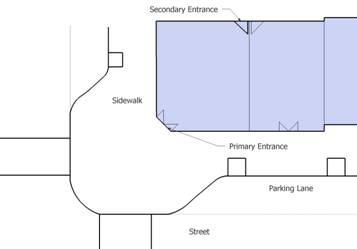
Image showing desired primary and secondary entrances to buildings in Downtown Roanoke.
(B)
At key intersections buildings located on corner lots shall utilize variations in building massing to emphasize street intersections as points of interest in the district. Maximum building heights shall be permitted to exceed by twenty-five percent (25%) for approximately twenty-five percent (25%) of the building frontage along each street façade.
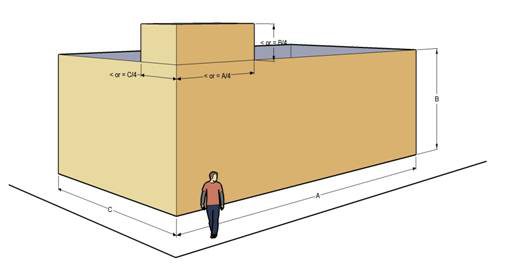
Image showing desired massing of corner buildings within the Oak Street Core Zone.
(2)
Pedestrian-Friendly Building Massing and Scale.
(A)
A building's massing shall serve to define entry points and help orient pedestrians.
(B)
Buildings and/or façades shall emphasize and frame or terminate important vistas.
(C)
Non-residential and mixed use buildings in Oak Street and Civic/Mixed Use Zones, to the extent practicable, shall maintain a twenty-five feet (25') to thirty-five feet (35') building façade widths or multiples thereof.
(D)
Variations in the rhythms within individual building façades shall be achieved within any block of building façades with architectural elements such as bays, columns, doors, windows, etc.
(E)
Breaks in the predominant rhythm may also be used to reinforce changes in massing and important elements such as building entrances, terminated vistas, or corner sites.
(F)
Porches, stoops, eaves, awnings, blade signs, arcades, colonnades and balconies should be used along commercial storefronts and they may protrude beyond the setback line provided that they do not inhibit pedestrian movement within the public right-of-way. Balconies shall have external bottom supports.
| Variations in building rhythm using architectural features. | 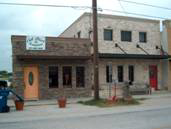 |
| Building massing used to emphasize entrances. | 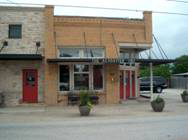 |
| Allowed encroachments into the setback line. | 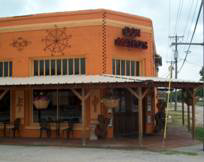 |
| Retail buildings with balconies and architectural details that add interest along the streetscape. | 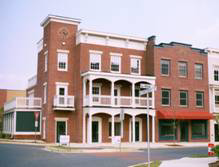 |
(3)
Architectural Elements and Storefronts.
(A)
Architectural elements shall be designed to the appropriate scale and proportions of the selected architectural style. For example, building designs based an Art Deco style shall utilize architectural elements of a scale and proportion characteristic of that style.
(B)
An expression line or equivalent architectural element shall delineate divisions between floors of all buildings, and a cornice shall delineate the tops of façades that do not utilize a pitched roof. For retail storefronts, a transom, display window area and bulkhead at the base shall be utilized.
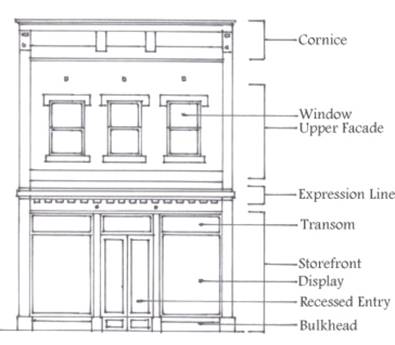
(C)
Building entrances may be defined and articulated by architectural elements such as lintels, pediments, pilasters, columns, porticos, porches, overhangs, railings, balustrades, and others as appropriate. All building elements should be compatible with the architectural style, materials, colors, and details of the building as a whole. Entrances to upper level uses may be defined and integrated into the design of the overall building façade.
(D)
Roofs. Flat roofs enclosed by parapets or sloped roofs shall be used to screen rooftop mechanical equipment. Mansard roofs and flat membrane-type roofs that are visible are prohibited.
(E)
Doors and Windows. Generally, windows shall be oriented vertically, and bay windows shall have external bottom supports. Dormer windows shall also be vertically proportioned and slightly shorter than the windows below in order to provide clear views of merchandise and perceived connections.
(F)
Transparency Required. For all new Mixed Use and Commercial construction and renovation, the street-level floor in the Oak Street Core Zone and the Civic/Mixed Use Zone shall have transparent storefront windows covering no less than fifty percent (50%) of the façade area. Each floor of all building façades facing a street or plaza shall contain transparent windows covering at least fifteen percent (15%) of the façade area.
(G)
Ground floor retail building plate heights generally shall be at least fifteen feet (15') in height.
(H)
Storefronts. Retailers located at the street level shall primarily use storefronts to orient and advertise merchandise to customers. Retail buildings shall provide street-level pedestrian-oriented uses at the ground floor level. Storefronts on façade treatments that span multiple tenants shall use architecturally compatible materials, colors, details, awnings, signage, and lighting fixtures.
| Retail storefronts with transparent windows. | 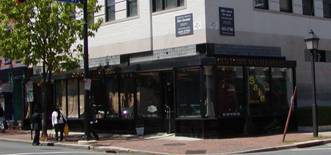 |
| Vertically oriented windows with emphasis on corners and entrances. |  |
(I)
Design of Structured Parking Facilities:
a.
All frontages of parking structures located on Oak Street shall not have parking uses on the ground floor to a minimum depth of thirty feet (30') along the Oak Street frontage.
b.
The amount of Oak Street frontage devoted to a parking structure shall be minimized by placing the shortest dimension(s) along the Oak Street edge(s).
c.
Parking structure façades on Oak Street shall be designed with both vertical (façade rhythm of twenty feet (20') to thirty feet (30')) and horizontal (aligning with horizontal elements along the block) articulation.
d.
Where above ground structured parking is located at the perimeter of a building with frontage along Oak Street; it shall be screened in such a way that cars on all parking levels are completely hidden from view from all adjacent public streets. Parking garage ramps shall not be visible from any public street. Unless site conditions do not allow or if an alternative design achieves the screening requirements, ramps shall not be located along the perimeter of the parking structure. Architectural screens shall be used to articulate the façade, hide parked vehicles, and shield lighting.
e.
When parking structures are located at corners, corner architectural elements shall be incorporated such as corner entrance, signage and glazing.
f.
Parking structures and adjacent sidewalks shall be designed so pedestrians are clearly visible to entering and exiting automobiles.
Images showing appropriate design of structured parking facilities.
(4)
Building Materials.
(A)
At least eighty percent (80%) of the street facing (except alleys) façades of all new buildings (excluding doors and windows) shall be finished in one (1) or more of the following materials:
• Masonry (brick, stone, cast stone, rock, marble, granite, glass block and/or tile);
• Cementitious-fiber clapboard (not sheet) with at least a fifty-year warranty;
• Split face concrete block or poured-in-place concrete;
• Up to twenty percent (20%) wood or exterior insulating finishing system (EIFS) as an accent only;
• Roofing materials (visible from any public right-of-way): copper, factory finished painted metal, slate, synthetic slate, terra cotta, cement tile, glass fiber shingles or similar materials.
(B)
Side façades and rear façades shall be of finished quality and of the same color and materials that blend with the front of the building. Rear façades may be painted tilt-wall or painted block matching the same color of the rest of the building if the rear façade faces an alley or is not viewable from a public street or right-of-way.
(b)
The following design standards and guidelines shall provide property owners, developers, city staff, and decision makers adequate design guidance for new and existing residential building types (including residential buildings converted to retail or office uses):
(1)
Location on the Street.
(A)
All primary entrances shall address the primary street unless configured as a courtyard building.
(B)
Garages generally shall be located on alleys at the rear of residential buildings; pull-through garages are allowed if the garage door is set back behind the rear façade of the main structure. If front-loaded garages are utilized on single-family residential lots, the garages shall be no greater than twelve feet (12') wide, and set back at least ten feet (10') measured from the face of the main structure closest to the garage or rotated ninety (90) degrees with windows on the wall facing the street. All garage doors shall be divided into single bays separated by at least an eighteen inch (18') column. Front-loaded garages on residential lots less than fifty feet (50') wide shall not be allowed. Town homes and courtyard apartments shall utilize rear-loaded garages.
| Residential townhomes with primary entrances to the street. | 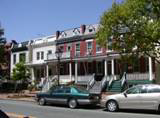 |
| Live-work units with bay windows. | 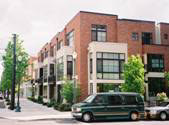 |
| Existing residential buildings converted to accommodate commercial uses. |  |
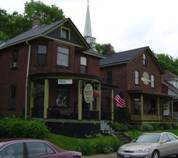 |
(2)
Pedestrian-Friendly Building Massing and Scale.
(A)
On residential buildings, at least one (1) of the following shall be utilized: porches, stoops, bay windows, balconies, masonry clad chimneys, attached pergolas or colonnades. Those architectural elements may encroach beyond the setback line.
(B)
The base of a building shall be delineated by a change in color, water mark or different material for at least the first eighteen inches (18") of the façade, or where feasible, the grade of the slab or first floor elevation shall be elevated at least eighteen inches (18") above the grade of the sidewalk.
(3)
Architectural Elements.
(A)
Residential buildings shall have relatively flat fronts and simple roofs with most building wing articulations set at the rear of the structure. Window projections, stoops, porches, balconies, and similar extensions are exempt from this standard.
(B)
Gable roofs, if provided, shall have a minimum pitch of 5/12. When hipped roofs are used, the minimum pitch shall be 6/12. Other roof types shall be appropriate to the architectural style of the building. Mansard roofs shall be prohibited.
(C)
Architectural embellishments that add visual interest to the roofs, such as dormers and masonry chimneys may be provided.
| Residential townhomes with stoops, dormers, and other architectural embellishments that add visual interest along the street. | 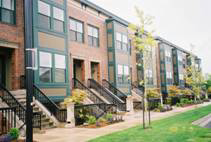 |
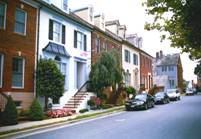 |
(4)
Building Materials.
(A)
The following shall be permitted finishes for street fronting façades of all residential buildings and live/work units:
(i)
Cementitious-fiber clapboard (not sheet) with at least a fifty-year warranty;
(ii)
Masonry (brick; stone; man-made stone and stucco utilizing a three-step process).
(B)
The following shall be allowed up to twenty-five percent (25%) as an accent material:
(i)
Wood;
(ii)
Exterior insulating finishing system (EIFS) or similar material over a cementitious base, rock, glass block and tile.
(C)
Side and rear façades shall be of finished quality and of the same color and materials that blend with the front of the building.
(D)
Roofing materials (visible from any public right-of-way): copper, factory finished painted metal, slate, synthetic slate, terra cotta, cement tile, glass fiber shingles.
(E)
An enclosed garage or carport shall be designed and constructed of the same material as the primary [structure].
(Ord. No. 2012-129, § 2(Exh. A), adopted 12/11/2012)
Sec. 12.499. - Building Types.
In addition to single-family dwellings and town homes on Lamar Street, the following establishes the prototypical building types for the District:
| 2 Story Commercial (Oak Street Core Zone, Hwy 377 Zone, Civic/Mixed Use Zone, and corner commercial uses in the Neighborhood Transition Zone) | 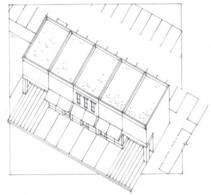 |
| 3 Story Mixed Use (Oak Street Core Zone, Civic/Mixed Use Zone, and Hwy 377 Zone) | 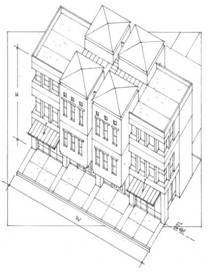 |
| 4 Story Mixed Use (Oak Street Core Zone, Civic/Mixed Use Zone, and Hwy 377 Zone) | 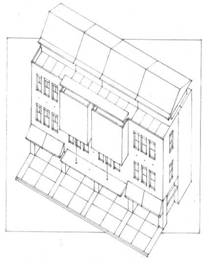 |
| 5 Story Mixed Use (Civic/Mixed Use Zone) | |
| 2 Story Live-Work with pitched roof and garages optional (Oak Street Core Zone, Civic/Mixed Use, and Neighborhood Transition Zone) | 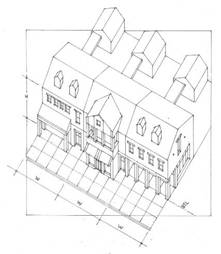 |
| 2 Story Live-Work with Flat Roof and garages optional (Oak Street Core Zone, Civic/Mixed Use, and Neighborhood Transition Zone) | 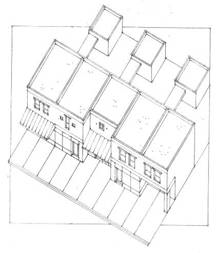 |
| 2 Story Multi-unit house (Neighborhood Transition Zone) | 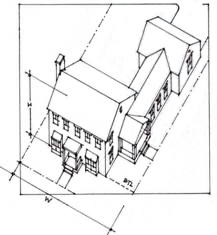 |
| 2 Story Townhouse (Neighborhood Transition Zone) | 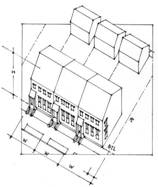 |
| 1-2 Story detached house (Neighborhood Transition Zone) | 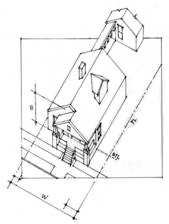 |
(Ord. No. 2012-129, § 2(Exh. A), adopted 12/11/2012)
Sec. 12.500. - Definitions.
Alley means the right of way for vehicles and pedestrians within a block that provides access to the rear of buildings, vehicle parking, utility meters, and service areas. An easement for public access is required if the alley is a private right-of-way.
Awning/Canopy means an awning is a cantilevered, projected or suspended cover over the sidewalk portion of any public street. Awnings may also be roof-like coverings, usually of canvas or metal and often adjustable, placed over the sidewalk, windows, or doors to provide protection from sun and rain. Awnings shall have a minimum clear height of eight feet (8') from the finished sidewalk in front of it.
Block is an increment of land comprised of lots, alleys, and tracts circumscribed by streets.
Build-to Line or Build-to Zone shall be the line or area within which the principal building's front façade shall be built.
Building Permit means an official document or certificate issued by the City of Roanoke authorizing erection, construction, renovation, maintenance, or any other specified activity on any building, structure or land, or on any installations or facilities therein. The term "building permit" shall include but not be limited to building permits, electrical permits, mechanical permits, and plumbing permits.
Certificate of Occupancy means an official certificate issued by the City through the Administrative Official which indicates conformance with building, zoning and health and safety regulations and authorizes legal use and occupancy of the premises for which it is issued.
Civic Space means publicly accessible open space in the form of parks, courtyards, forecourts, plazas, greens, pocket parks, playgrounds, etc. They may be privately or publicly owned. For all residential uses, privately accessible open spaces such as courtyards, porches, and balconies may also be considered as civic space for the purposes of this ordinance.
| Square means a civic/open space available for unstructured recreation and civic purposes. A square is spatially defined by buildings. Its landscape shall consist of landscaping, hardscaping, water features, pathways, and pedestrian amenities arranged in formal and informal patterns. Squares shall be located at the intersection of important streets. | 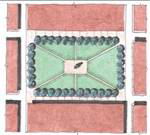 |
| Plaza means a primarily hardscaped civic/open space with formal landscaping, available for civic purposes and commercial activities. A plaza shall be spatially defined by buildings. |  |
| Playground means a civic/open space designed and equipped for children's recreation. A playground shall be fenced and may include an open shelter. Playgrounds shall be located within residential areas and may be placed within a block as illustrated. They may be included in other open spaces. |  |
Colonnade or Arcade is a roofed or built structure, extending beyond the ground floor front façade of a building and over the sidewalk or civic space. A colonnade or arcade shall be open to the street except for supporting columns, piers, or arches. Residential or office units may occupy the space over the colonnade or arcade.
Common Lot Line means a lot line shared by more than one (1) lot shall be a common lot line.
Corner Site/Lot shall be one that has more than one (1) intersecting street frontages (with the exception of alleys).
Interior Site/Lot shall be one that has only one (1) public street frontage (with the exception of alleys).
Live-Work Unit means a live-work unit is a dwelling unit that is also used for work purposes, provided that the "work" component is restricted to the uses of professional office, artist's workshop, studio, or other similar uses and is located on the street level. The "live" component may be located on the street level (behind the work component) or any other level of the building.
Parking Setback Line means the line behind which ground floor surface parking may be located on any lot in the Oak Street District. The parking setback line shall be established in the regulating plan by frontage type.
Regulating Plan means a plan for adoption of zoning and a conceptual plan that establishes the location of frontages, streetscape standards, and other development standards within such frontages, subject to changes within such plan pursuant to the terms of this ordinance.
| Sign, Blade means an attached sign oriented perpendicular to the face of the building which projects (vertically or horizontally) more than twelve inches (12') beyond the surface of the building to which it is affixed or supported. |  |  |
| Sign, Directory means a permanent on-site attached wall sign providing direction to or identifying the buildings/suites in the development/building. |  |
| Sign, Light Pole Banner means a banner sign attached to a light/utility pole along a public street or within a public park. |  |
| Sign, Sandwich Board. A portable sign consisting of two panels of equal size, which are hinged at the top and/or a single panel placed on the ground or pavement so as to be self-supporting. |  |
| Stoop. A small porch or set of steps at the front entrance of a house. | 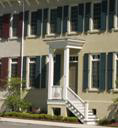 |
(Ord. No. 2012-129, § 2(Exh. A), adopted 12/11/2012)
EXHIBIT B
Legal Description
(Ord. No. 2012-129, § 2(Exh. B), adopted 12/11/2012)
EXHIBIT C
"Oak Street Regulating Plan"
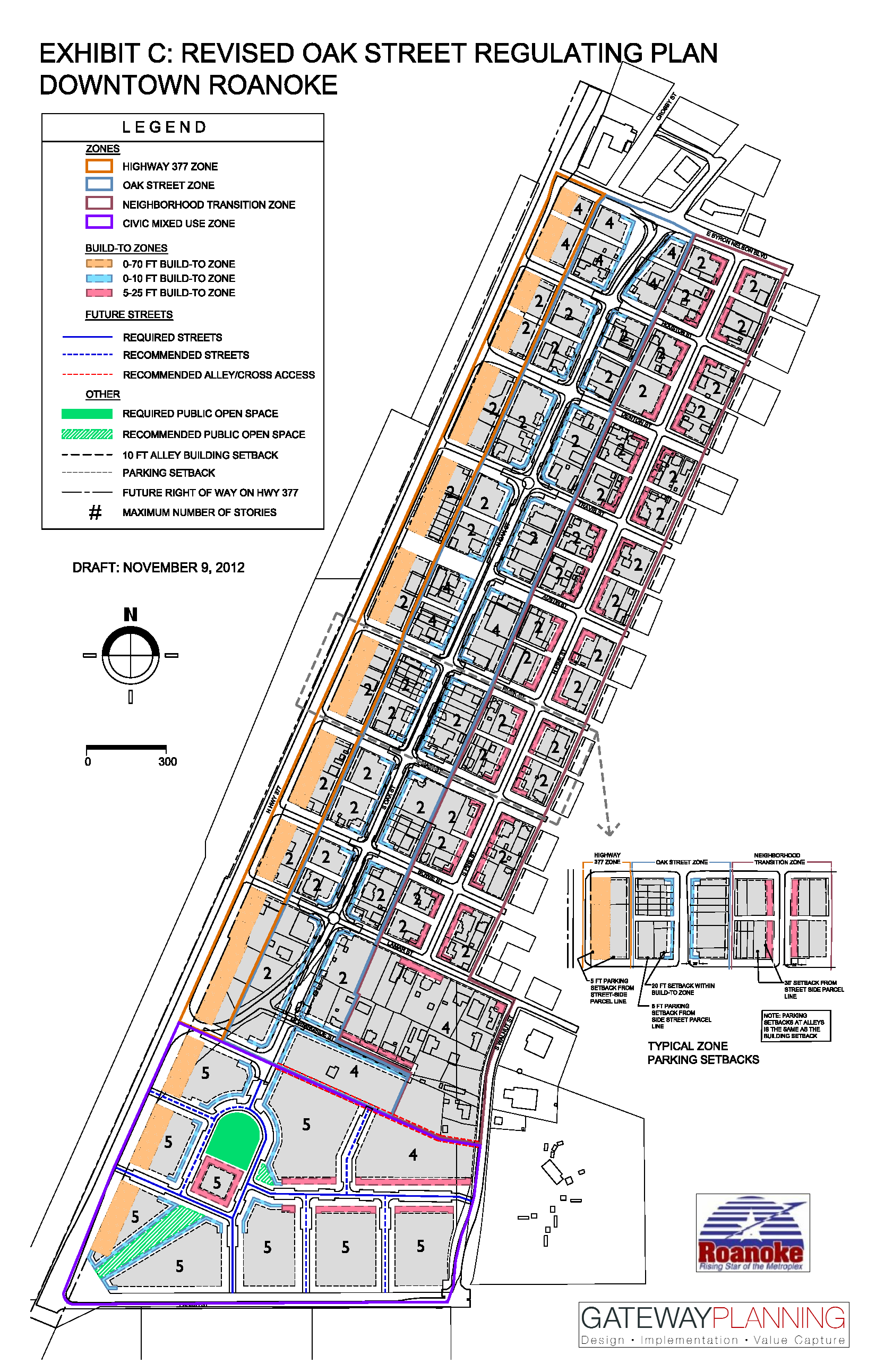
(Ord. No. 2012-129, § 2(Exh. C), adopted 12/11/2012)
Sec. 12.501. - Live Outdoor Music.
Live Outdoor Music. Within the Oak Street Zone, Highway 377 Zone, and the Civic/Mixed Use Zone, live outdoor music will be permissible during peak hours (defined as Monday through Friday after 6:00 p.m., and Saturday, Sunday, and holidays after 11:00 a.m.), not to be performed after 1:00 a.m. the following day. Music performances are not to exceed ninety-five decibels (95 dB) at a distance of one hundred (100) meters.
(Ord. No. 2016-124, § 2, adopted 9/20/2016)

