
Salem City Zoning Code
SECTION 7
0 - SPECIAL RESIDENTIAL REGULATIONS
7.1 - MULTIFAMILY DEVELOPMENT
7.1.1 General. Multifamily Development, if built in accordance with the following requirements shall be allowed in the R3 District as set forth in the Table of Use Regulations upon the grant of a special permit by the Board of Appeals and after site plan approval from the Planning Board.
7.1.2 Standards.
1.
Multifamily Development having more than twenty (20) dwelling units shall have a minimum of two (2) access roadways, and traffic of access and egress roads shall be shown.
2.
Except as provided in the Table of Dimensional Requirements, no structure shall exceed three (3) stories, thirty-five (35) feet in height, measured from the mean finished grade. Each unit shall be separated from all other adjoining units by walls, without openings, except such openings as may be permissible for mechanical services.
3.
No structures or group of structures, except one-story garages or carports, shall be nearer to each other than fifty (50) feet. Carports or garages, if not directly attached, shall be at least ten (10) feet from the main buildings.
4.
There shall be a lot area of at least one thousand (1,000) square feet for each dwelling unit within each building.
5.
There shall be a buffer zone of seventy-five (75) feet from any building or structure on an adjacent lot where said lot is not under the same ownership.
6.
Off-street parking shall be provided in accordance with Section § 5.1. No parking space shall reduce the effective width of the driveway providing access to more than one (1) dwelling unit to less than sixteen (16) feet.
7.
Sewage shall be disposed of by means of adequate connections to the municipal sewer system.
(Ord. of 09-25-2025(1), § VI)
7.1.3 Other Uses. Certain other uses, as set forth in Section 7.1.4, will be allowed by special permit within a multifamily development where such uses comply with the following requirements.
1.
The ownership title to all buildings and all land shall be held in a single ownership, either by a corporation or an individual.
2.
All nonresidential uses shall be located within a multifamily dwelling.
3.
The areas required for such special permit occupancy shall be predetermined so as to prevent locating such businesses in a haphazard manner. It is the intention of this provision to concentrate the business into one (1) general area to create a "local business area" within the development area.
4.
It is the intention of this Section 7.1.3 to allow certain business uses within the development area to provide services primarily for the tenants of the development. However, this primary use will not prohibit the use for services to the general public. In any event, additional parking and loading spaces conforming to the provisions of Sections 5.1 and 5.2 herein, in addition to the regular parking spaces required for multifamily dwellings, shall be provided.
7.1.4 Eligible Uses. Eligible special permit uses for a multifamily development complying with the Section 7.1.3 above are:
1.
Delicatessen stores, including specialty food stores, but not including regular grocery stores, cash or carry dairy product stores or variety stores.
2.
Drugstores, excluding soda fountains and notions.
3.
Book, stationery or gift shops.
4.
Florist shops, but excluding greenhouses.
5.
Barbershops, not to exceed two (2) chairs.
6.
Beauty parlors, not to exceed two (2) operators.
7.
Self-service laundry and dry cleaning, provided that not more than one (1) person (employee) is engaged to superintend such services.
8.
Professional offices, but excluding clinics.
9.
Restaurants which may serve alcoholic beverages consumed on the premises but excluding drive-in snack shops.
10.
Auditoriums with a maximum seating of five hundred (500) persons. Portable sound or motion picture equipment may be used, but the room may not be used for showing of motion pictures exclusively.
11.
Outdoor swimming pools which conform with the State Building Code.
12.
Banks and savings and loan institutions.
7.2 - CLUSTER RESIDENTIAL DEVELOPMENT
7.2.1 Purposes. For the purposes of promoting the more efficient use of land in harmony with its natural features and with the general intent of the Zoning Ordinance and to protect and promote the health, safety, convenience and general welfare of the inhabitants of the City, an owner or owners of a tract of land situated within the R1 One-Family Residential Districts, RC Residential Conservation Districts, R2 Two-Family Residential Districts and R3 Multifamily Residential Districts or a duly authorized agency thereof may, in connection with the submission of a subdivision plan for Planning Board approval under the Subdivision Control Law or, if no such approval is required, after consultation with the Planning Board, make application to the Planning Board for a special permit excepting their plan from the lot area and frontage requirements of Section 4.0 herein.
(Ord. of 9-9-21, § 5)
7.2.2 Submittals. Any petition filed for a cluster residential development under this section shall be accompanied by fifteen (15) copies of a site plan, which shall be at a scale to be established by the Planning Board, and shall include fifteen (15) copies of all the information required for a definitive plan under section III B of the subdivision regulations of the Planning Board of the City of Salem, and such petition shall also be accompanied by fifteen (15) copies of an environmental impact statement as set out in Appendix A of the subdivision regulations of the Planning Board of the City of Salem.
7.2.3 Distribution. The Planning Board shall, within seven (7) days after receipt of said application, transmit one (1) copy of said application and plan to the Building Commissioner, City Engineer, Head of the Fire Department or the Head of the Fire Departments' designee, Board of Health and Conservation Commission, who may at their discretion investigate the application and report in writing their recommendations to the Planning Board. The Planning Board shall not take final action on such plan until it has received a report thereon from the Building Commissioner, City Engineer, Head of the Fire Department or the Head of the Fire Departments' designee, Board of Health and Conservation Commission or until thirty-five (35) days have elapsed after distribution of such application without a submission of a report. Notice of the filing of the application shall be given to the City Clerk, Police Department, Department of Public Services, and School Department and further notice shall be given as required by the Planning Board.
(Ord. of 9-9-21, § 6)
7.2.4 Standards.
1.
No structure shall exceed two and one-half (2.5) stories.
2.
As far as possible, the plan follows the natural contours of the terrain and respects the natural features of the site.
3.
The proposed plan is in harmony with the purpose and intent of this Ordinance and the master plan of the City of Salem and that it will promote the purposes of this section.
4.
The area of the tract of land to be subdivided is not less than five (5) acres.
5.
When the open land is added to the building lots, the total area shall be at least equal in area to the land area required by this Ordinance for the total number of units or buildings proposed in the development for the zoning district.
6.
At least twenty (20) percent of the total tract area shall be set aside as common land and shall consist of usable open space. Such common land shall not contain more than fifty (50) percent wetlands or slopelands, nor shall it include streets, ways and parking areas.
7.
The cluster development would not result in a net negative environmental impact.
7.2.5 Open Space. Provisions shall be made so that usable open space shall be owned:
1.
By the City of Salem for park, open space or conservation use;
2.
By a corporation or trust owned or to be owned by the owners of lots or residential units within the land that may be approved by the Planning Board, with provisions for limited easements for recreational use by residents of the City; provided that such ownership shall vest in sufficient rights to enable it to enforce compliance with the restrictions imposed by the Planning Board as conditions of its special permit.
7.2.6 Conditions. The Planning Board may, in appropriate cases as it determines, impose further restrictions upon the cluster residential development or parts thereof as a condition to granting the special permit.
7.3 - PLANNED UNIT DEVELOPMENT
7.3.1 Purpose. Planned unit development is designed to provide various types of land use which can be combined in compatible relationship with each other as part of a totally planned development. It is the intent of this Section to ensure compliance with the master plan and good zoning practices, while allowing certain desirable departures from the strict provisions of specific zone classifications. The advantages which are intended to result from the application for planned unit development are to be ensured by the adoption of a precise development plan with a specific time limit for commencement of construction.
7.3.2 Applicability. The Planning Board may grant a special permit for a planned unit development for any parcel of land in the following districts provided that said parcel contains a minimum of the lesser of sixty thousand (60,000) square feet or five (5) times the minimum lot size of the zoning district it is in, and subject to the requirements and conditions set out in this section.
R3 Multifamily Residential District;
B1 Neighborhood Business District;
B2 Highway Business District;
B4 Wholesale and Automotive Business District;
B5 Central Development District;
BPD Business Park Development;
Industrial District;
7.3.3 Uses. All uses or any combination thereof permitted in R3, B1, B2, B4, B5, BPD, and I Districts may be allowed in a planned unit development, subject to the following limitations of uses:
1.
There can be a multiplicity of types of residential development, provided that, at the boundaries with existing residential development, where typical development is permitted, the form and type of development on the planned unit development site boundary are compatible with the existing or potential development of the surrounding neighborhoods.
2.
A specific commercial or industrial use for property adjacent to an existing commercial or residential zone may be approved as a planned unit development. Where this is permitted, the plan for the total property shall be submitted and the applicant shall clearly detail, by engineering and architectural specifications and drawings, the manner in which the subject area is to be developed and the means that will be employed to protect the abutting property and the health, safety, welfare and privacy enjoyed thereon.
3.
In the Business Park Development (BPD) district, residential uses and associated improvements, such as parking and landscaping, cannot exceed (50) percent of the land area of the parcel(s); or in the case of mixed use buildings, residential uses cannot exceed (50) percent of the gross square footage of the proposed development.
7.3.4 Dimensional Requirements.
1.
Maximum bulk, yards, parking and loading requirements shall be established for each planned unit development by the development plan approved by the Planning Board. Height limitations shall be in accordance with the zoning district in which the planned unit development is located.
2.
Minimum lot frontage. To preserve and protect the value of properties adjacent to a proposed planned unit development district and to provide for an orderly and uniform transition, lots which will be adjacent or across the street from existing residential developments shall be required to provide an amount of street frontage not less than that of existing lots but not greater than minimum Ordinance requirements for the zone in which they are located.
3.
Minimum lot size. Residential lot sizes in a planned unit development may be reduced below the minimum standards required by the Zoning Ordinance. As a prerequisite, the developer shall demonstrate that there is a reasonable relationship between the proposed lot size and the usable and accessible open area within the total development. An individual lot shall be large enough to provide for private open space associated with the living accommodations.
4.
Maximum stories. The maximum number of stories of any building containing residential units in the BPD District is four (4) stories.
7.3.5 Open Space. Provisions shall be made so that usable open space shall be owned:
1.
By the City of Salem for park, open space or conservation use;
2.
By a corporation or trust owned or to be owned by the owners of lots or residential units within the land that may be approved by the Planning Board, with provisions for limited easements for recreational use by residents of the City; provided that such ownership shall vest in sufficient rights to bogs arid areas of enable it to enforce compliance with the restrictions imposed by the Planning Board as conditions of its special permit.
7.3.6 Application. Any petition filed for a planned unit development under this section shall be accompanied by fifteen (15) copies of a site plan, which shall be at a scale to be established by the Planning Board and shall include fifteen (15) copies of all the information required for a definitive plan under section III B of the subdivision regulations of the Planning Board of the City of Salem, and such petition shall also be accompanied by fifteen (15) copies of an environmental impact statement as set out in Appendix A of the subdivision regulations of the Planning Board of the City of Salem.
7.3.7 Distribution. The Planning Board shall, within seven (7) days after receipt of said application, transmit one (1) copy of said application and plan to the Building Commissioner, City Engineer, Head of the Fire Department or the Head of the Fire Department's designee, Board of Health and Conservation Commission, who may at their discretion investigate the application and report in writing their recommendations to the Planning Board. The Planning Board shall not take Final action on such plan until it has received a report thereon from the Building Commissioner, City Engineer, Head of the Fire Department or the Head of the Fire Department's designee, Board of Health and Conservation Commission or until thirty-five (35) days have elapsed after distribution of such application without a submission of a report. Notice of the filing of the petition shall be given to the City Clerk, Police Department, Department of Public Services, and School Department and further notice shall be given as required by the Planning Board.
(Ord. of 9-9-21, § 7)
7.3.8 Decision. The Planning Board may grant a special permit where the following findings are made:
1.
The proposed planned unit development is in harmony with the purposes and intent of this Ordinance and the master plan of the City of Salem and that it will promote the purpose of this section.
2.
The mixture of uses in the planned unit development is determined to be sufficiently advantageous to tender it appropriate to depart from the normal requirements of the district.
3.
The planned unit development would not result in a net negative environmental impact.
7.3.9 Conditions. The Planning Board may, in appropriate cases as it determines impose further restrictions upon the planned unit development or parts thereof as a condition to granting the special permit.
7.4 - [SMART GROWTH OVERLAY DISTRICT]
Purpose. The purposes of this section are to establish a Smart Growth Overlay District, to encourage sustainable development and mobility in accordance with the purposes of Massachusetts General Law ("G.L.") Chapter 40R and to the extent the following other purposes are not in conflict with the Governing Laws;
a.
Enable an increase in housing production in resource-rich areas of the City that will provide for a full range of housing choices for households of all incomes, ages, and sizes in order to preserve the City of Salem's multi-faceted community character.
b.
Ensure high quality site planning, architecture, and landscape design.
c.
Ensure predictable, fair, and cost-effective development review and permitting.
d.
Generate positive tax revenue.
e.
Enable the City to receive Zoning Incentive Payments and/or Density Bonus Payments in accordance with G.L. Chapter 40R, 760 CMR 59.06, and G.L. Chapter 405 arising from housing development in the smart growth overlay district.
7.4.1 Definitions. For the purposes of this Section 7.4, the following definitions shall apply. All capitalized terms shall be defined in accordance with the definitions established under the Governing Laws. To the extent not defined herein, refer to Section 10 of the Salem Zoning Ordinance. With respect to their application to this Section 7.4, to the extent that there is any conflict between the definitions or terms set forth in, or otherwise regulated by, the Governing Laws and those defined or used in this Section 7.4 inclusive of Design Standards, Planning Board Regulations, or any other applicable associated local zoning requirements, the terms of the Governing Laws shall govern.
Affordable Homeownership Unit - an Affordable Housing unit required to be sold to an Eligible Household.
Affordable Housing - housing that is affordable to and occupied by Eligible Households.
Affordable Housing Restriction - a deed restriction of Affordable Housing meeting the statutory requirements in G.L. Chapter 184, Section 31 and the requirements of Section 7.4.6 of this ordinance.
Affordable Rental Unit - an Affordable Housing unit required to be rented to an Eligible Household.
Age-Restricted Senior Housing Multifamily housing as defined herein, except restricted to households with at least one (1) member of the household who is age fifty-five (55) or older.
Applicant- the individual or entity that submits a Project application for Plan Approval.
As-of-right - a use allowed under Section 7.4 without recourse to a special permit, variance, zoning amendment, or other form of zoning relief other than waivers issued hereunder Section 7.4.3.1. A Project that requires Site Plan Approval by the Planning Board pursuant to Section 7.4 shall be considered an as-of-right Project and shall not be subject to any other provisions of the Zoning Ordinance, with the exception of Section 8.9 of the Salem Zoning Ordinance which shall remain in effect. A Project under Section 7.4 shall be subject to review and approval by EOHLC of any Municipal 40R regulations, guidelines, application forms, or other requirements applicable to review of Projects by the Plan Approval Authority under the 40R Zoning and 760 CMR 59.00.
EOHLC or Secretariat - the Massachusetts Executive Office of Housing and Livable Communities, or any successor agency.
Design Standards - provisions of Section 7.4 made applicable to Projects within the Smart Growth Overlay District that are subject to the Plan Approval process.
Dwelling Unit - A building or portion thereof providing complete housekeeping and cooking facilities for one (1) family, as defined by the Commonwealth of Massachusetts State Building Code Regulations & Standards 780 CMR.
Eligible Household - an individual or household whose annual income is less than or equal to eighty (80) percent of the area-wide median income as determined by the United States Department of Housing and Urban Development (HUD), adjusted for household size, with income computed using HUD's rules for attribution of income to assets.
Governing Laws - G.L. Chapter 40R and 760 CMR 59.00.
Landscape - Outdoor spaces, both natural and constructed. Landscape includes public or semi-public areas such as parks, complete streets, plazas, terraces, courtyards, and conservation buffers. Landscapes are intended to serve multiple functions: fostering community interaction, enhancing tenant experience, supporting biodiversity, managing stormwater, and reinforcing the identity and resiliency of a site.
Landscaping - The installation, arrangement, and maintenance of plant materials, ground cover, decorative features, and related site elements for aesthetic enhancement, screening, or functional improvement of a site including trees, shrubs, lawns, mulch, irrigation systems, and other components that soften built environments and provide visual cohesion or privacy.
Mixed-Use Development Project - a Project containing a mix of one (1) or more residential uses and one (1) or more non-residential uses, as allowed in Section 7.4.4, and subject to all applicable provisions of this Section 7.4.
Monitoring Agent - the local housing authority or other qualified housing entity designated by the municipality chief executive, pursuant to Section 7.4.6.8, to review and implement the Housing and Housing Affordability requirements affecting Projects under Section 7.4.6.
Multifamily - A building designed for or occupied by three (3) or more households, with separate housekeeping and cooking facilities for each.
Planning Board Regulations - the rules and regulations of the Planning Board adopted pursuant to Section 7.4.7.3.
Plan Approval - standards and procedures which Projects in the Smart Growth Overlay District must meet pursuant to Section 7.4 and the Governing Laws.
Project - a Residential Project or Mixed-use Development Project undertaken within the Smart Growth Overlay District in accordance with the requirements of this Section 7.4.
Rooming, Boarding or Lodging House - A residence where lodgings are rented to four (4) or more persons not within second degree of kindred to the person conducting it, rental of which is based on a contractual agreement between owner and an individual or household for rent of a rooming unit and use of shared facilities.
Rooming Unit - Rooming Unit means the room or group of rooms used for sleeping and living in a rooming, boarding, or lodging house that are rented to an individual or household.
Shelter - facility for individuals and families experiencing homelessness that provides them with temporary shelter and supportive services, such as food, medical care, workforce development, and social services. May operate in concert with supportive housing.
Smart Growth Overlay Subdistrict - A specific defined area that is subject to the provisions of Section 7.4 with provisions applicable to individual districts identified in Section 7.4.8., provided that, as applicable, EOHLC may treat such Subdistrict as a Smart Growth Zoning District as defined in the Governing Laws.
Supportive Housing - Housing with no limit on length of stay, that is linked to onsite or offsite services that assist the resident with some or all of the following activities: retaining housing, improving their health status, establishing economic stability, and maximizing their ability to live and/or work in the community. May include dormitories, separate apartments, Single Room Occupancy (SRO), rooming, boarding or lodging houses. May have common spaces including common kitchen, gathering rooms, and treatment rooms.
Subzone - A specific defined area within a subdistrict subject to the provisions of Section 7.4 where each subzone may have varying use and dimensional requirements, provided that, as applicable, EOHLC may treat such subzone as a Subdistrict as EOHLC applies that term under the Governing Laws.
Waiver - A predetermined type of deviation from one (1) or more specific provisions required under Sections 7.4 and 8.9, granted by the Planning Board acting in its capacity as the Plan Approval Authority.
Zoning Ordinance - the Zoning Ordinance of the City of Salem.
7.4.3 Applicability of Smart Growth Overlay District Scope and Authority.
1.
Underlying Zoning. The Smart Growth Overlay District is an overlay district superimposed on all underlying zoning districts.
2.
Applicability of Smart Growth Overlay District.
a.
An applicant may elect either to develop a Project in accordance with the requirements of the Smart Growth Overlay District in accordance with the provisions of the Governing Laws and this Section 7.4, or to develop a Project in accordance with requirements of the regulations for use, dimension, and all other provisions of the Zoning Ordinance governing the underlying zoning district(s).
b.
In such case that the applicant elects to develop a Project in accordance with Section 7.4, notwithstanding anything to the contrary in the Zoning Ordinance, such application shall not be subject to any other provisions of the Zoning Ordinance, including limitations upon the issuance of building permits for residential uses related to a rate of development or phased growth limitation or to a local moratorium on the issuance of such permits, or the other building permit or dwelling unit limitations, with the exception of Section 8.9 of the Salem Zoning Ordinance which shall remain in effect.
c.
To the extent that there is any conflict between the Governing Laws and this Section 7.4, inclusive of Design Standards set forth in Section 7.4.8, Planning Board regulations, and any applicable associated local zoning requirement (e.g. zoning requirement contained in another section of the Zoning Ordinance that is nonetheless incorporated by reference), the Governing Laws shall govern.
3.
The regulations for use, dimensions, and all other provisions of the Zoning Ordinance governing the underlying zoning districts shall remain in full force, except for those Projects undergoing development pursuant to this Section 7.4.
4.
Administration and Enforcement. The provisions of this Section 7.4, shall be administered by the Building Commissioner, except as otherwise provided herein.
7.4.4 Permitted Uses—General. Uses that are allowed by right in all Smart Growth Subdistricts established under Section 7.4.8 include:
1.
Residential Projects. A Residential Project may include multifamily residential use(s); and
2.
Mixed-Use Development Projects. A Mixed-Use Development Project may include:
a.
Multifamily residential use, provided that the minimum allowable As-of-right density requirements for residential use specified in Section 7.4.8 shall apply to the residential portion of any Mixed-Use Development Project.
b.
Any of the following non-residential uses: retail, business office, professional office.
2.
Parking accessory to any of the permitted uses in 7.4, including surface, garage-under, and structured parking (e.g., parking garages); and
3.
Accessory uses customarily incidental to any of the permitted uses in 7.4.
7.4.5 Parking Requirements. Parking Requirements. The following are the maximum numbers of off-street parking space permitted within the Smart Growth Overlay District. Such parking spaces may be provided as surface parking or within garages or other structures.
7.4.6 Housing and Housing Affordability.
1.
General Requirements. Affordable Housing Units required by this Section 7.4.6 shall be made available to Eligible Households with incomes at or below eighty (80) percent of Area Median Income (AMI) at purchase prices or rents that adhere to the income limits determined by the U.S. Department of Housing and Urban Development (HUD) applicable to the City of Salem, and shall comply with the with 40R guidelines.
2.
Number of Affordable Housing Units. For all Projects containing at least six (6) residential units, not less than twenty percent (20%) of housing units constructed shall be Affordable Housing. For purposes of calculating the number of units of Affordable Housing required within a Project, any fractional unit shall be deemed to constitute a whole unit. A Project shall not be segmented to evade the Affordable Housing threshold set forth above.
3.
Nothing in this Section shall preclude an applicant from providing additional Affordable units, or greater affordability, or both, than the minimum requirements.
4.
Number of Housing Units with Three or More Bedrooms. Except as provided for below and consistent with any EOHLC requirement, including the Interagency Agreement Regarding Housing Opportunities for Families with Children or any successor agreement, for all Projects containing at least six (6) residential units and not otherwise subject to an eligible state or federal housing subsidy program under EOHLC's Subsidized Housing Inventory guidelines, not less than ten percent (10%) of housing units constructed shall contain three (3) or more bedrooms. This requirement shall not apply to Projects designated exclusively for the elderly, assisted living, supportive housing for individuals, single room occupancy or other Projects for which the requirement is not appropriate for the intended residents, as determined by EOHLC.
5.
Affordable Housing Submission Requirements. As part of any application for Plan Approval for a Project within the Smart Growth Overlay District submitted under this Section 7.4, the Applicant must submit the following documents to the Planning Board and the Monitoring Agent:
a.
Evidence that the Project complies with the cost and eligibility requirements of Section 7.4.6.6:
b.
Project plans that demonstrate compliance with the requirements of Section 7.4.6.10; and
c.
Form of Affordable Housing Restriction that satisfies the requirements of Section 7.4.6.13.
These documents in combination, to be submitted with an application for Plan Approval (or, for Projects not requiring Plan Approval, prior to submission of any application for a Building Permit), shall include details about construction related to the provision, within the development, of units that are accessible to the individuals with disabilities and appropriate for diverse populations, including households with children, other households, individuals, households including individuals with disabilities, and the elderly.
6.
Cost and Eligibility Requirements. Affordable Housing shall comply with the following requirements:
a.
Affordable Housing required to be offered for rent or sale shall be rented or sold to and occupied only by Eligible Households.
b.
For an Affordable Rental Unit, the monthly rent payment, including applicable utility allowances, shall not exceed thirty (30) percent of the maximum monthly income permissible for an Eligible Household, assuming a family size equal to the number of bedrooms in the unit plus one (1), unless another affordable housing program methodology for calculating rent limits, as approved by EOHLC, applies.
c.
For an Affordable Homeownership Unit the monthly housing payment, including mortgage principal and interest, private mortgage insurance, property taxes, condominium and/or homeowner's association fees, and insurance, shall not exceed thirty (30) percent of the maximum monthly income permissible for an Eligible Household, assuming a family size equal to the number of bedrooms in the unit plus one (1), unless another affordable housing program methodology for calculating the maximum monthly housing payment, as approved by EOHLC, applies.
7.
Prior to the granting of any building permit for a Project, the Applicant must demonstrate, to the satisfaction of the Monitoring Agent, that the method by which such affordable rents or affordable purchase prices are computed shall be consistent with state or federal guidelines for Affordable Housing applicable to the City of Salem.
8.
Monitoring Agent. A Monitoring Agent which may be the local housing authority or other qualified housing entity shall be designated by the chief executive. In a case where the Monitoring Agent cannot adequately carry out its administrative duties, upon certification of this fact by the designating official or by EOHLC such duties shall devolve to and thereafter be administered by a qualified housing entity designated by the designating official. In any event, such Monitoring Agent shall ensure the following items are adhered to, both prior to issuance of a Building Permit for a Project within the Smart Growth Overlay District, and on a continuing basis thereafter, as the case may be:
a.
Prices of Affordable Homeownership Units are properly computed; rental amounts of Affordable Rental Units are properly computed;
b.
Income eligibility of households applying for Affordable Housing is properly and reliably determined;
c.
EOHLC plans such as the housing marketing and resident selection plan conform to all requirements and have been approved by EOHLC specifically with regard to conformance with the Governing Laws, and are properly administered;
d.
Sales and rentals are made to Eligible Households chosen in accordance with the housing marketing and resident selection plan (a.k.a., Affirmative Fair Housing Marketing Plan (AFHMP)) with appropriate unit size for each household being properly determined and proper preference being given; and an Affordable Housing Restriction (AHR) meeting the requirements of this section is approved by EOHLC specifically for conformance with M.G.L. C.40R and 760 CMR. 59.00, recorded with the proper registry of deeds.
9.
Timing. Affordable Housing Units must be constructed and occupied at a proportion of one (1) affordable unit for every five (5) market rate units.
10.
Affordable Units Design and Construction. Units of Affordable Housing shall be finished housing units. With respect to the minimum number of units in a given Project that are required to be Affordable Housing under Sections 7.4.8 and 7.4.6 and the Governing Laws, such units shall be equitably integrated and proportionately dispersed throughout the residential portion of the Project of which they are part, across all residential buildings, floors, distinct unit types, and with respect to the gross floor area devoted to residential units, in accordance with the Affordable Housing Restriction and the Affirmative Fair Housing Marketing and Resident Selection Plan, as approved by EOHLC. The Affordable Housing units shall be comparable in initial construction quality, size, amenities, and exterior design to the other housing units in the Project. For example, if market rate units include a dishwasher, Affordable units must include one as well. Affordable Housing Units must be supplied with the same mechanical systems and energy efficiency features as market-rate units, including windows, insulation, plumbing, and heating and cooling systems.
11.
Residents of Affordable Housing Units shall have similar access to all building and site common areas and amenities as residents of market-rate units, including but not limited to outdoor spaces, amenity spaces, storage, parking, bicycle parking facilities, and resident services.
12.
Unless expressly required otherwise under one (1) or more applicable state or federal housing subsidy programs, the bedroom-per-unit average for the Affordable Housing must be equal to or greater than the bedroom-per-unit average for the unrestricted/market-rate units.
13.
Affordable Housing Restriction. Each Project shall be subject to an Affordable Housing Restriction which is recorded with the applicable registry of deeds or district registry of the Land Court and which contains the following:
a.
Specification of the term of the Affordable Housing Restriction which shall be stipulated in the Plan Approval decision but may not be less than a thirty (30) year period;
b.
The name and address of the Monitoring Agent with a designation of its power to monitor and enforce the Affordable Housing Restriction;
c.
A description of the Affordable Homeownership Unit(s), if any, by address and number of bedrooms; and a description of the overall quantity, initial unit designations and number of bedrooms and number of bedroom types of Affordable Rental Units in a Project or portion of a Project which are rental. Any restriction shall apply individually to the specifically identified Affordable Homeownership Unit and shall apply to a percentage of rental units of a rental Project or the rental portion of a Project with the initially designated Affordable Rental Units identified in, and able to float subject to specific approval by EOHLC in accordance with, the corresponding Affirmative Fair Housing Marketing Plan (AFHMP) and EOHLC's AFHMP guidelines.
d.
Reference to an Affirmative Fair Housing Marketing and Resident Selection Plan, to which the Affordable Housing is subject, and which includes an affirmative fair housing marketing program, including public notice and a fair resident selection process. Such plan shall be consistent with EOHLC guidance and approved by EOHLC. Consistent with EOHLC guidance, such plan shall include a preference based on need for the number of bedrooms in a unit and a preference based on need for the accessibility features of a unit where applicable and may only provide for additional preferences in resident selection to the extent such preferences are also consistent with applicable law and approved by EOHLC.
e.
A requirement that buyers or tenants will be selected at the initial sale or initial rental and upon all subsequent sales and rentals from a list of Eligible Households compiled in accordance with the housing marketing and selection plan;
f.
Reference to the formula pursuant to which the maximum rent of an Affordable Rental Unit or the maximum resale price of an Affordable Homeownership Unit will be set;
g.
A requirement that only an Eligible Household may reside in Affordable Housing and that notice of any lease of any Affordable Rental Unit shall be given to the Monitoring Agent;
h.
Provision for effective monitoring and enforcement of the terms and provisions of the Affordable Housing Restriction by the Monitoring Agent;
i.
Provision that the AHR on an Affordable Homeownership Unit shall run in favor of the Monitoring Agent and/or the municipality, in a form approved by municipal counsel, and shall limit initial sale and re-sale to and occupancy by an Eligible Household;
j.
Provision that the AHR on Affordable Rental Units in a rental Project or rental portion of a Project shall run with the rental Project or rental portion of a Project and shall run in favor of the Monitoring Agent and/or the municipality, in a form approved by municipal counsel, and shall limit rental and occupancy to an Eligible Household;
k.
Provision that the owner[s] or manager[s] of Affordable Rental Unit[s] shall file an annual compliance report with the Monitoring Agent, in a form specified by that agent certifying compliance with the Affordability provisions of this Ordinance and containing such other information as may be reasonably requested to ensure Affordability; and
l.
A requirement that residents in Affordable Housing provide such information as the Monitoring Agent may reasonably request to ensure Affordability.
14.
Costs of Affirmative Fair Housing Marketing and Resident Selection Plan. The Affirmative Fair Housing Marketing and Resident Selection Plan and/or any associated Monitoring Services Agreement may make provision for payment by the Project Applicant of reasonable costs to the Monitoring Agent to monitor and enforce compliance with Affordability requirements consistent with the Affordable Housing Restriction and otherwise fulfill the responsibilities contained in Section 7.4.6.8.
15.
Age Restrictions. Nothing in this Section 7.4 shall permit the imposition of restrictions on age upon Projects unless proposed or agreed to voluntarily by the Applicant. However, in its review of a submission under Section 7.4 for a given Smart Growth Overlay District, the Planning Board may allow a specific Project, designated exclusively for the elderly, persons with disabilities, or for assisted living, provided that any such Project shall be in compliance with all applicable federal, state and local fair housing laws and regulations and not less than twenty-five percent (25%) of the housing units in such a restricted Project shall be restricted as Affordable Housing units.
16.
Phasing. An Applicant may propose, in a development Project application, that a project be developed in phases, provided that each phase satisfies the minimum affordability required under 7.4.6.2 or 7.4.6.15, as applicable, and the submission shows the full buildout of the Project and all associated impacts as of the completion of the final phase, and such phasing is subject to the approval of the Planning Board. Where the percentage of Affordable Housing is not uniform across all phases, the unit dispersal and bedroom proportionality requirements under Sections 7.4.6.9 and 7.4.6.12 shall be applied proportionately to the Affordable Housing provided for in each respective phase.
17.
No Waiver. Notwithstanding anything to the contrary herein, Section 7.4.6 (Housing and Housing Affordability) shall not be waived unless expressly approved in writing by EOHLC under the 40R Smart Growth Zoning Program pursuant to the Governing Laws, to eliminate conflict with an associated state or federal housing financing program and/or at the request of the Plan Approval Authority.
7.4.7 Plan Review Process.
1.
Plan Approval Authority. The Salem Planning Board, consistent with the Governing Laws, shall be the Plan Approval Authority, and it is authorized to conduct the Plan Approval process for purposes of reviewing Project applications and issuing Plan Approval decisions within any Smart Growth Overlay Sub-District as may be established in Section B below.
2.
Plan Approval. An application for Plan Approval shall be reviewed by the Planning Board for consistency with the purpose and intent of this Section 7.4.7. Such Plan Approval process shall be construed as an As-of-right review and approval process as required by and in accordance with the Governing Laws. The following categories of Projects shall be subject to the Plan Approval process:
a.
Any Residential Project containing at least six (6) residential units;
b.
Any Mixed-use Development Project;
c.
Any project consisting solely of non-residential uses;
d.
Any Project seeking a waiver.
3.
Planning Board Regulations. The Planning Board may adopt administrative rules and regulations relative to Plan Approval for applications under this Section 7.4. Such rules and regulations and any amendments thereof must be approved by the Executive Office of Housing and Livable Communities.
4.
Design Review Board.
a.
The Planning Board shall not take action on any project until it has received a recommendation from the Design Review Board of the Salem Redevelopment Authority concerning conformance with the relevant Design Standards for the subdistrict. The Planning Board may choose to review the application at a joint meeting with the Design Review Board. The Planning Board may take action if at least sixty (60) days have passed since delivery of the application to the Design Review Board and the Planning Board has not received any findings from the Design Review Board during the sixty (60) day period. Said sixty (60) day period may be extended by written agreement between the Applicant and Planning Board.
b.
The Design Review Board may choose to request comments from the Historical Commission to inform the Design Review Board's recommendation to the Planning Board.
1.
Preapplication. Prior to the submittal of a Plan Approval submission, a "Concept Plan" may be submitted to help guide the development of the definitive submission for Project buildout and individual elements thereof. If submitted, such Concept Plan should reflect the following:
a.
Overall building envelope areas;
b.
Open space and natural resource areas; and
c.
General site improvements, groupings of buildings, and proposed land uses.
The Concept Plan is intended to be used as a tool for both the Applicant and the Planning Board to ensure that the proposed Project design will be consistent with the Design Standards and other requirements of the Smart Growth Overlay District.
2.
Development Plan Approval Process. In subdistricts established under this 7.4.8, development projects shall be subject to the Development Plan Approval process provided below. The plan approval authority under this 7.4 shall be the Planning Board. Development Projects within a Chapter 40R overlay district under this Section shall not be subject to the separate distinct Site Plan Review process established under 9.5.
3.
Peer Review. The Applicant shall be required to pay for reasonable consulting fees to provide peer review of the Development Plan Approval application, pursuant to G.L. Chapter 40R, Section 11(a). Such fees shall be held by the City of Salem in a separate account and used only for expenses associated with the review of the application by outside consultants, including, but not limited to, attorneys, engineers, urban designers, housing consultants, planners, and others. Any surplus remaining after the completion of such review, including any interest accrued, shall be returned to the Applicant forthwith.
4.
Submittal Requirements. Any application for approval under this section shall be accompanied by an original development plan application with the City Clerk for certification of the data and time of filing. The filing shall include any required forms approved by EOHLC. The applicant shall immediately file a copy of the development plan application with the Planning Board. The development plan shall contain the information required under section 9.5.3 of the Salem Zoning Ordinance.
As part of any development plan application filed under the 7.4 the applicant must submit the following documents:
a.
Evidence that the development project complies with the cost and eligibility requirements of subsection 7.4.6, Housing and Housing Affordability;
b.
Development Project plans and reports that demonstrate compliance with design and construction standards in Section 7.4.6.10, Housing and Housing Affordability; and
c.
A form of Affordable Housing Restriction that satisfies the requirements of subsection 7 4.6, Housing and Housing Affordability.
5.
Circulation.
a.
Upon receipt by the Planning Board or its designee, Development Plan Applications shall be distributed to the Building Commissioner, City Engineer, Head of the Fire Department or their designee, Head of the Sustainability Department or their designee, Board of Health and Conservation Commission, who may at their discretion investigate the application and report in writing their recommendations to the Planning Board. The Planning Board shall not take final action on such plan until it has received a report thereon from the Building Commissioner, City Engineer, Head of the Fire Department or the Head of the Fire Department's designee, Head of the Sustainability Department or their designee, Board of Health and Conservation Commission or until thirty (30) days have elapsed after distribution of such application without a submission of a report.
b.
Within thirty (30) days of filing of a development plan application with the Planning Board, the Planning Board or its designee shall evaluate the proposal with regard to its completeness and shall advise the Applicant whether the development plan application is complete or whether additional materials are required. If the Planning Board finds the application incomplete, the Planning Board or its designee will develop a report identifying the specific omissions and the additional materials that are required. The Planning Board or its designee shall forward to the Applicant, with its report, copies of all recommendations received to date from other boards, commissions or departments.
6.
Public Hearing. The Planning Board shall hold a public hearing and review all development plan applications in accordance with G.L. C. 40R, Section 11 and 760 CMR 59.04(l)(f) or any successor regulation.
7.
Plan Decision. The Planning Board shall make a decision on the development plan application, and shall file said decision with the City Clerk, within one hundred twenty (120) days of the date of the full development plan application was received by the Clerk. The time limit for public hearings and taking of action by the Planning Board may be extended by written agreement between the Applicant and the Planning Board. A copy of such agreement shall be filed with the City Clerk.
a.
Failure of the Planning Board to take action within one hundred twenty (120) days of extended time, if applicable, shall be deemed to be an approval of the development plan applications.
b.
An Applicant who seeks approval because of the Plannings Board's failure to act on a development plan application within the one hundred twenty (120) days or extended time, if applicable, shall notify the City Clerk in writing of the approval within fourteen (14) days from the expiration of the time limit for a decision. A copy of that notice shall be sent by the Applicant to the parties in interest by mail and that each such notice shall be filed within twenty (20) days after the date of the City Clerk received such written notice from the Applicant that the Planning Board failed to act within the time prescribed.
c.
The Planning Board's findings, including the basis of such findings, shall be stated in a written decision of approval, conditional approval or denial of the application for development plan approval. The written decision shall contain the name and address of the Applicant, identification of the land affected and its ownership, and reference by date and title to the plans that were the subject of the decision, the written decision shall certify that a copy of the decision has been filed with the City Clerk and that all plans referred to in the decision are on file with the Planning Board.
d.
The decision of the Planning Board, together with detailed reasons, shall be filed with the City Clerk and the Building Commissioners. A certified copy of the decision shall be mailed to the owner and to the Applicant, if other than the owner. A notice of the decision shall be sent to the parties in interest and to persons who requested a notice during the public hearing.
e.
If twenty (20) days have elapsed after the decision has been filed in the office of the City Clerk without an appeal having been filed or if such appeal, having been filed, is dismissed, or denied, the City Clerk shall so certify on a copy of the decision. If the application is approved by reason of failure of the Planning Board to timely act, the City Clerk shall make such certification on a copy of the notice of application. A copy of the decision or notice of application shall be recorded with the title of land in quest in the Essex County Registry of Deeds and indexed in the grantor index under the name of the owner of record or recorded and noted on the owner's certificate of title. The responsibility and cost of said recording and transmittal shall be borne by the owner of the land in question or the Applicant.
8.
Criteria for Approval. The Planning Board shall approve the development project upon making the following findings:
a.
The Applicant has submitted the required fees and information as set forth in applicable regulations;
b.
The proposed development Project as described in the application meets all requirements and standards set forth in this Section 7.4, unless a waiver from them has been granted by the Planning Board; and
c.
Any extraordinary adverse potential impacts of the development Project on nearby properties can be adequately mitigated.
d.
For a development Project subject to the affordability requirements of 7.4.6, Housing and Housing Afford ability, compliance with condition (b) above shall include written confirmation by the Planning Board that all requirements of that section have been satisfied.
9.
Criteria for Conditional Approval. The Planning Board may impose reasonable conditions on a development Project as necessary to ensure compliance with Smart Growth District requirements in this 7.4, or mitigate any extraordinary adverse impacts of the development Project on nearby properties, insofar as the conditions comply with the provisions of G.L. c. 40R and applicable regulations and do not unduly restrict (i.e. by adding unreasonable costs or by unreasonably impairing the economic feasibility of a proposed development Project) opportunities for residential development.
10.
Criteria for Disapproval. A Plan Approval application may be disapproved only by simple majority vote where the Planning Boad finds that:
a.
The Applicant has not submitted the required fees and information as set forth in the Regulations; or
b.
The Project as described in the application does not meet the requirements and standards set forth in this Section 7.4. and the Planning Board Regulations, or that a requested waiver therefrom has not been granted; or
c.
It is not possible to adequately mitigate extraordinary adverse Project impacts on nearby properties by means of suitable conditions.
11.
Time Limit. A plan approval decision shall remain valid and shall run with the land indefinitely provided that construction has commenced within two (2) years after the decision is issued, which time shall be extended by the time required to adjudicate any appeal from such approval. The two (2) year limit shall also be extended if the Applicant is actively pursuing other required permits for the Project or if there is good cause for the failure to commence construction, or as may be provided in an approval for a multi-phase development Project.
12.
Appeals. Under G.L. c.40R Section 11, any person aggrieved by a decision of the Planning Board may appeal to the Superior Court, the Land Court, or other court of competent jurisdiction within twenty (20) days after the Planning Board decision has been filed in the office of the city clerk.
7.4.8 Smart Growth Overlay Subdistricts.
1.
Harrison Road Smart Growth Overlay Subdistrict
a.
Establishment. The Harrison Road Smart Growth Overlay Subdistrict, hereinafter referred to as the "Harrison Road SGO" is an overlay district located at 8,11, 20-32 Harrison Road and 262 Loring Avenue, Salem, Massachusetts, having a land area of approximately twenty-three (23) acres in size that is superimposed over the underlying zoning district and is shown on the official City Zoning District Map on record with the City Clerk as set forth in Section 7.4 of this chapter.
b.
Subzones. There are 4 subzones contained within Harrison Road SGO identified as follows: SZ-1, as shown on the City of Salem Zoning Map containing approximately 9.40 acres; SZ-2, shown as Parcel 2 on said plan, containing approximately 5.10 acres; SZ-3, shown as Parcel 1 on said plan, containing approximately 3.40 acres; and SZ-4, shown as Parcel 4 on said plan, containing approximately 5.10 acres.
c.
Permitted Uses. In addition to the uses set forth in Section 7.4.4, the following uses are permitted As-of-right for Projects within the Harrison Road SGO. The uses listed in Sec. 7.4.4 shall apply to Subzones 1, 2 and 3 respectively. Subzone 4 (SZ-4) contains conservation and wetlands area and shall be designated as a non-buildable lot for the purposes of residential and mixed-use development, however accessory structures, landscape improvements and stormwater management systems, are permitted.
i.
Age-Restricted Senior Housing.
ii.
Supportive Housing.
iii.
Accessory uses customarily incidental to any of the permitted uses.
d.
Table of Dimensional Requirements. Notwithstanding anything to the contrary in this Section 7.4, the dimensional requirements applicable in the Harrison Road SGO are as follows:
e.
Parking Requirements. The following off-street parking space requirements apply to the additional permitted uses in 7.4.8.1.c. Such parking spaces may be provided as surface parking or within garages or other structures:
f.
Design Standards.
Purpose. The Design Standards are adopted to ensure that the physical character of Projects within the Harrison Road SGO will be complementary to nearby buildings and structures and will provide for quality development consistent with the character of building types, streetscapes, and other community features traditionally found in densely settled areas of the City or in the region of the City. Any municipal or local Design Standard not contained in Section 7.4.8.1.f. must be approved by EOHLC before it can be imposed upon a Project.
2.
Margin, Endicott, and High Street Smart Growth Overlay Subdistrict
a.
Establishment. The Smart Growth Overlay Subdistrict, hereinafter referred to as the "Margin, Endicott, and High Street SGO," is an overlay district located at 56 Margin Street, 54 Margin Street, 7 High Street, 20 Endicott Street, and 24 Endicott Street, having a land area of approximately 0.7 acres in size that is superimposed over the underlying zoning district and is shown on the official City Zoning District Map.
b.
Permitted Uses. In addition to the uses set forth in Section 7.4.4, the following uses are permitted As-of-right for Projects within the Margin, Endicott, and High Street SGO.
i.
Supportive Housing.
ii.
Medical Clinic.
iii.
Educational use.
iv.
Club or lodge, private.
v.
Accessory uses customarily incidental to any of the permitted uses.
c.
Table of Dimensional Requirements. Notwithstanding anything to the contrary in this Section 7.4, the dimensional requirements applicable in the Margin, Endicott, and High Street SGO are as follows:
d.
Parking Requirements. The following off-street parking space requirements apply to the additional permitted uses in 7.4.8.2.b. Such parking spaces may be provided as surface parking or within garages or other structures:
i.
Location of parking. Any surface parking lot shall, to the maximum extent feasible, be located at the rear or side of a building, relative to any principal street, public open space, or pedestrian way. In any conflict between this language and the Design Standards contained in Section 7.4.8.2.f., Section 7.4.8.2.f. shall govern.
ii.
Waivers. Recognizing that the Dimensional, Parking and Design Standards cannot anticipate all circumstances or innovative approaches, a waiver may be requested from Sections 7.4.8.2.c, 7.4.8.2.d, and 7.4.8.2.f. to provide the ability to create appropriate variations.
e.
Housing and Housing Affordability.
i.
Number of Affordable Housing Units. For all Projects in the Margin, Endicott, and High Street SGO containing at least six (6) residential units, not less than seventy-five (75) percent of housing units constructed shall be Affordable Housing.
ii.
Area Median Income of Affordable Housing Units. Affordable units in the Margin, Endicott, and High Street SGO, shall be made available to eligible households with incomes at or below sixty (60) percent of Area Median Income (AMI) at purchase prices or rents that adhere to the income limits determined by the U.S. Department of Housing and Urban Development (HUD) applicable to the City of Salem, and shall comply with the 40R guidelines.
f.
Design Standards.
Purpose. The Design Standards are adopted to ensure that the physical character of Projects within the Margin, Endicott, and High Street SGO will be complementary to nearby buildings and structures and will provide for quality development consistent with the character of building types, streetscapes, and other community features traditionally found in densely settled areas of the City or in the region of the City. While collectively referred to as Design Standards, the Design Standards include both required standards and recommended but voluntary guidelines with "shall" and "must" used to communicate required standards and "should" and "may" to used to convey recommended or optional features. Any municipal or local Design Standard not contained in Section 7.4.8.2.f. must be approved by the Executive Office of Housing and Livable Communities before it can be imposed upon a Project.
For all Projects subject to Plan Approval, the basis of the Design Review Board recommendation to the Planning Board shall be the Design Standards below.
For buildings that were constructed at least fifty (50) years prior to the date of application for Plan Approval, the basis of Design Review Board recommendation shall also consider the Secretary of the Interior's Standards for the Treatment of Historic Properties, 1995 and Salem Historical Commission Guidelines within the Salem Historical Commission Guidelines Notebook, updated to 2022. Both referenced documents will serve as guidelines that provide voluntary design recommendations, not required standards.
In this Section, where the term "compatible" is used, design elements that are complimentary with corresponding elements of the existing context, shall be considered compatible. Where the term "consistent" is used, design elements that are congruent with corresponding elements of the existing context, shall be considered consistent.
1.
Sites and Blocks.
A.
Building Placement—Buildings shall be placed on the site to define the edges of streets and public spaces. Building placement shall respect existing patterns of building placement for the street on which they are located. The individuality of the building should be subordinated to the overall continuity of the streets and public spaces. Buildings shall be placed to conceal parking at the interior or rear of building lots (refer to F. Parking below for additional parking requirements). Refer to Figure I.A.
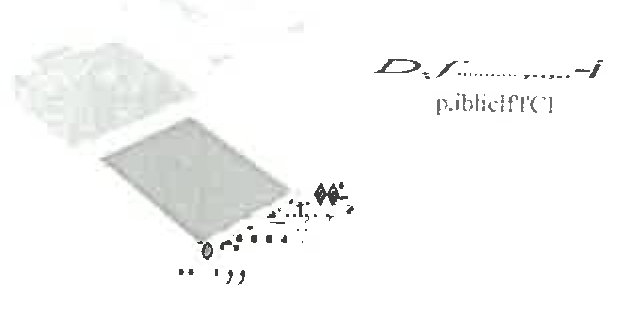
Figure I.A Building Placement
B.
Building Setbacks—Infill buildings shall continue patterns of setbacks and street edge treatments of adjacent existing properties and maintain the continuity of existing patterns of use. Where discrepancies between zoning and existing setback patterns may occur, the Design Review Board shall review design proposals with the proponent to balance the two (2) requirements and recommend any corresponding necessary waivers to the PAA. Refer to Figure 1.B.
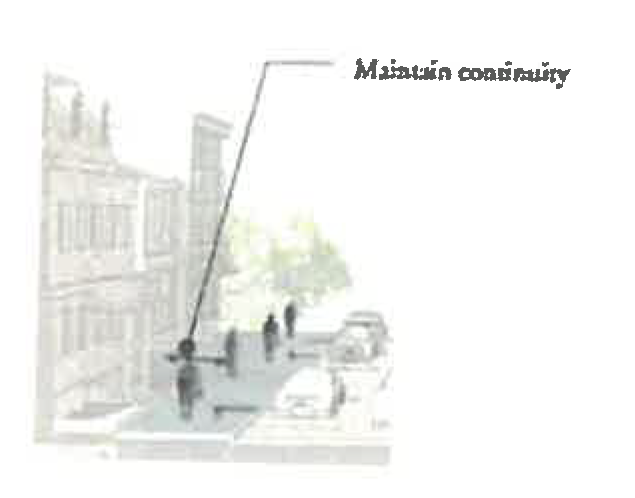
Figure 1.B Building Setbacks
C.
Building Orientation—Buildings shall be oriented with the primary building façade(s) facing the primary street frontage(s) of the site. Building massing and façades shall be designed to frame streets and public spaces to provide a sense of spatial enclosure and to define street edges. Building entrances, storefronts and windows shall be oriented to the primary streets with transparency to streets and public spaces. Refer to Figure 1.C.
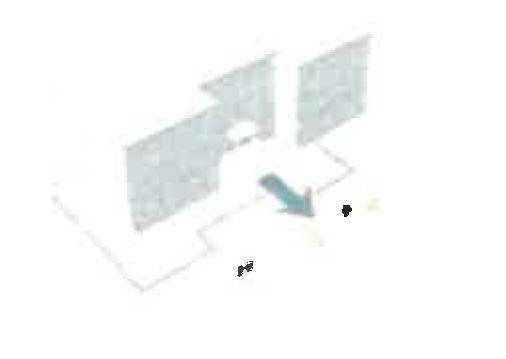
Figure 1.C Building Orientation—Frame and Address Streets and Public Spaces
D.
Streetwall Continuity—The blocks of structures that line the street and define the visual limits of the street are known as a streetwall. On those streets in the Margin, Endicott and High Street SGO with a continuous streetwall, every revitalization Project undertaken shall maintain and reinforce that streetwall continuity, resulting in infill buildings and rehabilitation that respects and continues existing street setbacks and concealed parking areas at the rear of the site. Redevelopment of empty blocks shall introduce a streetwall, create an open green space, or accomplish both. Refer to Figure l.D.
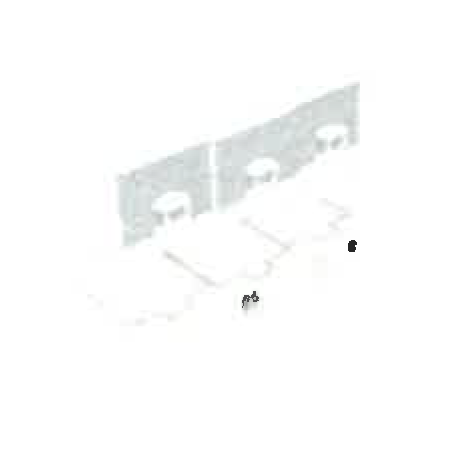
Figure 1.D StreetWall Continuity—Maintain and contribute to consistency
E.
Street Comers—Comer sites within the Margin, Endicott, and High Street SGO are of particular importance with the ability to define two (2) street edges and an intersection. Projects involving revitalization efforts located at a comer site shall be oriented and configured to define both the street edges and the comer of the site. The comer may be defined positively by placing the building with built edges at the comer or negatively by framing an open space at the comer with built edges setback from the comer and the provision of a landscaped plaza or other appropriate surface treatment. Refer to Figure 1.E.
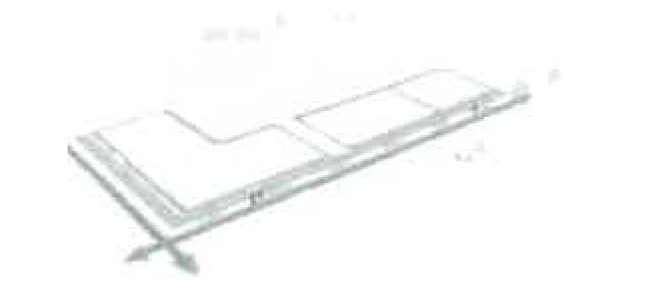
Figure 1.E Street Corner—Acknowledge Corner Sites and Multiple Frontages
F.
Design Treatment of Edges—Buildings that are not physically adjoined to abutters shall treat side yards and the spaces between buildings in a manner consistent with existing patterns of use, in terms of setbacks and use. Landscaping shall be used to define street edges and to buffer and screen edges that may have a negative visual impact, such as parking or loading areas. Access driveways and curb cuts using side yards may be combined between adjoining properties to access parking for multiple buildings at the interior of the block. Refer to Figure 1.F.
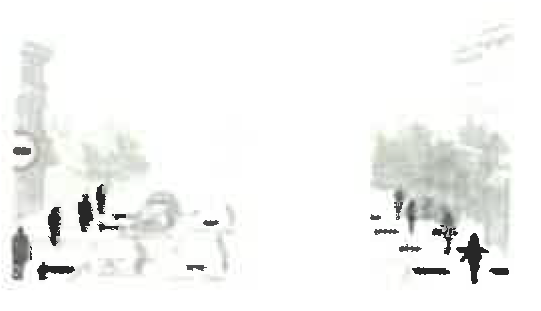
Figure 1.F Design Treatment of Edges-Reinforce Positive View and Screen Negative Views
2.
Building Massing and Form.
A.
Relationship to Existing Context—Building massing, form and scale shall be complementary to and respectful of the patterns of existing buildings in the immediate vicinity. While the Design Review Board may allow for certain deviations with respect to building massing, form and scale where it finds that such deviations are nevertheless complementary, building massing, form and scale that are consistent with the patterns of existing buildings in the vicinity shall be considered compatible and respectful of such buildings. Similarly, where the term "compatible" is used, design elements that are complimentary with corresponding elements of the existing context, shall be considered compatible
B.
Building Form—The shape and massing of new and renovated buildings shall provide a balance among building height, story-height, building width and block width. The shape and massing of the building should complement the abutting structures and define the edges of streets and open spaces. The building form and massing shall use the techniques described herein to reduce the impact of large uninterrupted building masses and façade and to create building forms that are human-scaled.
C.
Scale—The scale of proposed revitalizations shall be compatible with the surrounding architecture and landscape context, yet may allow for deviations that may be inconsistent where the Design Review Board finds the proposed revitalizations nevertheless compatible. Large scale developments or buildings shall be reduced in overall impact by providing variation in building massing. The configuration of architectural components shall be composed to reduce the overall scale of buildings to relate to a human-scale. Elements that may help to relate building massing proportionally to the size of the human body shall include: articulated building bases through a change in material or color; placement of windows in a regular pattern; use of materials that are made of smaller human-scaled modules; articulation of building entries with canopies, porches or awnings, façade and roof projections (such as bay windows or dormers); and building height stepbacks.
D.
Proportion—The proportions of building elements shall be generally compatible with existing structures and the features and components of the façade.
E.
Height—Building heights shall be in accordance with Section 7.4.8.2(d). Infill buildings shall continue the patterns of height of adjacent existing properties. Where the discrepancy between the proposed height and existing height patterns is greater than ten (10) feet, the Design Review Board shall review Plan Approvals with the proponent for context sensitivity based upon the following: building height stepbacks; articulation of façade; building mass, scale, bulk and proportion; or other building massing considerations.
F.
Building Height Stepbacks—A height stepback shall be used to match the height of adjacent buildings of a lower height than the proposed structure with a break in the building massing and building stepback at that height. The step back shall be a minimum of six (6) feet and nine (9) inches. The remaining allowable building height shall be allowed above this cornice/parapet line. The stepback reduces the visual effect of the additional height as viewed from the street and maintains continuity of the existing street wall. Refer to Figure 2.F.
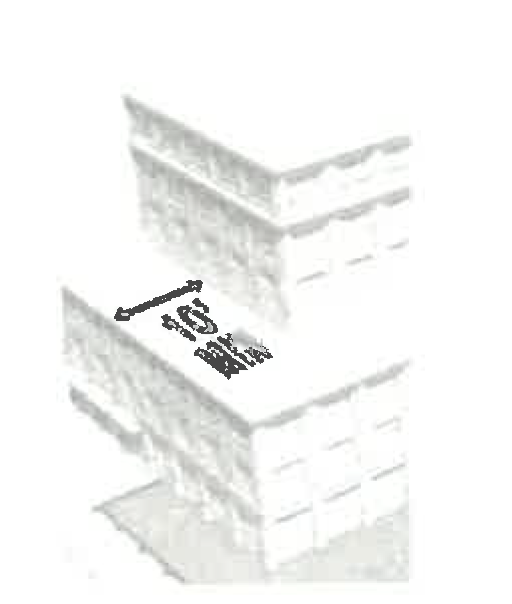
Figure 2.F Building Height Stepbacks
G.
Façade Length and Articulation—Buildings or portions of a building with wide façades shall be divided into smaller parts through the pronounced variation in the primary wall plane. Façade length shall be articulated at least every fifty (50) feet, or at a shorter length compatible with buildings in the immediate vicinity. This may be accomplished through the division of the building façade into smaller parts, variation in the cornice or roofline, or projections or recessions in the building façade. Refer to Figure 2.G.
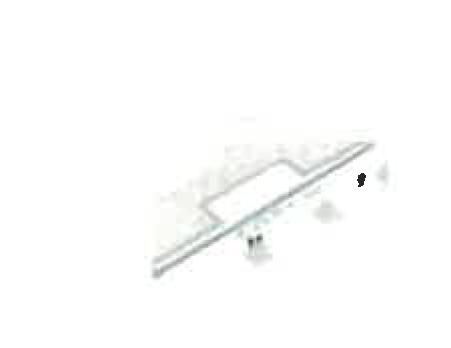
Figure 2.G Façade Length and Articulation
H.
Modulation of Building Mass, Scale and Bulk—Large building masses and volumes shall be reduced in scale and bulk by varying architectural form. By creating variations in roof form, cornice and roofline, treatment of comers and interruption of façade lengths, large building masses can be reduced to be more compatible with the Margin, Endicott, and High Street SGO. Refer to Figure 2.H

Figure 2.H Modulation of Building Mass, Scale and Bulk
I.
Building Massing at Street Comers—Building massing at street comers shall acknowledge and address the street comer. The building shall be oriented and configured to define both street edges and massing. Architectural definition of the street comer shall be a recognizable component of the building design. Further discussion of architectural and landscape treatments at street comers can be found under Figure 1.E. Street Corners.
J.
Building Roofs—Building roofs that are visible from the street shall be composed of materials compatible with the area adjacent the Margin, Endicott and High Street SGO (for example slate or composite shingle roofing materials). Roofing materials shall not call undue attention to the roof itself with bright or contrasting colors, unless historically documented. Large, unbroken expanses of roof shall be articulated at least every one hundred (100) feet, or at a shorter length compatible with adjacent or facing buildings, by interrupting the cornice or roofline, providing variation in roof form, or architectural components (for example a series of dormers or skylights). Building mechanical equipment located on building roofs, sites, or other locations shall be screened from view from the street.
3.
Building Façades.
A.
Façade Design and Relationship to Existing Context—The façade, or primary building elevation, of new construction should be consistent with the façade design of neighboring buildings so as to create continuity across Projects and the street edge. The Design Review Board may permit inconsistency with the façade design of neighboring buildings if it determines that such inconsistency is nevertheless compatible with neighboring buildings. Primary building façades with frontage along the street should be sensitive to the existing context of building façades along that street. Building façades facing the street shall have at least twenty-five (25) percent of the overall façade in transparent windows and at least forty (40) percent of the ground floor façade in transparent windows.
B.
Architectural Treatments—Architectural details include, but are not limited to, items such as the trim around entrances, comers, eaves, doors and windows; exterior cladding materials; and roof type. These components should be coordinated to be compatible with the character of the existing buildings in the immediate vicinity of the Margin, Endicott, and High Street SGO and to reinforce the human-scaled aspects of the building design.
C.
Proportion and Pattern of Windows—Original window patterns and openings shall be preserved or restored, including conservation and repair to preserve historical details, in the redevelopment of existing structures. New construction shall be consistent with existing adjacent window patterns in proportion, scale, rhythm and number of openings. Refer to the Commercial Design Guidelines in Appendix III of the 2005 Salem-Downtown-Renewal-Plan for additional guidance.
D.
Placement and Treatment of Entries—Entrances should be oriented to the primary street frontage and address the street with an active and welcoming entry composition that is integrated into the overall massing and configuration of the building form. The building façade shall integrate separate entrances for multiple tenants and uses into a coordinated ground-floor façade. Building and shop entrances shall be recessed to a minimum depth equal to the width of the door to prevent doors from swinging into the sidewalk. Building entries shall be used to introduce human-scaled components to the building façade such as storefronts, canopies, porches and stoops and provide a high level of visibility and transparency into ground floor uses to activate and add interest to the adjacent street. Refer to the Commercial Design Guidelines in Appendix III of the 2005 Salem Downtown Renewal Plan for additional guidance. Refer to Figure 3.D.
Figure 3.D Placement and Treatment of Entries
E.
Ground Level Articulation—The building façade shall clearly define commercial ground floor space and differentiate the articulation of the ground floor from the residential or mixed-use space on the building stories above. Ground level façades in non-commercial buildings should be articulated in such a way that they are visually compatible with adjacent commercial storefronts and maintain an active and inviting street level façade. Articulation of the ground level of a building shall be used to visually anchor the base of the building on the site and to define a human-scaled base at the primary street frontage. Glass shall be used in storefronts to maintain transparency and an active and interesting ground level at the street. Refer to the Commercial Design Guidelines in Appendix III of the 2005 Salem Downtown Renewal Plan for additional guidance for commercial ground floors. Refer to Figure 3.E.
Figure 3.E Ground Level Articulation
F.
Façade Projections—Façade projections, depressions or changes in direction of the primary building plane shall be limited to ten (10) feet. Refer to Figure 3.F.

Figure 3.F Façade; Projections
G.
Roof Parapet and Cornice Lines—Building cornice lines shall be maintained, preserved or recreated to define building façade and create façade components consistent with historic parapet or cornice lines as originally designed and built in the Margin, Endicott and High Street SGO and the adjacent area. Refer to 1.F. Building Height Stepbacks and 1.G. Façade Length and Articulation for additional treatment of roof parapet and cornice lines. Refer to Figure 3.G.
Figure 3.G Roof Parapet and Cornice Lines
H.
Building Materials—Building materials shall be selected to be compatible with or complementary to the surrounding context. Materials on the façade that are subject to deterioration (plywood or plastic) shall be avoided or removed and replaced.
I.
Signage—The size and location of any sign shall abide by the City of Salem Sign Ordinance. Sign type, location and installation shall be consistent with signs for other uses adjacent to and along the same street or within a consistent district. Free standing signs, permanently affixed signs independent of a building or structure, are prohibited within the Margin, Endicott, and High Street SGO. Refer to the Commercial Design Guidelines in Appendix III of the 2005 Salem Downtown Renewal Plan and the Salem Redevelopment Authority Sign Manual for additional guidance for commercial signage. Refer to Figure 3.I.
Figure 3.I Signage
J.
Multi-Tenant Signage—Signs for buildings with multiple tenants shall be coordinated upon a building façade to offer clear, orderly and legible information about the building, address, and tenants. A consistent height and line for a sign band in multiple tenant buildings shall be created in conjunction with the ground floor storefront and articulation; signage shall not be placed on the upper façade of multi-story buildings. Refer to the Commercial Design Guidelines in Appendix III of the 2005 Salem Downtown Renewal Plan for additional guidance for commercial signage. Refer to Figure 3.J.
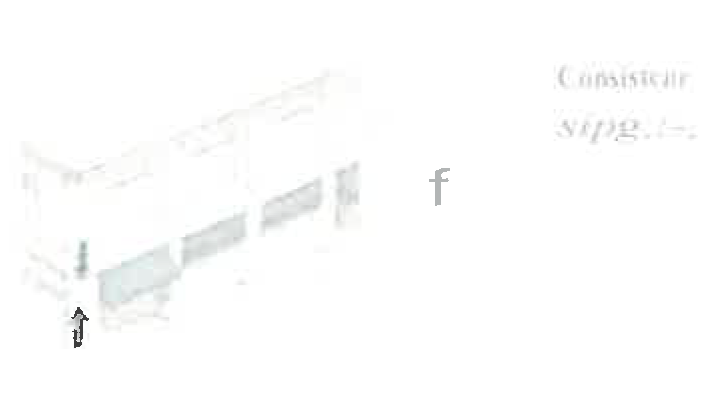
Figure 3.J Multi-Tenant Signage
K.
Awnings—Awnings may be used to provide a human-scaled element to the ground floor of building façades and protect building entries. Awnings shall not be placed on a building such that they would obscure important architectural details by crossing over pilasters or covering windows. Multiple awnings on a single building shall be consistent in size, profile, location, material, color and design. On multi-tenant buildings the awnings shall be allowed to vary in color and details, but shall be located at the same height on the building façade. Refer to the Commercial Design Guidelines in Appendix III of the 2005 Salem Downtown Renewal Plan for additional guidance for additional guidance for commercial awnings. Refer to Figure 3.K.

Figure 3.K Awnings
4.
Public and Private Open Spaces.
A.
Relation to Surrounding Public Spaces—Proposed and existing buildings and properties adjacent to public open spaces shall be oriented to define the edges of those open spaces. Building façades facing the open space shall have at least twenty-five (25) percent of the overall façade in transparent windows and at least forty (40) percent of the ground floor façade in transparent windows. Refer to Figure 4.A.
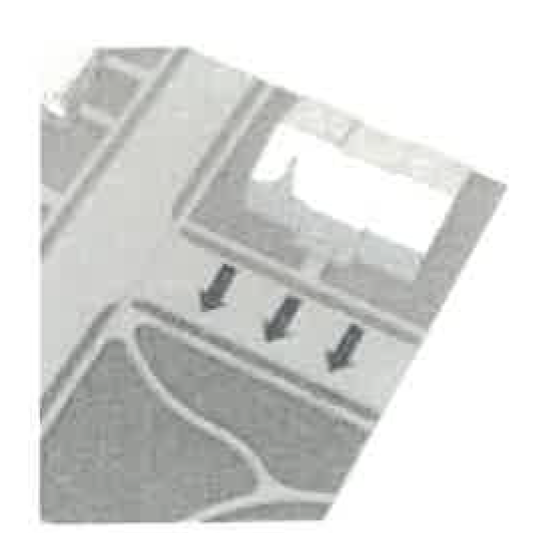
Figure 4.A Relation to Surrounding Public Spaces
B.
Site Details—Public and private open spaces shall be designed, landscaped, and furnished to be compatible with or complementary to the character of the Margin Street, Endicott, and High Street SGO and adjacent districts. Public art shall be used to define and punctuate public spaces. All art installations shall maintain clearances in public spaces, and be constructed of materials that are durable, easily maintained and that do not present safety hazards.
C.
Open Space—Exterior space within the Plan Approval area shall be considered for landscape installations or to be used as a public pocket park. Such improvements to vacant parcels can have a dramatic impact on the impression of the Margin, Endicott and High Street SGO.
5.
Landscape.
A.
Landscape Use and Orientation—Site, block and building orientation and configuration shall use landscape features to shield negative views (e.g., parking, utility, and trash collection areas, larger areas of blank wall no fenestration or ornamentation), define edges and frame streets and public spaces. No plantings shall obscure site entrances and exit drives, access ways, or road intersections or impair visibility of commercial storefronts. Tree species shall be selected to maintain relatively clear views of the ground floor and adequate height clearances for sidewalk circulation. Site and landscape features shall be integrated with the design of new construction and reflect a coordinated site and building design. Landscaping shall be used to reinforce human-scaled elements of the building and site and to create outdoor spaces that are scaled comfortably for people.
B.
Site and Street Edges—Landscape strips with street trees, street trees in sidewalk tree wells or landscaped medians shall be used as is consistent with the existing landscape patterns of the location of proposed improvements. Landscaping shall be used to define the street edge if the existing pattern of building placement includes a front setback. Refer to Figure 5.B.
Figure 5.B Landscape Site and Street Edits
C.
Buffers and Screens—Landscape buffers shall be used to screen parking, loading and service areas that may be visible from public streets or open spaces. All views that could be associated with a negative impact should be screened with strategically selected and located landscape features. Screening may include architectural walls, fences or other visual barriers. Refer to Figure 5.C.

Figure 5.C Landscape Buffers and Screens
D.
Trees and Plantings—Trees, shrubs, and groundcover should be selected to be appropriate to the conditions of a particular site and the climate of Salem. Street tree species selection shall ensure compatibility with neighboring conditions so as to ensure continuity of the street edge and public realm identity.
6.
Parking
A.
Parking Placement—Parking shall be located at the interior of blocks, behind buildings or at the rear of sites, away from prominent site edges, public spaces and streets. Refer to Figure 6.A.
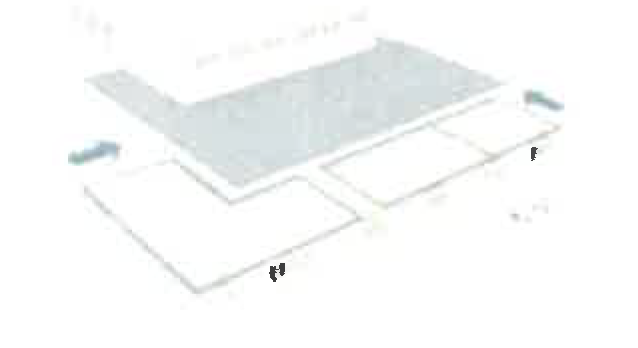
Figure 6.A Placement of Parking
B.
Parking Orientation—Parking lots shall be designed to recede in the visual environment by creating separations between parking areas and the edges of streets and sidewalks, buffering parking areas with landscaping, and screening parking areas behind buildings or other site components (fences, gates, walls or hedges). Parking placement requires that parking be placed out of prominent view; certain edges of parking lots may be more visible than others and would require treatment of the edge of the parking lot as described to mitigate the negative view.
C.
Structured Parking—Structured parking, where provided, shall be configured on the site in such a way to allow it to be lined by active building uses at the edges of primary streets and public spaces. Placement of the structured parking shall be at the interior of a block, surrounded on visible edges by active retail and residential uses to avoid inactive street edges created by the parking structure. Alternatively, the structured parking could be arranged such that the ground floor uses are available for commercial space and the upper parking levels are articulated to create a more attractive structure above. Refer to Figure 6.C.
Figure 6.C Structured Parking
D.
Parking Landscape—Landscape areas shall be designed to ensure plant health, including adequate area for snow removal, and shall create planting strips of not less than ten (10) feet wide for trees. No landscape island shall be less than six (6) feet wide. Landscape areas shall be placed at all exterior edges of the parking area that abut adjacent properties, streets or public spaces. Additional landscape medians shall be provided between separated rows of parking spaces to break up the impervious surfaces and mitigate the visual impact of parking. Refer to Figure 6.D.
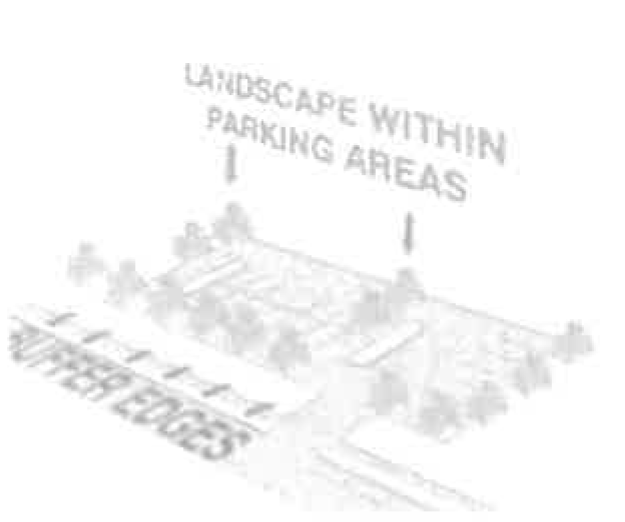
Figure 6.D Parking Landscape
E.
Landscaping of Pre-existing Parking Lots—Upon the expansion of an existing parking lot containing twenty (20) or more parking spaces and/or an alteration of a structure or change in uses that increases the parking requirements by five (5) or more spaces, the entire existing parking lot shall be brought into compliance with these standards to the degree feasible.
F.
Curb Cuts—Curb cuts shall comply with the City of Salem Zoning Ordinance maximum width of twenty-four (24) feet and shall be minimized and combined whenever possible. Every curb cut shall provide a continuous and uninterrupted pedestrian walkway. Refer to Figure 6.F.
Figure 6.F Curb Cuts and Access
G.
Parking Details—Granite curbs shall be used to protect planting areas, define sidewalks, walkways and parking area edges.
7.
Streetscape and Sidewalks
A.
Sidewalk Configuration—Sidewalks shall have a minimum clear width of four (4) feet and zero (0) inches; when space is available within the right-of way, sidewalks shall be widened to eight (8) feet and zero (0) inches clear. Sidewalks shall be widened to accommodate street trees, landscaping and outdoor furnishing and amenities. Sidewalks shall be continuous and uninterrupted at driveways and curb cuts to reinforce priority for pedestrians. New sidewalks and repairs to existing sidewalks shall maintain the concrete scoring and brick pattern used throughout the Margin, Endicott, and High Street SGO. Brick shall be maintained or replaced and shall be introduced if adjacent sidewalks are brick. Refer to Figure 7.A.
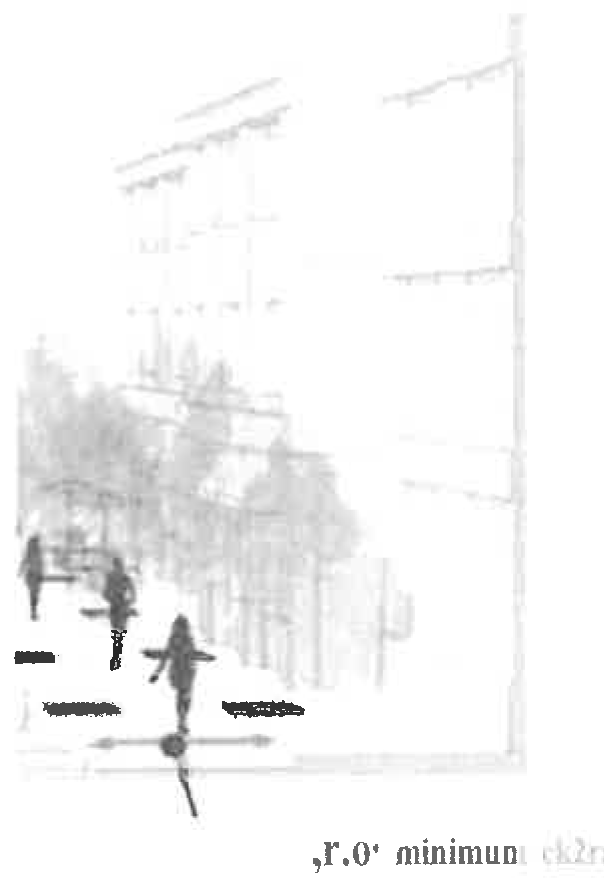
Figure 7.A Sidewalk Configuration
B.
Public Transit—Street and streetscape designs shall integrate existing or anticipated public transit improvements and facilities, such as bus stops, bicycle-sharing hubs, bus drop-off lanes, or intermodal connections to the commuter rail station. Permanent infrastructure, such as bus stops, should be designed to contribute to the organization of these features while maintaining adequate sidewalk clearances.
C.
Pedestrian Use—Sidewalks shall be provided on both sides of the street. Comer and curb radii shall be reduced to decrease pedestrian crossing distances and to slow traffic speeds at downtown intersections including such techniques as curb extensions and neck downs to increase safety for pedestrians. Pedestrian crosswalks with accessible curb ramps shall be provided at every intersection.
D.
Bicycle Use—Bicycle travel lanes, road markings, signage and sidewalk amenities shall be provided along those portions of adjacent streets that abut the Project in coordination with the City. Refer to Figure 7.D.
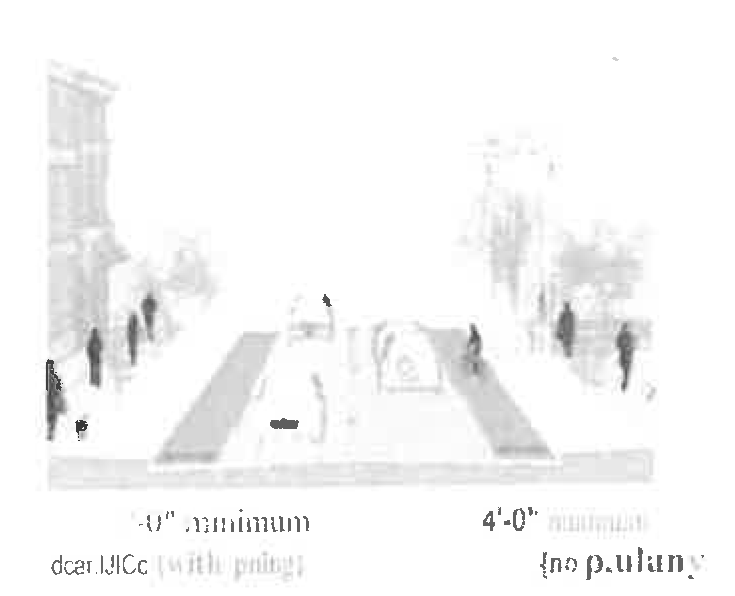
Figure 7.D Bicycle Lanes
E.
Landscape—Rows of street trees shall be provided on both sides of all primary streets. To allow healthy tree growth, structural soil shall be used under adjacent sidewalks or paving when street trees are planted in tree wells or planting strips narrower than ten (10) feet. Street trees at sidewalks and parking shall be used to define the street and site edges. Street tree species selection shall be compatible with or complementary to adjacent street trees so as to ensure continuity of the street edge and public realm identity. Refer to Figure 7.E.
Figure 7.E Streetscape Landscape
8.
Lighting.
A.
Light Placement—Placement of lighting fixtures shall be designed to provide adequate ambient light levels for safety and usefulness and shall be configured to highlight pedestrian paths and building entrances. Refer to Figure 8.A.
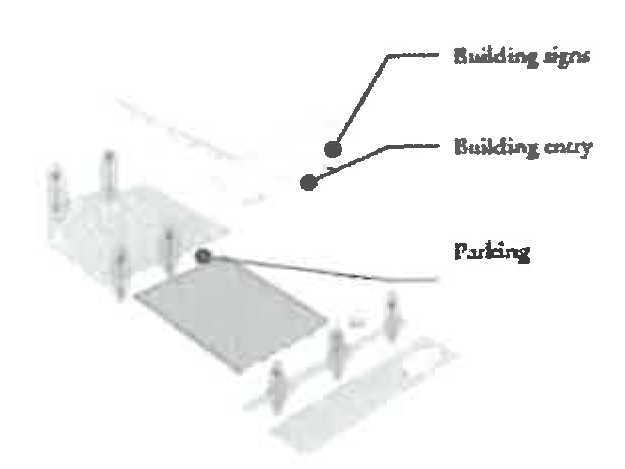
Figure 8.A Light Placement
B.
Site Lighting—Site lighting shall use shielded and full cut-off fixtures that avoid spilling light onto neighboring streets, properties, structures and above into the night sky. Site lighting shall use low height fixtures, between fourteen (14) and seventeen (17) feet, which shall reinforce the human scale.
C.
Building Lighting—Building lighting shall use shielded fixtures that avoid spilling light onto neighboring streets, properties, structures and above into the night sky. Building lighting shall focus on illuminating building entries, display windows and building signs. Uncoordinated architectural lighting of façades, building accents, awnings or other features shall be avoided to avoid contributing to a disrupted or disjointed lighting effect in the Margin, Endicott, and High Street SGO. Refer to the Commercial Design Guidelines in Appendix III of the 2005 Salem Downtown Renewal Plan for additional guidance for commercial building lighting.
D.
Signage Lighting—Building signage may be lit by a fixture(s) that shall light the sign and shield other views from glare. Light fixtures shall be consistent with the character of the building or shall be hidden from view. Refer to the Commercial Design Guidelines in Appendix III of the 2005 Salem Downtown Renewal Plan for additional guidance for additional guidance for commercial building lighting.
Section I - New Construction
The following section outlines the Design Standards for all new construction buildings located in the Harrison Rd SGO. New construction shall be compatible with the existing historic buildings in terms of materials, features, scale and proportion, and massing.
Site Layout and Building Orientation
1.
Building Orientation
a.
Site Placement: Buildings shall be positioned to define and enhance the edges of streets and open spaces as shown in Figure 1. Within these guidelines, "streets" refer to any primary private road in the on-site circulation network.
b.
Central Green Development: Development around any existing or proposed central green shall include elements that actively engage and provide safety, such as seating areas, lighting, and pedestrian pathways. See Landscape Standard for more detail.
c.
Primary Entrances: Main building entrances should be easily recognizable and oriented toward streets and open spaces.
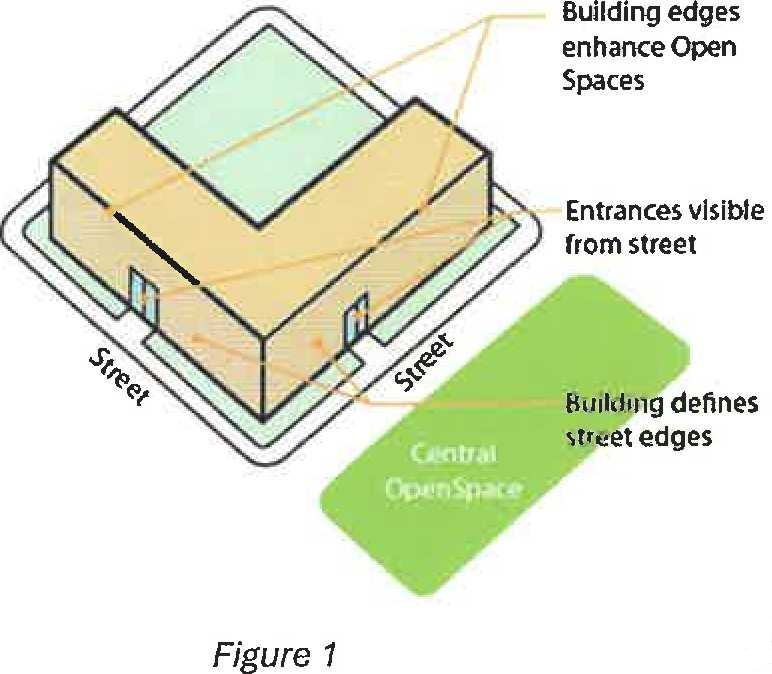
2.
Building Setbacks
a.
Building setbacks shall comply with the Table of Dimensional Requirements in 7.4.8.l.d and shall be sensitive to surrounding context.
3.
Conceal Unappealing Functions
a.
The site layout shall minimize the impact and visibility of service areas, dumpsters, utilities, and other functional elements, ideally positioning them within the building or in low-traffic locations. Where visible to pedestrians, these elements should be screened using landscaping, architectural treatments, or fencing. Chain link fencing is not permitted for this purpose
4.
Connectivity Among Buildings
a.
Pedestrian pathways at least five (5) feet wide shall connect all building entrances to public sidewalks and parking areas, ensuring a continuous and accessible route throughout the site.
5.
Parking Placement
a.
Parking should, wherever feasible, be positioned away from prominent streets, open spaces and site boundaries.
Building Massing
1.
Building Form and Scale
a.
Design the portion of buildings that front streets and open spaces to minimize monolithic massing. For façades exceeding one hundred (100) feet in length, a modulation is required at intervals no greater than fifty (50) feet. This modulation shall be a minimum of two (2) feet in depth and can occur along the ground floors, upper floors, or both.
b.
Define street and open space edges using building shape and massing that integrates smaller components, such as bay windows, overhangs, and awnings.
2.
Architectural Elements for Human Scale
a.
Large scale buildings shall be reduced in overall impact by providing variation in building massing. The configuration of architectural components shall be composed to reduce the overall scale of buildings to relate to a human-scale. Elements may include:
•
Articulated building bases through a change in material or color
•
Placement of windows in a regular pattern
•
Use of materials that are made of smaller human- scaled modules
•
Articulation of building entries with canopies, porches or awnings, Façade and roof projections, such cornices, defined bays
3.
Mechanical equipment
a.
Mechanical equipment, whether at grade, attached to, or on the roof of a building, should be screened from view from the nearest street or open space to the extent practicable. Alternatively, these elements should be integrated into the building's overall design through the use of materials, placement, roof shape, or other means.
4.
Structured parking
a.
Structured parking, where provided, should be configured to allow for active building uses along primary streets and open spaces, avoiding inactive street frontages. In cases where structured parking is located in a prominent area, public art or landscaping techniques should be used to buffer the ground-level environment from the garage.
Building Façades
1.
Façade Articulation
a.
To reduce a building's perceived mass, buildings should be divided into smaller scale horizontal and vertical components. This can be achieved through façade composition, changes in plane, breaks created by balconies or stairs, changes in roofline, or variations in material.
b.
Material and color changes are encouraged to enhance the building's articulated form.
2.
Ground Floor Design
a.
Ground floor residential areas of the street-facing façades should contribute to a pedestrian-friendly environment with residential character. This shall include where practicable space for walking, street trees or other plantings, and access to direct sunlight and sky views.
b.
Ground-floor non-residential façades facing streets should include between forty percent (40%) and sixty percent (60%) transparent glazing between two (2) and ten (10) feet above grade, when feasible within energy code and building performance requirements, to promote visibility and interaction between indoor and outdoor spaces.
c.
Blank walls exceeding twenty (20) feet in length should be avoided along all streets and pedestrian walkways. If required, blank walls shall be screened by landscaping or other elements.
3.
Architectural Treatments
a.
Buildings should incorporate architectural details to create engaging façades. These details may include, but are not limited to, trim around entrances, corners, eaves, doors, and windows; exterior cladding materials; and roof types.
b.
Projecting bays, recesses, and cornices are encouraged at all floor levels.
c.
Building façades over forty (40) feet in length shall have a change in plane articulated by projecting or recessed bays, balconies, or setbacks.
4.
Building Materials
a.
New buildings should incorporate a variety of textures and colors. Permitted building façade materials within the district include, but are not limited to, brick, concrete masonry, wood, cementitious fiberboard, manufactured stone, stone, glass, terra cotta, cellular PVC trim, and tile. Cementitious stucco is allowed when combined with additional materials listed above. Poured-in-place concrete and pre-cast concrete are suitable as basic building materials, provided consideration is given to formwork, pigments, and aggregates to create rich surfaces.
b.
Building materials shall continue around to all sides of buildings, which are visible from the street, public parking areas and residential abutters.
c.
Blank Façades are not permitted. Changes in material, which are accompanied by a change in plane, vertical and / or horizontal elements shall be used to provide a pedestrian scale in areas where windows and doors are not functionally required.
Section II - Adaptive Reuse
The following section outlines the Design Standards for all adaptive reuse buildings located in the Harrison Road SGO.
Applicability
1.
Historic Buildings
a.
At the time of adoption, the Subdistrict includes five (5) buildings, the former Loring Villa, Saint Chretienne Convent Chapel, Convent Saint Chretienne, Chretienne Academy Parochial School, and Saint Christian Academy High School (now Harrington Building), either listed or recommended for listing in the Massachusetts Historical Commission (MHC) Inventory of Historic and Archaeological Assets and meeting the criteria of eligibility for listing in the National Register of Historic Places as contributing properties to a Salem State University South Campus historic district (the 'Historic Buildings').
Architectural Elements
1.
Governing Standards and the Memorandum of Agreement
a.
The disposition and redevelopment of the campus are the subject of a Memorandum of Agreement (MOA) between the Massachusetts Department of Capital Maintenance and Management (DCAMM) and MHC, with the Salem Historical Commission (SHC) and Historic Salem, Inc. (HSI) as concurring parties. The MOA outlines stipulations to eliminate, minimize, and/or mitigate potential adverse effects to the historic buildings that could occur because of the disposition and redevelopment of the property. The developer/Applicant will comply with the MOA,
b.
If the project receives Historic Tax Credits, the rehabilitation shall be undertaken consistent with the Secretary of the Interior's Standards for Rehabilitation, the requirements of which are herein referred to as the Governing Standards.
2.
Exterior
a.
The building Façade shall be repaired to maintain historic design features.
b.
The proposed exterior scopes of work may include masonry repair and rehabilitation, replacement of windows and doors based on historical documentation, and roof replacement, among other activities typically performed in the reuse of historic buildings in accordance with the Standards for the Rehabilitation of Historic Buildings based on National Park Service and Secretary of the Interior Standards.
c.
Enhancements, i.e. a canopy structure, may be provided at the exterior to improve the resident experience at the entry, subject to the Governing Standards.
Harrington Building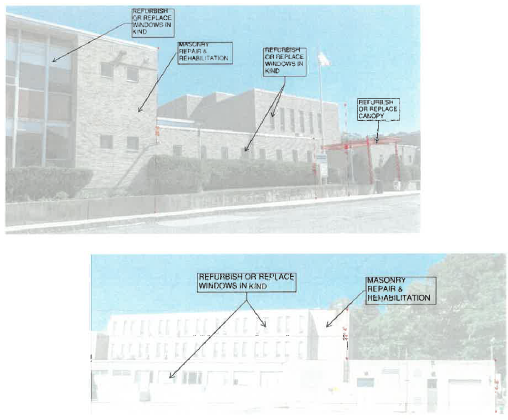
Academic Building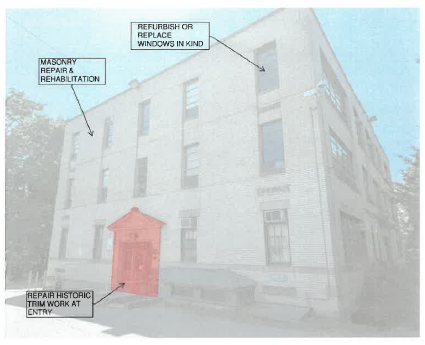
Loring Villa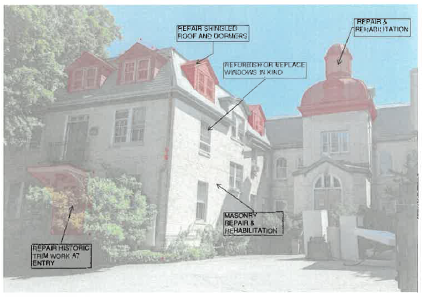
3.
Interior
a.
Interior improvements shall be proposed to accommodate residences and supporting uses in all buildings. Community spaces and supportive service spaces may be provided within the Historic Buildings.
b.
Significant, character-defining features shall be retained, likely including original stairs, corridors, window and door surrounds, and ceiling heights. Existing partitions shall be maintained, if possible, when designing units to limit the impact on the building. The layout of units will integrate unique historic features, such as fireplaces, historic windows, decorative trim, and vaulted ceiling conditions, as much as practically possible.
4.
Additions
a.
New additions, if any, shall be designed as secondary to the historic building and shall be appropriately located in relation to the structure. The construction shall be differentiated from the historic while remaining compatible with the massing, scale, and architectural features of the existing structure. Building materials and fenestration shall be selected to compliment the historic building.
Accessibility
1.
Entries
a.
All main building entries and amenity spaces will be provided with an accessible route for all residents to utilize.
2.
Dwelling Units
a.
A portion of units shall be delivered to MAAB and/or EOHLC accessibility standards as applicable.
Section III - Landscape Standard
Project Site Connectivity
1.
Projects shall provide improved connections to existing pedestrian trails on the property that connect to a larger network of resources in Salem.
2.
A new trailhead shall be located within the Subdistrict connecting pedestrian friendly improvements including sidewalks and open spaces to the Forest River Conservation Area. The location of the new trailhead shall remain in substantially the same location as the existing trailhead.
3.
All new paved path connections shall be sloped walk conditions, less than five percent (5%), or if a ramp with handrails is required, less than eight percent (8%).
4.
Existing site buffers to the direct abutters shall be maintained or replaced to the extent practicable.
Open Space
1.
Accessible green spaces shall be included on the site and designed for flexibility of uses among small and large groups. Landscaping interventions shall complement the programmed uses and provide aesthetic interest.
2.
A central open space (the Common) shall be provided and shall be inclusive for all residents in Salem. The Common is envisioned as the centerpiece of the Harrison Road SGO and the improved gateway to the Forest River Conservation Area.
3.
The Common shall include elements that allow people to actively and safely enjoy the outdoors, such as flexible open lawn, shade trees, seating areas, lighting, and pedestrian pathways.
4.
The landscape design for the property shall maintain views to the expanded trailhead and Forest River wetland and forest beyond, as well as considering environmentally appropriate practices for any work within the Forest River Conservation Area.
5.
The site design shall establish pedestrian connections between buildings, the Common greenspace, and the Forest River Conservation Area trailhead.
Streets and Parking
1.
Street Trees
a.
New trees shall be provided in appropriate locations to address urban heat island and minimize visual impacts.
b.
The planting plan shall provide trees throughout the project, both along streets and within landscapes.
c.
Lower height shrubs and plantings shall be used to screen unappealing elements and provide scale to spaces.
1.
Driveway and Parking
a.
Driveway and parking design shall provide accessible, safe, and convenient pedestrian connections to the various uses on site.
i.
Waivers. Recognizing that the Design Standards cannot anticipate all circumstances or innovative approaches, a waiver may be requested from Section 7.4.8.f., to provide the ability to create appropriate variations.
g.
Affordability.
i.
In SGO-2 Subzone l, ten (10) percent of units shall be made affordable to households within incomes at or below eighty (80) percent AMI; and ten (10) percent of the units will be made available to eligible households with incomes at or below sixty (60) percent AMI.
ii.
In Subzone 2 and Subzone 3 a combined minimum forty (40) percent of the units shall be made available to households with incomes at or below sixty (60) percent AMI, provided that, notwithstanding the requirements of Sections 7.4.6.1 and 7.4.6.16, if a minimum forty (40) percent of the units in Subzone 2 are made available to households with incomes at or below sixty (60) percent AMI, then a minimum of ten (10) percent of the units in Subzone 3 shall be made available to households with incomes at or below sixty (60) percent AMI.
(Minutes of 09-11-2025(1), § I; Ord. of 11-13-2025(1), § I)

