
Satellite Beach City Zoning Code
ARTICLE 1
- GENERAL PROVISIONS
Sec. 30-101.- Title of chapter.
This chapter shall be entitled the City of Satellite Beach Land Development Regulations.
Sec. 30-102. - General findings of chapter.
(a)
The provisions of F.S. § 163.3161, et seq., require the city to enact a unified land development code which implements the city comprehensive plan.
(b)
Controlling the location, design, and construction of development within the city is necessary to maintain and improve the quality of life in the city.
Sec. 30-103. - General intent of chapter.
The provisions of this chapter shall be construed and implemented to achieve the following intent:
(a)
Foster the public health, safety, and welfare.
(b)
Protect the Indian River Lagoon.
(c)
Aid in the harmonious and orderly development of the city in accordance with the city comprehensive plan.
(d)
Establish the regulations, procedures, and standards for review and approval of all proposed development in the city.
(e)
Adopt an efficient, effective, and equitable development review process that addresses the natural-resource and public-facility implications of proposed development; and is consistent with established regulations and procedures, respect for the rights of property owners, and consideration of the interests of the city and its residents.
Sec. 30-104. - Specific findings and intent relating to various subject areas.
With regard to the following specific subject areas regulated by this chapter, the city council finds, and intends this chapter to be construed and implemented to achieve, the following:
(a)
Signs.
(1)
The location, maintenance, and manner of erection of signs affect the public safety and welfare of the residents of the city.
(2)
The safety of motorists, cyclists, and pedestrians is affected by the number, size, location, and appearance of signs that divert the attention of drivers.
(3)
Large signs suspended from or placed on the tops of buildings, walls, or other structures constitute a direct danger to pedestrian and vehicular traffic, especially during periods of strong winds.
(4)
Unlimited numbers and uncontrolled placement of signs degrade the aesthetic attractiveness of the natural and manmade attributes of the city, thereby undermining economic growth and the economic value of property.
(5)
Due to the city's predominately residential character, billboards and other off-premises signs have an adverse impact on the aesthetics of the city. On-premises signs are sufficient to provide advertising for nonresidential uses within the city.
(6)
It is important to create a comprehensive and balanced system of sign control which accommodates the need for both a well-maintained, safe, and attractive city and effective business promotion. To that end, signs shall be:
a.
Designed, constructed, installed, and maintained in a manner which does not endanger public safety or unduly distract motorists; and
b.
No larger than necessary to convey essential information about the subject business or activity.
(b)
Landscaping.
(1)
Landscaping and buffering with trees and other vegetation promote the public health, safety, and welfare.
(2)
Landscaping and trees benefit the city by performing functions such as the following:
a.
Absorb carbon dioxide, and return oxygen to the atmosphere.
b.
Remove dust and other particulates from the air.
c.
Provide wildlife habitat, particularly for birds which, in turn, help control insects.
d.
Provide soil stabilization, which reduces erosion and mitigates the effect of flooding.
e.
Provide shade to conserve energy, reduce glare, and make outdoor areas more comfortable during hot weather.
f.
Reduce ground-level wind speeds during tropical storms and hurricanes, thereby reducing danger to people and damage to property.
g.
Enhance the city's attractiveness.
h.
Provide attractive buffering between different land uses.
i.
Reduce noise and surface water runoff.
j.
Mitigate conflicts between adjoining land uses.
(3)
Florida-friendly landscaping is preferable to other types of vegetation, as it is adapted to local diseases, pests, soils, and climate and is generally more economical and desirable than exotic species, which generally require more pesticide, fertilizer, and water.
(4)
The use of exotic vegetation should be discouraged because it generally uses more water and damages the environment by increased use of fertilizers and pesticides. Invasive exotic vegetation should be prohibited because it crowds out native vegetation and disrupts natural habitats.
(5)
Mangrove trees are especially valuable in stabilizing, building, and protecting the shoreline, providing for spawning and breeding grounds for marine organisms and other wildlife and serving as the basis for most of the estuarine food chains, which are critical to a substantial majority of those species considered important from a recreational or commercial standpoint.
(c)
Off-street parking.
(1)
Off-street parking and loading of vehicles promote public safety and welfare by reducing traffic congestion.
(2)
Well-designed off-street parking and loading areas promote the safe and efficient storage, loading, and circulation of vehicles.
(3)
Unpaved or otherwise porous parking areas aid the recharge of surficial aquifers, moderate the microclimate, and reduce the expense of controlling surface water runoff.
(4)
It is important to ensure that all developments provide adequate and safe storage and movement of vehicles in a manner consistent with good engineering and site-design principles.
(d)
Surface water runoff management.
(1)
Surface water runoff erodes soil and pollutes underground water and surface waters.
(2)
Surface water runoff often contains nutrients, especially phosphorus and nitrogen, which adversely affect flora and fauna by accelerating eutrophication of receiving waters.
(3)
Erosion silts up water bodies, decreasing their capacity to hold and transport water, interfering with navigation, and damaging flora and fauna.
(4)
Impervious surfaces increase the volume and rate of surface water runoff and decrease groundwater recharge.
(5)
Excessive surface water runoff increases the incidence and severity of flooding, thereby endangering property and human life; alters the salinity of estuarine areas and diminishes their biological productivity; and adversely affects the drainage of off-site property.
(6)
Eighty to 95 percent of the total annual loading of surface water pollutants discharged into receiving waters is concentrated in the flush created by the first one inch of rainfall (first flush) and carried off-site in the first one-half inch of runoff.
(7)
Activities which adversely affect underground water and surface waters must be avoided.
(e)
Protection of environmentally-sensitive lands.
(1)
Protecting environmentally-sensitive lands, while also protecting the rights of property owners and the public's right to enjoy navigable waters and beaches, promotes the well-being of city residents.
(2)
Shorelines and beaches serve the following beneficial functions:
a.
Provide essential habitat for many plant and animal species, including endangered, threatened, and special-concern species;
b.
Provide a recreation resource which must be protected.
(3)
The dune system provides protection from wave erosion for oceanfront properties and protection from storm-surge flooding for the rest of the city. However, to be effective, the dune requires stabilization by establishing suitable vegetation and preventing disturbance from pedestrian traffic and construction.
(4)
The biological integrity of natural habitats must be protected, and activities which adversely affect natural habitats and native flora and fauna must be prevented.
Sec. 30-105. - Applicability of chapter.
The provisions of this chapter shall apply to all development in the city occurring after the effective date of the ordinance from which this chapter is derived, and no development shall be undertaken after such date unless pursuant to this chapter. The only exceptions shall be development with unexpired approved site plans or unexpired lawfully-issued building permits.
Sec. 30-106. - Interpretation of chapter.
In interpreting and applying this chapter, all provisions shall be considered minimum requirements, liberally construed in favor of the city, and deemed neither to limit nor repeal any other powers granted under law.
Sec. 30-107. - Definitions.
When used in this chapter, the following words and phrases shall have the meanings ascribed to them in this section, except where the context clearly indicates a different meaning. Words not defined in this section or in the comprehensive plan shall have the meanings in Webster's New Collegiate Dictionary, as revised.
100-year storm means a shore-incident hurricane or any other storm with accompanying wind, wave and storm surge intensity having a one percent chance of being equaled or exceeded in any given year, during any 100-year interval.
Accessory structure or use means a structure or use of land or structure, or portion thereof, customarily incidental and subordinate to the principal structure or use and located on the same parcel with the principal structure or use.
ADU (accessory dwelling unit) means a habitable unit ancillary or secondary to an existing single-family dwelling use that has a separate kitchen, bathroom, and sleeping area. The term ADU includes a separate detached dwelling unit on the same lot as the principal single-family dwelling; or a separate dwelling unit within, or attached to, the principal single-family dwelling, provided that the unit has a distinctly separate entrance from the main entrance of the principal single-family dwelling.
Alley means a roadway dedicated to public use which affords only a secondary means of access to abutting property and is not intended for general traffic circulation.
Armoring has the same meaning as defined in Rule 62B-33, FAC, and includes any rigid or semi-rigid structure which, regardless of whether such structure is covered by sand, functions similarly to armoring.
Arterial roadway means a roadway designated as an arterial roadway in the city's comprehensive plan.
Automobile fuel station means a building or property where gasoline, diesel, propane, or other fuel is dispensed to the general public for any type of automotive vehicle.
Auto, marine, or equipment repair shop means a business where engines or other mechanical components are overhauled, repaired, or replaced.
Beach-quality sand means sand which is similar to the native beach sand in both coloration and grain size and is free of construction debris, rocks, clay, or other foreign matter.
Boutique hotel means a hotel, with a central lobby and registration desk, offering 25 or fewer transient lodging rooms to the general public. A boutique hotel may include recreational facilities, on-site restaurant and lounge, a meeting room no greater than 500 square feet, and personal services. Access to the guest rooms shall be provided only by indoor access through the central lobby.
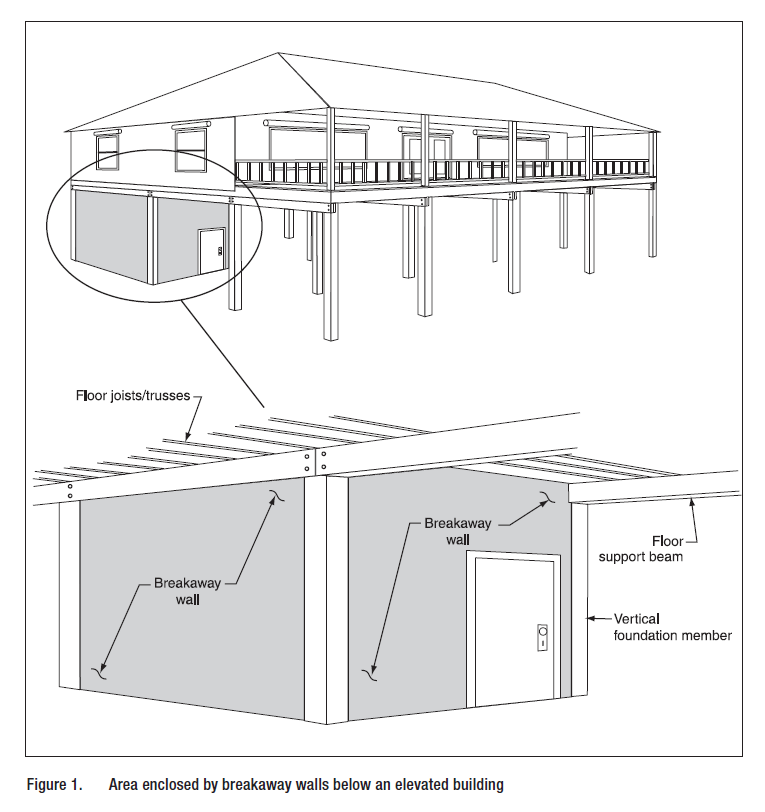
Breakaway walls means a wall that is not part of the structural support of the building and is intended through its design and construction to collapse under specified lateral loading forces, including wind and water, without causing damage to the elevated portion of the building or supporting foundation system.
Breezeway means a corridor across the full depth of all properties east of State Road A1A, which is reserved to ensure unrestricted movement of ocean breezes and visual access to the ocean. The corridor includes all land from the mean low-water line to State Road A1A.
Building permit means that official city document which authorizes the commencement of construction or land alteration in accordance with the State of Florida Building Code.
Bulkhead means any wall or structure designed to prevent the erosion of land by water action or acts of nature.
Business vehicles means any vehicle marked with any sign advertising a business and any vehicle used by employees.
Cabana means a small cabin or tentlike structure with an open side facing a beach or swimming pool.
Car wash means a facility, building, structure or portion thereof, whether attended, automated, self-service, manual, or any combination thereof, where motor vehicles or recreational vehicles are washed, rinsed, waxed, polished, vacuumed, detailed or otherwise cleaned or treated.
Coastal construction control line (CCCL) means the 1981 Coastal Construction Control Line established by the State of Florida.
Coastal construction protection zone means that area which lies east of the coastal construction control line.
Coastal setback line (CSL) shall be described as a line 15 feet west by perpendicular measurement from a line previously described as the 1981 FDEP coastal construction control line.
Collector roadway means a roadway designated as a collector roadway in the city's comprehensive plan.
Commercial vehicle means any truck, bus, trailer, portable equipment, machinery or similar vehicle or combination thereof which has more than six wheels, or more than two axles, or a height greater than eight feet or an overall length of more than 22 feet, or a gross weight more than 10,000 pounds.
Conditional use means a use that would not be appropriate without restriction throughout a zoning district, but which, if controlled as to number, size, location, relation to the neighborhood, or other relevant factors, would promote the public health, safety, convenience, or general welfare.
Congregate living home means a residence where housing, meals, and personal services, including limited nursing services, are provided on a continuing basis for four or more individuals not related by blood or marriage to the home's owner or administrator.
Contractor's storage yard means outdoor storage facilities operated by, or on behalf of, a contractor for the storage and/or maintenance of large equipment, commercial vehicles, and/or other materials commonly used in the individual contractor's type of business. This excludes temporary contractor's storage on the site of an on-going construction project where a building permit has been issued.
Cultural facilities means museums and art galleries.
Davit means a crane projecting over the water that is used to lift a boat.
Derivative products shall mean any product derived from marijuana, including but not limited to, oils, food, teas, tinctures, aerosols, ointments, or any combination thereof.
Detached garage means a garage that is not physically connected to the principal structure. Electrical conduit, fencing, or any non-structural connections shall not constitute being physically connected.
Detention means the collection and storage of surface water runoff for gradual discharge into a receiving water body.
Development has the same meaning as that defined in F.S. ch. 380.
Drug store shall mean a retail pharmacy, with or without a drive-thru lane, unless otherwise specified in this Code.
Dune means a mound, bluff, or ridge of loose, usually sand-sized soil lying upland of the beach which may be bare or covered with vegetation.
Dwelling, multifamily means any residential building containing three or more separate dwelling units.
Dwelling, single-family means a detached residential building containing only one dwelling unit.
Dwelling, two-family means a duplex.
Dwelling unit means one room or any number of connected rooms which provide complete living facilities for one or more persons, are physically separated from any other dwelling units which may be in the same building, and contain independent provisions for living, sleeping, cooking, and sanitation.
Emergency means any occurrence or threat thereof whether accidental or natural, caused by humankind, in war or peace, which results or may result in substantial injury or harm to the population or substantial damage to or loss of property or public funds. For purposes of this definition, a vulnerable structure that is in danger of imminent collapse qualifies as an emergency.
Environmentally-sensitive lands means the wetlands, as defined by any regulatory agency having jurisdiction over such matters, and shorelines within the city.
Erect means to construct, attach, hang, or place, including the painting of wall signs.
Erosion means the wearing away of land or the removal of beach or dune material by wave action, tidal currents, littoral currents or deflation, including horizontal recession or scour, which occurs when the topography of the beach-dune system is completely inundated by a storm surge and wave and current forces erode the beach-dune profile in a vertical direction.
Erosion adaptation action area (EAAA) means all the area of lands in the city east of Highway A1A.
Estuarine shoreline protection zone means that area extending from where estuarine water (i.e., navigable canals and the Banana River) is five feet deep at the mean low-tide of adjacent surface waters to either the mean high-tide line or the inland boundary of any conservation easement, as designated by any regulatory agency having jurisdiction over such matters, whichever is farther inland.
Excused absence means a city board member's non-presence at a board meeting due to unavoidable, essential business or personal reasons; personal illness; or a family emergency or bereavement. For such an absence to be excused, the board member shall, if possible, notify the board staff secretary of the anticipated absence prior to the meeting. The chair shall determine whether an absence is excused.
Exotic vegetation means non-native vegetation.
Family means an individual; any number of individuals related by blood, adoption, or marriage; or a maximum of four unrelated individuals who are residing in one dwelling unit.
Fence means an artificial barrier used to enclose or screen a yard or a swimming pool, usually made of masonry, wood, ultra violet resistant polyvinyl chloride (PVC), or chain link.
Food truck, for purposes of this Code, shall mean any vehicle licensed by the State of Florida as a self-sufficient mobile food dispensing vehicles that, at a minimum contains, as part of the vehicle, a three-compartment sink for washing, rinsing and sanitizing equipment and utensils; a separate handwash sink; adequate refrigeration and storage capacity; full provision of power utilities, including electrical, LP gas, or a portable power generation unit; a potable water holding tank; and a liquid waste disposal system in accordance with subparts 5-3 and 5-4 of the FDA Food Code 2009.
Free-flowing means discharge of water from an artesian well without first flowing through a functioning control device.
Garage means a fully-enclosed area of a building with minimum clear dimensions for the parking of vehicle(s), without any permanent structure (e.g., water heater, air-conditioning unit, workbench, et al.) encroaching upon the required clear dimension.
Garage sale means all general sales open to the public, from or on residential premises located in any zoning district of the city zoned residential, for the purpose of disposing of personal property, including "yard" sales. This definition shall not include a situation where no more than five specific items of personal property are held out for sale, none of the items, except for motor vehicles and vessels, are displayed outside of the residence, and all advertisement of such sale specifically names those items to be sold.
Gazebo means a roofed structure open, except for screening, on all sides.
Gross floor area means the area within the exterior perimeter of the exterior walls of a building, including all features present (such as corridors, stairs, closets, columns, thickness of walls, etc.), but excluding areas open to the sky.
Hedge, established means any hedge at least 30 inches high.
Height of a building means the vertical distance measured from base flood elevation or 18 inches above the crown of the road, whichever is higher, to the highest finished roof surface.
Height of any other object means the vertical distance measured from the finished ground surface to the highest point of the object.
Home occupation means any occupation conducted within a dwelling unit by an occupant thereof, which occupation is clearly secondary to the residential use of the dwelling and does not change its residential character. It includes a business activity related to a business located elsewhere, but does not include a business located elsewhere which has only call-forwarding service to the residence.
Hotel means an establishment providing transient accommodation units available for the accommodation of persons more than three times in any consecutive 365-day period, each for a term less than monthly, in which meals may or may not be provided, and in which principal access to all transient accommodation units is through an inside lobby or office supervised by a person-in-charge at all hours. Hotel includes, but is not limited to, transient accommodation units without regard to whether such units are available on a rental basis or by other forms of agreement or property ownership, and may include internal restaurant and commercial uses for guests, fitness facilities, and shuttle services between hotels, airports and other destinations.
Imminent collapse means the foundation of a structure will fail due to its own weight under normal conditions, resulting in structural damage to the supported structure. This shall be determined by the building official, who at his discretion may require tests or modeling of dune erosion anticipated to result from a 15-year return interval storm. Such modeling must be calibrated to the site conditions and performed by a professional engineer licensed in the state, with demonstrated competency in coastal engineering.
Impervious surface means a surface that has been compacted or covered with a layer of material so that it is highly resistant to infiltration by water. It includes, but is not limited to, semi-impervious surfaces such as compacted clay or marl, as well as most conventionally-surfaced streets, roofs, sidewalks, parking lots, and other similar structures. Swimming pools are exempt from the requirements for impervious area percentages.
Irrigation system means an underground network of piping and its related equipment which links a water source with multiple outlets to provide water to living vegetation.
Kennel means a commercial establishment in which dogs or domesticated animals are housed, bred, boarded, trained or sold. For purposes of this subsection, commercial establishment means any home or business conducting or allowing to be conducted on its premises any kennel activity operated for pecuniary gain. For purposes of this section, operation for pecuniary gain shall not depend on actual profit or loss.
Landward means in a direction away from the Atlantic Ocean.
Living area means the gross floor area of a dwelling unit, excluding attached carports, porches, and garages.
Lot means a parcel of land of at least sufficient size to meet the minimum zoning requirements of this chapter, having frontage on a street and consisting of a single lot of record or portion thereof; a combination of complete lots of record, portions of complete lots of record, or complete lots of record and portions thereof; or a parcel of land described by metes and bounds.
Lot, corner means a lot abutting two or more streets at their intersection, or a lot having two sides abutting a roadway.
Lot coverage means that portion of the land occupied by buildings or structures.
Lot dimensions.
(1)
Depth. Depth of a lot shall be considered to be the distance between the midpoints of straight lines connecting the foremost points of the side lot lines in front and the rearmost points of the side lot lines in the rear.
(2)
Width. Width of lot shall be considered to be the distance between straight lines connecting front and rear lot lines at each side of the lot, measured between the points where the front setback lines intersect the side lot lines. However, the width between side lot lines at their foremost points (where they intersect with the street line right-of-way) shall not be less than 80 percent of the required lot width, except in the case of lots on the turning circle of culs-de-sac, which shall have a minimum of 30 feet facing a street.
Lot line means the legal boundary line of a lot.
Lot split means any division of a platted subdivision lot into two lots or any change in the configuration of two lots which both abut a public right-of-way, where such division does not require any off-site improvements to any roads, drainage system, or utilities. Any split greater than two lots shall be considered a subdivision.
Lowest enclosed area/lowest floor, under the NFIP, means the floor of the lowest enclosed area of a building. An unfinished or flood-resistant enclosure that is used solely for parking of vehicles, building access, or storage is not the lowest floor, provided the enclosure is built in compliance with applicable requirements. As used by the NFIP, an "enclosure" is an area that is enclosed on all sides by walls. The NFIP regulations also specify that enclosures may be used only for parking of vehicles, building access, or storage; that all material below the BFE, including materials used to construct enclosures, be flood damage-resistant materials; and that construction methods and practices minimize the potential for flood damage.
(Note: The NFIP requires that all new buildings, substantially damaged buildings, and substantially improved buildings in coastal high hazard areas (zones V, VE, and V1-30) be elevated to or above the base flood elevation (BFE) on open foundations consisting of piles, posts, piers, or columns. These open foundations must be designed to allow waves and water moving at high velocity to flow beneath buildings.) (The local government, based upon its own goals, objectives, policies may set that elevation as deemed appropriate.)
Illustrative example:
Marijuana shall have the same meaning as that given to "cannabis" as provided in F.S. § 893.02(3), and shall include all its derivatives. The terms cannabis and medical marijuana shall be interchangeable for purposes of the ordinance from which this section derives.
Medical marijuana treatment center shall mean an entity that acquires, cultivates, possesses, processes (including development of related products such as food, tinctures, aerosols, oils, or ointments), transfers, transports, sells, distributes, dispenses, or administers marijuana, products containing marijuana, related supplies, or educational materials to qualifying patients or their personal caregivers, as those terms are defined in article X, section 29, Florida Constitution, and is registered by the state, department of health, or its successor agency.
Medical marijuana treatment center dispensing facility shall mean the retail sales component of a dispensing organization or medical marijuana treatment center authorized by state law to dispense medical marijuana, but does not include cultivation, possession or distribution facilities of medical marijuana.
Medical office shall mean a professional office that provides services to the public by physicians, dentists, surgeons, chiropractors, pharmacists, osteopaths, physical therapists, nurses, acupuncturists, podiatrists, optometrists, psychiatrists, or others who are duly licensed to practice their respective professions in the State of Florida, as well as other persons, including technicians and assistants, who are acting under the supervision and control of a licensed health care practitioner. Retail pharmacies staffed by pharmacists that sell prescription drugs, nonprescription drugs, or both, as well as other goods for sale to the public are not medical offices for purposes of this Code. Pain management clinics are medical offices for purposes of this Code.
Modification means any alteration to the existing nonconforming principal structure or accessory structure that does not expand the vertical envelope established by the existing footprint of the structure further into the area seaward of the coastal setback line.
Native vegetation means any plant species with a geographic distribution indigenous to all or part of East Central Florida (Brevard, Indian River, Osceola, Orange, Seminole, and Volusia Counties).
Net weight means the actual weight of the vehicle, including any attachments or equipment which have been added, but excluding any load.
NGVD means National Geodetic Vertical Datum, as established by the National Geodetic Survey of the National Oceanic and Atmospheric Administration.
Nonconforming structure or use means a structure or land use which was lawful at the time this chapter was adopted but which does not conform to the current provisions of this chapter.
Ocean bluff line means the highest elevation of the dune, known as the dune crest as defined in section 66-51, Satellite Beach City Code, or an armoring structure in existence when this chapter was adopted, whichever is further west.
Ocean bluff protection line means the 1981 Coastal Construction Control Line
Ocean bluff protection zone means that area seaward of the coastal construction control line.
Oceanfront lot means any lot which either:
(1)
Has any lot line that abuts the mean high-water line or ocean bluff line in whole or in part; or
(2)
Touches or is bisected by the coastal construction control line; or
(3)
Is located east of Highway A1A and is within the erosion adaptation action area (EAAA).
Open space, common means any area of land or water within a multi-family or mixed-use site reserved for the use of residents and visitors to the site.
Pain management clinic shall mean any office, center, clinic, or other facility unaffiliated with any hospital, hospice, and/or facility for the treatment of the terminally ill in Brevard County, Florida, for which its primary focus, advertising, or concentration is providing, prescribing, and/or dispensing of medication (i) to persons with complaints of pain, chronic or otherwise, or (ii) with the intent to reduce or manage pain.
Parcel means a lot.
Parking area means any area used to maneuver, park, or load vehicles, including driveways, aisles, parking spaces, and backout areas, but excluding public rights-of-way.
Parking space means an area not within a public right-of-way for the parking of one motor vehicle, having a width and length as specified in this chapter.
Permit means an official document issued by the building official authorizing performance of a specified activity.
Permitted use means a use that is appropriate without restriction throughout a zoning district.
Permittee means the person holding a lawfully-issued permit.
Person means an individual, child, firm, association, joint venture, partnership, estate, trust, business trust, syndicate, fiduciary, corporation, and all other groups or combinations.
Personal property means property which is owned, utilized and maintained by an individual or members or his/her residence and acquired in the normal course of living in or maintaining a residence. Personal property shall not include merchandise which was purchased for resale or obtained on consignment or food or beverages.
Planned unit development (PUD) means an area of land developed as a single entity, under single ownership, which is totally planned to provide a variety of residential uses and common open space.
Playground means an outdoor area set-aside for recreation and play for children containing one or more pieces of equipment, including, but not limited to, slides, swings, seesaws, sandboxes, merry-go-rounds, jungle gyms and any structures incorporated with such items.
Portable storage container means a container without wheels that provides temporary storage of material or goods.
Principal structure means the major habitable building or structure, generally enclosed and/or built on a foundation, which is constructed or erected, the use of which requires rigid location on the ground or attachment to something having a permanent location on the ground, which establishes an identifiable purpose, use or function for the site, including, but not limited to: houses or single-family residential buildings; multiple-family residential buildings; condominiums; motels; hotels; apartments; restaurants; shops; other similar residential, commercial, recreational or public buildings.
Principal use means the use of a lot or structure which establishes an identifiable purpose or function.
Recreational vehicle means any boat, vessel, personal watercraft, boat trailer, cargo trailer not to be used for commercial purposes, house trailer, motor home, camper, bus, off-road vehicles (including by way of example and not limitation, all-terrain vehicles, as defined by F.S. § 316.2074, off-highway vehicles, as defined by F.S. § 317.003(6), and swamp buggies) or similar vehicles or equipment, including any vehicle, or part of a vehicle, or equipment designated for temporary living quarters for recreation, camping, or travel.
Residential area means any lot, right of way, or other land designated as residential in this chapter, the city zoning map, the land use element of the city comprehensive plan, or a city ordinance.
Residential roadway is any roadway within the city which is not an arterial or collector roadway.
Residential use means the primary use of a lot and structure as residential, without regard to the zoning designation of the area.
Resort dwelling shall mean any unit in a multi-family dwelling which is rented for less than 181 days.
Retail pharmacy shall mean a business offering goods or services for retail sale and on-site dispensing of prescription drugs, nonprescription drugs, or both.
Retention means the collection and storage of surface water runoff without subsequent discharge into a receiving water body.
Revetment means a sloping or horizontal structure of masonry, stone, riprap, or other suitable material built to sustain any non-vertical wall of earth.
Rigid coastal and shore protection structure means shoreline hardening structures including sea walls, bulkheads, revetments, mound structures, and groins and breakwaters.
Roofline means a horizontal line intersecting the highest point(s) of a roof.
Sandbag system means sandbags, geotextiles, tubes, and any other pliable or soft shoreline protection system meant as temporary erosion control measure.
Seasonal high-water line has the same meaning as that defined in F.S. ch. 161.
Seaward means in a direction toward the Atlantic Ocean.
Setback means a required horizontal distance between a structure and property line or other designated line such as the 1981 Coastal Construction Control Line.
Shoreline means the line formed along a shore by a horizontal plane at the elevation of mean high tide.
Sign means any lettering, numerals, characters, logos, or images, and any contiguous lines, shapes, coloration, or border which are painted, attached, or erected in any manner visible from out-of-doors so as to identify or promote any structure, use, product, service, activity, event, or person. A business's trademark colors alone applied to any structure shall not be deemed a sign for purposes of this chapter, as long as such colors are not used to resemble or represent the trademark of the business on the premises. In addition to the signs in Table 1, the types of signs included in this chapter are the following:
Animated sign means any image or sign, except for time and temperature displays, which moves in any manner, uses any lighting which changes color, flashes, alternates, shows apparent movement, or automatically changes the appearance of any part of the sign at a frequency of more than once every 24 hours.
Banner sign means any sign intended to be hung with or without frames, with characters, letters, illustrations, or ornamentation applied to paper, plastic, or fabric, including flags not on poles and pennants.
Beacon light means any high-intensity, steady or flashing light with one or more beams, capable of being directed in a fixed direction or having any part revolve manually or automatically.
Bench sign means a sign which is erected on a bench in a public area.
Construction sign means any temporary sign located on a property where construction is planned or underway, providing information regarding the construction project.
Dedication plaque means a sign indicating a dedication or name of a building which is typically cut into a masonry surface or constructed of metal attached to the building.
Directional sign means any on-premises sign which is used to direct vehicular or pedestrian traffic and which contains no advertising or identification of any product or service.
Directory sign means any sign that states the name and/or occupation of the occupants of a building or gives the use of the building, such as office, church, and apartment directories.
Flag means a piece of fabric with a color or pattern which represents a country, religion, non-profit organization, or political subdivision such as a state or municipality.
Holographic display sign means an advertising display that creates a three-dimensional image through projection, organic light-emitting diode (OLED), or similar technology.
Identification, development sign means any sign identifying a subdivision, multi-family project, or commercial development.
Identification, occupant sign means a sign which conveys the name and/or address of the occupant of a building.
Light-emitting diode (LED) sign means any sign or portion thereof that uses solid-state, light-emitting technology or other semiconductor technologies to produce an illuminated image, picture, or message of any kind, whether moving or stationary. This type of sign includes any LED technology (conventional, using discrete LEDs; surface-mounted (individually-mounted) LEDs; and transmissive, organic light-emitting diodes (OLEDs)); light-emitting polymers (LEPs); light-emitting capacitors (LECs); and any similar technology.
Monument sign means a low-profile, freestanding sign with a fully-enclosed base which has no visible openings, is located on the ground, conceals all structural elements, and has at least the same width as the overall sign.
Neon sign means a sign using glass tube lighting containing an inert gas such as neon, argon, xenon or krypton to produce various illuminating colors.
Nonconforming sign means any sign which was lawfully erected and in use on the date this chapter was adopted but which does not conform to the current provisions of this chapter.
Off-premises sign means a sign advertising anything not available on the premises on which the sign is located.
Parked advertising sign means a sign on any vehicle or trailer to advertise a person, business, or activity located on the same property. It does not include any vehicle or trailer used in the normal course of business which is parked at the business location or elsewhere.
Perimeter wall sign means a sign attached to a wall located along any portion of the perimeter of a development.
Permanent sign means a sign erected for an indefinite period of time.
Political campaign sign means a temporary sign which advertises a political candidate or issue which will appear on a ballot for any primary, general, or special election.
Portable sign means any sign that is movable and self-supporting.
Projecting sign means any sign, including a marquee, that is affixed to a structure and extends more than 12 inches beyond such structure.
Real estate sign means a temporary sign which advertises a particular property or structure for sale or lease. Real estate signs also include real estate directional, open house, and model home signs.
Roof sign means any sign that extends above the lowest point of the roof or the top of a parapet.
Snipe sign means any temporary sign that is attached in any way to a utility pole, tree, fence post, or similar object.
Wall sign means a sign erected parallel to the outside wall façade or fascia of any building which contains a business or multi-family building of six or more residential units.
Window sign means any sign that is permanently or temporarily attached, painted, or installed on the interior or exterior of a window or placed within five feet of the interior side of a window.
Wrap sign means any sign composed of fabric, plastic, vinyl, mylar, or a similar material that hangs from, and follows the contours of, the side of a building, wall, window, or other rigid surface.
Sign area means the surface area of an entire sign and consists of two parts:
(1)
Copy area means the message area within any regular geometric figure or combination of figures, including the outer extremities of all letters, figures, characters, background, and frame.
(2)
Architectural area means the architectural elements of a sign, including trim, molding, sign base, and all other decorative areas not included in the copy area.
Sign height means the vertical dimension of a sign measured from the crown of the road to the highest point of the sign.
Stormwater means water resulting from a rainfall.
Street means any public or private right-of-way intended for traffic circulation.
Structure means anything which is constructed or erected, the use of which requires rigid location on the ground or attachment to something having a permanent location on the ground.
Subdivision means any subdivision of land not classified as a lot split.
Substantial damage means damage of any origin sustained by a structure whereby the cost of restoring the structure to its before-damaged condition would equal or exceed 50 percent of the market value of the structure before the damage occurred. Structures that are determined to be substantially damaged are considered to be substantial improvements, regardless of the actual repair work performed.
Substantial improvement means any reconstruction, rehabilitation, addition, or other improvement of a structure, the cost of which equals or exceeds 50 percent of the market value of the structure before the "start of construction" of the improvement. This term includes structures that have incurred "substantial damage," regardless of the actual repair work performed.
Surface water runoff means water from any source which originates on a property and flows across the property boundary. It consists primarily of stormwater runoff which originates from rain falling on a property, but also includes all other natural and man-made sources of runoff, such as irrigation runoff, water pumped from swimming pools or excavations, and water flow from wells.
Surface water runoff management system means the retention or detention areas, swales, piping, control structures, etc., or combinations thereof, which collect, hold, treat, or channel surface water or convey it through or from a site.
Surface waters means the Atlantic Ocean, the Banana River, and all canals located within the city west of South Patrick Drive.
Townhouse means one of at least three attached single-family dwellings having a property line and a common wall separating each unit.
Transient facility means any dwelling unit which is rented or leased less than six months at any time.
Tree means any living self-supporting woody perennial which is at least ten feet high when planted and which is of a species which normally grows locally to at least 15 feet in height.
Tree, established means a tree which is not on the Florida Exotic Pest Plant Council's most current list of invasive species and which has a diameter exceeding four inches at a height of 42 inches.
Tree, protected means any established tree except those prohibited elsewhere in this chapter.
Vulnerable structure means any principal or accessory structure or public infrastructure whose foundation or support system has been damaged to the extent that in the opinion of the building official is in danger of imminent collapse.
Warehousing means storage of goods and merchandise, to include distribution and wholesaling, in enclosed structures or outside areas. Storage of goods, equipment, materials or merchandise in an area not abutting the principal (licensed) business structure of any commercial activity shall be considered as warehousing.
Yard, front means the yard extending across the entire width of the lot between the front lot line and the front of the principal structure, including covered porches and garages. Corner lots have two front yards.
Yard, rear means the yard extending across the entire width of the lot between the rear lot line and the rear of the principal building, including covered porches and garages. On corner lots, the rear yard does not include any area deemed to be a front yard.
Yard, side means the yard extending from the front yard to the rear yard between the side lot line and the side of the principal building, including covered porches and garages. Corner lots have only one side yard. On irregularly-shaped lots, any yard not clearly defined by this section is deemed to be a side yard.
Yard, side street means a side yard adjacent to a street.
(Ord. No. 927, § 1, 2-1-06; Ord. No. 946, § 1, 8-16-06; Ord. No. 972, § 1, 8-15-07; Ord. No. 993, § 1, 6-18-08; Ord. No. 996, §§ 1—4, 10-15-08; Ord. No. 1033, § 2, 6-16-10; Ord. No. 1144, § 2, 10-18-17; Ord. No. 1148, § 2, 11-15-17; Ord. No. 1149, § 2, 11-15-17; Ord. No. 1160, § 2, 11-7-18; Ord. No. 1207, § 1, 10-6-21; Ord. No. 1245, § 2, 2-21-24; Ord. No. 1279, § 2, 11-19-25)
Sec. 30-108. - Referendum required regarding certain amendments.
(a)
Any person seeking approval of an application for a development permit that increases the density or height above, or decreases any breezeway below, any provision of the land development regulations in effect on November 7, 2006 shall be subject to the referendum requirements of Section 8.04 of the City Charter, except as to those matters contained in Subsection 8.04(c) thereof.
(b)
Any proposed amendment subject to Section 8.04 of the City Charter shall be submitted on an application form approved by the city. All costs associated with any such application, including the costs of any referendum, shall be borne solely by the applicant unless city council, in its sole discretion, determines that the city should pay for any or all of the cost based upon the nature of the application.
(Ord. No. 959, § 1, 3-21-07)

