
Schoolcraft City Zoning Code
ARTICLE X
- CBD CENTRAL BUSINESS DISTRICT
Sec. 62-241.- Statement of purpose.
The CBD central business district is intended to permit a variety of commercial, administrative, financial, civic, cultural, residential, entertainment and recreational uses in an effort to provide the harmonious mix of activities necessary to further enhance the central business district as a commercial and service center.
(Ord. No. 241, § 30, 10-18-2021)
Sec. 62-242. - Principal permitted uses.
In the CBD business district, the following uses are permitted:
(1)
Any retail business whose principal activity is the sale or rental of merchandise.
(2)
Personal service establishments, including barber shops and hairstyling salons.
(3)
Financial institutions, including drive thru facilities.
(4)
Restaurants and taverns including sidewalk and outdoor cafes, but not including drive-in or drive-through restaurants.
(5)
General and professional offices including medical and dental clinics.
(6)
Health spas, gymnasiums, and tanning salons. Subject to section 62-454(a)(27).
(7)
Museums and art galleries.
(8)
Business office machine and repair facilities.
(9)
Custom craft shops.
(10)
Combined retail-wholesale business when conducted entirely within a building.
(11)
Publicly owned buildings including government facilities.
(12)
Theaters and concert halls.
(13)
Mixed use establishments, i.e., commercial, and residential uses combined in one structure.
(14)
Funeral parlors and mortuaries.
(15)
Other uses which are similar to the above and are approved by the Planning Commission.
(16)
Accessory buildings and uses customarily incidental to the above principal permitted uses.
(17)
Off-street parking lots and structures, the requirements shall be in accordance with the requirements of section 62-74(e).
(Ord. No. 181, art. III, 8-5-2002; Ord. No. 201, § 2, 11-20-2006; Ord. No. 241, §§ 15, 31, 10-18-2021)
Sec. 62-243. - Uses subject to a special exception use permit—Reserved.
(Ord. No. 241, §§ 32, 33, 10-18-2021)
Sec. 62-244. - Site plan approval.
For all permitted uses and uses subject to a special use permit, a site plan shall be submitted in accordance with section 62-74(f).
(Ord. No. 241, § 34, 10-18-2021)
Sec. 62-245. - Area, height, bulk and placement requirements.
Area, height, bulk and placement requirements unless otherwise specified are as provided in article XVI, "schedule of regulations."
(Ord. No. 241, § 35, 10-18-2021)
Sec. 62-246. - Development standards.
(1)
All business establishments shall be retail or service establishments dealing directly with consumers. All goods produced on the premises shall be sold at retail from premises where produced.
(2)
All business, servicing or processing except for off-street parking or loading, shall be conducted within completely enclosed buildings, except as permitted within sections 62-242 and 62-247.
(3)
Storage of commodities shall be within buildings and shall not be visible to the public from a street or thoroughfare.
(Ord. No. 241, § 16, 10-18-2021)
Sec. 62-247. - Outdoor display of merchandise.
(1)
Only goods or merchandise that are customarily sold on the premises by a permanently established business shall be permitted. These regulations shall not permit the display or sales of motor vehicles or items intended for tow.
(2)
The display shall not extend more than three feet beyond the North Grand Street façade of the building in which the goods or merchandise are sold, provided the sidewalk is eight feet in width or greater.
(3)
If the sidewalk is less than eight feet in width, the outdoor display of goods or merchandise is prohibited.
(4)
The outdoor display may not be more than five feet in height.
(5)
If the business is also utilizing a sandwich board sign as allowed under section 62-489(9), the sign must be placed within three feet of the front façade or two feet from the curb to consistently allow for at least three feet of clear sidewalk.
(6)
The display shall not:
a.
Obstruct dedicated pedestrian ways or doorways;
b.
Occupy off-street parking areas, maneuvering lanes, or loading zones; or,
c.
Conceal views into the site's interior which are necessary for public safety.
(Ord. No. 241, § 17, 10-18-2021)
Sec. 62-248. - Design standards.
(a)
Purpose and goals.
(1)
The purpose of these standards is to provide an outline of the village's design objectives and expectations for the central business district. Additionally, they are intended to help strengthen and retain the established historic character of the built environment.
(2)
Goals.
a.
Achieve a positive and cohesive look to the central business district, which will generate a consistent character.
b.
Design for a pedestrian friendly environment that encourages and welcomes commercial and retail activity.
c.
Assures that all future construction, whether new, alterations, or expansions, respect the character and integrity of the district.
(b)
General design standards. The following design standards are intended to provide guidance for the development and redevelopment of buildings and structures within the central business district.
(1)
Building orientation. Buildings should locate their main entrance or storefront toward the street with appropriate architectural details clearly indicating the doorway. The entrances should be directly accessible from the sidewalk. This maintains the traditional emphasis towards the pedestrian-oriented streetscape. Buildings should maintain a street edge consistent with the adjacent buildings.
(2)
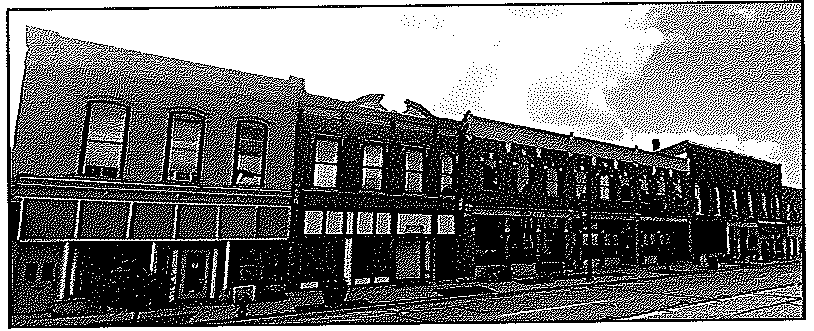
Building massing, form, and height. New buildings must maintain the scale and context of the corridor in which it is located through similar mass, form, and height as neighboring existing structures. Two story or the appearance of two-story structures should be required. Larger volume structures should utilize architectural features, such as variations in roof form and height, projecting and recessing the façade, setbacks to upper stories, using horizontal and vertical features to break up the façade, and providing color variations.
(3)
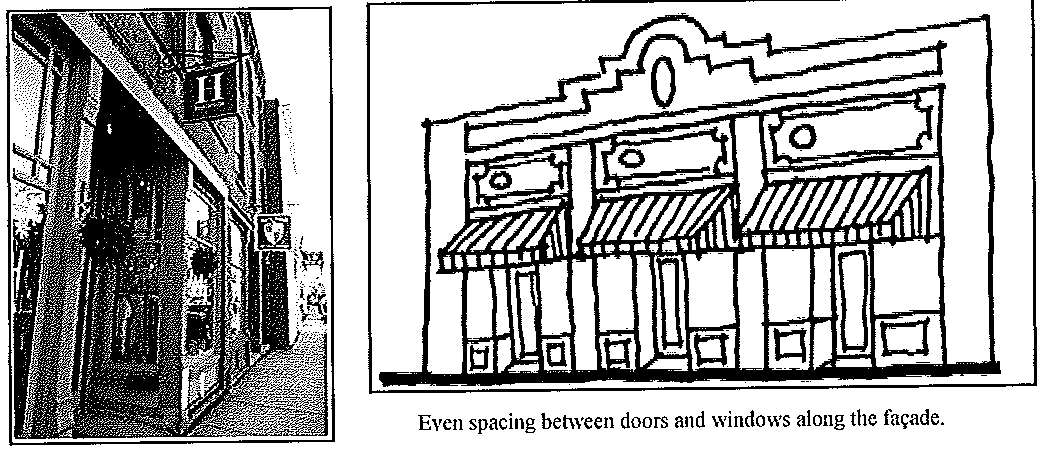
Pedestrian scale. The ground level should avoid blank walls by using windows, trellises, material changes, arcades, or other features that increase the visual interest for people on the street. Pedestrian-scaled lighting should be utilized wherever possible and be consistent with the existing buildings. The use of floodlights, wall packs, and tall light posts are not permitted.
(4)
Architectural features and materials. Architectural details such as columns, porticos, awnings and arches are encouraged. Large areas of repetitive architectural elements or flat wall surfaces should be avoided. Traditional materials such as wood, brick, tile and stone, or materials that have the same visual effect are desired.
(5)
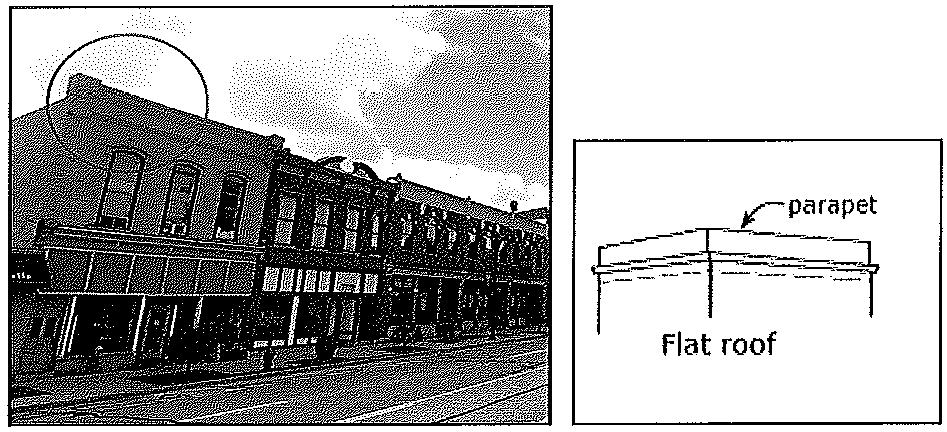
Roof forms and materials. Flat or relatively flat roofs with decorative parapets providing screening to roof top equipment is preferred on North Grand Street. Gabled, gambrel, mansard, or hip roofs are permitted on East Cass Street.
(6)
Windows. Vertically oriented windows are most common in the local building vernacular and shall be utilized. Windows shall be abundant, non-reflective, and align vertically with any windows above or below, if possible. Ground floor, street-facing walls should have display windows, recessed windows, detailed entry areas, awnings, or prominent sills.
(7)
Building entrances. All building entrances shall be clearly defined and highly visible. Many methods exist, including canopies, porticos, raised cornice parapets over the door, outdoor patios, display windows, and planters.
(8)
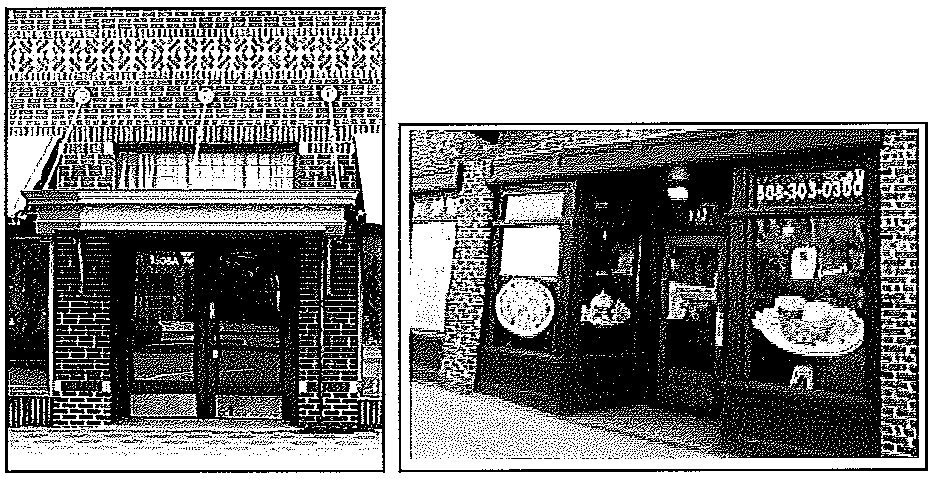
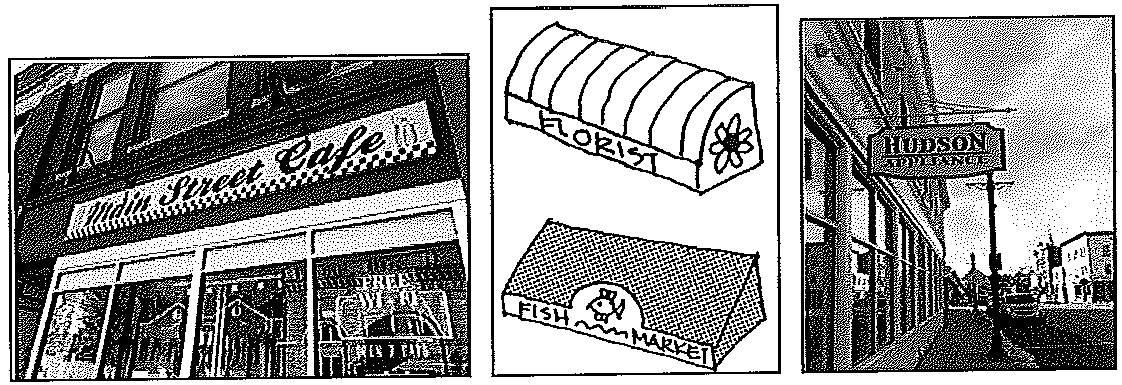
Signage. Signs must complement the building while being readable by both pedestrians and motorists. Consideration shall be given to form, color, lighting, and materials that are compatible to the building and its surroundings. Wall mounted signs shall be appropriately scaled to the building and not obscure important architectural features. Signs may be placed on the building wall or canopy.
(9)
Existing structures. Existing buildings should be preserved. If renovated or expanded, the work should be done in a manner that is respectful of the character, features and details of the existing structure. In addition, any renovation should consider removal of pedestrian level façade treatments that have hidden or obscured the historic character of the building.
(c)
Specific design requirements. The following design elements are requirements within the central business district:
(1)
Build to line. Buildings shall be placed immediately adjacent to the street right-of-way of North Grand Street. If architectural features such as balconies, porticos, bay windows, or other similar elements are planned, the building may be setback to accommodate these features, with a maximum allowance of six feet from the street right-of-way.
(2)
Setbacks. Buildings located on East Cass Street shall be placed immediately adjacent to the street right-of-way or shall replicate the setback of buildings fronting East Cass Street within 300 feet.
(3)
Building frontage.
a.
North Grand Street.
i.
Building frontage shall be a minimum of 80 percent of the lot frontage, with 100 percent preferred.
ii.
Less than 100 percent shall only be permitted if the available outdoor space will be utilized as landscaped greenspace, area for outdoor dining, or is needed for a secondary entrance.
b.
East Cass Street. Building frontage shall be a minimum of 50 percent of the lot frontage.
c.
Building frontage is defined as the width of the building divided by the lot width at the front property line. By way of example, a building that is 80 feet wide located on a lot that is 100 feet wide would have a building frontage of 80 percent.
(4)
Entrance. The primary public entrance of the building, regardless of location, shall be clearly defined and highly visible from the street or parking lot. Doors are encouraged to be recessed into the face of the building to create a sense of entry and to add variety to the streetscape.
(5)
Building materials. The following requirements shall apply to any façade facing a street.
a.
Primary building materials. Durable natural building materials such as brick and tile masonry, native stone, or stucco (cement-like finish) shall be used on a minimum of 70 percent of the façade of the building (excluding doors and windows). Synthetic building materials that convincingly match the appearance of natural building materials may be utilized if approved by the planning commission.
b.
Accent building materials. Secondary building materials shall include split-faced block, pre-cast masonry, exterior insulating and finish system (EIFS), metal, wood lap siding, or hardy-plank siding. Other materials may be utilized if approved by the planning commission.
(6)
Transparency. The following requirements shall apply to any façade facing a street:
a.
North Grand Street.
i.
First floor. The first floor shall maintain a transparency of at least 70 percent of the building façade through the use of doors and windows. The first floor shall be measured from two feet above grade to eight feet above grade.
ii.
Upper stories. Upper stories shall maintain a transparency of at least 50 percent.
b.
East Cass Street. Both first and upper stories shall maintain a transparency of at least 50 percent.
c.
At no time shall there be areas of solid wall with no transparency that measure more than 20 feet in width.
d.
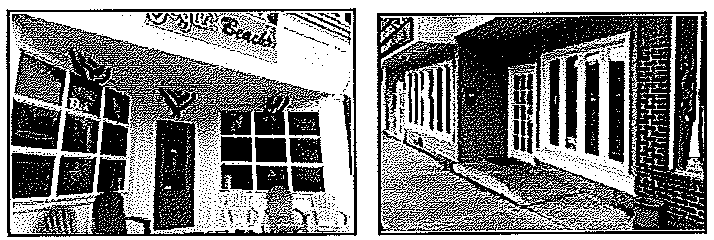
Larger windows shall be divided by mullions into multiple panes of glass for an appearance of numerous windows.
e.
Windows shall be at least as tall as they are wide, except for transom windows above doorways. A 2:1 ratio is preferred.
(7)
Service areas. All service areas, including utility access, above ground equipment, and dumpsters shall be located in rear or side yards and shall be completely screened from view from any street.
(8)
Mechanical and utility equipment. Mechanical equipment, electrical and gas meter and service components, and similar utility devices (whether ground level, wall mounted, or roof mounted) shall be screened from view from the front property line. Exterior screening materials shall be the same as the predominant exterior materials of the principal building.
(d)
Design waiver.
(1)
The planning commission shall have the authority to grant a waiver to any of the specific design requirements outlined in subsection 62-306(c) if, after review, they find the following to be true:
a.
Approval of the waiver will not result in development that is incompatible with or will negatively impact existing or potential future development in the district.
b.
The requested waiver is generally consistent with the intent and purpose of this section.
c.
The waiver will result in a superior development when compared with what could be achieved through the strict application of the requirements of this section.
d.
The waiver will not negatively impact the potential of adjacent parcels to develop according to the requirements of this section.
e.
Any application for a waiver shall be clearly identified on a site plan. The planning commission shall evaluate the request and approve, approve with conditions, or deny the waiver request.
(Ord. No. 241, § 18, 10-18-2021)

