
South Jordan City Zoning Code
CHAPTER 17
74 MIXED USE MU ZONE
17.74.010: OBJECTIVES AND CHARACTERISTICS OF ZONE
The Mixed Use (MU) Zone is established to provide a zone to be used in specific locations near City transportation nodes and corridors with the intent of allowing a mix of specific land uses that are typically found separately in "mutually exclusive" zoning districts. Mixed use represents a departure from characteristic zoning to the extent that it encourages a combination of land uses which may be compatible, but have traditionally been separated.
The intent of this zone is to create self-sustaining developments that become walkable areas that provide convenient pedestrian access to mass transit, commercial services and employment opportunities. Proposed developments shall include design standards that incorporate "walkable" elements, such as a mix of uses, "build-to" lines, compact building design, preservation of open space, pedestrian friendly streets, streetscape, parking concealment, architectural control, and maintenance.
- MU-TOD Subdistrict: The purpose of this subdistrict is to encourage the development of high intensity regional mixed land uses with maximum building height and bulk standards conducive to transit oriented development. The focus of such uses would be in appropriate areas along Jordan Gateway and I-15 in proximity to the FrontRunner Commuter Rail Station.
- MU-TC Subdistrict: The purpose of this subdistrict is to encourage the development of medium intensity community and town center mixed uses that are built at a human scale, and are pedestrian friendly and architecturally diverse. The location of such uses would be in appropriate areas along portions of Redwood Road and South Jordan Parkway, with a focus on the area around City Hall and the South Jordan Towne Plaza.
Amended by Ord. 2017-05 ARCHIVED on 3/7/2017
17.74.020: ZONE ESTABLISHMENT
- Each proposed MU Zone, or subdistrict thereof, may be established by following standard rezoning procedures of chapter 17.22 of this title and shall be accompanied by a master development plan (MDP) prepared by the applicant, in consultation with City staff and area property owners, which specifies land use areas. Retail, office, vertical mixed use (containing different upper floor uses), open space and public/quasi-public land use areas will be shown on the MDP. The MDP must show all stages of the development (including any phasing plans), street connections, and both existing and reasonable projected development on adjoining properties, determined as needed. Phased developments and approved individual plats and site plans shall conform to the master development plan.
- The intent of the above is to achieve a consistent overall mixed use neighborhood with uniform and compatible site standards when the project area is completely built out. Remnant parcels left from old developments, rebuilds on existing parcels, or pads within existing center developments, are required to make reasonable compliance with mixed use development standards through consultation with the Planning Director.
- The MDP shall be adopted as an exhibit to the ordinance establishing the MU Zone subdistrict, in which it is proposed. The MDP, or portions thereof, may be amended only after review by the Planning Commission and upon approval of the City Council with public input after the establishment of the MU Zone, as may be needed. A development agreement between the City and the applicant may be required by the City Council and executed before the zoning designation shall be effective.
Amended by Ord. 2016-05 ARCHIVED on 5/3/2016
Amended by Ord. 2017-05 ARCHIVED on 3/7/2017
Amended by Ord. 2019-01 ARCHIVED on 3/5/2019
17.74.030: DEVELOPMENT REVIEW
All development and uses in MU zones may only be established in conformance with development review procedures of the city as set forth in title 16, chapter 16.24 of this code and in conformance with the approved master development plan (MDP), or as the plan may be amended and approved.
Applicants shall follow the procedures and requirements of this code regarding development review in the preparation and review of development proposals in MU zones. All uses shall be conducted according to the approved plan or plat and any conditions of approval. Applicants are encouraged to consult with city staff and/or the development review committee (DRC) prior to submitting a site plan application. The following procedure shall be used for site plan review of projects in the MU zone:
- The developer shall prepare and submit a site plan and submit a design book containing typical renderings, cross sections, and plan views of the following:
- Existing and proposed public street curb, gutter, sidewalk, park strip, landscaping, streetlights and pavement.
- Yard areas between buildings and public streets, including trees, grass, shrubs, ground cover, signs and screen walls.
- Parking areas, walkways, driveways, landscaped areas and storm detention/retention areas.
- Architectural features, including materials and colors, of buildings, freestanding and wall mounted signs and light fixtures, trash enclosures, utility and loading area screen walls, pedestrian furniture and artwork.
- Other improvements as required by city staff.
- The city staff shall review the site plan and design book for compliance with the master development plan and shall provide comments to the developer for needed revisions to the documents. Upon final review and approval of city staff, the site plan and design book for the development will be scheduled on the planning commission agenda for a public hearing.
- Upon approval of the site plan and design book by the planning commission, the subdivision or condominium plats for all or portions of the MU zone may be prepared and submitted in accordance with title 16, chapter 16.10 of this code and other applicable sections of title 16, "Subdivision And Development Code", of this code.
- Building permits shall only be approved upon prior approval of the site plan, design book, and, if necessary, the subdivision or condominium plat (including improvements).
Amended by Ord. 2016-05 ARCHIVED on 5/3/2016
Amended by Ord. 2017-05 ARCHIVED on 3/7/2017
17.74.040: SPECIAL PROVISIONS
When reviewing a proposed development in the MU zone, the planning commission shall consider the following special provisions in order to protect the intended characteristics of the zone:
- Location: Mixed use developments shall be located at transportation nodes and along transportation corridors and other locations where "walkable" components (i.e., convenience commercial, employment, community facilities, transportation linkages, park or other open space, schools, churches) are already present, planned, or where the size and scale of development is such that said components can be provided within the project itself. As a guiding principle, mixed use components should be within a five (5) minute (or 1/4 mile) walking distance, approximately one-fourth (1/4) mile, of the above.
- Traffic: The developer shall demonstrate that all potential traffic concerns regarding existing intersections, substandard streets, inadequate improvements, and access are mitigated.
- Surrounding Properties: The developer shall demonstrate to the satisfaction of the planning commission, that sufficient measures have been incorporated into the development plan to assure that adjacent properties will not experience significant impacts as a result of the proposed development.
- Use Composition: Each MU zone shall contain a combination of more than one use. The actual blend of "vertical" and/or "horizontal" mixed use development shall be determined depending upon the size, scale, and location of the development.
- Pedestrian Realm: In order to achieve an overall "walkable" development, appropriate land uses, pedestrian connections, cross easements, common driveways, consistent site standards, etc., must be coordinated within the respective MU zone subdistrict, even though properties may be individually owned. In order to promote pedestrian activity and to improve air quality, drive-through windows are discouraged in conjunction with uses such as fast food restaurants, dry cleaners, banks, etc.
Amended by Ord. 2016-05 ARCHIVED on 5/3/2016
Amended by Ord. 2017-05 ARCHIVED on 3/7/2017
17.74.050: AREA REQUIREMENTS
The following area requirements shall apply in any MU zone:
- Minimum Zone Area: The minimum area of an MU zone/MDP shall be four (4) acres.
- Minimum Project Area: Any development in any MU zone for which a preliminary plat or site plan has been proposed or approved. The minimum area of any project within an MU zoned area shall be two (2) acres. Approved projects may be built in phases based upon an overall approved phasing plan.
- Minimum Lot Area: There shall be no minimum lot area in any MU zone, except as established with development approval. Parcels shall be of sufficient size to assure compliance with building setbacks, landscaping, access, parking, and walkability standards.
Amended by Ord. 2016-05 ARCHIVED on 5/3/2016
Amended by Ord. 2017-05 ARCHIVED on 3/7/2017
17.74.060: DEVELOPMENT STANDARDS APPLICABLE TO MIXED USE (MU) ZONES/SUBDISTRICTS
The following standards are to be considered as applying specifically to development in mixed use (MU) subdistricts in addition to general standards provided elsewhere in this code:
- Building Placement And Massing:
- Setbacks: Building facades shall comprise at least seventy percent (70%) of each street edge identified as "build-to lines". To meet this requirement, building facades adjacent to streets must be zero feet (0') to five feet (5') from the street side (typically inside edge of sidewalk) property lines where build-to lines are drawn. Awnings and architectural features may project beyond build-to lines, as approved by the planning commission. Street side setback variations may be used when an activity related to pedestrian use is maintained, i.e., special landscaping, outside restaurant seating. Recessed plazas, courtyards, and trellises are encouraged.
Zero lot line side setbacks with attached structures, in compliance with the international building code (IBC) may be required except for necessary driveway access, pedestrian access, open space, and landscape areas. Unless otherwise approved by the planning commission, rear yards and the rear of buildings shall not directly abut streets. - Building Orientation And Access: The entrances of all retail, civic, and office buildings shall front onto streets (or approved private driveways designed as streets), with the exception of anchor stores greater than forty thousand (40,000) square feet in size, which may be considered for "side fronting" design.
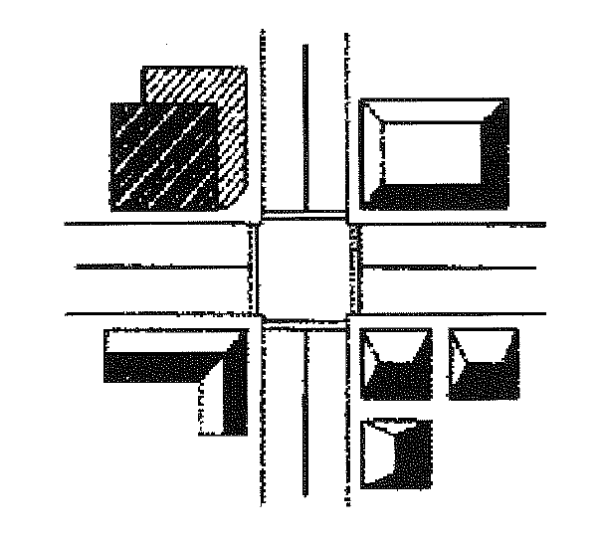
Secondary entries are encouraged and may be required at the rear of street facing buildings. Where possible, "like land uses" shall face "like land uses" or open space, i.e., retail across the street from retail, etc. Loading docks and service areas must be screened from streets and adjacent properties through architectural design and landscaping. Anchor store entrances must be connected to adjacent streets via landscaped, publicly accessible walkways. Access from parking areas may be via midblock passageways or "paseos" connected to the street. - Building Height: Buildings shall have a minimum and maximum number of stories as indicated by building type and mixed use subdistrict in the table below, with height measured according to the city's adopted ordinances and standards. The planning commission may approve greater building heights than shown in the table below if it identifies site or design characteristics that are unique to the development such as size, scale, topography, or development amenities (e.g., rooftop gardens), that justify allowing greater building heights. Approved structures with additional height may be required to employ suitable "step back" architecture and other architectural features that create a development that is built at the human scale, and is pedestrian friendly and architecturally diverse.Notes:
Subdistrict Commercial Office Vertical Mixed Use Public And Quasi-Public Minimum Maximum Minimum Maximum Minimum Maximum Minimum Maximum MU-TC 1 story, extended1 4 stories2 1 story, extended1 4 stories2 2 stories 5 stories2 1 story, extended1 3 stories MU-TOD 1 story, extended1 20 stories2 3 stories 20 stories2 2 stories 20 stories2 1 story, extended1 3 stories
1Vertical architectural elements that make the buildings appear greater than 1 story.
2"Step back" architecture may be required so that building heights adjacent to public streets are limited to enhance pedestrian design. - CPTED (Crime Prevention Through Environmental Design): Where practically possible, CPTED principles shall be used in the design and layout of buildings, streets, accesses and open space areas. Design shall promote natural surveillance, access control, territorial reinforcement, sense of ownership, proper management and maintenance. CPTED landscaping guidelines shall be used, including planting shrubs with a maximum height of two feet (2') to three feet (3') and trees with a proper ground clearance of six feet (6') to eight feet (8') above walkways and sidewalks and eight feet (8') to ten feet (10') above vehicular travel and parking lanes.
In order to encourage public safety through natural surveillance, natural access control, and territorial reinforcement, blank walls are not permitted adjacent to streets, pedestrian corridors, parking areas, and open space amenities. Symbolic barriers, such as low lying fences/wall, landscaping and signage may be used, as appropriate, to discourage crime and to promote safety through natural access control. Developments shall have street side building entrances and extensive windows, with balconies, decks or landscape terraces, and other architectural features being encouraged to promote "eyes on the street".
- Setbacks: Building facades shall comprise at least seventy percent (70%) of each street edge identified as "build-to lines". To meet this requirement, building facades adjacent to streets must be zero feet (0') to five feet (5') from the street side (typically inside edge of sidewalk) property lines where build-to lines are drawn. Awnings and architectural features may project beyond build-to lines, as approved by the planning commission. Street side setback variations may be used when an activity related to pedestrian use is maintained, i.e., special landscaping, outside restaurant seating. Recessed plazas, courtyards, and trellises are encouraged.
- Land Use Impact And Buffering: Landscape buffers are preferred over fences and walls where separation is desirable. A visually open look is encouraged between compatible uses. The planning commission may require special treatment of such areas. Fences or walls, if determined to be necessary or desirable, must be reviewed for their effectiveness in protecting private space while not creating isolated uses or dead space void of natural surveillance. When approved, fences or walls shall be compatible in color, texture, and design in relationship to building materials.
- Architectural Design And Materials: The treatment of building mass, materials and exterior appurtenances shall create an aesthetically pleasing building and site that is in character with and in proportion to other surrounding buildings, while still providing diversity in design. The city's architectural review committee (ARC) shall review such and make recommendations to the planning commission. Requirements applicable to all buildings are stated below:
- All sides of buildings shall receive equal design consideration, particularly where exposed to pedestrian and/or vehicular traffic and adjacent properties.
- Building materials for structures, including garages, shall use brick, stone, or cement fiber products (i.e., hardie board) in combinations that create aesthetically pleasing architecture. Stucco products, if used, shall clearly be used in minimal amounts and as a contrast or accent to other building materials, i.e., gables. Both vertical and horizontal elements should be used, as appropriate, to enrich and give variety to the architectural theme. Individual buildings shall have enough architectural variation to appear as separately recognizable structures. The use of exposed concrete (architectural concrete excepted), or plastic for storefront facades is not permitted.
- A consistent architectural theme with colors from the natural environment is encouraged to help buildings blend with surrounding developments. Building styles shall be compatible with existing buildings within the respective MU zone.
- Buildings shall be designed to relate to grade conditions with a minimum of grading and exposed foundation walls, creating easy pedestrian access from sidewalks, parking areas, etc. Commercial or mixed use buildings shall be designed with contrasting ground floor architectural articulation in order to enhance street activity and walkability. All buildings shall have expansive windows, balconies, terraces, or other design features which are oriented to the street, or other people spaces, in order to maximize interface connection. Windows, display windows, doors, and arcades must make up at least seventy percent (70%) of street facing facades on the first story of commercial developments. Window shapes and sizes shall be so designed to be compatible from building to building. Tinted windows or windows with reflective film or glass are not permitted at street level.
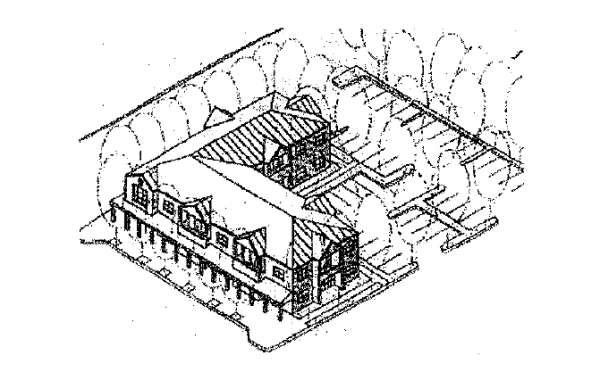
- Mechanical equipment shall be located or screened so as not to be visible from streets, pedestrian areas, and adjacent developments. Screens shall be aesthetically incorporated into the design of the building whether located on the ground or on the roof. Exterior trash receptacles shall be enclosed by masonry walls that are at least as tall as the top of the receptacle itself, but not less than six feet (6') tall, and solid steel access doors. The color of trash receptacle enclosures (masonry walls and access doors) shall be consistent with colors used in the associated buildings.
- Plans for significant exterior modifications to any existing structures must be submitted to the Planning Commission for approval and must meet the same requirements as all other structures within the MU development.
- Signage: Proper design and placement of signs and their lighting shall be compatible with structures and uses. Mixed use developments shall have a sign theme which promotes mixed use compatibility. Permitted signs within the MU Zone shall be in compliance with title 16, chapter 16.36 of this Code, except that freestanding and off premises signs or billboards shall not be permitted. Wall signs, blade signs, and window signs, approved as part of an overall sign theme, are encouraged. Monument signs and directional signs are discouraged. Where approved, a monument sign must comply with the following limitations: The sign shall have as the prominent feature the name of the development (i.e., "Jordan Village", "Jordan Plaza"). All other lettering shall be no taller than four inches (4") in height. The maximum height of the sign shall be four feet (4') for the portion containing general copy, with an overall maximum height of six feet (6') above sidewalk grade. It is intended that the top two feet (2') be utilized to identify the name of the development. The lettering font style for tenant identification shall be the same for all tenants. Monument signs shall be constructed with the materials similar to that of the main building. Monument signs may not extend into the required sight visibility triangle, unless otherwise approved by the City Engineer.
- Open Space: Significant usable open space shall be provided within the mixed use development, depending upon size, scale, nature, and proximity of other accessible open space amenities in the area of the development. Approved open space may include, but is not limited to: commons, pocket parks, plazas, outdoor dining, courtyards, natural or manmade landscape features or focal points, fountains, waterfalls, other water features, greenbelts, trail connections, playgrounds, pavilions, and picnic areas. A "village green", as a commons area, may be required adjacent to mass transit connections or other significant activity. Construction materials used within open space areas shall be related to the materials of adjacent buildings and shall be a nonskid finish. Design and texture shall encourage comfortable and safe pedestrian use, including landscaping, seating areas, and lighting as appropriate. Areas of environmental concern or interest may be required to be preserved, i.e., drainages, steep slopes, connections to trail systems, and water features. Unless otherwise specified through special agreement or understanding with the City, all open space areas shall be maintained by property owners or property associations.
- Landscaping: Landscaping guidelines are established to improve and maintain site qualities while minimizing alteration, removal, or degradation of approved landscaping. Landscaping, in general, shall follow CPTED (crime prevention through environmental design) principles.
- Submittal Of Landscape And Streetscape Plans: No plans for any building, structure or other improvements shall be approved by the City unless there shall also have been submitted landscape and streetscape plans satisfactory to the Planning Commission or to the staff, if so designated.
- Installation At Time Of Occupancy: Landscaping in accordance with the plans submitted must be installed at the time of occupancy or as otherwise approved by the planning staff as seasonal conditions may dictate.
- Condition Free Of Weeds: Future development areas or land area not occupied by buildings, structures, hard surfacing, vehicular driveways or pedestrian walkways shall be kept in a weed free condition or landscaped, as approved by the Planning Commission.
- Bond For Landscape Improvements: The developer shall bond for landscape improvements to ensure that installations are completed as submitted and approved. Performance assurance requirements for landscape improvements shall be the same as required by the City for street improvements.
- Planting Specifications:
- Sixty percent (60%) medium size trees; deciduous trees with a caliper of two inches (2") and evergreen trees with a minimum height of seven feet (7'). Forty percent (40%) small size trees and shrubs in a combination with deciduous trees with a caliper of one and one-half inches (1 1/2") to two inches (2") and evergreen trees with a minimum height of four feet (4'). Depending on site conditions, a 50/50 mix of deciduous and evergreen trees and shrubs should be used for on site landscaping.
- Street trees with a minimum two inch (2") caliper shall be installed along all public rights-of-way by the developer. The species type, location, and spacing of trees shall be as shown on the approved landscape plan, in compliance with designated streets within the City's streetscape plan. Park strip trees shall not be planted within thirty feet (30') of a stop sign.
- Parking lot landscaping shall include planters at the ends of parking rows with shade trees and ground covers. Planters shall be at least five feet (5') wide. Shade trees and ground covers shall be installed in planters at minimum intervals, or groups with a ratio of at least one tree per six (6) parking stalls for double parking rows and one tree per three (3) parking stalls for single parking rows. Planter areas may also include rocks (minimum of 3 inches) or bark mulch provided that a commercial grade weed barrier or fabric is used.
- Landscaping for plazas shall include at least one tree per seven hundred fifty (750) square feet. At least forty percent (40%) of the plaza area shall be covered with trees or planted canopy structures. One linear foot of seating shall be provided for every one foot (1') of perimeter of the plaza area.
- The landscaping of other open space shall include trees and ground covers, with a requirement of at least one tree per five hundred (500) square feet. Trees should be clustered together, where possible, to allow larger open areas for seating and activities.
- Installation: It shall be the responsibility of the developer to grade, place topsoil, seed, sod, install sprinkler irrigation systems, and properly plant trees, shrubs, and other approved plant materials.
- Maintenance: It shall be the responsibility of the developer and/or property association to properly maintain landscaped areas including watering, mowing, pruning, fertilizing, and the removal and replacement of dead plant materials in a timely manner.
- Vegetation Modification/Removal: Pruning vegetation for "exposure", which results in unnatural plant specimens, is prohibited. Necessary vegetation removal shall be replaced with equal or better quality plant materials. Trees that are necessarily removed shall be replaced with a mix of trees with comparable total caliper. Street tree replacement shall be in compliance with the City's streetscape plan, unless otherwise approved by the planning staff.
- Utility Connections: When disturbances are made to existing landscaped areas, the existing landscaping must be replaced to its previous condition. Other modification of landscaped areas shall require approval by the Planning Director.
- Outdoor Lighting: The lighting of streets, pedestrian areas, parking lots, and open space is required. Streetlights shall conform to an approved theme and shall encourage a "village" feel and walking safety. Indirect lighting, bollard lighting, and landscape lighting is encouraged. Lighting will be judged as to how adequately it meets its intended purpose. Design and location of standards and fixtures shall be specified on the site development drawings. Intensities shall be controlled so that "safety" lighting is provided while neighboring areas are protected from glare or excessive direct light. Streetlight design fixtures shall be pedestrian in scale, shall evoke a "village" feel and be installed and maintained as required.
- Streets And Pedestrianways:
- Streets: All accesses within a mixed use development shall have connectivity with existing and future street patterns. A grid street pattern or modified grid pattern is required where practically possible. Cul-de-sac streets will not be approved unless it can be demonstrated that no other practical way exists to make connectivity. Private streets are discouraged and gated communities are prohibited in mixed use developments.
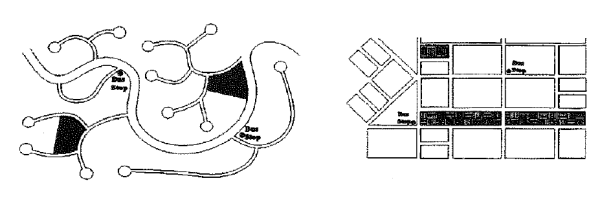
- Widths: Street widths shall be determined during site plan review and approved by the Planning Commission. In general, streets shall be designed to implement "complete streets" concept as recommended in the document: "Context Sensitive Solutions in Designing Major Urban Thoroughfares for Walkable Communities". The level of travel and service should be considered, while incorporating principles of traffic calming and pedestrian compatibility, i.e., tree lined streets with pedestrianways and linkages, decreasing the need for pavement width by spreading traffic through a grid or modified grid street system.
- Sidewalks And Walkways: The design of pedestrianways may include a solitary meandering pathway or trail, a "pedestrian street", and the many possible designs in between. Walkways and connections to trail systems shall be incorporated into the project. Choice of appropriate pedestrian access will be made based upon scale, the type of mixed use project being proposed, and by the way uses are integrated. A standard eleven foot (11') cross section, with a six foot (6') park strip and a five foot (5') sidewalk, is a minimum, while wider park strips and/or sidewalks may be required depending upon the land uses and the desired effect. All streets shall have sidewalks and curbside streetscape.
Pavers, borders, and other sidewalk design materials with compatible colors shall be used as needed in order to break up expanses of hard surfacing and to encourage pedestrian interest and activity. In "vertical mixed use" and other more urban areas, sidewalk adjustments may be required in order to enhance street and land use connectivity. Portions of the park strip may be paved to accommodate street furniture, leaving appropriately sized tree wells for street trees.
Street furniture, including, but not limited to, benches, trash receptacles, artwork, drinking fountains, bike racks, and newspaper racks, may be required depending upon the nature of the block face and specific land uses. Street furniture requirements shall include an overall design theme for compatibility. - Crosswalks: Extensive use of crosswalks shall be incorporated within the project, at intersections, midblocks as needed, within parking lots, or other desirable pedestrian connections. A "pedestrian inconvenience distance" of one hundred fifty feet (150') shall be used as a guideline. Crosswalks shall be so configured to be a design feature of the development, i.e., multiple painted lines, pavers, edges, and other methods of emphasizing pedestrian use versus auto use. Crosswalk paving materials matching sidewalk materials are encouraged to further enhance the pedestrian realm. Bulb outs and other pedestrian design features shall be used to shorten walking distances across open pavement. Gaps in planted medians shall be used in appropriate areas to encourage walking and to act as a "refuge" for crossing pedestrians.
- Streets: All accesses within a mixed use development shall have connectivity with existing and future street patterns. A grid street pattern or modified grid pattern is required where practically possible. Cul-de-sac streets will not be approved unless it can be demonstrated that no other practical way exists to make connectivity. Private streets are discouraged and gated communities are prohibited in mixed use developments.
- Other Forms Of Transportation: All forms of transportation shall be considered within and without the mixed use development with the intent to improve convenience and reduce vehicle trips ("complete streets"). All forms of transportation should be encouraged, including train, auto, bus, bicycle, and pedestrian. Access connections shall be required where deemed essential to provide circulation or access to churches, schools, playgrounds, open space, shopping centers, transportation, and other community facilities. Appropriate bus turnouts, shelters, stops and other transit options shall be coordinated and planned as part of the development review process. Based upon land use and the level of demand, bicycle parking shall be provided in appropriate locations, i.e., visible from storefronts and entrances to office buildings.
- Parking Areas: Parking areas shall be considered as structures since they present a three-dimensional appearance when occupied. Parking areas shall be designed as follows:
- Location of parking shall be determined not only from its visual relationship to the building and site, but also as it relates to safe, convenient pedestrian and vehicular circulation patterns. The placing of building and parking elements on a site shall be evaluated by the Planning Commission based on the following factors:
- Type of land use and structure.
- Building height and configuration.
- Relationship to other buildings both horizontally and vertically.
- Natural land features such as slopes and vegetation.
- Physical features such as rail lines, canals, and controlled ingress and egress.
- Visibility from vehicular approaches and distant highways.
- Safe pedestrian connections to buildings, walkways, open space, and streets.
- Where possible, parking lots shall be broken up and planned as "outdoor rooms" through the use of buildings, walkways, open space, and landscape design. When approved, large parking lots shall be broken up with substantial tree and ground cover plantings. Parking lots should be broken up into "rooms" of no more than one hundred (100) parking stalls through the use of connecting walkways.
- Unless otherwise approved by the Planning Commission, parking lots are prohibited between streets and buildings.
- Underground parking, deck or terrace parking, and parking garages are encouraged and may be required in conjunction with structures of three (3) stories or more. Said structures shall have architectural treatments compatible with area buildings. Parking structures with ground level parking immediately adjacent to the frontage of a street are prohibited. Parking structures shall be designed around natural light with "safety" lighting added as needed. Landscaping, within and without, may be required to enhance compatibility and safety.
- Developments are not allowed to be "over parked" without justification. Developments may be approved by the Planning Commission with less than required parking if evidence can be shown that the nature of the land uses proposed will not generate the number of stalls as recommended in the City's parking ordinance. Developments may also be "under parked" if justified with a walkable design that demonstrates such, and/or where local multimodal transit systems exist or are immediately planned, which would help reduce the number of needed parking stalls and/or automobile trips. Shared parking arrangements may be required in order to reduce unnecessary parking areas and to encourage pedestrian activity.
- Where possible, on street parking shall be provided adjacent to developments, and a prorated share of such, may be used to satisfy overall parking requirements. Parallel or angle parking may be approved based upon the overall design and width of the street, as recommended by the City Engineer and approved by the Planning Commission.
- Location of parking shall be determined not only from its visual relationship to the building and site, but also as it relates to safe, convenient pedestrian and vehicular circulation patterns. The placing of building and parking elements on a site shall be evaluated by the Planning Commission based on the following factors:
- Environmental Concerns:
- Building, landscape, and solar access should be adjusted, where possible, to be compatible with the local climate. Such design should include, but not be limited to, window placement, building recesses, overhangs, trellises, awnings, porches, and landscape placement, planned in such a way to enhance livability and reduce energy costs.
- The use of lighter colored building materials (i.e., rooftops), fences/walls, and extensive deciduous and evergreen tree cover shall be incorporated into developments in order to reduce the urban heat island effect. Where possible, streets, driveways, parking lots, etc., should use concrete or other materials which absorb less sunlight.
- Where possible, drought resistant ground covers, shrubs, and trees shall be incorporated into the landscape to reduce water usage and storm runoff. Water gardens, landscape swales or other on site drainage design should be designed into the project. Extensive areas of grass or other high water use plants without a public purpose are discouraged.
- Service Areas: Loading and refuse collection areas must be screened from public view. These areas are not permitted between buildings and streets unless they can be adequately screened through landscaping and architectural design. Buildings and site improvements must be designed to properly accommodate loading, unloading and refuse collection, with such being discouraged on public streets. Screen walls and enclosures shall be constructed with materials compatible with the structures they serve. Loading and refuse collection areas shall be properly maintained in a debris free condition. Except for approved and screened recreational vehicle storage lots associated with storage areas, including the storage of materials, merchandise, pallets, etc., shall be within buildings.
- Utilities: Utility companies shall coordinate utility infrastructure location and grouping to create minimal impact on site design. All utility lines shall be placed underground in designated easements. No pipe, conduit, cable, line for water, gas, sewage, drainage, steam, electricity or any other energy or service shall be installed, and no pole or other support structure therefor shall be erected, altered or replaced, upon any lot (outside of any building) above the surface of the ground except for hoses, movable pipes used for irrigation or other purpose during construction.
- Utility boxes shall be grouped together where possible and screened with vegetation or other appropriate method. Such facilities shall be sensitively placed so as to not detract from street aesthetics and pedestrian design. Gas meters and electric service meters and panels shall be located on the sides of buildings.
- Where overhead utility poles exist, service lines to new developments must be placed underground from the nearest overhead service pole.
- This section does not require removal of any existing electrical transmission facilities and electrical distribution lines nor does it restrict the repair, minor relocation, and maintenance of any such existing facilities. However, the developer shall be responsible for the removing or relocating of utility poles out of the public right-of-way and/or away from the frontage of the development.
Amended by Ord. 2016-05 ARCHIVED on 5/3/2016
Amended by Ord. 2017-05 ARCHIVED on 3/7/2017
Amended by Ord. 2017-22 ARCHIVED on 7/18/2017
Amended by Ord. 2019-01 ARCHIVED on 3/5/2019
Amended by Ord. 2022-16 ARCHIVED on 12/6/2022

