
Stafford County Unincorporated
City Zoning Code
City Zoning Code
ARTICLE VI
BUFFER YARDS, LANDSCAPING, SCREENING AND OUTDOOR LIGHTING3
Editor's note— Ord. No. O05-33, adopted Dec. 13, 2005, amended the title of art. VI to read as herein set out. Former entitled "Bufferyards, Landscaping and Outdoor Lighting."
Sec. 28-81.- Purpose.
The purpose of this article is to set forth provisions and regulations which enhance the character of Stafford County through the introduction of natural vegetation and manmade visual buffers, and the use of lighting to enhance and protect developed property in the county.
(Ord. No. 094-29, § 28-601, 8-9-94)
Sec. 28-82. - Required buffers.
General. Except within the boundaries of a public airport, the Planned Traditional Neighborhood Development, PTN-D, Redevelopment Area-1, RDA-1, or Urban Development, UD zoning district, no structure or land which abuts a boundary between two (2) land uses, fronts on a major thoroughfare or which is subject to special buffer requirements as specified in the DCSL, shall hereafter be developed, used or occupied unless a buffer yard is provided in accordance with the DCSL. All buffers shall meet the requirements illustrated in the DCSL. Required open space land for cluster subdivisions shall not be used to satisfy any buffer requirements and landscaping buffer areas shall not be included as part of the required open space.
(Ord. No. 094-29, § 28-602, 8-9-94; Ord. No. 095-11, 3-7-95; Ord. No. 098-20, 4-7-98; Ord. No. 099-08, 2-2-99; Ord. No. 001-14, 2-6-01; Ord. No. O05-33, 12-13-05; Ord. No. O06-64, 9-19-06; Ord. No. O15-20, 8-18-15; Ord. No. O19-15, 5-21-19; Ord. No. O21-10, 6-15-21)
Sec. 28-83. - Buffers for historic properties and districts.
In order to protect historic resources, specific buffer yards are required around historic properties and historic resource overlay districts designated in the Stafford County Cultural Resource Inventory, archaeological sites and historic buildings located within HI districts, in addition to any other buffer requirements, as indicated in the DCSL. All development adjoining a designated historic district may require a transitional buffer in accordance with the DCSL. Because a historic site consists of associated landscape features and the relationships between landscape features, in addition to historic buildings and structures, buffer yards should include elements that retain or enhance the historic integrity of a site or building and should comply with the Secretary of the Interior's Standards for the Treatment of Historic Properties and the Guidelines for the Treatment of Cultural Landscapes.
(Ord. No. 094-29, § 28-603, 8-9-94; Ord. No. O05-33, 12-13-05; Ord. No. O08-02, 5-6-08; Ord. No. O19-15, 5-21-19)
Sec. 28-83.5. - Reserved.
Editor's note— Ord. No. O05-33, adopted Dec. 13, 2005, repealed § 28-83.5, which pertained to street buffers for PD-2 districts and derived from Ord. No. O03-29, adopted June 17, 2003.
Sec. 28-84. - Reserved.
Editor's note— Ord. No. O05-33, adopted Dec. 13, 2005, repealed, § 28-84, which pertained to responsibility for district bufferyards and derived from Ord. No. O94-29, § 28-604, adopted Aug. 9, 1994.
Sec. 28-85. - Reserved.
Editor's note— Ord. No. O05-33, adopted Dec. 13, 2005, repealed § 28-85, which pertained to nonconforming buffers and derived from Ord. No. O94-29, § 28-605, adopted Aug. 9, 1994.
Sec. 28-86. - Landscaping standards.
(a)
Parking lot, interior. Any surface parking lots containing twenty-four (24) or more spaces shall be landscaped and shall provide planting areas within the boundaries of the parking lot in accordance with the standards set out and illustrated in the DCSL. Interior parking lot landscaping shall be provided in accordance with the DCSL. Parking garages and any development within the boundaries of a public airport shall not be subject to the interior parking lot landscaping requirements. The requirements for each twenty-four (24) spaces shall conform to the " area of the interior parking lot " diagram provided in the DCSL.
(b)
Parking lot, perimeter. Except for Urban Development (UD) zoned property, any surface parking lots containing twenty-four (24) or more spaces shall provide perimeter parking lot landscaping in accordance with the DCSL. This shall not apply to any development within the boundaries of a public airport or any parking garage.
(c)
Parking lot, vehicle access drive. Except for in Urban Development (UD) zoned property, any surface parking lots containing twenty-four (24) or more spaces shall provide a vehicle access drive landscaping in accordance with the DCSL. This shall not apply to any development within the boundaries of a public airport or any parking garage.
(d)
Street trees. All development that fronts on a public street shall provide a planting area in accordance with the DCSL for the purpose of providing street trees unless a buffer yard is required along the same street frontage. This shall not apply to any development within the boundaries of a public airport.
(e)
Landscaping installation and maintenance criteria. All installation and maintenance of landscaping shall be in compliance with the DCSL.
(f)
Landscaping standard plant sizes and uses. All required landscaping materials shall be of the type and minimum sizes set forth in the DCSL.
(g)
Credits. Credits toward required buffers and parking lot landscaping may be granted by the agent as set forth in the DCSL.
(Ord. No. 094-29, § 28-606, 8-9-94; Ord. No. 097-42, 6-17-97; Ord. No. 000-84, 11-16-00; Ord. No. 003-26, 6-17-03; Ord. No. 003-29, 6-17-03; Ord. No. 003-43, 9-16-03; Ord. No. O05-33, 12-13-05; Ord. No. O06-64, 9-19-06; Ord. No. O08-02, 5-6-08; Ord. No. O19-15, 5-21-19; Ord. No. O21-10, 6-15-21)
Sec. 28-87. - Outdoor lighting standards.
(a)
Purpose and intent. The purpose and intent of this section is to establish outdoor lighting standards that will minimize glare, light trespass, over-lighting, and skyglow, while conserving energy and improving the safety and security for businesses and residents of Stafford County.
(b)
Applicability.
(1)
All new commercial, industrial and residential outdoor lighting installations or replacement of existing outdoor lighting fixtures shall meet the requirements of this chapter. Replacement of a fixture shall mean: i) a change of fixture type if the site is being redeveloped; or ii) an increase in lighting by twenty-five (25) percent or more if the entire lighting scheme is being replaced. Routine maintenance such as changing bulbs or lamps, lenses, housing, or similar components shall not constitute a replacement as long as the change does not result in a higher output.
(2)
Outdoor lighting fixtures lawfully existing prior to the adoption of the September 3, 2013 amendment of this section 28-87 that do not conform to this section will be considered nonconforming. Nonconforming light fixtures that are modified as part of a redevelopment plan or replacement of the entire lighting scheme must conform to the current outdoor lighting standards in subsection (k) of this section.
(3)
For existing vehicle fuel station canopies, convenience stores, motor vehicle sales, motor vehicle rentals, ATMs, or lighted playing fields/courts of public or private outdoor recreational facilities that do not comply with the applicable maintained lighting levels specified in subsection (d) of this section, the addition of the new outdoor lighting fixtures may be permitted in accordance with the following:
a.
There may be an addition of new outdoor lighting fixtures to existing vehicle fuel station canopies, convenience stores, motor vehicle sales, motor vehicle rentals, ATMs, or lighted playing fields/courts of public or private outdoor recreational facilities, only when the outdoor lighting meets the provisions of this chapter and such replacement or addition will not increase the noncompliance with the applicable maintained levels specified in subsection (d) below.
(c)
General outdoor lighting standards.
(1)
All outdoor lighting shall be designed, shielded, aimed, located and maintained to protect adjacent properties and roadways from:
a.
Excessive illumination;
b.
Energy waste;
c.
Glare;
d.
Light trespass; and
e.
Unnecessary skyglow.
(2)
Shielding. Full cut-off and fully-shielded lighting fixtures shall be required. Exemptions shall be made for other acceptable outdoor light fixtures. Acceptable outdoor light fixtures shall include those which:
a.
Are provided with internal and/or external glare control louvers and installed so as to minimize uplight and off-site light trespass.
b.
Are installed and maintained with aiming angles that permit no greater than five (5) percent of the light emitted by each fixture to project above the horizontal.
c.
Architectural and landscape lighting as described in subsection (g) of this section.
(3)
Prohibited lighting.
a.
Flashing, revolving or intermittent exterior lighting visible from a property line or street.
b.
High intensity lights, such as, but not limited to, outdoor search lights, lasers or strobe lights unless used as part of a security system.
(4)
Measurements.
a.
Unless otherwise stated all luminance measurements for the purpose of this section 28-87 shall be made at waist height with the light meter oriented horizontally.
b.
Height shall be measured from the grade or surface on which the light pole is mounted to the bottom of the lighting fixture.
(5)
Street lighting shall be provided in accordance with the requirements of section 22-215.
(6)
Lighting levels shall not exceed five-tenths (0.5) footcandles at any property line adjacent to a residential or agricultural zoned property except for lighting levels produced by pedestrian street lights.
(d)
Outdoor lighting standards for nonresidential uses.
(1)
The average maintained lighting levels for nonresidential uses shall meet the following standards:
a.
Five (5) footcandles for parking lots, along fronts of buildings and main drive aisles. However, the maximum lighting level to average lighting level ratio shall not exceed 2.5 to 1.
b.
Fifteen (15) footcandles for high security areas, such as, but not limited to, automated teller machines (ATMs) and vehicle fuel station canopies, but not including parking lots. The maximum to average ratio shall not exceed 1.5 to one for canopy lighting. The outdoor lighting shall be recessed into the canopy ceiling with a flat lens so as to not produce glare. Outdoor lighting fixtures shall not be mounted on the top or sides of a canopy, and the sides of the canopy cannot be illuminated unless part of the sign area.
c.
Industrial uses that are not open to the general public shall provide one and one-half (1.5) footcandles average maintained lighting levels for parking lots, along fronts of buildings and main drive aisles, and the maximum lighting level to average lighting level ratio shall not exceed three and one-half (3.5) to one (1).
d.
The minimum maintained lighting levels for nonresidential uses shall meet the following standards:
1.
A minimum of one (1) footcandle shall be maintained during non-daylight hours, except as required along common property lines of the development and Virginia Department of Transportation (VDOT) right-of-way.
2.
Industrial uses that are not open to the general public shall maintain a minimum of five-tenths (0.5) footcandle during non-daylight hours, except as required along common property lines of the development and Virginia Department of Transportation (VDOT) right-of-way.
(2)
Lighting levels shall not exceed five-tenths (0.5) footcandles at any property line adjacent to a residential or agricultural property.
(3)
Parking lot light fixtures poles shall not be more than thirty (30) feet in height. The board may modify the height requirements by review and approval of a CUP.
(4)
Lighting levels shall be reduced to security lighting levels within thirty (30) minutes after the close of business or the end of the business activities involving the public. Security lighting levels shall be achieved by extinguishing at least fifty (50) percent of the total number of lights, by dimming lighting levels to no more than fifty (50) percent of the levels used during business or activity hours or no less than required minimum lighting levels, or some combination thereof. Business or activity hours are defined by any time when the business is open to the public. Such reduced security lighting levels shall not apply to industrial uses that are not open to the general public, except where average maintained lighting levels are five (5) footcandles or greater.
(5)
Outdoor display areas used in concurrence with vehicle sale, rental and ancillary service establishments shall not exceed twenty (20) footcandles measured horizontally at grade. However, a lighting level, not to exceed thirty (30) footcandles, may be specified by the board with approval of a conditional use permit or proffered condition. For purposes of this section 28-87, outdoor display area shall include all display/storage areas for vehicles offered for sale or rent and the associated travel lanes.
(6)
For lots that have four (4) or more parking lot light poles, parking lot lighting levels for ground surface parking lots shall be reduced to security levels within thirty (30) minutes after the close of business. Security lighting level shall be achieved by extinguishing at least fifty (50) percent of the total number of pole-mounted lights, by dimming lighting levels to no more than fifty (50) percent of the levels used during business or activity hours, or some combination thereof.
(7)
Public or private outdoor recreational facilities.
a.
When an outdoor recreation facility has illuminated playing fields or courts, they shall be subject to the provisions in this section 28-87. Other parts of an outdoor recreation facility, such as parking lots, administrative offices, restrooms, concession stands, pedestrian access and spectator viewing areas, shall be subject to the general standards in subsection (d) of this section.
b.
All recreational photometric plans, other than for professional sports teams:
1.
Shall be submitted as part of a conditional use permit, site or construction plan, or rezoning application.
2.
Shall be prepared by either a lighting professional that is certified by the National Council on Qualifications for the Lighting Professions (NCQLP) or a Commonwealth of Virginia licensed professional engineer, architect, landscape architect, or land surveyor with a Class A license.
3.
Shall contain the following information:
i.
Boundaries, dimensions, and total land area of the outdoor recreation facility property, with graphic scale no less than one inch equals fifty feet (1" = 50') and north arrow.
ii.
Location and limits of the playing field, (Table 5.1), landscaping, and/or buffering to help assist in light control and protection of adjacent properties and roadways shall be included. Perimeters shall be included around recreation fields and shall be lit. For baseball/softball fields, the perimeter shall extend thirty (30) feet perpendicular to the foul lines and away from the field. The perimeter for rectangular fields, such as but not limited to, football, lacrosse, and soccer, shall be twenty (20) feet from the side lines and thirty (30) feet from the end lines. The perimeter for all other recreation/fields shall be ten (10) feet from the playing field boundary.
iii.
All light fixtures/light poles shall be set back a minimum of one foot for every foot in height from any residential property line, property line where residences are located, or any right-of-way.
iv.
Location, height, and specifications of the illuminating devices, lamps, supports, and other devices, including the designation as (IES) "cut-off" fixtures. This description shall include, but is not limited to, site, parking lot, parking canopies, walkways/sidewalks, building-mounted under canopies, architectural, landscaping, flagpole, and any other area where people congregate.
v.
Lighting levels shall not exceed five-tenths (0.5) footcandles at any common property line zoned, used as, or planned for residential units where residences may be located, agricultural, or mixed use.
vi.
All lighted playing field lights shall be turned off no later than one hour after the games are over.
vii.
All newly lighted fields or existing fields being upgraded or retrofitted, public or private, shall be equipped with overriding timing devices which will automatically cut off the lights.
viii.
The fixtures shall be aimed only to illuminate the playing fields/courts.
Table 5.1
Maximum Permitted Lighting Levels for Outdoor Recreation Facilities
*
Average Maintained Lighting Level
**
Height Above Playing Surface
(e)
Lighting standards for multifamily residential uses.
(1)
The maximum maintained lighting levels for multifamily residential uses shall not exceed five-tenths (0.5) footcandles at any common property line and a minimum of one footcandle shall be maintained on the site during non-daylight hours except as required along the common property line.
(2)
The average maintained lighting levels for multifamily units shall be five (5) footcandles at buildings, parking lots and other areas. The maximum to average ratio shall not exceed 1.5 to 1 (the 1.5 is to the five (5) footcandles - 1.5 x 5 = 7.5).
(f)
Construction lighting.
(1)
All exterior construction lighting shall be full cut-off and directionally shielded fixtures so as to only illuminate the desired objects.
(2)
For the purposes of this section 28-87, a building is no longer considered under construction when exterior walls and windows are installed and permanent lighting replaces the temporary lighting.
(g)
Architectural and landscape lighting.
(1)
Lighting used to illuminate statues, flags, signs, or other objects mounted on a pole, platform, or pedestal, or spotlighting or floodlighting used for architectural or landscape purposes, shall be full cut-off and directionally shielded outdoor lighting fixtures that are designed, aimed, and controlled so the directed lights shall be confined to the object intended to be illuminated.
Directional shields shall be used to limit stray light and prevent minimize glare, sky glow, and light trespass.
(2)
The lighting shall not shine directly into the window of any residence or directly onto a roadway. Light fixtures attached to a building shall be directed downward.
(h)
Pedestrian scale lighting. For the purpose of this section 28-87, pedestrian scale lighting applies to sidewalks that are adjacent to or within the rights-of-way of a public or private street. This section 28-87 does not apply to trails, greenways, or paths within natural areas.
(1)
Average of five-tenths (0.5) footcandle for residential uses.
(2)
Average of one footcandle for nonresidential uses and multifamily residential.
(3)
Maximum five-tenths (0.5) footcandles for conditions such as but not limited to, abrupt changes in elevation, curves, stairs and bridges shall be adequately lit.
(4)
Securities shall be required for any lights located in homeowners association (HOA) maintained spaces that are not installed prior to recordation.
(5)
Pedestrian scale lighting in HOA maintained spaces shall be installed throughout the subdivision section prior to the issuance of the first occupancy permit in that section.
(6)
Pedestrian scale lighting on individual lots that will be maintained by the owner must be installed prior to issuance of occupancy permit
(7)
Trails, greenways, and paths within natural areas may be lit with a waiver. Waivers may be granted under subsection (j).
(i)
Site and subdivision plan requirements for outdoor lighting.
(1)
As part of a submission for a site, subdivision, construction, or infrastructure plan to install outdoor lighting fixtures as part of the application, the applicant shall submit evidence that the proposed lighting plan shall meet the conditions set forth in this chapter.
(2)
The photometric plan will be prepared by either: a lighting professional that is certified by the (NCQLP) or a Commonwealth of Virginia licensed professional engineer, architect, landscape architect, or land surveyor with a Class A license.
(3)
The point-to-point photometric plan shall include the following:
a.
A site plan drawn to scale showing the building(s), landscaping, parking areas, vehicle ingress and egress, and proposed outdoor lighting fixtures with graphic scale no less than one inch equal to fifty feet (1" = 50'), and north arrow. Photometric plans shall be shown with the landscaping plan.
b.
A vicinity map that shows adjacent properties and their zoning within one hundred fifty (150) feet of the project.
c.
Location of proposed outdoor luminaires including, but not limited to, site, parking lot, parking canopies, walkways/sidewalks, building-mounted under canopies, architectural, landscaping, flagpole, and any other areas where people congregate.
d.
Illumination calculation showing:
1.
Light levels in footcandles at points located on ten-foot center grid;
2.
Maximum to minimum ratio;
3.
Average maximum to minimum ratio; and
4.
Uniformity level.
e.
Fixture schedule that includes:
1.
Fixture design;
2.
Type of lamp;
3.
Wattage of each fixture;
4.
Luminaire and pole color/finish;
5.
Lamp quantity per luminaire;
6.
Lamp initial lumens;
7.
Lamp color temperature;
8.
Mounting height of the luminaire; and
9.
Light loss factors/maintenance plan.
Maintenance plan shall include:
i.
Replacement within five (5) days of failed lamps, electrical components, photocells, and vandalized or damaged luminaires;
ii.
Regular cleaning of luminaires shall be performed annually;
iii.
Shrubbery pruning; and
iv.
Inspections of all lamps to be performed at least monthly during hours of darkness to look for dirty or broken lenses, failed lamps or those not performing to specified standards, tree limbs blocking light paths, and evidence of vandalism. In the case of large properties where there are on-site security patrols or maintenance personnel, lamps should be checked nightly, and observed outages reported in patrol logs or maintenance request records.
10.
Descriptions or comments.
f.
Fixture type/marks for all luminaires.
g.
Manufacturer's cut sheet.
h.
Security levels.
1.
Identify fixtures that will remain on all night for security purposes.
2.
Note identifying the time the site will enter security lighting mode and description of the device that will automatically control the lighting and will be adjusted for time changes.
3.
Pole and base design (mounting) for each type of light fixture, including:
i.
Mounting height of the luminaires as measured from the top of the fixture lens to the finished grade;
ii.
Fixture type of the luminaires mounted on the pole; and
iii.
Colors/finishes of the luminaire and pole, and finish of the base.
4.
Complete date for the current plan and complete dates for all prior versions of the lighting plans that were submitted to the county.
5.
Contact name, phone number, signature, and seal of lighting design professional.
(j)
Exemptions. The following shall be exempt from the provisions of chapter 28:
(1)
Nonconforming fixtures. Light fixtures installed prior to the effective date of this section 28-87 are exempt from the provision of this section; provided however, no replacement or structural alteration of outdoor light fixtures shall be made unless it conforms to the provisions of chapter 28. Any modification to a nonconforming fixture shall be required to meet all current standards.
(2)
Outdoor lighting fixtures and standards required by federal, state, or other government agencies, including roads with lighting in the right-of-way.
(3)
Construction or emergency lights used for construction, law enforcement, fire and rescue, emergency, or construction repair work to public facilities.
(4)
Holiday outdoor lighting fixtures.
(5)
Security lighting on single-family residences that is controlled and activated by motion sensor devices for a duration of seven (7) minutes or less and is not aimed at any point outside of the property boundary.
(6)
Flag lighting of the United States' flag or Commonwealth of Virginia's flag, flags, or other noncommercial flags where such activities is protected by the United States Constitution, the Virginia Constitution, or federal or state law, provided that shielded and directional fixtures are used. Fixtures must be installed and aimed so as to minimize glare, sky glow, and light trespass to adjacent properties, pedestrians and motorists.
(7)
Airport lighting.
(8)
Any other uses determined by the zoning administrator.
a.
A modification, waiver or variation from the standards set forth in this section 28-87 may be granted by the zoning administrator or CPTED official.
b.
The zoning administrator or CPTED official may modify or waive any standard set forth in this section 28-87 for an individual case, and he/she may impose conditions on such a modification or waiver which he/she deems appropriate to further the purposes of these lighting regulations, under the following circumstances:
1.
Upon finding that the strict application of the standard would not further the purposes of chapter 28, or that the alternatives proposed by the applicant would satisfy the purposes of these lighting regulations, at least to an equivalent degree;
2.
Such hardship is not shared generally by other properties in the same zoning district and the same vicinity; and/or
3.
The authorization of the modification, waiver, or variation will not be of substantial detriment to the adjacent property(ies) and the character of the zoning district will not be changed by granting the modification, waiver, or variation.
c.
Prior to the granting of a modification, waiver, or variation from the standards set forth in chapter 28, the zoning administrator or CPTED official shall give, or require the applicant to give, all adjacent property owners written notice of the request for the modification, waiver or variation. Adjacent property owners shall have twenty-one (21) days from the date of the notice to comment on the request for modification, waiver or variation.
d.
The zoning administrator or CPTED official shall make a decision of the application for modification, waiver, or variation within thirty (30) days of receipt of the application, and issue a written decision with a copy provided to the applicant and any other adjacent property owner who responded in writing to the notice sent pursuant to the section.
e.
Decisions of the zoning administrator or CPTED official may be appealed within ten (10) days of the decision to the board of zoning appeals.
f.
Decisions of the board of zoning appeals may be appealed to the circuit court as provided under the Virginia Code.
(Ord. No. 094-29, § 28-607, 8-9-94; Ord. No. O05-33, 12-13-05; Ord. No. O13-34, 9-3-13; Ord. No. O16-23, 10-4-16; Ord. No. O17-13, 9-19-17; Ord. No. O21-32, 9-21-21)
Sec. 28-88. - Screening standards for appurtenances.
The following uses shall be screened from all public streets and adjacent property, unless the adjacent property contains the same use, by means established in the DCSL.
(1)
Waste disposal receptacles.
(2)
Telecommunication facilities.
(3)
Automobile graveyards and junkyards.
(4)
Auto salvage facilities.
(5)
Recycling facilities.
(6)
Outdoor storage of vehicles for sales and/or service.
(7)
Subsection 28-59(f)(7) of this chapter.
(8)
Mechanical systems for nonresidential uses.
(9)
Pump stations.
(Ord. No. 097-12, 1-21-97; Ord. No. 097-43, 6-17-97; Ord. No. 001-18, 8-16-01; Ord. No. O05-33, 12-13-05; Ord. No. O19-15, 5-21-19)
Sec. 28-89. - Maintenance for landscape areas, buffer yards and screening.
Trees, shrubs and other elements (such as fences, walls and berms) shown on the approved plan and installed to be in compliance with the DCSL shall remain in the same good health or condition after it is approved by the county. Trees and shrubs shall remain sound, healthy, vigorous, well-rounded, and free of disease and insect infestation. It shall be the responsibility of the property owner to repair or replace the fence, wall or berm to its original condition at the time of approval.
(Ord. No. O05-33, 12-13-05)
Secs. 28-90—28-100. - Reserved.
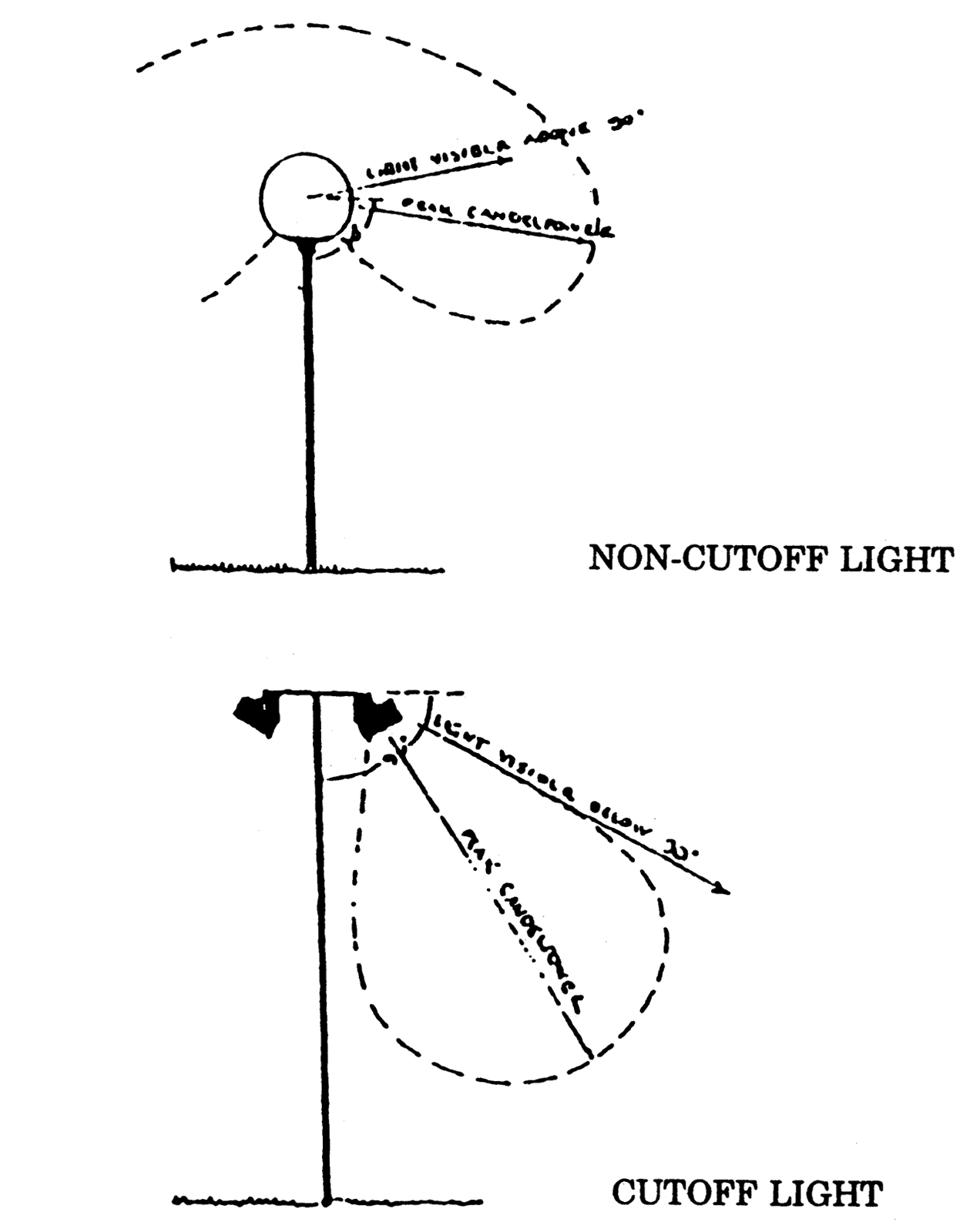
Graphic 6.1
Editor's note— Ord. No. 05-33, adopted Dec. 13, 2005, repealed Tables 6.1—6.4 and Graphics 6.1—6.3 and renumbered Graphic 6.4 as Graphic 6.1. Table 6.1 pertained to required street buffers and derived from Ord. No. O94-29, adopted Aug. 9, 1994; Ord. No. O99-26, adopted July 13, 1999; and Ord. No. O03-29, adopted June 17, 3003. Table 6.2 pertained to district boundary buffers and derived from Ord. No. O94-29, adopted Aug. 9, 1994; and Ord. No. O99-26, adopted July 13, 1999. Table 6.3 pertained to required parking area landscaping standards and derived from Ord. No. O94-29, adopted Aug. 9, 1994; and Ord. No. O99-26, adopted July 13, 1999. Table 6.4 derived from Ord. No. O94-29, adopted Aug. 9, 1994; and Ord. No. O95-11, adopted March 7, 1995. Graphic 6.1 pertained to bufferyards; Graphic 6.2 pertained to parking lot landscaping and Graphic 6.3 pertained to limits of areas available for parking landscaping.

