Surfside City Zoning Code
EXHIBIT "A
DESIGN GUIDELINES FOR SINGLE FAMILY RESIDENTIAL PROPERTIES, MULTIFAMILY AND COMMERCIAL PROPERTIES
Acknowledgements
Town of Surfside
Town Commission Members
Charles W. Burkett, Mayor
Howard S. Weinberg, Vice-Mayor
Mark Blumstein
Marc Imberman
Steve Levine
Town Staff
W. D. Higginbotham, Jr., Town Manager
Linn M. Dannheisser, Town Attorney
Beatris M. Arguelles, CMC Town Clerk
Design and Review Board Members
Mel Schlesser
Jorge Gutierrez
Howard Behar
Daniel Dietch
Richard Iacobacci
Calvin Giordano & Associates, Inc.
Dennis Giordano, President
Shelley Eichner, AICP, Principal-in-Charge
Sarah Sinatra, AICP, Planner
Gianno A Feoli, ASLA AIA, Urban Designer
Rubén Colón, Supporting Staff
Silvia Bolivar, Supporting Staff
Introduction
These guidelines are intended to help secure a high quality of environment, regarding livability, visual interest, identity and sense of place, in Surfside's residential neighborhood by providing guidance for the design of new houses, additions and/or remodeling efforts in the existing neighborhood. These guidelines are intended to focus on the characteristics of neighborhood compatibility and to leave individual homeowners the maximum flexibility to build, expand or remodel to meet their own needs and objectives.
All new house construction, additions and remodeling projects must conform to the development standards of the zoning districts in which they are located. These guidelines presented herein are intended to go beyond the basic requirements of the Zoning Ordinance and, in greater detail, address issues specifically related to neighborhood character compatibility without changing existing setbacks or height limitations or regulations. In addition, these guidelines are intended to encourage the design and construction of houses which harmonize with their surroundings and which demonstrate a high standard of quality.
It is important to acknowledge the suburban quality of the existing neighborhood and the community's expressed desire to increase the walkability of the area. Part of this agenda is ensuring that homes maintain an intimate relationship with the street they front. One of the challenges addressed through these guidelines is to accommodate the needs of a car-oriented lifestyle, while limiting the impact of the vehicles on the streetscape experience.
Lastly, the guidelines acknowledge that the existing houses are, in the majority of the instances, too small to accommodate today's lifestyles which encompass greater square footages of livable areas. In order to establish a sense of historical significance, the Town of Surfside encourages the architecturally authentic restoration of existing structures. Where restoration can become a minimum, these guidelines further encourage the preservation of the existing structure.
Applicability
The Guidelines should apply to all new construction within the town. These Guidelines are provided for the use of homeowners, builders, contractors, architects, designers, Town Staff and Town decision makers. The Guidelines are expected to be useful for making design decisions about residential construction at a number of levels:
• Homeowners, builders, architects and other designers are encouraged to consult the Guidelines prior to designing new houses, additions or remodeling projects for ideas and advice.
• The Guidelines will be used by City Staff and decision makers as the criteria for making permit decisions. It should be noted that the Guidelines present illustrated 'suggestions,' which should be interpreted as such and not as intended requirements for permit approval.
• Neighborhood residents should consult the Guidelines to understand the neighborhood compatibility concepts which will apply to new construction.
The transition of this new policy should be as follows:
Any development within the town approved by the Planning and Zoning Design and Review Board on or before September 11, 2007 is not subject to this policy. In the event of a major revision to an existing draft approval where the developer has an approved agreement, the town will generally apply this policy.
Any development within the town approved by the Planning and Zoning Design and Review Board after September 11, 2007 should provide conformity to the town's Preservation Zone Design Guidelines.
Objectives
The objectives of the Guidelines include:
• To encourage harmonious and attractive neighborhood experiences through attention to the exterior architectural quality and appearance;
• To diminish the visual prominence of garages from the street and promote a neighborly experience;
• To encourage a variety of options for building designs;
• To establish the appropriate articulation of buildings within the limitations of the zoning ordinances having regard for mass, volume, architectural detailing, finishes and location within the community;
• To establish design requirements for buildings in prominent community locations;
• To assist architects, designers and builders in the preparation of acceptable building designs;
• To promote the preservation of the existing quality and character of the neighborhood; and
• To provide implementation suggestions for the encouragement of the architectural historic character of potentially contributing or designated historic buildings.
Organization
The guidelines address three (3) general themes:
• Elements of Building Design.
Identifies and addresses design integrity which the individual building.
• Relationships to Adjacent Properties
Identifies and addresses the interfaces between new construction and adjacent existing
buildings.
• Neighborhood Patterns
Identifies building characteristics which are most apt to define a neighborhood's
appeal and identity.
Parameters
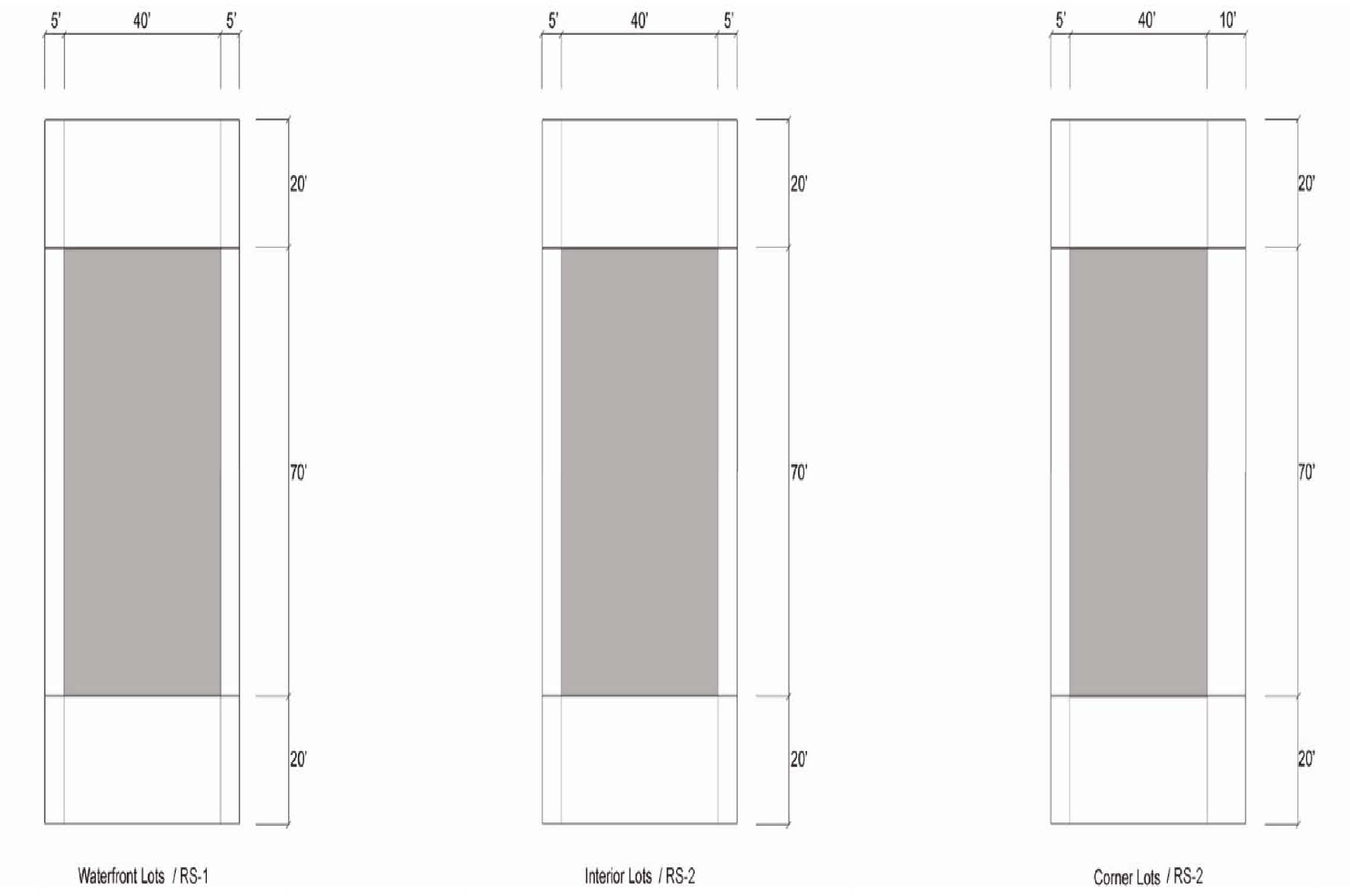
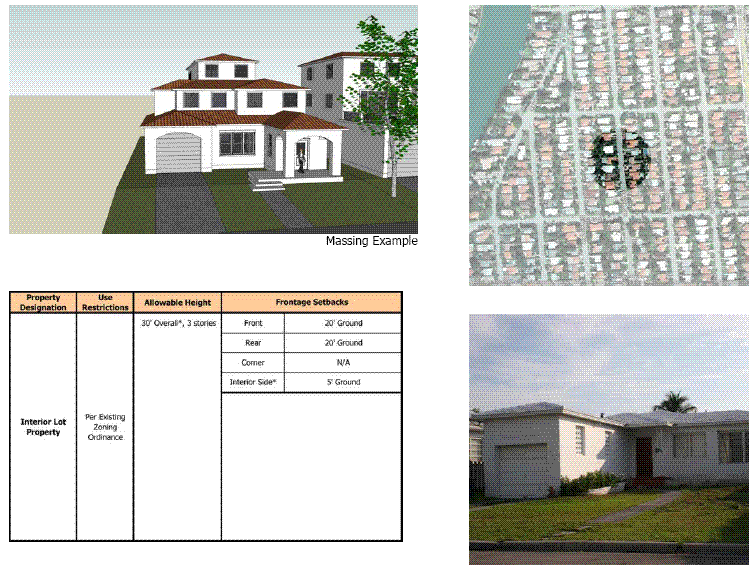
The zoning existing within the town's ordinances, with respect to use designation and maximum heights, is not recommended to change. Within the residential neighborhood, the maximum height is 30 feet and the setbacks are as reflected in the illustrations and the attached chart.
The zoning remains consistent in and applicable in all its provision except one. These design guidelines recommend that the provision limiting construction to two (2) stories be increased to three (3), provided that the building's height does not exceed the established maximum height of thirty (30) feet.
Building Massing
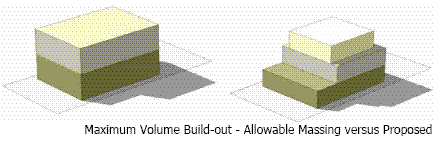
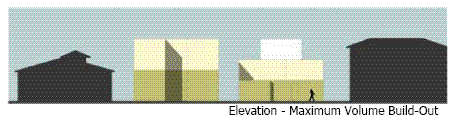
By increasing the number of stories permitted, from two (2) to three (3) and maintaining the height limitation to thirty (30) feet, the property owners are given more flexibility to internally distribute the space in accordance to the parameters described herein. Without the increase of stories, the only provisions of these guidelines that can realistically be implemented are those affecting the building's elevation only. Opportunities to resolve the volumetric distribution and massing of the legally permissible buildable area will have been missed. Because lots are limited in size, increasing the number of allowable stories to increase the floor areas' opportunities allows property owners to implement the parameters without incurring any liabilities upon the town. Massing distribution should conform to Option A or Option B of the Mass and Volume Distribution Criteria.
Roof Lines
Because the town has a variety of architectural roof treatments, the character of the neighborhood does not predicate the use of a specific roof-type. This allows for the homeowner to select a roof style that can accommodate their needs. This will be beneficial for those homeowners who choose to maximize the buildability of their lots. Nevertheless, designs should attempt to provide roof lines and roof designs that, when viewed from the street, are harmonious with abutting properties. All roof slopes on a single building should have the same angle unless different slopes are inherent in the design's style.
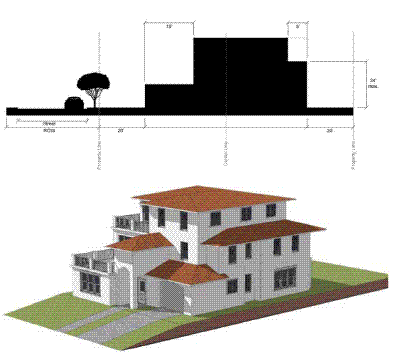
Mass and Volume Distribution - Option A
The massing of any new residential building or addition should be sensitive to the profiles of adjacent buildings and should locate second and third stories adequately to reduce the apparent overall scale of the building. This is necessary to ensure an adequate architectural and spatial relationship between new and existing buildings.
The first story should adhere to established zoning setbacks.
The second story should not exceed the ground floor area by 70 percent and should be setback a minimum of 15 feet from the front facade and a minimum of five feet from sides and rear facades.
Third stories or any wall planes exceeding 24 feet in height should provide an additional minimum five-foot setback from all sides and rear elevations only, but should not be required from the front.
Building forms should be varied enough to avoid monotony and to avoid pyramidal massing and should be compatible with surrounding houses.
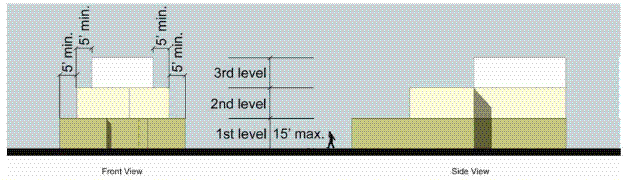
Mass and Volume Distribution - Option B
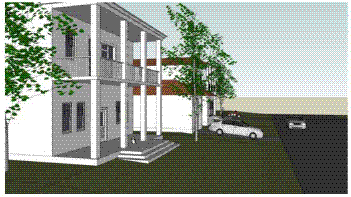
The front facade of a building should be allowed to extend vertically a maximum of two (2) stories in height, provided that at least two (2) of the following criteria are met:
A)
The building should provide an open-air, transitional and habitable architectural element, such as a front porch or wrap-around balcony, for the entirety of the two-story facade (frontage and height). The transitory space should be a minimum of eight (8) feet deep and should be accessible from its corresponding floor elevation.
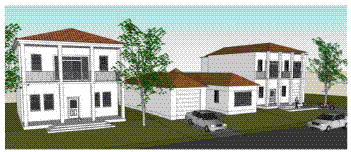
B)
A maximum of 60% of the facádes frontage may be allowed to abut the front setback, with the remaining 40% setback an additional minimum of 12 feet;
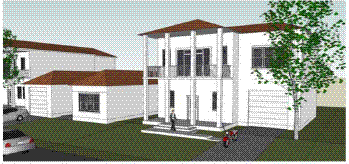
C)
The building's facade should in its entirety be set back an additional 12 feet from the setback line or an additional 8 feet from any abutting property's single-story facade, whichever is greater but should not exceed 15 feet. Required transitory architectural elements may be allowed to encroach into the additional setback by 80%.
Transparency and Void Requirements
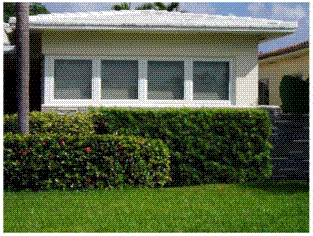
All elevations should provide for a minimum of ten percent wall openings. Wall openings should be defined as either windows, doors or transitional spaces defined by porches, porticoes or colonnades.
Voids should be distributed throughout all facades facing a public right-of-way so as to create balance in the facádes mass-void proportions and relationships.
Treatment of voids and transparencies should be consistent on all facades of buildings. Glass may be clear or lightly tinted, but should never be darkly tinted or should never have a reflective finish.
New windows should be placed to avoid direct views into existing neighboring windows. Large second story windows overlooking adjacent rear yards should be articulated to minimize views into adjacent rear yards.
Building Forms
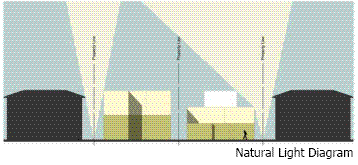
Buildings' massing, as provided with the controlled volumetric distribution, should provide for increased light-plane access in-between buildings, even if maximum build-out occurs. This is critical for ensuring that adjacent properties have adequate access to natural light and ventilation. Additionally, properties should provide for greater privacy between buildings on the upper stories.
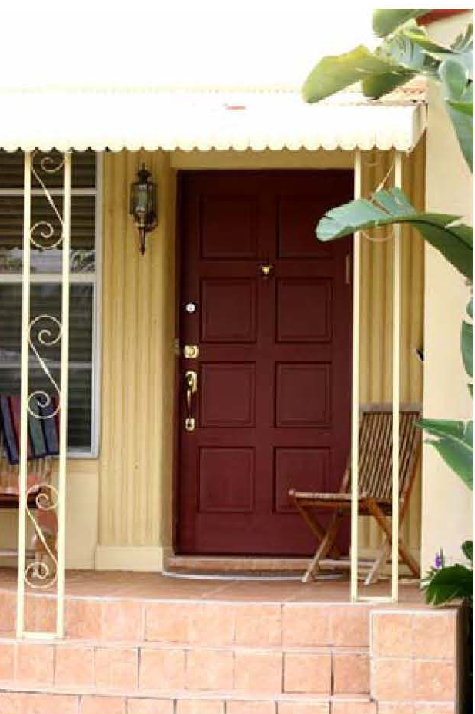
Main Entries
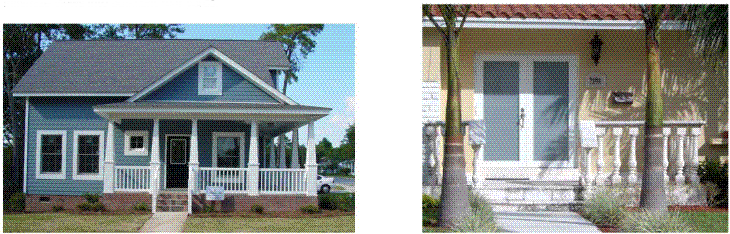
Main entries are critical in their established relationships to the street. Increased prominence and visibility from the street promotes a greater architectural relationship between the public and private realms and encourages a sense of neighborhood.
Main entries should be:
• Prominent and oriented to the street;
• Rendered in appropriate scale for the block as well as the individual building;
• Entry feature should not extend above the eave line of the structure; and
• Should not be obstructed from view by fences, landscaping or other visual barriers.
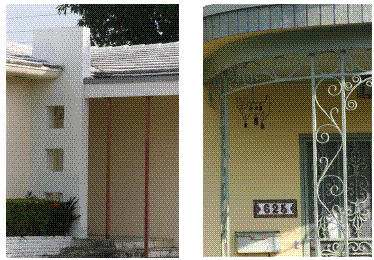
Decorative Features
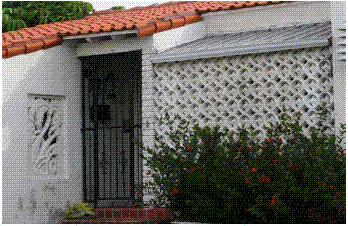
Decorative features such as porch or balcony rails and columns, other columns and capitals, window sills and any other decorative elements should be stylistically consistent throughout the entire building.
Some elements, such as decorative window trims, should be consistent on all parts of the house, while others, such as porch and balcony rails, may apply only to those individual structures, typically those located at or near the front of the house.
For purposes of decorative features, consistency means the same materials, dimensions and design elements. Decorative consistency is perhaps most critical for additions to houses with architectural styles which include decorative features as important elements of the style. Decoration added to a house's addition only, where the original structure previously had none or a stylistically different decoration, should not be allowed.
Overall Architectural Style
The overall style of each house should be consistent on all sides of the building, as well as among all portions of the roof. Particular care should be taken that building elevations and roof elements visible from streets and other public or adjacent spaces are stylistically consistent. Consistency should be determined by evaluating each of the building's elevations' components.
Mailboxes
The town highly encourages mailboxes to be attached to the house. In the event that this does not apply, the following provisions should be implemented:
1)
Materials should be true and consistent with the architectural character of the building in both color and texture.
2)
Landscape planting or approved architectural elements should be used to minimize the visibility of the mailboxes from the public right-of-way.
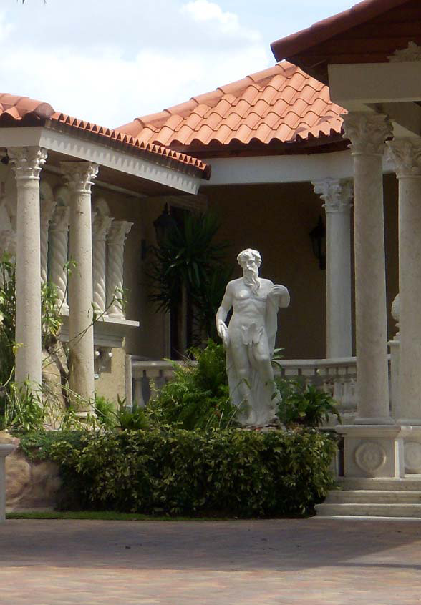
Decorative Permanent Elements
Decorative permanent elements should include any decorative feature not a part of the architectural facades, including but not limited to bird-baths, statuary, lighting poles and fixtures, columns, fountains, signage and outdoor artwork. Property owners-should seek approval prior to installation of these elements.
Decorative permanent elements should be further defined as:
1)
Any element larger than 36 inches in height or 60 inches in width;
2)
Any outdoor element that remains installed for a period of time longer than 45 days;
3)
Any element that requires a footing; or
4)
Any element that utilizes electricity.
All decorative permanent elements should be in scale with all the facades of the property and should be consistent with the materials, colors and textures predominant of the architecture of the building. Consistency should mean the same materials, dimensions, proportions and design elements.
Garages and Parking Driveways
In general, new garages should be located and sized consistent with the established pattern of the neighborhood.
Attached garages located at the front or side of the house should be no wider than one necessary to accommodate the width of one car, and should never exceed 50% of the overall length of the facade. If a garage is provided to accommodate 2 cars, the garage entrances must have an exterior expression of two separate entrances, each a maximum of 10' wide, and separated by a minimum 18" wide vertical element consistent with the facade.
Attached garages on corner lots should be located to avoid driveway paving at or near the corner.
The width of paved driveways on private property as well as driveway cuts at the curb should be as narrow as possible. Curb cuts should not be two-cars wide, even if they provide direct access to a two-car wide driveway.
Paving accessible for parking in the front setback area should be limited to the width required for access to a garage or other required parking spaces.
Driveways should have a two percent cross slope or appropriate to promote containment of drainage onsite.
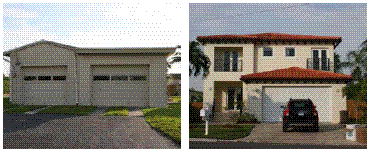
Driveway Treatments:
Asphalt driveways should not be permitted;
Driveways should be composed of materials and textures consistent with the overall character of the building;
The town encourages the use of pavers, concrete may be used provided that it is color- and texture-treated;
Coloring on concrete should be consistent throughout the entire composition; and
Painted concrete should not be permitted.
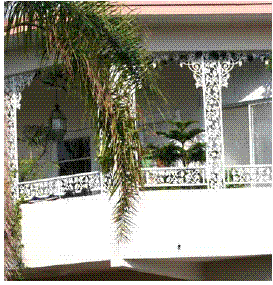
Balconies, Decks and Lighting
New balconies or decks located more than five feet above grade on new or existing houses should be built no closer than five feet to adjacent single-family side-property lines and no closer than 20 feet to adjacent rear property lines.
Lighting should never be allowed to shine directly onto adjacent residential properties. The view of light sources should be entirely shielded from adjacent properties.
Large, two-story building masses at the sides and rear of adjacent single-family yards should be avoided to help preserve privacy and sunlight access for the neighboring property.
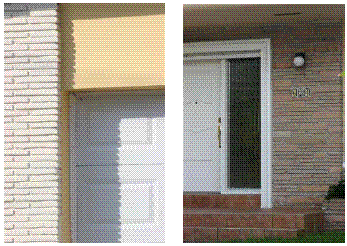
Wall Materials and Finishes
Wall material finishes should be appropriate to the style and style era of the house. For example, materials developed after the establishment of a particular architectural style are not appropriate on buildings of that style unless the new material is a high quality and deliberate reproduction of the original material. The same material should be used on all building elevations unless multiple materials are a legitimate expression of the particular style.
False, foam materials should not be allowed.
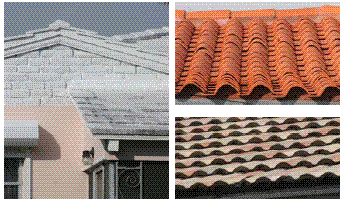
Roof Materials, Types and Slopes
Roof materials should be appropriate to the style of the house and, except for flat roofs or flat roof portions, should be the same product for the entire roof system. New materials designed for fire resistance are entirely appropriate as long as they replicate the traditional material.
Roof types and slopes should be generally the same over all parts of a single building. Exceptions are roof styles or architectural styles that traditionally involve varying slopes, such as architectural styles that sometimes combine flat and sloped roofs. In addition, hip overall roof designs are often used in combination with very small gable or shed roofs used to highlight a prominent element.
Restricted materials for roofs are predetermined in the town's building code, which restricts roofing materials to:
1.
Clay tile;
2.
White concrete tile;
3.
Solid color cement tile which color is impregnated with the same color intensity throughout, provided said color is first approved by the planning and zoning board; and
4.
Metal.
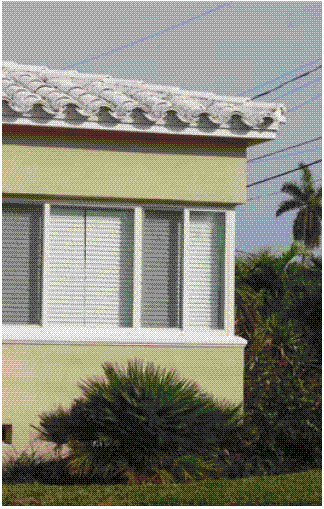
Windows and Trims
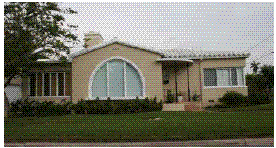
Window styles (double hung, casement, sliding, fixed, etc.) and frame materials (aluminum, wood, steel, etc.) are particularly important expressions of architectural style and should always be consistent among all elevations of a building. Window styles may vary depending on the specific use or size of the window for some architectural styles. Frame materials should never vary on a single building except in some limited cases when the frame material is being upgraded as in the case of renovations.
Window sizes and proportions are also important expressions of architectural style and should be consistent with the architectural style of the house. While window sizes on a single house most often vary by the purpose of the room, several styles typically include larger uniform window heights all around the building. Several styles also traditionally employ the same window repeated in groups of two, three or four as a fundamental expression of the style.
Window, door and eave trim should be consistent on all elevations of the house, in terms of material, material dimensions and decorative features such as shape, carving, routing, reveals, etc. Replicating the original trim style for additions or remodels of older, traditional styles is particularly important.
Green Design
It is encouraged for all new construction to follow the LEED certification program. Higher LEED certifications (silver, platinum, etc.) are also encouraged.
Rehabilitation of existing structures should achieve the following standards to the greatest feasible extent:
• Use of energy-efficient features in window design (exterior shading devices, low-E and insulated glass, etc);
• Use of operable windows and ceiling fans to promote natural ventilation when weather permits;
• Reduced coverage by asphalt, concrete, rock and similar substances in driveways and other areas to improve stormwater retention and reduce heat island effects.
• Installation of energy-efficient lighting in buildings, driveways, yards, and other interior and exterior areas;
• Selection, installation and maintenance of native plants, trees, and other vegetation and landscape design features that reduce requirements for water, maintenance and other needs;
• Planting of native shade trees to provide reasonable shade while remaining clear of overhead and underground utilities;
• Passive solar orientation of structures, as possible, to reduce solar heat gain by walls and to utilize the natural cooling effects of the wind;
• Provision for structural shading (e.g., trellises, awnings and roof overhangs) wherever practical when natural shading cannot be used effectively;
• Inclusion of shaded porch/patio areas; and
Historic Preservation
Initiate inventory of existing building stock by an architectural historian to determine and designate categories of historic preservation:
• Designated Historic Property
• Contributing Historic Property
Develop parameters to address the preservation:
• The restoration of at least 50% of the existing overall structure
• Restoration and preservation of 100% of the street front facades
• Historic preservation-specific design review processes in accordance to the standards of the Secretary of the Interior.
Neighborhood Patterns
One of the challenges posed by new construction projects in existing residential neighborhoods is to create relationships between properties and streets that maintain adequate space, light and a sense of openness that complement the existing neighborhood's character.
Because the major objective of these guidelines is to ensure that new homes, additions and remodeling projects are appropriately compatible with the surrounding neighborhood, compliance with the guidelines in this chapter is essential for the preservation of the neighborhood character, and consistency with them will be an important component for those projects which qualify for approval.
Neighborhood Patterns Topics
Overall Neighborhood Pattern Scheme
Priority Lot Properties
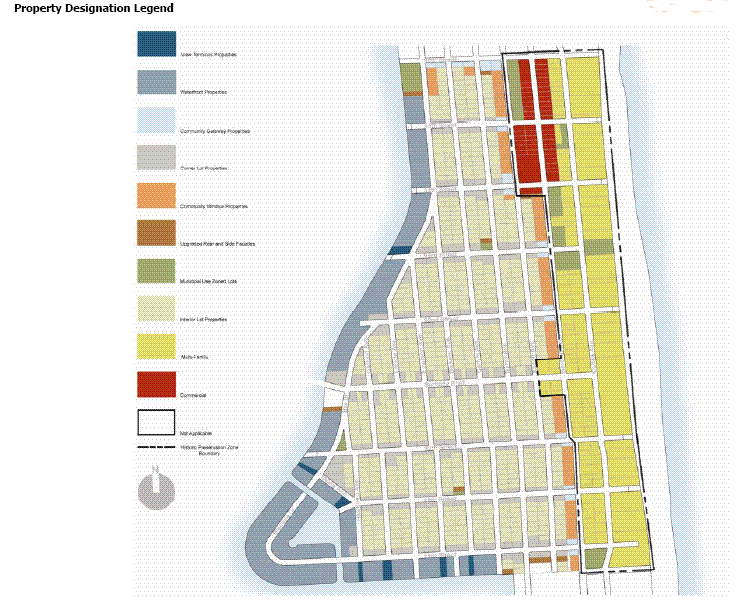
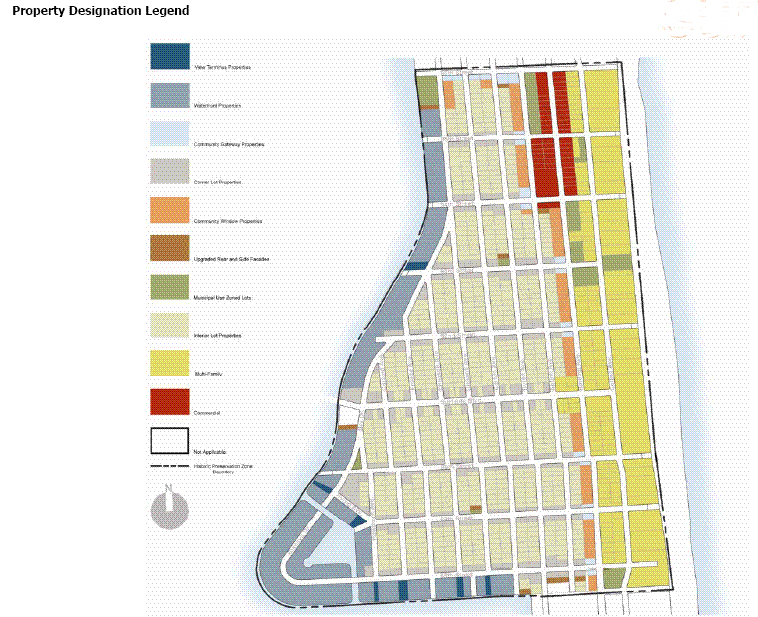
Property Designation Diagram
Community Gateway Properties
Community Window Properties
Corner Lot Properties
Waterfront Properties
Upgraded Rear and Side Architecture
View Terminus Properties
Interior Lots
Multifamily
Commercial
Overall Neighborhood Pattern Requirements
The Overall Neighborhood Pattern Requirements should be applicable to all lots, irrespective of designation. These buildings should pay particular attention to the relationship between the street fronting facades, its treatment and articulation, and the street, always enforcing a pedestrian quality and character.
Priority Lot Properties
These guidelines identify important properties that aid in the definition of the edges defining the existing residential neighborhood. The strategic approach to identifying each and their importance acknowledges that dwellings in prominent locations, or "Priority Lots," have a higher degree of visibility within the public realm. Special design consideration is required for the publicly exposed elevations of these dwellings.
These priority lots are categorized as follows:
• Community Gateway Properties - properties that are located at important gateways to the neighborhood;
• Community Window Properties - properties that front an important visible edge to the neighborhood;
• Corner Lot Properties - properties that are located at corner lots within the neighborhood;
• Waterfront Properties - properties that have a waterfront exposure;
• Upgraded Rear and Side Facades - properties that have a rear or side facade that is publicly exposed.
• View Terminus - properties whose location lines up with city street ends.
• Interior Lot Properties - properties located in the inner lots of the city blocks.
Priority Lots - Community Gateway Properties
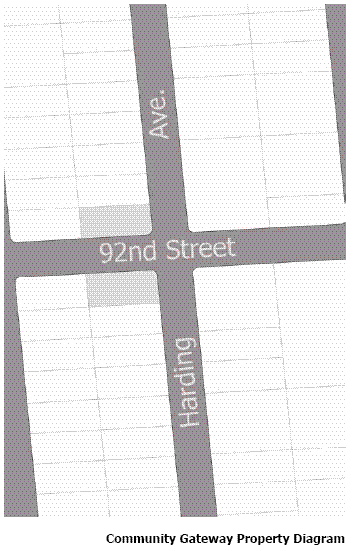
Community Gateway Properties are located at the entrances to the community from the external road system, principally Harding Avenue and 96th Street. These properties play an important role in expressing the image, character and quality of the community to residents, visitors and passersby. A high degree of architectural design quality will be expected for all elevations of these properties.
The preferred design is one that acknowledges the importance of the location and acknowledges the corner condition. The main entrance and driveways to garages or carports should face the entry roadway and should not face Harding Avenue or 96th Street. Special attention to the massing, height, articulation, fenestrations, material finishes and detailing is required for all exposed elevations of a Community Gateway Property, ensuring that:
• Wall finish treatments are consistent on all sides of the building;
• A prominent entrance feature is encouraged;
• Wrap-around porches should be provided;
• There is provided sufficient fenestrations on front and flanking elevations displaying balanced proportions;
• Highly articulated flanking elevations are required to avoid flat, blank, or uninteresting facades;
• Roof forms should be enhanced;
• Rear elevations should be upgraded to include detailing and window treatment consistent with the front and flanking elevations;
• Garages should be recessed with the front entrance feature;
• Distinctive corner architectural elements should be employed where architecturally appropriate; and
• Special attention to the exterior color package is required to compliment the use of upgraded materials, such as stone, and finishes.
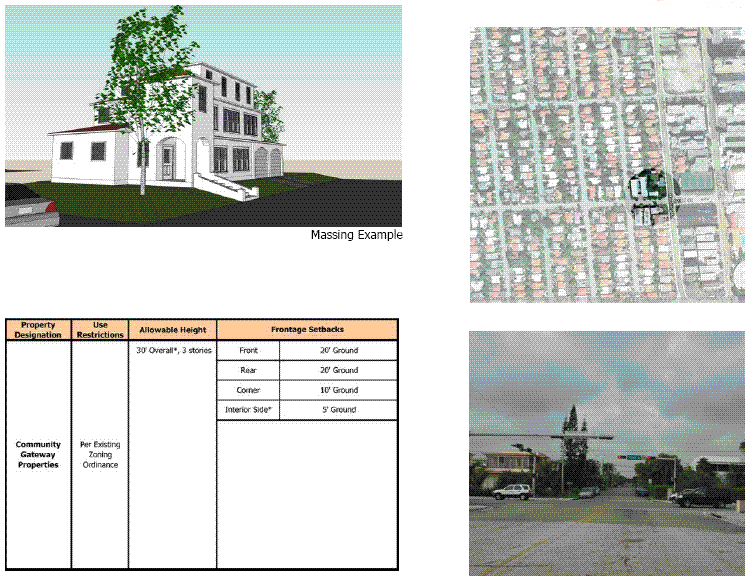
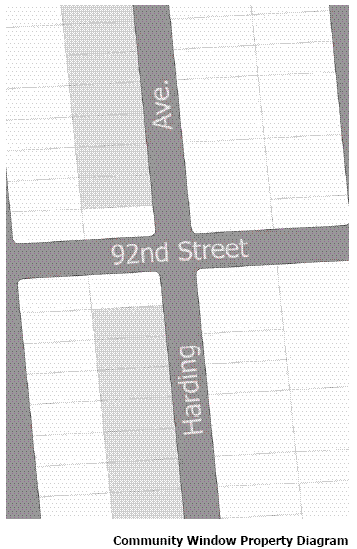
Priority Lots - Community Window Property
Community Window Properties are located along the edges of the community, principally Harding Avenue, Abbott Avenue between 94 th Street and 96th Street and on Bay Drive just across the street from the 96 th Street Park. These properties play an important role in expressing the image, character and quality of the community to residents, visitors and passersby.
A high degree of architectural design quality will be expected for the street facing elevations of these properties. Special attention to the massing, height, articulation, fenestrations, material finishes and detailing is required for the aforementioned elevation of a Community Window Property.
The facades should ensure that:
• Wall finish treatments are consistent on all sides of the building;
• A prominent entrance feature is encouraged;
• Highly articulated flanking elevations are required to avoid flat, blank, or uninteresting facades for at least half the depth of the side elevations, measured from the front facade;
• Roof forms should be enhanced;
• Garages should be recessed from the front entrance feature;
• Distinctive architectural elements should be employed where architecturally appropriate; and
• Special attention has been given to the exterior color package is required to compliment the use of upgraded materials, such as stone, and finishes.
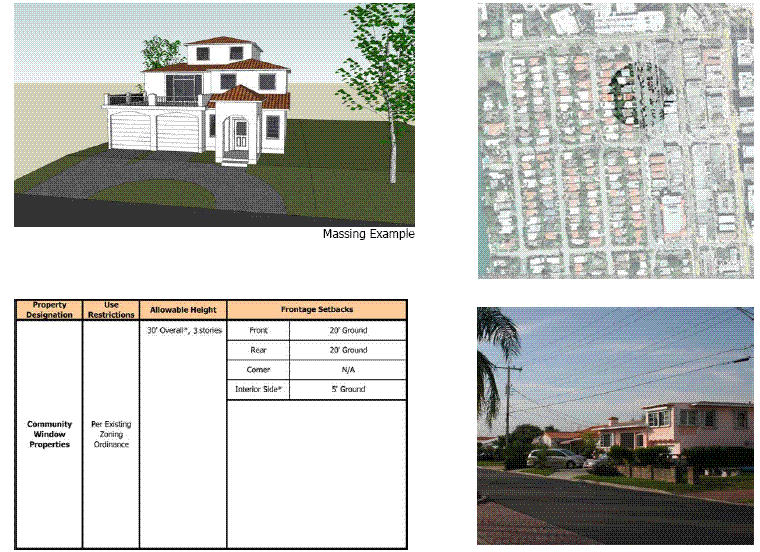
Priority Lots - Corner Lot Properties
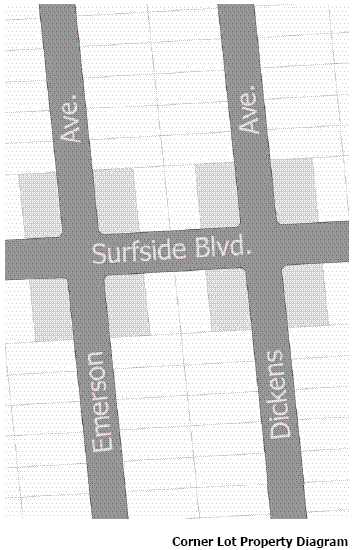
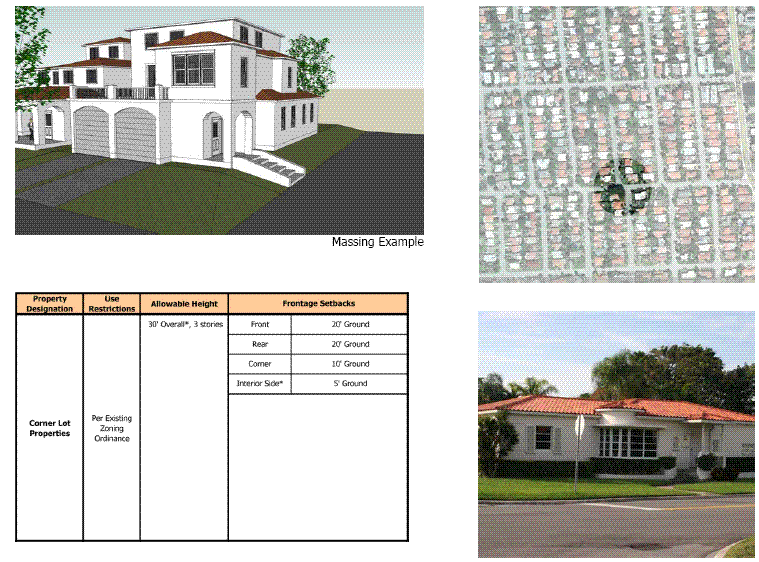
Corner Lot Properties are located at the internal street intersections. These properties play an important role in setting the image, character and quality of the street. These properties should address both street frontages in a consistent manner and incorporate ground-level detailing which reinforces the pedestrian scale of the street. The following criteria should apply:
• The main entrance and driveways to garages or carports should face the long side of the lot;
Special attention to the massing, height, articulation, fenestrations, material finishes and detailing is required for all exposed elevations of a Corner Lot Property, ensuring that:
• Wall cladding and finish treatments are consistent on all sides of the building;
• A prominent entrance feature is encouraged;
• There is provided sufficient fenestrations on front and flanking elevations displaying balanced proportions;
• Highly articulated flanking elevations are required to avoid flat, blank, or uninteresting facades;
• Roof forms should be enhanced;
• Rear elevations should be upgraded to include detailing and window treatment consistent with the front and flanking elevations;
• Garages should be recessed with the front entrance feature;
• Distinctive architectural elements should be employed where architecturally appropriate; and
• Special attention to the exterior color package is required to compliment the use of upgraded materials, such as stone, and finishes.
Priority Lots - Waterfront Properties
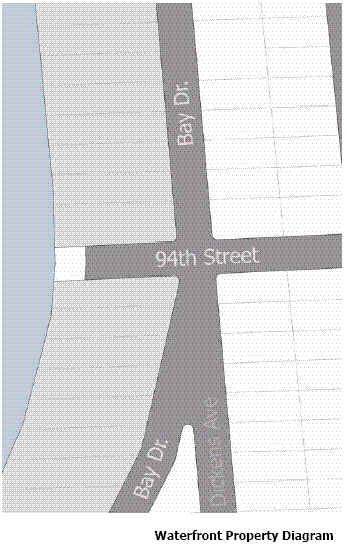
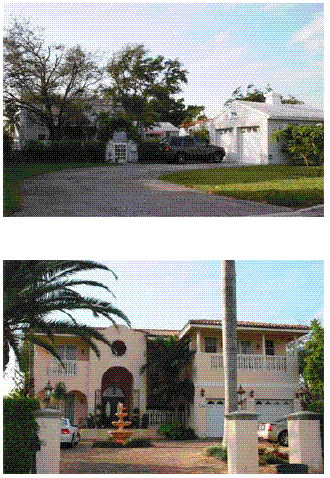
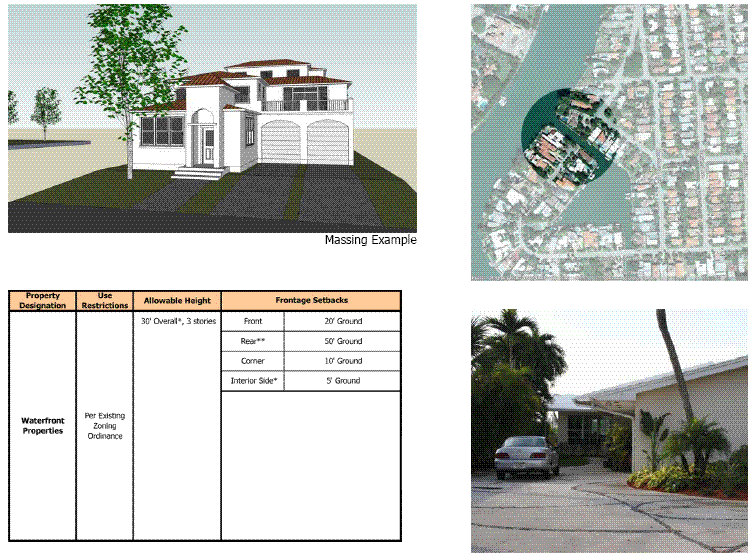
Waterfront Properties are located at the waterfront edges of the neighborhood with at least one frontage onto Biscayne Bay. These properties play an important role in setting the image, character and quality of the neighborhood as perceived from the water. These properties should address both the street frontage and its water frontage in a consistent manner. The buildings should also incorporate ground-level detailing which reinforces a pedestrian scale at the street elevation.
Priority Lots - Waterfront Properties
The following criteria should apply:
• Wall finish treatments are consistent on all sides of the building;
• There is provided sufficient fenestrations on front and flanking elevations displaying balanced proportions;
• Highly articulated flanking elevations are required to avoid flat, blank, or uninteresting facades;
• Roof forms should be enhanced;
• Rear elevations should be upgraded to include detailing and window treatment consistent with the front and flanking elevations;
• Garages should be recessed with the front entrance feature;
• Front elevations should engage the street and should not be obstructed behind dense landscaping, carports or excessive setbacks.
• Building mass and volume distribution should be distributed so as to not create imposing structures abutting the street or abutting properties;
• Distinctive corner architectural elements should be employed where architecturally appropriate; and
• Special attention to the exterior color package is required to compliment the use of upgraded materials, such as stone, and finishes.
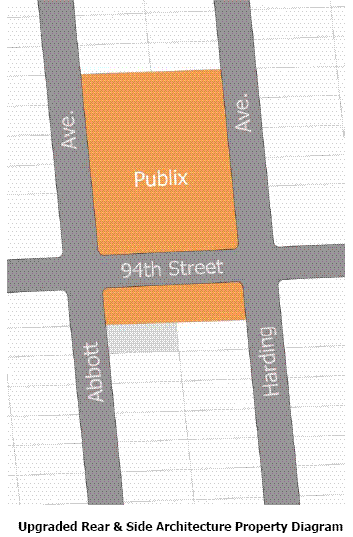
Priority Lots - Upgraded Rear and Side Architecture Properties
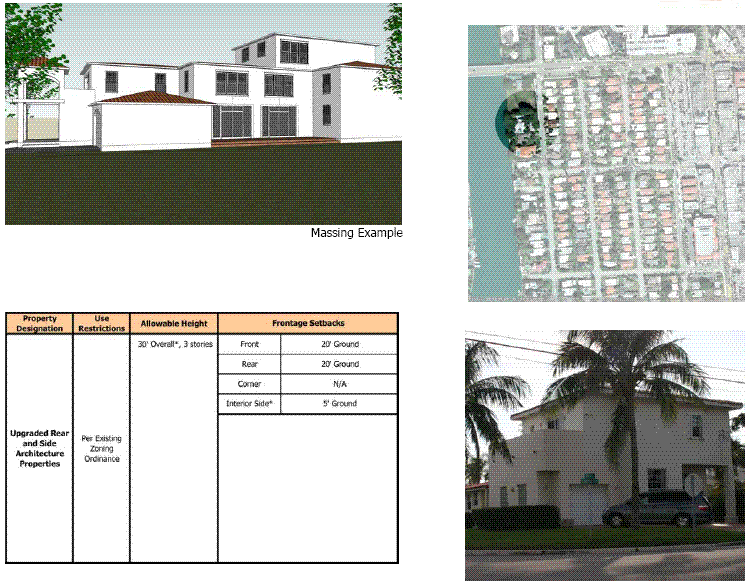
Upgraded rear and side architectural elevations are required where these elevations are exposed to public view. This occurs in the following situations:
• Reverse frontage lots which back or flank onto a public road, or
• Lots which back or flank onto highly visible public uses such as open spaces, roads, parks, public walkways, institutional uses and commercial uses.
The exposed side and/or rear elevations of these buildings should have a level of quality and detail consistent with the front elevation. This should include, but not be limited to, features including:
• Enhanced window styles compatible with the architectural style of the overall design;
• Introduction of architectural features to evade blank, uninteresting walls;
• A balance of mass and voids achieved through the proper use of fenestrations; and
• The level of upgrade should be consistent with the level of public exposure.
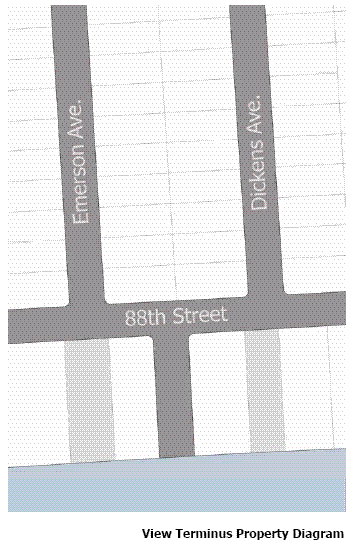
Priority Lots - View Terminus Properties
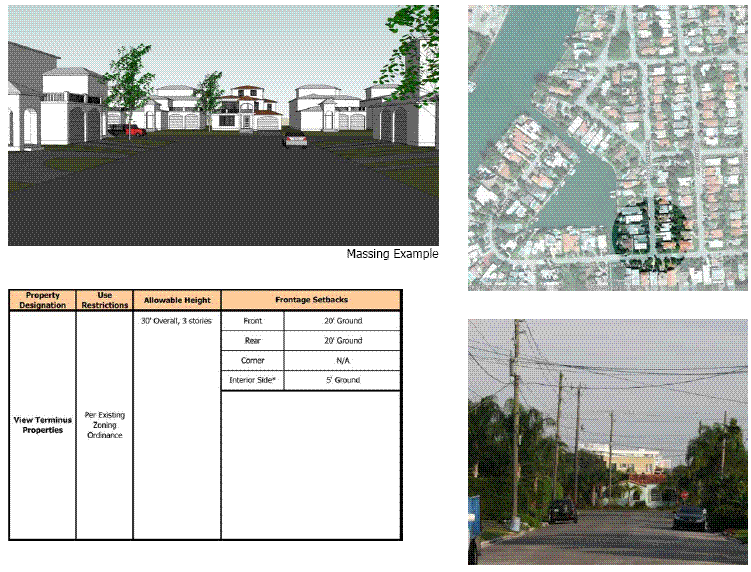
Terminus Lot Properties occur at the top of "T" intersections, where one road terminates at a right angle to the other. These properties play an important role in the streetscape by terminating a long view corridor. Corner lots opposite these properties should frame the view from the street. Because of their prominence, View Terminus Properties should include such enhancement features as:
• Driveways should be located to the outside of a pair of View Terminus Properties to increase landscaping opportunities and reduce the prominence of the garage on the view;
• A greater setback from adjacent dwellings is encouraged where lot depth permits; and
• Architectural treatments which provide visual interest will be required for these parcels.
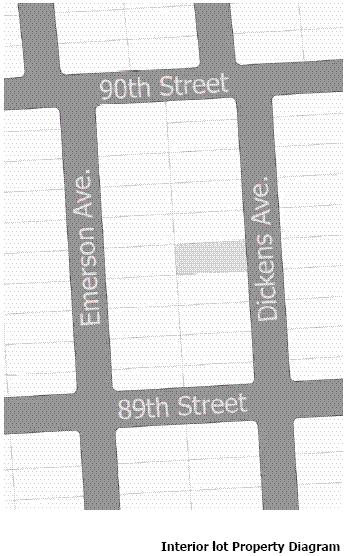
Priority Lots - Interior Lot Properties
Interior lots will be applicable to the general design criteria applicable as the basis for all lots, including criteria determining:
• Massing and Volumes
• Decorative Features
• Overall Style
• Garage and Parking Driveways
• Relationships to Adjacent Properties
• Roof Materials, Types and Slopes
• Wall Material Finishes
• Windows and Trims
Introduction
These guidelines are intended to help secure a high quality of environment, regarding livability, visual interest, identity and sense of place, in Surfside's commercial and multifamily districts by providing guidance for the design of new buildings within the existing area. These guidelines are intended to focus on the characteristics of architectural compatibility and to leave individual property owners the maximum flexibility to build to meet their own needs and objectives.
All new building construction must conform to the development standards of the zoning districts in which they are located. These guidelines presented herein are intended to go beyond the basic requirements of the Zoning Ordinance and, in greater detail, address issues specifically related to character compatibility without changing existing setbacks or height limitations or regulations. In addition, these guidelines are intended to encourage the design and construction of buildings which harmonize with their surroundings and which demonstrate a high standard of quality.
Lastly, in order to establish a sense of historical significance, the Town of Surfside encourages the architecturally authentic restoration of existing structures. Where restoration can become a minimum, these guidelines further encourage the preservation of the existing structure.
Applicability
The Guidelines should apply to all new construction within the town. These Guidelines are provided for the use of property owners, builders, contractors, architects, designers, Town Staff and Town decision makers. The Guidelines are expected to be useful for making design decisions about multifamily residential and commercial construction at a number of levels:
• Property owners, builders, architects and other designers are encouraged to consult the Guidelines prior to designing new buildings, additions or remodeling projects for ideas and advice.
• The Guidelines will be used by City Staff and decision makers as the criteria for making permit decisions.
• Town residents should consult the Guidelines to understand the compatibility concepts which will apply to new construction.
The transition of this new policy should be as follows:
Any development within the town approved by the Planning and Zoning Design and Review Board on or before September 11, 2007 is not subject to this policy. In the event of a major revision to an existing draft approval where the developer has an approved agreement, the town will generally apply this policy.
Any development within the town approved by the Planning and Zoning Design and Review Board after September 11, 2007 should provide conformity to the town's Preservation Zone Design Guidelines.