
Terrell City Zoning Code
III
ZONING DISTRICTS
Section 13. - Zoning districts established.
13.1
The City of Terrell, Texas is hereby divided into the following zoning districts. The use, height, area regulations, and other standards, as set out herein apply to each district. The districts established herein shall be known as:
13.2
A summary of the area regulations for the above zoning districts is included within Table 13-1 in this section.
13.3
Certain terms and definitions used within this ordinance can be found in section 44.
TABLE 13-1 SUMMARY OF ZONING DISTRICT REGULATIONS
City of Terrell, Texas
This is a chart for general comparison purposes only and is incomplete. For complete requirements see the body of the zoning ordinance.
* Note: See text of the ordinance for additional or supplemental requirements. Additional setback distance for side and rear yards is required for corner lots, when adjacent to a street, or adjacent to a residential district, etc.; see additional requirements for infill lot development.
** HC setback is for a 20-foot wide landscape buffer adjacent to access roads. See Section 28 for other setback requirements.
*** Except in regards to setbacks from residential properties, there are no height limits for structures in the HC District within 700 feet of highway R.O.W., otherwise six stories/75 feet. See section 28.
(Ord. No. 3138, Arts. I, II(Exh. A), 9-30-25)
Section 14. - Agricultural (AG) district.
14.1
General purpose and description. The agricultural (AG) district is designed to permit the use of land for the ranching, propagation and cultivation of crops and similar uses of vacant land. Single-family uses on large lots are also appropriate for this district. Territory that has been newly annexed into the city is initially zoned agricultural until it is assigned another zoning district. It is anticipated that agricultural zoned land will eventually be rezoned to another zoning classification in the future. The agricultural district is also appropriate for areas where development is premature due to lack of utilities or city services; to preserve areas that are unsuitable for development due to problems that may present hazards such as flooding, in which case the AG zoning designation should be retained until such hazards are mitigated and the land is rezoned; and to provide permanent greenbelts or to preserve open space areas as buffers around uses that might otherwise be objectionable or pose environmental or health hazards.
14.2
Permitted uses.
A.
Those uses listed for the AG-Agricultural district in section 32, use charts as "P", "S" or "T" are authorized uses permitted by right, by specific use permit (which must be approved utilizing procedures set forth in section 31B) or by temporary use permit (which must be approved utilizing procedures set forth in section 38.10).
14.3
Height regulations.
A.
Maximum height.
1.
Three stories, and not to exceed 45 feet, for the main building/house.
2.
Forty-five feet for agricultural structures (e.g., barns, silos, water towers, etc.), provided they are no closer than 100 feet from any residential structure, or 45 feet from any front, side or rear property line.
3.
Twenty-five feet for other accessory buildings, including detached garage, garden shed accessory dwelling units, etc.
4.
Other requirements (see section 38).
14.4
Area regulations.
A.
Size of lots.
1.
Minimum lot area: Five acres.
2.
Minimum lot width: Two hundred fifty feet.
3.
Minimum lot depth: Two hundred fifty feet.
B.
Size of yards.
1.
Minimum front yard: Forty feet.
2.
Minimum side yard: Twenty-five feet for interior side yard; 35 feet for a corner lot on a street.
3.
Minimum rear yard: Fifty feet for the main building and any accessory building(s). (See section 35 for exceptions.)
C.
Parking regulations.
1.
Single-family dwelling unit. A minimum of two enclosed parking spaces located behind the front building line on the same lot as the main structure. A paved driveway shall be installed from the street or alley right-of-way line to the garage door with a minimum length of 25 feet. Driveways in excess of 75 feet in length shall be paved in concrete or asphalt for the first 75 feet and the remainder may be constructed of crushed rock in lieu of asphalt or concrete in accordance with section 33.2.
2.
Other. See section 33, off-street parking and loading regulations.
D.
Minimum floor area per dwelling unit. Two thousand square feet of air-conditioned floor area.
E.
Architectural features and streetscape amenities. If the house is located less than 75 feet from the front property line then the architectural and streetscape requirements of the executive estate district shall apply. All front exterior façades must contain at least one window per story.
F.
Minimum exterior construction standards. See section 37.
G.
Maximum impervious surface coverage. Thirty percent.
14.5
Special requirements.
A.
Recreational vehicles, travel trailers or motor homes may not be used for on-site dwelling purposes.
B.
Barns, stables, or other permanent structures designed to house animals shall be located in accordance with the regulations as set forth in the animal control ordinance, chapter 3 of the Terrell Code of Ordinances as adopted or amended.
C.
Electrical fencing and barbed wire is prohibited as perimeter fencing except for containment of farm animals on parcels of three or more acres.
D.
Open storage is prohibited (except for materials for the resident's personal use or consumption such as firewood, garden materials, farm equipment, etc., which may only be stored in the side or rear yards and which shall be screened from view of public streets and neighboring properties).
E.
Single-family homes with side-entry garages where lot frontage is only to one street (not a corner lot) shall have a minimum of 25 feet from the door face of the garage or carport to the side property line for maneuvering. The minimum setback from any garage door to a street or alley right-of-way line shall also be 25 feet.
F.
Carports or other detached accessory structures shall not project beyond the front façade of the house and shall be required to match the exterior materials and finish of the main structure if located in the side yard and is visible from the street.
G.
Swimming pools. See section 42.
H.
A site plan shall be required for single-family (detached) residential developments in which the proposed subdivision will include:
1.
A private amenity or facility comprised of one or more buildings (such as a private recreation/swimming facility, clubhouse, etc.);
2.
A golf course; and/or
3.
A gated (restricted access) entrance into the subdivision.
In these instances, site plan submission and approval will be required for these elements (a site plan showing the entirety of the proposed subdivision is not required). Site plan submission and approval shall be in accordance with subsection 31.B.4, but shall not require a public hearing as required by subsection 31.B.4.E.
I.
Any nonresidential land use which may be permitted in this district shall conform to the "NS" neighborhood service district standards.
J.
Other regulations. As established in the development standards, sections 33 through 44.
(Ord. No. 3138, Arts. I, II(Exh. A), 9-30-25)
Section 15. - Executive estate residential-32 (EE-32) district.
15.1
General purpose and description. The Executive Estate Residential-32 (EE-32) District is intended to provide for development of primarily high quality, low-density detached, single-family residences on lots of not less than 32,000 square feet in size, churches, schools and public parks in logical neighborhood units. The EE-32 District includes desirable architectural, land design and streetscape design elements and amenities in order to maximize aesthetic appeal, access to open space and promote efficient vehicular and pedestrian traffic and utility delivery in areas designated by the Comprehensive Plan for high quality, low density residential areas to preserve the rural character and economic stability of the community. Areas zoned for the EE-32 District shall have, or shall make provision for, City of Terrell water and sewer services. They shall be designed to adequately accommodate storm drainage; they shall have paved streets with logical and efficient vehicular circulation patterns that discourage non-local traffic; they shall be properly buffered from non-residential uses; and they shall be protected from pollution and undesirable environmental and noise impacts.
15.2
Permitted uses.
A.
Those uses listed for the EE-32 District in Section 32 - Use Charts as "P", "S" or "T" are authorized uses permitted by right, by specific use permit (which must be approved utilizing procedures set forth in Section 31B) or by temporary use permit (which must be approved utilizing procedures set forth in Section 38.10).
15.3
Height regulations.
A.
Maximum Height:
1.
Two and one-half (2.5) stories, and not to exceed thirty-six feet (36'), for the main building/house.
2.
One story for other accessory buildings, including detached garage, garden shed, gazebo, etc.
3.
Other requirements (see Section 38).
15.4
Area regulations.
A.
Size of Lots:
1.
Minimum Lot Area - Thirty two thousand (32,000) square feet
2.
Minimum Lot Width - One hundred fifty feet (150')
3.
Minimum Lot Depth - One hundred fifty feet (150')
B.
Size of Yards:
1.
Minimum Front Yard - Forty feet (40')
2.
Minimum Side Yard - Fifteen feet (15') for interior side yard; twenty five feet (25') for a non-key corner lot; forty feet (40') for a key corner lot on a street.
3.
Minimum Rear Yard - Thirty five feet (35') for the main building and any accessory building(s). (See Section 35 for exceptions.)
C.
Parking Regulations:
1.
Single-Family Dwelling Unit - A minimum of three (3) enclosed parking spaces located behind the front building line on the same lot as the main structure. A minimum twelve feet (12') wide paved driveway shall be installed from the street or alley right-of-way line to the garage door with a minimum length of twenty five feet (25') from any right-of-way, property line or alley on detached garages.
2.
No garage door shall face towards the front property line but shall be rear or side loaded only unless the lot configuration renders this infeasible in which case the garage face shall be located a minimum of four feet (4') behind the front facade of the house.
3.
Other - See Section 33, Off-Street Parking and Loading Regulations.
1.
Minimum Floor Area per Dwelling Unit - Two thousand Six Hundred (2,600) square feet of air-conditioned floor area.
2.
Minimum Exterior Construction Standards - A minimum of two different types of masonry materials (minimum ratio between two materials is 90% primary material with 10% accent) shall be used in combination on the front façade otherwise regulations in accordance with Section 37 apply.
3.
Required Architectural Features:
1.
Minimum roof pitch 8:12 or greater.
2.
Minimum covered porch size shall be 33% of front façade width or a minimum width of twelve (12') feet whichever is greater with a minimum depth of eight (8') feet. No portion of the garage shall extend into the front yard beyond the porch support columns.
3.
In new subdivisions the same floor plan and elevation shall not be duplicated for five lots on the same side of the street or for three (3) lots on the opposite side of the street. (Mirror image floor plans are considered duplicates for the purpose of lot spacing)
4.
Chimney must be enclosed in materials matching the surrounding or adjacent façade.
5.
Roof design must include dormers or combination hip and gable.
6.
Roof materials shall be architectural grade overlap asphalt shingles, slate, or tile.
7.
All front exterior facades must contain at least one window per story.
4.
Required Streetscape Amenities:
1.
A minimum four (4') feet wide sidewalk shall be required to be located adjacent to the right-of-way (front property line) in a private utility/public access easement a minimum of ten (10') feet from the edge of pavement. The sidewalk may meander back and forth across the front property line provided that no portion of the sidewalk is located within seven (7') feet of the edge of pavement. Infill development shall place the required sidewalk in the right-of-way.
2.
A minimum of one (1) street tree shall be planted for every fifty (50') feet of street frontage in accordance with Section 34.6.
3.
A minimum of two (2) large shade trees shall be planted at the time of construction in the front yard (care should be exercised in the placement of large shade trees so as not to obscure the view of the front entryway of the house). Two small ornamental trees may be substituted for one large shade tree (see "Recommended Plant List" in Section 34).
4.
Mailboxes shall be constructed of masonry materials which match the main residential structure and located at the edge of pavement in such a way so as not to obscure the vision of drivers exiting driveways into the street. Addresses shall be placed in a visible location on both the house and on the mailbox in accordance with the Building Code.
5.
Decorative street lighting shall be provided along residential streets throughout all new residential developments, providing low illumination ("Dark Sky" compliant - see Section 40) with solar controls on decorative poles with a maximum spacing of four hundred (400') feet between lights placed on alternating sides of the street in accordance with the current Street Lighting Policy administered by the City Engineer. Light poles shall be located within the five (5') feet landscape zone only (see Section 34 for details).
6.
Street layout and design for new subdivisions should include the following elements:
a.
A minimum of twenty-five percent (25%) of the street lengths within the subdivision, excluding major thoroughfares and collectors, should be curvilinear in design. Computation of percentage shall utilize the centerline lengths of all residential streets in the subdivision.
b.
Curvilinear design means an offset from the straight section centerline of the street of not less than three (3?) degrees and not greater than twenty three (23?) degrees and shall offset a minimum distance of thirty (30') feet measured perpendicular to the initial tangent line of the curve.
5.
Maximum Impervious Surface Coverage - Forty percent (40%).
15.5
Special requirements.
A.
Recreational vehicles, travel trailers or motor homes may not be used for on-site dwelling purposes.
B.
Electrical fencing and barbed wire is prohibited as perimeter fencing except for containment of farm animals on parcels of three (3) or more acres.
C.
Open storage is prohibited (except for materials for the resident's personal use or consumption such as firewood, garden materials, farm equipment, etc., which may only be stored in the side or rear yards and which shall be screened from view of public streets and neighboring properties).
D.
Single-family homes with side-entry garages where lot frontage is only to one street (not a corner lot) shall have a minimum of twenty-five feet (25') from the door face of the garage or carport to the side property line for maneuvering. The minimum setback from any garage door to a street or alley right-of-way line shall also be twenty-five feet (25').
E.
Carports or other detached accessory structures shall not project beyond the front façade of the house and shall be required to match the exterior materials and finish of the main structure if located in the side yard and is visible from the street.
F.
Swimming pools. See Section 42.
G.
Non-chlorinated ponds must be aerated by a fountain or other aeration device to prevent insect vector breeding or other nuisances associated with stagnant water.
H.
A Site Plan shall be required for developments in which the proposed subdivision will include 1) a private amenity or facility comprised of one (1) or more buildings (such as a private recreation/swimming facility, clubhouse, etc.), 2) a golf course, and/or 3) a gated (restricted access) entrance into the subdivision. In these instances, Site Plan submission and approval will be required for these elements (a Site Plan showing the entirety of the proposed subdivision is not required). Site Plan submission and approval shall be in accordance with Section 31.B.4, but shall not require a public hearing as required by Section 31.B.4.E.
I.
Any nonresidential land use which may be permitted in this district shall conform to the "NS"-Neighborhood Service district standards.
J.
Other Regulations. As established in the Development Standards, Sections 33 through 44.
(Ord. No. 3138, Arts. I, II(Exh. A), 9-30-25)
Section 15A. - Executive estate residential-64 (EE-64) district.
15.1
General purpose and description. The executive estate residential-64 (EE-64) district is intended to provide for development of primarily high quality, low-density detached, single-family residences on lots of not less than 64,000 square feet in size, churches, schools and public parks in logical neighborhood units. The EE-64 district includes desirable architectural, land design and streetscape design elements and amenities in order to maximize aesthetic appeal, access to open space and promote efficient vehicular and pedestrian traffic and utility delivery in areas designated by the comprehensive plan for high quality, low density residential areas to preserve the rural character and economic stability of the community. Areas zoned for the EE-64 district shall have, or shall make provision for, City of Terrell water and sewer services. They shall be designed to adequately accommodate storm drainage; they shall have paved streets with logical and efficient vehicular circulation patterns that discourage non-local traffic; they shall be properly buffered from non-residential uses; and they shall be protected from pollution and undesirable environmental and noise impacts.
15.2
Permitted uses.
A.
Those uses listed for the EE-64 district in section 32 - use charts as "P", "S" or "T" are authorized uses permitted by right, by specific use permit (which must be approved utilizing procedures set forth in Section 31B) or by temporary use permit (which must be approved utilizing procedures set forth in Section 38.10).
15.3
Height regulations.
A.
Maximum height.
1.
Two and one-half stories, and not to exceed 36 feet, for the main building/house.
2.
One story for other accessory buildings, including detached garage, garden shed, gazebo, etc.
3.
Other requirements (see section 38).
15.4
Area regulations.
A.
Size of lots.
1.
Minimum lot area. Sixty-four thousand square feet.
2.
Minimum lot width. One hundred fifty feet.
3.
Minimum lot depth. One hundred fifty feet.
B.
Size of yards.
1.
Minimum front yard. Forty feet.
2.
Minimum side yard. Fifteen feet for interior side yard; 25 feet for a non-key corner lot; 40 feet for a key corner lot on a street.
3.
Minimum rear yard. Thirty-five feet for the main building and any accessory building(s). (See section 35 for exceptions.)
C.
Parking regulations.
1.
Single-family dwelling unit. A minimum of three enclosed parking spaces located behind the front building line on the same lot as the main structure. A minimum 12 feet wide paved driveway shall be installed from the street or alley right-of-way line to the garage door with a minimum length of 25 feet from any right-of-way, property line or alley on detached garages.
2.
No garage door shall face towards the front property line but shall be rear or side loaded only unless the lot configuration renders this infeasible in which case the garage face shall be located a minimum of four feet behind the front façade of the house.
3.
Other. See section 33, off-street parking and loading regulations.
D.
Minimum floor area per dwelling unit. Two thousand six hundred square feet of air-conditioned floor area.
E.
Minimum exterior construction standards. A minimum of two different types of masonry materials (minimum ratio between two materials is 90 percent primary material with ten percent accent) shall be used in combination on the front façade otherwise regulations in accordance with section 37 apply.
F.
Required architectural features.
1.
Minimum roof pitch 8:12 or greater.
2.
Minimum covered porch size shall be 33 percent of front façade width or a minimum width of 12 feet whichever is greater with a minimum depth of eight feet. No portion of the garage shall extend into the front yard beyond the porch support columns.
3.
In new subdivisions the same floor plan and elevation shall not be duplicated for five lots on the same side of the street or for three lots on the opposite side of the street. (Mirror image floor plans are considered duplicates for the purpose of lot spacing.)
4.
Chimney must be enclosed in materials matching the surrounding or adjacent façade.
5.
Roof design must include dormers or combination hip and gable.
6.
Roof materials shall be architectural grade overlap asphalt shingles, slate, or tile.
7.
All front exterior façades must contain at least one window per story.
G.
Required streetscape amenities.
1.
A minimum four feet wide sidewalk shall be required to be located adjacent to the right-of-way (front property line) in a private utility/public access easement a minimum of ten feet from the edge of pavement. The sidewalk may meander back and forth across the front property line provided that no portion of the sidewalk is located within seven feet of the edge of pavement. Infill development shall place the required sidewalk in the right-of-way.
2.
A minimum of one street tree shall be planted for every 50 feet of street frontage in accordance with subsection 34.6.
3.
A minimum of two large shade trees shall be planted at the time of construction in the front yard (care should be exercised in the placement of large shade trees so as not to obscure the view of the front entryway of the house). Two small ornamental trees may be substituted for one large shade tree (see "recommended plant list" in section 34).
4.
Mailboxes shall be constructed of masonry materials which match the main residential structure and located at the edge of pavement in such a way so as not to obscure the vision of drivers exiting driveways into the street. Addresses shall be placed in a visible location on both the house and on the mailbox in accordance with the building code.
5.
Decorative street lighting shall be provided along residential streets throughout all new residential developments, providing low illumination ("dark sky" compliant - see section 40) with solar controls on decorative poles with a maximum spacing of 400 feet between lights placed on alternating sides of the street in accordance with the current street lighting policy administered by the city engineer. Light poles shall be located within the five feet landscape zone only (see section 34 for details).
6.
Street layout and design for new subdivisions should include the following elements:
a.
A minimum of 25 percent of the street lengths within the subdivision, excluding major thoroughfares and collectors, should be curvilinear in design. Computation of percentage shall utilize the centerline lengths of all residential streets in the subdivision.
b.
Curvilinear design means an offset from the straight section centerline of the street of not less than three degrees and not greater than 23 degrees and shall offset a minimum distance of 30 feet measured perpendicular to the initial tangent line of the curve.
H.
Maximum impervious surface coverage. Forty percent.
15.5
Special requirements.
A.
Recreational vehicles, travel trailers or motor homes may not be used for on-site dwelling purposes.
B.
Electrical fencing and barbed wire is prohibited as perimeter fencing except for containment of farm animals on parcels of three or more acres.
C.
Open storage is prohibited (except for materials for the resident's personal use or consumption such as firewood, garden materials, farm equipment, etc., which may only be stored in the side or rear yards and which shall be screened from view of public streets and neighboring properties).
D.
Single-family homes with side-entry garages where lot frontage is only to one street (not a corner lot) shall have a minimum of 25 feet from the door face of the garage or carport to the side property line for maneuvering. The minimum setback from any garage door to a street or alley right-of-way line shall also be 25 feet.
E.
Carports or other detached accessory structures shall not project beyond the front façade of the house and shall be required to match the exterior materials and finish of the main structure if located in the side yard and is visible from the street.
F.
Swimming pools. See section 42.
G.
Non-chlorinated ponds must be aerated by a fountain or other aeration device to prevent insect vector breeding or other nuisances associated with stagnant water.
H.
A site plan shall be required for developments in which the proposed subdivision will include 1) a private amenity or facility comprised of one or more buildings (such as a private recreation/swimming facility, clubhouse, etc.), 2) a golf course, and/or 3) a gated (restricted access) entrance into the subdivision. In these instances, site plan submission and approval will be required for these elements (a site plan showing the entirety of the proposed subdivision is not required). Site plan submission and approval shall be in accordance with section 31.B.4, but shall not require a public hearing as required by section 31.B.4.E.
I.
Any nonresidential land use which may be permitted in this district shall conform to the "NS" neighborhood service district standards.
J.
Other regulations. As established in the development standards, sections 33 through 44.
(Ord. No. 3138, Arts. I, II(Exh. A), 9-30-25)
Section 16. - Single-family residential-16 (SF-16) district.
16.1
General purpose and description. The single-family residential-16 (SF-16) district is intended to provide for development of primarily high quality low-density detached, single-family residences on lots of not less than 16,000 square feet in size, churches, schools and public parks in logical neighborhood units. Areas zoned for the SF-16 district shall have, or shall make provision for, City of Terrell water and sewer services. They shall be designed to adequately accommodate storm drainage; they shall have paved streets with logical and efficient vehicular circulation patterns that discourage nonlocal traffic; they shall be properly buffered from nonresidential uses; and they shall be protected from pollution and undesirable environmental and noise impacts.
16.2
Permitted uses.
A.
Those uses listed for the SF-16 district in section 32, use charts as "P", "S" or "T" are authorized uses permitted by right, by specific use permit (which must be approved utilizing procedures set forth in section 31B) or by temporary use permit (which must be approved utilizing procedures set forth in subsection 38.10).
16.3
Height regulations.
A.
Maximum height.
1.
Two and one-half stories, and not to exceed 36 feet, for the main building/house.
2.
One story with a maximum height of 14½ feet, measured at the highest point of the roof, for accessory buildings, including, but not limited to, a detached garage, garden shed, gazebo, etc.
3.
Other requirements (see section 38).
16.4
Area regulations.
A.
Size of lots.
1.
Minimum lot area. Sixteen thousand square feet.
2.
Minimum lot width. One hundred feet.
3.
Minimum lot depth. One hundred twenty-five feet.
B.
Size of yards.
1.
Minimum front yard. Thirty feet.
2.
Minimum side yard. Ten feet for interior side yard; 20 feet for a non-key corner lot; 30 feet for a key corner lot on a street.
3.
Minimum rear yard. Twenty-five feet for the main building and any accessory building(s). (See section 35 for exceptions.)
C.
Parking regulations.
1.
Single-family dwelling unit. A minimum of two enclosed parking spaces located behind the front building line on the same lot as the main structure. A minimum 12-foot wide paved driveway shall be installed from the street or alley right-of-way line to the garage door with a minimum length of 25 feet from any right-of-way, property line or alley on detached garages.
2.
[Garage door openings.] No garage door shall face towards the front property line but shall be rear or side loaded only unless the lot configuration renders this infeasible in which case the garage face shall be located a minimum of four feet behind the front façade of the house.
3.
Other. See section 33, off-street parking and loading regulations.
D.
Minimum floor area per dwelling unit. Two thousand square feet of air-conditioned floor area.
E.
Minimum exterior construction standards. See section 37.
F.
Required architectural features.
1.
Minimum roof pitch 8:12 or greater.
2.
Minimum covered porch size shall be 33 percent of front façade width or a minimum width of 12 feet whichever is greater with a minimum depth of eight feet. No portion of the garage shall extend into the front yard beyond the porch support columns.
3.
In new subdivisions the same floor plan and elevation shall not be duplicated for five lots on the same side of the street or for three lots on the opposite side of the street. (Mirror image floor plans are considered duplicates for the purpose of lot spacing.)
4.
Chimney must be enclosed in materials matching the surrounding or adjacent façade.
5.
Roof design must include dormers or combination hip and gable.
6.
Roof materials shall be architectural grade overlap asphalt shingles, slate, or tile.
a.
All front exterior façades must contain at least one window per story.
G.
Required streetscape amenities.
1.
A minimum four-foot wide sidewalk shall be required to be located adjacent to the right-of-way (front property line) in a private utility/public access easement a minimum of ten feet from the edge of pavement. The sidewalk may meander back and forth across the front property line provided that no portion of the sidewalk is located within seven feet of the edge of pavement. Infill development shall place the required sidewalk in the right-of-way.
2.
A minimum of one street tree shall be planted for every 50 feet of street frontage in accordance with subsection 34.6.
3.
A minimum of two large shade trees shall be planted at the time of construction in the front yard (care should be exercised in the placement of large shade trees so as not to obscure the view of the front entryway of the house). Two small ornamental trees may be substituted for one large shade tree (see "recommended plant list" in section 34).
4.
Mailboxes shall be constructed of masonry materials which match the main residential structure and located at the edge of pavement in such a way so as not to obscure the vision of drivers exiting driveways into the street. Addresses shall be placed in a visible location on both the house and on the mailbox in accordance with the building code.
5.
Decorative street lighting shall be provided along residential streets throughout all new residential developments, providing low illumination ("dark sky" compliant - see section 40) with solar controls on decorative poles with a maximum spacing of 400 feet between lights placed on alternating sides of the street in accordance with the current street lighting policy administered by the city engineer. Light poles shall be located within the five-foot landscape zone only (see section 34 for details).
6.
Street layout and design for new subdivisions should include the following elements:
a.
A minimum of 25 percent of the street lengths within the subdivision, excluding major thoroughfares and collectors, should be curvilinear in design. Computation of percentage shall utilize the centerline lengths of all residential streets in the subdivision.
b.
Curvilinear design means an offset from the straight section centerline of the street of not less than three degrees and not greater than 23 degrees and shall offset a minimum distance of 30 feet measured perpendicular to the initial tangent line of the curve.
H.
Maximum impervious surface coverage. Sixty percent.
16.5
Special requirements.
A.
Recreational vehicles, travel trailers or motor homes may not be used for on-site dwelling purposes.
B.
Electrical fencing and barbed wire is prohibited as perimeter fencing except for containment of farm animals on parcels of three or more acres.
C.
Open storage is prohibited (except for materials for the resident's personal use or consumption such as firewood, garden materials, farm equipment, etc., which may only be stored in the side or rear yards and which shall be screened from view of public streets and neighboring properties).
D.
Single-family homes with side-entry garages where lot frontage is only to one street (not a corner lot) shall have a minimum of 25 feet from the door face of the garage or carport to the side property line for maneuvering. The minimum setback from any garage door to a street or alley right-of-way line shall also be 25 feet.
E.
Carports or other detached accessory structures shall not project beyond the front façade of the house and shall be required to match the exterior materials and finish of the main structure if located in the side yard and is visible from the street.
F.
Swimming pools, see section 42.
G.
A site plan shall be required for single-family (detached) or two-family residential developments in which the proposed subdivision will include:
1.
A private amenity or facility comprised of one or more buildings (such as a private recreation/swimming facility, clubhouse, etc.);
2.
A golf course; and/or
3.
A gated (restricted access) entrance into the subdivision.
In these instances, site plan submission and approval will be required for these elements (a site plan showing the entirety of the proposed subdivision is not required). Site plan submission and approval shall be in accordance with subsection 31.B.4, but shall not require a public hearing as required by subsection 31.B.4.E.
H.
Any nonresidential land use which may be permitted in this district shall conform to the "NS" neighborhood service district standards.
I.
Other regulations. As established in the development standards, sections 33 through 44.
(Ord. No. 3138, Arts. I, II(Exh. A), 9-30-25)
Section 17. - Single-family residential-10 (SF-10) district.
17.1 General purpose and description. The single-family residential-10 (SF-10) district is intended to provide for development of primarily low-density detached, single-family residences on lots of not less than 10,000 square feet in size, churches, schools and public parks in logical neighborhood units. Areas zoned for the SF-10 district shall have, or shall make provision for, City of Terrell water and sewer services. They shall be designed to adequately accommodate storm drainage; they shall have paved streets with logical and efficient vehicular circulation patterns that discourage non-local traffic; they shall be properly buffered from non residential uses; and they shall be protected from pollution and undesirable environmental and noise impacts.
17.2
Permitted uses.
A.
Those uses listed for the SF-10 district in section 32 - Use Charts as "P", "S" or "T" are authorized uses permitted by right, by specific use permit (which must be approved utilizing procedures set forth in section 31B) or by temporary use permit (which must be approved utilizing procedures set forth in section 38.10).
17.3
Height regulations.
A.
Maximum height.
1.
Two and one-half stories, and not to exceed 36 feet, for the main building/house.
2.
One story with a maximum height of 14½ feet, measured at the highest point of the roof, for accessory buildings, including, but not limited to a detached garage, garden shed, gazebo, etc.
3.
Other requirements (see section 38).
17.4
Area regulations.
A.
Size of lots.
1.
Minimum lot area. Ten thousand square feet.
2.
Minimum lot width. Eighty feet.
3.
Minimum lot depth. One hundred twenty-five feet.
B.
Size of yards.
1.
Minimum front yard. Thirty feet.
2.
Minimum side yard. Eight feet for interior side yard; 15 feet for a key corner lot on a street; 30 feet for a key corner lot on a street.
3.
Minimum rear yard. Twenty-five feet for the main building and any accessory building(s). (See section 35 for exceptions.)
C.
Parking regulations.
1.
Single-family dwelling unit. A minimum of two enclosed parking spaces located behind the front building line on the same lot as the main structure. A minimum 12 feet wide paved driveway shall be installed from the street or alley right-of-way line to the garage door with a minimum length of 25 feet from any right-of-way, property line or alley on detached garages.
2.
[Garage openings.] No garage door shall face towards the front property line but shall be rear or side loaded only unless the lot configuration renders this infeasible in which case the garage face shall be located a minimum of four feet behind the front façade of the house.
3.
Other. See section 33, off-street parking and loading regulations.
D.
Minimum floor area per dwelling unit. Two thousand square feet of air-conditioned floor area.
E.
Minimum exterior construction standards. See section 37.
F.
Required architectural features.
1.
Minimum roof pitch 6:12 or greater.
2.
Minimum covered porch size shall be 33 percent of front façade width or a minimum width of 12 feet with a minimum depth of eight feet. No portion of the garage shall extend into the front yard beyond the porch support columns.
3.
In new subdivisions the same floor plan and elevation shall not be duplicated for five lots on the same side of the street or for three lots on the opposite side of the street. (Mirror image floor plans are considered duplicates for the purpose of lot spacing.)
4.
Chimney must be enclosed in materials matching the surrounding or adjacent façade.
5.
Roof design must include dormers or combination hip and gable.
6.
Roof materials shall be architectural grade overlap asphalt shingles, slate, or tile.
7.
All front exterior façades must contain at least one window per story.
G.
Required streetscape amenities.
1.
A minimum four-foot wide sidewalk shall be required to be located adjacent to the right-of-way (front property line) in a private utility/public access easement a minimum of ten feet from the edge of pavement. The sidewalk may meander back and forth across the front property line provided that no portion of the sidewalk is located within seven feet of the edge of pavement. Infill development shall place the required sidewalk in the right-of-way.
2.
A minimum of one street tree shall be planted for every 50 feet of street frontage in accordance with section 34.6.
3.
A minimum of two large shade trees shall be planted at the time of construction in the front yard (care should be exercised in the placement of large shade trees so as not to obscure the view of the front entryway of the house). Two small ornamental trees may be substituted for one large shade tree (see "Recommended Plant List" in section 34).
4.
Mailboxes shall be constructed of masonry materials which match the main residential structure and located at the edge of pavement in such a way so as not to obscure the vision of drivers exiting driveways into the street. Addresses shall be placed in a visible location on both the house and on the mailbox in accordance with the building code.
5.
Decorative street lighting shall be provided along residential streets throughout all new residential developments, providing low illumination ("dark sky" compliant - see section 40) with solar controls on decorative poles with a maximum spacing of 400 feet between lights placed on alternating sides of the street in accordance with the current Street Lighting Policy administered by the city engineer. Light poles shall be located within the five feet landscape zone only (see section 34 for details).
6.
Street layout and design for new subdivisions should include the following elements:
a.
A minimum of 25 percent of the street lengths within the subdivision, excluding major thoroughfares and collectors, should be curvilinear in design. Computation of percentage shall utilize the centerline lengths of all residential streets in the subdivision.
b.
Curvilinear design means an offset from the straight section centerline of the street of not less than three degrees and not greater than 23 degrees and shall offset a minimum distance of 30 feet measured perpendicular to the initial tangent line of the curve.
H.
Maximum impervious surface coverage. Sixty percent.
17.5
Special requirements.
A.
Recreational vehicles, travel trailers or motor homes may not be used for on-site dwelling purposes.
B.
Electrical fencing and barbed wire is prohibited as perimeter fencing except for containment of farm animals on parcels of three or more acres.
C.
Open storage is prohibited (except for materials for the resident's personal use or consumption such as firewood, garden materials, etc., which may only be stored in the side or rear yards and which shall be screened from view of public streets and neighboring properties).
D.
Single-family homes with side-entry garages where lot frontage is only to one street (not a corner lot) shall have a minimum of 25 feet from the door face of the garage or carport to the side property line for maneuvering. The minimum setback from any garage door to a street or alley right-of-way line shall also be 25 feet.
E.
Carports or other detached accessory structures shall not project beyond the front façade of the house and shall be required to match the exterior materials and finish of the main structure if located in the side yard and is visible from the street.
F.
Swimming pools. See section 42.
G.
A site plan shall be required for single-family (detached) or two-family residential developments in which the proposed subdivision will include 1) a private amenity or facility comprised of one or more buildings (such as a private recreation/swimming facility, clubhouse, etc.), 2) a golf course, and/or 3) a gated (restricted access) entrance into the subdivision. In these instances, site plan submission and approval will be required for these elements (a site plan showing the entirety of the proposed subdivision is not required). Site plan submission and approval shall be in accordance with section 31.B.4, but shall not require a public hearing as required by section 31.B.4.E.
H.
Any nonresidential land use which may be permitted in this district shall conform to the "NS" neighborhood service district standards.
I.
Other regulations. As established in the Development Standards, sections 33 through 44.
(Ord. No. 3138, Arts. I, II(Exh. A), 9-30-25)
Section 18. - Single-family residential-7.5 (SF-7.5) district.
18.1
General purpose and description. The single-family residential-7.5 (SF-7.5) district is intended to provide for development of primarily detached, single-family residences on smaller and more compact lots of not less than 7,500 square feet in size, churches, schools and public parks in logical neighborhood units. Areas zoned for the SF-7.5 district shall have, or shall make provision for, City of Terrell water and sewer services. They shall be designed to adequately accommodate storm drainage; they shall have paved streets with logical and efficient vehicular circulation patterns that discourage non-local traffic; they shall be properly buffered from non-residential uses; and they shall be protected from pollution and undesirable environmental and noise impacts.
18.2
Permitted uses.
A.
Those uses listed for the SF-7.5 district in section 32. Use charts as "P", "S" or "T" are authorized uses permitted by right, by specific use permit (which must be approved utilizing procedures set forth in section 31B) or by temporary use permit (which must be approved utilizing procedures set forth in section 38.10).
18.3
Height regulations.
A.
Maximum height.
1.
Two and one-half stories, and not to exceed 36 feet, for the main building/house.
2.
One story with a maximum height of 14 ½ feet, measured at the highest point of the roof, for accessory buildings, including, but not limited to a detached garage, garden shed, gazebo, etc.
3.
Other requirements (see section 38).
18.4
Area regulations.
A.
Size of lots.
1.
Minimum lot area. Seven thousand five hundred square feet.
2.
Minimum lot width. Seventy-five feet.
3.
Minimum lot depth. One hundred feet.
B.
Size of yards.
1.
Minimum front yard. Twenty-five feet.
2.
Minimum side yard. Seven feet for interior side yard; ten feet for a non-key corner lot on a street; 25 feet for a key corner lot on a street.
3.
Minimum rear yard. Seven feet for interior side yard; ten feet for a non-key corner lot on a street; 25 feet for a key corner lot on a street.
C.
Parking regulations.
1.
Single-family dwelling unit. A minimum of two enclosed parking spaces located behind the front building line on the same lot as the main structure. A minimum 12 feet wide paved driveway shall be installed from the street or alley right-of-way line to the garage door with a minimum length of 25 feet from any right-of-way, property line or alley on detached garages.
2.
No garage door shall face towards the front property line but shall be rear or side loaded only unless the lot configuration renders this infeasible in which case the garage face shall be located a minimum of four feet behind the front façade of the house.
3.
Other. See section 33, off-street parking and loading regulations.
D.
Minimum floor area per dwelling unit. Two thousand square feet of air-conditioned floor area. Except for infill development (single-family lots originally platted prior to May, 2008), the minimum shall be 1,750 square feet of air-conditioned floor area.
E.
Minimum exterior construction standards. See section 37.
F.
Required architectural features.
1.
Minimum roof pitch 6:12 or greater.
2.
Minimum covered porch size shall be 33 percent of front façade width or a minimum width of 12 feet with a minimum depth of eight feet. No portion of the garage shall extend into the front yard beyond the porch support columns.
3.
The same floor plan and elevation shall not be duplicated for five lots on the same side of the street or for three lots on the opposite side of the street. (Mirror image floor plans are considered duplicates for the purpose of lot spacing.)
4.
Chimney must be enclosed in materials matching the surrounding or adjacent façade.
5.
Roof design must include dormers or combination hip and gable.
6.
Roof materials shall be architectural grade overlap asphalt shingles, slate, or tile.
7.
All front exterior façades must contain at least one window per story.
G.
Required streetscape amenities.
1.
A minimum four feet wide sidewalk shall be required to be located adjacent to the right-of-way (front property line) in a private utility/public access easement a minimum of ten feet from the edge of pavement. The sidewalk may meander back and forth across the front property line provided that no portion of the sidewalk is located within seven feet of the edge of pavement. Infill development shall place the required sidewalk in the right-of-way.
2.
A minimum of one street tree shall be planted for every 50 feet of street frontage in accordance with section 34.6.
3.
A minimum of two large shade trees shall be planted at the time of construction in the front yard (care should be exercised in the placement of large shade trees so as not to obscure the view of the front entryway of the house). Two small ornamental trees may be substituted for one large shade tree (see "Recommended Plant List" in section 34).
4.
Mailboxes shall be constructed of masonry materials which match the main residential structure and located at the edge of pavement in such a way so as not to obscure the vision of drivers exiting driveways into the street. Addresses shall be placed in a visible location on both the house and on the mailbox in accordance with the building code.
5.
Decorative street lighting shall be provided along residential streets throughout all new residential developments, providing low illumination ("dark sky" compliant - see section 40) with solar controls on decorative poles with a maximum spacing of 400 feet between lights placed on alternating sides of the street in accordance with the current street lighting policy administered by the city engineer. Light poles shall be located within the five feet landscape zone only (see section 34 for details).
6.
Street layout and design for new subdivisions should include the following elements:
a.
A minimum of 25 percent of the street lengths within the subdivision, excluding major thoroughfares and collectors, should be curvilinear in design. Computation of percentage shall utilize the centerline lengths of all residential streets in the subdivision.
b.
Curvilinear design means an offset from the straight section centerline of the street of not less than three degrees and not greater than 23 degrees and shall offset a minimum distance of 30 feet measured perpendicular to the initial tangent line of the curve.
H.
Maximum impervious surface coverage. Sixty percent.
18.5
Special requirements.
A.
Recreational vehicles, travel trailers or motor homes may not be used for on-site dwelling purposes.
B.
Electrical fencing and barbed wire is prohibited as perimeter fencing except for containment of farm animals on parcels of three or more acres.
C.
Open storage is prohibited (except for materials for the resident's personal use or consumption such as firewood, garden materials, etc., which may only be stored in the side or rear yards and which shall be screened from view of public streets and neighboring properties).
D.
Single-family homes with side-entry garages where lot frontage is only to one street (not a corner lot) shall have a minimum of 25 feet from the door face of the garage or carport to the side property line for maneuvering. The minimum setback from any garage door to a street or alley right-of-way line shall also be 25 feet.
E.
Carports or other detached accessory structures shall not project beyond the front façade of the house and shall be required to match the exterior materials and finish of the main structure if located in the side yard and is visible from the street.
F.
Swimming pools. See section 42.
G.
A site plan shall be required for single-family (detached) or two-family residential developments in which the proposed subdivision will include 1) a private amenity or facility comprised of one or more buildings (such as a private recreation/swimming facility, clubhouse, etc.), 2) a golf course, and/or 3) a gated (restricted access) entrance into the subdivision. In these instances, site plan submission and approval will be required for these elements (a site plan showing the entirety of the proposed subdivision is not required). Site plan submission and approval shall be in accordance with section 31.B.4, but shall not require a public hearing as required by section 31.B.4.E.
H.
Any nonresidential land use which may be permitted in this district shall conform to the "NS" neighborhood service district standards.
I.
Other regulations. As established in the development standards, sections 33 through 44.
(Ord. No. 3138, Arts. I, II(Exh. A), 9-30-25)
Section 19. - Single-family residential-6 (SF-6) district.
19.1
General purpose and description. The single-family residential-6 (SF-6) district is intended to provide for development of primarily detached, single-family residences on small, compact lots of not less than 6,000 square feet in size in logical neighborhood units. Areas zoned for the SF-6 district shall have, or shall make provision for, City of Terrell water and sewer services. They shall be designed to adequately accommodate storm drainage; they shall have paved streets with logical and efficient vehicular circulation patterns that discourage non-local traffic; they shall be properly buffered from non-residential uses; and they shall be protected from pollution and undesirable environmental and noise impacts.
19.2
Permitted uses.
A.
Those uses listed for the SF-6 district in section 32. Use charts as "P", "S" or "T" are authorized uses permitted by right, by specific use permit (which must be approved utilizing procedures set forth in section 31B) or by temporary use permit (which must be approved utilizing procedures set forth in section 38.10).
19.3
Height regulations.
A.
Maximum height.
1.
Two and one-half stories, and not to exceed 36 feet, for the main building/house.
2.
One story with a maximum height of 14 ½ feet, measured at the highest point of the roof, for accessory buildings, including, but not limited to a detached garage, garden shed, gazebo, etc.
3.
Other requirements (see section 38).
19.4
Area regulations.
A.
Size of lots.
1.
Minimum lot area. Six thousand square feet.
2.
Minimum lot width. Sixty-five feet.
Infill redevelopment option (a). Fifty feet.
Infill redevelopment option (b). Fifty feet.
3.
Minimum lot depth. One hundred feet.
B.
Size of yards.
1.
Minimum front yard. Twenty-five feet.
2.
Minimum side yard. Six feet for interior side yard; 15 feet for a non-key corner lot on a street; 25 feet for a key corner lot on a street.
Infill redevelopment option (b). Five feet.
3.
Minimum rear yard. Twenty-five feet for the main building and any accessory building(s); 25 feet for rear entry garage. (See section 35 for exceptions.)
Infill redevelopment option (b). Twenty-five feet for the main building, ten-feet for enclosed garage or carport.
C.
Parking regulations.
1.
Single-family dwelling unit. A minimum of two enclosed parking spaces located behind the front building line on the same lot as the main structure. A paved driveway with a minimum width matching the width of the garage shall be installed from the street or alley right-of-way line to the garage door with a minimum length of 25 feet from the rear of the sidewalk to the garage door.
2.
No garage door shall face towards the front property line but shall be rear or side loaded only unless the lot configuration renders this infeasible in which case the garage face shall be located a minimum of four feet behind the front façade of the house).
3.
Infill redevelopment (originally platted prior to May, 2008). All infill redevelopment shall either:
(a)
Meet the requirements for new development of a SF-6 single-family dwelling unit, in such case the minimum dwelling unit size shall be 1,600 SF; or
(b)
Provide a minimum of four fully screened spaces in the side and rear yard, two of which shall be enclosed or covered (carport). Such four spaces shall be behind a minimum six-foot gate located two feet behind the front façade of the house. The gate shall be accessed by a paved driveway having a minimum length of 20 feet as measured from the rear of the sidewalk to the gate. Eight-foot privacy screening fence required for side and rear yard. All enclosed or covered parking shall be located no less than ten feet from the rear property line and five feet from the side property line. In such case, the minimum dwelling unit size shall be 1,100 square feet and the side yard setback shall be five feet on the non-driveway side and 15 feet on the driveway side.
For either option (a) or (b) above, the municipal development director may approve minor variations due to corner lot configuration, drainage easements, and other site-specific issues within existing platted lots.
4.
Nonconforming redevelopment. When reconstructing existing structures deemed nonconforming as per section 7, owners may reconstruct or repair existing structures using square footage as originally constructed.
5.
Other. See section 33, off-street parking and loading regulations.
D.
Minimum floor area per dwelling unit. Two thousand square feet of air-conditioned floor area. Except for infill development (single-family lots originally platted prior to May, 2008), the minimum for those consistent with 19.4.C.2 (a) shall be 1,600 square feet of air-conditioned floor area, or for those consistent with 19.4.C.2(b) 1,100 square feet of air-conditioned floor area.
E.
Minimum exterior construction standards. See section 37.
F.
Required architectural features.
1.
Minimum roof pitch 6:12 or greater.
2.
Minimum covered porch size shall be 33 percent of front façade width or a minimum width of 12 feet with a minimum depth of eight feet. No portion of the garage shall extend into the front yard beyond the porch support columns.
3.
The same floor plan and elevation shall not be duplicated for five lots on the same side of the street or for three lots on the opposite side of the street. (Mirror image floor plans are considered duplicates for the purpose of lot spacing.)
4.
Chimney must be enclosed in materials matching the surrounding or adjacent façade.
5.
Roof design must include dormers or combination hip and gable.
6.
Roof materials shall be architectural grade overlap asphalt shingles, slate, or tile.
a.
All front exterior façades must contain at least one window per story.
G.
Required streetscape amenities.
1.
A minimum four feet wide sidewalk shall be required to be located adjacent to the right-of-way (front property line) in a private utility/public access easement a minimum of ten feet from the edge of pavement. (Sidewalk may meander back and forth across the front property line provided that no portion of the sidewalk is located within seven feet of the edge of pavement.)
2.
A minimum of one street tree shall be planted for every 50 feet of street frontage in accordance with section 34.6.
3.
A minimum of two large shade trees shall be planted at the time of construction in the front yard (care should be exercised in the placement of large shade trees so as not to obscure the view of the front entryway of the house). Two small ornamental trees may be substituted for one large shade tree (see "Recommended Plant List" in section 34).
4.
Mailboxes shall be constructed of masonry materials which match the main residential structure and located at the edge of pavement in such a way so as not to obscure the vision of drivers exiting driveways into the street. Addresses shall be placed in a visible location on both the house and on the mailbox in accordance with the building code.
5.
Decorative street lighting shall be provided along residential streets throughout all residential developments, providing low illumination ("dark sky" compliant, see section 40) with solar controls on decorative poles with a maximum spacing of 400 feet between lights placed on alternating sides of the street in accordance with the current street lighting policy administered by the city engineer. Light poles shall be located within the five feet landscape zone only (see section 34 for details).
6.
Street layout and design should include the following elements:
i.
A minimum of 25 percent of the street lengths within the subdivision, excluding major thoroughfares and collectors, should be curvilinear in design. Computation of percentage shall utilize the centerline lengths of all residential streets in the subdivision.
ii.
Curvilinear design means an offset from the straight section centerline of the street of not less than three degrees and not greater than 23 degrees and shall offset a minimum distance of 30 feet measured perpendicular to the initial tangent line of the curve.
H.
Maximum impervious surface coverage. Sixty percent.
Infill redevelopment option (b). Seventy-five percent.
19.5
Special requirements.
A.
Recreational vehicles, travel trailers or motor homes may not be used for on-site dwelling purposes.
B.
Electrical fencing and barbed wire is prohibited as perimeter fencing except for containment of farm animals on parcels of three or more acres.
C.
Open storage is prohibited (except for materials for the resident's personal use or consumption such as firewood, garden materials, etc., which may only be stored in the side or rear yards and which shall be screened from view of public streets and neighboring properties).
D.
Single-family homes with side-entry garages where lot frontage is only to one street (not a corner lot) shall have a minimum of 25 feet from the door face of the garage or carport to the side property line for maneuvering. The minimum setback from any garage door to a street or alley right-of-way line shall also be 25 feet.
E.
Carports or other detached accessory structures shall not project beyond the front façade of the house and shall be required to match the exterior materials and finish of the main structure if located in the side yard and is visible from the street.
F.
Swimming pools, section 42.
G.
A site plan shall be required for single-family (detached) or two-family residential developments in which the proposed subdivision will include 1) a private amenity or facility comprised of one or more buildings (such as a private recreation/swimming facility, clubhouse, etc.), 2) a golf course, and/or 3) a gated (restricted access) entrance into the subdivision. In these instances, site plan submission and approval will be required for these elements (a site plan showing the entirety of the proposed subdivision is not required). Site plan submission and approval shall be in accordance with section 31.B.4, but shall not require a public hearing as required by section 31.B.4.E.
H.
Any nonresidential land use which may be permitted in this district shall conform to the "NS" neighborhood service district standards.
I.
Other regulations. As established in the development standards, sections 33 through 44.
(Ord. No. 3138, Arts. I, II(Exh. A), 9-30-25)
Section 20. - Townhouse residential (TH) district, patio homes (zero-lot-line), single-family attached (townhomes), and two-family (duplexes).
20.1
General purpose and description. The townhouse residential (TH) district is designed to provide for flexible development of primarily attached single-family residences or zero-lot-line homes in order to preserve non-floodplain areas of open space or natural areas on more compact lots (clustering) that produce environmentally and pedestrian friendly communities that are based on "smart growth" principles. Townhome developments shall be arranged in a clustered lot pattern with either a common usable open space system that is an integral part of the development or having large yards resembling single-family detached neighborhoods.
20.2
Permitted uses.
A.
1.
Those uses specified in section 32 (use charts).
2.
Single-family detached dwellings (must meet all the lot requirements of SF-6 zoning and the building requirements of SF-7.5 zoning).
3.
Such uses as may be permitted under the provisions of specific use permits, section 31B.
4.
Such uses as may be permitted under the provisions of temporary use permits, subsection 38.10.
20.3
Height regulations.
A.
Maximum height.
1.
Two and one-half stories, and not exceed 36 feet for the main building/house.
2.
One story with a maximum height of 14½ feet, measured at the highest point of the roof, for accessory buildings, including, but not limited to a detached garage, garden shed, gazebo, etc.
3.
Other (see section 35).
20.4
Area regulations.
A.
Size of lots.
1.
Maximum density. Eight units per gross acre of land within the development.
2.
Minimum project size (floodplain excluded). Infill development: Infill development four acres; new development: four acres.
3.
Maximum project size. Eight acres.
4.
Minimum lot area. Three thousand five hundred square feet per dwelling unit; 6,000 square feet if unit is on corner lot.
5.
Minimum lot width. Thirty-five feet; or 60 feet if unit is on a corner lot.
6.
Minimum lot depth. One hundred feet.
B.
Size of yards.
1.
Minimum front yard. Fifteen feet.
2.
Minimum side yard.
Patio homes: One side yard reduced to zero feet; other side yard a minimum of ten feet required with 15 feet required on corner lots adjacent to a street; and 20 feet required on a corner lot adjacent to an arterial street;
Townhomes and duplexes: a side yard minimum of five feet on exterior units to create a minimum separation of ten feet between buildings, 15 feet on corner lots adjacent to a street;
3.
Minimum rear yard. Fifteen feet for the main building; 25 feet from a garage to an alley; ten feet from a main building to an accessory building. Accessory buildings (other than garages) maybe placed three feet from rear or side property line. (See section 35 for additional accessory building requirements)
C.
Maximum lot coverage. Forty percent by main buildings; not to exceed 60 percent total impervious area including accessory buildings, driveways and parking areas.
D.
Required architectural features.
1.
Minimum roof pitch 6:12 or greater.
2.
Each front door entry to each individual household requires a porch with a minimum porch width of 12 feet with a minimum depth of eight feet.
3.
Roof design must include dormers or combination of hip and gable.
4.
Buildings with five or more units shall have both vertical and horizontal articulation to reduce the apparent bulk and mass of the building with front façade projections or recesses and roof forms that visually break up the roof line.
5.
All front exterior façades must contain at least one window per story.
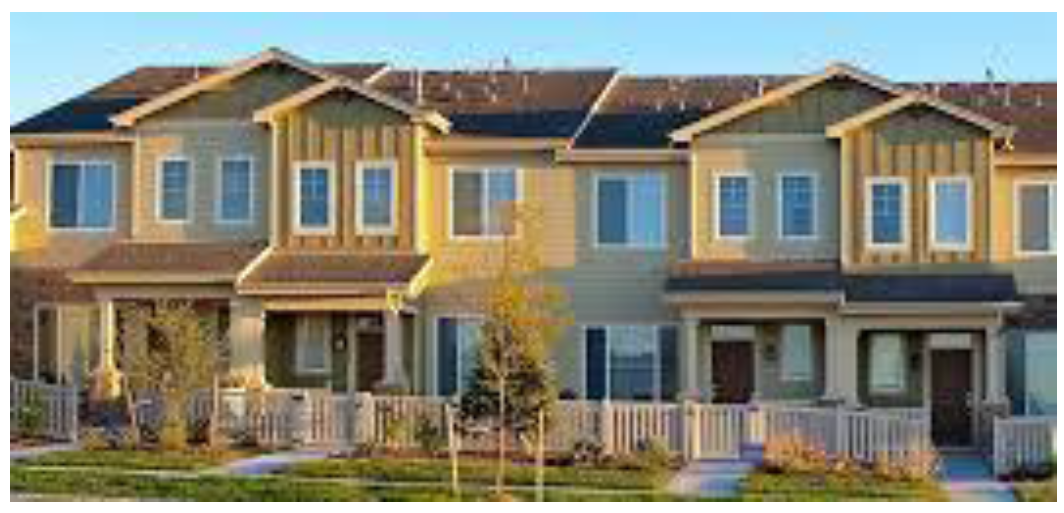
Desirable Front Façade and Roof Articulation
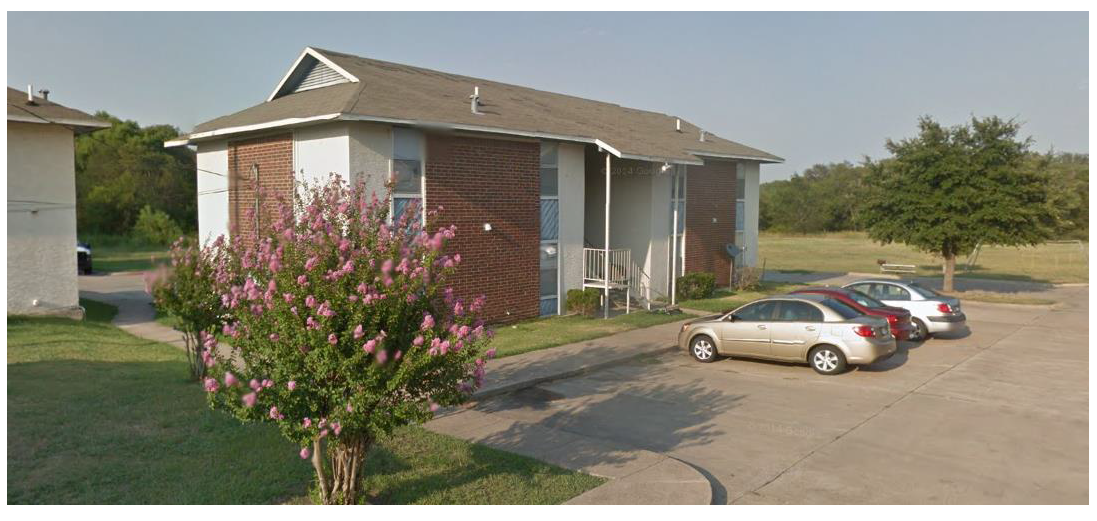
Undesirable - Inadequate Front Façade and Roof Articulation
E.
Minimum exterior construction standards. See section 37.
F.
Parking regulations.
1.
Each dwelling unit. A minimum of two parking spaces which must be enclosed and placed a minimum four feet behind the front building line and on the same lot as the main structure. All parking shall be accessed from the rear of the structure (rear loaded) unless physical lot constraints prevent rear loading, in such case side load garages are acceptable.
2.
Side-entry garages where lot frontage is only to one street (not a corner lot) shall have a minimum of 25 feet from the door face of the garage to the side property line for maneuvering. The minimum setback from any garage door to a property line, street or alley right-of-way line shall also be 25 feet.
3.
Other (see section 33, off-street parking and loading requirements).
G.
Minimum floor area per dwelling unit. Two thousand square feet of air-conditioned floor area. Except for infill development (single-family lots originally platted prior to May, 2008), the minimum shall be 1,600 square feet of air-conditioned floor area.
20.5
Open space requirements.
1.
Usable open space requirements. Except as provided below, any new townhouse subdivision shall provide useable open space (not flood plain) which equals or exceeds ten percent of the gross platted area, rights-of-way for collector and larger sized streets. Useable open space shall not be required for a development if it contains 40 or fewer lots or dwelling units, and if the property contiguous (i.e., abutting or separated only by a residential or collector size street) to the subdivision is either developed for use(s) other than patio homes or is restricted by zoning to not permit patio home development. Properties that are separated by thoroughfares larger than a collector street and/or by drainage/utility easements in excess of 60 feet in width shall not be considered as contiguous. All developments with more than 40 dwelling units will provide useable open space at the rate of 500 square feet per unit with a minimum of 20,000 square feet.
2.
Specific criteria for usable open space. Areas provided as usable open space shall meet the following criteria:
a.
All townhome residential lots must be located within 600 feet of a usable open space area as measured along a street. The planning and zoning commission may increase this distance to 1,200 feet if the shape of the subdivision is irregular or if existing trees/vegetation on the site can be preserved by increasing the distance.
b.
Individual usable open space areas shall be at least 20,000 square feet in size. Useable open space must be a minimum of 50 feet wide, and must have no slope greater than ten percent. At the time of site plan and/or subdivision plat approval, the planning and zoning commission or city council may give full or partial credit for open areas that exceed the ten percent maximum slope if it is determined that such areas are environmentally or aesthetically significant and that their existence enhances the development and/or the surrounding area.
c.
Pools, tennis courts, walkways, patios and similar outdoor amenities may be located within areas designated as useable open space. Areas occupied by enclosed buildings (except for gazebos and pavilions), driveways, parking lots, overhead electrical transmission lines, drainage channels and antennas may not be included in calculating useable open space.
d.
Within useable open space areas, there shall be at least one tree for every 1,000 square feet of space. New trees planted to meet this requirement shall be a minimum three-inch caliper.
e.
A useable open space area must have at least 250 feet of street frontage to ensure that the area is accessible to residents of the subdivision.
f.
Useable open space areas must be easily viewed from adjacent streets and homes.
3.
Credit for off-site open space. At the time of site plan and/or subdivision plat approval, the planning and zoning commission or city council may allow up to one-third of the required open space to be credited for off-site dedicated open space (e.g., park land) that meets the development's needs in terms of adjacency, accessibility, usability, and design integration. The granting of any off-site credit for open space is a discretionary power of the planning and zoning commission and/or city council. The guidelines below may assist in considering if credit is appropriate:
a.
Adjacency. Is at least 15 percent of the townhouse district development's boundary adjacent to park land?
b.
Accessibility. Are there defined pedestrian connections between the development and the park land?
c.
Usability. Is the park land immediately adjacent to the development suitable for use by residents?
d.
Design integration. Does the design of the development provide a significant visual and pedestrian connection to the park land?
4.
Landscaped areas. Additional common open space and landscaped areas that do not qualify as usable open space may be provided, but shall not be counted toward the usable open space requirement.
20.6
Special requirements.
A.
On zero-lot-line patio homes a minimum six-foot wide maintenance easement shall be placed on the adjacent lot (i.e., the other side of the zero-lot-line) to enable the property owner to maintain that portion of his house which is on the zero-lot-line. Side yards and maintenance easements shall be shown on the subdivision plat. A minimum separation between patio homes of ten feet shall be provided. Roof overhangs will be allowed to project into the maintenance easement a maximum of 24 inches.
B.
Maintenance requirements for common areas. A property owners association is required for continued maintenance of common land, open space and/or facilities.
C.
Refuse facilities. Every single-family attached dwelling unit shall be located within 200 feet of a refuse facility, measured along the designated pedestrian and vehicular travel way. A refuse facility shall be a dumpster or other similar container designed for receiving garbage in bulk for more than one dwelling, and all refuse containers shall be maintained in accordance with local public health and sanitary regulations. Refuse containers shall be located no closer than 30 feet to any adjacent single-family property, shall be located so as to provide safe and convenient pickup by refuse collection agencies, and shall be screened in accordance with subsection 36.2.F of this code.
D.
The elimination of a garage space by enclosing the garage with a stationary building wall shall be prohibited.
E.
A site plan shall be required for single-family (detached) or two-family residential developments in which the proposed subdivision will include:
1.
A private amenity or facility comprised of one or more buildings (such as a private recreation/swimming facility, clubhouse, etc.);
2.
A golf course; and/or
3.
A gated (restricted access) entrance into the subdivision.
In these instances, site plan submission and approval will be required for these elements (a site plan showing the entirety of the proposed subdivision is not required). Site plan submission and approval shall be in accordance with subsection 31.B.4, but shall not require a public hearing as required by subsection 31.B.4.E.
F.
Recreational vehicles, travel trailers or motor homes may not be used for on-site dwelling purposes.
G.
Electrical fencing and barbed wire is prohibited as perimeter fencing except for containment of farm animals on three or more acres.
H.
Open storage is prohibited (except for materials for the resident's personal use or consumption such as firewood, gardening materials, etc., which may only be stored in the side or rear yards and which shall be screened from view of public streets and neighboring properties).
I.
Swimming pools shall be enclosed by a security fence not less than four feet in height. All swimming pool security fences shall be constructed so as not to have openings, holes or gaps larger than two inches in dimension, except for doors and gates. All doors and gates shall be equipped with self-closing, self-latching devices.
J.
Any nonresidential land use which may be permitted in this district shall conform to the "NS" neighborhood service district standards.
K.
Other regulations. As established in the development standards, sections 33 through 44.
(Ord. No. 3138, Arts. I, II(Exh. A), 9-30-25)
Section 21. - Multifamily residential (MF) district (apartments).
21.1
General purpose and description. The multifamily residential (MF) district is an attached mixed-use residential district intended to provide the highest residential density in close proximity to retail and employment centers. The principal permitted land uses shall include nonresidential uses on the street level with multiple-family dwellings above or live/work units on the street level with multifamily dwellings above. All multifamily structures shall be located facing public street frontages with a minimum ten-foot wide landscape buffer and a maximum of two rows of parking for the nonresidential uses located on the ground floor. Residential parking shall be located at the rear of the structures. This district shall be located adjacent to neighborhood services (NS), retail (R), central business district (CBD), highway corridor (HC), commercial (C), or light industrial (LI) districts and serve as a buffer between nonresidential development or heavy automobile traffic and medium- or low-density residential development as well as support for retail or employment centers. Live/work units are defined as ground floor units structurally designed to accommodate nonresidential uses with a home-based occupation, office or small scale low impact retail business (i.e. ADA accessibility built-in for example) which typically start out as residential dwelling units but can be also be used for permitted fulltime nonresidential uses. Lease contract shall not prohibit or eliminate allowed live-work or other nonresidential uses. Recreational, religious, health and educational uses normally located to service residential areas are also permitted in this district. Areas zoned for the MF district shall have, or shall make provision for, City of Terrell water and sewer services. They shall be designed to adequately accommodate storm drainage; they shall have paved drive aisles with logical and efficient vehicular circulation patterns.
21.2
Permitted uses.
A.
Those uses listed for the MF district in section 32, use charts as "P" or "T" are authorized uses permitted by right or by temporary use permit (which must be approved utilizing procedures set forth in subsection 38.10). Permitted nonresidential uses in ground floor or street level units shall be based exclusively on the uses designated with a "P" in the use tables (section 32.2) charts 6, 7 and 8 under the neighborhood services (NS) district with the following exceptions which are not allowed: restaurants or food preparation of any kind. No specific use permits (SUP) shall be allowed.
B.
Nonresidential business uses shall only be allowed to operate or be open for business between 8:00 a.m. to 8:00 p.m. daily.
21.3
Height regulations.
A.
Maximum height.
1.
Five stories, and not to exceed 75 feet, for the main building(s). Buildings exceeding three stories in height shall observe a setback distance of 75 feet from any single-family residential property line.
2.
One story for other accessory buildings, including detached garages, carports, clubhouse, gazebo, mail kiosks, laundry rooms, etc.
3.
Other requirements (see section 38).
21.4
Area regulations.
A.
Size of lots.
1.
Minimum lot area. The minimum lot (i.e., project) size shall be one acre, maximum project size shall not exceed 15 acres (calculated on gross acreage).
2.
Minimum lot width. One hundred feet.
3.
Minimum lot depth. One hundred feet.
B.
Size of yards.
1.
Front yard. Variable: Minimum is based on ten-foot wide landscape buffer, one row of parking with drive aisle, and ten-foot wide yard between parking and front façade of building. Maximum front yard is based on the same buffer requirements as above but with no more than two rows of parking. Dimensions may vary slightly due to parking spaces being configured as parallel, angled or head-in. All areas adjacent to a street shall be deemed front yards. Street frontages that face a single-family residential or townhouse district may have residential units on the first floor in which case the front yard requirement shall be the same as the residential district (15—25 feet typically) in order to form a more compatible streetscape.
2.
Minimum side and rear yard. Fifteen feet, unless adjacent to a single-family, duplex, patio home or single-family attached district then side and rear setbacks shall be according to the height of the multifamily building, as follows:
a.
One-story building: Twenty-five feet.
b.
Two-story building: Fifty feet.
c.
Over two-story building: Seventy-five feet.
3.
Building separation.
a.
One-story buildings: Fifteen feet for buildings without openings; 20 feet for buildings with openings.
b.
Two-story buildings (or a two-story building adjacent to a one-story building): Twenty feet for buildings without openings; 25 feet for buildings with openings.
c.
Over two-story buildings (or an over two-story building adjacent to a one- or two-story building): Twenty-five feet for buildings with or without openings.
d.
Between a main building and an accessory building: Ten feet.
C.
Minimum floor area per dwelling unit.
1.
Efficiency unit: Five hundred fifty square feet per unit.
2.
One-bedroom unit: Six hundred square feet per unit.
3.
Two- or more bedroom unit: Eight hundred square feet for the first two bedrooms, plus an additional 200 square feet for every bedroom over two (e.g., three-bedroom unit must have 1,000 square feet, etc.).
D.
Maximum impervious surface coverage. Seventy-five percent total impervious area including main buildings, accessory buildings, driveways and parking areas.
E.
Parking regulations.
1.
Two spaces for each dwelling unit.
2.
One space for each 300 square feet of nonresidential space on the ground floor.
3.
The average number of parking spaces for the total development shall be no less than two spaces per dwelling unit.
4.
No parking space may be located closer than ten feet from any building or closer than two feet from any side or rear lot line.
5.
All parking areas adjacent to public streets shall be screened by a minimum ten-foot wide landscape buffer. Screening may be in the form of live plant materials, berms, low masonry walls that match the exterior finish of main buildings, or any combination of the above. Sidewalks and signage may be located in the landscape buffer.
6.
See section 33, off-street parking and loading requirements, for additional requirements.
F.
Sign regulations. One single- or multi-tenant monument business sign shall be permitted per 300 feet of street frontage with no more than 25 square feet per tenant or address. One business sign may be wall-mounted near the entrance not to exceed 15 square feet in size. No business signs are permitted to be mounted above the first floor of any building.
1.
All buildings containing residential units shall provide signage that clearly identifies the numbers (i.e., addresses) of the units within each building. Signage shall be visible from entrances into the complex and/or from vehicular drive aisles within the complex such that each individual unit is easy to locate by visitors, delivery persons, and/or emergency personnel.
G.
Minimum exterior construction standards. See section 37.
21.5
Special requirements.
A.
Landscape area requirements. See section 34 for landscaping requirements in addition to those listed above.
B.
Refuse facilities. Every multi-family dwelling unit shall be located within 200 feet of a refuse facility, measured along the designated pedestrian travel way. A refuse facility shall be a dumpster or other similar container designed for receiving garbage in bulk for more than one dwelling, and all refuse containers shall be maintained in accordance with local public health and sanitary regulations. Refuse containers shall be located no closer than 30 feet to any adjacent single-family property, shall be located so as to provide safe and convenient pickup by refuse collection agencies, and shall be screened in accordance with subsection 36.2(F) of this code. (See illustrations 36-1 and 36-2 for refuse container enclosure diagrams)
C.
Screening requirements. See section 36 for screening requirements.
D.
Single-family, duplex, patio home, or townhouse residential units constructed in this district shall conform to SF-7.5 or district standards.
E.
Recreational vehicles, travel trailers or motor homes may not be used for on-site dwelling purposes.
F.
Open storage is prohibited.
G.
All points on the exterior façades of all buildings shall be within the prescribed distance of a dedicated fire lane easement as measured by an unobstructed pathway, or route, for fire hoses, in accordance with the adopted International Fire Code, National Fire Protection Association Life Safety Code 101 (NFPA 101), or as determined by the fire marshal.
H.
A four-foot wide paved walkway shall connect the front door of each ground floor unit to a parking area. The minimum width of any sidewalk adjacent to head-in parking spaces shall be six feet to accommodate a two-foot bumper overhang for vehicles.
I.
All front exterior façades must contain at least one window per story.
J.
Buildings shall not exceed 200 feet in length.
K.
Boats, campers, trailers and other recreational vehicles shall be prohibited unless oversize parking areas are provided. This parking area shall not be used to meet the minimum parking requirements and shall not be visible from a public street.
L.
All parking areas shall have appropriate lighting and shall be positioned such that no light adversely impacts adjacent residential areas.
M.
Permitted nonresidential uses in ground floor or street level units shall be based exclusively on the uses designated with a "P" in the use tables (section 32.2) charts 6, 7 and 8 under the neighborhood services (NS) district. No specific use permits (SUP) shall be allowed.
N.
All buildings within a nonresidential development shall be architecturally compatible with each other, in that they shall use similar exterior finish colors and materials to achieve an overall, visually compatible appearance when viewed from the road.
O.
Gated/secured entrances shall be in accordance with the design standards for gated/secured entrances on private streets (see the subdivision ordinance).
P.
Architectural requirements for apartments shall be required to follow subsection 20.4.D of this code.
Q.
Other regulations. As established in the development standards, sections 33 through 44.
(Ord. No. 3138, Arts. I, II(Exh. A), 9-30-25)
Section 22. - Texas Heritage (TX) District.
22.1
General purpose and description. The Texas Heritage (TX) district is intended to provide for development of primarily high quality, but small scale home based agricultural and hobby ranch uses in combination with low-density detached, single-family residences on lots of not less than three acres in size, in addition to churches, schools and public parks in logical neighborhood units. The TX district includes desirable agricultural and ranch elements, architectural, land design and streetscape design elements and amenities in order to maximize aesthetic appeal, access to open space and promote efficient vehicular and pedestrian traffic and utility delivery in areas designated by the comprehensive plan for agriculture or high quality, low density residential areas to preserve the rural character and economic stability of the community. Areas zoned for TX district shall have, or shall make provision for, City of Terrell water and sewer services. On-site sewer is an acceptable long-term solution when developed according to the standard herein. They shall be designed to adequately accommodate storm drainage; they shall have paved streets with logical and efficient vehicular circulation patterns that discourage non-local traffic; they shall be properly buffered from nonresidential uses; and they shall be protected from pollution and undesirable environmental and noise impacts.
22.2
Permitted uses.
A.
Those uses listed for the TX district in section 32, use charts as "P", "S" or "T" are authorized uses permitted by right, by specific use permit (which must be approved utilizing procedures set forth in section 31B) or by temporary use permit (which must be approved utilizing procedures set forth in subsection 38.10).
22.3
Height regulations.
A.
Maximum height.
1.
Three stories, and not to exceed 45 feet, for the main building/house.
2.
Two and one-half stories, and not to exceed 36 feet for other accessory buildings, including detached garage, barn, garden shed, gazebo, etc.
3.
Other requirements (see section 38).
22.4
Area regulations.
A.
Size of lots.
1.
Minimum lot area: Three acres.
2.
Minimum lot width: Two hundred feet.
3.
Minimum lot depth: Two hundred fifty feet.
B.
Size of yards.
1.
Minimum front yard: Forty feet.
2.
Minimum side yard: Twenty-five feet for interior side yard; 25 feet for a non-key corner lot; 40 feet for a key corner lot on a street.
3.
Minimum rear yard: Fifty feet for the main building and any accessory building(s). (See section 35 for exceptions.)
C.
Parking regulations.
1.
Single-family dwelling unit: A minimum of two enclosed parking spaces located behind the front building line on the same lot as the main structure. A minimum 12-foot wide paved driveway shall be installed from the street or alley right-of-way line to the garage door with a minimum length of 25 feet from any right-of-way, property line or alley on detached garages. Any portion of the drive further than 50 feet from the street may be rock or gravel with the exception that any portion of the driveway within 30 feet of the primary residential garage entrance shall be paved.
2.
[Garage openings.] No garage door shall face towards the front property line but shall be rear or side loaded only.
3.
Other. See section 33, off-street parking and loading regulations.
D.
Minimum floor area per dwelling unit. Two thousand square feet of air-conditioned floor area.
E.
Minimum exterior construction standards. See section 37.
F.
Required architectural features.
1.
Minimum roof pitch 8:12 or greater.
2.
Minimum covered porch size shall be 33 percent of front façade width or a minimum width of 12 feet whichever is greater with a minimum depth of eight feet. No portion of the garage shall extend into the front yard beyond the porch support columns.
3.
In new subdivisions the same floor plan and elevation shall not be duplicated for five lots on the same side of the street or for three lots on the opposite side of the street. (Mirror image floor plans are considered duplicates for the purpose of lot spacing.)
4.
Roof design must include dormers or combination hip and gable.
5.
Roof materials shall be architectural grade overlap asphalt shingles, slate, or tile.
6.
All front exterior façades must contain at least one window per story.
G.
Required streetscape amenities.
1.
A minimum four-foot wide sidewalk shall be required to be located adjacent to the right-of-way (front property line) in a private utility/public access easement a minimum of ten feet from the edge of pavement. The sidewalk may meander back and forth across the front property line provided that no portion of the sidewalk is located within seven feet of the edge of pavement. Infill development shall place the required sidewalk in the right-of-way.
2.
A minimum of one street tree shall be planted for every 50 feet of street frontage in accordance with subsection 34.6.
3.
A minimum of two large shade trees shall be planted at the time of construction in the front yard (care should be exercised in the placement of large shade trees so as not to obscure the view of the front entryway of the house). Two small ornamental trees may be substituted for one large shade tree (see "recommended plant list" in section 34).
4.
Mailboxes shall be constructed of masonry materials which match the main residential structure and located at the edge of pavement in such a way so as not to obscure the vision of drivers exiting driveways into the street. Addresses shall be placed in a visible location on both the house and on the mailbox in accordance with the building code.
5.
Decorative street lighting shall be provided along residential streets throughout all new residential developments, providing low illumination ("dark sky" compliant, see section 40) with solar controls on decorative poles with a maximum spacing of 400 feet between lights placed on alternating sides of the street in accordance with the current street lighting policy administered by the city engineer. Light poles shall be located within the five feet landscape zone only (see section 34 for details).
H.
[Street layout and design.] Street layout and design for new subdivisions should include the following elements:
1.
A minimum of 25 percent of the street lengths within the subdivision, excluding major thoroughfares and collectors, should be curvilinear in design. Computation of percentage shall utilize the centerline lengths of all residential streets in the subdivision.
2.
Curvilinear design means an offset from the straight section centerline of the street of not less than three degrees and not greater than 23 degrees and shall offset a minimum distance of 30 feet measured perpendicular to the initial tangent line of the curve.
I.
Maximum impervious surface coverage. Twenty percent of the first three acres of the parcel. For acreage greater than the first three acres, no more than five percent of each additional full acre.
22.5
Special requirements.
A.
Recreational vehicles, travel trailers or motor homes may not be used for on-site dwelling purposes.
B.
Electrical fencing and barbed wire is prohibited as perimeter fencing except for containment of farm animals on parcels of three or more acres.
C.
Open storage is prohibited (except for materials for the resident's personal use or consumption such as firewood, garden materials, farm equipment, etc., which may only be stored in the side or rear yards and which shall be screened from view of public streets and neighboring properties).
D.
Single-family homes with side-entry garages where lot frontage is only to one street (not a corner lot) shall have a minimum of 25 feet from the door face of the garage or carport to the side property line for maneuvering. The minimum setback from any garage door to a street or alley right-of-way line shall also be 25 feet.
E.
Detached accessory structures shall not project beyond the front façade of the house and shall be required to match the exterior materials and finish of the main structure if located in the side yard and is visible from the street. A single livestock barn with a number of square feet not to exceed the air conditioned square feet of the primary residence may be constructed of non-masonry materials provided that no fewer than five trees no smaller than six feet in height from the large trees portion of the recommended plant list are maintained around portions of the barn facing the front or side yard areas.
F.
Swimming pools. See section 42.
G.
Non-chlorinated ponds must be aerated by a fountain or other aeration device to prevent insect vector breeding or other nuisances associated with stagnant water.
H.
A site plan shall be required for developments in which the proposed subdivision will include:
1.
A private amenity or facility comprised of one or more buildings (such as a private recreation/swimming facility, clubhouse, etc.); and/or
2.
A community equine center.
In these instances, site plan submission and approval will be required for these elements (a site plan showing the entirety of the proposed subdivision is not required). Site plan submission and approval shall be in accordance with subsection 31B.4, but shall not require a public hearing as required by subsection 31B.4.E.
I.
Residential properties with paved circle drives accommodating no fewer than four guest or customer vehicles are authorized to engage in homebased retail sales of farm and ranch goods between 10:00 a.m. and 7:00 p.m. no more often than four days each week. Signage advertising such homebased sales may not be lighted and may not exceed two feet by three feet and shall be at least 25 feet setback from any property line.
J.
Special regulations regarding on-site sewer. Any element (tank, sprinkler, underground line) of an on-site sewer system shall be behind the front façade of the main residential structure and shall be setback from any property line or animal enclosure by 25 feet. Any sprinkler head connected to on-site sewer shall be setback from any property line or animal enclosure by 50 feet. Any home with on-site sewer shall be required to follow the monitoring and servicing requirements in effect for Kaufman County.
K.
Other regulations. As established in the development standards, sections 33 through 44.
(Ord. No. 3138, Arts. I, II(Exh. A), 9-30-25)
Section 23. - Manufactured home (MH) district.
23.1
General purpose and description. The manufactured home (MH) district is a detached residential district establishing standards for the development of HUD-code manufactured home parks and subdivisions. HUD-code manufactured home subdivisions include individually platted lots for sale within the subdivision, for the placement of manufactured home units. A manufactured home park offers individually platted lots for the placement of manufactured home units on a lease or rental basis. The manufactured home district establishes area and design requirements for parks and subdivisions, as well as yard requirements for individual lots. Both parks and subdivisions provide open space and recreational areas appropriate for the acreage and number of units contained. Areas zoned for the MH district shall have, or shall make provision for, City of Terrell water and sewer services. They shall be designed to adequately accommodate storm drainage; they shall have paved streets with logical and efficient vehicular circulation patterns that discourage non-local traffic; they shall be properly buffered from non-residential uses; and they shall be protected from pollution and undesirable environmental and noise impacts. Both subdivisions and parks shall only be developed with a home owners association (HOA) or public improvement district (PID) or other structure providing for common maintenance of all landscape, and code enforcement requirements.
23.2
Permitted uses.
A.
Those uses listed for the MH district in section 32 - Use Charts as "P", "S" or "T" are authorized uses permitted by right, by specific use permit (which must be approved utilizing procedures set forth in Section 31B) or by temporary use permit (which must be approved utilizing procedures set forth in Section 38.10).
23.3
Area regulations.
A.
Size of yards (for each space within a manufactured home park or subdivision):
1.
Minimum front yard: 25 feet from a sidewalk, dedicated street, fire lane or any private street or drive. See Section 38 for additional setback requirements.
2.
Minimum side yard: Ten feet; 20 feet between units; 50 feet from zoning district boundary line; 25 feet for a corner lot on a sidewalk, dedicated street, fire lane or any private street or drive.
3.
Minimum rear yard: 25 feet; 50 feet from any zoning district boundary line.
4.
If a garage is provided, the entry (i.e., door) side of the garage shall have a 25-foot setback as measured from any sidewalk, property or street right-of-way line, fire lane or any private street or drive.
B.
Size of space (for each space within a manufactured home park):
1.
Minimum lot area: 7,500 square feet per unit.
2.
Minimum lot width: 75 feet.
3.
Minimum lot depth: 100 feet.
C.
Minimum floor area per dwelling unit: 1,200 square feet.
D.
Maximum lot coverage: 50 percent for main building/unit plus any accessory buildings.
E.
Parking regulations: A minimum of two spaces per unit located on the same lot as the unit served (see section 33, off-street parking and loading) At least one of which shall be in a carport. Parking spaces shall be paved and setback from the property line, sidewalk, fire lane or private street by a minimum of 16 feet by 25-foot long driveway.
F.
Area for manufactured home park: Minimum project area five acres; maximum project area 15 acres.
G.
Maximum height limit:
1.
Two and one-half stories, and not to exceed 36 feet, for the main building/house.
2.
One story with a maximum height of 14½ feet, measured at the highest point of the roof, for accessory buildings, including, but not limited to a detached garage, carport, garden shed, gazebo, etc.
3.
Other requirements (see section 38).
H.
Minimum exterior construction standards: As per building code and state/federal regulations regarding manufacturing homes. (Manufactured homes only - all other structures shall conform to Section 37).
I.
Maximum impervious surface coverage: 50 percent.
J.
Development standards:
1.
All units shall be at least 24 feet wide (e.g., "double-wide). As of the effective date of this Ordinance all single-wide units shall be deemed nonconforming and shall not be brought into the City to occupy an existing vacant lot or to occupy a newly platted lot.
2.
A pitched roof having a minimum of 4:12 is required with a minimum six-inch overhang.
3.
Manufactured housing design and construction will comply with manufactured housing construction and safety standards published by the Department of Housing and Urban Development (HUD) pursuant to the requirements of the Texas Manufactured Housing Standards Act (Vernon's Annotated Civil Statutes Art. 5221f, as amended) and all manufactured housing shall be subject to inspection by the Building Official, or his designee, prior to occupancy.
4.
All manufactured housing within the City shall be anchored on a permanent concrete foundation in accordance with Federal guidelines as stated in the "Permanent Foundation Guide for Manufactured Housing" (HUD 7584). Any additions to the original structure, such as rooms, storage, or garages shall be constructed on a solid concrete slab and require a building permit.
5.
Covered porches, patios and decks shall be constructed on-site, and shall not be located closer than five feet from any property line.
6.
Axles and tongues shall be removed, such that the manufactured housing unit becomes permanently placed upon the site.
7.
Any siding or sheathing used on housing units (or on buildings added onto housing units) shall be compatible with materials used on surrounding structure.
23.4
Supplemental requirements for manufactured home parks.
A.
Tenant parking. Each parking space shall be concrete surface, in accordance with city standards, and shall be located to eliminate interference with access to parking areas provided for other manufactured homes and for public parking in the park (see section 33, off-street parking and loading requirements).
B.
Visitor and supplemental parking. In addition to parking spaces required for each manufactured home unit, there shall be improved parking provided for the manufactured home community in general (see section 33, off-street parking and loading requirements):
1.
Two visitor parking space for every three manufactured home spaces.
2.
One supplemental parking or vehicle storage space for the parking or storage of boats, campers and similar vehicles or equipment for every four manufactured home spaces.
3.
Supplemental spaces may be located anywhere within the manufactured home community provided that no manufactured home space shall be situated further than 150 feet from a visitor space.
4.
Each parking space will be not less than nine feet by 20 feet, which is not to be included in the lot size.
5.
One additional enclosed garage shall be provided for every five units.
C.
Access. Each manufactured home community shall have direct access from an improved public street in accordance with the Subdivision Ordinance. Where an internal private street provides access to individual lots or dwelling units, the same shall be paved in accordance with City standards, and it shall be dedicated to the public as an emergency access or fire lane easement to allow for the rapid and safe movement of vehicles used in providing emergency health or public safety services. Each emergency access/fire lane easement shall have a clear unobstructed width as specified in the adopted International Fire Code, shall connect to a dedicated public street, and shall meet the minimum required turning area and radii to permit free movement of emergency vehicles. Dead end streets are not allowed. Fire lane easements shall be maintained by the manufactured home park. No street or drive may be constructed that fails to meet City of Terrell Standards for residential streets.
Gated/secured entrances are required to be in accordance with the design standards for gated/secured entrances on private streets (see subdivision ordinance).
D.
Walkways. Designated concrete walkways four feet in width will be provided on both sides of roadways or streets.
E.
Street names and signs. Within each manufactured home park, all streets shall be named, and manufactured homes numbered in a logical and orderly fashion. Street signs shall be of a color and size contrasting with those on public streets and roadways so that there is no confusion regarding which are private and which are public streets. These signs and numbers shall be of standard size and placement to facilitate location by emergency vehicles. Street names shall be submitted to the municipal development department along with the construction plat application, reviewed by the appropriate city staff with respect to street naming procedures set forth within the subdivision ordinance and/or the City's Code of Ordinances, and approved by the planning and zoning commission and the city council on the construction plat for the subdivision. The street names shall be set with construction plat approval, and shall not be changed on the final plat without city approval. All dwelling unit numbering (i.e., addressing) shall be assigned by the municipal development department.
F.
Other signs. Along all sections of emergency access easements, the owner or agent shall erect metal signs prohibiting parking. The sign type, size, height and location shall be in accordance with the Manual of Uniform Traffic Control Devices and approved by the city.
G.
Intersections. Internal streets shall intersect adjoining public streets at approximately 90 degrees and at locations which will eliminate or minimize interference with traffic on those public streets.
H.
Street lighting. Street lighting within the manufactured home park shall be provided in accordance with the subdivision regulations, and shall be maintained by the owners of the manufactured home park.
I.
Telecommunication. All electrical distribution lines, telephone lines, cable, internet and other utility or telecommunication shall be underground. [Internet required].
J.
Drainage and soil protection. The ground surface in all parts of the park shall be graded and equipped to drain all surface water in a safe, efficient manner. Each manufactured home space shall provide adequate drainage for the placement of a manufactured home. Exposed ground surfaces in all parts of every manufactured home park shall be paved and/or covered with stone, brick paving, or other similar solid material, or protected with a vegetative growth (such as grass) capable of preventing soil erosion and eliminating dust. All lots shall drain to the street drainage as approved by the city engineer.
K.
Firefighting.
1.
Approaches to all manufactured homes shall be kept clear for firefighting.
2.
The owner or agent of a manufactured home park shall be responsible for the instruction of any staff in the use of the park fire protection equipment and in their specific duties in the event of a fire. Owner shall supply standard City fire hydrants located within 300 feet of all manufactured home spaces, measured along the drive or street.
3.
The owner or agent of a manufactured home park shall be responsible for maintaining the entire area of the park free of dry brush, leaves and weeds in excess of six inches in height.
4.
Construction plat for a mobile home district development shall identify the location and plans for a building sufficient for the estimated population of the development to shelter in place in the event of a dangerous weather event. Such plans must be approved by the city's emergency management coordinator and such facility must be in place with a certificate of occupancy prior to any manufactured home hookups or occupancy.
L.
Refuse facilities. Every manufactured home dwelling unit shall be located within 150 feet of a refuse facility, measured along the designated pedestrian travel way. A refuse facility shall be a dumpster or other similar container designed for receiving garbage in bulk for more than one dwelling, and all refuse containers shall be maintained in accordance with local public health and sanitary regulations. Refuse containers shall be located no closer than 30 feet to any adjacent single-family property, shall be located so as to provide safe and convenient pickup by refuse collection agencies, and shall be screened in accordance with Subsection 36.2(F) of this ordinance. (See Illustrations 36-1 and 36-2 for refuse container enclosure diagrams).
M.
Anchorage of manufactured homes. To insure against natural hazards such as tornados, high winds and electrical storms, anchorage for each manufactured home shall be provided according to the building code and state law.
N.
Skirting.
1.
All manufactured home units shall provide skirting from the top of the unit's frame to grade. Skirting shall totally enclose and secure from view the unit's axles and all required anchors, footings, and piers.
2.
All required skirting shall be masonry, and shall be of a color similar to the materials used in the construction of the manufactured home unit such that it blends with the overall appearance of the unit.
23.5
Special requirements.
A.
Single-family, townhouse residential units constructed in this district shall conform to SF-7.5 district standards, respectively.
B.
Open storage is prohibited.
C.
Usable open space requirements. Except as provided below, any manufactured home development shall provide useable open space that equals or exceeds 15 percent of the total land area within the development. Usable open space areas shall not include drainage or utility easements and be in conformance with subsections 20.5.
D.
One playground area containing at least five pieces of play equipment shall be provided for every 100 dwelling units, or fraction thereof. The playground equipment shall be of heavy duty construction, such as is normally used in public parks or on public school playgrounds.
E.
Site Plan submission and approval (see section 31.B.4) shall be required for any manufactured home park in the MH district. Such site plan approval shall not require a public hearing as required by section 31.B.4.E. Any nonresidential land use which may be permitted in this district shall conform to the "NS"-Neighborhood Service district standards.
F.
All front exterior façades must contain at least one window per story.
G.
Other regulations. As established in the development standards, sections 33 through 44.
(Ord. No. 3138, Arts. I, II(Exh. A), 9-30-25)
Section 24. - Office (O) district.
24.1
General purpose and description. The office (O) district is established to create an appropriate setting for low intensity office and professional uses. The district can be used as a transition district between residential uses and more intense uses, and with appropriate buffers and landscaping, this district may be located in close proximity to residential districts. Permitted uses should be compatible with adjacent residential areas by limiting heights to one or two stories, and shall not include uses that create excessive amounts of traffic, noise, trash or late-night business operations. Traffic generated by uses in this district shall not be encouraged to travel through residential areas. Adaptive reuse of existing structures is encouraged. Buildings in this district should be compatible and similar in scale with residential uses and adjacent property.
24.2
Permitted uses.
A.
Those uses listed for the O district in section 32, use charts as "P", "S" or "T" are authorized uses permitted by right, by specific use permit (which must be approved utilizing procedures set forth in section 31B) or by temporary use permit (which must be approved utilizing procedures set forth in subsection 38.10).
24.3
Height regulations.
A.
Maximum height.
1.
Two stories, and not to exceed 35 feet, for the main building(s) when adjacent to any residential district; otherwise four stories, and not to exceed 50 feet.
2.
One story for accessory buildings.
3.
Other (see section 38).
24.4
Area regulations.
A.
Size of lots:
1.
Minimum lot area: Six thousand square feet.
2.
Minimum lot width: Sixty feet.
3.
Minimum lot depth: One hundred feet.
B.
Size of yards.
1.
Minimum front yard: Twenty-five feet. All yards adjacent to a street shall be considered a front yard (see section 38 for additional setback requirements).
2.
Minimum side and rear yard: Fifteen feet unless adjacent to a residentially zoned property (see below).
3.
Minimum side or rear yard adjacent to a residential district: Twenty feet for one-story building, and an additional ten feet for every story (or fraction thereof) above one-story in height.
C.
Maximum lot coverage: Fifty percent including main and accessory buildings; maximum 80 percent impervious coverage (including all buildings, parking areas, sidewalks, etc.).
D.
Maximum floor-area-ratio (FAR): 1:1.
E.
Parking requirements: As established by section 33, off-street parking and loading requirements.
F.
Minimum exterior construction standards: See section 37.
24.5
Special district requirements.
A.
Driveway spacing (i.e., distance between driveways, measured edge-to-edge):
1.
Arterial street: One driveway per 200 linear feet of frontage.
2.
Collector street: One driveway per 100 linear feet of frontage.
3.
Local street: One driveway per 50 linear feet of frontage.
B.
Landscaping requirements. See section 34.
C.
Screening requirements. See section 36.
D.
Open storage and outside display are prohibited.
E.
Recreational vehicles, travel trailers or motor homes may not be used for on-site dwelling or nonresidential purposes.
F.
Other regulations. As established in the development standards, sections 33 through 44.
(Ord. No. 3138, Arts. I, II(Exh. A), 9-30-25)
Section 25. - Neighborhood service (NS) district.
25.1
General purpose and description. The neighborhood service (NS) district is established to provide areas for limited local neighborhood, low intensity retail and service facilities for the retail sales of goods and services. These shopping areas should utilize established landscape and buffering requirements. The NS district should be located along or at the intersection of major collectors or thoroughfares to accommodate higher traffic volumes, but it can also act as a buffer against residential areas.
25.2
Permitted uses.
A.
Those uses listed for the NS district in section 32, use charts as "P", "S" or "T" are authorized uses permitted by right, by specific use permit (which must be approved utilizing procedures set forth in section 31B) or by temporary use permit (which must be approved utilizing procedures set forth in subsection 38.10).
25.3
Height regulations.
A.
Maximum height:
1.
Two stories, and not to exceed 35 feet, for the main building(s).
2.
One story for accessory buildings.
3.
Other (see section 38).
25.4
Area regulations.
A.
Size of lot:
1.
Minimum lot area: Seven thousand five hundred square feet.
2.
Minimum lot width: Seventy-five feet.
3.
Minimum lot depth: One hundred feet.
B.
Size of yards:
1.
Minimum front yard: Twenty-five feet. All yards adjacent to a street shall be considered a front yard (see section 38 for additional setback requirements).
2.
Minimum side and rear yard: Fifteen feet unless adjacent to a residentially zoned property (see below).
3.
Interior side yards: When retail uses are platted adjacent to other retail uses and integrated into an overall shopping center site (i.e., lots/lease spaces abutting one another), no side yard is required provided it complies with the International Building Code as adopted.
4.
Minimum side or rear yard adjacent to a residential district: Twenty feet for one-story building, and an additional ten feet for every story (or fraction thereof) above one-story in height.
C.
Maximum lot coverage: Fifty percent including main and accessory buildings; maximum 80 percent impervious coverage (including all buildings, parking areas, sidewalks, etc.)
D.
Maximum floor-area-ratio (FAR): 1:1.
E.
Maximum building size: The maximum building footprint (first floor) area of a structure shall not exceed 12,000 square feet.
F.
Parking requirements: As established by section 33, off-street parking and loading requirements.
G.
Minimum exterior construction standards: See section 37.
25.5
Special requirements.
A.
Driveway spacing (i.e., distance between driveways, measured edge-to-edge):
1.
Arterial street: One driveway per 200 linear feet of frontage.
2.
Collector street: One driveway per 100 linear feet of frontage.
3.
Local street: One driveway per 50 linear feet of frontage.
B.
Landscaping requirements: See section 34.
C.
Screening requirements: See section 36.
D.
Temporary outdoor retail sales, which involve the outside display of merchandise and seasonal items, shall be limited to the following:
1.
Shall not be placed/located more than 30 feet from the main building.
2.
Shall not occupy any of the fire lanes or parking spaces that are required by this ordinance for the primary use(s) of the property.
3.
Shall not pose a safety or visibility hazard, nor impede public vehicular or pedestrian circulation, either on-site or off-site, in any way.
4.
Shall not extend into public right-of-way or onto adjacent property.
5.
All outside display items shall be removed at the end of business each day (except for large seasonal items such as Christmas trees).
6.
All merchandise shall be displayed in a neat, orderly manner, and the display area shall be maintained in a clean, litter-free manner.
E.
Open storage is prohibited.
F.
Recreational vehicles, travel trailers or motor homes may not be used for on-site dwelling or nonresidential purposes.
G.
Other regulations. As established in the development standards, sections 33 through 44.
(Ord. No. 3138, Arts. I, II(Exh. A), 9-30-25)
Section 25B. - Neighborhood edge (NE) district.
25B.1
General purpose and description. The neighborhood edge (NE) district is established to provide areas for limited local neighborhood, low intensity retail and service facilities for retail or sale of goods and services. The development standards are designed to maintain and encourage development in a "pedestrian friendly" environment. Design standards shall be based on surrounding residential neighborhood trends, allowing for a transition zone from residential use to service and retail areas. All newly constructed products in the zone shall be built to easily accommodate future transition to alternative uses.
25B.2
Permitted uses.
A.
Those uses listed for the NE district in section 32 - use charts as "P", "S", or "T" are authorized uses permitted by right, by specific use permit (which must be approved utilizing procedures set forth in section 31B) or by temporary use permit (which must be approved utilizing procedures set forth in section 38.10.
25B.3
Height regulations.
A.
Maximum height:
1.
Two stories, and not to exceed 35 feet for the main building(s); minimum height of the first floor of all structures shall be a minimum of 12 feet from finished floor to finished ceiling for any new building and/or buildings. Neighborhood service buildings under substantial renovation shall be subject to the same requirement but may request a building specific standard based on existing conditions.
2.
One story for accessory buildings.
3.
Other (see section 38).
25B.4
Area regulations.
A.
Size of lot.
1.
Minimum lot area: Seven thousand five hundred square feet.
2.
Minimum lot width: Seventy-five feet.
3.
Minimum lot depth: One hundred feet.
B.
Size of yards.
1.
Minimum front yard: Twenty-five feet.
2.
Minimum side yard: Six feet for interior side yard; 15 feet for a non-key corner lot on a street; 25 feet for a key corner lot on a street.
3.
Minimum rear yard: Twenty five feet for the main building and any accessory building(s); 25 feet for rear entry garage (see section 35 for exceptions).
C.
Parking regulations.
1.
A minimum of two enclosed parking spaces located behind the front building line on the same lot as the main structure. A minimum 12 feet wide paved driveway shall be installed from the street or alley right-of-way line to the garage door with a minimum length of 25 feet from any right-of-way, property line or alley on detached garages.
2.
No garage door shall face towards the front property line but shall be rear or side loaded only unless the lot configuration renders this infeasible in which case the garage face shall be located a minimum of four feet behind the front façade of the house.
3.
As established by section 33, off-street parking and loading requirements; proposed residential style driveways and garage units for customer parking shall be approved by the director of municipal development and shall include detailed site plans and parking counts, available on-street parking and area conditions will be considered for alternatives to section 33 regulations.
D.
Minimum floor area per unit. Two thousand square feet of air-conditioned floor area. Except for infill development (single-family lots originally platted prior to May, 2008), the minimum shall be 1,600 square feet of air-conditioned floor area.
E.
Required architectural features.
1.
Minimum roof pitch 6:12 or greater.
2.
Minimum covered porch size shall be 33 percent of front façade width or a minimum width of 12 feet with a minimum depth of eight feet. No portion of the garage shall extend into the front yard beyond the porch support columns.
3.
Chimney must be enclosed in materials matching the surrounding or adjacent façade.
4.
Roof design must include dormers or combination hip and gable.
5.
Roof materials shall be architectural grade overlap asphalt shingles, slate, or tile.
6.
All front exterior facades must contain at least one window per story.
F.
Landscaping requirements.
1.
A minimum four feet wide sidewalk shall be required to be located adjacent to the right-of-way (front property line) in a private utility/public access easement a minimum of ten feet from the edge of pavement. Sidewalk may meander back and forth across the front property line provided that no portion of the sidewalk is located within seven feet of the edge of pavement.
2.
A minimum of one street tree shall be planted for every 50 feet of street frontage in accordance with section 34.6.
3.
A minimum of two large shade trees shall be planted at the time of construction in the front yard (care should be exercised in the placement of large shade trees so as not to obscure the view of the front entryway of the structure. Two small ornamental trees may be substituted for one large shade tree (see "Recommended Plan List" in section 34).
G.
Minimum exterior construction standards. See section 37.
25B.5
Special requirements.
A.
Screening requirements. See section 36.
B.
Temporary outdoor retail sales, which involve the outside display of merchandise and seasonal items, shall be limited to the following:
1.
Shall not be placed/located more than 30 feet from the main building.
2.
Shall not pose a safety or visibility hazard, nor impede public vehicular or pedestrian circulation, eight on-site or off-site, in any way.
3.
Shall not extend into public right-of-way or onto adjacent property.
4.
All outside display items shall be removed at the end of each business day (except for large seasonal items such as Christmas trees).
5.
All merchandise shall be displayed in a neat, orderly manner, and the display area shall be maintained in a clean, litter-free manner.
C.
Open storage is prohibited.
D.
Recreational vehicles, travel trailers or motor homes may not be used for on-site dwelling or nonresidential purposes.
(Ord. No. 3138, Arts. I, II(Exh. A), 9-30-25)
Section 26. - Retail (R) district.
26.1
General purpose and description. The retail (R) district is established to provide areas for local neighborhood shopping and service facilities for the retail sales of goods and services. These shopping areas should utilize established landscape and buffering requirements. The retail district should be located along or at the intersection of major collectors or thoroughfares to accommodate higher traffic volumes.
26.2
Permitted uses.
A.
Those uses listed for the R district in section 32, use charts as "P", "S" or "T" are authorized uses permitted by right, by specific use permit (which must be approved utilizing procedures set forth in section 31B) or by temporary use permit (which must be approved utilizing procedures set forth in subsection 38.10).
26.3
Height regulations.
A.
Maximum height:
1.
Two stories, and not to exceed 35 feet, for the main building(s).
2.
One story for accessory buildings.
3.
Other (section 38).
26.4
Area regulations.
A.
Size of lot:
1.
Minimum lot area: Ten thousand square feet.
2.
Minimum lot width: One hundred feet.
3.
Minimum lot depth: One hundred feet.
B.
Size of yards:
1.
Minimum front yard: Twenty-five feet. All yards adjacent to a street shall be considered a front yard (see section 38 for additional setback requirements).
2.
Minimum side and rear yard. Fifteen feet unless adjacent to a residentially zoned property (see below).
3.
Interior side yards: When retail uses are platted adjacent to other retail uses and integrated into an overall shopping center site (i.e., lots/lease spaces abutting one another), no side yard is required provided it complies with the city's building code.
4.
Minimum side or rear yard adjacent to a residential district: Twenty feet for one-story building, and an additional ten feet for every story (or fraction thereof) above one-story in height.
C.
Maximum lot coverage: Fifty percent including main and accessory buildings; maximum 80 percent impervious coverage (including all buildings, parking areas, sidewalks, etc.).
D.
Maximum floor-area-ratio (FAR): 1:1.
E.
Parking requirements: As established by section 33, off-street parking and loading requirements.
F.
Minimum exterior construction standards: See section 37.
26.5
Special requirements.
A.
Driveway spacing (i.e., distance between driveways, measured edge-to-edge):
1.
Arterial street: One driveway per 200 linear feet of frontage.
2.
Collector street: One driveway per 100 linear feet of frontage.
3.
Local street: One driveway per 50 linear feet of frontage.
B.
Landscaping requirements: See section 34.
C.
Screening requirements: See section 36.
D.
Temporary outdoor retail sales: Temporary outdoor retail sales, which involves the outside display of merchandise and seasonal items, shall be limited to the following:
1.
Shall not be placed/located closer than 30 feet to any street right-of-way, or closer than 15 feet to any other property line.
2.
Shall not pose a safety or visibility hazard, nor impede public vehicular or pedestrian circulation, either on-site or off-site, in any way.
3.
Shall not extend into public right-of-way or onto adjacent property.
4.
All outside display items shall be removed at the end of business each day (except for large seasonal items such as Christmas trees).
5.
All merchandise shall be displayed in a neat, orderly manner, and the display area shall be maintained in a clean, litter-free manner.
6.
Shall not occupy any of the fire lanes or parking spaces that are required by this ordinance for the primary use(s) of the property.
E.
Open storage is limited to a maximum of five percent of the total lot area, shall not be located in front of (i.e., on the street side of) or on top of the building, and must be screened in accordance with the provisions of section 36 (i.e., cannot be visible from any public street or adjacent property). However, a periodic temporary outdoor retail sale, which involves the outside display of seasonal items, is allowed during the appropriate time periods (see provisions in subsection D above).
F.
Recreational vehicles, travel trailers, motor homes or temporary buildings may not be used for on-site dwelling or permanent nonresidential purposes.
G.
Other regulations. As established in the development standards, sections 33 through 44.
(Ord. No. 3138, Arts. I, II(Exh. A), 9-30-25)
Section 27A. - Central business district (CBD).
27A.1
General purpose and description. The development standards in the central business district (CBD) are designed to maintain and encourage development and redevelopment within the central business section (old downtown) of the city in a "pedestrian friendly" environment that is conducive to special events such as sidewalk sales, street dances, festivals, and other similar events. Standards for the district are generally intended provide for a mix of land uses that will promote a downtown where people can live, work, and play within its boundaries, create a place that values the architectural history of our community while encouraging the best of contemporary design. They are also intended to preserve and enhance the community's "small town" heritage and the unique character of the city's original business district.
27A.2
Permitted uses.
A.
Those uses listed for the CBD district in section 32 - Use Charts as "P", "S" or "T" are authorized uses permitted by right, by specific use permit (which must be approved utilizing procedures set forth in section 31B) or by temporary use permit (which must be approved utilizing procedures set forth in section 38.10).
27A.3
Height regulations.
A.
Height:
1.
Maximum five stories for the main building(s).
2.
Maximum one story for accessory buildings.
3.
Maximum other (section 38).
4.
Minimum two stories for the main building, or lower with a specific use permit.
5.
Interior height of the first floor of structure shall be a minimum of 12 feet from finished floor to finished ceiling for any new building and/or buildings undergoing substantial renovation.
27A.4
Area regulations.
A.
Size of lot:
1.
Minimum lot area: None specified.
2.
Minimum lot width: None specified.
3.
Minimum lot depth: None specified.
B.
Size of yards:
1.
Minimum front yard: None specified.
2.
Minimum side yard: None specified.
3.
Minimum rear yard: None specified.
C.
Maximum lot coverage: One hundred percent including main and accessory buildings.
D.
Maximum floor-area-ratio (FAR): 5:1.
E.
Parking requirements: No on-site parking shall be required within this district. However, if on-site parking is provided, all parking areas shall conform to the requirements of subsection 33.3.
27A.5
Other regulations.
A.
Fire suppression requirements: A fire suppression system shall be installed in all new construction unless otherwise approved by the fire marshal.
B.
Projections into a required setback or beyond the street lot line: The following projections shall be permitted in a required setback or beyond the street lot line.
1.
Ordinary building projections, including but not limited to a water tables, sills, belt courses, and pilasters, may project up to 12 inches into a required setback or beyond the street lot line, or beyond the face of an architectural projection.
2.
Balconies above the first floor may project up to 60 inches in the right-of-way and have a minimum of nine feet of clearance over the sidewalk. At no point shall a projection extend over a public street.
3.
Canopies, awnings, cinema or theater marquees, and/or kiosks may project from building face and may extend to, or be located within eight inches of the back of curb.
a.
Any vertical supports anchored to the ground must be located at least four feet from the back of curb and have a minimum of nine feet of clearance.
4.
Roof eaves, soffits, cornices, and parapet treatments may project up to 36 inches into a required setback or beyond the street lot line, or beyond the face of an architectural projection, provided that no portion extending below seven feet, six inches above the immediate adjacent grade may project more than 12 inches.
5.
Architectural projections, including bays, towers, and oriels; below grade vaults and areaways; and elements of a nature similar to the preceding; may project up to 42 inches. All projections shall be in compliance with the American with Disabilities Act (ADA).
6.
Show windows at the first floor may project up to 42 inches.
7.
Outdoor open patios shall be permitted to project into the public right-of-way for nonresidential uses provided that a six-foot wide, unobstructed and leveled sidewalk is maintained for pedestrian access and meets all ADA requirements. The property owner has assumed liability related to such projections and shall maintain such projections in a safe and non-injurious manner.
8.
In all cases, any potential allowances under this section are subject to limitations imposed by the city engineer due to a traffic safety sign distance conflict, a regulation of TxDOT or a minimum pedestrian requirement of ADA.
27A.6
Design criteria.
A.
Purpose. Terrell's downtown central business district (CBD) has been identified by the comprehensive plan as a valuable resource worthy of preservation as a unique district. This district provides development and design standards that preserve the historic and architectural character of existing development, provides for adaptive reuse of existing buildings and the compatibility of new structures and uses with the historic nature of the CBD.
B.
Goals.
1.
Historic preservation, economic development, and maintaining the pedestrian friendly character of the central business district shall be the primary consideration in the development design review.
2.
The preservation and restoration of historically or architecturally significant buildings as well as buildings that contribute to the unique character of the CBD shall be considered as a high priority in the future development of the CBD.
3.
Preservation, restoration, renovation and redevelopment should encourage and promote economic vitality, professional and business activities, tourism, and effective adaptive reuse of structures, upper floors and vacant spaces.
4.
The preservation, restoration, renovation and redevelopment should encourage and promote the concept of the traditional downtown area as the origin and heart of the community as a place for people to gather as well as patronize the businesses located there.
C.
General provisions.
1.
Site plan and design review is required for all new construction and substantial renovation of existing buildings within the central business district. Substantial renovation means:
a.
Alterations to the exterior of existing buildings that change the placement or design of windows, doors or other exterior features of the building such as coping or pilasters;
b.
An increase in the floor area of the building greater than ten percent.
2.
Interior renovation of existing buildings that do not alter the exterior appearance of the building do not require site plan and design review under the provisions of this section. (e.g., a drop ceiling that covers part of an existing window would alter the exterior appearance and require review). However, all renovation work does require a valid building permit and may require an asbestos survey prior to the start of construction.
3.
Physical properties of an existing building such as setbacks, foot prints, height, or other similar characteristics that cannot be altered without substantial hardship are not required to meet the development or design standards within this section. All other provisions shall apply.
D.
Mixed use criteria.
1.
The central business district may contain any combination of uses shown in the use chart in section 32 (use charts) for CBD.
2.
Within the CBD there are both residential and nonresidential uses which may be located in either residential structures or commercial structures. To maintain the architectural and historic character of existing blocks where one type of structure predominates, the following regulations shall apply.
a.
Residential uses may be in residential structures or commercial structures. Residential uses in commercial structures are only allowed if they occupy no more than 50 percent of the floor area of the building; and do not occupy the area adjacent to the street front.
b.
Nonresidential uses may be in residential or commercial structures. Nonresidential uses in residential structures must be in those blocks where existing residential structures predominate.
c.
In block faces within the district that are currently developed with residential structures, new construction shall be compatible residential structures. Either residential or nonresidential uses may be located in the residential structures.
d.
In block faces within the central business district that are currently developed with commercial structures, new construction shall be compatible commercial structures.
3.
Minimum floor area per dwelling unit (second floor and above only):
a.
Efficiency unit: Five hundred fifty square feet per unit.
b.
One-bedroom unit: Six hundred square feet per unit.
c.
Two- or more bedroom unit: Eight hundred square feet for the first two bedrooms, plus an additional 200 square feet for every bedroom over two (e.g., three-bedroom unit must have 1,000 square feet, etc.).
E.
Central business district development and design standards.
1.
All properties must meet requirements provided in this section for site design, and architectural standards.
2.
Purpose of central business district design standards. The purpose of these design standards is to ensure the preservation of the historic and architectural qualities which make the CBD a unique place by permitting new development compatible with existing historic buildings and by maintaining the historic and architectural qualities of existing buildings.
a.
Site design standards. The purpose of the site design standards is to provide for building and parking placement compatible with existing development.
b.
Architectural standards. The purpose of the architectural standards is to provide for the preservation of existing historic and architectural qualities of downtown Terrell, ensure new construction is compatible with these qualities, and to protect and promote the uniqueness of downtown as a commercial area.
3.
Design standards review. All new development shall comply with the site design standards and the architectural standards in section 27A.
4.
Site design standards.
a.
Building placement—Commercial structures.
(1)
Buildings shall be placed on the front property line. Building may be moved back from the front property line to provide for a wider sidewalks and entries, or pedestrian oriented streetscapes if: The buildings takes up an entire block face; or is located on a corner; or has a total frontage of more than 50 percent of the block face.
(2)
New commercial structures shall be allowed only in block faces which are predominately developed with existing commercial structures, or are predominately vacant land.
(3)
Buildings shall be placed on the side property line except when adjacent to a residential type structure in which a 15 feet minimum side yard shall be observed. Buildings may be moved back from the side property line a total of four feet to provide for wider sidewalks and entries when the side property line is along a street.
(4)
Buildings that go through a block so that they have frontage on two parallel streets, shall treat each frontage as a main façade.
(5)
All service areas, dumpsters and loading shall be from the rear of the building or alley.
5.
Architectural design standards.
a.
Street façade—Commercial structures.
(1)
Primary street façades for nonresidential buildings in the central business district shall have the following basic features of existing historic buildings:
(a)
Cornice at top of façade.
(b)
Display windows with transom windows above and lower window panels below.
(c)
Pilasters that divide the façade vertically and separate the display windows units into discrete visual elements.
(d)
Second floor windows, recessed with multiple lights, lintels, and sills.
(2)
Architectural elements such as doors, windows, awnings, canopies and architectural details shall be compatible with the overall visual qualities existing within the historic buildings downtown. Where they still exist, original elements should be retained. If originals are not available, new similar design elements should be obtained. These should not be mistaken for modern "Traditional" or "Early American" styles which are not historically accurate or appropriate. Modern aluminum doors should be avoided.
(3)
In addition to the above, all commercial structures shall have at least two of the following desirable design features as appropriate:
(a)
Street façades on side streets that meet the requirements for primary façades; or
(b)
Buildings on corners which create a diagonal corner cut with the entrance on the corner; or
(c)
Pediments added to the top of the façade; or
(d)
Decorative brickwork and architectural detailing on or around the cornice, fascia, pilasters, or around windows; or
(e)
Use of natural wooden doors with glass windows; or
(f)
Projecting canopies and or awnings placed over the ground floor windows and doors.
(4)
Whenever possible, new additions or alterations to existing structures shall be done in such a manner that if such additions or alterations were to be removed in the future, the essential form and integrity of the original structure would be unimpaired.
(5)
The distinguishing original qualities or character of a building should be preserved and the maintenance, repair, replacement, renovation or alteration of such structures should avoid removing or destroying any distinctive architectural features whenever possible.
(6)
Deteriorated architectural features shall be repaired rather than replaced whenever possible. In the event replacement is necessary, the new material should match the original material being replaced in composition, design, color, texture and other visual qualities. Plastic or vinyl architectural features or siding shall not be approved.
(7)
Plate glass or divided display windows should always be preserved and not covered, painted or filled in. Traditional recessed doorways with substantial wooden doors should be retained or re-installed if significant restoration is undertaken.
b.
Building proportions—Commercial structures.
(1)
Overall height of single-story commercial buildings in the central business district shall be between 18 and 26 feet.
(2)
The proportion of the height to width of the façade between pilasters shall be in the range of 2.5:1 to 3:1. The basic window units shall be between two to two and one-half times the remaining height to the top of the cornice.
(3)
The ground floor façade shall have at least 45 percent of its area in transparent windows, or doors. The second floor façade shall have at least 20 percent of its area in windows. The area of windows includes any mullions framing individual lights within the window frame.
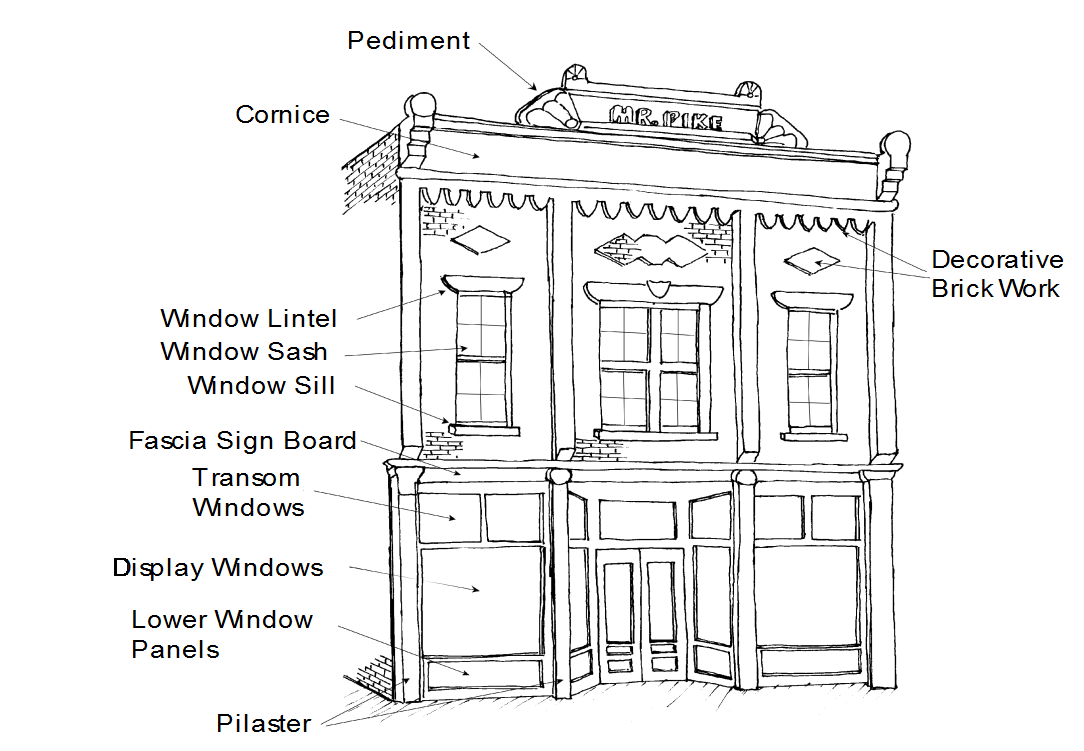
Figure 27A-1: Typical Features of Commercial Structures in the Central Business District
c.
Building materials—Commercial structures.
(1)
The base façade materials for commercial structures within the central business district shall be brick or stone. Architectural details, trim, window or door framing may be wood, stone, cast stone, cast iron, or other materials compatible with the historic and architectural character of the central business district.
6.
Fencing—Commercial structures.
a.
Any fencing for commercial structures within the central business district shall be in the rear of the building not visible from the street.
7.
Color palette. Predominant exterior finish colors shall be of fired brick, similar to that which is present on adjacent existing buildings (other masonry materials may also be considered during site plan review). Trim (i.e., lintels, sills, door jambs, cornices and other similar items) shall be brick, cast stone, stone, cast or wrought iron, or concrete, and colors shall be complementary to the predominant façade colors. Accent colors for friezes, doors and door frames, window frames and mullions, signage, awnings, moldings and other similar features shall be colors that are complementary to, and compatible with, the spirit and intent of the downtown streetscape.
a.
Color palettes shall be compatible with the historic and architectural character of the central business district and should not be garish or otherwise out of character with the historical context of the CBD. The following color palettes are acceptable:
(1)
Sherwin Williams - Preservation Palette.
(2)
Pittsburgh Paints - Historic Paints.
(3)
Do It Best Paints - American Historical Restoration Colors (exteriors only).
(4)
Valspar - American Tradition Historic Colors (lights only).
8.
Façade openings. Façade openings shall comprise at least 40 percent of the building's façade area.
9.
Awnings/canopies.
a.
Ratios. Awnings shall be at an appropriate scale to the building size and configuration. They shall not extend above the roof line of any single-story structure, or above the top of the second floor of any multi-story structure at the awnings' highest points. Awnings shall not completely obstruct any windows on the building.
b.
Projection. Since awnings must extend beyond the building face, a reasonable amount of projection shall be allowed. No awning shall extend more than five feet outward from the building face/surface.
c.
Colors and materials. A mixture of colors is recommended, but no more than three different colors shall be used for awnings on a single building façade (excluding business logo, which may have more colors). Materials shall be of cloth or canvas, or another material which is complementary to the period or building style (metal or plastic shall be prohibited).
d.
Movement. Except for slight movements that are normal for fabric canopies (i.e., along fringe, etc.), no movement shall be allowed for awnings and canopy structures.
10.
Building façade plan. The architectural style and scale of new/renovated buildings within the CBD district shall be compatible with the styles and scale of other adjacent buildings.
a.
In addition to the building permit plan which is required by section 12 of this ordinance, a building façade plan shall also be required. The building façade plan shall be submitted in conjunction with the building permit plan application.
b.
The building façade plan shall clearly show how any new structure and/or any structure that is undergoing exterior renovations will look, and shall portray a reasonably accurate depiction of the materials to be used. Especially significant is the way in which such structure(s) will be viewed from the thoroughfare upon which the property faces and/or sides.
c.
Review, approval and appeal procedures shall be the same as the procedures for a building permit plan, as outlined in section 12.
d.
The MD director (or his/her designee) may, as he/she deems appropriate, require submission of information and materials (possibly actual samples of materials to be used) additional to those initially submitted by the applicant during the building façade plan review process.
11.
Overhead power lines. New utility lines to business establishments shall be placed underground or toward the rear of existing buildings.
12.
Pedestrian streetscape. Pedestrian spaces shall be treated with amenities that are selected based upon their ability to unify the streetscape with the area's historic past. It is important that elements such as construction materials, colors, textures and fixture design complement the area's historic qualities. These features shall be repeated throughout the streetscape so as to unify the district as a whole.
13.
Furnishings. Planters, window boxes, street furniture and other streetscape furnishings shall be complementary to the historical time frame of the CBD area, and shall be located not more than five feet from the building front/façade.
14.
Open storage. Open storage is prohibited in the CBD district.
27A.7
Maintenance and preservation.
A.
Purpose. Existing buildings in the central business district collectively create an image that is vital to the character and attractiveness of the city that must be properly maintained and preserved in order to sustain the appearance and economic vitality of the CBD.
B.
Preservation of architectural features and materials.
1.
Façades.
a.
Original doors, entrances, windows, cornices, friezes, parapets and wall treatments should be preserved or restored to the original design in as much as possible using proper maintenance, painting, cleaning and established restoration methods and techniques.
b.
Wood siding materials and architectural details are such an important feature of an historic building it should be restored and repaired using materials that resemble the original texture and character of the original material as much as possible, aluminum, plastic or vinyl siding or materials shall not be used.
c.
Wood materials should be painted at least every five years to prevent deterioration.
d.
Wood materials should not be sand blasted or stripped using wet or dry abrasives or power wire brushes that will damage the wood. Wood surfaces should be hand scraped and sanded before painting.
e.
Masonry materials usually do not require cleaning as aging produces a patina or color changes that creates a desirable appearance. Cleaning should only be done to halt deterioration or to remove heavy soiling and should be done with the gentlest method possible, such as low pressure water and detergents.
f.
Masonry walls built prior to 1860 were customarily painted and after this date were usually left unpainted. Surfaces that were previously painted should remain painted and unpainted surfaces should remain unpainted.
g.
Waterproofing materials may actually change the color, appearance or damage the materials and should be used with caution and tested on a small area prior to application.
2.
Demolition.
a.
Demolition of an existing building should only be considered as a last resort and only if the building is structurally unsafe and determined it cannot be repaired or rendered safe upon inspection by a qualified registered structural engineer or architect.
b.
If demolition reveals the side of an adjacent building that was designed never to be exposed the wall should be painted a neutral or brick color compatible with surrounding buildings. Stucco or stucco panels should only be used if the wall is too unattractive to paint.
3.
Demolition by neglect for existing buildings: No owner or person with an interest in real property within the CBD District shall permit the property to fall into serious state of disrepair so as to result in the deterioration of any exterior architectural feature which would, in the judgement of the city council and/or the chief building official, produce a detrimental effect upon the character of the CBD as a whole or the life and character of the property itself.
a.
Examples of such deterioration include but are not limited to:
1.
Deterioration of exterior walls or other vertical support;
2.
Deterioration of roofs or other horizontal members;
3.
Deterioration of exterior chimneys;
4.
Deterioration or crumbling of exterior stucco or mortar;
5.
Ineffective waterproofing of exterior walls, roofs, or foundations, including broken windows or doors;
6.
Deterioration of any feature so as to create a hazardous condition which could lead to the claim that demolition is necessary for public safety.
4.
Boarded up windows. Boarded-up windows on the first floor of a building façade that fronts on a street are prohibited, except as follows:
•
Buildings that have been determined to be unrepairable and tagged accordingly by inspection services.
•
Time of compliance:
•
Existing buildings with boarded-up windows on the first floor will have six months from the effective date of this section to comply with the regulations herein.
•
Nothing in this section shall preempt enforcement of any city ordinance or state law with respect to the regulation of unsafe structures.
27A.8
Outdoor displays and sales.
A.
Temporary outdoor retail sales. Temporary outdoor retail sales, which involves the outside display of merchandise and/or seasonal items, shall be limited to the following:
1.
Shall not be placed/located more than 12 feet from the main building.
2.
Shall not pose a safety or visibility hazard, nor impede public vehicular or pedestrian circulation, either on-site or off-site, in any way (i.e., sidewalk sales cannot block the sidewalk or extend out into the street).
3.
Shall only be located in front of the property/business which is selling the item(s).
4.
All outside display items shall be removed at the end of business each day (except for large seasonal items such as Christmas trees).
5.
All merchandise shall be displayed in a neat, orderly manner, and the display area shall be maintained in a clean, litter-free manner.
6.
Shall not occupy any of the fire lanes or parking spaces that are required by this ordinance for the primary use(s) of the property.
B.
Other regulations. As established in the development standards, sections 33 through 44.
27A.9
New development centers. It is anticipated that as Terrell grows new high quality distinct places will be created to serve outlying businesses as employment, retail and banking centers. These destination places will also help to preserve the small town character and feel of Terrell's historic downtown in multiple locations. Placemaking design elements are characterized by identifiable human-scale placement of buildings where the pedestrian environment drives the form and function of the district which in turn fosters a more cohesive intact community as a whole.
A.
In response to this need and the desire of the city to partner with developers in creating high quality, desirable and sustainable regional employment and shopping destinations in Terrell, new place-making development centers will be identified (utilizing the CBD designation) on the future land use map of the comprehensive plan with the stipulation that the development and design guidelines follow that of the "SMART CODE, Version 9.2, T-6 Transect" or applicable subsequent revisions of same in order to promote the same small town appeal of the central business district.
B.
The SMART Code, Version 9.2 is an established published international standard for sustainable development that is based on the model of hundreds of successful, thriving towns that will preserve the character of Terrell's unique heritage in new development as our community continues to prosper and grow.
C.
Other regulations. As established in the development standards, sections 33 through 44 unless in conflict with the SMART Code, Version 9.2, T-6 Transect, or later which will apply.
(Ord. No. 3138, Arts. I, II(Exh. A), 9-30-25)
Section 27B. - Downtown district (DD).
27B.1
General purpose and description. The development standards in the downtown district ("DD") are designed to maintain and encourage development and redevelopment surrounding the central business district of the city in a "pedestrian friendly" environment that is conducive to special events such as sidewalk sales, street dances, festivals, and other similar events. Standards for the district are generally intended to preserve and enhance the existing historic fabric of downtown, with buildings that reflect early 20 th Century Texas architectural styles and create a sustainable "urban neighborhood development" that is built at a human scale, as well as taking advantage of its relationship to the central business district and Terrell Town Square. They are also intended to preserve and enhance the community's "small town" heritage and the unique character of the city's original business district while improving land use patterns within and encourage private development supporting the historical model of downtown.
The downtown district ("DD") allows a reliable transition between the intensity of the Union Pacific Railroad, Moore Avenue, the Town Square and the adjacent historic neighborhood. Existing buildings should be preserved and new buildings should create a cohesive overall neighborhood structure for the historic downtown and environs. For this reason, guidance for structures contained in Section 27B shall be applicable in the downtown district and, when meeting certain distance criteria, shall be applicable in adjacent land with a variety of underlying zoning. In cases where such distance criteria is met, any uses shall comply with the underlying zoning classification, not the uses of DD. However, in cases where such distance criteria is met, all other requirements of section 27B shall be applicable. This distance classification shall be as follows:
Town Center Area. This consists entirely of city-owned land. The character of this zone consists of attached buildings as structures are phased in. This area would have the highest pedestrian connectivity to facilitate movement through the Town Square with appropriate trees, awnings, public lighting and other elements facilitating both public safety and an all-weather, all-season welcoming environment. All DD related standards of the zoning ordinance are fully applicable on the city-owned land. Specifically, the boundaries for this area include the parcels/property located within the boundaries of South Frances, Newton Street, South Adelaide, and the Union Pacific Railroad as well as adjacent land owned by the city bordering Spur 226.
Transition Area. This area includes the remainder of the DD district and any and all areas of any zoning classification within 600 feet of the downtown district which is not classified as CBD zoning or separated from DD by State Highway 34. Within such areas area, all other requirements of Sub-Sections 27B.5, 27B.6, 27B.7, and 27B.8 shall be applicable.
27B.2
Permitted uses.
A.
Those uses listed for the DD in section 32 - Use Charts as "P", "S", or "T" are authorized uses permitted by right, by specific use permit (which must be approved utilizing procedures set forth in section 31B) or by temporary use permit (which must be approved utilizing procedures set forth in section 38.10). In addition, the Use Chart designation "E" allows residential use according to subsection 27B.3 and 27B.6. Some design and other regulatory elements may also be available only specific use permit, see section 27B.5 for design standards for residential structures within DD.
27B.3
Height regulations.
A.
Height:
1.
Maximum: Four stories for the main building(s).
2.
Maximum: One story for accessory buildings.
3.
Maximum other: (See section 38).
4.
Minimum: Two stories for the main building, or lower with specific use permit; minimum height for a one-story building shall be 22 feet.
5.
Interior height of the first floor of all structures shall be a minimum of 12 feet from finished floor to finished ceiling for any new building and/or buildings. Commercial buildings under substantial renovation shall be subject to the same requirement but may request a building specific standard based on existing conditions.
27B.4
Area regulations.
A.
Size of lot.
1.
Minimum lot area: None specified.
2.
Minimum lot width: None specified.
3.
Minimum lot depth: None specified.
B.
Size of yards.
1.
Minimum front yard: None specified.
2.
Minimum side yard: None specified
3.
Minimum rear yard: None specified
C.
Maximum lot coverage. One hundred percent including main and accessory buildings.
D.
Maximum floor-area-ratio (FAR). Four to one, or greater with a specific use permit.
E.
Parking requirements. On-site parking shall be required within this district. All parking areas shall conform to the requirements of section 33.3. However, the director of municipal development may waive any such requirement upon the submittal of a site plan, which adequately provides for a pedestrian oriented development and associated pedestrian infrastructure. In such case, enclosure of open drainage and provision of a side walk both conforming to the requirements of the city engineer in combination with a pedestrian oriented building façade, pedestrian shade by structural overhang and/or landscaping shall be considered adequate for such a partial or full parking requirement waiver upon review of the site plan by city staff. Alternatively, either city staff or the applicant may submit the site plan/parking plan to the planning and zoning commission for review. In such case, the planning and zoning commission may recommend approval or denial to the city council for city council determination.
27B.5
Design standards—General.
A.
Purpose. The zone immediately surrounding Terrell's Downtown district (DD) has been identified by the comprehensive plan as a valuable resource worthy of preservation as a unique district. This district provides development and design standards that preserve the historic and architectural character of existing development, provides for adaptive reuse of existing buildings and the compatibility of new structures and uses with historic nature of Terrell.
B.
Goals.
1.
Historic preservation, economic development, and maintaining the pedestrian friendly character of the area surrounding the central business district shall be the primary consideration in the development design review.
2.
The preservation and restoration of historically or architecturally significant buildings as well as buildings that contribute to the unique character of the district shall be considered as a high priority in future development.
3.
Preservation, restoration, renovation and redevelopment should encourage and promote economic vitality, professional and business activities, tourism, and effective adaptive reuse of structures, upper floors and vacant spaces.
C.
General provisions.
1.
Site plan and design review is required for all new construction and substantial renovation of existing buildings within the downtown district. Substantial renovation means:
a.
Alterations to the exterior of existing buildings that change the placement or design of windows, doors or other exterior features of the building such as coping or pilasters;
b.
An increase in the floor area of the building greater than ten percent.
2.
Interior renovation of existing buildings that do not alter the exterior appearance of the building do not require site plan and design review under the provisions of this section (e.g., drop ceiling that covers part of an existing window would alter the exterior appearance and require review). However, all renovation work does require a valid building permit and may require an asbestos survey prior to the start of construction.
3.
Physical properties of an existing building such as setbacks, footprints, height, or other similar characteristics that cannot be altered without substantial hardship are not required to meet the development or design standards within this section. All other provisions shall apply.
D.
Overhead power lines. New utility lines to business establishments shall be placed underground or toward the rear of existing buildings.
E.
Pedestrian streetscape. Pedestrian spaces will be treated with amenities that are selected based upon their availability to unify the streetscape with the area's historic past. It is important that elements such as construction materials, colors, textures, and fixture design complement the area's historic qualities. These features shall be repeated throughout the streetscape so as to unify the district as a whole.
F.
Furnishings. Planters, window boxes, street furniture and other streetscape furnishings shall be complementary to the historical timeframe of the area, and shall be located not more than five feet from the building front/façade.
G.
Building façade Plan. The architectural style of new/renovated buildings within the downtown district shall be compatible with the historical styles of historical Terrell buildings. In addition to the building permit plan, which is required by section 12 of this ordinance, a building façade plan shall also be required. The building façade plan shall be submitted in conjunction with the building permit plan application.
1.
Building façade plan shall clearly show how any new structure and/or any structure that is undergoing exterior renovations will look, and shall portray a reasonably accurate depiction of the materials to be used. Especially significant is the way in which such structure(s) will be viewed from the thoroughfare upon which the property faces and/or sides.
2.
Review, approval, and appeal procedures shall be the same as the procedures for a building permit plan, as outlined in section 12.
3.
The municipal development director (or his/her designee) may, as he/she deems appropriate, require submission of information and materials (possibly actual sample of materials to be used) additional to those initially submitted by the applicant during the building façade plan review process.
H.
Mixed use criteria.
I.
The downtown district (DD) may contain any combination of uses shown in the Use Chart in section 32.
J.
Within the downtown district there are both residential and nonresidential uses which may be located in either residential structures or commercial structures. To maintain the architectural and historic character of existing blocks where one type of structure predominates, the following regulations shall apply:
a.
Residential uses may be in residential structures or commercial structures. Residential uses in commercial structures are only allowed if they occupy no more than 50 percent of the floor area of the building; and do not occupy the area adjacent to the street front.
b.
Nonresidential uses may be in residential structures or commercial structures. Nonresidential uses in residential structures must be in those blocks where existing residential structures predominate.
c.
In block faces within the district that are currently developed with residential structures, new construction shall be compatible residential structures. Either residential or nonresidential uses may be located in the residential structures.
d.
In block faces within the district that are currently developed with commercial structures, new construction shall be compatible commercial structures.
K.
Minimum floor area per dwelling unit. Second floor and above only:
a.
Efficiency unit. Five hundred fifty square feet per unit.
b.
One-bedroom unit. Six hundred square feet per unit.
c.
Two- or more bedroom unit. Eight hundred square feet for the first two bedrooms, plus an additional 200 square feet for every bedroom over two (e.g., three-bedroom unit must have 1,000 square feet, etc.).
27B.6
Design standards—Commercial structures.
A.
Concepts. Architectural character should evoke the image of a classic Texas town. Designs that refer to "period architecture" should be interpreted in a contemporary way. Building groupings should be composed of a series of individual elements that stand on their own, but when combined contribute to a coherent overall sense of place. The buildings and shopfronts are to build on the basic design themes of the central business district while striving for design creativity and individual expressions.
B.
Building placement.
1.
Buildings shall be placed on the front property line. Building may be moved back from the front property line to provide for wider sidewalks and entries, or pedestrian oriented streetscapes if: the buildings take up an entire block face; or is located on a corner; or has a total frontage of more than 50 percent of the block face.
2.
New commercial structures shall be allowed only in block faces which are predominately developed with existing commercial structures, or are predominately vacant land.
3.
Buildings shall be placed on the side property line except when adjacent to a residential type structure in which a 15 feet minimum side yard shall be observed. Buildings may be moved back from the side property line a total of four feet to provide for wider sidewalks and entries when the side property line is along a street.
4.
Buildings that go through a block so that they have frontage on two parallel streets, shall treat each frontage as a main façade.
5.
All service areas, dumpsters, and loading shall be from the rear of the building or alley, or designated common area according to an approved site plan.
C.
Fencing. Any fencing for commercial structures within the downtown district shall be in the rear of the building not visible from the street.
D.
Façade openings. Façade openings shall comprise at least 40 percent of the building's façade area.
E.
Street façade.
1.
Expression of the base, middle, roof. Architectural massing that strongly defines a base, middle and cap is strongly encouraged. Roof forms should be expressed whenever possible along the pedestrian realm in a visually interesting fashion, avoiding flat, unarticulated expressions. The base and tops of buildings will vary in material and façades must include articulated ground floor levels, minimum three foot overhangs at eaves, articulated cornice lien, and a stone base.
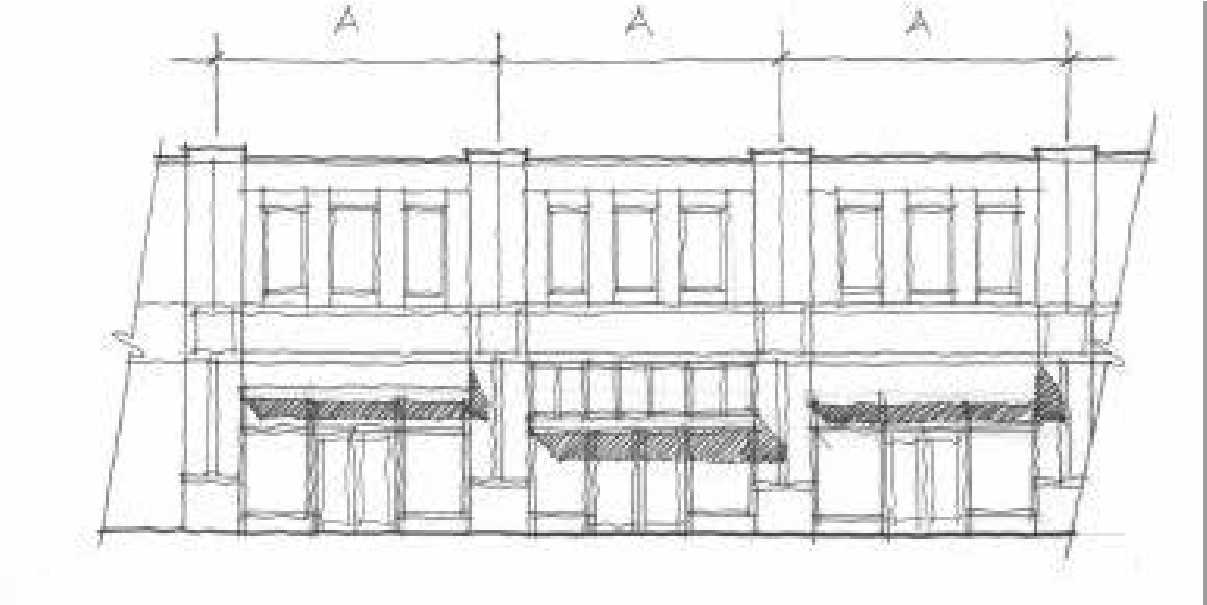
Express of Base, Middle, and Top.
2.
Modules. The massing of any façade should generally not exceed 50 feet maximum (horizontal dimension). Shopfronts should be broken down even further, with massing variations every 30 feet or less. Use variation to enhance the articulation of building volumes.
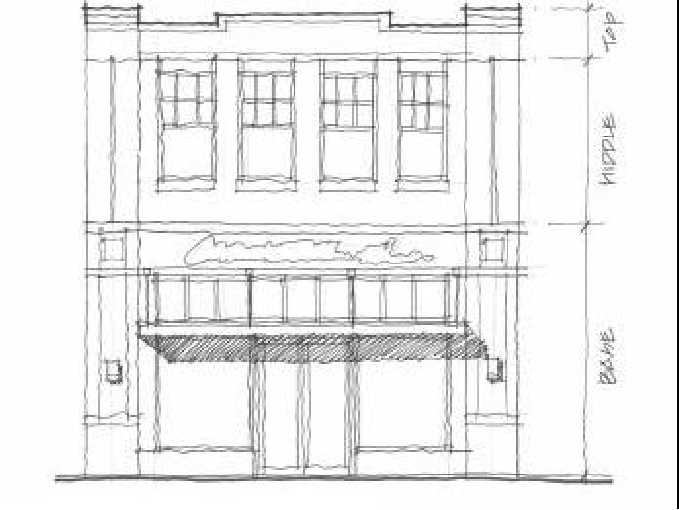
Façade broken down into articulated modules.
3.
Awnings and canopies.
a.
Structural awnings are encouraged at the ground level to enhance articulation of the building volumes.
b.
The material of awnings and canopies should be architectural materials that compliment the building such as metal flashing and wood trim. Fabric (no vinyl) is allowed on upper levels.
c.
Awnings shall not be internally illuminated.
d.
Canopies shall not exceed the length of 70 feet without a break.
e.
Awnings shall not extend more than six feet over the sidewalk, or over right-of-way whichever is closer so they do not interfere with parked cars.
f.
All awning designs will be approved by the City.
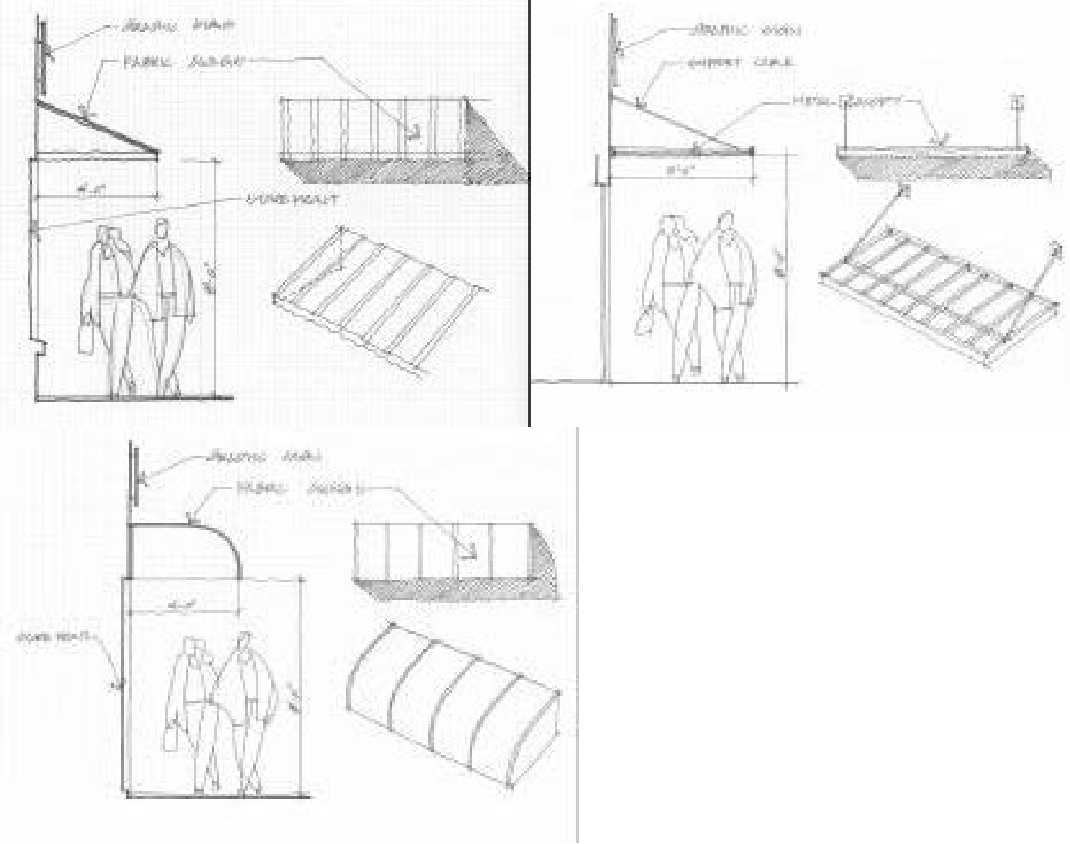
F.
Colors.
1.
Color palette should take cues from the surrounding environment of Terrell, integrating the classic base colors of Texas materials including but not limited to warm earth tones, such as tan, ochre, beige, and terra cotta. Color palette shall be compatible with the historic and architectural character of the central business district (CBD) and should not be garish or otherwise out of character with the historical context of the CBD. The following color palettes are acceptable:
a.
Sherwin Williams - Preservation Palette.
b.
Pittsburgh Paints - Historic Paints.
c.
Do It Best Paints - American Historical Restoration Colors (Exteriors only).
d.
Valspar - American Tradition Historic Colors (Lights only).
2.
Roses, pinks, plumbs, and violets should generally be avoided.
3.
Vibrant accents may be used in limited quantities at appropriate locations. Accents are to be of high quality materials and are used to promote a vibrant street life in a manner compatible with the "civic" nature of the street.
4.
When brick is painted, flaking paint could be removed to the original brick surface and repainted, where necessary, or repainted an appropriate color. Painting previously painted surfaces is an inexpensive and effective way to change and improve the appearance of a building face.
5.
All windows and cornices on the same façade should be of the same color. Use a lighter color to emphasize their architectural detailing, especially where there are darker original brick surfaces.
6.
Features such as gutters and downspouts, mechanical equipment, air conditioning units and flashing should be painted in a flat finish and should match the wall color of the building.
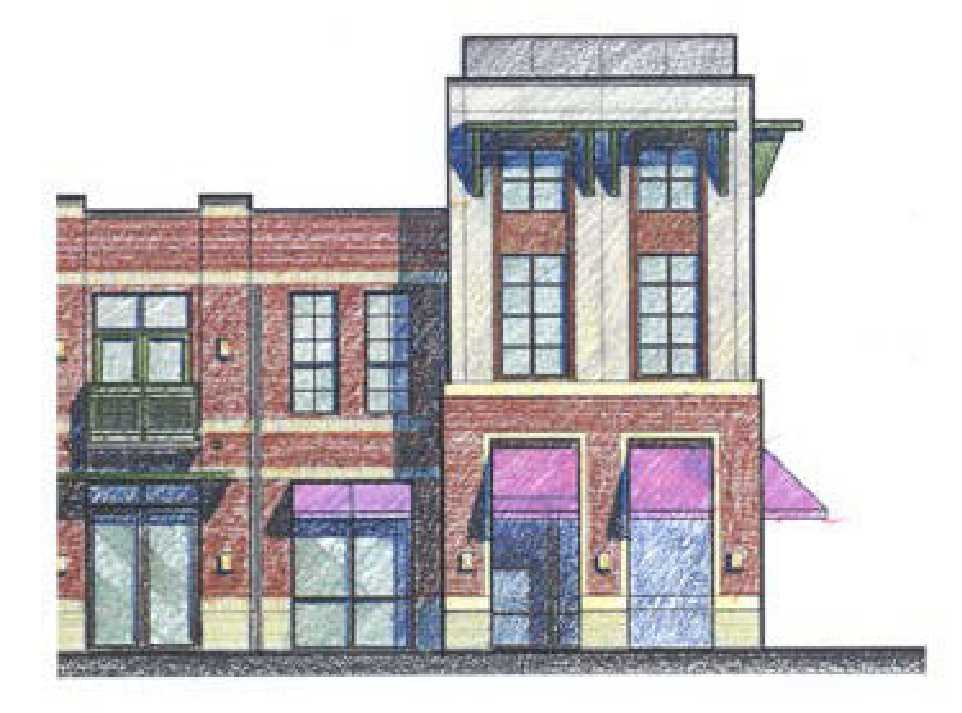
Color palette integrates classic base colors of Texas materials.
G.
Materials.
1.
Primary building material shall be clay fired brick.
2.
High quality materials such as terra cotta, natural stones, clay fired units, or other approved masonry materials are encouraged for architectural details and accents whenever appropriate. A stronger use of details and materials is suggested at entries and the ground floor.
3.
A high quality durable base material, such as terra cotta, natural stone, cast stone, clay fired tile, or other approved masonry materials is suggested for building façades abutting the sidewalk. The base should be a minimum of 18 inches in height and appropriately proportioned and detailed for the façade of the building.
4.
Roof tiles should be of high quality. Different shapes and finishes of tiles that promote variety and individuality to buildings with an overall compatible palette of materials are encouraged.
H.
Details.
1.
Large expanses of flat exterior cement plaster walls are not desirable. Where large amounts of mass are required, the mass should be broken down by changes in plane, reveals or decorative details. The following accent features add detail and are encouraged:
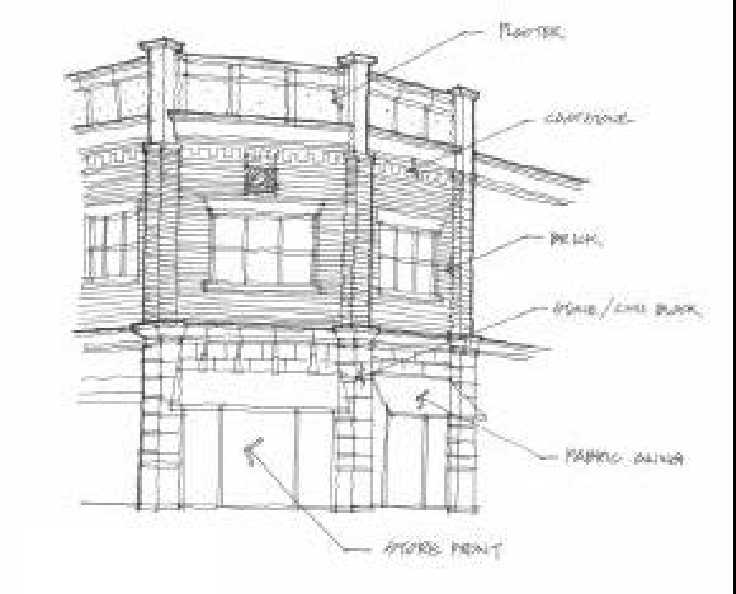
Building mass broken down by architectural details
27B.7
Design standards—Residential structures. All newly constructed residential products in the zone shall be built to easily accommodate future transition to alternative uses.
A.
Architectural vernacular. The purpose of defining the architectural vernacular for residential structures within the downtown district is to preserve and enhance the early 20 th Century architectural styles present in the downtown area, while being flexible enough to guide the design of new development in a manner which is contextual but not duplicative of these period styles. Though these standards reinforce baseline styles, it does not preclude the development or more ornate styles (i.e., Victorian) in the downtown district area through higher levels of architectural detail. These styles include:
•
Folk Traditional.
•
Craftsman.
•
Four Square.
•
Victorian.
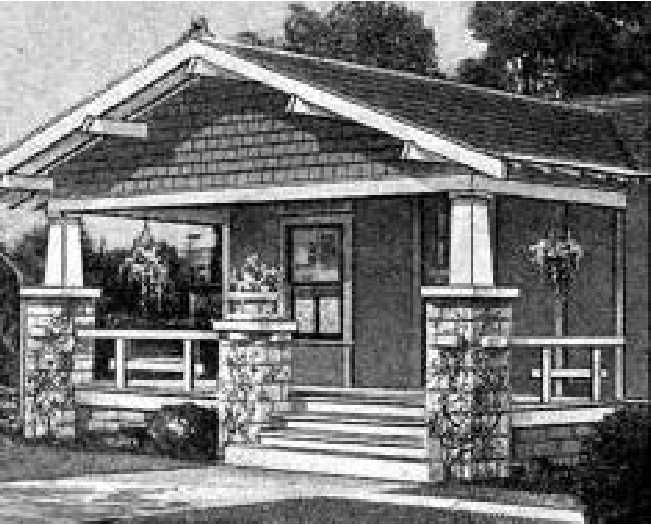
1.
Folk Traditional Style is defined by:
•
A square symmetrical shape.
•
Low pitched pyramidal shaped roof.
•
Roof projections mark entry.
•
Shallow overhangs.
•
Brackets under eaves.
•
Front gable (typically open).
•
Smaller porches.
•
Windows simply trimmed.
•
Typically two stories in height.
•
Asymmetrical roof form articulation.
•
Wood frame with brick accents.
•
Minimal architectural detailing.
•
Carpenter gothic detail.
•
Side wings.
•
Square porch columns/balustrades.
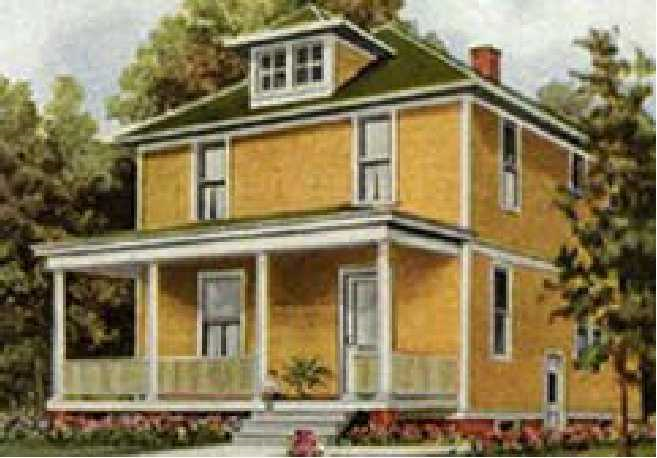
2.
Craftsman Style is defined by:
•
Rustic or bold-square style.
•
Roof articulates entry with gable.
•
'Nestled' into the earth.
•
Exaggerated foundation and porch pillars.
•
Local building tradition.
•
Wide deep front porch.
•
Masonry base and piers.
•
Symmetrical roof.
•
Layout emphasizes horizontality.
•
Typically one and one half story.
•
Local materials.
•
Sheltering overhangs.
•
Heavy and dark woodwork.
•
Roof rafters expressed.
•
Details of brick, tile, or rustic river stone.
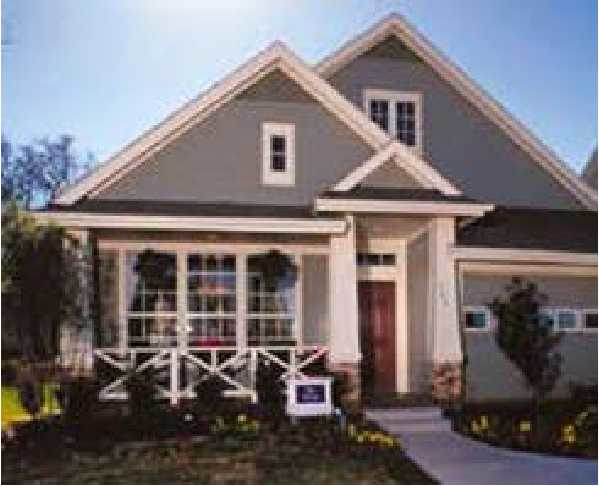
3.
Four Square Style is defined by:
•
Smaller building lots.
•
Typically two stories in height.
•
Horizontal emphasis.
•
Symmetrical roof massing.
•
Smaller dormers.
•
Front doors typically with glass panels.
•
Often wood frames, may be stucco, brick, or cement block.
•
Pyramidal or hipped roof.
•
Emphasis on unbroken roof lines.
•
Glass dormer or gable marks entry.
•
Wide eaves.
•
Articulated doors and windows.
•
Wood piers and balustrades on porch.
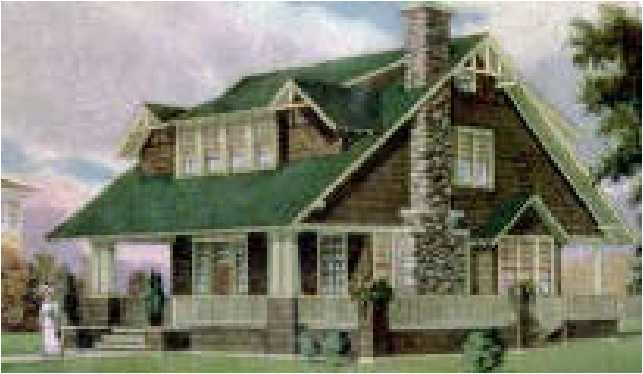
4.
Folk Victorian houses contain features:
•
Square, symmetrical shape.
•
Porches with spindlework or flat, jigsaw cut trim.
•
Carpenter gothic details.
•
Low-pitched, pyramid shaped roof.
•
Front gable and side wings.
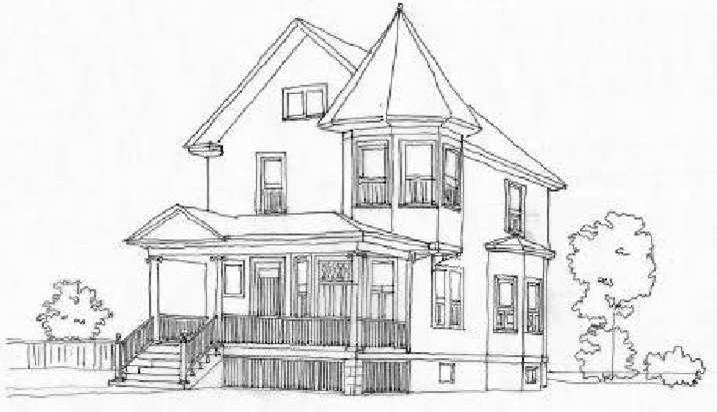
B.
Site layout. All development shall comply with any and all city ordinances applicable to the area. Builders and owners are to develop, renovate, and maintain individual lots in a manner prescribed by all governing controls including applicable building and zoning codes and by these standards.
1.
Lot standards. There are generally two lot types within the DD neighborhoods: interior and corner lots. Primary building setbacks for all lot types have been determined by current zoning. The following reflects recommendations and special setback requirements:
a.
Interior lots.
i.
Minimum front yard. A ten-foot sidewalk and utility easement adjacent to the right-of-way.
ii.
Minimum side yard. Five feet for a side with no vehicle access to rear, ten feet for a side with vehicle access to rear. Building sides developed as zero-lot line product or those with appropriately fire rated side building walls may reduce this minimum based on city review.
iii.
Minimum rear yard. An eight foot yard shall be provided in most cases; a 20 foot setback shall be provided for garages facing alleys; this can be reduced to 12 foot but requires additional surface parking;
On-site parking for a minimum of two cars is required to be provided as a rear garage or carport only, all carports shall be fully screened with a private six-foot gate.
b.
Corner lots.
i.
Minimum front yard. A ten-foot sidewalk and utility easement adjacent to the right-of-way.
ii.
Minimum side yard. Five feet for a side with no vehicle access to rear, ten feet for a side with vehicle access to rear. Building sides developed as zero-lot line product or those with appropriately fire rated side building walls may reduce this minimum based on city review. In cases which the parking requirement is met with a side entry then the minimum set back to the garage or carport front is 20 feet past the building side of the sidewalk edge. All carports shall be fully screened with a six-foot privacy gate.
iii.
Minimum rear yard. A five foot or greater as necessary to accommodate rear parking.
Detached garages facing side streets are encouraged. This sitting requires less concrete for driveways. A garage connected to the residential structure covered walk provides a breezeway space.
C.
Driveways. Builders are required to construct a concrete or masonry driveway to the back of the sidewalk. Stamped and colored concrete, interlocking pavers, concrete with brick borders, and exposed aggregate concrete paving is encouraged. Color, patter, and design should compliment that of the proposed new residential structure or renovated home. The driveway from the building side edge of sidewalk to the rear to the building may be built as a paved, concrete "wheels only" drive when designed to require the auto to move without turns or angles on its path to the rear of the building. Asphalt, shell, mulch, and gravel driveways are prohibited. Under no circumstances may an entire front yard be paved as a driveway. A minimum of 50 percent of a front yard is to be planted in shrubs, ground cover, trees or turf when a circular drive or motor court is used.
Paving material should never abut building foundation except as entry walks or approaches to garages.
D.
Garages and carports. No front loaded on-site parking or garages are allowed. All parking shall be to the rear of the building and/or lot.
E.
Detached garages. Detached garages or carports in rear yards are preferred, but for corner lots, a side entry is allowed, subject to site plan review.
F.
Siding materials. The following exterior cladding materials are acceptable:
1.
Brick. Brick colors should be medium to dark hues with reds, browns, and buff as the dominate color. All brick cladding must be real brick and meet standards established by the Brick Institute of America.
2.
Wood and cementatious siding. Siding material shall be either wood or hard board and must be of horizontal, lap type. The following restrictions apply to such siding:
•
Cementatious siding is acceptable
•
Vertical siding is prohibited
•
Diagonal siding, board and batten, plywood and particle board are prohibited
•
All siding must be painted or stained.
3.
Trim. All trim shall be smooth/semi-smooth, high quality finish grade stock wood. Trim shall be stained or painted and/or cementitious trim.
Material must be carried around the corner. Masonry veneer applied to a front façade only, without a four foot minimum transition around each corner to the side façades will not be permitted.
G.
Porches. Covered front and rear porches are encouraged for the residential-style structures within Downtown District. They create protection from the elements and a sense of individuality.
The two types of porches encouraged are the inset porch and or projected porch. The inset porch appears as a continuation of the house with the main roof extended to cover the porch. The projected porch appears more as an addition, with its own separate roof.
A front porch is required for all residential structures within Downtown District.
Porches shall be a minimum of six feet deep and may extend to the edge of the ten-foot sidewalk/utility easement provided that such encroachment does not result in a threat to the occupant's or public's health, safety, or welfare. The porch shall have a minimum area of 60 square feet.
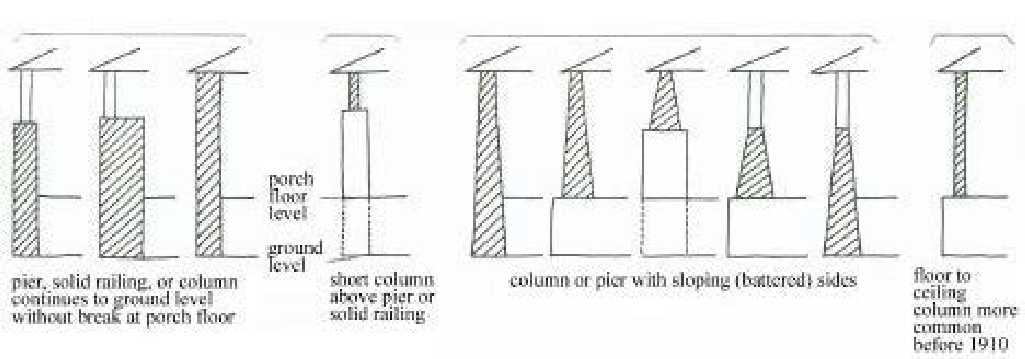
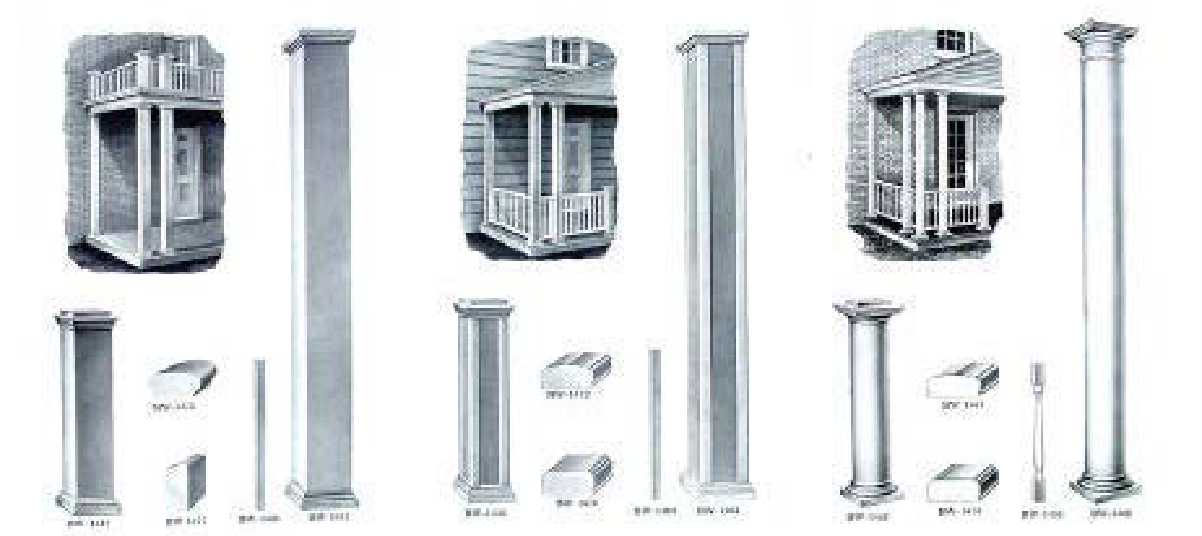
27B.8
Maintenance and preservation.
A.
Purpose. Buildings in the downtown district collectively create an image that is vital to the character and attractiveness of the city that must be properly maintained and preserved in order to sustain the appearance and economic vitality of downtown.
B.
Preservation of architectural features and materials.
1.
Original doors, entrances, windows, cornices, friezes, parapets and wall treatments should be preserved or restored to the original design in as much as possible using proper maintenance, painting, cleaning and established restoration methods and techniques.
2.
Wood siding materials and architectural details are such an important feature of an historic building it should be restored and repaired using materials that resemble the original texture and character of the original material as much as possible, aluminum, plastic or vinyl siding or materials shall not be used.
3.
Wood materials should be painted at least every five years to prevent deterioration.
4.
Wood materials should not be sand blasted or stripped using wet or dry abrasives or power wire brushes that will damage the wood. Wood surfaces should be hand scraped and sanded before painting.
5.
Masonry materials usually do not require cleaning as aging produces a patina or color changes that creates a desirable appearance. Cleaning should only be done to halt deterioration or to remove heavy soiling and should be done with the gentlest method possible, such as low pressure water and detergents.
6.
Masonry walls built prior to 1860 were customarily painted and after this date were usually left unpainted. Surfaces that were previously painted should remain painted and unpainted surfaces should remain unpainted.
7.
Waterproofing materials may actually change the color, appearance or damage the materials and should be used with caution and tested on a small area prior to application.
C.
Demolition.
1.
Demolition of an existing building should only be considered as a last resort and only if the building is structurally unsafe and determined it cannot be repaired or rendered safe upon inspection by a qualified registered structural engineer or architect.
2.
If demolition reveals the side of an adjacent building that was designed never to be exposed, the wall should be painted a neutral or brick color compatible with surrounding buildings. Stucco or stucco panels should only be used if the wall is too unattractive to paint.
D.
Demolition by neglect for existing buildings. No owner or person with an interest in real property within the downtown district shall permit the property to fall into serious state of disrepair so as to result in the deterioration of any exterior architectural feature which would, in the judgement of the city council and/or the chief building official, produce a detrimental effect upon the character of the downtown district as a whole or the life and character of the property itself.
1.
Examples of such deterioration include but are not limited to:
a.
Deterioration of exterior walls or other vertical support;
b.
Deterioration of roofs or other horizontal members;
c.
Deterioration of exterior chimneys;
d.
Deterioration or crumbling of exterior stucco or mortar;
e.
Ineffective waterproofing of exterior walls, roofs, or foundations, including broken windows or doors;
f.
Deterioration of any feature so as to create a hazardous condition which could lead to the claim that demolition is necessary for public safety.
E.
Boarded-up windows. Boarded-up windows on the first floor of a building façade that front on a street are prohibited, except as follows:
1.
Buildings that have been determined to be unrepairable and tagged accordingly by inspection services;
2.
Time of compliance:
a.
Existing buildings with boarded-up windows on the first floor will have six months from the effective date of this section to comply with the regulations herein;
3.
Nothing in this section shall preempt enforcement of any city ordinance or state law with respect to the regulation of unsafe structures.
F.
Existing residential structures.
1.
The downtown district is a unique transition zone. In some cases it affords a transition between existing neighborhoods and central business district. As such, buildings existing on January 1, 2020 originally constructed as residential prior to January 1, 2020 may have a residential use of the same number of units on the same parcel as an allowable use indefinitely.
2.
This allowance does not include any property fronting on US Highway 80 (Moore Avenue), FM 986 (Rockwall Avenue), or Spur 226 (Virginia Avenue).
3.
This allowance is limited to residential uses identified as "E" in the Residential Use Chart. Further, this allowance is granted to the parcel and only to parcels with an existing residential structure on January 1, 2020. In the event, such a structure burns, is destroyed by an Act of God, is demolished by the owner or the city, or in the event the structure is fully renovated, the allowance for continued residential use continues same number of units. Such allowance remains for any new structure upon the same parcel.
(Ord. No. 3138, Arts. I, II(Exh. A), 9-30-25)
Section 28. - Highway corridor (HC) district.
28.1
General purpose and description. The highway corridor (HC) district is intended to provide a regional destination for high quality retail, commercial and business opportunities, good jobs, and utilize the highest and best uses to enhance the taxable yield for the city and the tax increment finance district (TIF) where applicable. The uses envisioned for the district will be compatible with the high visibility and high traffic conditions of the corridor with high quality architectural, streetscape and landscape aesthetics. Convenient access to major thoroughfares and collector streets, internal connectivity, as well as pedestrian oriented circulation in building placement and parking lots utilizing SMART Code and sustainable form-based design elements are also primary considerations. The boundaries of the highway corridor (HC) district are indicated on the revised future land use map of the comprehensive plan. All zoning change requests as well as annexations requesting permanent zoning on properties located within the highway corridor (HC) district shall be rezoned in accordance with the comprehensive plan and future land use map.
28.2
Permitted uses.
A.
Those uses listed for the HC district in section 32 as "P" are authorized uses permitted by right and are anticipated to be primarily located along the highway frontages; those uses indicated by an "R" are permitted uses which are restricted and cannot be located less than 700 feet from the highway right-of-way (IH 20, US Hwy 80, Spur 557, proposed Outer Loop and proposed Alternate US 80 alignment) such as non-retail uses which are not dependent upon direct exposure to high visibility/high traffic for success; and those uses indicated by an "S" are permitted only by the issuance of an specific use permit (SUP) which must be approved by ordinance utilizing procedures set forth in section 31B, those uses indicated by a "T" are permitted only by the issuance of temporary use permit which must be approved utilizing procedures set forth in subsection 38.10.
B.
Certain temporary uses indicated by a "T" may be approved on a case by case basis upon receipt of an approved temporary use permit issued by the director.
C.
All other uses not specifically indicated by a P, R, S, or T are prohibited within the highway corridor (HC) district.
D.
New central business districts are allowed to be created in the highway corridor (HC) District as a separate CBD district approved by the city council and shall be considered to be in accordance with the comprehensive plan and future land use map. Uses permitted as listed in the use charts in section 32 under CBD column.
28.3
Height regulations.
A.
Maximum height:
1.
No height limits for structures within 700 feet of the highway right-of-way otherwise six stories or feet. All structures must meet the minimum setbacks in regards to proximity to residential structures. Height may be further restricted by FAA guidelines.
2.
One story for accessory buildings.
3.
Other (section 38).
28.4
Area regulations.
A.
Size of lot:
1.
Minimum lot area: Ten thousand square feet.
2.
Minimum lot width: One hundred feet.
3.
Minimum lot depth: One hundred feet.
B.
Yards, setbacks and build-to lines:
1.
Primary roads. Primary roads are defined as either the major highway or those frontage or access roadways running parallel but divided from the major highway traffic lanes within the same right-of-way providing local but limited access to and from property adjacent to the highway.
a.
A minimum of 20 feet immediately adjacent to the highway right-of-way line shall be a landscape buffer (see requirements below).
b.
Sidewalks, monument or directional signs, lighting, public art or outdoor fixed furniture may be placed in the landscape buffer.
2.
Front yard—Secondary roads. All yards adjacent to a secondary road (except primary highway roads see B.1 above) shall be considered a front yard. For the purpose of this section a secondary road is defined as a thoroughfare having direct access to the major highway.
a.
A minimum of ten feet immediately adjacent to the collector right-of-way line shall be a landscape buffer (see requirements below).
b.
Sidewalks, monument or directional signs, lighting, public art or outdoor fixed furniture may be placed in the landscape buffer.
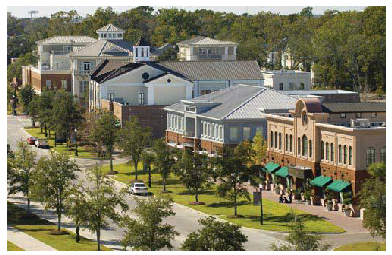
Desirable Design Attribute - Buildings are placed along a "build-to" line with landscape
buffer which creates a consistent and strong street wall along the corridor
3.
Front yard—Tertiary streets and other streets. All yards adjacent to a tertiary street or other public streets (except as in B.1 or B.2 above) shall be considered a front yard. For the purpose of this section a tertiary street or other public street is defined as a thoroughfare not having direct access to the major highway but may have access to the frontage roads of the highway or secondary roads.
a.
A minimum of ten feet immediately adjacent to the street right-of-way line shall be a landscape buffer (see requirements below). Buildings placed less than ten feet from the right-of-way line are not required to have a landscape buffer.
b.
Sidewalks, monument or directional signs, lighting, public art or outdoor fixed furniture may be placed in the landscape buffer.
4.
Minimum side and rear yard (not adjacent to a street). Ten feet unless a fire lane is required then a side or rear yard capable of accommodating the minimum required width of afire lane would apply. If property line is adjacent to residentially zoned property see setback requirement in Figure 28-1 below.
5.
Interior side yards. When retail/commercial uses are platted adjacent to other retail/commercial uses and integrated into an overall town center/campus site (i.e., lots/lease spaces abutting one another), no side yard is required provided it complies with the city's adopted building and fire codes.
6.
Minimum side or rear yard adjacent to a residential district. A ratio of 3:1 or three feet of setback for each one foot of height of a commercial structure is required adjacent to any residentially zoned property line (see Figure 28-1)
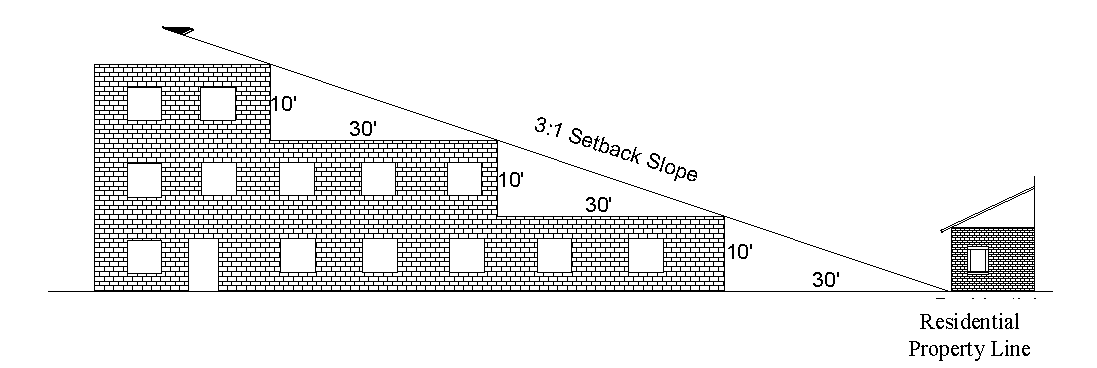
Figure 28-1: Residential Setbacks
28.5
Special requirements.
A.
Maximum lot coverage. Maximum 90 percent impervious coverage (including all buildings, parking areas, sidewalks, etc.).
B.
Driveway spacing (i.e., distance between driveways, measured edge-to-edge): subject to TxDOT standards and/or other city design standards.
C.
Sidewalks. All sidewalks in nonresidential areas adjacent to streets, in parking lots, yards, or located within landscaped buffers or areas shall be a minimum of six feet in width, sidewalks immediately adjacent to or abutting any building shall be a minimum of eight feet in width, sidewalks located in residential developments of the highway corridor (HC) district shall be a minimum of four feet in width.
D.
Temporary outdoor retail sales. Temporary outdoor retail sales, which involves the outside display of merchandise and seasonal items, shall be limited to the following:
1.
Shall not be placed/located closer than 30 feet to any street right-of-way, or closer than 15 feet to any other property line.
2.
Shall not pose a safety or visibility hazard, nor impede public vehicular or pedestrian circulation, either on-site or off-site, in any way.
3.
Shall not extend into public right-of-way or onto adjacent property.
4.
All outside display items shall be removed at the end of business each day (except for large seasonal items such as Christmas trees when permitted by a temporary use permit, see section 38.10).
E.
Open storage. Open storage is prohibited within 700 feet of the highway right-of-way and where permitted shall not be located in any front or side yard adjacent to a public street and must be screened in accordance with the provisions of section 36 (i.e., cannot be visible from any public street or adjacent property). However, a periodic temporary outdoor retail sale, which involves the outside display of seasonal items, is allowed during the appropriate time periods (see subsection C above).
F.
Other regulations. As established in the development standards, sections 33 through 44.
G.
Parking requirements. In order to improve the appearance, convenience of parking lot circulation for both vehicles and pedestrians, parking areas shall be distributed around large buildings (greater than 20,000 square feet in size) in order to shorten the distance to other buildings and help mitigate heat islands (large areas of paved surfaces).
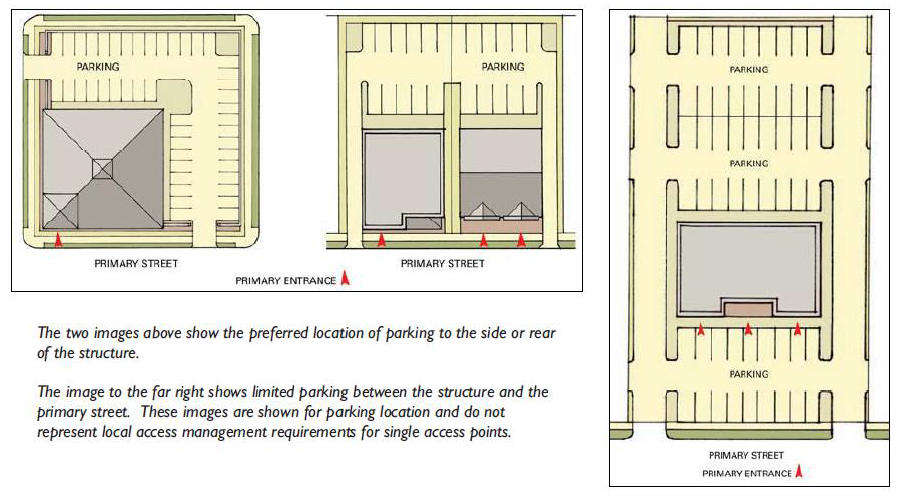
1.
Quantity of spaces shall be in accordance with section 33, off-street parking and loading requirements.
2.
Loading areas should be to the side and rear of buildings; when visible from public roadways or residential properties such areas shall be screened by walls and/or evergreen vegetation. Loading areas shall comply with other applicable provisions of section 33, off-street parking and loading requirements.
3.
No more than two rows of parking shall be located between any building and the right-of-way line of either a highway or primary roadway.
4.
No more than two rows of parking shall be placed between the building and the abutting street on all secondary or tertiary roads and other local public streets for buildings under 20,000 square feet in size. Buildings over 20,000 square feet or if the parking requirement exceeds 100 spaces may have up to 50 percent of the required parking between the front of the building and the abutting secondary thoroughfare or tertiary (local) street.
5.
Rows of parking 150 feet or longer shall have at least one "safe" pedestrian walkway between the rows of cars for every five traffic lanes meeting ADA requirements for width or pass-by areas and protected by curb stops or solid curbing (openings allowed for drainage) oriented in as much as possible toward major store anchors and/or principle pedestrian destinations.
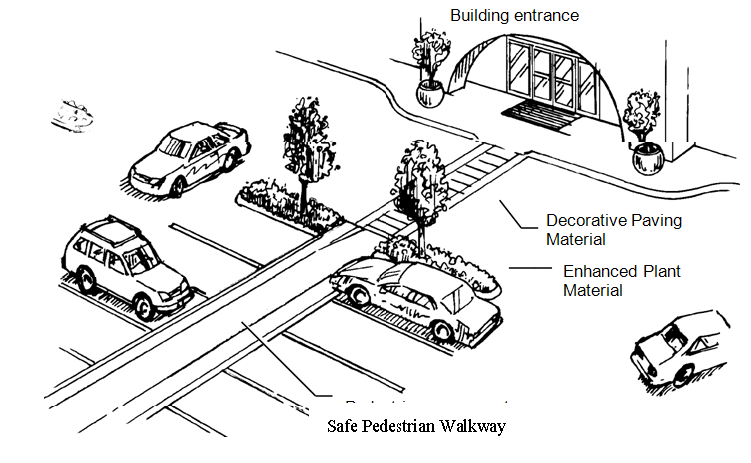
H.
Landscape requirements. Due to the prominent visibility and higher traffic exposure of the highway corridor district it is intended that the aesthetics of this district be enhanced by high quality landscaping, architectural features and site design. Notwithstanding the landscape requirements of section 34 of this ordinance the following requirements are in addition to those requirements and the minimums stated in this section will take precedence over those listed in section 34.
1.
A minimum of 20 feet immediately adjacent to the highway right-of-way line or frontage road shall be a landscape buffer with one large tree required for every 30 feet of frontage. Trees may be clustered in groups or evenly spaced. See section 34 for definitions and other landscape requirements.
2.
In areas where the side or rear of a building faces the highway right-of-way, in addition to the trees a continuous row of screening shrubs or landscape berms shall be placed along the highway right-of-way or frontage road adjacent to the building in order to help screen long expanses of wall or service areas except in areas requiring visibility triangles. For the purpose of design articulation the rows need not be in a straight line but may be meandered, staggered or combined with berms.
3.
All other street frontages shall have a ten-foot wide landscape buffer adjacent to the right-of-way with the same tree requirement as listed above.
4.
Sidewalks, monument or directional signs, lighting, public art or outdoor fixed furniture may be placed in the landscape buffers.
5.
All site plans requiring more than 12 parking spaces shall be landscaped as follows:
a.
All main entrances to parking areas from a thoroughfare shall have landscaped treatments using two or more of the following:
(1)
Flowering shrubs or trees.
(2)
Seasonal color beds.
(3)
Rock, boulders, masonry pavers or other decorative materials.
(4)
Decorative retaining walls or wrought iron fencing.
(5)
Monument signs.
(6)
Sculptural artwork.
(7)
Fountains.
b.
All parking rows 12 spaces or more shall have landscaped islands on the ends a minimum of 90 square feet in size each.
c.
All parking rows shall have landscaped islands at least every 12 spaces equal to 90 square feet in size. All islands within a parking lot shall have a minimum of one large shade tree. Dense foliage species such as live oak or ornamental pear varieties should be avoided to prevent nuisance bird roosts.
d.
No parking space shall be located further than 60 feet from a landscaped area.
e.
All parking lots shall have a minimum of a five-foot wide landscape buffer on the perimeter of side or rear property lines not adjacent to a street.
28.6
Site design.
A.
Building placement: Buildings should be aligned along a corridor to create a relatively consistent street wall. The application of a build-to line can assist in creating this effect. In order to achieve a consistent appearance along corridors, one or more of the following methods should be used:
1.
All buildings located adjacent to the primary highway frontage road or highway right-of-way shall be located a minimum of 20 feet and a maximum of 90 feet from the right-of-way boundary line regardless of whether the building faces the highway or not in order to accommodate parking and landscaping as required.
2.
All buildings located adjacent to a secondary roadway shall be located a minimum of ten feet and a maximum of 80 feet from the right-of-way boundary line regardless of whether the building faces the street or not in order to accommodate parking and landscaping as required (exception: when building size exceeds 20,000 square feet and 50 percent of parking is located in front of building according to section 28.5.G above.)
3.
All buildings under 20,000 square feet in size adjacent to a tertiary road or other local public street shall be located a minimum of zero feet and a maximum of 55 feet from the right-of-way boundary line regardless of whether the building faces the street or not.
4.
Where buildings are placed less than ten feet from the right-of-way line on-street parking may be allowed if the street cross section design allows for such parking (parking spaces shall observe visibility and other traffic design requirements, i.e. distance from drives and intersections, etc.).
5.
Buildings over 20,000 square feet in size adjacent to a secondary or tertiary road or other local public street may be located further than 55 feet from the right-of-way line but no more than 50 percent of the required parking shall be located between the building and the street right-of-way.
6.
When single tracts or lots of land are developed with multiple buildings, the buildings should be oriented toward internal roadways to form block-like configurations with sufficient walkways to provide safe convenient pedestrian circulation throughout the development. Interconnectivity or cross access with adjacent areas where future development is likely to occur shall be maintained in as much as possible. If development constraints prevent internal circulation, then building orientation shall be towards adjacent public roadways.
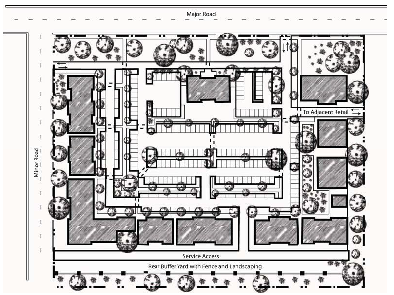
Desirable design attribute: Multiple building shopping center configured to take advantage
of double façades on the internal circulation routes as well as the on the adjacent
public streets. This configuration shows a possible alternative when all of the buildings
cannot be oriented toward the major roadway.
28.7
Architectural design. The ratio of a building's height to its apparent width which is known as "scale" is a major factor in its overall character and aesthetic appeal. Buildings should respect the human scale and add visual interest to the streetscape. The following guidelines apply to all commercial buildings in the highway corridor district. Bulk and massing of buildings should be consistent with other developments in the corridor to maintain cohesion and visual appeal.
A.
Variation in massing:
1.
Buildings should not have a large, dominant mass or overwhelm surrounding development and should, where possible, be configured in a manner harmonious with topography and vegetation. No large expanse of blank walls shall be allowed along front façades but shall incorporate variation through the use of recesses, projections, windows, columns, horizontal and vertical offsets, awnings, canopies, and similar features.
2.
A building's vertical and horizontal dimensions should be related to each other through the use of bays or articulation that separate the building planes into components with proportions that emphasize neither the vertical nor horizontal dimension beyond a 2:3 ratio. Buildings with larger footprints should have the façade subdivided into components to provide variation and a hierarchy of components.
3.
The figure below illustrates proportion through a series of façades with various proportions and articulation.
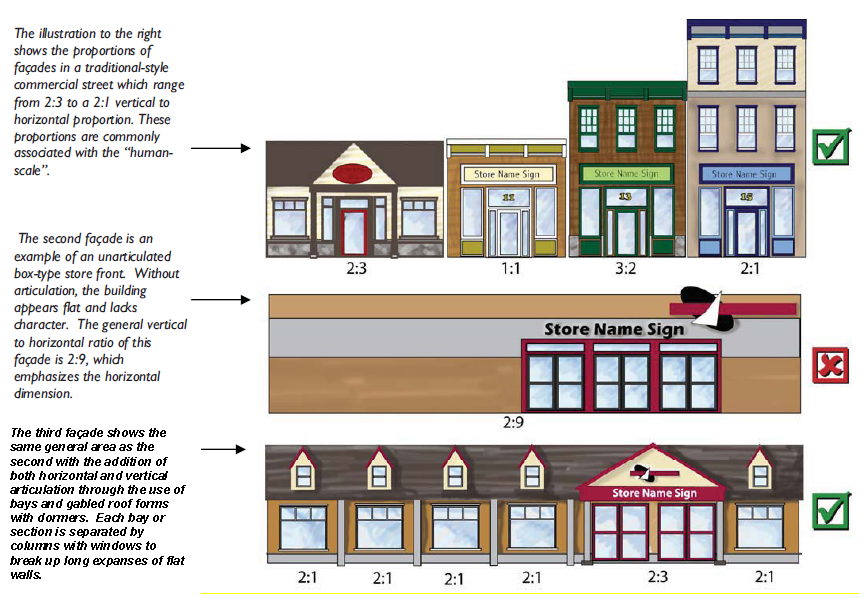
4.
The façade components may be defined through the use of details, fenestration (window placement), roof forms, building materials, awnings or overhangs, and other structures or landscaping elements.
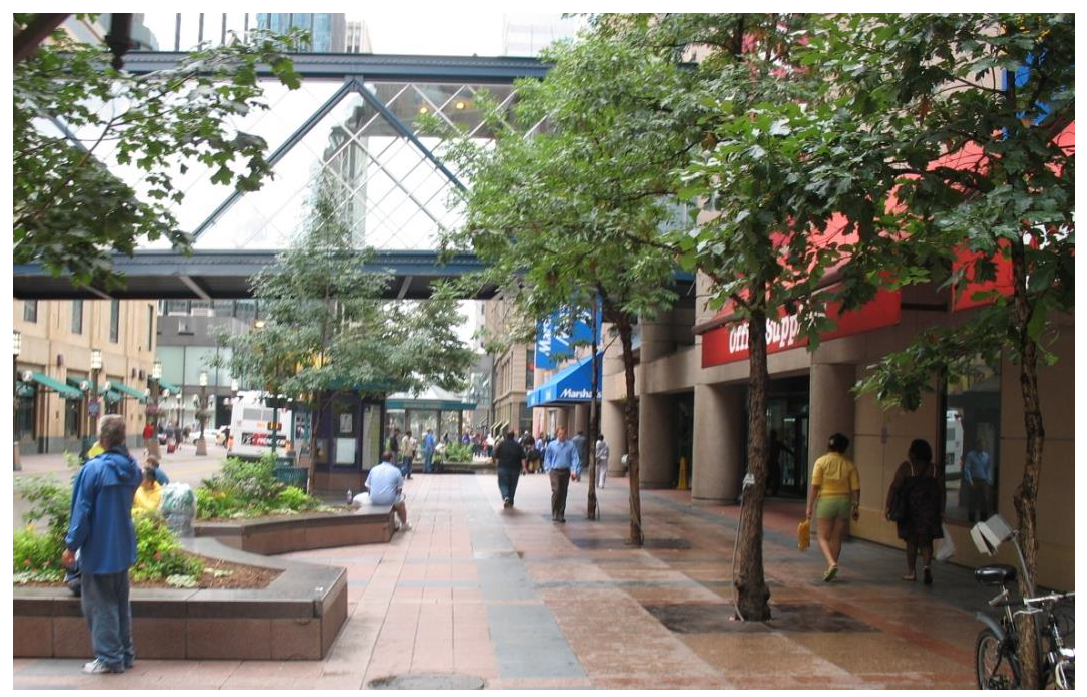
Design elements enhance pedestrian experience: Trees, canopies, furniture, building
overhangs, etc.
5.
Structures should include both horizontal and vertical articulation to reduce the apparent bulk and mass of the building.
6.
Buildings should have a clearly defined base, middle and top.
a.
A recognizable base may consist of, but is not limited to: thicker walls, ledges, or sills; integrally textured materials such as stone or masonry; integrally colored and patterned materials such as smooth-finished stone or tiles; lighter- or darker-colored materials different from the body of the building; mullions; or panels. The use of bulkheads and water table trims are strongly encouraged.
b.
A recognizable top may consist of, but is not limited to: Dimensional cornice treatments other than just colored stripes or bands, variation in masonry pattern or material or differently colored materials; sloping roof with overhangs and brackets; stepped parapets; or aligned openings and articulations.
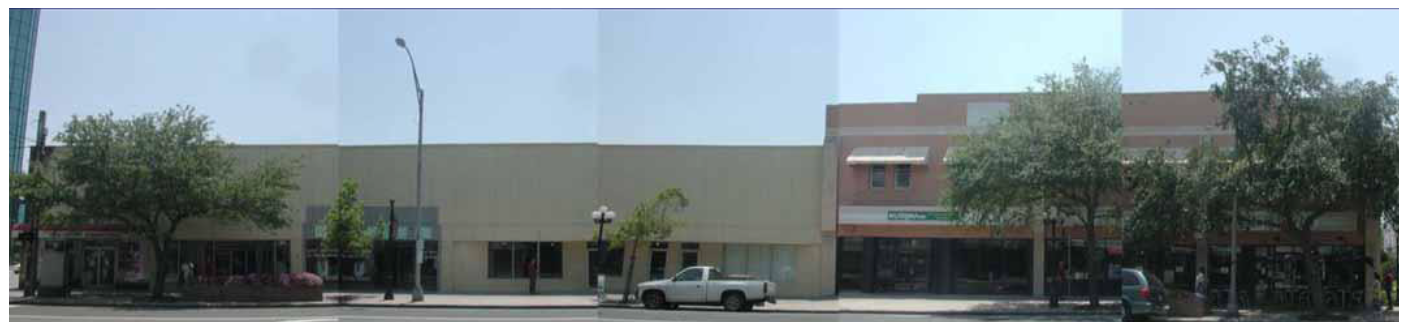
Undesirable design attributes: Very few vertical or horizontal articulations
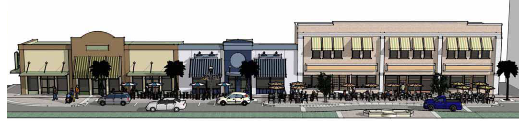
Desirable design attributes: Same street façade as above, but vertical and horizontal
articulations and other architectural details have been added for greatly enhanced
aesthetic appeal and pedestrian friendliness
B.
Roof forms: Roof forms contribute strongly to the overall scale and bulk of a building. Expansive and blank roof planes can increase the apparent bulk of a structure. To enhance the proportion and scale of nonresidential buildings, the following guidelines for roofs should apply.
1.
Pitched roof forms including gabled, shed, hipped, and compound or double-gabled forms are the preferred styles. However, all pitched roof forms should include eaves and overhangs finished with appropriate trim and accents to provide a dimensional and finished appearance.
2.
Mansard or French-style roofs are appropriate on taller buildings (over two-stories).
3.
The use of dormers to break up the roof plane is encouraged.
4.
Flat roofs may be appropriate on large footprint structures where full gabled roofs would be structurally impractical. However, the use of a flat roof on small footprint buildings is discouraged.
5.
Flat roofs should be enhanced with highly detailed parapets and/or cornices to add dimension to the upper portions of the building.
6.
While parapets may be the primary façade treatment for the screening of flat roofs, variation in the parapet heights or adjustment to the roof forms should be used on large buildings to assist in the articulation of the façade.
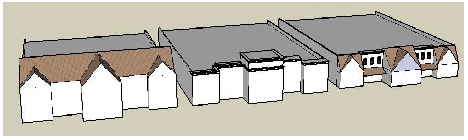
The façades shown in the image above represent alternative roof form treatments for
large buildings to provide variation in the façade and reduce the visual impact of
flat roofs.
C.
Overhangs, canopies and covered walkways: The economic vitality and general quality of life in an often hot climate such as Texas often depends very heavily on providing comfortable pedestrian environments in and around retail, employment centers, restaurants and other high pedestrian traffic areas. Orienting or massing buildings to provide easy access and shorter walking distances to pedestrian destinations as covered previously help mitigate some of the heat island effects of large commercial developments then by adding landscaping and covered walkways the maximum mitigation of the effects of climate can be achieved which results in a vibrant, aesthetically pleasing and pedestrian friendly community. Long flat expanses of projecting upper façade normally seen in older strip shopping centers and single building developments where an excessive amount of signage is usually splashed across every available square foot is also to be strongly discouraged. The following guidelines shall apply to all properties within the highway corridor district:
1.
Upper portions of primary façades shall not overhang lower portions of the façades to provide covered walkways or shade windows unless the overhanging portion of the structure is supported by piers, pillars, or columns of sufficient width and depth to create the appearance of an arcade, colonnade, or other appropriately scaled architecturally integrated feature.
2.
Any portion of a pedestrian walkway immediately adjacent to the southern and western exposures of a building shall have a provision for shade in the form of overhangs, canopies, covered walkways or trees planted in sufficient quantities and locations as to provide adequate shade for pedestrian traffic. Other exposures should also provide for the comfort and appeal of pedestrian traffic in the form of architectural details such as overhangs, canopies, covered walkways or landscaping in order to present a consistent and balanced streetscape.
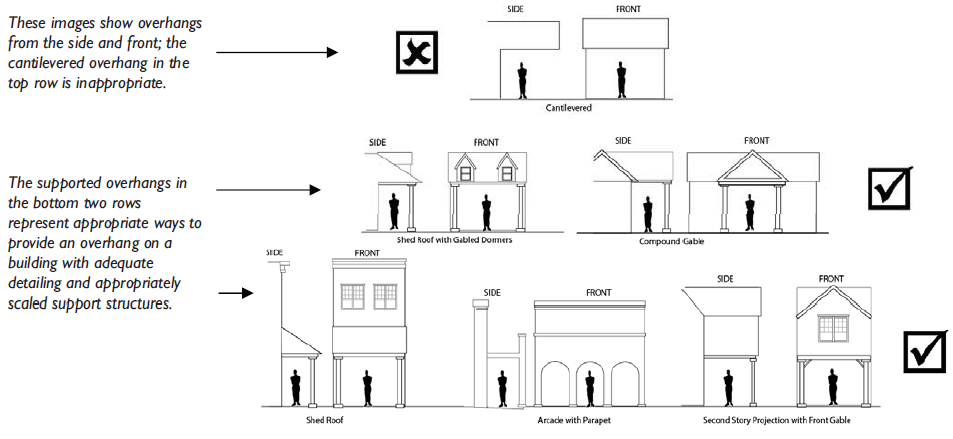
3.
Horizontal banding applied flat or projecting without supports from the upper portion of a façade to act as a cap to the wall or to provide a "marquee" area for signs or brand identification shall be prohibited.
4.
The projection or cantilevering of the whole upper portion of a primary façade can overshadow the articulation of the building's façade and create a top-heavy appearance and shall be prohibited.
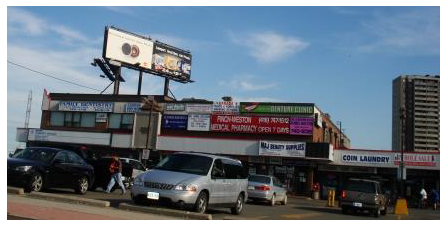
Undesirable design attributes: Projecting flat upper façade with proliferation of
unattractive signage and very obtrusive roof billboard
Desirable design attributes: Vertical and horizontal façade articulation with covered
colonnade walkway with unobtrusive attractive signage
D.
Awnings:
1.
Awnings shall not project more than six feet from the façade of the building and shall not be counted towards the shade requirement listed in subsection C., above. Awnings should be made of durable non-glossy outdoor grade materials in a color that coordinates with the overall design of the building and is compatible with the base colors of the building. Fabric awnings which tend to fade or deteriorate are prohibited. Colors deemed to be inconsistent with these guidelines by the director, including, but not limited to, those affiliated with trademarked or brand affiliated colors shall be required to submit color and material samples to the city for approval by the city council.
2.
Awnings may contain logos or names in trademarked colors of the business to which they are attached if they are in compliance with the sign ordinance as adopted.
3.
Backlit awnings are prohibited.
E.
Freestanding canopies: Freestanding canopies such as those at convenience stores should not overshadow the architecture or scale of the associated buildings or adjacent development. The following standards are intended to promote consistent design of these canopies:
1.
Scale. The height of a canopy should not exceed that of the primary structure.
2.
Roof form. Sloped roof forms such as gabled, gambrel, hipped, mansard or combinations of these types shall be used on all canopies.
3.
Materials. Support columns or piers, roofing, and other exterior finishing materials and colors shall match those used on the primary structure and all elements of the canopy should be proportional to each other.
F.
Rooftop screening: Where a flat roof is appropriate, the roof surfaces and rooftop equipment shall not be visible from the highway corridor or other public rights-of-way or residential property and shall be appropriately screened by parapets or other architectural features.
G.
Sight lines: When planning the location of window openings and areas of outdoor activity in commercial or office developments, the privacy of surrounding residential uses should be respected and direct sight lines into residential areas from proposed nonresidential development should be limited. Likewise, sight lines from adjacent residential areas should be evaluated to minimize impact.
H.
Exterior materials: The following exterior façade standards are intended to promote consistent design and attractive architectural aesthetics within the highway corridor district:
1.
Permitted materials. All exterior façade materials shall be in accordance with section 37 of this ordinance.
a.
A kick plate, knee wall, or other bulkhead of a solid material shall be installed on all façades except the rear of the building where public traffic is not normally allowed or expected to use. If the rear of the building has a public entry or sidewalk then this section will apply.
b.
Visible roofing materials shall be appropriate for the architectural style of the structure. Dimensional asphalt shingles, slate, synthetic slate, decorative metal panels, and tile are permitted materials.
c.
Other materials not listed as prohibited in the section below may be considered on a case by case basis as a primary or accent building material.
2.
Prohibited materials. Exterior façade materials prohibited on façades visible from the public right-of-way are vinyl; aluminum or steel siding; corrugated steel; standard smooth concrete masonry units (cinder block); and highly reflective or mirrored materials like chrome.
28.8
Additional use requirements.
A.
Indoor shooting facilities authorized by SUP shall be required to maintain a 30-foot landscaped setback providing full, year-round screening to a height of eight feet from any side or rear property line.
(Ord. No. 3138, Arts. I, II(Exh. A), 9-30-25)
Section 29. - Commercial (C) district.
29.1
General purpose and description. The commercial (C) district is intended to provide a location for commercial and service-related establishments, such as wholesale product sales, welding/contractor's shops, automotive repair services, upholstery shops, and other similar commercial uses. Uses in this district may utilize open storage areas that are screened from public view (see section 36). Some light manufacturing may also be allowed with certain conditions. The uses envisioned for the district will typically utilize smaller sites and have operation characteristics that are generally not compatible with residential uses. Convenient access to thoroughfares and collector streets is also a primary consideration.
29.2
Permitted uses.
A.
Those uses listed for the C district in section 32, use charts as "P", "S" or "T" are authorized uses permitted by right, by specific use permit (which must be approved utilizing procedures set forth in section 31B) or by temporary use permit (which must be approved utilizing procedures set forth in subsection 38.10).
29.3
Height regulations.
A.
Maximum height:
1.
Two stories, and not to exceed 35 feet, for the main building(s).
2.
One story for accessory buildings.
3.
Other (section 38).
29.4
Area regulations.
A.
Size of lot:
1.
Minimum lot area: Ten thousand square feet.
2.
Minimum lot width: One hundred feet.
3.
Minimum lot depth: One hundred feet.
B.
Size of yards:
1.
Minimum front yard: Twenty-five feet. All yards adjacent to a street shall be considered a front yard (see section 38 for additional setback requirements).
2.
Minimum side and rear yard: Fifteen feet unless adjacent to a residentially zoned property (see below).
3.
Interior side yards: When retail uses are platted adjacent to other retail uses and integrated into an overall shopping center site (i.e., lots/lease spaces abutting one another), no side yard is required provided it complies with the city's building code.
4.
Minimum side or rear yard adjacent to a residential district: Twenty feet for one-story building, and an additional 20 feet for every story (or fraction thereof) above one-story in height.
C.
Maximum lot coverage: Sixty percent including main and accessory buildings; maximum 90 percent impervious coverage (including all buildings, parking areas, sidewalks, etc.).
D.
Maximum floor-area-ratio (FAR): 2:1.
E.
Parking requirements: As established by section 33, off-street parking and loading requirements.
F.
Minimum exterior construction standards: See section 37.
29.5
Special requirements.
A.
Driveway spacing (i.e., distance between driveways, measured edge-to-edge):
1.
Arterial street: One driveway per 200 linear feet of frontage.
2.
Collector street: One driveway per 100 linear feet of frontage.
3.
Local street: One driveway per 50 linear feet of frontage.
B.
Landscaping requirements: See section 34.
C.
Screening requirements: See section 36.
D.
Temporary outdoor retail sales: Temporary outdoor retail sales, which involves the outside display of merchandise and seasonal items, shall be limited to the following:
1.
Shall not be placed/located closer than 30 feet to any street right-of-way, or closer than 15 feet to any other property line.
2.
Shall not pose a safety or visibility hazard, nor impede public vehicular or pedestrian circulation, either on-site or off-site, in any way.
3.
Shall not extend into public right-of-way or onto adjacent property.
4.
All outside display items shall be removed at the end of business each day (except for large seasonal items such as Christmas trees).
5.
All merchandise shall be displayed in a neat, orderly manner, and the display area shall be maintained in a clean, litter-free manner.
6.
Shall not occupy any of the fire lanes or parking spaces that are required by this ordinance for the primary use(s) of the property.
E.
Open storage: Open storage is limited to a maximum of 20 percent of the total lot area, shall not be located in front of (i.e., on the street side of) or on top of the building, and must be screened in accordance with the provisions of section 36 (i.e., cannot be visible from any public street or adjacent property). However, a periodic temporary outdoor retail sale, which involves the outside display of seasonal items, is allowed during the appropriate time periods (see subsection D above).
F.
Recreational vehicles: Recreational vehicles, travel trailers, motor homes or temporary buildings may not be used for on-site dwelling or permanent nonresidential purposes.
G.
Other regulations: As established in the development standards, sections 33 through 44.
(Ord. No. 3138, Arts. I, II(Exh. A), 9-30-25)
Section 30. - Light industrial (LI) district.
30.1
General purpose and description. The Light Industrial (LI) District is intended primarily for the conduct of light manufacturing, assembling and fabrication activities, and for warehousing, research and development, wholesaling and service operations that do not typically depend upon frequent customer or client visits. Such uses do require accessibility to major thoroughfares, major highways, and/or other means of transportation such as the railroad.
30.2
Permitted uses.
A.
Those uses listed for the LI district in Section 32 - Use Charts as "P", "S" or "T" are authorized uses permitted by right, by specific use permit (which must be approved utilizing procedures set forth in Section 31B) or by temporary use permit (which must be approved utilizing procedures set forth in Section 38.10).
30.3
Height regulations.
A.
Maximum Height:
1.
One hundred and twenty feet for the main building(s), 25 feet or one-story for accessory buildings. Note: height may be restricted if residential adjacency setback criteria listed below cannot be met.
2.
Other (Section 38).
30.4
Area regulations.
A.
Size of lot:
1.
Minimum lot area - Ten thousand square feet.
2.
Minimum lot width - One hundred feet.
3.
Minimum lot depth - One hundred feet.
B.
Size of yards:
1.
Minimum front yard: Twenty-five feet. All yards adjacent to a street shall be considered a front yard (see Section 38 for additional setback requirements)
2.
Minimum side and rear yard: Ten feet unless adjacent to a residentially zoned property (see below)
3.
Minimum side or rear yard adjacent to a residential district: Thirty feet for one-story building, and an additional 15 feet for every story (or fraction thereof) above one-story in height.
C.
Maximum lot coverage: Sixty percent including main and accessory buildings; maximum 90 percent impervious coverage (including all buildings, parking areas, sidewalks, etc.)
D.
Maximum Floor-Area-Ratio (FAR). Four to one.
E.
Parking Requirements. As established by Section 33, Off-Street Parking and Loading Requirements.
F.
Minimum Exterior Construction Standards. See Section 37.
30.5
Special requirements.
A.
Driveway Spacing (i.e., distance between driveways, measured edge-to-edge):
1.
Arterial street - One driveway per 200 linear feet of frontage.
2.
Collector street - One driveway per 100 linear feet of frontage.
3.
Local street - One driveway per 50 linear feet of frontage.
B.
Landscaping Requirements. See Section 34.
C.
Screening Requirements. See Section 36.
D.
Open storage is limited to a maximum of 20 percent of the total lot area, shall not be located in front of (i.e., on the street side of) or on top of the building, and must be screened in accordance with the provisions of Section 36 (i.e., cannot be visible from any public street or adjacent property).
E.
Recreational vehicles, travel trailers, motor homes or temporary buildings may not be used for on-site dwelling or permanent nonresidential purposes.
F.
Other regulations. As established in the Development Standards, Sections 33 through 44.
(Ord. No. 3138, Arts. I, II(Exh. A), 9-30-25)
Section 30A. - Research and technology park (RT) district.
30A.1
General purpose and description. The research & technology park (RT) district is intended to create a low-density employment center that provides locations for office, development, research and related laboratory facilities, higher quality and low impact manufacturing uses, and limited assembly and fabrication operations. Research & technology park districts should accommodate several users and/or uses in an organized campus environment.
A.
Relationship to comprehensive plan and park master plan. An economic development priority is "… diversifying the economic base of the city, increasing the quality of jobs, and enhancing Terrell as a destination for businesses, retail, entertainment, and living. The Terrell Comprehensive Plan also instructs the city to "support high quality investment in targeted industries," "facilitate new medical, technology, and higher education development in Terrell," "increase employment opportunities in professional, scientific, technical services, and energy technologies" as well as research and development facilities, and encourage other business and industry sectors. The Parks, Recreational, and Open Space Master Plan establishes a goal of system connectivity by creating a connected parks system via a comprehensive trail, bikeway, and sidewalk network. The plan also calls for leveraging existing and future park system amenities to attract residents, business, and visitors.
30A.2
Permitted uses.
A.
Those uses listed for the RT district in section 32, use charts as "P", "S" or "T" are authorized uses permitted by right, by specific use permit (which must be approved utilizing procedures set forth in section 31B) or by temporary use permit (which must be approved utilizing procedures set forth in section 38.10).
30A.3
Height regulations.
A.
Maximum Height:
1.
Four stories, up to 50 feet for the main building(s) by right; 24 stories, up to 258 feet, with an SUP. One-story accessory buildings may be no higher than 28 feet, interior clear height. Height may be further restricted if adjacency setback criteria listed below cannot be met.
2.
Other (section 38, Supplemental regulations shall apply).
30A.4
Area regulations.
A.
Size of Lots:
1.
Minimum Lot Area: 6,000 square feet.
2.
Minimum Lot Width: Sixty feet.
3.
Minimum Lot Depth: One hundred feet.
B.
Size of Yards:
1.
Minimum Front Yard: Thirty feet. All yards adjacent to a street shall be considered a front yard (see section 38 for additional setback requirements).
2.
Minimum Rear Yard: Twenty feet unless adjacent to a residentially zoned property (see below).
3.
Minimum Side Yard: Twenty percent of lot width.
4.
Minimum Setback: three times the height up to eight stories, or 120 feet.
5.
Minimum Side or Rear Yard Adjacent to a Residential District: Twenty-eight feet for one-story buildings, and an additional 12 feet for every story (or fraction thereof) above one-story in height.
C.
Maximum Lot Coverage: Sixty percent including main and accessory buildings; maximum 80 percent including all impervious coverage (including all buildings, parking areas, sidewalks, and all other structures)
D.
Maximum Floor-Area-Ratio (FAR): 2:1.
E.
Parking Requirements: As established by section 33, off-street parking, sidewalks, and loading requirements.
F.
Minimum Exterior Construction and Design Requirements: See section 37.
G.
Minimum District Size: Twenty-five contiguous acres; however a TR planned development district may be allowed, following the required public hearing process, for five or more contiguous acres.
30A.5
Screening requirements.
A.
Screening walls for loading areas.
1.
No loading spaces or areas shall be located within 100 feet of the boundary line of a residential district. Service/loading areas shall be screened from view at a height of eight feet at the residential zoning district line. This eight-foot wall must screen the entire loading dock or space from view from the residential zoning district. Screening materials shall utilize masonry materials similar to that of the building's façades, consistent with section 36. Service/loading areas shall be located at the side or rear of buildings. In lieu of a masonry wall, the planning & zoning commission may require a combination of wing walls extended from a building, screening walls, landscape berms, and/or plant materials to obscure the view of loading and trash collection areas.
2.
The above screening elements shall be designed and located in conformance with applicable yard and setback requirements.
3.
Screening must extend the entire length of the loading area.
a.
Screening elements shall be a minimum of eight feet in height at installation. Berms may not exceed a 3:1 slope.
b.
Retaining walls may be used on the interior side of the berm but shall not face adjacent streets or properties.
c.
The height shall be measured from the top of the curb of adjacent streets or from the average grade of property lines with adjacent tracts of land.
d.
The minimum height at installation may be increased to as high as 12 feet, depending on the average grade of the adjacent streets and properties.
4.
See section 33 for all other requirements.
B.
Screening wall materials.
1.
Any screening wall required by this section shall be constructed of the following materials:
a.
Brick, stone, or split-face concrete masonry unit; or
b.
Pre-cast concrete wall or poured-in-place concrete wall with a similar appearance as brick, stone, or split-face concrete masonry unit.
2.
All construction materials shall be earth-tone masonry colors including white.
a.
Where a masonry screening wall is constructed of split-face concrete masonry units or pre-cast concrete or poured-in-place concrete with a similar appearance as brick, the decorative or split-face side of the wall shall face the adjacent residential properties or street.
b.
An unfinished Haydite block wall or a wall with non-earth-tone colors shall be prohibited.
c.
Smooth-faced concrete masonry units shall not be permitted as a construction material for a screening fence.
C.
Screening wall design.
1.
If masonry is used on the main building, then all masonry walls shall be constructed with the same masonry materials as the main building.
2.
The screening wall shall be designed and constructed to prevent any drainage or erosion problems, as approved by the Terrell City Engineer.
3.
A minimum five-foot wide screening fence maintenance easement shall be provided on all lots abutting the required screening along the full length of the required screening fence, unless separated by an alley.
4.
Proposed screening elements shall be identified on a preliminary site plan. A detailed plan showing the angles of view and the specific placement of screening elements shall be submitted with the final comprehensive site plan.
D.
Mechanical equipment screening requirements.
1.
General.
a.
All mechanical equipment, whether ground-mounted, roof-mounted, or otherwise attached to the building shall be screened from view.
b.
Mechanical equipment areas shall be constructed, located, and screened to prevent interference with the peace, comfort, and repose of the occupants of any adjoining building or residence.
c.
The location, construction, and screening of all mechanical equipment shall be shown on the approved site plan or design drawings.
2.
Ground-mounted mechanical equipment, with the exception of an electricity delivery provider's distribution equipment (see section 36), shall be placed behind a screening wall or living screen (e.g., landscaping materials) equal to or greater than one foot above the height of the unit.
3.
Roof-mounted mechanical equipment.
a.
Roof-mounted mechanical equipment shall be screened from view with a parapet wall, mansard roof, or alternative architectural element.
b.
The height of the screening element shall be equal to or greater than the height of the mechanical unit(s) provided that the element shall not extend more than six feet above the roof.
c.
When the height of a mechanical unit exceeds the maximum permitted height of the screening feature, an additional roof setback for the unit shall be required at a ratio of two horizontal feet for each additional one foot of vertical height above the maximum six feet.
d.
Screening for mechanical equipment shall apply to new building construction only.
E.
Other screening requirements: section 36.
30A.6
Special research technology park district requirements.
A.
Driveway spacing (i.e., distance between driveways, measured edge-to-edge):
1.
Arterial Street: One driveway per 200 linear feet of frontage.
2.
Collector Street: One driveway per 100 linear feet of frontage.
3.
Local Street: One driveway per 50 linear feet of frontage.
B.
Landscaping requirements: See section 34.
C.
Temporary open storage is limited to a maximum of ten percent of the total lot area, and shall not be located in front of (i.e., on the street side of) or on top of the building, and must be screened in accordance with the provisions of section 36 (i.e., cannot be visible from any public street or adjacent property). Temporary shall be defined as 15 days; up to 15 additional days, in five-day increments, may be granted administratively by the director of municipal development.
D.
Loading areas in RT districts are intended to provide for short-term pick-up and delivery only. Onsite storage of delivery vehicles, including trailers and shipping containers, is prohibited. No delivery vehicles shall be parked outside of the designated loading areas. Adequate space shall be provided to minimize vehicle idling.
E.
Recreational vehicles, travel trailers, motor homes or temporary buildings may not be used for on-site dwelling or permanent nonresidential purposes.
F.
Operations shall be fully enclosed with only temporary outside storage of goods or materials. Outside storage for more than 24 hours requires an SUP, and requirements; sections 36.2.D and 38.7 shall also apply.
G.
No noise, vibration, odor, smoke, and dust shall negatively impact adjacent properties, and all other requirements of section 39, Performance Standards, shall apply.
H.
Retail and service uses may not occupy more than ten percent of the gross floor area of a building unless the building and the designated location and amount of such uses are part of an approved site plan for more than one building, and the amount of space for these uses does not exceed ten percent of the combined floor area of all constructed buildings. The space for these uses may be redistributed within and among the buildings with the approval of a revised site plan. If a site plan includes multiple lots, all property owners must authorize the application. These uses may not be distributed among noncontiguous parcels of land. A freestanding (sole use and occupant) restaurant/cafeteria is permitted in an RT district as part of the ten percent allowance described above if it has a minimum of 5,000 square feet of gross floor area and no drive-in window. For the purpose of interpreting this provision, "Gross Floor Area" means the total floor area of a building from the exterior face of a building or from the centerline of a wall separating two buildings, but shall exclude any space where the floor-to-ceiling height is less than six feet and all patios, balconies, and parking facilities.
I.
In order to accommodate future changes in use, approved site plans shall include adequate land area to increase parking to the minimum requirements for office development for 75 percent of the gross floor area of any building.
J.
Other regulations. As established in the development standards, sections 33 through 44.
K.
A site plan shall be required in conjunction with any application for RT zoning. Refer to subsection 31B.4.D for procedures and submission requirements for site plan approval.
L.
Where conflicts exist between zoning requirements in the application of zoning regulations, the more restrictive of the requirements shall apply.
30A.7
Additional research & technology park (RT) district requirements. The RT district is a district by right and not a planned development overlay district; however, the following subsections within section 31A shall apply to the RT district. Specifically, a comprehensive site plan shall be submitted to city staff, which shall have authority for final review and approval, without the public hearing process as described in section 10. Detailed site plan requirements are stated in relevant sections of section 31B.
*Microbrewery. A facility for the production and packaging of malt beverages of low alcohol content for distribution, retail, wholesale, on or off premises, with a capacity of not more than 15,000 barrels per year. The development may include other uses such as a standard restaurant, bar, and or live entertainment as otherwise permitted.
**Brewpub. A restaurant that manufactures up to 5,000 barrels of fermented malt beverages per year on premises for either consumption on premises, or in hand-capped containers in quantities up to one-half barrel or 15.5 gallons sold directly to the consumer. Wholesaling shall be permitted only where authorized.
(Ord. No. 3138, Arts. I, II(Exh. A), 9-30-25)
Section 30B. - Heavy commercial (VC) district.
30B.1
General purpose and description. Similar to LI, the heavy commercial zone (VC) zone is for the conduct of light manufacturing, assembling and fabrication activities, and for warehousing, research and development, wholesaling and service operations that do not typically depend upon frequent customer or client visits. Such uses do require accessibility to major thoroughfares, major highways, and/or other means of transportation such as the railroad. As complimentary zone to light industrial, heavy commercial (VC) district is intended primarily to address the city's historical character with many commercial, retail, residential, office, and institutional uses directly adjacent to Light Industrial areas. VC is intended to provide a step down in noise level intensity from light industrial as well as providing for a step up in aesthetics by eliminating outside storage, and improving the city's difficulties with storm water management through a greater preservation of impermeable surface areas. As such, various VC dimension requirements vary from those found in LI while certain uses generating noise or heavy truck traffic levels in LI are not included in VC. This different balance as a zoning classification, less intense than light industrial but more industrial in nature than commercial also makes it the appropriate classification for the certain retail businesses, institutions and services that require off-set from residential uses to prevent negative impacts on neighborhoods. VC is intended as an option for development or redevelopment consistent with areas in the comprehensive plan identified as IBP: industrial business park.
30B.2
Permitted uses.
A.
Those uses listed for the VC district in section 32 - use charts as "P", "S" or "T" are authorized uses permitted by right, by specific use permit (which must be approved utilizing procedures set forth in section 31B) or by temporary use permit (which must be approved utilizing procedures set forth in section 38.10).
30B.3
Height regulations.
A.
Maximum height:
1.
Thirty-five feet for the main building(s), 15 feet for accessory buildings which may not exceed one story. Note: height may be restricted if residential adjacency setback criteria listed below cannot be met.
2.
Other (section 38).
30B.4
Area regulations.
A.
Size of lot:
1.
Minimum lot area: Forty thousand square feet.
2.
Minimum lot width: Two hundred feet.
3.
Minimum lot depth: Two hundred feet.
B.
Size of yards:
1.
Minimum front yard: Fifty feet. All yards adjacent to a street shall be considered a front yard (see section 38 for additional setback requirements)
2.
Minimum side and rear yard: Fifty feet unless adjacent to a residentially zoned property (see below).
3.
Minimum side or rear yard adjacent to a residential district: 50 feet for one-story building, and an additional 15 feet for every story (or fraction thereof) above one-story in height.
C.
Maximum lot coverage: Fifty percent including main and accessory buildings; maximum 70 percent impervious coverage (including all buildings, parking areas, sidewalks, etc.)
D.
Maximum floor-area-ratio (FAR): 2:1.
E.
Parking requirements: As established by section 33, off-street parking and loading requirements.
F.
Minimum exterior construction standards: See section 37.
30B.5
Special requirements.
A.
Driveway spacing (i.e., distance between driveways, measured edge-to-edge):
1.
Arterial street: One driveway per 200 linear feet of frontage.
2.
Collector street: One driveway per 100 linear feet of frontage.
3.
Local street: One driveway per 50 linear feet of frontage.
B.
Landscaping requirements: See section 34.
C.
Screening requirements: See section 36.
D.
No outside storage is allowed.
E.
Recreational vehicles, travel trailers, motor homes or temporary buildings may not be used for on-site dwelling or permanent nonresidential purposes.
F.
Other regulations. As established in the development standards, sections 33 through 44.
(Ord. No. 3138, Arts. I, II(Exh. A), 9-30-25)
Section 31. - Overlay and special districts.
31.1
Overlay districts shall be used in conjunction with base zoning districts where it is appropriate to do so. In the use of the following overlay zoning classifications, the base district shall remain in effect as it is already in existence unless changed by zoning amendment and in accordance with the provisions of section 10. New base districts or changes in existing base districts may be requested at the same time overlay or special prefix districts are requested.
(Ord. No. 3138, Arts. I, II(Exh. A), 9-30-25)
Section 31A. - PD—Planned development overlay district.
31A.1
General purpose and description.
A.
The city council of the City of Terrell, Texas, after public hearing and proper notice to all parties affected and after recommendation from the planning and zoning commission, may authorize the creation of a planned development (PD) overlay district.
B.
The planned development (PD) district is a district which accommodates planned associations of uses developed as integral land use units such as office parks, retail/commercial or service centers, shopping centers, residential developments having a mixture of housing options (e.g., single-family, multifamily, duplex, etc.), or any appropriate combination of uses which may be planned, developed or operated as integral land use units either by a single owner or a combination of owners. A planned development district may be used to permit new or innovative concepts in land utilization not permitted by other zoning districts in this ordinance, to ensure the compatibility of land uses, and to allow for the adjustment of changing demands to meet the current needs of the community by meeting one or more of the following purposes:
1.
To provide for a superior design on lots or buildings;
2.
To provide for increased recreation and open space opportunities for public use and enjoyment;
3.
To provide amenities or features that would be of special benefit to the property users or to the overall community;
4.
To protect or preserve natural amenities and environmental assets such as trees, creeks, ponds, floodplains, slopes, viewscapes, or wildlife habitats;
5.
To protect or preserve existing historical buildings, structures, features or places;
6.
To provide an appropriate balance between the intensity of development and the ability to provide adequate supporting public facilities and services; and
7.
To meet or exceed the standards of this ordinance.
C.
While greater flexibility is given to allow special conditions or restrictions that would not otherwise allow the development to occur, procedures are established herein to ensure against misuse of increased flexibility.
31A.2
Permitted uses.
A.
An application for a PD district shall specify the base zoning district, upon which the PD is based, and the use or the combination of uses proposed (particularly if any of the proposed uses are not allowed by right in the base zoning district).
B.
PD designations shall not be attached to SUP requirements. Specific use permits allowed in a base zoning district(s) are allowed in a PD only if specifically identified as allowable by SUP at the time of PD approval, and if specifically cited as an "additional use" (i.e., to those allowed by right in the PD) in the ordinance establishing the PD.
C.
Any use that is not specifically cited as permitted (by right or by SUP) in the applicable base zoning district(s) or the PD ordinance shall be prohibited unless the PD ordinance is amended using the procedures set forth in this section and in section 10 of this ordinance.
D.
In the case of residential PD districts, the proposed lot sizes shall be similar in size as the designated base density.
31A.3
Planned development requirements.
A.
Any development requirements for a particular PD district that deviate from those of the base zoning district(s) shall be set forth in the amending ordinance granting the PD district. These shall include:
1.
Allowed or additional (i.e., SUP) uses;
2.
Density;
3.
Lot area, width, and/or depth;
4.
Yard depths and widths;
5.
Building height, size, and/or exterior construction;
6.
Lot coverage;
7.
Floor area ratio;
8.
Parking;
9.
Access;
10.
Screening;
11.
Landscaping;
12.
Accessory buildings;
13.
Signs;
14.
Lighting;
15.
Project phasing or scheduling;
16.
Property management associations; and
17.
Other requirements as the city council and planning and zoning commission may deem appropriate.
B.
In the PD district, uses and development standards shall conform to the standards and regulations of the base zoning district(s) unless specifically stated otherwise in the PD ordinance. The base zoning district(s) shall be stated in the PD granting ordinance.
1.
All applications to the city shall list all requested deviations from the standard requirements set forth throughout this ordinance as applicable to each base zoning district (applications without this list will be considered incomplete).
2.
The PD district shall conform to all other regulations of the applicable base zoning district(s), as well as all other sections of the zoning ordinance, unless specifically changed or excluded in the ordinance establishing the PD.
3.
A PD that is based upon more than one base zoning district shall also include a legal (i.e., metes and bounds) description and graphic exhibit describing/showing the proposed boundaries of each respective area and its base zoning district (e.g., shown as "Proposed PD-SF-7.5", "Proposed PD-NS", etc.).
C.
The ordinance granting a PD district shall include a statement as to the purpose and intent of the PD district granted therein, as well as a general statement citing the reason for the PD request.
D.
The minimum acreage for a planned development request shall be one acre.
31A.4
Approvals required. In establishing a planned development district in accordance with this section, the city council shall approve and file as part of the amending ordinance appropriate plans and standards for each PD district. To facilitate understanding the scope of the request during the review and public hearing process, the concurrent submission of a preliminary concept plan shall be required along with the PD zoning application followed by the submission of a fully engineered comprehensive site plan within two years of the effective date of the PD ordinance. A construction plat may be submitted in lieu of the comprehensive site plan for a single- or two-family PD (see the subdivision ordinance for submission and other requirements) if the applicant prefers to do so.
31A.5
Comprehensive site plan.
A.
Purpose: This section establishes a review process for comprehensive site plan, which are required for all planned developments. The purpose is to ensure that a development project is in compliance with all applicable city ordinances and guidelines prior to commencement of construction.
B.
Applicability: Following approval, development applications, including construction plats and site plans, shall be in substantial conformance with the approved comprehensive site plan.
1.
The comprehensive site plan shall be submitted no later than 60 days prior to commencement of the first phase of development for final approval by the city council in order facilitate processing the application. If a complete application for a comprehensive site plan is not submitted within two years of the effective date of the PD ordinance, the right to submit such plan shall expire unless the owner submits a written request to the city council for an extension within six months of the expiration date.
2.
If the application for a comprehensive site plan is not submitted within the periods provided in subsection B.1., the city council shall determine whether the right to submit the comprehensive site plan application should be reinstated, or whether the property should be rezoned to another classification. The city council, on recommendation of the planning and zoning commission, may take one of the following actions:
1.
Reinstate the right to submit the subject comprehensive site plan application within a time certain, subject to any conditions that may be appropriate to ensure that significant progress will be made toward development of the project; or
2.
Modify the PD district regulations applicable to the property; or
3.
Repeal the PD district for the affected portions of the property and zone such property to another zoning district classification.
C.
Building permit and certificate of occupancy: No building permit shall be issued until a comprehensive site plan and all other required engineering/construction plans are first approved by the city. No certificate of occupancy shall be issued until all construction and development conforms to the comprehensive site plan and engineering/construction plans, as approved by the city.
D.
Extent of area that should be included in a comprehensive site plan: When the overall development project is to be developed in phases, the area included within the comprehensive site plan shall include only the portion of the overall property that is to be developed/constructed.
E.
Procedures and submission requirements for comprehensive site plan approval: All comprehensive site plans shall be prepared by a qualified civil engineer, land planner, architect or surveyor, and it shall clearly show in detail how the site will be constructed (such as paving, buildings, landscaped areas, utilities, etc.). To ensure the submission of adequate information, the city is hereby empowered to maintain and distribute a separate list of specific requirements for the review of comprehensive site plan applications.
F.
Review and approval of a comprehensive site plan: The approval process for a comprehensive site plan shall generally be review by city staff, recommendation by the planning and zoning commission, and approval by the city council.
1.
City staff review of comprehensive site plans.
a.
Upon official submission of a complete application of a concept plan for approval, the city shall review the application. Specifically, the MD director, city engineer, and the building official (or their designee) shall review the concept plan prior to the comprehensive site plan being forwarded to the planning and zoning commission.
b.
Comprehensive site plans shall be evaluated to ensure that all developments are, to the best extent possible, constructed according to the city's codes and ordinances.
c.
Following city staff review, and following discussions regarding necessary revisions, the applicant shall resubmit additional copies of the corrected comprehensive site plan to the MD director (or his/her designee) at least 12 calendar days prior to the planning and zoning commission meeting.
d.
The MD director shall then submit the corrected plan to the planning and zoning commission.
e.
It should be noted that the MD director (or his/her designee) shall forward the original plan application to the commission if the corrected version is not resubmitted within the prescribed time period.
f.
It should also be noted that a corrected plan that is incomplete or is otherwise not ready for consideration shall be subject to denial.
2.
Planning and zoning commission review of comprehensive site plans.
a.
All comprehensive site plan applications shall be reviewed by the planning and zoning commission.
b.
The MD director, or his/her designee, shall schedule consideration of the comprehensive site plan application on the regular agenda of the planning and zoning commission within 45 calendar days after the application is received.
c.
The planning and zoning commission shall review the comprehensive site plan, conduct a public hearing to take public comment on the matter and shall recommend to the city council approval, approval subject to certain conditions, or denial of the comprehensive site plan.
3.
City council review of and action on comprehensive site plans.
a.
All comprehensive site plan applications shall be reviewed by the city council after being reviewed by the planning and zoning commission.
b.
The MD director, or his/her designee, shall schedule consideration of the comprehensive site plan application on the regular agenda of the city council.
c.
The city council shall review the comprehensive site plan, conduct a public hearing to take public comment on the matter and shall approve, approve subject to certain conditions, or deny approval of the comprehensive site plan.
G.
Revisions to the approved comprehensive site plan:
1.
Minor revisions/amendments.
a.
It is recognized that final architectural and engineering design may necessitate minor changes in the approved comprehensive site plan. In such cases, the MD director, or his/her designee, shall have the authority to approve minor modifications to an approved comprehensive site plan. Such minor modifications submitted on an "Amended Comprehensive Site Plan", which shall substantially conform to the previously approved comprehensive site plan.
b.
Submission materials and requirements for approval of an amended comprehensive site plan shall be as determined by the MD director or his/her designee.
2.
Major revisions. In the event of revisions that are more extensive in nature (i.e., do not conform to the description for minor amendments above), a new comprehensive site plan must be resubmitted, reviewed, and approved in accordance with subsection E and F above. The MD director shall have the authority to determine whether a new comprehensive site plan warrants a new review and approval procedure.
H.
Effect of review/approval: The comprehensive site plan shall be considered authorization to proceed with construction of the site provided all other required city approvals are obtained (such as final plat, engineering plans, etc.). Approval of a comprehensive site plan shall be considered approval of the planned development.
31A.6
Site plan requirement for nonresidential and multifamily phases:
A.
Site plans for subsequent phased development of individual lots or pad sites shall be required if specified as part of the planned development and shall be in substantial conformance with the approved comprehensive site plan.
B.
Such site plans shall follow the review and approval procedures, and will expire after two years if construction has not been initiated.
31A.7
General approval process and procedures.
A.
The procedure for establishing a planned development zoning district shall follow the procedures for zoning amendments as set forth in section 12 of this ordinance. This procedure shall be expanded to include concurrent consideration and approval (or denial) of the concept plan that is submitted along with the PD zoning request application. The public hearings conducted for, and the subsequent actions taken upon, the PD zoning request shall also include the accompanying concept plan and comprehensive site plan (if applicable), and if the PD is approved then the concept plan and comprehensive site plan (if applicable) shall become a part of the ordinance establishing the PD district.
B.
No development established in the approved (or adopted) planned development zoning district shall be commenced until the accompanying concept plan and comprehensive site plan are approved by the city council.
31A.8
[Written impact statement.] When a zoning request for a planned development district is being considered, a written report from the municipal development department discussing the project's impact upon planning, engineering, water utilities, electric, sanitation, building inspection, tax, police, fire and traffic, as well as written comments from applicable public agencies (such as the school district and/or utility companies), may be submitted to the planning and zoning commission prior to the commission making any recommendations to the city council. In the event written comments and advisement are not received prior to the planning and zoning commission's meeting at which the PD zoning request is to be considered, the commission may, at its discretion, make a recommendation to the city council without said comments or advisement.
31A.9
Ability to submit a site plan, plat, or other required plan. Following expiration of the right to submit a site plan, construction plat, or other required permit, the applicant shall retain the ability to submit a new site plan, plat, or other required permit for a period of five years following the original approval of the related comprehensive site plan. Such new site plan, plat, or other required permit may only be for the same approved PD project. However, any such new site plan, plat, or other required permit shall adhere to any and all new standards and regulations that the city has adopted in the interim (i.e., between the two-year expiration date and the five-year period specified) in relation to a site plan, plat, or other required permit.
31A.10
Ability to retain the rights to the PD project.
A.
Any PD project for which no site plan, plat, or other required permit has been submitted for a period of five years following the approval of the related comprehensive site plan shall expire on the last day of that five-year period.
B.
After such five-year period has ended and the project expires, the planning and zoning commission shall consider whether the undeveloped land within PD district should be changed to another zoning classification in accordance with the procedures for action upon a zoning map amendment pursuant to section 10 of this ordinance. The commission thereafter shall recommend to the city council whether the right to submit a site plan, plat, or other required permit for the same PD project should be reinstated, or whether the property should be zoned to another classification.
C.
Council consideration and factors. The commission's recommendation shall be considered by the city council in accordance with procedures for action upon a zoning map amendment pursuant to section 10 of this ordinance. The council shall determine whether the right to submit the site plan, plat, or other required permit for the same PD project should be reinstated, or whether the property should be rezoned to another classification. In making such determination, the council shall consider the following factors:
1.
Whether the PD district remains consistent with the comprehensive plan;
2.
Whether the uses authorized in the PD district are compatible with existing and planned land uses adjacent to the site;
3.
Whether there are extenuating circumstances justifying the failure to submit a site plan, plat, or other required permit during the applicable time period; and
4.
Whether rezoning the property to another classification constitutes confiscation of a vested property right or deprives the owner of the economically viable use of the land.
D.
Council action. Upon A., B. and C. above occurring, the city council may take the following actions:
1.
Reinstate the right to submit the site plan, plat, or other required permit for the original PD project within a certain time, subject to any conditions that may be appropriate to ensure that significant progress will be made toward development of land within the PD district;
2.
Modify the PD district regulations applicable to the property; or
3.
Repeal the PD district for the affected portions of the property and zone such property to another zoning district classification.
31A.11
Prior planned development ordinances remaining in effect. Prior to adoption of this ordinance, the city council previously established certain planned development districts, some of which are to be continued in full force and effect. The ordinances or parts of ordinances approved prior to this ordinance, specified in Table 31-A, shall be carried forth in full force and effect and are the conditions, restrictions, regulations and requirements which apply to the respective planned development districts shown on the zoning district map as of the effective date of this ordinance. Each prior PD ordinance is hereby assigned a unique identification number (e.g., PD-1, PD-2, PD-3, and so on) as shown in Table 31A, and subsequent PD ordinances adopted after the effective date of this ordinance shall be similarly numbered for identification purposes.
31A.12
Documentation of planned development ordinances. All planned development zoning districts approved in accordance with the provisions of this ordinance, as may be amended, shall be prefixed by a "PD" designation and assigned a unique identification number (e.g., PD-1, PD-2, PD-3, and so on), and shall also be referenced on the zoning district map. A list of such planned development districts, showing the uses permitted and any other special stipulations of each PD district shall be maintained as part of this ordinance.
31A.13
Signage on building façades/shopping centers.
A.
Within all planned development zoning districts, the municipal development director may approve signage affixed to or extending from the building façade if such signage meets the all the following criteria:
1.
Consistent with the brand identification standards of the on-site business;
2.
It does not create a traffic hazard or unsafe visual distraction to nearby drivers or pedestrians;
3.
It is professionally designed and submitted with sufficient design detail to determine that the materials and fixtures are of a high quality, long-lasting nature;
4.
The placement and size of the signage is not in conflict with pedestrian traffic or sight lines; and
5.
The maximum height any element of the signage does not exceed the height of the roof line by more than ten feet.
B.
A sign district overlay may by created through the overlay process in site plan form for shopping centers, multi-tenant parcel centers, corporate brand identification and master planned developments.
(Ord. No. 3138, Arts. I, II(Exh. A), 9-30-25)
Section 31B. - SUP—Specific use permits.
31B.1
Purpose and intent.
A.
Nature of specific use permits. A specific use permit (SUP) may be granted to a land use which, because of its unique nature, is compatible with the permitted land uses in a given zoning district only upon a determination that the external effects of the use in relation to the existing and planned uses of adjoining property and the neighborhood can be mitigated through imposition of certain standards and conditions. This section sets forth the standards used to evaluate proposed specific uses and the procedures for approving specific use permit applications.
B.
Permit required. No specific use permit shall be established and no building permit shall be issued for any use requiring a specific use permit within any zoning district until a specific use permit (SUP) is issued in accordance with the provisions of this section. An application for a specific use permit shall be accompanied by a detailed site plan prepared in the manner described in section 12. The site plan shall illustrate the proposed use to be established, its relationship to adjoining properties, and how it meets the approval standards set forth in subsection 31B.4.
31B.2
Status of uses permitted by specific use permit. The following general rules apply to all specific uses:
A.
The designation of a use in a zoning district as may be permitted by SUP in section 32 (use charts) of this ordinance does not constitute an authorization or assurance that such use will be approved.
B.
Approval of a specific use permit shall authorize only the particular use for which the SUP is issued.
C.
No use authorized by a specific use permit shall be enlarged, extended or relocated, nor may the number of dwelling units be increased, unless an application is made for approval of a new specific use permit in accordance with the procedures set forth in this section and section 10 of this ordinance.
D.
Development of the use shall not be carried out until the applicant has secured all the permits and approvals required by these zoning regulations, the city Code of Ordinances, and any permits that may be required by regional, state or federal agencies.
E.
If the use for which the SUP was granted is abandoned for a period of six months then the city council at its own discretion may remove the SUP by ordinance after conducting a public hearing in accordance with section 10.
31B.3
Application for specific use permit.
A.
Application requirements. An application for a specific use permit may be submitted by the property owner or by the property owner's designated representative to the city. The application shall be accompanied by a site plan prepared and approved in accordance with the requirements of subsection 31B.4 below. If a base zoning district amendment is required or requested, such rezoning application shall accompany the application for a specific use permit. All site plan applications shall be subject to the review and expiration procedures in subsection 31B.4.
B.
Subdivision approval. If the proposed use requires a division of land, an application for subdivision approval shall be submitted in conjunction with the application for a specific use permit (see subdivision ordinance). Approval of the specific use permit shall not become effective until final approval of the subdivision application provided that, if the land is to be divided and developed in phases, the approval of the specific use permit shall take effect upon final plat approval of the phase of the subdivision containing the property on which the specific use is to be located.
31B.4
Site plan.
A.
Purpose. This section establishes a review process for site plan applications. The purpose is to ensure that a development project is in compliance with all applicable city ordinances and guidelines prior to commencement of construction.
B.
Applicability. A site plan shall be required in conjunction with any application for a SUP. Refer to subsection 12.1.B.2 for applicability regarding other developments for which a site plan shall be required.
C.
Building permit and certificate of occupancy. A site plan shall be submitted in conjunction with a building permit application (this is a different application than the building permit plan discussed within section 12). No building permit shall be issued until a site plan, as required, and all other required engineering/construction plans are first approved by the city. No certificate of occupancy shall be issued until all construction and development conforms to the site plan and engineering/construction plans, as approved by the city.
D.
Procedures and submission requirements for site plan approval. All site plans shall be prepared by a qualified civil engineer, land planner, architect or surveyor, and shall clearly show in detail how the site will be constructed (such as paving, buildings, landscaped areas, utilities, etc.). The specific requirements for site plan applications shall include the following:
1.
When the overall development project is to be developed in phases, the site plan shall include only the portion of the overall property that is to be developed/constructed.
2.
A title block within the lower right hand corner of the site plan with the proposed name of the project/subdivision, the name and address of the owner/developer and the land planner, engineer architect or surveyor responsible for the plan, the scale of the drawing (both written and graphic scale), the date the drawing was prepared, total site acreage, and the location of the property according to the abstract and survey records of Kaufman County, Texas;
3.
A vicinity or location map that shows the location of the proposed development within the city (or its ETJ) and in relationship to existing roadways;
4.
The boundary survey limits of the tract (and each proposed lot) and scale distances with north clearly indicated;
5.
The names of adjacent additions or subdivisions (or the name of the owners of record and recording information for adjacent parcels of unplatted land), including parcels on the other sides of roads, creeks, etc.;
6.
The existing zoning and existing/proposed uses on adjacent land; the location, width and names of all existing or platted streets or other public ways within or adjacent to the tract; any existing easements (with recording information); existing buildings; railroad rights-of-way; topography (contours at two-foot intervals) with existing drainage channels or creeks (including the 100-year floodplain, if applicable); any other important natural features (such as rock outcroppings, caves, wildlife habitats, etc.); and all substantial natural vegetation;
7.
Proposed strategies for tree preservation (showing individual trees or tree masses that will preserved, and the techniques that will be used to protect them during construction);
8.
The layout and width (right-of-way lines and curb lines) of existing and proposed thoroughfares, collector streets and/or intersections, and specific configuration of proposed streets, lots and blocks, proposed driveways (show driveway widths and distances between driveways), and proposed median openings and left turn lanes on future divided roadways (existing and planned driveways on the opposite side of divided roadways must also be shown for coordination and sharing of future median openings);
9.
Specific locations and footprints of buildings, including, but not limited to, proposed nonresidential and residential densities; building heights, square footages (for multi-tenant or multi-purpose buildings, show square footage for each intended use), massing, orientation, loading/service areas (including proposed screening), recycling containers, compactors and dumpster enclosures (including proposed screening), pedestrian walkways, and parking areas (including parking ratio calculations); any proposed sites for parks, schools, public facilities, public or private open space; flood plains/drainage ways; all proposed and existing utilities and easements; drainage structures; retention/detention ponds with proposed aesthetic treatments; screening walls; fences; signage; fire lanes and fire hydrants; lighting; visibility easements; and other pertinent development related features; and
10.
A landscape plan showing turf areas, tree types and sizes, screening walls, ornamental plantings, planting schedule (including species, planted height, spacing, container/caliper size, numbers of each plant material, etc.) any existing wooded areas, trees to be planted, and irrigation plans (if required).
11.
Building façade (elevation) plans showing elevations with any attached (wall-mounted) signage to be used, as determined appropriate by the MD director.
Provision of the above items shall conform to the principles and standards of this ordinance and the comprehensive plan. To ensure the submission of adequate information, the city is hereby empowered to maintain and distribute a separate list of specific requirements for site plan review applications. Upon periodic review, the MD director shall have the authority to update such requirements for site plan and development review applications. It is the applicant's responsibility to be familiar with, and to comply with, these requirements.
E.
Review and approval of a site plan.
1.
City staff review of site plans.
a.
Following submittal of a complete application of a site plan in accordance with section 12 of this ordinance, city staff shall review the site plan application. Specifically, the director of municipal development, city engineer, and the building official (or their respective designees) shall review the site plan prior to the site plan being forwarded to the planning and zoning commission.
b.
Site plans shall be evaluated to ensure that all developments are, to the best extent possible, constructed according to the city's codes and ordinances.
c.
Following city staff review, and following discussions regarding necessary revisions, the applicant shall resubmit additional copies of the corrected site plan to the director of municipal development (or his/her designee) within seven calendar days prior to the planning and zoning commission meeting.
d.
The director of municipal development shall then submit the corrected plan to the planning and zoning commission.
e.
It should be noted that the director of municipal development (or his/her designee) shall forward the original plan application to the commission if the corrected version is not resubmitted within the prescribed time period.
f.
It should also be noted that a corrected plan that is incomplete or is otherwise not ready for consideration shall be subject to denial.
2.
Planning and zoning commission review of and action on SUP site plans.
a.
All site plan applications shall be reviewed by the planning and zoning commission.
b.
The director of municipal development, or his/her designee, shall schedule consideration of any site plan application on the regular agenda of the planning and zoning commission within 20 working days after the complete application is received.
c.
The planning and zoning commission shall conduct a public hearing on the SUP application and related site plan in order to formulate its recommendations to the city council. The commission shall then recommend to the city council that the SUP application and related site plan be approved, approved subject to certain conditions, or denied.
d.
If the planning and zoning commission recommends denial of the site plan, it shall provide reasons to the applicant for the denial, if requested by the applicant. The planning and zoning chairperson shall inform the applicant of the right to receive reasons for the denial.
3.
City council review of and action on SUP site plans.
a.
All site plan applications shall be reviewed and finally acted upon by the city council.
b.
The director of municipal development, or his/her designee, shall schedule consideration of any site plan application on the regular agenda of the city council within 40 working days after planning and zoning commission action.
c.
The city council shall conduct a public hearing on the SUP application and related site plan. The council shall then approve, approve subject to certain conditions, or deny the site plan.
d.
City council approval of the SUP application and related site plan shall require a simple majority vote.
e.
The city council may also, where appropriate, remand the SUP application and related site plan back to the commission for reconsideration if it believes that there is a compelling reason to do so (such as the introduction of significant new facts or testimony, etc.).
f.
City council decision on all SUP applications and related site plans shall be final, unless consideration is remanded back to the commission.
F.
Revisions to the approved site plan.
1.
Minor revisions/amendments.
a.
It is recognized that final architectural and engineering design may necessitate minor changes in the approved site plan. In such cases, the director of municipal development, or his/her designee, shall have the authority to approve minor modifications to an approved site plan. Such minor modifications shall be submitted as an "amended site plan." The amended site plan shall be clearly titled as such, and shall substantially conform to the previously approved site plan.
b.
Submission materials and requirements for approval of an amended site plan shall be as determined by the director of municipal development or his/her designee.
2.
Major revisions. In the event of revisions that are more extensive in nature (i.e., do not conform to the description for minor amendments above), a new site plan must be resubmitted for review and approval. The director of municipal development shall have the authority to determine whether changes to a site plan warrant another review and approval procedure (in accordance with this section).
G.
Effect of review/approval. The site plan shall be considered authorization for a specific use permit, as well as authorization to proceed with construction of the site (if applicable) and other required city approvals (such as final plat, engineering plans, building permit, etc.).
H.
Validity and lapse of SUP site plan approval. A site plan shall be considered a "permit" as described by state law in V.T.C.A. Local Government Code, § 245.005, as amended.
1.
Valid for two years. Any approved site plan shall be deemed expired two years from the date on which the site plan was originally approved by the city council if no progress has been made toward completion of the project.
2.
Progress benchmarks. The term "progress" shall be as defined based on V.T.C.A. Local Government Code, ch. 245.005 as follows:
a.
Plans for construction and an application for a building permit for at least one of the buildings on the approved site plan are submitted within two years following approval of the site plan.
b.
A good-faith attempt is made to file with the city an application for a permit necessary to begin or continue towards completion of the project;
c.
Costs have been incurred for developing the project including, without limitation, costs associated with roadway, utility, and other infrastructure facilities designed to serve, in whole or in part, the project (but exclusive of land acquisition) in the aggregate amount of five percent of the most recent appraised market value of the real property on which the project is located;
d.
Fiscal security is posted with the city to ensure performance of an obligation required by the city; or
e.
Utility connection fees or impact fees for the project have been paid to the city.
3.
Expiration. If one of the items listed in subsection 2.a through 2.e above is not accomplished within the two-year period, then the approved site plan shall expire and shall become null and void.
4.
Extension and reinstatement procedure.
a.
Prior to the lapse of approval for a site plan, the applicant may petition the city (in writing) to extend the site plan approval.
b.
Such petition shall be recommended for approval or denial by the planning and zoning commission, and shall be granted approval or denial by the city council.
c.
If no petition is submitted, then the site plan shall be deemed to have expired and shall become null and void. Any new request for site plan approval shall be deemed a "new permit", and shall be submitted with a new application form, with a new filing fee, and with new plans and materials in accordance with the procedures set forth in this section. The new request shall also be reviewed for compliance with the ordinances and regulations in effect at the time the new application is made.
d.
In determining whether to grant a request for extension, the planning and zoning commission and city council shall take into account:
(1)
The reasons for the lapse;
(2)
The ability of the property owner to comply with any conditions attached to the original approval; and
(3)
The extent to which development regulations would apply to the site plan at that point in time.
31B.5
Standards.
A.
Factors for consideration. When considering applications for a specific use permit, the planning and zoning commission in making its recommendation and the city council in rendering its decision on the application shall, on the basis of the site plan and other information submitted, evaluate the impact of the specific use on, and the compatibility of the use with, surrounding properties and neighborhoods to ensure the appropriateness of the use at a particular location. The planning and zoning commission and the city council shall specifically consider the extent to which:
1.
The proposed use at the specified location is consistent with the goals, objectives and policies contained in the adopted comprehensive plan;
2.
The proposed use is consistent with the general purpose and intent of the applicable zoning district regulations;
3.
The proposed use meets all supplemental standards specifically applicable to the use as set forth in this ordinance;
4.
The proposed use is compatible with and preserves the character and integrity of adjacent development and neighborhoods and, as required by the particular circumstances, includes improvements or modifications either on-site or within the public rights-of-way to mitigate development-related adverse impacts, including, but not limited to:
a.
Adequate ingress and egress to property and proposed structures thereon with particular reference to vehicular and pedestrian safety and convenience, and access in case of fire;
b.
Off-street parking and loading areas;
c.
Refuse and service areas;
d.
Utilities with reference to location, availability, and compatibility;
e.
Screening and buffering, features to minimize visual impacts, and/or setbacks from adjacent uses;
f.
Control of signs, if any, and proposed exterior lighting with reference to glare, traffic safety, economic effect, and compatibility and harmony with properties in the district;
g.
Required yards and open space;
h.
Height and bulk of structures;
i.
Hours of operation;
j.
Exterior construction material and building design; and
k.
Roadway adjustments, traffic control devices or mechanisms, and access restrictions to control traffic flow or divert traffic as may be needed to reduce or eliminate development-generated traffic on neighborhood streets.
5.
The proposed use is not materially detrimental to the public health, safety, convenience and welfare, or results in material damage or prejudice to other property in the vicinity.
6.
The proposal adheres to relevant industry standards and liability coverage requirements.
B.
Conditions. In approving the application, the planning and zoning commission may recommend, and the city council may impose, such additional conditions (e.g., hours of operation, etc.) as are reasonably necessary to assure compliance with these standards and the purpose and intent of this section, in accordance with the procedures in section 10. Such additional conditions shall exceed the minimum standards contained herein or in any other applicable city code or ordinance, and they cannot, in effect, relax or grant relief from any of the city's minimum standards (see subsection C below). Any conditions imposed shall be set forth in the ordinance approving the specific use permit, and shall be incorporated into or noted on the site plan for final approval. The municipal development department shall verify that the plan incorporates all conditions set forth in the ordinance authorizing the specific use permit, and shall sign the site plan to indicate final approval. The city shall maintain a record of such approved specific use permits and the site plans and conditions attached thereto.
C.
Prohibition on waivers and variances. The foregoing additional conditions (i.e., standards of development for the SUP) shall not be subject to variances that otherwise could be granted by the board of adjustments, nor may conditions imposed by the city council subsequently be waived or varied by the BOA. In conformity with the authority of the city council to authorize specific use permits, the city council may waive or modify specific standards otherwise made applicable to the use by this ordinance, to secure the general objectives of this section; provided, however, that the city council shall not waive or modify any approval factor set forth in subsection A of this subsection 31B.5.
31B.6
Expiration and extension.
A.
A specific use permit may be rescinded by the city council, on its own motion and at its discretion, for failure to commence development, for failure to secure an extension or reinstatement of the related site plan that was approved along with the SUP ordinance.
31B.7
Amendment.
A.
No proposed or existing building, premise or land use authorized as a specific use permit may be established, enlarged, modified, structurally altered, or otherwise changed from that approved in the specific use permit, unless such amendment is authorized in accordance with the standards and procedures set forth in this section, and the specific use permit and approved site plan are amended accordingly.
31B.8
Other regulations.
A.
The board of adjustments shall not have jurisdiction to hear, review, reverse, or modify any decision, determination, or ruling with respect to the specific land use designated by any specific use permit.
31B.9
Use regulations.
A.
Uses allowed by SUP are specified in section 32 (use charts).
(Ord. No. 3138, Arts. I, II(Exh. A), 9-30-25)

