
Vero Beach City Zoning Code
CHAPTER 63
- OFF-STREET PARKING AND LOADING REQUIREMENTS14
Editor's note— Ord. No. 2011-10, § 18, adopted August 16, 2011, amended Part III, Ch. 63, in its entirety to read as herein set out. Former Ch. 63, §§ 63.01—63.05, pertained to similar subject matter, and derived from Ord. No. 86-43, § 1, adopted Dec. 2, 1986; Ord. No. 87-06, § 1, adopted Feb. 17, 1987; Ord. No. 87-12, § 1, adopted March 3, 1987; Ord. No. 88-14, § 1, adopted May 3, 1988; Ord. No. 89-40, § 1, adopted May 2, 1989; Ord. No. 2003-04, § 2, adopted Jan. 21, 2003; Ord. No. 2003-13, § 2, adopted Feb. 4, 2003; Ord. No. 2003-23, § 2, adopted June 3, 2003; Ord. No. 2004-01, § 1, adopted Jan. 6, 2004.
Sec. 63.01.- Intent.
It is the intent of this chapter to ensure that adequate off-street parking and loading spaces are provided to serve the majority of the traffic generated by development in a manner that protects public safety, protects the capacity of the road system, reduces potential adverse impacts on adjacent uses, encourages flexible approaches to meeting parking needs through shared use of parking spaces, and complements and furthers the establishment of mixed use pedestrian-oriented commercial areas within the city as identified in the comprehensive plan and other city policies.
(Ord. No. 2011-10, § 18, 8-16-2011)
Sec. 63.02. - Required off-street parking and loading/unloading.
(a)
Off-street parking spaces required. Every use shall be provided with on-site parking in accordance with this title and chapter, except as expressly permitted herein. Such parking facilities shall be provided in the following situations pursuant to the requirements of this chapter:
(1)
For construction of any new building;
(2)
For any enlargement or addition to an existing building;
(3)
For any new use of land or expansion of the use of land required to have off-street parking pursuant to this title and chapter; or
(4)
For any change in the occupancy of an existing building or use of land that would create need for a greater number of parking spaces pursuant to this title.
(b)
Existing buildings and uses. Notwithstanding subsection (a) above, any lawfully established use that is nonconforming as to the number of off-street parking spaces required pursuant to this title and chapter, may continue, expand and/or change the approved use without coming into full compliance with the off-street parking provisions as long as all the following criteria are met:
(1)
The deficit in the number of required off-street parking spaces is not increased;
(2)
The off-street parking requirements for the proposed expansion or change of use have been met to the maximum extent practical as determined in the professional opinion of the planning director;
(3)
The site plan or other development approval for the project is compliant with all other provisions of this title and part.
(c)
Loading space required. Every building or part thereof erected or occupied by retail, service, manufacturing, storage, hotel, funeral home, or other uses similarly involving the receipt or distribution of materials or merchandise by vehicles, shall provide and maintain loading spaces in accordance with the following criteria:
(1)
Loading spaces are optional for buildings of 5,000 or less square feet in floor area.
(2)
One loading space shall be provided for each 10,000 square feet or fraction thereof of floor area for buildings over 5,000 square feet in floor area.
(d)
Accessible parking spaces required. Accessible parking spaces designed for use by persons with disabilities shall be required and provided pursuant to the applicable provisions of the Florida Building Code. Such spaces shall not be in addition to, but shall substitute for required parking.
(e)
Bicycle parking requirements. Bicycle parking facilities shall be provided in a designated area by a fixed or stationery bike rack for any nonresidential project that requires 20 or more parking spaces. One bicycle parking space shall be required for every 20 parking spaces.
(f)
Motorcycle parking requirements. Motorcycle parking facilities shall be provided in designated spaces at a ratio of one motorcycle space per 25 required parking spaces for any nonresidential project that requires 100 or more parking spaces. Required motorcycle parking spaces shall not be in addition to, but shall substitute for required parking on a basis of four motorcycle spaces per one vehicle parking space.
(g)
Motorcycle parking (optional). For any nonresidential project requiring at least 50 parking spaces, four motorcycle parking spaces as specified in subsection (f) above, may be provided as a substitute for one required vehicle parking space.
(h)
Location of off-street parking.
(1)
All required parking spaces for single family, duplex, and multi-family residential uses shall be located on the same lot or parcel they are intended to serve.
(2)
Required parking for all other uses shall be located on the same lot as the principal use they are intended to serve or upon another lot in accordance with subsection (i) below.
(i)
Off-site parking facilities.
(1)
Notwithstanding the definition of accessory use in chapter 60 of this title, accessory parking for an eligible principal use may be located off-site, if approved pursuant to this chapter.
(2)
The location of the off-site parking area may be no more than 500 feet walking distance, as measured by the shortest route of effective pedestrian access of a public entrance to the structure or land area to be served, if approved by the planning director.
(3)
The location of the off-site parking area may be more than 500 feet walking distance, as measured by the shortest route of effective pedestrian access of a public entrance to the structure or land area to be served, if approved by the planning and zoning board.
(4)
A parking agreement may be required for off-site parking pursuant to section 63.06.
(5)
Any off-site parking area shall not be located within a residential zoning district except for an approved conditional use located within the same residential zoning district as the off-site parking.
(6)
Any off-site parking area located within a different zoning district than the principal use it is intended to serve shall meet at least one of the following provisions in addition to the requirements above:
a.
The zoning district in which the off-site parking is located allows parking lots and garages as a principal use; or,
b.
The zoning district in which the off-site parking is located allows the principal use intended to be served by the off-site parking and the proposed off-site parking is occupied by a lawfully established principal use; or
c.
The off-site parking is off-street public parking spaces in a non-residential zoning district, subject to a parking agreement approved by city council.
(j)
Use of parking areas. Required off-street parking areas shall be used for vehicular parking only with no sales, rental, dead storage (including boat and trailer storage), repair work, dismantling or servicing of any kind, unless authorized on a temporary basis pursuant to an approved special events permit.
(k)
Parking in yard areas. Except for required landscape and buffer areas and as may be restricted elsewhere in this Code, side yard, rear and front yard areas may be used for required off-street parking areas.
(Ord. No. 2011-10, § 18, 8-16-2011; Ord. No. 2013-15, § 3, 9-3-2013)
Sec. 63.03. - Computation of parking spaces.
In computing the number of required parking spaces, the following procedures and rules shall govern:
(a)
Off-street parking space requirements shall be pursuant to the schedule for uses presented in this chapter, except as may be modified elsewhere in this title under the individual zoning districts.
(b)
Where existing buildings and uses were approved under the parking requirements of a previous ordinance that required less parking than this title, the parking requirements of the less restrictive code shall be applied to those uses and floor area approved under the superseded parking regulations in any change in use or expansion of floor area. This parking computation is to be done on a use by use and floor area by floor area basis. For example, an existing 10,000 square foot building containing 5,000 square feet of retail use and 5,000 square feet of restaurant is to be expanded and redeveloped into a 12,000 square foot building with 3,000 square feet of retail use, a 6,000 square foot restaurant, and 3,000 square feet of office use. Parking for the 3,000 square feet of retail use would be calculated using the parking regulations under which the retail use was originally approved. Parking for 5,000 square feet of the restaurant would be calculated using the parking regulations under which the restaurant was originally approved. Parking for the added 1,000 square feet of restaurant floor area would be calculated based on the current parking regulations. Parking for the office floor space would be calculated based on the current parking regulations.
(c)
The number of off-street required parking spaces for uses shall be calculated based on the following:
(1)
Schedule of parking ratios for uses in section 63.04. As applied in section 63.04, floor area is as defined in chapter 60 of this title.
(2)
Temporary or permanent covered space, such as under an arcade, awning, porch, building overhang or similar structure attached to the building, approved under a site plan for dining or retail sales and services, except that the first 200 square feet of such space is exempt from the parking requirements of this title. Any such covered space of greater than 200 square feet in area is considered floor area and shall be subject to the parking requirements in section 63.04 for restaurant or retail sales and services, as applicable.
(3)
Outdoor dining and retail sales and services not under cover as described in (2) above, shall be exempt from parking requirements of this title.
(d)
Where fractional spaces result, the number of spaces required shall be construed to be the next highest whole number.
(e)
The parking requirement for any use not specified shall be the same as that required for a use of a similar nature as recognized herein. Where not recognized herein, the parking requirement, subject to approval by the planning director, shall be based on criteria in the most current edition of Parking Generation published by the Institute of Transportation Engineers or the 21st Century Land Development Code published by the American Planning Association or other appropriate reference document, or a specialized parking study prepared by an applicant for a specific use and site. The specialized parking study shall be prepared by a licensed professional engineer or transportation planner certified by the American Planning Association.
(f)
In the case of two or more separate uses are on a site, the parking spaces shall be equal to the sum of the several uses computed separately, except when a shared parking calculation option is used to determine the number of parking spaces pursuant to section 63.05.
(g)
The required number of off-street parking spaces shall be reduced by the number of on-street parking spaces abutting the property lines of the lot or parcel; however, for properties located within the Ocean Drive/Cardinal Drive Commercial Overlay District, the required number of off-street parking spaces shall be reduced only by the number of privately-built on-street parking spaces abutting the property lines of the lot or parcel.
(Ord. No. 2011-10, § 18, 8-16-2011; Ord. No. 2015-06, § 2, 3-17-2015; Ord. No. 2017-14, § 2, 11-7-2017)
Sec. 63.04. - Parking ratios.
(a)
Applicability. The required off-street parking requirements in subsection (b) shall apply to all zoning districts, except where expressly stated otherwise in this title.
(b)
Table 63.1, Parking Ratios, designates the required parking ratios by use type:
Table 63.1: Parking Ratios
(Ord. No. 2011-10, § 18, 8-16-2011; Ord. No. 2015-23, § 4, 9-1-2015; Ord. No. 2017-14, § 3, 11-7-2017; Ord. No. 2023-15, § 2, 9-26-2023)
Sec. 63.05. - Shared parking options.
(a)
Purpose. The purpose of shared parking is to allow for a reduction in the total number of on-site parking spaces which would otherwise be required on-site and to provide for meeting off-street parking requirements through use of off-street parking facilities of another use or site.
(b)
Applicability. Unless specifically limited by other provisions of this title, a shared parking option pursuant to this section may be used to meet the required minimum number of off-street parking spaces where there are two or more establishments or uses with different hours of operation or different hours of peak parking demand, or in situations where surplus parking space is available off-site.
(c)
General provisions.
(1)
Any shared parking using off-site parking spaces to meet parking requirements shall comply with the standards for off-site parking in section 63.02.
(2)
Site plans utilizing any shared parking option based on stipulations in the development order regarding uses, floor area and hours of operation, shall have conditions placed on the approved site plan to ensure compliance with the parking requirements of this title and chapter. Any change in these conditions shall require an amendment to the site plan pursuant to this chapter and title.
(d)
Shared parking options. The following shared parking options shall be available to meet parking requirements of this title and chapter:
(1)
Shared parking for on-site uses with different hours of operation based on the shared parking calculation matrix set forth in subsection (e) below.
(2)
Shared parking for on-site uses based on preparation of a shared parking study prepared in accordance with the methodology recommended in the Shared Parking 2nd Edition or latest edition, published by the Urban Land Institute (ULI).
(3)
Shared parking using surplus or otherwise available parking spaces off-site.
(4)
Shared parking using public parking facilities and spaces.
(5)
Shared parking under a unified site plan without using the shared parking calculation matrix in Table 1 or the ULI methodology.
(e)
Shared parking using shared parking calculation matrix. The shared parking calculation matrix shown in Table 1 may be applied to calculate the minimum parking requirements in accordance with the following procedures:
(1)
Each individual use and floor per use is identified and the minimum parking requirements per use is calculated based on parking standards of this title.
(2)
The minimum parking requirements for each individual use is then multiplied by the appropriate percentage set forth in the table below for each of the five designated time periods.
(3)
The resulting calculations for each of the five vertical columns in the table are summed.
(4)
The minimum parking space requirement is the highest sum among the five vertical columns resulting from the calculation in subparagraph (3) above. Time periods not covered in the matrix below are ignored for purposes of calculating shared parking.
TABLE 1
SHARED PARKING CALCULATIONS MATRIX
Notes:
1 Includes medical offices and clinics; banks and savings and loan institutions and similar uses.
2 Theaters, bowling alleys, meeting halls, places of assembly and similar uses.
(f)
Shared parking using the ULI shared parking option. The required minimum parking may be calculated by following the methodology, principles and standards in Shared Parking, 2nd Edition or latest edition, published by the ULI. A non-refundable fee in addition to any application fees under chapter 64 of this title shall be required to process and review the submitted shared parking study under this alternative. The use of this alternative is subject to the following standards:
(1)
The development proposed for use of this alternative shall contain a minimum of 20,000 square feet of floor area;
(2)
The parking ratios (spaces/unit for visitors and customers) for land uses used in Shared Parking shall be followed in applying this alternative and not the parking requirements of this title or chapter; and
(3)
Such shared parking study shall be prepared by an engineer licensed in the State of Florida or transportation planner certified by the American Planning Association (APA).
(4)
Such shared parking study shall require approval by the planning director.
(g)
Shared parking using off-site parking facilities. Shared parking using off-site parking spaces, available either due to a surplus of parking spaces or due to variations in the hours of operation of businesses on the supplying site may be used to meet the minimum parking requirements subject to the following provisions:
(1)
If the property supplying the parking and the property requiring the property are under separate ownership, an approved parking agreement shall be required pursuant to section 63.06; or
(2)
If the property supplying the parking and the property needing the parking are under a single ownership, the supplying and needing properties shall require approval of these arrangements through approvals of the individual site plans for the participating properties pursuant to chapter 64 of this title.
(h)
Shared parking using off-street public parking facilities. Shared parking at city-owned off-street parking facilities may be used to meet the minimum parking requirements of this title, subject to the provisions of this chapter and the city council entering into a lease agreement with the applicant for the shared parking. To approve this shared parking for use of the public parking spaces, the applicant shall be required to demonstrate that the use of the spaces will not conflict with other users of parking. To approve shared parking in a city-owned park, the city council shall be required to make a finding that the parking needed for the off-site use will not adversely impact public access and use and enjoyment of the park where the parking is located.
(i)
Shared parking under a unified site plan. When uses on a site, subject to approval under a unified site plan, have differing hours of operation, the approving authority for the site plan may grant relief from the parking requirements of this chapter by allowing the double counting of parking spaces. Any such site plan approval shall have a specific condition limiting the hours of operation of the affected businesses to ensure that adequate parking spaces are available.
(Ord. No. 2011-10, § 18, 8-16-2011)
Sec. 63.06. - Parking agreements.
(a)
Applicability. An approved parking agreement, executed by all parties having a legal interest in properties covered by the agreement, shall be required for any off-site parking involving two different property owners. The form of the parking agreement shall be prescribed by the planning director and approved by the city attorney.
(b)
General provisions.
(1)
The parking agreement shall be approved by the planning director and as to legal sufficiency by the city attorney. The agreement shall provide the city with the right of enforcement both through code enforcement proceedings and a court of competent jurisdiction.
(2)
The parking agreement shall be binding upon the executing parties and shall continue in full force and effect for perpetuity. It may only be terminated by approval of the planning director, if replacement parking is obtained or the parking is no longer needed by the needing property.
(3)
The planning director and all parties to the parking agreement shall be given notification by registered mail 60 days prior to the termination or cancellation of the parking agreement.
(4)
If the parking agreement is no longer in force, parking shall be provided as otherwise required by this chapter.
(5)
Any executed parking agreement approved by the planning director and recorded in the official records of Indian River County and shall only be changed or modified pursuant to this chapter with the approval of the planning director.
(6)
The parking agreement shall be a condition of site plan or development approval for the site requiring shared parking to meet the minimum parking requirements of this title and chapter.
(7)
The parking agreement shall identify the specific operating hours for uses on both the sending and receiving properties. The planning director may approve changes in operating hours for temporary events subject to approval by both parties to the parking agreement.
(8)
Specific signage and other measures shall be identified in the parking agreement to ensure that the off-premise parking spaces are fully utilized.
(c)
Approval process and recordation.
(1)
The parking agreement providing for the shared use of parking, executed by all parties involved, shall be submitted to the planning and development department for review and approval along with nonrefundable fee for processing and reviewing the agreement in addition to any application fees pursuant to chapter 64 of this title.
(2)
The executed parking agreement shall be approved by the planning director if the following conditions are met:
a.
The parking agreement is consistent with the approved shared parking application.
b.
The parking agreement is consistent with the approved site plan or other development approval.
c.
The parking agreement is properly executed by all parties and is approved as to legal form and sufficiency by the city attorney.
(3)
The executed parking agreement shall be recorded by the planning director in the official records of Indian River County with a copy retained in the planning and development department's records. Executed copies of the recorded agreement shall be submitted to all parties to the agreement.
(Ord. No. 2011-10, § 18, 8-16-2011; Ord. No. 2017-14, § 4, 11-7-2017)
Sec. 63.07. - Valet parking.
(a)
Applicability. The off-street parking requirements of this title and chapter may be met through utilization of valet parking authorized by an approved valet parking plan. A valet parking plan shall be required where parking attendants are used during business hours to park vehicles on or off-site to meet parking requirements of this title and chapter.
(b)
Valet parking plan. In conjunction with submittal of a site plan application pursuant to chapter 64 of this title, a proposed valet parking plan shall be submitted for approval by the planning director that contains the following:
(1)
A detailed description of the valet parking service operation including its hours and days of operation.
(2)
A site plan showing the location of the parking, the spaces or areas available to the valet service, the area for drop-off, location and layout of any valet parking spaces or areas, and a pedestrian circulation plan.
(3)
A signage plan identifying the valet service and, if appropriate, the valet parking spaces or areas only available for valet service. Valet parking space and area signs shall be in accordance with standards in section 63.09. Notwithstanding the prohibition against sandwich board ('v') signs in chapter 38, article I of this part, one temporary sandwich board sign may be placed at a vehicle drop-off or pick-up location; however, said sign shall be no larger than two feet in width and three feet in height as measured from grade and shall be removed and stored during the hours the valet service is not in operation.
(4)
In calculating the number of valet parking available in valet parking areas designated which are not identified as single or tandem parking spaces, the valet parking capacity shall be calculated at one vehicle per 160 square feet of area, excluding access aisles and driveways.
(c)
Off-site valet parking. If any parking of vehicles will be off-site, the applicable requirements of sections 63.02 and 63.05 shall be met.
(d)
Approved valet parking plan.
(1)
An approved valet parking plan shall be a condition of site plan approval and shall only be changed or modified in conjunction with an amendment to the approved site plan.
(2)
An approved valet parking plan may be terminated by the property owner only through an amendment to the approved site plan that meets the minimum parking requirements of this title and chapter.
(3)
Failure to maintain the valet parking service and operations pursuant to the approved valet parking plan and site plan shall constitute a violation of this Code.
(Ord. No. 2011-10, § 18, 8-16-2011)
Sec. 63.08. - Tandem parking.
(a)
Applicability. Tandem parking to meet off-street parking requirements may be approved by the planning director in the following situations:
(1)
For parking restricted for use by employees of the on-site businesses; or,
(2)
As part of an approved valet parking plan pursuant to section 63.07.
(b)
Tandem parking standards. Tandem parking approved pursuant to this section shall be required to meet and maintain the following standards in addition to design and signage requirements of section 63.09:
(1)
No more than two vehicles shall be parked in a tandem parking space, so that no more than one vehicle has to move to allow egress of another.
(2)
Provision shall be made on-site for shifting of vehicles without the movement of vehicles on to public streets.
(3)
For tandem parking restricted for use by employees not subject to a valet parking plan, the following requirements shall apply:
a.
The number of tandem parking spaces shall not exceed one space or the number of spaces to accommodate 20 percent of required off-street parking spaces, whichever is greater; and
b.
Each tandem parking space shall only be used by employees of the same business establishment.
(4)
Any reasonable conditions that the planning director finds are necessary to ensure compliance with this chapter and ensure such parking does not adversely affect the use of the site or create safety issues.
(Ord. No. 2011-10, § 18, 8-16-2011)
Sec. 63.09. - Guidelines for parking and loading areas.
(a)
Specifications for spaces and aisles.
(1)
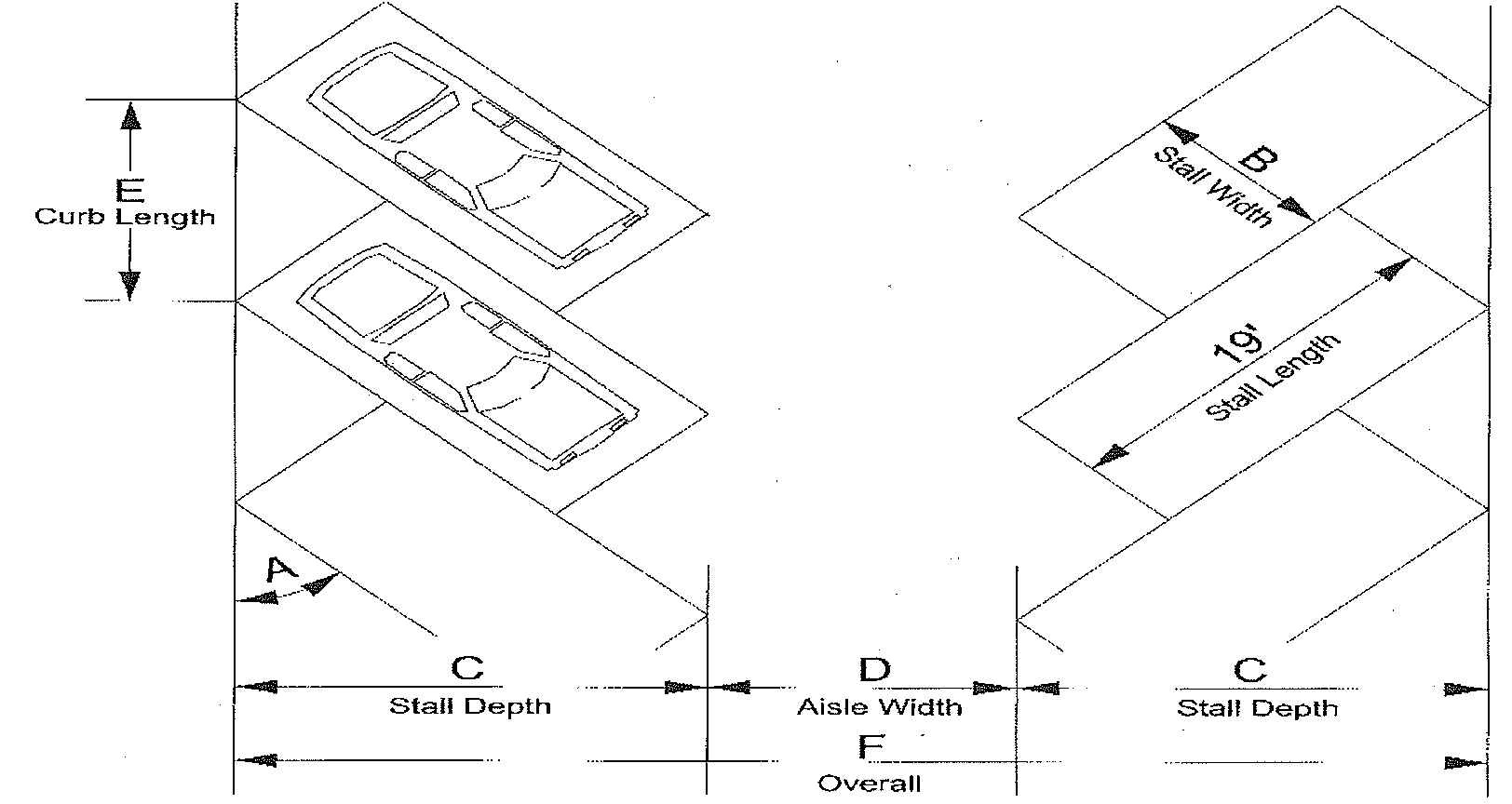
All regular vehicular parking spaces and aisles shall be provided pursuant to the minimum dimensional specifications in Table 2 at the conclusion of this chapter and in accordance with accepted engineering standards approved by the city engineer.
(2)
All compact parking spaces shall be at least seven and one-half feet wide by 15 feet long.
(3)
All motorcycle parking shall be angled 90º and in accordance with the dimensional requirements of Table 3 at the conclusion of this chapter.
(4)
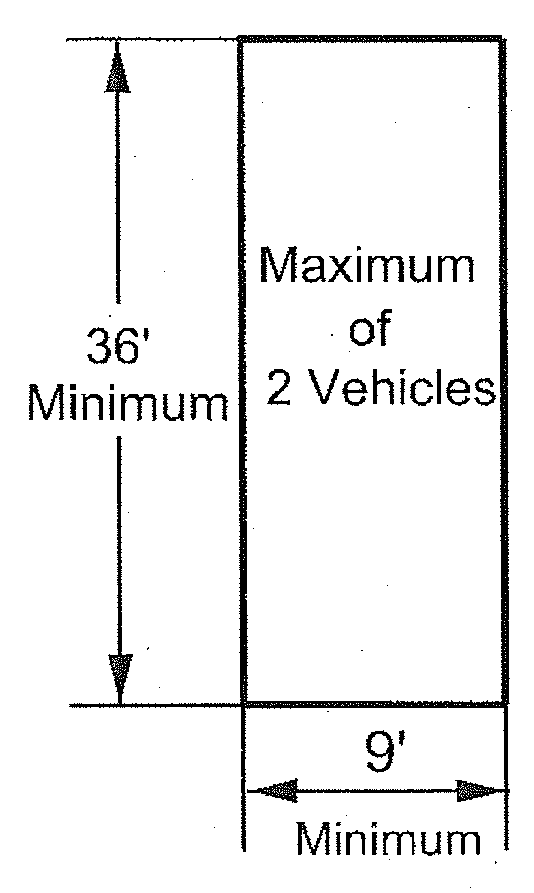
All tandem parking spaces shall be angled 90º and in accordance with the minimum dimensional requirements of Table 4 at the conclusion of this chapter and comply with the standards of section 63.08.
(5)
All bicycle parking spaces shall be at least two and one-half feet in width and six feet in length with a minimum overhead clearance of seven feet. The bicycle rack or similar device for the bicycle parking spaces shall be located within 50 feet of building entrance and shall be securely affixed to the ground to allow the bicycle to be locked and chained. The design and location of bicycle racks shall be submitted with the site plan application and shall require approval by the city engineer.
(b)
Parking design criteria. The following design criteria apply to all non-bicycle parking spaces, except for single-family homes and duplexes:
(1)
Each parking space shall be accessible from an aisle or driveway and designed so that no vehicle shall back into a public street in order to exit a parking space. The internal design of the parking lot shall be designed to facilitate vehicular circulation and avoid conflict between pedestrian and vehicular movements.
(2)
No door or pedestrian entrance at ground level shall open directly upon any driveway or access aisle unless the doorway or pedestrian entrance is at least three feet from said driveway or access aisle.
(3)
All parking spaces shall have lines between spaces or other types of surface treatment approved by the city engineer to indicate individual or tandem spaces, except for non-paved parking spaces.
(4)
Wheelstops, wheel or bumper guards, or continuous curbing shall be provided to protect landscape and pedestrian areas from vehicle encroachment. Designs may be approved by the city engineer to allow up to two feet of vehicle overhang into landscape areas if such overhang would not interfere with landscaping. Vehicle overhang in pedestrian areas may be allowed if such overhang allows for a clear pedestrian path of four feet.
(5)
Up to 20 percent of the required number of parking spaces may be designated for compact cars. Such spaces shall be designated "Compact" in accordance with the signage standards in subsection (e) below. Compact cars shall be concentrated in groupings of no more than eight contiguous compact parking spaces and shall not be located in high vehicle turnover areas which are in close proximity to the main building entrances.
(6)
Where motorcycle parking spaces are provided, such spaces shall be designated "Motorcycles" in accordance with the signage standards in subsection (e) below.
(7)
Where tandem parking spaces are provided, they shall be designated "Employees Only" or "Valet Parking Only," as applicable, in accordance with the signage standards in subsection (e) below. If any of the designated spaces are for a specific business establishment on a site with multiple business establishments, the name or corporate logo of that business shall be included on the sign.
(8)
Access from one section of an on-site parking lot to another on-site parking area shall be provided on-site.
(c)
Loading spaces. Each required loading space shall not be less than 12 feet in width and 35 feet in depth. If the loading space is covered, it shall have a minimum height clearance of 14 feet from the top of the grade to the ceiling or cover. All loading spaces shall be marked with lines on the pavement and designated "No Parking, Loading Zone" in accordance with the signage standards in subsection (e) below unless otherwise approved by the planning director.
(d)
Modifications. The planning director may approve, in consultation with the city engineer, modifications to the specifications set forth in this chapter relating to the dimensional requirements for parking and loading spaces, aisle widths, and loading space requirements upon a demonstrated need by the applicant. In considering modifications to the specifications required by this section, the director shall be guided by Planning and Urban Design Standards, latest edition, published by the APA. However, other than expressly permitted by this chapter, no modification in the required number of parking spaces shall be approved except by the planning and zoning board through the granting of a special exception.
(e)
Signage for designated parking spaces. Signs intended or required by this chapter to designate parking spaces for use by patrons or employees of a particular tenant, loading spaces, and valet, tandem, compact and motorcycles parking spaces are exempt from regulations outlined in chapter 38, article I of this part; however, such signs shall comply with the following:
(1)
The signs shall be located only in parking facilities for multi-family and nonresidential uses.
(2)
The location of such signs shall be depicted on the approved site plan or amendment to a site plan.
(3)
The signs shall not be located in the required landscape area.
(4)
Signs for designating regular parking spaces for patrons and employees, valet parking or spaces for compact vehicles and motorcycles shall be freestanding, painted on wheel stops, or marked on the pavement with lettering of a minimum size of six inches. If freestanding, such signs shall not exceed one and one-half square feet in area and two and one-half feet in height as measured from the top of the sign to grade.
(5)
Signs for tandem parking spaces and loading zones shall be freestanding only, unless otherwise approved by the planning director. The signs shall not exceed one and one-half square feet in area and shall be five feet in height as measured from the top of the sign to grade.
(6)
Where exclusive patron, employee, or valet parking is concentrated in specific parking areas with limited or controlled access to entry, the planning director may approve the placement of one freestanding area sign at each entry point to the parking area. Such sign may substitute for individual signage required in subsection (b) above for certain parking spaces, if approved by the planning director. The freestanding sign shall meet the height and size requirements for tandem parking spaces.
(7)
All freestanding signs pursuant to this section shall be in accordance with the guidelines in the latest edition of the Manual on Uniform Traffic Control Devices published by the Federal Highway Administration unless otherwise approved by the city engineer.
(Ord. No. 2011-10, § 18, 8-16-2011)
Sec. 63.10. - Surfacing requirements for parking and loading spaces.
(a)
Applicability. Except for single family uses and as authorized by this section, all off-street parking areas and driveways shall be required to be surfaced to minimize nuisance from dust and soil erosion. Such parking surfaces shall be constructed with rock, gravel, concrete, brick, asphalt, turf block, or other surfaces of comparable durability approved by the city engineer and in accordance with accepted industry practices.
(b)
Drainage and surfacing. Parking and loading areas shall be properly graded for drainage; surfaced with durable materials in accordance with accepted industry standards approved by the city engineer; and maintained in good condition free of weeds, dust, trash, and debris.
(c)
Permeable surfaces. The city engineer may approve the use of permeable surfaces that comply with sound engineering practices for parking spaces and loading areas subject to the following conditions:
(1)
The permeable surface parking and loading areas shall be designed by a professional engineer licensed in the State of Florida, who shall submit in the site plan application sealed construction drawings and other information, such as sub-surface soil testing, required by the city engineer to demonstrate compliance with this subsection and stormwater management provisions of this part.
(2)
The permeable surface parking and loading areas shall be designed to accepted industry and manufacturer's standards and specifications.
(3)
The permeable pavement shall be maintained by the property owner pursuant to a continuing maintenance program approved by the city engineer.
(d)
Non-paved parking. Fully sodded or otherwise stabilized parking may be approved by the city engineer for projects subject to infrequent daily uses, such as churches or overflow parking for public assembly uses, except that any required accessible parking shall be paved in accordance with the Florida Building Code. Non-paved parking shall be required to meet the following requirements and standards:
(1)
In addition to other requirements of this chapter, any application for site plan approval proposing the use of non-paved parking shall include supporting information certified by an engineer licensed by the State of Florida that demonstrates the use and adequacy of the unpaved "infrequent use" parking surface. The information to be provided with the site plan application shall be prescribed by the city engineer.
(2)
The following standards shall be met in any approved non-paved parking spaces:
a.
The materials cross-section and load bearing capabilities in relation to the intended use shall be approved by the city engineer.
b.
Where used in conjunction with paved spaces, the non-paved spaces shall be located so as to be used less often than paved spaces.
c.
Non-paved parking spaces shall be directly accessed from a paved parking aisle for all uses except very infrequent uses with an annual average usage of no more than one use per week.
(3)
Wheel stops or similar devices may be required in all or some portion of the unpaved parking area, if in the professional opinion of the planning director that such a condition is reasonable to ensure that parking spaces to be made available adequately handle required off-street parking needs.
(Ord. No. 2011-10, § 18, 8-16-2011)
TABLE 2
MINIMUM SPACE AND DIMENSIONAL REQUIREMENTS
FOR OFF-STREET SELF-PARKING FACILITIES
(Ord. No. 2011-10, § 19, 8-16-2011)
TABLE 3
MINIMUM MOTORCYCLE PARKING SPACE DIMENSIONS
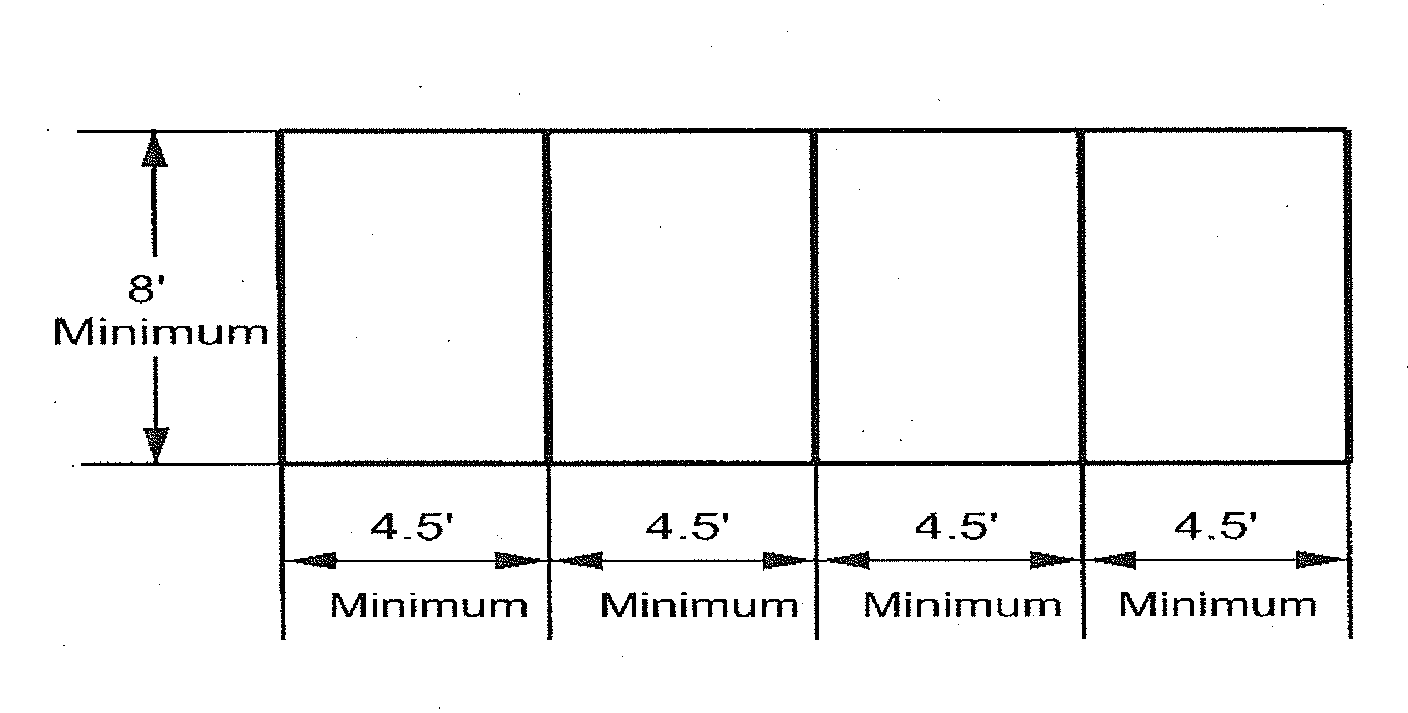
TABLE 4
MINIMUM TANDEM PARKING SPACE DIMENSIONS
(Ord. No. 2011-10, § 20, 8-16-2011)

