Webster City Zoning Code
DIVISION 6
MIXED USE DESIGN STANDARDS
Sec. 13-450. - Mixed use design standards.
(a)
The DTMU district and the WMPD district shall adhere the following non-residential design standards, excluding industrial uses.
(1)
Screening requirements.
a.
Loading docks, truck parking, outdoor storage, utility meters, HVAC equipment, trash dumpsters, trash compactors, and other service functions shall not be visible from any street or sidewalk or adjacent residential area as illustrated in figure 1. These facilities may be incorporated into the overall design of the principal building using screening walls of compatible material, style, color, texture, pattern, trim, and details whether these service functions are attached or detached from the principal building.
b.
The screening wall shall be one foot. higher than the largest object being screened, but not more than ten feet high, on all sides where access is not needed. An opaque gate, with the same height as the wall, shall be included where access is needed.
c.
Mechanical equipment at ground level shall be placed on the parking lot side of the building away from view from any streets, sidewalks and residential areas, as illustrated in figure 1. The mechanical equipment shall be screened from view by fencing, vegetation, or parapet walls (if located on a roof) using the same materials as the principal building, i.e., stone, brick or stucco. The screening shall be at least equal to the width and height of the equipment to be screened from view.
Figure 1. Screening Areas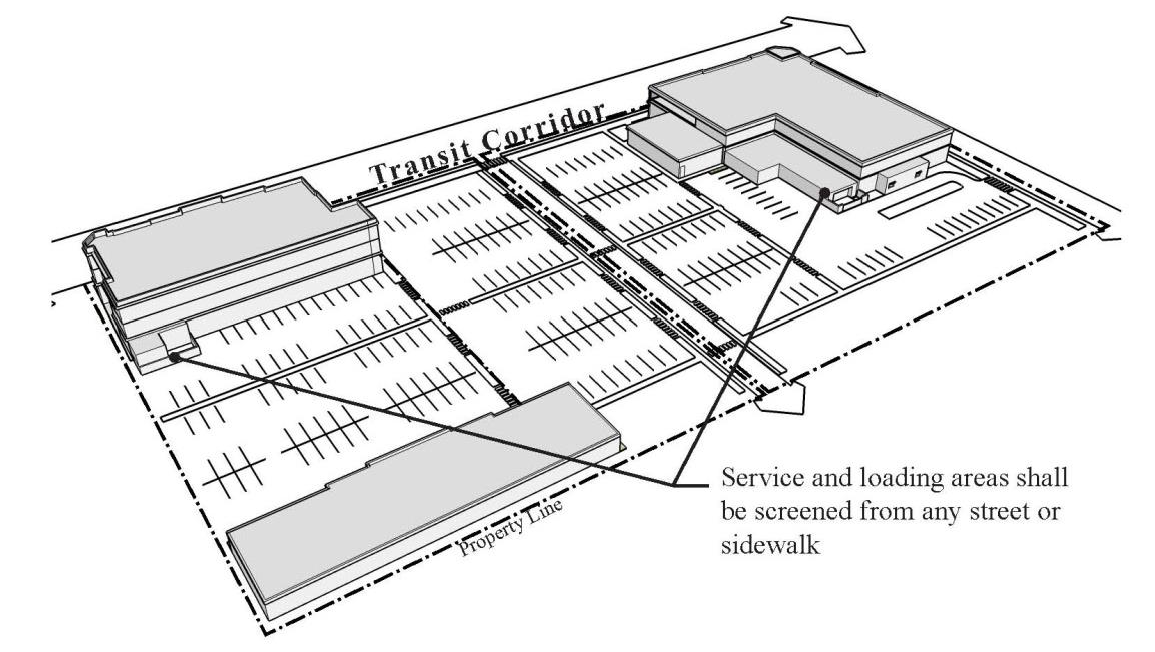
(2)
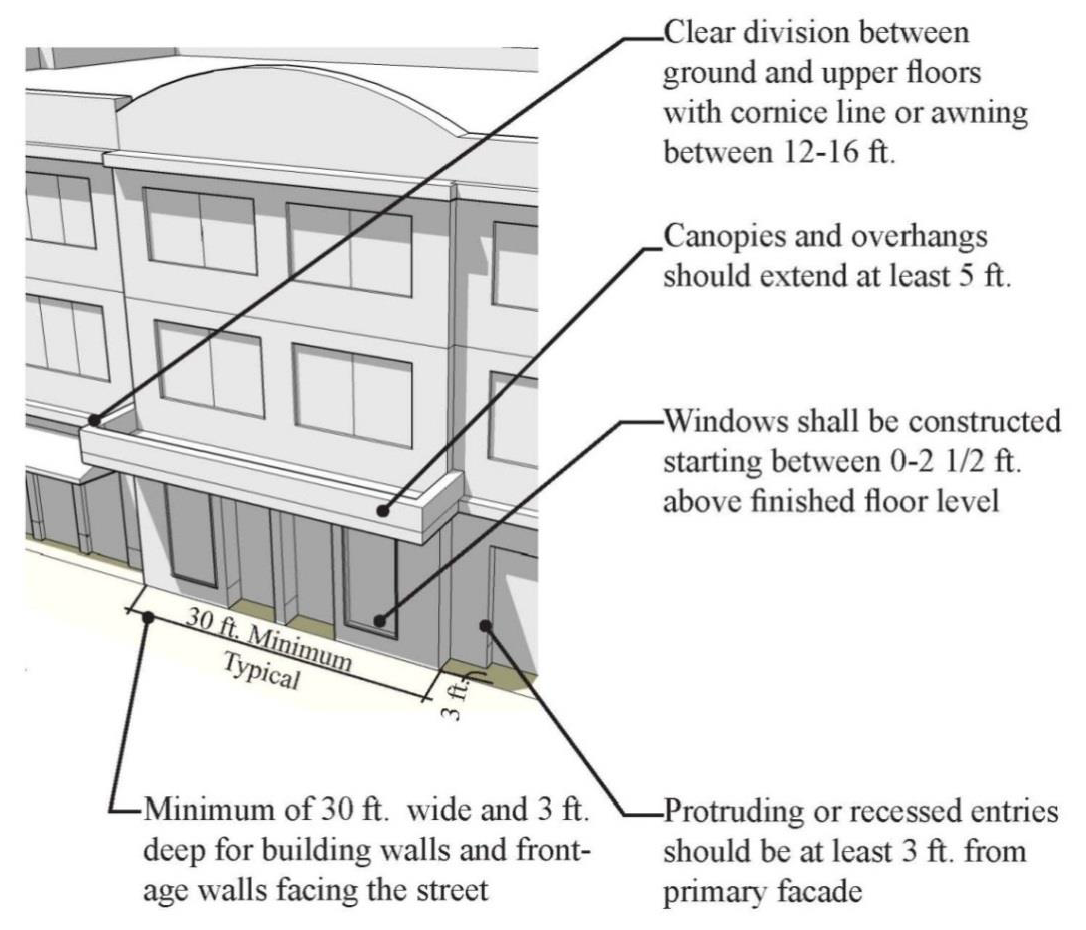
Building mass and scale. No more than 60 feet of horizontal distance of wall shall be constructed without architectural relief a minimum of 30 feet wide and three feet deep for building walls and frontage walls facing the street for nonresidential and attached residential buildings.
(3)
Building façade. Buildings shall provide a foundation or base, typically from ground to bottom of the lower windowsills, with changes in volume or material as illustrated in figure 2. A clear visual division shall be maintained between the ground level floor and upper floors with either a cornice line or awning from 12 feet to 16 feet above base floor elevation or grade, whichever applies to the proposed development.
Figure 2. Building Façade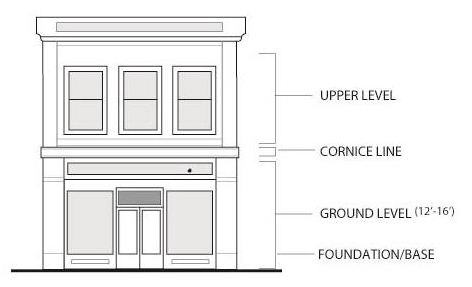
(4)
Building features.
a.
All buildings excluding single-family detached homes shall utilize at least three of the following design features to provide visual relief along all elevations of the building as illustrated in figure 3:
1.
Divisions or breaks in materials or textures (materials should be drawn from a common palette);
2.
Window bays;
3.
Separate entrances and entry treatments, porticoes extending at least five feet;
4.
Variation in roof lines;
5.
Awnings installed in increments of 15 feet or less;
6.
Dormers;
7.
Canopies, extending at least five feet;
8.
Overhang extending at least five feet;
9.
Recessed entries (at least three feet from the primary façade) designed so that door swings shall not interfere with pedestrian traffic;
10.
Protruding entries (at least three feet from the primary façade) designed so that door swings shall not interfere with pedestrian traffic; or
11.
Covered porch entries.
(5)
Public entrance and storefront character for non-residential buildings.
a.
Buildings that are open to the public shall have an entrance for pedestrians from the street to the building interior. This entrance shall be designed to be a distinctive and prominent element of the architectural design, and shall be open to the public during business hours. Buildings shall incorporate lighting and changes in mass, surface or finish which places an emphasis to the entrance.
Figure 3. Building Features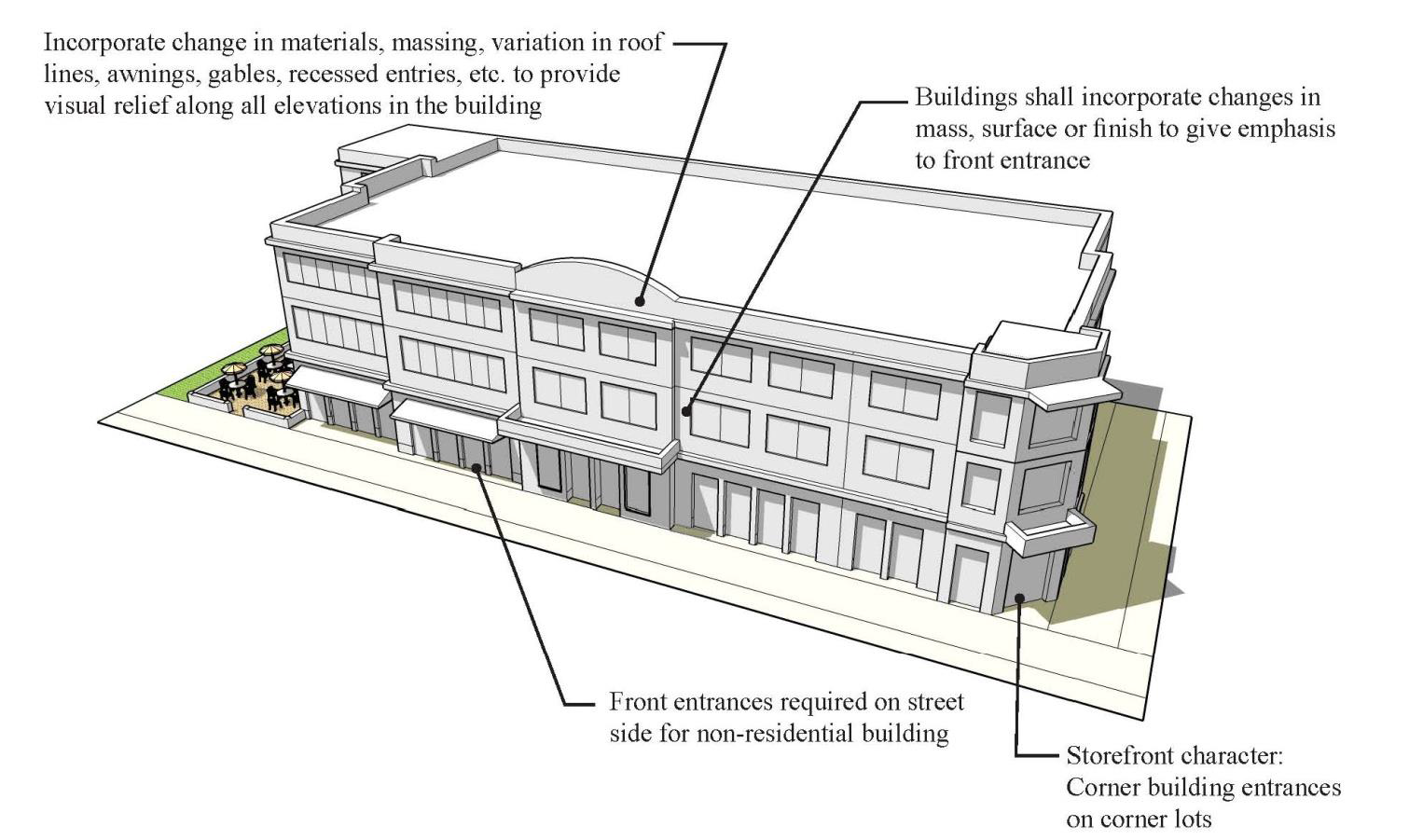
b.
Commercial and mixed-use buildings shall express a "storefront character" as illustrated in figure 4. This guideline is met by providing all of the following architectural features along the street building frontage as applicable:
1.
Corner building entrances on corner lots;
2.
Regularly spaced and similar-shaped windows with window hoods or trim (all building stories); and
3.
Large display windows on the ground floor. Façades of all buildings facing streets, parks and plazas shall have windows covering a minimum of 40 percent and a maximum 80 percent of the surface area of the ground floor of each storefront's linear frontage. Blank walls shall not occupy over 50 percent of a street-facing frontage and shall not exceed 30 feet without being interrupted by a window or entry. Mirrored glass, obscured glass, and glass block cannot be used in meeting this requirement. The bottom edge of display windows on the ground floor façades shall be no more than 30 inches above finished floor level.
(6)
Building orientation. The primary building entrances shall be visible and directly accessible from a street. Building massing such as tower elements shall be used to call-out the location of building entries.
(7)
Lighting. Exterior lighting shall be designed with cut-off luminaries that are directed downward and away from other property so as to eliminate glare and light spillage to other property.
Figure 4. Storefront Character