
Williamsburg City Zoning Code
ARTICLE VI
SIGNS12
Editor's note— Ord. No. 11-00, adopted Aug. 11, 2000, amended Art. VI, in its entirety, to read as herein set out. Prior to inclusion of said ordinance, Art. VI pertained to similar subject matter. See the Code Comparative Table.
Sec. 21-736.- Intent.
The intent of this article is to establish limitations on signs to ensure that they are appropriate to the neighborhood, building or use to which they are appurtenant and are adequate, but not excessive, for their intended purpose as a means of communication without adverse impact on the visual character of the area; to ensure that signs are compatible with their surroundings; to maintain and enhance the aesthetic environment of the Colonial Williamsburg Historic Area, the city and its entrance corridors; to improve pedestrian and traffic safety; to minimize the possible adverse effect of signs on nearby public and private property; to avoid visual clutter that is potentially harmful to traffic and pedestrian safety, property values, and community appearance; and to enable the fair and consistent enforcement of these sign regulations. Any display of off-premises signs is considered inappropriate to the character and sound development of the city, and it is intended by this article that street and highway rights-of-way in the city shall not be made available for such display unless otherwise permitted on immediately adjacent property, on private property or public rights-of-way that are erected and maintained by the City of Williamsburg, or on public rights-of-way erected by a governmental entity authorized by City Council.
(Ord. No. 11-00, 8-10-00; Ord. No. 14-03, 1-9-14; Ord. No. 16-04, 2-11-16)
Sec. 21-736.1. - Substitution of message.
A noncommercial message may be substituted, in whole or in part, for the message displayed on any sign which conforms to this article, including any conditions imposed by the Architectural Review Board, without consideration of the message content. Such substitution of message may be made without any additional approval. The purpose of this provision is to prevent any inadvertent favoring of commercial speech over noncommercial speech, or favoring any particular noncommercial message over any other noncommercial message. Whenever an individual lot has not used all of its permissible sign area, then the unused portion may be used for displaying noncommercial messages. Any on-site commercial message may be substituted, in whole or in part, for any other on-site commercial message.
(Ord. No. 16-04, 2-11-16)
Sec. 21-736.2. - Sign definitions.
(a)
Sign means any writing, letter work or numeral, pictorial presentation, illustration or decoration, emblem, device, symbol or trademark, flag, banner, pennant or any other device, figure or character which is employed to announce, direct attention to, identify, or make known, and which is visible from a public street or sidewalk. However, this shall not include any official court or public notices. The following types of signs are more specifically defined:
(1)
Banner sign means a sign made of fabric or any non-rigid material with no enclosing framework.
(2)
Building-mounted sign means a sign attached to, painted on, inscribed upon or deriving its major support from a building, including a wall sign, a projecting sign or an awning sign. For the purposes of this chapter, a sign attached to or painted on a gasoline pump island canopy shall be considered a building-mounted sign.
(3)
Freestanding sign means a sign, supported by one or more columns, uprights or braces, in or upon the ground, but not attached to any building. A sign attached to a flat surface not a part of the building, such as a fence or wall, shall be considered a freestanding sign. A monument sign, as defined below, shall also be considered a freestanding sign. For the purposes of this chapter, a freestanding sign listing two or more businesses located on a property or in a shopping center, and which is designed as one sign, shall be considered one freestanding sign.
(4)
Monument sign means a ground-mounted sign mounted on a contiguous base having a minimum width of at least 90 percent of the sign and its supporting structure, and not attached to any building. For the purposes of this chapter, a monument sign listing two or more businesses located on a property or in a shopping center, and which is designed as one sign, shall be considered one monument sign.
(5)
Off-premises sign means a sign that directs attention to a business, product, service or activity conducted, sold or offered at a location other than the premises on which the sign is erected. Such signs may also be referred to as billboards or poster panels. Off-premises signs shall not include sidewalk signs located on public sidewalks allowed by subsection 21-745(3)h., signs located on wide public rights-of-way allowed by section 21-749.1, signs on contiguous properties erected pursuant to subsection 21-747(1)d, or signs in public rights-of-way erected by a governmental entity authorized by City Council pursuant to subsection 21-748(2)d.
(6)
Porch sign means a sign that is mounted to the roof of a permanent structural front porch, veranda, portico, rain guard or other covered vestibule and which sign projects vertically above the front edge of the roof structure and consists of metal freestanding lettering.
(7)
Portable sign means a sign not permanently attached to the ground or a building, including any sign attached to a vehicle for advertising purposes when the vehicle is so parked as to attract the attention of the public to the property upon which it is parked. Non-vehicular signs of this type may also be referred to as A-frame signs, sandwich boards or sidewalk signs.
(8)
Projecting sign means a building-mounted sign attached to and perpendicular to the building wall.
(9)
Temporary sign means a sign constructed of cloth, canvas, vinyl, paper, plywood, fabric, or other lightweight material not well suited to provide a durable substrate or, if made of some other material, is neither permanently installed in the ground nor permanently affixed to a building or structure.
(10)
Wall sign means a building-mounted sign attached to, painted on, inscribed upon, or deriving its major support from a wall, and which projects less than 12 inches from the wall.
(b)
Sign maintenance means the replacing or repairing of a part or portion of a sign made necessary by ordinary wear, tear or damage beyond the control of the owner.
(Ord. No. 11-00, 8-10-00; Ord. No. 17-00, 11-9-00; Ord. No. 02-22, 9-12-02; Ord. No. 14-03, 1-9-14; Ord. No. 16-04, 2-11-16; Ord. No. 24-10, 10-10-24)
Note— Formerly codified as § 21-736.1, which was renumbered by Ord. No. 1604.
Sec. 21-737. - Sign districts.
In order to meet the intent of this article, five sign districts are created to reflect the character of various areas in the city. The boundaries for these districts are delineated on the official Sign Districts map, adopted on September 13, 2007 and amended on December 12, 2013. The official sign districts map, and all notations, references and other information shown thereon, is a part of this article, and has the same force and effect as if the official sign districts map were fully set forth or described in this article. These districts are:
(1)
Residential sign district. This district encompasses residential and non-commercial areas to ensure that signage is in keeping with the character of these areas.
(2)
Colonial Williamsburg Historic Area sign district. This district encompasses the Colonial Williamsburg Historic Area district and is established to preserve and maintain the historic character of the Colonial Williamsburg Historic Area by ensuring that historic signage is in keeping with 18th-century precedent and modern directional signage is unobtrusive.
(3)
Downtown sign district. This district is designed to protect and enhance the historic character of the adjoining Colonial Williamsburg Historic Area and to maintain and encourage the small scale pedestrian character of the College of William and Mary and the various older neighborhoods and businesses in the architectural preservation district, by ensuring that signage is in keeping with the character of these areas.
(4)
Midtown sign district. This district is designed as a transition between the downtown sign district and the corridor sign district. It is intended to maintain and encourage the pedestrian character of the College of William and Mary and the adjoining commercial area along Richmond Road and Scotland Street and of the Arts and Cultural District between Brooks Street and Matoaka Court/Shirley Avenue, and to respect the residential character of the intervening section of Richmond Road. This district is also designed to offer additional flexibility in signage due to its unique character.
(5)
Corridor sign district. This district is designed to ensure that signage in the city's entrance corridors is harmonious and compatible with the Colonial Williamsburg Historic Area, the College of William and Mary, and the various older neighborhoods in the architectural preservation district, and that the signage contributes to the improvement of the design of the city's major commercial corridors. It is also designed to ensure that signage in the areas situated between residential and commercial districts is harmonious and compatible with the character of those areas.
(Ord. No. 11-00, 8-10-00; Ord. No. 17-00, 11-9-00; Ord. No. 07-33, 9-13-07; Ord. No. 14-03, 1-9-14)
Sec. 21-738. - Calculation of sign area.
(a)
Sign area shall be calculated as the area within a parallelogram, triangle, circle, semicircle or other regular geometric figure including all letters, figures, graphics or other elements of the sign, together with the framework or background of the sign. The sign area shall not include decorative bar-iron cresting above the sign and/or decorative bar-iron brackets below the sign if the bar-iron is no larger than ¾-inch by 1½-inch in cross section. Double faced signs (two sign faces parallel, back to back, and not more than two feet from each other) shall be counted as one sign. V-signs (two sign faces on an angle, not parallel) with an angle greater than 60 degrees, shall be prohibited. The supporting framework of the sign shall not be included in determining sign area unless such supporting framework forms an integral part of the sign display, as determined by the zoning administrator. If the sign is located on a decorative fence or wall, when such fence or wall otherwise meets these or other ordinances or regulations and is clearly incidental to the display itself, the fence or wall shall not be included in the sign area.
(b)
The sign area shall be computed as including the sign visible from any single ground position, as follows:
(1)
Cube sign: 1.4 times the area of one sign face counted.
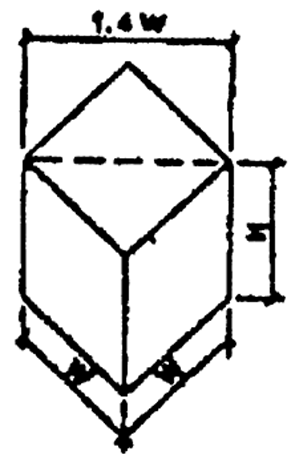
(Area = 1.4W x H)
(2)
Cylindrical sign: Sign area equals the average of one-half of the circumference of the sign and of the diameter of the sign, times the height of the sign.
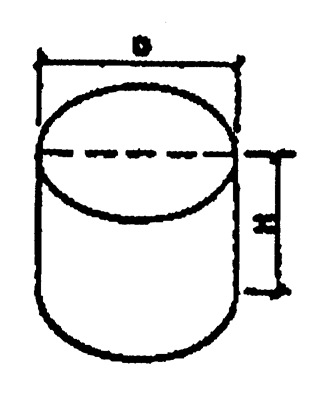
Area = ½(pi D/2 + D)(H) = 1.285D x H
(3)
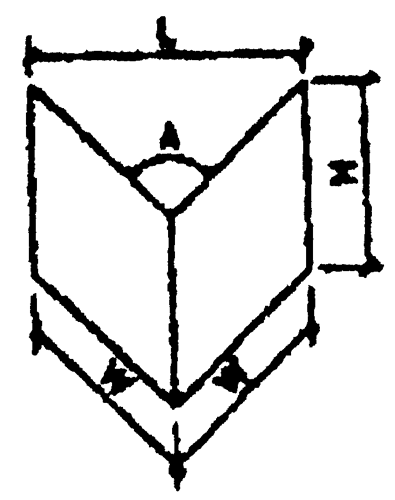
Triangular sign: One face counted when the three faces of the sign form an equilateral triangle. If the sign is not an equilateral triangle, the sign area shall be the area of the largest face.
(4)
"V" sign:
a.
60-degree or lesser angle: One face counted.
(Area = W x H)
b.
Greater than 60-degree angle: Prohibited.
(Ord. No. 11-00, 8-10-00; Ord. No. 14-03, 1-9-14; Ord. No. 16-04, 2-11-16)
Sec. 21-739. - Permit required.
(a)
Compliance. No sign, except those qualifying for permit exceptions, shall be painted, constructed, erected, remodeled, refaced, relocated, expanded or otherwise altered until a sign permit has been obtained from the zoning administrator in accordance with the provisions of this section.
(b)
Permit exceptions. A permit shall not be required for the following signs, but they shall be subject to all other applicable provisions of this article:
(1)
Repainting or refacing of an existing sign without changing the wording, composition, color or material; or minor nonstructural repairs.
(2)
Signs specifically excluded from permit requirements.
(Ord. No. 11-00, 8-10-00; Ord. No. 14-03, 1-9-14)
Sec. 21-740. - Liability insurance required.
No permitted sign located on or projecting over a city right-of-way shall be erected unless an insurance policy shall have been filed for public liability with a total limit of $600,000.00 per accident/$300,000.00 per person bodily injury/$150,000.00 property damage.
(1)
Such policy shall be issued by an insurance company authorized to do business in the State of Virginia and acceptable to the city manager. The policy shall name the city as a co-insured and shall require 30 days' written notice to the city before modification or cancellation.
(2)
Such policy shall protect and save the city harmless from any and all claims or demands for damages by reason of any negligence of the sign hanger, contractor, property owner or occupants, or their respective agents; or by reason of defects in the construction, or damages resulting from the collapse, failure or combustion of the sign or parts thereof.
(3)
Such policy shall be maintained so long as the sign in question remains erected.
(Ord. No. 11-00, 8-10-00; Ord. No. 14-03, 1-9-14)
Sec. 21-741. - Signs shall pertain to the property.
Any commercial message carried by permitted signs shall pertain to the business located on the same premises as the sign; or to any otherwise lawful noncommercial message that does not direct attention to a business operated for profit, or to a commodity or service for sale, provided that signs erected on contiguous properties pursuant to subsection 21-747(1)d. may pertain to a business located on any such contiguous property.
(Ord. No. 16-04, 2-11-16)
Sec. 21-741.1. - Changeable messages.
For signs with changeable message panels or zip tracks, the changeable message area of the sign shall not exceed 25 percent of the total sign area, except for service stations and convenience stores with gasoline sales, where the changeable message area of the sign shall not exceed 75 percent of the total sign area. Reverse white or light-colored lettering with no white background is required. Electronic changeable message boards shall be prohibited.
(Ord. No. 11-00, 8-10-00; Ord. No. 02-22, 9-12-02; Ord. No. 14-03, 1-9-14; Ord. No. 16-04, 2-11-16)
Sec. 21-742. - Signs located in the architectural preservation and corridor protection zoning districts.
(a)
No sign, unless specifically exempted, shall be erected in the Architectural Preservation District (AP) or in a Corridor Protection District (CP) until the sign has been approved by the architectural review board in accordance with the provisions of Article IX, Architectural Review.
(b)
The architectural review board may impose additional restrictions on illumination to ensure that the aesthetic character of signs are harmonious with the character of the structures on which they are to be placed, provided that such restrictions are reasonably related to other conforming signs and conforming structures on the premises and in the contiguous area, do not unreasonably restrict the amount of signage allowed by this article, and are in keeping with the intent of applicable design review guidelines. Among other things, consideration shall be given to the location of signs on the structure in relation to the surrounding buildings, the use of appropriate materials, the size and style of lettering and graphics (except for registered trademarks), and the type of lighting. For registered trademarks, overall size and lighting requirements that are consistent with this article may be imposed by the architectural review board.
(c)
In the downtown sign district, the architectural review board may allow a sign of greater height (not to exceed 15 feet) and may exclude framing and ornamentation relating to the business on the premises from the permitted sign area. Waivers shall not be approved unless they are found to be consistent with traditional sign design, as represented by the re-created signage in the Colonial Williamsburg Historic Area and early Colonial Revival sign design in Merchants Square.
(d)
The name of a business, or information pertaining to a business, may be changed without architectural review board approval, if the sign conforms to the provisions of this article, and if the color, size, and style of lettering, and illumination of the sign, is not changed.
(Ord. No. 11-00, 8-10-00; Ord. No. 14-03, 1-9-14; Ord. No. 16-04, 2-11-16)
Sec. 21-743. - Sign regulations for the residential sign district.
The following regulations shall apply in the residential sign district:
(1)
Single-family, duplex and townhouse dwelling units. One building-mounted or freestanding sign, not exceeding two square feet in area for each dwelling unit, shall be permitted. Such sign shall indicate only the street address of the property.
(2)
Multifamily buildings. One or more building-mounted signs, not exceeding in the aggregate ten square feet per building, shall be permitted.
(3)
Bed and breakfast establishments. One building-mounted or freestanding sign not exceeding 2½ square feet in area shall be permitted. The sign shall be in lieu of any sign permitted by subsection 21-743(1). Illumination shall be limited to not more than two 25-watt bulbs.
(4)
Studios or workshops for artists and artisans. One building-mounted or freestanding sign not exceeding 2½ square feet in area shall be permitted. The sign shall be in lieu of any sign permitted by subsection 21-743(1). Illumination shall be limited to not more than two 25-watt bulbs.
(5)
Non-residential uses. The size of signs for non-residential use shall be regulated by section 21-745, sign regulations for the downtown sign district.
(6)
Subdivisions, apartment or condominium complexes and planned developments. Freestanding signs, with maximum total area of 24 square feet, shall be permitted. No more than two signs shall be permitted for each street frontage.
(7)
Additional regulations for signs allowed by this section.
a.
Height. Freestanding signs shall have a maximum height of five feet.
b.
Projection over property lines. No sign shall project beyond the property line or be located on or project over a city right-of-way.
c.
Illumination. All signs shall be non-illuminated or externally illuminated, unless otherwise specified.
(Ord. No. 11-00, 8-10-00; Ord. No. 08-16, 6-12-08; Ord. No. 08-20, 6-12-08; Ord. No. 14-03, 1-9-14; Ord. No. 16-04, 2-11-16)
Sec. 21-744. - Sign regulations for the Colonial Williamsburg Historic Area sign district.
The following regulations shall apply in the Colonial Williamsburg Historic Area sign district:
(1)
Freestanding signs in the Colonial Williamsburg Historic Area sign district.
a.
Historic signs. Freestanding signs that are based on 18th Century precedent shall be of the type that would have existed in this area in the 18th Century, and shall be based upon satisfactory documented historical evidence provided by the applicant. The location of these signs shall be approved by the Architectural Review Board, as well as by the City Manager if the sign is located on a City right-of-way. If a sign is located on or projects over a City right-of-way, it shall not be approved unless an insurance policy is maintained in accordance with section 21-740.
b.
Other freestanding signs. All other freestanding signs shall be subject to the following:
1.
Maximum size: 12 square feet.
2.
Maximum number of signs on one pole or supporting structure: Two.
3.
Projection over a City right-of-way: Permitted if the following conditions are met:
i.
Bottom of sign shall be at least eight feet above ground level.
ii.
Edge of sign shall be at least three feet from curb line or edge of pavement.
iii.
Liability insurance policy shall be filed in accordance with section 21-740.
iv.
Location on a city right-of-way. Prohibited.
(2)
Building-mounted signs in the Colonial Williamsburg Historic Area Sign District.
a.
Historic signs. Building-mounted signs that are based on 18th Century precedent shall be of the type that would have existed in the 18th century, and shall be based upon satisfactory documented historical evidence provided by the applicant. The location of these signs shall be approved by the Architectural Review Board. If a sign projects over a city right-of-way, it shall not be approved unless an insurance policy is maintained in accordance with section 21-740.
b.
Other signs. All other building-mounted signs in the Colonial Williamsburg Historic Area Sign District shall be subject to the following:
1.
Maximum size: Five square feet.
2.
Projection over a city right-of-way: Permitted if the following conditions are met:
i.
Bottom of sign shall be at least eight feet above ground level.
ii.
Edge of sign shall be at least three feet from curb line or edge of pavement.
iii.
Liability insurance policy shall be filed in accordance with section 21-740.
(Ord. No. 11-00, 8-10-00; Ord. No. 14-03, 1-9-14)
Sec. 21-745. - Sign regulations for the downtown sign district.
For residential uses, signs shall be regulated by section 21-743, Sign regulations for the residential sign district. For all other uses, the following regulations shall apply in the downtown sign district:
(1)
Freestanding signs in the downtown sign district.
a.
Single business on a single lot.
1.
Number of freestanding signs permitted: One, but where the business has a rear entrance from an adjacent parking lot, one additional freestanding sign may be placed at the rear entrance.
2.
Maximum sign area: 12 square feet.
3.
Maximum height: 12 feet; except for decorative bar-iron cresting above the sign which may extend above the 12-foot height to a maximum height of 15 feet, provided that the bar-iron is no larger than 3/4-inch by 1½-inches in cross section.
4.
Projection over a city right-of-way: Permitted if the following conditions are met:
i.
Bottom of sign shall be at least eight feet above ground level.
ii.
Edge of sign shall be at least three feet from curb line or edge of pavement.
iii.
Liability insurance policy shall be maintained in accordance with section 21-740.
5.
Location on a city right-of-way: Prohibited.
6.
Illumination: Internally illuminated signs shall be prohibited.
b.
Two or more businesses in the same building or on the same lot or on adjoining properties under the same ownership, having shared parking lots and/or driveways.
1.
Number of freestanding signs permitted: One sign for each business with a separate main exterior entrance. Where two or more businesses share a main exterior entrance, one sign shall be permitted to be shared by the businesses located therein. Where one or more businesses has a rear entrance from an adjacent parking lot, one additional freestanding sign may be placed at the rear entrance.
2.
Maximum sign area: 12 square feet for single business sign; 20 square feet for a sign shared by two or more businesses located on the same site.
3.
Maximum height: 12 feet; except for decorative bar-iron cresting above the sign which may extend above the 12-foot height to a maximum height of 15 feet, provided that the bar-iron is no larger than 3/4-inch by 1½-inches in cross section.
4.
Maximum number of signs on one pole or supporting structure: One.
5.
Projection over a city right-of-way: Permitted if the following conditions are met:
i.
Bottom of sign shall be at least eight feet above ground level.
ii.
Edge of sign shall be at least three feet from curb line or edge of pavement.
iii.
Liability insurance policy shall be maintained in accordance with section 21-740.
6.
Location on a city right-of-way: Prohibited.
7.
Illumination: Internally illuminated signs shall be prohibited.
8.
Reserved.
9.
Existing legally nonconforming signs identifying two or more businesses:
i.
When the sign area requirement is met. Where signs identifying two or more businesses are mounted on one pole or supporting structure and do not meet the criteria of this subsection 21-745(1)b. pertaining to height, an individual business may replace its sign face without bringing the entire sign into compliance with the regulations, provided that:
(1)
The area of the sign complies with subsection 21-745(1)b.2. above; and
(2)
The changes are approved by the architectural review board.
ii.
When the sign area requirement is not met. Where signs identifying two or more businesses are mounted on one pole or supporting structure and do not meet the criteria of this subsection 21-745(1)b. pertaining to area and height, the sign being replaced shall be brought into compliance with these regulations. The sign or signs not being replaced may remain as a nonconforming sign.
iii.
When all signage is proposed to be replaced. In the event that all signs on the pole or supporting structure are proposed to be modified, all requirements of this subsection 21-745(1)b. shall be met.
c.
Shopping centers: See subsection 21-745(7).
(2)
Building-mounted signs in the downtown sign district.
a.
Maximum sign area: One square foot of sign area for each lineal foot of building frontage on a public street occupied by the business, with a maximum sign area of 32 square feet. No sign area shall be required to be less than 16 square feet. If the portion of a building occupied by a business does not have public street frontage, the building width occupied by the business at its main entrance shall be used to calculate permitted sign area. Where more than one business shares a main entrance on the exterior of the building, one sign shall be permitted for all of the businesses sharing the entrance and the sign area shall be calculated based on the building width at the entrance utilized by the businesses sharing the entrance, with a maximum sign area of 32 square feet.
b.
Buildings fronting on more than one public street: Each frontage shall be considered separately when calculating building-mounted sign area. The maximum sign area on any one side of the building shall not exceed 32 square feet.
c.
Rear entrances: When a business has a rear entrance from an adjacent parking lot, additional building-mounted signage shall be allowed at the rear entrance as follows: One square foot of sign for each lineal foot of exterior building width occupied by the business at the rear entrance, with a maximum sign area of 32 square feet. No sign area shall be required to be less than 16 square feet.
d.
Projecting signs: Sign area shall be deducted from the maximum sign area allowed by subsection (2)a. above. Projection over a city right-of-way shall be permitted if the following conditions are met:
1.
Bottom of sign shall be at least eight feet above ground level.
2.
Edge of sign shall be at least three feet from curb line or edge of pavement.
3.
Liability insurance policy shall be maintained in accordance with section 21-740.
e.
Illumination: Internally illuminated signs shall be prohibited.
f.
Shopping centers: See subsection 21-745(7).
g.
Window signs:
1.
Illuminated signs. Internally illuminated signs placed behind a window or door shall be prohibited. Internally illuminated signs located more than ten feet behind a window or door shall not be considered signs for the purpose of this section.
2.
Non-illuminated signs on the inside of windows. Non-illuminated signs painted on or affixed to the inside of, or hung behind, windows or doors shall be permitted, provided that not more than 50 percent of the window area shall be taken up by said signs. These signs shall not be counted as building-mounted sign area. No sign permit or architectural review board approval shall be required. Non-illuminated signs located more than ten feet behind a window or door shall not be considered signs for the purpose of this section.
3.
Non-illuminated signs on the outside of windows. Non-illuminated signs painted on or affixed to the outside of windows or doors shall be permitted, but shall be deducted from the building-mounted sign area allowed by subsection 21-745(2)a. A sign permit and architectural review board approval shall be required.
(3)
Sidewalk signs in the downtown sign district: Portable freestanding sidewalk signs (also referred to as A-frame signs and sandwich boards) shall be permitted on private property if the following conditions are met. A sign permit shall be required. No architectural review board approval shall be required.
a.
Number of signs permitted: One for each business with a separate main exterior entrance. Where two or more businesses share a main exterior entrance, one sign shall be permitted to be shared by the businesses located therein. In lieu of a single portable freestanding sign, a business may display two chalkboards with a maximum size of three square feet each, which may be mounted on or leaned against a building wall, fence or planter box.
b.
Maximum sign area: Eight square feet.
c.
Maximum height: Four feet.
d.
Maximum width: Two and one-half feet.
e.
Illumination: Prohibited.
f.
Time of display: Sidewalk signs shall be displayed only when the business is open.
g.
Attachments prohibited: No temporary posters, letters, flyers, balloons, pennants, flags or other attention-getting devices may be attached to a sidewalk sign.
h.
Location on a public sidewalk: Prohibited except for sidewalks on Prince George Street between North Henry Street and Armistead Avenue, which is regulated by Chapter 15, Streets and Sidewalks, Article III, Sidewalks, subsection 15-41(c).
i.
Design criteria: Sidewalk signs and chalkboards should look professional and be in keeping with the character of the Architectural Preservation District, and shall meet the following design criteria:
1.
Signs shall be constructed of wood that presents a finished appearance; or shall be wood, metal or plastic faced within a metal frame. Rough-cut plywood is prohibited.
2.
Chalk boards are permitted, but changeable copy with removable letters is prohibited.
3.
Dry erase boards are prohibited.
4.
Permitted sign colors shall be from the approved color palette in the City of Williamsburg Design Review Guidelines, Chapter VII, Signs.
5.
Creative shapes are encouraged (e.g., ice cream cone, coffee cup, cupcake).
(4)
Additional signage for restaurants in the downtown sign district: In addition to permitted signage, a restaurant may also have the following additional signage if the following conditions are met (no architectural review board approval or sign permit shall be required):
a.
Number of signs permitted: One sign located at the main entrance to the restaurant or adjacent to a walkway leading to the main entrance. Where a restaurant has a second entrance, one additional sign may be placed at the second entrance. This sign or signs are in addition to the sidewalk sign permitted in subsection 21-745(3).
b.
Maximum sign area: Six square feet.
c.
Maximum height: Six feet.
d.
Projection over a city right-of-way: Prohibited.
e.
Location on a city right-of-way: Prohibited.
f.
Illumination: Prohibited.
g.
Design criteria: Signs shall be in keeping with the character of the Architectural Preservation District, and shall meet the following design criteria:
1.
Signs shall be constructed of wood that presents a finished appearance; or shall be wood, metal or plastic-faced within a metal frame. Rough-cut plywood is prohibited.
2.
Permitted sign colors shall be from the approved color palette in the City of Williamsburg Design Review Guidelines, Chapter VII, Signs.
(5)
Buildings with multiple tenants in the downtown sign district: The following additional signs shall be permitted for buildings with shared entrances for multiple tenants if the following conditions are met:
a.
Number of signs permitted: One for each shared entrance.
b.
Maximum sign area: Seven and one-half square feet.
c.
Projection over a city right-of-way: Prohibited.
d.
Location on a city right-of-way: Prohibited.
e.
Illumination: Internally illuminated signs shall be prohibited.
(6)
Shopping centers in the downtown sign district.
a.
Number of signs permitted: One freestanding or building-mounted sign for each city block occupied by the shopping center. Said signs shall be in addition to the sign allowed for individual businesses by subsections 21-745(1) and (2).
b.
Maximum sign area: 20 square feet.
c.
Maximum height: 12 feet; except for decorative bar-iron cresting above the sign which may extend above the 12-foot height, provided that the bar-iron is no larger than 3/4-inch by 1½-inches in cross section.
d.
Projection over a city right-of-way: Permitted if the following conditions are met:
1.
Bottom of sign shall be at least eight feet above ground level.
2.
Edge of sign shall be at least three feet from curb line or edge of pavement.
3.
Liability insurance policy shall be maintained in accordance with section 21-740.
e.
Location on a city right-of-way: Prohibited.
f.
Illumination: Internally illuminated signs shall be prohibited.
g.
Additional signs: The following additional freestanding or building-mounted signs shall be permitted for shopping centers if the following conditions are met:
1.
Number of signs permitted: One additional sign for each ten businesses in the shopping center.
2.
Maximum sign area: Seven and one-half square feet.
3.
Maximum height for freestanding signs: Seven and one-half feet.
4.
Projection over a city right-of-way: Prohibited.
5.
Location on a city right-of-way: Prohibited.
6.
Illumination: Internally illuminated signs shall be prohibited.
(7)
Museum and art gallery signs in the downtown sign district.
a.
The following signs shall be permitted for buildings used primarily as a museum or art gallery, and with a floor area less than 75,000 square feet:
1.
Freestanding signs shall be as allowed by subsection 21-745(1).
2.
Temporary banner signs if the following conditions are met:
i.
Number of banners permitted: One building-mounted banner sign for each building used primarily as a museum or art gallery.
ii.
Maximum banner area: 15 square feet.
b.
The following signs shall be permitted for a museum with a floor area of at least 75,000 square feet:
1.
Monument signs shall be permitted if the following conditions are met:
i.
Number of signs permitted: One monument sign for each public street frontage, provided that no more than two signs may be placed facing the same public street. These signs shall be in lieu of the freestanding signs allowed by subsection 21-745(1).
ii.
Maximum sign area: 64 square feet for each sign.
iii.
Maximum height: Five feet, provided that the height of the monument sign base shall be not more than 50 percent of the height of the sign face.
iv.
Number of signs allowed on one supporting structure: One.
v.
Projection over a city right-of-way: Prohibited.
vi.
Location on a city right-of-way: Prohibited.
2.
Temporary banner signs if the following conditions are met:
i.
Number of banners permitted: One building-mounted banner sign for each public street frontage.
ii.
Maximum banner area: 100 square feet.
(8)
Signs located on private property or public rights-of-way that are erected and maintained by the City of Williamsburg for the purpose of identifying and providing directions to institutional and/or commercial uses in the downtown sign district.
a.
Number of signs permitted: One freestanding sign for each city block.
b.
Maximum sign area: 20 square feet.
c.
Maximum height: 12 feet.
d.
Location on a city right-of-way: Allowed.
e.
Illumination: Prohibited.
(9)
Museum and art gallery signs.
a.
The following signs shall be permitted for buildings used primarily as a museum or art gallery, and with a floor area less than 75,000 square feet:
1.
Freestanding signs shall be as allowed by subsection 21-745(1).
2.
Banner signs announcing special exhibitions, special shows or special displays in progress within the building if the following conditions are met:
i.
Number of banners permitted: One building mounted banner sign for each building used primarily as a museum or art gallery, provided that the banner shall be placed on the building no earlier than three days before and removed within 24 hours after the last day of the exhibition to which it pertains.
ii.
Maximum banner area: 15 square feet.
b.
The following signs shall be permitted for a museum with a floor area of at least 75,000 square feet:
1.
Monument signs shall be permitted if the following conditions are met:
i.
Number of signs permitted: One monument sign for each public street frontage, provided that no more than two signs may be placed facing the same public street. Signs shall display the name and/or logo of the museum, and/or announcements of special exhibitions, special shows or special displays in progress within the museum. These signs shall be in lieu of the freestanding signs allowed by subsection 21-745(1).
ii.
Maximum sign area: 64 square feet for each sign.
iii.
Maximum height: Five feet, provided that the height of the monument sign base shall be not more than 50 percent of the height of the sign face.
iv.
Number of signs allowed on one supporting structure: One.
v.
Projection over a city right-of-way: Prohibited.
vi.
Location on a city right-of-way: Prohibited.
2.
Banner signs announcing special exhibitions, special shows or special displays in progress within the building shall be permitted if the following conditions are met:
i.
Number of banners permitted: One building-mounted banner sign for each public street frontage, plus one additional building-mounted banner sign for the main entrance; provided that, the banner shall be placed on the building no earlier than three days before and removed within 24 hours after the last day of the exhibition to which it pertains.
ii.
Maximum banner area: 100 square feet for each sign.
(Ord. No. 11-00, 8-10-00; Ord. No. 12-04, 3-8-12; Ord. No. 14-03, 1-9-14; Ord. No. 15-10, 5-14-15; Ord. No. 16-04, 2-11-16)
Sec. 21-746. - Sign regulations for the midtown sign district.
For residential uses, signs shall be regulated by section 21-743, Sign regulations for the residential sign district. For all other uses, the following regulations shall apply in the midtown sign district:
(1)
Freestanding signs in the midtown sign district.
a.
Single business on a single lot.
1.
Number of freestanding signs permitted: One, but where the business has a rear entrance from an adjacent parking lot, one additional freestanding sign may be placed at the rear entrance.
2.
Maximum sign area:
i.
College commercial area east of Virginia Avenue: 12 square feet.
ii.
Arts and cultural district area west of Brooks Street: 18 square feet.
3.
Maximum height: 12 feet; except for decorative bar-iron cresting above the sign which may extend above the 12-foot height to a maximum height of 15 feet provided that the bar-iron is no larger than 3/4-inch by 1½-inches in cross section.
4.
Projection over a city right-of-way: Permitted if the following conditions are met:
i.
Bottom of sign shall be at least eight feet above ground level.
ii.
Edge of sign shall be at least three feet from curb line or edge of pavement.
iii.
Liability insurance policy shall be maintained in accordance with section 21-740.
5.
Location on a city right-of-way: Prohibited.
6.
Illumination: Internally illuminated signs shall be prohibited.
b.
Two or more businesses in the same building or on the same lot or on adjoining properties under the same ownership, having shared parking lots and/or driveways.
1.
Number of freestanding signs permitted: One sign for each business with a separate main exterior entrance. Where two or more businesses share a main exterior entrance, one sign shall be permitted to be shared by the businesses located therein. Where one or more businesses has a rear entrance from an adjacent parking lot, one additional freestanding sign may be placed at the rear entrance.
2.
Maximum sign area:
i.
College commercial area east of Virginia Avenue: 12 square feet for a single business sign; 20 square feet for a sign shared by two or more businesses located on the same site.
ii.
Arts and cultural district area west of Brooks Street: 18 square feet for a single business sign; 24 square feet for a sign shared by two or more businesses located on the same site.
3.
Maximum height: 12 feet; except for decorative bar-iron cresting above the sign which may extend above the 12-foot height to a maximum height of 15 feet, provided that the bar-iron is no larger than 3/4-inch by 1½-inches in cross section.
4.
Maximum number of signs on one pole or supporting structure: One.
5.
Projection over a city right-of-way: Permitted if the following conditions are met:
i.
Bottom of sign shall be at least eight feet above ground level.
ii.
Edge of sign shall be at least three feet from curb line or edge of pavement.
iii.
Liability insurance policy shall be maintained in accordance with section 21-740.
6.
Location on a city right-of-way: Prohibited.
7.
Illumination: Internally illuminated signs shall be prohibited.
(2)
Building-mounted signs in the midtown sign district.
a.
Maximum sign area: One square foot sign area for each lineal foot of building frontage on a public street occupied by the business, with a maximum sign area of 32 square feet. No sign area shall be required to be less than 16 square feet. If the portion of a building occupied by a business does not have public street frontage, the building width occupied by the business at its main entrance shall be used to calculate permitted sign area. Where more than one business shares a main entrance on the exterior of the building, one sign shall be permitted for all of the businesses sharing the entrance and the sign area shall be calculated based on the building width at the entrance utilized by the businesses sharing the entrance, with a maximum sign area of 32 square feet.
b.
Buildings fronting on more than one public street: Each frontage shall be considered separately when calculating building-mounted sign area. The maximum sign area on any one side of the building shall not exceed 32 square feet.
c.
Rear entrances: When a business has a rear entrance from an adjacent parking lot, additional building-mounted signage shall be allowed at the rear entrance as follows: one square foot of sign for each lineal foot of exterior building width occupied by the business at the rear entrance, with a maximum sign area of 32 square feet. No sign area shall be required to be less than 16 square feet.
d.
Projecting signs: Sign area shall be deducted from the maximum sign area allowed by subsection (2)a., above. Projection over a city right-of-way shall be permitted if the following conditions are met:
1.
Bottom of sign shall be at least eight feet above ground level.
2.
Edge of sign shall be at least three feet from curb line or edge of pavement.
3.
Liability insurance policy shall be maintained in accordance with section 21-740.
e.
Illumination: Internally illuminated signs, except for "open" signs permitted in subsection 21-746(2)f.4., shall be prohibited.
f.
Window signs:
1.
Illuminated signs. Internally illuminated signs placed behind a window or door shall be prohibited, except for "accent" signs allowed by subsection 21-746(2)f.4. Internally illuminated signs located more than ten feet behind a window or door shall not be considered signs for the purpose of this section.
2.
Non-illuminated signs on the inside of windows. Non-illuminated signs painted on or affixed to the inside of, or hung behind, windows or doors shall be permitted; provided that, not more than 50 percent of the window area shall be taken up by said signs. These signs shall not be counted as building-mounted sign area. No sign permit or architectural review board approval shall be required. Non-illuminated signs located more than ten feet behind a window or door shall not be considered signs for the purpose of this section.
3.
Non-illuminated signs on the outside of windows. Non-illuminated signs painted on or affixed to the outside of windows or doors shall be permitted, but shall be deducted from the building-mounted sign area allowed by subsection 21-746(2)a. A sign permit and architectural review board approval shall be required.
4.
"Accent" signs. One illuminated or non-illuminated "accent" sign placed behind a window shall be allowed for each business, not to exceed two square feet in area. When a business has a rear entrance from an adjacent parking lot, one additional "accent" sign shall be allowed at the rear entrance. These signs shall not be counted as building-mounted sign area. Illumination may be internal, external, by exposed LED lights, or by one or more exposed tubular electrical discharge lamps containing neon or other similar gasses (commonly referred to as a neon sign). No sign permit or architectural review board approval shall be required.
(3)
Sidewalk signs in the midtown sign district: Portable freestanding sidewalk signs (also referred to as A-frame signs and sandwich boards) shall be permitted on private property in the college commercial area east of Virginia Avenue if the following conditions are met. A sign permit shall be required. No architectural review board approval shall be required.
a.
Number of signs permitted: One for each business with a separate main exterior entrance. Where two or more businesses share a main exterior entrance, one sign shall be permitted to be shared by the businesses located therein. In lieu of a single portable freestanding sign, a business may display two chalkboards with a maximum size of three square feet each, which may be mounted on or leaned against a building wall, fence or planter box.
b.
Maximum sign area: Eight square feet.
c.
Maximum height: Four feet.
d.
Maximum width: Two and one-half feet.
e.
Illumination: Prohibited.
f.
Time of display: Sidewalk signs shall be displayed only when the business is open.
g.
Attachments prohibited: No temporary posters, letters, flyers, balloons, pennants, flags or other attention-getting devices may be attached to a sidewalk sign.
h.
Location on a public sidewalk: Prohibited.
i.
Design criteria: Sidewalk signs, chalkboards and menu boards shall be in keeping with the character of the Architectural Preservation District, and shall meet the following design criteria:
1.
Signs shall be constructed of wood that presents a finished appearance; or shall be wood, metal or plastic-faced within a metal frame. Rough-cut plywood is prohibited.
2.
Chalk boards are permitted, but changeable copy with removable letters is prohibited.
3.
Dry erase boards are prohibited.
4.
Permitted sign colors shall be from the approved color palette in the City of Williamsburg Design Review Guidelines, Chapter VII, Signs.
5.
Creative shapes are encouraged (e.g., ice cream cone, coffee cup, cupcake).
(4)
Additional signage for restaurants in the midtown sign district: In addition to permitted signage, a restaurant may also have the following additional signage if the following conditions are met (no architectural review board approval or sign permit shall be required):
a.
Number of signs permitted: One sign located at the main entrance to the restaurant or adjacent to a walkway leading to the main entrance. Where a restaurant has a second entrance, one additional sign may be placed at the second entrance. This sign or signs are in addition to the sidewalk sign permitted in subsection 21-746(3).
b.
Maximum sign area: Six square feet.
c.
Maximum height: Six feet.
d.
Projection over a city right-of-way: Prohibited.
e.
Location on a city right-of-way: Prohibited.
f.
Illumination: Prohibited.
g.
Design criteria: Signs shall be in keeping with the character of the Architectural Preservation District, and shall meet the following design criteria:
1.
Signs shall be constructed of wood that presents a finished appearance; or shall be wood, metal or plastic-faced within a metal frame. Rough-cut plywood is prohibited.
2.
Permitted sign colors shall be from the approved color palette in the City of Williamsburg Design Review Guidelines, Chapter VII, Signs.
(5)
Multiple tenant signs in the midtown sign district: The following additional building-mounted signs shall be permitted for buildings with shared entrances for multiple tenants if the following conditions are met:
a.
Number of signs permitted: One for each shared entrance.
b.
Maximum sign area: Seven and one-half square feet.
c.
Projection over a city right-of-way: Prohibited.
d.
Location on a city right-of-way: Prohibited.
e.
Illumination: Internally illuminated signs shall be prohibited.
(6)
Museum and art gallery signs in the midtown sign district.
a.
The following signs shall be permitted for buildings used primarily as a museum or art gallery:
1.
Freestanding signs shall be as allowed by subsection 21-746(1).
2.
Building-mounted signs shall be as allowed by subsection 21-746(2).
3.
Temporary banner signs if the following conditions are met:
i.
Number of banners permitted: One building-mounted banner sign for each building used primarily as a museum or art gallery.
ii.
Maximum banner area: 15 square feet.
(7)
Signs located on private property or public rights-of-way that are erected and maintained by the City of Williamsburg for the purpose of identifying and providing directions to institutional and/or commercial uses in the midtown sign district.
a.
Number of signs permitted: One freestanding sign for each city block.
b.
Maximum sign area: 20 square feet.
c.
Maximum height: 12 feet.
d.
Location on a city right-of-way: Allowed.
e.
Illumination: Prohibited.
(Ord. No. 14-03, 1-9-14; Ord. No. 16-04, 2-11-16)
Sec. 21-747. - Sign regulations for the corridor sign district.
For residential uses, signs shall be regulated by section 21-743, sign regulations for the residential sign district. For all other uses, the following regulations shall apply in the corridor sign district:
(1)
Freestanding and monument signs in the corridor sign district.
a.
Single business on a single lot.
1.
Number of freestanding or monument signs permitted: One, except that when property frontage is on a street designated by the comprehensive plan as a major arterial, minor arterial, or collector, there may be one sign for each 250 feet of property frontage, not to exceed a total of two signs for the business. On corner or double frontage lots, each street frontage on a street designated by the comprehensive plan as a major arterial, minor arterial, or collector shall be calculated separately. There shall be a minimum separation between signs of 100 feet.
2.
Maximum sign area: 32 square feet.
3.
Maximum height: Eight feet, subject to the following:
i.
For a monument sign, the height of the sign base shall not be more than 50 percent of the height of the sign face.
ii.
For a freestanding sign, the distance from the ground to the bottom of the sign face shall not be more than 50 percent of the height of the sign face. A freestanding sign shall be supported by a pole or post on each end of the sign, and the area underneath the entire width of the sign face shall be landscaped. Freestanding signs supported by a single center pole or post shall not be allowed.
4.
Number of signs allowed on one supporting structure: One.
5.
Projection over a city right-of-way: Prohibited.
6.
Location on a city right-of-way: Prohibited.
b.
Two or more businesses in the same building or on the same lot (except for shopping centers).
1.
Number of freestanding or monument signs permitted: One for each business, except that when there are three or more freestanding or monument signs on a single lot, there shall be 250 feet of property frontage on a public street for each sign, with a minimum separation between signs of 100 feet. On corner or double frontage lots, each street frontage shall be calculated separately.
2.
Maximum sign area: 32 square feet.
3.
Maximum height: Eight feet, subject to the following:
i.
For a monument sign, the height of the sign base shall not be more than 50 percent of the height of the sign face.
ii.
For a freestanding sign, the distance from the ground to the bottom of the sign face shall not be more than 50 percent of the height of the sign face. A freestanding sign shall be supported by a pole or post on each end of the sign, and the area underneath the entire width of the sign face shall be landscaped. Freestanding signs supported by a single center pole or post shall not be allowed.
4.
Maximum numbers of signs on one supporting structure: One.
5.
Projection over a city right-of-way: Prohibited.
6.
Location on a city right-of-way: Prohibited.
7.
Existing legally nonconforming signs identifying two or more businesses:
i.
When the sign area requirement is met. Where signs identifying two or more businesses are mounted on one pole or supporting structure and do not meet the criteria of this subsection 21-747(1)b. pertaining to monument signs and height, an individual business may replace its sign face without bringing the entire sign into compliance with the regulations, provided that:
(1)
The area of the sign complies with subsection 21-747(1)b.2. above; and
(2)
The changes are approved by the architectural review board.
ii.
When the sign area requirement is not met. Where signs identifying two or more businesses are mounted on one pole or supporting structure and do not meet the criteria of this subsection 21-747(1)b. pertaining to freestanding and monument signs, area and height, the sign being replaced shall be brought into compliance with these regulations. The sign or signs not being replaced may remain as a nonconforming sign.
iii.
When all signage is proposed to be replaced. In the event that all signs on the pole or supporting structure are proposed to be modified, all requirements of this subsection 21-747(1)b. shall be met.
c.
Shopping centers.
1.
Number of freestanding or monument signs permitted:
i.
One for each 250 feet of property frontage on a public street. On corner or double frontage lots, each additional frontage on a public street shall be calculated separately. There shall be a minimum separation between signs of 100 feet, and no more than three signs may be placed on each street frontage.
ii.
One for each freestanding building housing a single business that is adjacent to an interior driveway. The sign shall be located within ten feet of the interior driveway, and shall be located at least 150 feet from a public street right-of-way.
2.
Maximum sign area: 32 square feet, except that:
i.
When three signs are allowed for an individual street frontage, either of the following is allowed:
(1)
Two signs may have a maximum area of 48 square feet in lieu of a third sign; or
(2)
One sign may have a maximum area of 32 square feet and one sign may have a maximum area of 64 square feet in lieu of a third sign.
ii.
A sign for a freestanding building housing a single business that is adjacent to an interior driveway shall have a maximum sign area of 24 square feet.
3.
Maximum height: Eight feet, subject to the following:
i.
For a monument sign, the height of the sign base shall not be more than 50 percent of the height of the sign face.
ii.
For a freestanding sign, the distance from the ground to the bottom of the sign face shall not be more than 50 percent of the height of the sign face. A freestanding sign shall be supported by a pole or post on each end of the sign, and the area underneath the entire width of the sign face shall be landscaped. Freestanding signs supported by a single center pole or post shall not be allowed.
iii.
For a 48 or 64 square foot sign, as allowed in subsection 21-747(1)c.2.i., the maximum height is ten feet.
4.
Maximum number of signs on one supporting structure: One.
5.
Projection over a city right-of-way: Prohibited.
6.
Location on a city right-of-way: Prohibited.
7.
Pole-mounted banner signs: Non-illuminated banner signs that are affixed to light poles. Banners shall be mounted such that the bottom edge of any given banner is not less than eight feet from the finished grade directly beneath it. The maximum size of a pole-mounted banner sign shall be 24 square feet. Pole-mounted banner signs shall not project over a city right-of-way. Pole-mounted banner signs are permitted only in shopping centers, as defined in section 21-2, Definitions.
d.
Contiguous properties having shared parking lots and/or driveways. Freestanding or monument signs shall be located on the lot on which the business is located, and contiguous properties having shared parking lots and/or driveways which are established by a recorded deed or easement approved as to form by the city attorney prior to the erection of the sign may be considered as one lot for the purpose of this subsection 27-747(1).
(2)
Building-mounted signs in the corridor sign district.
a.
Building containing only one business.
1.
Building-mounted sign area:
i.
Building-mounted sign area shall be based upon building setback, measured perpendicular from the property line to the center of the building frontage.
ii.
When a building fronts on more than one public street, each frontage shall be considered separately when calculating building-mounted sign area.
iii.
When a building has a rear entrance facing a parking area, additional building-mounted signage shall be allowed at the rear entrance.
2.
Projecting signs: Projecting sign area shall be deducted from the maximum sign area allowed by subsection (2)a., above. Projection over a city right-of-way shall be prohibited.
3.
Window signs:
i.
Illuminated signs. Internally illuminated signs placed behind a window or door with a maximum aggregate area of 24 square feet shall be permitted but shall be deducted from the building-mounted sign area allowed by subsection 21-747(2)a.1. Signs illuminated by exposed LED lights, or by one or more exposed tubular electrical discharge lamps containing neon or other similar gasses (commonly referred to as a neon sign) are prohibited, except that in the B-3 urban business district such signage may also be illuminated by exposed tubular electrical discharge lamps containing neon or other similar gasses (commonly referred to as a neon sign), provided that not more than one such sign shall be located on any side of the building and that the maximum size of an individual sign shall not exceed 12 square feet. A sign permit and architectural review board approval shall be required. Internally illuminated signs located more than ten feet behind a window or door shall not be considered signs for the purpose of this section.
ii.
Non-illuminated signs on the inside of windows. Non-illuminated signs painted on or affixed to the inside of, or hung behind, windows or doors shall be permitted, provided that not more than 50 percent of the window area shall be taken up by said signs. These signs shall not be counted as building-mounted sign area. No sign permit or architectural review board approval shall be required. Non-illuminated signs located more than ten feet behind a window or door shall not be considered signs for the purpose of this section.
iii.
Non-illuminated signs on the outside of windows. Non-illuminated signs painted on or affixed to the outside of windows or doors shall be permitted but shall be deducted from the building-mounted sign area allowed by subsection 21-747(2)a.1. A sign permit and architectural review board approval shall be required.
iv.
"Accent" signs. In addition to the illuminated signs permitted by subsection 21-747(2)a.1. above, one illuminated or non-illuminated "accent" sign placed behind a window shall be allowed for each business, not to exceed two square feet in area. When a business has additional entrances, one additional "accent" sign shall be allowed adjacent to each entrance. These signs shall not be counted as building-mounted sign area. Illumination may be internal, external, by exposed LED lights, or by one or more exposed tubular electrical discharge lamps containing neon or other similar gasses (commonly referred to as a neon sign). No sign permit or architectural review board approval shall be required.
b.
Buildings containing more than one business (including shopping centers with up to 150,000 square feet of floor area).
1.
Building-mounted sign area:
i.
Building-mounted sign area shall be based upon building setback, measured perpendicular from the property line to the center of the building frontage. In the case of a building with multiple businesses, the setback shall be calculated from the center of the entire building frontage and shall be considered the setback for all of the individual businesses in the building.
ii.
When a business is located in a building facing more than one public street or parking area, each side facing a public street or parking area shall be considered separately when calculating building-mounted sign area.
iii.
The maximum building-mounted sign area on any one side of the building occupied by the business shall not exceed the maximum allowed based on the building setback.
iv.
Where more than one business shares a main entrance on the exterior of the building, the building-mounted sign area shall be calculated based on the building width at the entrance utilized by the businesses sharing the entrance.
2.
Projecting signs: Projecting sign area shall be deducted from the maximum sign area allowed by subsection (2)b. above. Projection over a city right-of-way shall be prohibited.
3.
Window signs:
i.
Illuminated signs. Internally illuminated signs placed behind a window or door with a maximum aggregate area of 24 square feet shall be permitted but shall be deducted from the building mounted sign area allowed by subsection 21-747(2)b.1. Signs illuminated by exposed LED lights, or by one or more exposed tubular electrical discharge lamps containing neon or other similar gasses (commonly referred to as a neon sign) are prohibited, except that in the B-3 urban business district such signage may also be illuminated by exposed tubular electrical discharge lamps containing neon or other similar gasses (commonly referred to as a neon sign), provided that not more than one such sign shall be located on any side of the building and that the maximum size of an individual sign shall not exceed 12 square feet. A sign permit and architectural review board approval shall be required. Internally illuminated signs located more than ten feet behind a window or door shall not be considered signs for the purpose of this section.
ii.
Non-illuminated signs on the inside of windows. Non-illuminated signs painted on or affixed to the inside of, or hung behind, windows or doors shall be permitted, provided that not more than 50 percent of the window area shall be taken up by said signs. These signs shall not be counted as building-mounted sign area. No sign permit or architectural review board approval shall be required. Non-illuminated signs located more than ten feet behind a window or door shall not be considered signs for the purpose of this section.
iii.
Non-illuminated signs on the outside of windows. Non-illuminated signs painted on or affixed to the outside of windows or doors shall be permitted but shall be deducted from the building-mounted sign area allowed by subsection 21-747(2)b.1. A sign permit and architectural review board approval shall be required.
iv.
"Accent" signs. In addition to the illuminated signs permitted by subsection 21-747(2)b.1. above, one illuminated or non-illuminated "accent" sign placed behind a window shall be allowed for each business, not to exceed two square feet in area. When a business has additional entrances, one additional "accent" sign shall be allowed adjacent to each entrance. These signs shall not be counted as building-mounted sign area. Illumination may be internal, external, by exposed LED lights, or by one or more exposed tubular electrical discharge lamps containing neon or other similar gasses (commonly referred to as a neon sign). No sign permit or architectural review board approval shall be required.
c.
Shopping centers with more than 150,000 square feet of floor area.
1.
Maximum building-mounted sign area:
i.
Building-mounted sign area shall be based upon building setback, measured perpendicular from the property line to the center of the building frontage. In the case of a building with multiple businesses, the setback shall be calculated from the center of the entire building frontage and shall be considered the setback for all of the individual businesses in the building.
ii.
When a business is located in a building facing more than one public street, driveway, parking area and/or pedestrian plaza or open space area, each side facing a public street, driveway, parking area and/or pedestrian plaza or open space area shall be considered separately when calculating building-mounted sign area.
iii.
The maximum building-mounted sign area on any one side of the building occupied by the business shall not exceed the maximum allowed based on the building setback.
iv.
Where more than one business shares a main entrance on the exterior of the building, the building-mounted sign area shall be calculated based on the building width at the entrance utilized by the businesses sharing the entrance.
2.
Projecting signs: Projecting sign area shall be deducted from the maximum building-mounted sign area allowed by subsection (2)c.1. above. Projection over a city right-of-way shall be prohibited.
3.
Window signs:
i.
Illuminated signs. Internally illuminated signs placed behind a window or door with a maximum aggregate area of 24 square feet shall be permitted, but shall be deducted from the building mounted sign area allowed by subsection 21-747(2)c.1., Signs illuminated by exposed LED lights, or by one or more exposed tubular electrical discharge lamps containing neon or other similar gasses (commonly referred to as a neon sign) are prohibited, except that in the B-3 urban business district, such signage may also be illuminated by exposed tubular electrical discharge lamps containing neon or other similar gasses (commonly referred to as a neon sign), provided that not more than one such sign shall be located on any side of the building and that the maximum size of an individual sign shall not exceed 12 square feet. A sign permit and architectural review board approval shall be required. Internally illuminated signs located more than ten feet behind a window or door shall not be considered signs for the purpose of this section.
ii.
Non-illuminated signs on the inside of windows. Non-illuminated signs painted on or affixed to the inside of, or hung behind, windows or doors shall be permitted, provided that not more than 50 percent of the window area shall be taken up by said signs. These signs shall not be counted as building-mounted sign area. No sign permit or architectural review board approval shall be required. Non-illuminated signs located more than ten feet behind a window or door shall not be considered signs for the purpose of this section.
iii.
Non-illuminated signs on the outside of windows. Non-illuminated signs painted on or affixed to the outside of windows or doors shall be permitted but shall be deducted from the building-mounted sign area allowed by subsection 21-747(2)c.1. A sign permit and architectural review board approval shall be required.
iv.
"Accent" signs. In addition to the illuminated signs permitted by Subsection 21-747(2)c.1. above, one illuminated or non-illuminated "accent" sign placed behind a window shall be allowed for each business, not to exceed two square feet in area. When a business has additional entrances, one additional "accent" sign shall be allowed adjacent to each entrance. These signs shall not be counted as building-mounted sign area. Illumination may be internal, external, by exposed LED lights, or by one or more exposed tubular electrical discharge lamps containing neon or other similar gasses (commonly referred to as a neon sign). No sign permit or architectural review board approval shall be required.
d.
Multiplex cinemas with four or more screens.
1.
In addition to the sign area allowed in subsection 21-747(2)b., a multiplex cinema with four or more screens shall be allowed the following additional signage:
i.
Each screen shall be allowed 16 square feet of sign area to be used for the marquee. This total area of the marquee may be increased with a special exception from the board of zoning appeals in accordance with subsection 21-747(2)e.
ii.
The display of posters shall be allowed on the same side of the building as the main entrance, with a maximum size of 12 square feet for each poster.
e.
Increase of building-mounted and multiplex cinema marquee sign area.
1.
Increases to building-mounted sign area and multiplex cinema marquee area may be allowed with a special exception approved by the board of zoning appeals in accordance with subsection 21-97(f), as follows:
i.
The maximum building-mounted sign area allowed shall not exceed 200 square feet, and the maximum multiplex cinema marquee area allowed shall not exceed a total of 200 square feet.
ii.
The building shall be set back more than 400 feet from a public street, measured perpendicular from the property line to the center of the building frontage.
iii.
The width of building, if a single tenant, or the width of the store, if located in a building with multiple tenants, shall be at least 100 feet.
iv.
The board of zoning appeals shall not rule on the request for the special exception until a recommendation has been received from the architectural review board.
v.
The board of zoning appeals and the architectural review board shall consider the following:
a.
The size, scale, color and materials of the sign or signs, and their relationship to the size, scale, color, materials and proportions of the building.
b.
The visibility of the sign or signs from the adjacent public rights-of-way.
c.
The character of neighboring properties in the same zoning district or in the same vicinity.
(3)
Gasoline pump island signs. Non-illuminated gasoline pump island signs shall be permitted subject to the following restrictions:
a.
Three signs per pump island not to exceed 2½ square feet each (no architectural review board approval or sign permit shall be required);
b.
Any other signs on the canopy or pump islands shall be subject to the requirements for building-mounted signage in subsection 21-747(2).
(4)
State inspection center signs in the corridor sign district. Official state inspection center signs for certified state inspection stations shall be permitted for service stations and automobile dealerships. These signs shall be non-illuminated and located on the building. The maximum sign area shall be eight square feet, and shall not be counted as building-mounted sign area. One such sign shall be permitted. No architectural review board approval or sign permit shall be required.
(5)
Additional signage for restaurants in the corridor sign district: In addition to permitted signage, a restaurant may also have additional signage if the following conditions are met (no architectural review board approval or sign permit shall be required):
a.
Number and location of signs permitted: One sign located at the main entrance to the restaurant, but where a restaurant has a second entrance from an adjacent parking lot, one additional sign may be placed at the second entrance.
b.
Maximum sign area: Six square feet.
c.
Maximum height: Five feet.
d.
Projection over a city right-of-way: Prohibited.
e.
Location on a city right-of-way: Prohibited.
f.
Illumination: Prohibited.
g.
Design criteria: Signs shall be in keeping with the character of the Architectural Preservation District and Corridor Protection District, and shall meet the following design criteria:
1.
Signs shall be constructed of wood that presents a finished appearance; or shall be wood, metal or plastic-faced within a metal frame. Rough-cut plywood is prohibited.
2.
Permitted sign colors shall be from the approved color palette in the City of Williamsburg Design Review Guidelines, Chapter VII, Signs.
(6)
Drive-thru window signage in the corridor sign district: Signage for drive-thru windows adjacent to the drive-thru driveway shall be located so that the information on the sign is not visible from a public street or sidewalk.
(7)
Additional shopping center signs in the corridor sign district: Additional freestanding or building-mounted signs shall be permitted for shopping centers if the following conditions are met:
a.
Number of signs permitted: One sign for each ten businesses in the shopping center.
b.
Maximum sign area: Ten square feet.
c.
Maximum height for freestanding signs: Ten feet.
d.
Projection over a city right-of-way: Prohibited.
e.
Location on a city right-of-way: Prohibited.
(8)
Canopy signs in the corridor sign district: Signs mounted under a canopy or covered walkway, and designed to be viewed primarily by pedestrians, shall be permitted for shopping centers if the following conditions are met (no architectural review board approval or sign permit shall be required):
a.
Number of signs permitted: One canopy sign for each business in the shopping center. This sign shall not count toward the maximum sign area permitted by subsection 21-747(2).
b.
Maximum sign area: Three square feet.
c.
Projection over a city right-of-way: Prohibited.
(9)
Hospital freestanding or monument signs in the corridor sign district:
a.
Number of signs permitted: One freestanding or monument sign for each 200 feet of property frontage on a public street, with a maximum of four signs for each street. These signs shall be in lieu of the signs allowed by subsection 21-747(1).
b.
Maximum sign area: 32 square feet for each sign.
c.
Maximum height: Eight feet, subject to the following:
i.
For a monument sign, the height of the sign base shall not be more than 50 percent of the height of the sign face.
ii.
For a freestanding sign, the distance from the ground to the bottom of the sign face shall not be more than 50 percent of the height of the sign face. A freestanding sign shall be supported by a pole or post on each end of the sign, and the area underneath the entire width of the sign face shall be landscaped. Freestanding signs supported by a single center pole or post shall not be allowed.
d.
Number of signs allowed on one supporting structure: One.
e.
Projection over a city right-of-way: Prohibited.
f.
Location on a city right-of-way: Prohibited.
(10)
Monument signs for visitor centers in the corridor sign district: Monument signs shall be permitted for a visitor center, owned and operated by a nonprofit organization, providing information, ticketing and transportation services for an historic attraction located in the City of Williamsburg and listed on the National Register of Historic Places if the following conditions are met:
a.
Number of signs permitted: One monument sign for each 2,000 feet of property frontage on a public street, with a maximum of two signs which may be placed on the same street. These signs shall be in lieu of the signs allowed by subsection 21-747(1), and shall be separated from any other monument or freestanding signs by a minimum distance of 500 feet (note: the separation distance would need to be reduced to 300 feet to allow the signs as proposed).
b.
Maximum sign area: 75 square feet for each sign.
c.
Maximum height: Eight feet, provided that the height of the monument sign base shall not be more than 50 percent of the height of the sign face.
d.
Number of signs allowed on one supporting structure: One.
e.
Projection over a city right-of-way: Prohibited.
f.
Location on a city right-of-way: Prohibited.
g.
Illumination: Internally illuminated signs shall be prohibited.
(Ord. No. 11-00, 8-10-00; Ord. No. 02-22, 9-12-02; Ord. No. 02-24, 9-12-02; Ord. No. 03-04, 3-13-03; Ord. No. 04-26, 12-9-04; Ord. No. 06-20, 8-10-06; Ord. No. 07-33, 9-13-07; Ord. No. 08-20, 6-12-08; Ord. No. 14-03, 1-9-14; Ord. No. 16-04, 2-11-16)
Sec. 21-748. - Signs permitted in all sign districts.
(a)
The following signs shall be permitted in all sign districts and shall not require a sign permit, unless otherwise indicated. Approval by the architectural review board shall not be required, unless otherwise indicated. The area of any sign shall not be included in computing the aggregate sign areas specified for individual districts.
(1)
Temporary signs. Temporary signs, which shall not require approval by the architectural review board, and which shall be non-illuminated and limited to the following types:
a.
When buildings are under construction or sites are under development, signs may be displayed provided, that they are removed upon issuance of a certificate of occupancy. The maximum sign area of each such sign shall be 32 square feet.
b.
When a property is offered for lease or for sale, signs may be displayed provided, that they are removed within five days of the date of closing or within five days of the beginning of the lease. The maximum aggregate sign area shall be eight square feet in single-family residential zoning districts, and 32 square feet in all other zoning districts.
c.
When a business opens, temporary building-mounted signs shall be permitted in the downtown, midtown and corridor sign districts, provided that such sign or signs shall not be displayed for more than 30 days. The maximum aggregate sign area shall be 32 square feet.
d.
When a business changes its name, banners/hoods/covers over existing building-mounted and freestanding signs shall be allowed, while new signs are being manufactured, provided that such sign or signs shall not be displayed for more than eight weeks and shall not exceed the permitted sign area for that site.
e.
Seasonal decorations displayed between Thanksgiving and January 6, but excluding those prohibited by section 21-749 (Signs prohibited in all zoning districts), except that seasonal banners not exceeding ten square feet in area each shall be allowed.
f.
Signs with non-commercial messages may be displayed on private property, provided that all such signs shall be removed within 24 hours after the last day of the event to which they pertain. The maximum aggregate sign area shall be 32 square feet for each street frontage.
g.
When a dwelling in a residential sign district is holding a yard sale, signs may be displayed only on the day of the event and on the property holding the event. The maximum sign area shall be eight square feet.
(2)
Permanent signs.
a.
Parking lot signs.
1.
Wall or freestanding signs at entrances and exits to a parking lot or driveway, but only when there is one-way traffic flow. No more than one sign shall be permitted for each driveway entrance or exit, and signs shall not exceed three square feet in area, and three feet in height. Signs may be internally or externally illuminated, except that signs in the downtown sign district shall be non-illuminated. A sign permit and architectural review board approval shall be required.
2.
Wall or freestanding signs within a parking lot provided each sign does not exceed three square feet in area, and does not exceed three feet in height. Signs may be internally or externally illuminated, except that signs in the downtown sign district shall be non-illuminated. A sign permit and architectural review board approval shall be required.
b.
Names of buildings, dates of erection, monumental citations, commemorative tablets, insignia of local, state or federal government, and like when carved into stone, concrete or similar material or made of bronze, aluminum or other permanent type construction and made an integral part of the structure. The maximum size of such sign shall be 40 square feet. Architectural review board approval shall be required.
c.
Porch signs located on buildings owned or operated by the City of Williamsburg. The maximum size of such sign shall be not more than 12 inches in height and not more than 32 square feet in total size. Architectural review board approval shall be required.
d.
Signs located on private property identifying or locating a hospital, public building, college, parking area, historic area, major tourist attraction or similar public or quasi-public activity; and also including signs identifying parking lots, restrooms, or other facilities relating to such places or activities. Such signs, including their size and location, shall be approved on a case-by-case basis by the city manager, who shall take into consideration the following:
1.
Functional classification and speed limit of the street on which the sign is proposed to be located.
2.
Sight distances, existing vegetation and topography in the vicinity of the proposed sign.
3.
Proximity of the sign to the Colonial Williamsburg Historic Area CW and the effect that the street regulations in the Colonial Williamsburg Historic Area CW have on the need for and location of such signs.
e.
Signs located on public rights-of-way that are erected and maintained by a governmental entity authorized by City Council, for the purpose of identifying and providing directions to residential, institutional and/or commercial uses that do not have adequate visibility from freeway/expressway, principal arterial or minor arterial streets. Such signs, including their size and location, shall be approved by City Council.
f.
Flags. One flag is permitted on an individual lot; in addition, one United States flag and one Commonwealth of Virginia flag may also be displayed. Flags may be building-mounted or displayed from a flagpole. Flags or flagpoles mounted on the roof of a building shall be prohibited. The height of a flagpole shall not exceed 25 feet. The maximum size of a flag shall not exceed 40 square feet. Flags that are not visible from public rights-of-way shall be exempt from regulation. Flags attached to automobiles displayed for sale shall be prohibited. All flags shall be maintained in good condition so as to present a neat and orderly appearance and must be displayed in a dignified and non-commercial manner. The zoning administrator may give written notice to remove or replace, within 48 hours, any flag which becomes faded or tattered, and failure to comply will be considered a violation of this chapter.
(Ord. No. 11-00, 8-10-00; Ord. No. 08-20, 6-12-08; Ord. No. 12-04, 3-8-12; Ord. No. 14-03, 1-9-14; Ord. No. 16-04, 2-11-16; Ord. No. 24-10, 10-10-24)
Sec. 21-749. - Signs prohibited in all sign districts.
(a)
The following types of signs are prohibited in all sign districts:
(1)
Any sign that obscures a sign display by a public authority for the purpose of giving traffic instructions or directions or other public information.
(2)
Any sign that contains or consists of strings of light bulbs. These devices, when not part of any sign, are similarly prohibited, except as allowed by subsection 21-750(d).
(2.1)
Any sign that contains or consists of one or more exposed tubular electrical discharge lamps containing neon or other similar gasses (commonly referred to as a neon sign), or that contains or consists of exposed LED lights, except for those expressly permitted in this article.
(3)
Any sign that consists of pennants, ribbons, spinners, blades, inflatables, floating and stationary balloons, a string of flags, sail/feather signs, inflated devices or other similar moving devices, as well as costumes and signs held or worn by a person that is in motion by any means, including fluttering or rotating.
(4)
Any sign, except official notices and advertisements, that is nailed, tacked, posted or in any other manner attached to any utility pole or structure or supporting wire, cable, or pipe; or to any tree on any street or sidewalk or to public property of any description.
(5)
Any sign that is attached to or mounted on a roof or projects above the plane of the building façade. This shall include decorative roofs such as a mansard roof.
(6)
Off-premises signs as defined by subsection 21-736.2(a)(5).
(7)
Moored balloons or other floating signs that are tethered to the ground or to a structure.
(8)
Portable freestanding signs, except for sidewalk signs permitted by subsection 21-745(3) and menu boards permitted by subsections 21-745(4), 21-746(4) and 21-747(5).
(9)
Signs consisting of flashing or intermittent lights or an intermittent display that is indirectly illuminated.
(10)
Banner signs, except for those expressly permitted in this article.
(11)
Any permanent or temporary sign affixed to, painted on, or placed in or upon any parked vehicle, parked trailer or other parked device capable of being towed, which is not properly parked in a designated legal parking space. Said vehicles/equipment shall be in operating condition, currently registered and licensed to operate on public streets with a valid inspection sticker, and actively used in the daily function of the business to which such signs relate; shall be engaged in active construction projects; or shall be offered for rent to the general public and stored on-premises.
(Ord. No. 11-00, 8-10-00; Ord. No. 02-24, 9-12-02; Ord. No. 07-33, 9-13-07; Ord. No. 14-03, 1-9-14; Ord. No. 16-04, 2-11-16; Ord. No. 20-14, 9-10-20)
Sec. 21-749.1. - Special provisions for freestanding, monument or parking lot signs located on wide public rights-of-way.
When the front property line of a lot abuts a city street right-of-way and such front lot line is located more than ten feet from the closest curb line or edge of pavement installed within such right-of-way, city council may grant permission for a freestanding, monument or parking lot sign to be erected on public rights-of-way within the corporate limits, subject to the following:
(1)
The time period for which the sign is authorized shall be in accord with Article VII, Section 9 of the Virginia Constitution.
(2)
Approval shall be for the applicant only, and shall not be transferable to any future tenant or business.
(3)
The closest part of the sign shall be located at least ten feet from the back of curb or edge of pavement, or at least one foot from the back of sidewalk, whichever is greater.
(4)
The sign must be located on a portion of the right-of-way between the street and the front property line of the lot to which the sign pertains.
(5)
A right-of-way permit in form approved by the city manager must be issued by the city manager or his designee.
(6)
No right-of-way permit shall be issued to allow erection of any sign authorized under this section 21-749.1 until the city has received a certificate of insurance showing that there is in force as to such sign, commercial general liability insurance coverage on an occurrence basis insuring against all claims, loss, cost, damage, expense or liability from loss of life or damage or injury to persons or property arising out or relating to such sign. Such insurance shall be issued by an insurance company licensed to do business in Virginia acceptable to the city manager and shall include the city as an additional insured. Such certificate of insurance shall provide for 30 days' advance notice to the city prior to cancellation or modification of such policy. Said insurance shall be maintained in force at all times at the permittee's expense when the sign remains on public right-of-way and shall protect and save the city harmless from any and all claims or demands for damages by reason of any negligence of the sign hanger, contractor, sign owner, as well as the owner, tenants and occupants of the property to which the sign pertains and/or their respective agents; as well as by reason of defects in the construction of such sign and the maintenance of such sign including, but not limited to, damages resulting from the collapse, failure or combination of the sign or parts thereof.
(7)
Prior to the issuance of a sign permit, the owner of the sign shall post a bond with corporate surety, letter of credit or certified check, approved as to form by the city attorney, to cover the cost of the removal of the sign and its supporting structures if the sign is not removed at the expiration of the time period for which it is authorized, or if the sign is not maintained in accordance with section 21-753. The validity period for the bond with corporate surety or letter of credit shall be the same as the time period approved for the sign by city council, and shall remain in effect until released by the city.
a.
Said corporate surety, letter of credit or certified check may be released with the approval of the city manager if the sign has been in place for ten or more years with no change in ownership of the business. In making a determination, the city manager shall consider any codes compliance, zoning, property maintenance or other violations of city or state code that have occurred pertaining to the sign, or any other actions that have been taken by the city to terminate the sign permit during that ten-year period.
(8)
Architectural review board approval shall be required if the sign is located in an AP architectural preservation district or a CP corridor protection district.
(9)
All other applicable provisions of Article VI, Signs shall be met.
(Ord. No. 17-00, 11-9-00; Ord. No. 13-28, 7-11-13; Ord. No. 14-03, 1-9-14)
Sec. 21-750. - Illumination.
(a)
The light from any illuminated sign shall not cause direct glare into or upon any building or property other than the building or property to which the sign may be related.
(b)
No sign shall display flashing or intermittent lights, or other lights of changing degrees of intensity, brightness or color.
(c)
Neither the direct nor reflected light from an illuminated sign shall be located so as to create a traffic hazard to operators of motor vehicles on public thoroughfares.
(d)
The outlining of all or a portion of the exterior of a building, or building windows, with lights or neon tubing shall be prohibited.
(e)
The stringing of lights or neon tubing on site features, including but not limited to, light poles, shrubbery, trees and fences shall be prohibited, except that the stringing of white non-flashing lights on trees on private property in the downtown sign district shall be allowed. Seasonal decorations displayed between Thanksgiving and January 6 shall be exempt from this requirement.
(Ord. No. 11-00, 8-10-00; Ord. No. 02-15, 6-13-02; Ord. No. 14-03, 1-9-14; Ord. No. 16-04, 2-11-16)
Sec. 21-751. - Nonconforming signs.
(a)
Signs which do not conform to the regulations prescribed by this article, but which were erected in accordance with all applicable regulations in effect at the time of their erection shall be considered to be nonconforming signs. Nonconforming signs shall not be enlarged, extended, modified, reconstructed or structurally altered except in accordance with this article. Nonconforming signs shall not be repainted or refaced when this changes the wording, composition, color or material of the sign, unless such a change is specifically authorized.
(b)
No new signage for a business shall be approved until all nonconforming freestanding and building-mounted signs pertaining to that business, are removed or modified to comply with all the regulations prescribed by this article.
(c)
No nonconforming sign shall be moved on the same lot or building or to another lot or building unless the sign as relocated is modified to comply with all requirements of this article.
(d)
If a nonconforming sign is damaged to an extent greater than 50 percent of its current replacement cost, it shall not be rebuilt.
(Ord. No. 11-00, 8-10-00; Ord. No. 14-03, 1-9-14)
Sec. 21-752. - Abandoned signs.
A sign, including its supporting structure or brackets, shall be removed by the owner or lessee of the premises upon which the sign is located when the business which it advertises is no longer on the premises. Such sign, if not removed within 30 days from the termination of occupancy by such business shall be considered to be in violation of this chapter, and shall be removed at the owners' expense.
(Ord. No. 11-00, 8-10-00; Ord. No. 14-03, 1-9-14)
Sec. 21-753. - Dilapidated signs.
All signs shall be maintained in good working condition so as to present a neat and orderly appearance. The zoning administrator may give written notice to remove or repair, within 30 days, any sign which shows gross neglect or which becomes dilapidated. Failure to comply shall be considered a violation of this chapter.
(Ord. No. 11-00, 8-10-00; Ord. No. 14-03, 1-9-14)
Sec. 21-754. - Hardship cases.
(a)
Whenever the location, topography or configuration of any lot on which any permitted use is conducted is such as will cause a hardship by the limitations placed on the signs permitted by this article due to sight distances, existing vegetation, location of buildings on adjacent lots, insufficient area to locate a monument sign or a freestanding sign supported by a pole or post on each end of the sign, and/or the topography of the parcel, the board of zoning appeals may grant a special exception, in accordance with subsection 21-97(f), to either allow one additional freestanding sign, or to increase the amount of building-mounted sign area by not more than 25 percent.
(b)
No additional signage shall be approved by the board of zoning appeals unless it is found:
(1)
That the strict application of this section would cause undue hardship.
(2)
That such hardship is not shared generally by other properties in the same vicinity.
(3)
That the issuance of the permit will not be of substantial detriment to adjacent property and that the character of the area will not be changed by the granting of the permit for additional signage.
(c)
Any additional signage approval shall be limited to the applicant only, and shall not only apply to any future tenant or business.
(d)
Any freestanding sign approved in lieu of a required monument sign or freestanding sign supported by a pole or post on each end of the sign shall be limited in height to ten feet.
(Ord. No. 11-00, 8-10-00; Ord. No. 14-03, 1-9-14)

