
Addison Township City Zoning Code
ARTICLE 2
- DEFINITIONS
Section 2.01.- Construction of language.
For the purposes of this ordinance, certain terms or words used herein shall be interpreted as follows, and the following rules of construction shall apply to the text of this ordinance:
1.
The particular shall control the general.
2.
In the case of any difference of meaning or implication between the text of this ordinance and any caption or illustration, the text shall control.
3.
The word "shall" is always mandatory and not discretionary. The word "may" is permissive and discretionary.
4.
Words used in the present tense shall include the future tense; and words used in the singular number shall include the plural number, and the plural the singular, unless the context clearly indicates the contrary.
5.
A "building" or "structure" includes any part thereof.
6.
The phrase "used for" includes "arranged for," "designed for," "intended for," "maintained for," or "occupied for."
7.
The word "person" includes an individual, a corporation, a partnership, a public utility, an incorporated association, or any other similar entity.
8.
Unless the context clearly indicates the contrary, or [where] a regulation involves two (2) or more items, conditions, provisions, or events connected by the conjunction "and," ["or" or] "either ... or," the conjunction shall be interpreted as follows:
a.
"And" indicates that all the connected items, conditions, provisions, or events shall apply.
b.
"Or" indicates that the connected items, conditions, or provisions, or events may apply singly or in any combination.
c.
"Either ... or" indicates that the connected items, conditions, provisions or events shall apply singly but not in combination.
9.
Terms not herein defined shall have the meaning customarily assigned to them.
Section 2.02. - Definitions.
For the purpose of this ordinance, certain terms are herewith defined:
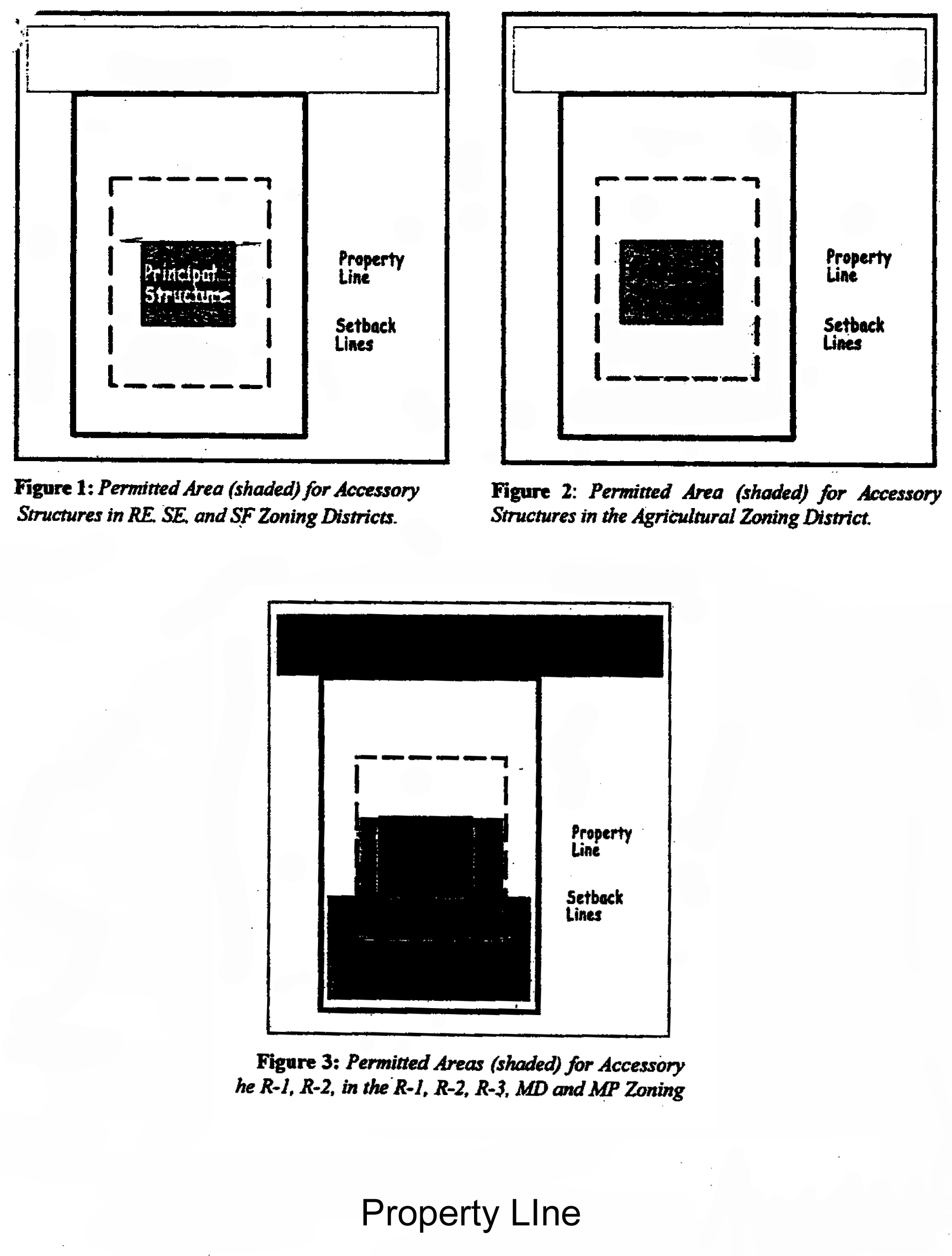
Accessory building: A subordinate detached building, such as a garage, the use of which is clearly and customarily incidental to the permitted principal use of the principal building on the same lot.
Accessory use: A use that is clearly incidental to, customarily found in connection with, and is located on the same zoning lot as the principal use to which it is related.
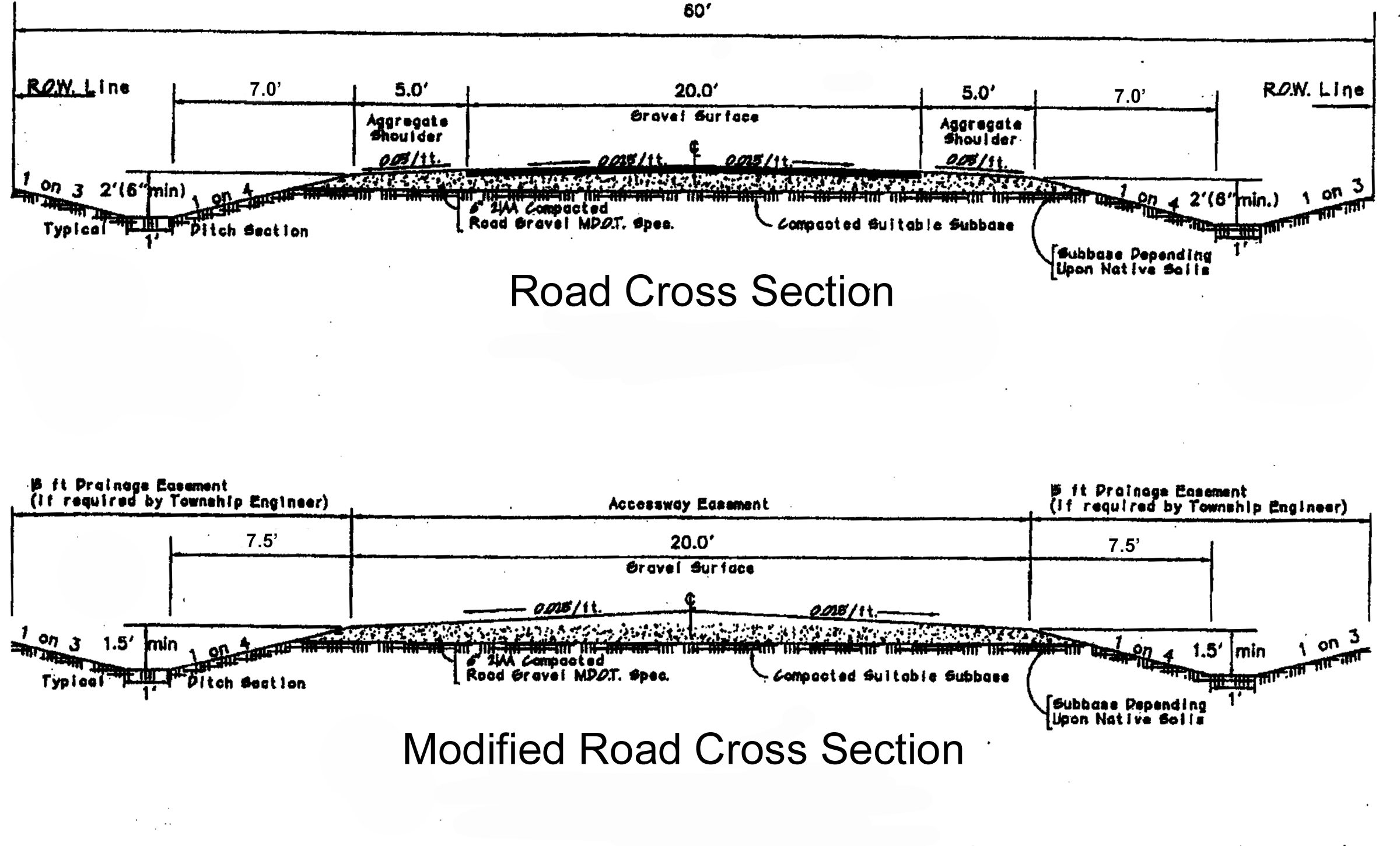
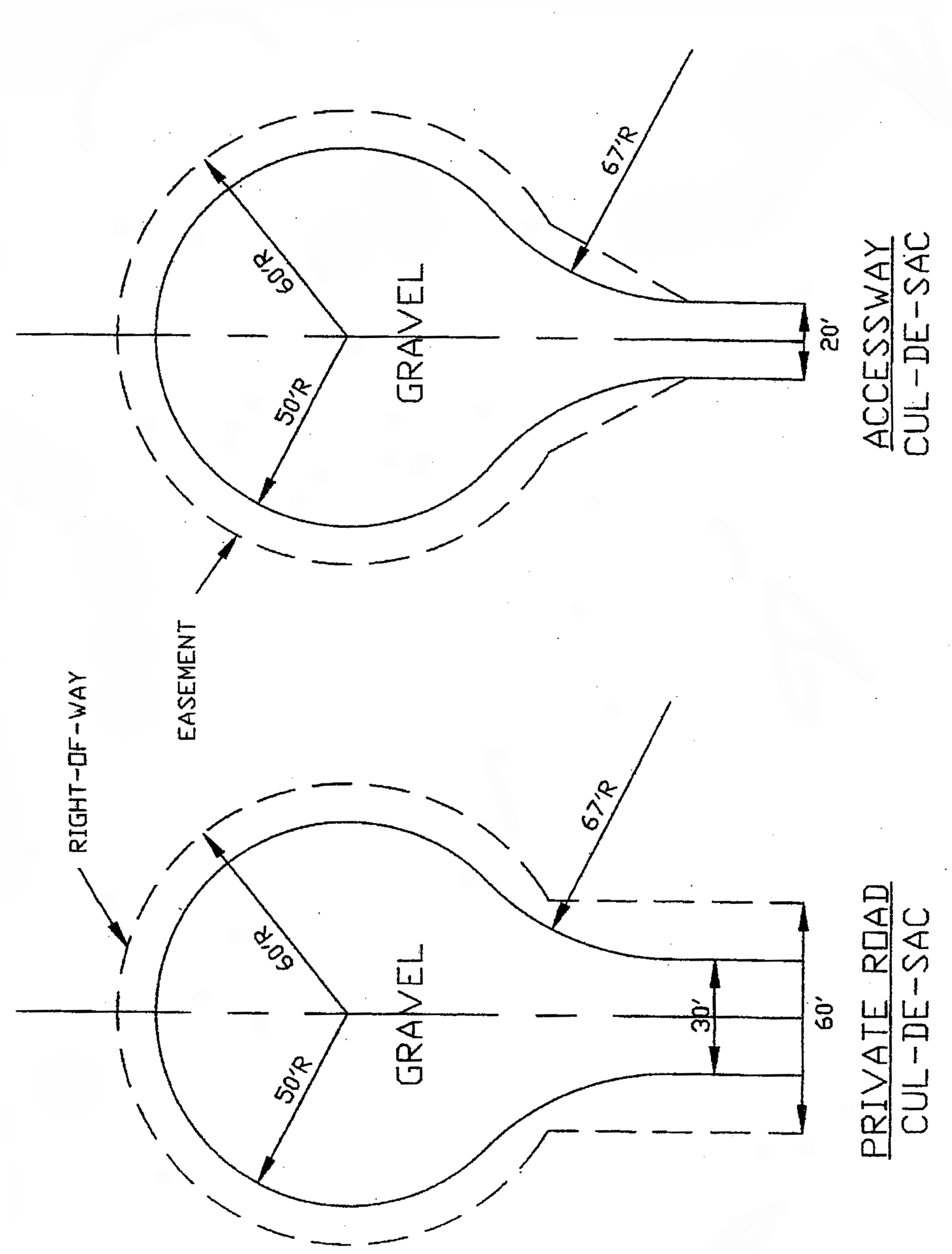
Accessway: A private road that provides access to no more than four (4) parcels or building sites and meets the requirements specified in Section 4.19.18.
Adult regulated uses; definitions: See Section 4.40.3.
Aircraft: Any contrivance, now known or hereafter invented, built, used or designated for navigation or flight in the air.
Airport: Any location, either on land or water, which is used for the landing or takeoff of aircraft, which provides the facilities for the shelter, supply, or care of aircraft, or for receiving or discharging passengers or cargo, and all appurtenant areas used or suitable for airport buildings, or other airport facilities, and all appurtenant rights-of-way, whether heretofore or hereafter established.
Alterations: As applied to a building or structure, "alterations" means any change, addition or modification to a structure, any change in the structural members of a building such as walls or partitions, columns, beams, or girders as presently existing, or any change which may be referred to herein as "altered" or "reconstructed," whether by extending a side or by increasing in height, or moving from one location or position to another.
Apartment house: A dwelling for three or more families living independently of each other with separate and individual kitchen, bath, and toilet facilities. (See "multiple-family dwelling.")
Attic: The space between the ceiling beams of the top habitable floor and roof.
Automobile: For the purposes of this ordinance, "automobile" shall include cars, trucks, vans, campers, motorcycles, and other such motor-driven wheeled vehicles, except farm equipment not heretofore mentioned.
Automobile service stations: A building or structure designed or used for the retail sale or supply of fuels, lubricants, air, water or other operating commodities for motor vehicles, aircraft or boats and including the customary space and facilities for the installation of such commodities on or in such vehicles, and including space for the temporary storage of vehicles not over 48 hours, minor repairs, servicing or steam cleaning but not including bumping, painting, refinishing, major repairs and overhauling, rust-proofing, or high speed automated conveyor drive-through washing.
Basement: That portion of a building that is partly or completely below grade. A basement shall not be counted as a story except as included in the definition of "story."
Beach: A shore of a lake, pond, or bank of a river covered by sand, gravel, or larger rock fragments.
Bed and breakfast inn: A dwelling in which the owner resides and in which overnight accommodations are provided or offered for transient guests for compensation, including provision for a morning meal only and for overnight guests only. See regulation in Section 4.39.
Benefit, recognizable and substantial: A clear benefit, both to the ultimate users of the property in question and to the community, which would reasonably be expected to accrue, taking into consideration the reasonably foreseeable detriments of the proposed development and use(s); including, without limitation, longterm protection and/or preservation of natural resources and natural features and/or historical and/or architectural features of a significant quantity and/or quality in need of protection or preservation on a local, state and/or national basis; reducing to a significant extent the nonconformity of a nonconforming use or structure, i.e., modification of a nonconforming use or structure so that, to a significant extent, it is rendered more conforming, or less offensive, to the zoning district in which it is situated.
Berm: A mound of earth planted with shrubs, grass and trees to serve as an obscuring (and without division by wetlands) screen.
Billboard: Any sign situated on private premises on which the written or pictorial information is not directly related to the principal use of the land on which such sign is located.
Buffer strip: A strip of land of definite width and location reserved for the planting of shrubs and trees to serve as an obscuring screen.
Buildable area: The buildable area of a lot is a contiguous (and without division by wetlands) area that is free of all public rights-of-way, all private road easements, all natural feature areas as defined in this ordinance, and any public utility easements which shall place limitations on overhead, surface or underground use or development. Local service easements which provide service directly to a lot and common drainage easements serving a lot or the subdivision alone in which a lot is located shall not be excluded from the calculations of the minimum buildable area for that lot. The buildable area of a lot shall be of such contiguous configuration as to permit construction of a structure and placement of an initial and a replacement (nonengineered) septic field thereon. Buildable does not mean the area is without building limitations.
Building: Any structure, either temporary or permanent, having a roof and used or built for the shelter or enclosure of persons, animals, chattels, or other property of any kind.
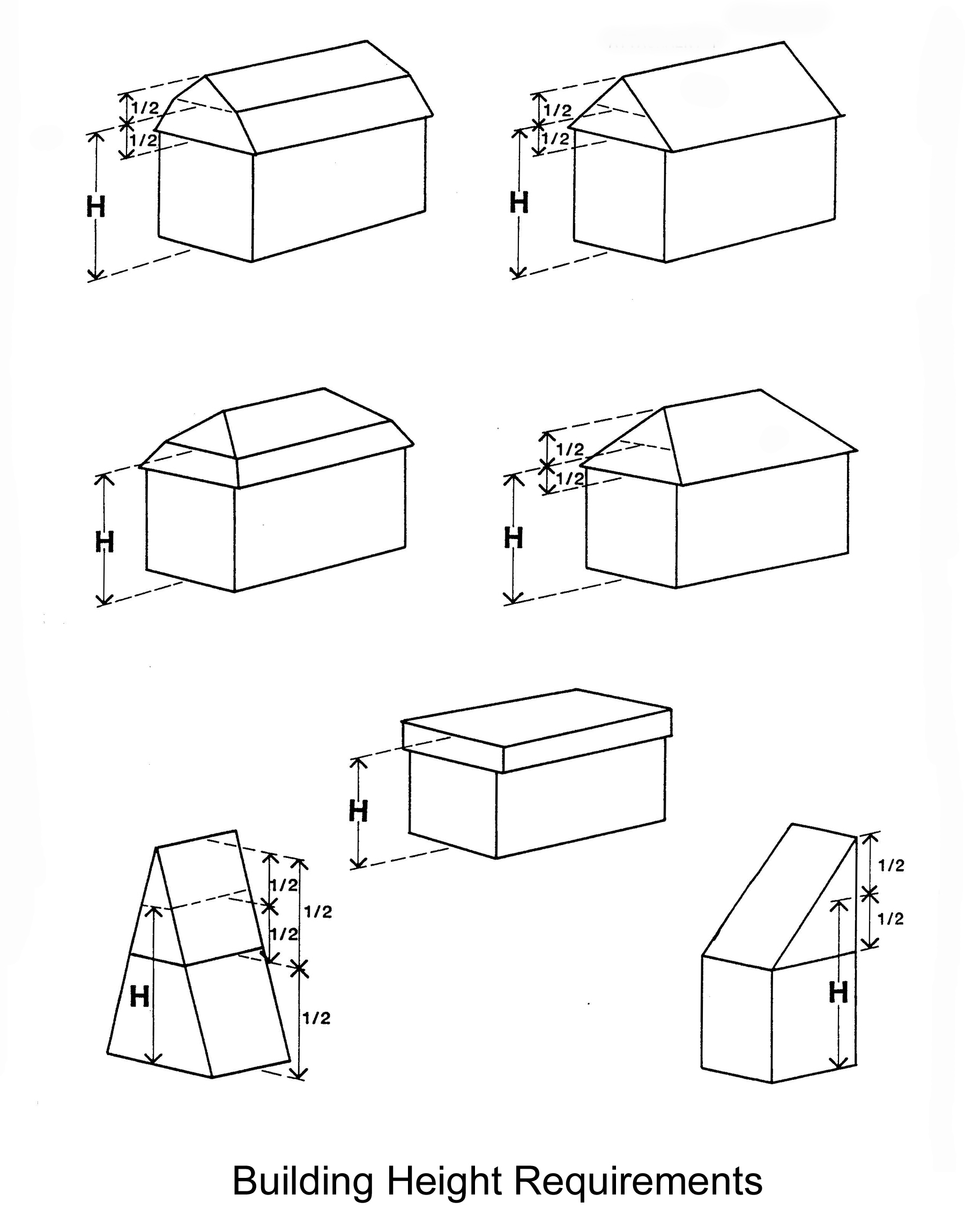
Building height: The vertical distance from the established grade at the center of the front of the building to the highest point of the roof surface, if a flat roof; to the deck line of mansard roofs; and to the mean height level between eaves and the ridge of gable, studio, hip, and gambrel roofs; and seventy-five (75) percent of the height of an "A" frame.
BUILDING HEIGHT REQUIREMENTS (see illustration following definitions).
Building line: The minimum distance from which any building must be located from a street or road right-of-way or easement or high-water line and for the purpose of this ordinance a minimum building line is the same as a front setback line. Front lines that are not adjacent to a right-of-way or easement shall have the same minimum setback as though such lines are adjacent to such features.
Building, principal: A building in which is conducted the primary use of the lot on which it is situated.
Carport: An open sided, roofed auto shelter, usually formed by the extension of a roof from the side of a building.
Clinic: A place for the care, diagnosis, and treatment of persons, including those in need of medical or minor surgical attention. A clinic may incorporate customary laboratories and pharmacies incidental or necessary to its operation or to the service of its patients, but may not include facilities for inpatient care or major surgery.
Clinic, veterinary: A place for the care, diagnosis, and treatment of animals, including those in need of medical or minor surgical attention. A veterinary clinic may incorporate customary laboratories and pharmacies incidental or necessary to its operation or to the service of the animals, but may not include facilities for boarding of animals or major surgery.
Club: An organization of persons for special purposes or for the promulgation of sports, arts, sciences, agriculture, literature, politics or similar activities.
Commercial aviation activity or operation: An activity or operation such as the sale of gasoline or oil, the soliciting or engaging in charter flying or student instruction, the provision of shelter or tiedown of aircraft, the overhaul or repair of aircraft or of engines, or otherwise offering aeronautical facilities or services to the public.
Commercial use: Relates to the use of property in connection with the purchase, sale, barter, display or exchange of goods, wares, merchandise or personal services and the maintenance or operation thereon of buildings, offices, stores, shops, recreational or amusement enterprises. For the purposes of this ordinance, a home occupation that operates within the limits of this zoning ordinance shall not be considered a commercial use.
Commission (or planning commission): The Planning Commission of Addison Township.
Community impact statement: An assessment of the developmental, ecological, social, economic and physical impacts of the project on the natural environment and physical improvements on and surrounding the development site. Information required for compliance with other ordinances shall not be required to be duplicated in the community impact statement.
Conditional (special approval) use: A use which is subject to conditional special approval by the township planning commission and which may also be referred to as a special approval use. A conditional use may be granted only when there is a specific provision in this ordinance. A conditional (special approval) use is not considered to be a nonconforming use.
Condominium: Ownership in common with others of a parcel of land and certain parts of a building thereon which would normally be used by all the occupants, such as yards, foundations, basements, floors, walls, hallways, stairways, elevators and all other related common elements, together with individual ownership in fee of a particular unit or apartment in such building.
Confined paddock: A small field or enclosure typically fenced and near a stable in which horses are exercised and confined.
Convalescent home or nursing home: A home for the care of children, the aged, the infirm, or a place of rest for those suffering bodily disorders, wherein two (2) or more persons are cared for. Said home shall conform and qualify for license under state and local law.
Court: An open sided, unoccupied space other than a yard, and bounded on at least two (2) sides by a building. A court extending to the front line or rear lot line or rear yard is an outer court. Any other court is an inner court.
Density: The number of dwelling units permitted on an area of land exclusive of area included in a public or private right-of-way or easement. For purposes of calculating maximum permitted density, areas of public utility or private or public road right-of-way or easement shall be excluded.
Depth to width ratio: The calculation of the ratio of any dimension of a lot or parcel to another dimension (e.g., width and length or length and width).
District: A portion of the unincorporated area of the township within which, on a uniform basis, certain uses of land and buildings are permitted, and within which certain regulations and requirements apply under the provisions of this ordinance.
Driveway: Private vehicular entrance serving one residence only.
Dwelling: A building or portion thereof, containing sleeping, living room space, kitchen, and bathroom facilities designed for and occupied by one (1) family, excluding hotels, motels, and tourist homes. In no case shall a travel trailer, motor home, automobile, tent or other portable building defined as a recreational vehicle be considered a dwelling. In the case of mixed occupancy where a building is occupied in part as a dwelling unit, the part so occupied shall be deemed a dwelling unit for the purposes of this ordinance. Accessory buildings shall not be deemed part of a dwelling.
Dwelling, multiple-family: A building, or portion thereof, designed exclusively for occupancy by two (2) or more families, living independently of each other.
Dwelling, one-family: A building designed exclusively for and occupied exclusively by one (1) family.
Easement (Access): The general description of land (public or private) needed to provide access to other parcels of land. A non-possessing interest in land held by one person whereby the first person is accorded partial use of such land for a specific purpose (access).
Erected: Built, constructed, altered, reconstructed, moved upon, or any physical operations on the premises required for construction. Excavation, fill, drainage and the like shall be considered part of erection.
Essential services: The erection, construction, alteration or maintenance by public utilities or any municipal departments or commission of underground, surface or overhead gas, electrical, communication, sewer or water transmission or distribution systems, including poles, wires, mains, drains, sewers, pipes, conduits, cables, fire alarm boxes, police call boxes, traffic signals, hydrants, towers and other similar equipment and accessories in connection therewith, but not including buildings reasonably necessary for the furnishing of adequate service by such public utilities or municipal departments or commissions for public health, safety or general welfare. Cellular communication facilities shall not be deemed essential services.
Excavation: Any breaking of ground, except common household gardening, farming and ground care.
Exception: A use permitted as a conditional use or use subject to special approval only after review and special approval of the application by the township planning commission.
Family: means either of the following:
1.
A domestic family, that is, one (1) or more persons living together and related by the bonds of consanguinity, marriage, or adoption, together with servants of the principal occupants and not more than one (1) additional unrelated person, with all of such individuals being domiciled together as a single, domestic, housekeeping unit in a dwelling.
2.
The functional equivalent of the domestic family, that is, persons living together in a dwelling unit whose relationship is of a permanent and distinct character and is the functional equivalent of a domestic family with a demonstrable and recognizable bond that constitutes the functional equivalent of the bonds which render the domestic family a cohesive unit. All persons of the functional equivalent of the domestic family must be cooking and otherwise operating as a single housekeeping unit. This definition shall not include any society, club, fraternity, sorority, association, lodge, coterie, organization or group where the common living arrangement and/or the basis for the establishment of the functional equivalency of the domestic family is likely or contemplated to exist for a limited or temporary duration. There shall be a rebuttable presumption enforceable by the building inspector in the first instance that the number of persons who may reside as a functional equivalent family shall be limited to six (6). Such presumption may be rebutted by application for a special approval use based upon the applicable standards in this ordinance.
Family day care home: A family day care home is a private home in which one (1) but fewer than seven (7) minor children are received for care and supervision for periods of less than twenty-four (24) hours a day, unattended by a parent or legal guardian, except children related to an adult member of the family by blood, marriage, or adoption. Family day care home includes a home that gives care to an unrelated minor child for more than four (4) weeks during a calendar year.
Farm: All of the contiguous neighboring or associated land operated as a single unit on which bona fide farming or agriculture is carried on directly by the owner/operator, manager or tenant farmer, by his own labor or with the assistance of members of his household or hired employees, provided, however, that land to be considered a farm hereunder shall include a continuous parcel of ten acres or more in area; provided further, farms may include establishments operated as bona fide greenhouses, nurseries, orchards, chicken hatcheries, poultry or livestock farms, and apiaries and the like. It excludes the raising of furbearing animals, riding stables, animal kennels and establishments for disposal or feeding of public garbage, rubbish, or offal to animals.
Farm building: Any structure other than a dwelling, moved upon, maintained, used or built on a farm which is essential and customarily used on farms of that type for the pursuit of agricultural activities.
Fence: Any permanent or temporary partition, structure or gate of definite height and location erected as a dividing marker, barrier or enclosure. For the purpose of this ordinance, any structure exceeding twelve (12) inches above grade for the above use is a fence.
Fence, obscuring (walls): A structure built of a permanent, durable material and of definite height and location to serve as an obscuring screen in carrying out the requirements of this ordinance.
Filling: The depositing or dumping of any matter on or in the ground except common household gardening and ground care.
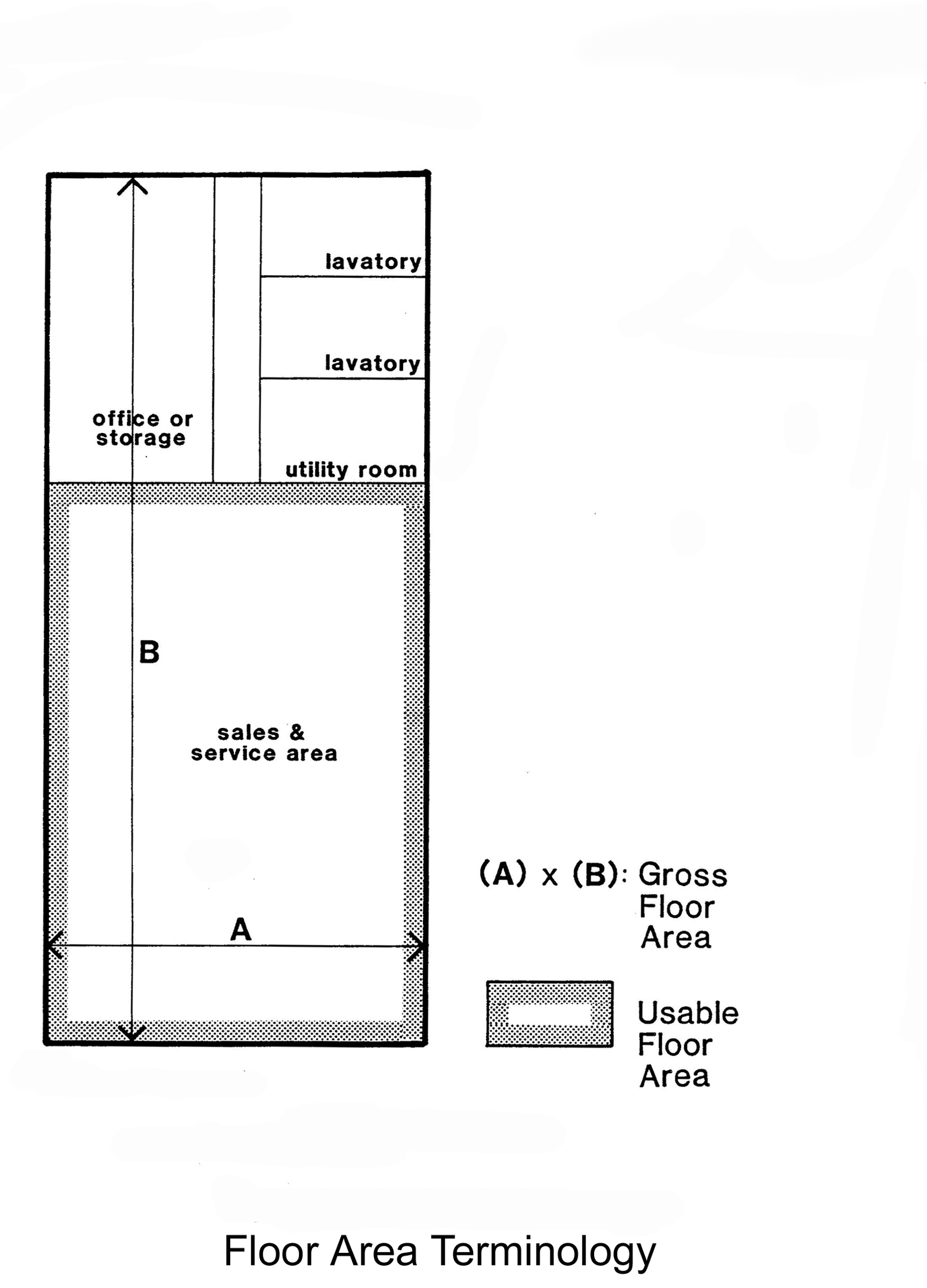
Floor area: The minimum allowable floor area in a residential dwelling unit is computed as the sum of the horizontal areas of the floors of each story of a building measured from the exterior faces of the exterior walls, excluding unfinished basements, unfinished attics, attached garages, breezeways and enclosed and unenclosed porches. In the case of multifamily dwellings, the minimum allowable floor area of a dwelling unit is the horizontal floor area of the dwelling unit measured to the interior face of the dwelling unit's perimeter walls, excluding hallways and common areas.
Floor area, gross: Gross floor area is the sum of the gross horizontal areas of the floors within outside walls of a building including basement, elevator shafts and stairwells at each story, floor space used for mechanical equipment, penthouse, half story, and mezzanine or interior balcony.
Floor area, usable: Usable floor area is any floor area within outside walls of a building exclusive of areas in cellars, basements, utility areas, unfinished attics, garages, open porches and accessory buildings.
FLOOR AREA TERMINOLOGY (see graphics following definitions).
Foster care homes:
1.
Adult foster care family home: A private residence with the approved capacity to receive not more than six (6) adults who shall be provided foster care for five (5) or more days per week and for two (2) or more consecutive weeks. The adult foster care family home licensee shall be a member of the household and an occupant of the residence. (Section 3, Subsection 5, Public Act No. 218 of 1979 (MCL 400.703(5)), as amended.)
2.
Large group home: An adult foster care facility with the approved capacity to receive at least thirteen (13) but not more than twenty (20) adults who shall be provided foster care. Beginning four (4) years after the effective date of Public Act No. 218 of 1979 (MCL 400.701 et seq.), as amended (approved January 16, 1980), an adult foster care large group home which is licensed by the department of health to provide foster care in each respective category may receive only those adults in the category whose primary need for services is based upon not more than one (1) of the following categories:
a.
Aged condition.
b.
Mental illness, developmental disability, or physical handicap, or a combination of mental illness, developmental disability, or physical handicap.
3.
Small group home: An adult foster care facility with the approved capacity of not more than twelve (12) adults who shall be provided foster care.
Fuel (aircraft): Any and all gasoline, distillates, benzine [benzene], naphtha, bottle gas, benzol and other volatile and inflammable liquids produced, or which may hereafter be invented, produced, compounded and used for the propelling of aircraft.
Garage, private: An accessory building or portion of the principal building if attached to the principal building, used for the storing of automobiles and designed or used for private residences only.
Garage, public: A building or structure designed or used for the storage, care, repair, or commercial display of automobiles, tractors, trucks or other power equipment.
Grade: A reference plane representing the average of finished ground level adjoining the building at all exterior walls. When the finished ground level slopes away from the exterior walls, the reference plane shall be established by the lowest points within the area between the building and the lot line or, when the lot line is more than six (6) feet from the building, between the building and a point six (6) feet from the building.
Greenbelt: A strip of land not less than ten (10) feet in width which is planted and maintained with a type and variety of shrubbery or other landscape materials approved by the planning commission, from five (5) to six (6) feet in height, so as to create a permanent buffer.
Group day care home: A private home in which more than six (6) but not more than twelve (12) minor children are given care and supervision for periods of less than twenty-four (24) hours a day unattended by a parent or legal guardian, except children related to an adult member of the family by blood, marriage, or adoption. Group day care home includes a home that gives care to an unrelated minor child for more than four (4) weeks during a calendar year.
Hazard (aircraft): Any obstruction of whatever character, object of natural growth, or use of land, upon or surrounding or adjacent to an airport, landing field, or other aeronautical facility, which prevents the safe use of such facilities for takeoff or landing of aircraft.
Hazardous substances: Any chemical or other material which, by virtue of its inherent properties and not solely by the manner in which it is used, has the potential to be injurious to the public health, safety and welfare even in small quantities. Uses and facilities which use, store or generate hazardous substances in quantities greater than one hundred (100) kilograms per month, or twenty-five (25) gallons per month, whichever is less, shall be subject to site plan review requirements and approval of a hazard mitigation plan.
Hazardous uses: All uses which involve the storage, sale, manufacture, or processing of materials which are dangerous and combustible and are likely to burn immediately, and from which either poisonous fumes or explosions are to be anticipated in the event of fire. These uses include all high hazard uses listed in Section 306 of the Basic Building Code/1987, as amended, edition prepared by the Building Officials Conference of America, Inc.
Home occupation: Any occupation or profession carried on by a member of the family, residing on the premises, and does not significantly change the character of the principal dwelling, and further, provided that not over thirty-five (35) percent of the total actual floor area of each story is used for such occupation or profession. One (1) unlighted sign of an area no larger than two (2) square feet shall be permitted attached to the dwelling. Clinics, hospitals, barbershops, beauty parlors, tearooms, tourist homes, animal hospitals, kennels, millinery shops, and child care nurseries, among others, shall not be deemed to be home occupations.
Hospital: An institution in which sick or injured persons are given medical or surgical treatment, operating under license by the Health Department of the State of Michigan.
Hospital, animal: An institution in which sick or injured animals are given medical or surgical treatment, operating under license by the Health Department of the State of Michigan.
Junk: Any unused, unusable, nonfunctional or inoperable equipment or matter, including building materials, furniture, machinery, appliances or parts thereof, and any inoperable motor vehicles, which because of mechanical conditions or missing parts, cannot be driven.
Junkyard: An open area where waste, used, discarded or salvage materials or junk are bought, sold, exchanged, baled, packed, disassembled or handled or stored, including but not limited to scrap iron, and other metals or materials, and including automobile wrecking yards and any area of two thousand (2,000) square feet used for storage, keeping or abandonment of junk.
Kennel, dog: Any premises on which a total of more than four dogs, six (6) months or older, are kept, either permanently or temporarily, either for sale, breeding, boarding, training, hobby, protection, or pets.
Lake: Any body of water, natural or artificial, defined as an "inland lake or stream" in the Inland Lake and Stream Act of 1972, P.A. 1972, No. 346, as amended [Part 301 of Public Act No. 451 of 1994 (MCL 324.30101 et seq.)].
Landfill: Any disposal area or tract of land, building, unit or appurtenance or combination thereof that is used to collect, store, handle, dispose of, bury, cover over, or otherwise accept or retain refuse as herein defined.
Landing area: The area within an airport or landing field used for the takeoff and landing of any aircraft.
Landing field: Any location, either on land or water, which shall be used for the landing or takeoff of aircraft with safety, but which is not equipped with facilities for the shelter, supply and repair of aircraft.
Loading space: An off-street space on the same lot with a building or a group of buildings for the temporary parking of a commercial vehicle while loading or unloading merchandise or materials.
Lot: A parcel of land of sufficient size to meet minimum zoning requirements for use coverage and area and to provide such yards and other open spaces as are herein required. Such lot shall have frontage on a dedicated public roadway or an approved private road as may be provided by appropriate ordinance. Such lot may consist of:
1.
A single lot of record;
2.
A portion of a lot of record;
3.
A combination of complete lots of record or portions thereof; or
4.
A parcel of land described by metes and bounds;
provided that in no case shall a division or combination of any residential lot or parcel be created which does not meet the requirements of this ordinance or Ordinance #112 Land Division Ordinance. A lot that does not meet the foregoing definition shall be deemed a nonconforming lot.
Lot area: The total horizontal area within the lot lines of the lot. Minimum lot area shall not include any portion within a public right-of-way or public road easement or bottomland (as defined in Michigan Public Act 451 of 1994) for any lot created after the effective date of this definition.
Lot, contiguous: Lots or parcels of land adjoining each other and under the same ownership.
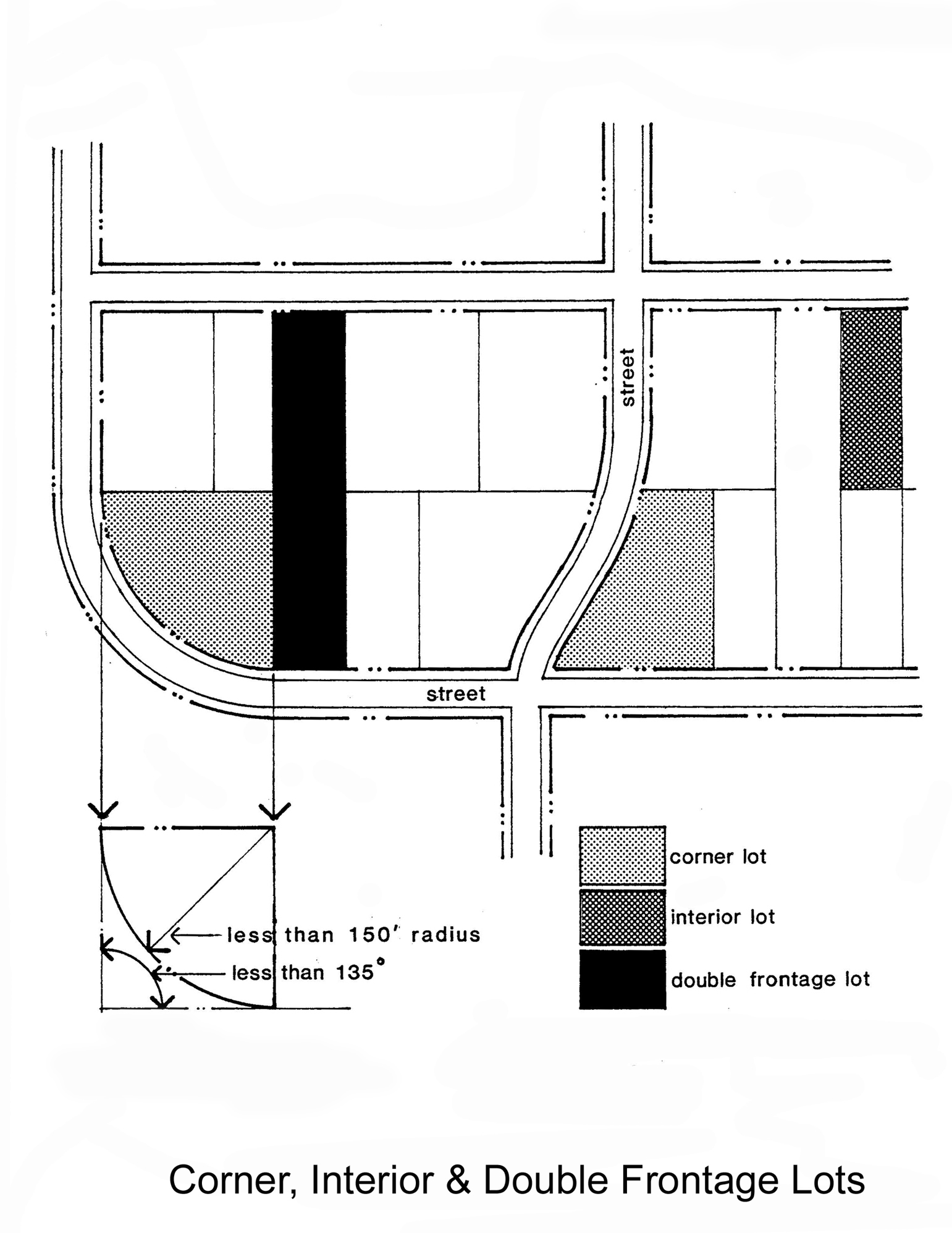
Lot, corner: A lot of which at least two adjacent sides abut upon a street provided that such two (2) sides intersect at an angle of not more than one hundred thirty-five (135) degrees. Where a lot is on a curve, if tangents through the extreme point of the street line of such lot make an interior angle of not more than one hundred thirty-five (135) degrees, it is a corner lot. In the case of a corner lot with curved street line, the corner is that point on the street lot line nearest to the point of intersection of the tangents described above. (A tangent is a straight line extended from the outer edges of a curve which intersect to form a corner.)
CORNER, INTERIOR AND DOUBLE FRONTAGE LOTS (see illustration following definitions).
Lot coverage: That part or percent of the lot occupied by buildings including accessory buildings.
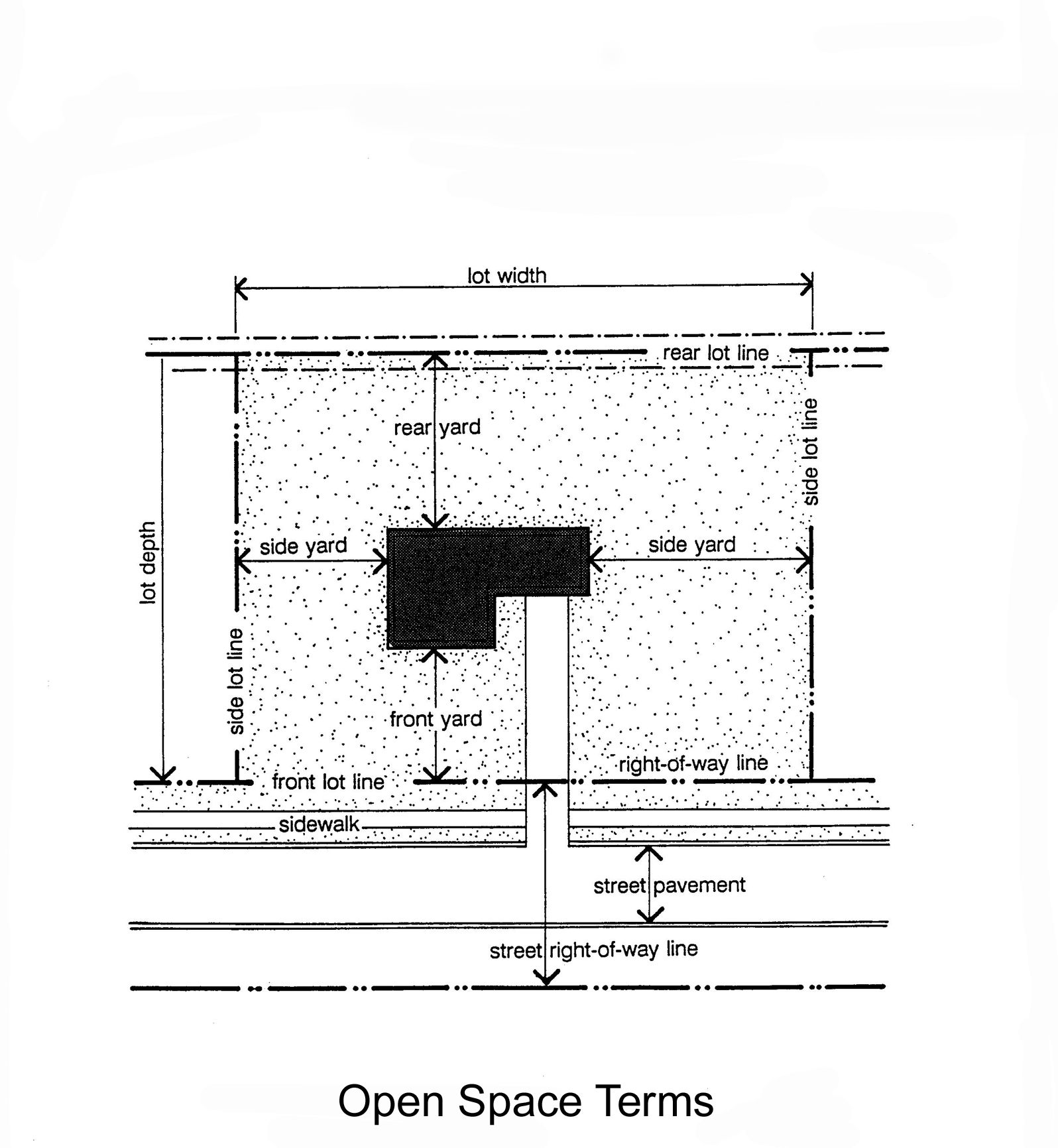
Lot depth: The horizontal distance between the front and rear lot lines, measured along the median between the side lot lines.
Lot, double frontage: Any interior lot having frontage on two (2) more or less parallel streets as distinguished from a corner lot. In the case of a row of double frontage lots, all sides of said lots adjacent to streets shall be considered frontage, and front yard setback and other regulations shall be observed.
Lot, interior: Any lot other than a corner lot or double frontage lot.
Lot, lake: A lot abutting directly upon a lake, natural or manmade.
Lot lines: The property lines bounding the lot.
1.
Front lot line: In the case of a lot abutting upon one (1) street or lane, the front lot line shall mean the line separating such lot from a road, street or lane. In the case of a corner lot or double frontage lot, front lot line shall mean that line separating said lot from that street which is designated as the front street in the plat and in the application for a building permit.
2.
Rear lot line: That lot line opposite the front lot line. The rear lot line of a lake lot shall be the high-water mark of the adjacent lake. In the case of irregular, triangular, or wedge-shaped lots, a line ten (10) feet in length entirely within the lot parallel to and at the maximum distance from the front line, shall be considered to be the rear lot line for the purpose of determining depth of the rear yard. In cases where none of these definitions are applicable, the building inspector shall designate the rear lot line.
3.
Side lot line: Any lot line other than the front or rear lot line. A side lot line separating a lot from a street is a side street lot line. A side lot line separating a lot from another lot or lots is an interior side lot line.
Lot of record: A lot that is part of a subdivision recorded in the office of the county register of deeds, or a lot or parcel described by metes and bounds, the description of which has been so recorded and is considered as such for tax purposes.
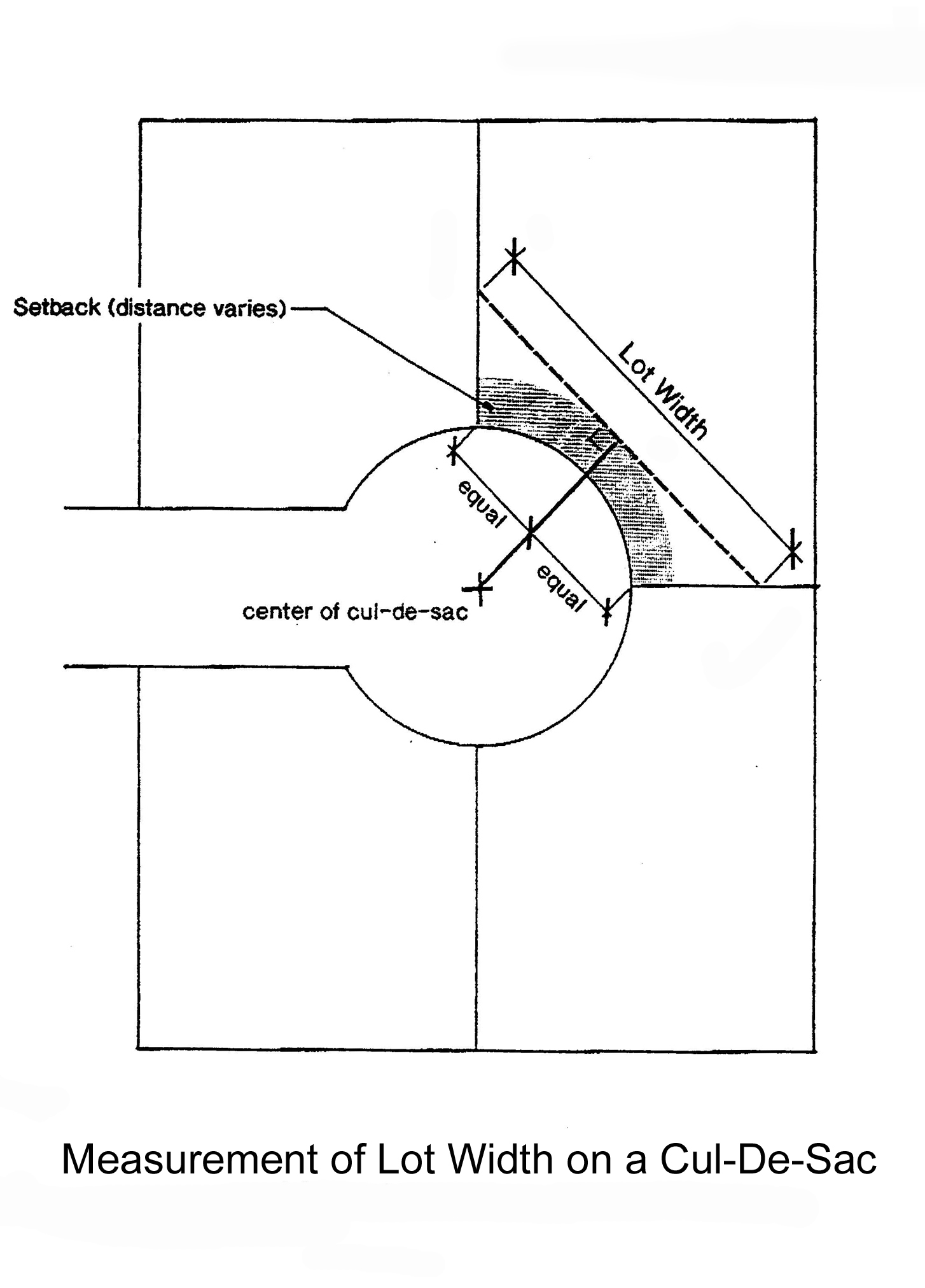
Lot width: The horizontal, straight-line distance between the side lot lines measured in a perpendicular fashion at the two points where the minimum building line or setback intersects on the side lot lines. In the case of a lot fronting on a cul-de-sac (as differentiated from other curved streets), the lot width is defined as the straight-line distance of a line extended at right angles from the highest point on the setback line to each side lot line.
MEASUREMENT OF LOT WIDTH ON A CUL-DE-SAC (see illustration following definitions).
Major thoroughfare: An arterial street which is intended to serve a large volume of traffic for both the immediate area and the region beyond, and may be designated as a major thoroughfare, parkway, freeway, expressway or equivalent term to identify those streets comprising the basic structure of the street plan. Any street proposed as a major thoroughfare in the township master land use plan [township land use master plan], shall be considered a major thoroughfare. No roads are designated as major thoroughfares in the township land use master plan.
Master plan (land use master plan): The comprehensive plan including graphic and written proposals indicating the general location of streets, parks, schools, land uses, and all physical development of the township, and includes any unit or part of such plan and any amendment to such plan or parts thereof. Such plan shall be adopted by the planning commission.
Mezzanine: An intermediate level or levels between the floor and ceiling of any story with an aggregate floor area of not more than one-third (⅓) of the floor area of the story in which the level or levels are located.
Mining: Refers to the site and/or activity of stone quarries, gravel or sand pits, peat operation, commercial excavation of dirt and other mining or burrowing activities related to the physical removal for intended profit of natural materials and resources other than lumber.
Miniwarehouse: A building or group of buildings within, each of which consists of several individual storage units, each with a separate door and lock and which can be leased on an individual basis. Miniwarehouses are typically contained within a fenced, controlled access compound.
Minor thoroughfare: An arterial street which exists as a paved county primary and is listed on the Township Master Thoroughfare Plan as contained in the Addison Township Land Use Master Plan (Appendix A) as a Paved County Primary.
Mobile home: A structure, transportable in one (1) or more sections, which is built on a chassis and designed to be used as a single-family dwelling, with or without permanent foundation, when connected to the required utilities and including the plumbing, heating, air conditioning, and electrical systems contained in the structure. Mobile home does not include a recreational vehicle or travel trailer.
Mobile home park (manufactured housing community): A parcel of land under the control of a person upon which two or more mobile homes are located on a continual nonrecreational basis and which is offered to the public for that purpose regardless of whether a charge is made therefore, together with any building, structure, enclosure, street, equipment, or facility used or intended for use incident to the occupancy of a mobile (manufactured) home and which is not intended for use as a temporary travel trailer park.
Motel: A series of attached, semidetached or rental units containing bedroom, bathroom and closet space. Units shall provide for overnight lodging and are offered to the public for compensation and shall cater primarily to the public traveling by motor vehicle.
Natural feature area: Any of the following:
1.
Water bodies including but not limited to lakes, rivers, or streams, as defined by the high-water mark.
2.
Any wetland area as defined within this ordinance.
3.
Any floodplain area as documented by the Michigan Department of Natural Resources.
Nonconforming building: A building or portion thereof lawfully existing at the effective date of this ordinance or amendments thereto, that does not conform with the provisions of this ordinance in the district in which it is located.
Nonconforming use: A use which lawfully occupied a building or land at the effective date of this ordinance, as amended, and that does not conform with the use regulations of the district in which it is located.
Nonconforming lot or parcel: Any lot or parcel which does not meet any dimensional provision, Schedule of regulations provision, access or frontage provision at the time of adoption of this ordinance or any amendment thereto.
Nonconformity: Any structure, or use of any land or structure, which does not conform at the time of adoption of this ordinance or any amendment thereto, to the regulations for the district in which it is located.
Off-street parking lot: A facility providing vehicular parking space along with adequate drives and aisles for maneuvering so as to provide access for entrance and exit for the parking of more than two (2) vehicles.
Open air business: Open air business uses shall include the following and uses having clearly similar characteristics:
1.
Retail sale of trees, shrubbery, plants, flowers, seed, topsoil, humus, fertilizer, trellises, lawn furniture, playground equipment, and other home garden supplies and equipment.
2.
Retail sale of fruit and vegetables.
3.
Tennis courts, archery courts, shuffleboard, horseshoe courts, miniature golf, golf driving range, children's amusement park or similar recreation uses.
4.
Bicycle, trailer, motor vehicle, boats or home equipment sales, service or rental services.
5.
Outdoor display and sale of garages, swimming pools, and similar uses.
Outlot: Within the boundary of a recorded plat, a lot set aside for purposes other than a building site, park or other land dedicated to public use or reserved to private use.
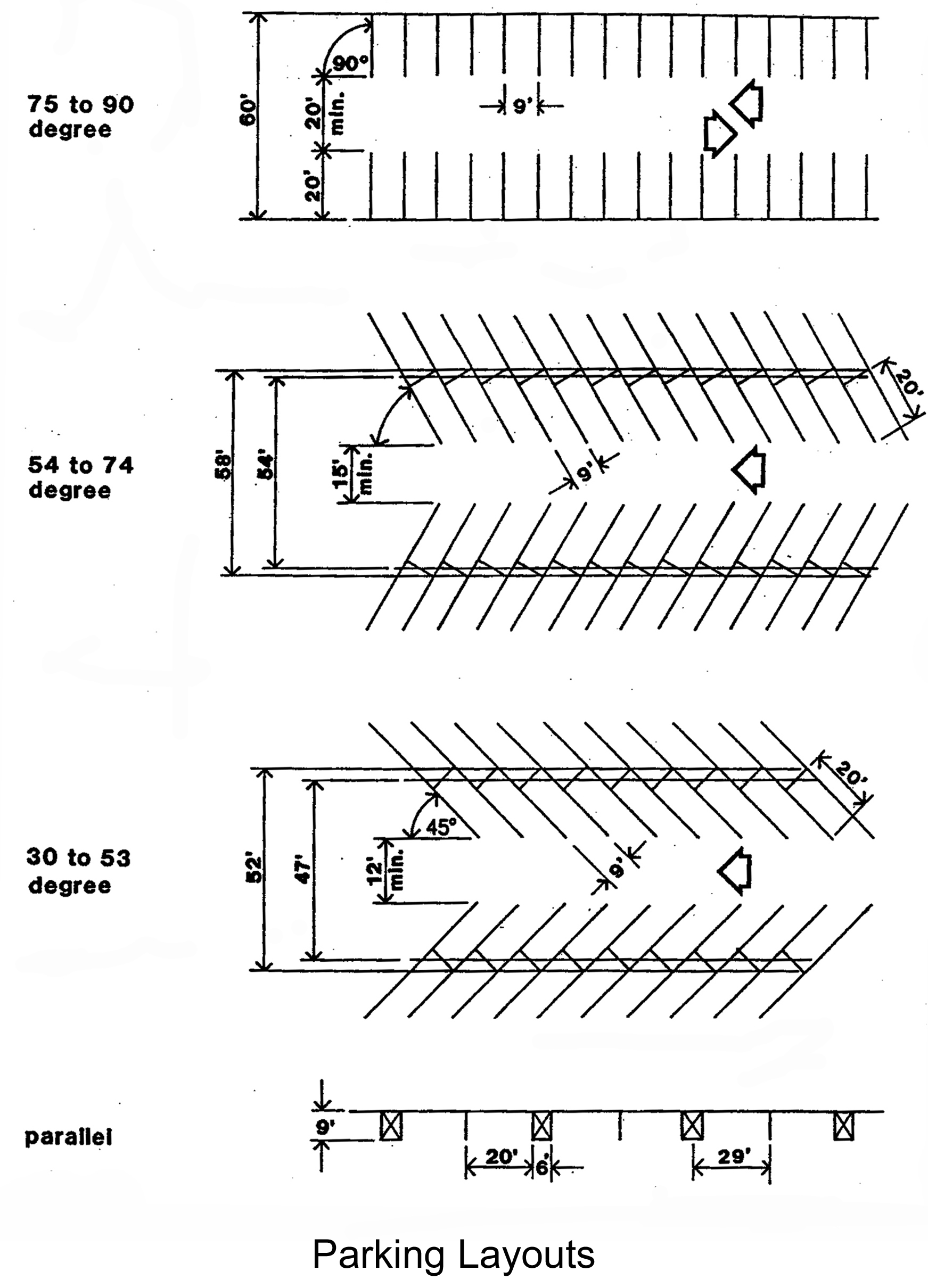
Parking space: A rectangular area of not less than nine (9) feet wide and twenty (20) feet long exclusive of drives, aisles or entrances giving access thereto, which shall be fully accessible for the storage or parking of each automobile or motor vehicle.
Pasture: A field or plot of land where animals such as horses and cattle are put out to graze or feed.
Piggery: A location or establishment where pigs are raised.
Planned unit development: A planned unit development may include such concepts as cluster development, planned development, community unit plan, planned residential development, and other terminology denoting zoning requirements designed to accomplish the objectives of this ordinance through a land development project review process based on the application of site planning criteria to achieve integration of the proposed land development project with the characteristics of the project area.
Pond: An excavation or the altering of a watercourse by damming or excavation or combinations thereof, for the purpose of creating thereby a body of water, more than two (2) feet in depth and more than one thousand (1,000) square feet in area for the use as an irrigation source, for livestock watering, for fish or aquatic life production, or for recreational or scenic purposes.
Private road: See definition of "street or road, private."
Public: Individuals or group of individuals other than the applicant or those individuals specified in a permit.
Public utility: Any person, firm, corporation, municipal department, board or commission fully authorized to furnish and furnishing (under federal, state or municipal regulations to the public) energy, gas, steam, electricity, sewage disposal, communications, telegraph, transportation or water.
PUD: Planned unit development as described in this ordinance.
Recreational vehicles: See "travel homes."
Restaurants: One (1) or a combination of the following:
1.
Dining room restaurant: A structure which is maintained, operated, and advertised or held out to the public as a place where food and beverage are served, and consumed, primarily within the structure. Such food and beverage are served primarily in nondisposable (reusable by the restaurant) containers.
2.
Drive-in restaurant: A drive-in restaurant is any establishment where food, frozen dessert, and/or beverages are served to customers while seated in their motor vehicles upon the premises. It shall also include any establishment where the customers may serve themselves and are permitted to consume food and beverages in a motor vehicle parked on the premises or at other facilities which are provided for the use of the patron for the purpose of consumption and which are located outside of the building or structures.
3.
Fast-food restaurant: A structure which is maintained, operated, and advertised or held out to the public as a place where food, beverage, and/or desserts are served to customers from a serving counter in disposable (not reusable by restaurant) containers or wrappers. Such food, beverage, and/or desserts may be consumed inside the building or carried out for consumption off the premises.
4.
Carryout restaurant: A structure which is maintained, operated, and/or advertised or held out to the public as a place where food, beverage, and/or desserts are served in disposal containers or wrappers from a serving counter or drive-up counter for consumption primarily off the premises.
5.
Bar/lounge: A structure or part of a structure designed, maintained, and operated primarily for the dispensing of alcoholic beverages. The selling of food and/or snacks may also be permitted. If the bar/lounge area is part of a larger dining facility, it shall be defined as that part of the structure so designated and/or operated.
Riding arena, private: A noncommercial building greater than four thousand five hundred (4,500) square feet in area not open to the general public containing an indoor arena or track designed and used exclusively for the riding, exercising or training of horses.
Riding arena, public: A riding arena other than a private riding arena greater than four thousand five hundred (4,500) square feet in area open to the general public and used exclusively for the riding, exercising or training of horses.
Road maintenance: Upkeep and effort required to keep a road and roadside in passable condition.
Roadside stands: A temporary or permanent building operated for the purpose of seasonal selling of produce raised or produced by the proprietor of the stand or his family. Its use shall not make into a commercial district land which would otherwise be an agricultural or residential district, nor shall its use be deemed a commercial activity.
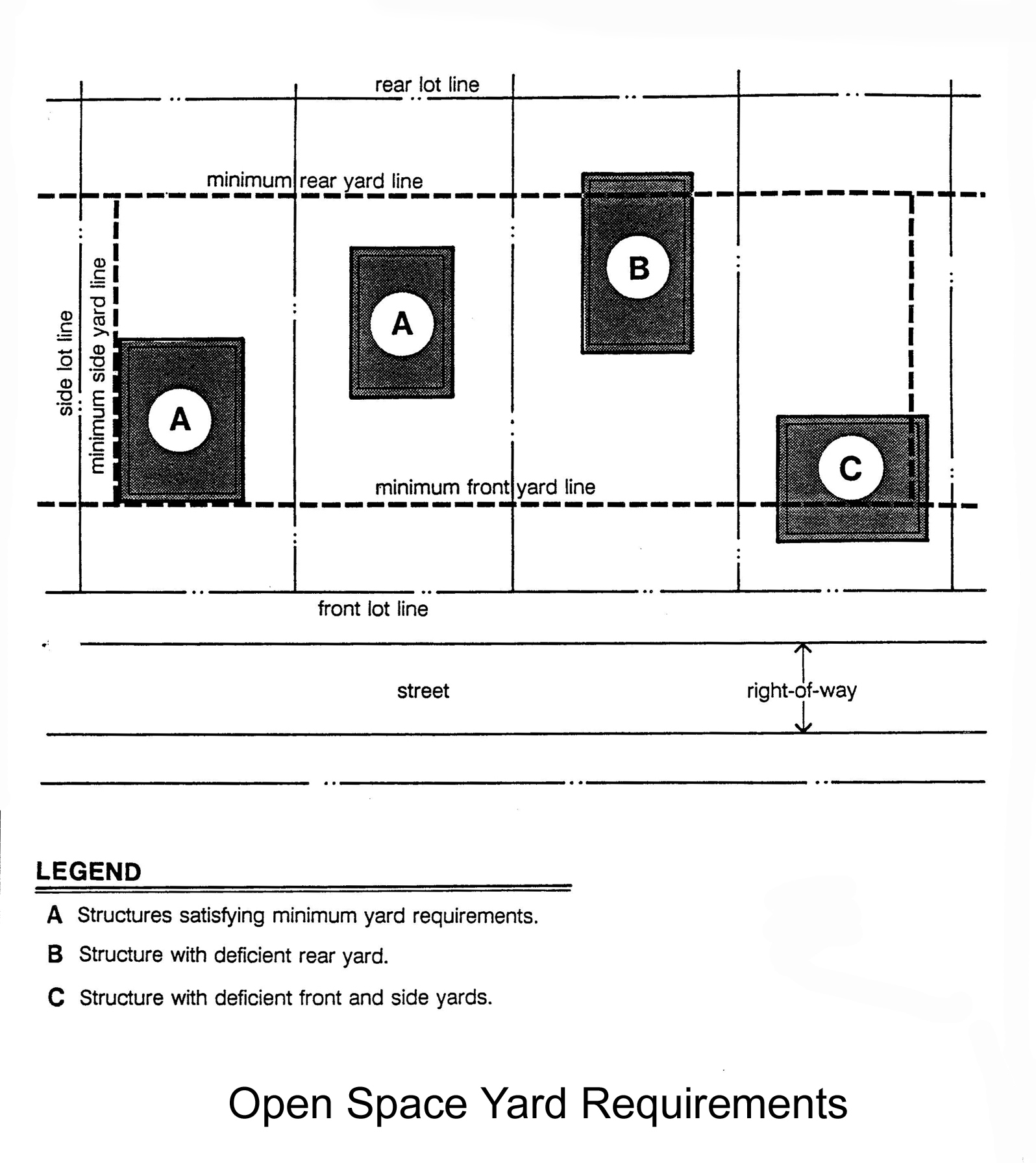
Setback: The minimum horizontal distance between the front line of the building excluding steps and unenclosed porches, and the front street or right-of-way line or road easement. Parcels which do not have a continuous and uninterrupted frontage along a front right-of-way or easement line must have a setback equal to the minimum side setback for the portion of the front of the lot which is not contiguous or adjacent to the road right-of-way or easement.
Signs: Any structure, or part thereof, on which there is lettered, pictured or displayed matter, the chief purpose of which is for advertising or publicity.
Site condominium: A condominium project designed to function in a similar manner, or as an alternative, to a platted subdivision. A site condominium shall be considered as equivalent to a platted subdivision on for purposes of the regulations in this ordinance and may be referred to as a "condominium subdivision."
Sleeping quarters: A building or portion thereof, containing strictly sleeping space designed for and used by one person, not to include space for living room or kitchen. In no case shall sleeping quarters be considered a dwelling unit.
Soil removal: Removal from the premises of any kind of soil or earth matter which includes topsoil, sand, gravel, clay or similar materials or any combination thereof, except for common household gardening and general farm care.
Solar collector: A device, or combination of devices, structure or part of a device or structure that transforms direct solar energy into thermal, chemical, or electrical energy and that contributes significantly to a structure's energy supply.
Solar energy system: A complete design or assembly consisting of a solar energy collector, an energy storage facility, and components for the distribution of transformed energy (to the extent they cannot be used jointly with the conventional energy system). Passive solar energy systems are included in this definition but not to the extent that they fulfill other functions such as structural and recreational. Subterranean homes are included.
Special event: The use of land for a temporary activity lasting no more than indicated in the ordinance which in no way constitutes a change in the uses permitted in that zoning district, nor negatively impacts the existing and surrounding land uses. The special event extends beyond what is expressly allowed by the applicable zone in terms of use and development standards and any event outside of a regular approved business use is considered a special event.
Special use: A special use is that which would not be appropriate generally or without restriction throughout the zoning division or district but which, if controlled as to number, area, location or relation to the neighborhood, would promote the public health, safety, welfare, morals, order, comfort, convenience, appearance, prosperity or general welfare. Such uses may be permitted in a zoning division or district as special uses permitted by planning commission approval, but only when specific discretionary and nondiscretionary provisions for such uses are made in this ordinance.
Stable, private: A stable for the keeping of horses for the noncommercial use of the residents of the principal premises.
Stable, public: A stable other than a private stable, capacities of which are designated within the A agricultural district regulations.
Story: That portion of a building included between the upper surface of any floor and the upper surface of the floor or roof next above is a story. A basement shall not be considered a story, provided, however, that a basement shall be considered a story if the distance from grade to the finished surface of the floor above the basement is more than six (6) feet for more than fifty (50) percent of the total perimeter or more than twelve (12) feet at any point, or if it is used for business purposes, or if it is used for dwelling purposes by other than a janitor or domestic servants employed in the same building including the family of the same.
Story, ground: The lowest story that cannot be considered a basement in a building.
Story, half: A story which is situated within a sloping roof, the area of which at a height of four (4) feet above the floor does not exceed two-thirds (⅔) of the floor area directly below it and wherein living quarters are used only as a part of the dwelling situated in the story below.
Standard "C" road: The gravel road standard currently approved by the Oakland County Road Commission.
Street: Any public or private thoroughfare or way, other than a public alley, dedicated to or designed for the use of the public or open to public travel, whether designated by name as a road, avenue, highway, boulevard, drive, lane, circle, place, court, terrace, or any similar designations.
Street or road, private: A street that has not been accepted for maintenance by the township or county, but which meets the requirements of this ordinance and has been approved by the township.
Street, public: A street, the right-of-way and improvements of which has been accepted for maintenance by the township or county.
Structure: Any object constructed or installed by man, including without limitation, buildings, towers, satellite antennas, smoke stacks, and overhead transmission lines, but not including highways, and their appurtenances. Anything constructed or erected which requires permanent location on the ground or attachment to something having such location.
Structure, temporary: A portable building, or demountable/transportable building that is designed and built to be movable rather than permanently located. Demountable structures may include, but are not limited to: structures that provide shelter (tents or marquees), platforms and supports for performers (stages), or viewing facilities (temporary seating or grandstands).
Subdivision: The division of a parcel or tract of land into five (5) or more lots, building sites, or other divisions each of which is ten (10) acres or less in area for the purpose of sale or building development, in accordance with the Subdivision Control [Land Division] Act, Public Act No. 288 of 1967 (MCL 560.101 et seq.), as amended.
Swimming pool: Any permanent, nonportable structure or container located either above or below grade designed to hold water to a depth of greater than twenty-four (24) inches, intended for swimming or bathing. A swimming pool shall be considered an accessory structure for the purpose of computing lot coverage.
Temporary use, temporary building or temporary structure: A structure, building or use permitted by the township building official or zoning board of appeals (pursuant to Section 4.16) to exist during periods of construction of the principal use or for special events or purposes, which periods shall not exceed one year unless otherwise permitted or extended by the board. Temporary uses shall be only those that are clearly short in duration, and involve no permanent structures.
Tents: As used in this ordinance, [tents] shall not include those used solely for children's recreational purposes.
Township board: The Addison Township Board of Trustees.
Travel homes (also campers, recreational vehicles, travel trailers): Any structure intended for or capable of human habitation, sleeping or eating, mounted upon wheels and capable of being moved from place to place, either by its own power or power supplied by some other vehicle attached thereto. This definition shall include all such vehicles eight (8) feet or under in width and thirty-two (32) feet or under in length. Such definition shall include travel trailers, motor homes, campers, etc.
Underlying zoning: The zoning classification and regulations applicable to lake lots, the zoning designated for recreational land which are no longer utilized for recreational purposes and to the property immediately preceding the grant of an application to designate the property planned unit development.
Urban services: The use of public sanitary sewer and public water supplies.
Use: The purpose for which land or buildings thereon are designed, arranged, or intended to be occupied or maintained.
Utility room: A room or space, located other than in the basement, specifically designed and constructed to house any utilities or laundry facilities.
Variance: A modification of the literal provisions of this ordinance granted by the zoning board of appeals when strict enforcement of this ordinance would cause practical difficulty due to circumstances unique to the individual property on which the variance is granted. The crucial points of a variance are practical difficulty and unique circumstances applied to the property that are not self-imposed. A variance is not justified unless these elements are present in the case. As used in this ordinance, a variance is authorized only for height, area and size of structure or size of yards and open spaces. Establishment and/or expansion of a use otherwise prohibited shall not be allowed by variance, nor shall a variance be granted because of the presence of nonconformities in the zoning district or uses in an adjoining district.
Yards: The open spaces on the same lot with the principal building, unoccupied and unobstructed from the ground upward except as otherwise provided in this ordinance and as defined herein:
1.
Front yard: An open space extending the full width of the lot, the depth of which is the minimum horizontal distance between the front lot line and the nearest line of the main building.
2.
Rear (back) yard: An open space extending the full width of the lot, the depth of which is the minimum horizontal distance between the rear lot line or established zoning district line and nearest line of the principal buildings.
3.
Side yard: An open space between a main building and the side lot line, extending from the front yard to the rear yard, the width of which is the horizontal distance from the nearest point of the side lot line to the nearest point of the principal building.
ILLUSTRATIONS
(Ord. No. 09-01, § 3, 2-17-2009; Ord. No. 14-1, § 3, 4-21-2014; Ord. No. 17-02, 9-18-2017; Ord. No. 24-1, 4-15-2024)

