
Alpharetta City Zoning Code
ARTICLE I
- GENERAL
SECTION 1.1 - TITLE AND PURPOSE
1.1.1 Title.
This Ordinance shall be known as and may be cited as "THE UNIFIED DEVELOPMENT CODE OF THE CITY OF ALPHARETTA, GEORGIA."
1.1.2 Description.
This Ordinance together with the "Zoning Map" attached by reference shall regulate the use of land, the location, construction and use of buildings and other site improvements, and the construction of public facilities and private improvements related to the development of land. This Ordinance together with the "Zoning Map" attached by reference shall also divide the City of Alpharetta into districts for such purposes and establishing boundaries therefor. This Ordinance shall provide for administration and amendment, and for prescribing penalties for the violation of its provisions.
1.1.3 General purpose.
The various use districts which are created by this Ordinance and the various sections of this Ordinance are adopted for the following purposes, among others:
A.
To prevent overcrowding of public facilities;
B.
To achieve such timing, density and distribution of land development and use as will prevent overloading systems, providing drainage, sanitation, police protection and other public services;
C.
To encourage such distribution and population, land development and use as will facilitate the efficient and adequate provision of public services and facilities;
D.
To achieve such density, design and distribution of housing as will protect and enhance residential property values;
E.
To promote the health, safety, morals, convenience, order, prosperity and welfare of the present and future residents, and owners of property and those engaged in commerce in the City;
F.
To preserve and enhance the City's natural beauty and encourage accessible and architecturally pleasing development;
G.
To improve the quality of life through protection of the City's total environment including, but not limited to, the prevention of air, water and noise pollution, and;
H.
To encourage and sustain the economic viability of the City.
SECTION 1.2 - APPLICABILITY AND SEVERABILITY
1.2.1 Application and jurisdiction.
In interpreting and applying this Ordinance, the requirements contained herein are declared to be minimum requirements necessary to carry out the purposes of this Ordinance. Except as herein provided, this Ordinance shall not be deemed to interfere with, abrogate, annul or otherwise affect in any manner, easements, covenants or other agreements between parties. Whenever the provisions of this Ordinance impose greater restrictions upon the use of land or structures or height of structures or require a larger percentage of lots to be left unoccupied than the provisions of other ordinances, rules, regulations, or permits of any easements, covenants or other agreements between parties, the provisions of this Ordinance shall govern.
All conflicting ordinances or resolutions are hereby repealed; provided that nothing herein shall be construed as repealing or modifying any conditions made contingent on those zoning approvals or conditional use permits issued prior to the effective date of this Ordinance or any subsequent amendment thereto.
All variances and exceptions granted prior to the effective date of this Ordinance or any subsequent amendment thereto shall remain in full force and effect, and all terms, conditions and obligations imposed shall remain in effect and be binding. Prior ordinances shall remain in effect insofar as required for the initiation of any proceedings against these violations and for the prosecution of any violations heretofore commenced.
1.2.2 Severability.
If any section, subsection, sentence, clause, phrase or portion of this Ordinance or any amendment thereto is for any reason held invalid or unconstitutional by any court of competent jurisdiction, such portion shall be deemed as a separate, distinct and independent provision and such holding shall not affect the validity of the remaining portions hereof.
SECTION 1.3 - AUTHORITY
1.3.1 Use of land or buildings.
A.
No land or structure shall be used, no structure shall be erected and no existing structure shall be moved, added to, enlarged, razed, or altered except in conformity with this Ordinance.
B.
No structure shall hereafter be erected or altered:
1.
To create a non-conformity;
2.
To accommodate or house a greater number of families;
3.
To have narrower or smaller rear yards, front yards, side yards, or other open spaces than herein required;
4.
In any manner contrary to the provision of this Ordinance.
C.
No part of a yard, or other open space, or off-street parking or loading required about or in connection with any structure for the purpose of complying with this Ordinance shall be included as part of a yard, open space, or off-street parking or loading space similarly required for any other structure.
D.
Right-of-way and easements for streets shall not be considered a part of a lot or open space, or front, rear, or side yard for the purpose of meeting the minimum requirements of this Ordinance.
1.3.2 Lot reduction prohibited.
No yard or lot existing prior to the effective date of this Ordinance or any subsequent amendment thereto shall be reduced in dimension or area below the minimum requirements set forth herein. Yards or lots created after the effective date of this Ordinance shall meet at least the minimum requirements established by this Ordinance.
1.3.3 Street frontage.
No building shall be erected on a lot which does not have frontage for at least 40 feet on a street.
1.3.4 One principal building on a lot.
Except as provided herein, with respect to detached residential buildings only one principal building and its customary accessory buildings may be erected on any one lot.
(Ord. No. 702, § 1(Exh. A), 3-2-2015)
1.3.5 Intergovernmental jurisdiction.
The City of Alpharetta and all governmental bodies and authorities are exempt from regulation under the police power of the City of Alpharetta and are exempt from the regulations contained in this Ordinance.
SECTION 1.4 - DEFINITIONS
1.4.1 Use of words and phrases.
For the purpose of this Ordinance, the following shall apply to the use of words and phrases:
A.
Words used in the present tense include the future tense. Words used in the singular tense include the plural tense, and words used in the plural tense include the singular tense. The masculine person "his" also means "her."
B.
The word "shall" is always mandatory and not discretionary.
C.
The word "may" is permissive.
D.
The word "and" indicates that all of the conditions, requirements, or factors so connected must be met or fulfilled, whereas the word "or" indicates that at least one condition, requirement, or factor so connected must be met.
E.
The term "such as" is intended to introduce one or more examples in illustration of a requirement or point, and is used herein to mean "including but not limited to the following."
F.
The word "structure" includes the word "building."
G.
The word "lot" shall include the words "plot," "tract," "parcel," and "property."
H.
The word "used" or "occupied" as applied to any land or building shall be construed to include the words "intended," "arranged," or "designed to be used or occupied."
I.
The verbs "zone" and "rezone" have the same meaning and refer to the act of amending the Official Zoning Map through the process established by this Ordinance.
J.
The nouns "zone," "zoning district" and "district" have the same meaning and refer to the Zoning Districts established under this Ordinance.
K.
All words and phrases shall be interpreted within the context of the sentence, Section and Article in which they occur.
1.4.2 Defined terms.
Words and phrases defined herein shall be interpreted as defined without regard to other meanings in common or ordinary use, unless the context of the word or phrase indicates otherwise. Words and phrases not defined in this Ordinance shall be construed to have the meaning given by common and ordinary use as defined by Webster's New International Dictionary, Latest Edition. Figures associated with defined terms in this Section are provided for illustration only and do not limit or change the meaning of the term as defined in writing.
Acceleration Lane. An added roadway lane which permits integration and merging of slower moving vehicles into the main vehicular stream.
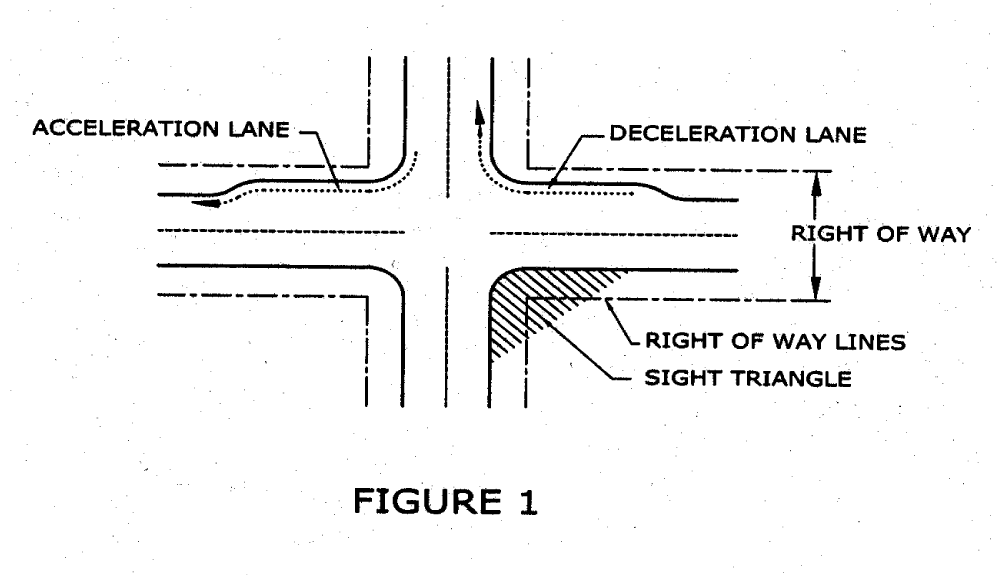
Access. A way or means of approach to provide physical entrance to a property.
Accessory Structure. A structure detached from a principal building on the same lot and customarily incidental and subordinate to the principal building or use.
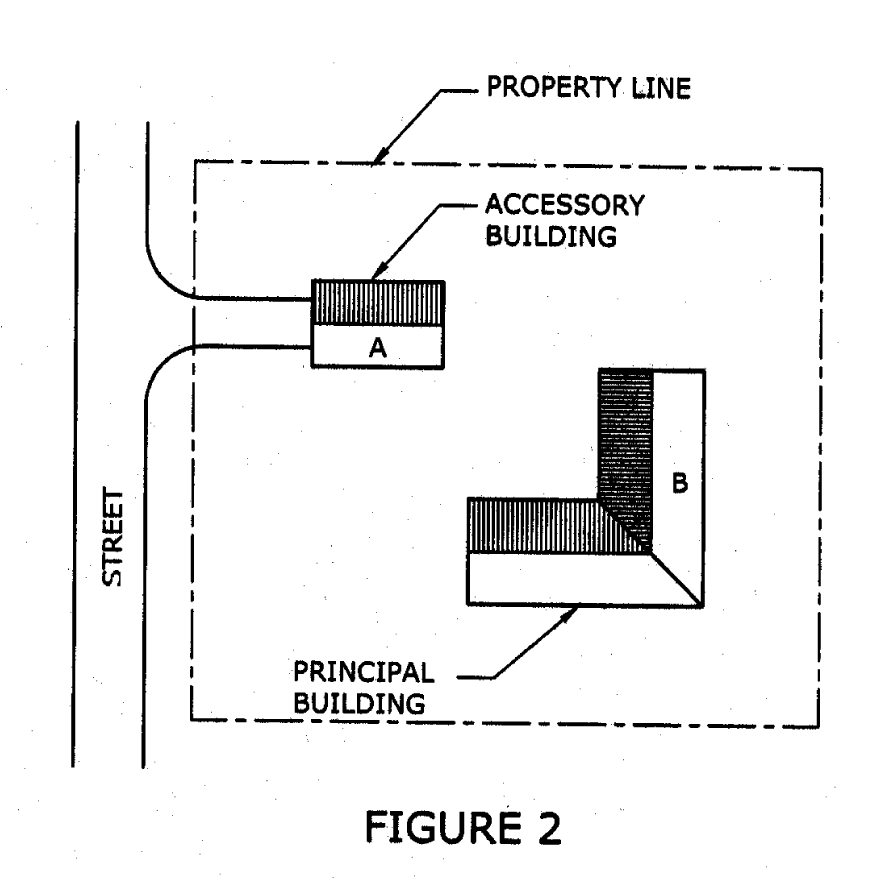
Accessory Use. A use customarily incidental and subordinate to the principal use and located on the same lot with such principal use.
Acre. A measure of land area containing 43,560 square feet.
1.
Acreage, Gross. The total area of a property measured in acres and fractions thereof rounded to the nearest one-tenth acre.
2.
Acreage, Net. The total buildable area of a property measured in acres to the nearest one-tenth, as existed when originally approved for its current zoning district, less any flood plain, easements and land dedicated to and accepted for streets or other public improvements by the City.
Adult Book Store. A retail establishment, a majority of whose inventory consists of books, magazines, videotapes and similar materials containing sexual activities or specified anatomical parts.
Advanced Air Mobility (AAM). The transport of passengers and cargo short- to medium-range distances using new and emerging aircraft technologies, such as electric vertical takeoff and landing aircrafts (eVTOL).
Airport. A property or structure licensed and approved by the Federal Aviation Administration where fixed wing aircraft or helicopters can land and take off, which may be equipped with hangars, facilities for refueling and repair and various accommodations for passengers.
Aisle. The traveled way, which is not the public right-of-way, by which cars enter and depart parking spaces.
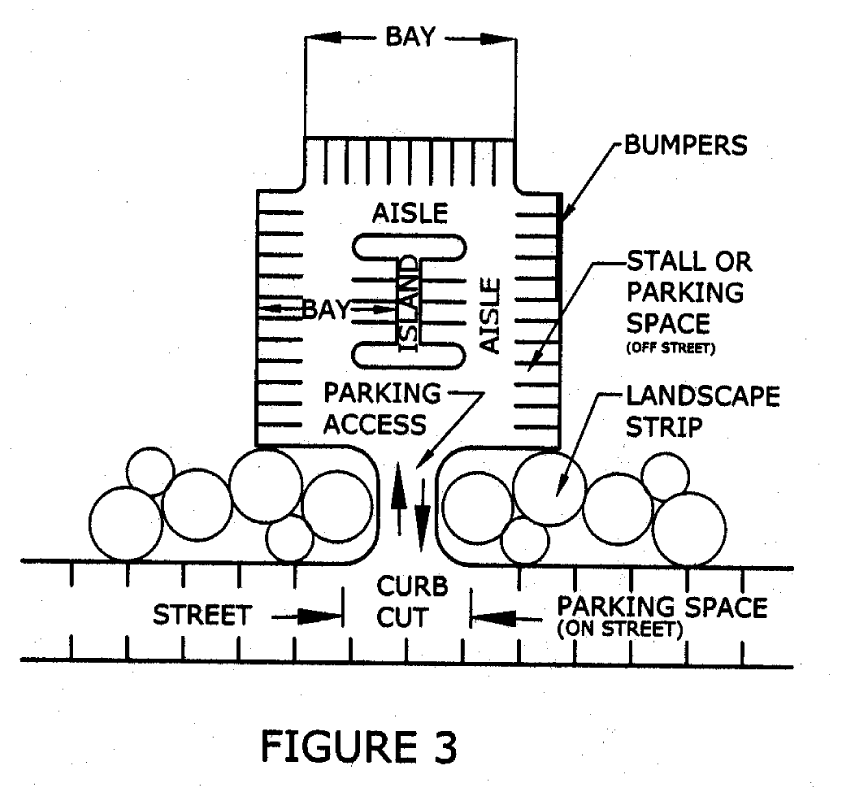
Alley. A non-exclusive private easement or publicly dedicated service way providing a secondary means of public access to abutting property and not intended for general traffic circulation.
Alteration of Building. Any change in the supporting members of a building (such as bearing walls, columns or girders); any change in the non-supporting interior walls of a building; any addition or reduction to a building; any change in use; or any relocation of a building from one location or position to another.
Amphitheater. An outdoor area designed or intended for the projection of sound to be heard by a nearby audience.
Amenity. A natural or man-made feature which is intended to enhance or make more attractive or satisfying a particular property.
Animal Hospital, Large Animals. A place where horses, cattle, sheep or other animals normally kept in agricultural settings are given medical or surgical treatment and the boarding of animals is limited to short-term care incidental to the hospital use.
Animal Hospital, Small Animals. A place where dogs, cats, birds or other animals normally kept as household pets are given medical or surgical treatment and the boarding of animals is limited to short-term care incidental to the hospital use.
Annexation. The incorporation of a land area into the City with a resulting change in the city limit boundaries.
Antenna. See Section 2.8 for definition of 'antenna.'
Apartment. One or more rooms comprising an independent dwelling unit in a 'For-Rent' building.
Applicant. Any person making a request to the City for any approval, permit or authorization under the procedures contained in this Ordinance.
Art Galleries. An establishment engaged in the sale, loan, or display of art books, paintings, sculpture, or other works of art. This does not include libraries, museums, or non-commercial art galleries, or where such display of art is incidental to the primary use.
Asphalt Plant. A business which manufactures, mixes, or blends asphaltic products for distribution.
Assisted Living Facility. See Congregate Housing.
Associations. An organization of persons having common interests or purposes.
Athletic Facility. An establishment sometimes referred to as a health club or gym. These facilities are typically located in a large space containing special equipment, and may include indoor and/or outdoor courts (tennis, basketball. etc.) and swimming facilities, where people go to do physical exercise. Establishments tend to be general exercise facilities but often provide specialized classes. Businesses frequently include incidental (occupying no more than 10% of the floor area) related services such as, personal training, tanning beds, massage and stretch therapy, nutritional programs, cafe, juice bars, and retail sales.
Auditorium. An indoor building or structure designed or intended for use for the gathering of people as an audience to hear music, lectures, plays, and other presentations.
Auto Sales and Leasing. The use of any building, land area, or other premises or portions thereof, for the display, sales or lease of automobiles, trucks, vans, trailers or recreational vehicles, including internet transactions where most vehicles are not stored on site.
Automobile. A self-propelled, free moving vehicle, with at least four but no more than six wheels, designed primarily for the transportation of passengers or for conveyance of up to two tons of materials on a street or roadway.
Automobile Service Station. Any building, land area or other premises, or portion thereof used or intended to be used for the retail dispensing or sales of vehicular fuels; and including as an accessory use the sale and installation of lubricants, tires, batteries and similar accessories, or the provision of tune-up or light maintenance services for vehicles.
Automotive Service Establishment. A business principally engaged in the repair of automobiles or other motorized vehicles, or the installation or repair of equipment or parts on motorized vehicles such as mufflers, brakes, tires, radios, transmissions, and engines or engine parts.
Bakery. An establishment primarily engaged in the retail sale of baked products for consumption off site. The products may be prepared either on or off site. Such use may include incidental food service.
Bank. A freestanding building, with or without a drive-up window, for the custody, loan, or exchange of money; for the extension of credit; and for facilitating the transmission of funds. This may include credit unions, savings and loans, and traditional banks.
Barber Shop. Any establishment or place of business within which the practice of barbering is engaged in or carried on by one or more barbers.
Basement. An area below the first floor of a building used for storage, garages, and utilities or for common use of the occupants of the building. A basement used for any one or more of the above purposes shall not be counted as a story.
Beauty Shop. Any commercial establishment, residence, vehicle, or other establishment, place, or event wherein cosmetology is offered or practiced on a regular basis for compensation, excluding such types of services requiring customers to disrobe.
Bed and Breakfast. A building in which lodging and meals are provided for no more than seven (7) guest rooms and one (1) owner's suite and meals are served in a common dining room. Lodging facilities and services are provided for transient guests for an average stay of less than 7 days and offered to the public for compensation. Bed and Breakfast does not include retail uses, public bar, conference center or special event facilities. Guest rooms within the building shall contain no equipment for food preparation other than a coffee maker, mini-fridge and/or microwave. There shall be no self-serve laundry facilities (for guests use) within the building. Access to each guest room shall be through the interior of the building.
Berm. A mound of earth, or the act of pushing earth into a mound.
Block. A tract of land bounded by streets or a combination of streets and public land, rights-of-way or any other barrier to the community or development.
Board of Appeals. The appointed Board of Appeals of the City of Alpharetta.
Boarding House. A dwelling where more than two, but fewer than six rooms are provided for lodging for definite periods of times. Meals may or may not be provided, but there is one common kitchen facility. No meals are provided to outside guests.
Book or Stationery Store. An establishment for the sale or distribution of books and miscellaneous stationery by direct retail sales to the public.
Bottled Gas Storage and Distribution. An establishment where gas is stored for wholesale distribution.
Boutique Hotel. A high quality hotel which contains less than 120 rooms located in a unique setting, such as the City's Downtown, mixed-use developments and/or an entertainment district. The building shall reflect a unique exterior architecture and interior design compatible with the area in which the hotel is located. The boutique hotel shall provide guests with high quality services, such as, but not limited to, concierge, on-site restaurant, room service, meeting space, business center, banquet facilities, spas, doormen, valet parking, boutiques and/or other amenities. Guest rooms within the building shall contain no equipment for food preparation other than a mini-fridge and/or microwave. There shall be no self-serve laundry facilities (for guests use) within the building. Access to each guest room shall be through an inside lobby supervised at all hours.
Brewery. A facility where malt beverages are manufactured or brewed.
Broadcasting Studio. An establishment for the dissemination of radio, television, satellite, or similar medium, which may include a transmission tower.
Buffer Area or Buffer Strip. That portion of a lot set aside for open space and screening purposes pursuant to applicable provisions of this Ordinance to separate different zoning districts or uses on one property from uses on another property. A required set back area may not be included in a required buffer area or visa-versa.
Buffer, Undisturbed. An area of land as defined above that exists in its natural state without intrusion or alteration. The addition of landscaping into areas of sparse vegetation within undisturbed buffers does not constitute intrusion or alteration.
Buildable Area. See "Lot Building Area."
Builder's Equipment. An area designed or intended for the storage and use of equipment or materials common in the construction trade. This may not include sales of such equipment or materials.
Building. Any structure built for or intended for occupancy, storage or shelter of persons, animals, personal or business property, or machinery of any kind which is entirely separated from any other structure.
Building Code. The latest edition of all codes relating to the construction of buildings and their mechanical, electrical and other systems, as adopted by the City of Alpharetta pursuant to the Georgia Uniform Building Code Act and also referred to as the Standard Building Code.
Building Frontage. The linear width of a building facing or most nearly facing a street.
Building Height. The vertical distance between the "ground" and the level of the highest point of the roof surface of a flat roof, the deck line of a mansard roof, and to the mean height level between eaves and ridge of a gable, hip or gambrel roof. For the purpose of measuring building height, the "ground" level is the highest of the following three levels: curb level; established or mean street grade if no curb exists; or the average existing ground level adjoining the building if the building is setback more than 10 feet from the street line.
Building Inspector. The Building Official of the City of Alpharetta or the Building Official's designated representative.
Building Site. A parcel or lot or land occupied or intended to be occupied by a building or structure having not less than the minimum area permitted by the code.
Bus Shelter. A small, roofed structure, having from one to three walls, located near a street, and designed primarily for the protection and convenience of bus passengers.
Car Wash. Any building or premises or portions thereof dedicated to use for washing automobiles; or a structure containing facilities for washing automobiles.
Carpenter Shop. An establishment utilized for the manufacture or assemblage of wood into usable forms for sale and distribution.
Carpet and Rug Sales. An establishment for the retail or wholesale sale of floor coverings.
Cemetery. Land used or dedicated to the burial or internment of human or animal remains, including crematoriums, mausoleums, necessary sales, and maintenance facilities.
Center Line of Street. Any line surveyed as such by the City of Alpharetta or the Georgia Department of Transportation or their designee, or, if no such survey exists, the line which is midway between the edge of pavement or back of curb of a street.
Central Business District (CBD). That portion of the City bounded by Mayfield Road to the North, Old Milton Parkway to the South, Haynes Bridge Road and Highway 9 to the east and Roswell and Canton Streets to the west. (see page 2-103)
Certificate of Occupancy. A document issued by the Director indicating that a particular building conforms with the requirements of this Ordinance and the building is complete and ready for use.
Church. A facility incorporating one or more buildings where religious services are conducted.
City. The City of Alpharetta, Georgia.
City Administrator. The Chief Operating Officer of the City of Alpharetta or his designee.
City Clerk. The City Clerk of Alpharetta, Georgia, or the City Clerk's designated representative.
City Council or Mayor and Council. The legally constituted and elected governing body of the City of Alpharetta, Georgia.
Clinic. An establishment where patients are admitted for examination and treatment by one or more physicians, dentists, psychologists, medical professionals, or social workers and where patients are not usually lodged overnight.
Club. Buildings and facilities owned or operated by an association or persons for a social or recreational purpose.
Collection Box. A container, trailer, vehicle or other structure, used for the purpose of acquiring donated goods, by a for-profit or not-for-profit entity.
Commercial Parking Lot. An area or structure dedicated to the temporary storage of automobiles or other vehicles for periods of less than 24 hours for a fee, operated as the principal use of the property or structure.
Community Development Director. The Director of the Community Development Department or his designee.
Comprehensive Plan (CP). The long-range plan for guiding development in the City of Alpharetta and the City's urban area to a point in time at least 15 years from when the plan was adopted, with the overall goal being to accommodate development in a timely, orderly, and efficient arrangement of land uses and public facilities and services that meet the needs of present and future residents and businesses.
Concept Plan. A generalized map presenting an image or representation of a proposed development, and showing those plan elements as further required by this Ordinance.
Concrete Plant. A business which manufactures, mixes, or blends concrete products for distribution.
Conditional Use. A use that generally would not be appropriate throughout a zoning district but which, if controlled as to visual appearance, number, area, height, location, or relation to abutting or nearby uses, would not be injurious to the public, health, safety, welfare, morals, order, comfort, convenience, appearance or general welfare. Such uses may be permitted only in zoning districts specified in this Ordinance and are subject to conditions and approval by the Mayor and Council.
Condominium. A legal form of multiple ownership consisting of a building, or group of buildings, in which units are owned individually, and the structure, common areas and facilities are owned by all the owners on a proportional, undivided basis.
Condominium, Office. An office building (or group of buildings) organized, owned and maintained as a condominium.
Condominium, Residential. A building type consisting of individual units located within a single structure. The structure normally has at least two, but no more than six stories. The structure is designed to appear as a single building with no architectural distinction between the units. Architectural elements such as materials, colors and windows are repeated consistently throughout the building and there is usually a single roof element and a single point of primary entry. The architectural style typically expresses the horizontal lines of the building which then accentuates the floors of the building as a primary visual element. The common areas of the building such as the elevators and lobby may be expressed as special features on the main elevations of the structure.
Congregate Housing. Any group dwelling or facility licensed by the state, public or private, which for gain or otherwise, regularly provides one or more persons with assisted living care. The term "assisted living care" means specialized care and services including the provision of personal services, the administration of medications by a certified medication aide and the provision of assisted self-preservation. The term "personal services" includes, but is not limited to, individual assistance with or supervision of self-administered medication, assistance, essential activities of daily living such as eating, bathing, grooming, dressing, toileting, ambulation and transfer. The term "assisted self-preservation" means the capacity of a resident to be evacuated from an assisted living facility to a designated point of safety and within an established period of time as determined by the Office of Fire Safety Commissioner. Assisted self-preservation is a function of all of the following:
1.
The condition of the individual.
2.
The assistance that is available to be provided to the individual by the staff of the assisted living facility; and
3.
The construction of the building in which the assisted living facility is housed, including whether such building meets the state fire safety requirements applicable to an existing health care occupancy.
Construction Trailer. A temporary structure used as an office and located on an active construction site.
Contractor's Office with outside storage. A room or group of rooms used for conducting business that includes an enclosed exterior space for the storage of business related equipment and supplies.
Contractor's Office without outside storage. A room or group of rooms used for conducting business that does not use any exterior storage area.
Convenience Center with Gas Pumps. A facility that combines a small retail store with the sale and dispensing of gasoline products.
Convenience Store. A retail establishment primarily selling packaged food and household convenience items, which may also dispense automobile fuel, oil and accessories. Excluded from this definition is any establishment providing automotive maintenance services or repairs.
Craftsman Shop or Studio. A facility where products are made or serviced on an individual basis without the use of mechanized or assembly line production equipment.
Curb Break or Curb Cut. Any interruption or break in the line of a street curb for the purpose of connecting a driveway to a street, or otherwise to provide vehicular access to abutting property.
Data Center. A building or complex of buildings in which a substantial portion of the gross square footage is dedicated to the housing of computer or data processing equipment or systems.
Day Care Center. Any establishment operated by an individual, partnership, society, agency, corporation, institution or group, and licensed by or registered with the State of Georgia as a group day care home or day care center, which enrolls therein for pay, for supervision and care, seven or more children or adults. Such facility may provide supervision, care, education, recreation and specialized programmings but does not provide overnight accommodations.
Deed. An instrument that conveys or transfers title to land or other real property.
Density. The average number of dwelling units or gross square feet of building floor area per gross acre of land. For an individual property, the density shall be calculated by dividing the total dwelling units or gross square footage of the building by the total gross acres of the property that existed when originally approved for its current zoning district.
Design Review Board. The Design Review Board of the City of Alpharetta, as established by this Ordinance and appointed by the Mayor and Council.
Development Activity. The construction of public improvements, site improvements, or buildings, including any alteration of a property in preparation for such construction. Development Activity shall also include the "thinning" or removal of trees from undeveloped land in conjunction with a forest management program, and the removal of trees incidental to the development of land or to the marketing of land for development.
Director. Unless otherwise specified, the Director of Community Development of the City of Alpharetta, Georgia, or the Director's designated representative.
Discount Store. A retail store that sells new or used goods or products at prices lower than traditional retail outlets. Discount stores principally engage in offering a category of similar goods or a wide assortment of goods for sale to the general public. This includes, but is not limited to, swap shops, flea markets, antique malls, donation centers, surplus stores and thrift stores.
Distillery. A facility where distilled spirits are manufactured (distilled, rectified or blended).
Downtown Overlay. That portion of the City generally bounded by Canton Street and Mayfield Road to the North; Wills Road and the western boundaries of Milton Manor and Milton Estates Subdivisions to the West; South Main Street, Old Milton Parkway and the southern boundary of Alpha Park Subdivision to the South; and Westside Parkway and the eastern boundary of Alpha Park Subdivision to the East. The study area of the City of Alpharetta Downtown Master Plan shall be shown on the Official Zoning Map and labeled "Downtown Overlay." In the event of a conflict between the general description set out herein and the Map, the Map shall control.
Drainage. See Article III, Section 3.1 for all definitions relating to drainage and storm water control.
Drive or Driveway. A surfaced asphalt or concrete area on a lot which provides direct access for vehicles between a street and a private garage, carport or other permitted parking space or parking area or loading area.
Dry cleaning, pick-up station. An establishment or business maintained for the pickup and delivery of dry cleaning and/or laundry without the maintenance or operation of any laundry or dry-cleaning equipment or machinery on the premises.
Dry cleaning plant. A building, portion of a building, or premises used or intended to be used for cleaning fabrics, textiles, wearing apparel, or articles of any sort by immersion and/or agitation, and other processes incidental thereto.
Duplex (or semi-detached). A building type consisting of two independent units that are attached by a common side wall, floor and/or ceiling. Such units normally have at least two, but no more than four floors. These units may share a common front door and are sometimes designed to appear as a single unit.
Dwelling, 'For-Rent' (Downtown Overlay).
a.
Unit—A residential unit designed to be leased or rented and occupied by a single family tenant and located within the Downtown Overlay (map A).
b.
Building—A structure incorporating multiple rental units. (See Apartments.)
c.
See Section 2.7 Standards for Downtown Overlay.
Dwelling, 'For-Rent' (Outside of Downtown Overlay).
a.
Unit—A residential unit designed to be leased or rented and occupied by a single family tenant.
b.
Building—A structure incorporating multiple rental units. (See Apartment.)
c.
See Section 2.7 Standards for Units (outside of Downtown Overlay).
Dwelling, 'For-Sale'.
a.
Detached—A free-standing residential unit designed to be purchased and occupied by a single family.
b.
Attached—A residential unit attached to other residential units and designed to be purchased and occupied by a single family.
c.
Condominium—A type of property ownership in which a 'For-Sale' unit is purchased and the purchaser of each unit acquires full title to the unit and an undivided interest in the common elements (the land, roof, elevator, etc.).
Dwelling, Group. A building or portion of a building occupied or intended for occupancy by a number of unrelated persons or families, but in which separate cooking facilities are not provided for such resident persons or families. The term "group dwelling" includes but is not limited to the terms rooming house, apartment hotel, nursing home, fraternity or sorority house, YMCA or YWCA. A hotel, motel or bed and breakfast tourist home shall not be deemed to be a group dwelling as herein defined.
Dwelling Unit. One or more rooms connected together and constituting a separate, independent housekeeping establishment designed for use by one family with provision for cooking, eating, sleeping, bathing and personal sanitation, and physically set apart from any other rooms or dwelling units in the same structure or another structure.
Easement. A grant by a property owner of any designated part of a property for the use by another for a specified purpose without transfer of title or right of ownership.
Egress. An exit.
Electric power yards, substation. All equipment, fixtures, and personal property operated or maintained in connection with the production of electricity using any source of thermal, steam, wind, or solar energy with a generating capacity of more than 500 kilowatts and less than 50 megawatts.
eVTOL. An electric vertical takeoff and landing aircraft associated with Advanced Air Mobility (AAM) which may use a vertiport for takeoff and landing purposes. An eVTOL shall not include helicopters.
Existing Use. The use of a lot or structure at the current time or another time if so designated.
Extended Stay Hotel. A building in which lodging is provided for transient guests for an average stay of less than one (1) month and offered to the public for compensation and guest rooms have facilities for the refrigeration and preparation of food by guests, such as a refrigerator and a cooktop/stove (or a refrigerator, a microwave, and a dishwasher or kitchenette sink), and a self-serve laundry facility is available for guests use. For the purposes of this Code, extended stay hotels, hybrid hotels, and hotels (or motels) are separate and distinct uses. See Section 2.7.3, and Section 2.7.8.
Family. One or more persons related by blood, adoption, guardianship or marriage and/or not more than three unrelated persons, living and cooking together as a single, nonprofit housekeeping unit.
Family Day Care Home. An accessory use within a private residence, licensed by or registered with the State of Georgia as a family day care home, operated by the occupant of the dwelling who enrolls for pay, for supervision and care without overnight accommodations, three but not more than six children or adults.
Fast Food Restaurant. See Restaurant, Drive-thru or Fast Food.
Fence. A structure made of manufactured materials—and used for the purpose of defining a boundary, creating an enclosure, providing security, privacy or screening, or as a means of protection.
Fitness Studio. An establishment where equipment or instruction is provided for a specialized activity related to physical well-being such as, personal training, dance, martial arts. boxing, yoga, barre and other forms of similar physical exercise. These facilities are typically located in a smaller space due to their focused specialty. Businesses frequently include incidental (occupying no more than 10% of the floor area) related services such as, tanning beds, massage and stretch therapy, nutritional programs, cafe, juice bars, and retail sales.
Flood Control. See Article III, Section 3.4, for definitions relating to flooding and flood control.
Floor Area. The total number of square feet of heated floor space within the exterior walls of a building.
Floor, First. The location within a building in which the primary egress and ingress are provided.
Florist, Retail With Greenhouse. Any business establishment which, as its primary business, sells at retail flowers and ornamental plants. A greenhouse or nursery for the growing of plants, or another open or enclosed supplemental display area outside the establishment, is permitted as a normal accessory use.
Florist, Retail Without Greenhouse. Any business establishment which, as its primary business, sells at retail flowers and ornamental plants. A greenhouse or nursery for the growing of plants, or another open or enclosed supplemental display area outside the establishment, is not permitted.
Frontage Lot or Street Frontage. The width in linear feet of a lot where it abuts the right-of-way of any street from which access may be directly gained.
Funeral Home. A building used for the preparation of deceased human beings for burial and the display of the deceased and ceremonies connected therewith before burial or cremation.
Future Land Use Map. The map named as such and contained in the Comprehensive Plan that indicates areas appropriate for various land uses and public facilities over time and as described in the Comprehensive Plan text.
Garage Sale. The sale or offering for sale of miscellaneous personal items on a residential zoned lot, (not including churches and schools).
Garden District. That portion of Canton Street bounded by Church Street to the south and Hopewell Road to the north.
Gasoline Station. A facility where primary use is the dispensation of fuels. (Also see Convenience Center with Gas Pumps)
Gazebo. An accessory, open air structure not exceeding 300 sq. ft. in size.
Governing Body. The Mayor and Council of the City of Alpharetta, Georgia, under whose authority this Ordinance is enacted into law, administered, and enforced.
Grade. The degree rise or descent of a sloping surface. The average elevation of the sidewalk or crown of road surrounding a building site.
Grade, Finished. See Section 3.1, "Site Grading and Land Disturbance."
Greenhouse. A building whose roof and sides are made largely of glass or other transparent or translucent material and in which the temperature and humidity can be regulated for the cultivation of plants for subsequent sale or for personal enjoyment.
Greenspace. All that area of land that can be landscaped or planted, allows natural passage through by water, and is not covered by manmade materials or structures such as buildings or paving.
Group Home. A dwelling shared by four or fewer persons, excluding resident owner, (or no more than six persons including the resident owner), who live together as a single housekeeping unit and in a long term, family-like environment in which the resident owner, serving as the primary caregiver to the residents, provides care, education and participation in community activities for the residents with the primary goal of enabling the residents to live as independently as possible in order to reach their maximum potential. 1. No group home shall be located within 2,000 ft. of another group home as measured at the property line. 2. A group home shall be limited to one structure and multiple structures located near one another shall not be considered components of one group home. Each structure shall meet distance requirements. The term "group home" shall not include a halfway house, a treatment center for alcoholism or drug abuse, and work release facility for convicts or ex-convicts, a home for detention and/or rehabilitation of juveniles adjudged delinquent or unruly and placed in custody of the state or other housing facilities serving as an alternate to incarceration. The term "group home" shall also not allow the use of a dwelling as an apartment or duplex. A "group home" shall not allow use of the dwelling as a home for individuals on parole, probation, or convicted and released from incarceration, for any crimes including child molestation, aggravated child molestation, or child sexual abuse, as defined in O.C.G.A. 16-6-4 or individuals required to register as sex offenders pursuant to O.C.G.A. 42-1-12. A group home may include a home for the handicapped. As used in this subsection, the term "handicapped" shall mean:
1.
Having a physical or mental impairment that substantially limits one or more of such person's major life activities so that such person is incapable of living independently;
2.
Having a record of having such an impairment; or
3.
Being regarded as having impairment.
However, the term "handicapped" shall not include current illegal use of or addiction to a controlled substance, nor shall it include any person whose residency in the home would constitute a direct threat to the health and safety of other individuals.
Hardware Store. A facility of 30,000 or fewer square feet gross floor area, primarily engaged in the retail sale of various basic hardware lines, such as tools, builders' hardware, plumbing and electrical supplies, paint and glass, housewares and household appliance, garden supplies, etc.; if greater than 30,000 square feet, such a facility is a Home Improvement Center.
Heliport, Public/Private. A takeoff and landing facility for a helicopter, which may also include fueling, storage, and maintenance facilities.
Home Improvement Center. A facility of more than 30,000 square feet gross floor area, engaged in the retail sale of various basic hardware lines, such as tools, builders hardware, paint and glass, houseware and household appliances, garden supplies, and cutlery.
Home Occupation. Any activity carried out as a business and/or for profit by the resident and conducted as an accessory use in the resident's dwelling unit.
Hospital. A building providing primary or tertiary health services and medical or surgical care to persons including in-patients and out-patients, suffering from illness, disease, injury, deformity and other abnormal physical or mental conditions, and including as an integral part of the institution, related facilities such as laboratories, outpatient facilities or training facilities.
Hotel (or Motel). A building in which lodging along with customary lodging facilities and services, such as meeting rooms, restaurant, maid service and fitness center, are provided for transient guests for an average stay of less than 7 days and offered to the public for compensation. Hotel services shall include the provision of food and beverage services suitable for both guests and groups, on-site restaurant, lounges, group meeting spaces with banquet facilities and selective amenities, such as but not limited to spas, banquet rooms, doormen, valet parking, concierge, and high-end restaurant and boutiques. Guest rooms within the building shall contain no equipment for food preparation other than a mini-fridge and/or microwave. There shall be no self-serve laundry facilities (for guests use) within the building. Access to each guest room shall be through an inside lobby supervised at all hours.
Hotel, Hybrid. A building in which lodging along with customary lodging facilities and services, such as meeting rooms, restaurant, maid service and fitness center, are provided for transient guests for a mix of short- and long-term stays. The hybrid hotel primarily provides lodging for transient guests for an average stay of less than 7 days and offered to the public for compensation. No more than 30% of guest rooms may provide lodging for transient guests for long-term stays up to one year. Hotel services shall include the provision of food and beverage services suitable for both guests and groups, on-site restaurant, lounges, group meeting space with banquet facilities and selective amenities, such as but not limited to spas, banquets rooms, doormen, valet parking, concierge, and high-end restaurant and boutiques. Guest rooms within the building shall not contain equipment for food preparation other than a mini-fridge and/or microwave, except that rooms provided for longer stays may have equipment for food preparation. There shall be no self-laundry facilities (for guest's use) within the building, except that rooms provided for longer stays may have self-laundry facilities. Access to each guest room shall be through an inside lobby supervised at all hours.
Improvements. The buildings, public utilities and facilities, and accessory structures built on or serving a property.
A.
Public Improvements. Any structure, owned by or to be dedicated to a government or a utility regulated by the Georgia Public Service Commission, together with its associated public land, easement or right-of-way, necessary to provide transportation, drainage, public or private utilities, or other public services such as education, recreation, or public safety.
B.
Site Improvements. Any structure, other than a principal building or a structure intended for dedication to public ownership, constructed to support or provide for the use or occupancy of a property, such as driveways, parking and loading areas, retaining walls and other earthen works, erosion and sedimentation control facilities, stormwater drains and detention facilities, and connections to public water, sewer or other utilities.
Industrial Park. A development that contains a number of separate industrial buildings and supporting uses on one or more lots, which is designed, planned, constructed and managed on an integrated and coordinated basis.
Industrialized Buildings. Prefabricated structures as defined in O.C.G.A. 110-2 and usually used for a limited time period such as for a site construction office, portable classroom and site real estate office.
Ingress. Access or entry.
Island. In parking lot and street design, built-up curbs (and in parking lots usually placed at the end of parking rows) as a guide to traffic and also used for landscaping, signing or lighting.
Junk or Salvage Yards. Any area, lot, land, parcel, building or structure or part thereof used for the storage, processing, purchase, sale or abandonment of wastepaper, rags, scrap metal or other scrap or discarded goods, materials, machinery or two or more unregistered, inoperable vehicles or other type of junk. See Also "Recycling Center."
Kennel. An establishment in which more than six dogs or other domesticated animals more than one year old may be housed, groomed, bred, boarded, trained or sold.
Laboratory, Research or Commercial (also see Research and Development). A facility that provides controlled conditions in which scientific or technological research, experiments, and measurement may be performed. At the Federal level, four levels of laboratory biosafety have been created. The levels denote the types of actions, administrative (procedures, training or physical controls (protective gear, filtration) that should be used to contain the agent(s) being worked with. Containment means protection of the lab workers, those in the building, and the greater environment. Containment level limited to biosafety levels 1, 2 and 3.
Land Disturbance Permit. A permit issued by the City that authorizes Development Activity, and includes, but is not limited to, activity related to soil erosion control, clearing and grubbing, grading, public and site improvements. This permit does not authorize building construction.
Land Use. See "Use," "Principal Use," and "Accessory Use."
Landscape Strip. A portion of a lot required to be reserved for, installed with, and maintained with vegetation. Such a strip may or may not be required to be of a linear form. No utilities or parking shall be allowed within a required landscape strip.
Loading Space, Off-street. A space or berth used for the loading or unloading of commercial vehicles, trucks or other vehicles.
Lot. A portion of a subdivision, or any other parcel of land, intended as a unit for transfer of ownership or for development or both. In determining the area and dimensions of a lot, no part of the street right-of-way or private street easement may be included.
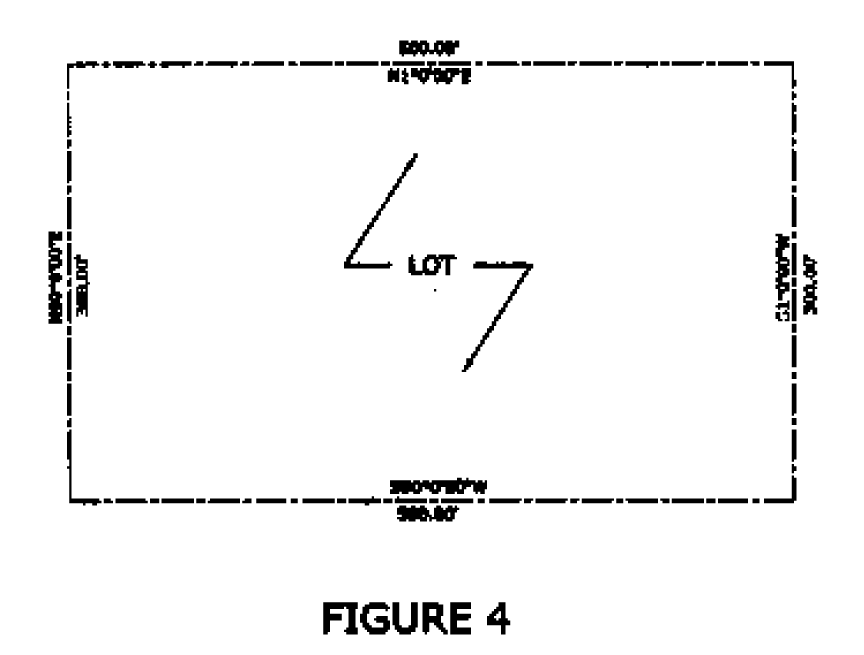
Lot Building Area. The portion of a lot located interior to the front, side and rear yard building setback lines; that is, the portion of a lot wherein a building may be located.
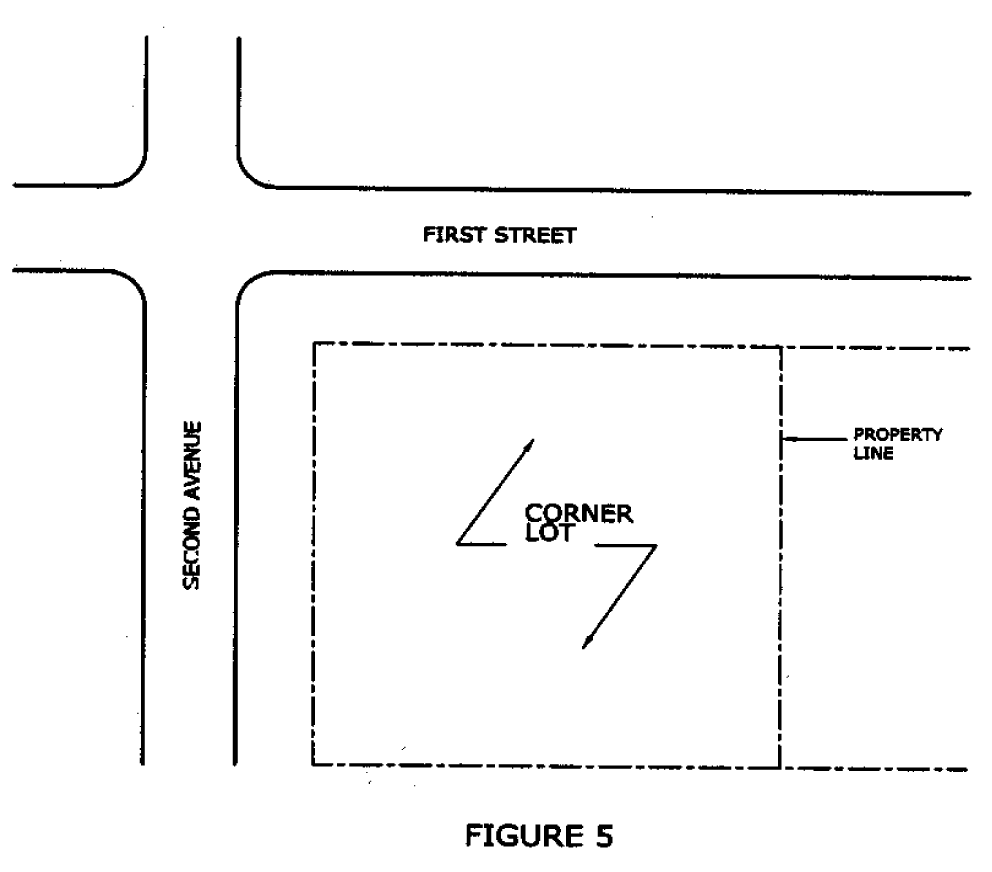
Lot, Corner. A lot abutting two or more streets at their intersection.
Lot Coverage. That portion of the lot that is covered by buildings, structures, and any other impervious surface.
Lot Depth. The distance between front and rear lot lines. If front and rear lines of said lot are not parallel, such least dimension shall be deemed to be the lot depth.
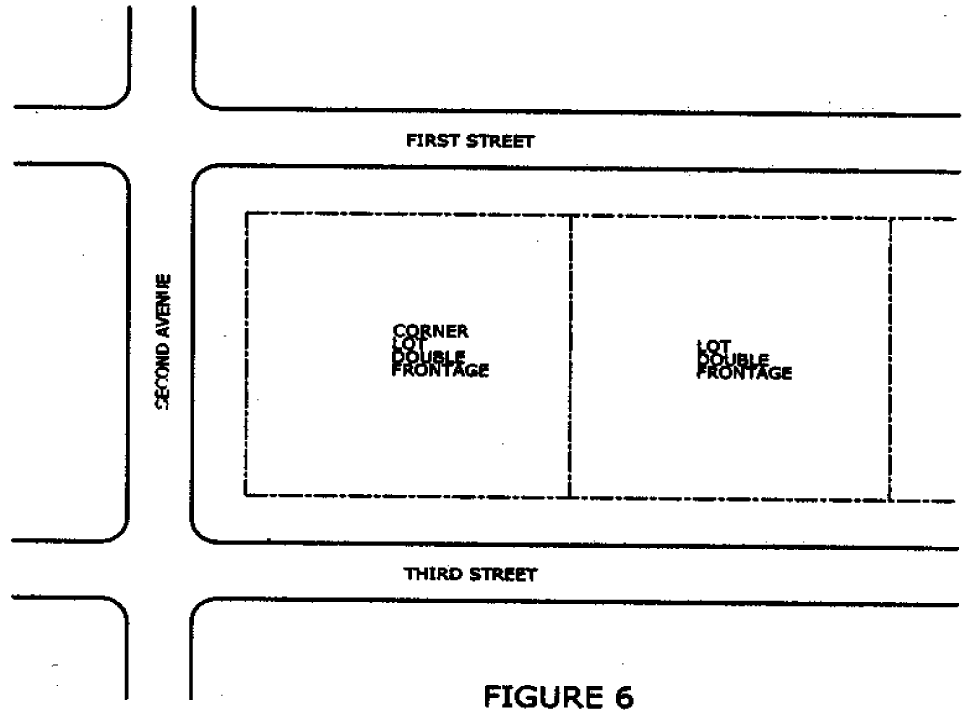
Lot, Double Frontage. A lot which has frontage on more than one street, provided however, that no corner lot shall qualify as a double frontage lot unless said corner lot has frontage on three or more streets.
Lot, Flag. An "L" shaped lot whose frontage is provided by the driveway access which ties the buildable portion of the property to the street.
Lot Frontage. See "Frontage."
Lot Line. A line of record bounding a lot which divides one lot from another lot or from a street or any public space.
A.
Front Lot Line. Any boundary line of a lot which is coterminous with a public street right-of-way line or private street easement line. For a corner lot, the narrow portion is usually considered the front.
B.
Rear Lot Line. Any boundary line of a lot which does not intersect with a street right-of-way or private street easement line and which is usually opposite of the front lot line.
C.
Side Lot Line. Any boundary line of a lot which intersects with a street right-of-way or private street easement line.
Lot of Record. A lot which exists as shown or described on a plat or deed recorded in the Office of the Clerk of the Superior Court of Fulton County.
Lot Width. The distance measured between side lot lines at the front minimum setback line between intersecting lot lines.
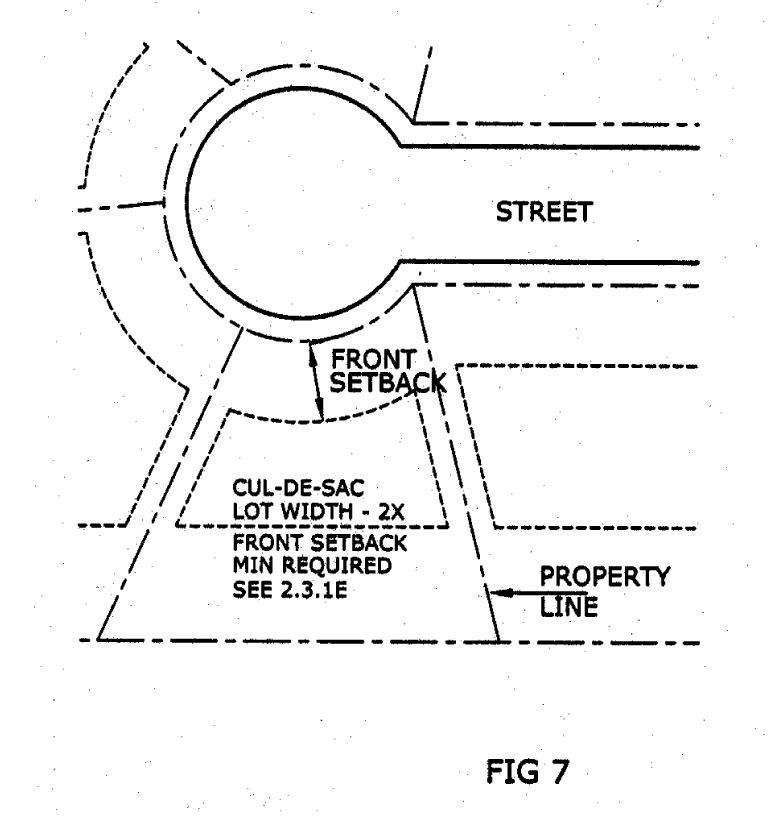
Lot Width—Cul-de-sac. The distance measured between side lot lines at the point of the property that is twice the front setback requirement from the front property line.
Mansard Façade. An architectural appendage or embellishment to a flat topped structure which is attached to the front external wall and if intended to create the appearance of a mansard roof. See also "Roof."
Manufactured Building. A factory-built, structure that meets national standards for manufactured buildings.
Manufacturing, Heavy. The extraction of natural resources or the transformation of raw materials through mechanical or chemical means into new products ready for assembly, fabrication or use in the production of finished goods.
Manufacturing, Light. The fabrication or assembly of parts into a finished product or component products.
Marquee. Any hood, canopy, awning or permanent construction which projects from a wall of a building, usually above an entrance.
Massage Therapy. The manipulation and/or treatment of soft tissues of the body, including, but not limited to, the use of effleurage, petrissage, pressure, friction, tapotement, kneading, vibration, range of motion stretches, a system of structured touch, pressure, movement, and holding to the soft tissue of the body, and any other soft tissue manipulation whether manual or by use of massage apparatus, and may include the use of water, oils, lotions, creams, lubricants, salt glows or scrubs, hydrotherapy, heliotherapy, hot packs, cold packs or other topical preparations. Such business shall be located within a zoning category allowing retail use, shall not occupy more than 4,000 sq. ft. and shall not be closer than 2,000 ft. to a comparable business. The term "massage" or "massage therapy" shall not include diagnosis, the prescribing of drugs or medicines, spinal or other joint manipulations, or any service or procedure when performed by a person who is licensed by the state to practice chiropractic, physical therapy, podiatry or medicine. Further, the term "massage" or "massage therapy" shall not include the following when lawfully performed by a natural person licensed or certified by the state board of cosmetology while engaged in the practice authorized by such state license (or certificate of registration) in accordance with, and as further regulated by, the state licensing laws set forth in O.C.G.A. § 43-10-1 et seq.:
(1)
Touching of the scalp or face by a state-licensed barber or cosmetologist;
(2)
Touching of the hands or feet by a state-licensed nail technician or cosmetologist; and
(3)
Touching of the face, neck, décolletage, or arms by a state-licensed esthetician or cosmetologist. It shall be unlawful to establish a massage establishment in the city, unless said establishment is located:
(1)
At least 300 feet from State Route 9;
(2)
At least 300 feet from State Route 120; and
(3)
At least 300 feet from any parcel occupied by a house of worship, public or private elementary or secondary school/public park, state-licensed day care facility, or any residence.
The foregoing minimum distance requirements shall not apply to any massage establishment located within a mixed use development in the MU district. For the purpose of this subsection, measurements shall be made in a straight line in all directions without regard to intervening structures or objects, from the closest point on a boundary line of the massage establishment parcel to the closest point on the State Route 9 or State Route 120 right-of-way, or to the closest point on a boundary line of any parcel containing a house of worship, public or private elementary or secondary school, public park, or residence.
Master Plan. A plan map and associated statement of intent which, at least, includes a depiction of pods, roads, buffers, flood areas, permitted uses and development regulations which represents the framework for development activity on a property. See also "Concept Plan."
Median Break or Cut. Any interruption in the curb separating opposing vehicular travel lanes of a street for the purpose of allowing ingress or egress by left turning movements to a street, or abutting property.
Medical Cannabis Dispensary or Medical Marijuana Dispensary. Any business premises that sells, distributes, or otherwise dispenses "low THC oil" and/or any related "product" (as those terms are defined in O.C.G.A. § 16-12-200(12), (15)), pursuant to a "dispensing license" (as that term is defined by O.C.G.A. § 16-12-200(9)); provided, however, that any pharmacy (as that term is defined in O.C.G.A. § 26-4-5(30)(B)) that holds such a dispensing license shall not deemed a Medical Cannabis Dispensary or Medical Marijuana Dispensary. Every such dispensary shall adhere to all applicable state and local laws, rules, regulations, and ordinances, including, but not limited to, O.C.G.A. §§ 16-12-200 to 16-12-236 and the rules and regulation promulgated by the Georgia Access to Medical Cannabis Commission. A Medical Cannabis Dispensary or Medical Marijuana Dispensary shall not be closer than 2,000 ft. to a day care center or early care or education program, public or private school, religious institution or place of worship, government building, park, residential dwelling, residential substance abuse diagnostic or treatment facility, any licensed drug or alcohol rehabilitation facility, or any other medical cannabis dispensary or medical marijuana dispensary, and the distance shall be measured from property boundary to property boundary.
Medical Cannabis Production Facility or Medical Marijuana Production Facility. Any business premises which produces and/or manufactures "low THC oil" and/or any related "product" (as those terms are defined in O.C.G.A. § 16-12-200(12), (15)), pursuant to a "Class 1 production license" or "Class 2 production license" (as those terms are defined by O.C.G.A. § 16-12-200(3), (4)). This use is a prohibited use in all zoning districts.
Metes and Bounds. A method of describing the boundaries of land by directions and distances from a known point of reference.
Mezzanine. An intermediate floor between two other stories that does not contain more than 1/3 of the area of the floor below it.
Mini-Warehouse. A structure containing separate storage spaces of varying sizes leased or rented on an individual basis.
Mobile Home. A structure, transportable in one or more sections, which is built on a permanent chassis and designed to be used as a dwelling. 'For-Sale', with or without a permanent foundation when connected to public. utilities. The term mobile home shall not include motorized vehicles with temporary living quarters. Mobile homes built after 1976 are referred to as "Manufactured Homes" or "Industrialized Buildings".
Mobile Home Park. A site with required public and/or private improvements and utilities for the long-term parking of two or more mobile homes or manufactured homes each on a single lot, and which may include such accessory uses as retail convenience sales, Laundromat, and recreational facilities for the exclusive use of residents.
Motel. See "Hotel".
Mural. A hand-painted, hand-tiled, or digitally printed restorative image on the exterior wall of a building or other permanent surface.
Nail Salon. An establishment that offers nail care services such as manicures, pedicures, and nail enhancements, excluding such types of services requiring customers to disrobe.
Natural Resources Commission. The appointed natural resources commission (formerly known as the Tree Commission) for the City of Alpharetta.
Neighborhood Grocery. A facility with a floor area of at least 3,000 square feet but not more than 50,000 square feet that sells primarily grocery items such as prepackaged food, produce, meats, baked goods, beverages and similar food items intended for off-site consumption. At least 60% of the floor area of the facility shall be dedicated to the sale of said grocery items, including any immediately adjacent circulation and service areas, but not including storage.
Nonconforming Lot. A lot of record whose area, frontage, dimensions, or location were lawful prior to the adoption, revision, or amendment of this Ordinance, and which, by reason of such adoption, revision or amendment, no longer meets or exceeds one or more such requirements of the applicable zoning district.
Nonconforming Sign. Any structure or sign which was lawfully erected and maintained prior to the adoption, revision, or amendment of this Ordinance, and which by reason of such adoption, revision or amendment fails to conform to all applicable regulations and restrictions of this Ordinance.
Nonconforming Structure. A structure or building whose size, dimensions, or location on a property were lawful prior to the adoption, revision, or amendment of this Ordinance, but which, by reason of such adoption, revision, or amendment, no longer meets or conforms to one or more such requirements of this Ordinance.
Nonconforming Use. A use or activity that was lawful prior to the adoption, revision, or amendment of this Ordinance, but which, by reason of such adoption, revision, or amendment, is not a use or activity permitted by right or no longer meets or conforms to the requirements of this Ordinance.
Nursery, Plant. Land or greenhouses used to raise flowers, shrubs and plants for sale to distributors or for subsequent replanting by the owner, a landscape company or others. See also "Florist, Retail."
Nursery School. See "Day Care Center."
Nursing Home. An extended or intermediate care facility required to be licensed or approved by the State of Georgia to provide full-time convalescent or chronic care to individuals who, by reason of advanced age, chronic illness or infirmity, are unable to care for themselves.
Office. A room or group of rooms used for conducting the affairs of a business, profession, service, industry or government.
Office Building. A building used primarily for conducting the affairs of a business, profession, service, industry or government, or like activity, that may include ancillary services for office workers such as a restaurant, coffee shop, newspaper or candy stand.
Office Park. A development that contains a number of separate office buildings and supporting uses on one or more lots, which is designed, planned, constructed and managed on an integrated and coordinated basis.
Opaque. Impenetrable to view, or so obscuring to view that buildings, structures, and uses become visually indistinguishable.
Open Space. A privately or publicly owned area on the grounds of a premises outside of any principal building or parking area, which is open to the sky and set aside and intended for the outdoor enjoyment of occupants or visitors to the property, and which may but is not required to include such pedestrian oriented improvements as landscaping, walkway paths, pergolas, gazebos, bikeways, exercise or play equipment, and benches, and which may further include up to 20% of its area in water bodies or areas inappropriate for pedestrian use. Open space shall not include any other required open areas such as required building setbacks, buffers, landscape strips or other similar requirements of this ordinance. There are 2 types of open space: Civic space and Amenity space.
1.
Civic Space. Portion of open space for public use defined by the combination of certain physical constants including the relationships among their intended use, their size, their landscaping, and their adjacent buildings. Civic space may include the following types: park, square, plaza, pocket park and playground.
2.
Amenity Space. The covered or uncovered, but unenclosed, outdoor areas of at least 100 square feet each for use by the occupants, invitees and guests of the development and specifically excluding civic spaces and required sidewalks. Amenity spaces may include the following types: rooftop deck, balconies, patios and porches, outdoor dining areas, pool areas, athletic courts and similar uses, yards and lawns, gardens, hardscape areas improved for pedestrian enjoyment, wooded areas and runoff reduction measures such as bioretention areas and cisterns.
Outdoor Storage. The keeping, in an unroofed area of any goods, material, merchandise or vehicles in the same place for more than 24 hours.
Outdoor Vending. Sale and/or display of products in an area exposed to open air on two or more sides.
Owner. An individual, firm, association, syndicate, partnership or corporation having a majority proprietary interest in land or a building, or their authorized representative.
Parapet. That portion of a wall which extends above the roof line.
Parcel. A lot or tract of land, or several adjoining lots in common ownership.
Park Space. A public- or privately-owned area, which is set aside for the enjoyment for occupants or visitors to the property, and which may include both outdoor and indoor areas developed for active and/or passive recreation.
Parking Area. Any public or private area at grade or within a structure used for the express purpose of temporarily parking automobiles and other vehicles otherwise in operation for personal or business use.
Parking Garage. An accessory building or portion of a principal building used only for the private storage of motor vehicles as an accessory use.
Parking Space. A space identified and set aside for the temporary parking of an automobile or other motor vehicle which is subdivided into the following categories:
A.
Compact Car Parking Space. A designated space not less than 8 feet by 16 feet expressly provided within a parking area for purposes of temporarily parking a compact car or other compact motor vehicle.
B.
Handicapped Parking Space. A designated space not less than thirteen feet in width (including loading area) and twenty feet in length, laid out and designated by signage in accordance with the requirements of the Georgia Accessibility Code for Buildings and Facilities.
C.
Handicap - Van Only. A designated space not less than sixteen feet in width including loading area and twenty feet in length.
D.
Regular Parking Space. A designated space not less than 9 feet in width by 19 feet in length.
Patio House. A 'For-Sale' dwelling in which most, or all, of a lot is used with yard space combined instead of divided. Front, rear and side yard are consolidated into one garden area, either partially or completely bordered by rooms or enclosed by walls. See also "Zero Lot Line."
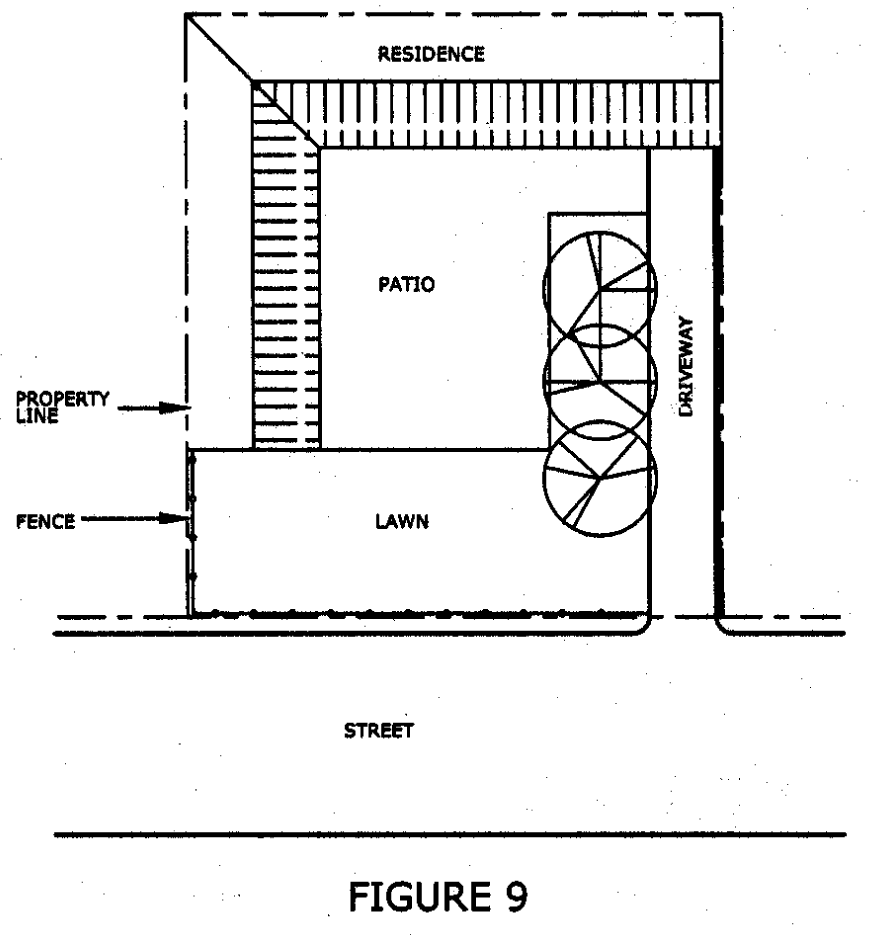
Pedestrian Walkway. A right-of-way within a block dedicated to public use, five feet or more in width, intended primarily for pedestrians or bicycles and other non-motorized vehicles.
Perimeter. The boundaries or borders of a lot, tract or parcel of land.
Permit. Written governmental permission issued by an authorized official, empowering the holder thereof to do some act not forbidden by law, but not allowed without such authorization.
Permitted Use. Any use allowed in a zoning district and subject to the restrictions applicable to that zoning district.
Person. Any individual, corporation, association, firm, partnership or other legal entity.
Pet Day Care. A facility that provides care on a regular basis to household animals for a period of less than 24 hours with no overnight accommodations.
Planned Center, Office, Commercial or Industrial. A group of rental stores, service establishments, offices, industries and any other businesses planned to serve the public, which is in common ownership or condominium ownership.
Planning Commission. The appointed Planning Commission of the City of Alpharetta, Georgia.
Planted Area. An area of living plant material created for the purpose of establishing open space and consisting of a minimum of 50% of the area devoted to trees and shrubs.
Plat. (1) a map representing a tract of land, showing the boundaries and location of individual properties and streets; (2) a map of a subdivision or site plan.
Plat, Final. The final map of all or a portion of a subdivision which is presented to the proper review authority for final approval and recorded in the office of the Clerk of Superior Court of Fulton County.
Plat, Minor. A division of a tract or parcel of land into not more than four (4) lots and does not dedicate or offer for dedication any new street or require construction of any private road for access to any lots and does not require extension of sanitary sewer, stormwater, or water mains to service lots.
Plat, Preliminary. A preliminary map indicating the proposed layout of the subdivision or site plan which is submitted to the proper review authority for consideration and preliminary approval.
Portable. See Industrialized Buildings.
Premises. An area of land with its appurtenances and buildings which, because of its unity of use, is one unit of real estate.
Principal Building. The building or other structure within which is conducted (or intended to be conducted) the principal use of the lot on which said building is situated.
Principal Use. The primary or predominant use of any lot.
Privacy Fence. A sight-obscuring fence used to block the area enclosed by the fence from view from neighboring properties or public rights-of-way. Sight-obscuring shall mean opaque or having such qualities as to constitute a complete visual barrier to persons outside the perimeter of the sight-obscuring object. A fence which partially obscures sight shall not be considered sight-obscuring if the distance or open space between boards, slats, rails, stanchions, or balusters (which shall not exceed four (4) inches in width) equals or exceeds the width of said boards, slats, etc., measured at ninety (90) degree angles.
Prohibited Use. A use that is not permitted in a zoning district by right as a principal use, as an accessory use, or as a conditional use.
Public Space. A public- or privately-owned area, which is set aside for the enjoyment for occupants or visitors to the property, and which is developed for recreation, entertainment, and/or civic purposes and may include plazas, outdoor theaters, sculpture gardens, parks, playgrounds, community gardens, or other areas where people can gather. Areas that are restricted to the general public, like residential amenities, may not be included within the public space requirement.
Recreation Facility. A place designed and equipped for the conduct of sports, leisure time activities and other customary and usual recreational activities.
1.
Recreation Facilities, Indoor. Recreational uses conducted almost wholly indoors, including bowling alley, skating rink, shooting range, health club, etc.
2.
Recreation Facilities, Outdoors. Recreational uses conducted almost wholly outdoors, including ball fields, soccer, etc.
Recycling Center. A use operated exclusively for the collection and temporary storage of used paper, glass, metal, and similar materials suitable for reprocessing, which are transported elsewhere for separating, processing, or storage.
Rental Services Establishment. Any business establishment which rents or leases items of personal property such as tools, appliances and equipment to the general public.
Research and Development. A use that includes activities that businesses undertake to innovate and introduce new products and services, such as biomedical, software and technology development and manufacturing, technically oriented services and training facilities, engineering and consulting, scientific laboratories and clean rooms, office and corporate headquarters. Incidental related commercial and services uses are permitted within this use. Space dedicated to manufacturing and laboratory activities shall be limited to no more than 50% of a building or development.
Residence. A dwelling unit.
Restaurant. An establishment where food and drink are prepared, served and consumed primarily within the principal building, and without a drive-in or drive-thru component.
Restaurant, Drive-thru or Fast-Food. Any establishment, building or structure where food or drink are served for consumption, either on or off the premises, with drive-thru components. This definition shall not include otherwise permitted restaurants where outdoor table service is provided to customers in outdoor dining areas.
Retail Establishment, Mixed Sales. Any business establishment selling a wide variety of goods arranged in several departments including, but not limited to, hardware, automotive, sporting goods, audio and video equipment, and clothing.
Retail Sales Establishment. A business principally engaged in offering a category of similar goods or products for sale to the general public, such as grocery store, hardware store, pharmacy, clothing shop, home furnishings store, office supplies store, and the like.
Retail Services Establishment. A business principally engaged in providing a service, as opposed to products, to the general public, such as a banking or financial institution, real estate or insurance office, barber or beauty shop, travel agency, amusement or recreation center, health clinic, legal firm, professional service, and the like.
Retail Strip Center. A group of retail stores designed as one development and being less than 50,000 square feet in size.
Right-of-Way. A strip of land occupied or intended to be occupied by a street, sidewalk, railroad, road, electric transmission line, oil or gas pipeline, water main, sanitary or storm sewer main, or for another special purpose use. Rights-of-way intended for streets, crosswalks, water mains, sanitary sewers, sewers, storm drains, or any other use involving maintenance by a public agency shall be dedicated to public use in fee simple.
Roof. The outside top covering of a building.
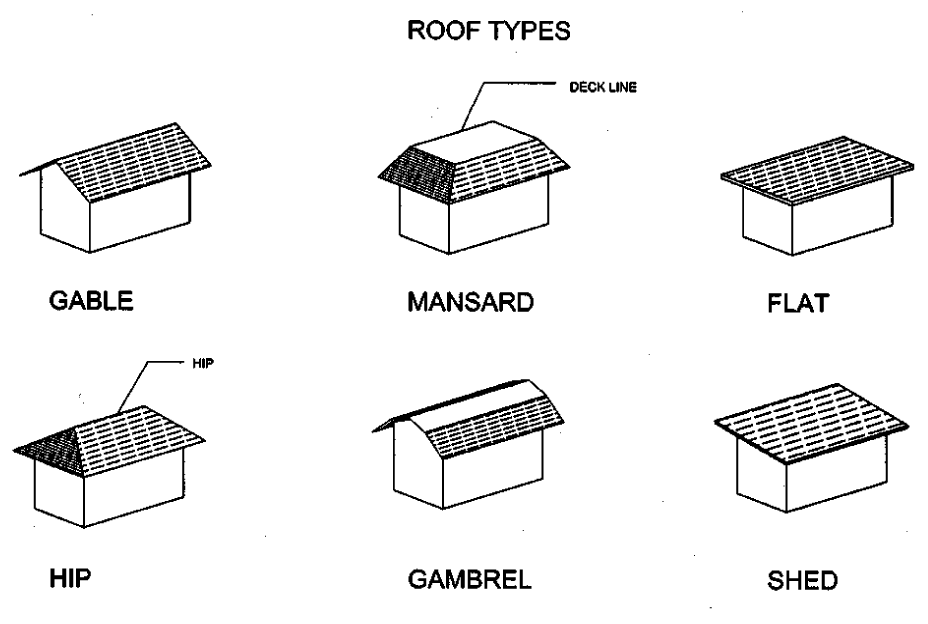
Salvage Yard. A facility or area for storing, keeping, selling, dismantling, shredding, compressing, or salvaging scrap or discarded material.
School, Academic. Any building or part thereof which is designed, constructed or used for education or instruction following the same curriculum offered in a public elementary, secondary, trade or technical, or higher education facility, and accredited to award diplomas as such.
School, Commercial. Any building or part thereof which is designed, constructed or used for education or instruction in any branch of knowledge or vocational pursuit, other than an academic school.
Semipublic Use. A use owned or operated by a nonprofit, religious, or educational institution for the purpose of providing educational, cultural, recreational, religious, or social services to the general public.
Service Drive. A minor, permanent, public right-of-way which is used primarily for vehicular service access to the back or side or properties otherwise abutting on a street.
Setback. The straight line distance between a street right-of-way or a lot line and the nearest point of a structure or building or projection therefrom (excluding steps, roof overhang, chimneys, bay windows and patios).
Setback, Front Cul-de-Sac.
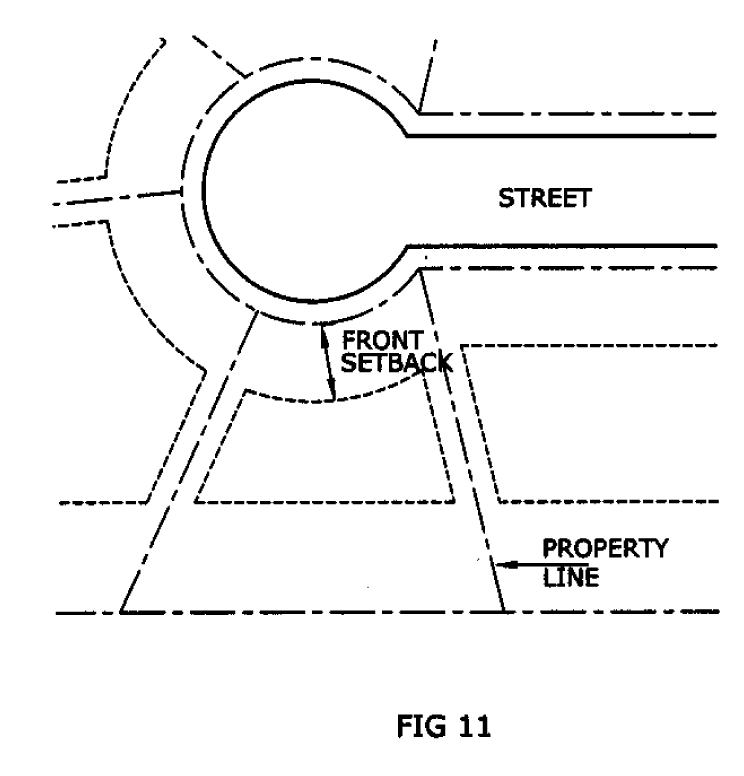
Setback, Minimum. The shortest distance allowed between a property line and any principal or accessory building on a lot, not including any required buffer areas. Minimum setback requirements for buildings are associated with the type of lot line from which the setback is taken; for instance, a "side yard setback" is measured from a side lot line.
Shopping Center. A group of retail sales or services establishments planned, constructed and managed as a total entity with customer and employee parking provided on-site, provision for goods delivery separated from customer access, aesthetic considerations and protection from the elements with a total size of at least 50,000 square feet.
Shopping Center, Specialty. A shopping center whose shops cater to a specific market and are linked together by an architectural, historical or geographic theme or by a commonality of goods and services.
Short-term Rental. An accommodation for transient guests, rented for the purpose of overnight lodging for a period of less than thirty (30) days. For the purposes of this definition, a Short-term Rental shall include all housing types but shall exclude Bed and Breakfast establishments and Boarding Houses as they are defined by this Code. Short-term Rentals shall not constitute a Home Occupation as defined by this Code.
Sidewalk. A paved, surfaced or leveled area, paralleling and usually separated from the street, used as a pedestrian walkway.
Sign. See Article II, Section 2.6, for all definitions relating to signs.
Site Plan. A plan accurately drawn to scale of a development project, depicting the buildings proposed to be placed on the property, related public and site improvements on the site, and additional information as required by this Ordinance or conditions of zoning approval, and other applicable ordinances.
Smoke Shop and Tobacco Store. Any business premises dedicated to the display, sale, distribution, delivery, offering, furnishing, or marketing of tobacco, tobacco products, or instruments, vape products, or any combination thereof. Such businesses shall be located within a retail center and shall not be closer than 2,000 ft. to a school, religious institution, government building, park, residential dwelling or each other. Distance shall be measured by the straight-line distance from premises to premises. "Smoke shop and tobacco store" shall not include any grocery store, supermarket, convenience store or similar retail use that only sells conventional cigars, cigarettes, vape or tobacco as an ancillary sale (ten percent (10%) or less of total sales).
Spa Services. A business that provides services requiring a customer to disrobe, which may include non-medical massage, other personal services such as skin, nail, hair treatments, hair removal/waxing, and may have the sale of associated retail products. Such business shall be located within a zoning category allowing retail use, shall not occupy more than 4,000 sq. ft. and shall not be closer than 2,000 ft. to a comparable business. The term "spa establishment" shall not include hospitals or other professional health care establishments separately licensed as such by the state.
It shall be unlawful to establish a spa establishment in the city, unless said establishment is located:
(1)
At least 300 feet from State Route 9;
(2)
At least 300 feet from State Route 120; and
(3)
At least 300 feet from any parcel occupied by a house of worship, public or private elementary or secondary school, public park, state-licensed day care facility, or any residence.
The foregoing minimum distance requirements shall not apply to any spa establishment located within a mixed use development in the MU district. For the purpose of this subsection, measurements shall be made in a straight line in all directions without regard to intervening structures or objects, from the closest point on a boundary line of the spa establishment parcel to the closest point on the State Route 9 or State Route 120 right-of-way, or to the closest point on a boundary line of any parcel containing a house of worship, public or private elementary or secondary school, public park, or residence.
Special Care Home. An accessory use in a 'For-Sale' dwelling occupied by one or more persons related by blood, adoption, guardianship or marriage and/or not more than three unrelated persons, some of whom are in need of special care, living together as a nonprofit housekeeping unit. The term "special care home" shall include a home for adolescents, a home for physically handicapped persons and a home for mentally handicapped persons. The term "special care home" shall not include the business of operating a boarding house, rooming house or other similar establishment. Additionally, the term shall not include a penal institution, any place for persons convicted of a crime or any place for persons found to be juvenile delinquents.
Special Event Facility. A public or privately owned structure or area used for the purposes of performances, sporting events, receptions or parties, or similar attractions that may generate heavy traffic. Facilities may include improvements to accommodate special events, such as access and circulation improvements, parking areas, gathering areas, and other physical improvements necessary to accommodate special events.
Storage, Climate Controlled. A facility consisting of a building or group of buildings that contain individual storage units of varying sizes in a climate controlled environment where customer access is through a lobby and where no commercial transactions or activities take place other than the rental of the storage units (permitted in L-I only).
Storage, Mini-Warehouse. A facility consisting of a building or group of buildings that are surrounded by a security fence with controlled access and which contains individual storage units of varying sizes whose doors open directly to the outside and where no commercial transactions or activities take place other than the rental of the storage units.
Storefront Street. A street, that by virtue of its pre-existing pedestrian-supportive qualities. or its future importance to pedestrian connectivity, requires that new development along it achieves a high standard of design and pedestrian orientation.
Storm Water Management Report. A report prepared by a Professional Engineer registered in the State of Georgia that details the pre and post development activity hydrologic conditions.
Story. That portion of a building, other than a basement, included between the surface of any floor and the surface of the floor next above, or if there is no floor above, the space between the floor and the ceiling next above. Each floor or level in a multi-story building used for parking, even if below grade, shall be classified as a story.
Street. A dedicated and accepted public right-of-way for vehicular traffic from which direct access may be gained to abutting properties, or an easement or private right-of-way approved by the City Council to serve such purpose. The term "street" shall refer to the full width located between the limits of the right-of-way or easement, and not be limited to the roadway itself.
A.
Principal Arterials—are those streets and highways which serve major activity centers and emphasize traffic service rather than access to abutting land access. Principal arterials include all limited access freeways, expressways or parkways, and carry a high proportion of total area travel on a minimum of mileage.
B.
Major Arterials—are those streets which interconnect with the principal arterial system and provide service to trips of moderate length with emphasis on both traffic service and land access and generally do not penetrate identifiable single family residential neighborhoods.
C.
Minor Arterials—provide intra-community continuity but should not penetrate identifiable neighborhoods.
D.
Collector Streets—distribute trips from arterial street to their ultimate origin or destination. Collector streets provide a greater level of land access than arterial streets, may enter or traverse identifiable neighborhoods, and rarely serve significant volumes of through traffic.
E.
Local Streets—comprise all facilities not classified as arterial or collector. Local streets provide land access with service to through traffic being actively discouraged.
Street, Future Right-of-Way Line. The right-of-way line which is anticipated by the City, State or other agency for future development.
Street Right-of-Way Line. The limit of public ownership or private easement for property containing or intended to contain a street, dividing it from an adjacent lot.
Structure. A combination of materials to form a construction for use, occupancy or ornamentation which is fastened or attached to the ground.
Structure Height. The vertical distance to the highest point of a structure, as measured in the same manner as "Building Height" herein.
Subdivision. The division of a lot, tract or parcel of land into 2 or more lots, tracts, parcels or other divisions of land for sale, development, finance or lease.
Swimming Pool. A water-filled enclosure, permanently constructed or portable, having a depth of more than 18 inches below the level of the surrounding land, or an above-surface pool having a depth of more than 30 inches, designed, used and maintained for swimming and bathing.
Temporary Use. A use established for a fixed period of time with the intent to discontinue such use upon the expiration of the time period.
Theater. A building or part of a building devoted to showing motion pictures, or for dramatic, musical or live performances.
Townhouse/Rowhouse. A building type consisting of at least three, but not more than eight independent units that are attached by common side walls in a linear arrangement. Each unit occupies the space from the ground to the roof and normally has at least two, but no more than four floors. Such units typically feature a primary entrance on the front elevation and variations in materials, colors and/or windows to create a visual distinction between each of the attached units.
Tract. See "Lot."
Tree. See Article III, Section 3.2, for definitions relating to tree protection.
Use. The purpose for which a property or structure is designed, intended, reserved, or occupied.
Use, Accessory. See "Accessory Use."
Use, Conditional. See "Conditional Use."
Use, Principal. See "Principal Use."
Variance. Permission granted under circumstances prescribed herein to depart from the specific requirements of this Ordinance.
Vehicle for Hire Company. An establishment offering to transport passengers for a fee in any motorized or animal-drawn vehicle, the charges for which are determined by agreement, mileage or by the length of time for which the vehicle is engaged and also described as a taxi or limousine service.
Vertiport. An Advanced Air Mobility (AAM) station consisting of takeoff and landing facilities, and may also include charging, fueling, storage, and maintenance facilities for use by electric vertical takeoff and landing aircraft (eVTOL). A Vertiport shall not be used by helicopters.
Warehouse. A building used primarily for the storage of goods and materials. See also "Mini-Warehouse."
Wholesale Trade. Establishments or places of business primarily engaged in selling merchandise to retailers; to industrial, commercial, institutional or professional business users, or to other wholesalers; or acting as agents or brokers and buying merchandise for, or selling merchandise to, such individuals or companies.
Wireless Telecommunications Facilities. See Section 2.8 for definition of 'wireless tower.'
Yard. An area that lies between the buildings on a lot and the nearest lot line.
1.
Front Yard. A yard situated along any public street right-of-way or private street easement.
2.
Rear Yard. A yard situated along a rear lot line.
3.
Side Yard. A yard situated along a side lot line.
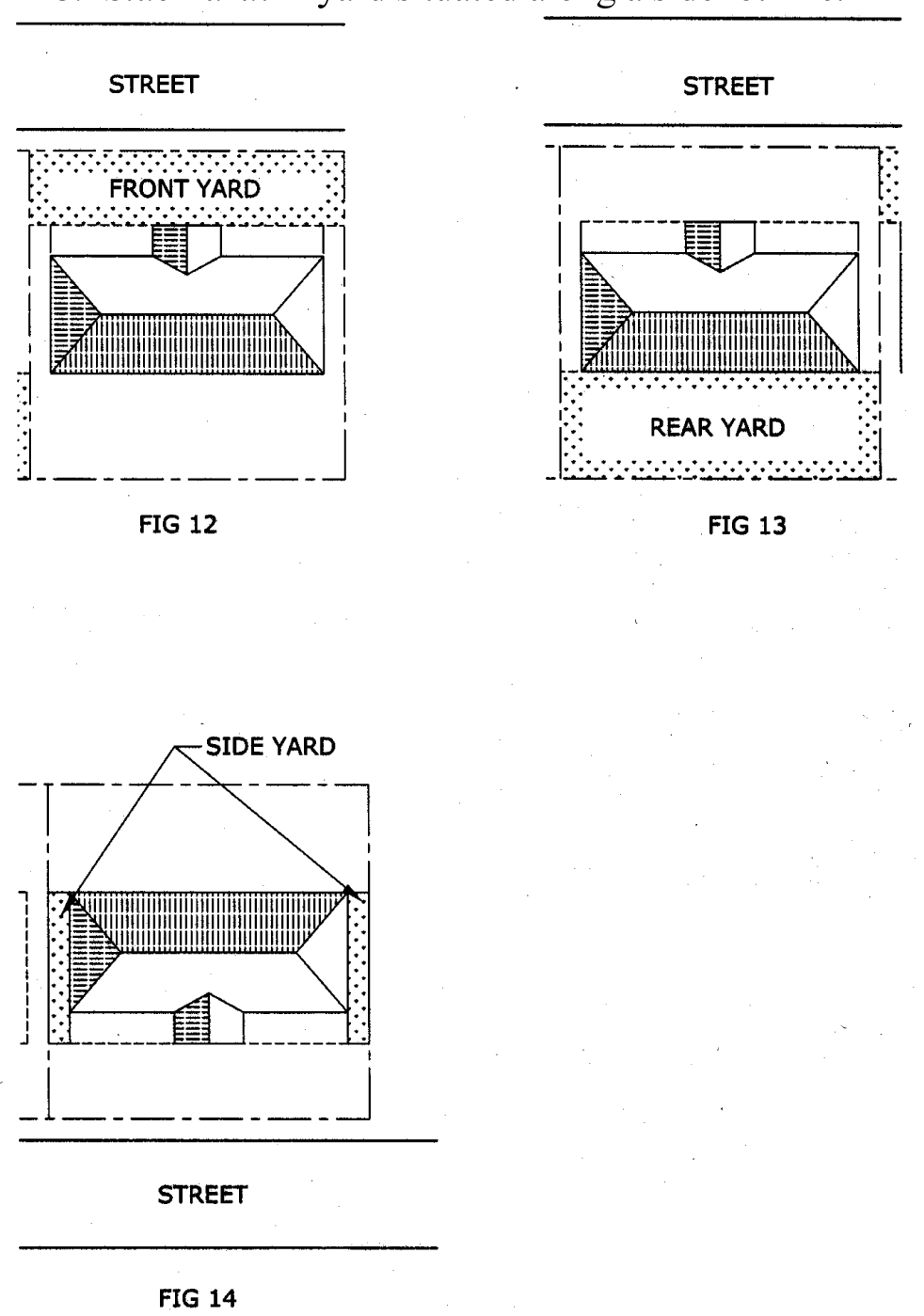
Zero Lot Line. The location of a building on a lot in such a manner that one or more of the building's sides rest directly on a lot line.
Zoning Change. An amendment to the Official Zoning Map or other action having the result of rezoning a property, approval of a Conditional Use on a particular property, or a change in conditions of approval applied to the zoning or conditional uses pertaining to a property.
Zoning Map. The Official Zoning Map of the City of Alpharetta, Georgia, which may include a series of maps in section.
(Ord. No. 689, § 1, 6-2-2014; Ord. No. 702, § 1(Exh. A), 3-2-2015; Ord. No. 704, § 1, 6-1-2015; Ord. No. 715, § 1, 9-28-2015; Ord. No. 718, § 1, 12-14-2015; Ord. No. 730, § 1, 12-5-2016; Ord. No. 741, § 1, 6-5-2017; Ord. No. 744, § 1, 7-10-2017; Ord. No. 749, § 1, 9-18-2017; Ord. No. 772, § 1, 2-4-2019; Ord. No. 778, § 1, 6-17-2019; Ord. No. 786, § 1, 9-23-2019; Ord. No. 787, § 1(Exh. A), 10-28-2019; Ord. No. 804, § 1(Exh. A), 8-10-2020; Ord. No. 807, § 1(Exh. A), 9-8-2020; Ord. No. 808, § 1(Exh. A), 9-8-2020; Ord. No. 835, § 1(Exh. A), 10-4-2021; Ord. No. 843, § 1(Exh. A), 4-18-2022; Ord. No. 847, § 1(Exh. A), 8-22-2022; Ord. No. 871, § 1(Exh. A), 5-20-2024; Ord. No. 882, § 1, 1-6-2025; Ord. No. 894, § 1 (Exh. A) 9-8-2025)

