
Aspen City Zoning Code
PART 100
GENERAL PROVISIONS
Sec. 26.104.010. - Authority and title.
This Title 26 shall be known as the Aspen Land Use Code ("LUC") and is intended to incorporate and implement, without limitation, all legal power and home rule authority vested in the City under Article XX of the Colorado Constitution and the Home Rule Charter of the City and all land use regulatory and zoning power statutorily delegated to local and municipal governments by the General Assembly through the Colorado Revised Statutes. The City Council of the City has determined that land use planning, zoning and the management and regulation of land uses are matters of local municipal concern and that the ordinances, regulations and policies of the City shall supersede within the territorial limits and other jurisdiction of the City any law or regulation of the state in conflict therewith.
Sec. 26.104.020. - Purpose.
It is the purpose of this Title to promote and protect the health, safety and welfare of the citizens and City through the establishment and enforcement of comprehensive, efficient, clear and consistent standards, regulations and procedures for the planning, evaluation, approval and implementation of land uses and development within the City. In furtherance of this purpose, all development and uses of land shall be analyzed within the context of its impact on the historic, architectural, aesthetic and natural environmental character of the City, the City's economic and infrastructure needs and capacities and the legitimate rights and reasonable expectations of property owners.
Sec. 26.104.030. - Master Plans, Comprehensive Community Plan and other plans, guidelines or documents.
(a)
The City shall from time to time adopt and update a comprehensive community plan (known as the Aspen Area Community Plan or AACP) which shall establish and project the City's land use and development planning philosophy, goals and policies. The comprehensive community plan shall be broad in scope and serve as a guide to all land use development and planning. The plan shall encourage and incorporate regional planning as well as land use development cooperation and coordination between the City and neighboring communities and jurisdictions.
(b)
From time to time the City may re-adopt, amend, extend or add to its comprehensive community plan or carry any part of its subject matter into greater detail through the development of supplemental plans, guidelines or documents, pursuant to Chapter 26.311, Master Plans.
(Ord. No. 50-a, 2005, § 1; Ord. No. 31, 2012, § 6)
Sec. 26.104.040. - Applicability and penalty.
(a)
Development without development order prohibited. Unless specifically exempted from its terms, no development of land or land use shall be undertaken without first having been reviewed, approved and issued a development order consistent with the provisions of this Title. Additionally, this Title shall apply to the activities of all public and governmental entities, agencies and districts, whether federal, state, county or municipal, to the extent permitted by law.
(b)
Building without building permit prohibited. Unless specifically exempted from its terms, no building shall be erected, moved or structurally altered unless a building permit has been issued pursuant to the terms of this Title. All building permits shall be issued in conformance with the provisions of this Title.
(c)
Occupancy without a certificate of occupancy prohibited. No land or building shall be changed in use, nor shall any new structure, building or land be occupied or used, unless the owner shall have obtained a Certificate of Occupancy from the Community Development Department.
(d)
Penalty. Any person violating the provisions of this Title shall be subject to prosecution in Municipal Court and upon conviction may be subject to the general penalty provisions set forth at Section 1.04.080 of this Code. Each day that a violation occurs or continues shall constitute a separate offense and nothing contained herein shall preclude the City from instituting such necessary proceedings to enjoin, abate or correct any violation.
(e)
Civil remedies.
(1)
Inspections. The City Manager is hereby empowered to cause any building, other structure or tract of land to be inspected and examined and to order in writing the remedying of any condition found to exist in violation of any provision of this Title. After any such order has been served, no work shall proceed on any building, other structure or tract of land covered by such order, except to correct such violation or comply with the order. This Title shall not be construed to hold the City responsible for any damage to persons or property by reason of the inspection or re-inspection authorized herein or failure to inspect or re-inspect or by reason of issuing a building permit as herein provided or by reason of pursuing or failing to pursue an action for injunctive relief as herein provided.
(2)
Remedies. The City Attorney may institute injunctive, abatement or other appropriate action to prevent, enjoin, abate or remove a violation of this Title when it occurs. The same right of action shall also accrue to any property owner who may be especially damaged by a violation of this Title.
Sec. 26.104.050. - Void permits.
All persons are presumed to know the terms and requirements of this Title and the extent of the legal authority of the City and its employees, boards and commissions to issue development approvals or permits. Any permit or approval issued in error or otherwise not in conformity with the requirements of this Title, shall be void. Similarly, any permit or approval issued in reliance upon or as a result of, a materially false statement or representation made in the process of obtaining the permit or development approval shall, likewise, be void. Any person having received a void or voidable permit or approval shall not be relieved from having to comply with all applicable terms and conditions of this Title and the City shall not be estopped from fully enforcing same.
Sec. 26.104.060. - Emergencies.
The City Council may temporarily suspend the operation and applicability of any provision of this Title in accordance with Section 4.11 of the Home Rule Charter in the event of a natural or man-made disaster or catastrophe.
Sec. 26.104.070. - Land use application fees.
This Section of the code sets forth certain fees related to planning and historic preservation as follows, applicable to applications submitted on or after February 13, 2026:
(Ord. No. 57-2000, § 9; Ord. No. 47-2002, § 8; Ord. No. 63-2003, § 4; Ord. No. 38-2004, § 7; Ord. No. 49-2005, § 9; Ord. No. 48, 2006, § 13; Ord. 52-2007; Ord. No. 4-2011, § 2; Ord. No. 29-2012; Ord. No. 36-2014; Ord. No. 11-2015, § 3; Ord. No. 40-2018; Ord. No. 32-2019, 11-26-2019; Ord. No. 20-2020, 11-24-2020; Ord. No. 22-2021, 11-23-2021; Ord. No. 19-2022, 11-29-2022; Ord. No. 22-2023, 11-28-2023; Ord. No. 17-2024, 11-19-2024; Ord. No. 11-2025, 11-18-2025; Ord. No. 18-2025, 1-13-2026)
Sec. 26.104.071. - Reserved.
(Ord. No. 57-2000, § 10; Ord. No. 47-2002, § 9; Ord. No. 63-2003, § 5; Ord. No. 38-2004, § 8; Ord. No. 49-2005, § 10; Ord. No. 48, 2006, § 14; Ord. No. 4, 2011, § 3)
Sec. 26.104.072. - Zoning review fees.
This Section of the code sets forth certain fees related to zoning as follows, applicable to applications submitted on or after February 13, 2026:
(Ord. No. 57-2000, § 11; Ord. No. 12-2001, § 1; Ord. No. 47-2002, § 10; Ord. No. 63-2003, § 5; Ord. No. 38-2004, § 9; Ord. No. 49-2005, § 11; Ord. No. 48, 2006, § 15; Ord. 52-2007; Ord. No. 4-2011, § 4; Ord. No. 29-2012; Ord. No. 40-2018; Ord. No. 32-2019, 11-26-2019; Ord. No. 20-2020, 11-24-2020; Ord. No. 22-2021, 11-23-2021; Ord. No. 19-2022, 11-29-2022; Ord. No. 22-2023, 11-28-2023; Ord. No. 11-2025, 11-18-2025; Ord. No. 18-2025, 1-13-2026)
Sec. 26.104.080. - Rules of construction.
(a)
General rules of construction and application. All provisions, words and phrases shall be read in the context in which they are written and applied according to their plain terms. Words and phrases that have acquired a technical or particular meaning, whether by ordinance definition or otherwise, shall be construed and applied accordingly. All provisions shall be read and considered as a whole in order to ascertain and fulfill the legislative intent in its adoption.
(b)
Multiple regulations. Where any provision imposes a greater or lesser restriction or requirement upon a given subject matter than a general or other provision, the provision imposing the more restrictive or greater regulation shall be deemed controlling.
(c)
Computation of time. The time period within which an act is to be done or a default shall occur, shall be computed by excluding the first day and including the last day. If the last day is a Saturday, Sunday or legal holiday, that day shall be excluded and the time period shall be extended until the end of the next day which is not one (1) of the aforementioned days.
(d)
Delegation of authority. Whenever a provision requires the head of the department or some other city officer or employee to perform an act or duty, it shall be construed to authorize the head of the department or other officer to designate, delegate and authorize professional-level subordinates to perform the required act or duty unless the terms of the provision or section specify otherwise.
(e)
Gender. Words importing the masculine gender shall be construed to include the feminine and vice versa.
(f)
Month. The word month shall mean a calendar month.
(g)
Number. A word importing the singular number only may extend and be applied to several persons and things as well as to one (1) person and thing. The use of the plural number shall be deemed to include any single person or thing.
(h)
Shall and may. Unless the context would impose an injustice or a result contrary to the intent of the provision in question, the word shall means mandatory, while may means permissive.
(i)
Tense. Words used in the past or present tense include the future as well as the past or present.
(j)
Week. The word week shall be construed to mean seven (7) consecutive days.
(k)
Written or in writing. The term written or in writing shall be construed to include any inscribed representation of words, letters or figures, whether by printing or otherwise.
(l)
Year. The word year shall mean a calendar year.
(m)
Boundaries. Interpretations regarding zone district boundaries shall be made in accordance with the following:
(1)
Boundaries shown as perpendicular to or following or approximately following, any street, alley, right-of-way or watercourse shall be construed as perpendicular to or following the centerline of the street, alley, right-of-way or watercourse.
(2)
Boundaries shown as following or approximately following, any platted lot line or other property line shall be construed as following such line.
(3)
Boundaries shown as following or approximately following, section lines, half-section lines or quarter-section lines shall be construed as following such lines.
(4)
Boundaries shown as separated from and parallel or approximately parallel, to any of the features listed in the paragraphs above shall be construed to be parallel to such features and at such distance therefrom as are shown on the Zone District map.
Sec. 26.104.100. - Definitions.
As used in this Code, unless the context otherwise requires, the following terms shall be defined as follows:
100% Deed-Restricted Affordable Housing. Residential projects where all the dwelling units are subject to a recorded deed-restriction with the Aspen Pitkin County Housing Authority (APCHA). The units may be Category units, Resident Occupied (RO) units, or some combination thereof.
Accessory dwelling unit (ADU). A deed restricted dwelling unit attached to or detached from a principal residence situated on the same lot or parcel and which meets the occupancy, dimensional and other requirements set forth in Section 26.520 of this Title and requirements set forth in the Aspen/Pitkin County Housing Guidelines.
Accessory structure or building. A building or other structure that is supportive, secondary and subordinate in use and/or size to the principal building or structure on the same parcel or lot. (See Supplementary Regulations — Section 26.575.140, Accessory uses and accessory structures).
Accessory use. A use that is supportive, secondary and subordinate to the principal use of a lot, parcel, building or structure. (See Supplementary Regulations — Section 26.575.140, Accessory uses and accessory structures.)
Accessway. An area intended to provide ingress or egress to vehicular or pedestrian traffic from a public or private right-of-way or easement to an off-street parking, loading or similar area.
Act of Nature. An accident or other natural event caused without human intervention that could not be prevented by reasonable foresight or care. Examples include fires, floods, landslides, avalanches, or other unforeseen natural events.
Adjacent parcel. Sharing all or part of one (1) common lot line with another lot or parcel of land, or would share all or part of one (1) common lot line if not for the separation caused by a street, alley, sidewalk, railroad right-of-way, utility line, trail or irrigation ditch.
Affordable housing guidelines. Guidelines recommended by the Aspen/Pitkin County Housing Authority and adopted by the City Council to govern the development of, admission to and occupancy of deed restricted affordable housing units in the City and Pitkin County.
Alley. A public or private way for vehicular traffic having less width than a street and used as a secondary access to abutting property, normally at the rear.
Animal boarding facility. An establishment which houses animals overnight or over an extended period of time.
Animal grooming establishment. An establishment principally engaged in grooming animals in which overnight boarding is prohibited.
Antenna. Any structure, including but not limited to a monopole, tower, parabolic and/or disk shaped device in single or multiple combinations or either solid or mesh construction, intended for the purpose of receiving or transmitting communication to or from another antenna, device or orbiting satellite, as well as supporting equipment necessary to install or mount the antenna.
Applicant. A person or entity submitting a development application under this Title.
Approval Documents. A set of maps, drawings, depictions, or descriptions of a project prepared pursuant to Chapter 26.490 — Approval Documents.
Architectural projection. A nonfunctional or ornamental feature on a building or other structure that does not extend to or from, the ground.
Areaway. An outdoor uncovered space developed below the grade of the surrounding ground which may provide exterior access from a basement or lower level of a building and which may incorporate or be independent of required egress.
Artist's Studio. Primarily a fine arts workshop of a light industrial nature such as a sculptor, potter, weaver, carver, jeweler, or other similar art that requires artistic skill, and not related to personal hygiene or adornment, and secondarily receiving the public and engaging in retail sales on a limited basis.
Aspen Area Community Plan. A comprehensive community plan adopted and amended by the City Council and Board of County Commissioners which establishes the City's and Aspen Metropolitan Area's land use and development planning philosophy, goals and policies.
Aspen community growth boundary. Same as Aspen metropolitan (metro) boundary and the Urban Growth Boundary.
Aspen infill area. That geographical area of Aspen east of Castle Creek and south of the Roaring Fork River.
Aspen metropolitan (metro) boundary. That geographic area described and illustrated in the Aspen Area Community Plan, as amended from time to time, encompassing both the City and its environs. (Also known as the Urban Growth Boundary and Aspen community growth boundary).
Automobile Showroom. A building or fully enclosed space within a building that is used to display automobiles and motorcycles for retail purposes, and that is not used to service or maintain the vehicles.
Awning. A roof-like cover that projects not less than three (3) feet and not more than five (5) feet from the wall of a building for the purpose of shielding a doorway or window from the elements.
Bakery. Same as commercial kitchen.
Balcony. Same as a deck.
Bandit unit. A dwelling unit or other structure developed or used in violation of the land use or building regulations in effect at the time of its construction.
Base flood. A flood having a one percent (1%) chance of being equaled or exceeded in any given year, also known as the one hundred (100) year flood.
Basement floor. See subgrade area.
Bathroom. That portion of a structure which may include a bathtub, toilet, shower or other personal bathing or washing area.
Bed and breakfast. A single-family dwelling used as a commercial lodging establishment for temporary guests, other than a hotel or lodge, and which contains no more than twelve (12) guest rooms and is operated by an on-site resident manager or owner. This shall include all uses formerly known as boardinghouses. The dimensions for a bed and breakfast shall meet those for a single-family home in the zone district.
Bedroom. A portion of a dwelling unit intended to be used for sleeping purposes, which may contain closets, and may have access to a bathroom.
Breezeway. A covered walkway connecting two (2) or more buildings or structures or which connects portions of the same building or structure.
Brewery or Distillery. A facility, licensed by the State of Colorado and which is subject to all applicable state and local liquor laws, for the production and packaging of alcoholic beverages for distribution, and secondarily receiving the public and engaging in retail sales on a limited basis, which shall not prohibit on-site beverage consumption.
Building. A permanent structure having a roof supported by walls and intended to act as an enclosure or shelter for persons, animals or property of any kind.
Building envelope. A designated area on a lot or parcel in which all structures shall be located, unless specifically excepted or exempted. (See Supplementary Regulations — Section 26.575.110, Building envelopes.)
Building permit. A permit authorizing an applicant under this Code to undertake construction or other development activity.
Canopy. A roof-like cover that projects more than five (5) feet from the wall of a building.
Carport. A roofed structure providing space for the parking of automobiles and enclosed on not more than three (3) sides.
Carriage house. A deed restricted dwelling unit attached to or detached from a principal residence situated on the same lot or parcel and which meets the occupancy, dimensional and other requirements set forth in Section 26.520 of this Title and requirements set forth in the Aspen/Pitkin County Housing Guidelines.
Category housing. Deed restricted affordable housing categorized to reflect different income levels as set forth in the Affordable Housing Guidelines. Category housing also refers to low, moderate and middle income categories. This term does not include Resident Occupied (RO) housing.
Child care center. A facility that is maintained for the whole or part of a day for the care of five (5) or more children who are eighteen (18) years of age or younger and who are not related to the owner, operator or manager thereof, whether such facility is operated with or without compensation for such care and with or without stated educational purposes. The term includes, but is not limited to, facilities commonly known as day care centers, school-age child care centers, before and after school programs, nursery schools, kindergartens, preschools, day camps and centers for developmentally disabled children and those facilities that give twenty-four-hour care for children and includes those facilities for children under the age of six (6) years with stated educational purposes operated in conjunction with a public, private or parochial college or a private or parochial school; except that the term shall not apply to any kindergarten maintained in connection with a public, private or parochial elementary school system of at least six (6) grades. The term shall not include any facility licensed as a family child care home or foster care home. (See Supplementary Regulations — Section 26.575.080, Child care center.)
Church. See "Religious Land Use."
Coffee Roasting Facility. A facility for the processing and packaging of coffee beans for distribution and secondarily receiving the public and engaging in retail sales on a limited basis, which shall not prohibit onsite beverage consumption.
Commercial kitchen. A commercial establishment producing or wholesaling prepared food items with no on-site consumption but which may have retail dispensing with no seating or wait service.
Commercial parking facility. The use of a parcel or structure for the short-term parking of automobiles as an independent commercial venture. Lease periods of less than one (1) month shall constitute short-term parking and shall be considered commercial parking facilities. Leasing of off-street parking spaces to tenants, guests, patrons or the general public for periods of one (1) month or more shall not constitute a commercial parking facility. When the use of off-street parking spaces by tenants, guests, patrons or the general public, is accessory to an on-site business or operation and is not an independent commercial venture, the parking shall not be considered a commercial parking facility.Commercial parking facilities may require conditional use approval or special review approval in some Zone Districts. Public parking facilities owned by a public agency shall be considered "public uses."
Commercial use. Land, structure, or portion of a structure intended to support offices, retail, warehousing, manufacturing, commercial recreation, restaurant/bar or service oriented businesses, not including lodge units or hotel units.
Commission. The City of Aspen Planning and Zoning Commission.
Condo-hotel. A condo-hotel is a lodging property which meets the definition of Lodge in 26.104.110, Use Categories, and in which ownership of individual lodge units has been condominiumized in accordance with the Colorado Condominium Ownership Act, C.R.S. § 38-33-101 et seq.
Consignment retail establishment. A retail establishment in which the operator sells second-hand goods as a third party agent between the buyer and seller.
Contiguous. The sharing of a common border at more than a single point. Lots, parcels or boundaries may be considered contiguous where separated by private rights-of-way, water courses or water bodies situated between them.
Cul-de-sac. A short local street terminating in a vehicular turnaround.
Day care center. See "Child Care Center." (See Supplementary Regulations — Section 26.575.080, Child care center or home.)
Deck. An outdoor, unheated area appended to a living space but not intended for living.
Deconstruction. The systematic dismantling of a structure in order to maximize the salvage of materials and parts for reuse and recycling. Deconstruction is undertaken as part of the Demolition or Destruction of a building or structure.
Demolition. To raze, disassemble, tear down or destroy forty (40) percent or more of an existing structure (prior to commencing development) as defined and described in Chapter 26.580. For the method of determining demolition, see Section 26.580.040, Measurement of demolition. Demolition shall also include the removal of a dwelling unit in a multi-family or mixed-use building, its conversion to nonresidential use, or any action which penetrates demising walls or floors between Multi-Family Housing Units if such action is undertaken to combine the units. (See Section 26.470.100(d), Demolition or Redevelopment of Multi-Family Housing.)
Density. The number of dwelling units or lodge units per unit of land.
Design studio. A workshop primarily devoted to the design or representation of built form, landscapes, consumer products or graphic arts.
Destruction. To remove, disassemble, tear down or destroy portions of a building or structure where the proposed scope does not exceed the forty (40) Demolition threshold as defined by Section 26.580, Demolition.
Developer. A person or entity undertaking any development as authorized by this Title.
Development. The use or alteration of land or land uses and improvements inclusive of, but not limited to: 1) the creation, division, alteration or elimination of lots; or 2) mining, drilling (excepting to obtain soil samples or to conduct tests) or the construction, erection, alteration, Redevelopment, destruction, or Demolition of buildings or structures; or 3) the grading, excavation, clearing of land or the deposit or fill in preparation or anticipation of future development, but excluding landscaping.
Development agreement. A recorded written agreement between the City and a project owner/developer, prepared pursuant to Chapter 26.490—Approval Documents, describing an approved development application and describing, depicting, or referencing plans and drawings outlining the nature of the project, regulatory approvals, policies related to land uses, financial assurances for physical improvements, deed restrictions, timing of improvements, acceptance procedures for improvements, noncompliance provisions and any other requirements of the Development Order for the project.
Development application. A written request submitted in accordance with this Title to undertake development.
Development order. A written authorization issued pursuant to the terms of this Title to undertake development according to an approved site-specific development plan. (See Common Development Review Procedures — Section 26.304.080, Development orders.)
Diversion. Any activity, including recycling, source reduction, reuse, deconstruction, or salvaging of materials, which causes materials to be diverted from disposal in landfills and instead puts the material to use as the same or different usable product.
Dormer. A small gable or shed roof projecting above the slope of the primary roof of a building. A dormer usually covers a vertical window.
Dormitory. A building or portion thereof, providing group sleeping accommodations in one (1) room, with shared bath and toilet facilities. (See Supplementary Regulations — Section 26.575.160, Dormitory.)
Dwelling, Affordable housing. A dwelling unit or units subject to the size, type, rental, sale and occupancy restrictions and guidelines for affordable housing adopted by the City as part of the Affordable Housing Guidelines and Chapter 26.470, Growth Management Quota System.
Dwelling, attached residential. A residential Dwelling Unit which is physically connected to one (1) or more other dwellings in either an over-and-under or side-by-side configuration with common unpierced demising walls or floors/ceilings as applicable.
Dwelling, detached residential. A residential structure consisting of a single Dwelling Unit with open yards on all sides, excluding mobile homes. Also known as a Single-Family Home or a Single-Family Residence.
Dwelling, duplex. A residential building on a single lot or parcel comprised of two (2) attached Dwelling Units in either an over-and-under or side-by-side configuration having a common unpierced above-grade wall of at least one (1) story in height and ten (10) feet in length, or a common unpierced wall or floor/ceiling as applicable. Each unit in the duplex shall contain no less than twenty-five percent (25%) of the total floor area of the duplex structure.
Dwelling, Free market. A dwelling unit not subject to the construction, occupancy or other regulations adopted by APCHA, the City, or its housing designee under the City's affordable housing program.
Dwelling, multi-family. A residential structure containing three (3) or more attached or detached Dwelling Units, not including hotels and lodges, but including townhomes, that may include accessory use facilities limited to an office, laundry, recreation facilities and off-street parking used by the occupants. One (1) or more Dwelling Units located within a Mixed-Use building shall also be considered a multi-family dwelling. The term "multi-family dwelling" also includes properties listed on the Aspen Inventory of Historic Landmark Sites and Structures consisting of three (3) or more Residential Dwellings.
Dwelling unit. A structure or portion thereof, providing complete, independent living facilities for one (1) or more persons, including, but not limited to, permanent provisions for living, sleeping, eating, cooking, and sanitation, and which shall not have an internal connection to any other residential or nonresidential unit or use. Also known as a Dwelling or a Residence.
Easement. A legal interest or right that entitles its holder to a specific limited use or enjoyment of the land of another.
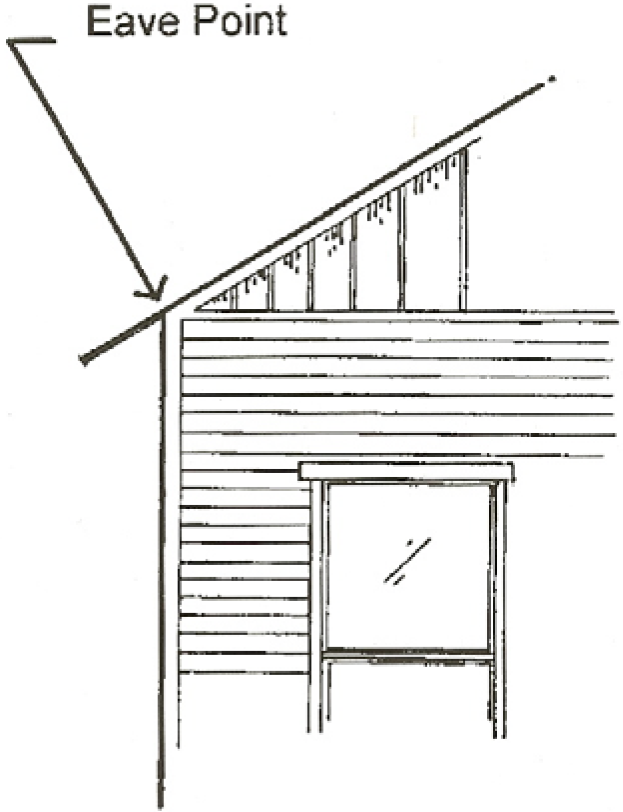
Eave point. The point in the roof plane of a structure or building which intersects with the exterior wall surface. (See drawing, below).
Employee housing. The same as Dwelling, Affordable Housing.
Essential public facility. A facility which serves an essential public purpose is available for use by or benefit of, the general public and serves the needs of the community.
Exterior passageway. An unenclosed deck on the second floor or above that is open on at least two (2) sides that links two (2) or more enclosed portions of a structure and serves as a principal access to outside-loaded lodge rooms or multi-family dwelling units.
Family. Two (2) or more persons related by blood, marriage or adoption or between whom there is a legally recognized relationship or not more than five (5) unrelated persons occupying the same dwelling unit.
Farm buildings. Structures used to shelter or enclose livestock, poultry, feed, flowers, field equipment, horticultural activities and similar land uses.
Farm uses. Uses of land devoted to the raising of crops, poultry or livestock.
Farmers' market. A market established by an organization of farmers/producers to provide the opportunity for direct sale (by farmers or their representatives) of primarily Colorado-grown produce, with the potential for accessory sales of other agriculturally-related products, to wholesale or retail buyers at stalls or other similar structures of a temporary nature. (See Supplementary Regulations — Section 26.575.190, Farmers' markets.)
Fence. A constructed barrier intended to prevent escape or intrusion or to mark a boundary or shield or screen view or to perform any similar function. (See, Supplementary Regulations — Section 26.575.050, Fences.)
Flood hazard area. Any land area susceptible to being inundated by water from any source as identified by the Federal Emergency Management Agency (FEMA).
Flooding. A general and temporary condition of partial or complete inundation of normally dry land areas from: (a) the overflow of inland waters; (b) the unusual and rapid accumulation or runoff of surface waters from any source; or (c) mudslides which are proximately caused by flooding as defined in Subsection (b) of this definition and are akin to a river of liquid and flowing mud on the surfaces of normally dry land areas, as when earth is carried by a current of water and deposited along the path of the current.
Floodway. The channel of a river or other watercourse and the adjacent land area necessary or reserved to discharge a base year flood without increasing the water surface elevation.
Floor. The base walking surface within a room or other enclosure.
Floor area. A general term used to describe the sum total of the gross horizontal areas of each story of the building measured from the exterior walls of the building. Floor Area includes Gross Floor Area, Mitigation Floor Area, Allowable Floor Area (see specific definitions of each type below for additional clarity). Also see, Supplementary Regulations — Section 26.575.020, Calculations and Measurements.
Floor Area, Allowable. The total amount of floor area allowed on a property based on the limitations and allowances in the applicable zone district in Title 700 and calculated pursuant to Section 26.575.020(d), Calculations and Measurements.
Floor Area, Gross. Gross floor area is the total horizontal area of all floors in a building, and of all floors in any accessory structure on the same lot, measured from the exterior face framing of the exterior walls (See Section 26.575.020(d)), or the centerline of a common wall separating two (2) buildings, but excluding unenclosed balconies.
Floor Area, Mitigation. The Gross Floor Area of a structure minus exclusions included in Section 26.575.020(d). This floor area measurement is used to assess required affordable housing mitigation for a given project.
Floor Area, Non-unit space. The area, considering all inclusions and exclusions, within a lodge, hotel or mixed use building that is commonly shared. (Also see Calculations and Measurements Section 26.575.020(d)(14).)
Floor area ratio (FAR). The total floor area of all structures on a lot divided by the lot area.
Floor area ratio, external. The total floor area of all structures compared to the total area of the building site.
Floor area ratio, internal. The floor area within a building devoted to a particular use, compared to the total floor area of the building.
Food market. A store which principally sells packaged, bulk and/or fresh foods but which may have indoor customer seating of up to ten (10) seats for food service, but no wait service.
Footprint. The horizontal extent to which a structure covers the ground plane as represented in plan view including cantilevered building elements but excluding eaves and similar architectural projections of the roof plane.
Four-plex. A multi-family housing project consisting of four (4) attached or detached units.
Garage. A roofed structure providing space for the parking of automobiles and enclosed on all sides.
Gazebo. An uninsulated, unheated area under a roof, not connected to any other building and open on all sides to the outdoors, with or without screens.
Geographic information system (GIS). A managed interactive system of computer hardware and software and geographic data, designed to capture, store, update, manipulate, analyze, retrieve and display geographically recorded information.
Grade, finished. The elevation of the ground surface measured where it meets the exterior wall of a structure upon completion of construction. A surface must be flat (with exception for drainage requirements) for at least five (5) feet measured horizontally from an exterior wall or flat (with exception for drainage requirements) between the exterior wall of a building and the property line to be considered finished grade.
Grade, natural. The undisturbed elevation of the ground surface prior to construction or other development activity.
Graphic design. An artistic portrayal or decorative pattern painted or otherwise placed directly on an exterior wall, fence, awning, window or other exterior surface which may be viewed from outside the premises upon which it has been placed and which is not used or displayed as an identification, advertisement or promotion for the premises, a person, business, service organization or product.
Gross Lot Area. The total horizontal area contained within the lot lines of a lot or other parcel of land.
Ground floor. The floor of a structure approximately the same elevation as the natural grade of the surrounding area.
Group home. A residential building licensed by the State as an owner-occupied or nonprofit facility for the housing of up to eight (8) aged, mentally ill or developmentally disabled persons, as those classifications of persons are defined under the Colorado Revised Statutes. (See Supplementary Regulations — Section 26.575.200, Group homes)
HPC. The Historic Preservation Commission of the City.
Height, building. The height of a building shall be the maximum distance possible measured vertically from natural grade at any point within the interior of the building; and from natural or finished grade (whichever is lower) at any point around the perimeter of the building to the highest point or structure within a vertical plane. (See Supplementary Regulations — Section 26.575.020, Measurements and calculations.)
High water line. The boundary dividing a river bed from a river bank and defined as the line on the bank up to which the presence and action of water are so usual and long-conditioned as to impress on the bed a character distinct from that of the bank with respect to the nature of the ground surface, soil and vegetation.
Historic landmark. A structure or site designated and regulated for its historic architectural or other importance under Chapter 26.415 of this Title.
Historic Overlay District, "H." An area or site designated and regulated for its historic architectural importance under Chapter 26.415 of this Title.
Historic significance. A building, structure, park, cemetery, archeological site, landscape or object which has importance to the history, architecture, neighborhood or community character of Aspen or the area surrounding Aspen. As a general rule in preservation, any structure or portion of a structure that is at least fifty (50) years old may be considered historically significant.
Home occupation. A business, occupation or trade conducted principally within a dwelling or a structure accessory to the dwelling and allowed only as an accessory use. (See Supplementary Regulations — Section 26.575.090, Home occupations.)
Hotel. See definition of Lodge, 26.104.110 Use Categories.
Housing designee. A person, agency or entity appointed by the City Council to provide expertise, management and administrative services concerning affordable housing.
Junk yard. A site or parcel of land used for the collection, storage, salvaging, dismantling, disassembly or sale of waste paper, rags, scrap metal, discarded appliances, vehicles, machinery or other discarded materials. (See Supplementary Regulations — Subsection 26.575.045(h), Junk yards.)
Kitchen. A room or other portion of a structure used for the preparation and cooking of food.
Light well. An outdoor uncovered space developed below the grade of the surrounding ground which provides egress from a basement or lower level of a building as required by adopted building or fire codes.
Linked pavilion. An enclosed walkway connecting a primary structure to an accessory structure.
Liquor Store. A commercial establishment engaged in the retail sale of alcoholic beverages, with no on-site consumption, and subject to local licensing allowances and restrictions.
Lodge. See Lodge and Boutique Lodge Use Categories in Section 26.104.110.
Lodge Key (a.k.a. Lock-off Unit). An individual rentable division of a larger lodging unit, which shall be available overnight to the general public for a fee, and which includes sleeping, bathing and toilet facilities within the rentable division.
Loggia. A deck or porch attached to a living space and open on at least one (1) side developed under a roof as an integral part of the building's mass rather than as an appended element.
Logo. An artistic portrayal or decorative pattern printed or otherwise placed on an exterior wall, window sign or other exterior surface which may be viewed from outside the premises upon which it has been placed and which is used or displayed to identify, advertise or promote the premises, a person, business, service organization or product.
Long term. The occupancy of a dwelling unit for residential purposes for a consecutive time period greater than thirty (30) days.
Lot. A defined individual area or unit of land resulting from subdivision and reflected on a recorded plat approved by the City; or if created and recorded prior to the adoption by the City of subdivision regulations or prior to its annexation into the City, a unit or area of land designated by a separate and distinct number or letter which is illustrated on a plat recorded in the office of the Clerk and Recorder for Pitkin County.
Lot depth. The shortest horizontal distance between the front and rear lot lines.
Lot line. The property boundary dividing a lot from a street or street right-of-way, alley, or an adjacent parcel.
Lot width. The horizontal distance between the side lot lines as measured along the front yard setback line.
Manufactured home. A single-family dwelling unit which is partially or entirely manufactured in a factory or at some location other than the site of final construction and installation. A manufactured home is installed on an engineered, permanent foundation and has brick, wood or cosmetically equivalent siding and a pitched roof. A manufactured home is certified to the National Manufactured Housing Construction and Safety Standards Act of 1974, 42 U.S.C. 5401 et seq., as amended.
Marijuana cultivation facility. A commercial establishment engaged in the growing and production of marijuana for wholesale distribution, with no on-site consumption, and subject to local licensing allowances and restrictions.
Marijuana, medical establishment. A commercial establishment engaged in the retail sale of medical marijuana, with no on-site consumption, and subject to local licensing allowances and restrictions. A Medical Marijuana Establishment may include a medical marijuana center, infused product manufacturing facility, or optional premises cultivation facility as such terms are defined in the Colorado Revised Statutes.
Marijuana product manufacturing facility. A commercial establishment engaged in the preparation or adaptation of marijuana into marijuana products for wholesale distribution, with no on-site consumption, and subject to local licensing allowances and restrictions.
Marijuana, retail establishment. A commercial establishment which may include any combination of the following uses: Marijuana Retail Store, Marijuana Cultivation Facility, Marijuana Product Manufacturing Facility, and Marijuana Testing Facility.
Marijuana retail store. A commercial establishment engaged in the retail sale of marijuana, with no on-site consumption, and subject to local licensing allowances and restrictions.
Marijuana testing facility. A commercial establishment engaged in the technical evaluation of marijuana or marijuana-related products for safety, quality, potency, or other metrics or measurable effects, with no on-site consumption, and subject to local licensing allowances and restrictions.
Mixed-use. The use of land or a structure for more than one (1) of the following land uses:
Commercial, which shall include retail uses, restaurant and bar uses, office uses, service uses, service commercial industrial uses, food market and commercial parking facilities, but which shall exclude agricultural uses;
Residential, which shall include detached dwelling, attached dwelling, single-family dwelling, duplex dwelling, multi-family dwelling, manufactured home, free-market residence, affordable housing, employee housing, group home, dormitory, accessory dwelling unit and carriage house;
Lodging, which shall include hotel, timeshare lodge and exempt timesharing, but shall exclude bed and breakfast;
Civic, which shall include arts, cultural and civic uses; essential public facilities; recreational use and public uses; but shall exclude open space, open use recreation site; and
Accessory uses, temporary uses and the ownership of property by a nonprofit organization that is not used as set forth above shall not qualify a property or structure as mixed-use.
Mobile home. A detached, transportable, one-family dwelling unit intended for year round occupancy and containing sleeping accommodations, flush toilet, a tub or shower bath, kitchen facilities with plumbing and electrical connections intended for attachment to outside systems. All mobile homes must be certified to the National Manufactured Construction and Safety Standards Act of 1974, 42 U.S.C. 5401 et seq., as amended. A mobile home shall be made to be readily moveable as a unit on its own running gear and designed to be used as a dwelling unit with or without permanent foundation, but to be installed in either a permanent or semi-permanent manner. A mobile home is not licensed as a recreational vehicle or park model. The phrase "without a permanent foundation" indicates that the support system/chassis is constructed with the intent that the mobile home placed thereon may be moved from time to time at the convenience of the owner.
Mobile home park. A parcel or area of land upon which two (2) or more mobile homes, occupied or intended to be occupied for a dwelling, are located for any period of time, regardless of whether or not a charge is made for such accommodations and whether or not the mobile homes and/or land are owned by the occupants.
Monopole. A wireless communication facility which consists of a monopolar structure, erected to support wireless telecommunication antennas and connecting appurtenances.
Motel. See definition of Lodge, Section 26.104.110, Use Categories.
Multi-family housing. See "residential multi-family housing."
Natural Person. A living, individual human being, as distinct from a "legal person" for the purpose of assigning certain legal rights.
Natural Medicine. As defined by State Statute to include psilocybin/psilocyn, as well as, if approved for use by the state at a later time, each of the following: Dimethyltryptamine; ibogaine; and mescaline. The definition does not include synthetic or synthetic analogs of these substances. Nor does it include peyote.
Natural Medicine Product. As defined by State Statute means products infused with natural medicine that is intended for consumption.
Natural Medicine Business. As defined by State Statute, "Natural Medicine Business" means any of the following businesses licensed pursuant to the Natural Medicine Code:
(1)
A Natural Medicine Healing Center;
(2)
A Natural Medicine Cultivation Facility;
(3)
A Natural Medicine Products Manufacturer;
(4)
A Natural Medicine Testing Facility.
Neighborhood. The area adjacent to or surrounding existing or proposed development characterized by common use or uses, density, style and age of structures and environmental characteristics.
Neighborhood café. A commercial eating and drinking establishment where food is prepared and served for consumption on or off premises, limited to no more than one thousand five-hundred (1,500) net leasable square feet and no limitation on outdoor seating and which may provide music or other performances and entertainment incidental to the primary use.
Net leasable area. Areas within a commercial or mixed use building which are permitted to be leased to a tenant and occupied for commercial or office purposes. This also includes commercial areas within a lodge that are open to the general public. This also includes second-tier commercial spaces. (Also see Section 26.412.080, Second-Tier Commercial Space and Section 26.575.020, Calculations and Measurements.)
Net livable area. The areas within a building designed to be used for habitation and human activity. (Also see Section 26.575.020, Calculations and Measurements.)
Net Lot Area. The total horizontal area contained within the lot lines of a lot or other parcel of land less those areas of the property affected by certain physical or legal conditions. (Also see Section 26.575.020, Calculations and Measurements).
Nightclub and bar. A commercial establishment engaged in the sale or dispensing of liquor by the drink for on-site consumption in which the preparation and serving of food may be available and where music, dancing or other entertainment may be provided or conducted.
Nonconforming lot of record. A lot or other parcel of land on record with the office of Clerk and Recorder for Pitkin County which as the result of the adoption of dimensional regulations contained within this Title fails to meet the minimum lot area and lot width requirements for the zone district in which it is located.
Nonconforming lot or parcel. A lot or other parcel of land which as the result of the adoption of dimensional regulations contained within this Title fails to meet the minimum dimensional requirements for the zone district in which it is located.
Nonconforming structure. A structure which was originally constructed in conformity with zoning and building codes or ordinances in effect at the time of its development, but which no longer conforms to the dimensional or other requirements imposed by this Title for the zone district in which it is located.
Nonconforming use. The use of land or a building or structure which was originally established in conformities with the zoning and building codes or ordinances in effect at the time of its development, but which is no longer allowed as a permitted or conditional use under the regulations imposed by this Title for the zone district in which it is located.
Nonprofit organization. An entity which has received a favorable determination letter from the United States Internal Revenue Service regarding their tax exempt status and is incorporated, subject to or in compliance with the applicable provisions of the Colorado Revised Statutes (CRS) Corporations and Associations Articles 121—137.
Normal maintenance. That non-extraordinary maintenance carried out in any 12-month period on a regular schedule necessary to preserve the safety and structural integrity of a nonconforming use or structure, including the repair and/or replacement of nonbearing walls, fixtures, wiring or plumbing.
Office. A type of land use involving the establishment and delivery of business, professional or governmental activities and/or services.
Officer or official. An official or officer of the City.
Official Zone District Map. The official map authorized in Section 26.710.030 designating Zone District boundaries in the City.
Off-street parking. A designated space or area of land with a paved or all-weather surface not within a public street or right-of-way and used for the parking of vehicles.
Open space. A designated space or area of land suitable for public or private use, including space available for landscaping. Such space shall be open to the sky, free of automobile traffic, parking, display of merchandise, outdoor storage or undue hazard. (See, Miscellaneous Supplementary Regulations, Chapter 26.575.030.)
Open-use recreation site. Land devoted to public recreation uses or structures.
Owner. A person or entity in whom is vested the ownership or Title, either in whole or in part, of a building, structure or land or a part thereof.
Owner Occupant. For the purposes of permitting specific types of short-term rentals, owner-occupant is a natural person whose principal residence is the City of Aspen residential property or unit for which a short-term rental permit is sought.
Owner Occupied. A residential property that serves as the primary residence of the title owner of the property.
P&Z. The Planning and Zoning Commission of the City.
Paint your own ceramics, arts and crafts studio. A workshop that includes the making, glazing, firing and/or painting of ceramics by hand or involving the use of hand tools or small scale equipment by the public, which may include accessory retail sales and office space for purposes directly related to the studio.
Panel antenna. A flat surface antenna used to achieve transmission or reception from a specific direction.
Parcel. An area of land which is capable of being described with such specificity that its location and boundaries may be established and which has been or may be developed as a single unit of land.
Park. A publicly or privately owned area of land dedicated to active or passive recreational uses or as a refuge for wildlife.
Park maintenance building. A building used in conjunction with the operation or maintenance of a park, including, but not limited to the storage and repair of park vehicles and equipment, greenhouses and offices for park personnel.
Patio. An outdoor uncovered, at-grade space which may be paved or unpaved. (A "covered patio" not connected to any other building is considered a Gazebo.)
Person. An individual, business, corporation, partnership, government or government agency, limited liability company, trust or any other legal entity.
Pharmacy. A commercial establishment engaged in the retail sale of prescription medicine, with no on-site consumption, and subject to State licensing allowances and restrictions.
Pillow. A unit of measure for assessing affordable housing generation and occupancy of lodge rooms/units per bedroom in a short-term rental. Each lodge and short-term rental unit shall be considered to have two (2) pillows for each bedroom. For calculating occupancy in short-term rentals, sleeper sofas, murphy beds, and similar sleeping accommodations shall be considered as two (2) pillows. Studio units shall be considered to have two (2) pillows.
Planned Development (PD). A zoning designation used after the adoption of Ordinance 36, Series 2013. Formerly known as Planned Unit Development (PUD).
Plat. A map or plan with written provisions that is prepared in compliance with this Code which, when approved by the City, is recorded in the Clerk and Recorder's Office of Pitkin County.
Plate height. The point at which there is an inflection in an interior wall, where the wall meets the ceiling of the room, corridor or other space. Where stairs penetrate the ceiling of the room, corridor or other space, plate height for that space shall be the height of the immediately adjacent ceiling within that room, corridor or other space.
Porch. An uninsulated, unheated area under a roof, enclosed on at least one (1) side by an exterior wall of a building and open on at least two (2) sides to the outdoors, with or without screens.
Preapplication conference. A meeting between a potential land use applicant and/or their representative and member(s) of the Community Development Department held prior to submission of a land use application where aspects of development regulations, review criteria, review processes, application contents and application fees are discussed. (See, Common Development Review Procedures—Section 26.304.020, Preapplication conference.)
Primary Care Physician's Office. A physician's office, where the sole use is the delivery of primary care medical services that shall include one (1) or more of the following areas of health care practice: pediatrics, family practice, internal medicine, and obstetrics-gynecology, where sale of supplies and/or medicines is incidental to the sale of services, and where walk-in and either Medicare or Medicaid patients are accepted.
Primary residence. The permanent residential address, as demonstrated by acceptable legal documentation described in this title, of an Owner-Occupied Short-term Rental Permit holder.
Principal building. The primary structure on a lot.
Public buildings and uses. A building, facility or land use/activity owned, occupied or carried out by a government or government agency.
Public facilities. Major capital improvements, including but not limited to transportation, sanitary sewer, solid waste, drainage, potable water, education and parks and recreation facilities. Commercial wireless telecommunication services facilities and/or equipment are not public facilities, but those used exclusively for police, fire and/or other emergency response communication systems shall be considered public facilities.
Public right-of way. A dedicated strip or other area of land on or over which the City and/or public may travel or use for passage and within which public utilities and/or streets, alleys, trails, sidewalks and other ways may be installed.
Qualified Owner's Representative. A natural person who is legally designated on the permit application by the permittee to apply for and maintain compliance with a City of Aspen Short-term Rental Permit. For each short-term rental property, there may be only one (1) qualified owner's representative. All qualified owner's representatives must have a business license through the City of Aspen.
Reconstruction. To rebuild an existing structure, or part of a structure in kind following destruction.
Recreation club. A building and associated land devoted to recreational use including, but not limited to, a golf, swimming pool or tennis clubhouse, an exercise room, a playground/activity center and which may include kitchen, bathing or toilet facilities, locker rooms or assembly halls.
Recreational vehicle. A wheeled vehicle intended to provide temporary living accommodations. A recreational vehicle is either self-propelled, hauled or towed by a noncommercial vehicle. Included in the term are units commonly referred to as travel-trailers, camper-trailers, trailer-coaches, motor homes and pickup campers. A recreational vehicle is not a mobile home as defined in this Chapter.
Recycling center. A building or facility used for the collection and preparation of recyclable material for efficient shipment.
Redevelopment. The replacement, rehabilitation, repurposing, remodel, or addition to pre-existing structures or uses on a parcel where the scope of work exceeds Demolition (as defined by this Title). Redevelopment is distinct from Development in that Development may occur without triggering Demolition, where Redevelopment is only applicable when Demolition has been triggered.
Rehabilitation. To restore or return a substandard or dilapidated building or structure to a habitable condition consistent with existing building codes and regulations.
Religious Land Use. A place of religious worship and instruction. Accessory uses requiring independent approval include (1) an associated private school, and (2) child care in the main building or the same lot as the church or worship center that accepts customers not attending the church, recreational facilities, dormitories or other facilities for temporary or permanent residences. Child care facilities located in the main building that are used only during worship services, for persons attending the service, are considered accessory to the church and do not require independent approval. For purposes of this Section, "religious worship" includes any "religious exercise" as defined by the Religious Land Use and Institutionalized Persons Act (RLUIPA), 42 U.S.C. § 2000cc-5.
Relocation. The moving of a building or structure to a location on or off of the lot or parcel on which it is situated.
Remodel. A construction project comprising revisions within or to elements of an existing structure, as distinct from additions to an existing structure.
Renovate. To upgrade an existing structure to a more contemporary and/or efficient use through repair and alteration, including making additions to the existing structure.
Residential multi-family housing. A dwelling unit which has in its history ever housed a working resident and which is located in a building in one (1) of the following configurations:
(1)
A multi-family residential building, including three (3) or more attached or detached dwelling units;
(2)
A mixed-use building; or
(3)
A detached building on a property listed on the Aspen Inventory of Historic Landmark Sites and Structures containing three (3) or more detached residential units where permitted by the zone district.
Excluded from this definition shall be single-family and duplex dwellings and dwelling units used exclusively as tourist accommodations by or nonworking residents.
Resident-occupied (RO) unit. A dwelling unit which is limited by deed restriction or other guarantee running with the land to occupancy by qualified employees set forth in the housing guidelines of the Aspen/Pitkin County Housing Authority.
Reverse-corner lot. A corner lot bounded on three (3) sides by streets.
Right-of-way. A strip or other area of land specifically designated or reserved for travel, passage and/or the installation of utilities or other similar uses by persons other than or in addition to, the landowner.
Rooming house. Same as boardinghouse.
Salvage. The controlled removal of items and material from a building, construction, or demolition site for the purpose of on- or off-site reuse, or storage for later reuse. The salvaging of materials is one (1) method of meeting waste diversion requirements.
Satellite dish antenna or satellite radio frequency signal reception and/or transmission device. A dish-shaped or parabolic-shaped reception or transmission device used for the reception and/or transmission of satellite signals, including but not limited to television signals, AM radio signals, FM radio signals, telemetry signals or any other reception or transmission signals using free air space as a medium, whether for commercial or private use. This definition does not apply to wireless telecommunication services facilities and/or equipment including cellular telephone, paging, enhanced specialized mobile radio (ESMR), personal communication services (PCS), commercial mobile radio service (CMRS) and other wireless commercial telecommunication devices and all associated structures and equipment including transmitters, antennas, monopoles, towers, masts and microwave dishes, cabinets and equipment rooms.
Scale. The perceived or relative size and proportions of a structure or architectural element.
Second Tier Commercial Space. Commercial net leasable area that is reserved for and used for principal commercial uses (not for storage, office or other uses accessory to another principal use) and that:
•
Is located in a basement, or
•
Is located above the ground floor (but not including rooftop pedestrian amenities), or
•
Has its principal point of access along an alleyway or a mid-block pedestrian amenity, or
•
Has its front façade and principal entryway on a subgrade courtyard or an enclosed interior courtyard or arcade.
When a building is split level, commercial space above the ground floor at street level shall be included in the second tier calculation, while the area below shall not. In these circumstances, a full basement below lower level would count as second tier space (see Figure 26.412.080-A and B below).
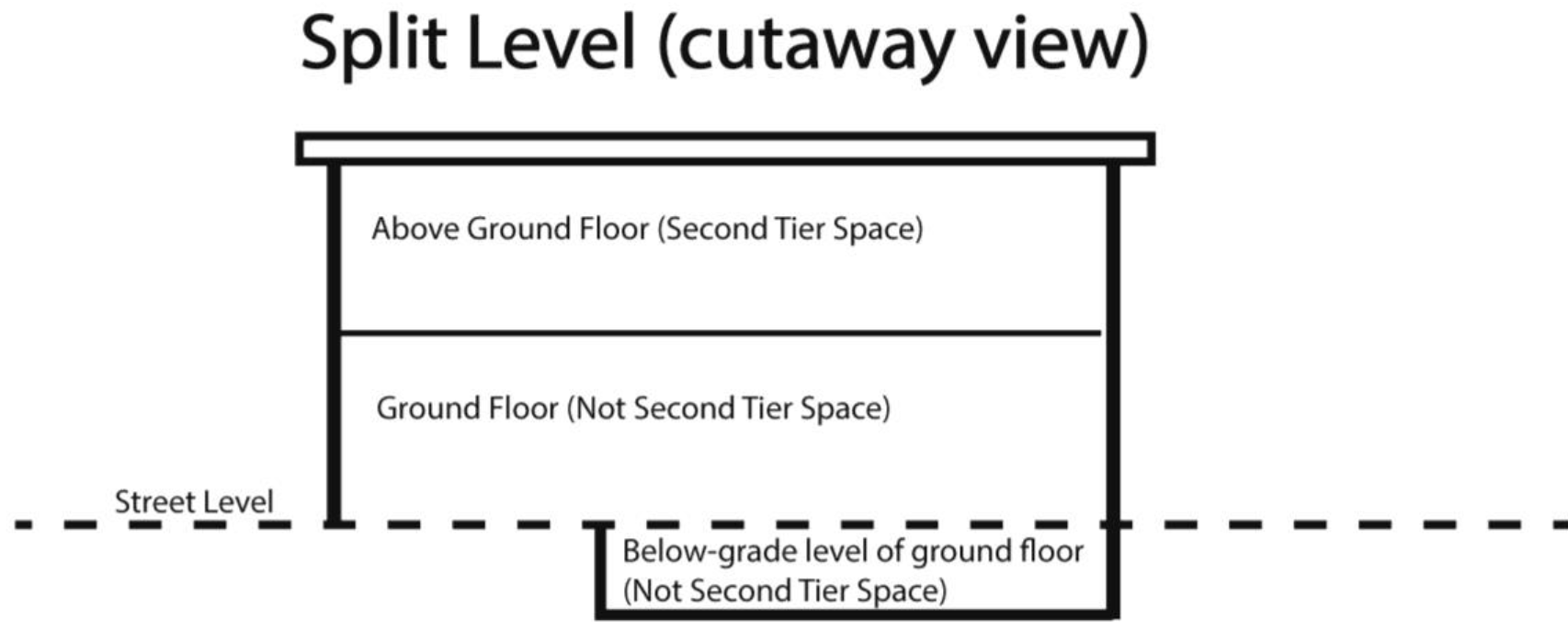
Figure 26.412.080-A Split Level - Cutaway View
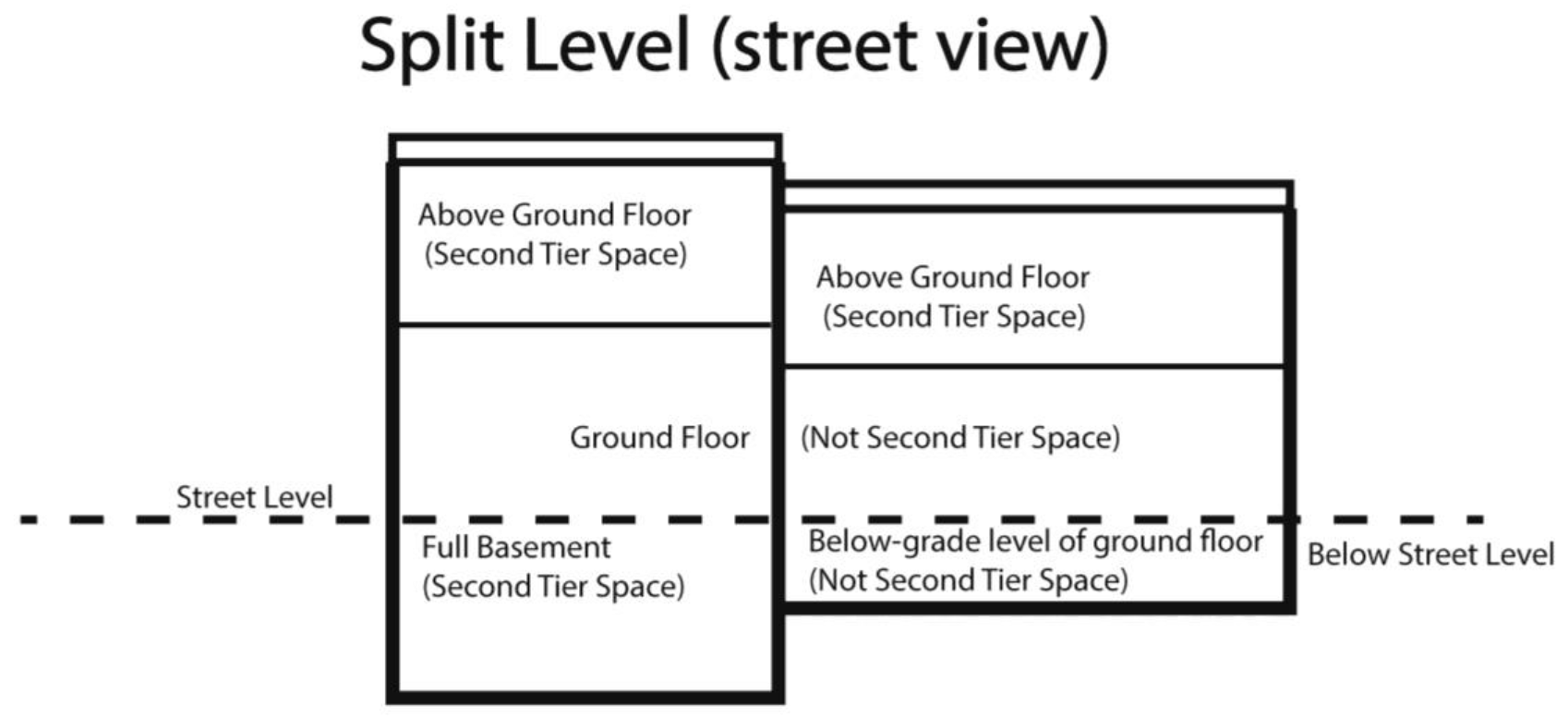
Figure 26.412.080-B Split Level - Street View
Measurement of the space shall be pursuant to Section 26.575.020(i), Measurement of Net Leasable Area and Net Livable Area.
Service yard. A yard or area used for storage of material accessory to or used in conjunction with the principal commercial use of a lot or structure. (See Miscellaneous Supplementary Regulations — Section 26.575.045, Junkyards and service yards.)
Setback. An area commencing and extending horizontally and vertically from a lot line, property line or other boundary which shall be unoccupied and unobstructed from the ground upward, excepting trees, vegetation and/or fences or other structures or projections as allowed.
Short-term. The occupancy of a hotel, lodge unit, or vacation rental for a consecutive time period equal to or lesser than thirty (30) days in duration.
Short-term Rental (STR). The use or occupancy of a residential property or dwelling unit, in whole or in part, by the general public for a fee, primarily for tourist accommodations, and for a period of less than thirty (30) days. Timeshare, hotel, motel, and bed and breakfast uses are not short-term rental uses.
Short-term Rental Service. A person or company that operates a website or any other digital or print platform that provides a means through which a property owner or their representative may offer a residential property or dwelling unit, or portion thereof, for short-term rentals, and from which the person or company financially benefits.
Sidewalk. That portion of a street or right-of-way which is paved and designed for use by pedestrians.
Sidewalk area. That portion of a street, right-of-way or area bordering a street or right-of-way, primarily intended for use by pedestrians, but inclusive of planting strips, park strips, border areas, parkways or similar area.
Sign. An object, device, symbol, light or structure that is intended to convey information or to advertise, that is freestanding or fixed to, painted on, placed on or incorporated into the surface of the structure or that is displayed from or within a structure. Window displays of merchandise and representations thereof, are not considered signage and shall not be subject to sign regulations.
Sign, "A" frame or sandwich. A portable sign which is ordinarily in the shape of an "A" or some variation thereof and which usually has no wheels.
Sign, free standing. Any sign which is permanently affixed to the ground, which is self-supported by a standard or legs or other self-supporting structure used solely for that sign and which is physically separated from any building or structure.
Sign, off-site. A sign which directs attention to a business, commodity, service, entertainment, attraction or product sold, offered or existing elsewhere than upon the same lot where such sign is located. The term shall include outdoor advertising signs (billboards), unless otherwise preempted by state or federal law.
Sign, portable or wheeled. A sign not permanently affixed to the ground, a building or other permanently affixed structure which may be moved from place to place and which may be mounted on wheels.
Sign, projecting. Any sign, other than a freestanding sign, affixed to or supported by a building or structure, which projects beyond the surface of that portion of the building or structure to which it is affixed or supported by more than six (6) inches.
Sign, roof. A sign created, placed or maintained in whole or in part upon, against or directly above the roof or parapet line of a building.
Sign, temporary. A nonpermanent sign erected, affixed or maintained for a short, usually fixed, period of time.
Sign, wall. Any sign painted or placed on, incorporated in or affixed to, a building wall, window or canopy or any sign consisting of cut-out letters or devices affixed to a building wall, window or canopy with no background defined on the building wall, window or canopy, with the exposed face of the sign located in a place substantially parallel to the wall, window or canopy surface on which it is placed.
Site. The specific location of an actual or planned structure or structures or an identifiable and defined area of ground/land occupied or that may be occupied, by a structure or structures.
Site coverage. The percentage of a site covered by buildings, measured at the exterior walls of a building at ground level. (See Supplementary Regulations — Section 26.575.020, Calculations and measurements.)
Site Specific Development Plan (SSDP). A development plan that has obtained final approval from the City after review and evaluation as provided for in this Title, including notice and public hearing and which describes with reasonable certainty the type and intensity of use for a specific lot(s), parcel(s), site(s) or other area(s) of land and which incorporates all of the terms and conditions of approval. An SSDP may include or take the form of a Planned Development, subdivision plat, development and/or subdivision improvement agreement, a use or activity permitted on review or such instrument or document as identified and agreed upon by the City and landowner or developer. A license, map, variance, easement or permit shall not constitute an SSDP.
Source separated recyclable materials. The recyclable materials that are separated from other recyclable materials or solid waste and placed in separate containers according to type or category of materials and directly marketed as a single commodity.
Specially Planned Area (SPA). A zoning designation used prior to the adoption of Ordinance 36, Series 2013, replaced by the provisions of Chapter 26.445—Planned Development.
Split-level building. A structure or portion thereof, with floor levels separated from the adjacent sidewalk level by four (4) or more feet of both horizontal and vertical separation and which has a finished grade below the level of the sidewalk in the area between the building and the sidewalk.
Storage area. A detached accessory structure or a separately accessible portion of structure, intended to house items normally associated with the principal use of the property but not independently capable of residential, commercial or lodging use. Areas defined for storage purposes shall not contain plumbing fixtures or mechanical equipment that support the principal residential, commercial or lodging use of the property. Mechanical equipment may be located in conjunction with storage space, but the floor area on which mechanical equipment exists shall not be considered storage area.
Story. A space in a building between the surface of any floor and the surface of the floor or ceiling above, which is more than fifty percent (50%) above finished grade.
Street. A way or thoroughfare, other than an alley, containing a public access easement and used or intended for vehicular, bicycle or pedestrian traffic. The term street shall include the entire area within a right-of-way.
Street, arterial. A street which has the primary function of carrying traffic and which may provide access to abutting land while receiving and distributing traffic to and from collector streets and/or highways.
Street, collector. A street which carries through traffic and may provide access to abutting lands. The primary function of collector streets is receiving and distributing traffic to and from local streets and providing for the distribution of traffic within.
Street, local. A street which has the primary function of receiving and distributing traffic to and from residential streets and providing access to abutting lands, but which is not intended for and does not normally carry through traffic.
Street, private. A street designated to comply with City engineering standards which is retained in private ownership, maintained by the private owners, but dedicated for the use of the public.
Street, public. A street designed to comply with City engineering standards dedicated to the public as a public right-of-way.
Street, unopened. A public or private street that while depicted on a plat, map, right-of-way or other document has not been engineered, installed and/or approved for use by the City.
Structure. Anything constructed, installed or erected which requires location on the ground or is attached/supported by something on the ground, inclusive of buildings, signs, roads, walkways, berms, fences and/or walls greater than six (6) feet in height, tennis courts, swimming pools and the like, but excluding poles, lines, cables or similar devices used in the transmission or distribution of public utilities.
Structure, detached. A structure not physically connected in any manner to another structure, above or below ground, exclusive of utility connections.
Subdivider. Any person or entity that divides or seeks to divide land into two (2) or more lots, parcels or other units of land.
Subdivision. A land use action as required by Chapter 26.480—Subdivision.
Subdivision agreement. A recorded document between the City and a project owner/developer describing an approved subdivision, the associated regulatory approvals, financial assurances for physical improvements, timing of improvements, acceptance procedures for improvements and noncompliance provisions and any other requirements of the land use approval.
Subgrade area. An area below the natural or finished grade of the ground. (See, Supplemental Regulations, Subsection 26.575.020(a), Floor area.)
Tattoo parlor. A business establishment principally engaged in the business of creating indelible marks or figures fixed upon the human body by insertion of pigment under the skin.
Temporary use or structure. A use or structure that may or may not be permitted in a given zone district, but which may be allowed on a nonpermanent and temporary basis upon review. (See Chapter 26.450, Temporary Uses.)
Timeshare lodge, development or unit. A lodge development, building, or unit, or dwelling unit the title to which has been, divided either into interval estates or time-span estates as defined at C.R.S. § 38-33-110, as may be amended from time to time, and that has been approved pursuant to Chapter 26.590, Timeshare Development.
Timeshare use. A contractual or membership right of occupancy (which cannot be terminated at the will of the owner) for life or for a term of years, to the recurrent and exclusive use or occupancy of a dwelling or lodge unit on some periodic basis for a set period of time that has been allotted from use or occupancy periods into which the dwelling or lodge unit has been divided.
Top of slope. A line generally running parallel to a stream or river from which development must be setback and which delineates the bank of the river or stream or other riparian area as determined by the City Engineer.
Townsite or original Aspen Townsite. Land depicted on the City Incorporation Plat of Record, dated 1880. Parcels of land lying partially within this area shall not be considered within the original Townsite.
Trail. A marked or dedicated path or way for pedestrian and/or non-motorized traffic.
Trash compactor. A mechanical device intended to minimize volume and store domestic refuse meeting the requirements of this Code, Chapter 12.04, Solid Waste.
Trellis. An uninsulated, unheated stand-alone structure of open latticework for the purpose of supporting vines or other climbing plants. A roof that is no more than fifty percent (50%) solid material for shade is permitted. Walls of any material are prohibited.
Tri-plex. A multi-family housing project consisting of three (3) attached or detached units.
Upper floors. The floors of a structure located entirely above the ground floor of the same structure.
Urban Growth Boundary. Same as Aspen metropolitan (metro) boundary and the Aspen community growth boundary.
Use. The purpose or activity for which a lot, other area of land or a building is designated, arranged, intended, occupied or maintained.
Utility/trash service area. An area approved or designated for the placement of garbage or trash containers or mechanical equipment, accessory to a principal structure or use.
Vacation Rental. See short-term rental.
Vehicle Sales. The sale or rental of autocycles, automobiles, bicycles, camper coaches, camper trailers, electrical assisted bicycles, electric personal assistive mobility devices (EPAMDs), golf cars, motorcycles, motor-driven cycles, motorized bicycles, recreational vehicles, and other "vehicles" (including "motor vehicles") as defined by C.R.S. § 42-1-102, For purposes of this definition, a "vehicle" includes any off-highway vehicle, snowmobile, farm tractor, or implement of husbandry.
Vested property right. The right to undertake and complete the development and use of property under the terms and conditions of a site specific development plan.
Veterinary clinic. A facility maintained by or for the use of a licensed veterinarian in the care and treatment of animals wherein overnight care is prohibited except when necessary for medical purposes.
Watercourse. A river, stream or water irrigation ditch.
Whip antenna. A flexible rod antenna supported on a base insulator.
Wildlife resistant dumpster or trash enclosure. A device or structure intended to store domestic refuse and limit access by nondomestic mammals meeting the requirements of this Code, Chapter 12.08, Wildlife protection.
Wireless telecommunication services facilities and/or equipment. Cellular telephone, paging, enhanced specialized mobile radio (ESMR), personal communication services (PCS), commercial mobile radio service (CMRS) and other wireless commercial telecommunication devices and all associated structures and equipment including transmitters, antennas, monopoles, towers, masts and microwave dishes, cabinets and equipment rooms. This definition does not apply to noncommercial satellite dish antennae, radio and television transmitters and antennae incidental to residential use.
(1)
Cellular means an analog or digital wireless communication technology that is based on a system of interconnected neighboring cell sites, each of which contains antenna.
(2)
Enhanced Specialized Mobile Radio (ESMR) means a digital wireless communication technology that specializes in providing dispatching services.
(3)
Personal Communication Services (PCS) means a digital wireless communication technology that has the capacity for multiple communications services and will provide a system in which calls will be routed to individuals rather than places, regardless of location.
Working resident. A person as defined in the Affordable Housing Guidelines.
Yard. The grounds surrounding a building on the same lot or parcel which are unoccupied and unobstructed above and below ground, except for trees and vegetation or as otherwise permitted in this Title. (See Supplementary Regulations — Section 26.575.040, Yards. See also Setbacks.)
Yard, front. The yard extending the full width of a lot or parcel, the depth of which is measured by the narrowest horizontal distance between the front lot line and the nearest surface of the principal building at grade.
Yard, rear. A yard extending the full width of a lot or parcel, the depth of which is measured at the narrowest horizontal distance between the rear lot line and the nearest surface of the principal building at grade.
Yard, side. A yard extending from the front yard to the rear yard of a lot or parcel, the width of which is measured at the narrowest horizontal distance between the side lot line and the nearest surface of the principal building at grade.
(Ord. No. 2-1999, § 2; Ord. No. 34-1999, § 1; Ord. No. 39-1999 § 7; Ord. No. 41-1999, § 1; Ord. No. 5-2000, §§ 1, 2; Ord. No. 38-2000, § 1; Ord. No. 56-2000, § 9; Ord. No. 39-2001, § 1 [part]; Ord. No. 46-2001, § 3; Ord. No. 1-2002, § 1; Ord. 9-2002, § 2; Ord. No. 21-2002, § 2; Ord. No. 40-2002, § 1; Ord. No. 52-2003 § 1; Ord. No. 53-2003, § 1; Ord. No. 54-2003, § 1; Ord. No. 55-2003, § 1; Ord. No. 7-2004, § 1; Ord. No. 28a-2004, § 1; Ord. No. 9-2005, § 5; Ord. No. 13-2005, §§ 1, 2; Ord. No. 17-2005, § 2; Ord. No. 12-2006, § 20; Ord. No. 12, 2007 §§ 1—3; Ord. No. 4-2008, § 2; Ord. No. 22-2008, § 2; Ord. No. 27-2010, § 5-6; Ord. No. 34-2011, § 1; Ord. No. 7-2013, § 1; Ord. No. 13-2013, § 3; Ord. No. 39-2013, §§ 1, 2; Ord. No. 36-2013, § 4; Ord. No. 37-2013, § 1; Ord. No. 7-2014, § 12; Ord. No. 36-2015, §§ 1, 2, 3; Ord. No. 46-2015, §§ 1, 2; Ord. No. 30, 2016, § 1-3; Ord. No. 23-2017; Ord. No. 13-2020, § 1, 9-22-2020; Ord. No. 9-2022, § 1, 6-28-2022; Ord. No. 13-2022, § 1, 6-28-2022; Ord. No. 02-2025, § 1, 2-25-2025; Ord. No. 08-2025, § 1(Exh. A), 11-18-2025)
Sec. 26.104.110. - Use Categories.
(a)
Generally. This section defines the terms and use categories that apply to this Code.
(b)
Use categories.
(1)
Purpose. This Chapter classifies land uses and activities into use categories on the basis of common functional, product, or physical characteristics. This Section includes definitions that describe categories of uses. Characteristics include the type and amount of activity, the type of customers or residents, how goods or services are sold or delivered, and certain site factors. The use categories provide a systematic basis to assign present and future uses to zone districts (see the zone district regulations in Part 700). The decision to allow or prohibit the use categories in the various zones is based on the goals and policies of the Aspen Area Community Plan and the definitions herein.
(2)
Use Categories. The affected definitions (see Subsection (c), below) include the following: Academic uses; agricultural uses; arts, cultural and civic uses; assembly and community uses; commercial uses; essential services; hotels; offices; public uses; recreation; residential; retail; restaurant, bar, and entertainment; and service commercial.
(3)
Classification of Uses.
a.
Considerations.
1.
Uses are assigned to the category whose description most closely describes the nature of the primary use. The "Characteristics" subsection of each use category describes the characteristics of each use category. Developments may have more than one (1) primary use. Developments may also have one (1) or more accessory uses. Developments with more than one (1) primary use are addressed in Subsection b. below. Accessory uses are addressed in Subsection c. below.
2.
Uses are given the meaning assigned in Subsection (c) or in the North American Industry Classification Manual (Executive Office of the President, Office of Management and Budget, 2012) ("NAICS") or, if not defined in the NAICS, the American Planning Association, Land-Based Classification Standards LBCS Tables (April 1, 2001) ("LBCS"), or their ordinary and customary meaning. The NAICS and LBCS are incorporated by reference and made a part of this Section.
3.
The following items are considered to determine what use category the use is in, and whether the activities constitute primary uses or accessory uses:
•
The description of the activity(ies) in relationship to the characteristics of each use category;
•
The relative amount of site or floor space and equipment devoted to the activity;
•
Relative amounts of sales from each activity;
•
The customer type for each activity;
•
The relative number of employees in each activity;
•
Hours of operation;
•
Building and site arrangement;
•
Vehicles used with the activity;
•
The relative number of vehicle trips generated by the activity;
•
Signs;
•
How the use advertises itself;
•
Whether use is within the same industry classification is a functionally similar structural type as another permitted use, taking into consideration the NAICS and LBCS;
•
Whether the activity would be likely to be found independent of the other activities on the site; and
•
Other characteristics and factors as determined by the Community Development Director.
b.
Developments with multiple primary uses. When all the primary uses of a development fall within one (1) use category, then the development is assigned to that use category. For example, a development that contains a commercial kitchen/bakery and a neighborhood cafe would be classified in the Retail category because all the primary uses are in that category. When the primary uses of a development fall within different use categories, each primary use is classified in the applicable category and is subject to the regulations for that category.
c.
Accessory uses. Accessory uses are allowed by right in conjunction with the use unless stated otherwise in the regulations. Also, unless otherwise stated, they are subject to the same regulations as the primary use. Common accessory uses are listed as examples with the categories. (See also 26.575.140, Accessory uses and structures.)
d.
Use of examples. The "Examples" subsection of each use category provides a list of examples of uses that are included in the use category. The names of uses on the lists are generic. They are based on the common meaning of the terms and not on what a specific use may call itself. For example, a use whose business name is "Wholesale Bakery" but that sells mostly to consumers, would be included in the Retail category rather than the Service Commercial Industrial uses category. This is because the actual activity on the site matches the description of the Retail category.
(c)
Definitions. As used in this Code, unless the context otherwise requires, the following terms shall be defined as follows:
Academic uses.
Agricultural uses.
Arts, Assembly, Cultural, Civic and Community uses
Essential Services.
Formula Use.
Lodge uses.
Lodge, Boutique uses.
Offices uses.
Public uses.
Recreational uses.
Residential use.
Restaurant, Bar and Entertainment.
Retail Uses.
Service Uses.
Service, Commercial, Industrial uses.
(Ord. No. 30, 2016, § 4; Ord. No. 6, 2017, § 1; Ord. No. 23-2017; Ord. No. 13-2022, § 1, 6-28-2022; Ord. No. 02-2025, § 1, 2-25-2025)

