
Banning City Zoning Code
Division I
GENERAL PROVISIONS
17.04.010 - Title.
This Title shall be know as the "City of Banning Zoning Ordinance", hereafter referred to as the "Zoning Ordinance".
(Zoning Ord. dated 1/31/06, § 9101.01.)
17.04.020 - Purpose and objectives.
A.
The Zoning Ordinance ensures the orderly development of all lands within the City's corporate boundaries to protect the public health, safety and welfare.
B.
The Zoning Ordinance is further intended to:
1.
Be consistent with the City of Banning General Plan.
2.
Provide standards and guidelines for new development, consistent with the requirements of the California Government Code.
3.
Evenly distribute residential development of all types.
4.
Respect and enhance the character of existing neighborhoods, secure more open space, and encourage high quality development proposals.
5.
Assure well balanced commercial development.
6.
Assure a healthy, well developed industrial base convenient to the railroad and airport.
C.
Protect and enhance open space lands to protect the vistas historically enjoyed in the City.
(Zoning Ord. dated 1/31/06, § 9101.03.)
17.04.030 - Authority and general plan consistency.
A.
This Zoning Ordinance is the primary tool for implementing the goals, policies and programs of the Banning General Plan. All development within the incorporated area of the City shall be consistent with the General Plan.
B.
No land shall be subdivided and/or developed for any purpose which is not in conformity with the General Plan, and any applicable Specific Plan, Development Agreement, and permitted by this Zoning Ordinance, or other applicable provisions of the Banning Municipal Code.
C.
The type and intensity of land use as shown on the General Plan and any applicable Specific Plan shall determine, together with this Zoning Ordinance, the type of streets, roads, highways, utilities and public services that shall be provided by the applicant.
D.
The City recognizes the need for essential public facilities, as defined in this Zoning Ordinance, and has provided for their development in this Ordinance. The City shall continue to participate in regional planning efforts to site essential public facilities.
(Zoning Ord. dated 1/31/06, § 9101.03.)
17.04.040 - Conflict with other regulations.
Where this Zoning Ordinance and other provisions of the Banning Municipal Code impose regulation which may overlap or be contradictory, the more restrictive provision shall apply, unless expressly stated in this Ordinance.
(Zoning Ord. dated 1/31/06, § 9101.04.)
17.04.050 - Prior approvals.
Any approved and valid Development Agreement, Specific Plan, Tentative Tract or Parcel Map, Conditional Use Permit, Design Review, Site Plan Review, Variance, grading or building permit in place at the date of adoption of this Ordinance shall continue in full force and effect until expiration, completion or lapse of the agreement, plan or permit. Amendments to such an agreement, plan or permit shall be subject to the standards and guidelines of this Ordinance.
(Zoning Ord. dated 1/31/06, § 9101.05.)
17.04.060 - Review authorities.
The review and approval of applications involves the participation of the following entities:
A.
City Council. The City Council shall have final decision authority for General Plan amendments, Zoning Ordinance amendments, Development Agreements, Specific Plans, Tentative and Final Tract Maps, appeals and the acceptance by the City of lands and/or improvements as may be proposed for dedication to the City. The Council may impose conditions of approval.
B.
Planning Commission.
1.
Appointment. The Planning Commission shall consist of five (5) members appointed by the City Council and serve pursuant to the provisions of Section 2.28.010 of the Municipal Code.
2.
Duties. The Planning Commission shall perform the duties and functions prescribed in this Zoning Ordinance. The Commission shall prepare, recommend adoption, implement and periodically review and recommend revisions to the General Plan and this Zoning Ordinance for the desired physical development of the City.
C.
Powers. The Planning Commission shall have final approval authority for variances, site plan reviews, and conditional use permits, which are subject to appeal to the City Council. The Planning Commission recommends to the City Council for final determination on General Plan Amendments, Zoning Ordinance Amendments, Specific Plans, and Tentative Tract Maps. The Planning Commission may impose conditions of approval or make interpretations of the General Plan which may be appealed to the City Council.
(Zoning Ord. dated 1/31/06, § 9101.06.)
17.04.070 - Definitions.
Except where specifically defined in this chapter, all words used in this title shall carry their customary meaning, as defined and explained in any current edition of Webster's Unabridged Dictionary. Where doubt exists concerning the dictionary definition, the Planning Commission will make the final decision.
Abutting (Adjacent) Two or more parcels sharing a common boundary of at least 1 point.
Abandoned Activity is a business or activity with no reported sales or business activity for a period of at least 180 days. Exceptions are temporary closures for repairs, alterations, or other similar situations.
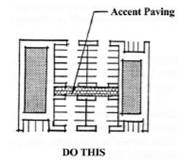
Accent Paving is any concrete paving material texturized, colored or stamped to provide definition to an entry, intersection, roadway or driveway.
Access is the safe, adequate, and usable ingress or egress to a property or use. This also means access to public roadways and the road system.
Accessory Dwelling Unit is an attached or a detached residential dwelling unit that provides complete independent living facilities for one or more persons, is located on a lot with a proposed or existing primary residence, and meets all the development standards set forth in Section 17.08.100, including an efficiency unit, as defined in section 17.08.100(E)(5)(a), and a manufactured home, as defined in Health and Safety Code Section 18007. An accessory dwelling unit shall include permanent provisions for living, sleeping, eating, cooking, and sanitation on the same parcel as the single-family or multi-family dwelling is or will be situated.
Accessory or Ancillary Use or Structure is a detached, subordinate use or structure, the use of which is clearly incidental and related to that of the principal structure or use of the land, which is located on the same lot as that of the principal structure or use, and which is not intended for human habitation.
Action is the decision made by the review authority on a land use application, including appropriate findings, environmental determination and conditions of approval, where applicable.
Adult-Entertainment Facilities are all of the uses and facilities enumerated in the Banning Municipal Code.
Affordable Housing Unit means a unit which contains a low income household as defined by the California Department of Housing and Community Development. In addition, the rent for this type of unit shall not exceed thirty percent of the gross income of the eligible low income household.
Agricultural Employee Housing is a residential occupancy of single or multiple dwelling units with individual, shared, or no kitchen facilities to provide housing for the employees and their families engaged in agricultural activities. Any employee housing which has qualified, or is intended to qualify, for a permit to operate pursuant to Section 17021.5 of the California Health and Safety Code providing accommodations for six or fewer employees shall be deemed a single-family structure with a residential land use designation.
Agriculture is the use of land for farming, dairying, pasteurizing and grazing, horticulture, floriculture, viticulture, apiaries, animal and poultry husbandry, and accessory activities, including but not limited to storage, harvesting, feeding or maintenance of equipment excluding stockyards, slaughtering or commercial food processing.
Alley is a public or private way, at the rear or side of property, permanently reserved as an ancillary means of vehicular or pedestrian access to abutting properties.
Alteration is a change or rearrangement of the structural members or exits in a building; an increase in the height or length or depth of the exterior walls of a building; the movement of a structure from one location to another.
Animal Hospital is a place where animals or pets are given medical or surgical treatment and are boarded and cared for during the time of such treatment for remuneration.
Antenna is a device for transmitting or receiving radio, television, telephone or any other transmitted signal.
Apartment is a dwelling unit in a multi-family building.
Applicant is the owner(s) or lessee(s) of property, or their agent(s), or person(s) who have contracted to purchase property contingent upon their ability to acquire the necessary permits under this zoning ordinance, or the agent(s) of such persons.
Attached is any structure that has an interior wall or roof in common with another structure.
Automobile Sales Lot is an open area used for display, sale and/or rental of new or used automobiles.
Automobile Service Station is an area which provides for the servicing or fueling of motor vehicles, including tube and tire repairs, battery charging, storage of merchandise and supplies related to the servicing of motor vehicles, sale of gasoline and other fuel and lubricants, motor vehicle washing, grease racks, and motor vehicle repairs, excluding body and fender work, engine overhauling and replacement, transmission work and other similar activities.
Automobile Wrecking is the wrecking or dismantling of motor vehicles or trailers, or the storage of, sale of, or dumping of dismantled, partly dismantled, or wrecked motor vehicles or their parts.
Average Building Elevation is the average elevation of the highest and lowest vertical structures of a building or structure from finished grade.
Average Ground Elevation is the average elevation of the topography, prior to any development activity.
Average Lot Elevation is the average elevation of all corners of a lot as measured from natural or existing topography.
Average Parcel Width is the average of the distance measured along the front and rear property lines.
Average Slope is the average grade of a site within each land area representing a distinct topographic change.
Awning is a roof-like cover that is attached to and projects from the wall of a building for the purpose of shielding from the elements.
Basement is a story partly or completely underground. A basement shall be counted as a story for purposes of height measurement where any portion of a basement has more than one-half of its height above grade.
Bearing Capacity means the ability of a soil to support a structure, as measured in pounds per square foot.
Bed and Breakfast is a lodging establishment in which no more than ten rooms are provided to the general public for lodging on a transient basis, and which may provide meals to the extent otherwise permitted by law.
Berm is a mound or embankment of earth.
Block means a parcel of land surrounded by public streets, highways, creeks, streams, rivers or unsubdivided acreage or any combination thereof.
Boarding House is a dwelling unit, or part thereof, wherein a room or rooms, with or without individual or group cooking facilities, are rented, leased or subleased under two or more separate written or oral rental agreements, leases or subleases, whether or not the owner, agent or rental manager resides within the dwelling unit.
Body Piercing Studio means any business or premises dedicated to the piercing, puncture or perforation of human skin or tissue, or the insertion of jewelry or other objects into or under the skin or tissue, for decorative, nonmedical purposes; the term "body piercing studio" does not include businesses that offer ear-only piercing as a service that is secondary to other business services, or acupuncture clinics.
Bond See Performance Bond.
Building means any structure having a roof supported by columns or walls.
Buildable Area is the net portion of the lot remaining after deducting all required setbacks, slopes, and other sensitive areas from the gross area of the lot.
Building Coverage means the percentage of lot area which may be covered by all the footprints of buildings or structures on any lot.
Building Height is the vertical distance above a reference datum measured to the highest point of the coping of a flat roof, or to the deck line of a mansard roof, or to the average height of the highest gable of a pitched or hipped roof. The reference datum shall be selected by either of the following, whichever yields a greater height of building:
1.
The elevation of the highest adjoining sidewalk or ground surface within a five-foot horizontal distance of the exterior wall of the building when such sidewalk or ground surface is not more than ten feet above lowest grade.
2.
An elevation ten feet higher than the lowest grade when the sidewalk or ground surface described in item 1 above is more than ten feet above lowest grade.
3.
The height of a stepped or terraced building is the maximum height of any segment of the building.
Building Site is the ground area of a building together with all open spaces and setbacks required by the zoning ordinance, regardless of whether the area comprises one lot, a combination of lots or combination of lots and fraction of lots.
Caliper shall mean the diameter of any tree trunk six inches above ground level.
Cannabis Commercial Indoor Cultivation means the indoor planting, growing, harvesting, drying, curing, grading, or trimming of one or more cannabis plants or any part thereof for commercial purposes. The canopy space within a Cannabis Commercial Indoor Cultivation facility shall not be less than 10,000 square feet nor exceed 22,000 square feet per Cannabis Conditional Use Permit holder, and shall be licensed by a state licensing authority.
Cannabis Distribution Facility means a facility that transports cannabis goods between state licensed cannabis retailers, cannabis manufacturing level 1 facilities, cannabis commercial indoor cultivation facilities, cannabis testing laboratories, and cannabis microbusiness.
Cannabis Manufacturing Level 1 means a commercial cannabis manufacturing facility where a State licensed cannabis manufacturer engages in the manufacture (compounding, blending, extracting, infusing, or otherwise making or preparing) of cannabis products using nonvolatile solvents, or no solvents.
Cannabis microbusiness means a commercial cannabis business that is comprised of at least three out of the following four uses on the same premises: (1) a cannabis retailer, (2) a cannabis manufacturing level 1 facility, (3) a cannabis cultivation facility (as that term is defined in 17.53.010) with canopy space of less than ten thousand square feet, and (4) a cannabis distribution facility.
Cannabis Personal Cultivation means the planting, growing, harvesting, drying, processing, or storage of one or more cannabis plants or any part thereof. Cannabis Personal Cultivation shall not exceed six cannabis plants per primary residence, and shall comply with the regulations set forth in Chapter 5.34.
Cannabis Retailer means a cannabis business that engages in the retail sale and delivery of cannabis or cannabis products to customers.
Cannabis Testing Laboratory means a laboratory, facility, or entity that offers or performs tests of cannabis or cannabis products and is accredited by an accrediting body that is independent from all other persons involved in commercial cannabis activity in the state and is licensed by the Bureau of Cannabis Control.
Canopy space means a cultivation facility, manufacturing facility, or a testing laboratory facility.
Carport is a permanent roofed structure not completely enclosed, to be used for vehicle parking.
Certificate of Occupancy is that term as defined in the Uniform Building Code as adopted in Chapter 15.08 of the Banning Municipal Code.
Church means an establishment, the principal purpose of which is religious worship, and for which the principal building or other structure contains the sanctuary or principal place of worship, and which includes related accessory uses.
City means the City of Banning.
Clinic means a place for outpatient medical services to human patients.
Clubhouse is a building owned or operated by a corporation, association, or persons for a social, educational, or recreational purpose, but not primarily for profit or to render a service that is customarily carried on as a business.
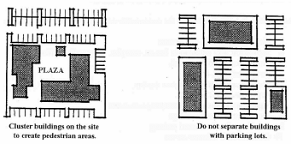
Clustered Development is the grouping or attaching of buildings in such a manner as to achieve larger aggregations of open space than would normally be possible from lot by lot development at a given density.
Club is an association of persons (whether or not incorporated) organized for some common purpose, but not including a group organized primarily to render a service customarily carried on as a business.
Combination Residence/Commercial Use (Mixed Use) is a structure used for a residence and an office or retail use where no major external structural alteration or additions are made and no advertising is permitted except for up to a three square foot attached sign identifying the name of the occupant or business (see also Home Occupation).
Commercial Cannabis Activity includes the cultivation, possession, manufacture, distribution, processing, storing, laboratory testing, packaging, labeling, transportation, delivery or sale of cannabis and cannabis products, or engaging in any other cannabis activity that requires a State license issued by a licensing authority.
Commercial Cargo/Storage Container is a portable shipping or cargo container made of metal that is used for the onsite storage of property, equipment, documents, or goods associated with the primary use contained in an enclosed building on the property, or construction site. A commercial cargo/shipping container is considered to be a maximum of eight feet wide, and extend to a maximum of fifty-three feet long.
Commercial Recreation Area and Use is an area and use operated for profit, with private facilities, equipment or services for recreational purposes, including swimming pools, bowling alleys, tennis courts, playgrounds, amusement facilities and other similar uses. The use of such an area may be limited to private membership or may be open to the public upon the payment of a fee.
Commission is the Planning Commission of the City of Banning.
Community Garden means an area of land used to grow and harvest food crops by individuals or collectively by members of a group for non-commercial purposes.
Community Recreation Area or Clubhouse is an area devoted to facilities and equipment for recreational purposes including swimming pools, tennis courts, playgrounds, community club houses and other similar uses maintained and operated by a nonprofit club or organization whose membership is limited to the residents within a specified geographic area.
Compatible Uses are uses similar in physical characteristics (height, bulk, building style), but not necessarily identical, with a mass or scale that would not cause them to be inharmonious. They have characteristics that enhance adjacent uses and minimize external impacts on them through careful design, and are incorporated into a site with attention to significant natural features. They do not interfere with use of adjacent properties or cause nuisances.
Conditional Use Permit is a discretionary entitlement which may be granted under the provisions of this zoning ordinance and which when granted authorizes a specific use to be made of a specific property, subject to compliance with all terms and conditions imposed on the entitlement.
Condominium means a development consisting of an undivided interest in common for a portion of a parcel coupled with a separate interest in space in a building on the parcel.
Congregate Care Facility (see Senior Congregate Care Housing)
Construction Commencement is the start of construction of substantial site and structural improvements after a building permit has been issued, subject to determination by the director.
Construction Sign is an informational sign which identifies the architect, engineer, contractor and any other individual or corporation involved with the construction of a building or use, and which remains on a building site only until a certificate of occupancy has been issued.
Contour Line means the interconnection of points having the same height above sea level.
Convenience Store means a general retail outlet offering a variety of grocery and general merchandise products and not exceeding two thousand five hundred square feet of gross floor area.
Corner Lot is a lot at the junction of and having frontage on two or more intersecting streets or roads.
Council is the city council of the City of Banning.
County is the County of Riverside.
Culvert is an open-ended cylindrical structure generally used for the conveyance of storm waters.
Day Care Center is a facility which provides nonresidential, nonmedical care to twelve or more children under eighteen years of age in need of personal services, supervision, or assistance essential for sustaining the activities of daily living or for the protection of the individual on less than a twenty-four-hour basis. The definition of day care center includes infant centers, pre-schools, and extended day care facilities, but does not include day care homes.
Day Care Home is a single-family dwelling where an occupant of the residence provides nonresidential, nonmedical care to children that are under eighteen years of age and in need of personal services, supervision, or assistance essential for sustaining the activities of daily living or for the protection of the individual on less than a twenty-four hour basis.
Day Care Home, Large is a day care home where care is provided to up to twelve children, or up to fourteen children if allowed by state law, and which is not a small day care home.
Day Care Home, Small is a day care home where care is provided to up to six children, or up to eight children if allowed by state law.
Days shall always be consecutive calendar days unless otherwise stated.
Dedication means the deliberate appropriation of land by an owner for public use or purpose, reserving no other rights than those that are compatible with the full exercise and enjoyment of the public uses or purpose to which the property has been devoted.
Density is the number of dwelling units per gross acre, unless otherwise stated, for residential uses.
Department means the Banning planning department.
Design includes the planning and engineering of the following: street alignments, grades and widths; drainage and sanitary facilities and utilities, including alignment and grades thereof; location and size of all required easements and rights-of-way; fire roads and fire breaks; lot size and configuration; traffic access; grading; land to be dedicated for park or recreational purposes; building and other such specific physical requirements.
Detached means any building or structure that does not have a wall or roof in common with any other building or structure.
Detention of Stormwater is the physical entrapment of water occurring as a result of precipitation and the mechanically controlled release of the entrapped waters into the public storm drainage systems or into a stream or other body of water.
Developed Single-Family Residential Lot shall mean a legally subdivided lot upon which a single-family habitable dwelling exists.
Development means the placement or erection of any solid material or structure; grading, removing, dredging, mining or extraction of any soil or material; change in the density or intensity of use of land, including, but not limited to, subdivision, and any other division of land, except where the land division is brought about in connection with the purchase of such land by a public agency for public recreational use; construction, reconstruction, demolition, or alteration of the size of any structure including any facility of any private, public or municipal utility; and the removal of any major vegetation. As used in the zoning ordinance, "structure" includes but is not limited to any building, road, pipe, flume, conduit, siphon, aqueduct, telephone line, and electrical power transmission and distribution line.
Director means the director of the planning department, or his/her designee.
Distribution Lines are utility lines and related transformers that deliver electrical, natural gas, telephone or other utility from a distribution substation to points of use, such as homes and businesses.
Distribution Substation means a facility which transforms or lessens pressure of electrical, natural gas, telephone or other utility to a level suitable for points of use.
Domestic Animal is an animal which can be and is continually kept or raised in a home or on a farm.
Dormitory is a building owned or operated by a public or educational institution which provides private or semi-private sleeping quarters, common cooking facilities and common restrooms for its residents.
Drip irrigation is the slow application of water at the base of plants without watering the open space between plants.
Driveway is an area of a property designed to provide vehicular access to a parking area or structure contained on the subject property.
Duplex means a structure containing not more than two attached dwelling units.
Dwelling Unit is one or more rooms or structures providing complete, independent living facilities for one family, including permanent provisions for living, sleeping, cooking and sanitation, not including hotels or motels.
Dwelling Unit, Accessory means an attached or detached residential dwelling unit which provides complete independent living facilities for one or more persons. It shall include permanent provisions for living, sleeping, eating, cooking, and sanitation on the same parcel as the single-family dwelling is situated. An accessory dwelling unit also includes the following:
1.
An efficiency unit, as defined in Section 17958.1 of Health and Safety Code.
2.
A manufactured home, as defined in Section 18007 of the Health and Safety Code.
Dwelling Unit, Attached is a dwelling unit that has one or more walls in common with or attached to one or more other dwelling units or other uses.
Dwelling Unit, Multiple is a structure containing two or more dwelling units or a combination of two or more separate single-family dwelling units.
Easement is land which has specific air, surface or subsurface rights conveyed for use by someone other than the owner of the subject property or to benefit some property other than the subject property.
Educational Institution is a school, college or university, supported wholly or in part by public funds or giving general academic instruction equivalent to the standards prescribed by the State Board of Education.
Emergency Shelter means housing with minimal supportive services for homeless persons that limits occupancy to six months or less and that does not deny emergency shelter due to a person's inability to pay.
Equestrian means pertaining to horses and riders.
Erosion and Deposition is the removal of soils and the placement of these removed soils elsewhere by the natural forces of wind or water.
Established landscape means the point at which plants in the landscape have developed roots into the soil adjacent to the root ball.
Excavate(tion) means the mechanical removal of soils and/or underlying strata.
Family is a single housekeeping unit.
Fast Food Restaurant is an establishment which offers quick food service which is accomplished through a limited menu of easily produced items. Orders are not taken at the customer's table, and food is served in disposable wrappings or containers.
Fence is a man-made wall or barrier, or vegetation installed or planted for the purpose of enclosing space or separating parcels of land.
Fill Material is dirt, structural rock or gravel, broken concrete and similar structural substances customarily used to raise the level of the ground, but excluding topsoil, bark, ornamental rocks or gravel placed on the surface of the ground.
Finished Grade is the final contour of the land surface prior to landscaping.
Fortune-Telling means the telling of fortunes, forecasting of future events or furnishing of any information not otherwise obtainable by the ordinary process of knowledge, by means of any occult or psychic power, facility or force, including, but not limited to, clairvoyance, clairaudience, cartomancy, psychometry, phrenology, spirits, tea leaves, or other such reading, mediumship, seership, prophecy, augury, astrology, palmistry, necromancy, mindreading, telepathy, or other craft, art, science, cards, talisman, charm, potion, magnetism, magnetized article, or substance, crystal gazing, oriental mysteries or magic, of any kind or nature.
Frontage is the side of a lot abutting a street (the front lot line), except the side of a corner lot.
Front wall means the nearest wall of a structure to the street upon which the structure faces, but excluding cornices, canopies, eaves, or any other architectural embellishments.
Front Yard See Yard, Front.
Fuel Service Station is an establishment which provides gasoline, diesel fuel, propane gas or similar fuel to the retail market.
Garage is an enclosed building, or a portion of an enclosed building used for the parking of vehicles.
Garden Apartments (Please see Apartments)
General Plan is the General Plan of the City of Banning.
Glare is the reflection of harsh, bright light, or "the physical effect resulting from high luminances or insufficiently shielded light sources in the field of view."
Golf Course is a large tract of land laid out for golf.
Government Facility means a use consisting of services and facilities operated by any level of government, excluding those uses listed separately in this Code.
Grade is the degree of rise or descent of a sloping surface (See Slope).
Gross Acreage is the total area within the lot lines of a lot or parcel of land before public streets, easements or other areas to be dedicated or reserved for public use are deducted from such lot or parcel, and does not include adjacent lands already dedicated for such purposes.
Gross Floor Area is the total square footage of all floors in a structure as measured from either the interior surface of each exterior wall of the structure or, if the structure does not have walls, from each outer edge of the roof. Exterior areas may constitute gross floor area.
Ground Floor means the floor of a structure that is closest in elevation to the finished grade along the facade of the structure that is principally oriented to the street which provides primary access to the subject property.
Grubbing shall mean the act of removing vegetation by the roots.
Guest Houses are living quarters, having no kitchen facilities, located on the same premises with a main building and occupied for the sole use of members of the family, temporary guest or persons permanently employed on the premises.
Half Story is a story under a gable, hip or gambrel roof, parts of which are not more that two feet above the floor of such story.
Hazardous Waste is all dangerous waste material, including substances composed of radioactive and hazardous components regulated by the county, state or federal government.
Hazardous Waste Storage is the holding of hazardous waste for a temporary period.
Hazardous Waste Treatment means the physical, chemical, or biological processing of hazardous wastes to make such wastes non-dangerous or less dangerous, safer for transport, amenable for energy or material resource recovery, amendable for storage, or reduced in volume.
Historic Landmark(s) is any structure or location over fifty years of age which meets the standards set forth in the city's General Plan and Municipal Code.
Home Occupation is an occupation, enterprise, activity, or profession which is incidental to a residential use, which is carried on for profit or customarily carried on for profit, which is not an otherwise permitted use in the zone in which it is pursued, which will not occupy more than twenty-five percent of the residence in which it is to be located, and which:
1.
Will require clients, students or customers to come onto the premises where the home occupation is located; or
2.
Will require commercial deliveries to be made to or from such premises.
Hospital is an institution providing primary health services and medical or surgical care to persons, primarily inpatients, suffering from illness, disease, injury, deformity and other abnormal physical or mental conditions, and including, as an integral part of the institution, related facilities such as laboratories, outpatient facilities, extended care facilities or training facilities.
Hotel means eleven or more guest rooms or suites occupied on a transient basis, with most rooms gaining access from an interior hallway.
Improvement is any structure or man-made feature.
Infill development means any development that occurs on up to four contiguous vacant lots scattered within areas that are already largely developed or urbanized. Generally, these sites are vacant because they were once considered of insufficient size for development, because an existing building located on the site was demolished or because there were other, more desirable sites for development.
Inn See Hotel.
Interior Lot (See Lot, Interior)
Junior Accessory Dwelling Unit is a unit that is no more than five hundred square feet in size, is contained entirely within a single-family residence, and may include separate sanitation facilities, or may share sanitation facilities with the existing structure.
Junk and Salvage Facility means a primary or accessory use of structures and/or land for storage, dismantling and/or selling of cast-off, unused, scrap or salvage material of any sort.
Kennel is any lot where four or more dogs, cats, or other small animals over the age of four months are kept, whether such keeping is for profit, breeding, or exhibiting, including places where said animals are boarded, kept for sale or hire.
Kitchen means any room, all or part of which is designated and/or used for storage, refrigeration, cooking and preparation of food.
Land Surface Modification is the clearing or removal of trees, shrubs, ground cover and other vegetation, and all grading, excavation and filling of materials. The removal of overhanging vegetation and fire hazards as specified in Title 8 of the Banning Municipal Code, shall not be deemed to be land surface modifications.
Landscaped area is the entire parcel less the building footprint, driveways, non-irrigated portions of parking lots, hardscapes such as decks and patios, and other nonporous areas.
Landscaping is an area devoted to, or developed and maintained predominantly with native or exotic plant materials including lawn, groundcover, trees, shrubs, and other plant materials; and also including accessory decorative outdoor landscape elements such as pools, fountains, paved or decorated surfaces (excluding driveways, parking, loading or storage areas) and sculptural elements.
Living area means the interior habitable area of a dwelling unit including basements and attics but does not include a garage or any accessory structure.
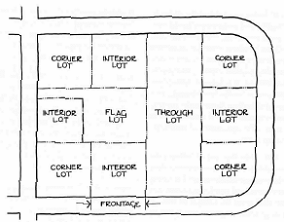
Lot is a parcel, tract or area of land established by subdivision, or as otherwise permitted by law, to be used, developed or built upon. The classification of lots are:
1.
Corner: A lot located at the intersection of two or more streets at an angle of not more than one hundred thirty-five degrees. If the angle is greater than one hundred thirty-five degrees, the lot shall be considered an "interior lot."
2.
Flag: A lot having access or an easement to a public or private street by a narrow, private right-of way or access easement.
3.
Interior: A lot abutting only one street.
4.
Key: A lot with a side line that abuts the rear line of any one or more adjoining lots.
5.
Reverse Corner: A corner lot, the rear of which abuts the side of another lot.
6.
Through: A lot having frontage on two generally parallel streets, with only one primary access.
Lot Area is the total horizontal area included within the boundary lines of a lot, exclusive of private and public streets, tidelands and shorelines.
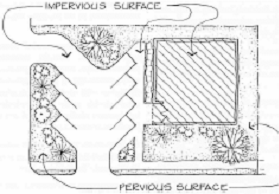
Lot Coverage means the percentage of lot area which may be covered by any impervious surface, including structures, parking lots and storage areas.
Lot Depth is the average distance between the front and rear lot lines or between the front line and the intersection of the two side lines, if there is no rear line.
Lot Frontage is the portion of the lot contiguous to the street.
Lot Line means any boundary of a lot. The classifications of lot lines are:
1.
Front: On an interior lot, the line separating the parcel from the street. On a corner lot, the shorter lot line abutting a street. (If the lot lines on a corner lot are equal in length, the front lot line shall be determined by the Director.) On a through lot, the lot line abutting the street providing the primary access to the lot.
2.
Interior: Any lot line not abutting a street.
3.
Rear: A lot line, not intersecting a front lot line, which is most distant from and most closely parallel to the front lot line. In the case of an irregularly shaped lot or a lot bounded by only three lot lines, a line within the lot having a length of ten feet, parallel to and most distant from the front lot line shall be interpreted as the rear lot line for the purpose of determining required yards, setbacks, and other provisions of this zoning ordinance.
4.
Side: Any lot line which not a front or rear lot line.
Lot Width is the horizontal distance between the side lot lines, measured at right angles to the lot depth at a midway point between the front and rear lot lines.
Low Income Household is a household whose total gross income is less than or equal to eighty percent of the median household income in Riverside County.
Manufactured Home is a dwelling unit which is fabricated in one or more sections at a location other than the home site by assembly line-type production techniques or by other construction methods unique to an off-site manufacturing process.
Manufacturing Facilities, Light are those uses conducted entirely within an enclosed building which do not emit fumes or odors, and do not use or produce any chemical, hazardous material, acid or similar product in their processes.
Manufacturing Facilities, Heavy are those uses conducted entirely within an enclosed building which may emit fumes or odors, or use any chemical, hazardous material, acid or similar product in their processes. Heavy manufacturing facilities may also produce materials which require special permitting or handling, including hazardous materials.
Marijuana means all parts of the plant Cannabis, whether growing or not; the seeds thereof; the resin extracted from any part of the plant; and every compound manufacture, salt, derivative, mixture, or preparation of the plant, its seeds or resin. It includes marijuana infused in foodstuff. It does not include the mature stalks of the plant, fiber produced from the stalks, oil or cake made from the seeds of the plant, any other compound, manufacture, salt, derivative, mixture, or preparation of the mature stalks (except resin extracted therefrom), fiber, oil, or cake, or the sterilized seeds of the plant that are incapable of germination.
Maximum Lot Coverage means the maximum percentage of the surface of the subject property that may be covered with materials which will not allow for the percolation of water into the underlying soils.
Median is a paved or planted area separating a street or highway into two or more lanes of opposing directions of travel.
Mobile Home is a structure, transportable in one or more sections, which is thirty-two body-feet or more in length and is eight body-feet or more in width, and which is built on a permanent chassis, and designed to be used as a dwelling unit with or without a permanent foundation when connected to the required utilities, and includes the plumbing, air conditioning and electrical system contained therein. The term mobile home does not include a commercial coach, recreational vehicle, motor home, manufactured home, or modular home.
Mobile Home Park is a tract of land developed and operated as a unit with lots, roads, utilities, recreational areas and facilities to accommodate mobile homes as occupied residential dwellings.
Mobile Home Subdivision is a subdivision where the residents own the lot on which the unit is located, their mobile home unit, and an interest in any common areas, roads, utilities, recreational areas and facilities.
Mobile Vending Vehicle shall mean any vehicle, as that term is defined in the California Vehicle Code, which is equipped or primarily used for retail sales of fruits, vegetables or produce, and/or prepared, prepackaged, or unprepared, unpackaged food of any kind on any public street, alley or highway or private street or alley within the city limits. The inventory of these vehicles is not necessarily limited to edible items and may include nonfood sundries. A human-powered cart for such vending also qualifies as a mobile vending vehicle.
Modular Homes are homes that are built off site but are built to the UBC standards rather than the Federal Manufactured Home Construction and Safety Standards.
Motel means guest rooms or suites occupied on a transient basis, with most rooms gaining access from an exterior walkway.
Multi-Family Dwelling is a building containing two or more dwelling units.
Natural Features are physical characteristics of the subject property that are not man-made.
Net Site Area is the total area within the lot lines of a lot or parcel of land after public street easements or other areas to be dedicated, sensitive areas, slopes and lands reserved for public use are deducted from such lot or parcel.
Nonconforming, Illegal means a structure, lot or use which did not conform to applicable laws when constructed or initiated, and does not conform to the provisions of this zoning ordinance.
Nonconforming Lot is a lot, the area, frontage or dimensions of which conformed to applicable laws when created, but does not conform to provisions of this zoning ordinance. See Chapter 17.88, Nonconforming Structures and Uses, of this zoning ordinance.
Nonconforming Structure is a structure which conformed to applicable laws when constructed but does not conform to provisions of this zoning ordinance. See Chapter 17.88, Non-Conforming Structures and Uses, of this zoning ordinance.
Nonconforming Use is a use complying with applicable laws when established but which does not conform to the provisions of this zoning ordinance.
Nonvolatile Solvent means any solvent used in the extraction process that is not a volatile solvent. For purposes of this Chapter only, nonvolatile solvents include carbon dioxide and ethanol.
Office is a place of employment providing services other than production, distribution or sale or repair of goods or commodities. The following is a non-exclusive list of office uses: medical, dental or other health care; veterinary, accounting, architectural, engineering, consulting or other similar professional services; management, administrative, secretarial, marketing, advertising, personnel or other similar personnel services; sales offices where no inventories or goods are available on the premises, real estate, insurance, travel agent, brokerage or other similar services. The following uses are specifically excluded from the definition of office: banks, loan companies and similar financial institutions.
Open Space includes undisturbed wilderness areas, parks, or that part of a development dedicated to undisturbed or landscaped area that is available for passive or active recreation.
Other Cannabis Uses means any location where commercial cannabis activity occurs that does not fall under the definition of Cannabis Commercial Indoor Cultivation, Cannabis Manufacturing Level 1, Cannabis Testing Laboratory, Cannabis Distribution Facility, Cannabis Microbusiness or Cannabis Personal Cultivation.
Outdoor Paging System is a permanently installed outdoor loudspeaker system capable of making announcements and/or playing recorded or live music.
Outdoor Storage means any material, including items for storage or sale, lease, processing and repair (including vehicles) not in an enclosed structure.
Owner means, in reference to property, the person listed at the county assessor's office as paying the property taxes on the subject property.
Parcel is a parcel of land under one ownership that has been legally subdivided or combined and is shown as a single legal parcel.
Park is any public or private land available for recreational, educational, cultural, or aesthetic use.
Parking Area means any area designed and/or used for parking vehicles.
Parking Space is an area which is improved, maintained and used for the sole purpose of temporarily accommodating a motor vehicle that is not in use.
Performance Bond is a written certificate guaranteeing to pay up to a specified amount of money if specified work is not performed; or any similar mechanism whereby the city has recourse to an identified fund from which to secure performance of specified work.
Person means any individual, firm, co-partnership, joint venture, association, social club, fraternal organization, company, joint stock association, corporation, estate, trust, organization, business, business trust, public agency, school district, State of California, and its political subdivisions or instrumentalities, receiver, syndicate or any group or combination thereof, acting as a unit, including any trustee, receiver or assignee.
Permitted Use is any use allowed in a zoning district and subject to the provisions applicable to that district.
Planned Unit Development Permit (PUD) is a type of development characterized by comprehensive planning for the project as a whole, clustering of structures to preserve usable open space and other natural features, and a mixture of housing types within the prescribed densities of the zone.
Planning Department is the planning department of the City of Banning.
Planning Director is the director of the planning department of the City of Banning or his/her designee.
Planning Official is the director of the planning department or his/her designee.
Plot Plan means a detailed drawing of the total property described in an application, showing to scale the location of all present or proposed buildings and structures. The plan will also show the location of parking areas, number of stalls, access point(s) to city streets and landscaping proposed.
Primary Residence is the owner occupied structure on a legal lot which also contains an accessory dwelling unit.
Primary Unit shall mean a single-family residential unit constructed and intended as the principal building on a lot.
Primary Vehicular Access means the major street from which the majority of vehicles enter the subject property.
Principal Use is the primary or predominant use of any lot, building or structure.
Property Line (See Lot Line)
Public Access means a portion of private property subject to an easement giving the public the right to stand on or traverse this portion of the property.
Public Park is a park, playground, swimming pool, beach, pier, golf course or athletic field within the city which is under the control, operation or management of the city, the county, the state or other governmental entity.
Public Right-of-Way is a strip of land acquired by reservation, dedication, or other legal means and intended to be occupied by a road, trail, water line, sanitary sewer and/or other public uses.
Public Works Director means the director of the department of public works.
Quarry is a place where rock, ore, stone and similar materials are excavated, processed for sale or for off-site use.
Rear Yard (See Yard, Rear)
Recreational Vehicle means a vehicle towed or self-propelled on its own chassis or attached to the chassis of another vehicle and designed or licensed for temporary living quarters for recreational sporting purposes. The term recreational vehicle includes, but is not limited to, travel trailers, pick-up campers, camping trailers, motor coach homes, converted trucks or buses, boats and boat trailers, and all terrain vehicles.
Recreational Vehicle Park means a tract of land developed or operated as a unit with roads, utilities and community facilities to accommodate recreational vehicles on a transient, space rental basis.
Recycling is the process by which waste products, including automobiles, are reduced to raw materials and transformed into new products.
Religious Institution means a structure which is used primarily for religious worship and related religious activities.
Replacement Cost is the current cost to reconstruct a structure or part of the structure in a manner similar to its previous condition.
Residential Care Facility is a building or group of buildings that provide temporary or permanent housing to children or individuals with a disability, as defined by state or federal law, where the residents do not live together as a single housekeeping unit, and where every person residing in the facility (excluding the operator of the facility, the operator's family, and the facility's staff) is a child or an individual with a disability. A residential care facility shall not be considered a boarding house.
Residential Care Facility, Large is a residential care facility in which seven or more children or individuals with a disability reside, which is either licensed by the state or unlicensed and not required by law to be licensed by the state.
Residential Care Facility, Small, Licensed is a state-licensed residential care facility in which six or fewer children or individuals with a disability reside, and which is required by state law to be treated as a residential use of property for zoning purposes. Licensed small residential care facilities that are required by state law to be treated as a residential use of property include, without limitation: Intermediate care facilities for the developmentally disabled (Health and Safety Code Section 1267.8(c)); Congregate living health facilities (Health and Safety Code Sections 1267.8(c), 1267.16(a)); Residential community care facilities, including foster family homes, small family homes, social rehabilitation facilities, community treatment facilities, and transitional shelter care facilities (Health and Safety Code Sections 1502, 1566.3); Residential care facilities for persons with chronic life-threatening illness (Health and Safety Code Section 1568.0831); Residential care facilities for the elderly (Health and Safety Code Section 1569.85); Pediatric day health and respite care facilities (Health and Safety Code Section 1761.4).
Residential Care Facility, Small, Unlicensed is a residential care facility in which six or fewer children or individuals with a disability reside, and which is not licensed by the state and is not required by law to be licensed by the state.
Rest Home is a structure used for the housing of and assisted caring for the aged and infirm. There shall be only incidental convalescent care not involving either a nurse or physician residing on the premises. There shall be no surgery, physical therapy or other similar activities.
Restaurant means a use providing preparation and retail sale of food and beverages, including cafes, coffee shops, sandwich shops, ice cream parlors, fast food take-out, and similar uses, and may include licensed "on-site" provision of alcoholic beverage for consumption on the premises when accessory to such food service.
Restaurant, Drive-Thru means a use providing preparation and retail sale of food and/or beverages, as defined under "Restaurant" with the added provision of one or more drive thru lanes for the ordering and dispensing of food and beverages to patrons remaining in their vehicles.
Retail Establishment is a commercial enterprise which provides goods and/or services directly to the consumer, whose goods are available for immediate purchase and removal from the premises by the purchaser and/or whose services are traditionally not conducted within an office use.
Retention of Storm Water is the collection of water due to precipitation in a given area, and the dispersement of these waters through the natural process of groundwater recharge and evaporation or the incorporation of this collection area into a natural stream or other body of water.
Review Authority is the person, committee, commission or council responsible for the review and/or final action on a land use entitlement.
Right-of-Way is land dedicated primarily to the movement of vehicles and pedestrians and providing for primary access to adjacent parcels. Secondarily, the land provides space for utility lines and appurtenances and other publicly owned devices.
Roofline is the line formed by the outside of the gable of the roof, or if the roof is flat or mansard, the top of the roof or mansard.
Rounding of Quantities is the consideration of distances, unit density, density bonus, density transfer calculations, or other aspects of development or the physical environment expressed in numerical quantities which are fractions of whole numbers. The numbers are to be rounded to the nearest highest whole number when the fraction is .5 or more, and to the next lowest whole number when the fraction is less than .5.
Runoff is the overland or subsurface flow of water.
Satellite Dish Antenna is an apparatus capable of receiving or transmitting communications to or from a satellite.
School means an institution of learning, whether public or private, which offers instruction in those courses of study required by the California Board of Education. This definition includes a nursery school, kindergarten, elementary school, junior high school, senior high school, vocational or professional institution of higher education, including a community or junior college, college or university, or any special institution of education.
Second Dwelling Unit See, Dwelling Unit, Accessory.
Senior Citizen Household means a household which consists of people, all of whom are age fifty-five or older.
Senior Congregate Care Housing is a structure(s) providing residence for a group of senior citizens (fifty-five years of age or older) with central or private kitchen, dining, and recreational facilities with separate bedrooms and/or living quarters.
Setback means the minimum distance that a building or use must be removed from its lot lines.
Side Yard See Yard, Side.
Sidewalk/Parking Lot Sale is a promotional sales event conducted by one or more businesses which is held outside the confines of the commercial or manufacturing structure(s) in which such business is normally conducted and which sale involves the outdoor display within a paved or concreted area on the same lot as the structure(s) of merchandise which is normally displayed within the structure(s).
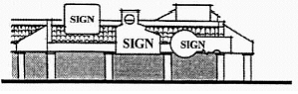
Sign is any communication device, structure, or fixture which is intended: to identify a building, use, business, or event, or to promote the sale of a product, goods, or service, using graphics, letters, figures, symbols, trademarks or written copy, and as further defined in this section. Painted wall designs or patterns which do not represent a product, service or registered trademark, and which do not identify the user, are not considered signs.
Silt or Sediment means the soil particles mobilized and deposited by the processes of erosion and deposition.
Single-Family Dwelling is a building containing one dwelling unit.
Single Housekeeping Unit is one or more individuals, whether related by blood, marriage, legal adoption or not, jointly occupying a dwelling unit, including the joint use of and responsibility for common areas, and sharing household activities and responsibilities such as meals, chores, household maintenance, and expenses, and where, if the
unit is rented, all adult residents have chosen to jointly occupy the entire premises of the dwelling unit, under a single written lease with joint use and responsibility for the premises, and the makeup of the household occupying the unit is determined by the residents of the unit rather than the landlord or property manager.
Single-Occupant Vehicle or SOV means a motor vehicle occupied by one employee for commute purposes, including a motorcycle.
Single Room Occupancy Facility is a building or group of buildings with one or more guest rooms without kitchen and/or sanitary facilities in individual guest rooms, and which is also the primary residence of the guests.
Single Use Building is a building which contains only one use.
Site Plans are plans prepared to scale, showing accurately and with complete dimensioning, the boundaries of a site and the location of all buildings, structures, uses, and principal site development features proposed for a specific parcel of land.
Slope means the degree of deviation of a surface from the horizontal, usually expressed in percent or degrees.
Small Animals are dogs, cats, birds, small exotic animals (snakes, tortoises, gerbils, mice, guinea pigs, etc.).
Smoking Lounge means any establishment or location that is dedicated, in whole or in part, to the smoking or use of tobacco cigarettes, cigars, chewing tobacco, and dipping tobacco, or other tobacco substances which under state law may only be legally sold to persons age eighteen and older. "Smoking lounges" include, without limitation, establishments referred to as cigar bars or loungers, hookah cafes, tobacco clubs or tobacco bars. A smoking lounge does not include grocery or convenience store establishments that sell tobacco products where (i) such tobacco products are not the establishment's primary merchandise, and (ii) the establishment has no area dedicated to the smoking or use of tobacco products.
Specific Plan is a complete development plan for the subject property which conforms to the requirements of Chapter 17.96 of this zoning ordinance.
Stable, Private is an accessory structure for the keeping of horses or ponies for the use of occupants of the premises.
Stable, Commercial is a facility for the keeping of horses or ponies for compensation.
Stock in trade for the purposes of this section shall mean all books, magazines, posters, pictures, periodicals or other printed material readily available for purchase, rental, viewing or use by patrons of the establishment excluding material located in any storeroom or other portion of the premises not regularly open to patrons.
Storage is a space or place where goods, materials and/or personal property is put for more than twenty-four hours.
Storm Drainage is the movement of water, due to precipitation, either surficially or subsurficially.
Story is that portion of a building included between the surface of any floor and the surface of the floor next above it, or if there is no floor above it, then the space between such floor and the ceiling above it. If the floor surface is on average not more than six feet above the finished grade, the area between the floor surface and the ceiling above is not a story.
Street is any public or private thoroughfare, which affords a primary means of access to abutting property.
Structural Alterations means any change in the supporting member of a building or structure.
Structure is anything constructed or erected, the use of which requires location on the ground or attachment to something having location on the ground, including but not limited to any building, road, pipe, flume, conduit, siphon, aqueduct, telephone line, and electrical power transmission and distribution line.
Subject Property means the entire lot, series of lots or parcels on which a development or use is or will locate and that is otherwise subject to the provision of this Code.
Supportive Housing is housing occupied by a specified target population defined in Section 50675.14 of the California Health and Safety Code that has no limit on length of stay, and that is linked to onsite or offsite services that assist the resident in retaining the housing, improving his or her health status, maximizing his or her ability to live, and - when possible - work in the community. Supportive housing is a residential use subject to the same regulations and procedures that apply to other residential uses of the same type in the same zone.
Tattoo Studio means any business or premises dedicated to the act or process of marking or coloring the skin of any person by the insertion of pigment under or in the skin or by the production of scars. The term "tattoo studio" does not include businesses that offer permanent make-up as a service that is secondary to other business services.
Temporary Use is a use established for a specified period of time, with the intent to discontinue the use at the end of the designated time period.
Therapeutic Massage Establishment is a commercial establishment in which massage or other touching of the human body is provided for a fee.
Through Lot (See Lot, Through).
Topsoil means the uppermost strata of soil containing a large percentage of organic materials and which is capable of providing suitable nourishment for vegetation.
Traffic Control Devices are signs, signals, stripes and other mechanical or graphic items which control the flow or direction of vehicular and pedestrian traffic.
Traffic Safety Sight Area is a space that is set aside on a corner lot in which all visual obstructions, such as structures and plantings, that inhibit visibility and thus cause a hazard to traffic and pedestrian safety, are prohibited.
Trail is a beaten track typically used by pedestrians or equestrians for many years.
Transient Basis means a continuous period of twenty-nine days or less.
Transitional Housing is rental housing operated under program requirements that terminate assistance to residents and recirculate the assisted unit to another eligible program recipient at some predetermined future point in time, which shall be no less that six months from the initial occupancy date of the recipient. Transitional housing is a residential use subject to the same regulations and procedures that apply to other residential uses of the same type in the same zone.
Transmission Line is a line that carries electrical power, natural gas, telephone or other utility service and delivers it to a distribution substation.
Travel Trailer (See Recreational Vehicle)
Tree means any self-supporting woody plant together with its root system, growing upon the earth usually with one trunk at least three inches in diameter at a height of four and one-half feet above the ground, or a multistemmed trunk system with a definitely formed crown.
Tree Removal is the actual removal or causing the effective removal through damaging, poisoning, or other direct or indirect actions resulting in the death of the tree.
Tree Worthy of Preservation is any tree with a diameter of six inches or more which is determined by the city to be unique by reason of age, size, rarity or status as a landmark or indigenous species specimen.
Uniform Building Code is the Uniform Building Code as amended and adopted in Chapter 6 of the Banning Municipal Code.
Use means the nature of the activities taking place on private property or within structures thereon. Each separate listing under the "Use" column in Sections 9102 through 9105 this Ordinance is a separate use.
Utility means a private business organization such as a public service corporation, including physical plant facilities, performing some public service and subject to special governmental regulations, or a governmental agency performing similar public services, the services by either of which are paid for directly by the recipients thereof. Such services shall include but are not limited to: electric power, telephone, cable television, gas and transportation for persons and freight.
Utility Facility is a physical improvement through which a utility supplies services, including but not limited to telephone transmission lines and substations, electrical transmission lines and substations, electric generating facilities, natural gas transmission lines and substations, cable related facilities, and storage or equipment yards for any utility. Distribution lines and administrative or customer service office facilities which do not include a utility facility are not included in this definition.
Variance is a discretionary entitlement which permits the departure from the strict application of the standards contained in this zoning ordinance.
Vehicle Storage Area means an outside area which is used for the storage of operational vehicles.
Vehicular Access Easement is a privately owned right-of-way.
View Corridor or Viewshed means an open area that provides an unobstructed view across the subject property.
Vista See View Corridor.
Volatile Solvent means any solvent that is or produces a flammable gas or vapor that, when present in the air in sufficient quantities, will create explosive or ignitable mixtures. Examples of volatile solvents include, but are not limited to, butane, hexane, and propane.
Wholesale Trade means a commercial establishment which sells to retail establishments.
Wild Animals are those animals not considered pets, cattle, equine or domestic, what normally occur in the wild.
Xeriscape or Xeriscaping is a landscaping technique which uses efficient design and irrigation as well as mulches, limited turf areas, improved soils, and drought tolerant or native plants to help conserve water.
Yard is an open space on a parcel of land unobstructed and unoccupied from the ground upward, except for projections permitted by this zoning ordinance.
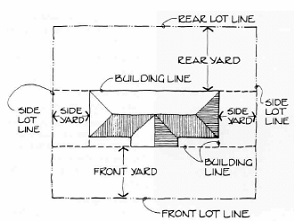
Yard, Front is an area extending across the full width of the lot between the front lot line or the existing or future street right-of-way and a structural setback line parallel thereto. On corner lots, the shortest street frontage shall be the front yard in residential zoning districts, while the longest street frontage shall be the front yard in commercial/industrial zoning districts.
Yard, Interior Side is an area extending from the required front yard or, where there is no required front yard, from the front lot line to the required rear yard or, where there is no required rear yard, to the rear lot line and from the interior side lot line to a setback line parallel thereto.
Yard, Rear means an area extending across the full width of the lot between the rear lot line and a setback line parallel thereto. On flat lots, the rear yard location shall be determined through project review.
Yard, Side of Street is an area extending from the required front yard or, where there is no required front yard, from the front lot line to the rear lot line, and from the side street lot line, or the existing or future side street right-of-way (whichever is greater) to a structural setback line parallel thereto.
Zero Lot Line means the location of a structure on a lot in such a manner that one or more of the structure's sides rest directly on a lot line.
Zoning District is a portion of the city within which certain uses of land and structures are defined, and regulations are specified.
Zoning Map means the map designated as such and adopted by the city showing the geographical location of use zones within the municipal boundaries.
(Zoning Ord. dated 1/31/06, § 9101.07; Ord. No. 1392, § 1.)
(Ord. No. 1434, § 3, 2-8-11; Ord. No. 1467, § 3, 8-13-13; Ord. No. 1509, § 3, 4-11-17; Ord. No. 1507, § 3.2.1, 3-14-17; Ord. No. 1512, § 6, 10-10-17; Ord. No. 1535, § 4A, 11-13-18; Ord. No. 1523, § 3A, 7-10-18; Ord. No. 1531, § 3A, 11-13-18; Ord. No. 1552, § 4, 1-28-20; Ord. No. 1559, § 4, 5, 3-24-20; Ord. No. 1577, § 12, 9-28-21)
17.04.080 - Establishment of zoning districts.
A.
Establishment of Zoning Districts. Banning shall be divided into zoning districts which consistently implement the General Plan. The following zoning districts are established:
B.
Adoption of Land Use District Map. The boundaries of the land use districts established by this chapter shall be shown upon the map designated as the "City of Banning Official Zoning Map", on file with the City Clerk, and available at the Planning Department. This map shall be consistent with the adopted General Plan Land Use Map. Amendments shall follow the process outlined in Chapter 17.64, General Plan Amendments.
C.
Rules Applying To Uncertain Boundaries On Zoning Map. The following shall apply in determining uncertain boundaries of a district as shown on the Official Zoning Map:
1.
Where a boundary follows a public street or alley, the centerline of the street shall be the boundary. Where a boundary follows a lot line, the lot line shall be the boundary.
2.
Where a district boundary divides a lot or parcel, the location of the boundary, unless indicated by dimension, shall be determined by referencing the adopted General Plan Land Use Map and legal description of the parcel.
3.
Where any public right-of-way is officially vacated or abandoned, the land use district regulations applied to abutting property shall thereafter extend to the centerline of such vacated or abandoned right-of-way.
4.
In case any uncertainty exists, the Director shall determine the location of the district boundary.
D.
Pre-Zoning. The City has pre-zoned the property in its Sphere of Influence and Planning Area. The zoning shall become effective upon annexation.
(Zoning Ord. dated 1/31/06, § 9101.08.)
17.04.090 - General requirements.
A.
Application. All land or structures shall be used and constructed in accordance with the regulations and requirements of this Zoning Ordinance, including obtaining applicable permits prior to use initiation.
B.
Conflicting Permits And Licenses To Be Voided. All permits or licenses shall be issued in conformance with the provisions of this Zoning Ordinance. Any permit or license subsequently issued and in conflict with this Zoning Ordinance shall be null and void.
C.
Similar Uses Permitted.
1.
When a use is not specifically listed in this Zoning Ordinance, it shall be understood that the use may be permitted if it is determined by the Director that the use is similar to other uses listed.
2.
It is further recognized that every conceivable use can not be identified in this Zoning Ordinance, and anticipating that new uses will evolve over time, this chapter establishes the Director's authority to compare a proposed use and measure it against those listed in this Zoning Ordinance to determine similarity. If an applicant wishes to appeal the Director's interpretation, such appeal shall be made to the City Council, pursuant to the requirements of Chapter 17.68, Hearings and Appeals.
3.
In determining "similarity" the Director shall make all of the following findings:
a.
The proposed use shall meet the intent of, and be consistent with the goals, objectives and policies of the General Plan;
b.
The proposed use shall meet the stated purpose and general intent of the district in which the use is proposed to be located;
c.
The proposed use shall not adversely impact the public health, safety and general welfare of the City's residents; and
d.
The proposed use shall share characteristics common with, and not be of greater intensity, density or generate more environmental impact, than those uses listed in the district in which it is to be located.
D.
Minimum Requirements. When interpreting and applying the regulation of this Zoning Ordinance, the provisions shall be the minimum requirements, unless otherwise stated.
E.
Conflict with Other Regulations.
1.
Where conflicts occur between the provisions of this Zoning Ordinance and the Building and Fire Codes, or other regulations of the City, the more restrictive shall apply.
2.
It is not intended that this Zoning Ordinance shall interfere with, repeal, abrogate or annul any easement, covenant, or other agreement in effect at the time of adoption. Where this Zoning Ordinance imposes a greater restriction upon the use of structures or land, the provisions of this Zoning Ordinance shall apply.
3.
Nothing contained in this Zoning Ordinance shall be deemed to repeal or amend any regulation of the City requiring a permit or license or both. Nor shall anything in this Zoning Ordinance be deemed to repeal or amend the Building Code of the City.
F.
Language. In interpreting this Zoning Ordinance, it is understood that the term "shall" is mandatory, "should" is advisory, and "may" is permissive.
G.
Implementation. All applications which have been accepted as complete by the Department prior to the effective date of this Zoning Ordinance shall be processed in compliance with the regulations and requirements in effect at the time the application was accepted as complete. Applications for extensions of time shall be consistent with this Zoning Ordinance.
(Zoning Ord. dated 1/31/06, § 9101.09.)
17.04.100 - Density and intensity.
The density and intensity limitations established in the Land Use Element of the General Plan shall apply to each lot, except as provided in this Zoning Ordinance.
(Zoning Ord. dated 1/31/06, § 9101.10.)
17.04.110 - Severability.
If any chapter, section, subsection, sentence, clause or phrase of this Zoning Ordinance is for any reason held to be invalid or unconstitutional, such decision shall not affect the validity of the remaining portions of this Zoning Ordinance. The Council hereby declares that it would have adopted this Zoning Ordinance and each chapter, section, subsection, sentence, clause or phrase thereof irrespective of the fact that any one or more portions of this Zoning Ordinance might be declared invalid.
(Zoning Ord. dated 1/31/06, § 9101.11.)

