
Bedford City Zoning Code
ARTICLE III
DEFINITIONS OF TERMS USED IN THIS ARTICLE3
Editor's note—Ord. No. 24-2, adopted March 12, 2024, repealed the former Art. II, §§ 301, 302, and enacted a new Art. III as set out herein. The former Art. III pertained to similar subject matter and derived from Ord. of Jan. 26, 1989; Ord. of May 18, 1991; Ord. of May 28, 1992; Ord. of Nov. 10, 1992; Ord. of Aug. 10, 1998; Ord. of April 10, 2001; Ord. of May 28, 2001; Ord. No. 08-04, § 1, adopted March 25, 2008; Ord. No. 11-7, § 1, adopted June 28, 2011; Ord. No. 14-14, §§ 1, 2, adopted Dec. 9, 2014; Ord. No. 15-2, § 1, adopted Jan. 27, 2015; ; Ord. No. 21-7, § 1, adopted June 22, 2021; and Ord. No. 22-1, § 1, adopted Jan. 25, 2022.
Sec. 301.- General.
Except as otherwise provided herein, all words shall have the customary dictionary meaning. The present tense includes the future tense. The singular number includes the plural, and the plural includes the singular. The word "person" includes a firm, corporation, association, organization, trust, or partnership. The word "lot" includes "plot" or "parcel." The word "building" includes "structure." The word "shall" is always mandatory. The word "used" or "occupied" as applied to any land or building shall be construed to include the words "intended, arranged, or designed to be used or occupied."
(Ord. No. 24-2, 3-12-2024)
Sec. 302. - Specific definitions.
When used in this Land Development Ordinance the following words and phrases shall have the meaning given in this section:
• Accessory dwelling unit. A residential dwelling unit, but not a mobile home, located on the same lot as a single-family dwelling unit, either within the same building as the single-family dwelling unit or in a detached building.
• Accessory use. A use customarily incidental and subordinate to the main use, such as a garage, shed, sign, solar panels, swimming pool, temporary family health care structure, or similar.
• Agriculture. Farming, including plowing, tillage, cropping, seeding, cultivating, or harvesting for the production of food and fiber products (except commercial logging and timber harvesting operations); the grazing or raising of livestock; aquaculture; sod production; orchards; Christmas tree plantations; and the cultivation of products as part of a recognized commercial enterprise.
• Alley. A platted service way providing a secondary means of access to abutting properties.
• Amphitheater. An uncovered, non-enclosed outdoor arena, with tiered seating, usually recessed into a hillside, for the purpose of allowing groups of people to view and hear performances, speeches or other similar public displays.
• Amusement enterprise. Businesses including billiard rooms, bowling alleys, arcades, and other similar uses, but excluding gambling.
• Ancillary residence. (See "accessory dwelling unit").
• Animal or poultry husbandry. Any keeping, boarding, breeding, or raising of any number of horses, goats, sheep, poultry, or other customary farm animal for any purpose.
• Animal shelter. A facility used to house or contain stray, homeless, abandoned, or unwanted animals and that is owned, operated, or maintained by a public body, an established humane society, animal welfare society, society for the prevention of cruelty to animals, or other nonprofit organization devoted to the welfare, protection, and humane treatment of animals.
• Apartment. A unit in multifamily dwelling providing a dwelling for a single-family in which separate access to the outside may or may not be provided.
• Apartment development. One or more multifamily dwellings containing apartments, with accessory parking, open space, recreational and management facilities.
• Art gallery. A room or structure in which original works of art or limited editions of original art are bought, sold, loaned, appraised, or exhibited to the public.
• Art or photography studio. Workspace for one or more artists or artisans, including the accessory sale of art produced on the premises.
• Arterial roads. Primary roads designated by the Commonwealth of Virginia. For purposes of this Land Development Ordinance, the following routes are identified as arterial roads: U.S. Highway 460, Route 221, and Route 43.
• Auction. A public sale at which property or goods are sold to the highest bidder.
• Auditorium. A covered and enclosed space, typically with fixed seating arranged for viewing a stage, for the purpose of allowing groups of people to view and hear musical or theatrical performances, speeches, or other similar public displays.
• Automotive repair services, major. Repair of construction equipment, commercial trucks, agricultural implements and similar heavy equipment, including automobiles, where major engine and transmission repairs are conducted. Typical uses include automobile and truck repair garages, transmission shops, radiator shops, body and fender shops, autobody painting, equipment service centers, machine shops and other similar uses where major repair activities are conducted.
• Automobile service station. Any area of land, including structures thereon, used for the retail sale of gasoline or oil, automobile accessories, and incidental services including facilities for lubricating, handwashing and cleaning, or otherwise servicing automobiles but excluding painting, major repair, or automatic washing.
• Banquet room. A room for a conference or ceremonious meal, often honoring people or events, including anniversaries, reunions and meetings only, for which complete meals are generally catered or occasionally prepared on the premises, not serving the general public.
• Base flood elevation (BE). The Federal Emergency Management Agency designated 100-year water surface elevation. The water surface elevation of the base flood in relation to the datum specified on the community's flood insurance rate map. For the purposes of this Land Development Ordinance, the 100-year flood or one-percent annual chance flood.
• Base-flood/100-year flood. A flood that, on the average, is likely to occur once every 100 years (i.e., that has a one percent chance of occurring each year, although the flood may occur in any year).
• Basement. Any area of the building having its floor sub-grade (below ground level) on all sides.
• Bed and breakfast lodging. A dwelling containing a maximum of five room accommodations for tourists, wherein a charge is normally paid for sleeping and breakfast accommodations not exceeding a stay of 15 consecutive days, and not to be operated for rehabilitation, welfare, or other similar purposes, and where no more than four meals a week are served to not more than 14 people other than overnight patrons.
• Blacksmith, welding, or machine shop. Shops where lathes, presses, grinders, shapers, and other wood- and metal-working machines are used for making things, especially for cutting and working with metal.
• Board of zoning appeals. The board appointed to review appeals made by individuals with regard to decisions of the zoning administrator in the interpretation of this Land Development Ordinance.
• Brewery. A facility that brews ales, beers, meads, and/or similar beverages on site.
• Building, accessory. A subordinate building detached from, but located on the same lot as the main building, the use of which is incidental and accessory to that of the main building or use.
• Building code. The Virginia Uniform Statewide Building Code, as amended and/or adopted by the council.
• Building official or inspector. The building official or inspector appointed by the town manager to administer and enforce the provisions of the building code, or his designated representative or agent.
• Building or contractor's storage and equipment yard. Any land or buildings used primarily for the storage of equipment, vehicles, machinery (new or used), building materials, paints, pipe, or electrical components used by the owner or occupant of the premises in the conduct of any building trades or building craft.
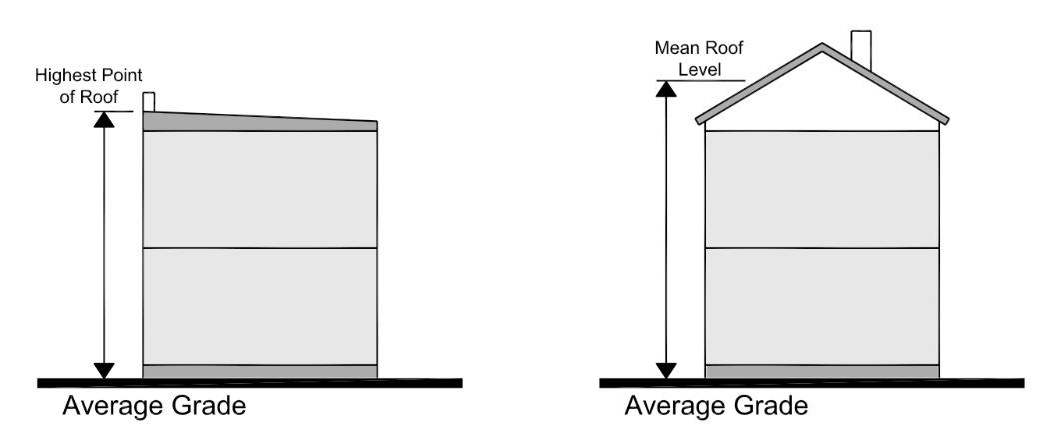
• Building, height of. The vertical distance from the grade to the top of the roof surface of a flat roof, to the mean level of the highest gable or slope of a hip roof. When a building faces on more than one street, the height shall be measured from the average of the grades at the center of each street front.
• Building, main. A building in which is conducted the main use of the lot on which said building is situated.
• Bus terminal facility. Any premises for the transient housing or parking of motor driven buses, and the loading and unloading of passengers
• Campsite. A designated plot of ground within a "travel park" intended or used for the exclusive occupancy by a recreational vehicle.
• Car wash. Washing and cleaning of vehicles. Typical uses include automatic conveyor machines and self-service car washes.
• Career and technical school. School, institution, and/or educational program that specializes in the skilled trades, applied sciences, modern technologies, and career preparation.
• Cemetery. All land in and owned by or under the supervision and control of the Town of Bedford devoted exclusively to the interment of deceased persons and all land hereafter acquired by the Town of Bedford for such purpose.
• Chapel. A nondenominational, noncongregational facility for individual or small group worship that may offer temporary or occasional religious services.
• Childcare center. A facility, other than a family day care home, operated for the purpose of providing care protection, and guidance to a group of children separated from their parents or guardians during part of the day only, and meeting the licensing requirements for childcare centers of Code of Virginia, § 63.2-1701.
• Civic or cultural center. A use providing for display, performance, or enjoyment of heritage, history, or the arts. This use includes but is not limited to museums, arts performance venues, or interpretive sites, but does not include commercially operated theaters.
• Clerk. The clerk of the circuit court having jurisdiction in the Town of Bedford, Virginia.
• Clerk of the board. The clerk of the board of zoning appeals of the Town of Bedford, whose responsibilities include signing the official minutes of zoning board meetings and issuing copies of minutes when requested.
• Clinic. A facility for diagnosis and treatment of outpatients; or a group practice in which several physicians work cooperatively. The term does not include veterinary services.
• Colleges and universities. An institution other than a trade school that provides full-time or part-time education beyond high school.
• Commercial. Any wholesale, retail, or service business activity established to carry on trade for a profit.
• Commercial communications equipment. Any device used for the transmission, retransmission or reception of electronic signals or information for commercial use. This includes any tower, pole, antenna, tripod, or similar structure which supporting such devices attached to or constructed on Town of Bedford facilities for the purposes of operating a wireless data network.
• Commercial retail. Commercial establishments that primarily function to sell goods, wares, or merchandise directly to consumers.
• Commercial service. Commercial establishments that primarily render services rather than goods. Such services may include but not be limited to hair cutting and styling, tanning, copy shops, picture framing, photo processing, and similar operations.
• Commission. The Town of Bedford Planning Commission.
• Common open space. A parcel of land or an area of water, or combination thereof, within a designated development tract, such as a subdivision, which is designed and intended for the use of all lot owners and residents of the development or tract.
• Conditional use. A use that may be permitted in a district after review by the council as provided for in section 1002.03, and which may be subject to conditions set by the council as appropriate in each individual case.
• Condominium. See "dwelling, condominium."
• Congestion, vehicle. An excess of vehicles on a portion of roadway at a particular time resulting in speeds that are slower—sometimes much slower—than normal or "free flow" speeds.
• Council. The town council of the Town of Bedford, Virginia.
• Crisis center. A residential facility providing temporary protective sanctuary and special accommodations for victims of crime or abuse, including emergency transitional housing during crisis intervention for individuals such as battered spouses or children in need of services, but not including "group homes" as defined by Code of Virginia, § 15.2-2291.
• Cul-de-sac. A circular turning area at the end of a dead end street.
• Culvert. Any pipe or structure designed to transport surface water under a roadway.
• Dance halls. Any place open to the general public where dancing is permitted, in accordance with town ordinances.
• Data processing facility. An establishment primarily involved in the compiling, storage, and maintenance of electronic documents, records, and other types of information utilizing computer systems. This term does not include general office uses, computer-related retail sales establishments, and business or personal services.
• Day care. See "childcare center and family day care home."
• Development. Any manmade change to improved or unimproved real estate including but not limited to buildings or other structures, the placement of mobile homes, streets, and other paving, utilities, filling, grading, excavation, mining, dredging, drilling operations or storage of equipment or materials.
• Distillery. An establishment where strong alcoholic drinks are produced by the process of distilling.
• Distribution operations. A use where goods are received and/or stored for delivery to the ultimate customer at remote locations.
• District. A section of the Town of Bedford within which the zoning regulations are uniform.
• Driveway. Any entryway, public, or private, for the principal purpose of providing vehicular access to a property.
• Dwelling. Any building or portion thereof which is designed for or used legally for residential purposes. Any type of lodging that does not meet the definition of "dwelling" or "residence" shall not be used for habitation, dwelling, residing, sleeping, or otherwise occupying property with the intent to live there. Recreational vehicles (including structures on towable metal frames), tents, and structures not approved as a "dwelling" by building code shall not be used for residential or living purposes.
• Dwelling, condominium. An individually owned unit in a multi-unit structure or complex of structures such as an apartment, duplex, or townhouse.
• Dwelling, multifamily. A building designed for or occupied exclusively by three or more families living independently of each other and including condominiums of similar physical appearance, character, and structure.
• Dwelling, single-family. A building designed for or occupied exclusively by one family and designed in accordance with the Virginia Uniform Statewide Building Code.
• Dwelling, two-family (duplex). A building designed for or occupied exclusively by two families living independently of each other and designed in accordance with the Virginia Uniform Statewide Building Code.
• Easement. A grant by a property owner of the use of land for a specific purpose or purposes by the general public, a corporation, or a certain person or persons.
• Eating establishment. Any building, in which, for compensation, food or beverages are dispensed for consumption on the premises, including cafes, tea rooms, confectionery shops, or refreshment stands.
• Elevated building. A non-basement building built to have the lowest floor elevated above the ground level by means of fill, solid foundation perimeter walls, pilings, or columns (posts and piers).
• Emergency homeless shelter. A homeless shelter with overnight sleeping accommodations, the primary purpose of which is to provide temporary shelter for homeless persons.
• Encroachment. The advance or infringement of uses, plant growth, fill, excavation, buildings, permanent structures, or development into a floodplain, which may impede or alter the flow capacity of a floodplain.
• Engineer. An individual technically and legally qualified to practice the profession of engineering, licensed by the Commonwealth of Virginia.
• Engineer, resident. Regional resident engineer for the Virginia Department of Transportation (VDOT).
• Family. One or more persons, but not more than three unrelated persons occupying a dwelling and living as a single housekeeping unit, as distinguished from persons occupying a boardinghouse, lodginghouse, or hotel, as herein defined.
• Family day care home. Any private family home in which more than four children are received for care, protection, and guidance during only part of the day, except children who are related by blood or marriage to the person who maintains the home, and meeting applicable licensing requirements for family day care homes of Code of Virginia, § 63.2-1701. Family day care homes shall be permitted as a legal use of any permitted residence.
• Final master plan of development. A master plan of development that has been approved by town council.
• Financial institution. A financial institution that is open to the public and engaged in deposit banking, and that performs closely related functions such as making loans, investments, and fiduciary activities.
• Fire department. A department of a municipality, county, fire district or the state or any agency thereof having employees engaged in firefighting provided that such firefighting employees are included in a negotiating unit exclusively comprised of firefighting employees.
• Flood.
a.
A general and temporary condition of partial or complete inundation of normally dry land areas from: (1) the overflow of inland or tidal waters; (2) the unusual and rapid accumulation or runoff of surface waters from any source; (3) mudslides (i.e., mudflows) which are proximately caused by flooding as defined in this Land Development Ordinance and are akin to a river of liquid and flowing mud on the surfaces of normally dry land areas, as when earth is carried by a current of water and deposited along the path of the current.
b.
The collapse or subsidence of land along the shore of a lake or other body of water as a result of erosion or undermining caused by waves or currents of water exceeding anticipated cyclical levels or suddenly caused by an unusually high water level in a natural body of water, accompanied by a severe storm, or by an unanticipated force of nature, such as a flash flood or by some similarly unusual and unforeseeable event which results in flooding as defined in this Land Development Ordinance.
• Flood area. The sum of the gross horizontal areas of the total number of floors of a building measured from the exterior faces of the exterior walls or from the centerline of walls separating two buildings, but not including the attic space providing headroom of less than seven feet; unstable basement or cellar space not used for retailing; uncovered steps or fire escapes; open porches; accessory water or cooling towers; accessory off-street loading berths.
• Flood hazard district. The area subject to inundation by waters of the 100-year flood which is a flood that has a one percent chance of being equaled or exceeded in any given year.
• Flood insurance rate map (FIRM). An official map of a community, on which the administrator has delineated both the special hazard areas and the risk premium zones applicable to the community. A FIRM that has made available digitally is called a digital flood insurance rate map (DFIRM).
• Flood insurance study (FIS). An examination, evaluation, and determination of flood hazards and, if appropriate, corresponding water surface elevations, or an examination, evaluation, and determination of mudflow and/or flood-related erosion hazards.
• Floodplain.
a.
A relatively flat or low land area adjoining a river, stream, or watercourse which is subject to partial or complete inundation;
b.
An area subject to the unusual and rapid accumulation or runoff of surface waters from any source.
• Flood-prone area. Any land area susceptible to being inundated by water from any source.
• Floodproofing. Any combination of structural and non-structural provisions, changes, or adjustments to properties and structures subject to flooding required for construction in the flood hazard district by the state Uniform Statewide Building Code and which reduce or eliminate flood damage to real estate or improved real property, water and sanitary facilities, structures, and their contents.
• Floodway. The designated area of the floodplain required to carry and discharge floodwaters of given magnitude without cumulatively increasing the water surface elevation more than one foot. For the purpose of this Land Development Ordinance, the floodway shall be capable of accommodating a flood of the 100-year magnitude.
• Flowering or ornamental tree. A deciduous tree possessing qualities such as flowers or fruit, attractive foliage, bark, or shape, with a mature height generally under 40 feet.
• Freeboard. A factor of safety usually expressed in feet above a flood level for purposes of floodplain management. "Freeboard" tends to compensate for the many unknown factors that could contribute to flood heights greater than the height calculated for a selected size flood and floodway conditions, such as wave action, bridge openings, and the hydrological effect of urbanization in the watershed. When a freeboard is included in the height of a structure, the flood insurance premiums may be cheaper.
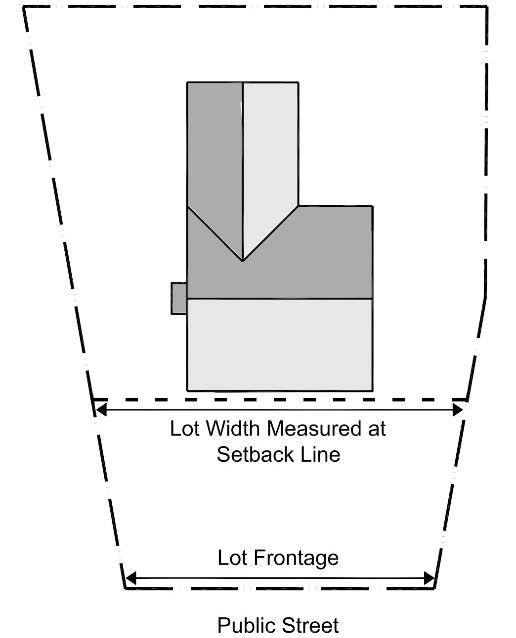
• Frontage. The property line dividing a lot from a public or private street and from which the required front setback is measured.
• Funeral home. A building used for the preparation of the deceased for burial and display of the deceased and rituals connected therewith before burial or cremation. A funeral home, as defined for purposes of this code, includes a funeral chapel.
• Gardening. Any use of land unenclosed except for fencing for the raising of grass, flowers, vegetables, crops, trees, or other botanical objects of natural growth, but not including accessory structures used for the same purpose.
• Government armory. A place where arms and military equipment are stored, especially one used for training reserve military personnel.
• Government facility. Any building, structure, or use owned, operated, or occupied by governmental agency to provide a governmental service to the public.
• Group home. Any full-time child-caring institution operated by any person at any place other than in an individual's family home or residence which does not care for more than 12 children, meeting the licensing requirements of Code of Virginia, § 63.2-1701.
• Health department. The Bedford County Health Department or its designated agent or representative.
• Height limit. A vertical distance fixed in certain districts contained herein and measured from the average ground level at the base of the structure.
• Highest adjacent grade. The highest natural elevation of the ground surface prior to construction next to the proposed walls of a structure.
• Highway engineer. See "town engineer."
• Historic exhibit. Basic, low-intensity facilities for the education of the public related to areas containing valuable resources warranting protection, including simple bulletin boards, exhibit shelters, and interpretive signs.
• Historic structure. Any structure that is:
a.
Listed individually in the National Register of Historic Places (a listing maintained by the Department of Interior) or preliminary determined by the Secretary of the Interior as meeting the requirements for individual listing on the National Register;
b.
Certified or preliminary determined by the Secretary of the Interior as contributing to the historical significance of a registered historic district or a district preliminary determined by the secretary to qualify as a registered historic district;
c.
Individually listed on a state inventory of historic places in states with historic preservation programs which have been approved by the Secretary of the Interior; or
d.
Individually listed on a local inventory of historic places in communities with historic preservation programs that have been certified either:
1.
By an approved state program as determined by the Secretary of the Interior; or
2.
Directly by the Secretary of the Interior in states without approved programs.
• Home for adults. Any place, establishment or institution, including day care centers for adults, operated to provide for care of more than eight adults who are aged, infirmed, or disabled, except any facility or portion of a facility licensed by the state hospital board or the state board of health and the home of an individual who cares for only persons related to him by blood or marriage, and meeting applicable licensing requirements of Code of Virginia, § 63.2-1701. Homes providing care for up to eight such adults shall be considered as any other residential use meeting the requirements of Code of Virginia, § 15.2-2291.
• Home occupation. An occupation for gain or support conducted only by members of a family residing on the premises and entirely within the main dwelling.
• Homestay. The accessory or secondary use of a residential dwelling unit, or a portion thereof, to provide room or space that is intended for short-term transient rental purposes for a fee.
• Hospital. An institution rendering medical, surgical, obstetrical, or convalescent care, including nursing homes, homes for the aged, and sanitariums, excluding any facility with which there is associated any security risk.
• Host. Any person advertising or offering a residential dwelling unit, or a portion thereof, for short-term transient rental purposes for a fee.
• Hotel. A building in which lodging, or boarding and lodging, are provided for more than five persons and offered to the public for compensation and in which ingress and egress for each sleeping room is generally made through the interior of the building and does not generally have the outward appearance of a single-family dwelling.
• Hydroponic agriculture. The cultivation of plants in nutrient-enriched water, with or without the mechanical support of an inert medium such as sand, gravel, or perlite.
• Indoor sports facilities. An establishment that provides exercise facilities such as running, jogging, aerobics, weightlifting, court sports, and swimming, as well as locker rooms, showers, massage rooms, saunas and related accessory uses.
• Industrialized building. A combination of one or more sections or modules subject to state regulations and including the necessary electrical, plumbing, heating, ventilating and other service systems manufactured off-site and transported to the point of use for installation or erection with or without other specified components to comprise a finished building. Manufactured homes defined and certified under the provisions of the National Manufactured Housing Construction and Safety Standards Act shall not be considered industrialized buildings for the purpose of this law. Also, see "Modular Housing."
• Institutional building. A building owned, occupied, and used by institutions of a civic, religious, charitable, educational, or philanthropic nature.
• Junkyard (automobile wrecking yard). A lot, land or structure or part thereof, used primarily for the collecting, storage, and sale of wastewater, rags, scrap metal, or discarded material; or for the collecting, dismantling, storage and salvaging of machinery or vehicles not in running condition, or for the sale of parts thereof.
• Kennel. Any location where five or more dogs are raised, groomed and/or cared for.
• Land use plan. The land use plan of the Town of Bedford, as approved by council.
• Library. A public facility for the use, but not sale, of literary, musical, artistic, or reference materials.
• Loading space. A space within the main building or on the same lot, providing for the standing, loading, or unloading of trucks and other carriers.
• Lodge. A membership organization that holds regular meetings and that may, subject to other regulations controlling such uses, maintain dining facilities, serve alcohol, or engage professional entertainment for the enjoyment of dues paying members and their guests. There are no sleeping facilities. This definition shall not include fraternities or sororities.
• Lot. A measured portion or parcel of land separated from other portions or parcels by description in a site plan or a recorded plat, or by metes and bounds, intended to be a unit for the purpose, whether immediate or future, of transfer of ownership, or of development or separate use. The term applies to units of land whether in a subdivision or a development.
• Lot, corner. A lot abutting upon two or more streets at their intersection.
• Lot coverage. The ratio of the horizontally projected area of the main and accessory uses on a lot to the total area of the lot (footprint), except where otherwise defined herein.
• Lot depth. The average horizontal distance between the front and rear lot lines.
• Lot, interior. Any lot other than a corner lot.
• Lot line. The boundary of a lot. The front lot line separates the lot from the street right-of-way. On a corner lot, the front lot line shall be deemed to be along the shorter dimension of the lot. Where the dimensions are equal, the front shall be on that street on which a predominance of the other lots in the block front. The lot line opposite the front lot line is designated the rear lot line. Any other lot lines are deemed to be side lot lines.
• Lot of record. A lot or parcel of land whose existence, location, and dimensions have been recorded in the office of the clerk of the circuit court of the County of Bedford.
• Lot, through or double frontage. A lot having a frontage on two streets as distinguished from a corner lot.
• Lot, width. The average horizontal distance between side property lot lines measured at the setback.
• Lowest floor. The lowest floor of the lowest enclosed area (including basement). An unfinished or flood-resistant enclosure, usable solely for parking of vehicles, building access or storage in an area other than a basement area is not considered a building's lowest floor; provided, that such enclosure is not built so as to render the structure in violation of the applicable non-elevation design requirements of Federal Code 44 CFR § 60.3.
• Lumber retail. An area used for the storage, distribution, and sale of finished or rough-cut lumber and lumber products, but not including the manufacture or fabrication of lumber, lumber products, or firewood.
• Main use. The primary purpose for which land or a building is used.
• Manufactured home. (Mobile homes built after 1976) A structure subject to federal regulations, which is transportable in one or more sections; is eight feet or more in width and 40 body feet or more in length in the traveling mode, or is 320 or more square feet when erected on site; is built on a permanent chassis; is designed to be used as a single-family dwelling, with or without a permanent foundation when connected to the required facilities; and include the plumbing, heating, air conditioning, and electrical systems contained in the structure. This structure is not constructed to meet the industrialized building code, Council of American Building Officials, Virginia Uniform Statewide Building Code, Use Group R-4.
• Manufacturing, custom. Establishments primarily engaged in the onsite production of goods by hand manufacturing, within enclosed structures, involving the use of hand tools, or the use of mechanical equipment commonly associated with residential or commercial uses, or a single kiln.
• Manufacturing, light. The manufacturing of products from processed or unprocessed raw materials, where the finished product is noncombustible and nonexplosive. This manufacturing may produce noise, vibrations, illumination, or particulate that is perceptible to adjacent land users, but is not offensive or obnoxious. Odors produced on-site shall not have a material negative effect on other businesses or properties in the area. This use shall include any packaging of the product being manufactured on-site. Examples include but are not limited to the production of the following: glass products made from manufactured glass; clay and pottery products; food and beverages; candy and other confectionery products; computer hardware; products made from rubber, plastic, or resin; converted paper and cardboard products; fabricated metal products made from semifinished metals.
• Manufacturing, heavy. The manufacturing of products from raw or unprocessed materials, where the finished product may be combustible or explosive. This category shall also include any establishment or facility using large unscreened outdoor structures such as conveyor belt systems, cooling towers, cranes, storage silos, or similar equipment, that cannot be integrated into the building design, or engaging in largescale outdoor storage. Any industrial use that generates noise, odor, vibration, illumination, or particulate that may be offensive or obnoxious adjacent land uses or requires a significant amount of on-site hazardous chemical storage shall be classified under this land use. This use shall include any packaging of the product being manufactured on-site. Examples include but are not limited to the production of the following: large-scale food and beverage operations; aggregate, concrete, and asphalt plants; foundries, forge shops, open air welding, and other intensive metal fabrication facilities; chemical blending, mixing, or production, and plastic processing and production.
• Master plan of development. A plan showing how a site shall be developed, including the extent, location, characteristics, materials, and dimensions of all features required by the regulations of this Land Development Ordinance.
• Memorial park. A place designed as a park-like setting to provide space and facilities where people can visit and/or gather to honor groups or individuals or major historic or cultural events. Such uses may include monuments, displays, and other interpretative features.
• Mini storage. A building or group of buildings divided into separate compartments used to meet the temporary storage needs of small businesses, apartment dwellers, and other residential uses; and may include refrigerated facilities.
• Mixed-use. A building or groups of buildings under one ownership designed to encourage a diversity of compatible land uses, which include a mixture of two or more of the following uses: residential, office, retail, recreational, light industrial, and other miscellaneous uses.
• Mobile home. A factory assembled structure or structures equipped with the necessary service connections and made to be readily movable as a unit or units on its (their) own running gear and designed to be used as a dwelling unit without a permanent foundation and built before 1976. (Also see "manufactured home, modular home and industrialized building.") This unit does not meet the requirements of the Council of American Building Officials (CABO) or the state Uniform Statewide Building Code, Use Group R-4. The phrase "without a permanent foundation" indicates that the support system is constructed with the intent that the manufactured home placed thereon will be moved from time to time at the convenience of the owner.
• Mobile home development or park. One or more contiguous parcels of land in which two or more lots are provided for mobile homes.
• Mobile home stand. That part of the mobile home lot reserved for the placement of a mobile home.
• Modular home. A structure constructed to meet the state requirements of an Industrialized Building, Virginia Uniform Statewide Building Code, Use Group R-4, and Council of American Building Officials (not a mobile home or manufactured home).
• Monument. A nonhabitable structure, typically of stone or other natural materials, that honors the memory of a defined group or individual and/or a historic or culturally significant event.
• Motel. A building or a group of buildings containing sleeping accommodations for rental primarily to automobile transients and in which ingress and egress to and from each sleeping room is generally to the outside of the building.
• Motor vehicle sales. Storage and display for sale of more than two motor vehicles or any type of trailer provided the trailer is unoccupied, and where repair or body work is incidental to the operation of the new or used vehicle sales. Motor vehicles sales include motor vehicle retail or wholesale sales.
• Museum. A building having public significance by reason of its architecture or former use or occupancy or a building serving as a repository for a collection of natural, scientific, or literary curiosities or objects of interest, or works of art, and arranged, intended, and designed to be used by members of the public for viewing, with or without an admission charge, and which may include as an accessory use the sale of goods to the public as gifts or for their own use.
• New construction. For the purposes of determining insurance rates, structures for which the "start of construction" commenced on or after the effective date of an initial flood insurance rate map (FIRM) or after December 31, 1974, whichever is later, and includes any subsequent improvements to such structures. For floodplain management purposes, "new construction" means structures for which the "start of construction" commenced on or after the effective date of a floodplain management regulation adopted by a community and includes any subsequent improvements to such structures.
• Nonconforming lot. An otherwise legally platted lot that does not conform to the minimum area or width requirements of this Land Development Ordinance for the district in which it is located either at the effective date of this Land Development Ordinance or as a result of subsequent amendments to the ordinance.
• Nonconforming structure. An otherwise legal building or structure that does not conform with the lot area, yard, height, lot coverage, or other area regulations of this Land Development Ordinance, or is designed or intended for a use that does not conform to the use regulations of this article, for the district in which it is located, either at the effective date of this article or as subsequent amendments of this Land Development Ordinance.
• Nonconforming use. The otherwise legal use of a building or structure or tract of land that does not conform to the use regulations of this article for the district in which it is located, either at the effective date of this Land Development Ordinance or as a result of subsequent amendments to this Land Development Ordinance.
• Nursery or greenhouse, noncommercial. An area and/or translucent structure used for growing plant materials for use on site, but not for commercial sale or distribution.
• Offices. A room, suite of rooms, or building in which a person transacts the affairs of a business, profession, service, industry, or government.
• Off-street parking. Spaces for cars located on private property rather than on a public street.
• Open air market. A commercial use conducted on a site and operated by an owner, central organizer or manager. The use involves the rental of spaces within the defined site to sellers not associated with the site, usually for a fee. This use is occasional and seasonal in nature, occurring on certain days within a week, such as weekends, and generally only during daylight hours. This use includes "flea market" and "farmer's market" unless the facility is owned by the town. This use does not include outdoor entertainment such as musical events or other activities that generate noise.
• Open space. An outdoor area being open, unoccupied and unobstructed by buildings from ground to sky, which is not used for or occupied by a driveway, off-street parking, loading space, refuse storage space, or similar accessory uses and structures.
• Overlook. An uncovered area on which pedestrians may gather to enjoy scenic vistas of the surrounding landscape.
• Owner. The owner or owners of the freehold of the premises or lesser estate therein, a mortgagee or vendee in possession, assignee of rents, receiver, executor, trustee, lessee or other person, firm or corporation in control of a building.
• Parking structure. A structure or portion thereof composed of one or more levels or floors used exclusively for the parking or storage of motor vehicles. A parking structure may be totally below grade (as in an underground parking garage) or either partially or totally above grade with those levels being either open or enclosed.
• Parks, playgrounds, and outdoor recreation areas. Land publicly or privately owned, devoted to recreational pursuits, usually an open area reserved for outdoor activities such as play, hiking, exercise, or competitive sport, not requiring structures for habitation.
• Pavilion. A covered but nonenclosed structure, for the purpose of temporary or occasional group gatherings for, meetings, receptions, ceremonies, speeches, and similar purposes, but not for concerts or theatrical productions.
• Pedestrian-oriented. A condition in which the location of and access to structures, types of uses permitted at street level, and storefront design are based on needs of persons on foot.
• Pharmaceuticals, diagnostic testing, and other laboratories. A building or group of buildings in which are located facilities for scientific research, investigation, testing, or experimentation, but not facilities for the manufacture or sale of products, except as incidental to the main purpose of the laboratory.
• Plat. The schematic representation of land divided or to be divided, including easements, boundaries, rights-of-way, and other related information.
• Preliminary master plan of development. A master plan of development that is being proposed for approval by town council.
• Primary residence. A primary residence is the main location that a person inhabits, also referred to as principal residence, main residence, or permanent residence. The resident utilizes their primary residence as the place in which they sleep and reside for a minimum of 183 days per calendar year. The resident also has the address of their primary residence on an official government document such as a state issued license or passport.
• Printing, bookbinding, and publishing establishments. A facility for the custom reproduction of written or graphic materials on a custom order basis for individuals or businesses. Typical processes include, but are not limited to, photocopying, blueprint, and facsimile sending and receiving, and including offset printing.
• Private drive. Nondedicated thoroughfare or road used exclusively for private access to and from private land or development.
• Private. Not owned or operated by the Town of Bedford or other unit of government.
• Professional office uses. An office for the use of a person or persons generally classified as professionals, such as architects, engineers, attorneys, accountants, doctors, dentists, chiropractors, psychiatrists, psychologists, and the like.
• Professional. When used in connection with "use" and "occupancy," a use or occupancy by persons generally engaged in rendering personal, executive, sales, or administrative services or activities, including accountants, architects, professional engineers and land surveyors, doctors, lawyers, insurance offices, real estate offices, religious organizations, stockbrokers, and administrative agencies considered professional in character. The term, however, does not include repairs on sales of tangible personal property stored or located within the structure nor any use, which would create any loud noises or noxious odors.
• Promenade. A ceremonial walkway or driveway, characterized in part by ornamental landscaping and design, leading to and from a monument, overlook, significant natural or cultural feature, or other commemorative place or facility.
• Public. Owned or operated by the Town of Bedford.
• Public parking facility. A paved parking area available to the public, with or without payment of a fee.
• Public water and sewage disposal. The water and sewage disposal systems owned and operated by the Town of Bedford.
• Ramada. A structure erected over a mobile home for the purpose of providing shade or shelter.
• Recreation vehicle. A vehicle which is: (a) built on a single chassis; (b) 400 square feet or less when measured at the largest horizontal projection; (c) designed to be self-propelled or permanently towable by a light duty truck; and (d) designed primarily not for use as a permanent dwelling but as temporary living quarters for recreational camping, travel, or seasonal use.
• Recycling facility. A facility that recycles items containing nonhazardous materials, with a change in inventory of at least 75 percent annually.
• Rehabilitation facility. A facility for the purposes of temporary or long-term treatment of persons with physical, mental, or substance abuse handicaps, which may be, as part of its occupational therapy, a work-oriented rehabilitation facility in which persons are trained, employed, and specially supervised in the performance of repair, assembly, processing, and fabricating tasks.
• Religious assembly. A building wherein persons regularly assemble for religious worship and which is maintained and controlled by a religious body organized to sustain public worship, together with all accessory uses customarily associated with such primary purpose. Includes church, synagogue, temple, mosque, or other such place for worship and religious activities.
• Rescue squad. Publicly owned safety and emergency services, such as, but not limited to, fire stations, police stations, and emergency medical and ambulance service.
• Residential use. Any place, building or establishment used in whole or in part as a dwelling, or used for the care, protection, or guidance of any persons during any part of the day, including but not limited to, hospitals, schools, single-family and multifamily dwellings, mobile homes, childcare centers, family day care homes, group homes, homes for adults, colleges, and correctional institutions.
• Right-of-way. Access over or across particularly described property for a specific purpose or purposes.
• Right-of-way line. The dividing line between a lot, tract, or parcel of land and contiguous street, railroad, or public utility right-of-way.
• Sanitary or solid waste management facility. Any facility or zoning lot used for: (a) the disposal of solid waste materials by abandonment, discarding, dumping, reduction, burial, incineration or any other means, including accessory uses such as recycling, co-generation, and methane recovery, or (b) a transfer station for solid waste storage or collection at which solid waste is transferred from collection vehicles to haulage vehicles, including but not limited to trucks, trains, and tandem trailers, for transportation to a central solid waste management facility for disposal or resource recovery. This definition does not include transportable waste receptacles of commercial solid waste generated by establishments engaged in business operations other than manufacturing. This category includes, but is not limited to, solid waste resulting from the operation of stores, markets, office buildings, restaurants, shopping centers, motels, hotels, multiple residences, picnic grounds and day-use recreation areas. This definition also does not include recycling bins.
• Sanitary or solid waste management, private. A sanitary or solid waste management facility that is not a public sanitary or solid waste management facility, and which is owned and operated by a private entity for the purpose of handling solid waste generated only by such private entity.
• Sanitary or solid waste management facility, public. A sanitary or solid waste management facility owned or operated by or on behalf of the Town of Bedford or a regional solid waste management authority of which the Town of Bedford is a member.
• Satellite dish. An accessory structure which at its widest dimension is more than 36 inches; an earth-based station, the purpose of which is to receive signals from orbiting satellites and other extraterrestrial sources, together with other equipment related to such purposes.
• School. An institution for the teaching of children or adults including primary and secondary schools, colleges, professional schools, business schools, trade schools, art schools, and similar facilities.
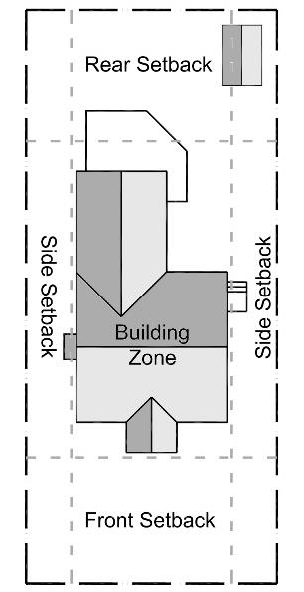
• Setback line. A line generally parallel with and measured from the lot line, defining the limits of a yard in which no building, other than accessory uses, or structures may be located aboveground.
• Shade tree. A woody plant, usually deciduous, that normally grows with one main trunk and has a canopy that screens and filters the sun in the summer and winter, respectively.
• Sign. Any words, lettering, parts of letters, figures, numerals, phrases, sentences, emblems, devices, designs, trade names or marks, or combinations thereof, by which anything is made known, such as the designation of an individual, a firm, an association, a profession, a business, a commodity, product, or service, which are visible from any public way and used as an outdoor display.
• Sign area. The smallest square, rectangle, triangle, circle, or combination thereof encompassing the entire advertising area, excluding architectural trim and structural supports.
• Sign, awning. A sign that is attached or applied to the surface of an awning.
• Sign, banner. Any sign made of lightweight fabric or similar material that is mounted to a pole or a building at one or more edges.
• Sign, building mounted. Any sign attached to, or supported by, the structure of any primary or accessory use, including awning, canopy, marquee, projecting, wall, or window signs.
• Sign, business. A sign painted, electrical, or otherwise, erected for the purpose of conveying information, knowledge, or ideas to the public about a subject related to the premises upon which said sign is located.
• Sign, canopy. A sign that is attached or applied to the surface of a canopy.
• Sign, changeable message or copy. A sign or part thereof designed so that characters, letters, or illustrations can be changed or rearranged without altering the face or surface of the sign. A sign on which the only copy that changes is an electronic or mechanical indication of time or temperature shall be considered a "time and temperature" sign and not a changeable copy sign for purposes of this Land Development Ordinance.
• Sign, digital. A sign employing transmission of video programming in which video or multimedia content is displayed in public places for informational or advertising purposes. A digital sign usually consists of a computer or playback device connected to a large, bright digital screen such as an LED, liquid crystal, or plasma display.
• Sign, directional. A sign indicating only the name and direction of a business, firm, or activity.
• Sign, directory. A sign indicating the names and locations of occupations or the use of a building or group of buildings.
• Sign, face. The part of the sign used to identify, advertise, or communicate information, or used for visual representation that attracts the attention of the public for any purpose. Sign face includes any background material, panel, trim, or color that differentiates that sign from the building, structure, backdrop, surface, or object upon, or against which it is placed.
• Sign, flashing. A sign used for identification, direction, advertising, or promotion that includes lights that flash, blink, turn on and off intermittently and/or display a static image for fewer than eight seconds.
• Sign, freestanding. A sign supported by structures or supports that are placed on or anchored in the ground and that are independent from any building or other structure. A freestanding sign is also known as a ground-mounted or pole sign.
• Sign, ground. A display sign supported by uprights or braces in or upon the ground surface.
• Sign, identification. A sign that displays only the address and name or crest, insignia or trademark, occupation or profession of an occupant or the name of any building on the premises.
• Sign, illuminated. A sign illuminated in any manner by an artificial light source, whether internally or externally lit.
• Sign, institutional bulletin board. A sign containing a surface upon which is displayed the name of a religious institution, school library, community center, or similar institutional or community service use, and the announcement of its services or activities.
• Sign, marquee. A sign attached to and made a part of a marquee or any other similar projection from a building. A marquee is a permanent structure, constructed with a steel frame or other sturdy material, projecting beyond a building wall at an entrance to a building or extending along and projecting beyond the wall of the building, generally designed and constructed to provide protection against the weather and to support a superimposed sign structure.
• Sign, message board. An erasable blackboard or white metal board sign intended to serve customers already on the premises through identification of products or services available, such as a menu. This type of sign is not intended to attract attention from off the premises, except for establishments located adjacent to a public sidewalk, which may direct such message boards at pedestrian traffic only.
• Sign, minor. A wall or freestanding sign not exceeding two square feet in area, not exceeding four feet in height, and not illuminated. Examples include no trespassing signs, displays of building address, security warning signs, on-site directional signs, and the like.
• Sign, monument. A structure built on-grade in which the sign and the sign structure are an integral part of one another; not a pole sign.
• Sign, pole. A sign mounted on a single pole or more than one visible support post with an open area visible between the lowest part of the sign face and the adjoining ground on which the pole or posts are affixed. Also refers to pole-mounted or pylon sign.
• Sign, off-premises. A sign that directs attention to a business, establishment, commodity, service, attraction, or activity conducted, manufactured, sold or offered at a location other than the premises on which the sign is located; includes outdoor advertising signs or billboards.
• Sign, outdoor advertising. A structural poster panel or painted sign, either freestanding or attached to a building, for the purpose of conveying information, knowledge, or ideas to the public about a subject unrelated to the premises upon which it is located.
• Sign, portable. A sign designed or intended to be relocated from time to time, whether or not it is permanently attached to a building or structure, or is located on the ground. The term includes signs on wheels or portable structures, such as tent signs, A-frame, or T-shaped signs, message board signs, airborne or balloon signs, signs attached to or placed on vehicles not used for the daily conduct of business, banners, and other similar devices used to attract attention. This does not include temporary signs authorized under this Land Development Ordinance.
• Sign, projecting. A sign, other than a wall, awning, canopy, or marquee sign, that is affixed to a building and is supported only by the wall on which it is mounted.
• Sign, roof. A sign erected or constructed, in whole or in part, upon or above the highest point of a building with a flat roof, or the lowest portion of a roof for any building with a pitched roof.
• Sign structure. Any structure that supports, has supported, or is capable of supporting a sign located on the ground or on another structure.
• Sign structure facing. The surface of the sign upon, against, or through which the message of the sign is exhibited, not including architectural trim and structural supports.
• Sign, temporary. A sign, banner or other advertising device constructed of cloth, canvas, fabric, paper, or other light, temporary material with or without a structural frame, intended for a limited period of display; including decorative displays for holidays or public demonstrations.
• Sign, wall. A sign erected parallel to and extending not more than 12 inches from the facade of any building to which it is attached, and supported throughout its entire length by the building face. This type of sign is also known as a flat sign or wall-mounted sign.
• Sign, window. Any sign placed inside a window or applied to a window that is visible from the exterior of the window. A window sign may be temporary or permanent. A permanent window sign is permanently painted or affixed either to the inside or outside surface of the window.
• Site plan. The proposal for a development or a subdivision including all covenants, grants or easements and other conditions relating to use, location and bulk of buildings, density of development, common open space, public facilities, landscaping, and such other information as is required in applicable sections of this Land Development Ordinance.
• Snack bar (including vending type snack bar). A facility with limited seating, used for the sale or distribution of beverages, sandwiches, snacks and other similar foods to patrons or employees of a site.
• Solar energy equipment. Facilities, panels, or devices that are used for the collection or use of incidental solar energy.
• Solid waste. Any discarded material, including, but not limited to, garbage, trash, refuse, junk, debris, leaves, brush, land clearing debris, demolition materials, ash, sludge, spoil, used or waste oil, and machinery or vehicles or parts thereof.
• Special flood hazard area. The land in the floodplain subject to a one percent or greater chance of being flooded in any given year as determined in this Land Development Ordinance.
• Start of construction. The date the building permit was issued, provided the actual start of construction, repair, reconstruction, rehabilitation, addition, placement, or other improvement was within 180 days of the permit date. The actual start means either the first placement of permanent construction of a building on a site, such as the pouring of slab or footings, the installation of piles, the construction of columns, or any work beyond the stage of excavation; or the placement of a manufactured home on a foundation. Permanent construction does not include land preparation, such as clearing, grading and filling; nor does it include the installation of streets and/or walkways; nor does it include excavation for a basement, footings, piers, or foundations or the erection of temporary forms; nor does it include the installation on the property of accessory uses, such as garages or sheds not occupied as dwelling units or not part of the main structure. For a substantial improvement, the actual start of construction means the first alteration on any wall, ceiling, floor, or other structural part of a building, whether or not the alteration affects the external dimensions of the building.
• Street. Any public thoroughfare, or any private thoroughfare providing access to two or more lots, but not including driveways.
• Street centerline. A line generally parallel to the right-of-way lines that usually equally divides the street right-of-way.
• Street, internal. A private street providing access to lots within a development, but not including driveways.
• Structure. The portion of the building which is necessary to the integrity of the building as an existing enclosed unit and shall, in any event, include footings, foundation, outside walls, skeleton, bearing columns and interior bearing walls, floor slabs, roof and roofing system. For floodplain management purposes, a walled and roofed building, including a gas or liquid storage tank, that is principally above ground, as well as a manufactured home.
• Structural alteration. Any change in the supporting members of a building or structure, including bearing walls, partitions, columns, beams, girders or similar parts of a building or structure, and any substantial change in the roof of a building.
• Subdivider. Any person owning a tract or parcel of land to be subdivided.
• Subdivision. The partition or division of a parcel of land for the purposes, whether immediate or future, of transfer of ownership or building development, where the act of division creates two or more lots of any size. The term includes condominiums, wherein the purchaser requires both ownership of the condominium units and ownership of an interest in common elements, and the resubdivision of lots of record or vacated plats. The term shall apply either to the process of subdivision or the land subdivided, where appropriate.
• Substantial damage. Damage of any origin sustained by a structure whereby the cost of restoring the structure to its before damaged condition would equal or exceed 50 percent of the market value of the structure before the damage occurred.
• Substantial improvement. Any reconstruction, rehabilitation, addition, or other improvement of a structure, the cost of which equals or exceeds 50 percent of the market value of the structure before the "start of construction" of the improvement. This term includes structures, which have incurred "substantial damage" regardless of the actual repair work performed. The term does not, however, include either: (1) any project for improvement of a structure to correct existing violations of state or local health, sanitary, or safety code specifications which have been identified by the local code enforcement official and which are the minimum necessary to assure safe living conditions; or (2) any alteration of a "historic structure," provided that the alteration will not preclude the structures continued designation as a "historic structure."
• Substation (electrical). Structures and appurtenant facilities used for the distribution of electric energy in voltages less than 115,000 volts.
• Surveyor. A land surveyor certified by the Commonwealth of Virginia.
• Tattoo parlor. Any room or space where tattooing is performed for compensation. Tattooing means a placement in human tissue of any indelible design, letter, scroll, figure, symbol, or other mark placed with the aid of needles or other instruments; or any design, letter, scroll, figure, or symbol done by scarring upon or under the skin.
• Temporary classroom. A classroom building of one or more stories that is designed and constructed to be relocatable and transportable over public streets, and with respect to a single-story, portable classroom, is designed and constructed for relocation without the separation of the roof or floor from the building and when measured at the most exterior walls, has a floor area not in excess of 2,000 square feet.
• Temporary family health care structure. An accessory use or building compliant with Code of Virginia, § 15.2-2292.1.
• Theater. A structure used for dramatic, operatic, motion pictures, or other performance, for admission to which entrance money is received and no audience participation or meal service allowed.
• Tourist. One that makes a tour for pleasure or culture.
• Town. The Town of Bedford, Virginia.
• Town engineer. The Engineering Representative of the Town of Bedford, Virginia.
• Town manager. The Town Manager of the Town of Bedford, Virginia.
• Townhouse. A unit in a multifamily dwelling providing a dwelling for a single-family, in which separate access to the outside is usually provided, and in which the major orientation of the unit is usually vertical rather than horizontal; or any condominium unit of similar physical character, appearance, and structure.
• Townhouse development. One or more multifamily dwellings containing townhouses, with accessory parking, open space, recreational and management facilities.
• Transportation terminal facility. A facility for the transfer, pickup, or discharge of people or goods without the long-term storage of such items.
• Travel park. A commercial facility providing rented spaces for temporary overnight occupancy by recreational vehicles. Such facility is regulated by the Code of Virginia 1950, Tit. 35.1, as amended, through the Virginia Administrative Code 12VAC5-450. This definition does not include mobile home parks or the storage of vehicles.
• Truck terminal. A facility for the receipt, transfer, short-term storage, and dispatching of goods transported by truck. Included in the use type would be express and other mail and package distribution facilities, including such facilities operated by the U.S. Post Office.
• Utilities, private. Any system, structure, building, piping, cabling, or associated facilities and equipment not owned or operated by the Town of Bedford, Bedford Regional Water Authority, or other unit of government, but used to produce or providing water, wastewater, electricity, gas, internet connectivity, or other similar services to customers. Private utilities shall include ground-mounted solar energy equipment but exclude roof-mounted solar panels whose primary purpose is to serve the energy needs of the home or building on which they are mounted.
• Utilities, public. Any system, structure, building, piping, cabling, or associated facilities and equipment owned or operated by the Town of Bedford, Bedford Regional Water Authority, or other unit of government for the purpose of producing or providing water, wastewater, electricity, gas, internet connectivity, or other similar services to customers.
• Veterinary hospital. A structure or series of structures used for the treatment of diseases and injuries of animals by a veterinarian licensed by the Commonwealth of Virginia.
• Violation (flood hazard). The failure of a structure or other development to be fully compliant with the community's floodplain management regulations.
• Warehousing. A use engaged in storage, wholesale, and distribution of manufactured products, supplies, and equipment, excluding bulk storage of materials that are inflammable or explosive or that present hazards or conditions commonly recognized as offensive.
• Watercourse. A lake, river, creek, stream, wash, channel, or other topographic feature on or over which waters flow at least periodically. Watercourse includes specifically designated areas in which substantial flood damage may occur.
• Winery. A facility used for the fermenting and processing of fruit juice into wine or the refermenting of still wine into sparkling wine.
• Yard. A space on the same lot with a main building, such space being open, unoccupied, and unobstructed by buildings from ground to sky except where encroachments and accessory uses are expressly permitted.
• Yard, front. An open, unoccupied space on the same lot with the main building, extending the full width of the lot and situated between the right-of-way line and the front line of the building projected to the side lines of the lot. The depth of the front yard shall be measured between the front line of the building and the right-of-way line. Covered porches, whether enclosed or unenclosed, shall be considered as part of the main building and shall not project into a required front yard. On corner lots the front yard shall be considered as parallel to the street upon which the lot has its least dimension.
• Yard, rear. An open space on the same lot with the main building, such space being unoccupied except possibly by an accessory use and extending the full width of the lot and situated between the rear line of the lot and the rear line of the main building projected to the side lines of the lot. On all corner lots the rear yard shall be opposite end of the lot from the front yard.
• Yard sale. A temporary sale in which used or home produced goods are sold from a private residence, its yard, driveway, or any ancillary structures on the property.
• Yard, side. An open, unoccupied space on the same lot with a main building, situated between the side line of the building and the adjacent side line of the lot extending from the rear line of the front yard to the front line of the rear yard. If no front yard is required, the front boundary of the side yard shall be the front line of the lot and if no rear yard is required, the rear boundary of the side yard shall be the rear line of the lot. On corner lots, the side yard shall be considered as parallel to the street upon which the lot has its greatest dimension.
• Zoning administrator. The director of planning and community development of the Town of Bedford, or a representative designated by the director of planning and community development to administer this article.
• Zoning map. The map adopted as an ordinance by the council that delineates the extent of each district or zone established in the zoning ordinance.
(Ord. No. 24-2, 3-12-2024; Ord. No. 25-1, §§ 3, 5, 6, 11, 1-14-2025)

