
Bedford City Zoning Code
ARTICLE VIII
SPECIAL PROVISIONS8
Editor's note—Ord. No. 24-2, adopted March 12, 2024, repealed the former Art. VII, §§ 801—803, and enacted a new Art. VIII as set out herein. The former Art. VIII pertained to other requirements of districts and derived from Ord. of Jan. 26, 1989; Ord. of April 9, 2002; Ord. No. 07-15, § 1, adopted September 25, 2007; Ord. No. 07-15, § 1, adopted Sept. 25, 2007; Ord. No. 08-05, § 1, adopted March 25, 2008; and Ord. No. 13-4, § 1, adopted April 23, 2013.
Sec. 801.- Accessory dwelling units.
801.01. Except for temporary family health care structures allowed under Code of Virginia, § 15.2-2292.1, as amended, accessory dwelling units may be allowed subject to the following conditions:
a.
Purpose. This section is adopted to provide for an accessory dwelling unit as a secondary use to the primary residence, while ensuring that such uses do not negatively detract from the character of a single-family neighborhood.
b.
Allowed by conditional use permit. In addition to any other conditions that the town council may establish, an accessory dwelling unit shall be subject to a conditional use permit in all zoning districts. The following supplemental requirements shall also be met:
1.
Only one accessory dwelling unit shall be allowed on any lot of record.
2.
The minimum lot size shall be 10,000 square feet.
3.
The maximum floor area of an accessory dwelling unit shall not exceed 1,000 square feet.
4.
Front setback. The front yard setback of any accessory dwelling shall be greater than or equal to the front setback of the primary dwelling.
5.
An accessory dwelling unit shall include one or two bedrooms, one bathroom, and one kitchen with a maximum of two occupants.
6.
An accessory dwelling unit must be architecturally compatible with its surroundings and provide quality architecture and building materials.
7.
Adequate off-street parking shall be available.
8.
Adequately sized utilities shall be provided.
(Ord. No. 24-2, 3-12-2024)
Sec. 802. - Accessory and temporary uses.
802.01. Accessory uses. Accessory uses, including, but not limited to garages, sheds, signs, solar panels, swimming pools, or similar, shall be clearly incidental and subordinate to the primary use in the judgement of the zoning administrator.
802.02. Accessory buildings and structures. Accessory uses in residential districts taking the form of a buildings or structures, including, but not limited to garages, sheds, carports, or similar, shall be located according to the following conditions:
a.
Accessory uses and structures shall not be located in the front yard.
b.
Side and rear setbacks shall not be closer to a lot or property line than the required minimum side yard distance for lots within the district.
c.
Building height shall not exceed two stories.
802.02. Temporary uses and temporary buildings.
a.
Mobile or modular offices for construction purposes. The zoning administrator may issue a temporary zoning permit for a construction trailer on a site with a valid building permit. All front, side, and rear yard requirements shall apply.
b.
Temporary residential uses. If fire, explosion, or other accidental cause or natural disaster occurs which results in the destruction of a single-family home (with damage costs greater than 60 percent of the current tax value listing), the zoning administrator may issue a temporary zoning permit for one manufactured structure to be used as a temporary residence, subject to the following:
1.
The manufactured structure may not be located in the front yard of the lot.
2.
The manufactured structure may be located no closer than 15 feet from the principal structure on any adjacent lot, and no closer than ten feet to any lot line.
3.
The use is limited to 12 consecutive months. One six-month renewal may be granted if substantial reconstruction of the dwelling has occurred and work has progressed and continues to do so.
c.
Temporary classrooms. A manufactured structure as temporary classroom space for any church, school, university, or college, may be permitted as a conditional use subject to the following:
1.
The structure may be located only in a rear yard.
2.
Underpinning is required for any manufactured structure.
3.
Aesthetically pleasing landscaping in accordance with section 809 must be employed.
4.
All front, side, and rear yard requirements must be met.
5.
Off-street parking in accordance with section 812 must be employed on site.
6.
The temporary use permit shall expire two years from the date of approval. One renewal may be granted by the town council for a period of time not to exceed two years. A bona fide capital plan designed to abate the need for the temporary use may be requested.
d.
Upon the expiration of the specified term of temporary use or within 30 days of completion of the permanent facility for which the temporary use is being substituted, any manufactured or mobile structure shall be removed and any permanent structures must be converted to a use permitted in the applicable district.
(Ord. No. 24-2, 3-12-2024)
Sec. 803. - Agriculture.
a.
Storage of manure or other odor- or dust-producing substances is prohibited.
b.
No structure containing poultry or livestock (other than chickens) shall be located within 200 feet of a property line.
c.
The limited keeping of chickens may be permitted as an accessory use to a single-family dwelling subject to the following conditions:
1.
Each parcel shall contain one single-family dwelling and must have a minimum size of 10,000 square feet. The dwelling may not be used for residential purposes by anyone other than the person maintaining such chickens as are permitted or his or her immediate family.
2.
Chickens are defined herein as domestic female chicken hens. Roosters are prohibited.
3.
Chickens shall be kept for the household's personal consumption only. Commercial use (such as selling eggs or selling chickens for meat) shall be prohibited. No slaughtering or processing of chickens shall take place.
4.
No more than six chickens shall be allowed for each acre of parcel size.
5.
Chickens shall not be allowed to roam free. They shall be kept in securely and suitably fenced areas. All pens must be no closer than 50 feet from any principal structure. All pens shall be located within the rear yard only.
6.
Every person maintaining any area for keeping chickens shall keep the area clean, sanitary and free from refuse. All feed or other material intended for consumption by chickens shall be kept in containers impenetrable by rats or other rodents, and such containers shall be equipped with tightly fitting caps or lids. The presence of rats in an area used for the keeping of chickens shall be prima facie evidence that such area is maintained in violation of this section.
(Ord. No. 24-2, 3-12-2024)
Sec. 804. - Automobile fueling and service stations.
804.01. Location. The building and service area (to include all automotive maintenance, cleaning and pumping of gasoline) shall not be within 100 feet of any residential lot, or any property containing a school, public playground, church, hospital, public library, or institution for children or dependents.
804.02. Site requirements. An automobile service station shall have a minimum frontage on any road of 120 feet and a minimum area of 12,000 square feet. The main buildings excluding canopies, awnings, etc., shall have a minimum setback of 40 feet from the right-of-way line of any street with a right-of-way of 50 feet or wider, or 65 feet from the centerline of any street with a right-of-way of less than 50 feet. Curb breaks shall be limited to two, in accordance with VDOT minimum standards of entrance.
804.03. Gasoline pump islands. All gasoline pump islands shall be set back at least 15 feet from the right-of-way line where the right-of-way is 50 feet or wider, or 40 feet from the street centerline where the right-of-way is less than 50 feet. Where the pump islands are constructed perpendicular to the right-of-way line, the pump island shall be set back at least 30 feet from the right-of-way line where the right-of-way is 50 feet or wider, or 55 feet from the street centerline where the right-of-way is 50 feet or less.
804.04. Other site improvements. In addition to the above requirements, the following additional site improvements shall be required.
a.
Exterior lighting shall be arranged so that it is deflected away from adjacent properties.
b.
Signs, whether permanent or temporary, shall not be placed within the public right-of-way and shall be arranged so that they do not obstruct visibility for drivers or pedestrians.
c.
All drives, parking, storage, and service areas shall be paved.
(Ord. No. 24-2, 3-12-2024)
Sec. 805. - Commercial communications equipment.
805.01. Location. Commercial communications towers shall have a minimum front, side and rear yard equal to two feet for every one foot of tower height. Height shall mean the distance measured from ground level to the highest point on the tower or other structure, even if said highest point is an antenna.
805.02. Signage. The use of any portion of a commercial communication tower for signs other than warning or equipment information signs is prohibited.
805.03. Special requirements. Commercial communications towers, where permitted, must meet the following special requirements:
a.
To encourage future shared use of commercial communications towers, the tower owner must demonstrate that the tower will support a specified number of antennas, and must file a letter of intent with the town to lease the space to other users in good faith.
b.
No new commercial communication tower may be established if there is technically suitable space available on an existing tower within the geographic area that the proposed tower is to serve.
c.
The entire facility must be aesthetically compatible with its environment. If not otherwise camouflaged, commercial communication towers shall be of a coloration that will blend with the surroundings.
d.
All obsolete or unused facilities must be removed within six months of cessation of operations at the site.
e.
No more than one commercial communication tower shall be constructed on a single tax parcel. Where a commercial communication tower is present on any single tax parcel, no other use of the parcel is permitted.
f.
Commercial communication towers shall not be artificially lighted except to ensure human safety as required by the Federal Communications Commission and the Federal Aviation Administration.
g.
There shall be no outdoor storage associated with the facility.
805.04. Small wireless facilities attached to existing structures.
a.
"Small wireless facility" means a wireless facility that meets both of the following qualifications:
1.
Each antenna does not exceed six cubic feet; and
2.
All other wireless equipment associated with the facility is cumulatively no more than 28 cubic feet in volume
b.
Such facilities must be painted or otherwise be designed to match the color and texture of the structure upon which they are affixed. No small wireless facility may collocate on a structure that is illegally nonconforming until and unless such nonconforming structure is brought into compliance with the provisions of this appendix.
(Ord. No. 24-2, 3-12-2024)
Sec. 806. - Drive through facilities.
a.
The following standards for drive-through facilities are intended to allow for such facilities while minimizing the negative impacts of drive-through facilities on adjacent streets, nearby neighborhoods, and safe vehicular and pedestrian circulation.
b.
The supplemental regulations of this section shall apply to any drive-through facilities permitted by this Land Development Ordinance by right or by special use permit.
c.
Drive-up facilities shall provide a minimum number of stacking spaces on site in accordance with the standards below:
• Eating establishment: five spaces.
• Financial institution: three spaces.
• Car wash, self-service: one spaces.
• Car wash, automated: five spaces.
• Drive-through kiosk: two spaces.
• Others not specifically listed: two spaces.
d.
Each stacking space shall be a minimum of 20 feet in length and ten feet in width.
e.
Stacking lanes shall be clearly identified and delineated from traffic aisles and parking areas by means of striping, curbing, landscaping, or the use of alternative paving materials or raised medians.
f.
Stacking lanes shall be designed so that they do not interfere with circulation both on site and on adjacent streets, and should be designed as not to impede or impair access into or out of parking spaces, and to minimize conflicts between pedestrian and motor vehicular traffic.
(Ord. No. 24-2, 3-12-2024)
Sec. 807. - Home occupations.
807.01. Special requirements. Home occupations, where permitted, must meet the following special requirements:
a.
The applicant must be the owner of the property on which the home occupation is to be located, or must have written approval of the owner of the property if the applicant is a tenant.
b.
The home occupation shall be operated by the members of the family residing on the premises and no article or service shall be sold or offered for sale except by members of the immediate family residing on the premises.
c.
The processing, servicing and storage involved in the home occupation shall be totally within the main building and shall not occupy more than 25 percent of the floor area within said building.
d.
The home occupation shall not generate traffic in greater volume than would normally be expected in a residential neighborhood or produce obnoxious odors, glare, noise, vibration, electrical disturbance, radio activity, or other condition detrimental to the character of the surrounding area.
e.
The building in which the home occupation is to be located must be an existing structure ready for occupancy and not a proposed structure.
f.
The presence of the home occupation shall not change the outside appearance of the dwelling, nor increase the parking area for the dwelling, nor shall any signs for the home occupation be permitted.
807.02. Expiration. A permit for home occupation shall expire under the following conditions:
a.
Whenever the applicant ceases to occupy the premises for which the home occupation was issued. No subsequent occupant of such premises shall engage in any home occupation until they have been issued a new permit after proper application.
b.
Whenever the holder of such a permit fails to exercise the same for any period of six consecutive months.
(Ord. No. 24-2, 3-12-2024)
Sec. 808. - Homestays.
808.01. Applicability. The supplemental regulations set out in this section shall apply to any homestay units permitted by this Land Development Ordinance, by right or by conditional use permit.
808.02. Registration and other requirements.
a.
No host occupant shall operate a homestay or advertise a residential property for homestay use without first registering and obtaining a permit for homestay with the town.
b.
The host occupant shall register with the department of finance to collect and remit the town's transient lodging tax and other applicable fees and taxes.
c.
As a condition of registration, the host occupant shall show proof of the unit's proper wastewater function, defined as licensed pumping of a private septic system within the past five years or licensed inspection of the unit's connection to the public wastewater system.
d.
The registration shall be valid from January 1st (or from whatever date the registration first occurs) through December 31st of the calendar year and shall be renewed annually.
808.03. Use regulations.
a.
Rooms shall be rented only on a daily or weekly basis. Stays shall not exceed 30 days. The minimum contract rental period for the guest party shall be 24 hours.
b.
The maximum number of adult guests in a homestay unit is limited to two per bedroom.
c.
The principal guest of a homestay unit shall be at least 21 years of age.
d.
No outdoor signs in conjunction with the homestay shall be displayed on the property, unless located in zones B-1 or B-2.
e.
No automobiles, buses, watercraft, utility trailers, or recreational equipment trailers shall be parked on the adjoining street in conjunction with homestay uses in zones R-1, R-2, or R-3.
f.
The name and telephone number of the host or the host's designee shall be posted within the homestay unit. The host shall answer calls 24 hours a day, seven days a week for the duration of each short-term rental to address any problems associated with the homestay unit.
g.
The primary use of any homestay unit shall remain residential.
h.
Such secondary use does not include simultaneous occupancy by more than one party under separate contracts.
808.04. Safety regulations.
a.
There shall be a working fire extinguisher compliant with applicable codes located in the homestay unit.
b.
The unit shall have working smoke alarms and carbon monoxide detectors meeting underwriters laboratory standards that are properly inspected and maintained, and are installed as follows:
1.
In all sleeping areas.
2.
In every room and hallway in the path of egress travel from the bedroom to the primary exit.
3.
In each story within the sleeping unit, including basements.
c.
Any bedroom must have a minimum of one emergency escape and egress opening in addition to the primary entrance/exit point.
d.
As part of the registration process, the host shall certify that the homestay unit meets the requirements of this section and other applicable regulations. The registration forms shall also provide that, as part of the registration, the host is agreeing to permit inspections of the home (at reasonable times and after notice has been provided) during the initial registration process, subsequent annual registration renewals, and to address complaints. The failure to permit such an inspection is grounds for registration suspension.
808.05. Enforcement.
a.
A record of any violations of the Bedford Town Code, or of the use regulations and safety regulations outlined in this section, shall be maintained by the zoning administrator.
b.
Violations may be reported by members of the public to the zoning administrator or their designee, the building official or their designee, or an officer or employee of the Town of Bedford Police Department or may be reported by such Town of Bedford employees in the course of their work.
c.
A violation shall be considered substantiated is verified by the zoning administrator or their designee, the building official or their designee, or an officer or employee of the Town of Bedford Police Department.
808.06. Registration suspension or cancellation.
a.
A registration may be suspended or cancelled for the following reasons:
1.
Failure to collect and/or remit the transient occupancy tax.
2.
Three or more substantiated complaints within a six-month period for violations of the Bedford Town Code or the use regulations and safety regulations outlined in this section.
b.
Before any suspension or cancellation can be effective, a duly designated officer of the town shall give written notice to the homestay host. The notice of suspension or cancellation issued under the provisions of this section shall contain:
1.
A description of the violations constituting the basis of the suspension or cancellation;
2.
If applicable, a statement of acts necessary to correct the violation; and
3.
A statement that if no request for a hearing is made within ten days from the date of the notice, the registration will be suspended or cancelled;
c.
Such notice shall be sent by:
1.
Certified mail or e-mail to the addresses in the registration form; and
2.
A copy of the notice shall be posted in a conspicuous place on the premises.
d.
If requested, a hearing shall be held before the zoning administrator or the zoning administrator's designee. It is the burden of the host to demonstrate, by a preponderance of the evidence, why the suspension or cancellation should not go into effect. The decision of the zoning administrator or designee may be appealed to the board of zoning appeals.
808.07. Penalty. It shall be unlawful to operate a homestay without registering as required by this article, after a registration has been suspended or cancelled or in violation of any other requirement of this article; the penalty shall be a fine of $1,000.00 per occurrence.
(Ord. No. 24-2, 3-12-2024; Ord. No. 25-1, § 1, 1-14-2025)
Sec. 809. - Landscaping.
It is recognized that the planting of trees and vegetation, as well as the conservation of existing trees and vegetation, can serve to significantly improve the quality of the physical environment. It is also recognized that the uncontrolled cutting or destruction of trees and wooded areas can significantly damage the physical environment, causing increased municipal costs, the encouragement of substandard development, and the reduction of property values. It is therefore in the interest of the public health, safety, and welfare to enact regulations that would promote the planting and preservation of landscape materials which:
a.
Provide screening between incompatible land uses;
b.
Provide for the protection of groundwater and air quality;
c.
Promote traffic safety by controlling views;
d.
Provide shade and enhancement for urban areas; and
e.
Provide a natural habitat for wildlife.
809.01. Application of this article. Except as otherwise provided, the landscaping requirement of this chapter shall apply to all land, public and private, located in the Town of Bedford's zoning jurisdiction. However, none of these requirements shall apply to:
a.
Improvements or repairs to interior and exterior features of existing structures or buildings which do not result in expansion, reconstruction, nor changes in the type of occupancy as set forth by the Virginia State Building Code.
b.
A single or two family detached dwelling on its own lot.
809.02. General requirements and minimum standards. The following general requirements and minimum standards shall apply for all landscaping required by this code:
a.
Existing tree cover within any proposed subdivision or development plan shall be retained to the greatest extent possible and taken fully into account in the design of the improvements and grading of any property.
b.
Existing trees preserved on the site may be used to satisfy the requirements for landscaping. Any existing tree used to meet the requirements of this Land Development Ordinance must be at least three-inch caliper, in healthy condition, and be protected from construction activity.
c.
The owner is responsible for maintaining all required plant material in good health. All plant materials shall conform to the Association of Nurserymen Standards for Nursery Stock. Any dead, unhealthy, or missing plants must be replaced within six months with locally adapted vegetation which conforms with the planting standards of this Code.
d.
All shade trees must be ten to 12 feet high and one and one-half to two-inch caliper when planted. All flowering trees must be six feet high and three quarters inch caliper when planted. All shrubs must be at least one gallon container size when planted. All plantings must be in a mulched planting bed.
e.
Landscaping shall not obstruct the view of motorists using any street, private driveway, parking aisles, or the approach to any street intersection so as to constitute a traffic hazard or a condition dangerous to the public safety. Whenever the enforcement of the provisions of this Land Development Ordinance may be deemed a traffic hazard, the zoning administrator may waive any or all requirements.
809.03. Required landscaping.
a.
Street trees shall be required along existing and proposed streets for any commercial, multifamily, townhouse or industrial development which is subject to site plan approved or not exempted in section 809 of this Land Development Ordinance.
1.
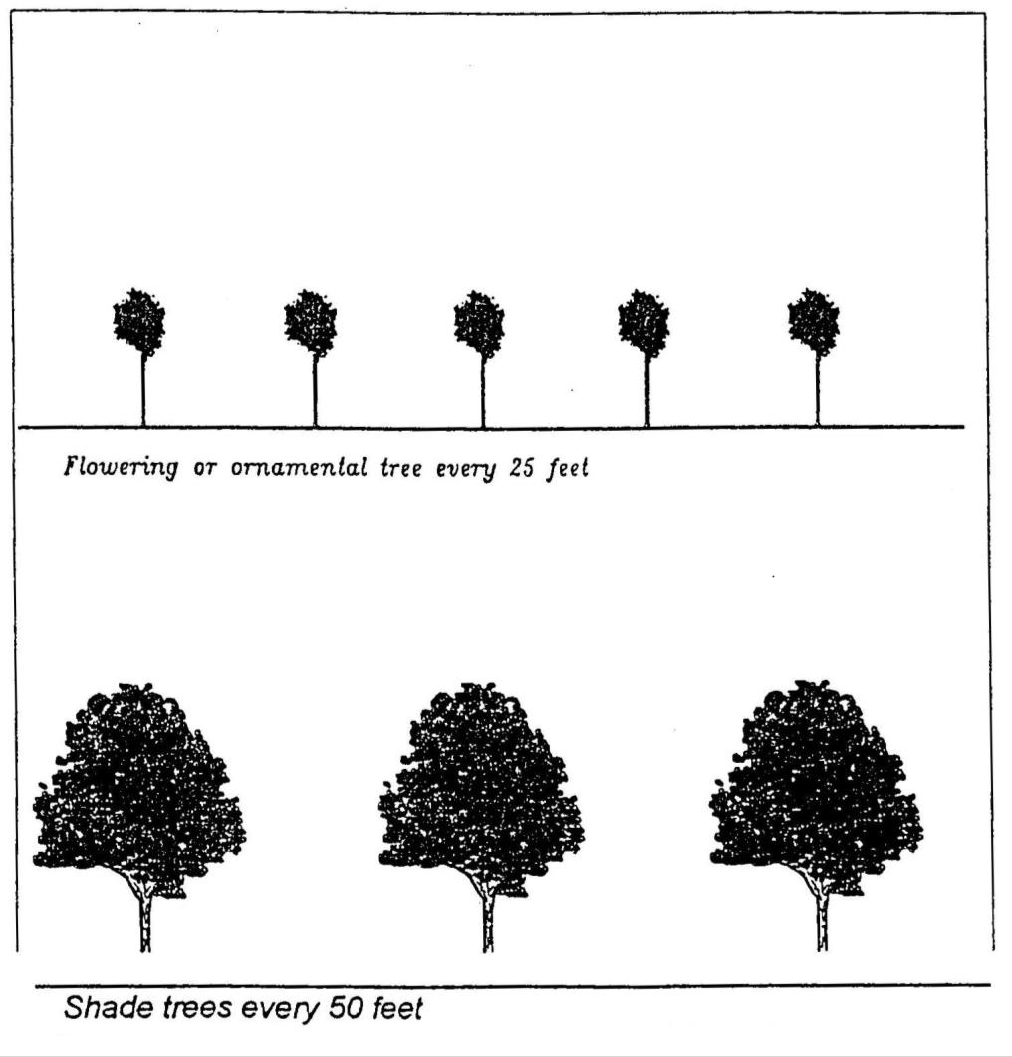
Along any street right-of-way on which the utility pole for power, street lights and/or telephone service is or will be located, at least one flowering or ornamental tree shall be planted for every 25 feet of street frontage at approximately 20 feet on center.
2.
On any street right-of-way on which utilities are not and will not be located, one shade tree shall be planted for every 50 feet, or portion thereof, of road frontage or one flowering or ornamental tree shall be planted for every 25 feet of street frontage at approximately 25 feet on center.
b.
The following landscaping shall be required for parking lots consisting of five or more spaces:
1.
When a parking lot fronts on an existing or proposed street, trees shall be planted in accordance with this Land Development Ordinance. An additional row of low shrubs shall be required between the street and the parking lot consisting of at least one low shrub for every five feet of street frontage.
2.
Interior landscaping for parking lots shall consist of one shade tree for every 12 parking spaces.
c.
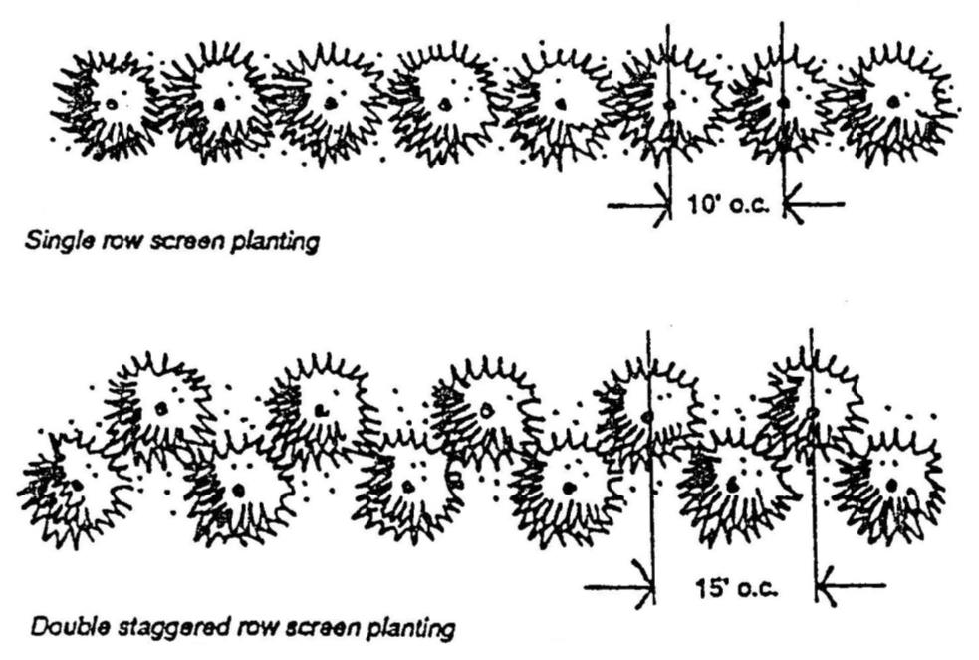
Vegetative screening shall be required at all side and rear yards when Limited Professional, Commercial, Industrial, Multifamily or Townhouse Developments abut a Single-Family Residential District R-1, Low Density Residential District R-1a, Medium Density Residential District R-2, or a detached single-family developed lot or subdivision in a High Density Residential District R-3. Such screening shall be at least six feet in height. If using approved vegetation, such screening shall consist of one row planted not more than ten feet on center or two staggered rows planted not more than 15 feet on center. Screening shall not be required when abutting an existing or proposed street, in which case the street tree (section 705.03 a) requirements of this article shall apply. Alternate methods of screening such as walls or earth berms may be used in lieu of vegetative screening with the approval of the zoning administrator.
d.
Suggested trees and shrubs.
1.
Street and shade trees: Green Ash, Red Maple, Norway Maple, Sugar Maple, Red Oak, Willow Oak, Japanese Pagoda Tree, Littleleaf Linden Silver Linden, Zelkova, Yellowwood.
2.
Ornamental or flowering trees: Amur Maple, Dogwood, Washington Hawthorn, American Plum, Bradford Pear, Serviceberry, Redbud and Shadblow.
3.
Evergreen or flowering shrubs: English Yew, Japanese Yew, Azalea, Chinese Holly, Rhododendron, Abelia, Cotoneaster, Forsythia, Viburnum, Winged Euonymus, and Flowering Quince.
Screening: Cedar, Austrian Pine, Norway Spruce, American Holly, Arborvitae, Foster Holly, Cypress and White Pine.
809.04. Enforcement.
a.
When the submission of a site plan is required by this Land Development Ordinance, a landscape plan shall also be required. This plan shall include the following information; the location, size and type of all proposed plant materials, and verification that the minimum landscaping and screening requirements specified in this article have been met. If such information is already included on the site plan to the satisfaction of the zoning administrator, this requirement may be waived.
b.
Final certificates of zoning may be held pending completion of the landscaping to the satisfaction of the zoning administrator. A certified check, irrevocable letter of credit or other surety satisfactory to the town may be secured to allow for the issuance of the certificate prior to completion; however; such certificate should be obtained prior to issuance of a building permit.
(Ord. No. 24-2, 3-12-2024)
Sec. 810. - Mobile home parks.
Mobile home parks where permitted must meet the following special requirements:
810.01. Mobile homes. Any mobile home placed in any new or existing mobile home park after the date of enactment or amendment of this Land Development Ordinance shall meet the following requirements:
a.
All mobile homes shall meet the plumbing requirements and the electrical wiring and connection requirements of the building code, and the construction blocking, and anchoring requirements of the Virginia State Corporation Commission; and shall display the seal of a testing laboratory approved by the Commonwealth of Virginia.
b.
All mobile home units shall be completely skirted, such that no part of the undercarriage shall be visible to a casual observer, in accordance with methods and materials approved by the building inspector.
810.02. Mobile home accessory structures. All mobile home accessory structures erected or constructed in any new or existing mobile home park after the date of enactment or amendment of this Land Development Ordinance must meet the following requirements:
a.
All mobile home accessory structures must meet the plumbing, electrical connection, wiring, construction, and applicable requirements of the building code.
b.
Except in the case of an awning, ramada, or other shade structure, where a mobile home accessory structure is attached to the mobile home unit, a substantial part of one wall of the accessory structure shall be flush with part of the mobile home unit, or such accessory structure shall be attached to the mobile home in a substantial manner by means of a roof. All mobile home accessory structures, whether attached or detached, shall be designed and constructed as freestanding structures. No detached mobile home accessory structure, except ramadas, shall be erected closer than 20 feet to a mobile home.
c.
Mobile home accessory structures, except ramadas, shall not exceed the heights of the mobile home.
d.
No mobile home accessory structure shall be erected or constructed on any mobile home lot except as an accessory to a mobile home.
e.
Every room in a cabana, herein defined as any habitable mobile home accessory structure, shall have access to at least one exterior door opening without requiring passage through the mobile home; shall be ventilated either by windows capable of opening to the outside to an area of five percent of the floor area, or by a ventilation system capable of producing a change of air in the room every 30 minutes, with at least 20 percent of the air supply taken from the outside; shall have a total glazed area not less than ten percent of the floor area of the cabana; and in the case of attached structures, shall not be constructed adjacent to more than one exterior door in the mobile home, nor to more than one side of the mobile home.
f.
Awnings and other shade structures, except ramadas, shall conform to the requirements of applicable sections of the building code.
g.
Where a ramada extends over a mobile home, it shall exceed the height of the mobile home by no more than 36 inches nor less than 18 inches and shall have a clearance of not less than six inches in a horizontal direction from each side of a mobile home. Cross braces, structural ties, or other architectural appurtenances shall not obstruct movement of any mobile home.
h.
A ramada shall not be enclosed or partly enclosed on any side, except that one side may be enclosed when the ramada roof is continuous with the roof of a cabana.
i.
A ventilation opening of at least 28 square inches in area shall be provided at the highest point in the ramada roof; all chimneys or vents shall extend through the ramada roof and terminate a safe distance above the ramada.
j.
Porches may be placed adjacent to mobile homes, provided they are constructed in accordance with the provisions of the building code.
810.03. Mobile home lot requirements. All mobile home lots shall meet the following minimum requirements.
a.
The area of any mobile home lot shall not be less than that specified in section 810.07 for the area of common open space provided, and in no instance shall be less than 3,400 square feet.
b.
No mobile home or permanent building shall be closer than 20 feet to any mobile home.
c.
The minimum length of a mobile home lot shall be 85 feet; the minimum width shall be 40 feet. On all lots larger than the minimum, the ratio of length to width shall not exceed 2.2 to 1.0.
d.
Mobile home stands adjacent to public streets shall be oriented such that the long axis of the mobile home shall be parallel to the road.
e.
Where laundry facilities are not made available, the rear yard of each mobile home lot shall be provided with a clothesline, which shall be exempt from setback and other requirements of mobile home accessory structures.
f.
A patio of 200 square feet in area shall be provided adjoining each mobile home stand.
g.
No more than one detached mobile home accessory structure shall be permitted on any mobile home lot.
810.04. Mobile home park application and site plan. Applicants for conditional use permits for mobile home parks shall follow procedures outlined in section 1002.03 of this Land Development Ordinance, and in addition, shall meet the following special requirements:
a.
Site plans may be on one or more numbered sheets, and shall be legibly drawn at a scale of one inch to 100 feet.
b.
The following information shall be required in addition to the information required of site plans and applications in section 1002.03 of this Land Development Ordinance:
1.
The date of the site plan, the name of the surveyor or engineer preparing it, and the number of sheets comprising the site plan.
2.
The scale and the north meridian, designated "true" or "magnetic."
3.
The name and signature of the owner, and the name of the proposed park; said name shall not closely approximate that of any existing mobile home park or subdivision in the Town of Bedford or in Bedford County.
4.
A vicinity map showing the location and area of the proposed park.
5.
The boundary lines, area, and dimensions of the proposed park, with the locations of property line monuments shown.
6.
The names of all adjoining property owners, the location of each of their common boundaries, and the approximate area of each of their properties.
7.
The location and dimensions of all existing streets and street rights-of-way, easements, water, sewerage, drainage facilities, and other community facilities and utilities on and adjacent to the proposed park.
8.
All existing significant natural and historical features on or adjacent to the proposed park, including, but not limited to, significant vegetation; lakes, streams, swamps, lands subject to flooding, and other waterways; views from the property, and views from adjoining properties that might be affected by the proposed park; existing structures; and topographic features shown by contour lines.
9.
Proposed layout, including interior streets with dimensions and typical street cross sections and centerline profiles as may be required in evaluating the street layout; water, sewer drainage, and utility lines, facilities and connections, with dimensions shown; location and type of solid waste collection facilities; interior monuments and lot lines, dimensions, and areas of mobile home lots, common open space and recreation areas, common parking areas, and other common areas; locations and dimensions of mobile home stands and parking spaces, management office, laundry facilities, recreation buildings and other permanent structures; location and nature of firefighting facilities, including hydrants, fire extinguishers, and other firefighting equipment; location of fuel storage facilities and highly flammable structures, and location and dimensions of landscaping amenities, including street lights, sidewalks, planted areas, significant natural features to be retained, and fencing and screening.
c.
The site plan shall be accompanied by a narrative statement describing how the standards and requirements set forth herein are to be met; approval of the proposed site plan; and a statement from town staff certifying approval of the street, drainage, water and sewer and utility systems layouts.
d.
If and when such site plan is approved, an irrevocable letter of credit, certified check, performance bond, or other surety of a surety company licensed to conduct business in the state will be required in an amount equal to the total construction expense, as estimated by the engineer of the developer and the engineering representative of the Town of Bedford, satisfactory to the town attorney and the town manager, and approved by the zoning administrator. Said bond shall be forfeited if construction is not completed within a period of one year from the date of the bond or such other period specified and approved by the zoning administrator.
810.05. Mobile home park area and setback requirements. All mobile home parks shall meet the following minimum area and setback requirements.
a.
All mobile home parks shall have a minimum area of at least ten acres, and no fewer than 50 mobile home stands. However, expansion of mobile home parks existing prior to enactment of this Land Development Ordinance need not bring the total acreage and/or number of stands to the minimum.
b.
The areas of existing mobile home parks expanded after enactment of this Land Development Ordinance shall meet all requirements of this Land Development Ordinance.
c.
The following minimum yard requirements shall apply for all parks:
1.
No mobile home unit, management office, or other structure except decorative fencing, lighting, wall, entrance, or other decorative feature, shall be located closer than 35 feet to a street right-of-way of 50 feet or greater, nor closer than 60 feet to the centerline of a street with a right-of-way of less than 50 feet.
2.
No main or accessory uses shall be located closer than 25 feet to any other property line of a mobile home park.
810.06. Mobile home park utilities and streets. All mobile home parks shall meet the following minimum requirements for utilities and streets.
a.
All mobile home parks shall connect to the water and sewer systems of the town; the internal layout of the water and sewer systems of the park shall be of a design satisfactory to town staff, and shall be open to his inspection.
b.
The storm drainage facilities of the park shall comply with all applicable regulations for stormwater retention, treatment, and conveyance. Storm drainage facilities shall connect to the storm sewer system of the town, where available. Where such systems are unavailable, the park shall provide appropriate on-site stormwater facilities. Curbs and gutters shall be provided on all internal streets, and shall meet standards for curbs and gutters for public streets established by the Virginia Department of Transportation.
c.
An internal street system shall be provided to furnish convenient access to mobile home stands and other facilities in the park, shall be designed such that connection to existing drainage and utility systems is convenient, and shall meet the following requirements:
1.
All internal streets shall be permanently constructed to current standard of VDOT and maintained by park management. Minimum pavement widths shall be 22 feet for streets providing access to 40 more mobile home stands, and 20 feet for streets providing access to less than 40 mobile home stands. Widths shall be measured from curb face to curb face.
2.
No on-street parking shall be permitted.
3.
Dead end streets shall be limited in length to 800 feet, shall be provided with cul-de-sacs with turning areas of not less than 40 feet in radius, or with "T" or "Y" turning areas, and shall provide access to no more than 20 mobile home stands.
4.
Street intersections shall be within 20 degrees of perpendicular for no less than 100 feet each way from intersections. Street intersections shall be direct crossing or offsets of no less than 125 feet from centerline. Intersections of more than two streets at one point shall be prohibited.
5.
Streets shall be adapted to the topography, shall follow the contours of the land as nearly as possible, and shall have grade and alignments. No grade shall exceed eight percent and no curve shall have an outside radius of less than 80 feet.
6.
Lighting shall be provided in such a way as to produce a minimum of 0.1 footcandles at street level throughout the system, with at least 0.3 footcandles at street intersections, park entrances, and other potentially hazardous locations in or around the park.
7.
Entrances shall be provided in a sufficient number to insure safe and convenient access and egress. Where the proposed park adjoins two or more streets, entrances shall be provided on at least two streets where possible, provided that the street system shall be so designed as to discourage through traffic. Entrances shall be no closer than 125 feet from an existing street intersection.
d.
The utility and sanitation systems of all mobile home parks shall meet the following requirements:
1.
Electrical supply and distribution systems shall meet applicable requirements of the building code and of the town electric department and shall connect to the electrical system of the town; all electrical facilities except necessary connections shall be installed belowground.
2.
Telephone service shall be provided to mobile home stands; except for necessary connections, installation shall be underground.
3.
Where centralized natural or liquid propane gas supply and distribution systems are installed, they shall conform to applicable requirements of the building and fire prevention code. Piping shall be installed at least 18 inches underground, except where necessary connections are made, provided that no piping shall be installed underground beneath a mobile home stand.
4.
Where centralized fuel oil supply and distribution systems are installed they shall be designed in accordance with accepted engineering practice and shall comply with the building and fire prevention code. All storage and distribution facilities except necessary connections and vents shall be installed at least 18 inches underground, provided that no storage of fuel oil shall be permitted inside, beneath, or within five feet measured horizontally of any mobile home.
5.
Individual natural or liquid propane gas, or fuel oil systems shall be installed in accordance with applicable provisions of the building and fire prevention code.
6.
Refuse shall be stored in an area enclosed to a height of at least five feet with a concrete base and with sufficient screening (either constructed or fully developed vegetative) to prevent outside view of the stored refuse. Each refuse area shall be at least 50 feet from the nearest mobile home stand. Each mobile home stand will be within 500 feet of at least one refuse storage area. Refuse shall be stored in water resistant, rodentproof containers with attached lids. Such containers shall be of sufficient capacity to store all refuse properly. Refuse shall be removed from the park at least twice each week.
e.
Paved parking spaces shall be provided in accordance with section 812 of this Land Development Ordinance. Parking facilities may be clustered to serve groups of mobile home stands provided that no parking space serving a mobile home stand shall be further than 60 feet from the stand, and that at least one of the parking spaces shall be within 30 feet of the mobile home stand. Paved driveways may serve as one or both of the parking spaces required per mobile home stand.
f.
For purposes of fire protection, all permanent buildings and mobile home units shall be provided with an approved portable fire extinguisher labeled as suitable for class A, B, and C type fires. Fire extinguishers may be provided to mobile home units on a deposit basis, as provided in section 810.08 below. In addition, all mobile home stands shall be within 500 feet of at least one fire hydrant.
810.07. Mobile home park amenities. All mobile home parks shall meet the following minimum requirements for open space, recreation, screening, and other amenities:
a.
Significant natural features identified on the site plan shall be retained to the maximum extent feasible in the provision and design of open space and recreation areas.
b.
Open space areas, including those portions of mobile home lots not occupied by mobile home stands, accessory uses, driveways, or parking areas, as well as common open space, including outdoor recreation areas shall meet the following requirements:
1.
Provision shall be made for common open space such that a density of no greater than seven mobile home units shall be permitted per acre of total usable area and such that ten percent of the total usable area of the park shall be reserved for common open space and recreation areas, as a minimum, where total usable area excludes area reserved for public street rights-of-way. Larger percentages of common space are encouraged provided the maximum lot coverages specified below are met.
2.
Lot coverage, herein defined as the percentage of the mobile home lot area covered by the mobile home stand and any mobile home accessory structure, driveway, and parking area, excluding patios, shall not exceed 35 percent as an average, nor 40 percent for a given lot; the minimum area of any lot devoted to common open space shall be 10,000 square feet.
3.
Where mobile home lot sizes are relied on primarily to provide for open space, lots and stands shall be so grouped as to maximize the amount of usable space, while meeting the minimum yard requirements set forth in section 810.03 of this Land Development Ordinance.
4.
Where possible, provision shall be made for separation of recreational areas by age groups; in mobile home parks of over 150 units in size, provision shall be made for adequate supervision of recreational areas.
5.
Tot lots and swimming areas shall be adequately enclosed, and all recreational areas shall be located away from concentrations of vehicular traffic.
c.
Fencing or vegetative screening shall be provided as specified in section 809, required landscaping. Fencing where required shall be maintained in safe condition and shall be kept in good repair.
d.
Paved common walks of a width of at least four and one-half feet shall be provided on at least one side of all streets, and wherever concentrations of pedestrian traffic can be expected, as between recreational facilities; walks may be incorporated into the street curb. Walk grades shall not exceed ten percent; lights shall be provided sufficient to illuminate steps to a level of at least 0.3 footcandles.
e.
Paved individual walks of at least three feet in width shall be provided to connect all mobile home stands with parking spaces or driveways and common walks.
810.08. Park management requirements. The management of mobile home parks shall be in accordance with the following requirements:
a.
The minimum number of mobile home lots and stands completed and ready for occupancy before the first occupancy is permitted shall be 12; no lot or stand shall be rented for a period of less than 60 days;
b.
Permanent buildings housing management offices, childcare centers, laundry facilities, or indoor recreational facilities or other service facilities may be permitted in mobile home parks provided that they:
1.
Shall meet parking requirements for such facilities as specified in section 812;
2.
Shall be subordinate to the residential use and character of the park;
3.
Shall be located, designed, and intended to serve the needs of persons residing in the park;
4.
Shall present no visible evidence of their nonresidential character to any area outside the park;
5.
Shall meet all applicable federal, state and local requirements pertaining to such uses; and
6.
Shall not occupy more than ten percent of the area of the park.
c.
The mobile home park management shall maintain a register of mobile home park occupants at all times, and shall prepare a list of park rules, including but not limited to the following:
1.
Recommended procedures to be followed in the event of fire or other disaster;
2.
The rental agreement, embodying the terms and conditions concerning the use and occupancy of mobile home lots and premises and other facilities or services provided by the landlord, and specifying requirements for ownership or use with deposit of a portable fire extinguisher of a type suitable for class A, B, or C fires; and
3.
The responsibilities of the management and of park occupants concerning but not limited to sanitation, solid waste disposal and park maintenance.
(Ord. No. 24-2, 3-12-2024)
Sec. 811. - Multifamily, townhouse and condominium development.
811.01. Applicants for use permits for multifamily developments, herein defined as one or more multifamily buildings, shall meet the following special requirements. These requirements shall apply to any structure of similar use, physical structure and character, regardless of type of ownership.
811.02. Site plan. A site plan shall be prepared in accordance with the following site requirements:
a.
Site plans may be on one or more numbered sheets, and shall be legibly drawn at a scale of one inch to not more than 100 feet.
b.
The following information shall be required in addition to the information required of site plans and applications in section 1002.03 of this Land Development Ordinance.
1.
The date of the site plan, the name of the surveyor or engineer preparing it, and the number of sheets comprising the site plan.
2.
The scale and the north meridian, designated "true" or "magnetic."
3.
The name and signature of the owner, and the name of the proposed development; said name shall not closely approximate that of any development or subdivision in the Town of Bedford or in Bedford County.
4.
A vicinity map showing the location and area of the proposed development.
5.
The boundary lines, area, and dimensions of the proposed development, with the locations of property line monuments shown.
6.
The location and dimensions of all existing streets and street rights-of-way, easements, water, sewerage, drainage facilities, and other community facilities and utilities on and adjacent to the proposed development.
7.
All existing significant natural and historical features on or adjacent to the proposed development, including, but not limited to, significant vegetation, lakes, streams, swamps, lands subject to flooding, and other waterways, views from the property, and views from adjoining properties that might be affected by the proposed development, existing structures, and topographic features shown by contour lines.
8.
Proposed layout, including interior streets with dimensions and such typical street cross sections and centerline profiles as may be required in evaluating the street layout; water, sewer, drainage and utility lines, facilities and connections, with dimensions shown; location and type of solid waste collection facilities; interior monuments and lot lines, dimensions, and areas of lots, common open space and recreation areas, common parking areas, and other common areas; management office, laundry facilities, recreation buildings, and other permanent structures; location and nature of firefighting facilities, including hydrants, fire extinguishers, and other firefighting equipment; location of fuel storage facilities and highly flammable structures; and location and dimensions of landscaping amenities, including street lights, sidewalks, planted areas, significant natural features to be retained, and fencing and screening.
c.
Land for condominiums shall not be subdivided into separate parcels when the development or building contains three or more units in which case all land must remain in common ownership. Subdivision of land for duplex type condominiums shall be permitted only when the subdivision can comply with the single-family dwelling requirements of the ordinance.
d.
The zoning administrator may waive site plan requirements, other than planning commission review, provided the development is along a publicly dedicated and approved street accepted for maintenance by the town and no new streets, water or sewer lines are involved.
e.
When and if such site plan is approved, an irrevocable letter of credit, certified check, performance bond or other surety of a surety company licensed to conduct business in the state will be required in an amount equal to the total construction expense, as estimated by the engineer of the developer and the town's engineering representative, satisfactory to the town attorney and town manager, and approved by the zoning administrator. Said bond shall be forfeited if construction is not completed within period of one year from the date of the bond, or such other period specified and approved by the zoning administrator.
811.03. Site area and density requirements. Minimum site area for a multifamily development shall be 12,000 square feet and with a density of no more than 16 units per acre.
811.04. Utilities and streets. All multifamily developments shall meet the following requirements for utilities and streets.
a.
All multifamily developments shall connect to public water and sewer systems unless an alternative system is approved via conditional use permit. The internal layout of the water and sewer systems of the development shall be of a design satisfactory to the Bedford Regional Water Authority or other applicable town staff and shall be open to inspection.
b.
The storm drainage facilities of any multifamily development shall connect to the storm sewer system of the town, where available. Where such systems are unavailable, the development shall provide appropriate on-site stormwater facilities. Curbs and gutters shall be provided on all internal streets and shall meet standards for curbs and gutters for public streets established by the Virginia Department of Transportation.
c.
An internal street system shall be provided to furnish convenient access to multifamily units and shared facilities, and shall meet the following requirements:
1.
All internal streets shall be permanently constructed to current town or VDOT standards.
2.
Streets shall be adapted to the topography, shall follow the contours of the land as nearly as possible.
3.
Lighting shall be provided in such a way as to produce a minimum of 0.1 footcandles at street level throughout the system.
4.
Entrances shall be provided in sufficient numbers to ensure safe and convenient access and egress. Where the proposed development adjoins two or more streets, entrances shall be provided on at least two streets where possible, provided that the street system shall be so designed as to discourage through traffic.
d.
The electrical and solid waste provisions of multifamily developments shall meet the following requirements:
1.
Electrical supply and distribution systems shall meet applicable requirements of the building code and of the town electric department and shall connect to the electrical system of the town; all electrical facilities shall be installed below ground.
2.
Refuse shall be stored in an area enclosed to a height of at least five feet with a concrete base and with sufficient screening (either constructed or fully developed vegetative) to prevent outside view of the stored refuse.
811.05. Amenities. All multifamily developments shall meet the following minimum requirements for open space, recreation, and other amenities:
a.
Significant natural features identified on the site plan shall be retained to the maximum extent feasible in the provision and design of open space and recreation areas.
b.
Open space area, excluding those portions of the multifamily development occupied by multifamily dwellings, accessory uses, driveways, or parking areas, and including outdoor recreation areas, shall meet the following requirements:
1.
Provision shall be made for common open space such that one percent of the gross area of the site shall be devoted to common open space for each dwelling unit per acre of density. Common open space shall not include areas included in minimum yard area requirements.
2.
In multifamily developments of over 150 units in size, provision shall be made for adequate supervision of recreational areas.
3.
Tot lots and swimming areas shall be adequately enclosed, and all recreational areas shall be located away from concentrations of vehicular traffic.
c.
Fencing or vegetative screening shall be provided, as outlined in section 809 of this Land Development Ordinance. Fencing where required shall be maintained in a safe condition and shall be kept in good repair.
d.
Paved common walks of a width of at least four and one-half feet shall be provided on at least one side of all streets and wherever concentrations of pedestrian traffic can be expected, as between recreational facilities, walks may be incorporated into the street curb. Walk grades shall not exceed ten percent, lights shall be provided sufficient to illuminate steps to a level of at least 0.03 footcandles.
e.
Refuse shall be stored in an area enclosed to a height of at least five feet with a concrete base and with sufficient screening (either constructed or fully developed vegetative) to prevent outside view of stored refuse. Refuse shall be stored in water resistant, rodentproof containers with attached lids. Such containers shall be of sufficient capacity to store all refuse properly.
f.
Street trees shall be provided as outlined in section 809 of this Land Development Ordinance. Be in accordance with the following requirements:
1.
Permanent buildings housing management offices, day care centers, laundry facilities, or indoor recreational facilities or other service facilities may be permitted in multifamily developments provided that they:
(a)
Shall meet parking requirements for such facilities as specified in section 812.
(b)
Shall be subordinate to the residential use and character of the development;
(c)
Shall be located, designed and intended to serve the service needs of persons residing in the development;
(d)
Shall present no visible evidence of their nonresidential character to any area outside the development;
(e)
Shall meet all applicable federal, state and local requirements pertaining to such uses; and
(f)
Shall not occupy more than ten percent of the area of the development.
811.06. In addition to the above requirements, townhouse and duplex type condominium or rental developments shall meet the following specific requirements:
a.
No more than 12 townhouses shall be included in any building, each of which shall be at least 16 feet in width, all of which shall have an average width of at least 20 feet. Duplex lot width, lot area, lot width at corner lots, and maximum coverage shall meet applicable requirements.
b.
Minimum yard requirements shall be provided as follows:
1.
Front yard depths on internal private streets shall be at least 15 feet from any street or parking area.
2.
Front, rear and side yard requirements on public streets or other land not part of the proposed development shall be as prescribed for the district in which the development is located, except that yard requirements for duplex type condominiums shall not apply to the party wall side yards.
3.
Any building containing a group of five or more units shall be separated by at least 40 feet from any other dwelling unit building. Any building containing a group of four or less units shall be separated by at least 20 feet from any other building containing a group of four or less dwelling units.
c.
Height shall be no more than 40 feet measured from the average level of the ground adjacent to the front exterior wall.
811.07. In addition to the requirements specified for multifamily dwellings in sections 811.01 through 811.06, apartment developments shall meet the following special requirements:
a.
Minimum yard requirements for apartment developments shall be the same as for single-family dwellings in the district in which the development is located, provided that for each additional foot of height over 40 feet, an additional foot of yard depth shall be required.
b.
Interior yards shall be provided as follows:
1.
Front yard depths on internal streets shall be at least 15 feet in depth provided that for each foot above 40 feet in height, an additional foot of front yard depth shall be provided.
2.
Distances between multifamily dwellings shall be as provided in section 811.08, provided that for each additional foot in height per building over 40 feet, one additional foot of distance between buildings shall be provided.
c.
Height of multifamily dwellings shall be no more than 50 feet measured from the average level of the ground adjacent to the front exterior wall.
d.
Party walls and other fire retardation structures shall be provided in accordance with specifications of the building official.
811.08. Minimum distance between buildings. The following minimum distances between buildings located on the same lot or parcel shall be required unless otherwise specified within this Land Development Ordinance:
a.
Front to front arrangement—40 feet.
b.
Front to rear arrangement—50 feet.
c.
Rear to rear arrangement—30 feet.
d.
Side to side arrangement—30 feet.
e.
All other arrangements—30 feet.
(Ord. No. 24-2, 3-12-2024)
Sec. 812. - Off-street parking, driveways, and entrances.
Off-street automobile storage or parking space shall be provided on every lot on which any permitted or conditional use is established in accordance with this Land Development Ordinance.
812.01. General requirements. For the purpose of this Land Development Ordinance, the following general requirements are specified:
a.
All driveway entrances, excluding one and two family residences, shall conform to the Virginia Department of Transportation minimum standards as amended. All other minimum driveway width standards are as follows:
1.
Minimum for one and two family dwellings, and all uses in the LP district: ten feet wide at property line.
2.
Minimum for other than one and two family: 30 feet wide at the property line.
b.
The term off-street parking space shall mean a space at least nine feet wide and 18 feet in length. Minimum two-way traffic aisles in off street lots shall be 24 feet in width. Minimum one way traffic aisles shall be 12 feet in width. Off-street lots and off-street parking spaces shall meet the requirements set by the following policy on parking area dimensions from the current edition of the "Transportation and Traffic Engineering Handbook" of the Institute of Transportation Engineering.
c.
Driveways for other than one or two family dwellings shall meet the following requirements:
1.
One way: residential ten feet commercial 11 feet industrial 11 feet.
2.
Two way: residential 20 feet commercial 22 feet industrial 22 feet.
d.
Handicapped parking shall be required as provided for in the Virginia Uniform Statewide Building Code.
e.
Parking spaces for all dwellings shall be located on the same lot with the main buildings to be served. If an off-street parking space cannot be reasonably provided on the same lot on which the main use is conducted, the zoning administrator may permit such space to be provided on other off-street property, provided such space lies within 600 feet of the property line of such main use. Such vehicle parking space shall be associated with the permitted use and shall not thereafter be reduced or encroached upon in any manner.
f.
The required number of parking spaces for any number of separate uses may be combined in one lot, but the required space assigned to one use may not be assigned to another use at the same time, except that a portion of the parking space required for an existing church, movie theater, or other use whose peak attendance will be at night or on Sundays may be assigned to a use which will be closed at night or on Sunday.
g.
Areas reserved for off-street parking in accordance with the requirements of this Land Development Ordinance shall not be reduced in area or changed to any other use unless the permitted use which it serves is discontinued or modified, except where equivalent parking space is provided to the satisfaction of the zoning administrator.
h.
Off-street parking existing at the effective date of this Land Development Ordinance in connection with the operation of an existing building or use shall not be reduced to an amount less than hereinafter required for a similar new building or use. Existing off-street parking which is provided in an amount less than the requirements stated hereinafter shall not be further reduced.
i.
Construction vehicles, trucks, and trailers of a gross weight of more than 6,000 pounds shall not be parked in the area between the front lot line and the setback line in any residential district.
812.02. Parking space requirements for all districts. Off-street automobile storage or parking space shall be provided with vehicular access to a street or alley, and shall be equal in area to the minimum requirements for the category of land use set forth. The following parking requirements shall apply in all districts, except as noted in section 812.03.
812.03. Parking requirements: Limited Business District B-1, Limited Professional District LP, and Central Neighborhood Workplace CNW.
In cases in which either existing lot or building sizes prohibit feasible satisfaction of the requirements related to minimum off-street parking, driveways, and/or entrances within the Limited Business District (B-1), Limited Professional District (LP), and the Central Neighborhood Workplace District (CNW) the zoning administrator may adjust or waive the parking requirements for either new or established permitted uses based on the following considerations:
a.
The proximity of public parking (either on- or off-street) that could practically accommodate the use, building, and/or lot in question may be considered to satisfy the town's interests as represented by this section.
b.
Within the LP District the development requirements for parking may be waived only if access to a minimum of two permanent off-street parking spaces can be demonstrated.
c.
The zoning administrator shall issue a written statement documenting the reasons for any adjustment or waiver issued in conjunction with this section. For all activities requiring a zoning permit, the written statement shall be attached to said permit.
812.04. Site requirements. Excepting parking and driveways of one and two family dwellings, all off-street parking shall be laid out, constructed, and maintained in accordance with the following requirements:
a.
All such parking and drive areas shall be graveled or paved before being opened to the public.
b.
Entrances shall be constructed in accordance with requirements of the Town of Bedford.
c.
Lighting facilities shall be so arranged that light is reflected away from adjacent properties.
d.
The parking lot shall be adequately drained in accordance with the specifications and requirements of the Town of Bedford.
e.
In B-1 and B-2 Districts, all parking areas must be paved, and parking spaces with street frontage must also be provided with concrete curbs or other restrictive barriers.
f.
The parking lot shall be landscaped in accordance with the requirements specified in section 809.
(Ord. No. 24-2, 3-12-2024)
Sec. 813. - Off-street loading and unloading space.
Off-street loading and unloading spaces shall be provided as hereinafter required by this Land Development Ordinance, or in accordance with the "Transportation and Traffic Engineering Handbook" of the Institute of Transportation Engineering or the current edition of "Architectural Graphic Standards."
813.01. Connection to road or alley. Each required off-street loading space shall have direct access to a road or alley to have a driveway which offers satisfactory ingress and egress for trucks.
813.02. Space required. There shall be provided for each hospital, hotel, commercial or industrial building, or similar use requiring the receipt or distribution of materials or merchandise, off-street loading space adequate in size and number for use. Such space shall not be located so as to hinder the free movement of pedestrians and vehicles over a sidewalk, road or alley.
813.03. Bus and trucking terminals. There shall be provided sufficient space to accommodate the maximum number of buses or trucks to be stored or to be located at the terminal at any one time.
813.04. Location of off-street loading spaces. All required off-street loading spaces shall be located on the same lot as the building which they are intended to serve, or on an adjacent lot when shared with the use occupying said adjacent lot.
813.05. Permanent reservation. Areas reserved for off-street loading in accordance with the requirements of this Land Development Ordinance shall not be reduced in area or changed to any other use unless the use which is served is discontinued or modified, except where equivalent loading space is provided and is approved by the zoning administrator.
(Ord. No. 24-2, 3-12-2024)
Sec. 814. - Open air market.
814.01 Site requirements:
a.
All parking for sellers and customers must be contained on site unless there is existing, designated public parking defined at or adjacent to the site (in the case of the downtown area). The owner must maintain clean access to the site if the site is not paved to prevent tracking mud onto the road.
b.
There is no minimum size parcel required for the use, however, the site size must accommodate on-site parking and vendor spaces. To determine the maximum number of allowable vendors, applicants must use a minimum measurement of 20 feet by 20 feet per vendor.
c.
No activities associated with the market shall be conducted within 500 feet of a residential use.
814.02 Special requirements. Open air markets, where permitted, must meet the following special requirements:
a.
Days of operation may be Friday, Saturday and Sunday during daylight hours as determined in the conditional use process.
b.
Restrooms must be provided on site per Virginia Department of Health regulations.
c.
No structures, buildings or facilities, such as portable toilets, related to the market use shall remain on the site when the market is not open, unless the market is open two days in a row such as on a weekend, or unless the structure is one that contains restrooms that serve another existing, shared use on the site.
d.
All refuse must be contained on site and disposed of by the organizer as commercial waste at the end of each market day.
(Ord. No. 24-2, 3-12-2024)
Sec. 815. - Outdoor display areas.
Outdoor display areas, where permitted by this appendix as accessory uses, shall comply with the following standards:
a.
Such outdoor display area shall be located on the same lot as the principal use and shall be incidental to the principal use.
b.
Outdoor display area shall be limited in square footage to 15 percent of the area of the principal building. Exceptions may be granted by the planning commission for car sales lots or other premises where greater outdoor display may be necessary or appropriate.
c.
Outdoor display area shall be furnished with a surface material such as gravel, asphalt or concrete.
d.
Merchandise shall not be placed or located so as to interfere with pedestrian or building access or egress, required vehicular parking and handicap parking, drive aisles, site access or egress, loading spaces or access thereto, public or private utilities, drainage systems, fire lanes, alarms, hydrants, standpipes or other fire protection equipment, or emergency access or egress.
e.
Merchandise shall not encroach into required setbacks, buffer yards, or the public right-of-way.
(Ord. No. 24-2, 3-12-2024)
Sec. 816. - Signs.
Part I. General provisions
816.01. Intent; applicability. The purpose of the following sign requirements is to regulate the size, location, height and construction of all signs placed for public observance within the Town of Bedford. These regulations are intended to promote and protect the health, safety and welfare of the public and further the economic development goals of the comprehensive plan by:
a.
Protecting and enhancing property values;
b.
Creating a more attractive and professional business climate and encouraging high professional standards in sign design and display;
c.
Protecting the scenic, natural and historic character of the town;
d.
Promoting traffic safety by preventing obstructions within public rights-of-way, minimizing visual distractions to motorists, ensuring that sign size and height are appropriate to their location, and preventing conflicts with public safety signs;
e.
Ensuring that signs do not interfere with police and fire protection;
f.
Protecting the safety of people and property against sign hazards due to collapse, decay or abandonment;
g.
Permitting signs that are appropriate to the planned character and development of each zoning district.
These regulations shall apply to the construction, erection, alteration, use, relocation or reconstruction of all signs placed for public observance within the Town of Bedford.
816.02. Sign permit required; general requirements.
a.
Except as provided in section 816.03 below, no sign or sign structure shall be erected, displayed, altered, relocated, replaced or reconstructed without a sign permit issued by the zoning administrator in accordance with the provisions of part III of these sign regulations. All signs shall be located on the same lot with the principal use to which they pertain. Failure to adhere to the requirements of this Land Development Ordinance automatically cancels such permit and said sign or structure shall be removed forthwith.
b.
All signs, whether permanent or temporary, shall comply with all applicable provisions of this Land Development Ordinance, the Uniform Statewide Building Code, as amended, and all state and federal regulations pertaining to the display of signs.
816.03. Signs allowed without a permit. Sign permits shall not be required for the following signs; however, all other applicable regulations of this Land Development Ordinance shall apply.
a.
Changing the message content of a conforming sign.
b.
Painting, repainting, cleaning and other normal maintenance and repair of signs or sign structures, unless a structural change is made.
c.
Commemorative plagues and historical markers erected by a recognized historical organization or governmental body, not exceeding nine square feet in area.
d.
Flags of the United States of America, Commonwealth of Virginia, Town of Bedford, or other flags displayed for non-commercial purposes.
e.
Minor signs as defined by this Land Development Ordinance not exceeding three total signs per street frontage per parcel.
f.
Signs erected by the Town of Bedford, or other authorized government entities such as traffic, directional, information, utility, and other regulatory signs.
g.
Signs not visible beyond the boundaries of the lot or parcel upon which they are located, or from any public right-of-way.
h.
Vehicle signs. Signs on trucks, buses, trailers, or other vehicles, unless such vehicles are parked in such a manner that they effectively function as a sign, as determined by the zoning administrator.
i.
Any property actively offered for sale or lease, or actively undergoing construction or renovation, may display one sign per street frontage in addition to those otherwise allowed by this Land Development Ordinance, limited to a maximum area of four square feet for parcels in residential zoning districts and 16 square feet in all other zoning districts. Such signs shall be removed when the property is no longer offered for sale or lease or no longer actively undergoing construction or renovation.
816.04. Prohibited signs. The following signs shall be prohibited in all districts:
a.
Signs that imitate an official traffic sign or signs of a size, location, movement, content, coloring, or manner of illumination which may be confused with or construed as a traffic control device, or which hide from view any traffic or street sign or signal, or which obstruct the view in any direction at any street or road intersection or materially impede the view of an intersection of a road with a railroad grade crossing, as required in section 818 of this Land Development Ordinance.
b.
Signs in any public right-of-way unless approved and erected by an authorized government agency. Signs projecting over public property shall be permitted in accordance with the building code only where "0" setbacks are allowed.
c.
Signs which contain or consist of pennants, ribbons, streamers, spinners, strings of light bulbs, or other similar moving or flashing devices.
d.
Signs attached to utility poles, trees, other natural vegetation, rocks, or fences; or signs attached to walls or other signs unless authorized as part of an approved sign permit.
e.
Signs on vehicles parked in areas visible from a public right-of-way unless such vehicles are used on a regular basis for a business delivery or other form of transportation.
f.
Signs or sign structures that obstruct ingress or egress from any window, door, fire escape, stairway, ladder, or opening intended to provide light, air, ingress or egress for any room or building as required by law.
g.
Signs that reflect or cast glare or light, directly or indirectly, on any public roadway or on adjacent property.
h.
Roof signs.
i.
Flashing signs, electronic message boards, and signs displaying video except digital signs as specifically authorized in these sign regulations.
j.
Freestanding signs greater than ten feet above the ground, except digital signs as specifically authorized in these sign regulations.
k.
Portable signs, or any sign that is not permanently affixed to a building, structure, or the ground, except for those specifically authorized under section 816.08.
l.
Off-premises signs, including outdoor advertising signs or billboards, except as expressly authorized in these sign regulations except for those specifically authorized under section 816.08.
m.
Internally illuminated, including neon signs, in Residential or Limited Professional Districts.
816.05. Sign measurement rules.
a.
Determination of sign area. The area of a sign shall be computed as the entire surface area within a single, continuous rectilinear perimeter enclosing all parts of the sign face, including the extreme limits of all of the letters, numbers, figures and/or symbols comprising the sign. The sign supports or support structure shall not be included in determining the sign area unless they are designed to form an integral background of the display. However, when a sign is placed within a wall, planter or other similar structure that is designed to serve a separate purpose other than sign support, the area of such structure shall not be counted.
b.
Area of signs with two or more sign faces. The area of a sign with two or more sign faces shall be computed as follows:
1.
Sign faces separated by an interior angle of 45 degrees or greater: both sign faces shall be included;
2.
Sign faces separated by an interior angle of less than 45 degrees: one sign face shall be included; provide, however, the area of the largest sign face shall be used when two faces are unequal in area.
c.
Calculation of allowable sign area on corner lots. On corner lots, the frontage shall be either: (1) the side fronting the street providing primary vehicle access; or (2) the side containing the main pedestrian entrance to the principal structure. Where neither of these methods clearly distinguished the front, or where both of these methods would identify a front, the administrator shall make the determination. For commercial or industrial uses, the front shall not be a primarily residential street.
d.
Calculation of allowable sign area for freestanding and building-mounted signs. For freestanding and building-mounted signs, the following rules shall govern the determination of building frontage and allowable sign area:
1.
Buildings with one tenant or multiple tenants with access via common outside entrance: building frontage shall be the one building face or wall architecturally designed as the front of the building and containing the main public entrance. Where more than one building wall meets this description, an average of the linear feet of those walls in question shall be used in calculating allowable sign area.
2.
Multiple-tenant buildings with individual outside entrances. Building frontage for each tenant shall be the portion of the frontage on the building wall that contains the tenant's main public entrance. Where a tenant space includes more than one outside building wall, only the one wall containing the primary public entrance shall be used in calculating allowable sign area. Where more than one building wall meets this description, an average of the linear feet of those walls in question shall be used in calculating allowable sign area.
3.
Regardless of the number of stories in a building, building frontage shall be determined by one measurement of the linear feet of the wall at a height not greater than ten feet above grade.
e.
Determination of sign height. The height of a sign shall be calculated as the maximum vertical distance from the uppermost extremity of a sign or sign support and structure to the ground level at the base of the sign. For the purposes of this subsection, "ground level" shall not include any fill placed under or around the sign that has the effect of artificially raising the effective height of the sign.
816.06. Sign illumination standards for districts where illumination of signs is permitted.
a.
These signs shall not be located within 100 feet of a residential zoning district boundary.
b.
Details of any illumination proposed as part of a sign must be provided by the applicant with the sign permit application.
c.
The average level of illumination on the face or vertical surface of any sign shall not exceed three footcandles.
d.
Lighting design shall be such that no excess light spill or glare occurs. No light from any illuminated sign shall cause or direct nonreflected light from the fixture to shine into or upon any building other than the building to which the sign is related or onto any adjoining property or right-of-way.
e.
Any sign containing electrical components shall conform to current UL, ETL, CSA, or ULC standards and display a label from one of these recognized testing labs.
f.
Externally illuminated signs.
1.
Light fixtures illuminating signs shall be carefully located, aimed and shielded so that light is directed only onto the sign face and is prevented from creating glare or lights shining into motorist or pedestrian eyes. Shielding shall be accomplished with architectural elements, landscaping, and/or specific lighting components, such as shields or louvers.
2.
The light fixture shall be designed to prevent light spill into the sky and shall not be aimed toward adjacent streets or properties.
3.
Neon signs shall have light lettering and logo on an opaque background only.
g.
Internally lighted signs.
1.
The sign shall consist of light lettering, symbols and logo on an opaque or dark colored background only.
2.
Light sources internally illuminating signs shall be carefully located, aimed and shielded so that light is directed onto the message only. Shielding shall be accomplished with architectural elements and/or specific lighting components, such as shields or louvers within the sign. Lettering or symbols shall constitute no more than 40 percent of the surface area of the sign.
h.
Digital signs.
1.
Digital signs shall be permitted only on parcels zoned B-2 and adjacent to a public street or highway that has a minimum posted speed limit of 30 miles per hour.
2.
The maximum sign area of any digital sign shall be 20 square feet.
3.
The change rate between static messages shall be 15 seconds or greater.
4.
Digital signs shall be of a monument type design. Pole and post-mounted digital signs shall not be permitted regardless of the speed limit on an adjacent road or street.
5.
Digital signs shall only be permitted on the premises of the business being advertised.
6.
Digital signs shall be equipped with a functioning automatic dimming feature to adjust the brightness to low-level light conditions at night, during rain or other weather or darkening events, and during the day to prevent glare.
7.
In the event that a sign malfunctions, it shall be turned off until the malfunction is corrected to avoid distraction.
Part II. Permitted Signs by District
816.07. Building mounted signs. For building mounted signs:
a.
Uses in non-residential zones may display building mounted signage in proportion to the scale of the building onto which signs are mounted.
b.
Total allowable sign area may be allocated to a single sign or divided among multiple signs as determined by the applicant.
c.
Total allowable sign area may be divided among varying types of building mounted signs, such as signs mounted flat to the building façade, signs projecting from the façade, window signs, awning signs.
d.
The primary building frontage shall be the façade from which the building is typically viewed or approached, or the façade containing the building's primary entrance.
e.
Measurement of primary building frontage shall include the full width of all building walls facing the primary frontage on the building's first floor.
f.
When a building fronts on, or is visible from, more than one public street, additional building mounted signage shall be allowed on each non-primary frontage that does not exceed 50 percent of the total sign square footage permitted on the primary frontage.
TABLE 816.07 Building Mounted Sign Regulations for the LP, B-1, CNW, B-2, CLI, M-1, and WCD Zones
816.08. Freestanding signs.
a.
In addition to building mounted signage, uses in appropriate districts shall be allowed freestanding signage in proportion to the scale of fronting streets.
b.
Only one freestanding sign shall be allowed per parcel in the B-2, CLI, M-1, and WCD Districts.
c.
Freestanding signs shall not be permitted in LP, B-1, CNW Districts.
d.
Freestanding signs shall be of a monument type design unless otherwise specified by this Land Development Ordinance.
e.
Pole mounted signs shall not be permitted except when located on parcels zoned B-2 and located on a property adjacent to a public street or highway that has a minimum posted speed limit of 45 miles per hour.
f.
The maximum height of any freestanding sign shall be ten feet unless located on a parcel zoned B-2 and located on a property adjacent to a public street or highway that has a minimum posted speed limit of 45 miles per hour, in which case the maximum sign height shall be 20 feet.
g.
Freestanding signs should be appropriately landscaped and set back a minimum of seven (7) feet from the street right-of-way.
h.
All freestanding signs must be located such that they do not interfere with sight distances and the safe operation of vehicles on nearby streets.
i.
A-frame signs in B-1 and LP Zoning Districts. These signs must not be more than an aggregate of 12 square feet or less in an a-frame design as defined herein. The sign may only be displayed during business hours. The placement of the sign shall not impede pedestrian, wheelchair, or vehicular traffic flow. Signs must be placed to maintain at least four feet of clear passage between the edge of the sign and the curb and should not otherwise compromise public safety. Only one such sign is permitted per business, or one sign per 30 linear feet of sidewalk, whichever is more restrictive.
TABLE 816.08 Freestanding Sign Regulations for the B-2, CLI, M-1, and WCD Zones
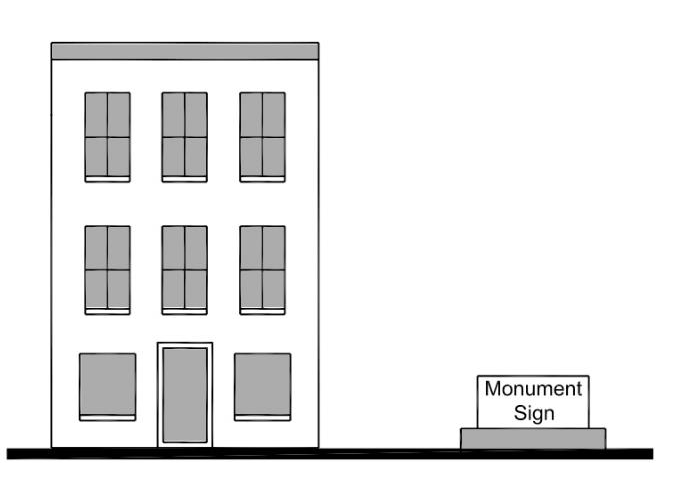
Figure 816.07. Freestanding monument signage.
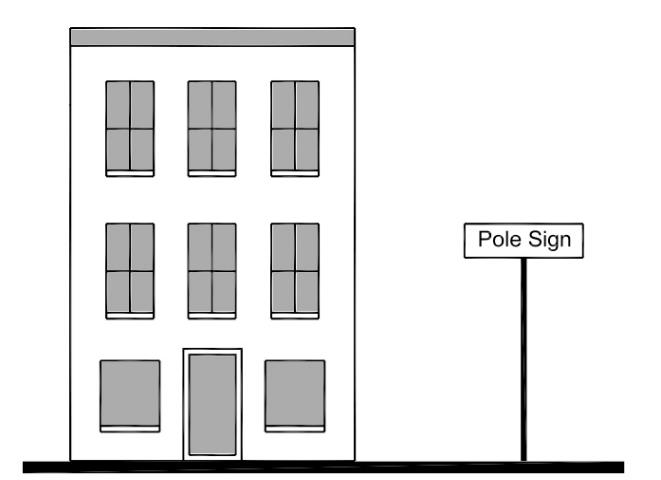
Figure 816.08. Freestanding pole signage.
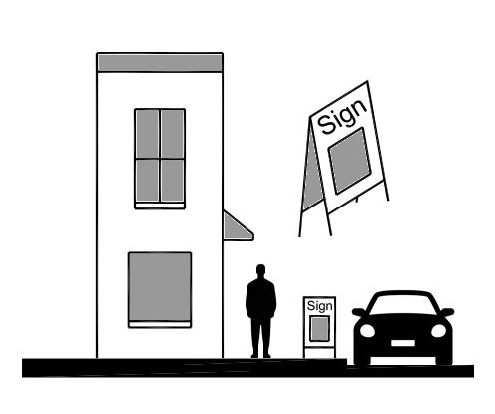
Figure 816.09. A-frame signage; permitted in B-1 and LP Districts.
816.09. Signs in Residential Zoning Districts.
a.
Individual residences located in zones R-1, R-2, R-3 shall not display additional signage beyond that permitted by section 816.03 of this Land Development Ordinance.
b.
Non-residential uses located in residential zones R-1, R-2, R-3 shall be permitted to display one wall or freestanding monument sign of up to 16 square feet.
b.
Only one sign shall be allowed per parcel.
d.
Pole mounted signs shall not be permitted.
e.
Illuminated signs shall not be permitted in residential zoning districts
816.10. Planned Mixed Development PMD: permitted signs. A comprehensive sign plan shall be submitted as a part of any application for proposal for Mixed Use/Traditional Neighborhood Development. The comprehensive sign plan shall be an integral part of the overall design of the proposed development and shall comply with all applicable provisions and guidelines of the PMD district and of the application overall. The comprehensive sign plan shall be of sufficient detail to allow the commission and town council to judge the compatibility of the proposed signage with the character of the proposed development. At a minimum, all master signage plans shall provide information on the general size, location, style, color, manner of illumination, landscaping and materials of all signs proposed. In evaluating the PMD proposal, the commission and town council shall consider the appropriateness of the proposed signage plan in relation to the character of the proposed development and the surrounding area.
816.11. Planned Memorial Park District PMPD: permitted signs. A master signage plan shall be submitted as part of any proposal for a Planned Memorial Park District PMPD as authorized elsewhere in this Land Development Ordinance. The master signage plan shall be part of the required preliminary master plan of development. All master signage plans shall be of sufficient detail to allow the commission and town council to judge the compatibility of the proposed signage with the character of the proposed PMPD. At a minimum, all master signage plans shall provide information on the general size, location, style, color, manner of illumination, landscaping and materials of all signs proposed. In evaluating the PMPD proposal, the commission and town council shall consider the appropriateness of the proposed signage plan in relation to the character of the proposed development and the surrounding area.
816.12. Temporary signs.
a.
Temporary signs may be erected or constructed without a permit in all zoning districts; however, all applicable code requirements in this chapter shall still apply.
b.
Temporary signs in non-residential zoning districts (LP, B-1, CNW, B-2, CLI, M-1, and WCD) may be displayed for up to 30 consecutive days. The zoning administrator may extend the time limit by up to 30 days upon application by the owner at the end of the initial 30-day period, if the applicant shows that the sign is maintained in sound condition and the purpose for it still pertains. Temporary signs shall not exceed one sign per location, nor eight square feet in area and four feet in height. Temporary window signs shall not obstruct more than 20 percent of the area of the window on which the sign is located.
c.
Temporary signs in Residential Zoning Districts shall not exceed 16 square feet in area total per property. No sign shall exceed six feet in height. Window signs shall not obstruct more than 25 percent of the total area of all windows on each building façade on the property.
d.
Temporary signs required to be posted by law. Any such sign shall be removed the day after the last day for which it is required to be displayed. The administrator may require proof of legal requirement for the posting of the sign. These signs are permitted in all zoning districts.
Part III. Administration
816.13. Sign permit application. Application for a sign permit shall be filed with the zoning administrator on forms provided by the town, accompanied by a filing fee as established by the town council, and shall contain the following information:
a.
Name and mailing address of the sign owner and sign erector;
b.
Location address, building and street frontage in linear feet of property on which sign is to be erected;
c.
Type of sign and sign structure and general description of structural design and construction materials;
d.
Drawings showing the height, sign perimeter and area dimensions, means of support, method of illumination, landscaping, and design for the existing and proposed sign;
e.
A record plat plan or drawing showing dimensions of building and relationship of building and/or sign to adjacent property lines, sidewalks, streets, intersections and buildings;
f.
Any other information that the zoning administrator may request to ensure compliance with the provisions of this Land Development Ordinance and other applicable town regulations;
g.
Name, mailing address and phone number of property owner. Property owner or legal representative must sign all signage applications.
816.14. Modification. Modification of the sign regulations found in this Land Development Ordinance may be requested by application to the planning commission. The planning commission shall weigh the merits of the application and render a decision. A public hearing may be held if required by the zoning administrator.
816.15. Expiration of sign permits; extension. A sign permit shall expire and become null and void if the sign is not erected within a period of six months from the date of permit issuance. An application for one six month extension of the permit may be made to the zoning administrator by the permit holder prior to expiration of the original permit. An extension may only be granted when the proposed sign is in compliance with all current applicable regulations, and in no case shall a permit be valid for more than a total of 12 months without the authorized sign being erected.
816.16. Revocation of sign permit. The zoning administrator may revoke a permit or approval if it is found that there has been concealment or misrepresentation of material facts in either the application or plans. Furthermore, failure to adhere to the requirements of this Land Development Ordinance in the construction and maintenance of a sign automatically cancels such permit, and said sign or structure shall be removed by the property owner forthwith.
816.17. Sign construction and maintenance standards.
a.
Building code compliance. All signs shall be constructed in compliance with the Uniform Statewide Building Code and any other applicable town building regulations.
b.
Sign maintenance. All signs, sign components and supports shall be maintained in good repair and in safe, clean and attractive condition.
c.
Repair or removal of unsafe or hazardous signs. The zoning administrator may cause to have removed or repaired immediately without written notice any sign that, in his opinion, has become insecure, in danger of falling or otherwise unsafe and, as such, presents an immediate threat to the public safety. If such action is necessary to render a sign safe, the cost of such emergency removal or repair shall be at the expense of the owner or lessee thereof.
816.18. Removal of illegal signs. The zoning administrator may order the removal of any illegal sign at the expense of the property owner. Notice and enforcement of such a violation shall be accordance with article XV of this Land Development Ordinance. An illegal sign is any sign erected without a permit or which does not comply with any provision of these regulations.
816.19. Removal of obsolete signs and sign structures. Any sign that is obsolete or abandoned because of discontinuance of the advertised activity or any other reason which would cause the sign to be obsolete shall be removed by the property owner within 30 days from the termination of such activities. Permanent signs applicable to a business temporarily suspended because of a change of ownership or management of such business shall not be deemed abandoned unless the property remains vacant for a period of six months or more. Obsolete or abandoned signs are prohibited and shall be removed by the owner of the sign or property owner.
816.20. Nonconforming signs.
a.
Any sign that was lawfully in existence at the time of the effective date of this Land Development Ordinance that does not conform to the provisions herein, and any sign that is accessory to a nonconforming use, shall be deemed a nonconforming sign and may remain on a lot of record except as qualified in this Land Development Ordinance. No nonconforming sign shall be enlarged, extended, structurally altered or reconstructed in any manner.
b.
Nonconforming signs may remain on a lot of record, provided they are kept in good repair, except for the following:
1.
Change of use. Whenever a change of use occurs upon a lot that contains a nonconforming sign, such sign shall not be permitted to remain without being modified in such a manner as to be in full compliance with these sign regulations.
2.
Relocation. No nonconforming sign shall be moved for any distance on the same lot or to any other lot unless such change in location will make the sign conform to the provisions of this Land Development Ordinance.
3.
Damage or destruction of sign. A nonconforming sign that is destroyed or damaged to an extent exceeding 50 percent of its fair market value shall not be repaired, altered, replaced or reinstalled unless it is in conformance with these regulations. If the damage or destruction is 50 percent or less of the fair market value, the sign may be restored within six months of the destruction but shall not be enlarged in any manner. If the reconstruction of such sign damaged to an extent 50 percent or less of its fair market value requires a permit from the Virginia Department of Transportation, the applicant shall provide a copy of the VDOT permit, along with a complete zoning permit application, to the zoning administrator. Upon receipt of the VDOT permit, the six-month time limit for reconstruction may be extended pursuant to section 1002.04 for the date of expiration of the zoning permit. [from planning commission meeting after public hearing November 2, 2023]
4.
Damage or destruction of use. A nonconforming sign shall be removed if the structure or use to which it is accessory is destroyed or demolished to an extent exceeding 50 percent of the principal structure's fair market value.
(Ord. No. 24-2, 3-12-2024; Ord. No. 25-1, §§ 2, 9, 1-14-2025)
Sec. 817. - Travel parks.
817.01. Travel parks, where permitted, must meet the following special requirements:
a.
The minimum area of a travel park shall be five contiguous acres.
b.
The maximum density of campsites shall be ten sites per gross acre.
c.
The minimum size area for a recreational vehicle campsite shall be 30 feet wide by 50 feet long and shall accommodate parking for the recreational vehicle, and the towing vehicle if used, and a vehicle being towed if used. The campsite area shall be comprised of appropriate material that shall be edged with a hard border that will serve to contain the material if the site is not paved with asphalt or concrete or other hard surface.
d.
Each campsite shall be set back a minimum distance of 25 feet from the perimeter property line of the travel park.
e.
At least ten percent of the travel park area shall be in open space serving common areas for guest use. Indoor and outdoor recreational facilities are permitted for the exclusive use of travel park guests. No active, developed recreational areas shall be located within the required yard setbacks for the travel park use.
f.
The primary access road shall be paved in accordance with the latest editions of the Virginia Department of Transportation's Subdivision Street Requirements Manual. Such paving shall extend from the public street right-of-way to a point within the site to be determined in the conditional use permit process. Interior roads and access to individual sites shall consist at a minimum of an all-weather gravel surface, which may be pea gravel. All interior roads shall be 18 feet minimum width for two-way travel or ten feet minimum width for one-way travel.
g.
The following shall be prohibited as recreational vehicles in the travel park: tents, pop-up campers, truck bed campers. The only permanent structures that may be in the travel park are buildings that are included in the plan for the conditional use permit. Buildings that house facilities required by regulating agencies may be permitted with additional conditions for appearance.
h.
Landscaping shall be provided as a visual buffer on the perimeter of the travel park and at the entry to the travel park to create privacy and reduce noise throughout the site. A solid fence or berm may be used as the visual buffer to screen the site around the perimeter. The type, height, and material of a fence or berm shall be approved through the conditional use permit process. Wherever possible, existing trees should be retained on the site. Chain link fencing shall not be used for buffering.
i.
Guests may stay no more than 21 nights consecutively. Guests may stay no more than 180 days in any one calendar year. The operator of a travel park shall maintain a log of all guests, including their name, address, license plate number of the recreational vehicle, and length of stay. The operator shall provide the log to town staff on a biannual basis.
j.
The travel park site shall have direct access to a publicly owned and maintained street. No campsite shall have direct access to a public street.
k.
All regulations required by permitting agencies shall apply.
l.
Lighting shall be directed downward and into the site. Innovative, low lighting techniques are encouraged to avoid use of standard tall street or dusk-to-dawn lights to prevent glare. When used, wall pack lights shall be full cutoff.
m.
Dumpsters serving the travel park shall be screened from view both from within and from outside of the site. Dumpsters shall be placed as far as possible from adjoining property lines to minimize the effects of noise when serviced.
n.
The following uses and activities shall be prohibited at a travel park:
i.
The sale, storage, use or occupancy of any manufactured home.
ii.
The sale of recreational vehicles and the storage of unoccupied units.
817.02. Travel park application and site plan. Applicants for conditional use permits for travel parks shall follow procedures outlined in section 1002.03 of this article, and in addition, shall meet the following special requirements:
a.
All campsites, common areas and buildings associated with the travel park shall be shown, as well as any other items that are required for the use.
b.
All landscaping and visual buffers shall be shown, including existing trees that will remain on site.
c.
All materials for road and campsite surfaces shall be shown.
d.
Site topography and drainage shall be shown in sufficient detail to confirm that site development will not affect adjoining and nearby property.
e.
Where practical or requested in the permit process, a lighting plan shall be included.
(Ord. No. 24-2, 3-12-2024)
Sec. 818. - Control of vision clearance.
No fence, wall, shrubbery, sign, marquee, or other similar obstruction to vision between the heights of two and one-half and ten feet from the ground level shall be permitted within 20 feet of the intersection of the right-of-way lines of two roads or railroad lines, or of a road intersection with a railroad line.
(Ord. No. 24-2, 3-12-2024)

