
Branson City Zoning Code
ARTICLE X
- SIGNS
Sec. 94-130. - General provisions.
(a)
Purpose and intent. This section establishes the standards for the design, location, installation, and maintenance of signs on private property. Signs are an important means of visual communication for organizations and businesses for both location identification and wayfinding. The intent of this article is to provide standards that result in a reasonable balance between the right of an individual to identify a business or activity location, and the right of the public to be protected from the visual discord that results from the unrestricted proliferation of signs. Regulations contained in this article are a result of the consideration of the compatibility of signs with adjacent land uses and the total visual environment of a particular area within the entire community.
The purposes of these sign regulations are to:
(1)
Support an appropriate range of signage to allow business and property owners a means to communicate with the public;
(2)
Establish regulations that encourage the establishment of lively, vibrant, and decorative signage in keeping with the long history of creative signage in Branson;
(3)
Encourage a range of signage appropriate in type, size, scale, number, and placement to the zoning district in which it is located;
(4)
Ensure that public benefits derived by expenditures of public funds for the improvement and beautification of streets, and other public structures and open spaces, shall be protected by exercising reasonable control over the size and placement of signs and sign structures;
(5)
Maintain and enhance the city's visual environment by establishing standards that balance the need for signage against the negative impact of signage that distracts rather than facilitates identification of businesses and other land uses;
(6)
Preserve the rights of the city's citizens to enjoy the city's scenic beauty;
(7)
Provide appropriate identification in pedestrian-oriented areas as well as in vehicular-oriented areas;
(8)
Improve pedestrian and traffic safety by protecting against visual pollution through regulations which ensure signage does not obscure or distract the vision of motorists; place appropriate restrictions on signs that compete or conflict with necessary traffic signs and warning signals, and which may cause a severe traffic hazard;
(9)
Protect the public from hazardous conditions which result from deteriorated or structurally unsafe signage;
(10)
Generally, ensure that signage is appropriate to a particular use and location so that the cumulative effect is an attractive city environment, thereby reinforcing community values;
(11)
Implement the goals and policies of the comprehensive plan; and
(12)
Provide no more restrictions on speech than necessary to implement the purpose and intent of this section.
(b)
Interests. The city has a legitimate, important, substantial, or compelling interest in:
(1)
Preventing the proliferation of signs of generally increasing size, dimensions, and visual intrusiveness (also known as "visual pollution") that tends to result from property owners competing for the attention of passing motorists and pedestrians, because visual pollution:
a.
Creates visual distraction and obstructs views, potentially creating safety hazards for motorists, bicyclists, and pedestrians;
b.
May involve physical obstruction of streets, sidewalks, or trails, creating public safety hazards;
c.
Degrades the aesthetic quality of the city, making the city a less attractive place for residents, business owners, visitors, and private investment; and
d.
Dilutes or obscures messages on individual signs due to the increasing competition for attention.
(2)
Maintaining and enhancing the character of the Downtown and the Entertainment District, both of which are resources of exceptional quality and vibrancy to the community as a whole.
(3)
Protecting the health of the city's tree canopy, an important community asset that contributes to the character, environmental quality, and economic health of the city and the region.
(4)
Maintaining a high quality aesthetic environment to protect and enhance property values, leverage public investments in streets, sidewalks, trails, plazas, parks, open space, civic buildings, and landscaping, and enhance community pride.
(5)
Protecting minors from speech that is harmful to them according to state or federal law, by preventing such speech in places that are accessible to, and used by minors.
(c)
Findings. The city finds that:
(1)
Content neutrality, viewpoint neutrality, and fundamental fairness in regulation and review are essential to ensuring an appropriate balance between the important, substantial, and compelling interests set out in this article, and the constitutionally-protected right to free expression.
(2)
The regulations set out in this article are unrelated to the suppression of constitutionally protected free expression, do not relate to the content of protected messages that may be displayed on signs, and do not relate to the viewpoint of individual speakers.
(3)
The incidental restriction on the freedom of speech that may result from the regulation of signs pursuant to this article is no greater than is essential to the furtherance of the important, substantial, and compelling interests that are set out in this article.
(4)
Regulation of the location, number, materials, height, sign area, form, and duration of display of temporary signs is essential to preventing visual pollution.
(5)
Temporary signs may be degraded, damaged, moved, or destroyed by wind, rain, snow, ice, and sun, and after such degradation, damage, movement, or destruction, such signs harm the safety and aesthetics of the public on city's streets or sidewalks if they are not removed.
(6)
Certain classifications of speech are not constitutionally protected due to the harm that they cause to individuals or the community.
(d)
Savings and severability.
(1)
Signs containing noncommercial speech are permitted anywhere that advertising or business signs are permitted, subject to the same regulations applicable to such signs. Any sign that can be displayed under the provisions of this article may contain a noncommercial message.
(2)
If any clause, section, or other part of the application of these sign regulations shall be held by a court of competent jurisdiction to be unconstitutional or invalid, it is the intent of the city that such clause, section, or specific regulation be considered eliminated and not affecting the validity of the remaining clauses, sections, or specific regulations that shall remain in full force and effect.
(e)
Conflicts with other provisions. Nothing in this article shall be deemed a waiver of the provisions of any other ordinance or regulation applicable to signs. Signs located in areas governed by several ordinances or applicable regulations shall comply with all such ordinances and regulations. If there is a conflict between this article and any other ordinance or regulation, the more stringent shall apply. Nothing in this article is intended to conflict with the provisions of the Missouri Outdoor Advertising Act (RSMo 226.500 et seq.).
(Ord. No. 2019-0131, § 2, 9-24-2019)
Sec. 94-131. - Applicability.
(a)
Applicability.
(1)
The regulations contained in this article shall apply to, and regulate the display, construction, installation, erection, alteration, use, location, maintenance, and removal of all signs and support structures in all districts unless the sign, item, or activity is expressly exempted.
(2)
No sign shall be located, erected, modified, or maintained except in compliance with the regulations contained in this article.
(b)
Sign permit required. A sign permit shall be required to erect, place, modify, allow the continued placement, or convert any portion of a sign, including a conversion from temporary to permanent or from non-EMC to EMC unless otherwise provided in this article.
(c)
Exemptions. The following signs, items, and activities do not require a permit, but shall comply with specific requirements as identified in this section:
(1)
Internal and integral signs.
a.
Signs not intended for view or readily legible from the public right-of-way or adjacent residential, public, or civic districts or uses.
b.
Signs that are less than one square foot in area that are affixed to machines, equipment, fences, gates, walls, gasoline pumps, or utility cabinets.
c.
Signs or banners on fences and structures within an arena, city park, recreational complex, or athletic field, provided such signs or banners face inward to the arena, city park, recreational complex, or athletic field.
d.
The placement of any video or digital display with a screen area of less than one square foot on a permitted primary structure, accessory structure, or piece of equipment, and designed to be viewed only by an individual obtaining services or goods at that location. This includes digital or video screens on fuel pumps, car washes, and air filling stations.
e.
Integral signs that are carved into stone or similar material that are integral to the building. Integral signs shall not exceed 12 square feet in area.
(2)
Flags.
a.
Mixed-use or non-residential district: any flag provided it is affixed to a permanent ground- or wall-mounted flagpole.
b.
Residential district: a maximum of three flags, not to exceed a combined area of 120 square feet.
(3)
Public signs.
a.
Official public signs approved by a governmental body with jurisdiction over issues such as traffic safety, pedestrian safety, schools, railroads, or public notice, as well as signs required by the Manual of Uniform Traffic Controls.
b.
Signs and notices required to be displayed, maintained, or posted by law or by any court or governmental order, rule, or regulation.
(4)
Qualifying vehicle signs.
a.
Signs on a truck, bus, car, bike, scooter, or other motorized vehicle or equipment used in the normal course of business, provided all the following conditions are adhered to:
(i)
Primary purpose of such vehicle or equipment is not the display of signs. Vehicles and equipment are not used primarily as static displays advertising a product or services, not utilized as storage, shelter, or distribution points for commercial products or services for the general public.
(ii)
Signs are painted upon or applied directly to an integral part of the vehicle or equipment. A sign may be affixed to a vehicle for a period of time during which the vehicle is being used for deliveries. The sign is not allowed to project more than 12 inches beyond the limits of the vehicle body.
(iii)
Vehicle or equipment is in operating condition, currently registered and licensed to operate on public streets when applicable, and actively used in the daily function of the business to which such signs relate. A vehicle used by a company franchised by the city to provide public transportation on fixed routes shall be permitted to display signs not related to its primary business purpose.
(iv)
During period of inactivity exceeding seven consecutive days, such vehicle or equipment is not so parked or placed that the signs thereon are displayed to the public. Vehicles and equipment engaged in active construction projects, the on-premises storage of equipment, and vehicles offered to the general public for rent or lease (such as rental trucks and cars) are exempt from this prohibition.
b.
Bumper stickers.
(5)
Seasonal displays. Seasonal decorations located on private property.
(6)
Balloons. Helium filled balloons can be used in any district provided:
a.
The maximum size of any balloon is 12 inches in diameter;
b.
The balloons are placed on private property and not on the public right-of-way;
c.
The string attached to the balloons is short enough to prevent the balloons from being blown into or over the street or sidewalk; and
d.
The balloons are attached to an approved temporary sign.
(d)
Prohibited locations. Signs and sign structures are prohibited in the following locations:
(1)
Improper location.
a.
In the right-of-way or on other public property without approval of the city. For the purposes of this article, when the right-of-way is not clearly identified, signs shall be placed at least five feet from any edge of street or curb, or beyond any visible utility or sidewalk.
b.
Placed on private property without the consent of the owner or authorized agent of the owner of such property.
c.
Located in, or overhanging a utility easement.
d.
Within a clear sight triangle.
e.
Attached to any utility pole, other utility or public infrastructure structure or equipment, or wireless communication facility.
(2)
Creation of a hazardous condition.
a.
That create conflict with traffic control signs, signals, or various private signs resulting in vehicular or pedestrian safety hazards, including any sign placed at any location where it may, by reason of its size, shape, design, location, content, coloring, or manner of illumination, constitute a traffic hazard or a detriment to traffic safety by obstructing the vision of drivers, by obscuring or otherwise physically interfering with any official traffic control device, or that may be confused with an official traffic control device.
b.
That creates a danger to the public during periods of inclement weather or high winds due to their location or the manner in which they are placed.
c.
That create a hazard due to collapse, fire, collision, decay, abandonment, or other safety considerations.
d.
That obstruct firefighting or fixed police surveillance via photographic or video technology.
e.
That are improperly mounted or installed, such as signs attached to a standpipe, gutter drain, unbraced parapet wall, or fire escape, unless the safety of such sign and such mounting have been verified in writing by a structural engineered licensed to practice in the state.
(e)
Prohibited signs. The following signs are not permitted in any district of the city, and are subject to removal in the manner provided in this article:
(1)
Distracting, interfering, or confusing signs.
a.
Signs that contain or are an imitation of an official traffic sign or signal.
b.
Signs that include flashing, high intensity lights, such as strobe lights, or that are of a size, location, movement, content, coloring or manner of illumination which may be confused with or construed as a traffic control device or emergency vehicle, or which obscures any traffic or street sign or signal.
c.
Signs with a lighting or control mechanism that causes radio, radar, television, or other electronic signal interference.
(2)
External movement and light projecting signs.
a.
Signs that move in any mechanical manner, have structural moving part(s) powered by a motor, or swing because of their design or by the manner of their suspension or attachment as a result of wind pressure, mechanically-driven apparatus, electrically-driven apparatus, or any combination thereof.
b.
Wind signs (pennants, streamers, balloons, whirligigs or similar devices) or flutter flags, unless otherwise allowed by this article.
c.
Signs that are light projecting or operate or employ any motion picture projection or video projection in conjunction with any advertisements.
d.
Signs that cause odor or sound emission.
e.
Moving billboard signs.
f.
Sign walkers.
(3)
Portable and temporary digital signs.
a.
Signs that are classified as portable signs.
b.
Video display or electronic message center signs used as temporary signage.
(f)
Content. No sign shall be approved or disapproved based on the content or message it displays, except that the following content, without reference to the viewpoint of the speaker, shall not be displayed on signs:
(1)
Text or graphics that is harmful to minors as defined by state or federal law;
(2)
Text or graphics that are obscene, fighting words, defamation, incitement to imminent lawless action, or true threats, as such words and phrases are defined by controlling law;
(3)
Text or graphics that present a clear and present danger due to their potential confusion with traffic control signs;
(4)
Signs that provide false information related to public safety (e.g., signs that use the words "stop" or "caution" or comparable words, phrases, symbols, or characters) that are presented in a manner as to confuse or imply a safety hazard that doesn't exist; or
(5)
Text or graphics that provide false or misleading information in violation of this Code.
(Ord. No. 2019-0131, § 2, 9-24-2019)
Sec. 94-132. - Measurement and calculation.
(a)
Applicability. This section applies to all sign types and classifications, including permanent signs, temporary signs, and off-premises signs.
(b)
Sign area.
(1)
Maximum.
a.
The maximum total signage permitted per property in the Mixed-Use, Community Commercial, Business, and Industrial Districts is 15 square feet of signage per one lineal foot of building frontage.
b.
The maximum total signage permitted per property in the Downtown and Neighborhood Commercial Districts is ten square feet of signage per one lineal foot of building frontage.
c.
The maximum total signage permitted per property in the Entertainment District is 20 square feet of signage per one lineal foot of building frontage.
d.
The maximum total signage permitted per property in the Agricultural and Conservation Districts is 64 square feet per public roadway frontage.
e.
The permitted maximum area for all individual signs is determined by the sign type and the zoning district in which the sign is located.
(2)
Building frontage.
a.
Building frontage is the wall of the primary building that faces the street abutting the property. If the primary building is located on a corner lot, the frontage may be any wall of the primary building that faces a street.
b.
Accessory structures shall not be included in the calculation of maximum signage. Wall signs may be affixed to accessory structures; where this is done, the amount of signage used on the accessory structure shall be deducted from the total amount of signage permitted on the property.
(3)
Sign area bonus for transfer of freestanding signage. The total area of wall signs may be proportionately increased by transferring all or part of the permitted freestanding sign area to the wall signage.
a.
Freestanding sign area can be transferred to wall signage with a ten percent bonus of the amount transferred.
b.
Where all of the freestanding sign area is transferred to wall signage, a 20 percent bonus of the amount transferred shall be applied.
(4)
Method of measuring copy area.
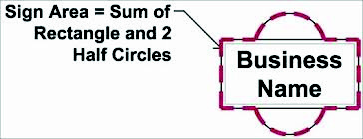
Sample measurement using two geometric figures
a.
The area of a two-dimensional sign is measured by encompassing the advertising display surface area within any combination of geometric figures (e.g., rectangles, squares, triangles, parallelograms, circles, or ellipses), having no more than eight sides, that would enclose all parts of the sign.
(i)
Sign copy mounted, affixed, or painted on a background panel or area distinctively painted, textured, or constructed as a background for the sign copy, is measured as that area contained within the sum of the smallest geometric figure that will enclose both the sign copy and the background.
(ii)
Sign copy mounted as individual letters or graphics against a wall, fascia, or parapet of a building, or surface of another structure, that has not been painted, textured, or otherwise altered to provide a distinctive background for the sign copy, is measured as a sum of the smallest geometric figure that will enclose each word and each graphic in the total sign. Window signs printed on a transparent film and affixed to a window pane shall be measured as freestanding letters or logos, provided that the portion of the transparent film around the perimeter of the sign message maintains the transparent character of the window and does not contain any items in the sign message.
Identification of the vertical
sides of a three-dimensional sign
b.
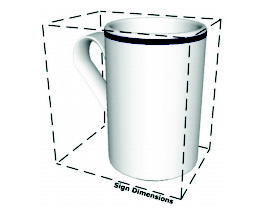
The sign area of three-dimensional free-form or sculptural (non-planar) signs is calculated as 50 percent of the sum of the area of the four vertical sides of the smallest cube that will encompass the sign.
c.
If elements of a sign are movable or flexible, such as a flag or banner, or if the sign includes any permitted copy extensions, the measurement is taken when the elements or extensions are fully extended and parallel to the plane of view.
d.
Only structural components shall be excluded in computing the total allowable area.
e.
Only one side of any on-premises or temporary double-faced sign shall be considered in the total sign area allowed for any building, use, or parcel. If an angle of 30 degrees for a "V" sign is exceeded, the area of both sign faces shall be included in the measurement of total sign area.
(5)
Window sign inclusions.
a.
Interior signage shall be excluded from window sign measurements unless it is within five feet of a window or door through which it can be seen from the exterior of the building.
b.
Temporary internal displays that are not illuminated shall not be considered window signs provided:
(i)
The display does not cover more than 25 percent of the surface of an individual window, and
(ii)
The display does not meet the requirements for interior signage that is counted as window signage, above.
(c)
Height and clearance. The permitted maximum height for all signs is determined by the sign type and the zoning district in which the sign is located. Sign height and clearance is measured as follows:
(1)
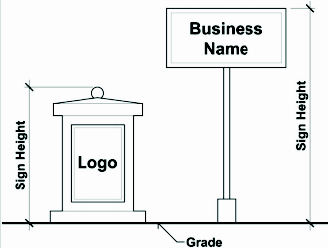
Freestanding sign height. The height of a freestanding sign shall be computed as the distance from the base of the sign at existing finished grade to the top of the highest attached component of the sign.
a.
When the existing finished grade at the point of measurement is lower than the average elevation of the adjacent street finished grade parallel to the location where the sign will be installed, that portion of the sign below the street shall not be included in determining the sign's overall height.
b.
The height of any monument sign base or other structure erected to support or adorn the sign is measured as part of the sign height.
c.
If a sign is located on a mound, berm, or other raised area for the sole purpose of increasing the height of the sign, the height of the mound, berm, or other raised area shall be included in the height of the sign.
(2)
Sign clearance. Clearance for pole and projecting signs shall be measured as the smallest vertical distance between the sign and the finished grade directly underneath the sign at the lowest point of the sign structure, including any framework or other structural elements.
(Ord. No. 2019-0131, § 2, 9-24-2019; Ord. No. 2021-0101, § 2, 9-14-2021)
Sec. 94-133. - Installation and inspections.
(a)
Installation. The design and construction specifications and standards of this article apply generally to all signs within the city except as otherwise specifically provided in this article for specific sign types or signs in specific areas. In the event of conflict between or among provisions of this article, the specific provision shall prevail over the general or, if the provisions cannot be distinguished as specific or general, then the more restrictive provision shall prevail.
(1)
Permanent materials and fastening. Except as otherwise specifically permitted in this article, all signs authorized by this article shall be constructed of permanent materials and shall be permanently attached to either a building, structure wall, or other surface to which it is mounted, or to the ground by direct attachment to a pole, rigid wall, frame, or structure. Signs shall comply with all specific anchoring requirements of this article.
(2)
Design and approval by professional engineer.
a.
All freestanding, projecting, and roof signs shall be designed by a state-registered professional engineer to withstand 90 mph wind load for three seconds, and the engineer's signature and seal shall be affixed to the documents submitted to the city.
b.
In addition to the requirements contained elsewhere in this article, any sign may be required to be designed by a state-registered professional engineer, when the planning and development director determines that the size, structural components, or location of the sign are such that potentially could endanger the safety of the general public. The engineer's signature and seal shall be affixed to the submitted documents.
(3)
Anchoring. No sign shall be suspended by nonrigid attachments that will allow the sign to swing in the wind. All freestanding signs shall have self-supporting structures erected on, and permanently attached to concrete foundations.
(b)
Initial and periodic inspections.
(1)
Any person installing, structurally altering, or relocating a sign for which a permit has been issued shall notify the planning and development director upon completion of the work. The planning and development director shall conduct an inspection within seven working days of the date of notice of completion to ensure that the sign is in compliance with this article.
(2)
If, at the time of application for a sign permit, any sign permits held by the applicant or sign contractor are over 90 days old and have not received final inspection approval, the planning and development director may deny issuance of the requested permit until such time that the sign has been inspected and approved.
(Ord. No. 2019-0131, § 2, 9-24-2019)
Sec. 94-134. - General regulations for permanent signs.
(a)
Freestanding signs.
(1)
Access point signs.
a.
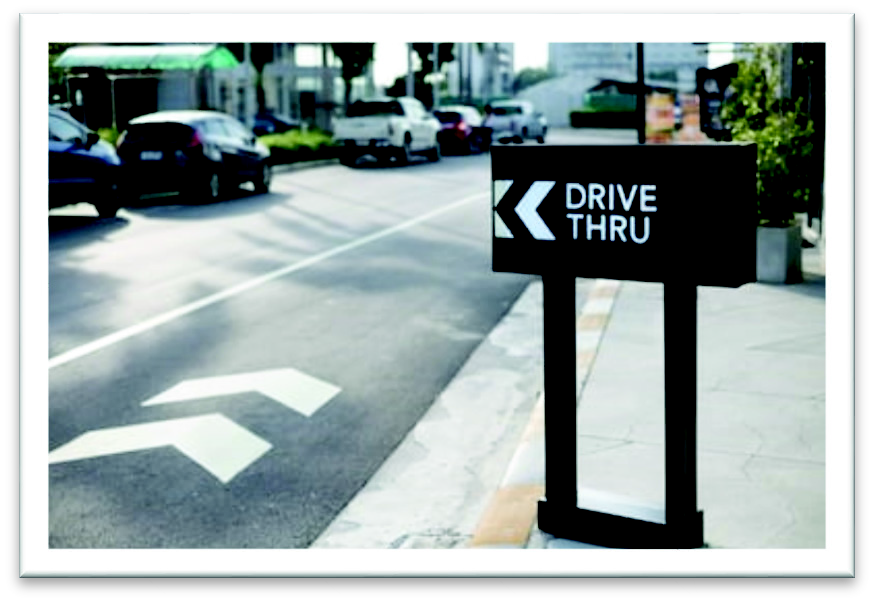
Uses with a permitted drive-thru may have access point signage located at public access points where a driveway or other public entryway intersects with a public street. Access point signs are for vehicular access, not pedestrian access.
b.
Access point signs that are visible from the public right-of-way shall be permanently anchored or fastened.
(2)
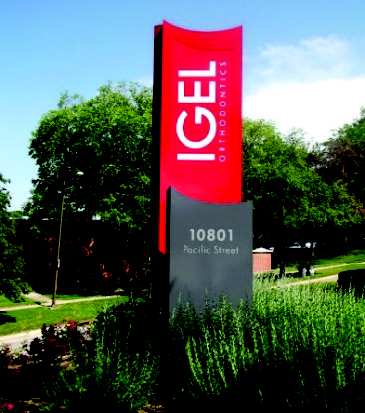
Monument signs. Monument signs shall have zero clearance above the existing finish grade level and shall be supported in, or on the ground in accordance with this Code.
 |  | |
(3)
Pole signs.
a.
Clearance. The following clearance area shall be maintained under any pole sign:
(i)
A clear, unobstructed area, a minimum of eight feet in height above existing finish grade level when a pole sign is located over a pedestrian walkway or within a clear sight triangle.
(ii)
A clear, unobstructed area, a minimum of 13 feet in height above existing finish grade level when a pole sign is located over a vehicle access or parking area.
b.
Support poles. All support poles shall be clad to architecturally enhance the sign. Such cladding shall contain no advertising material or logos of any kind, but may contain decorative features.
 |  | |
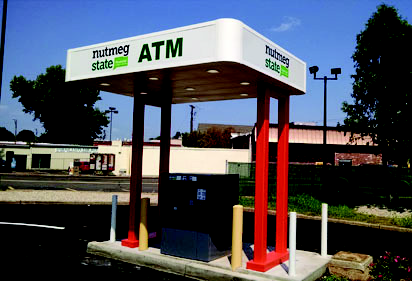
(4)
Structural canopy. Signs may be attached to a continuous plane fascia on a structural canopy provided the sign does not extend above or below the projection of the fascia.
 |  |
(b)
Attached signs.
(1)
Awning signs.
a.
The bottom of an awning sign shall be no less than eight feet above the existing finish grade level at any point.
b.
Awning signs shall not project closer than two feet to a curb line unless the awning is retractable and city has issued an encroachment permit.
c.
All signage on an awning shall be on the vertical plane of the awning. Where an awning does not have a clear vertical plane, the signage shall be centered on the lower third of the awning.
 |  |
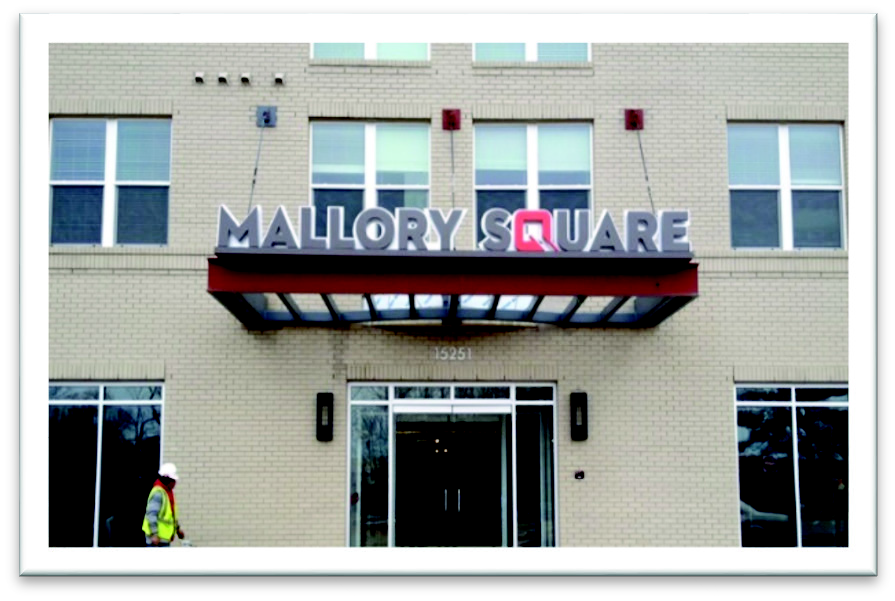
(2)
Canopy signs. The bottom of a canopy sign shall be no less than eight feet above the existing finish grade level at any point.
 |  |
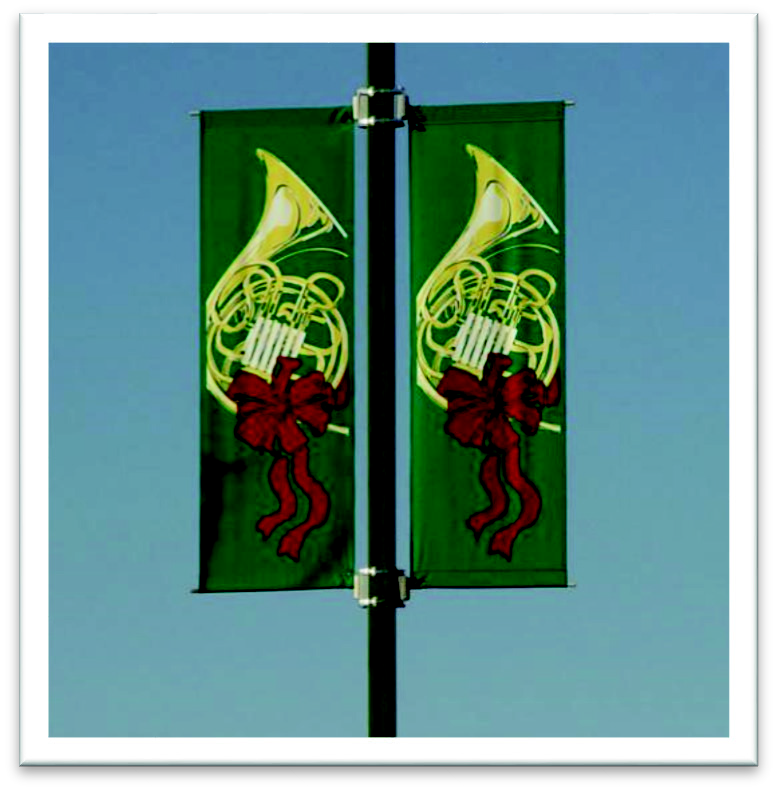
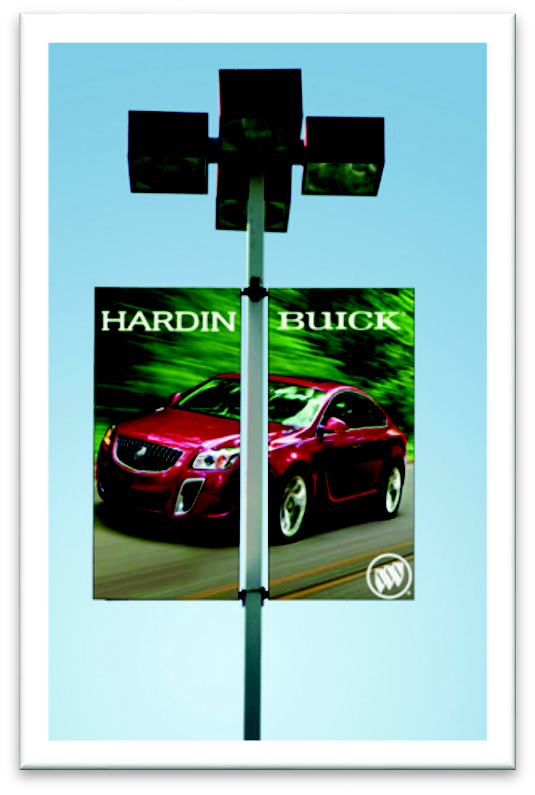
(3)
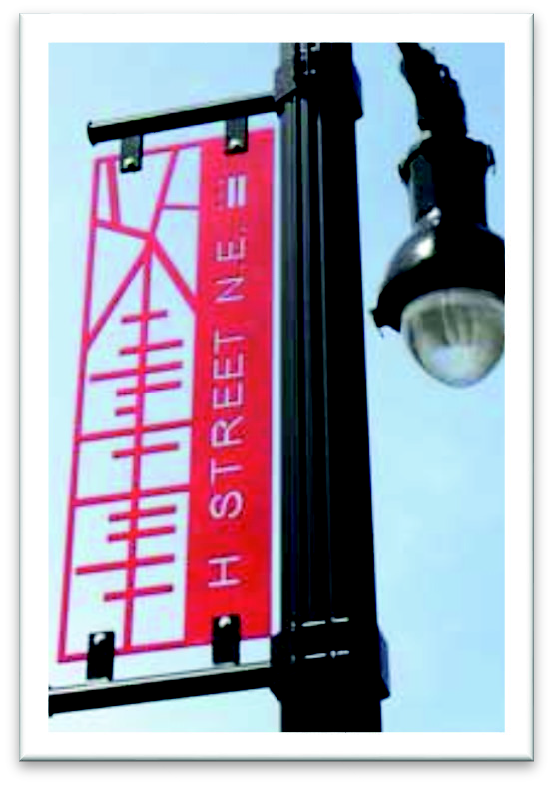
Light pole banner signs.
a.
The banners shall not extend more than three feet from the light pole.
b.
Banners must maintain a minimum vertical distance of ten feet from the bottom of the sign to existing finish grade level.
 |  |  |
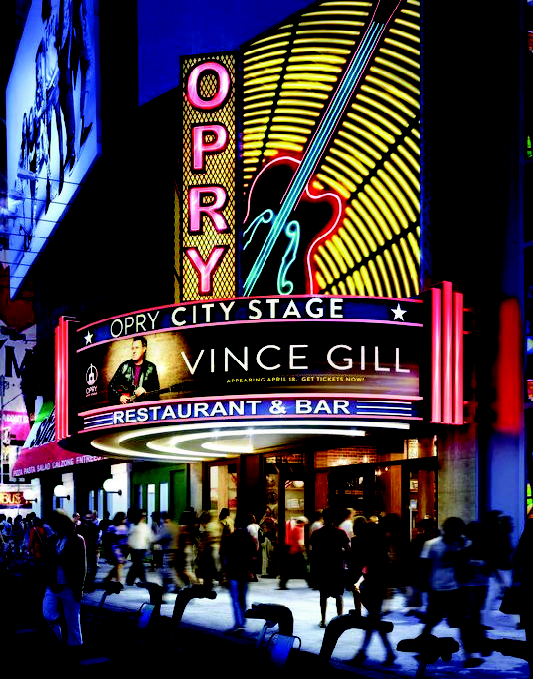
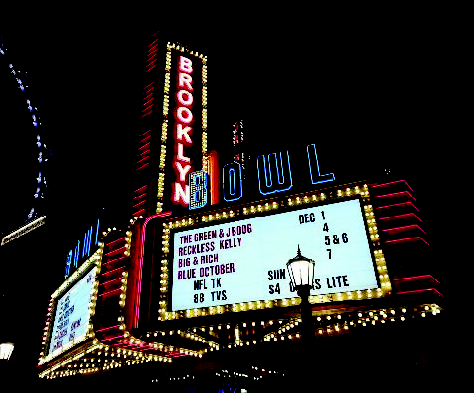
(4)
Marquee signs.
a.
The bottom of a marquee sign shall be no less than eight feet above the existing finish grade level at any point.
b.
Marquee signs shall not project closer than two feet to a curb line unless the city has issued an encroachment permit.
c.
All signage on the marquee shall be affixed flat to the vertical face of the marquee. No part of the changeable copy shall project above or below the vertical face of a marquee sign.
 |  |
(5)
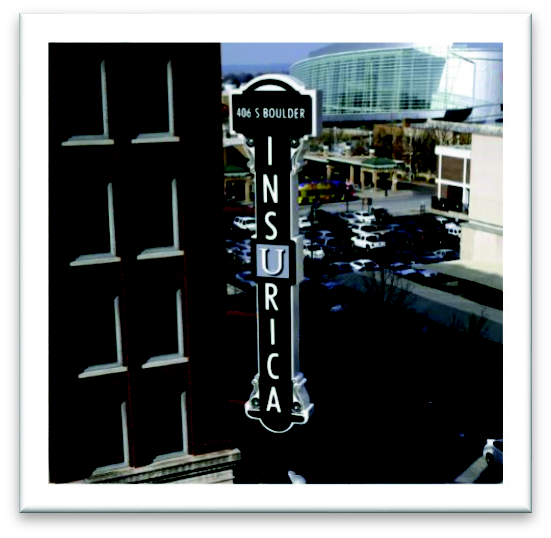
Projecting signs.
a.
The bottom of a projecting sign shall have a minimum clearance of eight feet above existing finish grade level at any point.
b.
A projecting sign shall not extend more than four feet from the building façade to which it is attached, and shall not project closer than two feet to a curb line unless the city has issued an encroachment permit.
c.
A projecting sign shall be mounted so that the top of the sign is no higher than the wall on which it is located.
 |  |  |
(6)
Roof signs.
a.
Roof signs shall not project horizontally or extend beyond, nor overhang any exterior wall or parapet line of any roof.
b.
No roof sign shall result in a combined height of the principal structure and the roof sign that exceeds the maximum height limit established for principal structures in that district.
 |  |
(7)
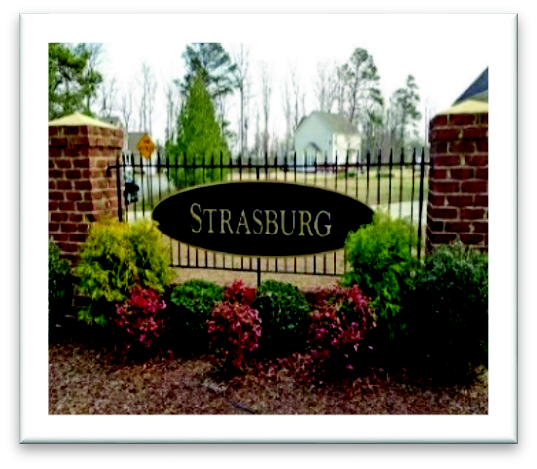
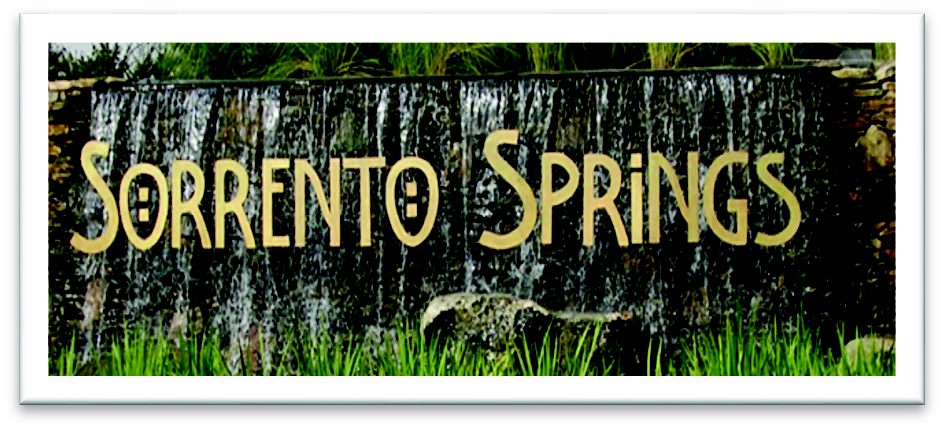
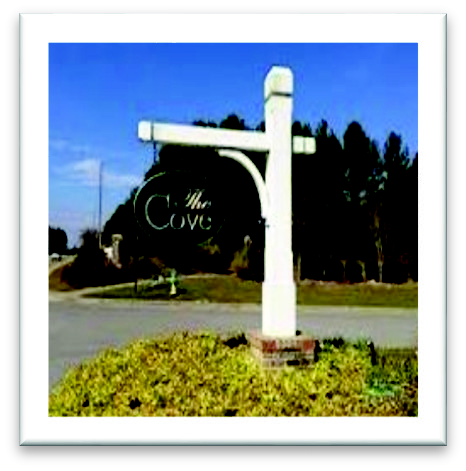
Subdivision signs.
a.
Two subdivision signs shall be allowed per entrance.
b.
No subdivision sign shall be located in the intersection clear sight triangle.
c.
This sign area shall be allowed in addition to the maximum allowable sign area specified within the zone district.
 |  |  | |
(8)
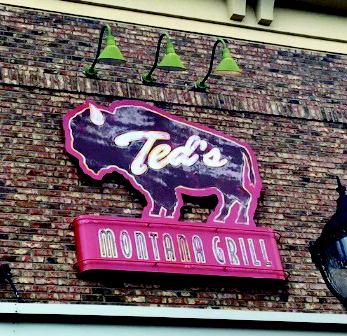
Wall signs.
a.
Wall signs shall not project above the building wall.
b.
When a sign requires access channels or service passageways within the sign, or when the sign is three-dimensional in character, the planning and development director may approve structurally reasonable increases in the distance from the wall of the wall sign, provided no copy appears anywhere except on the front sign face.
 |  |  |
 |  |
(9)
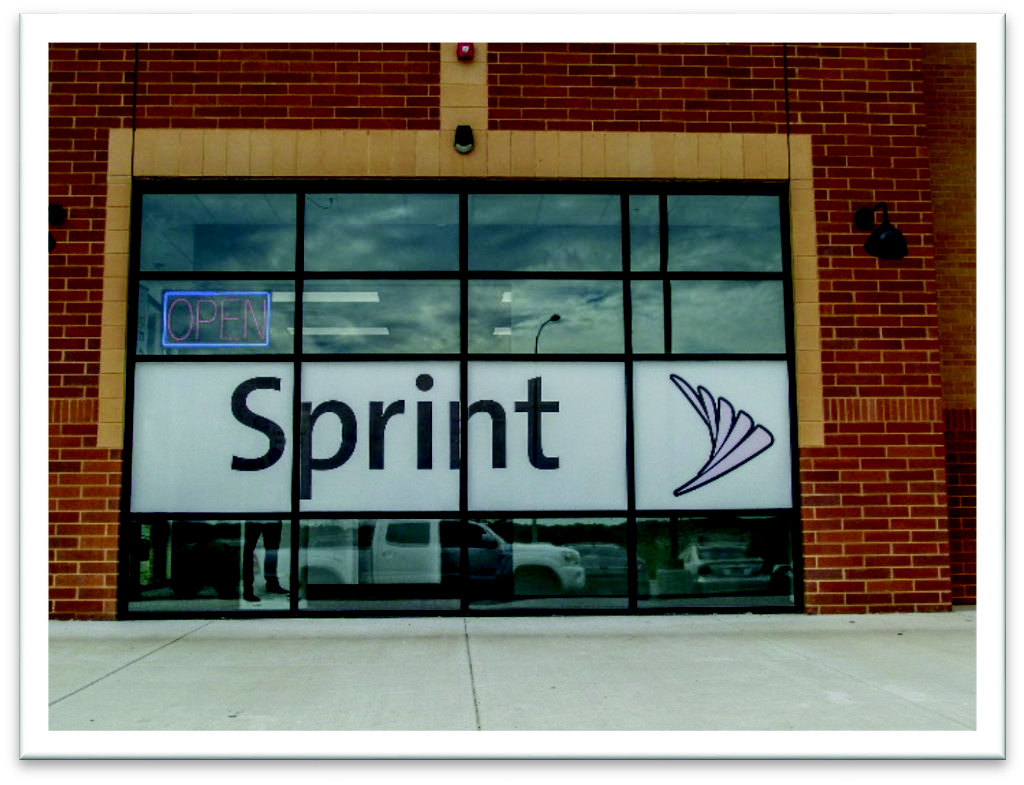
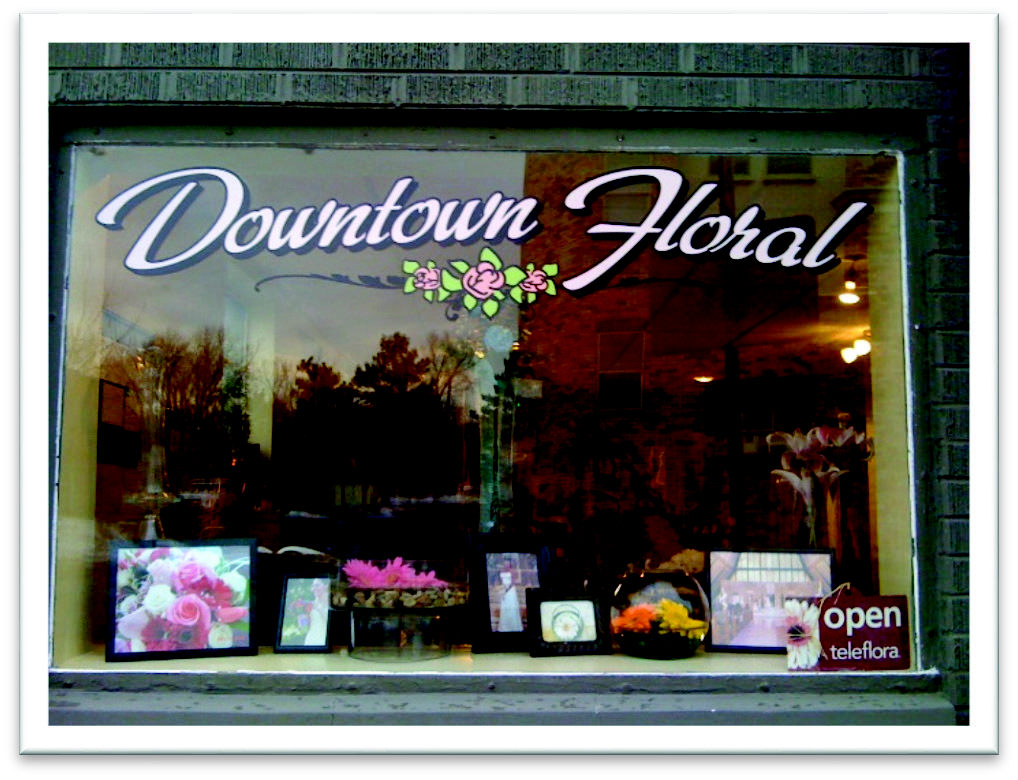
Window signs.
a.
Window signs shall be considered as a part of the total wall signage allowed, calculated by measuring total amount of available wall signage and reducing that by permitted window signage.
b.
Window signage on any one window shall not exceed 25 percent of the window area as measured by each individual window.
 |  |
(c)
Illumination for non-EMC signs.
(1)
Intent. Light sources to illuminate signs shall neither be visible from any street right-of-way, nor cause glare which is hazardous or distracting to pedestrians, vehicle drivers, or adjacent properties.
(2)
External illumination. Externally illuminated signs, where permitted, shall be designed to avoid negative impacts on surrounding rights-of-way and properties, and are subject to the following regulations:
a.
Shall be by a steady, stationary light source, fully shielded, and directed solely at the sign.
b.
The light source must be static in color.
(3)
Internal illumination. Internally illuminated signs, where permitted, including neon lighting, must be static in intensity and color.
(4)
Display brightness. Sign luminance shall not exceed 300 candelas per square meter, or nits, between the periods of sunset to sunrise as calculated by the United States Naval Observatory.
(5)
Flashing or rotating lights restricted. No sign is allowed with flashing or rotating lights which would interfere with the safe passage of auto traffic, and no sign shall be allowed to simulate an emergency vehicle or a traffic control signal.
(6)
Prohibited signs. Notwithstanding the provisions of this section, certain illuminated signs are prohibited in the city, as provided in this article.
(d)
Electronic message center (EMC).
(1)
Off-premises signs.
a.
Display.
(i)
Signs shall contain static messages only and shall not have movement or the appearance or optical illusion of movement during the static display period of any part of the sign.
(ii)
Each static message shall not include flashing or the varying of light intensity, and shall not scroll.
(iii)
The sign shall be programmed to display a blank screen if a malfunction occurs.
(iv)
The sign shall not include audio, pyrotechnic, bluecasting (bluetooth advertising), or other similar components.
b.
Display time.
(i)
Each static message on the sign shall be displayed for a minimum of eight seconds in duration.
(ii)
Message change shall be completed instantaneously.
(iii)
There shall be a direct change from one message to the next. All transition effects, such as motion, animation, fading, scrolling, or dissolving are prohibited.
(2)
On-premises and off-premises signs.
a.
Display brightness.
(i)
Sign luminance shall not exceed 300 candelas per square meter, or nits, in full white mode between the periods of sunset to sunrise as calculated by the United States Naval Observatory.
(ii)
Each sign shall automatically adjust its intensity in response to ambient lighting conditions.
(iii)
The light from any sign shall be so shaded, shielded, or directed that the light intensity or brightness shall not be projected over the property lines into a residential district except by indirect reflection.
b.
Display technology. The technology currently being deployed for EMCs is LED (light emitting diode), but there may be alternate, preferred, and superior technology available in the future. Any other technology that operates under the brightness limits above shall not require an ordinance change for approval.
c.
Incorporation in monument, pole, or marquee signage. Where signs are incorporated into monument, pole, or marquee signage, the sign shall be designed as follows:
(i)
EMCs are only permitted as an integral element of a monument, pole, or marquee sign, which enclose the message center component on all sides with a finish of brick, stone, stucco, powder-coated, painted, or comparable finished metal, or the surface of the sign face. The enclosure shall extend not less than six inches from the electronic message center in any direction.
(ii)
EMCs shall make up not more than the following percentage of each sign type, and the balance of the sign area shall utilize permanent, dimensional letters or symbols:
Total percentage of sign as EMC
(e)
Design.
(1)
Architecture, size, scale, and location.
a.
Intent. Sign design shall create a natural and identifiable connection between the sign and the building that helps to reinforce the image of the business on the site and the area of the community in which the sign is located. An example of architectural cohesiveness is where the design of the sign and its shapes, colors, and finishes mimic or reinforce the architectural lines and distinctive features of the building or development.
b.
Sign design shall be architecturally cohesive with either:
(i)
The structures on the site,
(ii)
The predominant architectural design of the properties within the block or surrounding properties, or
(iii)
An adopted area, neighborhood, or corridor plan that includes a design component.
c.
When a single property has multiple tenants with separate storefronts, wall signs shall be compatible.
d.
Permanent attached signs affixed to the exterior of a building shall be compatible with the style, composition, materials, colors, and details of the building, as well as with other signs used on the building or its vicinity.
e.
Wall signs shall fit within the existing facade features, shall be confined to signable areas, and shall not interfere with door and window openings, conceal architectural details, or obscure the composition of the facade.
f.
Sign size shall be scaled to be appropriate with the size of the overall elevation and architectural form(s) on which it is located.
(2)
Cladding.
a.
Intent. Cladding or decorative cosmetic pole covers enhance the quality appearance of a pole sign while giving a more substantial profile to the sign.
b.
All support poles shall be clad to architecturally enhance the sign.
c.
Design.
(i)
Cladding may be multi-tiered or segmented, and finished with a textured finish or painted in complimentary tones to either the sign or the structure associated with the sign.
(ii)
For single pole signs, the cladding must be equal to 25 percent but no larger than 35 percent of the width of the sign.
(iii)
The cladding for each leg of double pole signs must be proportionate to the size and height of the sign, and the width of the total cladding shall not exceed 50 percent of the width of the sign.
(3)
Landscaping.
a.
All freestanding signs shall be located within a landscape area equal in area to a minimum of ten times the height of the sign or 200 square feet, whichever is more.
b.
The materials selected for a required landscaped area located in an intersection clear sign triangle must be limited in height to three feet. This applies to any decorative features and vegetation that will be located within the clear sight triangle area.
(Ord. No. 2019-0131, § 2, 9-24-2019)
Sec. 94-135. - Sign regulations by district type.
(a)
Agricultural and conservation districts. All square footage must be allocated to a single sign on the frontage where it was measured and cannot be aggregated with permitted square footage from other frontages.
(b)
Residential districts.
(1)
Table 94-135.1 identifies the types of signs permitted in residential districts, and their regulations. If a sign type is not included in Table 94-135.1, it is not permitted in the residential districts.
(2)
Measurement instructions are provided in the measurement and calculation section of this article.
Table 94-135.1: Permanent Signs Permitted in Residential Districts
(c)
Mixed-use, community commercial, business, and industrial districts.
(1)
Tables 94-135.2 identifies the types of attached signs permitted in Mixed-use, Community Commercial, Business, and Industrial Districts, and their regulations. Table 94-135.3 identifies the types of freestanding signs permitted in Mixed-use, Community Commercial, Business, and Industrial Districts, and their regulations. If a sign type is not included in the appropriate table, it is not permitted in a Mixed-use, Community Commercial, Business, or Industrial Districts. Residential uses are limited to dwelling unit wall signs.
(2)
Measurement instructions are provided in the measurement and calculation section of this article.
Table 94-135.2: Permanent Attached Signs Permitted in Mixed-Use, Community
Commercial, Business, and Industrial Districts
Table 94-135.3: Permanent Freestanding Signs Permitted in Mixed-Use, Community Commercial, Business, and Industrial Districts
(d)
Downtown and neighborhood commercial districts.
(1)
Table 94-135.4 identifies the types of attached signs permitted in the Downtown and Neighborhood Commercial Districts, and their regulations. Table 94-135.5 identifies the types of freestanding signs permitted in the Downtown and Neighborhood Commercial Districts, and their regulations. If a sign type is not included in the appropriate table, it is not permitted in the Downtown or Neighborhood Commercial Districts. Residential uses are limited to dwelling unit wall signs.
(2)
Measurement instructions are provided in the measurement and calculation section of this article.
Table 94-135.4: Permanent Attached Signs Permitted in the Downtown and Neighborhood Commercial Districts
Table 94-135.5: Permanent Freestanding Signs Permitted in the Downtown and Neighborhood Commercial Districts
(e)
Entertainment district.
(1)
Table 94-135.6 identifies the types of attached signs permitted in the Entertainment District. Table 94-135.7 identifies the types of freestanding signs permitted in the Entertainment District. If a sign type is not included in the appropriate table, it is not permitted in the Entertainment District. Residential uses are limited to dwelling unit wall signs.
(2)
Measurement instructions are provided in the measurement and calculation section of this article.
(3)
Freestanding signs may be enhanced through the use of copy extensions, cut-outs, or drop-outs. Enhancements shall be limited to a total of 20 percent of the allowed sign area for the sign on which it is installed, and must be included in engineering calculations.
Table 94-135.6: Permanent Attached Signs Permitted in the Entertainment District
Table 94-135.7: Permanent Freestanding Signs Permitted in the Entertainment District
(f)
Planned Development Districts.
(1)
Applicable standards.
a.
A Planned Development (PD) District shall be entitled to the same total signage area as the equivalent district and use categories within this article. For example, those areas designated for commercial development shall be governed by the Mixed-use, Community Commercial, Business, or Industrial District sign standards. Downtown, Neighborhood Commercial and Entertainment District sign standards are not applicable to PD development.
b.
An applicant for Planned Development District approval may submit a signage plan to the planning commission for review and recommendation to alter the sign regulations which would otherwise be applicable to the Planned Development District. The signage plan shall be submitted as part of a complete planned development project, and may not be submitted for the sole purpose of obtaining changes, variances, or waivers to the provisions of this article.
c.
The following categories of sign regulation are not subject to alteration through PD approval:
(i)
Maximum total signage permitted,
(ii)
Maximum sign height,
(iii)
Maximum sign area,
(iv)
Freestanding sign separation requirements, or
(v)
Use of an electronic message center.
(2)
Signage plan. All signage plans shall be submitted with the PD application and shall include, at a minimum, the following:
a.
A drawing of all proposed signs, drawn to scale, with dimensions and sizes of structural supports, and engineering specifications as required.
b.
Detailed information on each sign proposed, including height, type, and other necessary information related to conformance to existing sign regulations.
c.
A site plan of the Planned Development District, drawn to scale, including locations of all signs already present in the Planned Development District and properties immediately adjacent. This shall include correct measurements to property lines and to adjacent signs.
d.
A written explanation of the reasons for the request.
e.
An analysis showing evidence of no net increase in total signage area and compliance with the other categories of sign regulation that are not subject to alteration through PD approval.
f.
Other information, as requested, necessary to provide a complete and thorough report.
(g)
Alternative sign program.
(1)
Applicability.
a.
An applicant may request approval of an alternative sign program to authorize signage that does not strictly conform to the criteria established in this article, but that meets the purpose and requirements of this article.
b.
The alternative sign program is not the exclusive way in which an applicant may seek a modification of this article. Depending on the circumstances of the site and application, an applicant may also seek a minor modification or a variance for changes to the standards in this article.
(2)
Purpose. An alternative sign program is intended to provide opportunities for signage that, while not in strict conformance with the standards of this article, provides compensating benefits without injury to the purpose and intent of the sign regulations. Such benefits may include, but are not necessarily limited to, enhanced public safety, enhanced visual interest, improved aesthetics, improved place identification, or superior visual integration of signs and related buildings. Alternative sign programs may be used to encourage creative, unusual, innovative, or unique design, architecture, construction, or materials, in contrast to conventional or formulaic signage. An approved alternative sign program establishes the standards by which subsequent sign permit applications shall be evaluated.
(3)
Procedure. A request for an alternative sign program may be reviewed as a stand-alone application or processed concurrently with other development applications for the site (e.g., zoning, special use permit).
a.
An alternative sign program application submitted without any companion applications shall be reviewed and decided on by the planning commission.
b.
Where the application is processed concurrently with other applications, the deciding body for the companion application shall also make a final determination about the alternative sign program.
(4)
Submission requirements. The alternative sign program application shall include, at a minimum:
a.
An accurate site plan of the lot, drawn to scale, indicating the location of buildings, parking lots, driveways, and landscaped areas on the lot;
b.
A color rendering or similar graphic depiction of all proposed signs;
c.
Plans, elevations, and other documents as necessary to indicate the following information for all proposed signs and any existing signs that will remain on-site:
(i)
Location,
(ii)
Size,
(iii)
Height,
(iv)
Number, and
(v)
Relationship to related buildings and other nearby buildings, signs, and travel ways.
d.
Where existing signs will be modified, identification of dimensional, design, or structural changes that will be made to those signs; and
e.
Proposed standards for temporary signage if different from the current regulations.
(5)
Standards.
a.
Required standards. A proposed alternative sign program may be approved only if the reviewing body finds that, considered as a whole and in comparison to the signage achievable through strict compliance with this section, the alternative sign program results in a substantially improved, comprehensive, and unified proposal that meets the following standards:
(i)
Architectural criteria.
1.
Compatible with the architectural characteristics and spatial relationships of the buildings on which the signs are attached, and the placement of freestanding signs on the site, when considered in terms of location, scale, proportion, color, materials, and illumination.
2.
Utilize or enhance the architectural elements of the building.
3.
Be placed in a logical location in relation to the overall composition of the building's facade and not cover any key architectural features and details of the façade.
(ii)
Design quality.
1.
Creative in the use of two- and three-dimensional forms, iconographic representations, illumination and graphic design, including the use of color, pattern, typography, and materials.
2.
Constitute a substantial aesthetic improvement to the site and shall have a positive visual impact on the surrounding area.
3.
Be of unique design, and exhibit a high degree of thoughtfulness, imagination, inventiveness, and spirt.
(iii)
Community context.
1.
Reflect current or historic character of the city.
2.
Incorporate symbols or imagery relating to the music or entertainment industry, Ozarks region, or outdoor character of the city.
3.
Inventive representation of the use, name, or logo of the structure or business.
b.
Modifications. The following modifications may be approved as part of an alternative sign program:
(i)
Applicable setbacks or required landscape area for detached signs may be reduced from the requirements of this article by up to 20%. Any increase shall not require an approved alternative sign program.
(ii)
The standards regulating height, maximum sign area, and spacing of signs may be modified by up to 20 percent from the requirements of the applicable zone district, based on the following factors:
1.
The overall size of the development and the scale of the use, or uses, located, or anticipated to be located there (larger land areas and scales of use tend to favor larger signs or more signs);
2.
The relationship between the building setback and sign location (higher visibility signage may be appropriate for buildings with lower visibility);
3.
The property frontage (larger property frontages may justify more or larger signs, particularly if the length of the property frontage tends to prevent visual pollution by allowing additional spacing between signs);
4.
Access and visibility to the property (limitations on access or visibility may justify relocation or resizing of signs according to an alternative sign program);
5.
Intended traffic circulation pattern;
6.
Creation of a more obvious hierarchy of signage;
7.
Improvement of the relationship of signage between the property and adjacent properties or land uses;
8.
Proximity of the property to elevated streets and highways; and
9.
Consistency with the objectives and design policies of the city's comprehensive plan, special area plans, urban renewal plans, and any applicable land use plans, design plans, or design guidelines approved by the city for the area in which the alternative sign program is proposed.
(iii)
The permitted sign area bonus for selecting attached signs in-lieu of freestanding signs may be increased to 30 percent.
(iv)
Existing nonconforming signs may be made conforming by approval of a modification through the alternative sign program.
(v)
On-premises, nonconforming signs may be made conforming through the use of any modification, or combination of modifications, in this section.
(vi)
Off-premises, nonconforming signs that existed prior to June 2019 that either are: (1) conforming except for the off-premises status, or (2) that can be made conforming with modifications in this section except for the off-premises status, and are used by a business within a premises no more than 1,000 feet from the location of the sign.
(vii)
The reviewing body may also require removal or modification of any existing signs that reduce the application's level of compliance with the approval criteria as a condition of approval of an alternative sign program.
(6)
Conditions of approval. The reviewing body may impose conditions on the alternative sign program in order to ensure continuing compliance with the approved alternative sign program and any other applicable standards. Approval conditions may not be related to the content or viewpoint of the signs, or the nature of the sign users. If an applicant does not agree to the conditions, the applicant may terminate the alternative sign program by notifying the planning and development director in writing, provided that either:
a.
No signs have been installed pursuant to the alternative sign program; or
b.
The termination of the alternative sign program does not result in the presence of nonconforming signs on the applicant's property.
(7)
Issuance of permits. After approval of an alternative sign program by the reviewing body, the director shall issue sign permits for individual signs within such program upon request of the applicant in accordance with the sign permit requirements of this article.
(8)
Term of approved alternative sign program.
a.
An alternative sign program approval shall be valid for one year after the date of approval, or such longer period as may be provided in the approval. alternative sign programs that are processed concurrently with a final PD development plan, final subdivision plat, or site plan approval shall be valid for the term of the associated development approval (i.e., if an associated final PD development plan, final subdivision plat, or site plan approval lapses, then the alternative sign program will simultaneously lapse).
b.
If a sign permit is issued according to the alternative sign program within the period during which the alternative sign program is valid, and the sign is thereafter timely constructed, then the alternative sign program shall remain effective until the applicant requests amendment or termination.
(Ord. No. 2019-0131, § 2, 9-24-2019)
Sec. 94-136. - Temporary signs, generally.
(a)
Purposes. The purposes of these temporary sign regulations are as follows:
(1)
Enhance opportunities for visual communication, including promoting the legibility of such communications;
(2)
Create a more attractive economic and business climate within the city;
(3)
Enhance and protect the physical appearance of all areas of the city; and
(4)
Reduce the distractions, obstructions, and hazards to pedestrian and automobile traffic caused by the excessive number, size, or height, inappropriate means of illumination or movement, indiscriminate placement, overconcentration, or unsafe construction of signs.
(b)
Allowed on private property restrictions. Temporary signs, including, but not limited to, those specified within this article, are allowed on private property provided they meet the following requirements:
(1)
The sign conforms to all requirements of this article;
(2)
The sign does not interfere with automobile traffic or pedestrians;
(3)
The sign is not placed in the public right-of-way or on public property;
(4)
When a sign placed on private property, is done with the express permission of the property owner; and
(5)
The sign is not a public danger or nuisance during high winds or inclement weather.
(c)
Permits and standards.
(1)
Required. A temporary sign permit is required unless otherwise specified within this article.
(2)
Display duration.
a.
Unless otherwise defined within this article, the display of temporary signs shall be limited to a maximum of 30 days per address, cumulative total per calendar year.
b.
The 30-day per address cumulative total per calendar year requirement shall be restarted when a business at a specific address changes ownership within any given year.
(3)
Number of signs. Unless otherwise specified in this section, a maximum of one temporary sign shall be allowed per address at any time.
(4)
Printing and placement. Signs may be printed on both sides or two-single sided banners may be placed back-to-back. V-type configurations are not allowed.
(5)
Temporary signs shall not be used as a method to circumvent the regulations that apply to permanent signs, or to add a permanent sign to a parcel in addition to the permanent signage permitted on that parcel.
(6)
Temporary signs shall not be illuminated.
(7)
Temporary signs shall not contain any digital components, or a changeable message component or mechanism.
(d)
Location.
(1)
Unless otherwise specified within this article, temporary signs may only be placed on the parcel for which the temporary sign permit is issued.
(2)
Except in the Downtown District, all temporary signs shall be located on private property. When property lines are not easily identifiable, signs shall be set back from the edge of the street pavement or curb, or beyond any visible utility or sidewalk, a minimum of five feet.
(3)
A-frame signs shall be located within ten feet of a pedestrian entrance, and shall be removed when the business is closed and during severe weather events.
(e)
Removal. Temporary signs shall be subject to removal as provided in this article.
(Ord. No. 2019-0131, § 2, 9-24-2019; Ord. No. 2021-0101, § 2, 9-14-2021)
Sec. 94-137. - Permitted temporary signage.
(a)
Sign types.

(1)
A-frame sign. A sign consisting of two sign faces placed together at an angle of 90 degrees or less to form an "A" shaped structure that tapers from a wide base to a narrow top.
(2)
Banner sign. A sign constructed of plastic or fabric of any kind that is attached to supports, a frame, or a flat surface.
(3)
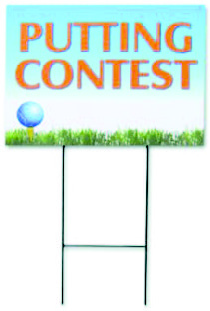
Yard sign. A sign placed upon or supported by the ground, independently of any other structure, but not including an A-frame sign.
a.
Up to two sign riders of no more than one square foot each are permitted on yard signs.
b.
Permitted sign riders are not included in the sign area calculation.
(b)
Temporary signage permitted by district. The following temporary signage is permitted by lot, by district, and by use:
Table 96-137.1: Temporary Signage Permitted by District
(c)
Exceptions and additions to Table 96-137.1.
(1)
A-frame signs may be placed on the public sidewalk in the Downtown District directly in front of the business, but shall be placed so they do not interfere with or impede the flow of pedestrian movement.
(2)
Active real estate listing or active building permit signs. One additional temporary sign is permitted on a property that is subject to: (a) an active real estate sale or rental listing; or (b) active building permit. The sign may remain posted on the site for the duration of the listing period or while the building permit is valid and active. The dimensional standards of Table 96-137.1 shall apply by district. No permit shall be required.
(d)
Temporary signage permitted by special event or temporary use.
(1)
General. Temporary signs may be allowed as part of a special event or temporary use permit pursuant to this subsection.
a.
Maximum sign calculation. Temporary signs permitted through a special event or temporary use permit may be off-premises with the permission of the property owner, and may be allowed on a parcel in addition to the maximum amount of temporary signage permitted on that parcel.
b.
Temporary sign types. Temporary signs permitted as part of a special event or temporary use permit are restricted to the types, sizes, and heights identified in Table 96-137.1 unless otherwise specified in this subsection.
(2)
Election event. For a period of 60 days prior to a state, local, or national election, the total number of temporary signs permitted per property may be increased over the maximum amount of temporary signage permitted by this article. The number of increased signs is calculated by the number of federal, state, and local issues and elected positions on the ballot within the voting district where the property is located. The content of this additional signage is not subject to regulation by the city, but the number shall not exceed the number of ballot issues and offices on the ballot. The dimensional standards of Table 96-137.1 shall apply by district. No permit shall be required for the additional signage during an election event, and the additional signage shall be removed no more than two days following the election.
Exception:
Any candidate who has won an August primary election, whose name will then appear on the subsequent November ballot, shall not be required to remove their campaign signs until two days following the November election.
(3)
Garage/yard sale event. Temporary signs may be permitted in conjunction with a permitted garage/yard sale as follows:
a.
Signs shall be located within a 5,000-foot radius of the garage/yard sale.
b.
Signs may only be displayed on the same day as the garage/yard sale.
(4)
Open house/auction event. Temporary signs may be permitted in conjunction with a staffed real estate open house/auction as follows:
a.
Signs shall be located within a 5,000-foot radius of the open house.
b.
Signs may only be displayed on the same day as the open house/auction event.
(5)
Public event.
a.
A maximum of ten banner signs and 20 yard signs may be issued in conjunction with a temporary use permit.
b.
The temporary use permit shall specify the installation and removal dates of the temporary signs allowed in conjunction with the permit.
c.
Banner signs shall not exceed 32 square feet of sign area, per side. Yard signs shall not exceed six square feet in area, per side. A-frame signs are not permitted.
(6)
Special event.
a.
A maximum of ten banner signs and 20 yard signs may be issued in conjunction with a special event permit.
b.
The special event permit shall specify the installation and removal dates of the temporary signs allowed in conjunction with the permit.
c.
Banner signs shall not exceed 32 square feet of sign area, per side. Yard signs shall not exceed six square feet in area per side. A-frame signs are not permitted.
(e)
Temporary substitute signage for damaged permanent signs. In the event that a permanent sign is substantially damaged through fire, natural disaster, or similar emergency, or in the case of major construction projects, where existing permanent signage is removed for construction purposes, a temporary sign may be allowed for display for a period of time not exceeding 60 days. Temporary signage is limited to a maximum of 32 square feet per address, unless the temporary signage is affixed to any wall face of the main structure. When temporary signage is affixed to any wall face of the main structure, the maximum size of temporary signage may be increased to allow for a maximum coverage of 20 percent of the area of the wall face to which it is affixed. In no case shall any temporary signage exceed a maximum size of 250 square feet.
(Ord. No. 2019-0131, § 2, 9-24-2019; Ord. No. 2022-0055, § 2, 7-12-2022)
Sec. 94-138. - Off-premises signs.
(a)
Limitation on issuance of new off-premises sign permits.
(1)
The city shall not issue any new permits for the construction of off-premises signs except as otherwise provided in this section.
a.
Nothing contained in this section shall be construed to limit the maintenance and repair of any existing off-premises signs.
b.
Maintenance shall not include the conversion of an existing sign to an electronic message center sign. Any such conversions shall be subject to the permitting and fee requirements set forth in this article.
(2)
New off-premises signs are only allowed in areas zoned Community Commercial, Business, or Industrial, with frontage directly abutting U.S. Highway 65, and are subject to the following restrictions:
a.
Sign Area: Maximum of 400 square feet.
b.
Sign Height: Maximum height of 30 feet.
c.
Spacing:
(i)
Required spacing.
1.
A minimum distance of 1,400 feet of frontage on U.S. Highway 65 shall be maintained between every off-premises sign and any other freestanding sign located within 660 feet of the edge of the right-of-way of U.S. Highway 65.
2.
A minimum distance of 500 feet shall be maintained between any off-premises sign and any public or state park.
3.
A minimum distance of 1,000 feet of frontage on U.S. Highway 65 shall be maintained between any off-premises sign and any interchange as measured at the edge of the highway on- or off-ramp closest to the sign.
4.
A minimum distance of 250 feet from a residentially zoned property.
(ii)
Measurement.
1.
For the purposes of off-premises signs, distance shall be measured as the minimum distance between sign structures as measured along the nearest edge of the pavement between points directly opposite the signs along each side of the highway, and shall apply only to off-premises sign structures located on the same side of the right-of-way.
2.
The sign measurement points shall be those which yield the shortest distance between the structures.
(3)
New off-premises signs shall meet both the requirements of this section, and where applicable, the requirements of the Missouri Revised Statutes relating to billboards.
(b)
Off-premises replacement signs.
(1)
Requirements for replacement of existing off-premises signs.
a.
An existing off-premises sign located in the Community Commercial or Entertainment District may be replaced with a static, EMC, or combination thereof with the concurrent removal or reduction of two times the equivalent sign area (2:1, "removal ratio") of the proposed off-premises replacement sign through any combination of existing off-premises sign(s) located in any zoning district. For the purposes of this section, the resulting sign shall be referred to as an "off-premises replacement sign."
b.
Only off-premises signs legally existing prior to May 30, 2019, shall be allowed to count toward the removal ratio. Any off-premises sign built outside of the city limits after May 30, 2019, then annexed into the city, shall not be permitted to count toward the removal ratio.
c.
An off-premises replacement sign may be sited in any location that meets all of the standards set forth in this article, including separation distance from other signs, including but not limited to the location(s) of any existing sign that is removed or reduced. The off-premises replacement sign shall be considered a conforming sign.
(2)
Sign structures.
a.
An applicant may retain and reuse the structure of one of the removed signs, or continue to use the structure in the case of a reduced-size sign, where the retained structure is in current compliance with applicable building and electrical codes, and where any necessary structural changes can be made in compliance with applicable building and electrical codes.
b.
An applicant may not retain or reuse any sign structure that was considered nonconforming by MoDOT but has lost the nonconforming status pursuant to 7 CSR 10-6.060(3). While this provision is administered by MoDOT, it generally applies to deteriorated or damaged signs and structures that have had 50 percent or more repair or replacement in a 12-month period.
(3)
Removal without immediate replacement. Upon removal of an existing off-premises sign for any reason, the city shall record the size of the sign and other relevant information about the sign, and keep a record of the sign for five years from the date of removal. A removed off-premises sign that is part of the city's removed off-premises record can be used to satisfy the removal requirement for an off-premises replacement sign. If the removed sign square footage is not claimed within five years, that square footage may no longer be used to meet the size requirements for an off-premises replacement sign.
(4)
Timing of application. An application for an off-premises replacement sign may be made in anticipation of the removal of existing off-premises sign(s). The off-premises replacement sign application may be approved on the condition that the construction of the off-premises replacement sign shall not commence until the existing off-premises sign(s) are removed and documentation of their removal is submitted to the city.
(5)
Transfer of approval. The owner of an approved off-premises replacement sign within the city may transfer the right to build the replacement off-premises sign to another party. The transfer shall be stated in a letter signed by both parties which is submitted with an application for a replacement off-premises sign.
(c)
Generally applicable standards. New off-premises signs and replacement off-premises signs are subject to the measurement and calculation, illumination, and electronic message center standards of this article unless otherwise specifically stated in this section.
(Ord. No. 2019-0131, § 2, 9-24-2019)
Sec. 94-139. - Nonconforming signs.
(a)
Nonconforming signs. Where a lawful sign exists at the effective date of the ordinance from which this article is derived, or amendment of this article, that would be illegal under the terms of this article, such sign may be continued so long as it remains otherwise lawful, subject to the provisions of this section.
(1)
Classification of nonconformities. There are two types of nonconforming signs: major and minor.
a.
Major nonconforming signs are those signs for which the nonconformity generates a nuisance per se, violates city sign policy, or is incompatibility with adjacent signs or the comprehensive plan such that public policy favors their elimination from the zoning district if they are discontinued, abandoned, or destroyed. Major nonconforming signs include:
(i)
Off-premises signs,
(ii)
Dangerous signs,
(iii)
Nonconforming illumination,
(iv)
Nonconforming sign type,
(v)
Signs that are taller than the maximum height permitted in the zoning district, and
(vi)
Signs with minor nonconformities that have not been continuously permitted by the city.
b.
Minor nonconforming signs are any nonconforming signs which are not classified as major nonconforming signs. Minor nonconforming signs include, but are not limited to:
(i)
Nonconforming setback,
(ii)
Nonconforming separation, or
(iii)
Nonconforming cladding.
(2)
Major nonconformities.
a.
A major nonconforming sign or sign structure may not be altered in any way that increases its nonconformity.
b.
Any proposed change to a major nonconforming sign, excluding general repairs, maintenance, and advertising copy, shall require the sign to be brought into conformance with this article, except that alterations may be made to a major nonconforming, permanent, on-premises sign as follows:
(i)
Where the nonconformity is expressed as a measurement,
1.
The alteration must reduce the nonconformity by at least 50 percent. For example, a nonconforming sign that is ten feet over the maximum height for the district may be altered if the height of the sign is also lowered by at least five feet; or
2.
Where the sign can be made conforming with a change of up to ten percent or ten feet, the sign shall be brought into compliance. For example, a nonconforming sign that is eight feet away from compliance with a required setback shall be relocated and brought into compliance unless there are other conditions on the site, unrelated to the sign and not caused by the applicant, that prohibit compliance.
(ii)
Where the nonconformity is not expressed as a measurement, such as a sign type that is no longer permitted in a zoning district, alterations may be made as long as the sign structure is kept at the same dimensions, and in same the location as the sign was when it became nonconforming. The sign and structure shall be fully maintained and functional, free from all defects, and not exhibiting any signs of deferred maintenance, deterioration, or abandonment. The city may require proof of maintenance for any internal components, such as electricity, or structural parts that are subject to degradation from wind, weather, or other external causes of stress to the sign.
(iii)
Signs with multiple nonconformities may be altered provided at least one nonconformity meets the requirements of this section, and that none of the remaining nonconformities are increased or expanded.
(3)
Minor nonconformities. A minor nonconforming sign may be altered or replaced in a manner that conforms to this Code while still maintaining the nonconforming item (e.g., measurement, location, design).
a.
The applicant will be required to show that the sign's minor nonconformity items will not be increased and the sign has been continuously maintained.
b.
Minor nonconforming signs that have been altered to increase their nonconformity shall be classified as a major nonconforming sign.
(4)
Sign removal for public purposes. Any sign temporarily removed by a public utility company, the city, or any governmental agency to accommodate repair, maintenance, or expansion operations, may be replaced, provided there is no change in size, height, or location of the sign. If any sign is moved as a direct result of a city, governmental, or utility project, it may be relocated to a position determined by the city engineer to be appropriate in relation to the project, and such a sign shall not be considered nonconforming for the reason of separation. No permit shall be required for such replacement.
(b)
Loss of major nonconforming status. A major nonconforming sign shall lose such designation if any of the following apply:
(1)
The sign is removed, relocated, or replaced for any reason except towards compliance with this article.
(2)
If greater than 50 percent of a nonconforming sign is damaged by any means, as measured by replacement cost of any combination of the copy area and sign structure prior to such destruction, it shall be considered destroyed and shall not be brought back into service or use, except in conformity with the provisions of this article.
(3)
The sign is replaced in compliance with this article.
(4)
The sign is abandoned pursuant to this article.
(c)
Maintenance and repair.
(1)
A nonconforming sign is subject to all requirements of this article regarding safety, maintenance, and repair.
(2)
When a sign permit has been obtained, temporary removal of any portion of a sign for repairs or general maintenance shall not be considered to be in violation of this section, provided that no alterations are made to the sign structure. Should such sign structure be moved for any reason and over any distance whatsoever, it shall thereafter conform to all regulations for the district in which it is located after it has been moved or relocated.
(3)
Maintenance shall not include the conversion of a nonconforming sign to an electronic message center sign. Any such conversions may only be made to a conforming sign, and shall be subject to the permitting and fee requirements set forth in this article.
(d)
Records.
(1)
The planning and development director shall maintain a list of all nonconforming signs, including the exact location of each, which list shall be updated as necessary.
(2)
In addition to initial and construction inspections, signs may be inspected periodically by the planning and development director to ensure continued compliance with this article.
(Ord. No. 2019-0131, § 2, 9-24-2019)
Sec. 94-140. - Maintenance.
(a)
Required maintenance.
(1)
All signs and components thereof shall be maintained in good repair, and in a safe, neat, clean, and attractive condition, and shall be refurbished often enough to be clearly legible.
(2)
Maintenance shall not include the conversion of an existing sign to an electronic message center sign. Any such conversions shall be subject to the permitting and fee requirements set forth in this article.
(3)
In maintaining signs under this article, the following specific standards shall apply. Repairs, where required, shall be equal to, or better than the original sign in quality of materials and design:
a.
Sign finishes and structures shall be maintained in good condition and shall not have:
(i)
Any surface area covered with disfigured, cracked, ripped, faded, or peeling paint, poster paper, or other material.
(ii)
Rusted, disfigured, peeling, faded, bent, broken, dilapidated, or deteriorated sign facings, or supports, or loose appendages, or struts.
b.
All signs shall have sign facings installed, whether blank or with advertising content.
c.
Signs that are designed to be upright and level shall be installed and maintained in an upright and level position. Signs that are not upright and level shall be removed or restored to an upright and level position.
d.
Signs shall not have weeds, trees, vines, or other vegetation growing on, or in it, or obscuring the view of the sign from the right-of-way from which it is to be viewed.
e.
No internally illuminated sign shall be allowed to operate with less than full illumination.
f.
Flags shall not be faded, tattered, or torn.
g.
Sign lettering must be applied and maintained in such manner that the sign's overall appearance is professional, attractive, and legible.
(b)
Enforcement. The owner of a sign(s) that fails to comply with applicable maintenance requirements shall be notified that they have 30 days to complete necessary maintenance or the sign will be subject to repair or removal by the city at owner or lessee's cost.
(c)
Abandoned signs.
(1)
Abandoned signs.
a.
A sign or sign structure where either: (1) the sign is no longer used by the property or sign owner, in which case discontinuance of sign use may be shown by expiration or revocation of a business license for the business located on the property, or cessation of use of the property where the sign is located for the use or purpose associated with the sign; or (2) the sign has been damaged, and repairs and restoration have not been started within 45 days of the date the sign was damaged, or, once started, are not diligently pursued to completion.
b.
A nonconforming sign that meets the requirements of this section may be considered abandoned and will be subject to either sign face change or removal as may be appropriate.
c.
Temporary signs shall be considered abandoned if the associated permit has expired or if the sign fails to meet the maintenance requirements of this article.
(2)
Sign face change.
a.
Where an on-premises sign becomes abandoned due to cessation of use of the associated building, the sign face(s) of all signs associated with the structure shall be removed and shall be replaced with a blank face or a face designating that the building is for sale or lease by the owner or lessee of the property upon which the sign is located when the business it advertises is no longer conducted on the property.
b.
If the owner or lessee fails to remove the sign face(s) and replace it with a blank face or face designating that the building is for sale or lease, the planning and development director shall give written notice to remove it and shall take such actions to remove and replace the sign as authorized in this article.
(3)
Sign removal.
a.
When an on-premises sign becomes an abandoned sign due to demolition or destruction of the structure in which the business was located, the sign structure shall be removed at the same time as the demolition of the structure, or within 45 days of a determination of abandonment by the planning and development director.
b.
Where a successor to a business agrees in writing, prior to the demolition of the structure or as part of a determination of abandonment, to bring any sign into compliance with this article and to maintain the sign as provided in this article, the removal requirement shall not apply. The sign structure shall be brought into compliance prior to the issuance of a certificate of occupancy for use of any part of the associated structure or business.
(Ord. No. 2019-0131, § 2, 9-24-2019)
Sec. 94-141. - Violations and sign removal.
(a)
Signs subject to removal. The planning and development director shall identify and shall order the removal of any signs, at cost to the owner, erected or maintained in violation of this article, including, but not limited to, illegal signs, unauthorized signs on city property, prohibited signs, abandoned signs, dilapidated or damaged signs, temporary signs posted beyond the time limit established in this article, and signs that due to design, construction, or failure to maintain are determined by the planning and development director to be unsafe or unsightly, and a blight on the community.
(b)
Illegal signs. It is the policy of the city to aggressively enforce the provisions of this article, and to remove all illegal signs in the city. While other signs are unlawful and in violation of this article, an illegal sign is particularly offensive in that it is any sign constructed (after adoption of the ordinance from which this article is derived) without a permit, or constructed in violation of this article. An illegal sign was never a legal sign, has never complied with the provisions of this article, and has no legal right to remain. Illegal signs shall be removed in accordance with this article as expeditiously as possible.
(c)
Cost of removal by city. The cost of correcting the unlawful, dangerous, or a defective feature, or total sign, shall be a personal liability of the owner, and may be assessed against the property on which the sign is located, together with the inspection, collection, and incidental costs, and a lien may be placed upon property to secure the same.
(d)
City may contract for sign removal services. At the city's discretion, remedial action under this article may be taken on behalf of the city by a commercial sign company of the city's choice.
(e)
Removal of signs posing immediate safety threat. A temporary or permanent sign may be removed immediately and without notice to the owner if, in the opinion of the planning and development director, the condition of a sign presents an immediate threat to the safety of the public and the owner cannot be located immediately. Removal of signs under this subsection shall be at the property owner's expense.
(f)
Removal of unlawful signs after notice to property owner.
(1)
Applicability. This subsection does not apply to temporary signs.
(2)
Notice of violation; order to remove. The planning and development director shall give 30 days' notice in writing to the owner of such sign, or of the building, structure, or property on which a sign subject to removal under this article is located, stating the nature of the violation and ordering the owner to remove the sign or to bring it into compliance. If service of notice is given by publication as provided in this section, 15 days shall be added to the notice period established in this subsection.
(3)
Service of notice by mail or personal delivery. When notice is served to remove a sign, it may be served by federal postal service mail, postage prepaid, or delivered by handing the notice to the person to be served by the planning and development director, or by leaving the notice at the usual abode of the one to be served with a member of the household over the age of 15 years.
(4)
Service by publication if owner is unknown. If the address of the person to be served cannot be ascertained, the service of notice shall be by publication. The publication shall contain the full text of the notice and shall be published once a week for four consecutive weeks on the same day of the week in the newspaper, and the time specified for a hearing to be held by the administrative hearing officer.
(5)
Contents of notice. Notice given by the planning and development director shall state the remedial action required to be taken and the time within which it must be completed. The notice shall also state that if the required remedial action is not taken in the time allowed, the remedial action may be taken by the city, and the cost of correcting the violation shall be a personal liability of the owner, and may be assessed against the property on which the sign is located, together with the inspection, collection, and incidental costs.
(6)
Appeal to board of adjustment. A notice of violation and required removal under this article may be appealed by filing a written appeal in the office of the planning and development director within 15 calendar days of the violation notice. The board of adjustment shall hear the appeal in accordance with its usual procedure. The board of adjustment, upon finding that a violation exists, may approve or modify the order of the planning and development director. The board of adjustment's decision may be appealed in the manner provided by law.
(g)
Removal of temporary signs.
(1)
First offense.
a.
The planning and development director may direct the immediate removal of prohibited (both type and location) and abandoned temporary signs. No notice is required prior to disposal of signs located on public property or an off-premises location.
b.
The planning and development director may direct the removal of any other temporary signage, at cost to the owner, erected or maintained in violation of this article as follows:
(i)
The planning and development director shall provide written notice to the owner of the building, structure, or property on which such temporary sign is located, stating the nature of the violation and ordering the owner to remove the sign immediately or bring it into compliance. The written notice shall be served by United States mail, postage prepaid, or delivered by the planning and development director handing the notice to the person to be served.
(ii)
If the owner or their authorized representative does not remove the temporary sign, or bring it into compliance within 24 hours of receipt of written notice, remedial action may be taken by the city to remove the signage.
(2)
Second offense.
a.
If the planning and development director finds that there is a second violation within a 12-month period, the violating sign(s) shall be subject to immediate confiscation without notice. For purposes of calculating the 12-month period, the date of the commission of the first offense shall be used.
b.
The planning and development director shall give notice to the owner or lessee of the business to which a sign relates that the sign has been confiscated and that if not claimed within five calendar days from the date of the notice, the sign shall be disposed of by the city.
(3)
Third offense.
a.
If the planning and development director finds that there is a third (or higher) violation within a 12-month period, the violating sign(s) shall be subject to immediate confiscation without notice. For purposes of calculating the 12-month period, the date of the commission of the first offense shall be used.
b.
Permits for temporary signs shall be prohibited to a third time violator for a period of 12 months following the date of the commission of the first offense.
(Ord. No. 2019-0131, § 2, 9-24-2019)

