
Branson City Zoning Code
ARTICLE VI
- OFF-STREET PARKING
Sec. 94-85. - Purpose.
The purpose of this section is to promote safe access, and to regulate the amount and location of vehicle parking and maneuvering areas in order to promote a more efficient use of land, enhance urban form, encourage the use of alternative modes of transportation, provide for better pedestrian movement, and protect air and water quality. The provisions of this section are intended to:
(a)
Prevent and alleviate the congestion of public streets;
(b)
Encourage the incorporation of alternative modes of transportation by emphasizing pedestrian circulation, and establishing requirements for bicycle parking;
(c)
Minimize the detrimental effects of vehicular use areas on adjacent properties;
(d)
Promote the health, safety and public welfare by establishing maximum requirements for off-street parking and loading areas; and
(e)
Limit parking to encourage more compact, walkable developments.
(Ord. No. 2018-0030, § 2, 4-10-2018)
Sec. 94-86. - Applicability and location.
(a)
Scope of regulations.
(1)
Off-street parking space shall be provided for all new buildings and structures, for changes in use which increase the capacity, available gross floor area, intensity of use, or other unit of measurement specified herein, and for additions to existing structures.
(2)
The term "addition" as used in this section shall include any alteration intended to enlarge or increase capacity by adding or creating dwelling units, guestrooms, floor area or seats.
(3)
Any building completed, and in use at the time of passage of the ordinance from which this article is derived, shall not be required to furnish any additional parking spaces that may be required by this chapter. When the intensity of use of a structure is in any way increased, all restrictions of this article shall pertain.
(4)
Where parking on a site is provided in an amount above the parking maximum, that amount of parking may be retained until redevelopment or external additions increase the market value of the existing structure by 75 percent or greater, at which time parking shall be brought into compliance with these regulations.
(5)
Accessory off-street parking and loading facilities in existence of the effective date of this chapter, and located on the same lot as the building or use served, shall not hereafter be reduced below the requirements of this article for a similar new building or use. If such existing facilities are already below the required amount, they shall not be hereafter further reduced.
(b)
Location of parking.
(1)
Generally.
a.
Parking spaces required for dwellings shall be located on the same parcel, or site, as the main dwelling, and located either in a garage or on a paved driveway or parking area.
b.
New parking spaces created in residential districts after the effective date of these regulations shall not occupy any part of any required front yard except for the driveway. Parking on a nonpaved surface in the front yard shall be prohibited.
c.
Parking in Commercial and Mixed-Use Districts shall be located to the side or rear of the primary structure. One double-loaded row of surface parking may be allowed between the front of a commercial structure and the front setback provided 50 percent additional landscaping is provided pursuant to this chapter.
d.
Parking spaces shall be reserved for the sole use of the occupants and employees of the building and their visitors. However, churches, theaters, stadiums, auditoriums and other similar places of assembly may make arrangements for joint use of parking space with other uses herein specified.
(2)
Structured parking. The off-street parking required by this article may be located in a parking structure, whether on the same or on a different lot than the uses which it serves. Such structure shall be subject to the following:
a.
Ground floor parking provided in a parking structure shall be landscaped and screened, insofar as practicable, from surrounding uses and from public view. In addition, for uses located on the same lot as the structure, the conditions required for shared parking shall apply. For uses located on a different lot as the structure, the conditions required for off-site parking shall apply.
b.
Parking structures with ground floors that are not completely wrapped with commercial, office, institutional, public uses or civic uses on the side facing an intersection (except sides abutting alleys) shall not:
(i)
Abut street intersections or public/civic use areas, or
(ii)
Occupy sites that are the terminus of a street vista.
(c)
Off-site parking. All off-street parking areas for any use shall be provided on the same lot as the use it serves. However, parking may be allowed on another lot where there are practical difficulties in the location of the parking area or if public safety or public convenience, or both, are better served by a remote location. Off-site parking shall be approved by the planning and development director, and shall comply with the following standards:
(1)
Same ownership. The parking area is located on land under the same ownership as the use it serves, or a recorded easement in perpetuity that has been established for the use of an off-site location for parking and filed with city clerk and county recorder.
(2)
Distance between off-site parking area and the proposed use.
a.
Off-site parking for multiple-family dwellings shall not be located more than 200 feet from any normally used entrance of the principal use served.
b.
Off-site parking for nonresidential or mixed-uses shall not be located more than 300 feet from any normally used entrance of the principal use served.
c.
The above distances shall be measured along the shortest legal, practical walking route. This route may include crossing a right-of-way provided it uses a legal crosswalk.
(3)
No undue hazard. The off-site parking area shall be convenient to use without causing unreasonable:
a.
Hazard to pedestrians,
b.
Hazard to vehicular traffic,
c.
Traffic congestion,
d.
Interference with commercial activity or convenient access to other parking areas in the vicinity,
e.
Detriment to the appropriate use of business lands in the vicinity, or
f.
Detriment to any abutting residential neighborhood.
(Ord. No. 2018-0030, § 2, 4-10-2018)
Sec. 94-87. - Off-street parking standards.
(a)
Computation of required off-street parking spaces.
(1)
Fractions. When measurements of the number of required parking spaces result in fractions, the space standard shall be rounded upward to the next highest whole number.
(2)
Different use areas. Except as provided for in this section, parking shall be calculated separately for each different use area in a building or on a site, including all accessory uses.
(3)
Combinations of uses. If the planning and development director determines that a proposed use represents a combination of uses listed in Table 94-87.1, Off-Street Parking Standards, the parking space standards shall be those that would apply if the two (or more) uses were developed separately, unless the planning and development director determines that a lower standard would be adequate because of differences in peak operating hours pursuant to this chapter.
(4)
On-street parking. Except as permitted as part of an approved Alternative Parking Plan, on-street parking on streets, shall not be used to satisfy the off-street parking standards of this article.
(5)
Parking based on seating. When the standards use seating as a unit of measurement, all calculations shall be based on the occupant load of the areas used for seating.
(6)
Parking based on floor area. Except as provided for in this section, when the standards use amount of square footage in buildings as a unit of measurement, all calculations shall be based on gross floor area minus ten percent except as may hereinafter be modified.
(7)
Parking based on occupants. Except as provided for in this section, when the standards use the number of occupants as a unit of measurement, all calculations shall be based on the maximum fire-rated capacity.
(8)
Fleet parking. For the purpose of calculating parking requirements, fleet vehicle parking spaces shall not count against either the minimum or maximum requirements.
(b)
Determination by planning and development director.
(1)
Parking standards for uses not specifically listed in Table 94-87.1, Off-Street Parking Standards, shall be determined by the planning and development director based on the standards for the closest comparable use, or by reference to standard parking resources published by the National Parking Association, the American Planning Association or similar organization.
(2)
The planning and development director may alternately require the submittal of a parking demand study that justifies estimates of parking demand based on the recommendations of the Institute of Transportation Engineers (ITE), and includes relevant data collected from uses or combinations of uses that are the same or comparable to the proposed use in terms of density, scale, bulk, area, type of activity and location.
(c)
Off-street parking spaces required. Off-street parking spaces shall be provided in accordance with Table 94-87.1, Maximum Off-Street Parking Standards. Where this table does not specify a parking requirement, the standards of subsection 94-87(d) apply.
Table 94-87.1: Maximum Off-Street Parking Standards
Dwelling Unit = du Gross Floor Area = GFA
(d)
Off-street parking standards for selected service and industrial uses. Uses that reference this subsection in Table 94-87.1, Maximum Off-Street Parking Standards, shall provide no more than the number of spaces identified in Table 94-87.2, Maximum Off-Street Parking Standards for Selected Service and Industrial Uses:
Table 94-87.2: Maximum Off-Street Parking Standards for Selected Service
and Industrial Uses
(e)
Uses with variable parking demand. Uses that reference this subsection in Table 94-87.1, Maximum Off-Street Parking Standards, have widely varying parking demand characteristics making it difficult to establish a single off-street parking standard. Upon receiving a development application for a use subject to this subsection, the planning and development director shall apply the off-street parking standard specified for the listed use that is deemed most similar to the proposed use, or establish an off-street parking standard on the basis of a parking study prepared by the applicant. Such a study shall include estimates of parking demand based on recommendations of the Institute of Transportation Engineers (ITE), or other acceptable estimates as approved by the planning and development director, and should include other reliable data collected from uses or combinations of uses that are the same as, or comparable with, the proposed use. Comparability will be determined by density, scale, bulk, area, type of activity and location. The study shall document the source of data used to develop the recommendations.
(f)
Maximum parking spaces allowed.
(1)
Applicability. Off-street vehicle parking spaces shall not be provided in an amount that is more than the amount specified in Table 94-87.1 unless the maximum parking requirement is waived or mitigated as provided in this section.
(2)
Maximum parking calculation exceptions. For the purpose of calculating parking requirements, the following types of parking spaces shall not count against the maximum parking requirement:
a.
Accessible parking;
b.
Vanpool and carpool parking;
c.
Spaces with electrical vehicle charging stations, up to a maximum of two per 50 parking spaces, or as determined by the planning director;
d.
On-street parking adjacent to the lot or lots on which the parking located; and
e.
Structured parking, underground parking, and parking within, above or beneath the building(s) it serves.
(3)
Maximum parking waiver.
a.
Parking demand study. Requests to exceed the maximum parking requirement shall be accompanied by a parking demand study demonstrating how the maximum number of parking spaces specified in Table 94-87.1 is insufficient for the proposed development.
b.
Review criteria. A waiver to the maximum parking requirement may be allowed by the planning and development director in situations that meet the following criteria:
(i)
The proposed development has unique or unusual characteristics such as high sales volume per floor area or low turnover, that create a parking demand that exceeds the maximum ratio and that typically does not apply to comparable uses;
(ii)
The parking demand cannot be accommodated by on-street parking, shared parking with nearby uses, or by increasing the supply of spaces that are exempt from the maximum ratio;
(iii)
The request is the minimum necessary variation from the standards; or
(iv)
If application of the maximum parking standard would result in fewer than six parking spaces, the development shall be allowed six parking spaces.
(4)
Design requirements for excess parking. Parking that is provided in excess of the maximum parking requirement shall be required to include increased internal landscaping and incorporate pervious pavement as described below.
a.
Pervious surfaces. Where parking spaces in excess of the maximum specified in Table 94-87.1 are constructed, an area equal to the total area required for the number of spaces that exceed the maximum parking requirement shall be constructed of pervious surfaces as approved by the public works director.
b.
Additional trees and landscaping.
(i)
Applicants that request parking that exceeds the number of spaces required by Table 94-87.1 shall provide additional parking lot trees and landscaping as follows:
Table 94-87.3: Additional Landscaping Requirement for Overparking
a.
Any required additional landscaping shall be distributed throughout the site as determined by the planning and development director, and in accordance with Table 94-87.3. The additional landscaping shall be integrated with the parking lot and site design.
b.
Where the provision of additional landscaping is restricted for infill and redevelopment projects due to site constraints, the applicant may provide sidewalk amenities or streetscape features as determined by the planning and development director. Acceptable amenities shall have a value equal to or greater than the price of the additional landscaping features required in Table 94-87.3, and may include but are not limited to:
(i)
Sidewalk planters between the parking area and building, or the parking area and the street;
(ii)
Public art including, but not limited to, sculptures, fountains, clocks or murals; or
(iii)
Decorative fencing (such as wrought iron) around the perimeter of the parking area provided with seasonal plantings.
(g)
Bicycle parking.
(1)
Required number of spaces. Bicycle parking shall be provided as follows unless otherwise approved by the planning and development director due to safe accessibility:
Table 94-87.4: Required Bicycle Parking
(2)
Design and location. Bicycle parking facilities shall include a rack or storage facility (e.g., locker) that enables bicycles to be secured. Where racks are used, they shall meet the following standards:
a.
The bicycle frame and one wheel can be locked to the rack with a high-security, U-shaped shackle lock if both wheels are left on the bicycle;
b.
A bicycle six feet long can be securely held with its frame supported so that the bicycle cannot be pushed or fall in a manner that will damage the wheels or components;
c.
The rack must be securely anchored;
d.
Bicycle racks and storage facilities shall be accessible without moving another bicycle;
e.
Bicycle racks and storage facilities shall be located in convenient, visible, well-lit areas with easy access and near main entrances of all commercial, residential and institutional buildings. Such locations shall be clearly noted with signage;
f.
The racks and storage facilities shall be located so they do not interfere with pedestrian traffic, and shall be protected from potential damage by motor vehicles; and
g.
Bicycle parking shall not be within any required landscape area, nor interfere with any pedestrian pathway.
(h)
Loading areas. A permanently maintained usable off-street loading space shall be provided on the same parcel when structures for the following uses are erected, established or altered:
(1)
Hospitals or similar institutions with a gross floor area (GFA) of 10,000 square feet or more shall provide one space, exclusive of ambulance space.
(2)
Hotels and office buildings with a GFA of 10,000 square feet or more shall provide one space.
(3)
Undertakers and funeral parlors shall provide one space for each 5,000 square feet of GFA.
(4)
All commercial and industrial uses with a GFA of 5,000 square feet or more shall provide one space for the first 25,000 square feet, and one additional space for each 50,000 square feet GFA thereafter, or any portion thereof.
(i)
Vehicle stacking areas. The following standards shall apply to businesses that contain a drive-through establishment (e.g., restaurant or financial institution), and are a stand-alone use (e.g., automatic teller machine):
(1)
General standards.
a.
Audible electronic devices such as loudspeakers, automobile service order devices and similar instruments shall not be located within 250 feet of any residential dwelling unit.
b.
No service shall be rendered, deliveries made or sales conducted within the required front yard or abutting street side yard; customers served in vehicles shall be parked to the sides or rear of the principal building.
c.
All drive-through areas, including but not limited to, menu boards, stacking lanes, trash receptacles, loudspeakers, drive-up windows and other objects associated with the drive-through area shall be located in the side or rear yard of a property to the maximum extent feasible, and shall not cross, interfere with or impede any public right-of-way.
(2)
Stacking space and lane requirements. Stacking lanes shall comply with the following design standards:
a.
Drive-through stacking lanes shall have a minimum width of eight feet, and length of 20 feet.
b.
The first position in a drive-through station, located at the window, is counted as a stacking space. No stacking spaces may be counted as parking spaces unless specified in Table 94-87.1.
c.
Stacking lanes shall be set back 25 feet from rights-of-way.
d.
All stacking lanes must be clearly identified, through the use of means such as striping, concrete curbing, landscaping and signs.
e.
The number of required stacking spaces shall be as provided for in Table 94-87.5, Stacking Space Requirements. See Figure 94-87.A for an illustration of stacking lanes:
Table 94-87.5: Stacking Space Requirements
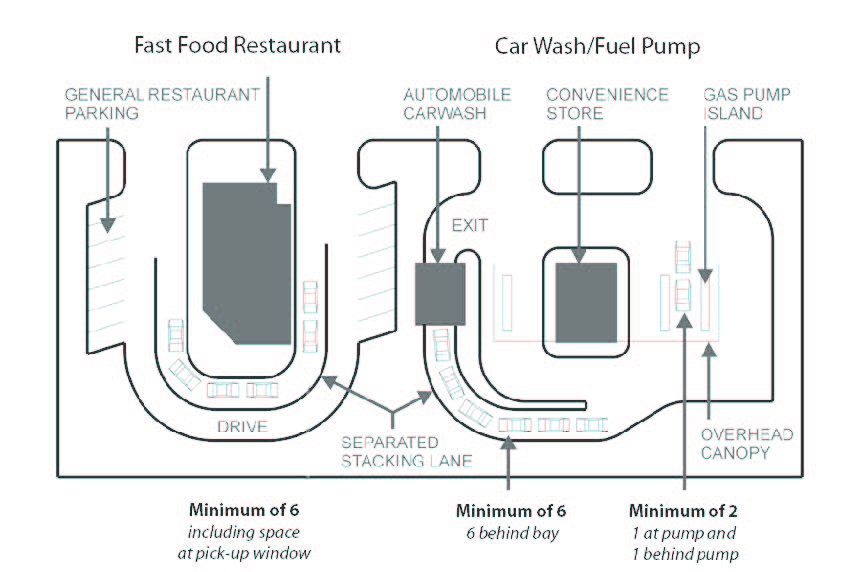
Fig. 94-54.A: Stacking Lanes
(j)
Access.
(1)
All driveway entrances, including stacking lane entrances, must be at least 50 feet from an intersection. The distance is measured along the property line from the junction of the two street lot lines to the nearest edge of the entrance. The public works director may determine that a right in, right out entrance is permitted closer than 50 feet from an intersection.
(2)
The entrance to a stacking lane shall be located so as to avoid conflicting with the street access.
(3)
Access driveways on a corner site shall be located as far as possible from the abutting street intersection.
(4)
Pedestrian/barrier-free access to building entrances shall provide direct pedestrian links to main parking areas and public sidewalks that do not pass through a stacking lane.
(Ord. No. 2018-0030, § 2, 4-10-2018; Ord. No. 2019-0071, § 2, 6-11-2019; Ord. No. 2020-0083, § 2, 8-11-2020; Ord. No. 2024-0061, § 2, 7-9-2024)
Sec. 94-88. - Off-street parking design standards.
(a)
Stall size and driveways. The required minimum area for off-street parking spaces and the required minimum area for driveways or other access serving off-street parking spaces shall be as follows:
(1)
The first ten spaces and 80 percent of the spaces over and above the first ten must be nine-foot by 19-foot "full-size" spaces.
(2)
Twenty percent of the required off-street parking spaces over and above the first ten required spaces may be provided in eight-foot by 16-foot "compact" spaces.
(3)
All compact spaces must be permanently marked for "compacts only."
(4)
The required minimum area for compact and full-size, off-street parking spaces, and the required minimum area for driveways and other access serving off-street parking spaces are shown in the charts which are included in this chapter.
(b)
Design and materials.
(1)
Mixed-use and nonresidential development.
a.
Except as provided in this chapter, off-street parking spaces shall be surfaced with one of the following materials:
(i)
A minimum of two inches of asphalt over a four-inch gravel base;
(ii)
Five inches of concrete;
(iii)
Interlocking paver stones of strength equal to five inches of concrete and designed for vehicular use; or
(iv)
An alternative surface treatment which exhibits similar structural and maintenance characteristics as that of the requirements of this subsection, and approved by the planning and development director.
b.
All parking areas shall provide concrete curb and gutter that meets the city engineering specifications.
c.
All surfacing shall be over an approved compacted subgrade and shall be graded so as to eliminate drainage problems.
d.
Parking or storage areas used exclusively for heavy construction equipment, such as track-loaders, cranes, bulldozers, road graders, track-hoes and other similar large heavy construction machinery or machinery with steel-track propulsion, may be surfaced with a compacted granular material or gravel of sufficient depth to prevent mud or silt from leaving the site. These parking areas shall be enclosed with a solid fence, no less than six feet in height.
e.
Each space shall be equipped with wheel guards when necessary to prevent vehicles from extending beyond the boundary of the space, and from coming in contact with other vehicles, walls, fences or plantings. In addition to wheel guards, any abrupt change in elevation, at a height of 18 inches or greater, shall require the provision and installation of guard rails in compliance with this chapter.
(2)
Residential development. Parking areas as required for dwellings, including driveways, shall be surfaced with one of the following materials:
a.
A minimum of two inches of asphalt;
b.
Four inches of concrete; or
c.
Interlocking paver stones of strength equal to four inches of concrete and designed for vehicular use.
d.
All surfacing shall be over an approved compacted subgrade and shall be graded so as to eliminate drainage problems.
(c)
Parking lot lighting. Lighting provided for off-street parking spaces shall be arranged to minimize illumination onto adjoining property and to prevent glare directed at vehicles on streets and alleys.
(d)
Off-street parking design and dimensional tables. Internal stall and driveway layout shall conform to the following standards:
(1)
Full-sized cars.
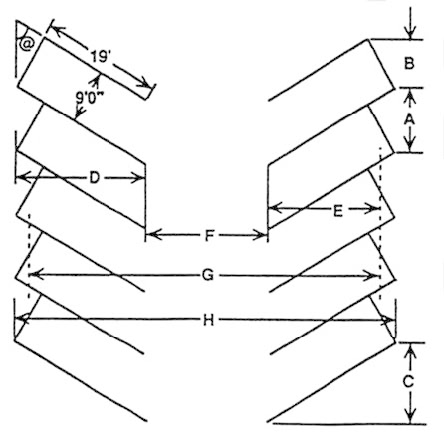
Fig. 94-88.A: Layout and Dimensions for Full-Size Car
Table 94-88.1: Full-Size Car, 9 feet by 19 feet
(2)
Compact cars.
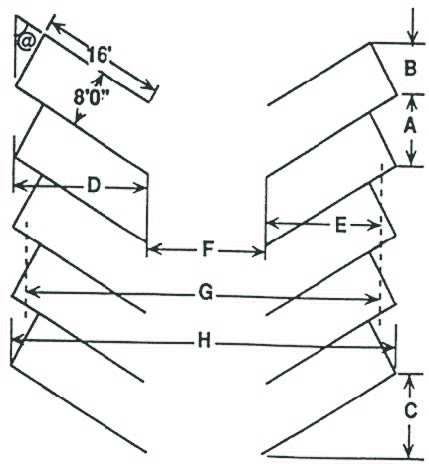
Fig. 94-88.B: Layout and Dimensions for Compact Car
Table 94-88.2: Compact Car, (8 feet by 16 feet)
(e)
Loading area dimensions, design, and materials.
(1)
Each off-street loading space shall be at least 53 feet in length and ten feet in width, and shall be unobstructed from the surface up to a height of at least 15 feet.
(2)
Off-street loading spaces shall be surfaced with either:
a.
A minimum of two inches of asphalt over a four-inch gravel base; or
b.
Six inches of concrete.
(3)
All surfacing shall be over an approved compacted subgrade, and shall be graded so as to eliminate drainage problems. Each space shall be equipped with wheel guards when, in the opinion of the public works director, they are necessary to prevent vehicles from extending beyond the boundary of this space and from coming into contact with other vehicles, walls, fences or plantings. In addition to wheel guards, any abrupt change in elevation, at a height of 18 inches or greater, shall require the provision and installation of guard rails in compliance with this chapter.
(4)
Lighting provided for off-street loading spaces shall be so arranged so as to minimize illumination onto adjoining residential property, and so as to prevent glare directed at vehicles on streets and alleys.
(5)
Off-street loading spaces shall be located in such a way that no part of the vehicle will occupy an adjacent street or sidewalk, when the spaces are being used to load or unload a vehicle.
(f)
Completion.
(1)
All parking lot surfacing and striping shall be completed in accordance with this section prior to issuance of the certificate of occupancy. If seasonal limitations prevent completion and, if security as described in this subsection is provided, a temporary certificate of occupancy may be issued by the planning and development director.
(2)
Security in the form of cash, a performance bond, cashier's check or irrevocable letter of credit acceptable to the city equal to the cost of the parking lot surfacing and striping shall be provided by the permittee prior to issuance of the certificate of occupancy. Upon completion of the parking lot surfacing and striping, and with final approval by the planning and development director, the security will be returned to the permittee. In addition, the permittee shall be required to provide a construction easement, in a form acceptable to the public works director, prior to issuance of certificate of occupancy. Should the permittee fail to complete, by the date required upon the temporary certificate of occupancy, the parking lot surfacing and striping as required by the plan submitted and approved, the city may use said security to complete the parking lot surfacing and striping as required by the plan or revoke the temporary certificate of occupancy, or both. Any excess funds from the security not used to complete the parking lot surfacing and striping shall be returned to the permittee.
(g)
Failure to comply. It shall be unlawful for any person, firm or corporation to erect, construct, alter, extend, repair, remove, demolish, resurface or restripe any off-street parking lot or facility regulated by this chapter, or cause same to be done in a manner that is in conflict with, or in violation of any of the provisions of this chapter, or without first obtaining a permit from the planning and development department.
(Ord. No. 2018-0030, § 2, 4-10-2018; Ord. No. 2019-0071, § 2, 6-11-2019; Ord. No. 2021-0101, § 2, 9-14-2021; Ord. No. 2025-0011, § 2, 3-11-2025)

