
Cedar Hill City Zoning Code
ARTICLE 4
- USE REGULATIONS
Sec. 23-4.1.1. - Use regulations (Charts).
(a)
The use of land or buildings shall be in accordance with those listed in the following use charts. No land or building shall hereafter be used and no building or structure shall be erected, altered, or converted other than for those uses specified in the zoning district in which it is located. No use permitted in the use charts shall permit a sexually oriented land use except for those permitted uses specifically defined as sexually oriented uses under section 23-4.1.7 sexually oriented businesses of the zoning ordinance. The legend for interpreting the permitted uses in the use charts is:
 | Designates use permitted in the zoning district indicated. |
 | Designates use prohibited (i.e., not allowed) in the zoning district indicated. |
 | Designates use may be permitted in the zoning district indicated by Conditional Use Permit (also see Section 3.20). |
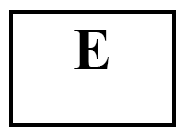 | Designates nonconforming uses which may be replaced if destroyed. |
 | Means "not applicable", and that there is no parking requirement. |
See definitions in division 5.8 of the zoning ordinance for further description of uses.
(b)
If a use is not listed (or blank) in the use charts, it is not allowed in any zoning district (see subsection (d) below).
(c)
Use chart organization. The following use categories are listed in the use charts:
(1)
Agricultural uses.
(2)
Residential uses.
(3)
Office uses.
(4)
Personal and business service uses.
(5)
Retail uses.
(6)
Transportation and auto service uses.
(7)
Amusement and recreational service uses.
(8)
Institutional/governmental uses.
(9)
Commercial and wholesale trade uses.
(10)
Manufacturing, industrial and construction uses.
(d)
Classification of new/unlisted uses. It is recognized that new types of land use will develop, and forms of land use not presently anticipated may seek to locate in the City of Cedar Hill. In order to provide for such changes and contingencies, a determination as to the appropriate classification of any new or unlisted form of land use in the use charts (section 23-4.1.2) shall be made as follows:
(1)
Initiation:
a.
A person, city department, the planning and zoning commission, or the city council may propose zoning amendments to regulate new and previously unlisted uses.
b.
A person requesting the addition of a new or unlisted use (in writing) shall submit to the planning director or his/her designee, all information necessary for the classification of the use, including but not limited to:
(1)
The nature of the use and whether the use involves dwelling activity, sales, services, or processing;
(2)
The type of product sold or produced under the use;
(3)
Whether the use has enclosed or open storage and the amount and nature of the storage;
(4)
Anticipated employment typically anticipated with the use;
(5)
Transportation requirements;
(6)
The nature and time of occupancy and operation of the premises;
(7)
The off-street parking and loading requirements;
(8)
The amount of noise, odor, fumes, dust, toxic materials and vibration likely to be generated
(9)
The requirements for public utilities such as sanitary sewer and water and any special public services that may be required; and
(10)
Impervious coverage percentage.
(2)
The planning director, or his/her designee, shall refer the question concerning any new or unlisted use to the planning and zoning commission requesting a recommendation as to the zoning classification into which such use should be placed. The referral of the use interpretation question shall be accompanied by the statement of facts in subsection (d)(1)b. above. An amendment to this chapter shall be required as prescribed by division 2.3.
(3)
The planning and zoning commission shall consider the nature and described performance of the proposed use and its compatibility with the uses permitted in the various districts and determine the zoning district or districts within which such use is most similar and should be permitted.
(4)
The planning and zoning commission shall transmit its findings and recommendations to the city council as to the classification proposed for any new or unlisted use. The city council shall approve or disapprove the recommendation of the planning and zoning commission or make such determination concerning the classification of such use as is determined appropriate based upon its findings. If approved, the new or unlisted use shall be amended in the use charts of the zoning ordinance according to division 2.3 (i.e., following notification and public hearing, etc.).
(5)
Standards for new and unlisted uses may be interpreted by the planning director, or his/her designee, as those of a similar use. When a determination of the appropriate zoning district cannot be readily ascertained, the same criteria outlined above (subsection (d)(1)b.) shall be followed for determination of the appropriate district. The decision of the planning director, or his/her designee, may be appealed according to the process outlined in subsections (d)(2) through (d)(4) above.
(e)
Temporary uses. The following uses shall be authorized in any district as temporary uses, upon issuance of a temporary use permit by the building official, subject to the standards contained in this section. The duration of the permit shall not exceed thirty (30) days. In the event the applicant seeks to establish a temporary use for a longer period, he shall make application to the city council, which, upon recommendation of the building official and in accordance with the standards of this section, may authorize the use for a period of not to exceed six (6) months. In granting the permit, the council may impose such reasonable conditions, including conditions related to the factors enumerated in section 23-3.20.5(a)(4) (conditional use permit standards) as necessary to assure compatibility of the temporary use with adjacent uses and the character of the neighborhood.
(1)
The following uses are authorized as temporary uses:
a.
Carnivals,
b.
Circus,
c.
Fairgrounds,
d.
Religious assemblies,
e.
Sports events,
f.
Political rallies,
g.
Concrete mixing or batching plant used temporarily by contractors during construction of public improvements or buildings, and in such cases, the period of time provided in the contract for completion of such improvement for building,
h.
Armed forces displays,
i.
Educational display, and
j.
Temporary sales of merchandise by non-profit organizations and existing businesses.
(2)
The following standards and regulations apply to temporary uses:
a.
A temporary use shall not be permitted nearer than one hundred (100) feet to a developed lot zoned for residential use.
b.
A permit for the temporary use of any property for the above listed uses shall be secured from the code enforcement department prior to such use.
c.
Use of a parcel of property for any of the above listed uses at any time on any day shall constitute a day's use. Use of a parcel of property for any of the above listed uses for more than thirty (30) days except of concrete mixing or batching plants, during any one (1) year shall constitute a permanent use and such parcel of property shall automatically again be subject to the district regulations of the zoning district in which such parcel of property is located.
d.
Upon application being made therefore, the council may, by conditional use permit, approve the use of any property for the foregoing temporary uses or any other use not to exceed six (6) months, under such conditions and restrictions as the city council shall determine.
e.
Temporary Buildings, when they are to be used only by a church or school, shall be permitted by the building official for a time period of not more than one (1) year. After the initial one (1) year lapses, application of extension shall be submitted to the city council. Temporary buildings for churches or schools are exempt from any zoning district masonry requirement.
(f)
Parking group. The parking group number on the use charts (section 23-4.1.2) are reference numbers which correspond to section 23-5.1.6 (schedule of parking space requirements). Refer to the applicable parking group number in section 23-5.1.6 to determine the required number of parking spaces for a particular land use. Two (2) parking group reference numbers mean that both are required.
(g)
Supplemental regulations. The supplemental regulations column on the use chart (section 23-4.1.2) gives reference to additional portions of the zoning ordinance which are applicable to that particular use. The sectional citations in this column are intended for reference and convenience purposes only, and are not intended to be exhaustive in listing every zoning ordinance section which applies to the use category. It is the applicant's responsibility to be familiar with, and to comply with, all portions of the zoning ordinance which apply to his intended land use or development regardless of whether or not such applicable regulations are cited in the use chart.
(Ord. No. 2010-418, § 2, 9-14-10)
Sec. 23-4.1.2. - Use charts.
(Ord. No. 2003-143, § 11—15, 18, 2-25-03; Ord. No. 2004-201, § 8, 11, 4-13-04; Ord. No. 2006-276, § 7—14, 1-10-06; Ord. No. 2008-345, § 8, 1-8-08; Ord. No. 2009-377, § 2, 3, 1-13-09; Ord. No. 2010-418, § 3, 9-14-10; Ord. No. 2011-435, § 1—5, 4-12-11; Ord. No. 2011-442, § 2, 6-28-11; Ord. No. 2011-461, § 3, 10-11-11; Ord. No. 2012-494, § 1, 10-23-12; Ord. No. 2013-525, § 1, 10-8-13; Ord. No. 2014-542, §§ 1, 3, 7-22-14; Ord. No. 2014-543, § 1, 8-12-14; Ord. No. 2015-557-A, § 2, 5-12-15; Ord. No. 2015-569, § 1, 9-22-15; Ord. No. 2016-580, § 2, 3-8-16; Ord. No. 2016-605, § 2, 12-13-16; Ord. No. 2019-669, §§ 2—4, 3-26-19; Ord. No. 2020-699, §§ 1—3, 6-9-20; Ord. No. 2022-763, §§ 1,2, 6-14-22; Ord. No. 2023-777, §§ 1—4, 1-24-23)
Sec. 23-4.1.3. - Accessory buildings and accessory uses.
(a)
In a single-family residential district or a portion of a planned development district designated for single-family residential uses, an accessory building is a subordinate or incidental building, attached to or detached from the main building, not used for commercial purposes and not rented. Accessory buildings shall be located toward the rear portion of the property. The cumulative floor area of all accessory buildings on a single lot shall not exceed fifteen (15) percent of the floor area of the main building.
(b)
In nonresidential and multiple-family districts, an accessory building is a subordinate building, the use of which is secondary to and supportive of the main building. Accessory buildings shall not be permitted without a main building or primary use being in existence. Accessory buildings shall not be located in front of the main building and should, wherever possible, be located toward the rear portion of the property. The cumulative floor area of all accessory buildings on a single lot shall not exceed fifteen (15) percent of the floor area of the main building(s).
(c)
Accessory dwelling units in the single-family residential zoning districts (including the single-family attached, TH district) shall be allowed as an incidental residential use of a building on the same lot as the main dwelling unit and used by the same person or persons of the immediate family, and meet the following standards:
(1)
The accessory dwelling unit must be constructed to the rear of the main dwelling, separate from the main dwelling.
(2)
The accessory dwelling unit may be constructed only with the issuance of a building permit and shall be constructed out of the same material as the main structure.
(3)
The accessory dwelling unit may not be sold separately from sale of the entire property, including the main dwelling unit, and shall not be sublet.
(4)
Setback requirements shall be the same as for the main structure.
(5)
Accessory dwellings are not permitted without the main or primary structure.
(d)
Accessory dwellings (including garage/accessory dwellings and detached units) may be permitted in residential zoning districts (see regulations for the specific district, and the use charts, section 4.1.2), and shall conform to the height limitations of the main structure. No such accessory dwelling or quarters shall be used or occupied as a place of abode or residence by anyone other than a bona fide caretaker, servant or farm worker actually and regularly employed by the land owner or occupant of the main building, or is a guest or family member of the owner/occupant. Only one (1) accessory dwelling unit (i.e., garage/accessory dwelling, servants/caretakers quarters, etc.) shall be allowed on any lot within a residential zoning district. Accessory dwelling units shall not be limited to the same maximum floor area as accessory buildings. However, they shall be clearly incidental to the primary use. These accessory living structures shall not, in any case, be leased or sold.
(e)
Area regulations for accessory buildings in residential and multiple-family districts.
(1)
Front yard. Detached accessory buildings shall be prohibited in front of the main building.
(2)
Side yard. There shall be a side yard not less than three (3) feet from any side lot line, or alley line for any accessory building provided that such building is separated from the main building by a minimum distance of ten (10) feet. In the case of an accessory building being closer than ten (10) feet to the main building, the minimum side yard requirements for the main building shall be observed. Accessory buildings adjacent to a side street shall have a side yard not less than fifteen (15) feet. Garages or carports located and arranged so as to be entered from the side yard shall have a minimum distance of twenty (20) feet from the side lot line, alley line, or alley easement line. Carports or garages arranged to be entered from the side yard, facing a public street, shall have a minimum distance equal to the required front yard for the main building.
(3)
Rear yard. There shall be a rear yard not less than three (3) feet from any lot line or alley line, or alley easement line when accessory buildings are constructed ten (10) feet or more from the main building, except that where apartments are permitted, the main building and all accessory buildings shall not cover more than sixty (60) percent of that portion of the lot lying to the rear of a line erected joining the midpoint of one (1) side lot line with the midpoint of the opposite side lot line; and carports, garages, or other accessory buildings, located within the rear portion of a lot as heretofore described, constructed closer than ten (10) feet to the main building, shall have a rear yard equivalent to the rear yard requirement for the main building. If an alley exists, accessory buildings may be located within three (3) feet of a rear lot line if the maximum (e.g., ridge) height of the building is no greater than eight (8) feet and if a solid fence or wall of the same height is built on the rear lot line to screen the building from property located to the rear. Garages or carports that are arranged so as to be entered by a motor vehicle from an alley or rear alley easement shall be set back from the rear property line or alley easement line a minimum distance of twenty (20) feet.
(f)
Carports shall be measured from the posts supporting the roof nearest to the street or alley. (See Illustration 4.)
(g)
Accessory buildings are not permitted without a main structure.
(h)
Accessory buildings shall not exceed one (1) story in height. Garage/accessory dwelling units are allowed up to twenty (20) feet in height in residential districts. Garage/accessory dwelling units up to two (2) stories may be permitted in certain other districts by CUP if there is no adverse impact upon adjacent properties.
(i)
Accessory outdoor storage.
(1)
Accessory outdoor storage shall not encroach into the street yard, setbacks, right-of-way, fire lane, vehicular drive aisle, or required off-street parking space.
(2)
Accessory outdoor storage shall not exceed eight (8) feet or the height of required screening.
(3)
Accessory outdoor storage shall not exceed the following percentages of the gross floor area of the building or business establishment.
(4)
Additional outdoor storage exceeding the maximum allowed area or maximum allowed height may be authorized with approval of a conditional use permit.
(j)
Accessory outdoor display.
(1)
Accessory outdoor display on non-residentially zoned property may be located in the front of buildings with a minimum floor area of twenty thousand (20,000) square feet up to a maximum distance of twelve (12) feet forward of the front building face. Such display of merchandise shall not encroach into the fire lane, vehicular drive aisle, on-street parking space or required off-street parking space. The merchandise shall not remain outdoors overnight except for seasonal items such as Christmas trees or pumpkins.
(2)
The minimum floor area requirement shall not apply to buildings on property located within the uptown overlay and the old town districts. Additionally, outdoor display on property within the uptown overlay and the old town districts may occupy up to thirty (30) percent of a covered sidewalk that is located within twenty (20) feet of the building. Such display shall not impede pedestrian use of the sidewalk and at least a five-foot passable distance shall be maintained.
(3)
Additional outdoor display may be authorized with approval of a conditional use permit.
(k)
Accessory permanent cosmetics.
(1)
Permanent cosmetics is allowed as an accessory use to grooming and hygiene salons; funeral homes; outpatient care clinics/centers; medical and dental offices; and hospitals.
(2)
The hours of operation for grooming and hygiene salons that perform permanent cosmetics shall be limited to the hours of 8:00 a.m. to 9:00 p.m.
(3)
Prior to issuance of a zoning verification letter and certification of occupancy, the operator shall submit written documentation specifying the type of permanent cosmetics that will be performed and a floor plan identifying the area(s) of the building where it will occur.
(Ord. No. 2018-655, § 18(Exh. B), 9-25-18; Ord. No. 2019-683, §§ 2—4, 8-27-19; Ord. No. 2022-763, § 4, 6-14-22)
Sec. 23-4.1.4. - Alcoholic beverage requirements.
(a)
Notwithstanding any other provision of this chapter, the storage, possession, sale, serving or consumption of any alcoholic beverages, when permitted by the laws of the State of Texas shall be regulated and governed by the following use regulations and requirements. For additional regulations pertaining to the sale of alcoholic beverages for off-premise consumption, refer to chapter 14, article I of the Code of Ordinances.
(b)
For the purpose of this section, the following words and phrases shall have the meanings ascribed to them as follows:
(1)
Person shall include association, trustee, receiver, organization corporations, firms, partnerships, and natural persons.
(2)
Hotel means the premises of an establishment:
(1)
Where in consideration of payment, travelers are furnished food and lodging;
(2)
In which are located at least ten (10) adequately furnished, completely separate rooms with adequate facilities so comfortably disposed that persons usually apply for and receive overnight accommodations in the establishment, either in the course of usual and regular travel or as a residence; and
(3)
Which operates a regular dining room constantly frequented by customers each day.
(c)
The storage, possession, sale, serving or consumption of any alcoholic beverages to be sold or served by the holder of a mixed beverage permit or the holder of a private club permit issued by the State of Texas in bottles or any other container direct to the customer or person for consumption on the premises of the holder of a mixed beverage permit or in a private club shall be permitted only with a conditional use permit as an accessory use to a primary use described in this subsection subject to the regulations for the primary use provided in this chapter.
(1)
Hotel. Limited to delivery to individual rooms of the hotel pursuant to of V.T.C.A., Alcoholic Beverage Code § 28.01(b) and shall hold a license from the TABC to sell alcoholic beverages for on-premise consumption only.
(2)
Restaurant. The operator shall hold a license from the TABC to sell alcoholic beverages for on-premise consumption only.
(3)
Commercial amusement, other than listed (indoor). The minimum floor area shall be twenty thousand (20,000) square feet, be located within the uptown overlay, and hold a license from the TABC to sell alcoholic beverages for on-premise consumption only.
(4)
Microbrewery. On-premise consumption shall be limited to the beer that is produced on the premises and located within the uptown overlay.
(5)
Theater (indoor). The minimum floor area shall be twenty thousand (20,000) square feet, be located within the uptown overlay, and hold a license from the TABC to sell alcoholic beverages for on-premise consumption only.
(6)
Winery. On-premise consumption shall be limited to the wine that is produced on the premises and located within the uptown overlay.
(d)
The gross annual sales in Cedar Hill from products and services excluding the revenue from the sale of alcoholic beverages for on-premise consumption shall represent sixty (60) percent or more of its total sales from all products and services including the revenue from the sale of alcoholic beverages for on-premise consumption.
(e)
Hours of operation shall be limited from 11:00 a.m. to 1:00 a.m.
(f)
In addition to the regulations enumerated in this chapter for a conditional use permit, the application for a conditional use permit for on-premise consumption of alcoholic beverages shall include the following:
(1)
A signed application affirming that the person(s) will comply with the regulations contained in this section and all other applicable ordinances and regulations.
(2)
A site plan that satisfies the requirements applicable to all site plans in this chapter.
(3)
Interior design plan including location of all waiting areas, restaurant seating areas reflecting the approximate number of seats; kitchen, storage and serving areas for all alcoholic beverages; and dance floor, gaming devices, and electronic amusement machines.
(4)
The site plan and interior design plan shall delineate the area of the primary use and where alcoholic beverages will be sold and consumed on the premises. Alcoholic beverages shall only be sold and consumed on the premises of the area delineated on the site plan and interior design plan.
(5)
An artist's rendering or building elevations for all exterior features.
(6)
Survey showing that the place of business where alcoholic beverages will be sold for on-premise consumption meets the minimum distance requirements of this section and the Texas Alcoholic Beverage Commission.
(7)
Narrative description of the planned activities, which includes projected breakdown of revenues and any use of the premises for dancing, gaming devices and/or electronic amusement games.
(8)
Copies of all applications and information filed or to be filed with the State of Texas for a mixed beverage or private club permit.
(9)
Provide a copy of the written notice of the request to the officials of any public or private school whose nearest property line is within one thousand (1,000) feet of the door by which the public may enter the place of business, measured across street lines and directly across intersections, This section does not apply to a permit or license covering a premise where minors are prohibited from entering the premises under V.T.C.A., Alcoholic Beverage Code § 109.53.
(10)
A nonrefundable filing fee of five hundred dollars ($500.00) shall accompany each application for a conditional use permit for the sale of alcoholic beverages for on-premise consumption.
(g)
The person(s) holding a conditional use permit for the sale of alcoholic beverages for on-premise consumption shall on a quarterly basis, no later than on the 21 st day of the month following each quarter, file with the city secretary an affidavit on an officially approved form provided by the city that reflects gross sales for the preceding three (3) months and gross sales for the preceding twelve (12) month period, or since the business began its operation, whichever is shorter, distinguishing the revenue from the sale of alcoholic beverages for on-premise consumption from the other products and services. The person holding a conditional use permit for the sale of alcoholic beverages for on-premise consumption shall on a quarterly basis file with the city secretary a copy of the filings supplied to the State of Texas for sales tax and mixed beverage (alcoholic beverages) tax purposes. The city reserves the right to require an annual audit of the gross sales. All filings including all sales and alcoholic beverage tax filings shall remain confidential. The person(s) shall permit the city to view the books, records and receipts any time after four (4) hours' notice. Said records may be introduced in court for the purpose of showing the person(s) holding a conditional use permit for the sale of alcoholic beverages for on-premise consumption is in violation of this [section].
(h)
Distance requirements.
(1)
Church or public hospital. No conditional use permit for the sale of alcoholic beverages for on-premise consumption shall be granted by the city council within three hundred (300) feet of any church or public hospital except as authorized within this section. The measurement of the distance between the place of business where alcoholic beverages are sold for on-premise consumption and a church or public hospital shall be along the property lines of the street fronts and from front door to front door, and in a direct line across intersections.
(2)
Public school. No conditional use permit for the sale of alcoholic beverages for on-premise consumption shall be granted by the city council within three hundred (300) feet of any public school except as authorized within this section. The measurement of the distance between the place of business where alcoholic beverages are sold for on-premise consumption, and the public school shall be: (1) in a direct line from the property line of the public school to the property line of the place of business, and in a direct line across intersections; or (2) if the permit or license holder is located on or above the fifth story of a multistory building, in a direct line from the property line of the public school to the place of business, in a direct line across intersections, and vertically up the building at the property line to the base of the floor on which the permit or license holder is located. For any permit or license covering a premises where minors are prohibited from entering the premises under V.T.C.A., Alcoholic Beverage Code § 109.53, the measurement of the distance between the premises and a public school shall be along the property lines of the street fronts and from front door to front door, and in a direct line across intersections.
(3)
Private school, day-care center and child-care facility. No conditional use permit for the sale of alcoholic beverages for on-premise consumption shall be granted by the city council within three hundred (300) feet of any private school, day-care center, or child-care facility except as authorized within this section. The measurement of the distance between the place of business where alcoholic beverages are sold, and the private school, day-care center, or child-care facility shall be: (1) in a direct line from the property line of the private school, day-care center, or child-care facility to the property line of the place of business, and in a direct line across intersections; or (2) if the permit or license holder is located on or above the fifth story of a multistory building, in a direct line from the property line of the private school, day-care center, or child-care facility to the place of business, in a direct line across intersections, and vertically up the building at the property line to the base of the floor on which the permit or license holder is located. This distance requirement does not apply to the holder of a license or permit issued by the Texas Alcoholic Beverage Code who also holds a food and beverage certificate issued by the Texas Alcoholic Beverage Commission covering the premises that is located within three hundred (300) feet of a private school, day-care center, or child-care facility.
(4)
Residential. No conditional use permit for the sale of alcoholic beverages for on-premise consumption shall be granted by the city council within three hundred (300) feet of any property zoned or classified for any residential zoning district (including all RR, SF, single-family attached-TH, multi-family-MF, and portions of planned development districts for residential uses). The measurements of the distance shall be along the property lines of the street fronts and from front door to front door and in a direct line across intersections.
(i)
The City of Cedar Hill expressly reserves the right to permit variances to the aforementioned distance requirements if the city council determines that enforcement of the regulation in a particular instance is not in the best interest of the public, constitutes waste or inefficient use of land or other resources, creates an undue hardship on an applicant for a license or permit, does not serve its intended purpose, is not effective or necessary, or for any other reason after consideration of the health, safety and welfare of the public and the equities of the situation, determines the best interest of the community.
(j)
Upon a change in ownership of the business for which a conditional use permit has been issued, the new owner or person(s) operating such a restaurant shall within ten (10) days of the change in ownership apply for a new conditional use permit.
(k)
The city council, after due notice and hearing, may revoke a conditional use permit for failure to comply with any of the terms of this section and all other applicable ordinances, after receipt of written notice of noncompliance and failure to rectify any such deficiencies within thirty (30) days of receipt of such written notice. In addition to canceling the conditional use permit, the city attorney may inform the Texas Alcoholic Beverage Commission that the location no longer is in compliance with the City of Cedar Hill ordinances as previously certified to by the city secretary and request that the Texas Alcoholic Beverage Commission take whatever action is available under the Texas Alcoholic Beverage Code. The remedies provided in this subsection are in addition to, and do not exclude, all other civil remedies and criminal penalties the city is entitled to pursue at law, in equity, or under any ordinance of the City of Cedar Hill.
(Ord. No. 2004-201, § 9, 4-13-04; Ord. No. 2014-535, § 1, 3-25-14; Ord. No. 2015-556, §§ 1, 2, 3-10-15; Ord. No. 2019-669, § 6, 3-26-19)
Sec. 23-4.1.5. - Home based business regulations.
(a)
Purpose. Standards for controlling home business are set forth to minimize annoyance and inconvenience to neighboring property owners within residential areas. These standards are intended to allow reasonable and comfortable enjoyment of adjacent and nearby property by their owners and by occupants of neighboring residential dwellings, while providing opportunities for the pursuit of home-based businesses.
(b)
Special provisions for home based businesses.
(1)
Home based businesses shall be permitted as accessory use in single-family residential zoning districts (including all RR, SF, single-family attached-TH, and residential-PD districts) provided that they comply with all restrictions herein;
(2)
The business shall produce no alteration or change in the character or exterior appearance of the principal building from that of a residential dwelling, and performance of the business activity shall not be visible from the street;
(3)
Such use shall be incidental and secondary to the use of the premises for residential purposes, and shall not utilize floor area exceeding twenty (20) percent of the combined gross floor area of dwelling unit and any accessory building(s) that are used for the home business (in no case shall the combined floor area utilized for a home business exceed five hundred (500) square feet);
(4)
The business shall not employ anyone other than the persons who are members of the household in which the home business occurs;
(5)
Not more than one (1) patron or business-related vehicles shall be present at one (1) time, and the proprietor shall provide adequate off-street parking on the property where the use is located;
(6)
The operation of such business shall be between the hours of 8:00 a.m. and 6:00 p.m. for outdoor activities, and between 8:00 a.m. and 10:00 p.m. for indoor activities;
(7)
One commercial vehicle, capacity of one (1) ton or less (according to the manufacturer's classification), may be used or parked on the property in connection with the home business, but said vehicle may not be parked in the street;
(8)
The business activity shall not increase vehicular traffic flow beyond what normally occurs within a residential district, and shall not require regular and frequent deliveries by large delivery trucks or vehicles with a rated capacity in excess of one and one-half tons, according to the manufacturer's classification;
(9)
There shall be no outside storage, including trailers, or outside display related to the home business use;
(10)
No mechanical or electrical equipment shall be employed on the premises other than that which is customarily found in a home environment, and that which is customarily associated with an avocation which is conducted solely for pleasure and not for profit or financial gain;
(11)
The home business shall not generate noise, vibration, glare, fumes/odors, heat or electrical interference beyond what normally occurs within a residential district;
(12)
The business shall not require the use of chemicals on the property that are obnoxious or hazardous to the welfare of the neighborhood;
(13)
The home business shall not involve the use of advertising signs or window displays, or any other device that calls attention to the business use of the premises through audio and/or visual means;
(14)
The business shall not offer a ready inventory of any commodity for sale on the premises unless the commodity is made/assembled on-site (e.g., arts and crafts items, handmade clothing, etc.); and
(15)
The business shall not be harmful or detrimental to the health, welfare and safety of the neighborhood, nor shall it interfere with the comfortable enjoyment of life, property and recreation by residents of the area.
(c)
Applicability of other regulations: Home based businesses shall also be subject to any and all other provisions of local, state and federal regulations and laws that govern such uses.
(d)
Uses allowed as home based businesses: Subject to the provisions of subsection (b) above, home businesses may include the following uses:
(1)
Office facility of an accountant, architect, landscape architect, attorney, engineer, consultant, insurance agent, Realtor, broker, or similar profession;
(2)
Author, artist or sculptor;
(3)
Dressmaker, seamstress or tailor;
(4)
Music/dance teacher, or similar types of instruction, provided that instruction shall be limited to no more than one (1) pupil at a time;
(5)
Individual tutoring and home schooling;
(6)
Millinery;
(7)
Office facility of a minister, rabbi, priest or other clergyman;
(8)
Home crafts, such as rug weaving, model making, etc.;
(9)
Office facility of a salesman, sales or manufacturer's representative, etc., provided that no retail or wholesale transactions or provision of services are personally and physically made on the premises;
(10)
Repair shop for small electrical appliances, cameras, watches/clocks, and other small items, provided that the items can be carried by one (1) person without using special equipment, and provided that the items are not equipped with an internal combustion engine;
(11)
Food preparation establishments such as cake making/decorating or catering, provided that there is no on-premises consumption by customers, and provided that all aspects of the business comply with all state and local health regulations;
(12)
Family homes (see definition in division 5.8), in compliance with applicable state laws, which are incorporated herein by reference, with no more than six (6) children;
(13)
Barber shop/beauty salon or manicure studio provided that no more than one (1) customer is served at a time; and
(14)
Swimming lessons and water safety instruction, provided that such instruction involves no more than six (6) pupils at any one time.
(e)
Uses prohibited as home based businesses: Home based businesses shall not, in any event, be deemed to include the following uses:
(1)
Animal hospitals or clinics, commercial stables, or kennels;
(2)
Schooling or instruction, except swimming/water safety classes and home schooling, with more than one (1) pupil at a time;
(3)
Restaurants or on-premises food or beverage (including private clubs) consumption of any kind;
(4)
Automobile, boat or trailer paint or repair shop; small engine or motorcycle repair shop; welding shop; large household appliance repair shop; or other similar type of business;
(5)
Office facility for a doctor, dentist, veterinarian or other medical-related profession;
(6)
On-premises retail or wholesale sales of any kind, except for items that are produced entirely on the premises in conformance with this Zoning Ordinance, and except for occasional garage sales;
(7)
Commercial clothing laundering or cleaning;
(8)
Mortuaries or funeral homes;
(9)
Trailer, vehicle, tool or equipment rentals;
(10)
Repair shops or services, except as specifically provided in section 23-3.9.4 above;
(11)
Drapery or furniture upholstery shops;
(12)
Antique, gift or specialty shops;
(13)
Repair shops for any items having internal combustion engines;
(14)
Any use that would be defined by the building code as an assembly, factory/industrial, hazardous, institutional or mercantile occupancy; and
(15)
Open storage except materials for resident's personal use or consumption (i.e., firewood, gardening materials, etc.).
(f)
Home business uses not classified: any use that is not either expressly allowed nor expressly prohibited by subsections (d) and (e), respectively, is considered prohibited, unless and until such use is classified by amendment to this chapter by the Cedar Hill City Council, subsequent to an affirmative recommendation by the planning and zoning commission.
(g)
Effect of existing home businesses:
(1)
Any home business that was legally in existence as of the effective date of this chapter and that is not in full conformity with the provisions herein shall be deemed a legal nonconforming use, and is subject to the provisions of division 2.5 provided that the owner/proprietor of such home business register his business with the city within ninety (90) days of the effective date of this chapter, and provided that the home business use was not in violation of any other local, state or federal law or regulation on that date.
(2)
Any home business that was legally in existence as of the effective date of this chapter and that conforms with (i.e., is not in violation of) the provisions herein shall be hereby authorized to continue.
(Ord. No. 2003-143, § 6, 02-25-03)
Sec. 23-4.1.6. - Retail businesses, specialty or novelty items.
(a)
The regulations in this Section apply to businesses dealing in certain novelty items, commonly referred to as "head shops". Specifically, these businesses include any establishment that sells, distributes or manufactures any specialty or novelty item that is not otherwise permitted by law including, but not limited to, the following:
(1)
Kits used, intended for use, or designed for use in planting, propagating, cultivating, growing or harvesting any species of plant which is a controlled substance, or from which a controlled substance can be derived;
(2)
Kits used, intended for use, or designed for use in manufacturing, compounding, converting, producing, processing or preparing controlled substances;
(3)
Isomerization devices used, intended for use, or designed for use in increasing the potency of any species of plant that is a controlled substance, or from which a controlled substance can be derived;
(4)
Testing equipment used, intended for use, or designed for use in weighing or measuring controlled substances;
(5)
Scales and balances used, intended for use, or designed for use in weighing or measuring controlled substances;
(6)
Dilatants and adulterants, such as quinine hydrochloride, mannitol, mannite, dextrose or lactose, that are used, intended for use, or designed for use in cutting controlled substances;
(7)
Separation gins and sifters used, intended for use, or designed for use in removing twigs and seeds from, or in otherwise cleaning or reefing marijuana;
(8)
Blenders, bowls, containers, spoons and mixing devices used, intended for use, or designed for use in compounding controlled substances;
(9)
Capsules, balloons, envelopes and other containers used, intended for use, or designed for use in packaging controlled substances;
(10)
Containers and other objects used, intended for use, or designed for use in storage or concealing controlled substances;
(11)
Objects used, intended for use, or designed for use in ingesting, inhaling or otherwise introducing into the human body any controlled substance (including, but not limited to, marijuana, cocaine, hashish and hashish oil), such objects including, but not limited to, the following:
a.
Metal, wooden, acrylic, glass, stone, plastic or ceramic pipes with or without screens, permanent screens, hashish heads, or punctured metal bowls;
b.
Water pipes;
c.
Carburetion tubes and devices;
d.
Roach clips, meaning objects used to hold burning material, such as a marijuana cigarette, that had become too small or too short to be held in the hand;
e.
Miniature cocaine spoons and cocaine vials;
f.
Chamber pipes;
g.
Carburetor pipes;
h.
Electric pipes;
i.
Air-driven pipes;
j.
Chillums;
k.
Bongs; and/or
l.
Ice pipes or chillers.
(12)
The term "controlled substance", as used herein, shall mean and refer to those substances now or hereafter included as controlled substances under Texas State Law (i.e., the Texas Controlled Substances Act, Article 447615, V.A.C.S.), as amended.
Sec. 23-4.1.7. - Sexually oriented businesses.
(a)
Applicability.
(1)
Notwithstanding any other provision of the zoning ordinance to the contrary, the procedures and standards contained in this section 23-4.1.7 shall apply to regulation of sexually oriented businesses and those businesses selling or renting sexually oriented media or merchandise, or providing sexually oriented entertainment, and in the event of a conflict the provisions of this section shall prevail.
(2)
This chapter shall be construed together with the provisions of chapter 10, article V sexually oriented business licenses of the City Code of Ordinances regarding the licensing of sexually oriented businesses.
(b)
Findings. The facts and other matters set forth in the "Whereas" clauses that form the preamble to this section are hereby adopted as findings of fact in support of this amendment to the zoning ordinance. Upon adoption of this section, the recitals contained in the whereas clauses shall be incorporated into the zoning ordinance by reference as if fully set forth herein.
(c)
Definitions. For the purposes of this section, the following words and phrases shall have the meanings ascribed to them as follows:
(1)
Applicant. Any person, including any spouse of an individual owner, or any other entity required to submit any documentation and/or receive any approvals for operating sexually oriented business or working within a sexually oriented business within the City of Cedar Hill.
(2)
Bath house, sexually oriented. An enterprise where a portion of its business is offering baths and/or showers with other persons present who are nude or displaying specified anatomical areas.
(3)
Body painting studio, sexually oriented. An establishment where a portion of its business is the application of paint or other substance to or on the human body by any means of application, technique or process when the subject's body displays for the patron's view specified anatomical areas.
(4)
Business, sexually oriented. Any of the following businesses: sexually oriented cabaret or nightclub; sexually oriented entertainment; sexually oriented motion picture theater; sexually oriented video viewing kiosk, booth or arcade; sexually oriented encounter center; sexually oriented media store; sexually oriented bathhouse; sexually oriented massage business; sexually oriented retail establishment; sexually oriented body painting studio; sexually oriented lingerie or swimwear modeling studio; sexually oriented modeling/photography studio; sexually oriented escort business; or any other such business establishment whose purpose is offering sexually oriented entertainment, media or merchandise. Signs, advertisements or an establishment name including verbal or pictorial allusions to sexual stimulation or gratification or by references to "adult," "XXX" or similar terms, shall be considered evidence that the establishment holds itself out to the public as a sexually oriented business. Each such business is considered a separate land use for purposes of these regulations. For the purpose of this Ordinance, a business is not a sexually oriented business if its inventory, square footage, and product value devoted to sexually oriented merchandise (including media) is ten (10) percent or less and it offers no onsite sexually oriented entertainment.
(5)
Business license, sexually oriented. Any license applied for under the sexually oriented business licensing ordinance establishing licensing requirements for sexually oriented businesses.
(6)
Cabaret or nightclub, sexually oriented. A building or portion of a building which provides or allows the provision of live sexually oriented entertainment to its customers or which holds itself out to the public as an establishment where sexually oriented entertainment is available, but such definition shall not include any sexually oriented use prohibited by this Section. Signs, advertisements or an establishment name including verbal or pictorial allusions to sexual stimulation or gratification or by references to "adult entertainment," "strippers," "showgirls," "exotic dancers," "gentleman's club," "XXX" or similar terms, shall be considered evidence that the establishment holds itself out to the public as a sexually oriented cabaret or nightclub.
(7)
Child care facility, licensed. A facility licensed by the Texas Department of Family and Protective Services providing supervision for children thirteen (13) years of age or younger or for any individual who is deemed mentally challenged.
(8)
Civic center building. A building or complex of buildings that house municipal offices and services, and which may include cultural, recreational, athletic, convention or entertainment facilities owned and/or operated by a municipality.
(9)
Customer. A person who:
a.
Enters a business in return for the payment of an admission fee or any other form of consideration or gratuity; or
b.
Enters a business and purchases, rents, or otherwise partakes of any material, merchandise, goods, entertainment, or other services offered therein; or
c.
Enters a business other than as an employee, vendor, service person, or delivery person.
(10)
Display publicly. The act of exposing, placing, posting, exhibiting, or in any fashion displaying in any location, whether public or private, an item or activity in such a manner that it may be readily seen and its content or character distinguished by normal unaided vision from a street, highway, or public sidewalk, or from the property of others or from any portion of the premises where items and materials other than sexually oriented media or merchandise are offered for sale or rent to the public.
(11)
Educational facility. A public or private kindergarten, primary, secondary and postsecondary educational facilities offering instruction in the branches of learning and study required to be taught by the Texas Education Agency; and such federally-funded educational programs for preschool children as the Head Start Program.
(12)
Encounter center, sexually oriented. A business or enterprise that offers physical contact between two (2) or more persons when one (1) or more of the persons is in a state of nudity or semi-nudity, for the purpose of engaging in specified sexually activity or touching specified anatomical areas, but not including a sexually oriented cabaret or nightclub.
(13)
Entertainer, sexually oriented. Any person paid by some form of remuneration to provide entertainment to customers at a sexually oriented business; entertainment may consist of dancing, singing, modeling, acting, other forms of performing, or individual conversations with customers whereby the entertainer is paid any form of remuneration directly or indirectly for such conversations.
(14)
Entertainment, sexually oriented. Any of the following activities, when performed by a sexually oriented entertainer at a sexually oriented business: dancing, singing, talking, touching, modeling (including lingerie or photographic), gymnastics, acting, other forms of performing, or individual conversations with customers.
(15)
Escort, sexually oriented. A person who offers to provide, for some form of remuneration, acts of sexually oriented entertainment or conduct to a client.
(16)
Escort business, sexually oriented. A business or person that advertises or solicits in any way to prospective clients for the provision of sexually oriented escorts that will provide sexually oriented entertainment, companionship or conduct or employs or contracts with a sexually oriented escort, or refers or provides to a client a sexually oriented escort.
(17)
Floor area, gross. The total area of the building accessible or visible to a person, including showrooms, theaters including stage area, service areas (but not including restrooms), behind-counter areas, areas used for storage of sexually oriented media or merchandise, and aisles, hallways, and entryways serving such areas.
(18)
Frequently. Two (2) or more times per month.
(19)
Library, public. A publicly-owned facility in which literary and artistic materials, such as books, periodicals, newspapers, pamphlets, prints, records, and tapes, are kept for reading, reference, or lending.
(20)
Lingerie or swimwear modeling studio, sexually oriented. An establishment or business that provides the services of live models modeling lingerie, bathing suits, or similar wear to individuals, couples, or small groups.
(21)
Massage. The act of touching, stroking, kneading, stretching, friction, percussion, and vibration, and includes holding, positioning, causing movement of the soft tissues and applying manual touch and pressure to the body.
(22)
Massage business, sexually oriented. Any business in which massages are offered as one of the business's services by a person who is not licensed as a massage therapist under the Texas State Statutes, Title 3, Chapter 455: Massage Therapy; or any business which provides massage for the purpose of sexual stimulation.
(23)
Massage therapist. A person licensed as a massage therapist in accordance with the provisions of the Texas Department of State Health Services in accordance with the Texas State Statutes, Title 3, Chapter 455: Massage Therapy.
(24)
Media. Anything printed or written, or any picture, drawing, photograph, motion picture, film, videotape or videotape production, or pictorial representation, or any electrical or electronic reproduction of anything that is or may be used as a means of communication. Media includes but shall not necessarily be limited to books, newspapers, magazines, movies, videos, sound recordings, CD-ROMS, DVDs, other magnetic media, and undeveloped pictures.
(25)
Media, sexually oriented. Media which are distinguished or characterized by their emphasis on matter depicting, describing, or relating to "specified sexual activities" or "specified anatomical areas."
(26)
Media store, sexually oriented. A store with sexually oriented media for sale and/or rent, and to which any of the following applies:
a.
The sale and/or rental of sexually oriented media, whether alone or in conjunction with the sale and/or rental of sexually oriented merchandise, constitutes a principal business of the establishment, taking into consideration any of the following:
(1)
The value realized from the sale and/or rental of sexually oriented media and/or merchandise;
(2)
The floor area devoted to sexually oriented media and/or sexually oriented merchandise;
(3)
The amount of inventory constituting sexually oriented media and/or sexually oriented merchandise; or
b.
The business advertises or holds itself out in any forum as a "XXX," "adult" or "sexually oriented" media and/or merchandise business.
(27)
Merchandise, sexually oriented. This term includes any of the following categories of merchandise: lingerie presented in combination with other merchandise contained within this definition; leather goods marketed or presented in a context to suggest their use for sadomasochistic practices; condoms or sexual lubricants presented in combination with other merchandise contained within this definition; sexually oriented novelties; and sexually oriented media which is separately defined in this section.
(28)
Modeling/photography studio, sexually oriented. Any place where a person who appears nude or semi-nude or in a state of nudity or semi-nudity and is to be observed, sketched, drawn, painted, sculptured, photographed, or similarly depicted by other persons. A sexually oriented modeling/photography studio does not include educational classes in conjunction with a private or public college, junior college, or university or that of an individual artist studio established solely for conduct of the artist.
(29)
Motel, sexually oriented. A hotel, motel, or similar commercial lodging establishment that:
a.
Provides as its business accommodations to the public for any form of consideration for the purpose of viewing sexually oriented media or sexually oriented entertainment. This definition does not include lodging facilities that offer sexually oriented media via cable or satellite services on room televisions as ancillary television programming; or
b.
Is marketed as or offered as "adult," "XXX," "couples," or "sexually oriented" lodging facility; or
c.
Offers a sleeping room for a period of less than ten (10) hours or allows a tenant or occupant to rent the room for a period of time of less than ten (10) hours or allows the tenant to have a weekly or monthly rental of the room for the purposes of providing sexually oriented entertainment.
(30)
Motion picture theater, sexually oriented. An establishment where, for any form of consideration, sexually oriented media are frequently shown that are characterized by the depiction or description of "specified sexual activities" or "specified anatomical areas" or that is marketed as or offered as "adult," "XXX," or sexually oriented. Frequently shown media as characterized herein do not include sexually oriented speech and expressions that take place inside the context of some larger form of expression. This definition does not include any type of facility that would meet the definition of a sexually oriented video viewing kiosk, booth or arcade.
(31)
Novelties, sexually oriented. Instruments, devices, toys, or paraphernalia either designed as representations of human genital organs or female breasts or designed or marketed primarily for use in sexually oriented stimulation of specified anatomical areas.
(32)
Nudity or state of nudity. The showing of the human male or female genitals, pubic area, vulva, anus, anal cleft or cleavage with less than a fully opaque covering, or the showing of the covered male genitals in a discernibly turgid state. See, also, "seminude." For purposes of this definition, body paint, body dyes, tattoos, liquid latex, whether wet or dried, and other similar substances shall not be considered a fully opaque covering.
(33)
Owner. The individual owner of an establishment, or if the legal owner is a corporation, partnership, or limited liability company, the term shall include all general partners, any limited partner with a financial interest of ten (10) percent or more, all corporate officers and directors, and any shareholder or member with a financial interest of ten (10) percent or more. "Owner" includes the spouse(s) of any of the above persons.
(34)
Planning director. The Planning Director of the City of Cedar Hill, Texas, or a designated agent.
(35)
Premises. The physical location at which a business is located; as used in this Section, the term shall include all parts of that physical location, both interior and exterior, which are under the control of the subject business, through ownership, lease or other arrangement.
(36)
Protected highway buffer. A distance of five hundred (500) feet from the right-of-way line of U.S. Hwy 67.
(37)
Protected land use. A licensed child care facility, civic center building, educational facility, public library, recreational facility, or religious facility.
(38)
Protected zoning district. Residential districts as shown in section 23-4.1.2 use chart, old town-residential district, planned development district developed for residential uses, and mixed use district where residential is a primary use.
(39)
Public area. A portion of a sexually oriented business that is accessible to the customer, excluding restrooms, while the business is open for business.
(40)
Recreational facility. A permanent facility devoted to recreational purposes such as parks, play fields, or community recreation buildings.
(41)
Religious facility. A permanent facility exclusively used on a regular basis for religious assembly such as customarily occurs in a synagogue, temple, mosque, or church or convent or monastery.
(42)
Retail store, sexually oriented. A store with sexually oriented merchandise for sale and/or rent, and to which any of the following applies:
a.
The sale and/or rental of sexually oriented merchandise, whether alone or in conjunction with the sale and/or rental of sexually oriented media, constitutes a principal business of the establishment, taking into consideration any of the following:
(1)
The value realized from the sale and/or rental of sexually oriented merchandise and/or media;
(2)
The floor area devoted to sexually oriented merchandise and/or sexually oriented media;
(3)
The amount of inventory constituting sexually oriented merchandise and/or sexually oriented media; or
b.
The business advertises or holds itself out in any forum as a "XXX," adult" or "sexually oriented" merchandise business and/or media business.
(43)
Sadomasochistic practices. Flagellation or torture by or upon a person clothed or naked, or the condition of being fettered, bound, or otherwise physically restrained on the part of one so clothed or naked.
(44)
Semi-nude or in a state of semi-nudity. The showing of the female areola or nipple with less than fully opaque covering. Showing of any other part of the anatomy defined under nude or state of nudity shall constitute being nude or in a state of nudity. For purposes of this definition, body paint, body dyes, tattoos, liquid latex, whether wet or dried, and other similar substances shall not be considered a fully opaque covering.
(45)
Specified anatomical areas. Areas that include:
a.
Less than completely and opaquely covered human male or female genitals, pubic area, vulva, anus, or anal cleft or the human female areola or nipple; or
b.
Human male genitals in a discernibly turgid state, even if completely and opaquely covered.
(46)
Specified criminal act. Any offense as defined in Chapter 43 of the Texas Penal Code; or any sexual offense, rape, statutory rape or other sexually related offense as defined by criminal statutes in Texas or any other state or by federal laws addressing similar or related offenses; or any offense involving controlled substances, or illegal drugs or narcotics as defined in federal or state laws in Texas or any other state.
(47)
Specified sexual activities. Acts of human masturbation, sexual intercourse, or sodomy. These activities include, but are not limited to the following: bestiality, erotic or sexual stimulation with objects or mechanical devices, acts of human analingus, cunnilingus, fellatio, flagellation, masturbation, sadism, sadomasochism, sexual intercourse, sodomy, or any excretory functions as part of or in connection with any of the activities set forth above with any person on the premises. This definition shall include apparent sexual stimulation of another person's genitals whether clothed or unclothed.
(48)
Video, sexually oriented. This definition is used to refer to any motion pictures, movies, films, videotapes, CD-ROMS, DVDs, computer images, slides, sound recordings, other magnetic media or electrical or electronic reproductions of anything that is or may be used as a means of communication that is distinguished or characterized by it emphasis on matters depicting, describing, or relating to "specified sexual activities" or "specified anatomical areas."
(49)
Video viewing arcade, sexually oriented. A building or any portion of a building wherein coin-operated, slug-operated, or for any other form of consideration, electronically, electrically, or mechanically controlled still or motion picture machines, projectors, video or laser disc players, or other image-producing devices are maintained to show images of "specified sexual activities" or "specified anatomical areas."
(50)
Video viewing kiosk or booth, sexually oriented. Any kiosk, booth, cubicle, stall, or compartment that is designed, constructed, or used to hold or seat customers and is used for presenting videos or viewing publications by any photographic, electronic, magnetic, digital, or other means or medium (including, but not limited to, film, video or magnetic tape, laser disc, CD-ROMs, books, DVDs, magazines or periodicals) to show images of "specified sexual activities" or "specified anatomical areas" for observation by customers therein. The term "booth," "arcade booth," "preview booth," and "video arcade booth" shall be synonymous with the term "sexually oriented video viewing kiosk or booth."
(d)
Use regulations.
(1)
Permitted uses. Only the sexually oriented business specified in section 23-4.1.2, use charts, of the zoning ordinance shall be permitted.
(2)
Prohibited uses. The following are sexually oriented business uses that are prohibited uses within any zoning district due to the experiences in other communities that demonstrate these uses create the opportunity for high-risk sexual activity, prostitution, drug use, and other criminal behavior while posing logistical difficulties and physical endangerment risks for code enforcement and police officers in policing these businesses, and uses involving sexually oriented media viewing kiosks, booths or arcades are associated with deleterious effects and access to such media is available in other venues which are less harmful to the health, safety and welfare of the community:
a.
Sexually oriented bath house;
b.
Sexually oriented body painting studio;
c.
Sexually oriented encounter center;
d.
Sexually oriented escort business;
e.
Sexually oriented lingerie or swimwear modeling studio;
f.
Sexually oriented massage business;
g.
Sexually oriented modeling/photography studio;
h.
Sexually oriented motel;
i.
Sexually oriented video viewing kiosk, booth or arcade;
j.
Any permitted sexually oriented business that includes as part of its business any business designated in subsections a. through i.; and
k.
More than one (1) sexually oriented use on any lot, parcel or tract.
(3)
Nonconforming uses. Uses that are lawfully operating on the effective date of this chapter but do not conform to the use and separation provisions of this chapter, shall be deemed nonconforming uses, subject to the provisions of division 2.5, nonconforming uses and structures, of the zoning ordinance.
(e)
Location requirements and measurement of distances.
(1)
Separation standards. The following spatial requirements shall apply to the location of permitted sexually oriented business:
a.
No "sexually oriented media store" shall be located closer than one thousand (1,000) feet to any protected land use or protected zoning district;
b.
No "sexually oriented retail store" shall be located closer than one thousand (1,000) feet to any protected land use or protected zoning district;
c.
No "sexually oriented motion picture theatre" shall be located closer than one thousand five hundred (1,500) feet to any protected land use or protected zoning district;
d.
No "sexually oriented cabaret or nightclub" shall be located closer than one thousand five hundred (1,500) feet to any protected land use or protected zoning district;
e.
No sexually oriented business shall be located closer than one thousand five hundred (1,500) feet to any other sexually oriented business; and
f.
No sexually oriented business shall be located within a protected highway buffer.
(2)
Measurement. Where one (1) use is required to be separated from another use, measurements shall be made in accordance with the following:
a.
The required separation distance shall be measured in a straight line from the nearest point of the structure containing the sexually oriented business to the nearest property line of the protected land use, protected zoning district, protected highway buffer or other sexually oriented business.
b.
If the sexually oriented business is located in a multi-tenant building, then the distance shall be measured in a straight line from the nearest point of the portion of the building occupied by the sexually oriented business to the nearest property line occupied by the protected land use, protected zoning district, protected highway buffer or other sexually oriented business.
c.
The required distance separation from a protected land use, protected zoning district, protected highway buffer or other sexually oriented business shall apply regardless of whether such protected land use, zoning district, protected highway buffer or other sexually oriented business is located inside or outside the City of Cedar Hill.
d.
The separation measurements shall be provided and certified by a licensed professional surveyor hired by the sexually oriented business.
(3)
Nonconformity. No legally permitted sexually oriented business shall become nonconforming through subsequent establishment of a protected land use or protected zoning district located in closer proximity to the permitted sexually oriented business than what is required by the separation standards in this section.
(f)
Specific requirements for particular uses.
(1)
Exterior lighting. The exterior property of a sexually oriented business shall be lighted in accordance with the following standards:
a.
Exterior lighting of the entries and parking areas shall be a minimum of fifteen (15) foot-candles as measured three (3) feet from the ground or paving;
b.
For a business on a single lot or parcel, no lighting shall illuminate any property not in control of the business by more than five (5) foot-candles as measured at the nearest adjacent property;
c.
Light sources shall be oriented toward the center of the site or shielded so as to not be visible from the property line; this applies to refractory lenses which extend beyond the lighting fixture and are designed to redirect the lighting source horizontally; and
d.
All proposed exterior lighting shall be submitted with the application for site plan approval.
(2)
Exterior signage. All proposed signage for a sexually oriented business shall be in accordance with the following standards:
a.
All proposed exterior signage shall be submitted with the application for site plan approval; and
b.
Notwithstanding any provision of the Cedar Hill Sign Ordinance to the contrary which is more restrictive, signage permitted for sexually oriented businesses must:
(1)
Not contain any flashing lights;
(2)
Be a flat plane, rectangular in shape;
(3)
Not exceed sixty-four (64) square feet in area; and
(4)
Not exceed ten (10) feet in height or ten (10) feet in length.
(3)
Exterior fencing. No sexually oriented business shall have any fencing or other structure exceeding five (5) feet in height that obstructs the view of the parking lot or entrance ways of the business.
(4)
No public display permitted. No sexually oriented media, merchandise or activity shall be publicly displayed by a sexually oriented business.
(5)
Age limit. No person under the age of eighteen (18) shall be permitted within the sexually oriented business; and
(6)
Business license. All sexually oriented businesses shall be in compliance with chapter 10, article V, sexually oriented business licenses, of the City Code of Ordinances.
(g)
Pre-submission application.
(1)
No application for site plan approval, a building permit or certificate of occupancy for a sexually oriented business shall be submitted to the city until the owner submits a complete "pre-submission application" to the planning director containing the following information:
a.
A legal description and sketch of the parcel for the proposed use;
b.
Confirmation of the applicant's ownership or controlling interest in the property;
c.
Detailed description and type of proposed sexually oriented business;
d.
A professional land surveyor's delineation of the proposed building, lot lines and the location of its primary entrance and confirming via specific measurements that the proposed sexually oriented business meets the separation distances required from protected land uses, buffer and zoning districts or any other sexually oriented business; and
e.
Payment of an application fee of two hundred dollars ($200.00).
(2)
Action on pre-submission application. Within five (5) business days of receipt of a complete pre-submission application, the planning director shall:
a.
Determine whether the proposed use is a permitted use in the zoning district in which it is to be located;
b.
Determine whether the proposed use meets the required separation distances; and
c.
If the above criteria are satisfied, approve the pre-submission application and authorize the applicant to submit an application for site plan approval pursuant to division 2.6 of the zoning ordinance.
(h)
Site plan review.
(1)
No application for a building permit or certificate of occupancy shall be submitted to the city until the owner has first submitted a complete application for site plan review pursuant to the submission requirements of the zoning ordinance in division 2.6 site plan review.
(2)
The site plan application shall be approved, approved with conditions, or denied in accordance with division 2.6 within ninety (90) calendar days from the date an application for site plan review has been received and deemed complete.
(3)
If the site plan application is denied, the denial shall be in writing and shall specify the reasons why the site plan was denied, citing specific section provisions or other provisions of other ordinances that provide the basis for such denial.
(4)
Waiver of rights. The applicant may, at its option, pursue other or additional administrative remedies available under the zoning ordinance; by doing so, the applicant shall be deemed to have waived any right to a decision within a particular time period and shall be subject to all of the terms, conditions and timelines applicable to such administrative remedies under the zoning ordinance.
(i)
Exemptions to separation restrictions.
(1)
Process. If the planning director denies the pre-submission application due to the separation restrictions of section 23-4.1.7(e)(1), the applicant may apply for an exemption from the separation restrictions by filing a written petition with the city secretary requesting a hearing within ten (10) calendar days of the date the applicant receives notification of the planning director's decision. The city council shall serve as the appeals board. The appeal shall be scheduled within twenty (20) calendar days of the date the petition is received in the office of the city secretary. The city secretary shall give written notice to the applicant of the time and place for the hearing on the applicant's appeal at least ten (10) calendar days prior to the scheduled date of hearing.
(2)
Hearing. The city council shall hear and consider evidence offered by any interested person. The formal rules of evidence do not apply. The burden of proof shall be upon the applicant to demonstrate that the requested exemption to the separation restrictions meets the criteria for granting of such exemption.
(3)
Criteria for exemptions. The city council may grant an exemption from the separation restrictions of section 23-4.1.7(e)(1) if the city council makes the following findings:
a.
That the location of the proposed sexually oriented business will not have a detrimental effect on nearby properties or be contrary to the public safety or welfare;
b.
That the granting of the exemption will not violate the spirit and intent of the zoning ordinance;
c.
That the location of the proposed sexually oriented business will not downgrade the property values or quality of life in the adjacent areas or encourage the development of urban blight;
d.
That the location of a sexually oriented business in the area will not be contrary to any program of neighborhood conservation nor will it interfere with any efforts of urban renewal or restoration; and
e.
That all other applicable provisions of the zoning ordinance shall be observed.
(4)
Decision. The city council shall issue a decision with findings within ten (10) calendar days. If the separation exemption is granted, the city council shall direct the planning director to approve the pre-submission application. If the separation exemption is denied, the applicant shall be immediately notified by registered or certified mail to the address provided on the application, and the letter of notification shall state the basis for such denial. The applicant may not reapply for an exemption until at least twelve (12) months have elapsed since the date of the city council's action. Any applicant aggrieved by the denial of an exemption may seek judicial review in the appropriate court.
(5)
Time period. If the city council grants the separation exemption, the exemption is valid for one (1) year from the date of the city council's action. If a certificate of occupancy has not been issued within one (1) year from the date of the city council action granting the separation exemption, the exemption shall expire.
(Ord. No. 2010-418, § 6, 9-14-10; Ord. No. 2014-530, § 1, 1-28-14)
Sec. 23-4.1.8. - Wind-powered generators (personal).
Wind-powered generators for personal use, as defined by this zoning ordinance, are permitted only as an accessory use to a main structure as authorized by the use table herein. All personal wind-powered generators shall be subject to the following:
(a)
Minimum setback. No portion of a wind-powered generator shall be located closer to a property line than the distance equal to the overall height of system; additionally, in no event shall any portion of a wind-powered generator extend into the minimum required yard for the main structure as specified for the zoning district the system is located.
(b)
Maximum height. No portion of a wind-powered generator, including blades, shall extend above the ground, at the system base, more than the maximum height specified for the zoning district in which it is located. However, the overall height of a wind-powered generator may be increased above the maximum height specified for the zoning district in which the facility is located provided that the wind-powered generator is set back from all property lines a minimum distance that is equal to three times the height of the system; however, in no instance shall any portion of the wind-powered generator extend more than one hundred ten (110) feet above the ground.
(c)
Clear zone. A minimum of 15 feet clearance shall be maintained around any wind-powered generator.
(d)
Number allowed per site. Multiple wind-powered generator systems may be located on a single parcel of land provided their sum total rated output are 25kW or less.
(e)
Mono-pole construction required. All free standing wind-powered generator systems shall be of monopole construction.
(f)
System access. Ladders or other climbing apparatuses are prohibited within twelve (12) feet of the ground.
(g)
Wiring requirements. All electrical wiring shall be contained within the support structure or buried underground.
(h)
Braking systems requirement. All wind-powered generator systems shall be equipped within an automatic braking system and a manual braking system.
(i)
Noise and vibration. Wind-powered generators shall adhere to the performance standards specified in section 23-5.5.3 of the Cedar Hill Zoning Code.
(j)
Manufacturer's specification. All wind-powered generators shall be installed in accordance with all City Codes and regulations and shall be installed and maintained in accordance with manufacture specification;
(k)
Nonfunctioning or hazardous systems. All wind-powered generators shall be maintained in good working order. Nonfunctioning or systems that pose a safety hazard shall be removed at owner's expense. Systems that do not provided at least fifty (50) percent of the manufacturer's specified power rated for any given wind condition shall be deemed nonfunctioning. The owner shall, at the request of the city, provided access to the site for inspection and shall provide documentation showing the systems operational characteristics and that the system is safe and functioning.
(l)
Permit required. No wind-powered generator shall be erected, constructed, or installed without a permit first being issued by the City of Cedar Hill.
(m)
Compliance with current city adopted building code. Building permit applications for wind-powered generators shall be accompanied by a site plan showing the location of the system in relation to property lines, easements, structures, trees and other obstructions, as well as standard drawings of the wind turbine structure, including the tower, base, and footings. Construction plans for the foundation and supporting structure shall be prepared, signed, and sealed by a professional engineer licensed by the State of Texas.
(n)
Compliance with current city adopted electric code. Building permit applications for wind-powered generators shall be accompanied by a line drawing of the electrical components in sufficient detail to allow for a determination that the manner of installation conforms to the current National Electrical Code as adopted.
(o)
Owner's responsibility. the owner shall be responsible for securing the site and maintaining the facility in a safe manner.
(Ord. No. 2011-442, § 3, 6-28-11)
Sec. 23-4.1.9. - Audio recording studio retreat.
Audio recording studio retreat, shall be subject to the following:
(a)
Intent. It is the intent of these standards to preserve the quiet, peaceful nature and character of the residential district and to allow, as a subordinate use, a place for recording artists to gather, write, collaborate, perform, instruct, and prepare audio recordings.
(b)
Accessory use. The standards contained in this section regarding audio recording studio retreat shall be in addition to the zoning district standards in which the facility is located. The primary use of the property shall be for residential purposes with the audio recording studio retreat being an accessory use.
(c)
Minimum lot area. No audio recording studio retreat shall be located on a lot that is less than five (5) acres in area.
(d)
Parking. In addition to the parking required by this zoning ordinance for residential structures, additional parking shall be provided for the audio recording studio retreat as specified by the use table contained in division 4.1 and pursuant to division 5.1 of this zoning code.
(e)
Noise and vibration. Audio recording studio retreat shall adhere to the performance standards specified in section 23-5.5.3 of this zoning code.
(f)
No outside activities. All activities associated with the audio recording studio shall be conducted whole and completely within an enclosed building.
(g)
Outdoor amplified sound prohibited. There shall be no concerts on site or outdoors amplified sound.
(Ord. No. 2011-461, § 2, 10-11-11)
Sec. 23-4.1.10. - Solar panel systems.
General purpose and description. The purpose of these regulations is to accommodate solar panel systems in appropriate locations while protecting the public's health, safety and welfare, and to provide a permitting process for solar panel systems to ensure compliance with the provisions of the requirements and standards established herein.
(a)
Solar panel system (accessory use). Solar panel systems that are allowed as an accessory use as set forth in section 4.1.2. (Use Chart) may be roof mounted, or ground mounted solar panel systems provided the ground mounted system conforms to the setbacks and height standards for accessory buildings set forth within this Zoning Ordinance (Ord. 2001-64) as amended.
(b)
Solar panel system (primary use). Solar panel systems that are allowed as the primary use, as set forth in section 4.1.2. (Use Chart), shall conform to the zoning district standards for which the system is located.
(c)
No solar panel system shall be erected, constructed, modified, or installed without first receiving a building permit from the building official. Modification shall include any changes to the solar panel system that materially alters the size, type or location of the system. Like-kind replacements shall not be construed to be a modification.
(Ord. No. 2015-557-A, § 3, 5-12-15)
Sec. 23-4.1.11. - Credit access business.
(a)
A credit access business is prohibited as an accessory use.
(b)
A credit access business shall be located at least one thousand (1,000) feet from any other credit access business as measured in a straight line between the nearest points of the credit access businesses.
(c)
A credit access business shall be located at least two hundred (200) feet from any single-family residential district or any planned development district for single-family residential uses as measured in a straight line from the nearest point of the credit access business.
(Ord. No. 2016-605, § 3, 12-13-16)
Sec. 23-4.1.12. - Drive-through facility.
(a)
A drive-through facility is permitted with a bank or a restaurant in the local retail, commercial, industrial park and industrial districts with the exception of when those districts are located within the uptown overlay. Otherwise, a drive-through facility shall require a conditional use permit in accordance with the provisions for consideration enumerated in this chapter.
(b)
A drive-through facility is prohibited with a liquor store.
(Ord. No. 2019-669, § 5, 3-26-19)
Sec. 23-4.1.13. - Liquor store.
A liquor store shall not have walk-up window access, and shall not have a drive-through facility.
(Ord. No. 2019-669, § 5, 3-26-19)
Sec. 23-4.1.14. - Variety stores.
(a)
All variety stores shall have a minimum of ten (10) percent of its selling floor area dedicated to the sale of fresh produce, fresh meat and dairy products.
(b)
A variety store shall not be located within a radius of one (1) mile, measured from property line to property line, of another variety store.
(c)
A scaled floor plan delineating the floor area for the sale of fresh produce, fresh meat and dairy products shall be provided in conjunction with an application for a Conditional Use Permit for a variety store pursuant to this chapter.
(d)
For the purposes of this subsection, the following terms shall have the meanings described below:
(1)
Selling floor area shall mean the floor area of the building where customers are allowed to find and purchase items.
(2)
Fresh produce shall mean fruits and vegetables that have not been processed in any manner. This term does not include such items as nuts, popcorn, vegetable plants/seedlings, dried beans/peas, seeds/grains, and flowers.
(3)
Fresh meat shall mean skeletal muscle and its associated tissues derived from mammalian, avian, reptilian, amphibian, and aquatic species that have not been preserved by curing, salting, smoking, drying, or canning.
(4)
Dairy products shall mean food produced from mammals such as milk, yogurt and cheese.
(Ord. No. 2020-699, § 4, 6-9-20)
Sec. 23-4.1.15. - Distribution centers and fulfillment centers.
All distribution centers and fulfillment centers shall comply with the following:
(a)
Submit a traffic impact analysis (TIA) with the conditional use permit application that identifies the AM/PM and daily peak hour trip generations, analysis of queueing at all site driveways, and traffic operation impacts with mitigation measures as a result of development-related impacts based upon criteria identified in the Institute of Transportation Engineers (ITE) Manual. The TIA shall incorporate each of the following elements.
(1)
A trip generation analysis and traffic operations impacts shall not result in a Level of Service E or worse on the street network without identifying mitigation measures.
(2)
A queueing analysis must demonstrate that the queueing of trucks remains on private property with no impact to public right-of-way.
(3)
A signal warrants analysis may be required for unsignalized intersections impacted by development.
(4)
Deceleration lanes and/or right turn lanes will be required per the Texas Department of Transportation's standards based upon roadway speed limits and right-turning vehicle counts per hour.
(b)
Delineate the loading docks on the site plan and on the building elevations submitted with the conditional use permit application.
(c)
No idling of facility-related vehicles on rights-of-way, in fire lanes, or any other means of access that would impede the unobstructed flow of traffic or other vehicles from maneuvering.
(d)
Prior to the issuance of a certificate of occupancy, the building occupant shall provide verification to the city engineer that the assumptions and calculations in the approved TIA are consistent with the proposed traffic generation.
(Ord. No. 2023-777, § 5, 1-24-23)

