
Cheney City Zoning Code
CHAPTER 22
ACCESSORY USES AND STRUCTURES
22.01 Statement Of Intent
It is the intent of this chapter to regard certain uses and structures as being subordinate to the permitted use of the premises. A use or structure will be considered an accessory when it is associated in conjunction with the permitted use and is incidental and integrally related to the permitted use.
22.02 Agricultural District
Accessory uses and structures in the agricultural district shall include:
- All uses and/or structures as listed in Section 22.03 Residential Districts below.
- Irrigation equipment.
- Storage areas for equipment and materials for any agricultural operation.
- Sheds, garages, barns, silos and other outbuildings.
- Wells, ponds or lakes.
22.03 Residential Districts
Accessory uses and structures in residential districts shall include:
- Child-care centers, preschools and Mother’s Day Out programs, in accordance with the following and all other applicable City and state regulations.
Child-care centers, preschools and Mother's Day Out programs as defined in this ordinance may be permitted as accessory uses in religious, educational and community buildings, subject to a general site plan being submitted to and approved by the City. Such plans shall satisfy the following criteria:- No parking shall be permitted on any adjacent dedicated public right-of-way.
- The location and layout of the drop-off and pick-up site shall be such that traffic will not be impeded on any dedicated public right-of-way.
- Outdoor play areas are adequately screened from adjacent properties.
- In accordance with requirements of KSA 65-501 through 65-516, KAR 28-4-123 through 28-4-132, and amendments thereto.
- Decks, patios, retaining walls, terraces, fences, and walls with a permit. No accessory use or structure except flag poles, fences and retaining walls, as permitted, shall be located in any front yard. However, a covering that is positioned over a front porch and attached to a dwelling may be allowed to extend into a front yard upon the written approval of the Zoning Administrator.”
- Fences, Walls and Hedges.
No fence, wall or hedge may be constructed within the zoning jurisdiction of the City unless it is constructed in conformance with the following requirements:- A fence, wall or hedge may project into or enclose any required front, side or rear yard subject to access requirements of any established easement and in accordance with the following:
- The maximum height of fences, walls or hedges that project into any front yard shall be no more than three feet high at the grade from the right-of-way edge. Except that fences such as chain link, split rail and others that allow visibility through at least 50 percent of their area may be four feet high.
- The maximum height of fences, walls or hedges that project into side yards shall not exceed seven feet in height at the grade of the nearest wall of the principal structure.
- A fence in excess of three feet in height shall not extend beyond the front of any principal structure located on adjacent parcels except as provided herein. However, required front yard setbacks must always be maintained.
- The maximum height of fences, walls or hedges that project into rear yards shall not exceed seven feet in height at the grade of the nearest wall of the principal structure unless otherwise required.
- In an industrial district, fences, walls or hedges needed for security and safety shall not exceed eight feet in height in any yard, except as may be otherwise permitted.
- Where a residential structure is on a corner lot, a solid fence six feet in height may be constructed in the side street front yard subject to the following:
- Distance from the Street Side Yard Property Line for Corner Lots. On corner lots zoned residential, fences may be erected inside and adjacent to the street side yard property line abutting a street right-of-way if the fence will not encroach into the sight triangle or the front yard setback. When the street side yard or rear yard is adjacent to the front yard of an adjacent lot then the fence must maintain a 45-degree sight triangle to the abutting front yard setback. See figure A1 and A2.
- The fence shall not project beyond the property line nor into a city right-of-way.
- The fence shall not extend nearer to the front street lot line than the front wall of the principal building.
- The fence shall not extend into any sight triangle as defined in these regulations.
- The fence shall not exceed a height of seven feet as measured at the average highest adjacent grade.
- The zoning administrator shall establish which yard is the side street front yard.
- Except as otherwise set forth in this Ordinance, permitted materials in residential districts for fences on all properties shall include:
- new lumber and new wood boards;
- split rail;
- chain link;
- wrought iron and decorative aluminum;
- vinyl;
- brick and masonry;
- stone, rock and concrete block;
- stucco;
- Prohibited materials in residential districts shall include but not be limited to:
- sheet metal;
- metal building siding and roofing materials;
- corrugated metal or fiberglass;
- barbed wire except as may be permitted for security requirements;
- chicken wire;
- plywood;
- scrap wood;
- scrap metal;
- canvas, nylon or other non-rigid material or fabric;
- cast-off, secondhand or other materials not originally intended to be used for constructing or maintaining a fence; and
- stock fences.
- The zoning administrator may require a photograph or sketch of the proposed fence.
- No fence shall be constructed upon a lot or parcel within the zoning jurisdiction of the City of Cheney, Kansas without the owner and/or owner's representative obtaining a building permit in accordance with the provisions of Chapter 4 of the Cheney Zoning Ordinance. An application for a permit authorizing the construction of a fence shall be made on forms supplied by the City of Cheney, Kansas.
- Electric Fences.
No electric fence shall be constructed or maintained within the zoning jurisdiction of the City of Cheney, Kansas unless located on property located within the Ag – Agricultural District upon receipt of written approval from the Zoning Administrator. - Facing.
The finished surface of all fences shall face outward from the property. However, in the case of two or more property owners wishing to share a common fence line between their properties, said property owners shall jointly determine upon which side of the common fence line the finished face of the fence shall be placed. Such determination shall be consistent for the entire length of the common fence line. - Effective Date.
Any existing fence in conformity with the provisions of any previous ordinance regulation of the City of Cheney, Kansas that remains in place as of the date of adoption of these regulations may remain in place without change, notwithstanding that the same may be in conflict with one or more provisions of the current Cheney Zoning Ordinance. However, any replacement of or change to more than 50 percent of such an existing fence in a 24-month period must meet the requirements of the current Cheney Zoning Ordinance.
Figure A1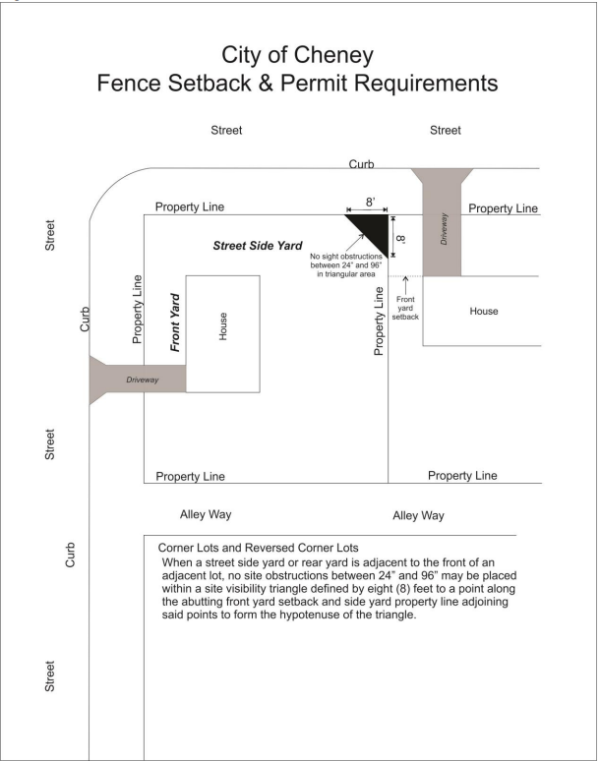
Figure A2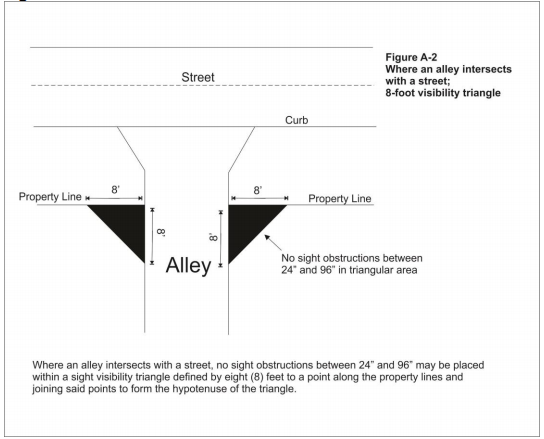 Related Information: Design Manual – General Guidelines; Residential Neighborhood Design Guidelines
- A fence, wall or hedge may project into or enclose any required front, side or rear yard subject to access requirements of any established easement and in accordance with the following:
- Flag poles, under thirty (30) feet in height.
- Garages, carports and sheds with permits - Detached garages, carports and sheds may be constructed on any lot, provided that any such garage, carport or shed meets the following requirements:
1. Garage access of open alley may be located 3’ from the alley easement.
2. Shall be located a minimum of ten (10) feet from the principal building, measured from foundation walls of the principal building.
3. Shall not be located within a required front or side yard.
4. Shall not be located within thirty (30) feet of a reversed corner lot property line. Alley access shall be a minimum of eight (8) feet for opening or three (3) feet no opening.
5. Shall not be located within twenty-five (25) feet of a corner lot property line.
6. Shall not be located within ten (10) feet of a rear property line.
7. No garage, carport or shed shall encroach on a drainage or utility easement.
8. Maximum height of twenty-five (25) feet as measured from the ridgeline.
9. Maximum thirty (30) percent coverage within a required rear yard either as single or cumulative structures.”
Related Information: Design Manual – General Guidelines; Residential Neighborhood Design Guidelines - Gardens.
- Gazebo or trellises with a permit.
- Hobby activities.
A hobby activity may be operated as an accessory use by the occupant of the premises purely for personal enjoyment, amusement or recreation so long as the activity is not in conflict with any City ordinance. Articles produced or constructed on the premises shall not be sold on the premises unless the activity complies with the requirements for a home occupation. Home automotive repair shall be limited to tenant's and/or occupant's vehicles only. - Home occupations.
Home occupations are permitted as an accessory use to a residence within the R-1, R2, districts as well as single-family or two-family dwellings in R-3, R-4, and R-5 subject to the following provisions:- Purpose and intent. It is the purpose and intent of these requirements to:
- Maintain neighborhood integrity and preserve the residential character of neighborhoods by encouraging compatible land uses.
- Provide residents of the City with an option to utilize their residences as places to enhance or fulfill personal economic goals as long as the choice of home occupations does not infringe on the residential rights of neighbors.
- Establish criteria for operating home occupations in dwelling units within residential districts.
- Assure that public and private services such as streets, sewers, water and utility systems are not burdened by home occupations to the extent that usage significantly exceeds that which is normally associated with a residence.
- Uses Permitted:
- Accountant
- Architect
- Author
- Artist
- Clergyman
- Computer programmer, analyst or billing agent
- Contractor
- Cosmetologist
- Counselor
- Engineer
- Family day-care home in accordance with requirements of KSA 65-501 through 65-516, KAR 28-4-123 through 28-4-132 and amendments thereto.
- Federally licensed firearms dealer
- Lawyer
- Photographer
- Planner
- Real estate broker
- Salesman
- Seamstress-dressmaker-tailor
- Secretary-typist-bookkeeper
- Tax return preparation
- Teaching, tutoring, or instruction, provided no more than three (3) students are taught at one time, not more than twelve (12) students per day
- Area of use. Home occupations shall be entirely contained within the interior of a residence and shall not be located in garages or accessory structures on the site. Equipment or materials used in a home occupation may not be stored outside the residence. No visible evidence of the business shall be apparent from the street or the surrounding area. Family day-care homes will be allowed to have an outside play area which shall be screened.
- Employees. The home occupation shall be restricted to family members residing on the premises with no assistance from other individuals or groups.
- Sales, repairs and leasing.
- The commercial exchange of tangible goods or other items constituting a sale between the proprietor of a home occupation and members of the general public shall not be permitted on the premises of a home occupation. ''Members of the general public'' shall not include persons in the home by prior individualized invitation. Except, not more than three (3) garage sales shall be permitted during any one (1) calendar year on any one (1) premise.
- The repair of items as a home occupation may occur only when the delivery and pickup of the items is conducted off the premises by the proprietor of the home occupation. No trips shall be generated to or from the home occupation by customers with items which have been or are to be repaired.
- Traffic and parking. If the delivery of goods to or parking for a home occupation occurs in a manner or frequency which causes disturbance to the normal traffic flow for the neighborhood, the occupation shall be considered a business best operated in a commercial district rather than as a home occupation, and will no longer be permitted as an accessory use.
- Changes to exterior. The appearance of a dwelling as a residence shall not be altered to the extent that attention is drawn to the structure as a business operation.
- Nuisance controls. A home occupation shall not create noise, dust or dirt, heat, smoke, odors, vibration or glare or bright lighting which would be in excess of that created by a single residential dwelling. The production, dumping or storage of combustible or toxic substances shall not be permitted on site. Additionally, a home occupation shall not create interference with, or fluctuations of, radio or television transmission or reception. Additionally, home occupations shall be subject to any provisions and requirements of the City of Cheney ordinance and regulations.
- Signage. No signage or other forms of advertising pertaining to the home occupation may be placed or painted onto the exterior of the residence or in the yard of a residence, except as permitted by Chapter 27, Signs.
- Other regulations. Home occupations shall comply with all other local, state or federal regulations pertinent to the activity pursued, and the imposition of requirements under this chapter shall not be construed as an exemption from such regulations.
- Purpose and intent. It is the purpose and intent of these requirements to:
- Keeping of animals, not for sale.
Domestic animals may be kept, and farm animals such as but not limited to horses, ponies, cows, hogs and chickens may be kept, except that on a lot or tract of less than three (3) acres in size, a special use permit shall be required. Horses, ponies and cows shall be permitted a maximum density of one (1) animal per acre. Dogs, cats, birds and other customary domestic pets may be kept on property without a special use permit, limited to four (4) animals per household. - Play equipment.
- Recreation areas and buildings.
- Recreational Vehicles.
Recreational Vehicles (including but not restricted to camping and hauling vehicles and boats, or vehicles with off-camper shells). It is permissible to park or store not more than two (2) recreational vehicles on a single-family or duplex lot. - Satellite dish antennas.
- Wall and Roof-mounted.
- The maximum height (measured from the highest point) of any wall or roof-mounted satellite dish antenna shall not extend above the peak of the roof surface. The antenna shall not be located on the front side of the structure and must be screened from any street.
- Wall and Roof-mounted.
- Signs are subject to the requirements of Chapter 27
- Solar collectors with a permit.
Solar collectors are permitted provided that the following performance standards are met:- Roof-mounted solar collectors, whenever possible, should be designed into the building. When solar collectors are mounted on building roofs which are visible from any dedicated public right-of-way, they shall not extend above the peak of the roof plane, and no portion of any such solar collector shall extend more than twenty-four (24) inches perpendicular to the point on the roof where it is mounted.
- Roof-mounted solar collectors located on the rear side of building roofs shall not extend above the peak of the roof plane on which they are mounted, and no portion of any such solar collector shall extend more than four (4) feet perpendicular to the point on the roof where it is mounted.
- Ground-mounted solar collectors shall not exceed eight (8) feet in total height at the highest point, and shall be located within the rear yard at least twelve (12) feet inside the property lines.
- All service lines associated with serving a ground-mounted solar collector shall be placed underground.
- Swimming pools with permits.
Swimming pools are defined as any structure and area intended for swimming or recreational bathing that contains water over 24 inches deep on a lot located within the City of Cheney zoning jurisdiction. Swimming pools include but are not limited to in-ground, above ground and on-ground swimming pools, hot tubs and spas and their concrete patios. Swimming pools are permitted on lots used for residential purposes upon the owner and/or owner's representative of a residential lot or parcel obtaining a building permit for the same in accordance with the provisions of Chapter 4 of the Cheney Zoning Ordinance. An application for a permit authorizing the construction of a swimming pool shall be made on forms supplied by the City of Cheney, Kansas.
Such swimming pool structure and/or area shall be surrounded by a barrier which shall comply with the following provisions:- The top of the barrier shall be at least 48 inches above grade measured on the side of the barriers, which face away from the structure/area.
- Openings in the barrier shall not allow passage of a 4-inch-diameter sphere.
- Solid barriers, which do not have openings, such as a masonry or stonewall, shall not contain indentations or protrusions except for normal construction tolerances and tooled masonry joints.
- The horizontal members of the composed barrier shall be located on the structure/area side of the fence .
- Pedestrian access gates shall open outward away from the structure/area, shall be self-closing and have a self-latching device. Where the release mechanism of the self-latching device is located less than 54 inches from the bottom of the gate, the release mechanism and openings shall comply with the following:
- The release mechanism shall be located on the structure/area side of the gate at least 3 inches below the top of the gate and the gate and barriers shall have no opening larger than ½ inches within 18 inches of the release mechanism.
- Where a wall of a dwelling serves as part of the barrier, one of the following conditions shall be met:
- The structure/area shall be equipped with a powered safety cover.
- Doors with direct access to the structure/area through that wall shall be equipped with an alarm which produces an audible warning when the door and/or its screen, if present, are opened.
- Other means of protection, such as self-closing doors with self-latching devices, may be approved by the City of Cheney governing body.
- Where an above-ground pool structure is used as a barrier or where the barrier is mounted on top of the pool structure, and the means of access is ladder or steps:
- The ladder or steps shall be capable of being secured, locked or removed to prevent access; or
- The ladder or steps shall be surrounded by a barrier, which meets with City of Cheney requirements as approved by the Zoning Administrator.
- If a fence is selected as the enclosure around the pool area, said fence shall be a minimum of four (4) feet in height and a maximum of six (6) feet in height.
- Tennis courts with permits.
- Television and radio antennas. Permits required if over 30’ in height from the ground.
- No temporary or incomplete building, and no automotive equipment, trailer, recreational vehicle, garage or other use or building accessory to a family dwelling shall be erected, maintained or used for residential purposes.
- Pool/pool areas, terraces and patios: A pool/pool area, terrace or patio shall be considered in the determination of yard sizes or lot coverage. Such area shall not project into an easement or into any yard to a point closer than six (6) feet from a property line.
- Egress windows to and from a Principal Building may project into a rear, front or side yard setback.”
All accessory structures shall comply with the explicable zoning bulk regulations and all prescribed setbacks and easements rights of record.
Amended by Ord. 894 on 1/12/2017
Amended by Ord. 911 on 7/12/2018
Amended by Ord. 968 - Zoning Changes on 4/17/2025
22.04 Commercial And Industrial Districts
Accessory uses and structures in all Commercial and Industrial districts shall be pursuant to a Planned Unit Development.
The following are accessory uses and structures in all commercial and industrial districts:
- Automotive repair and maintenance shops, maximum of two (2) bays in conjunction with gasoline service stations.
- Car washes (single-bay, automatic) in conjunction with gasoline service stations.
- Dwelling units for security, management or maintenance personnel.
- Fences or walls
- Flag poles, under sixty (60) feet in height.
- Food service and vending machines for tenants.
- Gate houses.
- Parking and loading areas.
- Private parking garages.
- Recreational areas and facilities.
- Satellite dish antennas.
- Signs.
- Solar collectors.
- Storage lots for vehicles awaiting repair, with screening requirements.
22.05 Accessory Uses Permitted By Interpretation
Uses other than those listed above may be determined to be accessory uses in any district based upon an interpretation by the City.
22.06 Hotels And Motels
The following uses are accessory uses within a hotel or motel provided the use is located within the main building and designed to serve primarily the occupants and patrons of the hotel or motel:
- Banquet rooms
- Barber shops and hair salons
- Clubs
- Drinking establishments
- Florists
- Gift shops
- Newsstands
- Restaurants
- Sales of notions
- Vending machines
- Meeting Rooms
- Exercise Rooms
- Spas
22.07 Hospitals
The following uses are accessory uses within a hospital where located within the main building and designed to serve hospital personnel, visitors or patients:
The following are accessory uses in the business park and office districts where located in buildings exceeding eighty thousand (80,000) square feet of gross building area:
- Florist
- Food service and vending machines
- Gift Shops
- Laundry, cleaning and garment services – pickup and delivery
- Nursing and personal care facilities
- Pharmacies.
- Residential quarters for staff and employees
22.08 Public Utility Buildings
Outside storage of materials and equipment is an accessory use of buildings used by public utilities provided all storage is screened as viewed from off the premises. For purposes of this section, the phrase ''screened from public view'' means not visible from the subject property from, adjoining properties or any street right-of-way at any distance.
22.09 Construction Sites
Temporary offices for construction may be used on the site of a construction project, provided such temporary offices are removed upon completion of the project. In residential districts, any temporary offices may only be located in a model home and must cease upon the issuance of a certificate of occupancy for the last residential dwelling unit for the subdivision or project or, in the case of a subdivision or project for which approval has been given for phased development, for the last dwelling unit for that phase. Temporary construction trailers may be used for temporary construction offices, but only until a model home is completed. These trailers shall only be used by the contractor and subcontractors, and shall not be used as a real estate sales trailer. All trailers shall be removed once the model home is completed and ready for use.
22.10 Parking And Loading Areas
Parking and loading areas are subject to the requirements of Chapter 23.
Related Information: Design Manual sections; Guidelines for Pedestrian Circulation within Nonresidential Developments; Guidelines for Internal Parking Lot Landscaping; Guidelines for Parking Lot and Building Mounted Lighting
22.11 No Temporary Or Incomplete Building
No temporary or incomplete building, and no automotive equipment, trailer, recreational vehicle, garage or other use or building accessory to a family dwelling shall be erected, maintained or used for residential purposes.
22.12 No Accessory Use Or Structure Exceptions In Front Yards
No accessory use or structure except for any flag pole, fence, retaining wall, porch, patio, deck and/or egress windows (in accordance with Section 22.03V of this Code) that are built/installed in accordance with all other provisions of this Zoning Code as well as all laws, rules and regulations applicable within the City of Cheney, Kansas, are permitted to be located within the Front Yard of any structure within the City of Cheney, Kansas. Notwithstanding the foregoing sentence, no such retaining wall, porch, patio and/or deck shall be permitted to be installed unless and until the design, location and specifications for the same are also signed off on in writing by the City Zoning Administrator.”
Amended by Ord. 968 - Zoning Changes on 4/17/2025
22.13 Structural Exceptions
Structural exceptions are permitted provided that the following performance standards are met:
- Porches: A porch, open on at least one (1) side and having a roof, shall be considered a part of the building for the determination of lot coverage and zoning setbacks.
- Pool/pool areas, terraces and patios: A pool/pool area, terrace or patio shall not be considered in the determination of yard sizes or lot coverage, provided that such area is unroofed and without walls or parapets or other forms of enclosure. Such area shall not project into any yard to a point closer than six (6) feet from a property line.

