
Clinton City Zoning Code
CHAPTER 2
- DEFINITIONS
Sec. 2.1. - Intent.
For the purpose of interpreting this ordinance, certain words, concepts, and ideas are defined. Except as defined herein, all other words used in this ordinance shall have their everyday dictionary definition.
Sec. 2.2. - Interpretation.
2.2.1.
Words used in the present tense include the future tense.
2.2.2.
Words used in the singular number include the plural, and words used in the plural number include the singular.
2.2.3.
The word "person" includes a firm, association, organization, partnership, corporation, trust, and company as well as an individual.
2.2.4.
The word "lot" includes the word "plot" or "parcel" or "tract."
2.2.5.
The word "shall" is always mandatory.
2.2.6.
The word "structure" shall include the word "building."
2.2.7.
The word "used" or "occupied" as applied to any land or building shall include the words "intended, arranged, or designed to be used or occupied."
2.2.8.
Any word denoting gender includes the female and the male.
Sec. 2.3. - Definitions.
Access: A way or means of approach to provide vehicular or pedestrian physical entrance to a property.
Access point: The location of the intersection of a highway or street or driveway with the highway.
Accessory use: An incidental and subordinate use that is customarily associated with the principal use of a lot or building located upon the same lot as the principal use.
Acre: A measure of land area containing 43,560 square feet.
Adult uses: Adult uses include any establishment or use which, as one of its principal purposes, sells, displays, or exhibits materials, including books, magazines, movies, tapes, photographs, etc., which appeal to prurient interests, contain patently offensive depictions of sexual conduct, and have no serious literary, artistic, political, or scientific value. (See also Sexually oriented business.)
Alteration: Any change or rearrangement in the supporting members of an existing building, such as bearing walls, columns, beams, girders, or interior partitions, as well as any change in doors, windows, means of ingress or egress, or any enlargement to or diminution of a building or structure, whether horizontally or vertically, or the moving of a building or structure from one location to another. This excludes normal repairs and maintenance of the structure.
Animal shelter, commercial: Any structure or premises in which animals are kept, boarded, bred or trained for commercial gain, and any establishment in which four or more domestic animals are housed. This definition does not include veterinary clinics, where the boarding of animals is enclosed or pet shops.
Animal shelter, domestic: A pen, shelter, or structure where no more than three dogs or small domestic animals, not to include horses, cows, goats, swine including pot-bellied pigs, sheep, ponies, grazing animals and fowl of any kind, are boarded or kept.
Annexation: The incorporation of a land area into an existing community with a resulting change in the boundaries of that community.
Applicant: The owner(s) of record or the legally authorized agent of the owner(s) of record.
Bed and breakfast inn: Any owner-occupied dwelling or portion thereof offering guest rooms to transient lodgers in return for compensation, with or without meals.
Berm: A mound of earth or the act of pushing earth into a mound. Berms are usually two to six feet high and are used to shield, screen, and buffer undesirable views and to separate incompatible land uses. They also provide visual interest, decrease noise, control the direction of water flow, and act as dams.
Board of zoning appeals: A quasi-judicial board appointed by the Clinton City Council which hears and decides on variances to the zoning ordinance and land development ordinance of the City of Clinton.
Buffer: Open spaces, landscaped areas, fences, walls, berms, or any combination thereof used to physically separate or screen one use or property from another so as to visually shield or block noise, lights, or other nuisances.
Building, accessory: A subordinate structure on the same lot as the principal or main building or use occupied or devoted to a use incidental to the principal use. Included in this definition are private garages, storage sheds, workshops, animal shelters, pool houses, etc. when detached from the principal dwelling, and carports attached to the principal building when at least 75 percent open or unenclosed.
Building, alteration: Any act or process that changes one or more of the exterior architectural features of a structure, including, but not limited to, the construction, reconstruction, or removal of any structure.
Building of historical value: A building within the City of Clinton which is listed on the National Register, or constituting historic to the citizens of the City of Clinton due to age, architectural design, or historic events.
Building height: Building height shall be measured vertically from the highest point of the structure, to the ground level of the grade where the walls or other structural elements intersect with the ground. The height limitations shall not apply to; chimneys, spires, belfries, cupolas, and domes provided that they are not intended for human occupancy, do not exceed 60 square feet in size, do not exceed seven feet in total height, and are enclosed by an entry door.
Building inspector: The individual designated by the appointing authority to enforce the provisions of the building code.
Building permit: A permit obtained from the City of Clinton which sets the inspection schedule and construction techniques for a project.
Building, principal: Any structure built for the support, shelter, or enclosure of persons, animals, fowl, or property of any kind.
Business, wholesale: Establishments selling commodities in large quantities to retailers, including wholesalers for all types of retail products, bulk stations for gasoline, kerosene, fuel oil, bottled gas, etc., and warehouses.
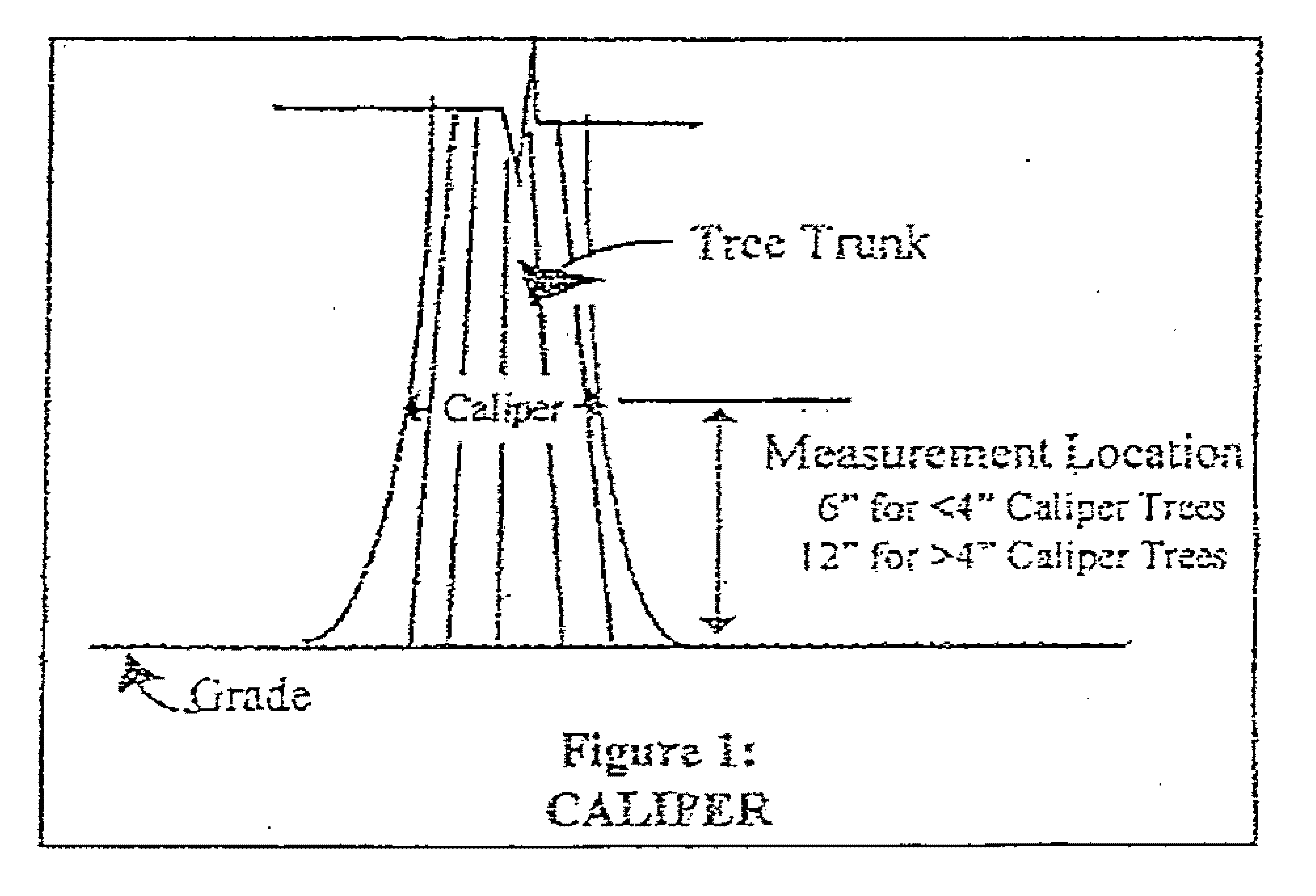
Caliper: The diameter of a tree trunk. See Figure 1.
Canopy tree: A deciduous tree that forms the top layer of vegetation in a forest. Examples of such trees include oaks, hickories, maples, poplars, and others.
Certificate of occupancy: A document allowing the occupancy or use of a building and certifying that the structure or use has been constructed or will be used in compliance with all applicable provisions of this ordinance and the Building Code.
Change in use: Any use that substantially differs from the previous use of a building or land.
Church: A structure or group of structures providing housing for religious worship, religious education, and charitable activities as may be prescribed by the tenets and practices of a particular religious body.
Club, private: An organization catering exclusively to members and their guests including buildings and grounds with commercial activities serving the membership only.
Cluster development: A development design technique that concentrates buildings in specific areas on the site to allow the remaining land to be used for recreation, common open space, and preservation of environmentally sensitive features. It permits a reduction in lot area and bulk requirements, provided there is no increase in the number of lots permitted under a conventional subdivision and the resultant land area is devoted to open space.
Commercial, general: Use pertaining to the exchange of cash, goods, services, or any other remuneration for goods, services, lodging, meals, entertainment in any form, or the right to occupy space over a period of time.
Condominium: A unit in a multi-unit structure owned by an individual who has use of all common areas associated with that structure.
Day care services: Child care services included in any home, center, agency, or place, however styled, where children not related to the operator are received for custodial care, apart from their parents, whether for compensation, reward, or otherwise during part or all of the day or night and upon any number of successive days.
Density: The number of dwelling units per acre of land developed or used for residential purposes. Unless otherwise clearly stated, density requirements in this ordinance are expressed in dwelling units per net acre; that is, per acre of land devoted to residential use and common open space exclusive of land utilized for streets, alleys, parks, playgrounds, school grounds, or other public uses.
Developer: An individual, partnership, or corporation (or agent therefor) that undertakes the activities covered by these regulations.
Development: Any manmade change to improved or unimproved real estate, including, but not limited to, buildings or other structures, mining, dredging, filling, grading, paving, excavation or drilling operations.
District: A section, zone, or geographic area within the municipality within which certain zoning or development regulations apply.
Drainage system: The system through which water flows from the land, including all water courses, water bodies, and wetlands.
Driveway: A paved or unpaved area used for ingress and egress of vehicles, and allowing access from street to a building or other structure or facility.
Dwelling, attached: A one-family dwelling attached to two or more one-family dwellings by common vertical walls.
Dwelling, detached: A dwelling that is not attached to any other dwelling by any means.
Dwelling, duplex: A building containing two dwelling units that share a common wall, not including units that are located one over the other.
Dwelling, group occupied: A dwelling unit occupied by four or more individuals unrelated by blood, marriage, adoption, or guardianship living together as a single housekeeping unit.
Dwelling, multifamily: A building containing three or more dwelling units on the same lot, including units that are located one over the other.
Dwelling, patio house: A single-family detached or semi-detached dwelling unit. It is built on a small lot generally enclosed by walls which provide privacy. The term can be synonymous with zero lot line dwellings.
Dwelling, single-family: A one-family dwelling unit located on a separate lot.
Dwelling unit: One or more rooms, designed, occupied, or intended for occupancy as a separate living quarter, with cooking sleeping, and sanitary facilities provided within the dwelling unit for the exclusive use of a single-family maintaining a household.
Dwelling, zero lot line: A zero lot line dwelling is a single-family detached unit which instead of being centered on a lot, is placed against at least one of the side lot lines. The term can be synonymous with patio home.
Easement: A right-of-way granted, but not dedicated, for limited use of private land for a public or quasi-public purpose and within which the owner of the property shall not erect any structures.
Existing use: The use of a lot or structure at the time of the enactment of a zoning ordinance or amendment thereof.
Facade: The exterior walls of a building exposed to public view or that wall viewed by persons not within the building.
Family: One or more persons related by blood, marriage, adoption, or guardianship, and not more than three persons not so related, except that mentally and physically handicapped persons for whom care is provided on a 24-hour basis shall be construed a family, in accord with the provisions of state law.
Fence: An artificially constructed barrier of any material or combination of materials erected to enclose, screen, or separate areas.
Garage: A structure, either attach or detached, that is accessory to a residential building and that is used for the parking and storage of vehicles owned and operated by the residents thereof.
Home occupation: Any activity carried out for gain by a resident and conducted as a customary, incidental, and accessory use in the resident's dwelling unit.
Impervious surface: Any material that prevents absorption of stormwater into the ground.
Improvement: Any repair, reconstruction, or improvement of a structure the cost of which equals or exceeds 50 percent of the market value of the structure either before the improvement or repair is started, or if the structure has been damaged and is being restored, before the damage occurred. For the purposes of this definition, substantial improvement is considered to occur when the first alteration on any wall, ceiling, floor, or other structural part of the building commences whether or not the alteration affects the external dimensions of the structure. The term does not include either any project for improvement of a structure to comply with existing state or local health, sanitary, or safety code specifications which are solely necessary to ensure safe living conditions, or any alteration of a structure listed on the National Register of Historic Places or a state inventory of historic places.
Industrial park: A tract of land that is planned, developed, and operated as an integrated facility for a number of individual industrial uses, with consideration to transportation facilities (rail and highway), circulation, parking, utility needs, aesthetics, and compatibility.
Kennel: A commercial establishment in which dogs or domesticated animals are housed, groomed, bred, boarded, trained, or sold, all for a fee or compensation.
Lot frontage: The length of the front lot line measured at the street right-of-way line.
Manufactured home: A residential dwelling unit that meets the National Manufactured Home Construction and Safety Standards Act (42 U.S.C. Sec. 5401), commonly known as the HUD (U.S. Department of Housing and Urban Development) code, and that is wholly or in substantial part, designed to be a permanent residence, and built subsequent to the enactment of the Federal Manufactured Housing Construction and Safety Standards Act of June 15, 1976.
Manufactured housing park: A lot or parcel with space, improvements and utilities for the long-term parking of two or more manufactured homes which may include services and facilities for the residents.
Manufacturing: Establishments engaged in the mechanical or chemical transformation of materials or substances into new products, including the assembling of component parts, the creation of products, and the blending of materials, such as lubricating oils, plastics, resins, or liquors.
Mini-warehouse: Building or group of buildings in a controlled-access and fenced compound that contains individual, compartmentalized and controlled access stalls or lockers for the storage of customers goods and wares.
Mobile home: A transportable, factory-built structure that was manufactured prior to enactment of the Federal Manufactured Housing Construction and Safety Standards Act of June 15, 1976, and that is designed to be used as a single dwelling unit. The term does not include prefabricated, modular, or unitized dwellings on permanent foundations, travel trailers, campers, or similar recreational units.
Modular structure: A manufactured building, assembled on site, to be used with a permanent foundation and distinguishable from other types of manufactured buildings or homes in that the standards to which it is built do not include provisions for mobility on some sort of chassis. When meeting the requirements of the Modular Buildings Construction Act (S.C. Code 1976, § 23-43-10), said building unit or structure may be located in any of the city's several zoning districts.
Nonconforming lot: A lot, the area, dimensions, or location of which were lawful prior to the adoption, revision, or amendment of the zoning ordinance, but that fails by reason of such adoption, revision, or amendment to conform to the present requirements of the zoning district.
Nonconforming structure or building: A structure or building, the size, dimensions, or location of which lawfully existed prior to the adoption, revision, or amendment to the zoning ordinance, but that fails by reason of such adoption, revision, or amendment to conform to the present requirements of the zoning district.
Nonconforming use: A use or activity that was lawful prior to the adoption, revision or amendment of the zoning ordinance but that fails by reason of such adoption, revision, or amendment to conform to the present requirements of the zoning district.
Office: A use or location primarily used for conducting the affairs of a business, profession, service, industry, or government or like activity.
Operator: Any person who has charge, care, or control of premises or a part thereof, whether with or without the knowledge and consent of the owner, or any person, individually or jointly, entitled to possession regardless of whether the premises are actually occupied or not.
Outdoor storage: The keeping in an unenclosed area, of any goods, junk, material, merchandise, or vehicles in the same place for more than 24 hours.
Pedestrian oriented development: Development which accommodates the needs of the pedestrian. Such development will have parking to the side or rear of a building, will mix uses and provide them in proximity to one another, will allow the pedestrian the option or choice of not having to use a car to travel between uses, and will provide a variety of interesting and detailed streetscapes which balance the needs of pedestrian and vehicular traffic equally.
Pedestrian scale: The proportional relationship between an individual and his or her environment. The relationship between the person and his or her environment, whether natural or created, is comfortable, intimate, and contributes to the individual's sense of accessibility.
Performance guarantee: Any security that may be accepted by the city as a guarantee that the improvements required as part of an application for a subdivision are satisfactorily completed.
Permitted use: Any use allowed in a zoning district and subject to the restrictions applicable to that zoning district.
Planned development: An area of a minimum contiguous size, as specified by ordinance, to be planned, developed, operated, and maintained according to a master plan as a single entity and containing one or more structures with appurtenant common areas.
Public hearing: A meeting announced and advertised in advance and open to the public, with the public given an opportunity to talk and participate.
Recreational vehicle: A vehicular type portable structure without permanent foundation, which can be towed, hauled, or driven and primarily is designed as temporary living accommodation for recreational, camping, and travel use and including but not limited to travel trailers, truck campers, camping trailers and self-propelled motor homes.
Retail, general: Establishment engaged in selling goods or merchandise to the general public for personal or household consumption and rendering services incidental to the sale of such goods.
Salvage vehicle: Any unlicensed and/or inoperative vehicle which is unused, dismantled, wrecked, or kept for spare parts or the re-sale of parts. This does not include used cars in operable condition, vehicles awaiting repair at a licensed repair business, or vehicles awaiting sale at a licensed dealer.
Scale: The relationship of a particular building, in terms of building mass, to other nearby and adjacent buildings.
Services, business: Establishments primarily engaged in rendering services to business establishments on a fee or contract basis, such as advertising and mailing; building maintenance; employment services; management and consulting services; protective services; equipment rental and leasing; commercial research; development and testing; photo finishing; and personal supply services.
Services, manufacturing: Construction establishments engaged in the construction, repair, or demolition of buildings, streets, water and sewer systems, bridges, and similar construction, including but not limited to buildings.
Services, personal: Establishments primarily engaged in providing services involving the care of a person or his or her personal goods or apparel. Personal services usually include the following; laundry, including cleaning and pressing service, linen supply, diaper service, beauty shops, barbershops, shoe repair, funeral services, steam baths, reducing salons and health clubs, clothing rental, locker rental, porter service, and domestic services.
Setback: The mandatory distance between a lot line and a building wall.
Sexually oriented business: An establishment consisting of, including, or having the characteristics of any or all of the following:
•
Adult bookstore: An establishment having as a substantial or significant portion of its stock-in-trade books, magazines, publications, tapes, or films that are distinguished or characterized by their emphasis on matter depicting, describing, or relating to sexual activities or anatomical genital areas.
•
Adult cabaret:
(1)
An establishment devoted to adult entertainment, either with or without a liquor license, presenting material distinguished or characterized by an emphasis on matter depicting, describing, or relating to sexual activities or anatomical genital areas;
(2)
A cabaret that features topless dancers, go-go dancers, strippers, male or female impersonators, or similar entertainers for observation by patrons.
•
Adult motion picture theater: An enclosed building used for presenting material distinguished or characterized by an emphasis on matter depicting, describing, or relating to sexual activities or anatomical genital areas.
Sign: Any object, device, display, or structure, or part thereof situated outdoors, which is used to advertise, identify, display, direct, or attract attention to an object, person, institution, organization, business, product, service, event, or location by any means, including words, letters, figures, design, symbols, fixtures, colors, illumination, or projected images (excluding national or state flags, window displays athletic scoreboards, or the official announcements or signs of government).
Sign, animated or moving: Any sign or part of a sign that changes physical position or light intensity by any movement or rotation or that gives the visual impression of such movement or rotation (excepting time or temperature indicators).
Sign, awning or canopy: A sign that is mounted, painted, or attached to an awning or canopy.
Sign, banner: Any sign of lightweight fabric or similar material that is permanently mounted to a pole or a building by a permanent frame at one or more edges. National flags, state or municipal flags, or the official flag of any institution or business shall not be considered banners.
Sign, directory: A sign listing the tenants or occupants of a building or group of buildings and that may indicate their respective professions or business activities.
Sign face: The area or display surface used for the message.
Sign, flashing: Any directly or indirectly illuminated sign that exhibits changing natural or artificial light or color effects by any means whatsoever.
Sign, freestanding: Any nonmovable sign not affixed to a building.
Sign, ground: Any sign, other than a pole sign, in which the entire bottom is in contact with or is close to the ground (less than three feet) and is independent of any other structure.
Sign, political: A temporary sign announcing or supporting political candidates or issues in connection with any national, state, or local election.
Sign, portable: A sign that is not permanently, affixed to a building, structure, or the ground.
Sign, projecting: A sign that is wholly or partly dependent upon a building for support and that projects more than 12 inches from such building.
Sign, roof: A sign erected upon or which extends above the roof of the building to which it is attached.
Sign, temporary: A sign that is used only for a short period of time and is not permanently mounted.
Sign, wall: A sign fastened to or painted on the wall of a building or structure in such a manner that the wall becomes the supporting structure for, or forms the background surface of, the sign and that does not project more than 12 inches from such building or structure.
Sign area: The entire face of a sign, measured by calculating the height by the length of the smallest rectangle that can be drawn to include all sign elements.
Street: Any thoroughfare (drive, avenue, boulevard) or space more than 18 feet in right-of-way width which has been dedicated, deeded, or designed for vehicular traffic, public or private.
Street, major arterial: Includes all state primary and federal aid highways and streets that serve to circulate traffic on to, out or around the city, having signals at important intersections and stop signs on side streets and/or one having controlled access and channelized intersections.
Street, major collector: A street that collects traffic from minor streets and connects with major arterials, but also may provide direct access to abutting properties.
Street, minor: A street designed principally to provide access to property abutting the street.
Structure: Anything constructed or built, an edifice or building of any kind, constructed of parts joined together in a definite manner.
Transportation: Ground establishments providing for the interchange of passenger and freight including, but not limited to, bus passenger and parking terminals, truck terminals, railroad passenger and freight terminals, railway express freight terminals, and taxicab stands and yards.
Tree, grand: Tree measuring 24 inches or greater DBH.
Tree, large maturing: Trees that grow to a minimum height of 30 feet.
Tree, protected: Tree measure eight inches or greater DBH.
Tree, small maturing: Trees that grow to a minimum height of 15 feet.
Understory tree: A small deciduous tree that forms the layer of vegetation under the canopy trees. Examples of such trees include dogwoods, sourwoods, fruit trees, and others.
Variance: A modification of the area regulations of this ordinance, granted by the board of zoning appeals, where such modification will not be contrary to the public interest, and where, owing to conditions peculiar to the property, a literal enforcement of the ordinance would result in unnecessary and undue hardship, and where such modification will not authorize a principal or accessory use of the property which is not permitted within the zoning district in which the property is located.
Yard: An open space that lies between the principal or accessory building or buildings and the nearest lot line. Such yard is unoccupied and unobstructed from the ground upward except as may be specifically provided by this ordinance.
Yard, front: A yard extending the full width of the front of a lot between the front street right-of-way line or property line and the front building line.
Yard, rear: A yard extending the full width of the lot in the area between the rear lot line and the rear building line.
Yard, required: That part of a yard between a lot line and the minimum required building setback line, within which no structure shall be located except as provided by this ordinance.
Yard, side: A yard extending the full length of the lot in the area between the side lot line and a side building line.
Zoning administrator: The person designated by the city to be responsible for the administration of this ordinance.
Zoning permit: Written permission issued by the City of Clinton for the construction, or enlargement of a structure, including signs, or the grading or excavation of a site in preparation of construction or for the installation of underground utilities.
(Ord. No. 2023-009-006, § 1(Exh. A), 9-19-2023; Ord. of 03-03-2025(1), § 2; Ord. of 03-03-2025(2), § 1; Ord. of 03-03-2025(3), § 1)

