Clinton City Zoning Code
CHAPTER 4
- ZONING DISTRICTS
Sec. 4.1. - Official zoning map.
4.1.1.
Intent. In order to accomplish the purpose set forth in the comprehensive plan and section 1.2 of this ordinance, the boundaries of the zoning districts are hereby established as shown on the official zoning map of the City of Clinton which together with all explanatory matter hereon, is hereby adopted by reference and declared to be a part of this ordinance. The official zoning map shall be identified by the signature of the mayor attested by the city clerk, and bearing the seal of the city under the words: "Official Zoning Map, City of Clinton, SC," together with the date of adoption of this ordinance. The official zoning map shall be located in the office of the zoning administrator and shall be the final authority to the current zoning status of land, water areas, buildings, and other structures in the city, notwithstanding any other zoning map purported to be a copy of the official zoning map.
4.1.2.
Interpretation of district boundaries. Where uncertainty exists as to the boundaries of districts as shown on the official zoning map, the following rules shall apply:
A.
Boundaries indicated as approximately following the center of streets, highways, railroad lines, utility easements, and alleys shall be construed to follow such center lines;
B.
Boundaries indicated as approximately following platted lot lines and city limits shall be construed as following such lines;
C.
The scale of the map shall determine distances not specifically indicated on the official zoning map.
Sec. 4.2. - Low Density, Residential (R-1).
4.2.1.
Intent. The Low Density, Residential District (R-1) is a predominately single-family residential area. Other uses may be considered in the district as long as they do not detract from the character of the small-scale residential uses. Additional standards are placed on these uses to mitigate their impact on single-family uses. Government buildings, schools, and parks are also appropriate uses for the Low Density, Residential District. Standards for all uses in the district are designed to protect the health, safety, and welfare of the citizens of Clinton.
4.2.2.
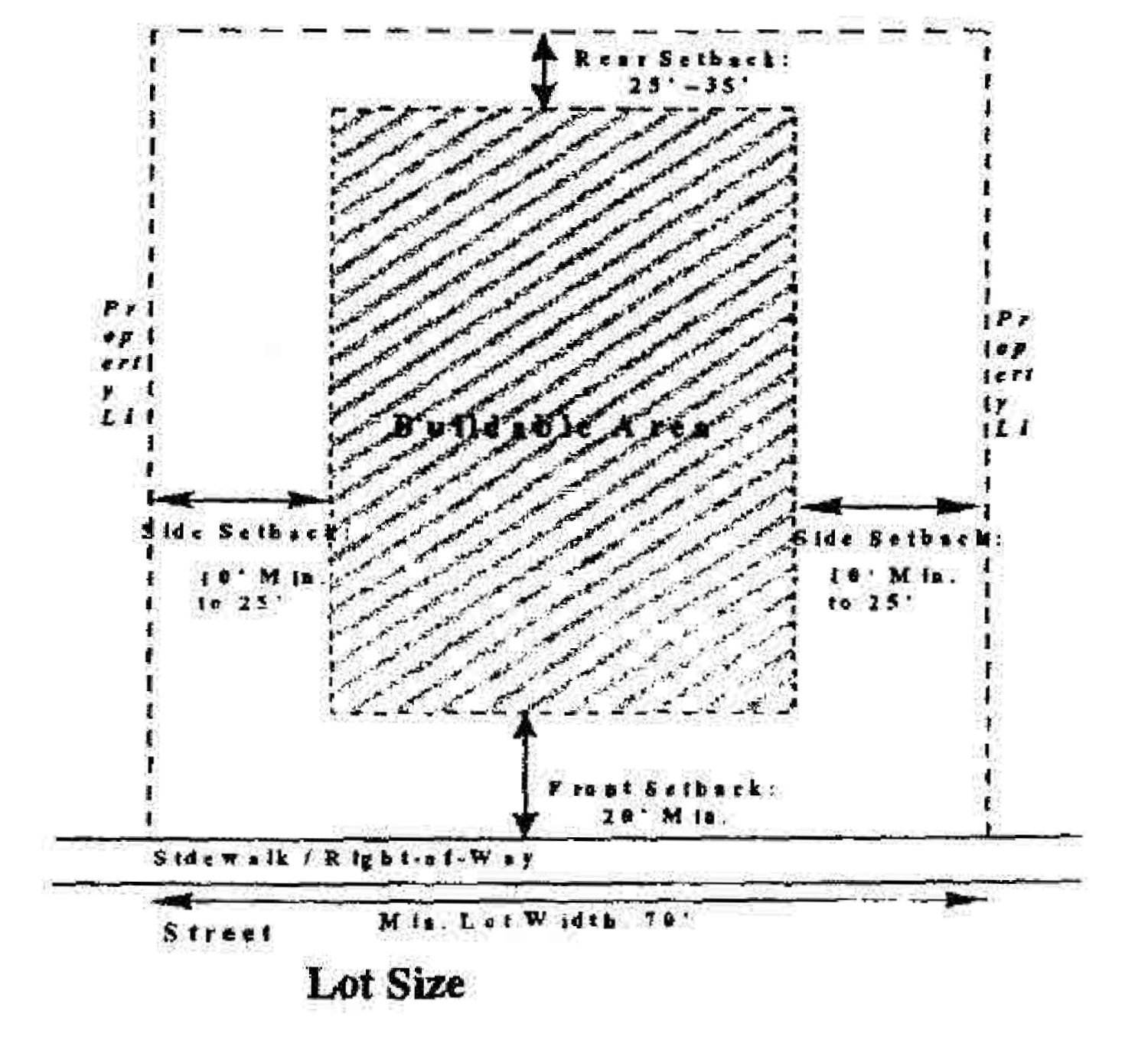
General.
4.2.3.
Uses.
A.
Permitted uses. The following uses are permitted in the R-1 district provided that all specified standards are met.
1.
Single-family residential building.
a)
One housing unit per lot permitted.
2.
Civic building(s).
a)
Use list:
(1)
School.
(2)
Church.
(3)
Park/playground.
(4)
Community hall.
(5)
Governmental services building.
B.
Prohibited uses. The following uses shall be prohibited in the R-1 district.
1.
Mobile/manufactured homes.
2.
Bars or taverns.
3.
Private clubs.
4.
Service or gas station.
5.
Outdoor storage.
6.
Outdoor business.
7.
Drive-through restaurant.
8.
Dry cleaning establishment.
9.
Sexually oriented businesses.
10.
Cellular towers.
11.
Any use not listed as being permitted is prohibited.
4.2.4.
Parking.
A.
General. The following parking requirements shall apply within the R-1 district:
[1.]
Residential. Two parking spaces per dwelling unit.
B.
Landscape buffers. (For non-residential uses):
1.
Required landscaping area. At least five feet in depth shall be located between the abutting property lines and the parking, loading, or other vehicular use area, except where permitted driveway openings are to be provided.
2.
Required landscaping materials.
a)
One tree shall be planted for each 50 linear feet of the landscaping area and one small maturing tree or shrub of at least three feet in height shall be planted every ten linear feet within the landscape.
3.
Other requirements.
a)
All portions of the landscaping area not planted with shrubs and trees shall be planted in grass and/or with some other vegetative ground cover; and
b)
Parked vehicles may overhang a landscaped area no more than one foot, provided curbing or other wheel stops are installed to ensure no greater overhang or penetration of the landscaped islands. Landscaping, walls, fences, and earthberms shall be located as to prevent their damage and/or destruction by overhanging vehicles.
4.2.5.
Tree protection.
A.
[Requirements.] Refer to chapter 3, section 3.11 [3.20], tree protection, for general tree protection requirements.
B.
Grand trees. The destruction of any grand tree (24 inches or greater DBH) is prohibited on any parcel of non-exempt land, unless a permit is granted certifying that removal is in compliance with section 3.11 [3.20].
C.
Protected trees. The destruction of any protected tree (eight inches or greater DBH) is prohibited on any parcel of non-exempt land, unless a permit is granted certifying that removal is in compliance with section 3.11 [3.20].
Sec. 4.3. - Medium Density, Residential (R-2.).
4.3.1.
Intent. The Medium Density, Residential District (R-2) is a predominately single-family residential area and duplex dwellings. Government buildings, schools, and parks are also appropriate uses for this district. Standards for all uses in the district are designed to protect the health, safety, and welfare of the citizens of Clinton.
4.3.2.
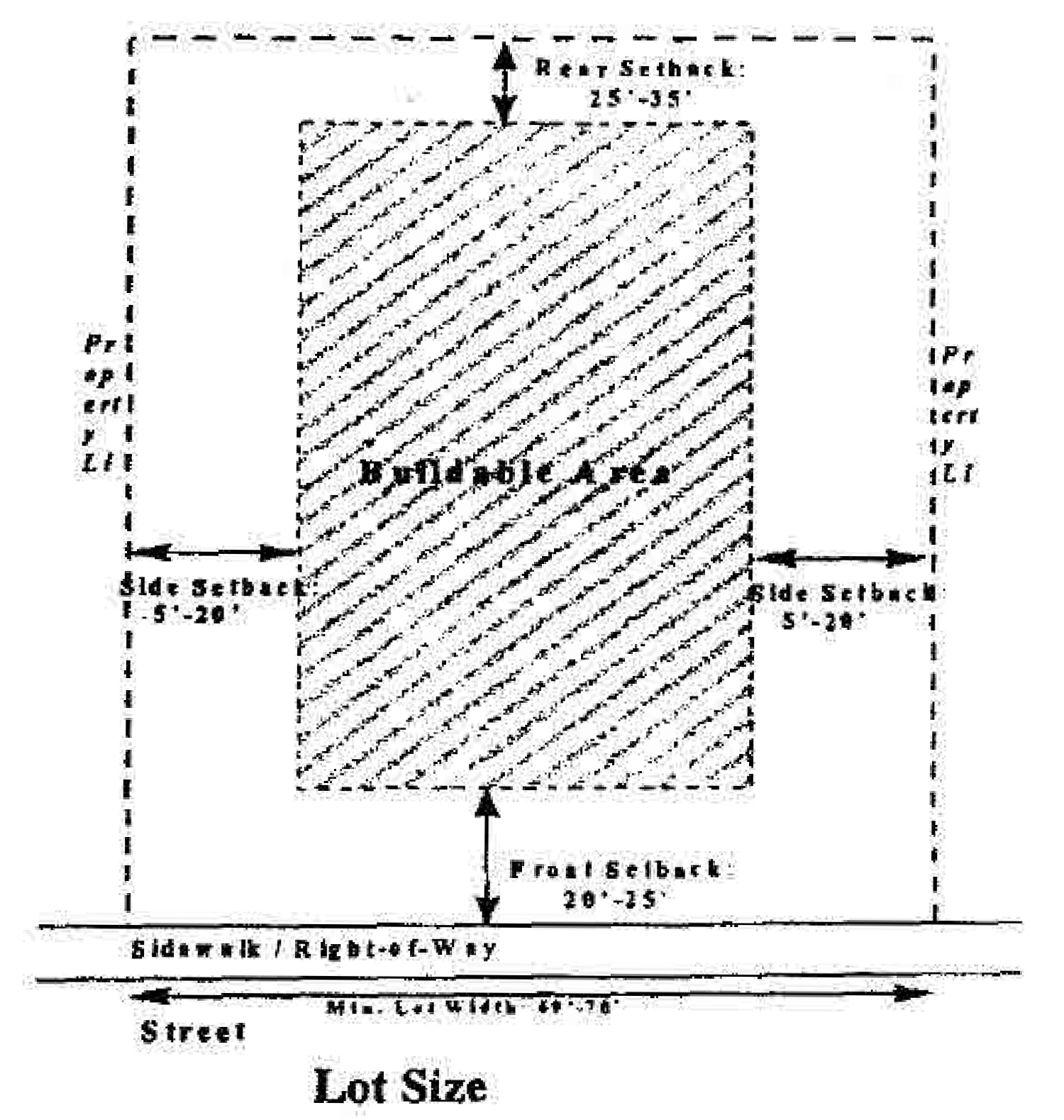
General.
4.3.3.
Uses.
A.
Permitted uses. The following uses are permitted in the R-2 district provided that all specified standards are met.
1.
Single-family residential building.
a)
One housing unit per lot permitted.
2.
Duplex residential building(s).
a)
Up to two units per lot permitted provided that lot size meets the minimum lot area/unit listed in the general requirements.
b)
Units may be attached or detached.
3.
Civic building(s).
a)
Use List:
(1)
School.
(2)
Church.
(3)
Park/playground.
(4)
Community hall.
(5)
Governmental services building.
B.
Prohibited uses. The following uses shall be prohibited in the R-2 district:
1.
Bars or taverns.
2.
Private clubs.
3.
Service or gas station.
4.
Outdoor storage.
5.
Outdoor business.
6.
Drive-through restaurant.
7.
Dry cleaning establishment.
8.
Sexually oriented businesses.
9.
Mobile homes/manufactured homes.
10.
Cellular towers.
11.
Any use not listed as being permitted is prohibited.
4.3.4.
Parking.
A.
General. The following parking requirements shall apply within the R-2 district:
1.
Residential. Two parking spaces per dwelling unit.
B.
Landscape buffers. (For non-residential uses):
1.
Required landscaping area. At least five feet in depth shall be located between the abutting property lines and the parking, loading, or other vehicular use area, except where permitted driveway openings are to be provided.
2.
Required landscaping materials.
a)
One tree shall be planted for each 50 linear feet of the landscaping area and one small maturing tree or shrub of at least three feet in height shall be planted every ten linear feet within the landscape.
3.
Other requirements.
a)
All portions of the landscaping area not planted with shrubs and trees shall be planted in grass and/or with some other vegetative ground cover; and
b)
Parked vehicles may overhang a landscaped area no more than one foot, provided curbing or other wheel stops are installed to ensure no greater overhang or penetration of the landscaped islands. Landscaping, walls, fences, and earthberms shall be located as to prevent their damage and/or destruction by overhanging vehicles.
4.3.5.
Tree protection.
D.
[Requirements.] Refer to chapter 3, section 3.11[3.20], tree protection, for general tree protection requirements.
E.
Grand trees. The destruction of any grand tree (24 inches or greater DBH) is prohibited on any parcel of non-exempt land, unless a permit is granted certifying that removal is in compliance with section 3.11[3.20].
F.
Protected trees. The destruction of any protected tree (eight inches or greater DBH) is prohibited on any parcel of non-exempt land, unless a permit is granted certifying that removal is in compliance with section 3.11.
Sec. 4.4. - High Density, Residential (R-3).
4.4.1.
Intent. The High Density, Residential District (R-3) is a predominately single-family, duplex, and multifamily residential area. This district is intended to accommodate higher density residential development and a variety of housing types on small lots or in project settings in areas accessible to major streets. Standards for all uses in the district are designed to protect the health, safety, and welfare of the citizens of Clinton.
4.4.2.
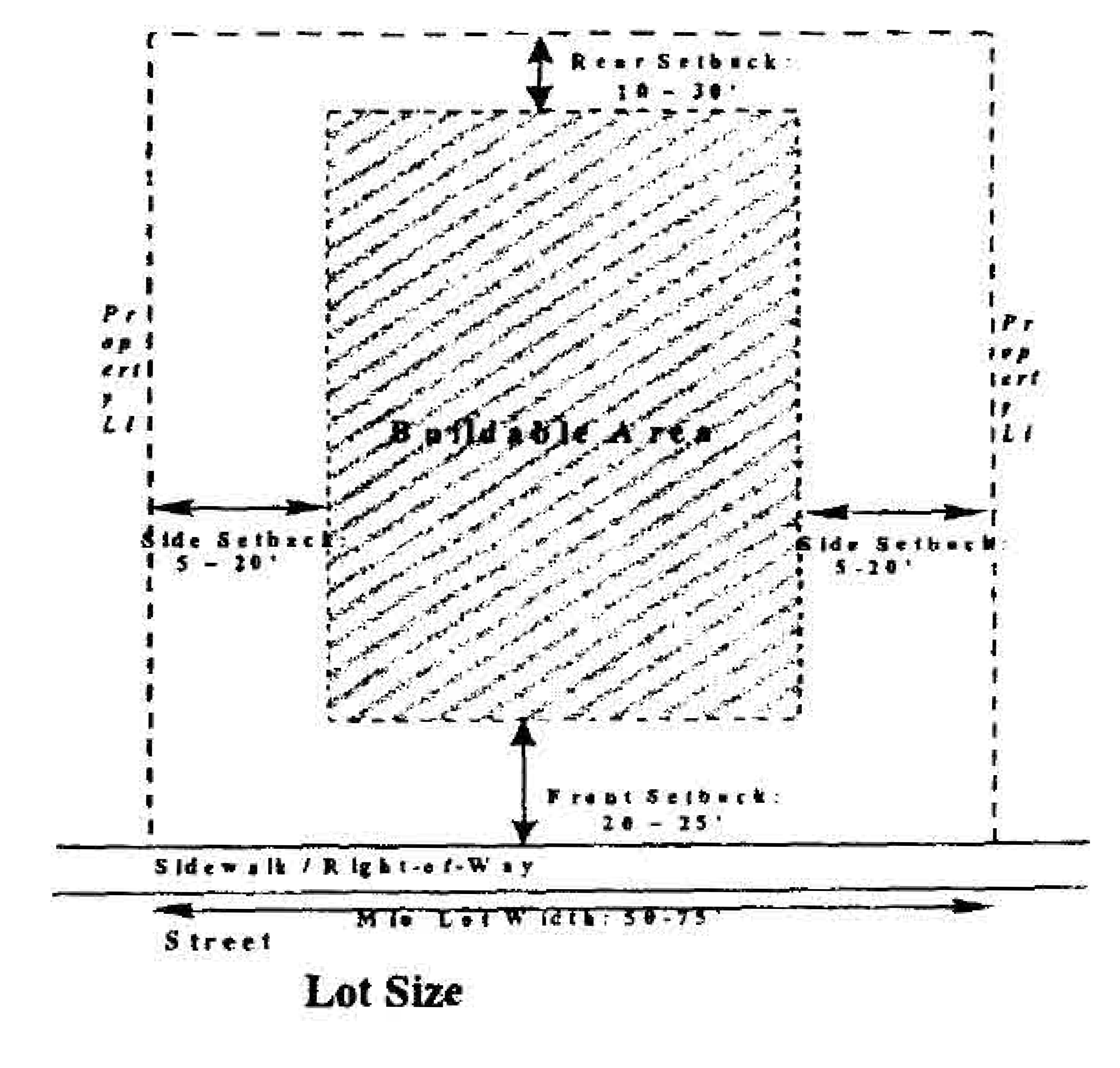
General.
4.4.3.
Uses.
A.
Permitted uses. The following uses are permitted in the R-3 district provided that all specified standards are met.
1.
Single-family residential building.
a)
One housing unit per lot permitted.
2.
Duplex residential building(s).
a)
Up to two units per lot permitted provided that lot size meets the minimum lot area/unit listed in the general requirements.
3.
Small multifamily residential units.
a)
More than two units per lot permitted provided that lot size meets the minimum lot area/unit listed in the general requirements.
4.
Civic building(s).
a)
Use list:
(1)
School.
(2)
Church.
(3)
Park/playground.
(4)
Community hall.
(5)
Governmental services building.
[B].
Prohibited uses. The following uses shall be prohibited in the R-3 district:
1.
Bars or taverns.
2.
Private clubs.
3.
Service or gas station.
4.
Outdoor storage.
5.
Outdoor business.
6.
Drive-through restaurant.
7.
Dry cleaning establishment.
8.
Sexually oriented businesses.
9.
Cellular towers.
10.
Mobile/manufactured housing.
11.
Any use not listed as being permitted is prohibited.
4.4.4.
Parking.
A.
General. The following parking requirements shall apply within the R-3 district:
1.
Residential. Two parking spaces per dwelling unit.
B.
Landscape buffers. (For non-residential uses):
1.
Required landscaping area. At least five feet in depth shall be located between the abutting property lines and the parking, loading, or other vehicular use area, except where permitted driveway openings are to be provided.
2.
Required landscaping materials.
a)
One tree shall be planted for each 50 linear feet of the landscaping area and one small maturing tree or shrub of at least three feet in height shall be planted every ten linear feet within the landscape.
3.
Other requirements.
a)
All portions of the landscaping area not planted with shrubs and trees shall be planted in grass and/or with some other vegetative ground cover; and
b)
Parked vehicles may overhang a landscaped area no more than one foot, provided curbing or other wheel stops are installed to ensure no greater overhang or penetration of the landscaped islands. Landscaping, walls, fences, and earthberms shall be located as to prevent their damage and/or destruction by overhanging vehicles.
4.4.5.
Tree protection.
G.
[Requirements.] Refer to chapter 3, section 3.11[3.20]: tree protection for general tree protection requirements.
H.
Grand trees. The destruction of any grand tree (24 inches or greater DBH) is prohibited on any parcel of non-exempt land, unless a permit is granted certifying that removal is in compliance with section 3.11[3.20].
I.
Protected trees. The destruction of any protected tree (eight inches or greater DBH) is prohibited on any parcel of non-exempt land, unless a permit is granted certifying that removal is in compliance with section 3.11[3.20].
Sec. 4.4.5. - High Density, Single-Family Residential (RS-3).
4.4.5.1. Intent. The High Density, Single-Family Residential (RS-3) is a single-family residential area intended to accommodate higher density residential development on small lots and in project settings in areas accessible to major streets. Standards for all uses in the district are designed to protect the health, safety, and welfare of the citizens of Clinton.
4.4.5.2. General.
4.4.5.3. Uses.
A.
Permitted uses. The following uses are permitted in the RS-3 district provided that all specified standards are met.
1.
Single-family residential building.
a)
One housing unit per lot permitted.
2.
Civic building(s).
a)
Use list:
(1)
School.
(2)
Church.
(3)
Park/playground.
(4)
Community hall.
(5)
Governmental services building.
B.
Prohibited uses. All uses not explicitly stated in section 4.4.5.3.A. are not allowed in the RS-3 district.
4.4.5.4. Parking.
A.
General. The following parking requirements shall apply within the RS-3 district:
1.
Residential. Two parking spaces per dwelling unit.
B.
Landscape buffers. (For non-residential uses):
1.
Required landscaping area. A minimum of five feet shall be established between the abutting property lines and the parking, loading, or other vehicular use area, except where permitted driveway openings are to be provided.
2.
Required landscaping materials. One tree shall be planted for each 50 linear feet of the landscaping area and one small maturing tree or shrub of at least three feet in height shall be planted every ten linear feet within the landscape.
3.
Other requirements.
a)
All portions of the landscaping area not planted with shrubs and trees shall be planted in grass and/or with some other vegetative ground cover; and
b)
Parked vehicles may overhang a landscaped area no more than one foot, provided curbing or other wheel stops are installed to ensure no greater overhang or penetration of the landscaped islands. Landscaping, walls, fences, and earthberms shall be located as to prevent their damage and/or destruction by overhanging vehicles.
4.4.5.5. Tree protection.
A.
Requirements. Refer to chapter 3, section 3.20; tree protection for general tree protection requirements.
B.
Grand trees. The destruction of any grand tree (24 inches or greater DBH) is prohibited on any parcel of non-exempt land, unless a permit is granted certifying that removal is in compliance with section 3.20.
C.
Protected trees. The destruction of any protected tree (eight inches or greater DBH) is prohibited on any parcel of non-exempt land, unless a permit is granted certifying that removal is in compliance with section 3.20.
(Ord. of 06-23-2025(1), § 1)
Sec. 4.5. - Manufactured Housing, Residential (R-MH).
4.5.1.
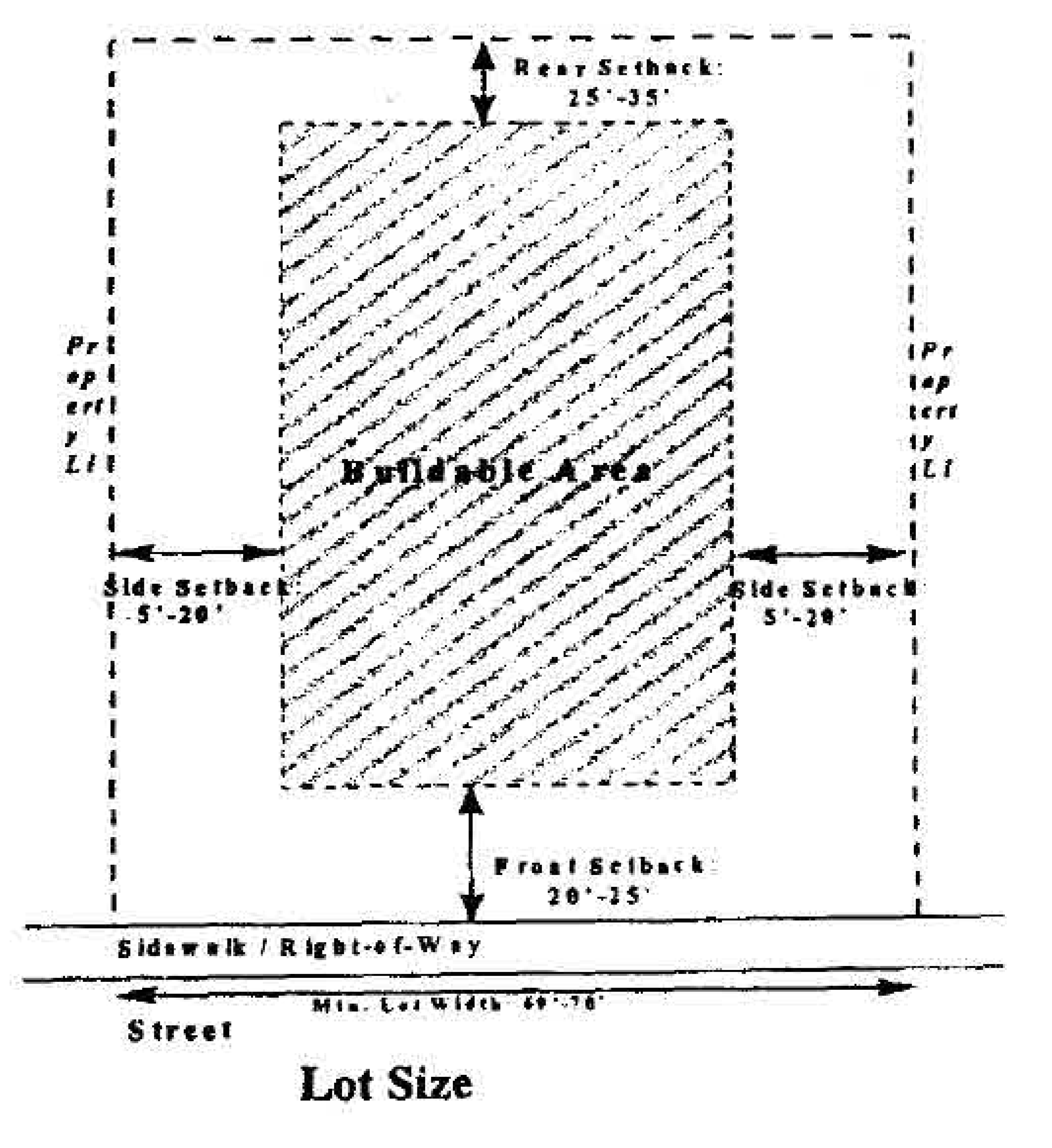
Intent. The Manufactured Housing, Residential District (R-MH) is intended to accommodate manufactured housing development on individual lots in concert with conventional dwellings in areas suited to mixed residential use. It is further intended to foster manufactured housing development as an affordable alternative to other types of housing. Standards for all uses in the district are designed to protect the health, safety, and welfare of the citizens of Clinton.
4.5.2.
General.
4.5.3.
Uses.
A.
Permitted uses. The following uses are permitted in the R-MH district provided that all specified standards are met.
1.
Duplex residential building(s).
a)
Up to two units per lot permitted provided that lot size meets the minimum lot area/unit listed in the general requirements.
2.
Small multifamily residential building(s).
a)
More than two units per lot permitted provided that lot size meets the minimum lot area/unit listed in the general requirements.
b)
Units may be attached or detached.
3.
Civic building(s).
a)
Use List:
(1)
School.
(2)
Church.
(3)
Park/playground.
(4)
Community hall.
(5)
Governmental services building.
4.
Manufactured home(s).
a)
Manufactured homes shall be limited to residential use.
b)
Only one manufactured home is permitted per parcel provided that it meets the following standards: (Note: These standards do not apply to non-conforming mobile home parks.)
(1)
A manufactured home must bear a seal certifying that it was built to HUD standards.
(2)
Pre-owned manufactured homes being placed onto a parcel within the city shall be less than five years old.
(3)
Exterior siding: Wood, Hardie board, vinyl, brick, or aluminum and shall be comparable in composition, appearance, and durability to the exterior siding commonly used in standard residential construction.
(4)
Roofing material: Type of shingle that is commonly used in standard residential construction.
(5)
Minimum roof pitch: Three-foot by 12-foot roof pitch, or the standard of each manufacturer's equivalent to a three-foot by 12-foot roof pitch.
(6)
Skirting: Continuous permanent brick foundation or curtain wall of solid and durable material, continuous except for ventilation and access, shall be installed upon a poured concrete footing after placement on the lot, and before occupancy.
(7)
The tongue, axles, transporting lights, and removable towing apparatus must be removed after placement on the lot and before occupancy.
(8)
Stairs, porches, entrance platforms, ramps, and other means of entrance and exit to and from the home shall be installed or constructed with handrails at each entrance/exit in a manner commonly used in standard residential construction and attached firmly to the primary structure and anchored securely to the ground.
(9)
A recreational vehicle is not to be considered a manufactured home.
(10)
Address numbers: Permanent address numbers shall be provided on each manufactured home and shall be located so as to be visible from the street or driveway. Signs identifying address locations shall be provided at each street or driveway or mailbox.
(11)
License required: A business license shall be required for operation of a nonconforming manufactured home park in the City of Clinton. This license may be revoked by city council for a violation of this ordinance or other applicable ordinance and regulations governing the operations of such uses.
B.
Prohibited uses. The following uses shall be prohibited in the R-MH district:
1.
Bars or taverns.
2.
Private clubs.
3.
Service or gas station.
4.
Outdoor storage.
5.
Outdoor business.
6.
Drive-through restaurant.
7.
Dry cleaning establishment.
8.
Sexually oriented business.
9.
Cellular towers.
10.
Mobile homes.
11.
Any use not listed as being permitted is prohibited.
4.5.4.
Parking.
A.
General. The following parking requirements shall apply within the R-MH district.
[1.]
Residential. Two parking spaces per dwelling unit.
B.
Landscape buffers. (For non-residential uses):
1.
Required landscaping area. At least five feet in depth shall be located between the abutting property lines and the parking, loading, or other vehicular use area, except where permitted driveway openings are to be provided.
2.
Required landscaping materials.
a)
One tree shall be planted for each 50 linear feet of the landscaping area and one small maturing tree or shrub of at least three feet in height shall be planted every ten linear feet within the landscape.
3.
Other requirements.
a)
All portions of the landscaping area not planted with shrubs and trees shall be planted in grass and/or with some other vegetative ground cover; and
b)
Parked vehicles may overhang a landscaped area no more than one foot, provided curbing or other wheel stops are installed to ensure no greater overhang or penetration of the landscaped islands. Landscaping, walls, fences, and earthberms shall be located as to prevent their damage and/or destruction by overhanging vehicles.
4.5.5.
Tree protection.
J.
[Requirements.] Refer to chapter 3, section 3.11[3.20]: tree protection for general tree protection requirements.
K.
Grand trees. The destruction of any grand tree (24 inches or greater DBH) is prohibited on any parcel of non-exempt land, unless a permit is granted certifying that removal is in compliance with section 3.11[3.20].
L.
Protected trees. The destruction of any protected tree (eight inches or greater DBH) is prohibited on any parcel of non-exempt land, unless a permit is granted certifying that removal is in compliance with section 3.11[3.20].
(Ord. of 03-03-2025(3), § 2)
Sec. 4.6. - Central Commercial District (C-2).
4.6.1.
Intent. The city center district is the heart of Clinton. This area (the uptown) has been historically and is currently the central area for shopping, services, and governmental facilities for both the residents of the city and surrounding areas. The downtown and its businesses are easily accessible by vehicles, bikes, and pedestrians. A mixture of uses that respect the existing structures, especially those with historic significance, in scale and use are appropriate for this district.
4.6.2.
General.
A.
Minimum lot size: 5,000 square feet.
B.
Maximum lot coverage: Building footprint shall not exceed 70 percent of the lot coverage.
C.
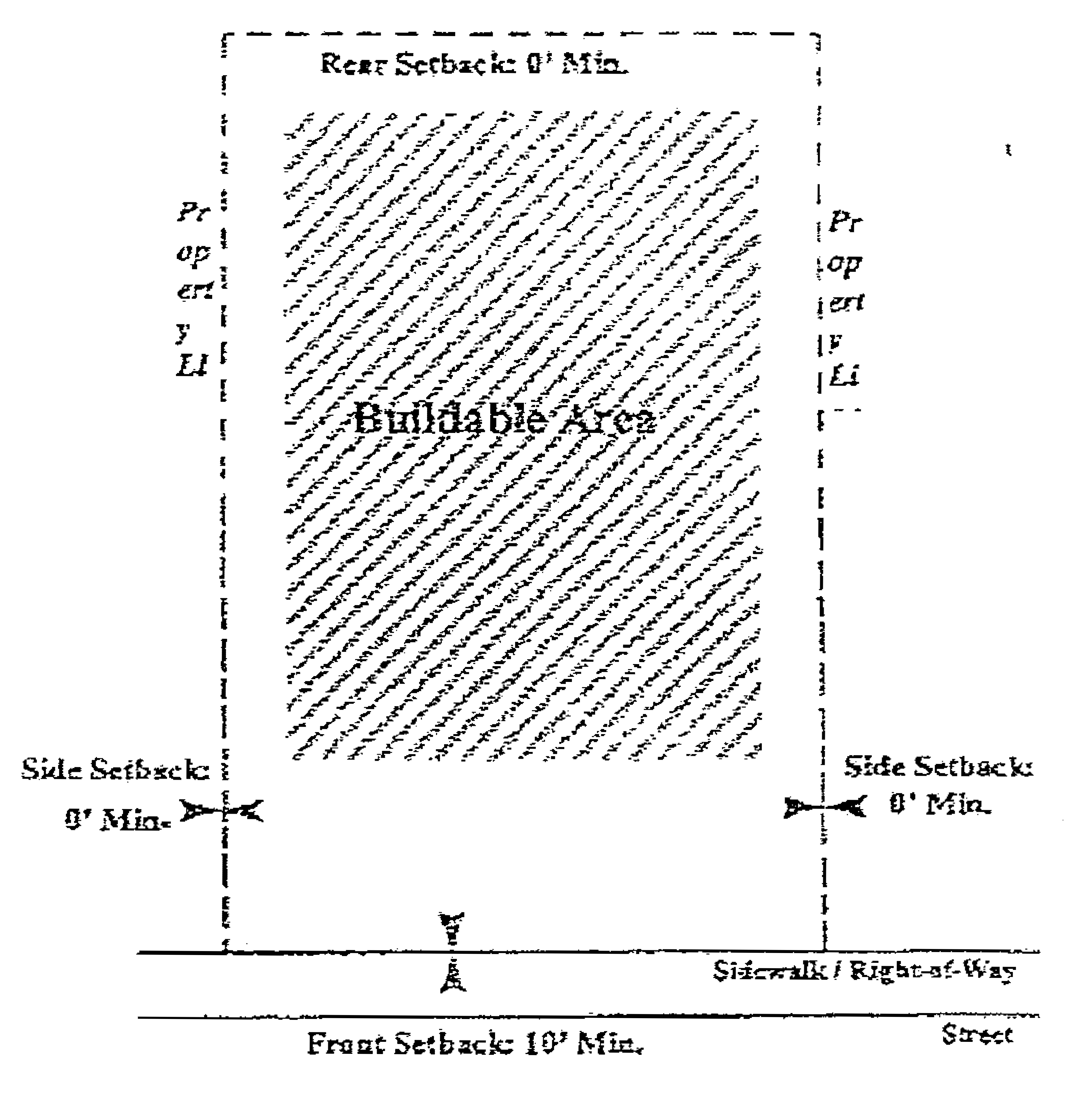
Setbacks.
1.
Front: Ten feet minimum.
2.
Side: Five feet minimum on corner lots; 15 feet when contiguous to single-family dwelling unit; none elsewhere.
3.
Rear: 0 feet minimum.
D.
Maximum building height: 65 feet. Water towers, transmission towers, chimneys, flag poles, masts and aerials are permitted to exceed height limits, provided evidence from appropriate authorities is submitted to the effect that such building or structure will not interfere with any airport approach zones or flight patterns.
4.63.
Uses.
A.
Permitted uses. The following uses shall be permitted in the C-2 district:
1.
Office/commercial. The following office and commercial uses are permitted in the C-2 district provided that all specified standards are met:
a)
Use list.
(1)
Office.
(2)
Personal services.
(3)
Business services.
(4)
General retail.
(5)
General commercial.
b)
Standards.
[1.]
For standards, refer to section 4.7.3.
2.
Single-family residential. Single-family residential uses are permitted in the C-2 district provided that all standards of the R-3 district are met.
3.
Multifamily and duplex residential. Attached or detached multifamily residential uses are permitted in the C-2 district provided that all standards of the R-3 district are met.
(1)
Minimum lot area per housing unit: 2,500 square feet.
(2)
Parking requirement: one spaces per unit.
Exception: In the C-2 district, if there is reasonable public parking as designated and approved by the zoning administrator, there is no requirement for minimum amount of parking spaces per units.
4.
Institutional. The following institutional uses are permitted in the C-2 district:
a)
Use list.
(1)
Church.
(2)
Government.
(3)
School.
5.
Utility. Utility uses are permitted in the C-2 district provided that all specified standards are met.
a)
Standards.
(1)
Public utility or communication tower: setback a minimum of one foot for each one foot in height.
6.
Outdoor storage. Outdoor storage uses are permitted in the C-2 district provided that all specified standards are met.
a)
Standards.
(1)
The storage shall be either an accessory use on the same lot as or a primary use for a lot providing that the primary business utilizing the storage is located within the C-2 district.
(2)
Outdoor storage shall not front on any street and shall be screened from view of surrounding properties.
(3)
Any tires stored shall be covered under a roofed structure so as not to allow for the accumulation of water inside the tires.
(4)
No more than two vehicles for salvage may be stored on any lot.
(5)
Tractor trailers or other large vehicles may not be used as permanent storage buildings.
7.
Mixed uses. A mixture of the above uses are permitted provided that these uses meet the specified standards for that use in addition to the following standards:
a)
Standards.
(1)
When residential uses are attached to businesses or institutional uses, where business and residential portions of the building are located on different floors, business/commercial uses shall occupy the floors below the residential uses to preserve a residential atmosphere for the residents above.
(2)
When residential uses are attached to businesses or institutional uses, business and residential portions of the mixed use building must be separated either by a soundproof concrete or masonry wall or two framewalls at least two feet apart, each insulated or otherwise soundproofed with the intervening space unoccupied except for utility lines, heating and air conditioning ducts, and similar devices not producing noise or vibration or requiring regular access.
B.
Accessory uses. Permitted accessory uses and structures shall be limited to the following and any additional uses and structures the zoning administrator finds are similar to those listed in scope, size, and impact and which are otherwise in compliance with this ordinance.
1.
Residential.
a)
Private greenhouse.
b)
Private swimming pool.
c)
Private tennis or outdoor recreational court.
d)
Storage shed for personal, non-commercial use.
e)
Studios and workshops without outdoor display for personal use.
f)
Utility substation.
g)
Public utility or communication tower, setback a minimum of one foot for each one foot in height.
2.
Commercial.
a)
Storage shed.
b)
Utility substation.
c)
Public utility or communication tower, setback a minimum of one foot for each one foot in height.
3.
Standards. The following standards apply to accessory uses or structures listed as permitted in [subsections] 1 and 2 above.
a)
Accessory uses or structures shall be located on the same lot as the principal structure or use.
b)
Accessory structures shall be included in the calculation of total lot coverage.
c)
Unless otherwise noted, no accessory use or structure shall be located in a required yard provided such uses are located no closer than five feet to any property line, are not located in any required buffer area, and otherwise comply with the regulations for principal uses in said districts.
d)
No accessory use shall create a nuisance or hazard.
e)
No accessory use shall be established until the principal use is established.
f)
The number of accessory buildings shall not exceed two in any zoning district.
C.
Prohibited uses. The following uses shall be prohibited in the C-2 district:
1.
Mobile homes/manufactured homes.
2.
Auto repair garage.
3.
Gas station.
4.
Sexually oriented businesses.
5.
Cellular towers.
6.
Any use not listed as being permitted is prohibited.
4.6.4.
Parking.
A.
Refer to general parking provisions in chapter 3, section 3.12[3.21]: parking.
B.
Parking areas on adjacent lots should be connected.
4.6.5.
Landscaping.
A.
Intent. Landscaping is required in the C-2 district to provide for buffering of adjacent zones, sound and light abatement, and screening of commercial uses, commercial parking, or residential parking with more than eight spaces.
B.
Requirements for parking area borders parallel to adjacent property lines.
1.
Buffer strip shall be at least five feet in width and shall not block the line of sight for on-coming traffic on street frontage.
2.
A garden wall, opaque fence, or hedge [min. three feet in height] shall be installed along any adjacent property line.
3.
Two small maturing trees, 12 ornamental shrubs and landscaped grass areas are required every 100 linear feet.
C.
Street trees.
1.
Where appropriate, street trees shall be planted along all public streets with permission of the appropriate jurisdiction. Street trees shall be large maturing canopy species such as Silver Maple, Red Maple, or Live Oak.
2.
Maximum of one street tree every 30 feet on center.
4.6.6.
Tree protection.
A.
[Requirements.] Refer to chapter 3, section 3.11[3.20]: tree protection for general tree protection requirements.
B.
Grand trees. The destruction of any grand tree (24 inches or greater DBH) is prohibited on any parcel of non-exempt land, unless a permit is granted certifying that removal is in compliance with section 3.11[3.20].
C.
Protected trees. The destruction of any protected tree (eight inches or greater DBH) is prohibited on any parcel of non-exempt land, unless a permit is granted certifying that removal is in compliance with section 3.11[3.20].
4.6.7.
Signage.
A.
Materials employed for construction of sign shall be durable and weather resistant, and all signs shall be maintained in good repair.
B.
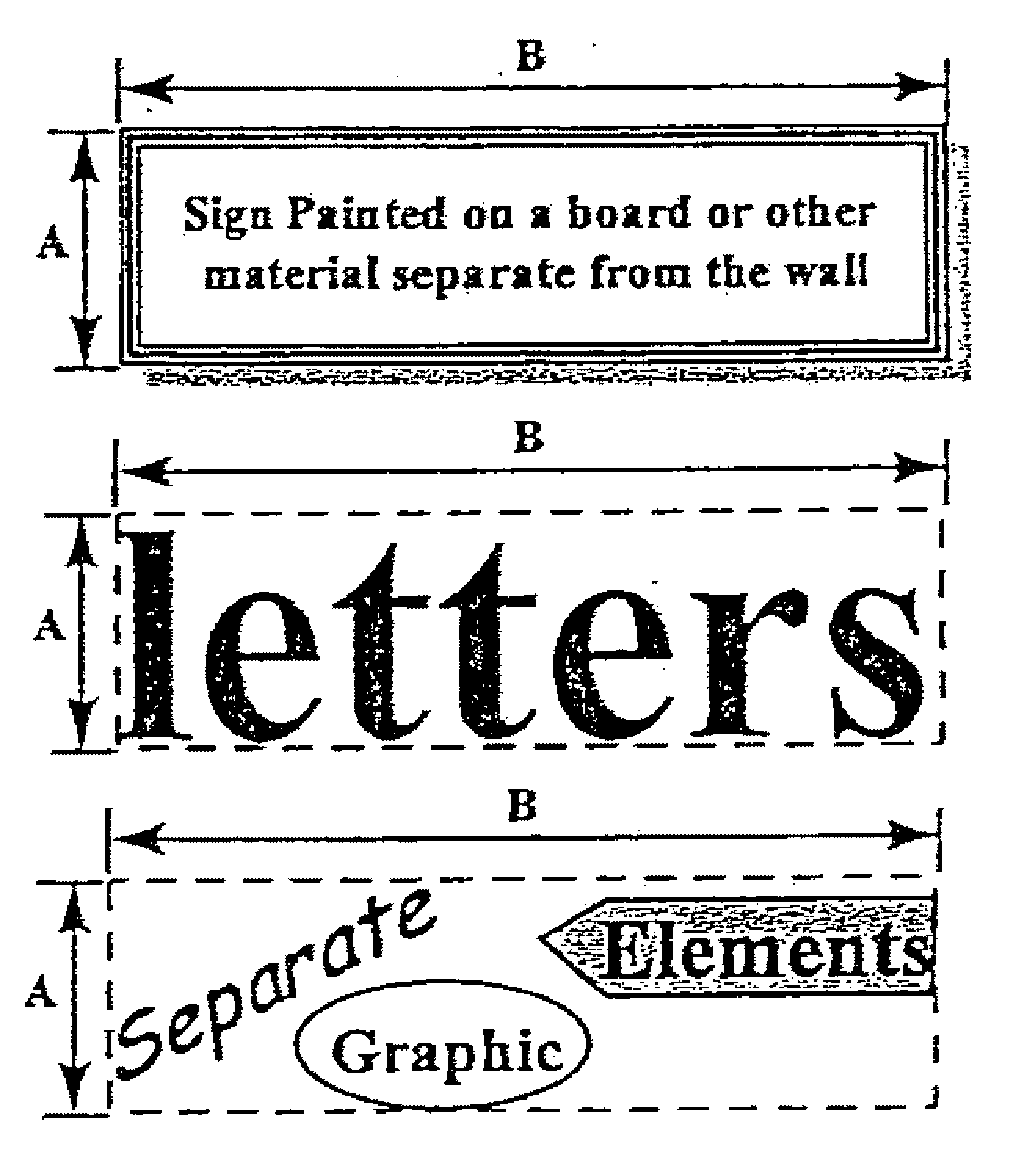
Sign area shall be measured by height (A) by length (B) of the smallest rectangle that can be drawn to measure all sign elements. Unless otherwise noted, only one side or face of the same sign shall be used in computing sign area.
C.
Allowed signs. The applicant may select one of the following one of the four choices for a sign type per street frontage:
1.
Wall sign.
a)
Maximum size: 20 square feet or 15 percent of the front wall area, whichever is greater.
2.
Window sign.
a)
Maximum size: 30 percent of the window area.
3.
Projecting sign.
a)
Maximum size: Six square feet for one side.
b)
Clearance: Eight feet above ground level.
4.
Awning sign.
a)
Maximum size: Individual letters shall not exceed ten inches in height.
b)
Signs, symbols, or designs may be painted or sewn on to any awning.
5.
Free standing sign.
a)
Maximum size: 20 square feet per sign face.
b)
Maximum height: 24 feet from finished grade.
D.
Secondary signs. The following signs shall be permitted along in conjunction with the allowed sign:
1.
Window or projecting sign no larger than six inches by 18 inches bearing business identification in addition to a wall or awning sign.
2.
One sign per business occupying the upper floors of a building no larger than six inches by 18 inches.
E.
Prohibited signs.
1.
Moving signs of any type other than barber poles.
2.
Signs projecting above the roof line.
3.
Roof signs.
4.
Any sign not listed as being allowed is prohibited.
(Ord. No. 2023-009-004, § 1(Exh. A), 9-11-2023)
Sec. 4.7. - General Commercial District (C-3).
4.7.1.
Intent. Businesses in this district, due to the heavy auto traffic along the highways, will be primarily auto dependent businesses. This district may represent the first impression, and often the only impress on, that visitors have of the City of Clinton. Because of this, the intent of these provisions is to create a corridor that represents the city and its local character. In addition, these provisions are intended to facilitate convenient access, minimize traffic congestion, and reduce visual clutter along the highways.
4.7.2.
General.
A.
Minimum lot size: 5,000 square feet.
B.
Maximum lot coverage: Building footprint shall not exceed 85 percent of the lot coverage.
C.
Minimum street frontage: 50 feet.
D.
Maximum height: 45 feet.
E.
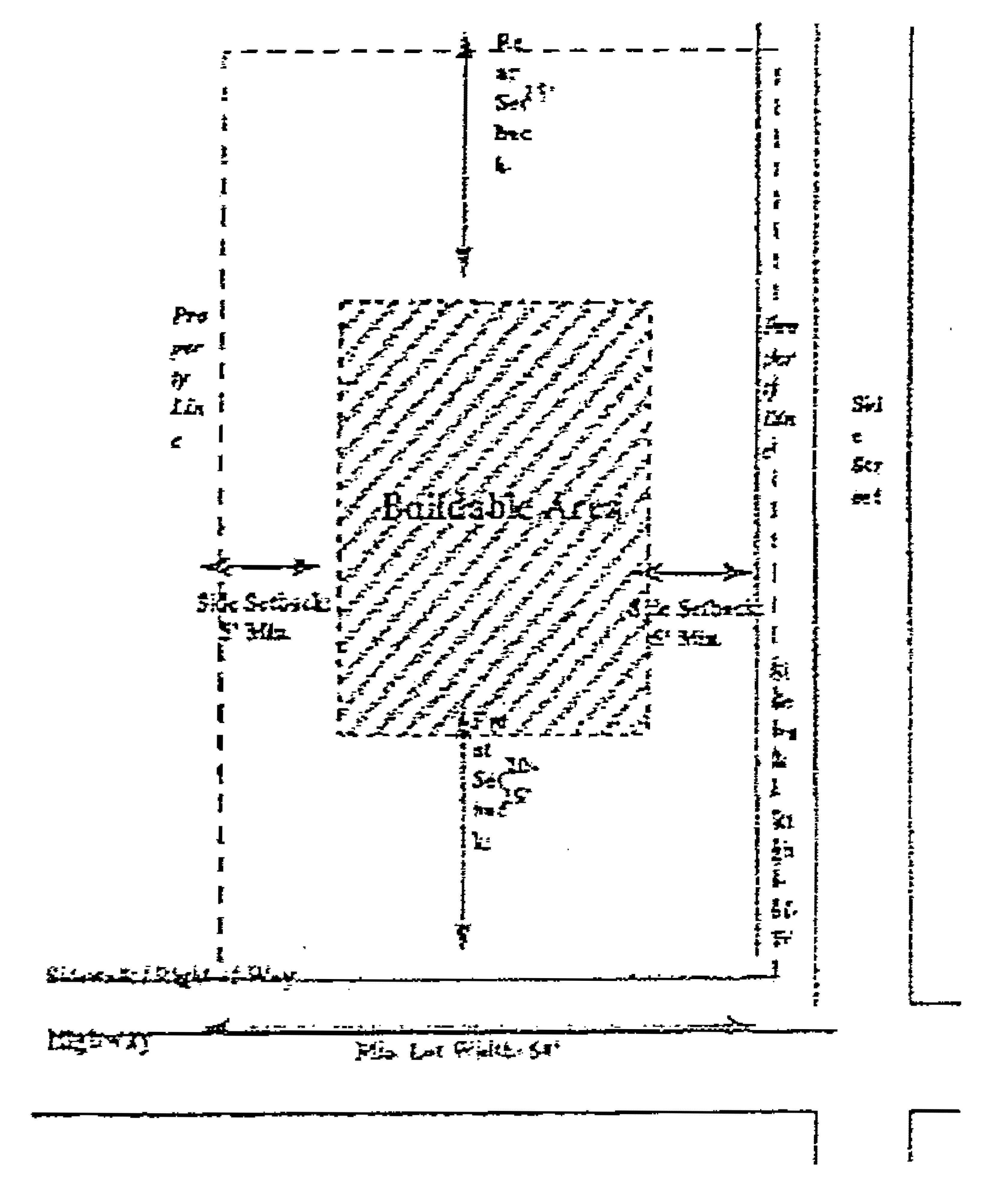
Setbacks:
1.
Front: 20 feet on minor street, 25 feet on major street.
2.
Side: Five feet. Commercial condo projects shall be allowed to share interior to share interior property lines, provided a five-foot setback is observed at both ends, and that no project shall exceed 400 feet in length parallel to the street or streets upon which it is contiguous.
3.
Rear: 15 feet min.
F.
Entranceways, awnings, and porches. Permitted to encroach a maximum of six feet into front setbacks. Corner lots may encroach up to six feet on both the front and street-side setback.
G.
Trash containers. Located in the parking area and screened from the right-of-way.
H.
Mechanical equipment at ground level. Should be placed on the parking lot side of building, away from buildings on adjacent sites, and screened from view of public streets and residential uses.
4.7.3.
Uses.
A.
Permitted uses. The following uses shall be permitted in the C-3 district:
1.
General retail.
2.
General commercial.
3.
Personal services.
4.
Business services.
5.
Office.
6.
Entertainment uses (i.e., theaters, drive-in theaters, mini golf).
7.
Civic uses.
8.
Public utility or communication tower, setback a minimum of one foot for each one foot in height.
9.
Residential units providing they meet the requirements specified in the R-3 district.
B.
Prohibited uses. The following uses shall be prohibited in the C-3 district:
1.
Mobile homes/manufactured homes.
2.
Sexually oriented businesses.
C.
Accessory uses. The following uses shall be permitted in the C-3 district as an accessory to the primary use.
1.
Outdoor storage.
3.
Outdoor sales.
Outdoor storage. Outdoor storage uses are permitted in the C-3 district provided that all specified standards are met.
a)
Standards.
(1)
The storage shall be either an accessory use on the same lot as or a primary use for a lot providing that the primary business utilizing the storage is located within the C-2 district.
(2)
Outdoor storage shall not front on any street and shall be screened from view of surrounding properties.
(3)
Any tires stored shall be covered by a roofed structure so as not to allow for the accumulation of water inside the tires.
(4)
No more than two vehicles for salvage may be stored on any lot.
(5)
Tractor trailers or other large vehicles may not be used as permanent storage buildings.
4.7.4.
Parking.
A.
General requirements. See general parking requirements in chapter 3 section 3.21.
B.
Adjacent lots. Whenever possible, parking areas on adjacent lots shall be connected.
C.
Required parking spaces.
E.
Required loading spaces. One space for every 30,000 square feet of floor area, or a portion thereof with a maximum of two spaces.
F.
Stacking requirements. Four stacking spaces per drive-through window shall be provided at businesses with drive-through facilities. These spaces shall be located off the public right-of-way and shall not conflict with the parking and circulation in the balance of the required parking area. Stacking spaces shall be a minimum of 24 feet long and nine feet wide.
4.7.5.
Landscaping.
A.
General requirements. See landscaping requirements in chapter 3, section 3.10[3.19]: landscaping.
B.
Street trees.
1.
Street tree requirements apply only to lot frontage on state maintained highways.
2.
One large maturing tree every 30 feet. (Pick one or a few species to choose from for consistency.)
3.
Required trees shall be planted a minimum distance of five feet and a maximum distance of ten feet from the right of way or property boundary within the required front setback.
C.
Requirements for parking areas.
1.
Peripheral.
a)
Required landscaping area. At least five feet in depth shall be located between the abutting property lines and the parking, loading, or other vehicular use area, except where permitted driveway openings area to be provided.
b)
Required landscaping materials. Choose one:
(1)
One large maturing tree shall be planted for each 50 linear feet of the landscaping area and one small maturing tree or shrub of at least three feet in height shall be planted every ten linear feet within the landscape; or
(2)
A combination of trees, hedge, other durable landscape material or approved wall, fence or earthberm may be utilized to form the continuous landscape element of at least three feet in height.
c)
Other requirements.
(1)
All portions of the landscaping area not planted with shrubs and trees or covered by a wall or fence barrier shall be planted in grass and/or with some other vegetative ground cover; and
(2)
Parked vehicles may overhang a landscaped area no more than 2½ feet, provided curbing or other wheel stops are installed to ensure no greater overhang or penetration of the landscaped islands. Landscaping, walls, fences, and earthberms shall be located as to prevent their damage and/or destruction by overhanging vehicles.
2.
Interior.
a)
Required landscaping area. Five percent of the interior of any parking, loading, or other vehicular use area shall be landscaped. The location of such landscaping is at the option of the owner or developer; provided, however, the following standards shall apply:
(1)
Landscape island. Shall be at least five feet in width and ten feet in length. Each island shall contain one large maturing tree plus shrubs and/or vegetative ground cover to cover the entire area.
(a)
No more than 20 parking spaces shall be permitted in a continuous row without being interrupted by a landscaped island.
(b)
Each parking row shall terminate in a landscape island.
(2)
Median strip. Shall be at least five feet in width.
(a)
Every fourth row of parking shall be separated by a median strip for landscaping and pedestrian purposes.
(b)
Every median strip shall contain plantings of one large maturing tree at intervals of 30 to 40 feet, plus shrubs and/or vegetative ground cover to cover the entire area.
b)
Other requirements.
(1)
All portions of the landscaping area not planted with trees shall be planted in grass and/or with some other vegetative ground cover; and
(2)
Parked vehicles may overhang a landscaped area no more than 2½ feet, provided curbing or other wheel stops and installed to ensure no greater overhang or penetration of the landscaped islands. Landscaping, walls, fences, and earthberms shall be located as to prevent their damage and/or destruction by overhanging vehicles.
D.
Requirements for boundaries adjacent to any residential zoning district and existing residential uses in the general commercial district.
1.
Required buffer area.
a)
Minimum width: 20 feet.
2.
Required buffering materials.
a)
Buffering materials shall provide an opaque buffer to create a strong impression of a spatial separation and to preclude visual contact.
b)
Two trees for every 100 linear feet.
c)
17 shrubs per 100 linear feet.
d)
All portions of the landscaping area not planted with shrubs and trees or covered by a wall or fence barrier shall be planted in grass and/or with some other vegetative ground cover.
3.
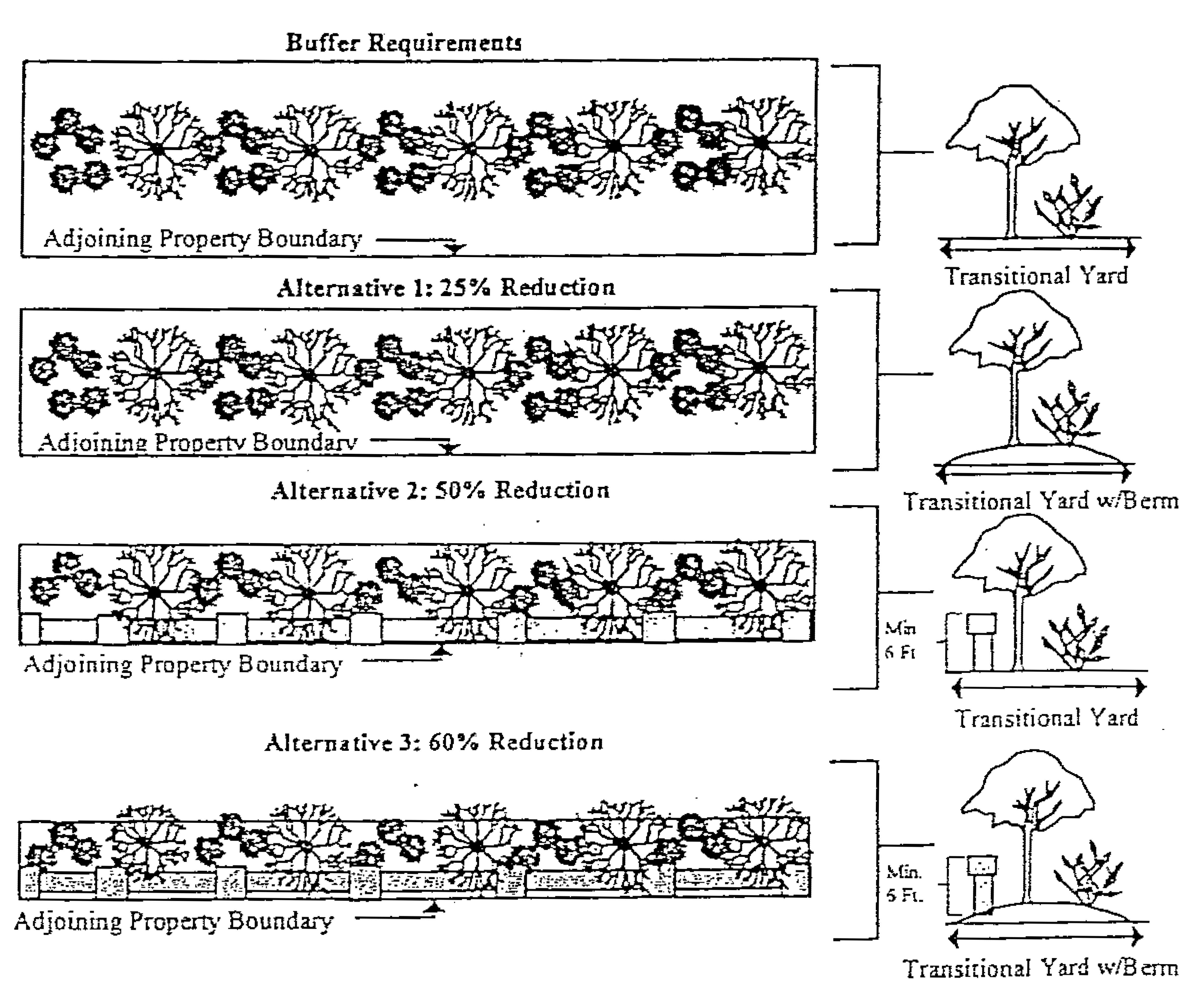
Alternative 1. Buffering requirements reduced by 25 percent (five feet):
a)
Minimum width may be reduced by 25 percent or five feet with use of a landscaped earth berm.
b)
Berms shall be constructed within the property boundary meeting the following requirements:
(1)
Minimum height: Two feet.
(2)
Minimum crown width: Two feet.
(3)
Minimum slope: 2:1.
4.
Alternative 2. Buffering requirements reduced by 50 percent (ten feet):
a)
Minimum width may be reduced by 50 percent or ten feet and required number of shrubs reduced to 30 shrubs per 100 linear feet with use of landscaped wall or fence.
b)
Wall shall be solid and meet the standards for walls and fences .
c)
Maximum wall height: Six feet.
d)
Shrubs shall reach one-third of the height of the wall within three years.
5.
Alternative 3. Buffering requirements reduced by 60 percent (12 feet):
a)
Minimum width may be reduced by 50 percent or 12 feet and required number of shrubs reduced to 30 shrubs per 100 linear feet with use of landscaped wall or fence, and a planted earth berm.
b)
Berms shall be constructed within the property boundaries meeting the following requirements:
(1)
Minimum height: two feet.
(2)
Minimum crown width: two feet.
(3)
Minimum slope: 2:1
c)
Wall shall be solid and meet the standards for walls and fences .
d)
Maximum wall height: six feet.
e)
Shrubs shall reach one-third of the height of the wall within three years.
4.7.6.
Tree protection.
A.
[Requirements.] Refer to chapter 3, section 3.11: tree protection for general tree protection requirements.
B.
Grand trees. The destruction of any grand tree (24 inches or greater DBH) is prohibited on any parcel of non-exempt land, unless a permit is granted certifying that removal is in compliance with section 3.11[3.20].
C.
Protected tree. The destruction of any protected tree (eight inches or greater DBH) is prohibited on any parcel of non-exempt land, unless a permit is granted certifying that removal is in compliance with section 3.11[3.20].
4.7.7.
Signage.
A.
Intent. The purpose of these sign regulations are: to encourage the effective use of signs as a means of communication; to maintain and enhance the aesthetic environment; and to increase the city's ability to attract sources of economic development and growth; to improve pedestrian and traffic safety; to minimize the possible adverse effect of signs on nearby public and private property; and to enable the fair and consistent enforcement of these sign regulations.
B.
[Requirements.] Refer to section 3.4[3.17]: signage for general sign requirements.
C.
[Altering signs prohibited.] No sign, or part thereof, may be altered, constructed, changed, converted, enlarged, or moved unless in conformity with the following requirements.
D.
Sign area. Shall be measured by height (A) by length (B) of the smallest rectangle that can be drawn to measure all sign elements. Unless otherwise noted, only one side or face of the same sign shall be used in computing sign area.
E.
Allowed signs. The applicant may select two of the following six choices for a sign type per street frontage:
1.
Wall sign.
a)
Maximum size: One square foot per linear foot of the building wall on which the sign is to be placed.
2.
Window sign.
a)
Maximum size: 20 percent of the window area.
3.
Projecting sign.
a)
Maximum size: 16 square feet for one side.
b)
Maximum height: No projecting sign shall extend above the roofline.
c)
Clearance: Eight feet above ground level.
4.
Awning sign.
a)
Maximum size: 15 percent of exterior surface of the awning.
b)
Signs, symbols, or designs may be painted or sewn onto the awning.
5.
Freestanding sign.
a)
Maximum size: One square foot for every two feet of street frontage.
b)
Maximum height: 35 feet.
c)
Setback. No freestanding sign shall be closer than five feet to an exterior property line.
d)
No more than one freestanding sign shall be allowed per parcel.
6.
Directory sign.
a)
The parcel shall contain no more than one directory sign.
b)
The maximum sign area shall not exceed three inches by 15 inches for each identified activity, business, firm, or tenant.
c)
The directory sign may take the form of any sign permitted in the zoning district provided that such sign shall comply with its applicable specification. If the directory sign is a freestanding sign, no other freestanding shall be located on the parcel.
F.
Prohibited signs.
1.
Moving signs of any type.
2.
Signs projecting above the roof line.
3.
Any sign not listed as being allowed is prohibited.
G.
Criteria for bonus sign area. To encourage design excellence, the maximum sign areas for the general commercial district may be increased by the percentages as provided herein. A separate bonus is granted for compliance with each of the criteria and the area is cumulative, but the percentage increase is based on the original sign area limitation.
1.
Wall sign, which consists of individual letters or words, mounted directly on the building surface: 15 percent increase permitted.
2.
Coordinated signs in shopping centers or any three consecutive separate establishments, all the lettering and background is uniform in style and color: ten percent increase permitted.
3.
Gas stations that incorporate the price information into the main identification sign face: ten percent increase permitted.
4.
Sign is not internally illuminated (other than non-flashing neon): 15 percent increase permitted.
5.
Ground sign is installed in a landscaped planted having an area four times the area of the resultant sign for one sign face: 20 percent increase permitted.
(Ord. No. 2023-009-006, § 1(Exh. A), 9-19-2023)
Sec. 4.8. - Office and Professional District (O&P).
4.8.1.
Intent. This district is intended to accommodate office, institutional, and residential uses in areas whose character is in transition. It is designed principally for use along major streets dominated by older houses to help ameliorate the consequences of change impacting these areas.
4.8.2.
General.
A.
Minimum lot size: 6,000 square feet.
B.
Maximum lot coverage: Building footprint shall not exceed 70 percent of the lot coverage.
C.
Minimum floor area: 1,200 square feet.
D.
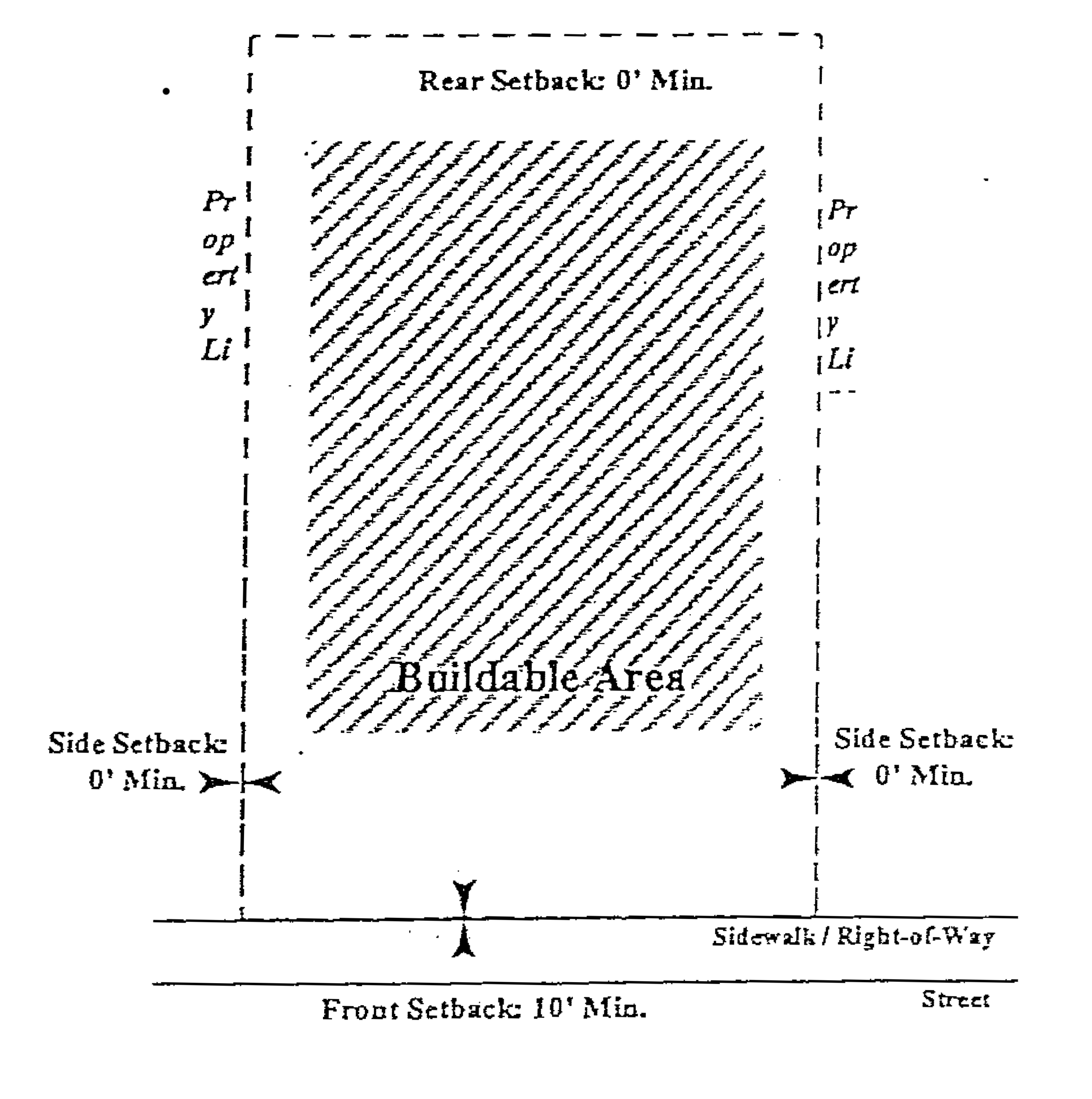
Setbacks:
Front: 20 feet minimum.
Side: Five feet minimum on corner lots; 15 feet. minimum when contiguous to single-family residential; none elsewhere.
Rear: 15 feet.
E.
Maximum building height: 35 feet. Water towers, transmission towers, chimneys, flag poles, masts and aerials are permitted to exceed height limits, provided evidence from appropriate authorities is submitted to the effect that such building or structure will not interfere with any airport approach zones or flight patterns.
4.8.3.
Uses.
A.
Permitted uses. The following uses shall be permitted in the O&P district.
1.
Office/commercial. The following office and commercial uses are permitted in the O&P district provided that all specified standards are met.
a)
Use list.
(1)
Office.
(2)
Personal services.
(3)
Business services.
(4)
General retail.
(5)
General commercial.
b)
Standards.
Refer to standards in section 4.9.3.
2.
Single-family residential. Single-family residential uses are permitted in the O&P district provided that all standards of the R-3 district are met.
3.
Multifamily and duplex residential. Attached or detached multifamily residential uses are permitted in the O&P district provided that all standards of the R-3 district are met.
(1)
Minimum lot area per housing unit: 2,500 square feet.
(2)
Parking requirement: two spaces per unit.
4.
Institutional. The following institutional uses are permitted in the O&P district.
a)
Use list.
(1)
Church.
(2)
Government.
(3)
School.
5.
Utility. Utility uses are permitted in the O&P district provided that all specified standards are met.
a)
Standards.
(1)
Public utility or communication tower, setback a minimum of one foot for each one foot in height.
6.
Outdoor storage. Outdoor storage uses are permitted in the O&P district provided that all specified standards are met.
a)
Standards.
(1)
The storage shall be either an accessory use on the same lot as or a primary use for a lot providing that the primary business utilizing the storage is located within the O&P district.
(2)
Outdoor storage shall not front on any street and shall be screened from the view of surrounding property owners.
(3)
Any tires stored shall be covered by a roofed structure so as not to allow for the accumulation of water inside the tires.
(4)
No more than two vehicles for salvage may be stored on any lot.
(5)
Tractor trailers or other large vehicles may not be used as permanent storage buildings.
7.
Mixed uses. A mixture of the above uses are permitted provided that these uses meet the specified standards for that use in addition to the following standards:
a)
Standards.
(1)
When residential uses are attached to businesses or institutional uses, where business and residential portions of the building are located on different floors, business/commercial uses shall occupy the floors below the residential uses to preserve a residential atmosphere for the residents above.
(2)
When residential uses are attached to businesses or institutional uses, business and residential portions of the mixed use building must be separated either by a soundproof concrete or masonry wall or two framewalls at least two feet apart, each insulated or otherwise soundproofed with the intervening space unoccupied except for utility lines, heating and air conditioning ducts, and similar devices not producing noise or vibration or requiring regular access.
B.
Accessory uses. Permitted accessory uses and structures shall be limited to the following and any additional uses and structures the zoning administrator finds are similar to those listed in scope, size, and impact and which are otherwise in compliance with this ordinance.
1.
Residential.
a)
Private greenhouse.
b)
Private swimming pool.
c)
Private tennis or outdoor recreational court.
d)
Storage shed for personal, non-commercial use.
e)
Studios and workshops without outdoor display for personal use.
f)
Utility substation.
g)
Public utility or communication tower, setback a minimum of one foot for each one foot in height.
2.
Commercial.
a)
Storage shed.
b)
Utility substation.
c)
Public utility or communication tower, setback a minimum of one foot for each one foot in height.
3.
Standards. The following standards apply to accessory uses or structures listed as permitted in [subsections B]1 and 2 above:
a)
Accessory uses or structures shall be located on the same lot as the principal structure or use.
b)
Accessory structures shall be included in the calculation of total lot coverage.
c)
Unless otherwise noted, no accessory use or structure shall be located in a required yard.
d)
No accessory use shall create a nuisance or hazard.
e)
No accessory use shall be established until the principal use is established.
f)
No more than two accessory uses are allowed in any zoning district.
C.
Prohibited uses. The following uses shall be prohibited in the O&P district.
1.
Mobile homes/manufactured homes.
2.
Auto repair garage.
3.
Gas station.
4.
Sexually oriented businesses.
5.
Any use not listed as being permitted is prohibited.
4.8.4.
Parking.
A.
Refer to general parking provisions in chapter 3, section 3.12[3.21]: parking.
B.
Parking areas on adjacent lots should be connected.
4.8.5.
Landscaping.
A.
Intent. Landscaping is required in the O&P district to provide for buffering of adjacent zones, sound and light abatement, and screening of commercial uses, commercial parking, or residential parking with more than eight spaces.
B.
Requirements for parking area borders parallel to adjacent property lines.
1.
Buffer strip shall be at least five feet in width and shall not block the line of site for oncoming traffic at street frontage.
2.
A garden wall, opaque fence, or hedge [min. three feet in height] shall be installed along any adjacent property line.
3.
Two small maturing trees, 12 ornamental shrubs, and landscaped grass areas are required every 100 linear feet.
C.
Street trees.
1.
Where appropriate, street trees shall be planted along all public streets with permission of the appropriate jurisdiction. Street trees shall be large maturing canopy species such as Silver Maple, Red Maple, or Live Oak.
4.8.6.
Tree protection.
D.
[Requirements.] Refer to chapter 3, section 3.11[3.20]: tree protection for general tree protection requirements.
E.
Grand trees. The destruction of any grand tree (24 inches or greater DBH) is prohibited on any parcel of non-exempt land, unless a permit is granted certifying that removal is in compliance with section 3.11[3.20].
F.
Protected trees. The destruction of any protected tree (eight inches or greater DBH) is prohibited on any parcel of non-exempt land, unless a permit is granted certifying that removal is in compliance with section 3.11[3.20].
4.8.7.
Signage.
A.
[Maintenance, durability.] Materials employed for construction of sign shall be durable and weather resistant, and all signs shall be maintained in good repair.
B.
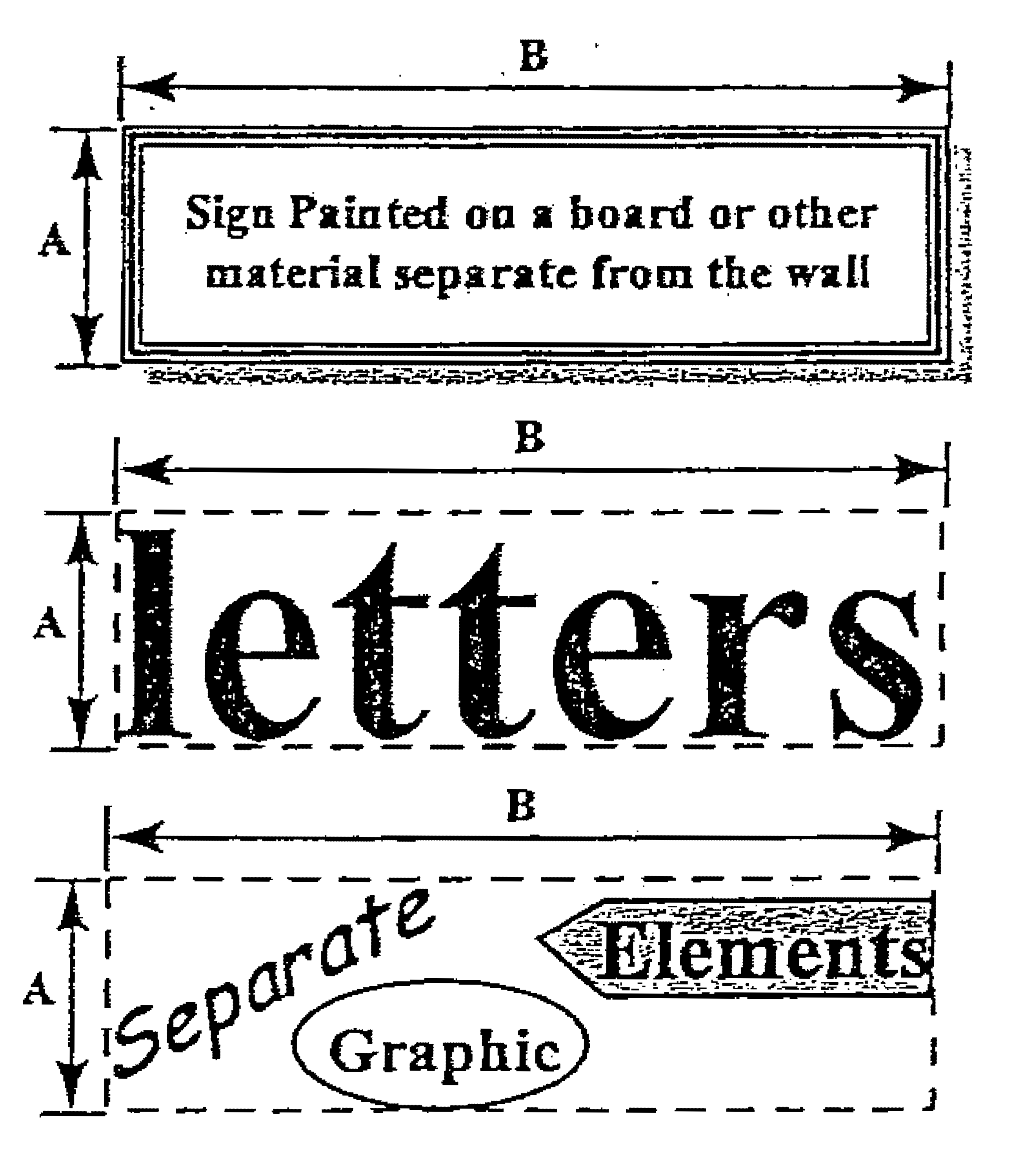
Sign area. Shall be measured by height (A) by length (B) of the smallest rectangle that can be drawn to measure all sign elements. Unless otherwise noted, only one side or face of the same sign shall be used in computing sign area.
C.
Allowed signs. The applicant may select one of the following one of the four choices for a sign type per street frontage:
1.
Wall sign.
a)
Maximum size: 20 square feet or 15 percent of the front wall area, whichever is greater.
2.
Window sign.
a)
Maximum size: 30 percent of the window area.
3.
Projecting sign.
a)
Maximum size: Six square feet for one side.
b)
Clearance: Eight feet above ground level.
4.
Awning sign.
a)
Maximum size. Individual letters shall not exceed ten inches in height.
b)
Signs, symbols, or designs may be painted or sewn on to any awning.
5.
Ground sign.
a)
Monument signs are prohibited along main streets.
b)
Maximum size: 20 square feet per sign face.
c)
Maximum height: 35 feet from finished grade.
D.
Secondary signs. The following signs shall be permitted along in conjunction with the allowed sign:
1.
Window or projecting sign no larger than six inches by 18 inches bearing business identification in addition to a wall or awning sign.
2.
One sign per business occupying the upper floors of a building no larger than six inches by 18 inches.
E.
Prohibited signs.
1.
Moving signs of any type other than barber poles.
2.
Internally illuminated other than non-flashing neon.
3.
Signs projecting above the roof line.
4.
Roof signs.
5.
Any sign not listed as being allowed is prohibited.
Sec. 4.9. - Light Industrial District (LI).
4.9.1.
Intent. The purpose of the light industrial and office district is to accommodate a mix of similar and compatible light industrial uses, industrial-related business uses, and related commercial uses. The LI district shall have limited traffic and aesthetic impacts on surrounding properties, supporting public facilities, and utilities. The LI district is intended to generate development through the use of creative design, which will enhance the character of the surrounding area.
4.9.2.
General.
A.
Minimum lot size: 10,000 square feet.
B.
Maximum lot coverage: Building footprint shall not exceed 50 percent of the lot coverage.
C.
Maximum height: 50 feet.
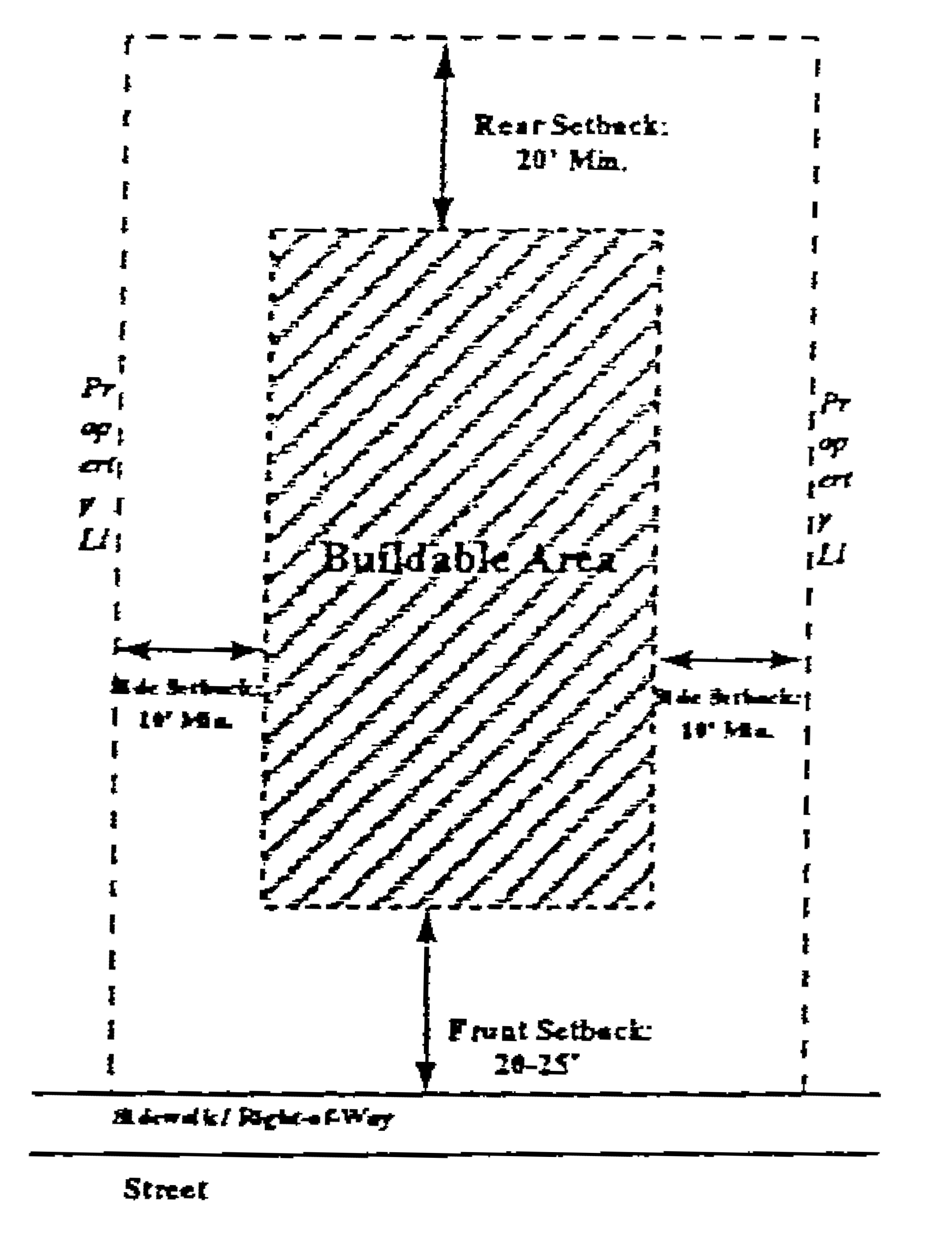
D.
Setbacks:
1.
Front: 20 feet on a minor street, 25 feet on a major street.
2.
Side: ten feet, minimum.
3.
Rear: 20 feet, minimum.
E.
Maximum percent impervious surface: 85 percent.
F.
Trash containers shall be located in the parking area and shall be screened from the right-of-way.
G.
Mechanical equipment at ground level should be placed on the parking lot side of building, away from buildings on adjacent sites, and screened from view of public streets and residential uses.
4.9.3.
Uses.
A.
Permitted uses. The following uses shall be permitted in the LI district.
1.
Wholesale business.
2.
General commercial.
3.
Business services.
4.
Personal services.
5.
Office.
6.
Manufacturing services.
7.
Public utility or communication tower, setback a minimum of one foot for each one foot in height.
8.
Residential uses provided they meet the requirements of the R-3 district.
B.
Prohibited uses. The following uses shall be prohibited in the LI district:
1.
Mobile homes/manufactured homes.
C.
Accessory uses. The following uses shall be permitted in the LI district as an accessory to the primary use. These uses shall meet minimum setbacks:
1.
Outdoor storage.
2.
Outdoor sales.
Outdoor storage: Outdoor storage uses are permitted in the LI district provided that all specified standards are met.
a)
Standards.
(1)
The storage shall be either an accessory use on the same lot as or a primary use for a lot providing that the primary business utilizing the storage is located within the LI district.
(6)
Outdoor storage shall not front on any street and shall be screened from view of surrounding properties.
(7)
Any tires stored shall be covered by a roofed structure so as not to allow for the accumulation of water inside the tires.
(8)
No more than four vehicles for salvage may be stored on any lot.
(9)
Tractor trailers or other large vehicles may not be used as permanent storage buildings.
D.
Conditional use. The following uses shall be permitted in the LI district as a conditional use provided that the standards provided are met.
1.
Sexually oriented businesses.
a)
Findings of fact.
(1)
Although there are no known sexually oriented businesses currently operating in Clinton, it is possible, and probable, that at some point one or more would desire to locate in Clinton and it is in the interests of the health, safety, and welfare of the patrons of such businesses, as well as the citizens of Clinton, to provide certain minimum standards and regulations for sexually oriented businesses, as well as the operators and employees of such businesses.
(2)
Sexually oriented businesses generate secondary effects, which are detrimental to the public health, safety, and welfare. Additionally, sexually oriented businesses are frequently used for unlawful sexual activities, including public sexual indecency, prostitution, and sexual encounters of a casual nature. Such businesses are of particular concern to the community when they are located in close proximity to each other, or close to schools, churches or parks and playgrounds.
(3)
The concern over sexually transmitted diseases is a legitimate health concern of Clinton, which demands reasonable regulation of these businesses in order to protect the health and well-being of our citizens.
(4)
The location of sexually oriented businesses close to residential areas diminishes property values and leads to conditions that give rise to crime in residential neighborhoods. Many studies performed in other communities indicate conclusively that property crimes and sexual crimes increase significantly in neighborhoods in which such a business is located.
(5)
It is not the intent of this section to suppress any speech activities protected by the First Amendment or to place any impermissible burden on any constitutionally protected expression or expressive conduct by the enactment or enforcement of the ordinance. Rather, it is the intent of Clinton City Council to enact a "content neutral regulation" which addresses the secondary effects of sexually oriented businesses.
b)
Signage.
(1)
Freestanding signs are prohibited.
(2)
Business shall not display a sign or advertising visible from public streets or sidewalks or outside the premises that is photographic, pictorial, or illustrative.
c)
Required buffers between residential areas or residentially zoned areas and business.
(1)
Required buffer area:
(a)
Minimum width: 30 feet.
(2)
Required buffering materials:
(a)
Buffering materials shall provide an opaque buffer to create a strong impression of a spatial separation and to preclude visual contact.
(i)
Seven trees for every 100 linear feet.
(ii)
50 shrubs per 100 linear feet.
(iii)
All portions of the landscaping area not planted with shrubs and trees or covered by a wall or fence barrier shall be planted in grass and/or with some other vegetative ground cover.
(3)
Berms shall be constructed within the property boundaries meeting the following requirements:
(a)
Minimum height: Two feet.
(b)
Minimum crown width: Two feet.
(c)
Minimum slope: 2:1
(4)
Solid walls shall be constructed and meet the standards for walls and fences set forth in section 3.2.
(a)
Maximum wall height: Six ft.
(b)
Shrubs shall reach one-third of the height of the wall within three years.
(5)
No free access shall be permitted between adjacent residential area and the parcel.
4.9.4.
Parking.
A.
General requirements. See general parking requirements in chapter 3 section 3.12[3.21].
B.
Required parking spaces.
C.
Required loading spaces. One space for every 30,000 square feet of floor area, or a portion thereof with a maximum of two spaces.
4.9.5.
Landscaping.
A.
General requirements.
1.
Additions, expansions, or changes, which increase a business by 40 percent of the gross floor area, shall be in compliance with the landscaping requirements.
2.
If more than one landscaping/buffering requirement overlaps, the more stringent regulation shall be applied.
3.
See landscaping requirements in chapter 3 section 3.10[3.19]: landscaping.
B.
Requirements for parking areas.
1.
Peripheral.
a.
Required landscaping area. At least five feet in depth shall be located between the abutting property lines and the parking, loading, or other vehicular use area, except where permitted driveway openings area to be provided.
b.
Required landscaping materials. Choose one:
1.
One large maturing tree shall be planted for each 50 linear feet of the landscaping area and one small maturing tree or shrub of at least three feet in height shall be planted every ten linear feet within the landscape; or
2.
A combination of trees, hedge, other durable landscape material or approved wall, fence or earthberm may be utilized to form the continuous landscape element of at least three feet in height.
c.
Other requirements.
1.
All portions of the landscaping area not planted with shrubs and trees or covered by a wall or fence barrier shall be planted in grass and/or with some other vegetative ground cover; and
2.
Parked vehicles may overhang a landscaped area no more than 2½ feet, provided curbing or other wheel stops are installed to ensure no greater overhang or penetration of the landscaped islands. Landscaping, walls, fences, and earthberms shall be located as to prevent their damage and/or destruction by overhanging vehicles.
2.
Interior.
a.
Required landscaping area. Five percent of the interior of any parking, loading, or other vehicular use area shall be landscaped. The location of such landscaping is at the option of the owner or developer; provided, however, the following standards shall apply:
1.
Landscape island. Shall be at least five feet in width and ten feet in length. Each island shall contain one large maturing tree plus shrubs and/or vegetative ground cover to cover the entire area.
a)
No more than 20 parking spaces shall be permitted in a continuous row without being interrupted by a landscaped island.
b)
Each parking row shall terminate in a landscape island.
2.
Median Strip. Shall be at least five feet in width.
a)
Every forth row of parking shall be separated by a median strip for landscaping and pedestrian purposes.
b)
Every median strip shall contain plantings of one large maturing tree at intervals of 30 to 40 feet, plus shrubs and/or vegetative ground cover to cover the entire area.
b.
Other requirements:
1.
All portions of the landscaping area not planted with trees shall be planted in grass and/or with some other vegetative ground cover; and
2.
Parked vehicles may overhang a landscaped area no more than 2½ feet, provided curbing or other wheel stops and installed to ensure no greater overhang or penetration of the landscaped islands. Landscaping, walls, fences, and earthberms shall he located as to prevent their damage and/or destruction by overhanging vehicles.
C.
[Requirements for boundaries.] Requirements for boundaries adjacent to any residential zoning district and existing residential uses in the Light Industrial District.
1.
Required buffer area.
a.
Minimum depth: 25 feet.
2.
Required buffering materials.
a.
Buffering materials shall provide an opaque buffer to create a strong impression of a spatial separation and to preclude visual contact.
b.
Five trees for every 100 linear feet.
c.
17 shrubs per 100 linear feet.
d.
All portions of the landscaping area not planted with shrubs and trees or covered by a wall or fence barrier shall be planted in grass and/or with some other vegetative ground cover.
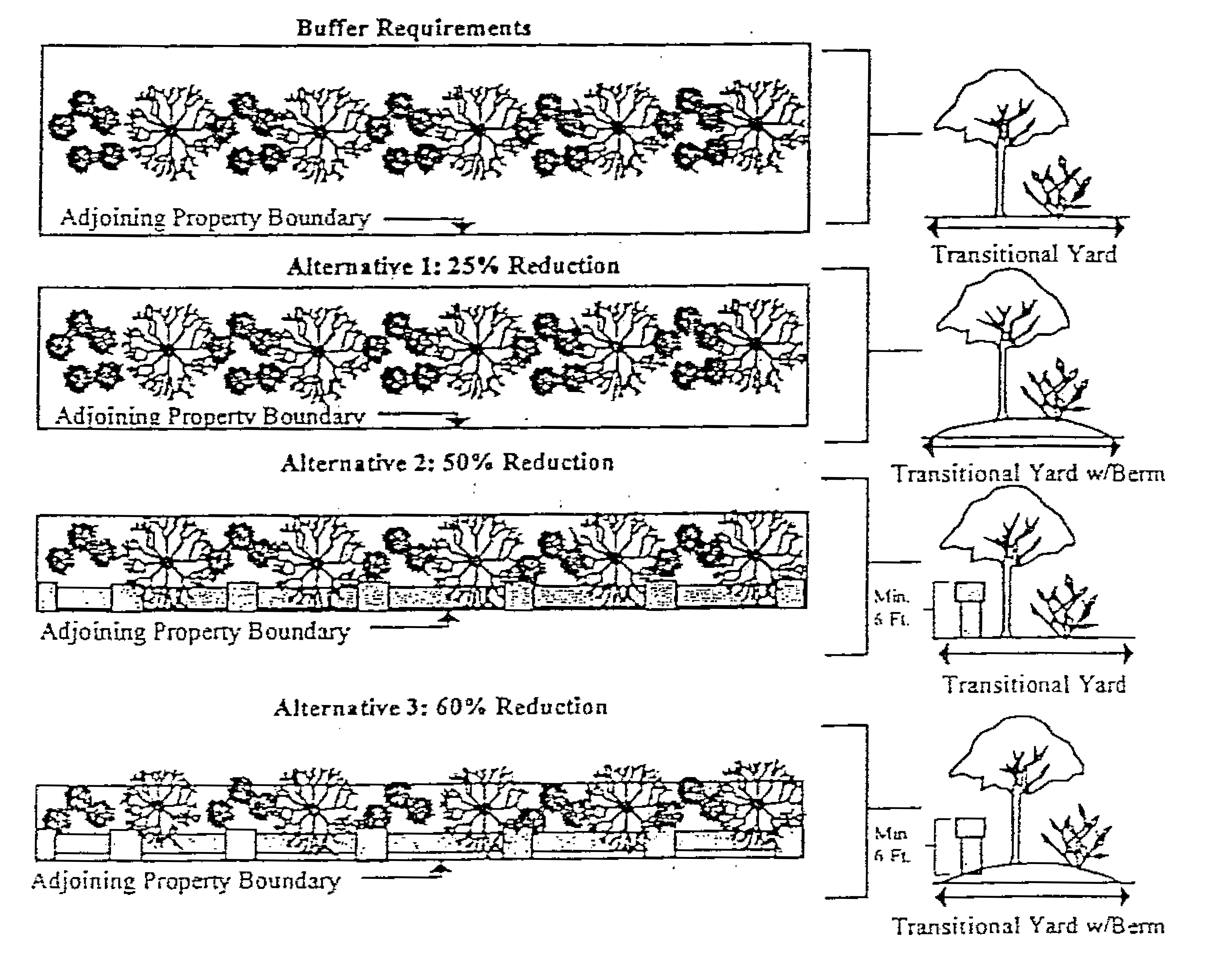
3.
Alternative 1. Buffering requirements reduced by 25 percent (five feet):
a.
Minimum width may be reduced by 25 percent or five feet with use of a landscaped earth berm.
b.
Berms shall be constructed within the property boundary meeting the following requirements:
1.
Minimum height: Two feet.
2.
Minimum crown width: Two feet.
3.
Minimum Slope: 2:1.
4.
Alternative 2. Buffering requirements reduced by 50 percent (ten feet):
a.
Minimum width may be reduced by 50 percent or ten feet and required number of shrubs reduced to 30 shrubs per 100 linear feet with use of landscaped wall or fence.
b.
Wall shall be solid and meet the standards for walls and fences.
c.
Maximum wall height: Six feet.
d.
Shrubs shall reach one-third of the height of the wall within three years.
5.
Alternative 3. Buffering requirements reduced by 60 percent (12 feet):
a.
Minimum width may be reduced by 50 percent or 12 feet and required number of shrubs reduced to 30 shrubs per 100 linear feet with use of landscaped wall or fence, and a planted earth berm.
b.
Berms shall be constructed within the property boundaries meeting the following requirements:
1.
Minimum height: Two feet.
2.
Minimum crown width: Two feet.
3.
Minimum slope: 2:1.
c.
Wall shall be solid and meet the standards for walls and fences set forth in section 3.2.
d.
Maximum wall height: Six feet.
e.
Shrubs shall reach one-third of the height of the wall within three years.
4.9.6.
Tree protection.
A.
[Requirements.] Refer to chapter 3, section 3.11[3.20]: tree protection for general tree protection requirements.
B.
Grand trees. The destruction of any grand tree (24 inches or greater DBH) is prohibited on any parcel of non-exempt land, unless a permit is granted certifying that removal is in compliance with section 3.11[3.20].
C.
Protected trees. The destruction of any protected tree (eight inches or greater DBH) is prohibited on any parcel of non-exempt land, unless a permit is granted certifying that removal is in compliance with section 3.11[3.20].
4.9.7.
Signage.
A.
Intent. The purpose of these sign regulations are: to encourage the effective use of signs as a means of communication; to maintain and enhance the aesthetic environment; and to increase the city's ability to attract sources of economic development and growth; to improve pedestrian and traffic safety; to minimize the possible adverse effect of signs on nearby public and private property; and to enable the fair and consistent enforcement of these sign regulations.
B.
[Requirements.] Refer to section 3.4[3.17]: signage for general sign requirements.
C.
[Altering sign prohibited.] No sign, or part thereof, may be altered, constructed, changed, converted, enlarged, or moved unless in conformity with the following requirements.
D.
Sign area. Shall be measured by height (A) by length (B) of the smallest rectangle that can be drawn to measure all sign elements. Unless otherwise noted, only one side or face of the same sign shall be used in computing sign area.
E.
Allowed signs. The applicant may select two of the following six choices for a sign type per street frontage:
1.
Wall sign.
a)
Maximum size: One square foot per lineal foot of the building wall on which the sign is to be placed.
2.
Window sign.
a)
Maximum size: 20 percent of the window area.
3.
Projecting sign.
a)
Maximum size: 16 square feet for one side.
b)
Maximum height: No projecting sign shall extend above the roofline.
c)
Clearance: Eight feet above ground level.
4.
Awning sign.
a)
Maximum size: 15 percent of exterior surface of the awning.
b)
Signs, symbols, or designs may be painted or sewn onto the awning.
5.
Freestanding sign.
a)
Maximum size: 12 square feet.
b)
Maximum height: 35 feet.
c)
Setback: No freestanding sign shall be closer than five feet to an exterior property line.
d)
No more than one freestanding sign shall be allowed per parcel.
6.
Directory sign.
a)
The parcel shall contain no more than one directory sign.
b)
The maximum sign area shall not exceed three inches by 15 inches for each identified activity, business, firm, or tenant.
c)
The directory sign may take the form of any sign permitted in the zoning district provided that such sign shall comply with its applicable specification. If the directory sign is a freestanding sign, no other freestanding shall be located on the parcel.
F.
Prohibited signs.
1.
Moving signs of any type.
2.
Signs projecting above the roof line.
3.
Any sign not listed as being allowed is prohibited.
Sec. 4.10. - Industrial District (I-1).
4.10.1.
Intent. The purpose of the industrial district is to accommodate manufacturing businesses within the city limits. The I-1 district shall have limited traffic and aesthetic impacts on surrounding properties and on supporting public facilities and utilities. The I-1 district is intended to generate development through the use of industrial parks and clustering.
4.10.2.
General.
A.
Minimum lot size: 10,000 sq. ft.
B.
Maximum height: 60 feet.
C.
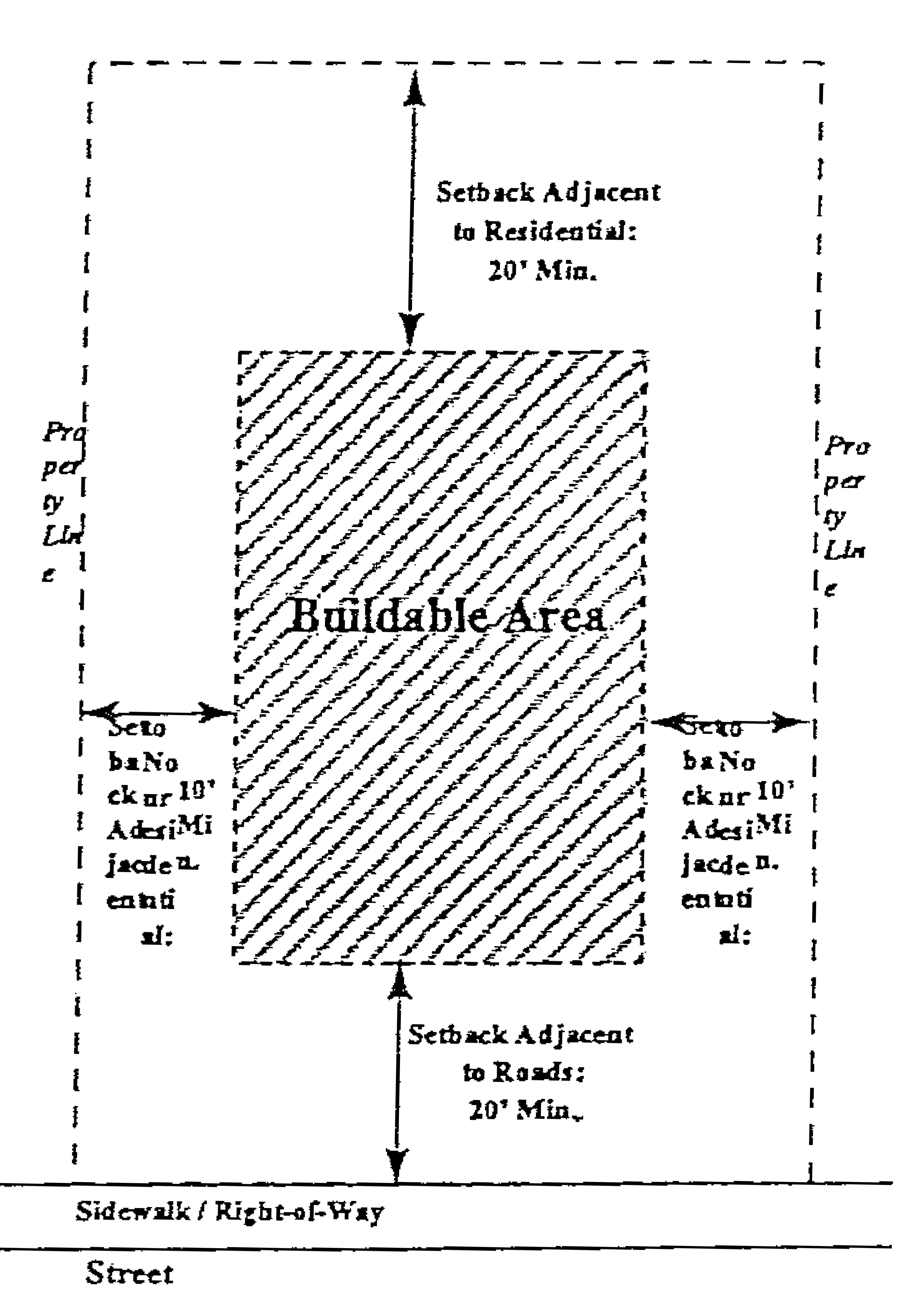
Setbacks:
1.
Adjacent to roads. No building, outdoor storage, areas for collection of refuse, or loading area shall be permitted closer than 25 feet to the right-of-way of any road. No parking, outdoor storage, areas for collection of refuse, or loading space shall be permitted in areas between buildings and streets where such uses are visible from the road.
2.
Adjacent to agricultural and residential uses/districts. No buildings, outdoor storage, areas for collection of refuse, or loading area shall be permitted closer than 20 feet to any agricultural district or any existing or zoned residential district. No parking shall be permitted closer than 20 feet to any such districts and uses.
3.
Adjacent to other nonresidential districts. 15 feet for minimum for buildings, parking, outdoor storage, and loading areas.
D.
Minimum distance between buildings: 30 feet.
E.
Maximum percent impervious service: 85 percent.
F.
Trash containers shall be located in the parking area and shall be screened from the right-of-way.
G.
Mechanical equipment at ground level should be placed on the parking lot side of building, away from buildings on adjacent sites, and screened from view of public streets and residential uses.
4.10.3.
Uses.
A.
Permitted uses. The following uses shall be permitted in the I-1 district.
1.
Wholesale business.
2.
General commercial.
3.
Business services.
4.
Personal services.
5.
Office.
6.
Manufacturing services.
7.
Public utility or communication tower, setback a minimum of one foot for each one foot in height.
8.
Residential uses provided they meet the requirements of the R-3 district.
B.
Prohibited uses. The following uses shall be prohibited in the I-1 district.
1.
Mobile homes/manufactured homes.
C.
Accessory uses. The following uses shall be permitted in the I-1 district as an accessory to the primary use.
1.
Outdoor storage.
2.
Outdoor sales.
Outdoor storage: Outdoor storage uses are permitted in the I-1 district provided that all specified standards are met.
a)
Standards:
(1)
The storage shall be either an accessory use on the same lot as or a primary use for a lot providing that the primary business utilizing the storage is located within the I-1 district.
(2)
Outdoor storage shall not front on any street and shall be screened from the view of surrounding property owners.
(3)
Any tires stored shall be covered by a roofed structure so as not to allow for the accumulation of water inside the tires.
(4)
No more than four vehicles for salvage may be stored on any lot.
(5)
Tractor trailers or other large vehicles may not be used as permanent storage buildings.
4.10.4.
Parking.
A.
General requirements. See general parking requirements in chapter 3 section 3.12[3.21].
B.
Required parking spaces.
C.
Required loading spaces. One space for every 30,000 square feet of floor area, or a portion thereof with a maximum of two spaces.
4.10.5.
Landscaping.
A.
General requirements.
1.
Additions, expansions, or changes which increase a business by 40 percent of the gross floor area shall be in compliance with the landscaping requirements.
2.
If more than one landscaping/buffering requirement overlaps, the more stringent regulation shall be applied.
3.
See landscaping requirements in chapter 3 section 3.10[3.19]: Landscaping.
B.
Requirements for parking areas.
1.
Peripheral.
a)
Required landscaping area. At least 15 feet in depth shall be located between the abutting property lines and the parking, loading, or other vehicular use area, except where permitted driveway openings area to be provided.
b)
Required landscaping materials. Choose one:
(1)
One large maturing tree shall be planted for each 50 linear feet of the landscaping area and one small maturing tree or shrub of at least three feet in height shall be planted every ten linear feet within the landscape; or
(2)
A combination of trees, hedge, other durable landscape material or approved wall, fence or earthberm may be utilized to form the continuous landscape element of at least three feet in height.
c)
Other requirements.
(1)
All portions of the landscaping area not planted with shrubs and trees or covered by a wall or fence barrier shall be planted in grass and/or with some other vegetative ground cover; and
(2)
Parked vehicles may overhang a landscaped area no more than 2½ feet, provided curbing or other wheel stops are installed to ensure no greater overhang or penetration of the landscaped islands. Landscaping, walls, fences, and earthberms shall be located as to prevent their damage and/or destruction by overhanging vehicles.
2.
Interior.
a)
Required landscaping area. Five percent of the interior of any parking, loading, or other vehicular use area shall be landscaped. The location of such landscaping is at the option of the owner or developer; provided, however, the following standards shall apply;
(1)
Landscape island. Shall be at least five feet in width and ten feet in length. Each island shall contain one large maturing tree plus shrubs and/or vegetative ground cover to cover the entire area.
(a)
No more than 20 parking spaces shall be permitted in a continuous row without being interrupted by a landscaped island.
(b)
Each parking row shall terminate in a landscape island.
(2)
Median strip. Shall be at least five feet in width.
(a)
Every forth row of parking shall be separated by a median strip for landscaping and pedestrian purposes.
(b)
Every median strip shall contain plantings of one large maturing tree at intervals of 30 to 40 feet, plus shrubs and/or vegetative ground cover to cover the entire area.
b)
Other requirements.
(1)
All portions of the landscaping area not planted with trees shall be planted in grass and/or with some other vegetative ground cover; and
(2)
Parked vehicles may overhang a landscaped area no more than 2½ feet, provided curbing or other wheel stops and installed to ensure no greater overhang or penetration of the landscaped islands. Landscaping, walls, fences, and earthberms shall be located as to prevent their damage and/or destruction by overhanging vehicles.
C.
Requirements for boundaries adjacent to any neighborhood residential zoning district and existing residential uses in the Industrial District.
1.
Required buffer area.
a)
Minimum depth: 25 feet.
2.
Required buffering materials.
a)
One large maturing tree shall be planted for each 50 linear feet of the landscaping area and one small maturing tree or shrub of at least three feet in height shall be planted every ten linear feet within the landscape.
b)
All portions of the landscaping area not planted with shrubs and trees or covered by a wall or fence barrier shall be planted in grass and/or with some other vegetative ground cover.
4.10.6.
Tree Protection.
A.
[Requirements.] Refer to chapter 3, section 3.11[3.20]: tree protection for general tree protection requirements.
B.
Grand Trees. The destruction of any grand tree (24 inches or greater DBH) is prohibited on any parcel of non-exempt land, unless a permit is granted certifying that removal is in compliance with section 3.11[3.20].
C.
Protected Trees. The destruction of any protected tree (eight inches or greater DBH) is prohibited on any parcel of non-exempt land, unless a permit is granted certifying that removal is in compliance with section 3.11[3.20].
4.10.7.
Signage.
A.
Intent. The purpose of these sign regulations are: to encourage the effective use of signs as a means of communication; to maintain and enhance the aesthetic environment; and to increase the city's ability to attract sources of economic development and growth; to improve pedestrian and traffic safety; to minimize the possible adverse effect of signs on nearby public and private property; and to enable the fair and consistent enforcement of these sign regulations.
B.
[Requirements.] Refer to section 3.4[3.17]: signage for general sign requirements.
C.
[Altering sign prohibited.] No sign, or part thereof, may be altered, constructed, changed, converted, enlarged, or moved unless in conformity with the following requirements.
D.
Sign area. Shall be measured by height (A) by length (B) of the smallest rectangle that can be drawn to measure all sign elements. Unless otherwise noted, only one side or face of the same sign shall be used in computing sign area.
E.
Allowed signs. The applicant may select two of the following six choices for a sign type per street frontage:
1.
Wall sign.
a)
Maximum size: one square foot per lineal foot of the building wall on which the sign is to be placed.
2.
Window sign.
a)
Maximum size: 20 percent of the window area.
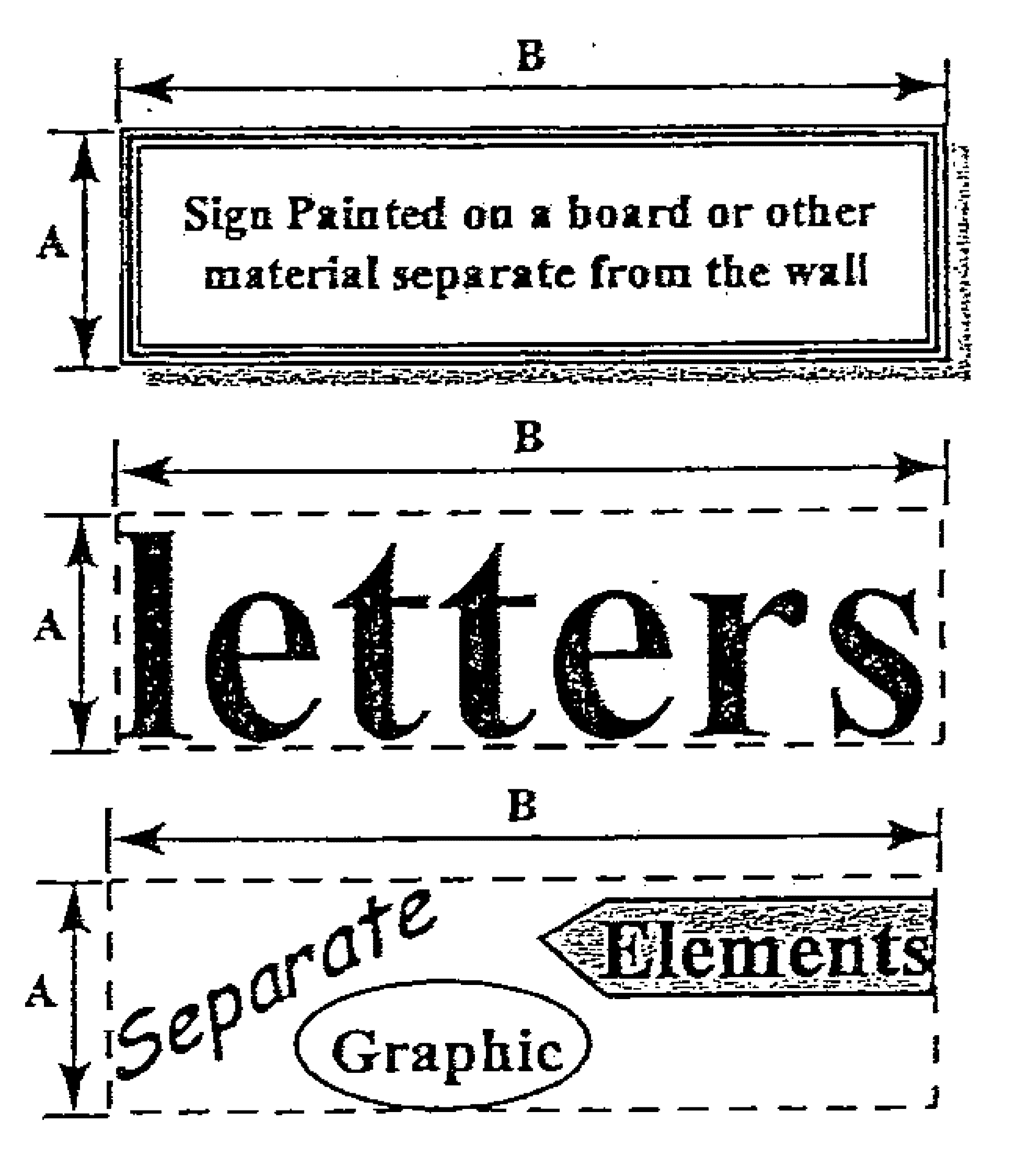
3.
Projecting sign.
a)
Maximum size: 16 square feet for one side.
b)
Maximum height: No projecting sign shall extend above the roofline.
c)
Clearance: Eight feet above ground level.
4.
Awning sign.
a)
Maximum size: 15 percent of exterior surface of the awning.
b)
Signs, symbols, or designs may be painted or sewn onto the awning.
5.
Ground sign.
a)
Maximum size: 45 square feet for one side.
b)
Maximum height: 3½ feet.
6.
Directory sign.
a)
The parcel shall contain no more than one directory sign.
b)
The maximum sign area shall not exceed three inches by 15 inches for each identified activity, business, firm, or tenant.
c)
The directory sign may take the form of any sign permitted in the zoning district provided that such sign shall comply with its applicable specification. If the directory sign is a freestanding sign, no other freestanding shall be located on the parcel.
7.
Freestanding sign.
a)
Maximum size: One square foot for every three feet of street frontage.
b)
Maximum height: 35 feet.
F.
Prohibited signs.
1.
Moving signs of any type.
2.
Signs projecting above the roof line.
3.
Any sign not listed as being allowed is prohibited.
Sec. 4.10.5. - Industrial District (I-2).
4.10.5.1.
Intent. The purpose of the industrial district is to accommodate manufacturing businesses within the city limits. The (I-2) district shall have limited traffic and aesthetic impacts on surrounding properties and on supporting public facilities and utilities. The (I-2) district is intended to generate development through the use of industrial parks and clustering.
4.10.5.2.
General.
A.
Minimum lot size: 10,000 square feet.
B.
Setbacks:
1.
Adjacent to roads. No building, outdoor storage, areas for collection of refuse, or loading area shall be permitted closer than 25 feet to the right-of-way of any road.
2.
Adjacent to agricultural and residential uses/districts. No building, outdoor storage, areas for collection of refuse, or loading area shall be permitted closer than 20 feet to any agricultural district or zoned residential district. No parking shall be permitted closer than 20 feet to any such districts and uses.
3.
Adjacent to other nonresidential districts. 15 feet for minimum for buildings, parking, outdoor storage, and loading areas.
C.
Maximum percent impervious service: 85 percent.
D.
Trash containers shall be located in the parking area and shall be screened from the right-of-way.
4.10.5.3
Uses.
A.
Permitted uses. The following uses shall be permitted in the I-2 district.
1.
Wholesale business.
2.
General commercial.
3.
Business services.
4.
Personal services.
5.
Office.
6.
Manufacturing services.
7.
Public utility or communication tower, setback a minimum of one foot for each one foot in height.
8.
Government buildings.
B.
Prohibited uses. The following uses shall be prohibited in the I-2 district:
1.
Mobile homes/manufactured homes.
C.
Accessory uses. The following uses shall be permitted in the I-2 district as an accessory to the primary use:
1.
Outdoor storage.
2.
Outdoor sales.
Outdoor storage. Outdoor storage uses are permitted in the I-2 district provided that all specified standards are met.
a)
Standards.
(1)
The storage shall be either an accessory use on the same lot as or a primary use for a lot providing that the primary business utilizing the storage is located within the I-2 district.
(2)
Outdoor storage shall not front on any street and shall be screened from the view of surrounding property owners.
(3)
Any tires stored shall be covered by a roofed structure so as not to allow for the accumulation of water inside the tires.
(4)
No more than four vehicles for salvage may be stored on any lot.
(5)
Tractor trailers or other large vehicles may not be used as permanent storage buildings.
4.10.5.4.
Parking.
A.
General requirements. See general parking requirements in chapter 3 section 3.12[3.21].
B.
[Adjacent lots.] Whenever possible, parking areas on adjacent lots shall be connected.
C.
Required parking spaces.
4.10.5.5.
Landscaping.
1.
General requirements.
1.
Additions, expansions, or changes which increase a business by 40 percent of the gross floor area shall be in compliance with the landscaping requirements.
2.
If more than one landscaping/buffering requirement overlaps, the more stringent regulation shall be applied.
3.
See landscaping requirements in chapter 3 section 3.10[3.19]: landscaping.
B.
Requirements for parking areas.
1.
Peripheral.
a)
Required landscaping area. At least 15 feet in depth shall be located between the abutting property lines and the parking, loading, or other vehicular use area, except where permitted driveway openings are to be provided.
b)
Required landscaping materials. Choose one:
1.
One tree shall be planted for each 50 linear feet of the landscaping area and one small maturing tree or shrub of at least three feet in height shall be planted every ten linear feet within the landscape; or
2.
A combination of trees, hedge, other durable material or approved wall, fence or earth berm may be utilized to form the continuous landscape element of at least three feet in height.
c)
Other requirements.
(1)
All portions of the landscaping area not planted with shrubs and trees shall be planted in grass and/or with some other vegetative ground cover.
2.
Interior.
A)
Required landscaping area. Five percent of the interior of any parking, loading, or other vehicular use area shall be landscaped. The location of such landscaping is at the option of the owner or developer; provided, however, the following standards shall apply:
(1)
Landscape island. Shall be at least five feet in width and ten feet in length. Each island shall contain one large maturing tree plus shrubs and/or vegetative ground cover to cover the entire area.
(a)
No more than 20 parking spaces shall be permitted in a continuous row without being interrupted by a landscaped island.
(b)
Each parking row shall terminate in a landscape island.
(2)
Median strip. Shall be at least five feet in width.
(a)
Every forth row of parking shall be separated by a median strip for landscaping and pedestrian purposes.
(b)
Every median strip shall contain planting of one large maturing tree at intervals of 30 to 40 feet, plus shrubs and/or vegetative ground cover to cover the entire area.
B)
Other requirements.
(1)
All portions of the landscaping area not planted with trees shall be planted in grass and/or with some other vegetative ground cover.
C.
[Requirements for boundaries.] Requirements for boundaries adjacent to any neighborhood residential zoning district and existing residential uses in the industrial district.
1.
Required buffer area:
a)
Minimum depth: 25 feet.
2.
Required buffering materials:
1.
One tree shall be planted for each 50 linear feet of the landscaping area and one small maturing tree or shrub of at least three feet in height shall be planted every ten linear feet within the landscape.
2.
All portions of the landscaping area not planted with shrubs and trees shall be planted in grass and/or with some other vegetative ground cover.
4.10.5.6.
Signage.
A.
Intent. The purpose of these sign regulations are: to encourage the effective use of signs as a means of communications; to maintain and enhance the aesthetic environment; and to increase the city's ability to attract sources of economic development and growth; to improve pedestrian and traffic safety; to minimize the possible adverse of signs on nearby public and private property; and to enable the fair and consistent enforcement of these sign regulations.
B.
[Requirements.] Refer to section 3.4[3.17]: signage for general sign requirements.
C.
[Altering sign prohibited.] No sign, or part thereof, may be altered, constructed, changed, converted, enlarged, or moved unless in conformity with the following requirements.
D.
Sign area. Shall be measured by height by length of the smallest rectangle that can be drawn to measure all sign elements. Unless otherwise noted, only one side or face of the same sign shall be used in computing sign area.
E.
Allowed signs. The applicant may select two of the following six choices for a sign type per street frontage:
1.
Wall sign.
a)
Maximum size: One square foot per linear foot of the building wall on which the sign is to be placed.
2.
Window sign.
a)
Maximum size: 20 percent of the window area.
3.
Projecting sign.
a)
Maximum size: 16 square feet for one side.
b)
Maximum height: No projecting sign shall extend above the roofline.
b)
Clearance: Eight feet above ground level.
4.
Awning sign.
a)
Maximum size: 15 percent of exterior surface of the awning.
b)
Signs, symbols, or designs may be painted or sewn on to any awning.
5.
Ground sign.
a)
Maximum size: 45 square feet for one side.
b)
Maximum height: 5½ feet.
6.
Directory sign.
a)
The parcel shall contain no more than one directory sign.
b)
The maximum sign area shall not exceed three inches by 15 inches for each identified activity, business, firm, or tenant.
c)
The directory sign may take the form of any sign permitted in the zoning district provided that such sign shall comply with its applicable specification. If the directory sign is a freestanding sign, no other freestanding shall be located on the parcel.
F.
Prohibited signs.
1.
Moving signs of any type.
2.
Signs projecting above the roof line.
3.
Any sign not listed as being allowed is prohibited.
Sec. 4.11. - Planned Development District (PD).
4.11.1.
Intent. The intent of the Planned Development District is to encourage flexibility in the development of land in order to promote its most appropriate use; to improve the design, character, and quality of new development; to facilitate the provision of streets and utilities; and to preserve the natural and scenic features of open areas.
4.11.2.
General.
A.
Any area may apply to be zoned PD if one or more of the following conditions are met:
1.
Separate land uses, which would not otherwise be permitted to locate within the same zoning district, are proposed for development on one or more adjacent parcels.
2.
Exceptions or variations to the existing regulations are essential for the project in terms of site, design, or dimensional requirements.
B.
Minimum parcel size: 2.5 acres.
C.
Minimum lot depth: 200 feet.
D.
Lot shall adjoin or have direct access to at least one major street.
E.
The site shall be in one ownership, or if in several ownerships, the application for amendment to the zoning chapter shall be filed jointly by all of the owners.
4.11.3.
Uses.
A.
Permitted uses. The following uses or combination of uses shall be considered.
1.
Any use proposed by the developer and considered by the planning commission and city council as being compatible to other nearby uses within and beyond the district may be permitted in such district, upon approval by the planning commission and city council. A listing of permitted uses within a particular PD district shall be adopted as part of the regulations applying to that district. Thereafter, the uses permitted in the district shall be restricted to those listed, approved and adopted.
B.
Prohibited uses. The following uses or combination of uses shall not be considered in the PD district.
1.
Sexually oriented businesses.
4.11.4.
Design criteria and development standards.
A.
Overall site design shall be harmonious in terms of landscaping, enclosure of principal and accessory uses, sizes of structures, street patterns, and use relationships. Variety in building types, heights, facades, setbacks, and size of open spaces shall be encouraged.
B.
Densities for residential dwelling units shall not exceed one unit per 2,500 square feet of land area including yard and other dimensional requirements.
C.
Bufferyards: As determined as needed by the planning commission and city council.
D.
Open space: As determined as needed by the planning commission and city council.
E.
All standards of the existing zoning district shall apply, if not specified otherwise in that particular PD district.
4.11.5.
Administrative procedures with regard to PD zoning districts.
A.
Zoning chapter amendment required. Any request pertaining to the establishment of a PD Zoning District shall be considered an amendment to the zoning chapter and shall be administered and processed in accordance with section 5.4. The request shall first be submitted to the planning commission for review, public hearing, and recommendation, then forwarded to city council for final action. If approved by the city council, all information pertaining to the proposal shall be adopted. Any proposed changes in the district shall be treated as amendments to the zoning chapter and must be considered accordingly.
B.
Time limitation. If the approved planned development project has not begun within two years of its approval date by city council, the planned development chapter shall become null and void and the land classification shall revert to its previous zoning classification.
4.11.6.
Submission materials required for development plan.
A.
Purpose and effect. An application for rezoning to a Planned Development District shall include a development plan incorporating the information required in [subsection] B [of this section] and such additional information as the applicant may deem necessary to provide a detailed understanding of the proposed planned development. Although it is unnecessary to become involved in the preparation of engineering drawings at this stage, the development plan must be sufficiently detailed to be judged for its superiority to other forms of development or other zoning districts. No development plan shall be required for rezoning to districts other than PD districts.
B.
Application contents. The following information and documentation together with such additional information as required by the commission shall constitute a complete rezoning application:
1.
The applicant's name and address and ownership interest in the subject property.
2.
The name and address, and signed written consent of those having an ownership interest, if different than the applicant filing the application.
3.
The tax map identification number.
4.
The present and proposed zoning classification and use of the subject property and adjacent land.
5.
A survey showing property boundary lines, metes and bounds, utility transmission lines and public rights-of-way crossing and adjacent to the subject property.
6.
A vicinity map.
7.
A written statement generally describing the proposed development's compliance with the comprehensive plan.
8.
One or more development plans at a scale approved by the zoning administrator depicting or describing the following features of the development:
a)
A land use plan map with a description of the type, location, and nature of land use (and building type) within each area of the development indicating the acreage and proposed density and lot requirements of each subarea.
b)
A proposed traffic circulation map, which illustrates internal traffic ways, related to the development, existing and proposed access points, and through roads accessing adjacent parcels.
c)
A general description of the means of providing water service, sanitary sewerage, utilities, refuse collection, schools, fire protection, libraries, parks and similar services, where applicable.
d)
A delineation and description of the open space areas.
e)
A statement identifying easements and restrictive covenants relating to the establishment of common open space or service facility within the planned development, and the establishment and activation of any entity that is to be responsible for the management and maintenance of any public or private common area.
9.
A tabulation of the following information:
a)
The maximum total number of dwelling units proposed by type of structure, by subarea, if applicable.
b)
The maximum total square feet of building floor area proposed for nonresidential uses by type of use, by sub area, if applicable.
c)
The total land area, expressed in acres and as a percent of the total development area, proposed to be devoted to residential and non-residential uses.
d)
The minimum lot requirements for each proposed use (if different that the minimum lot requirements specified in the current zoning district).
10.
If the planned development is proposed for construction in phases during a period exceeding a single construction season, a proposed phasing plan shall be submitted stating the portion of each uses and public spaces to be provided during each stage.
11.
A statement identifying each of the regulations or other applicable provisions of this ordinance, which the applicant proposes to be modified as, part of the development plan, the proposed modification, and the justification thereof.
Sec. 4.12. - Agricultural-Reserve District (A-R).
4.12.1.
Intent. The intent of this district is to allow agricultural and recreational activities compatible with intensive urban development, in harmony with low-density residential development.
4.12.2.
General.
A.
Minimum parcel size: One acre.
B.
Minimum lot depth: 200 feet.
C.
Minimum floor area: 1,300 square feet.
D.
The site shall be in one ownership, or if in several ownerships, the application for amendment to the zoning chapter shall be filed jointly by all of the owners.
4.12.3.
Uses.
A.
Permitted uses. The following uses or combination of uses shall be considered:
1.
Any single-family residential use at a density not exceeding four dwelling units per acre of land.
2.
Farm or establishment for the growing, care, processing, packing, and handling of field crops, truck gardening products, and fruit and/or nut trees.
3.
Tree farm, timber area, or forest management area.
4.
Horticultural nursery.
5.
Church, cemetery, religious, eleemosynary, semi-public philanthropic institution.
6.
Club, lodge, grange, union hall, community center, or social center.
7.
Any publicly owned and operated building, facility, or land.
8.
Unlighted, regulation size or par three golf courses.
9.
Wildlife refuges including caretaker's dwellings and associated facilities.
10.
Schools, private or public; day care centers; child nurseries.
B.
Prohibited uses. The following uses or combination of uses shall not be considered in the A-R district:
1.
Sexually oriented businesses.
2.
Cellular towers.
3.
Mobile homes/manufactured homes.
4.12.4.
Design criteria and development standards.
F.
Overall site design shall be harmonious in terms of landscaping, enclosure of principal and accessory uses, sizes of structures, street patterns, and use relationships.
G.
Densities for residential dwelling units shall not exceed four unit per acre of land area including yard and other dimensional requirements.
H.
Bufferyards: As determined as needed by the planning commission and city council.
I.
Open space: As determined as needed by the planning commission and city council.
Sec. 4.13. - Historical Buildings and Maintenance District (HB-MD).
4.13.1.
Intent. The Historical Building and Maintenance District is an overlay district, designed and intended to promote the educational, cultural, economic, and general welfare of the community by providing a mechanism for the identification, recognition, preservation, maintenance, protection and enhancement of existing historic and architecturally valuable structures, properties and/or districts which serve as visible reminders of the social, cultural, economic, political and/or architectural history of the City of Clinton.
Additionally, the intent is to strengthen the commercial base of the district by providing a just, equitable and practicable method for repairing or demolishing buildings or structures which from any cause, endanger the life, limb, health, morals, property, safety, or welfare of the general public or their occupants, diminish property values or detract excessively from the appropriate appearance of the district.
4.13.2.
General. Permitted uses are determined by the underlying zoning district. Where this district overlays a Residential Zoning District, for example, only those uses permitted in the Residential Zoning District shall be permitted in the HB-MD Overlay District, subject to additional requirements and standards of this section.
Within the Historical Buildings and Maintenance District the zoning administrator shall issue no license, permit or certificate of occupancy unless and until all applicable provisions of this section shall be complied with. No land or building shall be used in a manner inconsistent with or in conflict with the requirements of this section.
4.13.3.
Maintenance standards and requirements for all buildings and premises. The owner of any building or premises within the HB-MD District shall adhere to the following general maintenance requirements to insure that:
1)
The premises are free of all nuisances and any hazards to the safety of the occupants, customers, or other persons utilizing the premises or to pedestrians passing thereby.
2)
The premises are free of loose and overhanging objects, which by reason of location above ground level constitute a danger of falling on persons in the vicinity thereof. Standard Building Code reference in effect.
3)
The premises are free of holes, excavations, breaks, projections, or obstructions on walks, driveways, parking lots and parking areas, and other parts of the premises which are accessible to and used by persons on the premises. All such holes and excavations shall be filled and repaired, walks and steps replaced, and other conditions removed where necessary with reasonable dispatch by the owner upon their discovery.
4)
The exterior of the premises and structure is in good repair and free from deterioration so as not to constitute a nuisance.
5)
All surfaces shall be maintained free of cracked or broken glass, loose shingles, loose wood, crumbling stone or brick, loose or broken plastic or other similar hazardous conditions.
6)
All structures and decorative elements of building fronts and sides abutting streets shall be repaired or replaced in a workmanlike manner to match as closely as possible the original materials and construction techniques.
7)
All floors, interior walls, and ceilings of every structure shall be structurally sound and shall be maintained in a condition compatible with its use and where open to the public shall be maintained in a condition so as not to constitute a hazard to the public.
8)
Structures at the rear of buildings attached or unattached to the principal structure, which are found by this maintenance code to be structurally deficient, shall be properly repaired or demolished.
9)
All existing miscellaneous elements on building walls and roofs and surrounding premises, such as empty electrical or other conduits, unused sign brackets, antenna, etc. shall be removed.
10)
If the building is to be used for storage, it should not be visible to passersby either through the use of window drapings or using rear areas of the building for storage. The intent of this section is to keep building fronts from looking abandoned and cluttered.
4.13.4.
Specific duties and responsibilities.
1)
Walls. All foundation walls shall be kept structurally sound, and capable of bearing imposed loads safely.
2)
Walls. All material used to maintain or reconstruct a wall or part thereof, including the application of sidings or other surfacing material shall be of standard quality.
3)
Walls. Where a wall of a building has become exposed as a result of demolition of adjacent buildings, said wall must have all doors, windows, vents, or other type similar openings closed with material of the type comprising the wall. No protrusions or loose material shall be in the wall. The exposed wall shall be painted, stuccoed, or bricked so as not to detract from the aesthetics and value of adjacent property and weatherproofed, if necessary, with construction material to prevent deterioration of the wall. The party causing the exposure of the wall shall bear the obligation of compliance with this section.
4)
Windows. All windows must be tight fitting and have sashes of proper size and design. Sashes with rotten woods, broken joints, or broken or loose mullions or muntins shall be replaced. All broken and missing windows shall be replaced with glass or Plexiglas. All exposed woods shall be repaired and painted.
5)
Windows. All first floor openings originally designed as windows shall be maintained as windows, complete with sills, lintels, frame and glass, unless specifically approved otherwise by the planning commission. Where the commission approves the enclosure of the window, the commission shall approve the manner by which it will be enclosed (i.e., shutters, brick, paint color, etc.).
6)
Exceptions for second story windows. Other options such as using an inoperable glass plug; closed, complimentary painted wooden shutters; or inserting high quality public art shall be acceptable for second story window treatment.
7)
Painting. All exterior surfaces, which require paint or sealing in order to protect the underlying surface from deterioration shall be so painted or sealed. Prior to choosing the color of the paint, property owners shall be required to review a recommended list of complimentary colors compatible with color schemes found in uptown Clinton. The property owner shall, however, retain the right to either choose a color from this list or another color they think would better enhance their building.
8)
Painting. All exterior surfaces that have been painted shall be maintained free of peeling and flaking. Where 25 percent or more of the aggregate of any painted wall shall have peeling or flaking or previous paint worn away, the entire wall shall be repainted.
9)
Advertising structures. All advertising structures and awnings and their accompanying supporting members shall be maintained in good repair and shall not constitute a nuisance or safety hazard. All non-operative signs shall be repaired or shall with their supporting members be removed forthwith. In the event such signs, billboards, marquees or awnings are not properly maintained in accordance with the foregoing, they shall, together, with their supporting members, be made of cloth, plastic, or similar material. Such awnings should be maintained so as not to show evidence of excessive fading, tearing, ripping, or other holes, which diminish their function and cause unsightly conditions. Whenever an advertising structure or awning is removed, all supporting members shall also be removed. Nothing herein shall be constructed to authorize any encroachments on streets, sidewalks, or other parts of the public domain. All signage shall also comply with regulations governing signage in the zoning ordinance of the City of Clinton.
10)
Chimneys and other roof structures. All chimneys, flues, and vent attachments thereto shall be maintained structurally sound, free from defects so as to capably perform at all times the functions for which they were designed. Chimneys, flues, gas vents, or other draft-producing equipment shall provide sufficient draft to develop the rated output of the connected equipment, shall be structurally safe, durable, smoke-tight, and capable of withstanding the action of flue gases.
11)
Porches. All exterior porches, landings balconies, stairs, and fire escapes shall be provided with banisters or railing properly designed and maintained to minimize the hazard of falling, and the same shall be kept structurally sound, in good repair, and free of defects.
12)
Cornices. All cornices shall be made structurally sound. Rotten or weakened portions shall be removed and/or replaced to match as closely as possible the original patterns. All exposed wood shall be painted.
13)
Washrooms. All washrooms and water closet compartment floors shall be surfaced with water-resistant material and shall be kept in a dry and sanitary condition at all times.
14)
Washrooms. All washrooms shall be provided with permanently installed artificial lighting fixtures with a switch and wall plate so located and maintained that there is no danger of short-circuiting from water from other bathroom facilities or from splashing of water. National Electric Code reference - section 300-6 Protection Against Corrosion.
15)
Downspouts. Sheet metal gutters and downspouts shall be replaced or repaired as necessary and shall be neatly located and securely installed.
16)
Garbage. There shall not be stored or allowed to accumulate any flammable or combustible liquids or materials on the premises unless they are a type approved for storage by the regulation of the fire prevention bureau, and then only in such quantities as may be prescribed by the regulations. Standard Fire Prevention Code reference - chapter 9 - Flammable and Combustible Liquids, and section 502 - Flammable and Combustible Materials.
17)
Garbage. No garbage or solid waste shall be stored or allowed to accumulate on the interior or exterior of the premises unless contained in trash receptacles, which are in accordance with the City Code of Clinton.
18)
Parking lots. All parking lots shall be built and maintained with an "all weather" surface and in accordance with the zoning ordinance of the City of Clinton.
19)
[Landscaping.] Where landscaping has been incorporated in the development plan of a commercial business or where landscaping has been required by the city as part of a development plan (including parking plans) the landscaped areas shall be maintained in a manner to equal and reflect the original landscaping approved for the development plan.
20)
Curb cuts. Where curb cuts are abandoned due to new construction, change of access or general discontinuity or use, said curb cut should be closed and replaced with a stand and sidewalk and curb and gutter arrangement congruous with the existing sidewalk.
21)
Sidewalks. Damage to public sidewalks and/or curb and gutter located in the public right of way shall be repaired or replaced at no expense to the city when such damage is caused by vehicles making deliveries to the premises under the control of the owner.
22)
Vending machines. Vending machines, with the exception of newspaper racks, are prohibited from being place on uptown sidewalks and streets except during designated uptown special events and festivals.
23)
[Exterior improvements.] All facade and/or exterior improvements/repairs made in compliance with this code shall first be reviewed with the zoning administrator before construction (i.e., paint colors, window treatment, awnings, cornices, etc.). The City of Clinton must accomplish this review prior to the release of a building permit. This is in no way an attempt to insure that all buildings are restored to reflect one certain style of architecture or be uniform in appearance. The intent here is to ensure that improvements/repairs to the facade are made in such a way as to keep, as much as possible, the historical character of the building, the harmonious nature of uptown, and inform the property owner about possible financial incentives available to them.
4.13.5.
Relationship of duties and responsibilities to occupancy. The provisions of this Code that apply to the exterior or exterior components of a structure or building shall be complied with whether the structure or building is occupied or vacant. All unoccupied or vacant structures or buildings shall be secured by their owners to prevent the entry of unauthorized persons or the formation of nuisance conditions such as infestation including roosting birds and accumulated debris in recessed entry ways.
4.13.6.
Duties and responsibilities of the operator. It shall be the duty and responsibility of the operator to ensure that:
1)
All parts of the premises under the control of the operator shall be kept in a safe and sanitary condition consistent with the business use and the occupant shall refrain from performing any acts which would render other parts of the premises unsafe or unsanitary or which would obstruct any adjacent owner/operator from performing any duty required, or from maintaining his premises in a safe and sanitary condition.
2)
Every operator shall be responsible for the elimination of infestation in and on the premises, subject to his or her control.
3)
Every operator shall maintain all plumbing fixtures in a safe and sanitary condition.
4)
No garbage or solid waste shall be stored or allowed to accumulate on the premises unless contained in trash receptacles.
5)
Damage to public sidewalks and/or curb and gutter located in the public right of way shall be repaired or replaced at no expense to the city when such damage is caused by vehicles making deliveries to the business under the control of the operator. The party which inflicted the damage shall instead, provide the repair.
6)
Where the owner would not otherwise know of a defect of any facility, utility, or equipment required to be furnished hereunder and the same is found to be defective or inoperable, the operator affected thereby shall, upon learning of such defect provide notice to the owner.
4.13.7.
Demolition of uptown buildings. Where a building is under the jurisdiction of this Code, the owner may demolish the building provided that the following requirements are met:
1)
The owner obtains a demolition permit from the building inspector of the City of Clinton.
2)
All sewer, gas, water, and similar taps or connections be properly closed and disconnected.
3)
All debris from the building be removed from the site. This requirement is for the removal of all debris that is above the street level of the building.
4)
The lot be graded to a smooth, even, finished grade, free from building material, debris, hole and/or depressions. Where building debris remains on the site below street level, the owner must back fill the lot with 12 inches of clean fill which shall be graded to a smooth, even finished grade.
5)
Where walls of adjacent buildings become exposed as a result of the demolition said walls must have all doors, windows, vents, or other similar openings closed with material of the type comprising the wall. No protrusions or loose material shall be in the wall. The exposed wall shall be painted, stuccoed, or bricked so as not to detract from the aesthetics and value of adjacent property and weatherproofed to prevent deterioration of the wall.
6)
Where fire or other acts of God destroys buildings, the above requirements shall apply.
4.13.8.
Demolition of uptown buildings.
Any building or premises damaged by fire, collapse, or an Act of God to such an extent that the cost of repair and reconstruction does not exceed 50 percent of the physical valuation of the entire structure at the time the damage occurred, the damaged portions of the building or premises may be razed or shall be secured to prevent unauthorized entry and repaired in a manner that complies in all respects with all codes and ordinances of the City of Clinton related to new buildings.
Any building or premises damaged by fire, collapse, or an Act of God to such an extent that the cost of repair and reconstruction exceeds 50 percent of the physical valuation of the entire structure at the time the damage occurred), said building shall be razed in accordance with the latest version of the Standard Unsafe Building Abatement Code.
Any building or premises damaged by fire, collapse, or Act of God, wear and tear, or natural deterioration to such an extent that it constitutes an imminent threat to the safety of its occupants or to the safety of the general citizenry shall be removed immediately. Said finding of imminent threat shall be by the fire chief or by the zoning administrator and shall be based on the structural integrity of the building or premises.
Nothing in this section shall be construed to impair or limit in any way the power of the city to define and declare nuisances and the cause their removal or abatement, by summary proceedings or otherwise. The zoning administrator shall apply all of the above regulations at his/her discretion.
Exemptions - Buildings of historical value may be granted exemption by the planning commission. In granting an exemption, the commission must make a finding of fact that the building is a building of historical value to the city, that the owner will repair the damage on a timely basis, with commencement not to exceed six months, and that the building will be reconstructed and/or repaired in such a way as to keep the historical character of the building and blend aesthetically with the rest of the uptown and meet the relevant section of the latest Standard Building Code.
4.13.9.
Code administrator.
The code administrator is hereby established and shall be the person designated as such by the city manager of the City of Clinton. It shall be the duty and authority of the code administrator to enforce the Maintenance Code and to legally proceed against each and every person found in violation of the requirements of this Code.
All inspections, regulations, and enforcement of violations of the provisions of this ordinance, unless expressly stated to the contrary, shall be under the direction and supervision of the administrator.
All buildings and premises as set forth in this Code are subject to inspections by the administrator or his/her designated representatives. Upon presentation of proper identification and credentials to the owner, agent, or occupant in charge of the property and/or premises, and securing his oral or written permission, the administrator and/or his/her representative may enter and make such inspections as necessary during all reasonable hours.
If permission for entry for the purpose of inspection is denied and no emergency exists, the administrator shall, after presentation of probably cause, procure court order from the municipal court judge.
In cases of emergency where extreme hazards are known to exist which may involve potential loss of life or severe property damage, the above limitations will not apply.
4.13.10.
Notice of violation.
Whenever the code administrator or such other authorized official determines that there exists a violation of any provision of this Code, he/she shall give notice of such violation to the person or persons responsible therefore or to their agent or representative and order compliance.
Such notice and order shall be in writing; specify in detail the violation or violations, together with the respective sections of this Code being violated; setting forth 120 days within which to correct the violations; contain an outline of remedial action which, if taken, will effect compliance with the provisions of this chapter and in case of an unsafe building, such notice and order shall comply with the latest version of the Standard Unsafe Building Abatement Code.
Service of notice shall be by delivery personally to one or more of the following: the owner or operator of the property, or the person responsible, or by leaving the notice at the usual place of abode or business of the owner, operator, or his agent; or by depositing the notice in the United States Post Office addressed to the owner or operator or his agent or persons responsible at his/her last known address with postage prepaid thereon, and certified or registered; or in event service of notice cannot be obtained in either of the above methods, by posting and keeping posted for 24 hours, a copy of the notice in a conspicuous place on the premises where the violation has occurred and published once a week for three weeks in a newspaper of general circulation in the city such information as is necessary to inform an owner or operator or person responsible for the location of the premises and type of offense. No person shall deface or remove such notice without the consent of the administrator.
Once the notice has been served, the person or persons responsible or their agent or representative shall have 30 days to present a justified, factual appeal to the planning commission if compliance to the Code causes an undue financial difficulty or cannot be commenced because of other extenuating circumstances. As a result of this appeal, the planning commission may grant a phased schedule of maintenance with completion and compliance to [this] Code not to exceed 36 months.
4.13.11.
Violations and penalties. Any person, firm, corporation or agent who shall violate a provision of this code or after due notice shall fail to comply with orders issued by the code administrator under the terms and provisions of the Code shall be charged with a misdemeanor of the laws of the City of Clinton and punished upon conviction by a fine of $200.00 by imprisonment for not more than 30 days, or both per violation. Each day of any violation of this Code shall constitute a separate violation punishable as separate violations of this Code.
4.13.12.
Amendments. The provisions and requirements of this Code may, from time to time, be amended, supplemented, or changed as necessary. Initiation of any amendment may be by council, city staff, planning commission, or by private organizations or citizens. Any such proposed amendment must first be reviewed through the planning commission for its recommendation prior to being considered for amendment by ordinance of the Clinton City Council.
4.13.13.
Validity. If any section, subsection, sentence, clause, or phrase of this Code is for any reason held to be unconstitutional or otherwise invalid, such decision shall not affect the validity of the remaining portions of this Code.
Sec. 4.14. - Planned Development District: Musgrove Street Planned Development District.
4.14.1.
Intent. The intent of the planned development district is to encourage flexibility in the development of land in order to promote its most appropriate use; to improve the design, character, and quality of new development; to facilitate the provision of streets and utilities; and to preserve the natural and scenic features of open space.
4.14.2.
General.
4.14.3.
Uses.
A.
Permitted uses. The following uses are permitted in the Musgrove Street Planned Development District provided that all specified standards are met:
1.
Single-family residential buildings.
i.
One house per lot permitted.
2.
Duplex residential buildings.
i.
Up to two units per lot permitted provided that the lot size meets the minimum lot area listed in section 4.14.2.
3.
Multifamily residential units.
i.
More than two units per lot are permitted provided that the lot size meets the minimum lot area listed in section 4.14.2.
4.
Civic buildings.
i.
Civic buildings including, but not limited to, schools, churches, playgrounds, parks, community halls, and government services buildings may be constructed in this zone.
B.
Prohibited uses. The following uses are prohibited in the Musgrove Street PDD:
1.
Bars or taverns.
2.
Private clubs.
3.
Service or gas stations.
4.
Outdoor storage.
5.
Outdoor business.
6.
Drive through restaurant.
7.
Dry cleaning establishment.
8.
Sexually oriented businesses.
9.
Cellular towers.
10.
Mobile/manufactured housing.
11.
Any use not listed as permitted is prohibited.
4.14.4.
Parking.
A.
Parking shall meet general requirements in chapter 3 section 3.12[3.21] of the City of Clinton zoning ordinance.
B.
A minimum of two parking spaces per dwelling unit will be provided for all multifamily construction within the Musgrove Street PDD.
4.14.5.
Landscaping.
A.
General requirements. See landscaping requirements in chapter 3 section 3.10[3.19]: landscaping.
B.
Parking areas.
1.
Peripheral.
i.
Required landscaping area. At least five feet in depth shall be located between the abutting property lines and the parking, loading, or other vehicular use area, except where permitted driveway openings are to be provided.
ii.
Required landscaping materials. Choose one:
1.
One large maturing three shall be planted for each 50 linear feet of the landscaping area and one small maturing tree or shrub of at least three feet in height shall be planted every ten linear feet within the landscape; or
2.
A combination of trees, hedge, other durable landscape material, or approved wall, fence, or earthen berm may be utilized to form a continuous landscape element of at least three feet in height.
iii.
Other requirements.
1.
All portions of the landscaped area not planted with shrubs and trees or coved by a wall or fence barrier shall be planted in grass and/or some other vegetative ground cover; and
2.
Parked vehicles may overhang a landscaped are no more than 2.5 feet, provided curbing or other wheel stops are installed to ensure no greater overhang or penetration of the landscaped islands. Landscaping, walls, fences, and earthberms shall be located as to prevent their damage and/or destruction by overhanging vehicles.
2.
Interior.
i.
Required landscaping area. Five percent of the interior of any parking, loading, or other vehicular use area shall be landscaped. The location of such landscaping is at the option of the owner or developer; provided, however, the following standards shall apply:
1.
Landscape island: shall be at least five feet in width and ten feet in length. Each island shall contain one large maturing tree plus shrubs and/or vegetative ground cover to cover the entire area.
2.
No more than 20 parking spaces shall be permitted in a continuous row without being interrupted by a landscaped island.
3.
Each parking row shall terminate in a landscape island.
4.
Median strip: shall be at least five feet in width.
5.
Every fourth row of parking shall be separated by a median strip for landscaping and pedestrian purposes.
6.
Every median strip shall contain plantings of one large maturing tree at intervals of 30 to 40 feet, plus shrubs and/or vegetative ground cover to cover the entire area.
ii.
Other requirements.
1.
All portions of the landscaping area not planted with trees shall be planted in grass and/or with some other vegetative ground cover; and
2.
Parked vehicles may overhang a landscaped area no more than 2½ feet, provided curbing or other wheel stops and installed to ensure no greater overhang or penetration of the landscaped islands. Landscaping, walls, fences, and earthberms shall be located as to prevent their damage and/or destruction by overhanging vehicles.
C.
[Requirements for boundaries.] Requirements for boundaries adjacent to any residential zoning district and existing residential uses in the general commercial district.
1.
Required buffer area.
i.
Minimum width: 20 feet.
2.
Required buffering materials.
i.
Buffering materials shall provide an opaque buffer to create a strong impression of a spatial separation and to preclude visual contact.
ii.
Two trees for every 100 linear feet.
iii.
17 shrubs per 100 linear feet.
iv.
All portions of the landscaping area not planted with shrubs and trees or covered by a wall or fence barrier shall be planted in grass and/or with some other vegetative ground cover.
3.
Alternative 1. Buffering requirements reduced by 25 percent (five feet):
i.
Minimum width may be reduced by 25 percent or five feet with use of a landscaped earth berm.
ii.
Berms shall be constructed within the property boundary meeting the following requirements:
1.
Minimum height: two feet.
2.
Minimum crown width: two feet.
3.
Minimum slope: 2:1.
4.
Alternative 2. Buffering requirements reduced by 50 percent (ten feet):
i.
Minimum width may be reduced by 50 percent or ten feet and required number of shrubs reduced to 30 shrubs per 100 linear feet with use of landscaped wall or fence.
ii.
Wall shall be solid and meet the standards for walls and fences set forth in section 3.2.
iii.
Maximum wall height: Ten ft.
iv.
Shrubs shall reach one-third of the height of the wall within three years.
5.
Alternative 3. Buffering requirements reduced by 60 percent (12 feet):
i.
Minimum width may be reduced by 50 percent or 12 feet and required number of shrubs reduced to 30 shrubs per 100 linear feet with use of landscaped wall or fence, and a planted earth berm.
ii.
Berms shall be constructed within the property boundaries meeting the following requirements:
1.
Minimum height: Two feet.
2.
Minimum crown width: Two feet.
3.
Minimum slope: Adjoining property boundary.
iii.
Wall shall be solid and meet the standards for walls and fences set forth in section 3.2.
1.
Maximum wall height: Ten feet.
2.
Shrubs shall reach one-third of the height of the wall within three years.
4.14.6.
Tree protection.
A.
Refer to chapter 3, section 3.11[3.20] for general tree protection requirements.
4.14.7.
Signage.
A.
Intent. The purpose of these sign regulations are: to encourage the effective use of signs as a means of communication; to maintain and enhance the aesthetic environment; and to increase the city's ability to attract sources of economic development and growth; to improve pedestrian and traffic safety; to minimize the possible adverse effect of signs on nearby public and private property; and to enable the fair and consistent enforcement of these sign regulations.
B.
[Requirements.] Refer to section 3.4[3.17]: signage for general sign requirements.
C.
[Altering sign prohibited.] No sign, or part thereof, may be altered, constructed, changed, converted, enlarged, or moved unless in conformity with the following requirements.
D.
Sign area. Shall be measured by height (A) by length (B) of the smallest rectangle that can be drawn to measure all sign elements. Unless otherwise noted, only one side or face of the same sign shall be used in computing sign area.
E.
Allowed signs. The applicant may select two of the following two choices for a sign type per street frontage:
1.
Awning sign.
i.
Maximum Size: 15 percent of exterior surface of the awning.
ii.
Signs, symbols, or designs may be painted or sewn onto the awning.
2.
Freestanding (ground) sign.
i.
Maximum size: One square foot for every two feet of street frontage.
ii.
Maximum height: Eight feet.
iii.
Setback: No freestanding sign shall be closer than five feet to an exterior property line.
iv.
No more than one freestanding sign shall be allowed per parcel.
v.
Freestanding signs may not be pole mounted and must be set in a brick or masonry base.
F.
Prohibited signs.
1.
Moving signs of any type.
2.
Signs projecting above the roof line.
3.
Any sign not listed as being allowed is prohibited.
Musgrove Street Planned Development District