
Crestview City Zoning Code
CHAPTER 7
ACCESSORY, TEMPORARY, AND SPECIAL USE SITUATIONS
Sec. 7.00.00.- Intent.
The purpose of this chapter is to provide standards for accessory, temporary, and special use situations within the City of Crestview, in accordance with the city Code and comprehensive plan. Any violation of this chapter, including a property owner's unpermitted accessory structure or noncompliant property use shall be punished as provided for in section 1-11 of the city Code and F.S. ch. 162.
(Ord. No. 1789, § 7.00.00, 2-8-2021)
Sec. 7.01.00. - Accessory structures.
7.01.01.
Generally. Any number of different accessory structures may be located on a parcel, provided that the following requirements are met, unless otherwise superseded in this chapter:
A.
There shall be a permitted principal structure on the parcel, located in full compliance with all standards and requirements of this chapter.
B.
All accessory structures shall comply with standards pertaining to the principal use, unless exempted or superseded elsewhere in this chapter.
C.
Accessory structures shall not be located in a required buffer or landscape area.
D.
Accessory structures shall be included in all calculations of impervious surface water and stormwater runoff.
E.
Accessory structures shall be shown on any concept development plan with full supporting documentation.
F.
No accessory buildings used for industrial storage of hazardous, incendiary, noxious or pernicious materials shall be located nearer than 100 feet from any property line.
7.01.02.
Accessory buildings; site development standards for accessory buildings (storage buildings, utility buildings, sheds, greenhouses, etc.).
A.
Accessory buildings in all zoning districts shall abide by the following requirements and standards:
1.
Lots within recorded subdivisions and non-platted lots with a depth less than 250 feet:
a.
Accessory buildings shall only be placed in side and rear yards and shall be set back three feet from side and rear property lines.
b.
Accessory buildings on lots facing multiple rights-of-way may be placed in any secondary front yard but shall be set back a minimum of three feet from the adjoining front property line and shall not impact visibility from any adjacent intersection or driveway.
(1)
If placed in a secondary front yard that abuts a primary front yard on an adjacent property, structures shall not be placed within any required front setback.
c.
Accessory buildings closer than five feet to the principal structure must meet the setbacks of said principal structure.
2.
Lots not within recorded subdivisions and lots with a depth of 250 feet or greater:
a.
Accessory buildings shall be set back three feet from side and rear property lines and shall not be within any required front setback.
b.
Accessory buildings on lots facing multiple rights-of-way may be placed in any secondary front yard but shall be set back a minimum of three feet from the adjoining front property line and shall not impact visibility from any adjacent intersection or driveway.
(1)
If placed in a secondary front yard that abuts a primary front yard on an adjacent property, structures shall not be placed within any required front setback.
c.
Accessory buildings closer than five feet to the principal structure must meet the setbacks of said principal structure.
B.
Storage buildings, storage sheds and detached garages in the C-1, C-2 and IN zoning districts that exceed 600 square feet of floor area must provide brick veneer, stone, stucco, or other similar decorative materials to the façade on all sides of the building visible from the public right-of-way.
C.
Carports in any zoning district are allowed according to the following requirements:
1.
Carports shall be no taller than the primary structure on site, and no less than eight feet in height.
2.
Carports located in any front yard shall not be enclosed on any side and shall be set back at least three feet from any front property line.
3.
Carports are allowed in side yards up to property line, regardless of distance to the main structure.
4.
Eaves of carports shall not extend over any property line.
5.
Carports shall be at least three feet from any rear property line.
D.
Screen rooms, enclosed patios, porch coverings, or any other similar structure are allowed in the R-1E, R-1, R-2, R-3 and MU zones according to the following requirements:
1.
Shall be at least three feet from any rear property line.
2.
Shall not be placed within any front or side setback area.
7.01.03.
Fences; site development standards for fences, hedges and walls.
A.
Location of fences, perimeter hedges and walls.
1.
Fences, perimeter hedges and retaining walls may be located on, at, or inside the property line. All fence material must be located on, at or inside the property line and shall not be located outside of the property line.
2.
A fence located on the property line may be shared by adjacent properties.
3.
Setback requirements applicable to principal buildings shall not prohibit or restrict the installation of a retaining wall.
4.
Fences, perimeter hedges, and walls shall not be located within any required visibility triangle.
5.
Fences that allow for at least 50 percent visibility through the material, including, but not limited to, chain-link, wrought iron, or welded wire, may be placed on vacant properties for security purposes. Placement of a fence for this purpose shall not be construed to allow any additional development without the construction of a permitted principal structure on a given property.
B.
Materials and appearance requirements.
1.
Fences and walls must be constructed of wood, masonry, stone, wrought iron, chain-link, vinyl, welded wire, or composite materials.
2.
All fences shall be installed with the finished side facing outward, except for the following:
a.
Where a fence cannot be constructed on the property line due to an existing fence on the adjacent property line, the finished side may face inward.
b.
When an applicant is not granted permission to access the adjacent property to install the fence, the finished side may face inward.
3.
A fence installed for security purposes in C-2 or IN zoning may include barbed wire or razor wire, provided that such wire is at least six feet off the ground.
C.
Electrical fencing. Electrical fencing may be installed for security purposes and shall meet the following standards:
1.
Electrical fencing may be installed on top of a fence in C-2 or IN zoning districts, provided that the electrical fencing is a minimum of six feet above the ground.
2.
Electrical fencing may be installed in residential areas, provided that such fencing shall be limited to side and rear yards and shall be contained within a fence structure.
3.
All electrical fencing shall be accompanied by signs to provide a warning of the type of fence and the voltage of the fence. Warning signs shall be placed at each corner of the enclosed area; additional signs shall be placed 15 feet apart along the entire fence. Warning signs shall not exceed four square feet in area each.
D.
Height standards.
1.
Fence and wall height shall be measured from the natural grade at the base of the fence to the topmost part of the fence, including any decorations, barbed wire, or other fixtures.
2.
The maximum height for a fence on a lot line on a property zoned R-1E, R-1, R-2, R-3 or MU and adjacent to a property zoned C-1, C-2 or IN shall be eight feet.
3.
Fence may contain decorative columns spaced no less than six feet apart that shall not exceed eight feet in height.
4.
Height standards are provided in Table 7.01.03:
Table 7.01.03. Standards for Fence Heights
9 Fences on lots facing multiple rights-of-way may be up to eight feet in height in any secondary front yard where the fence will not obstruct visibility from any intersection or adjacent driveway.
10 Fences that allow for at least 50 percent visibility through the material, including, but not limited to, chain-link, wrought iron, or welded wire, may be up to eight feet in height.
11 Fences on lots containing a single-family residential use, with a lot depth of 250 feet or greater, may be up to eight feet in height in front yards up to the applicable front setback.
7.01.04.
Swimming pools.
A.
Location. Swimming pools shall be placed only in side and rear yards. There shall be at least six feet between a building and the water's edge of an outdoor swimming pool. There will also be at least six feet between any side or rear property line or building line and the water's edge of an outdoor swimming pool.
B.
Pool enclosures. All pool enclosures (enclosures constructed of metal, wood, or similar type material for framing and consisting of screen mesh or any similar material between framing members making up the roof and walls, and which specifically covers a swimming pool or spa) shall have the same front setback as the principal structure and shall be erected at least three feet from the rear or side property line.
C.
Pool fencing.
1.
See Florida Building Code for all design and construction requirements.
7.01.05.
Ground-mounted telecommunication utility structures.
1.
Ground-mounted telecommunication utility structures that provide public or private telecommunication utilities, including, but not limited to, cable internet, DSL, dialup, or fiber optic services, not to include telecommunication towers subject to section 7.05.05, may be placed on vacant or improved property, subject to the following standards:
a.
Structures shall not be placed closer than three feet to any property line.
b.
Structures shall not obstruct visibility from any adjacent driveway or intersection.
c.
Structures shall not modify, impede, or substantially affect any required landscape buffer in any way as to disrupt such buffer's ability to provide an audible or visual screen as required by chapter 6 of this LDC.
(Ord. No. 1789, § 7.01.00, 2-8-2021; Ord. No. 1830, att.(7.01.01)—(7.01.03), 9-13-2021; Ord. No. 1891, att. 1(7.01.02), (7.01.03), 8-22-2022; Ord. No. 1930, § 3, 5-8-2023; Ord. No. 1961, att. 1(7.01.00), (7.01.03), (7.01.05), 1-22-2024)
Sec. 7.02.00. - Signs.
7.02.01.
Generally.
A.
Purpose. It is the purpose of this section to provide comprehensive and balanced sign regulations that are consistent with constitutional guarantees, promote business growth and retention, achieve clear and effective communication in the city's environment, and to authorize signs which are:
1.
Consistent with the objectives of the comprehensive plan;
2.
Compatible with their surroundings;
3.
Integrated and harmonious with the appearance of the community;
4.
Legible under the circumstances in which they are seen; and
5.
Safe for motorists, by preventing visual distraction and visual clutter.
B.
In interpreting and applying the provisions of this section, the sign regulations are declared to authorize the maximum allowable signage for the purposes set forth. Any sign authorized by this section may display noncommercial messages. Nothing in this section shall be construed to regulate the content of the message displayed on any sign.
C.
No person shall move, erect, post, construct, paint, alter, or maintain a sign except in compliance with the standards and requirements set forth in this section.
1.
A building permit is required for any sign that is not exempt from the standards and provisions of this section. Application and review procedures for obtaining sign permits are set forth in chapter 3 of this LDC.
2.
The installation and maintenance of signs and sign structures shall comply with the Florida Building Code, current edition, and the NEC, current edition.
3.
All signs shall be located to comply with the clear visibility requirements set forth in the Crestview Engineering Standards Manual.
D.
All signs shall be adequately maintained in a structurally sound and safe condition. At a minimum, the following standards shall be met:
1.
The area around the sign shall be clear of overgrown vegetation or other obstacles so as to make the sign readily visible.
2.
All damaged or deteriorated panels or structural components shall be replaced.
3.
Any sign copy shall be maintained securely to the face, and all missing copy shall be replaced.
4.
All defective, discolored, faded, broken, or torn parts shall be replaced or repaired.
5.
A sign that becomes unsafe, dangerous, or a threat to public safety shall be replaced, repaired, or otherwise made safe within the time limit set by the city.
7.02.02.
Exempt signs. The following signs are exempt from the requirement to obtain a development permit:
A.
Regulatory, statutory, traffic control, or directional signs erected on public property by or with permission of the United States, the State of Florida, Okaloosa County or the city.
B.
Legal notices and official instruments.
C.
Signs incorporated into machinery or equipment by a manufacturer or distributor, which identify or advertise only the product or service dispensed by the machine or equipment, such as signs customarily affixed to vending machines, newspaper boxes, and gasoline pumps.
D.
Advertising and identifying signs located on taxicabs, buses, trailers, trucks, or vehicle bumpers.
E.
Public warning signs to indicate the dangers of swimming, animals, or similar hazards.
F.
Memorial signs or tablets, names of buildings, and dates of erection when cut into any masonry surface or when constructed of bronze or other incombustible materials.
G.
Signs carried by a person.
H.
Provisionally exempt signs. Signs identified in this subsection 7.02.02.H may be placed without a permit, provided that such signs comply with the standards set forth in Table 7.02.02.
Table 7.02.02. Standards for Provisionally Exempt Signs
7.02.03.
Prohibited signs. The following signs are prohibited:
A.
Off-premises signs.
B.
Portable signs.
C.
Snipe signs on public right-of-way, including temporary signs stuck in the ground (sometimes also called bandit signs), and signs attached to utility poles, trees, rocks, or other natural objects.
D.
Any sign which constitutes a traffic hazard or a detriment to traffic safety by reason of its size, location, movement, content, coloring, or method of illumination.
E.
Signs or sign structures that interfere in any way with free use of any fire escape, emergency exit, or standpipe.
F.
Signs that are of such intensity or brilliance as to cause glare or impair the vision of any motorist, cyclist, or pedestrian using or entering a public way, or that are a hazard or a nuisance to occupants of any property because of glare or other characteristics.
G.
Abandoned signs.
H.
Signs erected on or projecting over any public property or right-of-way, with the exception of signs erected by public authority for public purposes.
I.
Any other signs that are not specifically permitted or exempted as set forth in this section.
7.02.04.
Temporary signs. Temporary signs shall comply with the following standards:
A.
Temporary signs are permissible subject to the standards and requirements of this subsection 7.02.04. Temporary signs may be displayed for a period not exceeding 30 days.
B.
Total temporary ground sign area shall not exceed the ground sign area allowed for monument/ground signs in Table 7.02.05.
C.
Temporary signs shall not be placed in the public right-of-way.
D.
Temporary signs shall not flash, blink, spin, or rotate.
E.
Temporary signs shall not obstruct visibility from any driveways or intersections.
F.
Temporary signs shall not block traffic or pedestrian visibility or constitute a vehicular or pedestrian traffic hazard.
G.
The placement of temporary signs shall not cause a public nuisance.
H.
Permissible temporary signs shall be firmly secured to the ground or to a building according to any applicable requirements of the Florida Building Code.
I.
Temporary signs may be attached to or cover an existing permitted sign for a period not to exceed 30 days.
J.
Temporary signs shall be maintained in good repair for the duration of the display period.
7.02.05.
Permitted permanent accessory signs.
A.
Permanent accessory signs shall be permitted in C-1, C-2, and IN zonings, and MU zoning where there is an active business on site.
B.
Sign types allowed. A permanent accessory sign may be a ground sign to include a 32 square foot reader board, or a building sign. Permanent accessory signs and reader board signs may be changeable copy or automatic changeable facing signs; however, facing or copy shall not rotate or change so rapidly as to cause distraction to a motorist.
C.
Permissible number area, spacing and height of permanent accessory signs: see Table 7.02.05.
Table 7.02.05. Requirements for Permanent Accessory Signs
11 Signs for businesses addressed on Highway 85 and Highway 90 may be up to 30 feet in height, with a maximum sign face area of 360 square feet.
12 The Interstate I-10 corridor is defined as 1,000 feet from the Interstate Highway I-10 right-of-way.
13 See Figure 7.02.05 for the Fallen Heroes Way Sign Corridor.
14 Billboards of any kind are only allowed in the Commercial (C-1, C-2) and Industrial (IN) zoning districts on improved or vacant property.
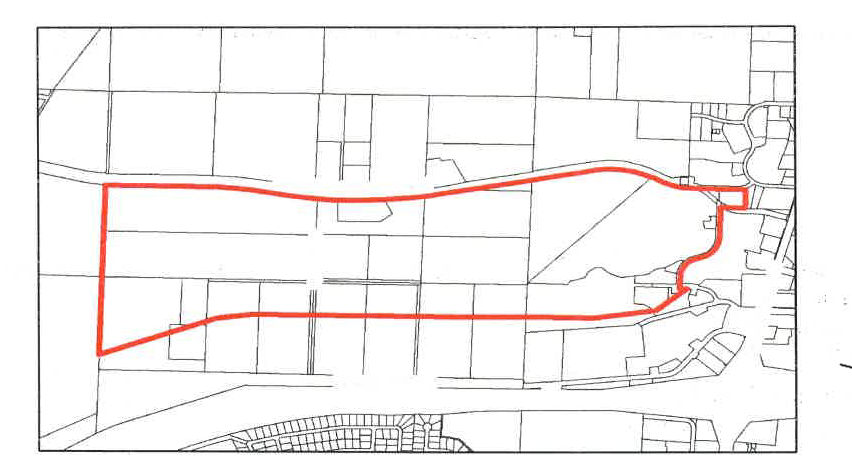
Figure 7.02.05—Fallen Heroes Way Sign Corridor
7.02.06.
Directional signs.
A.
Directional signs giving directions to motorists regarding the location of parking areas and access drives shall be permitted as permanent accessory signs on all parcels and shall not be counted as part of an occupancy's allowable sign area.
B.
Directional signs located on parcels with single user drives and parking shall be limited to ten square feet.
C.
Directional signs located on parcels with shared access drives and interconnected parking shall be limited to 20 square feet.
7.02.07.
Signs at entrances to residential developments, farms and ranches.
A.
Generally. Permanent accessory signs may be displayed at the entrance to residential developments, farms and ranches.
B.
Restrictions.
1.
Signs at the entrances of residential subdivisions shall be placed on lots designated as common area and dedicated to the homeowners association as per the final plat.
2.
Signs are permitted at each entrance into the development, farm or ranch from each abutting street. The sign may be a single sign with two faces of equal size or may be two single-faced structures of equal size located on each side of the entrance. No face of the sign shall exceed 32 square feet in size and may be illuminated in a steady light only.
3.
When considering the placement of such signs, the community development services department shall consider the location of public utilities, sidewalks and future street widening.
4.
The community development services department shall ensure that such signs shall be maintained perpetually by the developer, the owner of the sign, a pertinent owners association, or some other person who is legally accountable under a maintenance arrangement approved by the department. If no accountable person accepts legal responsibility to maintain the signs and no other provision has been made for the maintenance of them, the signs shall be removed by the developer or owner.
7.02.08.
Utility signs. Public utility signs that identify the location of underground utility lines and facilities, high-voltage lines and facilities, and other utility facilities and appurtenances are permitted so long as they do not exceed three feet in height, and so long as the sign face does not exceed one-half square foot.
(Ord. No. 1789, § 7.02.00, 2-8-2021; Ord. No. 1891, att. 1(7.02.05), 8-22-2022; Ord. No. 1961, att. 1(7.02.04), (7.02.05), 1-22-2024; Ord. No. 2001, § 2, 6-9-2025)
Sec. 7.03.00. - Accessory dwellings.
7.03.01.
Detached accessory dwellings in residential zoning districts.
A.
Purpose.
1.
The purpose of this subsection 7.03.01 is to ensure a wide variety of housing choices to city residents and allow opportunities for extended family living.
2.
This subsection 7.03.01 provides for detached accessory dwellings, also called accessory apartments, guesthouses, mother-in-law suites, or similar low-intensity second housing unit.
3.
The intent of this subsection 7.03.01 is to ensure that the establishment of a detached accessory dwelling in a residential zoning district maintains compatibility of the area by minimizing or avoiding potential negative impacts from a secondary dwelling unit.
B.
Applicability. Accessory dwelling units are permissible in R-1E, R-1, R-2, R-3 and MU zoning districts when established in compliance with the standards set forth in this subsection 7.03.01.
C.
No more than one accessory dwelling shall be established on any lot, parcel or tract of land.
D.
Standards for a detached accessory dwelling.
1.
A detached accessory dwelling shall not be allowed on a property where the principal structure is a mobile home, trailer, or of any construction that is not a site-built structure.
2.
A detached accessory dwelling shall be held to and reviewed against all applicable building codes, fire codes, and life safety codes required for any new construction dwelling unit.
3.
Any detached accessory dwelling shall comply with all site development standards for principal dwelling structures required by the zoning district, with the following exceptions:
a.
Detached accessory dwellings may be placed according to the standards for accessory buildings in section 7.01.02.
b.
Detached accessory dwellings may be less than 20 feet in width.
4.
Accessory dwellings shall be site-built or attached to a concrete slab and shall be built in accordance with the Florida Building Code, Residential.
5.
One additional parking space shall be provided. Where on-street parking is established for the neighborhood, on-street parking may be counted to meet this requirement.
6.
A detached accessory dwelling shall not exceed 900 square feet or 40 percent of the total living area of the principal dwelling on the site, whichever is greater.
7.
The existence of a detached accessory dwelling shall not be construed to allow for additional accessory structures on any lot, parcel, or tract of land beyond the number and type of accessory structures permissible with the principal dwelling.
8.
There shall be no additional signage to identify the detached accessory dwelling, other than the signage permissible for the principal dwelling.
9.
There shall be no additional mailbox, exterior utility equipment, or other evidence of a detached accessory dwelling unit. A detached accessory dwelling unit shall not have separate metered utility service, except as otherwise provided in the Florida Building Code, current edition.
7.03.02.
Detached caretaker/security dwellings (accessory dwellings) in specified nonresidential zoning districts.
A.
Purpose. The purpose of this subsection 7.03.02 is to provide for a detached dwelling unit as an accessory to commercial and industrial uses where such dwelling provides for security and caretaking of the principal use.
B.
Applicability. One caretaker dwelling shall be permissible as an accessory structure in the C-1, C-2, and IN zoning districts.
C.
Standards.
1.
There shall be no more than one detached caretaker dwelling unit per lot or business establishment, whichever is more restrictive.
2.
The caretaker dwelling shall be provided by the manager, owner or caretaker of the principal use.
3.
The detached caretaker dwelling shall only be located within a side or rear yard.
4.
The detached caretaker dwelling shall not exceed 900 square feet.
5.
The detached caretaker dwelling shall be included in calculations of maximum impervious surface coverage for the site.
6.
The detached caretaker dwelling shall not be located in any required buffer, landscaped area, easement, or stormwater management area.
7.
Two parking spaces shall be provided, which may be shared with parking for the principal use.
8.
The caretaker dwelling shall comply with the setback and height standards applicable to the principal building.
(Ord. No. 1789, § 7.03.00, 2-8-2021; Ord. No. 1830, att.(7.03.01), 9-13-2021; Ord. No. 1961, att. 1(7.03.00), 1-22-2024)
Sec. 7.04.00. - Home occupations.
Home occupations may be permitted as an accessory use in a lawfully established dwelling unit located in the R-1E, R-1, R-2, R-3, and MU zoning districts. The standards for home occupations are intended to ensure compatibility with other permitted uses and with the residential character of the neighborhood.
A.
The following and similar scope of uses shall be considered home occupations:
1.
An office, such as for professionals and general business.
2.
Instruction for teaching, such as, but not limited to, academic tutoring, performing arts, or fine arts, provided that no more than two students are instructed at any one time.
3.
Administrative or clerical support service, such as transcription, court reporting, stenography, notary public, or word processing, data entry or addressing services.
4.
Authors, composers, or creators of intellectual property.
5.
Telephone answering services.
6.
Beauty salons, barbershops, nail technicians, or similar personal service, limited to one chair or station.
7.
In-home day care.
8.
Similar uses. An interpretation that a use is similar shall be based on the activities and low level of impact normally associated with the proposed use and similarity of those activities and impacts with those of a listed use.
B.
The following uses are specifically prohibited as home occupations:
1.
Appliance and motor repairs (small or large).
2.
Automotive, vehicle, or watercraft repairs.
3.
Florist.
4.
Veterinary clinic.
5.
Medical office accompanied by patient foot traffic for a doctor, dentist, or other medical practitioner.
6.
Repair of radios, televisions, computers, CD or DVD players, or other similar equipment.
7.
Any occupation involving hazardous materials.
8.
Restaurants.
9.
Any other occupation that does not meet the standards set in this section.
C.
All home occupations shall comply with the following standards:
1.
A home occupation shall be required to have a city business tax receipt (BTR). There shall be one BTR for each business conducted in the dwelling.
2.
The use of the dwelling unit for the home occupation shall be clearly incidental and subordinate to its use for residential purposes and shall not change the residential character of the structure.
3.
Not more than 25 percent of the habitable floor area of the dwelling unit shall be used in the conduct of the home occupation in R-1E, R-1, R-2, or R-3. MU may have up to 35 percent of the habitable floor area of the dwelling unit for the home occupation.
4.
There shall be no change in the outside appearance of the building or premises or other visible evidence of the conduct of such home occupation including outside storage or signs pertaining to the home occupation. However, one unlighted nameplate, not more than one square foot in area, may be attached to the front wall of the dwelling unit identifying the name of the business which constitutes the home occupation.
5.
No home occupation shall be conducted in any accessory building, except for the permissible parking of vehicles in a garage or carport.
6.
No open storage of equipment shall be permitted except that which is of a quantity and configuration normally used for purely domestic purposes.
7.
The home occupation shall not generate noise, vibration, glare, fumes, odors, or electrical interference to adjacent properties.
8.
Up to two passenger vehicles, which may be commercially marked, are permissible in association with the home occupation. All permissible vehicles shall be parked within a lawful garage, lawful carport, or on the driveway. However, vehicles with a primary purpose of commercial use are prohibited; such vehicles include well-drilling trucks, tow trucks, cement mixers, semi-trailers, tractors, refrigerated trucks or vans, graders, or other earth moving equipment. Lawn equipment trailers and similar vehicles are permissible, provided that they are screened from public view and limited to one per dwelling. Taxicabs may be permissible, provided that all such vehicles can be parked within a garage, or carport, or on the driveway.
9.
No traffic shall be generated by such home occupation in greater volumes than would normally be expected in a residential neighborhood. The basis for evaluating traffic generated shall be data available from the Institute of Transportation Engineers.
10.
Any need for parking generated by the conduct of such home occupation shall be met by the parking areas serving the residential use, such as the driveway, garage, or carport. No vehicle shall block access to the driveway, pedestrian movement on a sidewalk, or be parked in the public right-of-way.
(Ord. No. 1789, § 7.04.00, 2-8-2021; Ord. No. 1961, att. 1(7.04.00), 1-22-2024)
Sec. 7.05.00. - Supplemental standards for special exception uses.
7.05.01.
Generally.
A.
Special exception uses are specific uses allowed in specific zoning districts, with certain supplemental standards required of each special exception use, as described in this section.
B.
Uses referenced here from Table 4.06.00, permissible uses, in each zoning district are specifically not allowed in the downtown overlay district.
C.
The supplemental standards in this section are adopted alongside each special exception use.
7.05.02.
Pharmaceutical sales.
A.
Stores manufacturing selling, leasing or renting pharmaceutical equipment, supplies and consumables, including prescription and non-prescription medicines and holistic medicine supplies, and medical marijuana treatment centers licensed by the State of Florida, provided the following requirements are met:
1.
Minimum lot size requirements. The minimum required lot size is 32,670 square feet.
2.
Building size requirements.
a.
Floor area. The minimum building size is 2,500 square feet of floor area. See chapter 2 of this LDC for definitions.
b.
Floor area ratio. The maximum building size is limited by a floor area ratio of 0.10. The floor area ratio of the building on any lot is the floor area of the building on that lot divided by the area of such lot.
3.
Minimum yard requirements. The minimum required front, side and rear yards shall meet the requirements of the C-2 zoning district.
4.
Minimum off-street parking and loading requirements; location. The parking and loading requirements shall be as follows:
a.
One space for each 150 square feet of floor area of the retail and office space, plus one space per employee on the largest staffed shift. When calculation of the number of required parking spaces results in a fractional number, a fraction of less than one-half shall be disregarded and a fraction of one-half or more shall be rounded to the next highest whole number. Employee parking shall be designated by permanent signage.
b.
Provisions for off-street loading and number of required berths shall be made in accordance with chapter 8 of this LDC. On-street loading or unloading is prohibited. Loading areas shall not obstruct pedestrian pathways.
c.
Parking spaces shall meet the minimum size set forth in chapter 8 of this LDC.
d.
All driveways, access aisles and parking spaces shall be surfaced in paver bricks, concrete or asphalt. Wheel stops are required for each parking space.
e.
Parking and loading spaces are prohibited in landscape buffers, easement areas, and right-of-way areas.
f.
The provision of parking spaces and passenger loading areas for persons who have disabilities is governed by F.S. ch. 553.
g.
All required parking shall be provided on the same lot or project as the principal use. The location of required parking spaces shall not interfere with normal traffic flow or with the operation of queuing and backup areas. A minimum queuing distance of 25 feet is required between the property line and the first parking space.
h.
Off-site parking shall not be used to determine compliance with minimum parking spaces set forth in this section.
i.
A minimum of ten percent of the required parking spaces shall be located at the side or rear of each building it is intended to serve. A public pedestrian walk shall connect all parking areas to a facility entrance. Such pedestrian accessway shall be a minimum of four feet in width, clearly marked, well lit, and unobstructed.
5.
Number of structures. Only one structure may be located on the parcel.
6.
Landscaping and buffering.Chapter 6 of this LDC applies to the uses authorized as special exceptions.
7.
Site and development plan review. Site and development plan review shall be required.
8.
Outdoor refuse collection and storage areas. No outdoor refuse collection or storage area shall be located in a street yard, and all such areas shall maintain a minimum setback of ten feet from any lot line and shall be enclosed and on a paved or concrete surface.
9.
DOD. This use is not allowed in the downtown overlay district.
7.05.03.
Recreational camps.
A.
Recreational camps are allowed by special exception in the MU, C-1, C-2 and E districts in accordance with the standards in this subsection 7.05.03.
B.
For purposes of this subsection 7.05.03, the term "recreational camp" means one or more buildings or structures, tents, trailers, or vehicles, or any portion thereof, together with the land appertaining thereto, established, operated, or used as living quarters for one or more resident or transient members of the public and designed and operated for recreational or other nonprofit purposes.
C.
The minimum lot area within the MU, C-1, C-2 or E districts shall be 40 acres.
D.
Recreational camps in the E districts may only be allowed in accordance with an approved management plan. The management plan shall be prepared at the expense of the applicant by a person qualified in the appropriate fields of study and conducted according to professionally accepted standards. At a minimum, the management plan includes the following:
1.
Description of goals and objectives based on type of natural resources to be managed.
2.
Description of all proposed uses, including existing and any proposed physical and access improvements.
3.
Description of prohibited activities, such as mowing in wetland buffers, or removal of native vegetation in protected habitat areas.
4.
Descriptions of ongoing activities that will be performed to protect, restore, or enhance the natural resources to be protected. This may include:
a.
Removal or control of invasive vegetation and debris;
b.
Replanting with native vegetation as necessary;
c.
Provision for listed species habitat needs, including restricting, at appropriate times, intrusions into sensitive foraging, breeding, roosting, and nesting areas;
d.
Fencing or other institutional controls to minimize impact of human activities on wildlife and vegetation, such as predation by pets;
e.
Prescribed burning, thinning, or comparable activities performed in an environmentally sensitive manner to restore or maintain habitat;
f.
Cooperative efforts and agreements to help promote or conduct certain management activities, such as cleanups, maintenance, public education, observation, monitoring, and reporting;
g.
Any additional measures determined to be necessary to protect and maintain the functions and values of conservation areas in conjunction with wildfire mitigation;
h.
A set of schedules, estimated costs, staffing requirements, and assignments of responsibility for specific implementation activities to be performed as part of the management plan, and identification of means by which funding will be provided;
i.
Performance standards with criteria for assessing goals and objectives;
j.
A five-year monitoring plan with schedule and responsibility;
k.
Ownership and party responsible for management activities;
l.
Provision for changes to be reviewed and approved by the city; and
m.
Contingency plans for corrective measures or change if goals not met, and recognition of city enforcement authority.
5.
The maximum density of cabins, lodges and/or tent campsites shall not exceed one per five acres. Density shall be calculated as gross density and include all land area exclusive of major water bodies starting at the high-water mark.
6.
Cabins or lodges shall comply with the Florida Building Code and must contain a minimum of 250 square feet of floor space up to a maximum of 2,500 square feet of floor space, with a maximum occupancy of ten per cabin or lodge. Use of mobile homes or recreational vehicles for lodging is prohibited.
7.
A single permanent residence is allowed.
8.
All structures, cabins and tent sites shall be set back a minimum of 200 feet from the property line.
9.
Vehicular access shall be from a paved public roadway.
10.
A unified plan for water distribution and wastewater disposal meeting the requirements of the health department shall be provided as part of any application for a recreational camp.
11.
Sanitary facilities including showers, toilets, and sinks shall be provided. Potable water from a municipal water supply shall be used for such sanitary facilities, unless the facility is served by a private well registered, approved and tested by the department of health as a limited use public water system.
12.
Recreational camps for five or more members of the public, as defined in F.S. § 513.01, are subject to the provisions of F.S. ch. 513 and shall not be permitted as a special exception unless the department of business and professional regulation has issued a permit for such activity and such permit remains valid and current at all times and such property meets every provision of this subsection 7.05.03 not in conflict with the requirements of F.S. ch. 513.
13.
Any violation of this subsection 7.05.03, including a property owner's operating or allowing unpermitted recreational camps shall be punished as provided for in section 1-11 of the city Code and each day that such condition continues is regarded as a new and separate offense.
7.05.04.
Recreational vehicle parks.
A.
Recreational vehicle parks (RV parks) are allowed by special exception in the MU, C-1 and C-2 zoning districts in accordance with the standards of this subsection 7.05.04.
B.
Definitions. The following words, terms and phrases, when used in this subsection 7.05.04, shall have the meanings ascribed to them in this subsection, except where the context clearly indicates a different meaning:
1.
The term "RV park" means one or more buildings or structures, tents, trailers, or vehicles, or any portion thereof, together with the land appertaining thereto, established, operated, or used as living quarters for one or more resident or transient members of the public and designed and operated for profit.
2.
The term "unit" means one trailer or one vehicle used as living quarters for one or more resident or transient members of the public.
3.
The term "tent" means a portable shelter of cloth or other material, whether designed for camping or fabricated for some other purpose, used for storage or as living quarters for one or more resident or transient members of the public.
C.
Minimum lot size and density. The minimum lot size and density for RV parks shall be as follows:
1.
If the parcel is accessed directly from a multi-lane or arterial road as defined in the City of Crestview comprehensive plan, the minimum lot size shall be 2.5 acres and the maximum allowable density shall be 18 units per acre, with a maximum of one tent per 25 units.
2.
If the parcel is accessed directly from a collector road as defined in the City of Crestview comprehensive plan, the minimum lot size shall be five acres and the allowable density shall be nine units per acre, and a maximum of one tent per 25 units.
3.
If the parcel is accessed from any road which is not an arterial or collector road as defined in the City of Crestview comprehensive plan, the minimum lot size shall be 15 acres and the allowable density shall be six units per acre, and a maximum of one tent per 25 units.
4.
Density shall be calculated as gross density and include all land area exclusive of major water bodies starting at the high-water mark.
5.
For cabins or other permanent structures, the density, setback and other requirements of the zoning district in which the property is located shall apply.
6.
A single permanent residence is allowed.
7.
Cabins and other structures shall comply with the Florida Building Code and must contain a minimum of 250 square feet of floor space per occupant with a maximum capacity of ten.
8.
Use of mobile homes for lodging is prohibited, except that one mobile home may be located on site for an office, resident manager or security watchman if a permanent residence is not located on the property.
D.
Vehicular access shall be from a paved public roadway.
E.
A unified plan for water distribution and wastewater disposal meeting the requirements of the health department shall be provided as part of any application for a recreational camp.
F.
Sanitary facilities including showers, toilets, and sinks shall be provided. Potable water from a municipal water supply shall be used for such sanitary facilities, unless the facility is served by a private well registered, approved and tested by the department of health as a limited use public water system.
G.
Any violation of this subsection 7.05.04, including a property owner's operating or allowing unpermitted recreational camps, shall be punished as provided for in section 1-11 of the city Code and each day that such condition continues is regarded as a new and separate offense.
7.05.05.
Telecommunications antennae and towers. Each applicant requesting a building permit for the location of communication towers and antennas shall meet the following at the time of application:
A.
Federal approvals. All communication towers must meet or exceed current standards and regulations of the Federal Aviation Administration (FAA), Federal Communication Commission (FCC), and any other agency of the federal government with the authority to regulate communication towers and antennas. The applicant shall submit copies of all FAA, FCC, Eglin Air Force Base, Hurlburt Field, Okaloosa Regional Airport and FDOT approvals, whichever is/are applicable.
B.
Design. The applicant shall submit the communication tower design plans which shall be designed by an engineer licensed in the State of Florida in accordance with the building code requirements of the city. The design shall show the access that is provided for inspections. Communication towers shall either maintain a galvanized steel finish or, subject to any applicable standards of the FAA, be painted a neutral color, so as to reduce visual obtrusiveness. Dish antennas will be of a neutral, non-reflective color with no logos.
C.
Safety fall zone. Applicants shall submit a report by an engineer licensed in the State of Florida of the safety fall zone of the specified communication tower. The safety fall zone shall be measured from the base of the communication tower to any property line. Communication towers shall be designed to collapse within the lot lines in case of structural failure.
D.
Co-location.
1.
The applicant shall submit a certification from an engineer licensed in the State of Florida that the communications tower has been designed to accommodate co-location. If the communication tower cannot accommodate co-location, then the engineer should certify the reason it cannot accommodate additional antennas.
2.
The applicant shall submit a plan for co-location, providing for at least three other providers, with local government needs considered. If co-location is not possible, the applicant shall provide evidence as to the reason it is not possible to meet this requirement.
3.
The applicant shall commit to ensuring that each antenna owner will comply with federal, state, and local regulations.
4.
Each antenna owner shall have an approved building permit prior to erecting the antenna on the communication tower. The applicant shall show that the antenna will not extend more than ten feet horizontally beyond the vertical plane of the edge of the communications tower and will not project above the existing communication tower structure's approved height.
E.
Setback. The applicant shall submit a site plan showing a minimum of one-half the tower height plus 50 feet between the base of the communication tower and any residential property line, otherwise a distance equal to the safety fall zone between the base of the communication tower and any nonresidential property.
F.
Buffer. The applicant shall submit a plan showing:
1.
An eight-foot-high fence or wall, with access by a locked gate only, around the base of the communication tower or the property as required by the FCC. The fence or wall shall be equipped with an appropriate anti-climbing device.
2.
A minimum of a five-foot landscaping buffer, consistent with the requirements of section 6.08.00 installed around the entire perimeter of the fence or wall. Additional landscaping may be required if deemed necessary to provide a buffer between the communication tower and adjacent residentially zoned properties. This requirement may be waived by the development administrator if the base of the communication tower is a minimum of 500 feet from all property lines.
G.
Signage. The applicant shall submit a sign plan showing:
1.
That no portion of the communication tower will be used for advertising purposes, including a company's name;
2.
That the party responsible for the operation and maintenance of the facility, its address, and telephone number is provided; and
3.
That all security or safety signs required by federal, state, or local regulations are provided.
H.
Lighting. The applicant shall submit a plan that shows the signals, lights, or illumination provided and the federal, state, or local rule, regulation, or requirement.
I.
Maintenance and inspections. The applicant shall submit a plan for inspections and maintenance of the communication tower so that it remains in good condition, order, and repair and that the same shall not menace or endanger the life or property of any person.
1.
The city may require FCC inspection reports and/or that the communication tower be inspected if there is reason to believe that the structural or electrical integrity of the communication tower is jeopardized. All certifications and inspections required herein shall be made by and at the sole cost of the provider, and certified and submitted to the city.
2.
The city and its agents shall have the authority to enter onto the property upon which a communications tower is located, upon reasonable notice to the owner, to inspect the communications tower for purposes of determining whether it complies with all applicable laws and regulations. All expenses relating to such inspections by the city shall be borne by the owner.
J.
Abandonment. The owner shall submit a plan for abandonment of the communication tower which shall include a copy of the notice to the FCC of intent to cease operations for each user of the communication tower and a plan to remove the communication tower within a minimum of 180 days after abandonment. Any communication tower or antenna that is not operated for a continuous period of 24 months shall be considered abandoned, and the owner of each such communication tower or antenna shall remove same within 180 days of receipt of notice from the city notifying the owner of such removal requirement. Removal includes the removal of the tower, all tower and fence footers, underground cables, and support buildings. If there are two or more users of a single communication tower, then this provision shall not become effective until all users cease using the communication tower.
7.05.06.
Manufactured home communities.
A.
Manufactured home communities are allowed by special exception in the MU zoning district, in accordance with the standards of this subsection 7.05.06.
B.
Mobile homes, manufactured homes, or modular homes may be located within a manufactured home community. Such homes are not required to comply with the standards set forth in section 6.01.02. The following standards apply to homes in manufactured home communities:
1.
In all cases, the Florida Building Code, Residential, shall be complied with.
2.
The minimum width of each building shall be 16 feet.
3.
The minimum roof pitch shall be 3:12.
4.
The minimum roof overhang shall be 12 inches.
5.
For dwellings elevated 48 inches or less, the area beneath the home shall be enclosed by brick, concrete, wood, rock, vinyl or other material specifically manufactured for this purpose and shall enclose the space between the floor joists and the ground level, except for the required minimum ventilation and access. Such access shall remain closed when not being used for that purpose.
6.
All tongues, wheels, axles, transporting lights and other towing apparatus shall be removed from the site prior to occupancy.
7.
No home manufactured prior to June 15, 1976, shall be permitted.
8.
At each exterior door, there shall be a landing that is in accordance with the Florida Building Code, Residential.
C.
Each manufactured home community shall be limited to rental of lots or spaces. Where lots or spaces are intended to be sold, the subdivision standards set forth in section 6.07.00 shall be met.
D.
The maximum parcel size shall be five acres.
E.
The following setbacks shall be provided on the perimeter of the manufactured home community parcel:
1.
The front yard setback shall be a minimum of 35 feet.
2.
The side yard setback shall be a minimum of 20 feet.
3.
The rear yard setback shall be a minimum of 25 feet.
F.
The impervious surface coverage standard shall be calculated for the manufactured community parcel as a whole.
G.
Perimeter landscaping shall be provided.
H.
Individual lots or spaces for manufactured homes within a manufactured home community shall meet the following standards:
1.
Each lot or space shall be clearly defined.
2.
Each lot or space shall provide a individual utility connections.
3.
The minimum lot or space area shall be 4,000 square feet.
4.
The minimum lot or space width shall be 40 feet.
5.
Lots or spaces shall be located to provide a minimum of 30 feet between adjacent manufactured home units and between a manufactured home unit and any other building within the manufactured home community. The separation shall be measured at the outermost point of each building.
I.
Each individual manufactured home lot or space shall include a driveway with at least two parking spaces, designed and built in compliance with the Crestview Engineering Standards Manual.
J.
A manufactured home community may include one building which may include administrative offices, social hall/community meeting space, self-service laundry, and equipment storage. Parking shall be provided for the building according to the standards set forth in chapter 8 of this LDC.
K.
The entrance drive and internal streets shall be paved in compliance with the standards set forth in the Crestview Engineering Standards Manual.
L.
If any home in a manufactured home community is proposed to be replaced, the replacement home must be compliant with all requirements of this subsection 7.05.06, including all building requirements, separation requirements and parking requirements.
7.05.07.
Food truck sites.
A.
Sites maintaining more than one stationary food truck space, which may or may not also include other site development features, such as parking, seating, or any other accessory and amenity structures, are allowed with the following restrictions and/or requirements:
1.
Zoning. Food truck site developments are permitted in MU, C-1, C-2 and IN zoning districts.
2.
Site development requirements. General site development requirements shall be the same as what is required for the underlying zoning district, with the following exceptions:
a.
Food truck spaces and any additional structures shall be set back a minimum of three feet from any side or rear property line when the development site is not within the downtown overlay district, or otherwise be set back the distance of any required landscape buffers.
b.
Food truck spaces and any additional structures shall be placed at least five feet from any other space or structure.
3.
Minimum parking requirements; location. The parking and loading requirements shall be as follows:
a.
Two parking spaces required for each food truck space, except:
(1)
If the development site is inside the downtown overlay district or on-street parking district.
(2)
If the development site is within 250 feet of the downtown overlay district or on-street parking district.
(3)
The applicant may provide a shared parking agreement from adjacent developments, where such shared parking does not impact the adjacent development's ability to meet their parking requirement.
b.
The provision of parking spaces and passenger loading areas for persons who have disabilities is governed by F.S. ch. 553.
c.
Bicycle and pedestrian ways are required, to the standards of section 8.05.00.
4.
Landscaping and buffering. A landscaping plan is required to the following standards for landscaping and buffering, which supersede the general landscaping requirements in chapter 6 of this LDC:
a.
At least 50 percent of a given site area must remain open greenspace. A variety of trees, shrubs, bushes or other vegetation must be placed in greenspace areas.
b.
When development abuts a property containing a one-, two- or three-family dwelling, a minimum required landscaped buffer of 7½ feet shall be required. A greater sized buffer may be required by staff if deemed necessary to protect adjacent property from noise, lights, or other nuisance factors.
c.
Food truck sites located within the downtown overlay district shall be exempt from the landscaping requirements of chapter 6 of this LDC, as well as the above additional landscaping requirements.
5.
Alcohol controls. If alcohol is to be sold on site, controls are required as per the applicable state regulatory agency. The type, design, and appearance requirements of any required controls will be determined during the site plan review process.
6.
Utilities. A utility plan showing proposed location and design for water and sewer services, as well as location of any required grease traps, shall be provided for each site.
7.
Outdoor refuse collection and storage areas. No outdoor refuse collection or storage area shall be located in a front setback area, and all such areas shall maintain a minimum setback of three feet from any lot line and shall be enclosed and on a paved or concrete surface.
8.
BTR required for food trucks. Food trucks housed on approved food truck sites are required to have a city BTR but are not required to have any other city permits.
9.
Food truck sites subject to noise regulations. Any noise-generating activity present on the food truck site is subject to the noise regulations in section 30-19 of the Code of Ordinances.
10.
Restrooms. Restrooms are required as part of a food truck site, except when public restroom facilities are available within 250 feet of the development site.
11.
Site and development plan review.
a.
For new developments on vacant or unimproved property, a development order is required as per the procedures set in chapter 3 of this LDC.
b.
For modifying existing site developments to add the food truck site use, or add food truck spaces, an administrative permit is required as per the procedures set in chapter 3 of this LDC to determine compliance with the requirements of this subsection 7.05.07.
(1)
Proposed food truck sites on existing developed sites shall not cause any additional impact to city services (water, sewer, stormwater, etc.) outside of the impacts approved for the original development order issued.
(2)
Proposed food truck sites on existing developed sites shall not cause the site to become noncompliant with the site requirements of the original development order issued (parking count, traffic flows, pedestrian ways, etc.).
7.05.08.
Townhouses.
A.
A townhouse is a multi-story single-family dwelling unit attached horizontally to at least one dwelling unit, in a building containing at least three units by a common wall that meets the appropriate standards of the Florida Building Code and any applicable fire codes.
B.
Townhouse buildings shall sit across multiple lots, with each aforementioned common wall sitting on top of and parallel to the side property lines. Setback requirements shall apply as per the zoning district as the townhouse building relates to the outermost property line for a given project and from any new public or private rights-of-way created as part of the townhouse project.
C.
Townhouses and townhouse developments are allowed in the R-3 and MU zoning districts.
D.
Requirements for townhouse developments.
1.
The minimum lot area for an individual townhouse unit is 700 square feet.
2.
The minimum lot width for all individual townhouse units is 20 feet.
3.
Townhouse buildings shall be separated a minimum distance of ten feet.
4.
A six-foot-tall fence shall be provided where a townhouse development abuts a property currently used for single-family or duplex development. The finished side of the fence shall face outward. No fence is required where an alley separates the townhouse development from the single-family or duplex development. Each portion of the fence shall be the property of the owner of the townhouse lot on which it is located; such owner is responsible for maintenance of that portion of the fence.
5.
There shall be a maximum of ten individual townhouse units within one structure.
7.05.09.
Commercial pad sites.
A.
A pad site is an outparcel that is part of, or located within, a larger commercial development.
B.
Pad sites are permitted in the MU, C-1, C-2 and IN zoning districts.
C.
Buildings located on pad sites must only meet the setback requirements of the outermost perimeter lot lines for the overall development.
D.
Pad site interior lot lines are exempt from landscape buffer requirements.
E.
Pad sites are exempt from the minimum lot area and lot width requirements of the applicable zoning district, provided the overall development meets these requirements.
F.
Pad sites may share parking with the overall development.
G.
Impervious surface and floor area ratio calculations for pad sites will be calculated as part of the overall development.
7.05.10.
Commercial condominium.
E.
A commercial condominium is a commercial development with accompanying condominium documents prepared to the standards of F.S. ch. 718.
F.
Commercial condominiums are permitted in the MU, C-1, C-2 and IN zoning districts.
G.
Commercial condominium developments must meet all pertinent requirements of this LDC that are not otherwise exempted in this subsection 7.05.10.
H.
Surveys, declarations and other pertinent documents relating to commercial condominiums shall be reviewed, approved and recorded prior to issuance of a development order.
I.
Commercial condominium surveys must list all applicable setbacks not otherwise exempted by this subsection 7.05.10.
J.
Individual lots parcels within commercial condominium developments that are proposed to contain any principal buildings, units or structures shall not encroach into the minimum setback required per the zoning district, measured from the outermost property lines of the initial parent parcel.
K.
Individual lots within commercial condominium developments that are proposed to contain any principal buildings, units, or structures are exempt from minimum setbacks and landscape buffers measured from any interior lot lines.
L.
Lots within commercial condominium developments are exempt from the minimum lot area and lot width requirements of the applicable zoning district, provided the initial parent parcel meets those requirements.
M.
Individual lots within a commercial condominium shall share parking areas, loading areas and access aisles, and such provisions shall be included on the survey, in the declaration, or in the other associated documents.
(Ord. No. 1789, § 7.05.00, 2-8-2021; Ord. No. 1830, att.(7.05.07), (7.05.08), 9-13-2021; Ord. No. 1891, att. 1(7.05.09), (7.05.10), 8-22-2022; Ord. No. 1961, att. 1(7.05.07), (7.05.08), 1-22-2024)
Sec. 7.06.00. - Temporary uses.
7.06.01.
Temporary vendors.
A.
Temporary vendors conducting retail sales or displays are permissible as a temporary use in the MU, C-1, C-2 and IN zoning districts, in accordance with the standards of this section.
B.
Temporary vendors conducting retail sales or displays in conjunction with a permitted special event are exempt from the requirements of this section.
C.
Temporary vendors conducting retail sales or displays are not permitted on public property unless in conjunction with a permitted special event.
D.
Unless otherwise specified, temporary uses subject to this section shall not exceed 15 days in any one month.
E.
Temporary vending permits expire one year after approval.
F.
A temporary vending permit shall be required for any temporary vendor operating within the city limits of Crestview.
G.
Applicants must also provide the following along with their application for the temporary vending permit:
1.
Copies of all applicable state licenses.
2.
Written permission from the property owner and the business owner of the site on which temporary vending is proposed.
3.
A site plan indicating the following:
a.
The location of all existing and proposed structures on site.
b.
The structural dimensions and locations in relation to property lines.
c.
The zoning district setback lines.
d.
Locations of any temporary sanitary facilities (portable toilets) and waste disposal.
e.
Parking areas.
f.
Signage.
g.
Means of ingress and egress for vehicular and pedestrian traffic.
h.
Any additional information necessary to portray the property and proposed use.
i.
A description of the proposed use.
4.
A signed and notarized hold harmless agreement.
H.
Temporary auto sales.
1.
Temporary vending involving the sale of automobiles is permitted under this section, provided the applicant for the temporary sale of automobiles shall have a permanent business location within the city limits of Crestview and shall have a valid city business tax receipt.
(Ord. No. 1789, § 7.06.00, 2-8-2021; Ord. No. 1830, att.(7.06.02), 9-13-2021; Ord. No. 1891, att. 1(7.06.00), 8-22-2022; Ord. No. 1961, att. 1(7.06.00), 1-22-2024)

