
Elk Rapids City Zoning Code
ARTICLE I
- IN GENERAL
Sec. 44-1. - Authority; amendments of state law incorporated.
(a)
The village zoning regulations is adopted pursuant to the authority contained in the Michigan Zoning Enabling Act, MCL 125.3101 et seq., the Land Division Act, MCL 560.101 et seq., and the Condominium Act, MCL 559.101 et seq.
(b)
When any provision of this chapter refers to or cites any state statute that is later amended or superseded, this chapter shall be deemed amended to refer to the amended statute.
(Ord. No. 458, § 102, 3-2-2015)
Sec. 44-2. - Intent and purpose.
(a)
The village zoning regulations regulates land development and establishes zoning districts in the village that regulate the use of land and structures to meet the needs of the state's citizens for food, fiber, energy, and other natural resources, places of residence, recreation, industry trade, service, and other uses of land, to ensure that use of the land is situated in appropriate locations and relationships, to limit the inappropriate overcrowding of land and congestion of population, transportation systems, and other public facilities, to facilitate adequate and efficient provision for transportation systems, sewage disposal, water, energy, education, recreation, and other public service and facility requirements, and to promote public health, safety, and welfare for the purposes provided in the Michigan Zoning Enabling Act, MCL 125.3101 et seq. This chapter specifically:
(1)
Establishes districts within which the use of land and structures, height, area, size and location are regulated;
(2)
Establishes regulations for light, ventilation and density of population;
(3)
Designates the use of certain state-licensed residential facilities;
(4)
Provides for acquisition by purchase, condemnation or otherwise of private property which does not conform to the regulations and restrictions of various zones;
(5)
Provides for administration, amendments, supplements, changes and conflicts;
(6)
Provides for the enforcement of violations of this chapter;
(7)
Regulates and restricts the use of land and structures to meet the needs of residents for food, fiber, energy and other natural resources, places of residence, recreation, industry, trade, service, and other uses of land;
(8)
Ensures that uses of the land shall be situated in appropriate locations and relationships;
(9)
Facilitates adequate and efficient provisions for transportation systems, sewage disposal, water, energy, education, recreation, and other public services and facilities;
(10)
Designates those zones in the village for which regulations are imposed for the land use that buildings or structures shall or shall not be erected or altered;
(11)
Designates the trades, industries and other land uses that are permitted or excluded or subject to special regulation;
(12)
Regulates and limits the height and bulk of buildings erected and regulates the area of yards, courts, and other open spaces;
(13)
Limits the allowable density of dwelling units on parcels of land to prevent overcrowding and congestion of population;
(14)
Provides for land development regulations and districts which apply only to land areas and land uses which are involved in a special program to achieve specific land management objectives and avert or solve specific land use problems; and
(15)
Provides for the establishment of land development regulations and overlay districts in areas designated as being environmentally sensitive.
(b)
The village zoning regulations is designed to regulate and control the subdivision of land within the village, including site condominiums, in order to promote the safety, public health, and general welfare of the community. These regulations specifically:
(1)
Provide for orderly growth and harmonious development of the community, consistent with orderly growth policies, including the master plan.
(2)
Secure adequate traffic circulation through coordinated street systems with proper relation to major thoroughfares, adjoining subdivisions and public facilities.
(3)
Achieve individual property lots of maximum utility and livability.
(4)
Ensure adequate provisions for water, drainage and sanitary sewer facilities and other health requirements.
(5)
Plan for the provision of adequate recreational areas, school sites and other public facilities.
(Ord. No. 458, § 103, 3-2-2015)
Sec. 44-3. - Scope regarding land division.
The regulations of section 44-275 shall not apply to any lot or lots forming a part of a subdivision or site condominium created and recorded prior to the effective date of this chapter, except for the further dividing of lots or parcels. However, this chapter does not repeal, abrogate, annul, or in any way impair or interfere with existing provisions of other laws, titles or regulations, or with private restrictions placed upon property by deed, covenant, or other private agreements, or with restrictive covenants running with the land to which the village is a party. When this chapter imposes a greater restriction upon land than is imposed or required by such existing provision of any other ordinance of the village, the provisions of this chapter shall control. These provisions, where required, shall apply to the creation of site condominiums and condominium subdivisions.
(Ord. No. 458, § 104, 3-2-2015)
Sec. 44-4. - Effective date.
The village zoning regulations became effective on April 2, 2015. When this chapter refers to the effective date of this chapter, the reference shall be deemed to also include the effective date of any amendments to this chapter if the amendment, rather than this chapter as originally adopted, creates a nonconforming situation.
(Ord. No. 458, § 105, 3-2-2015)
Sec. 44-5. - Definitions.
The following words, terms and phrases, when used in this chapter, shall have the meanings ascribed to them in this section, except where the context clearly indicates a different meaning:
(1)
Access, reasonable, means an access management term defined as ensuring a motorist can enter or exit a parcel in an uncomplicated manner that will not significantly prevent the use of the parcel. Reasonable access may not always be the most direct access but may involve use of a shared driveway or service drive.
(2)
Access by easement or easement access means a vehicular access way constructed within a common easement which provides access to lots or parcels. Such easement shall have a minimum width of 66 feet. The access way shall be constructed and maintained to a standard which will provide continuous access for safety services operating within the village.
(3)
Accessory dwelling unit (ADU) means a second residential dwelling unit that may be detached or within an existing single-family home, detached garage, or carriage house, and that meets all the requirements of section 44-117.
(4)
Accessory structure means a subordinate building or structure on the same lot with a principal or main building and use for an accessory use.
(5)
Accessory use means a use commonly recognized as incidental and subordinate to the principal use or building located on the same lot. An accessory use may be located in the principal building or in an accessory structure, or outside or as long as it is done consistent with all applicable regulations of this chapter.
(6)
Acreage, net, means the actual land available for development within a parcel after the exclusion of road rights-of-way and other such areas not available for development purposes.
(7)
Adequate permanent access means an easement or right-of-way of sufficient width for roadway and snow storage purposes without infringing on neighboring or adjacent property. The minimum adequate permanent access shall be 66 feet in width.
(8)
Alteration means any change in construction or type of occupancy of a building; any change or rearrangement in the structural parts of a building; any enlargement of a building, whether by extending a side or by increasing in height; or any moving of a structure from one location to another in accordance with all approved field changes.
(9)
As-built plans mean plans based on actual measurements of a completed building or development.
(10)
Authorized village official means a police officer, the planning and zoning administrator or other personnel of the village authorized by this chapter or any ordinance to issue municipal civil infraction citations or municipal civil infraction violation notices.
(11)
Awnings. See Marquee.
(12)
Basement means a story having part, but not more than one-half, of its height below finished grade.
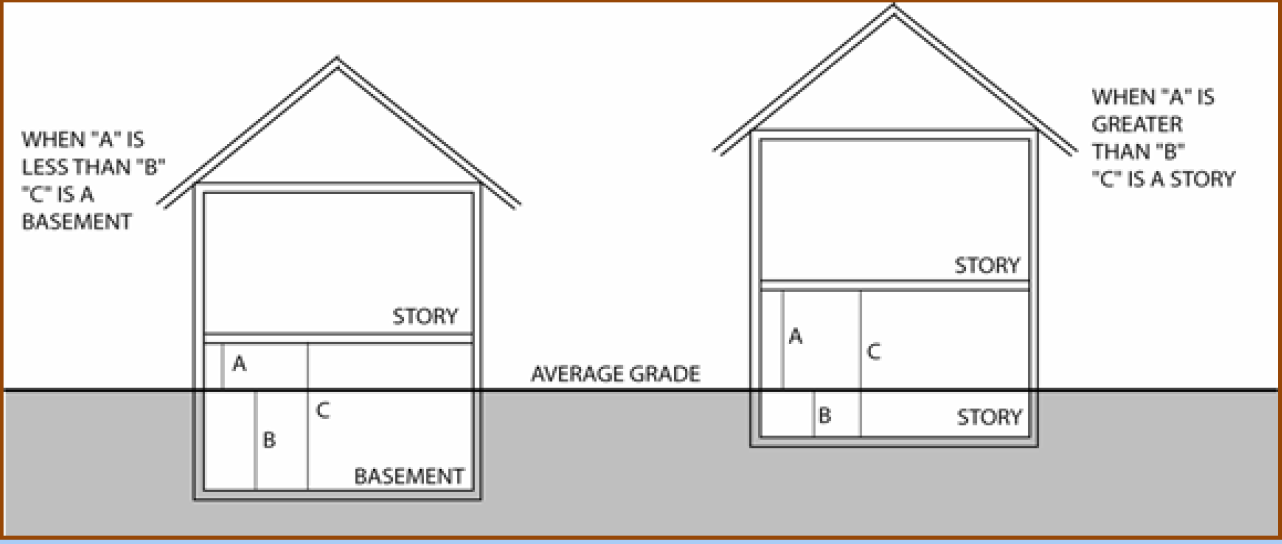
Basement
(13)
Bed and breakfast establishment means an owner-occupied dwelling, used and occupied as a single-family residence, having, as an accessory use therein, public lodging rooms and facilities for, and serving food to, preregistered transient guests, which meets the requirements of section 44-111.
(14)
Benefit, recognizable and substantial, means a clear benefit, both to the ultimate users of the property in question and to the community, which would reasonably be expected to accrue, taking into consideration the reasonable foreseeable detriments of the proposed development and uses, including, without limitation, long-term protection or preservation of natural resources and natural features or historical or architectural features of a significant quantity or quality in need of protection or preservation on a local, state or national basis; reducing to a significant extent the nonconformity of a nonconforming use or structure so that, to a significant extent, it is rendered more conforming, or less offensive, to the zoning district in which it is situated.
(15)
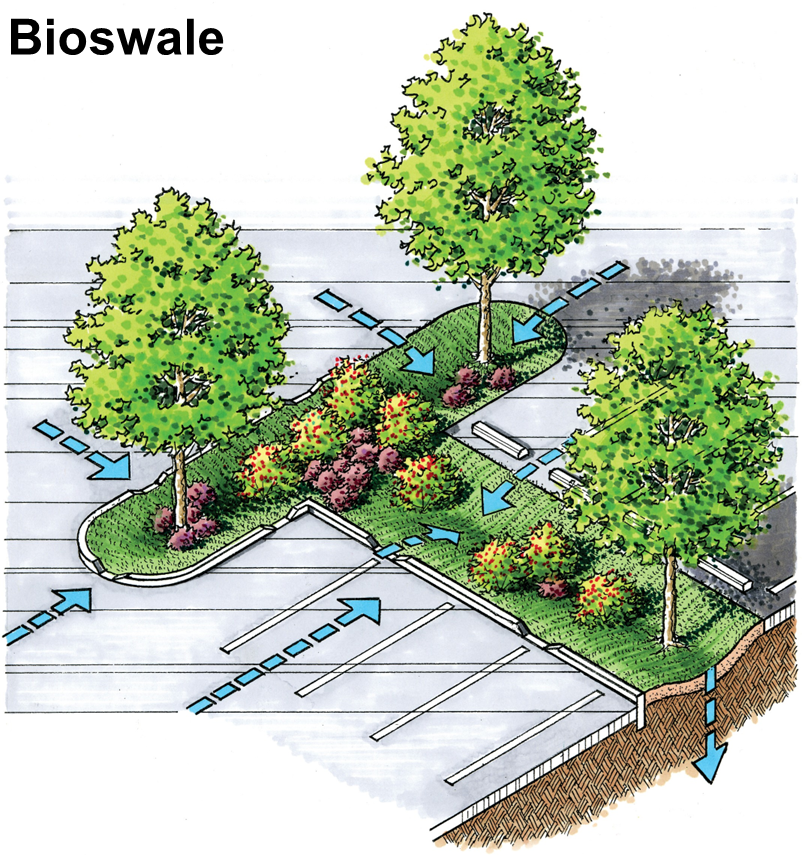
Bioswale means a linear planted channel that runs along roads, parking lots, and/or sidewalks and provides a natural conveyance channel and/or detention of stormwater runoff.
(16)
Boat dockage means a dock, mooring, slip shore station, or other facility that is used to secure temporarily a motorboat of any horsepower, or any non-motorized watercraft more than 20 feet in length, to any lake frontage, regardless of the distance from the water's edge.
(17)
Building means any structure, either temporary or permanent, or part thereof, having a roof and used or built for the shelter or enclosure of persons, animals, chattels or property of any kind. The term "building" shall include tents, awnings, and vehicles located on private property and used for purposes of a building, whether or not mounted on wheels.
(18)
Building, front line of, means the line that coincides with the face of the building nearest the front line of the lot. This face includes sun parlors and enclosed porches and certain decks but does not include uncovered steps.
(19)
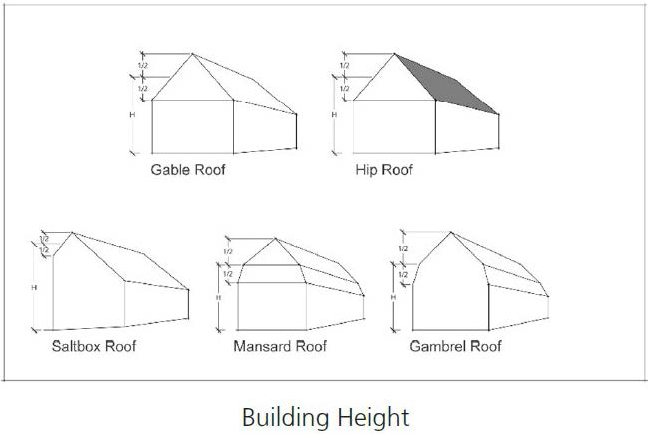
Building, height of means the vertical distance as measured from the mean elevation of the existing grade to the highest point of the building for flat; and to the mean height level between the highest eave and ridge of the building for gable, hip, mansard, and gambrel roofs.
(20)
Building area means the total area, taken on a horizontal plane at the main grade level, of the principal building and all accessory buildings exclusive of uncovered porches, terraces, decks, patios, and steps.
(21)
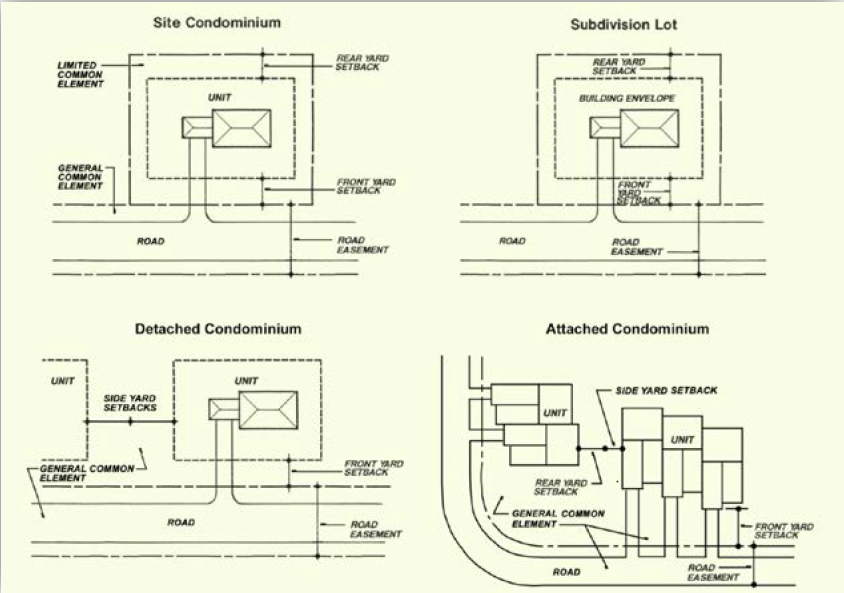
Building envelope means the ground area of a lot which is defined by the minimum setback and spacing requirements within which construction of a principal building and any attached accessory structures (such as a garage) is permitted by this chapter, exclusive of uncovered porches, terraces, decks, patios, and steps. For condominium developments, the building envelope shall be illustrated on a site plan.
(22)
Building line or building setback line means a line parallel to a street right-of-way line, shore of a lake, edge of stream, riverbank, or side or rear lot line that is established on a parcel of land or on a lot for the purpose of prohibiting construction between such line and right-of-way, side or rear lot line, public area, shore of a lake, edge of a stream, or river bank.
(23)
Business center means a building or group of buildings on one or more parcels of land constructed as an integral land use for commercial, institutional, or similar occupancy.
(24)
Campground means any part of a tract of land where sites are offered for the use of the public or members of an organization, either free of charge or for a fee, for temporary living quarters and five or more recreational units.
(25)
Caption means the name by which the plat is legally and commonly known.
(26)
Carriage house means a small building, usually part of an estate or adjacent to a main house, used for housing coaches, carriages, and other vehicles.
(27)
Cellar means a story having more than one-half of its height below the average finished level of the adjoining ground.
(28)
Childcare facility means a facility for the care of minor children (persons under 18 years of age), as licensed and regulated pursuant to the terms and conditions of MCL 722.111 through 722.128, and includes:
a.
Day care center means a facility other than a private residence, receiving more than six preschool or school age children for group day care for periods of less than 24 hours a day, and where the parents or guardians are not immediately available to the child. It includes a facility which provides care for not less than two consecutive weeks, regardless of the number of hours of care per day. The facility is generally described as a childcare center, day care center, day nursery, nursery school, parent cooperative preschool, play group, or drop-in center. The term "childcare center" or "day care center" does not include a Sunday school conducted by a religious institution or a facility operated by a religious organization where children are cared for during short periods of time while persons responsible for such children are attending religious services.
b.
Family childcare home means a private home in which one but fewer than seven minor children are received for care and supervision for periods of less than 24 hours a day, unattended by a parent or legal guardian, except children related to an adult member of the family by blood, marriage or adoption. The term "family childcare home" includes a home in which care is given to an unrelated minor child for more than four weeks during a calendar year.
c.
Foster family group home means a private home in which more than four but less than seven children, who are not related to an adult member of the household by blood, marriage, or adoption, are provided care for 24 hours a day, for four or more days a week, for two or more consecutive weeks, unattended by a parent or legal guardian.
d.
Foster family home means a private home in which at least one but not more than four minor children, who are not related to an adult member of the household by blood, marriage, or adoption, are given care and supervision for 24 hours a day, for four or more days a week, for two or more consecutive weeks, unattended by a parent or legal guardian.
e.
Group childcare home means a private home in which more than six but not more than 12 minor children are given care and supervision for periods of less than 24 hours a day unattended by a parent or legal guardian, except children related to an adult member of the family by blood, marriage or adoption. Group childcare home includes a home in which care is given to an unrelated minor child for more than four weeks during a calendar year.
(29)
Commercial development means a commercial center providing building areas, parking areas, service areas, screen planting areas, as well as widening, turning movement, and safety-oriented roadway improvements, as further defined in section 44-170.
(30)
Common elements means a part of a parcel of land together with the improvements thereon, the use, maintenance and enjoyment of which are intended to be shared by the owners and occupants of the individual building units on the parcel.
(31)
Condominium site means any parcel of land which may be divided as a condominium under Public Act No. 59 of 1978 (MCL 559.101 et seq.), as amended, into two or more parts for the purpose of being occupied by either separate or attached structures or for the purpose of a part being dedicated to some common use. This definition shall be deemed not exclusive and the term "condominium site" shall include any other description which may be statutorily or judicially required or which may be appropriate by common usage.
(32)
Condominium subdivision is equivalent to the term "subdivision."
(33)
Construction, actual, means the start of new construction and the purchase of building materials of a substantial amount toward erecting the subject project. The making of preparatory plans, landscaping of the site, removal of an existing structure, approvals of a site plan, or obtaining a building permit is not actual construction.
(34)
Crosswalk or pedestrian walkway means a right-of-way, dedicated to public use, which crosses a block to facilitate pedestrian access to adjacent streets and properties.
(35)
Cul-de-sac means a local street of short length having one end terminated by vehicular turn-around.
(36)
Decibels means a unit of measurement of the intensity of sound. Sound level meters which are employed to measure the intensity of sound are calibrated in decibels.
(37)
Deck means an unroofed structure used for outdoor living purposes which may or may not be attached to a building and which protrudes more than four inches above finished grade.
(38)
Dedication means the intentional granting of land to public use by the owner.
(39)
Density means the number of dwelling units on, or to be developed upon, a net acre of land.
(40)
District means an area of land for which there are uniform regulations governing the use of buildings and premises, density of development, yard requirements, and height limitations.
(41)
Dwelling means any building, structure, or portion thereof which is occupied as, or designed or intended for occupancy as, a residence by one or more families, and any vacant land which is offered for sale or lease for the construction or location thereon of any such building, structure, or portion thereof. This shall include having a working kitchen, bathroom and living area.
(42)
Dwelling, multifamily, means a dwelling other than a single-family or two-family dwellings, including apartment houses, cooperatives, and condominiums.
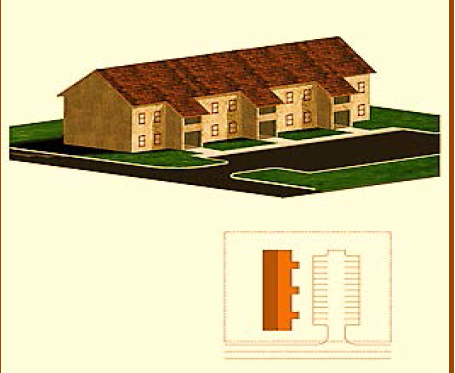
Dwelling, Multifamily
(43)
Dwelling, single-family, means a detached building designed for or occupied exclusively by one family.
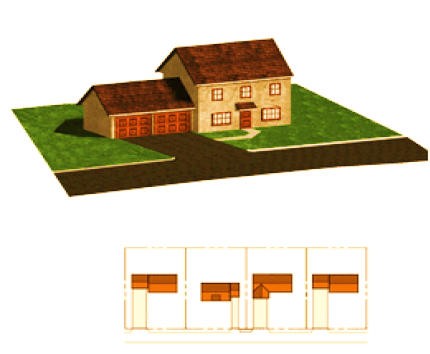
Dwelling, Single-Family
(44)
Dwelling, two-family, means a building designed exclusively for occupancy by two families independently of each other and having separate cooking and bath facilities for each.
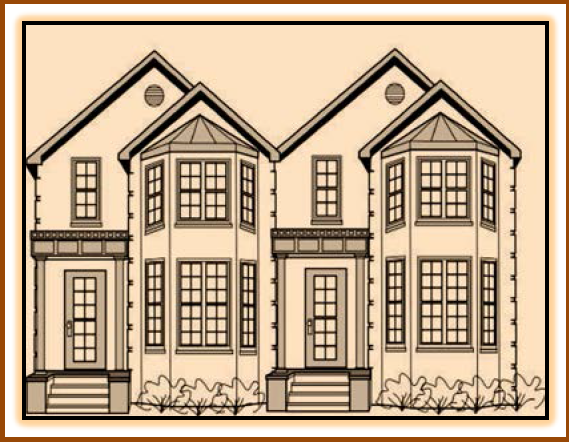
Dwelling, Two-Family
(45)
Dwelling unit means a building or portion thereof designed exclusively for residential occupancy by one family regardless of whether cooking facilities exist.
(46)
Easement means a right-of-way granted, but not dedicated, for limited use of private land for private, public or quasi-public purpose, such as for franchised utilities, a conservation easement or an access easement for a private road or service drive, and within which the owner of the property shall not erect any permanent structures.
(47)
Erected means built, constructed, altered, reconstructed, moved upon, or any physical operations on the premises which are required for construction. Excavation, fill, drainage, and the like, shall be considered a part of erection.
(48)
Essential services means the erection, construction, alteration, or maintenance by public utilities or municipal departments or commissions of underground or overhead electrical, gas, telephone transmissions or distribution systems, including poles, wires, main drains, sewers, pipes, conduits, cables, towers, fire alarm boxes, police call boxes, traffic signals, hydrants and other similar equipment and accessories. Buildings necessary for the furnishing of essential services by such public utilities, departments or commissions shall comply with the requirements of section 44-324(f).
(49)
Excavation means any breaking of ground, except common household gardening and ground care.
(50)
Existing building means a building already existing or one for which the foundations are in place prior to the effective date of this chapter or any relevant amendment thereto.
(51)
Existing use means an actual use of premises or structures that was in operation, openly, visibly, and notoriously prior to the effective date of this chapter or any relevant amendment thereto.
(52)
Expenditure means a sum of money paid out in return for some benefit or to fulfill some obligation. The term "expenditure" also includes binding contractual commitments.
(53)
Family means an individual or group of two or more persons related by blood, marriage or adoption, together with foster children and servants of the principal occupants, and not more than one additional unrelated person, domiciled as a single, domestic, housekeeping unit in a dwelling unit; or a collective number of individuals domiciled in one dwelling unit whose relationship is of a continuing non-transient domestic character and who are cooking and living as a single nonprofit housekeeping unit. The term "family" shall not include any society, club, fraternity, sorority, association, lodge, coterie, organization, or group of students, nor other groups whose domestic relationship is transitory, seasonal, or for a limited duration such as a school term or other similar determinable period.
(54)
Fence means any construction or erection of limited cross-sectional width which encircles either wholly or partially a lot or parcel for the purpose of acting as a barrier to the movement of vehicles, persons or animals or to the act of viewing either into or beyond the parcel or area.
(55)
Final plat means a map of a subdivision of land made up in final form ready for approval and recording.
(56)
Floodplain means the land adjoining the channel of a river, stream, watercourse, lake or other body of water which can be inundated by a flood. Along the Great Lakes shoreline, the floodplain is that area lying below the elevation 583.2 IGLD. 1955, or 584.4 USGS Upstream of the Elk Rapids Dam, and for Elk Lake, the floodplain is that area laying below the elevation 589.88 USGS.
(57)
Floor area, gross, ortotal floor area means the total floor area occupied by a use and measured to include all space used primarily or incidentally for such use.
(58)
Floor area, net, orsales or gross leasable area) means the total floor area occupied by a commercial use customarily open to the public for the sale of merchandise or services, or to serve patrons, clients, or customers. Areas used or intended to be used principally for the storage or processing of merchandise, hallways, mechanical equipment rooms, rooms for heating and cooling equipment rooms, and bathrooms shall be excluded from this computation. Measurement of gross leasable or useable floor area shall be the sum of the horizontal areas of the several floors of the building, measured from the interior faces of the exterior walls. When calculations are not provided, the useable or gross leasable floor area shall be assumed to be 80 percent of the gross floor area.
(59)
Garage, private, means an accessory building or an accessory portion of a principal building designed or used solely for the storage of noncommercial motor vehicles owned and used by the occupants of the building to which it is accessory.
(60)
Gasoline service station means any area of land, including any structures thereon, used or designed for the supply of gasoline, oil, or other fuel for the propulsion of vehicles. The term "gasoline service station" shall also mean any area or structure used or designed for polishing, greasing, washing, cleaning, or servicing such motor vehicles.
(61)
Grade, average finished, means the elevation of completed surfaces of lawns, walks, patios, roads and other such surfaces within any lot of record as determined by the zoning administrator.
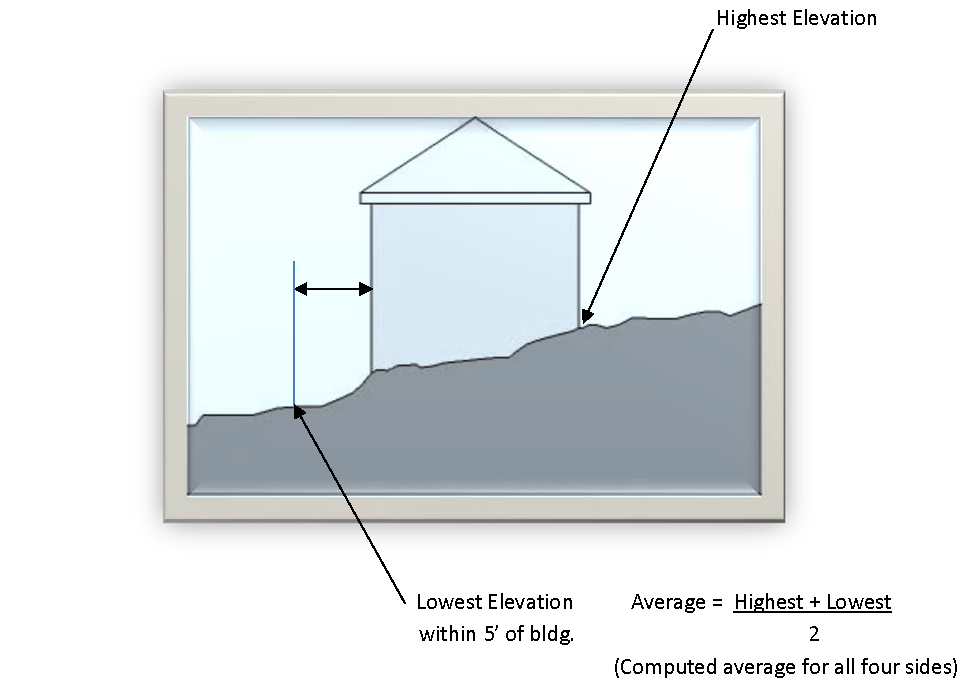
(62)
Grade, existing means the existing grade or elevation of the ground surface that exists or existed prior to man-made alterations, such as grading, grubbing, filling, or excavating.
(63)
Greenbelt or buffer park means a parcel of land or an easement privately restricted or publicly dedicated as open space, located between incompatible uses for the purpose of protecting and enhancing the environment.
(64)
Green roof means roof areas that are constructed using a waterproofing layer, drainage layer, and drought-tolerant plants.
(65)
Guest unit means a room or group of rooms occupied, arranged, or designed for occupancy by one or more guests for compensation.
(66)
Hazardous substance means one of the following:
a.
A chemical or other material which is or may become injurious to the public health, safety, or welfare or to the environment.
b.
The term "hazardous substance," as defined in MCL 324.20101.
c.
The term "hazardous waste," as defined in MCL 324.11103.
d.
The term "petroleum," as defined in MCL 324.21303.
(67)
High water mark means the highest normal water level of the major lakes, rivers, and streams within the village based on water level history or impoundment control. The water mark on Grand Traverse Bay shall be the high water mark, elevation of 581.0 USGS or 579.8 IGLB 1955.
(68)
Highway means any public thoroughfare in the village, including federal, state, and local highways.
(69)
Home occupation means an accessory use of a professional, service, or business character, which is conducted within a dwelling by family residents, which is secondary and incidental to the use of the dwelling for living purposes and which does not change the residential character thereof as regulated in section 44-112.
(70)
Hotel/motel means a building or set group of buildings that offers transient lodging to the public for compensation, with staff on duty and offers a variety of hospitality services and amenities. A guest unit is a room or group of rooms occupied, arranged, or designed for occupancy by one or more guests for compensation.
(71)
Improvement means any structure incident to servicing or furnishing facilities for a subdivision or the installation and maintenance of those facilities, such as grading, street surfacing, curbs and gutters, driveway approaches, sidewalks, crosswalks, water mains and lines, sanitary sewers, storm sewers, culverts, bridges, utilities, lagoons, slips, waterways, lakes, bays, canals, and other appropriate ties, along with appurtenant construction. The term "improvement" includes those features and actions associated with a project considered necessary by the body or official granting zoning approval to protect natural resources and the health, safety, and welfare of the residents of the village and future users or inhabitants of the proposed project or project area; it also includes the installation and maintenance of roadways, lighting, utilities, sidewalks, screening, and drainage.
(72)
Institution means an established society or organization founded for a religious, educational, social, or similar purpose.
(73)
Junkyard means any land or building where waste or used or second-hand materials is bought and sold, exchanged, stored, baled, parked, disassembled, or handled, including, but not limited to, scrap iron and other metals, paper, rags, rubber tires and bottles. A junkyard includes automobile wrecking yards and any area of more than 50 square feet allocated for storage and the keeping or abandonment of junk. However, the term "junkyard" does not include uses and areas established entirely within enclosed buildings.
(74)
Kennel means any lot or premises used for the sale, boarding, keeping, or breeding of five or more dogs, cats or other household pets.
(75)
Land use permit means a zoning compliance permit, special use permit, or planned unit development permit required for any change in use of land or structure in accordance with the provisions of this chapter.
(76)
Landscaping means the treatment of the ground surface with live plant materials normally grown in the county such as, but not limited to, grass, ground cover, trees, shrubs, vines, and other live plant material. In addition, a landscape design may include other decorative natural or processed materials, such as wood chips, crushed stone, boulders or mulch. Structural features such as fountains, pools, statues, and benches shall also be considered a part of landscaping if provided in combination with live plant material.
(77)
Legal authority means an individual having a valid and recorded fee equitable or conventional ownership interest in a property or an individual having been given a written legal authority to act on behalf of such individual.
(78)
Line, street, means the dividing line between a street right-of-way and a lot.
(79)
Local street means a street which is intended primarily for access to abutting properties and is designated a local street on the village thoroughfare or street plan.
(80)
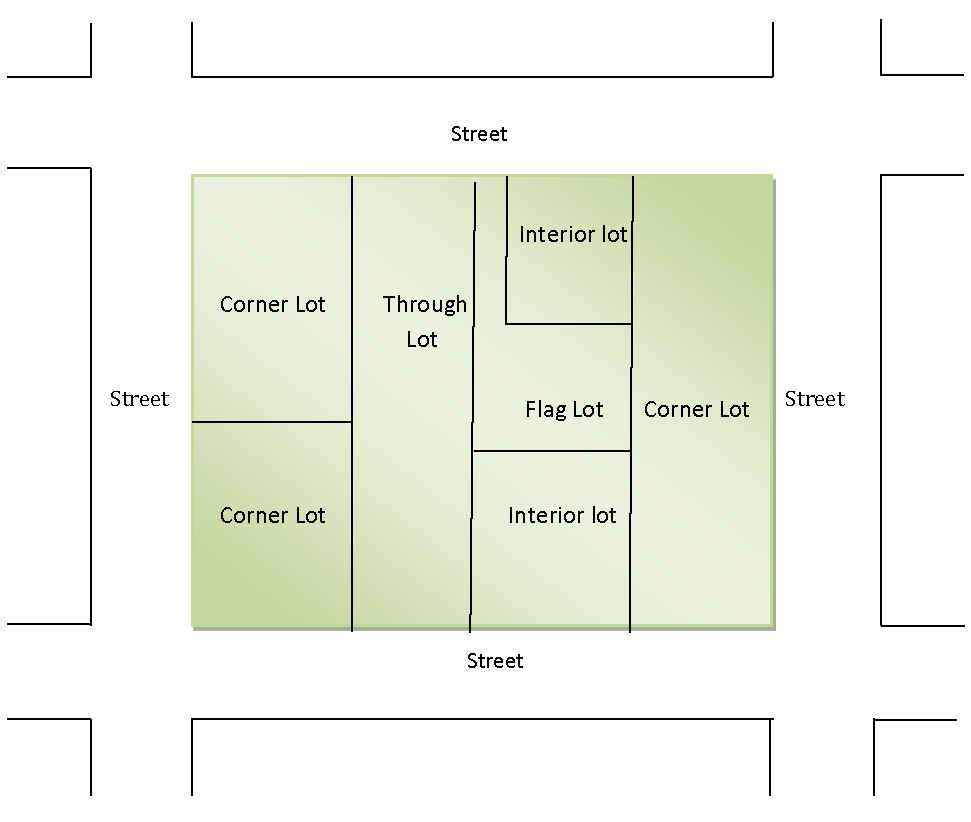
Lot means a single parcel of land which is occupied or intended for occupancy by a use permitted in this chapter and which provides the open, parking, and loading spaces required by this chapter. In the case of residential use, there shall be only one principal building, together with its accessory building, on each parcel. The parcel of land may consist of one or more lots of record designated by a recorded plat or of one or more recorded metes and bounds parcels. A lot shall not be severed by road right-of-way easements or dedications. Lot measurements shall exclude all road right-of-way easements or dedications. Every lot shall have frontage on a public street or approved adequate permanent access. The term "lot" shall also mean a measured portion of a parcel or tract of land which is described and fixed in a recorded plat. Lots established after the effective date of this chapter shall have frontage upon a public street unless established as site condominiums or located within an approved planned unit development.
a.
Lot, corner, means a lot which has at least two contiguous sides abutting upon streets.
b.
Lot, depth of, means the mean distance from the street line of the lot to its opposite rear line measured in the general direction of the side lines of the lot.
c.
Lot, front of, means that lot line which is the street line of the principal street or right-of-way providing access to a lot.
d.
Lot, interior, means a lot other than a corner lot.
e.
Lot, width of, means the width measured along the front building setback line.
f.
Lot line means the lines bounding a lot as herein described. For lots having lake or river frontage, the water mark shall be considered the rear or side lot line.
g.
Lot line, zero, means a condition requiring no set back from one lot line, as is the case for semi-detached buildings on different lots.
h.
Lot of record means a lot which is part of a subdivision whose map was on record in the office of the register of deeds in the county on the effective date of this chapter, or a lot, described by metes and bounds, of which the deed, land contract, or land contract memoranda was on record in the office of the register of deeds in the county on the effective date of this chapter.
(81)
Lot coverage means the area of a parcel that is covered by structures less any area of green roof.
(82)
Major thoroughfare means U.S. 31 Highway and Ames Street.
(83)
Marginal access street means a local street which is parallel and adjacent to arterial streets, which provides access to abutting properties and protection from through traffic and which does not carry through traffic.
(84)
Marina means a commercial boat basin or dock with or without facilities for boat sales, berthing, and servicing all types of watercraft including providing supplies, provisions, repairs, parts, fishing licenses and supplies, and equipment rental facilities.
(85)
Marquee means a roof-like structure, including awnings, often bearing a signboard, projecting over an entrance to a building.
(86)
Master plan means the collaborative master plan of the village and Elk Rapids Township and any corridor or sub-area plans, recommended by the planning commission and adopted by the village council, as amended from time to time.
(87)
Mechanical amusement arcade means any place in which a substantial and significant portion of the business is devoted to operating mechanical amusement devices, or in which more than five mechanical amusement devices are located and available for operation. The term "mechanical amusement arcades" shall not include the following:
a.
Mechanical amusement devices located in bars, taverns, cocktail lounges and restaurants which are properly licensed by the state, when the devices are an integral part of the licensed operation and available only to tavern and restaurant patrons.
b.
Mechanical amusement devices located in motels or hotels which are generally available only to registered guests.
c.
Vending machine dispensing materials which can be utilized away from the premises where the machine is located.
d.
Mechanical amusement devices which are located on property used solely for a residential purpose or a private club and are not available for use by the public.
(88)
Mechanical amusement device means any machine which, upon the insertion of a coin, slug, token, plate, or disk or upon payment of a price, may be operated by the public generally for use as a game, entertainment, or amusement, including, but not limited to, games registering a score, electronic video games, mechanical or electronic devices such as marble machines, pinball machines, mechanical grab machines, shuffle board game machines, pool tables, billiard tables and all game operations or transactions similar thereto, whether operated by hand, electric power, or combination thereof. The term "mechanical amusement device" shall not include a jukebox or other similar device which plays only music for money, a full-size bowling lane or alley, or movie theater seating more than ten persons.
(89)
Medical marihuana cultivation facility means a use where medical marihuana plants are grown or manufactured on a property as permitted by the Michigan Medical Marihuana Act, MCL 333.26421 et seq., and this section.
(90)
Medical use of marihuana means the acquisition, possession, cultivation, manufacture, use, internal possession, delivery, transfer, or transportation of marihuana or paraphernalia relating to the administration of marihuana to treat or alleviate a registered qualifying patient's debilitating medical condition or symptoms associated with the debilitating medical condition.
(91)
Mixed-Use means a use type with retail on the property address street-facing portion of the first floor and residential or office above.
(92)
Mobile food vending means vending, serving, or offering for sale food and/or beverages from a mobile food vending unit that meets the definition of a food service establishment under Public Act 92 of 2000. This includes the ancillary sales of branded items consistent with the food, i.e., tee shirt with the name of the mobile food vendor.
(93)
Mobile home means a structure, transportable in one or more sections, built on a chassis and designed to be used as a dwelling with or without permanent foundation, when connected to the required utilities. The plumbing, heating, air conditioning and electrical systems are part of the structure. The term "mobile home" does not include a recreational vehicle.
(94)
Mobile home park, trailer coach park, or park means any parcel or tract of land upon which three or more occupied trailer coaches are harbored on a continual or non-recreational basis or land which is offered to the public for that purpose, regardless of whether a charge is made therefor, together with any building, structure, enclosure, street, equipment, or facility used or intended for use incidental to the harboring or occupancy of trailer coaches, except as provided by MCL 125.2308.
(95)
Municipal civil infraction means a violation of this article punishable by civil fines as provided in section 44-323(d), plus any costs, damages, expenses and other sanctions, as authorized under MCL 600.8701 et seq., and other applicable laws. Civil infractions may be processed by either civil citation or violation notices.
(96)
Municipal civil infraction citation means a written complaint or notice prepared by an authorized village official, directing a person to appear in court regarding the occurrence or existence of a municipal civil infraction violation by the person cited.
(97)
Municipal civil infraction violation notice means a written notice prepared by an authorized village official, directing a person to appear at the village's municipal ordinance violations bureau and to pay the fine and costs, if any, prescribed for the violation by the schedule of civil fines adopted by the village, as authorized under MCL 600.8396 and 600.8707.
(98)
NAICS Code means the North American Industrial Classification System 2007, published by the federal Office of Management and Budget, 1987.
(99)
Nonconforming dimension means a nonconforming situation that occurs when the height, size or minimum floor space of a structure, the relationship between an existing building or buildings and other buildings or lot lines, or the lot width does not conform to the regulations applicable to the district in which the property is located.
(100)
Nonconforming lot means a lot that was lawful upon the date it was created and has not been unlawfully expanded or extended, (and not created for the purposes of evading the restrictions of this chapter) but which does not meet the minimum area or the minimum lot width requirement of the district in which the lot is located.
(101)
Nonconforming situation means a lawfully created existing lot or structure or a use of a lawfully created existing lot or structure which, was lawful upon the date it was commenced and has not been abandoned, and has not been unlawfully expanded or extended, but does not conform to one or more of the currently applicable regulations to the district in which the lot or structure is located. Nonconforming signs shall not be regarded as nonconforming situations for purposes of this chapter but shall be governed by the provisions of section 44-230(k).
(102)
Nonconforming use means an existing use of a building, structure, or land which, was lawful upon the date it was commenced and has not been abandoned, and has not been unlawfully expanded or extended, but does not conform to the currently applicable regulations for the district or zone in which it is situated.
(103)
Open space means any space on a lot that is unoccupied by a structure which is open to the sky.
(104)
Outlot means a lot, within the boundary of a recorded plat, set aside for purposes other than a building site and dedicated to public use or reserved for private use, and located within the boundary of a recorded plat.
(105)
Parcel or tract means a continuous area or acreage of land which can be described as provided for in the Land Division Act, MCL 560.101 et seq.
(106)
Parking surface area means that area required for each parking space including the area required for maneuvering lanes and access drives.
(107)
Patio means a paved open space, used for outdoor living purposes and constructed of any materials providing a hard, durable surface, which does not protrude more than four inches above the finished grade of the property.
(108)
Permit-issuing authority means the planning and zoning administrator, planning commission, or village council, whichever has issued a particular permit or approval.
(109)
Plan, general development, means the village master plan as defined in this section.
(110)
Planned unit development (PUD) means a parcel, tract of land or a lot, of such minimum contiguous size as required by this chapter which is planned, developed, operated and maintained under single ownership or management. It may contain one or more residential clusters, commercial, industrial, public or quasi-public land uses as permitted by this chapter. A PUD shall be based on an approved site plan which allows flexibility of design not available under normal zoning district requirements. A PUD may contain a mixture of housing types and densities as well as a mixture of land uses, common open spaces and other innovations in design not otherwise easily accomplished under this chapter, provided the requirements of section 44-273 are met.
(111)
Plat means a map or charter of a subdivision of land.
(112)
Pre-preliminary plat means an informal plan or sketch drawn to scale showing the existing features of a site including its surroundings and the general layout of a proposed subdivision, site condominium, or condominium subdivision.
(113)
Preliminary plat means a map, as described in section 44-275(d)(1) through (5), showing the salient features of a proposed subdivision of land including site condominiums or condominium subdivisions, submitted to an approving authority for preliminary consideration.
(114)
Primary caregiver means a person who is at least 21 years old, who has agreed to assist with a patient's medical use of marihuana, who has never been convicted of a felony involving illegal drugs and is in compliance with any applicable requirements set forth in the Michigan Medical Marihuana Act, MCL 333.26421 et seq.
(115)
Plot plan means a non-scaled drawing of a plot of land depicting existing and proposed underground and above ground structures, dimensions and other information as required by this chapter. See section 44-271(c).
(116)
Practical difficulty means a situation existing where a legally existing lot or parcel cannot reasonably be put to a conforming use without a non-use variance from the requirements of this chapter.
(117)
Primary street means those streets of considerable continuity which are designated as primary streets on the village thoroughfare or street plan.
(118)
Principal use means the main use to which the premises are devoted and the principal purpose for which the premises exists.
(119)
Private launching ramp means a space or structure from which a boat may be launched for the use and benefit of the patrons of the waterfront marina or boat yard wherein the boat is berthed or docked.
(120)
Proprietor, subdivider, or developer means a person, firm, association, partnership, corporation, or combination of any of these which may hold any recorded or unrecorded ownership interest in land. The proprietor is the owner.
(121)
Public open space means land dedicated or reserved for use by the public. It may include parks, parkways, recreation areas, school sites, community or public building sites, streets and highways, and public parking spaces.
(122)
Public utility means any person, firm, corporation, municipal department, or board fully authorized to furnish to the public electricity, gas, steam, telephone, cable television, transportation, or water.
(123)
Qualifying patient means a person who has been diagnosed by a physician as having a debilitating medical condition and is in compliance with any applicable requirements set forth in the Michigan Medical Marihuana Act, MCL 333.26421 et seq.
(124)
Rain garden means a shallow space below grade lined with rock or other permeable substrate that is planted with water-tolerant plants to which storm water drains.
(125)
Receiver means a television set or radio receiver.
(126)
Recreation, private, means a space, structure, apparatus, or combination thereof that is owned or operated by private interest for private recreational use.
(127)
Recreational unit means a tent or a vehicular-type structure primarily designed as temporary living quarters for recreational camping or travel use, which either has its own motive power or is mounted on or drawn by another vehicle. A tent means a collapsible shelter of canvas or other fabric used for camping outdoors. Recreational unit shall include travel trailer, camping trailer, motor home, truck camper, slide-in camper, and chassis-mount camper as defined in MCL 333.12501.
(128)
Recreational vehicle means a recreational unit as defined in MCL 333.12501, exclusive of tents and non-motorized recreational equipment or watercraft less than 14 feet in length. In addition, a recreational vehicle includes a trailer used for the transport of motorized recreational equipment, such as snowmobiles or watercraft, or of non-motorized recreational equipment, such as a fish shanty; motorized watercraft and other motorized recreational equipment; and a trailer along with motorized or non-motorized recreational equipment loaded for transport.
(129)
Replat means the process of changing the boundaries of a recorded subdivision plat or part thereof. The legal dividing of an outlot within a recorded subdivision plat without changing the exterior boundaries of the outlot is not a replat.
(130)
Residence means the place at which a person habitually sleeps, keeps his or her personal effects, and has a regular place of lodging.
(131)
Right-of-way means a road, street, alley, or other thoroughfare or easement permanently established for passage of persons or vehicles which, if used to establish a lot front, provides adequate permanent access.
(132)
Road means a public or private thoroughfare, easement, or right-of-way for motor vehicles which affords the principal means of access to abutting property.
(133)
Road, private, means a road held in private ownership dedicated to the use of adjacent property owners and meeting the design and construction standards of the county road commission, except for the required blacktop road surface.
(134)
Road, public, means a road dedicated to the public, accepted by the appropriate public road commission or department of transportation, and meeting the minimum construction standards of the public road commission or department of transportation.
(135)
Roadside stand means a structure for the display of agricultural products, without space for customers within the structure itself.
(136)
Satellite signal receiving antenna means an over-the-air reception device as cited in 47 CFR 4000, a part of the federal Telecommunications Act of 1996, 47 USC 609 et seq., where the viewer has an ownership or leasehold interest and exclusive use or control. The rule applies to the following types of video antennas:
a.
A dish antenna that is one meter (39.37 inches) or less in diameter and is designed to receive direct broadcast satellite service, including direct-to-home satellite service, or to receive or transmit fixed wireless signals via satellite.
b.
An antenna that is one meter or less in diameter or diagonal measurement and is designed to receive video programming services via MMDS (wireless cable) or to receive or transmit fixed wireless signals other than via satellite.
c.
An antenna that receives local television broadcast signals. Masts higher than 12 feet above the highest point of the roofline must meet the requirements of section 44-169. This definition excludes AM/FM radio, amateur (HAM) radio, Citizens Band (CB) radio, and Digital Audio Radio Services (DARS) signals.
(137)
Setback. See Building line.
(138)
Sexually oriented business means and includes, but is not limited to, adult arcade, adult bookstore, adult video store, adult cabaret, adult motion picture theater; adult theater; nude model studio and sexual encounter center, as follows:
a.
Adult arcade means any place to which the public is permitted or invited wherein coin-operated or slug-operated or electronically, electrically, or motion picture machines, projectors, or other image producing devices are maintained to show images for any form of consideration to five or fewer persons per machine at any one time, and where the images so displayed are distinguished or characterized by the depicting or describing of specified sexual activities and specified anatomical areas (as those terms are defined elsewhere herein).
b.
Adult bookstore means a commercial establishment which, as one of its principal business purposes, offers for sale or rental for any form of consideration any one or more of the following: books, magazines, periodicals or other printed matter, or photographs, films, motion pictures, video cassettes or video reproductions, slides, or other visual representations which depict or describe specified sexual activities and specified anatomical areas; or instruments, devices, or paraphernalia which are designed for use in connection with specified sexual activities.
c.
Adult cabaret means a nightclub, bar, restaurant, or similar commercial establishment which regularly features persons who appear in a state of semi-nudity or nudity or live performances which are characterized by exposure of specified anatomical areas and by specified sexual activities; films, motion pictures, video cassettes, slides, or other photographic reproductions which are characterized by the depiction or description of specified sexual activities and specified anatomical areas; or persons who engage in lewd, lascivious or erotic dancing or performances that are intended for the sexual interest or titillation of an audience or customers.
d.
Adult motion picture theater means a commercial establishment where, for any form of consideration, films, motion pictures, video cassettes, slides or similar photographic reproductions are regularly shown which are characterized by the depiction or description of specified sexual activities and specified anatomical areas.
e.
Adult theater means a theater, concert hall, auditorium or similar commercial establishment which regularly features persons who appear in a state of nudity or live performances which are characterized by the exposure of specified anatomical areas and by specified sexual activities.
f.
Adult video store means a commercial establishment which, as one of its principal business purposes, offers for sale or rental for any form of consideration any one or more of the following:
1.
Books, magazines, periodicals or other printed matter, or photographs, films, motion pictures, video cassettes or video reproductions, slides, or other visual representations which depict or describe specified sexual activities and specified anatomical areas.
2.
Instruments, devices, or paraphernalia which are designed for use in connection with specified sexual activities.
3.
A commercial establishment may have other principal business purposes that do not involve the offering for sale or rental of material depicting or describing specified sexual activities and specified anatomical areas and may still be categorized as adult bookstore or adult video store. The sale of such material shall be deemed to constitute a principal business purpose of an establishment if it comprises ten percent or more of the floor area of visible inventory within the establishment.
g.
Nude model studio means any place where a person who displays specified anatomical areas is provided to be observed, sketched, drawn, painted, sculpted, photographed, or similarly depicted by other persons who pay money or any form of consideration.
h.
Sexual encounter center means a business or commercial enterprise that, as one of its principal business purposes, offers for any consideration specified sexual activities in the form of activities between male and female persons or persons of the same sex.
(139)
Sign means any identification, description, illustration, display, or device illuminated or non-illuminated, which is visible from any public place or is located on private property and exposed to the public, to which the following definitions apply:
a.
Awning sign means a sign on a permanent awning/canopy projecting over an entrance or window of a commercial business structure.
b.
Banner means a sign made of natural, synthetic, or plastic material not including pennants or flags.
c.
Billboard means an off-premises sign owned by a person, corporation or the entity that engages in the business of selling the advertising space on that sign to an establishment, business, merchandise, service, or entertainment which is not sold, produced, manufactured, or furnished on the property on which said sign is located.
d.
Business center sign means a sign which gives the name and other identification for a business center.
e.
Changeable copy sign means a sign with a fixed or changeable display or message that may be changed by manual means.
f.
Electric message sign means a sign with a fixed or changeable display or message composed of a series of lights that may be changed through electronic means.
g.
Feather signs means any sign that is comprised of material that is suspended or attached in such a manner to a pole or stake, typically shaped like a feather as to attract attention by waving, moving or fluttering in the wind. It also includes similar signs that do not move or flutter.
h.
Flag means a sign made of natural, synthetic, or plastic material having a distinctive size, color, and design used as an identifying symbol or emblem.
i.
Flashing sign means any illuminated sign on which the artificial light is not maintained stationary and constant in intensity and color when such sign is in use.
j.
Ground sign means a sign permanently supported by one or more uprights, poles, braces or some other structure placed in the ground surface and not attached to any building.
k.
Illuminated sign means a sign with an artificial light source incorporated internally or externally.
l.
Incidental sign means a sign that is associated with a principal structure that contains information necessary for public safety, health and welfare. Examples of incidental signs include disabled parking signs, no smoking signs, signs used to designate bathrooms, entrance signs, and EBT (bridge card) signs.
m.
Marquee sign means an identification sign that is a permanent structure of rigid materials supported by and extending from, or above, a building, such as the entrance of a theatre or hotel.
n.
Nonconforming sign means a sign that was lawful upon the date it was commenced and has not been abandoned, and has not been unlawfully expanded or extended, but which does not conform to one or more of the regulations set forth in this chapter.
o.
Pennant means a small, often triangular, tapering flag used in multiples as a device to call attention to a land use or activity.
p.
Portable sign means a freestanding sign not permanently anchored or secured to either a building or the ground, including trailered or similarly mounted signs or signs on parked vehicles where the sign is the primary use of the vehicle or wheeled object.
q.
Projecting sign means a sign which is affixed to any building or structure other than a marquee and which projects so that the message is not parallel to the wall to which it is attached.
r.
Roof sign means a sign which is erected or painted over or on the roof of a building. No sign may extend above any parapet or be placed upon, cantilevered over or otherwise suspended above any roof surface. For purposes of this chapter, roof surfaces constructed at an angle of 75 degrees or more from horizontal (such as mansard roofs) shall be regarded as wall space. This shall not apply to displays, including lighting, erected in connection with the observation of holidays on the roofs of residential structures.
s.
Sign face means that part of a sign structure which is used to communicate graphically a message or announcement.
t.
Sign maintenance means the cleaning, painting, repairing or replacing of defective parts of a sign in a manner that does not alter the copy, design, or structure of the sign.
u.
Temporary sign means a display sign, banner or flag with or without a structural frame intended for a limited period of display.
v.
Tourist oriented directional sign (TODS) means a sign authorized and permitted by the state, to provide motorists with advance notice of a lawful cultural, historical, recreational, educational, or commercial activity that is annually attended by 2000 or more people and for which a major portion of the activity's income or visitors are derived during the normal business season for motorists not residing in the immediate area of the activity.
w.
Wall area means the area of any single front, rear, or side wall of a building including doors and windows.
x.
Wall sign means a sign attached directly to or painted upon a building wall means the exposed face of the sign must be in a plane parallel to the building wall or structure. The sign shall not extend above the height of the building, wall, or structure.
(140)
Site area means the total area within the property lines excluding street rights-of-way.
(141)
Site plan means the drawings and documents depicting and explaining all salient features of a proposed development so that it may be evaluated according to the procedures in section 44-274 to determine whether it meets the requirements of this chapter.
(142)
Sketch plan means a pre-preliminary plat.
(143)
Special land use means a use of land whose characteristics may create nuisance-like impacts on adjoining lands unless carefully sited according to procedures and standards established in this chapter.
(144)
Specified anatomical area means the male genitals in a state of sexual arousal or the vulva or more intimate parts of the female genitals.
(145)
Specified sexual activities means and includes any of the following:
a.
The fondling or other erotic touching of human genitals, pubic region, buttocks, anus or female breasts;
b.
Sex acts, normal or perverted, actual or simulated, including intercourse, oral copulation, or sodomy;
c.
Masturbation, actual or simulated; or
d.
Excretory functions as part of or in connection with any of the activities set forth in this section.
(146)
State-licensed residential facility means a structure constructed for residential purposes that is licensed by the state under the Adult Foster Care Facility Licensing Act, MCL 400.701 to 400.737, or under MCL 722.111 to 722.128, and provides residential services for individuals under 24-hour supervision or care.
(147)
Story means that portion of a building included between the top surface of any floor and the top surface of the floor next above. The height of the top-most story is the distance from the top surface of the floor to the top surface of the ceiling joists. (See basement diagram.)
(148)
Story, half, means a space under a sloping roof where the line of intersection of roof decking and wall is not more than three feet above the top floor level and where not more than 60 percent of the floor area is completed for principal or accessory use. (See Basement diagram.)
(149)
Street means a right-of-way which provides for direct vehicular and pedestrian access to individual abutting properties.
(150)
Street line means the legal line of demarcation between a street and abutting land.
(151)
Street width means the shortest distance between the lines delineating the right-of-way of streets.
(152)
Structure means any production or piece of material artificially built up or composed of parts joined in some definite manner; any construction, including dwellings, garages, buildings, mobile homes, signs and sign boards, towers, poles, antennas, swimming pools, and earth sheltering for earth-sheltered structures, decks, fences greater than four feet or more or other like objects, but not including fences up to four feet in height, uncovered steps, access steps required to negotiate changes in site elevation, landscape mounds, or sidewalks, patios, drives, and paved areas which do not protrude above the finished site grade.
(153)
Subdivide or subdivision means the partitioning or dividing of a parcel or tract of land by the proprietor thereof or by his heirs, executors, administrators, legal representatives, successors, or assigns for the purpose of sale, or lease of more than one year, or of building development, where the act of division creates five or more parcels of land each of which is ten acres or less in area; or where five or more parcels of land each of which is ten acres or less in area are created by successive divisions within a period of ten years.
(154)
Surveyor means a land surveyor licensed to practice in the state.
(155)
Temporary dwelling unit means a dwelling unit which is occupied for a continuous period not to exceed 30 days.
(156)
Topographical map means a map showing existing physical characteristics, with contour lines that permit determination of proposed grades and drainage.
(157)
Townhouse means a building containing three or more attached dwelling units. Typically, these dwelling units directly face the street, share common walls and occupants will own or rent all the space from the ground to roof. These units are not typically stacked.
(158)
Trailer coach means a mobile home, as defined herein.
(159)
Travel trailer park means a campground, as defined herein.
(160)
Traveled surface of roadway, for the purpose of establishing setbacks, means that portion of the roadway surface the principal function of which is to provide for the passage of motor vehicles as they traverse the roadway, excluding therefrom the shoulder of the road which is principally used for the emergency stopping or parking of motor vehicles or for the passage of pedestrians and bicycles. The traveled surface of each lane of the roadway shall be at least 11 feet wide, thereby having a minimum of 11 feet of traveled surface either side of the centerline of a two-lane road; three traveled surfaces of 11 feet in width for a three-lane road or a two-lane road with a passing lane or turning lane at an intersection; and four traveled surfaces of 11 feet each in width for a four-lane road or a three-lane road with a passing lane or a turning lane at an intersection.
(161)
Unnecessary hardship means a situation which exists when a legally established lot or parcel cannot be reasonably put to a conforming use allowed within the district within which the lot or parcel is located.
(162)
Use means the purpose for which land or a building is arranged, designed or intended, or for which land or a building may be occupied. The term "used," as applied to any land or building, shall be construed to include the words intended, arranged, or designed to be used.
(163)
Variance, non-use, means a variance granted to provide relief from a specific non-use standard in this chapter pursuant to the procedures provided herein.
(164)
Variance, use, means a variance which authorizes a land use on a parcel which otherwise is not permitted by this chapter in the district in which the parcel is located.
(165)
Water mark means the highest normal water level of the major lakes, rivers, and streams within the village based on water level history or impoundment control. The water mark on Grand Traverse Bay shall be the high water mark, elevation of 581.0 USGS or 579.8 IGLB 1955.
(166)
Water resources commission means a unit of the state department of natural resources.
(167)
Waterfront recreational use means the use of a waterfront area for swimming, sunbathing, sitting, viewing, picnicking, walking, and the launching of non-motorized watercraft under 20 feet in length, excluding mooring and dockage of watercraft.
(168)
Wetland means land characterized by the presence of water at a frequency and duration sufficient to support and that under normal circumstances does support wetland vegetation or aquatic life and is commonly referred to as a bog, swamp, or marsh and which is any of the following:
a.
Contiguous to any lake, pond, river or stream.
b.
Not contiguous to any lake, pond, river or stream; and more than five acres in size.
c.
Not contiguous to any lake pond, river or stream; and five acres or less in size if the state department of environmental quality (MDEQ) determines that protection of the area is essential to the preservation of the natural resources of the state from pollution, impairment, or destruction and the MDEQ has so notified the owner.
(169)
Wind energy system (WES) means a structure-mounted or tower-mounted system that converts wind energy into electricity to which the following definitions apply:
a.
Ambient sound level means the amount of background noise at a given location prior to the installation of a WES which may include, but is not limited to, traffic, machinery, lawnmowers, general human activity and the interaction of the wind with the landscape. Ambient sound level is measured on the decibel dB(A) weighted scale as defined by the American National Standards Institute (ANSI).
b.
Anemometer means a wind speed indicator constructed for the purpose of analyzing the potential for installing a WES at a given location. An anemometer includes a tower, base plate, anchors, cables and hardware, wind direction vanes, booms to hold equipment, a data logger, instrument wiring and telemetry devices used to monitor or transmit wind speed and wind flow characteristics over a period of time. Telemetry data can include instantaneous wind speeds or characterizations of a wind resource at a given location.
c.
Decommissioning means the process of terminating the operation of a WES by completely removing the entire WES and all related buildings, structures, foundations, supports and equipment.
d.
Nacelle means the encasement which houses the interior electricity generating components, gear box, drive train, brakes and related equipment of a WES.
e.
Net metering means a special metering and billing agreement between utility companies and their customers, which facilitates the connection of sustainable energy generating systems to the power grid.
f.
Occupied building means a structure used by, or which houses, residents, customers, workers or visitors.
g.
Operator means the entity responsible for the day-to-day operations and maintenance of a WES.
h.
Owner/applicant means the person, firm, corporation, company, limited liability corporation or other entity seeking village approval under this section, as well as its successors, assigns or transferees, of a WES or anemometer. An owner/applicant must have the legal authority to represent and bind the landowner or lessee who will construct, own, and operate the WES or Anemometer. The duties and obligations regarding a zoning approval for any approved WES or Anemometer shall be with the owner/applicant of the WES or Anemometer, and jointly and severally with the owner and operator or lessee of the WES or Anemometer if different than the owner/applicant.
i.
Rotor means a blade of a WES that is connected to the rotor hub and nacelle and acts as an airfoil assembly that exacts kinetic energy directly from the wind.
j.
Rotor diameter means the cross-sectional dimension of the circle swept by the rotating blades of a WES.
k.
Small structure mounted wind energy system (SSM-WES) means a structure-mounted wind energy system that converts wind energy into electricity through the use of equipment (e.g., base, blade, rotor, foundation, generator, nacelle, tower, transformer, vane, wire, inverter, batteries, etc.) SSM-WESs are attached to a structure's roof, walls or another elevated surface. SSM-WESs have nameplate capacities that do not exceed ten kilowatts. The height of a SSM-WES unit does not exceed 15 feet as measured from the highest point of the roof or structure, excluding chimneys, antennas or other similar features.
l.
Small tower mounted wind energy system (STM-WES) means a tower-mounted wind energy system with a maximum total height of 40 feet that converts wind energy into electricity through the use of equipment (e.g., base, blade, rotor, foundation, generator, nacelle, tower, transformer, vane, wire, inverter, batteries, etc.) STM-WESs have nameplate capacities that do not exceed 30 kilowatts.
m.
Survival wind speed means the maximum wind speed, as designated by the WES manufacturer, at which a WES in an unattended state is designed to survive without damage to any structural equipment or the loss of the ability to function normally.
n.
Total height means the vertical distance as measured from the ground level of the base of a WES tower to the uppermost vertical extension of a rotor blade, or the maximum height reached by any part of a WES.
o.
Tower means a freestanding monopole or monotube that supports a WES.
p.
Upwind turbines, as opposed to a downwind turbine, an upwind turbine has the rotor blades facing into the wind source direction.
(170)
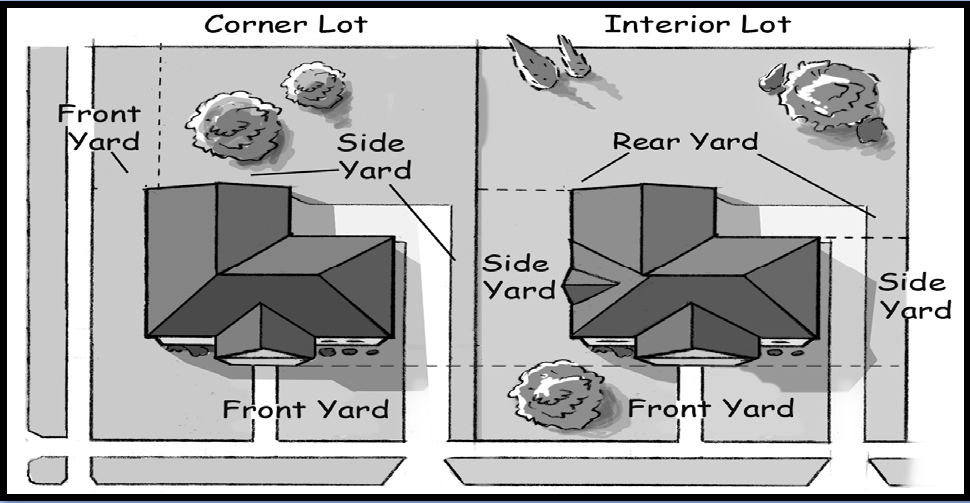
Yard means an open space on a lot that is unoccupied and unobstructed from the ground upward, except as otherwise provided herein. The measurement of a yard shall be the minimum horizontal distance between the corresponding lot line and the nearest point of the main building or land use.
a.
Yard, front, means a yard extending across the width of a lot between the front of the lot and the nearest point of the main building or land use.
b.
Yard, rear, means a yard extending the full width of the lot and located between the rear line of the lot and the rear line of the building projected to the sidelines of the lot. The depth of the rear yard shall be measured between the rear line of the lot and the nearest point of the main building or land use.
c.
Yard, side, means a yard situated between the main building and a side lot line and extending from the front yard to the rear yard.
(171)
Zoning compliance permit means a permit required for any change in use of land or structure, in the exterior dimensions of a structure, in the location of a structure, or for any structural modification requiring a building permit; such permits are issued by the zoning administrator according to the provisions of this chapter.
(Ord. No. 458, § 202, 3-2-2015; Ord. No. 480, 11-20-2017; Ord. No. 486, 6-14-2018; Ord. No. 498, 8-5-2019; Ord. No. 2022-02, 7-18-2022; Ord. No. 2022-03, 9-6-2022; Ord. No. 2022-07, 6-20-2023; Ord. No. 2023-03, 11-21-2023; Ord. No. 2024-02, § 1, 5-21-2024; Ord. No. 2024-08, § 1, 10-15-2024; Ord. No. 2024-10, § 1, 10-15-2024; Ord. No. 2024-11, § 1, 11-19-2024)
Sec. 44-6. - No use or sale of land or buildings except in conformity with provisions.
(a)
No person may use, occupy, or sell any land or buildings or authorize or permit the use, occupancy, or sale of land or buildings under his control except in accordance with all of the applicable provisions of this chapter.
(b)
For purposes of this section, the use or occupancy of a building or land relates to anything and everything that is done to, on, or in that building or land.
(Ord. No. 458, § 107, 3-2-2015)
Sec. 44-7. - Fees.
(a)
Reasonable fees sufficient to cover the costs of application processing shall be charged to applicants for a zoning compliance permit, sign permit, special use permit, planned unit development approval, subdivision plat approval, condominium approval, zoning variances, and other administrative relief. The amount of the fees charged shall be as provided in the village fee schedule.
(b)
Fees established in accordance with subsection (a) of this section shall be paid upon submission of a signed application or notice of appeal.
(c)
Fees may include, but are not limited to, all costs associated with conducting a public hearing or inspection, including: the newspaper notice; postage; photocopying; staff time; meeting time of the planning commission, village manager, village council, zoning board of appeals; mileage; and any costs associated with reviews by qualified professional community planners or engineers or related experts. Fees in excess of those fixed according to subsection (a) of this section shall be set and may be collected in escrow with any unexpended balance returned to an applicant according to the procedure described below:
(1)
Upon consideration of any application for approval of a site plan, special use permit, planned unit development permit, or other land use matter under this chapter, either the planning and zoning administrator, planning commission or village manager may require the deposit of fees to be held in escrow in the name of the applicant to meet the requirements of this chapter.
a.
An escrow fee shall be required for any project with more than ten dwelling units, or more than 10,000 square feet of enclosed space, or which requires any more than 20 parking spaces.
b.
An escrow fee may be required for any other project which may, in the discretion of the planning and zoning administrator, planning commission or village manager, create an identifiable and substantial impact on public infrastructure or services, or on adjacent properties and because of which, professional input is desired before a decision to approve, deny or approve with conditions is made.
(2)
The escrow shall be used to pay professional expenses of engineers, community planners, and other professionals whose expertise is used to review a proposed application or site plan.
(3)
The amount of the escrow fee shall be established based upon an estimate of the cost of services to be rendered by professionals contacted by the village manager at the request of the planning and zoning administrator, the planning commission or the village council.
(4)
No application for approval for which an escrow fee is requested will continue to be processed until the escrow fee is deposited with the village clerk.
(5)
Professional review shall be initiated upon formation of the escrow account and shall result in a report to the village indicating the extent of conformance or nonconformance with This chapter and identifying any problems which may create a threat to public health, safety or the general welfare. Mitigation measures or alterations to a proposed design may be identified where they would serve to lessen or eliminate identified impacts. The report shall be part of the considerations and findings of the approval-granting authority.
(6)
The applicant shall receive a copy of any professional review hired by the village and a copy of the statement of expenses for the professional services rendered.
(7)
The applicant is entitled to a refund of any unused escrow when approval is either granted or denied, or if the application is withdrawn.
(d)
If actual professional review expenses exceed the amount of an escrow, the applicant shall pay the balance. The balance owed must be paid prior to issuance of the permit or approval that is in response to the application which required the review.
(Ord. No. 458, § 108, 3-2-2015)
Sec. 44-8. - Computation of time when service of notice or other paper is by mail.
Unless otherwise specifically provided, when a person has the right or is required to do some act within a prescribed period after the service of a notice or other paper upon him and the notice is served by mail, three days shall be added to the prescribed period.
(Ord. No. 458, § 110, 3-2-2015)
Sec. 44-9. - Amendment by village council.
(a)
Authorized. The regulations and provisions stated in the text of this chapter and the boundaries of zoning districts shown on the official zoning map of the village may be amended, supplemented, or changed by resolution of the village council in accordance with the Michigan Zoning Enabling Act, MCL 125.3101 et seq.
(b)
Initiation. Proposals for amendments, supplements, or changes may be initiated by the village council on its own motion, by the recommendation of the planning commission or by petition submitted by individuals with a vested interest in the properties affected.
(c)
Procedure for submission. Each petition for an amendment shall be submitted on an application to the village clerk, on a standard form, accompanied with payment of required fees at the time of application to cover costs of necessary advertising for public hearing and investigation of the amendment request. No part of such fee shall be returnable to a petitioner. The procedures set forth in section 44-322(f) shall be followed with regard to any amendment.
(d)
Consideration generally. The planning commission or village council shall consider each proposal for amendment in terms of the master plan, its own judgment on particular factors related to the individual proposal, and the likely effect of such proposal upon the surrounding properties. The planning commission may recommend additions or modifications to the original amendment proposal. Should the village council consider changes, additions, or departures to the proposed amendment, it shall follow the procedures outlined in section 44-322.
(Ord. No. 458, § 113, 3-2-2015)

