
Farmers Branch City Zoning Code
ARTICLE 3
- ZONING DISTRICT DIMENSIONAL STANDARDS
3.1 - APPLICABILITY
Except as otherwise provided in this chapter, every building or structure, or part of a building or structure, erected, altered or converted for any use permitted in the zoning district in which the building or structure is located must comply with this Article.
(Ord. No. 3415, § 1(Exh. A), 1-20-2017)
3.2 - GENERAL
A.
Location of Dwellings and Buildings
1.
Except as other authorized pursuant to an approved Detailed Site Plan, no more than one main building for one-family, two-family or multiple-family use with permitted accessory buildings may be located upon a lot.
2.
Each dwelling shall face or front upon a public street, or approved place, other than an alley, which means of access shall have a dedicated right-of-way width of not less than thirty feet (30.0').
3.
More than one main building may be located upon a lot located within a PD zoning district which allows for residential, retail, commercial or industrial use or within property for which a Detailed Site Plan has been approved provided the buildings conform to all the open space, parking and density requirements applicable to the uses and districts where the lot is located.
4.
Subject to approval of a Detailed Site Plan as required by this chapter, a single lot may be developed with two or more main buildings, or portions of buildings that do not face upon a public street; provided, however, no parking area, storage area, or required open space for any one of such buildings shall be computed as being part of the required open space, yard or area for any other building.
B.
Building Separation.
1.
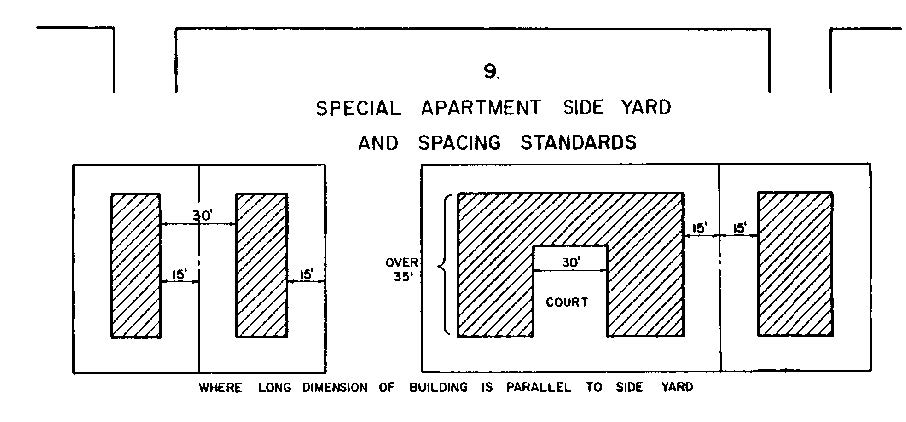
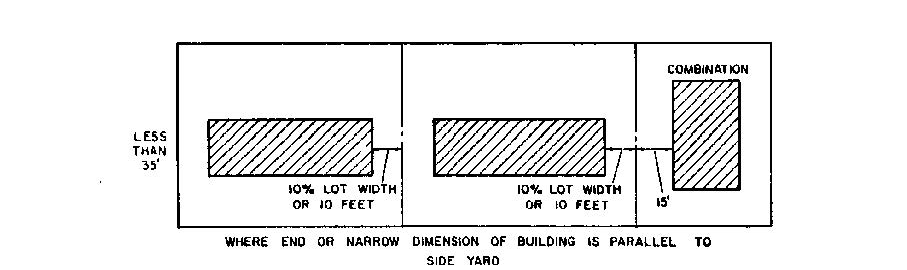
Apartment buildings shall be constructed with an exterior wall separation of not less than:
a.
Twenty feet (20.0'), if adjacent walls are equal to or less than thirty-five feet (35.0') long; and
b.
Thirty feet (30.0') if adjacent walls are greater than thirty-five feet (35.0') long.
2.
Subject to prior approval of the Building Official and Fire Marshall, balconies and patios may encroach into the separation area described in Paragraph 1, above, provided not less than 15 feet of open clearance is maintained for emergency access if otherwise allowed by applicable construction codes. No obstructions encroaching upon said 15 foot clearance area is permitted.
C.
Courts
The faces of all opposite walls within an inner court created by the construction of one or more apartment buildings shall be a minimum distance of thirty feet (30.0') apart, and no balcony or canopy shall extend into such court area for a distance greater than five feet (5.0').
(Ord. No. 3415, § 1(Exh. A), 1-20-2017; Ord. No. 3859, § 1D, 5-21-2024)
3.3 - MEASUREMENT AND EXCEPTIONS
A.
Description
This section identifies and explains forms of measurement used throughout this Chapter and exceptions thereto.
B.
Height of Building
1.
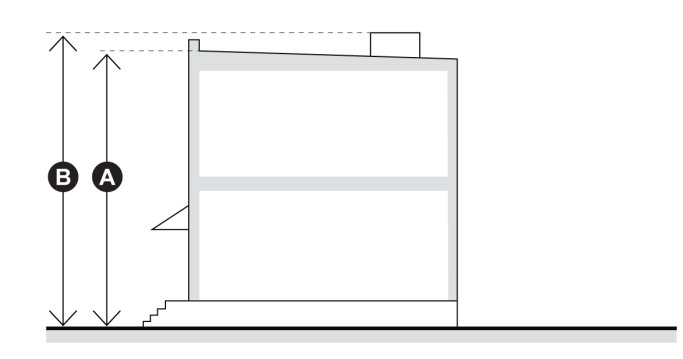
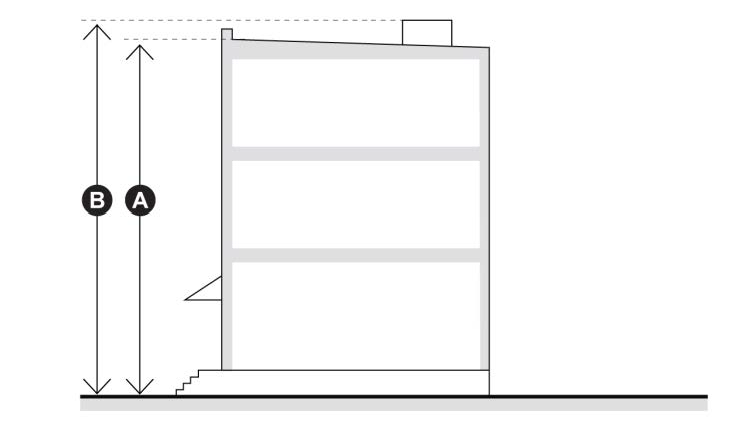
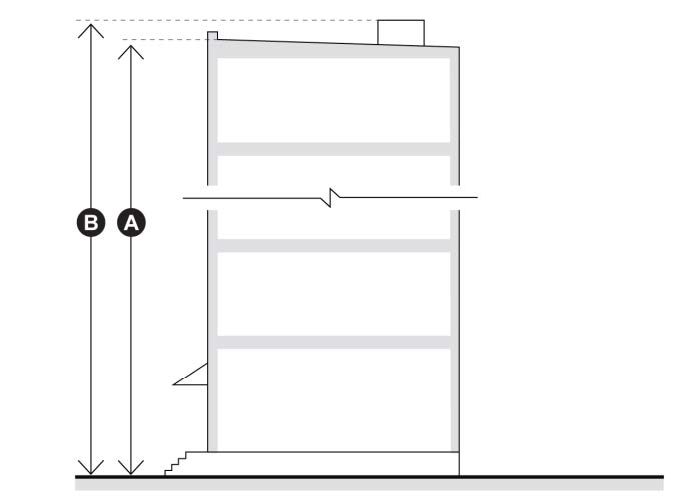
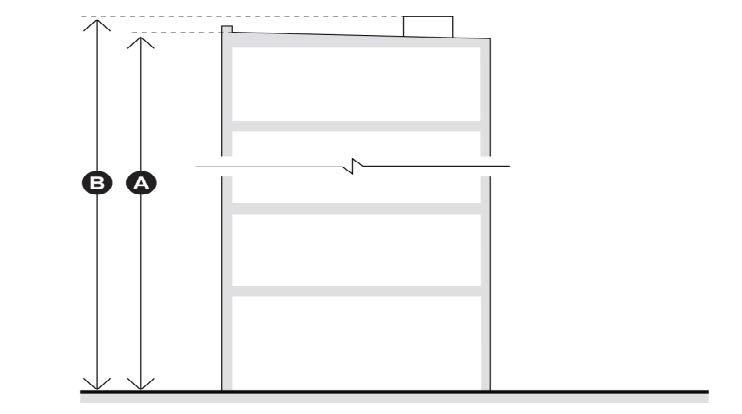
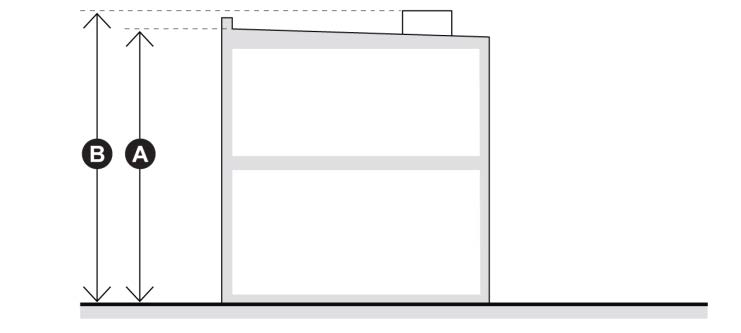
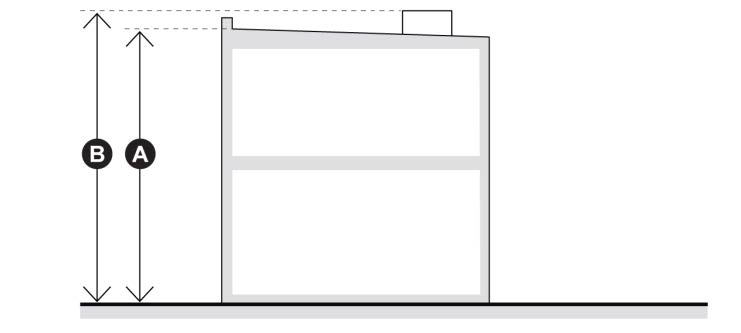
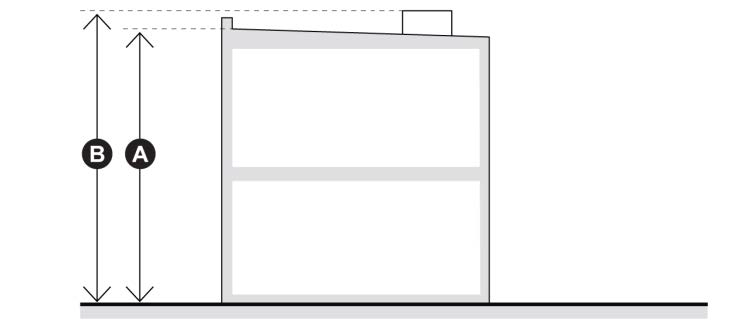
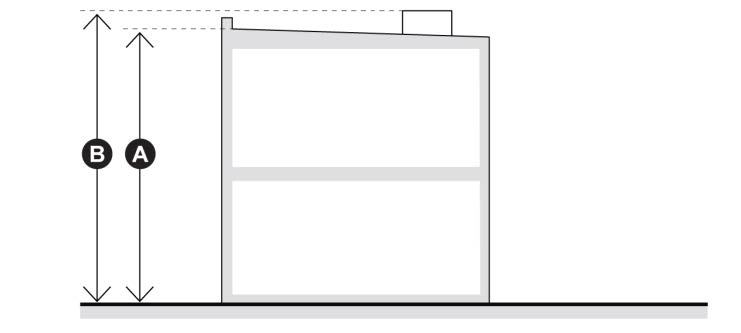
The "height" of a building shall be the vertical distance of a building measured from the average established grade at the street line or from the average natural front yard ground level, whichever is higher, to:
a.
The highest point of the roofs surface; or
b.
To the peak for hip, mansard and gable roofs.
2.
Within the I-RU district only, building height shall be measured from the average established grade prior to development.
3.
Notwithstanding paragraphs 1 and 2, above, height encroachments are permitted to the extent authorized by Section 3.3C., below.
C.
Height Encroachments
All buildings must comply with the height encroachment restrictions set forth in this Article 3 applicable to the zoning district in which the building is located. "Height encroachments" shall include, but not be limited to, chimneys, cooling towers, elevator bulkheads, penthouse, tanks, water towers, radio towers, ornamental cupolas, domes and spires, steeples, and parapet walls. Additionally, water stand pipes and tanks, steeples, domes and spires, and school and institutional buildings located within a residential district may be constructed up to the maximum height allowed within the zoning district provided that the side and rear yard setbacks for such lot shall be increased by one foot (1.0') for each one foot (1.0') that such structures exceed 28 feet in height.
D.
Story Height
The "height of a story" when "story" is used to mean the number of floors in a building means the height between the successive floors of a building or from the top floor to the roof. The standard height for a story is 14 feet.
E.
Lot Area
1.
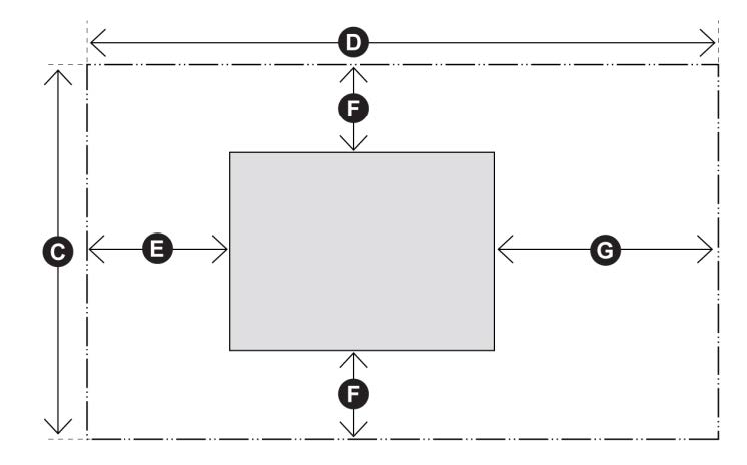
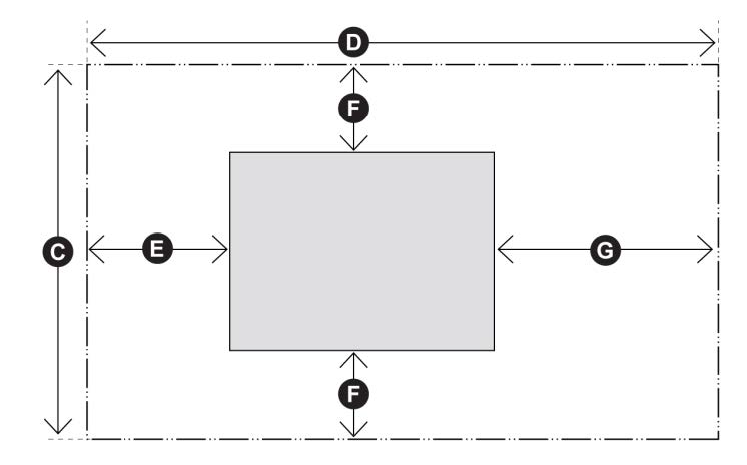
"Lot Area" or "area of a lot" means the number of square feet contained within the property lines of a parcel of land.
2.
All property developed within the City must comply with the lot area requirements set forth in this Article 3 applicable to the zoning district in which the building is located; provided, however, a lot which was a Lot of Record may be developed and used as a one-family dwelling with less than the minimum lot area required for the zoning district in which the lot is located. No lot which existed at the time of adoption of this Chapter shall be reduced below the minimum lot area.
F.
Lot Width
1.
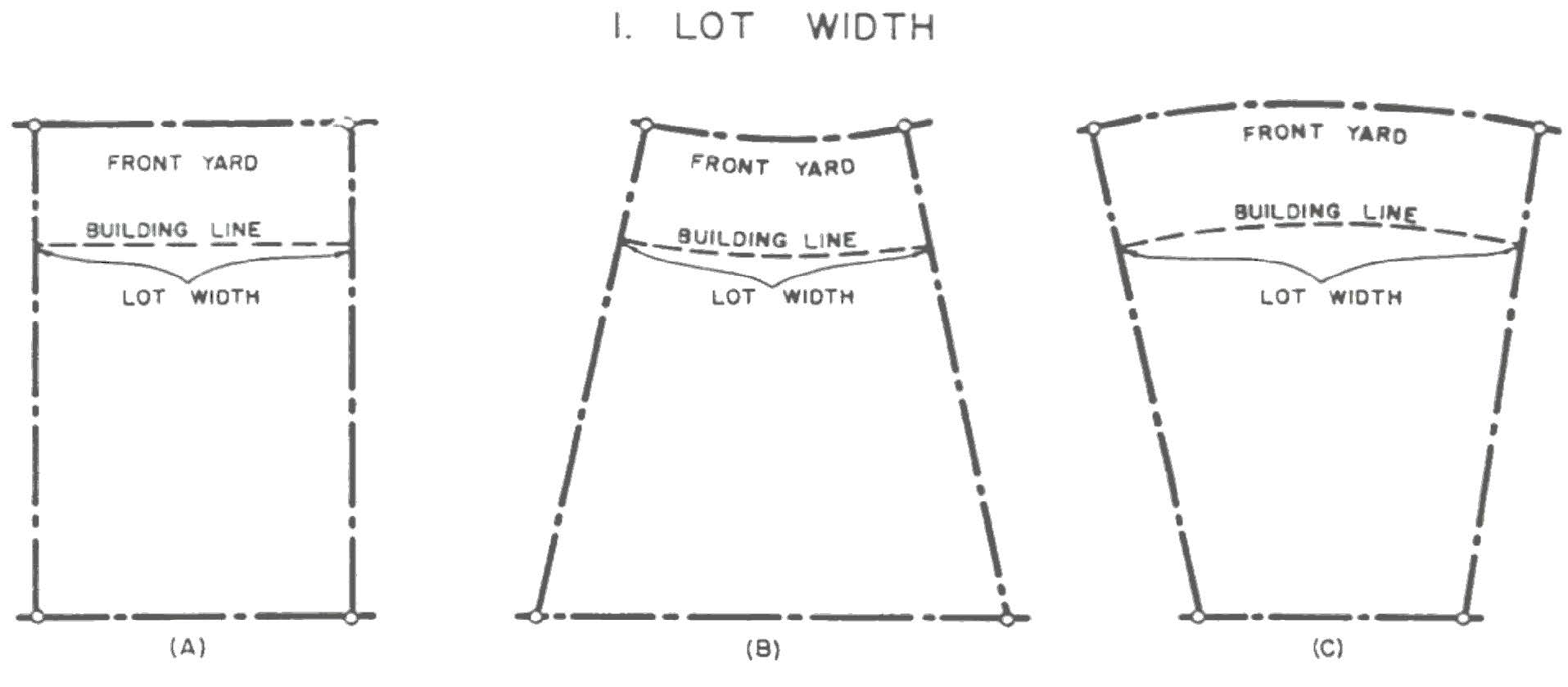
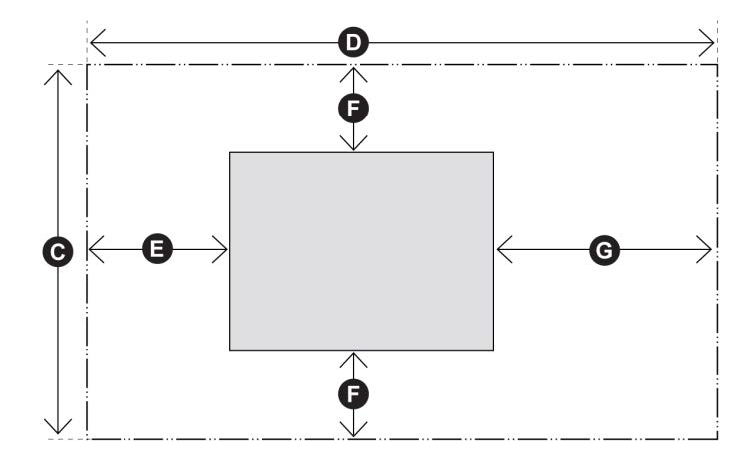
"Lot width" means the distance between the side property lines measured at the front building line.
2.
All property developed within the City must comply with the lot width requirements set forth in this Article 3 applicable to the zoning district in which the building is located; provided, however, a lot which was a Lot of Record may be developed and used as a one-family dwelling with less than the minimum lot width No lot which existed at the time of adoption of this Chapter shall be reduced below the minimum lot width.
G.
Lot Depth
1.
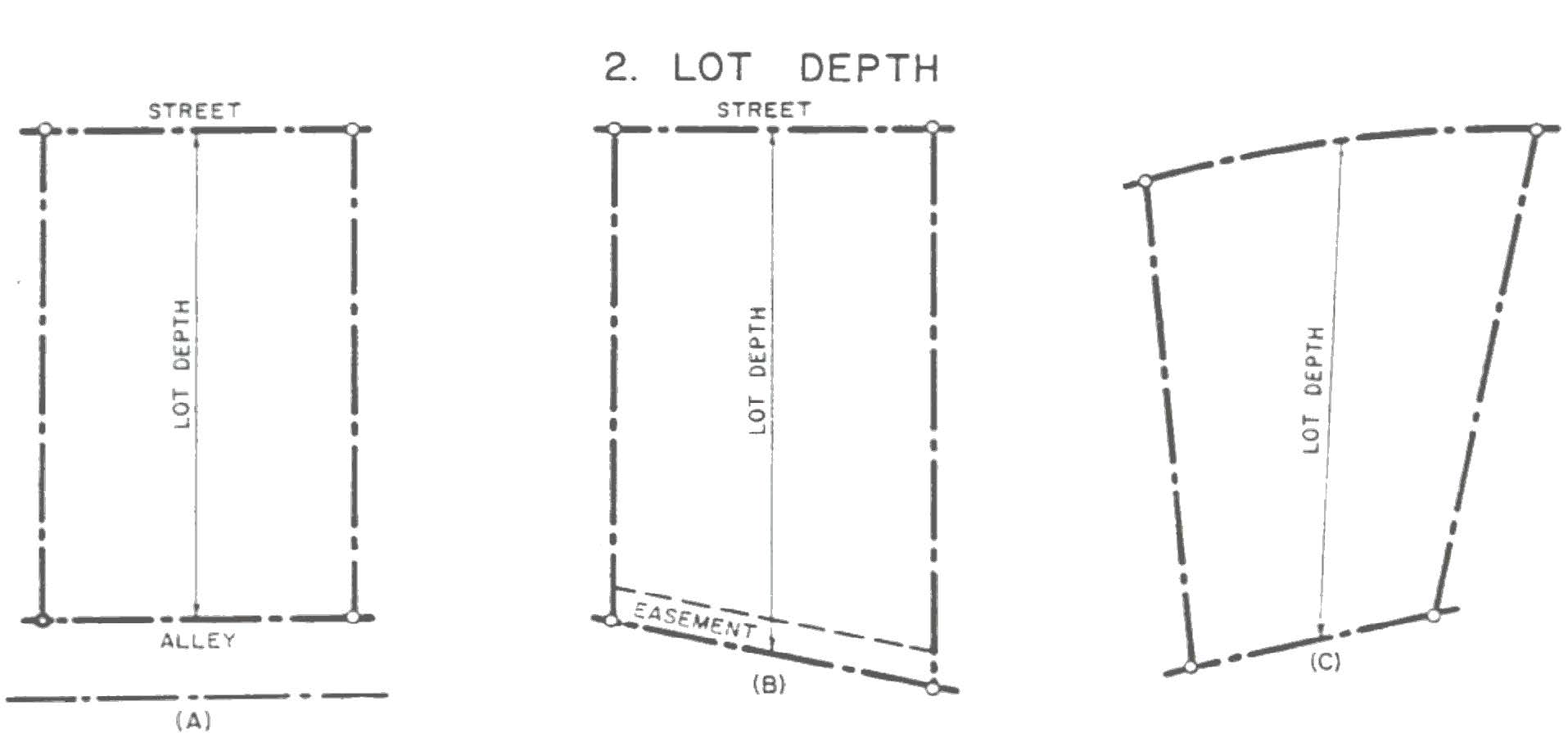
"Lot depth" means the horizontal distance between the front and rear lot lines.
2.
All property developed within the City must comply with the lot depth requirements set forth in this Article 3 applicable to the zoning district in which the building is located; provided, however, a lot which was a Lot of Record may be developed and used as a one-family dwelling with less than the minimum lot depth. No lot that existed at the time of adoption of this Chapter shall be reduced below the minimum lot depth.
H.
Front Yard
1.
"Front Yard" or "Front Yard Setback" means the open, unoccupied space on a lot facing a street extending across the front of a lot between the side lot lines and from the main building to the front lot or street line with the minimum horizontal distance between the street line and the main building line as specified for the zoning district in which it is located.
2.
All property developed within the City must comply with the front yard requirements set forth in this Article 3 applicable to the zoning district in which the building is located except as follows.
a.
Where the frontage on one side of a street between two intersecting streets is divided by two or more zoning districts, the front yard shall comply with the requirements of the most restrictive district for the entire frontage.
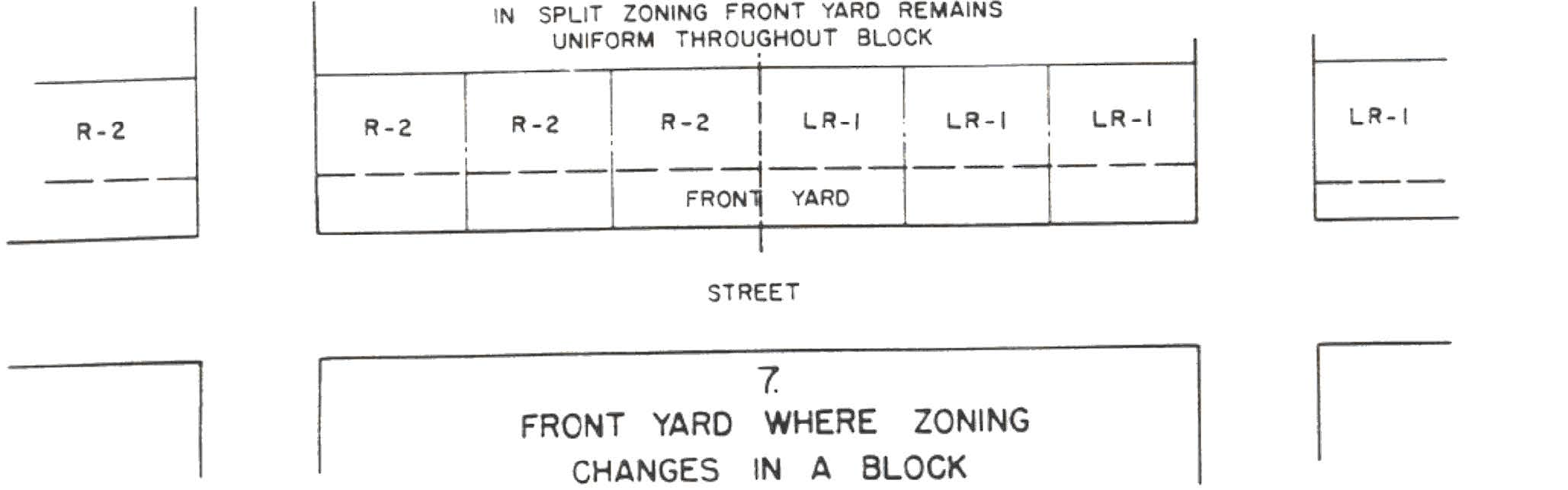
b.
The front yard prescribed by this Article 3 for the zoning district in which a platted lot is located that conflicts with the front yard established by a building line set forth on a recorded plat or by a City ordinance outside of this zoning ordinance shall be determined as follows.
i.
Except as provided in paragraph 11, below, the front yard shall comply with the building line set forth on the plat or established by such other City ordinance; and
ii.
If the property is in an R-2, R-3, R-4, R-5, R-6, D-1 or D-2 district, the front yard shall be based on the least restrictive building line.
c.
Where lots have double frontage, running through from one street to another, a required front yard shall be provided on both streets unless a building line for accessory buildings has been established along one frontage on the plat or by prior ordinance, in which event only one required front yard need be observed.
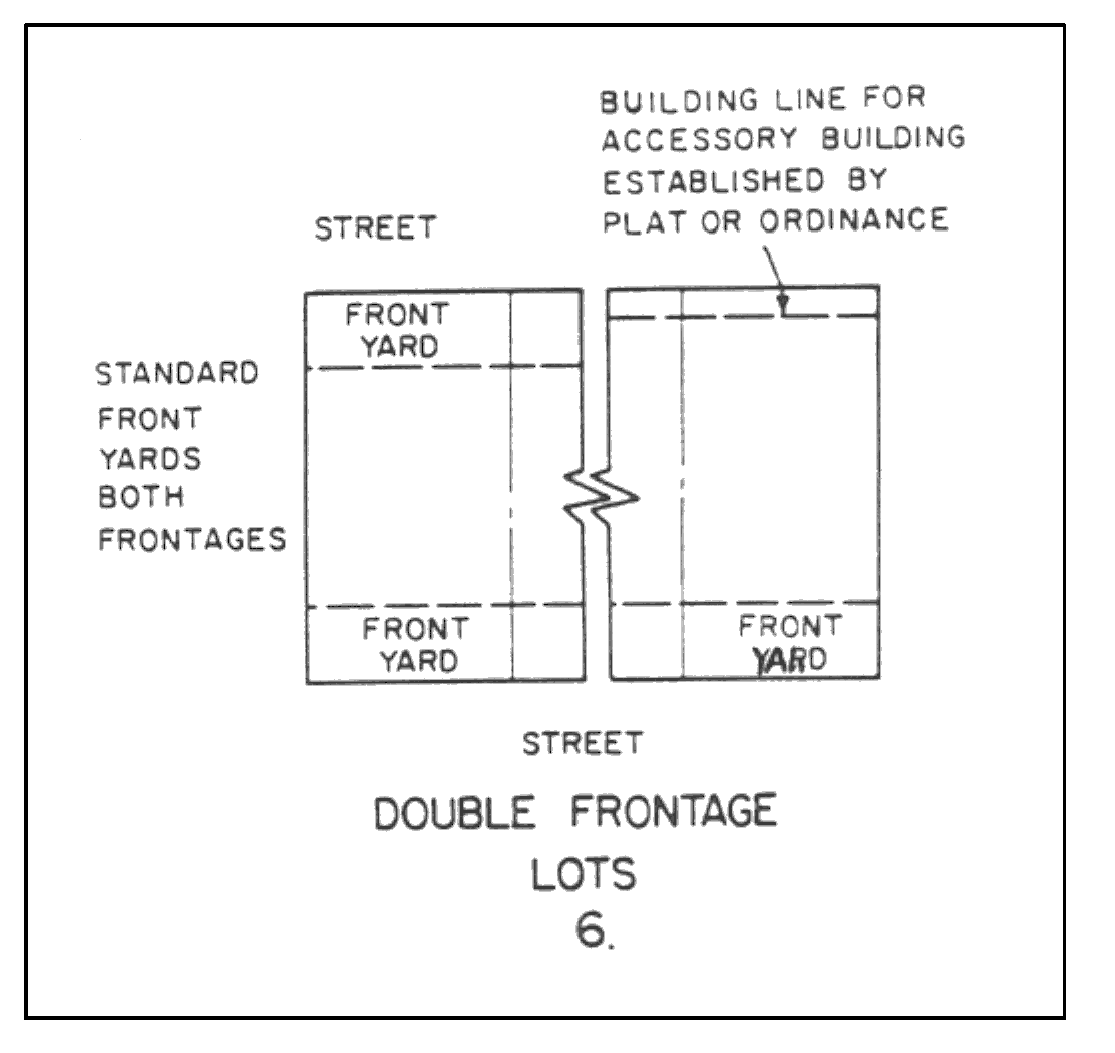
d.
If buildings along the frontage of any street in a residential block in an R-1, MF-1, MF-2, MF-3 or MF-4 zoning districts have been constructed with an average setback that conflicts with the minimum front yard established for the zoning district, the minimum front yard for lots within that block shall be the average front yard of all buildings in the block Solely, for purposes of the foregoing calculation, all vacant lots along the same street frontage shall be assumed to have been constructed subject to the minimum front yard specified by this Article for the zoning district. Notwithstanding anything herein to the contrary, this paragraph d shall not be applied in a manner to require a front yard of more than 50 feet or require any building to be constructed with a setback exceeding 10 feet greater than the minimum front yard setback applicable to any adjacent lot.
e.
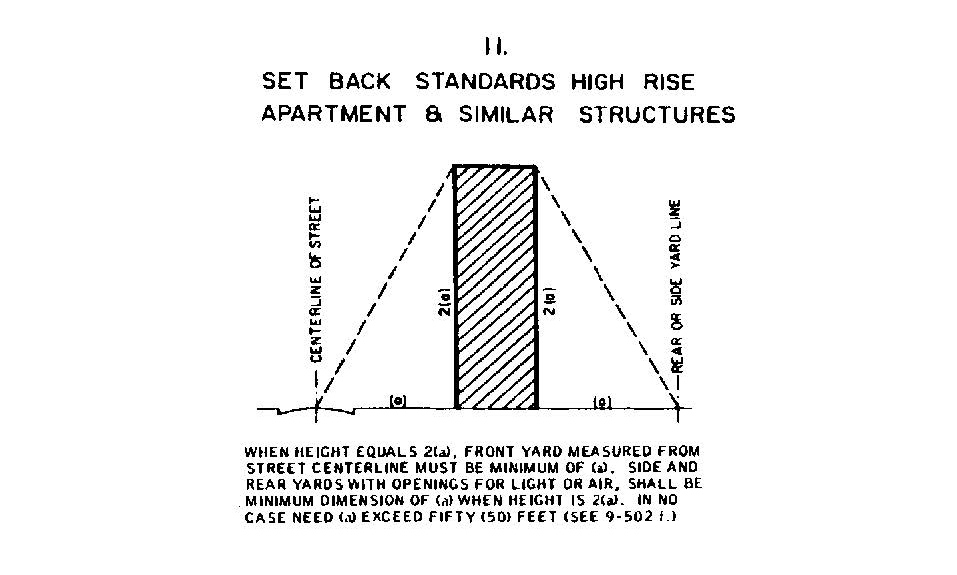
The minimum front yard for property located within an MF-4 Zoning District shall be the greater of (i) 30 feet and (ii) the distance from the centerline of the street on which a building fronts to the front face of the building be less than one-half the height of the building, but in no case shall a front yard setback of more than 50 feet from the property line be required.
f.
In addition to setbacks required elsewhere in this Chapter, the building setback line along both sides of Dallas Parkway shall be 100 feet from the centerline of Dallas Parkway, provided, however, such setback line may be decreased by the City Council at the time of approval of a detailed site plan for the property or pursuant to an amendment to the zoning regulations applicable to the property.
g.
Unless expressly allowed by other City ordinance, in the R-1, R-2, R-3, R-4, R-5, R-6, D-1, D-2 and I-RU Districts, no building, structure, fence or improved parking area shall be located, erected or placed in the required front yard, provided, however, driveways, circular driveways, and landscaping shall be allowed within the required front yard.
h.
If 75% of the buildings that front any street in a residential block do not have garage doors that face the street in the front half of the lot, then the front facing garage doors must maintain a minimum setback of 10 feet greater than that of the main structure and must be designed in a way not to dominate the front facade of the structure. A maximum of (i) two single car garage doors, each being no greater than 10 feet wide) or (ii) one double car garage door no more than 22 feet wide shall be allowed Only residential units constructed on lots with less than 81 feet of street frontage, with existing street oriented driveways, and located within the R-3, R-4, R-5 and R-6 zoning districts may be constructed with a garage orientation and design and provided in this paragraph h.
i.
The front yard shall be measured from the property line to the front face of the building, covered porch, covered terrace or attached accessory building Eaves and roof extensions may project into the required front yard for a distance not to exceed 5 feet and subsurface structures may not project into the front yard to a height greater than 40 inches.
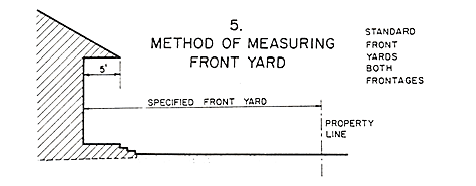
I.
Side Yard
1.
"Side yard" or "Side Yard Setback" means the open, unoccupied space or spaces on one side or two sides of a main building and on the same lot with the building, situated between the building and a side line of the lot and extending through from the front yard to the rear yard with the minimum horizontal distance between the side lot line and the main building as specified for the zoning district in which the property is located. Any lot line that is not a rear lot line or a front lot line shall be deemed a side lot line.
2.
All property developed within the City must comply with the side yard requirements set forth in this Article 3 applicable to the zoning district in which the building is located except as follows:
a.
Multiple family dwellings not exceeding two stones in height shall be located on a lot to provide a minimum side yard between all building walls and any side lot line as follows, i. The side yard adjacent to a building face or wall less than or equal to 35 feet in width shall be not less than 10 feet, and
ii.
The side yard adjacent to a building face or wall greater than 35 feet in width shall be not less than 15 feet.
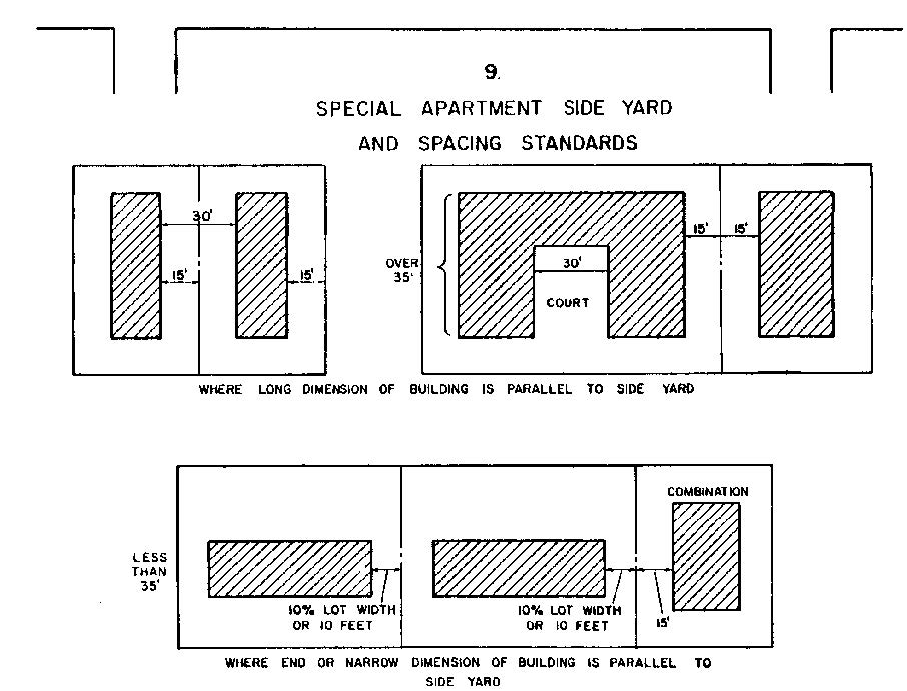
b.
Multiple Family Dwellings exceeding two stories in height shall be located on a lot in a manner to provide a side yard between all building walls and any side lot line as follows:
i.
If the building face or wall has openings for light, air, or access, the side yard adjacent to such wall shall be not less than 1 foot for every 2 feet of building height adjacent to such side yard, but in no case shall the side yard be required to exceed 50 feet, and
ii.
If the building face or wall contains no openings for access, light or air, the side yard adjacent to such wall shall not be less than 10 feet.
c.
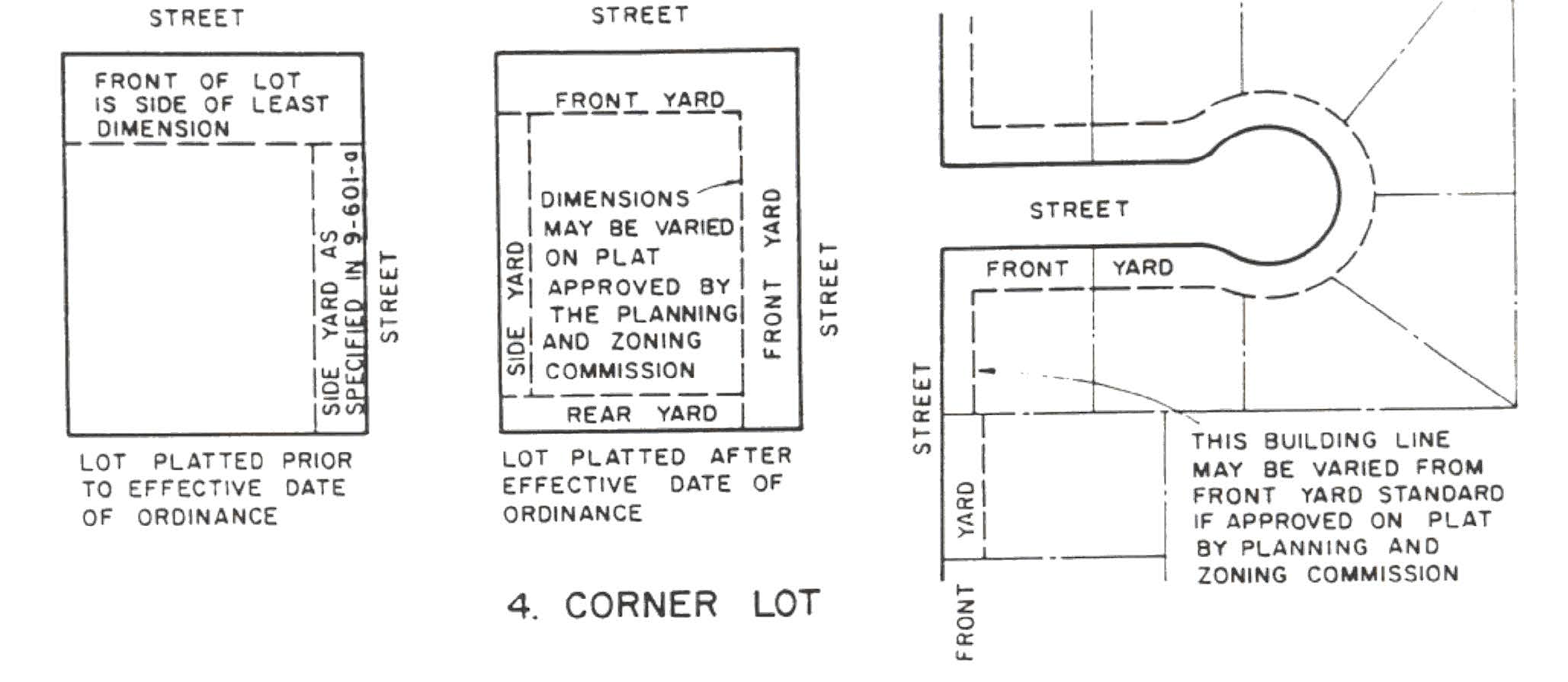
On a corner lot platted after February 24, 1969, and used for a one-family or two-family dwelling, both street exposures shall be treated as front yards, provided, however, a side yard building line of 10 feet or more designated and shown on a plat approved after February 24, 1969, shall control over a conflict with this paragraph c.
d.
The minimum side yard adjacent to a side street on a Lot of Record shall be 10 feet.
e.
The end of each one-family attached dwelling complex shall have a side yard of not less than 10 feet so that the end of any two adjacent building complexes shall be at least 20 feet apart.
f.
Every part of a required side yard shall be open and unobstructed except for permitted accessory buildings and the permitted encroachment of architectural features of the main structure, which encroachment shall not exceed.
i.
1 foot for window sills, belt courses, and cornices, and
ii.
2 feet for roof eaves.
g.
A side yard adjacent to a street of a comer lot developed with a multiple-family dwelling not exceeding two stories in height shall not be less than 30 feet No balcony, porch, or any portion of the building may extend into such required side yard, except that a roof may overhang such side yard up to 4 feet Notwithstanding the foregoing, a side yard established by other ordinances or plat on a lot of record shall control if in conflict with this paragraph g.
J.
Rear Yard
1.
"Rear Yard" or "Rear Yard Setback" means the open, unoccupied space, except for permitted accessory buildings, extending across the rear of a lot from one side lot line to the other side lot line and having a depth with the minimal horizontal distance between the rear lot line and the main building as specified in the zoning district in which the property is located.
2.
All property developed within the City must comply with the rear yard requirements set forth in this Article 3 applicable to the zoning district in which the building is located except as follows.
a.
No main residential building may be constructed closer than:
i.
If located in an R-2, R-3, R-4, R-5, R-6, D-1 and D-2 district, then ten (10) feet to the rear property line, and
ii.
If located in an R-1, MF-1, MF-2, MF-3, or MF-4 district, then fifteen (15) feet to the rear property line, provided, however, if a public or private easement is located on the property adjacent to the rear property line, then fifteen (15) feet to the boundary of such easement.
b.
The main residential building and all accessory buildings (subject to the provisions of Section 2.9) shall cover no more than 50% of that portion of the lot lying to the rear of a projected line joining the mid-point on one side lot line with the mid-point of the opposite side lot line.
c.
Multiple-family dwellings exceeding two stones in height must be located on the lot in such a manner as to provide a rear yard equal to 1 foot for every 2 feet of building height, provided, however, such rear yard shall not be required to exceed 50 feet.
K.
Lot Coverage and Floor Area Ratio
1.
"Lot Coverage" means the percentage of the total area of a lot occupied by the base (first story or floor) of buildings located on the lot or the area determined as the maximum cross-sectional area of the building.
2.
"Floor Area Ratio (FAR)" means the ratio between the total square feet of floor area in a structure and the total square feet of land in the lot or tract on which the structure is located.
3.
The development of all property within the City must comply with the lot coverage and floor area ratio requirements for the respective zoning districts as set forth in this Article 3; provided, however, a building constructed before February 24, 1969, that exceeds the maximum lot coverage or floor area ratio set forth in this zoning ordinance shall be considered a conforming structure.
L.
Floor Area per Dwelling Unit
1.
"Floor Area" means the total square feet of floor space within the outside dimensions of a building inclusive of all floor levels, but excluding cellars, carports or garages.
2.
"Dwelling Unit" means a building or portion of a building which is arranged, occupied, or intended to be occupied as living quarters and includes facilities for food preparation and sleeping for one family.
3.
Minimum floor area of a dwelling unit shall be computed exclusive of breezeways, garages, open porches, carports, or accessory buildings or accessory space not designed and used directly and specifically for dwelling purposes.
4.
All property development within the City with a dwelling unit must comply with the minimum area per dwelling unit requirements for the respective zoning districts as set forth in this Article 3 except as follows:
a.
A structure designed or erected for multiple-family occupancy shall contain no more than 6,000 square feet per floor. In determining the maximum floor area permitted by this paragraph a, all covered halls, walks, and parking areas shall be included when the structure is attached to another building, or shall be limited to a maximum of 6,000 square feet when the structure is not attached to another building.
b.
The location of more than one dwelling structure for one family, two family or multiple family use on a single lot or tract approved in accordance with Section 3.2.A.4 shall comply with this Sections 3.3L.4.a.
M.
Building Length. No single wall or side of any multiple dwelling structure shall exceed 200 feet in length.
(Ord. No. 3415, § 1(Exh. A), 1-20-2017; Ord. No. 3513, § 1A, 11-27-2018; Ord. No. 3548, § 1, 1-8-2019; Ord. No. 3626, § 1, 1-21-2020; Ord. No. 3645, § 1, 8-10-2020)
3.4 - R-1 (ONE FAMILY RESIDENCE DISTRICT-1)
Description
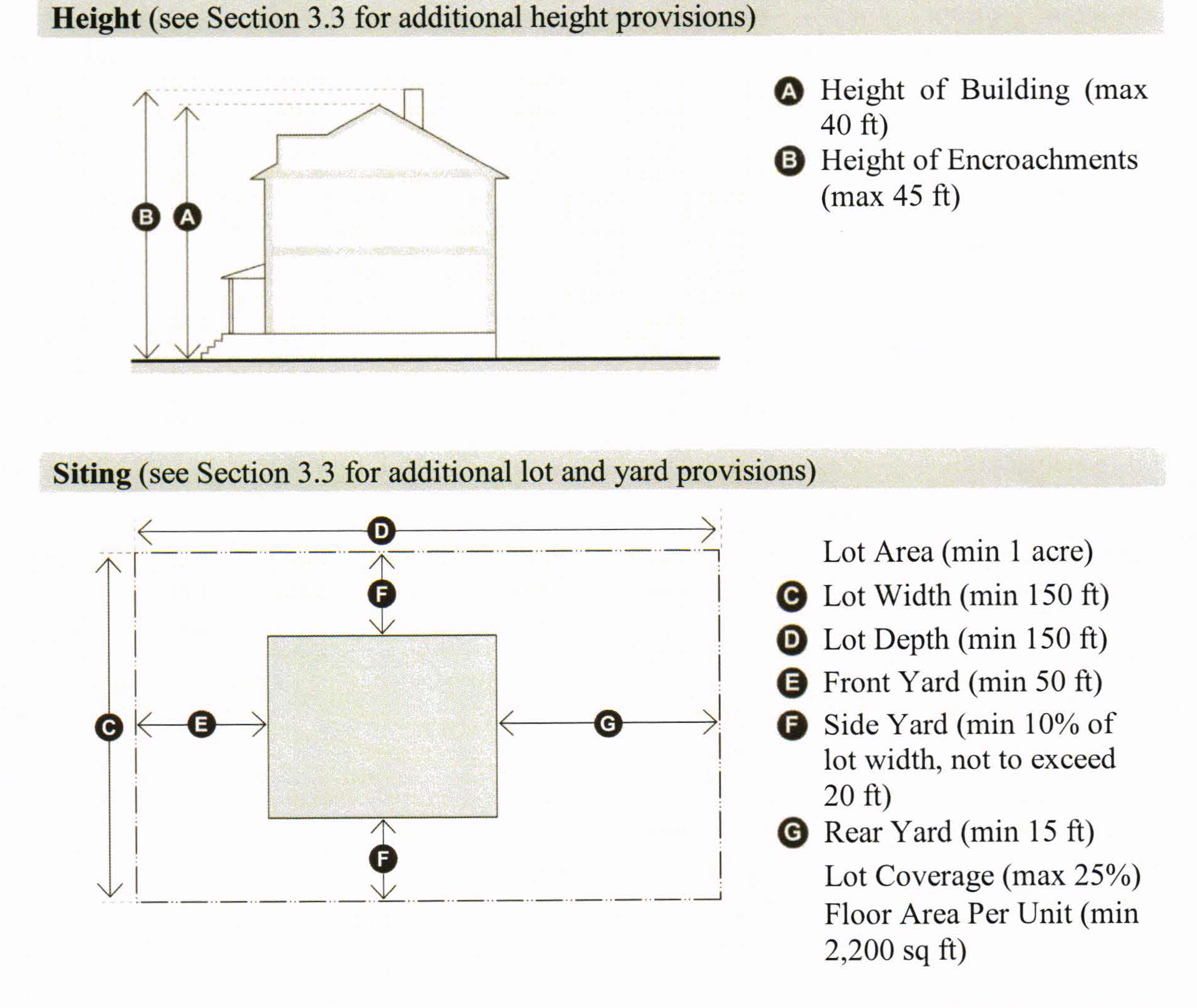
The R-1 District is intended to accommodate one-family detached houses on large individual lots. Compatible civic and institutional uses are also permitted. Houses have a minimum floor area of 2,200 square feet. The minimum lot size of one acre generates a low density development pattern, the lowest of the R-districts. The district should be applied in areas where the land use pattern is predominately one-family detached houses on large individual lots or where such a pattern is desired in the future.
Notes
1. For placement of structures, parking areas and driveways in front yards, see Section 3.3H.2.g.
2. Average front setback may apply, see Section 3.3H.2.d.
3. For allowed encroachments, see Section 3.3C.
4. For setbacks on corner lots, see Section 3.3I.2.c. and d.
5. For rear yard and lot coverage requirements, see Section 3.3J.2.a. and b.
6. For location and regulation of accessory structures, see Section 2.9.
(Ord. No. 3415, § 1(Exh. A), 1-20-2017; Ord. No. 3548, § 1, 1-8-2019)
3.5 - R-2 (ONE FAMILY RESIDENCE DISTRICT-2)
Description
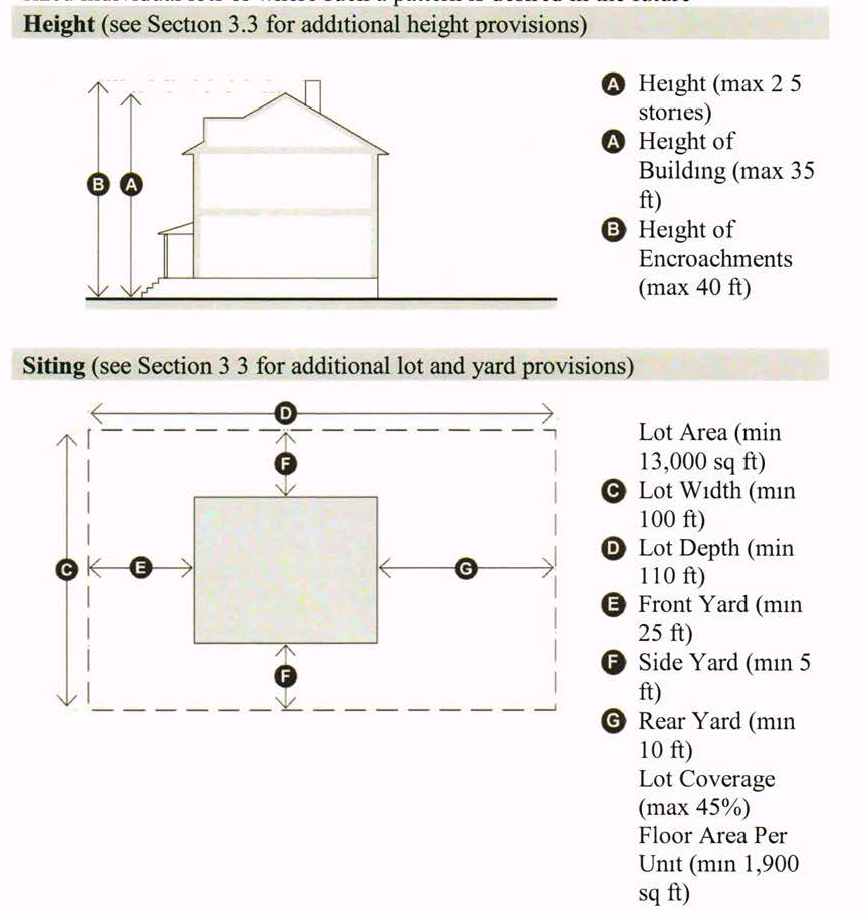
The R-2 District is intended to accommodate one-family detached houses on medium-sized individual lots Compatible civic and institutional uses are also permitted. Houses have a minimum floor area of 1,900 square feet. The minimum lot size of 13,000 square feet generates a low density development pattern that is more dense than R-1. The district should be applied in areas where the land use pattern is predominately one-family detached houses on mediumsized individual lots or where such a pattern is desired in the future.
Notes
1. For placement of structures, parking areas and driveways in front yards, see Section 3.3H.2.g.
2. Average front setback may apply, see Section 3.3H.2.d.
3. For allowed encroachments for 2 and 2% story buildings, see Section 3.3C.
4. For setbacks on comer lots, see Section 3.3I.2.c. and d.
5. For rear yard and lot coverage requirements, see Section 3.3J.2.a.
6. For location and regulation of accessory structures Section 2.9.
(Ord. No. 3415, § 1(Exh. A), 1-20-2017; Ord. No. 3513, § 1B, 11-27-2018; Ord. No. 3548, § 1, 1-8-2019)
3.6 - R-3 (ONE FAMILY RESIDENCE DISTRICT-3)
Description
The R-3 District is intended to accommodate one-family detached houses on medium sized individual lots. Compatible civic and institutional uses are also permitted. Houses have a minimum floor area of 1,800 square feet. The minimum lot size of 10,000 square feet generates a low density development pattern that is more dense than those allowed in the R-2 district. R-3 allows the same density as R-4, but the minimum floor area of a house in R-3 is greater than in R-4. The district should be applied in areas where the land use pattern is predominately one-family detached houses on medium-sized individual lots or where such a pattern is desired in the future.
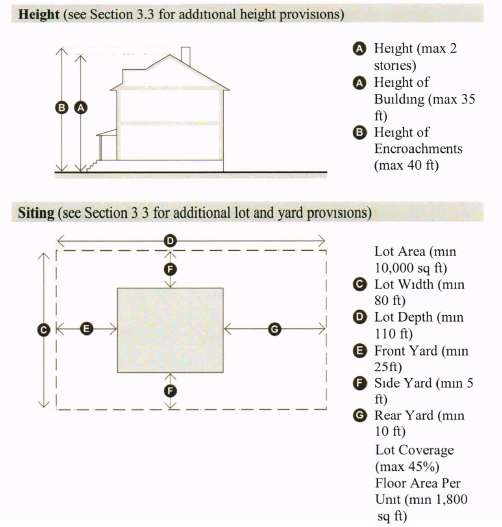
Notes
1. For placement of structures, parking areas and driveways in front yards, see Section 3.3H.2.g.
2. Average front setback may apply, see Section 3.3H.2.d.
3. For allowed encroachments, see Section 3.3C.
4. For setbacks on corner lots, see Section 3.3I.2.c. and d.
5. For rear yard and lot coverage requirements, see Section 3.3J.2.a.
6. For location and regulation of accessory structures, see Section 2.9.
(Ord. No. 3415, § 1(Exh. A), 1-20-2017; Ord. No. 3513, § 1B, 11-27-2018; Ord. No. 3548, § 1, 1-8-2019)
3.7 - R-4 (ONE FAMILY RESIDENCE DISTRICT-4)
Description
The R-4 District is intended to accommodate one-family detached houses on medium-sized individual lots. Compatible civic and institutional uses are also permitted. Houses have a minimum floor area of 1,600 square feet. The minimum lot size of 10,000 square feet generates the same density as R-3, but the minimum floor area of a house in R-4 is less than in the R-3 district. The district should be applied in areas where the land use pattern is predominately one-family detached houses on medium-sized individual lots or where such a pattern is desired in the future.
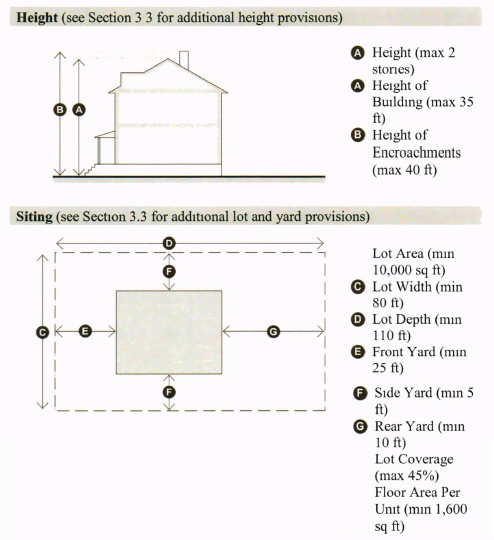
Notes
1. For placement of structures, parking areas and driveways in front yards, see Section 3.3H.2.g.
2. Average front setback may apply, see Section 3.3H.2.d.
3. For allowed encroachments, see Section 3.3C.
4. For setbacks on corner lots, see Section 3.3I.2.c. and d.
5. For rear yard and lot coverage requirements, see Section 3.3J.2.a.
6. For location and regulation of accessory structures, see Section 2.9.
(Ord. No. 3415, § 1(Exh. A), 1-20-2017; Ord. No. 3513, § 1B, 11-27-2018; Ord. No. 3548, § 1, 1-8-2019)
3.8 - R-5 (ONE FAMILY RESIDENCE DISTRICT-5)
Description
The R-5 District is intended to accommodate one-family detached houses on small individual lots. Compatible civic and institutional uses are also permitted. Houses have a minimum floor area of 1,500 square feet. The minimum lot size of 8,700 square feet generates a low density development pattern that is higher than other R-districts. R-5 allows the same density as R-6, but the minimum floor area for a house in R-5 is greater than in R-6. The district should be applied in areas where the land use pattern is predominately one-family detached houses on small individual lots or where such a pattern is desired in the future.
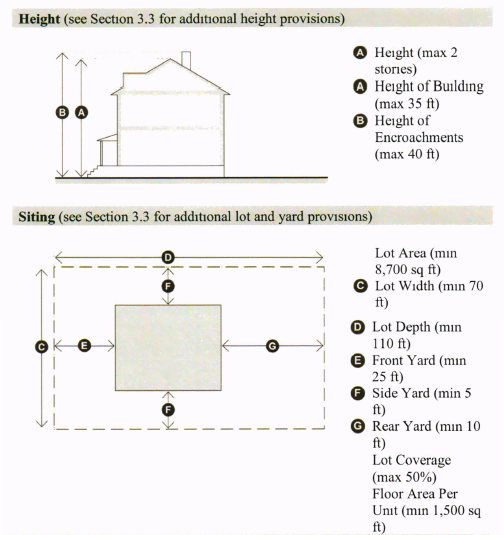
Notes
1. For placement of structures, parking areas and driveways in front yards, see Section 3.3H.2.g.
2. Average front setback may apply, see Section 3.3H.2.d.
3. For allowed encroachments, see Section 3.3C.
4. For setbacks on corner lots, see Section 3.31.2.c.
5. For rear yard and lot coverage requirements, see Section 3.3J.2.a.
6. For location and regulation of accessory structures, see Section 2.9.
(Ord. No. 3415, § 1(Exh. A), 1-20-2017; Ord. No. 3513, § 1B, 11-27-2018; Ord. No. 3548, § 1, 1-8-2019)
3.9 - R-6 (ONE FAMILY RESIDENCE DISTRICT-6)
Description
The R-6 District is intended to accommodate one-family detached houses on small individual lots. Compatible civic and institutional uses are also permitted. Houses have a minimum floor area of 1,300 square feet. The minimum lot size of 8,700 square feet generates a low density development pattern. R-6 allows the same density as R-5, but the minimum floor area for a house in R-6 is greater than in the R-5 district. The R-6 district should be applied in areas where the land use pattern is predominately one-family detached houses on small individual lots or where such a pattern is desired in the future.
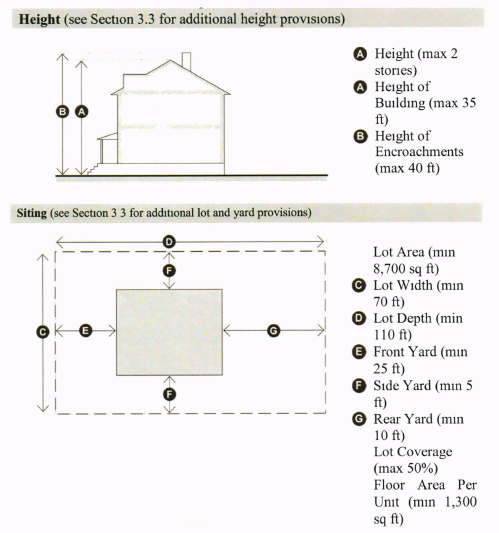
Notes
1. For placement of structures, parking areas and driveways in front yards, see Section 3.3H.2.g.
2. Average front setback may apply, see Section 3.3H.2.d.
3. For allowed encroachments, see Section 3.3C.
4. For setbacks on corner lots, see Section 3.3I.2.c. and d.
5. For rear yard and lot coverage requirements, see Section 3.3J.2.a.
6. For location and regulation of accessory structures, see Section 2.9.
(Ord. No. 3415, § 1(Exh. A), 1-20-2017; Ord. No. 3513, § 1B, 11-27-2018; Ord. No. 3548, § 1, 1-8-2019)
3.10 - D-1 (TWO FAMILY RESIDENCE DISTRICT-1)
Description
The D-1 District is intended to accommodate duplexes and one-family houses on individual lots and provide two housing options within the same district. Compatible civic and institutional uses are also permitted. Each dwelling unit has a minimum floor area of 1,200 square feet. Lot sizes are medium and vary with building type. Lot sizes are larger than in D-2 and density is lower. The district should be applied in areas where the land use pattern is a mixture of duplexes and one-family houses or where such a pattern is desired in the future.
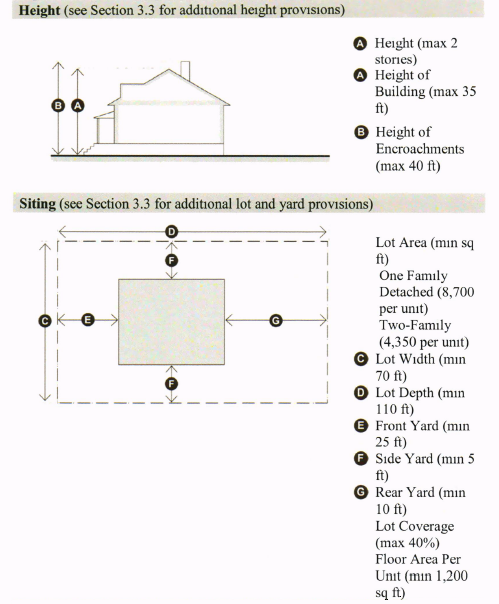
Notes
1. For placement of structures, parking areas and driveways in front yards, see Section 3.3H.2.g.
2. Average front setback may apply, see Section 3.3H.2.d.
3. For allowed encroachments, see Section 3.3C.
4. For setbacks on corner lots, see Section 3.3I.2.c. and d.
5. For rear yard and lot coverage requirements, see Section 3.3J.2.a.
6. For location and regulation of accessory structures, see Section 2.9.
(Ord. No. 3415, § 1(Exh. A), 1-20-2017; Ord. No. 3513, § 1B, 11-27-2018; Ord. No. 3548, § 1, 1-8-2019)
3.11 - D-2 (TWO FAMILY RESIDENCE DISTRICT-2)
Description
The D-2 District is intended to accommodate duplexes and one-family houses on individual lots and provide two housing options within the same district. Compatible civic and institutional uses are also permitted. Each dwelling unit has a minimum floor area of 1,000 square feet. Lot sizes are medium and vary with building type. Lot sizes are smaller than in D-1 and density is greater. The district should be applied in areas where the land use pattern is a mixture of duplexes and one-family houses or where such a pattern is desired in the future.
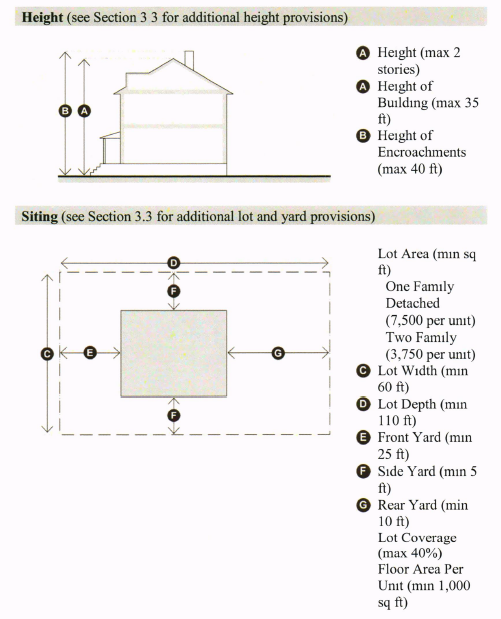
Notes
1. For placement of structures, parking areas and driveways in front yards, see Section 3.3H.2.g.
2. Average front setback may apply, see Section 3.3H.2.d.
3. For allowed encroachments, see Section 3.3C.
4. For setbacks on corner lots, see Section 3.3I.2.c. and d.
5. For rear yard and lot coverage requirements, see Section 3.3J.2.a.
6. For location and regulation of accessory structures, see Section 2.9.
(Ord. No. 3415, § 1(Exh. A), 1-20-2017; Ord. No. 3513, § 1B, 11-27-2018; Ord. No. 3548, § 1, 1-8-2019)
3.12 - MF-1 (MULTIPLE-FAMILY RESIDENCE DISTRICT-1)
Description
The MF-1 District is intended to accommodate a variety of housing opportunities up to two stories including multi-family, duplex, one-family attached, and one-family detached houses. Compatible civic and institutional uses are also permitted. The intent of the district is to create a mix of higher density housing options in a two-story urban environment. Floor area per unit varies by housing type and number of bedrooms. Floor area per unit is generally greater than the other MF districts and density lower. The district should be applied in areas where the land use pattern is predominantly urban in character or where residential infill is desired in the future.
| Height (see Section 3.3 for additional height provisions) | |
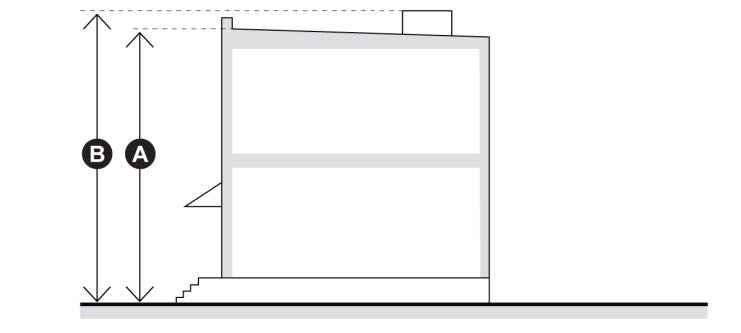 | |
Height (max 2 stories)
 | |
|
Height of Building (max 40 ft)
| |
Height of Encroachments (max 50 ft)
 | |
| Siting (see Section 3.3 for additional lot and yard provisions) | |
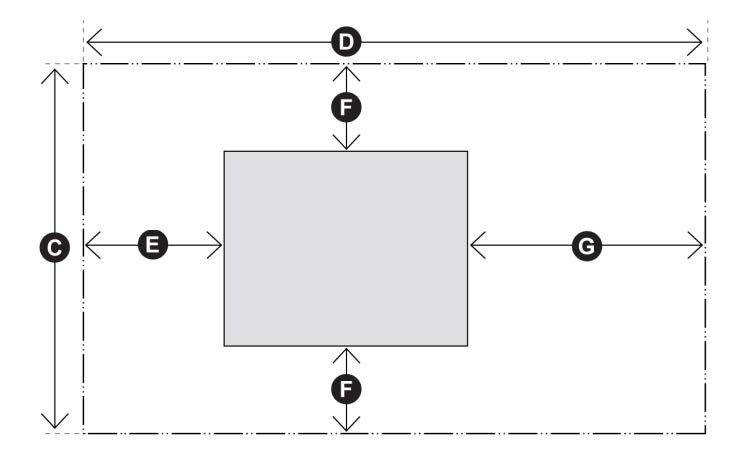 | |
| Lot Area per Dwelling Unit (min sq ft) | |
| One Family Detached (min 7,500 sq ft) | |
| One Family Attached (min 2,500 sq ft) | |
| Two Family (min 3,750 sq ft) | |
Lot Width
 | |
| 1-Family, detached (min 60 ft) | |
| 1-Family and 2-Family, attached (min 25 ft) | |
| Multiple Family (min 70 ft) | |
Lot Depth
 | |
| 1-Family and 2-Family (min 110 ft) | |
| Multiple Family (min 120 ft) | |
Front Yard (min 30 ft)
 | |
Side Yard (min 10% of lot width)
 | |
Rear Yard (min 15 ft)
 | |
Floor Area Per Unit:
One Family, Two Family (min 1,200 sq ft)
Multiple Family, 1 BR (min 800 sq ft)
Multiple Family, 2 BR (min 1,000 sq ft)
Multiple Family, 3 BR (min 1,150 sq ft)
Multiple Family, 4 BR (min 1,300 sq ft)
Notes
1. For allowed encroachments for 2 story buildings, see Section 3.3C.
2. For side setbacks for multiple family structures not exceeding 2 stories, see Section 3.3I.2.a.
3. For side setbacks for multiple family structures on corner lots, not exceeding 2 stories, see Section 3.3I.2.gg.
4. For setbacks for one or two family dwellings on corner lots, see Section 3.3I.2.c.
5. For side setbacks for one family attached dwellings, see Section 3.3I.2.e.
6. For rear yard and lot coverage requirements, see Section 3.3J.2.a.
7. For floor area requirements for multiple family structures, see Sections 3.3L.4.a.
8. For building separation of apartments, see Section 3.2B.1.
(Ord. No. 3415, § 1(Exh. A), 1-20-2017)
3.13 - MF-2 (MULTIPLE-FAMILY RESIDENCE DISTRICT-2)
Description
The MF-2 District is intended to accommodate a variety of housing opportunities up to two stories including multi-family, duplex, one-family attached, and one-family detached houses. Compatible civic and institutional uses are also permitted. The intent of the district is to create a mix of higher density housing options in a two-story urban environment. Floor area per unit varies by housing type and number of bedrooms, and is generally less than MF-1. Density is greater than MF-1. The district should be applied in areas where the land use pattern is predominantly urban in character or where residential infill is desired in the future.
| Height (see Section 3.3 for additional height provisions) | |
 | |
|
Height (max 2 stories)
| |
|
Height of Building (max 40 ft)
| |
|
Height of Encroachments (max 50 ft)
| |
| Siting (see Section 3.3 for additional lot and yard provisions) | |
 | |
| Lot Area per Dwelling Unit | |
| One Family Detached (min 7,500 sq ft) | |
| One Family Attached (min 2,500 sq ft) | |
| Two Family (min 3,750 sq ft) | |
| Multiple Family (min 3,500 sq ft) | |
|
Lot Width
| |
| One Family Detached (min 60 ft) | |
| Two Family (min 25 ft) | |
| One Family Attached (min 25 ft) | |
| Multiple Family (min 70 ft) | |
|
Lot Depth
| |
| One Family, Two Family (min 110 ft) | |
| Multiple Family (min 120 ft) | |
|
Front Yard (min 30 ft)
| |
|
Side Yard, (min 10% of lot width)
| |
|
Rear Yard (min 15 ft)
| |
| Lot Coverage (max 40%) | |
| Floor Area Per Unit | |
| One Family, Two Family (min 1,200 sq ft) | |
| Multiple Family, 1 BR (min 800 sq ft) | |
| Multiple Family, 2 BR (min 1,000 sq ft) | |
| Multiple Family, 3 BR (min 1,150 sq ft) | |
| Multiple Family, 4 BR (min 1,300 sq ft) | |
Notes
1. For allowed encroachments for 2 story buildings, see Section 3.3C.
2. For side setbacks for multiple family structures not exceeding 2 stories, see Section 3.3I.2.a.
3. For side setbacks for multiple family structures on corner lots, not exceeding two stories, see Section 3.3I.2.g.
4. For setbacks for one or two family dwellings on corner lots, see Section 3.3I.2.c.
5. For side setbacks for one family attached dwellings, see Section 3.3I.2.e.
6. For rear yard and lot coverage requirements, see Section 3.3J.2.a.
7. For floor area requirements for multiple family structures, see Sections 3.3L.4.a.
8. For building separation of apartments, see Section 3.2B.1.
(Ord. No. 3415, § 1(Exh. A), 1-20-2017)
3.14 - MF-3 (MULTIPLE-FAMILY RESIDENCE DISTRICT-3)
Description
The MF-3 District is intended to accommodate a variety of housing opportunities up to three stories including multi-family, duplex, one-family attached, and one-family detached houses. Compatible civic and institutional uses are also permitted. The intent of the district is to create a mix of higher density housing options in an urban environment that includes three story buildings. Floor area per unit varies by housing type and number of bedrooms, and is generally less than MF-2. Density is greater than MF-2. The district should be applied in areas where the land use pattern is predominantly urban in character or where residential infill is desired in the future.
| Height (see Section 3.3 for additional height provisions) | |
 | |
|
Height (max 3 stories)
| |
|
Height of Building (max 50 ft)
| |
|
Height of Encroachments (max 60 ft)
| |
| Siting (see Section 3.3 for additional lot and yard provisions) | |
 | |
| Lot Area per Dwelling Unit | |
| One Family Detached (min 7,500 sq ft) | |
| One Family Attached (min 2,500 sq ft) | |
| Two Family (min 3,750 sq ft) | |
| Multiple Family (min 1,800 sq ft) | |
|
Lot Width
| |
| One Family Detached (min 60 ft) | |
| Two Family (min 25 ft) | |
| Multiple Family (min 25 ft) | |
| One Family Attached (min 25 ft) | |
|
Lot Depth
| |
| One Family, Two Family (min 110 ft) | |
| Multiple Family (min 120 ft) | |
|
Front Yard (min 30 ft)
| |
|
Side Yard, (min 10% of lot width)
| |
|
Rear Yard (min 15 ft)
| |
| Lot Coverage (max 40%) | |
| Floor Area Per Unit | |
| One Family, Two Family (min 1,100 sq ft) | |
| Multiple Family, 1 BR (min 650 sq ft) | |
| Multiple Family, 2 BR (min 825 sq ft) | |
| Multiple Family, 3 BR (min 1,000 sq ft) | |
| Multiple Family, 4 BR (min 1,175 sq ft) | |
Notes
1. For allowed encroachments for 2 and 3 story buildings, see Section 3.3C.
2. For side setbacks for multiple family structures not exceeding 2 stories, see Section 3.3I.2.a.
3. For side setback for apartment buildings over 2 stories, see Section 3.3I.2.b.
4. For side setbacks for multiple family structures on corner lots, not exceeding two stories, see Section 3.3I.2.g.
5. For setbacks for one or two family dwellings on corner lots, see Section 3.3I.2.c.
6. For side setbacks for one family attached dwellings, see Section 3.3I.2.e.
7. For rear yard and lot coverage requirements, see Section 3.3J.2.a.
8. For rear setback for multiple family structures over 2 stories, see Section 3.3J.2.c.
9. For floor area requirements for multiple family structures, see Sections 3.3L.4.a.
10. For building separation of apartments, see Section 3.2B.1.
(Ord. No. 3415, § 1(Exh. A), 1-20-2017)
3.15 - MF-4 (MULTIPLE-FAMILY RESIDENCE DISTRICT-4)
Description
The MF-4 District is intended to accommodate a variety of housing opportunities up to twenty stories including high rise apartment buildings, and permitting multi-family, duplex, one-family attached, and one-family detached houses. Complimentary civic and institutional uses are also permitted. The intent of the district is to create a mix of higher density housing options in a dense urban environment which includes high-rise apartments. Floor area per unit varies by housing type but is generally the lowest of the MF districts. MF-4 has the highest density of the MF districts. The district should be applied in areas where the land use pattern is densely urban in character or where residential infill is desired in the future.
| Height (see Section 3.3 for additional height provisions) | |
 | |
|
Height (max 20 stories)
| |
|
Height of Building (max 280 ft)
| |
|
Height of Encroachments (max 290 ft)
| |
| Siting (see Section 3.3 for additional lot and yard provisions) | |
 | |
| Lot Area per Dwelling Unit | |
| One Family Detached (min 7,500 sq ft) | |
| One Family Attached (min 2,500 sq ft) | |
| Two Family (min 3,750 sq ft) | |
| Multiple Family, 1-2 stories (min 1,800 sq ft) | |
| Multiple Family, over 2 stories (min 600 sq ft) | |
|
Lot Width
| |
| One Family Detached (min 60 ft) | |
| Two Family, Multiple Family (min 60 ft) | |
| One Family Attached (min 25 ft) | |
|
Lot Depth
| |
| One Family, Two Family (min 110 ft) | |
| Multiple Family (min 120 ft) | |
|
Front Yard (min 30 ft)
| |
|
Side Yard, (min 10% of lot width)
| |
|
Rear Yard (min 15 ft)
| |
| Lot Coverage (max 40%) | |
| Floor Area Ratio (4:1 max) | |
| Floor Area Per Unit | |
| One Family, Two Family (min 1,100 sq ft) | |
| Multiple Family, 1 650 BR | |
| Multiple Family, 2 BR (min 825 sq ft) | |
| Multiple Family, 3 BR (min 1,000 sq ft) | |
Notes
1. For allowed encroachments for 2 and 3 story buildings, see Section 3.3C.
2. For setbacks for 1 or 2 family dwellings on corner lots, see Section 3.3I.2.c.
3. For special front setback requirements, see Section 3.3H.2.e.
4. For side setbacks for multiple family structures not exceeding 2 stories, see Section 3.3I.2.a.
5. For side setbacks for multiple family structures on corner lots, not exceeding two stories, see Section 3.3I.2.g.
6. For side setback for apartment buildings over 2 stories, see Section 3.3I.2.b.
7. For side setbacks for one family attached dwellings, see Section 3.3I.2.e.
8. For rear yard and lot coverage requirements, see Section 3.3J.2.a.
9. For rear setback for multiple family structures over 2 stories, see Section 3.3J.2.c.
10. For floor area requirements for multiple family structures, see Sections 3.3L.4.a.
11. For building separation of apartments, see Section 3.2B.1.
(Ord. No. 3415, § 1(Exh. A), 1-20-2017)
3.16 - I-RU (INSTITUTIONAL-RELIGIOUS USES DISTRICT)
Description
The I-RU District is intended to accommodate structures used by religious organizations or congregations that provide religious worship, religious training, or education of their members. Accessory uses such as rectories, convents, or monasteries for the housing of religious organization personnel, meeting halls, offices for administration of the institution, day care facilities, education or schools, recreation associated with schools or day care facilities, cemeteries and mausoleums may be allowed only in conjunction with a worship facility and on the same platted lot. The district should be applied to areas that house religious, institutional, and civic uses that do not easily assimilate into other zoning districts.
1.
If a rezoning application is submitted to the City requesting to rezone a property to the I-RU District, the area of the property shall be not less than two acres, not including any portions of the property dedicated as public rights-of-way.
2.
If a rezoning application is submitted to the City requesting to rezone two or more properties to the I-RU District, the properties must be contiguous and have a total area of not less than two acres, not including any portions of the property dedicated as public rights-of-way.
3.
Outdoor recreational facilities may be developed in association with the use of the property as a worship facility only following approval of a site plan by the City Manager or appointed designee.
4.
No outdoor playground area located within 50 feet of an R-1 or R-2 zoning district may be developed in association with the use of property as a worship facility without the prior approval of a site plan by the City Manager or appointed designee.
5.
No outdoor recreational facilities or outdoor playground area may be lighted for night use without the prior approval of a site plan by the City Manager or appointed designee.
6.
An applicant may appeal the decision of the City Manager or appointed designee to the Planning and Zoning Commission and City Council to deny a site plan required by this Section 3.16. An appeal request shall be submitted in writing to the Director of Planning no later than 15 days after receipt of the final decision of the City Manager or designee.
| Height (see Section 3.3 for additional height provisions) | |
 | |
|
Height (no max stories)
| |
|
Height of Building (max 60 ft)
| |
|
Height of Encroachments (max 75 ft)
| |
| Siting (see Section 3.3 for additional lot and yard provisions) | |
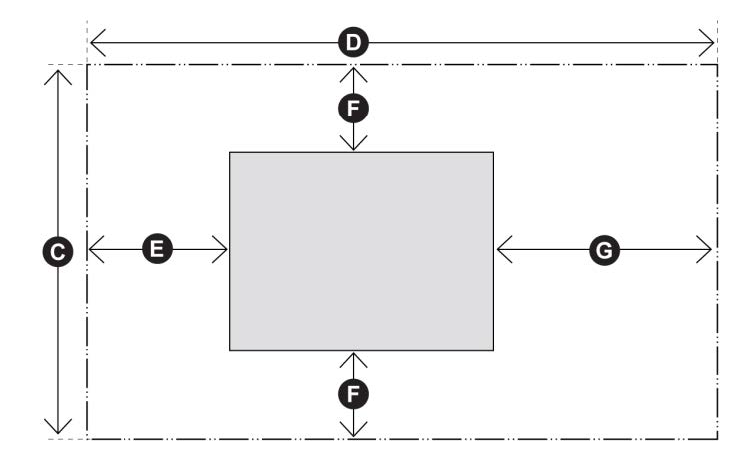 | |
| Lot Area (min 2 acres) | |
|
Lot Width (min 50 ft)
| |
|
Lot Depth (no min depth)
| |
|
Front Yard (min 20 ft)
| |
|
Side Yard (min 10 ft)
| |
|
Rear Yard (min 15 ft)
| |
| Lot Coverage (max 50%) | |
Notes
1. Height shall be measured in accordance with Section 3.3B.2.
2. Authorized encroachments for 2 and 3 story buildings shall comply with Section 3.3C.
3. Structures over 28 feet in height must add 2 feet to side setback and 2 feet to rear setback for every foot above 28 feet in height.
4. Maximum finished floor height of the highest occupied story is 25 feet for offices, classrooms, meeting rooms, nurseries, fellowship halls, and similar places, unless a specific use permit is granted pursuant to Section 6.5.
5. Worship facilities require a lot area of not less than two acres, not including portions of the property dedicated for public rights-of-ways.
6. Minimum street frontage is 50 feet. Street frontage must be adjacent to and accessible from a street that has minimum right-of-way width of 60 feet and a minimum pavement width of 41 feet.
7. Main access to the property must be from a street with a minimum right-of-way of 60 feet and minimum pavement width of 41 feet.
8. The placement of structures, parking areas and driveways in front yards must comply with Section 3.3H.2.g.
9. Parking requirements shall comply with Section 4.3.
(Ord. No. 3415, § 1(Exh. A), 1-20-2017)
3.17 - O (OFFICE DISTRICT)
Description
The O District is intended to be within close proximity to residential uses. This low intensity district should act as a buffer area between residential and commercial land uses with a neighborhood friendly range of professional office uses. The district is intended to accommodate offices that do not engage in significant on-site retail activity.
| Height (see Section 3.3 for additional height provisions) | |
 | |
|
Height (max 2 stories)
| |
|
Height of Building (max 35 ft)
| |
|
Height of Encroachments (max 45 ft)
| |
| Siting (see Section 3.3 for additional lot and yard provisions) | |
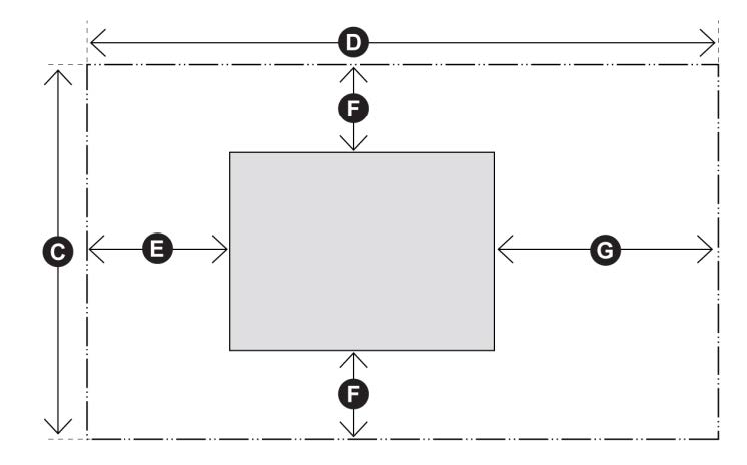 | |
| Lot Area (no min sq ft) | |
|
Lot Width (no min)
| |
|
Lot Depth (no min)
| |
|
Front Yard (min 25 ft)
| |
|
Side Yard (no min)
| |
|
Rear Yard (min 10 ft)
| |
| Floor Area Ratio (1:2 max) | |
Notes
1. Encroachments for a two story buildings are allowed in accordance with Section 3.3C.
2. If the lot abuts a residential lot, a 10 foot minimum side setback is required on the side abutting the residential lot unless another provision of this zoning ordinance requires a greater side setback, in which case the other provision shall control.
3. Parking requirements shall comply with Section 4.3.
(Ord. No. 3415, § 1(Exh. A), 1-20-2017)
3.18 - LR-1 (LOCAL RETAIL DISTRICT-1)
Description
The LR-1 District is intended to accommodate lower intensity retail and service type uses and neighborhood-oriented commercial facilities. The intent of the district is to provide small-scale service establishments close to dwelling units and to ensure these uses are compatible with the character of nearby neighborhoods. The district permits fewer uses and retail establishment types than LR-2. The district may be used as a transition between major roads and established residential neighborhoods. The district should be applied in areas where the land use pattern has retail locations close to residential areas or where such a pattern is desired in the future.
| Height (see Section 3.3 for additional height provisions) | |
 | |
|
Height (max 2 stories)
| |
|
Height of Building (max 40 ft)
| |
|
Height of Encroachments (max 50 ft)
| |
| Siting (see Section 3.3 for additional lot and yard provisions) | |
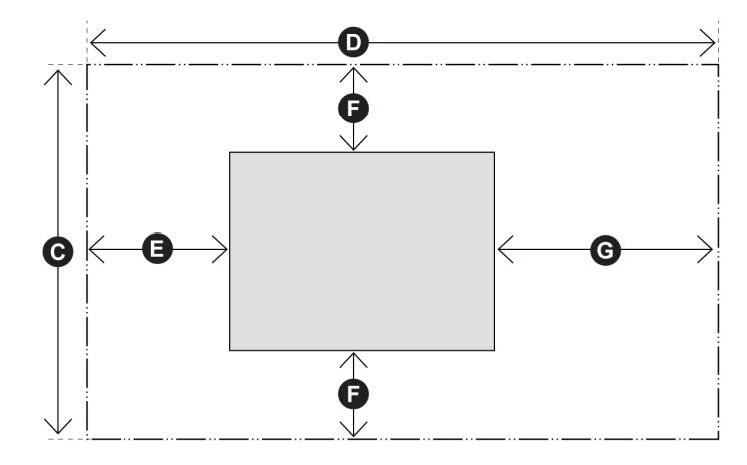 | |
| Lot Area (no min sq ft) | |
|
Lot Width (no min)
| |
|
Lot Depth (no min)
| |
|
Front Yard (min 25 ft)
| |
|
Side Yard (no min)
| |
|
Rear Yard (min 10 ft)
| |
| Floor Area Ratio (1:2 max) | |
Notes
1. Encroachments for two story buildings are allowed in accordance with Section 3.3C.
2. If a lot abuts a residential lot, a 10 foot minimum side setback is required on the side abutting the residential lot unless another provision of this zoning ordinance requires a greater side setback, in which case the other provision shall control.
3. Parking requirements shall comply with Section 4.3.
4. Outdoor seating areas may be allowed to encroach within the required front yard in compliance with Section 2.10.
(Ord. No. 3415, § 1(Exh. A), 1-20-2017; Ord. No. 3695, § 1D, 8-3-2021)
3.19 - LR-2 (LOCAL RETAIL DISTRICT-2)
Description
The LR-2 District is intended to accommodate retail and service type uses and neighborhood-oriented commercial facilities. The intent of the district is to provide a wide range of service establishments close to dwelling units and to ensure these uses are compatible with the character of nearby neighborhoods. The district permits more uses and retail establishment types than LR-1. The district may be used as a transition between major roads and established residential neighborhoods. The district should be applied in areas where the land use pattern has retail locations close to residential areas or where such a pattern is desired in the future.
| Height (see Section 3.3 for additional height provisions) | |
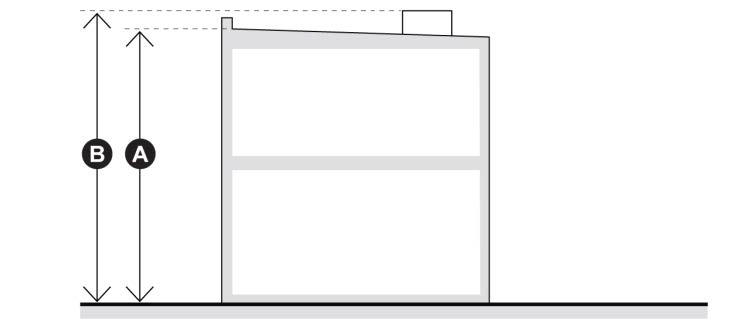 | |
|
Height (max 2 stories)
| |
|
Height of Building (max 40 ft)
| |
|
Height of Encroachments (max 50 ft)
| |
| Siting (see Section 3.3 for additional lot and yard provisions) | |
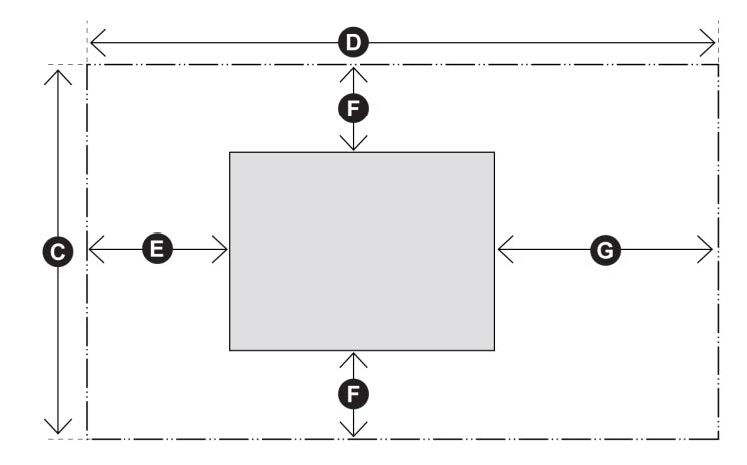 | |
| Lot Area (no min sq ft) | |
|
Lot Width (no min)
| |
|
Lot Depth (no min)
| |
|
Front Yard (min 25 ft)
| |
|
Side Yard (no min)
| |
|
Rear Yard (min 10 ft)
| |
| Floor Area Ratio (1:2 max) | |
Notes
1. Encroachments for two story buildings are allowed in accordance with Section 3.3C.
2. If a lot abuts a residential lot, a 10 foot minimum side setback is required on the side abutting the residential lot unless another provision of this zoning ordinance requires a greater side setback, in which case the other provision shall control.
3. Parking requirements shall comply with Section 4.3.
4. Outdoor seating areas may be allowed to encroach within the required front yard, in compliance with Section 2.10.
(Ord. No. 3415, § 1(Exh. A), 1-20-2017; Ord. No. 3695, § 1E, 8-3-2021)
3.20 - C (COMMERCIAL DISTRICT)
Description
The C District is intended to accommodate a broad range of retail, service and commercial uses to promote economic viability and encourage employment growth in specific areas. The district promotes compatibility with nearby residential areas by restricting heavy machinery and industrial uses. The district may be used as a transition between industrial districts and less intense commercial areas and established residential neighborhoods. The district should be applied in areas where the land use pattern is predominantly commercial or where such a pattern is desired in the future.
| Height (see Section 3.3 for additional height provisions) | |
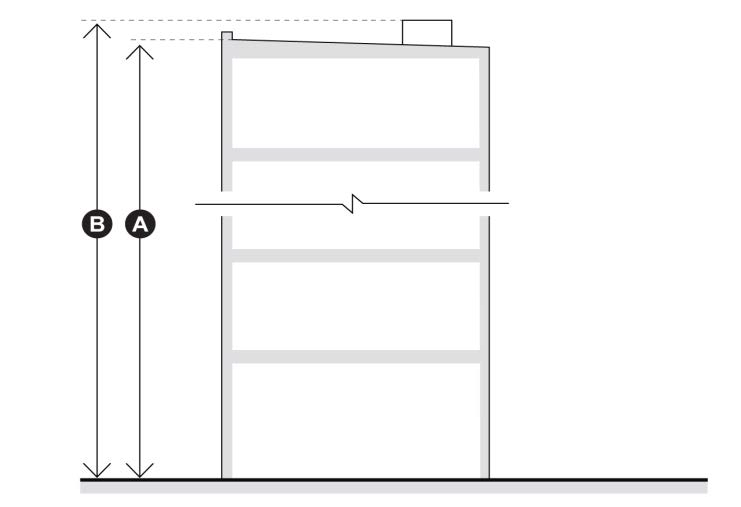 | |
|
Height (max 20 stories)
| |
|
Height of Building (max 280 ft)
| |
|
Height of Encroachments (max 290 ft)
| |
| Siting (see Section 3.3 for additional lot and yard provisions) | |
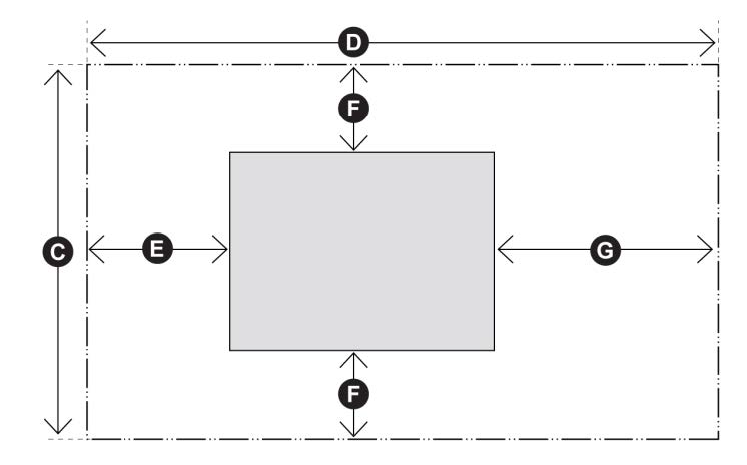 | |
| Lot Area (no min) | |
|
Lot Width (no min)
| |
|
Lot Depth (no min)
| |
|
Front Yard (min 25 ft)
| |
|
Side Yard (no min)
| |
|
Rear Yard (min 10 ft)
| |
| Floor Area Ratio (2:1 max) | |
Notes
1. Encroachments for 2 and 3 story buildings are allowed in accordance with Section 3.3C.
2. If lot abuts a residential lot, a 10 foot minimum side setback is required on the side facing residential lot unless another provision of this zoning ordinance requires a greater side setback, in which case the other provision shall control.
3. Parking requirements shall comply with Section 4.3.
4. Outdoor seating areas may be allowed to encroach within the required front yard, in compliance with Section 2.10.
(Ord. No. 3415, § 1(Exh. A), 1-20-2017; Ord. No. 3695, § 1F, 8-3-2021)
3.21 - LI (LIGHT INDUSTRIAL DISTRICT)
Description
The LI District is intended to accommodate offices, light manufacturing, research and development, warehousing, wholesale, processing and commercial uses in order promote economic viability, encourage employment growth, and limit the encroachment of non-industrial development within established industrial areas. Facilities in the district should be operated in a relatively clean and quiet manner, and should not be obnoxious to nearby residential or commercial uses. The district should be applied in established industrial areas or where such a land use pattern in desired in the future.
| Height (see Section 3.3 for additional height provisions) | |
 | |
|
Height (no max stories)
| |
|
Height of Building (Set by FAA)
| |
|
Height of Encroachments (max 10 ft)
| |
| Siting (see Section 3.3 for additional lot and yard provisions) | |
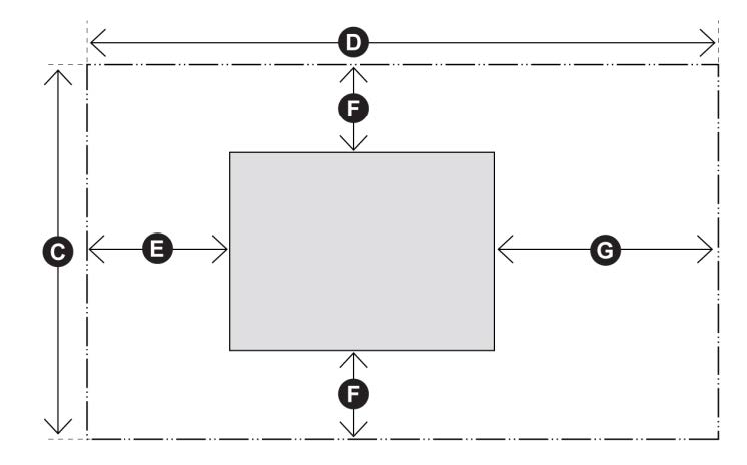 | |
| Lot Area (no min) | |
|
Lot Width (no min)
| |
|
Lot Depth (no min)
| |
|
Front Yard (no min)
| |
|
Side Yard (min 5 ft)
| |
|
Rear Yard (no min)
| |
| Floor Area Ratio (1:1 max) | |
Notes
1. Buildings may be built to any height not prohibited by other laws and ordinances.
2. Buildings constructed on a lot fronting on a street with a right-of-way width of 100 feet or greater must have a front yard setback of at least 30 feet, except for outdoor seating areas as allowed in Article 2.10. For corner lots, the frontage along each street is considered to be a front yard and the more restrictive front yard setback shall apply to both front yards.
3. The area between the face of the building and the front property line must be kept free and clear of structures, parking areas, accessory buildings, fences, and other uses, unless allowed in other sections of this ordinance.
4. Along streets with a right-of-way width less than 100 feet, automobile parking areas are allowed not less than six (6) feet from the front property line.
5. Loading docks located on the front of the building must be set back not less than 60 feet from the front property line.
6. The area between the lot line and the minimum side yard line must be kept free and clear of accessory buildings and storage areas, but may be paved and used as driveways.
7. When retail, commercial, or industrial uses back to a common lot line with a residential district, a ten (10) foot rear setback is required unless another provision of this zoning ordinance requires a greater rear setback, in which case the provision requiring the greater setback shall control.
8. When commercial or industrial uses do not back upon an alley or easement with a width of at least twenty (20) feet, a ten (10) foot rear setback is required.
9. Parking requirements shall comply with Section 4.3.
(Ord. No. 3415, § 1(Exh. A), 1-20-2017; Ord. No. 3636, § 1(B)(1), 6-9-2020; Ord. No. 3695, § 1G, 8-3-2021)
3.22 - HI (HEAVY INDUSTRIAL DISTRICT)
Description
The HI District is intended to accommodate a broad range of high-impact manufacturing, industrial or other uses, including extractive and waste-related uses, that by their nature create some nuisance, and which are not properly associated with or are not compatible with nearby residential districts or other less intense districts. The district should be applied in established heavy industrial areas or where such a land use pattern in desired in the future.
| Height (see Section 3.3 for additional height provisions) | |
 | |
|
Height (no max)
| |
|
Height of Encroachments (no max)
| |
| Siting (see Section 3.3 for additional lot and yard provisions) | |
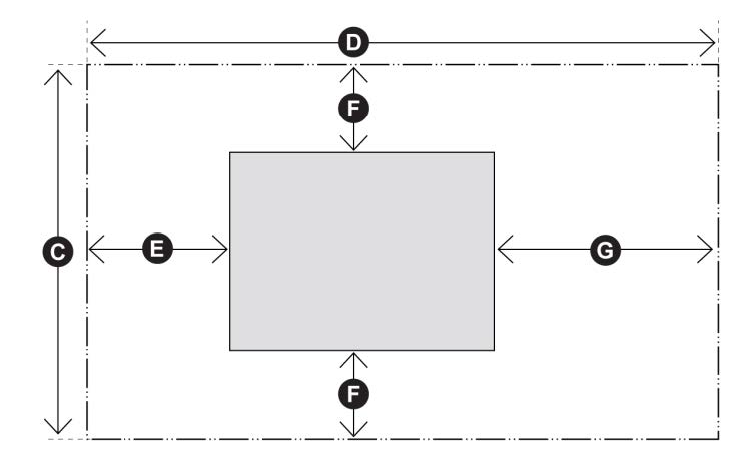 | |
| Lot Area (no min) | |
|
Lot Width (no min)
| |
|
Lot Depth (no min)
| |
|
Front Yard (no min)
| |
|
Side Yard (min 5 ft)
| |
|
Rear Yard (no min)
| |
| Floor Area Ratio (1:1 max) | |
Notes
1. Buildings may be built to any height not prohibited by other laws and ordinances.
2. Gasoline pumps must be set back not less than 18 feet from the street right-of-way line.
3. Buildings constructed on a lot fronting on a street with a right-of-way width of 100 feet or greater must have a front yard setback of at least 30 feet, except for outdoor seating areas as allowed in Article 2.10. For corner lots, the frontage along each street is considered to be a front yard and the more restrictive front yard setback shall apply to both front yards.
4. The area between the face of the building and the front property line must be kept free and clear of structures, parking areas, accessory buildings, fences, and other uses, unless allowed in other sections of this chapter.
5. Along streets with a right-of-way width of less than 100 feet, automobile parking areas are allowed not less than six (6) feet from the front property line.
6. Loading docks located on the front of the building must be set back not less than 60 feet from the property line.
7. The area between the side lot line and the minimum side yard line must be kept free and clear of accessory buildings and storage areas but may be paved and used as driveways.
8. When retail, commercial, or industrial uses back to a common lot line with a residential district, a ten (10) foot rear setback is required unless another provision of this zoning ordinance requires a greater rear setback, in which case the provision requiring the greater setback shall control.
9. When commercial or industrial uses do not back upon an alley or easement with a width of least twenty (20) feet, a ten (10) foot rear setback is required.
10. Parking requirements shall comply with Section 4.3.
(Ord. No. 3415, § 1(Exh. A), 1-20-2017; Ord. No. 3636, § 1(B)(2), 6-9-2020; Ord. No. 3695, § 1H, 8-3-2021)
3.23 - PD (PLANNED DEVELOPMENT DISTRICT)
Description
The PD District is intended to accommodate master-planned residential communities, commercial, industrial, office, civic and mixed use developments. Developments that include residential may contain a mix of housing types including associated amenities with appropriate perimeter buffering and open space. This district should be applied to large-scale projects that require either additional flexibility not available in the residential districts or greater scrutiny by the City due to their scale. See individual Planned Development District Ordinances for specific Development Standards.

