
Ferguson City Zoning Code
15.0
FERGUSON DOWNTOWN FORM-BASED ZONING DISTRICTS
15.1.- INTRODUCTION.
A.
Intent. These regulations are established to provide development standards to the City for downtown and adjacent redevelopment areas.
1.
To guide the development of a mix of uses and a pedestrian-oriented environment established in the Downtown Strategic Development Plan.
2.
To provide for a mix of housing types within downtown and adjacent areas for people of all ages and lifestyles,
3.
To achieve development that is appropriate in scale and intensity for downtown and adjacent neighborhoods.
B.
Overview of Code.
1.
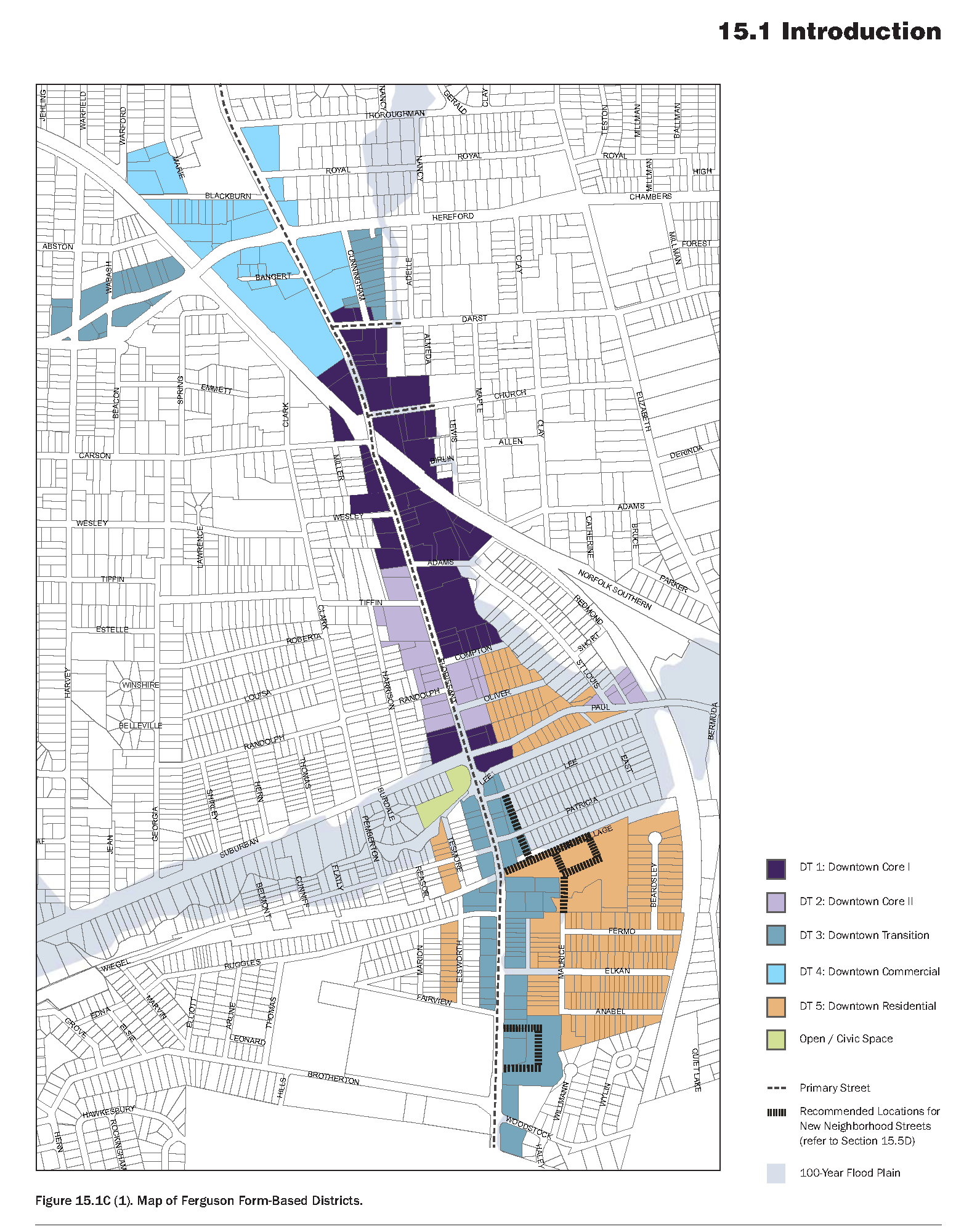
Section 15.2: Districts. These regulations are organized within districts for adoption into the City's existing code. These zoning districts shall be mapped on the City's Zoning Map, however, the Primary Streets designation shall be referenced from the attached map, Figure 15.1C(1).
2.
Section 15.3: Uses. Use requirements are defined in Section 15.3 for each of the DT Downtown Districts. Uses may also be further limited by the Building Types. Refer to 15.4 Building Types under "Uses" in the tables per building type.
3.
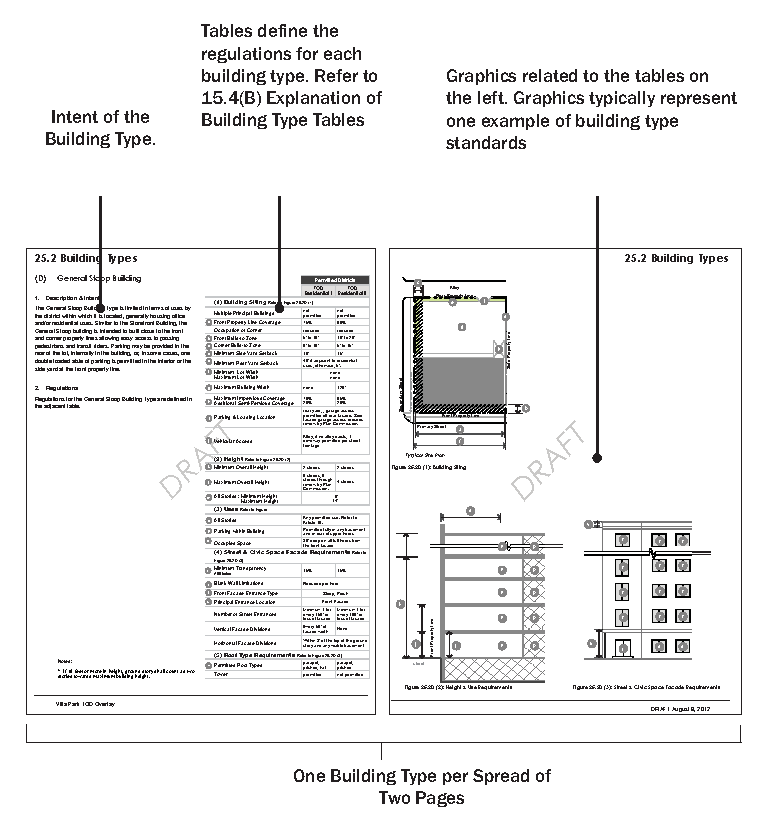
Section 15.4: Building Types. Six Building Types are defined for use in the DT Downtown Districts. A mix of building types are typically permitted per district. These Building Types outline the desired building forms for the new construction and renovation of structures and contain regulations that determine physical building elements such as build-to-zones, transparency levels, entrance location, and parking location. Refer to Figure 15.4(A) 1 for a typical Building Type page layout.
4.
Section 15.5: Site Development Standards. The site development standards provide references to other City ordinances or parts of the zoning ordinance and may include additional information or revision those ordinances applicable only to the DT Downtown Districts. These include signage, parking, landscape, and streets.
5.
Section 15.5(D): Street Guidelines. A Neighborhood Street and Alley are provided for larger parcels that may subdivide and introduce a new street or alley to provide more access and building types. Refer to recommended locations for new streets on the map, Figure 15.1C(1).
C.
Applicability. These regulations apply to the downtown and adjacent redevelopment areas within the City as mapped on the City's zoning map. Refer to Figure 15.1C(1) for affected parcels.
D.
Development Approval Process.
1.
Site Plan Review. An approved site plan is required for the development or redevelopment of all parcels in any DT district (refer to Section 24.0 of the Zoning Ordinance) with the following revisions:
(a)
Add to Section 24.4.4 Major Site Plan Approval. The Director of Planning and Development may approve a major site plan if the site plan complies with all requirements of the city's zoning ordinance. If the Director of Planning and Development denies approval of a major site plan, including the provision of written comments as to the reason for such denial, the denial may be appealed by the applicant to the Plan Commission for review. The Plan Commission shall then approve the major site plan, approve the major site plan with conditions, or deny the site plan.
(b)
For a period of not less than five years, all site plans shall be presented to the Plan Commission for report and to allow a review of the approved and disapproved site plans and their elements. The Plan Commission may make recommendations for revisions to this section based upon that review.
2.
Deviations. The Applicant shall submit requested deviations to the Director of Planning and Development with the Site Plan application. The Director may approve deviations to a site plan for the following:
(a)
Minor Deviations. The Director of Planning and Development may approve minor deviations to any dimension or percentage as follows:
i.
The location of the building within up to one foot from any minimum yard requirement or build-to zone width/location.
ii.
Up to ten percent increase in total impervious coverage, not to exceed the total amount of permitted impervious plus semi-pervious coverage.
iii.
Up to ten percent decrease in Front Property Line coverage.
iv.
Additional height of any story up to two feet, as long as the overall building height does not exceed the allowable height of all floors at their maximum permitted height.
(b)
Design Deviations. The Architectural Review Board shall review and make a recommendation for the following deviations:
i.
Alternative Building Materials. The Director may approve alternative building materials from the requirements of 15.4.K(1), with the exception of the prohibited materials. For approval, the Applicant shall submit samples and local examples of the material a minimum of four weeks prior to the review, to allow site visits to the location.
ii.
Facade Variety Alternative. The Director may approve a reprieve from the facade variety requirements in 15.4.B(5). The Applicant shall submit fully rendered elevations and three dimensional drawings of all street facades with materials samples for all surfaces to prove a higher quality building design with variation and relief from monotony.
(c)
Existing Building Deviations. The Plan Commission shall review and make a recommendation for the following deviations, when applied to the renovation of an existing building(s):
i.
For renovation of existing buildings, the maximum front property line coverage may be waived with an existing coverage of 60%; however, any expansion on the ground story shall contribute to the extension of the front property line coverage.
ii.
For renovation of existing buildings, the location of the building within up to five feet from any minimum yard requirement or build-to zone width/location.
iii.
For renovation of existing buildings, the minimum height of the ground story and upper story may be increased or decreased by up to two feet for existing stories.
iv.
For renovation of existing buildings, other required dimensions may be modified up to five feet or 10%, whichever is less, unless otherwise modified by this section.
E.
Nonconforming Structures.
1.
Nonconforming Uses. Refer to 19.0 for Non-Conforming Uses requirements with the following exception and addition.
2.
Nonconforming Structures. The following regulations allow for the continuation of occupation of a structure that was legally constructed prior to the adoption or amendment to this code, but that could not occur under the provisions of this code.
(a)
All Building Type standards apply to all new construction and renovation of existing structures, where the renovation includes an addition of more than 60% in gross building square footage.
(b)
When the existing front or corner facade is located within the build-to zone and a renovation of the front facade occurs with or without any added building square footage, the Street Facade Requirements and Entrance Type Requirements of any permitted Building Type shall be met when the renovation includes any of the following:
i.
Installation of additional doors or a change in location of a door;
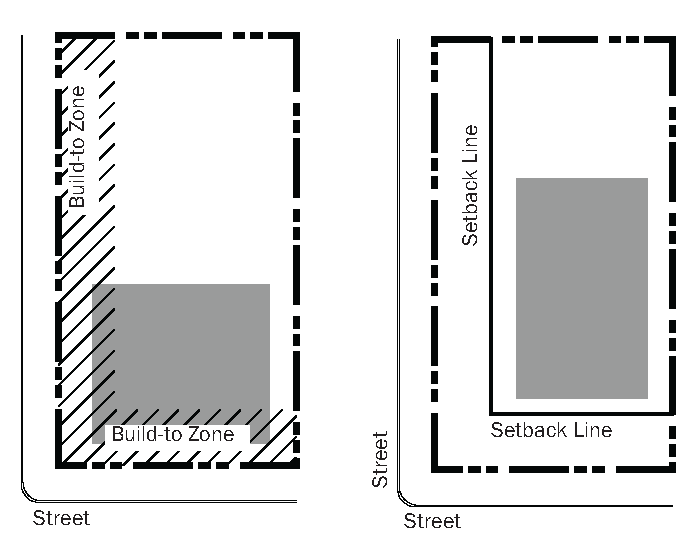
Build-to Zone vs Setback Line. A setback line indicates the closest a building may be placed to a property line, but is silent on where behind that line a building may be placed. A build-to zone indicates a zone or area in which the Facade of a building must be located. The use of a build-to zone allows some control over building placement, while the range provides some flexibility. This method also provides an element of predictability that is absent when the only requirement is to locate a building beyond a certain line.
ii.
Expansion or change in location of 30% of windows on any street façade; or
iii.
Replacement of 30% or more of facade materials on any street facade with a different facade material.
(c)
When the existing building front or corner facade is located within the build-to zone and a renovation of the shape or style of the roof occurs with or without added building square footage, the Roof Type Requirements of any permitted Building Type shall be met.
(d)
Under all circumstances, no portion of the Building Type standards must be met in the case of normal repairs required for safety and continued use of the structure, such as replacement of window or door glass.
F.
Definitions. For the purposes of this document, the following terms shall have the following meanings:
1.
Build-to Zone. An area in which the front or corner side facade of a building shall be placed; it may or may not be located directly adjacent to a lot line. The zone dictates the minimum and maximum distance a structure may be placed from a lot line. Refer to Figure 15.1D(1) Build-to Zone vs. Setback Line.
2.
Courtyard. An outdoor area enclosed by a building on at least three sides and is open to the sky.
3.
Expression Line. An architectural feature consisting of a decorative, three dimensional, linear element, horizontal or vertical, protruding or indented at least two inches from the exterior facade of a building typically utilized to delineate the top or bottom of floors or stories of a building.
4.
Impervious Site Coverage. The percentage of a lot developed with principal or accessory structures and impervious surfaces, such as driveways, sidewalks, and patios.
5.
Lot Frontage. The horizontal distance between the side lot lines, measured at the front lot lines.
6.
Occupied Space. Interior building space regularly occupied by the building users. It does not include storage areas, utility space, or parking.
7.
Pedestrianway. A pathway designed for use by pedestrians; it can be located mid-block allowing pedestrian movement from one street to another without traveling along the block's perimeter.
8.
Pervious Surface. Also referred to as pervious material. A material or surface that allows for the absorption of water into the ground or plant material, such as permeable pavers or a vegetated roof.
9.
Primary Street. A street that receives priority over other streets in terms of setting front lot lines and locating building entrances. Refer to Figure 15.1C(1) for mapped Primary Streets.
10.
Semi-Pervious Surface. Also referred to as semi-pervious material. A material that allows for at least 40% absorption of water into the ground or plant material, such as pervious pavers, permeable asphalt and concrete, or gravel.
11.
Story, Ground. Also referred to as ground floor. The first floor of a building that is level to or elevated above the finished grade on the front and corner facades, excluding basements or cellars.
12.
Story, Half. A story either in the base of the building, partially below grade and partially above grade, or a story fully within the roof structure with transparency facing the street.
13.
Story, Upper. Also referred to as upper floor. The floors located above the ground story of a building.
14.
Street Face. The facade of a building that faces a street right-of-way.
15.
Transparency. The measurement of the percentage of a facade that has highly transparent, low reflectance windows. Mirrored glass is not permitted.
16.
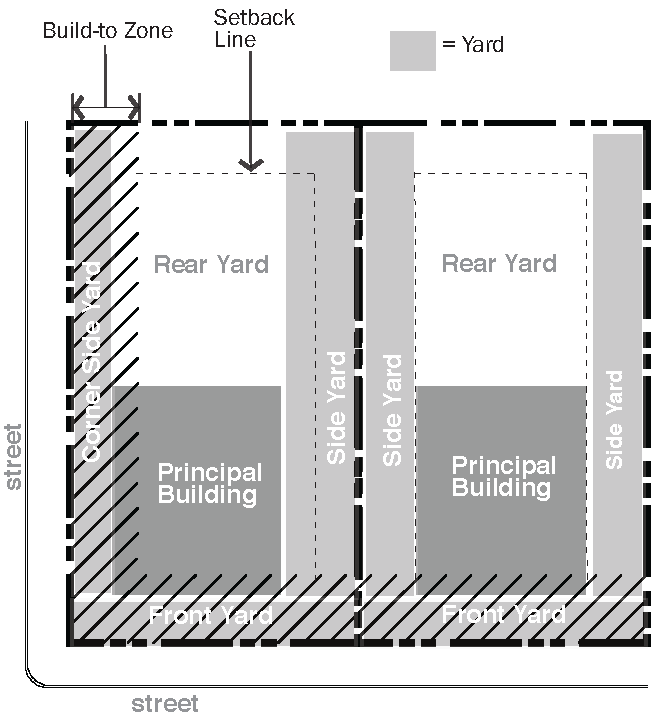
Yard. The space on a lot which is unoccupied and unobstructed from the ground to the sky by the Principal Structure. Refer to Figure 15.1D(2) Illustration of Yards. Note that the Rear Yard is fully screened from the street by the Structure.
(a)
Yard, Corner Side. A Yard extending from the corner side building Facade along a Corner Side Property Line between the Front Yard and Rear Property Line.
(b)
Yard, Front. A Yard extending from the front Facade of the Principal Structure along the full length of the Front Property Line, between the Side Property Lines or Side and Corner Side Property Lines.
(c)
Yard, Rear. A Yard extending from the rear building Facade along the Rear Property Line between the Side Yards or, on a corner Lot, the Corner Side and Side Yards.
(d)
Yard, Side. A Yard extending from the side building Facade along a Side Property Line between the Front Yard and Rear Property Line.
17.
Visible Basement. A half story partially below grade and partially exposed above with required transparency on the street facade.
(Ord. No. 2013-3523, § 3(Exh. B), 4-23-2013)
15.2. - DISTRICTS.
The following Districts are established for mixed use, commercial, and residential development within downtown and adjacent redevelopment areas. Figure 15.1C(1) illustrates the locations for the districts.
A.
DT 1: Downtown Core I District. The Downtown Core I District is a mid-scale district that supports a mix of two to up to five story buildings that make up the core of the mixed use downtown area. The form of this retail and service-centered area establishes a street wall of storefront style-building facades with shallow build-to-zones along the sidewalk and parking in the rear or off-site. It focuses pedestrian-friendly retail and service uses on the ground story with residential and/or office uses in upper stories.
B.
DT 2: Downtown Core II District. The Downtown Core II District is a mid-scale district similar to the Downtown Core I that supports a mix of two to up to five story buildings. The form of this retail and service-centered area remains pedestrian-centered but allows for more off-street parking options. Storefront-style buildings focus a broader spectrum of retail and service uses on the ground story with residential and/or office uses in upper stories.
C.
DT 3: Downtown Transition District. The Downtown Transition District is a lower scale district that supports a mix of two to up to three and a half story buildings. Commercial, residential, and mixed use buildings make up this district in variety of building types. A broader spectrum of retail, service, and office uses support the Downtown Core and ground floor residential is permitted. The form of this area is pedestrian-centered, but allows for more vehicular access and off-street parking options.
D.
DT 4: Downtown Commercial District. The Downtown Commercial District is a lower scale commercial district designed to serve adjacent neighborhoods and the greater community. Centered around the heavily trafficked Florissant and Airport Road intersection, a wider range of commercial and office uses is permitted. As one of the gateways into downtown, pedestrian access and safety remains a priority.
E.
DT 5: Downtown Residential District. The Downtown Residential District is a lower-scale residential district with a mix of apartments, townhouses, and yard buildings. With a maximum height of three and half stories, this area provides for a mix of housing types adjacent to downtown for people of all ages and lifestyles.
(Ord. No. 2013-3523, § 3(Exh. B), 4-23-2013)
15.3. - USES.
A.
General Provisions. The following establishes a simplified set of uses permitted within the Building Forms of each downtown form-based zoning district.
1.
Uses by District. Permitted and special uses available in each form-based district are shown in Table 15.3B(1). Permitted Uses.
2.
Use Definitions. Uses listed in Table 15.3B(1) are defined in Section 2.0 of the Zoning Ordinance. Further definition applicable only to the DT districts is located in Section 15.3C. Use Requirements.
3.
Permitted Use ("●"). These uses are permitted by-right in the form districts in which they are listed.
4.
Permitted in Upper Stories Only ("◓"). These uses are permitted by-right in the districts in which they are listed, provided that the uses are located in the upper stories of a structure. These uses may also be located in the ground story provided that they are located beyond a depth of at least thirty feet from the front facade.
5.
Requires a Special Use Permit ("○"). These uses require a Special Use Permit (refer to Section 23.0 Special Use Regulations) in order to occur in the districts in which they are listed and must follow any applicable development standards associated with the use as well as meet the requirements of the special use. These specific standards often require numerical limitations defined in 15.3.A.9.
6.
Permitted with Development Standards ("◐"). These uses are permitted in the districts in which they are listed, provided that they are developed utilizing the listed development standards. These standards, combined with the Building Type requirements, are intended to alleviate any negative impacts associated with the use, making it appropriate in a district where it otherwise might not have been appropriate.
7.
Prohibited Use. A blank cell or an unlisted use in the use table indicates that the land use is prohibited in that district.
8.
City Determination. When a proposed land use is not explicitly listed in Table 15.3B(1), Permitted Uses, the City shall determine whether or not it is included in the definition of a listed use or is so consistent with the size, scale, operating characteristics and external impacts of a listed use that it should be treated as the same use. Any such determination may be appealed to the Zoning Board of Appeals.
9.
Numerical Limitations. The intent of the numerical limitation is to provide for a variety of goods and services and to regulate saturation levels of uses within a particular multi-unit building or within the Downtown in general. Saturation levels are different for various classes of uses. Where numerical limitations have been applied to certain uses, the intent is to hold constant at or reduce the number of businesses to the saturation level.
(a)
Exceptions. An exception to exceed the numerical limitation for a use may be recommended by the Plan Commission and approved by the City Council. In considering whether or not to grant an exception to the numerical limitation, Plan Commission and City Council should consider the following criteria:
i.
The exception shall be consistent with planning goals and result in the positive enhancement of the purposes of the District as evidenced by resident support, merchant support, marketing surveys, or other information indicating probably substantial patronage.
ii.
Recognized as unique in its use category.
iii.
Demonstrates community need through marketing survey and documented analysis.
iv.
Promotes the purpose of the District and reinforces the goal of the Downtown Strategic Development Plan as a regional destination.
v.
Letter of recognition by the Ferguson Special Business District (FSBD) Board, with accompanying rationale relative to a waiver of numerical limitations.
10.
Temporary Accessory Uses. Temporary accessory uses are permitted in all Downtown (DT) Districts with the exception of DT 5: Downtown Residential, including outdoor displays, seasonal displays and sales, festivals, and vendors. The following requirements apply:
(a)
Outdoor displays are permitted up to eight hours per day, no more than three consecutive days in any one month.
(b)
Build-to Zone. Temporary outdoor displays of merchandise are permitted in the Build-to Zone without a permit, subject to all other requirements of 15.3A.10.
(c)
Right-of-way. Any temporary outdoor display or occupation of the right-of-way requires a permit by the Director of Public Works. Refer to Section 21.6 of the Zoning Code.
B.
Permitted Use Table. See Table 15.3B(1) for a list of permitted and special uses.
C.
Use Requirements.
1.
Residential and Lodging Uses. A category of uses that include several residence types.
(a)
Residential. One or more dwelling units located within the principal structure of a lot, in which the units may or may not share a common wall with the adjacent (horizontally or vertically) unit or have individual entrances from the outside.
(b)
Hotels. A facility offering temporary lodging to the general public consisting of an unlimited number of sleeping rooms with or without in-room kitchen facilities. Secondary service uses may also be provided, such as restaurants and meeting rooms. Rooms shall be accessed from the interior of the building. In the districts where Hotels and Bed and Breakfasts requires a Special Use Permit ("○"), the following applies:
i.
The facility shall be considered an Inn or Bed and Breakfast, limited to no more than twelve bedrooms devoted to rooms rented as overnight accommodations.
ii.
The owner or resident manager of the Inn shall maintain the structure as their primary residence and shall reside on the premises at all times that a guest is registered.
iii.
Employees are limited to no more than four, and shall be employed as domestic help such as a cook, housekeeper, gardener.
iv.
Meals shall be served only to overnight guests.
v.
No food preparation or storage facilities shall be provided in guest rooms.
Table 15.3B(1). Permitted Use Table.
Key
● Permitted
◓ Permitted in Upper Stories Only
◐ Permitted with Development Standards
○ Requires Special Use Permit
vi.
No guest shall remain in the Inn for more than fourteen consecutive days, totaling no more than 60 days in any calendar year.
(c)
Residential Care. A facility offering temporary or permanent lodging to the public consisting of an unlimited number of sleeping rooms with or without in-room kitchen facilities. Includes such uses as independent and assisted living facilities, nursing homes, residential care homes, and transitional treatment facilities. Assistance with daily activities may be provided for residents. Secondary service uses may also be provided, such as dining and meeting rooms. Rooms shall be accessed from the interior of the building.
2.
Civic Uses. A category of uses related to fulfilling the needs of day-to-day community life including assembly, public services, educational facilities, and hospitals.
(a)
Religious and Organization Assembly. A facility that has organized services, meetings, or programs to benefit, educate, entertain, or promote discourse amongst the residents of the community in a public or private setting. Assembly includes such uses as a community center, house of worship, and private clubs and lodges. In the districts where religious and organization assembly uses are permitted with special use ("○"), the following apply:
i.
Religious and organization assembly uses must be located in a free standing, single-use building on a minimum one-acre site.
ii.
District Building Type Restrictions. (Refer to 15.4 Building Types).
(i)
In DT 1 and DT 2 Districts, Religious and Organization Assembly uses are limited to occur only in the Civic Building Type.
(ii)
In DT 3 and DT 4 Districts, Religious and Organization Assembly uses are limited to occur only in the Civic, Cottage Commercial, and Main Street Building Types.
(iii)
DT 5 District, Religious and Organization Assembly uses are limited to occur only in the Civic Building Type.
(b)
Library/Museum. A structure open to the general public housing educational, cultural, artistic, or historic information, resources, and exhibits. May also include food service and a gift shop.
(c)
Police and Fire. A facility providing public safety and emergency services; training facilities, locker rooms, and limited overnight accommodations may also be included. Police and fire facilities require a Special Use approval. The facilities shall be housed in a permitted building, but shall have the following additional allowances:
i.
Garage doors are permitted on the front facade.
ii.
Exempt from maximum driveway widths.
(d)
Post Office. A publicly accessed facility for the selling of supplies and mail related products and the small scale collection and distribution of mail and packages. Large-scale postal sorting and distribution is not permitted.
(e)
School. An education facility with classrooms and offices, that may also include associated indoor facilities such as ball courts, gymnasium, theater, and food service.
3.
Retail Uses. A category of uses involving the sale of goods or merchandise to the general public for personal or household consumption.
(a)
Neighborhood Retail. A use in this category occupies a space of less than 8,000 square feet. Neighborhood retail includes such uses as those listed in Table 15.3C(1). List of Typical Uses in Retail Category.
(b)
General Retail. A use in this category includes all Neighborhood Retail uses occupying a space of greater than 8,000 square feet and such uses as those listed in Table 15.3C(1). List of Typical Uses in Retail Category. A Special Use Permit ("○") is required in all districts.
i.
Grocery Store. Alcohol sales are not permitted in Grocery Stores under 8,000 square feet.
(c)
Lumberyard and Construction Materials. A use involving the sale of goods, materials, or merchandise to businesses and/or the general public for construction activities. This use includes outdoor storage. In the districts where this use requires a special use permit ("○"), the following applies:
i.
The use shall be located on a site of at least one acre.
ii.
The site shall be surrounded on at least three sides by major thoroughfares, non-residential uses, and/or railroad or light rail transit rights-of-way.
iii.
Outdoor storage shall not be visible from any street.
iv.
Additional criteria necessary to protect the public health, safety, and welfare as determined by the City Council.
4.
Service. A category of uses that provide patrons services and limited retail products related to those services. Visibility and accessibility are important to these uses, as most patrons do not utilize scheduled appointments.
(a)
Neighborhood Service. A use in this category occupies a space of less than 8,000 square feet. Neighborhood service includes such uses as those listed in Table 15.3C(2). List of Typical Uses in Service Category.
(b)
General Service. A use in this category includes all Neighborhood Service uses occupying a space of greater than 8,000 square feet and such uses as those listed in Table 15.3C(1). List of Typical Uses in Service Category. All General Services require a Special Use permit ("○"). The following numerical limitations apply:
i.
Dry Cleaning and Laundry Services, Beauty Supply and Accessories Stores, and Nail Salons and Specialty Body Services (Spa) are each subject to a numerical limitation of one establishment of each type in any DT District at any time.
ii.
Beauty Salon and Barbershops are subject to a numerical limitation of one establishment in any DT District at any time.
iii.
Childcare Centers. Childcare centers require a Special Use permit with the following requirements:
(i)
Subject to numerical limitation of one establishment in any DT District at any time.
Table 15.3C(1). List of Typical Uses in Retail Category.
Table 15.3C(2). List of Typical Uses in Service Category.
Table 15.3C(3). List of Typical Uses in Office Category.
Table 15.3C(4). List of Typical Uses in Cottage Industry Category.
(ii)
In order to prevent an excessive concentration of child day care centers in any part of the City, any newly-established child day care center shall be at least 2,500 feet from the nearest lot line of an existing child day care center.
(iii)
Shall not be located on the ground floor or in the front portion of any building with frontage on Florissant Road.
(c)
Adult Day Care.
(d)
Automotive Parts and Services.
i.
Subject to numerical limitation of two establishments in any DT District at any time.
(e)
Educational Services.
(f)
Financial Services, Retail (Banks).
(g)
Food Services and Drinking Places. Food Services and Drinking Places include only the following:
i.
Full Service Restaurants.
ii.
Carry-out Food Service Stores.
iii.
Quick Service Restaurants.
iv.
Banquet Centers and Caterers.
v.
Drinking Places (Alcoholic Beverages).
vi.
Brewpubs. A microbrewery that brews beer for both on and off-premise consumption, and may include a bar and/or restaurant.
vii.
Wine Establishments. A properly licensed business which sells wine only (not liquor or beer) for both on and off-premise consumption, as well as wine accessories and/or merchandise.
(h)
Funeral Homes.
(i)
Medical Marijuana Dispensary/Cultivation Facility. No building shall be constructed, altered or used for a Medical Marijuana Dispensary without complying with the following regulations this subchapter.
A.
No Medical Marijuana Dispensary shall be located within three hundred (300) feet of a then existing elementary or secondary school, child day care center, or church*. Measurements shall be in a method consistent with the city's existing liquor license measurement standard.
*Then existing" shall mean any school, child day-care center, or church with a written building permit from the city to be constructed, or under construction, or completed and in use at the time the Medical Marijuana Dispensary first applies for either zoning or a building permit, whichever comes first.
B.
Onsite Usage Prohibited. No marijuana may be smoked, ingested, or otherwise consumed on the premises of a Medical Marijuana Dispensary building.
C.
Hours of Operation*. All sales or distribution of Medical Marijuana and any other products sold to the public through a Medical Marijuana Dispensary shall take places between the hours of 8:00 a.m. and 8:00 p.m., Monday—Thursday and Sunday. Sales and distribution of Medical Marijuana or any other products sold to the public through a Medical Marijuana Dispensary shall be extended until 10:00 p.m. the following day on Friday and Saturday evenings*. Medical Marijuana Dispensaries shall be secured and closed to the public after the hours listed in this subsection and no persons not employed by the Medical Marijuana Dispensary may be present in such a facility at any time it is closed to the public.
D.
Display of License Required. The Medical Marijuana Dispensary license issued by the state of Missouri shall be prominently displayed in a highly visible and public location.
E.
Zoning Limitations. Medical Marijuana Dispensaries in the City of Ferguson may be located in the following areas: 1) any commercial district along West Florissant Road, 2) the C-2 Commercial District, 3) the C-1 Commercial district bounded by New Halls Ferry Road, Old Halls Ferry Road, and Interstate 270, and 4) the DT-1 and DT-2 Downtown Commercial Districts, and the DT-3 Downtown Transition District. Any proposed dispensary is subject to the zoning requirements of the proposed location, and the additional regulations outlined in this Section.
F.
Site Plan Review. Any plans for a Medical Marijuana Dispensary shall meet the standard new construction requirements of the Building and fire code of the City of Ferguson and reviewed for approval by the Planning Commission.
5.
Office Uses. A category of uses for businesses that involve the transaction of affairs of a profession, service, industry, or government. Patrons of these businesses usually have set appointments or meeting times; the businesses do not typically rely on walk-in customers. Office uses include those listed in Table 15.3C(3). List of Typical Uses in Office Category.
a.
Seasonal Office. These office uses are seasonal in nature and include such uses as tax preparation and political offices.
6.
Cottage Industry. A use involving small scale manufacturing, production, assembly, and/or repair with little to no noxious by-products that includes a showroom or small retail outlet. Cottage Industry includes such uses as those found in Table 15.3C(4). List of Typical Uses in Cottage Industry Category. The following development standards apply:
(a)
This use may also include associated facilities such as offices and small scale warehousing, but distribution is limited to vans and small trucks. Distribution access shall be from the rear.
(b)
The maximum overall gross floor area is limited to 10,000 square feet, unless otherwise noted.
(c)
The showroom or retail outlet shall be located in the front storefront of the building and shall occupy a minimum of 25% of the gross floor area.
7.
Communication Antennae and Towers. Refer to Section 23.6 for Antennae and 23.7 for Towers.
8.
Parking Lot. A lot that does not contain a permitted building and is solely used for the parking of vehicles. In the districts where a parking lot requires a special use permit ("○"), the following applies:
(a)
Corner Lots. A corner lot shall not be used as a parking lot.
(b)
Adjacent Parking Lots. Two parking lots cannot be located directly adjacent to one another.
(c)
Single Family. Parking lot cannot be associated with a single family use.
(d)
Distance. Parking lot must be within 1,300 feet of the principal entrance to the associated use unless:
i.
At least 75% of the spaces are dedicated for public use.
ii.
An approved joint parking agreement is in place (refer to Section 26.47 Joint Parking Facilities).
(e)
Pedestrian Access. Must be connected to associated use by a dedicated, public pedestrian pathway.
(f)
Commercial Vehicles. Parking lots for commercial vehicles are not permitted in DT Districts.
9.
Parking Structure. A parking structure on a lot that does not contain a permitted Building Type and is solely used for the parking of vehicles. In the districts where a parking lot requires a special use permit ("○"), the following applies:
(a)
Corner Lots. A corner lot shall not be used for a parking structure.
(b)
Adjacent Parking Lots. Two parking facilities (lots or structures) cannot be located directly adjacent to one another.
(c)
Primary Street. No facade of the Parking Structure shall be located on a Primary Street. Refer to the Zoning Map for Primary Street locations (Figure 15.1C(1)). For Parking Structures located on a Primary Street, the Main Street Building Type shall be utilized, requiring occupation of the building in the front 30 feet of the facade on any Primary Street.
(d)
Distance. Parking lot must be within 1,300 feet of the principal entrance to the associated use unless:
i.
At least 75% of the spaces are dedicated for public use.
ii.
An approved parking agreement is in place (refer to 8.0 Parking).
(e)
Pedestrian Access. Must be connected to associated use by a dedicated, public pedestrian pathway.
(f)
Commercial Vehicles. Parking structures for commercial vehicles are not permitted in these districts.
10.
Utility and Infrastructure. A lot that is primarily utilized for the City's infrastructure needs. Utility and infrastructure includes such uses as electric or gas services, sewage treatment, water treatment and storage, and energy conversion systems. In all districts, utilities and infrastructure require a special use permit ("○").
11.
Open Space. A use of land for active or passive, public or private, outdoor space, including such uses as parks, plazas, greens, playgrounds, or community gardens. Open space uses may also be utilized to host temporary private or community events, such as a farmer's market or art fair. In the districts where open space is permitted with development standards ("◐"), the following apply:
(a)
Parking. Parking lots are not permitted in open space in any district unless otherwise specified by the Civic Space Type.
(b)
Stormwater Accommodations. Open space that incorporates stormwater management on a site or district scale is encouraged.
i.
Stormwater facilities shall be designed to accommodate additional uses, such as an amphitheater or a sports field.
ii.
Stormwater facilities shall be designed not to be fenced and shall not impede public use of the land they occupy.
(c)
This use may involve small scale food and beverage service, no more than 200 square feet in space, located in a kiosk, with no service access.
(d)
Buildings located directly adjacent to an open space use shall treat facades facing this use with street facade requirements.
12.
Accessory Uses. A category of uses that are not permitted to serve as the principal use on a zoning lot. These uses are incidental to and customary in connection with the principal building or use and located on the same lot with such principal building or use.
(a)
Home Occupation. An occupational use that is clearly subordinate to the principal use as a residence and does not require any alteration to the exterior of a building.
(b)
Alternative Energy Generation. Alternative energy generation includes structures for solar, wind, and geothermal. The following development standards apply:
i.
Roof or Building Mounted Solar panels are permitted with the following requirements:
(i)
Panels mounted at the same angle of the roof or flush won the building facade are permitted on any roof or building face.
(ii)
Panels projecting off the roof or building at a different angle are limited to the rear and side facing roofs, unless solar access is limited in these locations.
(iii)
Panels shall not extend more than ten (10) feet above the surface of the roof to which they are attached. On pitched roofs, panels shall not extend more than three (3) feet.
ii.
Roof Mounted Small Wind Energy Systems are permitted with the following requirements:
(i)
Maximum rated capacity of 5 kW is permitted per turbine.
(ii)
One (1) turbine is permitted for each 750 square feet of roof area.
(iii)
Maximum height is fifteen 15 feet above the surface of the roof.
iii.
Geothermal Energy is permitted in any yard with the following requirements:
(i)
Any related above ground structure shall be located in a side or rear yard with a maximum height of ten 10 feet, subject to all requirements of the Building Type.
(c)
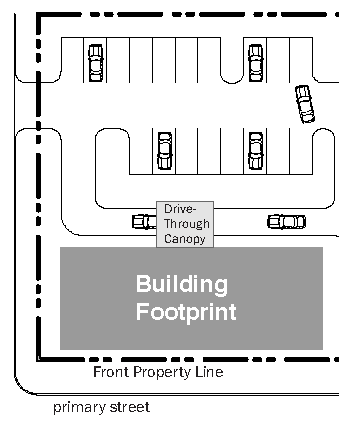
Drive-through Facility. In the districts where drive-through structures are permitted with development standards, the following applies. Refer to Figure 15.3C(1) for one illustration of the following requirements.
i.
Structure/Canopy. Drive-through structures or canopies shall be located on the rear facade of the building or in the rear of the lot behind the building, where permitted by use. The structure shall not be visible from any Primary Street.
ii.
Stacking Lanes. Stacking lanes shall be located perpendicular to the Primary Street or behind the building.
iii.
The canopy and structure shall be constructed of the same materials utilized on the building.
(d)
Fuel Pumps. In the districts where fuel pumps are permitted with a special use permit ("○"), the following applies:
i.
Location. Pump structures and canopies shall be located on the rear facade of the building or in the rear of the lot behind the building, where permitted by use. The structure shall not be visible from any Primary Street.
ii.
Materials. The canopy and structure shall be constructed of the same materials utilized on the building. The roof type of the principal structure should be utilized on any freestanding canopy.
(e)
Parking Lot. An uncovered paved surface used solely for the parking of vehicles, intended for use by the occupants in an adjacent building on the lot. Parking lot locations are regulated by Building Type. Refer to 15.4 Building Types.
(f)
Parking Structure. A structure used solely for the parking of vehicles, intended for use by the occupants in an adjacent building on the lot. Parking Structures within the buildings are regulated per Building Type. Refer to 15.4 Building Types. Separate structure locations are also regulated by Building Type, but shall also meet all of the requirements of 15.3C.9 Parking Structure.
Figure 15.3C(1). Recommended drive-through Facility layout.
(Ord. No. 2013-3523, § 3(Exh. B), 4-23-2013; Ord. No. 2019-3666, § 2, 7-23-19; Ord. No. 2020-3672, §§ 2, 5, 2-25-20)
15.4. - Building Types.
A.
Introduction to Building Type Standards. The buildings detailed in this section outline the Building Types permitted for new construction and renovated structures within the Districts defined in 15.2.
1.
General. All Building Types shall meet the following requirements to achieve the intents defined for the districts.
(a)
Zoning Districts. Each Building Type shall be constructed only within its designated districts. Refer to Table 15.4A(1) Permitted Building Types by Districts.
(b)
Uses. Each Building Type can house a variety of uses depending on the district in which it is located. Refer to 15.3 for uses permitted per district. Some Building Types have additional limitations on permitted uses.
(c)
No Other Building Types. All buildings constructed shall meet the standards of one of the Building Types within the zoning district of the lot.
(d)
Permanent Structures. All buildings constructed shall be permanent construction without a chassis, hitch, or wheels, or other features that would make the structure mobile, unless otherwise noted.
(e)
Accessory Structures.
i.
Attached accessory structures are considered part of the principal structure.
Table 15.4A(1). Permitted Building Types by District.
● = Permitted within district
ii.
Detached accessory structures are allowed per each Building Type and shall comply with all setbacks except the following:
(i)
Detached accessory structures are not permitted in the front yard.
(ii)
Detached accessory structures shall be located behind the principal structure in the rear yard.
(iii)
Detached accessory structures shall not exceed the height of the principal structure.
2.
Page Layout. Document pages are laid out to provide the maximum amount of information for each building type on one spread of two pages. Refer to Figure 15.4A(1) for a typical Building Type layout page.
(a)
Tables. Refer to 15.4B for further information on each Table.
(b)
Graphics typically represent one example of a building that could be developed utilizing the standards for that building type. Graphics are provided to illustrate general intent. In all cases, tables and text supersede graphic representations.
Figure 15.4A(1). Representative Building Types.
B.
Explanation of Building Type Table Standards. The following explains and further defines the standards outlined on the tables for each Building Type, refer to 15.4C—15.4H.
1.
Building Siting. The following explains the line item requirements for each Building Type Table within the first section entitled "Building Siting". Table 15.4B(1), right, illustrates an example of a Building Siting Table from a typical Building Type.
(a)
Multiple Principal Structures. The allowance of more than one principal structure on a lot.
(b)
Minimum Front Lot Line Coverage. Refer to Figure 15.4B(1). Measuring Front Lot Line Coverage. Measurement defining the minimum percentage of street wall or building facade along the street. The width of the principal structure(s) (as measured within the front build-to zone) shall be divided by the maximum width of the front build-to zone (BTZ).
i.
Certain buildings have this number set to also allow the development of a courtyard along the front lot line.
ii.
Some frontage types allow side yard parking to be exempted from the front lot line coverage calculation. If such an exemption is permitted, the width of up to one double loaded aisle of parking, located with the drive perpendicular to the street and including adjacent sidewalks and landscaping, may be exempted, to a set maximum in feet.
iii.
When driveway is located at the front lot line (refer to 15.4.B(1)(n)) and a side yard parking is not utilized (per 15.4.B(1)(b)(ii), above), a driveway width of 20' may be deducted from the width of the BTZ and is not included in the calculation of the minimum front lot line.
(c)
Occupation of Corner. Occupying the intersection of the front and corner build-to zones with a principal structure.
(d)
Front Build-to Zone. The build-to zone or setback parallel to the front lot line. Building components, such as awnings or signage, are permitted to encroach beyond the build-to zone.
i.
All build-to zone and setback areas not covered by building shall contain either landscape, patio space, or sidewalk space. Refer to 15.5C2.
(e)
Corner Build-to Zone. The build-to zone or setback parallel to the corner side property line.
i.
All build-to zone and setback areas not covered by building shall contain either landscape, patio space, or sidewalk space. Refer to 15.5C.
(f)
Minimum Side Yard Setback. The minimum required setback along a side property line.
i.
All build-to zone and setback areas not covered by building shall contain either landscape, patio space, or sidewalk space. Refer to 15.5C.
(g)
Minimum Rear Yard Setback. The minimum required setback along a rear property line.
i.
All build-to zone and setback areas not covered by building shall contain either landscape, patio space, or sidewalk space. Refer to 15.5C.
(h)
Minimum Lot Width. The minimum width of a lot, measured at the front lot line.
(i)
Maximum Building Width. The maximum width of a building, measured across the front facade.
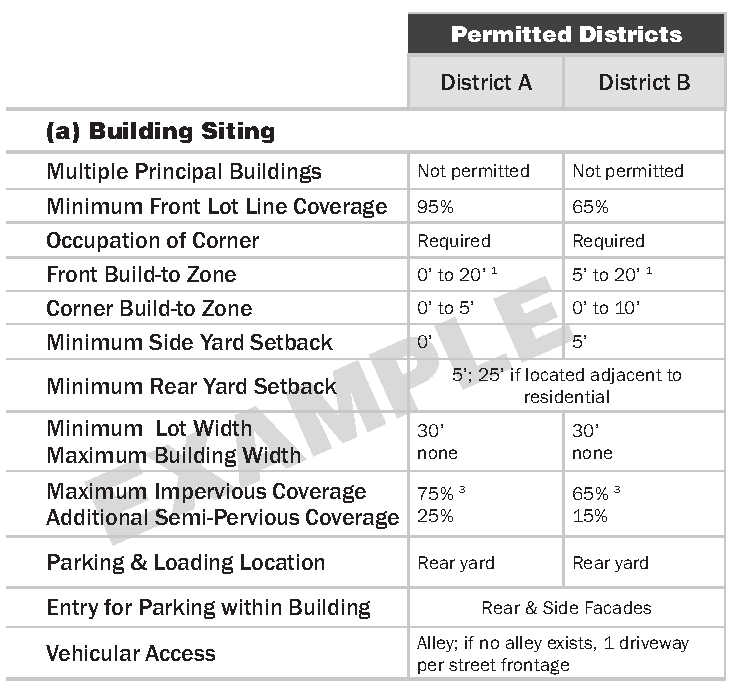
Figure 15.4B(1). Measuring Front Lot Line.
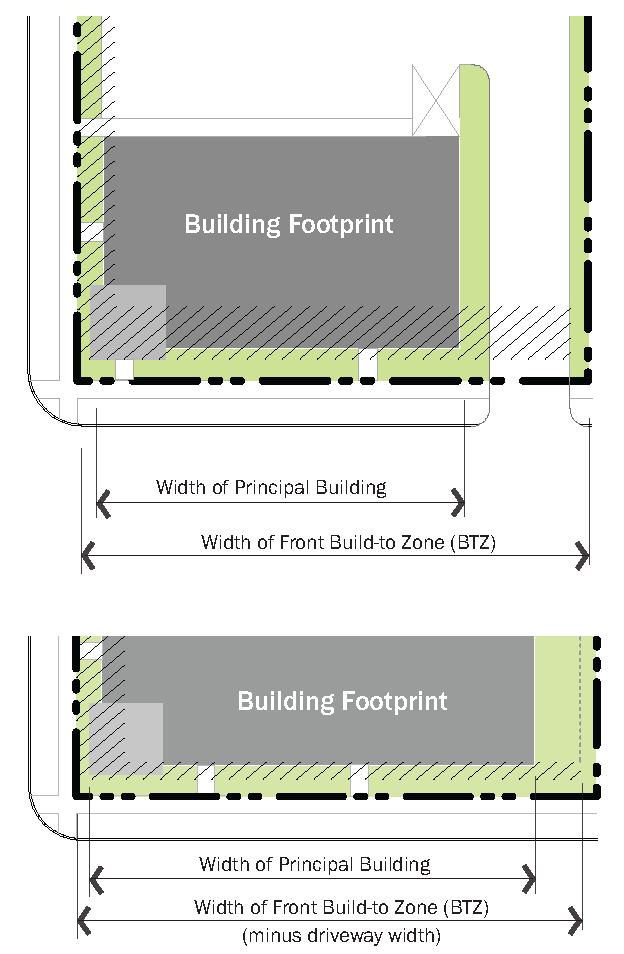
Figure 15.4B(2). Maximum Impervious and Additional Semi-Pervious Coverage.
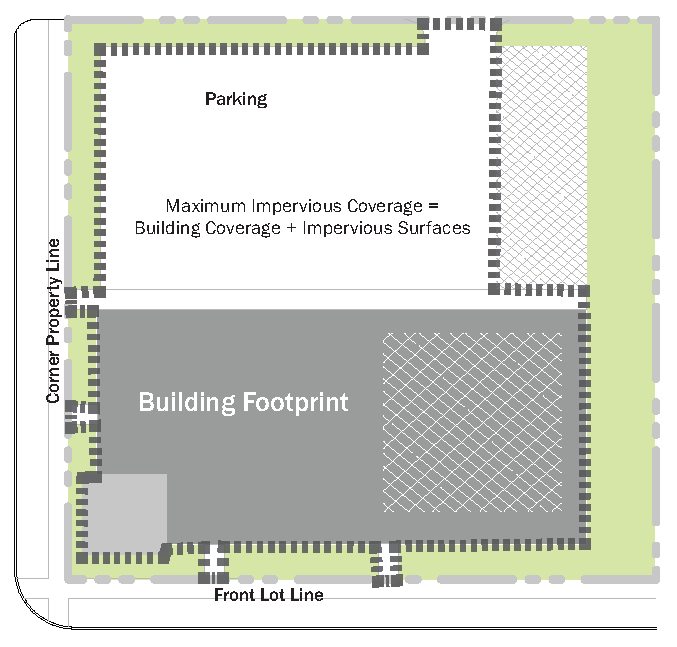
(j)
Maximum Impervious Coverage. (Refer to Figure 15.4B(2)), Maximum Impervious and Semi-Impervious Coverage). The maximum percentage of a lot permitted to be covered by principal structures, accessory structures, pavement, and other impervious surfaces.
(k)
Additional Semi-Pervious Coverage. The additional percentage of a lot beyond the Maximum Impervious Coverage, which may be surfaced in a semi-pervious material, including a green roof or pavers.
(l)
Parking and Loading Location. The yard in which a surface parking lot, detached garage, attached garage door access, loading and unloading, and associated drive is permitted.
(m)
Entry for Parking within Building. Permitted garage door location for parking entrance when parking is located within building.
(n)
Vehicular Access. The permitted means of vehicular ingress and egress to the lot.
i.
Alleys, when present, shall always be the primary means of access.
ii.
When alleys are not present, a driveway may be permitted per Building Type and, if an alternative is available, shall not be located off a Primary Street.
2.
Height. The following explains the line item requirements for each Building Type Table within the second section entitled "Height". Table 15.4B(2), right, illustrates an example of a Height Requirements Table from a typical Building Type.
(a)
Minimum Height (in Stories). The minimum overall height for the building shall be located within the build-to zone; stories above the minimum height may be stepped back from the facade.
Table 15.4B(2). Example Height Requirements Table from a Typical Building Type.
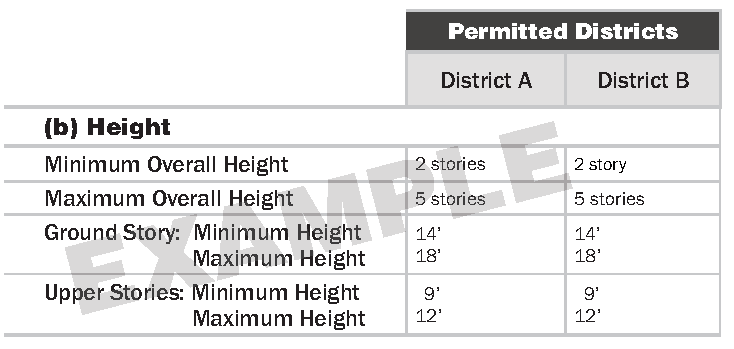
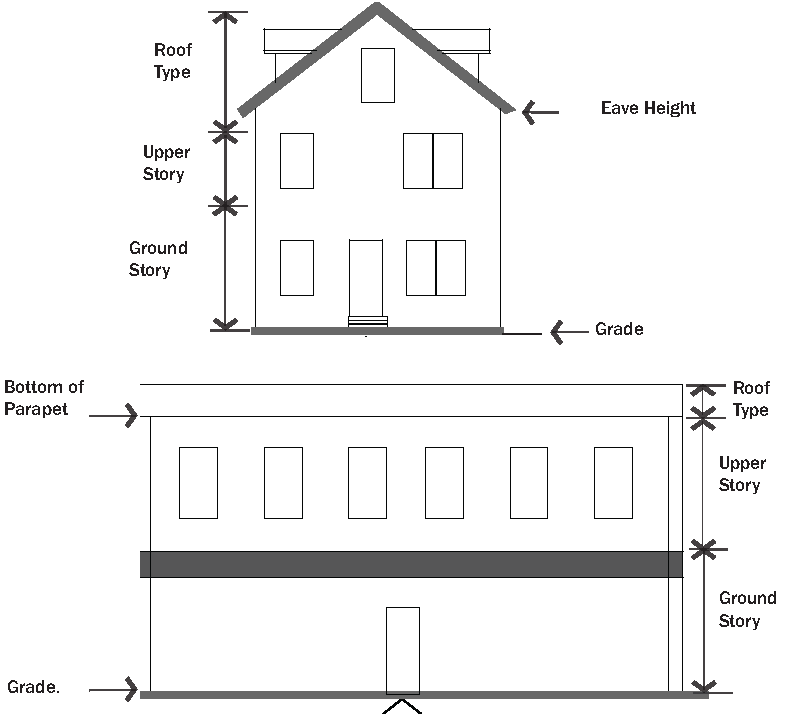
Figure 15.4B(3). Measuring Height.
(b)
Maximum Height (in Stories). The sum of a building's total number of stories.
i.
Half stories are located either completely within the roof structure with street-facing windows or in a visible basement exposed a maximum of one half story above grade.
ii.
A building incorporating both a half story within the roof and a visible basement shall count the height of the two half stories as one full story.
iii.
Some Building Types require a building facade to step back as its height increases. The upper stories of any building facade with street frontage shall be setback a designated amount beyond the building facade of the lower stories.
iv.
Floors within the building shall be visibly designated on the street facades by the use of expression lines or the layout of the windows.
(c)
Ground Story and Upper Story, Minimum and Maximum Height. (Refer to Figure 15.4B(3). Measuring Height). Each frontage type includes a permitted range of height in feet for each story. Additional information is as follows:
i.
Floor height is measured in feet between the floor of a story to the floor of the story above it.
ii.
For single story buildings and the uppermost story of a multiple story building, floor to floor height shall be measured from the floor of the story to the tallest point of the ceiling.
iii.
Double height spaces may be located along any non-street facade or in the entrance way to the building. The entrance way shall not exceed 50 percent of the street facade.
3.
Uses. The following explains the line item requirements for each Building Type Table within the third section entitled "Uses." Refer to 15.3 for uses permitted within each Zoning District. The requirements in this section of the Building Type Tables may limit those uses within a specific Building Type. Table 15.4B(3), right, illustrates an example of the Uses table from a typical Building Type.
(a)
Ground and Upper Story. The uses or category of uses which may occupy the ground and/or upper story of a building.
(b)
Parking Within Building. The area(s) of a building in which parking is permitted within the structure.
(c)
Occupied Space. The area(s) of a building that shall be designed as occupied space, defined as interior building space regularly occupied by the building users. It does not include storage areas, utility space, or parking.
4.
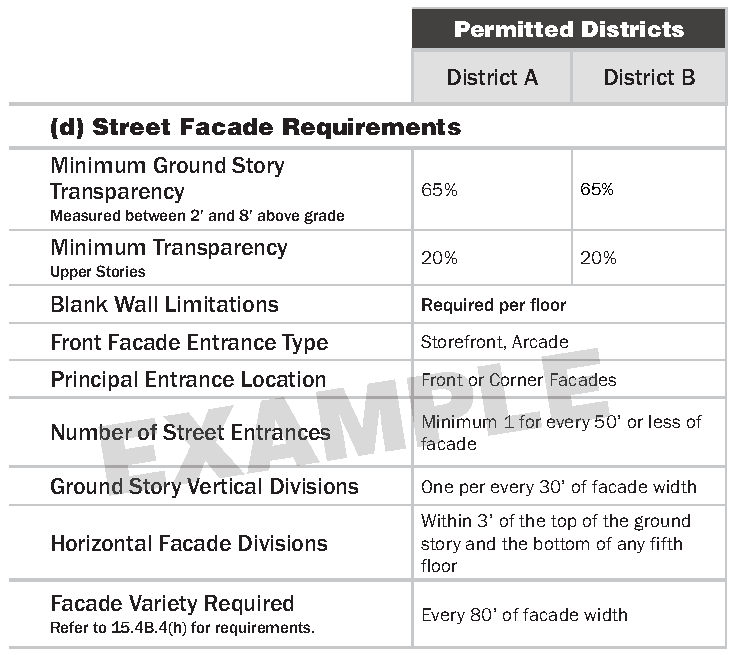
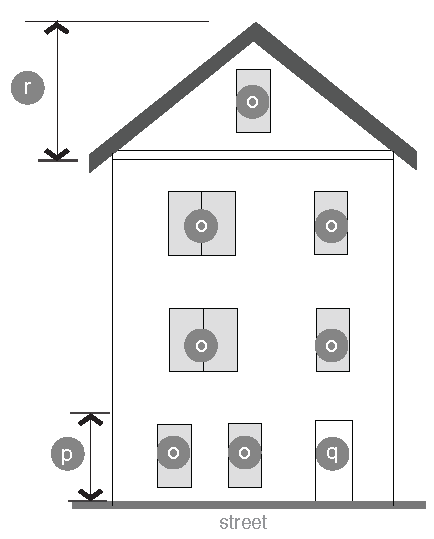
Street Facade Requirements. The following explains the line item requirements for each Building Type Table within the fourth section entitled "Street Facade Requirements." These requirements apply only to facades facing a public or private street right-of-way. The rear or interior side yard facades are not required to meet these standards unless otherwise stated. Table 15.4B(4), right, illustrates an example of a Street Facade Requirements Table from a typical Building Type.
(a)
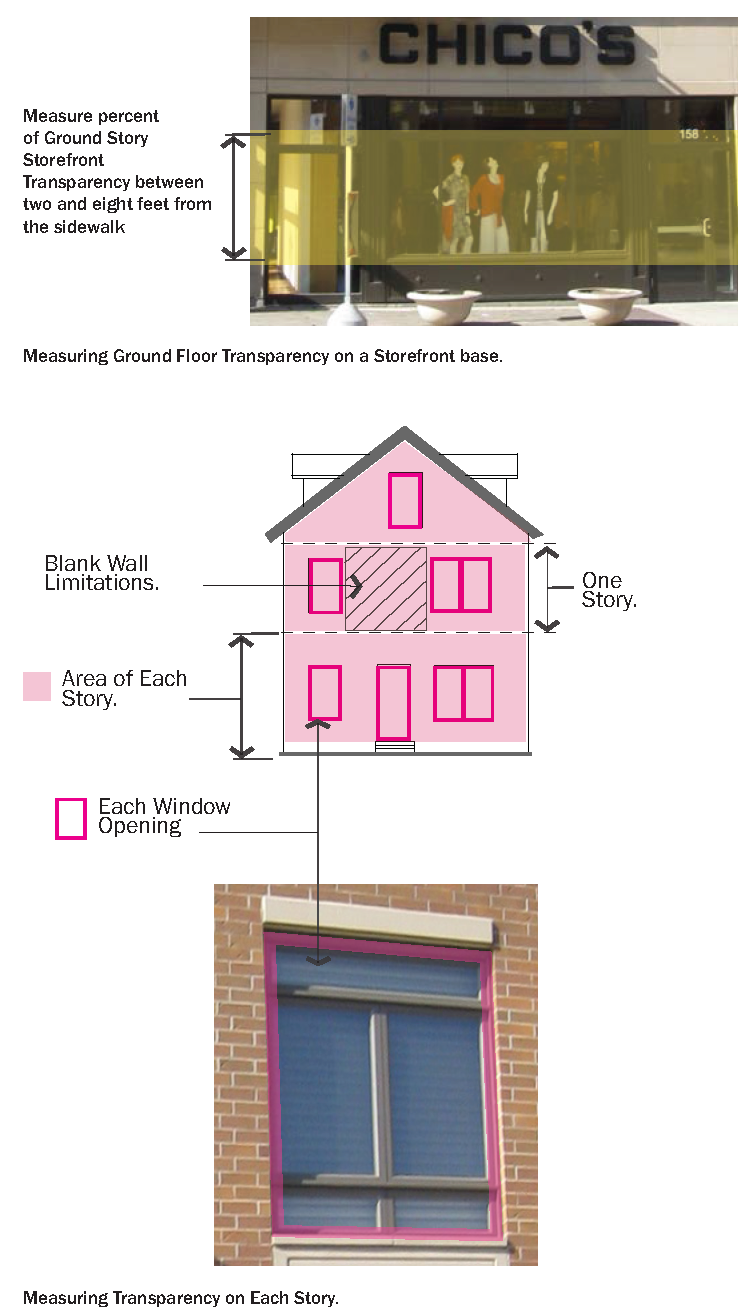
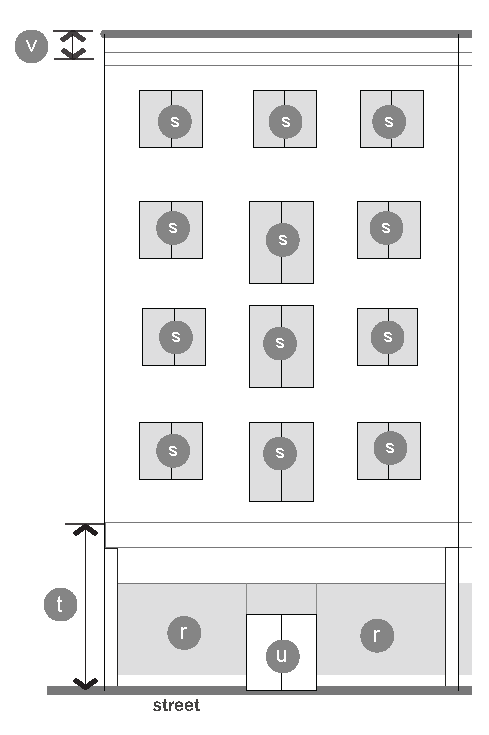
Minimum Ground Story and Upper Floor Transparency. (Refer to Figure 15.4B(4), Measuring Transparency per Facade). The minimum amount of transparency on street facades with street frontage.
i.
Transparency is any glass in windows and/or doors, including any mullions, that is highly transparent with low reflectance.
(i)
Ground Story Transparency, when defined separately from the overall minimum transparency, shall be measured between two feet and eight feet from the average grade at the base of the front facade.
(ii)
A general Minimum Transparency requirement shall be measured from floor to floor of each story.
(b)
Blank Wall Limitations. A restriction of the amount of windowless area permitted on a facade with street frontage. If required, the following shall both be met for each story:
Table 15.4B(3). Example Uses Table from a Typical Building Type.
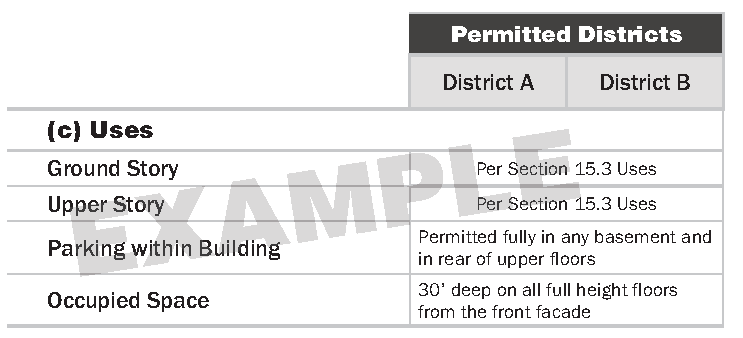
Table 15.4B(4). Example Street Facade Requirements Table from a Typical Building Type.
i.
No rectangular area greater than 30% of a story's facade, as measured from floor to floor, may be windowless; and
ii.
No horizontal segment of a story's facade greater than 15 feet in width may be windowless.
(c)
Front Facade Entrance Type. The Entrance Type(s) permitted for the entrance(s) of a given Building Type. A mix of permitted Entrance Types may be utilized. Refer to 15.4I Entrance Types for definition of and additional requirements for each Entrance Type.
(d)
Principal Entrance Location. The facade on which the primary building entrance is to be located.
(e)
Number of Street Entrances. The minimum number of and maximum spacing between entrances on the ground floor building facade with street frontage.
(f)
Ground Story Vertical Divisions. The use of a vertically oriented expression line or form to divide the ground floor facade into increments no greater than the dimension shown, as measured along the base of the facade, and extending a minimum of 80% from the average grade of the facade elevation to the interior ceiling. Elements may include a column, pilaster, or other continuous vertical ornamentation.
(g)
Horizontal Facade Divisions. The use of a horizontally oriented expression line or form to divide portions of the facade into horizontal divisions, extending a minimum of 90% of the full width of the facade. Elements may include a cornice, belt course, molding, string courses, or other continuous horizontal ornamentation a minimum of one and a half inch depth.
(h)
Facade Variety Requirements. Building design shall vary between designated vertical facade divisions, where required per the Building Type, and from adjacent buildings by the type of dominant material or color, scale, or orientation of that material and at least two of the following. Refer to Figure 15.4K(5) for one illustration of this requirement.
i.
The proportion of recesses and projections.
ii.
The location of the entrance and window placement, unless storefronts are utilized.
iii.
Roof type, plane, or material, unless otherwise stated in the Building Type requirements.
5.
Roof Type. The following explains the line item requirements for each Building Type Table in Sections 15.4C through 15.4H, within the fifth section entitled "Roof Types." Table 15.4B(5), right, illustrates an example of a Roof Type Requirements Table from a typical Building Type.
(a)
Permitted Roof Type. The roof type(s) permitted for a given Building Type. Refer to 15.4J Roof Types for more specific requirements.
(b)
Tower. A vertical building extension that may be permitted in conjunction with another roof type on certain Building Types. Refer to 15.4J. Roof Types.
Figure 15.4B(5). Building Variety.
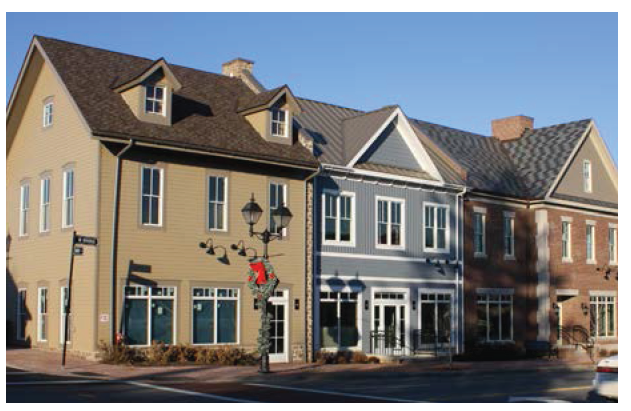
Table 15.4B(5). Example Roof Type Requirements Table from a Typical Building Type.
Figure 15.4B(4). Measuring Transparency.
C.
Main Street Building.
1.
Description and Intent. The Main Street Building is a mixed use building located at the front and corner property lines allowing easy access to passing pedestrians. Parking may be provided in the rear of the lot, internally in the building, or, in some cases, no off-street parking is required.
Storefronts with large amounts of transparency and regularly spaced entrances off the street are utilized on the ground floor front facade. Ground floor uses are limited to those with high levels of pedestrian activity, such as retail, service, and office uses, with additional commercial, office, and/or residential uses in the upper stories.
2.
Regulations. Regulations for the Main Street Building Type are defined in the adjacent table.
Notes:
1 Each building shall meet all requirements of the Building Type.
2 Where the distance from back of curb to edge of sidewalk is less than 10 feet, a 5' to 20' Build-to Zone is required.
3 If located adjacent to flood hazard area, refer to requirements of Section 18.
4 Maximum Impervious Coverage shall be applied only to all non-flood hazard areas. Refer to Section 18 of the City's Code of Ordinances for all flood hazard areas.
5 Lots wider than 100 feet are permitted one double-loaded aisle of parking (maximum width of 70 feet), located perpendicular to the front lot line and shall meet a Front Lot Line Coverage of 60%.
6 18' or more in height counts as two stories towards maximum building height.
Typical Site Plan.
Figure 15.4C(1): Building Siting.
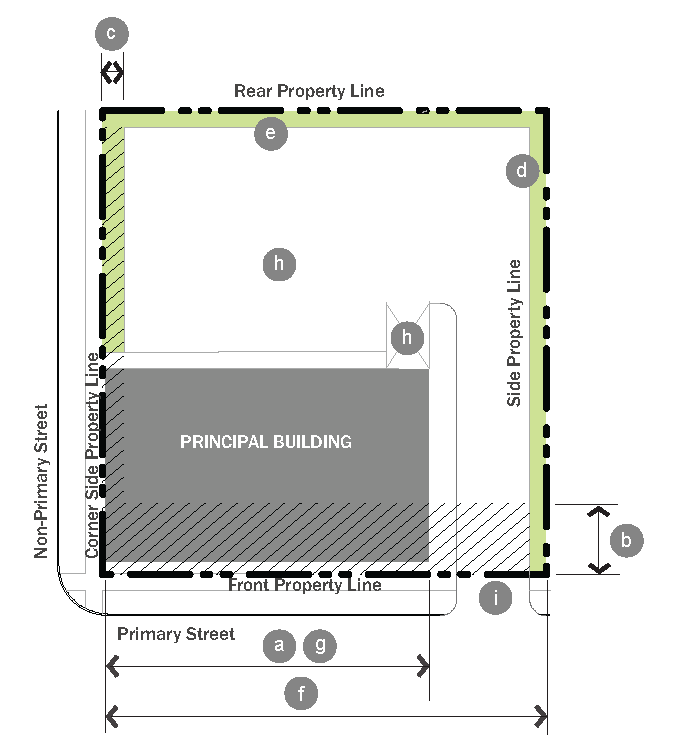
Site plan with side parking(DT 2, DT 3 and DT3 only
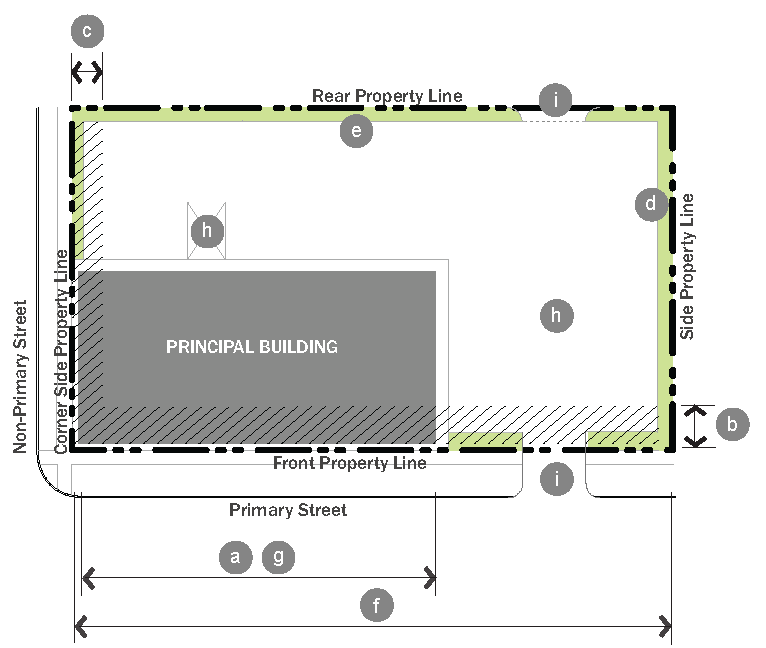
Figure 15.4C(2): Height and Use Requirements.
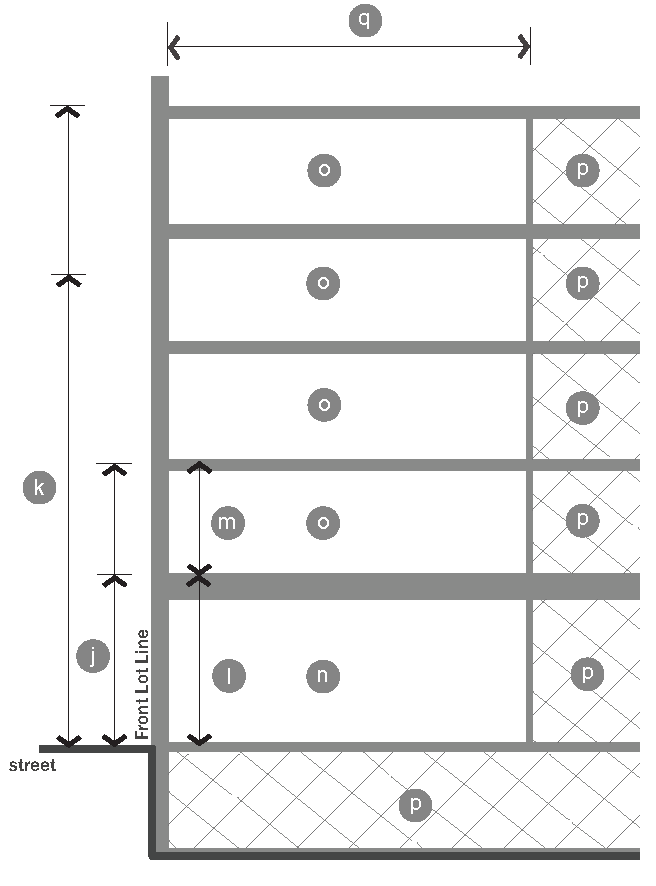
Figure 15.4C(3): Street Facade Requirements.
D.
General Stoop Building.
1.
Description and Intent. The General Stoop Building Type is limited in terms of uses by the district within which it is located, generally housing office and/or residential uses. Similar to the Main Street Building, the General Stoop building is intended to be built close to the front and corner property lines, but generally allows for more landscape space between the building and the street. Parking may be provided in the rear of the lot, internally in the building, or, in some cases, one double loaded aisle of parking is permitted in the interior or the side yard at the front lot line.
2.
Regulations. Regulations for the General Stoop Building Type are defined in the adjacent table.
Notes:
1 Each building shall meet all requirements of the Building Type.
2 If located adjacent to flood hazard area, refer to requirements of Section 18.
3 Maximum Impervious Coverage shall be applied only to all non-flood hazard areas. Refer to Section 18 of the City's Code of Ordinances for all flood hazard areas.
4 Lots wider than 100 feet are permitted one double-loaded aisle of parking (maximum width of 70 feet), located perpendicular to the front lot line and shall meet a Front Lot Line Coverage of 60%.
Typical Site Plan.
Figure 15.4D(1): Building Siting.
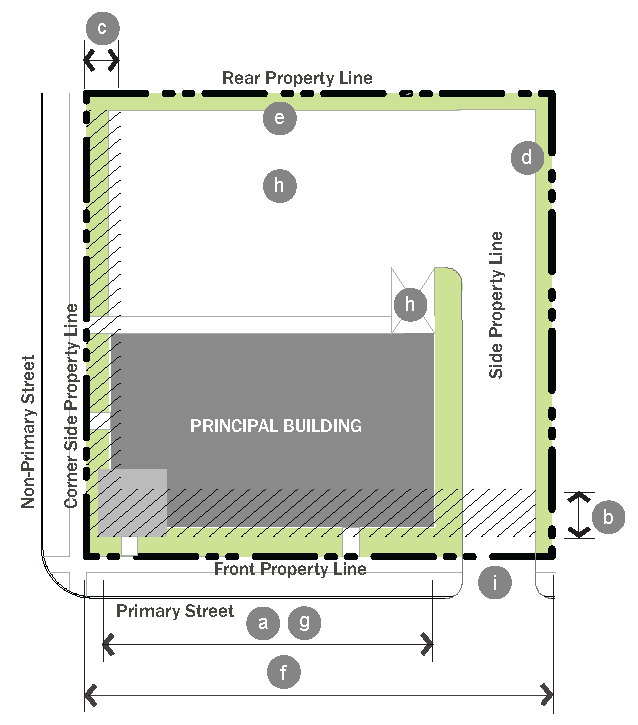
Site Plan with side parking (DT 2 and DT 3 only)
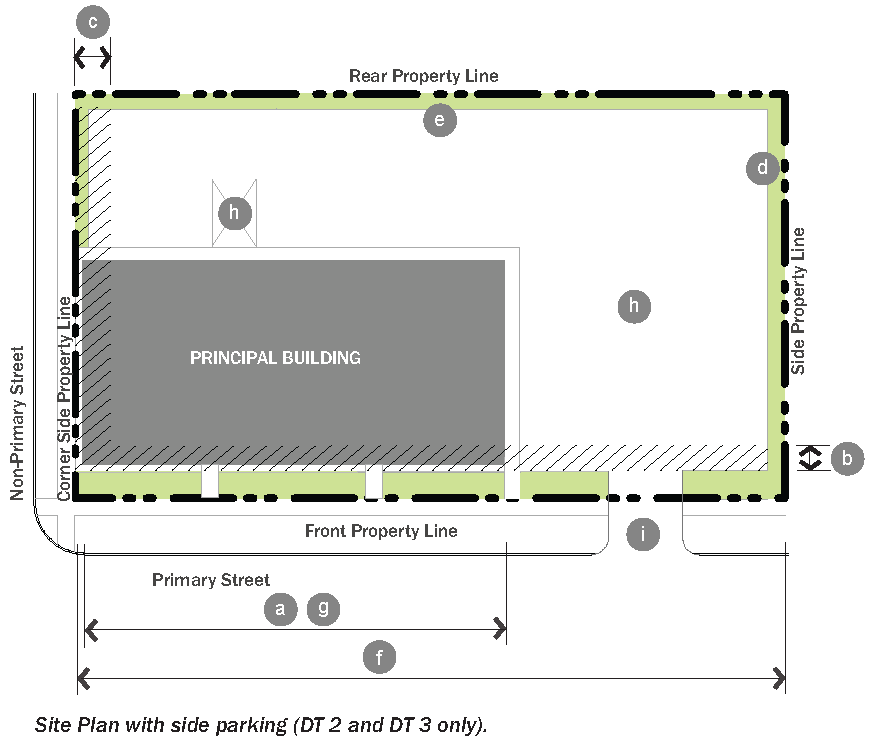
Figure 15.4D(2): Height and Use Requirements.
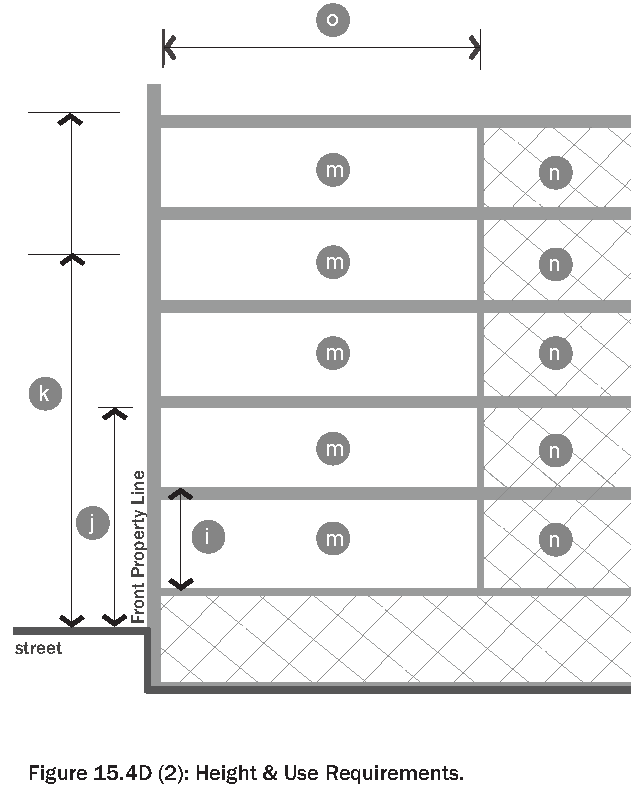
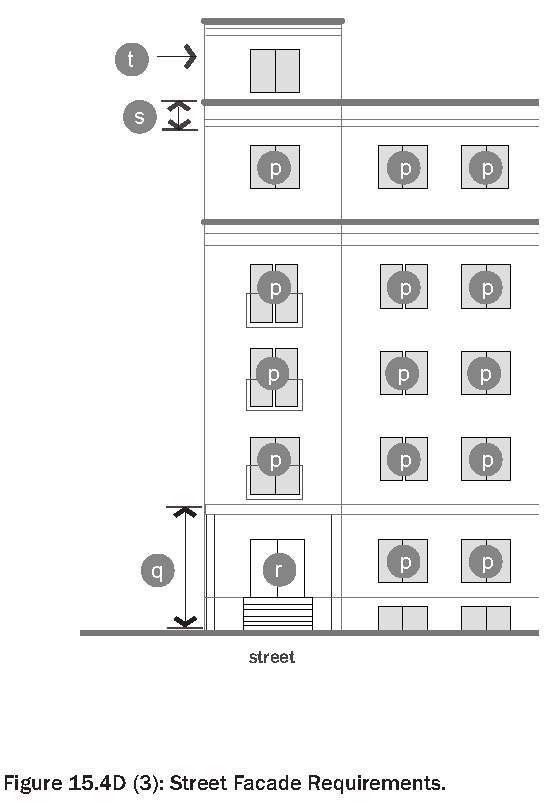
Figure 15.4D(3): Street Facade Requirements.
E.
Cottage Commercial Building.
1.
Description and Intent. Commercial Building combines characteristics of the Main Street Building Type with physical characteristics of a residential cottage, such as a pitched roof and a front stoop or porch.
This lower-scale building has a pedestrian-friendly storefront, stoop, or porch entrance type with moderate transparency and a primary entrance that faces the street. Constructed with Setbacks similar to a residential cottage, this building typically has more landscape area than the Main Street Building Types. Parking is permitted in the rear of the lot or a side aisle (with conditions).
The Cottage Commercial Building may contain a mix of uses, including retail, service, and office uses on the ground floor, with residential uses on upper floors.
2.
Regulations. Regulations for the Cottage Commercial building type are defined in the adjacent table.
Notes:
1 Each building shall meet all requirements of the Building Type.
2 If located adjacent to flood hazard area, refer to requirements of Section 18.
3 Maximum Impervious Coverage shall be applied only to all non-flood hazard areas. Refer to Section 18 of the City's Code of Ordinances for all flood hazard areas.
4 Lots wider than 80 feet are permitted one single-loaded aisle of parking (maximum width of 40 feet), located perpendicular to the front lot line, and shall meet a Front Lot Line Coverage of 50%.
Figure 15.4E(1). Building Siting.
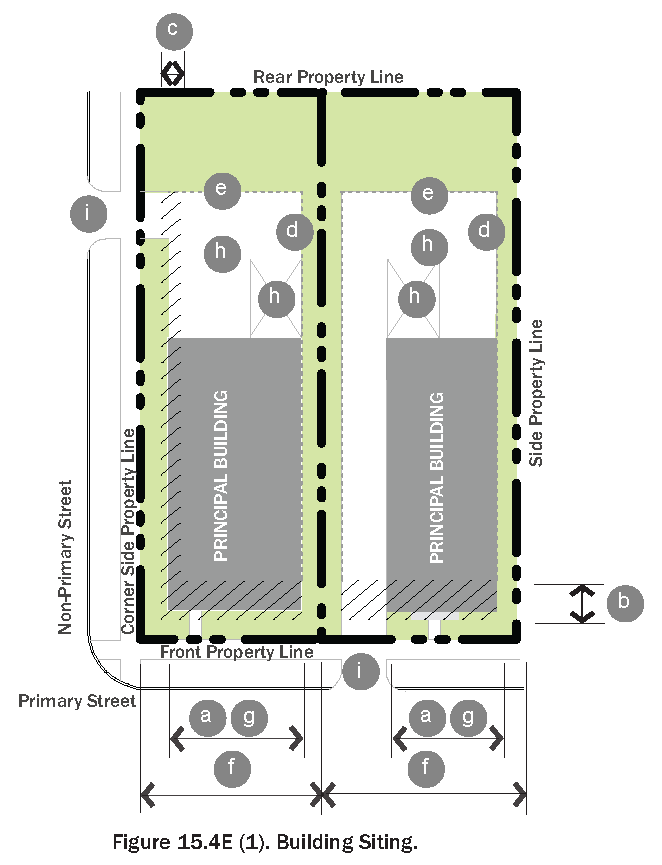
Figure 15.4E(2) Height and Use Requirements.
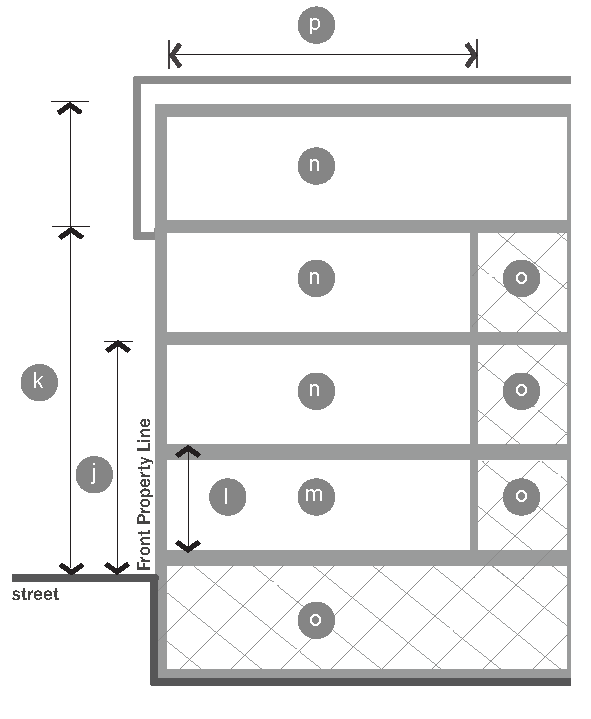
Figure 15.4E(3). Street Facade Requirements.
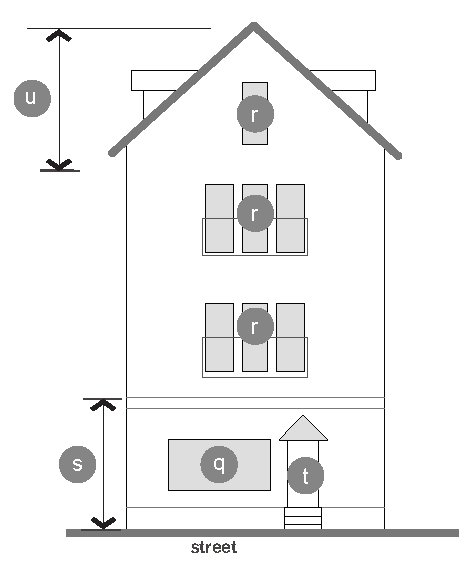
F.
Civic Building.
1.
Description and Intent. The Civic Building Type is a more flexible Building Type intended only for civic and institutional types of uses. These buildings are distinctive within the community fabric created by the other Building Types. In contrast to most of the other Building Types, a minimum setback line is required instead of a build to zone. Parking is limited to the rear in most cases. The maximum heights of this Building Type depend on the district within which it is located.
2.
Regulations. Regulations for the Civic Building Type are defined in the adjacent table.
Notes:
1 If located adjacent to flood hazard area, refer to requirements of Section 18.
2 Maximum Impervious Coverage shall be applied only to all non-flood hazard areas. Refer to Section 18 of the City's Code of Ordinances for all flood hazard areas.
3 Lots wider than 100 feet are permitted one double-loaded aisle of parking (maximum width of 70 feet), located perpendicular to the front lot line.
4 18' or more in height counts as two stories towards maximum building height.
Figure 15.4F(1): Building Siting.
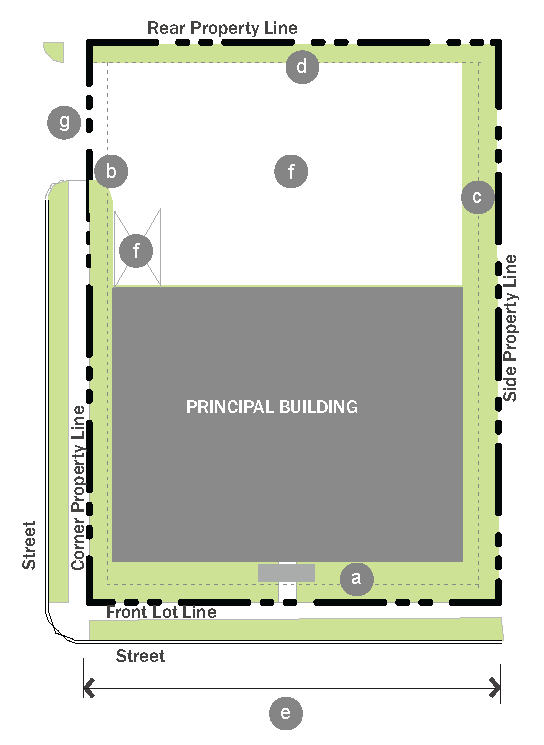
Figure 15.4F(2): Height and Use Requirements.
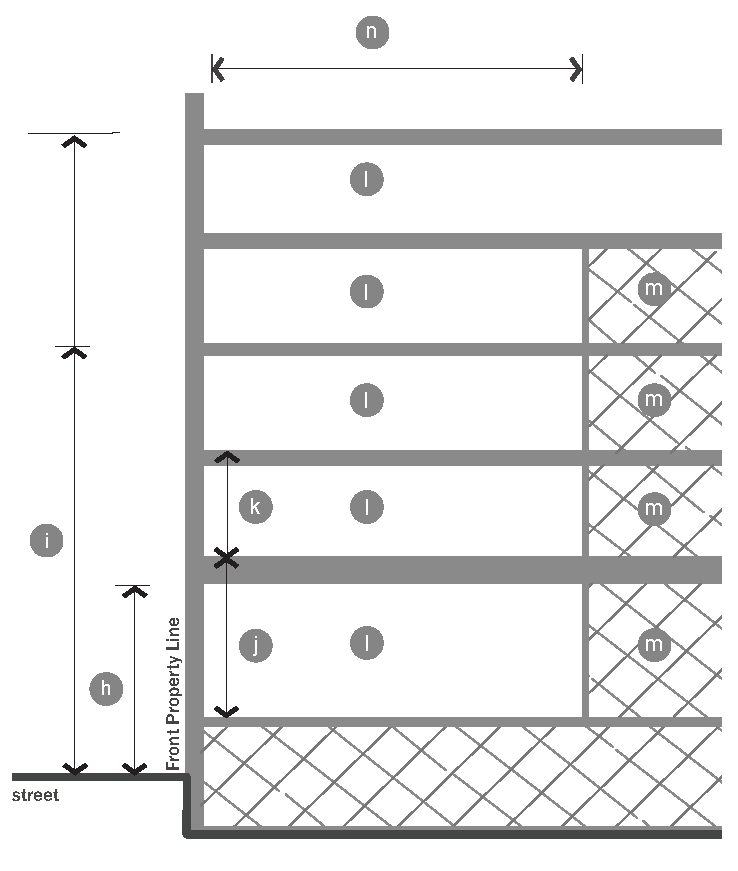
Figure 15.4F(3). Street Facade Requirements.
G.
Row Building.
1.
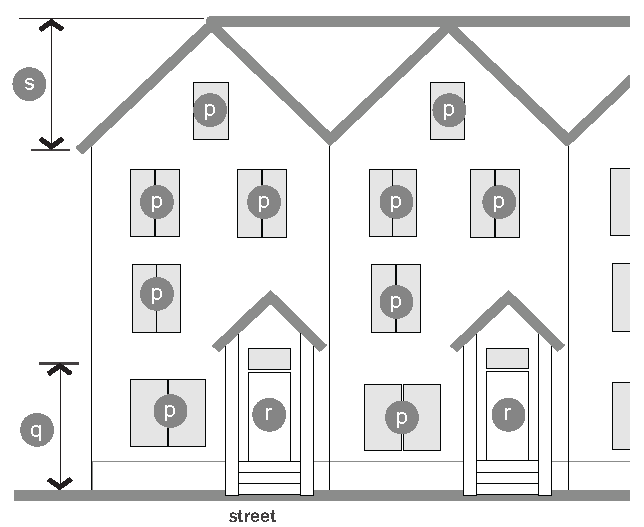
Description and Intent. The Row Building is a building comprised of multiple vertical units, each with its own entrance to the street. This Building Type may be organized as townhouses or rowhouses.
Parking is required to be located in the rear yard and may be incorporated either into a detached garage or in an attached garaged accessed from the rear of the building. However, when the garage is located within the building, a minimum level of occupied space is required on the front facade to ensure that the street facade is active.
2.
Regulations. Regulations for the Row Building Type are defined in the adjacent table.
Notes:
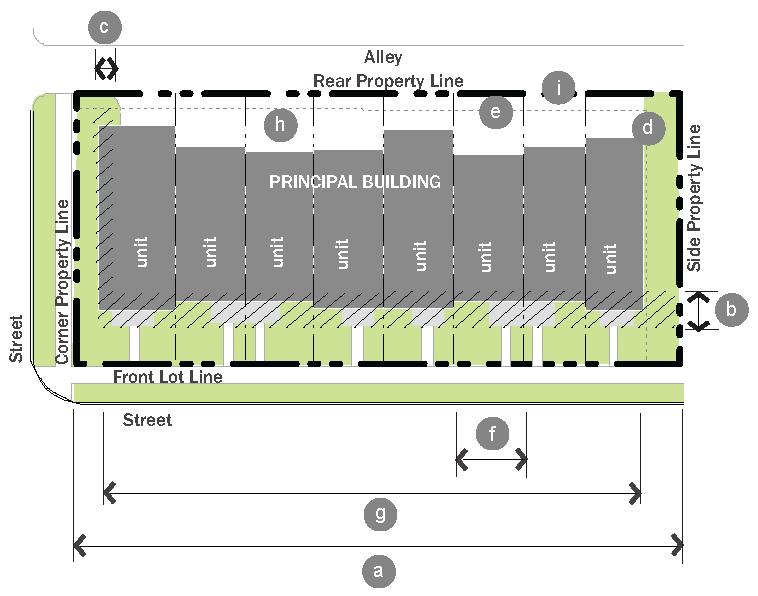
1 For the purposes of the Row Building, a building consists of a series of units. When permitted, multiple buildings may be located on a lot within the minimum space between them. However, each building shall meet all requirements of the Building Type.
2 Each building shall meet the front lot line coverage requirement, except one of every five units may front a courtyard with a minimum width of 30 feet. The courtyard shall be defined on three sides by units.
3 If located adjacent to flood hazard area, refer to requirements of Section 18.
4 Maximum Impervious Coverage shall be applied only to all non-flood hazard areas. Refer to Section 18 of the City's Code of Ordinances for all flood hazard areas.
5 Attached garages are considered part of the principal building and shall meet all setbacks. Detached garages shall meet all setbacks unless an alley is present. When an alley is present, detached garages shall have a minimum rear setback of 5'.
Site Plan without Rear Yard
Figure 15.4G(1): Building Siting.
Site Plan with Rear Yard
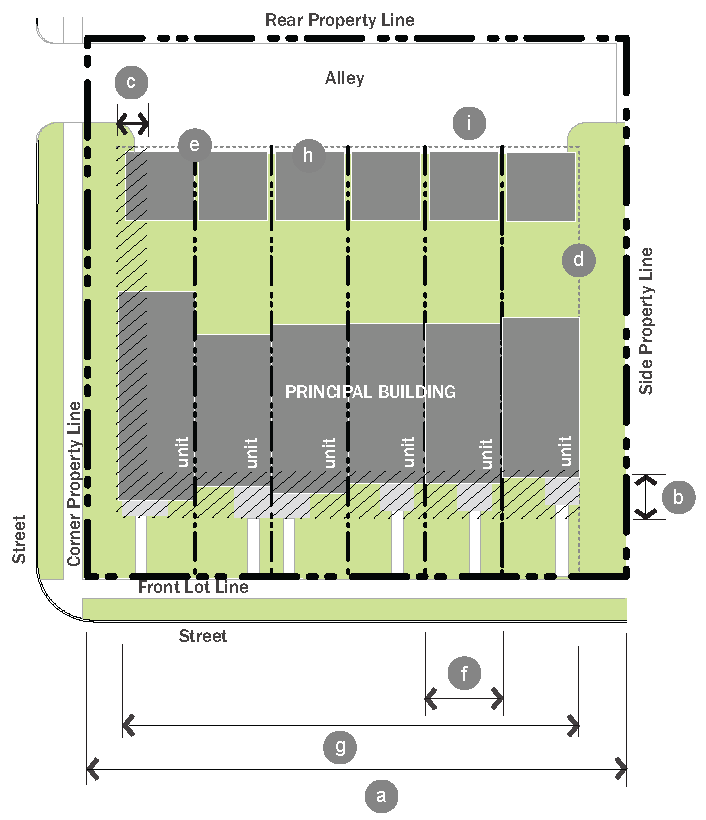
Figure 15.4G(2): Height and Use Requirements.
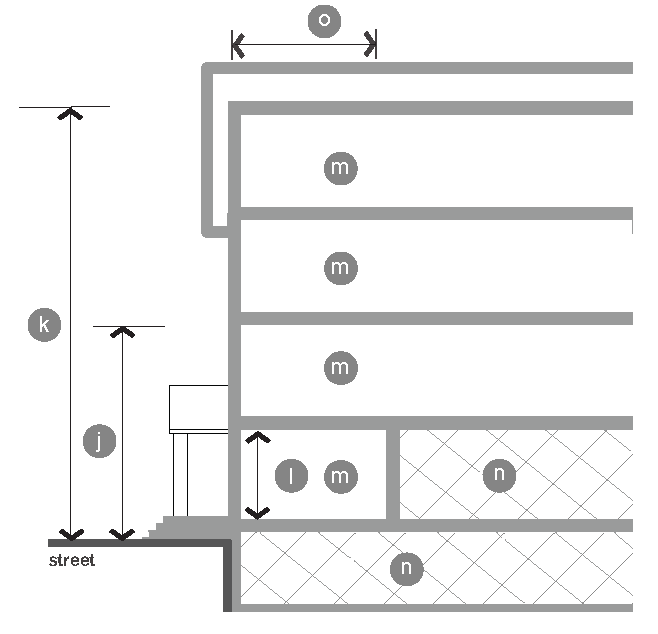
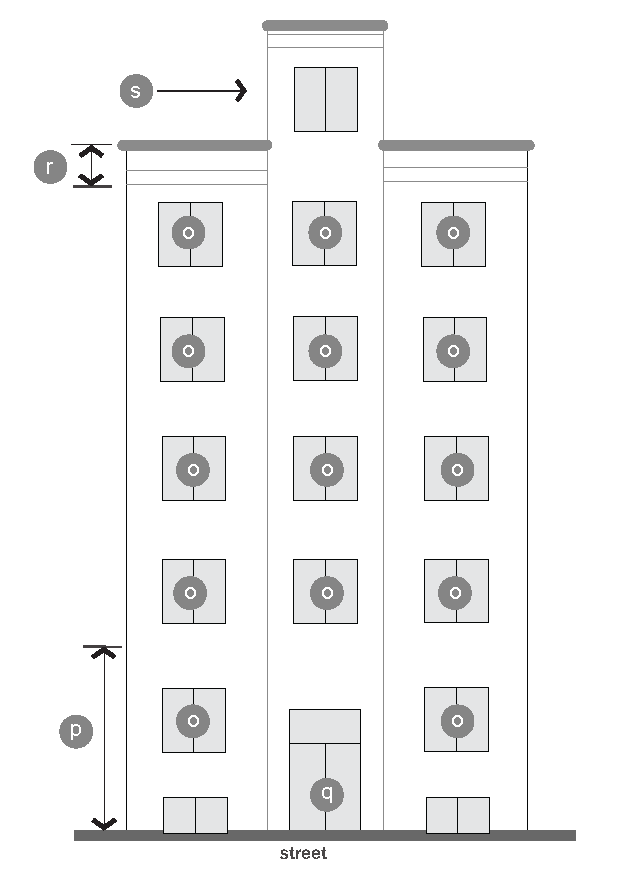
Figure 15.4G(3): Street Facade Requirements.
H.
Yard Building.
1.
Description and Intent. The Yard Building is a residential building, incorporating a landscaped yard surrounding all sides of the building. Parking and garages are limited to the rear only with preferred access from an alley.
2.
Regulations. Regulations for the Yard Building Type are defined in the adjacent table.
Notes
1 Each building shall meet all requirements of the Building Type.
2 When multiple buildings are located on a single lot, each building shall meet the front lot line coverage requirement, except one of every three buildings may front a courtyard with a minimum width of 30 feet. The courtyard shall be defined on three sides by units.
3 If located adjacent to flood hazard area, refer to requirements of Section 18.
4 Maximum Impervious Coverage shall be applied only to all non-flood hazard areas. Refer to Section 18 of the City's Code of Ordinances for all flood hazard areas.
5 Attached garages are considered part of the principal building and shall meet all setbacks. Detached garages shall meet all setbacks unless an alley is present. When an alley is present, detached garages shall have a minimum rear setback of 5'.
Figure 15.4H(1). Building Siting.
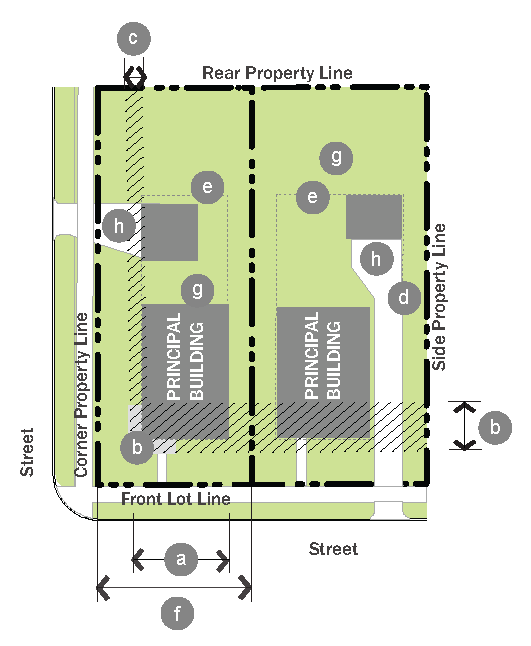
Figure 15.4H(2). Height and Use Requirements.
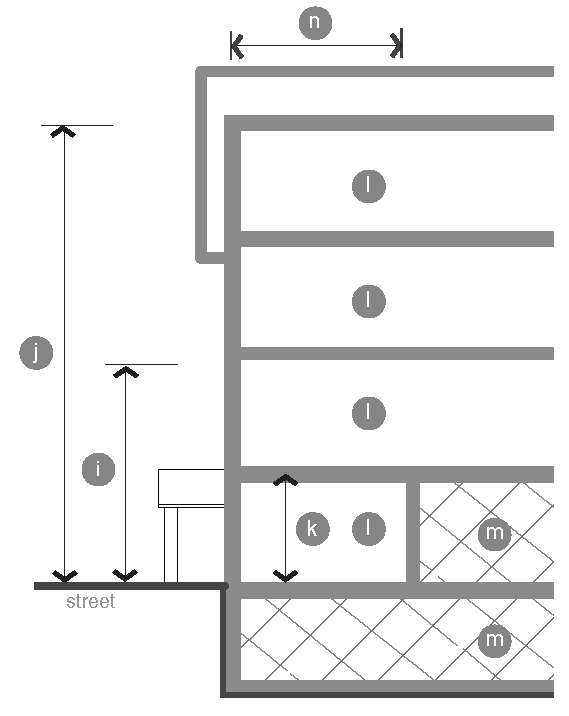
Figure 15.4H(3). Street Facade Requirements.
I.
Entrance Types. Entrance type standards apply to the ground story and visible basement of front facades of all Building Types as defined in this Section. Refer to the Building Type Table Requirements, Sections 15.4C through 15.4H.
1.
General. The following provisions apply to all entrance types.
(a)
Intent. To guide the design of the ground story of all buildings to relate appropriately to pedestrians on the street. Treatment of other portions of the building facades is detailed in each Building Type standard (refer to Building Types 15.4C through 15.4H).
(b)
Applicability. The entire ground story street-facing facade(s) of all buildings shall meet the requirements of at least one of the permitted entrance types, unless otherwise stated.
(c)
Measuring Transparency. Refer to 15.4B Explanation of Building Type Table Standards, for information on measuring building transparency.
(d)
Visible Basements. Visible basements, permitted by entrance type, are optional. The visible basement shall be a maximum of one-half the height of the tallest story.
2.
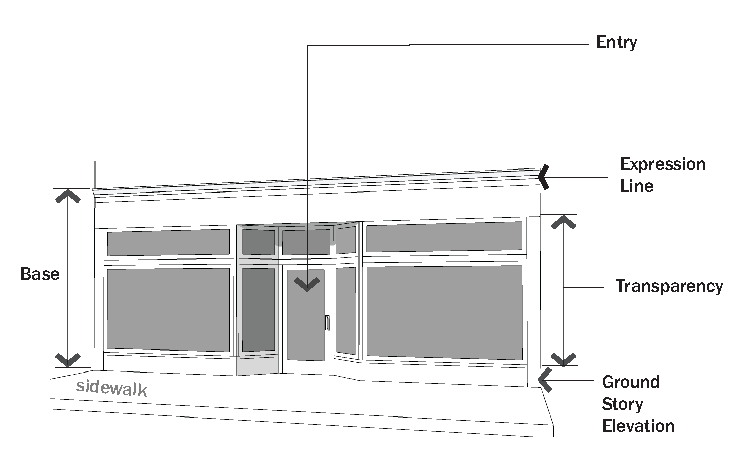
Storefront Entrance Type. (Refer to Figure 15.4I (1)). The Storefront entrance type is a highly transparent ground story treatment designed to serve primarily as the display area and primary entrance for retail or service uses.
(a)
Transparency. Minimum transparency is required per Building Type.
(b)
Elevation. Storefront elevation shall be between zero and one foot above street sidewalk.
(c)
Visible Basement. A visible basement is not permitted.
Figure 15.4I(1). Storefront Entrance Type.
(d)
Horizontal Facade Division. Horizontally define the ground story facade from the upper stories.
(e)
Entrance. All entries shall be recessed from the front facade closest to the street.
i.
Recess shall be a minimum of three feet and a maximum of eight feet deep, measured from the portion of the front facade closest to the street.
ii.
When the recess falls behind the front build-to zone, the recess shall be no wider than eight feet.
3.
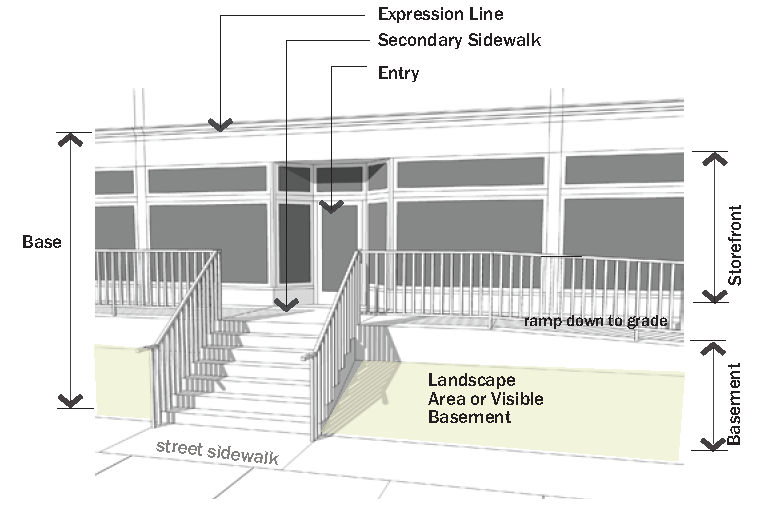
Elevated Storefront Entrance Type. (Refer to Figure 15.4I(2)). The Elevated Storefront entrance type is a highly transparent ground story treatment similar to the Storefront, but permitted to be elevated above the sidewalk for buildings located on parcels with flood hazard areas.
(a)
Transparency. Minimum transparency is required per Building Type.
(b)
Elevation. Storefront elevation may be a half story above the street sidewalk elevation.
(c)
Visible Basement. A visible basement is permitted and does not require Occupied Space.
(d)
Horizontal Facade Division. Horizontally define the ground story facade from the upper stories and any Visible Basement from the ground story.
(e)
Entrance. All entries shall be located off a secondary walk along the building face within the build-to zone.
i.
The secondary sidewalk shall be elevated above and essentially parallel to the street sidewalk to provide continuous walking along the facade of the building.
Figure 15.4I(2). Elevated Storefront Entrance Type.
ii.
The secondary sidewalk shall be continuous along the facade of the building and shall connect to the street sidewalk by steps and ramps every 50 feet.
iii.
The secondary sidewalk shall connect to any other adjacent developments secondary sidewalks, when feasible. Drive crossings shall be of the same material as the secondary walk.
iv.
The transition between the secondary sidewalk and street sidewalk shall include landscape, patios, and connecting walks.
v.
The visible basement shall be located a minimum of five feet from the street sidewalk to allow softening of the transition.
vi.
The street and the secondary sidewalks shall be a minimum of eight feet in width.
4.
Stoop Entrance Type. (Refer to Figure 15.4I(3)). A stoop is an unroofed, open platform.
(a)
Transparency. Minimum transparency is required per Building Type.
(b)
Stoop Size. Stoops shall be a minimum of three feet deep and six feet wide.
(c)
Elevation. Stoop elevation shall be located a maximum of 2'-6" above the sidewalk without visible basement and a maximum of 4'-6" above the sidewalk with a visible basement.
(d)
Visible Basement. A visible basement is permitted and shall be separated from the ground story by an expression line.
(e)
Entrance. All entries shall be located off a stoop. The stoop may be continuous along the facade of the building.
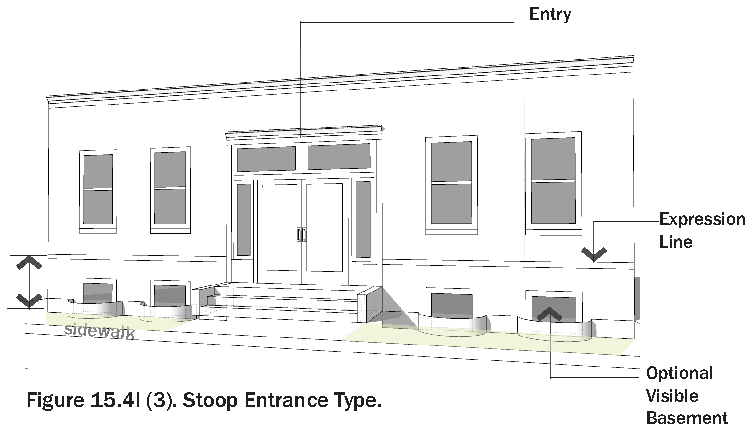
(f)
Landscape Area. A minimum five (5) foot wide landscape area is required within the build-to zone along the length of this entrance type with the exception of walks accessing the building.
5.
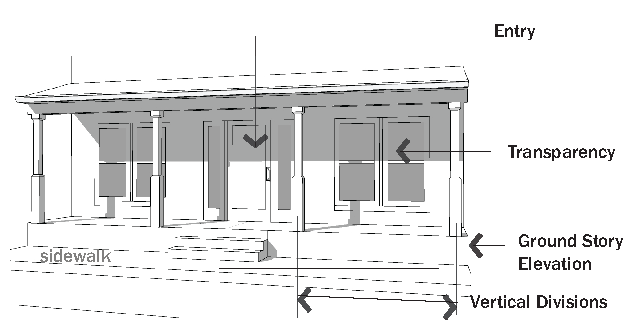
Porch Entrance Type. (Refer to Figure 15.4I(4)). A porch is a raised, roofed platform that may or may not be enclosed on all sides. If enclosed, the space shall not be climate controlled.
(a)
Transparency.
i.
Minimum transparency per Building Type is required.
ii.
If enclosed, a minimum of 40% of the enclosed porch shall be comprised of highly transparent, low reflectance windows.
(b)
Porch Size. The porch shall be a minimum of five feet deep and eight feet wide.
(c)
Elevation. Porch elevation shall be located a maximum of 2'-6" above the sidewalk without a visible basement and a maximum of 4'-6" above the sidewalk with a visible basement.
(d)
Visible Basement. A visible basement is permitted.
(e)
Height. Porch may be two stories to provide a balcony on the second floor.
(f)
Entrance. All entries shall be located off a porch.
Figure 15.4I(4). Porch Entrance Type.
J.
Roof Types. Roof type standards apply to the roof and cap of all Building Types as defined in this Section. Refer to the Building Type Table Requirements, Sections 15.4C through 15.4H.
1.
General Provisions. The following provisions apply to all roof types.
(a)
Intent. To guide the design of the cap of all buildings.
(b)
Applicability. All buildings shall meet the requirements of one of the roof types permitted for the Building Type.
(c)
Measuring Height. Refer to Section 15.4B for information on measuring building height.
(d)
Other roof types. Other building caps not listed as a specific type may be requested with the following requirements:
i.
The roof type shall not create additional occupiable space beyond that permitted by the Building Type.
ii.
The shape of the Roof Type shall be significantly different from those defined in this section 15.4J Roof Types, i.e. a dome, spire, vault.
iii.
The building shall warrant a separate status within the community from the fabric of surrounding buildings, with a correspondence between the form of the roof type and the meaning of the building use.
2.
Parapet Roof Type. (Refer to Figure 15.4J (1), Parapet Roof Type). A parapet is a low wall projecting above a building's roof along the perimeter of the building. It can be utilized with a flat or low pitched roof and also serves to limit the view of roof-top mechanical systems from the street.
(a)
Parapet Height. Height is measured from the top of the upper story to the top of the parapet.
i.
Minimum height is two feet with a maximum height of six feet.
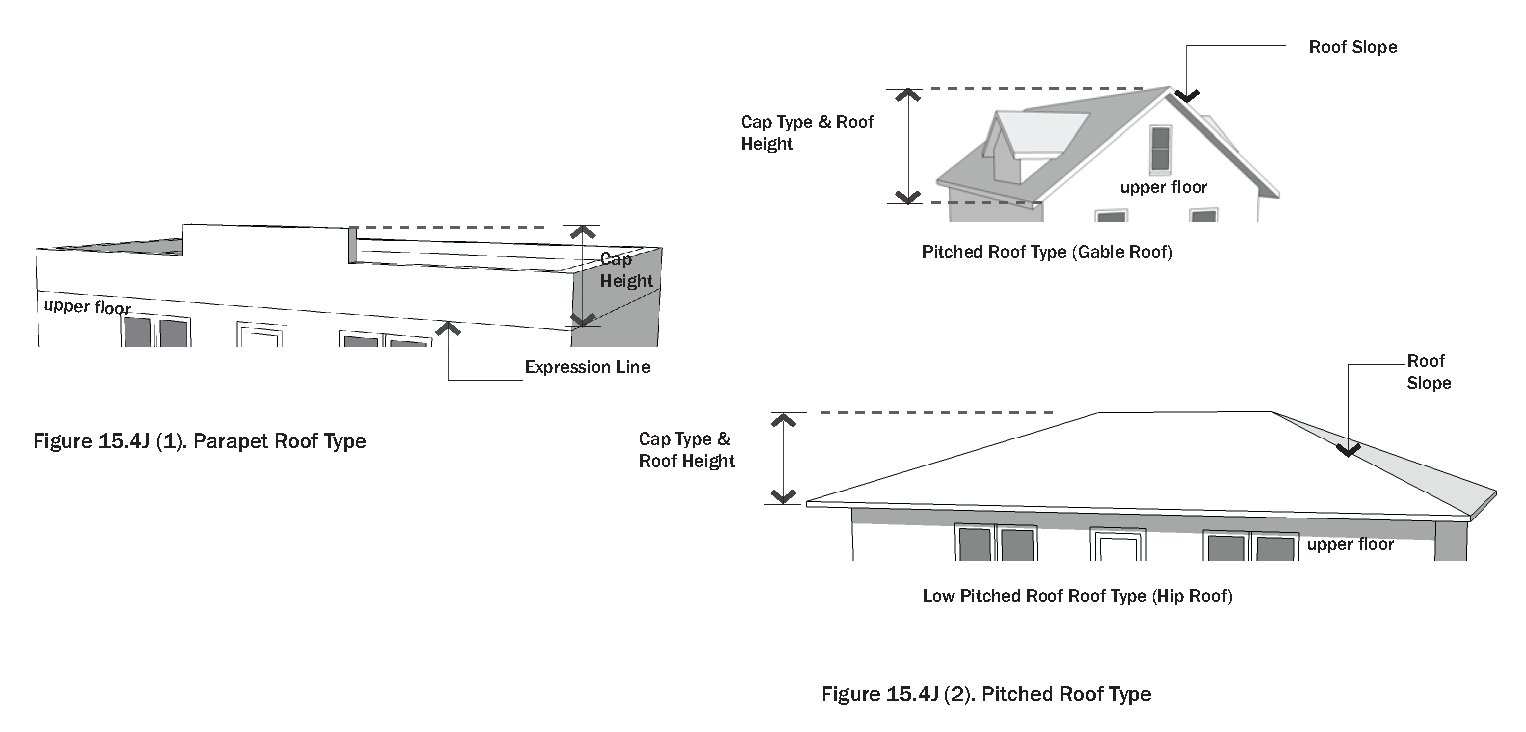
ii.
The parapet shall be high enough to screen the roof and any roof appurtenances from view of the street(s).
(b)
Horizontal Expression Lines. An expression line shall define the parapet from the upper stories of the building and shall also define the top of the cap.
(c)
Occupied Space. Occupied space shall not be incorporated behind this roof type.
3.
Pitched Roof Type. (Refer to Figure 15.4J(2), Pitched Roof Type). This roof type has a sloped or pitched roof. Slope is measured with the vertical rise divided by the horizontal span or run.
(a)
Pitch Measure. The roof may not be sloped less than a 4:12 (rise:run) or more than 16:12.
i.
Slopes less than 4:12 are permitted to occur on second story or higher roofs. (Refer to Figure 15.4J (2)—Low Pitched Roof).
(b)
Configurations.
i.
Hipped, gabled, and combination of hips and gables with or without dormers are permitted.
ii.
Butterfly roofs (inverted gable roof) are permitted with a maximum height of eight feet, inclusive of overhang.
iii.
Gambrel and mansard roofs are not permitted.
(c)
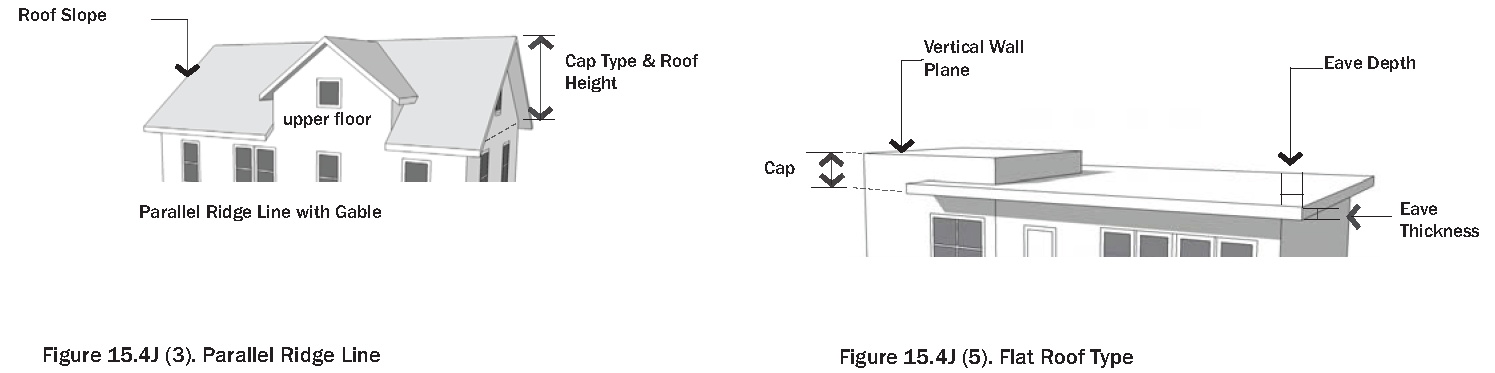
Parallel Ridge Line. A gabled end or perpendicular ridge line shall occur at least every 100 feet of roof when the ridge line runs parallel to the front lot line. (Refer to Figure 15.4J(3). Parallel Ridge Line).
(d)
Roof Height. Roofs without occupied space and/or dormers shall have a maximum height on street-facing facades equal to the maximum floor height permitted for the Building Type.
(e)
Occupied Space. Occupied space may be incorporated behind this roof type.
4.
Flat Roof Type. (Refer to Figure 15.4J(5). Flat Roof Type). This roof type has a flat roof with overhanging eaves.
(a)
Configuration. Roofs with no visible slope are acceptable. Eaves are recommended on all street facing facades.
(b)
Eave Depth. Eave depth is measured from the building facade to the outside edge of the eave. Eaves shall have a depth of at least 14 inches.
(c)
Eave Thickness. Eave thickness is measured at the outside edge of the eave, from the bottom of the eave to the top of the eave. Eaves shall be a minimum of eight inches thick.
(d)
Interrupting Vertical Walls. Vertical walls may interrupt the eave and extend above the top of the eave with no discernible cap.
i.
No more than one-half of the front facade can consist of an interrupting vertical wall.
ii.
Vertical walls shall extend no more than four feet above the top of the eave.
(e)
Occupied Space. Occupied space shall not be incorporated behind this roof type.
(f)
No mechanical equipment on roof shall be visible from the sidewalk.
5.
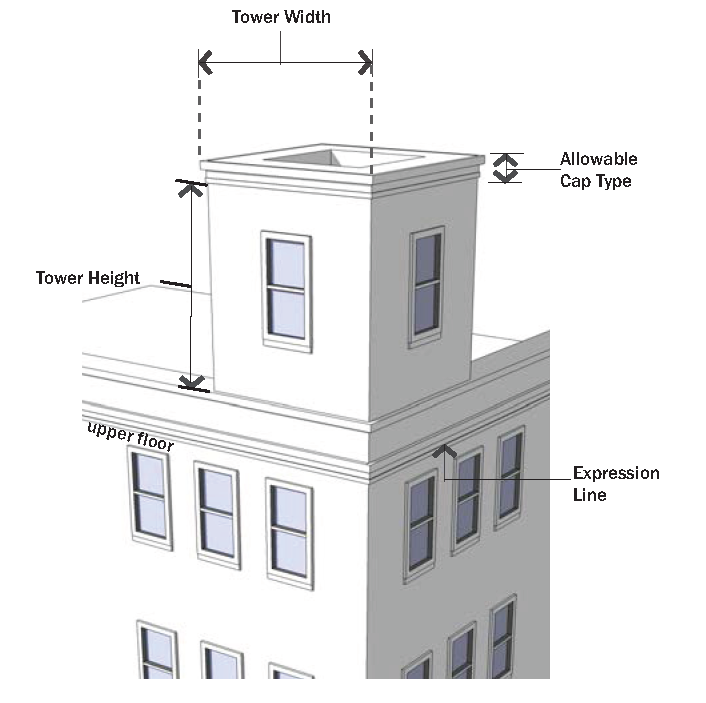
Towers. (Refer to Figure 15.4J(4)). A tower is a rectilinear or cylindrical, vertical element, that shall be used with other roof types.
(a)
Quantity. All Building Types, with the exception of the Civic Building, are limited to one tower per building.
Figure 15.4J(4). Tower.
(b)
Tower Height. Maximum height, measured from the top of the parapet or eave to the top of the tower, is the equivalent of the height of one upper floor of the building to which the tower is applied.
(c)
Tower Width. Maximum width along all facades is one-third the width of the front facade or 30 feet, whichever is less.
(d)
Horizontal Expression Lines. An expression line shall define the tower from the upper stories, except on single family or attached house residential Building Types.
(e)
Occupied Space. Towers may be occupied by the same uses allowed in upper stories of the Building Type to which it is applied.
(f)
Application. May be combined with all other roof types.
(g)
Tower Cap. The tower may be capped by the parapet, pitched, low pitched, or flat roof types, or the spire may cap the tower.
K.
Additional Design Requirements. The following outlines the district design requirements that affect a building's appearance and district cohesiveness. They improve the physical quality of buildings, enhance the pedestrian experience, and protect the character of the neighborhood.
1.
Materials and Color.
(a)
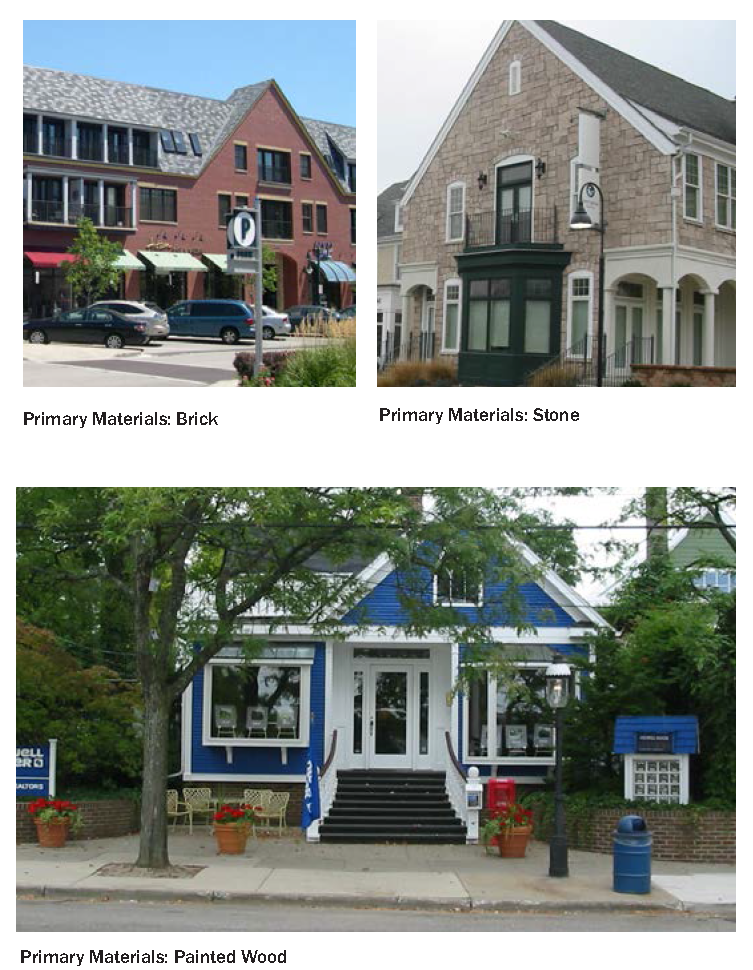
Primary Facade Materials. 80% of each street facade shall be constructed of primary materials. Street facade materials shall continue around the corner a minimum depth of 20 feet onto the side facade.
i.
Permitted primary building materials include high quality, durable, natural materials, such as stone, brick; wood lap siding; fiber cement board lapped, shingled, or panel siding; glass. Other high quality synthetic materials may be approved during the site plan process with an approved sample and examples of successful, high quality local installations. Refer to Figure 15.4K(1).
Figure 15.4K(1). Primary Materials.
(b)
Secondary Facade Materials. Secondary materials are limited to details and accents and include gypsum reinforced fiber concrete for trim and cornice elements; metal for beams, lintels, trim, and ornamentation, and exterior architectural metal panels and cladding.
i.
Exterior Insulation and Finishing Systems (EIFS) is permitted on upper floor facades only.
(c)
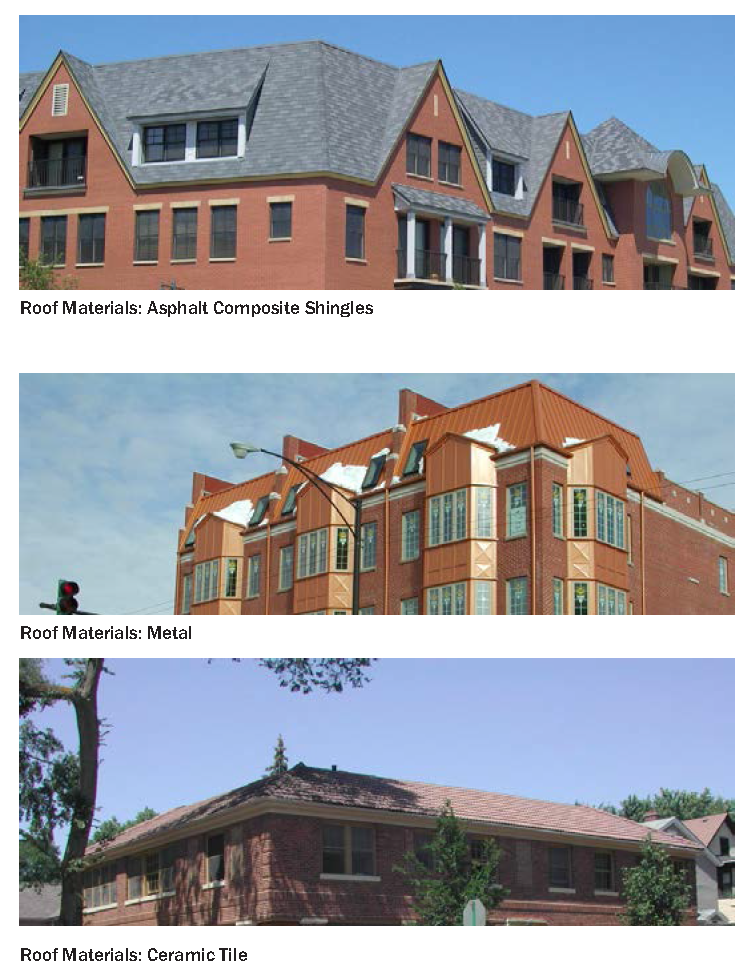
Roof Materials. Acceptable roof materials include 300 pound or better, dimensional asphalt composite shingles, wood shingles and shakes, metal tiles or standing seam, slate, and ceramic tile. "Engineered" wood or slate may be approved during the site plan process with an approved sample and examples of successful, high quality local installations. Refer to Figure 15.4K(2).
Figure 15.4K(2). Roof Materials.
(d)
Color. Main building colors shall utilize any historic palettes from any major paint manufacturer. Other colors may be utilized or details and accents, not to exceed a total area larger than 10% of the facade surface area.
(e)
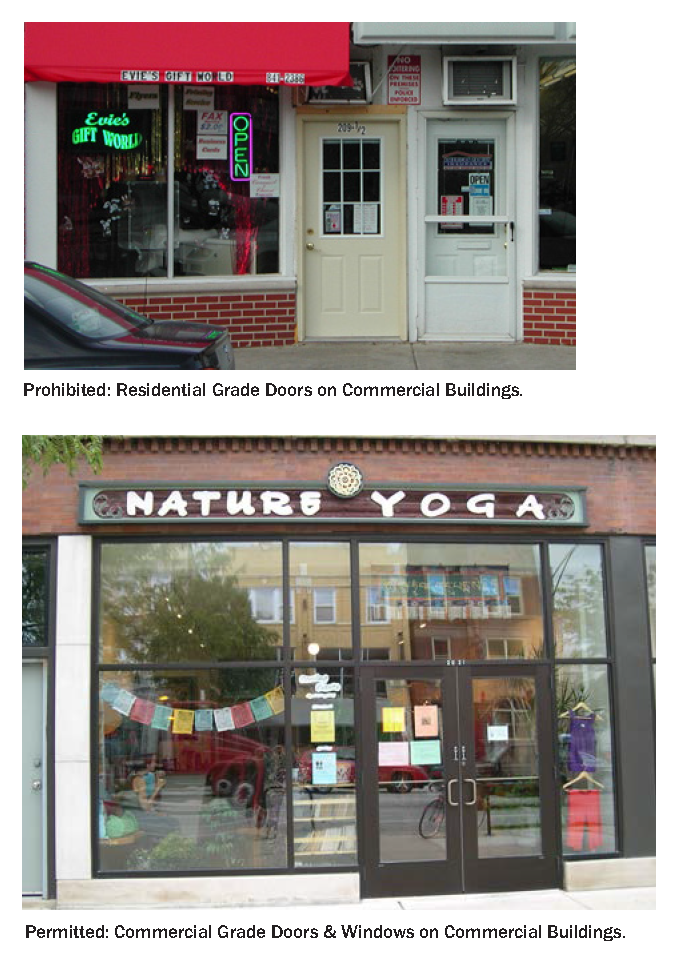
Appropriate Grade of Materials. Commercial quality doors, windows, and hardware shall be used on all Building Types with the exception of the Row Building and the Yard Building. Refer to Figure 15.4K(3).
Figure 15.4K(3).Commercial Grade Doors and Windows.
2.
Windows, Awnings, and Shutters.
(a)
Windows. All upper story windows on all historic, residential, and mixed use buildings shall be recessed, double hung. Percent of transparency is required per Building Type. Horizontal or vertical strip windows, tinted or reflective glass, and glass block (refer to Figure 15.4K(4)) are prohibited on street facades.
Figure 15.4K(4). Windows.
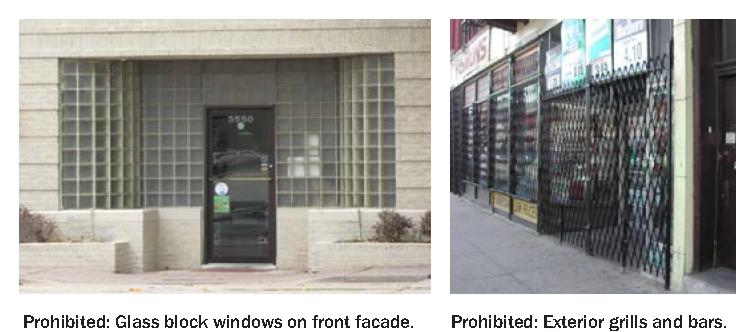
(b)
Security Grills. Grills shall be fully retractable and completely within the interior of the building and inconspicuous to the extent possible. Exterior bars are prohibited on any window. Refer to Figure 15.4K(5).
Figure 15.4K(5). Security Grills.
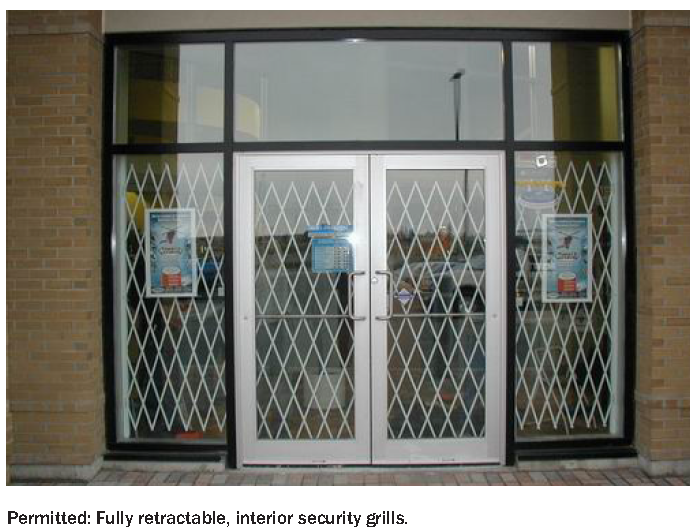
(c)
Awnings. All awnings shall be canvas or metal. Plastic awnings and canopy awnings that extend from the front facade into the right-of-way are prohibited. Awning types and colors for each building face shall be coordinated. Refer to Figure 15.4K(6).
Figure 15.4K(6). Awnings.
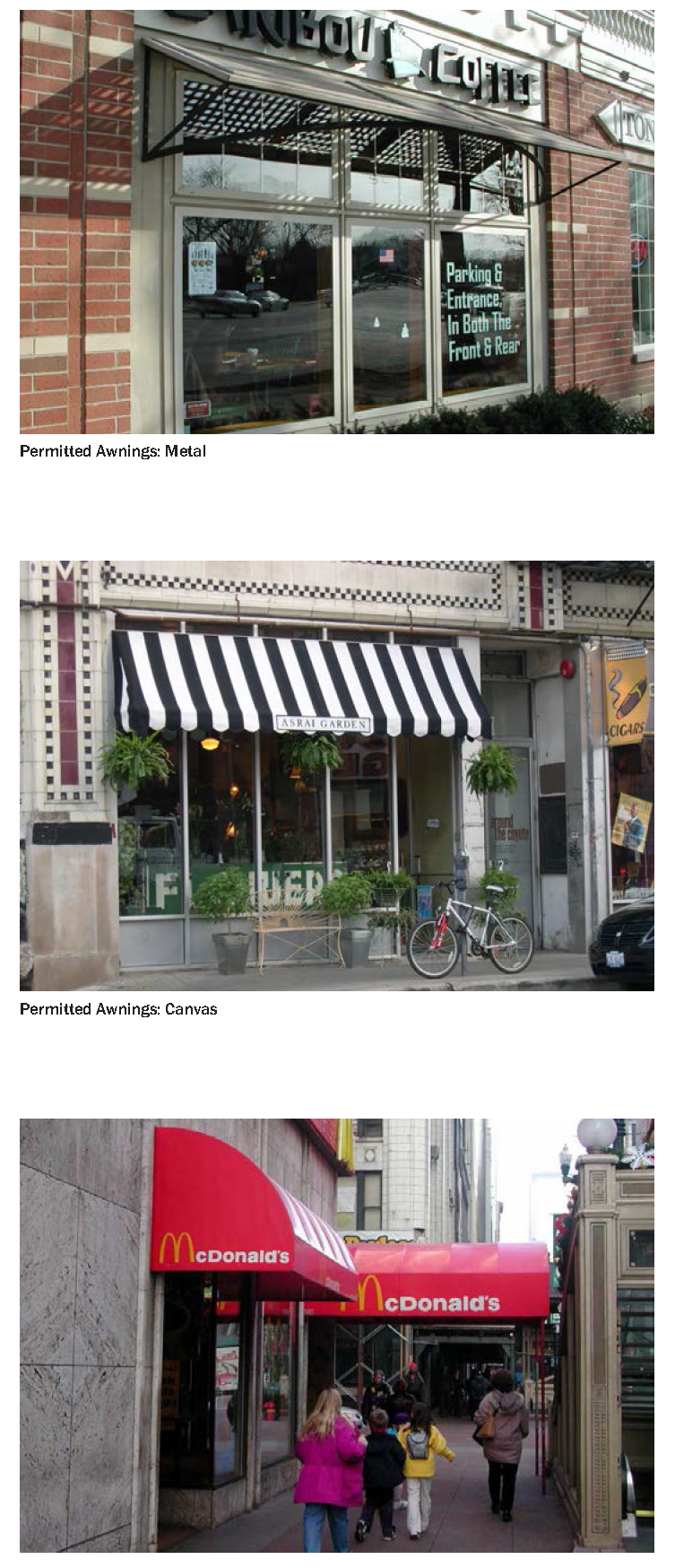
(d)
Shutters. If installed, shutters, whether functional or not, shall be sized for the windows. If closed, the shutters shall not be too small for complete coverage of the window. Shutters shall be wood. "Engineered" wood may be approved during the site plan process with an approved sample and examples of successful, high quality local installations.
3.
Rear Parking Facade Design. The following applies in all locations where a public building entrance occurs on the rear facade adjacent to a parking lot. Refer to Figure 15.4K(7).
Figure 15.4K(7).Rear Parking Facade Design.
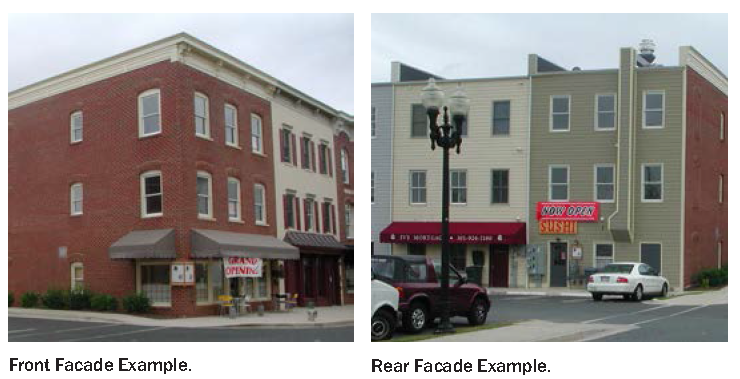
(a)
Entrance Type. An Entrance Type shall be utilized for a minimum of 20 feet of rear facade (refer to 15.4I.2-5).
(b)
Transparency Requirement. Public building entrance facade area, minimum 20 feet wide, shall utilize one of the following:
i.
When the Storefront Entrance Type is utilized, a minimum 45 percent transparency is required for the ground floor facade entrance, and the door shall be a minimum of 45 percent transparent.
ii.
When any other Entrance Type is utilized, the minimum transparency required for upper floors of the street facade shall apply to the rear ground floor entrance area, and the door shall be a minimum of 45 percent transparent..
(c)
Awnings and signage are encouraged.
4.
Balconies. The following applies in all locations where balconies are incorporated into the facade design facing any street or parking lot. Refer to Figure 15.4K(8).
Figure 15.4K(8). Balconies Integral to Façade.
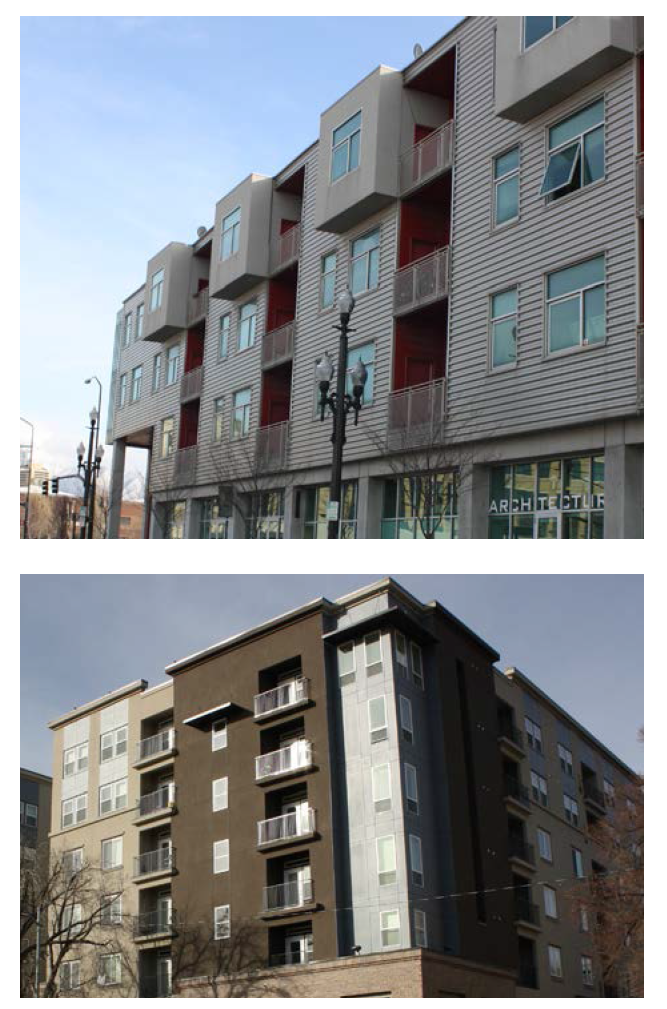
(a)
Size. Balconies shall be a minimum of six feet deep and five feet wide.
(b)
Connection to Building. Balconies shall be integral to the facade at the street line. Balconies on stepbacked stories shall be independently secured and unconnected to other balconies.
(c)
Facade Coverage. A maximum of 40% of the front and corner side facades, as calculated separately, may be covered with balconies, including street-facing railing and balcony structure.
(Ord. No. 2013-3523, § 3(Exh. B), 4-23-2013)
15.5. - Site Development Standards.
A.
Signage.
1.
General Requirements. Refer to Section 36 of the Ferguson Code of Ordinances for all signage regulations applicable to the DT Districts.
2.
Revisions to the Signage Regulations. The following revises Section 36 of the Ferguson Code of Ordinances specific to the DT Districts.
(a)
Freestanding Signs. (Refer to Sec. 36-7. Permitted Signs in Nonresidential Zoning Districts). All freestanding pole mounted signs are prohibited within DT Districts.
(b)
Freestanding Low Monument Signs. (Refer to Sec. 36-7. Permitted Signs in Nonresidential Zoning Districts) Low Monument Signs per Sec. 36-7 are permitted only in the DT 3 and DT 4 Districts.
B.
Parking Requirements.
1.
Applicability. This section shall apply to all new development and changes in use or intensity of use for existing development in any DT Districts.
2.
General Requirements. Off-street parking spaces shall be provided in conformance with Section 26: Off-Street Parking and Loading Regulations, unless revised in this Section 15.5B.
3.
Parking Credits. Vehicular parking standards within Section 26 may be reduced by achieving one or all of the following credits.
(a)
On-Street Parking Credit. For all non-residential uses, on-street parking spaces that meet the following shall be credited against the parking requirement.
i.
Spaces shall be designated on-street parking available 24 hours of every day.
ii.
On-street space must be located a minimum of 50% adjacent to the property line of the lot.
(b)
Public Parking Credit. For all non-residential uses, public parking spaces located within 660 feet of any property line may be credited against the parking requirement at a rate of one credit for every three public parking spaces.
(c)
Car-Share Parking Credit. The vehicular parking requirements can be reduced with the inclusion of car-share parking spaces as follows.
i.
Per each car-share parking space provided, required parking spaces shall be reduced by four spaces.
ii.
Required parking spaces may be reduced up to 40%.
iii.
Approval. Applicant must provide documentation of an agreement with a car-share company. If this agreement should terminate at any point, applicant shall be required to provide parking as otherwise required herein.
(d)
Other Parking Reductions. Additional reductions may be approved by the Planning Commission with the submittal of a parking study illustrating the reduction.
4.
Bicycle Parking.
(a)
Required Bicycle Parking. The Required Bicycle Parking Table 15.5B(1) indicates the minimum bicycle parking ratio for a given use.
i.
Bicycle parking is not required for uses not listed.
ii.
Bicycle parking is not required for uses less than 2,500 square feet in size.
iii.
No Use, other than Civic is required to accommodate more than 20 bicycles.
iv.
With approval of the Planning Commission, a fee in lieu of providing spaces may be permitted for physically constrained sites.
(b)
Bicycle Parking Dimensions.
i.
Required bicycle parking spaces shall have minimum dimensions of two feet in width and six feet in length.
ii.
An aisle a minimum of five feet wide shall be provided behind bicycle parking facilities to allow for maneuvering.
iii.
A minimum of two feet shall be provided beside each parked bicycle to allows access. This access may be shared by adjacent bicycles.
iv.
Racks shall be installed a minimum of two feet from any wall or other obstruction.
(c)
Location. Bicycle parking should be located within 50 feet of the entrance of the Use.
i.
Indoor or outdoor spaces are permitted, provided they are located on the lot with which they are associated.
ii.
Bicycle parking facilities shall be separated from vehicular parking areas to protect parked bicycles from damage. The separation may be accomplished through grade separation, distance or physical barrier, such as curbs, wheel stops, poles or other similar features.
(d)
Racks and Structures. Racks and structures shall be provided for each unprotected parking space, and shall be designed to accommodate both chain and U-shaped locking devices supporting the bicycle frame at two points.
(e)
Signage. If required bicycle parking for public use is not visible from the street, Signs must be posted indicating their location.
(f)
Maintenance and Lighting. Areas used for required bicycle parking must be well-lit with acceptable drainage to be reasonably free of mud and standing water. Accessory off-street parking for bicycles shall include provision for secure storage of bicycles. Such facilities shall provide lockable enclosed lockers or racks or equivalent structures in or upon which a bicycle may be locked by the user.
(g)
Long Term Parking. For multifamily residential Uses, the bicycle parking spaces should be provided as long term parking, safe and secure from vandalism and theft, and protected from the elements.
Table 15.5B(1). Required Bicycle Parking.
C.
Landscape.
1.
General Requirements. Refer to Ferguson Landscaping and Screening Guidelines for all landscaping and screening requirements.
2.
Build-to Zones and Setbacks. All build-to zone and setback areas not covered by building shall contain either landscape, patio space, or sidewalk space.
(a)
Driveways are permitted to cross the front and corner build-to zone and rear setbacks perpendicularly at a maximum of 24 feet in width.
(b)
Driveways may encroach upon the side setbacks longitudinally on parcels 50 feet or less in width.
(c)
Parking lots shall not encroach upon any setbacks. Side and rear yard parking lots shall not be located closer to the front or corner lot line than the building.
3.
Revisions to Landscaping and Screening Guidelines. The following revises the guidelines within the Ferguson Landscaping and Screening Guidelines specific to the DT Districts.
(a)
Guidelines not required for DT1, DT2, DT3, and DT4:
i.
Section 4.5.1 Street Frontage (within front yard setback): 4.5.1A and 4.5.1B requiring a minimum 8' deep landscape area with understory trees and shrubs..
ii.
Section 4.5.2 Side and Rear (within the side and rear yard setbacks): 4.5.2A and 4.5.2B requiring a minimum 6' deep landscape area with understory trees and shrubs.
iii.
4.5.3 Building Perimeter Landscaping.
iv.
4.5.4 Accessory Structures.
4.
Frontage Buffer Requirements. The following additional requirements are specific to the DT Districts and is in addition to information within the Landscaping and Screening Guidelines.
(a)
Intent. To lessen the visual impact of parking areas visible from the street.
(b)
General Applicability. Applies to properties in all DT Districts where a parking area is located adjacent to a right-of-way.
(c)
Exceptions. Parking areas along alleys, except when a residential district is located across the alley. Single and two family residences are also excepted.
Notes:
1 This screening requirement does not prohibit the installation of or provision for openings necessary for allowable access drives and walkways connecting to the public sidewalk.
2 In Front and Corner Yards, when the parking area is located adjacent to any building on the lot, the buffer must be located so that it aligns with or is behind the face of the adjacent building back to the vehicular area. The area between the buffer and the property line must be landscaped.
Figure 15.5C(1). Frontage Buffer Plan and Section.
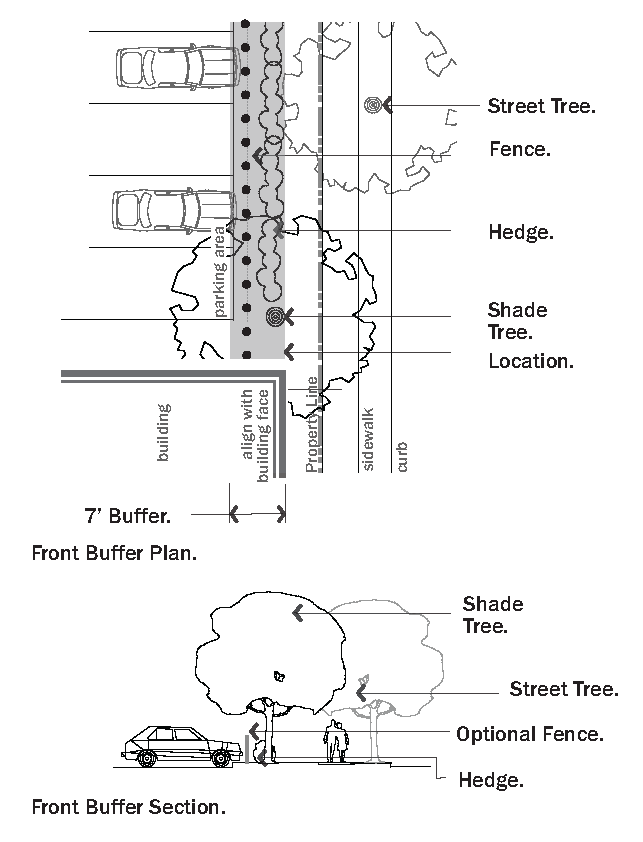
D.
Street Guidelines.
1.
General Street Guidelines. The following guidelines should apply to all new streets within DT Districts with the intent of creating pedestrian oriented, multimodal streets. Refer to Figure 15.1C(1) Map for recommended locations for new streets.
(a)
Typical Street Elements. All street rights-of-way should include the following vehicular and pedestrian realm considerations. Refer to Figure 15.5D(1) Typical Right-of-Way Elements.
(1)
Vehicular Realm. The vehicular realm is comprised of the travel lanes, bicycle lanes, and parking lanes.
(2)
Pedestrian Realm. The pedestrian realm is comprised of pedestrian facilities, such as sidewalk. A buffer area that serves to buffer pedestrians or bicyclists from the movements of higher speed vehicles in the vehicular realm shall consist of one of the following:
(i)
Landscape Zone. A landscape area between the back of curb to the sidewalk in which street trees, stormwater swales, lighting, and signage may be located. Typically used adjacent to residential ground floor uses.
(ii)
Furnishings Zone. A hardscape area that extends from the sidewalk to the back of curb, in which street trees, street furniture, lighting, and signage may be located. Typically used adjacent to commercial or office ground floor uses.
Figure 15.5D(1). Typical Right-of-Way Elements.
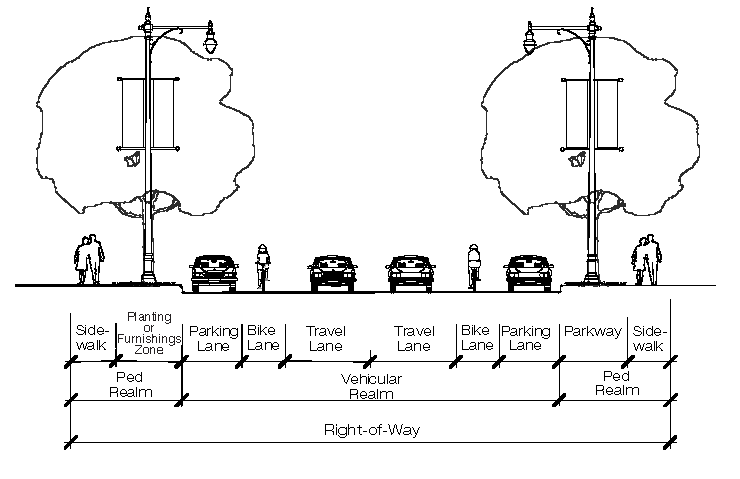
(b)
Bicycle Facilities. Bicycle facilities, such as dedicated lanes and dedicated shared lanes should be included on any streets based on the City's bicycle plan. New streets within DT districts shall utilize shared lanes. A shared lane refers to a street that does not have bicycle lanes or a designated shared lane, but the speed and configuration of the street is such that bicycles could comfortably share lanes with traffic.
(c)
Vehicular On-Street Parking. On-street parking, whether parallel or diagonal, shall be included on both sides of all streets.
2.
Street Trees. Street trees are required along all existing and new street frontages.
(a)
All planting material requirements within Landscaping and Screening Guidelines shall be utilized.
(b)
Street trees shall be located in either a Landscape Zone (within a planting bed or lawn) or a Furnishings Zone (in trees wells with grate as required).
(c)
Permeable Surface. For each tree preserved or planted, a minimum amount of permeable surface area is recommended.
i.
Preserved trees should have a permeable surface area equal to the critical root zone. The critical root zone is equal to half of the radius of the tree's mature canopy, measured from the trunk out to the dripline.
ii.
Planted trees have a suggested minimum permeable area and soil volume based upon tree size; refer to Table 15.5D(1) for details.
iii.
Permeable area for one tree cannot count toward that of another tree.
(d)
Structural Soil. When the critical root zone of an existing tree or the suggested permeable surface area requirement of a newly planted tree extends below any pavement, structural soil is required underneath the pavement.
3.
Pedestrian Lighting. Pedestrian light fixtures shall be installed per the street requirements of the City's Department of Public Works and any streetscape master plan adopted by the City.
Table 15.5D(1). Minimum Recommended Soil Volumes and Permeable Area per Planted Tree.
4.
New Streets and Subdivision. For all developments with total parcel acreage larger than five acres, subdivision and construction of a new street will yield the most buildings. (Building Types require buildings to front streets). Refer to Figure 15.5D(2) for an example of a typical new block and street configuration. The following recommendations apply:
Figure 15.5D(2). Example of New Street and Block Configuration for Large Parcels or When Multiple Parcels are Combined.
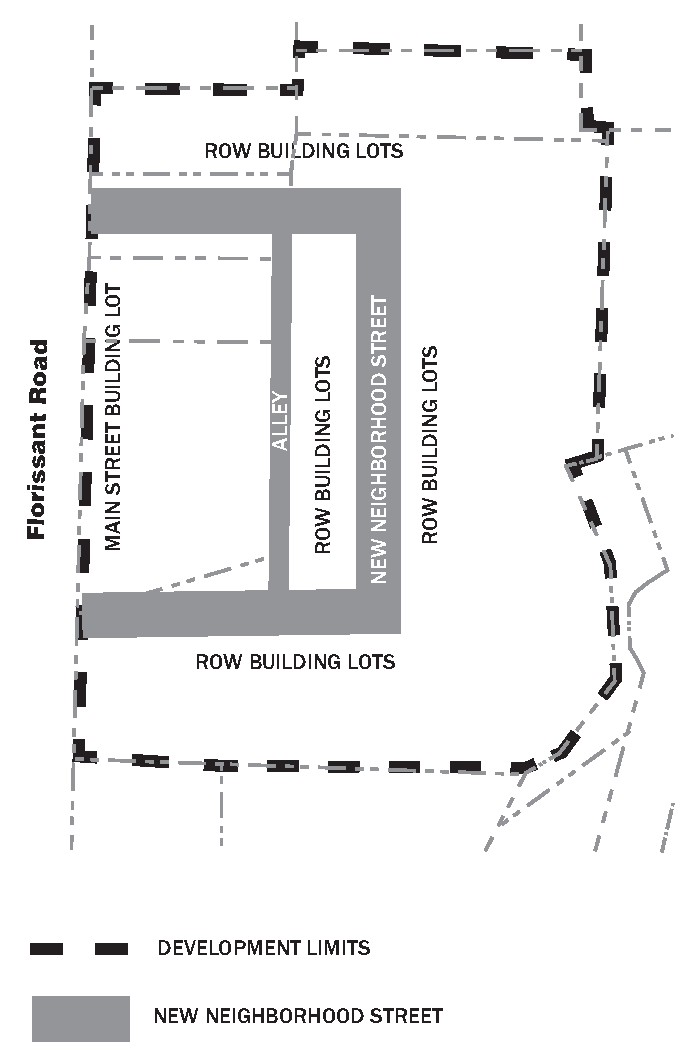
(a)
Interconnected Street Pattern. Streets shall connect and continue existing streets from adjoining areas and cul-de-sac and dead end streets should be avoided.
(b)
Blocks.
i.
The shape of a block shall be generally rectangular, but may vary due to natural features or site constraints.
ii.
Blocks shall typically be two lots deep with the exception of blocks containing open space. Blocks may also include an alley. Blocks may include existing lots within an existing zoning district.
iii.
Blocks shall typically be fronted with lots on at least two faces, preferably on the longest street faces.
iv.
Consider lot and block orientation for maximum energy efficiency. For example, block orientation along an east-west longitudinal axis will encourage development of buildings oriented along an east-west axis, with smaller east and west facing facades, able to take advantage of passive solar technology.
v.
Block size should be less than 400'.
(c)
Access Points. A minimum of two access points should be provided for each development, with a minimum of one per every 1,500 feet of boundary recommended.
(d)
Primary Streets. Designate primary streets so that all buildings front at least one primary street. Vehicular access should not be located off a Primary Street, unless the parcel is fronted by more than two primary streets.
(e)
Blocks may include interior alleys or lanes.
(f)
Typical Lot Configuration. All lots shall have frontage along a public street unless otherwise specified in Building Type requirements. Flag lots are prohibited.
(g)
Street Types.
i.
The Neighborhood Street Type is provided for small developments of mainly residential character. Refer to Figure 15.5D(3).
Figure 15.5D(3). Neighborhood Street Type.
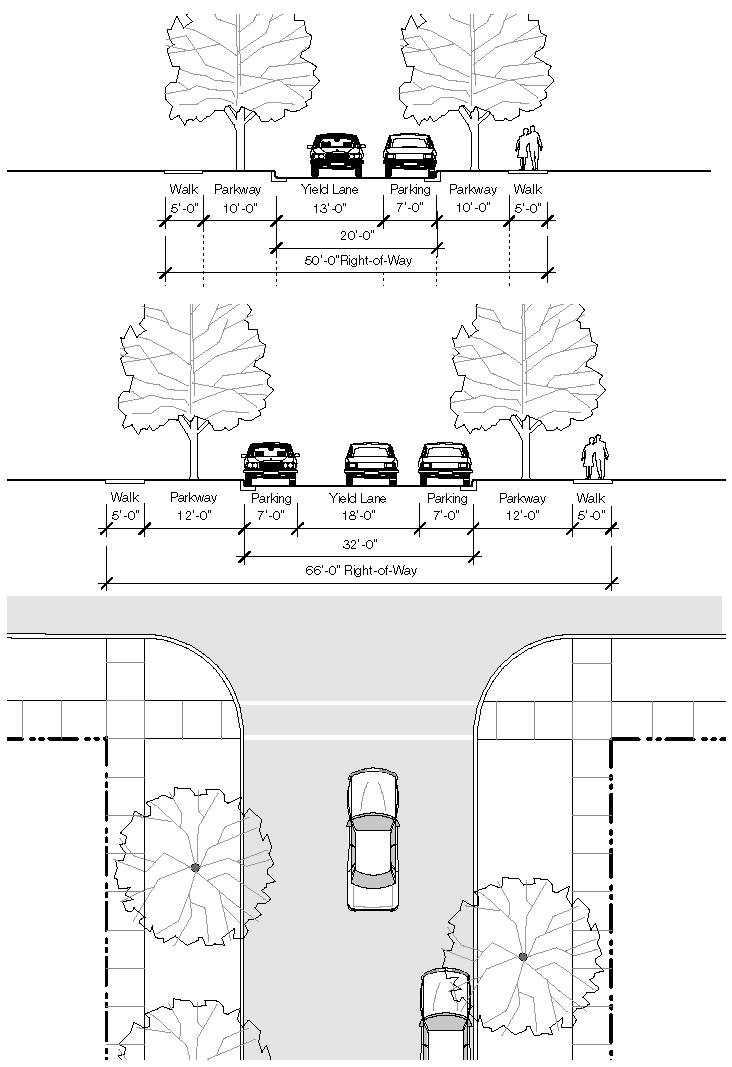
ii.
The Alley is provided for new drives through blocks to provide parking access as well as service access and refuse pickup. Refer to Figure 15.5D(4).
Figure 15.5D(4). Typical Alley.
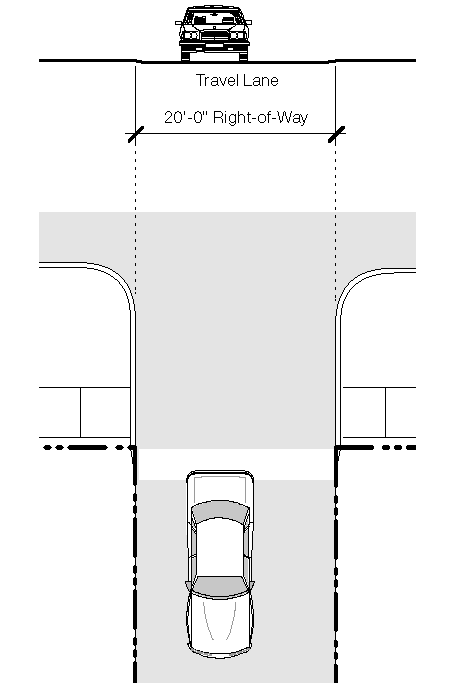
(Ord. No. 2013-3523, § 3(Exh. B), 4-23-2013)

