
Flint Township City Zoning Code
ARTICLE 5
- SUPPLEMENTAL REGULATIONS
Sec. 14.5-1.- Required area or space.
(a)
No lot, adjacent lots in common ownership, required yard, parking area or other required open space shall be created, divided or reduced in dimensions or area below the minimum requirements of this chapter. If already less than the minimum requirements of this chapter, a lot or adjacent lots in common ownership or a required yard, parking area or other open space shall not be divided or reduced in dimensions or area so as to increase its noncompliance with the minimum requirements of this chapter. Lots or yards created after the effective date of the ordinance form which this chapter is derived shall comply with the requirements of this chapter.
(b)
Accessory buildings or structures, including, but not limited to, porches enclosed by walls, or garages, attached to a dwelling unit or other main building in a substantial manner, such as by a wall or roof, shall be deemed a part of such main building, for the purpose of determining compliance with the provisions of this chapter concerning required yards.
(Ord. of 7-18-2022)
Sec. 14.5-2. - Projections into yards.
(a)
Certain architectural features, such as cornices, eaves, gutters, chimneys, pilasters and similar features may project:
(1)
No further than three feet into a required front yard;
(2)
No further than five feet into a required rear yard; and
(3)
No further than two feet into a required side yard.
(b)
An unenclosed stoop, deck, balcony or window awning may project:
(1)
No further than eight feet into a required front yard, and
(2)
No further than 15 feet into a required rear yard.
(c)
Permitted exceptions to front yard setbacks. In any residential zoning district, the front yard requirements of a lot may be modified so as to equal the average front yard setback of existing principle structures along the same block front (or 200 feet either side of the lot in question, whichever is less) provided that the front yard setback shall not be less than 15 feet (see figure 3.1).
(d)
Permitted exceptions to side yard setbacks. In any district where a legal nonconforming lot does not meet the minimum lot width requirement in its district in this ordinance, the side yard setback requirements for that lot shall be reduced by a percentage equal to the percentage that the lot meets the minimum lot width requirement. For example, if a property in the R-1C single-family residential district has a lot width of 60 feet, where the minimum is 80 feet, then its lot width is 75 percent of what is required. As long as the property is a legal nonconformity, then the property side yard setbacks are reduced from 20 feet to 15 feet total, and at least seven and one-half feet on each side, and five feet for accessory structures. Structures must still comply with building code separation requirements.
Figure 3.1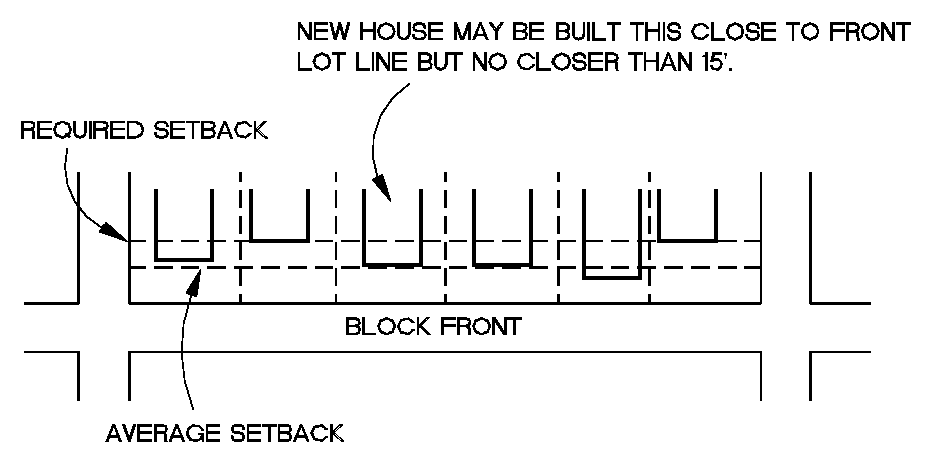
(e)
Projection of such building appurtenances into a required side yard shall be prohibited. In no case shall a balcony, stoop, deck or awning be placed closer than five feet to any front or rear lot line.
(Ord. of 7-18-2022)
Sec. 14.5-3. - Building height.
No building shall be erected, converted, enlarged, reconstructed, structurally altered to exceed the height limit hereinafter established for the district in which the building is located, except that penthouses or roof structure for the housing of elevators, stairways, tank, ventilating fans, or similar equipment required to operate and maintain the building, and fire or parapet walls, skylights, towers, steeples, stage lofts, and screens, flagpoles, chimneys, smokestacks, individual domestic radio and television aerials and wireless masts, water tanks, or similar structures may be erected above the height limits herein prescribed. No such structure may be erected to exceed by more than 15 feet the height limits of the district in which it is located; nor shall such structure have a total area greater than ten percent of the roof area of the building; nor shall such structure be used for any residential purpose or any commercial or industrial purpose other than a use incidental to the main use of the building.
(Ord. of 7-18-2022)
Sec. 14.5-4. - Required street frontage.
Any parcel of land which is to be occupied for residential use or building, other than an accessory use or building, shall have frontage upon a public street, right-of-way or legally recorded access easement which meets one of the following conditions:
(1)
A public street with a roadway which has been accepted for maintenance by the county, or
(2)
A permanent and unobstructed private easement which has been recorded prior to the adoption of this chapter, and a roadway meeting county standards for vehicular traffic, leading to a public street as defined under subsection (1) of this section, and sufficient to accommodate a driveway and turning radius consistent with the county road commission driveway permit standards.
(Ord. of 7-18-2022)
Sec. 14.5-5. - Accessory buildings, structures and uses.
(a)
Accessory buildings, structures and uses are permitted only in connection with, incidental to, and on the same lot, with a principal building, structure or use which is permitted in the particular zoning district.
(b)
An accessory building, structure or use must be in the same zoning district as the principal building, structure or use on a lot.
(c)
Where the accessory building, structure or use is structurally attached to a principal building, structure or use, it shall not exceed 75 percent of the ground floor area of the principal structure, and must conform to all regulations of section 14.3-5 of this Code applicable to principal buildings.
(d)
No accessory building, structure or use shall be occupied or utilized unless the principal structure to which it is accessory is occupied or utilized. No accessory building, structure or use may be placed on a lot without a principal building, structure or use.
(e)
No detached accessory building, structure or use shall be erected within a public street right-of-way, alley, or easement including all such sides of a corner lot.
(f)
No accessory building, structure or use shall be erected in any required yard except a rear yard, except accessory buildings are permitted in a front yard area, outside of any required setback area, on lots of at least two acres when the front setback is equal to the setbacks of established buildings on adjoining lots or are setback at least 100 feet from the front lot line if the lots are generally undeveloped, as determined by the zoning administrator and that accessory buildings, structures and uses may be erected in any required side yard when set back a minimum of 75 feet from the front lot line.
(g)
No detached accessory building shall be located closer than ten feet to any principal building, structure, or use, nor shall it be located closer than five feet from any side or rear lot line or public street right-of-way. Accessory buildings shall be set back at least ten feet from the natural feature including a state regulated wetland, or any shoreline of a lake, pond, stream, or other water body.
(h)
All detached accessory buildings, structures and uses combined shall cover no more than 30 percent of any rear yard.
(i)
Detached accessory buildings or structures shall be follow the standards provided in the table below.
(Ord. of 7-18-2022)
Sec. 14.5-6. - Regulations applicable to single-family dwellings.
Any single-family dwelling, whether constructed and erected on a lot or a manufacture home, shall be permitted only if it complies with all of the following requirements:
(1)
If the dwelling unit is a mobile home, the mobile home must either be:
a.
New and certified by the manufacturer and/or appropriate inspection agency as meeting the mobile home construction and safety standards of the U.S. Department of Housing and Urban Development, as amended, or any similar successor or replacement standards which may be promulgated; or
b.
Used and certified by the manufacturer and/or appropriate inspection agency as meeting the standards referenced in subsection (1)a of this section, and found, on inspection by the building department to be in excellent condition and safe and fit for residential occupancy.
(2)
The dwelling unit shall comply with all applicable building, electrical, plumbing, fire, energy and other similar codes which are or may be adopted by the township; provided, however, that where a dwelling unit is required by law to comply with any federal or state standards or regulations for construction, and where such standards or regulations for construction are different than those imposed by township codes, then and in such event such federal or state standard or regulation shall apply. Appropriate evidence of compliance with such standards or regulations shall be provided to the building department.
(3)
The dwelling unit shall comply with all restrictions and requirements of this section, including, without limitation, the minimum lot area, minimum lot width, minimum residential floor area, required yard and maximum building height requirements of the zoning district in which it is located.
(4)
If the dwelling unit is a mobile home, the mobile home shall be installed with the wheels removed.
(5)
The dwelling unit shall have a minimum horizontal dimension across any front, side or rear elevation of 24 feet.
(6)
The dwelling unit shall be firmly attached to a permanent continuous foundation constructed on the building site, such foundation to have a wall of the same perimeter dimensions as the dwelling unit and to be constructed of such materials and type as required by the state construction code for on-site constructed single-family dwellings. If the dwelling unit is a mobile home, its foundation and skirting shall fully enclose the chassis, undercarriage and towing mechanism.
(7)
If the dwelling unit is a manufactured home, it shall be installed pursuant to the manufacturer's setup instructions and shall be secured to the building site by an anchoring system or device complying with the rules and regulations, as amended, of the state mobile home commission, or any similar or successor agency having regulatory responsibility for mobile home parks.
(8)
Storage area within a building with an area of no less than 120 square feet shall be provided. This storage area may consist of a basement, closet area, attic or attached garage in a principal building, or in a detached accessory building which is in compliance with all other applicable provisions of this chapter pertaining to accessory buildings.
(9)
Permanently attached steps or porch areas at least three feet in width shall be provided where there is an elevation difference greater than eight inches between the first floor entry of the dwelling unit and the adjacent grade. Railings shall be provided in accordance with township building code.
(10)
The pitch of the main roof of the dwelling unit shall not be less than three feet of rise for each 12 feet of horizontal run.
(11)
The exterior finish of the dwelling unit shall not cause glare or reflection that is greater than that from siding coated with clean, white, gloss exterior enamel.
(12)
The dwelling unit shall have no less than two exterior doors, with one being in either the rear or the side of the dwelling unit.
(13)
The dwelling unit shall be aesthetically compatible in design and appearance with other residences in the vicinity.
(14)
Compatibility of design and appearance shall be determined in the first instance by the township building inspector upon review of the plans submitted for a particular dwelling. An aggrieved party may appeal to the zoning board of appeals within a period of 15 days from the receipt of notice of said building inspector's decision. Any determination of compatibility shall be based on the standards as set forth in this chapter, as well as the character, design and appearance of one or more residential dwellings located outside of a mobile home park within 2,000 feet of the subject dwelling, where such area is developed with dwellings to the extent of not less than 20 percent of the lots situated within said area; or, where said area is not so developed, by the character, design and appearance of one or more residential dwellings located outside of mobile home parks throughout the township. The foregoing shall not be construed to prohibit innovative design concepts involving such matters as solar energy, view, unique landscape contour, or relief from the common or standard designed home.
(15)
Construction of new dwelling units.
a.
Any building requiring yard space shall be located at such an elevation that a sloping grade shall be maintained to cause the flow of water to run away from the walls of the structures thereon. The balance of yard spaces shall be graded, and adequate drainage provided where necessary to deflect proper drainage of surface waters from the said premises.
b.
When a new building is constructed on a vacant lot between two existing buildings or adjacent to an existing building, the existing established grade on the vacant lot and on the adjoining lots shall be used in determining the grade around the new building and the yard around the new building.
c.
The final grade shall be approved by the building department.
d.
The building's finished floor elevation shall be within 18 inches of the average elevation between two adjacent structures provided the above conditions are met; if it is not possible to determine the average elevation, the building official may require a licensed civil engineer of land surveyor to establish the average floor elevation.
e.
The building official shall approve the finished floor elevation for all new dwelling units prior to any foundation work.
(Ord. of 7-18-2022)
Sec. 14.5-7. - Temporary buildings and structures.
Temporary buildings and structures, including trailers, incidental to construction work on a lot, may be placed on such lot, subject to the following restrictions:
(1)
Temporary buildings and structures may only be used for the storage of construction materials, tools, supplies and equipment, for construction management and supervision offices, and for temporary on-site sanitation, solid waste or fuel facilities, related to construction activity on the same lot.
(2)
No temporary building or structure shall be used as a dwelling unit.
(3)
The placement of temporary buildings and structures shall be in conformance with the requirements of article 2, division 2 of this chapter. A building permit for such building or structure shall be issued by the building department prior to installation.
(4)
Temporary buildings and structures shall be removed from the lot within 15 days after an occupancy permit is issued by the building department for the permanent structure on such lot, or within 15 days after the expiration of a building permit issued for construction on such lot.
(Ord. of 7-18-2022)
Sec. 14.5-8. - Building appearance, structure completion, and personal construction authority.
(a)
Building appearance. Where a building or accessory building in a nonresidential district is erected on any parcel of land fronting upon any public street, the walls of said building or accessory building shall be constructed in compliance with the following standards:
(1)
A minimum of 60 percent of the front of the structure shall consist of stone, face brick or other ornamental materials approved by the planning commission consistent with neighboring property.
(2)
Siding and trim shall be primarily earth tone colors with primary colors used only for accents for up to ten percent of the surface. Earth tone colors are muted colors ranging from neutral to deep brown. Examples of colors meeting this requirement can be found below.
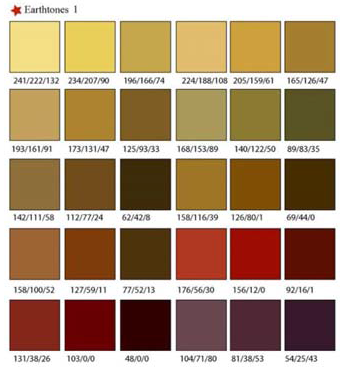
This standard may be waived or modified by the planning commission based on proposed alternative colors submitted by an applicant using sample materials if the planning commission finds that the proposed color pallet would be consistent with the intention of this section.
(3)
No building so situated shall be constructed of tarred paper, tin, corrugated iron, or any form of pressed board or felt or similar material within the limits herein specified.
(4)
The standards above may be modified by the planning commission in cases where the applicant is required to comply with corporate design standards and can demonstrate that the design as proposed is consistent with the character of the area and is an enhancement to the site.
(b)
Building completion period. All structures shall be completed within one year of the issue date of the building permit for such structure, unless an extension for not more than one additional year is granted for good cause by the building department. When a part of the building is ready for occupancy, a temporary occupancy permit may be issued, provided that the premises complies with health and fire standards required under this chapter, or any other chapter, regulation, or statute.
(c)
Personal construction authority. Nothing in this chapter shall be construed as prohibiting an owner, tenant, occupant, or land contract vendee from doing his own building, altering, plumbing, electrical installations, etc., provided the minimum requirements of the electrical and plumbing codes of the state, and the applicable county health department regulations are complied with.
(Ord. of 7-18-2022)
Sec. 14.5-9. - Screening of trash storage areas and mechanical equipment.
(a)
In all RM-1, RMH, EH, C-1, C-2, C-3, I, and AD districts, there shall be provided an outdoor trash storage area. Any such area shall be limited to normal refuse which is collected on a regular basis and shall be maintained in a neat, orderly and sanitary condition. The requirement for such a trash storage area may be waived by the planning commission upon a finding that it is unnecessary due to the nature of the use, or owing to provisions for indoor trash storage.
(1)
In no instance shall any such refuse be visible above the required screening.
(2)
A screen wall of six feet in height shall enclose three sides of the storage area. Bollards and/or other protective devices shall be installed at the opening and to the rear of any storage area to prevent damage to the screening walls. The surface under any such storage area shall be constructed of concrete which complies with local building requirements.
(3)
Any such storage area shall be located in a rear yard and/or be so located and arranged as to minimize its visibility from adjacent streets and uses. The planning commission may require an obscuring gate when the visibility of such a storage area, from a public street or adjacent use, is deemed to render an adverse influence. In no instance shall any such area be located in a front yard.
(4)
All trash storage areas and/or enclosures shall be located a minimum of ten feet from any building or structure.
(b)
In all districts any unenclosed mechanical equipment such as HVAC shall be screened from public view by obscuring fencing or screening plantings that obscure the equipment all year around. Roof mounted equipment must be screened unless the roof parapet hides the view of the equipment from ground level.
(Ord. of 7-18-2022)
Sec. 14.5-10. - Filling operations.
(a)
It shall be unlawful for any person, firm, corporation, partnership or other organization or entity to use any land for filling with materials of any kind without a permit granted by the planning commission. (Exception: incidental filling as determined by the building department).
(b)
An application for a permit to fill shall be filed with the building department, who shall inspect the property to be filled and forward his written recommendation to the planning commission with the application.
(c)
In its consideration of applications for landfill permits the planning commission shall consider whether or not the proposed fill will be in harmony with the general purpose and intent of this chapter, whether or not the proposed fill will be obnoxious, injurious, hazardous or offensive, the suitability of the property, the character of the neighborhood, the economic and the aesthetic effects of the proposed use, the effect of the proposed fill on the public health, safety, morals and general welfare of the residents of the area, and the interest of the petitioner of the landfill permit.
(d)
The planning commission may require such documents as may be reasonably necessary to assist it in making decision.
(e)
The planning commission may impose such conditions as it deems necessary to safeguard the public health, safety and the general welfare. By way of illustration, and not limitation, the following types of conditions may be imposed:
(1)
Control over the distance from adjoining property within which no activity may be conducted.
(2)
The kind and depth of fill material.
(3)
The kind of depth of the material to be used at the top of the grade.
(4)
The grade of the area which must be established at the expiration of the permit term.
(5)
Reasonable measures to prevent air and noise pollution.
(6)
Reasonable measures to keep public roads free of excavated and fill material. Clean streets as may be required.
(7)
All existing storm sewers, sanitary sewers and natural watercourses crossing property, shall not be obstructed due to the filling operation or through change in present elevations.
(8)
Truck beds shall be tight and loads shall be trimmed to minimize spillage.
(9)
Adequate measures shall be taken to control dust.
(10)
A restriction of the days of the week and hours of the day during which time a filling operation may be conducted.
(f)
The planning commission may require the posting of a bond in an amount determined by the planning commission running to the township holding the township free of all liabilities incidental to the landfill and to assure the performance of the privileges of the permit according to the ordinances of the township and the special conditions set forth by the planning commission.
(g)
The permits approved by the planning commission in accordance with this article shall be for such period as the planning commission may determine, but may not exceed one year. Permits shall not be automatically renewable.
(h)
In the event the conditions imposed with the issuance of the permit are not substantially performed at the expiration of the permit, the township shall notify the person, firm, corporation, partnership or other organization to whom the permit was issued by certified mail of the default of the conditions of the permit. The owner of the permit shall have 15 days to cure the default. In the event the default is not cured within the 15 days, the township shall cause its agents to enter upon the premises which are the subject of the permit and cure the default.
(i)
In the event the township cures the default, the cost incurred, including a reasonable amount for administrative costs, shall be a lien on the premises which are the subject of the permit and shall be recovered by the township from the bond, if any, and if no bond was posted, the costs as aforesaid shall be entered upon the next tax roll against the premises which are the subject of the permit and said costs, with penalties and interest accrued thereon, shall be collected and said lien shall be enforced in the same manner as provided in respect to taxes assessed upon such roll.
(j)
In the event of a default, the notice herein provided shall also be mailed to all the sureties of the bond filed by the owner of the permit.
(k)
The filing of an application for a permit to fill and the acceptance of the permit issued pursuant thereto shall constitute consent by the owner of the premises and the owner of the permit that the township may cause its agents to enter upon the premises to cure any default of the permit.
(Ord. of 7-18-2022)
Sec. 14.5-11. - Excavations or holes.
The construction, maintenance or existence within the township of any unprotected, unbarricaded, open or dangerous excavations, holes, pits, or wells, which constitute or are reasonably likely to constitute a danger or menace to the public health, safety or welfare, are hereby prohibited; provided, however, this section shall not prevent any excavation under a permit issued, pursuant to this chapter, where such excavations are properly protected and warning signs posted in such a manner as may be approved by the building department; and provided, further, that this section shall not apply to streams, natural bodies of water or to ditches, streams, reservoirs, or other major bodies of water created or existing by authority of the state, the county, the township, or other governmental agency. No detention facility will be allowed in a front yard unless completely underground. All detention facilities not completely underground must be of a minimum grade of four to one and kept clean of all vegetation except grass.
(Ord. of 7-18-2022)
Sec. 14.5-12. - Exceptions to regulations on excavation.
(a)
Excavation required for swimming pools is excepted from excavating provisions of this ordinance provided that all necessary permits are obtained and the pool is constructed within six months of the excavation.
(b)
Excavation and site preparation for building foundations is excepted from the excavating provisions of this chapter provided that such work is considered incidental to building construction and all necessary permits have been obtained.
(Ord. of 7-18-2022)
Sec. 14.5-13. - Storage and repair of vehicles.
The carrying out of repair, restoration and maintenance procedures or projects on vehicles in any residential zoning district, when such work is not confined to the interior of the vehicle, shall be subject to the following limitations:
(1)
Procedures exceeding 48 hours in duration or which require the vehicle to be inoperable in excess of 48 hours shall be carried out within an enclosed building. Inoperable vehicles and vehicle parts shall be stored inside an enclosed building.
(2)
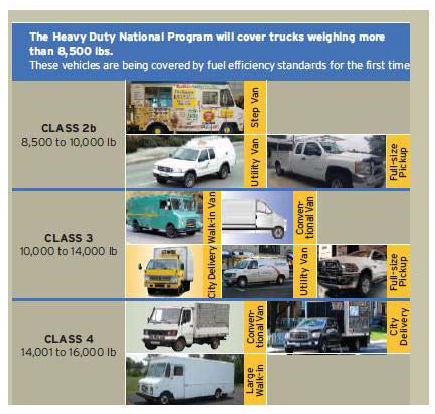
Parking of commercial vehicles of up to 14,000 pounds gross vehicle weight rating (GVWR) or a weight class of 3 or less is permitted in all districts, except in residential subdivisions or condominiums or multi-family developments, where commercial vehicles are limited to not more than 10,000 pounds GVWR or a weight class of 2b or less. See the figure below for reference.
(3)
It shall be unlawful for the owner, tenant or lessee of any lot in any residential zoning district to permit the open storage or outdoor parking of semi-tractor trucks and/or semi-trailers, bulldozers, earth carriers, cranes or any other similar equipment or machinery, unless parked thereon while in use for approve construction on such lot.
(4)
The outdoor storage or parking of recreational vehicles (airplanes, antique or racing automobiles, boats, floats, rafts, trailers, camping or travel trailers, motorized homes, motorcycles, demountable travel equipment of the type adaptable to light duty trucks, and other equipment or vehicles of a similar nature), in residential zoning districts is limited to the following conditions:
a.
In the front yard of any residential district vehicles may be parked for a period no greater than seven consecutive days.
b.
Vehicles may be parked or stored inside or rear yards (behind the front building line).
c.
Vehicles shall be limited to a lot or parcel of land where there is an occupied dwelling unit. The storage or parking of recreational vehicles on vacant land is prohibited.
(5)
Travel trailers and other vehicles or equipment intended or adaptable for sleeping purposes shall remain unoccupied and shall not be connected to sanitary sewer facilities, or have a fixed connection to electricity, water or gas.
(Ord. of 7-18-2022)
Sec. 14.5-14. - Swimming pools.
(a)
Every person owning land on which there is located a swimming pool, spa, hot tub, or similar device, below ground or above ground, which contains 24 inches or more of water in depth at any point, shall erect and maintain thereon a fence or enclosure, approved by the building department, surrounding the device sufficient to make such device inaccessible to small children. Such fence or enclosure, including the gates, shall not be less than four feet or greater than six feet above grade. All gates shall be self-latching with latches placed no less than four feet above grade or otherwise made inaccessible from the outside to small children.
(b)
Swimming pools, spas, hot tubs and similar devices shall not be located less than ten feet from any lot line.
(c)
Swimming pools, spas, hot tubs and similar devices shall not be located in any front yard.
(Ord. of 7-18-2022)
Sec. 14.5-15. - Fences, walls, and other protective barriers.
A fence shall be defined, for the purpose of this chapter as any partition, structure, or gate, erected as a dividing marker, barrier, or enclosure.
(1)
Grade shall be ground level adjacent to the fence on either side.
(2)
Permits. No fence shall be hereafter erected or altered without first obtaining a permit from the building department.
(3)
Fees, as set by resolution of the township board from time to time.
(4)
Restrictions on fence construction.
a.
On residentially zoned R-1A, R-1B, R-1C, R-1D, RM-1 and RMH property, fences located 50 feet or more back from the front property line or the front building line whichever distance is less, and in the case of a corner lot, behind the side street building line or 25 feet whichever distance is less, shall not exceed six feet in height. In the remaining locations on this property, a fence shall not exceed five feet in height and not more than 50 percent of the area of any five-foot long, five-foot high section shall be solid matter or closed construction. Barbed wire is prohibited (see figure 3.2).
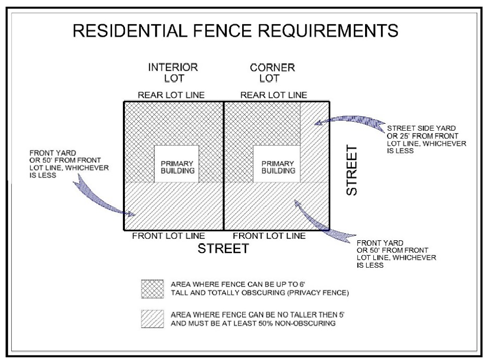
Figure 3.2
b.
On all C-1, C-2, C-3, and O-1 zoned property, fences shall not be constructed over seven feet six inches in height. Barbed wire may be installed in the top one foot of such fence on arms or supports projecting over the private property side of the fence, the lowest strand at least six feet six inches above the grade on that side. Fences over six feet in height, exclusive of barbed wire, shall be constructed of incombustible material except for posts and supporting members. No fence shall be located in the front yard.
c.
On IND and AD zoned property, fences may be of unlimited height and barbed wire may be used as in subsection (4)b of this section. Fences over six feet in heights, exclusive of barbed wire, shall be constructed of incombustible material except for posts and supporting members.
d.
Gates in fences shall not open over public property. All gates shall be so constructed that not over 50 percent of the horizontal, projected area shall be solid matter or closed construction.
e.
Where adjoining properties differ in zoned use, the requirements of a fence on that property line may be that of the least restrictive, regardless of the party erecting the fence.
f.
All fences shall be located entirely on the property of the person, firm or corporation erecting the fence.
g.
No fence shall be charged or connected with an electrical current in such a manner as to transmit said current to persons, animals, or things which might intentionally or accidentally come in contact with it.
h.
Razor wire is prohibited in all zoning districts.
(5)
Maintenance, nuisances. Fences must be maintained so as not to endanger life or property. Any fence which, through lack of maintenance or type of construction or otherwise, imperils life or property, shall be deemed a nuisance. The building department shall notify the owner of the property on which such fence is located of the existence of such nuisance and said nuisance shall be abated within six days after receiving notice.
(6)
Lot lines. The building department may require the owner of property upon which a fence is located or is to be located to establish lot lines upon said property through placing of permanent markers located by a licensed surveyor. Said lot lines shall be established within five days after receiving notice.
(7)
No building wall, retaining wall, or similar structure shall be considered to be a part of a fence. Said walls shall be constructed in accordance with the requirements of the construction code.
(Ord. of 7-18-2022)
Sec. 14.5-16. - Reserved.
Editor's note— Ord. No. 14.5-10, § 2, adopted July 15, 2024, repealed § 14.5-16 which pertained to animals and derived from an Ord. adopted July 18, 2022. Similar provisions may now be found in article 10 of chapter 5.
Sec. 14.5-17. - Dish-type satellite signal receiving stations.
(a)
Dish-type satellite signal receiving stations, hereinafter referred to as stations, subject to the following regulations, may be located within the township.
(b)
Stations shall be located in the side or rear yard, as defined in the township zoning ordinance, and behind the front face of the principal dwelling or structure located on the lot and shall be located so that however turned or otherwise used, all parts of the station will be set at least five feet from the interior side yard lines for lots of 60 feet or less in width and ten feet for lots larger than 60 feet in width and shall be set back from the rear lot line not less than ten feet. All yards abutting upon a public street shall be considered as front yards for setback purposes.
(c)
The height of the ground-mounted stations, should the dish be turned perpendicular to the ground, shall not extend above 15 feet and the maximum diameter of any dish antenna shall not exceed 12 feet.
(d)
Stations may be roof-mounted on structures, provided they are anchored in an approved manner as outlined in the construction code.
(e)
All roof-mounted stations shall be considered as a portion of the structure with regard to height limitations of each zoning district as outlined in article 3 entitled of this chapter.
(Ord. of 7-18-2022)
Sec. 14.5-18. - Requirements for moving a building or structure.
The intent of this section is to provide a procedure for moving a building or structure into, within, or out of township. This will ensure that structures that are relocated do not cause an adverse effect on the character of existing buildings in the neighborhood of the new location in which the structure would be moved.
(1)
Procedure for moving a building or structure into or within the township.
a.
Before a structure is moved, an application for an inspection must be completed and a fee paid by the applicant. Upon completion and payment, the application will be submitted to the building department. The building or structure to be moved will be evaluated by the building department, in order to determine its condition, its ability to be moved, and its compliance with section 14.5-7. The applicant must present documentation stating that it owns, or is buying, the building or structure to be moved and that it owns, or is buying, the land where the building or structure is to be located.
b.
If the building or structure is approved a written permit authorizing movement shall be issued by the building department.
c.
If the building department approves moving the building or structure, the building department shall also determine the amount of an irrevocable letter of credit payable to the township, which must be delivered to the building inspector by the applicant prior to moving the building or structure. The amount of the irrevocable letter of credit will be equal to a reasonable estimate of the total expenses to complete the relocation and have the building or structure suitable for occupancy. In the event the applicant does not complete the relocation, restore the original site by completely clearing it and filling it to its original state in accordance with the township specifications, if it is within the township, and if the building or structure is relocated in the township, complete the building or structure so it is suitable for occupancy, the township is authorized to use the irrevocable letter of credit to complete the relocation, restore the original site if within the township and complete the building or structure if it is relocated within the township.
d.
The applicant shall also need to obtain, prior to moving the building or structure, a demolition permit, building permit and trade permits (i.e. mechanical, plumbing and electrical) for the new location to which the building is to be moved. Prior to the issuance of permits, the following must be provided to the building inspector:
1.
A county road commission special transportation permit on county roads for one move only.
2.
An original copy of the irrevocable letter of credit with appropriate amount specified by the building inspector.
3.
A proposed bid from a qualified moving company.
e.
If the building department denies a permit to move the building or structure, a notice of such denial will be sent to the applicant by first class mail at the address of the applicant indicated on the application. The denial shall state the reason for the denial. The applicant may appeal the denial to the township's zoning board of appeals. The appeal, which must request a hearing at the next regularly scheduled meeting of the zoning board of appeals, or may request a special meeting of the zoning board of appeals, must be filed with the building department within 14 days of the date the denial was mailed to the applicant.
(2)
Procedure for moving a building or structure out of the township. The applicant will need to obtain a demolition permit for the demolition of the existing foundation from which the structure is being moved. Prior to the issuance of the permits, the following must be provided to the building inspector:
a.
A county road commission special transportation permit on county roads for one move only.
b.
A $1,000.00 money order payable to the township or an irrevocable letter of credit in the amount of $1,000.00 payable to the township. In the event the existing site from which the structure is being moved is not completely cleared and filled to its original state in accordance with the township demolition specifications by the applicant, the township is authorized to use the money order or the irrevocable letter of credit to complete the site in accordance with the township demolition specifications.
c.
A proposed bid from a qualified moving company.
(Ord. of 7-18-2022)
Sec. 14.5-19. - Approval of temporary uses.
The township may grant permits authorizing temporary land uses for:
(1)
Temporary outdoor sales of products may be approved by the zoning administrator as an accessory for commercial businesses by issuance of a zoning compliance permit; under the following conditions:
a.
Zoning district where permitted. Temporary uses shall be restricted to nonresidential zoning districts.
b.
Application and submittal requirement. The application for a zoning compliance permit for a temporary use shall be accompanied by plans and specifications including a plot plan, drawn to scale, showing the following:
1.
The shape, location, and dimensions of the lot, including the shape, size, and location of all buildings or other structures already on the lot, off-street parking layout, and the location of any designated fire lanes.
2.
The materials to be utilized in and the shape, size, and location of all buildings and structures to be erected or moved onto the lot, including all tents, tables, stands, or display racks.
3.
The anticipated automobile traffic flow to and from the lot and any adjacent thoroughfares, loss of off-street parking spaces, if any, as well as the anticipated flow of pedestrian traffic upon lot sidewalks.
c.
Time limitations/approvals.
1.
A temporary use permit for the sale of seasonal items such as Christmas trees and similar uses may be granted by the zoning administrator and shall by its terms be effective for no longer than 45 days.
2.
A temporary use permit for summer long items such as vegetables, fruit or produce stand, gardening materials or for the sale of firewood or similar use shall, by its terms, be effective for no longer than four months.
3.
A temporary use permit to allow sidewalk or tent sales shall be issued by the zoning administrator for a maximum of two weeks up to four times a year.
d.
Annual review. Permits for seasonal or summer long outdoor sales are only required for the initial request, but are subject to annual review by the zoning administrator to verify compliance with the conditions of the original approval.
(2)
To be an accessory use the product sold outdoors must be of a type similar to those sold by the business indoors. Sales by third party vendors is prohibited.
(3)
Permit uses which do not require the erection of any capital improvement of a structural nature, not otherwise permitted in any district (such as art fairs, carnivals, and civic festival events), not to exceed 12 months. In classifying uses as not requiring capital improvement, the zoning administrator shall determine that they are either demountable structures related to the permitted use of land; recreation developments, such as, but not limited to golf driving range and outdoor archery courts, or structures which do require foundations, heating systems, or sanitary connections.
(4)
The granting of the temporary use shall be granted in writing, stipulating all conditions as to time, nature of development permitted and arrangements for removing the use at the termination of said temporary permit.
(5)
The zoning administrator may seek the review and recommendation of the planning commission prior to the taking of any action.
(6)
The fee for a permit authorizing a temporary land use shall be set by the township board by resolution.
(7)
Signage for a temporary use shall comply with the requirements of chapter 13 of this Code, sign ordinance, as amended.
(Ord. of 7-18-2022)
Sec. 14.5-20. - Withholding of approval.
The planning commission or zoning administrator may withhold granting of approval of any use, site plan, PUD plan or other approval required by this chapter pending approvals which may be required by county, state or federal agencies or departments.
(Ord. of 7-18-2022)
Sec. 14.5-21. - Change of tenancy or ownership.
There may be a change of tenancy, ownership or management of any existing nonconforming uses of land, structures and premises, provided there is no change in the nature or character of such nonconforming uses.
(Ord. of 7-18-2022)
Sec. 14.5-22. - Voting place.
The provisions of the chapter shall not be so construed as to interfere with the temporary use of any property as a voting place in connection with the township or other public election.
(Ord. of 7-18-2022)

