
Fort Walton Beach City Zoning Code
CHAPTER 5
ACCESSORY, TEMPORARY, AND SPECIAL USE SITUATIONS
5.00.01 - Purpose and Intent.
A.
It is the purpose of this section to regulate the installation, configuration, and use of accessory structures, and the conduct of accessory uses, in order to ensure that such structures and uses are compatible with surrounding areas.
B.
Accessory structures and uses are those uses, activities, and structures that are customarily associated with the principal uses permissible in a zoning district. Accessory uses and structures shall be clearly incidental and subordinate to permissible principal uses.
C.
Permissible accessory uses and structures are identified in Chapter 2, Table 2.03.03.
D.
No accessory use or structure shall be established prior to the establishment of a principal use on the site where an accessory use or structure is proposed.
5.01.01 - Home-Based Businesses.
A.
Home-based businesses may be permitted as an accessory use in a lawfully established dwelling unit located in areas zoned for residential use. The standards for home-based businesses are intended to ensure compatibility with other permitted uses and with the residential character of the neighborhood.
B.
All home-based businesses shall comply with the following standards:
1.
Employees of the home-based business shall be limited to the residents of the dwelling in which the business is located, except that up to a total of two (2) employees or independent contractors who do not reside at the residential dwelling may work at the business.
2.
A home-based business shall be required to have a City Business Tax Receipt (BTR). There shall be one (1) BTR for each business conducted in the dwelling.
3.
The use of the dwelling unit for the home-based business shall be clearly incidental and subordinate to its use for residential purposes and shall not change the residential character of the structure.
4.
There shall be no change in the outside appearance of the building or premises or other visible evidence of the conduct of such home-based business. However, one (1) unlighted nameplate, not more than one (1) square foot in area, may be attached to the front wall of the dwelling unit identifying the name of the business which constitutes the home occupation.
5.
A home-based business may not conduct retail transactions at a structure other than the residential dwelling; however, incidental business uses and activities may be conducted at the residential property.
6.
Parking or storage of heavy equipment at the home-based business location which is visible from the street or neighboring property is prohibited. For purposes of this paragraph, the term "heavy equipment" means commercial, industrial, or agricultural vehicles, equipment, or machinery.
7.
The home-based business shall not generate noise, vibration, glare, fumes, odors, or electrical interference to adjacent properties.
8.
All permissible vehicles shall be parked within a lawful garage, lawful carport, or on the driveway. However, vehicles with a primary purpose of commercial use are prohibited; such vehicles include well-drilling trucks, tow-trucks, cement mixers, semi-trailers, tractors, refrigerated trucks or vans, graders, or other earth moving equipment. Taxi cabs may be permissible, provided that all such vehicles can be parked within a garage, or carport, or on the driveway.
9.
Any need for parking generated by the conduct of such home-based business shall be met by the parking areas serving the residential use, such as the driveway, garage, or carport. No vehicle shall block access to the driveway or pedestrian movement on a sidewalk.
(Ord. No. 2080, § 3, 9-28-21)
5.01.02 - Accessory Structures and Uses in All Zoning Districts.
A.
Accessory uses and structures may be located on a parcel, provided that the following requirements are met:
1.
There shall be a permitted principal structure or use on the development site, located in full compliance with all standards and requirements of this LDC.
2.
Accessory structures shall be included in all calculations of impervious surface and stormwater runoff.
3.
Accessory structures shall be on the same development site, which may consist of combined lots, and shall be subordinate to the principal use or structure.
4.
Permanent accessory structures shall not be located within or on any required easement.
5.
Accessory structures, other than fences and flagpoles located in compliance with the requirements of Sections 5.01.08 and 5.03.07, shall not be located within any required buffer or landscaping area, parking lot, or protected area. The applicant shall demonstrate that accessory structures proposed in a stormwater management area shall have no negative impact on the intended function of the area.
B.
Accessory uses and structures that contain recreation facilities, gyms and health club facilities, parks, playgrounds, play courts, and play fields shall not be open to the general public. Such accessory uses and structures are intended for the use of the residents or employees of the principal use.
1.
There shall be no signage advertising the uses and structures.
2.
Parking to support the accessory use or structure shall be provided as set forth in Section 6.04.02.
3.
Accessory structures shall be designed for consistency and compatibility with the principal building(s) on the site.
C.
Site development standards for accessory buildings.
1.
An accessory building in the R-1E, R-1, R-2, YC, MX-1, MX-2, and MX-3 zoning districts shall not exceed one (1) story, except where an accessory dwelling unit is approved in the second story above a garage.
2.
An accessory building built on site in the R-1E, R-1, R-2, YC, MX-1, MX-2, and MX-3 zoning districts shall have a minimum roof pitch of 3:12 or shall match the roof pitch of the principal building.
3.
The required side and rear yard setbacks for accessory buildings in the R-1E, R-1, R-2, YC, MX-1, and MX-2 zoning districts are shown below:
a.
Accessory buildings up to 200 square feet in floor area shall be setback three (3) feet from side and rear property lines.
b.
Accessory buildings in excess of 200 square feet in floor area shall be setback seven and one-half (7½) feet from side and rear property lines.
c.
Accessory buildings on a corner lot shall have a setback of fifteen (15) feet from the property line abutting a street.
4.
An accessory building in the YC zoning district shall be setback from the rear property line ten (10) feet when the cumulative total square feet of floor area in all buildings is less than five (5) percent of the land area required for the wetland buffer. When the cumulative total square feet of floor area in all buildings exceeds five (5) percent, the rear setback shall be fifty (50) feet.
5.
Accessory buildings in the CF and CG zoning districts shall have a minimum rear yard setback of seven and one-half (7½) feet.
D.
Standards for specific accessory structures are set forth in Sections 5.01.03 through 5.01.18.
(Ord. No. 1990, § 2, 4-24-18; Ord. No. 2112, § 3, 3-14-23; Ord. No. 2149, § 2, 3-11-25)
5.01.03 - Accessory Dwellings in Residential Zoning Districts.
A.
Purpose.
1.
The purpose of this section is to help ensure a wide variety of housing choices to City residents and allow opportunities for extended family living.
2.
This section provides for accessory dwellings, also called accessory apartments, guesthouses, helper quarters, mother-in-law suites, and granny flats.
3.
The intent of this section is to ensure that the establishment of an accessory dwelling in a residential zoning district maintains compatibility of the area by minimizing or avoiding potential negative impacts from a secondary dwelling unit.
B.
Applicability. Accessory dwelling units are permissible in R-1E and R-1 when established in compliance with the standards set forth in this section.
C.
No more than one (1) accessory dwelling shall be established on a single-family lot.
D.
Standards for an accessory dwelling located within the principal dwelling
1.
An accessory dwelling shall be an integral part of the principal dwelling structure. It shall not be construed to be located within a principal dwelling when it is connected to the principal dwelling only by a breezeway or roofed passageway.
2.
An accessory dwelling shall not be permissible within a nonconforming dwelling.
3.
The establishment of an accessory dwelling shall only be permissible when the principal dwelling can continue to meet all site development standards, including setbacks, height limits, stormwater management, landscaping and tree protection, and impervious surface coverage after establishment of the accessory dwelling unit. An accessory dwelling shall not be permissible where a variance or waiver is necessary in order to allow the accessory dwelling.
4.
One (1) additional parking space shall be provided, either within an existing garage, or carport, or on the driveway. Where on-street parking is established for the neighborhood, on-street parking may be counted to meet this requirement. No parking shall be located within or on a front or side yard setback.
5.
An accessory dwelling shall be limited to a maximum of twenty-five (25) percent of the total livable floor area of the principal dwelling.
6.
An accessory dwelling shall not result in changes to the exterior appearance of the principal dwelling that are inconsistent and incompatible with the style and appearance of the neighborhood.
7.
The existence of an accessory dwelling shall not be construed to allow additional accessory structures on a single-family parcel beyond the number and type of accessory structures permissible with the principal dwelling.
8.
There shall be no additional signage to identify the accessory dwelling, other than the signage permissible for the principal dwelling. Standards for signs in a residential zoning district are set forth in Section 5.03.00.
9.
There shall be no additional mailbox, exterior utility equipment, or other evidence of an accessory dwelling unit. An accessory dwelling shall not have separate metered utility service, except as otherwise provided in the Florida Building Code.
E.
Standards for an accessory dwelling within a detached garage structure.
1.
An accessory dwelling shall be an integral part of the detached garage structure. The accessory dwelling may be located on the ground floor or a second floor above the garage, provided that the height limit for the zoning district is met.
2.
An accessory dwelling shall not be permissible within a nonconforming structure.
3.
The garage together with the accessory dwelling shall comply with all site development standards pertaining to the district, except that setback standards for a detached garage are applicable as set forth in Section 5.01.07.
4.
An accessory dwelling located within a detached garage shall not exceed 600 square feet or twenty-five (25) percent of the total living area of the principal dwelling on the site, whichever is less.
5.
One (1) additional parking space shall be provided, either within an existing garage, or carport, or on the driveway. Where on-street parking is established for the neighborhood, on-street parking may be counted to meet this requirement. No parking shall be located within or on a front or side yard setback.
6.
The existence of an accessory dwelling shall not be construed to allow additional accessory structures on a single-family parcel beyond the number and type of accessory structures permissible with the principal dwelling.
7.
There shall be no additional signage to identify the accessory dwelling, other than the signage permissible for the principal dwelling. Standards for signs in a residential zoning district are set forth in Section 5.03.00.
8.
There shall be no additional mailbox, exterior utility equipment, or other evidence of an accessory dwelling unit.
9.
The exterior appearance of the detached garage together with the accessory dwelling shall be consistent and compatible with the principal dwelling, considering architectural style, color, building materials, and roof design and materials.
5.01.04 - Caretaker/Security Dwellings (Accessory Dwellings) in Specified Nonresidential Zoning Districts.
A.
Purpose. The purpose of this section is to provide for a dwelling unit as an accessory to commercial and industrial uses where such dwelling provides for security and caretaking of the principal use.
B.
Applicability. One (1) caretaker dwelling shall be permissible as an accessory structure in the CG, CTP, and MB zoning districts.
C.
Standards.
1.
There shall be no more than one (1) caretaker dwelling unit per lot or business establishment, whichever is more restrictive.
2.
The caretaker dwelling shall be provided for the manager, owner, or caretaker of the principal use.
3.
The caretaker dwelling shall be located only within a side or rear yard.
4.
The caretaker dwelling shall not exceed 750 square feet.
5.
The caretaker dwelling shall be included in calculations of maximum impervious surface coverage for the site.
6.
The caretaker dwelling shall not be located in any required buffer, landscaped area, easement, or stormwater management area.
7.
The caretaker dwelling shall comply with the setback and height standards applicable to the principal building.
8.
Two (2) parking spaces shall be provided, which may be shared with the parking for the principal use.
9.
No residential accessory structures shall be permitted, including recreational facilities and equipment, swimming pools, storage sheds, detached garages or carports, or other similar residential accessory structures.
10.
No home occupation shall be conducted in the caretaker dwelling.
5.01.05 - Employee Cafeteria/Dining Room.
A principal use located in the CTP or MB zoning districts may provide an employee cafeteria or dining room, subject to the following standards:
A.
The facility shall not be open to the general public.
B.
There shall be no signs advertising the presence of the facility.
C.
The facility shall be an integral part of the permitted principal building.
D.
The cafeteria or dining room shall occupy not more than ten (10) percent of the total gross floor area of the principal building or buildings on the site.
5.01.06 - Dumpsters.
A.
Dumpsters shall be located for easy access for pick-up, and shall be located a minimum of thirty (30) feet from a property line abutting property zoned for residential uses.
B.
Dumpsters shall be located to the rear or side of the principal building. A location in the front of the principal building shall be permissible only where side and rear yard locations prevent adequate access for pick-up.
C.
Dumpsters shall be located to avoid or minimize visibility of the dumpster from any public area or right-of-way.
D.
Dumpsters shall be screened on three (3) sides, with a gate on the fourth side for access.
1.
Screening shall be a solid masonry wall, wood fence, or landscaping.
2.
Where a fence or wall is installed, it shall be a minimum of six (6) feet and a maximum of eight (8) feet in height. The fence or wall shall be designed as an integral part of the site, considering color and materials of the principal building. No signs shall be posted on the fence or wall.
E.
Dumpsters shall be located on a paved surface of sufficient size to accommodate the dumpster.
F.
Dumpsters for food service establishments shall provide a drain and grease trap.
G.
Dumpsters shall not be located within any required buffer area, required landscaped area, required parking lot landscaping, or stormwater management area.
H.
A sign may be placed on a dumpster to identify the owner or to provide notice of "no parking," "private dumpster," "no dumping," or similar messages. Such a sign shall not exceed one (1) square feet in area. All other signage, including advertising, is prohibited.
I.
The design of the dumpster and dumpster pad shall comply with the standards set forth in the Engineering Standards Manual of Fort Walton Beach.
5.01.07 - Storage Buildings, Storage Sheds, Shipping Containers, Greenhouses, and Detached Garages or Carports.
A.
Storage buildings, storage sheds, shipping containers, and detached garages in the CG, and MB zoning districts that exceed six hundred (600) square feet of floor area, must provide brick veneer, stone, stucco, or other similar decorative materials to the façade on all sides of the building that are visible from the public right-of-way.
B.
Detached garages and carports shall not exceed twenty (20) feet in height.
C.
A detached garage may be located within the front yard in the R-1E zoning, provided that the detached garage or carport shall comply with the setback standards for the R-1E zoning district set forth in Section 4.01.01.
D.
Storage buildings, storage sheds, shipping containers, greenhouses, detached garages, and carports shall not be located within any required buffer area, required landscaped area, required parking lot landscaping, stormwater management area, driveway, or easement.
E.
Vehicles shall not be used as storage buildings, utility buildings or other such uses. "Vehicles" include but are not limited to: travel trailers, motor homes, and similar recreational vehicles; manufactured housing and mobile homes; trucks; vans; boats; cargo trailers; or other similar vehicles.
F.
A "shipping container" for purposes of this Section 5.01.07, is defined as a rectangular standardized, reusable steel box, with the capability to be stacked and moved efficiently on ships or trains, and designed for the secure storage and transport of goods and materials. Shipping containers shall only be installed and used as accessory structure storage buildings, and no other use whatsoever, per the following standards, in addition to those listed above in sections A through E:
1.
Shipping containers installed on property within the City shall comply with the Florida Building Code, Florida Fire Prevention Code, and shall require a building permit.
2.
Any shipping container shall be installed on its own dedicated permanent foundation, and not stacked on top of any other building or structure.
3.
No more than one (1) shipping container shall be installed per property.
4.
Shipping containers shall not be located within any required off-street parking spaces, vehicle driveways or drive aisles, fire lanes or pedestrian facilities.
5.
Shipping containers shall be painted and maintained in good condition at all times with no visible structural damage, corrosion or graffiti.
6.
Shipping containers visible from a right-of-way shall be screened with sight-obscuring fencing or landscaping. In lieu of screening with sight-obscuring fencing or landscaping, shipping containers may provide brick veneer, stone, stucco, or other similar decorative materials to the façade on all sides of the shipping container that are visible from the public right-of-way.
7.
Shipping containers shall not be permitted for any advertising purpose and shall be kept clean of all alpha-numeric signage and writing except where markings, labels and placards may be required in accordance with the United States Department of Transportation Emergency Response Guide.
8.
Shipping containers shall not be installed or located in front yards.
9.
Shipping containers allowed per Section 5.01.07 shall not be used for any commercial use, be used as habitable space, or be rented out for any use. This shall not prohibit the usage of shipping containers as a legally permitted dwelling in accordance with Section 4.01.02 or Section 5.01.02.
10.
Mattresses or beds shall not be stored or located within a shipping container.
11.
Shipping containers shall not be hooked up to any water or sewer utility, or any septic tank system.
12.
Shipping containers shall be installed so that the longer side of the shipping container lies flat against its foundation.
(Ord. No. 2146, § 2, 6-11-24)
5.01.08 - Fences, Hedges, and Walls.
A.
Location of fences, perimeter hedges, and walls.
1.
Fences, perimeter hedges, and walls may be located on, at, or inside the property line.
a.
All fence material must be located on, at or inside the property line and shall not be located outside of the property line.
2.
A fence located on the property line may be shared by adjacent properties.
3.
Owners of fences on adjacent properties that are not shared shall make provisions for maintenance.
4.
Setback requirements applicable to principal buildings shall not prohibit or restrict the installation of a retaining wall.
5.
Fences, perimeter hedges, and walls shall not be located within the required clear visibility area designed in Section 6.03.00.
6.
Fences, perimeter hedges, and walls shall not obstruct, hinder, or impede the safe movement of pedestrian, bicycle, or vehicular traffic.
B.
Materials and appearance requirements.
1.
Fences and walls shall be constructed of wood, masonry, stone, wrought iron, chain link, vinyl, or composite materials.
2.
The following fence types are prohibited: wire and welded wire.
3.
Any fence located adjacent to a public right-of-way or private road shall be placed with the finished side facing that right-of-way.
4.
Fences located at the front yard setback or in the area between the front yard setback and the front property line shall not be solid and shall be a minimum of fifty (50) percent open.
5.
A fence installed for security purposes for industrial uses may include barbed wire, provided that the barbed wire is eight (8) feet above ground.
C.
Electrical fencing may be installed for security purposes and shall meet the following standards:
1.
Electrical fencing may be installed on the top of a fence in the CG, CTP, or MB zoning districts, provided that the electrical fencing is a minimum of six (6) feet above the ground.
2.
Electrical fencing may be installed in residential areas provided that such fencing shall be limited to rear yards and shall be contained within a fence structure.
3.
All electrical fencing shall be accompanied by signs to provide a warning of the type of fence and the voltage of the fence. Warning signs in shall be placed at each corner of the enclosed area; additional signs shall be placed fifteen (15) feet apart along the entire fence. Warning signs shall not exceed four (4) square feet in area each.
D.
Mandatory fencing. Where the YC zoning district abuts property zoned to allow residential use, a fence or hedge shall be installed on or at the abutting property line. The fence or hedge shall be opaque and shall be a minimum of six (6) feet in height.
E.
Height standards.
1.
Fence and wall height shall be measured from the natural grade at the base of the fence to the topmost part of the fence.
2.
Fence may contain decorative columns spaced no less than six (6) feet apart that shall not exceed nine (9) feet in height.
3.
Height standards are provided in Table 5.01.08.
Table 5.01.08. Standards for Fence Heights.
1 The front yard is the area between the principal structure and the front property line.
(Ord. No. 1974, § 2, 6-27-17; Ord. No. 2101, § 2, 5-24-22; Ord. No. 2102, § 2, 8-23-22; Ord. No. 2149, § 2, 3-11-25)
5.01.09 - Building Attachments (Awnings, Porches, Carports, Etc).
A.
Awnings. All awnings placed on or attached to buildings in the R-1E, R-1, R-2, CG, MX-1, MX-2, MX-3, CTP, and MB zoning districts shall meet the following standards:
1.
The front edge of the awning in the R-1E, R-1, R-2, CG, MX-1, MX-2, MX-3, and MB zoning districts may encroach into the required setback, provided that the front edge of the awning shall be a minimum of four (4) feet from the property line.
2.
An awning located on a building in the CTP zoning district shall not encroach into a required setback.
3.
All supporting poles or structures shall be located outside the public right-of-way.
4.
The lowest part of the awning, including supporting poles, structures, or other framework, shall be a minimum of eight (8) feet above the ground or paved surface under the awning.
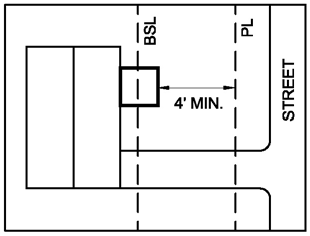
Figure 5.01.09 (A).
Location of Awnings
B.
Porches. Porches may be included in the initial construction or added to a principal building in any zoning district, subject to the following standards:
1.
An existing porch in R-1E, R-1, and R-2 zoning districts may encroach into a required front or rear yard setback up to ten (10) feet. A roof overhang of up to eighteen (18) inches is permissible. An encroachment into a required side yard setback is prohibited.
2.
An existing porch that encroaches into a required yard setback may be enclosed with transparent insect screening so long as the original design features, such as railings, columns, and other building details are maintained.
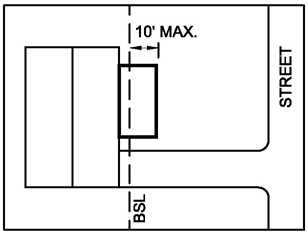
Figure 5.01.09 (B). Porch encroachment into a required setback
3.
An existing porch that does not encroach into a required yard setback may be enclosed with walls, windows, and/or doors. The building materials, roof style and materials, architectural style, and color of the porch enclosure shall be consistent with the principal building, such that the porch forms an integral part of the principal building.
4.
A porch may be added to an existing principal building, provided it complies with the following standards:
a.
A proposed porch shall be compatible with the principal building in scale and mass.
b.
The porch shall not be enclosed except with screen.
c.
The porch may encroach into a required front or rear yard setback in R-1E, R-1, and R-2 zoning districts up to ten (10) feet, provided that such encroachment is not more than ten (10) feet, measured to the outermost edge of the porch. A roof overhang of up to eighteen (18) inches or the depth of the roof overhang on the existing principal structure, whichever is less, is permissible
d.
A roof overhang of up to eighteen (18) inches or the depth of the roof overhang on the existing principal structure, whichever is less, is permissible.
e.
A porch in all remaining zoning districts shall comply with the required front and rear yard setbacks.
f.
A porch shall not encroach into any required side yard setback.
g.
The building materials, roof style and materials, architectural style, and color of the porch shall be consistent with the principal building, such that the porch forms an integral part of the principal building.
C.
Carports. Attached carports may be included in the initial construction or added to a principal building in any zoning district, subject to the following standards:
1.
A carport shall be attached to the principal building on at least one (1) side.
2.
The support columns shall be consistent with the materials, style, and color of building materials for the principal building. Notwithstanding this provision, decorative wrought iron columns may be used.
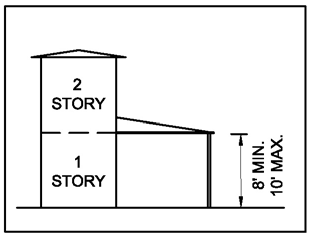
Figure 5.01.09 (C-1). Carport height requirements
3.
The lowest structural member of the carport shall be a minimum of eight (8) feet and a maximum of ten (10) above the ground.
4.
The area under the carport shall not exceed 600 s.f.
5.
The area under the carport shall be paved or a stabilized all-weather surface.
6.
A carport located in a side or rear yard shall be setback at least three (3) feet, measured to the outermost edge of the carport, including the eave.
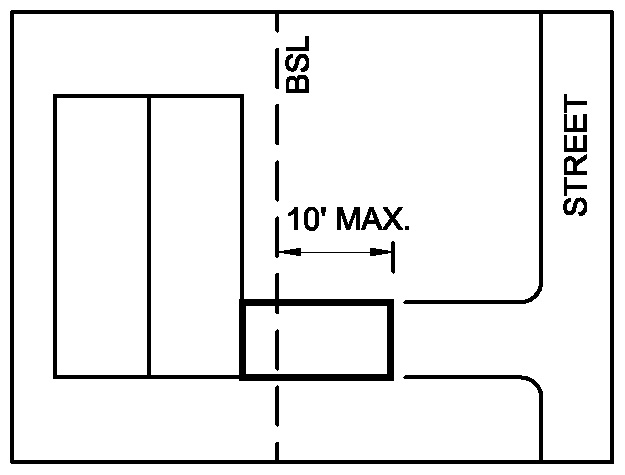
Figure 5.01.09 (C-2). Carport encroachment into a required setback
7.
A carport may be located within a required front yard setback in a R-1E, R-1, or R-2 zoning district provided that such encroachment is not more than ten (10) feet, measured to the outermost edge of the carport. A roof overhang of up to eighteen (18) inches or the depth of the roof overhang on the existing principal structure, whichever is less, is permissible.
(Ord. No. 2149, § 2, 3-11-25)
5.01.10 - Swimming Pools.
A.
Purpose. The purpose of this section is to regulate the location of swimming pools, spas, and associated decks and enclosures as accessory uses and structures to principal residential dwelling units and lodging establishments. Swimming pools that are principal, freestanding uses are permissible, subject to the site development standards of the zoning district and the Florida Building Code.
B.
Standards.
1.
A deck or patio shall be limited to a wooden deck or patio constructed of pavement or concrete pavers and without a roof or other covering.
2.
A swimming pool, with or without spa, deck, patio, or screen enclosure, is permissible as an accessory structure to a principal dwelling unit in a zoning district allowing residential uses.
3.
A swimming pool, with or without spa, deck, patio, or screen enclosure, is permissible as an accessory structure to a principal building providing transient lodging facilities, such as a hotel, motel, or bed and breakfast establishment.
4.
A swimming pool or spa shall meet setback standards set forth in Table 5.01.10. Setbacks for pools shall be measured to the edge of water.
5.
Swimming pools or spas on a lot developed according to the zero-lot line requirements shall have a minimum three (3) foot setback on the side where the residence is constructed without setback.
6.
A screened enclosure without a solid roof, pool deck, or patio is permissible as an accessory when installed in conjunction with the pool or spa. A screened enclosure, pool deck, or patio shall meet setback standards set forth in Table 5.01.10.
7.
Screened enclosures or patios in a zero-lot line development are permitted without a setback on the side where the residence is constructed without setback.
8.
A screened enclosure with a solid roof shall meet the minimum setback requirements for the zoning district in which it is located, as set forth in Chapter 4.
9.
Pool equipment shall be screened with a wall, fence, or landscaping.
Table 5.01.10. Setback Standards for Swimming Pools, Spas, Screened Enclosures, and Patios.
5.01.11 - Specific Requirements for Accessory Structures in the R-1E Zoning District.
The following accessory structures may be located within the rear yard of lots zoned R-1E, provided that such structures are located a minimum of ten (10) feet from the mean high water line or the seawall: pool and pool deck; gazebo; cabana with shower and/or rest room facilities; outdoor kitchen, which may include a grill, wet bar, and associated storage; deck; paved or wooden terrace; and a walkway connecting to a dock, provided that the walkway is limited to a maximum of four (4) feet in width.
5.01.12 - Specific Requirements for Accessory Structures in the YC Zoning District.
A.
Parking and storage for boats and boat trailers may be located within the front yard, provided that the front yard is a minimum of 150 feet.
B.
Tennis courts may be located within the front yard, provided that the front yard is a minimum of fifty (50) feet.
5.01.13 - Outdoor Storage Areas.
A.
Outdoor (or outside) storage includes the storage of equipment, machinery, or materials outside of the principal building on a site.
B.
The provisions of this section shall not be construed to prohibit the outdoor storage of non-commercial lawn equipment in residential areas.
C.
Outdoor storage shall be located within a rear yard or side yard.
D.
Except in the CTP zoning district, outdoor storage shall be fully concealed from public view and shall be enclosed with a solid fence, solid wall, or landscaping.
E.
Outdoor storage of parts, materials, equipment, machinery, or vehicles shall be maintained in a neat, orderly, dust free, and safe manner.
F.
Stored materials and parts shall not exceed eight (8) feet in height.
G.
Outdoor storage shall not be located within any required buffer or other landscaped area, stormwater management area, easement, required parking spaces, driveway or parking aisle, or loading spaces.
5.01.14 - Vending Machines and Vending Boxes.
A.
Vending machines and vending boxes include devices which dispense a product, either by coin operation or freely distributed. Examples include food and beverages, newspapers, flyers, cigarettes, media such as DVDs, and ice. Ice vending kiosks and buildings are regulated in Section 5.04.08.
B.
Vending machines and vending boxes are permissible within a principal building, within an accessory building, and under the roof of a principal or accessory building.
1.
The principal or accessory building shall be in conformance with the requirements of this LDC.
2.
The principal or accessory building shall be a commercial, office, business, industrial, civic, cultural, or multifamily building.
3.
The vending machines and vending boxes shall be licensed as required by the City.
4.
When located outside under the roof of a principal or accessory building, vending machines and vending boxes shall be flush against the facade of the building.
5.
Vending machines and vending boxes shall not be located to impede or interfere with pedestrian access, pedestrian circulation, emergency access, or otherwise present an impediment to public health and safety.
6.
There are no additional requirements regarding location, placement, or number of such machines or boxes.
C.
Vending machines and vending boxes may be located outside on private property, subject to the following standards:
1.
Outdoor vending machines and boxes shall be placed on an impervious surface.
2.
Outdoor vending machines and boxes shall be placed in groups of no more than six (6) such machines or boxes. Groups of such machines and boxes shall be separated by a minimum of fifty (50) feet.
3.
Vending machines and boxes shall not be located in such a manner as to impede pedestrian access, obstruct parking areas or driveways, obstruct emergency lanes or access, or otherwise create an unsafe situation.
4.
The property on which the vending machines or boxes are located shall remain in compliance with ADA standards.
5.
Vending machines and boxes shall be maintained in good operating condition.
D.
Vending machines and boxes may be placed on public property, subject to the following standards.
1.
The machine owner shall obtain permission from the City for the proposed location.
2.
Vending machines and boxes shall not be located on public sidewalks.
3.
Vending machines and boxes shall not obstruct pedestrian access to transit shelters, business entrances, driveways, parking areas, crosswalks, or other pedestrian facilities.
4.
Vending machines and boxes shall not be located in such a manner as to interfere with or damage landscaping and street trees.
5.
Vending machines and boxes shall not be attached to or interfere with the operation of traffic signs, traffic signals, fire hydrants, public safety call boxes, utility poles, mail boxes, or street furniture such as benches.
6.
Vending machines and boxes shall be in groups of no more than six (6) such machines or boxes in any one location. Groups of machines and boxes shall be separated by a minimum of fifty (50) feet.
7.
Vending machines and boxes shall not be placed to allow drive-up access from a vehicle.
5.01.15 - Boathouses, Docks, Piers, and Seawalls.
A.
Construction of new or repair of existing boathouses, docks, piers, or seawalls shall comply with all State of Florida Department of Environmental Protection and United States Army Corps of Engineers Regulations.
B.
Boathouses, docks, piers, and seawalls shall be designed and located to avoid channeling stormwater runoff directly into adjacent wetlands and bodies of water.
C.
For all boathouses, docks, and piers, the applicant shall provide refuse containers in a way that is secured to prevent leaking tipping, or spilling. Dumping garbage, trash, or any kind of refuse into wetlands, bodies of water, waterways, or shorelines is prohibited.
D.
Boathouses, docks, and piers on Bass Lake shall be limited to twenty (20) feet in length; piers, docks, and connected walkways shall be a minimum of seven and one-half (7 ½) feet from any side property line.
E.
Boathouses, docks, piers, and seawalls shall be maintained in a safe and clean manner.
5.01.16 - Kennels.
Kennels are permissible accessory structures in areas zoned for residential use, subject to the following standards:
A.
Kennels shall be for the private use of residents on the property on which they are located. Commercial activity, such as breeding, grooming, or training, is prohibited.
B.
Kennels shall be located within a fenced enclosure.
C.
Kennels shall be designed and constructed to provide for waste management and pest control consistent with best practices for animal husbandry.
5.01.17 - Recreation Facilities.
Recreation facilities, such as tennis courts, playing fields, ball courts, playgrounds, and other similar recreational amenities, are permissible accessory structures and uses in areas zoned for residential use, subject to the following standards:
A.
Recreation facilities shall be for the private use of residents on the property on which they are located.
B.
Recreation facilities shall provide for off-street parking in compliance with the parking standards in Section 6.04.02.
C.
Recreation facilities shall provide safety fencing to ensure that playing equipment is contained within the recreation site.
D.
Lighting for security and use of facilities after dusk shall be shielded and directed to avoid direct glare and illumination of residential structures. Lighting shall be limited to the hours from dusk to 10:00 p.m.
5.01.18 - Ground Mounted Solar Energy System.
Ground mounted solar energy systems (also known as solar photovoltaic systems) are permissible accessory structures, provided they are in compliance with the following standards:
A.
Placement.
1.
A ground-mounted solar energy system shall be located only within a rear yard.
2.
The system shall be setback seven and one-half (7½) feet from side and rear property lines. Measurements for setback compliance shall be measured from the outermost edge of the structure (including the panels and/or associated mounting equipment) to the property line.
3.
The system shall not be located within any required buffer area, required landscaped area, required parking lot landscaping, required parking spaces, stormwater management area, driveway, or easement.
4.
If located in a floodplain project must comply with LDC Section 3.05.00.
B.
Maximum area coverage. A ground-mounted solar energy system shall be limited to a maximum of twenty-five (25) percent of the of the rear yard.
C.
Height standards. The maximum height of a ground-mounted solar energy system shall not exceed eight (8) feet as measured from the natural grade at the base of the structure to the highest point of the array or solar structure.
D.
Security. A minimum of a six-foot fence must be constructed in a way to eliminate unimpeded public access to the ground-mounted solar energy system.
(Ord. No. 2112, § 3, 3-14-23)
5.02.01 - Temporary Dwellings.
One (1) on-site manufactured home may be located on a residential construction site as a temporary residence for the owner or builder, subject to the following standards:
A.
A local development permit is required for installation of the temporary residence, and shall not be issued until a valid local development permit has been issued for construction of the principal dwelling.
B.
The applicant shall connect the temporary dwelling to the City sewer system whenever possible. Where such connection is not possible, the applicant shall demonstrate adequate provisions for sewage pump-out and disposal.
C.
The dwelling shall be setback from all property lines a minimum of ten (10) feet.
D.
Two (2) parking spaces shall be provided on the site to serve the dwelling.
E.
The temporary dwelling shall be removed within thirty (30) days following issuance of a certificate of occupancy for the principal dwelling.
F.
One (1) temporary storage shed may be located on the site to support use of the temporary dwelling, subject to the following standards.
1.
The storage shed shall not be installed prior to installation of the temporary dwelling.
2.
The storage shed shall be removed not later than removal of the temporary dwelling, or not later than twenty-four (24) months, whichever is less.
3.
The storage shed may be relocated as a permissible accessory building for the principal dwelling, subject to the standards of Section 5.01.07.
5.02.02 - Construction and Job Site Buildings and Storage Yards.
Temporary buildings or uses in connection with a construction project shall be permissible during the construction period. The following standards shall be met by temporary uses established during construction:
A.
A local development permit is required.
B.
Temporary buildings and storage yards shall not be established until a valid building permit has been issued for the construction activity on the site.
C.
Temporary buildings shall comply with the accessibility requirements of the Florida Building Code.
D.
All construction buildings shall meet tie-down requirements for mobile structures.
E.
Portable sanitation facilities shall be provided for the construction site.
F.
Construction buildings, equipment, machinery, and materials shall be removed within thirty (30) days of completion of the construction site for which they are permitted.
G.
A temporary office may be located on a construction site to be used for administrative functions during construction.
H.
A temporary office may be allowed for sales functions or sales offices, allowing for the sale, resale, or marketing of dwellings, structures, or property within the development in which it is located, or adjacent developments under the same control.
I.
If restrooms are provided in the temporary office buildings, the applicant shall demonstrate adequate provisions for sewage pump-out or disposal.
J.
On-site outdoor storage of equipment and construction materials shall be allowed during the period of construction. Stored materials shall be located at least one (1) foot from all property lines. Equipment and materials shall be stored in a safe manner.
K.
Construction and demolition debris dumpsters are allowable and are not required to be screened. Dumpsters shall not be located to occupy or obstruct required parking spaces, driveways, or aisles.
L.
Adequate parking shall be provided.
M.
Additional parking areas shall be designated for construction vehicles, sufficient to accommodate all such vehicles off the public right-of-way.
N.
Location of temporary buildings, parking areas, dumpsters, and storage yards shall comply with the tree protection requirements of Section 4.08.04.
O.
Construction signs are permissible and shall comply with the requirements of Section 5.03.00.
5.02.03 - Roadside and Mobile Vendors.
A.
Applicability. Unless otherwise specified, roadside and mobile vendors conducting retail sales or displays are permissible as a temporary use in the MX-1, MX-2, MX-3, MB, and CG zoning districts in accordance with the standards of this section.
B.
Unless otherwise specified, temporary uses subject to this section shall not exceed fifteen (15) days in any one (1) month.
C.
A temporary use permit is required according to the requirements of the Florida Building Code.
D.
Standards for roadside and mobile vendors.
1.
The applicant shall possess a valid City Business Tax Receipt.
2.
The applicant shall have written permission from the property owner and the business owner of the site on which the roadside or mobile vendor is proposed.
3.
The applicant shall demonstrate that the proposed use meets all applicable City, Okaloosa County, and State requirements, including, but not limited to a Florida Department of Professional and Business Regulation Mobile Food Dispensing Vehicle License and/or Public Food Service License, if applicable. Proof of an approved Florida Plan Review for hot dog carts and other mobile vendors shall also be submitted, if applicable.
4.
The proposed use shall provide sufficient on-site parking.
5.
The proposed use shall not be located in or block a fire lane.
6.
The hours of operation shall be appropriate for the location.
7.
The proposed use shall not block or impede any roadway, driveway, accessway, or sidewalk in a way that hinders normal traffic flow or pedestrian traffic flow.
8.
The applicant shall demonstrate proper control of sanitation and litter associated with the proposed use.
9.
The applicant shall demonstrate that the proposed use includes proper restroom facilities available during all hours of operation.
E.
Stationary Food Trucks (SFT) and Stationary Food Dispensing Vehicles (SFDV):
1.
SFT and SFDV vendors conducting retail sales or displays are permissible in the MX-1, MX-2, MX-3, MB, CF, CTP and CG zoning districts.
2.
Definitions.
a.
Stationary Food Truck/Stationary Food Dispensing Vehicle: Refers to Itinerant Vendors that operate in either a self-propelled vehicle or other trailer/vehicle moved by a self-propelled vehicle.
b.
Mobile service base: A place for food storage, the cleaning of the equipment, the filling of water tanks and proper disposal of waste water and grease and does not include the use of a private home as a mobile service base.
c.
Vend: To sell or offer to sell products from a mobile food truck dispensing vehicle.
3.
In addition to the standards for roadside and mobile vendors in Section 5.02.03 D, stationary food trucks and stationary food dispensing vehicles shall be subject to the following standards.
a.
Transferability: Ownership of a SFT and/or SFDV permit shall not be transferred.
b.
SFT and/or SFDV permits shall be valid for a period of time not to exceed one (1) year (three hundred sixty-five (365) days) from the date of issuance.
c.
The applicant shall obtain all applicable City building permits for the installation of the SFT and/or SFDV for improvements including but not limited to temporary/accessory structures, site improvements, lighting, signage, and utilities prior to issuance of SFT and/or SFDV permit.
d.
The applicant shall demonstrate that all applicable City fees including, but not limited to, permitting, business tax receipt and impact fees have been paid prior to issuance of SFT and/or SFDV permit.
e.
All equipment and/or utilities associated with the SFT and/or SFDV shall be screened from public view. The SFT and/or SFDV shall not contain any structural defects (i.e. rust, broken parts, holes) and shall contain surfaces that are readily cleanable.
f.
The applicant shall demonstrate that the SFT and/or SFDV meets all setback requirements in the applicable zoning district.
F.
Temporary Auto Sales: Temporary auto sales are permissible if conducted by a dealership licensed by the Florida Department of Motor Vehicles with a permanent sales location within Okaloosa County, Florida.
1.
Temporary auto sales shall be allowed for a maximum of fifteen (15) consecutive days, two (2) times per calendar year per dealership. Dates of operation will include dates to assemble and dismantle equipment and/or structures.
2.
No more than one (1) temporary auto sales event shall be allowed on any parcel of land and/or lot at any given time.
(Ord. No. 2010, § 2, 5-21-19; Ord. No. 2149, § 2, 3-11-25)
5.02.04 - Modular Storage Containers.
Modular storage containers (sometimes called storage pods) are permissible temporary structures, provided they are located in compliance with the following standards:
A.
A temporary structure permit is required.
B.
Location of the storage pod is limited to a maximum of thirty (30) days per installation, renewable one (1) time, not to exceed sixty (60) days per year.
C.
The storage pod may be placed on a paved or unpaved surface. When the authorized location is unpaved, the temporary use permit shall include a condition that grass or landscaping shall be restored upon removal of the unit.
D.
The storage pod may be placed in a required front or rear yard setback, provided that it is setback a minimum of five (5) feet. Placement in a side yard shall comply with the required side yard setback.
E.
The storage pod shall not be placed within a required easement, required parking space, stormwater management area, or required buffer.
F.
Placement of the storage pod shall not interfere with or obstruct pedestrian access.
G.
Placement of the storage pod shall not interfere with the required visibility triangle standards set forth in Section 6.03.00.
5.03.01 - Generally.
A.
Purpose. It is the purpose of this section to provide comprehensive and balanced sign regulations that are consistent with constitutional guarantees, promote business growth and retention, achieve clear and effective communication in the City's environment, and to authorize signs which are:
1.
Consistent with the objectives of the comprehensive plan;
2.
Compatible with their surroundings;
3.
Integrated and harmonious with the appearance of the community;
4.
Legible under the circumstances in which they are seen; and
5.
Safe for motorists, by preventing visual distraction and visual clutter.
B.
In interpreting and applying the provisions of Section 5.03.00, the sign regulations are declared to authorize the maximum allowable signage for the purposes set forth. Any sign authorized by Section 5.03.00 may display noncommercial messages. Nothing in Section 5.03.00 shall be construed to regulate the content of the message displayed on any sign.
C.
No person shall move, erect, post, construct, paint, alter, or maintain a sign except in compliance with the standards and requirements set forth in Section 5.03.00.
1.
A local development permit is required for any sign that is not exempt from the standards and provisions of Section 5.03.00. Application and review procedures for obtaining sign permits are set forth in Chapter 9.
2.
The installation and maintenance of signs and sign structures shall comply with all applicable building, electrical, and other codes of the City.
3.
All signs shall be located to comply with the clear visibility requirements set forth in Section 6.03.00.
D.
All signs shall be adequately maintained in a structurally sound and safe condition. At a minimum, the following standards shall be met:
1.
The area around the sign shall be clear of overgrown vegetation or other obstacles so as to make the sign readily visible.
2.
All damaged or deteriorated panels or structural components shall be replaced.
3.
Any sign copy shall be maintained securely to the face, and all missing copy shall be replaced.
4.
All defective, discolored, faded, broken, or torn parts shall be replaced or repaired.
5.
A sign that becomes unsafe, dangerous, or a threat to public safety shall be replaced, repaired, or otherwise made safe within the time limit set by the City.
E.
Campaign signs shall be removed within forty-eight (48) hours after the campaign issue has been decided.
(Ord. No. 1970, § 2, 2-14-17)
5.03.02 - Exempt Signs.
The following signs are exempt from the requirement to obtain a local development permit.
A.
Regulatory, statutory, traffic control, or directional signs erected on public property by or with permission of the State of Florida, the United States, or the City.
B.
Legal notices and official instruments.
C.
Signs incorporated into machinery or equipment by a manufacturer or distributor, which identify or advertise only the product or service dispensed by the machine or equipment, such as signs customarily affixed to vending machines, newspaper boxes, and gasoline pumps.
D.
Advertising and identifying signs located on taxicabs, buses, trailers, trucks, or vehicle bumpers.
E.
Public warning signs to indicate the dangers of swimming, animals, or similar hazards.
F.
Memorial signs or tablets, names of buildings, and dates of erection when cut into any masonry surface or when constructed of bronze or other incombustible materials.
G.
Signs carried by a person.
5.03.03 - Provisionally Exempt Signs.
Signs identified in this section may be placed without a local development permit, provided that such signs comply with the standards set forth in Table 5.03.03.
Table 5.03.03. Standards for Provisionally Exempt Signs.
(Ord. No. 1970, § 3, 2-14-17; Ord. No. 2149, § 2, 3-11-25)
5.03.04 - Prohibited Signs.
The following signs are prohibited.
A.
Off-premises signs, except in the CTP district (see Table 5.03.06 for standards applicable to off-premises signs in the CTP district).
B.
Portable signs.
C.
Snipe signs, including temporary signs stuck in the ground (sometimes also called bandit signs), and signs attached to utility poles, trees, rocks, or other natural object.
D.
Signs with visible moving, revolving, or rotating parts, flashing or oscillating lights, or visible mechanical movement of any description or other apparent visible movement achieved by electrical, electronic, or mechanical means.
E.
Any sign which constitutes a traffic hazard or a detriment to traffic safety by reason of its size, location, movement, content, coloring, or method of illumination.
F.
Signs or sign structures that interfere in any way with free use of any fire escape, emergency exit, or standpipe.
G.
Signs that are of such intensity or brilliance as to cause glare or impair the vision of any motorist, cyclist, or pedestrian using or entering a public way, or that are a hazard or a nuisance to occupants of any property because of glare or other characteristics.
H.
Abandoned signs.
I.
Signs erected on public property, with the exception of signs erected by public authority for public purposes.
J.
Any other signs that are not specifically permitted or exempted as set forth in Section 5.03.00.
5.03.05 - Temporary Signs.
Temporary signs shall comply with the following standards.
A.
Temporary signs are permissible subject to receipt of a temporary sign permit specifying type, size, location, and duration of placement. Temporary sign permits are limited to three (3) per business in any one (1) calendar year. Temporary signs may be displayed for a period not exceeding fifteen (15) days.
B.
Temporary signs shall not be placed in the public right-of-way.
C.
Temporary signs shall not flash, blink, spin, or rotate.
D.
Temporary signs include banners, flags, and pennants. The placement of temporary signs shall comply with the clear visibility requirements set forth in Section 6.03.00, and such signs shall not block traffic or pedestrian visibility, or constitute a vehicular or pedestrian traffic hazard.
E.
The placement of temporary signs shall not cause a public nuisance.
F.
Permissible temporary signs shall be firmly secured to the ground or to a building according to the requirements of the temporary permit. Temporary signs may be attached to or cover an existing permitted sign only for the period during which the temporary sign is permitted.
5.03.06 - Permissible Permanent On-Site Signs.
Permanent on-site signs shall be erected, placed, constructed, located, or installed only in compliance with the standards set forth in this section.
A.
Standards for number, type, and size of signs are set forth in Table 5.03.06.
B.
Signs located on property in the R-1 and R-1E districts shall not exceed a total of four (4) square feet in area.
Table 5.03.06. Sign Standards.
1 V-shaped monument signs shall be limited to an interior angle no greater than thirty (30) degrees.
C.
Lighting. External lighting of signs is allowed, subject to the following standards:
1.
The light source is directed onto the sign face.
2.
The light source is shielded to prevent spill-over or glare onto adjacent properties.
3.
Within the DDOD, neon signs are permissible as interior window signs. The maximum sign area devoted to a neon sign shall not exceed four (4) s.f. and shall be included in the calculation of maximum sign area for a permissible window sign. Sandwich signs are also permissible in the DDOD.
E.
Signs that electronically produce changeable copy are permitted provided they flash or move or otherwise change at intervals consistent with the Florida Department of Transportation standards.
F.
Measurement.
1.
Where a sign is composed of letters or pictures attached directly to a facade, wall, window, door, awning, monument sign, or freestanding sign, and the letters or pictures are not enclosed by a border or trimming, the sign area shall be the area within the smallest rectangle, parallelogram, triangle, circle, semicircle, or a combination of any of these geometric shapes, the sides of which touch the extreme points of the letters or pictures as a whole.
2.
Where a sign is composed of letters or pictures enclosed by a border or trimming, the sign area shall be the area within the border or trim.
3.
In cases where material is displayed in a random or unconnected manner without organized relationship of the components, each such component shall be considered a single sign.
4.
The area of a freestanding sign shall include the area of the outside frame, but not of the supporting structure.
G.
Determining the number of signs.
1.
The number of signs shall be the number of structures with a sign face.
2.
A double-faced projecting or freestanding sign shall be construed as having the area of a single face, provided that the sign faces are placed back to back and are at no point more than four (4) feet apart.
H.
Specific requirements for commercial establishments with street frontage at the intersection of two (2) streets.
1.
The owner of the establishment may elect in writing to display only one (1) freestanding sign equal to seventy-five (75) percent of the total maximum aggregate sign area for the two (2) street frontages, instead of displaying one (2) freestanding sign per street frontage.
2.
Large scale commercial centers shall be exempt from this requirement.
I.
Specific standards for pennants.
1.
Pennants are permissible for multi-tenant centers and car dealerships.
2.
Pennants shall be identified in a sign plan.
3.
Pennants shall be part of a coordinated decorative scheme and shall not exceed six (6) square feet in area.
4.
Pennants shall be attached to freestanding poles or freestanding light fixtures.
(Ord. No. 2149, § 2, 3-11-25)
5.03.07 - Flagpoles.
Flagpoles are permissible as an accessory structure provided the following standards are met:
A.
Flagpoles shall be located a minimum of three (3) feet from a side or rear property line.
B.
Flagpoles shall be located a minimum of five (5) feet from a front property line.
C.
Flagpoles shall not exceed 200 feet in height.
5.04.01 - Generally.
A.
This section sets forth standards for specific uses that are permissible subject to supplemental standards. Uses that are permissible subject to these supplemental standards are identified by the letter "S" in Table 2.03.02.
B.
Where there is a conflict between a standard applicable to the zoning district in which the use is located and the supplemental standards set forth below, the more restrictive standard shall apply.
5.04.02 - Townhouses.
A.
A townhouse is a single-family dwelling unit attached horizontally by a common or party wall to one (1) or more dwelling units.
B.
A townhouse development shall be designed and developed as a single, integrated development project. The development and the individual townhouse units shall comply with the following standards.
1.
A townhouse shall be not less than two (2) stories.
2.
An individual townhouse unit shall be located on a platted lot, established in compliance with the standards for subdivisions set forth in Section 4.07.00.
a.
The minimum lot area for an individual townhouse unit is 1,400 s.f.
b.
The minimum lot width for an individual townhouse unit at the end of a group of units and adjacent to a street on the side property line shall be twenty-five and one-half (25½) feet.
c.
The minimum lot width for all individual townhouse units, other than the end unit, is eighteen (18) feet.
3.
The structures containing townhouse units shall comply with the zoning standards setting forth maximum impervious surface, maximum height, and maximum density on a development site.
a.
The minimum setback from a side property line shall be seven and one-half (7½) feet.
b.
The minimum front yard setback from the property line shall be twenty (20) feet.
c.
The minimum rear yard setback from the property line shall be ten (10) feet.
d.
There shall be a maximum of six (6) individual townhouse units within one structure.
e.
Each individual townhouse unit shall have a private entrance.
f.
The front façade of each structure shall include projections.
g.
Driveways for lots with a side yard adjacent to a right-of-way shall be located not less than fifty (50) percent of the lot width away from the side property line adjacent to the right-of-way and, regardless of lot width, shall not be less than fifteen (15) feet from the side property line adjacent to the right-of-way.
4.
Where a townhouse development abuts property zoned or used for single-family or duplex development, a fence, six (6) feet high, shall be provided. The finished side of the fence shall face outward. No fence is required where an alley separates the townhouse development from the single-family or duplex development. Each portion of the fence shall be the property of the owner of the townhouse lot on which it is located; such owner is responsible for maintenance of that portion of the fence.
5.
Standards for refuse containers.
a.
Individual refuse containers shall be provided for each townhouse and all such containers shall be located together on a paved area not larger than five (5) feet by five (5) feet.
b.
The refuse area shall be setback a minimum of twenty (20) feet from any property line. Where an alley is provided, the dumpster or refuse area may be located adjacent to the alley.
c.
The dumpster or refuse area shall be screened in compliance with the standards set forth in Section 5.01.06.D.
(Ord. No. 2139, § 2, 3-26-24)
5.04.03 - Junkyards, Scrap Metal Yards, and Recycling Facilities.
A.
This section is intended to address facilities where worn out and discarded materials are collected, accumulated, stored, disassembled, processed, or handled.
B.
Materials may include:
1.
Scrap metals such as iron, steel, brass, copper, aluminum, tin, lead, or other base metals;
2.
Plastics;
3.
Rubber;
4.
Glass;
5.
Paper or cardboard;
6.
Inoperable machinery, equipment and parts;
7.
Inoperable vehicles or parts; and
8.
Other similar waste or scrap materials.
C.
Collection, storage, or handling of hazardous materials shall comply with State and Federal standards.
D.
The outdoor portion of the facility shall be screened with a fence, wall, or landscaped buffer.
1.
The facility shall not be visible from a public right-of-way or from land zoned to allow residential use.
2.
The facility shall be enclosed with a fence or wall not less than eight (8) feet and not more than ten (10) feet high. The fence or wall shall be solid. The finished side shall face outward.
3.
Where a landscaped buffer is provided, the plants shall include evergreen trees and shrubs.
a.
The planting strip shall be a minimum of fifteen (15) feet wide and located on the perimeter of the site.
b.
Plant materials shall comply with the specifications set forth in Section 4.08.03.
c.
Trees and shrubs shall be planted in double-staggered rows and shall be of sufficient size to form an opaque screen at least eight (8) feet in height.
d.
The landscaping shall be maintained to ensure continuation of the vegetative screen. Dead or damaged plant materials shall be replaced as soon as possible based on the growing season.
e.
Where the landscaped buffer is not adequately maintained, the City may require replacement of the landscaped buffer with a solid wall or fence.
E.
Storage of materials.
1.
Inoperable machinery, equipment, and vehicles may be stored on the ground.
2.
Parts, scrap materials, and materials for recycling shall be stored within leak proof bins or trailers.
3.
Stored machinery, equipment, vehicles, parts, scraps, and materials shall not exceed ten (10) feet in height.
4.
The limitation on the height of stored materials shall not be construed to prohibit equipment and vehicles used in the operation of the facility.
F.
Operation of the facility.
1.
Materials may be collected, sorted, separated, disassembled, bagged, baled, or packaged for shipping.
2.
Operations shall comply with the standards for industrial activities set forth in Section 4.03.02.
G.
Exterior lighting shall be directed and shielded to avoid illumination of adjacent properties.
5.04.04 - Vehicle Repair and Body Shops, Including Small Equipment and Small Appliances.
A.
Vehicle repair and body shops are establishments for the mechanical repair, maintenance, painting, and body repair of passenger vehicles; standards also apply to small equipment and small appliance facilities.
B.
Any outside storage of vehicles awaiting repair and maintenance shall be enclosed with a fence, wall, or landscaped screen.
1.
A fence or wall shall be a minimum of six (6) feet and a maximum of eight (8) feet in height.
2.
A fence or wall shall be solid. The finished side shall face outward.
3.
Where a landscaped buffer is provided, the plants shall include evergreen trees and shrubs. The trees and shrubs shall be planted in double staggered rows to form a continuous screen at least six (6) feet in height.
4.
The landscaping shall be maintained to ensure continuation of the vegetative screen. Dead or damaged plant materials shall be replaced as soon as possible based on the growing season.
5.
Where the landscaped buffer is not adequately maintained, the City may require replacement of the landscaped buffer with a solid wall or fence.
C.
Parts and materials shall be stored within the principal building or a permissible accessory storage building. Outside storage of parts and materials is prohibited.
D.
The sale of vehicles is prohibited on the vehicle repair facility site and any adjacent right-of-way.
E.
Drainage pits for oil and fluid change shall be located within an enclosed structure.
F.
Doors or openings to service bays shall not open toward adjacent properties with a residential use.
G.
Perimeter landscaping required by Section 4.08.05 shall be doubled.
H.
Loading docks shall be screened from view from public rights-of-way and properties with a residential use.
I.
Dumpsters shall be located a minimum of fifty (50) feet from a property line adjacent to a residential use.
J.
All exterior lighting shall be directed and shielded to avoid direct illumination of adjacent properties.
K.
Audio amplification systems, including, but not limited to, telephone loudspeakers or paging systems, shall be located to ensure that the sound cannot be heard on adjacent properties.
L.
The owner of the vehicle repair establishment shall prepare and provide to the City a plan for the safe storage of flammable or hazardous materials to be stored or used on the property and an inventory of such materials. The plan shall provide for the prevention, containment, recovery, and mitigation of spilled fuel or other hazardous material. The inventory shall be submitted to the City prior to the building permit approval, listing the type, quantity, and location of these materials. The inventory shall be kept current pursuant to direction provided by the City.
5.04.05 - Fuel/Gasoline Stations.
A.
The term gas station includes convenience stores with gas pumps, and establishments that provide the following accessory uses in addition to gas or other fuel pumps: oil change and light repair (but not including body work) for automobiles; car wash facility; fast food restaurants; drive-through restaurants; groceries; sundries; supplies for the traveling public; food; and beverages.
B.
Access shall be from a collector or arterial street.
C.
Fuel pump islands shall be set back a minimum of thirty (30) feet from any property line.
D.
Underground storage tanks shall be designed, located, and monitored in full compliance with State requirements. Evidence of such compliance shall be provided to the City.
E.
Oil drainage pits and hydraulic lifts shall be located within an enclosed structure.
F.
Gasoline service stations located within 100 feet of any property zoned to allow residential uses shall be buffered in compliance with the following standards:
1.
A masonry, wooden, or solid fence shall be required on any side or rear property line that is within 100 feet of any property in a district zoned to allow residential uses;
2.
The decorative or finished side of the fence shall face outward;
3.
Perimeter landscaping shall include evergreen shrubs or understory trees planted in a double staggered row to form a continuous hedge. The landscaping shall comply with the specifications set forth in Section 4.08.03 and the number of plants shall be doubled.
G.
Drive-through lanes for restaurants or car wash facilities associated with the gasoline service station shall be located a minimum of twenty-five (25) feet from any property zoned to allow residential uses. Distance shall be measured from the outermost edge of the drive-through lane to the property line of property zoned to allow residential use.
H.
Dumpsters shall be located a minimum of twenty-five (25) feet from the property line of property zoned to allow residential use.
I.
All exterior lighting shall be directed and shielded to avoid direct illumination of adjacent properties.
J.
Audio amplification systems, including, but not limited to, telephone loudspeakers or paging systems, shall be located to ensure that the sound cannot be heard on adjacent properties.
K.
Repair services shall be limited to minor repairs to passenger vehicles, such as tires repair or replacement; oil and other fluid changing; replacement of belts, hoses, filters, and windshield wipers; and similar minor repairs. No body work, painting, engine tune-up or overhaul, or repair of trucks, RVs, or commercial vehicles shall be provided. All permissible repair services shall be carried out only within an enclosed building.
L.
Vehicle parts, supplies, damaged parts, or other materials and supplies shall be stored within an enclosed building.
M.
Canopies over gas pumps or pump islands shall meet the setback requirements for the zoning district in which they are located.
N.
The sale of vehicles is prohibited on the gas station site and any adjacent right-of-way.
5.04.06 - Religious Facilities.
A.
The principal use for a site developed for religious uses is worship. Worship is a form of religious practice with its creed and ritual.
B.
Uses and activities other than worship shall be considered accessory uses and shall be clearly ancillary to the principal use. Such uses and activities shall be limited to:
1.
Religious instruction (such as "Sunday School," Bible school, or similar instruction or study typically associated with the religion); offices to support the religious facility.
2.
Child day care, adult day care, preschool, or child nursery school subject to the standards of Section 5.04.06.E.
3.
Private academic school, subject to the standards of Section 5.04.06.H.
4.
Fellowship hall or social hall, which may be known as a community center, activity hall, or life center, with or without a kitchen, subject to the standards of Section 5.04.06.I.
5.
Individual meeting spaces.
C.
All accessory uses are subject to the following requirements:
1.
The accessory use shall be owned and operated only by the owner of the principal use.
2.
The facility housing the accessory use shall meet all local, State, or Federal standards.
3.
The owner of the principal use shall obtain any licenses required to conduct the accessory use. Any approval of the accessory use shall be contingent upon demonstrating that all licenses have been obtained.
4.
Audio amplification systems, including, but not limited to, telephone loudspeakers or paging systems, shall be located to ensure that the sound cannot be heard on adjacent properties.
5.
All outdoor activities shall occur no earlier than 8:00 a.m. and no later than 10:00 p.m.
6.
All exterior lighting shall be directed or shielded to avoid illumination of adjacent properties.
7.
Outdoor play or activity areas shall be no closer than thirty (30) feet from property designated for residential use, as measured to the nearest residential property line.
D.
The following activities shall be prohibited in association with religious uses: overnight lodging facilities or other temporary sleeping quarters; and any use not specifically identified as an allowable accessory use. Notwithstanding the prohibition of overnight lodging, one (1) residential dwelling unit may be provided as a parsonage, subject to the standards of Section 5.04.06.H.
E.
Child day care, adult day care, preschool, or child nursery school uses are allowable accessory uses subject to the following standards:
1.
The total floor area allocated to the child day care, adult day care, preschool, or child nursery school uses shall not exceed ten (10) percent of the total gross floor area on the site. The calculation of total floor area allocated to the uses shall be cumulative and shall include all child day care, adult day care, preschool, and child nursery school facilities, and mechanical and support facilities required for operation of the child day care, adult day care, preschool, or child nursery.
2.
An off-street drop-off area for persons served by the facility shall be provided.
F.
Private academic schools are allowable accessory uses subject to the following standards:
1.
The total floor area allocated to the school shall not exceed twenty (20) percent of the total gross floor area on the site. The calculation of total floor area allocated to the school shall include all components of the school: classrooms, school library, school offices, teacher work areas, and the like, including related mechanical and support facilities.
2.
An off-street drop-off area for persons served by the facility shall be provided.
G.
A fellowship hall is an allowable accessory use subject to the following standards:
1.
Dining, including dining open to the public as a "soup kitchen," is permitted between the hours of 8:00 a.m. and 10:00 p.m., provided:
a.
The owner of the religious use ensures that meal recipients remain on the site except during travel to and from the fellowship hall; and
b.
No consideration or value of any kind is given, directly or indirectly, in exchange for the meal.
2.
The total floor area allocated to the fellowship hall, including related mechanical and support facilities, shall not exceed twenty (20) percent of the total floor area on the site.
H.
One (1) residential dwelling unit is allowable to serve as a parsonage, subject to the following standards:
1.
The minimum lot area devoted to the dwelling unit ("parsonage lot") shall comply with the standards set forth for dwelling units in R-2 in Table 4.01.01. The parsonage lot shall be used exclusively for the dwelling unit, and shall not include any primary or other accessory use allowable on the site.
2.
Two (2) parking spaces shall be provided within the parsonage lot.
3.
The parsonage lot may contain children's outdoor play equipment, in a size and quantity typical of a single-family residential use, but shall not contain an accessory recreation facility for the principal religious facility.
I.
The parsonage lot may contain a residential swimming pool, fully enclosed, and attached to the dwelling.
J.
A specific parking plan shall be provided. This plan shall identify the principal use and each accessory use proposed on the site. The parking plan shall indicate the hours of operation and peak times of use (parking demand) for the principal use and each accessory use on the site. The parking standards for the primary use and each accessory use shall be identified based upon Section 6.04.02. The parking plan may include reduced or shared parking. If reduced or shared parking is proposed, the parking plan and supporting data shall clearly indicate that differing peak use and associated parking requirements shall not result in a parking deficiency on the site. The parking plan shall indicate areas designated for overflow parking during times of extraordinary use (such as festival or holiday periods).
K.
The proposal for the religious facility shall demonstrate compliance with street, driveway, and sidewalk standards set forth in Chapter 6.
5.04.07 - Dry Storage Facilities for Watercraft.
A.
Dry storage facilities for watercraft may be freestanding or co-located with a permitted marina.
1.
All exterior lighting shall be directed and shielded to avoid direct illumination of adjacent properties.
2.
Audio amplification systems, including, but not limited to, telephone loudspeakers or paging systems, shall be located to ensure that the sound cannot be heard on adjacent properties.
B.
Dry storage facilities for watercraft may include minor repair facilities.
1.
Such minor repair facilities may include an open boat yard for watercraft awaiting repair or engaged in repair. The open boat yard shall not exceed fifteen (15) percent of the site area for the dry storage facility.
2.
Open boat yards shall be screened from view from a public right-of-way by means of fencing, a wall, or a landscaped buffer, in compliance with Section 5.04.07.G.
3.
Minor repair facilities shall be fully enclosed and setback twenty-five feet (25) from the property line. A fully enclosed minor repair facility shall not exceed ten (10) percent of the site area for the dry storage facility. Doors or openings to service bays shall not open toward adjacent properties with a residential use.
4.
The owner of the vehicle repair establishment shall prepare and provide to the City a plan for the safe storage of flammable or hazardous materials to be stored or used on the property and an inventory of such materials. The plan shall provide for the prevention, containment, recovery, and mitigation of spilled fuel or other hazardous material. The inventory shall be submitted to the City prior to the building permit approval, listing the type, quantity, and location of these materials. The inventory shall be kept current pursuant to direction provided by the City.
C.
Open lot storage.
1.
Open lot storage shall not exceed twenty-five (25) percent of the site area for the dry storage facility. Open lot storage excludes any stacking or racks for watercraft.
2.
Open lot storage shall be screened from view from any public right-of-way by means of fencing, a wall, or a landscaped buffer, in compliance with Section 5.04.07.G.
D.
Open storage racks.
1.
Open storage racks are permissible only in conjunction with other onsite enclosed or partially enclosed storage facilities or enclosed buildings.
2.
Open storage racks shall be screened from view from any public right-of-way by means of fencing, or a wall, or by locating behind onsite buildings.
3.
Open storage racks shall not exceed three (3) tiers of storage.
E.
Partially enclosed storage racks.
1.
Partially enclosed storage racks shall not exceed four (4) tiers of storage.
2.
Partially enclosed storage racks shall include one (1) or more walls, designed and constructed to ensure that the storage racks are not visible from a public-right-of-way.
F.
Fully enclosed storage racks shall not exceed four (4) tiers of storage.
G.
Standards for screening. Where screening of facilities is required in this section, the following standards shall be met:
1.
A fence or wall used for screening shall be not more than fifty (50) percent open. The finished side shall face outward.
2.
Where a landscaped buffer is provided, the plants shall include evergreen trees and shrubs. The trees and shrubs shall be planted in double staggered rows to form a continuous screen at least six (6) feet in height.
3.
The landscaping shall be maintained to ensure continuation of the vegetative screen. Dead or damaged plant materials shall be replaced as soon as possible based on the growing season.
4.
Where the landscaped buffer is not adequately maintained, the City may require replacement of the landscaped buffer with a solid wall or fence.
5.04.08 - Vehicle Sales and Rentals—New or Used Vehicles.
A.
Vehicle sales or rental establishments may sell, rent, or lease vehicles.
B.
Vehicles offered for sale, rent, or lease shall be operable. In addition, the owner shall have a valid dealer's license.
C.
All areas established for display or sale shall be provided with a paved, or stabilized, dust free surface. The driveway aisle providing access to the display area shall comply with driveway standards set forth in the Engineering Standards Manual of Fort Walton Beach.
D.
Areas established for display or sale of vehicles shall not include any parking spaces required to meet the standards of Section 6.04.02.
E.
Mechanical services, including repairs, body work, and painting are permitted as an accessory use to vehicles sales or rental establishments.
1.
Such repairs shall be conducted only within an enclosed building which meets all applicable Federal and State requirements, including health, safety, and fire prevention regulations.
2.
Doors or openings to service bays shall be located a minimum of seventy-five (75) feet from property zoned to allow residential use. As an alternative to the minimum setback, the doors or openings to service bays shall not open towards property zoned to allow residential use and shall be screened from view.
F.
All property lines adjacent to vehicle displays shall have installed a permanent guardrail, fence, or parking block to prevent vehicles from accidentally rolling from the display area.
G.
The owner of the vehicle sales establishment shall prepare and provide to the City a plan for the safe storage of flammable or hazardous materials to be stored or used on the property and an inventory of such materials. The plan shall provide for the prevention, containment, recovery, and mitigation of spilled fuel or other hazardous material. The inventory shall be submitted to the City prior to the building permit approval, listing the type, quantity, and location of these materials. The inventory shall be kept current pursuant to direction provided by the City.
H.
Vehicles, signs, banners, tents, or other items used in connection with the operation of the vehicle sales and rental establishment shall not be stored, parked, displayed, or otherwise placed on public rights-of-way at any time.
I.
All exterior lighting shall be directed or shielded to prevent illumination of adjacent properties.
J.
Audio amplification systems, including, but not limited to, telephone loudspeakers or paging systems, shall be located to ensure that they cannot be heard on adjacent properties.
K.
All outside storage and loading areas shall be fully screened from view from adjacent properties zoned for residential use, and from the public right-of-way.
1.
Screening may be landscaping or enclosure by a wooden, masonry, or solid fence.
2.
Where landscaping is provided, the plant materials shall include understory trees and shrubs. Plan materials shall meet the specifications set forth in Section 4.08.00. The trees and shrubs shall be planted in double staggered rows.
3.
Where a fence is provided, the fence shall be a minimum of six (6) feet and a maximum of eight (8) feet in height. The finished side shall face outward.
5.04.09 - Communication Towers and Antennas.
Each applicant requesting a building permit for the location of communication towers and antennas shall meet the following at the time of application:
A.
Federal approvals. All communication towers must meet or exceed current standards and regulations of the Federal Aviation Administration (FAA), Federal Communication Commission (FCC), and any other agency of the Federal government with the authority to regulate communication towers and antennas. The applicant shall submit copies of all FAA, FCC, Eglin Air Force Base, Hurlburt Field, Okaloosa Regional Airport and FDOT approvals, whichever is/are applicable.
B.
Design. The applicant shall submit the communication tower design plans which shall be designed by an engineer licensed in the State of Florida in accordance with the building code requirements of the City. The design shall show the access that is provided for inspections. Communication towers shall either maintain a galvanized steel finish or, subject to any applicable standards of the FAA, be painted a neutral color, so as to reduce visual obtrusiveness. Dish antennas will be of a neutral, non-reflective color with no logos.
C.
Safety fall zone. Applicants shall submit a report by an engineer licensed in the State of Florida of the safety fall zone of the specified communication tower. The safety fall zone shall be measured from the base of the communication tower to any property line. Communication towers shall be designed to collapse within the lot lines in case of structural failure.
D.
Co-location.
1.
The applicant shall submit a certification from an engineer licensed in the State of Florida that the communications tower has been designed to accommodate co-location. If the communication tower cannot accommodate co-location, then the engineer should certify the reason(s) it cannot accommodate additional antennas.
2.
The applicant shall submit a plan for co-location, providing for at least three (3) other providers, with local government needs considered. If co-location is not possible, the applicant shall provide evidence as to the reason(s) it is not possible to meet this requirement.
3.
The applicant shall commit to ensuring that each antenna owner will comply with Federal, State, and local regulations.
4.
Each antenna owner shall have an approved building permit prior to erecting the antenna on the communication tower. The applicant shall show that the antenna will not extend more than ten (10) feet horizontally beyond the vertical plane of the edge of the communications tower and will not project above the existing communication tower structure's approved height.
E.
Setback. The applicant shall submit a site plan showing a minimum of one-half (½) the tower height plus fifty (50) feet between the base of the communication tower and any residential property line, otherwise a distance equal to the safety fall zone between the base of the communication tower and any nonresidential property.
F.
Buffer. The applicant shall submit a plan showing:
1.
An eight (8)-foot high fence or wall, with access by a locked gate only, around the base of the communication tower or the property as required by the FCC. The fence or wall shall be equipped with an appropriate anti-climbing device.
2.
A minimum of a five (5)-foot landscaping buffer, consistent with the requirements of Section 4.08.05 installed around the entire perimeter of the fence or wall. Additional landscaping may be required if deemed necessary to provide a buffer between the communication tower and adjacent residentially zoned properties. This requirement may be waived by the Development Administrator if the base of the communication tower is a minimum of 500 feet from all property lines.
G.
Signage. The applicant shall submit a sign plan showing:
1.
That no portion of the communication tower will be used for advertising purposes, including a company's name;
2.
That the party responsible for the operation and maintenance of the facility, its address, and telephone number is provided; and
3.
That all security or safety signs required by Federal, State, or local regulations are provided.
H.
Lighting. The applicant shall submit a plan that shows the signals, lights, or illumination provided and the Federal, State, or local rule, regulation, or requirement.
I.
Maintenance and inspections. The applicant shall submit a plan for inspections and maintenance of the communication tower so that it remains in good condition, order, and repair and that the same shall not menace or endanger the life or property of any person.
1.
The City may require FCC inspection reports and/or that the communication tower be inspected if there is reason to believe that the structural or electrical integrity of the communication tower is jeopardized. All certifications and inspections required herein shall be made by and at the sole cost of the provider, and certified and submitted to the City.
2.
The City and its agents shall have the authority to enter onto the property upon which a communications tower is located, upon reasonable notice to the owner, to inspect the communications tower for purposes of determining whether it complies with all applicable laws and regulations. All expenses relating to such inspections by the City shall be borne by the owner.
J.
Abandonment. The owner shall submit a plan for abandonment of the communication tower which shall include a copy of the notice to the FCC of intent to cease operations for each user of the communication tower and a plan to remove the communication tower within a minimum of 180 days after abandonment. Any communication tower or antenna that is not operated for a continuous period of twenty-four (24) months shall be considered abandoned, and the owner of each such communication tower or antenna shall remove same within 180 days of receipt of notice from the City notifying the owner of such removal requirement. Removal includes the removal of the tower, all tower and fence footers, underground cables, and support buildings. If there are two (2) or more users of a single communication tower, then this provision shall not become effective until all users cease using the communication tower.
5.04.10 - Arenas, Auditoriums, and Stadiums.
A.
Arenas, auditoriums, and stadiums include open, partially enclosed, or fully enclosed facilities intended to be used for such activities as spectator sports, entertainment events, expositions, or other public gatherings.
B.
Arenas, auditoriums, and stadiums may include accessory uses, such as snack shops or food stands, ice cream stands, gift shops, or similar uses, provided that such uses are not open to the general public without entrance to the arena, auditorium, or stadium.
C.
An arena, auditorium, or stadium shall be located a minimum of 500 feet from property zoned to allow residential uses. The distance shall be measured from the outermost structural component of the arena, auditorium, or stadium to the property line.
D.
The parking lot or structure serving the arena, auditorium, or stadium shall be located a minimum of 200 feet from property zoned to allow residential uses.
E.
All access to an arena, auditorium, or stadium shall be directly from an arterial road. The location and design of the primary and secondary access points to the arena, auditorium, or stadium shall minimize traffic impacts on local streets and residential neighborhoods.
F.
A perimeter landscaped buffer shall be required and shall be twice the minimum standard set forth in Section 4.08.05.
G.
Exterior lighting shall be directed and shielded to avoid illumination of adjacent properties.
H.
Loudspeakers or paging systems shall be designed, installed, and used to avoid detection on adjacent properties.
I.
Outside storage and loading areas shall be fully screened from view from the public right-of-way and adjacent properties. The design and development of the outdoor storage and loading areas shall comply with the standards set forth in Section 5.01.13.
J.
Temporary or permanent sanitation facilities that are not located within the principal building shall be fully screened from view from the public right-of-way and adjacent properties.
5.04.11 - Community Residential Homes.
A.
A community residential home is defined in Chapter 419.001, F.S.
B.
A community residential home for six (6) or fewer residents is considered a single-family dwelling and is permissible by the City provided that the home is no closer than 1,000 feet from another such facility.
C.
The sponsoring agency shall notify the City in writing of establishment of the community residential home.
D.
When a community residential home for six (6) or fewer residents is proposed on a parcel zoned for multifamily residential use, the sponsoring agency shall notify the City in writing as set forth in Chapter 419.001, F.S. The City shall review the notice and approve the home as consistent with this LDC, allow the home to be established without review following a sixty (60) day period, or deny the establishment of the community residential home. Denial shall meet the requirements set forth in Chapter 419.001, F.S.
E.
All matters pertaining to the establishment of a community residential home shall be governed by the requirements of Chapter 419.001, F.S.
5.04.12 - Self-Service Storage.
A.
The following activities or uses are permissible on the grounds or within the buildings of self-service storage facilities:
1.
Rental of storage bays;
2.
Sales of boxes or goods related directly to the operation of a self-service storage facility; and
3.
Sales by the owner or manager of the facility of abandoned items for reclamation of rental costs.
B.
One (1) caretaker accessory dwelling may be permissible in compliance with the standards set forth in Section 5.01.04.
C.
The following activities or uses are prohibited on the grounds or within the buildings of self-service storage facilities:
1.
Wholesale sales;
2.
Retail sales, including garage sales, or other commercial activities;
3.
Manufacturing, fabrication, processing, or other industrial activities;
4.
Service or repair of vehicles, engines, electronic equipment, or similar activities;
5.
Rehearsal or practice of musical instruments; and
6.
Residential use.
D.
Individual storage bays or private postal boxes within a self-service storage facility use shall not be considered premises for the purpose of assigning a legal address.
E.
Except as specifically provided in this section, all property stored on the site shall be entirely within enclosed buildings.
F.
Storage of flammable liquids, highly combustible or explosive materials, or hazardous chemicals is prohibited.
G.
Open storage of recreational vehicles and dry storage of pleasure boats shall be permissible within a self-service storage facility, provided that the following standards are met:
1.
A designated area shall be provided and clearly delineated.
2.
The storage area together with buildings on the site shall not exceed the buildable area, as defined by the setbacks required for the zoning district.
3.
The storage area shall be entirely screened from view from adjacent properties zoned to allow residential use and public rights-of-way by buildings, fences, or walls. Landscaping shall be provided on the outside of the fence, according to the standards set forth for perimeter landscaping in Section 4.08.05.
4.
Dry stacking of boats is prohibited.
H.
The site shall comply with the following standards:
1.
The minimum site area is one (1) acre.
2.
Where two (2) or more buildings are provided, buildings shall be separated by a minimum of ten (10) feet.
3.
Overhead access doors shall not be visible from the public rights-of-way or adjacent properties zoned to allow residential use.
4.
Outdoor lighting shall be shielded and directed to avoid direct illumination of adjacent properties.
5.
The façade design shall comply with the requirements set forth in Section 4.00.04.
6.
Loudspeaker or paging equipment is prohibited.
I.
Traffic circulation requirements.
1.
Interior parking shall be provided in the form of aisle ways adjacent to the storage bays.
2.
Aisle ways shall be used both for circulation and temporary customer parking while using storage bays.
a.
Where lanes are for one-way traffic, the minimum lane width shall be twenty (20) feet.
b.
Where lanes are for two-way traffic, the minimum lane width shall be twenty-four (24) feet.
c.
Traffic flow patterns, directional signage, and painted land markings with arrows shall also be clearly marked.
3.
In order to ensure appropriate access and circulation by emergency vehicles and equipment, the turning radii of the aisle ways shall be approved by the fire marshal at the time of preliminary plan review.
5.04.13 - Marinas.
A.
A marina may include the following facilities and uses:
1.
Wet slips for temporary or permanent dockage;
2.
Dry storage for boats;
3.
Rental of watercraft;
4.
Fuel and oil sales for watercraft;
5.
Sale of parts and supplies for watercraft;
6.
Sale of prepared, packaged food and beverages for personal consumption;
7.
Sale of personal safety equipment for use on watercraft;
8.
Bait, fresh, frozen, or artificial; and
9.
Sale or rental of fishing equipment.
B.
Engine repair and maintenance, fiberglass repair, painting, or other repair services are prohibited. Oil change is a permissible activity.
C.
A marina shall provide off-street parking in compliance with the standards set forth in Section 6.04.02 and shall include parking for boat trailers or vehicle-boat trailer combinations. Up to fifty (50) percent of the required off-street parking for vehicles may be replaced with parking spaces for vehicle-boat trailer combinations. However, parking for only boat trailers shall not count toward meeting the requirement for off-street parking spaces.
D.
Stacked dry storage for boats shall be permissible only within an enclosed or partially enclosed building in compliance with the standards set forth in Section 5.04.07.
E.
Where fuel or other hazardous substances will be stored, handled, or sold, the marina shall provide facilities and procedures for the prevention, containment, recovery, and mitigation of spilled fuel or other hazardous substances. Facilities and procedures shall be designed to prevent such substances from entering the water or soil, and shall include adequate means for prompt and effective cleanup of spills.
F.
Docks, piers, pilings, ramps, and other marine structures shall be placed to avoid obstruction of navigable waters and alteration of natural water flow and circulation.
G.
Docks, piers, pilings, ramps, and other marine structures shall be placed to avoid grass beds and wetlands.
H.
Construction materials and processes shall avoid or minimize environmental impacts and shall implement best practices.
I.
Outdoor lighting shall be directed and shielded to avoid direct illumination of adjacent properties.
J.
A marina that provides mooring for live-aboard boats shall comply with the following standards:
1.
Only boats with sewage holding facilities shall be permissible.
2.
The marina shall provide sewage pump-out facilities.
3.
A dumpster shall be provided and shall comply with the standards set forth in Section 5.01.06.
5.04.14 - Manufactured Home Communities.
Mobile homes, manufactured homes, or modular homes may be located within a manufactured home community. Such homes are not required to comply with the standards set forth in Section 4.01.02. The following standards apply to manufactured home communities:
A.
The manufactured home community shall be limited to rental of lots. Where lots are intended to be sold, the subdivision standards set forth in Section 4.07.00 shall be met.
B.
The minimum parcel size shall be three (3) acres.
C.
The following setbacks shall be provided on the perimeter of the manufactured home community parcel:
1.
The front yard setback shall be a minimum of twenty-five (25) feet.
2.
The side yard setback shall be a minimum of fifteen (15) feet.
3.
The rear yard setback shall be a minimum of twenty-five (25) feet.
D.
The impervious surface coverage standard shall be calculated for the manufactured community parcel as a whole.
E.
Perimeter landscaping shall be provided as set forth in Section 4.08.05.
F.
Individual lots for manufactured homes within a manufactured home community shall meet the following standards:
1.
Each lot shall be clearly defined.
2.
Each lot shall provide an individual utility connection.
3.
The minimum lot area shall be 4,000 s.f.
4.
The minimum lot width shall be forty (40) feet.
5.
Lots shall be located to provide a minimum of twenty (20) feet between adjacent manufactured home units and between a manufactured home unit and any other building within the manufactured home community. The separation shall be measured at the outermost point of each building.
6.
Where adjacent units have porches, the minimum separation may be reduced to fifteen (15) feet.
G.
Each individual manufactured home lot shall include two (2) parking spaces, designed and built in compliance with the Engineering Standards Manual of Fort Walton Beach.
H.
A manufactured home community may include one (1) building which may include administrative offices, social hall/community meeting space, self-service laundry, and equipment storage. Parking shall be provided for the building according to the standards set forth in Section 6.04.02.
I.
Manufactured home communities with fifty (50) or more units shall provide on-site recreation facilities.
J.
The entrance drive and internal streets shall comply with the standards set forth in the Engineering Standards Manual of Fort Walton Beach.
5.04.15 - Bed and Breakfast Lodging Establishments.
A.
A newly constructed building for a bed and breakfast lodging establishment shall be consistent and compatible with the design, appearance, and character of residential dwellings located within the surrounding block.
B.
An existing residential building may be converted to a bed and breakfast lodging establishment, provided that the building and the site are conforming to the standards in this LDC.
C.
The owner/operator of the bed and breakfast establishment shall reside on the premises.
D.
Density of the bed and breakfast lodging establishment shall be determined as follows:
1.
Two (2) bedrooms or lodging rooms shall be the equivalent of one (1) residential dwelling unit.
2.
Where the equivalent number of residential dwellings contains a fraction, the number shall be rounded up to the next whole number.
3.
All bedrooms shall be counted in the determination of density, whether occupied by the owner, the owner's family in residence in the bed and breakfast inn, or lodging guests.
E.
A private bath shall be provided for each guest room.
F.
Breakfast, social events, and activities shall be limited to the guests or lodgers in the bed and breakfast lodging, and shall not be offered or available to the general public.
G.
Parking shall be located to the side or rear of the principal building, provided that the parking lot and spaces are not located in the required setback. The number of required spaces shall be as set forth in Section 6.04.02. The design of the parking lot shall comply with the standards set forth in the Engineering Standards Manual of Fort Walton Beach.
H.
One (1) sign identifying the bed and breakfast lodging establishment shall be permissible, subject to the following standards:
1.
The sign shall not exceed six (6) square feet.
2.
The sign shall have color, design, and materials consistent with the color, design, and materials of the bed and breakfast lodging establishment.
3.
The sign shall not be illuminated.
4.
Only a monument sign or wall mounted sign shall be permissible.
5.04.16 - Car Wash and Detailing Facility, Freestanding.
A car wash and detailing facility proposed as an accessory to a principal use shall meet the standards for accessory structures set forth in Section 5.01.02. Where a car wash and detailing facility is an accessory to a fuel/gasoline station, the standards of Section 5.04.05 shall apply. A car wash and detailing facility may be established as a freestanding principal use, and may include both self-service and attendant operations, subject to the standards of the zoning district and the following supplemental standards.
A.
The car wash and detailing facility shall be located a minimum of twenty-five (25) feet from any parcel zoned to allow residential use, measured as the shortest distance from property line to property line. In addition, the washing bays shall be screened from view in compliance with the following standards:
1.
A fence or wall a minimum of six (6) feet and a maximum of eight (8) feet in height shall be installed. The fence or wall shall be solid and the finished side shall face outward; OR
2.
A landscaped buffer may be installed, provided that the plants are evergreen trees and shrubs, planted in double staggered rows to form a continuous screen at least six (6) feet in height.
B.
The primary access to the car wash facility shall be from a collector or arterial street.
C.
An off-street stacking lane shall be provided for each car washing bay. Each stacking lane shall be a minimum of sixty (60) feet in length.
D.
Where an office is included on the site of the car wash facility, off-street parking shall be provided in compliance with Section 6.04.02.
E.
Exterior lighting shall be directed and shielded to avoid direct illumination of adjacent properties.
F.
All car wash and detailing bays shall be designed to minimize and capture airborne particles of water, chemicals, and dust.
G.
The car wash facility shall provide for treatment and recycling of runoff water.
H.
No permanent storage of vehicles or equipment shall be permissible outside.
5.04.17 - Distribution Centers and Freight and Moving Establishments.
Distribution centers and freight and moving establishments are permissible within the CTP zoning district, subject to the standards of the district. Distribution centers and freight and moving establishments are permissible within the CG and MB zoning districts, subject to the standards of the district and the supplemental standards set forth in this section.
A.
Doors or openings to loading bays and docks shall not open toward adjacent properties zoned to allow residential use.
B.
Loading bays and docks shall be screened from view from public rights-of-way and properties zoned to allow residential use.
C.
Goods and materials shall be stored within the principal building or a permissible accessory storage building. Outside storage of goods and materials is prohibited.
D.
Perimeter landscaping required by Section 4.08.05 shall be doubled.
E.
Exterior lighting shall be directed and shielded to avoid direct illumination of adjacent properties.
5.04.18 - Ice Vending Kiosks and Buildings.
A.
Ice vending kiosks and buildings are free-standing kiosks or buildings where ice is dispensed in bags.
B.
Ice vending kiosks and buildings may be accessory structures on sites where a principal building is located.
C.
Ice vending kiosks and buildings may be principal structures on a platted lot.
D.
Where the ice vending kiosk or building is located on a lot with a principal building, the area devoted to the ice vending kiosk or building shall not occupy any required parking, loading area, easement, buffer, landscaped area, or setback.
1.
The site area for an ice vending kiosk or building shall not exceed twenty-five (25) feet wide and thirty (30) feet long.
2.
The kiosk or building shall be located at least two (2) feet from the side line of the site area designated for the ice vending operation.
3.
The kiosk or building shall be located at least two (2) feet from the rear line of the site area designated for the ice vending operation.
4.
A portion of the site measuring nine (9) feet wide and eighteen (18) feet long shall be clearly marked as a loading space, or temporary parking space to accommodate a motorist obtaining ice from the vending building.
5.
The traffic circulation on the site of the principal use shall allow for queuing of two (2) additional vehicles awaiting use of the vending building.
E.
Where the ice vending kiosk or building is the principal use on the site, the kiosk or building shall comply with the setback and impervious surface standards for the zoning district as set forth in Chapter 4.
1.
One temporary parking or loading space shall be provided.
2.
The driveway shall provide off-street space for queuing of two (2) vehicles in addition to the temporary parking/loading space.
F.
All ice vending kiosk and building sites, whether accessory or principal uses, shall meet the following standards:
1.
The site shall be adequately lighted; lights shall be directed to provide safety for operators and shall be shielded to avoid glare onto adjacent properties.
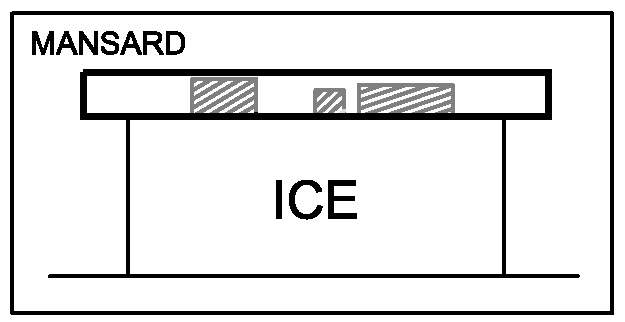
Figure 5.04.18 (F). Screening of ice vending kiosks
2.
Roof-mounted equipment shall be shielded from view on all sides by a material consistent with that of the vending kiosk or building.
5.04.19 - Golf Course.
A.
A golf course may be public or private and may include the following buildings and accessory uses:
1.
Clubhouse, with or without a pro shop;
2.
Retail sales of golf supplies and accessories;
3.
Restaurant or snack shop;
4.
Cart rental;
5.
Equipment building for maintenance, minor repairs, and storage. Storage may include grounds maintenance equipment, fertilizers, herbicides, and pesticides; and
6.
Driving range.
B.
The types of golf courses that are permissible include par 3, executive, or regulation.
C.
The following site development standards are required for all golf course development:
1.
The minimum setback from any property line for buildings, greens, and fairways shall be sixty (60) feet.
2.
Safety netting is required for a driving range and shall be located on the perimeter of the playing area where such area abuts a public right-of-way. The safety netting shall be a minimum of thirty-two (32) feet in height.
3.
Outdoor lights for driving ranges, tees, greens, fairways, or buildings shall be directed and shielded to avoid direct illumination of adjacent properties.
4.
Loudspeaker or paging systems are prohibited.
5.
Golf cart crossings of pedestrian paths or public rights-of-way shall be plainly marked and located for safety of the cart users, pedestrians, and motorists.
6.
Outdoor areas for storage of golf carts shall be fully screened from view from adjacent properties and any public right-of-way.
5.04.20 - Gardens, Freestanding.
A garden may be an accessory use, subject to the standards for all accessory uses set forth in Section 5.01.02. A garden may be a freestanding principal use, subject to the standards set forth below.
A.
The garden plot shall be located as follows:
1.
The minimum setback from the front property line shall be twenty (20) feet.
2.
The minimum setback from side and rear property lines shall be five (5) feet.
B.
A storage building may be placed on site, provided such building is in compliance with the standards for storage buildings set forth in Section 5.01.07.
C.
A fence may be placed on site, provided that the fence is transparent and complies with the standards for fences set forth in Section 5.01.08.
D.
Proper City and State licensing and permit/inspections shall be obtained, including approval from the Florida Department of Agricultural and Consumer Services (only for commercial sites).
E.
In R-1E, R-1, and R-2 zoning districts, no sales shall take place at the garden site. No distribution of goods to or from the site is allowed.
F.
In commercial and mixed-use districts, landscaping standards do not apply.
G.
Parking requirements are as follows:
1.
In R-1E, R-1, and R-2 zoning districts, two (2) off-street parking spaces shall be provided. Such spaces shall be provided in compliance with the standards set forth in the Engineering Standards Manual of Fort Walton Beach.
2.
In all other zoning districts, parking shall be provided as set forth in Section 6.04.02 for farmer's markets.
5.04.21 - Restaurants.
A.
The drive-up window(s) for restaurants with drive-up or drive-through service shall not be located adjacent to property that is used or zoned for residential use. Where the site configuration does not allow for locating the drive-up or drive-through window on property lines adjacent to nonresidential uses, the drive-up or drive-through window shall be a minimum of fifty (50) feet from the property line abutting property used or zoned for residential development.
B.
All drive-up or drive-through lanes shall comply with the stacking standards in Section 6.05.02 of this LDC.
C.
All drive-up or drive-through lanes shall be designed and located to avoid lights from vehicles in the drive-up or drive-through lanes shining toward or onto residential property. This standard may be met through the installation of a solid wall or solid fence.
D.
Speaker systems shall be located to avoid sound that is audible above daytime ambient noise at the property line.
E.
Dog-Friendly Dining. Pursuant to section 509.233(2), Florida Statutes, there is hereby created in the City of Fort Walton Beach, Florida, a local exemption procedure to certain provisions of the United States Food and Drug Administration Food Code, as amended from time to time, and as adopted by the State of Florida Division of Hotels and Restaurants of the Department of Business and Professional Regulation, in order to allow patrons' dogs within certain designated outdoor portions of public food service establishments, which exemption procedure may be known as the City of Fort Walton Beach Dog Friendly Dining Program.
1.
To protect the health, safety, and general welfare of the public, a public food service establishment is prohibited from having any dog on its premises unless it possesses a valid permit issued in accordance with this part, which shall be made to the City on a form provided by the City, and shall include the following:
a.
The name, mailing address, and telephone contact information of the permit applicant and the subject food service establishment.
b.
A diagram and description of the outdoor area to be designated as available to patrons' dogs, including dimensions of the designated area; a depiction of the number and placement of tables, chairs, and restaurant equipment, if any; the entryways and exits to the designated outdoor area; the boundaries of the designated area and of any other areas of outdoor dining not available for patrons' dogs; any fences or other barriers; surrounding property lines and public rights-of-way, including sidewalks and common pathways; and such other information reasonably required by the City. The diagram or plan shall be accurate and to scale but need not be prepared by a licensed design professional.
c.
A description of the days of the week and hours of operation that patron' dogs will be permitted in the designated outdoor area.
d.
All application materials shall contain the appropriate division issued license number for the subject public food service establishment.
2.
All permits issued under this section are subject to the following requirements:
a.
All public food service establishment employees shall wash their hands promptly after touching, petting, or otherwise handling any dog. Employees shall be prohibited from touching, petting, or otherwise handling any dog while serving food or beverages or handling tableware or before entering other parts of the public food service establishment.
b.
Patrons in a designated outdoor area shall be advised that they should wash their hands before eating. Waterless hand sanitizer shall be provided at all tables in the designated outdoor area.
c.
Employees and patrons shall be instructed that they shall not allow dogs to come into contact with serving dishes, utensils, tableware, linens, paper products, or any other items involved in food service operations.
d.
Patrons shall keep their dogs on a leash at all times and shall keep their dogs under reasonable control.
e.
Dogs shall not be allowed on chairs, tables, or other furnishings.
f.
All table and chair surfaces shall be cleaned and sanitized with an approved product between seating of patrons. Spilled food and drink shall be removed from the floor or ground between seating of patrons.
g.
Accidents involving dog waste shall be cleaned immediately and the area sanitized with an approved product. A kit with the appropriate materials for this purpose shall be kept near the designated outdoor area.
h.
At least one sign reminding employees of the applicable rules, including those contained in this part, and those additional rules and regulations, if any, included as further conditions of the permit by the City, shall be posted in a conspicuous location frequented by employees within the public food service establishment. The mandatory sign shall be not less than eight and one half inches in width and eleven inches in height (8 ½ × 11) and printed in easily legible typeface of not less than twenty (20) point font size.
i.
At least one sign reminding patrons of the applicable rules, including those contained in this part, and those additional rules and regulations, if any, included as further conditions of the permit by the City, shall be posted in a conspicuous location within the designated outdoor portion of the public food service establishment. The mandatory sign shall be not less than eight and one half inches in width and eleven inches in height (8 ½ × 11) and printed in easily legible typeface of not less than twenty (20) point font size.
j.
At all times while the designated outdoor portion of the public food service establishment is available to patrons and their dogs, at least one sign shall be posted in a conspicuous and public location near the entrance to the designated outdoor portion of the public food service establishment, the purpose of which shall be to place patrons on notice that the designated outdoor portion of the public food service establishment is currently available to patrons accompanied by their dog or dogs. The mandatory sign shall be not less than eight and one-half inches in width and eleven inches in height (8 ½ × 11) and printed in easily legible typeface of not less than twenty (20) point font size.
k.
Dogs shall not be permitted to travel through indoor or undesignated outdoor portions of the public food service establishment, and ingress and egress to the designated outdoor portions of the public food service establishment shall not require entrance into or passage through any indoor or undesignated outdoor portion of the public food service establishment.
3.
A permit issued pursuant to this part shall not be transferred to a subsequent owner upon the sale or transfer of a public food service establishment, but shall expire automatically upon such sale or transfer. The subsequent owner shall be required to reapply for a permit pursuant to this part if such owner wishes to continue to accommodate patrons' dogs.
4.
In accordance with section 509.233(6), Florida Statutes, the City shall accept and document complaints related to the Dog Friendly Dining Program within the City, and shall timely report to the division all such complaints and the City's enforcement response to such complaint. The City shall also timely provide the division with a copy of all approved applications and permits issued pursuant to this part.
5.04.22 - Schools, Academic, Charter, Public, or Private.
All academic schools, whether charter, public, or private, shall be located a minimum of 500 feet from any establishment where selling alcohol for on-site consumption is a primary use.
5.04.23 - Tattoo Parlors and Body-Piercing Studios.
A tattoo parlor and/or piercing studio may be located in the zoning district subject to the following:
A.
Within the Downtown Design Overlay District, no tattoo parlor may be located within 1,500 feet of any other such business as measured from the main entrance of one establishment to the main entrance of another establishment.
B.
This section shall not apply to businesses established on or before May 1, 2012.
5.04.24 - Non-Chartered Financial Institutions.
A non-chartered financial institution may be located in the zoning district subject to the following:
A.
Within the Downtown Design Overlay District, no non-chartered financial institution may be located within 1,500 feet of any other such business as measured from the main entrance of one establishment to the main entrance of another establishment.
5.04.25 - Pawnshops.
A pawnshop may be located in the zoning district subject to the following:
A.
Within the Downtown Design Overlay District, no pawnshop may be located within 1,500 feet of any other such business as measured from the main entrance of one establishment to the main entrance of another establishment.
5.04.26 - Adult-Oriented Uses.
An adult-oriented use may be located in the zoning district subject to the following:
A.
Within the Downtown Design Overlay District, no adult-oriented use may be allowed.
B.
This section shall not apply to businesses established on or before May 1, 2012.
5.04.27 - Fortune Tellers and Psychics.
A fortune teller or psychic may be located in the zoning district subject to the following:
A.
Within the Downtown Design Overlay District, no fortune teller or psychic may be located within 1,500 feet of any other such business as measured from the main entrance of one establishment to the main entrance of another establishment.
5.04.28 - Medical Facility for Recovery or Rehabilitation Services.
A medical facility for recovery or rehabilitation services may be located in the zoning district subject to the following:
A.
Facilities may allow for overnight stay if adequately constructed. Buildings shall meet all Building Code requirements and Fire Safety requirements for facilities that allow overnight stay.
B.
Facilities that do not meet Building Code and Fire Safety requirements for overnight stay may provide daytime medical services.
C.
Facilities that abut residential properties may be required to provide additional buffering or make other accommodations to insure compatibility.
(Ord. No. 1917, § 3, 5-19-15)
5.04.29 - Schools, Business, Commercial, Trade, Vocational.
A business, commercial, trade, or vocational school may be located in the zoning district subject to the following:
A.
Facilities may provide on-site dormitory as an accessory use to the training facility.
1.
The use of the dormitory shall be clearly incidental and subordinate to its use for training purposes.
2.
Overnight/short term stays shall be permissible only during the duration of the training courses.
3.
Overnight stays shall not be permissible during periods that training courses are not in session.
4.
Long term stays shall not be permissible.
B.
Facilities may allow for on-site dormitories if adequately constructed. Buildings shall meet Building Code requirements and Fire Safety requirements for mixed use construction.
(Ord. No. 1956, § 3, 11-15-16)
5.04.30 - Boatyards.
A.
A boatyard may include the following facilities and uses:
The servicing, repairing, and maintaining of marine boats and vessels including, but not limited to: hauling vessels out of the water; lifting and blocking of vessels using marine travel lifts and various other equipment; bottom maintenance, including pressure washing, wet farrow blasting, sanding, stripping, and painting; performing mechanical repairs, replacement and maintenance to all marine gas and diesel engine types, marine transmissions, drive gears, and gear case; repairing or replacing running gear and under water parts including drive shafts, propellers, struts, cutlass bearings, thru-hull fittings and valves, transducers, trim tabs and actuators, rudders, stabilizers, bow thrusters, stern thrusters, keel coolers, keel guards, and water scoops; performing minor and major fiberglass repairs, including sanding, filling, structure fabrication, painting, gelcoat application, buffing, waxing, and polishing; performing sailboat rigging repair or replacement, including mast stepping, rig tuning, and keel repair or replacement; repairing or replacing all ship systems, including electronic equipment, windlasses, deck hardware electrical power systems, steering systems, controls systems, navigation systems, grab rails, hatches, ports, decking, canvass repair or fabrication, upholstery fabrication or repair, T-top and tower repair or fabrication, and miscellaneous welding and fabrication; performing plumbing and tank repairs, upgrades and replacement; detailing vessel interiors and exteriors; and vessel loading/unloading onto transport vehicles.
These facilities may also incidentally engage in new and used boat sales; storing and selling of vessels; diesel fuel or gasoline fuel storage and sales; outboard, inboard, diesel engine storage and sales; marina wet slip rental and storage; and engine and boat parts and equipment storage and retail sales as an accessory use.
B.
Boatyard operations, including the collection, storage, or handling of hazardous materials shall comply with the standards for industrial activities set forth in Section 4.03.02 of this Land Development Code and all City, State and Federal standards.
C.
Where fuel or other hazardous substances will be stored, handled, or sold, the boatyard shall provide facilities and procedures for the prevention, containment, recovery, and mitigation of spilled fuel or other hazardous substances. Facilities and procedures shall be designed to prevent such substances from entering the water or soil, and shall include adequate means for prompt and effective cleanup of spills.
D.
All stormwater and waste discharge shall comply with all City, State, and Federal standards.
E.
Exterior lighting shall be directed and shielded to avoid illumination of adjacent properties in accordance with the standards in Section 4.09.01 of the LDC.
F.
Buildings and Structures:
1.
All buildings and structures shall include a finished façade in accordance with Section 4.00.04 of the LDC.
2.
Any buildings used for work on boats and vessels shall be enclosed in a roofed building or structure which is enclosed on at least three (3) sides with the open side facing away from any adjacent properties with a residential or transient lodging use.
G.
Standards for buffering. There shall be a buffer which is acceptable to the City between it and any residential, multifamily, or transient lodging use.
1.
The City shall require a solid wall, fence or landscape buffer. A wall or fence shall be a minimum of six (6) feet in height and meet the standards of Section 5.01.08 of the LDC.
2.
The wall or fence shall be solid and the finished side of such wall or fence shall face outward.
3.
Where a landscaped buffer is provided, the plants shall include evergreen trees and shrubs. The trees and shrubs shall be planted in double staggered rows to form a continuous screen at least six (6) feet in height.
4.
The landscaping shall be maintained to ensure continuation of the vegetative screen. Dead or damaged plant materials shall be replaced as soon as possible based on the growing season.
5.
Where the landscaped buffer is not adequately maintained, the City may require replacement of the landscaped buffer with a solid wall or fence.
6.
There shall be no outside work performed within twenty-five (25) feet of a property line.
7.
Audio amplification systems, including, but not limited to, telephone loudspeakers or paging systems, shall be located to ensure that the sound cannot be heard on adjacent properties.
H.
Outdoor boatyard operations.
1.
All outdoor boatyard operations shall be buffered in accordance with requirements listed in Section 5.04.30.G. Additional buffering may be required based on adjacent property uses in order to ensure compatibility between adjacent uses.
I.
The emission of noise which is a nuisance to adjacent properties shall be limited to the hours of 9:00 a.m. to 6:00 p.m. Monday through Saturday.
J.
No boatyard shall be located within five thousand (5,000) feet of another boatyard.
K.
There shall be at least one (1) parking space for each four hundred (400) square feet of office space, one (1) parking space per employee on the longest shift, and one (1) parking space per service bay.
(Ord. No. 1971, § 3, 3-28-17)
5.04.31 - Medical Marijuana Dispensary.
A.
Medical Marijuana Dispensary. A retail establishment, licensed by the Florida Department of Health, as a medical marijuana dispensing organization that sells and dispenses medical marijuana.
B.
A medical marijuana dispensary may be located in the zoning district subject to the following:
1.
Not located within five hundred (500) feet of the real property that comprises a public or private elementary school, middle school, or secondary school, measured over the nearest usually traveled pedestrian route between the school and dispensary.
C.
Parking requirement:
1.
One (1) space per one hundred fifty (150) square feet of floor area, plus one (1) space per FTE and one (1) space for every two (2) PTE's.
D.
Medical Marijuana Dispensary Prohibited Activities:
1.
Shall not engage in any other activity related to preparation, wholesale storage, distribution, transfer, cultivation, or processing of any form of marijuana or marijuana product.
2.
Shall not allow on-site consumption of marijuana.
E.
Business Tax Receipt Requirement:
1.
Owners or ownership entities of medical marijuana dispensary, licensed by the Florida Department of Health, are required to comply with the City's Business Tax Requirements, including Code of Ordinances, Chapter 8.01 Business Tax Requirements.
2.
The City will issue only one (1) Business Tax Receipt to a business currently licensed by the Florida Department of Health.
(Ord. No. 1972, § 3, 3-28-17; Ord. No. 2107, § 2, 10-15-22)
5.04.32 - Livery Vessel Rental.
A.
Definitions and Allowable Uses:
1.
A livery vessel establishment may include the following uses:
a.
The lease, rental, or charter of livery vessels, including boats and personal watercraft, to members of the public for consideration pursuant to Section 327.02, F.S., including the activities associated with this including the transport of customers to and from the livery vessels and service of other needs of such customers. It shall also include operation of and maintenance of "chase" vessels for retrieving customers from disabled or damaged vessels. It shall also include service, repair, and maintenance of livery vessels and chase vessels including, but not be limited to, pressure washing, sanding, painting, performing mechanical repairs, performing fiberglass and other repairs to the exterior of livery vessels, upholstery fabrication and repairs, gelcoat repair, buffing, waxing, polishing, and detailing vessel interiors and exteriors. These facilities may also engage in the storage of livery vessels and equipment, diesel fuel or gasoline fuel storage and fueling of livery vessels, and retail sales as an accessory use, subject to the below restrictions.
2.
A livery vessel is as defined in Section 327.02, F.S., A "livery vessel" is any motorized vessel that is rented, leased, and/or chartered by the owner to another party for a designated period of time, and that vessel is under control of the renting party at all times and has a written contract between both parties stating so.
a.
A "bareboat charter" is considered a livery vessel.
b.
Each vessel that is included within the fleet of a boat club is a livery vessel.
c.
Any person or entity that rents, leases or charters one (1) or more vessels to another but claims their vessel or vessels are excluded from the definition of a livery vessel because the vessel or vessels are under the control of a United States Coast Guard licensed Captain at all times must provide satisfactory evidence to the City of such claim by providing to the City one (1) valid, current copy of the Captain's license assigned at all times to each vessel pursuant to Coast Guard Regulations.
3.
A livery vessel vendor means any person or dealer, as those terms are defined in Section 327.02, F.S., who rents or leases for hire any livery vessel.
4.
Vessel is synonymous with boat as referenced in Section 1(b), Art. VII, of the State Constitution and includes every description of watercraft, barge, and airboat, other than a seaplane on the water, used or capable of being used as a means of transportation on water.
B.
A livery vessel vendor must comply with Chapter 327, F.S.
C.
Secondary Uses.
1.
A livery vendor may operate as a secondary use on a development lot in accordance with Section 4.02.02 of this Code provided the primary use is in compliance with all LDC standards.
2.
A livery vendor may be combined within one (1) building in accordance with Section 4.02.03 of this Code and all applicable Florida Building Code and Florida Fire Prevention Code standards.
D.
Livery Permit Requirements.
1.
Annual permit required. It shall be unlawful for any vendor to offer or base Livery Vessel rental services within the City of Fort Walton Beach, unless each livery vessel offered for rent by a vendor has been permitted by the City in accordance with the provisions of this article. It is the intent of this article to require a permit for each livery vessel rented by a vendor. In lieu of issuing a separate permit document for each livery vessel, in order to simplify the permitting process, the City may elect to issue one (1) document to a vendor that provides a certified inventory of each permit issued to the vendor that lists registration numbers for each livery vessel permitted.
2.
Formal application required. To procure an annual permit for a livery vessel, under the provisions of this article, all vendors shall submit a formal new application for each livery vessel sought to be permitted, each year to the city manager, or his/her designee each year. Incomplete permit applications will be returned to the applicant with a list of corrections needed. No operations are allowed until the permit is approved. The City may elect to provide a form to vendors that allows the vendors to apply for all permits, the vendors seeks for the given year, on one (1) form.
3.
Application for permit. Applications for annual permits shall set forth and/or include at a minimum:
a.
A copy of the State of Florida Submerged Land Lease for every livery vessel vendor operating on property within the City with a drawing, to scale, showing that mooring of livery vessels will be contained within the boundaries of the subject lease and is in compliance with all local, state and federal law including, but not limited to, all requirements of the Florida Department of Environmental Protection and the Army Corp. of Engineers.
(1)
If a marina has a copy of the submerged land lease on file with the city, any vendors operating out of that marina shall be exempt from this requirement. However, they must demonstrate they have enough space to dock all vessels in operation at that marina.
(2)
If the livery vessel vendor can demonstrate the availability of an on-site boat ramp, that vendor may operate additional vessels equal to the number of vessels approved for on-site upland storage in accordance with LDC 5.04.32.D.3.f. below. Vessels stored for this purpose shall not be considered temporary storage.
b.
A hazardous material abatement plan approved by the City. In addition to any City requirements (including but not limited to fire department requirements), the plan shall provide sufficient details and specifications to assure appropriate on-site maintenance and inspection, spill prevention and response training, a spill response plan to mitigate and report any impacts to the beach or the waterways in and around the City; to provide proper safety precautions regarding the storage of fuels; and provide fire safety equipment. The vendor shall in all operations comply with all provisions of the refueling plan. Where fuel or other hazardous substances will be stored, handled, or sold, the livery vessel vendor shall provide facilities and procedures for the prevention, containment, recovery, and mitigation of spilled fuel or other hazardous substances. Facilities and procedures shall be designed to prevent such substances from entering the water or soil and shall include adequate means for prompt and effective cleanup of spills.
c.
A site plan showing location of permanent ADA restroom facilities and trash and recycling receptacles available for customer use.
d.
Proof of livery vessel vendor's right to conduct business at the livery vessel rental location. If the livery vessel vendor is also the property owner, no proof shall be required.
e.
Site plan for an established location for check in and out of customers. This may be accomplished through a permanent location or a non-permanent vessel (NPLV) rental location.
(1)
A copy of the livery vessel vendor's Local Business Tax Receipt must be displayed at the check in/out location along with any requirements of Florida Statute.
(2)
NPLV rentals are either a self-propelled vehicle or other trailer/vehicle moved by a self-propelled vehicle shall adhere to the following standards:
a.
The applicant shall obtain all applicable City building permits for the installation of the NPLV for improvements including but not limited to temporary/accessory structures, site improvements, lighting, signage, and utilities.
b.
The NPLV shall conform to all applicable Florida Building Code and Florida Fire Prevention Code standards.
c.
All equipment and/or utilities associated with the NPLV shall be screened from public view. The NPLV shall not contain any structural defects (i.e. rust, broken parts, holes) and shall contain surfaces that are readily cleanable.
d.
The applicant shall demonstrate that the NPLV meets all setback requirements.
e.
A finished façade shall be applied to the NPLV to provide the appearance of a permanent structure.
(1)
All parts involved in the movement of NPLV shall be covered. This includes, but is not limited to tires, wheels, tongue, and taillights.
(2)
Façade must be able to be removed to allow for movement of NPLV should it become necessary.
f.
A storage plan for any vessels which will be stored on the upland portion of any livery vessel establishment. Such storage plan must show, to scale, the locations of all stored vessels and confirm that such vessels are being stored in legal parking spaces or other appropriate areas pursuant to the City of Fort Walton Beach Land Development Code. Storage in legal parking spaces is only permitted if enough additional parking remains to support customer usage for the number of boats permitted. All upland storage of watercraft must comply with LDC 5.04.04 - Dry Storage Facilities for Watercraft. Temporary storage of a vessel outside of the approved storage plan is allowed for no more than two (2) weeks.
g.
Parking plan, drawn to scale, that demonstrates compliance with the Land Development Code with regard to number of livery vessels identified on the livery vessel vendor permit.
h.
A copy of Florida Fish and Wildlife Conservation Commission Livery Operator Permit.
i.
Photograph(s) of each livery vessel (including any chase or replacement vessels) shall be submitted with the application, that show each vessel displays legible information identifying the FL registration number, rental company name, telephone number and vessel name or number. All information shall be clearly visible from twenty (20) feet away from vessel.
j.
A list of all vessels, including FL Registration Number and brief description.
4.
Notwithstanding the foregoing, in years subsequent to the initial permit approval, an applicant may submit a sworn, notarized Affidavit of No Change, on a form provided by the City, if no changes have been made to any submittals provided with the application for the prior year's City-approved permit.
a.
If no changes have been made other than the FL Registration numbers of the vessels in operation, applicants may submit the Affidavit of No Change as long as a new list of vessels is submitted with the affidavit.
b.
Providing false information to the City on any permit application or affidavit associated therewith may result in suspension or revocation of the permit, and any other legal or equitable remedy authorized by law.
E.
Issuance or Refusal of Permit.
The city manager or his designee shall issue a certificate of compliance to the applicant upon completion and approval of the City permit application form, including all required documentation pursuant to section 5.04.32.D.3. Incomplete permit applications will be returned to the applicant with a list of corrections needed. No operations are allowed until the permit is approved.
F.
Permit Not Transferable.
If ownership of a livery vessel is transferred, the approved permit for that vessel may be transferred only if the vessel(s) will be operated at the same location. City staff must be notified within ten (10) days of change in ownership. If the vessel(s) will be operated at a different location, a new permit must be approved before operation of the vessel(s) at the new location. No permit shall be used at any location other than the one for which it is issued.
G.
Renewals and Expiration of Permit.
All permits issued under the provisions of this article shall be valid for a period no longer than twelve (12) months, and shall expire on the last day of February of each calendar year. Permits may be renewed between November 1 and March 1 of each year. Businesses operating without a renewed permit will be subject to enforcement outlined in LDC 5.04.32.L.
H.
Changes in Permit During the Year.
1.
Any changes to an approved permit that affect parking (i.e. reduction of parking available, increase in number of vessels, etc.) require a new application. The new application must include the items listed in LDC 5.04.32.D.3.a., 5.04.32.D.3.g., and 5.04.32.D.3.i.;
2.
City Staff must be notified within ten (10) days of any changes that do NOT affect parking. No new application is required for these changes.
I.
Employee Emergency Contingency Plans.
Each Business shall have contingency plans/protocols for the emergencies listed below. At a minimum, these plans/protocols shall include contacts to call, immediate steps, reporting, and similar provisions including, but not limited to:
1.
Fuel/Oil Spill;
2.
Fuel Fire;
3.
Rental Vessel Accident;
4.
Medical Emergency; and
5.
Inclement Weather.
J.
Vendor Employee Training.
Employees shall be required to complete the following training and upon request provide documentation at the site. At all times during business hours, an employee that has completed the training must be located at the business facility. Employees that have not completed the training shall have thirty (30) days from start of employment to complete the training and may temporarily operate under the supervision of someone who has completed the training. Current/Existing employees shall have six (6) months from the effective date of this ordinance to comply with these training requirements. Documentation of training must be kept at the Business location and be made available for inspection at all times when the business is open. Training shall apply to all employees that supervise, take reservations, handle paperwork with customers, provide pre-ride/pre-rental training, or otherwise operate the rental or response/recovery equipment and shall include the following:
1.
State of Florida Boating Safety Education Course;
2.
Okaloosa Boating and Waterway Safety Video;
3.
FWC's online Livery Course;
4.
American Heart Association First Aid Response Course;
5.
PWC or Pontoon equipment training - In-house training on the safety/operation on the specific apparatus rented by the vendor; and
6.
Contingency Training - In-house training for the employee on the specific contingency plans required for this Business location.
K.
Restrictions.
1.
Livery vessels shall not be permitted to be rented from City parks or boat launches. All livery vessel vendors must operate from a designated property that is permitted in accordance with all federal, state, and local requirements and City codes. There shall be no "mobile" livery vessel vendors or delivery of livery vessels to customers from undesignated properties within the City, and customers may only pick up and return livery vessels from properties that have obtained that required permits for livery vessel vendors. In the event that a vessel needs to be removed from or returned to the water for maintenance, storm preparation, or similar reasons, a city park or boat launch may be utilized ONLY for the purpose of removing or returning the vessel to the water.
2.
Boater safety information shall be located at all livery vessel establishments in a place visible to the renting public pursuant to Section 327.54, F.S., with content and size as provided in Chapter 120, F.S.
3.
Livery vessel vendors shall provide appropriate local safety instructions to customers. In addition to any and all State mandated training, all operators of the rental vessel shall undergo the following training:
a.
Okaloosa Boating and Waterway Safety Video or comparable video.
b.
PWC or Pontoon equipment video/training on the safety/operation on the specific apparatus rented.
c.
Emergency contact information for law enforcement, coast guard, 911, and vendor; and
d.
Operator Identification - Operators shall have a wrist band indicating they have met the training requirements above and are properly licensed. There shall be two (2) separate identification colored wrist bands which shall be used by the business to identify the Operators, the color coordination of wrist bands is as follows:
(1)
Green - to use when Operator is over the age of eighteen (18) years old and was born before January 1, 1988, and by Florida law is not required to obtain a Florida Temporary Boaters Certification or obtain the National Association of State Boating Law Administrators (NASABLA) approved boaters license or passed a Florida Temporary Boaters Certification.
(2)
Pink - to use when Operator is over the age of eighteen (18) but born after January 1, 1988, who has a NASABLA approved boaters license or passes a Florida Temporary Boaters Certification.
4.
Each livery vessel for rental shall have legible information identifying the rental company name, telephone number and vessel name or number. Information shall be clearly visible from twenty (20) feet away from vessel.
5.
Each livery vessel operator is required to have a representative attend the annual Okaloosa County water safety meeting applicable to livery operations.
6.
Standards for Buffering. There shall be a buffer which is acceptable to the City between the livery vessel establishment and any residential, multifamily, or transient lodging use, on adjacent property(ies). No buffer is required between a livery vessel establishment and other uses on the same property.
a.
The City shall require a solid wall, fence or landscape buffer. A wall or fence shall be a minimum of six (6) feet in height and meet the standards of Section 5.01.08 of this Code.
b.
The wall or fence shall be solid and the finished side of such wall or fence shall face outward.
c.
Where a landscaped buffer is provided, the plants shall include evergreen trees and shrubs. The trees and shrubs shall be planted in double staggered rows to form a continuous screen at least six (6) feet in height.
d.
The landscaping shall be maintained to ensure continuation of the vegetative screen. Dead or damaged plant materials shall be replaced as soon as possible based on the growing season.
e.
Where the landscaped buffer is not adequately maintained, the City may require replacement of the landscaped buffer with a solid wall or fence.
7.
Any maintenance on a vessel must be conducted in a manner that will prevent any fluids or debris from entering the water or soil, and tarps must be placed under vessels during maintenance. Maintenance includes, but is not limited to, mechanical work, oil changes, scraping, and painting. No fuel or oil shall be willfully or knowingly discharged into any waterway within or adjacent to the City of Fort Walton Beach.
8.
All fueling of vessels shall be in compliance with the Florida Fire Prevention Code.
L.
Enforcement.
The provisions of this article shall be enforced by any means permissible in law or equity. Enforcement measures may include the following:
1.
Code enforcement: The code enforcement division may enforce the terms of this article by bringing a case to the code enforcement special magistrate or code enforcement board.
2.
Civil citation: The code enforcement division, or other duly authorized officer or authority, may enforce the terms of this article through issuance of civil citation as provided in Ch. 162, Pt. II, Florida Statutes.
(Ord. No. 2074, § 4, 8-24-21; Ord. No. 2159, § 3, 3-25-25)
CHAPTER 5
TABLE OF HISTORICAL NOTES AND REFERENCES

