
Helotes City Zoning Code
ARTICLE I
- IN GENERAL
Sec. 98-1.- Title.
This chapter shall be known as "The City of Helotes, Texas, Zoning Code."
(Ord. No. 253, § 1(art. I, § 1), 4-8-2004; Ord. No. 387, § 1, 12-8-2008)
Sec. 98-2. - Enacting clause.
This chapter amends in their entirety Ordinance No. 14, passed and approved July 8, 1982, and any subsequent amendments, Ordinance No. 150, passed and approved April 26, 2001, and Ordinance No. 238, passed and approved June 12, 2003, and any subsequent amendments, also known as former chapter 152 of the City of Helotes Code of Ordinances, through the date this chapter is enacted.
(Ord. No. 253, § 1(art. I, § 2), 4-8-2004; Ord. No. 387, § 1, 12-8-2008)
Sec. 98-3. - Purpose.
The zoning regulations and districts as herein established have been made in accordance with a comprehensive plan for the purpose of promoting the health, safety, and general welfare of the city. They have been designed to lessen the congestion in the streets; to provide adequate light and air; to prevent the overcrowding of land; and to facilitate the adequate provision of transportation, water, sewage, schools, parks, and other public requirements. They have been made with reasonable consideration, among other things, for the character of the district and its peculiar suitability for the particular uses specified, and with a view to conserving the value of buildings and encouraging the most appropriate use of land throughout the city consistent with a comprehensive plan.
(Ord. No. 253, § 1(art. I, § 3), 4-8-2004; Ord. No. 387, § 1, 12-8-2008)
Sec. 98-4. - Definitions.
For the purpose of this Chapter, the following definitions shall apply unless the context clearly indicates or requires a different meaning. Definitions not expressly prescribed herein are to be constFor the purpose of this chapter, the following definitions shall apply unless the context clearly indicates or requires a different meaning. Definitions not expressly prescribed herein are to be construed in accordance with customary usage in municipal planning and engineering practices.
Abutting property. Property abutting upon a street shall be understood as also abutting property on the other side of the street.
Accessory building means a subordinate building with or without separate utilities, the use of which is incidental to and used only in conjunction with the main building. An accessory building shall not be used for habitation or for commercial purposes. An accessory building shall be subject to the Total Lot Coverage Maximum Permitted definition established herein.
When an accessory building is detached from the main building, but connected to the building by a covered breezeway constructed solely for aesthetic attachment purposes, the breezeway shall not be considered part of the detached accessory building. An accessory building, including a covered breezeway, must be architecturally compatible with the main building on the property.
Agent means a person authorized by another to act for him; one entrusted with another's business.
Alley means a minor public right-of-way not intended to provide the primary means of access to abutting lots, which is used primarily for vehicular service access to the back or sides of properties otherwise abutting on a street.
Alteration, as applied to a building or structure, means a change or rearrangement in the structural parts or an enlargement, whether by extending on a side or by increasing in height, or the moving from one location or position to another.
Architecturally Compatible means that the building and/or structure is constructed of similar exterior building materials and in the same style as the main building/structure, so as to provide an image of continuity in the buildings on a single piece of property.
Associated Living Quarters (ALQs) means a subordinate building with or without separate utilities, the use of which is incidental to the main building and used for habitation. ALQs shall not be used for commercial or rental purposes. When an ALQ is detached from the main building, but connected to the building by a covered breezeway constructed solely for aesthetic attachment purposes, the breezeway shall not be considered part of the detached ALQ. ALQs, including covered breezeways, must be architecturally compatible with the main building on the property. An ALQ shall be subject to the Total Lot Coverage Maximum Permitted definition established herein.
Automobile and motor vehicle sales area means an open area, other than a street or required automobile parking space, used for the display or sale of new or used automobiles or trailers, and where no repair work is done except minor incidental repair of automobiles or trailers to be displayed and sold on the premises.
Babysitting means the caring for nine or fewer non-resident children on an irregular basis.
Billboard means any sign of advertisement used as an outdoor display for the purpose of making anything known, the origin or point of sale of which is remote for said display.
Block means an area within the city enclosed by streets or alleys and occupied by or intended for building.
Breezeway means a covered passage one story in height connecting two buildings.
Buffer zone means that portion of an open space that separates residential districts from industrial and commercial districts.
Building means any enclosed structure erected for the support, shelter, and enclosure of persons, animals, chattels, or moveable property of any kind.
Building inspector or official means the legally designated inspection authority of the city, or the authorized representative.
Building line means a building limit fixed at a specific distance from the property boundaries of a lot beyond which a structure cannot lawfully extend.
Building, main, means an enclosed structure in which is conducted the principal use of the lot on which it is situated.
Building setback line means the line within a property defining the minimum horizontal distance between a building and the adjacent street line.
Carport structures on residential lots are not included in the definition of garage, private, and are not considered accessory buildings. Moreover, carport structures shall not be subject to the Total Lot Coverage Maximum Permitted definition established herein; however, carport structures shall not exceed 900 square feet in size.
Certificate of occupancy means a certificate issued by the building inspector for the use of a building, structure, and/or land complying with the provisions of all applicable city codes, ordinances, and regulations.
City official means the legally authorized representative when acting in an official capacity for the city.
Clinic means an establishment of offices in which a group of physicians, dentists, or other practitioners of the healing arts, and allied professional assistants, are associated for the purpose of diagnosing and treating ill or injured persons. A clinic may include a medical or dental laboratory, but may not include facilities for providing room or board for patients, nor may a clinic include offices or facilities for veterinarians.
Club or lodge means an association of persons for the promotion of some nonprofit common object, as literature, science, politics, good fellowship, and the like, meeting periodically, limited to members.
Commercial amusement means any enterprise whose main purpose is to provide the general public with an amusing or entertaining activity, where tickets are sold or fees collected at the gate of the activity. Commercial amusements include zoos, concerts, carnivals, expositions, miniature golf courses, rodeos, driving ranges, arcades, fairs, exhibitions, athletic contests, tent shows, Ferris wheels, children's rides, roller coasters, skating rinks, ice rinks, traveling shows, bowling alleys, pool parlors, and similar enterprises.
Commercial semitrailer means a vehicle without motive power that is designed or used with a motor vehicle, so that some of its weight and the weight of its load rests on or is carried by the motor vehicle, used for the transport of goods, merchandise, persons, or animals for money or other consideration.
Commercial trailer means a vehicle without motive power that drawn by a motor vehicle and is designed or used to carry property or passengers on its own structure exclusively and used to transport goods, merchandise, persons, or animals for money or other consideration.
Commission means the Planning and Zoning Commission of the city.
Common access route means a private way which affords the principal means of access to individual home lots or auxiliary buildings.
Common property means a parcel or parcels of land, together with the improvements thereon, the use and enjoyment of which are shared by the owners and occupants of the individual building sites in a "planned unit."
Comprehensive master plan means a legal document often in the form of a map and accompanying text adopted by the legal legislative body. The plan is a compendium of its general policies regarding the long-term development of its jurisdiction. It is also called a "general plan" or "city plan."
Council means the City Council.
Court means an open, unoccupied space bounded on more than two sides by the walls of a building. An inner court is entirely surrounded by the exterior walls of a building. An outer court has one side open to a street, alley, yard, or other permanent open space.
Crosswalk way means a public right-of-way, six feet or more in width between property lines, which provides pedestrian circulation.
Cul-de-sac means a street having but one outlet to another street, and terminated on the opposite end by a vehicular turn-around.
Dead-end street means a street, other than a cul-de-sac, with only one outlet.
District means a section of the city for which regulations governing the zoning area, height, and use of buildings are uniform.
Driveway means a minor entranceway off the common access route within the city, into an off-street parking area.
Dumpster means a box constructed of metal or other substantial material with dimensions larger than a length of three feet, a width of three feet, and a depth of four feet used for the purpose of receiving waste and rubbish.
Easement means an interest in land granted to the city by the public generally, and/or to a private utility corporation, for installing or maintaining utilities across, over and under private land, together with the right to enter thereon with machinery and vehicles necessary for the maintenance of said utilities.
Enclosed means enclosed within a building; activity being inside a structure having walls on all sides and a roof overhead.
Engineer means a person duly authorized and properly registered under the provisions of the state Engineering Registration Act, as heretofore or hereafter amended, to practice the profession of engineering.
Family means a collective number of individuals domiciled together in one dwelling unit whose relationship is of a continuing non-transient domestic character and who are cooking and living as a single nonprofit housekeeping unit. This definition shall not include any society, club, fraternity, sorority, association, lodge, organization, or group of students or other individuals whose domestic relationship is of a transitory or seasonal nature or for an anticipated limited duration of a school term or other similar determinable period.
Farm means an area of ten acres or more, which is used for the usual farm products such as vegetables, fruit trees, and grain and their storage on the area as well as the raising thereon of the usual farm poultry and farm animals such as horses, cattle, and sheep and including dairy farms with the necessary accessory uses for treating and storing the produce; provided, however, that the operation of such accessory use shall be secondary to the normal activities.
Fence, eight-foot privacy, means a visual barrier with no more than five percent open area in the vertical plane constructed to the minimum height of eight feet above the finish grade or the original natural grade whichever is at the higher elevation.
Fraternal club or lodge means a membership organization, excepting one whose chief activity is a service customarily carried on as a business and excluding on-premises sale and/or consumption of alcoholic beverages, in the B-1 through B-2 districts. Such use shall be nonprofit and with no retail sales of any nature being permitted.
Front yard means an open unoccupied space on a lot facing a street and extending across the front of a lot between the side yard lines and being the minimum horizontal distance between the street line and the main building or any projection thereof other than the projection of the usual steps or eave overhang.
Frontage means all property on one side of a street between two intersecting streets (crossing or terminating) measured along the line of the street, or, if the street is dead-ended, then all the property abutting on one side between and intersecting street and the dead end of the street.
Garage, commercial, means a premise and structure used for housing repair, hire or sale of motor vehicles for remuneration.
Garage, private, means an accessory building designed or used for the storage of motor vehicles owned and used by the occupants of the building to which it is accessory. Not more than one of the vehicles may be a commercial vehicle of not more than two-ton capacity.
Garden home means a single-family dwelling unit located on a platted lot that may be separated from the adjoining unit or units by a vertical fire wall (to be constructed in accordance with city codes and ordinances) along the dividing lot line or by a side yard and each such single-family dwelling unit being separate from any other building by space on all sides.
Gravel pit means a tract of land used primarily for the extraction of soil, sand, gravel, clay and other similar materials, other than oil or gas, which are processed and sold or used for commercial purposes. This term does not include the excavation or grading necessary for the development of a lot or tract.
Height, building, means the vertical dimension measured from the average elevation of the finished lot grade at the front of the building, to the highest point of ceiling of the top story in the case of a flat roof; to the decking of a mansard roof; and to the average height between the plate and ridge of a gable, hip or gambrel roof.
Home occupation means any occupation that can be performed at home that does not involve a structural change in the building, that does not require the employment of help, that does not emit an odor or result in noise in excess of the normal residential activities, that does not result in any outdoor visible evidence of the business use other than the permitted signage, and that does not result in more than two additional vehicles at the residence at any one time. A home occupation shall not include beauty shops, beauty culture schools, beauty parlors, auto repair and/or painting shops, or other similar uses.
Hospital means an institution or place where sick or injured in-patients are given medical or surgical care either at public (charity) or private expense.
Hotel/motel means a building or arrangement of buildings designed and occupied as a temporary abiding place of individuals who are lodged with or without meals, in which the rooms are usually occupied singly for hire, in which there are no provisions for cooking in individual rooms or apartments, and in which there are more than 12 sleeping rooms.
Kennel means any lot or premises on which domestic or wild animals are kept.
Legal holiday means:
(1)
A public holiday established by federal or state law; and
(2)
The holiday is officially observed by the city by the closure of city offices.
Loading space means a space within the main building or on the same lot therewith providing for the standing, loading or unloading of trucks.
Lot means the physical and undivided tract or parcel of land as shown on the duly recorded plat.
Lot area means the area of a lot between lot lines, including any portion of an easement which may exist within such lot lines.
Lot corner means a lot which has an interior angle of less than 135 degrees at the intersection of two street lines. A lot abutting upon a curved street shall be considered a corner lot if the tangents of the curve at the points of the intersection of the side lot lines intersect at an interior angle of at least 135 degrees.
Lot, double frontage, means a lot having a frontage on two nonintersecting streets as distinguished from a corner lot.
Lot, interior, means a building lot other than a corner lot.
Lot of record means a lot which is part of a subdivision, the map of which has been recorded in the office of the county clerk; or a parcel of land, the deed of which was recorded in the office of the county clerk.
Manufactured structure means a moveable or portable structure constructed to be towed by a motor vehicle on its own chassis over state roads and highways under special permit, connected to utilities, and designed without a permanent foundation, for year-round living. It may consist of one or more units that can be telescoped when towed and expanded later for additional capability, or of two or more units separately towable but designed to be joined into one integral unit. "Manufactured structure" includes any manufactured building, housing or structure not erected on-site. A storage building is not a manufactured structure.
Mini-storage means one storage unit with no more than 15 storage units per building, to be used only for storage.
Mobile home. See Manufactured structure.
Mobile home park means a unified development of mobile homes and travel ownership spaces arranged on a tract of land under single entity ownership, meeting all requirements of this chapter.
Municipal street means the entire width of a right-of-way held by the city in fee or by easement or dedication that has a part open for public use for vehicular travel. The term does not include a designated state or federal highway or road or a designated county road.
Nonconforming use means the use of land or a building, or a portion thereof, which use does not conform to the use regulations of a district in which it is situated.
Nursery, day care or kindergarten means a child care facility which is a state licensed facility operated in accordance with state law that provides care, training, education, custody, treatment or supervision for a child who is not related by blood, marriage, or adoption to the owner or operator of the facility, for all or part of the 24-hour day, whether or not the facility is operated for profit or charges for the service it offers.
Occupancy means the use or intended use of the land or building by proprietors or tenants.
Open spaces are included in any side, rear or front yard or any unoccupied space of the lot that is open and unobstructed to the sky except for the ordinary projection of cornices, eaves or porches.
Oversized vehicle means a motor vehicle, trailer, or boat, which by itself or together with other structure(s) or vehicle(s) attached to it, exceeds 24 feet in length, eight feet in width, or eight feet in height, exclusive of apparatus such as antennas, luggage racks, and mirrors.
Parking space means area required for the placing of a common size automobile with sufficient room to enable the vehicle access in and out of the space, minimum size being 180 square feet with minimum width of nine feet.
Permit means an official document or certificate issued by the authority having jurisdiction authorizing performance of a specified activity.
Person means any natural individual, firm, trust, partnership, association, or corporation.
Planned residential unit development means a single planned unit as initially designed; or such a unit as expanded by annexation of additional land area; or a group of continuous planned units, as separate entities or merged into a single consolidated entity.
Planned unit means a land area which has individual building sites and common property such as a park, and is designed to be capable of satisfactory use and operation as a separate entity without necessarily having the participation of other building sites or other common property. The ownership of the common property may be either public or private.
Plant nursery means a place where trees, shrubs, or flowering plants are raised from seed or otherwise in order to be transplanted or propagated.
Plat means a complete and exact plan for the subdivision of a tract of land into lots for building purposes, which, if approved, may be submitted to the county clerk for recording.
Plot plan means a plan showing the use of the land, to include locations of buildings, drives, sidewalks, parking areas, drainage facilities and other structures to be constructed.
Public parking lot means any premises used for the purpose of parking motor vehicles for remuneration. No repairs or sales will be permitted on the premises.
Quarry means a tract of land used primarily for the extraction of limestone, or other similar materials, but not oil or natural gas, for processing, sale, or use for any purpose. This term does not include the excavation or grading necessary for the development of a lot or tract.
Radio station or television station means other than citizens radio service.
Residence, one-family, means a detached building having accommodation for and occupied by one family only, being the only structure per lot, except as permitted under Accessory, Associated Living Quarter, and Storage Buildings.
Residence, two-family, means a dwelling or group of dwelling on one plat containing separate living units for two families.
Right-of-way means the right given to the general public or groups of the general public to utilize, in the future, property or rights of another without compensation of any kind at any time. Utilization when such future time arrives of such right-of-way will be by ordinance, resolution, statute, conveyance of any easement, or through any act of the planning commission, declaring that such right-of-way shall thereafter be utilized by the general public or groups of the general public.
Sand or gravel pit means a tract of land used primarily for the extraction of soil, sand, gravel, clay and other similar materials, other than oil or gas, which are processed and sold or used for commercial purposes. This term does not include the excavation or grading necessary for the development of a lot or tract.
Setback line means a line which marks the setback distance from the property line, and establishes the minimum required front, side and rear yard space of a building plan.
Shopping center means an integrated grouping of commercial activity, primarily of a retail and personal service nature, in a single building complex having the individual establishments joined by a common covered pedestrian mall.
Sign means any device or surface on which figures, letters, illustrations, photographs, designs, logos, or outlines and used for such purposes as identification of individuals, partnerships or organizations, advising of products and/or location which is visible to the public. This includes light, banners, and similar devices to attract attention but excludes signs affixed to motor vehicles.
Single-family residence means a detached building having accommodation for and occupied by one family only, being the only structure per lot, except as permitted under Accessory, Associated Living Quarter, and Storage buildings.
Storage building means a subordinate building without utilities other than electric in a residential zoned district, the use of which is incidental to and used in conjunction with the main building only. A storage building shall be detached from the main building and shall not be used for habitation or for commercial purposes. A storage building must be architecturally compatible with the main building on the property. A storage building shall be subject to the Total Lot Coverage Maximum Permitted definition established herein. A storage building shall not be attached to the main building by a breezeway or other form of attachment. Storage buildings shall not exceed one standard story in height. A storage building shall not be a portable structure designed to be towed by a motor vehicle on its own chassis.
Story means that portion of a building, other than a basement, included between the surface of any floor and the surface of the floor next above it, or, if there be no floor above it, then the space between the floor and the ceiling next above it.
Story, half, means a partial story under a gable, hip, or gambrel roof, the wall plates of which on at least two opposite exterior walls are not more than four feet above the floor of such story, except that any partial story used for residence purposes, other than for a janitor or caretaker and his family, or by a family occupying the floor immediately below it, shall be deemed a full story.
Story, standard, means one having 11 feet six inches between floors.
Street means a public right-of-way which provides primary vehicular access to adjacent land, whether designated as a street, highway, thoroughfare, parkway, avenue, lane, boulevard, road, place, drive or however otherwise designated.
Street line means a dividing line between a lot, tract, or parcel of land and a contiguous street.
Structure means anything constructed or built, the use of which requires permanent location on the ground or attachment to something having a permanent location on the ground.
Structure, alterations, means any change in the supporting member of a building, such as a bearing wall, column, beams or girders.
Structure, principal, means the principal structure which fulfills the purpose for which the building plot is intended.
Total Lot Coverage Maximum Permitted means the total surface area of a Single-family Residential Zoning District lot that may be covered by accessory buildings, associated living quarters, and storage buildings combined, pursuant to the following:
Trailer and mobile home sales or rental means a business venture or enterprise where trailers and mobile homes are sold, rented, leased, or otherwise conveyed from the control or ownership of one party, company or individual to another party, company or individual. "Rental" in this definition means rental for off-premises use and not rental of a trailer or mobile home for use on that site. This definition does not include the rental or sale of a single privately owned existing trailer and mobile home in any zoning district, either in compliance or whose status may be "grandfathered" noncompliance.
Use means the purpose or activity for which the land or building thereon is designed, arranged or intended, or for which is it occupied or maintained, and shall include any manner of performance of such activity with respect to the performance standards of this chapter.
Variance means a legal deviation of a district zoning regulation whose strict enforcement will result in undue hardship. Pecuniary hardship to the owner, standing alone, shall not be deemed to constitute undue hardship.
Weekday means Sunday beginning at 12:00 a.m. through Thursday ending at 11:59 p.m.
Weekend means Friday beginning at 12:00 a.m. through Sunday ending at 11:59 p.m.
Yard means an open space at grade between a building and the adjoining lot lines, unoccupied and unobstructed by any portion of a structure from the ground upward, except as otherwise provided herein. In measuring a yard for the purpose of determining the width of a side yard, the depth of a front yard or the depth of the rear yard, the minimum horizontal distance between the lot lines and the main building shall be used.
Yard, front, means a yard extending across the front of a lot between the side lot lines, and being the minimum horizontal distance between the street or place line and the main building or any projections of the usual uncovered steps, uncovered balconies, or uncovered porch. On corner lots the front yard shall be considered as parallel to the street upon which the lot has its least dimension.
Yard, rear, means a yard extending across the rear of a lot and being the required minimum horizontal distance between the rear lot line and the rear of the main building or any projections thereof other than the projections of uncovered steps, unenclosed balconies, or unenclosed porches.
Yard, side, means a yard between the main building and the side line of the lot, and extending from the required front yard to the required rear yard and being the minimum horizontal distance between a side lot line and the side of the main buildings or any projections thereon.
(Ord. No. 253, § 1(art. I, § 4), 4-8-2004; Ord. No. 269, § 1, 10-28-2004; Ord. No. 387, § 1, 12-8-2008; Ord. No. 419, § 1, 11-12-2009; Ord. No. 571, § 1, 7-9-2015; Ord. No. 21-22, § 5, 11-9-2021)
Sec. 98-5. - Compliance required.
(a)
No land shall be used and no building shall be erected for or converted to any use other than provided in the regulations prescribed for the district in which it is located, except as hereinafter provided.
(b)
The minimum yards, parking spaces, and open space, including lot area per family, required by the height and area provisions of this chapter for each and every building existing at the time of passage of this chapter or for any building hereafter erected, shall not be encroached upon or considered as part of the yard or parking space or open space required for any other building, nor shall any lot area be reduced below the requirements of this chapter for the district in which such lot is located.
(Ord. No. 253, § 1(art. I, § 5), 4-8-2004; Ord. No. 387, § 1, 12-8-2008)
Sec. 98-6. - Location of alcoholic beverage sales restricted.
No business engaged in the sale of alcoholic beverages shall be located within 300 feet of a church, public school, or public hospital. The measurement of the distance shall be along the property lines of the street fronts and from front door to front door, and in direct line across intersections.
(Ord. No. 253, § 1(art. I, § 6), 4-8-2004; Ord. No. 387, § 1, 12-8-2008)
Sec. 98-7. - Visual barriers obstructing sight line at intersections.
No visual barrier, including, but not limited to, fences, hedges, shrubs, weeds, or trees, which obstructs sight lines at elevations between three feet and eight feet above the roadway shall be placed or permitted to remain on any corner lot within the triangular area formed by the street property lines and a line connecting them at points 25 feet from the intersection of the street lines, or in the case of a rounded corner, 25 feet from the intersection of the street lines extended. The same sight line limitations shall apply at the intersection of a street property line and edge of driveway or alley pavement except distance from the intersection shall be ten feet.
(Ord. No. 253, § 1(art. I, § 7), 4-8-2004; Ord. No. 387, § 1, 12-8-2008)
Sec. 98-8. - Private sewer facilities.
The city, being totally within the county and having no public sewer system, is dependent upon private sewer facilities and the San Antonio Water System (SAWS). All private sewer facilities are subject to the county commission court order titled "Regulating and Licensing of Private Sewer Facilities in Bexar County Subject to the Jurisdiction of Commissioner Court, Bexar County." The provisions of this court order may require minimum lot sizes in excess of those noted elsewhere in this chapter.
(Ord. No. 253, § 1(art. I, § 8), 4-8-2004; Ord. No. 387, § 1, 12-8-2008)
Sec. 98-9. - Zoning of businesses involved in multiple categories.
For purposes of zoning, business involved in multiple types or categories of business as identified in this chapter and/or listed in the Schedule of Uses (appendix of this chapter) shall comply with the most restrictive requirements of this chapter pertaining to any of the types or categories of business conducted on the site.
(Ord. No. 253, § 1(art. I, § 9), 4-8-2004; Ord. No. 387, § 1, 12-8-2008)
Sec. 98-10. - General prohibitions.
(a)
Parking of oversized vehicles. It shall be unlawful for any person owning or having control of any oversized vehicle, as defined in section 98-4, to park the same upon any municipal street within the PD pre-development district, R-1 single-family residential district, R-2 two-family residential district, or R-3 mobile home residential district at any time. Provided this section shall not apply to the parking of such vehicles for such time as actually necessary to load or unload passengers, freight, or merchandise.
(b)
Parking of commercial trailers and semitrailers.
(1)
The parking of a commercial semitrailer or trailer on any residentially zoned property is prohibited.
(2)
The parking of a commercial semitrailer or trailer on a street directly adjacent to a residentially zoned parcel or lot is prohibited.
(3)
Exceptions:
a.
A commercial trailer or semitrailer may be temporarily parked in the areas otherwise prohibited for such time as is actually necessary to load or unload passengers, freight or merchandise.
b.
A commercial trailer or semitrailer may be temporarily parked in the areas otherwise prohibited if parked on or directly adjacent to a lot or parcel while a residential unit is under construction on that lot or parcel but in no event for a period of more than 90 days in any consecutive 12-month period. The construction must be pursuant to a valid building permit.
c.
A commercial trailer or semitrailer may be parked in the areas otherwise prohibited if the owner thereof can obtain a permit from the city administrator after the applicant shows the city administrator evidence that the applicant:
1.
Has a mobility impairment; and
2.
Uses the trailer or semitrailer as that person's primary means of transportation.
A permit issued hereunder shall be valid for a term of one year and may be renewable annually upon a re-examination of the facts by the city administrator.
(c)
Dumpsters.
(1)
The use and maintenance of a dumpster on any residentially zoned property is prohibited.
(2)
Exceptions:
a.
A dumpster may be temporarily used and maintained on property zoned residential during construction activity on a lot or parcel where it is located provided that a valid building permit has been obtained for construction on said lot or parcel and the dumpster is not left on said lot or parcel for a period exceeding 180 days in any consecutive 12-month period.
b.
A dumpster may be temporarily used and maintained on property zoned residential for a period not to exceed 31 consecutive days in any consecutive 12-month period.
(3)
The board of adjustments is authorized to grant one extension of not more than 180 days for the use and maintenance of a dumpster upon a showing by the applicant of a good faith effort to complete the construction of a residence and accessory structures within said extension period. The applicant for such an extension shall pay the board of adjustment fee prior to the hearing.
(Ord. No. 253, § 1(art. I, § 10), 4-8-2004; Ord. No. 387, § 1, 12-8-2008)
Sec. 98-11. - Ornamental towers and similar structural elements.
(a)
This section sets height limitations for ornamental towers, spires, and similar structural elements that are not designed for occupancy.
(b)
Definitions.
| Tower is defined as a tall, narrow freestanding structure that is not designed and constructed for occupancy, but rather, for architectural, ornamental, or attention-getting purposes. | 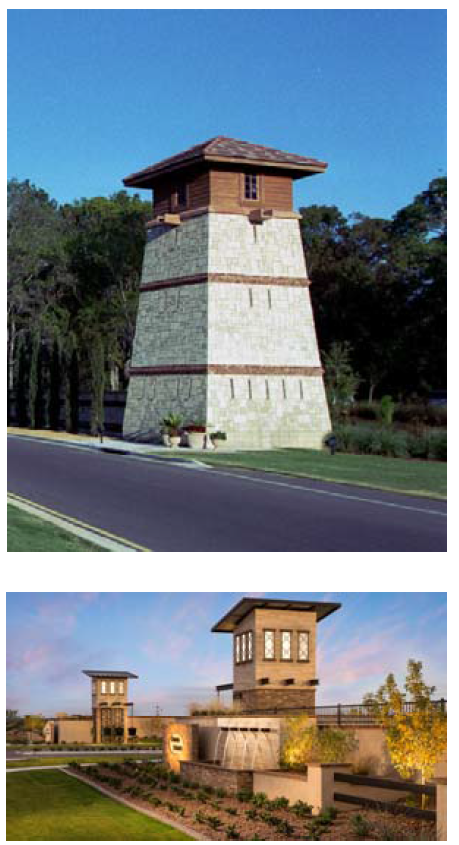 |
| Spire is defined as a tapering, conical or pyramidal freestanding structure that is not designed and constructed for occupancy, but rather, for architectural, ornamental, or attention-getting purposes. | 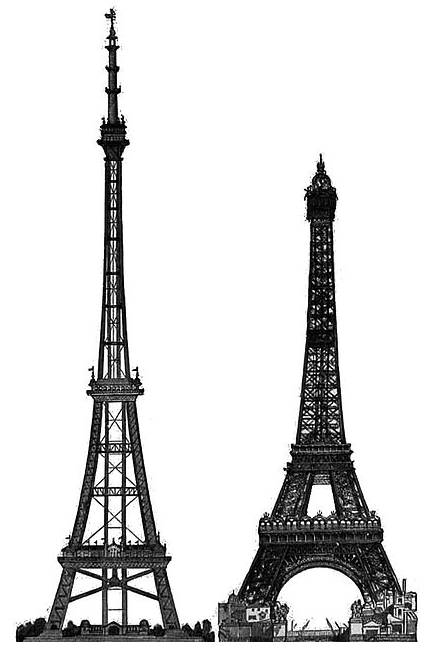 |
(c)
In all zoning districts, the maximum height of ornamental towers, spires, and similar structural elements shall not exceed a maximum allowable height of 20 feet from average grade of the centerline of the adjacent road way in all zoning districts.
(d)
The quantity, placement, width, design, insignia and / or wording, if any, on ornamental towers, spires, and similar structural elements shall be reviewed and approved in accordance with Chapter 98 Zoning, Article IX Architectural Review.
(Ord. No. 18-07, § 1, 5-10-2018)
Sec. 98-31. - Districts established.
The city is divided into types of districts as follows:
PD, Pre-Development District.
R-1, Single-Family Residential District.
R-2, Two-Family Residential District.
R-3, Mobile Home District.
B-1, Office and Professional District.
B-2, Neighborhood Service District.
B-3, General Business District.
B-3 OD, General Business/Residential Overlay District.
B-4, Central Business District.
I-1, Industrial District.
OTHSD, Old Town Helotes Special District.
Cluster Development.
(Ord. No. 253, § 1(art. II, § 1), 4-8-2004; Ord. No. 269, § 2, 10-28-2004; Ord. No. 310, § 1, 6-22-2006; Ord. No. 387, § 1. 12-8-2008)
Sec. 98-32. - Boundaries.
The boundaries of these districts are indicated upon the zoning map of the city, which is on file in the offices of the city and made a part of this chapter, the same as if copied in full herein. Where uncertainty exists as to the boundaries of districts as shown on the official zoning map, the following rules shall apply:
(1)
Boundaries indicated as approximately following the center lines of streets, highways, or alleys shall be construed to follow such center lines.
(2)
Boundaries indicated as approximately following platted lot lines shall be construed as following such lot lines.
(3)
Boundaries indicated as approximately following city limits shall be construed as following such city limits.
(4)
Boundaries indicated as following shorelines of creeks shall be construed to following such shorelines; and in the event of their movement, the boundaries shall be construed as moving with the actual shoreline. Boundaries indicated as approximately following the center lines of streams, river, canals, lakes, or other bodies of water shall be construed to follow such center lines.
(5)
Boundaries indicated as following railroad lines shall be construed to be midway between the rails of the main line.
(6)
In unsubdivided property, the district boundary lines on the zoning map shall be determined by use of the scale appearing on the map.
(7)
In the case of a district boundary line dividing a property into two parts, the property will remain divided until the property owner, firm, or corporation petitions the City Council for rezoning.
(8)
Whenever any street, alley or other public way is vacated by official action of the City Council the zoning district adjoining each side of such street, alleys or other public way shall be automatically extended to the center of such vacation and shall then henceforth be subject to all regulations of the extended districts.
(Ord. No. 253, § 1(art. II, § 2), 4-8-2004; Ord. No. 387, § 1. 12-8-2008)
Sec. 98-33. - Official zoning map.
(a)
Maintenance.
(1)
The official zoning map shall be kept in the office of the Planning and Zoning Commission and one copy shall be posted in the city hall.
(2)
It shall be the duty of the Planning and Zoning Commission chairman to keep the official map current and the copies thereof, herein provided for, by entering on such maps any changes which the City Council may from time to time order by amendment to the zoning chapter and map.
(b)
Identification. The city secretary, upon adoption of this chapter, shall affix a certificate identifying the map as the official zoning map of the city. He shall likewise officially identify the copies directed to be kept by the Planning and Zoning Commission and in the city hall. All amendments to the map shall be made immediately after their enactment and the date of the change shall be noted on the certificate.
(Ord. No. 253, § 1(art. II, § 3), 4-8-2004; Ord. No. 387, § 1, 12-8-2008)
Sec. 98-34. - Classification of new and unscheduled uses.
It is recognized that new or unlisted types of land use may seek to locate in the city. In order to provide for such contingencies, a determination of any new or unlisted form of land shall be made as follows:
(1)
Questions concerning any new or unlisted use shall be referred to the Planning and Zoning Commission for interpretation as to the zoning district into which such should be placed. The use interpretation question shall be accompanied by a statement of facts listing the nature of the use and whether it involves dwelling activity, sales, processing, anticipated employment, transportation requirements, the amount of noise, odor, fumes, dust, toxic material and vibration likely to be generated and the general requirements for public utilities such as water and sanitary sewer. Requests for consideration shall be in accordance with article VI, section 3.
(2)
The Planning and Zoning Commission shall hold a public hearing and meet the parties of interest and shall consider the nature and described performance of the proposed use and its compatibility with the uses permitted in the various districts and determine the zoning district or districts within which such use should be permitted. Such public hearings shall be scheduled and conducted in accordance with the provisions of sections 98-403 through 98-405.
(3)
The Planning and Zoning Commission shall transmit its findings and recommendations to the City Council as to the classification proposed for any new unlisted use. The City Council shall hold a public hearing and review recommendations of the Planning and Zoning Commission and make such determination concerning the classification of such use as it determines appropriate in accordance with provisions of sections 98-405 through 98-407.
(Ord. No. 253, § 1(art. II, § 4), 4-8-2004; Ord. No. 387, § 1, 12-8-2008)
Sec. 98-35. - Newly annexed territory.
All territory hereafter annexed to the city shall be temporarily classified as PD, pre-development district. The Planning and Zoning Commission will review all territory for consideration of zoning within 180 days of annexation. The procedure for establishing permanent classification of annexed territory shall conform to the procedure established by law for the adoption of the original zoning regulations.
(Ord. No. 253, § 1(art. II, § 5), 4-8-2004; Ord. No. 387, § 1, 12-8-2008)

