
Helotes City Zoning Code
ARTICLE IX
ARCHITECTURAL REVIEW BY PLANNING AND ZONING COMMISSION AND CITY COUNCIL
Sec. 98-251.- Objectives.
(a)
The design and construction of all new commercial structures and structures which are renovated shall reflect forms, styles, and materials that are complementary to the Texas Hill Country and meet the following objectives:
(1)
Promote orderly and harmonious development of the City;
(2)
Encourage the attainment of the most desirable use of land and improvements;
(3)
Enhance the desirability of living conditions in the City;
(4)
Promote high aesthetic quality of development in the City; and
(5)
Preserve and enhance historic sites, structures, and areas.
(Ord. No. 399, § 1, 3-26-2009)
Sec. 98-252. - Board established; membership; organization; jurisdiction.
(a)
The Planning and Zoning Commission and City Council shall review plans for all proposed commercial construction, alterations, and/or renovations for compliance with the design standards set forth in this Article.
(b)
Jurisdiction. To ensure compatibility with the approved design standards, the Planning and Zoning Commission shall review and make recommendations to the City Council, and the City Council shall have the authority to review and act on all plans for commercial development in the City's corporate City limits. If approved, the City Council shall issue a letter of compliance for each project before permits may be issued.
(Ord. No. 399, § 1, 3-26-2009; Ord. No. 18-17, § 1, 8-9-2018)
Sec. 98-253. - Procedures and review standards.
(a)
Generally.
(1)
Design standards. The design and construction of all new, remodeled, or renovated commercial structures shall adhere to the adopted design standards below.
(2)
The design standards address all exterior construction changes in the commercially-zoned districts. All buildings and structures shall go through the design review process outlined in Article IX before any alteration may be made to a building or structure. The review process applies to commercial exterior additions, renovations, and new construction.
(b)
Guidelines.
(1)
These guidelines present design standards for commercially-zoned districts in Helotes. The standards are meant to provide a common basis for making decisions about the design of commercial structures. The design standards are designed to provide a consistent, yet flexible, approach to the preparation and review of commercial development plans by defining a range of appropriate responses to specific design issues.
(2)
The design standards are intended to aid in the preservation of Helotes' cultural and historic resources within commercially-zoned districts and promote new construction that is compatible with the character of the architecture within the surrounding area.
(3)
Using the Design Standards.
a.
Property owners, contractors, and architects shall utilize the standards when completing commercial exterior additions, renovations, or new construction.
b.
Property owners, contractors, and architects should hold a pre application conference with City representatives. Permit applications will include proposed site plans and building elevation information, as well as other documents required by the City. Prior to the issuance of a building permit, the Planning and Zoning Commission shall review and make recommendations to the City Council, and the City Council shall determine if the proposed project satisfies the design guidelines of the City.
(4)
Design Standards.
a.
Site and Streetscape Design Standards.
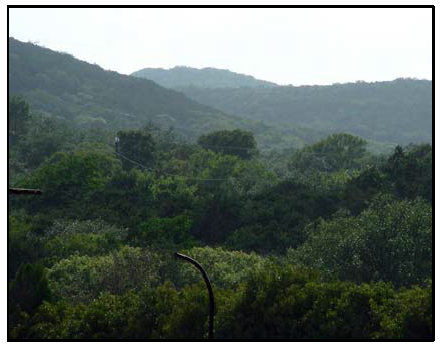
Preserve views from public right-of-way of scenic natural features.
1.
Views.
a)
Views from public rights-of-way of natural features should be maintained as much as possible.
b)
Buildings should be situated to frame and preserve Hill Country views from public rights-of-way.
c)
Provide overlook opportunities from public rights-of-way when feasible.
2.
Landscaping.
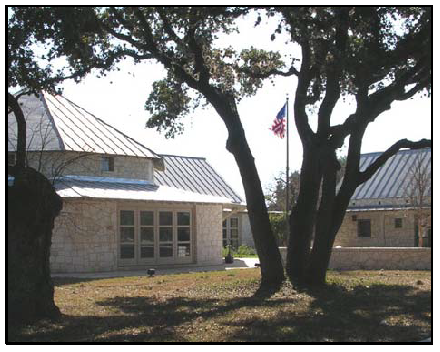
Incorporate existing clusters of live oaks when feasible. The use of native plantings
is also encouraged.
a)
Refer to City landscaping regulations.
b)
Hill Country landscaping includes a canopy of native live oak trees, grasses, and wildflowers and is a key characteristic that should be preserved. Such vegetation should be incorporated into site development.
i.
Locate buildings and parking areas where they will best preserve the Hill Country landscape. Integrate existing stands of live oaks and other significant vegetation into the site design.
ii.
Utilize native grasses, wildflowers, and limestone boulders in the landscape design.
c)
Some sites have portions that are steeply sloped. These natural land forms should be maintained when possible.
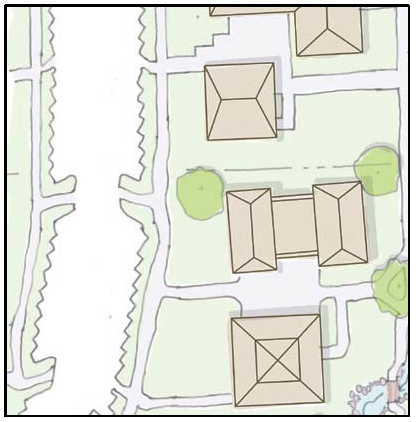
Paths and walkways should be provided to connect parking areas, buildings, and outdoor
spaces.
i.
Terrace cuts into landforms with rock retaining walls and plant materials.
d)
Outdoor dining should have low level, architectural or landscape screening to protect surrounding areas from windblown trash, yet preserve visibility.
3.
Automobile Circulation.
a)
Maintain the character of the rural road edge by sharing access and drives between two or more properties when possible.
4.
Pedestrian and Bicycle Circulation.
a)
Refer to City sidewalk regulations.
b)
Promote a walkable and bikeable community. When feasible, coordinate pedestrian and bicycle circulation systems within a large site or to join two or more sites together.
5.
Off-Street Walkways.
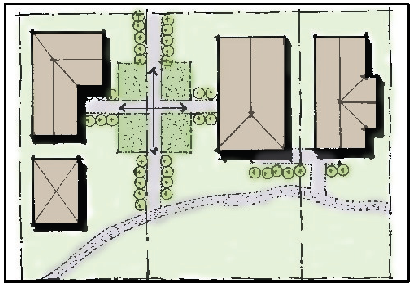
The use of outdoor courtyards and patios is encouraged.
a)
Paths which lead from parking areas to buildings should convey a "progression" of walking experiences throughout the site. This progression, comprised of spaces between parking areas, outdoor spaces, and buildings, begins with walkways that lead from the street or parking areas.
b)
Paths and walkways should be provided, where feasible, to connect parking areas to buildings and outdoor spaces.
6.
Courtyards and Outdoor Spaces.
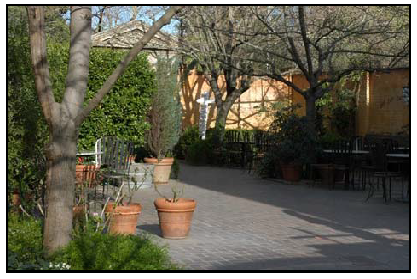
Brick, stone, and interlocking pavers should be considered in courtyards and outdoor
spaces.
a)
When utilized, outdoor use areas, including patios, courtyards, and decks, should be in character with the Hill Country. They should reflect a modest, low-key quality and may occur in a variety of locations. Some may be in front of a building, while others may be to the side or rear.
b)
Incorporate an informal character into these areas.
c)
Incorporating benches and other furniture is appropriate.
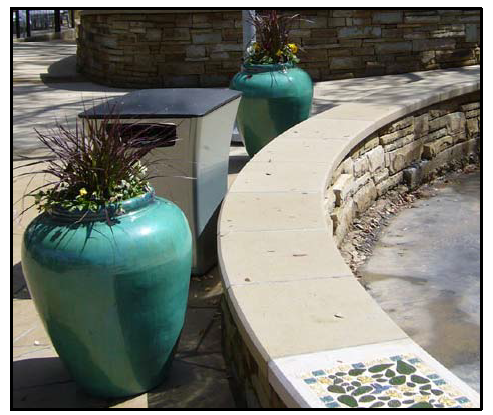
Outdoor areas should be in character with the Texas Hill Country.
d)
Consider using a courtyard as a transitional element between buildings.
e)
Brick, stone, stamped concrete and interlocking pavers should be considered in courtyards and outdoor spaces.
7.
Fences and Site Walls.
a)
Traditional fences and rock walls enhance the character of the area and should be preserved. Fences were typically wood rail, relatively low in height, and had a "transparent" character, allowing views into yards and providing interest to pedestrians. Low rock walls were also used to define property lines or highlight an entry. New fencing or site walls should be in character with those used traditionally.
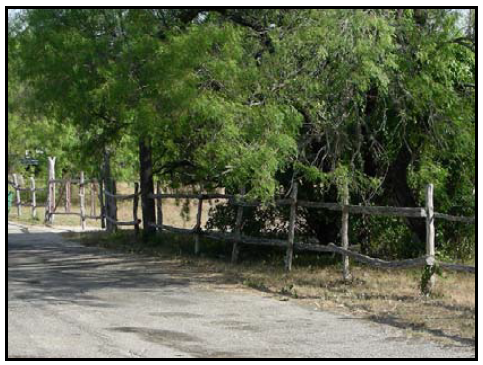
If a new fence is constructed, it should be "transparent" in character.
b)
New fencing should be transparent in character and reflect those seen traditionally.
c)
Rock walls should remain low in scale and reflect those seen traditionally.
d)
Unfaced concrete block or concrete, plastic, fiberglass, rebar, wrought iron, plywood, cyclone, chain link, and mesh construction fences are inappropriate.
8.
Lighting.
a)
Refer to City lighting ordinance.
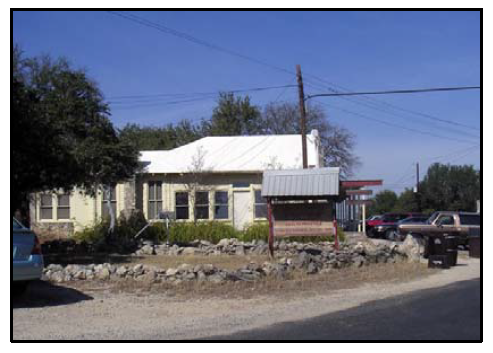
Rock walls were traditionally low in character.
b)
Exterior lighting shall be full cutoff in order to preserve the rural character and protect the view of the night sky. Street lights should be placed randomly to avoid an urban appearance; however, street lights should still provide adequate lighting at street intersections and along public walkways. Outdoor site lighting may be installed to illuminate walkways and outdoor use areas, and lights may be used to illuminate signs and building entrances.
c)
Prevent glare onto adjacent properties by using shielded and focused light sources.
d)
Unshielded, high intensity light sources and those that direct light upward are prohibited.
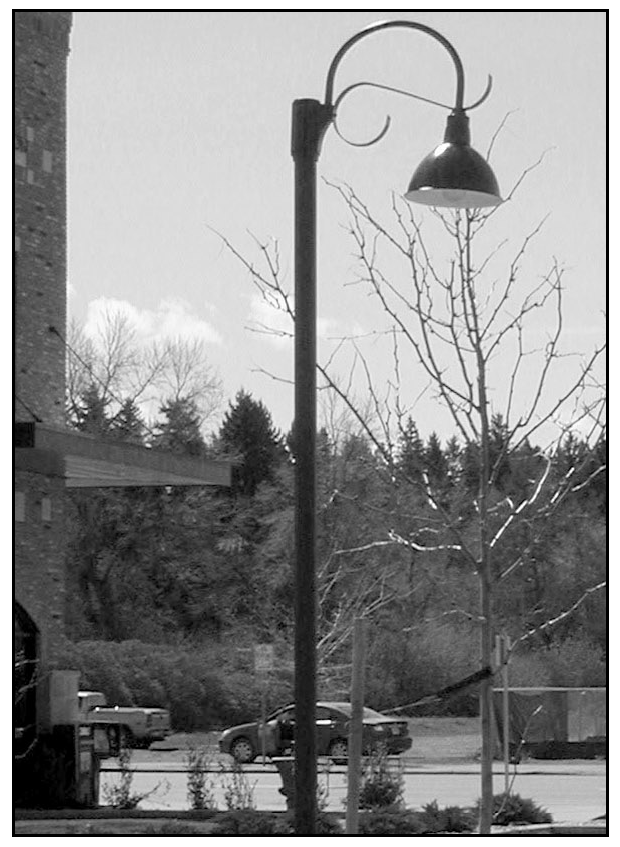
Prevent glare onto adjacent properties by using full cutoff light fixtures.
e)
Lights that cast a color similar to that of daylight are preferred.
f)
Do not wash an entire building façade in light.
g)
Low-scale light fixtures are recommended for paths and walkways within a property.
h)
Light fixtures should be simple in character.
9.
Parking.
a)
Refer to City parking regulations.
b)
Parking areas should have a positive visual impact. Private and public lots should be screened and located away from the road edge, where feasible. Large surface lots should be divided into smaller "rooms."
c)
Screen parking areas from view with landscaping.
d)
Divide parking areas into smaller lots with planted buffers between them to minimize the perceived scale of the total parking area.
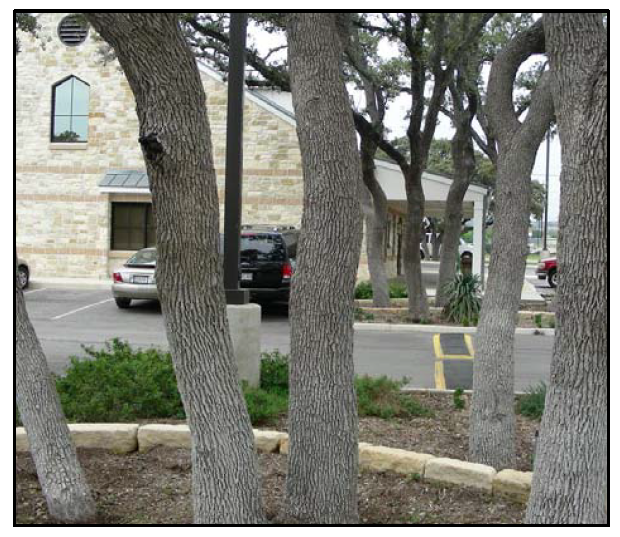
A parking area should have a positive visual impact.
e)
Where feasible, locate parking lots to the sides or rear of buildings.
f)
Integrate existing, mature trees into the parking design.
10.
Mechanical Equipment and Service Areas.
a)
Locate mechanical equipment to the rear or sides of a property and screen them with landscaping if visible from public rights-of-way.
b)
Window air conditioning units or condenser elements should be located where they are not visible on a front façade.
c)
Mechanical equipment should have a matte or non-reflective finish.
d)
Satellite dishes or antennae should be located away from the front of a structure and, if applicable, placed into a landscaped setting.
e)
Service areas should not be visible from major pedestrian ways or public rights-of-way.
f)
Trash areas should be screened from view using a fence, landscaping, or enclosure.
g)
All roof mounted mechanical equipment shall be screened from view from any public right-of-way. Screening materials for rooftop equipment must be of a material architecturally compatible with the materials used elsewhere on the structure.
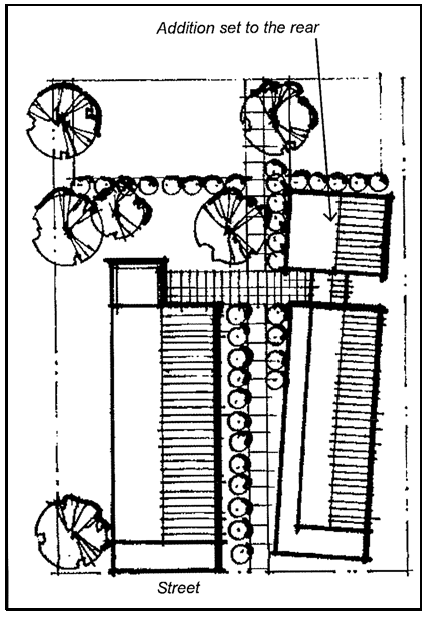
Place an addition to the rear or side of a building.
b.
Building Additions.
1.
It is important to preserve and maintain the setting and character of traditional buildings in the area. Therefore, an addition should be designed to maintain the existing character of the building as it is perceived from the street.
2.
Where feasible, keeping the size of the addition in proportion to the main structure will minimize its visual impact. If an addition must be larger, it could be set apart from the main building and connected with a smaller linking element. Consider designing the addition so that it complements—not copies—the existing building style.
3.
Place an addition to the rear or side of a building or set it back from the front to minimize its visual impact.
4.
An addition should relate to the original structure in mass, scale, and form.
5.
When feasible, design the addition so it appears subordinate to the main structure.
6.
For a larger addition, break up the mass of the addition into smaller modules that relate to the traditional building.
7.
An addition should be simple and similar in design to prevent it from competing with the primary façade.
c.
Rooftop Additions.
1.
A rooftop addition should be subordinate to the main building. Additional space can be created by adding dormers to an attic or by adding a "pop-top" or new floor.
2.
Set a rooftop addition back from the front of the building so that it will maintain the structure's original profile.
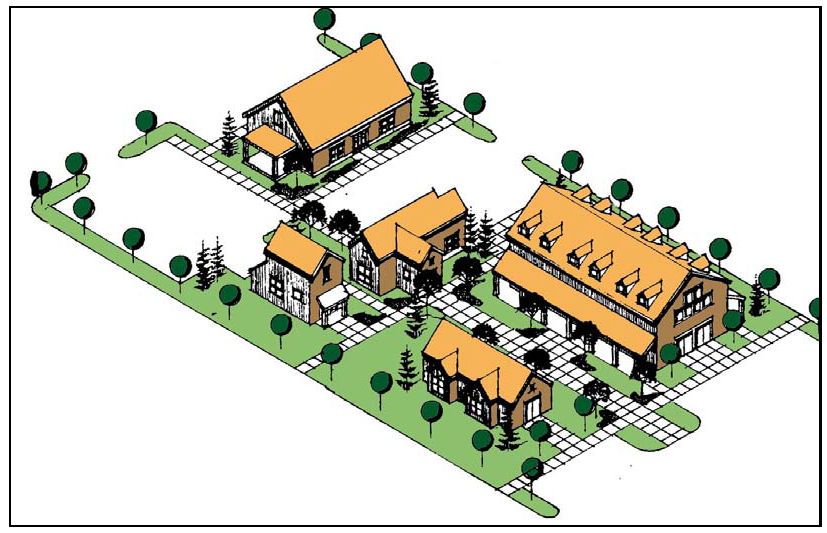
Where feasible, new buildings should be organized in clusters to create outdoor spaces.
Such clustering of structures reflects rural development in the Hill Country.
d.
Design Standards for Infill Development.
1.
Refer to City subdivision and zoning regulations for building setbacks, building mass, and building scale.
2.
This chapter presents design guidelines for the construction of new buildings or renovations in Helotes. These "infill" principles relate to the fundamental relationship between building and context—such as mass, scale, and form. A key objective is that new developments continue to reinforce the low-key, rural town character. Structures should be designed to reflect the small scale of traditional building forms and materials, while accommodating other larger permitted uses.
3.
Building Setbacks.
a)
Building setbacks vary in Helotes. This diversity adds interest and should be continued to maintain the traditional relationship of buildings to the street.
b)
A building should fit within the range of front, rear, and side yard setbacks seen in the area.
c)
A prominent entry will contribute to the "pedestrian friendly" character of the street.
d)
Use a porch or one-story element to define the entry.
e)
Where two or more buildings will be located on a site, arrange them in a cluster to define outdoor spaces.
4.
Street Level Interest.
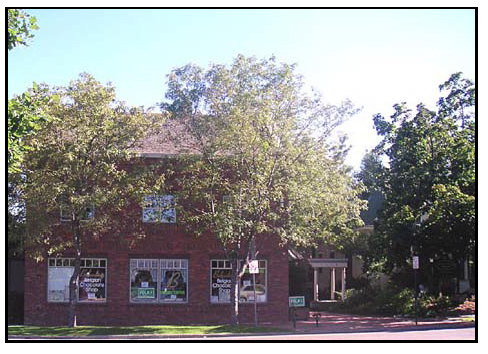
The use of display windows to provide interest to pedestrians and passersby is encouraged
for commercial buildings.
a)
When a building is oriented to the street or parking area, it should be designed to provide interest to pedestrians. For example, commercial buildings with storefronts are of interest to passersby, while porches, courtyards, and decorative wall surfaces add interest to multiple building types.
b)
Building facades viewed from public rights-of-way or parking areas should include interesting details and materials to avoid presenting a "back side" to one street or parking area or another. For example, buildings that are double-fronted should incorporate windows and display cases on both elevations.
c)
A large expanse of blank wall is inappropriate on any public street, parking area, or outdoor space.
5.
Building Mass and Scale.
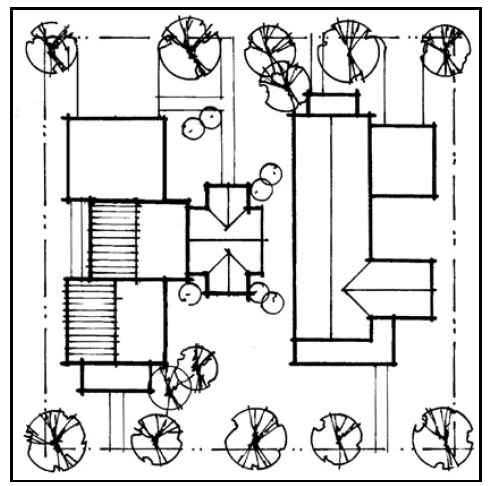
Divide large buildings into smaller modules that reflect the traditional scale of
buildings in the area.
a)
Design a new building to reinforce a sense of human scale. The traditional scale of buildings, usually designed as one and two-story buildings, still dominates and enhances the Hill Country character of the street. To the greatest extent possible, new construction should maintain this human scale. While new buildings are typically larger than those seen before, they should be articulated in their form and material similar to those seen traditionally.
b)
Use building materials that are of traditional dimensions.
c)
Provide a porch or one-story element that is similar in size to that seen traditionally.
d)
Subdividing the mass of a larger building into smaller "modules" that are similar in size to new buildings are lengthy or horizontal, façade elements should reduce the proportion and the visual width of the building. Examples of those elements that give the impression of multiple structures include varying parapet heights, alternating projecting and recessed sections of walls, and variegated window arrangements. Further, typical historic features that reduce the mass of large facades include columns or pilasters at regular intervals, repetitive patterns of openings, and horizontal masonry bands at each floor level.
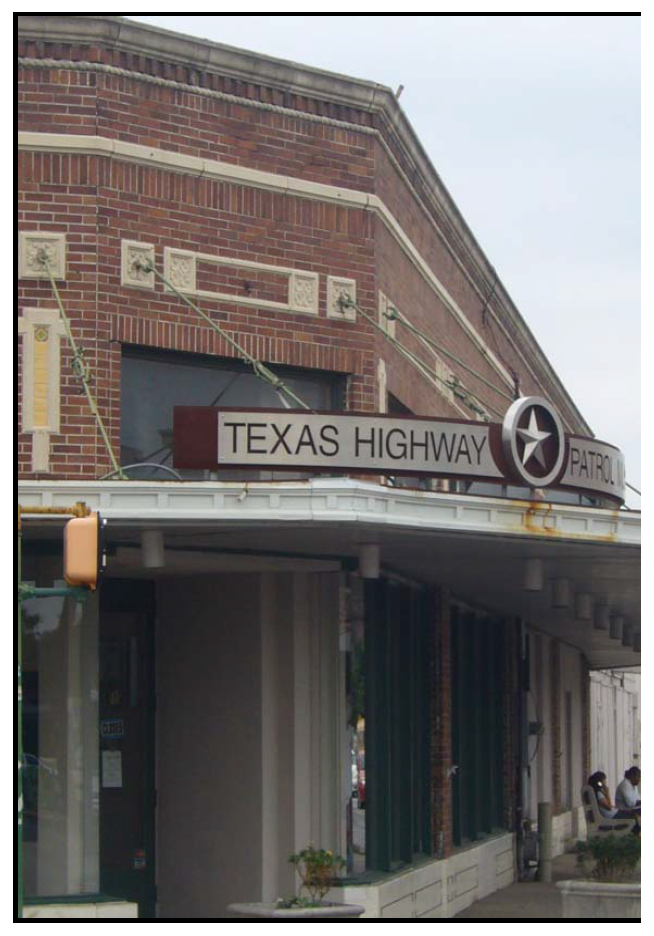
In order to preserve the traditional scale of the area and maintain views to the hillsides,
buildings in the area should not be taller than two stories.
e)
A new building or addition should not be greater than two floors in height.
f)
Floor-to-floor heights should appear similar to those seen traditionally.
6.
Building Materials.
a)
Use building materials that appear similar to those used traditionally. Building materials on a new structure should be compatible with adjacent, traditional buildings to establish a sense of visual continuity. Clay or concrete brick, terra-cotta, natural stone, cast stone, granite, architectural decorative material (copper, bronze, et cetera), stucco, or wood are appropriate.
b)
Horizontal lap siding should be applied in a manner similar to that seen historically.
i.
It should match the lap exposure, texture, and finish of traditional wood siding.
ii.
Trim boards that show substantial depth should be used.
iii.
Wood siding should have a weather-protective, painted or stained finish.
iv.
Use of a highly reflective material, such as polished metal or stone, is inappropriate.
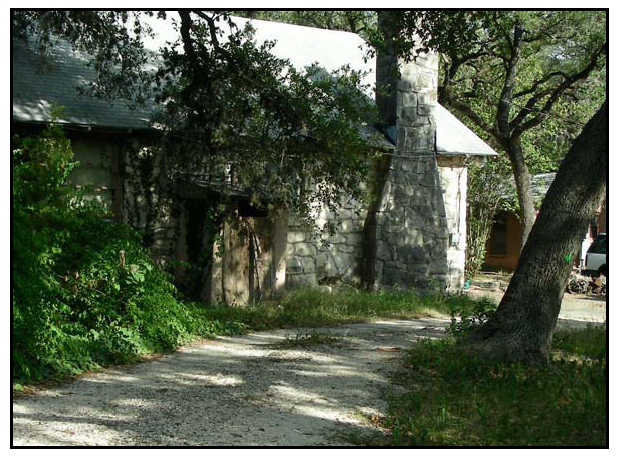
The use of masonry that appears similar to that seen traditionally is appropriate.
c)
The use of masonry that appears similar to that seen traditionally is appropriate.
i.
The use of limestone, similar to that used traditionally, is encouraged.
ii.
The bond patterns, mortar color, and width and shape of joints should be compatible with traditional buildings in the area.
d)
Contemporary interpretations of traditional building materials are appropriate.
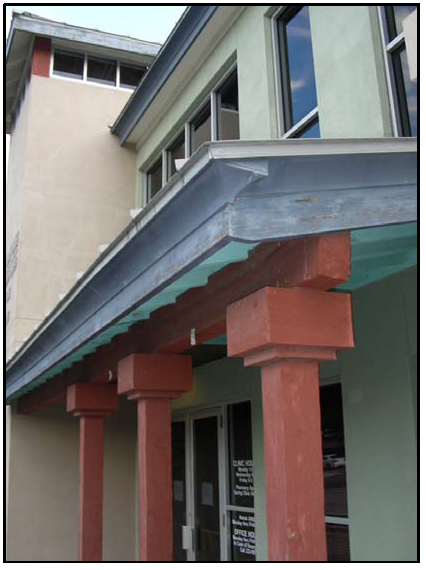
Contemporary interpretations of traditional building materials are appropriate. Notice
the vertical, double hung windows on the second story.
i.
If used, contemporary materials should appear similar in character to those seen traditionally. Characteristics, including color, texture, and size, should be considered when utilizing contemporary materials.
ii.
Stucco is appropriate as a secondary material.
iii.
A matte or non-reflective finish is preferred. Polished stone, reflective metal, and mirrored glass should be avoided.
e)
Roof materials should convey a scale and texture similar to those used traditionally.
i.
Roof materials should be earth toned and have a matte, non-reflective finish.
ii.
Non-reflective standing seam metal roofs are appropriate. The seam profile should be similar to that seen traditionally.
iii.
Many of the commercial structures in the Hill Country have flat roofs with parapet walls that extend above the roof. This treatment is encouraged for new structures. A projected cornice at the top of the parapet should be considered in the design of new buildings. A cornice serves to screen roofs and mechanical equipment and provide architectural interest and historic character.
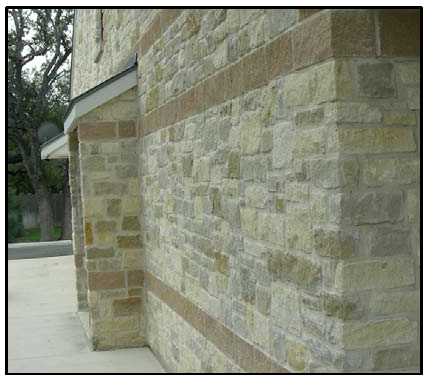
The use of limestone similar to that used traditionally is appropriate.
7.
Porches.
a)
Porch elements are strongly encouraged to provide shade, to reflect traditional building scales, and to provide a sense of entry and visual interest. Porch elements should be similar to those seen traditionally.
b)
A porch should relate to the overall architectural style and scale of the primary structure.
c)
The porch should appear to be an integral element of the building in regard to material, scale, and detailing.
d)
Porch supports should be substantial enough in size that the porch does not appear to float above the entry.
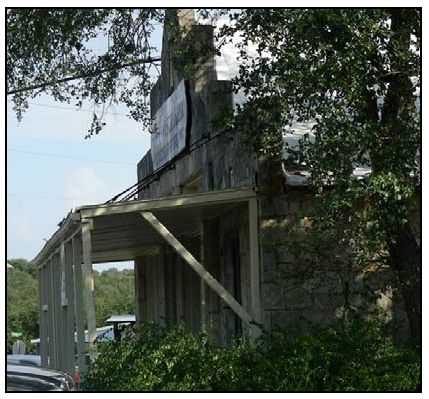
A porch should relate to the overall architectural style and scale of the primary
structure. Porch supports should be of a substantial enough size that the porch does
not appear to float above the entry. Notice the parapet wall and flat roof above the
porch.
8.
Windows and Doors.
a)
Windows and doors give scale to buildings and provide visual interest to the composition of individual facades.
b)
Windows and doors should be similar in size, shape, and proportion to those used traditionally.
i.
Vertically proportioned, double hung windows are preferred. Historic upper story windows in urban areas are vertical—not horizontal—in form; have rectangular or arched tops; and have multi-paned, divided glass.
ii.
Traditional storefront windows are appropriate on commercial type building facades and their use is encouraged.
iii.
The ratio of openings to solid wall on primary facades should be similar to those seen traditionally.
iv.
Large expanses of glass are inappropriate.
c)
Metal or vinyl clad wood windows and clear or unfinished aluminum windows and storm windows should be finished in a color typical of the Texas Hill Country.
d)
Security bars have become a common method of preventing loss of property. However, inappropriate use of them can detract from property values in the area and even discourage customers. Security bars are acceptable only if installed on the interior of glass windows and doors.
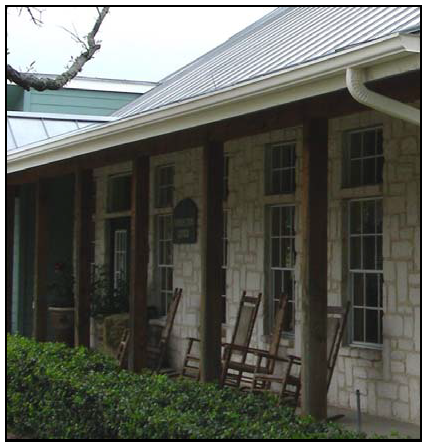
Vertically proportioned, double hung windows are preferred.
9.
Accessory Structures.
a)
An accessory structure should be visually subordinate to a primary structure. Traditionally, accessory structures, such as sheds, garages, and other outbuildings, were subordinate in scale and character to the primary structure and were located to the rear of the structure. The tradition of detached accessory structures is encouraged because it reduces the overall perceived mass of a building on a site.
b)
Locate an accessory structure to the sides or rear of a lot.
c)
An accessory structure should reflect the architectural character and style of the main structure.
d)
Basic rectangular forms, with hip, gable, or shed roofs, are appropriate.
e)
Accessory buildings should appear subordinate in height to primary structures.
10.
Awnings and Canopies.
a)
Awnings and canopies serve a number of functions, including providing shelter from wind and sun in pedestrian areas; protecting interior furnishings and finishes from fading caused by direct sunlight; allowing reflected light to enter the interior without increasing heat load; and adding architectural interest or historic ambiance to structures. However, the appropriateness of awnings to a building's architectural style should be considered before installing them.
b)
Location. Awnings and canopies may be placed at the top of openings, but they should not hide important architectural details and elements.
c)
Shape. The shape of awnings and canopies should fit the shape of the opening—round or arched awnings over arched openings and rectangular awnings over rectangular openings. Odd shapes, bull nose awnings, and bubble awnings are inappropriate for Hill Country structures.
d)
Operable Awnings. Operable awnings are encouraged, but rigid frame awnings also may be considered.
e)
Materials. Acceptable awning materials are canvas or woven acrylic over painted steel or anodized aluminum frames. Shiny vinyl or plastic fabrics should be avoided, as should prefabricated metal awnings. Canopies should be constructed of a material consistent with the architecture.
f)
Color. The color of awnings and canopies should be compatible with the overall color scheme for the project.
g)
Lighting. Internally illuminated awnings are discouraged. Indirect lighting is preferred.
11.
Color.
a)
Color can help to coordinate facade elements into an overall composition—one that will highlight features of the façade. Distinctive architectural elements may be dramatized with a contrasting color. Any color scheme should be subdued, not garish, and in keeping with the character and color schemes of nearby structures and the Texas Hill Country.
b)
Compatible Trim Color. Trim colors should be selected that are compatible with other, more permanent building materials on the structure, such as brick, stone, or stucco. The natural colors of these primary materials should dominate the color scheme from the street.
c)
Trim, including horizontal and vertical trim boards, porch framing and columns, and window framing, should be painted in a color that compliments the base shade. Window sashes, doors, and/or shutters may be painted in a third color.
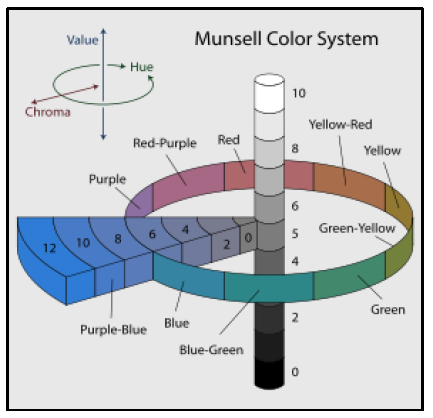
Munsell Color System —wikipedia.com
d)
Bright Colors. Extremely bright or fluorescent exterior colors are discouraged. Bright colors should be used in small amounts and for accent only. An extremely bright or fluorescent color is a color defined by the Munsell Book of Color as having a minimum value of eight (8) and a minimum chroma of ten (10).
e.
Building Types.
1.
Traditional Storefront.
a)
The Traditional Storefront has a retail-oriented first floor. It may have upper floors that typically house offices.
b)
Features:
i.
Display windows at street or parking area level
ii.
Storefront at the walkway edge
iii.
Upper floors are more solid with less glass
iv.
Awning or canopy defines first floor level
v.
Recessed entry
vi.
Masonry or lap siding
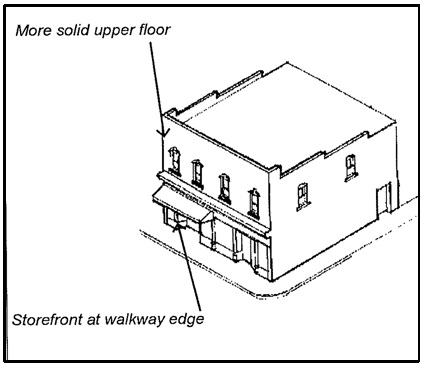
Traditional Storefront Type
2.
Traditional Rural Type.
a)
The Traditional Rural Type draws inspiration from traditional rural structures. It has a sloping, gable roof and may have stone, wood lap, or vertical board and batten siding. Metal, seamed roofs are typical. The ground level has less glass than the Traditional Storefront, but display windows may be used.
b)
Features:
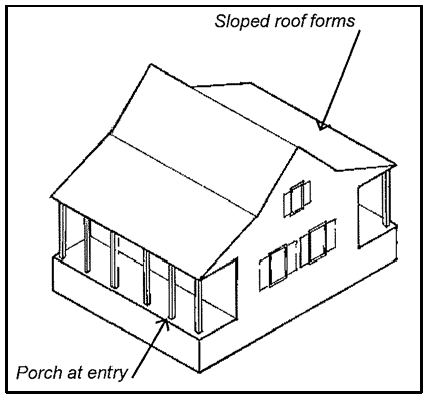
Traditional Rural Type
i.
Gable roof, sometime with dormers
ii.
Less glass at street level than the Traditional Storefront
iii.
Porch at front
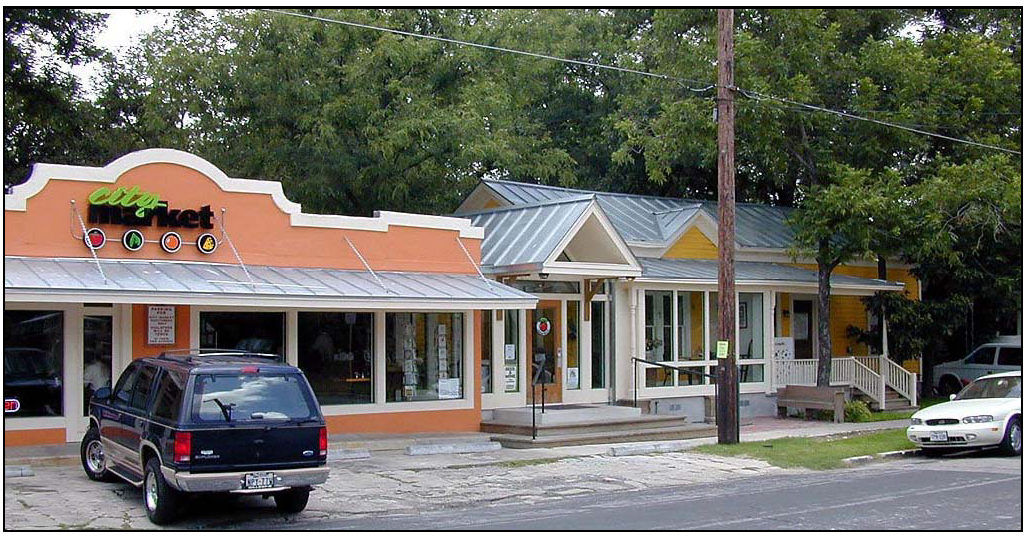
Traditional Storefront types and Traditional Rural types may be combined into attached
structures.
3.
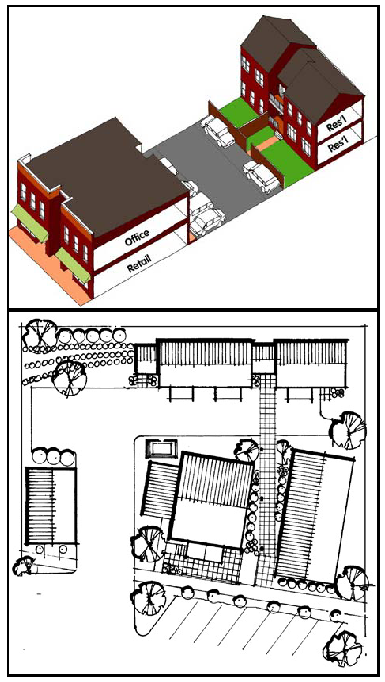
Mixed Use Rural Type.
Mixed Use Rural Type
a)
The Mixed Use Rural Type is a cousin of the Traditional Rural Type, but is somewhat larger. It has two stories and may be designed for a mix of commercial and residential uses.
b)
Features:
i.
Gable roof, sometimes with dormers
ii.
Less glass at street level than the Traditional Storefront
iii.
Porch at front
4.
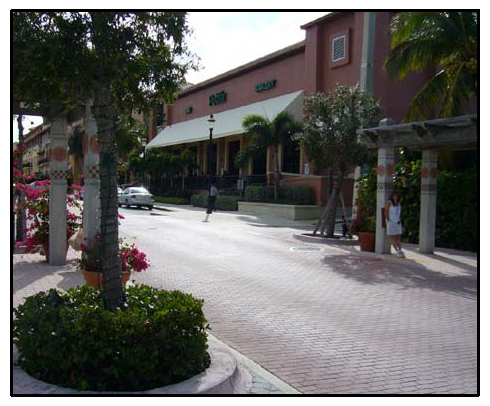
Mixed Use Commercial Cluster Type.
a)
This building type is larger in scale, yet it draws upon traditional forms and materials. This building type should occur in clusters with edges oriented toward streets and parking areas. Although less glass may be located at the street or parking level than in the Traditional Storefront type, some transparency should be maintained along any walls that are visible to the street, parking, or outside areas.
b)
Features:
i.
Gable roof, sometimes with dormers
ii.
Less glass at street or parking level than the Traditional Storefront
iii.
Porch at front
Mixed Use Commercial Cluster Type
f.
Signage.
1.
Refer to City sign regulations.
2.
Signage serves two functions—to convey information and to attract attention. The overall facade composition, including ornamental details, color, and materials, should be considered when determining the location, size, and character of signage.
3.
Sign Design. Consider both pedestrian and vehicular traffic in selecting and designing signage.
4.
Signage and the Building. Signage should be low-key in order to avoid competition with the architecture of the structure. Materials should be compatible with the building's materials and style.
5.
Locate signs so that they emphasize design elements of the facade, but do not obscure architectural details, windows, or other significant features. Signs can also reinforce the horizontal lines of moldings, transoms, and accent architectural details when placed appropriately.
6.
The design and style of both the lettering and sign should complement the style of the building. Signs for multiple businesses in a single building should be designed with similar materials, backs, and lettering styles.
7.
Materials. Glass, painted wood, painted metal, or architectural decorative metals, such as copper, bronze, brass, aluminum, or stainless steel, are appropriate sign materials.
8.
Sign Lighting. Incandescent or metal halide lights are more appropriate than fluorescent or high-pressure sodium lighting. Neon decoration and signs should be used only in small amounts and where appropriate to the building design.
(c)
Plan Submittal Requirements (PSR). A completed PSR checklist shall be submitted to the Planning and Zoning Commission for review and City Council action. Providing false or misleading information on any documents submitted to the City is a Class A misdemeanor, which is punishable by incarceration, fine, or both (V.T.C.A., Penal Code Ch. 37). Further, providing false or misleading information shall cause the Planning and Zoning Commission and City Council to reject the proposal and bar the owner, owner's agent, or both from submitting an application for a period of 12 months.
(d)
Review by the Planning and Zoning Commission and action by the City Council. The Commission should make an initial review of a complete submittal within 45 days of the applicant's initial submittal to the City. The Commission shall review and make recommendations to the City Council on the submittal. Upon receipt, the City Council may take the following actions on an application:
(1)
Approved. Prior to the issuance of a building permit for exterior construction, alterations, or renovations, a letter of compliance must be obtained from the City Council.
(2)
Approved with Conditions. The City Council may impose such conditions as it deems reasonable and necessary to ensure compatible development with the surrounding area and to ensure that the spirit and intent of this Article and the City's Design Standards are followed.
(3)
Disapproved. The City Council may disapprove the application.
(4)
Postpone. The City Council may request additional changes or information and the re-submission of the changes and/or information within 60 days.
(e)
Vote Required. An affirmative vote of the majority of the Councilmembers present at a meeting shall be required for issuance of a letter of compliance and building permit.
(Ord. No. 399, § 1, 3-26-2009; Ord. No. 414, § 5, 11-12-2009; Ord. No. 18-17, § 1, 8-9-2018)

