
Independence City Zoning Code
SECTION 530
ZONING: DISTRICT PROVISIONS
530.01.- Agricultural District established.
Subd. 1.
Purpose. The agricultural district is established for the purpose of promoting continued farming of agricultural lands.
Subd. 2.
Permitted uses. The following uses are permitted in the Agricultural District:
(a)
Agriculture and horticulture;
(b)
Feedlots and poultry facilities;
(c)
Farm drainage and irrigation systems;
(d)
Forestry;
(e)
Public recreation;
(f)
Single-family dwellings
Subd. 3.
Accessory uses. The following accessory uses are permitted in the Agricultural District:
(a)
Private garages for single-family dwellings,
(b)
Home occupations operated in accordance with subsection 515.09 of this zoning code;
(c)
Fences;
(d)
Detached agricultural storage buildings, barns, or other structures, accessory to an existing single-family dwelling and subject to the following criteria:
(Amended, Ord. No. 2013-07, § 1)
1.
No accessory building or structure shall be constructed on any residential lot prior to the time of construction of the principal building to which it is accessory.
(Added, Ord. No. 2013-07, § 1)
2.
Accessory buildings or structures of 120 square feet or less are exempt from the total square footage.
3.
The maximum square footage of any individual accessory building or structure shall be 5,000 square feet.
(Added, Ord. No. 2013-07, § 1)
4.
The total square footage of all accessory structures on an individual property shall not exceed the following standards:
(Added, Ord. No. 2013-07, § 1)
(Amended, Ord. No. 2013-07, § 1)
1 Building size shall be calculated by determining the footprint of the building.
(Added, Ord. No. 2013-07, § 1)
2 Percentage of lot area shall be based on the buildable land. Buildable land must be contiguous and not separated by streams, wetlands, slopes in excess of ten percent or other physical impediments. In no instance shall the total impervious surface area of any lot exceed 25 percent.
(Added, Ord. No. 2013-07, § 1)
3 The height of an accessory structure shall not exceed the height of the principle structure, except as provided in footnote 4. The height of the principle and accessory structure shall be measured in accordance with the definition provided in this ordinance, section 510.05, subdivision 10.
(Added, Ord. No. 2013-07, § 1; Amended, Ord. No. 2019-03, § 1, 11-18-2019)
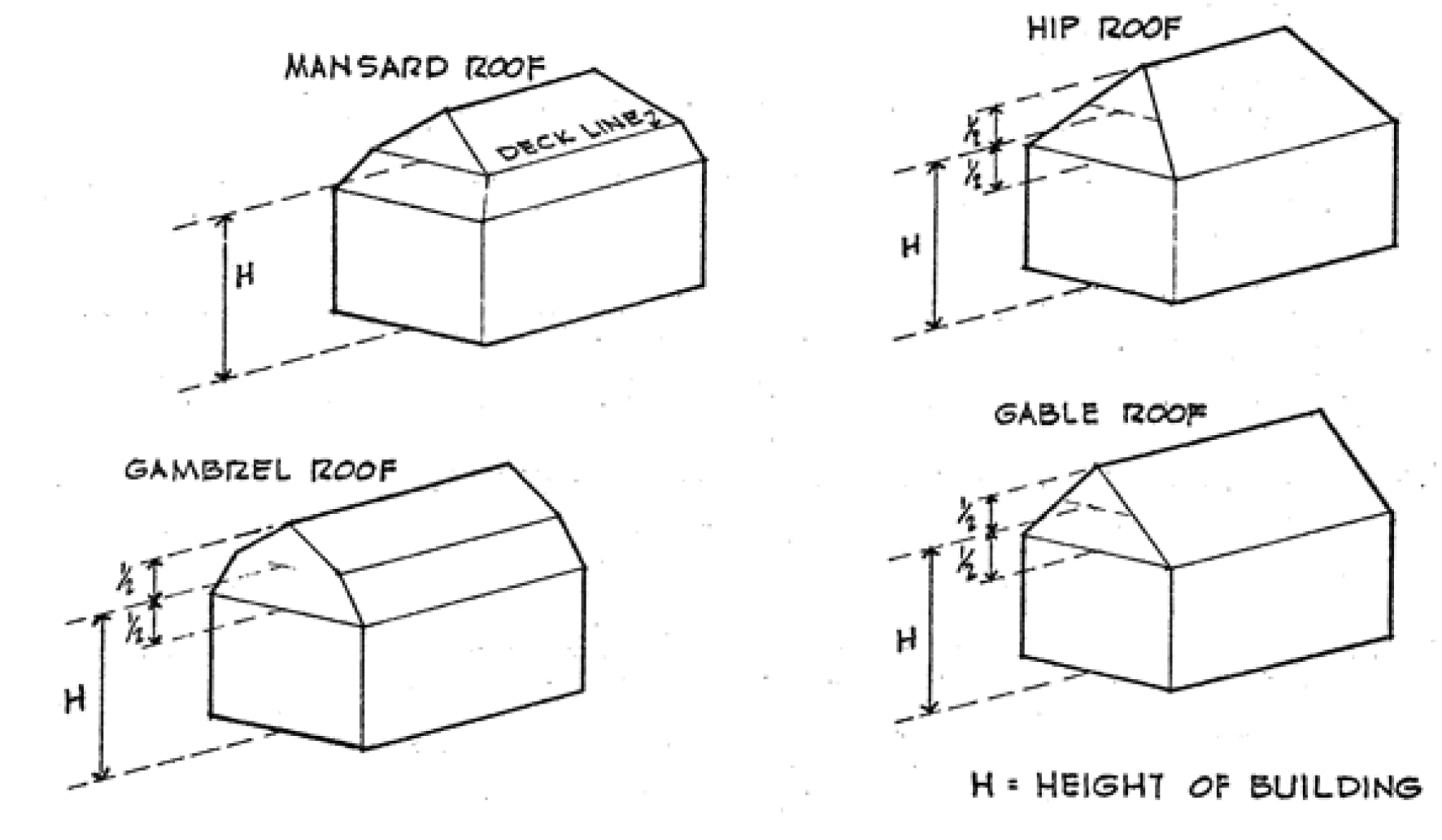
(Added, Ord. No. 2013-07, § 1)
4 An accessory structure may exceed the height of the principle structure if the accessory structure meets all applicable criteria of the section and the following conditions are met:
(1)
Building plans containing any proposed accessory structure with a height exceeding that of the principle structure must be submitted to the city in advance of work to confirm compliance with this section.
(2)
The city council may establish an accessory building height review committee to review building plans submitted for any proposed accessory structure with a height exceeding that of the principle structure to ensure compliance with the following:
a.
On properties that are 2.5 acres or less, the proposed accessory structure must be located to the rear of the principle structure.
b.
The proposed accessory structure must be detached and separated by a minimum distance of 75 feet from the principle structure.
c.
The proposed accessory structure must meet the principle structure setbacks from all property lines.
d.
The applicant shall provide with the application, the written consent of 100 percent of the owners or occupants of privately or publicly owned real estate directly abutting the premises for which the permit is being requested (on forms provided by the city). Where a street separates the premises for which the permit is being requested from other neighboring property, no consent is required from the owners or occupants of property located on the opposite side of the street. Where an abutting property consists of a multiple dwelling, the applicant need only obtain the written consent of the owner or manager, or other person in charge of the building.
(Added, Ord. No. 2019-03, § 1, 11-18-2019)
(e)
Retail sales, on a seasonal basis of agricultural and horticultural products grown on the premises by a person who occupies the premises as a principal residence, provided that the applicant apply for and receive an administrative permit from the city prior to commencing any sales of products. All applications shall meet and comply with all of the following standards:
(Added, Ord. No. 2010-04)
(1)
Adequate off-street parking is provided for the number of persons reasonably anticipated to be on the site at any one time;
(Added, Ord. No. 2010-04)
(2)
The hours of operation must be limited so as not to unreasonably interfere with the character of the surrounding area and the neighboring property owners' peaceful enjoyment of their properties;
(Added, Ord. No. 2010-04)
(3)
The following signs may be permitted: one permanent on-site sign of no greater than 32 square feet in area per surface and having no greater than two surfaces, two temporary off-site signs of no greater than eight square feet in area per surface and having no greater than two surfaces and such other signs as city may reasonably determine to not interfere with public safety or the character of the surrounding area;
(Added, Ord. No. 2010-04)
(4)
Any new accessory structure constructed for the purpose of such sales and any adjacent parking area must satisfy those requirements as to setback, size, appearance and screening as the city may reasonably determine for purposes of protecting public safety and the character of the surrounding area;
(Added, Ord. No. 2010-04)
(5)
Greenhouses may not be artificially lit between the hours of 9:00 p.m. and 7:00 a.m. unless shielded so as to prevent any light from escaping in any direction;
(Added, Ord. No. 2010-04)
(6)
Such requirements, including application of dust control materials and grading of roadways, as the city reasonably determine are necessary in order to minimize the impact of any increase in traffic on city roadways as a result of such sales being conducted on the premises;
(Added, Ord. No. 2010-04)
(7)
All applicable federal, state and local statutes, ordinances, codes and regulations, including, but without limitation, all applicable health and safety regulations, must be complied with.
(Added, Ord. No. 2010-04)
(f)
Aeration or decorative windmills provided the following performance standards are satisfied:
(Added, Ord. No. 2015-01, § 2)
(1)
Permit required. A building permit shall be required for the construction of a recreational or aeration windmill.
(Added, Ord. No. 2015-01, § 2)
(2)
Minimum lot size requirement. Lot must be 5 acres in total area or larger.
(Added, Ord. No. 2015-01, § 2)
(3)
Setback requirements. The windmill must be setback from all property lines and residential structures, ten feet plus the height of the windmill.
(Added, Ord. No. 2015-01, § 2)
(4)
Height restrictions. The maximum height of the windmill, as measured to the top of the highest point of the structure or blade) must not exceed the height of the principal structure or 35 feet, whichever is less.
(Added, Ord. No. 2015-01, § 2)
(5)
Stability. The windmill shall be installed to withstand a wind force of 90 miles per hour.
(Added, Ord. No. 2015-01, § 2)
(6)
The function of the windmill can only be used for the purpose of water aeration or decoration and not for any other on or off-site use; including the generation of electric power, either for use or sale.
(Added, Ord. No. 2015-01, § 2)
(7)
No more than one windmill shall be permitted per property.
(Added, Ord. No. 2015-01, § 2)
(8)
Windmills less than ten feet in height shall not require a permit.
(Added, Ord. No. 2015-01, § 2)
Subd. 4.
Conditional uses. The following conditional uses may be permitted in the Agricultural District, by action of the city council pursuant to subsections 520.09, 520.11 and 520.13.
(a)
Accessory dwelling units;
(Added, Ord. No. 2011-09)
(b)
Riding stables;
(c)
Bunkhouses;
(d)
Farrieries;
(e)
Detached agricultural storage buildings, barns, or other accessory structures that exceed the size limitations of subdivision 3(d) of this subsection;
(Amended, Ord. No. 2005-11)
(f)
Kennels;
(Amended, Ord. No. 2005-11)
(g)
Local government buildings;
(Amended, Ord. No. 2005-11)
(h)
Churches;
(Amended, Ord. No. 2005-11)
(i)
Cemeteries;
(Amended, Ord. No. 2005-11)
(j)
Extraction;
(Amended, Ord. No. 2005-11)
(k)
Essential services;
(Amended, Ord. No. 2005-11)
(l)
Temporary use of a mobile home or camper as a dwelling unit during construction of a permanent dwelling for a period not to exceed six calendar months;
(Amended, Ord. No. 2005-11)
(m)
Wind energy conversion systems (WECS);
(Amended, Ord. No. 2005-11)
(n)
Commercial indoor storage in existing farm buildings, provided:
(Amended, Ord. No. 2005-11)
(1)
The applicant establishes that the building has been in continuous use for agricultural purposes for at least ten years preceding the application for the conditional use permit;
(2)
The building is located on property that is owner-occupied; and
(3)
The applicant establishes that the structure cannot be economically used for agricultural purposes.
(o)
Guest houses and non-rental guest apartments;
(Amended, Ord. No. 2005-11)
(p)
Commercial golf courses;
(Amended, Ord. No. 2005-11; Ord. No. 2010-04)
(q)
Telecommunications towers approved pursuant to section 540 of this Code;
(Amended, Ord. No. 2005-11; Ord. No. 2010-04)
(r)
Forestry products processing, provided that:
(Amended, Ord. No. 2005-11; Ord. No. 2010-04)
(1)
The operation of the conditional use must be on a lot that is being used as an occupied single-family dwelling;
(2)
The lot upon which the conditional use is operated must be not less than ten acres in area;
(3)
The area devoted to the conditional use, including buildings, parking, storage area, and all related uses may not exceed 15,000 square feet or 12 percent of the size of the lot, whichever is smaller, subject to existing accessory building standards.
(s)
Polo grounds.
(Added, Ord. No. 2007-01; Ord. No. 2010-04)
(t)
Catering business, provided that:
(Added, Ord. No. 2011-15)
(1)
The business is subordinate to the principal use of the property as a residence;
(2)
No materials, equipment or parts used in the business may be stored on the premises other than within the dwelling unit or accessory structure;
(3)
No signs relating to the business may be visible from the exterior of the dwelling unit or accessory structure except signs that are permitted under subsection 550.09, subdivision 2 of this zoning ordinance;
(4)
No exterior alterations may be made to the dwelling unit to accommodate the business except those alterations customarily found with the dwelling units on lots of similar size within the district;
(5)
No traffic shall be generated by the business beyond what is reasonable and normal for the area in which it is located;
(6)
The hours and days during which the business is conducted on the premises is limited so as not to unreasonably interfere with the residential character of the surrounding areas;
(7)
No over the counter retail sales may occur on-site.
(u)
New wireless support structures for small wireless facilities.
(Added, Ord. No. 2018-06, § 2)
Subd. 5.
Animal assisted therapy operation. AAT may be permitted as a conditional use by action of the city council pursuant to subsections 520.09, 520.11 and 520.13 of the zoning ordinance, subject to the following additional conditions:
(a)
The applicant shall provide proof of insurance in an amount and with such coverage as the city attorney deems reasonable, and shall thereafter maintain such insurance.
(b)
The applicant shall provide proof of licensing or appropriate educational attainment and training in AAT for all therapists delivering services at the site. This requirement shall be continuing and the city may request such proof on a periodic basis for all therapists then delivering services.
(c)
The applicant shall provide documentation and a site plan describing the AAT program(s) to be delivered. Such documentation shall include a description of the goal-directed process and criteria for evaluating the effectiveness of the program(s).
(d)
The applicant shall identify all species of animals that will be present at the site and used in delivering AAT. No other species of animals shall be allowed with the city's approval.
(e)
For parcels of less than ten acres, the maximum density of animal units is two acres for the first animal unit and one additional acres for each additional animal unit.
(f)
Other than the delivery of AAT, no commercial or business activities may be conducted on the site except the production of agricultural products in de minimis amounts as a result of the delivery of AAT.
(g)
The city may periodically inspect the site without notice.
530.03. - Physical standards.
Subd. 1.
Subdivisions. Subdivisions within the Agricultural District shall be limited to lot line rearrangements and creation of rural view lots, according to the standards and procedures of subsection 500.09, subdivision ordinance.
Subd. 2.
Rural view lot density. A lot of record as of November 9, 1999, may be subdivided into the following maximum number of rural view lots, in addition to the original dwelling or dwelling site on the lot of record:
(Amended, Ord. No. 2010-01)
a The city council may consider a density transfer option for non-contiguous 40 acre tracts that are under single ownership. (For example, a non-contiguous 40-acre lot and an undeveloped 40-acre lot could be combined to yield two new rural view lots plus the original parcel for a combined total of three lots.)
(Amended, Ord. No. 2010-01)
b For the purpose of determining the number of rural view lots that can be created, the area of a lot of record shall be measured to the center of bounding road rights-of-way. Furthermore, a lot of record that was originally subdivided into a quarter-quarter section and has not been further subdivided shall be deemed a 40 acre parcel for purposes of determining rural view lot eligibility. For properties within the jurisdiction of the shoreline ordinance (section 505), submerged lands within the boundaries of any water front parcel that are located waterward of the ordinary high water mark shall not be used to compute the area of the lot.
(Added, Ord. No. 2010-01)
Subd. 3.
Physical standards. All lots and construction thereon must meet the following physical standards:
(a)
Minimum lot area: a 2.50 acres buildable land.
(b)
Maximum lot area: ten acres.
(c)
Minimum lot frontage on an improved public road or street:
(d)
Height. The maximum height of all buildings must not exceed the lesser of 2½ stories or 35 feet. This height limitation does not apply to farm buildings, grain elevators, silos, elevator legs, cooling towers, water towers, chimneys and smokestacks, church spires, or electric transmission lines.
(Amended, Ord. No. 2015-01, § 1)
(e)
Lot depth. The ratio of lot frontage to lot depth must be no more than 1:4.
a A lot must be a minimum of 2.50 acres buildable land with a demonstrated capability to accommodate two on-site waste disposal systems. Buildable land must be contiguous and not separated by streams, wetlands, slopes in excess of ten percent or other physical impediments.
b A waiver to permit lots with reduced frontage on a public right-of-way, neck lots or lots with no frontage on a public right-of-way but with frontage on a common driveway may be considered and granted or not granted. If granted, evidence must be provided that all standards established and defined in section 510.05, subdivision 20 of this zoning code are met:
(Amended, Ord. No. 2010-06)
Subd. 4.
Setbacks. All buildings and structures, including houses with attached garages or decks, must meet or exceed the following setbacks:
(a)
Front yard setback: a d 85 feet from centerline of road.
(Amended, Ord. No. 2020-03, § 1, 12-1-2020)
(b)
Corner yard setback: c 52 feet from right-of-way line.
(Amended, Ord. No. 2020-03, § 1, 12-1-2020)
(c)
Side yard setback: a b 30 feet from side lot line.
(Amended, Ord. No. 2020-03, § 1, 12-1-2020)
(d)
Rear yard setback: a e 40 feet from rear lot line.
(Amended, Ord. No. 2020-03, § 1, 12-1-2020)
(e)
Setback from lakes, rivers and streams: 100 feet from ordinary high mark.
(f)
Setback from wetlands: ten feet from the outside edge of the required wetland buffer.
(Amended, Ord. No. 2012-08, § 1; Amended, Ord. No. 2015-06, § 2)
(g)
Fences, trees, shrubs, or other appurtenances are not allowed within any road right-of-way.
a (Except buildings housing livestock, which may not be located closer than 150 feet from an existing residential structure on all adjacent property.)
b (Except detached garages and other accessory buildings, which may be 15 feet from the side lot line.)
c (All principle and accessory structures shall meet the corner yard setback requirements.);hn0; (Added, Ord. No. 2015-06, § 2)
d (A property that does not directly abut a public right of way shall have a minimum front yard setback of 52 feet from the front yard property line.)
(Added, Ord. No. 2020-03, § 1, 12-1-2020)
e (An accessory structure may encroach into the applicable rear yard setback if the accessory structure meets all applicable criteria of this section and the following conditions are met:)
(Added, Ord. No. 2020-03, § 1, 12-1-2020)
(1)
Building and site plans delineating the proposed accessory structure and setbacks must be submitted to the city in advance of work to confirm compliance with this section.
(Added, Ord. No. 2020-03, § 1, 12-1-2020)
(2)
The city council finds that the proposed accessory structure will comply with at least one of the following:
(Added, Ord. No. 2020-03, § 1, 12-1-2020)
a.
The accessory structure will encroach in the applicable rear yard setback a distance that does not exceed the requisite detached accessory structure setback for the adjacent property along the same line.
(Added, Ord. No. 2020-03, § 1, 12-1-2020)
b.
The property shares a rear yard property line with an Outlot and the setback will be at least 15 feet.
(Added, Ord. No. 2020-03, § 1, 12-1-2020)
(3)
For the purpose of determining the requisite detached accessory setback for the adjacent property, setbacks calculated using a non-conforming structure and or resulting from a previously granted variance cannot be used to determine this exception.
(Added, Ord. No. 2020-03, § 1, 12-1-2020)
(4)
The applicant shall provide with the application, the written consent of 100 percent of the owners of privately or publicly owned real estate directly abutting the premises for which the permit is being requested (on forms provided by the city). Where a street separates the premises for which the permit is being requested from other neighboring property, no consent is required from the owners of property located on the opposite side of the street. Where an abutting property consists of a multiple dwelling, the applicant need only obtain the written consent of the owner or manager, or other person in charge of the building.
(Added, Ord. No. 2020-03, § 1, 12-1-2020)
(5)
The city council may establish an accessory building review committee to review building and site plans submitted for any proposed accessory structure which encroaches into the requisite rear yard setback to ensure compliance with the foregoing requirements.
(Added, Ord. No. 2020-03, § 1, 12-1-2020)
Subd. 5.
Animal unit density. Livestock is permitted in the Agricultural District on parcels less than ten acres at a maximum density of two acres for the first animal unit and one additional acre for each additional animal unit.
530.05. - Rural Residential District established.
Subd. 1.
Established. The Rural Residential District is established for the purpose of providing for residential development affording enjoyment of the rural life style.
Subd. 2.
Permitted uses. The following uses are permitted in the Rural Residential District:
(a)
Single-family dwellings;
(b)
Commercial agriculture;
(c)
Public recreation;
(d)
Horticulture;
(e)
Forestry.
Subd. 3.
Accessory uses. The following accessory uses are permitted in the Rural Residential District:
(a)
Private fences, gardening and landscaping;
(b)
Recreation equipment;
(c)
Home occupations operated in accordance with subsection 515.09 of this zoning code;
(d)
Non-commercial greenhouses;
(e)
Private garage, additional storage buildings, barns or other structures, accessory to an existing single-family dwelling and subject to the following criteria:
(Amended, Ord. No. 2013-07, § 2)
1.
No accessory building or structure shall be constructed on any residential lot prior to the time of construction of the principal building to which it is accessory.
(Added, Ord. No. 2013-07, § 2)
2.
Accessory buildings or structures of 120 square feet or less are exempt from the total square footage.
(Added, Ord. No. 2013-07, § 2)
3.
The maximum square footage of any individual accessory building or structure shall be 5,000 square feet.
(Added, Ord. No. 2013-07, § 2)
4.
The total square footage of all accessory structures on an individual property shall not exceed the following standards:
(Added, Ord. No. 2013-07, § 2)
(Amended, Ord. No. 2013-07, § 2)
1 Building size shall be calculated by determining the footprint of the building.
(Added, Ord. No. 2013-07, § 2)
2 Percentage of lot area shall be based on the buildable land. Buildable land must be contiguous and not separated by streams, wetlands, slopes in excess of ten percent or other physical impediments. In no instance shall the total impervious surface area of any lot exceed 25 percent.
(Added, Ord. No. 2013-07, § 2)
3 The height of an accessory structure shall not exceed the height of the principle structure, except as provided in footnote 4. The height of the principle and ac1essory structure shall be measured in accordance with the definition provided in this ordinance, section 510.05, subdivision 10.
(Added, Ord. No. 2013-07, § 2; Amended, Ord. No. 2019-03, § 1, 11-18-2019)
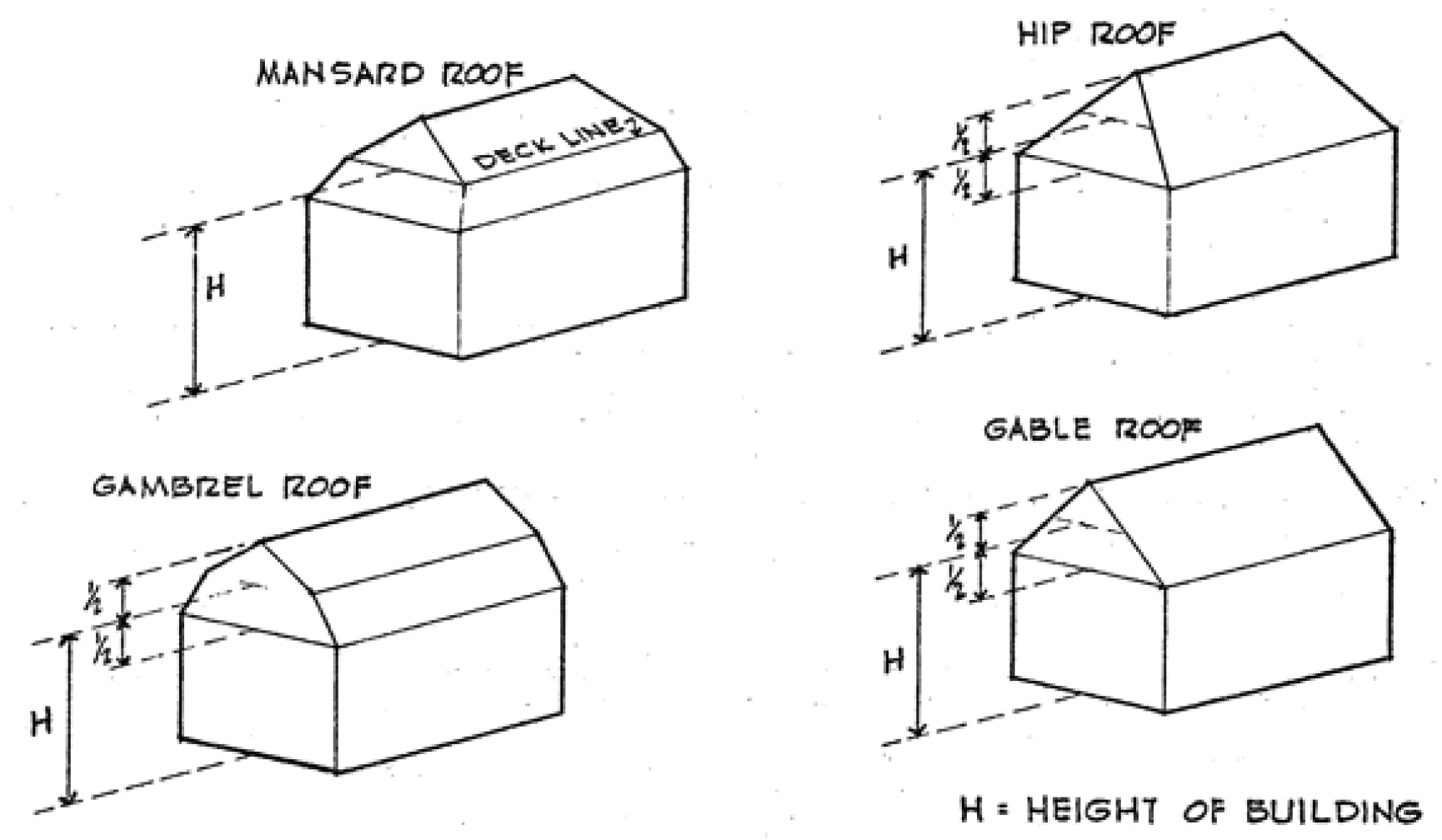
(Added, Ord. No. 2013-07, § 2)
4 An accessory structure may exceed the height of the principle structure if the accessory structure meets all applicable criteria of the section and the following conditions are met:
(1)
Building plans containing any proposed accessory structure with a height exceeding that of the principle structure must be submitted to the city in advance of work to confirm compliance with this section.
(2)
The city council may establish an accessory building height review committee to review building plans submitted for any proposed accessory structure with a height exceeding that of the principle structure to ensure compliance with the following:
a.
On properties that are 2.5 acres or less, the proposed accessory structure must be located to the rear of the principle structure.
b.
The proposed accessory structure must be detached and separated by a minimum distance of 75 feet from the principle structure.
c.
The proposed accessory structure must meet the principle structure setbacks from all property lines.
d.
The applicant shall provide with the application, the written consent of 100 percent of the owners or occupants of privately or publicly owned real estate directly abutting the premises for which the permit is being requested (on forms provided by the city). Where a street separates the premises for which the permit is being requested from other neighboring property, no consent is required from the owners or occupants of property located on the opposite side of the street. Where an abutting property consists of a multiple dwelling, the applicant need only obtain the written consent of the owner or manager, or other person in charge of the building.
(Added, Ord. No. 2019-03, § 1, 11-18-2019)
Subd. 4.
Conditional uses. The following conditional uses may be permitted in the Rural Residential District by action of the city council pursuant to subsections 520.09, 520.11, and 520.13 of this Code:
(a)
Cluster development meeting the standards of subdivision 6 of this section;
(b)
Kennels;
(c)
Nurseries;
(d)
Commercial recreation;
(e)
Local government buildings;
(Amended, Ord. No. 2005-11)
(f)
Churches;
(Amended, Ord. No. 2005-11)
(g)
Cemeteries;
(Amended, Ord. No. 2005-11)
(h)
Essential services;
(Amended, Ord. No. 2005-11)
(i)
Temporary use of a mobile home as a dwelling unit during construction of a permanent dwelling for a period not to exceed six calendar months;
(Amended, Ord. No. 2005-11)
(j)
Guest houses and non-rental guest apartments;
(Amended, Ord. No. 2005-11)
(k)
Telecommunications towers approved pursuant to section 540 of this Code; and
(Amended, Ord. No. 2005-11)
(l)
New wireless support structures for small wireless facilities.
(Added, Ord. No. 2018-06, § 3)
530.07. - Physical standards.
Subd. 1.
Construction. All construction in the Rural Residential District must meet the following physical standards:
(Added, Ord. No. 2010-01)
(a)
Minimum lot area (Added, Ord. No. 2010-01): a 2.50 acres buildable land.
(b)
Minimum lot frontage on an improved public road or street:
(Added, Ord. No. 2010-01)
a A lot must be a minimum of 2.50 acres buildable land with a demonstrated capability to accommodate two on-site waste disposal systems. Buildable land must be contiguous and not separated by streams, wetlands or other physical impediments.
(Added, Ord. No. 2010-01; Amended, Ord. No. 2022-01, § 1, 1-4-2022)
b Lots must have no less than the specified minimum frontage respectively on a right-of-way, provided that the city council may waive the requirement if the following conditions are met:
(Added, Ord. No. 2010-01)
(1)
The applicant submits and the city council approves a development plan encompassing all land under the control of the applicant.
(Added, Ord. No. 2010-01)
(2)
The development plan must demonstrate that vehicular and pedestrian access, as well as emergency and public vehicular access can be provided to each lot in the development plan.
(Added, Ord. No. 2010-01)
(3)
The applicant must enter into a private road agreement that meets the criteria of subsection 510.05, subdivision 70 of this Code as well as additional conditions deemed necessary by the city council to protect the health, safety and welfare of the occupants of the lots within the development plan.
(Added, Ord. No. 2010-01)
(c)
The ratio of lot frontage to lot depth must be no more than 1:4.
(Added, Ord. No. 2010-01)
(d)
Height. The maximum height of all buildings must not exceed the lesser of 2½ stories or 35 feet. This height limitation does not apply to farm buildings, grain elevators, silos, windmills, elevator legs, cooling towers, water towers, chimneys and smoke-stacks, church spires, or electric transmission lines.
(Amended, Ord. No. 2010-01)
Subd. 2.
Setbacks. All buildings and structures, including houses with attached garages or decks, must meet or exceed the following setbacks:
(a)
Front yard setback: a d 85 feet from centerline of road.
(Amended, Ord. No. 2020-03, § 1, 12-1-2020)
(b)
Corner yard setback: c 52 feet from right-of-way line.
(Amended, Ord. No. 2020-03, § 1, 12-1-2020)
(c)
Side yard setback: a b 30 feet from side lot line.
(Amended, Ord. No. 2020-03, § 1, 12-1-2020)
(d)
Rear yard setback: a e 40 feet from rear lot line.
(Amended, Ord. No. 2020-03, § 1, 12-1-2020)
(e)
Setback from lakes, rivers and streams: 100 feet from ordinary high mark.
(f)
Setback from wetlands: ten feet from the outside edge of the required wetland buffer.
(Amended, Ord. No. 2012-08, § 1; Amended, Ord. No. 2015-06, § 2)
(g)
Fences, trees, shrubs, or other appurtenances are not allowed within any road right-of-way.
a (Except buildings housing livestock, which may not be located closer than 150 feet from an existing residential structure on all adjacent property.)
b (Except detached garages and other accessory buildings, which may be 15 feet from the side lot line.)
c (All principle and accessory structures shall meet the corner yard setback requirements.);hn0; (Added, Ord. No. 2015-06, § 2)
d (A property that does not directly abut a public right of way shall have a minimum front yard setback of 52 feet from the front yard property line.)
(Added, Ord. No. 2020-03, § 1, 12-1-2020)
e (An accessory structure may encroach into the applicable rear yard setback if the accessory structure meets all applicable criteria of this section and the following conditions are met:)
(Added, Ord. No. 2020-03, § 1, 12-1-2020)
(1)
Building and site plans delineating the proposed accessory structure and setbacks must be submitted to the city in advance of work to confirm compliance with this section.
(Added, Ord. No. 2020-03, § 1, 12-1-2020)
(2)
The city council finds that the proposed accessory structure will comply with at least one of the following:
(Added, Ord. No. 2020-03, § 1, 12-1-2020)
a.
The accessory structure will encroach in the applicable rear yard setback a distance that does not exceed the requisite detached accessory structure setback for the adjacent property along the same line.
(Added, Ord. No. 2020-03, § 1, 12-1-2020)
b.
The property shares a rear yard property line with an Outlot and the setback will be at least 15 feet.
(Added, Ord. No. 2020-03, § 1, 12-1-2020)
(3)
For the purpose of determining the requisite detached accessory setback for the adjacent property, setbacks calculated using a non-conforming structure and or resulting from a previously granted variance cannot be used to determine this exception.
(Added, Ord. No. 2020-03, § 1, 12-1-2020)
(4)
The applicant shall provide with the application, the written consent of 100 percent of the owners of privately or publicly owned real estate directly abutting the premises for which the permit is being requested (on forms provided by the city). Where a street separates the premises for which the permit is being requested from other neighboring property, no consent is required from the owners of property located on the opposite side of the street. Where an abutting property consists of a multiple dwelling, the applicant need only obtain the written consent of the owner or manager, or other person in charge of the building.
(Added, Ord. No. 2020-03, § 1, 12-1-2020)
(5)
The city council may establish an accessory building review committee to review building and site plans submitted for any proposed accessory structure which encroaches into the requisite rear yard setback to ensure compliance with the foregoing requirements.
(Added, Ord. No. 2020-03, § 1, 12-1-2020)
Subd. 3.
Density. Lots of record in the Rural Residential District may be divided or subdivided into the following maximum number of lots, said maximum number to include the lot for any existing dwelling unit or other principal use:
(Amended, Ord. No. 2010-01)
A maximum of one lot is permitted for each lot of record up to 7.59 acres. For lots of record with a minimum of 7.6 acres, one additional lot shall be permitted for every five acres. The following table is illustrative of the allowed number of lots.
(Added, Ord. No. 2022-01, § 1, 1-4-2022)
(Amended, Ord. No. 2022-01, § 1, 1-4-2022)
(a)
Animal unit density. Livestock are permitted in the rural residential district at a maximum density of two acres for the first animal unit and one additional acre for each additional animal unit.
Subd. 4.
Cluster development conditional use permit. Cluster development is a conditional use in the Rural Residential District, subject to the provisions of subsections 520.09, 520.11 and 520.13 of this Code.
(Amended, Ord. No. 2010-01)
(a)
Purpose. The purpose of the cluster development conditional use permit is to promote the creative and efficient use of land. The provisions of this subdivision are intended to:
(1)
Protect natural features in common open space.
(2)
Improve the arrangement of structures, facilities and amenities on a site.
(3)
Preserve the rural character of the community.
(b)
Criteria. A cluster development is a residential development in which a number of single-family dwelling units are grouped on smaller lots than in conventional developments, while the remainder of the tract is preserved as open space. If the following standards are complied with, density of one unit per four acres is permitted.
(1)
The development parcel must be 40 or more acres in size;
(2)
A minimum of 50 percent of the gross acreage of the subject property, excluding right of way dedicated for state, county and existing city roads, development must be preserved as open space, recreational space or agricultural use;
(Amended, Ord. No. 2022-01, § 1, 1-4-2022)
(3)
A minimum of 50 percent of the preserved open space, recreational space or agricultural use land must be useable. Wetlands, streams, lakes, ponds and lands within the 100-year floodplain elevation are not considered to be useable for the purpose of this subsection;
(4)
Woodland, wetlands and topography must be preserved in a natural state, with modification allowed when no reasonable alternative exists; or, if the site lacks unique features such as woodlands and wetlands, the site must be designed and constructed in such a manner that residential building sites are integrated into a created natural environment including reforestation, wetlands enhancement, and vegetative screening of structures;
(5)
The preliminary plat must show a primary and secondary individual sewage treatment site for each dwelling unit and must be supported with soil test reports indicating the adequacy of each proposed location, provided that shared treatment systems within a development may be acceptable if the plat identifies two or more suitable sites for the shared system and the city council approves the proposal;
(6)
Lots within the development must have a minimum lot size of 1.5 contiguous buildable acres. Buildable acreage must not be separated by streams, wetlands or other physical impediments;
(Amended, Ord. No. 2022-01, § 1, 1-4-2022)
(7)
Lots within the development must have a minimum of 150 feet of frontage on an improved public road or street, except lots fronting on the terminus of a cul-de-sac shall have no less than 50 feet of frontage.
(Added, Ord. No. 2022-01, § 1, 1-4-2022)
(8)
Open space must be designated in the development as one or more outlots and must be owned either by a homeowners' association consisting of the owners of all of the residential lots in the development or by the owners of the residential lots, as tenants in common;
(Amended, Ord. No. 2022-01, § 1, 1-4-2022)
(9)
The developer must record against the development a declaration of covenants that places responsibility for management of the open space in a homeowners association and provides for the assessment of management costs to the association members;
(Amended, Ord. No. 2022-01, § 1, 1-4-2022)
(10)
All utilities must be placed underground;
(Amended, Ord. No. 2022-01, § 1, 1-4-2022)
(11)
All residential streets within the cluster development must be paved with a bituminous surface according to the city street standards in effect at the time of the development;
(Amended, Ord. No. 2022-01, § 1, 1-4-2022)
(12)
A development agreement must be entered into with the city.
(Amended, Ord. No. 2022-01, § 1, 1-4-2022)
Subd. 5.
Planned unit development (PUD) conditional use permit. Planned unit developments are a conditional use in the Rural Residential District, subject to the provisions of subsections 520.09, 520.11 and 520.13 of this Code.
(a)
Purpose. The purpose of the planned unit development conditional use permit is to promote the creative and efficient use of land. The provisions of this subdivision are intended to:
(1)
Protect natural features in common open space.
(2)
Improve the arrangement of structures, facilities, and amenities on a site.
(3)
Preserve the rural character of the community.
(b)
Criteria. A planned unit development (PUD) zoning district shall be developed in appropriate settings and situations and to create or maintain a development pattern that complies with the city's comprehensive plan and comply with the following:
(1)
The development parcel must be 40 or more acres in size;
(2)
The development parcel must be guided by the city's adopted comprehensive land use plan as Lakeshore Estates.
(3)
Upon completion of the development, all lots to be included in the development parcel must be connected to the city's sanitary sewer service;
(4)
Woodland, wetlands and topography must be preserved in a natural state, with modification allowed when no reasonable alternative exists; or, if the site lacks unique features such as woodlands and wetlands, the site must be designed and constructed in such a manner that residential building sites are integrated into a created natural environment including reforestation, wetlands enhancement, and vegetative screening of structures;
(5)
Lots within the development must have a minimum lot size of one contiguous buildable acres and be connected to city sewer when developed. Buildable acreage must not be separated by streams, wetlands or other physical impediments;
(6)
Open space must be designated in the development as one or more outlots and must be owned either by a homeowners' association consisting of the owners of all of the residential lots in the development or by the owners of the residential lots, as tenants in common;
(7)
The developer must record against the development a declaration of covenants that places responsibility for management of the open space in a homeowner's association and provides for the assessment of management costs to the association members;
(8)
All utilities must be placed underground;
(9)
All residential streets within the planned unit development must be paved with a bituminous surface according to the city street standards in effect at the time of the development;
(10)
A development agreement must be entered into with the city.
(Added, Ord. No. 2023-01A, § 1, 6-6-2023)
530.09. - Urban Residential District established.
Subd. 1.
Purpose. The Urban Residential District is established for the purpose of promoting sustainable continuum of housing development in the city. The district is intended to provide for the development of residential scale, high quality medium density housing which is integrated into the surrounding residential and commercial development. It shall strive to create a sustainable pattern of land uses that diversifies the city's housing opportunities.
(Added, Ord. No. 2012-01, § 2)
Subd. 2.
Permitted uses. All uses are conditional, subject to the approval of the city council. No uses are permitted by right. In general, uses shall be consistent with the intent of the comprehensive plan.
(Added, Ord. No. 2012-01, § 2)
Subd. 3.
Conditional uses. The following conditional uses may be permitted in the Urban Residential District, by action of the city council pursuant to subsections 520.09, 520.11 and 520.13.
(a)
Planned development, subject to the following additional conditions:
The use of a planned development for development in the urban residential district should result in a reasonable and verifiable advancement of the intent and goals for such district as expressed in the comprehensive plan. The urban residential district is a residential district intended to accommodate medium density residential development that serves the local and regional market. The emphasis should be on providing sustainable, high quality, well planned, attractive and walkable housing opportunities. Uses within this district should complement existing residential neighborhoods and the downtown commercial development within the community and adjacent communities.
Residential development in this area shall be planned and organized so as to accommodate a sensitive transition between existing, lower density residential and higher density downtown development. Such development shall be designed with high quality building materials, complimentary architectural style and a coordinated landscaping theme, but shall avoid monotony in design and visual appearance. Vehicle and pedestrian access is coordinated and logically linked to provide a comprehensive circulation system. All development in this area shall incorporate the walkable community standards adopted by the city.
(Added, Ord. No. 2012-01, § 2)
530.11. - Lot standards.
Subd. 1.
Physical standards. All lots and construction thereon must meet the following physical standards:
(a)
Minimum lot area: ten acres buildable land.
(b)
Maximum and minimum density:
1.
4.3 units per acre minimum.
2.
seven units per acre maximum.
(c)
Minimum lot frontage on an improved public road or street:
1.
Lot area: ten acres.
2.
Minimum frontage: 300 feet.
(d)
Open space: 30 percent (gross area).
(Added, Ord. No. 2012-01, § 2)
Subd. 2.
Origination of proposal. Any applicant may propose a planned development in accordance with the procedures set forth by the city. Further, any applicant making an application must intend to act as the developer or sponsor of the development. A parcel or site proposed for a planned development does not need to be under single ownership. However, if the parcel is not under single ownership, the applicant must have a contractual agreement with the owners of all property to be considered in order to develop the land in accordance with a single, unified plan.
(Added, Ord. No. 2012-01, § 2)
Subd. 3.
Drafting of planned development agreement. A planned development agreement must be approved and executed by the city. The general intent of the zoning and subdivision ordinance shall be used for the foundation of the terms and conditions of the planned development agreement. Development standards that ensure public health and safety shall be included.
(Added, Ord. No. 2012-01, § 2)
Subd. 4.
Design considerations. The applicant must demonstrate that the following design considerations have been incorporated into the planned development.
(a)
Adequate public facilities. The applicant must demonstrate that public facilities and services needed to support new development shall be available concurrently with the impacts of such new developments. In meeting this purpose, public facility and service availability shall be deemed sufficient if the public facilities and services for new development are phased, or the new development is phased, so that the public facilities and those related services which are deemed necessary by the local government to operate the facilities necessitated by that new development, are available concurrently with the impacts of the new development. All costs associated with the investigation, design and construction of public facilities needed to serve a development shall be the responsibility of the applicant. Adequate public facilities shall include, but not be limited to the following:
1.
Roads—existing and proposed.
2.
Traffic—traffic patterns, controls.
3.
Sewage disposal systems.
4.
Water supply and distribution systems.
5.
Fire protection—fire protection services.
6.
Weather warning.
(b)
Protection and preservation of natural features. The applicant must demonstrate that the flexibility provided by the PD is used to protect and preserve natural features such as tree stands, wetlands, ponds and scenic views. These areas are to be permanently protected as public or private tracts or protected by permanently recorded easements.
(c)
Stormwater management. Due to the sensitive nature of the natural resources in Independence, the applicant shall place an emphasis on meeting all applicable stormwater management rules and regulations pertaining to the proposed planned development. Incorporation of best management practices and innovative solutions to stormwater management will be encouraged.
(d)
Landscape standards. The PD should be developed with a focus on providing a high level of integrated landscape standards. In place of mass grading for building pads and roads, stone or decorative blocks retaining walls shall be employed as required to preserve mature trees and the site's natural topography.
(e)
Architectural standards. The applicant should demonstrate that the PUD will provide for a high level of architectural design and building materials. While this requirement is not intended to minimize design flexibility, a set of architectural standards should be prepared for city approval. The primary purpose is to ensure the city that high quality design will be employed throughout the development.
(Added, Ord. No. 2012-01, § 2)
530.13. - Commercial-Light Industrial District established.
Subd. 1.
Purpose. The Commercial-Light Industrial District is established for the restricted purpose of providing for commercial-light industrial development compatible with the rural character of the city.
Subd. 2.
Permitted uses. The following uses are permitted in the Commercial-Light Industrial District. All permitted uses must be operated from, or in association with, a primary building.
(a)
Farm equipment sales;
(b)
Retail sales;
(c)
Commercial recreation;
(d)
Device or office uses;
(e)
Storage and warehousing, excluding the storage or warehousing of toxic, explosive, hazardous or highly flammable products;
(f)
Wholesale businesses;
(g)
Building material sales and storage, within enclosed buildings;
(h)
Contractors' offices;
(i)
Adult establishments licensed under section 1120 of this Code;
(j)
Any other use determined by the city council to be similar in character to a permitted use.
Subd. 3.
Accessory uses. The following accessory uses are permitted in the Commercial-Light Industrial District: buildings, structures, or uses necessary for the conduct of permitted uses, including parking and outdoor storage in conjunction with a building.
Subd. 4.
Conditional uses. The following conditional uses may be permitted by action of the city council pursuant to subsections 520.09, 520.11 and 520.13:
(a)
Telecommunications towers approved pursuant to section 540 of this Code;
(b)
Eating and drinking establishments;
(c)
Automobile service stations;
(c.1)
Cannabis business, except lower-potency hemp edible retailer, cannabis retailers, cannabis microbusinesses, cannabis mezzobusiness, and medical cannabis retailer.
(Added, Ord. No. 2025-02, § 1)
1.
Must be licensed by the state.
(Added, Ord. No. 2025-02, § 1)
2.
Must be registered under city ordinance.
(Added, Ord. No. 2025-02, § 1)
3.
Must meet the cannabis business buffer.
(Added, Ord. No. 2025-02, § 1)
4.
Must not exceed the cannabis business retail limit; and
(Added, Ord. No. 2025-02, § 1)
(d)
Any other use determined by the city council to be similar in character to a permitted use, but potentially requiring special conditions to ensure compatibility.
530.15. - Site plan review.
Subd. 1.
All new development or construction in the C-I zoning district shall be subject to site plan review as described in subsection 520.25.
530.17. - Site development standards.
Subd. 1.
Physical standards. All construction in the commercial light industrial district must meet the following physical standards.
Subd. 2.
Lot area, dimensions, and restrictions.
(a)
Lot area must be adequate to provide for all expected improvements and for the installation of two on-site sewage treatment systems, but in no case may lot area be less than 2½ buildable acres, unless public sewer service is available.
(b)
All lots must have no less than 200 feet of frontage on a right-of-way, and the ratio of lot frontage to lot depth must be no more than 1:4.
Subd. 3.
Setbacks. All buildings and structures must meet or exceed the following setbacks:
(a)
Front yard setback: 100 feet from centerline of road.
(b)
Side yard setback: 20 feet from side lot line.
(c)
Rear yard setback: 20 feet from rear lot line.
(d)
Setback from boundary of agricultural or rural residential district: 100 feet.
(e)
Adult establishments licensed under section 1120 of this Code must comply with the setback requirements of subsection 1120.05 of this Code rather than the setback requirements of subsection 510.65, subdivision 3(d) of the Independence zoning ordinance.
(f)
Fences, trees, shrubs, or other appurtenances are not allowed within any road right-of-way.
Subd. 4.
Off-street parking and loading requirements. Off-street parking and loading space must be provided in the Commercial-Light Industrial District in accordance with requirements of this subsection.
(a)
All outside, off-street parking and loading areas must be paved and curbed with B-6-12 or better concrete curbing.
(b)
Curbed islands must be placed at the end of every 20 parking spaces.
(c)
Off-street parking and drive aisle setback standards:
(d)
The following minimum parking standards are hereby established in the commercial-light industrial district:
(e)
An accurate, dimensioned parking layout that complies with the foregoing must be submitted for approval with a site plan, and parking arrangements must thereafter comply with the approved layout. Parking spaces must be clearly designated by lines painted upon the surface of the parking area.
(f)
Each commercial-light industrial use must provide the following parking spaces:
(1)
Eating and drinking establishments: one space for each two seats plus one per employee.
(2)
Automobile service stations: three spaces for each enclosed bay plus one per employee.
(3)
Office buildings and non-retail commercial uses: one space for each 250 square feet of gross floor area.
(4)
Retail sales: one space for each 250 square feet of gross floor area.
(5)
Wholesale and warehousing: one space for each 2,000 square feet of gross floor area.
(6)
Industry and manufacturing one space for each 350 square feet of gross floor area.
(7)
Other uses: parking requirements for other uses not set forth herein must be established by the city council, upon recommendation of the city engineer and planning commission.
(g)
Off-street loading space required. Adequate off-street loading space is required for each commercial-light industrial use in the commercial-light industrial district, subject to the following:
(1)
One loading space shall be provided for each building, unless the zoning administrator determines that this requirements may be waived or modified.
(2)
Loading spaces must not be located on the side of a building fronting on a public street.
(3)
Loading spaces must be no less than 15 feet in width and 25 feet in length.
(4)
Loading spaces in all other respects must conform to the requirements for parking spaces.
Subd. 5.
Landscape standards.
(a)
Setback areas must be landscaped and maintained as a protective buffer and may not be used for parking, internal driveways, off-street loading, storage; nor may any structure or building be placed thereon, other than a fence.
(b)
Minimum landscape requirements in the protective buffer must include one tree (at least 2.5-inch caliper deciduous tree or six-foot-high conifer tree) for each 40 feet of property line. The protective buffer must also contain grass, ground cover or shrubs. No impervious surfaces such as concrete or asphalt may be placed in the protective buffer.
(c)
Minimum landscape requirements for each curbed island must include one tree (at least 2.5-inch caliper deciduous tree or six-foot-high conifer tree). The curbed island must also contain grass, ground cover or shrubs. No impervious surfaces such as concrete or asphalt may be placed in a curbed island.
(d)
When a commercial or industrial development is located adjacent to any "R" zone, an eight-foot opaque fence or wall must be erected to provide screening of the commercial or industrial use.
Subd. 6.
Lot screening. All commercial-light industrial uses must be screened from adjacent residential properties with berms, fencing, hedges, or other landscape materials. Earth berms shall not exceed a slope of 3:1. The screen shall be designed to provide an effective visual barrier during all seasons. Height of plantings shall be measured at the time of installation.
Subd. 7.
Lot coverage. Impervious lot coverage shall not exceed 30 percent of the lot area. Lot coverage of up to 75 percent may be allowed by conditional use permit provided stormwater run-off and surface drainage is no greater than pre-development rates for one-, ten- and 100-year storm events. Stormwater treatment ponding is required for all developments.
Subd. 8.
Storage and display. All storage, display, service, repair, or processing must be conducted wholly within an enclosed building or behind an opaque fence or wall not less than six feet high, provided that materials stored shall not exceed the height of the fence. Outdoor storage is permitted only in conjunction with a principal building on the same property.
Subd. 9.
Solid waste. Incineration of solid waste materials must be conducted in equipment approved by the Minnesota pollution control agency regulations.
Subd. 10.
Access streets. Streets servicing a commercial-light industrial area must have direct access to a collector street or higher-capacity street. No street servicing commercial-light industrial establishments may have access to local residential streets nor may business-oriented traffic be routed or directed to local residential streets.
530.19. - Urban Commercial District established.
Subd. 1.
Purpose. The Urban Commercial District is established for the purpose of promoting urban commercial development. The district is intended to provide for the development of community scale integrated retail, office, business services and personal services. It shall strive to create a sustainable pattern of land uses with cultural, employment, entertainment, shopping and social components.
(Added, Ord. No. 2012-01, § 3)
Subd. 2.
Permitted uses. All uses are conditional, subject to the approval of the city council. No uses are permitted by right. In general, uses shall be consistent with the intent of the Comprehensive Plan.
(Added, Ord. No. 2012-01, § 3)
Subd. 3.
Conditional uses. The following conditional uses may be permitted in the Urban Commercial District, by action of the city council pursuant to subsections 520.09, 520.11 and 520.13.
(a)
Planned development, subject to the following:
The use of a planned development for development in the Urban Commercial District should result in a reasonable and verifiable advancement of the intent and goals for such district as expressed in the Comprehensive plan. The Urban Commercial District is a commercial district with retail and service uses of a scale and function that serves the local and regional market. The emphasis should be on providing an attractive, comfortable experience for shoppers and visitors. It shall be designed to serve pedestrian users as well as automobile traffic. Uses within this district should be first class retail commercial uses.
Development in this district shall be planned as a group of organized uses and structures to accommodate a sensitive transition between commercial activities such as loading, parking of automobiles, lighting and trash collection and surrounding residential uses. Such development shall be designed with one theme, with complimentary architectural style, high quality exterior building materials, and a coordinated landscaping theme, but shall avoid monotony in design and visual appearance. Vehicle and pedestrian access shall be coordinated and logically linked to provide a comprehensive circulation system.
(Added, Ord. No. 2012-01, § 3)
(b)
Lower-potency hemp edible retailer, cannabis retailers, cannabis microbusinesses, cannabis mezzobusiness, and medical cannabis retailer.
(Added, Ord. No. 2025-02, § 1)
1.
Must be licensed by the state.
(Added, Ord. No. 2025-02, § 1)
2.
Must be registered under city ordinance.
(Added, Ord. No. 2025-02, § 1)
3.
Must meet the cannabis business buffer.
(Added, Ord. No. 2025-02, § 1)
4.
Must not exceed the lower-potency hemp edible retailer limit.
(Added, Ord. No. 2025-02, § 1)
5.
Must not exceed the cannabis business retail limit.
(Added, Ord. No. 2025-02, § 1)
(c)
Cannabis business, except lower-potency hemp edible retailer, cannabis retailers, cannabis microbusinesses, cannabis mezzobusiness, and medical cannabis retailer.
(Added, Ord. No. 2025-02, § 1)
1.
Must be licensed by the state.
(Added, Ord. No. 2025-02, § 1)
2.
Must be registered under city ordinance.
(Added, Ord. No. 2025-02, § 1)
530.21. - Physical standards.
Subd. 1.
Physical standards. All lots and construction thereon must meet the following physical standards:
(a)
Minimum lot area: ten acres buildable land.
(b)
Minimum lot frontage on an improved public road or street:
1.
Lot area: ten acres.
2.
Minimum frontage: b 300 feet.
(c)
Open Space: 15 percent (gross area).
(Added, Ord. No. 2012-01, § 3)
Subd. 2.
Origination of proposal. Any applicant may propose a planned development in accordance with the procedures set forth by the city. Further, any applicant making an application must intend to act as the developer or sponsor of the development. A parcel or site proposed for a planned development does not need to be under single ownership. However, if the parcel is not under single ownership, the applicant must have a contractual agreement with the owners to develop the land in accordance with a single, unified plan.
(Added, Ord. No. 2012-01, § 3)
Subd. 3.
Drafting of planned development agreement. A planned development agreement must be approved and executed by the city. The general intent of the zoning and subdivision ordinance shall be used for the foundation of the terms and conditions of the planned development agreement. Development standards that ensure public health and safety shall be included.
(Added, Ord. No. 2012-01, § 3)
Subd. 4.
Design considerations. The applicant must demonstrate that the following design considerations have been incorporated into the planned development.
(a)
Adequate public facilities. The applicant must demonstrate that public facilities and services needed to support new development shall be available concurrently with the impacts of such new developments. In meeting this purpose, public facility and service availability shall be deemed sufficient if the public facilities and services for new development are phased, or the new development is phased, so that the public facilities and those related services which are deemed necessary by the local government to operate the facilities necessitated by that new development, are available concurrently with the impacts of the new development. All costs associated with the investigation, design and construction of public facilities needed to serve a development shall be the responsibility of the applicant. Adequate public facilities shall include, but not be limited to, the following:
1.
Roads—existing and proposed.
2.
Traffic—traffic patterns, controls.
3.
Sewage disposal systems.
4.
Water supply and distribution systems.
5.
Fire protection—fire protection services.
6.
Weather warning.
(b)
Protection and preservation of natural features. The applicant must demonstrate that the flexibility provided by the PD is used to protect and preserve natural features such as tree stands, wetlands, ponds and scenic views. These areas are to be permanently protected as public or private tracts or protected by permanently recorded easements.
(c)
Stormwater management. Due to the sensitive nature of the natural resources in Independence, the applicant shall place an emphasis on meeting all applicable stormwater management rules and regulations pertaining to the proposed planned development. Incorporation of best management practices and innovative solutions to stormwater management will be encouraged.
(d)
Landscape standards. The PD should be developed with a focus on providing a high level of integrated landscape standards. In place of mass grading for building pads and roads, stone or decorative blocks retaining walls shall be employed as required to preserve mature trees and the site's natural topography.
(e)
Architectural standards. The applicant should demonstrate that the PUD will provide for a high level of architectural design and building materials. While this requirement is not intended to minimize design flexibility, a set of architectural standards should be prepared for city approval. The primary purpose is to ensure the city that high quality design will be employed throughout the development.
(Added, Ord. No. 2012-01, § 3)
530.23. - Building design requirements.
Subd. 1.
Standards established. Building design standards are hereby established to ensure commercial and industrial buildings meet acceptable aesthetic standards.
(Amended, Ord. No. 2006-09)
Subd. 2.
Applicability. The design standards in this section shall apply to the following:
(a)
All facades of new principal buildings;
(b)
All facades of new accessory buildings;
(c)
Remodeling of existing buildings that result in "refacing" more than one side of an existing building, or refacing of the wall oriented towards the nearest public road.
(d)
Additions to buildings that increase the gross floor area by more than 15 percent for commercial or retail buildings, or 25 percent for industrial buildings. Additions not exceeding these thresholds may be constructed using exterior materials that match or are compatible with the existing building materials.
(Added, Ord. No. 2006-09)
Subd. 3.
Design standards.
(a)
Height. The maximum height of all buildings must not exceed the lesser of 2½ stories or 35 feet. This height limitation does not apply to farm buildings, grain elevators, silos, windmills, elevator legs, cooling towers, water towers, chimneys and smokestacks, church spires, or electric transmission lines.
(b)
Allowed materials for principal buildings. Principal commercial or industrial buildings in the commercial/industrial zoning district shall use the following materials on their exterior facades:
(1)
Brick;
(2)
Natural stone or stone veneers;
(3)
Decorative concrete block (color impregnated with a split faced, robbed, or textured surface;
(4)
Glass curtain wall panels;
(5)
Stucco or synthetic stucco;
(6)
Exterior insulation and finish systems (EIFS).
(c)
All exterior vertical surfaces must be treated as a front and have an equally attractive or same fascia on all sides of the structure.
(d)
Mechanical protrusions. All necessary mechanical protrusions visible to the exterior must be screened or painted in a manner so they are not visually obvious and are compatible with the surrounding development. Satisfaction of this requirement must be demonstrated by the screening of the equipment in such a manner that it is not visible from a point six feet above any common property line or street right-of-way. Screening must consist of either a parapet wall along the roof's edge or by an opaque screen constructed of the same material as the building's primary vertical exposed exterior finish. The zoning administrator may determine that the equipment may be painted a neutral earth tone color, or color deemed similar by the zoning administrator or must be designed to be compatible with the architectural treatment of the principal building, which will satisfy the screening requirement. All mechanical protrusions must be highlighted on the site plan.
(Added, Ord. No. 2006-09)
Subd. 4.
New materials. The city recognizes that technologies change and new products are continually available which may not be listed as allowed under these building design requirements. If an applicant wishes to utilize a non-listed material, an application to amend the zoning code text must be submitted per the requirements of city Code. In reviewing such an application to consider including a new material to the list of allowed materials in subdivision 3(b), the city will consider the following:
(a)
Is the proposed material of sufficient quality to ensure on-going maintenance will not be of concern (applicant should provide detailed information on the proposed product and its history of use);
(b)
Will the style, color, and appearance of the proposed product integrate with adjacent commercial/industrial properties and other materials currently allowed within the commercial/industrial zoning district;
(c)
Will the style, color, and appearance of the proposed product be acceptable in cases when visible from residential units on adjacent properties.
(Amended, Ord. No. 2006-09)
530.25. - Performance standards.
The following standards apply to all uses in the commercial and industrial district.
(a)
Explosives. Activities involving the storage, manufacture, or use of explosives, highly toxic, or extremely flammable materials are not permitted.
(b)
Solid waste. Incineration of solid waste must be conducted in equipment approved by the Minnesota pollution control agency.
(c)
Noise. Noise must not exceed 55 decibels on any octave band frequency measured at any point along the property line.
(d)
Vibration. No activity or operation may cause earth vibration perceptible beyond the boundaries of the lot on which the commercial-light industrial use is approved.
(e)
Odor. No commercial-light industrial use may discharge, beyond the boundaries of the lot on which it is approved, toxic or noxious odors or particulate matter.
(f)
Glare and heat. Glare and heat must be shielded to prevent light or heat rays to project beyond the boundaries of the lot on which the commercial-light industrial use is permitted.
(g)
Storage of waste. All solid waste, debris, refuse, or garbage not disposed of by incineration or by on-site sewage disposal must be stored in a completely enclosed building or in a closed container that is enclosed within a six-foot-high opaque fence or wall.
(h)
Fuel storage. All storage tanks and containers for flammable and combustible liquids and liquefied gases must be constructed and located in accordance with regulations of the Minnesota Uniform Building Code, Minnesota uniform fire codes, and the national fire protection association codes including NFPA-30 for flammable and combustible liquids and NFPA-58 for liquefied gases.

