
Indian Rocks Beach City Zoning Code
ARTICLE IV
- SUPPLEMENTARY DISTRICT REGULATIONS
DIVISION 8. - OFF-STREET PARKING AND LOADING FACILITIES[3]
Cross reference— Stopping, standing and parking, § 62-31 et seq.
DIVISION 10. - FAMILY CARE, GROUP CARE AND CONGREGATE CARE FACILITIES[4]
State Law reference— Family day care homes established as a residential use, F.S. § 166.0445.
DIVISION 11. - RESERVED[5]
Editor's note— Ord. No. 2014-05, §§ 11—15, adopted Jan. 28, 2014, repealed Div. 11, §§ 110-461—110-465, in its entirety, which pertained to recreational vehicle parks and derived from the Code of 1989, § 21-138(1)—(5); Ord. No. 506, § 2, adopted May 20, 1992.
DIVISION 12. - SERVICE STATIONS AND PUBLIC GARAGES[6]
Cross reference— Businesses, ch. 18.
DIVISION 13. - TELECOMMUNICATION ANTENNAS AND TOWERS[7]
Cross reference— Utilities, ch. 66.
DIVISION 17. - NEWSRACKS[8]
Editor's note— Ord. No. 2007-01, § 3, adopted November 7, 2007, enacted provisions intended for use as division 16. Inasmuch as there are already provisions so designated, and at the discretion of the editor, said provisions have been redesignated as division 17.
Sec. 110-181.- Maintenance of fences, walls and landscaping.
Any and all fences, garden walls, hedges and other landscaping installed in accordance with this chapter shall be maintained in good order in order to achieve the objectives of this chapter and other city ordinances. Failure to maintain fencing or to replace deceased landscaping shall be considered a violation of this chapter, chapter 106, and the minimum standards code of the city.
(Code 1980, § 24-14; Code 1989, § 21-156)
Sec. 110-182. - Required landscaping.
Landscaping of residential, business and commercial tourist facilities shall be in accordance with the landscaping ordinances.
(Code 1980, § 24-13; Code 1989, § 21-157)
Sec. 110-183. - Height regulations.
(a)
No building or structure shall have a greater number of stories than is permitted in the district in which such building or structure is located, except as noted in subsection (b) of this section, and except the height of the first story (parking area) from ground level to the top of the floor of the first habitable floor shall be in accordance with federal flood regulations, but in no case shall height of the parking area be less than eight feet from grade.
(b)
Permitted exceptions to height regulations shall be as follows: Chimneys, cooling towers, fire towers, water towers, steeples, ornamental towers, communication facilities, radio or television towers or necessary mechanical appurtenances may be erected as to the necessary height in accordance with adopted ordinances; provided that no tower shall be used as a place of human habitation.
(Code 1980, § 24-27; Code 1989, § 21-159)
Sec. 110-184. - Condominium conversions; conversion of hotel or motel to permanent living accommodations.
Ground ownership/condominiums shall be permitted in all residential districts except the S district. No change in use of any building or structure shall be permitted unless such changed use complies with all district regulations for the type of building or structure located on the land. No hotel, motor lodge, or motel shall change its use to permanent living accommodations or time living accommodations as that term is commonly understood without complying with all district regulations for permanent living accommodations, regardless of the form of ownership of the building or structure.
(Code 1980, § 24-28; Code 1989, § 21-160)
Sec. 110-211.- Construction on substandard lots.
A single-family home or two-family home (duplex) may be constructed on a lot of record existing on May 11, 1981, in zoning districts that allow single-family home or two-family homes as a principal use, provided all construction must meet all current and applicable zoning and building codes.
(Code 1980, § 24-8; Code 1989, § 21-135; Ord. No. 479, § 8, 3-29-1990; Ord. No. 585, § 1, 3-15-1995; Ord. No. 2017-06, § 1, 8-8-2017)
Sec. 110-212. - Measurement of lot width.
The minimum lot width of any lot is the distance measured in the mean direction of the front and rear lot lines from the midpoint of one side line to the midpoint of the opposite side line.
(Code 1980, § 24-9; Code 1989, § 21-136(a))
Sec. 110-213. - Measurement of lot depth.
The depth of a lot is the distance measured in the mean direction of the side lines of the lot from the midpoint of the front line to the midpoint of the opposite mean rear line of the lot.
(Code 1980, § 24-9; Code 1989, § 21-136(b))
Sec. 110-214. - Intersection visibility.
At all street intersections, no obstruction to vision, other than an existing building, post, column, or tree, exceeding 24 inches in height above the established grade of the street at the property line shall be erected or maintained on the lot within the triangle formed in the street lot line of such lot and line drawn between the points along such street lot line, 15 feet distant from their point of intersection.
(Code 1980, § 24-9; Code 1989, § 21-136(c))
Sec. 110-215. - Required area or space cannot be reduced.
The dimensions of any lot, yard, parking area or other space shall not be reduced to less than the minimum required by this chapter, except as provided by this chapter; and if already less than the minimum required by this chapter, the area or dimension may be continued, but shall not be further reduced.
(Code 1980, § 24-9; Code 1989, § 21-136(d))
Sec. 110-216. - Maximum coverage.
Land coverage by principal and accessory buildings or structures on each zoned lot shall not be greater than is permitted by the district as set forth within the setback requirements as provided in this chapter for each zoning district.
(Code 1980, § 24-9; Code 1989, § 21-136(e))
Sec. 110-217. - Structures over water.
No structure shall be erected or constructed beyond the established bulkhead line or over the waters of the inland waterway, bays, channels, or the Gulf of Mexico, except docks. The type of dock permitted is as set forth in chapter 94, article II.
(Code 1980, § 24-15(1)—(3); Code 1989, § 21-158(a); Ord. No. 479, § 9, 3-29-1990; Ord. No. 00-04, § 2, 5-23-2000)
Sec. 110-218. - Setback from gulf.
Vertical seawalls may be allowed along the Gulf of Mexico as long as they are in compliance with specifications set forth in chapter 94, article II. No structure or building shall be placed seaward or within 35 feet of the existing seawall, and all new seawall construction and/or seawall repair or replacement shall be permitted by the state department of environmental protection and the city. Further, all new seawall construction and/or repair shall maintain the existing seawall alignment as determined and approved by the city manager or designee and the state department of environmental protection. No city building permit shall be issued for development or redevelopment seaward of the coastal construction control line without approval from the state department of environmental protection where such approval is required by that agency.
(Code 1980, § 24-15(1)—(3); Code 1989, § 21-158(b); Ord. No. 479, § 9, 3-29-1990; Ord. No. 00-04, § 2, 5-23-2000)
Sec. 110-219. - Lot excavation.
No person shall strip, excavate, or otherwise remove soil, sand, shell or gravel for sale or for use other than on premises from which the soil, sand, shell or gravel shall be taken, except in connection with the construction or alteration of a building or swimming pool on such premises and excavation and grading in incidental thereto.
(Code 1980, § 24-15(1)—(3); Code 1989, § 21-158(c); Ord. No. 479, § 9, 3-29-1990; Ord. No. 00-04, § 2, 5-23-2000)
Sec. 110-220. - Reserved.
Editor's note— Ord. No. 2011-03, § 31, adopted July 12, 2011, repealed § 110-220 in its entirety, which pertained to transfer of developmental rights and derived from the Code of 1980, § 24-15(1)—(3); the code of 1989, § 21-158(d); Ord. No. 479, § 9, adopted March 29, 1990; Ord. No. 00-04, § 2, adopted May 23, 2000.
Sec. 110-221. - Subdivision—General requirements.
(a)
Subdivision shall mean the division of real property into two or more lots, parcels, tracts, tiers, blocks, sites, units or any other division of land in the plat books of the public records of Pinellas County, Florida, and includes the: establishment of new streets; creation of new access to a parcel by a street, alley, easement or other primary means of access, whether public or private, regardless of the number of parcels involved; the re-subdivision of a portion of an approved, recorded subdivision plat, if such re-subdivision affects any street plan, dedicated area or public easement, and if any increase in density or number of lots is caused thereby.
(b)
No subdivision pursuant to this section shall be created, regardless of zoning, after the effective date of this code without first conforming to and following the review and approval standards and procedures established by this Code.
(c)
No person shall sell or transfer any land subdivided after the effective date of this code without recording a final subdivision plat which meets all the requirements of this Code and F.S. ch. 177.
(d)
No building permit or certificate of occupancy shall be issued for a lot, parcel, or structure which was created in violation of this provision or this Code.
(e)
Single platted lots or structures, meeting minimum lot size requirements and having improvements that conform to development density, setback and building height requirements of the Land Development Code and having deeds or other title instruments reflecting divided or undivided ownership of the lot and or structure recorded prior to the enactment of this section shall be considered to be conforming to this section provided the following criteria are met:
(1)
A party wall agreement, condominium document, or similar instrument is recorded appurtenant to each divided or undivided ownership deed or other title instrument that demonstrates and requires that:
a.
The record plat of the original legal platted lot has not been physically divided and is prohibited from being divided by the owners. Existing substandard lots shall be recombined to comply with this provision.
b.
Disputes over the enforcement of provisions of the party wall agreement, condominium documents, or other like instrument are recognized as matters for resolution by a civil court.
c.
Any exterior improvements to property, including but not limited to, porches, steps, decks, pools, spas, patios, and room additions which are not governed by the party wall agreement or land documents shall be prohibited without an amendment to said documents, approved by all owners and recorded by the clerk of the circuit court. Permit applications shall require all owners signatures on the request for improvement and/or construction.
d.
The city manager, or designee, shall issue no site plan, site plan amendment or building permit that is materially inconsistent with the terms and conditions of any instrument recorded by the clerk of the circuit court pursuant with this section.
e.
Party wall agreements, condominium documents, or similar instruments recorded pursuant to this section, where consistent with the comprehensive plan and land development code shall be considered land development regulations by the city in making a determination to approve or deny a site enforcement action where a site or building has been altered in violation of this section. The city manager, or designee, may require an applicant to provide a certified copy of all instruments recorded pursuant to this section as part of an application for site plan, site plan amendment or building permit approval.
f.
When reviewing applications for approval of site plans, site plan amendments, or building permits, the city manager, or designee, shall not consider any encroachment of the lot line formed by the common wall as a violation of the City Code with regard to minimum setbacks. The lot line formed by the common wall in and of itself shall not be considered as creating a lot below the minimum lot size as required by the City Code. All other portions of the City Code remain in full force and effect.
(2)
Further division of the platted lot to create one or more substandard lots or additional divided or undivided ownership interests shall be prohibited.
(3)
All owners of any lot that conforms to these requirements shall be required to replat the lot, in accordance with the procedural provisions of the City Code, to include a "note" thereon that imposes the provisions stated in paragraphs (1) and (2) above on the current owners and all successors and assigns. Such replat shall reaffirm and rerecord the platted lot at the dimensions, bearings and size that met minimum lot size requirements, except that a previously vacated right-of-way or "no-man's land" may be added to the lot dimensions. The replat shall not contain or illustrate any geographic division of the platted lot or structure other than those included in the condominium documents, party wall agreement, or like instrument that sets forth the terms and conditions regarding administration of the common aspects of the divided or undivided ownership. A note shall also be required on any replat reaffirming City Code and comprehensive plan prohibition regarding the use of vacated right-of-way or no man's land for calculating density. Compliance with this provision shall be required prior to the issuance of any building or site improvement permits. Permits associated exclusively with life, health or safety issues may be granted by the city manager without requiring said replat. The city manager may waive the replat requirement for an individual application submitted to the city for approval upon a showing by the owners/applicants that the provisions and requirements of subsections 110-221(e)(1) and (2) are satisfied by documents recorded with or as part of the deed, mortgage or like instrument.
(f)
The provisions of this section shall apply only to conforming and legal nonconforming platted lots of record that were made nonconforming with regard to minimum lot size and/or side setbacks as a result of a single division of such property into two legal descriptions and two ownerships by dividing the property for ownership purposes along the common wall of a duplex structure that were in existence on the effective date of this section; with a maximum of two divided lots and two dwelling units.
(Ord. No. 2003-10, § 1, 12-9-2003)
Sec. 110-241.- Yards to be open and unobstructed.
Every part of a required yard must be open to the sky, unobstructed, except for the ordinary projections of steps, mechanical, air conditioning and electrical equipment, sills, belt courses, cornices, bay windows, and vegetation. Ornamental features shall not project more than 18 inches beyond any setback line.
(Code 1980, § 24-10; Code 1989, § 21-137; Ord. No. 2005-03, § 12, 8-2-2005; Ord. No. 2019-04, § 2, 5-14-2019)
Sec. 110-242. - Setbacks for corner lots.
If property is on a corner lot, the side setback shall conform to the setback requirements as provided in this chapter for each zoning district.
(Code 1980, § 24-10; Code 1989, § 21-137(1))
Sec. 110-243. - Setback for dwelling units above commercial structures.
Where dwelling units are erected above a commercial structure in a business district, the setback requirements shall be the same as for a structure to be used entirely for commercial purposes; except that provisions shall be made for means of external ingress and egress from such dwelling units as the city's building code and fire codes may require.
(Code 1980, § 24-10; Code 1989, § 21-137(2))
Sec. 110-244. - Setbacks for multiple dwelling units.
For the purpose of setback from side lot lines, when multiple lots are being developed, a multiple dwelling unit shall be considered as one building occupying one lot or plat under common ownership.
(Code 1980, § 24-10; Code 1989, § 21-137(3))
Sec. 110-245. - Structures extending over setback lines.
(a)
The part of the space between the prescribed setback lines and the parallel property lines shall be free from fabricated structures, except for sills or roof overhangs. Roof overhangs shall not exceed 30 inches over the prescribed setback line. Mechanical, air conditioning, solar, generators, electrical equipment and associated structures are allowed in the side yard setbacks, but shall not exceed four feet over the prescribed setback line. All setback lines of the building shall be measured from the closest point of the building to the appropriate property line. If, as in the case of building built in flood zones, the first habitable floor is built above the regulatory flood elevation, and the first habitable floor protrudes, projects, or overhangs that portion below the regulatory flood elevation, the setback line shall be measured from a projected vertical line from the closest point of any building wall to the ground. The applicable setback line shall be measured from the property line to the point where the projected vertical line meets the ground.
(b)
The street-front setback line of all buildings shall be measured as shown in subsection (a) of this section, except that, in the case of commercial buildings, a fixed self- supported canopy may extend over the setback line a distance of five feet.
(c)
Open fire escapes, open stairways, and ordinary projections of chimneys and flues beyond the rear setback line are permitted for a distance not more than ten feet, but only when they are so placed as not to obstruct light and ventilation.
(Code 1980, § 24-10; Code 1989, § 21-137(4)—(6); Ord. No. 2019-04, § 3, 5-14-2019)
Sec. 110-261.- Maximum density; calculations resulting in fractional units.
(a)
The density requirements referred to in the schedules set forth in this chapter shall be the maximum number of units permitted to be erected on any tract of land located within a given zoning district of the city. Density shall be calculated on the square footage basis. The density allowed on any lot shall not exceed the maximum number of whole units with the following exception: fractions of units derived by dividing the total square footage per unit required in the given zoning district shall be counted as a whole only when the fraction equals 0.50 or greater. Fractions of units equaling 0.49 or less shall not be counted as a whole unit. If a replat is required, fractions per lot shall not be allowed to accumulate in any manner which would increase density over the units per acre as established by this chapter.
(b)
Any public dedicated property or lands acquired by vacation of any street, right-of-way, or easement shall not be used or included in density calculations unless an equal or greater amount of property is deeded or dedicated for public use as part and parcel of a vacation application and approval.
(Code 1980, § 24-26; Code 1989, § 21-242; Ord. No. 479, § 11, 3-29-1990; Ord. No. 2014-29, § 1, 1-13-2015)
Sec. 110-262. - Calculation of density for property having submerged lands, riparian rights, easements or beaches.
(a)
All areas within the city which are under water and not shown as included within any district shall be subject to all regulations of the zoning districts which immediately adjoin the water area.
(b)
Submerged lands shall not be included in calculating allowable density in any of the zoning districts established by this chapter. For the purpose of this chapter, submerged lands shall be defined as that land which is under the water at mean high tide.
(c)
Riparian rights are interests in lands extending beyond the platted lot lines of the metes and bounds of a deeded parcel of land. Riparian rights shall not be included in calculating allowable density in any of the zoning districts established by this chapter.
(d)
Easements, for the purpose of this section, are dedicated or deeded rights-of-way for streets or alleys exterior to and abutting any lot. Streets and easements shall not be included in calculating allowable density in any of the zoning districts established by this chapter.
(e)
Beaches are parcels of sandy land seaward of the existing seawall line. Beaches shall not be included in calculating allowable density in any of the zoning districts established by this chapter, except when property west of the seawall line is deeded to the property owner, in which case density calculations shall be calculated to mean high tide.
(Code 1980, § 24-25; Code 1989, § 21-243; Ord. No. 2011-03, § 32, 7-12-2011)
Sec. 110-263. - Reserved.
Editor's note— Ord. No. 2014-05, § 6, adopted Jan. 28, 2014, repealed § 110-263 in its entirety, which pertained to density in MH/RV mobile home/recreational vehicle district and derived from the Code of 1980, § 24-15(4), the Code of 1989, § 21-241.
Sec. 110-264. - Maximum floor area ratio; calculation for mixed use density/intensity.
(a)
For nonresidential projects, the maximum gross building square footage shall be the sum of the nonresidential project acreage multiplied by the maximum floor area ratio permitted by the applicable land use classification. For example, a floor area ratio of 0.50 applied to a 10,000-square-foot lot would permit a single-story building of 5,000 square feet or a building of any number of floors whose cumulative square footage does not exceed 5,000 square feet.
(b)
In applying floor area ratios, all residential land uses which fall within a lot's boundaries shall be excluded. Such cases of mixed use shall not exceed, in combination, the respective number of units per acre and the building square footage permitted when allocated in their respective proportion to the total lot area. Also, only those lands specifically within a project's boundaries may be used for calculating the maximum permitted building square footage.
(Code 1989, § 21-244; Ord. No. 522, 9-15-1993; Ord. No. 2004-22, § 4, 2-15-2005)
Sec. 110-265. - Temporary lodging density.
Proposals for temporary lodging at a density greater than 15 units per acre will be considered through a rezoning to planned development district (PDD) and a future land use map amendment to CG-TLD50-BDT. A development agreement is also required. The development agreement shall be prepared pursuant to the following:
(1)
The development agreement shall be prepared and approved pursuant to F.S. §§ 163.3220—163.3243, as amended.
(2)
The development agreement shall indicate the ability of the local government, or the applicable service provider, to meet the concurrency management standards for sanitary sewer, solid waste, drainage, potable water, parks and recreation, schools and transportation facilities, as required pursuant to F.S. § 163.3180, and the applicable local government or service provider plan and regulations.
(3)
The provision for all temporary lodging uses shall comply with all county and local hurricane evacuation plans and procedures to ensure orderly evacuation of guests and visitors pursuant to the Pinellas County Code, Chapter 34, Article III. In particular, all temporary lodging uses which are located in hurricane evacuation level A, as identified by the Pinellas County Emergency Management Agency, shall prepare a legally enforceable mandatory evacuation/closure covenant, stating that the temporary lodging use will be closed as soon as practicable after a hurricane watch is posted for Pinellas County by the National Hurricane Center. Further, a plan implementing the closure and evacuation procedures shall be prepared and submitted to the county or municipal emergency management coordinator, whichever is applicable, within 90 days of the issuance of a certificate of occupancy. This plan will be updated and sent for review when there is a change of ownership or substantive change to the plan or as required by the county or municipal emergency management coordinator, whichever is applicable.
(4)
Design considerations in Section A, the transportation concurrency management provisions in Section B, and the restrictions on temporary lodging use in Section C set forth the following:
a.
Design considerations. The purpose of the design considerations is to enable the local government to authorize increased density and intensity, subject to a determination that the project is compatible with the size, location, configuration and character of the site, its relationship to the countywide plan map category in which it is located, and to adjoining uses; and that the overall principles of quality urban design as set forth in Pinellas By Design: An Economic Development and Redevelopment Plan for Pinellas County are furthered.
In particular, design considerations applicable to the proposed use shall address the following in the development agreement so as to ensure compatibility in terms of context-sensitive design, and the scale and placement of the proposed use so as to achieve a harmonious relationship and fit relative to its location and surroundings:
1.
Building scale, including height, width, location, alignment, and spacing.
2.
Building design, including elevations, facade treatment, entrance and porch or balcony projections, window patterns and roof forms.
3.
Site improvements, including building and site coverage, accessory structures, service and amenity features, walkway and parking areas, open space, and view corridors.
4.
Adjoining property use, including density/intensity, and building location, setbacks, and height.
b.
Transportation concurrency management. The purpose of this provision is to ensure that a project authorized to use the increased density and intensity is consistent with the metropolitan planning organization (MPO) countywide approach to the application of concurrency management for transportation facilities. In particular, transportation analysis for the project shall include the following:
1.
Recognition of standard data sources as established by the MPO.
2.
Identification of level of service (LOS) standards for state and county roads as established by the MPO.
3.
Utilization of proportionate fair share requirements consistent with F.S. ch. 163, and the MPO model ordinance.
4.
Utilization of the MPO traffic impact study methodology.
5.
Recognition of the MPO designation of "constrained facilities" as set forth in the most current MPO Annual Level of Service Report.
c.
Operating characteristics and restrictions. The purpose of this provision is to ensure that a project authorized to use any portion of the increased density and intensity is built, functions, operates, and is occupied exclusively as temporary lodging. In particular, temporary lodging uses at higher densities/intensities shall comply with the following restrictions:
1.
No temporary lodging unit shall be occupied as a residential dwelling unit, and a locally-determined maximum length of stay for any consecutive period of time shall be established by the local government to ensure that any temporary lodging use does not function as a residential use.
2.
Temporary lodging units shall not qualify or be used for homestead or home occupation purposes.
3.
All temporary lodging units must be included in the inventory of units that are available within a temporary lodging use.
4.
No conversion of temporary lodging units to residential dwelling units shall be permitted unless the conversion is in compliance with the countywide rules with respect to the permitted residential density and, where applicable, the intensity for associated nonresidential uses.
5.
A temporary lodging use may include accessory uses, such as recreational facilities, restaurants, bars, personal service uses, retail uses, meeting space, fitness centers, spa facilities, parking structures and other uses commonly associated with temporary lodging uses. All such uses shall be included in the calculation of allowable floor area ratio.
6.
Any license required of a temporary lodging use by the local government, county, or state agency shall be obtained and kept current.
7.
Temporary lodging uses shall be subject to all applicable tourist development tax collections.
8.
A reservation system shall be required as an integral part of the temporary lodging use, and there shall be a lobby/front desk area that must be operated as a typical lobby/front desk area for temporary lodging would be operated.
9.
Temporary lodging uses must have sufficient signage that complies with local codes and is viewable by the public designating the use as a temporary lodging use.
10.
The books and records pertaining to use of each temporary lodging unit shall be open for inspection by authorized representatives of the applicable local government, upon reasonable notice, in order to confirm compliance with these regulations as allowed by general law.
11.
The applicable local government may require affidavits of compliance with this section from each temporary lodging use and/or unit owner.
(5)
A development agreement prepared pursuant to this section shall be approved by the local government governing body, recorded with the clerk of the circuit court pursuant to F.S. § 163.3239, a copy filed with the Property Appraiser's Office, and a copy submitted to the PPC and CPA for receipt and filing within 14 days after recording. The development limitations set forth in the development agreement shall be memorialized in a deed restriction, which shall be recorded in the official records of Pinellas County prior to the issuance of a building permit for the temporary lodging use.
(Ord. No. 2012-10, § 1, 11-13-2012)
Sec. 110-281.- Applicability of division.
This division shall apply to all fences, walls and hedges in the city.
(Code 1989, § 21-176; Ord. No. 97-30, § 3, 6-30-1998)
Sec. 110-282. - Fence permit.
All fences shall require a permit prior to installation or erection. It shall be unlawful for any person to erect, alter or locate a fence within the city without first having made application for and having been issued a permit therefor. A building permit is required for fence replacement or any repair of existing fences exceeding 50 percent or more of the value of the existing fence. Application for a fence permit shall include a full site plan showing:
(1)
All structures on the site;
(2)
All easements, rights-of-way and dedications;
(3)
Location of the fence in relationship to the property boundary lines and all buildings and structures on the lot;
(4)
Height and material of the fence;
(5)
Scaled drawing of a fence section, if the fence must comply with openness requirements; and
(6)
Any other information requested by the city manager or designee which is necessary to make a compliance determination.
(Code 1989, § 21-177(a); Ord. No. 97-30, § 4, 6-30-1998)
Sec. 110-282.1. - Measurement of fence height.
(a)
Fence height shall be measured from grade to the top of the fence. The building official may approve deviations of up to three inches to accommodate minor changes in grade.
(b)
Fences or walls embellished by architectural elements may exceed the fence height by 18 inches over columns.
(Ord. No. 2005-03, § 11, 8-2-2005)
Sec. 110-283. - Location of fences.
Construction of fences shall be entirely upon the owner's property. The city shall not be responsible for establishing property lines. Fences shall also not obstruct intersection visibility as specified in section 110-214.
(Code 1989, § 21-177(b); Ord. No. 97-30, § 4, 6-30-1998)
Sec. 110-284. - Hedges.
Hedges shall be considered a fence and must comply with all fence regulations except section 110-282.
(Code 1989, § 21-177(c); Ord. No. 97-30, § 4, 6-30-1998)
Sec. 110-285. - Permitted fence materials.
All fence construction within the city shall be of suitable materials, including masonry, stone, wood as manufactured for fencing, chainlink, polyvinyl chloride (PVC), aluminum, and other materials typically sold as fencing as approved by the city manager or designee.
(Code 1989, § 21-177(d); Ord. No. 97-30, § 4, 6-30-1998)
Sec. 110-286. - Exempt fences.
The following fences shall be exempt from the requirements set forth in this division:
(1)
Construction site fences, limited to eight feet in height, provided the location is approved by the building official; and
(2)
Fences erected at the order of the city or other governmental agency for the protection of the public.
(Code 1989, § 21-177(e); Ord. No. 97-30, § 4, 6-30-1998)
Sec. 110-287. - Orientation of finished side of fence.
All fences shall be constructed so that the side of the fence or wall facing or viewable from the public right-of-way or an adjoining property shall be the finished side of the fence or wall in terms of materials and their treatment, with all support posts and stringers to be placed facing inward toward the applicant's property.
(Code 1989, § 21-177(f); Ord. No. 97-30, § 4, 6-30-1998)
Sec. 110-288. - Maintenance of fences.
All fences shall be maintained in a structurally sound and aesthetically attractive manner, specifically:
(1)
A fence or wall shall be maintained in a vertical position, and shall not be allowed to sag or lean;
(2)
Each support post or footer shall be solidly attached to the ground;
(3)
Each fence stringer shall be securely fastened to the support post and face of the fence;
(4)
Each fence face shall be securely fastened to the support post and fence stringer; and
(5)
All fence surfaces shall be painted, stained, treated or otherwise maintained so as to present a uniform appearance, however, this section is not intended to prohibit the maintenance of fences in which a new section of the fence will take some time to "age" or "weather" to replicate the appearance of the original fence.
(Code 1989, § 21-177(g); Ord. No. 97-30, § 4, 6-30-1998)
Sec. 110-289. - Prohibited fences.
The following fences shall be prohibited:
(1)
Fences erected containing any hazardous substance such as broken glass, spikes, nails or similar material designed to inflict pain or injury to any person or animal;
(2)
Electrified fences;
(3)
Fences with barbed wire; and
(4)
Chicken wire, hog wire and other similar fences.
(Code 1989, § 21-177(h); Ord. No. 97-30, § 4, 6-30-1998)
Sec. 110-290. - Front yard fences and hedges.
The following provisions shall regulate fences in the front yard, as defined in section 110-1:
(1)
Lots fronting on Gulf of Mexico.
a.
Front yard.
1.
Fences up to four feet in height in the front yard that are a minimum of 75 percent open shall be permitted. Fences less than 75 percent open shall not exceed three feet in height.
2.
Hedges up to three feet in height shall be permitted in the front yard.
b.
Lots fronting on the Gulf of Mexico and directly adjacent to a public beach access shall be permitted the following on the property line that abuts the beach access.
1.
Fences up to six feet in height with the top one-half a minimum of 75 percent open from the property line abutting the Gulf of Mexico for a distance of 15 feet to the east shall be permitted. A solid six feet in height fence shall be permitted along the balance of these lines.
2.
Hedges up to four-foot-high from the property line abutting the Gulf of Mexico for a distance of 15 feet to the east shall be permitted. Hedge up to eight feet in height shall be permitted along the balance of these lines.
(2)
Other lots.
a.
Fences.
1.
Fences up to four feet in height in the front yard that are a minimum of 50 percent open shall be permitted. Fences less than 50 percent open shall not exceed three feet in height.
2.
Hedges up to three feet in height shall be permitted in the front yard.
b.
Any lot with the main building set back more than the required distance as specified in section 110-153.
1.
Fences up to six feet in height which is less than 50 percent open shall be permitted along both side lot lines in the front yard up to the required setback line.
2.
Hedges up to eight feet in height shall be permitted along both side lot lines in the front yard up to the required setback line.
(Code 1989, § 21-178; Ord. No. 97-30, § 5, 6-30-1998; Ord. No. 2004-01, § 1, 6-22-2004)
Sec. 110-291. - Side yard fences.
The following provisions shall regulate fences located in a side yard, as defined in section 110-1 or as defined in this section:
(1)
Lots with side yard abutting Intracoastal Waterway.
a.
Fences located in the side yard between the front building line and the rear lot line that are a minimum of 50 percent open shall not exceed four feet in height. Fences less than 50 percent open shall not exceed three feet in height.
b.
Hedges located in the side yard between the front building line and the rear lot line shall not exceed three feet in height.
(2)
Other lots.
a.
Fences located in the side yard on lots other than those abutting the Intracoastal Waterway shall not exceed six feet in height.
b.
Hedges located in the side yard on lots other than those abutting the Intracoastal Waterway shall not exceed eight feet in height.
(Code 1989, § 21-179; Ord. No. 97-30, § 6, 6-30-1998; Ord. No. 2004-01, § 2, 6-22-2004)
Sec. 110-292. - Rear yard fences.
The following provisions shall regulate fences in the rear yard, as defined in section 110-1:
(1)
Lots with rear yard abutting Intracoastal Waterway.
a.
Fences which are a minimum of 50 percent open shall not exceed four feet in height when located within 15 feet of the rear lot line. Fences less than 50 percent open shall not exceed three feet in height. Fences less than 50 percent open located in the rear yard between the rear building line and 15 feet from the rear property line shall not exceed six feet in height.
b.
Hedges shall not exceed three feet in height when located within 15 feet of the rear lot line. Hedges located in the rear yard between the rear building line and 15 feet from the rear property line shall not exceed eight feet in height.
(2)
Other lots.
a.
Fences located in the side yard on lots other than those abutting the Intracoastal Waterway shall not exceed six feet in height.
b.
Hedges located in the side yard on lots other than those abutting the Intracoastal Waterway shall not exceed eight feet in height.
(Code 1989, § 21-180; Ord. No. 97-30, § 7, 6-30-1998; Ord. No. 2004-01, § 3, 6-22-2004)
Sec. 110-293. - Fences on double-frontage lots.
Fences located on lots having frontage on two nonintersecting streets or lots fronting the Gulf of Mexico and Gulf Boulevard shall comply with the following provisions:
(1)
Lots fronting Gulf of Mexico and Gulf Boulevard shall comply with section 110-290(1).
a.
Fences located between the rear building line and within 25 feet of Gulf Boulevard, shall not exceed six feet in height. Fences within 25 feet of the lot line adjacent to Gulf Boulevard that are a minimum of 50 percent open shall not exceed four feet in height. Fences less than 50 percent open shall not exceed three feet in height.
b.
Hedges located between the rear building line and within 25 feet of Gulf Boulevard, shall not exceed eight feet in height. Fences within 25 feet of the lot line adjacent to Gulf Boulevard shall not exceed three feet in height.
(2)
Other lots.
a.
Located in the front yard, as defined in section 110-1.
1.
Fences, that are a minimum of 50 percent open, shall not exceed four feet in height. Fences less than 50 percent shall not exceed three feet in height.
2.
Hedges shall not exceed three feet in height.
b.
Located between the rear building line and the rear setback line, as specified in section 110-153.
1.
Fences shall not exceed six feet in height.
2.
Hedges shall not exceed eight feet in height.
c.
Located between the required rear setback line, as specified in section 110-153, and the lot line abutting the right-of-way opposite the front yard.
1.
Fences that are a minimum of 50 percent open shall not exceed four feet in height. Fences less than 50 percent open shall not exceed three feet in height.
2.
Hedges shall not exceed three feet in height.
(Code 1989, § 21-181; Ord. No. 97-30, § 8, 6-30-1998; Ord. No. 2004-01, § 4, 6-22-2004)
Sec. 110-294. - Fences adjacent to alley.
Fences located along properties abutting any alley ten feet in width or less, which is used for vehicular traffic, shall not construct or install any fence within three feet from the right-of-way line. For the purpose of this section, abutting means that there is no right-of-way between the abutting property line and the travel lane.
(Code 1989, § 21-182; Ord. No. 97-30, § 9, 6-30-1998)
Secs. 110-295—110-310. - Reserved.
Editor's note— Ord. No. 2014-05, § 7, adopted Jan. 28, 2014, repealed § 110-295 in its entirety, which pertained to special exceptions and derived from Ord. No. 2004-01, § 5, adopted June 22, 2004.
Sec. 110-311.- Accessory structures in front yards.
No accessory structure may be located in front yards, unless otherwise specifically provided in this division.
(Code 1980, § 24-12(1); Code 1989, § 21-201)
Sec. 110-312. - Lots not abutting water.
An accessory structure may be located in the rear yards of lots not located on water. If located in the rear yard, a minimum five-foot setback from the side and rear property line must be provided to allow for vegetation control.
(Code 1980, § 24-12(2); Code 1989, § 21-202)
Sec. 110-313. - Lots abutting water.
(a)
An accessory structure may be located in the rear yard of any lot abutting water. If in the rear yard, an accessory structure must follow the same rear and side setbacks as are required for principal structures in that zoning district.
(b)
Shelters shall be located in the rear yard or in the front yard, provided the front yard faces the Gulf of Mexico, as long as they meet side setbacks as required in the zoning district. Setbacks are not required in the front yard for properties facing the Gulf of Mexico. A shelter shall have no more than eight posts or columns. The posts or columns shall not have a maximum dimension in excess of six inches. The sides of the shelter, excluding posts, shall be completely open and the roof height shall not exceed eight feet measured to its mid height from grade.
(Code 1980, § 24-12(3); Code 1989, § 21-203; Ord. No. 479, § 10, 3-29-1990; Ord. No. 2005-11, § 1, 1-5-2006; Ord. No. 2014-27, § 1, 1-13-2015)
Sec. 110-314. - Residential premises.
In all zones for single-family structures, the maximum size for an accessory structure shall not exceed 120 square feet in floor area and eight feet in interior wall height excluding roof. For duplex and multifamily structures, there may not be more than two accessory structures of a maximum of sixty square feet in floor area and eight feet in interior wall height excluding roof, or one accessory structure of a maximum 120 square feet in floor area and eight feet in interior wall height excluding roof.
(1)
Roof regulations: On any accessory structure (storage or utility) the maximum roof pitch for any style roof (gable, hip or flat-pitched roof, etc.) shall be no greater than 4/12 pitch and roof overhang shall not exceed 12 inches.
(Code 1980, § 24-12(4); Code 1989, § 21-204; Ord. No. 2005-11, § 2, 1-5-2006)
Sec. 110-315. - Area to be included in calculation of lot coverage.
The area covered by accessory structures shall be figured in the allowable lot coverage.
(Code 1980, § 24-12(5); Code 1989, § 21-205)
Sec. 110-316. - Tiedowns.
All accessory structures must have tiedowns in accordance with the city's building code.
(Code 1980, § 24-12(6); Code 1989, § 21-206)
Sec. 110-341.- Outdoor storage areas.
Outdoor storage area uses shall be located only in the B business districts. Such uses shall not be located within 200 feet from the nearest residential district and the operation thereof shall be governed by the following provisions and any other conditions as may be required by the board of adjustments and appeals to protect the public health, safety, comfort, convenience, and general welfare, especially with regard to abutting properties and occupants thereof:
(1)
Inflammable and explosive liquids. No highly inflammable or explosive liquids, solids, or gases shall be stored in bulk above ground. Tanks and drums of fuel directly connected with heating devices or appliances on the same premises as the tanks or drums of fuel are excluded from this provision.
(2)
Fencing and setbacks. All outdoor storage facilities shall be enclosed by a fence or wall adequate to conceal such facilities and the contents thereof from adjacent property. Such walls and fences shall be located not less than the existing legal setback and shall be distant not less than 25 feet from any public street.
(3)
Deposit of wastes. No material wastes shall be deposited on any premises in any form or manner such that they may be transferred off such property by natural causes or forces.
(4)
Storage of materials. All materials or wastes which might cause fumes or dust or which constitute a fire hazard or which may be edible by or otherwise be attractive to rodents or insects shall be stored outdoors only in enclosed containers.
(Code 1980, § 24-19; Code 1989, § 21-221)
Sec. 110-342. - Drive-in facilities.
A drive-in facility is a place of business so laid out that patrons can be accommodated while remaining in their vehicles. Drive-in facilities may be permitted as an accessory use only when the following provisions are met:
(1)
No drive-in accessory use shall have an entrance or exit for vehicles which is located closer than 30 feet to any intersection measured along the curbline to the closest point of intersection. Individual ingress and egress drives extending across public sidewalks and curbs shall be subject to the same standards and approvals as those for off-street parking access contained within this chapter.
(2)
Drive-in accessory uses shall not project into any front yard, or, if applicable, street side yard, further than the principal building. Drive-in stalls are permitted and shall be located so as to not restrict pedestrian access to any public entrance of the principal building. Any portion of the drive-in facilities, including access drives, located between the principal building and the required off-street parking facility shall have adequate pedestrian safeguards.
(Code 1980, § 24-21; Code 1989, § 21-223)
Sec. 110-343. - Home occupations.
(a)
Standards for operation. Home occupations shall be in compliance with the following provisions:
(1)
Occupational license required. Any person who engages in a home occupation shall be required to have a current occupational license pursuant to chapter 58, article II.
(2)
Affidavit of compliance and permission from the property owner.
a.
Any person who engages in a home occupation shall be required to sign an affidavit at the time of occupational license application agreeing to comply with all standards contained in this section.
b.
Any person who engages in a home occupation in a rented or leased dwelling unit shall be required to submit to the city at the time of occupational license application permission from the property owner that the applicant can conduct such home occupation in the dwelling unit.
(3)
Appearance of dwelling. No exterior alterations shall be made to the dwelling unit or property which would change the appearance of the dwelling unit or property so as to indicate from the exterior that the building is used for any purpose other than that of a dwelling unit.
(4)
Operation to be located within dwelling unit. A home occupation shall be located wholly within the dwelling unit. No aspect of the home occupation shall be conducted in a detached garage, in an accessory structure, or on a dock or on-site vehicle, including but not limited to recreational vehicles.
(5)
Exterior display or storage.
a.
There shall be no display that will indicate from the exterior that the dwelling unit is being utilized in part for any purpose other than a residential dwelling.
b.
No outdoor display of goods or outdoor storage of material, equipment, supplies, samples, or hazardous materials, or use of land, shall be permitted.
(6)
Limitation of floor area. No more than 25 percent of the living area of the dwelling unit shall be used in the conduct of the home occupation, including any areas used for permitted storage associated with the home occupation. Garages are included in the living area calculation.
(7)
Employees. Employees of a home occupation shall be limited to those persons residing in the dwelling unit.
(8)
Signs. There shall be no signage on the premises of a home occupation.
(9)
Advertising restrictions. There shall be no advertising of the home occupation address, except on business cards and letterheads.
(10)
Use of equipment. No mechanical, electrical, or chemical equipment which constitutes a nuisance or otherwise interferes with the normal and comfortable use of adjacent residential uses shall be installed or used in furtherance of the home occupation.
(11)
Traffic and parking.
a.
There shall be no motor vehicles bringing clients or customers to the place of the home occupation.
b.
No traffic shall be generated by such home occupation in greater volume than would normally be expected in the neighborhood from a residential dwelling unit.
c.
Any motor vehicle associated with the home occupation shall park on appropriately surfaced parking areas located on the site.
d.
Any truck used in connection with the home occupation exceeding one ton shall not be parked overnight on the premises of the home occupation or public right-of-way.
(12)
Prohibited home occupations. Prohibited home occupations shall include, but not be limited to, the following uses:
a.
Automobile and boat repair, building, or detailing.
b.
Hair salons.
c.
Food processing for sale on or off the premises.
d.
Food service.
e.
Kennels.
f.
Pet grooming.
g.
Mail order sales.
h.
Tearooms.
i.
Radio, television, VCR, and other electronic repair.
j.
Furniture refinishing or building.
k.
Dispatching, including but not limited to taxi service and limousine service.
(b)
Penalty. Whoever violates any provision of this section, be it owner or tenant, shall be punishable as provided in section 1-14, and shall pay any costs incurred by the city for enforcement and legal fees.
(c)
Fee. The fee schedule for a home occupation shall be the same as listed in section 58-61.
(Code 1980, § 24-22; Code 1989, § 21-224; Ord. No. 554, § 1, 9-21-1994; Ord. No. 98-17, § 2, 12-8-1998)
Sec. 110-344. - Swimming pools and spas.
The following standards shall apply to swimming pools and spas:
(1)
Projection above grade. Except for spas, as provided in subsection (7) of this section, no part of the pool structure shall protrude more than one foot above the adjacent finished grade.
(2)
Location of pool equipment and pool decks. When located on a nonwaterfront lot or lot abutting the Intracoastal Waterway, pool mechanical equipment, including pumps, filters, heaters and similar apparatus, and pool decks, shall not be permitted in front yards, and shall maintain a minimum five-foot setback from any rear property line. When located on a lot abutting the Gulf of Mexico, pool mechanical equipment and pool decks may be located in any yard.
(3)
Setback from retaining walls and seawalls. The building official shall be empowered to increase the minimum required setback of a pool from a retaining or seawall where it can be shown that the minimum setback as defined in this section would interfere with tie-backs or alter the structural integrity of the retaining wall or seawall.
(4)
Location of pools on nonwaterfront lots. The edge of water for a swimming pool shall be set back to comply with the side and rear yard setbacks for the zoning district in which the property is located. No pool shall be permitted in a front yard.
(5)
Location of pools on lots abutting Intracoastal Waterway. The edge of water for a swimming pool shall be set back a minimum of 12 feet from the centerline of the seawall cap, and comply with the side yard setbacks for the zoning district in which the property is located. No pool shall be permitted in a front yard.
a.
A swimming pool located on lots abutting the Intracoastal Waterway may be located within the required rear yard setback of 12 feet provided that prior to the issuance of a permit, applicant provides a set of calculations and engineered drawings signed by a licensed professional engineer registered in Florida stating that the proposed swimming pool will not affect the integrity or functioning of the seawall under the most adverse conditions. Fence enclosures must comply with Chapter 110, Zoning, Article IV, Supplementary District Regulations, Division 5, Fences, Walls and Hedges.
(6)
Location of pools on lots abutting Gulf of Mexico. Pools shall be permitted in any yard where the following setback requirements can be met: The edge of water for a swimming pool shall be set back a minimum of 18 feet from the centerline of the seawall cap, and comply with the rear and side yard setbacks for the zoning district in which the property is located.
a.
A swimming pool located on lots abutting the Gulf of Mexico may be located within the required front yard setback of 18 feet, but eastward of the coastal construction control line (CCCL), provided that prior to the issuance of a permit, applicant provides a set of calculations and engineered drawings signed by a licensed professional engineer registered in Florida stating that the proposed swimming pool will not affect the integrity or functioning of the seawall under the most adverse conditions. Fence enclosures must comply with Chapter 110, Zoning, Article IV, Supplementary District Regulations, Division 5, Fences, Walls and Hedges. In no case will a swimming pool be permitted westward of the coastal construction control line.
(7)
Spas, jacuzzis, and hot tubs. Spas, as defined in section 14-421, shall be permitted in accordance with the following standards:
a.
When located on nonwaterfront lots and lots abutting the Intracoastal Waterway, spas may be located in rear and side yards so long as a five-foot setback is maintained from the property line.
b.
When located on lots abutting the Gulf of Mexico, spas may be located in any yard, so long as a five-foot setback is maintained from the property line.
c.
The capacity of any spa permitted pursuant to this subsection shall not exceed 500 gallons. Larger spas shall be permitted in accordance with subsections (1) through (6) of this section.
d.
Spas shall not exceed four feet in height above the adjacent finished grade, or four feet in height above a deck permitted in accordance with chapter 14.
e.
The provisions of this subsection (7) shall also apply to spas which are constructed as part of and integrated into a swimming pool.
f.
The provisions of this subsection (7) shall also apply to decorative waterfalls where they are constructed as part of or integrated into a spa or swimming pool, provided the length or diameter of the improvement does not exceed 12 feet. When located on a waterfront lot, lot abutting the Intracoastal Waterway, or lot abutting the Gulf of Mexico, the waterfall feature may not be constructed along the seawall or rear property line, and no variance shall issue for a waterfall feature in this location.
g.
A maximum of one spa per residential unit is permitted pursuant to this subsection.
(8)
Protective barrier. A four-foot-high protective barrier shall be provided for all pools and spas. This barrier shall comply with appendix E of the American National Standard for Residential Inground Swimming Pools (ANSI/NSPI-5 1995).
(Code 1980, § 24-23; Code 1989, § 21-225; Ord. No. 00-02, § 3, 11-25-2000; Ord. No. 2005-09, § 1, 1-5-2006; Ord. No. 2019-04, § 4, 5-14-2019; Ord. No. 2021-06, § 1, 12-14-2021)
Sec. 110-345. - Mother-in-law apartments.
(a)
The intent and purpose of this section is to ensure and preserve the integrity of single-family dwellings within the city, to protect residential neighborhoods, and to restrict conversion of single-family residences into rental units.
(b)
It is the further intent and purpose of this section to restrict the present use of so-called mother-in-law apartments as rental units in residences in all zoning districts, and to disallow construction of so-called mother-in-law apartments in single-family residences for rental purposes in order to preserve density limitations within the city.
(c)
It shall be unlawful to construct separate living quarters attached to or on the same lot wherein a single-family residence presently exists, is under construction, or will be constructed for the purposes of renting such living quarters.
(1)
For purposes of this section, separate living quarters are defined as a self-contained living area having complete and independent living facilities for one or more persons, including permanent provisions for living, sleeping and sanitation.
(2)
Existing units or units of separate living quarters constructed in the future in all zoning districts shall not be rented or leased to the public in violation of the use restrictions presently existing in residential zoning districts.
(3)
Rental of such living quarters shall include, but not be limited to, the following consideration in exchange for occupancy of the unit:
a.
Monetary consideration.
b.
Personal services.
c.
Other property.
(Code 1980, § 24-24; Code 1989, § 21-226)
Sec. 110-371.- General standards for parking facilities.
(a)
All parking lots shall meet all relevant specifications of the city's land development regulations and all other applicable codes and regulations.
(b)
In all districts and in connection with every use, there shall be provided, at the time any building is constructed or any existing building is moved, altered, added to, or enlarged or reconstructed, off-street parking in accordance with the following requirements:
(1)
Design and size of spaces; access. An off-street parking space shall be designed according to the parking standards chart in section 110-375. The parking plan must be so arranged that each vehicle may be placed and removed from the property without the necessity of moving any other vehicle to complete the maneuver. Street areas may not be used for required off-street parking purposes. Individual ingress and egress drives extending across public sidewalks and curbs and connecting the off-street parking with the public street shall not exceed 24 feet for a one-way drive, and 40 feet for a two-way drive. The number and placement of such drives are to be subject to the approval of the building official or his authorized agent before being installed. Driveways with direct connection to county or state roadways shall obtain the appropriate driveway/access permit from the county or the state department of transportation.
(2)
Parking facilities required. At the time of the erection of any principal building or structure or at the time any principal building is enlarged or is increased in capacity by adding dwelling units, guestrooms or floor space, there shall be provided appropriate off-street parking spaces with adequate provisions for ingress and egress in accordance with subsection (1) of this section and the requirements of sections 110-372 through 110-374.
(3)
Shared parking for mixed use developments. The parking standards for properties containing two or more uses may be adjusted to reflect the actual peak demands for off-street parking according to the time of day and day of week factors set forth in this section, provided the common parking facility is owned by the same developer/owner and located in close proximity as defined in subsection (4) of this section. Any subsequent change in land use within mixed use developments will require a new occupancy permit and proof of sufficient parking availability. Shared parking for a mixed use development shall be calculated as follows:
a.
Calculate the individual standards for each use as shown in section 110-372.
b.
Multiply each applicable use individual standard by the hourly percentages shown on exhibit A at the end of this section (Representative Hourly Accumulation by Percentage of Peak Hour) to obtain the hourly requirement for all associated uses.
c.
Add the hourly requirements to determine each hourly accumulation.
d.
The required parking for the shared parking in the mixed use development shall be the largest (maximized) hourly accumulation derived in Step c.
(4)
Location of parking spaces on separate lot. Parking spaces for all uses or structures which are provided as required parking in conformance with the schedule of off-street parking and other applicable provisions shall be located on the same lot; however, for uses located within the B, NMU, P-1, and CT zoning districts (see section 110-376), up to 50 percent of the required parking may be located on a lot or parcel within 1,500 feet of the principal use to which it is an accessory, except in the case where the lot is abutting, in which case 100 percent of required parking may be placed on such lot. These lots shall not be located in the S, RM-1, or RM-2 zoning districts.
EXHIBIT A. REPRESENTATIVE HOURLY ACCUMULATION BY PERCENTAGE OF PEAK HOUR
(Code 1989, § 21-256; Ord. No. 478, § 1, 2-15-1990; Ord. No. 2011-12, § 2, 10-11-2011; Ord. No. 2014-30, § 1, 1-13-2015)
Sec. 110-372. - Required number of parking spaces; parking for compact cars.
Off-street parking requirements are as provided in this section. Twenty percent of required parking may be for compact cars for the requirements in subsections (3) through (15) of this section. Those spaces shall be a minimum of nine feet wide by 15 feet long. Such spaces shall be properly identified. Bicycle parking facilities at least 50 square feet in size (space for five bicycles) map replace one required vehicle parking space for the requirements in subsections (3) through (15) of this section.
(1)
Single-family and two-family dwellings: Two spaces per dwelling unit.
(2)
Multifamily dwellings: Two spaces for one- and two-bedroom units; three spaces for three-bedroom units and above.
(3)
Churches and other places of worship: One space per six permanent seats in the main auditorium.
(4)
Private, social, recreational or fraternal clubs: One space per five seats.
(5)
Office buildings: One space per 250 gross square feet, with a minimum of two spaces.
(6)
Hotels, motels and motor inns: One space for one-bedroom, two-bedroom or sleeping units, plus one space for three or more bedrooms, and one space for each five units or portion thereof.
(7)
Libraries or museums: One space per 500 gross square feet of floor area.
(8)
Medical or dental offices or clinics: Five spaces for each doctor or dentist.
(9)
Restaurants, nightclubs, craft/microbreweries, wineries or distilleries or other eating places: One space per each four seats. Open floor areas will require one parking space for every 60 square feet of floor area, and bench type seating will require one parking space for every 80 lineal inches of bench area.
(10)
Theaters and auditoriums: One space per five seats.
(11)
Schools (public or private): Grades 6 and under, one space per 14 students; grades 7 to 9, one space per nine students; grades 10 and over, one space per three students.
(12)
Hospitals: One space per eight beds.
(13)
Institutions: Four spaces for the first 400 gross square feet of floor area, and one space for each additional 250 gross square feet of floor area in the building, or one space per six permanent seats in the main auditorium, whichever is either more applicable to the type of institutional use or is more restrictive.
(14)
Hotels, motels or motor inns combined with restaurants, nightclubs, or other eating places: One space per each six seats, plus one space for each bedroom or sleeping unit, plus one space for each five units or portion thereof.
(15)
Other businesses: Whenever any building is erected, reconstructed or converted for business purposes, there shall be provided parking space in the ratio of one space for each 250 gross square feet of floor space or fraction thereof, but in no case less than two parking spaces per business entity.
(16)
Uses not listed:
a.
For any unlisted use, the building official shall determine under which of the categories of parking regulations the use falls.
b.
If no category is available, the building official shall determine a formula which reasonably applies to the specific use and shall make his recommendations to the city commission for its approval.
(17)
Bed and breakfast establishments: One parking space for the manager or owner, and one additional parking space for each approved guest room. All parking shall be located on the property on approved parking surfaces, at the rear of the residence if possible. Parking spaces shall conform to the minimum dimensions as required in this chapter. Parking must be designed so as not to have adverse impacts on the neighborhood.
(Code 1989, § 21-257(a); Ord. No. 478, § 1, 2-15-1990; Ord. No. 587, § 1, 5-17-1995; Ord. No. 2005-04, § 1, 11-8-2005; Ord. No. 2011-12, § 3, 10-11-2011; Ord. No. 2017-08, § 3, 1-9-2018)
Sec. 110-373. - Collective use of parking spaces.
Two or more owners of adjacent buildings or uses of the same type of zoning classification requiring off-street parking facilities may make permanent and binding collective provisions for such parking spaces, provided that such parking spaces, when combined or used together, shall not be less than the sum of the requirements computed separately and provided that the combined facility is compatible with the zoning uses being served.
(Code 1989, § 21-257(b); Ord. No. 478, § 1, 2-15-1990; Ord. No. 587, § 1, 5-17-1995)
Sec. 110-374. - Casual parking of trucks, trailers or mobile equipment.
Casual parking of certain vehicles as defined in this section is prohibited within the city.
(1)
No person shall stop, stand or park a dump truck, semi-trailer, truck tractor, or special mobile equipment, as defined by F.S. ch. 316, within any zoning district. This section shall not apply to any of such vehicles if the vehicle is being used to perform work for which the vehicle is designed, or the vehicle, as determined by the city manager, is parked for a reasonable temporary period.
(2)
The city manager is authorized to remove or have removed any such vehicle which reasonably appears to be in violation of this section. Such vehicle shall be impounded until lawfully claimed or disposed of in accordance with law.
(Code 1989, § 21-257(c); Ord. No. 478, § 1, 2-15-1990; Ord. No. 587, § 1, 5-17-1995)
Sec. 110-375. - Parking stall and aisle dimensions; handicapped parking.
Parking facilities shall conform to the following standards:
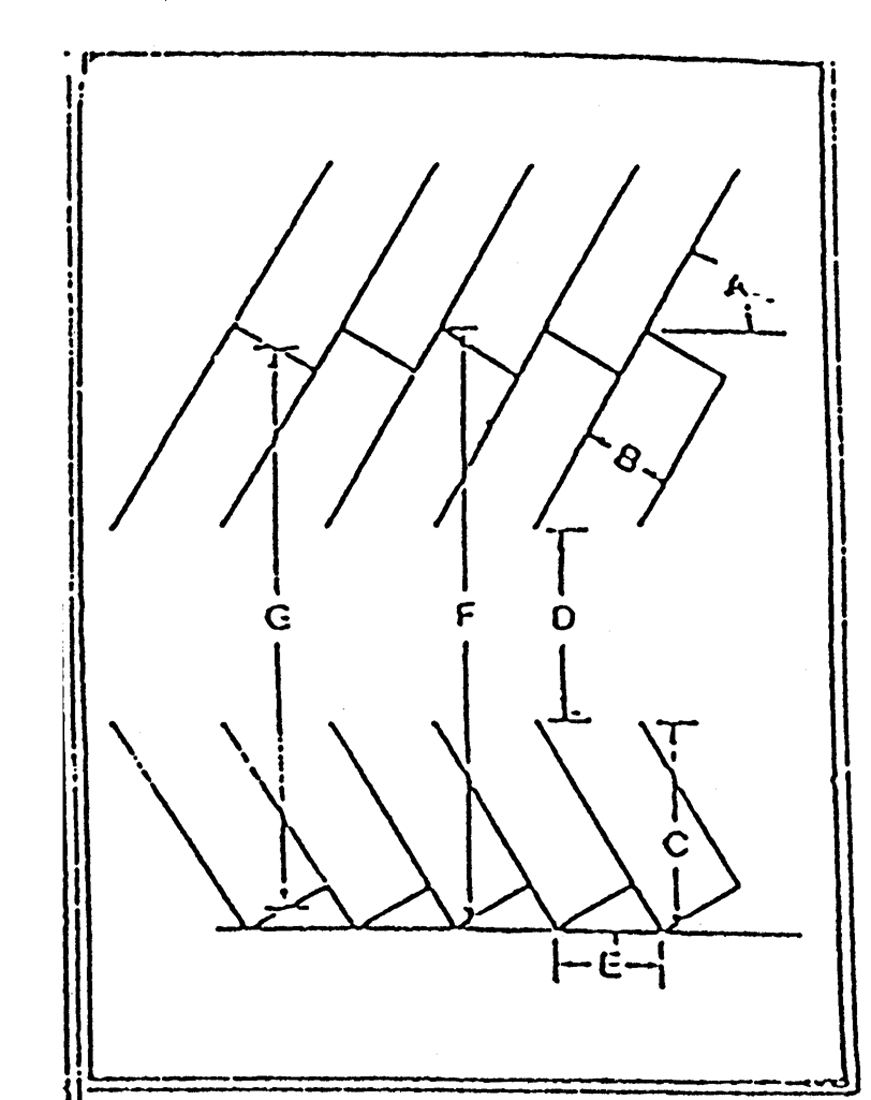
Parking Stall and Aisle Dimensions
Use nine-foot parking space width if landscaped according to chapter 106.
_____
HANDICAPPED PARKING
12-foot width minimum.
(Code 1989, § 21-259; Ord. No. 478, § 1, 2-15-1990)
Sec. 110-376. - Reserved.
Editor's note— Ord. No. 2014-05, § 8, adopted Jan. 28, 2014, repealed § 110-376 in its entirety, which pertained to parking lots in CT, P-1 and NMU districts and derived from the Code of 1989, § 21-260; Ord. No. 478, § 1, adopted Feb. 15, 1990.
Sec. 110-377. - Off-street loading facilities.
(a)
In any district, in connection with every building or building group, or part thereof, hereafter erected or altered, and having a gross floor area of 4,000 square feet or more, which is to be occupied by commercial uses or other uses similarly requiring the receipt or distribution by vehicles of material or merchandise, there shall be provided and maintained, on the same lot with such building, off-street loading berths for unloading as follows:
(b)
The loading berths required in each instance shall not be less than 12 feet in width and 50 feet in length and may occupy all or any part of any yard, except a front yard, provided that the loading berths shall be screened from the street or public right-of-way.
(Code 1989, § 21-258; Ord. No. 478, § 1, 2-15-1990)
Sec. 110-378. - Bicycle parking.
(a)
Bicycles are a clean, energy-efficient, alternative means of transportation, especially for those whose access to motorized transportation is limited. Therefore, it is the policy of the city to encourage the use of bicycles within the city by requiring that development and redevelopment provide adequate and properly located bicycle parking facilities, in accordance with the following standards:
(1)
Each nonresidential development greater than 3,500 square feet and multifamily residential development of eight units or more, or redevelopment which requires site plan approval shall provide a minimum of 50 square feet of off-street bicycle parking, sufficient to park at least five bicycles, for each freestanding building. The city commission shall have the option of increasing this requirement as a condition of site plan approval, based upon the demand characteristics of the specific development under review. This minimum requirement shall also apply to any public parking area constructed and/or operated by the city. Only the following types of development shall be exempt from this requirement:
a.
Residential development of less than eight units.
b.
Freestanding uses which require the presence of motor vehicles, such as automobile or motorcycle repair shops, filling stations, body repair shops, and similar uses, provided, however, that should the occupancy of a building change to a non-exempt use, bicycle parking facilities may be required as a condition of re-occupancy. Shopping centers and other multiple-tenant developments which may contain the above uses are not exempted.
(2)
The following design standards shall apply to all bicycle parking facilities:
a.
Bicycle parking facilities shall be separated from automobile parking, conveniently located near the main entrance of a building or delineated walkway without obstructing pedestrian walkways, and sufficiently visible to minimize the potential for theft or vandalism.
b.
Bicycle parking facilities shall be placed over paved or otherwise stabilized surfaces not subject to erosion or rutting.
c.
Each bicycle parking space shall provide sufficient area to store a full-sized bicycle, and a rack or other means to support and lock the bicycle in a stable, upright position without damage to wheels, frame, or components.
(Ord. No. 2005-01, § 28, 5-5-2005)
Sec. 110-401.- Districts where permitted.
Outdoor seating areas may be permitted in the B business district, the business district triangle overlay zone and other zoning district that allows restaurants.
(Code 1989, § 21-261(a); Ord. No. 587, § 2, 5-17-1995; Ord. No. 98-01, § 1, 6-18-1998; Ord. No. 98-16, § 1, 11-24-1998; Ord. No. 2014-05, § 9, 1-28-2014)
Sec. 110-402. - Site plan.
Site plan review shall be required for all outdoor seating areas. Such plans shall be drawn to scale and include the following:
(1)
All structures on the site;
(2)
All easements, rights-of-way and dedications;
(3)
Location of the outdoor seating area;
(4)
Height of the outdoor seating area, if applicable;
(5)
Any proposed landscaping, fencing, bollards, and other protective barriers proposed in lieu of bollards;
(6)
Location and number of tables and chairs;
(7)
All proposed lighting;
(8)
Any proposed outdoor speakers/use of live music;
(9)
Size and location of alcohol control signage; and
(10)
Any other information requested by the city manager or designee which is necessary to make a compliance determination.
(Code 1989, § 21-261(b); Ord. No. 587, § 2, 5-17-1995; Ord. No. 98-01, § 1, 6-18-1998; Ord. No. 98-16, § 1, 11-24-1998; Ord. No. 2014-05, § 10, 1-28-2014)
Sec. 110-403. - Minimum distance from curb.
No outdoor seating area shall be located less than three feet from a curb.
(Code 1989, § 21-261(c); Ord. No. 587, § 2, 5-17-1995; Ord. No. 98-01, § 1, 6-18-1998; Ord. No. 98-16, § 1, 11-24-1998)
_____
Sec. 110-404. - Protective barrier.
All outdoor seating areas shall be protected by erecting one of the following permitted types of protection:
TYPES OF PROTECTION PERMITTED
(A)
The outdoor seating location shall be measured from the edge of the curb, or, where a curb is not present, the edge of the pavement.
(B)
Bollards shall be a maximum distance of four feet between each. Bollards shall be installed three feet into the ground, shall be three feet in height above grade, shall be constructed of four-inch Schedule 40 steel pipe, and shall be filled with concrete. The footer of the bollard shall be three feet in depth and two feet square, and shall be constructed of 2,500 psi concrete. Any other safety barrier certified by an engineer providing the equivalent protection of a bollard may be used in lieu of a bollard. The required fence shall be a minimum of three feet in height and shall be in compliance with the fence regulations. Bollards or other approved protection may be integrated into the fence design. A hedge, no less than 2½ feet in height at the time of planting, shall be provided around the fence.
(C)
Decks must be elevated a minimum of three feet in height above grade.
(D)
Required fences shall be a minimum of three feet in height and shall be in compliance with the fence regulations. A hedge, no less than 2½ feet in height at the time of planting, shall be provided around the fence.
(Code 1989, § 21-261(d); Ord. No. 587, § 2, 5-17-1995; Ord. No. 98-01, § 1, 6-18-1998; Ord. No. 98-16, § 1, 11-24-1998)
Sec. 110-405. - Premises serving alcoholic beverages.
Any premises serving alcoholic beverages in an outdoor seating area shall be in compliance with the following provisions:
(1)
Such outdoor seating area shall be enclosed with a fence at least three feet in height and in compliance with the fence regulations specified in article IV, division 5 of this chapter; and
(2)
A sign stating "No Alcoholic Beverages Beyond this Point" shall be visibly and prominently displayed by any exit. Such sign shall not be less than 12 inches by 18 inches in size.
(Code 1989, § 21-261(e); Ord. No. 587, § 2, 5-17-1995; Ord. No. 98-01, § 1, 6-18-1998; Ord. No. 98-16, § 1, 11-24-1998)
Cross reference— Alcoholic beverages, ch. 6.
Sec. 110-406. - Illumination.
Any outdoor seating area may be illuminated provided such illumination does not cause spill light to fall upon or glare to be seen from any public right-of-way or adjacent property.
(Code 1989, § 21-261(f); Ord. No. 587, § 2, 5-17-1995; Ord. No. 98-01, § 1, 6-18-1998; Ord. No. 98-16, § 1, 11-24-1998)
Sec. 110-407. - Applicability to existing uses.
All existing properties which are in noncompliance with the requirements of this division, with the exception of the landscaping hedge requirements set forth in section 110-404, notes (B) and (D), shall come into compliance within 180 days of the date of the enactment of the ordinance from which this division is derived.
(Code 1989, § 21-261(g); Ord. No. 587, § 2, 5-17-1995; Ord. No. 98-01, § 1, 6-18-1998; Ord. No. 98-16, § 1, 11-24-1998)
Sec. 110-408. - Outdoor dining establishments allowing dogs.
(a)
Any dining establishment desiring to include "doggie dining", as allowed pursuant to article II of this chapter shall further be required to submit the following site plan information:
(1)
Submittal requirements.
a.
The name, location, and mailing address of the dining establishment.
b.
The name, mailing address, and telephone contact information of the permit applicant.
c.
A diagram and description of the outdoor area to be designated as available to patrons' dogs, including dimensions of the designated area; a depiction of the number and placement of tables, chairs, and restaurant equipment, if any; the entryways and exits to the designated outdoor area; the boundaries of the designated area and of other areas of outdoor dining not available for patrons' dogs; any fences or other barriers; surrounding property liens and public rights-of-way, including sidewalks and common pathways; and such other information reasonably required by the city. The diagram or plan shall be accurate and to scale but need not be prepared by a licensed design professional.
d.
A description of the days of the week and hours of operation that patrons' dogs will be permitted in the designated outdoor area.
(2)
All dining establishments receiving a permit under this section shall pay a fee as provided for in section 15-15, and meet the following requirements, addition to those requirements otherwise provided by law:
a.
All public food service establishment employees shall wash their hands promptly after touching, petting, or otherwise handling dogs. Employees shall be prohibited from touching, petting, or otherwise handling dogs while serving food or beverages or handling tableware or before entering other parts of the public food service establishment.
b.
Patrons in a designated outdoor area shall be advised that they should wash their hands before eating. Waterless hand sanitizer shall be provided at all tables in the designated outdoor area.
c.
Employees and patrons shall be instructed that they shall not allow dogs to come into contract with serving dishes, utensils, tableware, linens, paper products, or any other items involved in food service operations.
d.
Patrons shall keep their dogs on a leash at all times and shall keep their dogs under reasonable control.
e.
Dogs shall not be allowed on chairs, tables, or other furnishings.
f.
All table and chair surfaces shall be cleaned and sanitized between seating of patrons. Spilled food and drink shall be removed from the floor or ground between seating of patrons.
g.
Accidents involving dog waste shall be cleaned immediately and the area sanitized. A kit with the appropriate materials for this purpose shall kept near the designated outdoor area.
h.
A sign or signs reminding employees of the applicable rules shall be posted on premises in a manner and place as determined by the local permitting authority.
i.
A sign or signs reminding patrons of the applicable rules shall be posted on premises in a manner clearly visible to all patrons.
j.
A sign or signs shall be posted in a manner and place that notifies the public that the designated outdoor area is available for the use of patrons and patrons' dogs.
k.
Dogs shall not be permitted to travel through indoor or nondesignated outdoor portions of the public food service establishment, and ingress and egress to the designated outdoor portions of the public food service establishment must not require entrance into or passage through any indoor area of the food establishment.
(3)
A permit issued pursuant to this section shall not be transferred to a subsequent owner upon the sale of a dining establishment but shall expire automatically upon the sale of the establishment. The subsequent owner shall be required to reapply for a permit pursuant to this section, if the subsequent owner wishes to continue to accommodate patrons' dogs.
(Ord. No. 2009-13, § 2, 10-13-2009)
Sec. 110-431.- Purpose and applicability of division.
It is the purpose of this division to establish the mechanism and guidelines, consistent with the housing element of the comprehensive plan, as amended, for the provision of special living facilities for other than the traditional nuclear family. Specifically, these facilities shall include assisted living facilities, community residential homes, and adult family care homes.
(Ord. No. 457, § 1(24-48(a)), 11-21-1988; Code 1989, § 21-262; Ord. No. 2005-01, § 29, 5-5-2005)
Sec. 110-432. - Categories of use.
This section shall supplement the definitions and specific standards lawfully established by the state in order to ensure the careful application of the distinctions which have been drawn between the categories of special living facilities. For purpose of this chapter, assisted living facilities shall be as defined by F.S. ch. 400, pt. 3, community residential homes shall be as defined by F.S. ch. 419, and adult family care homes shall be defined by F.S. ch. 400, part 7.
(Ord. No. 457, § 1(24-48(b)), 11-21-1988; Code 1989, § 21-263; Ord. No. 2005-01, § 30, 5-5-2005)
Sec. 110-433. - Accessory uses.
Accessory uses shall be limited to those normal and incidental to residential dwelling units.
(Ord. No. 457, § 1(24-48(g)), 11-21-1988; Code 1989, § 21-264)
Sec. 110-434. - Building, fire, health and safety standards; construction prohibited in hurricane evacuation zones.
(a)
Special living facilities shall meet all current applicable building, fire, safety and health code requirements of the state, the county and city. All permits and licenses issued by the city shall be subject to initial and continuing compliance with all such applicable requirements.
(b)
New construction, expansion, or location of special living facilities serving 15 or more residents are prohibited within any hurricane evacuation zone, as established by the county emergency services agency if any residents will require special evacuation assistance from government agencies such as transport to an evacuation shelter or the provision of temporary housing at a special care unit public shelter.
(Ord. No. 457, § 1(24-48(h)), 11-21-1988; Code 1989, § 21-265; Ord. No. 479, § 12, 3-29-1990; Ord. No. 2005-01, § 31, 5-5-2005)
Sec. 110-435. - Certificate of occupancy/use required.
Special living facilities shall be required to procure a certificate of occupancy/use in accordance with this chapter and chapter 14.
(Ord. No. 457, § 1(24-48(c)), 11-21-1988; Code 1989, § 21-266; Ord. No. 2005-01, § 32, 5-5-2005)
Sec. 110-436. - State licensing.
No certificate of occupancy/use shall be issued by the city for any special living facility until the state has issued the appropriate license therefore.
(Ord. No. 457, § 1(24-48(d)), 11-21-1988; Code 1989, § 21-267; Ord. No. 2005-01, § 33, 5-5-2005)
Sec. 110-437. - Development standards; permitted locations.
Special living facilities shall be governed by the following requirements in addition to the development requirements identified in the zoning district assigned to the property:
(1)
Occupational license fee. The occupational license fee shall be as set forth in the fee schedule in section 58-61 for special living facilities.
(2)
Nonconforming structures. A special living facility may not be located in a structure which is nonconforming to zoning regulations for the district in which it is located.
(3)
Development standards. Assisted living facilities and community residential homes with six or fewer residents shall comply with all zoning regulations applicable to single-family homes in the same district in which it is located. Assisted living facilities and community residential homes with seven to 14 residents shall comply with all zoning regulations applicable to multifamily developments in the same district in which it is located. All other special living facilities shall comply with all zoning regulations applicable to multifamily developments in the same district in which it is located. New construction, expansion, or location of a special living facility in a structure requires site plan approval, to include but not limited to review of density, access, parking, landscaping, recreational areas, and signs.
(4)
Number of beds. Special living facilities shall not exceed an equivalent of three beds per permitted dwelling unit, with the maximum dwelling unit density being that allowed within the underlying zoning. This requirement does not apply to assisted living facilities and community residential homes with six or fewer residents.
(Ord. No. 457, § 1(24-48(e)), 11-21-1988; Code 1989, § 21-268; Ord. No. 522, 9-15-1993; Ord. No. 2005-01, § 34, 5-5-2005)
Sec. 110-438. - Distance between facilities.
Assisted living facilities and community residential homes with six or fewer residents shall not be located within a radius of 1,000 feet of another existing assisted living facility or community residential home with six or fewer residents. Assisted living facilities and community residential homes with seven to 14 residents shall not be located within a radius of 1,200 feet of another existing assisted living facility or community residential home with seven to 14 residents in a multifamily zone. All other special living facilities shall not be located within 1,200 feet of another existing special living facility of any size. The purpose of this separation criterion is to preserve the residential nature and character of an area and thus avoid the undue concentration of such facilities that would adversely impact a residential area and ultimately defeat the end objective of providing for such special living facilities.
(Ord. No. 457, § 1(24-48(f)), 11-21-1988; Code 1989, § 21-269; Ord. No. 2005-01, § 35, 5-5-2005)
Sec. 110-438.1. - Distance from single-family zoning.
Special living facilities with seven or more residents shall not be located within a radius of 500 feet of an area of single-family zoning. The distance shall be measured from the nearest point (property line) of the existing home to the area of single-family zoning. The purpose of this criterion is to preserve the residential nature and character of an area and thus avoid the undue concentration of such facilities that would adversely impact a residential area.
(Ord. No. 2005-01, § 36, 5-5-2005)
Sec. 110-439. - Evacuation plan.
An evacuation plan shall be submitted providing information on how the facility will be evacuated in the event of a hurricane or other events requiring evacuation of residents. The plan shall include the mode of transportation, distance to the nearest shelter, and now special needs of residents will be met (e.g., medication, wheelchairs, etc.). Such plans shall be reviewed and approved by the applicant's licensing agency and county emergency response agency.
(Code 1989, § 21-270; Ord. No. 479, § 12, 3-29-1990; Ord. No. 2005-01, § 37, 5-5-2005)
Sec. 110-491.- Applicability of division.
All of the provisions of this division shall be applicable to service stations, but only sections 110-493, 110-494 and 110-496 shall apply to public garages.
(Code 1980, § 24-20; Code 1989, § 21-222)
Sec. 110-492. - Districts where permitted; location of entrances and exits.
A gasoline service station shall be located only within a B business district and shall not be located closer than 1,000 feet to the grounds of any school, public recreation area or church. Distance shall be measured from the property lines at the nearest points.
(Code 1980, § 24-20; Code 1989, § 21-222(1))
Sec. 110-493. - Location of oil drainage pits and hydraulic lifts.
All oil drainage pits and hydraulic lifts shall be located within an enclosed structure and shall be located no closer than 50 feet to any lot line.
(Code 1980, § 24-20; Code 1989, § 21-222(2))
Sec. 110-494. - Repair work.
All permitted mechanical repair work shall be conducted within an enclosed structure and shall be located no closer than 40 feet to any lot line.
(Code 1980, § 24-20; Code 1989, § 21-222(3))
Sec. 110-495. - Location of gasoline pumps and service facilities.
Gasoline service stations shall have their gasoline pumps, including other service facilities, set back at least 30 feet from any street line.
(Code 1980, § 24-20; Code 1989, § 21-222(4))
Sec. 110-496. - Storage of vehicles.
Unlicensed vehicles shall not be exposed to view from a public street.
(Code 1980, § 24-20; Code 1989, § 21-222(5))
Sec. 110-497. - Removal or filling of tanks on discontinuance of use.
If, for any reason, there is a discontinuance of service as a gasoline or fuel service station, storage tanks shall be removed from the ground or filled with concrete in compliance with local fire codes and state law.
(Code 1980, § 24-20; Code 1989, § 21-222(6))
Sec. 110-521.- Definitions.
The following words, terms and phrases, when used in this division, shall have the meanings ascribed to them in this section, except where the context clearly indicates a different meaning:
Camouflage techniques means a tower and/or antenna designed to unobtrusively blend into the existing surroundings, disguised so as to not have the appearance of a communication facility, or designed or located in such a manner that the tower or antenna is not easily discernible from the ground. Examples include the form and shape of a tree, bell tower, steeple, clock tower, or light standard, and other techniques which serve to diminish the visible impact of the tower or antenna.
FAA means the Federal Aviation Administration.
FCC means the Federal Communication Commission.
Height.
(1)
Building height means the vertical distance from the mean grade to the highest point of the coping of a flat roof or to the deck line of a mansard roof, or to the mean height level between the eaves and ridges for gable, hip or mansard roofs.
(2)
Wireless communication antenna/tower height means the distance measured from existing grade to the highest point on the tower structure, even if the highest point of the tower or structure is an antenna.
User means any independent entity which is marketing a service to retail customers within the city. For the purposes of determining the number of users collocating at a particular site, all entities having common ownership, officers or directors shall be considered a single user.
Wireless communication antenna means any exterior apparatus designed for telephonic radio or television communications through the sending or receiving of electromagnetic waves.
Wireless communication antenna array means a configuration of antennas necessary for broadcast and reception for radio frequency from a particular site.
Wireless communication tower means any structure that is designed and constructed primarily for the purpose of supporting one or more antennas, including self-supporting lattice towers, guy towers or monopole towers. The term includes radio and television transmission towers, microwave towers, common carrier towers, cellular telephone towers, alternative tower structures and the like.
(Code 1989, § 21-139; Ord. No. 97-8, § 1, 9-17-1997)
Cross reference— Definitions generally, § 1-2.
Sec. 110-522. - Antennas in CT district.
The following provisions shall regulate wireless communication antennas located in the CT commercial tourist zoning district:
(1)
Location and height.
a.
Location on principal building. Wireless communication antennas, including any support structure or tower on which an antenna is mounted, may be located on any principal building over 30 feet in height in a CT commercial tourist zoning district, provided such antenna does not exceed 15 feet above the height of the building.
b.
Location on public property. Antennas and supporting equipment may be located in a public right-of-way or on public property only on prior express written agreement with the city. The agreement may provide for, among other things, the payment of permit fees and/or franchise fees to be paid annually to the city.
(2)
Design guidelines. Any antenna erected in the CT commercial tourist zoning district shall comply with the following design guidelines:
a.
Transmission and receiving equipment shall be stored inside the existing building or on the roof in an enclosed mechanical equipment cabinet or structure.
b.
Antennas located on the roof of the structure shall be located as far as possible away from the edge of the building. This does not preclude the use of small base stations and repeaters on the sides of buildings. Antennas located on the sides of any structure shall not exceed ten feet in length.
c.
Antennas and supporting electrical and mechanical equipment shall be of a color that is identical to or similar to the color of the supporting structure so as to make the antenna and supporting equipment as inconspicuous as possible.
d.
All antennas shall utilize camouflage techniques to the greatest extent possible.
e.
No lighting shall be permitted for any antenna, towers or structures, except as specifically required by the FAA.
(3)
Radiation emissions. All antennas shall comply with FCC standards for radiation emissions.
(4)
Permit. A permit shall be required to erect, alter, and/or relocate any antenna and/or supporting structures in the CT commercial tourist zoning district. The community development director, upon approval by the city manager, shall issue such permit.
(Code 1989, § 21-140; Ord. No. 97-8, § 2, 9-17-1997)
Sec. 110-523. - Towers.
Wireless telecommunication towers are permitted only in the B business zoning district and on city-owned property as a special exception use in compliance with the following provisions:
(1)
Towers on public property. Wireless communication towers located on city-owned property by permission of the city commission shall meet the minimum regulations set forth in this chapter. Wireless communication towers to be located on city-owned property shall be subject to the special exception hearing process as outlined in sections 110-56 and 110-60. Any wireless communication tower proposed to be located in any nature preserve or park shall require evidence of special need.
(2)
Setback and height; separation of towers.
a.
Wireless communication towers shall be designed and located with intentions of shared use. Towers with single users shall not exceed 120 feet in height. Towers utilized for multiple users may add 20 feet for each additional user, provided the height does not exceed 160 feet. Height of towers shall be consistent with the proposed location area. Approval shall be based on the following criteria:
1.
A visible line of sight analysis demonstrating minimal visible impact on surrounding properties shall be considered.
2.
The extent of camouflage techniques utilized making the tower and supporting structures as inconspicuous as possible shall be considered.
3.
The proposed tower height shall be the minimum necessary for efficient telecommunication service.
4.
The effects on public's interest, health, safety and welfare shall be considered.
b.
Monopole towers, including supporting structures and any accessory buildings/structures, shall comply with the setback requirements set forth in section 110-153.
c.
Guyed and lattice towers, including supporting structures, shall provide a minimum setback distance from property lines equal to 100 percent of the height of the tower. Any accessory buildings and structures utilized in conjunction with the tower shall conform to the setback requirements specified in sections 110-212—110-216.
d.
All towers, except those located on municipally owned property, shall be set back from the zoning district boundary in which the tower is located.
e.
A minimum distance of 500 feet shall be maintained between wireless communication towers. This separation shall apply to both towers within city boundaries and those towers located in adjacent communities.
(3)
Standards for review. The board of adjustments and appeals shall consider and the applicant shall demonstrate compliance with the following standards in determining whether to recommend approval to the city commission for a wireless communication tower:
a.
There shall be no technically suitable space reasonably available on an existing tower or structure within the geographic area to be served. The applicant shall list the location of every tower, building or structure that could support the proposed antenna so as to allow it to serve its intended function.
b.
The applicant must demonstrate that a technically suitable location is not reasonably available on an existing tower, building or structure.
c.
If another communication tower is technically suitable, the applicant must show that it has requested to collocate on the existing tower and the collocation request was rejected by the owner of the tower.
d.
As a condition of issuing a permit to construct and operate a tower in the city, the owner/operator of the tower is required to allow collocation until the tower has reached full antenna capacity, but in no event fewer than two additional antennas for two additional providers. Agreement to this provision must be included in the lease by the landowner, if different from the owner/operator of the tower. Written documentation must be presented to the board of adjustments and appeals and the city commission evidencing that the landowner of the property on which the tower is to be located has agreed to the terms of this subsection as well as the requirements, regulations and standards established in this section.
e.
The applicant shall provide written certification from a registered radio frequency engineer that the antenna and/or tower is to be constructed in compliance with all applicable federal, state and local regulations pertaining to the construction. Additionally, prior to receiving final inspection by the building official, documented certification shall be submitted to the FCC, with a copy to the building official and public services director, certifying that the wireless communication facility complies with all current FCC regulations for non-ionizing electromagnetic radiation.
f.
Prior to action by the board of adjustments and appeals, the city shall require a review by an independent registered radio frequency engineer engaged by the city and paid for by the applicant pursuant to section 110-525. Among other things, the engineer shall review and approve the written certification of the applicant's engineer filed pursuant to subsection (3)e of this section, shall review and approve the applicant's propagation studies showing the necessity for and location of the tower, and shall review and approve the structural integrity, electrical integrity and electrical safeness of the wireless telecommunication facility in its projected use so as to ensure the protection of the health, safety and welfare of the citizens of the city.
(4)
Design guidelines. The board of adjustments and appeals shall consider and the applicant shall demonstrate compliance with the following design guidelines in determining whether to recommend approval to the city commission for a wireless communication tower:
a.
Fencing. Screen fencing shall be provided for aesthetic and public safety purposes. Such screen fencing may be either a wooden fence or a wall six feet in height, measured from finished grade, and shall be erected completely around the communication tower and any related support facilities, including accessory buildings.
b.
Landscape buffer. A landscaped buffer area of not less than ten feet in depth shall be placed between the tower and adjacent public rights-of-way and abutting properties. Such buffer shall be placed on the site in a manner which will maximize the aesthetic and environmental benefits while, at the same time, providing a visual buffer and screening. A landscape buffer shall consist of species as provided in chapter 106 no less than six feet in height and deciduous or evergreen trees of at least two dbh measured at six feet at the time of planting. Trees shall be planted every 30 feet along the approved buffer of a species as provided in chapter 106.
c.
Signs and advertising. The tower shall not be used for advertising purposes and shall not contain any signage, except public safety signage.
d.
High voltage warning. If high voltage is necessary for the operation of the facility and is present in a ground grid or in the tower, signs located every 20 feet and attached to the required fence or wall shall display, in large bold letters six inches in height, the following: "HIGH VOLTAGE DANGER."
e.
Outdoor storage. Outdoor storage of any supplies, vehicles or equipment not in use is prohibited.
f.
Lighting. Except as required by law, an antenna or a tower shall not be illuminated and lighting fixtures shall not be attached to any antenna or tower. If lighting is required by FAA regulations, white strobe lights shall not be permitted at night unless no other alternative is permitted by the FAA. Lighting for security purposes shall be permitted at the wireless telecommunication facility if approved by the board of adjustments and appeals and the city commission.
(5)
Discontinuance of use. Whenever use of a wireless communication tower has been discontinued for a period of six months or whenever public and/or private utilities serving the facility have been discontinued for a period of six months the tower shall be considered abandoned. Upon written demand by the city, the owner of an abandoned tower shall remove the tower within 60 days. Failure to remove the tower or foundation within 60 days shall constitute a violation of this Code. Failure to remove any abandoned tower within 60 days will subject the owner thereof to a penalty of $250.00 per day.
(6)
Procedure for increasing height of existing towers. An existing wireless telecommunication tower may be increased in height provided such increase will comply with the height requirements specified in subsection (2) of this section. Such increase shall require administrative approval by the community development director and approval by the city manager.
(7)
Procedure for replacing towers. An existing wireless communication tower may be replaced with another tower provided the applicant amends the special exception which was issued for the original tower. In addition to the requirements otherwise specified in this section, the following shall apply:
a.
The replacement tower shall be located on the same lot as the tower that is being replaced.
b.
The old tower and the support facilities shall be removed within 90 days of the completion of the replacement tower and the installation of the support facilities.
c.
Any request for increase in tower height shall provide for either the collocation of other antennas, or the necessity to meet operational standards as required by the FCC. Any request for additional height to meet these operational standards will require submittal to the board of adjustments and appeals and the city commission of the necessary documentation to demonstrate the functional deficiency of the existing tower and/or antenna and the minimum necessary height to meet such standards.
d.
Regulations set forth in subsection (5) of this section regarding discontinuance of use of towers shall apply to replacement towers.
(8)
Permit. A permit be required to erect, alter, and/or relocate any wireless telecommunication tower in the B business zoning district. The community development director, upon city commission approval, shall issue such permit.
(9)
Indemnification of city. Every person who owns or controls a tower shall hold harmless, indemnify and defend the city and its officers, employees and agents from and against all liability and expense, including reasonable attorneys' fees, in connection with any and all claims whatsoever for personal injuries or property damage caused by the owner or his agents.
(Code 1989, § 21-141; Ord. No. 97-8, § 3, 9-17-1997)
Sec. 110-524. - Time limit for commencing and completing construction.
After issuance of a permit to construct a wireless communication facility, the permittee shall begin construction within 180 days and shall complete construction within 90 days or the permit and approval shall expire. The permittee, if wishing to continue construction, shall then be required to reapply for a building permit and pay associated fees.
(Code 1989, § 21-142; Ord. No. 97-8, § 4, 9-17-1997)
Sec. 110-525. - Reimbursement of expenses incurred by city.
The applicant for a permit under this division shall be responsible for all reasonable expenses incurred by the city for any technical engineering services deemed necessary by the community development director or building official, board of adjustments and appeals, or city commission to perform reviews required by the sections of this Code regulating wireless telecommunication antennas and towers.
(Code 1989, § 21-143; Ord. No. 97-8, § 5, 9-17-1997)
Sec. 110-526. - Nonconforming towers.
Wireless telecommunication towers which are made nonconforming by passage of the ordinance from which this division is derived shall conform to the regulations in this division upon any alteration, repair or replacement. Towers which are necessary for essential services (i.e., police, fire, or other emergency services) may remain at their current location subject to all other regulations.
(Code 1989, § 21-144; Ord. No. 97-8, § 6, 9-17-1997)
Sec. 110-551.- Definitions.
The following words, terms and phrases, when used in this division, shall have the meanings ascribed to them in this section, except where the context clearly indicates a different meaning:
Citizen band and amateur radio tower means any structure that is designed and constructed primarily for the purposes of supporting one or more antennas, including self-supporting lattice towers, guy towers or monopole towers, for the receiving or transmission of citizen band or amateur radio communications.
FCC means the Federal Communications Commission.
Height means the distance measured from existing grade to the highest point on the tower structure or building structure when a tower or structure antenna is affixed to a rooftop, even if the highest point of the tower or structure is an antenna.
Wireless communication support facility (WCSF) means a monopole, guyed or lattice type tower or other structure greater than 15 feet in height designed for the attachment of or as support for wireless communication antennas or other antennas.
(Code 1989, § 21-145; Ord. No. 98-20, § 1, 12-8-1998)
Cross reference— Definitions generally, § 1-2.
Sec. 110-552. - Applicability of division.
Citizen band and amateur radio wireless communication support facilities and antennas used in the operation of citizen band and amateur radios (CBAR) licensed by the Federal Communications Commission (FCC) shall be governed by the requirements of this division.
(Code 1989, § 21-146; Ord. No. 98-20, § 2, 12-8-1998)
Sec. 110-553. - Height and setbacks.
The maximum height of citizen band and amateur radio wireless communication support facilities and antennas shall not exceed 75 feet from existing grade or such lower height as established by federal law. Location of all tower and antenna structures shall comply with all setback requirements of existing utilities. Citizen band and amateur radios antennas shall be allowed on any lawfully existing structure.
(Code 1989, § 21-146(1); Ord. No. 98-20, § 2, 12-8-1998)
Sec. 110-554. - Maximum number per lot in residential districts.
Only one citizen band and amateur radios wireless communication support facility and antenna shall be allowed on each platted lot in residential districts.
(Code 1989, § 21-146(2); Ord. No. 98-20, § 2, 12-8-1998)
Sec. 110-555. - Materials and construction.
Citizen band and amateur radio wireless communication support facilities and antennas and their installation shall meet all manufacturer's specifications; however, the manufacturer's specifications will not supersede any other provisions of this chapter. The mast or tower shall be on noncombustible and noncorrosive hardware. Hardware such as brackets, turnbuckles, clips and similar type equipment subject to rust or corrosion shall be protected with a zinc or cadmium coating by either galvanizing or a sheradizing process after forming.
(Code 1989, § 21-146(3); Ord. No. 98-20, § 2, 12-8-1998)
Sec. 110-556. - Installation and maintenance; clearance from electric lines; grounding.
Citizen band and amateur radio wireless communication support facilities and antennas shall be installed and maintained in compliance with the applicable requirements of all codes, laws and regulations, including the building code and National Electric Code and FCC regulations. Each citizen band and amateur radio wireless communication support facility and antenna shall have vertical and horizontal clearance from any and all electric lines and shall be adequately grounded.
(Code 1989, § 21-146(4); Ord. No. 98-20, § 2, 12-8-1998)
Sec. 110-557. - Compliance with yard requirements; location in front or side yard.
Citizen band and amateur radio wireless communication support facilities and antennas shall meet all required zoning district minimum yard requirements. Citizen band and amateur radio wireless communication support facilities and antennas are not permitted in the front or street side yards in any residential zoning district except for one single mast, unguyed citizen band and amateur radio wireless communication support facility and antenna (flagpole type) not exceeding 35 feet, which shall meet all zoning district minimum yard requirements.
(Code 1989, § 21-146(5); Ord. No. 98-20, § 2, 12-8-1998)
Sec. 110-558. - Attachment of advertising or other antennas.
No advertising shall be affixed to any part of the citizen band and amateur radio wireless communication support facilities or antenna. All wireless communication support facilities allowed pursuant to this division shall not support any antenna except those licensed by the FCC for citizen's band or amateur radios.
(Code 1989, § 21-146(6); Ord. No. 98-20, § 2, 12-8-1998)
Sec. 110-559. - Removal upon discontinuance of use.
Whenever use of a citizen band or amateur radio wireless communication support facility or antenna has been discontinued for a period of six months or whenever public and/or private utilities serving the facility have been discontinued for a period of six months, the tower shall be considered abandoned. Upon written demand by the city, the owner of the abandoned tower shall remove the tower within 60 days. Failure to remove the tower within 60 days will subject the owner thereof to a penalty of $25.00 per day.
(Code 1989, § 21-146(7); Ord. No. 98-20, § 2, 12-8-1998)
Sec. 110-560. - Variances and appeals.
Variances and appeals under this division shall follow the procedures in section 110-33. Citizen band and amateur radio wireless communication support facilities existing on the date of adoption of the ordinance from which this division is derived which would be regulated by this division and which exceed the height limitation may be replaced up to their existing height without obtaining a variance.
(Code 1989, § 21-146(8); Ord. No. 98-20, § 2, 12-8-1998)
Sec. 110-581.- Definitions.
The following words, terms and phrases, when used in this division, shall have the meanings ascribed to them in this section, except where the context clearly indicates a different meaning:
Height of a ground-mounted antenna means the distance between the highest point of the antenna structure and the highest point of the finished grade adjacent to the antenna structure.
Satellite antenna means any parabolic or spherical antenna which receives television or other signals from orbiting satellites or other devices.
Web or mesh-type antenna means an antenna primarily constructed of a web or mesh material so that it does not substantially impair visibility.
(Code 1980, § 15A-1; Code 1989, § 5-361)
Cross reference— Definitions generally, § 1-2.
Sec. 110-582. - Construction generally.
A satellite antenna shall meet all manufacturer's specifications. The mast or tower shall be of noncombustible or corrosion resistant materials. The miscellaneous hardware, such as brackets, turnbuckles, clips and similar type equipment subject to rust or corrosion, shall be protected with a zinc or cadmium coating by either a galvanizing or sheradizing process after forming. These finishes are selected to guard against corrosion and to protect the elements against electrolytic action due to the use of adjoining dissimilar metals.
(Code 1980, § 15A-2; Code 1989, § 5-362(1))
Sec. 110-583. - Clearance from electric lines.
Any part of a satellite antenna, including but not restricted to the reflector, probe, guy wires and signal transmission cable, shall have vertical and horizontal clearances from any electric lines conforming to the latest edition of the National Electrical Safety Code.
(Code 1980, § 15A-2; Code 1989, § 5-362(2))
Sec. 110-584. - Grounding.
Every satellite antenna must be adequately grounded for protection against a direct strike of lightning, with an adequate ground wire. Ground wires shall be of the type approved by the latest edition of the electrical code for grounding masts and lightning arresters, and shall be installed in a mechanical manner with as few bends as possible, maintaining a clearance of at least two inches from combustible materials. Lightning arresters shall be used which are approved as safe by Underwriters' Laboratories, Inc., and both sides of the line must be adequately protected with proper arresters to remove static charges accumulated on the line. When lead-in conductors of polyethylene ribbon type are used, lightning arresters must be installed in each conductor. When coaxial cable or shielded twin lead is used for lead-in, suitable protection may be provided without lightning arresters by grounding the exterior metal sheath.
(Code 1980, § 15A-2; Code 1989, § 5-362(3))
Sec. 110-585. - Color.
Satellite antennas shall be nonreflective and their color shall blend in with the surroundings.
(Code 1980, § 15A-2; Code 1989, § 5-362(3))
Sec. 110-586. - Compliance with building and electrical codes; building permit required.
Satellite antennas shall be installed and maintained in compliance with the requirements of the building code and electrical code. A building permit shall be required prior to construction.
(Code 1980, § 15A-2; Code 1989, § 5-362(4))
Sec. 110-587. - Advertising or signs.
No advertising or signage of any type is permitted on a satellite antenna.
(Code 1980, § 15A-2; Code 1989, § 5-362(5))
Sec. 110-588. - Location.
(a)
Satellite antennas are permitted only within the prescribed setback lines for a principal structure. The location shall be at a fixed point on the ground.
(b)
Roof-mounted antennas are permitted on buildings having three or more habitable floors and shall not exceed 12 feet in height from the roof.
(c)
Satellite antennas are not permitted in any gulf-front, street-front, or side-street yard.
(Code 1980, § 15A-3; Code 1989, § 5-363(a)—(c))
Sec. 110-589. - Types of antennas permitted.
Satellite antennas shall be of the mesh or open-weave type.
(Code 1980, § 15A-3; Code 1989, § 5-363(d))
Sec. 110-590. - Maximum diameter and height.
A satellite antenna shall not have a diameter greater than 12 feet, nor shall it be higher than 15 feet, including the base.
(Code 1980, § 15A-3; Code 1989, § 5-363(e))
Sec. 110-591. - Number of antennas per lot.
There shall be no more than one satellite antenna per lot.
(Code 1980, § 15A-3; Code 1989, § 5-363(f))
Sec. 110-592.- Bed and breakfast establishments.
(a)
Bed and breakfast establishments. Means a building of residential character other than a hotel, motel, resort, or boarding house, which provides daily overnight accommodation and morning meal services to transients in return for payment.
(b)
Zoning districts allowing bed and breakfast establishments. As a principal use in "CT" High density commercial tourist district, "P-1" Professional district, "B" Business district, and "NMU" Neighborhood mixed use district. Bed and breakfast establishments shall be allowed in any zoning district that is in compliance with the comprehensive plan and the land development regulations as amended from time-to-time.
(c)
Special vriteria for bed and breakfast establishments. Every applicant shall submit to the city manager or designee a scaled site plan and a scaled floor plan of the structures and demonstrate compliance with the following requirements:
(1)
Onsite manager. The establishment shall be operated by an owner or manager living on the premises with living accommodations separate from those provided to guests.
(2)
Rental shall be on daily basis only. The maximum stay for an individual guest shall not exceed 30 consecutive days.
(3)
Size of rooms. The minimum size of bedrooms to be used in the bed and breakfast establishments shall be 100 square feet.
(4)
Guest bathroom facilities. Separate toilet and shower facilities for the exclusive use of guests must be provided. At least one bathroom for each two guestrooms must be provided.
(5)
Parking. Refer to section 110-372.
(6)
Signs. Refer to chapter 98.
(7)
Cooking facilities. No cooking facilities or cooking shall be allowed in guest rooms.
(d)
Other conditions.
(1)
No occupational license shall be issued for a bed and breakfast establishment that does not comply with this section and has not obtained a license from the state division of hotels and restaurants pursuant to F.S. § 509.271.
(2)
No bed and breakfast establishment shall be allowed to prepare food for guests unless the county environmental health department and applicable state agencies have issued all applicable approvals. No alcoholic beverages shall be sold to guests or non-guests.
(3)
No bed and breakfast establishment shall be allowed to operate which has not received approval from the fire marshal for compliance with all applicable fire and safety regulations.
(e)
Validity of permit.
(1)
Change in ownership. Any approval granted under this section is limited to the petitioner or owner only. A change in ownership will require the approval of a new occupational license.
(f)
Advertisement compliance. No person shall advertise a business or otherwise hold the business out to the public as being a "bed and breakfast", "B & B", "bed and breakfast inn", or words of similar significance, unless the business is in compliance with the requirements of chapter 98.
(g)
Special functions: A bed and breakfast establishment may only conduct indoor and outdoor special functions with the approval of the city manager or designee, pursuant to section 110-707.
(Ord. No. 2005-04, § 3, 11-8-2005)
Sec. 110-600.- Purpose.
In order to promote public health, safety, welfare and convenience, this division shall:
(1)
Restrict newsrack interference with the flow of pedestrian and vehicular traffic, including ingress and egress from or into any residence or place of business by persons attempting to enter or exit parked or standing vehicles;
(2)
Restrict newsrack interference with access, use and maintenance of poles, posts, traffic signs or signals, hydrants, mailboxes and any location used for public transportation purposes; and
(3)
Require removal or relocation of newsrack which have created visual blight on the rights-of-way or that detract from the aesthetics of adjacent businesses, landscaping or other public or private improvements.
(Ord. No. 2007-01, § 4, 11-7-2007)
Sec. 110-601. - Implementation.
Newsracks, as defined in section 110-1, that are in compliance with the provisions of this division are permitted in the city. All others are prohibited. Existing newsracks within the city at the date of adoption of this division shall have 60 days to come into compliance with the provisions of this division. The city manager, or designee, may extend this 60-day time period, if he determines that there is not sufficient time to process all of the applications. Within this 60-day period, owners are required to obtain a permit from the city pursuant to section 110-602. There shall be no "grandfathering" of newsracks made non-conforming by this division provided; however, modular newsracks in place as of the date of adoption of this division may remain. All newsracks made non-conforming by this division shall either be made conforming or shall be removed within this 60-day period. A city-issued, numbered, sticker shall be attached to each newsrack permitted in the city. Modular newsracks shall be pedestal-mounted and permanently attached to the ground. Single newsracks shall be permanently attached to the ground.
(Ord. No. 2007-01, § 5, 11-7-2007)
Sec. 110-602. - Application and registration requirements.
The applicant shall:
(1)
Complete an application for registration on forms provided by the city certifying that the installed newsrack is in compliance with the provisions of this division.
(2)
Execute an indemnification and save-harmless agreement, relieving the city, its employees, and boards from any and all threat of damages, costs and liability whatsoever arising from, growing out of or incident to or in any manner connected with the installation, maintenance or operation of each newsrack, owned or maintained by the owner, together with all costs and attorney's fees, incurred by the city in defending any claim or suit brought against it, either as sole defendant or joined as a defendant with the owner, with regard to the owner's newsrack and specifically including any claim or suit alleging liability based on the failure to properly enforce or administer the provisions of this division. This indemnification and save-harmless agreement shall also provide that the owner shall receive prompt notice of any such cause of action and shall be afforded the opportunity to defend same. If the owner fails to defend the same, the owner will pay to the city upon demand all reasonable costs, charges and fees incurred in connection therewith.
(3)
City staff shall review the application and registration and inspect the installation of each newsrack to ensure compliance with the provisions of this division. No permit shall be issued until the newsrack meets the requirements of this division.
(Ord. No. 2007-01, § 6, 11-7-2007)
Sec. 110-603. - Location and location standards.
(a)
Location on private property: Newsracks may be allowed in the following zoning districts subject to the requirements of this division.
(1)
Business (B)
(2)
Commercial tourist (CT)
(3)
Neighborhood mixed-use (NMU)
(4)
Professional office (P-1)
(5)
Medium density residential (RM-2)
Provided, however, that the city manager, or designee, may exercise reasonable discretion in reviewing and approving applications for existing, single newsracks with respect to color.
(b)
Location on public property: Upon application and approval, modular newsracks may be allowed on public property, provided that abutting property owners sign an affidavit stating that they have no objection to the newsrack and its location relative to their property.
Provided, however, that the city manager, or designee, may approve newsracks at covered bus stop locations on either side of Gulf Boulevard, beach accesses, public parks or city-owned property, without the approval of the abutting property owners and/or not withstanding the 600-foot distance standard in subsection 110-603(c)(2), and after review and approval by the city manager, or designee, in accordance with the standards established by this division.
(c)
Location standards.
(1)
The location and installation of all newsracks shall comply with local, state and federal regulations, including Americans With Disabilities Act requirements;
(2)
No more than two modular newsracks shall be allowed for every 600 feet of east or west side frontage on Gulf Boulevard.
a.
Not more than one newsrack may be placed on private property at the edge of the property line provided that a distance of five feet from the edge of the street pavement is maintained and said newsrack shall be required to be separated by a radial distance of 600 feet from any other newsrack.
b.
No newsrack shall be placed on a sidewalk or handicapped access ramp;
c.
No newsrack shall be placed, installed, used or maintained:
1.
Within five feet of any marked or unmarked crosswalk or school crossing;
2.
Unless specified elsewhere in this division, no newsrack may be installed within any right-of-way, roadway, sidewalk, access easement or clear zone of the roadway as established by the current edition of the Florida Department of Transportation's Manual of Uniform Minimum Standards for Design, Construction and Maintenance for Streets and Highways;
3.
Within 15 feet of any fire hydrant, fire or police call box;
4.
Within 15 feet of any driveway;
5.
Within 15 feet of any police station driveway, fire station driveway, ambulance station driveway, hospital emergency room driveway or other emergency facility driveway;
6.
Within two feet of any bus bench, plaza bench or bus shelter;
7.
Directly adjacent to or within two feet of signs, parking meters, street lights, traffic signal poles or utility poles;
8.
At any location where the modular newsrack causes or creates a traffic hazard, blocks the visibility of motorists or otherwise obscures traffic signs, fire hydrants or mailboxes;
9.
Within the median of a divided road.
(d)
Location relative to Gulf Boulevard and Walsingham Road:
An administrative variance from the 600-foot radial distance requirements of this section may be granted by the city manager, or designee, subject to the following:
(1)
The property is located within 25 feet of Gulf Boulevard or Walsingham Road;
(2)
The existing newsracks must be located within one foot of a building;
(3)
The number of existing newsracks is limited to two.
(Ord. No. 2007-01, § 7, 11-7-2007; Ord. No. 2008-02, § 1, 6-10-2008)
Sec. 110-604. - Design specifications.
Each single and modular newsrack installed within the city shall be designed to withstand the stresses associated with ordinary use for sale and distribution of publications, and environmental exposure, and shall comply with the following standards:
(a)
Modular dimension and type: The modular newsrack shall be either single or multi-pedestal with all external dimensions, including any attachments, of not more than 60 inches in height, six feet in width, and 24 inches in depth.
(b)
Modular color: Exterior color, including pedestals, sides, door and coin box of all modular newsracks shall be of uniform gloss hunter green color.
(c)
Modular label: Modular newsracks shall carry no advertising, but may provide a rack card holder containing information concerning a publication in the unit, the name(s) of the publication(s) being dispensed, and other information required by law with respect to coin-operated vending machines.
(d)
Single newsrack—dimension and type: The single newsrack, with all external dimensions including any attachments, shall measure no greater than 60 inches in height and 24 inches in width and depth.
(e)
Single newsrack—color: Exterior color, including pedestals, sides, door and coin box of shall be of uniform gloss hunter green.
(f)
Single newsrack—label: Single newsracks shall carry no advertising, but may provide a rack card holder containing information concerning a publication in the unit, the name(s) of the publication(s) being dispensed, and other information required by law with respect to coin-operated vending machines.
(Ord. No. 2007-01, § 8, 11-7-2007)
Sec. 110-605. - Installation.
All newsracks in the city shall be installed in a safe and secure manner and shall comply with the following standards:
(a)
Each modular newsrack on a single pedestal or a multiple post shall be bolted to a level, concrete base set flush with the ground or otherwise securely fastened to meet applicable safety and stability standards. The newsrack will be direclty bolted into the base in accordance with the following standards:
(1)
No newsrack shall be bolted directly into a public sidewalk.
(2)
Foundation shall be 3000 psi class I concrete, four inch minimum thickness with wire mesh reinforcement. Four bolts per pedestal, one each on the four corners of the newsrack support.
(3)
Two-inch minimum concrete edge distance for bolts.
(4)
Anchor bolts must be located not closer than two inches from the edge of the pedestal, each bolt to be a one-half inch minimum diameter stainless steel hex bolt mounts, two-and-one-quarter inches.
(5)
A water-soluble, paint-able, ten-year caulk shall be applied and wiped to seal around the base plate and the mounting surface.
(b)
Each single newsrack shall be securely fastened to meet applicable safety and stability standards. The single newsrack shall be of sufficient weight, the materials of which it is fabricated shall be of sufficient strength and its installation shall be such that the newsrack will remain stable and un-moving.
(c)
Newsracks shall not be chained to any tree, traffic control device, sign, bench, bus shelter or pole.
(d)
No newsrack or base shall be used or maintained in such a way that it rests on or projects onto, into or over any part of the roadway, sidewalk or median of any public street or any part of a drainage grate or manhole.
(e)
Any base installed or used shall remain the responsibility of the owner who installs or uses the base and shall be removed by said owner immediately upon abandonment, returning the underlying surface to its original condition.
(f)
Any damage to private and public property or public right-of-way at the time of installation shall be the responsibility of the owner to repair within 30 days from the date the damage is reported.
(Ord. No. 2007-01, § 8, 11-7-2007)
Sec. 110-606. - Maintenance.
Each newsrack shall be maintained in a neat, clean condition and kept in working condition at all times, by ensuring:
(1)
It is free of graffiti, dirt, grease, chipped, faded, peeling or cracked paint;
(2)
It is free of rust and corrosion;
(3)
The clear plastic or glass parts, if any, through which the publication is viewed, are unbroken or otherwise free of cracks, dents, blemishes and discolorations;
(4)
The structural parts are solid and mechanically sound;
(5)
Each newsrack must display a name, address and telephone number of the owner responsible for the newsrack;
(6)
Each coin operated compartment within a newsrack shall display directly on the coin box, the name, address and telephone number of the owner responsible for the publication in that compartment, who may be contacted concerning reimbursement in case of coin mechanism failure.
(Ord. No. 2007-01, § 10, 11-7-2007)
Sec. 110-607. - Notice of violation.
Upon determination by the city that a newsrack is in violation of this division, the city shall send, by certified mail, a notice to the owner of record. The city manager or designee will tag the newsrack, specifying the date and nature of the violation. The owner shall in return, within ten days from the date on which the notice of violation was mailed, either correct the violation or contact the city.
In the event that the violation is not remedied within ten days, the city may remove the newsrack and place it in storage in accordance with section 110-609. In removing the newsrack, the city will take reasonable care, but no guarantee or warrantee is implied, and the city shall not be held liable for any damage that may occur. Thirty days after removal, if not claimed, the removed newsracks shall be deemed abandoned in accordance with section 110-613.
(Ord. No. 2007-01, § 11, 11-7-2007)
Sec. 110-608. - Removal and storage.
Any newsrack installed, used or maintained in violation of this division shall, after notice, be removed and stored by the city. Any newsrack that poses a danger or safety hazard to pedestrians or vehicles, or interferes with the safe use of any public right-of-way or other property, shall be removed or relocated.
When any newsrack has been abandoned on public property, the city may notify the owner to remove the newsrack. If the owner is unknown or fails to notify the city as to the disposition of the abandoned newsrack, the city may remove the abandoned newsrack.
The city will take reasonable care in removing such newsrack, but no guarantee or warrantee is implied. The city shall not be liable for any damage that may occur by the removal of newsracks. Thirty days after removal, the newsrack(s) shall be deemed abandoned.
(Ord. No. 2007-01, § 12, 11-7-2007)
Sec. 110-609. - Notice of removal and storage.
Whenever any newsrack is removed and stored pursuant to section 110-608, a written notice shall be sent to the owner of record, by certified mail, within two working days following removal.
(Ord. No. 2007-01, § 13, 11-7-2007)
Sec. 110-610. - Release of stored newsracks.
Any newsrack, together with its contents, previously stored pursuant to section 110-608, may be returned to the owner upon receipt of all applicable fees.
(Ord. No. 2007-01, § 14, 11-7-2007)
Sec. 110-611. - Unclaimed newsracks.
When a stored newsrack has not been claimed by the owner within 60 days of storage, the city may dispose of the newsrack as it sees fit.
(Ord. No. 2007-01, § 15, 11-7-2007)
Sec. 110-612. - Abandonment.
A newsrack shall be deemed abandoned when it does not contain a publication for a period longer than 30 consecutive days.
(Ord. No. 2007-01, § 16, 11-7-2007)

