
Kennewick City Zoning Code
CHAPTER 18
36 - OFF-STREET PARKING
18.36.010: - Purpose.
This Chapter sets forth special conditions and requirements for parking and applies to all permitted and additional uses.
(Ord. 5180 Sec. 1, 2007)
18.36.020: - Applicability.
Except as provided elsewhere in this Title, all buildings, structures or uses must have adequate off-street parking in accord with this Chapter and applicable construction standards.
(Ord. 5180 Sec. 1, 2007)
18.36.030: - Dimensional Standards.
Parking areas shall meet the following minimum standards:
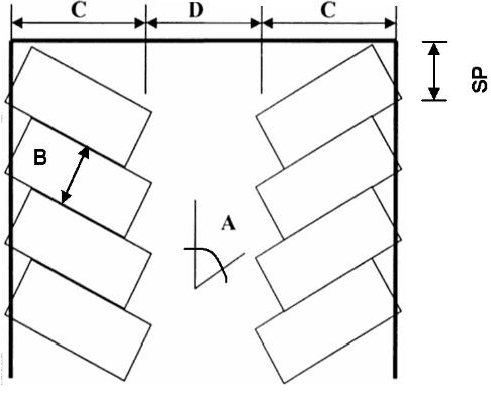
1 Fire lanes must meet applicable standards for width and turning radius.
(Ord. 5359 Sec. 1, 2011; Ord. 5180 Sec. 1, 2007)
18.36.040: - Access.
(1)
There must be adequate access to all parking and loading spaces. If a parking lot does not abut a public street or easement to a public street, an unobstructed easement at least 20 feet wide to a public way must be maintained. The Planning Director may require a wider easement, if necessary, for safety and efficiency. Except in R districts, egress must be such that no vehicle backs out onto a public way.
(2)
Multi-family developments must be in conformance with applicable provisions of Chapter 18.75.
(Ord. 5180 Sec. 1, 2007)
18.36.050: - Minimum Parking Requirements—General.
Off-street parking is required as follows or with a specific use, in accord with Section 18.36.060: R district: Two spaces per dwelling unit, which may be unenclosed, or within a garage or carport. CN district: One space for every 200 square feet of gross floor area; CC, CR, CG, and CO districts: One space for every 400 square feet of gross floor area: minimum parking requirements do not apply in the CM zoning district: I districts: One space per employee on the maximum working shift.
(Ord. 5212 Sec. 1, 2008; Ord. 5180 Sec. 1, 2007)
18.36.060: - Specific Parking Requirements.
Except for the CBD zoning district, off-street parking is as follows for the uses indicated in the following table:
(1)
Unlisted uses: The Planning Director shall determine parking requirements for any use not specifically included in the table above based on similarities with listed uses.
(2)
Single- and multi-family developments must conform to the applicable provisions of Chapter 18.75 KMC.
(3)
Commercial developments must conform to the applicable provisions of Chapter 18.78 KMC.
(4)
Middle housing parking requirements in portions of the City for which the Department of Commerce has certified a parking study in accordance with RCW 36.70A.365(7)(a), shall comply with the off-street parking requirement provided in the certification from the Department of Commerce.
(Ord. 25-6165, Sec. 1, 2025; Ord. 25-6104 Sec. 1, 2025; Ord. 5854 Sec. 1, 2020; Ord. 5716 Sec. 1, 2017; Ord. 5434 Sec. 10, 2012; Ord. 5359 Sec. 2, 2011; Ord. 5180 Sec. 1, 2007)
18.36.065: - Parking Requirements for the CBD Zoning District.
The following parking standards shall apply to properties zoned Central Business District:
(1)
Any business with 3,000 square feet of gross floor area or less is exempt from off-street parking requirements;
(2)
Businesses with more than 3,000 square feet of gross floor area shall provide one off-street parking stall per 1,000 square feet of gross floor area. Adjacent on-street parking may be used to meet this requirement.
(3)
The following land use shall supply off-street parking consistent with KMC 18.36.060:
(a)
Vocational schools.
(i)
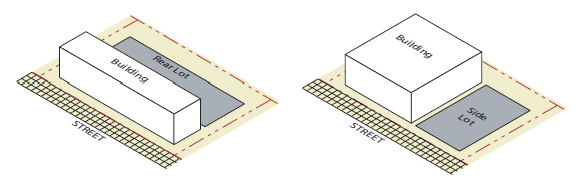
Off-street parking lots shall not be located between streets and buildings but shall be located either behind buildings (preferred) or to the side of buildings.
(Ord. 5434 Sec. 11, 2012)
18.36.067: - Parking Requirements for the UMU Zoning District.
In the UMU district both on-street and off-street parking stalls shall be credited towards the applicable parking space requirements. The following parking standards shall apply to properties zoned Urban Mixed-Use:
(1)
Any business with 3,000 square feet of gross floor area or less is exempt from parking requirements;
(2)
Businesses with more than 3,000 square feet of gross floor area shall provide one parking stall per 1,000 square feet of gross floor area. Adjacent on-street parking may be used to meet this requirement.
(3)
The following land use shall supply off-street parking consistent with KMC 18.36.060:
(a)
Dwelling, accessory apartments;
(b)
Dwelling, elderly or handicapped (two or more units); and
(c)
Dwelling, multi-family.
(4)
One- and two-family dwelling and townhomes shall provide at least one parking space per unit.
(Ord. 5716 Sec. 5, 2017)
18.36.070: - Mixed or Separate Occupancies.
In the case of mixed or separate uses on the same parcel, the total off-street parking will be the total required for the various uses computed separately. A 15 percent off-street reduction may be permitted for parking areas greater than 16,000 square feet. Off-street parking for one use does not provide parking for any other use except for cooperative uses.
(Ord. 5180 Sec. 1, 2007)
18.36.080: - In-Lieu Provisions.
On any parcel which because of the size, shape or location will not have adequate parking, parking requirements may be satisfied as follows:
(1)
In C, UMU or I districts parking may be located within 500 feet on other property:
(a)
Section 18.36.080 applies;
(i)
If the parking facility is under different ownership, a written agreement or lease is required; and
(ii)
The parking area shall be designated as P on the zoning map and not used for other than off-street parking.
(2)
If the Planning Director finds that parking demands on the use may be sporadic or seasonal, he may reduce the required parking by 50 percent if the decreased parking is available when needed within 500 feet.
(3)
If adjoining facilities can be developed and designed efficiently and economically as one facility, and the total parking area will be 10,000 square feet or more, the total combined required parking may be reduced by ten percent.
(4)
In addition to any of the above, if any use in any district, except RS and RL districts, includes an improved, permanent on-site public bus stop, the required number of parking stalls may be reduced by ten percent. Provided, however, the bus stop must be on a transit system route and be developed in accord with requirements of the Transit Authority.
(Ord. 5716 Sec. 2, 2017; Ord. 5180 Sec. 1, 2007)
18.36.090: - Exceptions.
The following are exceptions to the provisions of Chapter 18.36:
(1)
An existing commercial structure in C or UMU districts may be replaced, altered or remodeled without adequate parking if the Planning Director finds that the use will not create additional parking demands and that the new remodeled structure will have a total floor area no more than the ground floor area of the previous structure.
(Ord. 5716 Sec. 3, 2017; Ord. 5359 Sec. 3, 2011: Ord. 5180 Sec. 1, 2007)
18.36.100: - Development and Maintenance of Parking Areas.
Every public and private parking area must be developed and maintained as follows (if an adjacent property is a parking area, this provision may be waived):
(1)
Surfacing. The area must be surfaced with asphalt or Portland cement binder pavement to provide a durable and dustless surface, be graded and drained for the on-site disposal of all surface water; and be arranged and marked for the orderly and safe loading, unloading, parking and storage of vehicles and constructed to applicable construction standards. For residential zoning districts the driveway to the primary parking structure/area for each dwelling unit must be surfaced with asphalt or Portland cement binder pavement, or an alternative hard surface as approved by the Planning Director. The driveway for accessory structures not used for primary parking and not used as a dwelling in residential zoning districts can be surfaced with a minimum three-inch compacted gravel. The Planning Director may allow parking to be completed within six months after issuance of a certificate of occupancy for good cause. Any further extensions are to the approval of the Planning Commission.
(2)
Parking Area Lighting. Lighting for off-street parking must be directed and shielded to not illuminate surrounding residential areas.
(3)
Other Improvements. Barriers, curbs or tire stops must be installed if a parking area abuts a structure, adjacent properties, except when such property is a parking area, or public right-of-way. Traffic controls must be installed if deemed necessary by the City Engineer for public safety.
(4)
When a parking lot is to be landscaped, the landscaped areas are to be surrounded by a minimum six-inch high curb, be serviced by a sprinkler-head water system, be maintained and kept free of all weeds and debris.
(5)
Screening from R Districts. If an off-street parking lot abuts any R district, it must be screened by a masonry wall, tight board fence or screened chain link fence, at least three but not more than six feet high.
(6)
Driveways. Driveways in C, UMU or I districts must be at least 28 feet from pedestrian crosswalks and surfaced with asphalt or Portland cement binder pavement, or an alternative hard surface as approved by the Planning Director. Driveway widths should not be less than 30 feet in width.
(Ord. 25-6104 Sec. 2, 2025; Ord. 5716 Sec. 4, 2017; Ord. 5574 Sec. 1, 2014; Ord. 5463 Sec. 1, 2012; Ord. 5204 Sec. 13, 2007; Ord. 5180 Sec. 1, 2007)
18.36.110: - Loading Space Requirements.
Off-street loading spaces, accessible to a public way, are required for all uses with deliveries or shipments. The spaces must be adequate to accommodate the maximum number and size of vehicles simultaneously loading or unloading. No part of a vehicle using the loading space may project into a public way.
(Ord. 5180 Sec. 1, 2007)
18.36.120: - Parking for Handicapped.
Parking for the handicapped shall be provided in accord with the American's with Disabilities Act and the edition of the International Building Code most recently adopted by the City.
(Ord. 5309 Sec. 16, 2010; Ord. 5204 Sec. 14, 2007; Ord. 5180 Sec. 1, 2007)
18.36.130: - Compact Car Spaces.
Any parking lot of four or more spaces, may have 25 percent of the required spaces marked for compact cars. Compact car spaces must be seven and one-half feet wide and 15 feet long with adequate back-up space to efficiently and safely negotiate the parking area.
(Ord. 5180 Sec. 1, 2007)

