
Kochville Township City Zoning Code
TOWN AND
GOWN OVERLAY DISTRICTS
§ 155.340 INTRODUCTION.
(A) The standards and requirements outlined in this chapter promote the following principles in order to facilitate a new vision for the two geographic areas in Kochville Township shown as the “Town Overlay District” and the “Gown Overlay District” on the following page:
(1) Communities should be designed to re-establish and reinforce the public domain;
(2) Districts must exhibit human scale;
(3) Neighborhoods must be diverse in uses, activity, and population; and
(4) Building form that respects traditional development patterns encourage and sustain pedestrian-level activity.
(B) These principles result in strategies that retain distinctive traditional form, reduce negative environmental impacts, support transit and pedestrian environments, reduce auto dependence, encourage adaptive reuse and investment, ensure compatibility with adjacent uses, and create more affordable and sustainable neighborhoods. These principles embrace the idea that pedestrians are the catalyst for meaningful communities. Without pedestrians, our common areas are simply obstructions to the car and not focal points for the Kochville Township community. Areas in Kochville Township in which commerce and civic uses are integrated with homes and job opportunities create growing independence for those populations who don’t have access to cars. This subchapter is designed to create development that reinforces the public domain without sacrificing the diversity of character of individual buildings, and to reintroduce the pedestrian within a traditional compact neighborhood setting.
(C) The Town and Gown Overlay Districts will accommodate modern activities without sacrificing the timeless traditions of human scale and character of place. It is designed to foster sustainable development in a vibrant, traditional, pedestrian-friendly pattern that encourages diverse and compact development. The Town and Gown Overlay Districts promote a lively pedestrian environment by allowing for small businesses and other commercial uses at the street level, and encouraging upper-story residences and offices that overlook public space. Building form standards encourage high-quality buildings that respect their neighborhood context.
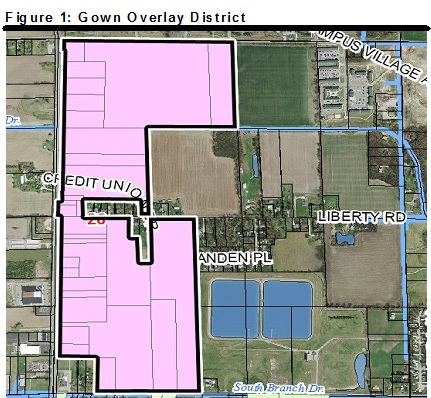
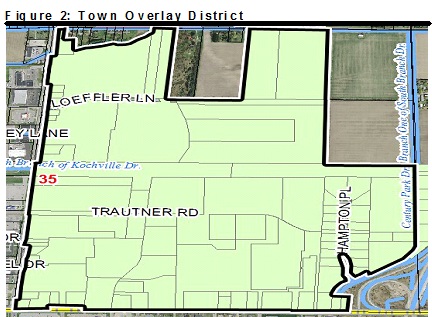
(D) Parcels included within the Town and Gown Districts:
Parcel ID Number | Common Address | Parcel ID Number | Common Address |
Parcel ID Number | Common Address | Parcel ID Number | Common Address |
18-13-4-35-4002-006 | HAMPTON PLACE | 18-13-4-35-3005-022 | 5230 FASHION SQUARE |
18-13-4-35-4002-016 | HAMPTON PLACE | 18-13-4-35-2012-006 | 5656 BAY |
18-13-4-36-3005-001 | DAVIS | 18-13-4-35-3005-011 | 2468 TITTABAWASSEE |
18-13-4-35-4002-018 | HAMPTON PLACE | 18-13-4-26-3013-000 | 6440 BAY |
18-13-4-35-4002-019 | HAMPTON PLACE | 18-13-4-26-3005-000 | 6190 BAY |
18-13-4-35-3003-200 | 2910 TITTABAWASSEE | 18-13-4-35-4002-014 | 5310 HAMPTON |
18-13-4-35-4002-003 | 5225 HAMPTON PLACE | 18-13-4-35-2018-700 | 5750 BAY |
18-13-4-36-3003-002 | 5350 DAVIS RD | 18-13-4-35-2016-000 | 2675 KOCHVILLE |
18-13-4-35-4002-002 | 5195 HAMPTON PLACE | 18-13-4-36-3003-000 | 5330 DAVIS |
18-13-4-35-4011-001 | TITTABAWASSEE | 18-13-4-35-4002-001 | 5195 HAMPTON |
18-13-4-35-3005-023 | 5230 FASHION SQUARE | 18-13-4-35-3003-002 | 2800 TITTABAWASSEE |
18-13-4-35-3005-014 | 2650 TRAUTNER | 18-13-4-35-2005-000 | 5930 BAY |
18-13-4-35-4002-020 | HAMPTON PLACE | 18-13-4-26-2017-000 | 6570 BAY |
18-13-4-35-3003-300 | 5054 BAY | 18-13-4-26-2019-000 | 2500 PIERCE |
18-13-4-35-3002-002 | 5450 BAY | 18-13-4-26-3022-000 | 6284 BAY |
18-13-4-36-3003-003 | DAVIS | 18-13-4-35-3002-000 | 5330 BAY |
18-13-4-35-3002-004 | 2685 TRAUTNER | 18-13-4-26-2006-000 | 6640 BAY |
18-13-4-35-4002-021 | HAMPTON PLACE | 18-13-4-26-3017-000 | 6150 BAY |
18-13-4-35-3002-003 | 5300 BAY | 18-13-4-26-3011-000 | 2760 KOCHVILLE |
18-13-4-35-3003-500 | BAY | 18-13-4-26-3004-000 | 6232 BAY |
18-13-4-35-2012-010 | FASHION SQUARE | 18-13-4-35-4008-000 | 2482 TITTABAWASSEE |
18-13-4-35-4001-001 | DAVIS | 18-13-4-26-3024-000 | 6300 BAY |
18-13-4-35-4002-015 | HAMPTON PLACE | 18-13-4-35-3005-016 | 5415 FASHION SQUARE |
18-13-4-35-3005-004 | 2660 TITTABAWASSEE | 18-13-4-35-2012-002 | 5570 BAY |
18-13-4-35-4002-022 | 5151 HAMPTON PLACE | 18-13-4-35-2012-001 | 5538 BAY |
18-13-4-35-4002-017 | HAMPTON PLACE | 18-13-4-35-3004-000 | 5020 BAY |
18-13-4-35-2012-012 | 5600 BAY | 18-13-4-26-2018-000 | 6666 BAY |
18-13-4-35-4002-008 | 5407 HAMPTON PLACE | 18-13-4-26-2009-000 | 2920 LIBERTY |
18-13-4-35-2019-001 | 5400 BAY | 18-13-4-35-3003-501 | 2772 TITTABAWASSEE |
18-13-4-35-3005-025 | 5230 FASHION SQUARE | 18-13-4-26-3003-000 | 2590 KOCHVILLE |
18-13-4-35-3005-008 | 2600 TITTABAWASSEE | 18-13-4-35-1009-000 | 2400 KOCHVILLE |
18-13-4-35-3005-020 | 2429 TRAUTNER | 18-13-4-35-3003-400 | 5202 BAY |
18-13-4-35-3005-026 | 5230 FASHION SQUARE | 18-13-4-36-3008-000 | 5400 N MICHIGAN |
18-13-4-26-2001-004 | 6000 BAY | 18-13-4-35-4002-023 | 5360 HAMPTON |
18-13-4-26-2001-005 | 6000 BAY | 18-13-4-35-4001-000 | 5400 DAVIS |
18-13-4-26-2002-000 | 6730 BAY | 18-13-4-35-4002-009 | 5442 HAMPTON |
18-13-4-35-2022-000 | 5950 BAY | 18-13-4-35-2020-000 | 2675 KOCHVILLE |
18-13-4-26-3019-000 | 6410 BAY | 18-13-4-35-3103-000 | 2260 TITTABAWASSEE |
18-13-4-35-2015-000 | 5680 BAY | 18-13-4-36-3004-001 | 5310 DAVIS |
18-13-4-26-2001-003 | 6000 BAY | 18-13-4-36-3003-001 | 5420 DAVIS |
18-13-4-26-2001-002 | 6000 BAY | 18-13-4-35-3005-005 | 2508 TITTABAWASSEE |
18-13-4-26-2001-001 | 6930 BAY | 18-13-4-35-2012-007 | 5650 BAY |
18-13-4-26-2020-000 | 6900 BAY | 18-13-4-35-3101-000 | 2270 TITTABAWASSEE |
18-13-4-26-3016-000 | 6368 BAY | 18-13-4-35-1007-000 | 5500 DAVIS |
18-13-4-35-4002-007 | 5375 HAMPTON | 18-13-4-35-4012-000 | 2200 TITTABAWASSEE |
18-13-4-26-2005-000 | 6530 BAY | 18-13-4-35-3006-000 | 5230 BAY |
18-13-4-35-2012-011 | KROSSROADS PARK | 18-13-4-35-4002-010 | 5446 HAMPTON |
18-13-4-35-3005-010 | 2424 TITTABAWASSEE | 18-13-4-26-3028-000 | 2600 W KOCHVILLE |
18-13-4-35-3102-000 | 2322 TITTABAWASSEE | 18-13-4-35-3008-000 | 5230 BAY |
18-13-4-35-3005-001 | 2710 TITTABAWASSEE | 18-13-4-35-4007-000 | 5225 DAVIS |
Parcel ID Number | Common Address | Parcel ID Number | Common Address |
Parcel ID Number | Common Address | Parcel ID Number | Common Address |
18-13-4-35-3005-002 | 2690 TITTABAWASSEE | 18-13-4-35-4010-000 | 5255 DAVIS |
18-13-4-35-3005-006 | 2468 TITTABAWASSEE | 18-13-4-35-2007-000 | 5740 BAY |
18-13-4-35-3005-003 | 5150 FASHION SQ | 18-13-4-26-3020-000 | 2839 LIBERTY |
18-13-4-26-3014-000 | 2690 KOCHVILLE | 18-13-4-26-3015-000 | 6420 BAY |
18-13-4-35-3003-502 | 5208 BAY | 18-13-4-26-3021-000 | 2955 LIBERTY |
18-13-4-35-4002-005 | 5311 HAMPTON | 18-13-4-36-2003-000 | 5500 DAVIS |
18-13-4-35-3003-600 | 5212 BAY | 18-13-4-35-3010-000 | 2930 TITTABAWASSEE |
18-13-4-35-4002-004 | 2205 TRAUTNER | 18-13-4-35-4002-011 | 5410 HAMPTON |
18-13-4-26-3016-001 | 6340 BAY | 18-13-4-35-1002-000 | 2400 KOCHVILLE |
18-13-4-35-2011-000 | 5660 BAY | 18-13-4-35-3005-012 | 5200 FASHION SQUARE |
18-13-4-35-3005-017 | 2332 TRAUTNER | 18-13-4-26-2016-000 | 6500 BAY |
18-13-4-35-3005-013 | 2258 TITTABAWASSEE | 18-13-4-35-2012-006 | 5656 BAY |
18-13-4-35-3003-100 | 2832 TITTABAWASSEE | 18-13-4-35-3002-001 | 5300 BAY |
18-13-4-35-4011-002 | 2222 TITTABAWASSEE | 18-13-4-35-2006-000 | 5800 BAY |
18-13-4-35-3005-015 | 2865 TRAUTNER | 18-13-4-35-4009-000 | 2200 TITTABAWASSEE |
18-13-4-36-3002-000 | 5470 DAVIS | ||
(Ord. 11-008, passed 12-20-2011)
§ 155.341 PURPOSE AND INTENT.
(A) Applicability. Both the Town Overlay District and the Gown Overlay District shall be overlay districts that apply over the existing zoning districts. Use and development of land within these overlay districts shall be regulated as follows:
(1) Any existing use shall be permitted to continue and the use shall be subject to the underlying zoning requirements and not the overlay district.
(2) Where a new use is established within an existing building, the use shall be subject to the requirements of the overlay district and the site shall be brought into compliance with the requirements of the applicable overlay district to the maximum extent practical, as determined by the Zoning Administrator at the time of reviewing the application for site plan review.
(3) Any expansion to an existing use or building that requires site plan approval from the Planning Commission shall be subject to the requirements of the applicable overlay district and shall be brought into compliance with the overlay district requirements.
(4) Where a new building is proposed, the use and site shall be subject to the requirements of the applicable overlay district. Development application(s) for new building(s) is subject to the site plan review requirements and design guidelines contained in Chapter 19.
(B) The provisions of the overlay districts, when in conflict with other articles of the Zoning Ordinance, shall take precedence.
(C) The provisions of the overlay districts shall specifically supersede the dimensional requirements (minimum lot size, minimum yard requirements, minimum floor area per dwelling unit, maximum building height, density, and maximum lot coverage) described for each zoning districts that are described in Chapters 6 through 17 of the Zoning Ordinance.
(Ord. 11-008, passed 12-20-2011)
§ 155.342 PRINCIPLES AND STANDARDS APPLICABLE TO BOTH OVERLAY DISTRICTS.
The Town and Gown Overlay Districts reflect traditional neighborhood design principles which serve as the context and framework for this chapter of the Zoning Ordinance. The following outlines the underlying principles and prescriptive standards that apply to both overlay districts.
(A) General layout and orientation.
(1) The front facade required building line exists within a prescribed area defined by the distance from the public right-of-way. In this way, building placement within the overlay districts is coherent and agreeable, but not regimented to the degree that the effect is of a contrived, sterile, themed or highly-planned development. These prescribed areas are based on the existing framework of a traditional neighborhood oriented to the pedestrian, and not a suburban environment oriented to motorized transportation.
(2) New developments in the overlay districts should integrate street and roadway design, public space, open space, the natural environment, and the built environment to create a complementary and connected pattern for efficient growth and development access.
(B) Connectivity and access.
(1) Guiding principles.
(a) These overlay districts are intended to create and enhance a safe and welcoming pedestrian environment within a multi-modal transportation network; to decrease dependence on the automobile; and improve streetscapes and connections to make walking and biking in the overlay districts easy, safe, convenient, and desirable.
(b) These overlay districts embrace compact, traditional development patterns with street and site layouts offering multiple connections without cul-de-sacs or dead-ends.
(2) Standards.
(a) All non-residential developments which provide automobile parking facilities shall provide bicycle parking facilities (racks) at a ratio of at least one bicycle parking space for every five automobile parking spaces. Multiple-family developments shall provide said facilities at a ratio of at least one bicycle parking space for every five multiple-family units.
(b) Clearly defined, safe pedestrian walkways shall be provided from adjacent public rights-of-way through off-street parking areas or front landscaping areas to non-residential building entrances (at least one per site).
(c) Proposed developments that create new streets shall place utility lines underground.
(C) Buildings.
(1) Guiding principles.
(a) Building form promotes diversity by accommodating flexible opportunities for a variety of residential, commercial, civic, and recreational uses.
(b) Buildings oversee streets with visually active fronts. For example, orientation of household gathering spaces (porches and entryways) is toward the front of the structure which faces the street. This overview of the streetside area contributes to vital and safe public space and enhances the pedestrian environment.
(c) Buildings frame the majority of the streetside area, and have facades that are closely related in orientation, position, and scale to exhibit an agreeable public space.
(d) Preferred exterior building materials include concrete, masonry, tile, stone, and wood.
(e) A variety of rooflines are encouraged to reduce the massive scale of large buildings.
(2) Standards. At the time of new development:
(a) Primary building entrances shall be oriented toward streets, parks, and plazas, and not to the interior toward parking lots and garages. Secondary entrances oriented toward parking lots are permitted.
(b) All lots shall share a frontage line with the streetside area. Residential layouts such as single-family cluster housing, urban townhouses, or apartment clusters shall be allowed to face a common courtyard public space, but in general, primary ground floor residential entries must orient to and be visible from the street, not to interior parking lots.
(c) Building facades are the public “face” of every building. Long facades located along the required building line (RBL) shall be divided into discrete facades every 70 feet on average so as not to present one long, continuous facade.
(d) The facade shall include a functioning, primary streetside entry. The entry requirement may be satisfied through the use of liner shops (small shops with direct access onto the fronting sidewalk) that wrap large footprint buildings.
(e) In no case shall the streetside facade of a building consist of a blank wall or an unbroken series of garage doors.
(f) Building facades of commercial, retail, multi-family residential, and civic uses that exceed 100 feet in length measured along the street facade shall have variations in roofline or rooftop parapet to reduce the massive scale of the large buildings. Rooftop equipment shall be concealed behind parapets or screened from view by pedestrians.
(D) Streetscape requirements.
(1) Guiding principles.
(a) The street is a coherent space, with consistent building placement and scale on both sides, contributing to a cohesive and coherent street identity, or streetscape.
(b) Wherever practical, bicycle accommodations should be added to streets to encourage multi-modal access.
(c) Streetscape elements include both planted features and other manufactured amenities that line the streets which combine to create the character of the public domain. This includes travel lanes between the curbs as well as the sidewalks and planting strips. Public plazas and open space also contribute to the overall character of streets.
(d) Street trees provide both form (canopy) and comfort (shade) to streets. Native trees and plants efficiently contribute to the reduction of air and noise pollution, maintenance of natural habitat, the conservation of water, and stormwater management.
(e) Regular spacing of street trees gives coherence to the streetscape, enhancing character.
(f) Sidewalks should be designed to facilitate both clear access to the fronts of buildings and passage for pedestrians.
(2) Standards. At the time of new development:
(a) The tree planting zone is located immediately adjacent to the curb and shall be continuous. In addition to the required planting of trees as covered below, this area may also be used for the placement of street furniture including utility poles, waste receptacles, fire hydrants, traffic signs, newspaper vending boxes, bus shelters, bicycle racks, and similar elements in a manner that does not obstruct pedestrian access or motorist visibility, as determined by the Zoning Administrator.
(b) Street trees shall be planted at an average spacing of no greater than 40 feet on the side(s) of the street being developed (and may depend on the available right-of-way width).
(c) Tree planting areas should be at grade (no raised or curbed planters) and maximize soil area to encourage healthy growth.
(d) Upon construction of a new residential structure, at least one tree will be provided on the lot per 40 feet of street frontage, to be planted between the right-of-way and the RBL. Existing trees shall fulfill this requirement. Street trees do not fulfill this requirement.
(e) The developer is required to install sidewalks or a pathway where none currently exist.
(f) Sidewalks and other pathways shall be separated from the roadway.
(g) Public sidewalks and private walkways shall be constructed of concrete and have minimum widths of six feet.
(E) Parking. Parking goals for the overlay districts are:
(1) Guiding principles.
(a) Reduce fragmented, uncoordinated, inefficient, single-purpose reserved parking and encourage shared parking and access drives.
(b) Reduce the number of large, open parking areas that create unpleasant, windswept spaces for pedestrians.
(c) Reduce the amount of impervious surfaces that contribute to water pollution and/or excessive stormwater runoff.
(d) Avoid nuisance impacts on adjacent neighborhoods by providing for efficient and adequate parking for all uses contained within the overlay districts.
(e) Incorporate convenient bicycle parking.
(f) Conceal parking from the public right-of-way by locating the majority of parking beside or behind buildings.
(2) Standards. At the time of new development:
(a) A minimum of 1 and 1/8 parking space per residential unit, of which a minimum of 1/8 parking space per residential unit shall be provided as shared parking. There are no maximum limits on shared parking.
(b) A minimum of one space per 1,000 square feet of non-residential Gross Floor Area (GFA) shall be provided as shared parking; there are no set maximum limits on shared parking. New on-street parking spaces created in conjunction with the development, which did not previously exist, may be counted toward the minimum requirement for shared parking.
(c) A maximum of one space per 1,000 square feet of non-residential GFA or two spaces per residential unit may be made available for reserved parking.
(d) Parking requirements shall be met either on-site or within a 600 foot radius of the development parcel.
(e) Parking shall be concealed in the center or rear of lots, or shall be hidden with walls or bermed landscape buffers of at least 50% opacity.
(f) Landscape screening, landscaping, and tree canopy requirements for surface parking areas as provided for in division (F) of this chapter’s regulations shall be required upon construction of any new surface parking area, or will be required for any existing surface parking area when 50% or more of the lot is resurfaced.
(F) Landscaping, buffering, and screening.
(1) Guiding principles.
(a) Principles are intended to enhance the pedestrian environment, and to screen or buffer more intense uses from those of lesser intensity.
(b) Deciduous trees should be planted on the southern face of a building or outdoor area. Such vegetation will provide cooling in the summer (when leaves are present), while still allowing sunlight to filter in during the winter (when leaves have fallen). Coniferous vegetation should be used on the north and west sides to protect the area from prevailing winter winds.
(2) Standards. At the time of new development:
(a) Commercial uses with loading and truck parking areas, and outdoor storage located within 200 feet of and having a common lot line with a residential use, shall include a 25 foot wide landscape buffer area with a minimum three foot tall berm and trees to at least a 50% opacity running along the entire property line that is adjacent to the residential use.
(b) Parking lots that contain at least 20 parking spaces shall incorporate landscaped islands of at least 200 square feet for every 20 parking spaces. The minimum linear dimension of the landscaped area is five feet.
(c) Buffer walls shall be of brick, stone, or other similar decorative material. Retaining walls shall not be considered as a fence or wall for the purpose of this chapter.
(d) Vehicle storage/parking (not including on-street parking), refuse collection, off-street loading, and mechanical equipment areas shall be located and screened so as not to be visible from adjacent public streets and residential uses. Screening may be accomplished through the use of a fence at least six feet high with landscaping that at maturity will equal at least four feet high, or a wall constructed of materials compatible with the aesthetics of the principle structure.
(G) Lighting.
(1) Guiding principles. Principles are intended to reduce the amount of light illuminating the night sky and light that excessively impacts residential areas.
(2) Standards. At the time of new development:
(a) All exterior lighting, including free-standing, canopy, pole and building mounted, shall be fully shielded and directed downward with a 70 degree cutoff to prevent off-site glare. Canopy lighting shall be fully recessed.
(b) The intensity of light within a site shall not exceed ten footcandles within any part of the site and one footcandle at any property line, except where it abuts a residential use where a maximum of one half footcandles is permitted.
(c) The mounting height of fixtures shall not exceed 16 feet.
(Ord. 11-008, passed 12-20-2001; Ord. 13-08, passed 10-9-2013)
§ 155.343 STANDARDS FOR THE TOWN OVERLAY DISTRICT.
(A) The intent and purpose of the Town Overlay District is to:
(1) Develop a fully integrated pedestrian-oriented environment with buildings containing commercial, retail, residential, and office uses.
(2) Create a synergy of uses within the Town Overlay District to support economic development and redevelopment.
(3) Minimize traffic congestion, inefficient surface parking lots, infrastructure costs, and environmental impacts by promoting a compact pedestrian-friendly district.
(4) Regulate building height to achieve appropriate scale along streets to ensure proper transition to nearby residential neighborhoods.
(5) Encourage buildings to incorporate alternative energy applications such as solar, wind energy, and other renewable energy technologies in order produce on-site energy and to enhance overall building efficiency.
(B) Building form standards.
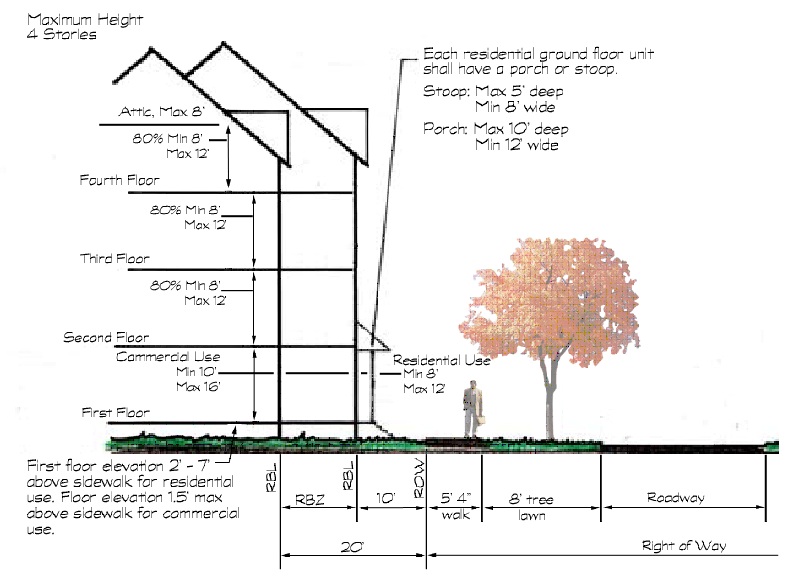
(2) Building height.
(a) The building height is measured in stories.
(b) Each principal building will be at least one story in height, but no greater than four stories in height, subject to approval by the Kochville Township Fire Department.
(c) An additional tower story is allowed above the maximum building story height, within the following parameters.
1. The footprint of the tower shall not exceed 300 feet.
2. No horizontal facade dimension of the tower shall exceed 20 feet.
3. Story height is the same as those for upper stories.
4. No attic story is permitted above a tower story.
(3) Accessory structure height: Accessory buildings shall be no greater than one story or 20 feet, measured to the eave or top of parapet.
(4) Ground story height: commercial uses.
(a) The ground story finished floor elevation shall be equal to, or greater than the exterior sidewalk elevation in front of the building, to a maximum finished floor elevation of 18 inches above the sidewalk.
(b) At least 80% of the ground story shall have an interior clear height (floor to ceiling) of at least ten feet contiguous to the required building line frontage for a minimum depth of 25 feet, and a maximum story height of 16 feet.
(5) Ground story height: residential uses.
(a) The average finished floor elevation shall be no less than two feet and no more than seven feet above the exterior sidewalk elevation at the required building line.
(b) At least 80% of the ground story shall have an interior clear height (floor to ceiling) of at least eight feet and maximum story height of 12 feet.
(C) Elements.
(1) Upper story height: all uses. At least 80% of each upper story shall have an interior clear height (floor to ceiling) of at least eight feet and maximum story height of 12 feet.
(2) Mezzanines. Mezzanines having a floor area greater than 1/3 of the floor area of the story in which the mezzanine is situated shall be counted as full stories.
(3) Door and wall openings.
(a) Blank lengths of wall exceeding 20 linear feet are prohibited on all required building lines (RBL).
(b) Door and wall openings shall comprise at least 30%, but not more than 90% of the ground story facade area per story, and at least 20% but not more than 75% of the upper story facade area per story.
(4) Building projections.
(a) Balconies, bay windows and stoops shall not project closer than five feet to a common lot line or more than five feet beyond the RBL.
(b) Each residential ground floor unit shall include a stoop of not more than five feet deep or a front porch a maximum of ten feet deep.
(c) Awnings that project over the sidewalk portion of a street right-of-way shall maintain a clear height of at least ten feet, and shall be a minimum of six feet wide.
(d) No part of any building except overhanging eaves, balconies, bay windows, stoops and porches as specified by the code shall encroach beyond the required building line. No projections will encroach onto the public right-of-way.
(5) Doors/entries. At least one functioning entry door(s) shall be provided along the ground story facade of each building. In addition, doors shall be provided at intervals not exceeding 75 feet.
(6) Fencing.
(a) A fence of not more than 50% opacity, wall, or hedge, not more than 48 inches in height, may be placed along the front and common lot lines of the front yard.
(b) A privacy fence, maximum six feet in height, and otherwise conforming to the Zoning Ordinance may be placed along any rear and common lot lines not surrounding the front yard or otherwise occupied by a building.
(c) The height of the front yard fence, wall, or privacy fence shall be measured from the adjacent public sidewalk or, when not adjacent to a sidewalk, from the adjacent ground elevation once construction is complete.
(D) Site layout.
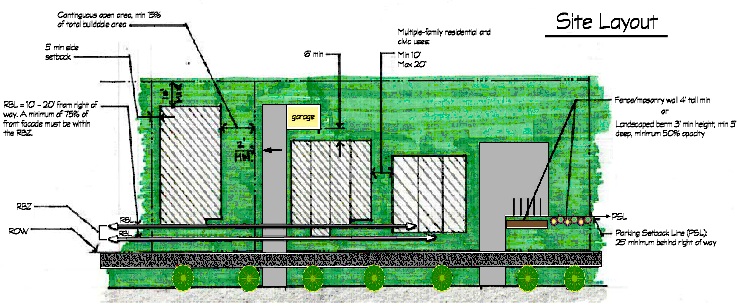
(1) Overview of representative site layout:
(2) Building placement.
(a) Front structure setback: The required building line (RBL) is on a line that lies between a distance of ten to 70 feet from the public right of way (within the RBZ).
(b) Building facade shall be located parallel with the street and sidewalk.
(c) A minimum of 75% of the building facade must be located within the RBZ.
(d) There is a five foot minimum side lot setback for detached structures.
(e) A rear yard of at least a ten-foot depth is required.
(3) Buildable area. A contiguous open area equal to at least 15% of the total buildable area shall be preserved on every lot, at or above grade and behind the RBL.
(4) Multiple-family residential and civic buildings.
(5) Accessory structures (other than garages). Any accessory buildings shall be located behind the parking setback line, shall be no closer than six feet (consult the State Building Code for construction requirements for setbacks of less than ten feet between structures) from the principal building, and shall adhere to the minimum side and rear yard setbacks prescribed under building placement.
(6) Parking.
(a) Vehicle parking areas on private property shall be located behind the parking setback line, except where parking is provided below the building.
(b) Parking setback line is five feet behind the maximum RBL (25 feet from the public right of way).
(c) All parking that is visible from the street shall be screened by a fence, shrubbery, hedge or masonry wall with a minimum height of three feet or a bermed, landscaped area at least three feet high and five feet deep of at least 50% opacity. Location and selection of the screening method shall be determined based on access requirements to underground utilities with visibility and safety requirements.
(d) Garage access must be located at the side or rear of principal buildings.
(e) Driveways shall be set back at least two feet from a common lot line.
(f) Detached garages shall be located behind principal buildings, must be at least six feet (consult the State Building Code for construction requirements for setbacks of less than ten feet between structures) from the principal building, and shall adhere to the minimum side and rear yard setbacks prescribed under Building Placement.
(g) One carport is permitted per residential dwelling unit. The carport shall not exceed 400 square feet in roofed area or be higher than ten feet. Carports shall be located behind principal buildings, and adhere to the minimum side and rear yard setbacks prescribed under building placement.
(h) These requirements are not applicable to on-street parking.
(E) Uses.
(1) The ground story shall house commercial, office, multi-family residential, civic, or residential uses.
(2) The upper stories shall house residential, multi-family residential, office or civic uses. No restaurant or retail sales uses shall be allowed in upper stories unless they are second story extensions equal to or less than the area of the ground story use.
(3) No office multi-family or civic uses are permitted above a residential use.
(4) Additional habitable space is permitted within attic and tower stories.
(5) Auto sales agency.
(6) Auto showroom.
(7) Bank, with drive-through facilities.
(8) Drive-through facility accessory to a permitted retail business, excluding restaurants.
(9) Dwelling, detached single-family units.
(10) Funeral home.
(11) Group child day care, at least seven but no more than 12 children.
(12) Gasoline service station, including full-service.
(13) Churches and religious institutions.
(14) Restaurant, with drive-through facilities.
(Ord. 11-008, passed 12-20-2011; Ord. 13-08, passed 10-9-2013; Ord. 16-05, passed 5-16-2016)
§ 155.344 STANDARDS FOR THE GOWN OVERLAY DISTRICT.
(A) The intent and purpose of the Gown Overlay District is to:
(1) Develop a fully integrated pedestrian-oriented environment with buildings containing commercial, retail, residential, and office uses.
(2) Create a synergy of uses within the Gown Overlay District to support economic development and redevelopment.
(3) Minimize traffic congestion, inefficient surface parking lots, infrastructure costs, and environmental impacts by promoting a compact pedestrian-friendly district.
(4) Regulate building height to achieve appropriate scale along streets to ensure a proper transition from Saginaw Valley State University to the Town Overlay District.
(5) Encourage buildings to incorporate alternative energy applications such as solar, wind energy, and other renewable energy technologies in order produce on-site energy and to enhance overall building efficiency.
(6) Create a sense of place for the Gown Overlay District via a pedestrian-oriented traditional neighborhood form that exhibits exceptional design and architectural character.
(B) Building form standards.
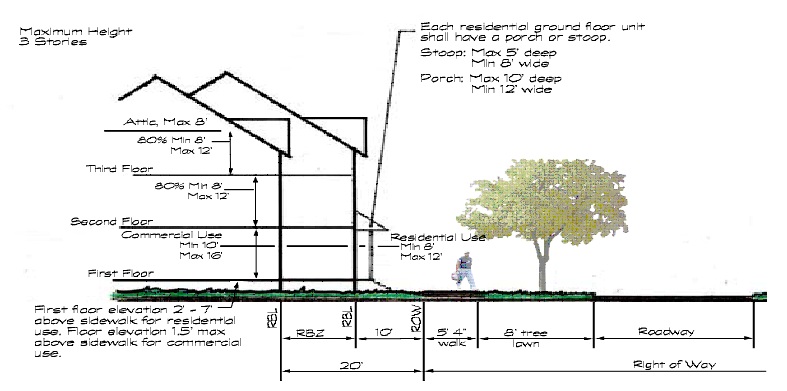
(1) Cross-section of representative building form:
(2) Building height.
(a) The building height is measured in stories.
(b) Each principal building will be at least one story in height, but no greater than three stories in height.
(c) An additional tower story is allowed above the maximum building story height, within the following parameters.
1. The footprint of the tower shall not exceed 300 feet.
2. No horizontal facade dimension of the tower shall exceed 20 feet.
3. Story height is the same as those for upper stories.
4. No attic story is permitted above a tower story.
(3) Accessory structure height: accessory buildings shall be no greater than one story or 20 feet, measured to the eave or top of parapet.
(4) Ground story height: commercial uses.
(a) The ground story finished floor elevation shall be equal to, or greater than the exterior sidewalk elevation in front of the building, to a maximum finished floor elevation of 18 inches above the sidewalk.
(b) At least 80% of the ground story shall have an interior clear height (floor to ceiling) of at least ten feet contiguous to the required building line frontage for a minimum depth of 25 feet, and a maximum story height of 16 feet.
(5) Ground story height: residential uses.
(a) The average finished floor elevation shall be no less than two feet and no more than seven feet above the exterior sidewalk elevation at the required building line.
(b) At least 80% of the ground story shall have an interior clear height (floor to ceiling) of at least eight feet and maximum story height of 12 feet.
(C) Elements.
(1) Upper story height: all uses. At least 80% of each upper story shall have an interior clear height (floor to ceiling) of at least eight feet and maximum story height of 12 feet.
(2) Mezzanines. Mezzanines having a floor area greater than 1/3 of the floor area of the story in which the mezzanine is situated shall be counted as full stories.
(3) Door and wall openings.
(a) Blank lengths of wall exceeding 20 linear feet are prohibited on all required building lines (RBL).
(b) Door and wall openings shall comprise at least 30%, but not more than 90% of the ground story facade area per story, and at least 20% but not more than 75% of the upper story facade area per story.
(4) Building projections.
(a) Balconies, bay windows and stoops shall not project closer than five feet to a common lot line or more than five feet beyond the RBL.
(b) Each residential ground floor unit shall include a stoop of not more than five feet deep or a front porch a maximum of ten feet deep.
(c) Awnings that project over the sidewalk portion of a street right-of-way shall maintain a clear height of at least ten feet, and shall be a minimum of six feet wide.
(d) No part of any building except overhanging eaves, balconies, bay windows, stoops and porches as specified by the code shall encroach beyond the required building line. No projections will encroach onto the public right-of-way.
(5) Doors/entries. On the ground story facade of each building, doors shall be provided at intervals not exceeding 75 feet. Measurements will be taken from the center line of each door opening.
(6) Fencing.
(a) A fence of not more than 50% opacity, wall, or hedge, not more than 48 inches in height, may be placed along the front and common lot lines of the front yard.
(b) A privacy fence, maximum 6 feet in height, and otherwise conforming to the Zoning Ordinance may be placed along any rear and common lot lines not surrounding the front yard or otherwise occupied by a building.
(c) The height of the front yard fence, wall, or privacy fence shall be measured from the adjacent public sidewalk or, when not adjacent to a sidewalk, from the adjacent ground elevation once construction is complete.
(D) Site layout.
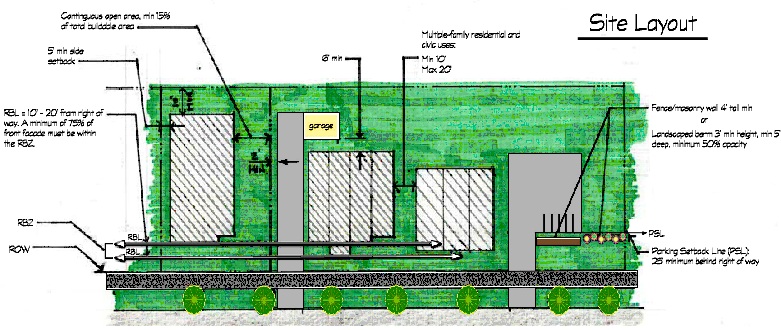
(1) Overview of representative site layout:
(2) Building placement.
(a) Front structure setback: The required building line (RBL) is on a line that lies between a distance of ten to 60 feet from the public right of way (within the RBZ).
(b) Building facade shall be located parallel with the street and sidewalk.
(c) A minimum of 75% of the building facade must be located within the RBZ.
(d) Side structure setback: There is a five-foot minimum side lot setback for detached structures.
(e) A rear yard of at least ten foot depth is required.
(3) Buildable area. A contiguous open area equal to at least 20% of the total buildable area shall be preserved on every lot, at or above grade and behind the RBL.
(4) Multiple-family residential and civic buildings.
(5) Accessory structures (other than garages). Any accessory buildings shall be located behind the parking setback line, shall be no closer than six feet (consult the State Building Code for construction requirements for setbacks of less than ten feet between structures) from the principal building, and shall adhere to the minimum side and rear yard setbacks prescribed under Building Placement.
(6) Parking.
(a) Vehicle parking areas on private property shall be located behind the parking setback line, except where parking is provided below the building.
(b) Parking setback line is five feet behind the maximum RBL (25 feet from the public right- of-way).
(c) All parking that is visible from the street shall be screened by a fence or masonry wall at least four feet high, or a bermed, landscaped area at least three feet high and five feet deep of at least 50% opacity.
(d) Garage access must be located at the side or rear of principal buildings.
(e) Driveways shall be set back at least two feet from a common lot line.
(f) Detached garages shall be located behind principal buildings, must be at least six feet (consult the State Building Code for construction requirements for setbacks of less than ten feet between structures) from the principal building, and shall adhere to the minimum side and rear yard setbacks prescribed under Building Placement.
(g) One carport is permitted per residential dwelling unit. The carport shall not exceed 400 square feet in roofed area or be higher than ten feet. Carports shall be located behind principal buildings, and adhere to the minimum side and rear yard setbacks prescribed under building placement.
(h) These requirements are not applicable to on-street parking.
(E) Uses.
(1) Uses permitted by right:
(a) The ground story shall house commercial, office, multi-family residential, civic, or residential uses.
(b) The upper stories shall house residential, multi-family residential, office or civic uses. No restaurant or retail sales uses shall be allowed in upper stories unless they are second story extensions equal to or less than the area of the ground story use.
(c) No office multi-family or civic uses are permitted above a residential use.
(d) Additional habitable space is permitted within attic and tower stories.
(2) Uses permitted by special use permit. Uses identified in the Kochville Township Zoning Ordinance as potential eligible special uses in accordance with the respective corresponding underlying zoning designation.
(Ord. 11-008, passed 12-20-2011; Ord. 13-08, passed 10-9-2013; Ord. 16-05, passed 5-16-2016)
§ 155.345 TOWN AND GOWN ADMINISTRATOR.
(A) The Kochville Township Planning Commission hereby designates the Kochville Township Downtown Development Authority Director to the position of Town and Gown Administrator.
(B) Duties and responsibilities of Town and Gown Administrator.
(1) Review all site plans received by Kochville Township that are located in the Town and Gown Districts for compliance with the Town and Gown Overlay District requirements.
(2) Meet with the developer or property owner to discuss the Town and Gown Overlay District requirements.
(3) Meet with the Zoning Administrator to discuss the Town and Gown Overlay District requirements and the impact of those requirements with the zoning requirements and the Cardinal Square guidelines.
(4) After meeting with the developer and Zoning Administrator, the Town and Gown Administrator shall prepare a written recommendation that sets forth what provisions of the Towns and Gown Overlay District should be imposed on the developer and what provisions are recommended to be waived by the Kochville Township Planning Commission and the reason those provisions should be waived.
(5) Provide the written report set forth in § 155.345(B)(4), above, to the Zoning Administrator and to the Kochville Township Planning Commission.
(C) The developer or the Kochville Township Zoning Administrator may dispute the finding of the Town and Gown Administrator at the special use permit public hearing before the Kochville Township Planning Commission. The Kochville Township Planning Commission shall have the authority to modify the Town and Gown Overlay requirements imposed on the developer by the Town and Gown Administrator.
(Ord. 11-008, passed 12-20-2011)

