
La Palma City Zoning Code
ARTICLE I
- IN GENERAL
Sec. 44-1.- Title.
This chapter shall be known and cited as the City of La Palma Development Code.
(Ord. No. 2015-01, § 3, 5-5-2015)
Sec. 44-2. - Purpose.
(a)
Purpose. The purposes of this chapter are to:
(1)
Implement the goals, objectives, policies, and programs of the La Palma General Plan by classifying and regulating the uses of land and structures within the City.
(2)
Designate the City into land use districts to guide the use of land and the implementation of development standards.
(3)
Provide standards that result in high quality planning and design of development which enhance the visual character of the City, preserve the quality of development, and avoid conflicts between land uses.
(4)
Manage growth in the limited undeveloped land within the City and guide actions to preserve or enhance development.
(5)
Provide regulations for the subdivision of land in compliance with the Subdivision Map Act, Title 7, Section 4, Division 2 of the California Government Code (Government Code § 66425 et seq.).
(6)
Provide clear and easily understood definitions for the terms used in this chapter. The meaning of words and phrases defined in this article applies throughout this chapter, except where the context clearly indicates a different meaning.
(b)
Reasons for regulations. Regulations are necessary in order to encourage the most appropriate use of land. The following are reasons for regulations:
(1)
To enact the policies and goals of the general plan.
(2)
To maintain or improve the value of property.
(3)
To promote high quality homes and desirable neighborhoods.
(4)
To provide high quality of life within the community.
(5)
To lessen congestion of streets.
(6)
To facilitate adequate provisions for community needs such as transportation, parks, and other public requirements.
(7)
To protect and promote the public health, safety, and general welfare of the City.
(c)
Organization. This chapter is comprised of seven articles. The content of the articles is as follows:
(1)
In general (Article I). This article is an introduction to the chapter and includes definitions.
(2)
Zoning districts and allowable land uses (Article II). This article includes allowable uses and development standards for specific uses and specific zoning districts. Requirements for specialized uses such as adult oriented uses, automobile service stations, massage facilities, self-storage, community events, and tutorial facilities are included in this article.
(3)
Standards applicable in all zoning districts (Article III). This article includes standards that are applicable to specific elements of development such as parking, signs, and landscaping. These standards are not zone specific and pertain to all areas of the City.
(4)
Administrative procedures (Article IV). This article designates approval authority for discretionary and ministerial approvals and includes procedures for public hearings, appeals, amendments, enforcement actions, revocations, and modifications.
(5)
Permits, plans, and certificates (Article V). This article includes the processes for various approvals and findings discussed in previous sections.
(6)
Subdivisions (Article VI). This article outlines the processes for approving/disapproving certificates of compliance, lot line adjustments, parcel mergers, parcel maps, and tract maps. Requirements for dedication or fees in lieu are included in this article.
(7)
Water efficient landscaping (Article VII).
(Ord. No. 2015-01, § 3, 5-5-2015)
Sec. 44-3. - Applicability.
All land and structures shall be used and constructed in compliance with regulations and requirements of this chapter, including obtaining all permits prior to construction/use inauguration, as applicable.
(Ord. No. 2015-01, § 3, 5-5-2015)
Sec. 44-4. - Interpretation and application of chapter.
This section provides rules for resolving questions about the meaning or applicability of any part of this chapter, in order to ensure the consistent interpretation and application of its provisions.
(1)
Authority to interpret. The Community Development Director is assigned the responsibility and authority to interpret the requirements of this chapter.
(2)
Minimum requirements. In interpreting and applying the provisions of this chapter, they shall be held to be the minimum requirements for the promotion of the public health, safety, comfort, convenience, and general welfare.
(3)
Greater restrictions control. When provisions of this chapter are more restrictive than are required by other provisions of this Code, other City regulations, or by private agreements, the provisions of this chapter shall control.
(4)
Provisions substantially the same. When the provisions of this chapter are substantially the same as existing ordinances relating to the same subject matter, they shall be construed as restatements and continuations, and not as new enactments.
(5)
Agreement between private parties. It is not intended by this chapter to interfere with, abrogate, or annul any easement, covenant, or other agreement between private parties.
(Ord. No. 2015-01, § 3, 5-5-2015)
Sec. 44-5. - Interpretations of land uses.
If a proposed use of land is not specifically listed in sections 44-78 and 44-139, the use shall not be allowed, except as follows:
(1)
Use substantially the same. The Community Development Director or his/her designee may determine that a proposed use that is not listed in sections 44-78 and 44-139 is allowed if the proposed use is substantially the same in character and intensity as those listed in sections 44-78 and 44-139. Such a use is subject to the permit process that governs the category-in which it falls.
(2)
Treating in the same manner. When the Community Development Director or his/her designee determines that a proposed, but unlisted, use is similar to a listed use, the proposed use will be treated in the same manner as the listed use in determining where it is allowed, what permits are required, and what other standards and requirements of this Development Code apply.
(3)
Forward questions. The Community Development Director or his/her designee may forward questions about similar uses directly to the City Council for a determination.
(Ord. No. 2015-01, § 3, 5-5-2015; Ord. No. 2016-06, § 6, 5-3-2016)
Sec. 44-6. - Word interpretations.
(a)
Meaning of words. When used in this chapter, the terms "includes" and "including" shall mean including, but not limited to.
(b)
Number of days. Whenever a number of days is specified in this chapter, or in any permit, condition of approval, or notice issued or given as provided for in this chapter, the number of days shall be construed as calendar days. Time limits will extend to the following working day when the last of the specified number of days falls on a weekend, holiday, or any other day that City hall is not open.
(c)
References as amended. Where this chapter references applicable provisions of State law (e.g., the California Government Code, Subdivision Map Act, Public Resources Code, etc.), the reference shall be construed to be to the applicable State law provisions as they may be amended from time to time.
(Ord. No. 2015-01, § 3, 5-5-2015)
Sec. 44-7. - Division of zoning map.
For convenience, portions of the zoning map may be employed in amending the zoning map or in making official reference to the zoning map, in place of using the entire zoning map document.
(Ord. No. 2015-01, § 3, 5-5-2015)
Editor's note— Ord. No. 2010-02, adopted 10-5-2010, changed the designation of certain properties on the Land Use Zoning Map to "Planned Neighborhood Development." The zoning map was adopted by reference and incorporated into this Development Code by section 44-39 (Establishment of zoning districts), but has not been reprinted herein. The zoning map is on file and available for public examination in the offices of the Community Development Department.
Sec. 44-8. - Consistency with county hazardous waste management plan.
All applicable zoning, conditional use permit, and variance decisions and determinations by the City shall be consistent with the applicable provisions of the County hazardous waste management plan, or other applicable County plans, which identify general areas or siting criteria for hazardous waste facilities.
(Ord. No. 2015-01, § 3, 5-5-2015)
Sec. 44-9. - Partial invalidity.
If any, section, sentence, clause, or phrase of this chapter is for any reason held to be invalid or unconstitutional, the decision shall not affect the validity of the remaining portions of this chapter. The City Council hereby declares that it would have adopted this chapter and each article, section, sentence, clause, or phrase thereof, irrespective of the fact that any one or more parts of this chapter might be declared invalid.
(Ord. No. 2015-01, § 3, 5-5-2015)
Sec. 44-10. - Definitions.
The purpose of this section is to provide clear and easily understood definitions for the terms used in this chapter. The meaning of words and phrases defined in this section applies throughout this chapter, except where the context clearly indicates a different meaning. Terms not clearly defined in this section, other chapters of this Code, or in Webster's Dictionary shall be subject to the interpretation of the Community Development Director.
Abandoned means to cease from developing, using, or maintaining a structure (including signs) or use for a stated period of time. Exceptions are temporary closures for repairs, alterations, or other similar situations.
Abut or abutting. See adjoining.
Access means usable ingress or egress to a property or use, from a public right-of-way.
Accessory dwelling unit (ADU) means an attached or a detached residential dwelling unit that provides complete independent living facilities for one or more persons and is located on a lot with a proposed or existing primary residence. It shall include permanent provisions for living, sleeping, eating, cooking, and sanitation on the same parcel as the single-family or multifamily dwelling is or will be situated. An accessory dwelling unit also includes the following:
(1)
An efficiency unit, as defined in Section 17958.1 of the Health and Safety Code.
(2)
A manufactured home, as defined in Section 18007 of the Health and Safety Code.
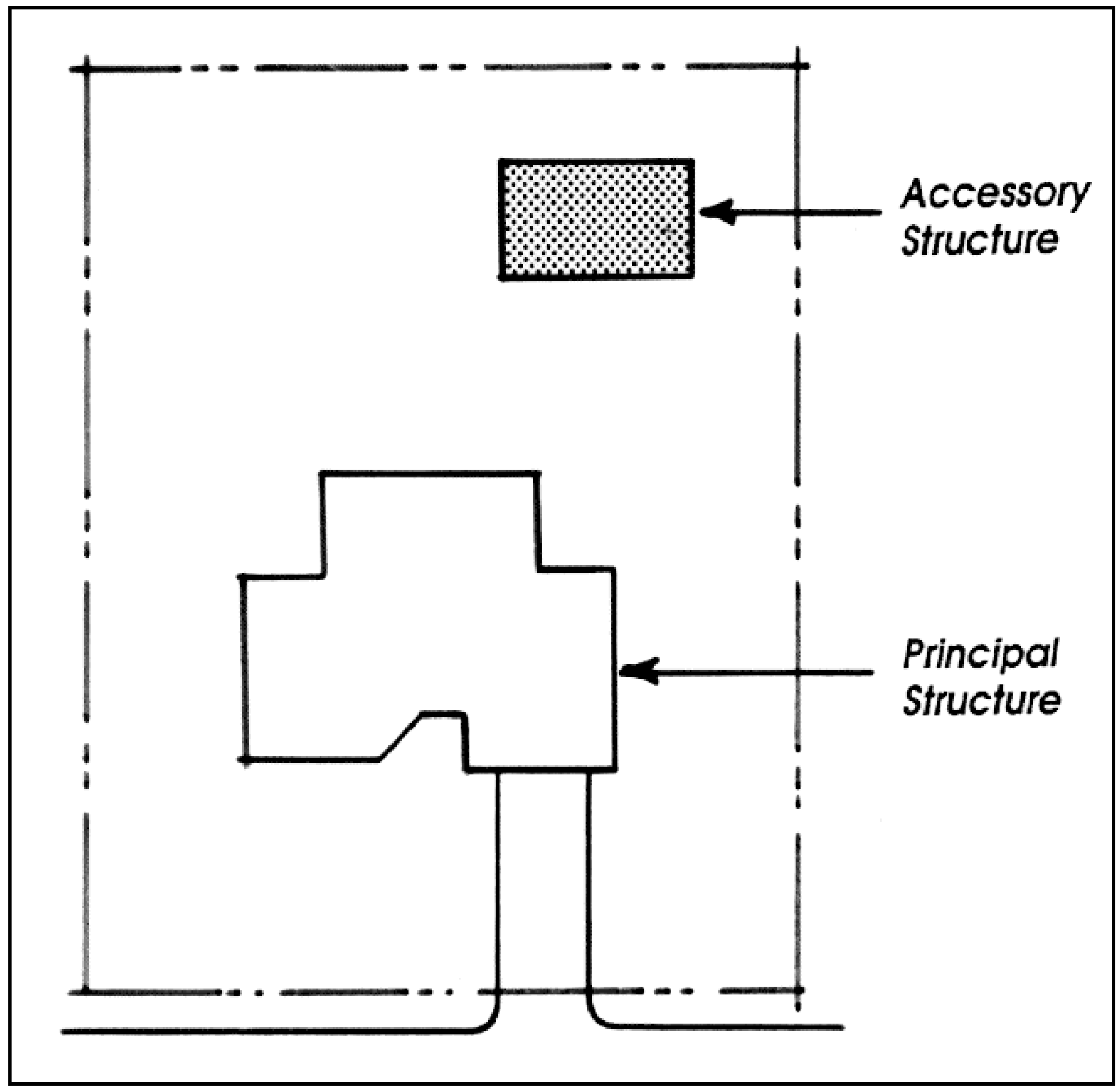
Accessory structure/building means a permanent or temporary structure detached from a principal structure on the same parcel, incidental to the principal building, and not designed for human habitation.
Accessory use means a use naturally and normally incidental to, subordinate to, and devoted exclusively to the main use of the premises.
Addition (expansion) means:
(1)
The physical alteration of a structure that results in an increase in its floor area, volume, or height; also
(2)
A structure added to the original structure after completion of the original structure.
Adjacent means:
(1)
Two or more parcels of land separated only by an alley, street, highway, or recorded easement; or
(2)
Two or more objects that lie near or close to each other.
Adjoining (abutting) means two or more parcels of land sharing a common boundary line or two or more objects that lie near or close to each other.
Adult means a person 18 years of age or more.
Adult oriented businesses. See Section 44-195 for definitions of terms.
Agent means a person or entity, who does not hold any interest in the property and who is authorized in writing by the property owner to comply with the requirements of this Code, including, without limitation, the filing of an application for a short-term rental special business permit that has been signed by the owner, the management of the short-term rental, and the compliance with the conditions of the permit.
Alley means a public or private way, at the rear or side of property, permanently reserved as an ancillary means of vehicular or pedestrian access to adjoining property.
Alteration means the physical change or rearrangement of the supporting members of an existing structure (e.g., bearing walls, columns, beams, girders, or interior partitions) as well as any change in doors, windows, means of ingress or egress, or any addition to or diminution of a structure, whether horizontally or vertically, or the moving of a structure from one location to another.
Amusement arcade means an establishment that consists primarily of amusement devices.
Amusement device means any device, machine, apparatus, computer, or other instrument (including electronic games, model games, and pinball games) operated electronically, mechanically, or manually for amusement purposes which requires the deposit of or payment of money, coin, token, or other thing of value, whether directly to the device or to the business establishment for the use or operation of the device, but which does not contain a payoff device for the return of slugs, money, coins, checks, or tokens. Amusement devices may include redemption games, devices or machines that dispense tickets that may be redeemed for non-cash prizes.
Antenna means the outdoor portion of the receiving and transmitting equipment used for receiving or transmitting television, Internet, or radio waves or signals and includes any system of wires, poles, rods, reflecting discs, or similar devices for the transmission or reception of electromagnetic waves external to or attached to the exterior of any building.
Antenna, dish, means a curved, "dish-like" antenna.
Antenna, pole, means a single pole for transmitting and/or receiving television, radio, or other similar waves.
Antenna, tower, means a structure with two or more supports that touch the base or ground on which the tower is mounted.
Apartment means a separate suite, not owner occupied, that includes kitchen facilities and is designed for and rented as the home, residence, or sleeping place of one or more persons living as a single housekeeping unit.
Applicant means an owner or lessee of property, or his or her authorized agents, or persons who have contracted to purchase property contingent upon his or her ability to acquire the necessary permits under this chapter, or the agents of such person.
Approved massage school means any school or institution of learning approved by the Massage Therapy Council that meets the minimum standards for training, that meets any of the requirements specified in California Business and Code § 4601(a), and that has not been otherwise unapproved by the Massage Therapy Council.
Area means net area, unless otherwise specified.
Area, living, means the interior habitable area of a dwelling unit, including basements and attics, but does not include a garage or any accessory structure.
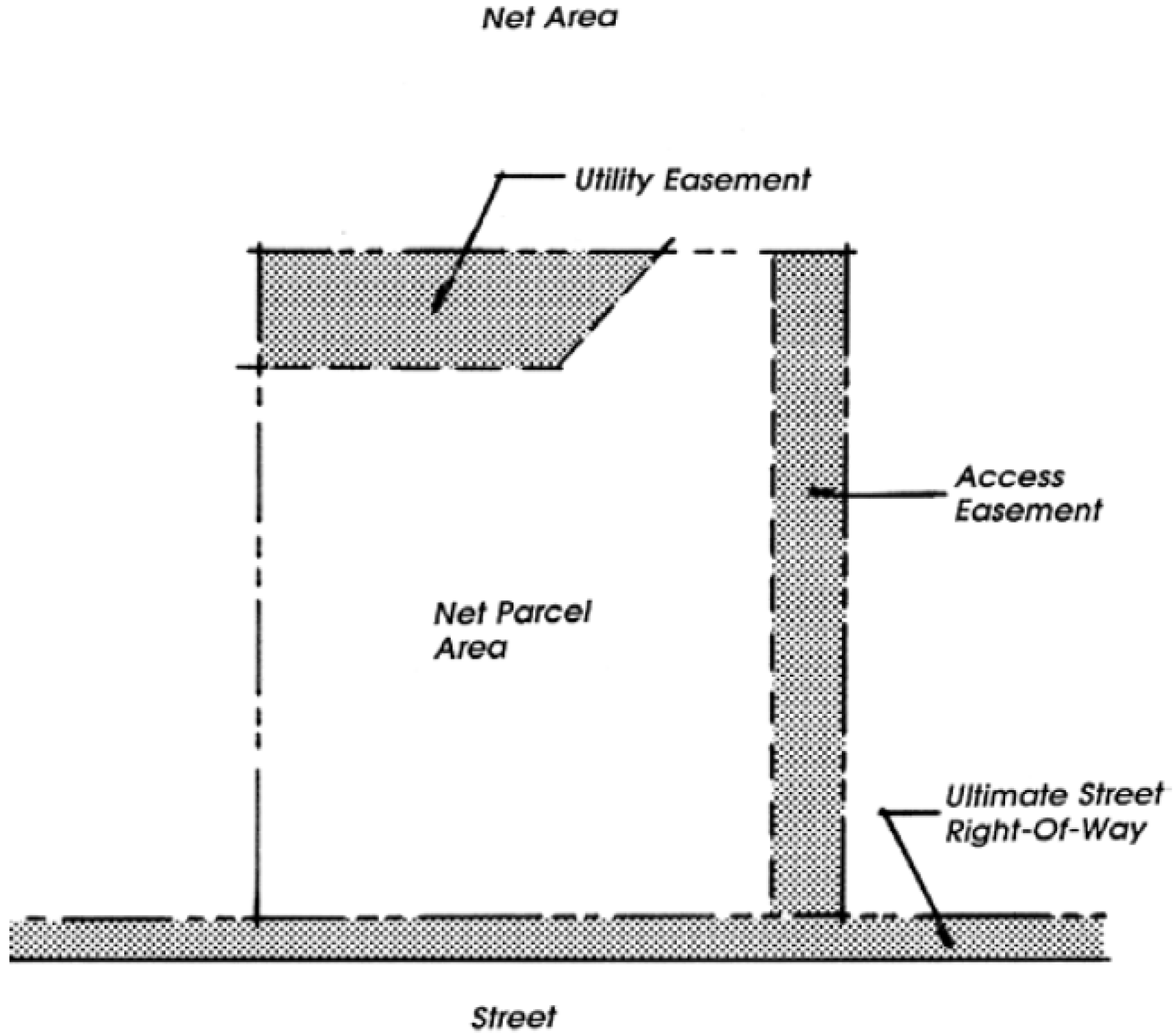
Area, net, means the area of a lot or parcel of land, less the area of existing or proposed public alleys, highways, streets or other necessary public easements, when included within a proposed development project. The term "net area" includes "net acreage."
Area of special flood hazard means the land in the floodplain within a community subject to a one percent or greater chance of flooding in any given year.
Artificial turf. See turf, artificial.
Assisted living facility means a facility that provides a combination of housing, meals, supportive services, personalized assistance, and/or health care that responds to the individual requirements of those who need assistance with the activities of daily living but do not need 24-hour skilled medical care. An assisted living facility may provide other services, including recreational activities, financial services, and transportation.
Association means a nonprofit corporation or unincorporated association created for the purpose of managing a common interest development.
Attached means any structure that has a wall or roof in common with another structure.
Auto repair, major, means a facility that provides reconstruction, rehabilitation, and refurbishment services for motorized vehicles, including body repair, engine and transmission overhauls, painting services, and other heavy vehicle maintenance activities.
Auto repair, minor or routine maintenance, means and includes oil changes, the repair or replacement of tires, brake pads, hoses, fluids, and similar activities, but does not include maintenance or repair that involves the removal of the engine, transmission, or other major component or any significant body repair work that involves sanding, priming, or painting of a vehicle, motorized recreational vehicle, or recreational object.
Awning means any permanent or removable projection designed for shade, attached to the building by brackets or other means, with no direct connection or support on the ground.
Base flood means a flood which has a one percent chance of being equaled or exceeded in any given year (also called the "100-year flood").
Battery charging station means an electrical component assembly or cluster of component assemblies designed specifically to charge batteries within plug-in electric vehicles.
Bedroom means a room designed primarily for sleeping that meets the definition of the California Building Codes currently adopted by the City.
Block means a contiguous area or parcels of land surrounded by public streets, highways, freeways, railroad rights-of-way, greenbelts, flood control channels, creeks, washes, rivers, or unsubdivided acreage, or any combination thereof.
Block party means a residential neighborhood social event that requires the temporary closure of a public right-of-way.
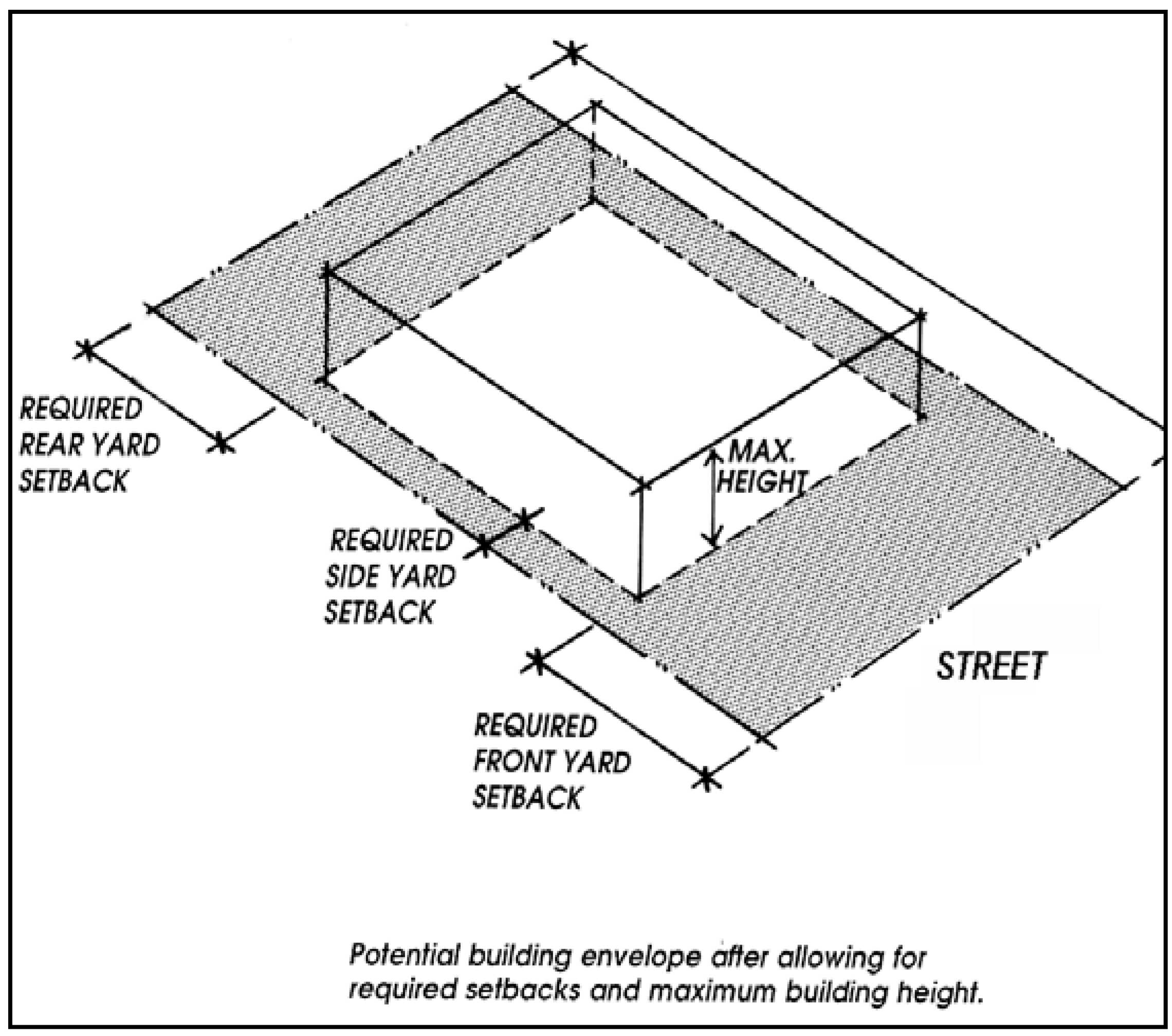
Buildable area means the net portion of the parcel remaining after deducting all required setbacks and open space requirements from the gross area of the parcel.
Building means any walled and roofed structure built and maintained principally above ground for the support, shelter, or enclosure of persons, animals, or property of any kind; this includes a gas or liquid storage tank or a manufactured home. The term "building" shall include the term "structure."
Building envelope means an area delineated on a plan in which all clearing and land disturbance for building construction shall be confined. If not delineated, it is the area of a parcel excluding any required front, side, or rear yard setback area, any recorded easement, or offer of dedication.
Building façade means that portion of any exterior elevation of a building extending from grade to the top of the parapet wall or eaves and the entire width of the building elevation.
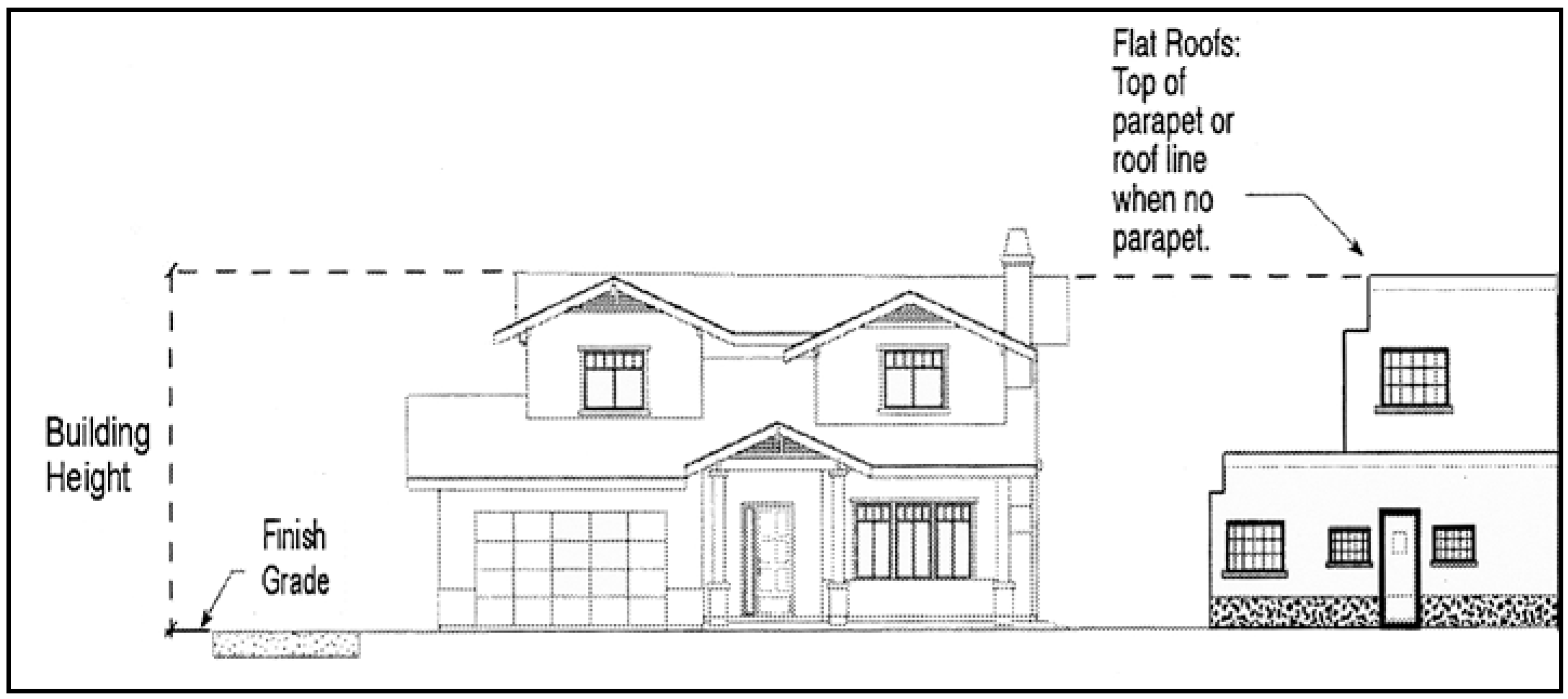
Building height means the vertical distance from the lowest point of the finished grade adjacent to the structure to the highest point of the structure, excluding chimneys, vents, and other incidental projections.
Building Official means the officer or other designated authority charged with the administration and enforcement of the City Building and Grading Codes, or a duly authorized designee.
Cannabis shall mean all parts of the plant Cannabis sativa Linnaeus, Cannabis indica, or Cannabis ruderalis, whether growing or not; the seeds thereof; the resin, whether crude or purified, extracted from any part of the plant; and every compound, manufacture, salt, derivative, mixture, or preparation of the plant, its seeds, or resin. "Cannabis" also means the separated resin, whether crude or purified, obtained from marijuana. "Cannabis" also means "marijuana" as defined by California Health and Safety Code § 11018 as enacted by Chapter 1407 of the Statutes of 1972. The term "Cannabis" shall also have the same meaning as set forth in California Business and Professions Code § 19300.5(f), as may be amended from time to time. "Cannabis" does not include the mature stalks of the plant, fiber produced from the stalks, oil or cake made from the seeds of the plant, any other compound, manufacture, salt, derivative, mixture, or preparation of the mature stalks (except the resin extracted therefrom), fiber, oil, or cake, or the sterilized seed of the plant which is incapable of germination. For the purpose of this chapter, "cannabis" does not mean "industrial hemp" as defined by California Food and Agricultural Code § 81000 or California Health and Safety Code § 11018.5.
Cannabis cooperative shall mean two or more persons collectively or cooperatively cultivating, using, transporting, possessing, administering, delivering, or making available cannabis, with or without cultivation.
Cannabis cultivation or cultivate shall have the same meaning as "cultivation" or "cultivate" set forth in California Business and Professions Code § 19300.5(l), as may be amended from time to time.
Cannabis delivery shall have the same meaning as "delivery" set forth in California Business and Professions Code § 19300.5(m), as may be amended from time to time.
Cannabis dispensary shall have the same meaning as "dispensary" set forth in California Business and Professions Code § 19300.5(n), as may be amended from time to time. For purposes of this chapter, dispensary shall also include a cooperative. Dispensary shall not include the following uses:
(1)
A clinic licensed pursuant to California Health and Safety Code Div. 2, Ch. 1;
(2)
A health care facility licensed pursuant to California Health and Safety Code Div. 2, Ch. 2;
(3)
A residential care facility for persons with chronic life threatening illnesses licensed pursuant to California Health and Safety Code Div. 2, Ch. 3.01;
(4)
A residential care facility for the elderly licensed pursuant to California Health and Safety Code Div. 2, Ch. 3.2;
(5)
A residential hospice or home health agency licensed pursuant to California Health and Safety Code Div. 2, Ch. 8.
Canopy means a portable, lightweight structure commonly constructed with cloth or nylon fabric over metal or plastic frames. Canopies may have open sides or be enclosed; they include tarps, exhibition tents, and other similar types of structures and exclude awnings, patios, porches, and carports.
Caregiver or Primary Caregiver shall have the same meaning as set forth in California Health and Safety Code § 11362.7, as may be amended from time to time.
Carport means a permanent roofed structure not completely enclosed to be used for vehicle parking for the occupants of the premises. The term "carport" includes the term "Porte-Cachere."
Certified massage practitioner means a person who is certified by the Massage Therapy Council, under subdivision California Business and Professions Code § 4604.2 and who administers massage.
Certified massage therapist means a person who is certified by the Massage Therapy Council, under California Business and Professions Code § 4604 and who administers massage.
Change of use means the replacement of an existing use by a new use, or a change in the nature of an existing use, but not including a change of ownership, tenancy, name, or management where the previous nature of the use, line of business, or other function is substantially unchanged.
Charging levels means standardized indicators of electrical force, or voltage, at which an electric vehicle's battery is recharged.
Check in means the arrival of a guest at a hotel or short-term rental property.
Checklist means the submittal checklist required by the City to be submitted with the permit application for an electric vehicle charging station to demonstrate compliance.
Citation means any enforcement citation, order, penalties, infraction, misdemeanor, ticket or similar notice of violation, relating to the condition of or activities at a person's primary residence or property, issued by the City, including an administrative citation issued pursuant to article XI, enforcement, of chapter 2, administration, of this Code.
Civic dance means any dance held or sponsored by any bona fide memorial, fraternal, or civic organization or by the City, any school, public recreation, or community service organization.
Clean air vehicle parking space means any posted and/or marked parking space that identifies the use to be exclusively for the parking of a clean fuel vehicle as defined by the California Air Resources Board.
Clean air vehicle sticker. California law allows use of high occupancy vehicle (HOV) lanes with only one occupant when the vehicle displays clean air vehicle stickers.
Clean vehicle means any clean fuel vehicle identified by the State of California as qualifying for the California Clean Vehicle Rebate Project.
Client intake area means the area inside a building or facility designated to be used for the gathering or processing of information from clients for the specified use or operation of the business or facility.
Commercial cannabis activity shall have the same meaning as set forth in California Business and Professions Code § 19300.5(k), as may be amended from time to time.
Commercial coach has the same meaning as "commercial modular" as that term is defined in this section.
Commercial mixed-use means a project with planned integration of more than one type of significant sales tax revenue-producing uses in a building or set of buildings, specifically a combination of commercial, office, or institutional land uses. It maximizes space usage, has amenities and architectural expression and shall, to the greatest extent possible, be pedestrian-oriented and mitigate traffic and sprawl.
Commercial modular, means a structure, transportable in one or more sections, designed and equipped for human occupancy for industrial, professional or commercial purposes, which is required to be moved under permit, and shall include a trailer coach as defined in California Vehicle Code § 635.
Commercial modular, new. See manufactured home, new.
Commercial modular, used. See manufactured home, used.
Commercial vehicle means a vehicle customarily used as part of a business for the transportation of goods or people, including any vehicle that has been registered as a commercial vehicle with the California Department of Motor Vehicles.
Communication facilities means a public or private structure that supports antennas, microwave dishes, and other related equipment (e.g., ground cabinets and structures) that sends and/or receives radio frequency signals. (Also see antenna.)
Community benefits means physical improvements provided in conjunction with a development project that are provided to improve the community, help achieve the City's vision for a quality environment, and address any burdens such development imposes.
Community Development Director means the City Community Development Director and/or his or her designee.
Community event.
(1)
The term "community event" means any of the following:
a.
Any activity that may result in the closure of any public street and which may temporarily require the installation or construction of material or devices using building, electrical, mechanical, plumbing, flammable, or similar materials.
b.
Any outdoor event, gathering, celebration, or activity held on public or private property where the public at-large is invited.
c.
Any indoor or outdoor private event, gathering, celebration, or activity exceeding 150 people held on public property.
(2)
The term "community event" shall not include temporary uses, as defined herein.
Community Services Director means the City Community Services Director and/or his or her designee.
Compressed hydrogen gas (CHG) means hydrogen compressed to a high-pressure and stored at ambient temperature.
Conditional use permit means a discretionary entitlement granted by the City Council under the provisions of this Development Code, which when granted, authorizes a specific use to be made of specific premises, subject to compliance with all terms and conditions imposed on the entitlement.
Condominium means a development consisting of an undivided interest in common for a portion of a parcel coupled with a separate interest in space in a residential or commercial building on the parcel.
Congregate care facility means a structure providing residence for more than 24 hours for a group of senior citizens or disabled persons, as defined by the State of California Health and Safety Code as a congregate living health care facility, with central or private kitchen, dining, recreational, etc., facilities with separate bedrooms and/or living quarters.
Convalescent home means a licensed facility which provides 24-hour bed and ambulatory care for patients with post-operative convalescent, or chronic illness, or persons unable to care for themselves, but not including alcoholics, drug addicts, or persons with mental or contagious diseases or afflictions. The term "convalescent home" includes the terms "nursing home" and "rest home."
Dancing club means any club or association of persons which conducts dances, other than public dances, for its members or bona fide guests at least once per month for which fees are charged, any collection or donation of money is given or received, or for which the amount of dues paid by each member is dependent upon, or related to, the attendance at such dances.
Dangerous animal means any animal, reptile, fowl, or fish which is not naturally tame or which is known to be dangerous by the owner or which must be kept in confinement to be brought within the immediate power of the owner.
Day care facilities means facilities that provide non-medical care and supervision of persons for periods of less than 24 hours. These facilities include the following, all of which are required to be licensed by the California State Department of Social Services:
(1)
Adult day care, residential, means a facility, as defined in California Health and Safety Code § 1502, located in a single-family residence where an occupant of the residence provides care and supervision for six or fewer adults.
(2)
Adult day care, business, as defined in California Health and Safety Code § 1502, means commercial or nonprofit adult day care facilities designed and approved to accommodate seven or more adults and includes senior centers. These may be operated in conjunction with a school or church facility, or as an independent land use.
(3)
Child day care center means commercial or nonprofit child day care facilities designed and approved to accommodate 15 or more children and includes infant centers, preschools, sick-child centers, and school-age day care facilities. These may be operated in conjunction with a school or church facility, or as an independent land use.
(4)
Large family day care home means a day care facility located in a single-family residence where an occupant of the residence provides care and supervision for nine to 14 children served by the day care facility. Children under the age of ten years who reside in the home shall count as children served by the day care facility.
(5)
Small family day care home means a day care facility located in a single-family residence where an occupant of the residence provides care and supervision for eight or fewer children. Children under the age of ten years who reside in the home shall count as children served by the day care facility.
Day spa means a personal service use providing a variety of health and beauty services, including hairdressing, manicure, and similar services. Facilities providing massage services are also considered massage parlors and are covered by regulations for that use.
Daytime guests means guests who visit a short-term rental between the daytime guest hours of 8:00 a.m. and 9:00 p.m. but who are not included in the maximum number of short-term renters.
Density means the number of dwelling units per net acre, unless otherwise stated, for residential uses.
Density bonus shall have the meaning as defined by State law (California Government Code § 65915(f)).
Detached means the condition of not having a wall or roof in common with any other structure.
Development.
(1)
The term "development" means:
a.
The placement or erection of any solid material or structure;
b.
Discharge or disposal of any gaseous liquid, solid or thermal waste;
c.
Grading, removing or extraction of any soil or materials;
d.
Change in the density or intensity of use of land, including, but not limited to, subdivision in compliance with the Subdivision Map Act (Government Code § 66410 et seq.), and any other division of land, including lot splits, except where the land division is brought about in connection with the purchase of the land by a public agency for public recreational use;
e.
Construction, reconstruction, demolition, or alteration of the size of any structure, including any facility of any private, public, or municipal utility; and
f.
The removal of any major vegetation.
(2)
As used in this chapter, the term "structure" includes any building, road, pipe, conduit, siphon, telephone line, and electrical power transmission and distribution line.
(3)
The term "project," as defined in State law (California Government Code § 65931), is included within this definition.
Disability shall have the meaning as set forth in Government Code § 12926.
Driveway means an improved area designated on a parcel that is unencumbered to a height of not less than eight feet, is clear of structures, and in all other ways is suitable to provide vehicular access to a garage, carport, or other required off-street parking space or loading facility. A driveway serving a residential use shall be further defined as a paved way over the shortest distance between a garage, carport, or other approved parking area and the point of access thereto from a street or alley.
Drive-through pharmacy means a pharmacy that is engaged in the dispensing of prescription drugs, nonprescription medicines, cosmetics, and related supplies in part, by means of a window designed to accommodate automobile traffic.
Drug store means a full-line retail store that carries a wide variety of prescription and nonprescription medicines and miscellaneous items, including, but not limited to, drugs, pharmaceuticals, patent medicines, sundries, toiletries, cosmetics, household goods, snacks, beverages, tobacco products, and other merchandise whose principal business is, the sale of drugs, medicines and pharmaceutical preparations, and maintains a regular prescription department and employs a registered pharmacist during all hours the drug store is open.
Drought-tolerant plant means a native or non-native plant species that can survive extended periods of time without rain or supplemental irrigation, while remaining healthy and retaining acceptable appearance.
Duplex means a unit within a separate and detached building within a multi-family residential zoned area, which building consists of two self-contained units within the confines of the building, each of which provides housing accommodation for a single family within the confines of the unit. Duplexes that are able to undergo the subdivision process and are sold to differing entities do not qualify as accessory dwelling units.
Dwelling means a room or group of rooms (including sleeping, eating, cooking, and sanitation facilities, but not more than one kitchen) that constitutes an independent housekeeping unit, occupied or intended for occupancy by one household on a long-term basis.
Dwelling, multifamily, means a residential structure containing three or more dwelling units or a combination of three or more separate single-family dwelling units on a single parcel of land.
Dwelling, single-family, means a residential structure containing not more than one dwelling unit entirely surrounded by open area on a single parcel.
Dwelling, two-family. See residence, second unit.
Easement means an area reserved for access, drainage, maintenance, open space, recreation, or the installation and servicing of utilities (e.g., cable, electrical, sewers, telephone, water, etc.).
Electric vehicle (EV) means a vehicle that can be powered by an electric motor that draws electricity from a battery and is capable of being charged from an external source.
Electric vehicle charging station (EVCS) or charging station means a public or private parking space that is served by battery charging station equipment that is designed and built in compliance with Electrical Code art. 625, as it reads on the effective date of this chapter, and delivers electricity from a source outside an electric vehicle into a plug-in electric vehicle. EVCS include level 1 charging, level 2 charging, and direct current (DC) fast charging.
Electric vehicle charging station—Public means an EV charging station that is publicly owned and publicly available (e.g. park and ride lot, public library parking lot, on-street parking) or that is privately owned but publicly available (e.g. shopping center parking lot, commercial office parking garage).
Electric vehicle charging station—Restricted means an electric vehicle charging station that is publicly owned and has restricted access (e.g. fleet parking for designated vehicles) or privately owned and has restricted access (e.g. single-family residence, multiple-family residence, designated employee parking).
Electric vehicle infrastructure (EVI) means the structures, machinery and equipment necessary and integral to support an electric vehicle.
Electric vehicle parking space means any posted parking space that identifies the use to be exclusively for the parking of an electric vehicle.
Electric vehicle service equipment (EVSE) means the conductors, including the ungrounded, grounded and equipment grounding conductors and the electric vehicle connectors, attachment plugs and all other fittings, devices, power outlets or apparatus installed specifically for the purpose of delivering energy from the premises wiring to the electric vehicle (Electric Code art. 625; NEC article 625)
Electronic submittal means the utilization of electronic mail (email); the Internet; facsimile (fax).
Emergency shelter means housing with minimal supportive services for homeless persons that is limited to occupancy of six months or less by a homeless person. No individual or household may be denied emergency shelter because of inability to pay.
Employee means any person engaged in the operation of conduct of any business, whether as owner, any member of the owner's family, partner, agent, manager, or solicitor and all other persons employed or working in the business.
Family. The term "family" means:
(1)
Two or more persons related by birth, marriage, or adoption (U.S. Bureau of the Census).
(2)
An individual or a group of persons living together who constitute a bona fide single-family housekeeping unit in a dwelling unit, not including a fraternity, sorority, club, or other group of persons occupying a hotel, lodging house or institution of any kind.
Feasible method means a method to satisfactorily mitigate or avoid a specific, adverse impact including, but is not limited to, any cost-effective method, condition, or mitigation imposed by the city on another similarly situated application in a prior successful application for a permit.
Fence means any device forming a physical barrier between two areas. This shall include wire mesh, steel mesh, chain link, louver, stake, masonry, lumber, and other similar materials.
Flood or flooding means:
(1)
A general and temporary condition of partial or complete inundation of normally dry land areas from: the overflow of inland or tidal waters; the unusual and rapid accumulation or runoff of surface waters from any source; or mudslides (i.e., mudflows) which are proximately caused by flooding as defined herein and are akin to a river of liquid and flowing mud on the surfaces of normally dry land areas, as when earth is carried by a current of water and deposited along the path of the current.
(2)
The collapse or subsidence of land along the shore of a lake or other body of water as a result of erosion or undermining caused by waves or currents of water exceeding anticipated cyclical levels or suddenly caused by an unusual and unforeseeable event which results in flooding as defined in this definition.
Floodplain or flood-prone area means any land area susceptible to being inundated by water from any source. See flooding.
Floodplain Administrator means the individual appointed to administer and enforce the City's floodplain management regulations.
Floodplain management means the operation of an overall program of corrective and preventive measures for reducing flood damage and preserving and enhancing, where possible, natural resources in the floodplain, including but not limited to emergency preparedness plans, flood control works, floodplain management regulations, and open space plans.
Floodplain management regulations means the zoning ordinances, subdivision regulations, building codes, health regulations, special purpose ordinances (such as grading and erosion control) and all other applications of the police power which control development in flood-prone areas. This term describes federal, state and local regulations in any combination thereof which provide standards for preventing and reducing flood loss and damage.
Floor area means the sum of the horizontal areas of the several floors of a building measured from the exterior face of exterior walls, or from the centerline of a wall separating two buildings, but not including any space where the floor-to-ceiling height is less than six feet.
Floor area ratio means the gross floor area permitted on a site divided by the total net area of the site, expressed in decimals to one or two places. For example, on a site with 10,000 net square feet of land area, a floor area ratio of one will allow a maximum of 10,000 gross square feet of building floor area to be built. On the same site, an FAR of one and one-half would allow 15,000 square feet of floor area; an FAR of two would allow 20,000 square feet; and an FAR of one-half would allow only 5,000 square feet. FARs are applied on a parcel-by-parcel basis as opposed to an average FAR for an entire land use or zoning district.
Formal dining area means an area that intensifies a dining use in a considerable manner and is not incidental in nature.
Fortune-telling means the telling of fortunes, forecasting of future events or furnishing of any information not otherwise obtainable by the ordinary process of knowledge, by means of any occult or psychic power, faculty, or force, including, but not limited to clairvoyance, clairaudience, cartomancy, psychometry, phrenology, spirits, tea leaves, or other such reading, mediumship, seership, prophecy, augury, astrology, palmistry, necromancy, mindreading, telepathy, or other craft, art, science, cards, talisman, charm, potion, magnetism, magnetized article, or substance, crystal gazing, oriental mysteries or magic, of any kind or nature.
Frontage means the portion of a parcel or structure abutting a street (at the front lot line), except the side of a corner parcel.
Fuel cell means a device that uses hydrogen and oxygen to create electricity through an electrochemical process.
Fuel cell stack means individual fuel cells connected in series (or stacked) to increase electrical current.
Fuel cell electric vehicle (FCEV) means a vehicle that uses electricity produced by an onboard fuel cell (typically powered by hydrogen) to run motors located near the vehicle's wheels.
Garage, private, means a detached accessory building or a portion of a main building on the same lot as a dwelling used for the housing of vehicles of the occupants of the dwelling, having a roof and enclosed on not less than four sides. Any such structure enclosed on three or less sides shall be considered a carport.
Garage, public, means any premises used exclusively for the storage of vehicles.
Garage sale means a sale of tangible personal property, conducted in a zone of the City zoned as not to permit a regular established business engaged in the sale of merchandise, to which the public is invited by an advertisement or otherwise. Includes lawn or yard sales, attic sales, estate sales, and similar sales.
General plan means the adopted comprehensive, long range plan for the physical development of the City. The La Palma General Plan contains the community's vision for its future. Goals and policies throughout the plan are aimed at implementing the vision. The general plan contains a land use map which identifies the appropriate use of land and which is the basis for the City's zoning map.
General plan amendment means an amendment to the City's general plan.
Governing body means the La Palma City Council.
Grade means the lowest horizontal elevation of the finished surface of the ground, paving, or sidewalk or the degree of rise or descent of a sloping surface.
Granny unit. See residence, second unit.
Gross acreage means the total area within the lot lines of a lot or parcel of land before public streets, easements, or other areas to be dedicated or reserved for public uses are deducted from the lot or parcel.
Gross floor area means the area included within the surrounding exterior finish wall surface of a structure or portion thereof, exclusive of courtyards.
Group home means a residential care facility that provides various types of supervised and unsupervised care for its residents and which licensed to operate pursuant to State law, including facilities for persons with disabilities and other facilities (Welfare & Inst. Code 5116), residential health care facilities (Health & Safety Code 1267.8, 1267.9, & 1267.16), residential care facilities for the elderly (Health & Safety Code 1568.083 - 1568.0831, 1569.82 - 1569.87), community care facilities (Health & Safety Code 1518, 1520.5, 1566 - 1566.8, 1567.1), pediatric day health facilities (Health & Safety Code 1267.9; 1760 - 1761.8), and facilities for alcohol and drug treatment (Health & Safety Code 11834.23).
Guest means any person who exercises occupancy or is entitled to occupancy by reason of concession, permit, right of access, license or other agreement for a period of 30 consecutive calendar days or less, counting portions of calendar days as full days. Any such person so occupying space in a hotel or short-term rental home shall be deemed to be a transient until the period of 30 days has expired unless there is an agreement in writing between the host and the guest providing for a longer period of occupancy.
Guest house. See residence, second unit.
Habitable area means sleeping quarters in a residence that include at least one door, closet, and window, or as further defined in the California Building Code.
Hardscape or hardscaping consists of the part of a building's grounds consisting of inanimate nonliving structures, such as patios, retaining walls, and walkways, made with hard materials, but excluding artificial turf.
Hedge means a plant or series of plants, shrubs, or other landscape material, arranged so as to form a physical barrier or enclosure.
High quality transit corridor shall have the meaning set forth in Public Resources Code § 21155(b), as may be amended from time to time.
Historic structure means any structure that is:
(1)
Listed individually in the National Register of Historic Places (a listing maintained by the Department of Interior) or preliminarily determined by the Secretary of the Interior as meeting the requirements for individual listing on the National Register;
(2)
Certified or preliminarily determined by the United States Secretary of the Interior as contributing to the historical significance of a registered historic district or a district preliminarily determined by the Secretary to qualify as a registered historic district;
(3)
Individually listed on the State inventory of historic places; or
(4)
Individually listed on a local inventory of historic places in communities with historic preservation programs that have been certified either by an approved state program as determined by the Secretary of the Interior or directly by the Secretary of the Interior in states with approved programs.
Home occupation means an activity conducted in compliance with Chapter 22, Article III, carried out by an occupant of the dwelling unit, and conducted as an accessory use to the dwelling unit. The term "home occupation" includes the terms "home-based business" and "home business."
Home-sharing or home-sharing property means the rental of no more than two bedrooms in a detached single-family unit for a term of 30 or fewer consecutive days while the owner of the unit is present and living in the unit.
Hospital means a licensed institution designed within an integrated campus setting for the diagnosis, care, and treatment of human illness, including surgery and primary treatment.
Hospital pharmacy means and includes a pharmacy, licensed by the board, located within any licensed hospital, institution, or establishment that maintains and operates organized facilities for the diagnosis, care, and treatment of human illnesses to which persons may be admitted for overnight stay and that meets all of the requirements of this chapter and the rules and regulations of the board. A hospital pharmacy may include a pharmacy that is located in any physical plant that is regulated under the license of a general acute care hospital as defined in Health and Safety Code § 1250(a). As a condition of licensure by the State Board of Pharmacy, the pharmacy in another physical plant shall provide pharmaceutical services only to registered hospital patients who are on the premises of the same physical plant in which the pharmacy is located, except as provided in Business and Professions Code § 4128 et seq. The pharmacy services provided shall be directly related to the services or treatment plan administered in the physical plant.
Host means a natural person or persons who is/are the owner of record of residential real property, as documented by a deed or other such evidence of ownership, who offers their residence, or a portion thereof, as a short-term rental. Host includes a personal or family trust consisting solely of natural persons and the trustees of such trust but does not include residences or condominiums owned as a timeshare, limited liability partnership or corporation, fractional ownership of six or more interests, or a business entity. Host is synonymous with "owner" and "operator."
Hosting platform means a person or entity who participates in home-sharing or vacation rentals by collecting or receiving a fee, directly or indirectly through an agent or intermediary, for conducting a booking transaction using any medium of facilitation. A hosting platform includes, but is not limited to, an internet-based platform that allows a host to advertise and potentially arrange for temporary occupation of the dwelling unit, or portion thereof, through a publicly searchable website, whether the short-term renter pays rent directly to the host or to the hosting platform. Examples include, but are not limited to, VRBO.com, Airbnb.com, homestay.com and other internet and non-internet-based services that facilitate bookings for a fee.
Hosted stay short-term rental means a short-term rental where the host lives and sleeps in the dwelling unit or lives and sleeps in another legal dwelling unit on the same parcel throughout the short-term rental period. Hosted short-term rentals shall be allowed only in the property's primary residence whereby the host remains on-site throughout the guest's stay (except during daytime and/or work hours).
Hotel means guest rooms or suites occupied on a transient basis (e.g., daily or weekly, but not monthly) for compensation, which may include ancillary facilities (e.g., restaurants, meeting rooms, and recreation facilities).
Hybrid electric vehicle (HEV) means a type of hybrid vehicle that combines a conventional internal combustion (ICE) propulsion system with an electric propulsion system.
Incidental outdoor seating area means any minor, easily removable extension of an established retail or small food shop, consisting of movable tables and chairs that are arranged directly upon the sidewalk paving as an adjunct and directly adjacent to a retail business or restaurant for the purpose of displaying, exhibiting, or offering for sale the merchandise sold inside the retail shop.
Inlet means the device on the PEV into which the electric vehicle connector is inserted for charging and information exchange (part of the electric vehicle coupler).
Junior accessory dwelling unit means a unit that is no more than five hundred (500) square feet in size and contained entirely within a single-family residence. A junior accessory dwelling unit may include separate sanitation facilities, or may share sanitation facilities with the existing structure.
Kennel means any parcel where four or more dogs, cats, or other small animals over the age of four months are kept, whether the keeping is for pleasure, profit, breeding, or exhibition, including places where the animals are boarded or kept for sale or hire.
Kitchen means any room, all or part of which is designed and/or used for the storage, refrigeration, cooking, and preparation of food.
Landscape coverage means the percentage of the net lot area, excluding the area of the buildings and any accessory structures and driveways, which is covered by landscaping as seen from a plan view.
Landscaping means the planting and maintaining of an area with predominantly plant materials, including live turf, artificial turf, groundcover, trees, shrubs, and other plant materials; and also including small amounts of accessory decorative outdoor landscape elements such as ponds, fountains, and paved or decorated surfaces (excluding driveways, parking, loading, or storage areas), natural materials, and sculptural elements, all of which are suitably designed, selected, installed, and maintained to enhance a property.
Landscaping, full, means 100 percent of the required landscaping and irrigation system as required by Section 44-335 is installed and functional.
Landscaping, minimal, means 70 percent of the required landscaping and irrigation system, as required by Section 44-335, is installed and functional.
Landscaping plan means a plan which indicates the type, size, and location of vegetation and accent material proposed for the covering of all areas of a property not covered by a building, driveway, parking lot, or accessory structures that includes all irrigation and other devices necessary to maintain the landscaping.
Lattice means an open framework of overlapping strips of pressure-treated wood or synthetic material, with openings in a woven 3D diagonal pattern, used as a height extension to a block wall for screening purposes.
Liquefied Hydrogen (LH2). Hydrogen can exist in a liquid state, but only at extremely cold temperatures, and typically has to be stored at negative 253 degrees Celsius (negative 423 degrees Fahrenheit).
Local agency means a city, county, or city and county, whether general law or chartered.
Local contact means a natural person, whether the owner or agent of the owner, who is available 24 hours per day, seven days per week, for the purpose of responding within 30 minutes to complaints regarding the condition, operation, or conduct of the short-term rental or its occupants, and for taking any remedial action necessary to resolve such complaints, including visiting the short-term rental, if necessary, within 45 minutes after initial complaint.
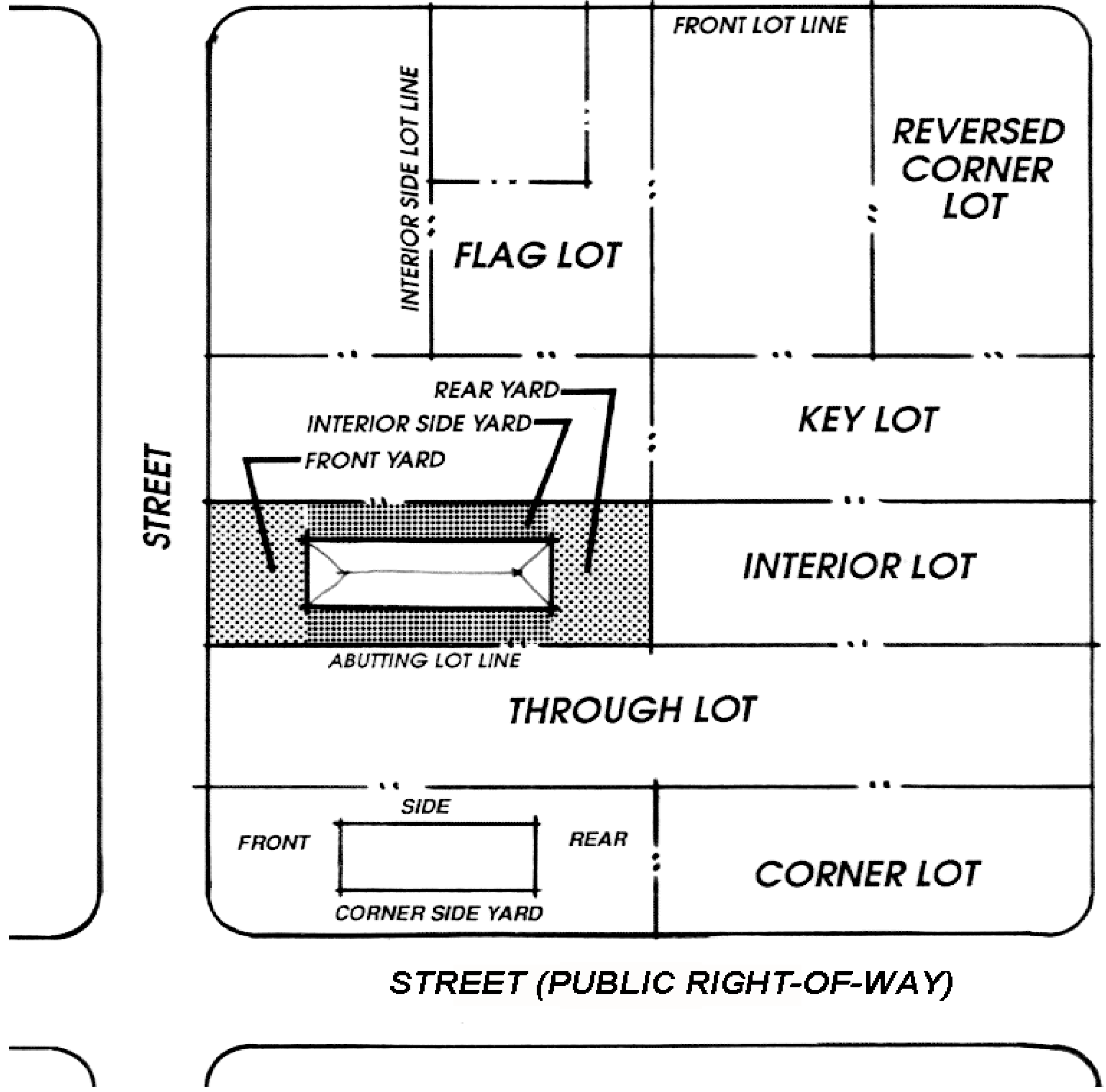
Lot means a parcel, tract, or area of land established by plat, subdivision, or as otherwise permitted by law, to be used, developed, or built upon. The classifications of lots are:
(1)
Corner. A lot located at the intersection of two or more streets at an angle of not more than 135 degrees. If the angle is greater than 135 degrees, the lot shall be considered an "interior lot."
(2)
Flag. A lot having access or an easement to a public or private street by a narrow, private right-of-way referred to as a panhandle.
(3)
Interior. A lot abutting only one street.
(4)
Key. A lot with a sideline that abuts the rear line of any one or more adjoining lots.
(5)
Reverse corner. A corner lot, the rear of which abuts the side of another lot.
(6)
Through. A lot having frontage on two generally parallel streets, with only one primary access.
Lot area means the total horizontal area included within the lot lines of a parcel.
Lot coverage means the percent of a parcel that is covered by structures, including main and accessory buildings. On parcels zoned exclusively for residential use, lot coverage excludes patios open on two or more sides and gazebos 300 square feet or less in area and garages and carports. In all other zones, lot coverage includes parking structures.
Lot depth means the average distance between the front and rear lot lines or between the front line and the intersection of the two side lines, if there is no rear line.
Lot frontage means the portion of the parcel contiguous to the street.
Lot line means any boundary of a parcel. The classifications of lot lines are:
(1)
Front.
a.
On an interior lot, the line separating the parcel from the street.
b.
On a corner lot, the shorter lot line abutting a street. (If the lot lines on a corner lot are equal in length, the front lot line shall be determined by the Community Development Director.)
c.
On a through lot, the lot line abutting the street providing the primary access to the lot.
(2)
Interior. Any lot line not abutting a street.
(3)
Rear. A lot line not abutting a street that is opposite and most distant from the front lot line. In the case of an irregular-shaped parcel, including a triangular parcel, a line within the parcel, parallel to and at a maximum distance from the front lot line, having a length of not less than ten feet.
(4)
Side. Any lot line that is not a front or rear lot line.
Lot width means the horizontal distance between side lot lines, measured at the front setback line.
Major transit stop means a site containing any of the following:
(1)
An existing rail or bus rapid transit station.
(2)
A ferry terminal served by either a bus or rail transit service.
(3)
The intersection of two or more major bus routes with a frequency of service interval of 15 minutes or less during the morning and afternoon peak commute periods.
Manufactured home.
(1)
The term "manufactured home" means a structure that:
a.
Was constructed on or after June 15, 1976;
b.
Is transportable in one or more sections;
c.
Is eight body feet or more in width, or 40 body feet or more in length, in the traveling mode, or, when erected on site, is 320 or more square feet;
d.
Is built on a permanent chassis; and
e.
Is designed to be used as a single-family dwelling with or without a foundation when connected to the required utilities, and includes the plumbing, heating, air conditioning, and electrical systems contained therein.
(2)
The term "manufactured home" includes any structure that meets all the requirements of subsection (1) of this definition except the size requirements, and with respect to which the manufacturer voluntarily files a certification and complies with the standards established under the National Manufactured Housing Construction and Safety Standards Act (42 USC 5401).
(3)
If a provision of this chapter uses the term "manufactured home," and it clearly appears from the context that the term should apply only to manufactured homes, as defined in this definition, the provision shall apply only to those manufactured homes. If any provision of this chapter, by its context, requires that the term applies to manufactured homes or mobile homes without regard to the date of construction, such provision shall apply to both manufactured homes, as defined above, and mobile homes, as defined in this section.
Manufactured home, new, means a manufactured home, mobile home, or commercial coach which is not defined as a "manufactured home, used," "mobile home, used" or "commercial modular, used," which is delivered for sale or lease in this State, and which has not been delivered to a first purchaser or lessor for purposes other than resale or reletting.
Manufactured home, used, means a manufactured home, mobile home, or commercial modular that was previously sold and registered or titled with the City, or with an appropriate agency or authority, or any other State, District of Columbia, territory or possession of the United States, or a foreign State, province, or country.
Manufacturer means a person who prepares, derives, manufactures, produces, or repackages a dangerous drug, as defined in Business and Professions Code § 4022, device, or cosmetic, except a pharmacy that manufactures on the immediate premises where the drug or device is sold to the ultimate consumer. Manufacturer also means the holder or holders of a New Drug Application (NDA), an Abbreviated New Drug Application (ANDA), or a Biologics License Application (BLA), provided that such application has been approved; a manufacturer's third party logistics provider; a private label distributor (including co-licensed partners) for whom the private label distributor's prescription drugs are originally manufactured and labeled for the distributor and have not been repackaged; or the distributor agent for the manufacturer, contract manufacturer, or private label distributor, whether the establishment is a member of the manufacturer's affiliated group (regardless of whether the member takes title to the drug) or is a contract distributor site.
(1)
"Manufacturer" shall not mean a pharmacy compounding a drug for parenteral therapy, pursuant to a prescription, for delivery to another pharmacy for the purpose of delivering or administering the drug to the patient or patients named in the prescription, provided that neither the components for the drug nor the drug are compounded, fabricated, packaged, or otherwise prepared prior to receipt of the prescription.
(2)
"Manufacturer" shall not mean a pharmacy that, at a patient's request, repackages a drug previously dispensed to the patient, or to the patient's agent, pursuant to a prescription.
Marijuana related business shall mean any commercial cannabis activity, or combination thereof, and any cannabis related uses, or combination thereof, including but not be limited to cannabis cooperatives, cultivation, deliveries, dispensaries, and any other business that engages in the production, packaging, concentrate processing, edibles, glass merchandise, courier/delivery, trimming, seed harvesting, farming, transportation, and/or sale of cannabis.
Massage means the scientific manipulation of the soft tissues of person's body.
Massage certificate means a valid certificate issued by the Massage Therapy Council pursuant to California Business and Professions Code § 4600 et seq.
Massage facility or massage establishment means a fixed place of business where massage is performed for money or any other consideration.
Massage facility operator means any person or business entity that owns, in whole or in part, a massage facility.
Massage technician means any person who administers to another person, for any form of consideration, a massage, alcohol rub, fomentation, bath, electric or magnetic massage procedure, manipulation of the body, or other similar procedure.
Massage Therapy Council means the organization created pursuant to California Business and Professions Code Div. 2, Ch. 10.5 (Business and Professions Code § 4600 et seq.) to provide State certification of massage practitioners and massage therapists.
Materials, natural, means organic and inorganic materials such as rock, decomposed granite, gravel, bamboo, wood chips, etc., that are used to cover areas where landscaping and hardscaping is not present.
Medical cannabis or medical cannabis product shall have the same meaning as set forth in California Business and Professions Code § 19300.5(ag), as may be amended from time to time.
Medical center/clinic means a place for group medical services not involving overnight housing of patients.
Medical Marijuana Regulation and Safety Act or MMRSA shall mean and refer to the following three bills signed into law on October 9, 2015, as the same may be amended from time to time:
AB 243,
AB 266,
SB 643.
Mixed-use project means the development of a parcel or structure with two or more different land uses (e.g., a combination of residential, office, commercial retail, public, or entertainment) in a single or physically integrated structure or group of structures.
Mobile home.
(1)
The term "mobile home" means a structure that:
a.
Was constructed prior to June 15, 1976;
b.
Is transportable in one or more sections;
c.
Is eight body feet or more in width, or 40 body feet or more in length, in the traveling mode, or, when erected on site, is 320 or more square feet;
d.
Is built on a permanent chassis; and
e.
Is designed to be used as a single-family dwelling with or without a foundation system when connected to the required utilities, and includes the plumbing, heating, air conditioning, and electrical systems contained therein.
(2)
The term "mobile home" includes any structure that meets all the requirements of subsection (1) of this definition and complies with the State standards for mobile homes in effect at the time of construction.
(3)
The term "mobile home" does not include a commercial modular, as defined in Health and Safety Code § 18001.8; factory-built housing, as defined in Health and Safety Code § 19971; a manufactured home, as defined in Health and Safety Code § 18007; a multifamily manufactured home, as defined in Health and Safety Code § 18008.7; or a recreational vehicle, as defined in Health and Safety Code § 18010.
(4)
Notwithstanding any other provision of law, if a provision of this chapter uses the term "mobile home," and it clearly appears from the context that the term "mobile home" should apply only to mobile homes, the provision shall apply only to those mobile homes. If any provision of this chapter, by its context, requires that the term applies to mobile homes or manufactured homes without regard to the date of construction, the provision shall apply to both mobile homes, as defined above, and manufactured homes, as defined in this section.
Mobile home, new. See manufactured home, new.
Mobile home, used. See manufactured home, used.
Mobile home park means any area or tract of land where two or more lots are rented or leased, held out for rent or lease, or were formerly held out for rent or lease and later converted to a subdivision, cooperative, condominium, or other form of resident ownership to accommodate manufactured homes, mobile homes, or recreational vehicles used for human habitation. Notwithstanding this definition, employee housing that has obtained a permit to operate pursuant to the Employee Housing Act (Health and Safety Code § 17000 et seq.) and that both meets the criteria of Health and Safety Code § 17021.6, and is comprised of two or more lots or units held out for lease or rent or provided as a term or condition of employment, shall not be deemed a mobile home park for the purposes of the requirement to obtain an initial or annual permit to operate or pay any related fees required by this chapter. Notwithstanding this definition, an area or tract of land shall not be deemed a mobile home park if the structures on it consist of residential structures that are rented or leased, or held out for rent or lease, if those residential structures meet both of the following requirements. First, the residential structures are manufactured homes constructed pursuant to the National Manufactured Housing Construction and Safety Standards Act of 1974 (42 USC 5401 et seq.), or mobile homes containing two or more dwelling units for human habitation. Second, those manufactured homes or mobile homes have been approved by a City, County, or City and County pursuant to Health and Safety Code § 17951(e) as an alternate which is at least the equivalent to the requirements prescribed in the California Building Standards Code or Part 1.5 of the Health and Safety Code (Health and Safety Code § 17910 et seq.) in performance, safety and for the protection of life and health.
Motel. See hotel.
Multifamily manufactured home.
(1)
The term "multifamily manufactured home" means a structure, transportable under permit in one or more sections, designed and equipped to contain not more than two dwelling units, a dormitory, or efficiency unit, to be used either with a support system pursuant to Healthy and Safety Code § 18613 or a foundation system pursuant to Health and Safety Code § 18551(a).
(2)
The term "multifamily manufactured home" includes a structure, transportable under permit in one or more sections, designed to be used with a foundation system for three or more dwelling units, as defined by Health and Safety Code § 18003.3.
Notwithstanding any other provision of law, all provisions of law that apply to manufactured homes shall apply equally to multifamily manufactured homes, except as provided in this definition. For purposes of this definition, the term "dormitory" means a room or rooms inhabited for the purposes of temporary residence by two or more persons; the term "efficiency unit" has the same meaning as defined in Health and Safety Code § 17958.1; and the term "multiunit manufactured housing" has the same meaning as "multifamily manufactured home," as that term is defined in this definition.
Multiple family residential duplex means a unit within a separate and detached building within a multiple family residential zone, which building consists of two self-contained units within the confines of the building, each of which provides housing accommodation for a single family within the confines of the unit. Duplexes that are able to undergo the subdivision process and are sold to differing entities do not qualify as accessory dwelling units.
New Construction refers to site preparation for, and construction of, entirely new structures and/or additions greater than 51 percent of the floor area to existing buildings or buildings receiving rehabilitation costing more than 51 percent of the replacement cost and which are required to comply with all the provisions of the California Building Standards Code for new buildings. For floodplain management purposes, means structures for which the "start of construction" commenced on or after the effective date of floodplain management regulations adopted by the City, and includes any subsequent improvements to such structures.
Noise means any sound that is undesirable because it interferes with speech and hearing, or is intense enough to damage hearing, or is otherwise annoying. Noise, simply, is unwanted sound. Certain noise levels are detrimental to the health and safety of individuals and are considered a public nuisance.
Nonconforming lot means any parcel of land that was lawfully established and in compliance with all applicable ordinances and laws at the time the property was granted a building permit, but which, due to any subsequently enacted ordinance or law, or other change in circumstances, no longer complies with all of the applicable regulations and standards of the zoning district in which the property is located.
Nonconforming structure means any structure or improvement upon land, including any sign, other than the land itself, that was lawfully established and in compliance with all applicable ordinances and laws at the time the structure or improvement was established, but which, due to any subsequently enacted ordinance or law, or other change in circumstances, no longer complies with all of the applicable regulations and standards of the zoning district in which the structure or improvement is located.
Nonconforming use means any use of land that was lawfully established and in compliance with all applicable ordinances and laws at the time the use was established, but which, due to any subsequently enacted ordinance or law or other change in circumstances, no longer complies with all of the applicable regulations and standards of the zoning district in which the use is located.
Non-electric vehicle means any motor vehicle that does not meet the definition of electric vehicle or plug-in electric vehicle.
Nonmotorized vehicle means a vehicle or object that is not self-propelled and must be drawn by a motorized vehicle. The term "nonmotorized vehicle" includes trailer, camp trailer, semi-trailer, and trailer coach.
Non-primary residence means anyone who owns residential property in the City that is not their "primary residence."
Nonresident means any person who does not qualify as a "resident" as that term is defined by this section.
Objective standards means standards that involve no personal or subjective judgment by a public official and are uniformly verifiable by reference to an external and uniform benchmark or criterion available and knowable by both the development applicant or proponent and the public official prior to submittal.
Occupancy means the use or possession, or the right to the use or possession of any room or rooms or space or portion thereof, in any hotel for dwelling, lodging or sleeping purposes. The use or possession or right to use or possess any room or any suite of connecting rooms as office space, banquet or private dining rooms, or exhibit, sample or display space shall not be considered "occupancy" within the meaning of this definition unless the person exercising occupancy uses or possesses, or has the right to use or possess all or any portion of such room or suite of rooms for dwelling, lodging or sleeping purposes.
One-hundred-year flood or 100-year flood. See base flood.
Onsite waiting area means the designated area outside of a building used to contain patrons or clients prior to the patrons or clients entering the building for the gathering or processing of information.
Open space means land areas which are not occupied by buildings, structures, parking, streets, or alleys.
Out-call massage service means any massage business that engages in or carries on massage at a location other than at a massage establishment.
Outdoor area or incidental outdoor area means any ancillary outdoor area of an established retail business or food shop, consisting of outdoor furniture arranged directly along the sidewalk paving of the subject business.
Outdoor display area or display area means an easily removable extension of an established retail shop, consisting of movable display tables, standing sign, shelves, and/or racks that are arranged directly upon the sidewalk paving as an adjunct and directly adjacent to a retail business for the purpose of displaying, exhibiting, or offering for sale the merchandise sold inside the retail shop.
Outdoor sale means the temporary display of goods and merchandise for sale, outside a building, on private or publicly owned land in a nonresidential zone.
Oversized vehicle means a motorized or nonmotorized vehicle or any combination thereof, which exceeds 23 feet in length, and/or 97 inches in width, and/or 90 inches in height, exclusive of such projecting lights or devices as are expressly allowed pursuant to the California Vehicle Code as it now exists or hereafter may be amended.
Owner means a person or entity, who holds record fee title to the property, except that "owner" does not include the holder of a leasehold interest in the property.
Parcel means a portion of land under one ownership that has been legally subdivided or combined and is shown as a single lot or property on the latest equalized assessment roll.
Passageway means a pathway that is unobstructed clear to the sky and extends from a street to one entrance of the accessory dwelling unit.
Patio cover means a roof-like structure either with open trellis work or solid material, placed over a surfaced area that is open on at least two sides.
Patio home means a detached single-family residence within a complex with common area and yards maintained by a common association.
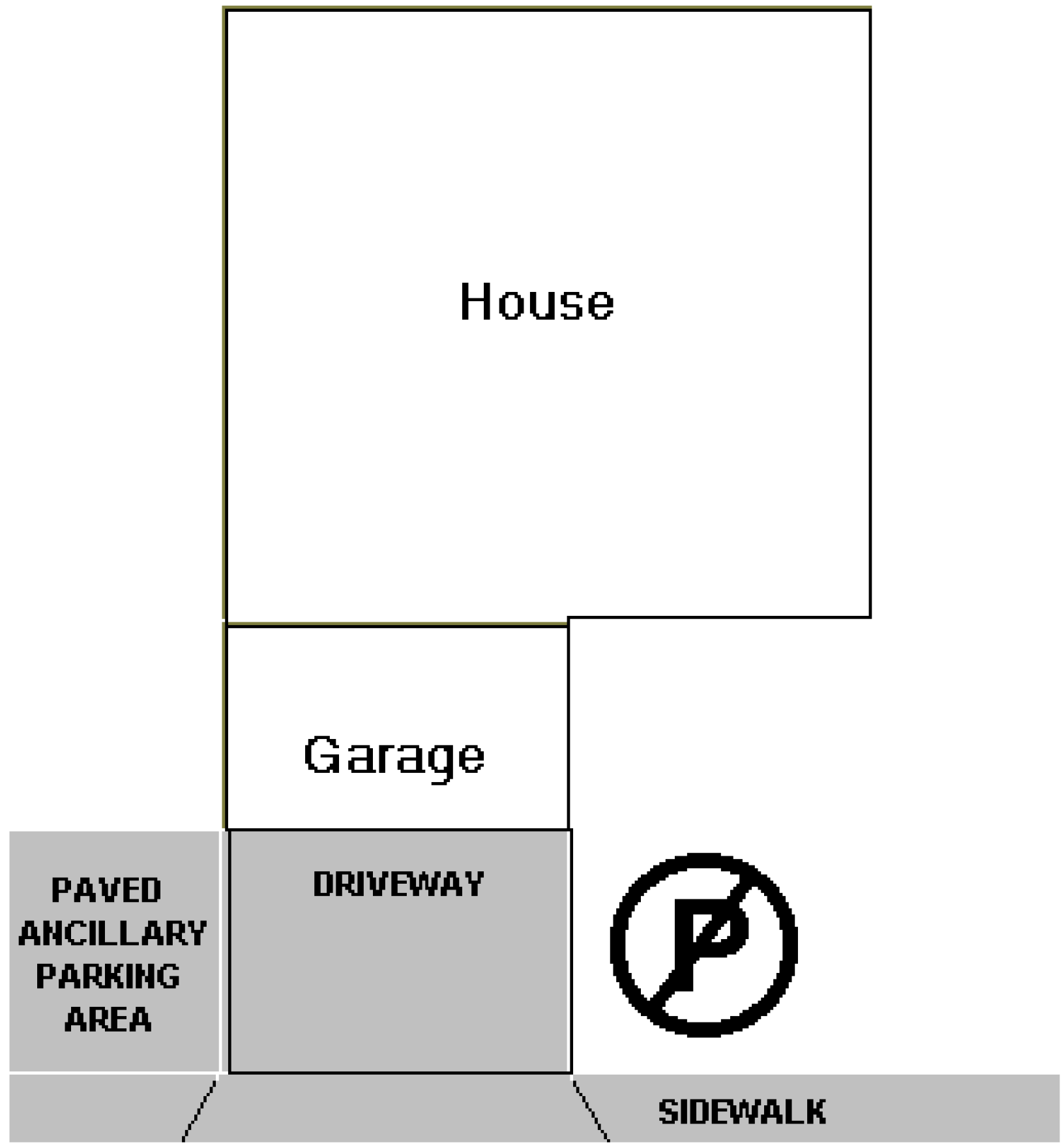
Paved ancillary parking area means the area between the driveway of a residence and the closest adjacent property line that may be paved and used for the purposes of parking or storing of vehicles.
Permitted use means any use allowed in a zoning district and subject to the provisions/regulations applicable to that district.
Person means an individual or a firm, co-partnership, joint venture, association, social club, fraternal organization, corporation, estate, trust, receiver, syndicate, the federal or State government, City, County, special district, any other governmental entity, or any other group or combination of groups acting as an entity.
Pharmacist means a natural person to whom a license has been issued by the board, under Business and Professions Code § 4200. The holder of an unexpired and active pharmacist license issued by the State Board of Pharmacy is entitled to practice pharmacy.
Pharmacist-in-charge means a pharmacist proposed by a pharmacy and approved by the State Board of Pharmacy as the supervisor or manager responsible for ensuring the pharmacy's compliance with all state and federal laws and regulations pertaining to the practice of pharmacy.
Pharmacy means an area, place, or premises licensed by the State Board of Pharmacy in which the profession of pharmacy is practiced and where prescriptions are compounded. Pharmacy includes, but is not limited to, any area, place, or premises described in a license issued by the State Board of Pharmacy wherein controlled substances, dangerous drugs, or dangerous devices are stored, possessed, prepared, manufactured, derived, compounded, or repackaged, and from which the controlled substances, dangerous drugs, or dangerous devices are furnished, sold, or dispensed at retail. Pharmacy shall not include any area in a facility licensed by the State Department of Public Health where floor supplies, ward supplies, operating room supplies, or emergency room supplies of dangerous drugs or dangerous devices are stored or possessed solely for treatment of patients registered for treatment in the facility or for treatment of patients receiving emergency care in the facility.
Pharmacy technician means an individual who assists a pharmacist in a pharmacy in the performance of his or her pharmacy related duties, as specified in Business and Professions Code § 4115.
Pharmacy technician trainee is a person who is enrolled in a pharmacy technician training program operated by a California public postsecondary education institution or by a private postsecondary vocational institution approved by the Bureau for Private Postsecondary and Vocational Education.
Phosphoric acid fuel cell (PAFC) means a type of fuel cell in which the electrolyte consists of concentrated phosphoric acid (H3PO4) and protons (H+) are transported from the anode to the cathode.
Platform agreement means a signed agreement between a home-sharing hosting platform (platform) and the City, which, among other things, provides that the platform will collect and submit the transient occupancy tax to the City on behalf of hosts and persons listed for short-term rentals.
Plug-in electric vehicle (PEV) means any motor vehicle registered to operate on State public roadways and operates, either partially or exclusively, on electrical energy from the grid or an off-board source that is stored on board for motive purpose, including battery electric vehicle (BEV), plug-in hybrid electric vehicle (PHEV), neighborhood electric vehicle (NEV) and an electric motorcycle.
Point of service means the battery charging station from which the charging service is provided.
Precise plan means a plan prepared for a development that is based on the general proposals in the general plan. A precise plan may also be a detailed plan for developing property in compliance with the provisions of this chapter.
Precise plan amendment means a request for the alteration of, or addition to, a structure which was originally approved under a precise plan.
Primary residence means a host's permanent residence or usual place of return for housing as documented by evidence of occupancy as determined by the City Finance Department and Community Development Department. A person may only have one primary residence and must reside there for a minimum of 265 days per year.
Principal use means the main, primary, or predominant use of any parcel or structure.
Property line. See lot line.
Proposed dwelling means a dwelling that is the subject of a permit application and that meets the requirements for permitting.
Proton exchange membrane (PEM) fuel cell means a fuel cell that uses a solid catalyst coated membrane, similar in consistency to thick plastic wrap, to allow positively charged ions to pass through it, but block electrons.
Public dance means any dance where two or more persons dance or are permitted to dance in or upon any premises to which the public is admitted, either with or without charge.
Public right-of-way means a strip of land acquired by reservation, dedication, prescription or condemnation and occupied or intended to be occupied by a road, trail, water line, sanitary sewer, and/or other public uses.
Public transit means a location, including, but not limited to, a bus stop or train station, where the public may access buses, trains, subways, and other forms of transportation that charge set fares, run on fixed routes, and are available to the public.
Qualified buyer means persons and families of low or moderate income, as that term is defined in Section 50093 of the Health and Safety Code.
Qualified nonprofit corporation means a nonprofit corporation organized pursuant to Section 501(c)(3) of the Internal Revenue Code that has received a welfare exemption under Section 214.15 of the Revenue and Taxation Code for properties intended to be sold to low-income families who participate in a special no-interest loan program.
Qualifying patient or qualified patient shall have the same meaning as set forth in California Health and Safety Code § 11362.7, as may be amended from time to time.
Queuing lane means an area for temporary waiting of motor vehicles while obtaining a service or other activity from a drive-up service window/facility.
Reasonable accommodation means providing individuals with disabilities, and developers of housing for people with disabilities, flexibility in the application of land use and zoning and building regulations, policies, practices, and procedures, or waiving certain land use and zoning requirements when it is necessary to eliminate barriers to housing opportunities for individuals with disabilities.
Recreational vehicle or object means a motorized or nonmotorized recreational vehicle or an object designed for recreational purposes, including camper shells off a truck, boats, trailer coaches, travel trailers, fifth wheel trailers, camp trailers, jet skis, and other non-self-propelled vehicles but also including off-road motorcycles, snowmobiles, airplanes, and any other vehicle made to carry one or more persons but not including bicycles, tricycles, on-road motorcycles and scooters. The term "recreational vehicle or object" shall not include permanently-founded manufactured homes or mobile homes.
Religious institution means a structure that is used primarily for religious worship and related religious activities, including churches, temples, and mosques.
Rent means the consideration charged, whether or not received, for the occupancy of space in a hotel or short-term rental valued in money, whether to be received in money, goods, labor or otherwise, including all receipts, cash, credits and property and services of any kind or nature, without any deduction therefrom whatsoever. Nothing in this definition shall be construed to mean that rent is charged directly or indirectly for the occupancy of space in a hotel or short-term rental when that space is provided to the occupant as a compliment from the operator and where no consideration is charged to or received from any other person.
Research and development means the scientific or commercial investigation of, and inquiry into, new products and manufacturing processes, light manufacturing and related uses.
Resident means a person whose place of domicile or, in the case of an entity, its place of operation, is fixed, wherein the person has the intention of remaining, and to which, whenever he or she is absent, the person has the intention of returning. At any given time, a person may be a resident of only one city. For purposes of this chapter, the term "resident" includes each of the following:
(1)
Every person who is in the City for other than a temporary or transitory purpose;
(2)
Every person domiciled in the City who is outside the City for a temporary or transitory purpose; and
(3)
Any person who is a resident even though temporarily absent from the City.
Responsible party means the lessee of a short-term rental property.
Rental unit means a dwelling unit, guest room, accessory dwelling unit, other residential structure, or portion thereof that is rented out.
Retail pharmacy means any retail establishment, including any location with an on-site pharmacy, in which the profession of pharmacy is practiced by a pharmacist licensed by the State of California in accordance with the Business and Professions Code and where prescription pharmaceuticals are offered for sale, regardless of whether the retail establishment sells other retail goods in addition to prescription pharmaceuticals.
Retail sales means establishments engaged in selling goods or merchandise to the general public for personal or household consumption and rendering services incidental to the sale of the goods.
Review authority means the person, committee, or council designated by the City as responsible for the review and final determination on a land use entitlement, map, permit, or amendment.
Rooming and/or boardinghouse means a dwelling structure, or part thereof, that has no more than one dining room and in which, for compensation, two or more rooms are leased and/or meals are provided by the week or month.
Satellite dish antenna means a device incorporating a reflective surface that is solid, open mesh, or bar configured and in the shape of a shallow dish/cone, used to transmit and/or receive radio or electromagnetic waves between terrestrially and/or orbitally based uses. This definition is meant to include what are referred to as satellite earth stations, TVROs (television reception only satellite dish antennas), and satellite microwave antennas.
School means an institution of learning for minors, whether public or private, which offers instruction in those courses of study required by the California Education Code, or which is maintained in compliance with the standards set by the State Board of Education. This definition includes a nursery school, kindergarten, elementary school, junior high school, senior high school, or any special institution of education, but it does not include a vocational or professional institution of higher education, including a community or junior college, college, or university. Neither shall the term "school" apply to a tutorial facility, a child day care facility, or a day care center.
Secondary dwelling unit. See residence, second unit.
Secondhand/thrift store means a use where used articles, goods, merchandise, or wares are offered for sale but not including the working on or dismantling of such items.
Self-storage facility means a building or group of buildings, in a controlled access and fully enclosed compound, which contains various sized, individual compartmentalized and controlled access stalls for the storage of customers' goods and possessions. The facility shall be limited to storage only. No other activities other than the replacement or retrieval of personal goods shall be allowed within the units or within the compound.
Service station means any structure or parcel for a business whose primary use is to supply gasoline and other fuels, and may include the provision for minor services to automobiles and other motor vehicles. The term "service station" includes the term "gas station."
Setback means the required distance that a structure, use, or parking area shall be located from a lot line.
Short-term rental (STR).
(1)
The term short-term rental shall mean a transient use, vacation rental or vacation-rental property, means either:
a.
A residential dwelling unit or any portion thereof in a residential zone, utilized for residing, lodging, or sleeping purposes for that is leased for a term of 30 or fewer consecutive calendar days, counting portions of days; or
b.
A home-sharing property.
The term short-term rental is synonymous with vacation rental, vacation rental property, and transient use in a residential zone.
(2)
The term short-term rental includes any residentially zoned hotel, inn, tourist home, or house, motel, studio hotel, bachelor hotel, lodging house, rooming house, apartment house, dormitory, public or private club, mobile home or house trailer at a fixed location, or other similar structure or portion thereof.
(3)
The term short-term rental does not mean any of the following:
a.
Any hospital, sanitarium, medical clinic, convalescent home, rest home, home for the aged people, foster home, or other similar facility operated for the care or treatment of human beings.
b.
Any asylum, jail, prison, orphanage or other facility in which human beings are detained and housed under legal restraint.
c.
Any housing owned or controlled by an educational institution and used exclusively to house students, faculty or other employees, and any fraternity or sorority house or similar facility occupied exclusively by students and employees of such educational institution, and officially recognized or approved by it.
d.
Any housing operated or used exclusively for religious, charitable or educational purposes by any organization having qualifications for exemption from property taxes under the laws of the State.
e.
Any housing owned by a governmental agency and used to house its employees or for governmental purposes, or other housing furnished by an employer exclusively for employees.
Short-term renter means:
(1)
Any person, other than an individual, who exercises occupancy or is entitled to occupancy by reason of concession, permit, right of access, license or other agreement, for any period of time, or
(2)
Any individual who personally exercises occupancy or is entitled to occupancy by reason of concession, permit, right of access, license or other agreement, for a period of 30 consecutive calendar days or less, counting portions of calendar days as full days. Any such individual so occupying space in a hotel or short-term rental shall be deemed to be a transient until the period of 30 days has expired unless there is an agreement in writing between the operator and the occupant providing for a longer period of occupancy. Nothing in this definition or in this article shall be construed as prohibiting the operator of a hotel or short-term rental from refunding or making an allowance of credit to a person who has paid tax as required by this article where it is established that the person was not a "transient" as defined in this section or was exempt from the tax for any other reason, or had for any reason overpaid the tax. The term short-term renter is synonymous with transient.
Sign means any medium, including its structure and component parts, which is used or intended to be used to attract attention to the subject matter for advertising purposes and shall include every announcement, declaration, demonstration, display, illustration, insignia, surface, or space when erected, painted or maintained in view of the general public for identification, advertisement or promotion of the interest of any person.
Sign, animated, means a sign with movement or rotation in excess of eight revolutions per minute or a sign using or being a stereopticon, motion picture, searchlight, or wind-activated device, including balloons, banners, or flags; or a sign using live animals; or a sign which changes color or flashes on and off.
Sign, changeable copy, means a sign which is characterized by changeable copy, regardless of method of attachment.
Sign, electronic, means a permanently installed illuminated panel that presents variable advertising messages displayed by an electronically controlled lighting pattern against a contrasting background, and may be programmed to change the message display periodically.
Sign, official, means a sign required to be posted by the laws of the United States, the State, County, or the City or courts or administrative agencies thereof.
Sign, offsite advertising, means a sign that promotes or advertises goods or services that are not available on the property where the sign is placed.
Sign, projecting, means a sign extending outward in a plane other than parallel from the structure to which it is attached.
Sign, roof, means a sign attached to a building so that a part of the sign is higher than the roof or parapet of the building.
Signs, window, means signs mounted on windows and doors, except for allowed temporary signs.
Single family residential duplex means a proposed housing development containing no more than two residential units located on a single lot in a single family residential zone. The residential units may be located in a single building that contains two primary residential units (also known as a duplex housing product) or in two detached buildings. A housing development contains two residential units if the development proposes no more than two new units or if it proposes to add one new unit to one existing unit.
Single room occupancy (SRO) facility means a cluster of guest units within a residential hotel of weekly or longer tenancy providing sleeping or living facilities in which sanitary and cooking facilities may be provided in the unit or shared within the facility.
Skilled nursing facility means facilities providing nursing and health-related care as a primary use with in-patient beds and includes board and care homes, convalescent and rest homes, extended care facilities and rehabilitation centers. The term "skilled nursing facility" does not include long-term personal care facilities that do not emphasize medical treatment.
Slope means the degree of deviation of a surface from the horizontal plane, usually expressed in degrees, percentages, or as a ratio of feet of vertical change over a given horizontal distance (e.g., 4:12).
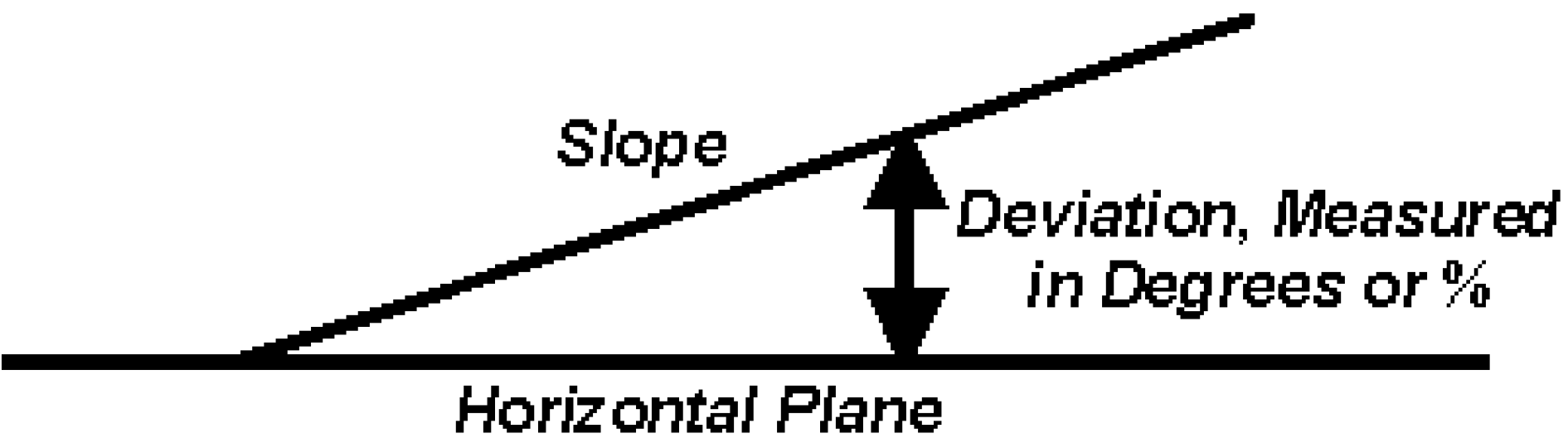
Solar access means the provision of direct sunlight to an area specified for solar energy collection when the sun's azimuth is within 45 degrees of true south.
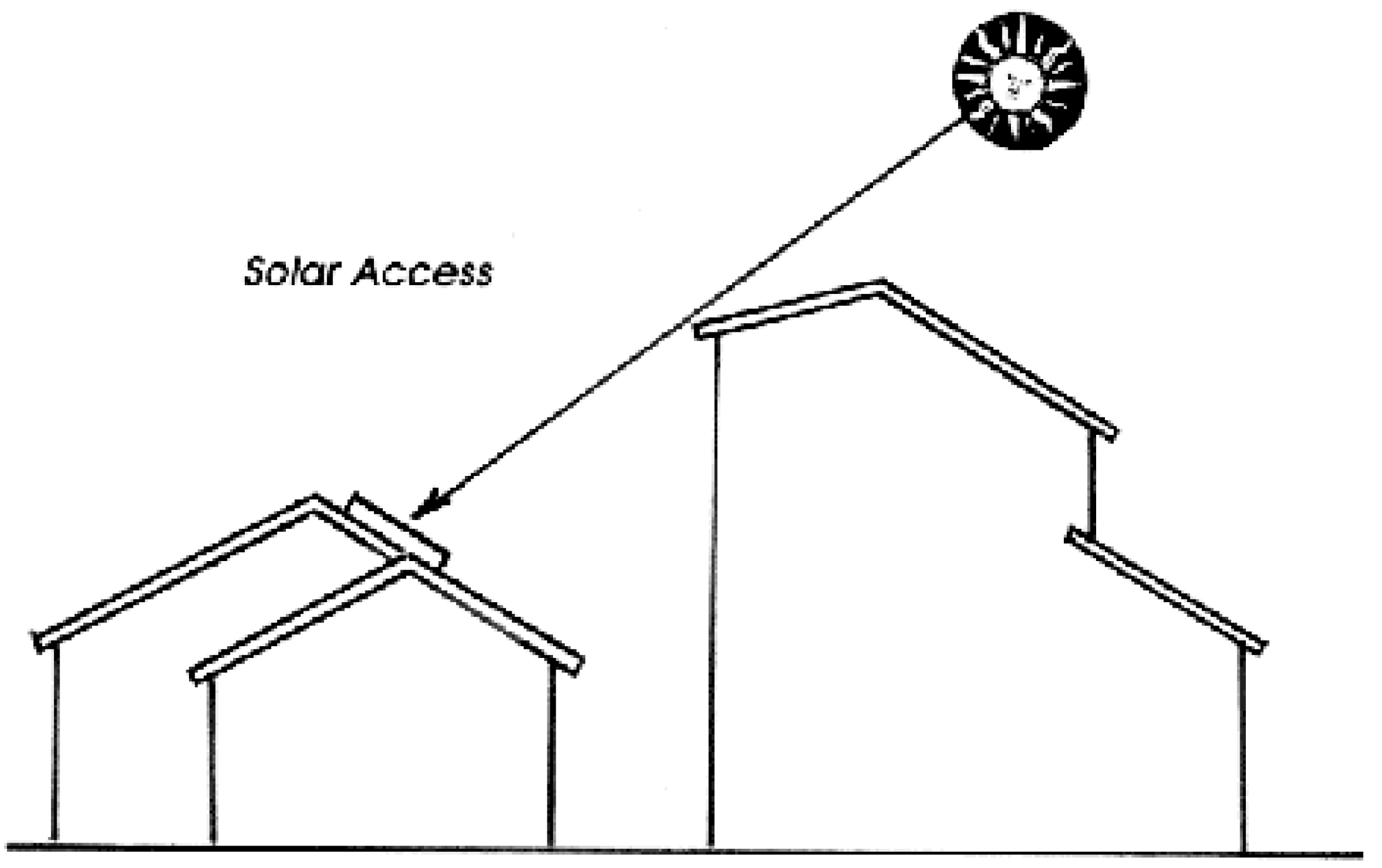
Special event. See community event.
Special permit means a permit that authorizes an applicant to conduct a special event or type of business at a specific location. The event is subject to compliance with all the terms and conditions imposed on the permit.
Specific, adverse impact means a significant, quantifiable, direct, and unavoidable impact, based on objective, identified, and written public health or safety standards, policies, or conditions as they existed on the date the application was deemed complete.
Specific plan means a regulatory tool authorized by California Government Code § 65450 et seq. for the systematic implementation of the general plan for a defined portion of a community's planning area. A specific plan specifies in detail the land uses, public and private facilities needed to support the land uses, phasing of development, standards for the conservation, development, and use of natural resources, and a program of implementation measures, including financing measures.
Start of construction includes substantial improvement and other proposed new development and means the date the building permit was issued, provided the actual start of construction, repair, reconstruction, rehabilitation, addition, placement, or other improvement was within 180 days from the date of the permit. The actual start means either the first placement of permanent construction of a structure on a site, such as the pouring of slab or footings, the installation of piles, the construction of columns, or any work beyond the stage of excavation; or the placement of a manufacture home on a foundation. Permanent construction does not include land preparation, such as clearing, grading, and filling; nor does it include the installation of streets and/or walkways; nor does it include excavation for a basement, footings, piers, or foundations or the erection of temporary forms; nor does it include the installation on the property of accessory buildings, such as garages or sheds not occupied as dwelling units or not part of the main structure. For a substantial improvement, the actual start of construction means the first alteration of any wall, ceiling, floor, or other structural part of a building, whether or not that alteration affects the external dimensions of the building.
Storage means the keeping/maintaining of goods/materials for a period of time in excess of 72 hours.
Story means that portion of a structure included between the surface of any floor and the surface of the floor next above it, or if there is no floor above it, then the space between the floor and the ceiling above it.
Streets, local. See streets, minor.
Streets, major, means the transportation network that includes a hierarchy of freeways, arterials, and collectors to service through traffic.
Streets, minor, means local streets not shown on the circulation plan, map, or diagram whose primary intended purpose is to provide access to fronting properties.
Streets, through, means streets that extend continuously between other major streets in the community.
Strip center means a multi-tenant shopping center with up to 15,000 square feet of gross floor area.
Structure means anything constructed or erected, the use of which requires location on the ground or attachment to something having location on the ground and includes any building, road, pipe, conduit, siphon, telephone line, and/or electrical power transmission and distribution line.
Substantial damage means damage of any origin sustained by a structure whereby the cost of restoring the structure to it's before damaged condition would equal or exceed 50 percent of the market value of the structure before the damage occurred.
Substantial improvement means any reconstruction, rehabilitation, addition, or other proposed new development of a structure, the cost of which equals or exceeds 50 percent of the market value of the structure before the "start of construction" of the improvement. This term includes structures which have incurred "substantial damage", regardless of the actual repair work performed. The term does not, however, include either:
(1)
Any project for improvement of a structure to correct existing violations or State or local health, sanitary, or safety code specifications which have been identified by the local code enforcement official and which are the minimum necessary to assure safe living conditions, or
(2)
Any alteration of a "historic structure," provided that the alteration will not preclude the structure's continued designation as a "historic structure".
Supervising pharmacy means a licensed pharmacy located in this state that is owned and operated by a person or persons where the majority of the beneficial interest in, as well as the management and control, resides with at least one California State Board of Pharmacy licensed pharmacist, as defined in Business and Professions Code § 4036, that exclusively oversees the operations of a remote dispensing site pharmacy. A supervising pharmacy shall be exclusively responsible for the operation of the remote dispensing site pharmacy and its employees pursuant to Business and Professions Code § 4131.
Supportive housing means housing with no limit on the length of stay, that is occupied by the target population, and that is linked to on-site or off-site services that assist the supportive housing resident in retaining the housing, improving his or her health status, and maximizing his or her ability to live and, when possible, work in the community. Supportive housing may be designed as a residential group living facility or as a regular residential use and includes the following:
(1)
Residential apartment type means three or more dwelling units on one parcel, where each unit functions as a single housekeeping unit and no onsite social services are provided. This use is subject to the R-3 Multiple-Family Residential District development standards of this chapter.
(2)
Residential duplex type means two more dwelling units on one parcel, where each unit functions as a single housekeeping unit and no onsite services are provided. This use is subject to the Duplex development standards of this chapter.
(3)
Residential group living six persons or fewer or single-family type means one residential facility on a parcel, with six residents or fewer (including minor children), excluding staff, that operates as a group living facility, where the residents share a common living area and a kitchen.
(4)
Residential group living seven persons or more means a residential facility, with seven or more residents, that operates as a group living facility where the residents share a common living area and a kitchen.
Swap meet (indoor/outdoor) means the retail sale or exchange of new, handcrafted, and/or secondhand merchandise from temporary spaces/stalls/booths by one or more individual vendors. The term "swap meet" includes the terms "flea market" and "rummage sale."
Tandem parking means that two or more automobiles are parked on a driveway or in any other location on a lot, lined up behind one another.
Target population means persons, including persons with disabilities, and families who are homeless, as that term is defined by 42 USC 11302, or who are homeless youth, as that term is defined by Government Code § 11139.3(e)(2).
Tattoo parlor, body piercing, permanent make-up, and similar establishment or parlor means a place where people receive permanent decorative tattoos from a tattoo artist and/or body piercings, and/or permanent make-up, but does not include severe body mutilation.
Tattooing means to insert pigment under the surface of the skin of a human being, by pricking with a needle or otherwise, to produce an indelible mark or figure visible through the skin.
Telepharmacy, means a system that is used by a supervising pharmacy for the purpose of monitoring the dispensing of prescription drugs by a remote dispensing site pharmacy and provides for related drug regimen review and patient counseling by an electronic method, including, but not limited to, the use of audio, visual, still image capture, and store and forward technology.
Transitional housing means buildings configured as rental housing developments, but operated under program requirements that call for the termination of assistance and recirculation of the assisted unit to another eligible program recipient at some predetermined future point in time, which shall be no less than six months. The term "transitional housing" shall be considered a residential use and only subject to those restrictions that apply to other residential uses of the same type in the same zone.
Transitional housing development means a housing development configured such that each unit constitutes a unit of transitional housing, with examples being the following:
(1)
Residential apartment type means three or more dwelling units on one parcel, where each unit functions as a single housekeeping unit and no onsite social services are provided. This unit is subject to the duplex or R-3 Multiple-Family Residential District development standards of this chapter.
(2)
Residential duplex type means two more dwelling units on one parcel, where each unit functions as a single housekeeping unit and no onsite social services are provided. This use is subject to the Duplex development standards of this chapter.
(3)
Residential group living six persons or fewer or single-family type means one residential facility on a parcel, with six residents or less (including minor children), excluding staff, that operates as a group living facility, where the residents share a common living area and a kitchen. The facility is similar to a residential community care facility with six persons of less, and subject to the same development standards.
(4)
Residential group living seven persons or more means a residential facility, with seven or more residents, excluding staff that operates as a group living facility where the residents share a common facility with seven persons or more, and subject to the same development standards.
Telecommunication facilities. See communication facilities.
Temporary use means a use established for a specified/limited period of time, with the intent to discontinue the use at the end of the designated time period. Temporary uses include such uses as construction trailers and guard offices, temporary structures, environmental remediation units, and outdoor sales.
Tenant space access means a clearly defined and legal means of access for pedestrians and motor vehicles, either directly or indirectly, from a public right-of-way.
Traffic safety triangle means a space that is set aside on a street corner or driveway entrance in which all visual obstructions (e.g., structures and plantings) that can prevent visibility, and thus could be a hazard to traffic and pedestrian safety, are prohibited.
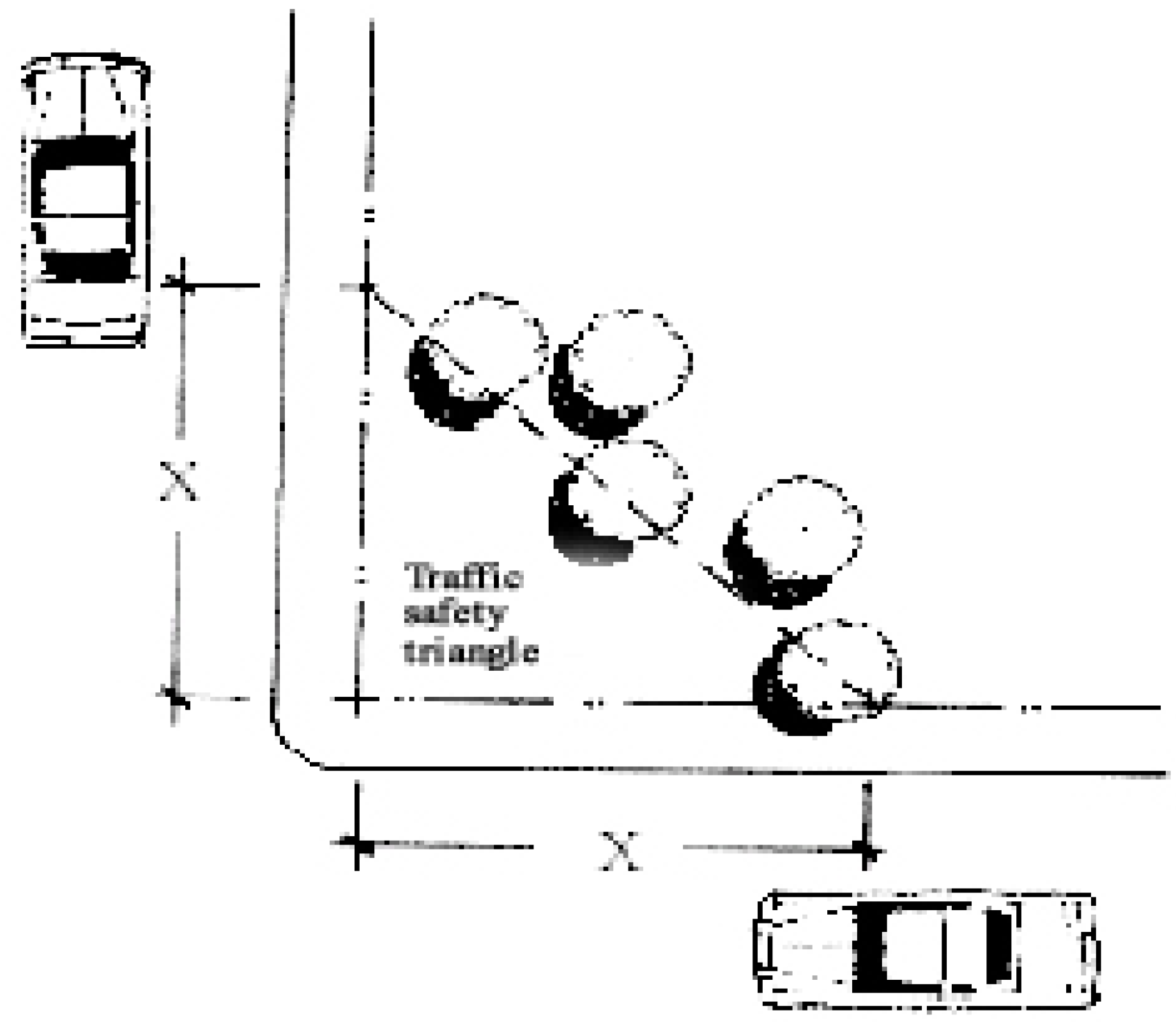
Trailer, residential. See mobile home.
Transient. See short-term renter.
Transient use. See short-term rental.
Transportation demand management (TDM) means the implementation of programs, policies, or permit approvals designed to encourage changes in individual travel behavior, including emphasis on alternative travel modes to single occupant vehicle use, including carpools, vanpools, and public transit, reduction or elimination of vehicle trips, shifts in peak hour vehicle commuting, and similar measures and programs.
Turf, artificial, means a synthetic grass-like manmade surface made from nontoxic synthetic materials to resemble thriving, live, green grass.
Turf, live, means a surface layer of matted earth covered with grass.
Tutorial facility means a school, teaching, or training facility that provides individual instruction or instruction to groups of eight students or less in one or more topics of curriculum taught in California public schools, with clients from pre-kindergarten through adult. A tutorial facility shall not include a facility solely providing instruction in extracurricular activities including dance, swimming, music, martial arts, or religious studies.
Un-hosted stay means a home-sharing activity whereby the host remains off-site during the guest's stay.
Uniform Building Code means the current edition of the Uniform Building Code as has been officially adopted by the City regarding construction standards, approved materials and projection standards unless otherwise specified herein.
Urban lot split means residential tentative parcel map subdivision of an existing legal parcel in a single family residential zone which creates no more than two new parcels of approximately equal lot area, from an existing conforming parcel in a single family residential zone. For the purposes of this Code, the urban lot split subdivision shall be in accordance with the Subdivision Map Act and City requirements for a parcel map, including a tentative parcel map, per chapter 44 article VI of this Code.
Use means the purpose (type and extent) for which land or a structure is arranged, designed, or intended or for which either land or a structure is occupied or maintained.
Use inauguration (initiation) means the implementation of a use on a parcel or the occupancy of a structure, subject to determination by the Community Development Director.
Vacation rental. See short-term rental.
Vacation rental property. See short-term rental.
Variance means a discretionary entitlement which permits a departure from the strict application of the development standards contained in this chapter.
Veterinary clinic means a use providing grooming, housing, medical care, or other services to animals, including veterinary services, animal hospitals, overnight or short-term boarding ancillary to veterinary care, indoor or outdoor kennels, and similar services.
Veterinary pharmacy includes, but is not limited to, any area, place, or premises described in a permit issued by the board wherein veterinary food-animal drugs, as defined in Business and Professions Code § 4042, are stored, possessed, or repackaged, and from which veterinary drugs are furnished, sold, or dispensed at retail pursuant to a prescription from a licensed veterinarian.
Village residential overlay provides for a variety of housing types within one project or development, ranging from single-family housing to multiple-family dwellings, including affordable housing projects, or senior housing projects that involve tailored development standards and site design.
Vocational/trade schools means private schools offering preponderant instruction in the technical, commercial, or trade skills, such as real estate schools, business colleges, electronic schools, automotive and aircraft technical schools, and similar commercial establishments.
Wall means any structure or device forming a physical barrier, which is so constructed that 50 percent or more of the vertical surface is closed and prevents the passage of light, air, and vision through such surface in a horizontal plane. This shall include concrete, concrete block, masonry, stone, wood, or other material that are solids and are so assembled as to form a solid barrier.
Wholesaler means and includes a person who acts as a wholesale merchant, broker, jobber, customs broker, reverse distributor, agent, or a nonresident wholesaler, who sells for resale, or negotiates for distribution, or takes possession of, any drug or device included in Business and Professions Code § 4022. Unless otherwise authorized by law, a wholesaler may not store, warehouse, or authorize the storage or warehousing of drugs with any person or at any location not licensed by the State Board of Pharmacy.
Workshop means a permanently founded accessory structure that has access to electrical service and which shall not be utilized for habitation.
Xeriscaping means landscaping designed specifically for areas that are susceptible to drought or for properties where water conservation is practiced.
Yard means any open space, other than a court, on the same lot with a building or a dwelling group, which is generally open from the ground to the sky, except for the projections or accessory buildings permitted by this chapter. No required yard or other open space around an existing building, or which is hereafter provided around any building for the purpose of complying with the provisions of this chapter, may be considered as providing a yard or open space for any other building; nor may any yard or other required open space on an adjoining lot be considered as providing a yard or open space on a lot whereon a building is to be erected.
Yard, front, means an area extending across the full width of the parcel between the front lot line or the existing or future street right-of-way and a structural setback line parallel thereto.
Yard sale. See garage sale.
Yard, side, means an area extending from the required front yard to the required rear yard and from the side lot line to a setback line parallel thereto.
Yard, rear, means an area extending across the full width of the parcel between the rear lot line and a setback line parallel thereto.
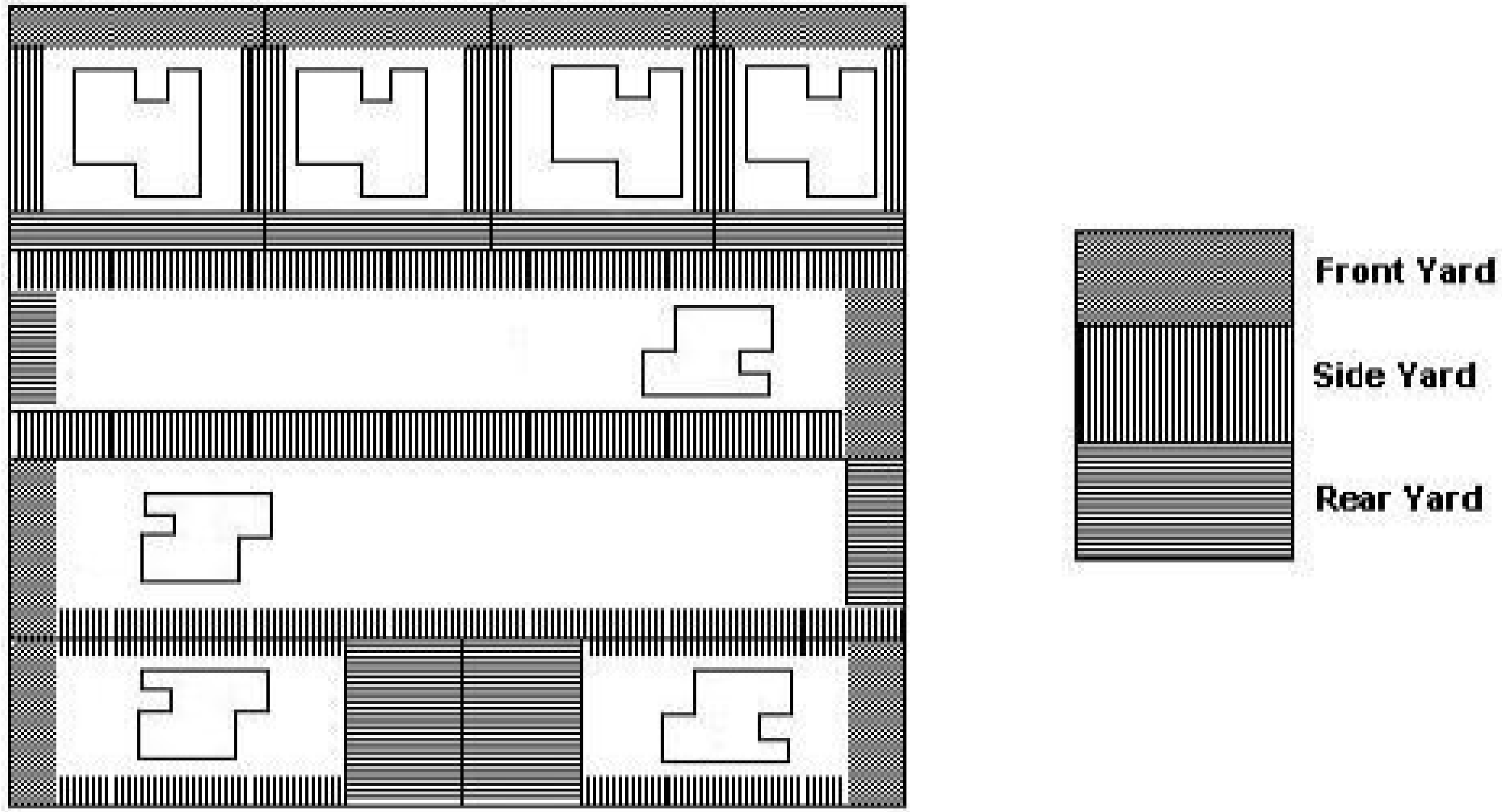
Zero emission vehicles (ZEV) means any vehicle driven only by an electric motor that is powered by advanced technology batteries (BEV) or a hydrogen fuel cell (FCEV) and produces zero tailpipe emissions or pollution when stationary or operating.
Zero lot line means the location of a structure on a parcel in which one or more of the structure's sides rest directly on a lot line and maintenance easements are provided.
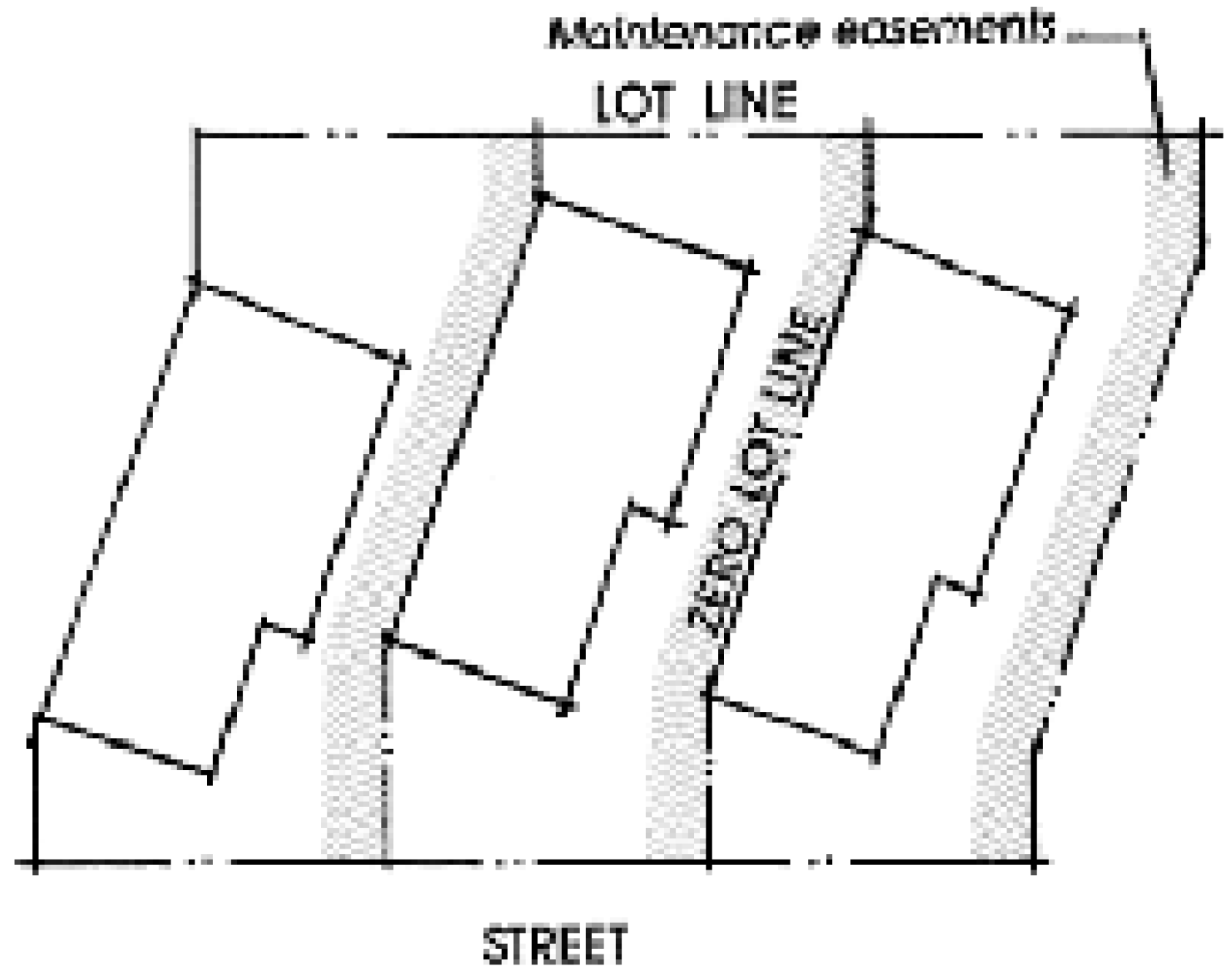
Zoning district means a land area shown or described in the zoning land use map to which uniform regulations apply.
Zoning land use map means the official map which describes thereon the several zoning districts to which the regulations set forth in this chapter shall apply.
(Ord. No. 2015-01, § 3, 5-5-2015; Ord. No. 2016-01, § 4, 1-19-16; Ord. No. 2016-02, § 4, 1-19-2016; Ord. No. 2016-06, § 7, 5-3-2016; Ord. No. 2018-02, § 4, 5-15-2018; Ord. No. 2018-03, § 4, 5-15-2018; Ord. No. 2020-03, §§ 4, 5, 6-2-2020; Ord. No. 2022-01, §§ 4, 5, 7, 8, 5-3-2022; Ord. No. 2022-05, § 4, 8-2-2022; Ord. No. 2022-06, § 6, 8-2-2022; Ord. No. 2023-02, § 4, 2-7-2023; Ord. No. 2023-03, § 4, 3-7-2023; Ord. No. 2024-04, § 4, 12-10-2024)

