
Labelle City Zoning Code
ARTICLE V
5. - COMMERCIAL DESIGN STANDARDS7
Editor's note—Ord. No. 2023-21, § 2, adopted Dec. 14, 2023 and Ord. No. 2023-26, § 2(Exh. A), adopted Feb. 8, 2024 enacted provisions intended for use as §§ 4-90, 4-91. Inasmuch as there were provisions that already exists, said provisions for Art. V.5 have been redesignated as §§ 4-92—4-94. The historical notation has been retained with the amended provisions for reference purposes.
Sec. 4-92. - Purpose and intent.
The purpose of this article is to create standards for the commercial district in the City of LaBelle. These standards are intended to establish a minimum set of design criteria that is in addition to all other development standards of the LaBelle Land Development Code. The standards in this article apply to all commercial [sic], except where the authority of a separate political jurisdiction supercedes city authority.
(a)
Design standards. The design standards included in this article are intended to help create a distinctive architectural style and appearance within the City of LaBelle with an "Old Florida" or "Florida Vernacular" style. The standards provide design criteria intended to stimulate creative project designs, while fostering compatibility with surrounding developments.
(b)
Applicability of these regulations and conflicts. Whenever the requirements of this article impose a different standard than the provisions of the Land Development Code, the requirements of this article will govern. Except where specifically modified by the provisions of this article, all other requirements of the Land Development Code will apply.
(Ord. No. 2005-05, § I(5-90), 7-15-05)
Sec. 4-93. - Building guidelines.
(a)
Architectural style. Old Florida vernacular styles are the preferred architectural style in the City of LaBelle. The Old Florida style displayed through the inclusion of roof overhangs, porches, covered corridors, covered walkways, and pitched roofs.
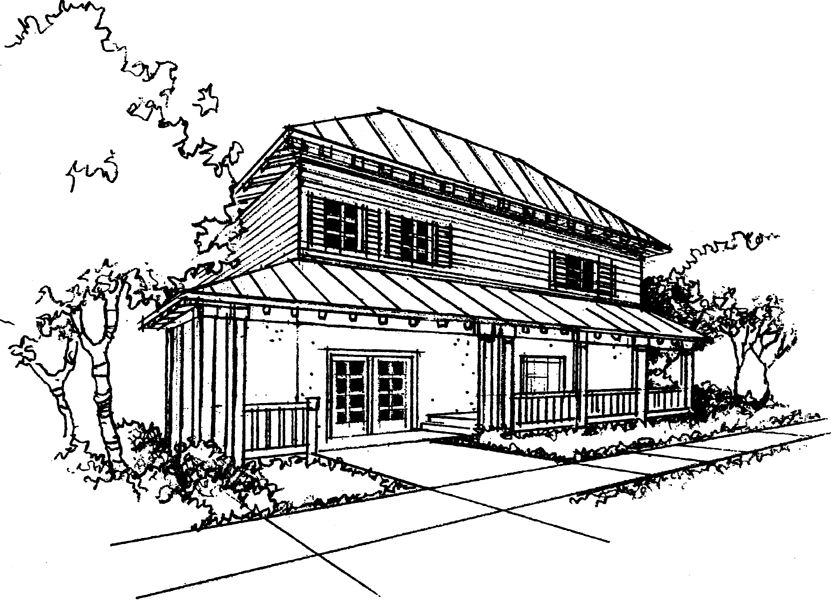
ARCHITECTURAL STYLE
(b)
Roof pitch. All buildings shall have pitched roofs or a mansard roof that simulates the look of a pitched roofline.
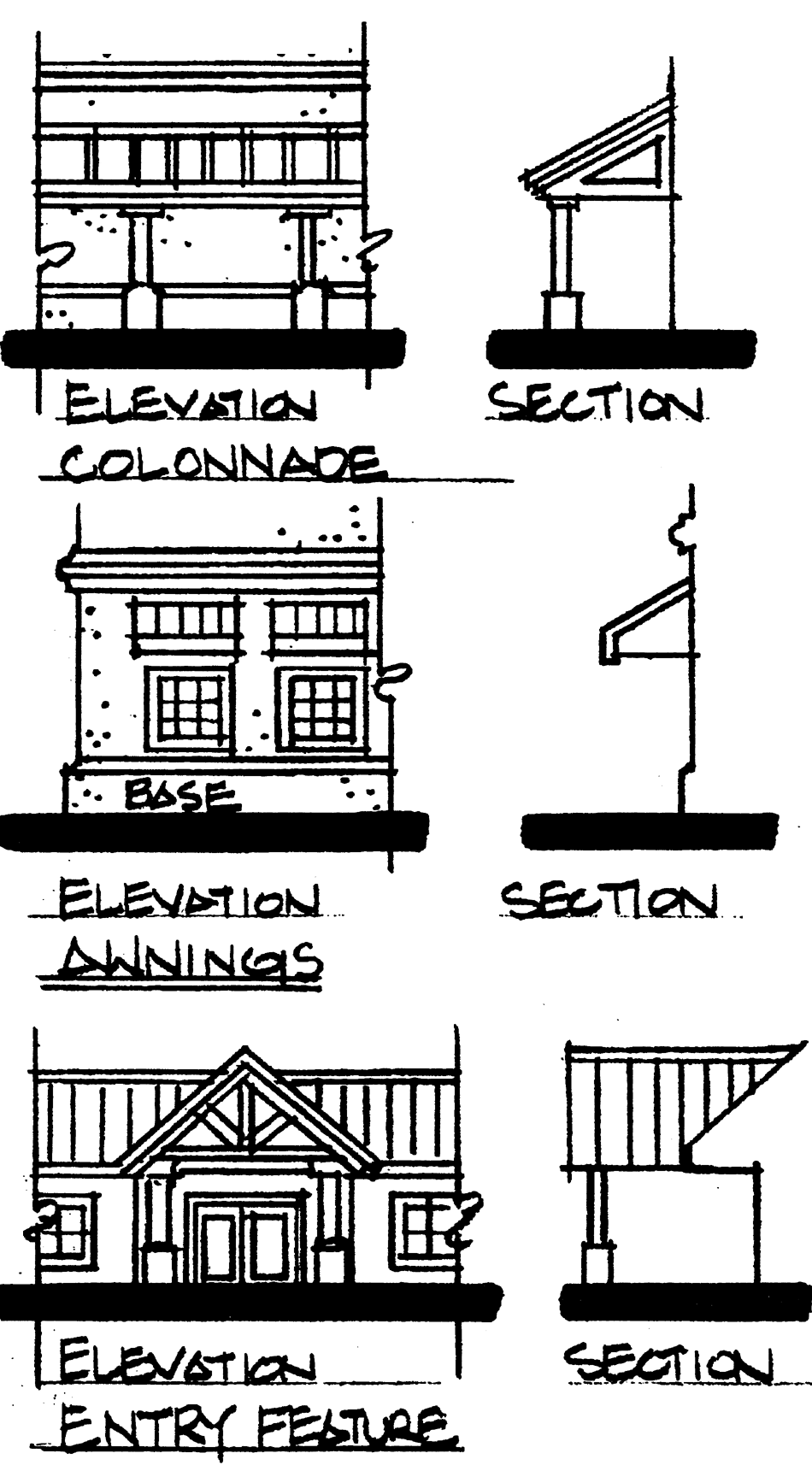
EXAMPLES
(1)
Pitched roof. Any roof, porch or covered walkway on a commercial building(s) shall have a minimum roof pitch of 5:12 (4:12 may be allowed by special exception). Roofs shall have minimum overhang of eighteen (18) inches. The typical vernacular roof overhangs are intended to protect from the sun and rain, and provide passive energy conservation. Fascias must be a minimum of eight (8) inches.
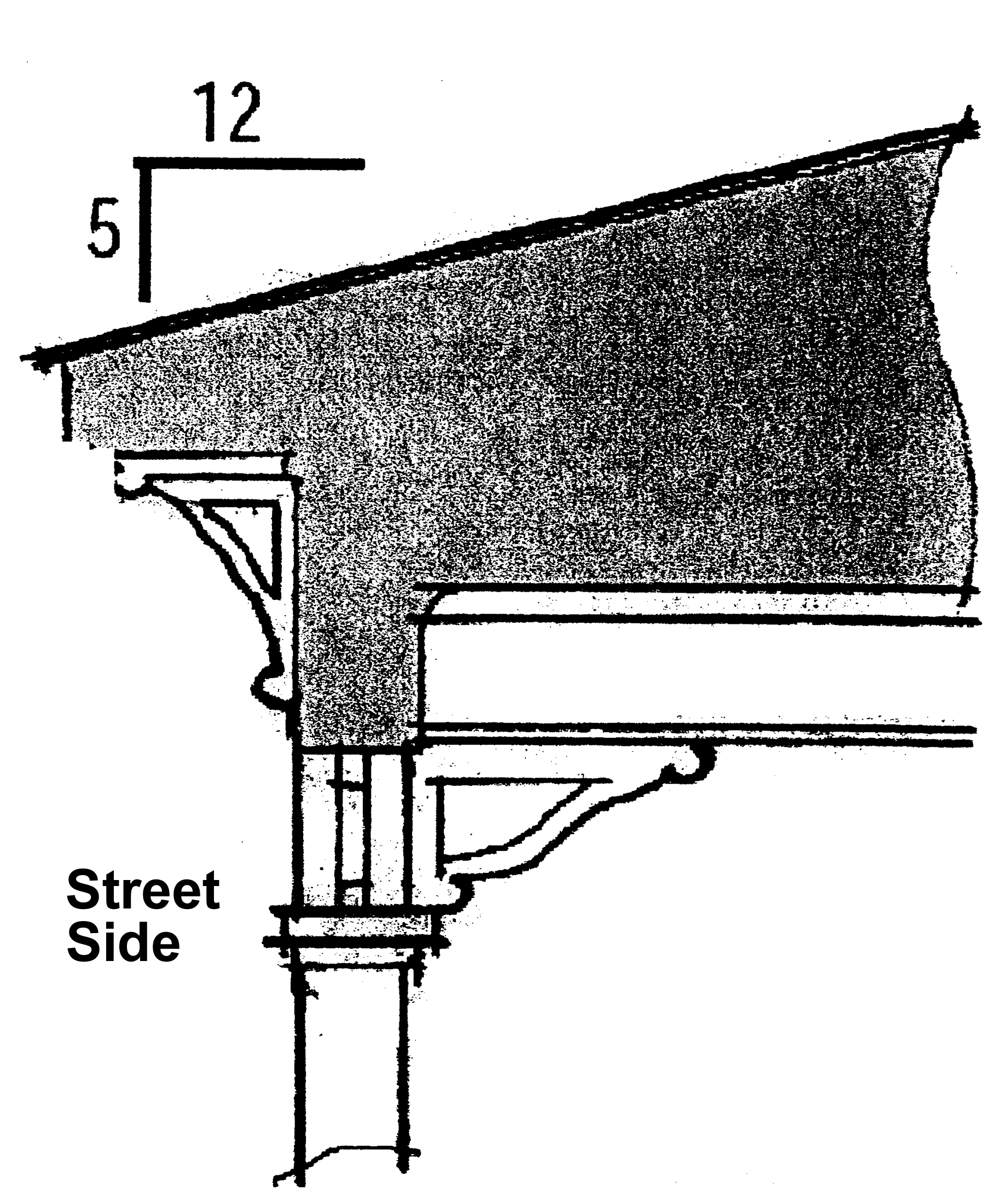
PITCHED ROOF
(2)
Flat roof and parapet. Flat roofs shall be enclosed from view by parapets, mansards or a combination of the two (2) which shall have a minimum number of changes from the dominant roof condition to provide scale and interest. Note: "View" means all sides of the building visible from a publicly maintained street, except as per section 4-91(h), utility walls. Applicants may apply for a design standards betterment plan through the special exception process.
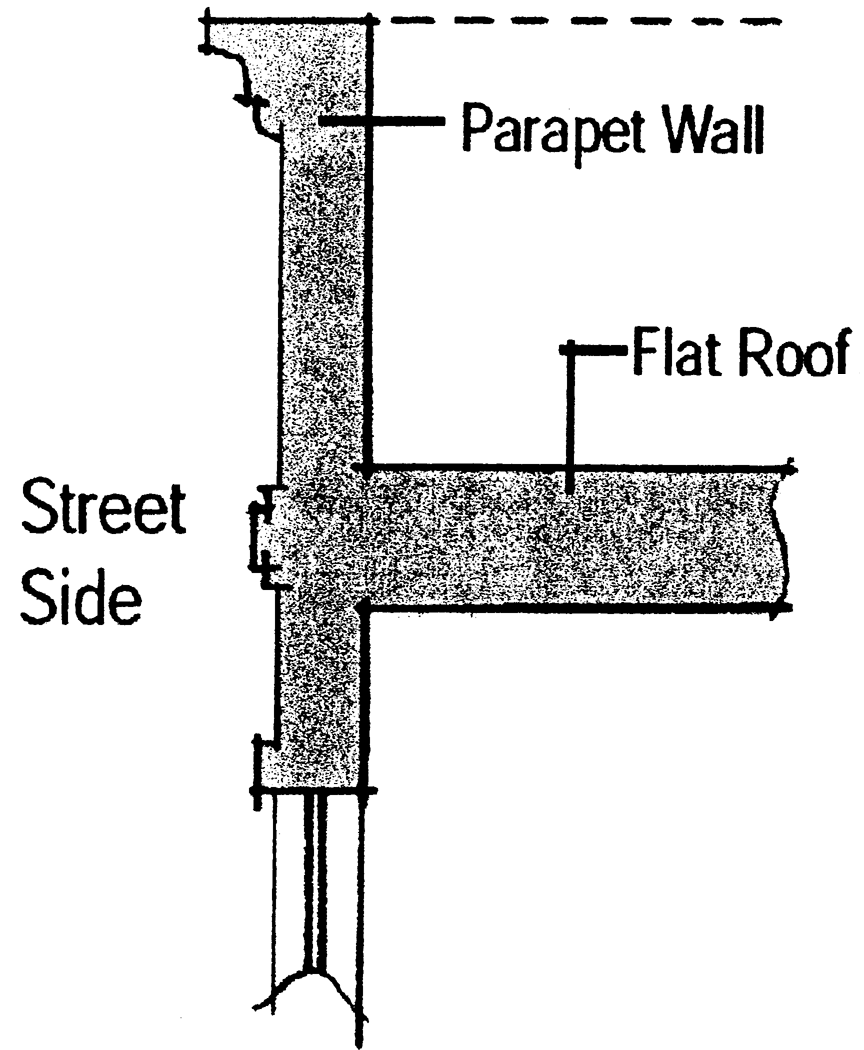
FLAT ROOF AND PARAPET
(c)
Facade treatment. Projects must use architectural relief, articulation or landscaping on building facades to reduce the bulk of buildings. Building sides that are visible from a publicly maintained street must use at least four (4) of the facade treatments. Methods for providing architectural relief of viewable walls must include a minimum four (4) of the following:
(1)
Recessed or clearly defined entryways;
(2)
Varying rooflines, pitches and shapes;
(3)
Dormers, balconies, porches and staircases;
(4)
Transparent window or door areas or display windows, that provide visibility into the building interior. No reflective or darkly tinted glass may be used on ground level;
(5)
Awnings;
(6)
Building ornamentation and varying building materials, colors, detail such as trellises, recessed panels reminiscent of window, and door or colonnade openings;
(7)
Architectural features such as cornices, articulated roof parapets, porticos, towers or other details that alter the building height;
(8)
Application of a contrasting base that is a minimum one (1) foot high and extends along the entire front of the building and at least ten (10) feet along the sides of the building;
(9)
Stonework at foundations, column posts and other accent locations; or
(10)
Decorative and/or operable shutters.
FACADE TREATMENT
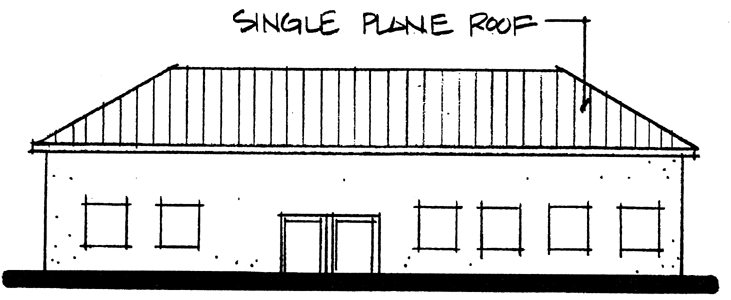
UNACCEPTABLE
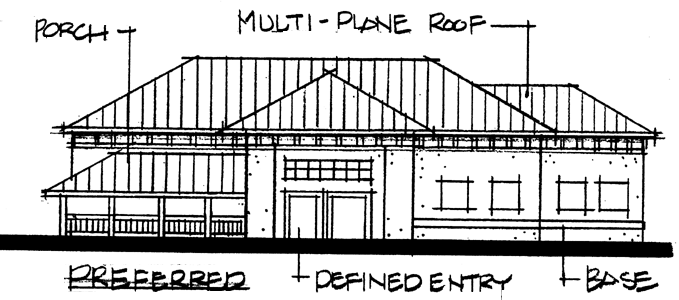
PREFERRED
(d)
Multi-tenant buildings. For multi-tenant buildings, roof parapets must be varied in depth and height. Roof parapets must be articulated to provide visual diversity. Parapets must include architectural relief or features at least every one hundred (100) feet. The minimum height of the architectural features must be one (1) foot, and may be provided in height offset or facade projections such as portions or towers.
(e)
Single-use buildings or multi-use buildings. Single-use buildings of seventy-five thousand (75,000) square feet or greater or multi-use buildings of one hundred thousand (100,000) square feet or greater must use at least six (6) of the ten (10) elements listed in section 4-91(c), facade treatment.
(f)
Window treatment. Display windows must be placed at the street level around the exterior of commercial buildings and provide windowsills and ledges. Windows must not appear to be false and applied.
(g)
Building color. The dominant colors for commercial structures shall be derived from earth tones 1 or natural building materials. Trim or accent colors should be complementary, subtle hues of the primary building color 2 , and should tie together all of the architectural elements of the building. Color schemes should be chosen with consideration to surrounding building color. Exterior color schemes that attract undue attention to the building are considered inappropriate. Fluorescent colors are prohibited. Primary colors are not permitted on more than ten (10) percent of the building.
1
Earth tones: Earth tones are colors seen in nature like browns, umbers, terracotta and brick tones. These colors tend to be harmonious, rich in color and depth and impart a feeling of solidity and permanence. Used well, earth tones complement most other color tonalities. Earth tones allow the viewer a sense of approachability and connection. These tones are part of our everyday existence. They are familiar and comforting.
2
Primary colors: In color mixing for painting, the fundamental rule is that there are three colors that cannot be made by mixing other colors together. These three, red, blue, and yellow, are known as the primary colors. When mixing these three colors hues, all the other hues of the color wheel can be created. Black and white are not made by mixing together other colors; however, they are not used in color mixing to create colors, but rather for lightening or darkening. Therefore, they are not considered primary colors.
(h)
Required buffers. Utility walls, service entrances, dumpsters, mechanical items, and similar items visible from a publicly maintained street shall require a minimum of a type D buffer (see landscape section 4-80.6(4), buffers) along the property line unless the landscape code requires a more intensive buffer. The facade treatments required in subsection (a) above shall not apply to utility walls. Buffers or facade treatments shall not be required when the utility walls of two (2) or more commercial buildings face each other.
(Ord. No. 2005-05, § I(5-91), 7-15-05; Ord. No. 2010-02, § I, 4-8-10)
Sec. 4-94. - Special exception.
A special exception may be granted upon applicant's showing of good cause. The city commission shall hear special exceptions. Applications for special exception pursuant to this article are entitled to demonstrate that the intent of this article can be more effectively accomplished through an alternate design standards betterment plan. The following conditions must be met:
(1)
The plan must be labeled as an alternate design standards betterment plan, and delineate, identify and locate all changes to the requirements of this article.
(2)
No less than 4:12 roof pitch.
(3)
A mansard or parapet roof is required for all sides visible from a public street or right-of-way and must be of sufficient height to screen mechanical items, if any, from view.
(Ord. No. 2005-05, § I(5-92), 7-15-05)

