
Larned City Zoning Code
ARTICLE 6
- OFF-STREET PARKING AND LOADING REGULATIONS
Sec. 6.10. - Applicability.
Off-street parking and loading space, as required in this article, shall be provided for all new buildings and structures or additions thereto. Off-street parking and loading space shall be required for any existing building or structure which is altered in any manner so as to enlarge or increase capacity by adding or creating dwelling units, guest rooms, floor area or seats. Existing parking area previously required shall not be used to satisfy required off-street parking for any new structures or additions to existing buildings, structures or uses of land. Such existing parking space shall be maintained and shall not be reduced so long as the main building, structure or use remains, unless an equivalent number of such spaces are provided elsewhere as provided in this article. Except that no off-street parking or loading space shall be required for any use located in the "C-3" Central Business District.
(Ord. No. 1088, exh. A(6.10), 10-4-1982)
Sec. 6.20. - General provisions.
1.
Utilization. Required accessory off-street parking facilities provided for the uses hereinafter listed shall be solely for the parking of motor vehicles in operating condition of patrons, occupants, or employees of such uses.
2.
Residential districts. Off-street parking will be permitted in required front yards provided that front yard parking spaces are covered with concrete, asphalt or gravel.
3.
Accessory use. Off-street parking shall be considered as an accessory use to the use for which the parking is provided. Parking not located on the same tract on which the main use is located must be located within the zoning district in which parking or storage lots are permitted as a main use; or be located in accordance with the provisions of this article relating to off-street parking exceptions. In no instance shall off-street parking required by this article be located more than 300 feet (as measured along lines of public access) from the use which it serves.
4.
Repair service. No motor vehicle repair work or service of any kind shall be permitted in association with any off-street parking facilities.
5.
Computation. When determination of the number of off-street parking spaces required by this regulation results in a requirement of a fractional space, the fraction of one-half or less may be disregarded, and a fraction in excess of one-half shall be counted as one parking space.
6.
Mixed uses. When a building or development contains mixed uses, the off-street parking requirements shall be calculated for each individual use and the total parking requirement shall be the sum of individual parking requirements.
(Ord. No. 1088, exh. A(6.20), 10-4-1982; Ord. No. 1519, § 5, 10-25-2010)
Sec. 6.30. - Layout and design requirements.
1.
Area. A required off-street parking space shall be at least eight feet six inches in width and at least 19 feet in length, exclusive of access drives or aisles, ramps, and columns.
2.
Access. Each required off-street parking space shall open directly upon an aisle or driveway of such width and design as to provide safe and efficient means of vehicular access to such parking space.
3.
Design. Off-street parking spaces shall comply with the design standards relating to curb length, stall depth, driveway width, island width, barriers, and ingress and egress as contained in the off-street parking standards of this article.
4.
Surfacing. All open off-street parking and loading areas shall be graded and paved or otherwise improved with an all-weather material.
5.
Lighting. Any lighting used to illuminate off-street parking and loading areas shall be directed away from residential properties in such a way as not to interfere with the residential use.
(Ord. No. 1088, exh. A(6.30), 10-4-1982)
Sec. 6.40. - Plans and approval required.
Plans showing the layout design of all required off-street parking and loading areas shall be submitted to and approved by the zoning administrator prior to issuance of a building permit. Before approving any parking layout, the zoning administrator shall satisfy himself that the spaces provided are usable and meet standard design criteria contained herein. All required off-street parking spaces shall be clearly marked.
(Ord. No. 1088, exh. A(6.40), 10-4-1982)
Sec. 6.50. - Required spaces.
Off-street parking spaces shall be provided as follows:
6.51.
Dwelling and lodging uses.
1.
Boarding or rooming houses. One parking space per each three sleeping rooms.
2.
Dormitories, fraternities, sororities. Two parking spaces for each three occupants based on the maximum design capacity of the building.
3.
Hotels and motels. One space per each rental unit plus one space per each two employees in the largest working shift and such spaces as are required for restaurants, assembly rooms, and other affiliated facilities provided.
4.
Mobile home parks. 1½ parking spaces per each mobile home.
5.
Nursing homes, rest homes, etc. One parking space per each five beds based on the designed maximum capacity of the building, plus one parking space for each employee.
6.
Single-family. Two spaces per dwelling unit.
7.
Two-family and multiple-family. 1½ spaces per dwelling unit. Two-family and multiple-family dwelling units designed specifically for the elderly, one space per two dwelling units.
6.52
Business, commercial, and industrial uses.
1.
Automobile, truck, recreational vehicle and mobile home sales and rental lots. One parking space for each 3,000 square feet of open sales lot area devoted to the sale, display and rental of said vehicles, plus one parking space for each employee.
2.
Automobile salvage yards. One parking space for each employee, plus one parking space for each 10,000 square feet of storage area.
3.
Financial, business, and professional offices. One parking space for each 300 square feet of gross floor area.
4.
Bowling alleys. Five parking spaces for each lane.
5.
Cartage, express, parcel delivery and freight terminal establishments. One parking space for each two employees in the largest working shift in a 24-hour period, plus one parking space for each vehicle maintained on the premises.
6.
Automobile wash. Three holding spaces for each car washing stall plus two drying spaces for each car washing stall.
7.
Funeral homes and mortuaries. One parking space for each four seats based upon the designed maximum capacity of the parlor, plus one additional parking space for each employee and each vehicle maintained on the premises.
8.
Furniture and appliance stores, household equipment or furniture repair shop. One parking space for each 600 square feet of floor area.
9.
Manufacturing, production, processing, assembly, disassembly, cleaning, servicing, testing or repairing of goods, materials or products. One per three employees based upon the largest working shift in any 24-hour time period.
10.
Medical and dental clinics or offices. One parking space for each 200 square feet of gross floor area.
11.
Restaurants, private clubs and taverns. One parking space for 2.5 seats based on the maximum designed seating capacity; provided, however, that drive-in restaurants shall have a minimum of at least ten parking spaces.
12.
Retail stores and shops. One space per 200 square feet of floor area.
13.
Service stations. One parking space for each employee plus two spaces for each service bay.
14.
Theaters, auditoriums, and places of assembly with fixed seats. One space for each four seats.
15.
Theaters, auditoriums, and places of assembly without fixed seats. One parking space for each four people, based upon the designed maximum capacity of the building.
16.
Warehouse, storage and wholesale establishments. One parking space for each two employees based upon the largest working shift in any 24-hour period.
17.
All other business and commercial establishments not specified above. One parking space for each 300 square feet of floor area.
6.53.
Other uses.
1.
Churches. One parking space for each six seats based upon the maximum designed seating capacity, including choir lofts.
2.
Elementary, junior high and equivalent parochial and private schools. Two spaces for each classroom.
3.
High schools, colleges, universities and other similar public or private institutions of higher learning. Eight parking spaces for each classroom, plus one space for each two employees.
4.
Hospitals. One parking space for each two beds, plus one parking space for each resident or staff doctor plus one space for each two employees based on the largest working shift in any 24-hour period.
5.
Laundromats. One space for each two washing machines.
6.
Nursery schools and day care centers, public or private. One parking space for each employee.
7.
Fraternal associations and union headquarters. One parking space for each three seats based upon the design maximum seating capacity.
8.
Swimming pools and clubs. One parking space for 38 square feet of water area.
9.
Trade and commercial schools. One parking space for each three students and employees.
(Ord. No. 1088, exh. A(6.50—6.53), 10-4-1982)
Sec. 6.60. - Conditional uses.
1.
Districts permitted. In order to provide off-street parking areas, the board of zoning appeals may, after public notice and hearing, grant as a conditional use the establishment of parking areas in any zoning district under the provisions further set forth in this section.
2.
Location. Parking provided under this section must be within 300 feet (along lines of public access) from the boundary of the use for which the parking is provided.
3.
Use. The parking area shall be used for passenger vehicles only, and in no case shall it be used for sales, repair work, storage, dismantling or servicing of any vehicles, equipment, materials, or supplies. Only such signs as are necessary for the proper operation of the parking lot shall be permitted.
4.
Improvements.
a.
Parking areas and driveways on private property providing ingress and egress to parking areas shall be surfaced with concrete, asphaltic or any other comparable surfacing which meets city standards and shall be maintained in good condition and free of all weeds, dust, trash and other debris. This shall not apply, however, to parking areas in agricultural districts.
b.
Parking areas shall have adequate guards to prevent extension or the overhanging of vehicles beyond property lines or parking spaces; and parking areas shall have adequate markings for channelization and movement of vehicles.
c.
If lighting facilities are provided, they shall be so arranged as to deflect or direct light away from any adjacent dwelling or dwelling district.
d.
A fence (such as solid-wall masonry, wood, louvered wood, metal or other similar materials) or hedge not less than six feet nor more than eight feet high and having a density of not less than 70 percent per square foot, shall be erected along any property line adjacent to or adjoining any dwelling district to eliminate the passage of light from vehicles and to prevent the blowing of debris. Whenever a fence shall be required along a front yard, such fence shall not be higher than four feet and such fence shall be located within one foot of the front yard setback line. Fences along said yards shall not extend nearer to the street than the front yard setback line.
5.
Permit revocable. The zoning administrator shall be responsible for the enforcement of the conditions and requirements made by the board of zoning appeals in the approval of any off-street parking conditional use. The zoning administrator, upon discovery of any violation of this regulation or the conditions and requirements established by the board, shall notify the board through its secretary as to such violations. The board of zoning appeals is hereby authorized to revoke the conditional use after public hearing for any of the following reasons:
a.
Abandonment of the area for parking purposes for six months.
b.
Failure to comply with the requirements contained in this section, or imposed by the board.
(Ord. No. 1088, exh. A(6.60), 10-4-1982)
Sec. 6.70. - Loading and unloading regulations.
Loading and unloading space shall be provided off-street and on the same premises with every building, structure or part thereof, hereafter erected, established or enlarged and occupied for goods display, retail operation, department store, market, hotel, mortuary, laundry, dry cleaning, office uses or warehouses, manufacturing or other uses, involving the receipt or distribution of materials or merchandise by motor vehicles. The loading and unloading space or spaces shall be so located to avoid undue interference with public use of streets, alleys and walkways.
1.
Spaces required.
a.
For all uses in the "C-1" and "C-2" Commercial Districts, loading facilities shall be provided in accordance with the following table:
b.
For all uses in the "I-1" and "I-2" districts, loading facilities shall be provided in accordance with the following table:
c.
For each additional 100,000 square feet of gross floor area or any fraction thereof over 100,000 square feet of gross floor area, one additional berth shall be provided. Each such additional berth shall be at least ten feet in width by 60 feet in length.
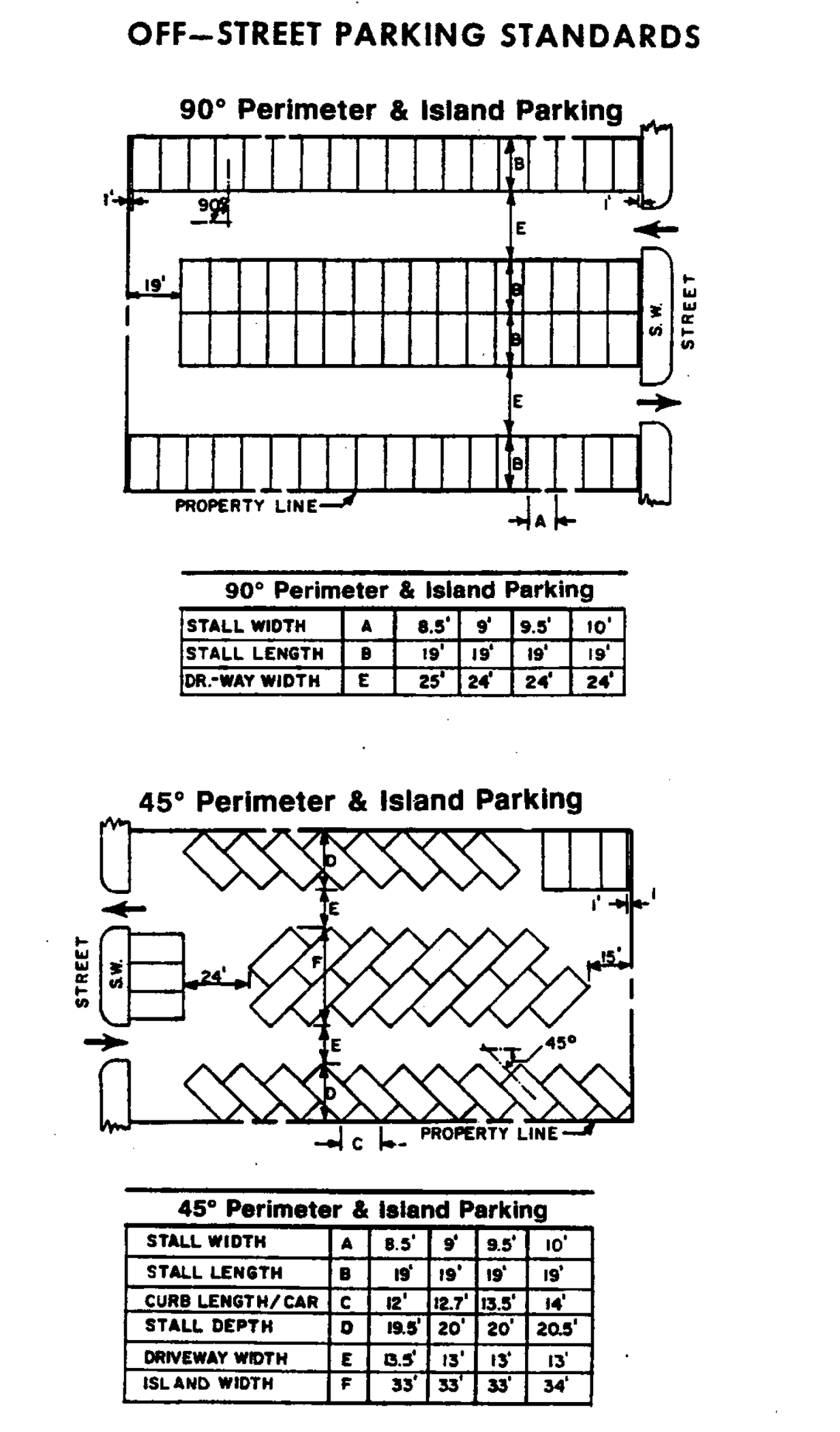
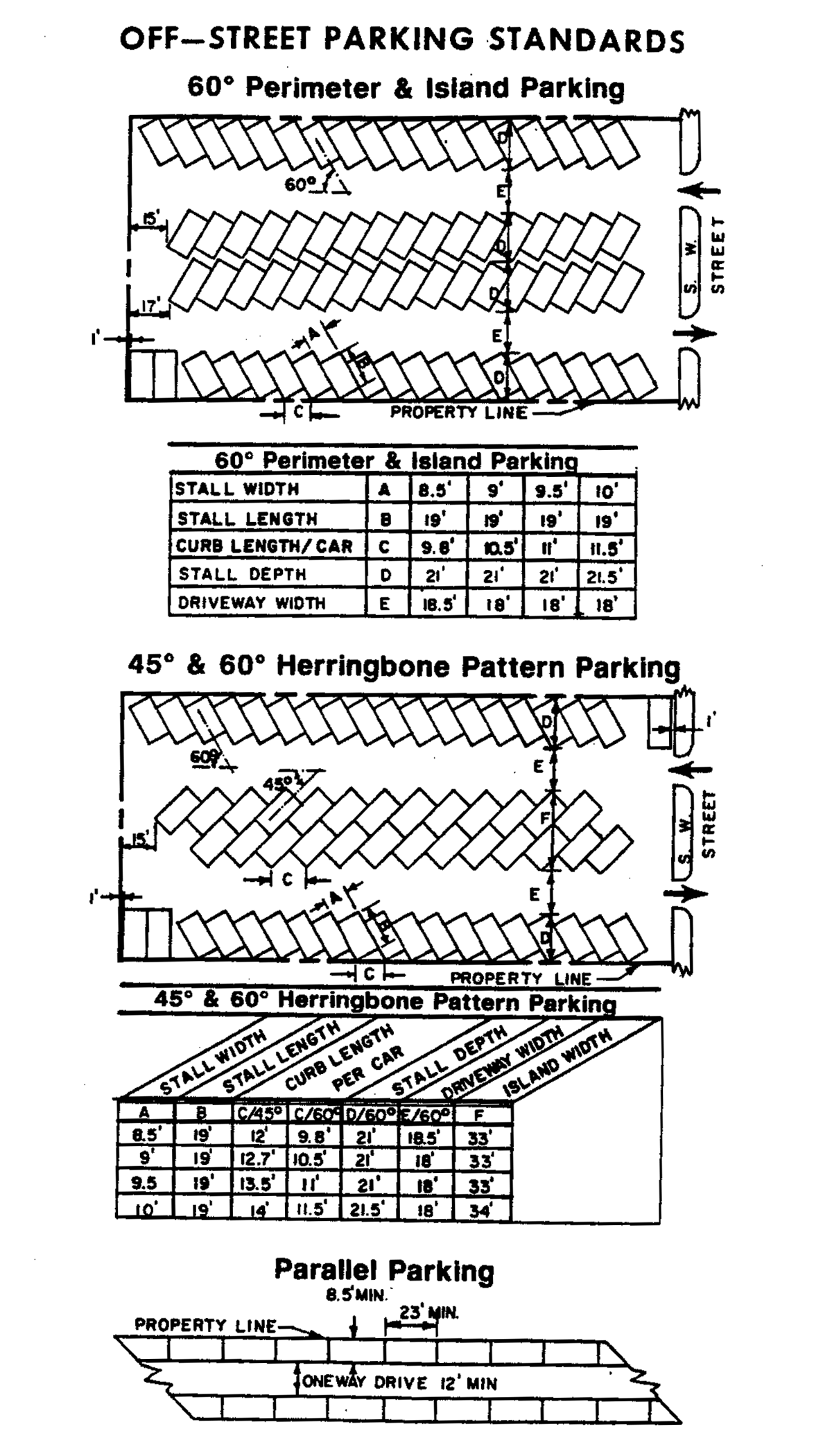
(Ord. No. 1088, exh. A(6.70), 10-4-1982)

